Skip to content

High-quality research proteins.

  • 1-800-805-6531

  • Mon - Sat 8.00-18.00, Sun - Closed

  • info@prospecbio.com

  • PO Box 6591 East Brunswick NJ 08816

  • Products
    • Cytokines
    • Growth factors
    • Chemokines
    • Cd antigens
    • Neurotrophins
    • Hormones
    • Enzymes
    • Viral antigens
    • Recombinant proteins
    • Natural proteins
    • Monoclonal antibodies
    • Polyclonal antibodies
    • Thermal Packaging
  • About
    • Company
    • Founder
    • Contribution
  • Customers
    • Eastern Asia
    • Eastern Europe
    • North America
    • South America
    • South East Asia
    • Southern Asia
    • Western Europe
  • Ordering
    • Ordering Method
    • Ordering - Credit Card
    • Ordering - PO
    • Shipping Fees
    • FAQs
  • Services
    • DNA Cloning
    • Protein Expression
    • Monoclonal Antibody
    • Fermentation
    • Technology License
  • Contact us
Log in

Country/region

  • USD $ | Albania
  • USD $ | Andorra
  • USD $ | Argentina
  • USD $ | Armenia
  • USD $ | Australia
  • USD $ | Austria
  • USD $ | Azerbaijan
  • USD $ | Belarus
  • USD $ | Belgium
  • USD $ | Bolivia
  • USD $ | Brazil
  • USD $ | Bulgaria
  • USD $ | Cambodia
  • USD $ | Canada
  • USD $ | Chile
  • USD $ | China
  • USD $ | Colombia
  • USD $ | Costa Rica
  • USD $ | Croatia
  • USD $ | Cyprus
  • USD $ | Czechia
  • USD $ | Denmark
  • USD $ | Estonia
  • USD $ | Finland
  • USD $ | France
  • USD $ | Georgia
  • USD $ | Germany
  • USD $ | Greece
  • USD $ | Hong Kong SAR
  • USD $ | Hungary
  • USD $ | Iceland
  • USD $ | India
  • USD $ | Ireland
  • USD $ | Israel
  • USD $ | Italy
  • USD $ | Japan
  • USD $ | Kazakhstan
  • USD $ | Latvia
  • USD $ | Liechtenstein
  • USD $ | Lithuania
  • USD $ | Madagascar
  • USD $ | Malta
  • USD $ | Mexico
  • USD $ | Moldova
  • USD $ | Monaco
  • USD $ | Netherlands
  • USD $ | New Zealand
  • USD $ | North Macedonia
  • USD $ | Norway
  • USD $ | Panama
  • USD $ | Paraguay
  • USD $ | Peru
  • USD $ | Philippines
  • USD $ | Poland
  • USD $ | Portugal
  • USD $ | Romania
  • USD $ | Singapore
  • USD $ | Slovakia
  • USD $ | Slovenia
  • USD $ | South Africa
  • USD $ | South Korea
  • USD $ | Spain
  • USD $ | Sri Lanka
  • USD $ | Sweden
  • USD $ | Switzerland
  • USD $ | Taiwan
  • USD $ | Thailand
  • USD $ | Türkiye
  • USD $ | Ukraine
  • USD $ | United Kingdom
  • USD $ | United States
  • USD $ | Uruguay
  • USD $ | Vatican City
  • USD $ | Venezuela
  • USD $ | Vietnam
  • Facebook
  • Instagram
logoProSpec - Recombinant Protein Manufacturer for academic and R&D industry
Become a distributor
Account Log in
Wishlist
Cart Cart(0)
  • Products
    +
    • Cytokines
    • Growth factors
    • Chemokines
    • Cd antigens
    • Neurotrophins
    • Hormones
    • Enzymes
    • Viral antigens
    • Recombinant proteins
    • Natural proteins
    • Monoclonal antibodies
    • Polyclonal antibodies
    • Thermal Packaging
  • About
    +
    • Company
    • Founder
    • Contribution
  • Customers
    +
    • Eastern Asia
    • Eastern Europe
    • North America
    • South America
    • South East Asia
    • Southern Asia
    • Western Europe
  • Ordering
    +
    • Ordering Method
    • Ordering - Credit Card
    • Ordering - PO
    • Shipping Fees
    • FAQs
  • Services
    +
    • DNA Cloning
    • Protein Expression
    • Monoclonal Antibody
    • Fermentation
    • Technology License
  • Contact us

Item added to your cart

View cart
View All
  • Cytokines
  • Growth factors
  • Chemokines
  • Cd antigens
  • Neurotrophins
  • Hormones
  • Enzymes
  • Viral antigens
  • Recombinant proteins
  • Natural proteins
  • Monoclonal antibodies
  • Polyclonal antibodies
  • Thermal Packaging
  • Tumor Necrosis Factor

    Tumor Necrosis Factor

    View All
  • 4-1BB

    4-1BB

    View All
  • Adiponectin

    Adiponectin

    View All
  • AIF1

    AIF1

    View All
  • Other Cytokines

    Other Cytokines

    View All
  • AITRL

    AITRL

    View All
  • Angiopoietin

    Angiopoietin

    View All
  • Apolipoprotein

    Apolipoprotein

    View All
  • B-Cell Activating Factor

    B-Cell Activating Factor

    View All
  • Beta Defensin

    Beta Defensin

    View All
  • Bone Morphogenetic Protein

    Bone Morphogenetic Protein

    View All
  • B type Natriuretic Peptide

    B type Natriuretic Peptide

    View All
  • BST

    BST

    View All
  • Betacellulin

    Betacellulin

    View All
  • Cardiotrophin

    Cardiotrophin

    View All
  • Activin

    Activin

    View All
  • Fibroblast Growth Factor

    Fibroblast Growth Factor

    View All
  • Other Growth Factors

    Other Growth Factors

    View All
  • CSF

    CSF

    View All
  • CTGF

    CTGF

    View All
  • IGFBP

    IGFBP

    View All
  • VEGF Protein

    VEGF Protein

    View All
  • EGF

    EGF

    View All
  • Epigen

    Epigen

    View All
  • Erythropoietin

    Erythropoietin

    View All
  • Insulin-Like Growth Factor

    Insulin-Like Growth Factor

    View All
  • Growth Hormone

    Growth Hormone

    View All
  • HDGF

    HDGF

    View All
  • Hepatocyte Growth Factor

    Hepatocyte Growth Factor

    View All
  • Insulin

    Insulin

    View All
  • BCA-1/ BLC (CXCL13)

    BCA-1/ BLC (CXCL13)

    View All
  • BRAK (CXCL14)

    BRAK (CXCL14)

    View All
  • C-10 (CCL6)

    C-10 (CCL6)

    View All
  • Other Chemokines

    Other Chemokines

    View All
  • MEC (CCL28)

    MEC (CCL28)

    View All
  • LD78-beta (CCL3L1)

    LD78-beta (CCL3L1)

    View All
  • CTACK (CCL27)

    CTACK (CCL27)

    View All
  • CXCL16

    CXCL16

    View All
  • CXCL17

    CXCL17

    View All
  • Platelet Factor-4 (CXCL4)

    Platelet Factor-4 (CXCL4)

    View All
  • ENA-78 (CXCL5)

    ENA-78 (CXCL5)

    View All
  • Eotaxin (CCL11,24,26)

    Eotaxin (CCL11,24,26)

    View All
  • Exodus-2 (CCL21)

    Exodus-2 (CCL21)

    View All
  • Fractalkine (CX3CL1)

    Fractalkine (CX3CL1)

    View All
  • CXCL6

    CXCL6

    View All
  • Other CD Antigens

    Other CD Antigens

    View All
  • CD14

    CD14

    View All
  • CD164

    CD164

    View All
  • CD1

    CD1

    View All
  • CD2

    CD2

    View All
  • CD200

    CD200

    View All
  • CD207

    CD207

    View All
  • CD226

    CD226

    View All
  • CD23

    CD23

    View All
  • CD244

    CD244

    View All
  • CD247

    CD247

    View All
  • CD27

    CD27

    View All
  • CD274

    CD274

    View All
  • CD300

    CD300

    View All
  • CD33

    CD33

    View All
  • Other Neurotrophins

    Other Neurotrophins

    View All
  • Beta-NGF

    Beta-NGF

    View All
  • BDNF

    BDNF

    View All
  • CDNF

    CDNF

    View All
  • CNTF

    CNTF

    View All
  • GDNF

    GDNF

    View All
  • Glia Maturation Factor

    Glia Maturation Factor

    View All
  • MANF

    MANF

    View All
  • Midkine

    Midkine

    View All
  • Neuroglobin

    Neuroglobin

    View All
  • Neurotrophic factors

    Neurotrophic factors

    View All
  • Neuregulin

    Neuregulin

    View All
  • Neuropilin

    Neuropilin

    View All
  • Pigment Epithelium-Derived Factor

    Pigment Epithelium-Derived Factor

    View All
  • Pleiotrophin

    Pleiotrophin

    View All
  • Peptide Hormones

    Peptide Hormones

    View All
  • Other Hormones

    Other Hormones

    View All
  • HCG

    HCG

    View All
  • Endothelin

    Endothelin

    View All
  • Exendin

    Exendin

    View All
  • FSH

    FSH

    View All
  • Glucagon

    Glucagon

    View All
  • GHRP

    GHRP

    View All
  • GLP

    GLP

    View All
  • Thyrostimulin

    Thyrostimulin

    View All
  • Inhibin A

    Inhibin A

    View All
  • LHRH

    LHRH

    View All
  • Melanotan

    Melanotan

    View All
  • Procalcitonin

    Procalcitonin

    View All
  • PTH

    PTH

    View All
  • Peroxiredoxin

    Peroxiredoxin

    View All
  • Peptidase

    Peptidase

    View All
  • Synthetase

    Synthetase

    View All
  • Transferase

    Transferase

    View All
  • Hydrolase

    Hydrolase

    View All
  • Dehydrogenase

    Dehydrogenase

    View All
  • ACE2

    ACE2

    View All
  • Esterase

    Esterase

    View All
  • Protein Kinases

    Protein Kinases

    View All
  • Other Enzymes

    Other Enzymes

    View All
  • Phosphatase

    Phosphatase

    View All
  • Deaminase

    Deaminase

    View All
  • Oxygenase

    Oxygenase

    View All
  • Adenylate Kinase

    Adenylate Kinase

    View All
  • Lyase

    Lyase

    View All
  • Chagas

    Chagas

    View All
  • SARS

    SARS

    View All
  • Influenza

    Influenza

    View All
  • ASFV

    ASFV

    View All
  • Astrovirus

    Astrovirus

    View All
  • Borrelia

    Borrelia

    View All
  • Helicobacter Pylori

    Helicobacter Pylori

    View All
  • Chikungunya

    Chikungunya

    View All
  • Chlamydia

    Chlamydia

    View All
  • Cytomegalo

    Cytomegalo

    View All
  • Dengue

    Dengue

    View All
  • EBV

    EBV

    View All
  • Ebola

    Ebola

    View All
  • Feline Leukemia Virus

    Feline Leukemia Virus

    View All
  • Hepatitis A

    Hepatitis A

    View All
  • Other

    Other

    View All
  • Actin

    Actin

    View All
  • ADAM

    ADAM

    View All
  • Complement Component

    Complement Component

    View All
  • Ag85

    Ag85

    View All
  • Eukaryotic Translation Initiation Factor

    Eukaryotic Translation Initiation Factor

    View All
  • Anterior Gradient Protein

    Anterior Gradient Protein

    View All
  • Heat Shock Protein

    Heat Shock Protein

    View All
  • Alpha-2-HS-Glycoprotein

    Alpha-2-HS-Glycoprotein

    View All
  • Hemoglobin

    Hemoglobin

    View All
  • Allergy

    Allergy

    View All
  • Anaplasma

    Anaplasma

    View All
  • Angiogenin

    Angiogenin

    View All
  • Ankyrin Repeat Domain

    Ankyrin Repeat Domain

    View All
  • Annexin

    Annexin

    View All
  • Other Natural Proteins

    Other Natural Proteins

    View All
  • Aprotinin

    Aprotinin

    View All
  • Transferrin

    Transferrin

    View All
  • Avidin

    Avidin

    View All
  • Anti Coagulation Factors

    Anti Coagulation Factors

    View All
  • Natural Albumin

    Natural Albumin

    View All
  • Natural Coagulation Factors

    Natural Coagulation Factors

    View All
  • Fibronectin

    Fibronectin

    View All
  • Thrombin

    Thrombin

    View All
  • Anti Human Enzyme

    Anti Human Enzyme

    View All
  • Other Monoclonal Antibodies

    Other Monoclonal Antibodies

    View All
  • Anti Human Cytokine

    Anti Human Cytokine

    View All
  • Anti Human Heat Shock Protein

    Anti Human Heat Shock Protein

    View All
  • Anti Mouse Lymphocyte

    Anti Mouse Lymphocyte

    View All
  • Anti Human Chemokine

    Anti Human Chemokine

    View All
  • Anti Human Lymphocyte

    Anti Human Lymphocyte

    View All
  • Anti Viral Monoclonal

    Anti Viral Monoclonal

    View All
  • Anti Mouse Cytokine

    Anti Mouse Cytokine

    View All
  • Anti-GST Monoclonal

    Anti-GST Monoclonal

    View All
  • Other Polyclonal Antibodies

    Other Polyclonal Antibodies

    View All
  • Anti Viral

    Anti Viral

    View All
  • Anti-GST Monoclonal

    Anti-GST Monoclonal

    View All
Back

Search results

1000 results found for “Deaminase”

Name

Description

Product #

Price

Quantity

Shipping Method

  • View Data Sheet

    Name :

    ODC1 Human

    Description:

    Ornithine Decarboxylase 1 Human Recombinant

    ODC, Ornithine decarboxylase 1, EC 4.1.1.17.

    Product # :

    ENZ-181

    Price :

    Quantity :

    Shipping Method :

    Ice Icon

    Shipped with Ice Packs

    Add To Cart

    More Info

    • description
    • source
    • formulation
    • purity
    • More Info

    Description

    ODC1 Human Recombinant produced in E.coli is a single, non-glycosylated polypeptide chain containing 484 amino acids (1-461) and having a molecular mass of 53.5 kDa.ODC1 is fused to a 23 amino acid His-tag at N-terminus & purified by proprietary chromatographic techniques.

    Source

    E.coli.

    Formulation

    The ODC1 solution (0.5mg/ml) contains 20mM Tris-HCl buffer (pH 8.0), 1mM DTT, 0.1M NaCl and 10% glycerol.

    Purity

    Greater than 95% as determined by SDS-PAGE.

    More Info

    • Introduction

      Ornithine decarboxylase is the preliminary and rate-limiting enzyme in the biosynthetic pathway of polyamines and it takes part in the alteration of ornithine to putrescine. ODC1 is a key member of various biological processes, such as cell growth, transformation, differentiation and apoptosis. Overexpression of the ODC1 gene has a vital part in cell proliferation and the progress of cancer.

    • Synonyms

      ODC, Ornithine decarboxylase 1, EC 4.1.1.17.

    • Physical Appearance

      Sterile Filtered colorless solution.

    • Stability

      Store at 4°C if entire vial will be used within 2-4 weeks. Store, frozen at -20°C for longer periods of time. For long term storage it is recommended to add a carrier protein (0.1% HSA or BSA).Avoid multiple freeze-thaw cycles.

    • Amino Acid Sequence

      MGSSHHHHHH SSGLVPRGSH MGSMNNFGNE EFDCHFLDEG FTAKDILDQK INEVSSSDDK DAFYVADLGD ILKKHLRWLK ALPRVTPFYA VKCNDSKAIV KTLAATGTGF DCASKTEIQL VQSLGVPPER IIYANPCKQV SQIKYAANNG VQMMTFDSEV ELMKVARAHP KAKLVLRIAT DDSKAVCRLS VKFGATLRTS RLLLERAKEL NIDVVGVSFH VGSGCTDPET FVQAISDARC VFDMGAEVGF SMYLLDIGGG FPGSEDVKLK FEEITGVINP ALDKYFPSDS GVRIIAEPGR YYVASAFTLA VNIIAKKIVL KEQTGSDDED ESSEQTFMYY VNDGVYGSFN CILYDHAHVK PLLQKRPKPD EKYYSSSIWG PTCDGLDRIV ERCDLPEMHV GDWMLFENMG AYTVAAASTF NGFQRPTIYY VMSGPAWQLM QQFQNPDFPP EVEEQDASTL PVSCAWESGM KRHRAACASA SINV

    ProSpec's products are furnished for LABORATORY RESEARCH USE ONLY. The product may not be used as drugs, agricultural or pesticidal products, food additives or household chemicals.

    Odc1 Human
  • View Data Sheet

    Name :

    CTSD Human

    Description:

    Cathepsin-D Human Recombinant

    Cathepsin D, EC 3.4.23.5, CTSD, CPSD, CLN10, MGC2311.

    Product # :

    ENZ-378

    Price :

    Quantity :

    Shipping Method :

    Ice Icon

    Shipped with Ice Packs

    Add To Cart

    More Info

    • description
    • source
    • formulation
    • purity
    • More Info

    Description

    CTSD produced in HEK293 cells is a single, glycosylated polypeptide chain containing 398 amino acids (21-412 a.a.) and having a molecular mass of 43.4kDa. CTSD is expressed with a 6 amino acid His tag at C-Terminus and purified by proprietary chromatographic techniques.

    Source

    HEK293 Cells

    Formulation

    CTSD at 1mg/ml in 50mM MES, pH5.5, 100mM NaCl and 20% Glycerol.

    Purity

    Greater than 95% as determined by SDS-PAGE

    More Info

    • Introduction

      Cathepsin D is synthesized as a 54kDa precursor, which is proteolytically processed to an intermediate 48kDa single chain, which matures into more stable 34kDa and 14kDa two chain form. It is an estrogen-regulated lysosomal protease that has been suggested to facilitate cancer cell migration and invasion by digesting the basement membrane, extracellular matrix, and xonnective tissue. Because of its mitogenic and proteolytic activities, it has been implicated as a prognostic marker in many tumor types. Cathepsin D is expressed in epithelial cells as well as in macrophages.

    • Synonyms

      Cathepsin D, EC 3.4.23.5, CTSD, CPSD, CLN10, MGC2311.

    • Physical Appearance

      Sterile Filtered clear solution.

    • Stability

      Store vial at -20°C to -80°C. When stored at the recommended temperature, this protein is stable for 12 months.Please prevent freeze-thaw cycles.

    • Amino Acid Sequence

      LVRIPLHKFT SIRRTMSEVG GSVEDLIAKG PVSKYSQAVP AVTEGPIPEV LKNYMDAQYY GEIGIGTPPQ CFTVVFDTGS SNLWVPSIHC KLLDIACWIH HKYNSDKSST YVKNGTSFDI HYGSGSLSGY LSQDTVSVPC QSASSASALG GVKVERQVFG EATKQPGITF IAAKFDGILG MAYPRISVNN VLPVFDNLMQ QKLVDQNIFS FYLSRDPDAQ PGGELMLGGT DSKYYKGSLS YLNVTRKAYW QVHLDQVEVA SGLTLCKEGC EAIVDTGTSL MVGPVDEVRE LQKAIGAVPL IQGEYMIPCE KVSTLPAITL KLGGKGYKLS PEDYTLKVSQ AGKTLCLSGF MGMDIPPPSG PLWILGDVFI GRYYTVFDRD NNRVGFAEAA RLHHHHHH

    • Enzymatic Activity

      > 20 pmol/min/ug, defined as the amount of enzyme which cleaves 1pmol of Mca-PLGLDpa-AR-NH2/min at pH-3.5 at 25C.

    ProSpec's products are furnished for LABORATORY RESEARCH USE ONLY. The product may not be used as drugs, agricultural or pesticidal products, food additives or household chemicals.

    Ctsd Human
  • View Data Sheet

    Name :

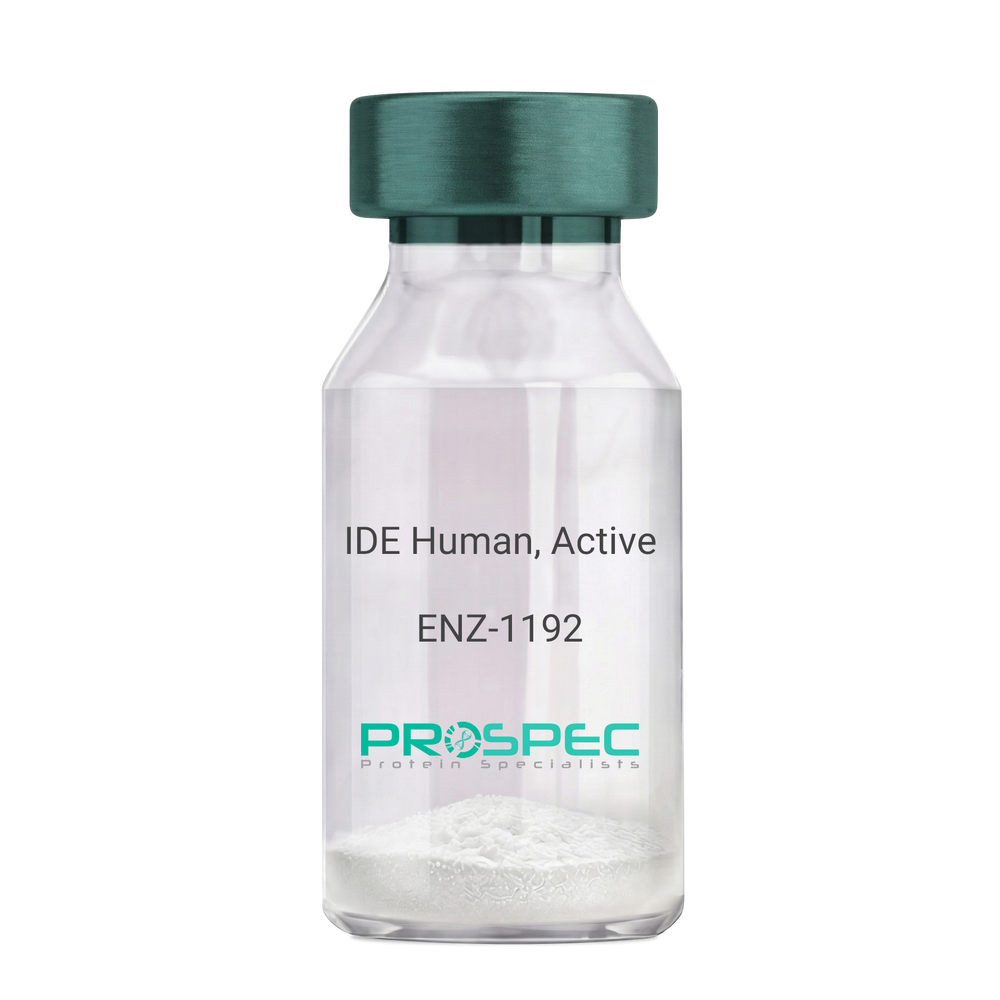
    IDE Human, Active

    Description:

    Insulin-Degrading Enzyme Human Recombinant

    Insulin-Degrading Enzyme, Abeta-Degrading Protease, Insulysin, EC 3.4.24.56, Insulinase, Insulin Protease, INSULYSIN, EC 3.4.24, IDE, insulin-degrading enzyme isoform 1. 

    Product # :

    ENZ-1192

    Price :

    Quantity :

    Shipping Method :

    Ice Icon

    Shipped with Ice Packs

    Add To Cart

    More Info

    • description
    • source
    • formulation
    • purity
    • biological activity
    • More Info

    Description

    IDE Human, Active Human Recombinant produced in E.Coli is a single, non-glycosylated, polypeptide chain (42-1019 a.a) containing a total of 984 amino acids, having a molecular mass of 114 kDa. IDE is fused to a 6 amino acid His-tag at C-terminus and is purified by proprietary chromatographic techniques.

    Source

    Escherichia Coli.

    Formulation

    The IDE solution (0.5mg/ml) contains 10% Glycerol, 100mM NaCl, 0.05% Brij35 and 20mM Tris-HCl buffer (pH 7.5).

    Purity

    Greater than 90.0% as determined by SDS-PAGE.

    Biological Activity

    Specific activity is greater than 3,000 pmol/min/ug in which 1 unit will convert 1.0 pmole of Mca-RPPGFSAFK(Dnp)-OH to MCA-Pro-Leu-OH per minute at pH 7.5 at 25°C.

    More Info

    • Synonyms

      Insulin-Degrading Enzyme, Abeta-Degrading Protease, Insulysin, EC 3.4.24.56, Insulinase, Insulin Protease, INSULYSIN, EC 3.4.24, IDE, insulin-degrading enzyme isoform 1.

    • Physical Appearance

      Filtered colorless solution.

    • Stability

      Store at 4°C if entire vial will be used within 2-4 weeks. Store, frozen at -20°C for longer periods of time. For long term storage it is recommended to add a carrier protein (0.1% HSA or BSA). Avoid multiple freeze-thaw cycles.

    • Amino Acid Sequence

      MNNPAIKRIG NHITKSPEDK REYRGLELAN GIKVLLISDP TTDKSSAALD VHIGSLSDPP NIAGLSHFCE HMLFLGTKKY PKENEYSQFL SEHAGSSNAF TSGEHTNYYF DVSHEHLEGA LDRFAQFFLC PLFDESCKDR EVNAVDSEHE KNVMNDAWRL FQLEKATGNP KHPFSKFGTG NKYTLETRPN QEGIDVRQEL LKFHSAYYSS NLMAVCVLGR ESLDDLTNLV VKLFSEVENK NVPLPEFPEH PFQEEHLKQL YKIVPIKDIR NLYVTFPIPD LQKYYKSNPG HYLGHLIGHE GPGSLLSELK SKGWVNTLVG GQKEGARGFM FFIINVDLTE EGLLHVEDII LHMFQYIQKL RAEGPQEWVF QECKDLNAVA FRFKDKERPR GYTSKIAGIL HYYPLEEVLT AEYLLEEFRP DLIEMVLDKL RPENVRVAIV SKSFEGKTDR TEEWYGTQYK QEAIPDEVIK KWQNADLNGK FKLPTKNEFI PTNFEILPLE KEATPYPALI KDTAMSKLWF KQDDKFFLPK ACLNFEFFSP FAYVDPLHCN MAYLYLELLK DSLNEYAYAA ELAGLSYDLQ NTIYGMYLSV KGYNDKQPIL LKKIIEKMAT FEIDEKRFEI IKEAYMRSLN NFRAEQPHQH AMYYLRLLMT EVAWTKDELK EALDDVTLPR LKAFIPQLLS RLHIEALLHG NITKQAALGI MQMVEDTLIE HAHTKPLLPS
      QLVRYREVQL PDRGWFVYQQ RNEVHNNCGI EIYYQTDMQS TSENMFLELF CQIISEPCFN TLRTKEQLGY IVFSGPRRAN GIQGLRFIIQ SEKPPHYLES RVEAFLITME KSIEDMTEEA FQKHIQALAI RRLDKPKKLS AECAKYWGEI ISQQYNFDRD NTEVAYLKTL TKEDIIKFYK EMLAVDAPRR HKVSVHVLAR EMDSCPVVGE FPCQNDINLS QAPALPQPEV IQNMTEFKRG LPLFPLVKPH INFMAAKLHH HHHH.

    • Background

      Insulin-degrading enzyme (IDE) is a crucial protease that plays a significant role in maintaining glucose homeostasis by degrading insulin and other bioactive peptides. Dysregulation of IDE has been implicated in various metabolic disorders, particularly type 2 diabetes mellitus. IDE is also associated with the clearance of amyloid-beta peptides in the brain, making it relevant to Alzheimer's disease pathology. Studying the recombinant form of IDE is fundamental to understanding its functional mechanisms and exploring potential avenues for therapeutic interventions.

      The primary goal of this research is to express and purify recombinant IDE using diverse expression systems. Recombinant DNA techniques will be employed to construct expression vectors containing the IDE gene, followed by expression in bacterial, yeast, or mammalian cell-based systems. The recombinant IDE will be purified using affinity chromatography or other appropriate methods, facilitating subsequent biochemical and biophysical characterization.

      The second objective is to investigate the substrate specificity and catalytic activity of the purified IDE. In vitro enzymatic assays will be conducted to analyse the ability of the recombinant IDE to degrade insulin and other potential substrates. The effects of various factors, such as pH, temperature, and potential modulators, on IDE activity will be evaluated. Additionally, the interactions between IDE and its substrates will be explored using binding assays.

      The third objective is to elucidate the three-dimensional structure of the IDE recombinant using techniques like X-ray crystallography or nuclear magnetic resonance (NMR) spectroscopy. Structural insights into the active site and binding pockets of IDE will provide valuable information for understanding its substrate recognition and catalytic mechanisms. This knowledge could be instrumental in designing targeted therapeutic compounds.

      By characterizing the IDE recombinant, this research aims to contribute to our understanding of its role in insulin metabolism, glucose regulation, and potential therapeutic applications. The findings from this study may have implications for the development of novel treatments for diabetes and other related disorders.

    ProSpec's products are furnished for LABORATORY RESEARCH USE ONLY. The product may not be used as drugs, agricultural or pesticidal products, food additives or household chemicals.

    Ide Human Active
  • View Data Sheet

    Name :

    IDE Human

    Description:

    Insulin-Degrading Enzyme Human Recombinant

    Insulin-Degrading Enzyme, Abeta-Degrading Protease, Insulin Protease, EC 3.4.24.56, Insulinase, INSULYSIN, Insulysin, EC 3.4.24, IDE.

    Product # :

    ENZ-813

    Price :

    Quantity :

    Shipping Method :

    Ice Icon

    Shipped with Ice Packs

    Add To Cart

    More Info

    • description
    • source
    • formulation
    • purity
    • More Info

    Description

    IDE Human Recombinant produced in E.Coli is a single, non-glycosylated, polypeptide chain (Met1-Leu1019) containing 1026 amino acids including a 7 aa His tag at C-terminus. The total calculated molecular mass is 119kDa.

    Source

    Escherichia Coli.

    Formulation

    IDE filtered (0.4µm) in 20mM Tris buffer, 50mM NaCl, pH 8.0 and 10% (w/v) glycerol.

    Purity

    Greater than 95.0% as determined by SDS-PAGE.

    More Info

    • Introduction

      Insulin-Degrading Enzyme (IDE) is a zinc metallopeptidase which degrades intracellular insulin, and thus terminates insulins activity, as well as playing a part in intercellular peptide signaling by degrading various peptides such as amylin, bradykinin, and kallidin. The preferential affinity of the IDE enzyme for insulin results in insulin-mediated inhibition of the degradation of additional peptides such as beta-amyloid. Deficiencies in IDE protein's function are linked with Alzheimer's disease and type 2 diabetes mellitus nevertheless mutations in the IDE gene have not been demonstrated to be causative for these diseases. Insulin-Degrading Enzyme localizes mainly to the cytoplasm however in some cell types it localizes to the extracellular space, cell membrane, peroxisome, and mitochondrion. In addition, IDE degrades amyloid formed by APP and IAPP. Furthermore, IDE plays a part in the degradation and clearance of naturally secreted amyloid beta-protein by neurons and microglia.

    • Synonyms

      Insulin-Degrading Enzyme, Abeta-Degrading Protease, Insulin Protease, EC 3.4.24.56, Insulinase, INSULYSIN, Insulysin, EC 3.4.24, IDE.

    • Physical Appearance

      Filtered colorless solution.

    • Stability

      Store at 4°C if entire vial will be used within 2-4 weeks. Store, frozen at -20°C for longer periods of time. For long term storage it is recommended to add a carrier protein (0.1% HSA or BSA).Avoid multiple freeze-thaw cycles.

    • Amino Acid Sequence

      MRYRLAWLLH PALPSTFRSV LGARLPPPER LCGFQKKTYS KMNNPAIKRI GNHITKSPED KREYRGLELA NGIKVLLISD PTTDKSSAAL DVHIGSLSDP PNIAGLSHFC EHMLFLGTKK YPKENEYSQF LSEHAGSSNA FTSGEHTNYY FDVSHEHLEG ALDRFAQFFL CPLFDESCKD REVNAVDSEH EKNVMNDAWR LFQLEKATGN PKHPFSKFGT GNKYTLETRP NQEGIDVRQE LLKFHSAYYS SNLMAVCVLG RESLDDLTNL VVKLFSEVEN KNVPLPEFPE HPFQEEHLKQ LYKIVPIKDI RNLYVTFPIP DLQKYYKSNP GHYLGHLIGH EGPGSLLSEL KSKGWVNTLV GGQKEGARGF MFFIINVDLT EEGLLHVEDI ILHMFQYIQK LRAEGPQEWV FQECKDLNAV AFRFKDKERP RGYTSKIAGI LHYYPLEEVL TAEYLLEEFR PDLIEMVLDK LRPENVRVAI VSKSFEGKTD RTEEWYGTQY KQEAIPDEVI KKWQNADLNG KFKLPTKNEF IPTNFEILPL EKEATPYPAL IKDTAMSKLW FKQDDKFFLP KACLNFEFFS PFAYVDPLHC NMAYLYLELL KDSLNEYAYA AELAGLSYDL QNTIYGMYLS VKGYNDKQPI LLKKIIEKMA TFEIDEKRFE IIKEAYMRSL NNFRAEQPHQ HAMYYLRLLM TEVAWTKDEL KEALDDVTLP RLKAFIPQLL SRLHIEALLH GNITKQAALG IMQMVEDTLI EHAHTKPLLP SQLVRYREVQ LPDRGWFVYQ QRNEVHNNCG IEIYYQTDMQ STSENMFLEL FCQIISEPCF NTLRTKEQLG YIVFSGPRRA NGIQGLRFII QSEKPPHYLE SRVEAFLITM EKSIEDMTEE AFQKHIQALA IRRLDKPKKL SAECAKYWGE IISQQYNFDR DNTEVAYLKT LTKEDIIKFY KEMLAVDAPR RHKVSVHVLA REMDSCPVVG EFPCQNDINL SQAPALPQPE VIQNMTEFKR GLPLFPLVKP HINFMAAKL E HHHHHH.

    ProSpec's products are furnished for LABORATORY RESEARCH USE ONLY. The product may not be used as drugs, agricultural or pesticidal products, food additives or household chemicals.

    Ide Human
  • View Data Sheet

    Name :

    IDH3G Human

    Description:

    Isocitrate Dehydrogenase 3 (NAD+) Gamma Human Recombinant

    Isocitrate dehydrogenase [NAD] subunit gamma, mitochondrial, Isocitric dehydrogenase subunit gamma, NAD(+)-specific ICDH subunit gamma, IDH3G, H-IDHG.

    Product # :

    ENZ-205

    Price :

    Quantity :

    Shipping Method :

    Ice Icon

    Shipped with Ice Packs

    Add To Cart

    More Info

    • description
    • source
    • formulation
    • purity
    • More Info

    Description

    IDH3G Human Recombinant produced in E.coli is a single, non-glycosylated polypeptide chain containing 375 amino acids (40-393) and having a molecular mass of 41.1kDa.IDH3G is fused to a 21 amino acid His-tag at N-terminus & purified by proprietary chromatographic techniques.

    Source

    E.coli.

    Formulation

    The IDH3G solution (0.25mg/ml) contains 20mM Tris-HCl buffer (pH8.0), 50% glycerol, 0.2M NaCl, 5mM DTT and 2mM EDTA.

    Purity

    Greater than 85% as determined by SDS-PAGE.

    More Info

    • Introduction

      Isocitrate dehydrogenase [NAD] subunit gamma (IDH3G) mitochondrial is a member of the isocitrate and isopropylmalate dehydrogenases family. Isocitrate dehydrogenases catalyze the oxidative decarboxylation of isocitrate to 2-oxoglutarate. The IDH3G is a gamma subunit of one isozyme of isocitrate dehydrogenase which belongs to a distinct subclass, which utilizes NAD(+) as the electron acceptor, and is restricted to the mitochondrial matrix.

    • Synonyms

      Isocitrate dehydrogenase [NAD] subunit gamma, mitochondrial, Isocitric dehydrogenase subunit gamma, NAD(+)-specific ICDH subunit gamma, IDH3G, H-IDHG.

    • Physical Appearance

      Sterile Filtered colorless solution.

    • Stability

      Store at 4°C if entire vial will be used within 2-4 weeks. Store, frozen at -20°C for longer periods of time. For long term storage it is recommended to add a carrier protein (0.1% HSA or BSA).Avoid multiple freeze-thaw cycles.

    • Amino Acid Sequence

      MGSSHHHHHH SSGLVPRGSH MFSEQTIPPS AKYGGRHTVT MIPGDGIGPE LMLHVKSVFR HACVPVDFEE VHVSSNADEE DIRNAIMAIR RNRVALKGNI ETNHNLPPSH KSRNNILRTS LDLYANVIHC KSLPGVVTRH KDIDILIVRE NTEGEYSSLE HESVAGVVES LKIITKAKSL RIAEYAFKLA QESGRKKVTA VHKANIMKLG DGLFLQCCRE VAARYPQITF ENMIVDNTTM QLVSRPQQFD VMVMPNLYGN IVNNVCAGLV GGPGLVAGAN YGHVYAVFET ATRNTGKSIA NKNIANPTAT LLASCMMLDH LKLHSYATSI RKAVLASMDN ENMHTPDIGG QGTTSEAIQD VIRHIRVING RAVEA.

    ProSpec's products are furnished for LABORATORY RESEARCH USE ONLY. The product may not be used as drugs, agricultural or pesticidal products, food additives or household chemicals.

    Idh3G Human
  • View Data Sheet

    Name :

    DERA

    Description:

    Deoxyribose-Phosphate Aldolase E.Coli Recombinant

    Putative deoxyribose-phosphate aldolase, DERA, 2-deoxy-D-ribose 5-phosphate aldolase, Phosphodeoxyriboaldolase, Deoxyriboaldolase, DERA, CGI-26.

    Product # :

    ENZ-127

    Price :

    Quantity :

    Shipping Method :

    Ice Icon

    Shipped with Ice Packs

    Add To Cart

    More Info

    • description
    • source
    • formulation
    • purity
    • More Info

    Description

    DERA produced in E.Coli is a single, non-glycosylated polypeptide chain containing 279 amino acids (1-259 a.a.) and having a molecular mass of 29.9kDa.DERA is fused to a 20 amino acid His-tag at N-terminus & purified by proprietary chromatographic techniques.

    Source

    Escherichia Coli.

    Formulation

    The DERA solution (1mg/ml) 20mM Tris-HCl buffer (pH 8.0), 10% glycerol and 2mM DTT.

    Purity

    Greater than 95.0% as determined by SDS-PAGE.

    More Info

    • Introduction

      Deoxyribose-phosphate aldolase (DERA) is a member of the deoC/fbaB aldolase protein family involved in the carbohydrate degradation pathway. DERA catalyzes the conversion of 2-deoxy-D-ribose 5-phosphate to D-glyceraldehyde 3-phosphate and an acetyldehyde.

    • Synonyms

      Putative deoxyribose-phosphate aldolase, DERA, 2-deoxy-D-ribose 5-phosphate aldolase, Phosphodeoxyriboaldolase, Deoxyriboaldolase, DERA, CGI-26.

    • Physical Appearance

      Sterile Filtered colorless solution.

    • Stability

      Store at 4°C if entire vial will be used within 2-4 weeks. Store, frozen at -20°C for longer periods of time. For long term storage it is recommended to add a carrier protein (0.1% HSA or BSA).Avoid multiple freeze-thaw cycles.

    • Amino Acid Sequence

      MGSSHHHHHH SSGLVPRGSH MTDLKASSLR ALKLMDLTTL NDDDTDEKVI ALCHQAKTPV GNTAAICIYP RFIPIARKTL KEQGTPEIRI ATVTNFPHGN DDIDIALAET RAAIAYGADE VDVVFPYRAL MAGNEQVGFD LVKACKEACA AANVLLKVII ETGELKDEAL IRKASEISIK AGADFIKTST GKVAVNATPE SARIMMEVIR DMGVEKTVGF KPAGGVRTAE DAQKYLAIAD ELFGADWADA RHYRFGASSL LASLLKALGH GDGKSASSY.

    ProSpec's products are furnished for LABORATORY RESEARCH USE ONLY. The product may not be used as drugs, agricultural or pesticidal products, food additives or household chemicals.

    Dera Ecoli 259 Aa
  • View Data Sheet

    Name :

    MDH1 Human

    Description:

    Malate Dehydrogenase 1 Human Recombinant

    MDH-s, MDHA, MOR2.

    Product # :

    ENZ-256

    Price :

    Quantity :

    Shipping Method :

    Ice Icon

    Shipped with Ice Packs

    Add To Cart

    More Info

    • description
    • source
    • formulation
    • purity
    • biological activity
    • More Info

    Description

    MDH1 Human Recombinant produced in E.Coli is a single, non-glycosylated polypeptide chain containing 342 amino acids (1-334 a.a.) and having a molecular mass of 37.4 kDa. The MDH1 is fused to an 8 amino acid His tag at C-terminus and purified by conventional chromatography.

    Source

    Escherichia Coli.

    Formulation

    The MDH1 1mg/ml protein solution contains 20mM Tris-HCl pH-8, and 10% glycerol.

    Purity

    Greater than 95.0% as determined by SDS-PAGE.

    Biological Activity

    Specific activity is > 250 units/mg, and is defined as the amount of enzyme that cleaves 1umole of oxalacetate and beta-NADH to L-malate and beta-NAD per minute at pH8.0 at 25°C.

    More Info

    • Introduction

      MDH1 catalyzes the reversible oxidation of malate to oxaloacetate, using the NAD/NADH cofactor system in the citric acid cycle. MDH1 is abundantly found in the cytoplasm and is involved in the malate-aspartate shuttle that functions in the metabolic coordination between cytosol and mitochondria. MDH1 regulates p53-dependent cell-cycle arrest and apoptosis in response to glucose deprivation.

    • Synonyms

      MDH-s, MDHA, MOR2.

    • Physical Appearance

      Sterile Filtered colorless solution.

    • Stability

      Store at 4°C if entire vial will be used within 2-4 weeks. Store, frozen at -20°C for longer periods of time. For long term storage it is recommended to add a carrier protein (0.1% HSA or BSA). Please prevent freeze-thaw cycles.

    • Amino Acid Sequence

      MSEPIRVLVT GAAGQIAYSL LYSIGNGSVF GKDQPIILVL LDITPMMGVL DGVLMELQDC ALPLLKDVIA TDKEDVAFKD LDVAILVGSM PRREGMERKD LLKANVKIFK SQGAALDKYA KKSVKVIVVG NPANTNCLTA SKSAPSIPKE NFSCLTRLDH NRAKAQIALK LGVTANDVKN VIIWGNHSST QYPDVNHAKV KLQGKEVGVY EALKDDSWLK GEFVTTVQQR GAAVIKARKL SSAMSAAKAI CDHVRDIWFG TPEGEFVSMG VISDGNSYGV PDDLLYSFPV VIKNKTWKFV EGLPINDFSR EKMDLTAKEL TEEKESAFEF LSSALEHHHH HH.

    ProSpec's products are furnished for LABORATORY RESEARCH USE ONLY. The product may not be used as drugs, agricultural or pesticidal products, food additives or household chemicals.

    Mdh1 Human
  • View Data Sheet

    Name :

    IVD Human

    Description:

    Isovaleryl Coenzyme A Dehydrogenase Human Recombinant

    FLJ12715, isovaleryl-CoA dehydrogenase mitochondrial, FLJ34849, EC 1.3.99.10, IVD, ACAD2.

    Product # :

    ENZ-490

    Price :

    Quantity :

    Shipping Method :

    Ice Icon

    Shipped with Ice Packs

    Add To Cart

    More Info

    • description
    • source
    • formulation
    • purity
    • More Info

    Description

    IVD Human Recombinant produced in E.Coli is a single, non-glycosylated polypeptide chain containing 415 amino acids (33-426 a.a.) and having a molecular mass of 45.3 kDa. The IVD is fused to a 20 amino acid his tag at N-terminus and purified by conventional chromatography.

    Source

    Escherichia Coli.

    Formulation

    The IVD protein solution (1mg/ml) contains 20mM Tris-HCl pH-8, 1mM DTT and 10% glycerol.

    Purity

    Greater than 90.0% as determined by SDS-PAGE.

    More Info

    • Introduction

      IVD is a mitochondrial matrix enzyme that is part of the cyl-CoA dehydrogenase family which catalyzes the third step in leucine catabolism. The genetic deficiency of IVD leads to a buildup of isovaleric acid, which is toxic to the central nervous system and results in isovaleric acidemia. IVD is a homotetrameric flavoenzyme which catalyzes the conversion of isovaleryl-CoA to 3-methylcrotonyl-CoA.

    • Synonyms

      FLJ12715, isovaleryl-CoA dehydrogenase mitochondrial, FLJ34849, EC 1.3.99.10, IVD, ACAD2.

    • Physical Appearance

      Sterile Filtered colorless solution.

    • Stability

      Store at 4°C if entire vial will be used within 2-4 weeks. Store, frozen at -20°C for longer periods of time. For long term storage it is recommended to add a carrier protein (0.1% HSA or BSA).Avoid multiple freeze-thaw cycles.

    • Amino Acid Sequence

      MGSSHHHHHH SSGLVPRGSH MHSLLPVDDA INGLSEEQRQ LRQTMAKFLQ EHLAPKAQEI DRSNEFKNLR EFWKQLGNLG VLGITAPVQY GGSGLGYLEH VLVMEEISRA SGAVGLSYGA HSNLCINQLV RNGNEAQKEK YLPKLISGEY IGALAMSEPN AGSDVVSMKL KAEKKGNHYI LNGNKFWITN GPDADVLIVY AKTDLAAVPA SRGITAFIVE KGMPGFSTSK KLDKLGMRGS NTCELIFEDC KIPAANILGH ENKGVYVLMS GLDLERLVLA GGPLGLMQAV LDHTIPYLHV REAFGQKIGH FQLMQGKMAD MYTRLMACRQ YVYNVAKACD EGHCTAKDCA GVILYSAECA TQVALDGIQC FGGNGYINDF PMGRFLRDAK LYEIGAGTSE VRRLVIGRAF NADFH.

    ProSpec's products are furnished for LABORATORY RESEARCH USE ONLY. The product may not be used as drugs, agricultural or pesticidal products, food additives or household chemicals.

    Ivd Human
  • View Data Sheet

    Name :

    ADH1C Human

    Description:

    Alcohol Dehydrogenase 1C Human Recombinant

    Alcohol dehydrogenase 1C (class I) gamma polypeptide, Alcohol dehydrogenase subunit gamma, alcohol dehydrogenase 3 (class I) gamma polypeptide, ADH gamma subunit, aldehyde reductase, ADH3, EC 1.1.1.1, EC 1.1.1.

    Product # :

    ENZ-622

    Price :

    Quantity :

    Shipping Method :

    Ice Icon

    Shipped with Ice Packs

    Add To Cart

    More Info

    • description
    • source
    • formulation
    • purity
    • More Info

    Description

    ADH1C Human Recombinant produced in E. coli is a single polypeptide chain containing 399 amino acids (1-375) and having a molecular mass of 42.4 kDa.ADH1C is fused to a 24 amino acid His-tag at N-terminus & purified by proprietary chromatographic techniques.

    Source

    E.coli.

    Formulation

    The ADH1C solution (0.5mg/ml) contains 20mM Tris-HCl buffer (pH 8.0), 0.2M NaCl, 2mM DTT and 10% glycerol.

    Purity

    Greater than 90% as determined by SDS-PAGE.

    More Info

    • Introduction

      ADH1C is a member of the zinc-containing alcohol dehydrogenase family which metabolizes a large assortment of substrates, such as ethanol, retinol, other aliphatic alcohols, hydroxysteroids, and lipid peroxidation products. ADH1 is a monomorphic and a key factor in fetal and infant livers, becoming less active in gestation and only weakly active during adulthood.

    • Synonyms

      Alcohol dehydrogenase 1C (class I) gamma polypeptide, Alcohol dehydrogenase subunit gamma, alcohol dehydrogenase 3 (class I) gamma polypeptide, ADH gamma subunit, aldehyde reductase, ADH3, EC 1.1.1.1, EC 1.1.1.

    • Physical Appearance

      Sterile Filtered colorless solution.

    • Stability

      Store at 4°C if entire vial will be used within 2-4 weeks. Store, frozen at -20°C for longer periods of time. For long term storage it is recommended to add a carrier protein (0.1% HSA or BSA).Avoid multiple freeze-thaw cycles.

    • Amino Acid Sequence

      MGSSHHHHHH SSGLVPRGSH MGSHMSTAGK VIKCKAAVLW ELKKPFSIEE VEVAPPKAHE VRIKMVAAGI CRSDEHVVSG NLVTPLPVIL GHEAAGIVES VGEGVTTVKP GDKVIPLFTP QCGKCRICKN PESNYCLKND LGNPRGTLQD GTRRFTCSGK PIHHFVGVST FSQYTVVDEN AVAKIDAASP LEKVCLIGCG FSTGYGSAVK VAKVTPGSTC AVFGLGGVGL SVVMGCKAAG AARIIAVDIN KDKFAKAKEL GATECINPQD YKKPIQEVLK EMTDGGVDFS FEVIGRLDTM MASLLCCHEA CGTSVIVGVP PDSQNLSINP MLLLTGRTWK GAIFGGFKSK ESVPKLVADF MAKKFSLDAL ITNILPFEKI NEGFDLLRSG KSIRTVLTF.

    ProSpec's products are furnished for LABORATORY RESEARCH USE ONLY. The product may not be used as drugs, agricultural or pesticidal products, food additives or household chemicals.

    Adh1C Human
  • View Data Sheet

    Name :

    IDI1 Human

    Description:

    Isopentenyl-Diphosphate Delta Isomerase 1 Human Recombinant

    Isopentenyl-diphosphate Delta-isomerase 1, Isopentenyl pyrophosphate isomerase 1, IPP isomerase 1, IPPI1, IDI1, IPP1.

    Product # :

    ENZ-189

    Price :

    Quantity :

    Shipping Method :

    Ice Icon

    Shipped with Ice Packs

    Add To Cart

    More Info

    • description
    • source
    • formulation
    • purity
    • More Info

    Description

    IDI1 Human Recombinant produced in E.coli is a single, non-glycosylated polypeptide chain containing 248 amino acids (1-228) and having a molecular mass of 28.6kDa.IDI1 is fused to a 20 amino acid His-tag at N-terminus & purified by proprietary chromatographic techniques.

    Source

    E.coli.

    Formulation

    The IDI1 solution (1mg/ml) contains 20mM Tris-HCl buffer (pH 8.0), 1mM DTT, 10% glycerol and 0.1M NaCl.

    Purity

    Greater than 90% as determined by SDS-PAGE.

    More Info

    • Introduction

      Isopentenyl-diphosphate isomerase 1 (IDI1) belongs to the IPP isomerase type I family and is involved in cholesterol biosynthesis. IDI1 is a peroxisomally-localized enzyme which catalyzes the interconversion of isopentenyl diphosphate (IPP) to its highly electrophilic isomer, dimethylallyl diphosphate (DMAPP), which is the substrate for the sequential reaction that results in the synthesis of farnesyl diphosphate and, eventually, cholesterol. Peroxisomal deficiency diseases such as Zellweger syndrome and neonatal adrenoleukodystrophy show a reduction in IPP isomerase activity.

    • Synonyms

      Isopentenyl-diphosphate Delta-isomerase 1, Isopentenyl pyrophosphate isomerase 1, IPP isomerase 1, IPPI1, IDI1, IPP1.

    • Physical Appearance

      Sterile Filtered colorless solution.

    • Stability

      Store at 4°C if entire vial will be used within 2-4 weeks. Store, frozen at -20°C for longer periods of time. For long term storage it is recommended to add a carrier protein (0.1% HSA or BSA).Avoid multiple freeze-thaw cycles.

    • Amino Acid Sequence

      MGSSHHHHHH SSGLVPRGSH MMPEINTNHL DKQQVQLLAE MCILIDENDN KIGAETKKNC HLNENIEKGL LHRAFSVFLF NTENKLLLQQ RSDAKITFPG CFTNTCCSHP LSNPAELEES DALGVRRAAQ RRLKAELGIP LEEVPPEEIN YLTRIHYKAQ SDGIWGEHEI DYILLVRKNV
      TLNPDPNEIK SYCYVSKEEL KELLKKAASG EIKITPWFKI IAATFLFKWW DNLNHLNQFV DHEKIYRM.

    ProSpec's products are furnished for LABORATORY RESEARCH USE ONLY. The product may not be used as drugs, agricultural or pesticidal products, food additives or household chemicals.

    Idi1 Human
  • View Data Sheet

    Name :

    GALE Human

    Description:

    UDP-Galactose-4-Epimerase Human Recombinant

    UDP-glucose 4-epimerase, EC=5.1.3.2, Galactowaldenase, UDP-galactose 4 epimerase, GALE, SDR1E1, FLJ95174, FLJ97302.

    Product # :

    ENZ-537

    Price :

    Quantity :

    Shipping Method :

    Ice Icon

    Shipped with Ice Packs

    Add To Cart

    More Info

    • description
    • source
    • formulation
    • purity
    • More Info

    Description

    GALE Recombinant Human produced in E.Coli is a single, non-glycosylated polypeptide chain containing 368 amino acids (1-348 a.a.) and having a molecular mass of 40.4 kDa. The GALE is fused to a 20 amino acids His-Tag at N-terminus and purified by proprietary chromatographic techniques.

    Source

    Escherichia Coli.

    Formulation

    GALE Human solution containing 20mM Tris pH-8, 5mM DTT, 0.1M NaCl, 1mM EDTA & 10% glycerol.

    Purity

    Greater than 95.0% as determined by SDS-PAGE.

    More Info

    • Introduction

      GALE is an enzyme that participates as the third enzyme in the Leloir pathway of galactose metabolism. GALE is a homodimeric epimerase localized in bacterial, plant, and mammalian cells. GALE inhances the reverse chemical reaction, the conversion of UDP-glucose to UDP-galactose. UDP-galactose builds galactose-containing proteins and fats, which have a crucial part in chemical signaling, building cellular structures, transporting molecules, and producing energy.

    • Synonyms

      UDP-glucose 4-epimerase, EC=5.1.3.2, Galactowaldenase, UDP-galactose 4 epimerase, GALE, SDR1E1, FLJ95174, FLJ97302.

    • Physical Appearance

      Sterile filtered colorless solution.

    • Stability

      Store at 4°C if entire vial will be used within 2-4 weeks. Store, frozen at -20°C for longer periods of time. For long term storage it is recommended to add a carrier protein (0.1% HSA or BSA).Avoid multiple freeze-thaw cycles.

    • Amino Acid Sequence

      MGSSHHHHHH SSGLVPRGSH MAEKVLVTGG AGYIGSHTVL ELLEAGYLPV VIDNFHNAFR GGGSLPESLR RVQELTGRSV EFEEMDILDQ GALQRLFKKY SFMAVIHFAG LKAVGESVQK PLDYYRVNLT GTIQLLEIMK AHGVKNLVFS SSATVYGNPQ YLPLDEAHPT GGCTNPYGKS KFFIEEMIRD LCQADKTWNA VLLRYFNPTG AHASGCIGED PQGIPNNLMP YVSQVAIGRR EALNVFGNDY DTEDGTGVRD YIHVVDLAKG HIAALRKLKE QCGCRIYNLG TGTGYSVLQM VQAMEKASGK KIPYKVVARR EGDVAACYAN PSLAQEELGW TAALGLDRMC EDLWRWQKQN PSGFGTQA.

    ProSpec's products are furnished for LABORATORY RESEARCH USE ONLY. The product may not be used as drugs, agricultural or pesticidal products, food additives or household chemicals.

    Gale Human
  • View Data Sheet

    Name :

    BTD Human

    Description:

    Biotinidase Human Recombinant

    Biotinidase, EC 3.5.1.12, Biotinase, EC 3.5.1.

    Product # :

    ENZ-1004

    Price :

    Quantity :

    Shipping Method :

    Ice Icon

    Shipped with Ice Packs

    Add To Cart

    More Info

    • description
    • source
    • formulation
    • purity
    • More Info

    Description

    BTD Human Recombinant produced in Sf9 Baculovirus cells is a single, glycosylated polypeptide chain containing 510 amino acids (44-545a.a) and having a molecular mass of 57.8kDa. (Molecular size on SDS-PAGE will appear at approximately 50-70kDa). BTD is fused to an 8 amino acid His-tag at C-terminus & purified by proprietary chromatographic techniques.

    Source

    Sf9, Baculovirus cells.

    Formulation

    BTD protein solution (0.25mg/ml) containing Phosphate Buffered Saline (pH 7.4) and 10% glycerol.

    Purity

    Greater than 85% as determined by SDS-PAGE.

    More Info

    • Introduction

      Biotinidase also known BTD, belongs to the nitrilase superfamily, which contains 12 families of nitrilases, amidases, carbamylases, and N-acyltrasferases. BTD catalyzes the hydrolysis of biocytin, the product of biotin-dependent carboxylase degradation, to biotin and lysine. BTD has a vital regulatory part in chromatin/DNA function. Mutations in BTD protein lead to Biotinidase deficiency.

    • Synonyms

      Biotinidase, EC 3.5.1.12, Biotinase, EC 3.5.1.

    • Physical Appearance

      Sterile Filtered colorless solution.

    • Stability

      Store at 4°C if entire vial will be used within 2-4 weeks. Store, frozen at -20°C for longer periods of time. For long term storage it is recommended to add a carrier protein (0.1% HSA or BSA).Avoid multiple freeze-thaw cycles.

    • Amino Acid Sequence

      AHTGEESVAD HHEAEYYVAA VYEHPSILSL NPLALISRQE ALELMNQNLD IYEQQVMTAA QKDVQIIVFP EDGIHGFNFT RTSIYPFLDF MPSPQVVRWN PCLEPHRFND TEVLQRLSCM AIRGDMFLVA NLGTKEPCHS SDPRCPKDGR YQFNTNVVFS NNGTLVDRYR KHNLYFEAAF DVPLKVDLIT FDTPFAGRFG IFTCFDILFF DPAIRVLRDY KVKHVVYPTA WMNQLPLLAA IEIQKAFAVA FGINVLAANV HHPVLGMTGS GIHTPLESFW YHDMENPKSH LIIAQVAKNP VGLIGAENAT GETDPSHSKF LKILSGDPYC EKDAQEVHCD EATKWNVNAP PTFHSEMMYD NFTLVPVWGK EGYLHVCSNG LCCYLLYERP TLSKELYALG VFDGLHTVHG TYYIQVCALV RCGGLGFDTC GQEITEATGI FEFHLWGNFS TSYIFPLFLT SGMTLEVPDQ LGWENDHYFL RKSRLSSGLV TAALYGRLYE RDLEHHHHHH.

    ProSpec's products are furnished for LABORATORY RESEARCH USE ONLY. The product may not be used as drugs, agricultural or pesticidal products, food additives or household chemicals.

    Btd Human
  • View Data Sheet

    Name :

    GOT2 Mouse

    Description:

    Glutamic-Oxaloacetic Transaminase 2 Mouse Recombinant

    Transaminase A, KAT4, KATIV, KAT-4, KAT-IV,Kynurenine Aminotransferase 4.

    Product # :

    ENZ-1095

    Price :

    Quantity :

    Shipping Method :

    Ice Icon

    Shipped with Ice Packs

    Add To Cart

    More Info

    • description
    • source
    • formulation
    • purity
    • biological activity
    • More Info

    Description

    GOT2 Recombinant Mouse produced in E.Coli is a single, non-glycosylated polypeptide chain containing 424 amino acids (30-430 a.a.) and having a molecular mass of 46.8kDa. Mouse GOT2 is fused to a 21 amino acid His-tag at N-terminus & purified by proprietary chromatographic techniques.

    Source

    Escherichia Coli.

    Formulation

    The GOT2 solution (0.5mg/ml) contains PBS, pH 7.4 and 10% glycerol.

    Purity

    Greater than 90.0% as determined by SDS-PAGE.

    Biological Activity

    Activity is greater than 20 units/mg, and is defined as the amount of enzyme that converts 1umole of alpha-ketoglutarate to L-Glutamate per minute at pH 8.0 at 25℃.

    More Info

    • Introduction

      GOT2 is a pyridoxal phosphate-dependent enzyme which is found in cytoplasmic and inner-membrane mitochondrial forms, GOT1 and GOT2. GOT2 takes part in amino acid metabolism and the urea and tricarboxylic acid cycles. Both enzymes are homodimeric and demonstrate close homology.

    • Synonyms

      Transaminase A, KAT4, KATIV, KAT-4, KAT-IV,Kynurenine Aminotransferase 4.

    • Physical Appearance

      Sterile filtered colorless solution.

    • Stability

      Store at 4°C if entire vial will be used within 2-4 weeks. Store, frozen at -20°C for longer periods of time. For long term storage it is recommended to add a carrier protein (0.1% HSA or BSA).Avoid multiple freeze-thaw cycles.

    • Amino Acid Sequence

      MGSSHHHHHH SSGLVPRGSH MSSWWTHVEM GPPDPILGVT EAFKRDTNSK KMNLGVGAYR DDNGKPYVLP SVRKAEAQIA AKNLDKEYLP IGGLAEFCKA SAELALGENN EVLKSGRFVT VQTISGTGAL RVGASFLQRF FKFSRDVFLP KPSWGNHTPI FRDAGMQLQG YRYYDPKTCG FDFSGALEDI SKIPEQSVLL LHACAHNPTG VDPRPEQWKE IASVVKKKNL FAFFDMAYQG FASGDGDKDA WAVRHFIEQG INVCLCQSYA KNMGLYGERV GAFTVVCKDA EEAKRVESQL KILIRPLYSN PPLNGARIAA TILTSPDLRK QWLQEVKGMA DRIISMRTQL VSNLKKEGSS HNWQHITDQI GMFCFTGLKP EQVERLTKEF SVYMTKDGRI SVAGVTSGNV GYLAHAIHQV.

    ProSpec's products are furnished for LABORATORY RESEARCH USE ONLY. The product may not be used as drugs, agricultural or pesticidal products, food additives or household chemicals.

    Got2 Mouse
  • View Data Sheet

    Name :

    LDHB Mouse

    Description:

    Lactate Dehydrogenase B Mouse Recombinant

    L-lactate dehydrogenase B chain, LDH-B, LDH heart subunit, LDH-H, Ldh-2, Ldh2, Ldhb.

    Product # :

    ENZ-1052

    Price :

    Quantity :

    Shipping Method :

    Ice Icon

    Shipped with Ice Packs

    Add To Cart

    More Info

    • description
    • source
    • formulation
    • purity
    • biological activity
    • More Info

    Description

    LDHB Mouse Recombinant produced in E.Coli is a single, non-glycosylated polypeptide chain containing 357 amino acids (1-334 a.a) and having a molecular mass of 39kDa.LDHB is fused to a 23 amino acid His-tag at N-terminus & purified by proprietary chromatographic techniques.

    Source

    Escherichia Coli.

    Formulation

    LDHB protein solution (1mg/ml) containing 20mM Tris-HCl (pH8.0), 1mM DTT and 10% glycerol.

    Purity

    Greater than 95.0% as determined by SDS-PAGE.

    Biological Activity

    Specific activity is > 150 units/mg, in which one unit will 1.0 umole of pyruvate to L-lactate and beta-NAD per minute at pH 7.5.

    More Info

    • Introduction

      Lactate dehydrogenase (LDH) is an enzyme(EC1.1.1.27) present in a wide variety of organisms, including plants and animals.
      A tetrameric enzyme that catalyses the interconversion of pyruvateand lactate with concomitant interconversion of NADH and NAD+. At high concentrations of pyruvate, the enzyme exhibits feedback inhibition and the rate of conversion of pyruvate to lactate is decreased. In vertebrates, genes for three different subunits (LDH-A, LDH-B and LDH-C) exist.

    • Synonyms

      L-lactate dehydrogenase B chain, LDH-B, LDH heart subunit, LDH-H, Ldh-2, Ldh2, Ldhb.

    • Physical Appearance

      Sterile filtered colorless solution.

    • Stability

      Store at 4°C if entire vial will be used within 2-4 weeks. Store, frozen at -20°C for longer periods of time. For long term storage, it is recommended to add a carrier protein (0.1% HSA or BSA).Avoid multiple freeze-thaw cycles.

    • Amino Acid Sequence

      MGSSHHHHHH SSGLVPRGSH MGSMATLKEK LIASVADDEA AVPNNKITVV GVGQVGMACA ISILGKSLAD ELALVDVLED KLKGEMMDLQ HGSLFLQTPK IVADKDYSVT ANSKIVVVTA GVRQQEGESR LNLVQRNVNV FKFIIPQIVK YSPDCTIIVV SNPVDILTYV TWKLSGLPKH RVIGSGCNLD SARFRYLMAE KLGIHPSSCH GWILGEHGDS SVAVWSGVNV AGVSLQELNP EMGTDNDSEN WKEVHKMVVD SAYEVIKLKG YTNWAIGLSV ADLIESMLKN LSRIHPVSTM VKGMYGIENE VFLSLPCILN ARGLTSVINQ KLKDDEVAQL RKSADTLWDI QKDLKDL.

    ProSpec's products are furnished for LABORATORY RESEARCH USE ONLY. The product may not be used as drugs, agricultural or pesticidal products, food additives or household chemicals.

    Ldhb Mouse
  • View Data Sheet

    Name :

    GLUD1 Human

    Description:

    Glutamate Dehydrogenase 1 Human Recombinant

    Glutamate Dehydrogenase 1, GLUD, GDH 1, EC 1.4.1.3, GDH, GDH1, Glutamate Dehydrogenase (NAD(P)+), Glutamate Dehydrogenase 1 Mitochondrial, EC 1.4.1, GLUD1.

    Product # :

    ENZ-792

    Price :

    Quantity :

    Shipping Method :

    Ice Icon

    Shipped with Ice Packs

    Add To Cart

    More Info

    • description
    • source
    • formulation
    • purity
    • More Info

    Description

    GLUD1 Human Recombinant produced in E.coli is a single, non-glycosylated polypeptide chain containing 528 amino acids (54-558) and having a molecular mass of 58.4kDa.GLUD1 is fused to a 23 amino acid His-tag at N-terminus.

    Source

    Escherichia Coli.

    Formulation

    The GLUD1 solution (1mg/ml) contains 20mM Tris-HCl buffer (pH 8.0), 0.4M Urea and 10% glycerol.

    Purity

    Greater than 80.0% as determined by SDS-PAGE.

    More Info

    • Introduction

      Glutamate dehydrogenase 1, mitochondrial precursor (GLUD1) is a member of the Glu/Leu/Phe/Val dehydrogenases family. GLUD1 is a mitochondrial glutamate dehydrogenase, which converts L-glutamate into alpha-ketoglutarate. GLUD1 has a pivotal role in nitrogen metabolism in plants and animals. GLUD1 is observed in all organisms and catalyzes the oxidative deamination of 1-glutamate to 2-oxoglutarate. The GLUD1 enzyme has a vital role in regulating amino acid induced insulin secretion. GLUD1 gene mutations cause hyperinsulinism-hyperammonemia syndrome (HHS), which is an inherited condition characterized by high insulin and ammonia levels in the blood. GLUD1 enzyme is allosterically activated by ADP and inhibited by GTP and ATP.

    • Synonyms

      Glutamate Dehydrogenase 1, GLUD, GDH 1, EC 1.4.1.3, GDH, GDH1, Glutamate Dehydrogenase (NAD(P)+), Glutamate Dehydrogenase 1 Mitochondrial, EC 1.4.1, GLUD1.

    • Physical Appearance

      Sterile filtered colorless solution.

    • Stability

      Store at 4°C if entire vial will be used within 2-4 weeks.Store, frozen at -20°C for longer periods of time. For long term storage it is recommended to add a carrier protein (0.1% HSA or BSA).Avoid multiple freeze-thaw cycles.

    • Amino Acid Sequence

      MGSSHHHHHH SSGLVPRGSH MGSSEAVADR EDDPNFFKMV EGFFDRGASI VEDKLVEDLR TRESEEQKRN RVRGILRIIK PCNHVLSLSF PIRRDDGSWE VIEGYRAQHS QHRTPCKGGI RYSTDVSVDE VKALASLMTY KCAVVDVPFG GAKAGVKINP KNYTDNELEK ITRRFTMELA KKGFIGPGID VPAPDMSTGE REMSWIADTY ASTIGHYDIN AHACVTGKPI SQGGIHGRIS ATGRGVFHGI ENFINEASYM SILGMTPGFG DKTFVVQGFG NVGLHSMRYL HRFGAKCIAV GESDGSIWNP DGIDPKELED FKLQHGSILG FPKAKPYEGS ILEADCDILI PAASEKQLTK SNAPRVKAKI IAEGANGPTT PEADKIFLER NIMVIPDLYL NAGGVTVSYF EWLKNLNHVS YGRLTFKYER DSNYHLLMSV QESLERKFGK HGGTIPIVPT AEFQDRISGA SEKDIVHSGL AYTMERSARQ IMRTAMKYNL GLDLRTAAYV NAIEKVFKVY NEAGVTFT.

    ProSpec's products are furnished for LABORATORY RESEARCH USE ONLY. The product may not be used as drugs, agricultural or pesticidal products, food additives or household chemicals.

    Glud1 Human
  • View Data Sheet

    Name :

    RNASE2 Human

    Description:

    Ribonuclease 2 Human Recombinant

    EDN, RNS2, ribonuclease A family member 2, RAF3, non-secretory ribonuclease, Eosinophil-derived neurotoxin, RNase UpI-2, Ribonuclease 2, RNase 2, Ribonuclease US.

    Product # :

    ENZ-1175

    Price :

    Quantity :

    Shipping Method :

    Ice Icon

    Shipped with Ice Packs

    Add To Cart

    More Info

    • description
    • source
    • formulation
    • purity
    • More Info

    Description

    RNASE2 Human produced in Sf9 Baculovirus cells is a single, glycosylated polypeptide chain containing 143 amino acids (28-161 a.a.) and having a molecular mass of 16.5kDa.RNASE2 is fused to a 6 amino acid His tag at C-Terminus and purified by proprietary chromatographic techniques.

    Source

    Sf9, Baculovirus cells.

    Formulation

    RNASE2 Human protein (1mg/ml) is formulated in 20% glycerol and Phosphate-Buffered Saline (pH 7.4).

    Purity

    Greater than 90.0% as determined by SDS-PAGE.

    More Info

    • Introduction

      RNASE2, also known as EDN, is best-known as one of the 4 major proteins found in the large specific granules of human eosinophilic leukocytes. This protein is also expressed constitutively in human liver tissue and its expression can be induced in macrophages by proinflammatory stimuli. RNASE2 is a non-secretory ribonuclease which belongs to the pancreatic ribonuclease family, a subset of the ribonuclease A superfamily. Diseases associated with EDN include Dermatitis, Atopic, 8 and Pulmonary Eosinophilia.

    • Synonyms

      EDN, RNS2, ribonuclease A family member 2, RAF3, non-secretory ribonuclease, Eosinophil-derived neurotoxin, RNase UpI-2, Ribonuclease 2, RNase 2, Ribonuclease US.

    • Physical Appearance

      Sterile Filtered colorless solution.

    • Stability

      Store at 4°C if entire vial will be used within 2-4 weeks. Store, frozen at -20°C for longer periods of time. For long term storage it is recommended to add a carrier protein (0.1% HSA or BSA).Avoid multiple freeze-thaw cycles.

    • Amino Acid Sequence

      ADPKPPQFTW AQWFETQHIN MTSQQCTNAM QVINNYQRRC KNQNTFLLTT FANVVNVCGN PNMTCPSNKT RKNCHHSGSQ VPLIHCNLTT PSPQNISNCR YAQTPANMFY IVACDNRDQR RDPPQYPVVP VHLDRIIHHH HHH

    ProSpec's products are furnished for LABORATORY RESEARCH USE ONLY. The product may not be used as drugs, agricultural or pesticidal products, food additives or household chemicals.

    Rnase2 Human
  • View Data Sheet

    Name :

    HSD17B8 Human

    Description:

    Hydroxysteroid (17-beta) Dehydrogenase 8 Human Recombinant

    E2 17-beta-dehydrogenase 8, 17-beta-hydroxysteroid dehydrogenase 8, 17-beta-HSD 8, 3-oxoacyl-[acyl-carrier-protein] reductase, Protein Ke6, Ke-6, Really interesting new gene 2 protein, Testosterone 17-beta-dehydrogenase 8, HSD17B8, FABGL, HKE6, RING2, KE6, FABG, H2-KE6, SDR30C1, D6S2245E, dJ1033B10.9.

    Product # :

    ENZ-108

    Price :

    Quantity :

    Shipping Method :

    Ice Icon

    Shipped with Ice Packs

    Add To Cart

    More Info

    • description
    • source
    • formulation
    • purity
    • More Info

    Description

    HSD17B8 Human Recombinant produced in E.Coli is a single, non-glycosylated polypeptide chain containing 281 amino acids (1-261 a.a.) and having a molecular mass of 29.1kDa.HSD17B8 is fused to a 20 amino acid His-tag at N-terminus & purified by proprietary chromatographic techniques.

    Source

    Escherichia Coli.

    Formulation

    HSD17B8 solution (0.5mg/ml) containing 20mM Tris-HCl buffer (pH8.0), 40% glycerol and 150mM NaCl.

    Purity

    Greater than 95.0% as determined by SDS-PAGE.

    More Info

    • Introduction

      E2 17-beta-dehydrogenase 8 (HSD17B8) is a member of the short-chain dehydrogenases/reductases (SDR) family. In mice, the HSD17B8 protein is a 17-beta-hydroxysteroid dehydrogenase which can regulate the concentration of biologically active estrogens and androgens. HSD17B8 is preferentially an oxidative enzyme and inactivates E2, testosterone, and DHT. However, the HSD17B8 enzyme has some reductive activity and can synthesize E2 from E1. HSD17B8 may have a role in biosynthesis of fatty acids in mitochondria.

    • Synonyms

      E2 17-beta-dehydrogenase 8, 17-beta-hydroxysteroid dehydrogenase 8, 17-beta-HSD 8, 3-oxoacyl-[acyl-carrier-protein] reductase, Protein Ke6, Ke-6, Really interesting new gene 2 protein, Testosterone 17-beta-dehydrogenase 8, HSD17B8, FABGL, HKE6, RING2, KE6, FABG, H2-KE6, SDR30C1, D6S2245E, dJ1033B10.9.

    • Physical Appearance

      Sterile filtered colorless solution.

    • Stability

      Store at 4°C if entire vial will be used within 2-4 weeks. Store, frozen at -20°C for longer periods of time. For long term storage it is recommended to add a carrier protein (0.1% HSA or BSA).Avoid multiple freeze-thaw cycles.

    • Amino Acid Sequence

      MGSSHHHHHH SSGLVPRGSH MASQLQNRLR SALALVTGAG SGIGRAVSVR LAGEGATVAA CDLDRAAAQE TVRLLGGPGS KEGPPRGNHA AFQADVSEAR AARCLLEQVQ ACFSRPPSVV VSCAGITQDE FLLHMSEDDW DKVIAVNLKG TFLVTQAAAQ ALVSNGCRGS IINISSIVGK VGNVGQTNYA ASKAGVIGLT QTAARELGRH GIRCNSVLPG FIATPMTQKV PQKVVDKITE MIPMGHLGDP EDVADVVAFL ASEDSGYITG TSVEVTGGLF M.

    ProSpec's products are furnished for LABORATORY RESEARCH USE ONLY. The product may not be used as drugs, agricultural or pesticidal products, food additives or household chemicals.

    Hsd17B8 Human
  • View Data Sheet

    Name :

    GOT1 Mouse

    Description:

    Glutamic-Oxaloacetic Transaminase 1 Mouse Recombinant

    Aspartate aminotransferase, cytoplasmic, cAspAT, Cysteine aminotransferase, cytoplasmic, Cysteine transaminase, cytoplasmic, cCAT, Glutamate oxaloacetate transaminase 1, Transaminase A.

    Product # :

    ENZ-872

    Price :

    Quantity :

    Shipping Method :

    Ice Icon

    Shipped with Ice Packs

    Add To Cart

    More Info

    • description
    • source
    • formulation
    • purity
    • More Info

    Description

    GOT1 Mouse Recombinant produced in E.Coli is a single, non-glycosylated polypeptide chain containing 436 amino acids (1-413a.a) and having a molecular mass of 48.6kDa.GOT1 is fused to a 23 amino acid His-tag at N-terminus & purified by proprietary chromatographic techniques.

    Source

    Escherichia Coli.

    Formulation

    GOT1 protein solution (0.5mg/ml) containing Phosphate buffered saline (pH7.4), 10% glycerol and 1mM DTT.

    Purity

    Greater than 95.0% as determined by SDS-PAGE.

    More Info

    • Introduction

      GOT1 is a pyridoxal phosphate-dependent enzyme which exists in cytoplasmic and mitochondrial forms, GOT1 and GOT2, which participate in amino acid metabolism and the urea and tricarboxylic acid cycles. Both enzymes are homodimeric and show close homology.

    • Synonyms

      Aspartate aminotransferase, cytoplasmic, cAspAT, Cysteine aminotransferase, cytoplasmic, Cysteine transaminase, cytoplasmic, cCAT, Glutamate oxaloacetate transaminase 1, Transaminase A.

    • Physical Appearance

      Sterile filtered colorless solution.

    • Stability

      Store at 4°C if entire vial will be used within 2-4 weeks.Store, frozen at -20°C for longer periods of time.For long term storage it is recommended to add a carrier protein (0.1% HSA or BSA).Avoid multiple freeze-thaw cycles.

    • Amino Acid Sequence

      MGSSHHHHHH SSGLVPRGSH MGSMAPPSVF AQVPQAPPVL VFKLTADFRD DPDPRKVNLG VGAYRTDESQ PWVLPVVRKV EQKIANDNSL NHEYLPILGL AEFRSCASRL VLGDNSPAIR ENRVGGVQSL GGTGALRIGA DFLGRWYNGT DNKNTPIYVS SPTWENHNAV FSAAGFKDIR PYCYWDAEKR GLDLQGFLND LENAPEFSIF VLHACAHNPT GTDPTPEQWK QIAAVMQRRF LFPFFDSAYQ GFASGDLEKD AWAIRYFVSE GFELFCAQSF SKNFGLYNER VGNLTVVGKE SDSVLRVLSQ MEKIVRITWS NPPAQGARIV AATLSDPELF KEWKGNVKTM ADRILTMRSE LRARLEALKT PGTWSHITEQ IGMFSFTGLN PKQVEYLVNE KHIYLLPSGR INMCGLTTKN LDYVATSIHE AVTKIQ.

    ProSpec's products are furnished for LABORATORY RESEARCH USE ONLY. The product may not be used as drugs, agricultural or pesticidal products, food additives or household chemicals.

    Got1 Mouse
  • View Data Sheet

    Name :

    HSD17B10 Human

    Description:

    Hydroxysteroid (17-beta) Dehydrogenase 10 Human Recombinant

    17b-HSD10, ABAD, CAMR, DUPXp11.22, ERAB, HADH2, HCD2, MHBD, MRPP2, MRX17, MRX31, SCHAD, MRXS10, SDR5C1.

    Product # :

    PRO-823

    Price :

    Quantity :

    Shipping Method :

    Ice Icon

    Shipped with Ice Packs

    Add To Cart

    More Info

    • description
    • source
    • formulation
    • purity
    • More Info

    Description

    HSD17B10 Human Recombinant produced in E.Coli is a single, non-glycosylated, polypeptide chain containing 271 amino acids (12-261 a.a.) and having a molecular mass of 28.1 kDa. HSD17B10 protein is fused to a 21 amino acid His-Tag at N-terminus and purified by standard chromatography.

    Source

    Escherichia Coli.

    Formulation

    HSD17B10 protein solution (1mg/ml) containing 20mM Tris-HCl buffer (pH8.0), 0.1M NaCl, 1mM DTT & 10% glycerol.

    Purity

    Greater than 95% as determined by SDS-PAGE.

    More Info

    • Introduction

      HSD17B10 functions in mitochondrial tRNA maturation. HSD17B10 is part of mitochondrial ribonuclease P, an enzyme composed of MRPP1/RG9MTD1, MRPP2/HSD17B10 and MRPP3/KIAA0391, which cleaves tRNA molecules in their 5''-ends. HSD17B10 interacts with intracellular amyloid-beta, and contributes to the neuronal dysfunction associated with Alzheimer disease.

    • Synonyms

      17b-HSD10, ABAD, CAMR, DUPXp11.22, ERAB, HADH2, HCD2, MHBD, MRPP2, MRX17, MRX31, SCHAD, MRXS10, SDR5C1.

    • Physical Appearance

      Sterile filtered colorless solution.

    • Stability

      Store at 4°C if entire vial will be used within 2-4 weeks. Store, frozen at -20°C for longer periods of time. For long term storage it is recommended to add a carrier protein (0.1% HSA or BSA).Avoid multiple freeze-thaw cycles.

    • Amino Acid Sequence

      MGSSHHHHHH SSGLVPRGSH MVAVITGGAS GLGLATAERL VGQGASAVLL DLPNSGGEAQ AKKLGNNCVF APADVTSEKD VQTALALAKG KFGRVDVAVN CAGIAVASKT YNLKKGQTHT LEDFQRVLDV NLMGTFNVIR LVAGEMGQNE PDQGGQRGVI INTASVAAFE GQVGQAAYSA SKGGIVGMTL PIARDLAPIG IRVMTIAPGL FGTPLLTSLP EKVCNFLASQ VPFPSRLGDP AEYAHLVQAI IENPFLNGEV IRLDGAIRMQ P.

    ProSpec's products are furnished for LABORATORY RESEARCH USE ONLY. The product may not be used as drugs, agricultural or pesticidal products, food additives or household chemicals.

    Hsd17B10 Human
  • View Data Sheet

    Name :

    NAT1 Human

    Description:

    N-Acetyltransferase 1 Human Recombinant

    N-acetyltransferase 1 (arylamine N-acetyltransferase), AAC1, Arylamide acetylase 1, Monomorphic arylamine N-acetyltransferase, MNAT, NAT-1.

    Product # :

    ENZ-144

    Price :

    Quantity :

    Shipping Method :

    Ice Icon

    Shipped with Ice Packs

    Add To Cart

    More Info

    • description
    • source
    • formulation
    • purity
    • More Info

    Description

    NAT1 Human Recombinant produced in E.coli is a single, non-glycosylated polypeptide chain containing 310 amino acids (1-290) and having a molecular mass of 36.1 kDa.The NAT1 is fused to a 20 amino acid His-Tag at N-terminus and purified by proprietary chromatographic techniques.

    Source

    Escherichia Coli.

    Formulation

    NAT1 protein 0.5mg/ml is supplied in 20mM Tris-HCl, pH-8, 0.1M NaCl, 2mM DTT and 10% Glycerol.

    Purity

    Greater than 85.0% as determined by SDS-PAGE.

    More Info

    • Introduction

      NAT1 is a member of the arylamine N-acetyltransferase family. NAT1 catalyzes N- or O-acetylation of heterocyclic and arylamine substrates in the detoxification of a large number of drugs. Several alleles triggering high levels of N-acetyltransferase activity were linked to colon and urinary bladder cancers, since NAT1 also bioactivate numerous known carcinogens. NAT1 aids metabolize drugs and other xenobiotics, and takes part in the detoxification of a plethora of hydrazine and arylamine drugs.

    • Synonyms

      N-acetyltransferase 1 (arylamine N-acetyltransferase), AAC1, Arylamide acetylase 1, Monomorphic arylamine N-acetyltransferase, MNAT, NAT-1.

    • Physical Appearance

      NAT1 is supplied as a sterile filtered clear solution.

    • Stability

      Store at 4°C if entire vial will be used within 2-4 weeks. Store, frozen at -20°C for longer periods of time. For long term storage it is recommended to add a carrier protein (0.1% HSA or BSA).Avoid multiple freeze-thaw cycles.

    • Amino Acid Sequence

      MGSSHHHHHH SSGLVPRGSH MDIEAYLERI GYKKSRNKLD LETLTDILQH QIRAVPFENL NIHCGDAMDL GLEAIFDQVV RRNRGGWCLQ VNHLLYWALT TIGFETTMLG GYVYSTPAKK YSTGMIHLLL QVTIDGRNYI VDAGFGRSYQ MWQPLELISG KDQPQVPCIF RLTEENGFWY LDQIRREQYI PNEEFLHSDL LEDSKYRKIY SFTLKPRTIE DFESMNTYLQ TSPASVFTSK SFCSLQTPDG VHCLVGFTLT HRRFNYKDNT DLIEFKTLSE EEIEKVLKNI FNISLQRKLV PKHGDRFFTI

    ProSpec's products are furnished for LABORATORY RESEARCH USE ONLY. The product may not be used as drugs, agricultural or pesticidal products, food additives or household chemicals.

    Nat1 Human
  • View Data Sheet

    Name :

    IDH1 Human

    Description:

    Isocitrate Dehydrogenase-1 Human Recombinant

    Isocitrate dehydrogenase [NADP] cytoplasmic, EC 1.1.1.42, Cytosolic NADP-isocitrate dehydrogenase, Oxalosuccinate decarboxylase, IDH, NADP(+)-specific ICDH, IDP, PICD.

    Product # :

    ENZ-193

    Price :

    Quantity :

    Shipping Method :

    Ice Icon

    Shipped with Ice Packs

    Add To Cart

    More Info

    • description
    • source
    • formulation
    • purity
    • biological activity
    • More Info

    Description

    IDH1 Human Recombinant produced in E.coli is a single, non-glycosylated polypeptide chain containing 434 amino acids (1-414) and having a molecular mass of 48.8 kDa.IDH1 is fused to a 20 amino acid His-tag at N-terminus & purified by proprietary chromatographic techniques.

    Source

    E.coli.

    Formulation

    The IDH1 solution (1mg/ml) contains 20mM Tris-HCl buffer (pH 8.0), 0.1M NaCl,
    1mM DTT, 0.1mM PMSF and 20% glycerol.

    Purity

    Greater than 95% as determined by SDS-PAGE.

    Biological Activity

    The Specific activity is > 0.7 units/ml. One unit will convert 1.0 umole of isocitrate to alpha-ketoglutarate per minute at pH7.5 at 25C.

    More Info

    • Introduction

      Isocitrate Dehydrogenase is an enzyme of the oxidoreductase class that catalyzes the conversion of isocitrate and NAD+ to yield 2-ketoglutarate, carbon dioxide, and NADH. It occurs in cell mitochondria. The enzyme requires Mg2+, Mn2+; it is activated by ADP, citrate, and Ca2+, and inhibited by NADH, NADPH, and ATP. The reaction is the key rate-limiting step of the citric acid (tricarboxylic) cycle.

    • Synonyms

      Isocitrate dehydrogenase [NADP] cytoplasmic, EC 1.1.1.42, Cytosolic NADP-isocitrate dehydrogenase, Oxalosuccinate decarboxylase, IDH, NADP(+)-specific ICDH, IDP, PICD.

    • Physical Appearance

      Sterile Filtered colorless solution.

    • Stability

      Store at 4°C if entire vial will be used within 2-4 weeks. Store, frozen at -20°C for longer periods of time. For long term storage it is recommended to add a carrier protein (0.1% HSA or BSA).Avoid multiple freeze-thaw cycles.

    • Amino Acid Sequence

      MGSSHHHHHH SSGLVPRGSH MSKKISGGSV VEMQGDEMTR IIWELIKEKL IFPYVELDLH SYDLGIENRD ATNDQVTKDA AEAIKKHNVG VKCATITPDE KRVEEFKLKQ MWKSPNGTIR NILGGTVFRE AIICKNIPRL VSGWVKPIII GRHAYGDQYR ATDFVVPGPG KVEITYTPSD GTQKVTYLVH NFEEGGGVAM GMYNQDKSIE DFAHSSFQMA LSKGWPLYLS TKNTILKKYD GRFKDIFQEI YDKQYKSQFE AQKIWYEHRL IDDMVAQAMK SEGGFIWACK NYDGDVQSDS VAQGYGSLGM MTSVLVCPDG KTVEAEAAHG TVTRHYRMYQ KGQETSTNPI ASIFAWTRGL AHRAKLDNNK ELAFFANALE EVSIETIEAG FMTKDLAACI KGLPNVQRSD YLNTFEFMDK LGENLKIKLA QAKL

    ProSpec's products are furnished for LABORATORY RESEARCH USE ONLY. The product may not be used as drugs, agricultural or pesticidal products, food additives or household chemicals.

    Idh1 Human
  • View Data Sheet

    Name :

    ADH6 Human

    Description:

    Alcohol Dehydrogenase 6 Human Recombinant

    Alcohol dehydrogenase 6, ADH6, ADH-5.

    Product # :

    ENZ-619

    Price :

    Quantity :

    Shipping Method :

    Ice Icon

    Shipped with Ice Packs

    Add To Cart

    More Info

    • description
    • source
    • formulation
    • purity
    • More Info

    Description

    ADH6 Human Recombinant produced E. coli is a single polypeptide chain containing 399 amino acids (1-375) and having a molecular mass of 42.4kDa.ADH6 is fused to a 24 amino acid His-tag at N-terminus & purified by proprietary chromatographic techniques.

    Source

    E.coli.

    Formulation

    The ADH6 solution (0.5mg/ml) contains 20mM Tris-HCl buffer (pH8.0), 30% glycerol, 0.15M NaCl and 1mM DTT.

    Purity

    Greater than 90% as determined by SDS-PAGE.

    More Info

    • Introduction

      Alcohol dehydrogenase 6 (ADH6) belongs to the alcohol dehydrogenase family. Alcohol dehydrogenase family members metabolize a wide variety of substrates, including ethanol, retinol, other aliphatic alcohols, hydroxysteroids, and lipid peroxidation products. ADH6 is expressed in the stomach as well as in the liver, and it contains a glucocorticoid response element upstream of its 5’ UTR, which is a steroid hormone receptor binding site.

    • Synonyms

      Alcohol dehydrogenase 6, ADH6, ADH-5.

    • Physical Appearance

      Sterile Filtered colorless solution.

    • Stability

      Store at 4°C if entire vial will be used within 2-4 weeks. Store, frozen at -20°C for longer periods of time. For long term storage it is recommended to add a carrier protein (0.1% HSA or BSA).Avoid multiple freeze-thaw cycles.

    • Amino Acid Sequence

      MGSSHHHHHH SSGLVPRGSH MGSHMSTTGQ VIRCKAAILW KPGAPFSIEE VEVAPPKAKE VRIKVVATGL CGTEMKVLGS KHLDLLYPTI LGHEGAGIVE SIGEGVSTVK PGDKVITLFL PQCGECTSCL NSEGNFCIQF KQSKTQLMSD GTSRFTCKGK SIYHFGNTST FCEYTVIKEI SVAKIDAVAP LEKVCLISCG FSTGFGAAIN TAKVTPGSTC AVFGLGGVGL SVVMGCKAAG AARIIGVDVN KEKFKKAQEL GATECLNPQD LKKPIQEVLF DMTDAGIDFC FEAIGNLDVL AAALASCNES YGVCVVVGVL PASVQLKISG QLFFSGRSLK GSVFGGWKSR QHIPKLVADY MAEKLNLDPL ITHTLNLDKI NEAVELMKTG KCIRCILLL.

    ProSpec's products are furnished for LABORATORY RESEARCH USE ONLY. The product may not be used as drugs, agricultural or pesticidal products, food additives or household chemicals.

    Adh6 Human
  • View Data Sheet

    Name :

    OGG1 Human

    Description:

    8-Oxoguanine DNA Glycosylase Human Recombinant

    HMMH, HOGG1, MUTM, OGH1, AP lyase.

    Product # :

    ENZ-253

    Price :

    Quantity :

    Shipping Method :

    Ice Icon

    Shipped with Ice Packs

    Add To Cart

    More Info

    • description
    • source
    • formulation
    • purity
    • More Info

    Description

    OGG1 Recombinant Human produced in E.Coli is a single, non-glycosylated polypeptide chain containing 368 amino acids (1-345 a.a.) and having a molecular mass of 41.2 kDa. The OGG1 is fused to 23 amino acid His-Tag at N-terminus and purified by proprietary chromatographic techniques.

    Source

    Escherichia Coli.

    Formulation

    0.5mg/ml solution containing PBS (pH-7.4) and 40% Glycerol.

    Purity

    Greater than 90.0% as determined by SDS-PAGE.

    More Info

    • Introduction

      OGG1 is a DNA glycosylase enzyme which takes part in base excision repair. OGG1 protein is the main enzyme accountable for the excision of 7,8-dihydro-8-oxoguanine (8-oxoG), a mutagenic base byproduct which arises as a result of exposure to reactive oxygen species (ROS). OGG1 shows beta lyase activity that nicks DNA 3'' to the lesion.

    • Synonyms

      HMMH, HOGG1, MUTM, OGH1, AP lyase.

    • Physical Appearance

      Sterile filtered colourless solution.

    • Stability

      Store at 4°C if entire vial will be used within 2-4 weeks.Store, frozen at -20°C for longer periods of time. For long term storage it is recommended to add a carrier protein (0.1% HSA or BSA).Avoid multiple freeze-thaw cycles.

    • Amino Acid Sequence

      MGSSHHHHHH SSGLVPRGSH TGSMPARALL PRRMGHRTLA STPALWASIP CPRSELRLDL VLPSGQSFRW REQSPAHWSG VLADQVWTLT QTEEQLHCTV YRGDKSQASR PTPDELEAVR KYFQLDVTLA QLYHHWGSVD SHFQEVAQKF QGVRLLRQDP IECLFSFICS SNNNIARITG MVERLCQAFG PRLIQLDDVT YHGFPSLQAL AGPEVEAHLR KLGLGYRARY VSASARAILE EQGGLAWLQQ LRESSYEEAH KALCILPGVG TKVADCICLM ALDKPQAVPV DVHMWHIAQRDYSWHPTTSQ AKGPSPQTNK ELGNFFRSLW GPYAGWAQAV LFSADLRQCR HAQEPPAKRRKGSKGPEG.

    ProSpec's products are furnished for LABORATORY RESEARCH USE ONLY. The product may not be used as drugs, agricultural or pesticidal products, food additives or household chemicals.

    Ogg1 Human
  • View Data Sheet

    Name :

    RNLS Human

    Description:

    Renalase Human Recombinant

    Renalase FAD-Dependent Amine Oxidase, Chromosome 10 Open Reading Frame 59, Monoamine Oxidase-C, C10orf59, FLJ11218, Renalase, MAO-C, EC 1.4.-.-.

    Product # :

    ENZ-653

    Price :

    Quantity :

    Shipping Method :

    Ice Icon

    Shipped with Ice Packs

    Add To Cart

    More Info

    • description
    • source
    • formulation
    • purity
    • More Info

    Description

    RNLS Human Recombinant produced in E. coli is a single polypeptide chain containing 349 amino acids (18-342) and having a molecular mass of 38.8 kDa.RNLS is fused to a 24 amino acid His-tag at N-terminus & purified by proprietary chromatographic techniques.

    Source

    E.coli.

    Formulation

    The RNLS solution contains 20mM Tris-HCl buffer (pH 8.0), 2M Urea and 10% glycerol.

    Purity

    Greater than 90% as determined by SDS-PAGE.

    More Info

    • Introduction

      Renalase (RNLS) is a flavin adenine dinucleotide-dependent amine oxidase which is secreted into the blood from the kidney. RNLS acts as a hormone which metabolizes circulating catecholamines that have an active role in the sympathetic and parasympathetic nervous systems. High catecholamine concentration activates plasma RNLS and promotes its secretion and synthesis.

    • Synonyms

      Renalase FAD-Dependent Amine Oxidase, Chromosome 10 Open Reading Frame 59, Monoamine Oxidase-C, C10orf59, FLJ11218, Renalase, MAO-C, EC 1.4.-.-.

    • Physical Appearance

      Sterile Filtered colorless solution.

    • Stability

      Store at 4°C if entire vial will be used within 2-4 weeks. Store, frozen at -20°C for longer periods of time. For long term storage it is recommended to add a carrier protein (0.1% HSA or BSA).Avoid multiple freeze-thaw cycles.

    • Amino Acid Sequence

      MGSSHHHHHH SSGLVPRGSH MGSMALLRRQ TSGPLYLAVW DKAEDSGGRM TTACSPHNPQ CTADLGAQYI TCTPHYAKKH QRFYDELLAY GVLRPLSSPI EGMVMKEGDC NFVAPQGISS IIKHYLKESG AEVYFRHRVT QINLRDDKWE VSKQTGSPEQ FDLIVLTMPV PEILQLQGDI TTLISECQRQ QLEAVSYSSR YALGLFYEAG TKIDVPWAGQ YITSNPCIRF VSIDNKKRNI ESSEIGPSLV IHTTVPFGVT YLEHSIEDVQ ELVFQQLENI LPGLPQPIAT KCQKWRHSQV TNAAANCPGQ MTLHHKPFLA CGGDGFTQSN FDGCITSALC VLEALKNYI

    ProSpec's products are furnished for LABORATORY RESEARCH USE ONLY. The product may not be used as drugs, agricultural or pesticidal products, food additives or household chemicals.

    Rnls Human
  • 1
  • 2
  • 3
  • 4
  • 5
  • …
  • 42
Your browser does not support the video tag.

Products

  • Cytokines
  • Growth Factors
  • Chemokines
  • CD Antigens
  • Neurotrophins
  • Hormones
  • Enzymes
  • Viral Antigens
  • Recombinant Proteins
  • Natural Proteins
  • Monoclonal Antibodies
  • Polyclonal Antibodies
  • Thermal Packaging

About

  • Company
  • Founder
  • Contribution
  • Contact Us
  • My Account

Ordering

  • Ordering Method
  • Ordering - Credit Card
  • Ordering PO
  • Shipping Fees
  • FAQ's

Legal

  • Terms & Conditions
  • Privacy
  • Site Map
  • info@prospecbio.com
  • Facebook
  • Instagram
  • Linkedin Profile

© 2026 ProSpec-Tany TechnoGene Ltd. All Rights Reserved.

  • Choosing a selection results in a full page refresh.
  • Opens in a new window.