Skip to content

High-quality research proteins.

  • 1-800-805-6531

  • Mon - Sat 8.00-18.00, Sun - Closed

  • info@prospecbio.com

  • PO Box 6591 East Brunswick NJ 08816

  • Products
    • Cytokines
    • Growth factors
    • Chemokines
    • Cd antigens
    • Neurotrophins
    • Hormones
    • Enzymes
    • Viral antigens
    • Recombinant proteins
    • Natural proteins
    • Monoclonal antibodies
    • Polyclonal antibodies
    • Thermal Packaging
  • About
    • Company
    • Founder
    • Contribution
  • Customers
    • Eastern Asia
    • Eastern Europe
    • North America
    • South America
    • South East Asia
    • Southern Asia
    • Western Europe
  • Ordering
    • Ordering Method
    • Ordering - Credit Card
    • Ordering - PO
    • Shipping Fees
    • FAQs
  • Services
    • DNA Cloning
    • Protein Expression
    • Monoclonal Antibody
    • Fermentation
    • Technology License
  • Contact us
Log in

Country/region

  • USD $ | Albania
  • USD $ | Andorra
  • USD $ | Argentina
  • USD $ | Armenia
  • USD $ | Australia
  • USD $ | Austria
  • USD $ | Azerbaijan
  • USD $ | Belarus
  • USD $ | Belgium
  • USD $ | Bolivia
  • USD $ | Brazil
  • USD $ | Bulgaria
  • USD $ | Cambodia
  • USD $ | Canada
  • USD $ | Chile
  • USD $ | China
  • USD $ | Colombia
  • USD $ | Costa Rica
  • USD $ | Croatia
  • USD $ | Cyprus
  • USD $ | Czechia
  • USD $ | Denmark
  • USD $ | Estonia
  • USD $ | Finland
  • USD $ | France
  • USD $ | Georgia
  • USD $ | Germany
  • USD $ | Greece
  • USD $ | Hong Kong SAR
  • USD $ | Hungary
  • USD $ | Iceland
  • USD $ | India
  • USD $ | Ireland
  • USD $ | Israel
  • USD $ | Italy
  • USD $ | Japan
  • USD $ | Kazakhstan
  • USD $ | Latvia
  • USD $ | Liechtenstein
  • USD $ | Lithuania
  • USD $ | Madagascar
  • USD $ | Malta
  • USD $ | Mexico
  • USD $ | Moldova
  • USD $ | Monaco
  • USD $ | Netherlands
  • USD $ | New Zealand
  • USD $ | North Macedonia
  • USD $ | Norway
  • USD $ | Panama
  • USD $ | Paraguay
  • USD $ | Peru
  • USD $ | Philippines
  • USD $ | Poland
  • USD $ | Portugal
  • USD $ | Romania
  • USD $ | Singapore
  • USD $ | Slovakia
  • USD $ | Slovenia
  • USD $ | South Africa
  • USD $ | South Korea
  • USD $ | Spain
  • USD $ | Sri Lanka
  • USD $ | Sweden
  • USD $ | Switzerland
  • USD $ | Taiwan
  • USD $ | Thailand
  • USD $ | Türkiye
  • USD $ | Ukraine
  • USD $ | United Kingdom
  • USD $ | United States
  • USD $ | Uruguay
  • USD $ | Vatican City
  • USD $ | Venezuela
  • USD $ | Vietnam
  • Facebook
  • Instagram
logoProSpec - Recombinant Protein Manufacturer for academic and R&D industry
Become a distributor
Account Log in
Wishlist
Cart Cart(0)
  • Products
    +
    • Cytokines
    • Growth factors
    • Chemokines
    • Cd antigens
    • Neurotrophins
    • Hormones
    • Enzymes
    • Viral antigens
    • Recombinant proteins
    • Natural proteins
    • Monoclonal antibodies
    • Polyclonal antibodies
    • Thermal Packaging
  • About
    +
    • Company
    • Founder
    • Contribution
  • Customers
    +
    • Eastern Asia
    • Eastern Europe
    • North America
    • South America
    • South East Asia
    • Southern Asia
    • Western Europe
  • Ordering
    +
    • Ordering Method
    • Ordering - Credit Card
    • Ordering - PO
    • Shipping Fees
    • FAQs
  • Services
    +
    • DNA Cloning
    • Protein Expression
    • Monoclonal Antibody
    • Fermentation
    • Technology License
  • Contact us

Item added to your cart

View cart
View All
  • Cytokines
  • Growth factors
  • Chemokines
  • Cd antigens
  • Neurotrophins
  • Hormones
  • Enzymes
  • Viral antigens
  • Recombinant proteins
  • Natural proteins
  • Monoclonal antibodies
  • Polyclonal antibodies
  • Thermal Packaging
  • Tumor Necrosis Factor

    Tumor Necrosis Factor

    View All
  • 4-1BB

    4-1BB

    View All
  • Adiponectin

    Adiponectin

    View All
  • AIF1

    AIF1

    View All
  • Other Cytokines

    Other Cytokines

    View All
  • AITRL

    AITRL

    View All
  • Angiopoietin

    Angiopoietin

    View All
  • Apolipoprotein

    Apolipoprotein

    View All
  • B-Cell Activating Factor

    B-Cell Activating Factor

    View All
  • Beta Defensin

    Beta Defensin

    View All
  • Bone Morphogenetic Protein

    Bone Morphogenetic Protein

    View All
  • B type Natriuretic Peptide

    B type Natriuretic Peptide

    View All
  • BST

    BST

    View All
  • Betacellulin

    Betacellulin

    View All
  • Cardiotrophin

    Cardiotrophin

    View All
  • Activin

    Activin

    View All
  • Fibroblast Growth Factor

    Fibroblast Growth Factor

    View All
  • Other Growth Factors

    Other Growth Factors

    View All
  • CSF

    CSF

    View All
  • CTGF

    CTGF

    View All
  • IGFBP

    IGFBP

    View All
  • VEGF Protein

    VEGF Protein

    View All
  • EGF

    EGF

    View All
  • Epigen

    Epigen

    View All
  • Erythropoietin

    Erythropoietin

    View All
  • Insulin-Like Growth Factor

    Insulin-Like Growth Factor

    View All
  • Growth Hormone

    Growth Hormone

    View All
  • HDGF

    HDGF

    View All
  • Hepatocyte Growth Factor

    Hepatocyte Growth Factor

    View All
  • Insulin

    Insulin

    View All
  • BCA-1/ BLC (CXCL13)

    BCA-1/ BLC (CXCL13)

    View All
  • BRAK (CXCL14)

    BRAK (CXCL14)

    View All
  • C-10 (CCL6)

    C-10 (CCL6)

    View All
  • Other Chemokines

    Other Chemokines

    View All
  • MEC (CCL28)

    MEC (CCL28)

    View All
  • LD78-beta (CCL3L1)

    LD78-beta (CCL3L1)

    View All
  • CTACK (CCL27)

    CTACK (CCL27)

    View All
  • CXCL16

    CXCL16

    View All
  • CXCL17

    CXCL17

    View All
  • Platelet Factor-4 (CXCL4)

    Platelet Factor-4 (CXCL4)

    View All
  • ENA-78 (CXCL5)

    ENA-78 (CXCL5)

    View All
  • Eotaxin (CCL11,24,26)

    Eotaxin (CCL11,24,26)

    View All
  • Exodus-2 (CCL21)

    Exodus-2 (CCL21)

    View All
  • Fractalkine (CX3CL1)

    Fractalkine (CX3CL1)

    View All
  • CXCL6

    CXCL6

    View All
  • Other CD Antigens

    Other CD Antigens

    View All
  • CD14

    CD14

    View All
  • CD164

    CD164

    View All
  • CD1

    CD1

    View All
  • CD2

    CD2

    View All
  • CD200

    CD200

    View All
  • CD207

    CD207

    View All
  • CD226

    CD226

    View All
  • CD23

    CD23

    View All
  • CD244

    CD244

    View All
  • CD247

    CD247

    View All
  • CD27

    CD27

    View All
  • CD274

    CD274

    View All
  • CD300

    CD300

    View All
  • CD33

    CD33

    View All
  • Other Neurotrophins

    Other Neurotrophins

    View All
  • Beta-NGF

    Beta-NGF

    View All
  • BDNF

    BDNF

    View All
  • CDNF

    CDNF

    View All
  • CNTF

    CNTF

    View All
  • GDNF

    GDNF

    View All
  • Glia Maturation Factor

    Glia Maturation Factor

    View All
  • MANF

    MANF

    View All
  • Midkine

    Midkine

    View All
  • Neuroglobin

    Neuroglobin

    View All
  • Neurotrophic factors

    Neurotrophic factors

    View All
  • Neuregulin

    Neuregulin

    View All
  • Neuropilin

    Neuropilin

    View All
  • Pigment Epithelium-Derived Factor

    Pigment Epithelium-Derived Factor

    View All
  • Pleiotrophin

    Pleiotrophin

    View All
  • Peptide Hormones

    Peptide Hormones

    View All
  • Other Hormones

    Other Hormones

    View All
  • HCG

    HCG

    View All
  • Endothelin

    Endothelin

    View All
  • Exendin

    Exendin

    View All
  • FSH

    FSH

    View All
  • Glucagon

    Glucagon

    View All
  • GHRP

    GHRP

    View All
  • GLP

    GLP

    View All
  • Thyrostimulin

    Thyrostimulin

    View All
  • Inhibin A

    Inhibin A

    View All
  • LHRH

    LHRH

    View All
  • Melanotan

    Melanotan

    View All
  • Procalcitonin

    Procalcitonin

    View All
  • PTH

    PTH

    View All
  • Peroxiredoxin

    Peroxiredoxin

    View All
  • Peptidase

    Peptidase

    View All
  • Synthetase

    Synthetase

    View All
  • Transferase

    Transferase

    View All
  • Hydrolase

    Hydrolase

    View All
  • Dehydrogenase

    Dehydrogenase

    View All
  • ACE2

    ACE2

    View All
  • Esterase

    Esterase

    View All
  • Protein Kinases

    Protein Kinases

    View All
  • Other Enzymes

    Other Enzymes

    View All
  • Phosphatase

    Phosphatase

    View All
  • Deaminase

    Deaminase

    View All
  • Oxygenase

    Oxygenase

    View All
  • Adenylate Kinase

    Adenylate Kinase

    View All
  • Lyase

    Lyase

    View All
  • Chagas

    Chagas

    View All
  • SARS

    SARS

    View All
  • Influenza

    Influenza

    View All
  • ASFV

    ASFV

    View All
  • Astrovirus

    Astrovirus

    View All
  • Borrelia

    Borrelia

    View All
  • Helicobacter Pylori

    Helicobacter Pylori

    View All
  • Chikungunya

    Chikungunya

    View All
  • Chlamydia

    Chlamydia

    View All
  • Cytomegalo

    Cytomegalo

    View All
  • Dengue

    Dengue

    View All
  • EBV

    EBV

    View All
  • Ebola

    Ebola

    View All
  • Feline Leukemia Virus

    Feline Leukemia Virus

    View All
  • Hepatitis A

    Hepatitis A

    View All
  • Other

    Other

    View All
  • Actin

    Actin

    View All
  • ADAM

    ADAM

    View All
  • Complement Component

    Complement Component

    View All
  • Ag85

    Ag85

    View All
  • Eukaryotic Translation Initiation Factor

    Eukaryotic Translation Initiation Factor

    View All
  • Anterior Gradient Protein

    Anterior Gradient Protein

    View All
  • Heat Shock Protein

    Heat Shock Protein

    View All
  • Alpha-2-HS-Glycoprotein

    Alpha-2-HS-Glycoprotein

    View All
  • Hemoglobin

    Hemoglobin

    View All
  • Allergy

    Allergy

    View All
  • Anaplasma

    Anaplasma

    View All
  • Angiogenin

    Angiogenin

    View All
  • Ankyrin Repeat Domain

    Ankyrin Repeat Domain

    View All
  • Annexin

    Annexin

    View All
  • Other Natural Proteins

    Other Natural Proteins

    View All
  • Aprotinin

    Aprotinin

    View All
  • Transferrin

    Transferrin

    View All
  • Avidin

    Avidin

    View All
  • Anti Coagulation Factors

    Anti Coagulation Factors

    View All
  • Natural Albumin

    Natural Albumin

    View All
  • Natural Coagulation Factors

    Natural Coagulation Factors

    View All
  • Fibronectin

    Fibronectin

    View All
  • Thrombin

    Thrombin

    View All
  • Anti Human Enzyme

    Anti Human Enzyme

    View All
  • Other Monoclonal Antibodies

    Other Monoclonal Antibodies

    View All
  • Anti Human Cytokine

    Anti Human Cytokine

    View All
  • Anti Human Heat Shock Protein

    Anti Human Heat Shock Protein

    View All
  • Anti Mouse Lymphocyte

    Anti Mouse Lymphocyte

    View All
  • Anti Human Chemokine

    Anti Human Chemokine

    View All
  • Anti Human Lymphocyte

    Anti Human Lymphocyte

    View All
  • Anti Viral Monoclonal

    Anti Viral Monoclonal

    View All
  • Anti Mouse Cytokine

    Anti Mouse Cytokine

    View All
  • Anti-GST Monoclonal

    Anti-GST Monoclonal

    View All
  • Other Polyclonal Antibodies

    Other Polyclonal Antibodies

    View All
  • Anti Viral

    Anti Viral

    View All
  • Anti-GST Monoclonal

    Anti-GST Monoclonal

    View All
Back

Search results

1000 results found for “spsb”

Name

Description

Product #

Price

Quantity

Shipping Method

  • View Data Sheet

    Name :

    JAM2 Human, Sf9

    Description:

    Junctional Adhesion Molecule 2 Human Recombinant, Sf9

    Junctional Adhesion Molecule 2, Vascular Endothelial Junction-Associated Molecule, C21orf43, VE-JAM, JAM-2, JAM-B, VEJAM, Junctional Adhesion Molecule B, JAM-IT/VE-JAM, CD322 Antigen, PRO245, CD322, JAMB, Junctional adhesion molecule B.

    Product # :

    PRO-2509

    Price :

    Quantity :

    Shipping Method :

    Ice Icon

    Shipped with Ice Packs

    Add To Cart

    More Info

    • description
    • source
    • formulation
    • purity
    • More Info

    Description

    JAM2 produced in Sf9 Baculovirus cells is a single, glycosylated polypeptide chain containing 452 amino acids (29-238a.a.) and having a molecular mass of 50.7kDa. (Molecular size on SDS-PAGE will appear at approximately 50-70kDa).JAM2 is expressed with a 239 amino acid hIgG-His-tag at C-Terminus and purified by proprietary chromatographic techniques.

    Source

    Sf9, Baculovirus cells.

    Formulation

    JAM2 protein solution (0.5mg/ml) contains 50% glycerol, 1mM DTT & Phosphate Buffered Saline (pH 7.4).

    Purity

    Greater than 90.0% as determined by SDS-PAGE.

    More Info

    • Introduction

      Junctional Adhesion Molecule 2 (JAM2) is a member of the immunoglobulin superfamily, and the junctional adhesion molecule (JAM) family. JAM2 is a type I membrane protein which is localized at the tight junctions of both epithelial and endothelial cells. JAM2 functions as an adhesive ligand for interacting with various immune cell types, and may have a role in lymphocyte homing to secondary lymphoid organs.

    • Synonyms

      Junctional Adhesion Molecule 2, Vascular Endothelial Junction-Associated Molecule, C21orf43, VE-JAM, JAM-2, JAM-B, VEJAM, Junctional Adhesion Molecule B, JAM-IT/VE-JAM, CD322 Antigen, PRO245, CD322, JAMB, Junctional adhesion molecule B.

    • Physical Appearance

      Sterile Filtered colorless solution.

    • Stability

      Store at 4°C if entire vial will be used within 2-4 weeks. Store, frozen at -20°C for longer periods of time. For long term storage it is recommended to add a carrier protein (0.1% HSA or BSA).Avoid multiple freeze-thaw cycles.

    • Amino Acid Sequence

      ADPFSAPKDQ QVVTAVEYQE AILACKTPKK TVSSRLEWKK LGRSVSFVYY QQTLQGDFKN RAEMIDFNIR IKNVTRSDAG KYRCEVSAPS EQGQNLEEDT VTLEVLVAPA VPSCEVPSSA LSGTVVELRC QDKEGNPAPE YTWFKDGIRL LENPRLGSQS TNSSYTMNTK TGTLQFNTVS KLDTGEYSCE ARNSVGYRRC PGKRMQVDDL NISLEPKSCD KTHTCPPCPA PELLGGPSVF LFPPKPKDTL MISRTPEVTC VVVDVSHEDP EVKFNWYVDG VEVHNAKTKP REEQYNSTYR VVSVLTVLHQ DWLNGKEYKC KVSNKALPAP IEKTISKAKG QPREPQVYTL PPSRDELTKN QVSLTCLVKG FYPSDIAVEW ESNGQPENNY KTTPPVLDSD GSFFLYSKLT VDKSRWQQGN VFSCSVMHEA LHNHYTQKSL SLSPGKHHHH HH.

    ProSpec's products are furnished for LABORATORY RESEARCH USE ONLY. The product may not be used as drugs, agricultural or pesticidal products, food additives or household chemicals.

    Jam2 Protein
  • View Data Sheet

    Name :

    L-Selectin Human, Sf9

    Description:

    L-Selectin Human Recombinant, Sf9

    Selectin L, Leukocyte-Endothelial Cell Adhesion Molecule 1, CD62 Antigen-Like Family Member L, Leukocyte Surface Antigen Leu-8, Lymphocyte Adhesion Molecule 1, Lymph Node Homing Receptor, Gp90-MEL, LECAM1, LYAM1, LNHR, TQ1, Leukocyte Adhesion Molecule, Pln Homing Receptor, CD62L Antigen, L-Selectin, CD62L, PLNHR, LAM-1, LAM1, LEU8, LSEL, L-selectin.

    Product # :

    PRO-2487

    Price :

    Quantity :

    Shipping Method :

    Ice Icon

    Shipped with Ice Packs

    Add To Cart

    More Info

    • description
    • source
    • formulation
    • purity
    • More Info

    Description

    L-Selectin produced in Sf9 Baculovirus cells is a single, glycosylated polypeptide chain containing 303 amino acids (52-345a.a.) and having a molecular mass of 34.1kDa. (Molecular size on SDS-PAGE will appear at approximately 40-57kDa).L-Selectin is expressed with a 6 amino acid His tag at C-Terminus and purified by proprietary chromatographic techniques.

    Source

    Sf9, Baculovirus cells.

    Formulation

    L-Selectin protein solution (0.25mg/ml) contains Phosphate Buffered Saline (pH 7.4) and 10% glycerol.

    Purity

    Greater than 90% as determined by SDS-PAGE.

    More Info

    • Introduction

      L-Selectin belongs to a family of divalent cation-dependent carbohydrate-binding glycoproteins or adhesion molecules. The L-Selectin molecule is composed of various domains: one homologous to lectins, one to epidermal growth factor, and two to the consensus repeat units found in C3/C4 binding proteins.
      L-selectin is expressed constitutively on lymphocytes, monocytes and granulocytes and interacts specifically with carbohydrate groups on activated endothelial cells. L-Selectin may be shed by proteolytic cleavage and circulating levels in biological fluids may be used as an indicator of various pathological conditions. L-Selectin is cleaved by ADAM17.
      L-selectin works as a "homing receptor" for leukocytes to enter secondary lymphoid tissues via the high endothelial venules. Ligands present on endothelial cells will attach to leukocytes expressing L-selectin, which causes the leukocytes to become localized at that juncture. The receptor is also located on the cell surfaces of "naive" T cells, which have not yet encountered their particular antigen. This surface expression is lost following the cells activation.

    • Synonyms

      Selectin L, Leukocyte-Endothelial Cell Adhesion Molecule 1, CD62 Antigen-Like Family Member L, Leukocyte Surface Antigen Leu-8, Lymphocyte Adhesion Molecule 1, Lymph Node Homing Receptor, Gp90-MEL, LECAM1, LYAM1, LNHR, TQ1, Leukocyte Adhesion Molecule, Pln Homing Receptor, CD62L Antigen, L-Selectin, CD62L, PLNHR, LAM-1, LAM1, LEU8, LSEL, L-selectin.

    • Physical Appearance

      Sterile Filtered clear solution.

    • Stability

      Store at 4°C if entire vial will be used within 2-4 weeks. Store, frozen at -20°C for longer periods of time. For long term storage it is recommended to add a carrier protein (0.1% HSA or BSA).Avoid multiple freeze-thaw cycles.

    • Amino Acid Sequence

      ADPWTYHYSE KPMNWQRARR FCRDNYTDLV AIQNKAEIEY LEKTLPFSRS YYWIGIRKIG GIWTWVGTNK SLTEEAENWG DGEPNNKKNK EDCVEIYIKR NKDAGKWNDD ACHKLKAALC YTASCQPWSC SGHGECVEII NNYTCNCDVG YYGPQCQFVI QCEPLEAPEL GTMDCTHPLG NFSFSSQCAF SCSEGTNLTG IEETTCGPFG NWSSPEPTCQ VIQCEPLSAP DLGIMNCSHP LASFSFTSAC TFICSEGTEL IGKKKTICES SGIWSNPSPI CQKLDKSFSM IKEGDYNHHH HHH.

    ProSpec's products are furnished for LABORATORY RESEARCH USE ONLY. The product may not be used as drugs, agricultural or pesticidal products, food additives or household chemicals.

    L Selectin
  • View Data Sheet

    Name :

    GSTO1 Human

    Description:

    Glutathione S-Transferase Omega 1 Human Recombinant

    Glutathione S-transferase omega-1, GSTO 1-1, GSTO1, GSTTLP28, P28, DKFZp686H13163.

    Product # :

    ENZ-434

    Price :

    Quantity :

    Shipping Method :

    Ice Icon

    Shipped with Ice Packs

    Add To Cart

    More Info

    • description
    • source
    • formulation
    • purity
    • More Info

    Description

    GSTO1 Human Recombinant produced in E.Coli is single, a non-glycosylated, Polypeptide chain containing 241 amino acids fragment (1-241) having a Mw of 32.1 kDa.GSTO1 is fused with an amino-terminal hexahistidine tag having a total Mw of 36kDa and purified by proprietary chromatographic techniques.

    Source

    Escherichia Coli.

    Formulation

    GSTO1 protein is supplied in 20 mM Tris pH 8.0 and 50% glycerol.

    Purity

    Greater than 95.0% as determined by SDS-PAGE.

    More Info

    • Introduction

      GSTO1 belongs to the theta class glutathione S-transferase-like (GSTTL) protein family. GSTO1 is expressed in a broad array of human tissues and exhibits glutathione-dependent thiol transferase and dehydroascorbate reductase activities as well as catalyzing the reduction of monomethylarsonate which is an intermediate in the pathway of arsenic biotransformation. Furthermore, GSTO1 shields from oxidative stress which is a risk factor for Alzheimer disease, vascular dementia and stroke. GSTO1 is abundant in alveolar macrophages and airway secretions, with the levels reduced in chronic obstructive pulmonary disease patients. In mouse, the GSTO1 protein acts as a small stress response protein, probably involved in cellular redox homeostasis.

    • Synonyms

      Glutathione S-transferase omega-1, GSTO 1-1, GSTO1, GSTTLP28, P28, DKFZp686H13163.

    • Physical Appearance

      Sterile Filtered clear solution.

    • Stability

      Store at 4°C if entire vial will be used within 2-4 weeks. Store, frozen at -20°C for longer periods of time. Please avoid freeze thaw cycles.

    ProSpec's products are furnished for LABORATORY RESEARCH USE ONLY. The product may not be used as drugs, agricultural or pesticidal products, food additives or household chemicals.

    Gsto1 Human
  • View Data Sheet

    Name :

    GSTO1 Human Mutant

    Description:

    Glutathione S-Transferase Omega 1 Mutant Human Recombinant

    Glutathione S-transferase omega-1, GSTO 1-1, GSTO1, GSTTLP28, P28, DKFZp686H13163.

    Product # :

    ENZ-435

    Price :

    Quantity :

    Shipping Method :

    Ice Icon

    Shipped with Ice Packs

    Add To Cart

    More Info

    • description
    • source
    • formulation
    • purity
    • More Info

    Description

    Several polymorphisms in the coding regions of the human GSTO1 have been identified. A polymorphism causing an alanine-to-aspartate (A140D) substitution in amino acid 140 produces a variant with lowered enzyme activities in the arsenic biotransformation.GSTO1 Variant Human Recombinant produced in E.Coli is single, a non-glycosylated, Polypeptide chain containing 241 amino acids fragment (1-241) having a total molecular mass of 36kDa and fused with a 4.5kDa amino-terminal hexahistidine tag. The GSTO1 is purified by proprietary chromatographic techniques.

    Source

    Escherichia Coli.

    Formulation

    GSTO1 protein is supplied in 1x PBS and 50% glycerol.

    Purity

    Greater than 95.0% as determined by SDS-PAGE.

    More Info

    • Introduction

      GSTO1 belongs to the theta class glutathione S-transferase-like (GSTTL) protein family. GSTO1 is expressed in a broad array of human tissues and exhibits glutathione-dependent thiol transferase and dehydroascorbate reductase activities as well as catalyzing the reduction of monomethylarsonate which is an intermediate in the pathway of arsenic biotransformation. Furthermore, GSTO1 shields from oxidative stress which is a risk factor for Alzheimer disease, vascular dementia and stroke. GSTO1 is abundant in alveolar macrophages and airway secretions, with the levels reduced in chronic obstructive pulmonary disease patients. In mouse, the GSTO1 protein acts as a small stress response protein, probably involved in cellular redox homeostasis.

    • Synonyms

      Glutathione S-transferase omega-1, GSTO 1-1, GSTO1, GSTTLP28, P28, DKFZp686H13163.

    • Physical Appearance

      Sterile Filtered clear solution.

    • Stability

      Store at 4°C if entire vial will be used within 2-4 weeks. Store, frozen at -20°C for longer periods of time. Please avoid freeze thaw cycles.

    ProSpec's products are furnished for LABORATORY RESEARCH USE ONLY. The product may not be used as drugs, agricultural or pesticidal products, food additives or household chemicals.

    Gsto1 Human Mutant
  • View Data Sheet

    Name :

    S100A4 Human

    Description:

    S100 Calcium-Binding Protein A4 Human Recombinant

    Protein S100-A4, S100 calcium-binding protein A4, Metastasin, Protein Mts1, Placental calcium-binding protein, Calvasculin, S100A4, CAPL, MTS1, 42A, 18A2, FSP1, P9KA, PEL98.

    Product # :

    PRO-698

    Price :

    Quantity :

    Shipping Method :

    Ice Icon

    Shipped with Ice Packs

    Add To Cart

    More Info

    • description
    • source
    • formulation
    • purity
    • More Info

    Description

    S100A4 Human Recombinant produced in E.coli is a single, non-glycosylated polypeptide chain containing 121 amino acids (1-101) and having a molecular mass of 13.8 kDa.The S100A4 is fused to a 20 amino acid His-Tag at N-terminus and purified by proprietary chromatographic techniques.

    Source

    Escherichia Coli.

    Formulation

    S100A4 protein at in 20mM Tris-HCl, pH-8 & 10% Glycerol.

    Purity

    Greater than 95.0% as determined by SDS-PAGE.

    More Info

    • Introduction

      S100A4 is part of the S100 super-family of proteins containing 2 EF-hand calcium binding domains. S100A4 is ubiquitously overexpressed and is localized in the cytoplasm and/or nucleus. S100A4 is involved in motility, invasion, and tubulin polymerization. Chromosomal rearrangements and altered expression of the S100A4 gene have been implicated in tumor metastasis.

    • Synonyms

      Protein S100-A4, S100 calcium-binding protein A4, Metastasin, Protein Mts1, Placental calcium-binding protein, Calvasculin, S100A4, CAPL, MTS1, 42A, 18A2, FSP1, P9KA, PEL98.

    • Physical Appearance

      Sterile Filtered clear solution.

    • Stability

      Store at 4°C if entire vial will be used within 2-4 weeks. Store, frozen at -20°C for longer periods of time. For long term storage it is recommended to add a carrier protein (0.1% HSA or BSA).Avoid multiple freeze-thaw cycles.

    • Amino Acid Sequence

      MGSSHHHHHH SSGLVPRGSH MACPLEKALD VMVSTFHKYS GKEGDKFKLN KSELKELLTR ELPSFLGKRT DEAAFQKLMS NLDSNRDNEVDFQEYCVFLS CIAMMCNEFF EGFPDKQPRK K.

    ProSpec's products are furnished for LABORATORY RESEARCH USE ONLY. The product may not be used as drugs, agricultural or pesticidal products, food additives or household chemicals.

    S100A4 Human His
  • View Data Sheet

    Name :

    S100A7 Human

    Description:

    S100 Calcium Binding Protein A7 Human Recombinant

    S100 calcium-binding protein A7 (psoriasin 1), S100A7c, PSOR1.

    Product # :

    PRO-149

    Price :

    Quantity :

    Shipping Method :

    Ice Icon

    Shipped with Ice Packs

    Add To Cart

    More Info

    • description
    • source
    • formulation
    • purity
    • More Info

    Description

    S100A7 Human Recombinant produced in E.coli is a single, non-glycosylated polypeptide chain containing 121 amino acids (1-101) and having a molecular mass of 13.6 kDa.The S100A4 is fused to a 20 amino acid His-Tag at N-terminus and purified by proprietary chromatographic techniques.

    Source

    Escherichia Coli.

    Formulation

    S100A7 protein at 0.5mg/ml in 20mM Tris-HCl, pH-8, 0.1M NaCl, 1mM DTT and 30% Glycerol.

    Purity

    Greater than 95.0% as determined by SDS-PAGE.

    More Info

    • Introduction

      S100A7 is a member of the S-100 family of calcium binding proteins and is produced through a non-classical secretory pathway to the cytoplasm. S100A7 takes part in the regulation of several cellular courses, such as cell cycle, cell progression and cellular differentiation. S100A7 holds two EF-hand domains and is extremely upregulated in psoriatic epidermis, in addition to bladder squamous cell carcinoma and breast cancer tissue, signifying a probable part in carcinogenesis.

    • Synonyms

      S100 calcium-binding protein A7 (psoriasin 1), S100A7c, PSOR1.

    • Physical Appearance

      Sterile Filtered clear solution.

    • Stability

      Store at 4°C if entire vial will be used within 2-4 weeks. Store, frozen at -20°C for longer periods of time. For long term storage it is recommended to add a carrier protein (0.1% HSA or BSA).Avoid multiple freeze-thaw cycles.

    • Amino Acid Sequence

      MGSSHHHHHH SSGLVPRGSH MSNTQAERSI IGMIDMFHKY TRRDDKIDKP SLLTMMKENFPNFLSACDKK GTNYLADVFE KKDKNEDKKI DFSEFLSLLG DIATDYHKQS HGAAPCSGGS Q.

    ProSpec's products are furnished for LABORATORY RESEARCH USE ONLY. The product may not be used as drugs, agricultural or pesticidal products, food additives or household chemicals.

    S100A7 Human
  • View Data Sheet

    Name :

    MIP 3b Mouse

    Description:

    Macrophage Inflammatory Protein-3 Beta Mouse Recombinant (CCL19)

    Small inducible cytokine A19, CCL19, Macrophage inflammatory protein 3 beta, MIP-3- beta, EBI1-ligand chemokine, ELC, Beta chemokine exodus-3, CK beta-11, chemokine (C-C motif) ligand 19, CKb11, MIP3B, MIP-3b, SCYA19, MGC34433, Epstein-Barr virus-induced molecule 1 ligand chemokine, EBI1-ligand chemokine.

    Product # :

    CHM-341

    Price :

    Quantity :

    Shipping Method :

    Room Temp Icon

    Shipped at Room temp

    Add To Cart

    More Info

    • description
    • source
    • formulation
    • purity
    • biological activity
    • More Info

    Description

    Macrophage Inflammatory Protein-3 beta Mouse Recombinant produced in E.Coli is a single, non-glycosylated, polypeptide chain containing 83 amino acids and having a molecular mass of 9216 Dalton. The MIP-3b is purified by proprietary chromatographic techniques.

    Source

    Escherichia Coli.

    Formulation

    Lyophilized from a 0.2μm filtered solution in Acetonitrile and TFA.

    Purity

    Greater than 97.0% as determined by SDS-PAGE.

    Biological Activity

    The ED50, as measured by its ability to chemoattract human PBL, is less than 100ng/ml. 

    More Info

    • Introduction

      Chemokine (C-C motif) ligand 19 (CCL19) is a small cytokine belonging to the CC chemokine family that is also known as EBI1 ligand chemokine (ELC) and macrophage inflammatory protein-3-beta (MIP-3-beta). CCL19 is expressed abundantly in thymus and lymph nodes, with moderate levels in trachea and colon and low levels in stomach, small intestine, lung, kidney and spleen. The gene for CCL19 is located on human chromosome 9. This chemokine elicits its effects on its target cells by binding to the chemokine receptor chemokine receptor CCR7. It attracts certain cells of the immune system, including dendritic cells and antigen-engaged B cells.

    • Synonyms

      Small inducible cytokine A19, CCL19, Macrophage inflammatory protein 3 beta, MIP-3- beta, EBI1-ligand chemokine, ELC, Beta chemokine exodus-3, CK beta-11, chemokine (C-C motif) ligand 19, CKb11, MIP3B, MIP-3b, SCYA19, MGC34433, Epstein-Barr virus-induced molecule 1 ligand chemokine, EBI1-ligand chemokine.

    • Physical Appearance

      Sterile Filtered White lyophilized (freeze-dried) powder.

    • Stability

      Lyophilized MIP-3b although stable at room temperature for 3 weeks, should be stored desiccated below -18°C. Upon reconstitution CCL19 should be stored at 4°C between 2-7 days and for future use below -18°C. For long term storage it is recommended to add a carrier protein (0.1% HSA or BSA).Please prevent freeze-thaw cycles.

    • Solubility

      It is recommended to reconstitute the lyophilized Macrophage Inflammatory Protein-3b in sterile 18MΩ-cm H2O not less than 100µg/ml, which can then be further diluted to other aqueous solutions.

    • Amino Acid Sequence

      GANDAEDCCL SVTQRPIPGN IVKAFRYLLN EDGCRVPAVV FTTLRGYQLC APPDQPWVDR IIRRLKKSSA KNKGNSTRRS PVLE.

    • Protein content

      Protein quantitation was carried out by two independent methods:1. UV spectroscopy at 280 nm using the absorbency value of 0.91 as the extinction coefficient for a 0.1% (1mg/ml) solution. This value is calculated by the PC GENE computer analysis program of protein sequences (IntelliGenetics). 2. Analysis by RP-HPLC, using a calibrated solution of MIP-3b as a Reference Standard.

    ProSpec's products are furnished for LABORATORY RESEARCH USE ONLY. The product may not be used as drugs, agricultural or pesticidal products, food additives or household chemicals.

    Mip 3B Mouse
  • View Data Sheet

    Name :

    MPST Human

    Description:

    Mercaptopyruvate Sulfurtransferase Human Recombinant

    3-mercaptopyruvate sulfurtransferase, MST, MPST, TST2.

    Product # :

    ENZ-676

    Price :

    Quantity :

    Shipping Method :

    Ice Icon

    Shipped with Ice Packs

    Add To Cart

    More Info

    • description
    • source
    • formulation
    • purity
    • More Info

    Description

    MPST Human Recombinant produced in E.coli is a single, non-glycosylated polypeptide chain containing 321 amino acids (1-297) and having a molecular mass of 35kDa.MPST is fused to a 24 amino acid His-tag at N-terminus & purified by proprietary chromatographic techniques.

    Source

    Escherichia Coli.

    Formulation

    The MPST solution (0.5mg/ml) contains 20mM Tris-HCl buffer (pH 8.0), 0.15M NaCl, 20% glycerol and 1mM DTT.

    Purity

    Greater than 95.0% as determined by SDS-PAGE.

    More Info

    • Introduction

      Mercaptopyruvate Sulfurtransferase (MPST) catalyzes the transfer of a sulfur ion from 3-mercaptopyruvate to cyanide or other thiol compounds. MPST might be involved in cysteine degradation and cyanide detoxification. The MPST enzyme is regulated by oxidative stress and thioredoxin. In oxidative stress conditions, the catalytic cysteine site is transformed to a sulfenate which inhibits the MPST enzyme activity. The reduced thioredoxin cleaves an intersubunit disulfide bond to activate the redox switch and reactivate the enzyme. A deficiency in MPST activity is implicated in a rare inheritable condition known as MCDU (mercaptolactate-cysteine disulfiduria).

    • Synonyms

      3-mercaptopyruvate sulfurtransferase, MST, MPST, TST2.

    • Physical Appearance

      Sterile Filtered clear solution.

    • Stability

      Store at 4°C if entire vial will be used within 2-4 weeks. Store, frozen at -20°C for longer periods of time. For long term storage it is recommended to add a carrier protein (0.1% HSA or BSA).Avoid multiple freeze-thaw cycles.

    • Amino Acid Sequence

      MGSSHHHHHH SSGLVPRGSH MGSHMASPQL CRALVSAQWV AEALRAPRAG QPLQLLDASW YLPKLGRDAR REFEERHIPG AAFFDIDQCS DRTSPYDHML PGAEHFAEYA GRLGVGAATH VVIYDASDQG LYSAPRVWWM FRAFGHHAVS LLDGGLRHWL RQNLPLSSGK SQPAPAEFRA QLDPAFIKTY EDIKENLESR RFQVVDSRAT GRFRGTEPEP RDGIEPGHIP GTVNIPFTDF LSQEGLEKSP EEIRHLFQEK KVDLSKPLVA TCGSGVTACH VALGAYLCGK PDVPIYDGSW VEWYMRARPE DVISEGRGKT H.

    ProSpec's products are furnished for LABORATORY RESEARCH USE ONLY. The product may not be used as drugs, agricultural or pesticidal products, food additives or household chemicals.

    Mpst Human
  • View Data Sheet

    Name :

    SCF Canine

    Description:

    Stem Cell Factor Canine Recombinant

    Kit ligand Precursor, C-kit ligand, SCF, Mast cell growth factor, MGF, SF, KL-1, Kitl, DKFZp686F2250.

    Product # :

    CYT-194

    Price :

    Quantity :

    Shipping Method :

    Room Temp Icon

    Shipped at Room temp

    Add To Cart

    More Info

    • description
    • source
    • formulation
    • purity
    • biological activity
    • More Info

    Description

    Stem Cell Factor Canine Recombinant produced in E.Coli is a single, non-glycosylated polypeptide chain containing 165 amino acids and having a molecular mass of 18.4kDa Dalton. The SCF is purified by proprietary chromatographic techniques.

    Source

    Escherichia Coli.

    Formulation

    Lyophilized from a 0.2µm filtered concentrated solution in PBS, pH 7.4.

    Purity

    Greater than 97.0% as determined by HPLC and SDS-PAGE.

    Biological Activity

    Fully biologically active when compared to standard. The ED50 as calculated by the dose-dependent stimulation of the proliferation of human TF-1 cells is less than 2.0ng/ml, corresponding to a specific activity of 5,000,000IU/mg.

    More Info

    • Introduction

      Stem cell factor / KIT ligand (SCF) is a cytokine which binds CD117(c-Kit). SCF is also known as "steel factor" or "c-kit ligand". SCF exists in two forms, cell surface bound SCF and soluble (or free) SCF. Soluble SCF is produced by the cleavage of surface bound SCF by metalloproteases. SCF is a growth factor important for the survival, proliferation, and differentiation of hematopoietic stem cells and other hematopoietic progenitor cells. One of its roles is to change the BFU-E (burst-forming unit-erythroid) cells, which are the earliest erythrocyte precursors in the erythrocytic series, into the CFU-E (colony-forming unit-erythroid).

    • Synonyms

      Kit ligand Precursor, C-kit ligand, SCF, Mast cell growth factor, MGF, SF, KL-1, Kitl, DKFZp686F2250.

    • Physical Appearance

      Sterile Filtered White lyophilized (freeze-dried) powder.

    • Stability

      Lyophilized SCF although stable at room temperature for 3 weeks, should be stored desiccated below -18°C. Upon reconstitution SCF should be stored at 4°C between 2-7 days and for future use below -18°C.For long term storage it is recommended to add a carrier protein (0.1% HSA or BSA).Please prevent freeze-thaw cycles.

    • Solubility

      It is recommended to reconstitute the lyophilized Stem Cell Factor in sterile 18MΩ-cm H2O not less than 100µg/ml, which can then be further diluted to other aqueous solutions.

    • Amino Acid Sequence

      KGICGKRVTD DVKDVTKLVA NLPKDYKIAL KYVPGMDVLP SHCWISVMVE QLSVSLTDLL DKFSNISEGL SNYSIIDKLV KIVDDLVECT EGYSFENVKK APKSPELRLF TPEEFFRIFN RSIDAFKDLE TVASKSSECV VSSTLSPDKD SRVSVTKPFM LPPVA

    ProSpec's products are furnished for LABORATORY RESEARCH USE ONLY. The product may not be used as drugs, agricultural or pesticidal products, food additives or household chemicals.

    Scf K9
  • View Data Sheet

    Name :

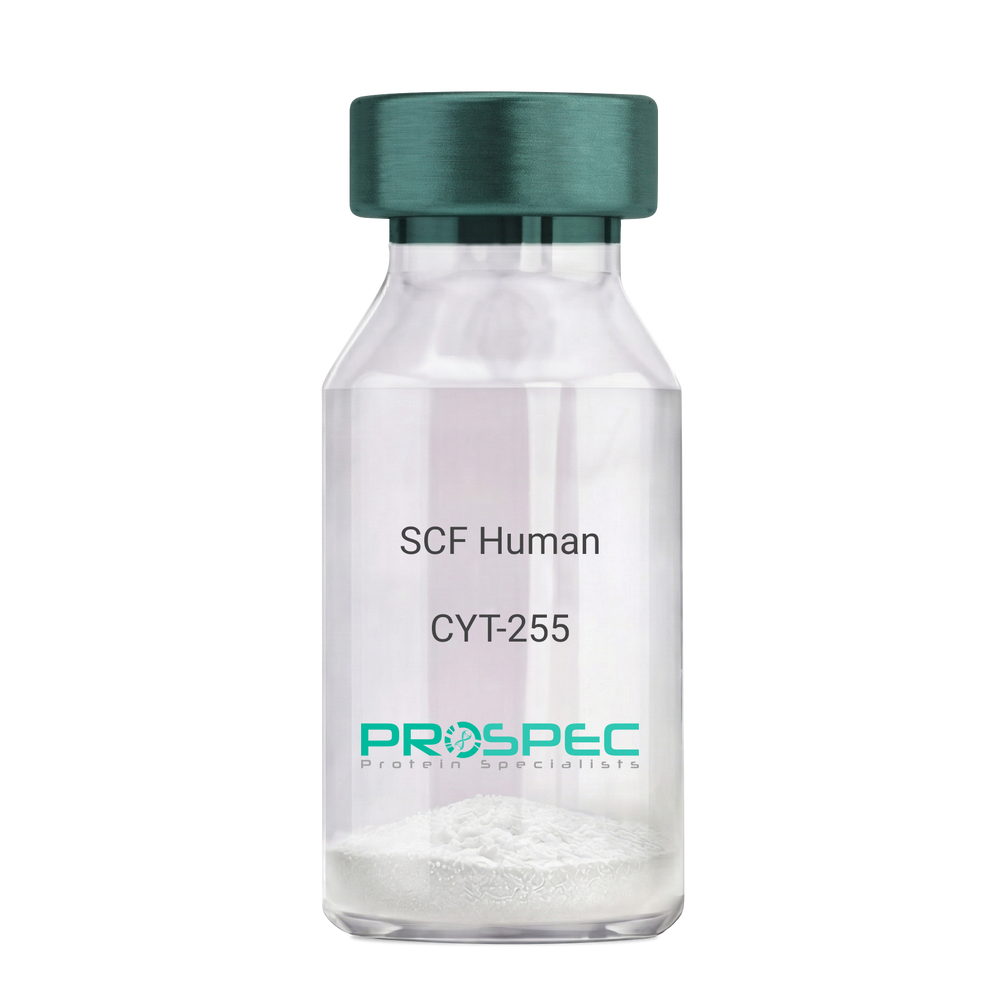
    SCF Human

    Description:

    Stem Cell Factor Human Recombinant

    Kit ligand Precursor, C-kit ligand, SCF, Mast cell growth factor, MGF, SF, KL-1, Kitl, DKFZp686F2250.

    Product # :

    CYT-255

    Price :

    Quantity :

    Shipping Method :

    Room Temp Icon

    Shipped at Room temp

    Add To Cart

    More Info

    • description
    • source
    • formulation
    • purity
    • biological activity
    • More Info

    Description

    Stem Cell Factor Human Recombinant produced in E.Coli is a single, non-glycosylated polypeptide chain containing 165 amino acids and having a molecular mass of 18409 Dalton. The SCF is purified by proprietary chromatographic techniques.

    Source

    Escherichia Coli.

    Formulation

    Lyophilized from a concentrated (1mg/ml) solution in water containing 0.02% NaHCO3.

    Purity

    Greater than 98.0% as determined by:
    (a) Analysis by SEC-HPLC.
    (b) Analysis by SDS-PAGE.

    Biological Activity

    The ED50 as determined by the dose-dependant stimulation of Human TF-1 cells is < 2 ng/ml, corresponding to a Specific Activity of 500,000 IU/mg.

    More Info

    • Introduction

      Stem cell factor / KIT ligand (SCF) is a cytokine which binds CD117(c-Kit). SCF is also known as "steel factor" or "c-kit ligand". SCF exists in two forms, cell surface bound SCF and soluble (or free) SCF. Soluble SCF is produced by the cleavage of surface bound SCF by metalloproteases. SCF is a growth factor important for the survival, proliferation, and differentiation of hematopoietic stem cells and other hematopoietic progenitor cells. One of its roles is to change the BFU-E (burst-forming unit-erythroid) cells, which are the earliest erythrocyte precursors in the erythrocytic series, into the CFU-E (colony-forming unit-erythroid).

    • Synonyms

      Kit ligand Precursor, C-kit ligand, SCF, Mast cell growth factor, MGF, SF, KL-1, Kitl, DKFZp686F2250.

    • Physical Appearance

      Sterile Filtered White lyophilized (freeze-dried) powder.

    • Stability

      Lyophilized KIT ligand although stable at room temperature for 3 weeks, should be stored desiccated below -18°C. Upon reconstitution SCF should be stored at 4°C between 2-7 days and for future use below -18°C.For long term storage it is recommended to add a carrier protein (0.1% HSA or BSA).Please prevent freeze-thaw cycles.

    • Solubility

      It is recommended to reconstitute the lyophilized Stem Cell Factor in sterile 18MΩ-cm H2O not less than 100µg/ml, which can then be further diluted to other aqueous solutions.

    • Amino Acid Sequence

      The sequence of the first five N-terminal amino acids was determined and was found to be Met-Glu-Gly-Ile-Cys.

    • Protein content

      Protein quantitation was carried out by two independent methods1. UV spectroscopy at 280 nm using the absorbency value of 0.52 as the extinction coefficient for a 0.1% (1mg/ml) solution. This value is calculated by the PC GENE computer analysis program of protein sequences (IntelliGenetics). 2. Analysis by RP-HPLC, using a standard solution of Stem Cell Factor as a Reference Standard.

    ProSpec's products are furnished for LABORATORY RESEARCH USE ONLY. The product may not be used as drugs, agricultural or pesticidal products, food additives or household chemicals.

    Scf Human
  • View Data Sheet

    Name :

    SCO1 Human

    Description:

    SCO Cytochrome Oxidase Deficient Homolog 1 Human Recombinant

    SCO1 Cytochrome C Oxidase Assembly Protein, SCOD1, SCO (Cytochrome Oxidase Deficient, Yeast) Homolog 1, SCO Cytochrome Oxidase Deficient Homolog 1 (Yeast), SCO Cytochrome Oxidase Deficient Homolog 1, Protein SCO1 Homolog, Mitochondrial, SCOD1, Protein SCO1 homolog, mitochondrial.

    Product # :

    PRO-2156

    Price :

    Quantity :

    Shipping Method :

    Ice Icon

    Shipped with Ice Packs

    Add To Cart

    More Info

    • description
    • source
    • formulation
    • purity
    • More Info

    Description

    SCO1 Human Recombinant produced in E.Coli is a single, non-glycosylated polypeptide chain containing 179 amino acids (132-301 a.a) and having a molecular mass of 20.5kDa. SCO1 is fused to a 9 amino acid His-tag at C-terminus & purified by proprietary chromatographic techniques.

    Source

    Escherichia Coli.

    Formulation

    SCO1 protein solution (1mg/ml) containing Phosphate buffered saline (pH7.4), 10% glycerol and 1mM DTT.

    Purity

    Greater than 95% as determined by SDS-PAGE.

    More Info

    • Introduction

      SCO Cytochrome Oxidase Deficient Homolog 1, also known as SCO1 is a member of the SCO1/2 family. Mammalian cytochrome c oxidase (COX) catalyzes the transfer of reducing equivalents from cytochrome c to molecular oxygen and pumps protons across the inner mitochondrial membrane. Furthermore, in yeast, two related COX assembly genes, SCO1 & SCO2 which are synthesis of cytochrome c oxidase, enable subunits 1 as well as 2 to be incorporated into the holoprotein. This gene is the human homolog to the yeast SCO1 gene. Among the diseases associated with SCO1 are hepatic failure, early-onset, neurologic disorder due to cytochrome c oxidase deficiency and fatal infantile cytochrome c oxidase deficiency.

    • Synonyms

      SCO1 Cytochrome C Oxidase Assembly Protein, SCOD1, SCO (Cytochrome Oxidase Deficient, Yeast) Homolog 1, SCO Cytochrome Oxidase Deficient Homolog 1 (Yeast), SCO Cytochrome Oxidase Deficient Homolog 1, Protein SCO1 Homolog, Mitochondrial, SCOD1, Protein SCO1 homolog, mitochondrial.

    • Physical Appearance

      Sterile filtered colorless solution.

    • Stability

      Store at 4°C if entire vial will be used within 2-4 weeks. Store, frozen at -20°C for longer periods of time. For long term storage it is recommended to add a carrier protein (0.1% HSA or BSA).Avoid multiple freeze-thaw cycles.

    • Amino Acid Sequence

      MGKPLLGGPF SLTTHTGERK TDKDYLGQWL LIYFGFTHCP DVCPEELEKM IQVVDEIDSI TTLPDLTPLF ISIDPERDTK EAIANYVKEF SPKLVGLTGT REEVDQVARA YRVYYSPGPK DEDEDYIVDH TIIMYLIGPD GEFLDYFGQN KRKGEIAASI ATHMRPYRKK SLEHHHHHH.

    ProSpec's products are furnished for LABORATORY RESEARCH USE ONLY. The product may not be used as drugs, agricultural or pesticidal products, food additives or household chemicals.

    Sco1 Human
  • View Data Sheet

    Name :

    DnaJ Human

    Description:

    DnaJ (HSP40) Human Recombinant

    HSP-40, HSP40, DnaJ, DNAJB1, HSPF1, Hdj1, DnaJ homolog subfamily B member 1, Heat shock 40 kDa protein 1, Heat shock protein 40, DnaJ protein homolog 1, HDJ-1, Sis1.

    Product # :

    HSP-012

    Price :

    Quantity :

    Shipping Method :

    Ice Icon

    Shipped with Ice Packs

    Add To Cart

    More Info

    • description
    • source
    • formulation
    • purity
    • More Info

    Description

    HSP40 Human Recombinant produced in E.Coli is a single, non-glycosylated polypeptide chain (aa 1-340) and fused to a 20 aa His Tag at N-terminus, containing a total of 360 amino acids and having a molecular mass of 40.2 kDa. The HSP40 is purified by proprietary chromatographic techniques.

    Source

    Escherichia Coli.

    Formulation

    The protein solution contains 20mM Tris-HCl (pH 8.0), 2mM DTT, 0.2mM PMSF and 10% glycerol.

    Purity

    Greater than 95.0% as determined by SDS-PAGE.

    More Info

    • Introduction

      Human HSP40 (heat shock protein with molecular size of 40kDa) is one of the mammalian homologues of bacterial DnaJ heat shock protein and regulates cellular processes by aiding in the folding, transport and assembly. HSP40 protein contains the J-domain which controls interaction with the ATPase domain of DnaK.

    • Synonyms

      HSP-40, HSP40, DnaJ, DNAJB1, HSPF1, Hdj1, DnaJ homolog subfamily B member 1, Heat shock 40 kDa protein 1, Heat shock protein 40, DnaJ protein homolog 1, HDJ-1, Sis1.

    • Physical Appearance

      Sterile Filtered colorless solution.

    • Stability

      Store at 4°C if entire vial will be used within 2-4 weeks. Store, frozen at -20°C for longer periods of time. For long term storage it is recommended to add a carrier protein (0.1% HSA or BSA).Avoid multiple freeze-thaw cycles.

    • Amino Acid Sequence

      MGSSHHHHHH SSGLVPRGSH MGKDYYQTLG LARGASDEEI KRAYRRQALR YHPDKNKEPG AEEKFKEIAE AYDVLSDPRK REIFDRYGEE GLKGSGPSGG SGGGANGTSF SYTFHGDPHAMFAEFFGGRN PFDTFFGQRN GEEGMDIDDP FSGFPMGMGG FTNVNFGRSR SAQEPARKKQ DPPVTHDLRV SLEEIYSGCT KKMKISHKRL NPDGKSIRNE DKILTIEVKK GWKEGTKITF PKEGDQTSNN IPADIVFVLK DKPHNIFKRD GSDVIYPARI SLREALCGCT VNVPTLDGRT IPVVFKDVIR PGMRRKVPGE GLPLPKTPEK RGDLIIEFEV IFPERIPQTS RTVLEQVLPI.

    ProSpec's products are furnished for LABORATORY RESEARCH USE ONLY. The product may not be used as drugs, agricultural or pesticidal products, food additives or household chemicals.

    Dnaj Human
  • View Data Sheet

    Name :

    APOH Human, sf9

    Description:

    Apolipoprotein-H Human Recombinant, Sf9

    Beta-2-glycoprotein 1, Beta-2-glycoprotein I, Apolipoprotein H, Apo-H, B2GPI, Beta(2)GPI, Activated protein C-binding protein, APC inhibitor, Anticardiolipin cofactor, APOH, B2G1, BG, B2GP-1, B2 Glycoprotein-I.

    Product # :

    PRO-388

    Price :

    Quantity :

    Shipping Method :

    Ice Icon

    Shipped with Ice Packs

    Add To Cart

    More Info

    • description
    • source
    • formulation
    • purity
    • More Info

    Description

    Apolipoprotein-H Human Recombinant produced in SF9 is a glycosylated, polypeptide chain containing 326 amino acids and having a molecular mass of 38,200 Dalton (excluding glycosylation), 45kDa total mass. APOH is expressed with a -6xHis tag and purified by proprietary chromatographic techniques.

    Source

    Sf9 insect cells.

    Formulation

    APOH is supplied in 16mM HEPES buffer pH-7.2, 200mM NaCl and 20% glycerol.

    Purity

    Greater than 95% as determined by SDS-PAGE.

    More Info

    • Introduction

      Apolipoprotein H (APOH) attaches to numerous kinds of negatively charged substances for instance heparin, phospholipids, and dextran sulfate. APOH prevents activation of the intrinsic blood coagulation cascade by attaching to phospholipids on the surface of damaged cells. APOH expressed by the liver and secreted in the plasma.

    • Synonyms

      Beta-2-glycoprotein 1, Beta-2-glycoprotein I, Apolipoprotein H, Apo-H, B2GPI, Beta(2)GPI, Activated protein C-binding protein, APC inhibitor, Anticardiolipin cofactor, APOH, B2G1, BG, B2GP-1, B2 Glycoprotein-I.

    • Physical Appearance

      Sterile Filtered clear solution.

    • Stability

      Store at 4°C if entire vial will be used within 2-4 weeks. Store, frozen at -20°C for longer periods of time. Avoid multiple freeze-thaw cycles.

    ProSpec's products are furnished for LABORATORY RESEARCH USE ONLY. The product may not be used as drugs, agricultural or pesticidal products, food additives or household chemicals.

    Apoh Sf9 Human
  • View Data Sheet

    Name :

    ATG4B Human

    Description:

    ATG4 Autophagy Related 4 Homolog B Human Recombinant

    Cysteine protease ATG4B, AUT-like 1 cysteine endopeptidasem, Autophagin-1, Autophagy-related cysteine endopeptidase 1, Autophagy-related protein 4 homolog B, hAPG4B, ATG4B, APG4B, AUTL1, KIAA0943.

    Product # :

    PRO-1048

    Price :

    Quantity :

    Shipping Method :

    Ice Icon

    Shipped with Ice Packs

    Add To Cart

    More Info

    • description
    • source
    • formulation
    • purity
    • More Info

    Description

    ATG4B Human Recombinant produced in E.Coli is a single, non-glycosylated polypeptide chain containing 401 amino acids (1-393 a.a.) and having a molecular mass of 45.4kDa.ATG4B is fused to an 8 amino acid His-tag at C-terminus & purified by proprietary chromatographic techniques.

    Source

    Escherichia Coli.

    Formulation

    ATG4B protein solution (0.5mg/ml) containing 20mM Tris-HCl buffer (pH8.0), 20% glycerol, 1mM DTT and 0.1mM PMSF.

    Purity

    Greater than 90.0% as determined by SDS-PAGE.

    More Info

    • Introduction

      Cysteine protease ATG4B (ATG4B) belongs to the autophagin protein family. Autophagy is the manner by which endogenous proteins and damaged organelles are destroyed intracellularly. Autophagy is vital for cell homeostasis and cell remodeling during differentiation, metamorphosis, non-apoptotic cell death, and aging. ATG4B is a cysteine protease necessary for autophagy, which cleaves the C-terminal part of either MAP1LC3, GABARAPL2 or GABARAP, allowing the liberation of form I. A subpopulation of form I is then transformed to a smaller form (form II). Form II, with an exposed C-terminal glycine, is deemed to be the phosphatidylethanolamine (PE)-conjugated form, and is capable of binding to autophagosomes. Reduced levels of autophagy are seen in some malignant tumors; therefore autophagy may have a role in controlling the unregulated cell growth linked to cancer.

    • Synonyms

      Cysteine protease ATG4B, AUT-like 1 cysteine endopeptidasem, Autophagin-1, Autophagy-related cysteine endopeptidase 1, Autophagy-related protein 4 homolog B, hAPG4B, ATG4B, APG4B, AUTL1, KIAA0943.

    • Physical Appearance

      Sterile Filtered clear solution.

    • Stability

      Store at 4°C if entire vial will be used within 2-4 weeks. Store, frozen at -20°C for longer periods of time. For long term storage it is recommended to add a carrier protein (0.1% HSA or BSA).Avoid multiple freeze-thaw cycles.

    • Amino Acid Sequence

      MDAATLTYDT LRFAEFEDFP ETSEPVWILG RKYSIFTEKD EILSDVASRL WFTYRKNFPA IGGTGPTSDT GWGCMLRCGQ MIFAQALVCR HLGRDWRWTQ RKRQPDSYFS VLNAFIDRKD SYYSIHQIAQ MGVGEGKSIG QWYGPNTVAQ VLKKLAVFDT WSSLAVHIAM DNTVVMEEIR RLCRTSVPCA GATAFPADSD RHCNGFPAGA EVTNRPSPWR PLVLLIPLRL GLTDINEAYV ETLKHCFMMP QSLGVIGGKP NSAHYFIGYV GEELIYLDPH TTQPAVEPTD GCFIPDESFH CQHPPCRMSI AELDPSIAVG FFCKTEDDFN DWCQQVKKLS LLGGALPMFE LVEQQPSHLA CPDVLNLSLD SSDVERLERF FDSEDEDFEI LSLLEHHHHH H.

    ProSpec's products are furnished for LABORATORY RESEARCH USE ONLY. The product may not be used as drugs, agricultural or pesticidal products, food additives or household chemicals.

    Atg4B Human
  • View Data Sheet

    Name :

    P4HB Human

    Description:

    Prolyl 4-Hydroxylase Beta Human Recombinant

    P4Hbeta, PDI, PDIA1, PHD, PO4DB, PO4HB, ERBA2L.

    Product # :

    ENZ-252

    Price :

    Quantity :

    Shipping Method :

    Ice Icon

    Shipped with Ice Packs

    Add To Cart

    More Info

    • description
    • source
    • formulation
    • purity
    • More Info

    Description

    P4HB Human Recombinant produced in E.Coli is a single, non-glycosylated polypeptide chain containing 512 amino acids (18-508 a.a.) and having a molecular mass of 57.5 kDa. The P4HB is fused to a 21 amino acid His Tag and purified by conventional chromatography.

    Source

    Escherichia Coli.

    Formulation

    The P4HB 1mg/ml protein solution contains 20mM Tris-HCl pH-8, and 10% glycerol.

    Purity

    Greater than 90.0% as determined by SDS-PAGE.

    More Info

    • Introduction

      P4HB is a multifunctional and highly abundant enzyme that is part of the protein disulfide isomerase family. When present as a tetramer consisting of two alpha and two beta subunits, P4HB has a role in hydroxylation of prolyl residues in preprocollagen. P4HB is a disulfide isomerase containing two thioredoxin domains that catalyze the formation, breakage and rearrangement of disulfide bonds.

    • Synonyms

      P4Hbeta, PDI, PDIA1, PHD, PO4DB, PO4HB, ERBA2L.

    • Physical Appearance

      Sterile Filtered colorless solution.

    • Stability

      Store at 4°C if entire vial will be used within 2-4 weeks. Store, frozen at -20°C for longer periods of time. For long term storage it is recommended to add a carrier protein (0.1% HSA or BSA). Avoid multiple freeze-thaw cycles.

    • Amino Acid Sequence

      MGSSHHHHHH SSGLVPRGSH MDAPEEEDHV LVLRKSNFAE ALAAHKYLLV EFYAPWCGHC KALAPEYAKA AGKLKAEGSE IRLAKVDATE ESDLAQQYGV RGYPTIKFFR NGDTASPKEY TAGREADDIV NWLKKRTGPA ATTLPDGAAA ESLVESSEVA VIGFFKDVES DSAKQFLQAA
      EAIDDIPFGI TSNSDVFSKY QLDKDGVVLF KKFDEGRNNF EGEVTKENLL DFIKHNQLPL VIEFTEQTAP KIFGGEIKTH ILLFLPKSVS DYDGKLSNFK TAAESFKGKI LFIFIDSDHT DNQRILEFFG LKKEECPAVR LITLEEEMTK YKPESEELTA ERITEFCHRF LEGKIKPHLM
      SQELPEDWDK QPVKVLVGKN FEDVAFDEKK NVFVEFYAPW CGHCKQLAPI WDKLGETYKD HENIVIAKMD STANEVEAVK VHSFPTLKFF PASADRTVID YNGERTLDGF KKFLESGGQD GAGDDDDLED LEEAEEPDME EDDDQKAVKD EL.

    ProSpec's products are furnished for LABORATORY RESEARCH USE ONLY. The product may not be used as drugs, agricultural or pesticidal products, food additives or household chemicals.

    P4Hb Human
  • View Data Sheet

    Name :

    PRKACB Human

    Description:

    Protein Kinase CAMP-Dependent Catalytic Beta Human Recombinant

    Protein Kinase CAMP-Dependent Catalytic Beta, PKA C-Beta, EC 2.7.11.11, PKACB, CAMP-Dependent Protein Kinase Catalytic Beta Subunit Isoform 4ab, CAMP-Dependent Protein Kinase Catalytic Subunit Beta, Protein Kinase A Catalytic Subunit Beta, EC 2.7.11, PRKACB.

    Product # :

    PKA-366

    Price :

    Quantity :

    Shipping Method :

    Ice Icon

    Shipped with Ice Packs

    Add To Cart

    More Info

    • description
    • source
    • formulation
    • purity
    • More Info

    Description

    PRKACB Human Recombinant produced in E.coli is a single, non-glycosylated polypeptide chain containing 421 amino acids (1-398) and having a molecular mass of 48.6kDa. PRKACB is fused to a 23 amino acid His-tag at N-terminus & purified by proprietary chromatographic techniques.

    Source

    Escherichia Coli.

    Formulation

    The PRKACB solution (1mg/ml) contains 20mM Tris-HCl buffer (pH 8.0), 0.4M Urea and 10% glycerol.

    Purity

    Greater than 80.0% as determined by SDS-PAGE.

    More Info

    • Introduction

      Protein Kinase CAMP-Dependent Catalytic Beta (PRKACB) belongs to the Ser/Thr protein kinase family and is a catalytic subunit of cAMP-dependent protein kinase. cAMP is a signaling molecule imperative for various cellular functions. cAMP activates the cAMP-dependent protein kinase, which transduces the signal by way of phosphorylation of different target proteins. The inactive kinase holoenzyme is a tetramer composed of 2 regulatory and 2 catalytic subunits. cAMP triggers the dissociation of the inactive holoenzyme into a dimer of regulatory subunits bound to 4 cAMP and 2 free monomeric catalytic subunits. PRKACB mediates cAMP-dependent signaling initiated by receptor binding to GPCRs. PKA activation regulates various cellular processes such as cell proliferation, the cell cycle, differentiation and regulation of microtubule dynamics, chromatin condensation and decondensation, nuclear envelope disassembly and reassembly, in addition to regulation of intracellular transport mechanisms and ion flux. PRKACB regulates the abundance of compartmentalized pools of its regulatory subunits via phosphorylation of PJA2 which binds and ubiquitinates these subunits, leading to their consequent proteolysis.

    • Synonyms

      Protein Kinase CAMP-Dependent Catalytic Beta, PKA C-Beta, EC 2.7.11.11, PKACB, CAMP-Dependent Protein Kinase Catalytic Beta Subunit Isoform 4ab, CAMP-Dependent Protein Kinase Catalytic Subunit Beta, Protein Kinase A Catalytic Subunit Beta, EC 2.7.11, PRKACB.

    • Physical Appearance

      Sterile Filtered colorless solution.

    • Stability

      Store at 4°C if entire vial will be used within 2-4 weeks. Store, frozen at -20°C for longer periods of time. For long term storage it is recommended to add a carrier protein (0.1% HSA or BSA).Avoid multiple freeze-thaw cycles.

    • Amino Acid Sequence

      MGSSHHHHHH SSGLVPRGSH MGSMAAYREP PCNQYTGTTT ALQKLEGFAS RLFHRHSKGT AHDQKTALEN DSLHFSEHTA LWDRSMKEFL AKAKEDFLKK WENPTQNNAG LEDFERKKTL GTGSFGRVML VKHKATEQYY AMKILDKQKV VKLKQIEHTL NEKRILQAVN FPFLVRLEYA FKDNSNLYMV MEYVPGGEMF SHLRRIGRFS EPHARFYAAQ IVLTFEYLHS LDLIYRDLKP ENLLIDHQGY IQVTDFGFAK RVKGRTWTLC GTPEYLAPEI ILSKGYNKAV DWWALGVLIY EMAAGYPPFF ADQPIQIYEK IVSGKVRFPS HFSSDLKDLL RNLLQVDLTK RFGNLKNGVS DIKTHKWFAT TDWIAIYQRK VEAPFIPKFR GSGDTSNFDD YEEEDIRVSI TEKCAKEFGE F.

    ProSpec's products are furnished for LABORATORY RESEARCH USE ONLY. The product may not be used as drugs, agricultural or pesticidal products, food additives or household chemicals.

    Prkacb Human
  • View Data Sheet

    Name :

    GNB3 Human

    Description:

    Guanine Nucleotide Binding Protein Beta Polypeptide 3 Human Recombinant

    Transducin Beta Chain 3, G Protein, Beta-3 Subunit, GTP-Binding Regulatory Protein Beta-3 Chain, Guanine Nucleotide-Binding Protein G(I)/G(S)/G(T) Beta Subunit 3, Guanine Nucleotide-Binding Protein G(I)/G(S)/G(T) Subunit Beta-3, Hypertension Associated Protein, Guanine Nucleotide Binding Protein (G Protein), Beta Polypeptide 3, GNB3.

    Product # :

    PRO-332

    Price :

    Quantity :

    Shipping Method :

    Ice Icon

    Shipped with Ice Packs

    Add To Cart

    More Info

    • description
    • source
    • formulation
    • purity
    • More Info

    Description

    GNB3 Human Recombinant produced in E.Coli is a single, non-glycosylated polypeptide chain containing 363 amino acids (1-340 a.a) and having a molecular mass of 39.6kDa.GNB3 is fused to a 23 amino acid His-tag at N-terminus & purified by proprietary chromatographic techniques.

    Source

    Escherichia Coli.

    Formulation

    GNB3 protein solution (0.5mg/ml) containing 20mM Tris-HCl buffer (pH8.0), 10% glycerol and 0.4M Urea.

    Purity

    Greater than 80.0% as determined by SDS-PAGE.

    More Info

    • Introduction

      GNB3 belongs to the WD repeat G protein beta family. GNB3 is an important regulator of alpha subunit, as well as of certain signal transduction receptor and effector. A single-nucleotide polymorphism (C825T) in GNB3 is linked with essential hypertension and obesity. In addition, this polymorphism is also linked with the occurrence of the splice variant GNB3-s, which seems to have increased activity. GNB3-s is an example of alternative splicing caused by a nucleotide change outside of the splice donor and acceptor sites. Further splice variants may exist for GNB3, however they have not been fully described. Among the diseases associated with GNB3 are syncope, and aortic coarctation.

    • Synonyms

      Transducin Beta Chain 3, G Protein, Beta-3 Subunit, GTP-Binding Regulatory Protein Beta-3 Chain, Guanine Nucleotide-Binding Protein G(I)/G(S)/G(T) Beta Subunit 3, Guanine Nucleotide-Binding Protein G(I)/G(S)/G(T) Subunit Beta-3, Hypertension Associated Protein, Guanine Nucleotide Binding Protein (G Protein), Beta Polypeptide 3, GNB3.

    • Physical Appearance

      Sterile Filtered clear solution.

    • Stability

      Store at 4°C if entire vial will be used within 2-4 weeks. Store, frozen at -20°C for longer periods of time. For long term storage it is recommended to add a carrier protein (0.1% HSA or BSA).Avoid multiple freeze-thaw cycles.

    • Amino Acid Sequence

      MGSSHHHHHH SSGLVPRGSH MGSMGEMEQL RQEAEQLKKQ IADARKACAD VTLAELVSGL EVVGRVQMRT RRTLRGHLAK IYAMHWATDS KLLVSASQDG KLIVWDSYTT NKVHAIPLRS SWVMTCAYAP SGNFVACGGL DNMCSIYNLK SREGNVKVSR ELSAHTGYLS CCRFLDDNNI VTSSGDTTCA LWDIETGQQK TVFVGHTGDC MSLAVSPDFN LFISGACDAS AKLWDVREGT CRQTFTGHES DINAICFFPN GEAICTGSDD ASCRLFDLRA DQELICFSHE SIICGITSVA FSLSGRLLFA GYDDFNCNVW DSMKSERVGI LSGHDNRVSC LGVTADGMAV ATGSWDSFLK IWN.

    ProSpec's products are furnished for LABORATORY RESEARCH USE ONLY. The product may not be used as drugs, agricultural or pesticidal products, food additives or household chemicals.

    Gnb3 Human
  • View Data Sheet

    Name :

    GPNMB Human

    Description:

    Glycoprotein Nmb Human Recombinant

    Transmembrane glycoprotein NMB, Transmembrane glycoprotein HGFIN, GPNMB, HGFIN, NMB, Glycoprotein (transmembrane) nmb.

    Product # :

    PRO-1666

    Price :

    Quantity :

    Shipping Method :

    Ice Icon

    Shipped with Ice Packs

    Add To Cart

    More Info

    • description
    • source
    • formulation
    • purity
    • More Info

    Description

    GPNMB Human Recombinant produced in E.coli is a single, non-glycosylated polypeptide chain containing 476 amino acids (22-474) and having a molecular mass of 53.2 kDa.GPNMB is fused to a 23 amino acid His-tag at N-terminus & purified by proprietary chromatographic techniques.

    Source

    Escherichia Coli.

    Formulation

    The GPNMB solution (1mg/ml) contains 20mM Tris-HCl buffer (pH 8.0), 0.4M urea and 10% glycerol.

    Purity

    Greater than 85.0% as determined by SDS-PAGE.

    More Info

    • Introduction

      Glycoprotein Nmb (GPNMB) is a member of the PMEL/NMB family. GPNMB is a type I transmembrane glycoprotein which exhibits homology to the pMEL17 precursor, a melanocyte-specific protein. GPNMB is expressed in the lowly metastatic human melanoma cell lines and xenografts but has no expression in the highly metastatic cell lines. GPNMB might be involved in growth delay and reduction of metastatic potential. GPNMB is up-regulated in a number of cancer cells, including in glioblastoma multiforme. GPNMB is expressed in many melanoma cells, as well as in tissue macrophages, including liver Kuppfer cells and lung alveolar macrophages, in podocytes and in some cells of the ciliary body of the eye (at protein level). GPNMB is hardly detectable in the healthy brain.

    • Synonyms

      Transmembrane glycoprotein NMB, Transmembrane glycoprotein HGFIN, GPNMB, HGFIN, NMB, Glycoprotein (transmembrane) nmb.

    • Physical Appearance

      Sterile Filtered colorless solution.

    • Stability

      Store at 4°C if entire vial will be used within 2-4 weeks. Store, frozen at -20°C for longer periods of time. For long term storage it is recommended to add a carrier protein (0.1% HSA or BSA).Avoid multiple freeze-thaw cycles.

    • Amino Acid Sequence

      MGSSHHHHHH SSGLVPRGSH MGSAKRFHDV LGNERPSAYM REHNQLNGWS SDENDWNEKL YPVWKRGDMR WKNSWKGGRV QAVLTSDSPA LVGSNITFAV NLIFPRCQKE DANGNIVYEK NCRNEAGLSA DPYVYNWTAW SEDSDGENGT GQSHHNVFPD GKPFPHHPGW RRWNFIYVFH TLGQYFQKLG RCSVRVSVNT ANVTLGPQLM EVTVYRRHGR AYVPIAQVKD VYVVTDQIPV FVTMFQKNDR NSSDETFLKD LPIMFDVLIH DPSHFLNYST INYKWSFGDN TGLFVSTNHT VNHTYVLNGT FSLNLTVKAA APGPCPPPPP PPRPSKPTPS LGPAGDNPLE LSRIPDENCQ INRYGHFQAT ITIVEGILEV NIIQMTDVLM PVPWPESSLI DFVVTCQGSI PTEVCTIISD PTCEITQNTV CSPVDVDEMC LLTVRRTFNG SGTYCVNLTL GDDTSLALTS TLISVP.

    ProSpec's products are furnished for LABORATORY RESEARCH USE ONLY. The product may not be used as drugs, agricultural or pesticidal products, food additives or household chemicals.

    Gpnmb Human
  • View Data Sheet

    Name :

    CKS1B Human

    Description:

    CDC28 Protein Kinase Regulatory Subunit 1B Human Recombinant

    CDC28 Protein Kinase Regulatory Subunit 1B, CDC28 Protein Kinase 1B, Cyclin-Dependent Kinases Regulatory Subunit 1, NB4 Apoptosis/Differentiation Related Protein, CDC2-Associated Protein CKS1, Cell Division Control Protein CKS1, CDC28 Protein Kinase 1, PNAS-143, PNAS-16, PNAS-18, CKS-1, ckshs1.

    Product # :

    PRO-1834

    Price :

    Quantity :

    Shipping Method :

    Ice Icon

    Shipped with Ice Packs

    Add To Cart

    More Info

    • description
    • source
    • formulation
    • purity
    • More Info

    Description

    CKS1B Human Recombinant produced in E.coli is a single, non-glycosylated polypeptide chain containing 102 amino acids (1-79) and having a molecular mass of 12.0 kDa. CKS1B is fused to a 23 amino acid His-tag at N-terminus.

    Source

    Escherichia Coli.

    Formulation

    The CKS1B solution (1mg/ml) contains 20mM Tris-HCl buffer (pH 8.0), 1mM DTT, 150mM NaCl and 20% glycerol.

    Purity

    Greater than 95% as determined by SDS-PAGE.

    More Info

    • Introduction

      CKS1B protein which binds to the catalytic subunit of cyclin dependent kinases is vital for their biological function. The CKS1B mRNA is expressed in HeLa cells during the course of cell cycle in several forms which suggests that the encoded protein has a particular function. Two transcript variants were identified for this gene however it seems that only one of them encodes a protein.

    • Synonyms

      CDC28 Protein Kinase Regulatory Subunit 1B, CDC28 Protein Kinase 1B, Cyclin-Dependent Kinases Regulatory Subunit 1, NB4 Apoptosis/Differentiation Related Protein, CDC2-Associated Protein CKS1, Cell Division Control Protein CKS1, CDC28 Protein Kinase 1, PNAS-143, PNAS-16, PNAS-18, CKS-1, ckshs1.

    • Physical Appearance

      Sterile Filtered clear solution.

    • Stability

      Store at 4°C if entire vial will be used within 2-4 weeks. Store, frozen at -20°C for longer periods of time. For long term storage it is recommended to add a carrier protein (0.1% HSA or BSA).Avoid multiple freeze-thaw cycles.

    • Amino Acid Sequence

      MGSSHHHHHH SSGLVPRGSH MGSMSHKQIY YSDKYDDEEF EYRHVMLPKD IAKLVPKTHL MSESEWRNLG VQQSQGWVHY MIHEPEPHIL LFRRPLPKKP KK

    ProSpec's products are furnished for LABORATORY RESEARCH USE ONLY. The product may not be used as drugs, agricultural or pesticidal products, food additives or household chemicals.

    Cks1B Human
  • View Data Sheet

    Name :

    GRXB E.Coli

    Description:

    Glutaredoxin-2 E.Coli Recombinant

    Glutaredoxin-2, Grx2, grxB, b1064, JW1051.

    Product # :

    ENZ-130

    Price :

    Quantity :

    Shipping Method :

    Ice Icon

    Shipped with Ice Packs

    Add To Cart

    More Info

    • description
    • source
    • formulation
    • purity
    • More Info

    Description

    GRXB produced in E.Coli is a single, non-glycosylated polypeptide chain containing 235 amino acids (1-215 a.a.) and having a molecular mass of 26.5kDa.GRXB is fused to a 20 amino acid His-tag at N-terminus & purified by proprietary chromatographic techniques.

    Source

    Escherichia Coli.

    Formulation

    GRXB protein solution (1mg/ml) 20mM Tris-HCl buffer (pH 8.0), 1mM DTT, 10% glycerol and 50mM NaCl.

    Purity

    Greater than 95% as determined by SDS-PAGE.

    More Info

    • Introduction

      Glutaredoxin-2 (GrxB) is amember of the glutaredoxin family. Glutaredoxins are small redox enzymes of approximately 100 amino-acid residues which use glutathione as a cofactor. Glutaredoxins are oxidized by substrates, and reduced non-enzymatically by glutathione. GrxB is involved in reducing some disulfides in a coupled system with glutathione reductase. GrxB doesn’t act as hydrogen donor for ribonucleotide reductase.

    • Synonyms

      Glutaredoxin-2, Grx2, grxB, b1064, JW1051.

    • Physical Appearance

      Sterile filtered colorless solution.

    • Stability

      Store at 4°C if entire vial will be used within 2-4 weeks.Store, frozen at -20°C for longer periods of time. For long term storage it is recommended to add a carrier protein (0.1% HSA or BSA).Avoid multiple freeze-thaw cycles.

    • Amino Acid Sequence

      MGSSHHHHHH SSGLVPRGSH MKLYIYDHCP YCLKARMIFG LKNIPVELHV LLNDDAETPT RMVGQKQVPI LQKDDSRYMP ESMDIVHYVD KLDGKPLLTG KRSPAIEEWL RKVNGYANKL LLPRFAKSAF DEFSTPAARK YFVDKKEASA GNFADLLAHS DGLIKNISDD LRALDKLIVK PNAVNGELSE DDIQLFPLLR NLTLVAGINW PSRVADYRDN MAKQTQINLL SSMAI.

    ProSpec's products are furnished for LABORATORY RESEARCH USE ONLY. The product may not be used as drugs, agricultural or pesticidal products, food additives or household chemicals.

    Grxb Ecoli
  • View Data Sheet

    Name :

    VAMP3 Human

    Description:

    Synaptobrevin-3 Human Recombinant

    VAMP3, VAMP-3, Cellubrevin, Vesicle-Associated Membrane Protein 3, Synaptobrevin-3, CEB, SYB3.

    Product # :

    PRO-652

    Price :

    Quantity :

    Shipping Method :

    Ice Icon

    Shipped with Ice Packs

    Add To Cart

    More Info

    • description
    • source
    • formulation
    • purity
    • More Info

    Description

    VAMP3 Human Recombinant produced in E.Coli is a single, non-glycosylated polypeptide chain containing 77 amino acids and having a molecular mass of 8.7 kDa.

    Source

    Escherichia Coli.

    Formulation

    The VAMP3 protein solution contains 20mM Tris pH-7.5 and 10% glycerol.

    Purity

    Greater than 95.0% as determined by:
    (a) Analysis by RP-HPLC.
    (b) Analysis by SDS-PAGE.

    More Info

    • Introduction

      VAMP3 is present in recycling endosomes and endosome-derived vesicles. VAMP3 has been implicated in recycling of transferrin receptors to the plasma membrane, secretion of alpha-granules in platelets, recycling of T-cell receptors to the immunological synapses, and membrane trafficking during cell migration. VAMP-3 is present in human platelets and necessary for granule secretion. Synaptobrevins are the main components of a protein complex involved in the docking and/or fusion of synaptic vesicles with the presynaptic membrane. VAMP3 high homology to other VAMPs in its broad tissue distribution and subcellular localization is shown to be the human equivalent of the rodent cellubrevin. In platelets the protein resides on a compartment that is not mobilized to the plasma membrane on calcium or thrombin stimulation.

    • Synonyms

      VAMP3, VAMP-3, Cellubrevin, Vesicle-Associated Membrane Protein 3, Synaptobrevin-3, CEB, SYB3.

    • Physical Appearance

      Sterile Filtered colorless solution.

    • Stability

      Store at 4°C if entire vial will be used within 2-4 weeks. Store, frozen at -20°C for longer periods of time. For long term storage it is recommended to add a carrier protein (0.1% HSA or BSA).Avoid multiple freeze-thaw cycles.

    • Amino Acid Sequence

      MSTGPTAATG SNRRLQQTQN QVDEVVDIMR VNVDKVLERD QKLSELDDRA DALQAGASQF ETSAAKLKRK YWWKNCK.

    ProSpec's products are furnished for LABORATORY RESEARCH USE ONLY. The product may not be used as drugs, agricultural or pesticidal products, food additives or household chemicals.

    Vamp3 Human
  • View Data Sheet

    Name :

    MAPKSP1 Human

    Description:

    MAPK Scaffold Protein 1 Human Recombinant

    MAPBP, MP1, MAPK Scaffold Protein 1, Interacting Protein 1, MEK binding partner 1, Mitogen-Activated Protein Kinase kinase 1.

    Product # :

    PRO-034

    Price :

    Quantity :

    Shipping Method :

    Ice Icon

    Shipped with Ice Packs

    Add To Cart

    More Info

    • description
    • source
    • formulation
    • purity
    • More Info

    Description

    MAPKSP1 produced in E.Coli is a single, non-glycosylated polypeptide chain containing 144 amino acids (1-124a.a.) and having a molecular mass of 15.8kDa.MAPKSP1 is fused to a 20 amino acid His-tag at N-terminus & purified by proprietary chromatographic techniques.

    Source

    Escherichia Coli.

    Formulation

    The MAPKSP1 protein solution (0.5mg/1ml) is formulated in 20mM Tris-HCl buffer (pH8.0) 5mM DTT, 100mM NaCl and 20% glycerol.

    Purity

    Greater than 95% as determined by SDS-PAGE.

    More Info

    • Introduction

      MAPKSP1 is a scaffold protein which operates in the extracellular signal-regulated kinase (ERK) cascade. MAPKSP1 protein is restricted to late endosomes by the mitogen-activated protein-binding protein-interacting protein, and binds specifically to MAP kinase kinase MAP2K1/MEK1, MAP kinase MAPK3/ERK1, and MAP kinase MAPK1/ERK2.

    • Synonyms

      MAPBP, MP1, MAPK Scaffold Protein 1, Interacting Protein 1, MEK binding partner 1, Mitogen-Activated Protein Kinase kinase 1.

    • Physical Appearance

      Sterile Filtered clear solution.

    • Stability

      Store at 4°C if entire vial will be used within 2-4 weeks. Store, frozen at -20°C for longer periods of time.Please avoid freeze thaw cycles.

    • Amino Acid Sequence

      MGSSHHHHHH SSGLVPRGSH MADDLKRFLY KKLPSVEGLH AIVVSDRDGV PVIKVANDNA PEHALRPGFL STFALATDQG SKLGLSKNKS IICYYNTYQV VQFNRLPLVV SFIASSSANT GLIVSLEKEL APLFEELRQV VEVS

    ProSpec's products are furnished for LABORATORY RESEARCH USE ONLY. The product may not be used as drugs, agricultural or pesticidal products, food additives or household chemicals.

    Mapksp1 Human
  • View Data Sheet

    Name :

    SEPT2 Human

    Description:

    Septin-2 Human Recombinant

    Septin 2, DIFF6, NEDD5, hNedd5, Pnutl3, NEDD-5.

    Product # :

    PRO-255

    Price :

    Quantity :

    Shipping Method :

    Ice Icon

    Shipped with Ice Packs

    Add To Cart

    More Info

    • description
    • source
    • formulation
    • purity
    • More Info

    Description

    SEPT2 Human Recombinant produced in E.Coli is a single, non-glycosylated, polypeptide chain containing 381 amino acids (1-361 a.a.) and having a molecular mass of 43.6kDa. SEPT2 is fused to a 20 amino acid His Tag at N-terminus and purified by proprietary chromatographic techniques.

    Source

    Escherichia Coli.

    Formulation

    SEPT2 solution (0.25mg/1ml) containing 20mM Tris-HCl buffer (pH8.0), 0.1M NaCl, 1mM DTT and 10% glycerol.

    Purity

    Greater than 90% as determined by SDS-PAGE.

    More Info

    • Introduction

      SEPT2 is a GTPase which is mandatory for cytokinesis and related to exocytosis. Septin-2 protein is able to hetero-oligomerize with Septin6, 7 and in addition takes part in the organization of new growth in organisms. SEPT2 is associated with a Tau-based paired helical filament core and contributes to the creation of neurofibrillary tangle as integral constituents of paired helical filaments.

    • Synonyms

      Septin 2, DIFF6, NEDD5, hNedd5, Pnutl3, NEDD-5.

    • Physical Appearance

      Sterile filtered colorless solution.

    • Stability

      Store at 4°C if entire vial will be used within 2-4 weeks. Store, frozen at -20°C for longer periods of time. For long term storage it is recommended to add a carrier protein (0.1% HSA or BSA).Avoid multiple freeze-thaw cycles.

    • Amino Acid Sequence

      MGSSHHHHHH SSGLVPRGSH MSKQQPTQFI NPETPGYVGF ANLPNQVHRK SVKKGFEFTL MVVGESGLGK STLINSLFLT DLYPERVISG AAEKIERTVQ IEASTVEIEE RGVKLRLTVV DTPGYGDAIN CRDCFKTIIS YIDEQFERYL HDESGLNRRH IIDNRVHCCF YFISPFGHGL KPLDVAFMKA IHNKVNIVPV IAKADTLTLK ERERLKKRIL DEIEEHNIKI YHLPDAESDE DEDFKEQTRL LKASIPFSVV GSNQLIEAKG KKVRGRLYPW GVVEVENPEH NDFLKLRTML ITHMQDLQEV TQDLHYENFR SERLKRGGRK VENEDMNKDQ ILLEKEAELR RMQEMIARMQ AQMQMQMQGG DGDGGALGHH V.

    ProSpec's products are furnished for LABORATORY RESEARCH USE ONLY. The product may not be used as drugs, agricultural or pesticidal products, food additives or household chemicals.

    Sept2 Human
  • View Data Sheet

    Name :

    Chlamydia antibody

    Description:

    Chlamydia LPS, Mouse antibody

    Product # :

    ANT-130

    Price :

    Quantity :

    Shipping Method :

    Room Temp Icon

    Shipped at Room temp

    Add To Cart

    More Info

    • formulation
    • More Info

    Formulation

    1mg/ml in PBS (after reconstitution).

    More Info

    • Introduction

      Chlamydia is a common term for infection with any bacterium belonging to the phylum Chlamydiae. This term derives from the name of the bacterial genusChlamydiain the family Chlamydiaceae, order Chlamydiales, class and phylum Chlamydiae. There are two genera in Chlamydiaceae: Chlamydia and Chlamydophila. The genus Chlamydia includes three species: C. trachomatis, C. muridarum, and C. suis.

    • Solubility

      Reconstitute with H20. Mix gently, wash the sides of the vial and wait 30-60 seconds before use.

    • Immunogen

      Purified Chlamydia LPS.

    • Ig Subclass

      mouse IgG2b.

    • Clone

      NYRChlam LPS.

    • Titer

      By direct ELISA (against purified Chlamydia LPS), 1:2,000 dilution will yield 0.2 O.D using alkaline phosphatase conjugated rabbit anti-mouse Ig (Jackson Laboratories).

    • Shipping Conditions

      Antibody is shipped lyophilized at ambient temperature.

    • Type

      Mouse Antibody Monoclonal.

    • Storage Procedures

      In lyophilized form, for long periods, store at 4oC in a dry environment. After reconstitution, if not intended for use within a month, aliquot and store at -20oC.

    • Purification Method

      Ion exchange column.

    ProSpec's products are furnished for LABORATORY RESEARCH USE ONLY. The product may not be used as drugs, agricultural or pesticidal products, food additives or household chemicals.

    Chlamydia Lps Antibody
  • 1
  • …
  • 27
  • 28
  • 29
  • 30
  • 31
  • …
  • 42
Your browser does not support the video tag.

Products

  • Cytokines
  • Growth Factors
  • Chemokines
  • CD Antigens
  • Neurotrophins
  • Hormones
  • Enzymes
  • Viral Antigens
  • Recombinant Proteins
  • Natural Proteins
  • Monoclonal Antibodies
  • Polyclonal Antibodies
  • Thermal Packaging

About

  • Company
  • Founder
  • Contribution
  • Contact Us
  • My Account

Ordering

  • Ordering Method
  • Ordering - Credit Card
  • Ordering PO
  • Shipping Fees
  • FAQ's

Legal

  • Terms & Conditions
  • Privacy
  • Site Map
  • info@prospecbio.com
  • Facebook
  • Instagram
  • Linkedin Profile

© 2026 ProSpec-Tany TechnoGene Ltd. All Rights Reserved.

  • Choosing a selection results in a full page refresh.
  • Opens in a new window.