Search results
1000 results found for “hcg”
Name
Description
Product #
Price
Quantity
Shipping Method
- View Data Sheet
Name :
Protein-A/G/L-CysDescription:
Protein A/G/L-Cys Recombinant
Product # :
PRO-1934Price :
Quantity :
Shipping Method :
Shipped at Room temp
More Info
- description
- source
- formulation
- purity
- More Info
- Citations
Description
Recombinant Protein-A/G/L produced in E.Coli is a single non-glycosylated polypeptide chain fused with a Cys at C-terminus. Protein- A/G/L is comprised of 5 IgG-binding regions of Protein A (E-D-A-B-C), 2 of protein G (C1-C3) and 5 of Protein L (B1-B2-B3-B4-B5) containing 806 amino acids in total and having a molecular mass of 89.3kDa. Cell wall binding region, cell membrane binding region and albumin binding region have been eliminated from the recombinant Protein- A/G/L to guarantee the maximum specific IgG binding.
Source
Escherichia Coli.
Formulation
Protein- A/G/L was lyophilized without any additives.
Purity
Greater than 95.0% as determined by:
(a) Analysis by SEC-HPLC.
(b) Analysis by SDS-PAGE.Citations
More Info
-
Introduction
The recombinant Protein A/G/L is a genetically engineered protein which combines the IgG binding profiles of all Protein A, Protein G and Protein L. Protein A/G/L is a gene fusion product. Recombinant fusion protein A/G/L is comprised of 5 Ig-binding regions of protein L (B1-B2-B3-B4-B5), 5 IgG binding domains from Protein A (E-D-A-B-C) and 2 Ig-binding region of protein G (C1-C3). The recombinant Protein A/G/L is ideal for purification of monoclonal or polyclonal IgG antibodies. Protein A/G/L binds to IgG from humans, mice, rats, cows, goats, sheep, rabbits, guinea pigs, pigs, dogs and cats.
-
Physical Appearance
Sterile Filtered White lyophilized (freeze-dried) powder.
-
Stability
Lyophilized Protein-A/G/L although stable at room temperature for 3 weeks, should be stored desiccated below -18°C. Upon reconstitution Protein-A/G/L should be stored at 4°C between 2-7 days and for future use below -18°C. For long term storage it is recommended to add a carrier protein (0.1% HSA or BSA). Please prevent freeze-thaw cycles.
-
Solubility
It is recommended to reconstitute the lyophilized Protein-A/G/L in sterile 18M-cm H2O not less than 0.1mg/ml, which can then be further diluted to other aqueous solutions.
-
Amino Acid Sequence
NAAQHDEAQQ NAFYQVLNMP NLNADQRNGF IQSLKDDPSQ SANVLGEAQK LNDSQAPKAD AQQNNFNKDQ QSAFYEILNM PNLNEAQRNG FIQSLKDDPS QSTNVLGEAK KLNESQAPKA DNNFNKEQQN AFYEILNMPN LNEEQRNGFI QSLKDDPSQS ANLLSEAKKL NESQAPKADN KFNKEQQNAF YEILHLPNLN EEQRNGFIQS LKDDPSQSAN LLAEAKKLND AQAPKADNKF NKEQQNAFYE ILHLPNLTEE QRNGFIQSLK DDPSVSKEIL AEAKKLNDAQ APKEEDSLEG SGSGTYKLIL NGKTLKGETT TEAVDAATAE KVFKQYANDN GVDGEWTYDD ATKTFTVTEK PEVIDASELT PAVTTYKLVI NGKTLKGETT TKAVDAETAE KAFKQYANDN GVDGVWTYDD ATKTFTVTEE PRARPGSGSG KEETPETPET DSEEEVTIKA NLIFANGSTQ TAEFKGTFEK ATSEAYAYAD TLKKDNGEYT VDVADKGYTL NIKFAGKEKT PEEPKEEVTI KANLIYADGK TQTAEFKGTF EEATAEAYRY ADALKKDNGE YTVDVADKGY TLNIKFAGKE KTPEEPKEEV TIKANLIYAD GKTQTAEFKG TFEEATAEAY RYADLLAKEN GKYTVDVADK GYTLNIKFAG KEKTPEEPKE EVTIKANLIY ADGKTQTAEF KGTFAEATAE AYRYADLLAK ENGKYTADLE DGGYTINIRF AGKKVDEKPE EKEQVTIKEN IYFEDGTVQT ATFKGTFAEA TAEAYRYADL LSKEHGKYTA DLEDGGYTIN IRFAGC.
ProSpec's products are furnished for LABORATORY RESEARCH USE ONLY. The product may not be used as drugs, agricultural or pesticidal products, food additives or household chemicals.
- View Data Sheet
Name :
OPG Human, HisDescription:
Osteoprotegerin Human Recombinant, His Tag
TNFRSF11B, OPG, OCIF, Osteoclastogenesis inhibitory factor, TR1, MGC29565.
Product # :
CYT-290Price :
Quantity :
Shipping Method :
Shipped at Room temp
More Info
- description
- source
- formulation
- purity
- More Info
- Citations
Description
Recombinant Human OCIF produced in E.coli cells is a single, non-glycosylated, polypeptide chain containing amino acids 201-401 and having a molecular mass of 31 kDa which includes a 4 kDa His tag.The OPG is purified by proprietary chromatographic techniques.
Source
Escherichia Coli.
Formulation
The protein was lyophilized from a concentrated (1mg/ml) solution with 1X PBS, 0.1% SDS and 1mM DTT.
Purity
Greater than 80.0% as determined by(a) Analysis by RP-HPLC.
(b) Analysis by SDS-PAGE.Citations
More Info
-
Introduction
Osteoprotegerin, which is a member of the tumor necrosis factor receptor superfamily and is involved in the regulation of bone metabolism. OPGand its ligand (OPGL) are cytokines regulating osteoclasto-genesis. OPGL binds to receptors on the surface of preosteoclasts and stimulates their differentiation into active osteoclasts. This leads to osteoresorption. OPG inhibits this osteoclasto-genesis (OPG is secreted by osteoblasts, and binds to OPGL, thus inhibiting maturation of osteoclasts and osteoresorption). The degree and activity of osteoresorption depend mainly on the balance between OPG and its ligand (OPGL); factors increasing OPGL expression mostly reduce OPG expression and vice versa.
-
Synonyms
TNFRSF11B, OPG, OCIF, Osteoclastogenesis inhibitory factor, TR1, MGC29565.
-
Physical Appearance
Sterile Filtered White lyophilized (freeze-dried) powder.
-
Stability
Lyophilized Osteoprotegerin although stable at room temperature for 3 weeks, should be stored desiccated below -18°C. Upon reconstitution OCIF should be stored at 4°C between 2-7 days and for future use below -18°C.For long term storage it is recommended to add a carrier protein (0.1% HSA or BSA).Please prevent freeze-thaw cycles.
-
Solubility
It is recommended to reconstitute the lyophilized Osteoprotegerin in sterile 18MΩ-cm H2O not less than 100µg/ml, which can then be further diluted to other aqueous solutions.
-
Applications
1. Positive control for Western blot.
2. Antibody production.
3. Protein assay.
ProSpec's products are furnished for LABORATORY RESEARCH USE ONLY. The product may not be used as drugs, agricultural or pesticidal products, food additives or household chemicals.
- View Data Sheet
Name :
IGF1 Human, A67TDescription:
Insulin Like Growth Factor-1, Mutant A67T Human Recombinant
Somatomedin C, IGF-I, IGFI, IGF1, IGF-IA, Mechano growth factor, MGF.
Product # :
CYT-1089Price :
Quantity :
Shipping Method :
Shipped at Room temp
More Info
- description
- source
- formulation
- purity
- More Info
- Citations
Description
IGF1 A67T Human Recombinant produced in E.Coli is a single, non-glycosylated polypeptide chain containing 70 amino acids and having a molecular mass of Approximately 7.7 kDa. The IGF1 A67T is purified by proprietary chromatographic techniques.
Source
Escherichia Coli.
Formulation
IGF1 A67T Lyophilized from a 0.2 µm filtered concentrated solution in 20 mM PB and 150 mM NaCl, pH 6.0.
Purity
Greater than 95.0% as determined by SDS-PAGE.
Citations
More Info
-
Introduction
The somatomedins, or insulin-like growth factors (IGFs), comprise a family of peptides that takes part in mammalian growth and development. IGF1 mediates various growth-promoting effects of growth hormone (GH; MIM 139250). Early studies showed that growth hormone did not directly stimulate the incorporation of sulfate into cartilage, but rather acted through a serum factor, termed 'sulfation factor,' which later became known as 'somatomedin' (Daughaday et al., 1972). 3 main somatomedins have been characterized: somatomedin C (IGF1), somatomedin A (IGF2; MIM 147470), and somatomedin B (MIM 193190) (Rotwein, 1986; Rosenfeld, 2003).
-
Synonyms
Somatomedin C, IGF-I, IGFI, IGF1, IGF-IA, Mechano growth factor, MGF.
-
Physical Appearance
Sterile Filtered White lyophilized (freeze-dried) powder.
-
Stability
Store at 4°C if entire vial will be used within 2-4 weeks. Store, frozen at -20°C for longer periods of time. For long term storage it is recommended to add a carrier protein (0.1% HSA or BSA). Avoid multiple freeze-thaw cycles.
-
Solubility
It is recommended to reconstitute the lyophilized IGF1 A67T in sterile 18MΩ-cm H2O not less than 100µg/ml, which can then be further diluted to other aqueous solutions.
-
Amino Acid Sequence
GPETLCGAEL VDALQFVCGD RGFYFNKPTG YGSSSRRAPQ TGIVDECCFR SCDLRRLEMY CAPLKPTKSA.
-
Background
What is the molecular weight/Mw of IGF1 HUMAN, A67T Protein?
IGF1 HUMAN, A67T Protein has a total Mw of 7.7kDa.
What is the source or expression system of IGF1 HUMAN, A67T Protein?
Escherichia Coli.
What is the Purity of IGF1 HUMAN, A67T Protein?
IGF1 HUMAN, A67T Protein is >95% pure as determined by SDS-PAGE.
What is the Biological Activity of IGF1 HUMAN, A67T Protein?
The biological functionality of IGF1 HUMAN, A67T Protein will be determined in the future.
What is the amino acid sequence of IGF1 HUMAN, A67T Protein?
GPETLCGAEL VDALQFVCGD RGFYFNKPTG YGSSSRRAPQ TGIVDECCFR SCDLRRLEMY CAPLKPTKSA.
What applications can IGF1 HUMAN, A67T Protein be used in?
IGF1 HUMAN, A67T Protein can probably be used in western blot, ELISA and Lateral Flow.
What is the endotoxin level for IGF1 HUMAN, A67T Protein?
The endotoxin level is minimal, IGF1 HUMAN, A67T Protein was purified using conventional chromatography techniques.
ProSpec's products are furnished for LABORATORY RESEARCH USE ONLY. The product may not be used as drugs, agricultural or pesticidal products, food additives or household chemicals.
- View Data Sheet
Name :
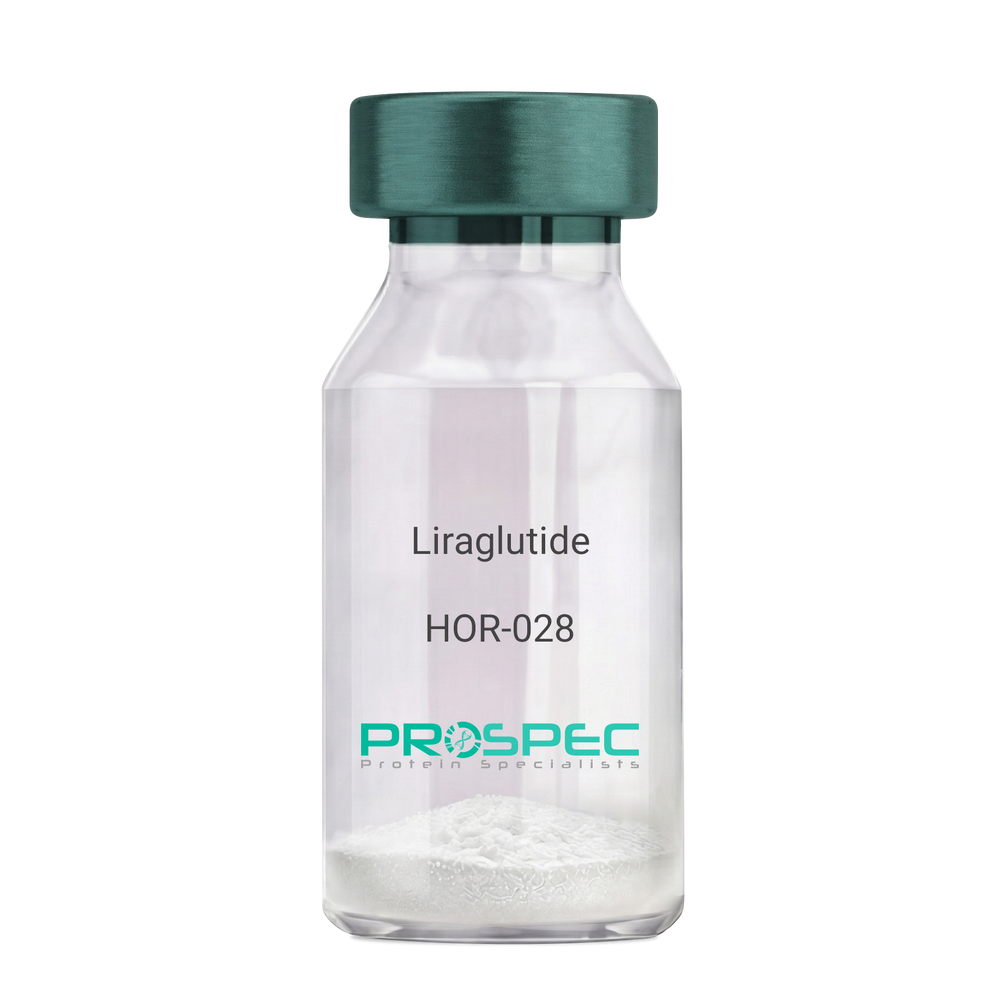
LiraglutideDescription:
Liraglutide
Product # :
HOR-028Price :
Quantity :
Shipping Method :
Shipped at Room temp
More Info
- description
- formulation
- purity
- More Info
- HPLC, MS
- Citations
Description
Liraglutide peptide is a single, non-glycosylated polypeptide chain containing 31 amino acids, having a molecular mass of 3751 Dalton and a Molecular formula of C172H265N43O51.
Formulation
The protein (1mg/ml) was lyophilized with no additives.
Purity
Greater than 97% as determined by RP-HPLC.
HPLC, MS
Citations
More Info
-
Introduction
Liraglutide is a long-acting GLP1 analogue sharing 97% a.a. homology to human GLP1. Liraglutide differs from GLP1 by the substitution of arginine for lysine at position 34. While GLP1 is degraded swiftly by DPP4 resulting in short life of insulin, Liraglutide contains a fatty acid that binds to albumin and prolongs the half-life of the structure. liraglutide causes insulin to secret in the presence of increasing glucose levels. Due toits receptor site, liraglutide inhibits glucagon secretion and delays gastric emptying.
-
Physical Appearance
Sterile Filtered White lyophilized (freeze-dried) powder.
-
Stability
Store the lyophilized Liraglutide between 2-8°C, do not freeze. Upon reconstitution Lypressin should be stored at 4°C between 2-7 days and for future use below -18°C. Please prevent freeze-thaw cycles.
-
Solubility
It is recommended to reconstitute the lyophilized Liraglutide in sterile 18MΩ-cm H2O not less than 100 µg/ml, which can then be further diluted to other aqueous solutions.
Lypressin is also soluble in 1% Acetic Acid. -
Amino Acid Sequence
H-His-Ala-Glu-Gly-Thr-Phe-Thr-Ser-Asp-Val-Ser-Ser-Tyr-Leu-Glu-Gly-Gln-Ala-Ala-Lys(γ-Glu-palmitoyl)-Glu-Phe-Ile-Ala-Trp-Leu-Val-Arg-Gly-Arg-Gly-OH
ProSpec's products are furnished for LABORATORY RESEARCH USE ONLY. The product may not be used as drugs, agricultural or pesticidal products, food additives or household chemicals.
- View Data Sheet
Name :
FCGR1A AntibodyDescription:
CD64, Mouse Anti Human
Fc Fragment Of IgG High Affinity Ia Receptor (CD64), High Affinity Immunoglobulin Gamma Fc Receptor I, Fc-Gamma Receptor I A1, FcgammaRIa, CD64 Antigen, IgG Fc Receptor I, Fc-Gamma RI, CD64, CD64A, IGFR1, FCRI.
Product # :
ANT-550Price :
Quantity :
Shipping Method :
Shipped with Ice Packs
More Info
- formulation
- More Info
- Citations
Formulation
1mg/ml containing PBS, pH-7.4, 10% Glycerol and 0.02% Sodium Azide.
Citations
More Info
-
Introduction
FCGR1A is a member of to the immunoglobulin superfamily. FCGR1A protein acts as a high affinity receptor for the Fc region of immunoglobulins gamma and has a vital part in both innate and adaptive immune response.
-
Synonyms
Fc Fragment Of IgG High Affinity Ia Receptor (CD64), High Affinity Immunoglobulin Gamma Fc Receptor I, Fc-Gamma Receptor I A1, FcgammaRIa, CD64 Antigen, IgG Fc Receptor I, Fc-Gamma RI, CD64, CD64A, IGFR1, FCRI.
-
Physical Appearance
Sterile filtered colorless solution.
-
Immunogen
Anti-human FCGR1A mAb, is derived from hybridization of mouse F0 myeloma cells with spleen cells from BALB/c mice immunized with a recombinant human FCGR1A protein 16-292 amino acids purified from E. coli.
-
Ig Subclass
Mouse IgG2b heavy chain and k light chain.
-
Clone
PAT11D10AT.
-
Applications
FCGR1A antibody has been tested by ELISA, Western blot analysis to assure specificity and reactivity. Since application varies, however, each investigation should be titrated by the reagent to obtain optimal results. Recommended starting dilution is 1:2000.
-
Type
Mouse Anti Human Monoclonal.
-
Storage Procedures
For periods up to 1 month store at 4°C, for longer periods of time, store at -20°C. Prevent freeze thaw cycles.
-
Purification Method
FCGR1A antibody was purified from mouse ascitic fluids by protein-A affinity chromatography.
ProSpec's products are furnished for LABORATORY RESEARCH USE ONLY. The product may not be used as drugs, agricultural or pesticidal products, food additives or household chemicals.
- View Data Sheet
Name :
IGF1 HumanDescription:
IGF-1 Human Recombinant
Somatomedin C, IGF-I, IGFI, IGF1, IGF-IA MGF.
Product # :
CYT-216Price :
Quantity :
Shipping Method :
Shipped at Room temp
More Info
- description
- source
- formulation
- purity
- biological activity
- More Info
- Citations
Description
IGF1 Human Recombinant produced in E.Coli is a single, non-glycosylated, polypeptide chain containing 70 amino acids and having a molecular mass of 7.6kDa.IGF-1 is purified by proprietary chromatographic techniques.
Source
Escherichia Coli.
Formulation
The protein was lyophilized from a concentrated solution in PBS, pH 7.0.
Purity
Greater than 97.0% as determined by:
(a) Analysis by RP-HPLC.
(b) Analysis by SDS-PAGE.Biological Activity
The biological activity was determined by the cell proliferation assay using serum free human MCF-7 cells in <2ng/ml, corresponding to a Specific Activity of >5.0 x 10⁵IU/mg.Citations
More Info
-
Introduction
The somatomedins, IGFs, comprise a family of peptides that play important roles in mammalian growth and development. IGF1 mediates many of the growth-promoting effects of GH. Early studies showed that GH did not directly stimulate the incorporation of sulfate into cartilage, but rather acted through a serum factor, termed 'sulfation factor,' which later became known as 'somatomedin. Three main somatomedins have been characterized: somatomedin C (IGF1), somatomedin A (IGF2; MIM 147470), and somatomedin B.
-
Synonyms
Somatomedin C, IGF-I, IGFI, IGF1, IGF-IA MGF.
-
Physical Appearance
Sterile Filtered White lyophilized (freeze-dried) powder.
-
Stability
Lyophilized IGF1 although stable at room temperature for 3 weeks, should be stored desiccated below -18°C. Upon reconstitution IGF1 should be stored at 4°C between 2-7 days and for future use below -18°C.For long term storage it is recommended to add a carrier protein (0.1% HSA or BSA).Please prevent freeze-thaw cycles.
-
Solubility
It is recommended to reconstitute the lyophilized IGF-1 in sterile 18MΩ-cm H2O not less than 100µg/ml, which can then be further diluted to other aqueous solutions.
-
Amino Acid Sequence
GPETLCGAEL VDALQFVCGD RGFYFNKPTG YGSSSRRAPQ TGIVDECCFR SCDLRRLEMY CAPLKPAKSA.
-
Background
IGF stands for INS like growth factors, which are proteins that have a high similarity to INS. They are part of a complicated process that uses cells to communication with the physiologic environment around them. IGF’s complex system is often called the ‘axis’. This consists of:
● Two cell-surface receptors (IGF1R and IGF2R)
● Two ligands (IGF-1 and IGF-2)
● A family of six high-affinity IGF-binding proteins.
● Proteases.The Effect IGF Has On The Body
Many unique tissue types express the IGF-1 receptor, and the effects can vary. It induces the survival of neurons, may catalyse skeletal muscle hypertrophy by inducing protein synthesis, and by blocking muscle atrophy. It works as a protector for cartilage cells, and may work to be an anabolic factor for the bones. When used in high concentrations, it can activate the INS receptor, and can even complement the effects that INS has on the body.Diseases And IGF
Diseases and IGF are closely related, and a number of them can be affected. The INS IGF axis is thought to have an effect on aging, with an increased life span shown in fruit flies when used in studies.
It is also important to note the crucial role that IGF plays in cancer and diabetes - IGF- 1 has been shown to stimulate growth in both prostate and breast cancer cells. The degree of risk that IGF-1 poses is up for debate, and many scientists are not in agreement. IGF has also shown to have the ability to decrease blood glucose levels, although not quite as effective as INS.How Was IGF Discovered?
Investigators began studying the effects of biological substances on cells and tissues outside the body when IGFs were discovered. The name is self explanatory in the fact that IGF performs INS actions in some tissues, but is less potent than INS at decreasing blood sugar. Its fundamental action is to stimulate growth, whether that be within the epidermal growth factor or the nerve growth factor.What’s The Difference Between IGF-1 And IGF-2?
The two types of IGF are IGF-1 and IGF-2. Although the names are similar, the specific actions that they take are different - they bind and activate completely difference receptors. The major actor in them both is the effect that they have on cell growth. Most of the actions of the pituitary GH are mediated by IGFs, but predominantly IGF-1. GH works to stimulate many tissues within the body, especially the liver which then secretes IGF-1. This then causes hypertrophy, or in layman's terms, an increase in cell size, as well as hyperplasia which is an increase in the number of cells.
The IGF-1 concentration will increase during childhood and hit peak during puberty, but will then decrease afterwards, as does the hormone secretion itself. It has been proven that children and adults with a deficiency of the GH have low serum IGF-1 concentrations when put in comparison with others in the same age range. Patients who have conditions like acromegaly have been shown to have increased serum IGF-1 concentrations. The production of IGF-2 is less dependent on the secretion of GH than IGF-1, and is much less important for stimulating linear growth.What is the molecular weight/Mw of IGF1 HUMAN Protein?
IGF1 HUMAN Protein has a total Mw of 7.6kDa.
What is the source or expression system of IGF1 HUMAN Protein?
Escherichia Coli.
What is the Purity of IGF1 HUMAN Protein?
IGF1 HUMAN Protein is >97% pure as determined by SDS-PAGE.
What is the Biological Activity of IGF1 HUMAN Protein?
The biological activity was determined by the cell proliferation assay using serum free human MCF-7 cells in <2ng/ml, corresponding to a Specific Activity of >5.0 x 10⁵IU/mg.
What is the amino acid sequence of IGF1 HUMAN Protein?
GPETLCGAEL VDALQFVCGD RGFYFNKPTG YGSSSRRAPQ TGIVDECCFR SCDLRRLEMY CAPLKPAKSA.
What applications can IGF1 HUMAN Protein be used in?
IGF1 HUMAN Protein can probably be used in western blot, ELISA and Lateral Flow.
What is the endotoxin level for IGF1 HUMAN Protein?
The endotoxin level is minimal, IGF1 HUMAN Protein was purified using conventional chromatography techniques.
ProSpec's products are furnished for LABORATORY RESEARCH USE ONLY. The product may not be used as drugs, agricultural or pesticidal products, food additives or household chemicals.
- View Data Sheet
Name :
FGFR1OP Human (1-80)Description:
FGFR1 Oncogene Partner (1-80 a.a.) Human Recombinant
FGFR1 oncogene partner, FGFR1OP, FOP.
Product # :
PKA-138Price :
Quantity :
Shipping Method :
Shipped at Room temp
More Info
- description
- source
- formulation
- purity
- More Info
- Citations
Description
The FGFR1O PHuman is created as a recombinant protein with a 4kda N-terminal fusion of His Tag. The FGFR1OP His-Tagged Fusion Protein, produced in E. coli, is a 12kDa protein containing 80 amino acid residues of the FGFR1OP Human, 1-80 amino acids.
Source
Escherichia Coli.
Formulation
Each mg was lyophilized with 1xPBS, 0.4% SDS and 4mM DTT.
Purity
Greater than 90% as determined by SDS-PAGE.
Citations
More Info
-
Synonyms
FGFR1 oncogene partner, FGFR1OP, FOP.
-
Physical Appearance
Filtered White lyophilized (freeze-dried) powder.
-
Stability
Store lyophilized FGFR1OP at -20°C. Aliquot the product after reconstitution to avoid repeated freezing/thawing cycles. Reconstituted protein can be stored at 4°C for a limited period of time; it does not show any change after two weeks at 4°C.
-
Solubility
It is recommended to add deionized water to prepare a working stock solution of approximately 0.5mg/ml and let the lyophilized pellet dissolve completely. Product is not sterile! Please filter the product by an appropriate sterile filter before using it on cell culture.
-
Amino Acid Sequence
L MAATAAAVVA EEDTELRDLL VQTLENSGVL NRIKAELRAA VFLALEEQEK VENKTPLVNE SLRKFLNTKD GRLVASLVA
-
Background
FGFR1 oncogene partner also known as FGFR1OP is a leucine-rich member of the FGFR1OP family. The ensuing chimeric protein contains the N-terminal leucine-rich region of the FGFR1OP protein fused to the catalytic domain of FGFR1. The FGFR1OP plays a main role in normal proliferation and differentiation of the erythroid lineage.
ProSpec's products are furnished for LABORATORY RESEARCH USE ONLY. The product may not be used as drugs, agricultural or pesticidal products, food additives or household chemicals.
- View Data Sheet
Name :
AhpCDescription:
Helicobacter Pylori Alkyl Hydroperoxide Reductase C Recombinant
Product # :
PRO-369Price :
Quantity :
Shipping Method :
Shipped with Ice Packs
More Info
- description
- source
- formulation
- purity
- More Info
- Citations
Description
AhpC recombinant antigen is produced in E. coli expressing the Helicobacter pylori (strain ATCC 700392 / 26695) (Campylobacter pylori) having the Mw of 23 kDa. AhpC recombinant antigen is well recognized by specific IgG and IgM from H. pylori infected patients.
Source
E.Coli
Formulation
The AhpC Pylori recombinant protein is formulated in 1xPBS pH 7.4.
Purity
Greater than 95% pure as determined by 12% PAGE (Coomassie staining).
Citations
More Info
-
Introduction
Helicobacter pylori, a Gram-negative, microaerophilic bacterium that populates in the stomach, predominantly at the antrum. Helicobacter pylori causes a chronic inflammation of the mucoid lining of stomach and is highly related to the growth of duodenal and gastric ulcers and stomach cancer. Over 50% of the world's population harbor H. pylori in their upper gastrointestinal tract, infection is more prevalent in developing countries. Thus far, no ideal target H. pylori antigen has been developed for the diagnostic purpose. 23 kDa H. pylori outer membrane protein was identified with a good sensitivity and coverage in the diagnosis of H. pylori infection.
-
Physical Appearance
Sterile filtered liquid formulation.
-
Stability
AhpC although stable at 4°C for 1 week, should be stored below -18°C. Please prevent freeze thaw cycles.
-
Amino Acid Sequence
MLVTKLAPDFKAPAVLGNNEVDEHFELSKNLGKNGAILFFWP
KDFTFVCPTEIIAFDKRVKDFQEKGFNVIGVSIDSEQVHFAWK
NTPVEKGGIGQVTFPMVADITKSISRDYDVLFEEAIALRGAFLI
DKNMKVRHAVINDLPLGRNADEMLRMVDALLHFEEHGEVCP
AGWRKGDKGMKATHQGVAEYLKENSIKL. -
Purification Method
Purified by proprietary chromatographic technique.
ProSpec's products are furnished for LABORATORY RESEARCH USE ONLY. The product may not be used as drugs, agricultural or pesticidal products, food additives or household chemicals.
- View Data Sheet
Name :
TSH CanineDescription:
Thyroid Stimulating Hormone Canine Recombinant
Glycoprotein hormones alpha chain, Anterior pituitary glycoprotein hormones common subunit alpha, Follitropin alpha chain, Follicle-stimulating hormone alpha chain, FSH-alpha, Lutropin alpha chain, Luteinizing hormone alpha chain, LSH-alpha, Thyrotropin alpha chain, Thyroid-stimulating hormone alpha chain, TSH-alpha, Choriogonadotropin alpha chain, Chorionic gonadotrophin alpha subunit, CG-alpha, Thyrotropin subunit beta, Thyroid-stimulating hormone subunit beta, TSH-beta, TSH-B, Thyrotropin beta chain, Thyrotropin alfa.
Product # :
HOR-049Price :
Quantity :
Shipping Method :
Shipped at Room temp
More Info
- description
- source
- formulation
- purity
- More Info
- Citations
Description
TSH Canine is a heterodimeric glycoprotein consisting of 2 non-covalently linked subunits, an alpha subunit (96 a.a) and a beta subunit (118 a.a). TSH Canine is produced by co-expression of the alpha and beta subunits of TSH. Beta subunit contains alanine instead of valine at position 81.
Source
Mammalian cell line.
Formulation
TSH was lyophilized from 150mM NaCl, 10mM K-phosphate, pH 7.4, 0.1% CHAPS and 100mM D-mannitol.
Purity
Greater than 90% as determined by SDS-PAGE.
Citations
More Info
-
Synonyms
Glycoprotein hormones alpha chain, Anterior pituitary glycoprotein hormones common subunit alpha, Follitropin alpha chain, Follicle-stimulating hormone alpha chain, FSH-alpha, Lutropin alpha chain, Luteinizing hormone alpha chain, LSH-alpha, Thyrotropin alpha chain, Thyroid-stimulating hormone alpha chain, TSH-alpha, Choriogonadotropin alpha chain, Chorionic gonadotrophin alpha subunit, CG-alpha, Thyrotropin subunit beta, Thyroid-stimulating hormone subunit beta, TSH-beta, TSH-B, Thyrotropin beta chain, Thyrotropin alfa.
-
Physical Appearance
Sterile Filtered White lyophilized (freeze-dried) powder.
-
Stability
Lyophilized TSH although stable at room temperature for 3 weeks, should be stored desiccated below -18°C. Upon reconstitution Thyroid Stimulating Hormone should be stored at 4°C between 2-7 days and for future use below -18°C.
For long term storage it is recommended to add a carrier protein (0.1% HSA or BSA).
Please prevent freeze-thaw cycles.
-
Solubility
It is recommended to reconstitute the lyophilized TSH in deionized H2O not less than 100µg/ml, which can then be further diluted to other aqueous solutions.
-
Background
Thyroid Stimulating Hormone (TSH), a pivotal glycoprotein hormone secreted by the anterior pituitary gland, stands as the master regulator of thyroid function. Its intricate control over thyroid hormone synthesis and secretion makes it a linchpin in the delicate balance of the endocrine system. The study of TSH, particularly in the form of TSH Recombinant Protein, has not only provided profound insights into thyroid physiology but has also revolutionized diagnostic methods, therapeutic interventions, and our understanding of various thyroid disorders. This research delves into the multifaceted realm of TSH, exploring its structural intricacies, physiological roles, and its far-reaching implications in both clinical and research settings.
Structural Insights into TSH:
TSH, a heterodimeric protein consisting of alpha and beta subunits, possesses a distinctive structure crucial for its biological activity. The beta subunit contains a unique hinge region, allowing flexibility in its interactions with the thyroid follicular cells. Understanding these structural nuances is fundamental for comprehending TSH's receptor binding, signaling cascades, and its intricate feedback mechanisms governing thyroid hormone production.
Physiological Significance in Thyroid Regulation:
TSH orchestrates thyroid function by binding to its specific receptors on the thyroid gland, stimulating iodine uptake, thyroid hormone synthesis, and secretion. This process is indispensable for maintaining the body's metabolism, energy balance, and overall growth and development. TSH's meticulous control over thyroid activity ensures the precise release of thyroid hormones, essential for numerous physiological processes and maintaining homeostasis.
Diagnostic and Therapeutic Applications:
In the realm of diagnostics, TSH assays utilizing TSH Recombinant Protein have revolutionized the detection and monitoring of thyroid disorders, particularly hypothyroidism and hyperthyroidism. By measuring TSH levels, clinicians can assess thyroid function, enabling early diagnosis and personalized treatment strategies. Moreover, recombinant TSH finds applications in diagnostic imaging, enhancing the accuracy of radioiodine scans for thyroid cancer diagnosis and treatment.
Innovative Therapies and Future Prospects:
Recombinant TSH has paved the way for innovative therapeutic interventions, particularly in the management of thyroid cancer. Thyroid remnant ablation, a crucial step in thyroid cancer treatment, involves the administration of radioiodine following recombinant TSH stimulation, maximizing the therapeutic efficacy while minimizing the radiation exposure to surrounding tissues. Ongoing research explores the potential of TSH receptor agonists and antagonists, offering new avenues for targeted therapies in thyroid-related disorders.
TSH Recombinant Protein, with its profound influence on thyroid function and its applications in diagnostics and therapeutics, stands at the forefront of endocrine research. Its intricate roles in thyroid regulation, metabolism, and growth highlight its significance in human physiology. As our understanding of TSH deepens, it not only aids in the development of innovative treatments but also opens new avenues for exploring the complex interplay between hormones, receptors, and physiological responses. This research not only illuminates the vital role of TSH but also underscores its potential in shaping the future of thyroid-related healthcare.
What is the source or expression system of TSH CANINE Protein?
Mammalian cell line.
What is the Purity of TSH CANINE Protein?
TSH CANINE Protein is >90% pure as determined by SDS-PAGE.
What is the Biological Activity of TSH CANINE Protein?
The biological functionality of TSH CANINE Protein will be determined in the future.
What applications can TSH CANINE Protein be used in?
TSH CANINE Protein can probably be used in western blot, ELISA and Lateral Flow.
What is the endotoxin level for TSH CANINE Protein?
The endotoxin level is minimal, TSH CANINE Protein was purified using conventional chromatography techniques.
ProSpec's products are furnished for LABORATORY RESEARCH USE ONLY. The product may not be used as drugs, agricultural or pesticidal products, food additives or household chemicals.
- View Data Sheet
Name :
HBsAg Paired AntibodyDescription:
Mouse Anti Hepatitis B Surface Antigen Paired
Product # :
ANT-650Price :
Quantity :
Shipping Method :
Shipped with Ice Packs
More Info
- description
- formulation
- purity
- More Info
- Citations
Description
A paired monoclonal antibody has been developed for HBsAg antigen lateral flow immunoassay product. Please note that when ordering for example: 100µg antibody we ship 50µg from each of the antibodies (100µg in total).
Formulation
* HBsAg Labeling antibody: in PBS, pH 7.4.
* HBsAg Coating antibody: iin PBS, pH 7.4.Purity
Greater than 90%.
Citations
More Info
-
Introduction
HBsAg is the surface antigenof the Hepatitis-B-Virus (HBV). The capsidof a virus has different surface proteins from the rest of the virus. The antigen is a protein that binds specifically on one of these surface proteins. It is commonly referred to as the Australian Antigen.
-
Physical Appearance
2 vials of sterile Filtered clear colorless solution.
-
Stability
HBsAg Paired Antibody although stable at 4°C for 1 week, should be stored below -18°C. Please prevent freeze thaw cycles.
-
Type
Mouse antibody Monoclonal.
-
Purification Method
Purified by protein A chromatography.
ProSpec's products are furnished for LABORATORY RESEARCH USE ONLY. The product may not be used as drugs, agricultural or pesticidal products, food additives or household chemicals.
- View Data Sheet
Name :
CCL20 Human, HisDescription:
Macrophage Inflammatory protein-3 alpha (CCL20) Human Recombinant, His Tag
S Small inducible cytokine A20 precursor, CCL20, Macrophage inflammatory protein 3 alpha, MIP-3-alpha, Liver and activation- regulated chemokine, CC chemokine LARC, Beta chemokine exodus-1, CKb4, LARC, ST38, MIP3A, MIP-3a, SCYA20.
Product # :
CHM-252Price :
Quantity :
Shipping Method :
Shipped with Ice Packs
More Info
- description
- source
- formulation
- purity
- More Info
- Citations
Description
MIP 3a Human Recombinant fused with a 21 amino acid His tag at N-terminus produced in E.Coli is a single, non-glycosylated, polypeptide chain containing 91 amino acids (27-96 a.a.) and having a molecular mass of 10.3kDa. The MIP 3a is purified by proprietary chromatographic techniques.
Source
Escherichia Coli.
Formulation
The MIP 3a solution (0.25 mg/ml) contains Phosphate Buffered Saline pH7.4 and 10% glycerol.
Purity
Greater than 85.0% as determined by SDS-PAGE.
Citations
More Info
-
Introduction
CCL-20 is a chemotactic factor that draws lymphocytes & neutrophils, rathar than monocytes. MIP-3 alpha inhibits proliferation of myeloid progenitors in colony formation assays. MIP3A plays a role in the formation and function of the mucosal lymphoid tissues by attracting lymphocytes and dendritic cells towards epithelial cells. C-terminal processed forms have been shown to be equally chemotactically active for leukocytes. CCL-20 holdes antibacterial activity e.coli atcc 25922 and s.aureus atcc 29213. CCL-20 gene transcription is activated by H. pylori, which activates NF-kappaB through intracellular signal pathway which involves IkappaB kinase and NF-kappaB-inducing kinase. MIP-3 alpha is invloved in chemokine-mediated lymphocyte trafficking during gastric inflammation in Helicobacter infection. CCL-20 expression is involved in the recruitment of CD45R0-positive T cell subsets into the intestinal lamina propria. MIP-3A is in charge of the advancement of pulpal inflammation through the recruitment of C-C motif Receptor 6-expressing lymphocytes Vaginal epithelial cells respond to factors present in semen by secreting MIP-3 alpha, which increases langerhans cells recruitment during HIV transmission.
-
Synonyms
S Small inducible cytokine A20 precursor, CCL20, Macrophage inflammatory protein 3 alpha, MIP-3-alpha, Liver and activation- regulated chemokine, CC chemokine LARC, Beta chemokine exodus-1, CKb4, LARC, ST38, MIP3A, MIP-3a, SCYA20.
-
Physical Appearance
Sterile Filtered colorless solution.
-
Stability
Store at 4°C if entire vial will be used within 2-4 weeks. Store, frozen at -20°C for longer periods of time.For long term storage it is recommended to add a carrier protein (0.1% HSA or BSA).Avoid multiple freeze-thaw cycles.
-
Amino Acid Sequence
MGSSHHHHHH SSGLVPRGSH MASNFDCCLG YTDRILHPKF IVGFTRQLAN EGCDINAIIF HTKKKLSVCA NPKQTWVKYI VRLLSKKVKN M.
-
Background
What is the molecular weight/Mw of CCL20 HUMAN, HIS Protein?
CCL20 HUMAN, HIS Protein has a total Mw of 10.3kDa.
What is the source or expression system of CCL20 HUMAN, HIS Protein?
Escherichia Coli.
What is the Purity of CCL20 HUMAN, HIS Protein?
CCL20 HUMAN, HIS Protein is >85% pure as determined by SDS-PAGE.
What is the Biological Activity of CCL20 HUMAN, HIS Protein?
The biological functionality of CCL20 HUMAN, HIS Protein will be determined in the future.
What is the amino acid sequence of CCL20 HUMAN, HIS Protein?
MGSSHHHHHH SSGLVPRGSH MASNFDCCLG YTDRILHPKF IVGFTRQLAN EGCDINAIIF HTKKKLSVCA NPKQTWVKYI VRLLSKKVKN M.
What applications can CCL20 HUMAN, HIS Protein be used in?
CCL20 HUMAN, HIS Protein can probably be used in western blot, ELISA and Lateral Flow.
What is the endotoxin level for CCL20 HUMAN, HIS Protein?
The endotoxin level is minimal, CCL20 HUMAN, HIS Protein was purified using conventional chromatography techniques.
ProSpec's products are furnished for LABORATORY RESEARCH USE ONLY. The product may not be used as drugs, agricultural or pesticidal products, food additives or household chemicals.
- View Data Sheet
Name :
HIBCH HumanDescription:
3-Hydroxyisobutyryl-CoA Hydrolase Human Recombinant
3-hydroxyisobutyryl-coenzyme A hydrolase mitochondrial, HIBYL-CoA-H, HIB-CoA hydrolase, EC 3.1.2.4
Product # :
ENZ-594Price :
Quantity :
Shipping Method :
Shipped with Ice Packs
More Info
- description
- source
- formulation
- purity
- More Info
- Citations
Description
HIBCH Recombinant produced in E. coli is a single polypeptide chain containing 379 amino acids (33-386) and having a molecular mass of 42.1kDa.HIBCH is fused to a 25 amino acid His-tag at N-terminus & purified by proprietary chromatographic techniques.
Source
E.coli.
Formulation
The HIBCH solution (1mg/ml) contains 20mM Tris-HCl buffer (pH 8.0), 200mM NaCl, 1mM DTT and 10% glycerol.
Purity
Greater than 90% as determined by SDS-PAGE.
Citations
More Info
-
Introduction
HIBCH enzyme is in charge of hydrolysis of both HIBYL-CoA and beta-hydroxypropionyl-CoA. Damages in the HIBCH gene linked to 3-hyroxyisobutyryl-CoA hydrolase deficiency. Multiple transcript variants exist as a result of alternative splicing.
-
Synonyms
3-hydroxyisobutyryl-coenzyme A hydrolase mitochondrial, HIBYL-CoA-H, HIB-CoA hydrolase, EC 3.1.2.4
-
Physical Appearance
Sterile Filtered colorless solution.
-
Stability
Store at 4°C if entire vial will be used within 2-4 weeks. Store, frozen at -20°C for longer periods of time. For long term storage it is recommended to add a carrier protein (0.1% HSA or BSA).Avoid multiple freeze-thaw cycles.
-
Amino Acid Sequence
MGSSHHHHHH SSGLVPRGSH MGSHMDAAEE VLLEKKGCTG VITLNRPKFL NALTLNMIRQ IYPQLKKWEQ DPETFLIIIK GAGGKAFCAG GDIRVISEAE KAKQKIAPVF FREEYMLNNA VGSCQKPYVA LIHGITMGGG VGLSVHGQFR VATEKCLFAM PETAIGLFPD VGGGYFLPRL QGKLGYFLAL TGFRLKGRDV YRAGIATHFV DSEKLAMLEE DLLALKSPSK ENIASVLENY HTESKIDRDK SFILEEHMDK INSCFSANTV EEIIENLQQD GSSFALEQLK VINKMSPTSL KITLRQLMEG SSKTLQEVLT MEYRLSQACM RGHDFHEGVR AVLIDKDQSP KWKPADLKEV TEEDLNNHFK SLGSSDLKF.
ProSpec's products are furnished for LABORATORY RESEARCH USE ONLY. The product may not be used as drugs, agricultural or pesticidal products, food additives or household chemicals.
- View Data Sheet
Name :
HP-NAPDescription:
Neutrophil-activating protein A Helicobacter Pylori Recombinant
DNA protection during starvation protein, Bacterioferritin, HP-NAP, Neutrophil-activating protein A, NAP A, dps, napA.
Product # :
PRO-2035Price :
Quantity :
Shipping Method :
Shipped at Room temp
More Info
- description
- source
- formulation
- purity
- More Info
- Citations
Description
HP-NAP Recombinant produced in E.Coli is a single, non-glycosylated, polypeptide chain (Met1-Ala144) containing 154 amino acids including a 10 aa His tag at N-terminus. The total calculated molecular mass is 18.2kDa.
Source
Escherichia Coli.
Formulation
HP-NAP was filtered (0.4 µm) and lyophilized in 20mM Tris buffer and 50mM NaCl, pH 7.5.
Purity
Greater than 90.0% as determined by SDS-PAGE.
Citations
More Info
-
Introduction
HP-NAP protects DNA from oxidative damage by sequestering intracellular Fe2+ ion and storing it in the form of Fe3+ oxyhydroxide mineral. One hydrogen peroxide oxidizes two Fe2+ ions, thus preventing hydroxyl radical production by the Fenton reaction. HP-NAP is necessary for the survival in the presence of oxidative stress. Dps is also a virulence factor which activates neutrophils, mast cells and monocytes. HP-NAP binds to neutrophil-glycosphingolipids and to sulfated carbohydrates on mucin. HP-NAP might play a part in the accumulation of neutrophils and monocytes at the site of infection. HP-NAP induces superoxide anion generation, adhesion and chemotaxis of neutrophils, via a pertussis toxin-sensitive pathway involving MAP kinases.
-
Synonyms
DNA protection during starvation protein, Bacterioferritin, HP-NAP, Neutrophil-activating protein A, NAP A, dps, napA.
-
Physical Appearance
Filtered White lyophilized (freeze-dried) powder.
-
Stability
Store lyophilized protein at -20°C. Aliquot the product after reconstitution to avoid repeated freezing/thawing cycles. Reconstituted protein can be stored at 4°C for a limited period of time; it does not show any change after two weeks at 4°C.
-
Solubility
It is recommended to add deionized water to prepare a working stock solution of approximately 0.5mg/ml and let the lyophilized pellet dissolve completely. HP-NAP is not sterile! Please filter the product by an appropriate sterile filter before using it in the cell culture.
-
Amino Acid Sequence
MKHHHHHHASMKTFEILKHL QADAIVLFMK VHNFHWNVKG TDFFNVHKAT EEIYEEFADM FDDLAERIVQ LGHHPLVTLS EAIKLTRVKE ETKTSFHSKD IFKEILEDYK YLEKEFKELS NTAEKEGDKV TVTYADDQLA KLQKSIWMLQ AHLA.
ProSpec's products are furnished for LABORATORY RESEARCH USE ONLY. The product may not be used as drugs, agricultural or pesticidal products, food additives or household chemicals.
- View Data Sheet
Name :
NDRG3 HumanDescription:
N-Myc Downstream Regulated 3 Human Recombinant
Protein NDRG3, N-myc downstream-regulated gene 3 protein, NDRG3, N-Myc Downstream Regulated 3.
Product # :
PRO-2100Price :
Quantity :
Shipping Method :
Shipped with Ice Packs
More Info
- description
- source
- formulation
- purity
- More Info
- Citations
Description
NDRG3 Human Recombinant produced in E. coli is a single polypeptide chain containing 386 amino acids (1-363) and having a molecular mass of 42.4 kDa.NDRG3 is fused to a 23 amino acid His-tag at N-terminus & purified by proprietary chromatographic techniques.
Source
E.coli.
Formulation
The NDRG3 solution (0.25mg/1ml) contains Phosphate buffered saline (pH7.4), 20% glycerol and 1mM DTT.
Purity
Greater than 90% as determined by SDS-PAGE.
Citations
More Info
-
Introduction
N-Myc Downstream Regulated 3, also known as NDRG3, is a protein coding gene which is a part of the NDRG family and is expressed greatly in brain. NDRG2 is an important paralog of NDRG3.
-
Synonyms
Protein NDRG3, N-myc downstream-regulated gene 3 protein, NDRG3, N-Myc Downstream Regulated 3.
-
Physical Appearance
Sterile Filtered colorless solution.
-
Stability
Store at 4°C if entire vial will be used within 2-4 weeks. Store, frozen at -20°C for longer periods of time. For long term storage it is recommended to add a carrier protein (0.1% HSA or BSA).Avoid multiple freeze-thaw cycles.
-
Amino Acid Sequence
MGSSHHHHHH SSGLVPRGSH MGSMDELQDV QLTEIKPLLN DKEHDIETTH GVVHVTIRGL PKGNRPVILT YHDIGLNHKS CFNAFFNFED MQEITQHFAV CHVDAPGQQE GAPSFPTGYQ YPTMDELAEM LPPVLTHLSL KSIIGIGVGA GAYILSRFAL NHPELVEGLV LINVDPCAKG WIDWAASKLS GLTTNVVDII LAHHFGQEEL QANLDLIQTY RMHIAQDINQ DNLQLFLNSY NGRRDLEIER PILGQNDNKS KTLKCSTLLV VGDNSPAVEA VVECNSRLNP INTTLLKMAD CGGLPQVVQP GKLTEAFKYF LQGMGYIPSA SMTRLARSRT HSTSSSLGSG ESPFSRSVTS NQSDGTQESC ESPDVLDRHQ TMEVSC.
ProSpec's products are furnished for LABORATORY RESEARCH USE ONLY. The product may not be used as drugs, agricultural or pesticidal products, food additives or household chemicals.
- View Data Sheet
Name :
NHP2L1 HumanDescription:
NHP2 non-histone chromosome protein 2-like Human Recombinant
FA-1, SPAG12, SNRNP15-5, SNU13, 15.5K, U4/U6.U5 tri-snRNP 15.5 kDa protein, NHP2 Non-Histone Chromosome protein 2-like 1 (S. cerevisiae), Sperm Specific Antigen 1, SSFA1, NHPX, FA1, OTK27, High Mobility Group-like Nuclear Protein 2 homolog 1.
Product # :
PRO-038Price :
Quantity :
Shipping Method :
Shipped with Ice Packs
More Info
- description
- source
- formulation
- purity
- More Info
- Citations
Description
NHP2L1 produced in E.Coli is a single, non-glycosylated polypeptide chain containing 152 amino acids (1-128a.a.) and having a molecular mass of 16.7kDa.NHP2L1 is fused to a 24 amino acid His-tag at N-terminus & purified by proprietary chromatographic techniques.
Source
Escherichia Coli.
Formulation
The NHP2L1 protein solution (0.25mg/1ml) is formulated in In 20 mM Tris-HCl Buffer (pH 7.5), 100 mM NaCl, and 10% Glycerol.
Purity
Greater than 95% as determined by SDS-PAGE.
Citations
More Info
-
Introduction
NHP2L1 is a member of the ribosomal protein L7Ae family. NHP2L1 protein limited to the nucleus, primarily focused in the dense fibrillar component of the nucleolus. NHP2L1 directly binds to the 5' stem-loop of U4 snRNA and has a vital part in the late stage of spliceosome assembly, prior to step I of splicing catalysis.
-
Synonyms
FA-1, SPAG12, SNRNP15-5, SNU13, 15.5K, U4/U6.U5 tri-snRNP 15.5 kDa protein, NHP2 Non-Histone Chromosome protein 2-like 1 (S. cerevisiae), Sperm Specific Antigen 1, SSFA1, NHPX, FA1, OTK27, High Mobility Group-like Nuclear Protein 2 homolog 1.
-
Physical Appearance
Sterile Filtered clear solution.
-
Stability
Store at 4°C if entire vial will be used within 2-4 weeks. Store, frozen at -20°C for longer periods of time.Please avoid freeze thaw cycles.
-
Amino Acid Sequence
MGSSHHHHHH SSGLVPRGSH MGSHMTEADV NPKAYPLADA HLTKKLLDLV QQSCNYKQLR KGANEATKTL NRGISEFIVM AADAEPLEII LHLPLLCEDK NVPYVFVRSK QALGRACGVS RPVIACSVTI KEGSQLKQQI QSIQQSIERL LV
ProSpec's products are furnished for LABORATORY RESEARCH USE ONLY. The product may not be used as drugs, agricultural or pesticidal products, food additives or household chemicals.
- View Data Sheet
Name :
BMPR1A Human, IgG-HisDescription:
Bone Morphogenetic protein Receptor-1A Human Recombinant, IgG-His
BMPR1A, 10q23del, ACVRLK3, ALK3, CD292, SKR5, Bone Morphogenetic Protein Receptor Type 1A, Bone Morphogenetic Protein Receptor, Type IA, Serine/Threonine-Protein Kinase Receptor R5, Activin Receptor-Like Kinase 3, BMP Type-1A Receptor, EC 2.7.11.30, ALK-3, Bone Morphogenetic Protein Receptor Type-1A, Activin A Receptor, Type II-Like Kinase 3, CD292 Antigen, EC 2.7.1.
Product # :
CYT-1005Price :
Quantity :
Shipping Method :
Shipped with Ice Packs
More Info
- description
- source
- formulation
- purity
- More Info
- Citations
Description
BMPR1A Human Recombinant produced in Sf9 Baculovirus cells is a single, glycosylated polypeptide chain containing 371 amino acids (24-152a.a.) and having a molecular mass of 41.4kDa (Molecular size on SDS-PAGE will appear at approximately 40-57kDa).BMPR1A is fused with a 242 amino acids hIgG-His tag at C-Terminus and purified by proprietary chromatographic techniques.
Source
Sf9, Baculovirus cells.
Formulation
BMPR1A protein solution (1mg/ml) contains Phosphate Buffered Saline (pH7.4) and 10% glycerol.
Purity
Greater than 95.0% as determined by SDS-PAGE.
Citations
More Info
-
Introduction
The bone morphogenetic protein (BMP) receptors are a family of transmembrane serine/threonine kinases that include the type I receptors BMPR1A and BMPR1B and the type II receptor BMPR2. These receptors are also closely related to the activin receptors, ACVR1 and ACVR2. The ligands of these receptors are members of the TGF-beta superfamily. TGF-betas and activins transduce their signals through the formation of heteromeric complexes with 2 different types of serine (threonine) kinase receptors: type I receptors of about 50-55 kD and type II receptors of about 70-80 kD. Type II receptors bind ligands in the absence of type I receptors, but they require their respective type I receptors for signaling, whereas type I receptors require their respective type II receptors for ligand binding.
-
Synonyms
BMPR1A, 10q23del, ACVRLK3, ALK3, CD292, SKR5, Bone Morphogenetic Protein Receptor Type 1A, Bone Morphogenetic Protein Receptor, Type IA, Serine/Threonine-Protein Kinase Receptor R5, Activin Receptor-Like Kinase 3, BMP Type-1A Receptor, EC 2.7.11.30, ALK-3, Bone Morphogenetic Protein Receptor Type-1A, Activin A Receptor, Type II-Like Kinase 3, CD292 Antigen, EC 2.7.1.
-
Physical Appearance
Sterile Filtered colorless solution.
-
Stability
Store at 4°C if entire vial will be used within 2-4 weeks. Store, frozen at -20°C for longer periods of time. For long term storage it is recommended to add a carrier protein (0.1% HSA or BSA).Avoid multiple freeze-thaw cycles.
-
Amino Acid Sequence
ADPQNLDSML HGTGMKSDSD QKKSENGVTL APEDTLPFLK CYCSGHCPDD AINNTCITNG HCFAIIEEDD QGETTLASGC MKYEGSDFQC KDSPKAQLRR TIECCRTNLC NQYLQPTLPP VVIGPFFDGS IRLEPKSCDK THTCPPCPAP ELLGGPSVFL FPPKPKDTLM ISRTPEVTCV VVDVSHEDPE VKFNWYVDGV EVHNAKTKPR EEQYNSTYRV VSVLTVLHQD WLNGKEYKCK VSNKALPAPI EKTISKAKGQ PREPQVYTLP PSRDELTKNQ VSLTCLVKGF YPSDIAVEWE SNGQPENNYK TTPPVLDSDG SFFLYSKLTV DKSRWQQGNV FSCSVMHEAL HNHYTQKSLS LSPGKHHHHH H.
-
Background
Research Paper on Bone Morphogenetic Protein Receptor-1A Human Recombinant, IgG-His, Monomer, HEK
Abstract:
Welcome to the fascinating world of Bone Morphogenetic Protein Receptor-1A Human Recombinant, IgG-His, Monomer (BMPR-1A HR) in Human Embryonic Kidney Cells (HEK). This paper explores the vital role of BMPR-1A HR in cellular responses. As a critical receptor in the transforming growth factor-beta (TGF-β) superfamily, BMPR-1A HR guides cellular differentiation and tissue development. Join us as we uncover the molecular mechanisms behind BMPR-1A HR signaling in HEK cells and explore its synonyms, along with its interactions with key cytokines, including Tumor Necrosis Factor-alpha (TNF-α) and Tumor Necrosis Factor-alpha Superfamily Member 2 (TNFα SF2 or TNFSF2).
Introduction:
Step into the captivating realm of BMPR-1A HR! This paper introduces the remarkable BMPR-1A HR and its crucial role in shaping cellular responses. As researchers, we are driven by curiosity to understand how BMPR-1A HR influences cellular behavior and contributes to tissue growth.
BMPR-1A HR Signaling in HEK Cells:
Unravel the intricate dance of BMPR-1A HR signaling within HEK cells! We explore the complex process of ligand-receptor binding, which initiates both the canonical SMAD-dependent and non-canonical SMAD-independent pathways, regulating gene transcription, cell proliferation, and differentiation.
Extensive Description of BMPR-1A HR:
As researchers, we provide a comprehensive overview of BMPR-1A HR's structural characteristics and unique attributes. With its Monomeric nature and the IgG-His tag, crucial for detection and purification, we delve into the intricacies of BMPR-1A HR.
Influential Role in Cellular Responses:
Marvel at BMPR-1A HR's influential role as a critical mediator of cellular responses within HEK cells! Witness how it skillfully modulates cellular differentiation, driving the expression of key differentiation markers like DIF, impacting diverse cellular pathways.
Interplay with Key Cytokines:
Uncover the intriguing interactions between BMPR-1A HR and key cytokines like TNF-α and TNFSF2, fostering efficient cellular responses.
Therapeutic Implications and Tissue Development:
Explore the potential therapeutic implications of BMPR-1A HR in tissue development. We envision exciting possibilities of utilizing BMPR-1A HR in regenerative medicine, offering hope for enhanced tissue development and repair.
Conclusion:
As we conclude our exploration of BMPR-1A HR in HEK cells, we anticipate a promising future where BMPR-1A HR with an IgG-His tag becomes an invaluable tool in biomedical research, promoting human well-being.
What is the molecular weight/Mw of BMPR1A Protein?
BMPR1A Protein has a total Mw of 41.4kDa.
What is the source or expression system of BMPR1A Protein?
Sf9, Baculovirus cells.
What is the Purity of BMPR1A Protein?
BMPR1A Protein is >95% pure as determined by SDS-PAGE.
What is the Biological Activity of BMPR1A Protein?
The biological functionality of BMPR1A Protein will be determined in the future.
What is the amino acid sequence of BMPR1A Protein?
ADPQNLDSML HGTGMKSDSD QKKSENGVTL APEDTLPFLK CYCSGHCPDD AINNTCITNG HCFAIIEEDD QGETTLASGC MKYEGSDFQC KDSPKAQLRR TIECCRTNLC NQYLQPTLPP VVIGPFFDGS IRLEPKSCDK THTCPPCPAP ELLGGPSVFL FPPKPKDTLM ISRTPEVTCV VVDVSHEDPE VKFNWYVDGV EVHNAKTKPR EEQYNSTYRV VSVLTVLHQD WLNGKEYKCK VSNKALPAPI EKTISKAKGQ PREPQVYTLP PSRDELTKNQ VSLTCLVKGF YPSDIAVEWE SNGQPENNYK TTPPVLDSDG SFFLYSKLTV DKSRWQQGNV FSCSVMHEAL HNHYTQKSLS LSPGKHHHHH H.
What applications can BMPR1A Protein be used in?
BMPR1A Protein can probably be used in western blot, ELISA and Lateral Flow.
What is the endotoxin level for BMPR1A Protein?
The endotoxin level is minimal, BMPR1A Protein was purified using conventional chromatography techniques.
ProSpec's products are furnished for LABORATORY RESEARCH USE ONLY. The product may not be used as drugs, agricultural or pesticidal products, food additives or household chemicals.
- View Data Sheet
Name :
C1GALT1 HumanDescription:
Core 1 Beta3-Gal-T1 Human Recombinant
Core 1 Synthase, Glycoprotein-N-Acetylgalactosamine 3-Beta-Galactosyltransferase 1, Core 1 Beta3-Gal-T1, Core 1 O-Glycan T-Synthase, Core 1 UDP-Galactose:N-Acetylgalactosamine-Alpha-R Beta 1,3 Galactosyltransferase 1, B3Gal-T8, EC 2.4.1.122, Core 1 Beta3-Gal-T, C1GALT, T-synthase, Glycoprotein-N-Acetylgalactosamine 3-Beta-Galactosyltransferase 1, Beta-1,3-galactosyltransferase, C1GalT1, Core 1 Beta1,3-Galactosyltransferase 1.
Product # :
ENZ-721Price :
Quantity :
Shipping Method :
Shipped with Ice Packs
More Info
- description
- source
- formulation
- purity
- More Info
- Citations
Description
C1GALT1 Human Recombinant produced in E.Coli is a single, non-glycosylated polypeptide chain containing 357 amino acids (30-363 a.a) and having a molecular mass of 41.4kDa.C1GALT1 is fused to a 23 amino acid His-tag at N-terminus & purified by proprietary chromatographic techniques.
Source
Escherichia Coli.
Formulation
C1GALT1 protein solution (0.5mg/ml) containing 20mM Tris-HCl buffer (pH 8.0), 0.15M NaCl, 20% glycerol and 1mM DTT.
Purity
Greater than 80.0% as determined by SDS-PAGE.
Citations
More Info
-
Introduction
Core 1 Beta3-Gal-T1 also known as,C1GALT1 creates the common core 1 O-glycan structure, Gal-beta-1-3GalNAc-R, by the transfer of Gal from UDP-Gal to GalNAc-alpha-1-R. Core 1 is a precursor for lots of extended mucin-type O-glycans on cell surface and secreted glycoproteins. Studies in mice have shown that this gene takes a main role in angiogenesis, thrombopoiesis and kidney homeostasis.
-
Synonyms
Core 1 Synthase, Glycoprotein-N-Acetylgalactosamine 3-Beta-Galactosyltransferase 1, Core 1 Beta3-Gal-T1, Core 1 O-Glycan T-Synthase, Core 1 UDP-Galactose:N-Acetylgalactosamine-Alpha-R Beta 1,3 Galactosyltransferase 1, B3Gal-T8, EC 2.4.1.122, Core 1 Beta3-Gal-T, C1GALT, T-synthase, Glycoprotein-N-Acetylgalactosamine 3-Beta-Galactosyltransferase 1, Beta-1,3-galactosyltransferase, C1GalT1, Core 1 Beta1,3-Galactosyltransferase 1.
-
Physical Appearance
Sterile Filtered clear solution.
-
Stability
Store at 4°C if entire vial will be used within 2-4 weeks. Store, frozen at -20°C for longer periods of time. For long term storage it is recommended to add a carrier protein (0.1% HSA or BSA).Avoid multiple freeze-thaw cycles.
-
Amino Acid Sequence
MGSSHHHHHH SSGLVPRGSH MGSLLGEKVD TQPNVLHNDP HARHSDDNGQ NHLEGQMNFN ADSSQHKDEN TDIAENLYQK VRILCWVMTG PQNLEKKAKH VKATWAQRCN KVLFMSSEEN KDFPAVGLKT KEGRDQLYWK TIKAFQYVHE HYLEDADWFL KADDDTYVIL DNLRWLLSKY DPEEPIYFGR RFKPYVKQGY MSGGAGYVLS KEALKRFVDA FKTDKCTHSS SIEDLALGRC MEIMNVEAGD SRDTIGKETF HPFVPEHHLI KGYLPRTFWY WNYNYYPPVE GPGCCSDLAV SFHYVDSTTM YELEYLVYHL RPYGYLYRYQ PTLPERILKE ISQANKNEDT KVKLGNP.
ProSpec's products are furnished for LABORATORY RESEARCH USE ONLY. The product may not be used as drugs, agricultural or pesticidal products, food additives or household chemicals.
- View Data Sheet
Name :
HAUS1 HumanDescription:
HAUS Augmin-Like Complex, Subunit 1 Human Recombinant
HAUS augmin-like complex subunit 1, Coiled-coil domain-containing protein 5, Enhancer of invasion-cluster, HEI-C, HAUS1, CCDC5, HEIC, HsT1461.
Product # :
PRO-1077Price :
Quantity :
Shipping Method :
Shipped with Ice Packs
More Info
- description
- source
- formulation
- purity
- More Info
- Citations
Description
HAUS1 Human Recombinant produced in E.Coli is a single, non-glycosylated polypeptide chain containing 302 amino acids (1-278 a.a) and having a molecular mass of 34.4kDa.HAUS1 is fused to a 24 amino acid His-tag at N-terminus & purified by proprietary chromatographic techniques.
Source
Escherichia Coli.
Formulation
HAUS1 protein solution (0.25mg/ml) containing 20mM Tris-HCl buffer (pH8.0), 50% glycerol, 0.2M NaCl and 2mM DTT.
Purity
Greater than 85.0% as determined by SDS-PAGE.
Citations
More Info
-
Introduction
HAUS augmin-like complex subunit 1 (HAUS1) is 1 of 8 subunits of the 390kDa human augmin complex/ HAUS complex. The augmin complex is a microtubule-binding complex required in microtubule generation within the mitotic spindle and is imperative to mitotic spindle compilation. HAUS1 contributes to mitotic spindle assembly, maintenance of centrosome integrity and completion of cytokinesis as part of the HAUS augmin-like complex. HAUS1 is broadly expressed, especially in the pancreas, kidney, skeletal muscle, liver and heart. However it is weakly expressed in the lung, brain and placenta. HAUS1-depleted cells hold functional cell cycle checkpoints, but the depletion reduces the G2/M cell cycle compartment and stimulates apoptosis. The HAUS1 protein level remains constant through the cell cycle.
-
Synonyms
HAUS augmin-like complex subunit 1, Coiled-coil domain-containing protein 5, Enhancer of invasion-cluster, HEI-C, HAUS1, CCDC5, HEIC, HsT1461.
-
Physical Appearance
Sterile Filtered colorless solution.
-
Stability
Store at 4°C if entire vial will be used within 2-4 weeks. Store, frozen at -20°C for longer periods of time. For long term storage it is recommended to add a carrier protein (0.1% HSA or BSA).Avoid multiple freeze-thaw cycles.
-
Amino Acid Sequence
MGSSHHHHHH SSGLVPRGSH MGSHMEPQEE RETQVAAWLK KIFGDHPIPQ YEVNPRTTEI LHHLSERNRV RDRDVYLVIE DLKQKASEYE SEAKYLQDLL MESVNFSPAN LSSTGSRYLN ALVDSAVALE TKDTSLASFI PAVNDLTSDL FRTKSKSEEI KIELEKLEKN LTATLVLEKC
LQEDVKKAEL HLSTERAKVD NRRQNMDFLK AKSEEFRFGI KAAEEQLSAR GMDASLSHQS LVALSEKLAR LKQQTIPLKK KLESYLDLMP NPSLAQVKIE EAKRELDSIE AELTRRVDMM EL.
ProSpec's products are furnished for LABORATORY RESEARCH USE ONLY. The product may not be used as drugs, agricultural or pesticidal products, food additives or household chemicals.
- View Data Sheet
Name :
CTLA4 Human, igG-HisDescription:
Cytotoxic T-Lymphocyte Associated Antigen-4 Human Recombinant, igG-His Tag
CTLA4, ALPS5, CD, CD152, CELIAC3, CTLA-4, GRD4, GSE, IDDM12, CD152, Cytotoxic T-Lymphocyte Associated Antigen-4, igG-His Tag.
Product # :
CYT-985Price :
Quantity :
Shipping Method :
Shipped with Ice Packs
More Info
- description
- source
- formulation
- purity
- More Info
- Citations
Description
CTLA4 produced in Sf9 Baculovirus cells is a single, glycosylated polypeptide chain containing 368 amino acids (36-161a.a.) and having a molecular mass of 40.8kDa (Molecular size on SDS-PAGE will appear at approximately 40-57kDa). CTLA4 is expressed with a 239 amino acid hIgG-His-tag at C-Terminus and purified by proprietary chromatographic techniques.
Source
Sf9, Baculovirus cells.
Formulation
CTLA4 protein solution (0.5mg/ml) contains Phosphate Buffered Saline (pH 7.4) and 10% glycerol.
Purity
Greater than 95% as determined by SDS-PAGE.
Citations
More Info
-
Introduction
CTLA-4 is a member of the immunoglobulin superfamily and encodes a protein which transmits an inhibitory signal to T cells. The protein contains a V domain, a transmembrane domain, and a cytoplasmic tail. Alternate transcriptional splice variants, encoding different isoforms, have been characterized. The membrane-bound isoform functions as a homodimer interconnected by a disulfide bond, while the soluble isoform functions as a monomer. Mutations in this gene have been associated with insulin-dependent diabetes mellitus, Graves disease, Hashimoto thyroiditis, celiac disease, systemic lupus erythematosus, thyroid-associated orbitopathy, and other autoimmune diseases.
-
Synonyms
CTLA4, ALPS5, CD, CD152, CELIAC3, CTLA-4, GRD4, GSE, IDDM12, CD152, Cytotoxic T-Lymphocyte Associated Antigen-4, igG-His Tag.
-
Physical Appearance
Sterile filtered colorless solution.
-
Stability
Store at 4°C if entire vial will be used within 2-4 weeks. Store, frozen at -20°C for longer periods of time. For long term storage it is recommended to add a carrier protein (0.1% HSA or BSA).Avoid multiple freeze-thaw cycles.
-
Amino Acid Sequence
ADLKAMHVAQ PAVVLASSRG IASFVCEYAS PGKATEVRVT VLRQADSQVT EVCAATYMMG NELTFLDDSI CTGTSSGNQV NLTIQGLRAM DTGLYICKVE LMYPPPYYLG IGNGTQIYVI DPEPCPDSDL EPKSCDKTHT CPPCPAPELL GGPSVFLFPP KPKDTLMISR TPEVTCVVVD VSHEDPEVKF NWYVDGVEVH NAKTKPREEQ YNSTYRVVSV LTVLHQDWLN GKEYKCKVSN KALPAPIEKT ISKAKGQPRE PQVYTLPPSR DELTKNQVSL TCLVKGFYPS DIAVEWESNG QPENNYKTTP PVLDSDGSFF LYSKLTVDKS RWQQGNVFSC SVMHEALHNH YTQKSLSLSP GKHHHHHH.
-
Background
What is the molecular weight/Mw of CTLA4 Protein?
CTLA4 Protein has a total Mw of 40.8kDa.
What is the source or expression system of CTLA4 Protein?
Sf9, Baculovirus cells.
What is the Purity of CTLA4 Protein?
CTLA4 Protein is >95% pure as determined by SDS-PAGE.
What is the Biological Activity of CTLA4 Protein?
The biological functionality of CTLA4 Protein will be determined in the future.
What is the amino acid sequence of CTLA4 Protein?
ADLKAMHVAQ PAVVLASSRG IASFVCEYAS PGKATEVRVT VLRQADSQVT EVCAATYMMG NELTFLDDSI CTGTSSGNQV NLTIQGLRAM DTGLYICKVE LMYPPPYYLG IGNGTQIYVI DPEPCPDSDL EPKSCDKTHT CPPCPAPELL GGPSVFLFPP KPKDTLMISR TPEVTCVVVD VSHEDPEVKF NWYVDGVEVH NAKTKPREEQ YNSTYRVVSV LTVLHQDWLN GKEYKCKVSN KALPAPIEKT ISKAKGQPRE PQVYTLPPSR DELTKNQVSL TCLVKGFYPS DIAVEWESNG QPENNYKTTP PVLDSDGSFF LYSKLTVDKS RWQQGNVFSC SVMHEALHNH YTQKSLSLSP GKHHHHHH.
What applications can CTLA4 Protein be used in?
CTLA4 Protein can probably be used in western blot, ELISA and Lateral Flow.
What is the endotoxin level for CTLA4 Protein?
The endotoxin level is minimal, CTLA4 Protein was purified using conventional chromatography techniques.
ProSpec's products are furnished for LABORATORY RESEARCH USE ONLY. The product may not be used as drugs, agricultural or pesticidal products, food additives or household chemicals.
- View Data Sheet
Name :
IGF1 Human, GSTDescription:
Insulin-Like Growth Factor 1 Human Recombinant, GST Tag
Somatomedin C, IGF-I, IGFI, IGF1, IGF-IA, Mechano growth factor, MGF.
Product # :
CYT-690Price :
Quantity :
Shipping Method :
Shipped with Ice Packs
More Info
- description
- source
- formulation
- More Info
- Citations
Description
IGF1 Human Recombinant produced in E.Coli is a single, non-glycosylated, Polypeptide chain fused to a GST tag and is purified by proprietary chromatographic techniques.
Source
Escherichia Coli.
Formulation
IGF1 is supplied in 50mM Tris-Acetate, pH-7.5, 1mM EDTA and 20% Glycerol.
Citations
More Info
-
Introduction
The somatomedins, or insulin-like growth factors (IGFs), comprise a family of peptides that play important roles in mammalian growth and development. IGF1 mediates many of the growth-promoting effects of growth hormone (GH; MIM 139250). Early studies showed that growth hormone did not directly stimulate the incorporation of sulfate into cartilage, but rather acted through a serum factor, termed 'sulfation factor,' which later became known as 'somatomedin' (Daughaday et al., 1972). Three main somatomedins have been characterized: somatomedin C (IGF1), somatomedin A (IGF2; MIM 147470), and somatomedin B (MIM 193190) (Rotwein, 1986; Rosenfeld, 2003).
-
Synonyms
Somatomedin C, IGF-I, IGFI, IGF1, IGF-IA, Mechano growth factor, MGF.
-
Physical Appearance
Sterile Filtered clear solution.
-
Stability
Store at 4°C if entire vial will be used within 2-4 weeks. Store, frozen at -20°C for longer periods of time. Please avoid freeze thaw cycles.
ProSpec's products are furnished for LABORATORY RESEARCH USE ONLY. The product may not be used as drugs, agricultural or pesticidal products, food additives or household chemicals.
- View Data Sheet
Name :
CSTB HumanDescription:
Cystatin B Human Recombinant
Cystatin-B, Stefin-B, Liver thiol proteinase inhibitor, CPI-B, CSTB, CST6, EPM1, PME, STFB.
Product # :
PRO-609Price :
Quantity :
Shipping Method :
Shipped with Ice Packs
More Info
- description
- source
- formulation
- purity
- More Info
- Citations
Description
CSTB Human Recombinant fused to a 20 a.a His-Tag at N-Terminus produced in E.Coli is a single, non-glycosylated polypeptide chain containing 118 amino acids (1-98 a.a) and having a molecular mass of 13 kDa.
Source
Escherichia Coli.
Formulation
The protein solution contains 20mM Tris-HCl pH-8 & 50mM NaCl.
Purity
Greater than 95.0% as determined by SDS-PAGE.
Citations
More Info
-
Introduction
Type 1 cystatins are also called stefins which function as intracellular thiol protease inhibitors. Cystatin-B protein is able to form a dimer stabilized by noncovalent forces, inhibiting papain and cathepsins l, h and b. CSTB protein protects proteases leakage from lysosomes. Mutations in Stefin-B gene cause primary defects in patients with progressive myoclonic epilepsy (EPM1), a degenerative disease of the central nervous system. CSTB is overexpressed & elevated in the serum of HCC patients. Cystatin-B in vivo has a polymeric structure which is sensitive to the redox environment. Cystatin-B inhibits bone resorption by down-regulating intracellular cathepsin K activity despite increased osteoclast survival. Protein and mRNA levels of stefin B are significantly lower in atypical benign meningiomas. Stefins-A & Stefin-B which belong to the type-1 Cystatins, are up-regulated in lung tumours and thus able to counteract harmful tumour-associated proteolytic activity. Human stefin-A & Stefin-B form amyloid fibrils. Copper binding by stefin-B reduces amyloid fibril formation. A number of alternatively spliced CSTB isoforms were recognized in patients with progressive myoclonus epilepsy. Decreased CSTB activity in EPM1 pathogenesis is controled by cathepsins through increased activity of cathepsin-S & cathepsin-L.
-
Synonyms
Cystatin-B, Stefin-B, Liver thiol proteinase inhibitor, CPI-B, CSTB, CST6, EPM1, PME, STFB.
-
Physical Appearance
Sterile Filtered colorless solution.
-
Stability
Store at 4°C if entire vial will be used within 2-4 weeks. Store, frozen at -20°C for longer periods of time. For long term storage it is recommended to add a carrier protein (0.1% HSA or BSA).Avoid multiple freeze-thaw cycles.
-
Amino Acid Sequence
MGSSHHHHHH SSGLVPRGSH MMCGAPSATQ PATAETQHIA DQVRSQLEEK ENKKFPVFKA VSFKSQVVAG TNYFIKVHVG DEDFVHLRVF QSLPHENKPL TLSNYQTNKA KHDELTYF.
ProSpec's products are furnished for LABORATORY RESEARCH USE ONLY. The product may not be used as drugs, agricultural or pesticidal products, food additives or household chemicals.
- View Data Sheet
Name :
SET HumanDescription:
SET Human Recombinant
2PP2A, I2PP2A, IGAAD, IPP2A2, PHAPII, TAF-I, TAF-IBETA, Protein SET, HLA-DR-associated protein II, Inhibitor of granzyme A-activated DNase, Template-activating factor I, SET.
Product # :
PRO-1540Price :
Quantity :
Shipping Method :
Shipped with Ice Packs
More Info
- description
- source
- formulation
- purity
- More Info
- Citations
Description
SET Human Recombinant produced in E. coli is a single polypeptide chain containing 313 amino acids (1-290) and having a molecular mass of 35.9kDa. SET is fused to a 23 amino acid His-tag at N-terminus & purified by proprietary chromatographic techniques.
Source
Escherichia Coli.
Formulation
The SET solution (0.5mg/ml) contains 20mM Tris-HCl buffer (pH 8.0), 0.15M NaCl, 20% glycerol and 1mM DTT.
Purity
Greater than 90% as determined by SDS-PAGE.
Citations
More Info
-
Introduction
SET is part of a complex localized to the endoplasmic reticulum however is found in the nucleus. SET inhibits apoptosis following attack by cytotoxic T lymphocytes and can also enhance DNA replication of the adenovirus genome. SET inhibits acetylation of nucleosomes, particularly histone H4, by histone acetylases (HAT). This inhibition is accomplished by masking histone lysines from being acetylated.
-
Synonyms
2PP2A, I2PP2A, IGAAD, IPP2A2, PHAPII, TAF-I, TAF-IBETA, Protein SET, HLA-DR-associated protein II, Inhibitor of granzyme A-activated DNase, Template-activating factor I, SET.
-
Physical Appearance
Sterile Filtered clear solution.
-
Stability
Store at 4°C if entire vial will be used within 2-4 weeks. Store frozen at -20°C for longer periods of time. For long term storage it is recommended to add a carrier protein (0.1% HSA or BSA).Avoid multiple freeze-thaw cycles.
-
Amino Acid Sequence
MGSSHHHHHH SSGLVPRGSH MGSMAPKRQS PLPPQKKKPR PPPALGPEET SASAGLPKKG EKEQQEAIEH IDEVQNEIDR LNEQASEEIL KVEQKYNKLR QPFFQKRSEL IAKIPNFWVT TFVNHPQVSA LLGEEDEEAL HYLTRVEVTE FEDIKSGYRI DFYFDENPYF ENKVLSKEFH LNESGDPSSK STEIKWKSGK DLTKRSSQTQ NKASRKRQHE EPESFFTWFT DHSDAGADEL GEVIKDDIWP NPLQYYLVPD MDDEEGEGEE DDDDDEEEEG LEDIDEEGDE DEGEEDEDDD EGEEGEEDEG EDD.
ProSpec's products are furnished for LABORATORY RESEARCH USE ONLY. The product may not be used as drugs, agricultural or pesticidal products, food additives or household chemicals.
- View Data Sheet
Name :
HSD17B10 HumanDescription:
Hydroxysteroid (17-beta) Dehydrogenase 10 Human Recombinant
17b-HSD10, ABAD, CAMR, DUPXp11.22, ERAB, HADH2, HCD2, MHBD, MRPP2, MRX17, MRX31, SCHAD, MRXS10, SDR5C1.
Product # :
PRO-823Price :
Quantity :
Shipping Method :
Shipped with Ice Packs
More Info
- description
- source
- formulation
- purity
- More Info
- Citations
Description
HSD17B10 Human Recombinant produced in E.Coli is a single, non-glycosylated, polypeptide chain containing 271 amino acids (12-261 a.a.) and having a molecular mass of 28.1 kDa. HSD17B10 protein is fused to a 21 amino acid His-Tag at N-terminus and purified by standard chromatography.
Source
Escherichia Coli.
Formulation
HSD17B10 protein solution (1mg/ml) containing 20mM Tris-HCl buffer (pH8.0), 0.1M NaCl, 1mM DTT & 10% glycerol.
Purity
Greater than 95% as determined by SDS-PAGE.
Citations
More Info
-
Introduction
HSD17B10 functions in mitochondrial tRNA maturation. HSD17B10 is part of mitochondrial ribonuclease P, an enzyme composed of MRPP1/RG9MTD1, MRPP2/HSD17B10 and MRPP3/KIAA0391, which cleaves tRNA molecules in their 5''-ends. HSD17B10 interacts with intracellular amyloid-beta, and contributes to the neuronal dysfunction associated with Alzheimer disease.
-
Synonyms
17b-HSD10, ABAD, CAMR, DUPXp11.22, ERAB, HADH2, HCD2, MHBD, MRPP2, MRX17, MRX31, SCHAD, MRXS10, SDR5C1.
-
Physical Appearance
Sterile filtered colorless solution.
-
Stability
Store at 4°C if entire vial will be used within 2-4 weeks. Store, frozen at -20°C for longer periods of time. For long term storage it is recommended to add a carrier protein (0.1% HSA or BSA).Avoid multiple freeze-thaw cycles.
-
Amino Acid Sequence
MGSSHHHHHH SSGLVPRGSH MVAVITGGAS GLGLATAERL VGQGASAVLL DLPNSGGEAQ AKKLGNNCVF APADVTSEKD VQTALALAKG KFGRVDVAVN CAGIAVASKT YNLKKGQTHT LEDFQRVLDV NLMGTFNVIR LVAGEMGQNE PDQGGQRGVI INTASVAAFE GQVGQAAYSA SKGGIVGMTL PIARDLAPIG IRVMTIAPGL FGTPLLTSLP EKVCNFLASQ VPFPSRLGDP AEYAHLVQAI IENPFLNGEV IRLDGAIRMQ P.
ProSpec's products are furnished for LABORATORY RESEARCH USE ONLY. The product may not be used as drugs, agricultural or pesticidal products, food additives or household chemicals.
- View Data Sheet
Name :
SH3BGRL HumanDescription:
SH3 Domain Binding Glutamic Acid-Rich Protein Like Human Recombinant
SH3 domain-binding glutamic acid-rich-like protein, SH3BGRL, SH3BGR.
Product # :
PRO-1159Price :
Quantity :
Shipping Method :
Shipped with Ice Packs
More Info
- description
- source
- formulation
- purity
- More Info
- Citations
Description
SH3BGRL Human Recombinant produced in E.Coli is a single, non-glycosylated polypeptide chain containing 138 amino acids (1-114 a.a) and having a molecular mass of 15.3kDa.SH3BGRL is fused to a 24 amino acid His-tag at N-terminus & purified by proprietary chromatographic techniques.
Source
Escherichia Coli.
Formulation
SH3BGRL protein solution (1mg/ml) containing 20mM Tris-HCl buffer (pH8.0), 10% glycerol and 0.15M NaCl.
Purity
Greater than 95.0% as determined by SDS-PAGE.
Citations
More Info
-
Introduction
SH3 domain-binding glutamic acid-rich-like protein (SH3BGRL) belongs to the human SH3BGR family. SH3BGRL gene which is located to chromosome Xq13.3, encodes a small protein of 114 amino acids that is extensively expressed in various tissues including liver and blood. SH3BGRL protein contains a prolinerich sequence (PLPPQIF), which is comprsed of both the SH3 binding (PXXP)3 and the Homer EVH1 binding (PPXXF)4 motif.
-
Synonyms
SH3 domain-binding glutamic acid-rich-like protein, SH3BGRL, SH3BGR.
-
Physical Appearance
Sterile Filtered colorless solution.
-
Stability
Store at 4°C if entire vial will be used within 2-4 weeks. Store, frozen at -20°C for longer periods of time. For long term storage it is recommended to add a carrier protein (0.1% HSA or BSA).Avoid multiple freeze-thaw cycles.
-
Amino Acid Sequence
MGSSHHHHHH SSGLVPRGSH MGSHMVIRVY IASSSGSTAI KKKQQDVLGF LEANKIGFEE KDIAANEENR KWMRENVPEN SRPATGYPLP PQIFNESQYR GDYDAFFEAR ENNAVYAFLG LTAPPGSKEA EVQAKQQA.
ProSpec's products are furnished for LABORATORY RESEARCH USE ONLY. The product may not be used as drugs, agricultural or pesticidal products, food additives or household chemicals.