Skip to content

High-quality research proteins.

  • 1-800-805-6531

  • Mon - Sat 8.00-18.00, Sun - Closed

  • info@prospecbio.com

  • PO Box 6591 East Brunswick NJ 08816

  • Products
    • Cytokines
    • Growth factors
    • Chemokines
    • Cd antigens
    • Neurotrophins
    • Hormones
    • Enzymes
    • Viral antigens
    • Recombinant proteins
    • Natural proteins
    • Monoclonal antibodies
    • Polyclonal antibodies
    • Thermal Packaging
  • About
    • Company
    • Founder
    • Contribution
  • Customers
    • Eastern Asia
    • Eastern Europe
    • North America
    • South America
    • South East Asia
    • Southern Asia
    • Western Europe
  • Ordering
    • Ordering Method
    • Ordering - Credit Card
    • Ordering - PO
    • Shipping Fees
    • FAQs
  • Services
    • DNA Cloning
    • Protein Expression
    • Monoclonal Antibody
    • Fermentation
    • Technology License
  • Contact us
Log in

Country/region

  • USD $ | Albania
  • USD $ | Andorra
  • USD $ | Argentina
  • USD $ | Armenia
  • USD $ | Australia
  • USD $ | Austria
  • USD $ | Azerbaijan
  • USD $ | Belarus
  • USD $ | Belgium
  • USD $ | Bolivia
  • USD $ | Brazil
  • USD $ | Bulgaria
  • USD $ | Cambodia
  • USD $ | Canada
  • USD $ | Chile
  • USD $ | China
  • USD $ | Colombia
  • USD $ | Costa Rica
  • USD $ | Croatia
  • USD $ | Cyprus
  • USD $ | Czechia
  • USD $ | Denmark
  • USD $ | Estonia
  • USD $ | Finland
  • USD $ | France
  • USD $ | Georgia
  • USD $ | Germany
  • USD $ | Greece
  • USD $ | Hong Kong SAR
  • USD $ | Hungary
  • USD $ | Iceland
  • USD $ | India
  • USD $ | Ireland
  • USD $ | Israel
  • USD $ | Italy
  • USD $ | Japan
  • USD $ | Kazakhstan
  • USD $ | Latvia
  • USD $ | Liechtenstein
  • USD $ | Lithuania
  • USD $ | Madagascar
  • USD $ | Malta
  • USD $ | Mexico
  • USD $ | Moldova
  • USD $ | Monaco
  • USD $ | Netherlands
  • USD $ | New Zealand
  • USD $ | North Macedonia
  • USD $ | Norway
  • USD $ | Panama
  • USD $ | Paraguay
  • USD $ | Peru
  • USD $ | Philippines
  • USD $ | Poland
  • USD $ | Portugal
  • USD $ | Romania
  • USD $ | Singapore
  • USD $ | Slovakia
  • USD $ | Slovenia
  • USD $ | South Africa
  • USD $ | South Korea
  • USD $ | Spain
  • USD $ | Sri Lanka
  • USD $ | Sweden
  • USD $ | Switzerland
  • USD $ | Taiwan
  • USD $ | Thailand
  • USD $ | Türkiye
  • USD $ | Ukraine
  • USD $ | United Kingdom
  • USD $ | United States
  • USD $ | Uruguay
  • USD $ | Vatican City
  • USD $ | Venezuela
  • USD $ | Vietnam
  • Facebook
  • Instagram
logoProSpec - Recombinant Protein Manufacturer for academic and R&D industry
Become a distributor
Account Log in
Wishlist
Cart Cart(0)
  • Products
    +
    • Cytokines
    • Growth factors
    • Chemokines
    • Cd antigens
    • Neurotrophins
    • Hormones
    • Enzymes
    • Viral antigens
    • Recombinant proteins
    • Natural proteins
    • Monoclonal antibodies
    • Polyclonal antibodies
    • Thermal Packaging
  • About
    +
    • Company
    • Founder
    • Contribution
  • Customers
    +
    • Eastern Asia
    • Eastern Europe
    • North America
    • South America
    • South East Asia
    • Southern Asia
    • Western Europe
  • Ordering
    +
    • Ordering Method
    • Ordering - Credit Card
    • Ordering - PO
    • Shipping Fees
    • FAQs
  • Services
    +
    • DNA Cloning
    • Protein Expression
    • Monoclonal Antibody
    • Fermentation
    • Technology License
  • Contact us

Item added to your cart

View cart
View All
  • Cytokines
  • Growth factors
  • Chemokines
  • Cd antigens
  • Neurotrophins
  • Hormones
  • Enzymes
  • Viral antigens
  • Recombinant proteins
  • Natural proteins
  • Monoclonal antibodies
  • Polyclonal antibodies
  • Thermal Packaging
  • Tumor Necrosis Factor

    Tumor Necrosis Factor

    View All
  • 4-1BB

    4-1BB

    View All
  • Adiponectin

    Adiponectin

    View All
  • AIF1

    AIF1

    View All
  • Other Cytokines

    Other Cytokines

    View All
  • AITRL

    AITRL

    View All
  • Angiopoietin

    Angiopoietin

    View All
  • Apolipoprotein

    Apolipoprotein

    View All
  • B-Cell Activating Factor

    B-Cell Activating Factor

    View All
  • Beta Defensin

    Beta Defensin

    View All
  • Bone Morphogenetic Protein

    Bone Morphogenetic Protein

    View All
  • B type Natriuretic Peptide

    B type Natriuretic Peptide

    View All
  • BST

    BST

    View All
  • Betacellulin

    Betacellulin

    View All
  • Cardiotrophin

    Cardiotrophin

    View All
  • Activin

    Activin

    View All
  • Fibroblast Growth Factor

    Fibroblast Growth Factor

    View All
  • Other Growth Factors

    Other Growth Factors

    View All
  • CSF

    CSF

    View All
  • CTGF

    CTGF

    View All
  • IGFBP

    IGFBP

    View All
  • VEGF Protein

    VEGF Protein

    View All
  • EGF

    EGF

    View All
  • Epigen

    Epigen

    View All
  • Erythropoietin

    Erythropoietin

    View All
  • Insulin-Like Growth Factor

    Insulin-Like Growth Factor

    View All
  • Growth Hormone

    Growth Hormone

    View All
  • HDGF

    HDGF

    View All
  • Hepatocyte Growth Factor

    Hepatocyte Growth Factor

    View All
  • Insulin

    Insulin

    View All
  • BCA-1/ BLC (CXCL13)

    BCA-1/ BLC (CXCL13)

    View All
  • BRAK (CXCL14)

    BRAK (CXCL14)

    View All
  • C-10 (CCL6)

    C-10 (CCL6)

    View All
  • Other Chemokines

    Other Chemokines

    View All
  • MEC (CCL28)

    MEC (CCL28)

    View All
  • LD78-beta (CCL3L1)

    LD78-beta (CCL3L1)

    View All
  • CTACK (CCL27)

    CTACK (CCL27)

    View All
  • CXCL16

    CXCL16

    View All
  • CXCL17

    CXCL17

    View All
  • Platelet Factor-4 (CXCL4)

    Platelet Factor-4 (CXCL4)

    View All
  • ENA-78 (CXCL5)

    ENA-78 (CXCL5)

    View All
  • Eotaxin (CCL11,24,26)

    Eotaxin (CCL11,24,26)

    View All
  • Exodus-2 (CCL21)

    Exodus-2 (CCL21)

    View All
  • Fractalkine (CX3CL1)

    Fractalkine (CX3CL1)

    View All
  • CXCL6

    CXCL6

    View All
  • Other CD Antigens

    Other CD Antigens

    View All
  • CD14

    CD14

    View All
  • CD164

    CD164

    View All
  • CD1

    CD1

    View All
  • CD2

    CD2

    View All
  • CD200

    CD200

    View All
  • CD207

    CD207

    View All
  • CD226

    CD226

    View All
  • CD23

    CD23

    View All
  • CD244

    CD244

    View All
  • CD247

    CD247

    View All
  • CD27

    CD27

    View All
  • CD274

    CD274

    View All
  • CD300

    CD300

    View All
  • CD33

    CD33

    View All
  • Other Neurotrophins

    Other Neurotrophins

    View All
  • Beta-NGF

    Beta-NGF

    View All
  • BDNF

    BDNF

    View All
  • CDNF

    CDNF

    View All
  • CNTF

    CNTF

    View All
  • GDNF

    GDNF

    View All
  • Glia Maturation Factor

    Glia Maturation Factor

    View All
  • MANF

    MANF

    View All
  • Midkine

    Midkine

    View All
  • Neuroglobin

    Neuroglobin

    View All
  • Neurotrophic factors

    Neurotrophic factors

    View All
  • Neuregulin

    Neuregulin

    View All
  • Neuropilin

    Neuropilin

    View All
  • Pigment Epithelium-Derived Factor

    Pigment Epithelium-Derived Factor

    View All
  • Pleiotrophin

    Pleiotrophin

    View All
  • Peptide Hormones

    Peptide Hormones

    View All
  • Other Hormones

    Other Hormones

    View All
  • HCG

    HCG

    View All
  • Endothelin

    Endothelin

    View All
  • Exendin

    Exendin

    View All
  • FSH

    FSH

    View All
  • Glucagon

    Glucagon

    View All
  • GHRP

    GHRP

    View All
  • GLP

    GLP

    View All
  • Thyrostimulin

    Thyrostimulin

    View All
  • Inhibin A

    Inhibin A

    View All
  • LHRH

    LHRH

    View All
  • Melanotan

    Melanotan

    View All
  • Procalcitonin

    Procalcitonin

    View All
  • PTH

    PTH

    View All
  • Peroxiredoxin

    Peroxiredoxin

    View All
  • Peptidase

    Peptidase

    View All
  • Synthetase

    Synthetase

    View All
  • Transferase

    Transferase

    View All
  • Hydrolase

    Hydrolase

    View All
  • Dehydrogenase

    Dehydrogenase

    View All
  • ACE2

    ACE2

    View All
  • Esterase

    Esterase

    View All
  • Protein Kinases

    Protein Kinases

    View All
  • Other Enzymes

    Other Enzymes

    View All
  • Phosphatase

    Phosphatase

    View All
  • Deaminase

    Deaminase

    View All
  • Oxygenase

    Oxygenase

    View All
  • Adenylate Kinase

    Adenylate Kinase

    View All
  • Lyase

    Lyase

    View All
  • Chagas

    Chagas

    View All
  • SARS

    SARS

    View All
  • Influenza

    Influenza

    View All
  • ASFV

    ASFV

    View All
  • Astrovirus

    Astrovirus

    View All
  • Borrelia

    Borrelia

    View All
  • Helicobacter Pylori

    Helicobacter Pylori

    View All
  • Chikungunya

    Chikungunya

    View All
  • Chlamydia

    Chlamydia

    View All
  • Cytomegalo

    Cytomegalo

    View All
  • Dengue

    Dengue

    View All
  • EBV

    EBV

    View All
  • Ebola

    Ebola

    View All
  • Feline Leukemia Virus

    Feline Leukemia Virus

    View All
  • Hepatitis A

    Hepatitis A

    View All
  • Other

    Other

    View All
  • Actin

    Actin

    View All
  • ADAM

    ADAM

    View All
  • Complement Component

    Complement Component

    View All
  • Ag85

    Ag85

    View All
  • Eukaryotic Translation Initiation Factor

    Eukaryotic Translation Initiation Factor

    View All
  • Anterior Gradient Protein

    Anterior Gradient Protein

    View All
  • Heat Shock Protein

    Heat Shock Protein

    View All
  • Alpha-2-HS-Glycoprotein

    Alpha-2-HS-Glycoprotein

    View All
  • Hemoglobin

    Hemoglobin

    View All
  • Allergy

    Allergy

    View All
  • Anaplasma

    Anaplasma

    View All
  • Angiogenin

    Angiogenin

    View All
  • Ankyrin Repeat Domain

    Ankyrin Repeat Domain

    View All
  • Annexin

    Annexin

    View All
  • Other Natural Proteins

    Other Natural Proteins

    View All
  • Aprotinin

    Aprotinin

    View All
  • Transferrin

    Transferrin

    View All
  • Avidin

    Avidin

    View All
  • Anti Coagulation Factors

    Anti Coagulation Factors

    View All
  • Natural Albumin

    Natural Albumin

    View All
  • Natural Coagulation Factors

    Natural Coagulation Factors

    View All
  • Fibronectin

    Fibronectin

    View All
  • Thrombin

    Thrombin

    View All
  • Anti Human Enzyme

    Anti Human Enzyme

    View All
  • Other Monoclonal Antibodies

    Other Monoclonal Antibodies

    View All
  • Anti Human Cytokine

    Anti Human Cytokine

    View All
  • Anti Human Heat Shock Protein

    Anti Human Heat Shock Protein

    View All
  • Anti Mouse Lymphocyte

    Anti Mouse Lymphocyte

    View All
  • Anti Human Chemokine

    Anti Human Chemokine

    View All
  • Anti Human Lymphocyte

    Anti Human Lymphocyte

    View All
  • Anti Viral Monoclonal

    Anti Viral Monoclonal

    View All
  • Anti Mouse Cytokine

    Anti Mouse Cytokine

    View All
  • Anti-GST Monoclonal

    Anti-GST Monoclonal

    View All
  • Other Polyclonal Antibodies

    Other Polyclonal Antibodies

    View All
  • Anti Viral

    Anti Viral

    View All
  • Anti-GST Monoclonal

    Anti-GST Monoclonal

    View All
Back

Search results

1000 results found for “Streptavidin Proteins”

Name

Description

Product #

Price

Quantity

Shipping Method

  • View Data Sheet

    Name :

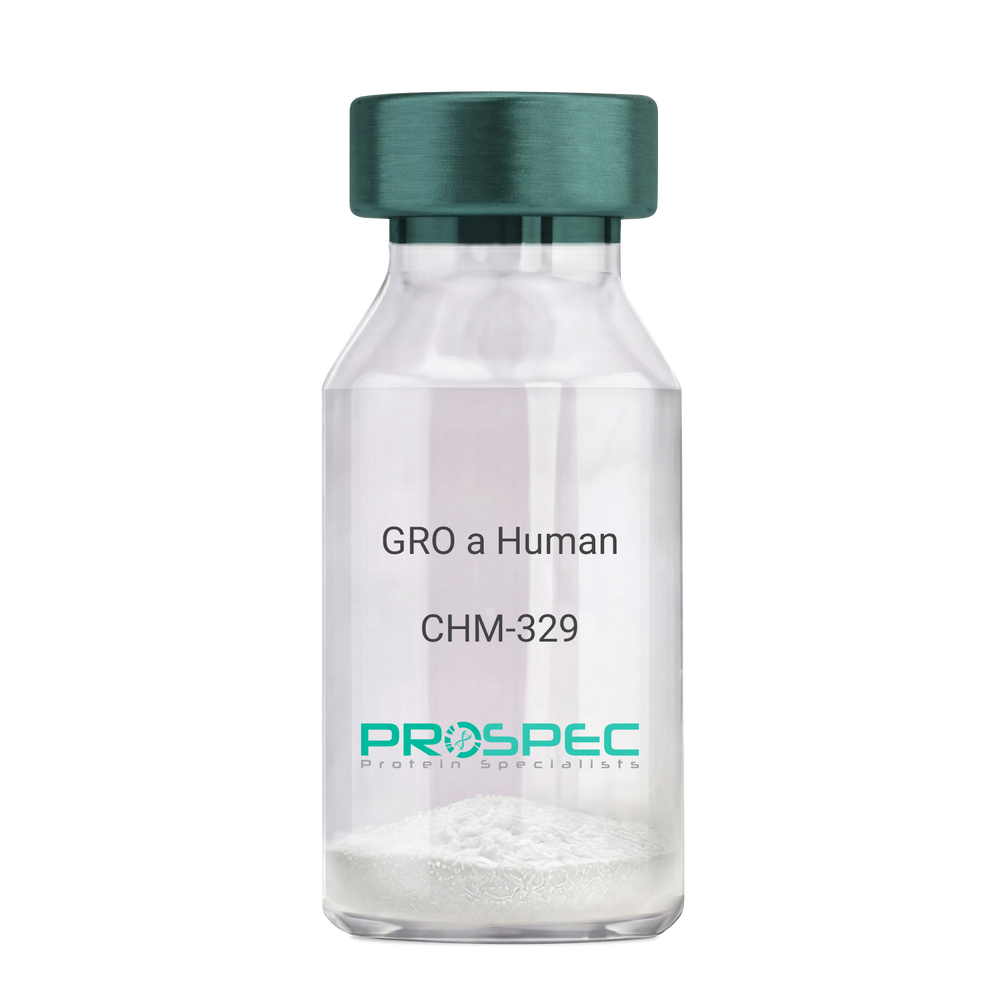
    CXCL1 Human

    Description:

    GRO-Alpha Human Recombinant (CXCL1)

    Growth-regulated protein alpha, CXCL1, Melanoma growth stimulatory activity, MGSA, Neutrophil-activating protein 3, NAP-3, GRO-alpha (1-73), chemokine (C-X-C motif) ligand 1, GRO1, GROa, SCYB1, MGSA-a, MGSA alpha.

    Product # :

    CHM-329

    Price :

    Quantity :

    Shipping Method :

    Room Temp Icon

    Shipped at Room temp

    Add To Cart

    More Info

    • description
    • source
    • formulation
    • purity
    • biological activity
    • More Info

    Description

    GRO Alpha Human Recombinant produced in E.Coli is a single,non-glycosylated, polypeptide chain containing 73 amino acids and having a molecular mass of 7811 Dalton. The GRO-alpha is purified by proprietary chromatographic techniques.

    Source

    Escherichia Coli.

    Formulation

    Lyophilized from a 0.2µm filtered concentrated (1mg/ml) solution in 20mM PB, pH 7.4, 50mM NaCl.

    Purity

    Greater than 97.0% as determined by:
    (a) Analysis by RP-HPLC.
    (b) Analysis by SDS-PAGE.

    Biological Activity

    Determined by its ability to chemoattract human peripheral blood neutrophils using a concentration range of 10.0-100.0 ng/ml.

    More Info

    • Introduction

      Chemokine (C-X-C motif) ligand 1 (CXCL1) is a small cytokine belonging to the CXC chemokine family that was previously called GRO1 oncogene, Neutrophil-activating protein 3 (NAP-3) and melanoma growth stimulating activity, alpha (MSGA-a). It is secreted by human melanoma cells, has mitogenic properties and is implicated in melanoma pathogenesis. CXCL1 is expressed by macrophages, neutrophilsand epithelial cells, and has neutrophil chemoattractant activity. CXCL1 plays a role in spinal cord development by inhibiting the migration of oligodendrocyte precursors and is involved in the processes of angiogenesis, inflammation, wound healing, and tumorigenesis. This chemokine elicits its effects by signaling through the chemokine receptor CXCR2. The gene for CXCL1 is located on human chromosome 4 amongst genes for other CXC chemokines.

    • Synonyms

      Growth-regulated protein alpha, CXCL1, Melanoma growth stimulatory activity, MGSA, Neutrophil-activating protein 3, NAP-3, GRO-alpha (1-73), chemokine (C-X-C motif) ligand 1, GRO1, GROa, SCYB1, MGSA-a, MGSA alpha.

    • Physical Appearance

      Sterile Filtered White lyophilized (freeze-dried) powder.

    • Stability

      Lyophilized GRO-alpha although stable at room temperature for 3 weeks, should be stored desiccated below -18°C. Upon reconstitution CXCL1 should be stored at 4°C between 2-7 days and for future use below -18°C. For long term storage it is recommended to add a carrier protein (0.1% HSA or BSA).Please prevent freeze-thaw cycles.

    • Solubility

      It is recommended to reconstitute the lyophilized CXCL1 in sterile 18MΩ-cm H2O not less than 100µg/ml, which can then be further diluted to other aqueous solutions.

    • Amino Acid Sequence

      The sequence of the first five N-terminal amino acids was determined and was found to be Ala-Ser-Val-Ala-Thr.

    • Background

      What is the molecular weight/Mw of CXCL1 HUMAN Protein?
      CXCL1 HUMAN Protein has a total Mw of 7.81kDa.

      What is the source or expression system of CXCL1 HUMAN Protein?
      Escherichia Coli.

      What is the Purity of CXCL1 HUMAN Protein?
      CXCL1 HUMAN Protein is >97% pure as determined by SDS-PAGE.

      What is the Biological Activity of CXCL1 HUMAN Protein?
      Determined by its ability to chemoattract human peripheral blood neutrophils using a concentration range of 10.0-100.0 ng/ml.

      What is the amino acid sequence of CXCL1 HUMAN Protein?
      The sequence of the first five N-terminal amino acids was determined and was found to be Ala-Ser-Val-Ala-Thr.

      What applications can CXCL1 HUMAN Protein be used in?
      CXCL1 HUMAN Protein can probably be used in western blot, ELISA and Lateral Flow.

      What is the endotoxin level for CXCL1 HUMAN Protein?
      The endotoxin level is minimal, CXCL1 HUMAN Protein was purified using conventional chromatography techniques.


    ProSpec's products are furnished for LABORATORY RESEARCH USE ONLY. The product may not be used as drugs, agricultural or pesticidal products, food additives or household chemicals.

    Gro A Human
  • View Data Sheet

    Name :

    ECSIT Human

    Description:

    ECSIT homolog Human Recombinant

    ECSIT Homolog (Drosophila), Evolutionarily Conserved Signaling Intermediate In Toll Pathway Mitochondrial, Likely Ortholog Of Mouse Signaling Intermediate In Toll Pathway Evolutionarily Conserved, Protein SITPEC.

    Product # :

    PRO-1241

    Price :

    Quantity :

    Shipping Method :

    Ice Icon

    Shipped with Ice Packs

    Add To Cart

    More Info

    • description
    • source
    • formulation
    • purity
    • More Info

    Description

    ECSIT Human Recombinant produced in E. coli is a single polypeptide chain containing 222 amino acids (19-217) and having a molecular mass of 24.6 kDa.ECSIT is fused to a 23 amino acid His-tag at N-terminus & purified by proprietary chromatographic techniques.

    Source

    E.coli.

    Formulation

    The ECSIT solution contains 20mM Tris-HCl buffer (pH 8.0), 0.1M NaCl, 1mM DTT and 10% glycerol.

    Purity

    Greater than 90% as determined by SDS-PAGE.

    More Info

    • Introduction

      ECSIT homolog (ECSIT) is a ubiquitously expressed protein which has a vital role as an adaptor protein in the cytosolic signal transduction cascade events triggered by Toll receptor activation. ECSIT promotes proteolytic activation of MAP3K1. ECSIT is also involved in the BMP signaling pathway. ECSIT is essential for normal embryonic development. ECSIT was originally classified as a cytoplasmic protein interacting specifically with TNF receptor associated factor (TRAF)-6 in the TLR pathway. ECSIT gene knockdown results in gravely impaired complex I assembly and disrupted mitochondrial function.

    • Synonyms

      ECSIT Homolog (Drosophila), Evolutionarily Conserved Signaling Intermediate In Toll Pathway Mitochondrial, Likely Ortholog Of Mouse Signaling Intermediate In Toll Pathway Evolutionarily Conserved, Protein SITPEC.

    • Physical Appearance

      Sterile Filtered colorless solution.

    • Stability

      Store at 4°C if entire vial will be used within 2-4 weeks. Store, frozen at -20°C for longer periods of time. For long term storage it is recommended to add a carrier protein (0.1% HSA or BSA).Avoid multiple freeze-thaw cycles.

    • Amino Acid Sequence

      MGSSHHHHHH SSGLVPRGSH MGSGTCGAAL TGTSISQVPL PKDSTGAADP PQPHIVGIQS PDQQAALARH NPARPVFVEG PFSLWLRNKC VYYHILRADL LPPEEREVEE TPEEWNLYYP MQLDLEYVRS GWDNYEFDIN EVEEGPVFAM CMAGAHDQAT MAKWIQGLQE TNPTLAQIPV VFRLAGSTRE LQTSSAGLEE PPLPEDHQEE DDNLQRQQQG QS

    ProSpec's products are furnished for LABORATORY RESEARCH USE ONLY. The product may not be used as drugs, agricultural or pesticidal products, food additives or household chemicals.

    Ecsit Human
  • View Data Sheet

    Name :

    SERPINC1 Human, Sf9

    Description:

    Serpin Peptidase Inhibitor, Clade C Member 1 Human Recombinant, Sf9

    SERPINC1, AT3, AT3D, ATIII, THPH7, Antithrombin-III, Serpin C1.

    Product # :

    PRO-2541

    Price :

    Quantity :

    Shipping Method :

    Ice Icon

    Shipped with Ice Packs

    Add To Cart

    More Info

    • description
    • source
    • formulation
    • purity
    • More Info

    Description

    SERPINC Human Recombinant produced in Sf9 Baculovirus cells is a single, glycosylated polypeptide chain containing 441 amino acids (33-464a.a.) and having a molecular mass of 50.1kDa (Molecular size on SDS-PAGE will appear at approximately 50-70kDa). SERPINC is expressed with a 9 amino acids His tag at C-Terminus and purified by proprietary chromatographic techniques.

    Source

    Sf9, Baculovirus cells.

    Formulation

    SERPINC protein solution (0.5mg/ml) contains Phosphate Buffered Saline (pH 7.4) and 10% glycerol.

    Purity

    Greater than 90.0% as determined by SDS-PAGE.

    More Info

    • Introduction

      Serpin Peptidase Inhibitor, Clade C Member 1 (SERPINC1), which is a part of the serpin superfamily, is a plasma protease inhibitor. SERPINC1 inhibits thrombin and other activated serine proteases of the coagulation system, and regulates the blood coagulation cascade. SERPINC1 also inhibits Thrombin and Factors IXa, Xa and XIa. Deficiencies in SERPINC1 can cause ATIII deficiency, an autosomal dominant disease which might lead to a hereditary thrombophilia.

    • Synonyms

      SERPINC1, AT3, AT3D, ATIII, THPH7, Antithrombin-III, Serpin C1.

    • Physical Appearance

      Sterile Filtered colorless solution.

    • Stability

      Store at 4°C if entire vial will be used within 2-4 weeks. Store, frozen at -20°C for longer periods of time. For long term storage it is recommended to add a carrier protein (0.1% HSA or BSA).Avoid multiple freeze-thaw cycles.

    • Amino Acid Sequence

      ADPHGSPVDI CTAKPRDIPM NPMCIYRSPE KKATEDEGSE QKIPEATNRR VWELSKANSR FATTFYQHLA DSKNDNDNIF LSPLSISTAF AMTKLGACND TLQQLMEVFK FDTISEKTSD QIHFFFAKLN CRLYRKANKS SKLVSANRLF GDKSLTFNET YQDISELVYG AKLQPLDFKE NAEQSRAAIN KWVSNKTEGR ITDVIPSEAI NELTVLVLVN TIYFKGLWKS KFSPENTRKE LFYKADGESC SASMMYQEGK FRYRRVAEGT QVLELPFKGD DITMVLILPK PEKSLAKVEK ELTPEVLQEW LDELEEMMLV VHMPRFRIED GFSLKEQLQD MGLVDLFSPE KSKLPGIVAE GRDDLYVSDA FHKAFLEVNE EGSEAAASTA VVIAGRSLNP NRVTFKANRP FLVFIREVPL NTIIFMGRVA NPCVKHHHHH H.

    ProSpec's products are furnished for LABORATORY RESEARCH USE ONLY. The product may not be used as drugs, agricultural or pesticidal products, food additives or household chemicals.

    Serpinc1 Protein 2
  • View Data Sheet

    Name :

    NAPA Human

    Description:

    N-Ethylmaleimide-Sensitive Factor Attachment Protein, Alpha Human Recombinant

    SNAPA, SNAP-alpha.

    Product # :

    PRO-250

    Price :

    Quantity :

    Shipping Method :

    Ice Icon

    Shipped with Ice Packs

    Add To Cart

    More Info

    • description
    • source
    • formulation
    • purity
    • More Info

    Description

    NAPA Human Recombinant produced in E.Coli is a single, non-glycosylated polypeptide chain containing 315 amino acids (1-295) and having a molecular mass of 35.3 kDa. NAPA is fused to 20 amino acid His Tag at N-terminus and purified by standard chromatography techniques.

    Source

    Escherichia Coli.

    Formulation

    NAPA protein solution (1mg/ml) contains 20mM Tris-HCl pH-7.5 and 10% glycerol.

    Purity

    Greater than 95.0% as determined by SDS-PAGE.

    More Info

    • Introduction

      NAPA is part of the SNAP (Soluble NSF Attachment Protein) family. SNAPs, acting together with SNAREs (SNAP receptors) and the N-ethylmaleimide-sensitive fusion protein (NSF), are necessary for the fusion of transport vesicles to their objective membranes in synaptic transmission, intra-Golgi transport, endosome-to-endosome fusion and transcytotic vesicles-to-plasma membrane transport. NAPA is in charge of the binding of NSF and therefore the formation of a 20S fusion particle.

    • Synonyms

      SNAPA, SNAP-alpha.

    • Physical Appearance

      Sterile Filtered colorless solution.

    • Stability

      Store at 4°C if entire vial will be used within 2-4 weeks. Store, frozen at -20°C for longer periods of time. For long term storage it is recommended to add a carrier protein (0.1% HSA or BSA).Avoid multiple freeze-thaw cycles.

    • Amino Acid Sequence

      MGSSHHHHHH SSGLVPRGSH MDNSGKEAEA MALLAEAERK VKNSQSFFSG LFGGSSKIEE ACEIYARAAN MFKMAKNWSA AGNAFCQAAQ LHLQLQSKHD AATCFVDAGN AFKKADPQEA INCLMRAIEI YTDMGRFTIA AKHHISIAEI YETELVDIEK AIAHYEQSAD YYKGEESNSS ANKCLLKVAG YAALLEQYQK AIDIYEQVGT NAMDSPLLKY SAKDYFFKAA LCHFCIDMLN AKLAVQKYEE LFPAFSDSRE CKLMKKLLEA
      HEEQNVDSYT ESVKEYDSIS RLDQWLTTML LRIKKTIQGD EEDLR.

    ProSpec's products are furnished for LABORATORY RESEARCH USE ONLY. The product may not be used as drugs, agricultural or pesticidal products, food additives or household chemicals.

    Napa Human
  • View Data Sheet

    Name :

    SNAPC1 Human

    Description:

    Small Nuclear RNA Activating Complex, Polypeptide 1 Human Recombinant

    PTFgamma, SNAP43, snRNA-activating protein complex subunit 1, SNAPc subunit 1, Proximal sequence element-binding transcription factor subunit gamma, PSE-binding factor subunit gamma, PTF subunit gamma, Small nuclear RNA-activating complex polypeptide 1, SNAPc 43 kDa subunit, SNAPC1.

    Product # :

    PRO-2085

    Price :

    Quantity :

    Shipping Method :

    Ice Icon

    Shipped with Ice Packs

    Add To Cart

    More Info

    • description
    • source
    • formulation
    • purity
    • More Info

    Description

    SNAPC1 Human Recombinant produced in E.Coli is a single, non-glycosylated polypeptide chain containing 391 amino acids (1-368 a.a) and having a molecular mass of 45.4kDa.SNAPC1 is fused to a 23 amino acid His-tag at N-terminus & purified by proprietary chromatographic techniques.

    Source

    Escherichia Coli.

    Formulation

    SNAPC1 protein solution (1mg/ml) contains 20mM Tris-HCl (pH 8.0) and 10% glycerol.

    Purity

    Greater than 80.0% as determined by SDS-PAGE.

    More Info

    • Introduction

      Small Nuclear RNA Activating Complex, Polypeptide 1 (SNAPC1) is a part of the SNAPc complex necessary for the transcription of both RNA polymerase II and III small-nuclear RNA genes. SNAPC1 binds to the proximal sequence element (PSE), a non-TATA-box basal promoter element common to these 2 types of genes. Moreover, SNAPC1 recruits TBP and BRF2 to the U6 snRNA TATA box.

    • Synonyms

      PTFgamma, SNAP43, snRNA-activating protein complex subunit 1, SNAPc subunit 1, Proximal sequence element-binding transcription factor subunit gamma, PSE-binding factor subunit gamma, PTF subunit gamma, Small nuclear RNA-activating complex polypeptide 1, SNAPc 43 kDa subunit, SNAPC1.

    • Physical Appearance

      Sterile Filtered clear solution.

    • Stability

      Store at 4°C if entire vial will be used within 2-4 weeks. Store, frozen at -20°C for longer periods of time. For long term storage it is recommended to add a carrier protein (0.1% HSA or BSA).Avoid multiple freeze-thaw cycles.

    • Amino Acid Sequence

      MGSSHHHHHH SSGLVPRGSH MGSMGTPPGL QTDCEALLSR FQETDSVRFE DFTELWRNMK FGTIFCGRMR NLEKNMFTKE ALALAWRYFL PPYTFQIRVG ALYLLYGLYN TQLCQPKQKI RVALKDWDEV LKFQQDLVNA QHFDAAYIFR KLRLDRAFHF TAMPKLLSYR MKKKIHRAEV TEEFKDPSDR VMKLITSDVL EEMLNVHDHY QNMKHVISVD KSKPDKALSL IKDDFFDNIK NIVLEHQQWH KDRKNPSLKS KTNDGEEKME GNSQETERCE RAESLAKIKS KAFSVVIQAS KSRRHRQVKL DSSDSDSASG QGQVKATRKK EKKERLKPAG RKMSLRNKGN VQNIHKEDKP LSLSMPVITE EEENESLSGT EFTASKKRRK H.

    ProSpec's products are furnished for LABORATORY RESEARCH USE ONLY. The product may not be used as drugs, agricultural or pesticidal products, food additives or household chemicals.

    Snapc1 Human
  • View Data Sheet

    Name :

    SARS Spike (1-53, 90-115, 171-205)

    Description:

    SARS-Associated Coronavirus Spike (1-53, 90-115, 171-205 a.a.), Recombinant

    Product # :

    SARS-008

    Price :

    Quantity :

    Shipping Method :

    Ice Icon

    Shipped with Ice Packs

    Add To Cart

    More Info

    • description
    • source
    • formulation
    • purity
    • More Info

    Description

    The E.coli derived recombinant protein contains the Spike (1-53, 90-115, 171-205 a.a.) protein immunodominant regions fused to 6xHis tag at C-terminal.

    Source

    Escherichia Coli.

    Formulation

    SARS Spike protein solution is supplied in PBS.

    Purity

    Protein is >90% pure as determined SDS-PAGE.

    More Info

    • Introduction

      SARS Associated Coronavirus Spike is a causative agent of SARS virus. Diseases caused by Coronaviruses are usually controlled by CD8 T cells. The spike antigen is one of the main surface proteins on Coronavirus, therefore one of the main proteins that are candidates for vaccines.

    • Physical Appearance

      Sterile Filtered clear solution.

    • Stability

      Protein is shipped on ice packs. Upon arrival, Store at -20°C.

    • Specificity

      Immunoreactive with sera of SARS-infected individuals.

    • Purification Method

      Purified by proprietary chromatographic technique.

    ProSpec's products are furnished for LABORATORY RESEARCH USE ONLY. The product may not be used as drugs, agricultural or pesticidal products, food additives or household chemicals.

    product_image.jpg
  • View Data Sheet

    Name :

    CDC37 Human

    Description:

    Cell Division Cycle 37 Human Recombinant

    P50CDC37, CDC-37, CDC37, Hsp90 co-chaperone Cdc37, Hsp90 chaperone protein kinase-targeting subunit, CDC37A, Cell Division Cycle 37.

    Product # :

    PRO-464

    Price :

    Quantity :

    Shipping Method :

    Ice Icon

    Shipped with Ice Packs

    Add To Cart

    More Info

    • description
    • source
    • formulation
    • purity
    • More Info

    Description

    CDC37 Human Recombinant produced in E.Coli is a single, non-glycosylated polypeptide chain containing 378 amino acids and having a molecular mass of 44.4 kDa.

    Source

    Escherichia Coli.

    Formulation

    The CDC37 protein solution contains 20mM Tris-HCl pH-8 & 10% glycerol.

    Purity

    Greater than 95.0% as determined by SDS-PAGE.

    More Info

    • Introduction

      CDC37 is an essential protein in Saccharomyces cerevisiae and is a molecular chaperone with precise function in cell signal transduction. CDC37 forms a complex/associates with Hsp90 molecular chaperone as one of several auxiliary proteins that are collectively referred to as Hsp90 co-chaperones. CDC37 also forms complex with a number of protein kinases such as CDK4, CDK6, SRC, RAF-1, MOK, as well as eIF2 alpha kinases. CDC34 is involved in directing Hsp90 to its target kinases. CDC37 up-regulation is a common early event in some localized human cancers. CDC37 is necessary for maintaining prostate tumor cell growth and represents a novel target in the exploration for multitargeted therapies. CDC37 plays a role in regulating Hsp90 ATPase activity. CDC37 binds to Akt and HSP90 in the signal transduction pathway in human tumor cells. Tnf-induced recruitment and activation of the IKK complex require Cdc37 and Hsp90. CDC37 and heat shock protein 90 bind specifically to the kinase domain of LKB1.

    • Synonyms

      P50CDC37, CDC-37, CDC37, Hsp90 co-chaperone Cdc37, Hsp90 chaperone protein kinase-targeting subunit, CDC37A, Cell Division Cycle 37.

    • Physical Appearance

      Sterile Filtered colorless solution.

    • Stability

      Store at 4°C if entire vial will be used within 2-4 weeks. Store, frozen at -20°C for longer periods of time. For long term storage it is recommended to add a carrier protein (0.1% HSA or BSA).Avoid multiple freeze-thaw cycles.

    • Amino Acid Sequence

      MVDYSVWDHI EVSDDEDETH PNIDTASLFR WRHQARVERM EQFQKEKEEL DRGCRECKRK VAECQRKLKE LEVAEGGKAE LERLQAEAQQ LRKEERSWEQ KLEEMRKKEK SMPWNVDTLS KDGFSKSMVN TKPEKTEEDS EEVREQKHKT FVEKYEKQIK HFGMLRRWDD SQKYLSDNVH LVCEETANYL VIWCIDLEVE EKCALMEQVA HQTIVMQFIL ELAKSLKVDP RACFRQFFTK IKTADRQYME GFNDELEAFK ERVRGRAKLR IEKAMKEYEE EERKKRLGPG GLDPVEVYES LPEELQKCFD VKDVQMLQDA ISKMDPTDAK YHMQRCIDSG LWVPNSKASE AKEGEEAGPG DPLLEAVPKT GDEKDVSV.

    ProSpec's products are furnished for LABORATORY RESEARCH USE ONLY. The product may not be used as drugs, agricultural or pesticidal products, food additives or household chemicals.

    Cdc37 Human
  • View Data Sheet

    Name :

    RAET1L Human

    Description:

    Retinoic Acid Early Transcript 1L Human Recombinant

    early transcript 1L, ULBP6, UL16-binding protein 6, RAET1L, retinoic acid early transcript 1L protein, retinoic acid early transcript 1L

    Product # :

    PRO-2723

    Price :

    Quantity :

    Shipping Method :

    Ice Icon

    Shipped with Ice Packs

    Add To Cart

    More Info

    • description
    • source
    • formulation
    • purity
    • biological activity
    • More Info

    Description

    RAET1L Human Recombinant produced in Sf9 Baculovirus cells is a single, glycosylated polypeptide chain containing 202 amino acids (26-218 a.a) and having a molecular mass of 22.9kDa.RAET1L is fused to a 6 amino acid His-tag at C-terminus & purified by proprietary chromatographic techniques.

    Source

    Sf9, Baculovirus cells.

    Formulation

    The RAET1L solution (1mg/ml) contains 10% glycerol and Phosphate-Buffered Saline (pH 7.4).

    Purity

    Greater than 95.0% as determined by SDS-PAGE.

    Biological Activity

    Determined by its binding ability in a functional ELISA with Human KLRK1 (CAT# pro-2474).

    More Info

    • Introduction

      RAET1L plays a role as a stress-induced ligand for NKG2D receptor. Retinoic Acid Early Transcript 1L (RAET1L) is linked to the cell membrane by the GPI anchor. HCMV infection triggers RAET1L’sexpression but HCMV alters its function. HCMV-encoded UL16 glycoprotein retains RAET1L/ULBP6 inside the cells, preventing it from reaching the cell surface and being exposed to cells of the immune system. RAET1L has a more restricted expression profile in cell lines and primary human tissues than other NKG2D ligands.

    • Synonyms

      early transcript 1L, ULBP6, UL16-binding protein 6, RAET1L, retinoic acid early transcript 1L protein, retinoic acid early transcript 1L

    • Physical Appearance

      Sterile filtered colorless solution.

    • Stability

      Store at 4°C if entire vial will be used within 2-4 weeks.Store, frozen at -20°C for longer periods of time.For long term storage it is recommended to add a carrier protein (0.1% HSA or BSA).Avoid multiple freeze-thaw cycles.

    • Amino Acid Sequence

      ADPRRDDPHS LCYDITVIPK FRPGPRWCAV QGQVDEKTFL HYDCGNKTVT PVSPLGKKLN VTMAWKAQNP VLREVVDILT EQLLDIQLEN YTPKEPLTLQ ARMSCEQKAE GHSSGSWQFS IDGQTFLLFD SEKRMWTTVH PGARKMKEKW ENDKDVAMSF HYISMGDCIG WLEDFLMGMD STLEPSAGAP LAMSSGHHHH HH

    ProSpec's products are furnished for LABORATORY RESEARCH USE ONLY. The product may not be used as drugs, agricultural or pesticidal products, food additives or household chemicals.

    Raet1L Human
  • View Data Sheet

    Name :

    VTN Human

    Description:

    Vitronectin Human Recombinant

    Vitronectin precursor, V75, VN, VNT, Vitronectin, VTN, S-protein, Serum-spreading factor, Vitronectin V65 subunit, Vitronectin V10 subunit, Somatomedin-B.

    Product # :

    PRO-2008

    Price :

    Quantity :

    Shipping Method :

    Ice Icon

    Shipped with Ice Packs

    Add To Cart

    More Info

    • description
    • source
    • formulation
    • purity
    • More Info

    Description

    VTN Human Recombinant produced in E.Coli is a single, non-glycosylated polypeptide chain containing 482 amino acids (20-478 a.a) and having a molecular mass of 54.7kDa. VTN is fused to a 23 amino acid His-tag at N-terminus & purified by proprietary chromatographic techniques.

    Source

    Escherichia Coli.

    Formulation

    VTN protein solution (0.5mg/ml) containing 20mM Tris-HCl buffer (pH 8.0), 10% glycerol and 0.4M Urea.

    Purity

    Greater than 90.0% as determined by SDS-PAGE.

    More Info

    • Introduction

      Vitronectin (VTN) which is a part of the pexin family is a cell adhesion and spreading factor found in serum and tissues. VTN interacts with glycosaminoglycans and proteoglycans. VTN inhibits the membrane-damaging effect of the terminal cytolytic complement pathway and binds to numerous serpin serine protease inhibitors. Scientists have been noticed an over expression of VTN, integrins and plasminogen in migrating cells during wound healing.

    • Synonyms

      Vitronectin precursor, V75, VN, VNT, Vitronectin, VTN, S-protein, Serum-spreading factor, Vitronectin V65 subunit, Vitronectin V10 subunit, Somatomedin-B.

    • Physical Appearance

      Sterile Filtered colorless solution.

    • Stability

      Store at 4°C if entire vial will be used within 2-4 weeks. Store, frozen at -20°C for longer periods of time. For long term storage it is recommended to add a carrier protein (0.1% HSA or BSA).Avoid multiple freeze-thaw cycles.

    • Amino Acid Sequence

      MGSSHHHHHH SSGLVPRGSH MGSDQESCKG RCTEGFNVDK KCQCDELCSY YQSCCTDYTA ECKPQVTRGD VFTMPEDEYT VYDDGEEKNN ATVHEQVGGP SLTSDLQAQS KGNPEQTPVL KPEEEAPAPE VGASKPEGID SRPETLHPGR PQPPAEEELC SGKPFDAFTD LKNGSLFAFR GQYCYELDEK AVRPGYPKLI RDVWGIEGPI DAAFTRINCQ GKTYLFKGSQ YWRFEDGVLD PDYPRNISDG FDGIPDNVDA ALALPAHSYS GRERVYFFKG KQYWEYQFQH QPSQEECEGS SLSAVFEHFA MMQRDSWEDI FELLFWGRTS AGTRQPQFIS RDWHGVPGQV DAAMAGRIYI SGMAPRPSLA KKQRFRHRNR KGYRSQRGHS RGRNQNSRRP SRATWLSLFS SEESNLGANN YDDYRMDWLV PATCEPIQSV FFFSGDKYYR VNLRTRRVDT VDPPYPRSIA QYWLGCPAPG HL.

    ProSpec's products are furnished for LABORATORY RESEARCH USE ONLY. The product may not be used as drugs, agricultural or pesticidal products, food additives or household chemicals.

    Vtn Human
  • View Data Sheet

    Name :

    HSPA5 Human, Hi-5

    Description:

    Heat shock 70kDa protein 5 Human Recombinant, Hi-5

    78 kDa glucose-regulated protein, GRP-78, Endoplasmic reticulum lumenal Ca(2+)-binding protein grp78, Heat shock 70 kDa protein 5, Immunoglobulin heavy chain-binding protein, BiP, HSPA5, GRP78, MIF2, FLJ26106.

    Product # :

    HSP-037

    Price :

    Quantity :

    Shipping Method :

    Ice Icon

    Shipped with Ice Packs

    Add To Cart

    More Info

    • description
    • source
    • formulation
    • purity
    • More Info

    Description

    HSPA5 produced in Hi-5 cells is a single, glycosylated polypeptide chain containing 640 amino acids (20-650 a.a.) and having a molecular mass of 71kDa. HSPA5 is fused to an 8 amino acid His Tag at C-Terminus and purified by proprietary chromatographic techniques.

    Source

    Hi-5 Cells.

    Formulation

    The HSPA5 protein solution (1mg/ml) 20mM Tris-HCl buffer (pH8.0), 10% glycerol, 2mM DTT and 200mM NaCl.

    Purity

    Greater than 90.0% as determined by SDS-PAGE.

    More Info

    • Introduction

      Binding immunoglobulin protein (BiP or HSPA5) is a member of the family of ~70kDa heat shock proteins (HSP 70). HSPA5 is a stress response protein which is induced by agents or conditions that adversely affect endoplasmic reticulum (ER) function. HSPA5 is crucial for the proper glycosylation, folding as well as for the maintenance of cell homeostasis and the prevention of apoptosis.

    • Synonyms

      78 kDa glucose-regulated protein, GRP-78, Endoplasmic reticulum lumenal Ca(2+)-binding protein grp78, Heat shock 70 kDa protein 5, Immunoglobulin heavy chain-binding protein, BiP, HSPA5, GRP78, MIF2, FLJ26106.

    • Physical Appearance

      Sterile filtered colorless solution.

    • Stability

      Store at 4°C if entire vial will be used within 2-4 weeks. Store, frozen at -20°C for longer periods of time.For long term storage it is recommended to add a carrier protein (0.1% HSA or BSA).Avoid multiple freeze-thaw cycles.

    • Amino Acid Sequence

      MEEDKKEDVG TVVGIDLGTT YSCVGVFKNG RVEIIANDQG NRITPSYVAF TPEGERLIGD AAKNQLTSNP ENTVFDAKRL IGRTWNDPSV QQDIKFLPFK VVEKKTKPYI QVDIGGGQTK TFAPEEISAM VLTKMKETAE AYLGKKVTHA VVTVPAYFND AQRQATKDAG TIAGLNVMRI INEPTAAAIA YGLDKREGEK NILVFDLGGG TFDVSLLTID NGVFEVVATN GDTHLGGEDF DQRVMEHFIK LYKKKTGKDV RKDNRAVQKL RREVEKAKRA LSSQHQARIE IESFYEGEDF SETLTRAKFE ELNMDLFRST MKPVQKVLED SDLKKSDIDE IVLVGGSTRI PKIQQLVKEF FNGKEPSRGI NPDEAVAYGA AVQAGVLSGD QDTGDLVLLD VCPLTLGIET VGGVMTKLIP RNTVVPTKKS QIFSTASDNQ PTVTIKVYEG ERPLTKDNHL LGTFDLTGIP PAPRGVPQIE VTFEIDVNGI LRVTAEDKGT GNKNKITITN DQNRLTPEEI ERMVNDAEKF AEEDKKLKER IDTRNELESY AYSLKNQIGD KEKLGGKLSS EDKETMEKAV EEKIEWLESH QDADIEDFKA KKKELEEIVQ PIISKLYGSA GPPPTGEEDT AELEHHHHHH.

    ProSpec's products are furnished for LABORATORY RESEARCH USE ONLY. The product may not be used as drugs, agricultural or pesticidal products, food additives or household chemicals.

    Hspa5 Human Hi 5
  • View Data Sheet

    Name :

    DnaK SBD

    Description:

    DnaK Substrate Binding Domain E.Coli Recombinant

    HSP-70, HSP70, DnaK, Chaperone protein dnaK, Heat shock protein 70, Heat shock 70 kDa protein, groP, grpF, seg, b0014, JW0013.

    Product # :

    HSP-008

    Price :

    Quantity :

    Shipping Method :

    Ice Icon

    Shipped with Ice Packs

    Add To Cart

    More Info

    • description
    • source
    • formulation
    • purity
    • More Info

    Description

    Recombinant DnaK Substrate Binding domain produced in E.Coli is a single, non-glycosylated polypeptide chain containing (385-546 a.a.) 163 amino acids and having a molecular mass of 17.7 kDa.

    Source

    Escherichia Coli.

    Formulation

    The protein contains 25mM Tris-HCl, pH7.5, 2mM B-ME and 1mM DTT.

    Purity

    Greater than 95.0% as determined by SDS-PAGE.

    More Info

    • Introduction

      DnaK, originally identified for its DNA replication by bacteriophage l in E. coli is the bacterial hsp70 chaperone. This protein is involved in the folding and assembly of newly synthesized polypeptide chains and in preventing the aggregation of stress-denatured proteins. Dnak(residues 508-638) of the substrate binding domain is a-helical and appears to act as a lid covering the substrate binding cleft. DnaK(amino acid 508-638) was purified to apparent homogeneity by using conventional column chromatography techniques. Additional amino acid (Met) is attached at N- terminus.

    • Synonyms

      HSP-70, HSP70, DnaK, Chaperone protein dnaK, Heat shock protein 70, Heat shock 70 kDa protein, groP, grpF, seg, b0014, JW0013.

    • Physical Appearance

      Sterile filtered colorless solution.

    • Stability

      Store at 4°C if entire vial will be used within 2-4 weeks. Store, frozen at -20°C for longer periods of time. For long term storage it is recommended to add a carrier protein (0.1% HSA or BSA).Avoid multiple freeze-thaw cycles.

    • Amino Acid Sequence

      MDVKDVLLLD VTPLSLGIET MGGVMTTLIA KNTTIPTKHS QVFSTAEDNQ SAVTIHVLQG ERKRAADNKS LGQFNLDGIN PAPRGMPQIE VTFDIDADGI LHVSAKDKNS GKEQKITIKA SSGLNEDEIQ KMVRDAEANA EADRKFEELV QTRNQGDHLL HST.

    ProSpec's products are furnished for LABORATORY RESEARCH USE ONLY. The product may not be used as drugs, agricultural or pesticidal products, food additives or household chemicals.

    Dnak Sbd
  • View Data Sheet

    Name :

    ITGB1 Human, Sf9

    Description:

    Integrin Beta 1 Human Recombinant, Sf9

    Integrin beta-1, Fibronectin receptor subunit beta, Glycoprotein IIa, GPIIA, VLA-4 subunit beta, CD29, ITGB1, FNRB, MDF2, MSK12, Integrin beta 1, CD29, VLAB.

    Product # :

    PRO-2410

    Price :

    Quantity :

    Shipping Method :

    Ice Icon

    Shipped with Ice Packs

    Add To Cart

    More Info

    • description
    • source
    • formulation
    • purity
    • More Info

    Description

    ITGB1 Human Recombinant produced in Sf9 Baculovirus cells is a single, glycosylated polypeptide chain containing 716 amino acids (1-728) and having a molecular mass of 79.4kDa (Molecular size on SDS-PAGE will appear at approximately 70-100kDa). ITGB1 is fused to an 8 amino acid His-Tag at C-terminus and purified by proprietary chromatographic techniques.

    Source

    Sf9, Baculovirus cells.

    Formulation

    ITGB1 protein solution (1.0mg/ml) contains Phosphate Buffered Saline (pH 7.4) and 10% glycerol.

    Purity

    Greater than 95.0% as determined by SDS-PAGE.

    More Info

    • Introduction

      Integrins are heterodimeric proteins consist of alpha and beta subunits. There are more than 18 alpha and 8 beta subunits discovered in mammals. Integrin family members are membrane receptors that participates in cell adhesion and recognition in a variety of processes including embryogenesis, hemostasis, tissue repair, immune response and metastatic diffusion of tumor cells. ITGB1 encodes a beta subunit.

    • Synonyms

      Integrin beta-1, Fibronectin receptor subunit beta, Glycoprotein IIa, GPIIA, VLA-4 subunit beta, CD29, ITGB1, FNRB, MDF2, MSK12, Integrin beta 1, CD29, VLAB.

    • Physical Appearance

      Sterile Filtered colorless solution.

    • Stability

      Store at 4°C if entire vial will be used within 2-4 weeks. Store, frozen at -20°C for longer periods of time. For long term storage it is recommended to add a carrier protein (0.1% HSA or BSA). Avoid multiple freeze-thaw cycles.

    • Amino Acid Sequence

      QTDENRCLKA NAKSCGECIQ AGPNCGWCTN STFLQEGMPT SARCDDLEAL KKKGCPPDDI ENPRGSKDIK KNKNVTNRSK GTAEKLKPED ITQIQPQQLV LRLRSGEPQT FTLKFKRAED YPIDLYYLMD LSYSMKDDLE NVKSLGTDLM NEMRRITSDF RIGFGSFVEK TVMPYISTTP AKLRNPCTSE QNCTSPFSYK NVLSLTNKGE VFNELVGKQR ISGNLDSPEG GFDAIMQVAV CGSLIGWRNV TRLLVFSTDA GFHFAGDGKL GGIVLPNDGQ CHLENNMYTM SHYYDYPSIA HLVQKLSENN IQTIFAVTEE FQPVYKELKN LIPKSAVGTL SANSSNVIQL IIDAYNSLSS EVILENGKLS EGVTISYKSY CKNGVNGTGE NGRKCSNISI GDEVQFEISI TSNKCPKKDS DSFKIRPLGF TEEVEVILQY ICECECQSEG IPESPKCHEG NGTFECGACR CNEGRVGRHC ECSTDEVNSE DMDAYCRKEN SSEICSNNGE CVCGQCVCRK RDNTNEIYSG KFCECDNFNCDRSNGLICGG NGVCKCRVCE CNPNYTGSAC DCSLDTSTCE ASNGQICNGR GICECGVCKC TDPKFQGQTC EMCQTCLGVC AEHKECVQCR AFNKGEKKDT CTQECSYFNI TKVESRDKLP QPVQPDPVSH CKEKDVDDCW FYFTYSVNGN NEVMVHVVEN PECPTGPDLE HHHHHH

    ProSpec's products are furnished for LABORATORY RESEARCH USE ONLY. The product may not be used as drugs, agricultural or pesticidal products, food additives or household chemicals.

    Itgb1 Human Sf9
  • View Data Sheet

    Name :

    THAP3 Human

    Description:

    THAP Domain Containing, Apoptosis Associated Protein 3 Human Recombinant

    THAP Domain Containing Apoptosis Associated Protein 3, THAP Domain-Containing Protein 3.

    Product # :

    PRO-1630

    Price :

    Quantity :

    Shipping Method :

    Ice Icon

    Shipped with Ice Packs

    Add To Cart

    More Info

    • description
    • source
    • formulation
    • purity
    • More Info

    Description

    THAP3 Human Recombinant produced in E.coli is a single, non-glycosylated polypeptide chain containing 262 amino acids (1-239) and having a molecular mass of 29.4kDa.THAP3 is fused to a 23 amino acid His-tag at N-terminus & purified by proprietary chromatographic techniques.

    Source

    Escherichia Coli.

    Formulation

    The THAP3 solution contains 20mM Tris-HCl buffer (pH 8.0), 0.2M NaCl, 2mM DTT and 50% glycerol.

    Purity

    Greater than 85% as determined by SDS-PAGE.

    More Info

    • Introduction

      THAP3 is an element of a THAP1/THAP3-HCFC1-OGT complex which is essential for the regulation of the transcriptional activity of RRM1. THAP3 is vastly produced in placenta, skeletal muscle and heart.

    • Synonyms

      THAP Domain Containing Apoptosis Associated Protein 3, THAP Domain-Containing Protein 3.

    • Physical Appearance

      Sterile filtered colorless solution.

    • Stability

      Store at 4°C if entire vial will be used within 2-4 weeks. Store, frozen at -20°C for longer periods of time. For long term storage it is recommended to add a carrier protein (0.1% HSA or BSA).Avoid multiple freeze-thaw cycles.

    • Amino Acid Sequence

      MGSSHHHHHH SSGLVPRGSH MGSMPKSCAA RQCCNRYSSR RKQLTFHRFP FSRPELLKEW VLNIGRGNFK PKQHTVICSE HFRPECFSAF GNRKNLKHNA VPTVFAFQDP TQQVRENTDP ASERGNASSS QKEKVLPEAG AGEDSPGRNM DTALEELQLP PNAEGHVKQV SPRRPQATEA VGRPTGPAGL RRTPNKQPSD HSYALLDLDS LKKKLFLTLK ENEKLRKRLQ AQRLVMRRMS SRLRACKGHQ GLQARLGPEQ QS

    ProSpec's products are furnished for LABORATORY RESEARCH USE ONLY. The product may not be used as drugs, agricultural or pesticidal products, food additives or household chemicals.

    Thap3 Human
  • View Data Sheet

    Name :

    PIH1D1 Human

    Description:

    PIH1 Domain Containing 1 Human Recombinant

    NOP17, Nucleolar Protein 17 Homolog, PIH1 Domain-Containing Protein 1, PIH1 Domain-Containing 1, PIH1D1.

    Product # :

    PRO-1753

    Price :

    Quantity :

    Shipping Method :

    Ice Icon

    Shipped with Ice Packs

    Add To Cart

    More Info

    • description
    • source
    • formulation
    • purity
    • More Info

    Description

    PIH1D1 Human Recombinant produced in E.Coli is a single, non-glycosylated polypeptide chain containing 313 amino acids (1-290a.a) and having a molecular mass of 34.8kDa. PIH1D1 is fused to a 23 amino acid His-tag at N-terminus & purified by proprietary chromatographic techniques.

    Source

    Escherichia Coli.

    Formulation

    PIH1D1 protein solution (0.25mg/ml) containing 20mM Tris-HCl buffer (pH 8.0), 0.4M Urea and 10% glycerol.

    Purity

    Greater than 85% as determined by SDS-PAGE.

    More Info

    • Introduction

      PIH1 domain-containing protein 1 (PIH1D1) is a member of the PIH1 family. PIH1D1 is a phylogenetically conserved protein vital for efficient processing of pre-rRNA through its association along with a class of small nucleolar RNAs (snoRNAs) during ribosomal biogenesis. SnoRNAs are linked in ribonucleoprotein particles localized to the nucleolus. PIH1D1 may also act as a novel modulator of apoptosis pathway.

    • Synonyms

      NOP17, Nucleolar Protein 17 Homolog, PIH1 Domain-Containing Protein 1, PIH1 Domain-Containing 1, PIH1D1.

    • Physical Appearance

      Sterile Filtered clear solution.

    • Stability

      Store at 4°C if entire vial will be used within 2-4 weeks. Store, frozen at -20°C for longer periods of time.For long term storage it is recommended to add a carrier protein (0.1% HSA or BSA).Please avoid freeze thaw cycles.

    • Amino Acid Sequence

      MGSSHHHHHH SSGLVPRGSH MGSMANPKLL GMGLSEAEAI GADSARFEEL LLQASKELQQ AQTTRPESTQ IQPQPGFCIK TNSSEGKVFI NICHSPSIPP PADVTEEELL QMLEEDQAGF RIPMSLGEPH AELDAKGQGC TAYDVAVNSD FYRRMQNSDF LRELVITIAR EGLEDKYNLQ LNPEWRMMKN RPFMGSISQQ NIRSEQRPRI QELGDLYTPA PGRAESGPEK PHLNLWLEAP DLLLAEVDLP KLDGALGLSL EIGENRLVMG GPQQLYHLDA YIPLQINSHE SKAAFHRKRK QLMVAMPLLP VPS

    ProSpec's products are furnished for LABORATORY RESEARCH USE ONLY. The product may not be used as drugs, agricultural or pesticidal products, food additives or household chemicals.

    Pih1D1 Human
  • View Data Sheet

    Name :

    PDCD5 Human

    Description:

    Programmed Cell Death-5 Human Recombinant

    Programmed cell death protein 5, TF-1 cell apoptosis-related protein 19, Protein TFAR19, PDCD5, TFAR19, MGC9294.

    Product # :

    PRO-624

    Price :

    Quantity :

    Shipping Method :

    Ice Icon

    Shipped with Ice Packs

    Add To Cart

    More Info

    • description
    • source
    • formulation
    • purity
    • More Info

    Description

    PDCD5 Recombinant produced in E.Coli is a single, non-glycosylated polypeptide chain containing 125 amino acids and having a molecular mass of 14 kDa.

    Source

    Escherichia Coli.

    Formulation

    PDCD5 protein solution contains 1x PBS pH-7.4.

    Purity

    Greater than 95.0% as determined by SDS-PAGE.

    More Info

    • Introduction

      PDCD5 is expressed in tumor cells during apoptosis independent of the apoptosis-inducing stimuli. Prior to apoptosis induction, PDCD5 is distributed in both the nucleus and cytoplasm. Once apoptosis is induced, the amount of PDCD5 increases and by relocation from the cytoplasm, it accumulates in the nucleus.PDCD5 protein has a stable helical core conformation consisting of a triple-helix bundle and two dissociated terminal regions. PDCD5 is an important novel protein that regulates both apoptotic and non-apoptotic programmed cell death. PDCD5 functions in the process of apoptosis.
      PDCD5 plays an important role in regulation of apoptotic processes in gastric cancer cells and gastric tumors.
      PDCD5 plays a role in the pathogenesis of rheumatoid arthritis.
      -27G/-11A SNP is associated with reduced PDCD5 promoter activity and increased susceptibility to chronic myelogenous leukemia.
      PDCD5 gene may be a target gene under the control of some important apoptosis-related transcriptional factors during the cell apoptosis.

    • Synonyms

      Programmed cell death protein 5, TF-1 cell apoptosis-related protein 19, Protein TFAR19, PDCD5, TFAR19, MGC9294.

    • Physical Appearance

      Sterile Filtered colorless solution.

    • Stability

      Store at 4°C if entire vial will be used within 2-4 weeks. Store, frozen at -20°C for longer periods of time. For long term storage it is recommended to add a carrier protein (0.1% HSA or BSA).Avoid multiple freeze-thaw cycles.

    • Amino Acid Sequence

      MADEELEALR RQRLAELQAK HGDPGDAAQQ EAKHRGAEMR NSILAQVLDQ SARARLSNLA LVKPEKTKAV ENYLIQMARY GQLSEKVSEQ GLIEILKKVS QQTEKTTTVK LNRRKVMDSD EDDDY.

    ProSpec's products are furnished for LABORATORY RESEARCH USE ONLY. The product may not be used as drugs, agricultural or pesticidal products, food additives or household chemicals.

    Pdcd5 Human
  • View Data Sheet

    Name :

    PURB Human

    Description:

    Purine-Rich Element Binding Protein B Human Recombinant

    Transcriptional activator protein Pur-beta, Purine-rich element-binding protein B, PURB, PURBETA.

    Product # :

    PRO-1969

    Price :

    Quantity :

    Shipping Method :

    Ice Icon

    Shipped with Ice Packs

    Add To Cart

    More Info

    • description
    • source
    • formulation
    • purity
    • More Info

    Description

    PURB Human Recombinant produced in E.coli is a single, non-glycosylated polypeptide chain containing 335 amino acids (1-312) and having a molecular mass of 35.6 kDa.PURB is fused to a 23 amino acid His-Tag at N-terminus and purified by proprietary chromatographic techniques.

    Source

    E.coli.

    Formulation

    The PURB solution (0.5mg/ml) contains 20mM Tris-HCl buffer (pH 8.0), 0.15M NaCl, 20% glycerol and 1mM DTT.

    Purity

    Greater than 95% as determined by SDS-PAGE.

    More Info

    • Introduction

      Purine-Rich Element Binding Protein B (PURB) is a single-stranded DNA-binding protein which takes part in the dendritic transport of a subset of mRNAs. PURB operates as repressor in myoblasts and fibroblasts in the control of vascular smooth muscle alpha-actin gene transcription. PURB binds preferentially to the single strand of the purine-rich element termed PUR, which is present at origins of replication and in gene flanking regions in various eukaryotes from yeasts through humans.

    • Synonyms

      Transcriptional activator protein Pur-beta, Purine-rich element-binding protein B, PURB, PURBETA.

    • Physical Appearance

      Sterile Filtered colorless solution.

    • Stability

      Store at 4°C if entire vial will be used within 2-4 weeks. Store, frozen at -20°C for longer periods of time. For long term storage it is recommended to add a carrier protein (0.1% HSA or BSA).Avoid multiple freeze-thaw cycles.

    • Amino Acid Sequence

      MGSSHHHHHH SSGLVPRGSH MGSMADGDSG SERGGGGGPC GFQPASRGGG EQETQELASK RLDIQNKRFY LDVKQNAKGR FLKIAEVGAG GSKSRLTLSM AVAAEFRDSL GDFIEHYAQL GPSSPEQLAA GAEEGGGPRR ALKSEFLVRE NRKYYLDLKE NQRGRFLRIR QTVNRGGGGF GAGPGPGGLQ SGQTIALPAQ GLIEFRDALA KLIDDYGGED DELAGGPGGG AGGPGGGLYG ELPEGTSITV DSKRFFFDVG CNKYGVFLRV SEVKPSYRNA ITVPFKAWGK FGGAFCRYAD EMKEIQERQR DKLYERRGGG SGGGEESEGE EVDED.

    ProSpec's products are furnished for LABORATORY RESEARCH USE ONLY. The product may not be used as drugs, agricultural or pesticidal products, food additives or household chemicals.

    Purb Human
  • View Data Sheet

    Name :

    TNNI3 Human, (1-210)

    Description:

    Cardiac Troponin-I Human Recombinant (1-210 a.a.)

    Troponin I cardiac muscle, Cardiac troponin I, TNNI3, TNNC1, CMH7, RCM1, cTnI, CMD2A, MGC116817.

    Product # :

    PRO-2591

    Price :

    Quantity :

    Shipping Method :

    Ice Icon

    Shipped with Ice Packs

    Add To Cart

    More Info

    • description
    • source
    • formulation
    • purity
    • More Info

    Description

    TNNI3 Human Recombinant produced in E.Coli is a single, non-glycosylated polypeptide chain containing 233 amino acids (1-210 a.a) and having a molecular mass of 26.4 kDa.TNNI3 is fused to a 23 amino acid His-tag at N-terminus & purified by proprietary chromatographic techniques.

    Source

    Escherichia Coli.

    Formulation

    TNNI3 protein solution (0.25mg/ml) contains 30% glycerol, 20mM Tris-HCl buffer (pH 7.5), 0.1M NaCl, 0.1mMPMSF & 1mM DTT.

    Purity

    Greater than 90.0% as determined by both SDS-PAGE.

    More Info

    • Introduction

      Troponin I (TnI), troponin T (TnT) and troponin C (TnC) form the troponin complex of the thin filaments of striated muscle. TnI acts as the inhibitory subunit by blocking actin-myosin interactions and thereby mediating striated muscle relaxation. The TnI subfamily contains 3 genes: TnI-skeletal-fast-twitch, TnI-skeletal-slow-twitch, and TnI-cardiac. The TNNI3 gene encodes the TnI-cardiac protein and isexpressed solely in cardiac muscle tissues. Mutations in the TNNI3 gene cause familial hypertrophic cardiomyopathy type 7 (CMH7) and familial restrictive cardiomyopathy (RCM).

    • Synonyms

      Troponin I cardiac muscle, Cardiac troponin I, TNNI3, TNNC1, CMH7, RCM1, cTnI, CMD2A, MGC116817.

    • Physical Appearance

      Sterile Filtered colorless liquid formulation.

    • Stability

      Store at 4°C if entire vial will be used within 2-4 weeks. Store, frozen at -20°C for longer periods of time. For long term storage it is recommended to add a carrier protein (0.1% HSA or BSA).Avoid multiple freeze-thaw cycles.

    • Amino Acid Sequence

      MGSSHHHHHH SSGLVPRGSH MGSMADGSSD AAREPRPAPA PIRRRSSNYR AYATEPHAKK KSKISASRKL QLKTLLLQIA KQELEREAEERRGEKGRALS TRCQPLELAG LGFAELQDLC RQLHARVDKV DEERYDIEAK VTKNITEIAD LTQKIFDLRG KFKRPTLRRV RISADAMMQALLGARAKESL DLRAHLKQVK KEDTEKENRE VGDWRKNIDA LSGMEGRKKK FES

    ProSpec's products are furnished for LABORATORY RESEARCH USE ONLY. The product may not be used as drugs, agricultural or pesticidal products, food additives or household chemicals.

    Cardiac Troponin I
  • View Data Sheet

    Name :

    MLANA Human

    Description:

    Melan-A Human Recombinant

    MART-1, MART1, Melanoma antigen recognized by T-cells 1, Antigen LB39-AA, Antigen SK29-AA, Protein Melan-A, MLANA.

    Product # :

    PRO-1498

    Price :

    Quantity :

    Shipping Method :

    Ice Icon

    Shipped with Ice Packs

    Add To Cart

    More Info

    • description
    • source
    • formulation
    • purity
    • More Info

    Description

    MLANA Human Recombinant produced in E. coli is a single polypeptide chain containing 94 amino acids (48-118) and having a molecular mass of 10.4kDa. MLANA is fused to a 23 amino acid His-tag at N-terminus & purified by proprietary chromatographic techniques.

    Source

    Escherichia Coli.

    Formulation

    The MLANA solution (0.5mg/ml) contains 20mM Tris-HCl buffer (pH 8.0), 0.15M NaCl, 20% glycerol and 1mM DTT.

    Purity

    Greater than 85% as determined by SDS-PAGE.

    More Info

    • Introduction

      Melan-A (MLANA), is engaged in melanosome biogenesis by ensuring the stability of GPR143. MLANA takes part in the expression, stability, trafficking, and processing of melanocyte protein PMEL, which is essential to the formation of stage II melanosomes.

    • Synonyms

      MART-1, MART1, Melanoma antigen recognized by T-cells 1, Antigen LB39-AA, Antigen SK29-AA, Protein Melan-A, MLANA.

    • Physical Appearance

      Sterile Filtered clear solution.

    • Stability

      Store at 4°C if entire vial will be used within 2-4 weeks. Store, frozen at -20°C for longer periods of time. For long term storage it is recommended to add a carrier protein (0.1% HSA or BSA).Avoid multiple freeze-thaw cycles.

    • Amino Acid Sequence

      MGSSHHHHHH SSGLVPRGSH MGSCRRRNGY RALMDKSLHV GTQCALTRRC PQEGFDHRDS KVSLQEKNCE PVVPNAPPAY EKLSAEQSPP PYSP.

    ProSpec's products are furnished for LABORATORY RESEARCH USE ONLY. The product may not be used as drugs, agricultural or pesticidal products, food additives or household chemicals.

    Mlana Human
  • View Data Sheet

    Name :

    TNNI2 Human

    Description:

    Troponin I Type 2 Human Recombinant

    Troponin I fast skeletal muscle, Troponin I fast-twitch isoform, TNNI2, DA2B, FSSV, fsTnI, AMCD2B.

    Product # :

    PRO-341

    Price :

    Quantity :

    Shipping Method :

    Ice Icon

    Shipped with Ice Packs

    Add To Cart

    More Info

    • description
    • source
    • formulation
    • purity
    • More Info

    Description

    Skeletal isoforms of Troponin I were suggested to be used as markers of acute and chronic skeletal muscle injuries. In skeletal muscles Troponin I is presented by two forms, slow (21.6 kDa) and fast (21.2 kDa) skeletal. The protein (Fast Skeletal Troponin I) migrates on SDS-PAGE to approximately 26.5kDa.

    Source

    Escherichia Coli.

    Formulation

    The protein solution contains 20mM Tris-HCl, 500mM NaCl and 10mM b-ME, pH 7.5.

    Purity

    Greater than 97.0% as determined by SDS-PAGE.

    More Info

    • Introduction

      TNNI2 is a fast-twitch skeletal muscle protein, belongs to the troponin I gene family, and is part of the troponin complex including troponin T, troponin C and troponin I subunits. The troponin complex, together with tropomyosin, is responsible for the calcium-dependent regulation of striated muscle contraction. TNNI2 is also present in vascular smooth muscle and may play a role in regulation of smooth muscle function. Other than muscle tissues, TNNI2 is found in corneal epithelium, cartilage where it is an inhibitor of angiogenesis to inhibit tumor growth and metastasis, and mammary gland where it functions as a coactivator of estrogen receptor-related receptor alpha. Furthermore, TNNI2 suppresses tumor growth in human ovarian carcinoma. Mutations in the TNNI2 gene cause myopathy and distal arthrogryposis type 2B.

    • Synonyms

      Troponin I fast skeletal muscle, Troponin I fast-twitch isoform, TNNI2, DA2B, FSSV, fsTnI, AMCD2B.

    • Physical Appearance

      Sterile Filtered colourless liquid formualtion.

    • Stability

      TNNI2 Human although stable at 10°C for 7 days, should be stored below -18°C.Please prevent freeze-thaw cycles.

    ProSpec's products are furnished for LABORATORY RESEARCH USE ONLY. The product may not be used as drugs, agricultural or pesticidal products, food additives or household chemicals.

    Tnni2 Human
  • View Data Sheet

    Name :

    OTOR Human, His

    Description:

    Otoraplin Human Recombinant, His Tag

    Otoraplin, Melanoma Inhibitory Activity-Like Protein, Fibrocyte-Derived Protein, FDP, MIAL1, MIAL, Melanoma inhibitory activity-like protein.

    Product # :

    CYT-884

    Price :

    Quantity :

    Shipping Method :

    Ice Icon

    Shipped with Ice Packs

    Add To Cart

    More Info

    • description
    • source
    • formulation
    • purity
    • More Info

    Description

    OTOR Human Recombinant produced in E.Coli is a single, non-glycosylated polypeptide chain containing 128 amino acids (26-128 a.a) and having a molecular mass of 14.3kDa. OTOR is fused to a 25 amino acid His-tag at N-terminus & purified by proprietary chromatographic techniques.

    Source

    Escherichia Coli.

    Formulation

    OTOR protein solution (0.25mg/ml) containing Phosphate buffered saline (pH7.4), 30% glycerol and 1mM DTT.

    Purity

    Greater than 90% as determined by SDS-PAGE.

    More Info

    • Introduction

      OTOR proteins is also known as fibrocyte-derived protein (Fdp) and Melanoma inhibitory activity-like (MIAL). Otoraplin is a member of the melanoma-inhibiting activity gene family. Otoraplin is a secreted 16 kDa globular protein that is expressed in the inner ear by periotic mesenchyme and developing and mature fibrocytes. OTOR is highly homologous to MIA/cartilage-derived retinoic acid-sensitive protein (CD-RAP), which is a cartilage-specific protein that is also expressed in malignant melanoma cells. The 111 amino acid mature human otoraplin contains 1 SH3 domain (46 – 107 amino acids) and a Tyr at position 50 that is reportedly sulfated. Otoraplin takes pasrt in the initiation of periotic mesenchyme chondrogenesis.
      Otoraplin is secreted through the Golgi apparatus and plays a role in cartilage development and maintenance. A frequent polymorphism in the translation start codon of OTOR can abolish translation and may be associated with forms of deafness.

    • Synonyms

      Otoraplin, Melanoma Inhibitory Activity-Like Protein, Fibrocyte-Derived Protein, FDP, MIAL1, MIAL, Melanoma inhibitory activity-like protein.

    • Physical Appearance

      Sterile Filtered clear solution.

    • Stability

      Store at 4°C if entire vial will be used within 2-4 weeks. Store, frozen at -20°C for longer periods of time. For long term storage it is recommended to add a carrier protein (0.1% HSA or BSA).Avoid multiple freeze-thaw cycles.

    • Amino Acid Sequence

      MGSSHHHHHH SSGLVPRGSH MGSHMLASKK LCADDECVYT ISLASAQEDY NAPDCRFINV KKGQQIYVYS KLVKENGAGE FWAGSVYGDG QDEMGVVGYF PRNLVKEQRV YQEATKEVPT TDIDFFCE.

    ProSpec's products are furnished for LABORATORY RESEARCH USE ONLY. The product may not be used as drugs, agricultural or pesticidal products, food additives or household chemicals.

    Otor Human His
  • View Data Sheet

    Name :

    CCL28 Mouse

    Description:

    Mucosae-Associated Epithelial Chemokine Mouse Recombinant (CCL28)

    MEC, CCK1, SCYA28, MGC71902, CCL28, C-C motif chemokine 28, Small-inducible cytokine A28, Mucosae-associated epithelial chemokine, Protein CCK1.

    Product # :

    CHM-369

    Price :

    Quantity :

    Shipping Method :

    Room Temp Icon

    Shipped at Room temp

    Add To Cart

    More Info

    • description
    • source
    • formulation
    • purity
    • biological activity
    • More Info

    Description

    CCL28 Mouse Recombinant produced in E.Coli is a single, non-glycosylated, polypeptide chain containing 111 amino acids and having a molecular mass of 12.6 kDa. The CCL28 is purified by proprietary chromatographic techniques.

    Source

    Escherichia Coli.

    Formulation

    Lyophilized from a concentrated (1mg/ml) solution in water containing 20mM Phosphate buffer pH-7.4 and 150mM NaCl.

    Purity

    Greater than 97.0% as determined by:
    (a) Analysis by RP-HPLC.
    (b) Analysis by SDS-PAGE.

    Biological Activity

    Determined by its ability to chemoattract mouse lymphocytes using a concentration range of 1-10ng/ml corresponding to a Specific Activity of 100,000-1,000,000IU/mg.

    More Info

    • Introduction

      CCL28 is part of the subfamily of small cytokine CC genes. CCL28 shows chemotactic activity for resting CD4 or CD8 T cells and eosinophils. CCL28 binds to chemokine receptors CCR3 and CCR10. CCL28 is involved in the physiology of extracutaneous epithelial tissues, including diverse mucosal organs. CCL28 mediates mucosal immunity in HIV exposure and infection. CCL28 is involved in the pathogenesis of inflammatory skin diseases.
      Human CCL28 cDNA encodes a 127 amino acid residue precursor protein with a putative 22 amino acid residue signal peptide that is cleaved to produce the 105 amino acid residue mature protein. Human and mouse CCL28 are highly conserved, sharing 83% amino acid identity in their mature regions. CCL28 shares the most homology with CCL27/CTACK. Human and mouse CCL28 RNA expression was found to be highest in normal and pathologic colon with the protein being expressed by epithelial cells. Human CCL28 RNA was also present in normal and asthmatic lung tissues.

    • Synonyms

      MEC, CCK1, SCYA28, MGC71902, CCL28, C-C motif chemokine 28, Small-inducible cytokine A28, Mucosae-associated epithelial chemokine, Protein CCK1.

    • Physical Appearance

      Sterile Filtered White lyophilized (freeze-dried) powder.

    • Stability

      Lyophilized CCL28 although stable at room temperature for 3 weeks, should be stored desiccated below -18°C. Upon reconstitution CCL28 should be stored at 4°C between 2-7 days and for future use below -18°C.For long term storage it is recommended to add a carrier protein (0.1% HSA or BSA).Please prevent freeze-thaw cycles.

    • Solubility

      It is recommended to reconstitute the lyophilized CCL28 in sterile 18MΩ-cm H2O not less than 100µg/ml, which can then be further diluted to other aqueous solutions.

    • Amino Acid Sequence

      SEAILPMASS CCTEVSHHVS GRLLERVSSC SIQRADGDCD LAAVILHVKR RRICISPHNR TLKQWMRASE VKKNGRENVC SGKKQPSRKD RKGHTTRKHR TRGTHRHEAS R.

    • Background

      What is the molecular weight/Mw of CCL28 MOUSE Protein?
      CCL28 MOUSE Protein has a total Mw of 12.6kDa.

      What is the source or expression system of CCL28 MOUSE Protein?
      Escherichia Coli.

      What is the Purity of CCL28 MOUSE Protein?
      CCL28 MOUSE Protein is > 97% pure as determined by SDS-PAGE.

      What is the Biological Activity of CCL28 MOUSE Protein?
      Determined by its ability to chemoattract mouse lymphocytes using a concentration range of 1-10ng/ml corresponding to a Specific Activity of 100,000-1,000,000IU/mg.

      What is the amino acid sequence of CCL28 MOUSE Protein?
      SEAILPMASS CCTEVSHHVS GRLLERVSSC SIQRADGDCD LAAVILHVKR RRICISPHNR TLKQWMRASE VKKNGRENVC SGKKQPSRKD RKGHTTRKHR TRGTHRHEAS R.

      What applications can CCL28 MOUSE Protein be used in?
      CCL28 MOUSE Protein can probably be used in western blot, ELISA and Lateral Flow.

      What is the endotoxin level for CCL28 MOUSE Protein?
      The endotoxin level is minimal, CCL28 MOUSE Protein was purified using conventional chromatography techniques.

    ProSpec's products are furnished for LABORATORY RESEARCH USE ONLY. The product may not be used as drugs, agricultural or pesticidal products, food additives or household chemicals.

    Ccl28 Mouse
  • View Data Sheet

    Name :

    CCL28 Rat

    Description:

    Mucosae-Associated Epithelial Chemokine (CCL28) Rat Recombinant

    MEC, CCK1, SCYA28, MGC71902, CCL28, C-C motif chemokine 28, Small-inducible cytokine A28, Mucosae-associated epithelial chemokine, Protein CCK1.

    Product # :

    CHM-278

    Price :

    Quantity :

    Shipping Method :

    Room Temp Icon

    Shipped at Room temp

    Add To Cart

    More Info

    • description
    • source
    • formulation
    • purity
    • biological activity
    • More Info

    Description

    MEC Rat Recombinant produced in E.Coli is a non-glycosylated, Polypeptide chain containing 116 amino acids and having a molecular mass of 13.1kDa. The Rat MEC is purified by proprietary chromatographic techniques.

    Source

    Escherichia Coli.

    Formulation

    The protein was lyophilized from a 0.2µm filtered concentrated solution in 20mM PB, pH 7.4 and150mM NaCl.

    Purity

    Greater than 95.0% as determined by
    (a) Analysis by RP-HPLC.
    (b) Analysis by SDS-PAGE.

    Biological Activity

    Determined by its ability to chemoattract murine lymphocytes using a concentration range of 1.0-10.0 ng/ml.

    More Info

    • Introduction

      CCL28 is part of the subfamily of small cytokine CC genes. CCL28 shows chemotactic activity for resting CD4 or CD8 T cells and eosinophils. CCL28 binds to chemokine receptors CCR3 and CCR10. CCL28 is involved in the physiology of extracutaneous epithelial tissues, including diverse mucosal organs. CCL28 mediates mucosal immunity in HIV exposure and infection. CCL28 is involved in the pathogenesis of inflammatory skin diseases.
      Human CCL28 cDNA encodes a 127 amino acid residue precursor protein with a putative 22 amino acid residue signal peptide that is cleaved to produce the 105 amino acid residue mature protein. Human and mouse CCL28 are highly conserved, sharing 83% amino acid identity in their mature regions. CCL28 shares the most homology with CCL27/CTACK. Human and mouse CCL28 RNA expression was found to be highest in normal and pathologic colon with the protein being expressed by epithelial cells. Human CCL28 RNA was also present in normal and asthmatic lung tissues.

    • Synonyms

      MEC, CCK1, SCYA28, MGC71902, CCL28, C-C motif chemokine 28, Small-inducible cytokine A28, Mucosae-associated epithelial chemokine, Protein CCK1.

    • Physical Appearance

      Sterile Filtered White lyophilized (freeze-dried) powder.

    • Stability

      Lyophilized MEC although stable at room temperature for 3 weeks, should be stored desiccated below -18C. Upon reconstitution MEC should be stored at 4C between 2-7 days and for future use below -18C.For long term storage it is recommended to add a carrier protein (0.1% HSA or BSA).Please prevent freeze-thaw cycles.

    • Solubility

      It is recommended to reconstitute the lyophilized MEC in sterile 18M-cm H2O not less than 100µg/ml, which can then be further diluted to other aqueous solutions.

    • Amino Acid Sequence

      SEAILPIASS CCTEVSHHIP RRLLERVNSC SIQRADGDCD LAAVILHVKR RRICVSPHNP TLKRWMSASE MKNGKENLCP RKKQDSGKDR KGHTPRKHGK HGTRRIHGTH DHEAPR.

    • Background

      What is the molecular weight/Mw of CCL28 RAT Protein?
      CCL28 RAT Protein has a total Mw of 13.1kDa.

      What is the source or expression system of CCL28 RAT Protein?
      Escherichia Coli.

      What is the Purity of CCL28 RAT Protein?
      CCL28 RAT Protein is > 95% pure as determined by SDS-PAGE.

      What is the Biological Activity of CCL28 RAT Protein?
      Determined by its ability to chemoattract murine lymphocytes using a concentration range of 1.0-10.0 ng/ml.

      What is the amino acid sequence of CCL28 RAT Protein?
      SEAILPIASS CCTEVSHHIP RRLLERVNSC SIQRADGDCD LAAVILHVKR RRICVSPHNP TLKRWMSASE MKNGKENLCP RKKQDSGKDR KGHTPRKHGK HGTRRIHGTH DHEAPR.

      What applications can CCL28 RAT Protein be used in?
      CCL28 RAT Protein can probably be used in western blot, ELISA and Lateral Flow.

      What is the endotoxin level for CCL28 RAT Protein?
      The endotoxin level is minimal, CCL28 RAT Protein was purified using conventional chromatography techniques.

    ProSpec's products are furnished for LABORATORY RESEARCH USE ONLY. The product may not be used as drugs, agricultural or pesticidal products, food additives or household chemicals.

    Ccl28 Rat
  • View Data Sheet

    Name :

    SCGN Human

    Description:

    Secretagogin Human Recombinant

    SCGN, EF-hand calcium binding protein, Setagin, SEGN, CALBL, SECRET, DJ501N12.8, Secretagogin.

    Product # :

    PRO-599

    Price :

    Quantity :

    Shipping Method :

    Ice Icon

    Shipped with Ice Packs

    Add To Cart

    More Info

    • description
    • source
    • formulation
    • purity
    • More Info

    Description

    SCGN Human Recombinant produced in E.Coli is a single, non-glycosylated polypeptide chain containing 296 amino acids (1-276 a.a.) and having a molecular mass of 34.2kDa. SCGN is fused to a 20 amino acid His tag at N-terminus and purified by standard chromatography techniques.

    Source

    Escherichia Coli.

    Formulation

    SCGN His-Tag (1mg/ml) protein is supplied in 20mM Tris HCl pH-8, 1mM DTT, 0.1M NaCl and 10% glycerol.

    Purity

    Greater than 90% as determined by SDS-PAGE.

    More Info

    • Introduction

      SCGN is a secreted calcium-binding protein which is found in the cytoplasm. It is related to calbindin D-28K and calretinin. Secretagogin is involved in KCL-stimulated calcium flux and cell proliferation.
      Secretagogin plays a role in human non-functional pituitary adenomas.

    • Synonyms

      SCGN, EF-hand calcium binding protein, Setagin, SEGN, CALBL, SECRET, DJ501N12.8, Secretagogin.

    • Physical Appearance

      Sterile Filtered colorless liquid formulation.

    • Stability

      Store at 4°C if entire vial will be used within 2-4 weeks. Store, frozen at -20°C for longer periods of time.For long term storage it is recommended to add a carrier protein (0.1% HSA or BSA).Please avoid freeze thaw cycles.

    • Amino Acid Sequence

      MGSSHHHHHH SSGLVPRGSH MDSSREPTLG RLDAAGFWQV WQRFDADEKG YIEEKELDAF FLHMLMKLGT DDTVMKANLH KVKQQFMTTQ DASKDGRIRM KELAGMFLSE DENFLLLFRR ENPLDSSVEF MQIWRKYDAD SSGFISAAEL RNFLRDLFLH HKKAISEAKL EEYTGTMMKI FDRNKDGRLD LNDLARILAL QENFLLQFKM DACSTEERKR DFEKIFAYYD VSKTGALEGP EVDGFVKDMM ELVQPSISGV DLDKFREILL RHCDVNKDGK IQKSELALCL GLKINP.

    ProSpec's products are furnished for LABORATORY RESEARCH USE ONLY. The product may not be used as drugs, agricultural or pesticidal products, food additives or household chemicals.

    Scgn Human
  • View Data Sheet

    Name :

    PDCD4 Human

    Description:

    Programmed Cell Death 4 Human Recombinant

    Programmed cell death protein 4, Nuclear antigen H731-like, Neoplastic transformation inhibitor protein, Protein 197/15a, PDCD4, H731, MGC33046, MGC33047.

    Product # :

    PRO-606

    Price :

    Quantity :

    Shipping Method :

    Ice Icon

    Shipped with Ice Packs

    Add To Cart

    More Info

    • description
    • source
    • formulation
    • purity
    • More Info

    Description

    PDCD4 Human Recombinant produced in E.Coli is a single, non-glycosylated polypeptide chain containing 469 amino acids and having a molecular mass of 51 kDa.

    Source

    Escherichia Coli.

    Formulation

    The protein solution contains 20mM Tris-HCl pH-8, 1mM DTT and 0.1M sodium chloride.

    Purity

    Greater than 90.0% as determined by:
    (a) Analysis by RP-HPLC.
    (b) Analysis by SDS-PAGE.

    More Info

    • Introduction

      PDCD4 is restricted to the nucleus in proliferating cells. Expression of PDCD4 is modulated by cytokines in natural killer and T cells. PDCD4 takes part in apoptosis. PDCD4 is a translation inhibitor targeted for degradation during tumor promotion. PDCD4 promotes colonic neoplastic transformation and tumor invasion. PDCD4 is an important target for microrna R-21 in breast cancer cells. Shortage of PDCD4 expression is associated with colorectal cancer.
      PDCD4 is swiftly phosphorylated by S6K1 kinase protein & afterwords degraded by ubiquitin ligase SCF in response to mitogens.
      PDCD4 in response to mitogens allows competent protein synthesis & cell growth. PDCD4 is a proapoptotic protein involved in TGF-beta1-induced apoptosis in human HCC cells, and a tumor suppressor in hepatocarcinogenesis. PDCD4 restraines tumor progression in colon carcinoma cells by the novel mechanism of down-regulating MAP4K1 transcription, with consequent inhibition of c-Jun activation and AP-1-dependent transcription.
      Overexpression of PDCD4 in carcinoid cells results in inhibition of cell proliferation.

    • Synonyms

      Programmed cell death protein 4, Nuclear antigen H731-like, Neoplastic transformation inhibitor protein, Protein 197/15a, PDCD4, H731, MGC33046, MGC33047.

    • Physical Appearance

      Sterile Filtered colorless solution.

    • Stability

      Store at 4°C if entire vial will be used within 2-4 weeks. Store, frozen at -20°C for longer periods of time. For long term storage it is recommended to add a carrier protein (0.1% HSA or BSA).Avoid multiple freeze-thaw cycles.

    • Amino Acid Sequence

      MDVENEQILN VNPADPDNLS DSLFSGDEEN AGTEEIKNEI NGNWISAYSI NEARINAKAK RRLRKNSSRD SGRGDSVSDS GSDALRSGLT VPTSPKGRLL DRRSRSGKGR GLPKKGGAGG KGVWGTPGQV YDVEEVDVKD PNYDDDQENC VYETVVLPLD ERAFEKTLTP IIQEYFEHGD TNEVAEMLRD LNLGEMKSGV PVLAVSLALE GKASHREMTS KLLSDLCGTV MSTTDVEKSF DKLLKDLPEL ALDTPRAPQL VGQFIARAVG DGILCNTYID SYKGTVDCVQ ARAALDKATV LLSMSKGGKR KDSVWGSGGG QQSVNHLVKE IDMLLKEYLL SGDISEAEHC LKELEVPHFH HELVYEAIIM VLESTGESTF KMILDLLKSL WKSSTITVDQ MKRGYERIYN EIPDINLDVP HSYSVLERFV EECFQAGIIS KQLRDLCPSR GRKRFVSEGD GGRLKPESY.

    ProSpec's products are furnished for LABORATORY RESEARCH USE ONLY. The product may not be used as drugs, agricultural or pesticidal products, food additives or household chemicals.

    Pdcd4 Human
  • 1
  • …
  • 27
  • 28
  • 29
  • 30
  • 31
  • …
  • 42
Your browser does not support the video tag.

Products

  • Cytokines
  • Growth Factors
  • Chemokines
  • CD Antigens
  • Neurotrophins
  • Hormones
  • Enzymes
  • Viral Antigens
  • Recombinant Proteins
  • Natural Proteins
  • Monoclonal Antibodies
  • Polyclonal Antibodies
  • Thermal Packaging

About

  • Company
  • Founder
  • Contribution
  • Contact Us
  • My Account

Ordering

  • Ordering Method
  • Ordering - Credit Card
  • Ordering PO
  • Shipping Fees
  • FAQ's

Legal

  • Terms & Conditions
  • Privacy
  • Site Map
  • info@prospecbio.com
  • Facebook
  • Instagram
  • Linkedin Profile

© 2026 ProSpec-Tany TechnoGene Ltd. All Rights Reserved.

  • Choosing a selection results in a full page refresh.
  • Opens in a new window.