Skip to content

High-quality research proteins.

  • 1-800-805-6531

  • Mon - Sat 8.00-18.00, Sun - Closed

  • info@prospecbio.com

  • PO Box 6591 East Brunswick NJ 08816

  • Products
    • Cytokines
    • Growth factors
    • Chemokines
    • Cd antigens
    • Neurotrophins
    • Hormones
    • Enzymes
    • Viral antigens
    • Recombinant proteins
    • Natural proteins
    • Monoclonal antibodies
    • Polyclonal antibodies
    • Thermal Packaging
  • About
    • Company
    • Founder
    • Contribution
  • Customers
    • Eastern Asia
    • Eastern Europe
    • North America
    • South America
    • South East Asia
    • Southern Asia
    • Western Europe
  • Ordering
    • Ordering Method
    • Ordering - Credit Card
    • Ordering - PO
    • Shipping Fees
    • FAQs
  • Services
    • DNA Cloning
    • Protein Expression
    • Monoclonal Antibody
    • Fermentation
    • Technology License
  • Contact us
Log in

Country/region

  • USD $ | Albania
  • USD $ | Andorra
  • USD $ | Argentina
  • USD $ | Armenia
  • USD $ | Australia
  • USD $ | Austria
  • USD $ | Azerbaijan
  • USD $ | Belarus
  • USD $ | Belgium
  • USD $ | Bolivia
  • USD $ | Brazil
  • USD $ | Bulgaria
  • USD $ | Cambodia
  • USD $ | Canada
  • USD $ | Chile
  • USD $ | China
  • USD $ | Colombia
  • USD $ | Costa Rica
  • USD $ | Croatia
  • USD $ | Cyprus
  • USD $ | Czechia
  • USD $ | Denmark
  • USD $ | Estonia
  • USD $ | Finland
  • USD $ | France
  • USD $ | Georgia
  • USD $ | Germany
  • USD $ | Greece
  • USD $ | Hong Kong SAR
  • USD $ | Hungary
  • USD $ | Iceland
  • USD $ | India
  • USD $ | Ireland
  • USD $ | Israel
  • USD $ | Italy
  • USD $ | Japan
  • USD $ | Kazakhstan
  • USD $ | Latvia
  • USD $ | Liechtenstein
  • USD $ | Lithuania
  • USD $ | Madagascar
  • USD $ | Malta
  • USD $ | Mexico
  • USD $ | Moldova
  • USD $ | Monaco
  • USD $ | Netherlands
  • USD $ | New Zealand
  • USD $ | North Macedonia
  • USD $ | Norway
  • USD $ | Panama
  • USD $ | Paraguay
  • USD $ | Peru
  • USD $ | Philippines
  • USD $ | Poland
  • USD $ | Portugal
  • USD $ | Romania
  • USD $ | Singapore
  • USD $ | Slovakia
  • USD $ | Slovenia
  • USD $ | South Africa
  • USD $ | South Korea
  • USD $ | Spain
  • USD $ | Sri Lanka
  • USD $ | Sweden
  • USD $ | Switzerland
  • USD $ | Taiwan
  • USD $ | Thailand
  • USD $ | Türkiye
  • USD $ | Ukraine
  • USD $ | United Kingdom
  • USD $ | United States
  • USD $ | Uruguay
  • USD $ | Vatican City
  • USD $ | Venezuela
  • USD $ | Vietnam
  • Facebook
  • Instagram
logoProSpec - Recombinant Protein Manufacturer for academic and R&D industry
Become a distributor
Account Log in
Wishlist
Cart Cart(0)
  • Products
    +
    • Cytokines
    • Growth factors
    • Chemokines
    • Cd antigens
    • Neurotrophins
    • Hormones
    • Enzymes
    • Viral antigens
    • Recombinant proteins
    • Natural proteins
    • Monoclonal antibodies
    • Polyclonal antibodies
    • Thermal Packaging
  • About
    +
    • Company
    • Founder
    • Contribution
  • Customers
    +
    • Eastern Asia
    • Eastern Europe
    • North America
    • South America
    • South East Asia
    • Southern Asia
    • Western Europe
  • Ordering
    +
    • Ordering Method
    • Ordering - Credit Card
    • Ordering - PO
    • Shipping Fees
    • FAQs
  • Services
    +
    • DNA Cloning
    • Protein Expression
    • Monoclonal Antibody
    • Fermentation
    • Technology License
  • Contact us

Item added to your cart

View cart
View All
  • Cytokines
  • Growth factors
  • Chemokines
  • Cd antigens
  • Neurotrophins
  • Hormones
  • Enzymes
  • Viral antigens
  • Recombinant proteins
  • Natural proteins
  • Monoclonal antibodies
  • Polyclonal antibodies
  • Thermal Packaging
  • Tumor Necrosis Factor

    Tumor Necrosis Factor

    View All
  • 4-1BB

    4-1BB

    View All
  • Adiponectin

    Adiponectin

    View All
  • AIF1

    AIF1

    View All
  • Other Cytokines

    Other Cytokines

    View All
  • AITRL

    AITRL

    View All
  • Angiopoietin

    Angiopoietin

    View All
  • Apolipoprotein

    Apolipoprotein

    View All
  • B-Cell Activating Factor

    B-Cell Activating Factor

    View All
  • Beta Defensin

    Beta Defensin

    View All
  • Bone Morphogenetic Protein

    Bone Morphogenetic Protein

    View All
  • B type Natriuretic Peptide

    B type Natriuretic Peptide

    View All
  • BST

    BST

    View All
  • Betacellulin

    Betacellulin

    View All
  • Cardiotrophin

    Cardiotrophin

    View All
  • Activin

    Activin

    View All
  • Fibroblast Growth Factor

    Fibroblast Growth Factor

    View All
  • Other Growth Factors

    Other Growth Factors

    View All
  • CSF

    CSF

    View All
  • CTGF

    CTGF

    View All
  • IGFBP

    IGFBP

    View All
  • VEGF Protein

    VEGF Protein

    View All
  • EGF

    EGF

    View All
  • Epigen

    Epigen

    View All
  • Erythropoietin

    Erythropoietin

    View All
  • Insulin-Like Growth Factor

    Insulin-Like Growth Factor

    View All
  • Growth Hormone

    Growth Hormone

    View All
  • HDGF

    HDGF

    View All
  • Hepatocyte Growth Factor

    Hepatocyte Growth Factor

    View All
  • Insulin

    Insulin

    View All
  • BCA-1/ BLC (CXCL13)

    BCA-1/ BLC (CXCL13)

    View All
  • BRAK (CXCL14)

    BRAK (CXCL14)

    View All
  • C-10 (CCL6)

    C-10 (CCL6)

    View All
  • Other Chemokines

    Other Chemokines

    View All
  • MEC (CCL28)

    MEC (CCL28)

    View All
  • LD78-beta (CCL3L1)

    LD78-beta (CCL3L1)

    View All
  • CTACK (CCL27)

    CTACK (CCL27)

    View All
  • CXCL16

    CXCL16

    View All
  • CXCL17

    CXCL17

    View All
  • Platelet Factor-4 (CXCL4)

    Platelet Factor-4 (CXCL4)

    View All
  • ENA-78 (CXCL5)

    ENA-78 (CXCL5)

    View All
  • Eotaxin (CCL11,24,26)

    Eotaxin (CCL11,24,26)

    View All
  • Exodus-2 (CCL21)

    Exodus-2 (CCL21)

    View All
  • Fractalkine (CX3CL1)

    Fractalkine (CX3CL1)

    View All
  • CXCL6

    CXCL6

    View All
  • Other CD Antigens

    Other CD Antigens

    View All
  • CD14

    CD14

    View All
  • CD164

    CD164

    View All
  • CD1

    CD1

    View All
  • CD2

    CD2

    View All
  • CD200

    CD200

    View All
  • CD207

    CD207

    View All
  • CD226

    CD226

    View All
  • CD23

    CD23

    View All
  • CD244

    CD244

    View All
  • CD247

    CD247

    View All
  • CD27

    CD27

    View All
  • CD274

    CD274

    View All
  • CD300

    CD300

    View All
  • CD33

    CD33

    View All
  • Other Neurotrophins

    Other Neurotrophins

    View All
  • Beta-NGF

    Beta-NGF

    View All
  • BDNF

    BDNF

    View All
  • CDNF

    CDNF

    View All
  • CNTF

    CNTF

    View All
  • GDNF

    GDNF

    View All
  • Glia Maturation Factor

    Glia Maturation Factor

    View All
  • MANF

    MANF

    View All
  • Midkine

    Midkine

    View All
  • Neuroglobin

    Neuroglobin

    View All
  • Neurotrophic factors

    Neurotrophic factors

    View All
  • Neuregulin

    Neuregulin

    View All
  • Neuropilin

    Neuropilin

    View All
  • Pigment Epithelium-Derived Factor

    Pigment Epithelium-Derived Factor

    View All
  • Pleiotrophin

    Pleiotrophin

    View All
  • Peptide Hormones

    Peptide Hormones

    View All
  • Other Hormones

    Other Hormones

    View All
  • HCG

    HCG

    View All
  • Endothelin

    Endothelin

    View All
  • Exendin

    Exendin

    View All
  • FSH

    FSH

    View All
  • Glucagon

    Glucagon

    View All
  • GHRP

    GHRP

    View All
  • GLP

    GLP

    View All
  • Thyrostimulin

    Thyrostimulin

    View All
  • Inhibin A

    Inhibin A

    View All
  • LHRH

    LHRH

    View All
  • Melanotan

    Melanotan

    View All
  • Procalcitonin

    Procalcitonin

    View All
  • PTH

    PTH

    View All
  • Peroxiredoxin

    Peroxiredoxin

    View All
  • Peptidase

    Peptidase

    View All
  • Synthetase

    Synthetase

    View All
  • Transferase

    Transferase

    View All
  • Hydrolase

    Hydrolase

    View All
  • Dehydrogenase

    Dehydrogenase

    View All
  • ACE2

    ACE2

    View All
  • Esterase

    Esterase

    View All
  • Protein Kinases

    Protein Kinases

    View All
  • Other Enzymes

    Other Enzymes

    View All
  • Phosphatase

    Phosphatase

    View All
  • Deaminase

    Deaminase

    View All
  • Oxygenase

    Oxygenase

    View All
  • Adenylate Kinase

    Adenylate Kinase

    View All
  • Lyase

    Lyase

    View All
  • Chagas

    Chagas

    View All
  • SARS

    SARS

    View All
  • Influenza

    Influenza

    View All
  • ASFV

    ASFV

    View All
  • Astrovirus

    Astrovirus

    View All
  • Borrelia

    Borrelia

    View All
  • Helicobacter Pylori

    Helicobacter Pylori

    View All
  • Chikungunya

    Chikungunya

    View All
  • Chlamydia

    Chlamydia

    View All
  • Cytomegalo

    Cytomegalo

    View All
  • Dengue

    Dengue

    View All
  • EBV

    EBV

    View All
  • Ebola

    Ebola

    View All
  • Feline Leukemia Virus

    Feline Leukemia Virus

    View All
  • Hepatitis A

    Hepatitis A

    View All
  • Other

    Other

    View All
  • Actin

    Actin

    View All
  • ADAM

    ADAM

    View All
  • Complement Component

    Complement Component

    View All
  • Ag85

    Ag85

    View All
  • Eukaryotic Translation Initiation Factor

    Eukaryotic Translation Initiation Factor

    View All
  • Anterior Gradient Protein

    Anterior Gradient Protein

    View All
  • Heat Shock Protein

    Heat Shock Protein

    View All
  • Alpha-2-HS-Glycoprotein

    Alpha-2-HS-Glycoprotein

    View All
  • Hemoglobin

    Hemoglobin

    View All
  • Allergy

    Allergy

    View All
  • Anaplasma

    Anaplasma

    View All
  • Angiogenin

    Angiogenin

    View All
  • Ankyrin Repeat Domain

    Ankyrin Repeat Domain

    View All
  • Annexin

    Annexin

    View All
  • Other Natural Proteins

    Other Natural Proteins

    View All
  • Aprotinin

    Aprotinin

    View All
  • Transferrin

    Transferrin

    View All
  • Avidin

    Avidin

    View All
  • Anti Coagulation Factors

    Anti Coagulation Factors

    View All
  • Natural Albumin

    Natural Albumin

    View All
  • Natural Coagulation Factors

    Natural Coagulation Factors

    View All
  • Fibronectin

    Fibronectin

    View All
  • Thrombin

    Thrombin

    View All
  • Anti Human Enzyme

    Anti Human Enzyme

    View All
  • Other Monoclonal Antibodies

    Other Monoclonal Antibodies

    View All
  • Anti Human Cytokine

    Anti Human Cytokine

    View All
  • Anti Human Heat Shock Protein

    Anti Human Heat Shock Protein

    View All
  • Anti Mouse Lymphocyte

    Anti Mouse Lymphocyte

    View All
  • Anti Human Chemokine

    Anti Human Chemokine

    View All
  • Anti Human Lymphocyte

    Anti Human Lymphocyte

    View All
  • Anti Viral Monoclonal

    Anti Viral Monoclonal

    View All
  • Anti Mouse Cytokine

    Anti Mouse Cytokine

    View All
  • Anti-GST Monoclonal

    Anti-GST Monoclonal

    View All
  • Other Polyclonal Antibodies

    Other Polyclonal Antibodies

    View All
  • Anti Viral

    Anti Viral

    View All
  • Anti-GST Monoclonal

    Anti-GST Monoclonal

    View All
Back

Search results

855 results found for “Carbonic Anhydrase”

Name

Description

Product #

Price

Quantity

Shipping Method

  • View Data Sheet

    Name :

    PFKM Antibody

    Description:

    Phosphofructokinase Muscle, Mouse Anti Human

    EC 2.7.1.11, GSD7, PFK-1, PFK1, PFKA, PFKX, Phosphofructokinase-M, Phosphofructokinase 1, Phosphohexokinase, Phosphofructo-1-kinase isozyme A, MGC8699, PFKM. 

    Product # :

    ANT-475

    Price :

    Quantity :

    Shipping Method :

    Ice Icon

    Shipped with Ice Packs

    Add To Cart

    More Info

    • formulation
    • More Info
    • Citations

    Formulation

    1mg/ml containing PBS, pH-7.4, 10% Glycerol and 0.01% Sodium Azide.

    Citations

    More Info

    • Introduction

      PFKM is a regulatory glycolytic enzyme that converts fructose 6-phosphate and ATP into fructose 1,6-bisphosphate (through PFK-1), fructose 2,6-bisphosphate (through PFK-2) and ADP. Three phosphofructokinase isozymes exist in humans: muscle, liver and platelet. Mutations in PFKM gene have been related with glycogen storage disease type VII, also identified as Tarui disease.

    • Synonyms

      EC 2.7.1.11, GSD7, PFK-1, PFK1, PFKA, PFKX, Phosphofructokinase-M, Phosphofructokinase 1, Phosphohexokinase, Phosphofructo-1-kinase isozyme A, MGC8699, PFKM.

    • Physical Appearance

      Sterile Filtered colorless solution.

    • Immunogen

      Anti-human PFKM mAb, clone PAT2F11A, is derived from hybridization of mouse F0 myeloma cells with spleen cells from BALB/c mice immunized with a recombinant human PFKM protein.

    • Ig Subclass

      Mouse IgG2a heavy chain and Kappa light chain.

    • Clone

      PAT2F11A.

    • Applications

      The antibody has been tested by ELISA and Western blot analysis to assure specificity and reactivity. Since application varies, however, each investigation should be titrated by the reagent to obtain optimal results. Recommended dilution range for Western blot analysis is 1:500 ~ 1:2000. Recommended starting dilution is 1:2000.

    • Type

      Mouse Anti Human Monoclonal.

    • Storage Procedures

      For periods up to 1 month store at 4°C, for longer periods of time, store at -20°C. Prevent freeze thaw cycles.

    • Purification Method

      PFKM antibody was purified from mouse ascitic fluids by protein-G affinity chromatography.

    ProSpec's products are furnished for LABORATORY RESEARCH USE ONLY. The product may not be used as drugs, agricultural or pesticidal products, food additives or household chemicals.

    Pfkm Antibody
  • View Data Sheet

    Name :

    CBR1 Antibody

    Description:

    Carbonyl Reductase-1, Monoclonal Mouse Anti Human Antibody

    Carbonyl Reductase 1, SDR21C1, Prostaglandin-E(2) 9-reductase, NADPH-dependent carbonyl reductase 1, CBR, hCBR1, 15-hydroxyprostaglandin dehydrogenase, CRN.

    Product # :

    ANT-032

    Price :

    Quantity :

    Shipping Method :

    Ice Icon

    Shipped with Ice Packs

    Add To Cart

    More Info

    • formulation
    • More Info
    • Citations

    Formulation

    1mg/ml containing Phosphate-Buffered Saline (pH 7.4) with 0.1% Sodium Azide.

    Citations

    More Info

    • Introduction

      CBR1 is a NADPH-dependent, monomeric, and cytosolic enzyme which is related to a family of short-chain dehydrogenases/reductases. CBR1 protein (277 a.a.) is broadly spread in human tissues such as liver, epidermis, stomach, small intestine, kidney, neuronal cells, and smooth muscle fiber. CBR1 metabolizes numerous toxic environmental quinones and pharmacological relevant substrates such as the anticancer drug, doxorubicin. The best substrates of CBR1 are quinones, including ubiquinone-1 and tocophrolquinone (vitamin E).

    • Synonyms

      Carbonyl Reductase 1, SDR21C1, Prostaglandin-E(2) 9-reductase, NADPH-dependent carbonyl reductase 1, CBR, hCBR1, 15-hydroxyprostaglandin dehydrogenase, CRN.

    • Immunogen

      Anti-human CBR1 mAb is derived from hybridization of mouse SP2/0 myeloma cells with spleen cells from BALB/c mice immunized with a recombinant human CBR1 protein.

    • Ig Subclass

      Mouse IgG2a heavy chain and Kappa light chain

    • Clone

      4E12.

    • Applications

      The antibody has been tested by ELISA, Western blot analysis to assure specificity and reactivity. Since application varies, however, each investigation should be titrated by the reagent to obtain optimal results. Recommended dilution range for Western blot analysis is 1:500 ~ 1:1,000.

    • Type

      Mouse Anti Human Monoclonal.

    • Storage Procedures

      For periods up to 1 month store at 4°C, for longer periods of time, store at -20°C. Prevent freeze thaw cycles.

    • Purification Method

      Recombinant human CBR1 (1-277 aa ) purified from E. coli

    ProSpec's products are furnished for LABORATORY RESEARCH USE ONLY. The product may not be used as drugs, agricultural or pesticidal products, food additives or household chemicals.

    Cbr1 Antibody
  • View Data Sheet

    Name :

    GALE Antibody

    Description:

    UDP-Galactose-4-Epimerase, Mouse Anti Human

    UDP-glucose 4-epimerase, EC=5.1.3.2, Galactowaldenase, UDP-galactose 4 epimerase, GALE, SDR1E1, FLJ95174, FLJ97302.

    Product # :

    ANT-627

    Price :

    Quantity :

    Shipping Method :

    Ice Icon

    Shipped with Ice Packs

    Add To Cart

    More Info

    • formulation
    • More Info
    • Citations

    Formulation

    1mg/ml containing PBS, pH-7.4, 10% Glycerol and 0.02% Sodium Azide.

    Citations

    More Info

    • Introduction

      GALE is an enzyme that participates as the third enzyme in the Leloir pathway of galactose metabolism. GALE is a homodimeric epimerase localized in bacterial, plant, and mammalian cells. GALE inhances the reverse chemical reaction, the conversion of UDP-glucose to UDP-galactose. UDP-galactose builds galactose-containing proteins and fats, which have a crucial part in chemical signaling, building cellular structures, transporting molecules, and producing energy.

    • Synonyms

      UDP-glucose 4-epimerase, EC=5.1.3.2, Galactowaldenase, UDP-galactose 4 epimerase, GALE, SDR1E1, FLJ95174, FLJ97302.

    • Physical Appearance

      Sterile filtered colorless solution.

    • Immunogen

      Anti-human GALE mAb, is derived from hybridization of mouse F0 myeloma cells with spleen cells from BALB/c mice immunized with a recombinant human GALE protein 1-348 amino acids purified from E. coli.

    • Ig Subclass

      Mouse IgG1 heavy chain and k light chain.

    • Clone

      PAT6G10AT.

    • Applications

      The antibody has been tested by ELISA, Western blot analysis, Flow cytometry and ICC/IF to assure specificity and reactivity. Since application varies, however, each investigation should be titrated by the reagent to obtain optimal results.

    • Type

      Mouse Anti Human Monoclonal.

    • Storage Procedures

      For periods up to 1 month store at 4°C, for longer periods of time, store at -20°C. Prevent freeze thaw cycles.

    • Purification Method

      GALE antibody was purified from mouse ascitic fluids by protein-A affinity chromatography.

    ProSpec's products are furnished for LABORATORY RESEARCH USE ONLY. The product may not be used as drugs, agricultural or pesticidal products, food additives or household chemicals.

    Gale Antibody
  • View Data Sheet

    Name :

    CNDP2 Antibody

    Description:

    CNDP Dipeptidase 2, Mouse Anti Human

    Cytosolic non-specific dipeptidase, CNDP dipeptidase 2, CN2, CPGL, HsT2298, PEPA, Glutamate carboxypeptidase-like protein 1, Peptidase A.

    Product # :

    ANT-096

    Price :

    Quantity :

    Shipping Method :

    Ice Icon

    Shipped with Ice Packs

    Add To Cart

    More Info

    • formulation
    • More Info
    • Citations

    Formulation

    1mg/ml containing PBS, pH-7.4 with 0.1% Sodium Azide.

    Citations

    More Info

    • Introduction

      CNDP Dipeptidase 2 (CNDP2), is a cytosolic, non-specific dipeptidase which is a part of the peptidase M20A protein family. CNDP2 is a secreted peptidase homologous to M20 peptidases. CNDP2 expresses through all adult and fetal tissue, though, an isoform missing exons 3 and 4 expresses in all fetal tissue in adult liver. Over expression of CPGL-B in hepatocellular carcinoma cells results in significant inhibition of HC cell viability, colony formation, cell invasiveness and tumor configuration.

    • Synonyms

      Cytosolic non-specific dipeptidase, CNDP dipeptidase 2, CN2, CPGL, HsT2298, PEPA, Glutamate carboxypeptidase-like protein 1, Peptidase A.

    • Physical Appearance

      Sterile Filtered colorless solution.

    • Immunogen

      Anti-human CNDP2 mAb is derived from hybridization of mouse F0 myeloma cells with spleen cells from BALB/c mice immunized with recombinant human CMBL 1-475 amino acids purified from E. coli.

    • Ig Subclass

      Mouse IgG1 heavy chain and k light chain.

    • Clone

      PAT15E5AT.

    • Applications

      CNDP2 antibody has been tested by y ELISA, Western blot analysis to assure specificity and reactivity. Since application varies, however, each investigation should be titrated by the reagent to obtain optimal results. Recommended dilution range for Western blot analysis is 1:500 ~ 1:5000. Recommended starting dilution is 1:1000.

    • Type

      Mouse Anti Human Monoclonal.

    • Storage Procedures

      For periods up to 1 month store at 4°C, for longer periods of time, store at -20°C. Prevent freeze thaw cycles.

    • Purification Method

      CNDP2 antibody was purified from mouse ascitic fluids by protein-G affinity chromatography.

    ProSpec's products are furnished for LABORATORY RESEARCH USE ONLY. The product may not be used as drugs, agricultural or pesticidal products, food additives or household chemicals.

    Cndp2 Antibody
  • View Data Sheet

    Name :

    ADA Human

    Description:

    Adenosine Deaminase Human Recombinant

    Adenosine deaminase, Adenosine aminohydrolase, ADA1, EC 3.5.4.4.

    Product # :

    ENZ-147

    Price :

    Quantity :

    Shipping Method :

    Ice Icon

    Shipped with Ice Packs

    Add To Cart

    More Info

    • description
    • source
    • formulation
    • purity
    • biological activity
    • More Info
    • Citations

    Description

    ADA Human Recombinant produced in E.coli is a single, non-glycosylated polypeptide chain containing 383 amino acids (1-363) and having a molecular mass of 42.9 kDa.The ADA is fused to a 20 amino acid His-Tag at N-terminus and purified by proprietary chromatographic techniques.

    Source

    Escherichia Coli.

    Formulation

    ADA protein 0.5mg/ml is supplied in 20mM Tris-HCL, pH-8, 1mM DTT and 20% Glycerol.

    Purity

    Greater than 85.0% as determined by SDS-PAGE.

    Biological Activity

    Specific activity: approximately >25 units/mg. Enzymatic activity was confirmed by measuring the amount of enzyme that deaminates 1.0 umol of adenosine to inosine per minute at pH 7.5 at 25C.

    Citations

    More Info

    • Introduction

      ADA catalyzes the hydrolytic deamination of adenosine and 2-deoxyadenosine. ADA has a vital part in purine metabolism and in adenosine homeostasis. ADA performs as a positive regulator of T-cell coactivation, by binding DPP4 which regulates lymphocyte-epithelial cell adhesion.

    • Synonyms

      Adenosine deaminase, Adenosine aminohydrolase, ADA1, EC 3.5.4.4.

    • Physical Appearance

      ADA is supplied as a sterile filtered clear solution.

    • Stability

      Store at 4°C if entire vial will be used within 2-4 weeks. Store, frozen at -20°C for longer periods of time. For long term storage it is recommended to add a carrier protein (0.1% HSA or BSA).Avoid multiple freeze-thaw cycles.

    • Amino Acid Sequence

      MGSSHHHHHH SSGLVPRGSH MAQTPAFDKP KVELHVHLDG SIKPETILYY GRRRGIALPA NTAEGLLNVI GMDKPLTLPD FLAKFDYYMP AIAGCREAIK RIAYEFVEMK AKEGVVYVEV RYSPHLLANS KVEPIPWNQA EGDLTPDEVV ALVGQGLQEG ERDFGVKARS ILCCMRHQPN WSPKVVELCK KYQQQTVVAI DLAGDETIPG SSLLPGHVQA YQEAVKSGIH RTVHAGEVGS AEVVKEAVDI LKTERLGHGY HTLEDQALYN RLRQENMHFE ICPWSSYLTG AWKPDTEHAV IRLKNDQANY SLNTDDPLIF KSTLDTDYQM TKRDMGFTEE EFKRLNINAA KSSFLPEDEK RELLDLLYKA YGMPPSASAG QNL

    ProSpec's products are furnished for LABORATORY RESEARCH USE ONLY. The product may not be used as drugs, agricultural or pesticidal products, food additives or household chemicals.

    Ada Human
  • View Data Sheet

    Name :

    DUSP19 Human

    Description:

    Dual Specificity Phosphatase 19 Human Recombinant

    Dual specificity protein phosphatase 19, Dual specificity phosphatase TS-DSP1, Low molecular weight dual specificity phosphatase 3, LMW-DSP3, Protein phosphatase, SKRP1, Stress-activated protein kinase pathway-regulating phosphatase 1, SAPK pathway-regulating phosphatase 1, DUSP19, DUSP17, LMWDSP3, TS-DSP1.

    Product # :

    ENZ-201

    Price :

    Quantity :

    Shipping Method :

    Ice Icon

    Shipped with Ice Packs

    Add To Cart

    More Info

    • description
    • source
    • formulation
    • purity
    • More Info
    • Citations

    Description

    DUSP19 Human Recombinant produced in E.coli is a single, non-glycosylated polypeptide chain containing 176 amino acids (65-217) and having a molecular mass of 19.4kDa.DUSP19 is fused to a 23 amino acid His-tag at N-terminus & purified by proprietary chromatographic techniques.

    Source

    Escherichia Coli.

    Formulation

    The DUSP19 solution (0.5mg/ml) contains 20mM Tris-HCl buffer (pH 8.0), 1mM DTT, 30% glycerol and 0.1M NaCl.

    Purity

    Greater than 90.0% as determined by SDS-PAGE.

    Citations

    More Info

    • Introduction

      DUSPs are distinguished by their ability to dephosphorylate both tyrosine and serine/threonine residues. DUSPs have been implicated as major modulators of critical signaling pathways. Dual specificity phosphatase 19 (DUSP19) belongs to the dual specificity protein phosphatase subfamily. DUSP19 is a protein phosphatase which functions as a stress-activated protein kinase pathway-regulating phosphatase. DUSP19 contains a variation of the consensus DUSP C-terminal catalytic domain, with the last serine residue replaced by alanine, and lacks the N-terminal CH2 domain found in the MKP class of DUSPs.

    • Synonyms

      Dual specificity protein phosphatase 19, Dual specificity phosphatase TS-DSP1, Low molecular weight dual specificity phosphatase 3, LMW-DSP3, Protein phosphatase, SKRP1, Stress-activated protein kinase pathway-regulating phosphatase 1, SAPK pathway-regulating phosphatase 1, DUSP19, DUSP17, LMWDSP3, TS-DSP1.

    • Physical Appearance

      Sterile Filtered colorless solution.

    • Stability

      Store at 4°C if entire vial will be used within 2-4 weeks. Store, frozen at -20°C for longer periods of time. For long term storage it is recommended to add a carrier protein (0.1% HSA or BSA).Avoid multiple freeze-thaw cycles.

    • Amino Acid Sequence

      MGSSHHHHHH SSGLVPRGSH MGSQVGVIKP WLLLGSQDAA HDLDTLKKNK VTHILNVAYG VENAFLSDFT YKSISILDLP ETNILSYFPE CFEFIEEAKR KDGVVLVHCN AGVSRAAAIV IGFLMNSEQT SFTSAFSLVK NARPSICPNS GFMEQLRTYQ EGKESNKCDR IQENSS.

    ProSpec's products are furnished for LABORATORY RESEARCH USE ONLY. The product may not be used as drugs, agricultural or pesticidal products, food additives or household chemicals.

    Dusp19 Human
  • View Data Sheet

    Name :

    GLUL Human, Active

    Description:

    Glutamine Synthetase Human Recombinant, Active

    Glutamine synthetase, GLUL Active, GLUL, Glutamine Synthetase, Active, GLNS, GS, PIG43, PIG59, Glutamate decarboxylase (EC:4.1.1.15), Glutamate--ammonia ligase.

    Product # :

    ENZ-974

    Price :

    Quantity :

    Shipping Method :

    Ice Icon

    Shipped with Ice Packs

    Add To Cart

    More Info

    • description
    • source
    • formulation
    • purity
    • biological activity
    • More Info
    • Citations

    Description

    GLUL Recombinant Human produced in E.Coli is a single, non-glycosylated polypeptide chain containing 373 amino acids (1-373) and having a molecular mass of 42kDa.

    Source

    Escherichia Coli.

    Formulation

    GLUL protein solution (1mg/ml) containing 20mM Tris-HCl buffer (pH8.0), 10% glycerol 1mM DTT and 0.1mM PMSF.

    Purity

    Greater than 85.0% as determined by SDS-PAGE.

    Biological Activity

    Specific activity is > 2.000 pmol/min/ug, and is defined as the amount of enzyme that convert L-glutamate to L-glutamine per miunte at pH 7.5 at 37C in coupled system with PK/LDH.

    Citations

    More Info

    • Introduction

      GLUL catalyzes the synthesis of glutamine from glutamate and ammonia. Glutamine is a major source of energy and that takes part in cell proliferation, inhibition of apoptosis, and cell signaling. GLUL is expressed during early fetal stages, and has a role in maintaining body pH by removing ammonia from circulation. Mutations in GLUL gene are related with congenital glutamine deficiency.

    • Synonyms

      Glutamine synthetase, GLUL Active, GLUL, Glutamine Synthetase, Active, GLNS, GS, PIG43, PIG59, Glutamate decarboxylase (EC:4.1.1.15), Glutamate--ammonia ligase.

    • Physical Appearance

      Sterile filtered colorless solution.

    • Stability

      Store at 4°C if entire vial will be used within 2-4 weeks. Store, frozen at -20°C for longer periods of time. For long term storage it is recommended to add a carrier protein (0.1% HSA or BSA).Avoid multiple freeze-thaw cycles.

    • Amino Acid Sequence

      MTTSASSHLN KGIKQVYMSL PQGEKVQAMY IWIDGTGEGL RCKTRTLDSE PKCVEELPEW NFDGSSTLQS EGSNSDMYLV PAAMFRDPFR KDPNKLVLCE VFKYNRRPAE TNLRHTCKRI MDMVSNQHPW FGMEQEYTLM GTDGHPFGWP SNGFPGPQGP YYCGVGADRA YGRDIVEAHY RACLYAGVKI AGTNAEVMPA QWEFQIGPCE GISMGDHLWV ARFILHRVCE DFGVIATFDP KPIPGNWNGA GCHTNFSTKA MREENGLKYI EEAIEKLSKR HQYHIRAYDP KGGLDNARRL TGFHETSNIN DFSAGVANRS ASIRIPRTVG QEKKGYFEDR RPSANCDPFS VTEALIRTCL LNETGDEPFQ YKN.

    ProSpec's products are furnished for LABORATORY RESEARCH USE ONLY. The product may not be used as drugs, agricultural or pesticidal products, food additives or household chemicals.

    Glul Human Active
  • View Data Sheet

    Name :

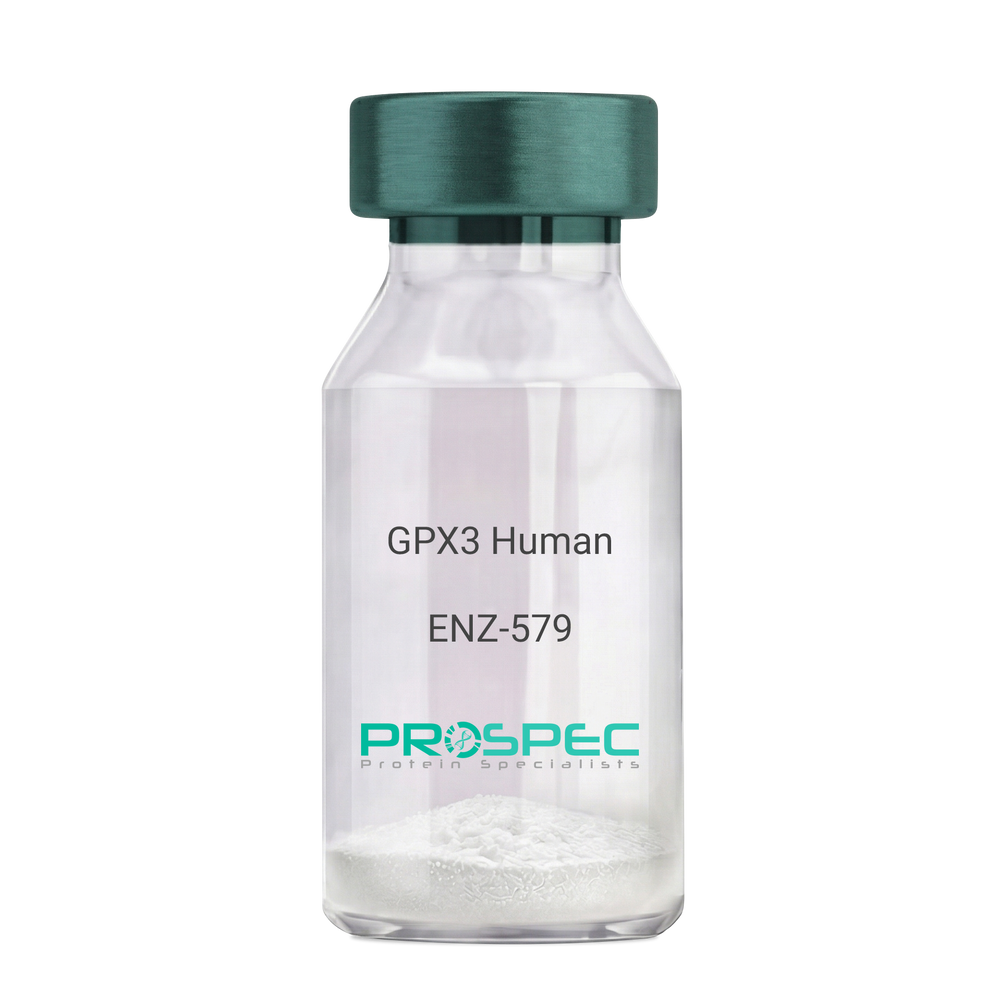
    GPX3 Human

    Description:

    Glutathione Peroxidase 3 Human Recombinant

    Glutathione peroxidase 3, GPx-3, GSHPx-3, Extracellular glutathione peroxidase, Plasma glutathione peroxidase, GPx-P, GSHPx-P, GPX3, GPXP.

    Product # :

    ENZ-579

    Price :

    Quantity :

    Shipping Method :

    Ice Icon

    Shipped with Ice Packs

    Add To Cart

    More Info

    • description
    • source
    • formulation
    • purity
    • More Info
    • Citations

    Description

    GPX3 Human Recombinant produced in E.coli is a single, non-glycosylated polypeptide chain containing 227 amino acids (21-226) and having a molecular mass of 25.7kDa.GPX3 is fused to a 21 amino acid His-tag at N-terminus & purified by proprietary chromatographic techniques.

    Source

    Escherichia Coli.

    Formulation

    The GPX3 solution contains 20mM Tris-HCl buffer (pH7.5), 40% glycerol, 0.15M NaCl and 1mM DTT.

    Purity

    Greater than 85% as determined by SDS-PAGE.

    Citations

    More Info

    • Introduction

      Glutathione peroxidase 3 (GPX3) is a member of the glutathione peroxidase family, which acts in the detoxification of hydrogen peroxide. GPX3 shields cells and enzymes from oxidative damage, by catalyzing the reduction of hydrogen peroxide, lipid peroxides and organic hydroperoxide, by glutathione. The GPX3 protein is one of only a few proteins known in higher vertebrates to contain selenocysteine, which occurs at the active site of glutathione peroxidase and is coded by the nonsense (stop) codon TGA.

    • Synonyms

      Glutathione peroxidase 3, GPx-3, GSHPx-3, Extracellular glutathione peroxidase, Plasma glutathione peroxidase, GPx-P, GSHPx-P, GPX3, GPXP.

    • Physical Appearance

      Sterile filtered colorless solution.

    • Stability

      Store at 4°C if entire vial will be used within 2-4 weeks. Store, frozen at -20°C for longer periods of time. For long term storage it is recommended to add a carrier protein (0.1% HSA or BSA).Avoid multiple freeze-thaw cycles.

    • Amino Acid Sequence

      MGSSHHHHHH SSGLVPRGSH MQSRGQEKSK MDCHGGISGT IYEYGALTID GEEYIPFKQY AGKYVLFVNV ASYCGLTGQY IELNALQEEL APFGLVILGF PCNQFGKQEP GENSEILPTL KYVRPGGGFV PNFQLFEKGD VNGEKEQKFY TFLKNSCPPT SELLGTSDRL FWEPMKVHDI RWNFEKFLVG PDGIPIMRWH HRTTVSNVKM DILSYMRRQA ALGVKRK.

    ProSpec's products are furnished for LABORATORY RESEARCH USE ONLY. The product may not be used as drugs, agricultural or pesticidal products, food additives or household chemicals.

    Gpx3 Human
  • View Data Sheet

    Name :

    Taq Plus DNA

    Description:

    Taq Plus DNA Polymerase Recombinant

    Taq Plus DNA Polymerase, Taq Plus DNA, TaqPDNA.

    Product # :

    ENZ-309

    Price :

    Quantity :

    Shipping Method :

    Ice Icon

    Shipped with Ice Packs

    Add To Cart

    More Info

    • description
    • source
    • formulation
    • More Info
    • Citations

    Description

    Taq Plus is a mixture of Taq and Pfu. Taq Plus, which is used to improve the reliability and yield of conventional primer extension reaction. Taq Plus has two following advantages over Taq: (1) high fidelity with an error frequency 1.6/106 (or 0.0016/103) during DNA synthesis. (2) Taq Plus increases the efficiency of polymerization reaction, resulting in a great percentage of extenuation reaction completion up to 10 kb to 30 kb. Pfu has a temperature optimum between 72-78°C and remains > 95% active following 1-hour incubation at 95°C.

    Source

    Recombinant E.coli contains Thermus aquaticus polymerase gene.

    Formulation

    5U/µl.

    Citations

    More Info

    • Synonyms

      Taq Plus DNA Polymerase, Taq Plus DNA, TaqPDNA.

    • Stability

      Stable for 5 days at 10°C, for longer period of time store at -20°C.

    • Optimization of DNA Synthesis

      It is important to ad the reaction components in the following order1. H2O.2. 10 x reaction buffer.3. dNTPs.4. DNA template and primers.5. Taq Plus.

    • Reaction Conditions

      DNA synthesis is performed in 100?l of mixture containing 20-200μm dNTPs, 0.3-1μm Promers, 0.1-0.250 mg of template DNA, 10 ?l of 10 x reaction buffer and 2.5-5 units of Taq Plus. Mix the reaction gently, centrifuge briefly and then overlay with light mineral oil. Initially, denature the reaction by incubating at 95? for 5 minutes and then cool to 40-68? for 5 minutes to allow the primers to anneal to the template DNA.

    • Storage Buffer

      20mM Tris-HCl (pH 8.0), 1mM DTT, 0.1mM EDTA, 100mM KCl, Stabilizers, and 50%glycerol.

    • Note

      All reagents, including Taq Plus, should be mixed immediately before use.

    • Unit Definition

      One unit of the enzyme catalyzes the incorporation of 10nmole of deoxyribonucleotides into a polynucleotide fraction in 30 min at 74°C.

    ProSpec's products are furnished for LABORATORY RESEARCH USE ONLY. The product may not be used as drugs, agricultural or pesticidal products, food additives or household chemicals.

    Taq Plus Dna
  • View Data Sheet

    Name :

    CAB39 Human

    Description:

    Calcium Binding Protein 39 Human Recombinant

    MO25, CAB-39, CGI-66, FLJ22682, Calcium Binding Protein 39.

    Product # :

    PRO-857

    Price :

    Quantity :

    Shipping Method :

    Ice Icon

    Shipped with Ice Packs

    Add To Cart

    More Info

    • description
    • source
    • formulation
    • purity
    • More Info
    • Citations

    Description

    CAB39 Recombinant Human produced in E.Coli is a single, non-glycosylated polypeptide chain containing 361 amino acids (1-341 a.a.) and having a molecular mass of 42 kDa. The CAB39 is fused to a 20 amino acid His-Tag at N-terminus and purified by proprietary chromatographic techniques.

    Source

    Escherichia Coli.

    Formulation

    The CAB39 solution (0.5mg/ml) contains 20mM Tris-HCl pH-8, 1mM DTT & 10% glycerol.

    Purity

    Greater than 90.0% as determined by SDS-PAGE.

    Citations

    More Info

    • Introduction

      CAB39 protein and STE20-related adaptor-alpha pseudo kinase, form a regulatory complex that is able of stimulating the activity of the LKB1 tumor suppressor protein kinase. CAB39 takes part as a scaffolding component of the STK11/STRAD complex and regulates STK11 activity and cellular localization.

    • Synonyms

      MO25, CAB-39, CGI-66, FLJ22682, Calcium Binding Protein 39.

    • Physical Appearance

      Sterile filtered colorless solution.

    • Stability

      Store at 4°C if entire vial will be used within 2-4 weeks. Store, frozen at -20°C for longer periods of time. For long term storage it is recommended to add a carrier protein (0.1% HSA or BSA).Avoid multiple freeze-thaw cycles.

    • Amino Acid Sequence

      MGSSHHHHHH SSGLVPRGSH MPFPFGKSHK SPADIVKNLK ESMAVLEKQD ISDKKAEKAT EEVSKNLVAM KEILYGTNEK EPQTEAVAQL AQELYNSGLL STLVADLQLI DFEGKKDVAQ IFNNILRRQI GTRTPTVEYI CTQQNILFML LKGYESPEIA LNCGIMLREC IRHEPLAKII LWSEQFYDFF RYVEMSTFDI ASDAFATFKD LLTRHKLLSA EFLEQHYDRF FSEYEKLLHS ENYVTKRQSL KLLGELLLDR HNFTIMTKYISKPENLKLMM NLLRDKSRNI QFEAFHVFKV FVANPNKTQP ILDILLKNQA KLIEFLSKFQ NDRTEDEQFN DEKTYLVKQI RDLKRPAQQE A.

    ProSpec's products are furnished for LABORATORY RESEARCH USE ONLY. The product may not be used as drugs, agricultural or pesticidal products, food additives or household chemicals.

    Cab39 Human
  • View Data Sheet

    Name :

    CANT1 Human

    Description:

    Calcium Activated Nucleotidase 1 Human Recombinant

    Soluble calcium-activated nucleotidase 1, SCAN-1, Apyrase homolog, Putative MAPK-activating protein PM09, Putative NF-kappa-B-activating protein 107, CANT1, SHAPY, DBQD, SCAN1.

    Product # :

    PRO-1010

    Price :

    Quantity :

    Shipping Method :

    Ice Icon

    Shipped with Ice Packs

    Add To Cart

    More Info

    • description
    • source
    • formulation
    • purity
    • More Info
    • Citations

    Description

    CANT1 Human Recombinant produced in E.Coli is a single, non-glycosylated polypeptide chain containing 364 amino acids (63-401 a.a.) and having a molecular mass of 40.5kDa. CANT1 is fused to a 25 amino acid His-tag at N-terminus & purified by proprietary chromatographic techniques.

    Source

    E.coli.

    Formulation

    CANT1 protein solution (1mg/ml) containing 20mM Tris-HCl buffer (pH 8.0), 1mM DTT, 10% glycerol and 50mM NaCl.

    Purity

    Greater than 90% as determined by SDS-PAGE.

    Citations

    More Info

    • Introduction

      Calcium-activated nucleotidase 1 (CANT1) is a member of the apyrase family. The CANT1 protein is calcium-dependent nucleotidase with a preference for UDP. The order of activity with different substrates is as follows: UDP > GDP > UTP > GTP. Moreover, CANT1 has a very low activity towards ADP and an even lower activity towards ATP. As well as it doesn’t hydrolyze AMP and GMP. CANT1’s specific function is yet unknown, nevertheless its substrates are involved in several key signaling functions, including Ca2+ release, through activation of pyrimidinergic signaling. Mutations in the CANT1 gene are linked with Desbuquois dysplasia with hand anomalies.

    • Synonyms

      Soluble calcium-activated nucleotidase 1, SCAN-1, Apyrase homolog, Putative MAPK-activating protein PM09, Putative NF-kappa-B-activating protein 107, CANT1, SHAPY, DBQD, SCAN1.

    • Physical Appearance

      Sterile Filtered colorless solution.

    • Stability

      Store at 4°C if entire vial will be used within 2-4 weeks. Store, frozen at -20°C for longer periods of time. For long term storage it is recommended to add a carrier protein (0.1% HSA or BSA).Avoid multiple freeze-thaw cycles.

    • Amino Acid Sequence

      MGSSHHHHHH SSGLVPRGSH MGSHMRPAPG RPPTHNAHNW RLGQAPANWY NDTYPLSPPQ RTPAGIRYRI AVIADLDTES RAQEENTWFS YLKKGYLTLS DSGDKVAVEW DKDHGVLESH LAEKGRGMEL SDLIVFNGKL YSVDDRTGVV YQIEGSKAVP WVILSDGDGT VEKGFKAEWL AVKDERLYVG GLGKEWTTTT GDVVNENPEW VKVVGYKGSV DHENWVSNYN ALRAAAGIQP PGYLIHESAC WSDTLQRWFF LPRRASQERY SEKDDERKGA NLLLSASPDF GDIAVSHVGA VVPTHGFSSF KFIPNTDDQI IVALKSEEDS GRVASYIMAF TLDGRFLLPE TKIGSVKYEG IEFI.

    ProSpec's products are furnished for LABORATORY RESEARCH USE ONLY. The product may not be used as drugs, agricultural or pesticidal products, food additives or household chemicals.

    Cant1 Human
  • View Data Sheet

    Name :

    Urokinase

    Description:

    Urokinase Human Recombinant

    PLAU, ATF, BDPLT5, QPD, u-PA, UPA, URK, Urokinase-type plasminogen activator, U-plasminogen activator, uPA, Urokinase-type plasminogen activator long chain A, Urokinase-type plasminogen activator short chain A, Urokinase-type plasminogen activator chain B.

    Product # :

    ENZ-965

    Price :

    Quantity :

    Shipping Method :

    Ice Icon

    Shipped with Ice Packs

    Add To Cart

    More Info

    • description
    • source
    • formulation
    • purity
    • More Info
    • Citations

    Description

    Urokinase Human Recombinant produced in Sf9 Baculovirus cells is a single, glycosylated polypeptide chain containing 419 amino acids (21-431) and having a molecular mass of 47.4kDa (Molecular size on SDS-PAGE will appear at approximately 40-57kDa).Urokinase is fused to 8 amino acid His-Tag at C-terminus and purified by proprietary chromatographic techniques.

    Source

    Sf9, Baculovirus cells.

    Formulation

    Urokinase protein solution (0.5mg/ml) containing Phosphate buffered saline (pH7.4) and 10% glycerol.

    Purity

    Greater than 95.0% as determined by SDS-PAGE.

    Citations

    More Info

    • Introduction

      Urokinase (UK) is a serine protease, which is one of biological plasminogen activators.
      It is involved in a number of biological functions including fibrinolysis, embryogenesis, cell migration, tissue remodeling, ovulation, and wound healing.
      It can be obtained from human urine or kidney cell culture.

    • Synonyms

      PLAU, ATF, BDPLT5, QPD, u-PA, UPA, URK, Urokinase-type plasminogen activator, U-plasminogen activator, uPA, Urokinase-type plasminogen activator long chain A, Urokinase-type plasminogen activator short chain A, Urokinase-type plasminogen activator chain B.

    • Physical Appearance

      Sterile Filtered clear solution.

    • Stability

      Store at 4°C if entire vial will be used within 2-4 weeks. Store, frozen at -20°C for longer periods of time. For long term storage it is recommended to add a carrier protein (0.1% HSA or BSA).Avoid multiple freeze-thaw cycles.

    • Amino Acid Sequence

      SNELHQVPSN CDCLNGGTCV SNKYFSNIHW CNCPKKFGGQ HCEIDKSKTC YEGNGHFYRG KASTDTMGRP CLPWNSATVL QQTYHAHRSD ALQLGLGKHN YCRNPDNRRR PWCYVQVGLK PLVQECMVHD CADGKKPSSP PEELKFQCGQ KTLRPRFKII GGEFTTIENQ PWFAAIYRRH RGGSVTYVCG GSLISPCWVI SATHCFIDYP KKEDYIVYLG RSRLNSNTQG EMKFEVENLI LHKDYSADTL AHHNDIALLK IRSKEGRCAQ PSRTIQTICL PSMYNDPQFG TSCEITGFGK ENSTDYLYPE QLKMTVVKLI SHRECQQPHY YGSEVTTKML CAADPQWKTD SCQGDSGGPL VCSLQGRMTL TGIVSWGRGC ALKDKPGVYT RVSHFLPWIR SHTKEENGLA LLEHHHHHH.

    ProSpec's products are furnished for LABORATORY RESEARCH USE ONLY. The product may not be used as drugs, agricultural or pesticidal products, food additives or household chemicals.

    Urokinase Human 2
  • View Data Sheet

    Name :

    MPI Human

    Description:

    Mannose Phosphate Isomerase Human Recombinant

    Mannose-6-phosphate isomerase, PMI1, CDG1B, Phosphohexomutase, Phosphomannose isomerase, EC 5.3.1.8, FLJ39201.

    Product # :

    ENZ-169

    Price :

    Quantity :

    Shipping Method :

    Ice Icon

    Shipped with Ice Packs

    Add To Cart

    More Info

    • description
    • source
    • formulation
    • purity
    • More Info
    • Citations

    Description

    MPI Human Recombinant produced in E.coli is a single, non-glycosylated polypeptide chain containing 382 amino acids (1-362) and having a molecular mass of 41.9 kDa.The MPI is fused to a 20 amino acid His-Tag at N-terminus and purified by proprietary chromatographic techniques.

    Source

    E.coli.

    Formulation

    The MPI solution (0.5mg/ml) contains 20mM Tris-HCl buffer (pH 8.0), 0.4M Urea and 5% glycerol.

    Purity

    Greater than 90% as determined by SDS-PAGE.

    Citations

    More Info

    • Introduction

      MPI is a member of the mannose-6-phosphate isomerase type 1 family. Although MPI is expressed in all tissues, it can be found more abundantly in heart, brain and skeletal muscle. Localized to the cytoplasm, MPI exploits zinc as a cofactor and catalyzes the interconversion of fructose-6-phosphate and mannose-6-phosphate. Mutations in the MPI gene are the cause of carbohydrate-deficient glycoprotein syndrome, type Ib.

    • Synonyms

      Mannose-6-phosphate isomerase, PMI1, CDG1B, Phosphohexomutase, Phosphomannose isomerase, EC 5.3.1.8, FLJ39201.

    • Physical Appearance

      Sterile Filtered colorless solution.

    • Stability

      Store at 4°C if entire vial will be used within 2-4 weeks. Store, frozen at -20°C for longer periods of time. For long term storage it is recommended to add a carrier protein (0.1% HSA or BSA).Avoid multiple freeze-thaw cycles.

    • Amino Acid Sequence

      MGSSHHHHHH SSGLVPRGSH MAAPRVFPLS CAVQQYAWGK MGSNSEVARL LASSDPLAQI AEDKPYAELW MGTHPRGDAK ILDNRISQKT LSQWIAENQD SLGSKVKDTF NGNLPFLFKV LSVETPLSIQ AHPNKELAEK LHLQAPQHYP DANHKPEMAI ALTPFQGLCG FRPVEEIVTF LKTAAGNNME DIFGELLLQL HQQYPGDIGC FAIYFLNLLT LKPGEAMFLE ANVPHAYLKG DCVECMACSD NTVRAGLTPK FIDVPTLCEM LSYTPSSSKD RLFLPTRSQE DPYLSIYDPP VPDFTIMKTE VPGSVTEYKV LALDSASILL MVQGTVIAST PTTQTPIPLQ RGGVLFIGAN ESVSLKLTEP KDLLIFRACC LL

    ProSpec's products are furnished for LABORATORY RESEARCH USE ONLY. The product may not be used as drugs, agricultural or pesticidal products, food additives or household chemicals.

    Mpi Human
  • View Data Sheet

    Name :

    NAGK Human

    Description:

    N-Acetylglucosamine Kinase Human Recombinant

    N-acetylglucosamine kinase, GNK, GlcNAc kinase, N-acetyl-D-glucosamine kinase, HSA242910, EC 2.7.1.59.

    Product # :

    PKA-027

    Price :

    Quantity :

    Shipping Method :

    Ice Icon

    Shipped with Ice Packs

    Add To Cart

    More Info

    • description
    • source
    • formulation
    • purity
    • More Info
    • Citations

    Description

    NAGK Human Recombinant produced in E. coli is a single polypeptide chain containing 367 amino acids (1-344) and having a molecular mass of 39.8kDa.NAGK is fused to a 23 amino acid His-tag at N-terminus & purified by proprietary chromatographic techniques.

    Source

    E.coli.

    Formulation

    The NAGK solution (1mg/ml) contains 20mM Tris-HCl buffer (pH 8.0), 200mM NaCl, 2mM DTT and 20% glycerol.

    Purity

    Greater than 95% as determined by SDS-PAGE.

    Citations

    More Info

    • Introduction

      NAGK is a member of the eukaryotic-type N-acetylglucosamine kinase family. NAGK converts endogenous N-acetylglucosamine (GlcNAc), a key component of complex carbohydrates, from lysosomal degradation or alimentary sources into GlcNAc 6-phosphate. NAGK is a prominent salvage enzyme of amino sugar metabolism in mammals. NAGK cooperates with STK16 and LNX1 and has ManNAc kinase activity.

    • Synonyms

      N-acetylglucosamine kinase, GNK, GlcNAc kinase, N-acetyl-D-glucosamine kinase, HSA242910, EC 2.7.1.59.

    • Physical Appearance

      Sterile Filtered colorless solution.

    • Stability

      Store at 4°C if entire vial will be used within 2-4 weeks. Store, frozen at -20°C for longer periods of time. For long term storage it is recommended to add a carrier protein (0.1% HSA or BSA).Avoid multiple freeze-thaw cycles.

    • Amino Acid Sequence

      MGSSHHHHHH SSGLVPRGSH MGSMAAIYGG VEGGGTRSEV LLVSEDGKIL AEADGLSTNH WLIGTDKCVE RINEMVNRAK RKAGVDPLVP LRSLGLSLSG GDQEDAGRIL IEELRDRFPY LSESYLITTD AAGSIATATP DGGVVLISGT GSNCRLINPD GSESGCGGWG HMMGDEGSAY WIAHQAVKIV FDSIDNLEAA PHDIGYVKQA MFHYFQVPDR LGILTHLYRD FDKCRFAGFC RKIAEGAQQG DPLSRYIFRK AGEMLGRHIV AVLPEIDPVL FQGKIGLPIL CVGSVWKSWE LLKEGFLLAL TQGREIQAQN FFSSFTLMKL RHSSALGGAS LGARHIGHLL PMDYSANAIA FYSYTFS

    ProSpec's products are furnished for LABORATORY RESEARCH USE ONLY. The product may not be used as drugs, agricultural or pesticidal products, food additives or household chemicals.

    Nagk Human
  • View Data Sheet

    Name :

    NDUFS6 Human

    Description:

    Histidine NADH Dehydrogenase Fe-S Protein 6 Human Recombinant

    NADH Dehydrogenase (Ubiquinone) Fe-S Protein 6 13kDa (NADH-Coenzyme Q Reductase), Complex I Mitochondrial Respiratory Chain 13-KD Subunit, NADH Dehydrogenase [Ubiquinone] Iron-Sulfur Protein 6 Mitochondrial, NADH: Ubiquinone Oxidoreductase NDUFS6 Subunit, NADH-Ubiquinone Oxidoreductase 13 KDa-A Subunit, Complex I-13kD-A, CI13KDA.

    Product # :

    ENZ-725

    Price :

    Quantity :

    Shipping Method :

    Ice Icon

    Shipped with Ice Packs

    Add To Cart

    More Info

    • description
    • source
    • formulation
    • purity
    • More Info
    • Citations

    Description

    NADH Dehydrogenase (Ubiquinone) Fe-S Protein 6 13kDa (NADH-Coenzyme Q Reductase), Complex I Mitochondrial Respiratory Chain 13-KD Subunit, NADH Dehydrogenase [Ubiquinone] Iron-Sulfur Protein 6 Mitochondrial, NADH: Ubiquinone Oxidoreductase NDUFS6 Subunit, NADH-Ubiquinone Oxidoreductase 13 KDa-A Subunit, Complex I-13kD-A, CI13KDA.

    Source

    Escherichia Coli.

    Formulation

    The NDUFS6 solution (0.25mg/ml) contains 20mM Tris-HCl buffer (pH 8.0), 0.15M NaCl, 1mM DTT and 30% glycerol.

    Purity

    Greater than 90% as determined by SDS-PAGE.

    Citations

    More Info

    • Introduction

      NADH Dehydrogenase Fe-S Protein 6 (NDUFS6) is a subunit of the NADH: ubiquinone oxidoreductase (complex I), which is the 1st enzyme complex in the electron transport chain of the mitochondria. This complex operates in the transfer of electrons from NADH to the respiratory chain. NDUFS6 is one of seven subunits in the iron-sulfur protein segment. DNA alterations in NDUFS6 are the cause for mitochondrial complex I deficiency, a disease which results in an extensive assortment of clinical disorders, like adult-onset neurodegenerative disorders and neonatal disease.

    • Synonyms

      NADH Dehydrogenase (Ubiquinone) Fe-S Protein 6 13kDa (NADH-Coenzyme Q Reductase), Complex I Mitochondrial Respiratory Chain 13-KD Subunit, NADH Dehydrogenase [Ubiquinone] Iron-Sulfur Protein 6 Mitochondrial, NADH: Ubiquinone Oxidoreductase NDUFS6 Subunit, NADH-Ubiquinone Oxidoreductase 13 KDa-A Subunit, Complex I-13kD-A, CI13KDA.

    • Physical Appearance

      Sterile Filtered clear solution.

    • Stability

      Store at 4°C if entire vial will be used within 2-4 weeks. Store, frozen at -20°C for longer periods of time. For long term storage it is recommended to add a carrier protein (0.1% HSA or BSA).Avoid multiple freeze-thaw cycles.

    • Amino Acid Sequence

      MGSSHHHHHH SSGLVPRGSH MGSFGVRVSP TGEKVTHTGQ VYDDKDYRRI RFVGRQKEVN ENFAIDLIAE QPVSEVETRV IACDGGGGAL GHPKVYINLD KETKTGTCGY CGLQFRQHHH

    ProSpec's products are furnished for LABORATORY RESEARCH USE ONLY. The product may not be used as drugs, agricultural or pesticidal products, food additives or household chemicals.

    Ndufs6 Human
  • View Data Sheet

    Name :

    BLMH Human

    Description:

    BLM Hydrolase Human Recombinant

    BMH, BH, BLM hydrolase.

    Product # :

    ENZ-018

    Price :

    Quantity :

    Shipping Method :

    Ice Icon

    Shipped with Ice Packs

    Add To Cart

    More Info

    • description
    • source
    • formulation
    • purity
    • biological activity
    • More Info
    • Citations

    Description

    BLMH produced in E.Coli is a single, non-glycosylated polypeptide chain containing 475 amino acids (1-455a.a.) and having a molecular mass of 54.7kDa.BLMH is fused to a 20 amino acid His-tag at N-terminus & purified by proprietary chromatographic techniques.

    Source

    Escherichia Coli.

    Formulation

    The BLMH protein solution (1mg/1ml) is formulated in 20mM Tris-HCl Buffer (pH 8.0) and 10% Glycerol.

    Purity

    Greater than 90% as determined by SDS-PAGE.

    Biological Activity

    Specific activity: > 1,000 pmole/min/ug. Measured by the hydrolysis of Met-AMC at pH 7.5, at 37C.

    Citations

    More Info

    • Introduction

      BLMH is affiliate to the papain superfamily of the cysteine protease and the peptidase C1 family. BLMH is a cytoplasmic cysteinepeptidase usually found as a homohexamer. The standard physiological role of BLMH has not been determined, but it shields normal and malignant cells from the glycopeptide antitumor drug BLM. BLMH catalyzes the inactivation of the antitumor drug BLM (a glycopeptide) by hydrolyzing the carboxyamide bond of its B-aminoalaninamide moiety and in addition demonstrates general aminopeptidase activity.

    • Synonyms

      BMH, BH, BLM hydrolase.

    • Physical Appearance

      Sterile Filtered clear solution.

    • Stability

      Store at 4°C if entire vial will be used within 2-4 weeks. Store, frozen at -20°C for longer periods of time.Please avoid freeze thaw cycles.

    • Amino Acid Sequence

      MGSSHHHHHH SSGLVPRGSH MSSSGLNSEK VAALIQKLNS DPQFVLAQNV GTTHDLLDIC LKRATVQRAQ HVFQHAVPQE GKPITNQKSS GRCWIFSCLN VMRLPFMKKL NIEEFEFSQS YLFFWDKVER CYFFLSAFVD TAQRKEPEDG RLVQFLLMNP ANDGGQWDML VNIVEKYGVI PKKCFPESYT TEATRRMNDI LNHKMREFCI RLRNLVHSGA TKGEISATQD VMMEEIFRVV CICLGNPPET FTWEYRDKDK NYQKIGPITP LEFYREHVKP LFNMEDKICL VNDPRPQHKY NKLYTVEYLS NMVGGRKTLY NNQPIDFLKK MVAASIKDGE AVWFGCDVGK HFNSKLGLSD MNLYDHELVF GVSLKNMNKA ERLTFGESLM THAMTFTAVS EKDDQDGAFT KWRVENSWGE DHGHKGYLCM TDEWFSEYVY EVVVDRKHVP EEVLAVLEQE PIILPAWDPM GALAE

    ProSpec's products are furnished for LABORATORY RESEARCH USE ONLY. The product may not be used as drugs, agricultural or pesticidal products, food additives or household chemicals.

    Blmh Human
  • View Data Sheet

    Name :

    PCMT1 Human

    Description:

    Protein-L-Isoaspartate O-Methyltransferase Human Recombinant

    EC 2.1.1.77, PIMT, PCMT1, Protein-beta-aspartate methyltransferase, Protein L-isoaspartyl/D-aspartyl methyltransferase, L-isoaspartyl protein carboxyl methyltransferase.

    Product # :

    ENZ-522

    Price :

    Quantity :

    Shipping Method :

    Ice Icon

    Shipped with Ice Packs

    Add To Cart

    More Info

    • description
    • source
    • formulation
    • purity
    • More Info
    • Citations

    Description

    PCMT1 Recombinant Human produced in E.Coli is a single, non-glycosylated polypeptide chain containing 263 amino acids (1-227 a.a.) and having a molecular mass of 28.8 kDa. The PCMT1 is fused to a 36 amino acids His-Tag at N-terminus and purified by proprietary chromatographic techniques.

    Source

    Escherichia Coli.

    Formulation

    PCMT1 Human solution containing 20mM Tris-HCl pH-8, 0.1M NaCl, & 10% glycerol.

    Purity

    Greater than 95.0% as determined by SDS-PAGE.

    Citations

    More Info

    • Introduction

      PCMT1 enzyme catalyses the methyl esterification of L-isoaspartyl and D-aspartyl residues in peptides and proteins that result from spontaneous decomposition of normal L-aspartyl and L-asparaginyl residues. PCMT1 is involved in the repair and/or degradation of damaged proteins.

    • Synonyms

      EC 2.1.1.77, PIMT, PCMT1, Protein-beta-aspartate methyltransferase, Protein L-isoaspartyl/D-aspartyl methyltransferase, L-isoaspartyl protein carboxyl methyltransferase.

    • Physical Appearance

      Sterile filtered colorless solution.

    • Stability

      Store at 4°C if entire vial will be used within 2-4 weeks. Store, frozen at -20°C for longer periods of time. For long term storage it is recommended to add a carrier protein (0.1% HSA or BSA).Avoid multiple freeze-thaw cycles.

    • Amino Acid Sequence

      RGSHHHHHH GMASMTGGQQ MGRDLYDDDD KDRWGSMAWK SGGASHSELI HNLRKNGIIK TDKVFEVMLA TDRSHYAKCN PYMDSPQSIG FQATISAPHM HAYALELLFD QLHEGAKALD VGSGSGILTA CFARMVGCTG KVIGIDHIKE LVDDSINNVR KDDPTLLSSG RVQLVVGDGR MGYAEEAPYD AIHVGAAAPV VPQALIDQLK PGGRLILPVG PAGGNQMLEQ YDKLQDGSIK MKPLMGVIYV PLTDKEKQWS RWK.

    ProSpec's products are furnished for LABORATORY RESEARCH USE ONLY. The product may not be used as drugs, agricultural or pesticidal products, food additives or household chemicals.

    Pcmt1 Human
  • View Data Sheet

    Name :

    ITPA Human

    Description:

    Inosine Triphosphatase Human Recombinant

    EC 3.6.1.19, C20orf37, dJ794I6.3, HLC14-06-P, ITPase, My049, OK/SW-cl.9, Inosine Triphosphatase, ITPA.

    Product # :

    ENZ-549

    Price :

    Quantity :

    Shipping Method :

    Ice Icon

    Shipped with Ice Packs

    Add To Cart

    More Info

    • description
    • source
    • formulation
    • purity
    • More Info
    • Citations

    Description

    ITPA Recombinant Human produced in E.Coli is a single, non-glycosylated polypeptide chain containing 215 amino acids (1-194 a.a.) and having a molecular mass of 23.7 kDa. The ITPA is fused to a 21 amino acid His-Tag at N-terminus and purified by proprietary chromatographic techniques.

    Source

    Escherichia Coli.

    Formulation

    The ITPA solution (1mg/ml) contains 20mM Tris-HCl pH-8 & 10% glycerol.

    Purity

    Greater than 95.0% as determined by SDS-PAGE.

    Citations

    More Info

    • Introduction

      ITPA enzyme catalyzes the pyrophosphohydrolysis of both ITP (inosine triphosphate) and dITP (deoxyinosine triphosphate) to IMP (inosine monophosphate) and diphosphate. IMP is exercised as a substrate for purine nucleotide pathways. IMP is phosphorylated to ITP, and ITPA mediates the concentration of ITP in the cell by changing ITP back to IMP. Defects in ITPA result in ITPA deficiency which is thought to be inherited and is characterized by an over-accumulation of ITP in erythocytes, leukocytes and fibroblasts.

    • Synonyms

      EC 3.6.1.19, C20orf37, dJ794I6.3, HLC14-06-P, ITPase, My049, OK/SW-cl.9, Inosine Triphosphatase, ITPA.

    • Physical Appearance

      Sterile filtered colorless solution.

    • Stability

      Store at 4°C if entire vial will be used within 2-4 weeks.Store, frozen at -20°C for longer periods of time. For long term storage it is recommended to add a carrier protein (0.1% HSA or BSA).Avoid multiple freeze-thaw cycles.

    • Amino Acid Sequence

      MGSSHHHHHH SSGLVPRGSH MMAASLVGKK IVFVTGNAKK LEEVVQILGD KFPCTLVAQK IDLPEYQGEP DEISIQKCQE AVRQVQGPVL VEDTCLCFNA LGGLPGPYIK WFLEKLKPEG LHQLLAGFED KSAYALCTFA LSTGDPSQPV RLFRGRTSGR IVAPRGCQDF GWDPCFQPDG YEQTYAEMPK AEKNAVSHRF RALLELQEYF GSLAA.

    ProSpec's products are furnished for LABORATORY RESEARCH USE ONLY. The product may not be used as drugs, agricultural or pesticidal products, food additives or household chemicals.

    Itpa Human
  • View Data Sheet

    Name :

    GGH Human

    Description:

    Gamma-Glutamyl Hydrolase Human Recombinant

    Gamma-glutamyl hydrolase (conjugase, folylpolygammaglutamyl hydrolase), Gamma-Glu-X carboxypeptidase, gamma-glutamyl hydrolase, Conjugase, GH, EC 3.4.19.9.

    Product # :

    ENZ-242

    Price :

    Quantity :

    Shipping Method :

    Ice Icon

    Shipped with Ice Packs

    Add To Cart

    More Info

    • description
    • source
    • formulation
    • purity
    • More Info
    • Citations

    Description

    GGH Human Recombinant produced in E.coli is a single, non-glycosylated polypeptide chain containing 315 amino acids (25-318) and having a molecular mass of 35.9kDa.GGH is fused to a 21 amino acid His-tag at N-terminus & purified by proprietary chromatographic techniques.

    Source

    E.coli.

    Formulation

    The GGH solution (0.5mg/ml) contains 20mM Tris-HCl buffer (pH 8.0), 100mM NaCl, 1mM DTT and 10% glycerol.

    Purity

    Greater than 95% as determined by SDS-PAGE.

    Citations

    More Info

    • Introduction

      GGH is a homodimeric protein which catalyzes the cleavage of the gamma-glutamyl chain of folylpoly-gamma-glutamyl substrates. GGH is a vital enzyme in folyl and antifolyl poly-gamma-glutamate metabolism and it has a significant part in the bioavailability of dietary pteroylpolyglutamates and in the metabolism of antifolates and pteroylpolyglutamates.

    • Synonyms

      Gamma-glutamyl hydrolase (conjugase, folylpolygammaglutamyl hydrolase), Gamma-Glu-X carboxypeptidase, gamma-glutamyl hydrolase, Conjugase, GH, EC 3.4.19.9.

    • Physical Appearance

      Sterile Filtered colorless solution.

    • Stability

      Store at 4°C if entire vial will be used within 2-4 weeks. Store, frozen at -20°C for longer periods of time. For long term storage it is recommended to add a carrier protein (0.1% HSA or BSA).Avoid multiple freeze-thaw cycles.

    • Amino Acid Sequence

      MGSSHHHHHH SSGLVPRGSH MRPHGDTAKK PIIGILMQKC RNKVMKNYGR YYIAASYVKY LESAGARVVP VRLDLTEKDY EILFKSINGI LFPGGSVDLR RSDYAKVAKI FYNLSIQSFD DGDYFPVWGT CLGFEELSLL ISGECLLTAT DTVDVAMPLN FTGGQLHSRM FQNFPTELLL SLAVEPLTAN FHKWSLSVKN FTMNEKLKKF FNVLTTNTDG KIEFISTMEG YKYPVYGVQW HPEKAPYEWK NLDGISHAPN AVKTAFYLAE FFVNEARKNN HHFKSESEEE KALIYQFSPI YTGNISSFQQ CYIFD

    ProSpec's products are furnished for LABORATORY RESEARCH USE ONLY. The product may not be used as drugs, agricultural or pesticidal products, food additives or household chemicals.

    Ggh Human
  • View Data Sheet

    Name :

    CDA Human

    Description:

    Cytidine Deaminase Human Recombinant

    Cytidine deaminase, Cytidine aminohydrolase, CDA, CDD.

    Product # :

    ENZ-007

    Price :

    Quantity :

    Shipping Method :

    Ice Icon

    Shipped with Ice Packs

    Add To Cart

    More Info

    • description
    • source
    • formulation
    • purity
    • biological activity
    • More Info
    • Citations

    Description

    CDA Human Recombinant fused with a 20 amino acid His tag at N-terminus produced in E.Coli is a single, non-glycosylated, polypeptide chain containing 166 amino acids (1-146 a.a.) and having a molecular mass of 18.3kDa. The CDA is purified by proprietary chromatographic techniques.

    Source

    Escherichia Coli.

    Formulation

    The CDA solution (0.5mg/ml) contains 20mM Tris-HCl Buffer (pH 8.0), 1mM DTT, 2mM EDTA, 100mM NaCl and 40% Glycerol.

    Purity

    Greater than 90.0% as determined by SDS-PAGE.

    Biological Activity

    Specific activity is > 10,000pmol/min/ug, and is defined as the amount of required to deaminate 1.0pmole of cytidine per min at pH 7.5 at 25C.

    Citations

    More Info

    • Introduction

      Cytidine deaminase (CDA) is an enzyme that scavenges exogenous and endogenous cytidine and 2'-deoxycytidine for UMP synthesis. CDA is one of several deaminases responsible for maintaining the cellular pyrimidine pool. CDA also catalyzes the deamination of chemotherapeutic cytosine nucleoside analogs such as Ara-C and 5-azacytidine, which results in the loss of their cytotoxic and antitumor function. CDA can form homotetramers and is generally expressed in granulocytes. Mutations in the CDA gene are linked to decreased sensitivity to the cytosine nucleoside analogue cytosine arabinoside used in the treatment of certain childhood leukemias.

    • Synonyms

      Cytidine deaminase, Cytidine aminohydrolase, CDA, CDD.

    • Physical Appearance

      Sterile Filtered colorless solution.

    • Stability

      Store at 4°C if entire vial will be used within 2-4 weeks.Store, frozen at -20°C for longer periods of time. For long term storage it is recommended to add a carrier protein (0.1% HSA or BSA).Avoid multiple freeze-thaw cycles.

    • Amino Acid Sequence

      MGSSHHHHHH SSGLVPRGSH MAQKRPACTL KPECVQQLLV CSQEAKQSAY CPYSHFPVGA ALLTQEGRIF KGCNIENACY PLGICAERTA IQKAVSEGYK DFRAIAIASD MQDDFISPCG ACRQVMREFG TNWPVYMTKP DGTYIVMTVQ ELLPSSFGPE DLQKTQ.

    ProSpec's products are furnished for LABORATORY RESEARCH USE ONLY. The product may not be used as drugs, agricultural or pesticidal products, food additives or household chemicals.

    Cda Human
  • View Data Sheet

    Name :

    UBE2L3 Human His

    Description:

    Ubiquitin-Conjugating Enzyme E2L 3 Human Recombinant, His Tag

    Ubiquitin-conjugating enzyme E2 L3, EC 6.3.2.19, Ubiquitin-protein ligase L3,Ubiquitin carrier protein L3, UbcH7, E2-F1, L-UBC, UbcM4.

    Product # :

    ENZ-344

    Price :

    Quantity :

    Shipping Method :

    Room Temp Icon

    Shipped at Room temp

    Add To Cart

    More Info

    • description
    • source
    • formulation
    • purity
    • More Info
    • Citations

    Description

    Ubiquitin-Conjugating Enzyme E2L 3 Human Recombinant produced in E.coli is an 18.9 kDa protein containing 162 amino acids.The UBE2L3 protein contains 6xHis tag and is purified by proprietary chromatographic techniques.

    Source

    Escherichia Coli.

    Formulation

    Lyophilized from a 0.2μm filtered concentrated (1 mg/ml) solution in 1X PBS and 1mM DTT, pH 7.5.

    Purity

    Greater than 95.0% as determined by: (a) Analysis by RP-HPLC.
    (b) Analysis by SDS-PAGE.

    Citations

    More Info

    • Introduction

      Human Ubquitin Conjugating Enzyme 7 (UbcH7) is a class I enzyme which functions in the stress response and the control of transcription factors. The enzyme is ubiquitously expressed with high levels of expression seen in adult muscle. UbcH7 mediates the selective degradation of short-lived and abnormal proteins and is highly homologous to UbcH5. It has been demonstrated to participate in the ubiquitinylation of p53, c-Fos and NF-?B. UbcH7 is one of two E2s (UbcH5 being the other) with which HECT domain proteins interact with UbcH7 being able to efficiently substitute for UbcH5 in E6-AP-dependent ubiquitinylation.

    • Synonyms

      Ubiquitin-conjugating enzyme E2 L3, EC 6.3.2.19, Ubiquitin-protein ligase L3,Ubiquitin carrier protein L3, UbcH7, E2-F1, L-UBC, UbcM4.

    • Physical Appearance

      Sterile Filtered white lyophilized powder.

    • Stability

      Lyophilized UBE2L3 although stable at room temperature for 3 weeks, should be stored desiccated below -18°C. Upon reconstitution UBE2L3 should be stored at 4°C between 2-7 days and for future use below -18°C.For long term storage it is recommended to add a carrier protein (0.1% HSA or BSA).Please prevent freeze-thaw cycles.

    • Solubility

      It is recommended to reconstitute the lyophilized UBE2L3 in sterile water not less than 100µg/ml, which can then be further diluted to other aqueous solutions.

    • Amino Acid Sequence

      MHHHHHHAMAASRRLMKELEEIRKCGMKNFRNIQVDEANLLTWQGLIVP
      DNPPYDKGAFRIEINFPAEYPFKPPKITFKTKIYHPNIDEKGQVCLPVISAEN
      WKPATKTDQVIQSLIALVNDPQPEHPLRADLAEEYSKDRKKFCKNAEEFT
      KKYGEKRPVD.

    ProSpec's products are furnished for LABORATORY RESEARCH USE ONLY. The product may not be used as drugs, agricultural or pesticidal products, food additives or household chemicals.

    Ube2L3 Human His
  • View Data Sheet

    Name :

    GSTK1 Human

    Description:

    Glutathione S-Transferase Kappa 1 Human Recombinant

    GST13, GST13-13, GSTK1-1, GST class-kappa, EC 2.5.1.18, Glutathione S-transferase kappa 1, Glutathione S-transferase subunit 13, hGSTK1, GSTK1.

    Product # :

    ENZ-476

    Price :

    Quantity :

    Shipping Method :

    Ice Icon

    Shipped with Ice Packs

    Add To Cart

    More Info

    • description
    • source
    • formulation
    • purity
    • More Info
    • Citations

    Description

    GSTK1 Human Recombinant produced in E.Coli is a single, non-glycosylated, polypeptide chain containing 226 amino acids (1-226 a.a.) and having a molecular mass of 25.5 kDa. GSTK1 is purified by proprietary chromatographic techniques.

    Source

    Escherichia Coli.

    Formulation

    GSTK1 solution containing 20mM Tris pH-8, 1mM DTT and 10% glycerol.

    Purity

    Greater than 90% as determined by SDS-PAGE.

    Citations

    More Info

    • Introduction

      GSTK1 is involved in cellular detoxification. GSTK1 is localized to the peroxisome and catalyzes the conjugation of the thiol group of glutathione (GSH) to the electrophilic groups of a broad range of hydrophobic substrates, leading to an easier removal of the latter from the cells.

    • Synonyms

      GST13, GST13-13, GSTK1-1, GST class-kappa, EC 2.5.1.18, Glutathione S-transferase kappa 1, Glutathione S-transferase subunit 13, hGSTK1, GSTK1.

    • Physical Appearance

      Sterile filtered colorless solution.

    • Stability

      Store at 4°C if entire vial will be used within 2-4 weeks. Store, frozen at -20°C for longer periods of time. For long term storage it is recommended to add a carrier protein (0.1% HSA or BSA).Avoid multiple freeze-thaw cycles.

    • Amino Acid Sequence

      MGPLPRTVEL FYDVLSPYSW LGFEILCRYQ NIWNINLQLR PSLITGIMKD SGNKPPGLLP RKGLYMANDL KLLRHHLQIP IHFPKDFLSV MLEKGSLSAM RFLTAVNLEH PEMLEKASRE LWMRVWSRNE DITEPQSILA AAEKAGMSAE QAQGLLEKIA TPKVKNQLKE TTEAACRYGA FGLPITVAHV DGQTHMLFGS DRMELLAHLL GEKWMGPIPP AVNARL.

    ProSpec's products are furnished for LABORATORY RESEARCH USE ONLY. The product may not be used as drugs, agricultural or pesticidal products, food additives or household chemicals.

    Gstk1 Human
  • View Data Sheet

    Name :

    COQ9 Human

    Description:

    Coenzyme Q9 Human Recombinant

    Ubiquinone biosynthesis protein COQ9, mitochondrial, C16orf49, COQ10D5, C16orf49, HSPC326, PSEC0129.

    Product # :

    ENZ-898

    Price :

    Quantity :

    Shipping Method :

    Ice Icon

    Shipped with Ice Packs

    Add To Cart

    More Info

    • description
    • source
    • formulation
    • purity
    • More Info
    • Citations

    Description

    COQ9 Human Recombinant produced in E.Coli is a single, non-glycosylated polypeptide chain containing 297 amino acids (45-318 a.a) and having a molecular mass of 33.3kDa.COQ9 is fused to a 23 amino acid His-tag at N-terminus & purified by proprietary chromatographic techniques.

    Source

    Escherichia Coli.

    Formulation

    COQ9 protein solution (1mg/ml) in Phosphate buffered saline (pH7.4), 10% glycerol and 1mM DTT.

    Purity

    Greater than 90.0% as determined by SDS-PAGE.

    Citations

    More Info

    • Introduction

      Ubiquinone biosynthesis protein COQ9 (COQ9) represents a mitochondrial ubiquinone biosynthesis gene. The COQ9 protein is likely required for biosynthesis of coenzyme Q10, since mutations at this locus have been linked with autosomal-recessive neonatal-onset primary coenzyme Q10 deficiency.

    • Synonyms

      Ubiquinone biosynthesis protein COQ9, mitochondrial, C16orf49, COQ10D5, C16orf49, HSPC326, PSEC0129.

    • Physical Appearance

      Sterile Filtered colorless solution.

    • Stability

      Store at 4°C if entire vial will be used within 2-4 weeks. Store, frozen at -20°C for longer periods of time. For long term storage it is recommended to add a carrier protein (0.1% HSA or BSA).Avoid multiple freeze-thaw cycles.

    • Amino Acid Sequence

      MGSSHHHHHH SSGLVPRGSH MGSRSSDEQK QQPPNSFSQQ HSETQGAEKP DPESSHSPPR YTDQGGEEEE DYESEEQLQH RILTAALEFV PAHGWTAEAI AEGAQSLGLS SAAASMFGKD GSELILHFVT QCNTRLTRVL EEEQKLVQLG QAEKRKTDQF LRDAVETRLR MLIPYIEHWP RALSILMLPH NIPSSLSLLT SMVDDMWHYA GDQSTDFNWY TRRAMLAAIY NTTELVMMQD SSPDFEDTWR FLENRVNDAM NMGHTAKQVK STGEALVQGL MGAAVTLKNL TGLNQRR.

    ProSpec's products are furnished for LABORATORY RESEARCH USE ONLY. The product may not be used as drugs, agricultural or pesticidal products, food additives or household chemicals.

    Coq9 Human
  • View Data Sheet

    Name :

    ACY1 Mouse

    Description:

    AminoAcylase-1 Mouse Recombinant

    Aminoacylase-1, ACY-1, N-acyl-L-amino-acid amidohydrolase, Aminoacylase 1, Acy1.

    Product # :

    ENZ-905

    Price :

    Quantity :

    Shipping Method :

    Ice Icon

    Shipped with Ice Packs

    Add To Cart

    More Info

    • description
    • source
    • formulation
    • purity
    • More Info
    • Citations

    Description

    ACY1 Mouse Recombinant produced in E.Coli is a single, non-glycosylated polypeptide chain containing 433 amino acids (1-408 a.a) and having a molecular mass of 48.4kDa. ACY1 is fused to a 25 amino acid His-tag at N-terminus & purified by proprietary chromatographic techniques.

    Source

    Escherichia Coli.

    Formulation

    ACY1 protein solution (0.25mg/ml) containing Phosphate buffered saline (pH7.4) and 10% glycerol.

    Purity

    Greater than 90.0% as determined by SDS-PAGE.

    Citations

    More Info

    • Introduction

      Acy1 or Aminoacylase1 is a cytosolic, homodimeric, zinc-binding enzyme which catalyzes the hydrolysis of acylated L-amino acids to L-amino acids and acyl group, and has been suggested to operate in the catabolism and salvage of acylated amino acids. ACY1 is localized in chromosome 3p21.1, a region reduced to homozygosity in small-cell lung cancer (SCLC), and its expression has been observed to be reduced or undetectable in SCLC cell lines and tumors.

    • Synonyms

      Aminoacylase-1, ACY-1, N-acyl-L-amino-acid amidohydrolase, Aminoacylase 1, Acy1.

    • Physical Appearance

      Sterile Filtered colorless solution.

    • Stability

      Store at 4°C if entire vial will be used within 2-4 weeks. Store, frozen at -20°C for longer periods of time. For long term storage it is recommended to add a carrier protein (0.1% HSA or BSA).Avoid multiple freeze-thaw cycles.

    • Amino Acid Sequence

      MGSSHHHHHH SSGLVPRGSH MGSEFMTTKD PESEHPSVTL FRQYLRICTV QPNPDYGGAI TFLEERARQL GLSCQKIEVV PGFVITVLTW PGTNPSLPSI LLNSHTDVVP VFKEHWHHDP FEAFKDSEGY IYARGSQDMK SVSIQYLEAV RRLKSEGHRF PRTIHMTFVP DEEVGGHKGM ELFVKRPEFQ ALRAGFALDE GLANPTDAFT VFYSERSPWW VRVTSTGKPG HASRFIEDTA AEKLHKVISS ILAFREKERQ RLQANPHLKE GAVTSVNLTK LEGGVAYNVV PATMSASFDF RVAPDVDMKA FEKQLQRWCQ EAGEGVTFEF AQKFTEPRMT PTDDSDPWWA AFSGACKAMN LTLEPEIFPA ATDSRYIRAV GIPALGFSPM NRTPVLLHDH NERLHEDIFL RGVDIYTGLL SALASVPTLP GES.

    ProSpec's products are furnished for LABORATORY RESEARCH USE ONLY. The product may not be used as drugs, agricultural or pesticidal products, food additives or household chemicals.

    Acy1 Mouse
  • 1
  • …
  • 27
  • 28
  • 29
  • 30
  • 31
  • …
  • 36
Your browser does not support the video tag.

Products

  • Cytokines
  • Growth Factors
  • Chemokines
  • CD Antigens
  • Neurotrophins
  • Hormones
  • Enzymes
  • Viral Antigens
  • Recombinant Proteins
  • Natural Proteins
  • Monoclonal Antibodies
  • Polyclonal Antibodies
  • Thermal Packaging

About

  • Company
  • Founder
  • Contribution
  • Contact Us
  • My Account

Ordering

  • Ordering Method
  • Ordering - Credit Card
  • Ordering PO
  • Shipping Fees
  • FAQ's

Legal

  • Terms & Conditions
  • Privacy
  • Site Map
  • info@prospecbio.com
  • Facebook
  • Instagram
  • Linkedin Profile

© 2026 ProSpec-Tany TechnoGene Ltd. All Rights Reserved.

  • Choosing a selection results in a full page refresh.
  • Opens in a new window.