Search results
901 results found for “SPARC”
Name
Description
Product #
Price
Quantity
Shipping Method
- View Data Sheet
Name :
USE1 HumanDescription:
Unconventional SNARE In The ER 1 Human Recombinant
Vesicle transport protein USE1, Putative MAPK-activating protein PM26, USE1-like protein, p31, USE1L, MDS032, Q-SNARE, SLT1, SNARE-Like Tail-Anchored Protein 1 Homolog, Protein P31.
Product # :
PRO-1464Price :
Quantity :
Shipping Method :
Shipped with Ice Packs
More Info
- description
- source
- formulation
- purity
- More Info
Description
USE1 Human Recombinant produced in E.Coli is a single, non-glycosylated polypeptide chain containing 254 amino acids (1-231 a.a) and having a molecular mass of 28.3kDa.USE1 is fused to a 23 amino acid His-tag at N-terminus & purified by proprietary chromatographic techniques.
Source
Escherichia Coli.
Formulation
USE1 protein solution (0.25mg/ml) containing 20mM Tris-HCl buffer (pH8.0), 10% glycerol, 0.1M NaCl and 1mM DTT.
Purity
Greater than 80.0% as determined by SDS-PAGE.
More Info
-
Introduction
USE1 Belongs to the USE1 family, this protein is a vesicle transport protein. USE1 is a component of a SNAREcomplex consisting of STX18, USE1L, BNIP1/SEC20L and SEC22B. In addition USE1 interacts directly with STX18. SNARE maybe involved in targeting and fusion of Golgi-derived retrograde transport vesicles with the ER. Diseases associated with USE1 comprise dysentery and hemolytic-uremic syndrome. Among its related super-pathways are Nicotine Pathway (Dopaminergic Neuron) and Pharmacodynamics. GO annotations related to this gene include protein binding.
-
Synonyms
Vesicle transport protein USE1, Putative MAPK-activating protein PM26, USE1-like protein, p31, USE1L, MDS032, Q-SNARE, SLT1, SNARE-Like Tail-Anchored Protein 1 Homolog, Protein P31.
-
Physical Appearance
Sterile Filtered clear solution.
-
Stability
Store at 4°C if entire vial will be used within 2-4 weeks. Store, frozen at -20°C for longer periods of time. For long term storage it is recommended to add a carrier protein (0.1% HSA or BSA).Avoid multiple freeze-thaw cycles.
-
Amino Acid Sequence
MGSSHHHHHH SSGLVPRGSH MGSMAASRLE LNLVRLLSRC EAMAAEKRDP DEWRLEKYVG ALEDMLQALK VHASKPASEV INEYSWKVDF LKGMLQAEKL TSSSEKALAN QFLAPGRVPT TARERVPATK TVHLQSRARY TSEMRSELLG TDSAEPEMDV RKRTGVAGSQ PVSEKQSAAE LDLVLQRHQN LQEKLAEEML GLARSLKTNT LAAQSVIKKD NQTLSHSLKM ADQNLEKLKT ESERLEQHTQ KSVN
ProSpec's products are furnished for LABORATORY RESEARCH USE ONLY. The product may not be used as drugs, agricultural or pesticidal products, food additives or household chemicals.
- View Data Sheet
Name :
MAPT Human 412a.a.Description:
Microtubule-Associated Protein Tau 412 a.a. Human Recombinant
Microtubule-associated protein tau, isoform CRA_f, Neurofibrillary tangle protein, Paired helical filament-tau, PHF-tau, MAPT, MAPTL, MTBT1, TAU, MSTD, PPND, DDPAC, MTBT2, FTDP-17, FLJ31424, MGC138549.
Product # :
PRO-210Price :
Quantity :
Shipping Method :
Shipped with Ice Packs
More Info
- description
- source
- formulation
- purity
- More Info
Description
MAPT Human Recombinant (Isoform 5) fused with a 20 amino acid His tag at N-terminus produced in E.Coli is a single, non-glycosylated, polypeptide chain containing 432 amino acids (1-412 a.a.) and having a molecular mass of 45.1kDa (Molecular size on SDS-PAGE will appear higher). The MAPT is purified by proprietary chromatographic techniques.
Source
Escherichia Coli.
Formulation
The MAPT solution (0.5 mg/ml) contains 20mM Tris-HCl buffer (pH8.0) and 20% glycerol.
Purity
Greater than 80.0% as determined by SDS-PAGE.
More Info
-
Introduction
Microtubule-associated protein tau (MAPT or Tau) is a protein that stabilizes microtubules. MAPT is abundant in neurons in the central nervous system and is less common elsewhere. When MAPT is defective, and no longer stabilizes microtubules properly, it can result in dementias, such as Alzheimer's disease.
-
Synonyms
Microtubule-associated protein tau, isoform CRA_f, Neurofibrillary tangle protein, Paired helical filament-tau, PHF-tau, MAPT, MAPTL, MTBT1, TAU, MSTD, PPND, DDPAC, MTBT2, FTDP-17, FLJ31424, MGC138549.
-
Physical Appearance
Sterile Filtered colorless solution.
-
Stability
Store at 4°C if entire vial will be used within 2-4 weeks. Store, frozen at -20°C for longer periods of time. For long term storage it is recommended to add a carrier protein (0.1% HSA or BSA).Avoid multiple freeze-thaw cycles.
-
Amino Acid Sequence
MGSSHHHHHH SSGLVPRGSH MAEPRQEFEV MEDHAGTYGL GDRKDQGGYT MHQDQEGDTD AGLKESPLQT PTEDGSEEPG SETSDAKSTP TAEAEEAGIG DTPSLEDEAA GHVTQARMVS KSKDGTGSDD KKAKGADGKT KIATPRGAAP PGQKGQANAT RIPAKTPPAP KTPPSSGEPP KSGDRSGYSS PGSPGTPGSR SRTPSLPTPP TREPKKVAVV RTPPKSPSSA KSRLQTAPVP MPDLKNVKSK IGSTENLKHQ PGGGKVQIIN KKLDLSNVQS KCGSKDNIKH VPGGGSVQIV YKPVDLSKVT SKCGSLGNIH HKPGGGQVEV KSEKLDFKDR VQSKIGSLDN ITHVPGGGNK KIETHKLTFR ENAKAKTDHG AEIVYKSPVV SGDTSPRHLS NVSSTGSIDM VDSPQLATLA DEVSASLAKQ GL.
ProSpec's products are furnished for LABORATORY RESEARCH USE ONLY. The product may not be used as drugs, agricultural or pesticidal products, food additives or household chemicals.
- View Data Sheet
Name :
VTCN1 Human, Sf9Description:
V-Set Domain Containing T Cell Activation Inhibitor 1 Human Recombinant, Sf9
V-set domain-containing T-cell activation inhibitor 1, B7 homolog 4, B7-H4, B7h.5, Immune costimulatory protein B7-H4, Protein B7S1, T-cell costimulatory molecule B7x, B7H4, VTCN1, B7S1, B7X, PRO1291, RP11-229A19.4.
Product # :
PRO-2439Price :
Quantity :
Shipping Method :
Shipped with Ice Packs
More Info
- description
- source
- formulation
- purity
- More Info
Description
VTCN1 Human Recombinant produced in Sf9 Baculovirus cells is a single, glycosylated polypeptide chain containing 244 amino acids (25-259a.a.) and having a molecular mass of 26.9kDa (Molecular size on SDS-PAGE will appear at approximately 28-40kDa). VTCN1 is expressed with a 9 amino acids His tag at C-Terminus and purified by proprietary chromatographic techniques.
Source
Sf9, Baculovirus cells.
Formulation
VTCN1 protein solution (0.25mg/ml) contains Phosphate Buffered Saline (pH 7.4) and 10% glycerol.
Purity
Greater than 90.0% as determined by SDS-PAGE.
More Info
-
Introduction
V-Set Domain Containing T Cell Activation Inhibitor 1, also known as VCTN1, is part of the B7 costimulatory protein family. Proteins in this family are located on the surface of antigen-presenting cells and interact with ligand bound to receptors on the surface of T cells. High level of the encoded protein has been associated with tumor progression. VCTN1 also takes part in promoting epithelial cell transformation.
-
Synonyms
V-set domain-containing T-cell activation inhibitor 1, B7 homolog 4, B7-H4, B7h.5, Immune costimulatory protein B7-H4, Protein B7S1, T-cell costimulatory molecule B7x, B7H4, VTCN1, B7S1, B7X, PRO1291, RP11-229A19.4.
-
Physical Appearance
Sterile Filtered colorless solution.
-
Stability
Store at 4°C if entire vial will be used within 2-4 weeks. Store, frozen at -20°C for longer periods of time. For long term storage it is recommended to add a carrier protein (0.1% HSA or BSA).Avoid multiple freeze-thaw cycles.
-
Amino Acid Sequence
ADPLIIGFGI SGRHSITVTT VASAGNIGED GILSCTFEPD IKLSDIVIQW LKEGVLGLVH EFKEGKDELS EQDEMFRGRT AVFADQVIVG NASLRLKNVQ LTDAGTYKCY IITSKGKGNA NLEYKTGAFS MPEVNVDYNA SSETLRCEAP RWFPQPTVVW ASQVDQGANF SEVSNTSFEL NSENVTMKVV SVLYNVTINN TYSCMIENDI AKATGDIKVT ESEIKRRSHL QLLNSKASHH HHHH.
ProSpec's products are furnished for LABORATORY RESEARCH USE ONLY. The product may not be used as drugs, agricultural or pesticidal products, food additives or household chemicals.
- View Data Sheet
Name :
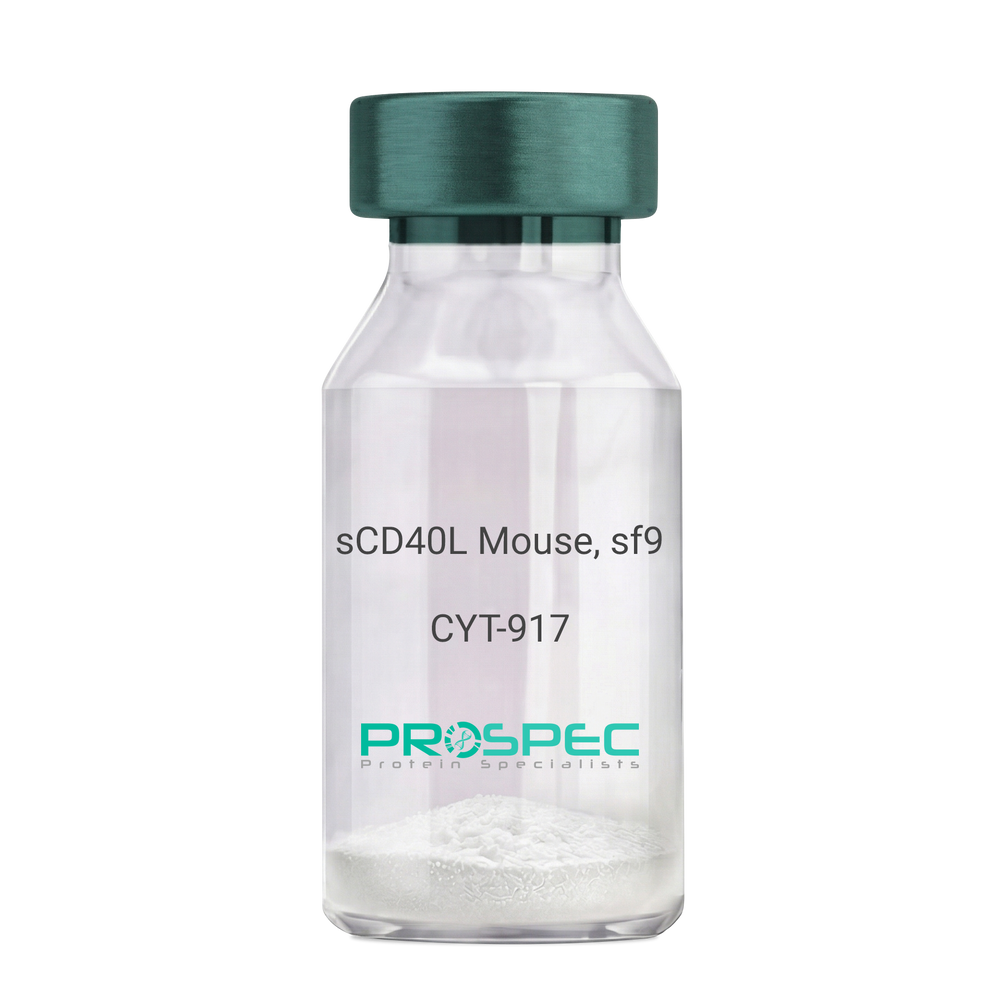
sCD40L Mouse, sf9Description:
soluble CD40 Ligand/TRAPMouse Recombinant, sf9
CD40 ligand, T-cell antigen Gp39, TNF-related activation protein, TRAP, Tumor necrosis factor ligand superfamily member 5, CD154, CD40lg, CD154, CD40-L, Cd40l, gp39, HIGM1, IGM, IMD3, Ly-62, Ly62, T-BAM, Tnfsf5.
Product # :
CYT-917Price :
Quantity :
Shipping Method :
Shipped with Ice Packs
More Info
- description
- source
- formulation
- purity
- More Info
Description
sCD40 Mouse Recombinant produced in Sf9 Baculovirus cells is a single, glycosylated polypeptide chain containing 155 amino acids (112-260 a.a.) and having a molecular mass of 17.2kDa (Migrates at 18-28kDa on SDS-PAGE under reducing conditions).sCD40 is expressed with a 6 amino acid His tag at C-Terminus and purified by proprietary chromatographic techniques.
Source
Sf9, Baculovirus cells.
Formulation
sCD40 protein solution (0.25mg/ml) contains Phosphate Buffered Saline (pH 7.4) and 10% glycerol.
Purity
Greater than 95.0% as determined by SDS-PAGE.
More Info
-
Introduction
CD40L or CD154 is a membrane glycoprotein and differentiation antigen expressed on the surface of T-cells. The CD40 ligand stimulates B-cell proliferation and secretion of all immunoglobulin isotypes in the presence of cytokines . CD40 ligand has been shown to induce cytokine production and tumoricidal activity in peripheral blood monocytes. It also costimulates proliferation of activated T-cells and this is accompanied by the production of IFN-gamma , TNF-alpha , and IL2.
-
Synonyms
CD40 ligand, T-cell antigen Gp39, TNF-related activation protein, TRAP, Tumor necrosis factor ligand superfamily member 5, CD154, CD40lg, CD154, CD40-L, Cd40l, gp39, HIGM1, IGM, IMD3, Ly-62, Ly62, T-BAM, Tnfsf5.
-
Physical Appearance
Sterile Filtered colorless solution.
-
Stability
Store at 4°C if entire vial will be used within 2-4 weeks. Store, frozen at -20°C for longer periods of time. For long term storage it is recommended to add a carrier protein (0.1% HSA or BSA). Avoid multiple freeze-thaw cycles.
-
Amino Acid Sequence
MQRGDEDPQI AAHVVSEANS NAASVLQWAK KGYYTMKSNL VMLENGKQLT VKREGLYYVY TQVTFCSNRE PSSQRPFIVG LWLKPSSGSE RILLKAANTH SSSQLCEQQS VHLGGVFELQ AGASVFVNVT EASQVIHRVG FSSFGLLKLH HHHHH.
ProSpec's products are furnished for LABORATORY RESEARCH USE ONLY. The product may not be used as drugs, agricultural or pesticidal products, food additives or household chemicals.
- View Data Sheet
Name :
ST13 PAT5C6AT AntibodyDescription:
HSP70 Interacting Protein Clone PAT5C6AT, Mouse Anti Human
AAG2, SNC6, HSPABP, FAM10A1, FAM10A4, HSPABP1, ST-13, Hsc70-interacting protein, Suppression of tumorigenicity protein 13, Putative tumor suppressor ST13, Protein FAM10A1, Progesterone receptor-associated p48 protein, Renal carcinoma antigen NY-REN-33, ST13, HIP, HOP, P48, PRO0786, FLJ27260, MGC129952.
Product # :
ANT-536Price :
Quantity :
Shipping Method :
Shipped with Ice Packs
More Info
- formulation
- More Info
Formulation
1mg/ml containing PBS, pH-7.4, 10% Glycerol and 0.02% Sodium Azide.
More Info
-
Introduction
ST13 is an adaptor protein (co-chaperone) that mediates the association of HSP70 & HSP90 and appears in early receptor complexes. ST13 plays a role in the assembly process of glucocorticoid receptor, which requires the assistance of multiple molecular chaperones. The expression of ST13 is downregulated in colorectal carcinoma tissue signifying that is candidate tumor suppressor gene. Through common binding to both Hsp70 and Hsp90, ST13 functions as an adaptor that can integrate Hsp70 and Hsp90 interactions. The expression of ST13 decreases in colorectal cancer tissue compared with that in adjacent normal tissue. ST13 is mostly expressed in colorectal epithelia and adenocarcinoma cells. ST13 functions to promote the efficiency of glucocorticoid receptor maturation in cells. The expression levels of the ST13 gene were significantly decreased in primary tumors compared with adjacent mucosa.
-
Synonyms
AAG2, SNC6, HSPABP, FAM10A1, FAM10A4, HSPABP1, ST-13, Hsc70-interacting protein, Suppression of tumorigenicity protein 13, Putative tumor suppressor ST13, Protein FAM10A1, Progesterone receptor-associated p48 protein, Renal carcinoma antigen NY-REN-33, ST13, HIP, HOP, P48, PRO0786, FLJ27260, MGC129952.
-
Physical Appearance
Sterile filtered colorless solution.
-
Immunogen
Anti-human ST13 mAb, is derived from hybridization of mouse F0 myeloma cells with spleen cells from BALB/c mice immunized with a recombinant human ST13 protein 1-369 amino acids purified from E. coli.
-
Ig Subclass
Mouse IgG2a heavy chain and k light chain.
-
Clone
PAT5C6AT.
-
Applications
ST13 antibody has been tested by ELISA, Western blot analysis to assure specificity and reactivity. Since application varies, however, each investigation should be titrated by the reagent to obtain optimal results. Recommended starting dilution is 1:1000.
-
Type
Mouse Anti Human Monoclonal.
-
Storage Procedures
For periods up to 1 month store at 4°C, for longer periods of time, store at -20°C. Prevent freeze thaw cycles.
-
Purification Method
ST13 antibody was purified from mouse ascitic fluids by protein-A affinity chromatography.
ProSpec's products are furnished for LABORATORY RESEARCH USE ONLY. The product may not be used as drugs, agricultural or pesticidal products, food additives or household chemicals.
- View Data Sheet
Name :
PA2G4 AntibodyDescription:
Proliferation-associated protein 2G4, Mouse Anti Human
Proliferation-associated protein 2G4, Cell cycle protein p38-2G4 homolog, hG4-1, ErbB3-binding protein 1, PA2G4, EBP1, p38-2G4.
Product # :
ANT-655Price :
Quantity :
Shipping Method :
Shipped with Ice Packs
More Info
- formulation
- More Info
Formulation
1mg/ml containing PBS, pH-7.4, 10% Glycerol and 0.02% Sodium Azide.
More Info
-
Introduction
PA2G4 belongs to the peptidase M24C family and functions as an RNA-binding protein involved in cellular proliferation and differentiation processes. PA2G4 is a component of pre-ribosomal ribonucleoprotein complexes, participating in ribosome assembly and regulating the later steps of rRNA processing. Also, PA2G4 interacts with ErbB-3 and may function as a modulator of the ErbB-3 mediated signal transduction pathway by regulating the effects of Neuregulin-1. Furthermore, PA2G4 is a transcriptional co-repressor of androgen receptor-regulated genes and other cell cycle regulatory genes through its interactions with histone deacetylases. PA2G4 is implicated in growth inhibition and the induction of differentiation of human cancer cells. In addition, PA2G4 mediates cap-independent translation of specific viral IRESs (internal ribosomal entry site). PA2G4 associates with 28S, 18S and 5.8S mature rRNAs, several rRNA precursors and probably U3 small nucleolar RNA.
-
Synonyms
Proliferation-associated protein 2G4, Cell cycle protein p38-2G4 homolog, hG4-1, ErbB3-binding protein 1, PA2G4, EBP1, p38-2G4.
-
Physical Appearance
Sterile filtered colorless solution.
-
Immunogen
Anti-human PA2G4 mAb, is derived from hybridization of mouse F0 myeloma cells with spleen cells from BALB/c mice immunized with a recombinant human PA2G4 protein 1-394 amino acids purified from E. coli.
-
Ig Subclass
Mouse IgG1 heavy chain and k light chain.
-
Clone
PAT5E7AT.
-
Applications
The antibody has been tested by ELISA, Western blot analysis, Flow cytometry and ICC/IF to assure specificity and reactivity. Since application varies, however, each investigation should be titrated by the reagent to obtain optimal results.
-
Type
Mouse Anti Human Monoclonal.
-
Storage Procedures
For periods up to 1 month store at 4°C, for longer periods of time, store at -20°C. Prevent freeze thaw cycles.
-
Purification Method
PA2G4 antibody was purified from mouse ascitic fluids by protein-A affinity chromatography.
ProSpec's products are furnished for LABORATORY RESEARCH USE ONLY. The product may not be used as drugs, agricultural or pesticidal products, food additives or household chemicals.
- View Data Sheet
Name :
MSP1 AntibodyDescription:
Malaria Falciparum MSP1 , antibody
Product # :
ANT-792Price :
Quantity :
Shipping Method :
Shipped with Ice Packs
More Info
- description
- formulation
- purity
- More Info
Description
Merozoite surface antigen is a protein located on the outside of the merozoite, playing an imperative role in immune reaction. About 55% cases of malaria are infected by Plasmodium falciparum (Pf). Pf MSP1 has to be used with Plasmodium vivax (Pv) together for ELISA and rapid diagnostic test, Plasmodium falciparum and vivax infection takes about 95% of Plasmodium caused infection.
Purification Method: MSP1 Antibody is the purified IgG of mouse monoclonal antibody targeting to merozoite surface protein 1 of Plasmodium falciparum for research.
Formulation
PBS, 0.05% sodium azide and 25mM K2CO3.
Purity
Protein is >90% pure.
Purified by protein A chromatography.
More Info
-
Physical Appearance
Sterile Filtered solution.
-
Stability
Pf. MSP1 although stable at 4°C for 1 week, should be stored below -18°C. Please prevent freeze thaw cycles.
-
Applications
ELISA.
-
Background
Mab-Pf-MSP1 is a monoclonal antibody that recognizes the Plasmodium falciparum Merozoite Surface Protein 1 (MSP1), a major surface antigen expressed during the blood stage of malaria infection. It is widely used for immunological assays such as ELISA, Western blotting, immunofluorescence, and studies investigating parasite invasion, MSP1 processing, and malaria vaccine development.
1. What is MSP1 antibody?
Mab-Pf-MSP1 is a purified mouse monoclonal IgG antibody that specifically targets the merozoite surface protein 1 (MSP1) of Plasmodium falciparum.
2. What species is MSP1 antibody derived from?
Mab-Pf-MSP1 is produced in mouse and is supplied as a purified mouse IgG monoclonal antibody.
3. What antigen does Pf-MSP1 antibody recognize?
The antibody specifically recognizes merozoite surface protein 1 (MSP1) from Plasmodium falciparum.
4. Does MSP1 antibody cross-react with Plasmodium vivax MSP1?
No. Mab-Pf-MSP1 has no cross-reactivity with merozoite surface protein 1 (MSP1) from Plasmodium vivax.
5. What is the format of MSP1 antibody?
The antibody is supplied as purified IgG in liquid form, making it ready for use or further dilution.
6. How is MSP1 antibody purified?
The antibody is purified from mouse ascites fluid using Protein A chromatography and has a purity greater than 90%.
7. What is the concentration of MSP1 antibody?
Pf-MSP1 antibody is supplied at a concentration that ranges between 0.5mg-2mg/mL
8. What buffer is MSP1 antibody supplied in?
The antibody is provided in PBS containing 25 mM potassium carbonate (K₂CO₃).
9. Does MSP1 antibody contain a preservative?
Yes. The formulation contains 0.05% sodium azide as a preservative.
10. What applications is MSP1 antibody recommended for?
MSP1 antibody is recommended for ELISA applications and is suggested to be diluted more than 1:750 for indirect ELISA.
11. What dilution is recommended for indirect ELISA?
For indirect ELISA, a dilution greater than 1:750 is recommended. Users may optimize the dilution depending on their assay conditions.
12. How should MSP1 antibody be stored?
Store the antibody at 4°C for short-term use. For long-term storage, keep it at −20°C.
13. Why should the vial be centrifuged before opening?
The vial should be centrifuged before opening to ensure complete recovery of the contents and minimize product loss.
14. What is the purity of MSP1 Antibody?
The antibody has a purity of greater than 90%, as determined following Protein A chromatography purification.
15. Is MSP1 antibody supplied in liquid or lyophilized form?
Mab-Pf-MSP1 is supplied in liquid form as purified IgG.
16. Can MSP1 antibody be used to distinguish Plasmodium falciparum from Plasmodium vivax?
Yes. Since MSP1 antibody specifically recognizes P. falciparum MSP1 and does not cross-react with P. vivax MSP1, it can be useful in studies requiring species-specific detection.
ProSpec's products are furnished for LABORATORY RESEARCH USE ONLY. The product may not be used as drugs, agricultural or pesticidal products, food additives or household chemicals.
- View Data Sheet
Name :
PfHSP70Description:
Plasmodium Falciparum HSP70 Recombinant
Product # :
MAL-001Price :
Quantity :
Shipping Method :
Shipped with Ice Packs
More Info
- description
- formulation
- purity
- More Info
Description
The E.Coli derived recombinant Plasmodium falciparum contains the Plasmodium falciparum HSP70 protein epitopes 33-114 amino acids.
Formulation
150mM Imidazole, pH 8.0, 150mM NaCl, 150mM Sodium Phosphate and 50% glycerol.
Purity
Protein is >95% pure as determined by 10% PAGE (coomassie staining) and RP-HPLC.
More Info
-
Introduction
Plasmodium falciparum heat shock proteins (PfHSPs) contribute to immunopathological alterations in infected hosts PfHSP70s may have a significant function during parasite adaptation in its environments. They have also been a focus of considerable attention due to their immunodominant antigenic nature and their properties as mediators of protective immunity.
-
Physical Appearance
Sterile Filtered clear solution.
-
Stability
PfHSP70 although stable at 4°C for 1 week, should be stored below -18°C. Please prevent freeze thaw cycles.
-
Applications
Use as an antigen in ELISA and Western Blots.
-
Purification Method
Purified by proprietary chromatographic technique
ProSpec's products are furnished for LABORATORY RESEARCH USE ONLY. The product may not be used as drugs, agricultural or pesticidal products, food additives or household chemicals.
- View Data Sheet
Name :
RSV Paired AntibodyDescription:
Mouse Anti Human Respiratory Syncytial Virus
Product # :
ANT-653Price :
Quantity :
Shipping Method :
Shipped with Ice Packs
More Info
- description
- formulation
- purity
- More Info
Description
RSV gold conjugation antibody and RSV capture antibody are used to develop rapid test for RSV rapid test. Please note that when ordering for example: 100µg antibody we ship 50µg from each of the antibodies (100µg in total).
Formulation
* RSV gold conjugation antibody in PBS, PH 7.4.
* RSV capture antibody in PBS, PH 7.4.Purity
Greater than 95%.
More Info
-
Physical Appearance
2 vials of sterile Filtered clear colorless solution.
-
Stability
RSV Paired Antibody although stable at 4°C for 1 week, should be stored below -18°C. Please prevent freeze thaw cycles.
-
Applications
Lateral flow rapid test.
-
Type
Mouse antibody Monoclonal.
-
Purification Method
Purified monoclonal IgG2a by protein A chromatography.
ProSpec's products are furnished for LABORATORY RESEARCH USE ONLY. The product may not be used as drugs, agricultural or pesticidal products, food additives or household chemicals.
- View Data Sheet
Name :
T.pallidum p15 (Partial)Description:
Treponema pallidum p15 (Partial) Recombinant
Product # :
TRP-275Price :
Quantity :
Shipping Method :
Shipped with Ice Packs
More Info
- description
- source
- formulation
- purity
- More Info
Description
The E.Coli derived recombinant protein is fused at N-terminus with GST tag and contains the Trp. Pallidum p15 immunodominant regions.
Source
Escherichia Coli.
Formulation
70mM Tris-HCl pH-8, 84mM NaCl, 14mM Glutathione, 30% Glycerol & 0.2% Sarcosil.
Purity
Treponema Pallidum protein is >95% pure as determined by 10% PAGE (coomassie staining).
More Info
-
Introduction
Treponema pallidum is a gram-negative spirochaete bacterium and is considered to be metabolically crippled. There are at least four known subspecies: T. pallidum pallidum, T. pallidum pertenue, T. pallidum carateum and T. pallidum endemicum. The helical structure of T. pallidum pallidum allows it to move in a corkscrew motion through viscous mediums such as mucus. Treponema pallidum sub sp. pallidum has one of the smallest bacterial genomes at 1.14 million base pairs (Mb) and has limited metabolic capabilities, reflecting its adaptation through genome reduction to the rich environment of mammalian tissue.
-
Stability
Treponema Pallidum protein although stable at 4°C for 1 week, should be stored below -18°C. Please prevent freeze thaw cycles.
-
Applications
Treponema Pallidum protein is suitable for ELISA and Western blots, excellent antigen for detection of Trp. Pallidum with minimal specificity problems.
-
Specificity
Immunoreactive with sera of Trp. Pallidum infected individuals.
-
Purification Method
Treponema Pallidum protein was purified by proprietary chromatographic technique.
ProSpec's products are furnished for LABORATORY RESEARCH USE ONLY. The product may not be used as drugs, agricultural or pesticidal products, food additives or household chemicals.
- View Data Sheet
Description:
Treponema pallidum p15 (Partial) Recombinant, His Tag
Product # :
TRP-247Price :
Quantity :
Shipping Method :
Shipped with Ice Packs
More Info
- description
- source
- formulation
- purity
- More Info
- sds-page
Description
The E.Coli derived recombinant 6xHis tag fusion protein is a multimer having a molecular mass of 15kDa and contains the Trp. Pallidum p15 immunodominant regions and six histidines fused at the C- terminus.
Source
Escherichia Coli.
Formulation
70mM Tris-HCl pH 8.0, 50mM NaCl, 50% Glycerol, 1.5 M Urea.
Purity
Treponema Pallidum protein is >95% pure as determined by SDS- PAGE.
sds-page
More Info
-
Introduction
Treponema pallidum is a gram-negative spirochaete bacterium and is considered to be metabolically crippled. There are at least four known subspecies: T. pallidum pallidum, T. pallidum pertenue, T. pallidum carateum and T. pallidum endemicum. The helical structure of T. pallidum pallidum allows it to move in a corkscrew motion through viscous mediums such as mucus. Treponema pallidum sub sp. pallidum has one of the smallest bacterial genomes at 1.14 million base pairs (Mb) and has limited metabolic capabilities, reflecting its adaptation through genome reduction to the rich environment of mammalian tissue.
-
Stability
Treponema Pallidum protein should be stored at 2-8°C. Do NOT freeze.
-
Specificity
Immunoreactive with sera of Trp. Pallidum infected individuals.
-
Purification Method
Treponema Pallidum protein was purified by proprietary chromatographic technique.
ProSpec's products are furnished for LABORATORY RESEARCH USE ONLY. The product may not be used as drugs, agricultural or pesticidal products, food additives or household chemicals.
- View Data Sheet
Name :
EPCAM Human, sf9Description:
Epithelial Cell Adhesion Molecule Human Recombinant, Sf9
Epithelial Cell Adhesion Molecule , Tumor-Associated Calcium Signal Transducer 1, Major Gastrointestinal Tumor-Associated Protein GA733-2, Adenocarcinoma-Associated Antigen, Cell Surface Glycoprotein Trop-1, Epithelial Glycoprotein 314, TACSTD1, EGP314, MIC18, TROP1, M4S1, KSA, Membrane Component, Chromosome 4, Surface Marker (35kD Glycoprotein), Antigen Identified By Monoclonal Antibody AUA1, Human Epithelial Glycoprotein-2, Epithelial Cell Surface Antigen, Epithelial Glycoprotein, KS 1/4 Antigen, CD326 Antigen, GA733-2, HEGP314, HNPCC8, Ep-CAM, DIAR5, EGP-2, EGP40, KS1/4, MK-1, M1S2, ESA, EGP, EPCAM.
Product # :
PRO-2238Price :
Quantity :
Shipping Method :
Shipped with Ice Packs
More Info
- description
- source
- formulation
- purity
- More Info
Description
EPCAM produced in Sf9 Baculovirus cells is a single, glycosylated polypeptide chain (24-265 a.a.) and fused to a 6 aa His Tag at C-terminus containing a total of 248 amino acids and having a molecular mass of 28.2kDa.EPCAM shows multiple bands between 28-40kDa on SDS-PAGE, reducing conditions and purified by proprietary chromatographic techniques.
Source
Sf9, Baculovirus cells.
Formulation
EPCAM protein solution (1mg/ml) contains Phosphate buffered saline (pH7.4) and 10% glycerol.
Purity
Greater than 95.0% as determined by SDS-PAGE.
More Info
-
Introduction
EPCAM is a carcinoma-associated antigen and belongs to a family which includes at least 2 type I membrane proteins. The EPCAM protein has a role in embryonic stem cells proliferation and differentiation. EPCAM is used as a target for immunotherapy treatment of human carcinomas. EPCAM is expressed on most normal epithelial cells and gastrointestinal carcinomas and acts as a homotypic calcium-independent cell adhesion molecule. Epithelial cell adhesion molecules (EPCAM) can act as a physical homophilic interaction molecule between intestinal epithelial cells (IECs) and intraepithelial lymphocytes (IELs) at the mucosal epithelium for supplying immunological barrier as a first line of defense against mucosal infection. EPCAM gene mutations result in congenital tufting enteropathy.
-
Synonyms
Epithelial Cell Adhesion Molecule , Tumor-Associated Calcium Signal Transducer 1, Major Gastrointestinal Tumor-Associated Protein GA733-2, Adenocarcinoma-Associated Antigen, Cell Surface Glycoprotein Trop-1, Epithelial Glycoprotein 314, TACSTD1, EGP314, MIC18, TROP1, M4S1, KSA, Membrane Component, Chromosome 4, Surface Marker (35kD Glycoprotein), Antigen Identified By Monoclonal Antibody AUA1, Human Epithelial Glycoprotein-2, Epithelial Cell Surface Antigen, Epithelial Glycoprotein, KS 1/4 Antigen, CD326 Antigen, GA733-2, HEGP314, HNPCC8, Ep-CAM, DIAR5, EGP-2, EGP40, KS1/4, MK-1, M1S2, ESA, EGP, EPCAM.
-
Physical Appearance
Sterile filtered colorless solution.
-
Stability
Store at 4°C if entire vial will be used within 2-4 weeks. Store, frozen at -20°C for longer periods of time. For long term storage it is recommended to add a carrier protein (0.1% HSA or BSA).Avoid multiple freeze-thaw cycles.
-
Amino Acid Sequence
QEECVCENYK LAVNCFVNNN RQCQCTSVGA QNTVICSKLA AKCLVMKAEM NGSKLGRRAK PEGALQNNDG LYDPDCDESG LFKAKQCNGT STCWCVNTAG VRRTDKDTEI TCSERVRTYW IIIELKHKAR EKPYDSKSLR TALQKEITTR YQLDPKFITS ILYENNVITI DLVQNSSQKT QNDVDIADVA YYFEKDVKGE SLFHSKKMDL TVNGEQLDLD PGQTLIYYVD EKAPEFSMQG LKHHHHHH
ProSpec's products are furnished for LABORATORY RESEARCH USE ONLY. The product may not be used as drugs, agricultural or pesticidal products, food additives or household chemicals.
- View Data Sheet
Name :
IL 21 RatDescription:
Interleukin-21 Rat Recombinant
Interleukin-21, IL-21, Il21.
Product # :
CYT-033Price :
Quantity :
Shipping Method :
Shipped at Room temp
More Info
- description
- source
- formulation
- purity
- biological activity
- More Info
Description
Interleukin-21 Rat Recombinant produced in E.Coli is a single, non-glycosilated polypeptide chain containing 129 amino acids and having a total molecular mass of 15.2kDa. The Rat IL-21 is purified by proprietary chromatographic techniques.
Source
Escherichia Coli.
Formulation
Rat IL-21 was lyophilized from a 0.2µm filtered concentrated solution in PBS, pH 7.4.
Purity
Greater than 95.0% as determined by:
(a) Analysis by RP-HPLC.
(b) Analysis by SDS-PAGE.Biological Activity
The biological activity is measured by its ability to proliferate activated B cells.More Info
-
Introduction
IL-21 is produced by CD4+ T cells in response to antigenic stimulation. Its action enhances antigen-specific responses of immune cells. The biological effects of IL-21 include induction of differentiation of T-cells-stimulated B-cells into plasma cells and memory B-cells, stimulation (in conjuction) with IL-4 of IgG production, and induction of apoptotic effects in naive B-cells and stimulated B-cells in the absence of T-cell signaling. Additionally, IL-21 promotes the anti-tumor activity of CD8+ T-cells and NK cells. IL-21 exerts its effect through binding to a specific type I cytokine receptor, IL-21R, which also contains the gamma chain (°C) found in other cytokine receptors including IL-2, IL-4, IL-7, IL-9 and IL-15. The IL-21/IL-21R interaction triggers a cascade of events which includes activation of the tyrosine kinases JAK1 and JAK3, followed by activation of the transcription factors STAT1 and STAT3.
-
Synonyms
Interleukin-21, IL-21, Il21.
-
Physical Appearance
Sterile Filtered White lyophilized (freeze-dried) powder.
-
Stability
Lyophilized Rat IL-21 although stable at room temperature for 3 weeks, should be stored desiccated below -18°C. Upon reconstitution Rat IL21 should be stored at 4°C between 2-7 days and for future use below -18°C. For long term storage it is recommended to add a carrier protein (0.1% HSA or BSA).Please prevent freeze-thaw cycles.
-
Solubility
It is recommended to reconstitute the lyophilized Rat IL21 in sterile 18M-cm H2O not less than 100µg/ml, which can then be further diluted to other aqueous solutions.
-
Amino Acid Sequence
HKSSPQRPDH LLIRLRHLMD IVEQLKIYEN DLDPELLTAP QDVKGQCEHE AFACFQKAKL KPSNTGNNKT FINDLLAQLR RRLPAKRTGN KQRHMAKCPS CDLYEKKTPK EFLERLKWLL QKMIHQHLS.
ProSpec's products are furnished for LABORATORY RESEARCH USE ONLY. The product may not be used as drugs, agricultural or pesticidal products, food additives or household chemicals.
- View Data Sheet
Name :
LIFR HumanDescription:
Leukemia Inhibitory Factor Receptor Alpha Human Recombinant
Leukemia Inhibitory Factor Receptor Alpha, CD118 Antigen, LIF Receptor, LIF-R, Leukemia Inhibitory Factor Receptor, CD118, SJS2, STWS, SWS, Leukemia inhibitory factor receptor, LIF receptor, LIF-R.
Product # :
CYT-949Price :
Quantity :
Shipping Method :
Shipped with Ice Packs
More Info
- description
- source
- formulation
- purity
- More Info
Description
LIFR produced in Sf9 Baculovirus cells is a single, glycosylated polypeptide chain containing 798 amino acids (45-833a.a.) and having a molecular mass of 90.5kDa (Molecular size on SDS-PAGE will appear at approximately 100-150kDa). LIFR is expressed with a 6 amino acid His tag at C-Terminus and purified by proprietary chromatographic techniques.
Source
Sf9, Baculovirus cells.
Formulation
LIFR protein solution (0.5mg/ml) contains Phosphate Buffered Saline (pH 7.4) and 10% glycerol.
Purity
Greater than 90.0% as determined by SDS-PAGE.
More Info
-
Introduction
Leukemia inhibitory factor receptor (LIFR) is the receptor for leukemia inhibitory factor, a pleiotropic cytokine affecting the differentiation, survival, and proliferation of various cells in the adult and the embryo. LIFR plays an imperative role in a number of aspects of early pregnancy such as blastocyst implantation in the uterus.
-
Synonyms
Leukemia Inhibitory Factor Receptor Alpha, CD118 Antigen, LIF Receptor, LIF-R, Leukemia Inhibitory Factor Receptor, CD118, SJS2, STWS, SWS, Leukemia inhibitory factor receptor, LIF receptor, LIF-R.
-
Physical Appearance
Sterile filtered colorless solution.
-
Stability
Store at 4°C if entire vial will be used within 2-4 weeks. Store, frozen at -20°C for longer periods of time. For long term storage it is recommended to add a carrier protein (0.1% HSA or BSA). Avoid multiple freeze-thaw cycles.
-
Amino Acid Sequence
ADPQKKGAPH DLKCVTNNLQ VWNCSWKAPS GTGRGTDYEV CIENRSRSCY QLEKTSIKIP ALSHGDYEIT INSLHDFGSS TSKFTLNEQN VSLIPDTPEI LNLSADFSTS TLYLKWNDRG SVFPHRSNVI WEIKVLRKES MELVKLVTHN TTLNGKDTLH HWSWASDMPL ECAIHFVEIR CYIDNLHFSG LEEWSDWSPV KNISWIPDSQ TKVFPQDKVI LVGSDITFCC VSQEKVLSAL IGHTNCPLIH LDGENVAIKI RNISVSASSG TNVVFTTEDN IFGTVIFAGY PPDTPQQLNC ETHDLKEIIC SWNPGRVTAL VGPRATSYTL VESFSGKYVR LKRAEAPTNE SYQLLFQMLP NQEIYNFTLN AHNPLGRSQS TILVNITEKV YPHTPTSFKV KDINSTAVKL SWHLPGNFAK INFLCEIEIK KSNSVQEQRN VTIKGVENSS YLVALDKLNP YTLYTFRIRC STETFWKWSK WSNKKQHLTT EASPSKGPDT WREWSSDGKN LIIYWKPLPI NEANGKILSY NVSCSSDEET QSLSEIPDPQ HKAEIRLDKN DYIISVVAKN SVGSSPPSKI ASMEIPNDDL KIEQVVGMGK GILLTWHYDP NMTCDYVIKW CNSSRSEPCL MDWRKVPSNS TETVIESDEF RPGIRYNFFL YGCRNQGYQL LRSMIGYIEE LAPIVAPNFT VEDTSADSIL VKWEDIPVEE LRGFLRGYLF YFGKGERDTS KMRVLESGRS DIKVKNITDI SQKTLRIADL QGKTSYHLVL RAYTDGGVGP EKSMYVVTKE NSHHHHHH.
ProSpec's products are furnished for LABORATORY RESEARCH USE ONLY. The product may not be used as drugs, agricultural or pesticidal products, food additives or household chemicals.
- View Data Sheet
Name :
SNCA AntibodyDescription:
Alpha-Synuclein, Mouse Anti Human
Alpha-synuclein, Non-A beta component of AD amyloid, Non-A4 component of amyloid precursor, NACP, PD1, PARK1, PARK4, MGC110988, α-Synuclein, SNCA.
Product # :
ANT-315Price :
Quantity :
Shipping Method :
Shipped with Ice Packs
More Info
- formulation
- More Info
Formulation
1mg/ml containing PBS, pH-7.4, & 0.1% Sodium Azide.
More Info
-
Introduction
α-Synuclein (amino acids 1-140), an acidic neuronal protein of 140 amino acids, is extremely heat-resistant and is natively unfolded with an extended structure primarily composed of random coils. α-synuclein has been suggested to be implicated in the pathogenesis of Parkinson’s disease and related neurodegenerative disorders, and more recently, to be an important regulatory component of vesicular transport in neuronal cells. Moreover, recent studies have shown that α-synuclein has chaperone activity and that this activity is lost upon removing its C-terminal acidic tail (amino acids 96-140).
-
Synonyms
Alpha-synuclein, Non-A beta component of AD amyloid, Non-A4 component of amyloid precursor, NACP, PD1, PARK1, PARK4, MGC110988, α-Synuclein, SNCA.
-
Physical Appearance
Sterile Filtered colorless solution.
-
Immunogen
Anti-human α-Synuclein mAb is derived from hybridization of mouse SP2/0 myeloma cells with spleen cells from BALB/c mice immunized with recombinant human α -Synuclein amino acids 61-95 purified from E. coli.
-
Ig Subclass
Mouse IgG1 heavy chain and κ light chain.
-
Clone
P5C2AT.
-
Applications
α-Synuclein antibody has been tested by ELISA and Western blot analysis to assure specificity and reactivity. Since application varies, however, each investigation should be titrated by the reagent to obtain optimal results. Recommended dilution range for Western blot analysis is 1:500 ~ 1:2,000. The -Synuclein antibody has the specificity against the NAC domain (61-95aa) of α-synuclein. Recommended starting dilution is 1:1,000.
-
Type
Mouse Anti Human Monoclonal.
-
Storage Procedures
For periods up to 1 month store at 4°C, for longer periods of time, store at -20°C. Prevent freeze thaw cycles.
-
Purification Method
α-Synuclein antibody was purified from mouse ascitic fluids by protein-G affinity chromatography.
ProSpec's products are furnished for LABORATORY RESEARCH USE ONLY. The product may not be used as drugs, agricultural or pesticidal products, food additives or household chemicals.
- View Data Sheet
Name :
STX4 HumanDescription:
Syntaxin-4 Human Recombinant
Syntaxin 4, syntaxin 4A (placental), STX4A, Renal carcinoma antigen NY-REN-31, p35-2.
Product # :
PRO-1176Price :
Quantity :
Shipping Method :
Shipped with Ice Packs
More Info
- description
- source
- formulation
- purity
- More Info
Description
STX4 Human Recombinant produced in E. coli is a single polypeptide chain containing 300 amino acids (1-275) and having a molecular mass of 34.7 kDa.STX4 is fused to a 25 amino acid His-tag at N-terminus & purified by proprietary chromatographic techniques.
Source
E.coli.
Formulation
The STX4 solution (1mg/1ml) contains 20mM Tris-HCl buffer (pH 8.0), 100mM NaCl, 1mM DTT and 40% glycerol.
Purity
Greater than 90% as determined by SDS-PAGE.
More Info
-
Introduction
Syntaxin 4 (STX4) is a member of the syntaxin/epimorphin family of proteins. The Syntaxin family is cellular receptors for transport vesicles which participate in exocytosis in neutrophils. Syntaxin 4 is vital for normal regulation of glucose metabolism uptake in skeletal muscle and decline in STX4 protein levels lead to reduction of whole-body hormone-stimulated glucose metabolism. STX4 is expressed in neutrophils and neutrophil-differentiated HL-60 cells. The STX4 expression in neutrophils increases with differentiation.
-
Synonyms
Syntaxin 4, syntaxin 4A (placental), STX4A, Renal carcinoma antigen NY-REN-31, p35-2.
-
Physical Appearance
Sterile Filtered colorless solution.
-
Stability
Store at 4°C if entire vial will be used within 2-4 weeks. Store, frozen at -20°C for longer periods of time. For long term storage it is recommended to add a carrier protein (0.1% HSA or BSA).Avoid multiple freeze-thaw cycles.
-
Amino Acid Sequence
MGSSHHHHHH SSGLVPRGSH MGSHMMRDRT HELRQGDDSS DEEDKERVAL VVHPGTARLG SPDEEFFHKV RTIRQTIVKL GNKVQELEKQ QVTILATPLP EESMKQELQN LRDEIKQLGR EIRLQLKAIE PQKEEADENY NSVNTRMRKT QHGVLSQQFV ELINKCNSMQ SEYREKNVER IRRQLKITNA GMVSDEELEQ MLDSGQSEVF VSNILKDTQV TRQALNEISA RHSEIQQLER SIRELHDIFT FLATEVEMQG EMINRIEKNI LSSADYVERG QEHVKTALEN QKKARKKKVL
ProSpec's products are furnished for LABORATORY RESEARCH USE ONLY. The product may not be used as drugs, agricultural or pesticidal products, food additives or household chemicals.
- View Data Sheet
Name :
S100A13 HumanDescription:
S100 Calcium Binding Protein A13 Human Recombinant
Protein S100-A13, S100 calcium-binding protein A13, S100A13.
Product # :
PRO-153Price :
Quantity :
Shipping Method :
Shipped with Ice Packs
More Info
- description
- source
- formulation
- purity
- More Info
Description
S100A13 Human Recombinant produced in E.coli is a single, non-glycosylated polypeptide chain containing 118 amino acids (1-98) and having a molecular mass of 13.6 kDa.The S100A13 is fused to a 20 amino acid His-Tag at N-terminus and purified by proprietary chromatographic techniques.
Source
Escherichia Coli.
Formulation
S100A13 protein at 1mg/ml in 20mM Tris-HCL, pH-8, 50mM NaCl and 20% Glycerol.
Purity
Greater than 95.0% as determined by SDS-PAGE.
More Info
-
Introduction
S100A13 is a member of the S100 family of proteins containing 2 EF-hand calcium-binding motifs. S100 family members are localized in the cytoplasm and/or nucleus of a wide range of cells, and are involved in the regulation of a number of cellular processes such as cell cycle progression and differentiation. S100A13 is extensively expressed in various types of tissues with an elevated expression level in the thyroid gland. In smooth muscle cells, S100A13 co-expresses with other family members in the nucleus and in stress fibers, suggesting diverse functions in signal transduction.
-
Synonyms
Protein S100-A13, S100 calcium-binding protein A13, S100A13.
-
Physical Appearance
Sterile Filtered clear solution.
-
Stability
Store at 4°C if entire vial will be used within 2-4 weeks. Store, frozen at -20°C for longer periods of time. For long term storage it is recommended to add a carrier protein (0.1% HSA or BSA).Avoid multiple freeze-thaw cycles.
-
Amino Acid Sequence
MGSSHHHHHH SSGLVPRGSH MAAEPLTELE ESIETVVTTF FTFARQEGRK DSLSVNEFKE LVTQQLPHLL KDVGSLDEKM KSLDVNQDSE LKFNEYWRLI GELAKEIRKK KDLKIRKK
ProSpec's products are furnished for LABORATORY RESEARCH USE ONLY. The product may not be used as drugs, agricultural or pesticidal products, food additives or household chemicals.
- View Data Sheet
Name :
MMP1 Human, sf9Description:
Matrix Metalloproteinase-1 Human Recombinant, sf9
Matrix Metallopeptidase 1, Interstitial Collagenase, Fibroblast Collagenase, EC 3.4.24.7, CLG, Matrix Metalloproteinase 1 (Interstitial Collagenase), Matrix Metallopeptidase 1 (Interstitial Collagenase), Matrix Metalloproteinase 1, Matrix Metalloproteinase-1, Matrix Metalloprotease 1, EC 3.4.24, MMP-1, CLGN, Fibroblast collagenase, Matrix metalloproteinase-1, MMP-1.
Product # :
ENZ-989Price :
Quantity :
Shipping Method :
Shipped with Ice Packs
More Info
- description
- source
- formulation
- purity
- More Info
Description
MMP1 Human Recombinant produced in Sf9 Baculovirus cells is a single, non-glycosylated polypeptide chain containing 460 amino acids (18-469a.a) and having a molecular mass of 53.1kDa (Molecular size on SDS-PAGE will appear at approximately 50-70kDa). MMP1 is fused to an 8 amino acid His-tag at C-terminus & purified by proprietary chromatographic techniques.
Source
Sf9, Baculovirus cells.
Formulation
MMP1 protein solution (0.25mg/ml) containing 20mM MES buffer (pH 5.5), 10mM CaCl2, 100 mM NaCl, 0.05% Brij35 and 30% glycerol.
Purity
Greater than 95% as determined by SDS-PAGE.
More Info
-
Introduction
MMP-1 (interstitial collagenase) can break down a wide range of substrates including types I, II, III, VII, VIII, and X collagens as well as L-Selectin, pro-TNF, IL-1?, IGFBP-3, IGFBP-5, casein, gelatin, ?1 antitrypsin, myelin basic protein, pro-MMP2 and pro-MMP9. A significant function of MMP-1 is the degradation of fibrillar collagens in extracellular matrix remodeling. MMP-1 is expressed in fibroblasts, keratinocytes, endothelial cells, monocytes and macrophages. MMP1 can be divided into a number of distinct domains: a prodomain which is cleaved on activation, a catalytic domain containing the zinc binding site and a short hinge region with a carboxyl terminal domain. MMP1 is part of a cluster of MMP genes which localize to chromosome 11q22.3.
-
Synonyms
Matrix Metallopeptidase 1, Interstitial Collagenase, Fibroblast Collagenase, EC 3.4.24.7, CLG, Matrix Metalloproteinase 1 (Interstitial Collagenase), Matrix Metallopeptidase 1 (Interstitial Collagenase), Matrix Metalloproteinase 1, Matrix Metalloproteinase-1, Matrix Metalloprotease 1, EC 3.4.24, MMP-1, CLGN, Fibroblast collagenase, Matrix metalloproteinase-1, MMP-1.
-
Physical Appearance
Sterile Filtered colorless solution.
-
Stability
Store at 4°C if entire vial will be used within 2-4 weeks. Store, frozen at -20°C for longer periods of time. For long term storage it is recommended to add a carrier protein (0.1% HSA or BSA). Avoid multiple freeze-thaw cycles.
-
Amino Acid Sequence
HSFPATLETQ EQDVDLVQKY LEKYYNLKND GRQVEKRRNS GPVVEKLKQM QEFFGLKVTG KPDAETLKVM KQPRCGVPDV AQFVLTEGNP RWEQTHLTYR IENYTPDLPR ADVDHAIEKA FQLWSNVTPL TFTKVSEGQA DIMISFVRGD HRDNSPFDGP GGNLAHAFQP GPGIGGDAHF DEDERWTNNF REYNLHRVAA HELGHSLGLS HSTDIGALMY PSYTFSGDVQ LAQDDIDGIQ AIYGRSQNPV QPIGPQTPKA CDSKLTFDAI TTIRGEVMFF KDRFYMRTNP FYPEVELNFI SVFWPQLPNG LEAAYEFADR DEVRFFKGNK YWAVQGQNVL HGYPKDIYSS FGFPRTVKHI DAALSEENTG KTYFFVANKY WRYDEYKRSM DPGYPKMIAH DFPGIGHKVD AVFMKDGFFY FFHGTRQYKF DPKTKRILTL QKANSWFNCR KNLEHHHHHH.
ProSpec's products are furnished for LABORATORY RESEARCH USE ONLY. The product may not be used as drugs, agricultural or pesticidal products, food additives or household chemicals.
- View Data Sheet
Name :
AES HumanDescription:
Amino-Terminal Enhancer of Split Human Recombinant
Amino-terminal enhancer of split, Amino enhancer of split, Gp130-associated protein, GAM, Protein ESP1, Protein GRG, AES, GRG, ESP1, GRG5, TLE5, AES-1, AES-2.
Product # :
PRO-169Price :
Quantity :
Shipping Method :
Shipped with Ice Packs
More Info
- description
- source
- formulation
- purity
- More Info
Description
AES Human Recombinant fused with a 20 amino acid His tag at N-terminus produced in E.Coli is a single, non-glycosylated, polypeptide chain containing 217 amino acids (1-197 a.a.) and having a molecular mass of 24.1kDa. The AES is purified by proprietary chromatographic techniques.
Source
Escherichia Coli.
Formulation
The AES solution (1 mg/ml) contains 20mM Tris-HCl buffer (pH 8.0), 1mM DTT and 20% glycerol.
Purity
Greater than 95.0% as determined by SDS-PAGE.
More Info
-
Introduction
Amino-terminal enhancer of split (AES) is a member of the groucho/TLE family of proteins. AES can function as a homooligomer or as a heteroologimer with other family members in order to forcefully repress the expression of other family member genes. Furthermore, AES can repress NFkB-regulated gene expression and is believed to have a significant role in initiating and maintaining cell differentiation events. AES is similar in sequence to the amino terminus of Drosophila enhancer of split groucho, a protein which is involved in neurogenesis during embryonic development. The AES protein is expressed predominately in the fetal brain, liver, lung, heart and kidney and also in the adult muscle.
-
Synonyms
Amino-terminal enhancer of split, Amino enhancer of split, Gp130-associated protein, GAM, Protein ESP1, Protein GRG, AES, GRG, ESP1, GRG5, TLE5, AES-1, AES-2.
-
Physical Appearance
Sterile Filtered colorless solution.
-
Stability
Store at 4°C if entire vial will be used within 2-4 weeks. Store, frozen at -20°C for longer periods of time. For long term storage it is recommended to add a carrier protein (0.1% HSA or BSA).Avoid multiple freeze-thaw cycles.
-
Amino Acid Sequence
MGSSHHHHHH SSGLVPRGSH MMFPQSRHSG SSHLPQQLKF TTSDSCDRIK DEFQLLQAQY HSLKLECDKL ASEKSEMQRH YVMYYEMSYG LNIEMHKQAE IVKRLNGICA QVLPYLSQEH QQQVLGAIER AKQVTAPELN SIIRQQLQAH QLSQLQALAL PLTPLPVGLQ PPSLPAVSAG TGLLSLSALG SQAHLSKEDK NGHDGDTHQE DDGEKSD.
ProSpec's products are furnished for LABORATORY RESEARCH USE ONLY. The product may not be used as drugs, agricultural or pesticidal products, food additives or household chemicals.
- View Data Sheet
Name :
AFAP1 HumanDescription:
Actin Filament Associated Protein 1 Human Recombinant
Actin filament-associated protein 1, 110 kDa actin filament-associated protein, AFAP-110, AFAP1, AFAP, Actin Filament Associated Protein 1.
Product # :
PRO-1972Price :
Quantity :
Shipping Method :
Shipped with Ice Packs
More Info
- description
- source
- formulation
- purity
- More Info
Description
AFAP1 Human Recombinant produced in E. coli is a single polypeptide chain containing 360 amino acids (250-588) and having a molecular mass of 39.2 kDa.AFAP1 is fused to a 21 amino acid His-tag at N-terminus & purified by proprietary chromatographic techniques.
Source
E.coli.
Formulation
The AFAP1 solution (0.5mg/1ml) contains 20mM Tris-HCl buffer (pH 8.0), 10% glycerol and 0.4M Urea.
Purity
Greater than 80% as determined by SDS-PAGE.
More Info
-
Introduction
Actin Filament Associated Protein 1 (AFAP1) is a Src binding partner. AFAP1 is a possible modulator of actin filament integrity in response to cellular signals, and is also playing a role as an adaptor protein by connecting Src family members to actin filaments. AFAP1 takes partin the development and progression of prostate adenocarcinoma by regulating cell-matrix adhesions and migration in the cancer cells.
-
Synonyms
Actin filament-associated protein 1, 110 kDa actin filament-associated protein, AFAP-110, AFAP1, AFAP, Actin Filament Associated Protein 1.
-
Physical Appearance
Sterile Filtered colorless solution.
-
Stability
Store at 4°C if entire vial will be used within 2-4 weeks. Store, frozen at -20°C for longer periods of time. For long term storage it is recommended to add a carrier protein (0.1% HSA or BSA).Avoid multiple freeze-thaw cycles.
-
Amino Acid Sequence
MGSSHHHHHH SSGLVPRGSH MGCSGPVDSE CPPPPSSPVH KAELEKKLSS ERPSSDGEGV VENGITTCNG KEQVKRKKSS KSEAKGTVSK VTGKKITKII SLGKKKPSTD EQTSSAEEDV PTCGYLNVLS NSRWRERWCR VKDNKLIFHK DRTDLKTHIV SIPLRGCEVI PGLDCKHPLT FRLLRNGQEV AVLEASSSED MGRWIGILLA ETGSSTDPEA LHYDYIDVEM SASVIQTAKQ TFCFMNRRVI SANPYLGGTS NGYAHPSGTA LHYDDVPCIN GSLRGKKPPV ASNGVTGKGK TLSSQPKKAD PAAVVKRTGS NAAQYKYGKN RVEADAKRLQ TKEEELLKRK EALRNRLAQL.
ProSpec's products are furnished for LABORATORY RESEARCH USE ONLY. The product may not be used as drugs, agricultural or pesticidal products, food additives or household chemicals.
- View Data Sheet
Name :
SFTPD Human, Sf9Description:
Surfactant Protein D Human Recombinant, Sf9
Surfactant Protein D, Lung Surfactant Protein D, Collectin-7, COLEC7, SFTP4, PSP-D, SP-D, Surfactant-Associated Protein, Pulmonary 4, Surfactant, Pulmonary-Associated Protein D, Pulmonary Surfactant-Associated Protein D, Pulmonary Surfactant Apoprotein, PSPD.
Product # :
PRO-2524Price :
Quantity :
Shipping Method :
Shipped with Ice Packs
More Info
- description
- source
- formulation
- purity
- More Info
Description
SFTPD produced in Sf9 Baculovirus cells is a single, glycosylated polypeptide chain containing 363 amino acids (22-375 a.a.) and having a molecular mass of 36.5kDa. (Molecular size on SDS-PAGE will appear at approximately 40-57kDa).SFTPD is expressed with a 9 amino acid His tag at C-Terminus and purified by proprietary chromatographic techniques.
Source
Sf9, Baculovirus cells.
Formulation
SFTPD protein solution (0.25mg/ml) contains 10% glycerol & Phosphate Buffered Saline (pH 7.4).
Purity
Greater than 90.0% as determined by SDS-PAGE.
More Info
-
Introduction
Surfactant pulmonary-associated protein D (SFTPD) belongs to the collectin family of C-type lectins, which is synthesized in many tissues including respiratory epithelial cells in the lung, and contains one C-type lectin domain and one collagen-like domain. SFTPD has humoral molecules of the innate immune system, and is deemed a functional candidate in chronic periodontitis. Moreover, SFTPD is involved in the development of acute and chronic inflammation of the lung. A number of human lung diseases are characterized by decreased levels of bronchoalveolar SFTPD. SFTPD contributes to the lungs defense against inhaled microorganisms, organic antigens and toxins. SFTPD interacts with complexes such as bacterial lipopolysaccharides, oligosaccharides and fatty acids and modulates leukocyte action in immune response. In addition, SFTPD participates in the extracellular reorganization or turnover of pulmonary surfactant. SFTPD binds strongly maltose residues and to a lesser extent other alpha-glucosyl moieties.
-
Synonyms
Surfactant Protein D, Lung Surfactant Protein D, Collectin-7, COLEC7, SFTP4, PSP-D, SP-D, Surfactant-Associated Protein, Pulmonary 4, Surfactant, Pulmonary-Associated Protein D, Pulmonary Surfactant-Associated Protein D, Pulmonary Surfactant Apoprotein, PSPD.
-
Physical Appearance
Sterile Filtered colorless solution.
-
Stability
Store at 4°C if entire vial will be used within 2-4 weeks. Store, frozen at -20°C for longer periods of time. For long term storage it is recommended to add a carrier protein (0.1% HSA or BSA).Avoid multiple freeze-thaw cycles.
-
Amino Acid Sequence
ADPEMKTYSH RTMPSACTLV MCSSVESGLP GRDGRDGREG PRGEKGDPGL PGAAGQAGMP GQAGPVGPKG DNGSVGEPGP KGDTGPSGPP GPPGVPGPAG REGPLGKQGN IGPQGKPGPK GEAGPKGEVG APGMQGSAGA RGLAGPKGER GVPGERGVPG NTGAAGSAGA GPQGSPGAR
GPPGLKGDKG IPGDKGAKGE SGLPDVASLR QQVEALQGQV QHLQAAFSQY KKVELFPNGQ SVGEKIFKTA GFVKPFTEAQ LLCTQAGGQL ASPRSAAENA ALQQLVVAKN EAAFLSMTDS KTEGKFTYPT GESLVYSNWA PGEPNDDGGS EDCVEIFTNG KWNDRACGEK RLVVCEFHHH HHH.
ProSpec's products are furnished for LABORATORY RESEARCH USE ONLY. The product may not be used as drugs, agricultural or pesticidal products, food additives or household chemicals.
- View Data Sheet
Name :
ATP1B2 Human, Sf9Description:
ATPase Transporting Beta 2 Human Recombinant, Sf9
ATP1B2, AMOG, Sodium/Potassium-Transporting ATPase Beta-2 Chain, Sodium/Potassium-Dependent ATPase Beta-2 Subunit, Na, K-ATPase Beta-2 Polypeptide, Adhesion Molecule On Glia, ATPase Na+/K+ Transporting Subunit Beta 2, Sodium-Potassium ATPase Subunit Beta 2 (Non-Catalytic), Sodium/Potassium-Transporting ATPase Subunit Beta-2, Sodium/Potassium-Dependent ATPase Subunit Beta-2, ATPase, Na+/K+ Transporting, Beta 2 Polypeptide, Sodium Pump Subunit Beta-2, Adhesion Molecule In Glia.
Product # :
PRO-2397Price :
Quantity :
Shipping Method :
Shipped with Ice Packs
More Info
- description
- source
- formulation
- purity
- More Info
Description
ATP1B2 Human Recombinant produced in Sf9 Baculovirus cells is a single, glycosylated polypeptide chain containing 232 amino acids (68-290a.a.) and having a molecular mass of 26.4kDa (Molecular size on SDS-PAGE will appear at approximately 28-40 kDa). ATP1B2 is expressed with a 9 amino acid His tag at C-Terminus and purified by proprietary chromatographic techniques.
Source
Sf9, Baculovirus cells.
Formulation
ATP1B2 protein solution (0.5mg/ml) contains Phosphate Buffered Saline (pH 7.4) and 10% glycerol.
Purity
Greater than 90.0% as determined by SDS-PAGE.
More Info
-
Introduction
ATPaseTransporting Beta 2 (ATP1B2) is the non-catalytic component of the active enzyme, which catalyzes the hydrolysis of ATP coupled with the exchange of Na+ and K+ ions across the plasma membrane. The precise function of the beta-2 subunit is not known. The ATP1B2 protein is composed of 3 subunits: alpha (catalytic), beta and gamma.
-
Synonyms
ATP1B2, AMOG, Sodium/Potassium-Transporting ATPase Beta-2 Chain, Sodium/Potassium-Dependent ATPase Beta-2 Subunit, Na, K-ATPase Beta-2 Polypeptide, Adhesion Molecule On Glia, ATPase Na+/K+ Transporting Subunit Beta 2, Sodium-Potassium ATPase Subunit Beta 2 (Non-Catalytic), Sodium/Potassium-Transporting ATPase Subunit Beta-2, Sodium/Potassium-Dependent ATPase Subunit Beta-2, ATPase, Na+/K+ Transporting, Beta 2 Polypeptide, Sodium Pump Subunit Beta-2, Adhesion Molecule In Glia.
-
Physical Appearance
Sterile Filtered colorless solution.
-
Stability
Store at 4°C if entire vial will be used within 2-4 weeks. Store, frozen at -20°C for longer periods of time. For long term storage it is recommended to add a carrier protein (0.1% HSA or BSA).Avoid multiple freeze-thaw cycles.
-
Amino Acid Sequence
ADPDHTPKYQ DRLATPGLMI RPKTENLDVI VNVSDTESWD QHVQKLNKFL EPYNDSIQAQ KNDVCRPGRY YEQPDNGVLN YPKRACQFNR TQLGNCSGIG DSTHYGYSTG QPCVFIKMNR VINFYAGANQ SMNVTCAGKR DEDAENLGNF VMFPANGNID LMYFPYYGKK FHVNYTQPLV AVKFLNVTPN VEVNVECRIN AANIATDDER DKFAGRVAFK LRINKTHHHH HH.
ProSpec's products are furnished for LABORATORY RESEARCH USE ONLY. The product may not be used as drugs, agricultural or pesticidal products, food additives or household chemicals.
- View Data Sheet
Name :
SNRPD3 HumanDescription:
Small Nuclear Ribonucleoprotein Polypeptide D3 Human Recombinant
Small nuclear ribonucleoprotein D3 polypeptide 18kDa, Sm-D3, snRNP core protein D3.
Product # :
PRO-945Price :
Quantity :
Shipping Method :
Shipped with Ice Packs
More Info
- description
- source
- formulation
- purity
- More Info
Description
SNRPD3 Human Recombinant produced in E.coli is a single, non-glycosylated polypeptide chain containing 146 amino acids (1-126) and having a molecular mass of 16.0 kDa.The SNRPD3 is fused to a 20 amino acid His-Tag at N-terminus and purified by proprietary chromatographic techniques.
Source
E.coli.
Formulation
The SNRPD3 solution (0.25mg/ml) contains 20mM Tris-HCl buffer (pH 8.0), 0.5M NaCl, 2mM DTT, 0.1mM PMSF and 40% glycerol.
Purity
Greater than 85% as determined by SDS-PAGE.
More Info
-
Introduction
SNRPD3 is a small nuclear ribonucleoprotein (snRNPs) that contains the spliceosome in eukaryotes. SNRPD3 is essential for pre-mRNA splicing and small nuclear ribonucleoprotein biogenesis. Alternative splicing happens in this locus and two transcript variants encoding the same protein were branded.
-
Synonyms
Small nuclear ribonucleoprotein D3 polypeptide 18kDa, Sm-D3, snRNP core protein D3.
-
Physical Appearance
Sterile Filtered colorless solution.
-
Stability
Store at 4°C if entire vial will be used within 2-4 weeks. Store, frozen at -20°C for longer periods of time. For long term storage it is recommended to add a carrier protein (0.1% HSA or BSA).Avoid multiple freeze-thaw cycles.
-
Amino Acid Sequence
MGSSHHHHHH SSGLVPRGSH MSIGVPIKVL HEAEGHIVTC ETNTGEVYRG KLIEAEDNMN CQMSNITVTY RDGRVAQLEQ VYIRGSKIRF LILPDMLKNA PMLKSMKNKN QGSGAGRGKA AILKAQVAAR GRGRGMGRGN IFQKRR
ProSpec's products are furnished for LABORATORY RESEARCH USE ONLY. The product may not be used as drugs, agricultural or pesticidal products, food additives or household chemicals.
- View Data Sheet
Name :
AURKA HumanDescription:
Aurora Kinase A Human Recombinant
Serine/threonine-protein kinase 6, Aurora kinase A, Serine/threonine kinase 15, Aurora/IPL1-related kinase 1, Breast tumor-amplified kinase, Aurora-A, Aurora-related kinase 1, hARK1, AURKA, AIK, ARK1, AURA, BTAK, STK15, STK6, STK7, STK15, AURORA2, MGC34538.
Product # :
PKA-350Price :
Quantity :
Shipping Method :
Shipped with Ice Packs
More Info
- description
- source
- formulation
- purity
- More Info
Description
AURKA Human Recombinant produced in E.Coli is a single, non-glycosylated, polypeptide chain containing 423 amino acids (1-403) and having a molecular mass of 47.9kDa. AURKA is fused to 20 a.a. His-Tag at N-terminus and purified by proprietary chromatographic techniques.
Source
Escherichia Coli.
Formulation
The AURKA solution containing 20mM Tris-HCl buffer (pH 8.0), 0.5mM DTT, 100mM NaCl, 0.1mM EDTA, 0.1mM EGTA, 0.1mM PMSF and 20% glycerol.
Purity
Greater than 95.0% as determined by SDS-PAGE.
More Info
-
Introduction
AURKA (Aurora Kinase A) belongs to the mitotic serine/threonine kinases family. AURKA is a cell cycle-regulated kinase which may be involved in microtubule formation and/or stabilization at the spindle pole during chromosome segregation. AURKA is found at the centrosome in interphase cells and at the spindle poles in mitosis. Since the AURKA expression is cell-cycle regulated, it is low in G1/S, it accumulates during G2/M, and it decreases rapidly after. AURKA is involved in important processes during mitosis and meiosis whose proper function is essential for healthy cell proliferation. In addition, AURKA plays an essential role in tumourigenesis and is overexpressed in various types of cancers. AURKA is strongly expressed in the testis, colon, ovarian, prostate, neuroblastoma, breast and cervical cancer cell lines and weakly in skeletal muscle, thymus and spleen. AURKA interacts with its substrates BORA and ARHGEF2, as well as with TACC1 and CPEB1.
Defects in the AURKA gene cause numerical centrosome aberrations including aneuploidy. AURKA overexpression has been linked to chromosomal instability in colorectal cancer. AURKA expression may have a prognostic significance in ovarian carcinoma. -
Synonyms
Serine/threonine-protein kinase 6, Aurora kinase A, Serine/threonine kinase 15, Aurora/IPL1-related kinase 1, Breast tumor-amplified kinase, Aurora-A, Aurora-related kinase 1, hARK1, AURKA, AIK, ARK1, AURA, BTAK, STK15, STK6, STK7, STK15, AURORA2, MGC34538.
-
Physical Appearance
Sterile filtered colorless solution.
-
Stability
AURKA although stable at 4°C for 1 week, should be stored below -18°C. For long term storage it is recommended to add a carrier protein (0.1% HSA or BSA).Please prevent freeze thaw cycles.
-
Amino Acid Sequence
MGSSHHHHHH SSGLVPRGSH MDRSKENCIS GPVKATAPVG GPKRVLVTQQ FPCQNPLPVN SGQAQRVLCP SNSSQRIPLQ AQKLVSSHKP VQNQKQKQLQ ATSVPHPVSR PLNNTQKSKQ PLPSAPENNP EEELASKQKN EESKKRQWAL EDFEIGRPLG KGKFGNVYLA REKQSKFILALKVLFKAQLE KAGVEHQLRR EVEIQSHLRH PNILRLYGYF HDATRVYLIL EYAPLGTVYR ELQKLSKFDE QRTATYITEL ANALSYCHSK RVIHRDIKPE NLLLGSAGEL KIADFGWSVH APSSRRTTLC GTLDYLPPEM IEGRMHDEKV DLWSLGVLCY EFLVGKPPFE ANTYQETYKRISRVEFTFPD FVTEGARDLI SRLLKHNPSQ RPMLREVLEH PWITANSSKP SNCQNKESAS KQS.
ProSpec's products are furnished for LABORATORY RESEARCH USE ONLY. The product may not be used as drugs, agricultural or pesticidal products, food additives or household chemicals.