Search results
1000 results found for “Procalcitonin”
Name
Description
Product #
Price
Quantity
Shipping Method
- View Data Sheet
Name :
CCL22 HumanDescription:
Macrophage-Derived Chemokine Human Recombinant (CCL22)
C-C motif chemokine 22, Small-inducible cytokine A22, Macrophage-derived chemokine, MDC(1-69), Stimulated T-cell chemotactic protein 1, CC chemokine STCP-1, CCL22, MDC, SCYA22, ABCD-1, DC/B-CK, MGC34554, A-152E5.1.
Product # :
CHM-250Price :
Quantity :
Shipping Method :
Shipped at Room temp
More Info
- description
- source
- formulation
- purity
- biological activity
- More Info
- Citations
Description
MDC Human Recombinant produced in E.Coli is a non-glycosylated, Polypeptide chain containing 69 amino acids and having a molecular mass of 8.1 kDa. The MDC is purified by proprietary chromatographic techniques.
Source
Escherichia Coli.
Formulation
CCL22 filtered (0.4µm) and lyophilized from a concentrated solution containing 20mM phosphate buffer & 500mM NaCl pH-7.4.
Purity
Greater than 97.0% as determined by:
(a) Analysis by RP-HPLC.
(b) Analysis by SDS-PAGE.Biological Activity
Determined by its ability to chemoattract human T cells using a concentration range of 10ng-100ng/ml corresponding to a Specific Activity of 10,000-100,000IU/mg.Citations
More Info
-
Introduction
MDC (CCL22) is a small cytokine that belongs to the CC chemokine family. CCL22 is one of several Cys-Cys (CC) cytokine genes clustered on the q arm of chromosome 16.
MDC shows chemotactic activity for natural killer cells, chronically activated T lymphocytes, monocytes and dendritic cells. On the other hand, MDC shows a mild activity for primary activated T lymphocytes and has no chemoattractant activity for neutrophils, eosinophils and resting T lymphocytes. MDC may also have a role in the trafficking of activated T lymphocytes to inflammatory sites and other aspects of activated T lymphocyte physiology. MDC interacts with cell surface chemokine receptors CCR4.
CCL22 is vastly expressed in macrophage and in monocyte-derived dendritic cells, and thymus. CCL22 is also found in the lymph node, appendix, activated monocytes, resting and activated macrophages. Lower expression of CCL22 can be seen in the lung and the spleen and very weak expression in the small intestine. In the lymph node CCL22 is expressed in a mature subset of Langerhans' cells (CD1a+ and CD83+).
Furthermore, CCL22 is expressed in atopic dermatitis, allergic contact dermatitis skin, and psoriasis, in both the epidermis and dermis. In addition, MDC has a role in hindering progression of lung cancer. Moreover, significantly higher CCL22 expression is linked to gastric cancer. -
Synonyms
C-C motif chemokine 22, Small-inducible cytokine A22, Macrophage-derived chemokine, MDC(1-69), Stimulated T-cell chemotactic protein 1, CC chemokine STCP-1, CCL22, MDC, SCYA22, ABCD-1, DC/B-CK, MGC34554, A-152E5.1.
-
Physical Appearance
Filtered White lyophilized (freeze-dried) powder.
-
Stability
Lyophilized CCL22 although stable at room temperature for 3 weeks, should be stored desiccated below -18°C. Upon reconstitution CCL22 should be stored at 4°C between 2-7 days and for future use below -18°C.For long term storage it is recommended to add a carrier protein (0.1% HSA or BSA).Please prevent freeze-thaw cycles.
-
Solubility
It is recommended to reconstitute the lyophilized CCL22 in sterile 18MΩ-cm H2O not less than 100µg/ml, which can then be further diluted to other aqueous solutions. Product is not sterile! Please filter the product by an appropriate sterile filter before using it in the cell culture.
-
Amino Acid Sequence
GPYGANMEDS VCCRDYVRYR LPLRVVKHFY WTSDSCPRPG VVLLTFRDKE ICADPRVPWV KMILNKLSQ.
-
Background
What is the molecular weight/Mw of CCL22 HUMAN Protein?
CCL22 HUMAN Protein has a total Mw of 8.1kDa.
What is the source or expression system of CCL22 HUMAN Protein?
Escherichia Coli.
What is the Purity of CCL22 HUMAN Protein?
CCL22 HUMAN Protein is > 97% pure as determined by SDS-PAGE.
What is the Biological Activity of CCL22 HUMAN Protein?
Determined by its ability to chemoattract human T cells using a concentration range of 10ng-100ng/ml corresponding to a Specific Activity of 10,000-100,000IU/mg.
What is the amino acid sequence of CCL22 HUMAN Protein?
GPYGANMEDS VCCRDYVRYR LPLRVVKHFY WTSDSCPRPG VVLLTFRDKE ICADPRVPWV KMILNKLSQ.
What applications can CCL22 HUMAN Protein be used in?
CCL22 HUMAN Protein can probably be used in western blot, ELISA and Lateral Flow.
What is the endotoxin level for CCL22 HUMAN Protein?
The endotoxin level is minimal, CCL22 HUMAN Protein was purified using conventional chromatography techniques.
ProSpec's products are furnished for LABORATORY RESEARCH USE ONLY. The product may not be used as drugs, agricultural or pesticidal products, food additives or household chemicals.
- View Data Sheet
Name :
RCAN1 HumanDescription:
Regulator of Calcineurin 1 Human Recombinant
Calcipressin-1, Regulator of calcineurin 1, Down syndrome critical region protein 1, Myocyte-enriched calcineurin-interacting protein 1, MCIP1, Adapt78, RCAN1, ADAPT78, CSP1, DSC1, DSCR1, RCN1.
Product # :
PRO-319Price :
Quantity :
Shipping Method :
Shipped with Ice Packs
More Info
- description
- source
- formulation
- purity
- More Info
- Citations
Description
RCAN1 Isoform-b Human Recombinant produced in E.Coli is a single, non-glycosylated polypeptide chain containing 117 amino acids and having a molecular mass of 13 kDa.
Source
Escherichia Coli.
Formulation
The protein solution (1mg/ml) contains 20mM Tris-HCl pH-7.5, 100mM NaCl and 1mM DTT.
Purity
Greater than 90.0% as determined by SDS-PAGE.
Citations
More Info
-
Introduction
RCAN1 encoded by a gene located in the human chromosome 21, interacts with calcineurin A and inhibits calcineurin-dependent signaling pathways, possibly affecting central nervous system development. RCAN1 is located in the minimal candidate region for the Down syndrome phenotype, and is over expressed in the brain of Down syndrome fetuses. Chronic over expression of this gene may lead to neurofibrillary tangles such as those associated with Alzheimer disease. Three transcript variants encoding three different isoforms have been found for this gene.
DSCR1 Inhibits calcineurin-dependent transcriptional responses by binding to the catalytic domain of calcineurin A, possibly affecting central nervous system development. -
Synonyms
Calcipressin-1, Regulator of calcineurin 1, Down syndrome critical region protein 1, Myocyte-enriched calcineurin-interacting protein 1, MCIP1, Adapt78, RCAN1, ADAPT78, CSP1, DSC1, DSCR1, RCN1.
-
Physical Appearance
Sterile Filtered colorless solution.
-
Stability
Store at 4°C if entire vial will be used within 2-4 weeks. Store, frozen at -20°C for longer periods of time. For long term storage it is recommended to add a carrier protein (0.1% HSA or BSA).Avoid multiple freeze-thaw cycles.
-
Amino Acid Sequence
MKLYFAQTLH IGSSHLAPPN PDKQFLISPP ASPPVGWKQV EDATPVINYD LLYAISKLGPGEKYELHAAT DTTPSVVVHV CESDQEKEEE EEMERMRRPK PKIIQTRRPE YTPIHLS.
ProSpec's products are furnished for LABORATORY RESEARCH USE ONLY. The product may not be used as drugs, agricultural or pesticidal products, food additives or household chemicals.
- View Data Sheet
Name :
RELM b MouseDescription:
RELM-Beta Mouse Recombinant
Resistin-like beta, RELM beta, Cysteine-rich secreted protein FIZZ2, Colon and small intestine-specific cysteine-rich protein, Cysteine-rich secreted protein A12-alpha-like 1, Colon carcinoma-related gene protein, RELM-b, XCP2, HXCP2.
Product # :
CYT-413Price :
Quantity :
Shipping Method :
Shipped at Room temp
More Info
- description
- source
- formulation
- purity
- More Info
- Citations
Description
Mouse RELM-b Recombinant produced in E.Coli is a monomeric, non-glycosylated, polypeptide chain containing 83 amino acids and having a molecular mass of 8.9kDa. The Mouse RETNLB is purified by proprietary chromatographic techniques.
Source
Escherichia Coli.
Formulation
The protein was lyophilized from a concentrated (1mg/ml) protein solution containing 10mM Acetic Acid with 2:1 mannitol to protein.
Purity
Greater than 97% as determined by SDS-PAGE.
Citations
More Info
-
Introduction
RELM-beta (Resistin-Like Molecule-beta) is a member of a recently identified family of secreted proteins containing a conserved cystein-rich C-terminus. The RELM family consists of resistin (also called FIZZ3), RELM-alfa (FIZZ1), RELM-beta (FIZZ2) and RELM-gamma. Only resisistin and RELM-beta were found in humans whereas all four RELM family members were identified in rodents.
RELM-beta appears to be produced as a homodimer exclusively by intestinal goblet cells and can be found in high quantities in stool. Remarkably, stool of germ-free mice displaying sterile intestinal tract does not contain RELM-beta until bacterial colonization takes place after pathogen-free mice entered natural environment. Some, but not all, colon carcinoma cell lines secrete RELM-beta into the cell culture supernatant.
The physiological function of RELM-beta is not known. High doses of recombinant RELM-beta showed hyperglycemic effects including lowered glucose disposal and increased hepatic glucose production in mice. -
Synonyms
Resistin-like beta, RELM beta, Cysteine-rich secreted protein FIZZ2, Colon and small intestine-specific cysteine-rich protein, Cysteine-rich secreted protein A12-alpha-like 1, Colon carcinoma-related gene protein, RELM-b, XCP2, HXCP2.
-
Physical Appearance
Brownish lyophilized powder.
-
Stability
Lyophilized RETNLB is stable at -20°C. After reconstitution the protein should be kept at all times at -20°C. It is recommended to add a carrier protein (0.1% HSA or BSA) for long term storage.
-
Solubility
Reconstitute at 0.1 mg/ml with sterile pyrogen free water.
-
Amino Acid Sequence
MQCSFESLVD QRIKEALSRQ EPKTISCTSV TSSGRLASCP AGMVVTGCAC GYGCGSWDIR NGNTCHCQCS VMDWASARCC RMA.
ProSpec's products are furnished for LABORATORY RESEARCH USE ONLY. The product may not be used as drugs, agricultural or pesticidal products, food additives or household chemicals.
- View Data Sheet
Name :
4 1BBL Human, HisDescription:
4-1BB Ligand Human Recombinant, His Tag
CD137L, CD137-L, 4-1BBL, 4-1BB Ligand, TNFSF9, Tumor Necrosis Factor (ligand) Superfamily Member 9.
Product # :
CYT-649Price :
Quantity :
Shipping Method :
Shipped with Ice Packs
More Info
- description
- source
- formulation
- purity
- More Info
- sds-page
- Citations
Description
TNFSF9 Human Recombinant fused to 37 amino acids His tag at N-terminus produced in E.Coli is a single, non-glycosylated polypeptide chain containing 222 amino acids (71-254 a.a.) and having a molecular mass of 23.8 kDa. The TNFSF9 37 aa His tag fusion protein is purified by proprietary chromatographic techniques.
Source
Escherichia Coli.
Formulation
Recombinant 4-1BBL solution (1mg/ml) contains 20mM Tris-HCl buffer pH-8, 100mM NaCl and 20% glycerol.
Purity
Greater than 95.0% as determined by SDS-PAGE
sds-page
Citations
More Info
-
Introduction
4-1BBL is a transmembrane cytokine that is part of the tumor necrosis factor (TNF) ligand family. 4-1BBL is a bidirectional signal transducer that performs as a ligand for TNFRSF9, which is a costimulatory receptor molecule in T lymphocytes. TNFSF9 and its TNFRSF9 take part in the antigen presentation development and in the generation of cytotoxic T cells. 4-1BBR is absent from resting T lymphocytes but rapidly expressed upon antigenic stimulation. TNFSF9 reactivates anergic T lymphocytes as well as promoting T lymphocyte proliferation. 4-1BB Ligand is needed for the optimal CD8 responses in CD8 T cells. 4-1BBL is expressed in carcinoma cell lines, and is thought to be involved in T cell-tumor cell interaction. 4-1BBL is expressed by activated B cells, macrophages, dendritic cells, activated T cells, neurons and astrocytes. The interaction of 4-1BB with TNFRSF9 strongly regulates immunity and has been proposed to preferentially control T cell responses based on studies in various murin
-
Synonyms
CD137L, CD137-L, 4-1BBL, 4-1BB Ligand, TNFSF9, Tumor Necrosis Factor (ligand) Superfamily Member 9.
-
Physical Appearance
Sterile Filtered colorless solution.
-
Stability
Store at 4°C if entire vial will be used within 2-4 weeks. Store, frozen at -20°C for longer periods of time. For long term storage it is recommended to add a carrier protein (0.1% HSA or BSA).Avoid multiple freeze-thaw cycles.
-
Amino Acid Sequence
MRGSHHHHHH GMASMTGGQQ MGRDLYDDDD KDRWGSHMRE GPELSPDDPA GLLDLRQGMF AQLVAQNVLL IDGPLSWYSD PGLAGVSLTGGLSYKEDTKE LVVAKAGVYY VFFQLELRRV VAGEGSGSVS LALHLQPLRS AAGAAALALT VDLPPASSEA RNSAFGFQGR LLHLSAGQRL GVHLHTEARA RHAWQLTQGA TVLGLFRVTP EIPAGLPSPR SE.
ProSpec's products are furnished for LABORATORY RESEARCH USE ONLY. The product may not be used as drugs, agricultural or pesticidal products, food additives or household chemicals.
- View Data Sheet
Name :
CD86 Antibody, BiotinDescription:
CD86, Rat Anti-Mouse, Biotinylated
B70, B7-2, LAB72, CD28LG2, FUN-1, BU63.
Product # :
ANT-284Price :
Quantity :
Shipping Method :
Shipped at Room temp
More Info
- formulation
- More Info
- Citations
Formulation
1mg/ml in PBS (after reconstitution).
Citations
More Info
-
Introduction
CD86 type I membrane protein is a member of the immunoglobulin superfamily which is expressed by antigen-presenting cells, and acts as the ligand for two proteins at the cell surface of T cells, CD28 antigen and cytotoxic T-lymphocyte-associated protein 4. CD86 binding with CD28 protein is a co-stimulatory signal for initiation of the T-cell. CD86 binding with CTLA-4 negatively regulates T-cell activation and diminishes the immune response.
-
Synonyms
B70, B7-2, LAB72, CD28LG2, FUN-1, BU63.
-
Solubility
Reconstitute with of H20. Mix gently, wash the sides of the vial and wait 30-60 seconds before use.
-
Immunogen
Purified mouse LPS-activated B cells.
-
Ig Subclass
Rat IgG2a.
-
Clone
mB7-2.
-
Applications
Blocking and staining antibody. For staining, use 10µl/1,000,000 cells. Titer for blocking T cell activation should be determined by the investigator.
-
Available Conjugates
This antibody is only available non-conjugated and conjugated to FITC.
-
Type
Rat Anti Mouse Monoclonal.
-
Storage Procedures
Lyophilized: store at 4°C. After reconstitution, if not intended for use within a month, aliquot and store at -20°C.
-
Purification Method
Protein-A.
ProSpec's products are furnished for LABORATORY RESEARCH USE ONLY. The product may not be used as drugs, agricultural or pesticidal products, food additives or household chemicals.
- View Data Sheet
Name :
C3a HumanDescription:
Complement C3a Human
Complement C3, C3 and PZP-like alpha-2-macroglobulin domain-containing protein 1, C3, CPAMD1.
Product # :
PRO-2685Price :
Quantity :
Shipping Method :
Shipped with Ice Packs
More Info
- description
- source
- formulation
- purity
- More Info
- Citations
Description
Human Complement C3a produced in Human plasma is an non glycosylated polypeptide chain containing 77 amino acids having a molecular weight of 9,089 daltons.
Source
Human Plasma.
Formulation
C3a solution contains Phosphate buffered saline, pH 7.2.
Purity
Greater than 98.0% as determined by SDS-PAGE.
Citations
More Info
-
Introduction
Native human C3a is created by cleavage of human C3 protein by a human C3 convertase. C3a is a member of the anaphylatoxin family of three proteins (C3a, C4a and C5a) created by the activation of complement. C3a mediates various inflammatory responses including smooth muscle contraction, increased vascular permeability, vasodilation and release of histamine from mast cells and basophils. C3a (In contrast to C5a) does not exhibit significant neutrophil stimulating activities and does not induce chemotaxis, granule release or superoxide production. C3a acts through the C3a Receptor which is a G-protein coupled receptor found mainly on peripheral tissues, lymphoid cells and in the central nervous system. These activities of C3a are inactivated by removal of the C-terminal arginine which happens rapidly in plasma due to the action of carboxypeptidase N.
-
Synonyms
Complement C3, C3 and PZP-like alpha-2-macroglobulin domain-containing protein 1, C3, CPAMD1.
-
Physical Appearance
Sterile Filtered solution.
-
Stability
C3a Human is stable at 4°C if entire vial will be used within 2-4 weeks.Store, frozen below -20°C for longer periods of time.For long term storage it is recommended to add a carrier protein (0.1% HSA or BSA).Avoid multiple freeze-thaw cycles.
-
Human Virus Test
Plasma from each donor has been tested and found negative for antibody to HIV-1, HIV-2, HCV, HTLV-I &II and HBSAG.
ProSpec's products are furnished for LABORATORY RESEARCH USE ONLY. The product may not be used as drugs, agricultural or pesticidal products, food additives or household chemicals.
- View Data Sheet
Name :
IL 27 HumanDescription:
Interleukin-27 Human Recombinant
Interleukin-30, IL-30, IL-27/p28, p28, Interleukin-27, Interleukin-27/p28, IL-27, Interleukin-27 subunit alpha, IL-27 subunit alpha, IL27-A, Il27, Il27a, IL-27p28.
Product # :
CYT-048Price :
Quantity :
Shipping Method :
Shipped at Room temp
More Info
- description
- source
- formulation
- purity
- biological activity
- More Info
- Citations
Description
IL-27 Human Recombinant produced in HEK cells is a glycosylated non-covalently heterodimer that consists of 2 chains, IL27A (IL27p28) having a Mw of 25kDa and IL27B (EBI3) having a Mw of 30kDa. Each chain migrates separately on SDS-PAGE. The IL-27 protein is purified by proprietary chromatographic techniques
Source
HEK.
Formulation
The IL-27 was lyophilized from 1mg/ml in 1xPBS.
Purity
Greater than 90% as obsereved by SDS-PAGE.
Biological Activity
The specific activity was determined by the dose dependent inhibition of HIV replication in human CD4+ T cells and in human monocyte-derived macrophages and is typically 4-12ng/ml.Citations
More Info
-
Introduction
Interleukin-27 protein is related to IL-12A & is one of the subunits of a heterodimeric cytokine complex. IL-27 interacts with EBV induced gene 3 also called EBI3, and forms a complex that drives rapid expansion of CD4 (+) T cells. IL-27 complex is synergizes with IL-12 in order to trigger the cytokine production of IFN-Gamma of CD4 (+) T cells. The biological effect of IL-27 is mediated by class-I cytokine receptor (WSX1/TCRR). The pro-inflammatory activity of IL-27 is mediated through the growing expression of key molecules involved in the MHC class-I & MHC class-II pathways. Both MHC class-I and MHC-class-II expression are increased in endothelial cells after Interleukin-27 stimulation which suggests that it may play an important role in conferring the immune function on vascular endothelium IL-27p28 subunit can be induced by IFN-beta and during LPS-induced maturation of dendritic cells in type-I IFN-dependent manner through IFN regulatory factor-1 activation. Interleukin-27 regulates Interleukin-12 responsiveness of CD4+ T cells through Stat1-dependent and -independent mechanisms. IL-17 & IL-23 play an important IL-17 role in inflammation. Interleukin-27 possesses potent anti-angiogenic activity that plays an important role in its antitumor and antimetastatic activities. EBV induced gene 3 plays a role, independently from IL-27, in regulating anti-viral or anti-tumoral immune responses. Interleukin-27 is a potent inhibitor of HIV-1 replication in macrophages, CD4+ T cells, peripheral blood mononuclear cells. Interleukin-27 triggers STAT activation and gene transcription.
-
Synonyms
Interleukin-30, IL-30, IL-27/p28, p28, Interleukin-27, Interleukin-27/p28, IL-27, Interleukin-27 subunit alpha, IL-27 subunit alpha, IL27-A, Il27, Il27a, IL-27p28.
-
Physical Appearance
Sterile Filtered White lyophilized (freeze-dried) powder.
-
Stability
Lyophilized IL-27 although stable at room temperature for 3 weeks, should be stored desiccated below -18°C. Upon reconstitution IL27 should be stored at 4°C between 2-7 days and for future use below -18°C.For long term storage it is recommended to add a carrier protein (0.1% HSA or BSA).Please prevent freeze-thaw cycles.
-
Solubility
It is recommended to reconstitute the lyophilized IL-27 in sterile PBS containing 0.1% endotoxin-free recombinant HSA.
-
Amino Acid Sequence
IL-27A (215aa):
FPRPPGRPQL SLQELRREFT VSLHLARKLL AEVRGQAHRF AESHLPGVNL YLLPLGEQLP DVSLTFQAWR RLSDPERLCF ISTTLQPFHA LLGGLGTQGR WTNMERMQLW AMRLDLRDLQ RHLRFQVLAA GFNLPEEEEE EEEEEEEERK GLLPGALGSA LQGPAQVSWP QLLSTYRLLH SLELVLSRAV RELLLLSKAG HSVWPLGFPT LSPQP.
IL-27B (209aa):
RKGPPAALTL PRVQCRASRY PIAVDCSWTL PPAPNSTSPV SFIATYRLGM AARGHSWPCL QQTPTSTSCT ITDVQLFSMA PYVLNVTAVH PWGSSSSFVP FITEHIIKPD PPEGVRLSPL AERQLQVQWE PPGSWPFPEI FSLKYWIRYK RQGAARFHRV GPIEATSFIL RAVRPRARYY VQVAAQDLTD YGELSDWSLP ATATMSLGK.
ProSpec's products are furnished for LABORATORY RESEARCH USE ONLY. The product may not be used as drugs, agricultural or pesticidal products, food additives or household chemicals.
- View Data Sheet
Name :
CD80 HumanDescription:
CD80 Human Recombinant
CD80 Molecule, CD80 Antigen (CD28 Antigen Ligand 1, B7-1 Antigen), B-Lymphocyte Activation Antigen B7, CTLA-4 Counter-Receptor B7.1, Activation B7-1 Antigen, CD28LG1, CD28LG, LAB7, BB1, B7, Costimulatory Molecule Variant IgV-CD80, T-Lymphocyte Activation Antigen CD80, Costimulatory Factor CD80, CD80 Antigen, B7-1, B7.1.
Product # :
PRO-2473Price :
Quantity :
Shipping Method :
Shipped with Ice Packs
More Info
- description
- source
- formulation
- purity
- More Info
- Citations
Description
CD80 Human Recombinant produced in Sf9 Insect cells is a single, glycosylated polypeptide chain containing 216 amino acids (35-242a.a.) and having a molecular mass of 24.9kDa (Molecular size on SDS-PAGE will appear at approximately 28-40kDa).CD80 is expressed with an 8 amino acid His tag at C-Terminus and purified by proprietary chromatographic techniques.
Source
Sf9, Insect cells.
Formulation
CD80 protein solution (0.5mg/ml) contains Phosphate Buffered Saline (pH 7.4) and 10% glycerol.
Purity
Greater than 95.0% as determined by SDS-PAGE.
Citations
More Info
-
Introduction
CD80 which is a member of cell surface immunoglobulin superfamily takes part in the costimulatory signal essential for T-lymphocyte activation. CD80 binds to either human or mouse CD28 and CTLA-4 – binding to CD28 induces T-cell proliferation and cytokine production while binding to CTLA-4 inhibits T-cell activation. CD80 is expressed on activated B cells, activated T cells, and macrophages.
-
Synonyms
CD80 Molecule, CD80 Antigen (CD28 Antigen Ligand 1, B7-1 Antigen), B-Lymphocyte Activation Antigen B7, CTLA-4 Counter-Receptor B7.1, Activation B7-1 Antigen, CD28LG1, CD28LG, LAB7, BB1, B7, Costimulatory Molecule Variant IgV-CD80, T-Lymphocyte Activation Antigen CD80, Costimulatory Factor CD80, CD80 Antigen, B7-1, B7.1.
-
Stability
Store at 4°C if entire vial will be used within 2-4 weeks. Store, frozen at -20°C for longer periods of time. For long term storage it is recommended to add a carrier protein (0.1% HSA or BSA).Avoid multiple freeze-thaw cycles.
-
Amino Acid Sequence
VIHVTKEVKE VATLSCGHNV SVEELAQTRI YWQKEKKMVL TMMSGDMNIW PEYKNRTIFD ITNNLSIVIL ALRPSDEGTY ECVVLKYEKD AFKREHLAEV TLSVKADFPT PSISDFEIPT SNIRRIICST SGGFPEPHLS WLENGEELNA INTTVSQDPE TELYAVSSKL DFNMTTNHSF MCLIKYGHLR VNQTFNWNTT KQEHFPDNLE HHHHHH.
ProSpec's products are furnished for LABORATORY RESEARCH USE ONLY. The product may not be used as drugs, agricultural or pesticidal products, food additives or household chemicals.
- View Data Sheet
Name :
TRAIL HumanDescription:
TRAIL / APO2 Ligand Human Recombinant
Tumor necrosis factor ligand superfamily member 10, TNF-related apoptosis-inducing ligand, Protein TRAIL, Apo-2 ligand, Apo-2L, CD253 antigen, TL2, APO2L, TNFSF10.
Product # :
CYT-443Price :
Quantity :
Shipping Method :
Shipped at Room temp
More Info
- description
- source
- formulation
- purity
- biological activity
- More Info
- Citations
Description
TRAIL/APO 2 Ligand Human Recombinant produced in E.Coli is a single, non-glycosylated polypeptide chain containing 168 amino acids (Met+Arg115-Gly281) and having a molecular mass of ~21kDa. The sTRAIL is purified by proprietary chromatographic techniques.
Source
Escherichia Coli.
Formulation
Lyophilized from a filtered (0.2µm) solution containing 20mM Tris-HCl pH 8.0 and 150mM NaCl.
Purity
Greater than 95.0% as determined by:
(a) Analysis by RP-HPLC.
(b) Analysis by SDS-PAGE.Biological Activity
The activity is determined by the cytolysis of Murine L929 cells in the presence of Actinomycin D, ED50 for this effect is less than 2ng/ml, corresponding to a specific activity of 5,000,000IU/mg.Citations
More Info
-
Introduction
TNF-related apoptosis-inducing ligand (TRAIL) is a ligand molecule which induces apoptosis. It is a type II transmembrane protein with homology to other members of the tumor necrosis factor family.
In humans, the gene that encodes for TRAIL is located at chromosome 3q26. TRAIL binds to the death receptors, DR4 and DR5. The process of apoptosis is caspase-8-dependent. This protein preferentially induces apoptosis in transformed and tumor cells, but does not appear to kill normal cells although it is expressed at a significant level in most normal tissues. -
Synonyms
Tumor necrosis factor ligand superfamily member 10, TNF-related apoptosis-inducing ligand, Protein TRAIL, Apo-2 ligand, Apo-2L, CD253 antigen, TL2, APO2L, TNFSF10.
-
Physical Appearance
Sterile Filtered White lyophilized (freeze-dried) powder.
-
Stability
Lyophilized APO 2 Ligand although stable at room temperature for 3 weeks, should be stored desiccated below -18°C. Upon reconstitution TRAIL should be stored at 4°C between 2-7 days and for future use below -18°C.For long term storage it is recommended to add a carrier protein (0.1% HSA or BSA).Please prevent freeze-thaw cycles.
-
Solubility
It is recommended to reconstitute the lyophilized TRAIL in sterile 18MΩ-cm H2O not less than 100µg/ml, which can then be further diluted to other aqueous solutions.
-
Amino Acid Sequence
MRERGPQRVA AHITGTRGRS NTLSSPNSKN EKALGRKINS WESSRSGHSF LSNLHLRNGE LVIHEKGFYY IYSQTYFRFQ EEIKENTKND KQMVQYIYKY TSYPDPILLM KSARNSCWSK DAEYGLYSIY QGGIFELKEN DRIFVSVTNE HLIDMDHEAS FFGAFLVG.
ProSpec's products are furnished for LABORATORY RESEARCH USE ONLY. The product may not be used as drugs, agricultural or pesticidal products, food additives or household chemicals.
- View Data Sheet
Name :
CoV-2 Spike S1 (200-800)Description:
Coronavirus 2019 Spike S1 (200-800 a.a.) Recombinant
Product # :
SARS-034Price :
Quantity :
Shipping Method :
Shipped with Ice Packs
More Info
- description
- source
- formulation
- purity
- More Info
- Citations
Description
The E.Coli derived recombinant protein contains the Coronavirus 2019 Spike S1 (200-800 a.a.) region, fused to 6xHis tag at C-terminal
Source
Escherichia Coli.
Formulation
CoV 2019 Spike S1 (200-800 a a) Protein 1mg/ml solution is supplied in 1x PBS.
Purity
CoV 2019 Spike S1 Protein is >90% pure as determined SDS-PAGE.
Citations
More Info
-
Introduction
A human infecting coronavirus (viral pneumonia) called 2019 novel coronavirus, 2019-nCoV was found in the fish market at the city of Wuhan, Hubei province of China on December 2019.
The 2019-nCoV shares an 87% identity to the 2 bat-derived severe acute respiratory syndrome 2018 SARS-CoV-2 located in Zhoushan of eastern China. 2019-nCoV has an analogous receptor-BD-structure to that of 2018 SARS-CoV, even though there is a.a. diversity so thus the 2019-nCoV might bind to ACE2 receptor protein (angiotensin-converting enzyme 2) in humans.
While bats are possibly the host of 2019-nCoV, researchers suspect that animal from the ocean sold at the seafood market was an intermediate host. RSCU analysis proposes that the 2019-nCoV is a recombinant within the viral spike glycoprotein between the bat coronavirus and an unknown coronavirus.
-
Physical Appearance
Sterile Filtered clear solution.
-
Stability
CoV 2019 Spike S1 ( 200-800 a.a. ) Protein is shipped on ice packs. Upon arrival, Store at -20°C.
ProSpec's products are furnished for LABORATORY RESEARCH USE ONLY. The product may not be used as drugs, agricultural or pesticidal products, food additives or household chemicals.
- View Data Sheet
Name :
IL4R HumanDescription:
Interleukin-4 Receptor Human Recombinant
Interleukin 4 Receptor, IL-4 Receptor Subunit Alpha, Interleukin 13 Receptor, IL-4RA, IL4RA, Interleukin-4 Receptor Subunit Alpha, Interleukin-4 Receptor Alpha Chain, IL4R Nirs Variant 1, IL-4R Subunit Alpha, CD124 Antigen, IL-4R-Alpha, CD124, IL4R.
Product # :
CYT-1047Price :
Quantity :
Shipping Method :
Shipped with Ice Packs
More Info
- description
- source
- formulation
- purity
- More Info
- SDS-PAGE
- Citations
Description
IL4R produced in Sf9 Baculovirus cells is a single, glycosylated polypeptide chain (26-232 a.a.) and fused to an 8 aa His Tag at C-terminus containing a total of 215 amino acids and having a molecular mass of 24.7kDa.IL4R shows multiple bands between 28-40kDa on SDS-PAGE, reducing conditions and purified by proprietary chromatographic techniques.
Source
Sf9, Baculovirus cells.
Formulation
IL4R protein solution (0.25mg/ml) contains Phosphate buffered saline (pH7.4).
Purity
Greater than 95.0% as determined by SDS-PAGE.
SDS-PAGE
Citations
More Info
-
Introduction
IL4 is a pleiotropic cytokine produced by activated T cells. IL4 is a ligand for interleukin 4 receptor. The interleukin 4 receptor also binds to IL13, which may contribute to many overlapping functions of this cytokine and IL13. STAT6, a signal transducer and activator of transcription, has been shown to play a central role in mediating the immune regulatory signal of this cytokine. This gene, IL3, IL5, IL13, and CSF2 form a cytokine gene cluster on chromosome 5q, with this gene particularly close to IL13. IL4, IL13 and IL5 are found to be regulated coordinately by several long-range regulatory elements in an over 120 kilobase range on the chromosome. Two alternatively spliced transcript variants of this gene encoding distinct isoforms have been reported.
-
Synonyms
Interleukin 4 Receptor, IL-4 Receptor Subunit Alpha, Interleukin 13 Receptor, IL-4RA, IL4RA, Interleukin-4 Receptor Subunit Alpha, Interleukin-4 Receptor Alpha Chain, IL4R Nirs Variant 1, IL-4R Subunit Alpha, CD124 Antigen, IL-4R-Alpha, CD124, IL4R.
-
Physical Appearance
Sterile filtered colorless solution.
-
Stability
Store at 4°C if entire vial will be used within 2-4 weeks. Store, frozen at -20°C for longer periods of time. For long term storage it is recommended to add a carrier protein (0.1% HSA or BSA).Avoid multiple freeze-thaw cycles.
-
Amino Acid Sequence
MKVLQEPTCV SDYMSISTCE WKMNGPTNCS TELRLLYQLV FLLSEAHTCI PENNGGAGCV CHLLMDDVVS ADNYTLDLWA GQQLLWKGSF KPSEHVKPRA PGNLTVHTNV SDTLLLTWSN PYPPDNYLYN HLTYAVNIWS ENDPADFRIY NVTYLEPSLR IAASTLKSGI SYRARVRAWA
QCYNTTWSEW SPSTKWHNSY REPFEQHLEH HHHHH -
Background
What is the molecular weight/Mw of IL 4R HUMAN Protein?
IL 4R HUMAN Protein has a total Mw of 24.7kDa.
What is the source or expression system of IL 4R HUMAN Protein?
Sf9, Baculovirus cells.
What is the Purity of IL 4R HUMAN Protein?
IL 4R HUMAN Protein is >95% pure as determined by SDS-PAGE.
What is the Biological Activity of IL 4R HUMAN Protein?
The biological functionality of IL 4R HUMAN Protein will be determined in the future.
What is the amino acid sequence of IL 4R HUMAN Protein?
MKVLQEPTCV SDYMSISTCE WKMNGPTNCS TELRLLYQLV FLLSEAHTCI PENNGGAGCV CHLLMDDVVS ADNYTLDLWA GQQLLWKGSF KPSEHVKPRA PGNLTVHTNV SDTLLLTWSN PYPPDNYLYN HLTYAVNIWS ENDPADFRIY NVTYLEPSLR IAASTLKSGI SYRARVRAWA
QCYNTTWSEW SPSTKWHNSY REPFEQHLEH HHHHH.
What applications can IL 4R HUMAN Protein be used in?
IL 4R HUMAN Protein can probably be used in western blot, ELISA and Lateral Flow.
What is the endotoxin level for IL 4R HUMAN Protein?
The endotoxin level is minimal, IL 4R HUMAN Protein was purified using conventional chromatography techniques.
Who supplies recombinant IL 4R HUMAN that is in stock and available to order?
ProSpec has the protein in stock and available for immediate delivery.
Where can I order bulk mg quantities of IL 4R HUMAN?
ProSpec supplies bulk mg quantities at affordable prices that meets research and academic budgets.
ProSpec's products are furnished for LABORATORY RESEARCH USE ONLY. The product may not be used as drugs, agricultural or pesticidal products, food additives or household chemicals.
- View Data Sheet
Name :
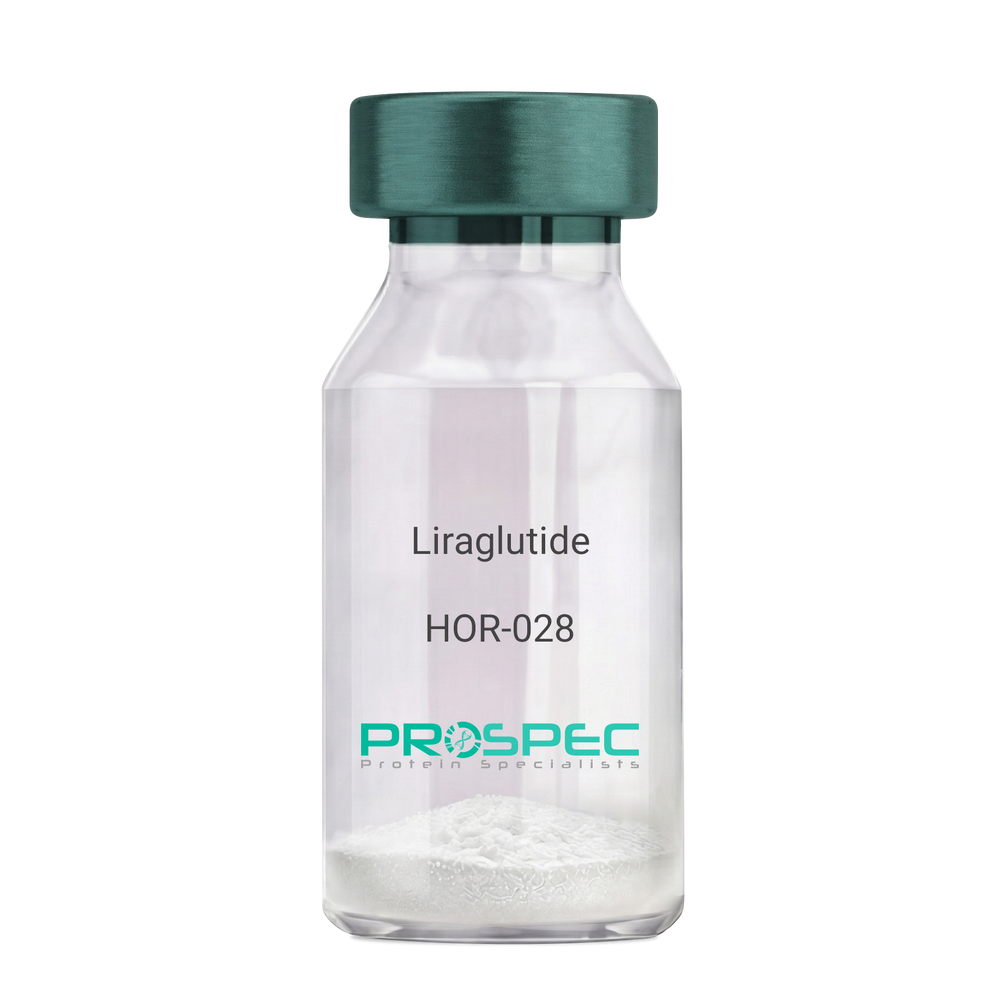
LiraglutideDescription:
Liraglutide
Product # :
HOR-028Price :
Quantity :
Shipping Method :
Shipped at Room temp
More Info
- description
- formulation
- purity
- More Info
- HPLC, MS
- Citations
Description
Liraglutide peptide is a single, non-glycosylated polypeptide chain containing 31 amino acids, having a molecular mass of 3751 Dalton and a Molecular formula of C172H265N43O51.
Formulation
The protein (1mg/ml) was lyophilized with no additives.
Purity
Greater than 97% as determined by RP-HPLC.
HPLC, MS
Citations
More Info
-
Introduction
Liraglutide is a long-acting GLP1 analogue sharing 97% a.a. homology to human GLP1. Liraglutide differs from GLP1 by the substitution of arginine for lysine at position 34. While GLP1 is degraded swiftly by DPP4 resulting in short life of insulin, Liraglutide contains a fatty acid that binds to albumin and prolongs the half-life of the structure. liraglutide causes insulin to secret in the presence of increasing glucose levels. Due toits receptor site, liraglutide inhibits glucagon secretion and delays gastric emptying.
-
Physical Appearance
Sterile Filtered White lyophilized (freeze-dried) powder.
-
Stability
Store the lyophilized Liraglutide between 2-8°C, do not freeze. Upon reconstitution Lypressin should be stored at 4°C between 2-7 days and for future use below -18°C. Please prevent freeze-thaw cycles.
-
Solubility
It is recommended to reconstitute the lyophilized Liraglutide in sterile 18MΩ-cm H2O not less than 100 µg/ml, which can then be further diluted to other aqueous solutions.
Lypressin is also soluble in 1% Acetic Acid. -
Amino Acid Sequence
H-His-Ala-Glu-Gly-Thr-Phe-Thr-Ser-Asp-Val-Ser-Ser-Tyr-Leu-Glu-Gly-Gln-Ala-Ala-Lys(γ-Glu-palmitoyl)-Glu-Phe-Ile-Ala-Trp-Leu-Val-Arg-Gly-Arg-Gly-OH
ProSpec's products are furnished for LABORATORY RESEARCH USE ONLY. The product may not be used as drugs, agricultural or pesticidal products, food additives or household chemicals.
- View Data Sheet
Name :
CTGF (182-250 a.a.) HumanDescription:
Connective Tissue Growth Factor Human Recombinant (182-250 a.a.)
CCN2, NOV2, HCS24, IGFBP8, MGC102839, CTGF, Connective Tissue Growth Factor.
Product # :
CYT-526Price :
Quantity :
Shipping Method :
Shipped at Room temp
More Info
- description
- source
- formulation
- purity
- More Info
- Citations
Description
The Connective Tissue Growth Factor amino acids 182-250, produced in E.Coli, is a fusion protein with His Tag (4 kDa), having a total molecular mass of 15 kDa.
Source
Escherichia Coli.
Formulation
Lyophilized without any additives.
Purity
Greater than 90.0% as determined by SDS-PAGE.
Citations
More Info
-
Introduction
Connective Tissue Growth Factor belongs to the CCN family of proteins. The CCN family presently consists of six members in human also known as: Cyr61 (Cystein rich 61), CTGF (Connective Tissue Growth Factor), Nov (Nephroblastoma Overexpressed gene), WISP-1, 2 and 3 (Wnt-1 Induced Secreted Proteins). The CCN genes encode secreted proteins associated with the Extracellular Matrix (ECM) and cell membrane. CCN proteins are matricellular proteins which are involved in the regulation of various cellular functions including: proliferation, differentiation, survival, adhesion and migration. They are expressed in derivatives of the three embryonic sheets and are implicated in the development of kidney, nervous system, muscle, bone marrow, cartilage and bone. During adulthood, they are implicated in wound healing, bone fracture repair, and pathologies such as: fibrosis, vascular ailments and tumorigenesis.
Full length secreted CCN proteins can show an antiproliferative activity, whereas truncated isoforms are likely to stimulate proliferation and behave as oncogenes. The full length protein consists of four modulesModule I shares partial identity with the N-terminal part of the Insulin-like Growth Factor Binding Proteins (IGFBPs).
Module II includes a stretch of 70amino acid residues – which shares sequence identity with the Von Willebrand Factor Type C repeat (VWC).
Module III contains sequences sharing identity with the Thrombospondin type 1 repeat (TSP1) (WSXCSXXCG), which is thought to be implicated in the binding of sulfated glycoconjugates and to be important for cell adhesion. Module IV, also designated CT, is encoded by exon5. It is the leasts conserved one of the four domains at the level of nucleotide sequence, but it appears to be critical for several of the biological functions attributed to the CCN proteins. Module IV resembles the CT domain of several extracellular protein including, Von Willebrand's factor and mucins. Sequence similarities to heparin-binding motifs are also found within this domain. Proteolysis of the secreted full-length CCN proteins that has been reported in the case of CCN2 and CCN3 might result in the production of CCN-derived peptides with high affinity for ligands that full-length CNN proteins bind only poorly. Amino-truncated CCN2 isoforms were biologically active whereas no specific biological activity has been attributed to the truncated CCN3. Although the molecular processes underlying the production of these secreted isoforms is presently unknown, it is important to note that proteolysis occur at the same amino acid residues in both CCN2 and CCN3. An elevated expression of CCN2 has also been detected by Northern blotting in human invasive mammary ductal carcinomas, dermatofibromas, pyogenic granuloma, endothelial cells of angiolipomas and angioleiomyomas, and in pancreatic tumors. A study performed with chondrosarcomas representative of various histological grades established that CCN2 expression was closely correlated with increasing levels of malignancy. In agreement with CCN2 playing a role in brain tumor angiogenesis, immunocytochemistry studies indicated that both glioblastoma tumor cells and proliferating endothelial cells stained positive for CCN2. In astrocytomas, CCN2 expression was particularly elevated in high grade tumors, with a marked effect of CCN2 on cell proliferation. Downregulation of CCN2 expression in these cells was associated with a growth arrest at the G1/S transition while over-expression of CCN2 induced a two-fold increase of the number of cells in the G1 phase. Gene profiling analysis allowed to identify a set of about 50 genes whose expression might account for the proliferative activity of CCN2 in these cells.
CCN2 was seen in a higher proportion of mononuclear cells of patients with acute lymphoblastic leukemia. -
Synonyms
CCN2, NOV2, HCS24, IGFBP8, MGC102839, CTGF, Connective Tissue Growth Factor.
-
Physical Appearance
Sterile Filtered white lyophilized powder.
-
Stability
Lyophilized CTGF although stable at room temperature for 3 weeks, should be stored desiccated below -18°C. Upon reconstitution CTGF should be stored at 4°C between 2-7 days and for future use below -18°C.For long-term storage it is recommended to add a carrier protein (0.1% HSA or BSA).Please prevent freeze-thaw cycles.
-
Solubility
It is recommended to reconstitute the lyophilized CTGF in sterile 18MΩ-cm H2O not less than 100 µg/ml, which can then be further diluted to other aqueous solutions.
-
Background
What is the molecular weight/Mw of CTGF Protein?
CTGF Protein has a total Mw of 15kDa.
What is the source or expression system of CTGF Protein?
Escherichia Coli.
What is the Purity of CTGF Protein?
CTGF Protein is >90% pure as determined by SDS-PAGE.
What is the Biological Activity of CTGF Protein?
The biological functionality of CTGF Protein will be determined in the future.
What is the amino acid sequence of CTGF Protein?
CTGF Protein is composed from 180-250 amino acids.
What applications can CTGF Protein be used in?
CTGF Protein can probably be used in western blot, ELISA and Lateral Flow.
What is the endotoxin level for CTGF Protein?
The endotoxin level is minimal, CTGF Protein was purified using conventional chromatography techniques.
ProSpec's products are furnished for LABORATORY RESEARCH USE ONLY. The product may not be used as drugs, agricultural or pesticidal products, food additives or household chemicals.
- View Data Sheet
Name :
Chlamydia PGP-3DDescription:
Chlamidia Trachomatis PGP-3D Recombinant
Product # :
CHT-007Price :
Quantity :
Shipping Method :
Shipped with Ice Packs
More Info
- description
- source
- formulation
- purity
- More Info
- Citations
Description
The E.coli derived recombinant protein contains Chlamydia Trachomatis PGP-3D full length protein epitope. The protein is fused to a 6xHis-Tag at C-terminus.
Source
Escherichia Coli.
Formulation
10mM Tris-HCl, pH 8, 1.5M Urea and 50% Glycerol.
Purity
Protein is >90% pure as determined by SDS-PAGE.
Citations
More Info
-
Introduction
Chlamydia is a common term for infection with any bacterium belonging to the phylum Chlamydiae. This term derives from the name of the bacterial genusChlamydiain the family Chlamydiaceae, order Chlamydiales, class and phylum Chlamydiae. There are two genera in Chlamydiaceae: Chlamydia and Chlamydophila. The genus Chlamydia includes three species: C. trachomatis, C. muridarum, and C. suis.
-
Stability
Chlamydia PGP-3D although stable at 4°C for 1 week, should be stored below -18°C. Please prevent freeze thaw cycles.
-
Applications
Chlamydia PGP-3D protein is suitable for use in ELISA. Each laboratory should determine an optimum working titer for use in its particular application. Other applications have not been tested but use in such assays should not necessarily be excluded.
-
Specificity
Immunoreactive with sera of Chlamydia Trachomatis infected individuals.
-
Purification Method
Chlamydia PGP-3D protein was purified by proprietary chromatographic technique.
ProSpec's products are furnished for LABORATORY RESEARCH USE ONLY. The product may not be used as drugs, agricultural or pesticidal products, food additives or household chemicals.
- View Data Sheet
Name :
Borrelia Garinii OspCDescription:
Borrelia Garinii OspC Recombinant
Product # :
BOR-021Price :
Quantity :
Shipping Method :
Shipped with Ice Packs
More Info
- description
- source
- formulation
- purity
- More Info
- Citations
Description
Recombinant Borrelia Garinii Outer Surface Protein C produced in E.coli is a non-glycosylated, polypeptide chain having a calculated molecular mass of 22kDa.Borrelia Garinii OspC is expressed with a 10xHis tag at N-terminus and purified by proprietary chromatographic techniques.
Source
Escherichia Coli.
Formulation
Borrelia Garinii OspC is supplied in 20mM HEPES buffer pH-8.0, 200mM NaCl and 20% glycerol.
Purity
Greater than 95.0% as determined by SDS-PAGE.
Citations
More Info
-
Introduction
Borrelia belongs to a genus of bacteria of the spirochete phylum. Borrelia causes borreliosis, which is a zoonotic, vector-borne disease transmitted mainly by ticks and some by lice, depending on the species. Of the 36 known species of Borrelia, 12 are distinguished to cause Lyme disease or borreliosis and are transmitted by ticks. The main Borrelia species causing Lyme disease are Borrelia burgdorferi, Borrelia afzelii, and Borrelia garinii. The Borrelia genus members have a linear chromosome which is about 900 kbp in length as well as an excess of both linear and circular plasmids in the 5-220 kbp size range. The plasmids are atypical, as compared to most bacterial plasmids, since they contain many paralogous sequences, a large number of pseudogenes and, in some cases, essential genes. Moreover, a number of the plasmids have features suggesting that they are prophages.
-
Physical Appearance
Sterile Filtered clear solution.
-
Stability
Store at 4°C if entire vial will be used within 2-4 weeks. Store, frozen at -20°C for longer periods of time. Avoid multiple freeze-thaw cycles.
-
Immunological Functions
1. Binds IgG- and IgM-type human antibodies.2. Immunodot test with Lyme disease positive/negative plasma.
ProSpec's products are furnished for LABORATORY RESEARCH USE ONLY. The product may not be used as drugs, agricultural or pesticidal products, food additives or household chemicals.
- View Data Sheet
Name :
AIMP1 HumanDescription:
Aminoacyl tRNA Synthetase Complex-Interacting Multifunctional Protein 1 Human Recombinant
Aminoacyl tRNA synthase complex-interacting multifunctional protein 1, Multisynthase complex auxiliary component p43, AIMP1, EMAP2, SCYE1, p43, EMAPII.
Product # :
CYT-021Price :
Quantity :
Shipping Method :
Shipped with Ice Packs
More Info
- description
- source
- formulation
- purity
- More Info
- sds-page
- Citations
Description
AIMP1 Human Recombinant fused with a 20 amino acid His tag at N-terminus produced in E.Coli is a single, non-glycosylated, polypeptide chain containing 356 amino acids (1-336 a.a.) and having a molecular mass of 39.2kDa (Molecular size on SDS-PAGE will appear higher). The AIMP1 is purified by proprietary chromatographic techniques.
Source
Escherichia Coli.
Formulation
The AIMP1 solution (0.25mg/ml) 20mM Tris-HCl buffer (pH8.0), 0.2M NaCl, 2mM DTT and 10% glycerol.
Purity
Greater than 85.0% as determined by SDS-PAGE.
sds-page
Citations
More Info
-
Introduction
AIMP1 (EMPA2 or p43) is a cytokine that is specifically induced by apoptosis, and it is involved in the control of angiogenesis, inflammation, and wound healing. The release of the AIMP1 cytokine renders the tumor-associated vasculature sensitive to tumor necrosis factor. Furthermore, AIMP1 is involved in the stimulation of inflammatory responses after proteolytic cleavage in tumor cells.
-
Synonyms
Aminoacyl tRNA synthase complex-interacting multifunctional protein 1, Multisynthase complex auxiliary component p43, AIMP1, EMAP2, SCYE1, p43, EMAPII.
-
Physical Appearance
Sterile Filtered colorless solution.
-
Stability
Store at 4°C if entire vial will be used within 2-4 weeks. Store, frozen at -20°C for longer periods of time.For long term storage it is recommended to add a carrier protein (0.1% HSA or BSA).Please avoid freeze thaw cycles.
-
Amino Acid Sequence
MGSSHHHHHH SSGLVPRGSH MLPAVAVSEP VVLRFMIFCR LLAKMANNDA VLKRLEQKGA EADQIIEYLK QQVSLLKEKA ILQATLREEK KLRVENAKLK KEIEELKQEL IQAEIQNGVK QIPFPSGTPL HANSMVSENV IQSTAVTTVS SGTKEQIKGG TGDEKKAKEK IEKKGEKKEK KQQSIAGSAD SKPIDVSRLD LRIGCIITAR KHPDADSLYV EEVDVGEIAP RTVVSGLVNH VPLEQMQNRM VILLCNLKPA KMRGVLSQAM VMCASSPEKI EILAPPNGSV PGDRITFDAF PGEPDKELNP KKKIWEQIQP DLHTNDECVA TYKGVPFEVK GKGVCRAQTM SNSGIK.
-
Background
What is the molecular weight/Mw of AIMP1 HUMAN Protein?
AIMP1 HUMAN Protein has a total Mw of 39.2kDa.
What is the source or expression system of AIMP1 HUMAN Protein?
Escherichia Coli.
What is the Purity of AIMP1 HUMAN Protein?
AIMP1 HUMAN Protein is >85% pure as determined by SDS-PAGE.
What is the Biological Activity of AIMP1 HUMAN Protein?
The biological functionality of AIMP1 HUMAN Protein will be determined in the future.
What is the amino acid sequence of AIMP1 HUMAN Protein?
MGSSHHHHHH SSGLVPRGSH MLPAVAVSEP VVLRFMIFCR LLAKMANNDA VLKRLEQKGA EADQIIEYLK QQVSLLKEKA ILQATLREEK KLRVENAKLK KEIEELKQEL IQAEIQNGVK QIPFPSGTPL HANSMVSENV IQSTAVTTVS SGTKEQIKGG TGDEKKAKEK IEKKGEKKEK KQQSIAGSAD SKPIDVSRLD LRIGCIITAR KHPDADSLYV EEVDVGEIAP RTVVSGLVNH VPLEQMQNRM VILLCNLKPA KMRGVLSQAM VMCASSPEKI EILAPPNGSV PGDRITFDAF PGEPDKELNP KKKIWEQIQP DLHTNDECVA TYKGVPFEVK GKGVCRAQTM SNSGIK.
What applications can AIMP1 HUMAN Protein be used in?
AIMP1 HUMAN Protein can probably be used in western blot, ELISA and Lateral Flow.
What is the endotoxin level for AIMP1 HUMAN Protein?
The endotoxin level is minimal, AIMP1 HUMAN Protein was purified using conventional chromatography techniques..
ProSpec's products are furnished for LABORATORY RESEARCH USE ONLY. The product may not be used as drugs, agricultural or pesticidal products, food additives or household chemicals.
- View Data Sheet
Name :
BECN1 HumanDescription:
Beclin 1, Autophagy Related Human Recombinant
ATG6, beclin1, VPS30, Coiled-coil myosin-like BCL2-interacting protein, Beclin-1, GT197.
Product # :
PRO-1289Price :
Quantity :
Shipping Method :
Shipped with Ice Packs
More Info
- description
- source
- formulation
- purity
- More Info
- Citations
Description
BECN1 Human Recombinant produced in E.Coli is a single, non-glycosylated polypeptide chain containing 470 amino acids (1-450 a.a) and having a molecular mass of 54.1kDa.BECN1 is fused to a 20 amino acid His-tag at N-terminus & purified by proprietary chromatographic techniques.
Source
Escherichia Coli.
Formulation
BECN1 protein solution (0.25mg/ml) contains 20mM Tris-HCl buffer (pH 8.5), 0.1M NaCl, 10% glycerol and 1mM DTT.
Purity
Greater than 85.0% as determined by SDS-PAGE.
Citations
More Info
-
Introduction
BECN1, Beclin-1 and autophagy-related gene (Atg) 6, is a member of the beclin family. BECN1 has a key role in autophagy and antiviral host defense. Beclin-1 and its binding partner class III phosphoinositide 3-kinase (PI3K), also named Vps34, are vital for the initiation of the formation of the autophagasome in autophagy. Also it is required for the abscission step of cytokinesis.
-
Synonyms
ATG6, beclin1, VPS30, Coiled-coil myosin-like BCL2-interacting protein, Beclin-1, GT197.
-
Physical Appearance
Sterile Filtered clear solution.
-
Stability
Store at 4°C if entire vial will be used within 2-4 weeks. Store, frozen at -20°C for longer periods of time. For long term storage it is recommended to add a carrier protein (0.1% HSA or BSA).Avoid multiple freeze-thaw cycles.
-
Amino Acid Sequence
MGSSHHHHHH SSGLVPRGSH MEGSKTSNNS TMQVSFVCQR CSQPLKLDTS FKILDRVTIQ ELTAPLLTTA QAKPGETQEE ETNSGEEPFI ETPRQDGVSR RFIPPARMMS TESANSFTLI GEASDGGTME NLSRRLKVTG DLFDIMSGQT DVDHPLCEEC TDTLLDQLDT QLNVTENECQ NYKRCLEILE QMNEDDSEQL QMELKELALE EERLIQELED VEKNRKIVAE NLEKVQAEAE RLDQEEAQYQ REYSEFKRQQ LELDDELKSV ENQMRYAQTQ LDKLKKTNVF NATFHIWHSG QFGTINNFRL GRLPSVPVEW NEINAAWGQT VLLLHALANK MGLKFQRYRL VPYGNHSYLE SLTDKSKELP LYCSGGLRFF WDNKFDHAMV AFLDCVQQFK EEVEKGETRF CLPYRMDVEK GKIEDTGGSG GSYSIKTQFN SEEQWTKALK FMLTNLKWGL AWVSSQFYNK.
ProSpec's products are furnished for LABORATORY RESEARCH USE ONLY. The product may not be used as drugs, agricultural or pesticidal products, food additives or household chemicals.
- View Data Sheet
Name :
OPG Human, Hi-5Description:
Osteoprotegerin Human Recombinant, Hi-5
TNFRSF11B, OPG, OCIF, Osteoclastogenesis inhibitory factor, Osteoprotegerin, TR1, MGC29565.
Product # :
CYT-633Price :
Quantity :
Shipping Method :
Shipped with Ice Packs
More Info
- description
- source
- formulation
- purity
- biological activity
- More Info
- Citations
Description
Recombinant Osteoprotegerin produced in baculovirus is a signle, glycosylated polypeptide chain containing 389 amino acid residues (22-401 a.a.), having a calculated molecular mass of 44.7 kDa. The Osteoprotegerin is fused to a 6 amino acid His tag at C-terminus and purified by proprietary chromatographic techniques.
Source
Hi-5.
Formulation
Osteoprotegerin protein contains PBS pH-7.4 and 10% glycerol.
Purity
Greater than 90.0% as determined by SDS-PAGE.
Biological Activity
The ED50 range ≤ 8 ng/ml and is measured by its ability to inhibit cytotoxicity using Jurkat human acute T cell leukemia cells in the presence of 2ng/ml of human TRAIL (CAT# cyt-1014).
Citations
More Info
-
Introduction
Osteoprotegerin acts as decoy receptor for rankl and thereby neutralizes its function in osteoclastogenesis. OPG inhibits the activation of osteoclasts and promotes osteoclast apoptosis in vitro. Bone homeostasis seems to depend on the local rankl/opg ratio. Osteoprotegerin may also play a role in preventing arterial calcification. May act as decoy receptor for trail and protect against apoptosis. Trail binding blocks the inhibition of osteoclastogenesis.
-
Synonyms
TNFRSF11B, OPG, OCIF, Osteoclastogenesis inhibitory factor, Osteoprotegerin, TR1, MGC29565.
-
Physical Appearance
Sterile Filtered colorless clear solution.
-
Stability
Store at 4°C if entire vial will be used within 2-4 weeks. Store, frozen at -20°C for longer periods of time. Please avoid freeze thaw cycles.
-
Amino Acid Sequence
ADPETFPPKY LHYDEETSHQ LLCDKCPPGT YLKQHCTAKW KTVCAPCPDH YYTDSWHTSD ECLYCSPVCK ELQYVKQECN RTHNRVCECK EGRYLEIEFC LKHRSCPPGF GVVQAGTPER NTVCKRCPDG FFSNETSSKA PCRKHTNCSV FGLLLTQKGN ATHDNICSGN SESTQKCGID VTLCEEAFFR FAVPTKFTPN WLSVLVDNLP GTKVNAESVE RIKRQHSSQE QTFQLLKLWK HQNKDQDIVK KIIQDIDLCE NSVQRHIGHA NLTFEQLRSL MESLPGKKVG AEDIEKTIKA CKPSDQILKL LSLWRIKNGD QDTLKGLMHA LKHSKTYHFP KTVTQSLKKT IRFLHSFTMY KLYQKLFLEM IGNQVQSVKI SCLSHHHHHH.
ProSpec's products are furnished for LABORATORY RESEARCH USE ONLY. The product may not be used as drugs, agricultural or pesticidal products, food additives or household chemicals.
- View Data Sheet
Name :
POGLUT1 HumanDescription:
Protein O-Glucosyltransferase 1 Human Recombinant
POGLUT1, C3orf9, CLP46, hCLP46, KDELCL1, KTELC1, Protein O-glucosyltransferase 1, CAP10-like 46 kDa protein, KTEL motif-containing protein 1, Myelodysplastic syndromes relative protein, O-glucosyltransferase Rumi homolog, hRumi, Protein O-xylosyltransferase, MDSRP.
Product # :
ENZ-956Price :
Quantity :
Shipping Method :
Shipped with Ice Packs
More Info
- description
- source
- formulation
- purity
- More Info
- Citations
Description
POGLUT1 Human Recombinant produced in in Sf9 Baculovirus cells is a single, non-glycosylated polypeptide chain containing 377 amino acids (24-392a.a) and having a molecular mass of 44.5kDa (Migrates at 40-57kDa on SDS-PAGE under reducing conditions). POGLUT1 is fused to a 8 amino acid His-tag at C-Terminus and purified by proprietary chromatographic techniques.
Source
Sf9, Baculovirus cells.
Formulation
The POGLUT1 solution (0.25mg/ml) contains Phosphate Buffered Saline (pH 7.4) and 10% glycerol.
Purity
Greater than 90% as determined by SDS-PAGE.
Citations
More Info
-
Introduction
POGLUT1 is a homologue of Rumi from Drosophila, an endoplasmic reticulum (ER)-retaining glucosyltransferase which catalyzes the transfer of glucose and xylose from UDP-glucose and UDP-xylose, respectively, to EGF repeats on the consensus sequence C-X-S-X-P-C. POGLUT1 positively regulates Notch signaling without affecting Notch ligand binding.
-
Synonyms
POGLUT1, C3orf9, CLP46, hCLP46, KDELCL1, KTELC1, Protein O-glucosyltransferase 1, CAP10-like 46 kDa protein, KTEL motif-containing protein 1, Myelodysplastic syndromes relative protein, O-glucosyltransferase Rumi homolog, hRumi, Protein O-xylosyltransferase, MDSRP.
-
Physical Appearance
Sterile Filtered colorless solution.
-
Stability
Store at 4°C if entire vial will be used within 2-4 weeks. Store, frozen at -20°C for longer periods of time. For long term storage it is recommended to add a carrier protein (0.1% HSA or BSA). Avoid multiple freeze-thaw cycles.
-
Amino Acid Sequence
RQKESGSKWK VFIDQINRSL ENYEPCSSQN CSCYHGVIEE DLTPFRGGIS RKMMAEVVRR KLGTHYQITK NRLYRENDCM FPSRCSGVEH FILEVIGRLP DMEMVINVRD YPQVPKWMEP AIPVFSFSKT SEYHDIMYPA WTFWEGGPAV WPIYPTGLGR WDLFREDLVR SAAQWPWKKK NSTAYFRGSR TSPERDPLIL LSRKNPKLVD AEYTKNQAWK SMKDTLGKPA AKDVHLVDHC KYKYLFNFRG VAASFRFKHL FLCGSLVFHV GDEWLEFFYP QLKPWVHYIP VKTDLSNVQE LLQFVKANDD VAQEIAERGS QFIRNHLQMD DITCYWENLL SEYSKFLSYN VTRRKGYDQI IPKMLKTELL EHHHHHH.
ProSpec's products are furnished for LABORATORY RESEARCH USE ONLY. The product may not be used as drugs, agricultural or pesticidal products, food additives or household chemicals.
- View Data Sheet
Name :
Leptin Human, HisDescription:
Leptin Human Recombinant, His Tag
OB Protein, Obesity Protein, OBS, Obesity factor.
Product # :
CYT-287Price :
Quantity :
Shipping Method :
Shipped at Room temp
More Info
- description
- source
- formulation
- purity
- More Info
- Citations
Description
Leptin Human Recombinant produced in E.Coli is a single, non-glycosylated, polypeptide chain containing amino acids 48-167 and having a total molecular mass of 19 kDa including the 4 kDa His tag.The Leptin is purified by proprietary chromatographic techniques.
Source
Escherichia Coli.
Formulation
The protein was lyophilized from a concentrated (1mg/ml) solution with 1X PBS, 0.1% SDS and 1mM DTT.
Purity
Greater than 90.0% as determined by SDS-PAGE.
Citations
More Info
-
Introduction
Leptin is a protein hormone with important effects in regulating body weight, metabolism and reproductive function. The protein is approximately~16 kDa in mass and encoded by the obese (ob)gene. leptin is expressed predominantly by adipocytes, which fits with the idea that body weight is sensed as the total mass of fat in the body. Smaller amounts of leptin are also secreted by cellsin the epithelium of the stomach and in the placenta. Leptin receptors are highly expressed in areas of the hypothalamus known to be important in regulating body weight, as well as in T lymphocytes and vascular endothelial cells.
-
Synonyms
OB Protein, Obesity Protein, OBS, Obesity factor.
-
Physical Appearance
Sterile Filtered White lyophilized (freeze-dried) powder.
-
Stability
Lyophilized Leptin although stable at room temperature, should be stored desiccated below 0°C. Reconstituted Leptin is best stored refrigerated at 4°C.Please avoid freeze-thaw cycles.
-
Solubility
The lyophilized Leptin is very soluble in water and most aqueous buffers below and above the isoelectric point.
ProSpec's products are furnished for LABORATORY RESEARCH USE ONLY. The product may not be used as drugs, agricultural or pesticidal products, food additives or household chemicals.
- View Data Sheet
Name :
Leptin N82K Human, PEGDescription:
Leptin N82K Human Recombinant, Pegylated
OB Protein, Obesity Protein, OBS, Obesity factor.
Product # :
CYT-1107Price :
Quantity :
Shipping Method :
Shipped at Room temp
More Info
- description
- source
- formulation
- purity
- biological activity
- More Info
- Citations
Description
Pegylated Leptin N82K Human Recombinant produced in E.Coli is a single non-glycosilated polypeptide chain containing 146 amino acids, an additional Ala at N-terminus and one molecule of PEG 20 kDa at its N-terminus acids and having a molecular weight of 35.6kDa. However due to enlarged hydrodymanic volume it runs on the SDS-PAGE as 48 kDa protein and in gel-filtration on Superdex 200 as over 200 kDa protein. Pegylated Leptin N82K Human Recombinant was purified by proprietary chromatographic techniques.
Source
Escherichia Coli.
Formulation
Lyophilized from a concentrated (0.65mg/ml) solution with 0.003mM NaHCO3 Having 35-40% protein.
Purity
Greater than 99.0% as determined by:
(a) Gel filtration analysis.
(b) Analysis by SDS-PAGE.Biological Activity
Pegylated Leptin Human is capable of stimulatng proliferation of BAF/3 cells stably transfected with the long form of human leptin receptor. Pegylated Leptin in vitro activity is 5-7 fold lower than the non-pegylated recombinant human leptin but in vivo Pegylated Leptin has profound weight reducing effect (as compared to the non-pegylated recombinant human leptin), resulting mainly from reduced food intake.
Citations
More Info
-
Introduction
Leptin takes an important part in the regulation of energy balance and body weight control.After entering the circulation, Leptin binds LEPRwhich results in the activation of several major signalling pathways. In the hypothalamus Leptin acts as an appetite-regulating factor that induces a decrease in food intake and an increase in energy consumption and also regulates bone mass and secretion of hypothalamo-pituitary-adrenal hormones. In the periphery, increases basal metabolism, regulates pancreatic beta-cell function and insulin secretion and affects innate and adaptive immunity.
-
Synonyms
OB Protein, Obesity Protein, OBS, Obesity factor.
-
Physical Appearance
Sterile Filtered White lyophilized (freeze-dried) powder.
-
Stability
Lyophilized Pegylated Leptin although stable at room temperature for 3 weeks, should be stored desiccated below -18°C. Upon reconstitution Pegylated Leptin N82K should be stored at 4°C between 2-7 days and for future use below -18°C. For long term storage it is recommended to add a carrier protein (0.1% HSA or BSA). Please prevent freeze-thaw cycles.
-
Solubility
It is recommended to reconstitute the lyophilized Pegylated Leptin in sterile water or 0.4% NaHCO3 adjusted to pH 8-9, not less than 100µg/ml, which can then be further diluted to other aqueous solutions.
ProSpec's products are furnished for LABORATORY RESEARCH USE ONLY. The product may not be used as drugs, agricultural or pesticidal products, food additives or household chemicals.
- View Data Sheet
Name :
Vimentin HumanDescription:
Vimentin Human Recombinant
Vimentin, Vim, FLJ36605.
Product # :
PRO-309Price :
Quantity :
Shipping Method :
Shipped at Room temp
More Info
- description
- source
- formulation
- purity
- More Info
- Citations
Description
Vimentin Human Recombinant produced in E.coli cells is a single non-glycosylated protein containing 465 amino acids chain and having a molecular mass of 53.5kDa. The Vimentin is purified by proprietary chromatographic techniques.
Source
Escherichia Coli.
Formulation
The Vimentin was lyophilized from a 0.2µm filtered concentrated solution in 30% Acetonitrile and 0.1% TFA.
Purity
Greater than 95.0% as determined by:
(a) Analysis by RP-HPLC.
(b) Analysis by SDS-PAGE.Citations
More Info
-
Introduction
Vimentin expression in human malignant glioma cells depends on cellular density, algorithms of drug delivery and chemo/radio treatment. Vimentin and detyrosinated microtubules provide structural support for the extensive microtentacles observed in detached tumor cells and a mechanism to promote successful metastatic spread. Primary colorectal carcinomas display aberrant expression of vimentin, and have activated Notch and TGFbeta signaling pathways. Vimentin is a strong arterial substrate for transglutaminases. Transglutaminase-mediated vimentin dimerization results in a novel unifying pathway by which vasodilatory and remodeling responses may be regulated. Ablation of vimentin expression inhibits migration and invasion of colon and breast cancer cell lines. Vimentin is the main intermediate filament protein in mesenchymal cells and is therefore of value in the differential diagnosis of undifferentiated neoplasms.
-
Synonyms
Vimentin, Vim, FLJ36605.
-
Physical Appearance
Sterile Filtered White lyophilized (freeze-dried) powder.
-
Stability
Lyophilized Vimentin although stable at room temperature for 3 weeks, should be stored desiccated below -18°C. Upon reconstitution Vimentin should be stored at 4°C between 2-7 days and for future use below -18°C.For long term storage it is recommended to add a carrier protein (0.1% HSA or BSA).Please prevent freeze-thaw cycles.
-
Solubility
It is recommended to reconstitute the lyophilized Vimentin in sterile 4mM HCl not less than 100µg/ml, which can then be further diluted to other aqueous solutions.
-
Amino Acid Sequence
STRSVSSSSY RRMFGGPGTA SRPSSSRSYV TTSTRTYSLG SALRPSTSRS LYASSPGGVY ATRSSAVRLR SSVPGVRLLQ DSVDFSLADA INTEFKNTRT NEKVELQELN DRFANYIDKV RFLEQQNKIL LAELEQLKGQ GKSRLGDLYE EEMRELRRQV DQLTNDKARV EVERDNLAED IMRLREKLQE EMLQREEAEN TLQSFRQDVD NASLARLDLE RKVESLQEEI AFLKKLHEEE IQELQAQIQE QHVQIDVDVS KPDLTAALRD VRQQYESVAA KNLQEAEEWY KSKFADLSEA ANRNNDALRQ AKQESTEYRR QVQSLTCEVD ALKGTNESLE RQMREMEENF AVEAANYQDT IGRLQDEIQN MKEEMARHLR EYQDLLNVKM ALDIEIATYR KLLEGEESRI SLPLPNFSSL NLRETNLDSL PLVDTHSKRT LLIKTVETRD GQVINETSQH HDDLE.
ProSpec's products are furnished for LABORATORY RESEARCH USE ONLY. The product may not be used as drugs, agricultural or pesticidal products, food additives or household chemicals.
- View Data Sheet
Name :
PTH (1-84) HumanDescription:
Parathyroid Hormone (1-84) Human Recombinant
Parathyrin, PTH, Parathormone.
Product # :
HOR-263Price :
Quantity :
Shipping Method :
Shipped at Room temp
More Info
- description
- source
- formulation
- purity
- biological activity
- More Info
- sds-page
- Citations
Description
Parathyroid Hormone 1-84 (full length) Human Recombinant produced in E.Coli is a single, non-glycosylated, polypeptide chain containing 84 amino acids, having an MW of ~9.4kDa.The PTH is purified by proprietary chromatographic techniques.
Source
Escherichia Coli.
Formulation
Lyophilized from a 0.2µm filtered concentrated solution in PBS pH7.4.
Purity
Greater than 97.0% as determined by:
(a) Analysis by RP-HPLC.
(b) Analysis by SDS-PAGE.Biological Activity
The activity is calculated by its ability to induce cAMP accumulation in murine MC3T3E1 cells and is <50ng/ml, corresponding to a specific activity of greater than 2.0 x 10⁴ Units/mg.
sds-page
Citations
More Info
-
Introduction
Parathyroid hormone (PTH), or parathormone, is secreted by the parathyroid glands as a polypeptide containing 84 amino acids. It acts to increase the concentration of calciumin the blood, whereas calcitonin (a hormone produced by the parafollicular cells of the thyroid gland) acts to decrease calcium concentration. PTH acts to increase the concentration of calcium in the blood by acting upon parathyroid hormone receptorin three parts of the body: In the bones- It enhances the release of calcium from the large reservoir contained in the bones. Bone resorption is the normal destruction of bone by osteoclasts, which are indirectly stimulated by PTH. Stimulation is indirect since osteoclasts do not have a receptor for PTH; rather, PTH binds to osteoblasts, the cells responsible for creating bone. Binding stimulates osteoblasts to increase their expression of RANKL, which can bind to osteoclast precursors containing RANK, a receptor for RANKL. The binding of RANKL to RANK stimulates these precursors to fuse, forming new osteoclasts which ultimately enhances the resorption of bone.
In the kidney- It enhances active reabsorption of calcium from distal tubules and the thick ascending limb.
In the intestine- It enhances the absorption of calcium in the intestine by increasing the production of vitamin D and upregulating the enzyme responsible for 1-alpha hydroxylationof 25-hydroxy vitamin D, converting vitamin D to its active form (1,25-dihydroxy vitamin D) which effects the actual absorption of calcium (as Ca2+ ions) by the intestine via calbindin.
Recombinant Human full length PTH 1-84 has potential as an anti-osteoporotic agent, due to its properties as a bone formation stimulant, it increases bone turnover, stimulating osteoblasts and reducing both vertebral and non vertebral fractures. -
Synonyms
Parathyrin, PTH, Parathormone.
-
Physical Appearance
Sterile Filtered White lyophilized (freeze-dried) powder.
-
Stability
Lyophilized Parathyrin although stable at room temperature for 3 weeks, should be stored desiccated below -18°C. Upon reconstitution PTH should be stored at 4°C between 2-7 days and for future use below -18°C.For long term storage it is recommended to add a carrier protein (0.1% HSA or BSA).Please prevent freeze-thaw cycles.
-
Solubility
It is recommended to reconstitute the lyophilized Parathormone in sterile 18MΩ-cm H2O not less than 100 µg/ml, which can then be further diluted to other aqueous solutions.
-
Amino Acid Sequence
SVSEIQLMHN LGKHLNSMER VEWLRKKLQD VHNFVALGAP LAPRDAGSQR PRKKEDNVLV ESHEKSLGEA DKADVNVLTK AKSQ.
ProSpec's products are furnished for LABORATORY RESEARCH USE ONLY. The product may not be used as drugs, agricultural or pesticidal products, food additives or household chemicals.
- View Data Sheet
Name :
M CSF MouseDescription:
Macrophage-Colony Stimulating Factor Mouse Recombinant
CSF-1, Lanimostim, MCSF, M-CSF.
Product # :
CYT-439Price :
Quantity :
Shipping Method :
Shipped at Room temp
More Info
- description
- source
- formulation
- purity
- biological activity
- More Info
- Citations
Description
Macrophage Colony Stimulating Factor Mouse Recombinant produced in E.coli is a disulfide linked homodimer, non-glycosylated, polypeptide chain containing 2 x 156 amino acids and having a total molecular mass of 36.4 KD.MCSF is purified by proprietary chromatographic techniques.
Source
Escherichia Coli.
Formulation
The protein was lyophilized from a sterile (0.2µm) filtered solution containing 10mM sodium phosphate, 50mM sodium chloride, pH 7.5.
Purity
Greater than 95.0% as determined by SDS-PAGE.
Biological Activity
The ED50, as calculated by the dose-dependant stimulation of the proliferation of murine M-NFS-60 indicator cells is 1.33ng/ml corresponding to a specific activity of 7.5x10⁵ units/mg.
Citations
More Info
-
Introduction
Granulocyte/Macrophage Colony-Stimulating Factors are cytokines that act in hematopoiesis by controlling the production, differentiation, and function of 2 related white cell populations of the blood, the granulocytes and the monocytes-macrophages. CSF-1 induces cells of the monocyte/macrophage lineage. It plays a role in immunological defenses, bone metabolism, lipoproteins clearance, fertility and pregnancy.
-
Synonyms
CSF-1, Lanimostim, MCSF, M-CSF.
-
Physical Appearance
Sterile Filtered White lyophilized (freeze-dried) powder.
-
Stability
Lyophilized M-CSF although stable at room temperature for 3 weeks, should be stored desiccated below -18°C. Upon reconstitution MCSF should be stored at 4°C between 2-7 days and for future use below -18°C.Please prevent freeze-thaw cycles.
-
Solubility
It is recommended to reconstitute the lyophilized M-CSF in sterile 18MΩ-cm H2O not less than 100µg/ml, which can then be further diluted to other aqueous solutions.
-
Amino Acid Sequence
MKEVSEHCSH MIGNGHLKVL QQLIDSQMET SCQIAFEFVD QEQLDDPVCY LKKAFFLVQD IIDETMRFKD NTPNANATER LQELSNNLNS CFTKDYEEQN KACVRTFHET PLQLLEKIKN FFNETKNLLE KDWNIFTKNC NNSFAKCSSR DVVTKP.
-
Background
Macrophage-Colony Stimulating Factor Mouse Recombinant: An In-Depth Analysis
Abstract:
Macrophage-Colony Stimulating Factor (M-CSF) is a crucial cytokine involved in the regulation of macrophage biology, including their differentiation, survival, and function. This research paper provides an in-depth analysis of M-CSF Mouse Recombinant, focusing on its structure, signaling pathways, and diverse functions in the context of human research. Additionally, the paper explores the therapeutic potential of M-CSF modulation in various diseases.
Introduction:
M-CSF plays a vital role in the development and maintenance of macrophages, key immune cells involved in innate immunity and tissue homeostasis. This paper aims to provide a comprehensive analysis of M-CSF Mouse Recombinant, highlighting its importance in human macrophage biology and its potential therapeutic applications.
Structure and Function of M-CSF:
M-CSF is a homodimeric protein that binds to its receptor, CSF-1R, leading to the activation of downstream signaling pathways. It regulates the proliferation, survival, and activation of macrophages, influencing immune responses and tissue remodeling processes.
Signaling Pathways:
Upon binding to CSF-1R, M-CSF triggers various intracellular signaling pathways, including the MAPK pathway, PI3K/Akt pathway, and JAK/STAT pathway. These pathways regulate gene expression and mediate cellular responses, impacting macrophage functions.
Role in Macrophage Development and Function:
M-CSF is essential for the differentiation and maturation of macrophages from hematopoietic progenitor cells. It promotes the survival, proliferation, and activation of macrophages, enhancing their phagocytic activity, cytokine production, and antigen presentation capabilities.
Therapeutic Potential:
Given its crucial role in macrophage biology, M-CSF modulation has emerged as a potential therapeutic strategy. M-CSF inhibitors and CSF-1R antagonists have shown promise in the treatment of inflammatory and autoimmune diseases, as well as certain cancers. Targeting M-CSF signaling can modulate immune responses and affect disease progression.
Clinical Applications and Future Directions:
The therapeutic potential of M-CSF modulation is being explored in various clinical settings. Clinical trials investigating M-CSF inhibitors as monotherapy or combination therapy are underway in diseases such as rheumatoid arthritis and cancer. Future research should focus on understanding the intricate mechanisms of M-CSF signaling, optimizing therapeutic strategies, and developing personalized treatment approaches.
ProSpec's products are furnished for LABORATORY RESEARCH USE ONLY. The product may not be used as drugs, agricultural or pesticidal products, food additives or household chemicals.