Search results
1000 results found for “Hepatitis E”
Name
Description
Product #
Price
Quantity
Shipping Method
- View Data Sheet
Name :
Dengue NS1, ST1Description:
Dengue Virus NS1 Recombinant, Subtype-1
Product # :
DEN-015Price :
Quantity :
Shipping Method :
Shipped with Ice Packs
More Info
- description
- source
- formulation
- purity
- More Info
- Citations
Description
The E.Coli derived recombinant protein contains the NS1 Dengue Virus full length Type-1 immunodominant regions, migrates as 45kDa on 12% SDS-PAGE gel.The dengue protein is fused to a 6xHis tag at C-terminus.
Source
Escherichia Coli.
Formulation
Phosphate buffer and 25mM arginine.
Purity
Protein is >95% pure as determined by 12% PAGE (coomassie staining).
Citations
More Info
-
Introduction
Caused by one of four closely related virus serotypes of the genus Flavivirus, family Flaviviridae, each serotype is sufficiently different that there is no cross-protection and epidemics caused by multiple serotypes (hyperendemicity) can occur. In cell culture experiments and mice Morpholino antisense oligos have shown specific activity against Dengue virus.
-
Stability
Dengue NS1, ST1 although stable at 4°C for 1 week, should be stored below -18°C. Please prevent freeze thaw cycles.
-
Applications
Each laboratory should determine an optimum working titer for use in its particular application.
-
Purification Method
Purified by proprietary chromatographic technique.
ProSpec's products are furnished for LABORATORY RESEARCH USE ONLY. The product may not be used as drugs, agricultural or pesticidal products, food additives or household chemicals.
- View Data Sheet
Name :
Dengue-HRPDescription:
Dengue Horseradish Peroxidase Recombinant
Product # :
DEN-044Price :
Quantity :
Shipping Method :
Shipped with Ice Packs
More Info
- description
- source
- formulation
- More Info
- Citations
Description
Recombinant Dengue-HRP is genetically designed dengue protein conjugated to Horseradish peroxidase which detects low titer dengue antibodies having a sharp OD value compared to the control with optimal dilutions. The proprietary Dengue-HRP protein sequence is designed for broad reactions to specific antibodies produced from the different serotypes of dengue infection. Potential applications for Dengue-HRP include indirect ELISA for the detection of dengue IgG or MAC ELISA for the detection of dengue IgM.
Source
Escherichia Coli.
Formulation
Phosphate buffered saline, pH 7.4 and 25% glycerol.
Citations
More Info
-
Introduction
The DENV is small structure that can only reproduce inside a host organism. There are 4 related dengue viruses- Degue-1, Dengue-2, Dengue-3, & Dengue4. All of them are present in the same areas of the world. The dengue virus has just about a sphere shaped structure comprised of the viral genome and capsid proteins bordered by an envelope and a shell of antigen. Subsequently infecting, the dengue virus takes over the host cell's system to replicate the viral RNA genome and viral antigens. Once matured, the resynthesized DENVs are discharged and continue to infect additional host cells.
-
Physical Appearance
Sterile filtered colorless solution.
-
Stability
Store at 4°C if entire vial will be used within 2-4 weeks. Store, frozen at -20°C for longer periods of time. For long term storage it is recommended to add a carrier protein (0.1% HSA or BSA). Avoid multiple freeze-thaw cycles.
-
Applications
Indirect ELISA and MAC-ELISA 1:100-200 diluted Dengue-HRP produced 3 to 6 fold OD value compared to OD from the control. The OD value may vary depending on the concentration of specific IgG or IgM, sample fold dilution, sample loading volume and other variables.
-
Assay Conditions
Coat each well with 1 to 3ug/well polyclonal or monoclonal anti-human IgG or IgM. Leave in 4C for overnight. Wash with wash buffer and block with 3% goat serum PBS for 1 hour at 37 C. Wash with wash buffer again. 1:20 dilution of sample with PBS. Add 100ul diluted sample into each well. Leave in 37 oC for 1 hour. Wash with wash buffer again. 1:100 to 200 dilute Den-HRP with PBS and add 100ul into each well. Incubate for 1 hour at 37C. After wash with wash buffer and add 100ul substrate for color reaction.
ProSpec's products are furnished for LABORATORY RESEARCH USE ONLY. The product may not be used as drugs, agricultural or pesticidal products, food additives or household chemicals.
- View Data Sheet
Name :
HA-HRP AntibodyDescription:
HA Mouse Antibody, Peroxidase Conjugated
Product # :
ANT-226Price :
Quantity :
Shipping Method :
Shipped with Ice Packs
More Info
- description
- formulation
- More Info
- Citations
Description
Monoclonal antibodies are produced by immunizing mouse with synthetic peptide (YPYDVPDYA) coupled to KLH.
Formulation
1×PBS & 50% glycerol.
Citations
More Info
-
Ig Subclass
Mouse IgG1.
-
Clone
PHAHRPSHG.
-
Applications
Western Blot.
-
Titer
Western Blotting: 1:1000.
-
Type
Mouse Antibody Monoclonal.
ProSpec's products are furnished for LABORATORY RESEARCH USE ONLY. The product may not be used as drugs, agricultural or pesticidal products, food additives or household chemicals.
- View Data Sheet
Description:
Heparanase 1 (HPA1), Polyclonal Rabbit Anti-Human
Product # :
ANT-155Price :
Quantity :
Shipping Method :
Shipped with Ice Packs
More Info
- source
- formulation
- More Info
- Citations
Source
Polyclonal rabbit anti-human HPA1 is a Protein G affinity purified polyclonal antibody raised against the 50 kDa-8 kDa Heparanase heterodimer.
Formulation
Each vial contains 0.29 mg or 0.57 mg of antibody in 50 or 100 µL, respectively, of 20 mM sodium phosphate; 150 mM NaCl; pH 7.2, containing 0. 01% Thimerosal.
Citations
More Info
-
Introduction
Heparanase is an endo ß-D-glucuronidase, which degrades heparan sulfate side chains of heparan sulfate proteoglycans (HSPGs) in the extracellular matrix. Heparanase plays an important role in ECM degradation, facilitating the migration and extravasation of tumor cells and inflammatory leukocytes (1,2,3). Upon degradation, heparanase releases growth factors and cytokines that stimulate cell proliferation and chemotaxis (4,5). Heparanase is a heterodimer comprised of a 50 kDa subunit harboring the active site and a 8 kDa subunit. It is produced as a latent 65 kDa precursor and proteolytically processed to its active form (1,6). Heparanase is highly expressed in myeloid leukocytes (i.e. neutrophils) in platelets and in human placenta. Human heparanase was found to be upregulated in various types of primary tumors, correlating in some cases with increased tumor invasiveness and vascularity and with poor prospective survival (7,8).
-
Stability
Store at 4°C. For extended storage, freeze in working aliquots at -20°C.Avoid repeated freeze-thaw cycles.
-
Applications
Western blot
Immunohistochemistry -
Data Sheet
To view the FULL VERSION click Heparanase-1 Polyclonal Rabbit :
-
Patent Protected Countries
Polyclonal and monoclonal Anti-heparanase antibodies and their uses are protected by US. Patents No. 6,177,545; 6,531,129, additional US patent applications and patents and patent applications worldwide.
-
Specificity
Western blot analysis: The antibody reacts with the 65 kDa precursor as well as the 50 kDa and 8 kDa subunits of human or mouse Heparanase.Immunohistochemistry: The antibody interacts with Heparanase in paraffin sections and blood smears.Recommended dilution range for Western blot analysis: 1:2000.Recommended dilution range for immunohistochemistry: 1:100.
ProSpec's products are furnished for LABORATORY RESEARCH USE ONLY. The product may not be used as drugs, agricultural or pesticidal products, food additives or household chemicals.
- View Data Sheet
Name :
GlpK E. coliDescription:
Glycerol kinase E. Coli Recombinant
Glycerol kinase, glycerol 3-phosphotransferase, Glycerokinase, GK.
Product # :
PKA-038Price :
Quantity :
Shipping Method :
Shipped with Ice Packs
More Info
- description
- source
- formulation
- purity
- More Info
- Citations
Description
GlpK E. Coli Recombinant produced in E. coli is a single, non-glycosylated polypeptide chain containing 525 amino acids (1-502 a.a) and having a molecular mass of 58.6 kDa.GlpK is fused to a 23 amino acid His-tag at N-terminus& purified by proprietary chromatographic techniques.
Source
Escherichia Coli.
Formulation
GlpK protein solution (1mg/ml) containing Phosphate buffered saline (pH7.4),10% glycerol and 1mM DTT.
Purity
Greater than 95.0% as determined by SDS-PAGE.
Citations
More Info
-
Introduction
GlpK also known as glycerol kinase, is a member of the FGGY kinase family. GlpK catalyzes the transfer of a phosphate group from ATP to glycerol, thereby forming glycerol phosphate. Furthermore, this intermediate can then be converted to dihydroxyacetone phosphate (DHAP), which is utilized in either glycolysis or gluconeogenesis. The activity of GlpK is affected by numerous metabolites. The non-competitive allosteric inhibition by fructose 1,6-bisphosphate (FBP) triggers modifications in the quaternary structure of Glpk.
-
Synonyms
Glycerol kinase, glycerol 3-phosphotransferase, Glycerokinase, GK.
-
Physical Appearance
Sterile Filtered clear solution.
-
Stability
Store at 4°C if entire vial will be used within 2-4 weeks.Store, frozen at -20°C for longer periods of time. For long term storage it is recommended to add a carrier protein (0.1% HSA or BSA).Avoid multiple freeze-thaw cycles.
-
Amino Acid Sequence
MGSSHHHHHH SSGLVPRGSH MGSMTEKKYI VALDQGTTSS RAVVMDHDAN IISVSQREFE QIYPKPGWVE HDPMEIWATQ SSTLVEVLAK ADISSDQIAA IGITNQRETT IVWEKETGKP IYNAIVWQCR RTAEICEHLK RDGLEDYIRS NTGLVIDPYF SGTKVKWILD HVEGSRERAR RGELLFGTVD TWLIWKMTQG RVHVTDYTNA SRTMLFNIHT LDWDDKMLEV LDIPREMLPE VRRSSEVYGQ TNIGGKGGTR IPISGIAGDQ QAALFGQLCV KEGMAKNTYG TGCFMLMNTG EKAVKSENGL LTTIACGPTG EVNYALEGAV FMAGASIQWL RDEMKLINDA YDSEYFATKV QNTNGVYVVP AFTGLGAPYW DPYARGAIFG LTRGVNANHI IRATLESIAY QTRDVLEAMQ ADSGIRLHAL RVDGGAVANN FLMQFQSDIL GTRVERPEVR EVTALGAAYL AGLAVGFWQN LDELQEKAVI EREFRPGIET TERNYRYAGW KKAVKRAMAW EEHDE.
ProSpec's products are furnished for LABORATORY RESEARCH USE ONLY. The product may not be used as drugs, agricultural or pesticidal products, food additives or household chemicals.
- View Data Sheet
Name :
IFNW1 Human, HEKDescription:
Interferon-Omega 1 Human Recombinant, HEK
IFN omega-1, IFN alpha-II-1, IFNW1.
Product # :
CYT-1225Price :
Quantity :
Shipping Method :
Shipped with Ice Packs
More Info
- description
- source
- formulation
- purity
- biological activity
- More Info
- Citations
Description
IFNW1 Human Recombinant is a single, glycosylated, polypeptide chain (22-195 a.a) containing a total of 180 amino acids and having a molecular mass of 20.9 kDa. IFNW1 is fused to a 6 a.a his-Tag at C-terminus and is purified by proprietary chromatographic techniques.
Source
HEK293 Cells.
Formulation
The IFNW1 solution (1mg/ml) contains 10% Glycerol and Phosphate-Buffered Saline (pH 7.4).
Purity
Greater than 95.0% as determined by SDS-PAGE.
Biological Activity
The ED50 is ≤0.07 ng/ml, measured in a cytotoxicity assay using TF-1 human erythroleukemic cells .
Citations
More Info
-
Synonyms
IFN omega-1, IFN alpha-II-1, IFNW1.
-
Physical Appearance
Sterile Filtered colorless solution.
-
Stability
Store at 4°C if entire vial will be used within 2-4 weeks. Store, frozen at -20°C for longer periods of time. For long term storage it is recommended to add a carrier protein (0.1% HSA or BSA).Avoid multiple freeze-thaw cycles.
-
Amino Acid Sequence
LGCDLPQNHG LLSRNTLVLL HQMRRISPFL CLKDRRDFRF PQEMVKGSQL QKAHVMSVLH EMLQQIFSLF HTERSSAAWN MTLLDQLHTG LHQQLQHLET CLLQVVGEGE SAGAISSPAL TLRRYFQGIR VYLKEKKYSD CAWEVVRMEI MKSLFLSTNM QERLRSKDRD LGSSHHHHHH.
-
Background
Interferons, a family of signaling proteins, play a pivotal role in the immune system’s defense against viral infections and other threats. Among these, Interferon W1 (IFNW1), a member of the Type I interferon family, has emerged as a key player in orchestrating antiviral responses and modulating immune reactions. This research embarks on a detailed exploration of the IFNW1 protein, unveiling its structural intricacies, signaling pathways, and its broader implications in immune regulation and disease. By delving into IFNW1, scientists aim to comprehend the nuances of its functions, decipher its interactions within the complex interferon network, and explore its potential applications in therapeutic interventions and beyond.
Structural Insights into IFNW1:
IFNW1, like other Type I interferons, exhibits a unique tertiary structure that enables it to interact with specific cell surface receptors. This interaction triggers a cascade of events, leading to the activation of various antiviral genes and immune modulatory pathways. Understanding the structural basis of IFNW1 is crucial for elucidating its binding affinities, biological activities, and its significance in immune responses.
Signaling Pathways and Antiviral Defense:
IFNW1 engages with its cognate receptors, initiating Janus kinase (JAK)-Signal Transducer and Activator of Transcription (STAT) signaling pathways. This activation leads to the transcription of interferon-stimulated genes (ISGs) with potent antiviral properties. IFNW1’s ability to induce an antiviral state in infected and neighboring cells is fundamental for restricting viral replication and curtailing the spread of infections. Additionally, IFNW1 plays a role in modulating adaptive immune responses, contributing to the broader immune defense mechanisms.
IFNW1 in Immunomodulation and Disease:
Beyond its antiviral functions, IFNW1 is implicated in immunomodulation and disease pathogenesis. Dysregulation of IFNW1 signaling is associated with autoimmune disorders, including lupus and rheumatoid arthritis, highlighting its involvement in immune-related diseases. Moreover, IFNW1 is being explored in cancer immunotherapy, where its ability to modulate the tumor microenvironment and enhance immune surveillance presents opportunities for novel treatment strategies.
Therapeutic Potential and Future Prospects:
The unique properties of IFNW1, particularly its role in immune regulation and antiviral defense, position it as a potential therapeutic target. Research efforts are directed towards harnessing its immunomodulatory functions for developing therapies against infectious diseases, autoimmune disorders, and certain cancers. Additionally, understanding IFNW1’s interactions with other components of the immune system opens avenues for innovative approaches in personalized medicine and targeted immunotherapies.
IFNW1 Protein, as an integral component of the interferon network, stands as a sentinel in the body’s defense against viral invasions and immune dysregulations. Its multifaceted roles in antiviral defense, immune modulation, and disease pathogenesis underscore its significance in biology and medicine. As researchers delve deeper into the intricacies of IFNW1, they pave the way for innovative therapies, immunomodulatory interventions, and a deeper understanding of immune responses. This research not only illuminates the pivotal role of IFNW1 but also holds the promise of transformative advancements in medicine, shaping the future of immunology and disease therapeutics.
What is the molecular weight/Mw of IFNW1 HUMAN, HEK Protein?
IFNW1 HUMAN, HEK Protein has a total Mw of 20.9kDa.
What is the source or expression system of IFNW1 HUMAN, HEK Protein?
HEK293 Cells.
What is the Purity of IFNW1 HUMAN, HEK Protein?
IFNW1 HUMAN, HEK Protein is >95% pure as determined by SDS-PAGE.
What is the Biological Activity of IFNW1 HUMAN, HEK Protein?
The ED50 is ≤0.07 ng/ml, measured in a cytotoxicity assay using TF-1 human erythroleukemic cells .
What is the amino acid sequence of IFNW1 HUMAN, HEK Protein?
LGCDLPQNHG LLSRNTLVLL HQMRRISPFL CLKDRRDFRF PQEMVKGSQL QKAHVMSVLH EMLQQIFSLF HTERSSAAWN MTLLDQLHTG LHQQLQHLET CLLQVVGEGE SAGAISSPAL TLRRYFQGIR VYLKEKKYSD CAWEVVRMEI MKSLFLSTNM QERLRSKDRD LGSSHHHHHH.
What applications can IFNW1 HUMAN, HEK Protein be used in?
IFNW1 HUMAN, HEK Protein can probably be used in western blot, ELISA and Lateral Flow.
What is the endotoxin level for IFNW1 HUMAN, HEK Protein?
The endotoxin level is minimal, IFNW1 HUMAN, HEK Protein was purified using conventional chromatography techniques.
ProSpec's products are furnished for LABORATORY RESEARCH USE ONLY. The product may not be used as drugs, agricultural or pesticidal products, food additives or household chemicals.
- View Data Sheet
Name :
TSTA3 HumanDescription:
Tissue Specific Transplantation Antigen P35B Human Recombinant
FX, P35B, SDR4E1, GDP-L-fucose synthase, Protein FX .
Product # :
ENZ-259Price :
Quantity :
Shipping Method :
Shipped with Ice Packs
More Info
- description
- source
- formulation
- purity
- More Info
- Citations
Description
TSTA3 Recombinant Human produced in E.Coli is a single, non-glycosylated polypeptide chain containing 341 amino acids (1-321 a.a.) and having a molecular mass of 38 kDa. The TSTA3 is fused to 20 amino acid His-Tag at N-terminus and purified by proprietary chromatographic techniques.
Source
Escherichia Coli.
Formulation
0.5mg/ml solution containing 20mM Tris pH-8, 2mM DTT, 50mM NaCl & 10% glycerol.
Purity
Greater than 90.0% as determined by SDS-PAGE.
Citations
More Info
-
Introduction
TSTA3 is a NADP(H)-binding protein. TSTA3 catalyzes the two-step epimerase and the reductase reactions in GDP-D-mannose metabolism, converting GDP-4-keto-6-D-deoxymannose to GDP-L-fucose. GDP-L-fucose is the substrate of numerous fucosyltransferases that take part in the expression of several glycoconjugates, including blood group ABH antigens and developmental adhesion antigens.
Mutations in TSTA3 result in leukocyte adhesion deficiency, type II. -
Synonyms
FX, P35B, SDR4E1, GDP-L-fucose synthase, Protein FX .
-
Physical Appearance
Sterile filtered colorless solution.
-
Stability
Store at 4°C if entire vial will be used within 2-4 weeks. Store, frozen at -20°C for longer periods of time. For long term storage it is recommended to add a carrier protein (0.1% HSA or BSA). Avoid multiple freeze-thaw cycles.
-
Amino Acid Sequence
MGSSHHHHHH SSGLVPRGSH MGEPQGSMRI LVTGGSGLVG KAIQKVVADG AGLPGEDWVF VSSKDADLTD TAQTRALFEK VQPTHVIHLA AMVGGLFRNI KYNLDFWRKN VHMNDNVLHS AFEVGARKVV SCLSTCIFPD KTTYPIDETM IHNGPPHNSN FGYSYAKRMI DVQNRAYFQQ YGCTFTAVIP TNVFGPHDNF NIEDGHVLPG LIHKVHLAKS SGSALTVWGT GNPRRQFIYS LDLAQLFIWV LREYNEVEPI ILSVGEEDEV SIKEAAEAVV EAMDFHGEVT FDTTKSDGQF KKTASNSKLR TYLPDFRFTP FKQAVKETCA WFTDNYEQAR K.
ProSpec's products are furnished for LABORATORY RESEARCH USE ONLY. The product may not be used as drugs, agricultural or pesticidal products, food additives or household chemicals.
- View Data Sheet
Name :
IFI30 HumanDescription:
IFN Gamma-Inducible protein 30 Human Recombinant
IFI30, Gamma-IFN-Inducible Lysosomal Thiol Reductase, IFN Gamma-Inducible Protein 30 Preproprotein, Gamma-IFN-Inducible Protein IP-30, Legumaturain, GILT, IP30, IFI-30, MGC32056, EC 1.8.
Product # :
CYT-183Price :
Quantity :
Shipping Method :
Shipped with Ice Packs
More Info
- description
- source
- formulation
- purity
- More Info
- SDS-PAGE
- Citations
Description
IFI30 Human Recombinant produced in E. coli is a single polypeptide chain containing 199 amino acids (58-232) and having a molecular mass of 22.5 kDa. IFI30 is fused to a 24 amino acid His-tag at N-terminus & purified by proprietary chromatographic techniques.
Source
E.coli.
Formulation
The IFI30 solution (1mg/1ml) contains 20mM Tris-HCl buffer (pH 8.0), 0.1M NaCl, 1mM DTT and 10% glycerol.
Purity
Greater than 90% as determined by SDS-PAGE.
SDS-PAGE
Citations
More Info
-
Introduction
IFNI30 inducible lysosomal thiol reductase (IFI30), is a part of the GILT family. IFI30 is a lysosomal thiol reductase which at low pH is capable of decreasing protein’s disulfide bonds. IFI30 is expressed constitutively in antigen-presenting cells and induced by gamma-IFN in other cell types. Also, IFI30 plays an important role in MHC class II-restricted antigen processing. IFI30 facilitates the generation of MHC class II-restricted epitopes from disulfide bond-containing antigen by the endocytic reduction of disulfide bonds and Also facilitates MHC class I-restricted recognition of exogenous antigens containing disulfide bonds by CD8+ T-cells or cross-presentation.
-
Synonyms
IFI30, Gamma-IFN-Inducible Lysosomal Thiol Reductase, IFN Gamma-Inducible Protein 30 Preproprotein, Gamma-IFN-Inducible Protein IP-30, Legumaturain, GILT, IP30, IFI-30, MGC32056, EC 1.8.
-
Physical Appearance
Sterile Filtered colorless solution.
-
Stability
Store at 4°C if entire vial will be used within 2-4 weeks. Store, frozen at -20°C for longer periods of time. For long term storage it is recommended to add a carrier protein (0.1% HSA or BSA).Avoid multiple freeze-thaw cycles.
-
Amino Acid Sequence
MGSSHHHHHH SSGLVPRGSH MGSMNAPLVN VTLYYEALCG GCRAFLIREL FPTWLLVMEI LNVTLVPYGN AQEQNVSGRW EFKCQHGEEE CKFNKVEACV LDELDMELAF LTIVCMEEFE DMERSLPLCL QLYAPGLSPD TIMECAMGDR GMQLMHANAQ RTDALQPPHE YVPWVTVNGK PLEDQTQLLT LVCQLYQGK.
-
Background
What is the molecular weight/Mw of IFI30 HUMAN Protein?
IFI30 HUMAN Protein has a total Mw of 22.5kDa.
What is the source or expression system of IFI30 HUMAN Protein?
Escherichia Coli.
What is the Purity of IFI30 HUMAN Protein?
IFI30 HUMAN Protein is >90% pure as determined by SDS-PAGE.
What is the Biological Activity of IFI30 HUMAN Protein?
The biological functionality of IFI30 HUMAN Protein will be determined in the future.
What is the amino acid sequence of IFI30 HUMAN Protein?
MGSSHHHHHH SSGLVPRGSH MGSMNAPLVN VTLYYEALCG GCRAFLIREL FPTWLLVMEI LNVTLVPYGN AQEQNVSGRW EFKCQHGEEE CKFNKVEACV LDELDMELAF LTIVCMEEFE DMERSLPLCL QLYAPGLSPD TIMECAMGDR GMQLMHANAQ RTDALQPPHE YVPWVTVNGK PLEDQTQLLT LVCQLYQGK.
What applications can IFI30 HUMAN Protein be used in?
IFI30 HUMAN Protein can probably be used in western blot, ELISA and Lateral Flow.
What is the endotoxin level for IFI30 HUMAN Protein?
The endotoxin level is minimal, IFI30 HUMAN Protein was purified using conventional chromatography techniques.
ProSpec's products are furnished for LABORATORY RESEARCH USE ONLY. The product may not be used as drugs, agricultural or pesticidal products, food additives or household chemicals.
- View Data Sheet
Name :
AhpCDescription:
Helicobacter Pylori Alkyl Hydroperoxide Reductase C Recombinant
Product # :
PRO-369Price :
Quantity :
Shipping Method :
Shipped with Ice Packs
More Info
- description
- source
- formulation
- purity
- More Info
- Citations
Description
AhpC recombinant antigen is produced in E. coli expressing the Helicobacter pylori (strain ATCC 700392 / 26695) (Campylobacter pylori) having the Mw of 23 kDa. AhpC recombinant antigen is well recognized by specific IgG and IgM from H. pylori infected patients.
Source
E.Coli
Formulation
The AhpC Pylori recombinant protein is formulated in 1xPBS pH 7.4.
Purity
Greater than 95% pure as determined by 12% PAGE (Coomassie staining).
Citations
More Info
-
Introduction
Helicobacter pylori, a Gram-negative, microaerophilic bacterium that populates in the stomach, predominantly at the antrum. Helicobacter pylori causes a chronic inflammation of the mucoid lining of stomach and is highly related to the growth of duodenal and gastric ulcers and stomach cancer. Over 50% of the world's population harbor H. pylori in their upper gastrointestinal tract, infection is more prevalent in developing countries. Thus far, no ideal target H. pylori antigen has been developed for the diagnostic purpose. 23 kDa H. pylori outer membrane protein was identified with a good sensitivity and coverage in the diagnosis of H. pylori infection.
-
Physical Appearance
Sterile filtered liquid formulation.
-
Stability
AhpC although stable at 4°C for 1 week, should be stored below -18°C. Please prevent freeze thaw cycles.
-
Amino Acid Sequence
MLVTKLAPDFKAPAVLGNNEVDEHFELSKNLGKNGAILFFWP
KDFTFVCPTEIIAFDKRVKDFQEKGFNVIGVSIDSEQVHFAWK
NTPVEKGGIGQVTFPMVADITKSISRDYDVLFEEAIALRGAFLI
DKNMKVRHAVINDLPLGRNADEMLRMVDALLHFEEHGEVCP
AGWRKGDKGMKATHQGVAEYLKENSIKL. -
Purification Method
Purified by proprietary chromatographic technique.
ProSpec's products are furnished for LABORATORY RESEARCH USE ONLY. The product may not be used as drugs, agricultural or pesticidal products, food additives or household chemicals.
- View Data Sheet
Name :
T.pallidum p17 (Partial)Description:
Treponema pallidum p17 (Partial) Recombinant
Product # :
TRP-248Price :
Quantity :
Shipping Method :
Shipped with Ice Packs
More Info
- description
- source
- formulation
- purity
- More Info
- Citations
Description
The E.Coli derived recombinant protein is fused at N-terminus with 6xHis tag and contains the Trp. Pallidum p17 immunodominant regions.
Source
Escherichia Coli.
Formulation
70mM Tris-HCl pH8.0, 50mM NaCl, 50% Glycerol, 1.5M Urea.
Purity
Treponema Pallidum protein is >95% pure as determined by 10% PAGE (coomassie staining).
Citations
More Info
-
Introduction
Treponema pallidum is a gram-negative spirochaete bacterium and is considered to be metabolically crippled. There are at least four known subspecies: T. pallidum pallidum, T. pallidum pertenue, T. pallidum carateum and T. pallidum endemicum. The helical structure of T. pallidum pallidum allows it to move in a corkscrew motion through viscous mediums such as mucus. Treponema pallidum sub sp. pallidum has one of the smallest bacterial genomes at 1.14 million base pairs (Mb) and has limited metabolic capabilities, reflecting its adaptation through genome reduction to the rich environment of mammalian tissue.
-
Stability
Treponema Pallidum protein although stable at 4°C for 1 week, should be stored below -18°C. Please prevent freeze thaw cycles.
-
Applications
Treponema Pallidum protein is suitable for ELISA and Western blots, excellent antigen for detection of Trp. Pallidum with minimal specificity problems.
-
Specificity
Immunoreactive with sera of Trp. Pallidum infected individuals.
-
Purification Method
Treponema Pallidum protein was purified by proprietary chromatographic technique.
ProSpec's products are furnished for LABORATORY RESEARCH USE ONLY. The product may not be used as drugs, agricultural or pesticidal products, food additives or household chemicals.
- View Data Sheet
Name :
PRTN3 HumanDescription:
Proteinase-3 Human
AGP7, P29, PR-3, ACPA, C-ANCA, MBT, MBN, Leukocyte proteinase 3, Neutrophil proteinase 4, Wegener granulomatosis autoantigen, Azurophil granule protein 7, myeloblastin, Serine proteinase neutrophil.
Product # :
ENZ-075Price :
Quantity :
Shipping Method :
Shipped with Ice Packs
More Info
- description
- source
- formulation
- purity
- More Info
- Citations
Description
PRTN3 is a natural antigen having a molecular mass of 25kDa. PRTN3 is isolated from human peripheral blood leukocytes.
Source
Native.
Formulation
PRTN3 is supplied in 20mM Sodium Phosphate pH-6.2, 300mM NaCl, and 0.02% Lubrol.
Purity
Greater than 95% in the sum of different glycosylation isoforms according to following section as determined by SDS-PAGE and capillary electrophoresis.
Citations
More Info
-
Introduction
PRTN3 is a polymorphonuclear leukocyte serine protease which degrades elastin, fibronectin, laminin, vitronectin, and collagen types I, III, and IV (in vitro) and causes emphysema once managed by tracheal insufflation to hamsters.
-
Synonyms
AGP7, P29, PR-3, ACPA, C-ANCA, MBT, MBN, Leukocyte proteinase 3, Neutrophil proteinase 4, Wegener granulomatosis autoantigen, Azurophil granule protein 7, myeloblastin, Serine proteinase neutrophil.
-
Stability
Store at 4°C if entire vial will be used within 2-4 weeks. Store, frozen at -20°C for longer periods of time. Avoid multiple freeze-thaw cycles.
-
Immunological Functions
1. Binds IgG-type human auto-antibodies. Auto-antibodies to PR3 recognize conformation-dependent epitopes. 2. Standard ELISA test (checker-board analysis of positive/negative samples), immunodot analysis with positive/negative samples.
-
coating concentration
0.5-1.0 µg/ml (depending on the type of ELISA plate and coating buffer). Suitable for labeling of functional groups.
-
Applications
Western blot with rabbit anti-PR3 antisera and mouse anti-PR3 monoclonal antibodies.
ProSpec's products are furnished for LABORATORY RESEARCH USE ONLY. The product may not be used as drugs, agricultural or pesticidal products, food additives or household chemicals.
- View Data Sheet
Name :
GPT Human, His ActiveDescription:
Glutamic-Pyruvate Transaminase, His Tag Active Human Recombinant
Glutamic-pyruvate transaminase (alanine aminotransferase), GPT1, ALT1, AAT1, Glutamic-alanine transaminase 1, EC 2.6.1.2.
Product # :
ENZ-1000Price :
Quantity :
Shipping Method :
Shipped with Ice Packs
More Info
- description
- source
- formulation
- purity
- biological activity
- More Info
- Citations
Description
GPT Human Recombinant produced in E.coli is a single, non-glycosylated polypeptide chain containing 516 amino acids (1-496) and having a molecular mass of 56.8 kDa.GPT is fused to a 20 amino acid His-tag at N-terminus & purified by proprietary chromatographic techniques.
Source
E.coli.
Formulation
The GPT solution (0.5mg/ml) contains 20mM Tris-HCl buffer (pH 8.0), 2mM DTT and 20% glycerol.
Purity
Greater than 90% as determined by SDS-PAGE.
Biological Activity
Specific activity is > 100units/mg, and is defined as the amount of enzyme that cleaves 1umole of L-Alanine to L-Glutamate per minute at pH 7.5 at 37C.
Citations
More Info
-
Introduction
GPT catalyzes the reversible transamination between alanine and 2-oxoglutarate to create pyruvate and glutamate. GPT has a crucial part in the intermediary metabolism of glucose and amino acids. GPT is broadly used as an indicator of liver reliability or hepatocellular destruction in clinical tests.
-
Synonyms
Glutamic-pyruvate transaminase (alanine aminotransferase), GPT1, ALT1, AAT1, Glutamic-alanine transaminase 1, EC 2.6.1.2.
-
Physical Appearance
Sterile Filtered colorless solution.
-
Stability
Store at 4°C if entire vial will be used within 2-4 weeks. Store, frozen at -20°C for longer periods of time. For long term storage it is recommended to add a carrier protein (0.1% HSA or BSA).Avoid multiple freeze-thaw cycles.
-
Amino Acid Sequence
MGSSHHHHHH SSGLVPRGSH MASSTGDRSQ AVRHGLRAKV LTLDGMNPRV RRVEYAVRGP IVQRALELEQ ELRQGVKKPF TEVIRANIGD AQAMGQRPIT FLRQVLALCV NPDLLSSPNF PDDAKKRAER ILQACGGHSL GAYSVSSGIQ LIREDVARYI ERRDGGIPAD PNNVFLSTGA SDAIVTVLKL LVAGEGHTRT GVLIPIPQYP LYSATLAELG AVQVDYYLDE ERAWALDVAE LHRALGQARD HCRPRALCVI NPGNPTGQVQ TRECIEAVIR FAFEERLFLL ADEVYQDNVY AAGSQFHSFK KVLMEMGPPY AGQQELASFH STSKGYMGEC GFRGGYVEVV NMDAAVQQQM LKLMSVRLCP PVPGQALLDL VVSPPAPTDP SFAQFQAEKQ AVLAELAAKA KLTEQVFNEA PGISCNPVQG AMYSFPRVQL PPRAVERAQE LGLAPDMFFC LRLLEETGIC VVPGSGFGQR EGTYHFRMTI LPPLEKLRLL LEKLSRFHAK FTLEYS
ProSpec's products are furnished for LABORATORY RESEARCH USE ONLY. The product may not be used as drugs, agricultural or pesticidal products, food additives or household chemicals.
- View Data Sheet
Name :
HB-EGF Human, HisDescription:
Proheparin-Binding EGF-like Growth Factor Human Recombinant, His Tag
Proheparin-binding EGF-like growth factor, HBEGF, DTR, DTS, HEGFL, HB-EGF, Heparin-binding EGF-like growth factor, Diphtheria toxin receptor, DT-R, DTSF.
Product # :
CYT-761Price :
Quantity :
Shipping Method :
Shipped with Ice Packs
More Info
- description
- source
- formulation
- purity
- More Info
- Citations
Description
HB-EGF His Human Recombinant produced in E.coli is a single, non-glycosylated polypeptide chain containing 109 amino acids (63-148) and having a molecular mass of 12.1kDa.HB-EGF His is fused to a 23 amino acid His-tag at N-terminus & purified by proprietary chromatographic techniques.
Source
Escherichia Coli.
Formulation
The HB-EGF His solution (0. 5mg/ml) contains 20mM Tris-HCl buffer (pH 8.0), 0.2M NaCl, 2mM DTT and 50% glycerol.
Purity
Greater than 85% as determined by SDS-PAGE.
Citations
More Info
-
Introduction
HB-EGF is an EGF related growth factor which signals via the EGF receptor, and stimulates the proliferation of SMC (smooth muscle cells), fibroblasts, epithelial cells and keratinocytes. HB-EGF is expressed in various cell types and tissues, including vascular endothelial cells and SMC, macrophages, skeletal muscle, keratinocytes and particular tumor cells. HB-EGF’s ability to explicitly bind heparin and heparin sulfate proteoglycans is dissimilar from other EGF-like molecules, and might be related to the enhanced mitogenic activity, relative to EGF, that HB-EGF exerts on smooth muscle cells.
-
Synonyms
Proheparin-binding EGF-like growth factor, HBEGF, DTR, DTS, HEGFL, HB-EGF, Heparin-binding EGF-like growth factor, Diphtheria toxin receptor, DT-R, DTSF.
-
Physical Appearance
Sterile Filtered clear solution.
-
Stability
Store at 4°C if entire vial will be used within 2-4 weeks. Store, frozen at -20°C for longer periods of time. For long term storage it is recommended to add a carrier protein (0.1% HSA or BSA).Avoid multiple freeze-thaw cycles.
-
Amino Acid Sequence
MGSSHHHHHH SSGLVPRGSH MGSDLQEADL DLLRVTLSSK PQALATPNKE EHGKRKKKGK GLGKKRDPCL RKYKDFCIHG ECKYVKELRA PSCICHPGYH GERCHGLSL.
-
Background
What is the molecular weight/Mw of HB-EGF Protein?
HB-EGF Protein has a total Mw of 12.1kDa.
What is the source or expression system of HB-EGF Protein?
Escherichia Coli.
What is the Purity of HB-EGF Protein?
HB-EGF Protein is >85% pure as determined by SDS-PAGE.
What is the Biological Activity of HB-EGF Protein?
The biological functionality of HB-EGF Protein will be determined in the future.
What is the amino acid sequence of HB-EGF Protein?
MGSSHHHHHH SSGLVPRGSH MGSDLQEADL DLLRVTLSSK PQALATPNKE EHGKRKKKGK GLGKKRDPCL RKYKDFCIHG ECKYVKELRA PSCICHPGYH GERCHGLSL.
What applications can HB-EGF Protein be used in?
HB-EGF Protein can probably be used in western blot, ELISA and Lateral Flow.
What is the endotoxin level for HB-EGF Protein?
The endotoxin level is minimal, HB-EGF Protein was purified using conventional chromatography techniques.
ProSpec's products are furnished for LABORATORY RESEARCH USE ONLY. The product may not be used as drugs, agricultural or pesticidal products, food additives or household chemicals.
- View Data Sheet
Name :
IFNG Human, HisDescription:
Interferon-Gamma Human Recombinant, His Tag
Immune Interferon, type II interferon, T cell interferon, MAF, IFNG, IFG, IFI, IFN-gamma.
Product # :
CYT-478Price :
Quantity :
Shipping Method :
Shipped with Ice Packs
More Info
- description
- source
- formulation
- purity
- More Info
- SDS-PAGE
- Citations
Description
IFN-Gamma Human Recombinant produced in E.Coli is a single, glycosylated polypeptide chain containing 159 amino acids (24-161 a.a) without cysteine residues and having a molecular mass of 18.5kDa (confirmed by MALDI-TOF). IFN-Gamma is fused to a 21 amino acid His-tag at N-terminus & purified by proprietary chromatographic techniques.
Source
Escherichia Coli.
Formulation
Interferon-g is supplied in phosphate-buffered Saline (pH 7.4).
Purity
Greater than 90.0% as determined by analysis by SDS-PAGE.
SDS-PAGE
Citations
More Info
-
Introduction
IFN-gamma produced by lymphocytes activated by specific antigens or mitogens.
IFN-gamma, in addition to having antiviral activity, has important immunoregulatory functions, it is a potent activator of macrophages, and has antiproliferative effects on transformed cells and it can potentiate the antiviral and antitumor effects of the type I interferons. -
Synonyms
Immune Interferon, type II interferon, T cell interferon, MAF, IFNG, IFG, IFI, IFN-gamma.
-
Physical Appearance
Sterile Filtered clear solution.
-
Stability
Store at 4°C if entire vial will be used within 2-4 weeks. Store, frozen at -20°C for longer periods of time. Please avoid freeze thaw cycles.
-
Amino Acid Sequence
MGSSHHHHHH SSGLVPRGSH MQDPYVKEAE NLKKYFNAGH SDVADNGTLF LGILKNWKEE SDRKIMQSQI VSFYFKLFKN FKDDQSIQKS VETIKEDMNV KFFNSNKKKR DDFEKLTNYS VTDLNVQRKA IHELIQVMAE LSPAAKTGKR KRSQMLFRG.
-
Background
What is the molecular weight/Mw of IFNG HUMAN, HIS Protein?
IFNG HUMAN, HIS Protein has a total Mw of 18.5kDa.
What is the source or expression system of IFNG HUMAN, HIS Protein?
Escherichia Coli.
What is the Purity of IFNG HUMAN, HIS Protein?
IFNG HUMAN, HIS Protein is >90% pure as determined by SDS-PAGE.
What is the Biological Activity of IFNG HUMAN, HIS Protein?
The biological functionality of IFNG HUMAN, HIS Protein will be determined in the future.
What is the amino acid sequence of IFNG HUMAN, HIS Protein?
MGSSHHHHHH SSGLVPRGSH MQDPYVKEAE NLKKYFNAGH SDVADNGTLF LGILKNWKEE SDRKIMQSQI VSFYFKLFKN FKDDQSIQKS VETIKEDMNV KFFNSNKKKR DDFEKLTNYS VTDLNVQRKA IHELIQVMAE LSPAAKTGKR KRSQMLFRG.
What applications can IFNG HUMAN, HIS Protein be used in?
IFNG HUMAN, HIS Protein can probably be used in western blot, ELISA and Lateral Flow.
What is the endotoxin level for IFNG HUMAN, HIS Protein?
The endotoxin level is minimal, IFNG HUMAN, HIS Protein was purified using conventional chromatography techniques.
ProSpec's products are furnished for LABORATORY RESEARCH USE ONLY. The product may not be used as drugs, agricultural or pesticidal products, food additives or household chemicals.
- View Data Sheet
Name :
Influenza-B QingdaoDescription:
Influenza-B Virus Qingdao/102/91
Product # :
IHA-016Price :
Quantity :
Shipping Method :
Shipped with Ice Packs
More Info
- description
- formulation
- purity
- More Info
- Citations
Description
Allantoic fluid of 10 days old embryonated eggs, inoculated with influenza B virus, strain B/Qingdao/102/91. The Influenza B Virus was purified by Ultracentrifugation with 10-40 % sucrose gradient.
Formulation
The B/Qingdao/102/91 solution contains 0.1M NaCl, 10mM Tris HCl, 1mM EDTA pH-8, 0.1% sodium azide (NaN3) and 0.005% thimerosal.
Purity
Greater than 90.0% as determined byAnalysis by SDS-PAGE.
Citations
More Info
-
Introduction
Influenza-B virus is a genus in the virusfamily Orthomyxoviridae. The only species in this genus is called "Influenza B virus". Influenza B virus only infects humansand seals. This limited host range is apparently in contrast with those caused by the similar Influenza virus Aas both mutate by both genetic drift and reassortment. Influenza-B virus evolves slower than A viruses and faster than C viruses. Influenza-B virus mutates at a rate 2-3 times lower than type A. However, influenza B mutates enough that lasting immunity is not possible. The Influenza B virus capsidis enveloped while its virionconsists of a matrix protein + envelope + nucleoprotein complex + nucleocapsid, and a polymerasecomplex. Influenza B is sometimes spherical and sometimes filamentous. Its 500 or so surface projections are made of hemagglutinin and neuraminidase.
The Influenza B virus is 14648 nucleotideslong and consists of eight segments of linear negative-sense, single-stranded RNA. The multipartite genome is encapsidated, each segment in a separate nucleocapsid, and the nucleocapsids are surrounded by one envelope. -
Physical Appearance
Sterile Filtered colorless solution.
-
Stability
B/Qingdao/102/91 although stable 4°C for 4 weeks, should be stored below -18°C. Please prevent freeze-thaw cycles.
-
Inactivation
Thimerosal and beta propiolactone treatmentThis product has been treated in a manner consistent with methods of inactivation. Generally accepted good laboratory practices appropriate to microbiological/viral safe handling practices and techniques are required at work.
-
Immunological Activity
Serological studies of influenza B virus, immunogen for antibody production.Tested with anti-influenza B monoclonal antibodies in ELISA.
ProSpec's products are furnished for LABORATORY RESEARCH USE ONLY. The product may not be used as drugs, agricultural or pesticidal products, food additives or household chemicals.
- View Data Sheet
Name :
UBE2G2 HumanDescription:
Ubiquitin-Conjugating Enzyme E2G2 Human Recombinant
Ubiquitin-conjugating enzyme E2 G2, E2 ubiquitin-conjugating enzyme G2, Ubiquitin carrier protein G2, Ubiquitin-protein ligase G2, UBE2G2, Ubiquitin-Conjugating Enzyme E2G2, Ubiquitin-conjugating enzyme E2 G2 isoform 1, UBC7.
Product # :
ENZ-884Price :
Quantity :
Shipping Method :
Shipped with Ice Packs
More Info
- description
- source
- formulation
- purity
- More Info
- Citations
Description
UBE2G2 Human Recombinant produced in E.Coli is a single, non-glycosylated polypeptide chain containing 188 amino acids (1-165a.a.) and having a molecular mass of 21kDa.UBE2G2 is fused to a 23 amino acid His-tag at N-terminus & purified by proprietary chromatographic techniques.
Source
Escherichia Coli.
Formulation
UBE2G2 protein solution (1mg/ml) containing Phosphate buffered saline (pH7.4), 10% glycerol and 1mM DTT.
Purity
Greater than 95.0% as determined by SDS-PAGE.
Citations
More Info
-
Introduction
Ubiquitin-Conjugating Enzyme E2G2 (UBE2G2) is a protein coding gene which is a part of the E2 ubiquitin-conjugating enzyme family. UBE2G2 accepts ubiquitin from the E1 complex and catalyzes its covalent attachment to various proteins. UBE2G2 is ubiquitously expressed mainly in adult muscle. UBE2G2 also takes part in endoplasmic reticulum-associated degradation (ERAD).
-
Synonyms
Ubiquitin-conjugating enzyme E2 G2, E2 ubiquitin-conjugating enzyme G2, Ubiquitin carrier protein G2, Ubiquitin-protein ligase G2, UBE2G2, Ubiquitin-Conjugating Enzyme E2G2, Ubiquitin-conjugating enzyme E2 G2 isoform 1, UBC7.
-
Physical Appearance
Sterile Filtered clear solution.
-
Stability
Store at 4°C if entire vial will be used within 2-4 weeks. Store, frozen at -20°C for longer periods of time. For long term storage it is recommended to add a carrier protein (0.1% HSA or BSA).Avoid multiple freeze-thaw cycles.
-
Amino Acid Sequence
MGSSHHHHHH SSGLVPRGSH MGSMAGTALK RLMAEYKQLT LNPPEGIVAG PMNEENFFEW EALIMGPEDT CFEFGVFPAI LSFPLDYPLS PPKMRFTCEM FHPNIYPDGR VCISILHAPG DDPMGYESSA ERWSPVQSVE KILLSVVSML AEPNDESGAN VDASKMWRDD REQFYKIAKQ IVQKSLGL.
ProSpec's products are furnished for LABORATORY RESEARCH USE ONLY. The product may not be used as drugs, agricultural or pesticidal products, food additives or household chemicals.
- View Data Sheet
Name :
GSTM4 HumanDescription:
Glutathione S-Transferase MU 4 Human Recombinant
Glutathione S-transferase Mu 4, EC=2.5.1.18, GST class-mu 4, GST-Mu2, GSTM4-4, GSTM4, GTM4, GSTM4-4, MGC9247, MGC131945.
Product # :
ENZ-492Price :
Quantity :
Shipping Method :
Shipped with Ice Packs
More Info
- description
- source
- formulation
- purity
- More Info
- Citations
Description
GSTM4 Recombinant Human produced in E.Coli is a single, non-glycosylated polypeptide chain containing 238 amino acids (1-218 a.a.) and having a molecular mass of 27.7 kDa. The GSTM4 is fused to a 20 amino acids His-Tag at N-terminus and purified by proprietary chromatographic techniques.
Source
Escherichia Coli.
Formulation
GSTM4 Human solution containing 20mM Tris-HCl pH-8, 1mM DTT, 0.05M NaCl & 10% glycerol.
Purity
Greater than 95.0% as determined by SDS-PAGE.
Citations
More Info
-
Introduction
GSTM4 is part of the glutathione s-transferase (GST) family of proteins. There are eight families of GST proteins, namely alpha, kappa, mu, omega, pi, sigma, theta and zeta, each of which is composed of proteins that have a variety of functions throughout the cell. The mu class of enzymes functions in the detoxification of electrophilic compounds, including carcinogens, therapeutic drugs, environmental toxins and products of oxidative stress, by conjugation with glutathione.
-
Synonyms
Glutathione S-transferase Mu 4, EC=2.5.1.18, GST class-mu 4, GST-Mu2, GSTM4-4, GSTM4, GTM4, GSTM4-4, MGC9247, MGC131945.
-
Physical Appearance
Sterile filtered colorless solution.
-
Stability
Store at 4°C if entire vial will be used within 2-4 weeks. Store, frozen at -20°C for longer periods of time. For long term storage it is recommended to add a carrier protein (0.1% HSA or BSA).Avoid multiple freeze-thaw cycles.
-
Amino Acid Sequence
MGSSHHHHHH SSGLVPRGSH MSMTLGYWDI RGLAHAIRLL LEYTDSSYEE KKYTMGDAPD YDRSQWLNEK FKLGLDFPNL PYLIDGAHKI TQSNAILCYI ARKHNLCGET EEEKIRVDIL ENQAMDVSNQ LARVCYSPDF EKLKPEYLEE LPTMMQHFSQ FLGKRPWFVG DKITFVDFLA YDVLDLHRIF EPNCLDAFPN LKDFISRFEG LEKISAYMKS SRFLPKPLYT RVAVWGNK.
ProSpec's products are furnished for LABORATORY RESEARCH USE ONLY. The product may not be used as drugs, agricultural or pesticidal products, food additives or household chemicals.
- View Data Sheet
Name :
HK1 HumanDescription:
Hexokinase-1 Human Recombinant
Hexokinase-1, EC 2.7.1.1, Hexokinase type I, HK I, Brain form hexokinase, HK1-ta, HK1-tb, HXK1, HK1.
Product # :
PKA-226Price :
Quantity :
Shipping Method :
Shipped with Ice Packs
More Info
- description
- source
- formulation
- purity
- biological activity
- More Info
- Citations
Description
HK1 Human Recombinant produced in E.Coli is a single, non-glycosylated, polypeptide chain fused to a 20 amino acids His tag at the N-terminal encoding the sequence of 937 amino acids and having a molecular mass of 104.6 kDa. HXK1 is purified by proprietary chromatographic techniques.
Source
Escherichia Coli.
Formulation
The protein (1mg/ml) contains 20mM Tris-HCl (pH 8.0) and 10% glycerol.
Purity
Greater than 90.0% as determined by SDS-PAGE.
Biological Activity
Specific activity is >2 units/ml obtained by measuring the increase of NADPH in absorbance at 340 nm resulting from the reduction of NADP. In the coupled mode, one unit will produce 1.0 umole of NADPH per minute as glucose is phosphorylated by ATP at pH 7.4 at 25C.Citations
More Info
-
Introduction
Hexokinases phosphorylate glucose to produce glucose-6-phosphate, thus committing glucose to the glycolytic pathway. Hexokinase1 encodes a ubiquitous form of hexokinase which localizes to the outer membrane of mitochondria. Mutations in this gene have been associated with hemolytic anemia due to hexokinase deficiency. Alternative splicing of HXK1 results in five transcript variants which encode different isoforms, some of which are tissue-specific. Each isoform has a distinct N-terminus; the remainder of the protein is identical among all the isoforms. A sixth transcript variant has been described, but due to the presence of several stop codons, it is not thought to encode a protein.
-
Synonyms
Hexokinase-1, EC 2.7.1.1, Hexokinase type I, HK I, Brain form hexokinase, HK1-ta, HK1-tb, HXK1, HK1.
-
Physical Appearance
Sterile filtered colorless solution.
-
Stability
Store at 4°C if entire vial will be used within 2-4 weeks.Store, frozen at -20°C for longer periods of time. For long term storage it is recommended to add a carrier protein (0.1% HSA or BSA). Please avoid freeze-thaw cycles.
-
Amino Acid Sequence
MGSSHHHHHH SSGLVPRGSH MIAAQLLAYY FTELKDDQVK KIDKYLYAMR LSDETLIDIM TRFRKEMKNG LSRDFNPTAT VKMLPTFVRS IPDGSEKGDF IALDLGGSSF RILRVQVNHE KNQNVHMESE VYDTPENIVH GSGSQLFDHV AECLGDFMEK RKIKDKKLPV GFTFSFPCQQ SKIDEAILIT WTKRFKASGV EGADVVKLLN KAIKKRGDYD ANIVAVVNDT VGTMMTCGYD DQHCEVGLII GTGTNACYME ELRHIDLVEG DEGRMCINTE WGAFGDDGSL EDIRTEFDRE IDRGSLNPGK QLFEKMVSGM YLGELVRLIL VKMAKEGLLF EGRITPELLT RGKFNTSDVS AIEKNKEGLH NAKEILTRLG VEPSDDDCVS VQHVCTIVSF RSANLVAATL GAILNRLRDN KGTPRLRTTV GVDGSLYKTH PQYSRRFHKT LRRLVPDSDV RFLLSESGSG KGAAMVTAVA YRLAEQHRQI EETLAHFHLT KDMLLEVKKR MRAEMELGLR KQTHNNAVVK MLPSFVRRTP DGTENGDFLA LDLGGTNFRV LLVKIRSGKK RTVEMHNKIY AIPIEIMQGT GEELFDHIVS CISDFLDYMG IKGPRMPLGF TFSFPCQQTS LDAGILITWT KGFKATDCVG HDVVTLLRDA IKRREEFDLD VVAVVNDTVG TMMTCAYEEP TCEVGLIVGT GSNACYMEEM KNVEMVEGDQ GQMCINMEWG AFGDNGCLDD IRTHYDRLVD EYSLNAGKQR YEKMISGMYL GEIVRNILID FTKKGFLFRG QISETLKTRG IFETKFLSQI ESDRLALLQV RAILQQLGLN STCDDSILVK TVCGVVSRRA AQLCGAGMAA VVDKIRENRG LDRLNVTVGV DGTLYKLHPH FSRIMHQTVK ELSPKCNVSF LLSEDGSGKG AALITAVGVR LRTEASS.
ProSpec's products are furnished for LABORATORY RESEARCH USE ONLY. The product may not be used as drugs, agricultural or pesticidal products, food additives or household chemicals.
- View Data Sheet
Name :
Borrelia Miyamotoi GlpQDescription:
Borrelia Miyamotoi GlpQ Recombinant
Product # :
BOR-022Price :
Quantity :
Shipping Method :
Shipped with Ice Packs
More Info
- description
- source
- formulation
- purity
- More Info
- Citations
Description
Recombinant Borrelia Miyamotoi GlpQ produced in E.coli is a non-glycosylated, polypeptide chain having a calculated molecular mass of 38,132 Dalton. Borrelia Miyamotoi GlpQ is expressed with a 10xHis tag at N-terminus and purified by proprietary chromatographic techniques.
Source
Escherichia Coli.
Formulation
Borrelia Miyamotoi GlpQ is supplied in 20mM HEPES buffer pH-7.6, 250mM NaCl and 20% glycerol.
Purity
Greater than 80.0% as determined by SDS-PAGE.
Citations
More Info
-
Introduction
Borrelia belongs to a genus of bacteria of the spirochete phylum. Borrelia causes borreliosis, which is a zoonotic, vector-borne disease transmitted mainly by ticks and some by lice, depending on the species. Of the 36 known species of Borrelia, 12 are distinguished to cause Lyme disease or borreliosis and are transmitted by ticks. The main Borrelia species causing Lyme disease are Borrelia burgdorferi, Borrelia afzelii, and Borrelia garinii. The Borrelia genus members have a linear chromosome which is about 900 kbp in length as well as an excess of both linear and circular plasmids in the 5-220 kbp size range. The plasmids are atypical, as compared to most bacterial plasmids, since they contain many paralogous sequences, a large number of pseudogenes and, in some cases, essential genes. Moreover, a number of the plasmids have features suggesting that they are prophages.
-
Physical Appearance
Sterile Filtered clear solution.
-
Stability
Store at 4°C if entire vial will be used within 2-4 weeks. Store, frozen at -20°C for longer periods of time. Avoid multiple freeze-thaw cycles.
ProSpec's products are furnished for LABORATORY RESEARCH USE ONLY. The product may not be used as drugs, agricultural or pesticidal products, food additives or household chemicals.
- View Data Sheet
Name :
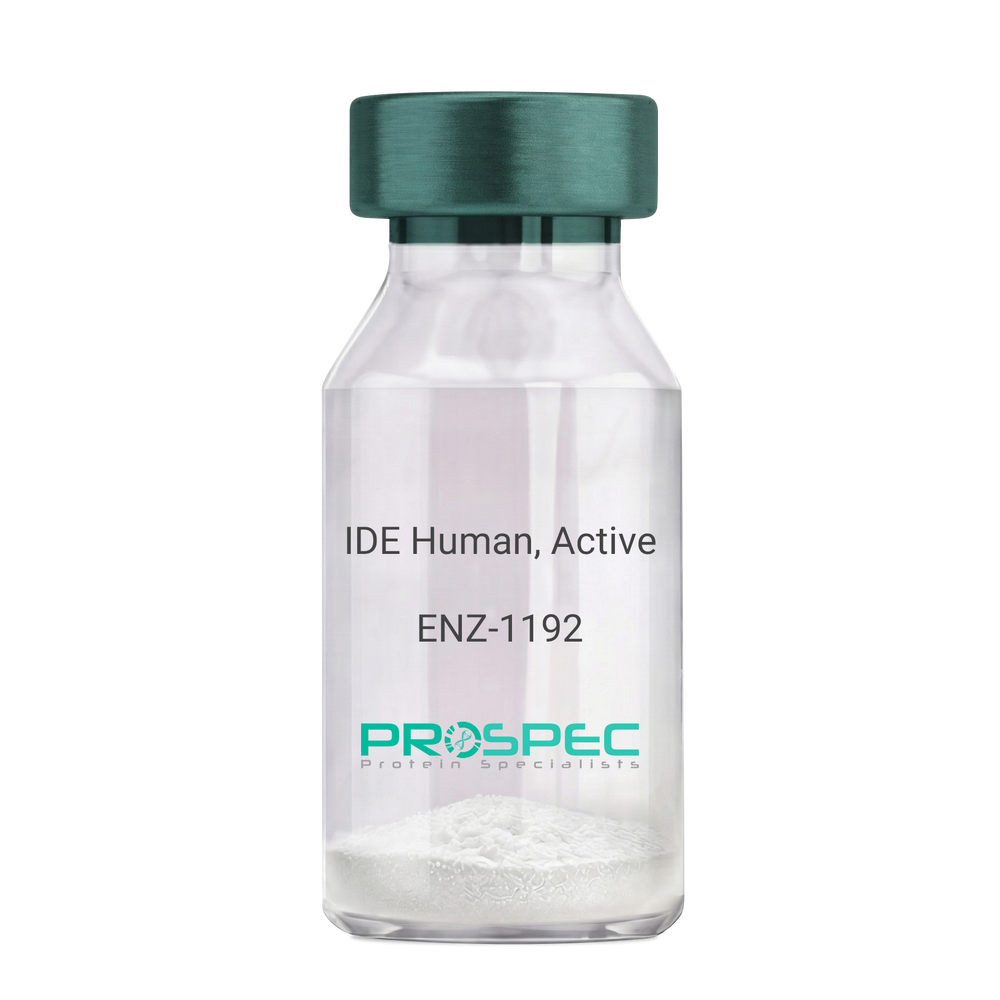
IDE Human, ActiveDescription:
Insulin-Degrading Enzyme Human Recombinant
Insulin-Degrading Enzyme, Abeta-Degrading Protease, Insulysin, EC 3.4.24.56, Insulinase, Insulin Protease, INSULYSIN, EC 3.4.24, IDE, insulin-degrading enzyme isoform 1.
Product # :
ENZ-1192Price :
Quantity :
Shipping Method :
Shipped with Ice Packs
More Info
- description
- source
- formulation
- purity
- biological activity
- More Info
- Citations
Description
IDE Human, Active Human Recombinant produced in E.Coli is a single, non-glycosylated, polypeptide chain (42-1019 a.a) containing a total of 984 amino acids, having a molecular mass of 114 kDa. IDE is fused to a 6 amino acid His-tag at C-terminus and is purified by proprietary chromatographic techniques.
Source
Escherichia Coli.
Formulation
The IDE solution (0.5mg/ml) contains 10% Glycerol, 100mM NaCl, 0.05% Brij35 and 20mM Tris-HCl buffer (pH 7.5).
Purity
Greater than 90.0% as determined by SDS-PAGE.
Biological Activity
Specific activity is greater than 3,000 pmol/min/ug in which 1 unit will convert 1.0 pmole of Mca-RPPGFSAFK(Dnp)-OH to MCA-Pro-Leu-OH per minute at pH 7.5 at 25°C.
Citations
More Info
-
Synonyms
Insulin-Degrading Enzyme, Abeta-Degrading Protease, Insulysin, EC 3.4.24.56, Insulinase, Insulin Protease, INSULYSIN, EC 3.4.24, IDE, insulin-degrading enzyme isoform 1.
-
Physical Appearance
Filtered colorless solution.
-
Stability
Store at 4°C if entire vial will be used within 2-4 weeks. Store, frozen at -20°C for longer periods of time. For long term storage it is recommended to add a carrier protein (0.1% HSA or BSA). Avoid multiple freeze-thaw cycles.
-
Amino Acid Sequence
MNNPAIKRIG NHITKSPEDK REYRGLELAN GIKVLLISDP TTDKSSAALD VHIGSLSDPP NIAGLSHFCE HMLFLGTKKY PKENEYSQFL SEHAGSSNAF TSGEHTNYYF DVSHEHLEGA LDRFAQFFLC PLFDESCKDR EVNAVDSEHE KNVMNDAWRL FQLEKATGNP KHPFSKFGTG NKYTLETRPN QEGIDVRQEL LKFHSAYYSS NLMAVCVLGR ESLDDLTNLV VKLFSEVENK NVPLPEFPEH PFQEEHLKQL YKIVPIKDIR NLYVTFPIPD LQKYYKSNPG HYLGHLIGHE GPGSLLSELK SKGWVNTLVG GQKEGARGFM FFIINVDLTE EGLLHVEDII LHMFQYIQKL RAEGPQEWVF QECKDLNAVA FRFKDKERPR GYTSKIAGIL HYYPLEEVLT AEYLLEEFRP DLIEMVLDKL RPENVRVAIV SKSFEGKTDR TEEWYGTQYK QEAIPDEVIK KWQNADLNGK FKLPTKNEFI PTNFEILPLE KEATPYPALI KDTAMSKLWF KQDDKFFLPK ACLNFEFFSP FAYVDPLHCN MAYLYLELLK DSLNEYAYAA ELAGLSYDLQ NTIYGMYLSV KGYNDKQPIL LKKIIEKMAT FEIDEKRFEI IKEAYMRSLN NFRAEQPHQH AMYYLRLLMT EVAWTKDELK EALDDVTLPR LKAFIPQLLS RLHIEALLHG NITKQAALGI MQMVEDTLIE HAHTKPLLPS
QLVRYREVQL PDRGWFVYQQ RNEVHNNCGI EIYYQTDMQS TSENMFLELF CQIISEPCFN TLRTKEQLGY IVFSGPRRAN GIQGLRFIIQ SEKPPHYLES RVEAFLITME KSIEDMTEEA FQKHIQALAI RRLDKPKKLS AECAKYWGEI ISQQYNFDRD NTEVAYLKTL TKEDIIKFYK EMLAVDAPRR HKVSVHVLAR EMDSCPVVGE FPCQNDINLS QAPALPQPEV IQNMTEFKRG LPLFPLVKPH INFMAAKLHH HHHH. -
Background
Insulin-degrading enzyme (IDE) is a crucial protease that plays a significant role in maintaining glucose homeostasis by degrading insulin and other bioactive peptides. Dysregulation of IDE has been implicated in various metabolic disorders, particularly type 2 diabetes mellitus. IDE is also associated with the clearance of amyloid-beta peptides in the brain, making it relevant to Alzheimer's disease pathology. Studying the recombinant form of IDE is fundamental to understanding its functional mechanisms and exploring potential avenues for therapeutic interventions.
The primary goal of this research is to express and purify recombinant IDE using diverse expression systems. Recombinant DNA techniques will be employed to construct expression vectors containing the IDE gene, followed by expression in bacterial, yeast, or mammalian cell-based systems. The recombinant IDE will be purified using affinity chromatography or other appropriate methods, facilitating subsequent biochemical and biophysical characterization.
The second objective is to investigate the substrate specificity and catalytic activity of the purified IDE. In vitro enzymatic assays will be conducted to analyse the ability of the recombinant IDE to degrade insulin and other potential substrates. The effects of various factors, such as pH, temperature, and potential modulators, on IDE activity will be evaluated. Additionally, the interactions between IDE and its substrates will be explored using binding assays.
The third objective is to elucidate the three-dimensional structure of the IDE recombinant using techniques like X-ray crystallography or nuclear magnetic resonance (NMR) spectroscopy. Structural insights into the active site and binding pockets of IDE will provide valuable information for understanding its substrate recognition and catalytic mechanisms. This knowledge could be instrumental in designing targeted therapeutic compounds.
By characterizing the IDE recombinant, this research aims to contribute to our understanding of its role in insulin metabolism, glucose regulation, and potential therapeutic applications. The findings from this study may have implications for the development of novel treatments for diabetes and other related disorders.
ProSpec's products are furnished for LABORATORY RESEARCH USE ONLY. The product may not be used as drugs, agricultural or pesticidal products, food additives or household chemicals.
- View Data Sheet
Name :
HNMT Human, ActiveDescription:
Histamine N-Methyltransferase Human Recombinant, Active
HMT, HNMT-S1, HNMT-S2, MRT51.
Product # :
ENZ-1071Price :
Quantity :
Shipping Method :
Shipped with Ice Packs
More Info
- description
- source
- formulation
- purity
- biological activity
- More Info
- Citations
Description
HNMT Human Recombinant produced in E.Coli is a single, non-glycosylated polypeptide chain containing 328 amino acids (1-292 a.a) and having a molecular mass of 37.4kDa. HNMT is fused to a 36 amino acid His-tag at N-terminus & purified by proprietary chromatographic techniques.
Source
Escherichia Coli.
Formulation
HNMT protein solution (1mg/ml) containing 20mM, Tris-Hcl (pH8.0) and 10% glycerol.
Purity
Greater than 90.0% as determined by SDS-PAGE.
Biological Activity
Specific activity is > 200 nmol/min/mg, and is defined as the amount of enzyme that transfer 1.0 nmole of methyl group per minute at 37°C.
Citations
More Info
-
Introduction
Histamine N-Methyltransferase or HNMT, is located in the cell cytosol. Sadenosyl-L-methionine acts as a methyl donor for HNMT which inactivates histamine. By inactivation of histamine, it affects the immune system’s response. HNMT acts on histamine in body tissues such as kidney, central nervous system and bronchus. The protein has a crucial part in the airway response to histamine & histamine degradation process and regulation.
-
Synonyms
HMT, HNMT-S1, HNMT-S2, MRT51.
-
Physical Appearance
Sterile Filtered clear colorless solution.
-
Stability
Store at 4°C if entire vial will be used within 2-4 weeks. Store, frozen at -20°C for longer periods of time. For long term storage it is recommended to add a carrier protein (0.1% HSA or BSA).Please avoid freeze-thaw cycles.
-
Amino Acid Sequence
MRGSHHHHHH GMASMTGGQQ MGRDLYDDDD KDRWGSMASS MRSLFSDHGK YVESFRRFLN HSTEHQCMQE FMDKKLPGII GRIGDTKSEI KILSIGGGAG EIDLQILSKV QAQYPGVCIN NEVVEPSAEQ IAKYKELVAK TSNLENVKFA WHKETSSEYQ SRMLEKKELQ KWDFIHMIQM LYYVKDIPAT LKFFHSLLGT NAKMLIIVVS GSSGWDKLWK KYGSRFPQDD LCQYITSDDL TQMLDNLGLK YECYDLLSTM DISDCFIDGD ENGDLLWDFL TETCNFNATA PPDLRAELGK DLQEPEFSAK KEGKVLFNNT LSFIVIEA.
ProSpec's products are furnished for LABORATORY RESEARCH USE ONLY. The product may not be used as drugs, agricultural or pesticidal products, food additives or household chemicals.
- View Data Sheet
Name :
Heparanase 1 Clone HP3/17Description:
Heparanase 1 (HPA1), Monoclonal Anti-Human Antibody
Product # :
ANT-154Price :
Quantity :
Shipping Method :
Shipped with Ice Packs
More Info
- source
- formulation
- purity
- More Info
- Citations
Source
Mab HP3/17 is a Protein G affinity purified monoclonal antibody raised against a polypeptide from the 50 kDa subunit of Heparanase.
Formulation
Each vial contains 50, 100 or 150 μg in 14, 28 or 42 μl respectively, of 0.22 micron filtered solution of 20 mM Sodium Phosphate; 150 mM NaCl; pH 7.2, containing 0.01% Thimerosal.
Purity
>98% on SDS-PAGE when loaded 50 μg/lane.
Citations
More Info
-
Introduction
Heparanase is an endo-β-D-glucuronidase, which degrades heparan sulfate side chains of heparan sulfate proteoglycans (HSPGs) in the extracellular matrix. Heparanase plays an important role in ECM degradation, facilitating the migration and extravasation of tumor cells and inflammatory leukocytes (1,2,3). Upon degradation, heparanase releases growth factors and cytokines that stimulate cell proliferation and chemotaxis (4,5). Heparanase is a heterodimer comprised of a 50 kDa subunit harboring the active site and a 8 kDa subunit. It is produced as a latent 65 kDa precursor and proteolytically processed to its active form (1,6). Heparanase is highly expressed in myeloid leukocytes (i.e. neutrophils) in platelets and in human placenta. Human heparanase was found to be upregulated in various types of primary tumors, correlating in some cases with increased tumor invasiveness and vascularity and with poor prospective survival (7,8).
-
Stability
Store at 4°C. Stable for six months from the date of shipment. For extended storage, freeze in working aliquots at -20°C. Avoid repeated freeze-thaw cycles.
-
Ig Subclass
Mouse IgG2Bκ
-
Applications
Western blot
Immunohistochemistry -
Data Sheet
To view the FULL VERSION click Monoclonal Anti-Human Heparanase 1:
-
Patent Protected Countries
Anti-heparanase antibodies and their uses, including HP3/17 and its uses, are protected by US. Patents No. 6,177,545; 6,531,129, additional US patent applications and patents and patent applications worldwide.
-
Specificity
HP3/17 reacts with the 50 kDa subunit and with the 65 kDa precursor of human or mouse Heparanase by Western blotting and immunohistochemistry.Recommended dilution range for Western blot analysis: 1:4000.Recommended dilution range for immunohistochemistry: 1:40.
ProSpec's products are furnished for LABORATORY RESEARCH USE ONLY. The product may not be used as drugs, agricultural or pesticidal products, food additives or household chemicals.
- View Data Sheet
Name :
CDC26 HumanDescription:
Cell Division Cycle 26 Human Recombinant
Anaphase-promoting complex subunit CDC26, Anaphase-promoting complex subunit 12, APC12, Cell division cycle protein 26 homolog, CDC26, ANAPC12, C9orf17.
Product # :
PRO-241Price :
Quantity :
Shipping Method :
Shipped with Ice Packs
More Info
- description
- source
- formulation
- purity
- More Info
- Citations
Description
CDC26 Human Recombinant produced in E.Coli is a single, non-glycosylated polypeptide chain containing 105 amino acids (1-85 a.a) and having a molecular mass of 11.9kDa.CDC26 is fused to a 20 amino acid His-tag at N-terminus & purified by proprietary chromatographic techniques.
Source
Escherichia Coli.
Formulation
CDC26 protein solution (1mg/ml) containing 20mM Tris-HCl buffer (pH8.0), 40% glycerol and 0.1M NaCl.
Purity
Greater than 90.0% as determined by SDS-PAGE.
Citations
More Info
-
Introduction
CDC26 is a member of the CDC26 family which arranges progression via mitosis by enhancing cell-cycle regulators with ubiquitin chains. CDC26 is a component of the anaphase promoting complex/cyclosome (APC/C), which is a cell cycle-regulated E3 ubiquitin ligase which directs progression through mitosis and the G1 phase of the cell cycle. The APC/C complex operates by mediating ubiquitination and subsequent degradation of target proteins.
-
Synonyms
Anaphase-promoting complex subunit CDC26, Anaphase-promoting complex subunit 12, APC12, Cell division cycle protein 26 homolog, CDC26, ANAPC12, C9orf17.
-
Physical Appearance
Sterile Filtered colorless solution.
-
Stability
Store at 4°C if entire vial will be used within 2-4 weeks. Store, frozen at -20°C for longer periods of time. For long term storage it is recommended to add a carrier protein (0.1% HSA or BSA).Avoid multiple freeze-thaw cycles.
-
Amino Acid Sequence
MGSSHHHHHH SSGLVPRGSH MLRRKPTRLE LKLDDIEEFE NIRKDLETRK KQKEDVEVVG GSDGEGAIGL SSDPKSREQM INDRIGYKPQ PKPNNRSSQF GSLEF.
ProSpec's products are furnished for LABORATORY RESEARCH USE ONLY. The product may not be used as drugs, agricultural or pesticidal products, food additives or household chemicals.
- View Data Sheet
Name :
CD21 HumanDescription:
CD21 Human Recombinant
Complement receptor type 2, Cr2, Complement C3d receptor, Epstein-Barr virus receptor, EBV receptor, CD21 antigen, CR2, C3DR, CD21, SLEB9.
Product # :
PRO-2615Price :
Quantity :
Shipping Method :
Shipped with Ice Packs
More Info
- description
- source
- formulation
- purity
- More Info
- Citations
Description
CD21 Human Recombinant produced in Sf9 Baculovirus cells is a single, glycosylated polypeptide chain containing 959 amino acids (21-971aa) and having a molecular mass of 105.2kDa.CD21 is fused to an 8 amino acid His-Tag at C-terminus and purified by proprietary chromatographic techniques.
Source
Sf9, Baculovirus cells.
Formulation
The CD21 solution (0.5mg/ml) contains 10% Glycerol and Phosphate Buffered Saline (pH 7.4).
Purity
Greater than 95.0% as determined by SDS-PAGE.
Citations
More Info
-
Introduction
CD21 is expressed strongly on mature B cells, follicular dentritic cells and weakly on immature thymocytes and T lymphocytes. In B-cell ontogeny, CD21 appears after the pre-B-stage, is maintained during peripheral B-cell development and is lost upon terminal differentiation into plasma cells. CD21 expression is also gradually lost after stimulation of B cells in vitro. CD21 functions as receptor for C3d, C3dg and iC3b Complement components, for EBV and for IFNalpha. CD21 binds to CD23 and associates with CD19, CD81 and Leu13 to form a large signal-transduction complex involved in B cell activation.
-
Synonyms
Complement receptor type 2, Cr2, Complement C3d receptor, Epstein-Barr virus receptor, EBV receptor, CD21 antigen, CR2, C3DR, CD21, SLEB9.
-
Physical Appearance
Sterile Filtered colorless solution.
-
Stability
Store at 4°C if entire vial will be used within 2-4 weeks. Store, frozen at -20°C for longer periods of time. For long term storage it is recommended to add a carrier protein (0.1% HSA or BSA).Avoid multiple freeze-thaw cycles.
-
Amino Acid Sequence
ISCGSPPPIL NGRISYYSTP IAVGTVIRYS CSGTFRLIGE KSLLCITKDK VDGTWDKPAP
KCEYFNKYSS CPEPIVPGGY KIRGSTPYRH GDSVTFACKT NFSMNGNKSV WCQANNMWGP
TRLPTCVSVF PLECPALPMI HNGHHTSENV GSIAPGLSVT YSCESGYLLV GEKIINCLSS
GKWSAVPPTC EEARCKSLGR FPNGKVKEPP ILRVGVTANF FCDEGYRLQG PPSSRCVIAG
QGVAWTKMPV CEEIFCPSPP PILNGRHIGN SLANVSYGSI VTYTCDPDPE EGVNFILIGE
STLRCTVDSQ KTGTWSGPAP RCELSTSAVQ CPHPQILRGR MVSGQKDRYT YNDTVIFACM
FGFTLKGSKQ IRCNAQGTWE PSAPVCEKEC QAPPNILNGQ KEDRHMVRFD PGTSIKYSCN
PGYVLVGEES IQCTSEGVWT PPVPQCKVAA CEATGRQLLT KPQHQFVRPD VNSSCGEGYK
LSGSVYQECQ GTIPWFMEIR LCKEITCPPP PVIYNGAHTG SSLEDFPYGT TVTYTCNPGP
ERGVEFSLIG ESTIRCTSND QERGTWSGPA PLCKLSLLAV QCSHVHIANG YKISGKEAPY
FYNDTVTFKC YSGFTLKGSS QIRCKADNTW DPEIPVCEKE TCQHVRQSLQ ELPAGSRVEL
VNTSCQDGYQ LTGHAYQMCQ DAENGIWFKK IPLCKVIHCH PPPVIVNGKH TGMMAENFLY
GNEVSYECDQ GFYLLGEKKL QCRSDSKGHG SWSGPSPQCL RSPPVTRCPN PEVKHGYKLN
KTHSAYSHND IVYVDCNPGF IMNGSRVIRC HTDNTWVPGV PTCIKKAFIG CPPPPKTPNG
NHTGGNIARF SPGMSILYSC DQGYLLVGEA LLLCTHEGTW SQPAPHCKEV NCSSPADMDG
IQKGLEPRKM YQYGAVVTLE CEDGYMLEGS PQSQCQSDHQ WNPPLAVCRS RVEHHHHHH
ProSpec's products are furnished for LABORATORY RESEARCH USE ONLY. The product may not be used as drugs, agricultural or pesticidal products, food additives or household chemicals.