Search results
1000 results found for “Erythropoietin”
Name
Description
Product #
Price
Quantity
Shipping Method
- View Data Sheet
Name :
GHRL ProteinDescription:
Ghrelin Human
Appetite-regulating hormone precursor, Growth hormone secretagogue, Growth hormone-releasing peptide, GHRP, Motilin-related peptide, M46 protein, Ghrelin, Obestatin, MTLRP.
Product # :
HOR-297Price :
Quantity :
Shipping Method :
Shipped at Room temp
More Info
- description
- formulation
- purity
- More Info
Description
Ghrelin Human contains 28 amino acids and a total molecular mass of 3370.9 Dalton and a molecular formula of C149H249N47O42.The GHRL is purified by proprietary chromatographic techniques.
Formulation
GHRL was lyophilized without additives.
Purity
Greater than 97% as determined by:
(a) Analysis by RP-HPLC.
(b) Analysis by SDS-PAGE.More Info
-
Introduction
Obestatin is a hormone that is produced in the cells lining the stomach and small intestine of several mammals including humans; it drastically reduces appetite in mice and is expected to do the same in humans. Obestatin is a peptide hormone - a relatively small protein. It is encoded by the same gene that also encodes ghrelin, a peptide hormone that increases appetite. The protein produced by that gene breaks into two smaller peptides, ghrelin and obestatin. Ghrelin is an endogenous ligand for the growth hormone secretagogue receptor and is involved in regulating growth hormone release. Ghrelin is derived from a preprohormone called preproghrelin, which also generates a second peptide called obestatin. Ghrelin is an endogenous ligand for the orphan G protein-coupled receptor GPR39 and is involved in satiety and decreased food intake.
-
Synonyms
Appetite-regulating hormone precursor, Growth hormone secretagogue, Growth hormone-releasing peptide, GHRP, Motilin-related peptide, M46 protein, Ghrelin, Obestatin, MTLRP.
-
Physical Appearance
Sterile Filtered Yellowish lyophilized (freeze-dried) powder that may appear as a gel form.
-
Stability
Store the lyophilized Ghrelin at -20°C. Aliquot the product after reconstitution to avoid repeated freezing/thawing cycles. Reconstituted GHRL can be stored at 4°C for a limited period of time; it does not show any change after two weeks at 4°C.
-
Solubility
Add deionized water to a working concentration approximately 0.5mg/1ml and let the lyophilized pellet dissolve completely.
-
Amino Acid Sequence
Gly-Ser-Ser(n-octanoyl)-Phe-Leu-Ser-Pro-Glu-His-Gln-Arg-Val-Gln-Gln-Arg-Lys-Glu-Ser-Lys-Lys-Pro-Pro-Ala-Lys-Leu-Gln-Pro-Arg-OH.
ProSpec's products are furnished for LABORATORY RESEARCH USE ONLY. The product may not be used as drugs, agricultural or pesticidal products, food additives or household chemicals.
- View Data Sheet
Name :
Insulin HumanDescription:
Insulin Human Recombinant
Product # :
CYT-270Price :
Quantity :
Shipping Method :
Shipped at Room temp
More Info
- description
- source
- formulation
- purity
- biological activity
- More Info
Description
Insulin Human Recombinant produced in E.Coli is a two chain, non-glycosylated polypeptide chain containing 51 amino acids and having a molecular mass of 5807 Dalton. Insulin is purified by proprietary chromatographic techniques.
Source
Escherichia Coli.
Formulation
The protein was lyophilized from a concentrated (1mg/ml) solution with no additives.
Purity
Greater than 98.0% as determined by RP-HPLC analysis.
Biological Activity
The Biological Activity was determined to be 28 units/mg.More Info
-
Introduction
Insulin decreases blood glucose concentration. It increases cell permeability to monosaccharides, amino acids and fatty acids. It accelerates glycolysis, the pentose phosphate cycle, and glycogen synthesis in liver.
-
Physical Appearance
Sterile Filtered White lyophilized (freeze-dried) powder.
-
Stability
Lyophilized Insulin although stable at room temperature for 3 weeks, should be stored desiccated below -18°C. Upon reconstitution Insulin should be stored at 4°C between 2-7 days and for future use below -18°C.For long term storage it is recommended to add a carrier protein (0.1% HSA or BSA).Please prevent freeze-thaw cycles.
-
Solubility
It is recommended to reconstitute the lyophilized Insulin in sterile 0.005N HCl not more than 1 mg/ml.
ProSpec's products are furnished for LABORATORY RESEARCH USE ONLY. The product may not be used as drugs, agricultural or pesticidal products, food additives or household chemicals.
- View Data Sheet
Name :
C7ORF49 HumanDescription:
Chromosome 7 Open Reading Frame 49 Human Recombinant
MRI, Modulator of retrovirus infection homolog, C7orf49.
Product # :
PRO-1415Price :
Quantity :
Shipping Method :
Shipped with Ice Packs
More Info
- description
- source
- formulation
- purity
- More Info
Description
C7ORF49 Human Recombinant produced in E. coli is a single polypeptide chain containing 180 amino acids (1-157) and having a molecular mass of 19.2kDa. C7ORF49 is fused to a 23 amino acid His-tag at N-terminus & purified by proprietary chromatographic techniques.
Source
E.coli.
Formulation
The C7ORF49 solution (0.25mg/ml) contains 20mM Tris-HCl buffer (pH8.0), 10% glycerol and 0.1M NaCl.
Purity
Greater than 85% as determined by SDS-PAGE.
More Info
-
Introduction
Chromosome 7 Open Reading Frame 49 (C7ORF49) is affiliated with the lncRNA class. C7ORF49 characterizes the hamster ortholog and suggests that it may modulate the ability of the proteasome to degrade retroviral cores upon cellular infection.
-
Synonyms
MRI, Modulator of retrovirus infection homolog, C7orf49.
-
Physical Appearance
Sterile Filtered colorless solution.
-
Stability
Store at 4°C if entire vial will be used within 2-4 weeks. Store, frozen at -20°C for longer periods of time. For long term storage it is recommended to add a carrier protein (0.1% HSA or BSA).Avoid multiple freeze-thaw cycles.
-
Amino Acid Sequence
MGSSHHHHHH SSGLVPRGSH MGSMETLQSE TKTRVLPSWL TAQVATKNVA PMKAPKRMRM AAVPVAAARL PATRTVYCMN EAEIVDVALG ILIESRKQEK ACEQPALAGA DNPEHSPPCS VSPHTSSGSS SEEEDSGKQA LAPGLSPSQR PGGSSSACSR SPEEEEEEDV LKYVREIFFS.
ProSpec's products are furnished for LABORATORY RESEARCH USE ONLY. The product may not be used as drugs, agricultural or pesticidal products, food additives or household chemicals.
- View Data Sheet
Name :
CD105 HumanDescription:
Endoglin Human Recombinant
CD105, ENG, END, ORW, HHT1, ORW1, FLJ41744, Endoglin.
Product # :
CYT-525Price :
Quantity :
Shipping Method :
Shipped with Ice Packs
More Info
- description
- source
- formulation
- purity
- More Info
Description
Endoglin Human Recombinant extracellular domain produced in E.Coli is a single, glycosylated, Polypeptide containing 151 amino acids (26-176) and having a molecular mass of 43 kDa.The Endoglin is purified by proprietary chromatographic techniques.
Source
Escherichia Coli.
Formulation
Endoglin solution in 50mM Tris-Acetate, pH-7.5, 1mM EDTA and 20% Glycerol.
Purity
Greater than 90.0% as determined by:
(a) Analysis by RP-HPLC.
(b) Analysis by SDS-PAGE.More Info
-
Introduction
Endoglin is a type I membrane glycoprotein located on cell surfaces and is part of the TGF beta receptor complex.
The Endoglin protein consists of a homodimer of 180 kDA with disulfide links. Endoglin has been found on endothelial cells, activated macrophages, fibroblasts, and smooth muscle cells. Furthermore, Endoglin has been found to be part of the TGF-beta1 receptor complex. Endoglin thus may be involved in the binding of TGF-beta1, TGF-beta3, activin-A, BMP-2, and BMP-7. Beside TGF-beta signaling endoglin may have other functions. It has been postulated that endoglin is involved in the cytoskeletal organization affecting cell morphology and migration. Endoglin has a role in the development of the cardiovascular system and in vascular remodeling. Endoglin expression is regulated during heart development . Experimental mice without the endoglin gene die due to cardiovascular abnormalities. -
Synonyms
CD105, ENG, END, ORW, HHT1, ORW1, FLJ41744, Endoglin.
-
Physical Appearance
Sterile Filtered colorless liquid formulation.
-
Stability
Store at 4°C if entire vial will be used within 2-4 weeks.Store, frozen at -20°C for longer periods of time. For long term storage it is recommended to add a carrier protein (0.1% HSA or BSA).Avoid multiple freeze-thaw cycles.
-
Background
What is the molecular weight/Mw of CD105 Protein?
CD105 Protein has a total Mw of 43kDa.
What is the source or expression system of CD105 Protein?
Escherichia Coli.
What is the Purity of CD105 Protein?
CD105 Protein is >90% pure as determined by SDS-PAGE.
What is the Biological Activity of CD105 Protein?
The biological functionality of CD105 Protein will be determined in the future.
What is the amino acid sequence of CD105 Protein?
CD105 Protein is composed from 151amino acids.
What applications can CD105 Protein be used in?
CD105 Protein can probably be used in western blot, ELISA and Lateral Flow.
What is the endotoxin level for CD105 Protein?
The endotoxin level is minimal, CD105 Protein was purified using conventional chromatography techniques.
ProSpec's products are furnished for LABORATORY RESEARCH USE ONLY. The product may not be used as drugs, agricultural or pesticidal products, food additives or household chemicals.
- View Data Sheet
Name :
BuserelinDescription:
Buserelin
Product # :
HOR-255Price :
Quantity :
Shipping Method :
Shipped at Room temp
More Info
- description
- formulation
- purity
- More Info
Description
Buserelin contains 9 amino acids Glu-His-Trp-Ser-Tyr-D-Ser(tBu)-Leu-Arg-Pro-NHEt and having a molecular weight of 1239.44 Dalton.
Formulation
The Buserelin peptide was lyophilized with no additives.
Purity
Greater than 98.0% as determined by:
(a) Analysis by RP-HPLC.
(b) Analysis by SDS-PAGE.More Info
-
Introduction
Buserelin belongs to the group of gonadotrophin releasing hormone (gonadorelin) analogues (LHRH agonist). It acts on the pituitary gland which controls the amount of many different types of hormones (chemical messengers). It alters the amount of hormones, particularly the oestrogens androgens. This alteration of hormone levels can be exploited to treat cancers of the prostate gland, which are stimulated to grow by testosterone. Buserelin lowers the levels of testosterone, which starves the tumour of testosterone and causes it to shrink.
-
Physical Appearance
Sterile Filtered White lyophilized (freeze-dried) powder.
-
Stability
Lyophilized Buserelin although stable at room temperature for 3 weeks, should be stored desiccated below -18°C. Upon reconstitution Buserelin should be stored at 4°C between 2-7 days and for future use below -18°C. For long term storage it is recommended to add a carrier protein (0.1% HSA or BSA).Please prevent freeze-thaw cycles.
-
Solubility
It is recommended to reconstitute the lyophilized Buserelin in sterile 18MΩ-cm H2O not less than 100 µg/ml, which can then be further diluted to other aqueous solutions.
ProSpec's products are furnished for LABORATORY RESEARCH USE ONLY. The product may not be used as drugs, agricultural or pesticidal products, food additives or household chemicals.
- View Data Sheet
Name :
F7 HumanDescription:
Coagulation Factor VIIa Human Recombinant
Coagulation factor VII, EC 3.4.21.21, Serum prothrombin conversion accelerator, SPCA, Proconvertin, Eptacog alfa, F7.
Product # :
PRO-331Price :
Quantity :
Shipping Method :
Shipped at Room temp
More Info
- description
- source
- formulation
- purity
- biological activity
- More Info
Description
Factor VIIa Human Recombinant produced in BHK is a glycosylated polypeptide two-chain dimer consisting of 406 amino acids with a molecular weight of 50kD.The Factor-VIIa is purified by proprietary chromatographic techniques.
Source
BHK cells (Baby Hamster Kidney Cells).
Formulation
The protein 1 mg/ml was lyophilized after from a sterile solution containing 10mg sucrose pH-6.
Purity
Greater than 98.0% as determined by analysis by SDS-PAGE.
Biological Activity
The potency per mg was tested and found to be 50,000Units/mg.More Info
-
Introduction
Coagulation factor VII is a vitamin K-dependent factor which is essential for hemostasis. It circulates in the blood as a zymogen which is later converted to an active form by factor IXa, factor Xa, factor XIIa, or thrombin by minor proteolysis. Upon activation of factor VII, a heavy chain with a catalytic domain and a light chain with 2 EGF-like domains are generated, and the two chains are held together by a disulfide bond. The presence of factor III and calcium ions further activates the coagulation cascade by converting factor IX to factor IXa and/or factor X to factor Xa. Alternative splicing of factor VII results in 2 transcripts. Defects in coagulation factor VII can cause coagulopathy. Coagulation factor VII initiates the extrinsic pathway of blood coagulation. Minor proteolysis converts factor VII to factor VIIa by factors Xa, XIIa, IXa, or thrombin. Factor VIIa also converts factor IX to factor IXa in the presence of tissue factor and calcium.
-
Synonyms
Coagulation factor VII, EC 3.4.21.21, Serum prothrombin conversion accelerator, SPCA, Proconvertin, Eptacog alfa, F7.
-
Physical Appearance
Sterile Filtered White lyophilized (freeze-dried) powder.
-
Stability
Lyophilized Factor-VIIa although stable at room temperature for 3 weeks, should be stored desiccated below -18°C. Upon reconstitution Factor-VIIa should be stored at 4°C between 2-7 days and for future use below -18°C.Please prevent freeze-thaw cycles.
-
Solubility
It is recommended to reconstitute the lyophilized Factor-VIIa in sterile 18MΩ-cm H2O not less than 100µg/ml, which can then be further diluted to other aqueous solutions.
ProSpec's products are furnished for LABORATORY RESEARCH USE ONLY. The product may not be used as drugs, agricultural or pesticidal products, food additives or household chemicals.
- View Data Sheet
Name :
IL 11 MouseDescription:
Interleukin-11 Mouse Recombinant
AGIF, Adipogenesis inhibitory factor, IL-11, Interleukin-11, Il11.
Product # :
CYT-646Price :
Quantity :
Shipping Method :
Shipped at Room temp
More Info
- description
- source
- formulation
- purity
- biological activity
- More Info
Description
Interleukin-11 Mouse Recombinant produced in E.Coli is a single, non-glycosylated polypeptide chain containing 179 amino acids and having a molecular mass of 19.1kDa. The Mouse IL-11 is purified by proprietary chromatographic techniques.
Source
Escherichia Coli.
Formulation
The protein was lyophilized from a 0.2µm filtered concentrated (1mg/ml) solution in PBS, pH 7.4.
Purity
Greater than 97.0% as determined by:
(a) Analysis by RP-HPLC.
(b) Analysis by SDS-PAGE.Biological Activity
The ED50 as determined by the dose-dependant stimulation of the proliferation of murine T11 was found to be less than 2.0 ng/ml, corresponding to a specific activity of 500,000IU/mg.More Info
-
Introduction
IL11 is a member of the gp130 family of cytokines. These cytokines drive the assembly of multisubunit receptor complexes, all of which contain at least one molecule of the transmembrane signaling receptor IL6ST (gp130). IL-11 is shown to stimulate the T-cell-dependent development of immunoglobulin-producing B cells. It is also found to support the proliferation of hematopoietic stem cells and megakaryocyte progenitor cells.
-
Synonyms
AGIF, Adipogenesis inhibitory factor, IL-11, Interleukin-11, Il11.
-
Physical Appearance
Sterile Filtered White lyophilized (freeze-dried) powder.
-
Stability
Lyophilized Interleukin-11 although stable at room temperature for 3 weeks, should be stored desiccated below -18°C. Upon reconstitution IL11 should be stored at 4°C between 2-7 days and for future use below -18°C.For long term storage it is recommended to add a carrier protein (0.1% HSA or BSA).Please prevent freeze-thaw cycles.
-
Solubility
It is recommended to reconstitute the lyophilized Interleukin 11 in sterile 18MΩ-cm H2O not less than 100µg/ml, which can then be further diluted to other aqueous solutions.
-
Amino Acid Sequence
MPGPPAGSPR VSSDPRADLD SAVLLTRSLL ADTRQLAAQM RDKFPADGDH SLDSLPTLAM SAGTLGSLQL PGVLTRLRVD LMSYLRHVQW LRRAGGPSLK TLEPELGALQ ARLERLLRRL QLLMSRLALP QAAPDQPVIP LGPPASAWGS IRAAHAILGG LHLTLDWAVR GLLLLKTRL.
ProSpec's products are furnished for LABORATORY RESEARCH USE ONLY. The product may not be used as drugs, agricultural or pesticidal products, food additives or household chemicals.
- View Data Sheet
Name :
IL 22 HumanDescription:
Interleukin-22 Human Recombinant
IL-TIF, TIFa, IL-10-related T-cell-derived-inducible factor, IL-22, ILTIF, IL-D110, zcyto18, MGC79382, MGC79384, TIFIL-23.
Product # :
CYT-328Price :
Quantity :
Shipping Method :
Shipped at Room temp
More Info
- description
- source
- formulation
- purity
- biological activity
- More Info
Description
Interleukin-22 Human Recombinant produced in E.Coli is a single, non-glycosylated homodimeric polypeptide chain containing 2 x 146 amino acids and having a total molecular mass of 33,607 Dalton. The IL-22 is purified by proprietary chromatographic techniques.
Source
Escherichia Coli.
Formulation
Each mg contains 50mM Phosphate buffer pH=7.1.
Purity
Greater than 97.0% as determined by:
(a) Analysis by RP-HPLC.
(b) Analysis by SDS-PAGE.Biological Activity
The Biological Activity was determined by the ability to activiate STAT following receptor ligand interaction.More Info
-
Introduction
IL-22 is a member of the IL-10 family of regulatory cytokines.Members of this family share partial homology in their amino acid sequences, but they are dissimilar in their biological functions. Produced by T lymphocytes, IL-22 inhibits IL-4 production by Th2 cells, and induces acute phase reactants in the liver and pancreas. IL-22 signals through a receptor system consisting of IL-10R-beta/CRF2-4 and IL-22R, both of which are members of the class II cytokine-receptor family.
-
Synonyms
IL-TIF, TIFa, IL-10-related T-cell-derived-inducible factor, IL-22, ILTIF, IL-D110, zcyto18, MGC79382, MGC79384, TIFIL-23.
-
Physical Appearance
Sterile Filtered White lyophilized (freeze-dried) powder.
-
Stability
Lyophilized Interleukin-22 although stable at room temperature for 3 weeks, should be stored desiccated below -18°C. Upon reconstitution IL22 should be stored at 4°C between 2-7 days and for future use below -18°C.Please prevent freeze-thaw cycles.
-
Solubility
It is recommended to reconstitute the lyophilized Interleukin -22 in sterile 18MΩ-cm H2O not less than 100µg/ml, which can then be further diluted to other aqueous solutions.
-
Amino Acid Sequence
The sequence of the first five N-terminal amino acids was determined and was found to be Met-Ala-Pro-Ile-Ser.
ProSpec's products are furnished for LABORATORY RESEARCH USE ONLY. The product may not be used as drugs, agricultural or pesticidal products, food additives or household chemicals.
- View Data Sheet
Name :
IL 23 Human, HisDescription:
Interleukin-23 Human Recombinant, His Tag
Interleukin 23 alpha subunit p19, Interleukin-12 subunit beta p40, SGRF, IL23P19, IL-23-A, interleukin-six, G-CSF related factor, JKA3 induced upon T-cell activation, interleukin 12B (natural killer cell stimulatory factor 2 cytotoxic lymphocyte maturation factor 2 p40), NK cell stimulatory factor chain 2, Cytotoxic lymphocyte maturation factor 40 kDa subunit, CLMF2, CLMF p40.
Product # :
CYT-067Price :
Quantity :
Shipping Method :
Shipped with Ice Packs
More Info
- description
- source
- formulation
- purity
- More Info
Description
Recombinant Human Interleukin-23 produced in Sf9 Baculovirus cells is a glycosylated heterodimer composed of 2 disulfide-linked subunits. A p19 subunit which is unique to IL23 and a p40 subunit which is shared with IL12. The p19 subunit/IL23A (20-189aa, total of 176 aa, MW 19.5kDa) and p40 subunit /IL12B (23-328aa, total of 306 aa, MW 34.6kDa), the total predicted molecular mass of 54.1kDa (Molecular weight on SDS-PAGE will appear higher). IL23 is fused to a 6 aa His-Tag at C-terminus and purified by proprietary chromatographic techniques.
Source
Sf9, Baculovirus cells.
Formulation
IL23 protein solution (1mg/ml) contains PBS (pH7.4) and 10% glycerol.
Purity
Greater than 95.0% as determined by analysis by SDS-PAGE.
More Info
-
Introduction
IL23 is composed of a subunit of the heterodimeric cytokine IL23 and the p40 subunit of interleukin 12 (IL12B). Interleukin-23 (IL-23) belongs to the IL-12 family and is produced by antigen presenting cells. IL-23 using IL12RB1 and IL-23R (specific for IL-23) can activate STAT and NF-kB pathways and stimulate the production of interferon-gamma. ). IL-23 is known to take a vital part in the inflammation process and is associated with auto immune diseases. However, unlike IL12, which acts primarily on naive CD4(+) T cells, IL23 preferentially acts on memory CD4(+) T cells.
-
Synonyms
Interleukin 23 alpha subunit p19, Interleukin-12 subunit beta p40, SGRF, IL23P19, IL-23-A, interleukin-six, G-CSF related factor, JKA3 induced upon T-cell activation, interleukin 12B (natural killer cell stimulatory factor 2 cytotoxic lymphocyte maturation factor 2 p40), NK cell stimulatory factor chain 2, Cytotoxic lymphocyte maturation factor 40 kDa subunit, CLMF2, CLMF p40.
-
Physical Appearance
Sterile Filtered clear solution.
-
Stability
Store at 4°C if entire vial will be used within 2-4 weeks. Store, frozen at -20°C for longer periods of time. For long term storage it is recommended to add a carrier protein (0.1% HSA or BSA). Avoid multiple freeze-thaw cycles.
-
Amino Acid Sequence
IL12B: IWELKKDVYV VELDWYPDAP GEMVVLTCDT PEEDGITWTL DQSSEVLGSG KTLTIQVKEF GDAGQYTCHK GGEVLSHSLL LLHKKEDGIW STDILKDQKE PKNKTFLRCE AKNYSGRFTC WWLTTISTDL TFSVKSSRGS SDPQGVTCGA ATLSAERVRG DNKEYEYSVE CQEDSACPAA EESLPIEVMV DAVHKLKYEN YTSSFFIRDI IKPDPPKNLQ LKPLKNSRQV EVSWEYPDTW STPHSYFSLT FCVQVQGKSK REKKDRVFTD KTSATVICRK NASISVRAQD RYYSSSWSEW ASVPCS.
IL23A: RAVPGGSSPA WTQCQQLSQK LCTLAWSAHP LVGHMDLREE GDEETTNDVP HIQCGDGCDP QGLRDNSQFC LQRIHQGLIF YEKLLGSDIF TGEPSLLPDS PVGQLHASLL GLSQLLQPEG HHWETQQIPS LSPSQPWQRL LLRFKILRSL QAFVAVAARV FAHGAATLSP HHHHHH.
ProSpec's products are furnished for LABORATORY RESEARCH USE ONLY. The product may not be used as drugs, agricultural or pesticidal products, food additives or household chemicals.
- View Data Sheet
Name :
IL 4 Human, HEKDescription:
Interleukin-4 Human Recombinant, HEK
BCGF, BCDF, B cell stimulating factor, BSF-1, Lymphocyte stimulatory factor 1, IL-4, MGC79402, Binetrakin, Pitrakinra.
Product # :
CYT-097Price :
Quantity :
Shipping Method :
Shipped at Room temp
More Info
- description
- source
- formulation
- purity
- biological activity
- More Info
Description
IL-4 Human Recombinant produced in HEK cells is a glycosylated monomer, having a molecular weight range of 14-19kDa due to glycosylation.The IL-4 is purified by proprietary chromatographic techniques.
Source
HEK.
Formulation
The IL-4 was lyophilized from a 0.2µm filtered protein solution (0.68mg/ml) in 1xPBS.
Purity
Greater than 95% as obsereved by SDS-PAGE.
Biological Activity
The activity was determined by the dose dependent stimulation of the proliferation of human TF-1 cells (human erythroleukemic indicator cell line) and was found to be 0.17ng/ml.More Info
-
Introduction
IL4 is a pleiotropic cytokine produced by activated T cells. IL4 is a ligand for interleukin 4 receptor. The interleukin 4 receptor also binds to IL13, which may contribute to many overlapping functions of this cytokine and IL13. STAT6, a signal transducer and activator of transcription, has been shown to play a central role in mediating the immune regulatory signal of this cytokine. This gene, IL3, IL5, IL13, and CSF2 form a cytokine gene cluster on chromosome 5q, with this gene particularly close to IL13. IL4, IL13 and IL5 are found to be regulated coordinately by several long-range regulatory elements in an over 120 kilobase range on the chromosome. Two alternatively spliced transcript variants of this gene encoding distinct isoforms have been reported.
-
Synonyms
BCGF, BCDF, B cell stimulating factor, BSF-1, Lymphocyte stimulatory factor 1, IL-4, MGC79402, Binetrakin, Pitrakinra.
-
Physical Appearance
Sterile Filtered White lyophilized (freeze-dried) powder.
-
Stability
Lyophilized IL-4 although stable at room temperature for 3 weeks, should be stored desiccated below -18°C. Upon reconstitution IL4 should be stored at 4°C between 2-7 days and for future use below -18°C.For long term storage it is recommended to add a carrier protein (0.1% HSA or BSA).Please prevent freeze-thaw cycles.
-
Solubility
It is recommended to reconstitute the lyophilized IL-4 in sterile 1xPBS containing 0.1% endotoxin-free recombinant HSA.
ProSpec's products are furnished for LABORATORY RESEARCH USE ONLY. The product may not be used as drugs, agricultural or pesticidal products, food additives or household chemicals.
- View Data Sheet
Name :
IL6ST HumanDescription:
Interleukin-6 Signal Transducer Human Recombinant
Interleukin 6 signal transducer, oncostatin M receptor, IL6ST, CD130, CDw130, GP130, GP130-RAPS, IL6R-beta
Product # :
CYT-1156Price :
Quantity :
Shipping Method :
Shipped with Ice Packs
More Info
- description
- source
- formulation
- purity
- More Info
Description
IL6ST Human produced in Sf9 Baculovirus cells is a single, glycosylated polypeptide chain containing 605 amino acids (23-619 a.a) and having a molecular mass of 68.9kDa.IL6ST is fused to an 8 amino acid His tag at C-terminus and purified by proprietary chromatographic techniques.
Source
Sf9, Baculovirus cells.
Formulation
The IL6ST solution (0.25mg/ml) contains 10% Glycerol and Phosphate-Buffered Saline (pH 7.4).
Purity
Greater than 95% as determined by SDS-PAGE.
More Info
-
Introduction
Interleukin-6 Signal Transducer or IL6ST is a receptor, part of the family of class 1 cytokine receptor. IL6ST binds to IL-6 through membrane-anchored or soluble IL-6R starts a connection between another complex of IL6ST and IL-6 , thus forming a homo-dimer and a signal transduction occurs.
-
Synonyms
Interleukin 6 signal transducer, oncostatin M receptor, IL6ST, CD130, CDw130, GP130, GP130-RAPS, IL6R-beta
-
Physical Appearance
Sterile Filtered colorless solution.
-
Stability
Store at 4°C if entire vial will be used within 2-4 weeks. Store, frozen at -20°C for longer periods of time. For long term storage it is recommended to add a carrier protein (0.1% HSA or BSA).Avoid multiple freeze-thaw cycles.
-
Amino Acid Sequence
ELLDPCGYIS PESPVVQLHS NFTAVCVLKE KCMDYFHVNA NYIVWKTNHF TIPKEQYTII NRTASSVTFT DIASLNIQLT CNILTFGQLE QNVYGITIIS GLPPEKPKNL SCIVNEGKKM RCEWDRGRET HLETNFTLKS EWATHKFADC KAKRDTPTSC TVDYSTVYFV NIEVWVEAEN ALGKVTSDHI NFDPVYKVKP NPPHNLSVIN SEELSSILKL TWTNPSIKSV IILKYNIQYR TKDASTWSQI PPEDTASTRS SFTVQDLKPF TEYVFRIRCM KEDGKGYWSD WSEEASGITY EDRPSKAPSF WYKIDPSHTQ GYRTVQLVWK TLPPFEANGK ILDYEVTLTR WKSHLQNYTV NATKLTVNLT NDRYVATLTV RNLVGKSDAA VLTIPACDFQ ATHPVMDLKA FPKDNMLWVE WTTPRESVKK YILEWCVLSD KAPCITDWQQ EDGTVHRTYL RGNLAESKCY LITVTPVYAD GPGSPESIKA YLKQAPPSKG PTVRTKKVGK NEAVLEWDQL PVDVQNGFIR NYTIFYRTII GNETAVNVDS SHTEYTLSSL TSDTLYMVRM AAYTDEGGKD GPEFTFTTPK FAQGEIELEH HHHHH
-
Background
Significance of Human Recombinant Interleukin-6 Signal Transducer: Insights and Implications
Abstract:
The Interleukin-6 (IL-6) signal transducer holds a pivotal role in the complex IL-6 signaling pathway, orchestrating crucial cellular responses. This paper delves into the significance of Human Recombinant IL-6 Signal Transducer in unraveling IL-6-mediated cellular communication and highlights its potential applications in research and therapeutic development. The review sheds light on the methodology of producing this transducer and its relevance in advancing our understanding of cytokine signaling.
Introduction:
IL-6, a pleiotropic cytokine, is known to exert its diverse effects through a complex signaling cascade, wherein the signal transducer plays a crucial role. The availability of Human Recombinant IL-6 Signal Transducer enables the investigation of its role in health and disease. This transducer is vital for transmitting IL-6 signals, influencing processes like immune response, inflammation, and cell differentiation.
IL-6 Signal Transduction Pathway:
The IL-6 signal transduction pathway involves binding of IL-6 to its receptor, leading to the recruitment of the signal transducer and subsequent activation of downstream signaling molecules such as JAK/STAT pathway. This orchestrated response modulates gene expression, thereby impacting cellular behavior.
Methods of Production:
Human Recombinant IL-6 Signal Transducer is produced by expressing the corresponding gene in a suitable expression system, often utilizing bacterial or mammalian cells. Proper post-translational modifications are necessary to ensure its biological activity and appropriate functioning within the signaling cascade.
Applications in Research:
Human Recombinant IL-6 Signal Transducer serves as a fundamental tool in elucidating IL-6-mediated signaling mechanisms. Its availability facilitates the exploration of how aberrant signaling contributes to diseases such as autoimmune disorders, inflammatory conditions, and certain cancers. The transducer's interaction with other signaling pathways is also of interest for comprehensive pathway analysis.
Therapeutic Implications:
Understanding the IL-6 signal transduction pathway has led to the development of targeted therapies for IL-6-related diseases. Modulation of this pathway presents potential opportunities for novel therapeutic interventions, thereby offering a new dimension in precision medicine.
Challenges and Future Directions:
While the availability of Human Recombinant IL-6 Signal Transducer has significantly advanced our knowledge, challenges remain in deciphering the intricate nuances of IL-6 signaling. Developing strategies to selectively intervene in this pathway without disturbing physiological homeostasis presents an ongoing challenge.
Conclusion:
The Human Recombinant IL-6 Signal Transducer serves as a cornerstone in unraveling the complexities of IL-6 signaling, shedding light on its roles in health and disease. Its applications span from fundamental research to therapeutic development, showcasing its potential to shape the future of precision medicine.
ProSpec's products are furnished for LABORATORY RESEARCH USE ONLY. The product may not be used as drugs, agricultural or pesticidal products, food additives or household chemicals.
- View Data Sheet
Name :
IL17E MouseDescription:
Interleukin-17E Mouse Recombinant
IL-25, IL-17E, IL17E, IL25, Interleukin-25.
Product # :
CYT-641Price :
Quantity :
Shipping Method :
Shipped at Room temp
More Info
- description
- source
- formulation
- purity
- biological activity
- More Info
Description
Recombinant mouse IL-17E is a non-glycosylated, disulfide-linked homodimer, containing 2x145 amino acid chains, with a total molecular weight of 35.5 kDa. The Mouse IL-17E is purified by proprietary chromatographic techniques.
Source
Escherichia Coli.
Formulation
IL17E was lyophilized from a concentrated (1mg/ml) solution containing no additives.
Purity
Greater than 95.0% as determined by:
(a) Analysis by RP-HPLC.
(b) Analysis by SDS-PAGE.Biological Activity
The activity is determined by the dose-dependent production of IL-8 by human PBMCs and is 322-488ng/ml.More Info
-
Introduction
IL-25 also called IL-17E cytokine has a sequence similarity with IL17.
IL-17E indluces NF-kappaB activation, and stimulates the production of IL-8. IL17E and IL17B are ligands for the cytokine receptor IL17BR. IL-25 is a proinflammatory cytokine favoring Th2-type immune response. The upregulation of costimulation-induced IL-17E receptors and release of cytokines and chemokines from IL-17E treated costimulated Th cells are differentially regulated by intracellular JNK, p38 MAPK and NF-kappaB activity. Blocking Iinterleukin-25 prevents airway hyperresponsiveness, a critical feature of clinical asthma. IL25 produced by innate effector eosinophils and basophils increase the allergic inflammation by enhancing the maintenance and functions of TSLP-DC activated adaptive Th2 memory cells. Over expression of IL-25 up-regulates gene expression of Th2 cytokines and induces growth retardation, jaundice, and multiorgan inflammation in a transgenic mouse model. IL-25 contributes to the induction and maintenance of eosinophilic inflammation by acting on lung fibroblasts which supports the fact that IL-17E is an important factor in asthma pathophysiology. IL-17E operates by amplifying TH2 cell-mediated allergic airway inflammation but doesn’t induce allergic inflammation in vivo. -
Synonyms
IL-25, IL-17E, IL17E, IL25, Interleukin-25.
-
Physical Appearance
Sterile Filtered White lyophilized (freeze-dried) powder.
-
Stability
Lyophilized Murine IL17E although stable at room temperature for 3 weeks, should be stored desiccated below -18°C. Upon reconstitution IL17E should be stored at 4°C between 2-7 days and for future use below -18°C.For long term storage it is recommended to add a carrier protein (0.1% HSA or BSA).Please prevent freeze-thaw cycles.
-
Solubility
It is recommended to reconstitute the lyophilized Mouse IL17E in sterile 10mM HCl at a concentration not less than 100µg/ml, which can then be further diluted to other aqueous solutions.
-
Amino Acid Sequence
VSLRIQEGCSHLPSCCPSKEQEPPEEWLKWSSASVS
PPEPLSHTHHAESCRASKDGPLNSRAISPWSYELDRD
LNRVPQDLYHARCLCPHCVSLQTGSHMDPLGNSVPL
YHNQTVFYRRPCHGEEGTHRRYCLERRLYRVSLACV
CVRPRVMA.
ProSpec's products are furnished for LABORATORY RESEARCH USE ONLY. The product may not be used as drugs, agricultural or pesticidal products, food additives or household chemicals.
- View Data Sheet
Name :
IL-6 Mouse, HisDescription:
Interleukin-6 Mouse Recombinant, His Tag
Interleukin-6, IL-6.
Product # :
CYT-845Price :
Quantity :
Shipping Method :
Shipped with Ice Packs
More Info
- description
- source
- formulation
- purity
- More Info
Description
Interleukin-6 Mouse Recombinant produced in E.Coli migrates at 25kDa. Recombinant IL-6 Mouse is fused to a 6xHis tag at C-terminus and purified by proprietary chromatographic technique.
Source
Escherichia Coli.
Formulation
IL6 Mouse protein solution contains 25mM K2CO3 and PBS.
Purity
Protein is >95% pure as determined by 10% PAGE (coomassie staining).
More Info
-
Introduction
Interleukin-6 is a potent pro-inflammatory cytokine primarily produced by activated T cells and an assortment of other cells including endothelial cells and macrophages. IL-6 affects B and T lymphocytes and has been shown to have a role in host defense, acute phase reactions, immune responses and hematopoiesis.
-
Synonyms
Interleukin-6, IL-6.
-
Physical Appearance
Sterile Filtered colorless solution.
-
Stability
Store at 4°C if entire vial will be used within 2-4 weeks. Store, frozen at -20°C for longer periods of time. For long term storage it is recommended to add a carrier protein (0.1% HSA or BSA).Avoid multiple freeze-thaw cycles.
-
Background
Research Paper on Interleukin-6 Mouse Recombinant, His Tag
Abstract:
Interleukin-6 (IL-6) Mouse Recombinant, tagged with His, is a cornerstone in unraveling the intricate web of immune modulation. This research paper delves into its molecular intricacies and its profound implications in immunological research. Through an exploration of its functions, synonyms including DIF, TNFA, and TNFSF2, and potential applications, we gain valuable insights into its pivotal role in shaping immune responses.
Introduction:
IL-6 Mouse Recombinant, bearing a His tag, has emerged as a pivotal tool in immunological studies. This paper aims to provide a comprehensive understanding of its molecular attributes and its impact on immune mechanisms.
Molecular Features and His Tag Precision:
Unveiling the molecular structure of IL-6 Mouse Recombinant, His Tag, we recognize its significance in facilitating purification and characterization. The His tag enhances our ability to study its functions with precision.
Navigating Immune Responses:
IL-6 plays a vital role in immune cell activation and inflammation. IL-6 Mouse Recombinant, His Tag, enables researchers to delve deeper into the cytokine's functions, shedding light on its impact on immune dynamics.
Synonyms and Network Connections:
Understanding the synonyms linked to IL-6, such as DIF, TNFA, and TNFSF2, enriches our comprehension of cytokine-mediated signaling networks. IL-6 Mouse Recombinant, His Tag, contributes to our understanding of these interconnected pathways.
Potential Applications in Research and Therapy:
Beyond laboratory research, IL-6 Mouse Recombinant, His Tag, holds therapeutic promise for immune-related disorders. Its utility in investigating disease mechanisms and evaluating therapeutic interventions marks it as a versatile tool.
Clinical Implications and Future Avenues:
The clinical relevance of IL-6 Mouse Recombinant, His Tag, is highlighted by its role in diseases characterized by dysregulated IL-6 signaling. Exploring its potential as a therapeutic intervention opens avenues for novel treatment strategies.
Conclusion:
In the intricate realm of immunology, IL-6 Mouse Recombinant, His Tag, stands as a valuable asset in understanding immune responses. Its molecular precision, pivotal functions, and potential therapeutic implications position it as an indispensable tool for advancing our knowledge of immune regulation.
ProSpec's products are furnished for LABORATORY RESEARCH USE ONLY. The product may not be used as drugs, agricultural or pesticidal products, food additives or household chemicals.
- View Data Sheet
Name :
Anaplasma p44Description:
Anaplasma phagocytophilum p44 Recombinant
Product # :
PRO-2566Price :
Quantity :
Shipping Method :
Shipped with Ice Packs
More Info
- description
- source
- formulation
- purity
- More Info
Description
Recombinant Anaplasma p44 produced in E.Coli is a single, non-glycosylated polypeptide chain having a molecular mass of 49kDa. Anaplasma p44 is expressed with a -10x His tag at N-terminus and purified by proprietary chromatographic techniques.
Source
Escherichia Coli.
Formulation
Anaplasma p44 is supplied at a 20mM HEPES buffer pH-8.0, 250mM NaCl and 6M Urea.
Purity
Greater than 95% as determined by SDS-PAGE.
More Info
-
Introduction
Anaplasma p44 which belongs to the outer membrane antigen superfamily (OMP1/Msp2/p44), is a serodiagnostic antigen for HGA. Anaplasma p44 allows the bacterium to adhere to the host cell and prevents host immune surveillance.
-
Physical Appearance
Sterile Filtered solution.
-
Stability
Store at 4°C if entire vial will be used within 2-4 weeks. Store, frozen at -20°C for longer periods of time. Avoid multiple freeze-thaw cycles.
-
Immunological Functions
1. Binds IgG- and IgM-type human antibodies. 2. Immunodot test with positive/negative samples.
ProSpec's products are furnished for LABORATORY RESEARCH USE ONLY. The product may not be used as drugs, agricultural or pesticidal products, food additives or household chemicals.
- View Data Sheet
Name :
PhI p 12Description:
Pollen Allergen Phl p 12 Recombinant
Profilin-1, Allergen Phl p 11, Pollen allergen Phl p 12, Phl p 12, PRO1, PHLPXI.
Product # :
ALR-016Price :
Quantity :
Shipping Method :
Shipped with Ice Packs
More Info
- description
- source
- formulation
- purity
- More Info
Description
Recombinant PhI p 12 produced in SF9 is a glycosylated, polypeptide chain having a calculated molecular mass of 15,607 Dalton. PhI p 12 is expressed with a 10xHis tag at N-terminus and purified by proprietary chromatographic techniques.
Source
Sf9 insect cells.
Formulation
PhI p 12 is supplied in 20mM HEPES buffer pH-7.9 and 6M Urea.
Purity
Greater than 80.0% as determined by SDS-PAGE.
More Info
-
Introduction
Phl p 12.0101 a profilin, is a minor grass pollen allergen which is involved in cytoskeleton mobility by interacting with actin filaments. It is well recognized that IgE binding can cause immune cross-reactivity with profilins of plant-derived foods and pollen profilin.
-
Synonyms
Profilin-1, Allergen Phl p 11, Pollen allergen Phl p 12, Phl p 12, PRO1, PHLPXI.
-
Physical Appearance
Sterile Filtered clear solution.
-
Stability
Store at 4°C if entire vial will be used within 2-4 weeks. Store, frozen at -20°C for longer periods of time. Avoid multiple freeze-thaw cycles.
-
Immunological Functions
1. Binds IgE type human antibodies. 2. Immunodot test with positive/negative sera panels.
ProSpec's products are furnished for LABORATORY RESEARCH USE ONLY. The product may not be used as drugs, agricultural or pesticidal products, food additives or household chemicals.
- View Data Sheet
Name :
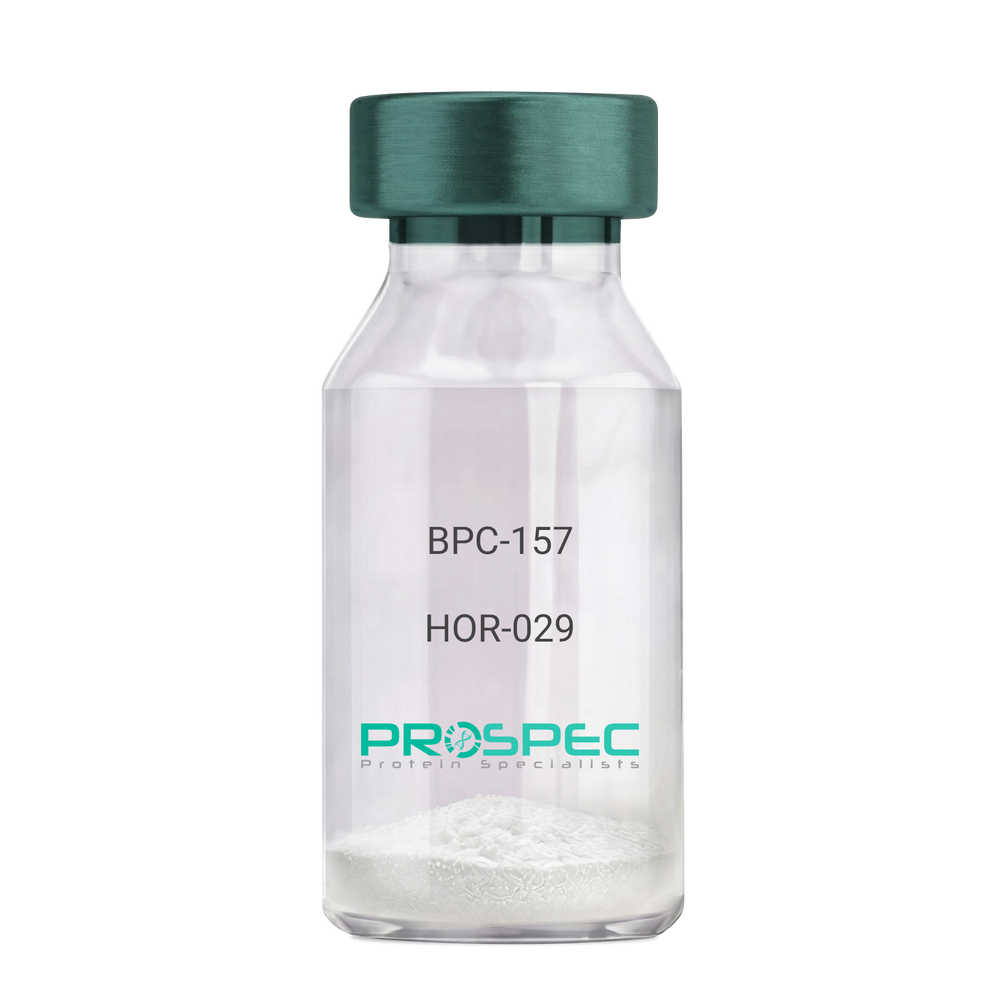
BPC-157Description:
BPC-157 Pentadecapeptide
Product # :
HOR-029Price :
Quantity :
Shipping Method :
Shipped at Room temp
More Info
- description
- formulation
- purity
- More Info
Description
BPC-157 Synthetic is a single, non-glycosylated polypeptide chain containing 15 amino acids, having a molecular mass of 1419.55 Dalton and a Molecular formula of C62H98N16O22.
Formulation
The protein was lyophilized with no additives.
Purity
Greater than 97.0% as determined by analysis by RP-HPLC.
More Info
-
Physical Appearance
Sterile Filtered White lyophilized (freeze-dried) powder.
-
Stability
Lyophilized BPC-157 although stable at room temperature for 3 weeks, should be stored desiccated below -18°C. Upon reconstitution bpc-157 should be stored at 4°C between 2-7 days and for future use below -18°C. For long term storage it is recommended to add a carrier protein (0.1% HSA or BSA). Please prevent freeze-thaw cycles.
-
Solubility
It is recommended to reconstitute the lyophilized BPC-157 in sterile 18MΩ-cm H2O not less than 100 µg/ml, which can then be further diluted to other aqueous solutions.
-
Amino Acid Sequence
H-Gly-Glu-Pro-Pro-Pro-Gly-Lys-Pro-Ala-Asp-Asp-Ala-Gly-Leu-Val-OH
-
Background
BPC-157, short for Body Protection Compound-157, is a synthetic peptide that has garnered significant attention in the field of regenerative medicine and sports science. This peptide, derived from a portion of the human gastric juice protein known as BPC, exhibits remarkable healing and tissue regeneration properties. BPC-157 has shown promise in various preclinical and clinical studies, demonstrating its potential for the treatment of a wide range of injuries and disorders.
The research on BPC-157 encompasses investigations into its mechanisms of action, efficacy, safety, and potential therapeutic applications. Studies have elucidated the peptide's ability to enhance angiogenesis, promote collagen synthesis, modulate inflammatory responses, and protect against oxidative stress. These properties make BPC-157 an intriguing candidate for accelerating tissue healing, reducing inflammation, and improving overall recovery outcomes.
Preclinical studies have revealed the beneficial effects of BPC-157 in several injury models. For instance, BPC-157 has demonstrated its potential in accelerating tendon and ligament healing, mitigating muscle damage, and promoting bone regeneration. These findings suggest that BPC-157 could be a valuable therapeutic tool in orthopedic medicine and sports-related injuries.
Furthermore, BPC-157 has exhibited promising effects on gastrointestinal health. Studies have highlighted its ability to protect and heal the gut lining, reduce ulcer formation, and alleviate symptoms associated with inflammatory bowel disease. These observations open up avenues for BPC-157 as a potential treatment for gastrointestinal disorders.
In addition to its regenerative properties, BPC-157 has shown potential in neurological and psychiatric conditions. Research has indicated its neuroprotective effects, with implications for the treatment of traumatic brain injury, stroke, and neurodegenerative disorders. Preliminary studies also suggest BPC-157's potential as an antidepressant and anxiolytic agent.
Despite the promising findings, further research is needed to fully understand the mechanisms underlying BPC-157's actions and to assess its long-term safety and efficacy. Clinical trials are underway to explore its potential therapeutic applications in humans, including its use in tendon and ligament repair, inflammatory bowel disease, and neurodegenerative disorders.
This comprehensive review aims to summarize the current state of research on BPC-157, providing an overview of its mechanisms of action and therapeutic potential. By examining relevant studies and findings, we aim to shed light on the diverse applications of BPC-157 and its implications for regenerative medicine, sports science, and various disease
ProSpec's products are furnished for LABORATORY RESEARCH USE ONLY. The product may not be used as drugs, agricultural or pesticidal products, food additives or household chemicals.
- View Data Sheet
Name :
HbA1c HumanDescription:
Human Hemoglobin A1c
Product # :
PRO-299Price :
Quantity :
Shipping Method :
Shipped with Ice Packs
More Info
- description
- source
- formulation
- purity
- More Info
Description
The Human Hemoglobin A1c was purified from Human Erythrocytes.
Source
Human Erythrocytes.
Formulation
The HbA1c is supplied in a proprietary buffer formulation having pH-8.0. The HbA1c was dispensed on the basis of HbA1c not total hemoglobin.
Purity
Greater than 96.0%.
More Info
-
Introduction
The HbA1c shows the average amount of glucose in the blood over a period of 3 months. Sugar in the bloodstream can become attached to the hemoglobin in red blood cells (glycosylation). Once the sugar is attached, it stays there for the life of the red blood cell, which is about 120 days. The higher the level of blood sugar, the more sugar attaches to red blood cells. The HbA1c is formed in a non-enzymatic pathway by hemoglobin's standard exposure to elevated plasma levels of glucose. HbA1c is tested to monitor nephropathy and retinopathy in diabetes mellitus.
-
Physical Appearance
Clear red frozen solution.
-
Stability
Human HbA1c although stable at 4°C for 1 week, should be stored at -20°C.
-
Human Virus Test
Tissue sample tested and found negative for HIV-1 & 2 antibodies, HBsAg, and Hepatitis-C antibodies.
ProSpec's products are furnished for LABORATORY RESEARCH USE ONLY. The product may not be used as drugs, agricultural or pesticidal products, food additives or household chemicals.
- View Data Sheet
Name :
EGFL6 HumanDescription:
EGF Like Domain Multiple 6 Human Recombinant
EGF Like Domain Multiple 6, MAM and EGF Domains-Containing Gene Protein, MAM and EGF Domain Containing, EGF-Like Protein 6, MAEG, EGF Repeat-Containing Protein 6, W80, EGFL6.
Product # :
CYT-974Price :
Quantity :
Shipping Method :
Shipped at Room temp
More Info
- description
- source
- formulation
- purity
- biological activity
- More Info
Description
EGF Like Domain Multiple 6 Human Recombinant produced in HEK cells is a polypeptide chain starting at amino acid Asn at position 22 to amino acid Arg at position 363, fused to an FC, 6 x His-tag at C-terminus, containing a total of 348 amino acids and having a predicted molecular mass of 40-55kDa. The EGFL6 is purified by proprietary chromatographic techniques.
Source
HEK (Human embryonic kidney cells).
Formulation
The EGFL6 protein was lyophilized from a 0.2µm filtered solution in 20mM MES and 500mM NaCl, pH 6.0 with 5% Trehalose.
Purity
Greater than 95.0% as determined by SDS-PAGE.
Biological Activity
EGFL6 activity is determined by its ability of the immobilized protein to support the adhesion of NIH-3T3 mouse embryonic fibroblast cells. The expected ED50 for this effect is 1-5 μg/ml.
More Info
-
Introduction
Epidermal Growth Factorlike Domain Multiple 6 (EGFL6) belongs to the EGF repeat superfamily of proteins, whose members are involved in the regulation of cell cycle, proliferation, and developmental processes. EGFL6 gene product contains a signal peptide, suggesting that EGFL6 is secreted; an EGF repeat region consisting of four complete EGF-like repeats and 1 partial EGF-like repeat, 3 of which have a calcium-binding consensus sequence; an arg-gly-asp integrin association motif; and a MAM domain, which is assumed to have an adhesive function. Within shared regions, human EGFL6 shares 75% and 78% amino acid sequence identity with the mouse and rat orthologs, respectively. EGFL6 is expressed in various fetal tissues during early development such as the lung, heart, liver, spleen, cochlea and the placenta, as well as meningioma tumors.
-
Synonyms
EGF Like Domain Multiple 6, MAM and EGF Domains-Containing Gene Protein, MAM and EGF Domain Containing, EGF-Like Protein 6, MAEG, EGF Repeat-Containing Protein 6, W80, EGFL6.
-
Physical Appearance
Sterile Filtered White lyophilized (freeze-dried) powder.
-
Stability
Lyophilized EGFL6 although stable at room temperature for 3 weeks, should be stored desiccated below -18°C. Upon reconstitution EGFL6 should be stored at 4°C between 2-7 days and for future use below -18°C.For long term storage it is recommended to add a carrier protein (0.1% HSA or BSA).Please prevent freeze-thaw cycles.
-
Solubility
It is recommended to reconstitute the lyophilized EGFL6 in sterile PBS at 500µg/ml, which can then be further diluted to other aqueous solutions.
-
Background
Illuminating Epidermal Growth Factor Rat Recombinant: Deciphering Cellular Signaling and Therapeutic Potential
Abstract:
This research paper delves into the enigmatic realm of Epidermal Growth Factor Rat Recombinant (EGF-RR), unraveling its intricate molecular attributes, signaling cascades, and therapeutic prospects. By employing cutting-edge methodologies encompassing protein expression, receptor binding assays, and bioinformatics analyses, this study sheds light on the multifaceted interplay between EGF-RR and cellular responses, offering novel avenues for therapeutic interventions.
Introduction:
Epidermal Growth Factor (EGF) is pivotal in cellular regulation. This paper navigates the complexities of Epidermal Growth Factor Rat Recombinant (EGF-RR), focusing on its unique molecular properties and potential therapeutic applications.
Protein Expression and Purification:
The study embarks on precise gene optimization to enhance EGF-RR expression. Purification techniques like affinity chromatography yield purified EGF-RR, primed for subsequent analyses.
Receptor Binding Assays and Ligand Interaction:
Employing advanced receptor binding assays, the paper deciphers EGF-RR's engagement with its cognate receptor. Quantitative assessments uncover binding kinetics, shedding light on the intricacies of EGF-RR's molecular interaction.
Cellular Signaling Pathways and Responses:
In vitro cellular assays unveil the signaling cascades ignited by EGF-RR. Through quantitative phosphoproteomic profiling, the study unravels phosphorylation events triggered by EGF-RR, delineating its role in cellular proliferation, migration, and differentiation.
Bioinformatics Insights and Structural Modeling:
Bioinformatics tools facilitate molecular dynamics simulations, offering insights into EGF-RR's receptor interactions and downstream signaling pathways. Structural modeling captures EGF-RR's conformational changes during signaling cascades.
Therapeutic Implications and Future Prospects:
EGF-RR's intricate signaling dynamics open avenues for therapeutic exploration. Harnessing its potential in wound healing, tissue regeneration, and cancer modulation emerges as a promising avenue for precision medicine.
Challenges and Future Directions:
Challenges, including context-specific responses, beckon further investigation. Future research should delve into cross-talk between signaling pathways and EGF-RR's contributions to diverse disease contexts.
Conclusion:
A fusion of advanced methodologies and visionary insights unveils Epidermal Growth Factor Rat Recombinant as an intriguing subject. Its molecular intricacies and complex cellular interplay ignite prospects for therapeutic breakthroughs, ushering in a new era of precision medicine.
What is the molecular weight/Mw of EGFL6 HUMAN Protein?
EGFL6 HUMAN Protein has a total Mw of 40-55kDa.
What is the source or expression system of EGFL6 HUMAN Protein?
HEK (Human embryonic kidney cells).
What is the Purity of EGFL6 HUMAN Protein?
EGFL6 HUMAN Protein is >95% pure as determined by SDS-PAGE.
What is the Biological Activity of EGFL6 HUMAN Protein?
EGFL6 activity is determined by its ability of the immobilized protein to support the adhesion of NIH-3T3 mouse embryonic fibroblast cells. The expected ED50 for this effect is 1-5 μg/ml.
What is the amino acid sequence of EGFL6 HUMAN Protein?
EGFL6 HUMAN Protein is composed from 348 amino acids.
What applications can EGFL6 HUMAN Protein be used in?
EGFL6 HUMAN Protein can probably be used in western blot, ELISA and Lateral Flow.
What is the endotoxin level for EGFL6 HUMAN Protein?
The endotoxin level is minimal, EGFL6 HUMAN Protein was purified using conventional chromatography techniques.
ProSpec's products are furnished for LABORATORY RESEARCH USE ONLY. The product may not be used as drugs, agricultural or pesticidal products, food additives or household chemicals.
- View Data Sheet
Name :
ATF HumanDescription:
Apo Transferrin Human
Serotransferrin, Transferrin, Siderophilin, Beta-1-metal-binding globulin, TF, PRO1557, PRO2086, DKFZp781D0156, Apo Transferrin, ATF.
Product # :
PRO-325Price :
Quantity :
Shipping Method :
Shipped at Room temp
More Info
- description
- source
- formulation
- purity
- More Info
Description
Human Apo Transferrin is a glycoprotein of approximately 77 kDa.
Source
Human serum.
Formulation
The protein was lyophilized from 20mM NH4HC03 solution. May contain traces of buffer salts.
Purity
Greater than 98.0% as determined by coomassie blue stained SDS-PAGE and Cellulose Acetate electrophoresis.
More Info
-
Introduction
Transferrin is the iron-transport protein of vertebrate serum and donates iron to cells through interaction with a specific membrane receptor, CD71. Transferrin appears to be indispensable for most cells growing in tissue culture.
It is referred to frequently as a growth factor because, in analogy to other growth factor-receptor interactions, proliferating cells express high numbers of transferrin receptors, and the binding of transferrin to their receptors is needed for cells to initiate and maintain their DNA synthesis. Apart from its role as an iron transport protein transferrin acts as a cytokine and has functions that may not be related to its iron-carrying capacity.
Human Transferrin is a crucial component for the cultivation of mammalian cells in-vitro. Human Transferrin is Critical for long-term cells growth in-vitro. Human Transferrin is used as detoxificant in media by binding contaminating metal ions. Human Transferrin is often used as a nutrient in fermentation media for recombinant protein and biopharmaceutical production. Additional common uses of Human Transferrin areMolecular weight, Affinity purification of anti-human transferrin antibodies and also as receptor mediated transfection of molecules such as DNA, into cells. -
Synonyms
Serotransferrin, Transferrin, Siderophilin, Beta-1-metal-binding globulin, TF, PRO1557, PRO2086, DKFZp781D0156, Apo Transferrin, ATF.
-
Physical Appearance
Sterile Filtered White lyophilized (freeze-dried) powder.
-
Stability
Store the lyophilized Apo Transferrin between 2-8°C, do not freeze. Upon reconstitution Apo Transferrin should be stored at 4°C between 2-7 days and for future use below -18°C.Please prevent freeze-thaw cycles.
-
Solubility
It is recommended to reconstitute the lyophilized Apo Transferrin in sterile 18MΩ-cm H2O not less than 100µg/ml, which can then be further diluted to other aqueous solutions.
-
Human Virus Test
Plasma from each donor has been tested and found negative for antibody to HIV-1, HIV-2, HCV, HBSAG and Syphilis.
-
Iron Content
The Iron content was estimated by ICP and was found to be <6 ppm.
ProSpec's products are furnished for LABORATORY RESEARCH USE ONLY. The product may not be used as drugs, agricultural or pesticidal products, food additives or household chemicals.
- View Data Sheet
Name :
GFER HumanDescription:
Growth Factor, Augmenter of Liver Regeneration Human Recombinant
FAD-linked sulfhydryl oxidase ALR, Augmenter of liver regeneration, Hepatopoietin, GFER, ALR, HERV1, HPO, ALR, HSS, ERV1, HPO1, HPO2.
Product # :
PRO-1326Price :
Quantity :
Shipping Method :
Shipped with Ice Packs
More Info
- description
- source
- formulation
- purity
- More Info
Description
GFER Human Recombinant produced in E.Coli is a single, non-glycosylated polypeptide chain containing 229 amino acids (1-205 a.a) and having a molecular mass of 26kDa.GFER is fused to a 24 amino acid His-tag at N-terminus & purified by proprietary chromatographic techniques.
Source
Escherichia Coli.
Formulation
GFER protein solution (0.25mg/ml) containing 20mM Tris-HCl buffer (pH 8.0), 0.2M NaCl, 50% glycerol and 2mM DTT.
Purity
Greater than 90.0% as determined by SDS-PAGE.
More Info
-
Introduction
FAD-linked sulfhydryl oxidase ALR (GFER) is a member of the Erv1/ALR family of proteins, which is found in higher and lower eukaryotes. GFER is a hepatotrophic growth factor and flavin-linked sulfhydryl oxidase expressed in a variety of tissues. Moreover, GFER induces the expression of S-adenosylmethionine decarboxyl-ase and ornithine decarboxylases (ODC), which each have a central role in the synthesis of polyamines. The hepatotrophic factor designated augmenter of liver regeneration (ALR) is assumed to be one of the factors responsible for the exceptional regenerative capacity of mammalian liver. The GFER gene is located on chromosome 16 in the interval containing the locus for polycystic kidney disease (PKD1).
-
Synonyms
FAD-linked sulfhydryl oxidase ALR, Augmenter of liver regeneration, Hepatopoietin, GFER, ALR, HERV1, HPO, ALR, HSS, ERV1, HPO1, HPO2.
-
Physical Appearance
Sterile Filtered colorless solution.
-
Stability
Store at 4°C if entire vial will be used within 2-4 weeks. Store, frozen at -20°C for longer periods of time. For long term storage it is recommended to add a carrier protein (0.1% HSA or BSA).Avoid multiple freeze-thaw cycles.
-
Amino Acid Sequence
MGSSHHHHHH SSGLVPRGSH MGSHMAAPGE RGRFHGGNLF FLPGGARSEM MDDLATDARG RGAGRRDAAA SASTPAQAPT SDSPVAEDAS RRRPCRACVD FKTWMRTQQK RDTKFREDCP PDREELGRHS WAVLHTLAAY YPDLPTPEQQ QDMAQFIHLF SKFYPCEECA EDLRKRLCRN HPDTRTRACF TQWLCHLHNE VNRKLGKPDF DCSKVDERWR DGWKDGSCD.
ProSpec's products are furnished for LABORATORY RESEARCH USE ONLY. The product may not be used as drugs, agricultural or pesticidal products, food additives or household chemicals.
- View Data Sheet
Name :
RhD HumanDescription:
Rh Blood Group D Antigen Human Recombinant
SLC42A5, CD240D, DIIIc, RhPI, RhII, Rh4.
Product # :
PRO-2822Price :
Quantity :
Shipping Method :
Shipped at Room temp
More Info
- description
- source
- formulation
- purity
- More Info
Description
The RhD Human is created as a recombinant protein with a 4kda N-terminal fusion of His Tag. The RhD His-Tagged Fusion Protein, produced in E. coli, is a 13kDa protein containing 58 amino acid residues of the RhD Human, 108-165 amino acids.
Source
Escherichia Coli.
Formulation
Each mg was lyophilized with 1xPBS, 0.4% SDS and 4mM DTT.
Purity
Greater than 90% as determined by SDS-PAGE.
More Info
-
Synonyms
SLC42A5, CD240D, DIIIc, RhPI, RhII, Rh4.
-
Physical Appearance
Filtered White lyophilized (freeze-dried) powder.
-
Stability
Store lyophilized RhD at -20°C. Aliquot the product after reconstitution to avoid repeated freezing/thawing cycles. Reconstituted protein can be stored at 4°C for a limited period of time; it does not show any change after two weeks at 4°C.
-
Solubility
It is recommended to add deionized water to prepare a working stock solution of approximately 0.5mg/ml and let the lyophilized pellet dissolve completely. Product is not sterile!
Please filter the product by an appropriate sterile filter before using it on cell culture.
-
Background
The Rh blood group system is one of the major blood group systems in humans and the D antigen is the main component of this system.
D Antigen
The presence of the D antigen on the surface of red blood cells indicates a positive Rh factor. Individuals with this antigen are classified as Rh-positive (Rh+), while those without it are Rh-negative (Rh-).
Genetics
The Rh factor is inherited in a Mendelian manner, with the D antigen being monitored by the RHD gene located on chromosome 1. The presence of the D allele (RHD) results in Rh positivity.
Immunization
Rh-negative individuals can develop antibodies against the D antigen if exposed to Rh-positive blood. In order to prevent such interaction, Rh-negative mothers are often given Rh immunoglobulin (Rho(D) immune globulin) during and after pregnancy.
Clinical Significance
The Rh D antigen is vital in blood transfusions and pregnancy. Rh incompatibility can occur when an Rh- mother carries an Rh+ fetus, which may lead to hemolytic disease of the newborn (HDN).
Blood Transfusions
Rh compatibility is very important in transfusions. Rh- individuals should receive Rh- blood to avoid an immune reaction.
ProSpec's products are furnished for LABORATORY RESEARCH USE ONLY. The product may not be used as drugs, agricultural or pesticidal products, food additives or household chemicals.
- View Data Sheet
Name :
Prolactin HumanDescription:
Prolactin Human Recombinant
Mammotropin, Luteotropic hormone, Luteotropin, PRL.
Product # :
CYT-267Price :
Quantity :
Shipping Method :
Shipped at Room temp
More Info
- description
- source
- formulation
- purity
- biological activity
- More Info
Description
Prolactin Human Recombinant produced in E.Coli is a single, non-glycosylated polypeptide chain containing 200 amino acids and having a molecular mass of 23007 Dalton. The Prolactin is purified by proprietary chromatographic techniques.
Source
Escherichia Coli.
Formulation
The protein was lyophilized from a concentrated (1mg/ml) solution with 10mM sodium Phosphate buffer pH=8 and 50mM Nacl.
Purity
Greater than 95.0% as determined by:
(a) Analysis by SEC-HPLC.
(b) Analysis by SDS-PAGE.Biological Activity
The ED50 as determined by the dose-dependant stimulation of the proliferation of rat lymphoma, Nb2-11 was found to be < 0.065ng/ml corresponding to a Specific Activity of 15,385,000IU/mg.More Info
-
Introduction
Prolactin is a neuroendocrine hormone synthesized primarily by the pituitary gland but also a variety of other cell types including the placenta, brain and uterus. Its primary function is to promote and maintain lactation but has also been shown to have a role in breast cancer development, regulation of reproductive function and immunoregulation.
-
Synonyms
Mammotropin, Luteotropic hormone, Luteotropin, PRL.
-
Physical Appearance
Sterile Filtered White lyophilized (freeze-dried) powder.
-
Stability
Lyophilized Prolactin although stable at room temperature for 3 weeks, should be stored desiccated below -18°C. Upon reconstitution Prolactin should be stored at 4°C between 2-7 days and for future use below -18°C.For long term storage it is recommended to add a carrier protein (0.1% HSA or BSA).Please prevent freeze-thaw cycles.
-
Solubility
It is recommended to reconstitute the lyophilized Prolactin in sterile 18MΩ-cm H2O not less than 100µg/ml, which can then be further diluted to other aqueous solutions.
-
Amino Acid Sequence
The sequence of the first five N-terminal amino acids was determined and was found to be Met-Leu-Pro-Ile-Cys.
ProSpec's products are furnished for LABORATORY RESEARCH USE ONLY. The product may not be used as drugs, agricultural or pesticidal products, food additives or household chemicals.
- View Data Sheet
Name :
Ebola Zaire GPDescription:
Ebola Zaire Glycoprotein Recombinant
Product # :
EVD-077Price :
Quantity :
Shipping Method :
Shipped with Ice Packs
More Info
- description
- source
- formulation
- purity
- More Info
Description
Recombinant Ebola Zaire Glycoprotein is a mucin like domain containing 181 amino acids was derived from Zaire Ebola Virus (strain Kikwit-95) gp mucin sequence produced in E. coli, and fused to a 6xHis tag at its C-terminus, having a molecular weight 38kDa.Ebola Zaire GP is purified by a proprietary chromatographic technique.
Source
Escherichia Coli.
Formulation
Ebola Zaire GP protein solution is supplied in Phosphate buffer with 25mM arginine and 0.02% sodium azide.
Purity
>95% pure as determined by 12% SDS-PAGE (Coomassie blue stain).
More Info
-
Introduction
Ebolavirus (EVD) belongs to the Filoviridae family of proteins which is comprised of a single-strand, non-infectious RNA genome. EVD genome is about 19,000 base pairs long and covers 7 genes in the order 3'-UTR-NP-VP35-VP40-GP-VP30-VP24-L-5'-UTR. There are 4 different ebolaviruses such as: Zaire (EBO-Z), Sudan (EBO-S), Cote d’Ivoire (EBO-CI) and Reston (EBO-R) that differ in amino acid sequence and location of where the gene overlaps. The EBOV glycoprotein is the only virally expressed protein above the virion surface. The EBOV glycoprotein is essential for virus attachment to host cell and fusion with target cell. Mucin like domain within Ebola virus glycoprotein contains multiple glycosylated amino acids. It has been shown that antibodies frequently develop against its mucin like domain. Recombinant mucin like domain is a suitable antigen to test specific antibodies from Ebola virus infected patients.
-
Stability
Store at 4°C if entire vial will be used within 2-4 weeks. Store, frozen at -20°C for longer periods of time. For long term storage it is recommended to add a carrier protein (0.1% HSA or BSA).Avoid multiple freeze-thaw cycles.
-
Applications
Immunoassay.
ProSpec's products are furnished for LABORATORY RESEARCH USE ONLY. The product may not be used as drugs, agricultural or pesticidal products, food additives or household chemicals.
- View Data Sheet
Name :
Periostin Human, HEKDescription:
Periostin Human Recombinant, HEK
OSF-2, Periostin, Osteoblast Specific Factor 2, PN OSF-2, PDLPOSTN, POSTN, MGC119510, MGC119511, PN, RP11-412K4.1.
Product # :
CYT-835Price :
Quantity :
Shipping Method :
Shipped at Room temp
More Info
- description
- source
- formulation
- purity
- More Info
Description
Periostin Human Recombinant produced in HEK cells is a single, glycosylated, polypeptide chain (Asn22-Gln836) containing a total of 821 amino acids, having a calculated molecular mass of 91.8kDa and fused to a 6 aa His tag at C-Terminus.
Source
HEK 293.
Formulation
Periostin was filtered (0.4 µm) and lyophilized from 0.5mg/ml solution in phosphate buffered saline and 5% trehalose.
Purity
Greater than 38.0% as determined by SDS-PAGE.
More Info
-
Introduction
Periostin is a disulfide linked 90 kDa, 811 amino acid protein originally isolated as a osteoblast-specific factor that functions as a cell adhesion molecule for preosteoblasts and is thought to be involved in osteoblast recruitment, attachment and spreading. Additionally, periostin expression has previously been shown to be significantly increased by both transforming growth factor beta-1(TGFbeta1) and bone morphogenetic protein (BMP-2). OSF-2 has a typical signal sequence, followed by a cysteine-rich domain, a fourfold repeated domain and a C-terminal domain. The fourfold repeated domain of OSF-2 shows homology with the insect protein fasciclin
Periostin mRNA is expressed in the developing mouse embryonic and fetal heart, and that it is localized to the endocardial cushions that ultimately divide the primitive heart tube into a four-chambered heart. -
Synonyms
OSF-2, Periostin, Osteoblast Specific Factor 2, PN OSF-2, PDLPOSTN, POSTN, MGC119510, MGC119511, PN, RP11-412K4.1.
-
Physical Appearance
Filtered White lyophilized (freeze-dried) powder.
-
Stability
Store lyophilized protein at -20°C. Aliquot the product after reconstitution to avoid repeated freezing/thawing cycles. Reconstituted protein can be stored at 4°C for a limited period of time.
-
Solubility
It is recommended to add deionized water to prepare a working stock solution of approximately 0.5 mg/ml and let the lyophilized pellet dissolve completely. Periostin is not sterile! Please filter the product by an appropriate sterile filter before using it in the cell culture.
-
Amino Acid Sequence
NNHYDKILAH SRIRGRDQGP NVCALQQILG TKKKYFSTCK NWYKKSICGQ KTTVLYECCP GYMRMEGMKG CPAVLPIDHV YGTLGIVGAT TTQRYSDASK LREEIEGKGS FTYFAPSNEA WDNLDSDIRR GLESNVNVEL LNALHSHMIN KRMLTKDLKN GMIIPSMYNN LGLFINHYPN GVVTVNCARI IHGNQIATNG VVHVIDRVLT QIGTSIQDFI EAEDDLSSFR AAAITSDILE ALGRDGHFTL FAPTNEAFEK LPRGVLERIM GDKVASEALM KYHILNTLQC SESIMGGAVF ETLEGNTIEI GCDGDSITVN GIKMVNKKDI VTNNGVIHLI DQVLIPDSAK QVIELAGKQQ TTFTDLVAQL GLASALRPDG EYTLLAPVNN AFSDDTLSMD QRLLKLILQN HILKVKVGLN ELYNGQILET IGGKQLRVFV YRTAVCIENS CMEKGSKQGR NGAIHIFREI IKPAEKSLHE KLKQDKRFST FLSLLEAADL KELLTQPGDW TLFVPTNDAF KGMTSEEKEI LIRDKNALQN IILYHLTPGV FIGKGFEPGV TNILKTTQGS KIFLKEVNDT LLVNELKSKE SDIMTTNGVI HVVDKLLYPA DTPVGNDQLL EILNKLIKYI QIKFVRGSTF KEIPVTVYTT KIITKVVEPK IKVIEGSLQP IIKTEGPTLT KVKIEGEPEF RLIKEGETIT EVIHGEPIIK KYTKIIDGVP VEITEKETRE ERIITGPEIK YTRISTGGGE TEETLKKLLQ EEVTKVTKFI EGGDGHLFED EEIKRLLQGD TPVRKLQANK KVQGSRRRLR EGRSQHHHHH H.
ProSpec's products are furnished for LABORATORY RESEARCH USE ONLY. The product may not be used as drugs, agricultural or pesticidal products, food additives or household chemicals.