Skip to content

High-quality research proteins.

  • 1-800-805-6531

  • Mon - Sat 8.00-18.00, Sun - Closed

  • info@prospecbio.com

  • PO Box 6591 East Brunswick NJ 08816

  • Products
    • Cytokines
    • Growth factors
    • Chemokines
    • Cd antigens
    • Neurotrophins
    • Hormones
    • Enzymes
    • Viral antigens
    • Recombinant proteins
    • Natural proteins
    • Monoclonal antibodies
    • Polyclonal antibodies
    • Thermal Packaging
  • About
    • Company
    • Founder
    • Contribution
  • Customers
    • Eastern Asia
    • Eastern Europe
    • North America
    • South America
    • South East Asia
    • Southern Asia
    • Western Europe
  • Ordering
    • Ordering Method
    • Ordering - Credit Card
    • Ordering - PO
    • Shipping Fees
    • FAQs
  • Services
    • DNA Cloning
    • Protein Expression
    • Monoclonal Antibody
    • Fermentation
    • Technology License
  • Contact us
Log in

Country/region

  • USD $ | Albania
  • USD $ | Andorra
  • USD $ | Argentina
  • USD $ | Armenia
  • USD $ | Australia
  • USD $ | Austria
  • USD $ | Azerbaijan
  • USD $ | Belarus
  • USD $ | Belgium
  • USD $ | Bolivia
  • USD $ | Brazil
  • USD $ | Bulgaria
  • USD $ | Cambodia
  • USD $ | Canada
  • USD $ | Chile
  • USD $ | China
  • USD $ | Colombia
  • USD $ | Costa Rica
  • USD $ | Croatia
  • USD $ | Cyprus
  • USD $ | Czechia
  • USD $ | Denmark
  • USD $ | Estonia
  • USD $ | Finland
  • USD $ | France
  • USD $ | Georgia
  • USD $ | Germany
  • USD $ | Greece
  • USD $ | Hong Kong SAR
  • USD $ | Hungary
  • USD $ | Iceland
  • USD $ | India
  • USD $ | Ireland
  • USD $ | Israel
  • USD $ | Italy
  • USD $ | Japan
  • USD $ | Kazakhstan
  • USD $ | Latvia
  • USD $ | Liechtenstein
  • USD $ | Lithuania
  • USD $ | Madagascar
  • USD $ | Malta
  • USD $ | Mexico
  • USD $ | Moldova
  • USD $ | Monaco
  • USD $ | Netherlands
  • USD $ | New Zealand
  • USD $ | North Macedonia
  • USD $ | Norway
  • USD $ | Panama
  • USD $ | Paraguay
  • USD $ | Peru
  • USD $ | Philippines
  • USD $ | Poland
  • USD $ | Portugal
  • USD $ | Romania
  • USD $ | Singapore
  • USD $ | Slovakia
  • USD $ | Slovenia
  • USD $ | South Africa
  • USD $ | South Korea
  • USD $ | Spain
  • USD $ | Sri Lanka
  • USD $ | Sweden
  • USD $ | Switzerland
  • USD $ | Taiwan
  • USD $ | Thailand
  • USD $ | Türkiye
  • USD $ | Ukraine
  • USD $ | United Kingdom
  • USD $ | United States
  • USD $ | Uruguay
  • USD $ | Vatican City
  • USD $ | Venezuela
  • USD $ | Vietnam
  • Facebook
  • Instagram
logoProSpec - Recombinant Protein Manufacturer for academic and R&D industry
Become a distributor
Account Log in
Wishlist
Cart Cart(0)
  • Products
    +
    • Cytokines
    • Growth factors
    • Chemokines
    • Cd antigens
    • Neurotrophins
    • Hormones
    • Enzymes
    • Viral antigens
    • Recombinant proteins
    • Natural proteins
    • Monoclonal antibodies
    • Polyclonal antibodies
    • Thermal Packaging
  • About
    +
    • Company
    • Founder
    • Contribution
  • Customers
    +
    • Eastern Asia
    • Eastern Europe
    • North America
    • South America
    • South East Asia
    • Southern Asia
    • Western Europe
  • Ordering
    +
    • Ordering Method
    • Ordering - Credit Card
    • Ordering - PO
    • Shipping Fees
    • FAQs
  • Services
    +
    • DNA Cloning
    • Protein Expression
    • Monoclonal Antibody
    • Fermentation
    • Technology License
  • Contact us

Item added to your cart

View cart
View All
  • Cytokines
  • Growth factors
  • Chemokines
  • Cd antigens
  • Neurotrophins
  • Hormones
  • Enzymes
  • Viral antigens
  • Recombinant proteins
  • Natural proteins
  • Monoclonal antibodies
  • Polyclonal antibodies
  • Thermal Packaging
  • Tumor Necrosis Factor

    Tumor Necrosis Factor

    View All
  • 4-1BB

    4-1BB

    View All
  • Adiponectin

    Adiponectin

    View All
  • AIF1

    AIF1

    View All
  • Other Cytokines

    Other Cytokines

    View All
  • AITRL

    AITRL

    View All
  • Angiopoietin

    Angiopoietin

    View All
  • Apolipoprotein

    Apolipoprotein

    View All
  • B-Cell Activating Factor

    B-Cell Activating Factor

    View All
  • Beta Defensin

    Beta Defensin

    View All
  • Bone Morphogenetic Protein

    Bone Morphogenetic Protein

    View All
  • B type Natriuretic Peptide

    B type Natriuretic Peptide

    View All
  • BST

    BST

    View All
  • Betacellulin

    Betacellulin

    View All
  • Cardiotrophin

    Cardiotrophin

    View All
  • Activin

    Activin

    View All
  • Fibroblast Growth Factor

    Fibroblast Growth Factor

    View All
  • Other Growth Factors

    Other Growth Factors

    View All
  • CSF

    CSF

    View All
  • CTGF

    CTGF

    View All
  • IGFBP

    IGFBP

    View All
  • VEGF Protein

    VEGF Protein

    View All
  • EGF

    EGF

    View All
  • Epigen

    Epigen

    View All
  • Erythropoietin

    Erythropoietin

    View All
  • Insulin-Like Growth Factor

    Insulin-Like Growth Factor

    View All
  • Growth Hormone

    Growth Hormone

    View All
  • HDGF

    HDGF

    View All
  • Hepatocyte Growth Factor

    Hepatocyte Growth Factor

    View All
  • Insulin

    Insulin

    View All
  • BCA-1/ BLC (CXCL13)

    BCA-1/ BLC (CXCL13)

    View All
  • BRAK (CXCL14)

    BRAK (CXCL14)

    View All
  • C-10 (CCL6)

    C-10 (CCL6)

    View All
  • Other Chemokines

    Other Chemokines

    View All
  • MEC (CCL28)

    MEC (CCL28)

    View All
  • LD78-beta (CCL3L1)

    LD78-beta (CCL3L1)

    View All
  • CTACK (CCL27)

    CTACK (CCL27)

    View All
  • CXCL16

    CXCL16

    View All
  • CXCL17

    CXCL17

    View All
  • Platelet Factor-4 (CXCL4)

    Platelet Factor-4 (CXCL4)

    View All
  • ENA-78 (CXCL5)

    ENA-78 (CXCL5)

    View All
  • Eotaxin (CCL11,24,26)

    Eotaxin (CCL11,24,26)

    View All
  • Exodus-2 (CCL21)

    Exodus-2 (CCL21)

    View All
  • Fractalkine (CX3CL1)

    Fractalkine (CX3CL1)

    View All
  • CXCL6

    CXCL6

    View All
  • Other CD Antigens

    Other CD Antigens

    View All
  • CD14

    CD14

    View All
  • CD164

    CD164

    View All
  • CD1

    CD1

    View All
  • CD2

    CD2

    View All
  • CD200

    CD200

    View All
  • CD207

    CD207

    View All
  • CD226

    CD226

    View All
  • CD23

    CD23

    View All
  • CD244

    CD244

    View All
  • CD247

    CD247

    View All
  • CD27

    CD27

    View All
  • CD274

    CD274

    View All
  • CD300

    CD300

    View All
  • CD33

    CD33

    View All
  • Other Neurotrophins

    Other Neurotrophins

    View All
  • Beta-NGF

    Beta-NGF

    View All
  • BDNF

    BDNF

    View All
  • CDNF

    CDNF

    View All
  • CNTF

    CNTF

    View All
  • GDNF

    GDNF

    View All
  • Glia Maturation Factor

    Glia Maturation Factor

    View All
  • MANF

    MANF

    View All
  • Midkine

    Midkine

    View All
  • Neuroglobin

    Neuroglobin

    View All
  • Neurotrophic factors

    Neurotrophic factors

    View All
  • Neuregulin

    Neuregulin

    View All
  • Neuropilin

    Neuropilin

    View All
  • Pigment Epithelium-Derived Factor

    Pigment Epithelium-Derived Factor

    View All
  • Pleiotrophin

    Pleiotrophin

    View All
  • Peptide Hormones

    Peptide Hormones

    View All
  • Other Hormones

    Other Hormones

    View All
  • HCG

    HCG

    View All
  • Endothelin

    Endothelin

    View All
  • Exendin

    Exendin

    View All
  • FSH

    FSH

    View All
  • Glucagon

    Glucagon

    View All
  • GHRP

    GHRP

    View All
  • GLP

    GLP

    View All
  • Thyrostimulin

    Thyrostimulin

    View All
  • Inhibin A

    Inhibin A

    View All
  • LHRH

    LHRH

    View All
  • Melanotan

    Melanotan

    View All
  • Procalcitonin

    Procalcitonin

    View All
  • PTH

    PTH

    View All
  • Peroxiredoxin

    Peroxiredoxin

    View All
  • Peptidase

    Peptidase

    View All
  • Synthetase

    Synthetase

    View All
  • Transferase

    Transferase

    View All
  • Hydrolase

    Hydrolase

    View All
  • Dehydrogenase

    Dehydrogenase

    View All
  • ACE2

    ACE2

    View All
  • Esterase

    Esterase

    View All
  • Protein Kinases

    Protein Kinases

    View All
  • Other Enzymes

    Other Enzymes

    View All
  • Phosphatase

    Phosphatase

    View All
  • Deaminase

    Deaminase

    View All
  • Oxygenase

    Oxygenase

    View All
  • Adenylate Kinase

    Adenylate Kinase

    View All
  • Lyase

    Lyase

    View All
  • Chagas

    Chagas

    View All
  • SARS

    SARS

    View All
  • Influenza

    Influenza

    View All
  • ASFV

    ASFV

    View All
  • Astrovirus

    Astrovirus

    View All
  • Borrelia

    Borrelia

    View All
  • Helicobacter Pylori

    Helicobacter Pylori

    View All
  • Chikungunya

    Chikungunya

    View All
  • Chlamydia

    Chlamydia

    View All
  • Cytomegalo

    Cytomegalo

    View All
  • Dengue

    Dengue

    View All
  • EBV

    EBV

    View All
  • Ebola

    Ebola

    View All
  • Feline Leukemia Virus

    Feline Leukemia Virus

    View All
  • Hepatitis A

    Hepatitis A

    View All
  • Other

    Other

    View All
  • Actin

    Actin

    View All
  • ADAM

    ADAM

    View All
  • Complement Component

    Complement Component

    View All
  • Ag85

    Ag85

    View All
  • Eukaryotic Translation Initiation Factor

    Eukaryotic Translation Initiation Factor

    View All
  • Anterior Gradient Protein

    Anterior Gradient Protein

    View All
  • Heat Shock Protein

    Heat Shock Protein

    View All
  • Alpha-2-HS-Glycoprotein

    Alpha-2-HS-Glycoprotein

    View All
  • Hemoglobin

    Hemoglobin

    View All
  • Allergy

    Allergy

    View All
  • Anaplasma

    Anaplasma

    View All
  • Angiogenin

    Angiogenin

    View All
  • Ankyrin Repeat Domain

    Ankyrin Repeat Domain

    View All
  • Annexin

    Annexin

    View All
  • Other Natural Proteins

    Other Natural Proteins

    View All
  • Aprotinin

    Aprotinin

    View All
  • Transferrin

    Transferrin

    View All
  • Avidin

    Avidin

    View All
  • Anti Coagulation Factors

    Anti Coagulation Factors

    View All
  • Natural Albumin

    Natural Albumin

    View All
  • Natural Coagulation Factors

    Natural Coagulation Factors

    View All
  • Fibronectin

    Fibronectin

    View All
  • Thrombin

    Thrombin

    View All
  • Anti Human Enzyme

    Anti Human Enzyme

    View All
  • Other Monoclonal Antibodies

    Other Monoclonal Antibodies

    View All
  • Anti Human Cytokine

    Anti Human Cytokine

    View All
  • Anti Human Heat Shock Protein

    Anti Human Heat Shock Protein

    View All
  • Anti Mouse Lymphocyte

    Anti Mouse Lymphocyte

    View All
  • Anti Human Chemokine

    Anti Human Chemokine

    View All
  • Anti Human Lymphocyte

    Anti Human Lymphocyte

    View All
  • Anti Viral Monoclonal

    Anti Viral Monoclonal

    View All
  • Anti Mouse Cytokine

    Anti Mouse Cytokine

    View All
  • Anti-GST Monoclonal

    Anti-GST Monoclonal

    View All
  • Other Polyclonal Antibodies

    Other Polyclonal Antibodies

    View All
  • Anti Viral

    Anti Viral

    View All
  • Anti-GST Monoclonal

    Anti-GST Monoclonal

    View All
Back

Search results

1000 results found for “interleukin”

Name

Description

Product #

Price

Quantity

Shipping Method

  • View Data Sheet

    Name :

    IGF1 Rabbit

    Description:

    Insulin-Like Growth Factor 1 Rabbit Recombinant

    Somatomedin C, IGF-I, IGFI, IGF1, IGF-IA, Mechano growth factor, MGF.

    Product # :

    CYT-427

    Price :

    Quantity :

    Shipping Method :

    Room Temp Icon

    Shipped at Room temp

    Add To Cart

    More Info

    • description
    • source
    • formulation
    • purity
    • biological activity
    • More Info
    • Citations

    Description

    Insulin-Like Growth Factor-I Rabbit Recombinant produced in E.Coli is a single, non-glycosylated, polypeptide chain containing 71 amino acids and having a molecular mass of 7639 Dalton.

    Source

    Escherichia Coli.

    Formulation

    The protein was lyophilized from a concentrated (0.5mg/ml) solution with 0.02% NaHCO3.

    Purity

    Greater than 98.0% as determined by:(a) Gel-filtration chromatography under non denaturing conditions.(b) Analysis by SDS-PAGE.

    Biological Activity

    IGF-I is biologically active when compared to human IGF-1. The ED50, calculated by the dose -dependent proliferation of human MCF/7 cells is 5 to 25ng/ml in the cell culture mixture dependent on culture conditions. Its activity consists of 30-40 % compared to human IGF-1.

    Citations

    More Info

    • Introduction

      The IGFs comprise a family of peptides that play important roles in mammalian growth and development. IGF1 mediates many of the growth-promoting effects of growth hormone. Early studies showed that growth hormone did not directly stimulate the incorporation of sulfate into cartilage, but rather acted through a serum factor, termed 'sulfation factor,' which later became known as 'somatomedin'. Three main somatomedins have been characterized: somatomedin C (IGF1), somatomedin A, and somatomedin B. IGF-1 is a small protein secreted mostly but not exclusively by the liver and circulating in blood mostly as a complex with several IGF binding proteins. It has growth-regulating, insulin-like, and mitogenic functions and it is secreted in response to growth hormone stimulation.

    • Synonyms

      Somatomedin C, IGF-I, IGFI, IGF1, IGF-IA, Mechano growth factor, MGF.

    • Physical Appearance

      Sterile Filtered White lyophilized (freeze-dried) powder.

    • Stability

      Lyophilized Insulin-Like Growth Factor-1 although stable at room temperature for 3 weeks, should be stored desiccated below -18°C. Upon reconstitution IGF1 should be stored at 4°C between 2-7 days and for future use below -18°C.For long term storage it is recommended to add a carrier protein (0.1% HSA or BSA).Please prevent freeze-thaw cycles.

    • Solubility

      It is recommended to reconstitute the lyophilized rbIGF-I in sterile 0.4% NaHCO3 adjusted to ph 8-9, not less than 100µg/ml, which can then be further diluted to other aqueous solutions.

    • Amino Acid Sequence

      MTAGPETLCG AELVDALQFV CGDRGFYFNK PTGYGSSSRR APQTGIVDEC CFRSCDLRRL EMYCAPLKP

    • Background

      What is the molecular weight/Mw of IGF1 RABBIT Protein?
      IGF1 RABBIT Protein has a total Mw of 7.63kDa.

      What is the source or expression system of IGF1 RABBIT Protein?
      Escherichia Coli.

      What is the Purity of IGF1 RABBIT Protein?
      IGF1 RABBIT Protein is >98% pure as determined by SDS-PAGE.

      What is the Biological Activity of IGF1 RABBIT Protein?
      IGF-I is biologically active when compared to human IGF-1. The ED50, calculated by the dose -dependent proliferation of human MCF/7 cells is 5 to 25ng/ml in the cell culture mixture dependent on culture conditions. Its activity consists of 30-40 % compared to human IGF-1.

      What is the amino acid sequence of IGF1 RABBIT Protein?
      MTAGPETLCG AELVDALQFV CGDRGFYFNK PTGYGSSSRR APQTGIVDEC CFRSCDLRRL EMYCAPLKP

      What applications can IGF1 RABBIT Protein be used in?
      IGF1 RABBIT Protein can probably be used in western blot, ELISA and Lateral Flow.

      What is the endotoxin level for IGF1 RABBIT Protein?
      The endotoxin level is minimal, IGF1 RABBIT Protein was purified using conventional chromatography techniques.

    ProSpec's products are furnished for LABORATORY RESEARCH USE ONLY. The product may not be used as drugs, agricultural or pesticidal products, food additives or household chemicals.

    Igf1 Rabbit
  • View Data Sheet

    Name :

    CCL26 Human

    Description:

    Eotaxin-3 Human Recombinant (CCL26)

    C-C motif chemokine 26, Small-inducible cytokine A26, Eotaxin-3, Macrophage inflammatory protein 4-alpha, MIP-4-alpha, Thymic stroma chemokine-1, TSC-1, CC chemokine IMAC, CCL26, SCYA26, IMAC, MIP-4a, MGC126714, MIP-4alpha.

    Product # :

    CHM-362

    Price :

    Quantity :

    Shipping Method :

    Room Temp Icon

    Shipped at Room temp

    Add To Cart

    More Info

    • description
    • source
    • formulation
    • purity
    • biological activity
    • More Info
    • SDS-PAGE
    • Citations

    Description

    Eotaxin-3 Human Recombinant produced in E.Coli is a single, non-glycosylated, polypeptide chain containing 71 amino acids and having a molecular mass of 8.4kDa. The Eotaxin-3 is purified by proprietary chromatographic techniques.

    Source

    Escherichia Coli.

    Formulation

    Lyophilized from a 0.2μm filtered concentrated solution in PBS, pH 7.4.

    Purity

    Greater than 97.0% as determined by:(a) Analysis by RP-HPLC.(b) Analysis by SDS-PAGE.

    Biological Activity

    Determined by its ability to chemoattract BaF3 mouse pro-B cells transfected with mouse CCR3. The ED50 for this effect is typically 0.1-1.0 μg/ml.

    SDS-PAGE

    CCL26 Human-SDS-PAGE - Product image 1

    Citations

    More Info

    • Introduction

      Eotaxin-3 (CCL26) is a small cytokine that belongs to the CC chemokine family also known as TARC (thymus and activation regulated chemokine). CCL26 is major eotaxin produced and released by alveolar epithelial cells which is involved in autoregulation of CCR3 receptors and other eotaxins. Eotaxin-3 is involved in immunoregulatory and inflammatory processes. Eotaxin-3 specifically binds and stimulates chemotaxis in T cells and elicits its effects by interacting with the chemokine receptor CCR4. CCL26 exhibits chemotactic activity for normal peripheral blood eosinophils and basophils. Eotaxin-3 may play a part in the eosinophil accumulation in atopic diseases. Eotaxin-3 is overexpressed in eosinophilic esophagitis, and the expression level correlates with disease severity. Eotaxin-3 is expressed constitutively in thymus, but only briefly in phytohemagglutinin-stimulated peripheral blood mononuclear cells. CCL26 is one of two Cys-Cys (CC) cytokine genes clustered on the q arm of chromosome 7.

    • Synonyms

      C-C motif chemokine 26, Small-inducible cytokine A26, Eotaxin-3, Macrophage inflammatory protein 4-alpha, MIP-4-alpha, Thymic stroma chemokine-1, TSC-1, CC chemokine IMAC, CCL26, SCYA26, IMAC, MIP-4a, MGC126714, MIP-4alpha.

    • Physical Appearance

      Sterile Filtered White lyophilized (freeze-dried) powder.

    • Stability

      Lyophilized Eotaxin-3 although stable at room temperature for 3 weeks, should be stored desiccated below -18°C. Upon reconstitution CCL26 should be stored at 4°C between 2-7 days and for future use below -18°C.For long term storage it is recommended to add a carrier protein (0.1% HSA or BSA).Please prevent freeze-thaw cycles.

    • Solubility

      It is recommended to reconstitute the lyophilized Eotaxin-3 in sterile 18MΩ-cm H2O not less than 100µg/ml, which can then be further diluted to other aqueous solutions.

    • Amino Acid Sequence

      TRGSDISKTC CFQYSHKPLP WTWVRSYEFT SNSCSQRAVI FTTKRGKKVC THPRKKWVQK YISLLKTPKQ L.

    • Background

      What is the molecular weight/Mw of CCL26 HUMAN Protein?
      CCL26 HUMAN Protein has a total Mw of 8.4kDa.

      What is the source or expression system of CCL26 HUMAN Protein?
      Escherichia Coli.

      What is the Purity of CCL26 HUMAN Protein?
      CCL26 HUMAN Protein is >97% pure as determined by SDS-PAGE.

      What is the Biological Activity of CCL26 HUMAN Protein?
      Determined by its ability to chemoattract BaF3 mouse pro-B cells transfected with mouse CCR3. The ED50 for this effect is typically 0.1-1.0 μg/ml.

      What is the amino acid sequence of CCL26 HUMAN Protein?
      TRGSDISKTC CFQYSHKPLP WTWVRSYEFT SNSCSQRAVI FTTKRGKKVC THPRKKWVQK YISLLKTPKQ L.

      What applications can CCL26 HUMAN Protein be used in?
      CCL26 HUMAN Protein can probably be used in western blot, ELISA and Lateral Flow.

      What is the endotoxin level for CCL26 HUMAN Protein?
      The endotoxin level is minimal, CCL26 HUMAN Protein was purified using conventional chromatography techniques.

      Who supplies recombinant CCL26 HUMAN that is in stock and available to order?
      ProSpec has the protein in stock and available for immediate delivery.

      Where can I order bulk mg quantities of CCL26 HUMAN?
      ProSpec supplies bulk mg quantities at affordable prices that meets research and academic budgets.

    ProSpec's products are furnished for LABORATORY RESEARCH USE ONLY. The product may not be used as drugs, agricultural or pesticidal products, food additives or household chemicals.

    Eotaxin 3 Human
  • View Data Sheet

    Name :

    CCL17 Human

    Description:

    Thymus & Activation Regulated Chemokine Human Recombinant (CCL17)

    C-C motif chemokine 17, Small-inducible cytokine A17, Thymus and activation-regulated chemokine, CC chemokine TARC, ABCD-2, CCL17, CCL-17, SCYA17, TARC, A-152E5.3, MGC138271, MGC138273.

    Product # :

    CHM-240

    Price :

    Quantity :

    Shipping Method :

    Room Temp Icon

    Shipped at Room temp

    Add To Cart

    More Info

    • description
    • source
    • formulation
    • purity
    • biological activity
    • More Info
    • Citations

    Description

    CCL17 Human Recombinant produced in E.Coli is a single,non-glycosylated, polypeptide chain containing 71 amino acids and having a molecular mass of 8 kDa. The TARC is purified by proprietary chromatographic techniques.

    Source

    Escherichia Coli.

    Formulation

    The protein was lyophilized from a concentrated (0.5mg/ml) solution containing 20mM PBS & 150mM NaCl pH-7.4.

    Purity

    Greater than 97.0% as determined by:
    (a) Analysis by RP-HPLC.
    (b) Analysis by SDS-PAGE.

    Biological Activity

    Determined by its ability to chemoattract human T-Lymphocytes using a concentration range of 1.0-10.0 ng/ml corresponding to a Specific Activity of 100,000-1,000,000IU/mg.

    Citations

    More Info

    • Introduction

      TARC cDNA encodes a 94 amino acid precursor protein with a 23 amino acid residue signal peptide that is cleaved off to generate the 71 amino acid residue mature secreted protein. Along with CC chemokine family members, CCL-17 has approximately 24-29% amino acid sequence identity with RANTES, MIP-1a, MIP-1b, MCP-1, MCP-2, MCP-3 and I-309. TARC is expressed in thymus, and at a lower level in the lung, colon, and small intestine. TARC is in addition transiently expressed in stimulated peripheral blood mononuclear cells. Recombinant TARC has been shown to be chemotactic for T cell lines but not monocytes or neutrophils. CCL-17 was recently identified to be a specific functional ligand for CCR4, a receptor that is selectively expressed on T cells. CCL17 is one of quite a few Cys-Cys (CC) cytokine genes clustered on the q arm of chromosome 16. CCL17 shows chemotactic activity for T lymphocytes, but not monocytes or granulocytes. CCL17 binds to chemokine receptors CCR4 and CCR8. This chemokine plays important roles in T cell development in thymus as well as in trafficking and activation of mature T cells.

    • Synonyms

      C-C motif chemokine 17, Small-inducible cytokine A17, Thymus and activation-regulated chemokine, CC chemokine TARC, ABCD-2, CCL17, CCL-17, SCYA17, TARC, A-152E5.3, MGC138271, MGC138273.

    • Physical Appearance

      Sterile Filtered White lyophilized (freeze-dried) powder.

    • Stability

      Lyophilized TARC although stable at room temperature for 3 weeks, should be stored desiccated below -18°C. Upon reconstitution TARC should be stored at 4°C between 2-7 days and for future use below -18°C.For long term storage it is recommended to add a carrier protein (0.1% HSA or BSA).Please prevent freeze-thaw cycles.

    • Solubility

      It is recommended to reconstitute the lyophilized CCL17 in sterile 18MΩ-cm H2O not less than 100µg/ml, which can then be further diluted to other aqueous solutions.

    • Amino Acid Sequence

      ARGTNVGRECCLEYFKGAIPLRKLKTWYQTSEDCSRD
      AIVFVTVQGRAICSDPNNK RVKNAVKYLQSLERS.

    • Background

      What is the molecular weight/Mw of CCL17 HUMAN Protein?
      CCL17 HUMAN Protein has a total Mw of 8kDa.

      What is the source or expression system of CCL17 HUMAN Protein?
      Escherichia Coli.

      What is the Purity of CCL17 HUMAN Protein?
      CCL17 HUMAN Protein is > 97% pure as determined by SDS-PAGE.

      What is the Biological Activity of CCL17 HUMAN Protein?
      Determined by its ability to chemoattract human T-Lymphocytes using a concentration range of 1.0-10.0 ng/ml corresponding to a Specific Activity of 100,000-1,000,000IU/mg.

      What is the amino acid sequence of CCL17 HUMAN Protein?
      ARGTNVGRECCLEYFKGAIPLRKLKTWYQTSEDCSRD
      AIVFVTVQGRAICSDPNNK RVKNAVKYLQSLERS.

      What applications can CCL17 HUMAN Protein be used in?
      CCL17 HUMAN Protein can probably be used in western blot, ELISA and Lateral Flow.

      What is the endotoxin level for CCL17 HUMAN Protein?
      The endotoxin level is minimal, CCL17 HUMAN Protein was purified using conventional chromatography techniques.

      Who supplies recombinant CCL17 HUMAN that is in stock and available to order?
      ProSpec has the protein in stock and available for immediate delivery.

      Where can I order bulk mg quantities of CCL17 HUMAN?
      ProSpec supplies bulk mg quantities at affordable prices that meets research and academic budgets.

    ProSpec's products are furnished for LABORATORY RESEARCH USE ONLY. The product may not be used as drugs, agricultural or pesticidal products, food additives or household chemicals.

    Ccl17 Human
  • View Data Sheet

    Name :

    TFF2 Human

    Description:

    Trefoil Factor-2 Human Recombinant

    TFF-2, Spasmolytic polypeptide, Spasmolysin, SML1, Trefoil factor 2, SP, TFF2.

    Product # :

    CYT-612

    Price :

    Quantity :

    Shipping Method :

    Room Temp Icon

    Shipped at Room temp

    Add To Cart

    More Info

    • description
    • source
    • formulation
    • purity
    • biological activity
    • More Info
    • Citations

    Description

    TFF-2 Human Recombinant produced in E.Coli is a single, non-glycosylated, polypeptide chain containing 106 amino acids (24-129) and having a total molecular mass of 12 kDa. TFF2 Human Recombinant includes a 40-amino acid trefoil motif containing three conserved intramolecular disulfide bonds and was purified by proprietary chromatographic techniques.

    Source

    Escherichia Coli.

    Formulation

    The TFF2 protein was lyophilized from 0.4μm filtered solution at a concentration of 1mg/mL containing 1x PBS pH-7.4.

    Purity

    Greater than 97.0% as determined by(a) Analysis by RP-HPLC.
    (b) Analysis by SDS-PAGE.

    Biological Activity

    Determined by its ability to chemoattract human MCF-7 cells using a concentration 1.0-10.0 ng/ml.

    Citations

    More Info

    • Introduction

      Proteins of the TFF family are characterized by obtaining a minimum of 1 copy of the trefoil motif, a 40-amino acid domain that contains 3 conserved disulfides. Trefoil Factors are stable secretory proteins expressed in gastrointestinal mucosa which protect the mucosa from insults, stabilize the mucus layer and affect healing of the epithelium.TFF2 inhibits gastric acid motility & secretion. TFF2 stabilizes glycoproteins in the mucus gel through interactions with carbohydrate side chains.

    • Synonyms

      TFF-2, Spasmolytic polypeptide, Spasmolysin, SML1, Trefoil factor 2, SP, TFF2.

    • Physical Appearance

      Sterile Filtered White lyophilized (freeze-dried) powder.

    • Stability

      Lyophilized TFF2 although stable at room temperature for 3 weeks, should be stored desiccated below -18°C. Upon reconstitution TFF2 should be stored at 4°C between 2-7 days and for future use below -18°C.For long term storage it is recommended to add a carrier protein (0.1% HSA or BSA).Please prevent freeze-thaw cycles.

    • Solubility

      It is recommended to reconstitute the lyophilized TFF2 in sterile 18MΩ-cm H2O not less than 100µg/ml, which can then be further diluted to other aqueous solutions.

    • Amino Acid Sequence

      EKPSPCQCSR LSPHNRTNCG FPGITSDQCF DNGCCFDSSV TGVPWCFHPL PKQESDQCVM EVSDRRNCGY PGISPEECAS RKCCFSNFIF EVPWCFFPKSVEDCHY.

    ProSpec's products are furnished for LABORATORY RESEARCH USE ONLY. The product may not be used as drugs, agricultural or pesticidal products, food additives or household chemicals.

    Tff2 Human
  • View Data Sheet

    Name :

    CX3CL1 Rat

    Description:

    Fractalkine Rat Recombinant (CX3CL1)

    Fractalkine, CX3CL1, Neurotactin, CX3C membrane-anchored chemokine, Small inducible cytokine D1, NTN, NTT, CXC3, CXC3C, SCYD1, ABCD-3, C3Xkine.

    Product # :

    CHM-005

    Price :

    Quantity :

    Shipping Method :

    Room Temp Icon

    Shipped at Room temp

    Add To Cart

    More Info

    • description
    • source
    • formulation
    • purity
    • biological activity
    • More Info
    • Citations

    Description

    Fractalkine Rat Recombinant produced in E.Coli is a single, non-glycosylated, polypeptide chain containing 76 amino acids and having a molecular mass of 8.7kDa.The Fractalkine is purified by proprietary chromatographic techniques.

    Source

    Escherichia Coli.

    Formulation

    Lyophilized from a 0.2µm filtered concentrated solution in PBS, pH 7.4.

    Purity

    Greater than 97.0% as determined by SDS-PAGE.

    Biological Activity

    Determined by its ability to chemoattract human monocytes using a concentration range of 5.0-10.0 ng/ml, corresponding to a specific activity of 100,000-200,000units/mg.

    Citations

    More Info

    • Introduction

      Fractalkine soluble form is chemotactic for t-cells and monocytes, but not for neutrophils. Fractalkine membrane-bound form promotes adhesion of those leukocytes to endothelial cells. Fractalkine regulates leukocyte adhesion and migration processes at the endothelium and binds to CX3CR1. Natural Human Fractalkine is produced as a long protein (373-amino acid) with an extended mucin-like stalk and a chemokine domain on top. The mucin-like stalk permits it to bind to the cell surface. Fractalkine gene is located on human chromosome 16 along with some CC chemokines known as CCL17 and CCL22.

    • Synonyms

      Fractalkine, CX3CL1, Neurotactin, CX3C membrane-anchored chemokine, Small inducible cytokine D1, NTN, NTT, CXC3, CXC3C, SCYD1, ABCD-3, C3Xkine.

    • Physical Appearance

      Sterile Filtered White lyophilized (freeze-dried) powder.

    • Stability

      Lyophilized FractalkineRat although stable at room temperature for 3 weeks, should be stored desiccated below -18°C. Upon reconstitution Fractalkine should be stored at 4°C between 2-7 days and for future use below -18°C.Please prevent freeze-thaw cycles.

    • Solubility

      It is recommended to reconstitute the lyophilized Fractalkine in sterile 18MΩ-cm H2O not less than 100µg/ml, which can then be further diluted to other aqueous solutions.

    • Amino Acid Sequence

      QHLGMTKCNI TCHKMTSPIP VTLLIHYQLN QESCGKRAII LETRQHRHFC ADPKEKWVQD AMKHLDHQTA ALTRNG

    • Background

      What is the molecular weight/Mw of CX3CL1 RAT Protein?
      CX3CL1 RAT Protein has a total Mw of 8.7kDa.

      What is the source or expression system of CX3CL1 RAT Protein?
      Escherichia Coli.

      What is the Purity of CX3CL1 RAT Protein?
      CX3CL1 RAT Protein is >97% pure as determined by SDS-PAGE.

      What is the Biological Activity of CX3CL1 RAT Protein?
      Determined by its ability to chemoattract human monocytes using a concentration range of 5.0-10.0 ng/ml, corresponding to a specific activity of 100,000-200,000units/mg.

      What is the amino acid sequence of CX3CL1 RAT Protein?
      QHLGMTKCNI TCHKMTSPIP VTLLIHYQLN QESCGKRAII LETRQHRHFC ADPKEKWVQD AMKHLDHQTA ALTRNG

      What applications can CX3CL1 RAT Protein be used in?
      CX3CL1 RAT Protein can probably be used in western blot, ELISA and Lateral Flow.

      What is the endotoxin level for CX3CL1 RAT Protein?
      The endotoxin level is minimal, CX3CL1 RAT Protein was purified using conventional chromatography techniques.

      Who supplies recombinant CX3CL1 RAT that is in stock and available to order?
      ProSpec has the protein in stock and available for immediate delivery.

      Where can I order bulk mg quantities of CX3CL1 RAT?
      ProSpec supplies bulk mg quantities at affordable prices that meets research and academic budgets.

    ProSpec's products are furnished for LABORATORY RESEARCH USE ONLY. The product may not be used as drugs, agricultural or pesticidal products, food additives or household chemicals.

    Fractalkine Rat
  • View Data Sheet

    Name :

    CXCL6 Human

    Description:

    Granulocyte Chemotactic Protein 2 (CXCL6) Human Recombinant

    C-X-C motif chemokine 6, Chemokine alpha 3, CKA-3, Granulocyte chemotactic protein 2, GCP-2, Small-inducible cytokine B6.

    Product # :

    CHM-025

    Price :

    Quantity :

    Shipping Method :

    Room Temp Icon

    Shipped at Room temp

    Add To Cart

    More Info

    • description
    • source
    • formulation
    • purity
    • biological activity
    • More Info
    • Citations

    Description

    GCP-2 Human Recombinant produced in E.Coli is a single, non-glycosylated, polypeptide chain containing 72 amino acids and having a molecular mass of 7.9kDa.

    Source

    Escherichia Coli.

    Formulation

    GCP-2 protein was lyophilized from a 0.2 µm filtered concentrated solution in PBS, pH 7.4.

    Purity

    Greater than 98.0% as determined by:
    (a) Analysis by RP-HPLC.
    (b) Analysis by SDS-PAGE.

    Biological Activity

    Fully biologically active when compared to standard. The biological activity determined by a chemotaxis bioassay using human neutrophils is in a concentration range of 10-50 ng/ml corresponding to a specific activity of 20,000-100,000 IU/mg.

    Citations

    More Info

    • Introduction

      Granulocyte Chemotactic Protein 2 (CXCL6), also known as GCP-2, is a Chemotactic for neutrophil granulocytes. GCP-2 signals through binding and activation of its receptors (CXCR1 and CXCR2). GCP-2 has strong antibacterial activity against Gram-positive and Gram-negative bacteria In addition to its chemotactic and angiogenic property.

    • Synonyms

      C-X-C motif chemokine 6, Chemokine alpha 3, CKA-3, Granulocyte chemotactic protein 2, GCP-2, Small-inducible cytokine B6.

    • Physical Appearance

      Sterile Filtered White lyophilized (freeze-dried) powder.

    • Stability

      Lyophilized GCP-2 although stable at room temperature for 3 weeks, should be stored desiccated below -18°C. Upon reconstitution GCP-2 should be stored at 4°C between 2-7 days and for future use below -18°C. For long term storage it is recommended to add a carrier protein (0.1% HSA or BSA). Please prevent freeze-thaw cycles.

    • Solubility

      It is recommended to reconstitute the lyophilized GCP-2 in sterile 18M-cm H2O not less than 100µg/ml, which can then be further diluted to other aqueous solutions.

    • Amino Acid Sequence

      VLTELRCTCL RVTLRVNPKT IGKLQVFPAG PQCSKVEVVA SLKNGKQVCL DPEAPFLKKV IQKILDSGNK KN.

    • Background

      What is the molecular weight/Mw of CXCL6 HUMAN Protein?
      CXCL6 HUMAN Protein has a total Mw of 7.9kDa.

      What is the source or expression system of CXCL6 HUMAN Protein?
      Escherichia Coli.

      What is the Purity of CXCL6 HUMAN Protein?
      CXCL6 HUMAN Protein is >98% pure as determined by SDS-PAGE.

      What is the Biological Activity of CXCL6 HUMAN Protein?
      Fully biologically active when compared to standard. The biological activity determined by a chemotaxis bioassay using human neutrophils is in a concentration range of 10-50 ng/ml corresponding to a specific activity of 20,000-100,000 IU/mg.

      What is the amino acid sequence of CXCL6 HUMAN Protein?
      VLTELRCTCL RVTLRVNPKT IGKLQVFPAG PQCSKVEVVA SLKNGKQVCL DPEAPFLKKV IQKILDSGNK KN.

      What applications can CXCL6 HUMAN Protein be used in?
      CXCL6 HUMAN Protein can probably be used in western blot, ELISA and Lateral Flow.

      What is the endotoxin level for CXCL6 HUMAN Protein?
      The endotoxin level is minimal, CXCL6 HUMAN Protein was purified using conventional chromatography techniques.

      Who supplies recombinant CXCL6 HUMAN that is in stock and available to order?
      ProSpec has the protein in stock and available for immediate delivery.

      Where can I order bulk mg quantities of CXCL6 HUMAN?
      ProSpec supplies bulk mg quantities at affordable prices that meets research and academic budgets.

    ProSpec's products are furnished for LABORATORY RESEARCH USE ONLY. The product may not be used as drugs, agricultural or pesticidal products, food additives or household chemicals.

    Gcp 2 Human
  • View Data Sheet

    Name :

    CXCL1 Human

    Description:

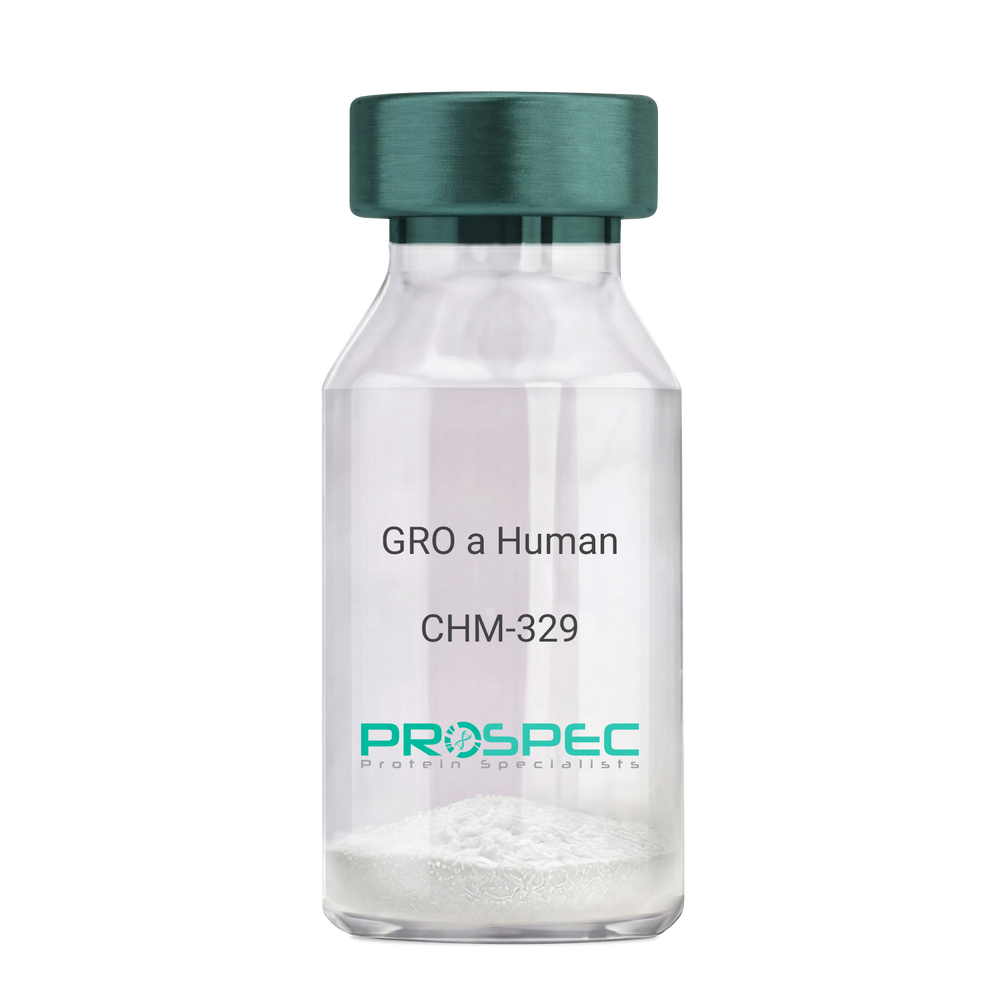
    GRO-Alpha Human Recombinant (CXCL1)

    Growth-regulated protein alpha, CXCL1, Melanoma growth stimulatory activity, MGSA, Neutrophil-activating protein 3, NAP-3, GRO-alpha (1-73), chemokine (C-X-C motif) ligand 1, GRO1, GROa, SCYB1, MGSA-a, MGSA alpha.

    Product # :

    CHM-329

    Price :

    Quantity :

    Shipping Method :

    Room Temp Icon

    Shipped at Room temp

    Add To Cart

    More Info

    • description
    • source
    • formulation
    • purity
    • biological activity
    • More Info
    • sds-page
    • Citations

    Description

    GRO Alpha Human Recombinant produced in E.Coli is a single,non-glycosylated, polypeptide chain containing 73 amino acids and having a molecular mass of 7811 Dalton. The GRO-alpha is purified by proprietary chromatographic techniques.

    Source

    Escherichia Coli.

    Formulation

    Lyophilized from a 0.2µm filtered concentrated (1mg/ml) solution in 20mM PB, pH 7.4, 50mM NaCl.

    Purity

    Greater than 97.0% as determined by:
    (a) Analysis by RP-HPLC.
    (b) Analysis by SDS-PAGE.

    Biological Activity

    Determined by its ability to chemoattract human peripheral blood neutrophils using a concentration range of 10.0-100.0 ng/ml.

    sds-page

    CXCL1 Human SDS-PAGE - Product image 1

    Citations

    More Info

    • Introduction

      Chemokine (C-X-C motif) ligand 1 (CXCL1) is a small cytokine belonging to the CXC chemokine family that was previously called GRO1 oncogene, Neutrophil-activating protein 3 (NAP-3) and melanoma growth stimulating activity, alpha (MSGA-a). It is secreted by human melanoma cells, has mitogenic properties and is implicated in melanoma pathogenesis. CXCL1 is expressed by macrophages, neutrophilsand epithelial cells, and has neutrophil chemoattractant activity. CXCL1 plays a role in spinal cord development by inhibiting the migration of oligodendrocyte precursors and is involved in the processes of angiogenesis, inflammation, wound healing, and tumorigenesis. This chemokine elicits its effects by signaling through the chemokine receptor CXCR2. The gene for CXCL1 is located on human chromosome 4 amongst genes for other CXC chemokines.

    • Synonyms

      Growth-regulated protein alpha, CXCL1, Melanoma growth stimulatory activity, MGSA, Neutrophil-activating protein 3, NAP-3, GRO-alpha (1-73), chemokine (C-X-C motif) ligand 1, GRO1, GROa, SCYB1, MGSA-a, MGSA alpha.

    • Physical Appearance

      Sterile Filtered White lyophilized (freeze-dried) powder.

    • Stability

      Lyophilized GRO-alpha although stable at room temperature for 3 weeks, should be stored desiccated below -18°C. Upon reconstitution CXCL1 should be stored at 4°C between 2-7 days and for future use below -18°C. For long term storage it is recommended to add a carrier protein (0.1% HSA or BSA).Please prevent freeze-thaw cycles.

    • Solubility

      It is recommended to reconstitute the lyophilized CXCL1 in sterile 18MΩ-cm H2O not less than 100µg/ml, which can then be further diluted to other aqueous solutions.

    • Amino Acid Sequence

      The sequence of the first five N-terminal amino acids was determined and was found to be Ala-Ser-Val-Ala-Thr.

    • Background

      What is the molecular weight/Mw of CXCL1 HUMAN Protein?
      CXCL1 HUMAN Protein has a total Mw of 7.81kDa.

      What is the source or expression system of CXCL1 HUMAN Protein?
      Escherichia Coli.

      What is the Purity of CXCL1 HUMAN Protein?
      CXCL1 HUMAN Protein is >97% pure as determined by SDS-PAGE.

      What is the Biological Activity of CXCL1 HUMAN Protein?
      Determined by its ability to chemoattract human peripheral blood neutrophils using a concentration range of 10.0-100.0 ng/ml.

      What is the amino acid sequence of CXCL1 HUMAN Protein?
      The sequence of the first five N-terminal amino acids was determined and was found to be Ala-Ser-Val-Ala-Thr.

      What applications can CXCL1 HUMAN Protein be used in?
      CXCL1 HUMAN Protein can probably be used in western blot, ELISA and Lateral Flow.

      What is the endotoxin level for CXCL1 HUMAN Protein?
      The endotoxin level is minimal, CXCL1 HUMAN Protein was purified using conventional chromatography techniques.

      Who supplies recombinant CXCL1 HUMAN that is in stock and available to order?
      ProSpec has the protein in stock and available for immediate delivery.

      Where can I order bulk mg quantities of CXCL1 HUMAN?
      ProSpec supplies bulk mg quantities at affordable prices that meets research and academic budgets.

    ProSpec's products are furnished for LABORATORY RESEARCH USE ONLY. The product may not be used as drugs, agricultural or pesticidal products, food additives or household chemicals.

    Gro A Human
  • View Data Sheet

    Name :

    CXCL3 Human

    Description:

    GRO-Gamma Human Recombinant (CXCL3)

    Macrophage inflammatory protein 2-beta, MIP2-beta, CXCL3, Growth-regulated protein gamma, GRO-gamma, GRO-gamma(1-73), GRO3, GROg, MIP2B, SCYB3, MIP-2b, CINC-2b, MGSA gamma.

    Product # :

    CHM-310

    Price :

    Quantity :

    Shipping Method :

    Room Temp Icon

    Shipped at Room temp

    Add To Cart

    More Info

    • description
    • source
    • formulation
    • purity
    • biological activity
    • More Info
    • sds-page
    • Citations

    Description

    GRO-Gamma Human Recombinant produced in E.Coli is a single, non-glycosylated, polypeptide chain containing 73 amino acids and having a molecular mass of 7902 Dalton. The CXCL3 is purified by proprietary chromatographic techniques.

    Source

    Escherichia Coli.

    Formulation

    The protein was lyophilized with no additives.

    Purity

    Greater than 98.0% as determined by:
    (a) Analysis by RP-HPLC.
    (b) Analysis by SDS-PAGE.

    Biological Activity

    The Biological activity is calculated by its ability to chemoattract CXCR2 transfected 293 cells using 10-100ng/ml corresponding to a Specific Activity of 10,000-100,000IU/mg.

    sds-page

    CXCL3 Human SDS-PAGE - Product image 1

    Citations

    More Info

    • Introduction

      Chemokine (C-X-C motif) ligand 3 (CXCL3) is a small cytokine belonging to the CXC chemokine family that is also known as GRO3 oncogene (GRO3), GRO protein gamma (GROg) and macrophage inflammatory protein-2-beta (MIP2b). CXCL3 controls migration and adhesion of monocytes and mediates it effects on its target cell by interacting with a cell surface chemokine receptor called CXCR2. The gene for CXCL3 is located on chromosome 4 in a cluster of other CXC chemokines.

    • Synonyms

      Macrophage inflammatory protein 2-beta, MIP2-beta, CXCL3, Growth-regulated protein gamma, GRO-gamma, GRO-gamma(1-73), GRO3, GROg, MIP2B, SCYB3, MIP-2b, CINC-2b, MGSA gamma.

    • Physical Appearance

      Sterile Filtered White lyophilized (freeze-dried) powder.

    • Stability

      Lyophilized GRO-gamma although stable at room temperature for 3 weeks, should be stored desiccated below -18°C. Upon reconstitution CXCL3 should be stored at 4°C between 2-7 days and for future use below -18°C. For long term storage it is recommended to add a carrier protein (0.1% HSA or BSA).Please prevent freeze-thaw cycles.

    • Solubility

      It is recommended to reconstitute the lyophilized CXCL3 in sterile 18MΩ-cm H2O not less than 100µg/ml, which can then be further diluted to other aqueous solutions.

    • Amino Acid Sequence

      The sequence of the first five N-terminal amino acids was determined and was found to be Ala-Ser-Val-Val-Thr.

    • Background

      What is the molecular weight/Mw of CXCL3 HUMAN Protein?
      CXCL3 HUMAN Protein has a total Mw of 7.9kDa.

      What is the source or expression system of CXCL3 HUMAN Protein?
      Escherichia Coli.

      What is the Purity of CXCL3 HUMAN Protein?
      CXCL3 HUMAN Protein is >98% pure as determined by SDS-PAGE.

      What is the Biological Activity of CXCL3 HUMAN Protein?
      The Biological activity is calculated by its ability to chemoattract CXCR2 transfected 293 cells using 10-100ng/ml corresponding to a Specific Activity of 10,000-100,000IU/mg.

      What is the amino acid sequence of CXCL3 HUMAN Protein?
      The sequence of the first five N-terminal amino acids was determined and was found to be Ala-Ser-Val-Val-Thr.

      What applications can CXCL3 HUMAN Protein be used in?
      CXCL3 HUMAN Protein can probably be used in western blot, ELISA and Lateral Flow.

      What is the endotoxin level for CXCL3 HUMAN Protein?
      The endotoxin level is minimal, CXCL3 HUMAN Protein was purified using conventional chromatography techniques.

      Who supplies recombinant CXCL3 HUMAN that is in stock and available to order?
      ProSpec has the protein in stock and available for immediate delivery.

      Where can I order bulk mg quantities of CXCL3 HUMAN?
      ProSpec supplies bulk mg quantities at affordable prices that meets research and academic budgets.

    ProSpec's products are furnished for LABORATORY RESEARCH USE ONLY. The product may not be used as drugs, agricultural or pesticidal products, food additives or household chemicals.

    Gro Gamma Human
  • View Data Sheet

    Name :

    CTF2P Mouse

    Description:

    Neuropoietin Mouse Recombinant

    Cardiotrophin-2, CT-2, Neuropoietin, Np, Ctf2, Gm494.

    Product # :

    CYT-1128

    Price :

    Quantity :

    Shipping Method :

    Room Temp Icon

    Shipped at Room temp

    Add To Cart

    More Info

    • description
    • source
    • formulation
    • purity
    • biological activity
    • More Info
    • Citations

    Description

    Neuropoietin Mouse Recombinant produced in E.Coli is a non-glycosylated polypeptide chain containing 182 amino acids and having a molecular mass of approximately 19.7kDa.CTF2P is purified by proprietary chromatographic techniques.

    Source

    Escherichia Coli.

    Formulation

    Lyophilized from a 0.2μm filtered concentrated solution in 20mM Tris-HCl, pH 8.0, 0.5mM DTT and 500mM NaCl.

    Purity

    Greater than 98.0% as determined by:
    (a) Analysis by RP-HPLC.
    (b) Analysis by SDS-PAGE.

    Biological Activity

    The ED50 as determined by a cell proliferation assay using human TF-1 cells is < 200 ng/ml, corresponding to a specific activity of > 5000 IU/mg.

    Citations

    More Info

    • Introduction

      CTF2P, aka Neuropoietinis a part of the IL-6 family of cytokines. CTF2P is the outcome of a gene duplication event involving cardiotrophin-1 (CT-1) and it helps to define a subfamily within the IL-6 family that includes CT-1, CLC and CTNF. CTF2P Increases the platelet count associated with splenomegaly and takes part in neuronal precursor development and maturation.

    • Synonyms

      Cardiotrophin-2, CT-2, Neuropoietin, Np, Ctf2, Gm494.

    • Physical Appearance

      Sterile Filtered White lyophilized (freeze-dried) powder.

    • Stability

      Lyophilized CTF2P although stable at room temperature for 3 weeks, should be stored desiccated below -18°C. Upon reconstitution Neuropoietin should be stored at 4°C between 2-7 days and for future use below -18°C. Please prevent freeze-thaw cycles.

    • Solubility

      It is recommended to reconstitute the lyophilized Neuropoietin in sterile PBS not less than 100µg/ml, which can then be further diluted to other aqueous solutions.

    • Amino Acid Sequence

      APISPSEPIG QAYSLALYMQ KNTSALLQTY LQHQGSPFSD PGFSAPELQL STLPSAAVSF KTWHAMEDAE RLSRAQGAFL ALTQHLQLVG DDQSYLNPGS PILLAQLGAA RLRAQGLLGN MAAIMTALGL PIPPEEDTLG FVPFGASAFE RKCRGYIVTR EYGHWTDRAV RDLALLKAKY SA.

    • Background

      What is the molecular weight/Mw of CTF2P Protein?
      CTF2P Protein has a total Mw of 19.7kDa.

      What is the source or expression system of CTF2P Protein?
      Escherichia Coli.

      What is the Purity of CTF2P Protein?
      CTF2P Protein is >98% pure as determined by SDS-PAGE.

      What is the Biological Activity of CTF2P Protein?
      The ED50 as determined by a cell proliferation assay using human TF-1 cells is < 200 ng/ml, corresponding to a specific activity of > 5000 IU/mg.

      What is the amino acid sequence of CTF2P Protein?
      APISPSEPIG QAYSLALYMQ KNTSALLQTY LQHQGSPFSD PGFSAPELQL STLPSAAVSF KTWHAMEDAE RLSRAQGAFL ALTQHLQLVG DDQSYLNPGS PILLAQLGAA RLRAQGLLGN MAAIMTALGL PIPPEEDTLG FVPFGASAFE RKCRGYIVTR EYGHWTDRAV RDLALLKAKY SA.

      What applications can CTF2P Protein be used in?
      CTF2P Protein can probably be used in western blot, ELISA and Lateral Flow.

      What is the endotoxin level for CTF2P Protein?
      The endotoxin level is minimal, CTF2P Protein was purified using conventional chromatography techniques.

    ProSpec's products are furnished for LABORATORY RESEARCH USE ONLY. The product may not be used as drugs, agricultural or pesticidal products, food additives or household chemicals.

    Neuropoietin Mouse
  • View Data Sheet

    Name :

    4 1BBR Human

    Description:

    4-1BB Receptor Human Recombinant

    Tumor necrosis factor receptor superfamily member 9, 4-1BB ligand receptor T-cell, antigen 4-1BB homolog, T-cell antigen ILA, CD137 antigen, CDw137, ILA, 4-1BB, MGC2172, 4-1BBR, TNFRSF9.

    Product # :

    CYT-463

    Price :

    Quantity :

    Shipping Method :

    Room Temp Icon

    Shipped at Room temp

    Add To Cart

    More Info

    • description
    • source
    • formulation
    • purity
    • biological activity
    • More Info
    • Citations

    Description

    4-1BB Soluble Receptor Recombinant Human also called Tumor necrosis factor receptor superfamily member 9 produced in E.Coli is a single, non-glycosylated polypeptide chain containing 167 amino acids, having a molecular mass of 17718 Dalton and containing the cysteine rich TNFR-like extracellular domain of 4-1BB Receptor. The 4-1BB Receptor is purified by proprietary chromatographic techniques.

    Source

    Escherichia Coli.

    Formulation

    Lyophilized from a concentrated (1mg/ml) solution in water containing no additives.

    Purity

    Greater than 98.0% as determined by: (a) Analysis by RP-HPLC. (b) Analysis by SDS-PAGE.

    Biological Activity

    The activity was determined by the inhibition of 4-1BB ligand mediated stimulation of IL-8 production by human PBMC. Results: 90% inhibition using 1µg for both 4-1BB ligand and 4-1BB receptor.

    Citations

    More Info

    • Introduction

      The protein encoded by this gene is a member of the TNF-receptor superfamily. This receptor contributes to the clonal expansion, survival, and development of T cells. It can also induce proliferation in peripheral monocytes, enhance T cell apoptosis induced by TCR/CD3 triggered activation, and regulate CD28 co-stimulation to promote Th1 cell responses. The expression of this receptor is induced by lymphocyte activation. TRAF adaptor proteins have been shown to bind to this receptor and transduce the signals leading to activation of NF-kappaB.

    • Synonyms

      Tumor necrosis factor receptor superfamily member 9, 4-1BB ligand receptor T-cell, antigen 4-1BB homolog, T-cell antigen ILA, CD137 antigen, CDw137, ILA, 4-1BB, MGC2172, 4-1BBR, TNFRSF9.

    • Physical Appearance

      Sterile Filtered White lyophilized (freeze-dried) powder.

    • Stability

      Lyophilized 4-1BB Receptor although stable at room temperature for 3 weeks, should be stored desiccated below -18°C. Upon reconstitution 4-1BBR should be stored at 4°C between 2-7 days and for future use below -18°C. For long term storage it is recommended to add a carrier protein (0.1% HSA or BSA). Please prevent freeze-thaw cycles.

    • Solubility

      It is recommended to reconstitute the lyophilized 4-1BB Receptor in sterile 18MΩ-cm H2O not less than 100µg/ml, which can then be further diluted to other aqueous solutions.

    • Amino Acid Sequence

      The sequence of the first five N-terminal amino acids was determined and was found to be Met-Glu-Arg-Thr-Arg.

    ProSpec's products are furnished for LABORATORY RESEARCH USE ONLY. The product may not be used as drugs, agricultural or pesticidal products, food additives or household chemicals.

    4 1BBR Human
  • View Data Sheet

    Name :

    MIP 1b Human

    Description:

    Macrophage Inflammatory Protein-1 Beta Human Recombinant (CCL4)

    Small inducible cytokine A4, CCL4, Macrophage inflammatory protein 1-beta, MIP-1- beta, MIP-1-beta(1-69), T-cell activation protein 2, ACT-2, PAT 744, H400, SIS-gamma, Lymphocyte activation gene 1 protein, LAG-1, HC21, G-26 T-lymphocyte-secreted protein, chemokine (C-C motif) ligand 4, ACT2, G-26, LAG1, MIP1B, SCYA4, AT744.1, MGC104418, MGC126025, MGC126026.

    Product # :

    CHM-276

    Price :

    Quantity :

    Shipping Method :

    Room Temp Icon

    Shipped at Room temp

    Add To Cart

    More Info

    • description
    • source
    • formulation
    • purity
    • biological activity
    • More Info
    • Citations

    Description

    Macrophage Inflammatory Protein-1 beta Human Recombinant produced in E.Coli is a single, non-glycosylated, polypeptide chain containing 69 amino acids and having a molecular mass of 7620 Dalton. The CCL4 is purified by proprietary chromatographic techniques.

    Source

    Escherichia Coli.

    Formulation

    Lyophilized from a concentrated (1mg/ml) solution in water containing no additives.

    Purity

    Greater than 99.0% as determined by:
    (a) Analysis by RP-HPLC.
    (b) Analysis by SDS-PAGE.

    Biological Activity

    The Activity is calculated by the ability to chemoattract Human blood monocytes using a concentration of 5-20ng/ml corresponding to a Specific Activity of 50,000-200,000IU/mg.

    Citations

    More Info

    • Introduction

      Macrophage Inflammatory Proteins belong to the family of chemotactic cytokines known as chemokines. In humans, there are two major forms, MIP-1a and MIP-1b that are now also named CCL3 and CCL4. Both factors are produced by macrophages after they are stimulated with bacterial endotoxins. MIP-1a and MIP-1b activate human granulocytes (neutrophils, eosinophils and basophils) which can lead to acute neutrophilic inflammation. MIP-1a and MIP-1b induce synthesis and release of other pro-inflammatory cytokines such as interleukin-1 (IL-1), IL-6 and TNF-alpha from fibroblasts and macrophages. CCL3 and CCL4 genes are both located on human chromosome 17.

    • Synonyms

      Small inducible cytokine A4, CCL4, Macrophage inflammatory protein 1-beta, MIP-1- beta, MIP-1-beta(1-69), T-cell activation protein 2, ACT-2, PAT 744, H400, SIS-gamma, Lymphocyte activation gene 1 protein, LAG-1, HC21, G-26 T-lymphocyte-secreted protein, chemokine (C-C motif) ligand 4, ACT2, G-26, LAG1, MIP1B, SCYA4, AT744.1, MGC104418, MGC126025, MGC126026.

    • Physical Appearance

      Sterile Filtered White lyophilized (freeze-dried) powder.

    • Stability

      Lyophilized MIP-1b although stable at room temperature for 3 weeks, should be stored desiccated below -18°C. Upon reconstitution CCL4 should be stored at 4°C between 2-7 days and for future use below -18°C. For long term storage it is recommended to add a carrier protein (0.1% HSA or BSA).Please prevent freeze-thaw cycles.

    • Solubility

      It is recommended to reconstitute the lyophilized Macrophage Inflammatory Protein-1b in sterile 18MΩ-cm H2O not less than 100µg/ml, which can then be further diluted to other aqueous solutions.

    • Amino Acid Sequence

      The sequence of the first five N-terminal amino acids was determined and was found to be, Ala-Pro-Met-Gly-Ser.

    • Background

      What is the molecular weight/Mw of MIP 1B HUMAN Protein?
      MIP 1B HUMAN Protein has a total Mw of 7.62kDa.

      What is the source or expression system of MIP 1B HUMAN Protein?
      Escherichia Coli.

      What is the Purity of MIP 1B HUMAN Protein?
      MIP 1B HUMAN Protein is >99% pure as determined by SDS-PAGE.

      What is the Biological Activity of MIP 1B HUMAN Protein?
      The Activity is calculated by the ability to chemoattract Human blood monocytes using a concentration of 5-20ng/ml corresponding to a Specific Activity of 50,000-200,000IU/mg.

      What is the amino acid sequence of MIP 1B HUMAN Protein?
      The sequence of the first five N-terminal amino acids was determined and was found to be, Ala-Pro-Met-Gly-Ser.

      What applications can MIP 1B HUMAN Protein be used in?
      MIP 1B HUMAN Protein can probably be used in western blot, ELISA and Lateral Flow.

      What is the endotoxin level for MIP 1B HUMAN Protein?
      The endotoxin level is minimal, MIP 1B HUMAN Protein was purified using conventional chromatography techniques.


    ProSpec's products are furnished for LABORATORY RESEARCH USE ONLY. The product may not be used as drugs, agricultural or pesticidal products, food additives or household chemicals.

    Mip 1B Human
  • View Data Sheet

    Name :

    DHH (C23II) Human

    Description:

    Desert Hedgehog (C23II) Human Recombinant

    HHG-3, Desert Hedgehog homolog, MGC35145, Desert hedgehog protein, DHH.

    Product # :

    CYT-362

    Price :

    Quantity :

    Shipping Method :

    Room Temp Icon

    Shipped at Room temp

    Add To Cart

    More Info

    • description
    • source
    • formulation
    • purity
    • biological activity
    • More Info
    • Citations

    Description

    DHH (C23II) Human Recombinant produced in E.Coli is a single, non-glycosylated polypeptide chain containing 177 amino acids and having a molecular mass of 19.9kDa. The DHH (C23II) is purified by proprietary chromatographic techniques.

    Source

    Escherichia Coli.

    Formulation

    Lyophilized from a 0.2µm filtered concentrated solution in 1×PBS, pH 7.4.

    Purity

    Greater than 95.0% as determined by:
    (a) Analysis by RP-HPLC.
    (b) Analysis by SDS-PAGE.

    Biological Activity

    The Biological Activity was determined by its ability to induce alkaline phosphatase production by C3H/10T1/2 (CCL-226) cells. The expected ED50 for this effect is 15-45 μg/ml.

    Citations

    More Info

    • Introduction

      DHH is part of the Hedgehog family which encodes signaling molecules that are involved in regulating morphogenesis. DHH protein is a precursor that is autocatalytically cleaved, the N-terminal portion is soluble and contains the signalling activity while the C-terminal portion is involved in precursor processing. Additionally, the C-terminal product covalently attaches a cholesterol moiety to the N-terminal product, restricting the N-terminal product to the cell surface and preventing it from freely diffusing throughout the organism. Defects in DHH protein have been associated with partial gonadal dysgenesis (PGD) accompanied by minifascicular polyneuropathy. DHH plays a role both male gonadal differentiation and perineurial development.
      DHH plays a role in intercellular signaling which is essential for a variety of patterning events during development. DHH functions as a spermatocyte survival factor in the testes & is essential for testes development.

    • Synonyms

      HHG-3, Desert Hedgehog homolog, MGC35145, Desert hedgehog protein, DHH.

    • Physical Appearance

      Sterile Filtered White lyophilized (freeze-dried) powder.

    • Stability

      Lyophilized DHH (C23II) although stable at room temperature for 3 weeks, should be stored desiccated below -18°C. Upon reconstitution DHH (C23II) should be stored at 4°C between 2-7 days and for future use below -18°C. For long term storage it is recommended to add a carrier protein (0.1% HSA or BSA).Please prevent freeze-thaw cycles.

    • Solubility

      It is recommended to reconstitute the lyophilized DHH (C23II) in sterile 18M-cm H2O not less than 100µg/ml, which can then be further diluted to other aqueous solutions.

    • Amino Acid Sequence

      IIGPGRGPVG RRRYARKQLV PLLYKQFVPG VPERTLGASG PAEGRVARGS ERFRDLVPNY NPDIIFKDEE NSGADRLMTE RCKERVNALA IAVMNMWPGV RLRVTEGWDE DGHHAQDSLH YEGRALDITT SDRDRNKYGL LARLAVEAGF DWVYYESRNH VHVSVKADNS LAVRAGG.

    ProSpec's products are furnished for LABORATORY RESEARCH USE ONLY. The product may not be used as drugs, agricultural or pesticidal products, food additives or household chemicals.

    Dhh C23Ii Human
  • View Data Sheet

    Name :

    TNFRSF8 Mouse

    Description:

    CD30 Ligand Receptor Mouse Recombinant

    Tumor Necrosis Factor Receptor Superfamily, Member 8, Lymphocyte Activation Antigen CD30, CD30L Receptor, Ki-1 Antigen, D1S166E, CD30, Cytokine Receptor CD30, CD30 Antigen, Ki-1

    Product # :

    CYT-1165

    Price :

    Quantity :

    Shipping Method :

    Ice Icon

    Shipped with Ice Packs

    Add To Cart

    More Info

    • description
    • source
    • formulation
    • purity
    • More Info
    • Citations

    Description

    TNFRSF8 Mouse Recombinant produced in Baculovirus is a single glycosylated polypeptide chain containing 479 amino acids (19-258 aa) and having a molecular mass of 52.2kDa.TNFRSF8 is fused to a 239 amino acid hIgG-His tag at C-terminus and purified by proprietary chromatographic techniques.

    Source

    Sf9, Baculovirus cells.

    Formulation

    TNFRSF8 protein (1mg/ml) contains 10% glycerol and Phosphate-Buffered Saline (pH 7.4).

    Purity

    Greater than 90.0% as determined by SDS-PAGE.

    Citations

    More Info

    • Introduction

      Tumor necrosis factor receptor superfamily member 8 (TNFRSF8) is a receptor for TNFSF8/CD30L. TNFRSF8 has a role in the regulation of cellular growth and transformation of activated lymphoblasts. In addition, the TNFRSF8 protein regulates gene expression via activation of NF-kappa-B. TNFRSF8 being a regulator of apoptosis, induces cell death or proliferation, depending on the cell type.

    • Synonyms

      Tumor Necrosis Factor Receptor Superfamily, Member 8, Lymphocyte Activation Antigen CD30, CD30L Receptor, Ki-1 Antigen, D1S166E, CD30, Cytokine Receptor CD30, CD30 Antigen, Ki-1

    • Physical Appearance

      Sterile Filtered colorless solution.

    • Stability

      Store at 4°C if entire vial will be used within 2-4 weeks. Store, frozen at -20°C for longer periods of time. For long term storage it is recommended to add a carrier protein (0.1% HSA or BSA).Avoid multiple freeze-thaw cycles.

    • Amino Acid Sequence

      FPTDRPLKTT CAGDLSHYPG EAARNCCYQC PSGLSPTQPC PRGPAHCRKQ CAPDYYVNED GKCTACVTCL PGLVEKAPCS GNSPRICECQ PGMHCCTPAV NSCARCKLHC SGEEVVKSPG TAKKDTICEL PSSGSGPNCS NPGDRKTLTS HATPQAMPTL ESPANDSARS LLPMRVTNLV QEDATELVKV PESSSSKARE PSPDPGNAEK NMTLELPSPG TLPDISTSEN SKEPASTAST LEPKSCDKTH TCPPCPAPEL LGGPSVFLFP PKPKDTLMIS RTPEVTCVVV DVSHEDPEVK FNWYVDGVEV HNAKTKPREE QYNSTYRVVS VLTVLHQDWL NGKEYKCKVS NKALPAPIEK TISKAKGQPR EPQVYTLPPS RDELTKNQVS LTCLVKGFYP SDIAVEWESN GQPENNYKTT PPVLDSDGSF FLYSKLTVDK SRWQQGNVFS CSVMHEALHN HYTQKSLSLS PGKHHHHHH

    ProSpec's products are furnished for LABORATORY RESEARCH USE ONLY. The product may not be used as drugs, agricultural or pesticidal products, food additives or household chemicals.

    Cd30 Mouse
  • View Data Sheet

    Name :

    SAA Paired Antibody

    Description:

    Anti Human Serum Amyloid A (APO-SAA) Paired Antibody Mouse

    Product # :

    ANT-785

    Price :

    Quantity :

    Shipping Method :

    Ice Icon

    Shipped with Ice Packs

    Add To Cart

    More Info

    • description
    • formulation
    • purity
    • More Info
    • Citations

    Description

    SAA Paired monoclonal antibodies are used to develop rapid test for serum amyloid A protein rapid test. Please note that when ordering for example: 100µg paired antibody, you receive 50µg from each antibody (100µg in total).

    Formulation

    *SAA conjugation antibody in PBS, NaCl and 0.095% NaN3.

    * SAA coating antibody in PBS, NaCl and 0.095% NaN3.

    Purity

    Greater than 95%.

    Citations

    More Info

    • Physical Appearance

      2 vials of sterile Filtered clear colorless solution.

    • Stability

      For periods up to 1month SAA Paired Antibody should be stored at 4°C, for longer periods of time, store at -20°C. Prevent freeze thaw cycles.

    • Applications

      Lateral flow immunoassay.

    • Background

      Serum amyloid A protein which is encoded by the SAA gene in humans, is a member of the SAA family. SAA is expressed by the liver and secreted in plasma. Serum amyloid A is the main acute phase reactant and apolipoprotein of the HDL complex. Elevated serum SAA protein levels may be linked with lung cancer. The level of Apo-SAA in plasma increases within 24 hours of an inflammatory stimulus and under these conditions is the most abundant HDL Apolipoprotein.

    • Type

      Mouse antibody Monoclonal.

    • Purification Method

      Purified monoclonal IgG1 by protein A chromatography.

    ProSpec's products are furnished for LABORATORY RESEARCH USE ONLY. The product may not be used as drugs, agricultural or pesticidal products, food additives or household chemicals.

    Saa Antibody
  • View Data Sheet

    Name :

    BMPR1B Human

    Description:

    Bone Morphogenetic protein Receptor-1B Human Recombinant

    Bone Morphogenetic Protein Receptor, Type IB, BMP Type-1B Receptor, EC 2.7.11.30, BMPR-1B, ALK6, Bone Morphogenetic Protein Receptor Type-1B, Serine/Threonine Receptor Kinase, CDw293 Antigen, EC 2.7.11, CDw293, ALK-6, Bone morphogenetic protein receptor type-1B.

    Product # :

    CYT-897

    Price :

    Quantity :

    Shipping Method :

    Ice Icon

    Shipped with Ice Packs

    Add To Cart

    More Info

    • description
    • source
    • formulation
    • purity
    • More Info
    • Citations

    Description

    BMPR1B Human Recombinant produced in E.Coli is a single, non-glycosylated polypeptide chain containing 136 amino acids (14-126 a.a) and having a molecular mass of 15.1kDa. BMPR1B is fused to a 23 amino acid His-tag at N-terminus & purified by proprietary chromatographic techniques.

    Source

    Escherichia Coli.

    Formulation

    BMPR1B protein solution (0.5mg/ml) containing Phosphate buffered saline (pH7.4), 20% glycerol, 1mM DTT and 0.1mM PMSF.

    Purity

    Greater than 80.0% as determined by SDS-PAGE.

    Citations

    More Info

    • Introduction

      Bone Morphogenetic protein Receptor-1B, also known as BMPR1B belongs to the TKL Ser/Thr protein kinase family. BMPR1Bis on ligand binding, forms a receptor complex consisting of two type II and two type I transmembrane serine/threonine kinases. Type II receptors phosphorylate as well as activate type I receptors which autophosphorylate, afterward bind and activate SMAD transcriptional regulators. BMPR1B is receptor for BMP7/OP-1 as well as GDF5.

    • Synonyms

      Bone Morphogenetic Protein Receptor, Type IB, BMP Type-1B Receptor, EC 2.7.11.30, BMPR-1B, ALK6, Bone Morphogenetic Protein Receptor Type-1B, Serine/Threonine Receptor Kinase, CDw293 Antigen, EC 2.7.11, CDw293, ALK-6, Bone morphogenetic protein receptor type-1B.

    • Physical Appearance

      Sterile Filtered colorless solution.

    • Stability

      Store at 4°C if entire vial will be used within 2-4 weeks. Store, frozen at -20°C for longer periods of time. For long term storage it is recommended to add a carrier protein (0.1% HSA or BSA).Avoid multiple freeze-thaw cycles.

    • Amino Acid Sequence

      MGSSHHHHHH SSGLVPRGSH MGSKKEDGES TAPTPRPKVL RCKCHHHCPE DSVNNICSTD GYCFTMIEED DSGLPVVTSG CLGLEGSDFQ CRDTPIPHQR RSIECCTERN ECNKDLHPTL PPLKNRDFVD GPIHHR.

    • Background

      Bone Morphogenetic Protein Receptor-1B Human Recombinant: A Key Regulator of Cellular Signaling in Development and Disease

      Abstract:

      Bone Morphogenetic Protein Receptor-1B (BMPR1B) human recombinant is a critical component of the bone morphogenetic protein (BMP) signaling pathway, governing cellular processes such as embryogenesis, tissue homeostasis, and disease progression. This research paper provides a comprehensive analysis of BMPR1B, including its characteristics, signaling mechanisms, and potential therapeutic applications. Additionally, innovative methodologies for the production and optimization of BMPR1B human recombinant are proposed, shedding light on its future implications in the field of regenerative medicine.

      Introduction:

      The precise regulation of cellular signaling pathways is essential for proper development and tissue maintenance. BMPR1B, a key receptor in the BMP pathway, plays a crucial role in various biological processes. This paper explores the unique features of BMPR1B and presents novel approaches for its production and optimization, aiming to unravel its therapeutic potential in a wide range of developmental and disease contexts.

      Characteristics and Signaling Mechanisms:

      BMPR1B belongs to the serine/threonine kinase receptor family and is predominantly expressed in embryonic tissues, skeletal structures, and reproductive organs. Upon binding to BMP ligands, BMPR1B initiates downstream signaling cascades, including Smad-dependent and Smad-independent pathways. These pathways regulate gene expression, cellular proliferation, differentiation, and apoptosis, ultimately influencing tissue development and homeostasis.

      Production of BMPR1B Human Recombinant:

      Efficient production methodologies are pivotal for harnessing the therapeutic potential of BMPR1B human recombinant. Mammalian expression systems, such as Chinese hamster ovary (CHO) cells, have been widely employed to ensure proper folding and post-translational modifications of the receptor. Optimization strategies, including codon optimization and vector engineering, have been utilized to enhance production efficiency. Purification techniques, such as affinity chromatography and size exclusion chromatography, have been optimized to obtain high-quality BMPR1B recombinant protein.

      Potential Therapeutic Applications:

      BMPR1B human recombinant holds tremendous promise in the field of regenerative medicine and disease therapy. Dysregulation of the BMP signaling pathway has been implicated in various developmental disorders, including skeletal abnormalities and congenital malformations. Modulating BMPR1B activity using BMPR1B human recombinant may offer a targeted approach for promoting tissue regeneration and repair in these conditions. Furthermore, BMPR1B signaling is involved in several diseases, such as cancer and cardiovascular disorders, highlighting its potential as a therapeutic target for intervention.

      Conclusion:

      BMPR1B human recombinant represents a vital regulator in cellular signaling, with significant implications in development and disease. Optimizing production methodologies and expanding our understanding of its signaling mechanisms will further enhance its therapeutic potential. With its involvement in various biological processes and disease contexts, BMPR1B human recombinant emerges as a promising tool for regenerative medicine and targeted therapeutics.

      What is the molecular weight/Mw of BMPR1B Protein?
      BMPR1B Protein has a total Mw of 15.1kDa.

      What is the source or expression system of BMPR1B Protein?
      Escherichia Coli.

      What is the Purity of BMPR1B Protein?
      BMPR1B Protein is >80% pure as determined by SDS-PAGE.

      What is the Biological Activity of BMPR1B Protein?
      The biological functionality of BMPR1B Protein will be determined in the future.

      What is the amino acid sequence of BMPR1B Protein?
      MGSSHHHHHH SSGLVPRGSH MGSKKEDGES TAPTPRPKVL RCKCHHHCPE DSVNNICSTD GYCFTMIEED DSGLPVVTSG CLGLEGSDFQ CRDTPIPHQR RSIECCTERN ECNKDLHPTL PPLKNRDFVD GPIHHR.

      What applications can BMPR1B Protein be used in?
      BMPR1B Protein can probably be used in western blot, ELISA and Lateral Flow.

      What is the endotoxin level for BMPR1B Protein?
      The endotoxin level is minimal, BMPR1B Protein was purified using conventional chromatography techniques.

    ProSpec's products are furnished for LABORATORY RESEARCH USE ONLY. The product may not be used as drugs, agricultural or pesticidal products, food additives or household chemicals.

    Bmpr1B Human
  • View Data Sheet

    Name :

    CAMP Human

    Description:

    Cathelicidin Antimicrobial Peptide Human Recombinant

    CAP-18, CAP18, CRAMP, FALL-39, FALL39, HSD26, LL37, 18 kDa cationic antimicrobial protein, FALL-39 peptide antibiotic, Cathelicidin antimicrobial peptide.

    Product # :

    PRO-1405

    Price :

    Quantity :

    Shipping Method :

    Ice Icon

    Shipped with Ice Packs

    Add To Cart

    More Info

    • description
    • source
    • formulation
    • purity
    • More Info
    • Citations

    Description

    CAMP Human Recombinant produced in E.Coli is a single, non-glycosylated polypeptide chain containing 163 amino acids (34-173 a.a.) and having a molecular mass of 18.4kDa.CAMP is fused to a 23 amino acid His-tag at N-terminus.

    Source

    Escherichia Coli.

    Formulation

    CAMP protein solution (0.5mg/ml) contains 20mM Tris-HCl buffer (pH 8.0), 0.4M UREA and 10% glycerol.

    Purity

    Greater than 85.0% as determined by SDS-PAGE.

    Citations

    More Info

    • Introduction

      CAMP belongs to the antimicrobial peptide family, contains highly conserved N-terminal signal peptide, a cathelin domain and a structurally variable cationic antimicrobial peptide that produced by extracellular proteolysis from the C-terminus. CAMP has numerous functions besides the antimicrobial activity such as: cell chemotaxis, immune mediator induction and inflammatory response regulation.

    • Synonyms

      CAP-18, CAP18, CRAMP, FALL-39, FALL39, HSD26, LL37, 18 kDa cationic antimicrobial protein, FALL-39 peptide antibiotic, Cathelicidin antimicrobial peptide.

    • Physical Appearance

      Sterile Filtered clear solution.

    • Stability

      Store at 4°C if entire vial will be used within 2-4 weeks. Store, frozen at -20°C for longer periods of time. For long term storage it is recommended to add a carrier protein (0.1% HSA or BSA).Avoid multiple freeze-thaw cycles.

    • Amino Acid Sequence

      MGSSHHHHHH SSGLVPRGSH MGSQVLSYKE AVLRAIDGIN QRSSDANLYR LLDLDPRPTM DGDPDTPKPV SFTVKETVCP RTTQQSPEDC DFKKDGLVKR CMGTVTLNQA RGSFDISCDK DNKRFALLGD FFRKSKEKIG KEFKRIVQRI KDFLRNLVPR TES.

    ProSpec's products are furnished for LABORATORY RESEARCH USE ONLY. The product may not be used as drugs, agricultural or pesticidal products, food additives or household chemicals.

    Camp Human
  • View Data Sheet

    Name :

    Omentin Human

    Description:

    Omentin Human Recombinant

    Intelectin-1, HL1, LFR, HL-1, INTL, ITLN, hIntL.

    Product # :

    CYT-301

    Price :

    Quantity :

    Shipping Method :

    Room Temp Icon

    Shipped at Room temp

    Add To Cart

    More Info

    • description
    • source
    • formulation
    • purity
    • More Info
    • Citations

    Description

    Omentin Human Recombinant is produced in E.Coli by recombinant DNA technology is a single, polypeptide chain containing 313 amino acids and having a molecular mass of 35 kDa. Intelectin is purified by proprietary chromatographic techniques.

    Source

    E.Coli.

    Formulation

    Each mg of lyophilized powder contains 10mM NaP, pH-7.5 and 5:1 mannitol to protein.

    Purity

    Greater than 95.0% as determined by SDS-PAGE.

    Citations

    More Info

    • Introduction

      Omentin is a recently recognized gene highly localized to the mental tissue (visceral adipose tissue). Omentin is present in the stromal vascular cells in the adipose tissue rather than in the adipocytes. Omentin is predominantly expressed in the visceral adipose tissue than the subcutaneous tissue, with the omentin mRNA being 150 times higher in the visceral adipose tissue. Omentin has also been detected in human blood using western blot analysis, and seems to increase INSstimulated glucose uptake in 3T3-L1 adipocytes in mice. Omentin seems to increase Akt phosphorylation irrespective of INS presence. Its role in glucose metabolism and obesity remains to be described; an INS-sensitizing action is possible.Differences in Omentin expression has been noted in adipose tissue from normals and patients with inflammatory bowel disease although its significance is unknown.

    • Synonyms

      Intelectin-1, HL1, LFR, HL-1, INTL, ITLN, hIntL.

    • Physical Appearance

      Sterile Filtered White lyophilized (freeze-dried) powder.

    • Stability

      Lyophilized Intelectin although stable at room temperature for 3 weeks, should be stored desiccated below -18°C. Upon reconstitution Intelectin should be stored at 4°C between 2-7 days and for future use below -18°C.For long term storage it is recommended to add a carrier protein (0.1% HSA or BSA).Please prevent freeze-thaw cycles.

    • Solubility

      It is recommended to reconstitute the lyophilized Omentin in sterile 18MΩ-cm H2O not less than 100µg/ml, which can then be further diluted to other aqueous solutions.

    • Amino Acid Sequence

      MNQLSFLLFL IATTRGWSTD EANTYFKEWTCSSSPSLPRS CKEIKDECPS AFDGLYFLRT ENGVIYQTFC DMTSGGGGWT LVASVHENDM RGKCTVGDRW SSQQGSKADY PEGDGNWANY NTFGSAEAAT SDDYKNPGYY DIQAKDLGIW HVPNKSPMQH WRNSSLLRYR TDTGFLQTLG HNLFGIYQKY PVKYGEGKCW TDNGPVIPVV YDFGDAQKTA SYYSPYGQRE FNNERAANAL CAGMRVTGCN TEHHCIGGGG YFPEASPQQC GDFSGFDWSG YGTHVGYSSS REITEAAVLLFYR.

    ProSpec's products are furnished for LABORATORY RESEARCH USE ONLY. The product may not be used as drugs, agricultural or pesticidal products, food additives or household chemicals.

    Omentin Human
  • View Data Sheet

    Name :

    LIFR Human

    Description:

    Leukemia Inhibitory Factor Receptor Alpha Human Recombinant

    Leukemia Inhibitory Factor Receptor Alpha, CD118 Antigen, LIF Receptor, LIF-R, Leukemia Inhibitory Factor Receptor, CD118, SJS2, STWS, SWS, Leukemia inhibitory factor receptor, LIF receptor, LIF-R.

    Product # :

    CYT-949

    Price :

    Quantity :

    Shipping Method :

    Ice Icon

    Shipped with Ice Packs

    Add To Cart

    More Info

    • description
    • source
    • formulation
    • purity
    • More Info
    • Citations

    Description

    LIFR produced in Sf9 Baculovirus cells is a single, glycosylated polypeptide chain containing 798 amino acids (45-833a.a.) and having a molecular mass of 90.5kDa (Molecular size on SDS-PAGE will appear at approximately 100-150kDa). LIFR is expressed with a 6 amino acid His tag at C-Terminus and purified by proprietary chromatographic techniques.

    Source

    Sf9, Baculovirus cells.

    Formulation

    LIFR protein solution (0.5mg/ml) contains Phosphate Buffered Saline (pH 7.4) and 10% glycerol.

    Purity

    Greater than 90.0% as determined by SDS-PAGE.

    Citations

    More Info

    • Introduction

      Leukemia inhibitory factor receptor (LIFR) is the receptor for leukemia inhibitory factor, a pleiotropic cytokine affecting the differentiation, survival, and proliferation of various cells in the adult and the embryo. LIFR plays an imperative role in a number of aspects of early pregnancy such as blastocyst implantation in the uterus.

    • Synonyms

      Leukemia Inhibitory Factor Receptor Alpha, CD118 Antigen, LIF Receptor, LIF-R, Leukemia Inhibitory Factor Receptor, CD118, SJS2, STWS, SWS, Leukemia inhibitory factor receptor, LIF receptor, LIF-R.

    • Physical Appearance

      Sterile filtered colorless solution.

    • Stability

      Store at 4°C if entire vial will be used within 2-4 weeks. Store, frozen at -20°C for longer periods of time. For long term storage it is recommended to add a carrier protein (0.1% HSA or BSA). Avoid multiple freeze-thaw cycles.

    • Amino Acid Sequence

      ADPQKKGAPH DLKCVTNNLQ VWNCSWKAPS GTGRGTDYEV CIENRSRSCY QLEKTSIKIP ALSHGDYEIT INSLHDFGSS TSKFTLNEQN VSLIPDTPEI LNLSADFSTS TLYLKWNDRG SVFPHRSNVI WEIKVLRKES MELVKLVTHN TTLNGKDTLH HWSWASDMPL ECAIHFVEIR CYIDNLHFSG LEEWSDWSPV KNISWIPDSQ TKVFPQDKVI LVGSDITFCC VSQEKVLSAL IGHTNCPLIH LDGENVAIKI RNISVSASSG TNVVFTTEDN IFGTVIFAGY PPDTPQQLNC ETHDLKEIIC SWNPGRVTAL VGPRATSYTL VESFSGKYVR LKRAEAPTNE SYQLLFQMLP NQEIYNFTLN AHNPLGRSQS TILVNITEKV YPHTPTSFKV KDINSTAVKL SWHLPGNFAK INFLCEIEIK KSNSVQEQRN VTIKGVENSS YLVALDKLNP YTLYTFRIRC STETFWKWSK WSNKKQHLTT EASPSKGPDT WREWSSDGKN LIIYWKPLPI NEANGKILSY NVSCSSDEET QSLSEIPDPQ HKAEIRLDKN DYIISVVAKN SVGSSPPSKI ASMEIPNDDL KIEQVVGMGK GILLTWHYDP NMTCDYVIKW CNSSRSEPCL MDWRKVPSNS TETVIESDEF RPGIRYNFFL YGCRNQGYQL LRSMIGYIEE LAPIVAPNFT VEDTSADSIL VKWEDIPVEE LRGFLRGYLF YFGKGERDTS KMRVLESGRS DIKVKNITDI SQKTLRIADL QGKTSYHLVL RAYTDGGVGP EKSMYVVTKE NSHHHHHH.

    ProSpec's products are furnished for LABORATORY RESEARCH USE ONLY. The product may not be used as drugs, agricultural or pesticidal products, food additives or household chemicals.

    Lifr Human
  • View Data Sheet

    Name :

    RELT Human

    Description:

    RELT Human Recombinant

    RELT, TNF Receptor, Receptor Expressed In Lymphoid Tissues, Tumor Necrosis Factor Receptor Superfamily Member 19L, RELT Tumor Necrosis Factor Receptor, TNFRSF19L, Tumor Necrosis Factor Receptor Superfamily, Member 19-Like, TRLT.

    Product # :

    CYT-1101

    Price :

    Quantity :

    Shipping Method :

    Ice Icon

    Shipped with Ice Packs

    Add To Cart

    More Info

    • description
    • source
    • formulation
    • purity
    • More Info
    • Citations

    Description

    RELT produced in Sf9 Baculovirus cells is a single, glycosylated polypeptide chain containing 376 amino acids (26-162a.a.) and having a molecular mass of 41.4kDa. (Molecular size on SDS-PAGE will appear at approximately 40-57kDa).RELT is expressed with a 239 amino acid hIgG-His-tag at C-Terminus and purified by proprietary chromatographic techniques.

    Source

    Sf9, Baculovirus cells.

    Formulation

    RELT protein solution (0.5mg/ml) contains 10% glycerol & Phosphate Buffered Saline (pH 7.4).

    Purity

    Greater than 90% as determined by SDS-PAGE.

    Citations

    More Info

    • Introduction

      RELTis expressed in hematopoietic tissues and peripheral blood leukocytesand is a part of thetumor necrosis factor receptor superfamily. RELT mediates activation of NF-kappa-B and takes part in T-cell activation.overexpression of RELT in HEK-293 cells induces p38 and JNK signalling and leads to apoptosis. it can also costimulate T-cell proliferation in the presence of CD3 signalling.

    • Synonyms

      RELT, TNF Receptor, Receptor Expressed In Lymphoid Tissues, Tumor Necrosis Factor Receptor Superfamily Member 19L, RELT Tumor Necrosis Factor Receptor, TNFRSF19L, Tumor Necrosis Factor Receptor Superfamily, Member 19-Like, TRLT.

    • Physical Appearance

      Sterile filtered colorless solution.

    • Stability

      Store at 4°C if entire vial will be used within 2-4 weeks. Store, frozen at -20°C for longer periods of time. For long term storage it is recommended to add a carrier protein (0.1% HSA or BSA).Avoid multiple freeze-thaw cycles.

    • Amino Acid Sequence

      STTLWQCPPG EEPDLDPGQG TLCRPCPPGT FSAAWGSSPC QPHARCSLWR RLEAQVGMAT
      RDTLCGDCWP GWFGPWGVPR VPCQPCSWAPLGTHGCDEWG RRARRGVEVA AGASSGGETR QPGNGTRAGG PEETAAQVEP KSCDKTHTCP PCPAPELLGG PSVFLFPPKP KDTLMISRTP EVTCVVVDVS HEDPEVKFNW YVDGVEVHNA KTKPREEQYN STYRVVSVLT VLHQDWLNGK EYKCKVSNKA LPAPIEKTIS KAKGQPREPQ VYTLPPSRDE LTKNQVSLTC LVKGFYPSDI AVEWESNGQP ENNYKTTPPV LDSDGSFFLY SKLTVDKSRW QQGNVFSCSV MHEALHNHYT QKSLSLSPGK HHHHHH

    ProSpec's products are furnished for LABORATORY RESEARCH USE ONLY. The product may not be used as drugs, agricultural or pesticidal products, food additives or household chemicals.

    Relt Human
  • View Data Sheet

    Name :

    ICAM5 Human

    Description:

    Intercellular Adhesion Molecule-5 Human Recombinant

    Intercellular adhesion molecule 5, ICAM5, ICAM-5, Telencephalin, telencephalin, TLN, TLCN, TLNtelencephalin, TLCNTelencephalin.

    Product # :

    PRO-2661

    Price :

    Quantity :

    Shipping Method :

    Ice Icon

    Shipped with Ice Packs

    Add To Cart

    More Info

    • description
    • source
    • formulation
    • purity
    • More Info
    • Citations

    Description

    ICAM5 Human Recombinant produced in HEK293 is a single, glycosylated polypeptide chain containing 1052 amino acids (23-835 a.a) and having a molecular mass of 113.8kDa. ICAM5 is fused to a 239 amino acid hIgG-His-tag at C-terminus & purified by proprietary chromatographic techniques.

    Source

    HEK293.

    Formulation

    ICAM5 protein solution (0.5mg/ml) containing Phosphate Buffered Saline (pH 7.4) and 10% glycerol.

    Purity

    Greater than 90.0% as determined by SDS-PAGE.

    Citations

    More Info

    • Introduction

      Intercellular Adhesion Molecule-5 or ICAM-5 is a glycoprotein, part of the immunoglobulin family and located in the cell membrane. We can find ICAM-5 in telencephalic neurons, in a couple of adhesion activity, firstly heterophilic binding amid neurons and leukocytes and secondly, homophilic binding amid neurons. ICAM-5 is expressed exclusively in telencephalic areas of the central nervous system. Similar to other ICAMs molecules, ICAM-5 adhere to LFA-1 which is a leukocyte integrin.

    • Synonyms

      Intercellular adhesion molecule 5, ICAM5, ICAM-5, Telencephalin, telencephalin, TLN, TLCN, TLNtelencephalin, TLCNTelencephalin.

    • Physical Appearance

      Sterile filtered colorless solution.

    • Stability

      Store at 4°C if entire vial will be used within 2-4 weeks.Store, frozen at -20°C for longer periods of time. For long term storage it is recommended to add a carrier protein (0.1% HSA or BSA).Avoid multiple freeze-thaw cycles.

    • Amino Acid Sequence

      LFGLSAVSQE PFWADLQPRV AFVERGGSLW LNCSTNCPRP ERGGLETSLR RNGTQRGLRW LARQLVDIRE PETQPVCFFR CARRTLQARG LIRTFQRPDR VELMPLPPWQ PVGENFTLSC RVPGAGPRAS LTLTLLRGAQ ELIRRSFAGE PPRARGAVLT ATVLARREDH GANFSCRAEL DLRPHGLGLF ENSSAPRELR TFSLSPDAPR LAAPRLLEVG SERPVSCTLD GLFPASEARV YLALGDQNLS PDVTLEGDAF VATATATASA EQEGARQLVC NVTLGGENRE TRENVTIYSF PAPLLTLSEP SVSEGQMVTV TCAAGAQALV TLEGVPAAVP GQPAQLQLNA TENDDRRSFF CDATLDVDGE TLIKNRSAEL RVLYAPRLDD SDCPRSWTWP EGPEQTLRCE ARGNPEPSVH CARSDGGAVL ALGLLGPVTR ALSGTYRCKA ANDQGEAVKD VTLTVEYAPA LDSVGCPERI TWLEGTEASL SCVAHGVPPP DVICVRSGEL GAVIEGLLRV AREHAGTYRC EATNPRGSAA KNVAVTVEYG PRFEEPSCPS NWTWVEGSGR LFSCEVDGKP QPSVKCVGSG GATEGVLLPL APPDPSPRAP RIPRVLAPGI YVCNATNRHG SVAKTVVVSA ESPPEMDEST CPSHQTWLEG AEASALACAA RGRPSPGVRC SREGIPWPEQ QRVSREDAGT YHCVATNAHG TDSRTVTVGV EYRPVVAELA ASPPGGVRPG GNFTLTCRAE AWPPAQISWR APPGALNIGL SSNNSTLSVA GAMGSHGGEY ECAATNAHGR HARRITVRVA GPWLEPKSCD KTHTCPPCPA PELLGGPSVF LFPPKPKDTL MISRTPEVTC VVVDVSHEDP EVKFNWYVDG VEVHNAKTKP REEQYNSTYR VVSVLTVLHQ DWLNGKEYKC KVSNKALPAP IEKTISKAKG QPREPQVYTL PPSRDELTKN QVSLTCLVKG FYPSDIAVEW ESNGQPENNY KTTPPVLDSD GSFFLYSKLT VDKSRWQQGN VFSCSVMHEA LHNHYTQKSL SLSPGKHHHH HH.

    ProSpec's products are furnished for LABORATORY RESEARCH USE ONLY. The product may not be used as drugs, agricultural or pesticidal products, food additives or household chemicals.

    Icam5 Human
  • View Data Sheet

    Name :

    CCL17 Human, His

    Description:

    Thymus and Activation Regulated Chemokine Human Recombinant (CCL17), His Tag

    C-C motif chemokine 17, Small-inducible cytokine A17, Thymus and activation-regulated chemokine, CC chemokine TARC, ABCD-2, CCL17, CCL-17, SCYA17, TARC, A-152E5.3, MGC138271, MGC138273.

    Product # :

    CHM-359

    Price :

    Quantity :

    Shipping Method :

    Ice Icon

    Shipped with Ice Packs

    Add To Cart

    More Info

    • description
    • source
    • formulation
    • purity
    • More Info
    • Citations

    Description

    TARC Human Recombinant produced in E.Coli is a non-glycosylated, Polypeptide chain containing 92 amino acids (24-94 a.a.) and having a molecular mass of 10.3 kDa. The TARC is fused to 21 amino acid His-Tag at N-terminus and purified by proprietary chromatographic techniques.

    Source

    Escherichia Coli.

    Formulation

    The TARC protein (0.5mg/ml) contains 1xPBS (pH7.4) and 10% glycerol.

    Purity

    Greater than 95% as determined by Analysis by SDS-PAGE.

    Citations

    More Info

    • Introduction

      TARC cDNA encodes a 94 amino acid precursor protein with a 23 amino acid residue signal peptide that is cleaved off to generate the 71 amino acid residue mature secreted protein. Along with CC chemokine family members, CCL-17 has approximately 24-29% amino acid sequence identity with RANTES, MIP-1a, MIP-1b, MCP-1, MCP-2, MCP-3 and I-309. TARC is expressed in thymus, and at a lower level in the lung, colon, and small intestine. TARC is in addition transiently expressed in stimulated peripheral blood mononuclear cells. Recombinant TARC has been shown to be chemotactic for T cell lines but not monocytes or neutrophils. CCL-17 was recently identified to be a specific functional ligand for CCR4, a receptor that is selectively expressed on T cells. CCL17 is one of quite a few Cys-Cys (CC) cytokine genes clustered on the q arm of chromosome 16. CCL17 shows chemotactic activity for T lymphocytes, but not monocytes or granulocytes. CCL17 binds to chemokine receptors CCR4 and CCR8. This chemokine plays important roles in T cell development in thymus as well as in trafficking and activation of mature T cells.

    • Synonyms

      C-C motif chemokine 17, Small-inducible cytokine A17, Thymus and activation-regulated chemokine, CC chemokine TARC, ABCD-2, CCL17, CCL-17, SCYA17, TARC, A-152E5.3, MGC138271, MGC138273.

    • Physical Appearance

      Sterile filtered colorless solution.

    • Stability

      Store at 4°C if entire vial will be used within 2-4 weeks. Store, frozen at -20°C for longer periods of time. For long term storage it is recommended to add a carrier protein (0.1% HSA or BSA). Avoid multiple freeze-thaw cycles.

    • Amino Acid Sequence

      MGSSHHHHHH SSGLVPRGSH MARGTNVGRE CCLEYFKGAI PLRKLKTWYQ TSEDCSRDAI VFVTVQGRAI CSDPNNKRVK NAVKYLQSLE RS.

    • Background

      What is the molecular weight/Mw of CCL17 HUMAN, HIS Protein?
      CCL17 HUMAN, HIS Protein has a total Mw of 10.3kDa.

      What is the source or expression system of CCL17 HUMAN, HIS Protein?
      Escherichia Coli.

      What is the Purity of CCL17 HUMAN, HIS Protein?
      CCL17 HUMAN, HIS Protein is > 95% pure as determined by SDS-PAGE.

      What is the Biological Activity of CCL17 HUMAN, HIS Protein?
      The biological functionality of CCL17 HUMAN, HIS Protein will be determined in the future.

      What is the amino acid sequence of CCL17 HUMAN, HIS Protein?
      MGSSHHHHHH SSGLVPRGSH MARGTNVGRE CCLEYFKGAI PLRKLKTWYQ TSEDCSRDAI VFVTVQGRAI CSDPNNKRVK NAVKYLQSLE RS.

      What applications can CCL17 HUMAN, HIS Protein be used in?
      CCL17 HUMAN, HIS Protein can probably be used in western blot, ELISA and Lateral Flow.

      What is the endotoxin level for CCL17 HUMAN, HIS Protein?
      The endotoxin level is minimal, CCL17 HUMAN, HIS Protein was purified using conventional chromatography techniques.

      Who supplies recombinant CCL17 HUMAN, HIS that is in stock and available to order?
      ProSpec has the protein in stock and available for immediate delivery.

      Where can I order bulk mg quantities of CCL17 HUMAN, HIS?
      ProSpec supplies bulk mg quantities at affordable prices that meets research and academic budgets.

    ProSpec's products are furnished for LABORATORY RESEARCH USE ONLY. The product may not be used as drugs, agricultural or pesticidal products, food additives or household chemicals.

    Tarc Human His
  • View Data Sheet

    Name :

    TRIM21 Human

    Description:

    Tripartite Motif Containing 21 (RO52) Human Recombinant

    52 kDa Ro protein, Sjoegren syndrome type A antigen, SS-A, Ro(SS-A), 52 kDa ribonucleoprotein autoantigen Ro/SS-A, Tripartite motif-containing protein 21, RING finger protein 81, TRIM21, RNF81, RO52, SSA1, SSA, RO-52.

    Product # :

    PRO-328

    Price :

    Quantity :

    Shipping Method :

    Ice Icon

    Shipped with Ice Packs

    Add To Cart

    More Info

    • description
    • source
    • formulation
    • purity
    • More Info
    • Citations

    Description

    TRIM21 Human Recombinant produced in SF9 is a polypeptide chain having a calculated molecular mass of 52 kDa. TRIM21 is expressed with a -6x His tag at N-terminus and purified by proprietary chromatographic techniques.

    Source

    Sf9 insect cells.

    Formulation

    TRIM21 solution is supplied in 20mM HEPES pH-7.5, 0.01mM EDTA and 0.02% SDS.

    Purity

    Greater than 95% as determined by SDS-PAGE.

    Citations

    More Info

    • Introduction

      TRIM21 is a member of the tripartite motif (TRIM) family. The TRIM motif includes three zinc-binding domains, a RING, a B-box type 1 and a B-box type 2, and a coiled-coil region. The 52 kDa Ro protein is part of the RoSSA ribonucleoprotein, which includes a single polypeptide and one of four small RNA molecules. The RoSSA particle localizes to both the cytoplasm and the nucleus. Ro/SSA interacts with autoantigens in patients with Sjogren syndrome and systemic lupus erythematosus. Ribonucleoprotein particle is composed of a single polypeptide and one of four small RNA molecules. The RoSSA is present in all mammalian cells studied but has no known function. At least 2 isoforms are present in nucleated and red blood cells, and tissue specific differences in Ro/SSA proteins were identified.

    • Synonyms

      52 kDa Ro protein, Sjoegren syndrome type A antigen, SS-A, Ro(SS-A), 52 kDa ribonucleoprotein autoantigen Ro/SS-A, Tripartite motif-containing protein 21, RING finger protein 81, TRIM21, RNF81, RO52, SSA1, SSA, RO-52.

    • Physical Appearance

      Sterile Filtered clear solution.

    • Stability

      Store at 4°C if entire vial will be used within 2-4 weeks. Store, frozen at -20°C for longer periods of time. Avoid multiple freeze-thaw cycles.

    ProSpec's products are furnished for LABORATORY RESEARCH USE ONLY. The product may not be used as drugs, agricultural or pesticidal products, food additives or household chemicals.

    Trim21 Human
  • View Data Sheet

    Name :

    LILRB1 Human

    Description:

    Leukocyte Immunoglobulin Like Receptor B1 Human Recombinant

    Leukocyte immunoglobulin-like receptor subfamily B member 1,Leukocyte immunoglobulin-like receptor 1, leucocyte Ig-like receptor B1, CD85 antigen-like family member J, Immunoglobulin-like transcript 2, myeloid inhibitory receptor 7, Monocyte/macrophage immunoglobulin-like receptor 7, Ig-like transcript 2, MIR-7, LILRB1, ILT2, LIR1, MIR7, LIR-1, ILT-2, PIRB, PIR-B

    Product # :

    PRO-2668

    Price :

    Quantity :

    Shipping Method :

    Ice Icon

    Shipped with Ice Packs

    Add To Cart

    More Info

    • description
    • source
    • formulation
    • purity
    • biological activity
    • More Info
    • Citations

    Description

    LILRB1 Human Recombinant produced in Sf9 Baculovirus cells is a single, glycosylated polypeptide chain containing 446 amino acids (24-461 a.a) and having a molecular mass of 48.5kDa.LILRB1 is fused to an 8 amino acid His-tag at C-terminus & purified by proprietary chromatographic techniques.

    Source

    Sf9, Baculovirus cells.

    Formulation

    The LILRB1 solution (0.25mg/ml) contains 10% glycerol and Phosphate-Buffered Saline (pH 7.4).

    Purity

    Greater than 95.0% as determined by SDS-PAGE.

    Biological Activity

    Biological activity is > 50%. It is defined by the ability of the immobilized protein to support the adhesion of HSB2 human peripheral blood acute lymphoblastic leukemia cells, while the cells are added to LILRB1 coated plates at 5ug/ml.

    Citations

    More Info

    • Introduction

      Leukocyte Immunoglobulin Like Receptor B1 (LILRB1) is a member of the leukocyteimmunoglobulinlike receptor (LIR) family. LILRB1is expressed on immune cells, binds to MHC classI molecules on antigen-presenting cells and transduces a negative signal that inhibits stimulation of an immuneresponse. LILRB1 controls inflammatory responses and cytotoxicity to help focus the immune responseand limit autoreactivity. LILRB1 is also expressed on the surface of B cells and monocytes, subsets of NKcells, gamma δ T cells,memory/effector CD8+ T cells and monocyte-derived dendritic cells.

    • Synonyms

      Leukocyte immunoglobulin-like receptor subfamily B member 1,
      Leukocyte immunoglobulin-like receptor 1, leucocyte Ig-like receptor B1, CD85 antigen-like family member J, Immunoglobulin-like transcript 2, myeloid inhibitory receptor 7, Monocyte/macrophage immunoglobulin-like receptor 7, Ig-like transcript 2, MIR-7, LILRB1, ILT2, LIR1, MIR7, LIR-1, ILT-2, PIRB, PIR-B

    • Physical Appearance

      Sterile Filtered colorless solution.

    • Stability

      Store at 4°C if entire vial will be used within 2-4 weeks. Store, frozen at -20°C for longer periods of time. For long term storage it is recommended to add a carrier protein (0.1% HSA or BSA).Avoid multiple freeze-thaw cycles.

    • Amino Acid Sequence

      GHLPKPTLWA EPGSVITQGS PVTLRCQGGQ ETQEYRLYRE KKTAPWITRI PQELVKKGQF PIPSITWEHT GRYRCYYGSD TAGRSESSDP LELVVTGAYI KPTLSAQPSP VVNSGGNVTL QCDSQVAFDG FILCKEGEDE HPQCLNSQPH ARGSSRAIFS VGPVSPSRRW WYRCYAYDSN SPYEWSLPSD LLELLVLGVS KKPSLSVQPG PIVAPEETLT LQCGSDAGYN RFVLYKDGER DFLQLAGAQP QAGLSQANFT LGPVSRSYGG QYRCYGAHNL SSEWSAPSDP LDILIAGQFY DRVSLSVQPG PTVASGENVT LLCQSQGWMQ TFLLTKEGAA DDPWRLRSTY QSQKYQAEFP MGPVTSAHAG TYRCYGSQSS KPYLLTHPSD PLELVVSGPS GGPSSPTTGP TSTSGPEDQP LTPTGSDPQS GLGRHLGVLE HHHHHH

    ProSpec's products are furnished for LABORATORY RESEARCH USE ONLY. The product may not be used as drugs, agricultural or pesticidal products, food additives or household chemicals.

    Lilrb1 Human
  • View Data Sheet

    Name :

    TACI Human, His

    Description:

    Tumor Necrosis Factor Receptor 13B Human Recombinant, His Tag

    CD267, CVID, CVID2, TACI, TNFRSF14B, Tumor necrosis factor receptor superfamily, member 13B, Tumor necrosis factor receptor superfamily, member 13B, isoform CRA_a, TNFRSF13B.

    Product # :

    CYT-032

    Price :

    Quantity :

    Shipping Method :

    Ice Icon

    Shipped with Ice Packs

    Add To Cart

    More Info

    • description
    • source
    • formulation
    • purity
    • More Info
    • Citations

    Description

    TACI Human Recombinant fused with a 23 amino acid His tag at N-terminus produced in E.Coli is a single, non-glycosylated, polypeptide chain containing 188 amino acids (1- 165a.a.) and having a molecular mass of 20.9kDa. The TACI is purified by proprietary chromatographic techniques.

    Source

    E.coli.

    Formulation

    The TACI solution (1mg/1ml) contains 20mM Tris-HCl buffer (pH8.0), 10% glycerol and 0.4M Urea.

    Purity

    Greater than 90% as determined by SDS-PAGE.

    Citations

    More Info

    • Introduction

      TNFRSF13B (TACI) is a transmembrane receptor protein found predominantly on the surface of B cells (a significant part of the immune system). TACI was at first discovered owing to its ability to interact with calcium-modulator and cyclophilin ligand (CAML). Later on, it was found that TACI plays a key role in humoral immunity by interacting with two members of the TNF family. Also, TACI controls T cell-independent B cell antibody responses, isotype switching, and B cell homeostasis.

    • Synonyms

      CD267, CVID, CVID2, TACI, TNFRSF14B, Tumor necrosis factor receptor superfamily, member 13B, Tumor necrosis factor receptor superfamily, member 13B, isoform CRA_a, TNFRSF13B.

    • Physical Appearance

      Sterile Filtered colorless solution.

    • Stability

      Store at 4°C if entire vial will be used within 2-4 weeks. Store, frozen at -20°C for longer periods of time. For long term storage it is recommended to add a carrier protein (0.1% HSA or BSA).Avoid multiple freeze-thaw cycles.

    • Amino Acid Sequence

      MGSSHHHHHH SSGLVPRGSH MGSMSGLGRS RRGGRSRVDQ EERFPQGLWT GVAMRSCPEE QYWDPLLGTC MSCKTICNHQ SQRTCAAFCR SLSCRKEQGK FYDHLLRDCI SCASICGQHP KQCAYFCENK LRSPVNLPPE LRRQRSGEVE NNSDNSGRYQ GLEHRGSEAS PALPGLKLSA DQVALVYS.

    ProSpec's products are furnished for LABORATORY RESEARCH USE ONLY. The product may not be used as drugs, agricultural or pesticidal products, food additives or household chemicals.

    Taci Human
  • 1
  • …
  • 25
  • 26
  • 27
  • 28
  • 29
  • …
  • 42
Your browser does not support the video tag.

Products

  • Cytokines
  • Growth Factors
  • Chemokines
  • CD Antigens
  • Neurotrophins
  • Hormones
  • Enzymes
  • Viral Antigens
  • Recombinant Proteins
  • Natural Proteins
  • Monoclonal Antibodies
  • Polyclonal Antibodies
  • Thermal Packaging

About

  • Company
  • Founder
  • Contribution
  • Contact Us
  • My Account

Ordering

  • Ordering Method
  • Ordering - Credit Card
  • Ordering PO
  • Shipping Fees
  • FAQ's

Legal

  • Terms & Conditions
  • Privacy
  • Site Map
  • info@prospecbio.com
  • Facebook
  • Instagram
  • Linkedin Profile

© 2026 ProSpec-Tany TechnoGene Ltd. All Rights Reserved.

  • Choosing a selection results in a full page refresh.
  • Opens in a new window.