Search results
1000 results found for “deaminase”
Name
Description
Product #
Price
Quantity
Shipping Method
- View Data Sheet
Name :
GSTM3 HumanDescription:
Glutathione S-Transferase MU 3 Human Recombinant
Glutathione S-transferase mu 3 (brain), GST5, GSTM3-3, GST class-mu 3, GSTB, GTM3, brain type mu-glutathione S-transferase, glutathione S-aralkyltransferase M3, glutathione S-alkyltransferase M3, S-(hydroxyalkyl)glutathione lyase M3, EC 2.5.1.18.
Product # :
ENZ-592Price :
Quantity :
Shipping Method :
Shipped with Ice Packs
More Info
- description
- source
- formulation
- purity
- More Info
Description
GSTM3 Recombinant produced in E. coli is a single polypeptide chain containing 249 amino acids (1-225) and having a molecular mass of 29.1kDa.GSTM3 is fused to a 24 amino acid His-tag at N-terminus & purified by proprietary chromatographic techniques.
Source
E.coli.
Formulation
The GSTM3 solution (1mg/ml) contains 20mM Tris-HCl buffer (pH 8.0), 100mM Nacl,
1mM DTT and 10% glycerol.Purity
Greater than 95% as determined by SDS-PAGE.
More Info
-
Introduction
GSTM3 belongs to the glutathione s-transferase (GST) family of proteins. There are eight GST proteins families, named alpha, kappa, mu, omega, pi, sigma, theta and zeta. Each one of the GST families has several proteins with different functions throughout the cell. The mu type of enzymes takes part in the detoxification of electrophilic compounds, including therapeutic drugs, carcinogens, environmental toxins and products of oxidative stress, by conjugation with glutathione.
-
Synonyms
Glutathione S-transferase mu 3 (brain), GST5, GSTM3-3, GST class-mu 3, GSTB, GTM3, brain type mu-glutathione S-transferase, glutathione S-aralkyltransferase M3, glutathione
S-alkyltransferase M3, S-(hydroxyalkyl)glutathione lyase M3, EC 2.5.1.18. -
Physical Appearance
Sterile Filtered colorless solution.
-
Stability
Store at 4°C if entire vial will be used within 2-4 weeks. Store, frozen at -20°C for longer periods of time. For long term storage it is recommended to add a carrier protein (0.1% HSA or BSA).Avoid multiple freeze-thaw cycles.
-
Amino Acid Sequence
MGSSHHHHHH SSGLVPRGSH MGSHMSCESS MVLGYWDIRG LAHAIRLLLE FTDTSYEEKR YTCGEAPDYD RSQWLDVKFK LDLDFPNLPY LLDGKNKITQ SNAILRYIAR KHNMCGETEE EKIRVDIIEN QVMDFRTQLI RLCYSSDHEK LKPQYLEELP GQLKQFSMFL GKFSWFAGEK LTFVDFLTYD ILDQNRIFDP KCLDEFPNLK AFMCRFEALE KIAAYLQSDQ FCKMPINNKM AQWGNKPVC
ProSpec's products are furnished for LABORATORY RESEARCH USE ONLY. The product may not be used as drugs, agricultural or pesticidal products, food additives or household chemicals.
- View Data Sheet
Name :
DECR1 AntibodyDescription:
2,4-Dienoyl CoA Reductase 1, Mouse Anti Human
2,4-dienoyl-CoA reductase, mitochondrial, 2,4-dienoyl-CoA reductase [NADPH], 4-enoyl-CoA reductase [NADPH], DECR1, DECR, NADPH, SDR18C1.
Product # :
ANT-656Price :
Quantity :
Shipping Method :
Shipped with Ice Packs
More Info
- formulation
- More Info
Formulation
1mg/ml containing PBS, pH-7.4, 10% Glycerol and 0.02% Sodium Azide.
More Info
-
Introduction
DECR1 is a mitochondrial protein which exists as a homotetramer and is a member of a family of short-chain dehydrogenases/reductases. DECR1 acts as an auxiliary enzyme of beta-oxidation andt partakes in the metabolism of unsaturated fatty enoyl-CoA esters. in particular, DECR1 uses NADP+ to catalyze the reduction of 2,4-dienoyl-CoA to yield trans-3-enoyl-CoA that can subsequently be used as an intermediate in the Krebs cycle. Furthermore, DECR1 is believed to work as a tumor suppressor, possibly downregulating the expression of Neu and slowing the rate of tumorigenesis.
-
Synonyms
2,4-dienoyl-CoA reductase, mitochondrial, 2,4-dienoyl-CoA reductase [NADPH], 4-enoyl-CoA reductase [NADPH], DECR1, DECR, NADPH, SDR18C1.
-
Physical Appearance
Sterile filtered colorless solution.
-
Immunogen
Anti-human DECR1 mAb, is derived from hybridization of mouse F0 myeloma cells with spleen cells from BALB/c mice immunized with a recombinant human DECR1 protein 35-335 amino acids purified from E. coli.
-
Ig Subclass
Mouse IgG2b heavy chain and k light chain.
-
Clone
PAT3B2AT.
-
Applications
The antibody has been tested by ELISA, Western blot analysis, Flow cytometry and ICC/IF to assure specificity and reactivity. Since application varies, however, each investigation should be titrated by the reagent to obtain optimal results.
-
Type
Mouse Anti Human Monoclonal.
-
Storage Procedures
For periods up to 1 month store at 4°C, for longer periods of time, store at -20°C. Prevent freeze thaw cycles.
-
Purification Method
DECR1 antibody was purified from mouse ascitic fluids by protein-A affinity chromatography.
ProSpec's products are furnished for LABORATORY RESEARCH USE ONLY. The product may not be used as drugs, agricultural or pesticidal products, food additives or household chemicals.
- View Data Sheet
Name :
UGP2 HumanDescription:
UDP-Glucose Pyrophosphorylase 2 Human Recombinant
UDP-Glucose Pyrophosphorylase 2,UDP-Glucose Pyrophosphorylase 1, EC 2.7.7.9, UGPP2, UDPGP, UGP1, UTP--Glucose-1-Phosphate Uridylyltransferase 2Uridyl Diphosphate Glucose Pyrophosphorylase-1, Uridyl Diphosphate Glucose Pyrophosphorylase 2, UTP--Glucose-1-Phosphate Uridylyltransferase , UTP-Glucose-1-Phosphate, Uridyltransferase, UDP-Glucose Pyrophosphorylase , UDP-Glucose Diphosphorylase, UGPase 2, UDPGP2, PHC379, UGPase, UGPP1, UDPG.
Product # :
ENZ-832Price :
Quantity :
Shipping Method :
Shipped with Ice Packs
More Info
- description
- source
- formulation
- purity
- More Info
Description
UGP2 Human Recombinant produced in E.Coli is a single, non-glycosylated polypeptide chain containing 531 amino acids (1-508 a.a) and having a molecular mass of 59.3kDa.UGP2 is fused to a 23 amino acid His-tag at N-terminus & purified by proprietary chromatographic techniques.
Source
Escherichia Coli.
Formulation
UGP2 protein solution (0.25mg/ml) containing Phosphate buffered saline (pH7.4) 30% glycerol and 1mM DTT.
Purity
Greater than 90.0% as determined by SDS-PAGE.
More Info
-
Introduction
UDP-Glucose Pyrophosphorylase 2, also known as UGP2 is an essential intermediary in mammalian carbohydrate inter conversions. UGP2 transfers a glucose moiety from glucose-1-phosphate to MgUTP and forms UDP-glucose and MgPPi. UDP-glucose is a direct precursor of glycogen in the liver and muscle tissue, moreover in lactating mammary gland it is converted to UDP-galactose which is next converted to lactose.
-
Synonyms
UDP-Glucose Pyrophosphorylase 2,UDP-Glucose Pyrophosphorylase 1, EC 2.7.7.9, UGPP2, UDPGP, UGP1, UTP--Glucose-1-Phosphate Uridylyltransferase 2Uridyl Diphosphate Glucose Pyrophosphorylase-1, Uridyl Diphosphate Glucose Pyrophosphorylase 2, UTP--Glucose-1-Phosphate Uridylyltransferase , UTP-Glucose-1-Phosphate, Uridyltransferase, UDP-Glucose Pyrophosphorylase , UDP-Glucose Diphosphorylase, UGPase 2, UDPGP2, PHC379, UGPase, UGPP1, UDPG.
-
Physical Appearance
Sterile filtered colorless solution.
-
Stability
Store at 4°C if entire vial will be used within 2-4 weeks. Store, frozen at -20°C for longer periods of time. For long term storage it is recommended to add a carrier protein (0.1% HSA or BSA).Avoid multiple freeze-thaw cycles.
-
Amino Acid Sequence
MGSSHHHHHH SSGLVPRGSH MGSMSRFVQD LSKAMSQDGA SQFQEVIRQE LELSVKKELE KILTTASSHE FEHTKKDLDG FRKLFHRFLQ EKGPSVDWGK IQRPPEDSIQ PYEKIKARGL PDNISSVLNK LVVVKLNGGL GTSMGCKGPK SLIGVRNENT FLDLTVQQIE HLNKTYNTDV PLVLMNSFNT DEDTKKILQK YNHCRVKIYT FNQSRYPRIN KESLLPVAKD VSYSGENTEA WYPPGHGDIY ASFYNSGLLD TFIGEGKEYI FVSNIDNLGA TVDLYILNHL MNPPNGKRCE FVMEVTNKTR ADVKGGTLTQ YEGKLRLVEI AQVPKAHVDE FKSVSKFKIF NTNNLWISLA AVKRLQEQNA IDMEIIVNAK TLDGGLNVIQ LETAVGAAIK SFENSLGINV PRSRFLPVKT TSDLLLVMSN LYSLNAGSLT MSEKREFPTV PLVKLGSSFT KVQDYLRRFE SIPDMLELDH LTVSGDVTFG KNVSLKGTVI IIANHGDRID IPPGAVLENK IVSGNLRILD H.
ProSpec's products are furnished for LABORATORY RESEARCH USE ONLY. The product may not be used as drugs, agricultural or pesticidal products, food additives or household chemicals.
- View Data Sheet
Name :
GAD2 HumanDescription:
Glutamate Decarboxylase 2 Human Recombinant
Glutamate Decarboxylase 2 (Pancreatic Islets And Brain, 65kDa), Glutamate Decarboxylase 65 KDa Isoform, 65 KDa Glutamic Acid Decarboxylase, EC 4.1.1.15, GAD-65, GAD65, Glutamate Decarboxylase 2 (Pancreatic Islets And Brain, 65kD), Glutamate Decarboxylase-2 (Pancreas), EC 4.1.1, GAD2.
Product # :
ENZ-937Price :
Quantity :
Shipping Method :
Shipped with Ice Packs
More Info
- description
- source
- formulation
- purity
- More Info
Description
Recombinant Human GAD2 produced in SF9 is a glycosylated, polypeptide chain having a calculated molecular mass of 61 kDa. GAD2 is expressed with a 6xHis tag at N-terminus and purified by proprietary chromatographic techniques.
Source
Sf9 insect cells.
Formulation
GAD2 protein solution is supplied in 20mM Sodium phosphate pH-7.4, 150mM NaCl, 0.016mM Pyridoxal-5’-Phosphate, 0.05% Tergitol 15-S-9 and 20% glycerol.
Purity
Greater than 95.0% as determined by SDS-PAGE.
More Info
-
Introduction
Glutamate Decarboxylase 2 (GAD2) is one of several forms of glutamic acid decarboxylase, identified as a main autoantigen in type II diabetes. The GAD2 enzyme is responsible for catalyzing the production of gamma-aminobutyric acid from L-glutamic acid. A pathogenic role for the GAD2 enzyme has been characterized in the human pancreas since it has been identified as an autoantibody and an autoreactive T cell target in type II diabetes. GAD2 gene may also have a role in the stiff man syndrome. In addition, GAD2 catalyzes the production of GABA.
-
Synonyms
Glutamate Decarboxylase 2 (Pancreatic Islets And Brain, 65kDa), Glutamate Decarboxylase 65 KDa Isoform, 65 KDa Glutamic Acid Decarboxylase, EC 4.1.1.15, GAD-65, GAD65, Glutamate Decarboxylase 2 (Pancreatic Islets And Brain, 65kD), Glutamate Decarboxylase-2 (Pancreas), EC 4.1.1, GAD2.
-
Physical Appearance
Sterile Filtered clear solution.
-
Stability
Store at 4°C if entire vial will be used within 2-4 weeks. Store, frozen at -20°C for longer periods of time. Avoid multiple freeze-thaw cycles.
ProSpec's products are furnished for LABORATORY RESEARCH USE ONLY. The product may not be used as drugs, agricultural or pesticidal products, food additives or household chemicals.
- View Data Sheet
Name :
NUDT10 HumanDescription:
Nudix Type Motif 10 Human Recombinant
Diphosphoinositol polyphosphate phosphohydrolase 3-alpha, DIPP-3-alpha, DIPP3-alpha, hDIPP3alpha, Diadenosine 5',5'''-P1,P6-hexaphosphate hydrolase 3-alpha, Nucleoside diphosphate-linked moiety X motif 10, Nudix motif 10, hAps2, NUDT10, APS2, DIPP3A.
Product # :
ENZ-126Price :
Quantity :
Shipping Method :
Shipped with Ice Packs
More Info
- description
- source
- formulation
- purity
- More Info
Description
NUDT10 produced in E.Coli is a single, non-glycosylated polypeptide chain containing 172 amino acids (1-164 a.a.) and having a molecular mass of 19.5kDa.NUDT10 is fused to an 8 amino acid His-tag at C-terminus & purified by proprietary chromatographic techniques.
Source
Escherichia Coli.
Formulation
NUDT10 protein solution (0.5mg/ml) containing 20mM Tris-HCl buffer (pH8.0), 20% glycerol, 0.1M NaCl and 1mM DTT.
Purity
Greater than 95.0% as determined by SDS-PAGE.
More Info
-
Introduction
NUDT10 belongs to the Nudix hydrolase family of pyrophosphatases. Nudix hydrolases contain a characteristic Nudix domain and are responsible for catalyzing the hydrolysis of nucleoside diphosphate derivatives. NUDT10 functions as a manganese-dependent polyphosphate phosphohydrolase with an optimum pH of 8.5. NUDT10 protein specifically metabolizes diadendosine-polyphosphates and, to a lesser extent, diphosphoinositol polyphosphates.
-
Synonyms
Diphosphoinositol polyphosphate phosphohydrolase 3-alpha, DIPP-3-alpha, DIPP3-alpha, hDIPP3alpha, Diadenosine 5',5'''-P1,P6-hexaphosphate hydrolase 3-alpha, Nucleoside diphosphate-linked moiety X motif 10, Nudix motif 10, hAps2, NUDT10, APS2, DIPP3A.
-
Physical Appearance
Sterile Filtered colorless solution.
-
Stability
NUDT10 Human Recombinant although stable at 4°C for 1 week, should be stored below -18°C. Please prevent freeze thaw cycles.
-
Amino Acid Sequence
MKCKPNQTRT YDPEGFKKRA ACLCFRSERE DEVLLVSSSR YPDRWIVPGG GMEPEEEPGG AAVREVYEEA GVKGKLGRLL GVFEQNQDPK HRTYVYVLTV TELLEDWEDS VSIGRKREWF KVEDAIKVLQ CHKPVHAEYL EKLKLGGSPT NGNSMAPSSP DSDPLEHHHH HH.
ProSpec's products are furnished for LABORATORY RESEARCH USE ONLY. The product may not be used as drugs, agricultural or pesticidal products, food additives or household chemicals.
- View Data Sheet
Name :
CTSS MouseDescription:
Cathepsin-S Mouse Recombinant
Cathepsin S, Ctss, Cats.
Product # :
ENZ-954Price :
Quantity :
Shipping Method :
Shipped with Ice Packs
More Info
- description
- source
- formulation
- purity
- More Info
Description
CTSS Mouse Recombinant produced in Sf9 Baculovirus cells is a single, glycosylated polypeptide chain containing 325 amino acids (24-340 a.a.) and having a molecular mass of 36.9kDa.CTSS is expressed with an 8 amino acid His tag at C-Terminus and purified by proprietary chromatographic techniques.
Source
Sf9, Baculovirus cells.
Formulation
CTSS protein solution (0.5mg/ml) containing Phosphate Buffered Saline (pH 7.4) and 10% glycerol.
Purity
Greater than 90.0% as determined by SDS-PAGE.
More Info
-
Introduction
Cathepsin S (CTSS) belongs to the peptidase C1 family. CTSS is a lysosomal cysteine proteinase that participates in the degradation of antigenic proteins to peptides for presentation on MHC class II molecules. CTSS functions as an elastase over a broad pH range in alveolar macrophages.
-
Synonyms
Cathepsin S, Ctss, Cats.
-
Physical Appearance
Sterile filtered colorless solution.
-
Stability
Store at 4°C if entire vial will be used within 2-4 weeks. Store, frozen at -20°C for longer periods of time. For long term storage it is recommended to add a carrier protein (0.1% HSA or BSA).Avoid multiple freeze-thaw cycles.
-
Amino Acid Sequence
EQLQRDP TLDYHWDLWK KTHEKEYKDK NEEEVRRLIW EKNLKFIMIH NLEYSMGMHT YQVGMNDMGD MTNEEISCRM GALRISRQSP KTVTFRSYSN RTLPDTVDWR EKGCVTEVKY QGSCGACWAF SAVGALEGQL KLKTGKLISL SAQNLVDCSN EEKYGNKGCG GGYMTEAFQY IIDNGGIEAD ASYPYKAMDE KCHYNSKNRA ATCSRYIQLP FGDEDALKEA VATKGPVSVG IDASHSSFFF YKSGVYDDPS CTGNVNHGVL VVGYGTLDGK DYWLVKNSWG LNFGDQGYIR MARNNKNHCG IASYCSYPEI LEHHHHHHDY WLVKNSWGLN FGDQGYIRMA RNNKNHCGIA
SYCSYPEILE HHHHHH.
ProSpec's products are furnished for LABORATORY RESEARCH USE ONLY. The product may not be used as drugs, agricultural or pesticidal products, food additives or household chemicals.
- View Data Sheet
Name :
glpE E.ColiDescription:
Thiosulfate sulfurtransferase E.Coli Recombinant
ECK3411, JW3388, b3425, Thiosulfate sulfurtransferase GlpE.
Product # :
ENZ-714Price :
Quantity :
Shipping Method :
Shipped with Ice Packs
More Info
- description
- source
- formulation
- purity
- More Info
Description
glpE Recombinant produced in E. coli is a single polypeptide chain containing 131 amino acids (1-108) and having a molecular mass of 14.5kDa. glpE is fused to a 23 amino acid His-tag at N-terminus & purified by proprietary chromatographic techniques.
Source
Escherichia Coli.
Formulation
The glpE solution (0.5mg/ml) contains 20mM Tris-HCl buffer (pH 8.0) and 10% glycerol.
Purity
Greater than 95.0% as determined by SDS-PAGE.
More Info
-
Introduction
Thiosulfate sulfurtransferase (glpE) is a mitochondrial matrix enzyme which is encoded by the nucleus. Escherichia coli glpE is a prototype for the single-domain rhodanese superfamily. glpE catalyzes the sulfur-transfer reaction in which a sulfur atom is transferred from thiosulfate to cyanide by a double-displacement mechanism.
-
Synonyms
ECK3411, JW3388, b3425, Thiosulfate sulfurtransferase GlpE.
-
Physical Appearance
Sterile Filtered colorless solution.
-
Stability
Store at 4°C if entire vial will be used within 2-4 weeks. Store, frozen at -20°C for longer periods of time. For long term storage it is recommended to add a carrier protein (0.1% HSA or BSA).Avoid multiple freeze-thaw cycles.
-
Amino Acid Sequence
MGSSHHHHHH SSGLVPRGSH MGSMDQFECI NVADAHQKLQ EKEAVLVDIR DPQSFAMGHA VQAFHLTNDT LGAFMRDNDF DTPVMVMCYH GNSSKGAAQY LLQQGYDVVY SIDGGFEAWQ RQFPAEVAYG A.
ProSpec's products are furnished for LABORATORY RESEARCH USE ONLY. The product may not be used as drugs, agricultural or pesticidal products, food additives or household chemicals.
- View Data Sheet
Name :
AKR1D1 Human, HisDescription:
Aldo-Keto Reductase Family 1 Member D1 Human Recombinant, His Tag
3-oxo-5-beta-steroid 4-dehydrogenase, Aldo-keto reductase family 1 member D1, Delta(4)-3-ketosteroid 5-beta-reductase, Delta(4)-3-oxosteroid 5-beta-reductase, KR1D1, SRD5B1, CBAS2, 3o5bred.
Product # :
ENZ-098Price :
Quantity :
Shipping Method :
Shipped with Ice Packs
More Info
- description
- source
- formulation
- purity
- More Info
Description
AKR1D1 Human Recombinant fused with a 20 amino acid His tag at N-terminus produced in E.Coli is a single, non-glycosylated, polypeptide chain containing 346 amino acids (1-326 a.a.) and having a molecular mass of 39.5kDa. The AKR1D1 is purified by proprietary chromatographic techniques.
Source
Escherichia Coli.
Formulation
The AKR1D1 solution (0.5 mg/ml) contains 20mM Tris-HCl buffer (pH 8.0), 1mM DTT, 20% glycerol and 100mM NaCl.
Purity
Greater than 90.0% as determined by SDS-PAGE.
More Info
-
Introduction
Aldo-keto reductase family 1 member D1 (AKR1D1) belongs to the AKR superfamily. The AKR family proteins are soluble NADPH oxidoreductases, which have vital roles in the metabolism of drugs, carcinogens and reactive aldehydes. AKR1D1 is also responsible for the catalysis of the 5-beta-reduction of bile acid intermediates and steroid hormones that carry a delta (4)-3-1 structure. AKR1D1 is highly expressed in the liver, colon and testis. Deficiency of the AKR1D1 enzyme may contribute to hepatic dysfunction.
-
Synonyms
3-oxo-5-beta-steroid 4-dehydrogenase, Aldo-keto reductase family 1 member D1, Delta(4)-3-ketosteroid 5-beta-reductase, Delta(4)-3-oxosteroid 5-beta-reductase, KR1D1, SRD5B1, CBAS2, 3o5bred.
-
Physical Appearance
Sterile Filtered colorless solution.
-
Stability
Store at 4°C if entire vial will be used within 2-4 weeks. Store, frozen at -20°C for longer periods of time. For long term storage it is recommended to add a carrier protein (0.1% HSA or BSA).Avoid multiple freeze-thaw cycles.
-
Amino Acid Sequence
MGSSHHHHHH SSGLVPRGSH MDLSAASHRI PLSDGNSIPI IGLGTYSEPK STPKGACATS VKVAIDTGYR HIDGAYIYQN EHEVGEAIRE KIAEGKVRRE DIFYCGKLWA TNHVPEMVRP TLERTLRVLQ LDYVDLYIIE VPMAFKPGDE IYPRDENGKW LYHKSNLCAT WEAMEACKDA GLVKSLGVSN FNRRQLELIL NKPGLKHKPV SNQVECHPYF TQPKLLKFCQ QHDIVITAYS PLGTSRNPIW VNVSSPPLLK DALLNSLGKR YNKTAAQIVL RFNIQRGVVV IPKSFNLERI KENFQIFDFS LTEEEMKDIE ALNKNVRFVE LLMWRDHPEY PFHDEY.
ProSpec's products are furnished for LABORATORY RESEARCH USE ONLY. The product may not be used as drugs, agricultural or pesticidal products, food additives or household chemicals.
- View Data Sheet
Name :
GSTK1 HumanDescription:
Glutathione S-Transferase Kappa 1 Human Recombinant
GST13, GST13-13, GSTK1-1, GST class-kappa, EC 2.5.1.18, Glutathione S-transferase kappa 1, Glutathione S-transferase subunit 13, hGSTK1, GSTK1.
Product # :
ENZ-476Price :
Quantity :
Shipping Method :
Shipped with Ice Packs
More Info
- description
- source
- formulation
- purity
- More Info
Description
GSTK1 Human Recombinant produced in E.Coli is a single, non-glycosylated, polypeptide chain containing 226 amino acids (1-226 a.a.) and having a molecular mass of 25.5 kDa. GSTK1 is purified by proprietary chromatographic techniques.
Source
Escherichia Coli.
Formulation
GSTK1 solution containing 20mM Tris pH-8, 1mM DTT and 10% glycerol.
Purity
Greater than 90% as determined by SDS-PAGE.
More Info
-
Introduction
GSTK1 is involved in cellular detoxification. GSTK1 is localized to the peroxisome and catalyzes the conjugation of the thiol group of glutathione (GSH) to the electrophilic groups of a broad range of hydrophobic substrates, leading to an easier removal of the latter from the cells.
-
Synonyms
GST13, GST13-13, GSTK1-1, GST class-kappa, EC 2.5.1.18, Glutathione S-transferase kappa 1, Glutathione S-transferase subunit 13, hGSTK1, GSTK1.
-
Physical Appearance
Sterile filtered colorless solution.
-
Stability
Store at 4°C if entire vial will be used within 2-4 weeks. Store, frozen at -20°C for longer periods of time. For long term storage it is recommended to add a carrier protein (0.1% HSA or BSA).Avoid multiple freeze-thaw cycles.
-
Amino Acid Sequence
MGPLPRTVEL FYDVLSPYSW LGFEILCRYQ NIWNINLQLR PSLITGIMKD SGNKPPGLLP RKGLYMANDL KLLRHHLQIP IHFPKDFLSV MLEKGSLSAM RFLTAVNLEH PEMLEKASRE LWMRVWSRNE DITEPQSILA AAEKAGMSAE QAQGLLEKIA TPKVKNQLKE TTEAACRYGA FGLPITVAHV DGQTHMLFGS DRMELLAHLL GEKWMGPIPP AVNARL.
ProSpec's products are furnished for LABORATORY RESEARCH USE ONLY. The product may not be used as drugs, agricultural or pesticidal products, food additives or household chemicals.
- View Data Sheet
Name :
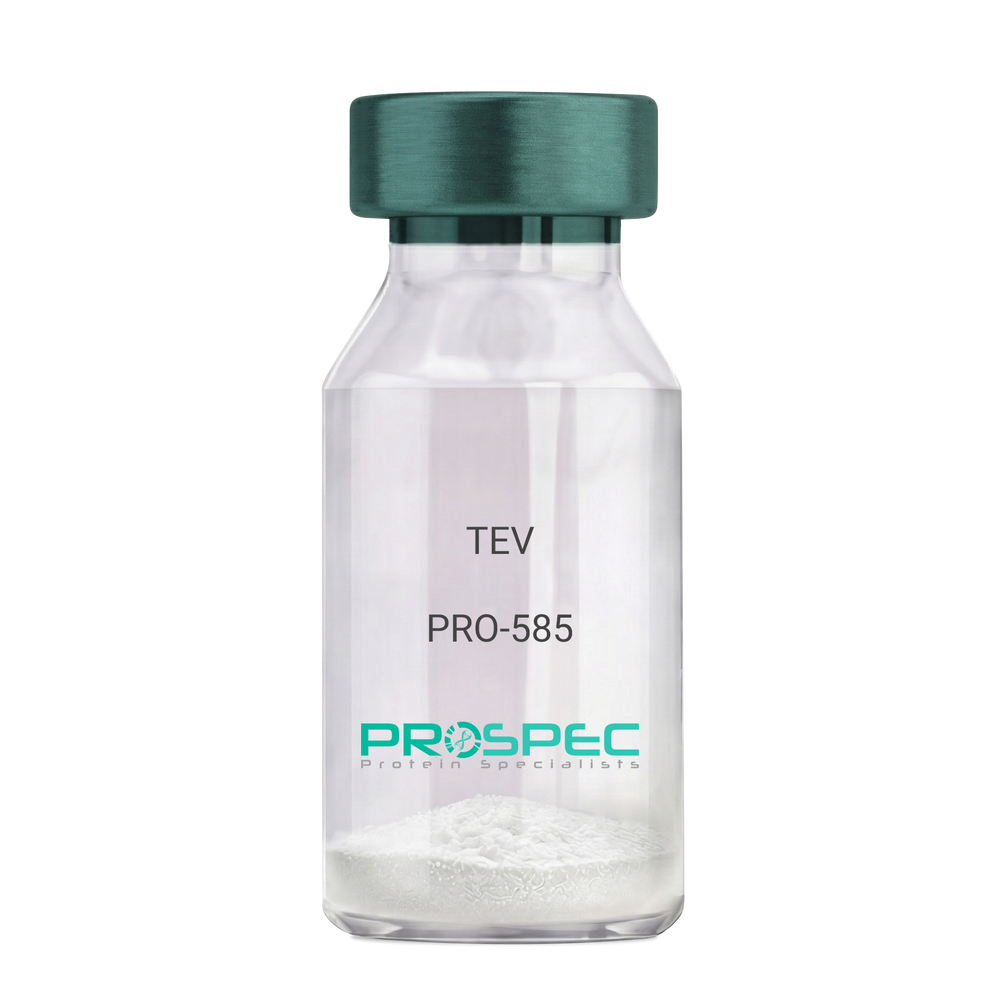
TEVDescription:
Tobacco Etch Virus Protease Recombinant
rTEV, TEV, P1 protease.
Product # :
PRO-585Price :
Quantity :
Shipping Method :
Shipped with Ice Packs
More Info
- description
- source
- formulation
- purity
- More Info
Description
Recombinant TEV Protease (rTEV) is a site-specific protease purified from E. coli. The protease can be used for the removal of affinity tags from fusion proteins. The seven-amino-acid recognition site for rTEV is Glu-Asn-Leu-Tyr-Phe-Gln-Gly with cleavage occurring between Gln and Gly. The optimal temperature for cleavage is 30°C; however, the enzyme can be used at temperatures as low as 4°C. The rTEV contains His tag.The rTEV is purified by proprietary chromatographic techniques.
Source
Escherichia Coli.
Formulation
The rTEV contains 25mM Tris, Ph 8.0, 75mM NaCl, 5mM EDTA, 10mM GSH, 50% Glycerol.
Purity
Greater than 90.0% as determined by analysis by SDS-PAGE.
More Info
-
Introduction
TEV protease is the common name for the 27 kDa catalytic domain of the Nuclear Inclusion a (NIa) protein encoded by the tobacco etch virus (TEV). Because its sequence specificity is far more stringent than that of factor Xa, thrombin, or enterokinase, TEV protease is a very useful reagent for cleaving fusion proteins. TEV protease recognizes a linear epitope of the general form E-Xaa-Xaa-Y -Xaa-Q-(G/S), with cleavage occurring between Q and G or Q and S. The most commonly used sequence is ENLYFQG.
-
Synonyms
rTEV, TEV, P1 protease.
-
Physical Appearance
Sterile liquid formulation.
-
Stability
rTEV although stable at 4°C for 1 week, should be stored below -18°C. Please prevent freeze thaw cycles.
-
Cleavage Conditions
A number of variables can be changed to optimize the cleavage of any specific protein. The amount of rTEV, the temperature of the incubation, and the time needed for cleavage may be examined. If the protein of interest is heat-labile, then 4°C incubations are recommended. Reactions at 4°C will require longer incubation times and/or more rTEV.
-
Unit Definition
One unit is defined as the amount of enzyme needed to cleave 3 ug of fusion protein in 1 hour to 85 % completion at 30°C in a buffer containing 50 mM Tris-HCl, pH 8.0, 0.5 mM EDTA, and 1 mM DTT.
ProSpec's products are furnished for LABORATORY RESEARCH USE ONLY. The product may not be used as drugs, agricultural or pesticidal products, food additives or household chemicals.
- View Data Sheet
Name :
ALPL MouseDescription:
Alkaline Phosphatase Liver/Bone/Kidney Mouse Recombinant
Alpl, Akp-2, Akp2, ALP, APTNAP, TNAP, TNSALP, HOPS, AP-TNAP, Alkaline phosphatase 2.
Product # :
ENZ-1008Price :
Quantity :
Shipping Method :
Shipped with Ice Packs
More Info
- description
- source
- formulation
- purity
- biological activity
- More Info
Description
ALPL produced in Sf9 Baculovirus cells is a single, glycosylated polypeptide chain containing 493 amino acids (19-503 a.a.) and having a molecular mass of 54.5kDa (Molecular size on SDS-PAGE will appear at approximately 50-70kDa). ALPL is expressed with an 8 amino acid His tag at C-Terminus and purified by proprietary chromatographic techniques.
Source
Sf9, Baculovirus cells.
Formulation
ALPL protein solution (0.5mg/ml) contains Phosphate Buffered Saline (pH 7.4) and 10% glycerol.
Purity
Greater than 95.0% as determined by SDS-PAGE.
Biological Activity
Specific activity is > 46,000 pmol/min/ug and is defined as the amount of enzyme that hydrolyze 1pmole of 4-Methylumbelliferyl phosphate to phosphate and 4-Methylumbelliferone per minute at pH 8.8 at 25C.More Info
-
Introduction
Alkaline Phosphatase Liver/Bone/Kidney (Alpl) is a part of the alkaline phosphatases family which comprises 4 related alkaline phosphatases. Alpl is a membrane-bound glycosylated enzyme which is not expressed in any particular tissue. Alpl takes part in skeletal mineralization.
-
Synonyms
Alpl, Akp-2, Akp2, ALP, APTNAP, TNAP, TNSALP, HOPS, AP-TNAP, Alkaline phosphatase 2.
-
Physical Appearance
Sterile Filtered colorless solution.
-
Stability
Store at 4°C if entire vial will be used within 2-4 weeks. Store, frozen at -20°C for longer periods of time. For long term storage it is recommended to add a carrier protein (0.1% HSA or BSA). Avoid multiple freeze-thaw cycles.
-
Amino Acid Sequence
VPEKERDPSY WRQQAQETLK NALKLQKLNT NVAKNVIMFL GDGMGVSTVT AARILKGQLH HNTGEETRLE MDKFPFVALS KTYNTNAQVP DSAGTATAYL CGVKANEGTV GVSAATERTR CNTTQGNEVT SILRWAKDAG KSVGIVTTTR VNHATPSAAY AHSADRDWYS DNEMPPEALS QGCKDIAYQL MHNIKDIDVI MGGGRKYMYP KNRTDVEYEL DEKARGTRLD GLDLISIWKS FKPRHKHSHY VWNRTELLAL DPSRVDYLLG LFEPGDMQYE LNRNNLTDPS LSEMVEVALR ILTKNLKGFF LLVEGGRIDH GHHEGKAKQA LHEAVEMDQA IGKAGAMTSQ KDTLTVVTAD HSHVFTFGGY TPRGNSIFGL APMVSDTDKK PFTAILYGNG PGYKVVDGER ENVSMVDYAH NNYQAQSAVP LRHETHGGED VAVFAKGPMA HLLHGVHEQN YIPHVMAYAS CIGANLDHCA WAGSGLEHHH HHH.
ProSpec's products are furnished for LABORATORY RESEARCH USE ONLY. The product may not be used as drugs, agricultural or pesticidal products, food additives or household chemicals.
- View Data Sheet
Name :
CKMT3 HumanDescription:
Creatine Kinase Muscle Type-3 Human Recombinant
Creatine kinase M-type, EC 2.7.3.2, Creatine kinase M chain, M-CK, CKM, CKMM, CKMMITIII.
Product # :
CKI-272Price :
Quantity :
Shipping Method :
Shipped with Ice Packs
More Info
- description
- source
- formulation
- purity
- biological activity
- More Info
Description
CKMT3 Human Recombinant produced in Pichia Pastoris is a glycosylated polypeptide chain having an identical amino acid sequence compared to the native enzyme, purified under non-denaturing conditions and reacts with polyclonal antibodies to MM Isoenzyme in ELISA.The CKMT3 is purified by proprietary chromatographic techniques.
Source
Pichia Pastoris.
Formulation
Each mg of protein contains 20mM Tris pH-8, 1mM EDTA and 1mM DTT.
Purity
Greater than 95.0% as determined by
(a) Analysis by RP-HPLC.
(b) Analysis by SDS-PAGE.Biological Activity
The biological activity measured by the enzymatic activity of Creatine phosphokinase procedure No.45-UV, 1IU-1 µmole creatine phosphate was 500 IU/mg at 37 degrees celsius corresponding to a Specific Activity of 2,000ng/ml.More Info
-
Introduction
The three isoenzymes (MM, MB, and BB) are found in muscle, cardiac and brain tissues. These recombinant proteins are ideal for calibrating diagnostic instruments and researching neuromuscular diseases. Creatine Kinases can be used for indications in many neuromuscular applications. These disorders include cardiac disease, mitochondrial disorders, inflammatory myopathies, myasthenia, polymyositis, McArdle's disease, NMJ disorders, muscular dystrophy, ALS, hypo and hyperthyroid disorders, central core disease, acid maltase deficiency, myoglobinuria, rhabdomyolysis, motor neuron diseases, rheumatic diseases, and other that create elevated or reduced levels of Creatine Kinases.
-
Synonyms
Creatine kinase M-type, EC 2.7.3.2, Creatine kinase M chain, M-CK, CKM, CKMM, CKMMITIII.
-
Physical Appearance
Sterile Filtered colorless liquid formulation.
-
Stability
CKMT3 although stable at 15°C for 7 days, should be stored below -18°C. Please prevent freeze-thaw cycles.
ProSpec's products are furnished for LABORATORY RESEARCH USE ONLY. The product may not be used as drugs, agricultural or pesticidal products, food additives or household chemicals.
- View Data Sheet
Name :
UBE2H HumanDescription:
Ubiquitin-Conjugating Enzyme E2H Human Recombinant
Ubiquitin-conjugating enzyme E2 H, UbcH2, Ubiquitin carrier protein H, Ubiquitin-conjugating enzyme E2-20K, Ubiquitin-protein ligase H, UBE2H, GID3, UBC8, UBCH.
Product # :
ENZ-603Price :
Quantity :
Shipping Method :
Shipped with Ice Packs
More Info
- description
- source
- formulation
- purity
- More Info
Description
UBE2H Human Recombinant produced in E.coli is a single, non-glycosylated polypeptide chain containing 206 amino acids (1-183) and having a molecular mass of 23.1kDa.UBE2H is fused to a 23 amino acid His-tag at N-terminus & purified by proprietary chromatographic techniques.
Source
Escherichia Coli.
Formulation
The UBE2H solution (1mg/ml) contains 20mM Tris-HCl buffer, pH8.0, 10% glycerol, 1mM DTT and 50mM NaCl.
Purity
Greater than 90.0% as determined by SDS-PAGE.
More Info
-
Introduction
Ubiquitin-conjugating enzyme E2 H (UBE2H) is a member of the ubiquitin-conjugating enzyme family. Protein modification with ubiquitin is a vital cellular apparatus for directing abnormal or short-lived proteins for degradation. Ubiquitination requires at least 3 classes of enzymes: ubiquitin-activating enzymes (E1s) ubiquitin-conjugating enzymes (E2s) and ubiquitin-protein ligases (E3s). UBE2H receives ubiquitin from the E1 complex and catalyzes its covalent attachment to other proteins. UBE2H protein sequence is 100% identical to the mouse homolog and 98% identical to the frog and zebrafish homologs.
-
Synonyms
Ubiquitin-conjugating enzyme E2 H, UbcH2, Ubiquitin carrier protein H, Ubiquitin-conjugating enzyme E2-20K, Ubiquitin-protein ligase H, UBE2H, GID3, UBC8, UBCH.
-
Physical Appearance
Sterile filtered colorless solution.
-
Stability
Store at 4°C if entire vial will be used within 2-4 weeks. Store, frozen at -20°C for longer periods of time. For long term storage it is recommended to add a carrier protein (0.1% HSA or BSA).Avoid multiple freeze-thaw cycles.
-
Amino Acid Sequence
MGSSHHHHHH SSGLVPRGSH MGSMSSPSPG KRRMDTDVVK LIESKHEVTI LGGLNEFVVK FYGPQGTPYE GGVWKVRVDL PDKYPFKSPS IGFMNKIFHP NIDEASGTVC LDVINQTWTA LYDLTNIFES FLPQLLAYPN PIDPLNGDAA AMYLHRPEEY KQKIKEYIQK YATEEALKEQ EEGTGDSSSE SSMSDFSEDE AQDMEL.
ProSpec's products are furnished for LABORATORY RESEARCH USE ONLY. The product may not be used as drugs, agricultural or pesticidal products, food additives or household chemicals.
- View Data Sheet
Name :
MINA HumanDescription:
MYC Induced Nuclear Antigen Human Recombinant
MYC Induced Nuclear Antigen, MINA53, MDIG, 60S Ribosomal Protein L27a Histidine Hydroxylase, Mineral Dust-Induced Gene Protein, Histone Lysine Demethylase MINA Ribosomal Oxygenase MINA, Nucleolar Protein 52, NO52, ROX, Bifunctional Lysine-Specific Demethylase And Histidyl-Hydroxylase MINA, Myc-Induced Nuclear Antigen, 53 KDa, Mineral Dust Induced Gene Protein, MYC-Induced Nuclear Antigen, EC 1.14.11.-, Bifunctional lysine-specific demethylase and histidyl-hydroxylase MINA.
Product # :
PRO-2078Price :
Quantity :
Shipping Method :
Shipped with Ice Packs
More Info
- description
- source
- formulation
- purity
- More Info
Description
MINA Human Recombinant produced in E.Coli is a single, non-glycosylated polypeptide chain containing 485 amino acids (1-465 a.a) and having a molecular mass of 54.9kDa. MINA is fused to a 20 amino acid His-tag at N-terminus & purified by proprietary chromatographic techniques.
Source
Escherichia Coli.
Formulation
MINA protein solution (0.25mg/ml) containing 20mM Tris-HCl buffer (pH 8.0), 0.15M NaCl, 10% glycerol and 1mM DTT.
Purity
Greater than 90.0% as determined by SDS-PAGE.
More Info
-
Introduction
MYC Induced Nuclear Antigen, also known as MINA is an oxygenase which can function both as a histone lysine demethylase and a ribosomal histidine hydroxylase. MINA is involved in the demethylation of trimethylated Lys-9 on histone H3 (H3K9me3), leading to an increase in ribosomal RNA expression. MINA also catalyzes the hydroxylation of 60S ribosomal protein L27a on His-39. In addition, MINA plays a significant role in cell growth and survival. MINA is implicated in ribosome biogenesis, probably in the duration of the assembly process of pre-ribosomal particles.
-
Synonyms
MYC Induced Nuclear Antigen, MINA53, MDIG, 60S Ribosomal Protein L27a Histidine Hydroxylase, Mineral Dust-Induced Gene Protein, Histone Lysine Demethylase MINA Ribosomal Oxygenase MINA, Nucleolar Protein 52, NO52, ROX, Bifunctional Lysine-Specific Demethylase And Histidyl-Hydroxylase MINA, Myc-Induced Nuclear Antigen, 53 KDa, Mineral Dust Induced Gene Protein, MYC-Induced Nuclear Antigen, EC 1.14.11.-, Bifunctional lysine-specific demethylase and histidyl-hydroxylase MINA.
-
Physical Appearance
Sterile Filtered clear solution.
-
Stability
Store at 4°C if entire vial will be used within 2-4 weeks. Store, frozen at -20°C for longer periods of time. For long term storage it is recommended to add a carrier protein (0.1% HSA or BSA).Avoid multiple freeze-thaw cycles.
-
Amino Acid Sequence
MGSSHHHHHH SSGLVPRGSH MPKKAKPTGS GKEEGPAPCK QMKLEAAGGP SALNFDSPSS LFESLISPIK TETFFKEFWE QKPLLIQRDD PALATYYGSL FKLTDLKSLC SRGMYYGRDV NVCRCVNGKK KVLNKDGKAH FLQLRKDFDQ KRATIQFHQP QRFKDELWRI QEKLECYFGS LVGSNVYITP AGSQGLPPHY DDVEVFILQL EGEKHWRLYH PTVPLAREYS VEAEERIGRP VHEFMLKPGD LLYFPRGTIH QADTPAGLAH STHVTISTYQ NNSWGDFLLD TISGLVFDTA KEDVELRTGI PRQLLLQVES TTVATRRLSG FLRTLADRLE GTKELLSSDM KKDFIMHRLP PYSAGDGAEL STPGGKLPRL DSVVRLQFKD HIVLTVLPDQ DQSDETQEKM VYIYHSLKNS RETHMMGNEE ETEFHGLRFP LSHLDALKQI WNSPAISVKD LKLTTDEEKE SLVLSLWTEC LIQVV.
ProSpec's products are furnished for LABORATORY RESEARCH USE ONLY. The product may not be used as drugs, agricultural or pesticidal products, food additives or household chemicals.
- View Data Sheet
Name :
CASP3 Human, Sf9Description:
Caspase 3 Apoptosis-Related Cysteine Peptidase Human Recombinant, Sf9
CASP3, CPP32, CPP32B, SCA-1, CASP-3, Apopain, Cysteine protease CPP32, CPP-32, Protein Yama, SREBP cleavage activity 1.
Product # :
ENZ-1106Price :
Quantity :
Shipping Method :
Shipped with Ice Packs
More Info
- description
- source
- formulation
- purity
- biological activity
- More Info
Description
CASP3 Human produced in Sf9 Baculovirus cells is a single, glycosylated polypeptide chain containing 256 amino acids (29-277 a.a.) and having a molecular mass of 29.4kDa (Migrates at 13.5-18kDa on SDS-PAGE under reducing conditions). CASP3 is expressed with a 6 amino acid His tag at C-Terminus and purified by proprietary chromatographic techniques.
Source
Sf9, Baculovirus cells.
Formulation
CASP3 protein solution (0.5mg/ml) containing 20mM HEPES buffer (pH 7.5), 0.1M NaCl, 1mM EDTA, 20% Glycerol and 1mM DTT.
Purity
Greater than 90.0% as determined by SDS-PAGE.
Biological Activity
Specific activity is greater than 5,000 pmol/min/ug. One unit will liberate 1 pmoles of Ac-DEVD-AFC to Ac-DEVD and AFC per minute at pH7.5 at 25C.
More Info
-
Introduction
Caspase 3 Apoptosis-Related Cysteine Peptidase (CASP3) belongs to the cysteine-aspartic acid protease (caspase) family. Sequential activation of caspases plays a key role in the execution-phase of cell apoptosis. Caspases exist as inactive proenzymes which undergo proteolytic processing at conserved aspartic residues to generate 2 subunits, large and small, that dimerize to create the active enzyme. CASP3 protein cleaves and activates caspases 6, 7 and 9, and the protein itself is processed by caspases 8, 9 and 10. CASP3 is the leading caspase involved in the cleavage of amyloid-beta 4A precursor protein, which is linked with neuronal death in Alzheimer's disease. In addition, CASP3 is involved in the cleavage of huntingtin. CASP3 also cleaves and activates sterol regulatory element binding proteins (SREBPs) between the basic helix-loop-helix leucine zipper domain and the membrane attachment domain. CASP3 initiates cell adhesion in sympathetic neurons through RET cleavage.
-
Synonyms
CASP3, CPP32, CPP32B, SCA-1, CASP-3, Apopain, Cysteine protease CPP32, CPP-32, Protein Yama, SREBP cleavage activity 1.
-
Physical Appearance
Sterile Filtered colorless solution.
-
Stability
Store at 4°C if entire vial will be used within 2-4 weeks. Store, frozen at -20°C for longer periods of time. For long term storage it is recommended to add a carrier protein (0.1% HSA or BSA).Avoid multiple freeze-thaw cycles.
-
Amino Acid Sequence
MSGISLDNSY KMDYPEMGLC IIINNKNFHK STGMTSRSGT DVDAANLRET FRNLKYEVRN
KNDLTREEIV ELMRDVSKED HSKRSSFVCV LLSHGEEGII FGTNGPVDLK KITNFFRGDR
CRSLTGKPKL FIIQACRGTE LDCGIETDSG VDDDMACHKI PVEADFLYAY STAPGYYSWR
NSKDGSWFIQ SLCAMLKQYA DKLEFMHILT RVNRKVATEF ESFSFDATFH AKKQIPCIVS MLTKELYFYH HHHHHH
ProSpec's products are furnished for LABORATORY RESEARCH USE ONLY. The product may not be used as drugs, agricultural or pesticidal products, food additives or household chemicals.
- View Data Sheet
Name :
UCHL3 MouseDescription:
Ubiquitin Carboxyl-Terminal Esterase L3 Mouse Recombinant
Ubiquitin carboxyl-terminal hydrolase isozyme L3, UCH-L3, UCHL3, Ubiquitin Carboxyl-Terminal Esterase L3, Ubiquitin thioesterase L3, Uchl3, Ubiquitin carboxyl-terminal esterase L3.
Product # :
ENZ-978Price :
Quantity :
Shipping Method :
Shipped with Ice Packs
More Info
- description
- source
- formulation
- purity
- biological activity
- More Info
Description
UCHL3 Mouse Recombinant produced in Sf9 Baculovirus cells is a single, glycosylated polypeptide chain containing 238 amino acids (1-230) and having a molecular mass of 27.2kDa (Molecular size on SDS-PAGE will appear at approximately 28-40kDa).UCHL3 is fused to 8 amino acid His-Tag at C-terminus and purified by proprietary chromatographic techniques.
Source
Sf9, Baculovirus cells.
Formulation
UCHL3 protein solution (0.5mg/ml) containing Phosphate buffered saline (pH7.4) and 10% glycerol.
Purity
Greater than 90.0% as determined by SDS-PAGE.
Biological Activity
Specific activity is > 9,000 pmol/min/mg, and is defined as the amount of enzyme that hydrolysis 1.0 pmole of ubiquitin-AMC per minute at pH 7.5, at 37°C.More Info
-
Introduction
Ubiquitin carboxyl-terminal hydrolase isozyme L3 belongs to a gene family whose products hydrolyze small C-terminal adducts of ubiquitin to produce the ubiquitin monomer. UCHL3 takes part in the regulation of neuronal development and spermatogenesis and is associated to neurodegenerative diseases. UCHL3 has a 54% homology to UCHL1.
-
Synonyms
Ubiquitin carboxyl-terminal hydrolase isozyme L3, UCH-L3, UCHL3, Ubiquitin Carboxyl-Terminal Esterase L3, Ubiquitin thioesterase L3, Uchl3, Ubiquitin carboxyl-terminal esterase L3.
-
Physical Appearance
Sterile Filtered clear solution.
-
Stability
Store at 4°C if entire vial will be used within 2-4 weeks. Store, frozen at -20°C for longer periods of time. For long term storage it is recommended to add a carrier protein (0.1% HSA or BSA).Avoid multiple freeze-thaw cycles.
-
Amino Acid Sequence
MEGQRWLPLE ANPEVTNQFL KQLGLHPNWQ FVDVYGMEPE LLSMVPRPVC AVLLLFPITE KYEVFRTEEE EKIKSQGQDV TSSVYFMKQT ISNACGTIGL IHAIANNKDK MHFESGSTLK KFLEESVSMS PEERAKFLEN YDAIRVTHET SAHEGQTEAP SIDEKVDLHF IALVHVDGHL YELDGRKPFP INHGKTSDET LLEDAIEVCK KFMERDPDEL RFNAIALSAA LEHHHHHH.
ProSpec's products are furnished for LABORATORY RESEARCH USE ONLY. The product may not be used as drugs, agricultural or pesticidal products, food additives or household chemicals.
- View Data Sheet
Name :
HAO1 MouseDescription:
Hydroxyacid Oxidase 1 Mouse Recombinant
(S)-2-hydroxy-acid oxidase; EC 1.1.3.15, Glycolate oxidase, GOX, GOX1MGC142227;GOXMGC142225, HAO1, HAO-1, HAOX1, hydroxyacid oxidase (glycolate oxidase) 1, hydroxyacid oxidase 1, Hydroxyacid Oxidase1, Hydroxyacid Oxidase-1.
Product # :
ENZ-1104Price :
Quantity :
Shipping Method :
Shipped with Ice Packs
More Info
- description
- source
- formulation
- purity
- biological activity
- More Info
Description
HAO1 Mouse Recombinant produced in E.coli is a single, non-glycosylated polypeptide chain containing 393 amino acids (1-370) and having a molecular mass of 43.4 kDa.HAO1 is fused to a 23 amino acid His-Tag at N-terminus and purified by proprietary chromatographic techniques.
Source
Escherichia Coli.
Formulation
HAO1 protein (1mg/ml) is containing Phosphate Buffered Saline (pH 7.4) and 10% glycerol.
Purity
Greater than 90.0% as determined by SDS-PAGE.
Biological Activity
Specific activity is > 1,000 pmol/min/ug, and defined as the amount of enzyme that oxidize glyoxylate at pH 8.0 at 25C.
More Info
-
Introduction
Hydroxyacid Oxidase 1 (HAO1) is a part of the superfamily of the alpha hydroxy acid oxidases (HAO) enzymes. HAO1 catalyses the FMN mediated oxidation of glycolate to glyoxylate and glyoxylate to oxalate by reducing oxygen to hydrogen peroxide. HAO1 is expressed mainly in the liver and pancreas and is most active on twocarbon substrates such as glycolate. HAO1 isthe main cause of hyperoxaluria, a disorder in which large deposits of calcium oxalate form kidney stones.
-
Synonyms
(S)-2-hydroxy-acid oxidase; EC 1.1.3.15, Glycolate oxidase, GOX, GOX1MGC142227;
GOXMGC142225, HAO1, HAO-1, HAOX1, hydroxyacid oxidase (glycolate oxidase) 1, hydroxyacid oxidase 1, Hydroxyacid Oxidase1, Hydroxyacid Oxidase-1. -
Physical Appearance
Sterile Filtered clear solution.
-
Stability
Store at 4°C if entire vial will be used within 2-4 weeks. Store, frozen at -20°C for longer periods of time. For long term storage it is recommended to add a carrier protein (0.1% HSA or BSA).Avoid multiple freeze-thaw cycles.
-
Amino Acid Sequence
MGSSHHHHHH SSGLVPRGSH MGSMLPRLVC ISDYEQHVRS VLQKSVYDYY RSGANDQETL ADNIQAFSRW KLYPRMLRNV ADIDLSTSVL GQRVSMPICV GATAMQCMAH VDGELATVRA CQTMGTGMML SSWATSSIEE VAEAGPEALR WMQLYIYKDR EISRQIVKRA EKQGYKAIFV TVDTPYLGNR IDDVRNRFKL PPQLRMKNFE TNDLAFSPKG NFGDNSGLAE YVAQAIDPSL SWDDITWLRR LTSLPIVVKG ILRGDDAKEA VKHGVDGILV SNHGARQLDG VPATIDVLPE IVEAVEGKVE VFLDGGVRKG TDVLKALALG AKAVFVGRPI IWGLAFQGEK GVQDVLEILK EEFRLAMALS GCQNVKVIDK TLVRKNPLAV SKI.
ProSpec's products are furnished for LABORATORY RESEARCH USE ONLY. The product may not be used as drugs, agricultural or pesticidal products, food additives or household chemicals.
- View Data Sheet
Name :
PTRHD1 HumanDescription:
Peptidyl-TRNA Hydrolase Domain Containing 1 Human Recombinant
C2orf79, Putative peptidyl-tRNA hydrolase PTRHD1, Peptidyl-tRNA hydrolase domain-containing protein 1, PTRHD1.
Product # :
ENZ-826Price :
Quantity :
Shipping Method :
Shipped with Ice Packs
More Info
- description
- source
- formulation
- purity
- More Info
Description
PTRHD1 Human Recombinant produced in E.Coli is a single, non-glycosylated polypeptide chain containing 163 amino acids (1-140 a.a) and having a molecular mass of 18.2kDa.PTRHD1 is fused to a 23 amino acid His-tag at N-terminus & purified by proprietary chromatographic techniques.
Source
Escherichia Coli.
Formulation
PTRHD1 protein solution (1mg/ml) containing Phosphate buffer saline (pH 7.4), 30% glycerol and 1mM DTT.
Purity
Greater than 85.0% as determined by SDS-PAGE.
More Info
-
Introduction
Putative peptidyl-tRNA hydrolase PTRHD1 (PTRHD1) is a 140 amino acid protein, which is encoded by a gene located on human chromosome 2p23.3. Chromosome 2 is the second largest human chromosome; it consists of 237 million bases, encodes over 1,400 genes and makes up approximately 8% of the human genome. Several genetic diseases are linked to genes on chromosome 2.
-
Synonyms
C2orf79, Putative peptidyl-tRNA hydrolase PTRHD1, Peptidyl-tRNA hydrolase domain-containing protein 1, PTRHD1.
-
Physical Appearance
Sterile Filtered colorless solution.
-
Stability
Store at 4°C if entire vial will be used within 2-4 weeks. Store, frozen at -20°C for longer periods of time. For long term storage it is recommended to add a carrier protein (0.1% HSA or BSA).Avoid multiple freeze-thaw cycles.
-
Amino Acid Sequence
MGSSHHHHHH SSGLVPRGSH MGSMHRGVGP AFRVVRKMAA SGAEPQVLVQ YLVLRKDLSQ APFSWPAGAL VAQACHAATA ALHTHRDHPH TAAYLQELGR MRKVVLEAPD ETTLKELAET LQQKNIDHML WLEQPENIAT CIALRPYPKE EVGQYLKKFR LFK.
ProSpec's products are furnished for LABORATORY RESEARCH USE ONLY. The product may not be used as drugs, agricultural or pesticidal products, food additives or household chemicals.
- View Data Sheet
Name :
UBE2R2 HumanDescription:
Ubiquitin Conjugating Enzyme E2R 2 Human Recombinant
CDC34B, E2-CDC34B, UBC3B, Ubiquitin carrier protein R2, Ubiquitin-conjugating enzyme E2-CDC34B, Ubiquitin-protein ligase R2, Ubiquitin-conjugating enzyme E2 R2, EC 6.3.2.19.
Product # :
ENZ-511Price :
Quantity :
Shipping Method :
Shipped with Ice Packs
More Info
- description
- source
- formulation
- purity
- More Info
Description
UBE2R2 Human Recombinant produced in E.Coli is a single, non-glycosylated polypeptide chain containing 261 amino acids (1-238 a.a) and having a molecular mass of 29.6kDa (Molecular size on SDS-PAGE will appear higher).UBE2R2 is fused to a 23 amino acid His-tag at N-terminus & purified by proprietary chromatographic techniques.
Source
Escherichia Coli.
Formulation
UBE2R2 protein solution (0.25mg/ml) containing 20mM Tris-HCl buffer (pH 8.0), 0.15M NaCl, 20% glycerol and 1mM DTT.
Purity
Greater than 85.0% as determined by SDS-PAGE.
More Info
-
Introduction
Ubiquitin-conjugating enzyme E2 R2 (UBE2R2) is a member of the ubiquitin-conjugating enzyme family. Protein kinase CK2 is a ubiquitous and pleiotropic Ser/Thr protein kinase implicated in cell growth andtransformation. This protein is a protein similar to the E2 ubiquitin conjugating enzyme UBC3/CDC34. Studies propose that CK2-dependent phosphorylation of this ubiquitin-conjugating enzyme functions by regulating beta-TrCP substrate recognition and induces its interaction with beta-TrCP, enhancing beta-catenin degradation. UBE2R2 receives ubiquitin from the E1 complex and catalyzes its covalent attachment to other proteins. In vitro catalyzes monoubiquitination and 'Lys-48'-linked polyubiquitination. UBE2R2 may be implicated in degradation of katenin. Among the diseases associated with UBE2R2 are cblc, and herpes simplex.
-
Synonyms
CDC34B, E2-CDC34B, UBC3B, Ubiquitin carrier protein R2, Ubiquitin-conjugating enzyme E2-CDC34B, Ubiquitin-protein ligase R2, Ubiquitin-conjugating enzyme E2 R2, EC 6.3.2.19.
-
Physical Appearance
Sterile Filtered clear solution.
-
Stability
Store at 4°C if entire vial will be used within 2-4 weeks. Store, frozen at -20°C for longer periods of time. For long term storage it is recommended to add a carrier protein (0.1% HSA or BSA).Avoid multiple freeze-thaw cycles.
-
Amino Acid Sequence
MGSSHHHHHH SSGLVPRGSH MGSMAQQQMT SSQKALMLEL KSLQEEPVEG FRITLVDESD LYNWEVAIFG PPNTLYEGGY FKAHIKFPID YPYSPPTFRF LTKMWHPNIY ENGDVCISIL HPPVDDPQSG ELPSERWNPT QNVRTILLSV ISLLNEPNTF SPANVDASVM FRKWRDSKGK DKEYAEIIRK QVSATKAEAE KDGVKVPTTL AEYCIKTKVP SNDNSSDLLY DDLYDDDIDD EDEEEEDADC YDDDDSGNEE S
ProSpec's products are furnished for LABORATORY RESEARCH USE ONLY. The product may not be used as drugs, agricultural or pesticidal products, food additives or household chemicals.
- View Data Sheet
Name :
CTSA MouseDescription:
Cathepsin-A Mouse Recombinant
Lysosomal protective protein (EC:3.4.16.5), Carboxypeptidase C, Carboxypeptidase, Cathepsin A, Protective protein cathepsin A, PPCA, Protective protein for beta-galactosidase.
Product # :
ENZ-945Price :
Quantity :
Shipping Method :
Shipped with Ice Packs
More Info
- description
- source
- formulation
- purity
- More Info
Description
CTSA produced in Sf9 Insect cells is a single, glycosylated polypeptide chain containing 459 amino acids (24-474 a.a.) and having a molecular mass of 52.4kDa (Molecular size on SDS-PAGE will appear at approximately 50-70kDa).CTSA is expressed with an 8 amino acid His tag at C-Terminus and purified by proprietary chromatographic techniques.
Source
Sf9 Insect cells.
Formulation
CTSA protein solution (0.5mg/ml) contains phosphate buffered saline (pH7.4) and 10% glycerol.
Purity
Greater than 90.0% as determined by SDS-PAGE.
More Info
-
Introduction
Cathepsin-A (CTSA) is a protective protein which is crucial for both the activity of beta-galactosidase and neuraminidase, CTSA associates with these enzymes and exerts a protective function required for their stability and activity. The CTSA protein is also a carboxypeptidase and can deamidate tachykinins. CTSA is a component of the lysosomal multienzyme complex along with beta-galactosidase and sialidase Neu1. CTSA is a multicatalytic enzyme with deamidase and esterase in addition to carboxypeptidase activities.
-
Synonyms
Lysosomal protective protein (EC:3.4.16.5), Carboxypeptidase C, Carboxypeptidase, Cathepsin A, Protective protein cathepsin A, PPCA, Protective protein for beta-galactosidase.
-
Physical Appearance
Sterile filtered colorless solution.
-
Stability
Store at 4°C if entire vial will be used within 2-4 weeks. Store, frozen at -20°C for longer periods of time. For long term storage it is recommended to add a carrier protein (0.1% HSA or BSA).Avoid multiple freeze-thaw cycles.
-
Amino Acid Sequence
APDQDEIDCL PGLAKQPSFR QYSGYLRASD SKHFHYWFVE SQNDPKNSPV VLWLNGGPGC SSLDGLLTEH GPFLIQPDGV TLEYNPYAWN LIANVLYIES PAGVGFSYSD DKMYVTNDTE VAENNYEALK DFFRLFPEYK DNKLFLTGES YAGIYIPTLA VLVMQDPSMN LQGLAVGNGL ASYEQNDNSL VYFAYYHGLL GNRLWTSLQT HCCAQNKCNF YDNKDPECVN NLLEVSRIVG KSGLNIYNLY APCAGGVPGR HRYEDTLVVQ DFGNIFTRLP LKRRFPEALM RSGDKVRLDP PCTNTTAPSN YLNNPYVRKA LHIPESLPRW DMCNFLVNLQ YRRLYQSMNS QYLKLLSSQK YQILLYNGDV DMACNFMGDE WFVDSLNQKM EVQRRPWLVD YGESGEQVAG FVKECSHITF LTIKGAGHMV PTDKPRAAFT MFSRFLNKEP YVEHHHHHH.
ProSpec's products are furnished for LABORATORY RESEARCH USE ONLY. The product may not be used as drugs, agricultural or pesticidal products, food additives or household chemicals.
- View Data Sheet
Name :
MPO HumanDescription:
Myeloperoxidase Human
Myeloperoxidase, EC 1.11.1.7, MPO.
Product # :
ENZ-074Price :
Quantity :
Shipping Method :
Shipped with Ice Packs
More Info
- description
- source
- formulation
- purity
- More Info
Description
MPO is a natural protein having a molecular mass of 150kDa containing 2 subunits each of a heavy chain with 64kDa and a light chain with 13kDa. MPO is isolated from human peripheral blood polymorphonuclear leukocytes.
Source
Human peripheral blood polymorphonuclear leukocytes.
Formulation
MPO solution is supplied in 20mM HEPES buffer pH-7.5, 200mM NaCl and 20% glycerol.
Purity
Greater than 80% as determined by SDS-PAGE.
More Info
-
Introduction
Myeloperoxidase is an important enzyme used by granulocytes during phagocytic lysis of foreign particles engulfed. In normal tissues and in a variety of myeloproliferative disorders myeloid cells of both neutrophilic and eosinophilic types, at all stages of maturation, exhibit strong cytoplasmic reactivity for MPO. Erythroid precursors, megakaryocytes, lymphoid cells, mast cells, and plasma cells are nonreactive. MPO is not observed in the neoplastic cells of a wide variety of epithelial tumors and sarcomas. MPO is useful in differentiating between myeloid and lymphoid leukemias.
-
Synonyms
Myeloperoxidase, EC 1.11.1.7, MPO.
-
Physical Appearance
Sterile filtered colorless solution.
-
Stability
Store at 4°C if entire vial will be used within 2-4 weeks.Store, frozen at -20°C for longer periods of time. Avoid multiple freeze-thaw cycles.
ProSpec's products are furnished for LABORATORY RESEARCH USE ONLY. The product may not be used as drugs, agricultural or pesticidal products, food additives or household chemicals.
- View Data Sheet
Name :
ARSA MouseDescription:
Arylsulfatase A Mouse Recombinant
Arylsulfatase A, ASA, Cerebroside-sulfatase.
Product # :
ENZ-814Price :
Quantity :
Shipping Method :
Shipped with Ice Packs
More Info
- description
- source
- formulation
- purity
- More Info
Description
ARSA Mouse Recombinant produced in Sf9 Baculovirus cells is a single, glycosylated polypeptide chain containing 498 amino acids (18-506 a.a.) and having a molecular mass of 53.2kDa (Molecular size on SDS-PAGE will appear at approximately 50-70kDa). ARSA is expressed with a 6 amino acid His tag at C-Terminus and purified by proprietary chromatographic techniques.
Source
Sf9, Baculovirus cells.
Formulation
ARSA protein solution (0.5mg/ml) containing Phosphate Buffered Saline (pH 7.4) and 10% glycerol.
Purity
Greater than 95% as determined by SDS-PAGE.
More Info
-
Introduction
Arylsulfatase A (ARSA) hydrolyzes cerebrosidesulfate to cerebroside and sulfate. ARSA is inhibited by phosphate. The phosphate develops a covalent bond with the active site 3-oxoalanine. ARSA gene defects cause metachromatic leucodystrophy (MLD), a progressive demyelination disease which results in various neurological symptoms and ultimately death.
-
Synonyms
Arylsulfatase A, ASA, Cerebroside-sulfatase.
-
Physical Appearance
Sterile Filtered clear solution.
-
Stability
Store at 4°C if entire vial will be used within 2-4 weeks. Store, frozen at -20°C for longer periods of time. For long term storage it is recommended to add a carrier protein (0.1% HSA or BSA).Avoid multiple freeze-thaw cycles.
-
Amino Acid Sequence
ADPSPPNILL IFADDLGYGD LGSYGHPSST TPNLDQLAEG GLRFTDFYVP VSLCTPSRAA LLTGRLPVRS GMYPGVLGPS SQGGLPLEEV TLAEVLAARG YLTGMAGKWH LGVGPEGAFL PPHQGFHRFL GIPYSHDQGP CQNLTCFPPD IPCKGGCDQG LVPIPLLANL TVEAQPPWLP GLEARYVSFS RDLMADAQRQ GRPFFLYYAS HHTHYPQFSG QSFTKRSGRG PFGDSLMELD GAVGALMTTV GDLGLLEETL VIFTADNGPE LMRMSNGGCS GLLRCGKGTT FEGGVREPAL VYWPGHITPG VTHELASSLD LLPTLAALTG APLPNVTLDG VDISPLLLGT GKSPRKSVFF YPPYPDEIHG VFAVRNGKYK AHFFTQGSAH SDTTSDPACH AANRLTAHEP PLLYDLSQDP GENYNVLESI EGVSPEALQA LKHIQLLKAQ YDAAMTFGPS QIAKGEDPAL QICCQPSCTP HPVCCHCPGS QSHHHHHH.
ProSpec's products are furnished for LABORATORY RESEARCH USE ONLY. The product may not be used as drugs, agricultural or pesticidal products, food additives or household chemicals.
- View Data Sheet
Name :
SUOX HumanDescription:
Sulfite Oxidase Human Recombinant
Sulfite Oxidase, EC 1.8.3.1, Sulfite oxidase, mitochondrial.
Product # :
ENZ-887Price :
Quantity :
Shipping Method :
Shipped with Ice Packs
More Info
- description
- source
- formulation
- purity
- More Info
Description
SUOX Human Recombinant produced in E.Coli is a single, non-glycosylated polypeptide chain containing 489 amino acids (80-545 a.a) and having a molecular mass of 53.9kDa. SUOX is fused to a 23 amino acid His-tag at N-terminus & purified by proprietary chromatographic techniques.
Source
E.coli.
Formulation
SUOX protein solution (1mg/ml) containing Phosphate buffered saline (pH7.4), 30% glycerol and 1mM DTT.
Purity
Greater than 90% as determined by SDS-PAGE.
More Info
-
Introduction
Sulfite oxidase, also known as SUOX is a homodimeric protein localized to the intermembrane space of mitochondria. Each subunit includes a heme domain as well as a molybdopterin-binding domain. The SUOX enzyme catalyzes the oxidation of sulfite to sulfate, the last reaction in the oxidative degradation of the sulfur amino acids cysteine and methionine. In addition, the deficiency of SUOX results in neurological abnormalities which are often fatal at an early age.
-
Synonyms
Sulfite Oxidase, EC 1.8.3.1, Sulfite oxidase, mitochondrial.
-
Physical Appearance
Sterile Filtered colorless solution.
-
Stability
Store at 4°C if entire vial will be used within 2-4 weeks. Store, frozen at -20°C for longer periods of time. For long term storage it is recommended to add a carrier protein (0.1% HSA or BSA).Avoid multiple freeze-thaw cycles.
-
Amino Acid Sequence
MGSSHHHHHH SSGLVPRGSH MGSESTHIYT KEEVSSHTSP ETGIWVTLGS EVFDVTEFVD LHPGGPSKLM LAAGGPLEPF WALYAVHNQS HVRELLAQYK IGELNPEDKV APTVETSDPY ADDPVRHPAL KVNSQRPFNA EPPPELLTEN YITPNPIFFT RNHLPVPNLD PDTYRLHVVG APGGQSLSLS LDDLHNFPRY EITVTLQCAG NRRSEMTQVK EVKGLEWRTG AISTARWAGA RLCDVLAQAG HQLCETEAHV CFEGLDSDPT GTAYGASIPL ARAMDPEAEV LLAYEMNGQP LPRDHGFPVR VVVPGVVGAR HVKWLGRVSV QPEESYSHWQ RRDYKGFSPS VDWETVDFDS APSIQELPVQ SAITEPRDGE TVESGEVTIK GYAWSGGGRA VIRVDVSLDG GLTWQVAKLD GEEQRPRKAW AWRLWQLKAP VPAGQKELNI VCKAVDDGYN VQPDTVAPIW NLRGVLSNAW HRVHVYVSP.
ProSpec's products are furnished for LABORATORY RESEARCH USE ONLY. The product may not be used as drugs, agricultural or pesticidal products, food additives or household chemicals.
- View Data Sheet
Name :
ALDOC MouseDescription:
Aldolase C Fructose-Bisphosphate Mouse Recombinant
Aldolase 3, Brain-type aldolase, Scrapie-responsive protein 2, Zebrin II, Aldo3, Scrg2, Fructose-bisphosphate aldolase C, ALDOC.
Product # :
ENZ-868Price :
Quantity :
Shipping Method :
Shipped with Ice Packs
More Info
- description
- source
- formulation
- purity
- More Info
Description
ALDOC Mouse Recombinant produced in E.Coli is a single, non-glycosylated polypeptide chain containing 387 amino acids (1-363 a.a) and having a molecular mass of 41.9kDa.ALDOC is fused to a 24 amino acid His-tag at N-terminus & purified by proprietary chromatographic techniques.
Source
Escherichia Coli.
Formulation
The ALDOC solution (1mg/ml) containing Phosphate buffered saline (pH7.4), 20% glycerol and 1mM DTT.
Purity
Greater than 95.0% as determined by SDS-PAGE.
More Info
-
Introduction
Aldolase C Fructose-Bisphosphate (ALDOC) belongs to the class I fructose-bisphosphate aldolase family. ALDOC is a glycolytic enzyme which catalyzes the reversible aldol cleavage of fructose-1,6-biphosphate and fructose 1-phosphate to dihydroxyacetone phosphate and either glyceraldehyde-3-phosphate or glyceraldehydes respectively. ALDOC is expressed exclusively in the hippocampus and Purkinje cells of the brain.
-
Synonyms
Aldolase 3, Brain-type aldolase, Scrapie-responsive protein 2, Zebrin II, Aldo3, Scrg2, Fructose-bisphosphate aldolase C, ALDOC.
-
Physical Appearance
Sterile Filtered clear colorless solution.
-
Stability
Store at 4°C if entire vial will be used within 2-4 weeks.Store, frozen at -20°C for longer periods of time. For long term storage it is recommended to add a carrier protein (0.1% HSA or BSA).Avoid multiple freeze-thaw cycles.
-
Amino Acid Sequence
MGSSHHHHHH SSGLVPRGSH MGSHMPHSYP ALSAEQKKEL SDIALRIVTP GKGILAADES VGSMAKRLSQ IGVENTEENR RLYRQVLFSA DDRVKKCIGG VIFFHETLYQ KDDNGVPFVR TIQDKGILVG IKVDKGVVPL AGTDGETTTQ GLDGLLERCA QYKKDGADFA KWRCVLKISD RTPSALAILE NANVLARYAS ICQQNGIVPI VEPEILPDGD HDLKRCQYVT EKVLAAVYKA LSDHHVYLEG TLLKPNMVTP GHACPIKYSP EEIAMATVTA LRRTVPPAVP GVTFLSGGQS EEEASLNLNA INRCPLPRPW ALTFSYGRAL QASALNAWRG QRDNAGAATE EFIKRAEMNG LAAQGRYEGS GDGGAAAQSL YIANHAY
ProSpec's products are furnished for LABORATORY RESEARCH USE ONLY. The product may not be used as drugs, agricultural or pesticidal products, food additives or household chemicals.