Skip to content

High-quality research proteins.

  • 1-800-805-6531

  • Mon - Sat 8.00-18.00, Sun - Closed

  • info@prospecbio.com

  • PO Box 6591 East Brunswick NJ 08816

  • Products
    • Cytokines
    • Growth factors
    • Chemokines
    • Cd antigens
    • Neurotrophins
    • Hormones
    • Enzymes
    • Viral antigens
    • Recombinant proteins
    • Natural proteins
    • Monoclonal antibodies
    • Polyclonal antibodies
    • Thermal Packaging
  • About
    • Company
    • Founder
    • Contribution
  • Customers
    • Eastern Asia
    • Eastern Europe
    • North America
    • South America
    • South East Asia
    • Southern Asia
    • Western Europe
  • Ordering
    • Ordering Method
    • Ordering - Credit Card
    • Ordering - PO
    • Shipping Fees
    • FAQs
  • Services
    • DNA Cloning
    • Protein Expression
    • Monoclonal Antibody
    • Fermentation
    • Technology License
  • Contact us
Log in

Country/region

  • USD $ | Albania
  • USD $ | Andorra
  • USD $ | Argentina
  • USD $ | Armenia
  • USD $ | Australia
  • USD $ | Austria
  • USD $ | Azerbaijan
  • USD $ | Belarus
  • USD $ | Belgium
  • USD $ | Bolivia
  • USD $ | Brazil
  • USD $ | Bulgaria
  • USD $ | Cambodia
  • USD $ | Canada
  • USD $ | Chile
  • USD $ | China
  • USD $ | Colombia
  • USD $ | Costa Rica
  • USD $ | Croatia
  • USD $ | Cyprus
  • USD $ | Czechia
  • USD $ | Denmark
  • USD $ | Estonia
  • USD $ | Finland
  • USD $ | France
  • USD $ | Georgia
  • USD $ | Germany
  • USD $ | Greece
  • USD $ | Hong Kong SAR
  • USD $ | Hungary
  • USD $ | Iceland
  • USD $ | India
  • USD $ | Ireland
  • USD $ | Israel
  • USD $ | Italy
  • USD $ | Japan
  • USD $ | Kazakhstan
  • USD $ | Latvia
  • USD $ | Liechtenstein
  • USD $ | Lithuania
  • USD $ | Madagascar
  • USD $ | Malta
  • USD $ | Mexico
  • USD $ | Moldova
  • USD $ | Monaco
  • USD $ | Netherlands
  • USD $ | New Zealand
  • USD $ | North Macedonia
  • USD $ | Norway
  • USD $ | Panama
  • USD $ | Paraguay
  • USD $ | Peru
  • USD $ | Philippines
  • USD $ | Poland
  • USD $ | Portugal
  • USD $ | Romania
  • USD $ | Singapore
  • USD $ | Slovakia
  • USD $ | Slovenia
  • USD $ | South Africa
  • USD $ | South Korea
  • USD $ | Spain
  • USD $ | Sri Lanka
  • USD $ | Sweden
  • USD $ | Switzerland
  • USD $ | Taiwan
  • USD $ | Thailand
  • USD $ | Türkiye
  • USD $ | Ukraine
  • USD $ | United Kingdom
  • USD $ | United States
  • USD $ | Uruguay
  • USD $ | Vatican City
  • USD $ | Venezuela
  • USD $ | Vietnam
  • Facebook
  • Instagram
logoProSpec - Recombinant Protein Manufacturer for academic and R&D industry
Become a distributor
Account Log in
Wishlist
Cart Cart(0)
  • Products
    +
    • Cytokines
    • Growth factors
    • Chemokines
    • Cd antigens
    • Neurotrophins
    • Hormones
    • Enzymes
    • Viral antigens
    • Recombinant proteins
    • Natural proteins
    • Monoclonal antibodies
    • Polyclonal antibodies
    • Thermal Packaging
  • About
    +
    • Company
    • Founder
    • Contribution
  • Customers
    +
    • Eastern Asia
    • Eastern Europe
    • North America
    • South America
    • South East Asia
    • Southern Asia
    • Western Europe
  • Ordering
    +
    • Ordering Method
    • Ordering - Credit Card
    • Ordering - PO
    • Shipping Fees
    • FAQs
  • Services
    +
    • DNA Cloning
    • Protein Expression
    • Monoclonal Antibody
    • Fermentation
    • Technology License
  • Contact us

Item added to your cart

View cart
View All
  • Cytokines
  • Growth factors
  • Chemokines
  • Cd antigens
  • Neurotrophins
  • Hormones
  • Enzymes
  • Viral antigens
  • Recombinant proteins
  • Natural proteins
  • Monoclonal antibodies
  • Polyclonal antibodies
  • Thermal Packaging
  • Tumor Necrosis Factor

    Tumor Necrosis Factor

    View All
  • 4-1BB

    4-1BB

    View All
  • Adiponectin

    Adiponectin

    View All
  • AIF1

    AIF1

    View All
  • Other Cytokines

    Other Cytokines

    View All
  • AITRL

    AITRL

    View All
  • Angiopoietin

    Angiopoietin

    View All
  • Apolipoprotein

    Apolipoprotein

    View All
  • B-Cell Activating Factor

    B-Cell Activating Factor

    View All
  • Beta Defensin

    Beta Defensin

    View All
  • Bone Morphogenetic Protein

    Bone Morphogenetic Protein

    View All
  • B type Natriuretic Peptide

    B type Natriuretic Peptide

    View All
  • BST

    BST

    View All
  • Betacellulin

    Betacellulin

    View All
  • Cardiotrophin

    Cardiotrophin

    View All
  • Activin

    Activin

    View All
  • Fibroblast Growth Factor

    Fibroblast Growth Factor

    View All
  • Other Growth Factors

    Other Growth Factors

    View All
  • CSF

    CSF

    View All
  • CTGF

    CTGF

    View All
  • IGFBP

    IGFBP

    View All
  • VEGF Protein

    VEGF Protein

    View All
  • EGF

    EGF

    View All
  • Epigen

    Epigen

    View All
  • Erythropoietin

    Erythropoietin

    View All
  • Insulin-Like Growth Factor

    Insulin-Like Growth Factor

    View All
  • Growth Hormone

    Growth Hormone

    View All
  • HDGF

    HDGF

    View All
  • Hepatocyte Growth Factor

    Hepatocyte Growth Factor

    View All
  • Insulin

    Insulin

    View All
  • BCA-1/ BLC (CXCL13)

    BCA-1/ BLC (CXCL13)

    View All
  • BRAK (CXCL14)

    BRAK (CXCL14)

    View All
  • C-10 (CCL6)

    C-10 (CCL6)

    View All
  • Other Chemokines

    Other Chemokines

    View All
  • MEC (CCL28)

    MEC (CCL28)

    View All
  • LD78-beta (CCL3L1)

    LD78-beta (CCL3L1)

    View All
  • CTACK (CCL27)

    CTACK (CCL27)

    View All
  • CXCL16

    CXCL16

    View All
  • CXCL17

    CXCL17

    View All
  • Platelet Factor-4 (CXCL4)

    Platelet Factor-4 (CXCL4)

    View All
  • ENA-78 (CXCL5)

    ENA-78 (CXCL5)

    View All
  • Eotaxin (CCL11,24,26)

    Eotaxin (CCL11,24,26)

    View All
  • Exodus-2 (CCL21)

    Exodus-2 (CCL21)

    View All
  • Fractalkine (CX3CL1)

    Fractalkine (CX3CL1)

    View All
  • CXCL6

    CXCL6

    View All
  • Other CD Antigens

    Other CD Antigens

    View All
  • CD14

    CD14

    View All
  • CD164

    CD164

    View All
  • CD1

    CD1

    View All
  • CD2

    CD2

    View All
  • CD200

    CD200

    View All
  • CD207

    CD207

    View All
  • CD226

    CD226

    View All
  • CD23

    CD23

    View All
  • CD244

    CD244

    View All
  • CD247

    CD247

    View All
  • CD27

    CD27

    View All
  • CD274

    CD274

    View All
  • CD300

    CD300

    View All
  • CD33

    CD33

    View All
  • Other Neurotrophins

    Other Neurotrophins

    View All
  • Beta-NGF

    Beta-NGF

    View All
  • BDNF

    BDNF

    View All
  • CDNF

    CDNF

    View All
  • CNTF

    CNTF

    View All
  • GDNF

    GDNF

    View All
  • Glia Maturation Factor

    Glia Maturation Factor

    View All
  • MANF

    MANF

    View All
  • Midkine

    Midkine

    View All
  • Neuroglobin

    Neuroglobin

    View All
  • Neurotrophic factors

    Neurotrophic factors

    View All
  • Neuregulin

    Neuregulin

    View All
  • Neuropilin

    Neuropilin

    View All
  • Pigment Epithelium-Derived Factor

    Pigment Epithelium-Derived Factor

    View All
  • Pleiotrophin

    Pleiotrophin

    View All
  • Peptide Hormones

    Peptide Hormones

    View All
  • Other Hormones

    Other Hormones

    View All
  • HCG

    HCG

    View All
  • Endothelin

    Endothelin

    View All
  • Exendin

    Exendin

    View All
  • FSH

    FSH

    View All
  • Glucagon

    Glucagon

    View All
  • GHRP

    GHRP

    View All
  • GLP

    GLP

    View All
  • Thyrostimulin

    Thyrostimulin

    View All
  • Inhibin A

    Inhibin A

    View All
  • LHRH

    LHRH

    View All
  • Melanotan

    Melanotan

    View All
  • Procalcitonin

    Procalcitonin

    View All
  • PTH

    PTH

    View All
  • Peroxiredoxin

    Peroxiredoxin

    View All
  • Peptidase

    Peptidase

    View All
  • Synthetase

    Synthetase

    View All
  • Transferase

    Transferase

    View All
  • Hydrolase

    Hydrolase

    View All
  • Dehydrogenase

    Dehydrogenase

    View All
  • ACE2

    ACE2

    View All
  • Esterase

    Esterase

    View All
  • Protein Kinases

    Protein Kinases

    View All
  • Other Enzymes

    Other Enzymes

    View All
  • Phosphatase

    Phosphatase

    View All
  • Deaminase

    Deaminase

    View All
  • Oxygenase

    Oxygenase

    View All
  • Adenylate Kinase

    Adenylate Kinase

    View All
  • Lyase

    Lyase

    View All
  • Chagas

    Chagas

    View All
  • SARS

    SARS

    View All
  • Influenza

    Influenza

    View All
  • ASFV

    ASFV

    View All
  • Astrovirus

    Astrovirus

    View All
  • Borrelia

    Borrelia

    View All
  • Helicobacter Pylori

    Helicobacter Pylori

    View All
  • Chikungunya

    Chikungunya

    View All
  • Chlamydia

    Chlamydia

    View All
  • Cytomegalo

    Cytomegalo

    View All
  • Dengue

    Dengue

    View All
  • EBV

    EBV

    View All
  • Ebola

    Ebola

    View All
  • Feline Leukemia Virus

    Feline Leukemia Virus

    View All
  • Hepatitis A

    Hepatitis A

    View All
  • Other

    Other

    View All
  • Actin

    Actin

    View All
  • ADAM

    ADAM

    View All
  • Complement Component

    Complement Component

    View All
  • Ag85

    Ag85

    View All
  • Eukaryotic Translation Initiation Factor

    Eukaryotic Translation Initiation Factor

    View All
  • Anterior Gradient Protein

    Anterior Gradient Protein

    View All
  • Heat Shock Protein

    Heat Shock Protein

    View All
  • Alpha-2-HS-Glycoprotein

    Alpha-2-HS-Glycoprotein

    View All
  • Hemoglobin

    Hemoglobin

    View All
  • Allergy

    Allergy

    View All
  • Anaplasma

    Anaplasma

    View All
  • Angiogenin

    Angiogenin

    View All
  • Ankyrin Repeat Domain

    Ankyrin Repeat Domain

    View All
  • Annexin

    Annexin

    View All
  • Other Natural Proteins

    Other Natural Proteins

    View All
  • Aprotinin

    Aprotinin

    View All
  • Transferrin

    Transferrin

    View All
  • Avidin

    Avidin

    View All
  • Anti Coagulation Factors

    Anti Coagulation Factors

    View All
  • Natural Albumin

    Natural Albumin

    View All
  • Natural Coagulation Factors

    Natural Coagulation Factors

    View All
  • Fibronectin

    Fibronectin

    View All
  • Thrombin

    Thrombin

    View All
  • Anti Human Enzyme

    Anti Human Enzyme

    View All
  • Other Monoclonal Antibodies

    Other Monoclonal Antibodies

    View All
  • Anti Human Cytokine

    Anti Human Cytokine

    View All
  • Anti Human Heat Shock Protein

    Anti Human Heat Shock Protein

    View All
  • Anti Mouse Lymphocyte

    Anti Mouse Lymphocyte

    View All
  • Anti Human Chemokine

    Anti Human Chemokine

    View All
  • Anti Human Lymphocyte

    Anti Human Lymphocyte

    View All
  • Anti Viral Monoclonal

    Anti Viral Monoclonal

    View All
  • Anti Mouse Cytokine

    Anti Mouse Cytokine

    View All
  • Anti-GST Monoclonal

    Anti-GST Monoclonal

    View All
  • Other Polyclonal Antibodies

    Other Polyclonal Antibodies

    View All
  • Anti Viral

    Anti Viral

    View All
  • Anti-GST Monoclonal

    Anti-GST Monoclonal

    View All
Back

Search results

1000 results found for “Lactoferrin”

Name

Description

Product #

Price

Quantity

Shipping Method

  • View Data Sheet

    Name :

    LILRB2 Human

    Description:

    Leukocyte Immunoglobulin Like Receptor B2 Human Recombinant

    Leukocyte Immunoglobulin-like Receptor, CD85D, CD85d, CD85 antigen-like family member D, CD85d antigen, ILT-4, ILT4, ILT4CD85d, Ig-like transcript 4, Immunoglobulin-like transcript 4, LILRB2, LIR2, LIR-2, LIR2CD85D, Leukocyte immunoglobulin-like receptor 2, MIR10, MIR-10, MIR10LILRA6, Monocyte/macrophage immunoglobulinlike receptor 10, leukocyte immunoglobulin-like receptor subfamily B member 2, leukocyte immunoglobulin-like receptor subfamily B member 2 soluble isoform 1.

    Product # :

    PRO-2729

    Price :

    Quantity :

    Shipping Method :

    Ice Icon

    Shipped with Ice Packs

    Add To Cart

    More Info

    • description
    • source
    • formulation
    • purity
    • More Info

    Description

    LILRB2 Human Recombinant produced in HEK293 Cells is a single, glycosylated polypeptide chain containing 444 amino acids (24-461 a.a) and having a molecular mass of 48.3kDa.LILRB2 is expressed with a 6 amino acid His tag at C-Terminus and purified by proprietary chromatographic techniques.

    Source

    HEK293 Cells.

    Formulation

    The LILRB2 solution (0. 5mg/ml) contains phosphate buffered saline (pH7.4) and 20% glycerol.

    Purity

    Greater than 95.0% as determined by SDS-PAGE.

    More Info

    • Introduction

      Leukocyte Immunoglobulin Like Receptor B2 (LILRB2) is a member of the leukocyte immunoglobulin-like receptor (LIR) family. LILRB2is expressed on immune cells where it binds to MHC class I molecules on antigen-presenting cells and transduces a negative signal that inhibits stimulation of an immune response.LILRB2controls inflammatory responses and cytotoxicity to help focus the immune response and limit autoreactivity.LILRB2competes with CD8 alpha for MHC I binding. LILRB2binds to classical MHC I proteins as well as the non-classical HLA-G1 and HLA-F molecules.

    • Synonyms

      Leukocyte Immunoglobulin-like Receptor, CD85D, CD85d, CD85 antigen-like family member D, CD85d antigen, ILT-4, ILT4, ILT4CD85d, Ig-like transcript 4, Immunoglobulin-like transcript 4, LILRB2, LIR2, LIR-2, LIR2CD85D, Leukocyte immunoglobulin-like receptor 2, MIR10, MIR-10, MIR10LILRA6, Monocyte/macrophage immunoglobulinlike receptor 10, leukocyte immunoglobulin-like receptor subfamily B member 2, leukocyte immunoglobulin-like receptor subfamily B member 2 soluble isoform 1.

    • Physical Appearance

      Sterile filtered colorless solution.

    • Stability

      Store at 4°C if entire vial will be used within 2-4 weeks.Store, frozen at -20°C for longer periods of time.For long term storage it is recommended to add a carrier protein (0.1% HSA or BSA).Avoid multiple freeze-thaw cycles.

    • Amino Acid Sequence

      GTIPKPTLWA EPDSVITQGS PVTLSCQGSL EAQEYRLYRE KKSASWITRI RPELVKNGQF HIPSITWEHT GRYGCQYYSR ARWSELSDPL VLVMTGAYPK PTLSAQPSPV VTSGGRVTLQ CESQVAFGGF ILCKEGEDEH PQCLNSQPHA RGSSRAIFSV GPVSPNRRWS HRCYGYDLNS PYVWSSPSDL LELLVPGVSK KPSLSVQPGP VMAPGESLTL QCVSDVGYDR FVLYKEGERD LRQLPGRQPQ AGLSQANFTL GPVSRSYGGQ YRCYGAHNLS SECSAPSDPL DILITGQIRG TPFISVQPGP TVASGENVTL LCQSWRQFHT FLLTKAGAAD APLRLRSIHE YPKYQAEFPM SPVTSAHAGT YRCYGSLNSD PYLLSHPSEP LELVVSGPSM GSSPPPTGPI STPAGPEDQP LTPTGSDPQS GLGRHLGVHH HHHH

    ProSpec's products are furnished for LABORATORY RESEARCH USE ONLY. The product may not be used as drugs, agricultural or pesticidal products, food additives or household chemicals.

    Lilrb2 Human
  • View Data Sheet

    Name :

    Leptin PAT7E10AT Antibody

    Description:

    Leptin Clone PAT7E10AT, Mouse Anti Human

    OB Protein, Obesity Protein, OBS, Obesity factor.

    Product # :

    ANT-690

    Price :

    Quantity :

    Shipping Method :

    Ice Icon

    Shipped with Ice Packs

    Add To Cart

    More Info

    • formulation
    • More Info

    Formulation

    1mg/ml containing PBS, pH-7.4, 10% Glycerol and 0.02% Sodium Azide.

    More Info

    • Introduction

      A 16-kDa peptide hormone secreted from white adipocytes and implicated in the regulation of food intake and energy balance. Leptin provides the key afferent signal from fat cells in the feedback system that controls body fat stores.

    • Synonyms

      OB Protein, Obesity Protein, OBS, Obesity factor.

    • Physical Appearance

      Sterile filtered colorless solution.

    • Immunogen

      Anti-human Leptin mAb, is derived from hybridization of mouse F0 myeloma cells with spleen cells from BALB/c mice immunized with recombinant human Leptin amino acids 22-167 purified from E. coli.

    • Ig Subclass

      Mouse IgG2b heavy chain and k light chain.

    • Clone

      PAT7E10AT.

    • Applications

      Leptin antibody has been tested by ELISA, Western blot analysis and ICC/IF to assure specificity and reactivity. Since application varies, however, each investigation should be titrated by the reagent to obtain optimal results.

    • Type

      Mouse Anti Human Monoclonal.

    • Storage Procedures

      For periods up to 1 month store at 4°C, for longer periods of time, store at -20°C. Prevent freeze thaw cycles.

    • Purification Method

      Leptin antibody was purified from mouse ascitic fluids by protein-A affinity chromatography.

    ProSpec's products are furnished for LABORATORY RESEARCH USE ONLY. The product may not be used as drugs, agricultural or pesticidal products, food additives or household chemicals.

    Leptin Pat7E10At Antibody
  • View Data Sheet

    Name :

    CRYAB Mouse

    Description:

    Crystallin Alpha B Mouse Recombinant

    CRYA2, CTPP2, HSPB5, Crystallin Alpha B, CRYAB.

    Product # :

    HSP-018

    Price :

    Quantity :

    Shipping Method :

    Ice Icon

    Shipped with Ice Packs

    Add To Cart

    More Info

    • description
    • source
    • formulation
    • purity
    • More Info

    Description

    Recombinant CRYAB Mouse produced in E.Coli is a single, non-glycosylated polypeptide chain containing 175 amino acids and having a molecular mass of 20 kDa. Mouse CRYAB is purified by proprietary chromatographic techniques.

    Source

    Escherichia Coli.

    Formulation

    The Mouse CRYAB protein solution contains 20mM Tris-HCl buffer pH-8 and 10% glycerol.

    Purity

    Greater than 95.0% as determined by SDS-PAGE.

    More Info

    • Introduction

      Alpha crystallins are composed of two gene products ; alpha-A and alpha-B, for acidic and basic, respectively. Alpha crystallins can be induced by heat shock and are members of the small heat shock protein (sHSP also known as the HSP20). They act as molecular chaperones and hold them in in large soluble aggregates. These heterogeneous aggregates consist of 30-40 subunits; the alpha-A and alpha-B subunits have a 3:1 ratio, respectively. Two additional function of a-crystallins are an autokinase activity and participation in the intracellular architecture. Alpha-B is expressed widely in many tissues and organs and occurs in many neurological diseases.

    • Synonyms

      CRYA2, CTPP2, HSPB5, Crystallin Alpha B, CRYAB.

    • Physical Appearance

      Sterile filtered colorless solution.

    • Stability

      Store at 4°C if entire vial will be used within 2-4 weeks. Store, frozen at -20°C for longer periods of time. For long term storage it is recommended to add a carrier protein (0.1% HSA or BSA).Avoid multiple freeze-thaw cycles.

    • Amino Acid Sequence

      MDIAIHHPWI RRPFFPFHSP SRLFDQFFGE HLLESDLFST ATSLSPFYLR PPSFLRAPSW IDTGLSEMRL EKDRFSVNLD VKHFSPEELK VKVLGDVIEV HGKHEERQDE HGFISREFHR KYRIPADVDP LTITSSLSSD GVLTVNGPRK QVSGPERTIP ITREEKPAVA AAPKK.

    ProSpec's products are furnished for LABORATORY RESEARCH USE ONLY. The product may not be used as drugs, agricultural or pesticidal products, food additives or household chemicals.

    Cryab Mouse
  • View Data Sheet

    Name :

    AITRL Human

    Description:

    AITRL Human Recombinant

    Osteostat, TNFSF18, Activation-induced TNFR member Ligand, GITRL,TL6, AITRL, Glucocorticoid-induced TNF-related ligand, hGITRL, Tumor necrosis factor ligand superfamily member 18, MGC138237.

    Product # :

    CYT-076

    Price :

    Quantity :

    Shipping Method :

    Ice Icon

    Shipped with Ice Packs

    Add To Cart

    More Info

    • description
    • source
    • formulation
    • purity
    • More Info
    • sds-page

    Description

    AITRL Human Recombinant produced in E.coli is a single, non-glycosylated polypeptide chain containing 129 amino acids (72-199) and having a molecular mass of 14.6 kDa.AITRL is purified by proprietary chromatographic techniques.

    Source

    E.coli.

    Formulation

    The AITRL solution (0.5mg/ml) contains 10mM sodium citrate (pH 3.5), 1mMDTT and 10% glycerol

    Purity

    Greater than 90% as determined by SDS-PAGE.

    sds-page

    AITRL-sds-page - Product image 1

    More Info

    • Synonyms

      Osteostat, TNFSF18, Activation-induced TNFR member Ligand, GITRL,TL6, AITRL, Glucocorticoid-induced TNF-related ligand, hGITRL, Tumor necrosis factor ligand superfamily member 18, MGC138237.

    • Physical Appearance

      Sterile Filtered colorless solution.

    • Stability

      Store at 4°C if entire vial will be used within 2-4 weeks. Store, frozen at -20°C for longer periods of time. For long term storage it is recommended to add a carrier protein (0.1% HSA or BSA).Avoid multiple freeze-thaw cycles.

    • Amino Acid Sequence

      MQLETAKEPC MAKFGPLPSK WQMASSEPPC VNKVSDWKLE ILQNGLYLIY GQVAPNANYN DVAPFEVRLY KNKDMIQTLT NKSKIQNVGG TYELHVGDTI DLIFNSEHQV LKNNTYWGII LLANPQFIS

    • Background

      AITRL Human Recombinant: Unraveling its Significance in Immune Modulation and Therapeutic Implications

      1. Abstract

      This research paper provides a comprehensive examination of AITRL Human Recombinant, an essential protein involved in immune modulation. By exploring its structure, signaling mechanisms, biological functions, and implications in disease pathology, we shed light on the potential therapeutic applications of AITRL in immune-related disorders.

      2. Introduction

      AITRL, also known as TNFSF18, is a receptor protein belonging to the tumor necrosis factor superfamily. It plays a crucial role in immune regulation and has emerged as an intriguing target for therapeutic interventions in various immune-mediated conditions.

      3. Structure and Signaling of AITRL

      AITRL is a transmembrane protein with a conserved TNF domain. It interacts with its receptor, AITR (TNFRSF18), leading to downstream signaling events that modulate immune cell function. The binding of AITRL to AITR promotes immune cell activation and cytokine production.

      4. Biological Functions of AITRL

      AITRL is involved in the regulation of immune responses by influencing T-cell activation, proliferation, and differentiation. It can stimulate effector T-cell responses while also promoting the development and function of regulatory T cells, thus maintaining immune homeostasis.

      5. AITRL in Disease Pathology

      Dysregulation of AITRL signaling has been implicated in various immune-related disorders, including autoimmune diseases, allergic reactions, and cancer. AITRL's involvement in disease pathology highlights its significance as a potential therapeutic target.

      6. Therapeutic Potential of AITRL

      The unique role of AITRL in immune modulation presents opportunities for therapeutic interventions. Modulating AITRL signaling holds promise for manipulating immune responses in the context of autoimmune diseases, allergic disorders, and cancer immunotherapy.

      7. Conclusion and Future Perspectives

      While our understanding of AITRL and its functions has advanced significantly, further research is needed to unravel its complex signaling pathways and therapeutic potential fully. Continued investigations into AITRL biology will pave the way for the development of targeted therapies for immune-related disorders.

      What is the molecular weight/Mw of AITRL Protein?
      AITRL Protein has a total Mw of 15.6kDa.

      What is the source or expression system of AITRL Protein?
      Escherichia Coli.

      What is the Purity of AITRL Protein?
      AITRL Protein is >85% pure as determined by SDS-PAGE.

      What is the Biological Activity of AITRL Protein?
      The biological functionality of AITRL Protein will be determined in the future.

      What is the amino acid sequence of AITRL Protein?
      MQLETAKEPC MAKFGPLPSK WQMASSEPPC VNKVSDWKLE ILQNGLYLIY GQVAPNANYN DVAPFEVRLY KNKDMIQTLT NKSKIQNVGG TYELHVGDTI DLIFNSEHQV LKNNTYWGII LIANPQEISL EHHHHHH.

      What applications can AITRL Protein be used in?
      AITRL Protein can probably be used in western blot, ELISA and Lateral Flow.

      What is the endotoxin level for AITRL Protein?
      The endotoxin level is minimal, AITRL Protein was purified using conventional chromatography techniques.

    ProSpec's products are furnished for LABORATORY RESEARCH USE ONLY. The product may not be used as drugs, agricultural or pesticidal products, food additives or household chemicals.

    Tnfsf18 Human
  • View Data Sheet

    Name :

    NFKBIB Human

    Description:

    NF-kappa-B Inhibitor Beta Human Recombinant

    NF-kappa-B inhibitor beta, NF-kappa-BIB, I-kappa-B-beta, IkB-B, IkB-beta, IkappaBbeta, Thyroid receptor-interacting protein 9, TR-interacting protein 9, TRIP-9, NFKBIB, IKBB, TRIP9.

    Product # :

    PRO-1046

    Price :

    Quantity :

    Shipping Method :

    Ice Icon

    Shipped with Ice Packs

    Add To Cart

    More Info

    • description
    • source
    • formulation
    • purity
    • More Info

    Description

    NFKBIB Human Recombinant produced in E.Coli is a single, non-glycosylated polypeptide chain containing 380 amino acids (1-356 a.a) and having a molecular mass of 40.3kDa (Molecular weight on SDS-PAGE will appear higher).NFKBIB is fused to a 24 amino acid His-tag at N-terminus & purified by proprietary chromatographic techniques.

    Source

    Escherichia Coli.

    Formulation

    NFKBIB protein solution (1mg/ml) containing 20mM Tris-HCl buffer (pH8.0), 20% glycerol and 1mM DTT.

    Purity

    Greater than 90.0% as determined by SDS-PAGE.

    More Info

    • Introduction

      NF-kappa-B inhibitor beta (NFKBIB) is a member of the NF-kappa-B inhibitor family, which inhibit NF-kappa-B by complexing with, and trapping it in the cytoplasm. Phosphorylation of serine residues on these proteins by kinases marks them for destruction via the ubiquitination pathway, thus allowing activation of the NF-kappa-B, which translocates to the nucleus to act as a transcription factor.

    • Synonyms

      NF-kappa-B inhibitor beta, NF-kappa-BIB, I-kappa-B-beta, IkB-B, IkB-beta, IkappaBbeta, Thyroid receptor-interacting protein 9, TR-interacting protein 9, TRIP-9, NFKBIB, IKBB, TRIP9.

    • Physical Appearance

      Sterile Filtered clear solution.

    • Stability

      Store at 4°C if entire vial will be used within 2-4 weeks. Store, frozen at -20°C for longer periods of time. For long term storage it is recommended to add a carrier protein (0.1% HSA or BSA).Avoid multiple freeze-thaw cycles.

    • Amino Acid Sequence

      MGSSHHHHHH SSGLVPRGSH MGSHMAGVAC LGKAADADEW CDSGLGSLGP DAAAPGGPGL GAELGPGLSW APLVFGYVTE DGDTALHLAV IHQHEPFLDF LLGFSAGTEY MDLQNDLGQT ALHLAAILGE TSTVEKLYAA GAGLCVAERR GHTALHLACR VGAHACARAL LQPRPRRPRE
      APDTYLAQGP DRTPDTNHTP VALYPDSDLE KEEEESEEDW KLQLEAENYE GHTPLHVAVI HKDVEMVRLL RDAGADLDKP EPTCGRSPLH LAVEAQAADV LELLLRAGAN PAARMYGGRT PLGSAMLRPN PILARLLRAH GAPEPEGEDE KSGPCSSSSD SDSGDEGDEY DDIVVHSSRS QTRLPPTPAS KPLPDDPRPV.

    ProSpec's products are furnished for LABORATORY RESEARCH USE ONLY. The product may not be used as drugs, agricultural or pesticidal products, food additives or household chemicals.

    Nfkbib Human
  • View Data Sheet

    Name :

    EIF4A3 Human

    Description:

    Eukaryotic Translation Initiation Factor 4A3 Human Recombinant

    Eukaryotic initiation factor 4A-III, eIF-4A-III, eIF4A-III, ATP-dependent RNA helicase DDX48, ATP-dependent RNA helicase eIF4A-3, DEAD box protein 48, Eukaryotic initiation factor 4A-like NUK-34, Eukaryotic translation initiation factor 4A isoform 3, Nuclear matrix protein 265, NMP 265, hNMP 265, EIF4A3, DDX48, KIAA0111, NUK34, NMP265, eIF4AIII.

    Product # :

    PRO-1007

    Price :

    Quantity :

    Shipping Method :

    Ice Icon

    Shipped with Ice Packs

    Add To Cart

    More Info

    • description
    • source
    • formulation
    • purity
    • More Info

    Description

    EIF4A3 Human Recombinant produced in E.Coli is a single, non-glycosylated polypeptide chain containing 435 amino acids (1-411 a.a.) and having a molecular mass of 49.4kDa. EIF4A3 is fused to a 24 amino acid His-tag at N-terminus & purified by proprietary chromatographic techniques.

    Source

    Escherichia Coli.

    Formulation

    EIF4A3 protein solution (0.5mg/ml) containing 20mM Tris-HCl buffer (pH 8.0), 2mM DTT, 30% glycerol and 200mM NaCl.

    Purity

    Greater than 95.0% as determined by SDS-PAGE.

    More Info

    • Introduction

      Eukaryotic initiation factor 4A-III (EIF4A3) is a member of the DEAD box helicase family and eIF4A subfamily. DEAD box proteins, distinguished by the conserved motif Asp-Glu-Ala-Asp (DEAD), are putative RNA helicases. These proteins are involved in several cellular processes including alteration of RNA secondary structure, such as translation initiation, nuclear and mitochondrial splicing, and ribosome and spliceosome assembly. EIF4A3 is a part of a splicing-dependent multiprotein exon junction complex (EJC) accumulated at splice junction on mRNAs. Based upon their distribution patterns, some members of the DEAD box helicase family are thought to be involved in embryogenesis, spermatogenesis, and cellular growth and division.

    • Synonyms

      Eukaryotic initiation factor 4A-III, eIF-4A-III, eIF4A-III, ATP-dependent RNA helicase DDX48, ATP-dependent RNA helicase eIF4A-3, DEAD box protein 48, Eukaryotic initiation factor 4A-like NUK-34, Eukaryotic translation initiation factor 4A isoform 3, Nuclear matrix protein 265, NMP 265, hNMP 265, EIF4A3, DDX48, KIAA0111, NUK34, NMP265, eIF4AIII.

    • Physical Appearance

      Sterile Filtered colorless solution.

    • Stability

      Store at 4°C if entire vial will be used within 2-4 weeks. Store, frozen at -20°C for longer periods of time. For long term storage it is recommended to add a carrier protein (0.1% HSA or BSA).Avoid multiple freeze-thaw cycles.

    • Amino Acid Sequence

      MGSSHHHHHH SSGLVPRGSH MGSHMATTAT MATSGSARKR LLKEEDMTKV EFETSEEVDV TPTFDTMGLR EDLLRGIYAY GFEKPSAIQQ RAIKQIIKGR DVIAQSQSGT GKTATFSISV LQCLDIQVRE TQALILAPTR ELAVQIQKGL LALGDYMNVQ CHACIGGTNV GEDIRKLDYG QHVVAGTPGR VFDMIRRRSL RTRAIKMLVL DEADEMLNKG FKEQIYDVYR YLPPATQVVL ISATLPHEIL EMTNKFMTDP IRILVKRDEL TLEGIKQFFV AVEREEWKFD TLCDLYDTLT ITQAVIFCNT KRKVDWLTEK MREANFTVSS MHGDMPQKER ESIMKEFRSG ASRVLISTDV WARGLDVPQV SLIINYDLPN NRELYIHRIG RSGRYGRKGV AINFVKNDDI RILRDIEQYY STQIDEMPMN VADLI.

    ProSpec's products are furnished for LABORATORY RESEARCH USE ONLY. The product may not be used as drugs, agricultural or pesticidal products, food additives or household chemicals.

    Eif4A3 Human
  • View Data Sheet

    Name :

    EMAP II Human

    Description:

    Endothelial-Monocyte Activating Polypeptide II Human Recombinant

    AIMP1, EMAP2, EMAP-2, EMAPII, SCYE1, Multisynthetase complex auxiliary component p43, Endothelial monocyte-activating polypeptide 2, EMAP-II, p43.

    Product # :

    CYT-607

    Price :

    Quantity :

    Shipping Method :

    Room Temp Icon

    Shipped at Room temp

    Add To Cart

    More Info

    • description
    • source
    • formulation
    • purity
    • biological activity
    • More Info

    Description

    EMAP-II Recombinant Human produced in E.Coli is a single, non-glycosylated polypeptide chain containing 166 amino acids and having a molecular mass of 18.3 kDa. The EMAP-II is purified by proprietary chromatographic techniques.

    Source

    Escherichia Coli.

    Formulation

    Lyophilized from a concentrated (1mg/ml) solution in water containing 20mM sodium Phosphate buffer pH=7.5 and 130mM sodium chloride.

    Purity

    Greater than 98.0% as determined by(a) Analysis by RP-HPLC.
    (b) Analysis by SDS-PAGE.

    Biological Activity

    Determined by the apoptotic effect on MCF-7 cells using a concentration of 20-30 ng/ml.

    More Info

    • Introduction

      EMAP-II also called SCYE1 is a tumor derived cytokine that plays a role in a wide variety of activities on endothelial cells, monocytes and neutrophils. EMAP-II inhibits endothelial cell proliferation, vasculogenesis, neovessel formation, and can induce apoptosis. It is also chemotactic towards neutrophils and monocytes and induces myeloperoxidase activity from neutrophils. EMAP-II clinical value is inhibiting angiogenesis of vascular beds and suppressing the growth of primary and secondary tumors with no affect to normal tissues. SCYE1is specifically induced by apoptosis, and it is involved in the control of angiogenesis, inflammation, and wound healing. The release of this SCYE1 renders the tumor-associated vasculature sensitive to tumor necrosis factor. The precursor protein is identical to the p43 subunit, which is associated with the multi-tRNA synthetase complex, and it modulates aminoacylation activity of tRNA synthetase in normal cells. EMAP-2 plays a role in in the stimulation of inflammatory responses after proteolytic cleavage in tumor cells.

    • Synonyms

      AIMP1, EMAP2, EMAP-2, EMAPII, SCYE1, Multisynthetase complex auxiliary component p43, Endothelial monocyte-activating polypeptide 2, EMAP-II, p43.

    • Physical Appearance

      Sterile Filtered White lyophilized (freeze-dried) powder.

    • Stability

      Lyophilized EMAP-II although stable at room temperature for 3 weeks, should be stored desiccated below -18°C. Upon reconstitution EMAP-II should be stored at 4°C between 2-7 days and for future use below -18°C.Please prevent freeze-thaw cycles.

    • Solubility

      It is recommended to reconstitute the lyophilized EMAP-II in sterile 18MΩ-cm H2O not less than 100µg/ml, which can then be further diluted to other aqueous solutions.

    • Amino Acid Sequence

      SKPIDVSRLD LRIGCIITAR KHPDADSLYV EEVDVGEIAP RTVVSGLVNH VPLEQM QNRM VILLCNLKPA KMRGVLSQAM VMCASSPEKI EILAPPNGSV PGDRITFDAF PGEPDKELNP KKKIWEQIQP DLHTNDECVA TYKGVPFEVK GKGVCRAQTM SNSGIK.

    • Background

      What is the molecular weight/Mw of EMAP II HUMAN Protein?
      EMAP II HUMAN Protein has a total Mw of 18.3kDa.

      What is the source or expression system of EMAP II HUMAN Protein?
      Escherichia Coli.

      What is the Purity of EMAP II HUMAN Protein?
      EMAP II HUMAN Protein is >98% pure as determined by SDS-PAGE.

      What is the Biological Activity of EMAP II HUMAN Protein?
      Determined by the apoptotic effect on MCF-7 cells using a concentration of 20-30 ng/ml.

      What is the amino acid sequence of EMAP II HUMAN Protein?
      SKPIDVSRLD LRIGCIITAR KHPDADSLYV EEVDVGEIAP RTVVSGLVNH VPLEQM QNRM VILLCNLKPA KMRGVLSQAM VMCASSPEKI EILAPPNGSV PGDRITFDAF PGEPDKELNP KKKIWEQIQP DLHTNDECVA TYKGVPFEVK GKGVCRAQTM SNSGIK.

      What applications can EMAP II HUMAN Protein be used in?
      EMAP II HUMAN Protein can probably be used in western blot, ELISA and Lateral Flow.

      What is the endotoxin level for EMAP II HUMAN Protein?
      The endotoxin level is minimal, EMAP II HUMAN Protein was purified using conventional chromatography techniques

    ProSpec's products are furnished for LABORATORY RESEARCH USE ONLY. The product may not be used as drugs, agricultural or pesticidal products, food additives or household chemicals.

    Emap Ii
  • View Data Sheet

    Name :

    Omentin 298 a.a. Human

    Description:

    Omentin 298 a.a. Human Recombinant

    Intelectin-1, HL1, LFR, HL-1, INTL, ITLN, hIntL.

    Product # :

    CYT-061

    Price :

    Quantity :

    Shipping Method :

    Ice Icon

    Shipped with Ice Packs

    Add To Cart

    More Info

    • description
    • source
    • formulation
    • purity
    • More Info

    Description

    Omentin Human Recombinant produced in E.coli is a single, non-glycosylated polypeptide chain containing 298 amino acids (17-313) and having a molecular mass of 33.2 kDa.The Omentin is purified by proprietary chromatographic techniques.

    Source

    Escherichia Coli.

    Formulation

    Omentin protein (1mg/ml) is supplied in 20mM Tris-HCL, pH-8, 0.4M Urea and 10% Glycerol.

    Purity

    Greater than 90.0% as determined by SDS-PAGE.

    More Info

    • Introduction

      Omentin is a recently recognized gene highly localized to the mental tissue (visceral adipose tissue). Omentin is present in the stromal vascular cells in the adipose tissue rather than in the adipocytes. Omentin is predominantly expressed in the visceral adipose tissue than the subcutaneous tissue, with the omentin mRNA being 150 times higher in the visceral adipose tissue. Omentin has also been detected in human blood using western blot analysis, and seems to increase insulin-stimulated glucose uptake in 3T3-L1 adipocytes in mice. Omentin seems to increase Akt phosphorylation irrespective of insulin presence. Its role in glucose metabolism and obesity remains to be described; an insulin-sensitizing action is possible.Differences in Omentin expression has been noted in adipose tissue from normals and patients with inflammatory bowel disease although its significance is unknown.

    • Synonyms

      Intelectin-1, HL1, LFR, HL-1, INTL, ITLN, hIntL.

    • Physical Appearance

      Sterile Filtered colorless solution.

    • Stability

      Store at 4°C if entire vial will be used within 2-4 weeks. Store, frozen at -20°C for longer periods of time. For long term storage it is recommended to add a carrier protein (0.1% HSA or BSA).Avoid multiple freeze-thaw cycles.

    • Amino Acid Sequence

      MWSTDEANTY FKEWTCSSSP SLPRSCKEIK DECPSAFDGL YFLRTENGVI YQTFCDMTSG GGGWTLVASV HENDMRGKCT VGDRWSSQQG SKAVYPEGDG NWANYNTFGS AEAATSDDYK NPGYYDIQAK DLGIWHVPNK SPMQHWRNSS LLRYRTDTGF LQTLGHNLFG IYQKYPVKYG EGKCWTDNGP VIPVVYDFGD AQKTASYYSP YGQREFTAGF VQFRVFNNER AANALCAGMR VTGCNTEHHC IGGGGYFPEA SPQQCGDFSG FDWSGYGTHV GYSSSREITE AAVLLFYR

    ProSpec's products are furnished for LABORATORY RESEARCH USE ONLY. The product may not be used as drugs, agricultural or pesticidal products, food additives or household chemicals.

    Omentin 298 Aa Human
  • View Data Sheet

    Name :

    OSTF1 Human

    Description:

    Osteoclast Stimulating Factor-1 Human Recombinant

    SH3P2, OSF, OSTF-1, Osteoclast-stimulating factor 1, OSTF1, FLJ20559, bA235O14.1.

    Product # :

    CYT-630

    Price :

    Quantity :

    Shipping Method :

    Ice Icon

    Shipped with Ice Packs

    Add To Cart

    More Info

    • description
    • source
    • formulation
    • purity
    • More Info

    Description

    OSTF1 Human Recombinant produced in E.Coli is a monomeric, non-glycosylated, polypeptide chain containing 225 amino acids (1-217) and having a molecular mass of 25.1kDa. The OSTF1 is fused to an 8 amino acid His Tag at C-terminus & purified by proprietary chromatographic techniques.

    Source

    Escherichia Coli.

    Formulation

    OSTF1 protein (1mg/ml) solution contains 20mM Tris-HCl buffer pH 8, 0.5mM DTT and 10% glycerol.

    Purity

    Greater than 95.0% as determined by SDS-PAGE.

    More Info

    • Introduction

      OSTF1 is an intracellular protein produced by osteoclasts that induces bone resorption, via signaling cascade which results in the secretion of factors enhancing osteoclast formation and activity.

    • Synonyms

      SH3P2, OSF, OSTF-1, Osteoclast-stimulating factor 1, OSTF1, FLJ20559, bA235O14.1.

    • Physical Appearance

      Sterile Filtered colorless solution.

    • Stability

      Store at 4°C if entire vial will be used within 2-4 weeks. Store, frozen at -20°C for longer periods of time. For long term storage it is recommended to add a carrier protein (0.1% HSA or BSA).Please avoid freeze thaw cycles.

    • Amino Acid Sequence

      MSKPPPKPVK PGEGGQVKVF RALYTFEPRT PDELYFEEGD IIYITDMSDT NWWKGTSKGR TGLIPSNYVA EQAESIDNPL HEAAKRGNLS WLRECLDNRV GVNGLDKAGS TALYWACHGG HKDIVEMLFT QPNIELNQQN KLGDTALHAA AWKGYADIVQ LFLAKGARTD LRNIEKKLAF DMATNAACAS LLKKKQGTDA VRTLSNAEDY LDDEDSDLEH HHHHH.

    ProSpec's products are furnished for LABORATORY RESEARCH USE ONLY. The product may not be used as drugs, agricultural or pesticidal products, food additives or household chemicals.

    Ostf1 Human
  • View Data Sheet

    Name :

    STRADA Human

    Description:

    STE20-Related Kinase Adaptor Alpha Human Recombinant

    LYK5, NY-BR-96, PMSE, Stlk, STRAD, STE20-related kinase adapter protein alpha, STRAD alpha, STE20-related adapter protein, Serologically defined breast cancer antigen NY-BR-96, STRADA.

    Product # :

    PRO-1992

    Price :

    Quantity :

    Shipping Method :

    Ice Icon

    Shipped with Ice Packs

    Add To Cart

    More Info

    • description
    • source
    • formulation
    • purity
    • More Info

    Description

    STRADA Human Recombinant produced in E.Coli is a single, non-glycosylated polypeptide chain containing 337 amino acids (1-314a.a) and having a molecular mass of 37kDa. STRADA is fused to a 23 amino acid His-tag at N-terminus & purified by proprietary chromatographic techniques.

    Source

    Escherichia Coli.

    Formulation

    STRADA protein solution (1mg/ml) containing 20mM Tris-HCl buffer (pH 8.0), 0.4M Urea and 10% glycerol.

    Purity

    Greater than 85.0% as determined by SDS-PAGE.

    More Info

    • Introduction

      STE20-Related Kinase Adaptor Alpha (STRADA) is a part of the STE- 20 like kinase family which stimulates MAPK pathways by activating MAPKKK. STRADA is an upstream activator of LKB1 and also leads the sub-cellular localization of LKB1 by fixing it in the cytoplasm. The interaction between STRADA-LKB1 leads to phosphorylation of STRADA and enhanced autophosphorylation of LKB1.

    • Synonyms

      LYK5, NY-BR-96, PMSE, Stlk, STRAD, STE20-related kinase adapter protein alpha, STRAD alpha, STE20-related adapter protein, Serologically defined breast cancer antigen NY-BR-96, STRADA.

    • Physical Appearance

      Sterile Filtered colorless solution.

    • Stability

      Store at 4°C if entire vial will be used within 2-4 weeks. Store, frozen at -20°C for longer periods of time. For long term storage it is recommended to add a carrier protein (0.1% HSA or BSA).Avoid multiple freeze-thaw cycles.

    • Amino Acid Sequence

      MGSSHHHHHH SSGLVPRGSH MGSMSFLVSK PERIRTNDAS SESIASFSKQ EVMSSFLPEG GCYELLTVIG KGFEDLMTVN LARYKPTGEY VTVRRINLEA CSNEMVTFLQ GELHVSKLFN HPNIVPYRAT FIADNELWVV TSFMAYGSAK DLICTHFMDG MNELAIAYIL QGVLKALDYI HHMGYVHRSV KASHILISVD GKVYLSGLRS NLSMISHGQR QRVVHDFPKY SVKVLPWLSP EVLQQNLQGY DAKSDIYSVG ITACELANGH VPFKDMPATQ MLLEKLNGTV PCLLDTSTIP AEELTMSPSR SVANSGLSDS LTTSTPRPSN GPVPAPS.

    ProSpec's products are furnished for LABORATORY RESEARCH USE ONLY. The product may not be used as drugs, agricultural or pesticidal products, food additives or household chemicals.

    Strada Human
  • View Data Sheet

    Name :

    C14ORF129 Human

    Description:

    Chromosome 14 Open Reading Frame 129 Human Recombinant

    GSK3-beta interaction protein, GSKIP, C14orf129, HSPC210, MGC4945.

    Product # :

    PRO-193

    Price :

    Quantity :

    Shipping Method :

    Ice Icon

    Shipped with Ice Packs

    Add To Cart

    More Info

    • description
    • source
    • formulation
    • purity
    • More Info

    Description

    C14ORF129 Human Recombinant fused with a 20 amino acid His tag at N-terminus produced in E.Coli is a single, non-glycosylated, polypeptide chain containing 159 amino acids (1-139 a.a.) and having a molecular mass of 17.8kDa. The C14ORF129 is purified by proprietary chromatographic techniques.

    Source

    Escherichia Coli.

    Formulation

    The C14ORF129 solution (1 mg/ml) contains 20mM Tris-HCl buffer (pH 8.0), 1mM DTT, 10% glycerol and 50mM NaCl.

    Purity

    Greater than 95.0% as determined by SDS-PAGE.

    More Info

    • Introduction

      GSK3-beta interaction protein (C14orf129) is defined as a naturally occurring protein which is homologous with the GSK3beta interaction domain of Axin and is able to negatively regulate GSK3beta of the Wnt signaling pathway. C14orf129 may affect GSK3? activity on neurite outgrowth by inhibiting the specific phosphorylation of tau (ser396).

    • Synonyms

      GSK3-beta interaction protein, GSKIP, C14orf129, HSPC210, MGC4945.

    • Physical Appearance

      Sterile Filtered colorless solution.

    • Stability

      Store at 4°C if entire vial will be used within 2-4 weeks. Store, frozen at -20°C for longer periods of time. For long term storage it is recommended to add a carrier protein (0.1% HSA or BSA).Avoid multiple freeze-thaw cycles.

    • Amino Acid Sequence

      MGSSHHHHHH SSGLVPRGSH METDCNPMEL SSMSGFEEGS ELNGFEGTDM KDMRLEAEAV VNDVLFAVNN MFVSKSLRCA DDVAYINVET KERNRYCLEL TEAGLKVVGY AFDQVDDHLQ TPYHETVYSL LDTLSPAYRE AFGNALLQRL EALKRDGQS.

    ProSpec's products are furnished for LABORATORY RESEARCH USE ONLY. The product may not be used as drugs, agricultural or pesticidal products, food additives or household chemicals.

    C14Orf129 Human
  • View Data Sheet

    Name :

    FAS Human, His

    Description:

    sFas Receptor Human Recombinant, His Tag

    CD95, CD-95, Tumor necrosis factor receptor superfamily member 6, FASLG receptor, Apoptosis-mediating surface antigen FAS, Apo-1 antigen, CD95 antigen, FAS, APT1, FAS1, TNFRSF6, APO-1, FASTM, ALPS1A.

    Product # :

    PRO-594

    Price :

    Quantity :

    Shipping Method :

    Ice Icon

    Shipped with Ice Packs

    Add To Cart

    More Info

    • description
    • source
    • formulation
    • purity
    • More Info

    Description

    Recombinant FAS antigen/ CD95 purified from E. coli is a single non-glycosilated polypeptide chain containing amino acids 157-335 of Fas antigen. The recombinant CD95 is fused to C-terminal 6-histidine amino acids. The FAS antigen is purified by proprietary chromatographic techniques.

    Source

    Escherichia Coli.

    Formulation

    10mM Sodium Phosphate, pH 8.0.

    Purity

    Greater than 95% as determined by:
    (a) Analysis by RP-HPLC.
    (b) Analysis by SDS-PAGE.

    More Info

    • Introduction

      FAS / CD95 is a 36kDa transmembrane type I receptor, which belongs to the NF/NGF receptor super-family. It is a potent inducer of apoptosis in cells of the immune system upon interaction with its natural ligand, CD95L. Although the CD95/CD95L system could play a role in tumor regression, tumor cells seem to down-regulate CD95 expression as a mechanism of resistance to CD95L-induced killing by T lymphocytes and NK cells. The Fas antigen is expressed on the surface of various cell types, including activated T and B lymphocytes and T lymphoblastoid cell line. CD95 is also expressed in a broad panel of non-transformed cells outside the immune system.

    • Synonyms

      CD95, CD-95, Tumor necrosis factor receptor superfamily member 6, FASLG receptor, Apoptosis-mediating surface antigen FAS, Apo-1 antigen, CD95 antigen, FAS, APT1, FAS1, TNFRSF6, APO-1, FASTM, ALPS1A.

    • Physical Appearance

      Sterile liquid formulation.

    • Stability

      CD95 although stable at 10°C for 5 days, should be stored below -18°C. Please prevent freeze-thaw cycles.

    • Background

      What is the source or expression system of FAS Protein?
      Escherichia Coli.

      What is the Purity of FAS Protein?
      FAS Protein is >95% pure as determined by SDS-PAGE.

      What is the Biological Activity of FAS Protein?
      The biological functionality of FAS Protein will be determined in the future.

      What is the amino acid sequence of FAS Protein?
      FAS Protein is composed from 179 amino acids.

      What applications can FAS Protein be used in?
      FAS Protein can probably be used in western blot, ELISA and Lateral Flow.

      What is the endotoxin level for FAS Protein?
      The endotoxin level is minimal, FAS Protein was purified using conventional chromatography techniques.

    ProSpec's products are furnished for LABORATORY RESEARCH USE ONLY. The product may not be used as drugs, agricultural or pesticidal products, food additives or household chemicals.

    Cd95 Human His
  • View Data Sheet

    Name :

    CCL28 Mouse

    Description:

    Mucosae-Associated Epithelial Chemokine Mouse Recombinant (CCL28)

    MEC, CCK1, SCYA28, MGC71902, CCL28, C-C motif chemokine 28, Small-inducible cytokine A28, Mucosae-associated epithelial chemokine, Protein CCK1.

    Product # :

    CHM-369

    Price :

    Quantity :

    Shipping Method :

    Room Temp Icon

    Shipped at Room temp

    Add To Cart

    More Info

    • description
    • source
    • formulation
    • purity
    • biological activity
    • More Info

    Description

    CCL28 Mouse Recombinant produced in E.Coli is a single, non-glycosylated, polypeptide chain containing 111 amino acids and having a molecular mass of 12.6 kDa. The CCL28 is purified by proprietary chromatographic techniques.

    Source

    Escherichia Coli.

    Formulation

    Lyophilized from a concentrated (1mg/ml) solution in water containing 20mM Phosphate buffer pH-7.4 and 150mM NaCl.

    Purity

    Greater than 97.0% as determined by:
    (a) Analysis by RP-HPLC.
    (b) Analysis by SDS-PAGE.

    Biological Activity

    Determined by its ability to chemoattract mouse lymphocytes using a concentration range of 1-10ng/ml corresponding to a Specific Activity of 100,000-1,000,000IU/mg.

    More Info

    • Introduction

      CCL28 is part of the subfamily of small cytokine CC genes. CCL28 shows chemotactic activity for resting CD4 or CD8 T cells and eosinophils. CCL28 binds to chemokine receptors CCR3 and CCR10. CCL28 is involved in the physiology of extracutaneous epithelial tissues, including diverse mucosal organs. CCL28 mediates mucosal immunity in HIV exposure and infection. CCL28 is involved in the pathogenesis of inflammatory skin diseases.
      Human CCL28 cDNA encodes a 127 amino acid residue precursor protein with a putative 22 amino acid residue signal peptide that is cleaved to produce the 105 amino acid residue mature protein. Human and mouse CCL28 are highly conserved, sharing 83% amino acid identity in their mature regions. CCL28 shares the most homology with CCL27/CTACK. Human and mouse CCL28 RNA expression was found to be highest in normal and pathologic colon with the protein being expressed by epithelial cells. Human CCL28 RNA was also present in normal and asthmatic lung tissues.

    • Synonyms

      MEC, CCK1, SCYA28, MGC71902, CCL28, C-C motif chemokine 28, Small-inducible cytokine A28, Mucosae-associated epithelial chemokine, Protein CCK1.

    • Physical Appearance

      Sterile Filtered White lyophilized (freeze-dried) powder.

    • Stability

      Lyophilized CCL28 although stable at room temperature for 3 weeks, should be stored desiccated below -18°C. Upon reconstitution CCL28 should be stored at 4°C between 2-7 days and for future use below -18°C.For long term storage it is recommended to add a carrier protein (0.1% HSA or BSA).Please prevent freeze-thaw cycles.

    • Solubility

      It is recommended to reconstitute the lyophilized CCL28 in sterile 18MΩ-cm H2O not less than 100µg/ml, which can then be further diluted to other aqueous solutions.

    • Amino Acid Sequence

      SEAILPMASS CCTEVSHHVS GRLLERVSSC SIQRADGDCD LAAVILHVKR RRICISPHNR TLKQWMRASE VKKNGRENVC SGKKQPSRKD RKGHTTRKHR TRGTHRHEAS R.

    • Background

      What is the molecular weight/Mw of CCL28 MOUSE Protein?
      CCL28 MOUSE Protein has a total Mw of 12.6kDa.

      What is the source or expression system of CCL28 MOUSE Protein?
      Escherichia Coli.

      What is the Purity of CCL28 MOUSE Protein?
      CCL28 MOUSE Protein is > 97% pure as determined by SDS-PAGE.

      What is the Biological Activity of CCL28 MOUSE Protein?
      Determined by its ability to chemoattract mouse lymphocytes using a concentration range of 1-10ng/ml corresponding to a Specific Activity of 100,000-1,000,000IU/mg.

      What is the amino acid sequence of CCL28 MOUSE Protein?
      SEAILPMASS CCTEVSHHVS GRLLERVSSC SIQRADGDCD LAAVILHVKR RRICISPHNR TLKQWMRASE VKKNGRENVC SGKKQPSRKD RKGHTTRKHR TRGTHRHEAS R.

      What applications can CCL28 MOUSE Protein be used in?
      CCL28 MOUSE Protein can probably be used in western blot, ELISA and Lateral Flow.

      What is the endotoxin level for CCL28 MOUSE Protein?
      The endotoxin level is minimal, CCL28 MOUSE Protein was purified using conventional chromatography techniques.

    ProSpec's products are furnished for LABORATORY RESEARCH USE ONLY. The product may not be used as drugs, agricultural or pesticidal products, food additives or household chemicals.

    Ccl28 Mouse
  • View Data Sheet

    Name :

    CCL3L1 Human, His

    Description:

    LD78-beta (CCL3L1) Human Recombinant, His Tag

    C-C motif chemokine 3-like 1, G0/G1 switch regulatory protein 19-2, LD78-beta(1-70), PAT 464.2, Small-inducible cytokine A3-like 1, Tonsillar lymphocyte LD78 beta protein, CCL3L1, D17S1718, G0S19-2, SCYA3L1, LD78, 464.2, SCYA3L, LD78BETA, MGC12815.

    Product # :

    CHM-251

    Price :

    Quantity :

    Shipping Method :

    Ice Icon

    Shipped with Ice Packs

    Add To Cart

    More Info

    • description
    • source
    • formulation
    • purity
    • More Info

    Description

    CCL3L1 Human Recombinant fused with a 22 amino acid His tag at N-terminus produced in E.Coli is a single, non-glycosylated, polypeptide chain containing 90 amino acids (26-93 a.a.) and having a molecular mass of 10kDa. The CCL3L1 is purified by proprietary chromatographic techniques.

    Source

    Escherichia Coli.

    Formulation

    The CCL3L1 solution (0.25 mg/ml) contains Phosphate Buffered Saline pH7.4 containing 10% glycerol.

    Purity

    Greater than 90.0% as determined by SDS-PAGE.

    More Info

    • Introduction

      CCL3L1 is a small cytokine that belongs to the CC chemokines. The CCL3L1 gene is one of several cytokine genes clustered on the q-arm of chromosome 17. CCL3L1 is involved in immunoregulatory and inflammatory processes. CCL3L1 binds to several chemokine receptors including CCBP2 and CCR5. CCR5 is a co-receptor for HIV, and binding of the CCL3L1 protein to CCR5 inhibits HIV entry.

    • Synonyms

      C-C motif chemokine 3-like 1, G0/G1 switch regulatory protein 19-2, LD78-beta(1-70), PAT 464.2, Small-inducible cytokine A3-like 1, Tonsillar lymphocyte LD78 beta protein, CCL3L1, D17S1718, G0S19-2, SCYA3L1, LD78, 464.2, SCYA3L, LD78BETA, MGC12815.

    • Physical Appearance

      Sterile Filtered colorless solution.

    • Stability

      Store at 4°C if entire vial will be used within 2-4 weeks. Store, frozen at -20°C for longer periods of time. For long term storage it is recommended to add a carrier protein (0.1% HSA or BSA).Avoid multiple freeze-thaw cycles.

    • Amino Acid Sequence

      MGSSHHHHHH SSGLVPRGSH MSLAADTPTA CCFSYTSRQI PQNFIADYFE TSSQCSKPSV IFLTKRGRQV CADPSEEWVQ KYVSDLELSA.

    • Background

      What is the molecular weight/Mw of CCL3L1 HUMAN, HIS Protein?
      CCL3L1 HUMAN, HIS Protein has a total Mw of 10kDa.

      What is the source or expression system of CCL3L1 HUMAN, HIS Protein?
      Escherichia Coli.

      What is the Purity of CCL3L1 HUMAN, HIS Protein?
      CCL3L1 HUMAN, HIS Protein is >90% pure as determined by SDS-PAGE.

      What is the Biological Activity of CCL3L1 HUMAN, HIS Protein?
      The biological functionality of CCL3L1 HUMAN, HIS Protein will be determined in the future.

      What is the amino acid sequence of CCL3L1 HUMAN, HIS Protein?
      MGSSHHHHHH SSGLVPRGSH MSLAADTPTA CCFSYTSRQI PQNFIADYFE TSSQCSKPSV IFLTKRGRQV CADPSEEWVQ KYVSDLELSA.

      What applications can CCL3L1 HUMAN, HIS Protein be used in?
      CCL3L1 HUMAN, HIS Protein can probably be used in western blot, ELISA and Lateral Flow.

      What is the endotoxin level for CCL3L1 HUMAN, HIS Protein?
      The endotoxin level is minimal, CCL3L1 HUMAN, HIS Protein was purified using conventional chromatography techniques.


    ProSpec's products are furnished for LABORATORY RESEARCH USE ONLY. The product may not be used as drugs, agricultural or pesticidal products, food additives or household chemicals.

    Ccl3L1 Human His
  • View Data Sheet

    Name :

    GMNN Human

    Description:

    Geminin Human Recombinant

    GMNN, Geminin, DNA Replication Inhibitor, Gem, RP3-369A17.3.

    Product # :

    PRO-579

    Price :

    Quantity :

    Shipping Method :

    Ice Icon

    Shipped with Ice Packs

    Add To Cart

    More Info

    • description
    • source
    • formulation
    • purity
    • More Info

    Description

    Geminin Human Recombinant fused to N-terminal His-Tag produced in E.Coli is a single, non-glycosylated polypeptide chain containing 245 amino acids and having a molecular mass of 27.7 kDa.

    Source

    Escherichia Coli.

    Formulation

    The protein solution contains 20mM Tris pH 8, 100mM NaCl and 10% glycerol.

    Purity

    Greater than 95.0% as determined by:
    (a) Analysis by RP-HPLC.
    (b) Analysis by SDS-PAGE.

    More Info

    • Introduction

      Geminin is a 25 kDa nuclear protein, which inhibits DNA replication and is degraded during the mitotic phase of the cell cycle. Geminin controls replication by binding to the licensing factor Cdt1, and is involved in neural differentiation. In addition, Geminin directly interacts with Six3 and Hox homeodomain proteins during embryogenesis and inhibits their functions. Geminin can also promote DNA replication. Geminin has 2 roles in 2 different stages of the cell cycle: Geminin is a negative regulator of DNA replication during the “S phase” of the cell cycle. Inhibition of Geminin during the “S phase” (by RNAi) results in an additional round of replication of portions of the genome. During the “M phase” of the cell cycle (mitosis) Geminin stabilizes the replication factor Cdt1 promoting DNA replication during the next cell cycle. Moreover, inhibition of Geminin during mitosis (by RNAi) causes destabilization of Cdt1 protein and impairment of DNA replication during the next cell cycle. Geminin thus guarantees that only one round of replication occurs during each cell cycle. It was discovered that Geminin is overexpressed in a number of malignancies and cancer cell lines. This maintains the concept that Geminin has also a positive role in DNA replication and cell cycle progression. Geminin accumulates through S, G2 and M phases of the cell cycle but is absent during the G1 phase. During the metaphase/anaphase transition of mitosis Geminin levels decrease.

    • Synonyms

      GMNN, Geminin, DNA Replication Inhibitor, Gem, RP3-369A17.3.

    • Physical Appearance

      Sterile Filtered colorless solution.

    • Stability

      Store at 4°C if entire vial will be used within 2-4 weeks. Store, frozen at -20°C for longer periods of time. For long term storage it is recommended to add a carrier protein (0.1% HSA or BSA).Avoid multiple freeze-thaw cycles.

    • Amino Acid Sequence

      MRGSHHHHHH GMASMTGGQQ MGRDLYDDDD KDRWGSMNPS MKQKQEEIKE NIKNSSVPRR TLKMIQPSAS GSLVGRENEL SAGLSKRKHR NDHLTSTTSS PGVIVPESSE NKNLGGVTQE SFDLMIKENP SSQYWKEVAE KRRKALYEAL KENEKLHKEI EQKDNEIARL KKENKELAEV AEHVQYMAEL IERLNGEPLD NFESLDNQEF DSEEETVEDS LVEDSEIGTC AEGTVSSSTD
      AKPCI.

    ProSpec's products are furnished for LABORATORY RESEARCH USE ONLY. The product may not be used as drugs, agricultural or pesticidal products, food additives or household chemicals.

    Geminin Human
  • View Data Sheet

    Name :

    CLCF1 Human, His

    Description:

    Neurotrophin-1 Human Recombinant, His Tag

    Cardiotrophin-like cytokine factor 1, B-cell-stimulating factor 3, BSF-3, Novel neurotrophin-1, NNT-1, CLCF1, BSF3, CLC, NNT1, NR6, CISS2.

    Product # :

    CYT-071

    Price :

    Quantity :

    Shipping Method :

    Ice Icon

    Shipped with Ice Packs

    Add To Cart

    More Info

    • description
    • source
    • formulation
    • purity
    • More Info
    • sds-page

    Description

    CLCF1 Human Recombinant produced in E.Coli is a single, non-glycosylated polypeptide chain containing 219 amino acids (28-225 a.a) and having a molecular mass of 24.6kDa.CLCF1 is fused to a 21 amino acid His-tag at N-terminus & purified by proprietary chromatographic techniques.

    Source

    Escherichia Coli.

    Formulation

    CLCF1 protein solution (1mg/ml) containing 20mM sodium citrate (pH 3.5), 0.4M Urea and 10% glycerol.

    Purity

    Greater than 90% as determined by SDS-PAGE.

    sds-page

    CLCF-sds-page - Product image 1

    More Info

    • Introduction

      Cardiotrophin-like cytokine factor 1 (CLCF1) is a member of the interleukin 6 family of cytokines, which are involved in cell signaling via phosphorylation of gp130. CLCF1 has a sequence of 225 amino acids with a 27 aa signal peptide, having a molecular mass of 22kDa in the mature form, and the maximum homology to cardiotrophin-1 and ciliary neurotrophic factor. CLCF1 is actively secreted from cells by forming a complex with soluble type I CRLF1 or soluble CNTFR. Defects in the CLCF1 gene cause cold-induced sweating syndrome 2 (CISS2). The CISS2 syndrome is typified by profuse sweating after exposure to cold as well as congenital physical abnormalities of the head and spine.

    • Synonyms

      Cardiotrophin-like cytokine factor 1, B-cell-stimulating factor 3, BSF-3, Novel neurotrophin-1, NNT-1, CLCF1, BSF3, CLC, NNT1, NR6, CISS2.

    • Physical Appearance

      Sterile Filtered clear solution.

    • Stability

      Store at 4°C if entire vial will be used within 2-4 weeks. Store, frozen at -20°C for longer periods of time. For long term storage it is recommended to add a carrier protein (0.1% HSA or BSA).Avoid multiple freeze-thaw cycles.

    • Amino Acid Sequence

      MGSSHHHHHH SSGLVPRGSH MLNRTGDPGP GPSIQKTYDL TRYLEHQLRS LAGTYLNYLG PPFNEPDFNP PRLGAETLPR ATVDLEVWRS LNDKLRLTQN YEAYSHLLCY LRGLNRQAAT AELRRSLAHF CTSLQGLLGS IAGVMAALGY PLPQPLPGTE PTWTPGPAHS DFLQKMDDFW LLKELQTWLW RSAKDFNRLK KKMQPPAAAV TLHLGAHGF.

    • Background

      Cardiotrophin-Like Cytokine Factor 1 Human Recombinant: A Significant Player in Neuronal Development and Immune Regulation

      Cardiotrophin-like cytokine factor 1 (CLCF1) has emerged as a crucial player in neuronal development and immune regulation. As a heterodimeric neurotropic cytokine, CLCF1 in complex with cytokine-like factor-1 (CLF-1) has demonstrated vital roles in neuronal development. Studies show that mice lacking this heterodimer exhibit reduced motor neurons and die shortly after birth due to suckling defects. In humans, mutations in the genes encoding for CLCF1 and CLF-1 manifest as Sohar-Crisponi or cold-induced sweating syndrome, with individuals at high risk of early death​1​.

      CLCF1 also exhibits a significant role in the regulation of hematopoiesis, particularly skewing towards myeloid cell differentiation. It has been demonstrated that in mice, CLCF1 promotes B-cell expansion, enhances humoral responses, and triggers autoimmunity. Further, CLCF1 administration resulted in an increase in circulating myeloid cells, along with augmented hematopoietic progenitor cells in the bone marrow. These findings underscore CLCF1's crucial role in modulating the immune system, particularly in the context of bonemarrow transplants and recovery following sub-lethal irradiation​2​.

      Interestingly, CLCF1 is a member of the IL-6 family of cytokines, known for their significant roles in immune regulation and stem cell biology. Like other family members, CLCF1 is secreted as a composite cytokine with CRLF1 and signals through the heterodimerization of the signaling chains LIFRβ and gp130. This suggests overlapping functions with leukemia inhibitor factor (LIF), another IL-6 family member. Expression of CLCF1 is documented in lymph nodes, spleen, and circulating lymphocytes, further establishing its role in immune modulation. However, the comprehensive implications of CLCF1 in immune regulation and hematopoiesis remain an active area of investigation​3​.

      In summary, Cardiotrophin-like cytokine factor 1 human recombinant represents a promising area of research with potential therapeutic implications in neurodevelopmental disorders and immune regulation.

      What is the molecular weight/Mw of CLCF Protein?
      CLCF Protein has a total Mw of 24.6kDa.

      What is the source or expression system of CLCF Protein?
      Escherichia Coli.

      What is the Purity of CLCF Protein?
      CLCF Protein is >90% pure as determined by SDS-PAGE.

      What is the Biological Activity of CLCF Protein?
      The biological functionality of CLCF Protein will be determined in the future.

      What is the amino acid sequence of CLCF Protein?
      MGSSHHHHHH SSGLVPRGSH MLNRTGDPGP GPSIQKTYDL TRYLEHQLRS LAGTYLNYLG PPFNEPDFNP PRLGAETLPR ATVDLEVWRS LNDKLRLTQN YEAYSHLLCY LRGLNRQAAT AELRRSLAHF CTSLQGLLGS IAGVMAALGY PLPQPLPGTE PTWTPGPAHS DFLQKMDDFW LLKELQTWLW RSAKDFNRLK KKMQPPAAAV TLHLGAHGF.

      What applications can CLCF Protein be used in?
      CLCF Protein can probably be used in western blot, ELISA and Lateral Flow.

      What is the endotoxin level for CLCF Protein?
      The endotoxin level is minimal, CLCF Protein was purified using conventional chromatography techniqu

    ProSpec's products are furnished for LABORATORY RESEARCH USE ONLY. The product may not be used as drugs, agricultural or pesticidal products, food additives or household chemicals.

    Clcf1 Human
  • View Data Sheet

    Name :

    RELM a Mouse, His

    Description:

    RELM-Alpha Mouse Recombinant, His Tag

    Resistin-like alpha, RELMalpha, Cysteine-rich secreted protein FIZZ1, Parasite-induced macrophage novel gene 1 protein, Cysteine-rich secreted protein A12-gamma, RELM-a.

    Product # :

    CYT-453

    Price :

    Quantity :

    Shipping Method :

    Room Temp Icon

    Shipped at Room temp

    Add To Cart

    More Info

    • description
    • source
    • formulation
    • purity
    • More Info

    Description

    RELM-alpha Mouse Recombinant is manufactured with a signal sequence of phage fd (20aa) and C-terminal fusion of flagTag (10aa). The RELM-alpha Flag-Tagged Fusion Protein is a 13.3 kDa protein containing 91 amino acid residues with 30 additional amino acid residues - signal sequence of phage fd, flagTag (underlined).

    Source

    Escherichia Coli.

    Formulation

    Filtered and lyophilized from 0.5 mg/ml in 5mM Tris pH 7.5, 25mM NaCl.

    Purity

    Greater than 95% as determined by SDS-PAGE.

    More Info

    • Introduction

      Bronchoalveolar lavage fluid from mice with experimentally induced allergic pulmonary inflammation contains a novel 9.4 kDa cysteine-rich secreted protein, RELM-alpha (FIZZ1, found in inflammatory zone). RELM-alpha is a secreted protein that has a restricted tissue distribution with highest levels in adipose tissue stroma. Murine RELM-alpha (FIZZ1) is the founding member of a new gene family including two other murine genes expressed, respectively, in intestinal crypt epithelium (RELM-beta) and white adipose tissue (Resistin), and two related human genes.
      RELMalpha inhibits the differentiation of 3T3-L1 preadipocytes into adipocytes but has no effect on proliferation of 3T3-L1 preadipocytes. RELMalpha is able to form heterooligomers with resistin but not RELMbeta. Since RELMalpha is expressed by adipose tissue and it is a secreted factor, our findings suggest that RELMalpha may be involved in the control of the adipogenesis as well as in the process of muscle differentiation.
      In the lung, RELM-alpha is induced by hypoxia and was renamed as hypoxia-induced mitogenic factor (HIMF). HIMF strongly activated Akt phosphorylation. The phosphatidylinositol 3-kinase (PI3K) inhibitor LY294002 (10 micromol/L) inhibited HIMF-activated Akt phosphorylation. It also inhibited HIMFstimulated RPSM proliferation. Thus, the PI3K/Akt pathway, at least in part, mediates the proliferative effect of HIMF. Further studies showed that HIMF had angiogenic and vasoconstrictive properties. HIMF increased pulmonary arterial pressure and vascular resistance. Further studies suggest that HIMF regulates apoptosis and may participate in lung alveolarization and maturation.

    • Synonyms

      Resistin-like alpha, RELMalpha, Cysteine-rich secreted protein FIZZ1, Parasite-induced macrophage novel gene 1 protein, Cysteine-rich secreted protein A12-gamma, RELM-a.

    • Physical Appearance

      Filtered White lyophilized (freeze-dried) powder.

    • Stability

      Store lyophilized protein at -20°C. Aliquot the product after reconstitution to avoid repeated freezing/thawing cycles. Reconstituted protein can be stored at 4°C for a limited period of time; it does not show any change after two weeks at 4°C.

    • Solubility

      Add deionized H2O and let the lyophilized pellet dissolve completely.

    • Amino Acid Sequence

      MKKLLFAIPL VVPFYSHSTM VNTDETIEII VENKVKELLA NPANYPSTVT TLSCTSVKT MNRWASCPAG MTATGCACGF ACGSWEIQSG DTCNCLCLLV DWTTARCCQL SLEDYKDDDD K.

    ProSpec's products are furnished for LABORATORY RESEARCH USE ONLY. The product may not be used as drugs, agricultural or pesticidal products, food additives or household chemicals.

    Relm Alpha Mouse His
  • View Data Sheet

    Name :

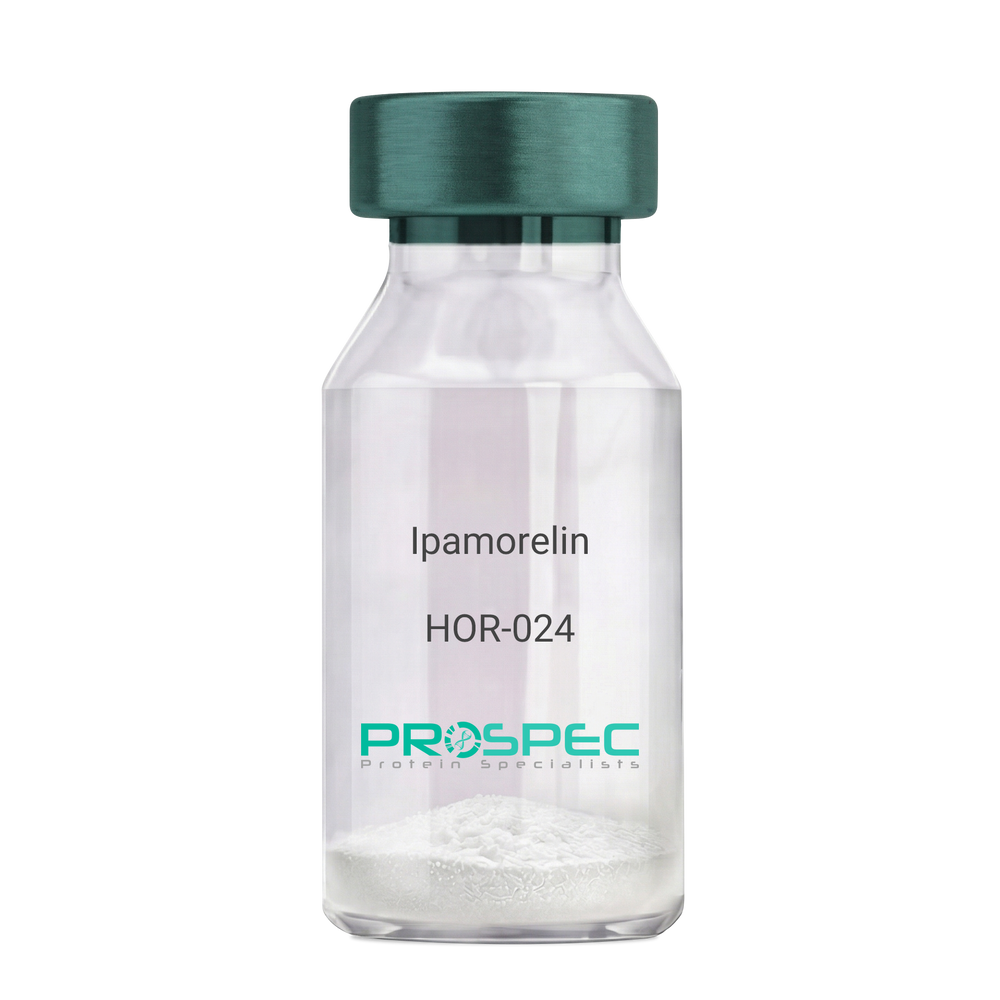
    Ipamorelin

    Description:

    Ipamorelin

    Ipamorelin

    Product # :

    HOR-024

    Price :

    Quantity :

    Shipping Method :

    Room Temp Icon

    Shipped at Room temp

    Add To Cart

    More Info

    • description
    • formulation
    • purity
    • More Info

    Description

    Ipamorelin Synthetic is a single, non-glycosylated polypeptide chain containing 4 amino acids, having a molecular mass of 711.85 Dalton and a Molecular formula of C38H49N9O5.

    Formulation

    The protein was lyophilized with no additives.

    Purity

    Greater than 97.0% as determined by analysis by RP-HPLC.

    More Info

    • Introduction

      Ipamorelin is a peptide selective agonist of the ghrelin/growth hormone secretagogue receptor and a growth hormone secretagogue. Ipamorelin is a pentapeptide that was derived from GHRP1. Ipamorelin significantly increases plasma growth hormone levels in both animals and humans. Like pralmorelin and GHRP-6, ipamorelin does not affect prolactin, FSH, LH or TSH levels. However, unlike GHRP2 and GHRP6, but as growth hormone-releasing hormone (GHRH), ipamorelin does not stimulate the secretion of adrenocorticotropic hormone (ACTH) or cortisol, and is highly selective for inducing the secretion only of GH.

    • Synonyms

      Ipamorelin

    • Physical Appearance

      Sterile Filtered White lyophilized (freeze-dried) powder.

    • Stability

      Lyophilized Ipamorelin although stable at room temperature for 3 weeks, should be stored desiccated below -18°C. Upon reconstitution Ipamorelin should be stored at 4°C between 2-7 days and for future use below -18°C. For long term storage it is recommended to add a carrier protein (0.1% HSA or BSA). Please prevent freeze-thaw cycles.

    • Solubility

      It is recommended to reconstitute the lyophilized Ipamorelin in sterile 18MΩ-cm H2O not less than 100 µg/ml, which can then be further diluted to other aqueous solutions.

    • Amino Acid Sequence

      Aib-His-D-2-Nal-D-Phe-Lys-NH2.

    ProSpec's products are furnished for LABORATORY RESEARCH USE ONLY. The product may not be used as drugs, agricultural or pesticidal products, food additives or household chemicals.

    Ipamorelin
  • View Data Sheet

    Name :

    FLRT2 Human

    Description:

    Fibronectin Leucine Rich Transmembrane Protein 2 Human Recombinant

    Leucine-rich repeat transmembrane protein FLRT2, Fibronectin-like domain-containing leucine-rich transmembrane protein 2, KIAA0405, UNQ232/PRO265.

    Product # :

    PRO-2635

    Price :

    Quantity :

    Shipping Method :

    Ice Icon

    Shipped with Ice Packs

    Add To Cart

    More Info

    • description
    • source
    • formulation
    • purity
    • More Info

    Description

    FLRT2 Human Recombinant produced in Sf9 Baculovirus cells is a single, glycosylated polypeptide chain containing 514 amino acids (36-541 a.a) and having a molecular mass of 57.5kDa.FLRT2 is fused to an 8 amino acid His-tag at C-terminus & purified by proprietary chromatographic techniques.

    Source

    Sf9, Baculovirus cells.

    Formulation

    The FLRT2 solution (0.25mg/1ml) contains 10% glycerol and Phosphate-Buffered Saline (pH 7.4).

    Purity

    Greater than 90.0% as determined by SDS-PAGE.

    More Info

    • Introduction

      Fibronectin Leucine Rich Transmembrane Protein 2 or FLRT2 is a glycoprotein, part of the 3 FLRT glycoproteins (fibronectin, leucine rich repeat, transmembrane). This protein can be found in apparent areas of the brain and additional tissues. The genes of FLRT1 & FLRT3 extracellular domain has about 47% similarity to FLRT2. A domain of fibronectin in FLRT1, FLRT3 & FLRT2 can be bound to epidermal growth factor receptors.

    • Synonyms

      Leucine-rich repeat transmembrane protein FLRT2, Fibronectin-like domain-containing leucine-rich transmembrane protein 2, KIAA0405, UNQ232/PRO265.

    • Physical Appearance

      Sterile Filtered colorless solution.

    • Stability

      Store at 4°C if entire vial will be used within 2-4 weeks. Store, frozen at -20°C for longer periods of time. For long term storage it is recommended to add a carrier protein (0.1% HSA or BSA).Avoid multiple freeze-thaw cycles.

    • Amino Acid Sequence

      CPSVCRCDRN FVYCNERSLT SVPLGIPEGV TVLYLHNNQI NNAGFPAELH NVQSVHTVYL YGNQLDEFPM NLPKNVRVLH LQENNIQTIS RAALAQLLKL EELHLDDNSI STVGVEDGAF REAISLKLLF LSKNHLSSVP VGLPVDLQEL RVDENRIAVI SDMAFQNLTS LERLIVDGNL LTNKGIAEGT FSHLTKLKEF SIVRNSLSHP PPDLPGTHLI RLYLQDNQIN HIPLTAFSNL RKLERLDISN NQLRMLTQGV FDNLSNLKQL TARNNPWFCD CSIKWVTEWL KYIPSSLNVR GFMCQGPEQV RGMAVRELNM NLLSCPTTTP GLPLFTPAPS TASPTTQPPT LSIPNPSRSY TPPTPTTSKL PTIPDWDGRE RVTPPISERI QLSIHFVNDT SIQVSWLSLF TVMAYKLTWV KMGHSLVGGI VQERIVSGEK QHLSLVNLEP RSTYRICLVP LDAFNYRAVE DTICSEATTH ASYLNNGSNT ASSHEQTTSH SMGSPFLEHH HHHH

    ProSpec's products are furnished for LABORATORY RESEARCH USE ONLY. The product may not be used as drugs, agricultural or pesticidal products, food additives or household chemicals.

    Flrt2 Human
  • View Data Sheet

    Name :

    REN Human, sf9

    Description:

    Renin Human Recombinant, sf9

    REN, HNFJ2, Renin, Angiotensinogenase.

    Product # :

    PRO-2342

    Price :

    Quantity :

    Shipping Method :

    Ice Icon

    Shipped with Ice Packs

    Add To Cart

    More Info

    • description
    • source
    • formulation
    • purity
    • More Info

    Description

    REN Human Recombinant produced in Sf9 Baculovirus cells is a single, glycosylated polypeptide chain containing 391 amino acids (24-406) and having a molecular mass of 43.3kDa (Molecular size on SDS-PAGE will appear at approximately 40-57kDa).REN is fused to 8 amino acid His-Tag at C-terminus and purified by proprietary chromatographic techniques.

    Source

    Sf9, Baculovirus cells.

    Formulation

    REN protein solution (0.25mg/ml) containing Phosphate Buffered Saline (pH 7.4) and 10% glycerol.

    Purity

    Greater than 90.0% as determined by analysis by SDS-PAGE.

    More Info

    • Introduction

      Renin is a highly specific endopeptidase which generates angiotensin I from angiotensinogen in the plasma. angiotensin I is an important regulator of blood pressure and electrolyte balance. Renin initiates a cascade of reactions that produce an elevation of blood pressure and increased sodium retention by the kidney.

    • Synonyms

      REN, HNFJ2, Renin, Angiotensinogenase.

    • Physical Appearance

      Sterile Filtered clear solution.

    • Stability

      Store at 4°C if entire vial will be used within 2-4 weeks. Store, frozen at -20°C for longer periods of time. For long term storage it is recommended to add a carrier protein (0.1% HSA or BSA).Avoid multiple freeze-thaw cycles.

    • Amino Acid Sequence

      LPTDTTTFKR IFLKRMPSIR ESLKERGVDM ARLGPEWSQP MKRLTLGNTT SSVILTNYMD TQYYGEIGIG TPPQTFKVVF DTGSSNVWVP SSKCSRLYTA CVYHKLFDAS DSSSYKHNGT ELTLRYSTGT VSGFLSQDII TVGGITVTQM FGEVTEMPAL PFMLAEFDGV VGMGFIEQAI GRVTPIFDNI ISQGVLKEDV FSFYYNRDSE NSQSLGGQIV LGGSDPQHYE GNFHYINLIK TGVWQIQMKG VSVGSSTLLC EDGCLALVDT GASYISGSTS SIEKLMEALG AKKRLFDYVV KCNEGPTLPD ISFHLGGKEY TLTSADYVFQ ESYSSKKLCT LAIHAMDIPP PTGPTWALGA TFIRKFYTEF DRRNNRIGFA LARLEHHHHH H.

    ProSpec's products are furnished for LABORATORY RESEARCH USE ONLY. The product may not be used as drugs, agricultural or pesticidal products, food additives or household chemicals.

    Ren Human Sf9
  • View Data Sheet

    Name :

    Hepatocyte Growth Factor Human, CHO

    Description:

    Hepatocyte Growth Factor Human Recombinant, CHO

    Scatter Factor (SF), Hepatopoietin (HPTA), HGF.

    Product # :

    CYT-251

    Price :

    Quantity :

    Shipping Method :

    Room Temp Icon

    Shipped at Room temp

    Add To Cart

    More Info

    • description
    • source
    • formulation
    • purity
    • biological activity
    • More Info

    Description

    Hepatocyte Growth Factor Human Recombinant produced in CHO is a heterodimer, non-glycosylated, polypeptide chain consisting an a-chain of 463 amino acids and b-chain of 234 having a total molecular mass of approximately 75kDa. The HGF is purified by proprietary chromatographic techniques.

    Source

    Chinese Hamster Ovarian Cells.

    Formulation

    The protein was lyophilized from a concentrated (1.4mg/ml) solution containing Phosphate-Buffered Saline with 0.02% Tween 80, pH 7.4.

    Purity

    Greater than 97.0% as determined by SDS-PAGE.

    Biological Activity

    The ED50, calculated by the dose-dependant proliferation of monkey 4MBr-5 indicator cells was found to be 20-40 ng/ml.

    More Info

    • Introduction

      Hepatocyte Growth Factor (HGF) is a multifunctional growth factor which regulates both cell growth and cell motility. It exerts a strong mitogenic effect on hepatocytes and primary epithelial cells. HGF synergizes with Interleukin-3 and GM-CSF to stimulate colony formation of hematopoietic progenitor cells in vitro and may, therefore, also modulate hematopoiesis.

    • Synonyms

      Scatter Factor (SF), Hepatopoietin (HPTA), HGF.

    • Physical Appearance

      Sterile Filtered White lyophilized (freeze-dried) powder.

    • Stability

      Lyophilized Hepatocyte Growth Factor although stable at room temperature for 3 weeks, should be stored desiccated below -18°C. Upon reconstitution HGF should be stored at 4°C between 2-7 days and for future use below -18°C.For long term storage it is recommended to add a carrier protein (0.1% HSA or BSA).Please prevent freeze-thaw cycles.

    • Solubility

      It is recommended to reconstitute the lyophilized Hepatocyte Growth Factor in sterile 18MΩ-cm H2O not less than 100µg/ml, which can then be further diluted to other aqueous solutions.

    • Amino Acid Sequence

      Agrees with the sequence of native human HGF.

    • Background

      What is the molecular weight/Mw of HEPATOCYTE GROWTH FACTOR HUMAN, CHO Protein?
      HEPATOCYTE GROWTH FACTOR HUMAN, CHO Protein has a total Mw of 75kDa.

      What is the source or expression system of HEPATOCYTE GROWTH FACTOR HUMAN, CHO Protein?
      Chinese Hamster Ovarian Cells.

      What is the Purity of HEPATOCYTE GROWTH FACTOR HUMAN, CHO Protein?
      HEPATOCYTE GROWTH FACTOR HUMAN, CHO Protein is >97% pure as determined by SDS-PAGE.

      What is the Biological Activity of HEPATOCYTE GROWTH FACTOR HUMAN, CHO Protein?
      The ED50, calculated by the dose-dependant proliferation of monkey 4MBr-5 indicator cells was found to be 20-40 ng/ml.

      What is the amino acid sequence of HEPATOCYTE GROWTH FACTOR HUMAN, CHO Protein?
      Agrees with the sequence of native human HGF.

      What applications can HEPATOCYTE GROWTH FACTOR HUMAN, CHO Protein be used in?
      HEPATOCYTE GROWTH FACTOR HUMAN, CHO Protein can probably be used in western blot, ELISA and Lateral Flow.

      What is the endotoxin level for HEPATOCYTE GROWTH FACTOR HUMAN, CHO Protein?
      The endotoxin level is minimal, HEPATOCYTE GROWTH FACTOR HUMAN, CHO Protein was purified using conventional chromatography techniques.

    ProSpec's products are furnished for LABORATORY RESEARCH USE ONLY. The product may not be used as drugs, agricultural or pesticidal products, food additives or household chemicals.

    Hgf Human Cho
  • View Data Sheet

    Name :

    Hepatocyte Growth Factor Human

    Description:

    Hepatocyte Growth Factor Human Recombinant

    Scatter Factor (SF), Hepatopoietin (HPTA), HGF, HGFB, F-TCF.

    Product # :

    CYT-244

    Price :

    Quantity :

    Shipping Method :

    Room Temp Icon

    Shipped at Room temp

    Add To Cart

    More Info

    • description
    • source
    • formulation
    • purity
    • biological activity
    • More Info

    Description

    Hepatocyte Growth Factor Human Recombinant produced in Baculovirus is a heterodimer, non-glycosylated, polypeptide chain containing 697 a.a and having a total molecular mass of 78.0 KDa.The HGF is purified by proprietary chromatographic techniques.

    Source

    Insect cells.

    Formulation

    The sterile protein powder (1 mg/ml) is lyophilized from a solution containing 50mM acetic acid.

    Purity

    Greater than 95.0% as determined by SDS-PAGE.

    Biological Activity

    The activity was assayed for scattering activity in the MDCK cell assay. The ED50 for this effect is typically at 2.0-5.0 ng/ml.

    More Info

    • Introduction

      Hepatocyte Growth Factor (HGF) is a multifunctional growth factor which regulates both cell growth and cell motility. It exerts a strong mitogenic effect on hepatocytes and primary epithelial cells. HGF synergizes with Interleukin-3 and GM-CSF to stimulate colony formation of hematopoietic progenitor cells in vitro and may, therefore, also modulate hematopoiesis.

    • Synonyms

      Scatter Factor (SF), Hepatopoietin (HPTA), HGF, HGFB, F-TCF.

    • Physical Appearance

      Sterile Filtered White lyophilized (freeze-dried) powder.

    • Stability

      Lyophilized Hepatocyte Growth Factor although stable at room temperature for 3 weeks, should be stored desiccated below -18°C. Upon reconstitution HGF should be stored at 4°C between 2-7 days and for future use below -18°C. For long term storage it is recommended to add a carrier protein (0.1% HSA or BSA).Please prevent freeze-thaw cycles.

    • Solubility

      It is recommended to reconstitute the lyophilized Hepatocyte Growth Factor in 50mM acetic acid to a concentration not less than 100µg/ml. Further dilutions should be made using buffer containing protein.

    • Amino Acid Sequence

      QRKRRNTIHEFKKSAKTTLIKIDPALKIKTKKVNTADQCANRCTRNKGLPFTCK
      AFVFDKARKQCLWFPFNSMSSGVKKEFGHEFDLYENKDYIRNCIIGKGRSYKGT
      VSITKSGIKCQPWSSMIPHEHSYRGKDLQENYCRNPRGEEGGPWCFTSNPEVRY
      EVCDIPQCSEVECMTCNGESYRGLMDHTESGKICQRWDHQTPHRHKFLPERYPD
      KGFDDNYCRNPDGQPRPWCYTLDPHTRWEYCAIKTCADNTMNDTDVPLETTECI
      QGQGEGYRGTVNTIWNGIPCQRWDSQYPHEHDMTPENFKCKDLRENYCRNPDGS
      ESPWCFTTDPNIRVGYCSQIPNCDMSHGQDCYRGNGKNYMGNLSQTRSGLTCSM
      WDKNMEDLHRHIFWEPDASKLNENYCRNPDDDAHGPWCYTGNPLIPWDYCPISR
      CEGDTTPTIVNLDHPVISCAKTKQLRVVNGIPTRTNIGWMVSLRYRNKHICGGS
      LIKESWVLTARQCFPSRDLKDYEAWLGIHDVHGRGDEKCKQVLNVSQLVYGPEG
      SDLVLMKLARPAVLDDFVSTIDLPNYGCTIPEKTSCSVYGWGYTGLINYDGLLR
      VAHLYIMGNEKCSQHHRGKVTLNESEICAGAEKIGSGPCEGDYGGPLVCEQHKM
      RMVLGVIVPGRGCAIPNRPGIFVRVAYYAKWIHKIILTYKVPQS.

    • Background

      What is the molecular weight/Mw of HEPATOCYTE GROWTH FACTOR HUMAN, Protein?
      HEPATOCYTE GROWTH FACTOR HUMAN, Protein has a total Mw of 78kDa.

      What is the source or expression system of HEPATOCYTE GROWTH FACTOR HUMAN, Protein?
      Insect cells.
      What is the Purity of HEPATOCYTE GROWTH FACTOR HUMAN, Protein?
      HEPATOCYTE GROWTH FACTOR HUMAN, Protein is >95% pure as determined by SDS-PAGE.

      What is the Biological Activity of HEPATOCYTE GROWTH FACTOR HUMAN, Protein?
      The activity was assayed for scattering activity in the MDCK cell assay. The ED50 for this effect is typically at 2.0-5.0 ng/ml.

      What is the amino acid sequence of HEPATOCYTE GROWTH FACTOR HUMAN, Protein?
      QRKRRNTIHEFKKSAKTTLIKIDPALKIKTKKVNTADQCANRCTRNKGLPFTCK
      AFVFDKARKQCLWFPFNSMSSGVKKEFGHEFDLYENKDYIRNCIIGKGRSYKGT
      VSITKSGIKCQPWSSMIPHEHSYRGKDLQENYCRNPRGEEGGPWCFTSNPEVRY
      EVCDIPQCSEVECMTCNGESYRGLMDHTESGKICQRWDHQTPHRHKFLPERYPD
      KGFDDNYCRNPDGQPRPWCYTLDPHTRWEYCAIKTCADNTMNDTDVPLETTECI
      QGQGEGYRGTVNTIWNGIPCQRWDSQYPHEHDMTPENFKCKDLRENYCRNPDGS
      ESPWCFTTDPNIRVGYCSQIPNCDMSHGQDCYRGNGKNYMGNLSQTRSGLTCSM
      WDKNMEDLHRHIFWEPDASKLNENYCRNPDDDAHGPWCYTGNPLIPWDYCPISR
      CEGDTTPTIVNLDHPVISCAKTKQLRVVNGIPTRTNIGWMVSLRYRNKHICGGS
      LIKESWVLTARQCFPSRDLKDYEAWLGIHDVHGRGDEKCKQVLNVSQLVYGPEG
      SDLVLMKLARPAVLDDFVSTIDLPNYGCTIPEKTSCSVYGWGYTGLINYDGLLR
      VAHLYIMGNEKCSQHHRGKVTLNESEICAGAEKIGSGPCEGDYGGPLVCEQHKM
      RMVLGVIVPGRGCAIPNRPGIFVRVAYYAKWIHKIILTYKVPQS.What applications can

      HEPATOCYTE GROWTH FACTOR HUMAN, Protein be used in?
      HEPATOCYTE GROWTH FACTOR HUMAN, Protein can probably be used in western blot, ELISA and Lateral Flow.

      What is the endotoxin level for HEPATOCYTE GROWTH FACTOR HUMAN, Protein?
      The endotoxin level is minimal, HEPATOCYTE GROWTH FACTOR HUMAN, Protein was purified using conventional chromatography techniques.

    ProSpec's products are furnished for LABORATORY RESEARCH USE ONLY. The product may not be used as drugs, agricultural or pesticidal products, food additives or household chemicals.

    Hgf Human
  • View Data Sheet

    Name :

    VEGF Rat, Yeast

    Description:

    Vascular Endothelial Growth Factor Rat Recombinant, Yeast

    Vascular endothelial growth factor A, VEGF-A, Vascular permeability factor, VPF, VEGF, MGC70609.

    Product # :

    CYT-1126

    Price :

    Quantity :

    Shipping Method :

    Room Temp Icon

    Shipped at Room temp

    Add To Cart

    More Info

    • description
    • source
    • formulation
    • purity
    • biological activity
    • More Info

    Description

    Vascular Endothelial Growth Factor Rat Recombinant produced in yeast is a disulfide-linked homodimer consisting of 2x165 amino acid polypeptide chains, having a molecular mass of approximately 25.7kDa each.VEGF is purified by proprietary chromatographic techniques.

    Source

    Saccharomyces cerevisiae

    Formulation

    Lyophilized from a 0.2μm filtered concentrated solution in PBS, pH 7.4.

    Purity

    Greater than 90.0% as determined by SDS-PAGE.

    Biological Activity

    The ED50  was measured in a cell proliferation assay using HUVEC human umbilical vein endothelial cells and was found to be 0.75‑3.75 ng/ml.

    More Info

    • Introduction

      Vascular endothelial growth factor is an important signaling protein involved in both angiogenesis and vasculogenesis.VEGF activity has been mostly studied on cells of the vascular endothelium, although it does have effects on a number of other cell types (e.g. stimulation monocyte/macrophage migration, neurons, cancer cells, kidney epithelial cells ).VEGF mediates increased vascular permeability, induces angiogenesis, vasculogenesis and endothelial cell growth, promotes cell migration, and inhibits apoptosis. In vitro, VEGF has been shown to stimulate endothelial cell mitogenesis and cell migration. VEGF is also a vasodilator and increases microvascular permeability and was originally referred to as vascular permeability factor.
      Elevated levels of VEGF is linked to POEMS syndrome, also known as Crow-Fukase syndrome. Mutations in VEGF have been associated with proliferative and nonproliferative diabetic retinopathy.

    • Synonyms

      Vascular endothelial growth factor A, VEGF-A, Vascular permeability factor, VPF, VEGF, MGC70609.

    • Physical Appearance

      Sterile Filtered White lyophilized (freeze-dried) powder.

    • Stability

      Lyophilized VEGF although stable at room temperature for 3 weeks, should be stored desiccated below -18°C. Upon reconstitution Vascular Endothelial Growth Factor should be stored at 4°C between 2-7 days and for future use below -18°C.Please prevent freeze-thaw cycles.

    • Solubility

      It is recommended to reconstitute the lyophilized Vascular Endothelial Growth Factor in sterile 18MΩ-cm H2O not less than 100µg/ml, which can then be further diluted to other aqueous solutions.

    • Amino Acid Sequence

      MAPTTEGEQK AHEVVKFMDV YQRSYCRPIE TLVDIFQEYP DEIEYIFKPS CVPLMRCAGC CNDEALECVP TSESNVTMQI MRIKPHQSQH IGEMSFLQHS RCECRPKKDR TKPEKHCEPC SERRKHLFVQ DPQTCKCSCK NTDSRCKARQ LELNERTCRC DKPRR.

    ProSpec's products are furnished for LABORATORY RESEARCH USE ONLY. The product may not be used as drugs, agricultural or pesticidal products, food additives or household chemicals.

    Rat Vegf Protein
  • View Data Sheet

    Name :

    Leptin Ovine

    Description:

    Leptin Ovine Recombinant

    OB Protein, Obesity Protein, OBS, Obesity factor.

    Product # :

    CYT-239

    Price :

    Quantity :

    Shipping Method :

    Room Temp Icon

    Shipped at Room temp

    Add To Cart

    More Info

    • description
    • source
    • formulation
    • purity
    • biological activity
    • More Info

    Description

    Leptin Ovine Recombinant produced in E.Coli is a single, non-glycosylated, polypeptide chain containing 146 amino acids and having a molecular mass of 16 kDa.The Leptin is purified by proprietary chromatographic techniques.

    Source

    Escherichia Coli.

    Formulation

    The protein was lyophilized from a concentrated (1mg/ml) solution with 0.0045mM NaHCO3.

    Purity

    Greater than 95.0% as determined by:
    (a) Analysis by SEC-HPLC.
    (b) Analysis by SDS-PAGE.

    Biological Activity

    Biological active as evidenced by inducing proliferation of BAF/3 cells stably transfected with the long form of human leptin receptor.

    More Info

    • Introduction

      A 16-kDa peptide hormone secreted from white adipocytes and implicated in the regulation of food intake and energy balance. Leptin provides the key afferent signal from fat cells in the feedback system that controls body fat stores.

    • Synonyms

      OB Protein, Obesity Protein, OBS, Obesity factor.

    • Physical Appearance

      Sterile Filtered White lyophilized (freeze-dried) powder.

    • Stability

      Lyophilized Leptin although stable at room temperature for 3 weeks, should be stored desiccated below -18°C. Upon reconstitution Leptin should be stored at 4°C between 2-7 days and for future use below -18°C.For long term storage it is recommended to add a carrier protein (0.1% HSA or BSA).Please prevent freeze-thaw cycles.

    • Solubility

      It is recommended to reconstitute the lyophilized Leptin in sterile 18MΩ-cm H2O not less than 100µg/ml, which can then be further diluted to other aqueous solutions.

    • Amino Acid Sequence

      The sequence of the first five N-terminal amino acids was determined and was found to be Ala-Val-Pro-Ile-Arg.

    • Protein content

      Protein quantitation was carried out by two independent methods1. UV spectroscopy at 280 nm using the absorbency value of 0.2 as the extinction coefficient for a 0.1% (1mg/ml) solution. This value is calculated by the PC GENE computer analysis program of protein sequences (IntelliGenetics). 2. Analysis by RP-HPLC,using calibrated solution of Leptin Ovine as a Reference Standard.

    ProSpec's products are furnished for LABORATORY RESEARCH USE ONLY. The product may not be used as drugs, agricultural or pesticidal products, food additives or household chemicals.

    Leptin Ovine
  • 1
  • …
  • 25
  • 26
  • 27
  • 28
  • 29
  • …
  • 42
Your browser does not support the video tag.

Products

  • Cytokines
  • Growth Factors
  • Chemokines
  • CD Antigens
  • Neurotrophins
  • Hormones
  • Enzymes
  • Viral Antigens
  • Recombinant Proteins
  • Natural Proteins
  • Monoclonal Antibodies
  • Polyclonal Antibodies
  • Thermal Packaging

About

  • Company
  • Founder
  • Contribution
  • Contact Us
  • My Account

Ordering

  • Ordering Method
  • Ordering - Credit Card
  • Ordering PO
  • Shipping Fees
  • FAQ's

Legal

  • Terms & Conditions
  • Privacy
  • Site Map
  • info@prospecbio.com
  • Facebook
  • Instagram
  • Linkedin Profile

© 2026 ProSpec-Tany TechnoGene Ltd. All Rights Reserved.

  • Choosing a selection results in a full page refresh.
  • Opens in a new window.