Search results
1000 results found for “processing of precursor”
Name
Description
Product #
Price
Quantity
Shipping Method
- View Data Sheet
Name :
GNPDA1 HumanDescription:
Glucosamine-6-Phosphate Deaminase 1 Human Recombinant
GNP1, GNPDA, GNPI, GPI, HLN, Oscillin.
Product # :
ENZ-554Price :
Quantity :
Shipping Method :
Shipped with Ice Packs
More Info
- description
- source
- formulation
- purity
- More Info
Description
GNPDA1 Recombinant Human produced in E.Coli is a single, non-glycosylated, polypeptide chain containing 309 amino acids (1-289) and having a molecular mass of 34.8 kDa.GNPDA1 is fused to a 20 amino macid His-Tag at N-terminus and purified by proprietary chromatographic techniques.
Source
Escherichia Coli.
Formulation
1 mg/ml solution containing 20mM Tris Hcl buffer pH-8, 1mM DTT, 50mM NaCl and 20% glycerol.
Purity
Greater than 90.0% as determined by SDS-PAGE.
More Info
-
Introduction
GNPDA1, catalyzes the conversion of glucosamine-6-phosphate to fructose-6-phosphate, a reaction that under physiological conditions proceeds to the formation of fructose-6-phosphate. GNPDA1 is widely expressed with highest expression in testes, ovary and heart. GNPDA1 triggers calcium oscillations in mammalian eggs. These oscillations are as the necessary trigger for egg activation and early development of the embryo.
-
Synonyms
GNP1, GNPDA, GNPI, GPI, HLN, Oscillin.
-
Physical Appearance
Sterile filtered colorless solution.
-
Stability
GNPDA1 Human Recombinant although stable at 4°C for 1 week, should be stored below -18°C.Please prevent freeze-thaw cycles.
-
Amino Acid Sequence
MGSSHHHHHH SSGLVPRGSH MKLIILEHYS QASEWAAKYI RNRIIQFNPG PEKYFTLGLP TGSTPLGCYK KLIEYYKNGD LSFKYVKTFN MDEYVGLPRD HPESYHSFMW NNFFKHIDIH PENTHILDGN AVDLQAECDA FEEKIKAAGG IELFVGGIGP DGHIAFNEPG SSLVSRTRVK TLAMDTILAN ARFFDGELTK VPTMALTVGV GTVMDAREVM ILITGAHKAF ALYKAIEEGV NHMWTVSAFQ QHPRTVFVCD EDATLELKVK TVKYFKGLML VHNKLVDPLY SIKEKETEKS QSSKKPYSD.
ProSpec's products are furnished for LABORATORY RESEARCH USE ONLY. The product may not be used as drugs, agricultural or pesticidal products, food additives or household chemicals.
- View Data Sheet
Name :
PTGES3 HumanDescription:
Prostaglandin E Synthase 3 Human Recombinant
TEBP, CPGES, SID3177, 5730442A20Rik, p23, HSP90 co-chaperone, Prostaglandin E synthase 3, Cytosolic prostaglandin E2 synthase, Telomerase-binding protein p23, Progesterone receptor complex p23, PTGES3.
Product # :
ENZ-458Price :
Quantity :
Shipping Method :
Shipped with Ice Packs
More Info
- description
- source
- formulation
- purity
- More Info
Description
Recombinant Human PTGES3 produced in E.Coli is a single,non-glycosylated polypeptide chain containing 160 amino acids (1-160 a.a.) and having a molecular mass of 18.6 kDa.PTGES3 is purified by convential chromatogrpahy techniques.
Source
Escherichia Coli.
Formulation
The PTGES3 protein solution contains 20mM Tris-HCl, pH-8, 1mM DTT & 10% Glycerol.
Purity
Greater than 95.0% as determined by SDS-PAGE.
More Info
-
Introduction
PTGES3 takes part as a cochaperone and is involved in signal transduction.
PTGES3 is a molecular chaperone that localizes to genomic response elements in a hormone-dependent manner and disrupts receptor-mediated transcriptional activation, by promoting disassembly of transcriptional regulatory complexess. PTGES3 is necessary for appropriate functioning of the glucocorticoid and other steroid receptors.
PTGES3 localizes to genomic response elements in a hormone-dependent method and disrupts receptor-mediated transcriptional activation, by promoting disassembly of transcriptional regulatory complexes. -
Synonyms
TEBP, CPGES, SID3177, 5730442A20Rik, p23, HSP90 co-chaperone, Prostaglandin E synthase 3, Cytosolic prostaglandin E2 synthase, Telomerase-binding protein p23, Progesterone receptor complex p23, PTGES3.
-
Physical Appearance
Sterile filtered colorless solution.
-
Stability
Store at 4°C if entire vial will be used within 2-4 weeks. Store, frozen at -20°C for longer periods of time. For long term storage it is recommended to add a carrier protein (0.1% HSA or BSA). Avoid multiple freeze-thaw cycles.
-
Amino Acid Sequence
MQPASAKWYD RRDYVFIEFC VEDSKDVNVN FEKSKLTFSC LGGSDNFKHL NEIDLFHCID PNDSKHKRTD RSILCCLRKG ESGQSWPRLT KERAKLNWLS VDFNNWKDWE DDSDEDMSNF DRFSEMMNNM GGDEDVDLPE VDGADDDSQD SDDEKMPDLE.
ProSpec's products are furnished for LABORATORY RESEARCH USE ONLY. The product may not be used as drugs, agricultural or pesticidal products, food additives or household chemicals.
- View Data Sheet
Name :
ACPP HumanDescription:
Acid Phosphatase Prostate Human Recombinant
PAP, ACP3, ACP-3, Acid phosphatase, prostate, 5'-nucleotidase, 5'-NT, Ecto-5'-nucleotidase, Thiamine monophosphatase, TMPase.
Product # :
ENZ-847Price :
Quantity :
Shipping Method :
Shipped with Ice Packs
More Info
- description
- source
- formulation
- purity
- More Info
Description
ACPP Human Recombinant produced in E.Coli is a single, non-glycosylated polypeptide chain containing 375 amino acids (33-386 a.a) and having a molecular mass of 43.2kDa.ACPP is fused to a 20 amino acid His-tag at N-terminus & purified by proprietary chromatographic techniques.
Source
Escherichia Coli.
Formulation
ACPP protein solution (0.5mg/ml) containing 20mM Tris-HCl buffer (pH 8.0) and 10% glycerol.
Purity
Greater than 85.0% as determined by SDS-PAGE.
More Info
-
Introduction
Acid phosphatase, prostate (ACPP) is a non-specific tyrosine phosphatase, which dephosphorylates a varied number of substrates under acidic conditions (pH 4-6) including alkyl, aryl, and acyl orthophosphate monoesters and phosphorylated proteins. ACPP has lipid phosphatase activity and inactivates lysophosphatidic acid in seminal plasma.
-
Synonyms
PAP, ACP3, ACP-3, Acid phosphatase, prostate, 5'-nucleotidase, 5'-NT, Ecto-5'-nucleotidase, Thiamine monophosphatase, TMPase.
-
Physical Appearance
Sterile Filtered colorless solution.
-
Stability
Store at 4°C if entire vial will be used within 2-4 weeks. Store, frozen at -20°C for longer periods of time. For long term storage it is recommended to add a carrier protein (0.1% HSA or BSA).Avoid multiple freeze-thaw cycles.
-
Amino Acid Sequence
MGSSHHHHHH SSGLVPRGSH MKELKFVTLV FRHGDRSPID TFPTDPIKES SWPQGFGQLT QLGMEQHYEL GEYIRKRYRK FLNESYKHEQ VYIRSTDVDR TLMSAMTNLA ALVPPEGVSI WNPILLWQPI PVHTVPLSED QLLYLPFRNC PRFQELESET LKSEEFQKRL HPYKDFIATL GKLSGLHGQD LFGIWSKVYD PLYCESVHNF TLPSRATEDT MTKLRELSEL SLLSLYGIHK QKEKSRLQGG VLVNEILNHM KRATQIPSYK KLIMYSAHDT TVSGLQMALD VYNGLLPPYA SCHLTELYFE KGEYFVEMYY RNETQHEPYP LMLPGCSPSC PLERFAELVG PVIPQDWSTE CMTTNSHQGT EDSTD.
ProSpec's products are furnished for LABORATORY RESEARCH USE ONLY. The product may not be used as drugs, agricultural or pesticidal products, food additives or household chemicals.
- View Data Sheet
Name :
MMP14 Human, HisDescription:
Matrix Metalloproteinase-14 Human Recombinant, His Tag
Matrix Metallopeptidase 14, Matrix Metallopeptidase 14 (Membrane-Inserted), Membrane-Type-1 Matrix Metalloproteinase, Membrane Type 1 Metalloprotease, EC 3.4.24.80, MT-MMP 1, MT1-MMP, MMP-14, MMP-X1, MT1MMP, MTMMP1, Matrix Metalloproteinase 14 (Membrane-Inserted), Membrane-Type Matrix Metalloproteinase 1, Matrix Metalloproteinase-14, EC 3.4.24, MT-MMP, WNCHRS, Matrix metalloproteinase-14, Membrane-type matrix metalloproteinase 1.
Product # :
ENZ-1003Price :
Quantity :
Shipping Method :
Shipped with Ice Packs
More Info
- description
- source
- formulation
- purity
- More Info
Description
MMP14 Human Recombinant produced in Sf9 Baculovirus cells is a single, non-glycosylated polypeptide chain containing 527 amino acids (21-538a.a) and having a molecular mass of 59.9kDa (Molecular size on SDS-PAGE will appear at approximately 35-70kDa). MMP14 is fused to a 6 amino acid His-tag at C-terminus & purified by proprietary chromatographic techniques.
Source
Sf9, Baculovirus cells.
Formulation
MMP14 protein solution (0.25mg/ml) containing Phosphate Buffered Saline (pH 7.4) and 10% glycerol.
Purity
Greater than 90% as determined by SDS-PAGE.
More Info
-
Introduction
Matrix metalloproteinase-14 (MMP14), is a membrane-anchored zinc-binding endopeptidase which is expressed at the leading edge of different invasive carcinomas and also promotes tumor cell invasion through degradation of the extracellular matrix. MMP14 takes a vital part in extracellular matrix, ECM, remodeling by having the capability to degrade type I collagen, activate pro-MMP-2 and process cell adhesion molecules for instance CD44 and integrin alpha V. MMP14 is a key enzyme in many physiological as well as pathological processes for example angiogenesis & tumor invasion.
-
Synonyms
Matrix Metallopeptidase 14, Matrix Metallopeptidase 14 (Membrane-Inserted), Membrane-Type-1 Matrix Metalloproteinase, Membrane Type 1 Metalloprotease, EC 3.4.24.80, MT-MMP 1, MT1-MMP, MMP-14, MMP-X1, MT1MMP, MTMMP1, Matrix Metalloproteinase 14 (Membrane-Inserted), Membrane-Type Matrix Metalloproteinase 1, Matrix Metalloproteinase-14, EC 3.4.24, MT-MMP, WNCHRS, Matrix metalloproteinase-14, Membrane-type matrix metalloproteinase 1.
-
Physical Appearance
Sterile Filtered colorless solution.
-
Stability
Store at 4°C if entire vial will be used within 2-4 weeks. Store, frozen at -20°C for longer periods of time. For long term storage it is recommended to add a carrier protein (0.1% HSA or BSA). Avoid multiple freeze-thaw cycles.
-
Amino Acid Sequence
ADLALASLGS AQSSSFSPEA WLQQYGYLPP GDLRTHTQRS PQSLSAAIAA MQKFYGLQVT GKADADTMKA MRRPRCGVPD KFGAEIKANV RRKRYAIQGL KWQHNEITFC IQNYTPKVGE YATYEAIRKA FRVWESATPL RFREVPYAYI REGHEKQADI MIFFAEGFHG DSTPFDGEGG FLAHAYFPGP NIGGDTHFDS AEPWTVRNED LNGNDIFLVA VHELGHALGL EHSSDPSAIM APFYQWMDTE NFVLPDDDRR GIQQLYGGES GFPTKMPPQP RTTSRPSVPD KPKNPTYGPN ICDGNFDTVA MLRGEMFVFK ERWFWRVRNN QVMDGYPMPI GQFWRGLPAS INTAYERKDG KFVFFKGDKH WVFDEASLEP GYPKHIKELG RGLPTDKIDA ALFWMPNGKT YFFRGNKYYR FNEELRAVDS EYPKNIKVWE GIPESPRGSF MGSDEVFTYF YKGNKYWKFN NQKLKVEPGY PKSALRDWMG CPSGGRPDEG TEEETEVIII EVDEEGGGAV SHHHHHH.
ProSpec's products are furnished for LABORATORY RESEARCH USE ONLY. The product may not be used as drugs, agricultural or pesticidal products, food additives or household chemicals.
- View Data Sheet
Name :
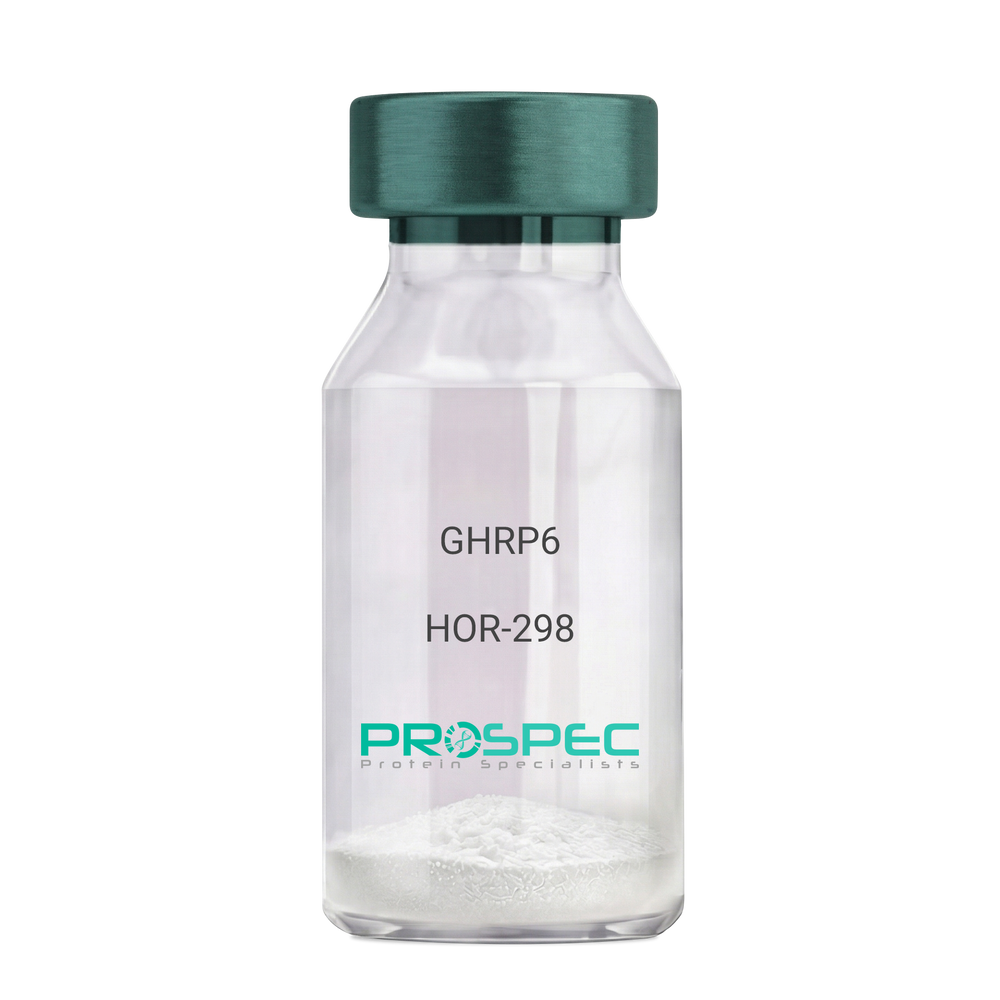
GHRP6Description:
Growth Hormone Releasing Peptide-6
GHRP-6, GHRP6
Product # :
HOR-298Price :
Quantity :
Shipping Method :
Shipped at Room temp
More Info
- description
- formulation
- purity
- More Info
Description
Growth Hormone Releasing Peptide-6 Synthetic is a single, non-glycosylated polypeptide chain containing 6 amino acids, having a molecular mass of 873 Dalton and a Molecular formula of C46H56N12O6.
Formulation
The GHRP-6 peptide was lyophilized with no additives.
Purity
Greater than 98.0% as determined by analysis by RP-HPLC.
More Info
-
Introduction
GH-releasing peptides (GHRPs) are synthetic peptides that like GHRH act directly on pituitary somatotrophs to stimulate GH release. Growth hormone (GH) release is stimulated by a variety of synthetic secretagogues, of which growth hormone-releasing hexapeptide (GHRP-6) has been most thoroughly studied; it is thought to have actions at both pituitary and hypothalamic site.
-
Synonyms
GHRP-6, GHRP6
-
Physical Appearance
Sterile Filtered White lyophilized (freeze-dried) powder.
-
Stability
Lyophilized Growth Hormone Releasing Peptide-6 although stable at room temperature for 3 weeks, should be stored desiccated below -18°C. Upon reconstitution GHRP-6 should be stored at 4°C between 2-7 days and for future use below -18°C. For long term storage it is recommended to add a carrier protein (0.1% HSA or BSA).Please prevent freeze-thaw cycles.
-
Solubility
It is recommended to reconstitute the lyophilized GHRP-6 in sterile 18MΩ-cm H2O not less than 100 µg/ml, which can then be further diluted to other aqueous solutions.
-
Amino Acid Sequence
His-D-Trp-Ala-Trp-D-Phe-Lys-NH2.
ProSpec's products are furnished for LABORATORY RESEARCH USE ONLY. The product may not be used as drugs, agricultural or pesticidal products, food additives or household chemicals.
- View Data Sheet
Name :
UBE2L6 AntibodyDescription:
Ubiquitin Conjugating Enzyme E2L 6, Mouse Anti Human
RIG-B, UBCH8, MGC40331, UBE2L6, Ubiquitin/ISG15-conjugating enzyme E2 L6, Ubiquitin-protein ligase L6, Ubiquitin carrier protein L6, Retinoic acid-induced gene B protein.
Product # :
ANT-386Price :
Quantity :
Shipping Method :
Shipped with Ice Packs
More Info
- formulation
- More Info
Formulation
1mg/ml containing PBS, pH-7.4, & 0.1% Sodium Azide.
More Info
-
Introduction
UBE2L6 belongs to the E2 ubiquitin-conjugating enzyme family. UBE2L6 enzyme is very similar in its primary structure to the enzyme encoded by UBE2L3 gene. UBE2L6 catalyzes the covalent attachment of ubiquitin to other proteins. UBE2L6 functions in the e6/e6-ap-induced ubiquitination of p53/tp53.
-
Synonyms
RIG-B, UBCH8, MGC40331, UBE2L6, Ubiquitin/ISG15-conjugating enzyme E2 L6, Ubiquitin-protein ligase L6, Ubiquitin carrier protein L6, Retinoic acid-induced gene B protein.
-
Immunogen
Anti-human UBE2L6 mAb is derived from hybridization of mouse F0 myeloma cells with spleen cells from BALB/c mice immunized with recombinant human UBE2L6 amino acids 1-152 purified from E. coli.
-
Ig Subclass
Mouse IgG2b heavy chain and κ light chain.
-
Clone
Pk1H3AT.
-
Applications
UBE2L6 antibody has been tested by ELISA, Western blot and immunohistochemistry analysis to assure specificity and reactivity. Since application varies, however, each investigation should be titrated by the reagent to obtain optimal results. Recommended dilution range for Western blot is 1:1,000~1:3,000 and immunohistochemistry analysis is 1:50~100. Recommended starting dilution for Western blot is 1:2,000 and Immunohistochemistry is 1:50.
-
Type
Mouse Anti Human Monoclonal.
-
Storage Procedures
For periods up to 1 month store at 4°C, for longer periods of time, store at -20°C. Prevent freeze thaw cycles.
-
Purification Method
UBE2L6 antibody was purified from mouse ascitic fluids by protein-G affinity chromatography.
ProSpec's products are furnished for LABORATORY RESEARCH USE ONLY. The product may not be used as drugs, agricultural or pesticidal products, food additives or household chemicals.
- View Data Sheet
Name :
Alkaline Phosphatase BovineDescription:
Alkaline Phosphatase Bovine Intestinal
EC 3.1.3.1, IAP, AP, ALPI, Intestinal-type alkaline phosphatase, Intestinal alkaline phosphatase.
Product # :
ENZ-322Price :
Quantity :
Shipping Method :
Shipped with Ice Packs
More Info
- description
- source
- formulation
- purity
- biological activity
- More Info
Description
The Alkaline Phosphatase is purified by affinity chromatography, which results in an enzyme of high specific activity and purity. Alkaline Phosphatase is Dimeric protein having a molecular weight of 140 kDa, one Zn++ ion is tightly bound to each subunit, and another less tightly bound is involved in the catalytic reaction. Mg++ stimulates the catalysis. The binding site for Mg++ is different to that of Zn++, but will be occupied by excess Zn++ followed by loss of enzyme activity.
Source
Calf Intestine.
Formulation
50% glycerol, 5mM MgCl2, 0.1mM ZnCl2 and 5mM TRIS, pH 7.0.
Purity
95% pure by Gel Filtration.
Biological Activity
>1500 U/mg (pH 9.6), 25°C and 0.025M glycin, 10% glycerol as buffer.
More Info
-
Synonyms
EC 3.1.3.1, IAP, AP, ALPI, Intestinal-type alkaline phosphatase, Intestinal alkaline phosphatase.
-
Physical Appearance
Sterile Filtered clear colorless solution.
-
Stability
AP should be stored at 4°C. Please Do-Not freeze.
ProSpec's products are furnished for LABORATORY RESEARCH USE ONLY. The product may not be used as drugs, agricultural or pesticidal products, food additives or household chemicals.
- View Data Sheet
Name :
CFP Human, NativeDescription:
Complement Factor Properdin Human
Properdin, Complement factor P, CFP, PFC, Complement factor properdin, BFD, PFD, Properdin.
Product # :
PRO-2702Price :
Quantity :
Shipping Method :
Shipped with Ice Packs
More Info
- description
- source
- formulation
- purity
- More Info
Description
CFP Human produced in Human plasma having a molecular weight of 53kDa.
Source
Human Plasma.
Formulation
CFP solution contains PBS, pH 7.2.
Purity
Greater than 95.0% as determined by SDS-PAGE.
More Info
-
Introduction
Complement Factor Properdin (CFP) which is a plasma glycoprotein, is a positive regulator of the alternative complement pathway of the innate immune system. CFP binds and stabilizes the C3- and C5-convertase enzyme complexes in a feedback loop that eventually ends with formation of the membrane attack complex and lysis of the target cell. Mutations in CFP lead to 2 forms of properdin deficiency that cause high susceptibility to meningococcal infections.
-
Synonyms
Properdin, Complement factor P, CFP, PFC, Complement factor properdin, BFD, PFD, Properdin.
-
Physical Appearance
Sterile filtered solution.
-
Stability
CFP Human is stable at 4°C if entire vial will be used within 2-4 weeks.Store, frozen below -20°C for longer periods of time.For long term storage it is recommended to add a carrier protein (0.1% HSA or BSA).Avoid multiple freeze-thaw cycles.
-
Human Virus Test
Plasma from each donor has been tested and found negative for antibody to HIV-1, HIV-2, HCV, HTLV-I &II, STS and HBSAG.
ProSpec's products are furnished for LABORATORY RESEARCH USE ONLY. The product may not be used as drugs, agricultural or pesticidal products, food additives or household chemicals.
- View Data Sheet
Name :
Thromboplastin BovineDescription:
Thromboplastin Bovine
Tissue factor, Coagulation factor III, Thromboplastin, CD142, TF, F3, TFA.
Product # :
PRO-2760Price :
Quantity :
Shipping Method :
Shipped at Room temp
More Info
- description
- source
- formulation
- More Info
Description
Thromboplastin bovine native
Source
Bovine Lung.
Formulation
The bovine thromboplastin was lyophilized with no additives.
More Info
-
Introduction
Tissue factor is well-known as the main cellular initiator of blood coagulation. The Tissue factor gene encodes coagulation factor III which is a cell surface glycoprotein that enables cells to initiate the blood coagulation cascades, and functions as the high-affinity receptor for the coagulation factor VII. Following vessel injury, the Tissue Factor and Factor VIIa complex activates the coagulation protease cascade, which leads to fibrin deposition and activation of platelets. The ensuing complex presents a catalytic event, which is responsible for initiation of the coagulation protease cascades by specific limited proteolysis. Therefore, Tissue factor has a role in normal hemostasis by initiating the cell-surface assembly and propagation of the coagulation protease cascade. Tissue Factor can also be stimulated by the inflammatory mediators interleukin 1 and TNF, as well as by endotoxin, to appear on monocytes and vascular endothelial cells as a component of cellular immune response.
Tissue factor is the only one in the coagulation pathway for which a congenital deficiency has not been described. Certain levels of Tissue Factor are essential for the maintained viability and growth of endothelium and Tissue Factor-expressing tumor cells. Additionally, abnormal Tissue Factor expression inside the vasculature initiates life threatening thrombosis in various diseases, for example sepsis, atherosclerosis, and cancer. Alternative spliced Tissue Factor expression advances tumor growth, and is linked to increased tumor cell proliferation and angiogenesis in pancreatic cancer. -
Synonyms
Tissue factor, Coagulation factor III, Thromboplastin, CD142, TF, F3, TFA.
-
Physical Appearance
Sterile Filtered White lyophilized (freeze-dried) powder.
-
Stability
Lyophilized Bovine Thromboplastin although stable at room temperature for 3 weeks, should be stored desiccated below -18C. Upon reconstitution Prothrombin should be stored at 4C between 2-7 days and for future use below -18C.For long term storage it is recommended to add a carrier protein (0.1% HSA or BSA). Please prevent freeze-thaw cycles
-
Solubility
It is recommended to reconstitute the lyophilized Bovine Thromboplastin in sterile 0.9% NaCl
ProSpec's products are furnished for LABORATORY RESEARCH USE ONLY. The product may not be used as drugs, agricultural or pesticidal products, food additives or household chemicals.
- View Data Sheet
Name :
HIV-2 gp160Description:
HIV-2 gp160 Recombinant
Product # :
HIV-013Price :
Quantity :
Shipping Method :
Shipped with Ice Packs
More Info
- description
- source
- formulation
- purity
- More Info
Description
HIV-2 gp160 produced in E. coli having a Mw of 42kDa.
Source
Escherichia Coli.
Formulation
HIV-2 gp160 solution contains 25mM K2₂CO₃, PBS & 8M urea.
Purity
Protein is >90% pure as determined by 10% PAGE (coomassie staining).
More Info
-
Introduction
HIV-1 and HIV-2 appear to package their RNA differently. HIV-1 binds to any appropriate RNA whereas HIV-2 preferentially binds to mRNA which creates the Gag protein itself. This means that HIV-1 is better able to mutate. HIV-2 is transmitted in the same ways as HIV-1: Through exposure to bodily fluids such as blood, semen, tears and vaginal fluids. Immunodeficiency develops more slowly with HIV-2. HIV-2 is less infectious in the early stages of the virus than with HIV-1. The infectiousness of HIV-2 increases as the virus progresses. Major differences include reduced pathogenicity of HIV-2 relative to HIV-1, enhanced immune control of HIV-2 infection and often some degree of CD4-independence. Despite considerable sequence and phenotypic differences between HIV-1 and 2 envelopes, structurally they are quite similar. Both membrane-anchored proteins eventually form the 6-helix bundles from the N-terminal and C-terminal regions of the ectodomain, which is common to many viral and cellular fusion proteins and which seems to drive fusion.
HIV2 gp160 protein contains HIV2 Subtype A sequence, covering C4, V5, and C5 from HIV2 gp120 and extending to HIV2 gp36.
-
Physical Appearance
Sterile Filtered clear solution.
-
Stability
Store at 4°C if entire vial will be used within 2-4 weeks. Store, frozen at -20°C for longer periods of time. For long term storage it is recommended to add a carrier protein (0.1% HSA or BSA).Avoid multiple freeze-thaw cycles.
-
Applications
Lateral flow immunoassay and ELISA test.
ProSpec's products are furnished for LABORATORY RESEARCH USE ONLY. The product may not be used as drugs, agricultural or pesticidal products, food additives or household chemicals.
- View Data Sheet
Name :
HB-Pre-sAg AntibodyDescription:
Hepatitis-B Pre Surface , Mouse antibody
Product # :
ANT-774Price :
Quantity :
Shipping Method :
Shipped with Ice Packs
More Info
- formulation
- More Info
Formulation
PBS and 0.01% NaAzide.
More Info
-
Introduction
HBsAg is the surface antigen of the Hepatitis-B-Virus (HBV). The capsid of a virus has different surface proteins from the rest of the virus. The antigen is a protein that binds specifically on one of these surface proteins. It is commonly referred to as the Australian Antigen.
-
Physical Appearance
Sterile Filtered solution.
-
Immunogen
HBsAg purified from human sera pool
-
Ig Subclass
Mouse IgG1.
-
Clone
PS26VN
-
Specificity
HBsAg pre-S antigen
-
Shipping Conditions
Antibody is shipped as in liquid form with ice packs.
-
Type
Mouse antibody Monoclonal.
-
Storage Procedures
For periods up to 1 month store at 4°C, for longer periods of time, store at -20°C. Prevent freeze thaw cycles.
ProSpec's products are furnished for LABORATORY RESEARCH USE ONLY. The product may not be used as drugs, agricultural or pesticidal products, food additives or household chemicals.
- View Data Sheet
Name :
POR (43-677) HumanDescription:
P450 Oxidoreductase Human Recombinant
P450 (Cytochrome) Oxidoreductase, EC 1.6.2.4, CYPOR, P450R, CPR, NADPH-Dependent Cytochrome P450 Reductase, NADPH--Cytochrome P450 Reductase, NADPH--cytochrome P450 reductase.
Product # :
ENZ-1186Price :
Quantity :
Shipping Method :
Shipped with Ice Packs
More Info
- description
- source
- formulation
- purity
- biological activity
- More Info
Description
POR Human Recombinant produced in Sf9 Insect cells is a single, glycosylated, polypeptide chain (43-677 a.a) containing a total of 642 amino acids, having a molecular mass of 73.0 kDa. POR is fused to a 6 amino acid His-tag at C-terminus,and is purified by proprietary chromatographic techniques.
Source
Sf9, Baculovirus cells.
Formulation
POR protein solution (0.5mg/ml) contains 10% Glycerol and Phosphate-Buffered Saline (pH 7.4).
Purity
Greater than 95.0% as determined by SDS-PAGE.
Biological Activity
Specific activity is > 1,500 pmol/min/mg. Defined by the amount of enzyme that reduction of 1 pmole cytochrome-C by NADPH/min. at pH-8 25C.
More Info
-
Synonyms
P450 (Cytochrome) Oxidoreductase, EC 1.6.2.4, CYPOR, P450R, CPR, NADPH-Dependent Cytochrome P450 Reductase, NADPH--Cytochrome P450 Reductase, NADPH--cytochrome P450 reductase.
-
Physical Appearance
Sterile filtered colorless solution.
-
Stability
Store at 4°C if entire vial will be used within 2-4 weeks. Store, frozen at -20°C for longer periods of time. For long term storage it is recommended to add a carrier protein (0.1% HSA or BSA).Avoid multiple freeze-thaw cycles.
-
Amino Acid Sequence
MLFRKKKEEV PEFTKIQTLT SSVRESSFVE KMKKTGRNII VFYGSQTGTA EEFANRLSKD AHRYGMRGMS ADPEEYDLAD LSSLPEIDNA LVVFCMATYG EGDPTDNAQD FYDWLQETDV DLSGVKFAVF GLGNKTYEHF NAMGKYVDKR LEQLGAQRIF ELGLGDDDGN LEEDFITWRE QFWPAVCEHF GVEATGEESS IRQYELVVHT DIDAAKVYMG EMGRLKSYEN QKPPFDAKNP FLAAVTTNRK LNQGTERHLM HLELDISDSK IRYESGDHVA VYPANDSALV NQLGKILGAD LDVVMSLNNL DEESNKKHPF PCPTSYRTAL TYYLDITNPP RTNVLYELAQ YASEPSEQEL LRKMASSSGE GKELYLSWVV EARRHILAIL QDCPSLRPPI DHLCELLPRL QARYYSIASS SKVHPNSVHI CAVVVEYETK AGRINKGVAT NWLRAKEPAG ENGGRALVPM FVRKSQFRLP FKATTPVIMV GPGTGVAPFI GFIQERAWLR QQGKEVGETL LYYGCRRSDE DYLYREELAQ FHRDGALTQL NVAFSREQSH KVYVQHLLKQ DREHLWKLIE GGAHIYVCGD ARNMARDVQN TFYDIVAELG AMEHAQAVDY IKKLMTKGRY SLDVWSHHHH HH.
-
Background
P450 Oxidoreductase (POR) is a vital enzyme that plays a crucial role in the electron transfer system, specifically in the cytochrome P450 (CYP) enzyme family. POR acts as an electron donor for various CYP enzymes involved in drug metabolism, steroid biosynthesis, and detoxification processes. This research aims to explore the function, regulation, and significance of POR protein in human cells, shedding light on its role in maintaining cellular homeostasis and drug metabolism.
Function of POR Protein:
POR protein serves as an essential component in the redox reactions of the CYP enzymes. It transfers electrons from NADPH to the CYP enzymes, allowing them to catalyze a wide range of reactions involved in the metabolism of endogenous compounds, drugs, and toxins. Through its electron transfer function, POR enables the activation or inactivation of substrates, contributing to the regulation of cellular processes such as hormone synthesis, drug clearance, and xenobiotic detoxification.
Regulation of POR Protein:
The expression and activity of POR protein are tightly regulated to ensure proper functioning of the CYP enzymes. Several factors influence POR expression, including genetic variations, environmental stimuli, and hormonal signals. Transcriptional regulation of POR involves binding of specific transcription factors to its promoter region. Additionally, post-translational modifications, such as phosphorylation and protein-protein interactions, modulate POR activity, influencing its electron transfer efficiency and interaction with CYP enzymes.
Role of POR Protein in Drug Metabolism:
One of the prominent functions of POR protein is its involvement in drug metabolism. POR collaborates with CYP enzymes in the biotransformation of a wide array of drugs, converting them into more soluble and easily excretable forms. The interplay between POR and CYP enzymes determines the pharmacokinetics and therapeutic efficacy of numerous drugs. Understanding the role of POR in drug metabolism is crucial for predicting drug-drug interactions, optimizing drug dosing, and minimizing the risk of adverse reactions.
Significance of POR Protein in Disease States:
Emerging evidence suggests that POR protein dysregulation can contribute to various disease states. Mutations in the POR gene have been linked to disorders such as Antley-Bixler syndrome and disordered steroidogenesis, highlighting the critical role of POR in development and endocrine function. Moreover, altered POR expression and activity have been implicated in drug resistance and toxicity, as well as in the pathogenesis of certain cancers.
Conclusion:
The investigation of P450 Oxidoreductase (POR) protein in human cells provides valuable insights into its function, regulation, and significance in various physiological and pathological processes. Understanding the interplay between POR and CYP enzymes is essential for deciphering drug metabolism pathways, predicting drug interactions, and developing personalized therapeutic strategies. Further research is warranted to unravel the intricate mechanisms governing POR activity and its potential as a therapeutic target.
ProSpec's products are furnished for LABORATORY RESEARCH USE ONLY. The product may not be used as drugs, agricultural or pesticidal products, food additives or household chemicals.
- View Data Sheet
Name :
UNG Heat LabileDescription:
Recombinant Psychrophilic Marine Bacterium Uracil DNA Glycosylase, Heat Labile
UDG, b2580, JW2564, EC 3.2.2.27, DGU, UNG15, HIGM5, Uracil-DNA Glycosylase 1, EC 3.2.2, HIGM4, UNG2.
Product # :
ENZ-1183Price :
Quantity :
Shipping Method :
Shipped with Ice Packs
More Info
- description
- source
- formulation
- purity
- More Info
Description
UNG psychrophilic marine bacterium Recombinant produced in E.Coli is a single, non-glycosylated polypeptide. UNG is purified by proprietary chromatographic techniques.
Source
Escherichia Coli.
Formulation
UNG protein solution (1U/ul) 20mM Tris-HCl (25℃, pH 8.0), 100mM KCl, 0.1mM EDTA, 1mM DTT, 0.5% NP-40, 0.5% Tween-20 and 50% glycerol.
Purity
Greater than 97.0% as determined by SDS-PAGE.
More Info
-
Introduction
E. coli UDG is a valuable tool in molecular biology research for its ability to remove uracil from DNA templates. This enzyme is widely used in various applications, including site-directed mutagenesis, PCR amplification, and sequencing. UDG can remove uracil from the template strand of a DNA duplex, enabling the introduction of specific mutations or the creation of nicked DNA for downstream applications. Additionally, UDG is used in PCR amplification to prevent the amplification of any residual uracil-containing templates, which can lead to false-positive results. UDG has also been used in sequencing applications to remove uracil from DNA templates before sequencing, improving the accuracy and reliability of the results.
Conclusion: E. coli UDG is a highly conserved enzyme that plays a crucial role in maintaining genomic integrity by removing uracil from DNA. The crystal structure of E. coli UDG has been extensively studied, revealing the conserved catalytic mechanism and the interaction of the protein with DNA. E. coli UDG is a valuable enzyme with numerous applications in molecular biology research and potential applications in the medical field, such as cancer treatment. More research is needed to fully understand the therapeutic potential of targeting UDG. Overall, E. coli UDG is a valuable enzyme with numerous applications in molecular biology research and potential applications in the medical field.
-
Synonyms
UDG, b2580, JW2564, EC 3.2.2.27, DGU, UNG15, HIGM5, Uracil-DNA Glycosylase 1, EC 3.2.2, HIGM4, UNG2.
-
Physical Appearance
Sterile Filtered clear solution.
-
Stability
Store at 4°C if entire vial will be used within 2-4 weeks. Store, frozen at -20°C for longer periods of time. For long term storage it is recommended to add a carrier protein (0.1% HSA or BSA).Avoid multiple freeze-thaw cycles.
-
Applications
Treatment of 0.1μg of uracil containing DNA with 1U UDG for 10 min. at 37℃ renders the DNA incapable of being copied by DNA polymerase. The enzyme can be 95% heat killed by incubation at 95℃ for 10 minutes. Since UDG remains partially active following heat treatment at 95℃, it is recommended that uracil glycosylase inhibitor be added to prevent degradation of product DNA. Alternatively, reaction products can be immediately extracted with phenol/chloroform
-
Unit Definition
1 unit is defined as the amount of enzyme that releases 1 nmol of uracils from the DNA strand (containing dU) within 1 hour at 37°C in the reaction system containing 70mM TrisHCl, pH-7.5, 10mM NaCl, 1mM EDTA and 0.1mg/ml BSA reaction liquid.
-
Specific Activity
≥200,000 U/mg.
ProSpec's products are furnished for LABORATORY RESEARCH USE ONLY. The product may not be used as drugs, agricultural or pesticidal products, food additives or household chemicals.
- View Data Sheet
Name :
NDUFA5 HumanDescription:
NADH Dehydrogenase 1 Alpha Subcomplex 5 Human Recombinant
NADH dehydrogenase [ubiquinone] 1 alpha subcomplex subunit 5, Complex I subunit B13, Complex I-13kD-B, CI-13kD-B, NADH-ubiquinone oxidoreductase 13 kDa-B subunit, NDUFA5, B13, NUFM, UQOR13, CI-13kB.
Product # :
ENZ-657Price :
Quantity :
Shipping Method :
Shipped with Ice Packs
More Info
- description
- source
- formulation
- purity
- More Info
Description
NDUFA5 Human Recombinant produced in E.coli is a single, non-glycosylated polypeptide chain containing 139 amino acids (1-116) and having a molecular mass of 15.8kDa.NDUFA5 is fused to a 23 amino acid His-tag at N-terminus & purified by proprietary chromatographic techniques.
Source
Escherichia Coli.
Formulation
The NDUFA5 solution (1mg/ml) contains 20mM Tris-HCl buffer (pH 8.0), 0.15M NaCl, 10% glycerol and 1mM DTT.
Purity
Greater than 90.0% as determined by SDS-PAGE.
More Info
-
Introduction
NADH dehydrogenase [ubiquinone] 1 alpha subcomplex subunit 5 (NDUFA5) is a member of the complex I NDUFA5 subunit family. The human NDUFA5 gene codes for the B13 subunit of complex I of the respiratory chain that transfers electrons from NADH to ubiquinone. The NDUFA5 protein localizes to the inner mitochondrial membrane as part of the seven component-containing, water soluble 'iron-sulfur protein' (IP) fraction of complex I, even though its exact role is undetermined.
-
Synonyms
NADH dehydrogenase [ubiquinone] 1 alpha subcomplex subunit 5, Complex I subunit B13, Complex I-13kD-B, CI-13kD-B, NADH-ubiquinone oxidoreductase 13 kDa-B subunit, NDUFA5, B13, NUFM, UQOR13, CI-13kB.
-
Physical Appearance
Sterile Filtered colorless solution.
-
Stability
Store at 4°C if entire vial will be used within 2-4 weeks.Store, frozen at -20°C for longer periods of time. For long term storage it is recommended to add a carrier protein (0.1% HSA or BSA).Avoid multiple freeze-thaw cycles.
-
Amino Acid Sequence
MGSSHHHHHH SSGLVPRGSH MGSMAGVLKK TTGLVGLAVC NTPHERLRIL YTKILDVLEE IPKNAAYRKY TEQITNEKLA MVKAEPDVKK LEDQLQGGQL EEVILQAEHE LNLARKMREW KLWEPLVEEP PADQWKWPI.
ProSpec's products are furnished for LABORATORY RESEARCH USE ONLY. The product may not be used as drugs, agricultural or pesticidal products, food additives or household chemicals.
- View Data Sheet
Name :
OGG1 MouseDescription:
8-Oxoguanine DNA Glycosylase Mouse Recombinant
HMMH, HOGG1, MUTM, OGH1, AP lyase, OGG1, 8-Oxoguanine DNA Glycosylase, OGG1.
Product # :
ENZ-1048Price :
Quantity :
Shipping Method :
Shipped with Ice Packs
More Info
- description
- source
- formulation
- purity
- More Info
Description
OGG1 Mouse Recombinant produced in E.Coli is a single, non-glycosylated polypeptide chain containing 368 amino acids (1-345 a.a) and having a molecular mass of 41.3kDa. OGG1 is fused to a 23 amino acid His-tag at N-terminus & purified by proprietary chromatographic techniques.
Source
Escherichia Coli.
Formulation
OGG1 protein solution (0.25mg/ml) containing Phosphate Buffered Saline (pH7.4) and 30% glycerol.
Purity
Greater than 90.0% as determined by SDS-PAGE.
More Info
-
Introduction
OGG1 is a DNA glycosylase enzyme which takes part in base excision repair. OGG1 protein is the main enzyme accountable for the excision of 7,8-dihydro-8-oxoguanine (8-oxoG), a mutagenic base byproduct which arises as a result of exposure to reactive oxygen species (ROS). OGG1 shows beta lyase activity that nicks DNA 3 to the lesion.
-
Synonyms
HMMH, HOGG1, MUTM, OGH1, AP lyase, OGG1, 8-Oxoguanine DNA Glycosylase, OGG1.
-
Physical Appearance
Sterile filtered colourless solution.
-
Stability
Store at 4°C if entire vial will be used within 2-4 weeks.Store, frozen at -20°C for longer periods of time. For long term storage it is recommended to add a carrier protein (0.1% HSA or BSA).Avoid multiple freeze-thaw cycles.
-
Amino Acid Sequence
MGSSHHHHHH SSGLVPRGSH MGSMLFRSWL PSSMRHRTLS SSPALWASIP CPRSELRLDL VLASGQSFRW KEQSPAHWSG VLADQVWTLT QTEDQLYCTV YRGDDSQVSR PTLEELETLH KYFQLDVSLA QLYSHWASVD SHFQRVAQKF QGVRLLRQDP TECLFSFICS SNNNIARITG MVERLCQAFG PRLIQLDDVT YHGFPNLHAL AGPEAETHLR KLGLGYRARY VRASAKAILE EQGGPAWLQQ LRVAPYEEAH KALCTLPGVG AKVADCICLM ALDKPQAVPV DVHVWQIAHR DYGWHPKTSQ AKGPSPLANK ELGNFFRNLW GPYAGWAQAV LFSADLRQPS LSREPPAKRK KGSKRPEG.
ProSpec's products are furnished for LABORATORY RESEARCH USE ONLY. The product may not be used as drugs, agricultural or pesticidal products, food additives or household chemicals.
- View Data Sheet
Name :
FUCA1 HumanDescription:
Fucosidase Alpha-L- 1 Plasma Human Recombinant
Fucosidase, Alpha-L- 1, Tissue, Alpha-L-Fucoside Fucohydrolase 1, Alpha-L-Fucosidase 1, Alpha-L-Fucosidase I, EC 3.2.1.51, Tissue Alpha-L-Fucosidase, EC 3.2.1, FUCA, Tissue alpha-L-fucosidase.
Product # :
ENZ-921Price :
Quantity :
Shipping Method :
Shipped with Ice Packs
More Info
- description
- source
- formulation
- purity
- More Info
Description
FUCA1 produced in Sf9 Baculovirus cells is a single, glycosylated polypeptide chain containing 445 amino acids (28-466a.a.) and having a molecular mass of 51.7kDa. (Molecular size on SDS-PAGE will appear at approximately 50-70kDa). FUCA1 is expressed with a 6 amino acid His tag at C-Terminus and purified by proprietary chromatographic techniques.
Source
Sf9, Baculovirus cells.
Formulation
FUCA1 protein solution (0.5mg/ml) contains Phosphate Buffered Saline (pH 7.4) and 10% glycerol.
Purity
Greater than 90% as determined by SDS-PAGE.
More Info
-
Introduction
Fucosidase Alpha-L- 1 Plasma, also known as FUCA1 is a member of the glycosyl hydrolase 29 family which is responsible for hydrolyzing the alpha-1,6-linked fucose joined to the reducing-end N-acetylglucosamine of the carbohydrate moieties of glycoproteins. Fucosidosis is an autosomal recessive lysosomal storage disease caused by the absence of alpha-L-fucosidase activity.
-
Synonyms
Fucosidase, Alpha-L- 1, Tissue, Alpha-L-Fucoside Fucohydrolase 1, Alpha-L-Fucosidase 1, Alpha-L-Fucosidase I, EC 3.2.1.51, Tissue Alpha-L-Fucosidase, EC 3.2.1, FUCA, Tissue alpha-L-fucosidase.
-
Physical Appearance
Sterile Filtered colorless solution.
-
Stability
Store at 4°C if entire vial will be used within 2-4 weeks. Store, frozen at -20°C for longer periods of time. For long term storage it is recommended to add a carrier protein (0.1% HSA or BSA).Avoid multiple freeze-thaw cycles.
-
Amino Acid Sequence
VRRAQPPRRY TPDWPSLDSR PLPAWFDEAK FGVFIHWGVF SVPAWGSEWF WWHWQGEGRP QYQRFMRDNY PPGFSYADFG PQFTARFFHP EEWADLFQAA GAKYVVLTTK HHEGFTNWPS PVSWNWNSKD VGPHRDLVGE LGTALRKRNI RYGLYHSLLE WFHPLYLLDK KNGFKTQHFV SAKTMPELYD LVNSYKPDLI WSDGEWECPD TYWNSTNFLS WLYNDSPVKD EVVVNDRWGQ NCSCHHGGYY NCEDKFKPQS LPDHKWEMCT SIDKFSWGYR RDMALSDVTE ESEIISELVQ TVSLGGNYLL NIGPTKDGLI VPIFQERLLA VGKWLSINGE AIYASKPWRV QWEKNTTSVW YTSKGSAVYA IFLHWPENGV LNLESPITTS TTKITMLGIQ GDLKWSTDPD KGLFISLPQL PPSAVPAEFA WTIKLTGVKH HHHHH.
ProSpec's products are furnished for LABORATORY RESEARCH USE ONLY. The product may not be used as drugs, agricultural or pesticidal products, food additives or household chemicals.
- View Data Sheet
Description:
TRAIL/APO 2 Ligand (114-281 a.a.) Human Recombinant, Active
Tumor necrosis factor ligand superfamily member 10, TNF-related apoptosis-inducing ligand, Protein TRAIL, Apo-2 ligand, Apo-2L, CD253 antigen, TL2, APO2L, TNFSF10.
Product # :
CYT-1014Price :
Quantity :
Shipping Method :
Shipped with Ice Packs
More Info
- description
- source
- formulation
- purity
- biological activity
- More Info
Description
Soluble TNF-related apoptosis-inducing ligand Human Recombinant produced in E.Coli is a single, non-glycosylated polypeptide chain containing 169 amino acids (114-281) and having a molecular mass of 19.6 kDa. The sTRAIL is purified by proprietary chromatographic techniques.
Source
Escherichia Coli.
Formulation
TRAIL protein solution (1mg/ml) containing 20mM Tris-HCl pH-7.5, 300mM NaCl, 0.1mM DTT & 10% glycerol.
Purity
Greater than 95.0% as determined by SDS-PAGE.
Biological Activity
Measured in a cell cytotoxicity assay using Jurkat human T lymphocyte. The ED50 for this effect is less or equal to 1 ng/ml.
More Info
-
Introduction
TNF-related apoptosis-inducing ligand (TRAIL) is a ligand molecule which induces apoptosis. It is a type II transmembrane protein with homology to other members of the tumor necrosis factor family.
In humans, the gene that encodes for TRAIL is located at chromosome 3q26.
TRAIL binds to the death receptors, DR4 and DR5. The process of apoptosis is caspase-8-dependent. This protein preferentially induces apoptosis in transformed and tumor cells, but does not appear to kill normal cells although it is expressed at a significant level in most normal tissues. -
Synonyms
Tumor necrosis factor ligand superfamily member 10, TNF-related apoptosis-inducing ligand, Protein TRAIL, Apo-2 ligand, Apo-2L, CD253 antigen, TL2, APO2L, TNFSF10.
-
Physical Appearance
Sterile Filtered colorless liquid.
-
Stability
Store at 4°C if entire vial will be used within 2-4 weeks. Store, frozen at -20°C for longer periods of time. For long term storage it is recommended to add a carrier protein (0.1% HSA or BSA).Avoid multiple freeze-thaw cycles.
-
Amino Acid Sequence
MVRERGPQRV AAHITGTRGR SNTLSSPNSK NEKALGRKIN SWESSRSGHS FLSNLHLRNGELVIHEKGFY YIYSQTYFRF QEEIKENTKN DKQMVQYIYK YTSYPDPILL MKSARNSCWSKDAEYGLYSI YQGGIFELKE NDRIFVSVTN EHLIDMDHEA SFFGAFLVG.
ProSpec's products are furnished for LABORATORY RESEARCH USE ONLY. The product may not be used as drugs, agricultural or pesticidal products, food additives or household chemicals.
- View Data Sheet
Name :
VAMP2 Human, (1-94)Description:
Synaptobrevin-2 Human Recombinant, (1-94)
Vesicle Associated Membrane Protein 2, Vesicle-Associated Membrane Protein 2, Synaptobrevin 2, VAMP-2, SYB2, Synaptobrevin-2.
Product # :
PRO-2644Price :
Quantity :
Shipping Method :
Shipped with Ice Packs
More Info
- description
- source
- formulation
- purity
- More Info
Description
VAMP2 Human Recombinant produced in e.coli is a single, non-glycosylated polypeptide chain containing 118 amino acids (1-94 a.a) and having a molecular mass of 12.8kDa. VAMP2 is fused to a 24 amino acid His-tag at N-terminus & purified by proprietary chromatographic techniques.
Source
E.Coli
Formulation
The VAMP2 solution (0.5mg/1ml) contains 0.1mM PMSF, 10% glycerol and Phosphate-Buffered Saline (pH 7.4).
Purity
Greater than 95.0% as determined by SDS-PAGE.
More Info
-
Introduction
Synaptobrevin-2 or VAMP2 is a protein that has a proline-rich N-terminal part, highly conserved hydrophilic domain, a transmembrane anchor and a C-terminal.VAMP2 found in the transmembrane region of the cell, in the cytoplasmic surface of the synaptic vesicle. The protein is mainly found in the Langerhans islets in the pancreas and glomerular cells in the kidney. A SNARE complex is created within the protein’s N-terminal domain and the target membrane-associated T.
-
Synonyms
Vesicle Associated Membrane Protein 2, Vesicle-Associated Membrane Protein 2, Synaptobrevin 2, VAMP-2, SYB2, Synaptobrevin-2.
-
Physical Appearance
Sterile Filtered colorless solution.
-
Stability
Store at 4°C if entire vial will be used within 2-4 weeks. Store, frozen at -20°C for longer periods of time. For long term storage it is recommended to add a carrier protein (0.1% HSA or BSA).Avoid multiple freeze-thaw cycles.
-
Amino Acid Sequence
MGSSHHHHHH SSGLVPRGSH MGSHMSATAA TAPPAAPAGE GGPPAPPPNL TSNRRLQQTQ AQVDEVVDIM RVNVDKVLER DQKLSELDDR ADALQAGASQ FETSAAKLKR KYWWKNLK.
ProSpec's products are furnished for LABORATORY RESEARCH USE ONLY. The product may not be used as drugs, agricultural or pesticidal products, food additives or household chemicals.
- View Data Sheet
Name :
PROCR Human, Sf9Description:
Protein-c Receptor Human Recombinant, Sf9
Protein C Receptor, CD201, APC Receptor, EPCR, Centrocyclin, CCD41, CCCA.
Product # :
PRO-2438Price :
Quantity :
Shipping Method :
Shipped with Ice Packs
More Info
- description
- source
- formulation
- purity
- More Info
Description
PROCR Human Recombinant produced in Sf9 Baculovirus cells is a single, glycosylated polypeptide chain containing 435 amino acids (18-210a.a.) and having a molecular mass of 49.3kDa (Molecular size on SDS-PAGE will appear at approximately 40-57kDa). PROCR is expressed with a 242 amino acids hIgG-His tag at C-Terminus and purified by proprietary chromatographic techniques.
Source
Sf9, Baculovirus cells.
Formulation
PROCR protein solution (0.5mg/ml) contains Phosphate Buffered Saline (pH 7.4) and 10% glycerol.
Purity
Greater than 95.0% as determined by SDS-PAGE.
More Info
-
Introduction
Protein-c Receptor (PROCR) is a receptor for activated protein C, a serine protease activated by and involved in the blood coagulation pathway. The PROCR protein is an N-glycosylated type I membrane protein which enhances the activation of protein C. PROCR gene mutations are linked with venous thromboembolism and myocardial infarction, as well as with late fetal loss during pregnancy. In addition, PROCR may have a role in malarial infection and has been linked with cancer.
-
Synonyms
Protein C Receptor, CD201, APC Receptor, EPCR, Centrocyclin, CCD41, CCCA.
-
Physical Appearance
Sterile Filtered colorless solution.
-
Stability
Store at 4°C if entire vial will be used within 2-4 weeks. Store, frozen at -20°C for longer periods of time. For long term storage it is recommended to add a carrier protein (0.1% HSA or BSA).Avoid multiple freeze-thaw cycles.
-
Amino Acid Sequence
ADPSQDASDG LQRLHMLQIS YFRDPYHVWY QGNASLGGHL THVLEGPDTN TTIIQLQPLQ EPESWARTQS GLQSYLLQFH GLVRLVHQER TLAFPLTIRC FLGCELPPEG SRAHVFFEVA VNGSSFVSFR PERALWQADT QVTSGVVTFT LQQLNAYNRT RYELREFLED TCVQYVQKHI SAENTKGSQT SRSYTSLEPK SCDKTHTCPP CPAPELLGGP SVFLFPPKPK DTLMISRTPE VTCVVVDVSH EDPEVKFNWY VDGVEVHNAK TKPREEQYNS TYRVVSVLTV LHQDWLNGKE YKCKVSNKAL PAPIEKTISK AKGQPREPQV YTLPPSRDEL TKNQVSLTCL VKGFYPSDIA VEWESNGQPE NNYKTTPPVL DSDGSFFLYS KLTVDKSRWQ QGNVFSCSVM HEALHNHYTQ KSLSLSPGKH HHHHH.
ProSpec's products are furnished for LABORATORY RESEARCH USE ONLY. The product may not be used as drugs, agricultural or pesticidal products, food additives or household chemicals.
- View Data Sheet
Name :
SURA E.ColiDescription:
Chaperone SURA E.Coli Recombinant
Rotamase surA, Survival protein A.
Product # :
ENZ-257Price :
Quantity :
Shipping Method :
Shipped with Ice Packs
More Info
- description
- source
- formulation
- purity
- biological activity
- More Info
Description
SURA E.Coli Recombinant produced in E.Coli is a single, non-glycosylated polypeptide chain containing 429 amino acids (21-428 a.a.) and having a molecular weight of 47.3kDa. The SURA is fused to 20 a.a His-Tag at N-terminus and purified by proprietary chromatographic techniques.
Source
Escherichia Coli.
Formulation
The SURA 1mg/ml protein solution contains 20mM Tris-HCl, pH-8, and 10% glycerol.
Purity
Greater than 95.0% as determined by SDS-PAGE.
Biological Activity
Specific activity is > 450 nmoles/min/ug, and is defined as the amount of enzyme that cleaves 1umole of suc-AAFP-pNA per minute at 25C in Tris-Hcl pH8.0 using chymotrypsin.
More Info
-
Introduction
SURA is a PPIase enzyme and chaperone of Escherichia coli and other Gram-negative bacteria. SURA is a key player in the biogenesis of beta-barrel outer membrane proteins and is involved in cell envelope homeostasis and cell envelope functions. SURA is necessary for the survival of E.coli in stationary phase and needed for pilus biogenesis.
-
Synonyms
Rotamase surA, Survival protein A.
-
Physical Appearance
Sterile filtered colorless solution.
-
Stability
Store at 4°C if entire vial will be used within 2-4 weeks. Store, frozen at -20°C for longer periods of time. For long term storage it is recommended to add a carrier protein (0.1% HSA or BSA). Avoid multiple freeze-thaw cycles.
-
Amino Acid Sequence
MGSSHHHHHH SSGLVPRGSH MAPQVVDKVA AVVNNGVVLE SDVDGLMQSV KLNAAQARQQ LPDDATLRHQ IMERLIMDQI ILQMGQKMGV KISDEQLDQA IANIAKQNNM TLDQMRSRLA YDGLNYNTYR NQIRKEMIIS EVRNNEVRRR ITILPQEVES LAQQVGNQND ASTELNLSHI LIPLPENPTS DQVNEAESQA RAIVDQARNG ADFGKLAIAH SADQQALNGG QMGWGRIQEL PGIFAQALST AKKGDIVGPI RSGVGFHILK VNDLRGESKN ISVTEVHARH ILLKPSPIMT DEQARVKLEQ IAADIKSGKT TFAAAAKEFS QDPGSANQGG DLGWATPDIF DPAFRDALTR LNKGQMSAPV HSSFGWHLIE LLDTRNVDKT DAAQKDRAYR MLMNRKFSEE AASWMQEQRA SAYVKILSN.
ProSpec's products are furnished for LABORATORY RESEARCH USE ONLY. The product may not be used as drugs, agricultural or pesticidal products, food additives or household chemicals.
- View Data Sheet
Name :
AGO2 HumanDescription:
Argonaute 2 Human Recombinant
Protein argonaute-2, Argonaute2, hAgo2, Argonaute RISC catalytic component 2, Eukaryotic translation initiation factor 2C 2, eIF-2C 2, eIF2C 2, PAZ Piwi domain protein, PPD, AGO2, EIF2C2, Protein slicer.
Product # :
PRO-2577Price :
Quantity :
Shipping Method :
Shipped with Ice Packs
More Info
- description
- source
- formulation
- purity
- More Info
Description
AGO2 Human Recombinant produced in E.Coli is a single, non-glycosylated, polypeptide chain (a.a 1-859) containing 869 amino acids including a 10 a.a N-terminal His tag. The total molecular mass is 98.4kDa (calculated).
Source
Escherichia Coli.
Formulation
AGO2 filltered solution in 50mM acetate buffer, pH 4.0 and 20% (w/v) glycerol.
Purity
Greater than 90.0% as determined by SDS-PAGE.
More Info
-
Introduction
The Argonaute protein is part of the RISC or RNA-induced silencing complex, as so, the protein has a key part in the slicing processes of RNA. The RNA interference (RNAi) is being held by RISC. Small non-coding RNA fragments bond to the Argonaute proteins, through base pairing, eventually leads to the cleavage of messenger RNA or translation suppression.
-
Synonyms
Protein argonaute-2, Argonaute2, hAgo2, Argonaute RISC catalytic component 2, Eukaryotic translation initiation factor 2C 2, eIF-2C 2, eIF2C 2, PAZ Piwi domain protein, PPD, AGO2, EIF2C2, Protein slicer.
-
Physical Appearance
Filtered colorless solution.
-
Stability
Store at 4°C if entire vial will be used within 2-4 weeks. Store, frozen at -20°C for longer periods of time. For long term storage it is recommended to add a carrier protein (0.1% HSA or BSA). Avoid multiple freeze-thaw cycles.
-
Amino Acid Sequence
MKHHHHHHAS MYSGAGPALA PPAPPPPIQG YAFKPPPRPD FGTSGRTIKL QANFFEMDIP KIDIYHYELD IKPEKCPRRV NREIVEHMVQ HFKTQIFGDR KPVFDGRKNL YTAMPLPIGR DKVELEVTLP GEGKDRIFKV SIKWVSCVSL QALHDALSGR LPSVPFETIQ ALDVVMRHLP SMRYTPVGRS FFTASEGCSN PLGGGREVWF GFHQSVRPSL WKMMLNIDVS ATAFYKAQPV IEFVCEVLDF KSIEEQQKPL TDSQRVKFTK EIKGLKVEIT HCGQMKRKYR VCNVTRRPAS HQTFPLQQES GQTVECTVAQ YFKDRHKLVL RYPHLPCLQV GQEQKHTYLP LEVCNIVAGQ RCIKKLTDNQ TSTMIRATAR SAPDRQEEIS KLMRSASFNT DPYVREFGIM VKDEMTDVTG RVLQPPSILY GGRNKAIATP VQGVWDMRNK QFHTGIEIKV WAIACFAPQR QCTEVHLKSF TEQLRKISRD AGMPIQGQPC FCKYAQGADS VEPMFRHLKN TYAGLQLVVV ILPGKTPVYA EVKRVGDTVL GMATQCVQMK NVQRTTPQTL SNLCLKINVK LGGVNNILLP QGRPPVFQQP VIFLGADVTH PPAGDGKKPS IAAVVGSMDA HPNRYCATVR VQQHRQEIIQ DLAAMVRELL IQFYKSTRFK PTRIIFYRDG VSEGQFQQVL HHELLAIREA CIKLEKDYQP GITFIVVQKR HHTRLFCTDK NERVGKSGNI PAGTTVDTKI THPTEFDFYL CSHAGIQGTS RPSHYHVLWD DNRFSSDELQ ILTYQLCHTY VRCTRSVSIP APAYYAHLVA FRARYHLVDK EHDSAEGSHT SGQSNGRDHQ ALAKAVQVHQ DTLRTMYFA.
ProSpec's products are furnished for LABORATORY RESEARCH USE ONLY. The product may not be used as drugs, agricultural or pesticidal products, food additives or household chemicals.
- View Data Sheet
Name :
RNASE3 Human, Sf9Description:
Ribonuclease 3 Human Recombinant, Sf9
ECP, RNS3, Ribonuclease 3, Eosinophil cationic protein, RNASE3, RNASE3.
Product # :
ENZ-1024Price :
Quantity :
Shipping Method :
Shipped with Ice Packs
More Info
- description
- source
- formulation
- purity
- More Info
Description
RNASE3 Human Recombinant produced in Sf9 Baculovirus cells is a single, glycosylated polypeptide chain containing 142 amino acids (28-160 a.a.) and having a molecular mass of 16.6kDa (Migrates at 18-28kDa on SDS-PAGE under reducing conditions).RNASE3 is expressed with a 6 amino acid His tag at C-Terminus and purified by proprietary chromatographic techniques.
Source
Sf9, Baculovirus cells.
Formulation
RNASE3 protein solution (0.5mg/ml) contains Phosphate Buffered Saline (pH 7.4) and 10% glycerol.
Purity
Greater than 95.0% as determined by SDS-PAGE.
More Info
-
Introduction
Ribonuclease 3 (RNASE3) is cytotoxin and helminthotoxin with low-efficiency ribonuclease activity. RNASE3 possesses a broad diversity of biological activities. RNASE3 protein has shown antibacterial activity such as cytoplasmic membrane depolarization of preferentially Gram-negative and Gram-positive strains and promotes E. coli outer membrane detachment, alteration of the overall cell shape and partial loss of cell content.
-
Synonyms
ECP, RNS3, Ribonuclease 3, Eosinophil cationic protein, RNASE3, RNASE3.
-
Physical Appearance
Sterile Filtered colorless solution.
-
Stability
Store at 4°C if entire vial will be used within 2-4 weeks. Store, frozen at -20°C for longer periods of time. For long term storage it is recommended to add a carrier protein (0.1% HSA or BSA).Avoid multiple freeze-thaw cycles.
-
Amino Acid Sequence
ADPRPPQFTR AQWFAIQHIS LNPPRCTIAM RAINNYRWRC KNQNTFLRTT FANVVNVCGN QSIRCPHNRT LNNCHRSRFR VPLLHCDLIN PGAQNISNCR YADRPGRRFY VVACDNRDPR DSPRYPVVPV HLDTTIHHHH HH.
ProSpec's products are furnished for LABORATORY RESEARCH USE ONLY. The product may not be used as drugs, agricultural or pesticidal products, food additives or household chemicals.
- View Data Sheet
Name :
METTL1 HumanDescription:
Methyltransferase Like 1 Human Recombinant
Methyltransferase-Like 1, TRM8, tRNA(m7G46)-methyltransferase, tRNA (guanine-N(7)-)-methyltransferase , C12orf1, YDL201w, D1075-like gene product, FLJ95748, EC 2.1.1.33.
Product # :
ENZ-054Price :
Quantity :
Shipping Method :
Shipped with Ice Packs
More Info
- description
- source
- formulation
- purity
- More Info
Description
Recombinant Human METTL1 produced in E.Coli is a single, non-glycosylated polypeptide chain containing 296 amino acids (1-276a.a.) and having a molecular mass of 33.6kDa.METTL1 is fused to a 20 amino acid His-tag at N-terminus & purified by proprietary chromatographic techniques.
Source
Escherichia Coli.
Formulation
The METTL1 protein solution (0.5mg/1ml) is formulated in 20mM Tris-HCl buffer (pH8.0)
1mM DTT, 50mM NaCl and 10% glycerol.Purity
Greater than 90% as determined by SDS-PAGE.
More Info
-
Introduction
METTL1 is recognized as tRNA (guanine-N(7)-)-methyltransferase that is a part of the methyltransferase superfamily. METTL1 displays high sequence similarity to yeast ORF YDL201w and can be inactivated by phosphorylation. METTL1 protein has a conserved S-adenosylmethionine-binding motif and ccatalyzes the formation of N(7)-methylguanine at position 46 (m7G46) in tRNA.
-
Synonyms
Methyltransferase-Like 1, TRM8, tRNA(m7G46)-methyltransferase, tRNA (guanine-N(7)-)-methyltransferase , C12orf1, YDL201w, D1075-like gene product, FLJ95748, EC 2.1.1.33.
-
Physical Appearance
Sterile Filtered clear solution.
-
Stability
Store at 4°C if entire vial will be used within 2-4 weeks.Store, frozen at -20°C for longer periods of time. For long term storage it is recommended to add a carrier protein (0.1% HSA or BSA).Avoid multiple freeze-thaw cycles.
-
Amino Acid Sequence
MGSSHHHHHH SSGLVPRGSH MAAETRNVAG AEAPPPQKRY YRQRAHSNPM ADHTLRYPVK PEEMDWSELY PEFFAPLTQN QSHDDPKDKK EKRAQAQVEF ADIGCGYGGL LVELSPLFPD TLILGLEIRV KVSDYVQDRI RALRAAPAGG FQNIACLRSN AMKHLPNFFY KGQLTKMFFL FPDPHFKRTK HKWRIISPTL LAEYAYVLRV GGLVYTITDV LELHDWMCTH FEEHPLFERV PLEDLSEDPV VGHLGTSTEE GKKVLRNGGK NFPAIFRRIQ DPVLQAVTSQ TSLPGH
ProSpec's products are furnished for LABORATORY RESEARCH USE ONLY. The product may not be used as drugs, agricultural or pesticidal products, food additives or household chemicals.
- View Data Sheet
Name :
ACADS HumanDescription:
Acyl-Coenzyme A Dehydrogenase C-2 to C-3 Human Recombinant
ACAD3, SCAD, EC 1.3.99.2, Short-chain specific acyl-CoA dehydrogenase, mitochondrial, Butyryl-CoA dehydrogenase, ACADS.
Product # :
ENZ-467Price :
Quantity :
Shipping Method :
Shipped with Ice Packs
More Info
- description
- source
- formulation
- purity
- More Info
Description
ACADS Human Recombinant produced in E.Coli is a single, non-glycosylated polypeptide chain containing 409 amino acids (25-412 a.a.) and having a molecular mass of 44 kDa. The ACADS protein is fused to a 20 amino acid His Tag at N-terminus and purified by standard chromatogrpahy techniques.
Source
Escherichia Coli.
Formulation
The protein contains 20mM Tris buffer pH-8, 1mM DTT, 20% glycerol and 100mM NaCl.
Purity
Greater than 95.0% as determined by SDS-PAGE.
More Info
-
Introduction
ACADS is a tetrameric mitochondrial flavoprotein, which is part of the acyl-CoA dehydrogenase family. ACADS catalyzes the first step of the mitochondrial fatty acid beta-oxidation pathway. Mutations in ACADS have been associated with Short Chain Acyl-CoA Dehydrogenase Deficiency.
-
Synonyms
ACAD3, SCAD, EC 1.3.99.2, Short-chain specific acyl-CoA dehydrogenase, mitochondrial, Butyryl-CoA dehydrogenase, ACADS.
-
Physical Appearance
Sterile filtered colorless solution.
-
Stability
Store at 4°C if entire vial will be used within 2-4 weeks. Store, frozen at -20°C for longer periods of time. For long term storage it is recommended to add a carrier protein (0.1% HSA or BSA). Avoid multiple freeze-thaw cycles.
-
Amino Acid Sequence
MGSSHHHHHH SSGLVPRGSH MLHTIYQSVE LPETHQMLLQ TCRDFAEKEL FPIAAQVDKE HLFPAAQVKK MGGLGLLAMD VPEELGGAGL DYLAYAIAME EISRGCASTG VIMSVNNSLY LGPILKFGSK EQKQAWVTPF TSGDKIGCFA LSEPGNGSDA GAASTTARAE GDSWVLNGTK AWITNAWEAS AAVVFASTDR ALQNKSISAF LVPMPTPGLT LGKKEDKLGI RGSSTANLIF EDCRIPKDSI LGEPGMGFKI AMQTLDMGRI GIASQALGIA QTALDCAVNY AENRMAFGAP LTKLQVIQFK LADMALALES ARLLTWRAAM LKDNKKPFIK EAAMAKLAAS EAATAISHQA IQILGGMGYV TEMPAERHYR DARITEIYEG TSEIQRLVIA GHLLRSYRS.
ProSpec's products are furnished for LABORATORY RESEARCH USE ONLY. The product may not be used as drugs, agricultural or pesticidal products, food additives or household chemicals.