Skip to content

High-quality research proteins.

  • 1-800-805-6531

  • Mon - Sat 8.00-18.00, Sun - Closed

  • info@prospecbio.com

  • PO Box 6591 East Brunswick NJ 08816

  • Products
    • Cytokines
    • Growth factors
    • Chemokines
    • Cd antigens
    • Neurotrophins
    • Hormones
    • Enzymes
    • Viral antigens
    • Recombinant proteins
    • Natural proteins
    • Monoclonal antibodies
    • Polyclonal antibodies
    • Thermal Packaging
  • About
    • Company
    • Founder
    • Contribution
  • Customers
    • Eastern Asia
    • Eastern Europe
    • North America
    • South America
    • South East Asia
    • Southern Asia
    • Western Europe
  • Ordering
    • Ordering Method
    • Ordering - Credit Card
    • Ordering - PO
    • Shipping Fees
    • FAQs
  • Services
    • DNA Cloning
    • Protein Expression
    • Monoclonal Antibody
    • Fermentation
    • Technology License
  • Contact us
Log in

Country/region

  • USD $ | Albania
  • USD $ | Andorra
  • USD $ | Argentina
  • USD $ | Armenia
  • USD $ | Australia
  • USD $ | Austria
  • USD $ | Azerbaijan
  • USD $ | Belarus
  • USD $ | Belgium
  • USD $ | Bolivia
  • USD $ | Brazil
  • USD $ | Bulgaria
  • USD $ | Cambodia
  • USD $ | Canada
  • USD $ | Chile
  • USD $ | China
  • USD $ | Colombia
  • USD $ | Costa Rica
  • USD $ | Croatia
  • USD $ | Cyprus
  • USD $ | Czechia
  • USD $ | Denmark
  • USD $ | Estonia
  • USD $ | Finland
  • USD $ | France
  • USD $ | Georgia
  • USD $ | Germany
  • USD $ | Greece
  • USD $ | Hong Kong SAR
  • USD $ | Hungary
  • USD $ | Iceland
  • USD $ | India
  • USD $ | Ireland
  • USD $ | Israel
  • USD $ | Italy
  • USD $ | Japan
  • USD $ | Kazakhstan
  • USD $ | Latvia
  • USD $ | Liechtenstein
  • USD $ | Lithuania
  • USD $ | Madagascar
  • USD $ | Malta
  • USD $ | Mexico
  • USD $ | Moldova
  • USD $ | Monaco
  • USD $ | Netherlands
  • USD $ | New Zealand
  • USD $ | North Macedonia
  • USD $ | Norway
  • USD $ | Panama
  • USD $ | Paraguay
  • USD $ | Peru
  • USD $ | Philippines
  • USD $ | Poland
  • USD $ | Portugal
  • USD $ | Romania
  • USD $ | Singapore
  • USD $ | Slovakia
  • USD $ | Slovenia
  • USD $ | South Africa
  • USD $ | South Korea
  • USD $ | Spain
  • USD $ | Sri Lanka
  • USD $ | Sweden
  • USD $ | Switzerland
  • USD $ | Taiwan
  • USD $ | Thailand
  • USD $ | Türkiye
  • USD $ | Ukraine
  • USD $ | United Kingdom
  • USD $ | United States
  • USD $ | Uruguay
  • USD $ | Vatican City
  • USD $ | Venezuela
  • USD $ | Vietnam
  • Facebook
  • Instagram
logoProSpec - Recombinant Protein Manufacturer for academic and R&D industry
Become a distributor
Account Log in
Wishlist
Cart Cart(0)
  • Products
    +
    • Cytokines
    • Growth factors
    • Chemokines
    • Cd antigens
    • Neurotrophins
    • Hormones
    • Enzymes
    • Viral antigens
    • Recombinant proteins
    • Natural proteins
    • Monoclonal antibodies
    • Polyclonal antibodies
    • Thermal Packaging
  • About
    +
    • Company
    • Founder
    • Contribution
  • Customers
    +
    • Eastern Asia
    • Eastern Europe
    • North America
    • South America
    • South East Asia
    • Southern Asia
    • Western Europe
  • Ordering
    +
    • Ordering Method
    • Ordering - Credit Card
    • Ordering - PO
    • Shipping Fees
    • FAQs
  • Services
    +
    • DNA Cloning
    • Protein Expression
    • Monoclonal Antibody
    • Fermentation
    • Technology License
  • Contact us

Item added to your cart

View cart
View All
  • Cytokines
  • Growth factors
  • Chemokines
  • Cd antigens
  • Neurotrophins
  • Hormones
  • Enzymes
  • Viral antigens
  • Recombinant proteins
  • Natural proteins
  • Monoclonal antibodies
  • Polyclonal antibodies
  • Thermal Packaging
  • Tumor Necrosis Factor

    Tumor Necrosis Factor

    View All
  • 4-1BB

    4-1BB

    View All
  • Adiponectin

    Adiponectin

    View All
  • AIF1

    AIF1

    View All
  • Other Cytokines

    Other Cytokines

    View All
  • AITRL

    AITRL

    View All
  • Angiopoietin

    Angiopoietin

    View All
  • Apolipoprotein

    Apolipoprotein

    View All
  • B-Cell Activating Factor

    B-Cell Activating Factor

    View All
  • Beta Defensin

    Beta Defensin

    View All
  • Bone Morphogenetic Protein

    Bone Morphogenetic Protein

    View All
  • B type Natriuretic Peptide

    B type Natriuretic Peptide

    View All
  • BST

    BST

    View All
  • Betacellulin

    Betacellulin

    View All
  • Cardiotrophin

    Cardiotrophin

    View All
  • Activin

    Activin

    View All
  • Fibroblast Growth Factor

    Fibroblast Growth Factor

    View All
  • Other Growth Factors

    Other Growth Factors

    View All
  • CSF

    CSF

    View All
  • CTGF

    CTGF

    View All
  • IGFBP

    IGFBP

    View All
  • VEGF Protein

    VEGF Protein

    View All
  • EGF

    EGF

    View All
  • Epigen

    Epigen

    View All
  • Erythropoietin

    Erythropoietin

    View All
  • Insulin-Like Growth Factor

    Insulin-Like Growth Factor

    View All
  • Growth Hormone

    Growth Hormone

    View All
  • HDGF

    HDGF

    View All
  • Hepatocyte Growth Factor

    Hepatocyte Growth Factor

    View All
  • Insulin

    Insulin

    View All
  • BCA-1/ BLC (CXCL13)

    BCA-1/ BLC (CXCL13)

    View All
  • BRAK (CXCL14)

    BRAK (CXCL14)

    View All
  • C-10 (CCL6)

    C-10 (CCL6)

    View All
  • Other Chemokines

    Other Chemokines

    View All
  • MEC (CCL28)

    MEC (CCL28)

    View All
  • LD78-beta (CCL3L1)

    LD78-beta (CCL3L1)

    View All
  • CTACK (CCL27)

    CTACK (CCL27)

    View All
  • CXCL16

    CXCL16

    View All
  • CXCL17

    CXCL17

    View All
  • Platelet Factor-4 (CXCL4)

    Platelet Factor-4 (CXCL4)

    View All
  • ENA-78 (CXCL5)

    ENA-78 (CXCL5)

    View All
  • Eotaxin (CCL11,24,26)

    Eotaxin (CCL11,24,26)

    View All
  • Exodus-2 (CCL21)

    Exodus-2 (CCL21)

    View All
  • Fractalkine (CX3CL1)

    Fractalkine (CX3CL1)

    View All
  • CXCL6

    CXCL6

    View All
  • Other CD Antigens

    Other CD Antigens

    View All
  • CD14

    CD14

    View All
  • CD164

    CD164

    View All
  • CD1

    CD1

    View All
  • CD2

    CD2

    View All
  • CD200

    CD200

    View All
  • CD207

    CD207

    View All
  • CD226

    CD226

    View All
  • CD23

    CD23

    View All
  • CD244

    CD244

    View All
  • CD247

    CD247

    View All
  • CD27

    CD27

    View All
  • CD274

    CD274

    View All
  • CD300

    CD300

    View All
  • CD33

    CD33

    View All
  • Other Neurotrophins

    Other Neurotrophins

    View All
  • Beta-NGF

    Beta-NGF

    View All
  • BDNF

    BDNF

    View All
  • CDNF

    CDNF

    View All
  • CNTF

    CNTF

    View All
  • GDNF

    GDNF

    View All
  • Glia Maturation Factor

    Glia Maturation Factor

    View All
  • MANF

    MANF

    View All
  • Midkine

    Midkine

    View All
  • Neuroglobin

    Neuroglobin

    View All
  • Neurotrophic factors

    Neurotrophic factors

    View All
  • Neuregulin

    Neuregulin

    View All
  • Neuropilin

    Neuropilin

    View All
  • Pigment Epithelium-Derived Factor

    Pigment Epithelium-Derived Factor

    View All
  • Pleiotrophin

    Pleiotrophin

    View All
  • Peptide Hormones

    Peptide Hormones

    View All
  • Other Hormones

    Other Hormones

    View All
  • HCG

    HCG

    View All
  • Endothelin

    Endothelin

    View All
  • Exendin

    Exendin

    View All
  • FSH

    FSH

    View All
  • Glucagon

    Glucagon

    View All
  • GHRP

    GHRP

    View All
  • GLP

    GLP

    View All
  • Thyrostimulin

    Thyrostimulin

    View All
  • Inhibin A

    Inhibin A

    View All
  • LHRH

    LHRH

    View All
  • Melanotan

    Melanotan

    View All
  • Procalcitonin

    Procalcitonin

    View All
  • PTH

    PTH

    View All
  • Peroxiredoxin

    Peroxiredoxin

    View All
  • Peptidase

    Peptidase

    View All
  • Synthetase

    Synthetase

    View All
  • Transferase

    Transferase

    View All
  • Hydrolase

    Hydrolase

    View All
  • Dehydrogenase

    Dehydrogenase

    View All
  • ACE2

    ACE2

    View All
  • Esterase

    Esterase

    View All
  • Protein Kinases

    Protein Kinases

    View All
  • Other Enzymes

    Other Enzymes

    View All
  • Phosphatase

    Phosphatase

    View All
  • Deaminase

    Deaminase

    View All
  • Oxygenase

    Oxygenase

    View All
  • Adenylate Kinase

    Adenylate Kinase

    View All
  • Lyase

    Lyase

    View All
  • Chagas

    Chagas

    View All
  • SARS

    SARS

    View All
  • Influenza

    Influenza

    View All
  • ASFV

    ASFV

    View All
  • Astrovirus

    Astrovirus

    View All
  • Borrelia

    Borrelia

    View All
  • Helicobacter Pylori

    Helicobacter Pylori

    View All
  • Chikungunya

    Chikungunya

    View All
  • Chlamydia

    Chlamydia

    View All
  • Cytomegalo

    Cytomegalo

    View All
  • Dengue

    Dengue

    View All
  • EBV

    EBV

    View All
  • Ebola

    Ebola

    View All
  • Feline Leukemia Virus

    Feline Leukemia Virus

    View All
  • Hepatitis A

    Hepatitis A

    View All
  • Other

    Other

    View All
  • Actin

    Actin

    View All
  • ADAM

    ADAM

    View All
  • Complement Component

    Complement Component

    View All
  • Ag85

    Ag85

    View All
  • Eukaryotic Translation Initiation Factor

    Eukaryotic Translation Initiation Factor

    View All
  • Anterior Gradient Protein

    Anterior Gradient Protein

    View All
  • Heat Shock Protein

    Heat Shock Protein

    View All
  • Alpha-2-HS-Glycoprotein

    Alpha-2-HS-Glycoprotein

    View All
  • Hemoglobin

    Hemoglobin

    View All
  • Allergy

    Allergy

    View All
  • Anaplasma

    Anaplasma

    View All
  • Angiogenin

    Angiogenin

    View All
  • Ankyrin Repeat Domain

    Ankyrin Repeat Domain

    View All
  • Annexin

    Annexin

    View All
  • Other Natural Proteins

    Other Natural Proteins

    View All
  • Aprotinin

    Aprotinin

    View All
  • Transferrin

    Transferrin

    View All
  • Avidin

    Avidin

    View All
  • Anti Coagulation Factors

    Anti Coagulation Factors

    View All
  • Natural Albumin

    Natural Albumin

    View All
  • Natural Coagulation Factors

    Natural Coagulation Factors

    View All
  • Fibronectin

    Fibronectin

    View All
  • Thrombin

    Thrombin

    View All
  • Anti Human Enzyme

    Anti Human Enzyme

    View All
  • Other Monoclonal Antibodies

    Other Monoclonal Antibodies

    View All
  • Anti Human Cytokine

    Anti Human Cytokine

    View All
  • Anti Human Heat Shock Protein

    Anti Human Heat Shock Protein

    View All
  • Anti Mouse Lymphocyte

    Anti Mouse Lymphocyte

    View All
  • Anti Human Chemokine

    Anti Human Chemokine

    View All
  • Anti Human Lymphocyte

    Anti Human Lymphocyte

    View All
  • Anti Viral Monoclonal

    Anti Viral Monoclonal

    View All
  • Anti Mouse Cytokine

    Anti Mouse Cytokine

    View All
  • Anti-GST Monoclonal

    Anti-GST Monoclonal

    View All
  • Other Polyclonal Antibodies

    Other Polyclonal Antibodies

    View All
  • Anti Viral

    Anti Viral

    View All
  • Anti-GST Monoclonal

    Anti-GST Monoclonal

    View All
Back

Search results

1000 results found for “leptin”

Name

Description

Product #

Price

Quantity

Shipping Method

  • View Data Sheet

    Name :

    GH Antagonist Chicken

    Description:

    Growth Hormone Antagonist Chicken Recombinant

    GH1, GH, GHN, GH-N, hGH-N, Pituitary growth hormone, Growth hormone 1, Somatotropin.

    Product # :

    CYT-538

    Price :

    Quantity :

    Shipping Method :

    Room Temp Icon

    Shipped at Room temp

    Add To Cart

    More Info

    • description
    • source
    • formulation
    • purity
    • biological activity
    • More Info

    Description

    Somatotropin Chicken Antagonist Recombinant mutein G119R produced in E.Coli is a single, non-glycosylated polypeptide chain containing 191 amino acids with an additional Ala at the N-terminus and having a molecular mass of 22.3 kDa. The Chicken Growth-Hormone Antagonist Recombinant is purified by proprietary chromatographic techniques.

    Source

    Escherichia Coli.

    Formulation

    The protein was lyophilized from a concentrated (1mg/ml) solution with 0.03% NaHCO3 pH-8.

    Purity

    Greater than 98.0% as determined by:
    (a) Analysis by SEC-HPLC.
    (b) Analysis by SDS-PAGE.

    Biological Activity

    Recombinant Chicken Growth Hormone G119R mutant did not bind to ovine GHR-ECD and was devoid of any biological activity in FDC-P1 3B9 cells.
    However, in binding experiments that were carried out using chicken liver membranes, both ovine GH and chicken GH showed similar IC50 values in competition with 125I-ovine GH, while the IC50 of G119R mutein was 10-fold higher.
    These results emphasize the importance of species specificity and indicate the possibility of antagonistic activity of chGH G119R in homologous system.

    More Info

    • Introduction

      GH is a member of the somatotropin/prolactin family of hormones which play an important role in growth control. The gene, along with four other related genes, is located at the growth hormone locus on chromosome 17 where they are interspersed in the same transcriptional orientation; an arrangement which is thought to have evolved by a series of gene duplications. The five genes share a remarkably high degree of sequence identity. Alternative splicing generates additional isoforms of each of the five growth hormones, leading to further diversity and potential for specialization. This particular family member is expressed in the pituitary but not in placental tissue as is the case for the other four genes in the growth hormone locus. Mutations in or deletions of the gene lead to growth hormone deficiency and short stature.

    • Synonyms

      GH1, GH, GHN, GH-N, hGH-N, Pituitary growth hormone, Growth hormone 1, Somatotropin.

    • Physical Appearance

      Sterile Filtered White lyophilized (freeze-dried) powder.

    • Stability

      Lyophilized Growth-Hormone Chicken antagonist although stable at room temperature for at least two weeks, should be stored desiccated below -18°C. Upon reconstitution and filter sterilization GH can be stored at 4°C, pH 9 for up to 4 weeks. For long term storage and more diluted solutions it is recommended to add a carrier protein (0.1% HSA or BSA). Please prevent freeze-thaw cycles.

    • Solubility

      It is recommended to reconstitute the lyophilized Growth-Hormone Chicken antagonist in 0.4% NaHCO3 or water adjusted to pH 8-9, not less than 100µg/ml, which can then be further diluted to other aqueous solutions, preferably in a presence of a carrier protein such as BSA or similar.

    • Amino Acid Sequence

      The sequence of the first five N-terminal amino acids was determined and was found to be Ala-Thr-Phe-Pro-Ala.

    • Protein content

      Protein quantitation was carried out by: UV spectroscopy at 280 nm using the absorbency value of 0.74 as the extinction coefficient for a 0.1% (1mg/ml) solution. This value is calculated by the PC GENE computer analysis program of protein sequences (IntelliGenetics).

    ProSpec's products are furnished for LABORATORY RESEARCH USE ONLY. The product may not be used as drugs, agricultural or pesticidal products, food additives or household chemicals.

    Gh Antagonist Chicken
  • View Data Sheet

    Name :

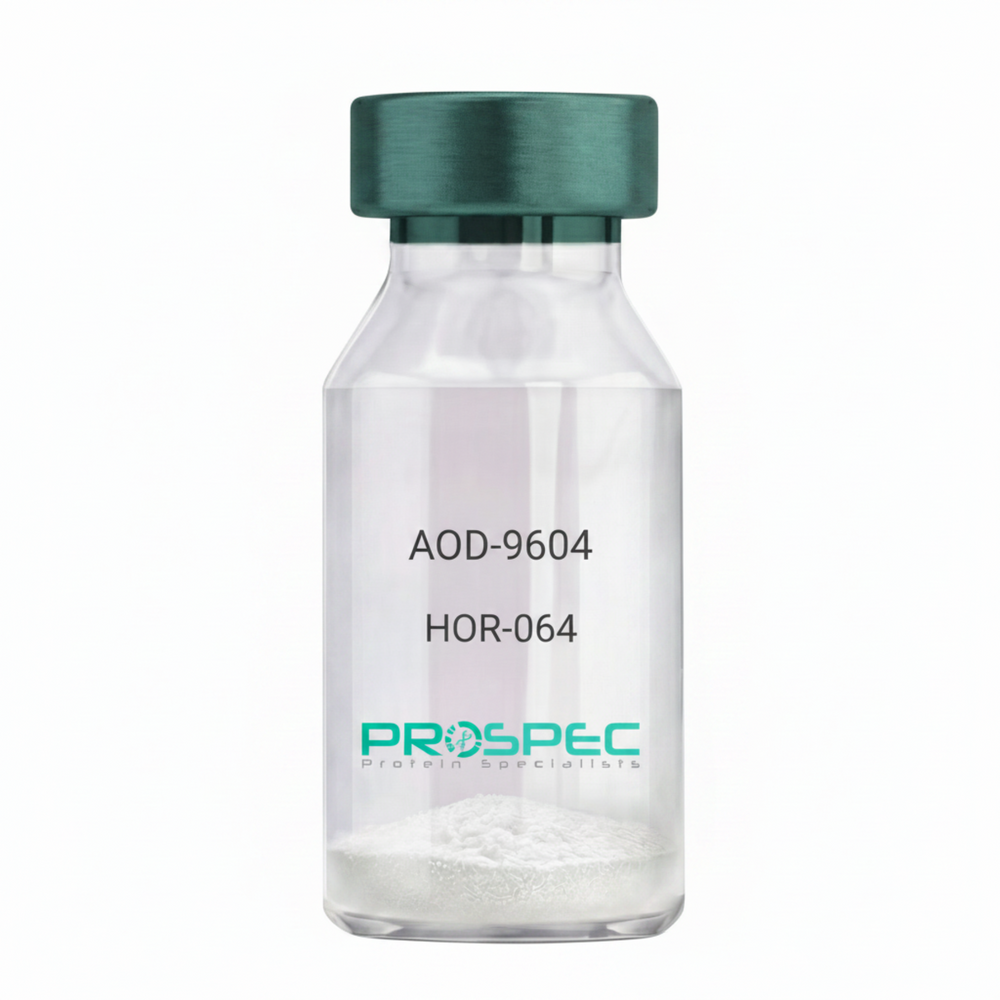
    AOD-9604

    Description:

    AOD-9604

    Product # :

    HOR-064

    Price :

    Quantity :

    Shipping Method :

    Room Temp Icon

    Shipped at Room temp

    Add To Cart

    More Info

    • description
    • formulation
    • purity
    • More Info

    Description

    AOD-9604 is a synthetic single, non-glycosylated polypeptide chain containing 16 amino acids, having a molecular mass of 1815 Dalton and a Molecular formula of C78H123N23O23 S2.

    Formulation

    The protein was lyophilized with no additives.

    Purity

    Greater than 97.0% as determined by analysis by RP-HPLC.

    More Info

    • Physical Appearance

      Sterile Filtered White lyophilized (freeze-dried) powder.

    • Stability

      Lyophilized AOD-9604 although stable at room temperature for 3 weeks, should be stored desiccated below -18°C. Upon reconstitution AOD-9604 should be stored at 4°C between 2-7 days and for future use below -18°C.
      For long term storage it is recommended to add a carrier protein (0.1% HSA or BSA).
      Please prevent freeze-thaw cycles.

    • Solubility

      It is recommended to reconstitute the lyophilized AOD-9604 in sterile 18MΩ-cm H2O not less than 100 µg/ml, which can then be further diluted to other aqueous solutions.

    • Amino Acid Sequence

      H-Tyr-Leu-Arg-Ile-Val-Gln-Cys-Arg-SerVal-Glu-Gly-Ser-Cys-Gly-Phe-OH (Disulfide bond).

    • Background

      AOD-9604 is a synthetic analog of the C-terminal fragment (177–191) AOD-9604 stimulates lipolysis (fat breakdown) without the unwanted growth-promoting or insulin-antagonizing effects of full-length hGH. AOD-9604 is a potent lipolytic tool in animal models and researchers focus on its regenerative properties in joint health and its ability to modulate beta3 adrenergic receptors without the systemic risks of growth hormone.

    ProSpec's products are furnished for LABORATORY RESEARCH USE ONLY. The product may not be used as drugs, agricultural or pesticidal products, food additives or household chemicals.

    AOD-9604
  • View Data Sheet

    Name :

    MLLT11 Human

    Description:

    Myeloid/Lymphoid Leukemia Translocated To 11 Human Recombinant

    AF1Q, RP11-316M1.10, Protein AF1q, MLLT11.

    Product # :

    PRO-1991

    Price :

    Quantity :

    Shipping Method :

    Ice Icon

    Shipped with Ice Packs

    Add To Cart

    More Info

    • description
    • source
    • formulation
    • purity
    • More Info

    Description

    MLLT11 Human Recombinant produced in E.Coli is a single, non-glycosylated polypeptide chain containing 113 amino acids (1-90 a.a) and having a molecular mass of 12.4kDa. MLLT11 is fused to a 23 amino acid His-tag at N-terminus & purified by proprietary chromatographic techniques.

    Source

    Escherichia Coli.

    Formulation

    MLLT11 protein solution (0.25mg/ml) containing 20mM Tris-HCl buffer (pH 8.0), 0.4M Urea and 10% glycerol.

    Purity

    Greater than 80.0% as determined by SDS-PAGE.

    More Info

    • Introduction

      Myeloid/Lymphoid Leukemia Translocated To 11 (MLLT11) is a part of the Mixed-Lineage Leukemia protein family. MLLT11 which takes part in leukemogenesis and in the progression of severe monocytic leukemia (AML) is located on chromosome 11q23. MLLT11 which is also expressed in embryonic brain cortex is upregulated during neuronal differentiation and is taking part in the evolution of the central nervous system.

    • Synonyms

      AF1Q, RP11-316M1.10, Protein AF1q, MLLT11.

    • Physical Appearance

      Sterile Filtered colorless solution.

    • Stability

      Store at 4°C if entire vial will be used within 2-4 weeks. Store, frozen at -20°C for longer periods of time. For long term storage it is recommended to add a carrier protein (0.1% HSA or BSA).Avoid multiple freeze-thaw cycles.

    • Amino Acid Sequence

      MGSSHHHHHH SSGLVPRGSH MGSMRDPVSS QYSSFLFWRM PIPELDLSEL EGLGLSDTAT YKVKDSSVGK MIGQATAADQ EKNPEGDGLL EYSTFNFWRA PIASIHSFEL DLL.

    ProSpec's products are furnished for LABORATORY RESEARCH USE ONLY. The product may not be used as drugs, agricultural or pesticidal products, food additives or household chemicals.

    Mllt11 Human
  • View Data Sheet

    Name :

    SCGB1D1 Human

    Description:

    Secretoglobin Family 1D, Member 1 Human Recombinant

    Secretoglobin family 1D member 1, Lipophilin-A, SCGB1D1, LIPHA, LPNA, LIPA, LPHA.

    Product # :

    PRO-1602

    Price :

    Quantity :

    Shipping Method :

    Room Temp Icon

    Shipped at Room temp

    Add To Cart

    More Info

    • description
    • source
    • formulation
    • purity
    • More Info

    Description

    SCGB1D1 Human Recombinant produced in E.Coli is a single, non-glycosylated, polypeptide chain (a.a 22-90) containing 79 amino acids including a 10 a.a N-terminal His tag. The total molecular mass is 8.8kDa (calculated).

    Source

    Escherichia Coli.

    Formulation

    SCGB1D1 filtered (0.4 µm) and lyophilized from 0.5mg/ml in 20mM Tris buffer and 50mM NaCl, pH 7.5.

    Purity

    Greater than 95.0% as determined by SDS-PAGE.

    More Info

    • Introduction

      Secretoglobin Family 1D, Member 1 (SCGB1D1) belongs to the lipophilin subfamily, part of the uteroglobin superfamily, and is an ortholog of prostatein (which is the major secretory glycoprotein of the rat ventral prostate gland). SCGB1D1 binds androgens and other steroids. In addition SCGB1D1 binds chemotherapeutic drugs during the prostate cancer treatment. Steroid hormones regulate the SCGB1D1 transcription. SCGB1D1 is secreted into extracellular space. SCGB1D1 gene product represents one component of a heterodimeric molecule found in human tears whose elution profile is consistent with prostatein (which is a tetrameric molecule comprised of 3 peptide components in heterodimers).

    • Synonyms

      Secretoglobin family 1D member 1, Lipophilin-A, SCGB1D1, LIPHA, LPNA, LIPA, LPHA.

    • Physical Appearance

      Filtered White lyophilized (freeze-dried) powder.

    • Stability

      Store lyophilized protein at -20°C. Aliquot the product after reconstitution to avoid repeated freezing/thawing cycles. Reconstituted protein can be stored at 4°C for a limited period of time; it does not show any change after two weeks at 4°C.

    • Solubility

      It is recommended to add deionized water to prepare a working stock solution of approximately 0.5mg/ml and let the lyophilized pellet dissolve completely. SCGB1D1 is not sterile! Please filter the product by an appropriate sterile filter before using it in the cell culture.

    • Amino Acid Sequence

      MKHHHHHHAS VVCQALGSEI TGFLLAGKPV FKFQLAKFKA PLEAVAAKME VKKCVDTMAY EKRVLITKTL GKIAEKCDR.

    ProSpec's products are furnished for LABORATORY RESEARCH USE ONLY. The product may not be used as drugs, agricultural or pesticidal products, food additives or household chemicals.

    Scgb1D1 Human
  • View Data Sheet

    Name :

    EFNA3 Human, Sf9

    Description:

    Ephrin A3 Human Recombinant, Sf9

    Ephrin-A3, EFL2, Ehk1-L, EPLG3, LERK3, EPH-related receptor tyrosine kinase ligand 3.

    Product # :

    PRO-2614

    Price :

    Quantity :

    Shipping Method :

    Ice Icon

    Shipped with Ice Packs

    Add To Cart

    More Info

    • description
    • source
    • formulation
    • purity
    • More Info

    Description

    EFNA3 Human Recombinant produced in Sf9 Baculovirus cells is a single, glycosylated polypeptide chain containing 434 amino acids (23-214aa) and having a molecular mass of 48.7kDaEFNA3 is fused to a 242 amino acid hIgG-His-Tag at C-terminus and purified by proprietary chromatographic techniques.

    Source

    Sf9, Baculovirus cells.

    Formulation

    The Fractalkine solution (0.5 mg/ml) contains 10% Glycerol and Phosphate Buffered Saline (pH 7.4).

    Purity

    Greater than 90.0% as determined by SDS-PAGE.

    More Info

    • Introduction

      EFNA3 belongs to the ephrin (EPH) family. The ephrins and EPH-related receptors include thelargest subfamily of receptor protein-tyrosine kinases which have been implicated in mediating developmental events, especially in the nervous system and in erythropoiesis. Ephrins are divided into the ephrin-A (EFNA) class and the ephrin-B (EFNB) class, based on their structures and sequence relationships. The Ephrins from the EFNA class are anchored to the membrane by aglycosylphosphatidylinositol linkage, while the others from the EFNB class are transmembrane proteins.

    • Synonyms

      Ephrin-A3, EFL2, Ehk1-L, EPLG3, LERK3, EPH-related receptor tyrosine kinase ligand 3.

    • Physical Appearance

      Sterile Filtered colorless solution.

    • Stability

      Store at 4°C if entire vial will be used within 2-4 weeks. Store, frozen at -20°C for longer periods of time. For long term storage it is recommended to add a carrier protein (0.1% HSA or BSA).Avoid multiple freeze-thaw cycles.

    • Amino Acid Sequence

      ADPQGPGGAL GNRHAVYWNS SNQHLRREGY TVQVNVNDYL DIYCPHYNSS GVGPGAGPGP
      GGGAEQYVLY MVSRNGYRTC NASQGFKRWE CNRPHAPHSP IKFSEKFQRY SAFSLGYEFH
      AGHEYYYIST PTHNLHWKCL RMKVFVCCAS TSHSGEKPVP TLPQFTMGPN VKINVLEDFE
      GENPQVPKLE KSISGLEPKS CDKTHTCPPC PAPELLGGPS VFLFPPKPKD TLMISRTPEV
      TCVVVDVSHE DPEVKFNWYV DGVEVHNAKT KPREEQYNST YRVVSVLTVL HQDWLNGKEY
      KCKVSNKALP APIEKTISKA KGQPREPQVY TLPPSRDELT KNQVSLTCLV KGFYPSDIAV
      EWESNGQPEN NYKTTPPVLD SDGSFFLYSK LTVDKSRWQQ GNVFSCSVMH EALHNHYTQK SLSLSPGKHH
      HHHH

    ProSpec's products are furnished for LABORATORY RESEARCH USE ONLY. The product may not be used as drugs, agricultural or pesticidal products, food additives or household chemicals.

    Efna3 Protein
  • View Data Sheet

    Name :

    TAC1 Human

    Description:

    Tachykinin-1 Human Recombinant

    Protachykinin-1, Protachykinin 1, 4930528L02Rik, NK-1, NK1, Nka, Nkna, Neurokinin 2, Neurokinin A, Neurokinin alpha, Neuromedin L, Neuropeptide K, Substance P, Tachykinin precursor 1.

    Product # :

    PRO-1338

    Price :

    Quantity :

    Shipping Method :

    Ice Icon

    Shipped with Ice Packs

    Add To Cart

    More Info

    • description
    • source
    • formulation
    • purity
    • More Info

    Description

    TAC1 Human Recombinant produced in E.Coli is a single, non-glycosylated polypeptide chain containing 135 amino acids (20-129 a.a) and having a molecular mass of 15.6kDa.TAC1 is fused to a 25 amino acid His-tag at N-terminus & purified by proprietary chromatographic techniques.

    Source

    Escherichia Coli.

    Formulation

    TAC1 protein solution (1mg/ml) containing 20mM Tris-HCl buffer (pH8.0), 10% glycerol and 2M Urea.

    Purity

    Greater than 95.0% as determined by SDS-PAGE.

    More Info

    • Introduction

      Tachykinin-1 (TAC1) belongs to the tachykinin peptide hormone family. TAC1 are a family of peptides which have similar biologic activities and share a common C-terminal sequence, phe-X-gly-leu-met-NH2, however they have distinct N-terminal sequences that convey receptor specificities. TAC1 is assumed to act as neurotransmitters which interact with nerve receptors and smooth muscle cells. TAC1 induces behavioral responses and serves as vasodilators and secretagogues.

    • Synonyms

      Protachykinin-1, Protachykinin 1, 4930528L02Rik, NK-1, NK1, Nka, Nkna, Neurokinin 2, Neurokinin A, Neurokinin alpha, Neuromedin L, Neuropeptide K, Substance P, Tachykinin precursor 1.

    • Physical Appearance

      Sterile Filtered colorless solution.

    • Stability

      Store at 4°C if entire vial will be used within 2-4 weeks. Store, frozen at -20°C for longer periods of time. For long term storage it is recommended to add a carrier protein (0.1% HSA or BSA).Avoid multiple freeze-thaw cycles.

    • Amino Acid Sequence

      MGSSHHHHHH SSGLVPRGSH MGSHMEEIGA NDDLNYWSDW YDSDQIKEEL PEPFEHLLQR IARRPKPQQF FGLMGKRDAD SSIEKQVALL KALYGHGQIS HKRHKTDSFV GLMGKRALNS VAYERSAMQN YERRR.

    ProSpec's products are furnished for LABORATORY RESEARCH USE ONLY. The product may not be used as drugs, agricultural or pesticidal products, food additives or household chemicals.

    Tac1 Human
  • View Data Sheet

    Name :

    PEX26 Human

    Description:

    Peroxisomal Biogenesis Factor 26 Human Recombinant

    PBD7A, PBD7B, PEX26M1T, Pex26pM1T, Peroxisome assembly protein 26, PEX26.

    Product # :

    PRO-1544

    Price :

    Quantity :

    Shipping Method :

    Ice Icon

    Shipped with Ice Packs

    Add To Cart

    More Info

    • description
    • source
    • formulation
    • purity
    • More Info

    Description

    PEX26 Human Recombinant produced in E. coli is a single polypeptide chain containing 269 amino acids (1-246) and having a molecular mass of 29.3kDa. PEX26 is fused to a 23 amino acid His-tag at N-terminus & purified by proprietary chromatographic techniques.

    Source

    Escherichia Coli.

    Formulation

    The PEX26 solution (0.5mg/ml) contains 20mM Tris-HCl buffer (pH 8.0), 0.15M NaCl, 20% glycerol and 1mM DTT.

    Purity

    Greater than 90% as determined by SDS-PAGE.

    More Info

    • Introduction

      Peroxisomal Biogenesis Factor 26 (PEX26) which is a part of the peroxin-26 gene family is probably required for protein import into peroxisomes. PEX26 attaches PEX1 and PEX6 to peroxisome membranes to form heteromeric AAA ATPase complexes needed for the import of proteins into peroxisomes. Deficiencies in this gene are the cause of peroxisome biogenesis disorder complementation group 8. PBD is a group of peroxisomal disorders evolving from a failure of protein import into the peroxisomal membrane or matrix.

    • Synonyms

      PBD7A, PBD7B, PEX26M1T, Pex26pM1T, Peroxisome assembly protein 26, PEX26.

    • Physical Appearance

      Sterile Filtered clear solution.

    • Stability

      Store at 4°C if entire vial will be used within 2-4 weeks. Store frozen at -20°C for longer periods of time. For long term storage it is recommended to add a carrier protein (0.1% HSA or BSA).Avoid multiple freeze-thaw cycles.

    • Amino Acid Sequence

      MGSSHHHHHH SSGLVPRGSH MGSMKSDSST SAAPLRGLGG PLRSSEPVRA VPARAPAVDL LEEAADLLVV HLDFRAALET CERAWQSLAN HAVAEEPAGT SLEVKCSLCV VGIQALAEMD RWQEVLSWVL QYYQVPEKLP PKVLELCILL YSKMQEPGAV LDVVGAWLQD PANQNLPEYG ALAEFHVQRV LLPLGCLSEA EELVVGSAAF GEERRLDVLQ AIHTARQQQK QEHSGSEEAQ KPNLEGSVSH KFLSLPMLVR QLWDSAVSH.

    ProSpec's products are furnished for LABORATORY RESEARCH USE ONLY. The product may not be used as drugs, agricultural or pesticidal products, food additives or household chemicals.

    Pex26 Human
  • View Data Sheet

    Name :

    TSFM Human

    Description:

    Ts Translation Elongation Factor Mitochondrial Human Recombinant

    Elongation factor Ts, mitochondrial, Ts Translation Elongation Factor Mitochondrial, TSFM, EF-Ts, EF-TsMt, COXPD3.

    Product # :

    PRO-1971

    Price :

    Quantity :

    Shipping Method :

    Ice Icon

    Shipped with Ice Packs

    Add To Cart

    More Info

    • description
    • source
    • formulation
    • purity
    • More Info

    Description

    TSFM Human Recombinant produced in E.Coli is a single, non-glycosylated polypeptide chain containing 302 amino acids (46-346 a.a) and having a molecular mass of 32.9kDa.TSFM is purified by proprietary chromatographic techniques.

    Source

    Escherichia Coli.

    Formulation

    TSFM protein solution (1mg/ml) containing 20mM Tris-HCl buffer (pH 8.0), 10% glycerol and 0.4M Urea.

    Purity

    Greater than 85.0% as determined by SDS-PAGE.

    More Info

    • Introduction

      TSFM is a mitochondrial translation elongation factor which is linked with the EF-Tu.GDP complex and induces the exchange of GDP to GTP. TSFM stays bound to the aminoacyl-tRNA.EF-Tu.GTP complex until the GTP hydrolysis stage on the ribosome. Mutations in TSFM are related with combined oxidative phosphorylation deficiency-3 syndrome.

    • Synonyms

      Elongation factor Ts, mitochondrial, Ts Translation Elongation Factor Mitochondrial, TSFM, EF-Ts, EF-TsMt, COXPD3.

    • Physical Appearance

      Sterile Filtered colorless solution.

    • Stability

      Store at 4°C if entire vial will be used within 2-4 weeks. Store, frozen at -20°C for longer periods of time. For long term storage it is recommended to add a carrier protein (0.1% HSA or BSA).Avoid multiple freeze-thaw cycles.

    • Amino Acid Sequence

      MSKELLMKLR RKTGYSFVNC KKALETCGGD LKQAEIWLHK EAQKEGWSKA AKLQGRKTKE GLIGLLQEGN TTVLVEVNCE TDFVSRNLKF QLLVQQVALG TMMHCQTLKD QPSAYSKVQW LTPVNLALWE AEAGGSLEGF LNSSELSGLP AGPDREGSLK DQLALAIGKL GENMILKRAA WVKVPSGFYV GSYVHGAMQS PSLHKLVLGK YGALVICETS EQKTNLEDVG RRLGQHVVGM APLSVGSLDD EPGGEAETKM LSQPYLLDPS ITLGQYVQPQ GVSVVDFVRF ECGEGEEAAE TE.

    ProSpec's products are furnished for LABORATORY RESEARCH USE ONLY. The product may not be used as drugs, agricultural or pesticidal products, food additives or household chemicals.

    Tsfm Human
  • View Data Sheet

    Name :

    VBP1 Human

    Description:

    Von Hippel-Lindau Binding Protein 1 Human Recombinant

    Prefoldin subunit 3, HIBBJ46, Von Hippel-Lindau-binding protein 1, VBP-1, VHL-binding protein 1, VBP1, PFDN3, PFD3.

    Product # :

    PRO-1325

    Price :

    Quantity :

    Shipping Method :

    Ice Icon

    Shipped with Ice Packs

    Add To Cart

    More Info

    • description
    • source
    • formulation
    • purity
    • More Info

    Description

    VBP1 Human Recombinant produced in E.Coli is a single, non-glycosylated polypeptide chain containing 220 amino acids (1-197 a.a) and having a molecular mass of 25kDa.VBP1 is fused to a 23 amino acid His-tag at N-terminus & purified by proprietary chromatographic techniques.

    Source

    Escherichia Coli.

    Formulation

    VBP1 protein solution (0.5mg/ml) containing 20mM Tris-HCl buffer (pH 8.0), 0.2M NaCl, 50% glycerol and 2mM DTT.

    Purity

    Greater than 90.0% as determined by SDS-PAGE.

    More Info

    • Introduction

      Prefoldin subunit 3 (VBP1) is a member of the prefoldin subunit alpha family. VBP1 interacts with the Von Hippel-Lindau protein in order to create an intracellular complex. Since VBP1 serves as a chaperone protein, it is assumed to have a role in the transport of the Von Hippel-Lindau protein from the perinuclear granules to the nucleus or cytoplasm. VBP1 binds specifically to cytosolic chaperonin (c-CPN) and transfers target proteins to it. VBP1 also binds to nascent polypeptide chain and stimulates folding in an environment in which there are numerous competing pathways for nonnative proteins.

    • Synonyms

      Prefoldin subunit 3, HIBBJ46, Von Hippel-Lindau-binding protein 1, VBP-1, VHL-binding protein 1, VBP1, PFDN3, PFD3.

    • Physical Appearance

      Sterile Filtered colorless solution.

    • Stability

      Store at 4°C if entire vial will be used within 2-4 weeks. Store, frozen at -20°C for longer periods of time. For long term storage it is recommended to add a carrier protein (0.1% HSA or BSA).Avoid multiple freeze-thaw cycles.

    • Amino Acid Sequence

      MGSSHHHHHH SSGLVPRGSH MGSMAAVKDS CGKGEMATGN GRRLHLGIPE AVFVEDVDSF MKQPGNETAD TVLKKLDEQY QKYKFMELNL AQKKRRLKGQ IPEIKQTLEI LKYMQKKKES TNSMETRFLL ADNLYCKASV PPTDKVCLWL GANVMLEYDI DEAQALLEKN LSTATKNLDS LEEDLDFLRD QFTTTEVNMA RVYNWDVKRR NKDDSTKNKA.

    ProSpec's products are furnished for LABORATORY RESEARCH USE ONLY. The product may not be used as drugs, agricultural or pesticidal products, food additives or household chemicals.

    Vbp1 Human
  • View Data Sheet

    Name :

    RBP7 Human

    Description:

    Retinol Binding Protein-7 Human Recombinant

    Retinoid-binding protein 7, Cellular retinoic acid-binding protein 4, CRABP4, CRBP4, Cellular retinoic acid-binding protein IV, CRABP-IV, RBP7, MGC70641.

    Product # :

    CYT-023

    Price :

    Quantity :

    Shipping Method :

    Ice Icon

    Shipped with Ice Packs

    Add To Cart

    More Info

    • description
    • source
    • formulation
    • purity
    • More Info

    Description

    RBP7 Human Recombinant fused with a 20 amino acid His tag at N-terminus produced in E.Coli is a single, non-glycosylated, polypeptide chain containing 154 amino acids (1-134 a.a.) and having a molecular mass of 17.6kDa. The RBP7 is purified by proprietary chromatographic techniques.

    Source

    Escherichia Coli.

    Formulation

    The RBP7 solution (0.5 mg/ml) contains 20mM Tris-HCl buffer (pH8.0), 0.2M NaCl, 2mM DTT and 20% glycerol.

    Purity

    Greater than 90.0% as determined by SDS-PAGE.

    More Info

    • Introduction

      RBP7 is a member of a superfamily of small cytoplasmic proteins which interact with hydrophobic ligands. RBP7 is cytoplasmic protein which, like CRBP I and CRBP II, forms ?-barrel structures and participates in the intracellular transport of retinol. RBP7 is a newly identified cellular retinol carrier, which is expressed in the kidney, heart and transverse colon in humans.

    • Synonyms

      Retinoid-binding protein 7, Cellular retinoic acid-binding protein 4, CRABP4, CRBP4, Cellular retinoic acid-binding protein IV, CRABP-IV, RBP7, MGC70641.

    • Physical Appearance

      Sterile Filtered colorless solution.

    • Stability

      Store at 4°C if entire vial will be used within 2-4 weeks. Store, frozen at -20°C for longer periods of time. For long term storage it is recommended to add a carrier protein (0.1% HSA or BSA).Avoid multiple freeze-thaw cycles.

    • Amino Acid Sequence

      MGSSHHHHHH SSGLVPRGSH MPADLSGTWT LLSSDNFEGY MLALGIDFAT RKIAKLLKPQ KVIEQNGDSF TIHTNSSLRN YFVKFKVGEE FDEDNRGLDN RKCKSLVIWD NDRLTCIQKG EKKNRGWTHW IEGDKLHLEM FCEGQVCKQT FQRA.

    ProSpec's products are furnished for LABORATORY RESEARCH USE ONLY. The product may not be used as drugs, agricultural or pesticidal products, food additives or household chemicals.

    Rbp7 Human
  • View Data Sheet

    Name :

    RELM a Mouse

    Description:

    RELM-alpha Mouse Recombinant

    Resistin-like alpha, RELMalpha, Cysteine-rich secreted protein FIZZ1, Parasite-induced macrophage novel gene 1 protein, Cysteine-rich secreted protein A12-gamma, RELM-a.

    Product # :

    CYT-309

    Price :

    Quantity :

    Shipping Method :

    Room Temp Icon

    Shipped at Room temp

    Add To Cart

    More Info

    • description
    • source
    • formulation
    • purity
    • More Info

    Description

    Mouse RELM-alpha Recombinant produced in E.Coli is a monomeric, non-glycosylated, polypeptide chain containing 88 amino acids and having a molecular mass of 10 kDa. The Mouse RELM-alpha is purified by proprietary chromatographic techniques.

    Source

    Escherichia Coli.

    Formulation

    Sterile filtered and lyophilized from 0.5mg/ml in 10mM sodium phosphate buffer, pH 7.5.

    Purity

    Greater than 98% as determined by SDS-PAGE & RP-HPLC.

    More Info

    • Introduction

      Bronchoalveolar lavage fluid from mice with experimentally induced allergic pulmonary inflammation contains a novel 9.4 kDa cysteine-rich secreted protein, RELM-alpha (FIZZ1, found in inflammatory zone). RELM-alpha is a secreted protein that has a restricted tissue distribution with highest levels in adipose tissue stroma. Murine RELM-alpha (FIZZ1) is the founding member of a new gene family including two other murine genes expressed, respectively, in intestinal crypt epithelium (RELM-beta) and white adipose tissue (Resistin), and two related human genes.
      RELMalpha inhibits the differentiation of 3T3-L1 preadipocytes into adipocytes but has no effect on proliferation of 3T3-L1 preadipocytes. RELMalpha is able to form heterooligomers with resistin but not RELMbeta. Since RELMalpha is expressed by adipose tissue and it is a secreted factor, our findings suggest that RELMalpha may be involved in the control of the adipogenesis as well as in the process of muscle differentiation.
      In the lung, RELM-alpha is induced by hypoxia and was renamed as hypoxia-induced mitogenic factor (HIMF). HIMF strongly activated Akt phosphorylation. The phosphatidylinositol 3-kinase (PI3K) inhibitor LY294002 (10 micromol/L) inhibited HIMF-activated Akt phosphorylation. It also inhibited HIMF stimulated RPSM proliferation. Thus, the PI3K/Akt pathway, at least in part, mediates the proliferative effect of HIMF. Further studies showed that HIMF had angiogenic and vasoconstrictive properties. HIMF increased pulmonary arterial pressure and vascular resistance. Further studies suggest that HIMF regulates apoptosis and may participate in lung alveolarization and maturation.

    • Synonyms

      Resistin-like alpha, RELMalpha, Cysteine-rich secreted protein FIZZ1, Parasite-induced macrophage novel gene 1 protein, Cysteine-rich secreted protein A12-gamma, RELM-a.

    • Physical Appearance

      Sterile Filtered White lyophilized (freeze-dried) powder.

    • Stability

      Store lyophilized protein at -20°C. Aliquot the product after reconstitution to avoid repeated freezing/thawing cycles. Reconstituted protein can be stored at 4°C for a limited period of time; it does not show any change after two weeks at 4°C.

    • Solubility

      At 0.1mg/ml of deionized sterile water.

    • Amino Acid Sequence

      MDETIEIIVE NKVKELLANP ANYPSTVTKT LSCTSVKTMN RWASCPAGMT ATGCACGFAC GSWEIQSGDT CNCLCLLVDW TTARCCQLS.

    ProSpec's products are furnished for LABORATORY RESEARCH USE ONLY. The product may not be used as drugs, agricultural or pesticidal products, food additives or household chemicals.

    Relm Alpha Mouse
  • View Data Sheet

    Name :

    ELOB Human

    Description:

    Elongin-B Human Recombinant

    ELOB, SIII, Elongin B, Transcription elongation factor B polypeptide 2, RNA polymerase II transcription factor SIII subunit B, SIII p18, Elongin 18 kDa subunit, TCEB2.

    Product # :

    PRO-664

    Price :

    Quantity :

    Shipping Method :

    Ice Icon

    Shipped with Ice Packs

    Add To Cart

    More Info

    • description
    • source
    • formulation
    • purity
    • More Info

    Description

    TCEB2 Human Recombinant produced in E.Coli is a single, non-glycosylated polypeptide chain containing 118 amino acids (1-118) and having a molecular mass of 13.1 kDa. TCEB2 is purified by standard chromatography techniques.

    Source

    Escherichia Coli.

    Formulation

    The TCEB2 protein solution contains 20mM Tris-HCl pH-8, 1mM DTT, 0.1mM PMSF, and 20% glycerol.

    Purity

    Greater than 95.0% as determined by SDS-PAGE.

    More Info

    • Introduction

      TCEB2 is a subunit of the SIIII complex which is a heterotrimer consisting of a transcriptionally active subunit (A) and two regulatory subunits (B and C). TCEB2 initiates elongation by RNA polymerase II by suppressing transient pausing of the polymerase at many sites within transcription units. The von Hippel-Lindau tumor suppressor protein binds to elongins B and C, and thereby inhibits transcription elongation.

    • Synonyms

      ELOB, SIII, Elongin B, Transcription elongation factor B polypeptide 2, RNA polymerase II transcription factor SIII subunit B, SIII p18, Elongin 18 kDa subunit, TCEB2.

    • Physical Appearance

      Sterile Filtered colorless solution.

    • Stability

      Store at 4°C if entire vial will be used within 2-4 weeks. Store, frozen at -20°C for longer periods of time. For long term storage it is recommended to add a carrier protein (0.1% HSA or BSA).Avoid multiple freeze-thaw cycles.

    • Amino Acid Sequence

      MDVFLMIRRH KTTIFTDAKE SSTVFELKRI VEGILKRPPD EQRLYKDDQL LDDGKTLGEC GFTSQTARPQ APATVGLAFR ADDTFEALCIEPFSSPPELP DVMKPQDSGS SANEQAVQ.

    ProSpec's products are furnished for LABORATORY RESEARCH USE ONLY. The product may not be used as drugs, agricultural or pesticidal products, food additives or household chemicals.

    Tceb2 Human
  • View Data Sheet

    Name :

    BMP 2 Human, HEK

    Description:

    Bone Morphogenetic protein-2 Human Recombinant, HEK

    BMP-2, BMP2A.

    Product # :

    CYT-080

    Price :

    Quantity :

    Shipping Method :

    Room Temp Icon

    Shipped at Room temp

    Add To Cart

    More Info

    • description
    • source
    • formulation
    • purity
    • biological activity
    • More Info

    Description

    BMP-2 Human Recombinant produced in HEK cells is a glycosylated disulfide-linked homodimer, having a molecular weight range of 28kDa due to glycosylation. The BMP2 is purified by proprietary chromatographic techniques.

    Source

    HEK.

    Formulation

    The BMP2 was lyophilized from 0.67mg/ml in 2xPBS + 6% ethanol.

    Purity

    Greater than 95.0% as determined by analysis by SDS-PAGE.

    Biological Activity

    The specific activity as determined by the dose dependent induction of alkaline phosphatase production in the ATDC-5 cell line (Mouse chondrogenic cell line) was found to be 6.53ng/ml.

    More Info

    • Introduction

      BMP2 belongs to the transforming growth factor-beta (TGFB) superfamily. Bone morphogenic protein induces bone formation. BMP2 is a candidate gene for the autosomal dominant disease of fibrodysplasia (myositis) ossificans progressiva.

    • Synonyms

      BMP-2, BMP2A.

    • Physical Appearance

      Sterile Filtered White lyophilized (freeze-dried) powder.

    • Stability

      Lyophilized BMP2 although stable at room temperature for 3 weeks, should be stored desiccated below -18°C. Upon reconstitution BMP-2 should be stored at 4°C between 2-7 days and for future use below -18°C.For long term storage it is recommended to add a carrier protein (0.1% HSA or BSA).Please prevent freeze-thaw cycles.

    • Solubility

      It is recommended to reconstitute the lyophilized BMP-2 in sterile 4mM HCl containing 0.1% endotoxin-free recombinant HSA.

    • Amino Acid Sequence

      QAKHKQRKRLKSSCKRHPLYVDFSDVGWNDWIVAPPGYHAFYCHGECPFPLADHLNST NHAIVQTLVNSVNSKIPKACCVPTELSAISMLYLDENEKVVLKNYQDMVVEGCGCR.

    • Background

      What is the molecular weight/Mw of BMP2 Protein?
      BMP2 Protein has a total Mw of 28kDa.

      What is the source or expression system of BMP2 Protein?
      Hek.

      What is the Purity of BMP2 Protein?
      BMP2 Protein is >95% pure as determined by SDS-PAGE.

      What is the Biological Activity of BMP2 Protein?
      The specific activity as determined by the dose dependent induction of alkaline phosphatase production in the ATDC-5 cell line (Mouse chondrogenic cell line) was found to be 6.53ng/ml.

      What is the amino acid sequence of BMP2 Protein?
      QAKHKQRKRLKSSCKRHPLYVDFSDVGWNDWIVAPPGYHAFYCHGECPFPLADHLNST NHAIVQTLVNSVNSKIPKACCVPTELSAISMLYLDENEKVVLKNYQDMVVEGCGCR.

      What applications can BMP2 Protein be used in?
      BMP2 Protein can probably be used in western blot, ELISA and Lateral Flow.

      What is the endotoxin level for BMP2 Protein?
      The endotoxin level is minimal, BMP2 Protein was purified using conventional chromatography techniques.

    ProSpec's products are furnished for LABORATORY RESEARCH USE ONLY. The product may not be used as drugs, agricultural or pesticidal products, food additives or household chemicals.

    Bmp 2 Human Hek
  • View Data Sheet

    Name :

    MBL2 Human, Sf9

    Description:

    Mannose-Binding Lectin 2 Human Recombinant, Sf9

    Mannose Binding Lectin 2, Mannose-Binding Lectin (Protein C) 2, Soluble (Opsonic Defect), Collectin-1, COLEC1, MBP-C, MBP1, MBL, Mannose-Binding Lectin 2, Soluble (Opsonic Defect), Mannose-Binding Lectin (Protein C) 2, Soluble, Mannose-Binding Protein C, Mannan-Binding Protein, Mannose-Binding Lectin, Mannan-Binding Lectin, HSMBPC, MBL2D, MBPD, MBP.                

    Product # :

    PRO-2526

    Price :

    Quantity :

    Shipping Method :

    Ice Icon

    Shipped with Ice Packs

    Add To Cart

    More Info

    • description
    • source
    • formulation
    • purity
    • More Info

    Description

    MBL2 produced in Sf9 Baculovirus cells is a single, glycosylated polypeptide chain containing 237 amino acids (21-248a.a.) and having a molecular mass of 25.1kDa. (Molecular size on SDS-PAGE will appear at approximately 28-40kDa). MBL2 is expressed with a 6 amino acid His tag at C-Terminus and purified by proprietary chromatographic techniques.

    Source

    Sf9, Baculovirus cells.

    Formulation

    MBL2 protein solution (1mg/ml) contains Phosphate Buffered Saline (pH 7.4) and 10% glycerol.

    Purity

    Greater than 90.0% as determined by SDS-PAGE.

    More Info

    • Introduction

      Mannose-binding protein C (MBL2), belongs to the collectin family of patternrecognition molecules and is an important component in the innate immune system. MBL2 is a secreted glycoprotein which recognizes mannose and N-acetylglucosamine on various microorganisms, and is capable of activating the classical complement pathway. Lacking MBL2 has been associated with susceptibility to autoimmune and infectious diseases.

    • Synonyms

      Mannose Binding Lectin 2, Mannose-Binding Lectin (Protein C) 2, Soluble (Opsonic Defect), Collectin-1, COLEC1, MBP-C, MBP1, MBL, Mannose-Binding Lectin 2, Soluble (Opsonic Defect), Mannose-Binding Lectin (Protein C) 2, Soluble, Mannose-Binding Protein C, Mannan-Binding Protein, Mannose-Binding Lectin, Mannan-Binding Lectin, HSMBPC, MBL2D, MBPD, MBP.

    • Physical Appearance

      Sterile Filtered colorless solution.

    • Stability

      Store at 4°C if entire vial will be used within 2-4 weeks. Store, frozen at -20°C for longer periods of time. For long term storage it is recommended to add a carrier protein (0.1% HSA or BSA). Avoid multiple freeze-thaw cycles.

    • Amino Acid Sequence

      ADPETVTCED AQKTCPAVIA CSSPGINGFP GKDGRDGTKG EKGEPGQGLR GLQGPPGKLG PPGNPGPSGS PGPKGQKGDP GKSPDGDSSL AASERKALQT EMARIKKWLT FSLGKQVGNK FFLTNGEIMT FEKVKALCVK FQASVATPRN AAENGAIQNL IKEEAFLGIT DEKTEGQFVD LTGNRLTYTN WNEGEPNNAG SDEDCVLLLK NGQWNDVPCS TSHLAVCEFP IHHHHHH

    ProSpec's products are furnished for LABORATORY RESEARCH USE ONLY. The product may not be used as drugs, agricultural or pesticidal products, food additives or household chemicals.

    Mbl2 Protein
  • View Data Sheet

    Name :

    Pleiotrophin Human, His

    Description:

    Pleiotrophin Human Recombinant, His Tag

    PTN, Heparin Affin Regulatory Protein, HARP, Heparin-binding growth factor-8, HBGF-8, Osteoblast-Specific Factor-1, OSF-1, Heparin-binding growth-associated molecule, HB-GAM, HBNF-1 Heparin-binding brain mitogen, Heparin-binding neurite outgrowth-promoting factor 1, HBBM, NEGF1.

    Product # :

    CYT-451

    Price :

    Quantity :

    Shipping Method :

    Room Temp Icon

    Shipped at Room temp

    Add To Cart

    More Info

    • description
    • source
    • formulation
    • purity
    • More Info

    Description

    Pleiotrophin Human Recombinant contains His-Tagged Fusion Protein, produced in E. coli, its molecular weight is 17.3 kDa protein containing 136 amino acid residues of the OSF-1 human and 16 additional amino acid residues - HisTag, thrombin cleavage site (underlined).

    Source

    Escherichia Coli.

    Formulation

    Filtered and lyophilized from 0.5 mg/ml in 0.1M phosphate buffer and 0.1M NaCl, pH 7.2.

    Purity

    Greater than 95% as determined by SDS-PAGE.

    More Info

    • Introduction

      Pleiotrophin (Osteoblast-Specific Factor-1, OSF-1) contains 136 amino acid residues. The sequence is very rich in cationic amino acids (24% of the residues); lysine cluster sequences are found in the N-terminal and C-terminal ends of the structure.
      The OSF-1 gene was shown by Northern blotting analysis to be expressed in mouse calvarial osteoblast-enriched cells and in mouse brain tissues, but not in thymus, spleen, kidney, liver, lung, testis or heart. Pleiotrophin has the ability to promote adhesion, migration, expansion, and differentiation of human osteoprogenitor cells. In addition to certain types of cancer, the embryonic growth and differentiation factor pleiotrophin is found also in adults in inflammatory diseases. In osteoarthritis, pleiotrophin is especially expressed in early stages, and its concentrations in the synovial fluid could serve as a marker for the progress of the disease. Pleitrophin might be involved in cartilage repair in osteoarthritis, in particular, in earlier stages.

    • Synonyms

      PTN, Heparin Affin Regulatory Protein, HARP, Heparin-binding growth factor-8, HBGF-8, Osteoblast-Specific Factor-1, OSF-1, Heparin-binding growth-associated molecule, HB-GAM, HBNF-1 Heparin-binding brain mitogen, Heparin-binding neurite outgrowth-promoting factor 1, HBBM, NEGF1.

    • Physical Appearance

      Filtered White lyophilized (freeze-dried) powder.

    • Stability

      Store lyophilized protein at -20°C. Aliquot the product after reconstitution to avoid repeated freezing/thawing cycles. Reconstituted protein can be stored at 4°C for a limited period of time; it does not show any change after two weeks at 4°C.

    • Solubility

      Add PBS pH 7.2 and let the lyophilized pellet dissolve completely.

    • Amino Acid Sequence

      MKHHHHHHHM LVPRGSGKKE KPEKKVKKSD CGEWQWSVCV PTSGDCGLGT REGTRTGAEC KQTMKTQRCK IPCNWKKQFG AECKYQFQAW GECDLNTALK TRTGSLKRAL HNAECQKTVT ISKPCGKLTK PKPQAESKKK KKEGKKQEKM LD.

    ProSpec's products are furnished for LABORATORY RESEARCH USE ONLY. The product may not be used as drugs, agricultural or pesticidal products, food additives or household chemicals.

    Pleiotrophin Human
  • View Data Sheet

    Name :

    S100A9 Human

    Description:

    S100 Calcium Binding Protein A9 Human Recombinant

    Calgranulin B, 60B8AG, CAGB, CFAG, CGLB, L1AG, LIAG, MAC387, MIF, MRP14, NIF, P14, Protein S100-A9, S100 calcium-binding protein A9.

    Product # :

    PRO-814

    Price :

    Quantity :

    Shipping Method :

    Ice Icon

    Shipped with Ice Packs

    Add To Cart

    More Info

    • description
    • source
    • formulation
    • purity
    • More Info

    Description

    S100A9 Human Recombinant produced in E.Coli is a single, non-glycosylated, polypeptide chain containing 122 amino acids (1-114 a.a.) and having a molecular mass of 14.3kDa. S100A9 protein is fused to an 8 amino acid His-Tag at C-terminus and purified by standard chromatography.

    Source

    Escherichia Coli.

    Formulation

    S100A9 Human solution containing 20mM Tris HCl pH-8, 0.1M NaCl and 10% glycerol.

    Purity

    Greater than 90% as determined by SDS-PAGE.

    More Info

    • Introduction

      S100A9 is part of the S100 family of proteins containing 2 EF-hand calcium-binding motifs. S100A9 protein is localized in the cytoplasm and/or nucleus of a wide range of cells, and participates in the regulation of several cellular processes such as cell cycle progression and differentiation. S100 genes include no less than 13 proteins which are localized as a cluster on chromosome 1q21. S100A9 is involved in the inhibition of casein kinase and altered expression of this protein is associated with the disease cystic fibrosis.

    • Synonyms

      Calgranulin B, 60B8AG, CAGB, CFAG, CGLB, L1AG, LIAG, MAC387, MIF, MRP14, NIF, P14, Protein S100-A9, S100 calcium-binding protein A9.

    • Physical Appearance

      Sterile filtered colorless solution.

    • Stability

      Store at 4°C if entire vial will be used within 2-4 weeks. Store, frozen at -20°C for longer periods of time. For long term storage it is recommended to add a carrier protein (0.1% HSA or BSA).Avoid multiple freeze-thaw cycles.

    • Amino Acid Sequence

      MTCKMSQLER NIETIINTFH QYSVKLGHPD TLNQGEFKEL VRKDLQNFLK KENKNEKVIE HIMEDLDTNA DKQLSFEEFI MLMARLTWAS HEKMHEGDEG PGHHHKPGLG EGTPLEHHHH HH.

    ProSpec's products are furnished for LABORATORY RESEARCH USE ONLY. The product may not be used as drugs, agricultural or pesticidal products, food additives or household chemicals.

    S100A9 Human
  • View Data Sheet

    Name :

    LYVE1 Mouse Sf9

    Description:

    Lymphatic Vessel Endothelial Hyaluronic Acid Receptor 1 Mouse Recombinant, Sf9

    Lymphatic vessel endothelial hyaluronic acid receptor 1 precursor, LYVE-1, Cell surface retention sequence-binding protein 1, CRSBP-1, Hyaluronic acid receptor, Extracellular link domain-containing protein.

    Product # :

    PKA-251

    Price :

    Quantity :

    Shipping Method :

    Room Temp Icon

    Shipped at Room temp

    Add To Cart

    More Info

    • description
    • source
    • formulation
    • purity
    • More Info

    Description

    Soluble LYVE1 Mouse Recombinant fused to a C-terminal His-tag (6xHis) produced in baculovirus is a monomeric, glycosylated, polypeptide containing 228 amino acids (Met-1 to Gly 228) and having a molecular mass of 25 kDa but as a result of glycosilation the Mw is 40 kDa. The LYVE-1 is purified by proprietary chromatographic techniques.

    Source

    Insect Cells.

    Formulation

    LYVE1 was lyophilized from a concentrated (1mg/ml) sterile solution containing no additives.

    Purity

    Greater than 95.0% as determined by:
    (a)Analysis by RP-HPLC.
    (b)Analysis by SDS-PAGE.

    More Info

    • Introduction

      LYVE-1 has been identified as a major receptor for HA (extracellular matrix glycosaminoglycan hyaluronan) on the lymph vessel wall. The deduced amino acid sequence of LYVE-1 predicts a 322-residue type I integral membrane polypeptide 41% similar to the CD44 HA receptor with a 212-residue extracellular domain containing a single Link module the prototypic HA binding domain of the Link protein superfamily. Like CD44, the LYVE-1 molecule binds both soluble and immobilized HA. However, unlike CD44, the LYVE-1 molecule colocalizes with HA on the luminal face of the lymph vessel wall and is completely absent from blood vessels. Hence, LYVE-1 is the first lymph-specific HA receptor to be characterized and is a uniquely powerful marker for lymph vessels themselves.

    • Synonyms

      Lymphatic vessel endothelial hyaluronic acid receptor 1 precursor, LYVE-1, Cell surface retention sequence-binding protein 1, CRSBP-1, Hyaluronic acid receptor, Extracellular link domain-containing protein.

    • Physical Appearance

      Sterile Filtered White lyophilized (freeze-dried) powder.

    • Stability

      Lyophilized sLYVE-1 although stable at room temperature for 3 weeks, should be stored desiccated below -18°C. Upon reconstitution sLYVE-1 should be stored at 4°C between 2-7 days and for future use below -18°C.For long term storage it is recommended to add a carrier protein (0.1% HSA or BSA).Please prevent freeze-thaw cycles.

    • Solubility

      It is recommended to reconstitute the lyophilized LYVE1 in sterile water not less than 100µg/ml, which can then be further diluted to other aqueous solutions.

    ProSpec's products are furnished for LABORATORY RESEARCH USE ONLY. The product may not be used as drugs, agricultural or pesticidal products, food additives or household chemicals.

    Lyve1 Mouse Sf9
  • View Data Sheet

    Name :

    pGH 22kDa Human

    Description:

    Growth Hormone Placental 22kDa Human Recombinant

    GHL, GHV, GH-V, hGH-V, PGH.

    Product # :

    CYT-235

    Price :

    Quantity :

    Shipping Method :

    Room Temp Icon

    Shipped at Room temp

    Add To Cart

    More Info

    • description
    • source
    • formulation
    • purity
    • More Info

    Description

    Placental HGH 22kDa Recombinant produced in E.Coli is a single, non-glycosylated, polypeptide chain containing 192 amino acids and having a molecular mass of 22367 Dalton. Predicted pI=7.80. Placental Growth Hormone has dimished lactogenic (prolactin receptor mediated) activity characteristic to pituitary GHs. GH Placental Human Recombinant is purified by proprietary chromatographic techniques.

    Source

    Escherichia Coli.

    Formulation

    The protein was lyophilized from a concentrated (1mg/ml) solution with 0.0045mM NaHCO3 previously adjusted pH 8-9.

    Purity

    Greater than 98.0% as determined by:
    (a) Analysis by SEC-HPLC.
    (b) Analysis by SDS-PAGE.

    More Info

    • Introduction

      GH is a member of the somatotropin/prolactin family of hormones which play an important role in growth control. The gene, along with four other related genes, is located at the growth hormone locus on chromosome 17 where they are interspersed in the same transcriptional orientation; an arrangement which is thought to have evolved by a series of gene duplications. The five genes share a remarkably high degree of sequence identity. Alternative splicing generates additional isoforms of each of the five growth hormones, leading to further diversity and potential for specialization. This particular family member is expressed in the pituitary but not in placental tissue as is the case for the other four genes in the growth hormone locus. Mutations in or deletions of the gene lead to growth hormone deficiency and short stature.

    • Synonyms

      GHL, GHV, GH-V, hGH-V, PGH.

    • Physical Appearance

      Sterile Filtered White lyophilized (freeze-dried) powder.

    • Stability

      Lyophilized GH placental although stable at room temperature for 3 weeks, should be stored desiccated below -18°C. Upon reconstitution and filter sterilization HGH placental can be stored at 4°C for up to 4 weeks. For long term storage and more diluted solutions it is recommended to add a carrier protein (0.1% HSA or BSA). Please prevent freeze-thaw cycles.

    • Solubility

      It is recommended to reconstitute the lyophilized Placental HGH in 0.4% NaHCO3or water adjusted to pH 9, not less than 100 µg/ml, which can then be further diluted to other aqueous solutions.

    • Amino Acid Sequence

      The sequence of the first five N-terminal amino acids was determined and was found to be Ala-Phe-Pro-Thr-Ile.

    • Protein content

      Protein quantitation was carried out by two independent methods1. UV spectroscopy at 280 nm using the absorbency value of 1.18 as the extinction coefficient for a 0.1% (1mg/ml) solution. This value is calculated by the PC GENE computer analysis program of protein sequences (IntelliGenetics). 2. Analysis by RP-HPLC, using a calibrated solution of GH-22K-placental as a Reference Standard.

    ProSpec's products are furnished for LABORATORY RESEARCH USE ONLY. The product may not be used as drugs, agricultural or pesticidal products, food additives or household chemicals.

    Placental Gh 22K Human
  • View Data Sheet

    Name :

    KRT19 Human

    Description:

    Cytokeratin 19 Human Recombinant

    Keratin type I cytoskeletal 19, Cytokeratin-19, CK-19, Keratin-19, K19, KRT19, CK19, K1CS, MGC15366.

    Product # :

    PRO-350

    Price :

    Quantity :

    Shipping Method :

    Room Temp Icon

    Shipped at Room temp

    Add To Cart

    More Info

    • description
    • source
    • formulation
    • purity
    • More Info

    Description

    Cytokeratin 19 Human Recombinant produced in E.Coli is a single, non-glycosylated polypeptide chain having a molecular mass of 44,098 Dalton. The KRT19 is purified by proprietary chromatographic techniques.

    Source

    Escherichia Coli.

    Formulation

    The protein (1mg/ml) was lyophilized after from a sterile solution containing 30mM Tris-HCl pH-8, 9.5M urea, 2mM DTT, 2mM EDTA and 10mM methylammonium chloride.

    Purity

    Greater than 95.0% as determined by SDS-PAGE.

    More Info

    • Introduction

      CTK-19 is a member of the keratin family. The keratins are intermediate filament proteins responsible for the structural integrity of epithelial cells and are subdivided into cytokeratins and hair keratins. The type I cytokeratins consist of acidic proteins which are arranged in pairs of heterotypic keratin chains. Unlike its related family members, this smallest known acidic cytokeratin is not paired with a basic cytokeratin in epithelial cells. It is specifically expressed in the periderm, the transiently superficial layer that envelopes the developing epidermis. The type I cytokeratins are clustered in a region of chromosome 17q12-q21.

    • Synonyms

      Keratin type I cytoskeletal 19, Cytokeratin-19, CK-19, Keratin-19, K19, KRT19, CK19, K1CS, MGC15366.

    • Physical Appearance

      Sterile Filtered White lyophilized (freeze-dried) powder.

    • Stability

      Lyophilized KRT19 although stable at room temperature for 3 weeks, should be stored desiccated below -18°C. Upon reconstitution KRT19 should be stored at 4°C between 2-7 days and for future use below -18°C.For long term storage it is recommended to add a carrier protein (0.1% HSA or BSA).Please prevent freeze-thaw cycles.

    • Solubility

      It is recommended to reconstitute the lyophilized KRT19 in sterile 18MΩ-cm H2O not less than 100µg/ml, which can then be further diluted to other aqueous solutions.

    • Reconstitution to filaments

      Performed by mixing equimolar amounts of cytokeratins of type I and type II at concentrations of approx. 0.5 mg/ml, both dissolved in 9.5 M urea buffer (see above). Protofilaments and filament complexes are obtained by dialyzing the resulting polypeptide solution stepwise to a concentration of 4 M urea and then to low salt condition (50 mM NaCl, 2 mM dithiothreitol, 10 mM Tris-HCl, pH 7.4). For immunization purposes, the solution can be further dialyzed against PBS (phosphate buffered saline, e.g. Dulbecco's PBS).

    ProSpec's products are furnished for LABORATORY RESEARCH USE ONLY. The product may not be used as drugs, agricultural or pesticidal products, food additives or household chemicals.

    Krt19 Human
  • View Data Sheet

    Name :

    CTF1 Rat

    Description:

    Cardiotrophin-1 Rat Recombinant

    Cardiotrophin-1, CT-1, Ctf1.

    Product # :

    CYT-199

    Price :

    Quantity :

    Shipping Method :

    Room Temp Icon

    Shipped at Room temp

    Add To Cart

    More Info

    • description
    • source
    • formulation
    • purity
    • biological activity
    • More Info

    Description

    Cardiotrophin-1 Rat Recombinant produced in E.Coli is a single, non-glycosylated, polypeptide chain containing 203 amino acids and having a molecular mass of 21.4kDa.The CTF1 Rat is purified by proprietary chromatographic techniques.

    Source

    Escherichia Coli.

    Formulation

    Lyophilized from a 0.2µm filtered concentrated solution in PBS, pH 7.4.

    Purity

    Greater than 95.0% as determined by SDS-PAGE and HPLC analyses.

    Biological Activity

    The ED50 as determined by the dose-dependent proliferation of TF-1 cells was found to be < 0.5ng/ml, corresponding to a specific activity of > 2.0×10⁶ units/mg.

    More Info

    • Introduction

      Cardiotrophin 1 (CT-1) is a 201 amino acid member of the interleukin-6 superfamily. It was identified by its ability to induce hypertrophic response in cardiac myocytes. CT-1 mRNA levels were found both in cardiac myocytes and in cardiac nonmyocytes. CT 1 was also detected in abundance in normal adult human lung and was expressed in both fetal and adult airway smooth muscle cells. CT 1 activates gp130 dependent signaling and stimulates the Janus kinase/signal transducers and activators of transcription (JAK/STAT) pathway to transduce hypertrophic and cytoprotective signals in cardiac myocytes.
      CT 1 has also a neurotrophic function. CTF1 deficiency causes increased motoneuron cell death in spinal cord and brainstem nuclei of mice during a period between embryonic day 14 and the first postnatal week. Moreover, CT-1 is a hepatocyte survival factor that efficiently reduces hepatocellular damage in animal models of acute liver injury. Cardiotrophin 1 expression is augmented after hypoxic stimulation and it can protect cardiac cells when added either prior to simulated ischaemia or at the time of reoxygenation following simulated ischaemia. Cardiotrophin 1 can induce expression of the protective heat shock proteins (hsps) in cardiac cells.
      Cardiotrophin-1 increased ventricular expression of ANP, brain natriuretic peptide (BNP) and angiotensinogen mRNA.
      Cardiophin 1 levels were significantly elevated in patients with heart failure, patients with dilatative cardiomyopathy, moderate/severe mitral regurgitation, stable and unstable angina and after acute myocardial infarction.

    • Synonyms

      Cardiotrophin-1, CT-1, Ctf1.

    • Physical Appearance

      Sterile Filtered White lyophilized (freeze-dried) powder.

    • Stability

      Lyophilized Cardiotrophin-1 Rat although stable at room temperature for 3 weeks, should be stored desiccated below -18°C. Upon reconstitution CTF1 Rat should be stored at 4°C between 2-7 days and for future use below -18°C.Please prevent freeze-thaw cycles.

    • Solubility

      It is recommended to reconstitute the lyophilized CTF1 in sterile 4mM HCl not less than 100µg/ml, which can then be further diluted to other aqueous solutions.

    • Amino Acid Sequence

      MSQREGSLED HQTDSSFSFL PHLEAKIRQT HNLARLLTKY ADQLLEEYVQ QQGEPFGLPG FSPPRLPLAG LSGPAPSHAG LPVSERLRQD AAALSALPAL LDAVRRRQAE LNPRAPRLLR SLEDAARQVR ALGAAVETVL AALGAAARGP VPEPVATSAL FTSNSAAGVF SAKVLGLHVC GLYGEWVSRT EGDLGQLVPG GVA.

    • Background

      What is the molecular weight/Mw of CTF1 Protein?
      CTF1 Protein has a total Mw of 21.4kDa.

      What is the source or expression system of CTF1 Protein?
      Escherichia Coli.

      What is the Purity of CTF1 Protein?
      CTF1 Protein is >95% pure as determined by SDS-PAGE.

      What is the Biological Activity of CTF1 Protein?
      The ED50 as determined by the dose-dependent proliferation of TF-1 cells was found to be < 0.5ng/ml, corresponding to a specific activity of > 2.0×10⁶ units/mg.

      What is the amino acid sequence of CTF1 Protein?
      MSQREGSLED HQTDSSFSFL PHLEAKIRQT HNLARLLTKY ADQLLEEYVQ QQGEPFGLPG FSPPRLPLAG LSGPAPSHAG LPVSERLRQD AAALSALPAL LDAVRRRQAE LNPRAPRLLR SLEDAARQVR ALGAAVETVL AALGAAARGP VPEPVATSAL FTSNSAAGVF SAKVLGLHVC GLYGEWVSRT EGDLGQLVPG GVA.

      What applications can CTF1 Protein be used in?
      CTF1 Protein can probably be used in western blot, ELISA and Lateral Flow.

      What is the endotoxin level for CTF1 Protein?
      The endotoxin level is minimal, CTF1 Protein was purified using conventional chromatography techniques.

    ProSpec's products are furnished for LABORATORY RESEARCH USE ONLY. The product may not be used as drugs, agricultural or pesticidal products, food additives or household chemicals.

    Ct 1 Rat
  • View Data Sheet

    Name :

    CRABP1 Human

    Description:

    Cellular Retinoic Acid binding Protein 1 Human Recombinant

    Cellular retinoic acid-binding protein 1, Cellular retinoic acid-binding protein I, CRABP-I, CRABP1, RBP5, CRABP, CRABPI.

    Product # :

    PRO-710

    Price :

    Quantity :

    Shipping Method :

    Ice Icon

    Shipped with Ice Packs

    Add To Cart

    More Info

    • description
    • source
    • formulation
    • purity
    • More Info

    Description

    CRABP1 Human Recombinant produced in E.Coli is a single, non-glycosylated polypeptide chain containing 137 amino acids and having a molecular mass of 15.5kDa. The CRABP1 is purified by proprietary chromatographic techniques.

    Source

    Escherichia Coli.

    Formulation

    The CRABP1 (1mg/ml) protein solution contains 20mM Tris-HCl buffer (pH8.0) and 10% glycerol.

    Purity

    Greater than 95.0% as determined by SDS-PAGE.

    More Info

    • Introduction

      CRABP1 is a member of special carrier proteins for members of the vitamin A family. It is believed that CRABP1 has an essential role in retinoic acid-mediated differentiation and proliferation processes. Though, CRABP1 is structurally similar to the cellular retinol-binding proteins, it binds only retinoic acid at specific sites within the nucleus, which may contribute to vitamin A-directed differentiation in epithelial tissue. CRABP1 is constitutively expressed and is thought to have different functions in the cell than the related CRABP2. CRABP1 forms a beta-barrel structure which accommodates hydrophobic ligands in its interior.
      Loss of CRABP1 function as a result of hypermethylation of its promoter leads to pathogenesis of papillary thyroid carcinoma. Furthermore, frequent methylation-associated silencing of CRABP1 is linked to esophageal squamous-cell carcinoma.

    • Synonyms

      Cellular retinoic acid-binding protein 1, Cellular retinoic acid-binding protein I, CRABP-I, CRABP1, RBP5, CRABP, CRABPI.

    • Physical Appearance

      Sterile Filtered colorless solution.

    • Stability

      Store at 4°C if entire vial will be used within 2-4 weeks. Store, frozen at -20°C for longer periods of time. For long term storage it is recommended to add a carrier protein (0.1% HSA or BSA).Avoid multiple freeze-thaw cycles.

    • Amino Acid Sequence

      MPNFAGTWKM RSSENFDELL KALGVNAMLR KVAVAAASKP HVEIRQDGDQ FYIKTSTTVR TTEINFKVGE GFEEETVDGR KCRSLATWEN ENKIHCTQTL LEGDGPKTYW TRELANDELI LTFGADDVVC TRIYVRE.

    ProSpec's products are furnished for LABORATORY RESEARCH USE ONLY. The product may not be used as drugs, agricultural or pesticidal products, food additives or household chemicals.

    Crabp1 Human
  • View Data Sheet

    Name :

    PTH (1-84) N15 Human

    Description:

    Parathyroid Hormone (1-84) N15 Labeled Human Recombinant

    Parathyrin, PTH, Parathormone.

    Product # :

    HOR-002

    Price :

    Quantity :

    Shipping Method :

    Room Temp Icon

    Shipped at Room temp

    Add To Cart

    More Info

    • description
    • source
    • formulation
    • purity
    • biological activity
    • More Info

    Description

    PTH (1-84) N15 Human Recombinant produced in E.coli is a single, non-glycosylated polypeptide chain containing 84 amino acids and having a molecular mass of 9550 Dalton labeled by the stable isotope N15.The PTH (1-84) N15 is purified by proprietary chromatographic techniques.

    Source

    Escherichia Coli.

    Formulation

    PTH (1-84) N15 protein was lyophilized from a 0.2µm filtered concentrated solution in 1xPBS, pH 7.4.

    Purity

    Greater than 97.0% as determined by:
    (a) Analysis by RP-HPLC.
    (b) Analysis by SDS-PAGE.

    Biological Activity

    The activity calculated by UMR106 cell/cAMP method corresponding to a specific activity of 9,000 Units/mg.

    More Info

    • Introduction

      Parathyroid hormone (PTH), or parathormone, is secreted by the parathyroid glands as a polypeptide containing 84 amino acids. It acts to increase the concentration of calciumin the blood, whereas calcitonin (a hormone produced by the parafollicular cells of the thyroid gland) acts to decrease calcium concentration. PTH acts to increase the concentration of calcium in the blood by acting upon parathyroid hormone receptorin three parts of the body: In the bones- It enhances the release of calcium from the large reservoir contained in the bones. Bone resorption is the normal destruction of bone by osteoclasts, which are indirectly stimulated by PTH. Stimulation is indirect since osteoclasts do not have a receptor for PTH; rather, PTH binds to osteoblasts, the cells responsible for creating bone. Binding stimulates osteoblasts to increase their expression of RANKL, which can bind to osteoclast precursors containing RANK, a receptor for RANKL. The binding of RANKL to RANK stimulates these precursors to fuse, forming new osteoclasts which ultimately enhances the resorption of bone.
      In the kidney- It enhances active reabsorption of calcium from distal tubules and the thick ascending limb.
      In the intestine- It enhances the absorption of calcium in the intestine by increasing the production of vitamin D and upregulating the enzyme responsible for 1-alpha hydroxylationof 25-hydroxy vitamin D, converting vitamin D to its active form (1,25-dihydroxy vitamin D) which effects the actual absorption of calcium (as Ca2+ ions) by the intestine via calbindin.
      Recombinant Human full length PTH 1-84 has potential as an anti-osteoporotic agent, due to its properties as a bone formation stimulant, it increases bone turnover, stimulating osteoblasts and reducing both vertebral and non vertebral fractures.

    • Synonyms

      Parathyrin, PTH, Parathormone.

    • Physical Appearance

      Sterile Filtered White lyophilized (freeze-dried) powder.

    • Stability

      Lyophilized Parathyrin although stable at room temperature for 3 weeks, should be stored desiccated below -18°C. Upon reconstitution PTH should be stored at 4°C between 2-7 days and for future use below -18°C.For long term storage it is recommended to add a carrier protein (0.1% HSA or BSA).Please prevent freeze-thaw cycles.

    • Solubility

      It is recommended to reconstitute the lyophilized Parathormone in sterile 18MΩ-cm H2O not less than 100 µg/ml, which can then be further diluted to other aqueous solutions.

    • Amino Acid Sequence

      SVSEIQLMHN LGKHLNSMER VEWLRKKLQD VHNFVALGAP LAPRDAGSQR PRKKEDNVLV ESHEKSLGEA DKADVNVLTK AKSQ.

    ProSpec's products are furnished for LABORATORY RESEARCH USE ONLY. The product may not be used as drugs, agricultural or pesticidal products, food additives or household chemicals.

    Pth 1 84 N15 Human
  • View Data Sheet

    Name :

    CTGF Human, HEK

    Description:

    Connective Tissue Growth Factor Human Recombinant , HEK

    CCN2, NOV2, HCS24, IGFBP8, MGC102839, CTGF.

    Product # :

    CYT-687

    Price :

    Quantity :

    Shipping Method :

    Ice Icon

    Shipped with Ice Packs

    Add To Cart

    More Info

    • description
    • source
    • formulation
    • purity
    • More Info

    Description

    The CTGF Human Recombinant produced in HEK293 cells, is 36kDa protein containing a total of 329 amino acid residues (aa 27-349) including a C-terminal 6×His tag.

    Source

    HEK293 cells.

    Formulation

    CTGF filtered (0.2µm) solution in 0.1M Citrate buffer pH 4.7 and 20% (w/v) glycerol.

    Purity

    Greater than 90.0% as determined by SDS-PAGE.

    More Info

    • Introduction

      Connective Tissue Growth Factor belongs to the CCN family of proteins. The CCN family presently consists of six members in human also known as: Cyr61 (Cystein rich 61), CTGF (Connective Tissue Growth Factor), Nov (Nephroblastoma Overexpressed gene), WISP-1, 2 and 3 (Wnt-1 Induced Secreted Proteins). The CCN genes encode secreted proteins associated with the Extracellular Matrix (ECM) and cell membrane.
      CCN proteins are matricellular proteins which are involved in the regulation of various cellular functions including: proliferation, differentiation, survival, adhesion and migration. They are expressed in derivatives of the three embryonic sheets and are implicated in the development of kidney, nervous system, muscle, bone marrow, cartilage and bone. During adulthood, they are implicated in wound healing, bone fracture repair, and pathologies such as: fibrosis, vascular ailments and tumorigenesis.
      Full length secreted CCN proteins can show an antiproliferative activity, whereas truncated isoforms are likely to stimulate proliferation and behave as oncogenes.
      The full length protein consists of four modules: Module I shares partial identity with the N-terminal part of the Insulin-like Growth Factor Binding Proteins (IGFBPs).
      Module II includes a stretch of 70amino acid residues – which shares sequence identity with the Von Willebrand Factor Type C repeat (VWC).
      Module III contains sequences sharing identity with the Thrombospondin type 1 repeat (TSP1) (WSXCSXXCG), which is thought to be implicated in the binding of sulfated glycoconjugates and to be important for cell adhesion.
      Module IV, also designated CT, is encoded by exon5. It is the leasts conserved one of the four domains at the level of nucleotide sequence, but it appears to be critical for several of the biological functions attributed to the CCN proteins. Module IV resembles the CT domain of several extracellular protein including, Von Willebrand's factor and mucins. Sequence similarities to heparin-binding motifs are also found within this domain.
      Proteolysis of the secreted full-length CCN proteins that has been reported in the case of CCN2 and CCN3 might result in the production of CCN-derived peptides with high affinity for ligands that full-length CNN proteins bind only poorly. Amino-truncated CCN2 isoforms were biologically active whereas no specific biological activity has been attributed to the truncated CCN3. Although the molecular processes underlying the production of these secreted isoforms is presently unknown, it is important to note that proteolysis occur at the same amino acid residues in both CCN2 and CCN3. An elevated expression of CCN2 has also been detected by Northern blotting in human invasive mammary ductal carcinomas, dermatofibromas, pyogenic granuloma, endothelial cells of angiolipomas and angioleiomyomas, and in pancreatic tumors. A study performed with chondrosarcomas representative of various histological grades established that CCN2 expression was closely correlated with increasing levels of malignancy.
      In agreement with CCN2 playing a role in brain tumor angiogenesis, immunocytochemistry studies indicated that both glioblastoma tumor cells and proliferating endothelial cells stained positive for CCN2. In astrocytomas, CCN2 expression was particularly elevated in high grade tumors, with a marked effect of CCN2 on cell proliferation. Downregulation of CCN2 expression in these cells was associated with a growth arrest at the G1/S transition while over-expression of CCN2 induced a two-fold increase of the number of cells in the G1 phase. Gene profiling analysis allowed to identify a set of about 50 genes whose expression might account for the proliferative activity of CCN2 in these cells.
      CCN2 was seen in a higher proportion of mononuclear cells of patients with acute lymphoblastic leukemia.

    • Synonyms

      CCN2, NOV2, HCS24, IGFBP8, MGC102839, CTGF.

    • Physical Appearance

      Filtered colorless solution.

    • Stability

      Store at 4°C if entire vial will be used within 2-4 weeks. Store, frozen at -20°C for longer periods of time. For long term storage it is recommended to add a carrier protein (0.1% HSA or BSA).Avoid multiple freeze-thaw cycles.

    • Amino Acid Sequence

      QNCSGPCRCP DEPAPRCPAG VSLVLDGCGC CRVCAKQLGE LCTERDPCDP HKGLFCHFGS PANRKIGVCT AKDGAPCIFG GTVYRSGESF QSSCKYQCTC LDGAVGCMPL CSMDVRLPSP DCPFPRRVKL PGKCCEEWVC DEPKDQTVVG PALAAYRLED TFGPDPTMIR ANCLVQTTEW SACSKTCGMG ISTRVTNDNA SCRLEKQSRL CMVRPCEADL EENIKKGKKC IRTPKISKPI KFELSGCTSM KTYRAKFCGV CTDGRCCTPH RTTTLPVEFK CPDGEVMKKN MMFIKTCACH YNCPGDNDIF ESLYYRKMYG DMA HHHHHH.

    • Background

      What is the molecular weight/Mw of CTGF Protein?
      CTGF Protein has a total Mw of 36kDa.

      What is the source or expression system of CTGF Protein?
      HEK293 cells.

      What is the Purity of CTGF Protein?
      CTGF Protein is >90% pure as determined by SDS-PAGE.

      What is the Biological Activity of CTGF Protein?
      The biological functionality of CTGF Protein will be determined in the future.

      What is the amino acid sequence of CTGF Protein?
      QNCSGPCRCP DEPAPRCPAG VSLVLDGCGC CRVCAKQLGE LCTERDPCDP HKGLFCHFGS PANRKIGVCT AKDGAPCIFG GTVYRSGESF QSSCKYQCTC LDGAVGCMPL CSMDVRLPSP DCPFPRRVKL PGKCCEEWVC DEPKDQTVVG PALAAYRLED TFGPDPTMIR ANCLVQTTEW SACSKTCGMG ISTRVTNDNA SCRLEKQSRL CMVRPCEADL EENIKKGKKC IRTPKISKPI KFELSGCTSM KTYRAKFCGV CTDGRCCTPH RTTTLPVEFK CPDGEVMKKN MMFIKTCACH YNCPGDNDIF ESLYYRKMYG DMA HHHHHH.

      What applications can CTGF Protein be used in?
      CTGF Protein can probably be used in western blot, ELISA and Lateral Flow.

      What is the endotoxin level for CTGF Protein?
      The endotoxin level is minimal, CTGF Protein was purified using conventional chromatography techniques.

    ProSpec's products are furnished for LABORATORY RESEARCH USE ONLY. The product may not be used as drugs, agricultural or pesticidal products, food additives or household chemicals.

    Ctgf Humam Hek
  • View Data Sheet

    Name :

    ESAT6-CFP10

    Description:

    ESAT6-CFP10 Chimeric Recombinant

    Early Secretory Target Mycobacterium Tuberculosis, ESAT-6

    Product # :

    PRO-2737

    Price :

    Quantity :

    Shipping Method :

    Ice Icon

    Shipped with Ice Packs

    Add To Cart

    More Info

    • description
    • source
    • formulation
    • purity
    • More Info

    Description

    Recombinant Chimeric ESAT6-CFP10 produced in E. coli is fused to a 6 amino acid his tag at its C-terminus and purified by proprietary chromatographic technique.

    Source

    Escherichia Coli.

    Formulation

    ESAT6-CFP10 solution contains 25mM K2CO3, 0.02% NaN3 and PBS.

    Purity

    Protein is >95% pure as determined by 12% PAGE (coomassie staining).

    More Info

    • Introduction

      Mycobacterium antigen ESAT6 has been isolated from low molecular weight fractions of the shot-term-culture filtrate (ST-CF) and it can easily be detected in tuberculosis patients. The export of ESAT-6 which is a potent T-cell antigen, and related proteins requires a dedicated secretory apparatus that is encoded by a group of genes, several of which also code for proteins that are recognized strongly by T cells. The ESAT-6 systems can consequently be considered as immunogenicity islands and there is mounting evidence that the equivalent genes are subject to selective pressure imposed by the immune system of the host. This antigen includes many epitopes detectable in the serum of most patients with tuberculosis (more than 90%). By the attempts to obtain the vaccine on the basis of ESAT-6 it was demonstrated that the optimization of adjuvant is very important when using the combination of dioctadecylammonium bromide and monophosphoryllipide. ESAT-6 is very potential as diagnostic for differentiation between the mycobacterial infection and BCG vaccination. The main topic in ESAT-6 using is in antibody production and in test-systems for tuberculosis elaboration. Early secretory antigen 6 (ESAT6) and cell filtrate protein 10 (CFP10) are 2 antigens secreted as a complex by the replicating Mycobacterium tuberculosis complex (MTC).

    • Synonyms

      Early Secretory Target Mycobacterium Tuberculosis, ESAT-6

    • Physical Appearance

      Sterile Filtered clear solution.

    • Stability

      Store at 4°C if entire vial will be used within 2-4 weeks.Store, frozen at -20°C for longer periods of time.For long term storage it is recommended to add a carrier protein (0.1% HSA or BSA).Avoid multiple freeze-thaw cycles.

    • Applications

      Immunoassay.

    ProSpec's products are furnished for LABORATORY RESEARCH USE ONLY. The product may not be used as drugs, agricultural or pesticidal products, food additives or household chemicals.

    Esat6 Cfp10
  • 1
  • …
  • 24
  • 25
  • 26
  • 27
  • 28
  • …
  • 42
Your browser does not support the video tag.

Products

  • Cytokines
  • Growth Factors
  • Chemokines
  • CD Antigens
  • Neurotrophins
  • Hormones
  • Enzymes
  • Viral Antigens
  • Recombinant Proteins
  • Natural Proteins
  • Monoclonal Antibodies
  • Polyclonal Antibodies
  • Thermal Packaging

About

  • Company
  • Founder
  • Contribution
  • Contact Us
  • My Account

Ordering

  • Ordering Method
  • Ordering - Credit Card
  • Ordering PO
  • Shipping Fees
  • FAQ's

Legal

  • Terms & Conditions
  • Privacy
  • Site Map
  • info@prospecbio.com
  • Facebook
  • Instagram
  • Linkedin Profile

© 2026 ProSpec-Tany TechnoGene Ltd. All Rights Reserved.

  • Choosing a selection results in a full page refresh.
  • Opens in a new window.