Skip to content

High-quality research proteins.

  • 1-800-805-6531

  • Mon - Sat 8.00-18.00, Sun - Closed

  • info@prospecbio.com

  • PO Box 6591 East Brunswick NJ 08816

  • Products
    • Cytokines
    • Growth factors
    • Chemokines
    • Cd antigens
    • Neurotrophins
    • Hormones
    • Enzymes
    • Viral antigens
    • Recombinant proteins
    • Natural proteins
    • Monoclonal antibodies
    • Polyclonal antibodies
    • Thermal Packaging
  • About
    • Company
    • Founder
    • Contribution
  • Customers
    • Eastern Asia
    • Eastern Europe
    • North America
    • South America
    • South East Asia
    • Southern Asia
    • Western Europe
  • Ordering
    • Ordering Method
    • Ordering - Credit Card
    • Ordering - PO
    • Shipping Fees
    • FAQs
  • Services
    • DNA Cloning
    • Protein Expression
    • Monoclonal Antibody
    • Fermentation
    • Technology License
  • Contact us
Log in

Country/region

  • USD $ | Albania
  • USD $ | Andorra
  • USD $ | Argentina
  • USD $ | Armenia
  • USD $ | Australia
  • USD $ | Austria
  • USD $ | Azerbaijan
  • USD $ | Belarus
  • USD $ | Belgium
  • USD $ | Bolivia
  • USD $ | Brazil
  • USD $ | Bulgaria
  • USD $ | Cambodia
  • USD $ | Canada
  • USD $ | Chile
  • USD $ | China
  • USD $ | Colombia
  • USD $ | Costa Rica
  • USD $ | Croatia
  • USD $ | Cyprus
  • USD $ | Czechia
  • USD $ | Denmark
  • USD $ | Estonia
  • USD $ | Finland
  • USD $ | France
  • USD $ | Georgia
  • USD $ | Germany
  • USD $ | Greece
  • USD $ | Hong Kong SAR
  • USD $ | Hungary
  • USD $ | Iceland
  • USD $ | India
  • USD $ | Ireland
  • USD $ | Israel
  • USD $ | Italy
  • USD $ | Japan
  • USD $ | Kazakhstan
  • USD $ | Latvia
  • USD $ | Liechtenstein
  • USD $ | Lithuania
  • USD $ | Madagascar
  • USD $ | Malta
  • USD $ | Mexico
  • USD $ | Moldova
  • USD $ | Monaco
  • USD $ | Netherlands
  • USD $ | New Zealand
  • USD $ | North Macedonia
  • USD $ | Norway
  • USD $ | Panama
  • USD $ | Paraguay
  • USD $ | Peru
  • USD $ | Philippines
  • USD $ | Poland
  • USD $ | Portugal
  • USD $ | Romania
  • USD $ | Singapore
  • USD $ | Slovakia
  • USD $ | Slovenia
  • USD $ | South Africa
  • USD $ | South Korea
  • USD $ | Spain
  • USD $ | Sri Lanka
  • USD $ | Sweden
  • USD $ | Switzerland
  • USD $ | Taiwan
  • USD $ | Thailand
  • USD $ | Türkiye
  • USD $ | Ukraine
  • USD $ | United Kingdom
  • USD $ | United States
  • USD $ | Uruguay
  • USD $ | Vatican City
  • USD $ | Venezuela
  • USD $ | Vietnam
  • Facebook
  • Instagram
logoProSpec - Recombinant Protein Manufacturer for academic and R&D industry
Become a distributor
Account Log in
Wishlist
Cart Cart(0)
  • Products
    +
    • Cytokines
    • Growth factors
    • Chemokines
    • Cd antigens
    • Neurotrophins
    • Hormones
    • Enzymes
    • Viral antigens
    • Recombinant proteins
    • Natural proteins
    • Monoclonal antibodies
    • Polyclonal antibodies
    • Thermal Packaging
  • About
    +
    • Company
    • Founder
    • Contribution
  • Customers
    +
    • Eastern Asia
    • Eastern Europe
    • North America
    • South America
    • South East Asia
    • Southern Asia
    • Western Europe
  • Ordering
    +
    • Ordering Method
    • Ordering - Credit Card
    • Ordering - PO
    • Shipping Fees
    • FAQs
  • Services
    +
    • DNA Cloning
    • Protein Expression
    • Monoclonal Antibody
    • Fermentation
    • Technology License
  • Contact us

Item added to your cart

View cart
View All
  • Cytokines
  • Growth factors
  • Chemokines
  • Cd antigens
  • Neurotrophins
  • Hormones
  • Enzymes
  • Viral antigens
  • Recombinant proteins
  • Natural proteins
  • Monoclonal antibodies
  • Polyclonal antibodies
  • Thermal Packaging
  • Tumor Necrosis Factor

    Tumor Necrosis Factor

    View All
  • 4-1BB

    4-1BB

    View All
  • Adiponectin

    Adiponectin

    View All
  • AIF1

    AIF1

    View All
  • Other Cytokines

    Other Cytokines

    View All
  • AITRL

    AITRL

    View All
  • Angiopoietin

    Angiopoietin

    View All
  • Apolipoprotein

    Apolipoprotein

    View All
  • B-Cell Activating Factor

    B-Cell Activating Factor

    View All
  • Beta Defensin

    Beta Defensin

    View All
  • Bone Morphogenetic Protein

    Bone Morphogenetic Protein

    View All
  • B type Natriuretic Peptide

    B type Natriuretic Peptide

    View All
  • BST

    BST

    View All
  • Betacellulin

    Betacellulin

    View All
  • Cardiotrophin

    Cardiotrophin

    View All
  • Activin

    Activin

    View All
  • Fibroblast Growth Factor

    Fibroblast Growth Factor

    View All
  • Other Growth Factors

    Other Growth Factors

    View All
  • CSF

    CSF

    View All
  • CTGF

    CTGF

    View All
  • IGFBP

    IGFBP

    View All
  • VEGF Protein

    VEGF Protein

    View All
  • EGF

    EGF

    View All
  • Epigen

    Epigen

    View All
  • Erythropoietin

    Erythropoietin

    View All
  • Insulin-Like Growth Factor

    Insulin-Like Growth Factor

    View All
  • Growth Hormone

    Growth Hormone

    View All
  • HDGF

    HDGF

    View All
  • Hepatocyte Growth Factor

    Hepatocyte Growth Factor

    View All
  • Insulin

    Insulin

    View All
  • BCA-1/ BLC (CXCL13)

    BCA-1/ BLC (CXCL13)

    View All
  • BRAK (CXCL14)

    BRAK (CXCL14)

    View All
  • C-10 (CCL6)

    C-10 (CCL6)

    View All
  • Other Chemokines

    Other Chemokines

    View All
  • MEC (CCL28)

    MEC (CCL28)

    View All
  • LD78-beta (CCL3L1)

    LD78-beta (CCL3L1)

    View All
  • CTACK (CCL27)

    CTACK (CCL27)

    View All
  • CXCL16

    CXCL16

    View All
  • CXCL17

    CXCL17

    View All
  • Platelet Factor-4 (CXCL4)

    Platelet Factor-4 (CXCL4)

    View All
  • ENA-78 (CXCL5)

    ENA-78 (CXCL5)

    View All
  • Eotaxin (CCL11,24,26)

    Eotaxin (CCL11,24,26)

    View All
  • Exodus-2 (CCL21)

    Exodus-2 (CCL21)

    View All
  • Fractalkine (CX3CL1)

    Fractalkine (CX3CL1)

    View All
  • CXCL6

    CXCL6

    View All
  • Other CD Antigens

    Other CD Antigens

    View All
  • CD14

    CD14

    View All
  • CD164

    CD164

    View All
  • CD1

    CD1

    View All
  • CD2

    CD2

    View All
  • CD200

    CD200

    View All
  • CD207

    CD207

    View All
  • CD226

    CD226

    View All
  • CD23

    CD23

    View All
  • CD244

    CD244

    View All
  • CD247

    CD247

    View All
  • CD27

    CD27

    View All
  • CD274

    CD274

    View All
  • CD300

    CD300

    View All
  • CD33

    CD33

    View All
  • Other Neurotrophins

    Other Neurotrophins

    View All
  • Beta-NGF

    Beta-NGF

    View All
  • BDNF

    BDNF

    View All
  • CDNF

    CDNF

    View All
  • CNTF

    CNTF

    View All
  • GDNF

    GDNF

    View All
  • Glia Maturation Factor

    Glia Maturation Factor

    View All
  • MANF

    MANF

    View All
  • Midkine

    Midkine

    View All
  • Neuroglobin

    Neuroglobin

    View All
  • Neurotrophic factors

    Neurotrophic factors

    View All
  • Neuregulin

    Neuregulin

    View All
  • Neuropilin

    Neuropilin

    View All
  • Pigment Epithelium-Derived Factor

    Pigment Epithelium-Derived Factor

    View All
  • Pleiotrophin

    Pleiotrophin

    View All
  • Peptide Hormones

    Peptide Hormones

    View All
  • Other Hormones

    Other Hormones

    View All
  • HCG

    HCG

    View All
  • Endothelin

    Endothelin

    View All
  • Exendin

    Exendin

    View All
  • FSH

    FSH

    View All
  • Glucagon

    Glucagon

    View All
  • GHRP

    GHRP

    View All
  • GLP

    GLP

    View All
  • Thyrostimulin

    Thyrostimulin

    View All
  • Inhibin A

    Inhibin A

    View All
  • LHRH

    LHRH

    View All
  • Melanotan

    Melanotan

    View All
  • Procalcitonin

    Procalcitonin

    View All
  • PTH

    PTH

    View All
  • Peroxiredoxin

    Peroxiredoxin

    View All
  • Peptidase

    Peptidase

    View All
  • Synthetase

    Synthetase

    View All
  • Transferase

    Transferase

    View All
  • Hydrolase

    Hydrolase

    View All
  • Dehydrogenase

    Dehydrogenase

    View All
  • ACE2

    ACE2

    View All
  • Esterase

    Esterase

    View All
  • Protein Kinases

    Protein Kinases

    View All
  • Other Enzymes

    Other Enzymes

    View All
  • Phosphatase

    Phosphatase

    View All
  • Deaminase

    Deaminase

    View All
  • Oxygenase

    Oxygenase

    View All
  • Adenylate Kinase

    Adenylate Kinase

    View All
  • Lyase

    Lyase

    View All
  • Chagas

    Chagas

    View All
  • SARS

    SARS

    View All
  • Influenza

    Influenza

    View All
  • ASFV

    ASFV

    View All
  • Astrovirus

    Astrovirus

    View All
  • Borrelia

    Borrelia

    View All
  • Helicobacter Pylori

    Helicobacter Pylori

    View All
  • Chikungunya

    Chikungunya

    View All
  • Chlamydia

    Chlamydia

    View All
  • Cytomegalo

    Cytomegalo

    View All
  • Dengue

    Dengue

    View All
  • EBV

    EBV

    View All
  • Ebola

    Ebola

    View All
  • Feline Leukemia Virus

    Feline Leukemia Virus

    View All
  • Hepatitis A

    Hepatitis A

    View All
  • Other

    Other

    View All
  • Actin

    Actin

    View All
  • ADAM

    ADAM

    View All
  • Complement Component

    Complement Component

    View All
  • Ag85

    Ag85

    View All
  • Eukaryotic Translation Initiation Factor

    Eukaryotic Translation Initiation Factor

    View All
  • Anterior Gradient Protein

    Anterior Gradient Protein

    View All
  • Heat Shock Protein

    Heat Shock Protein

    View All
  • Alpha-2-HS-Glycoprotein

    Alpha-2-HS-Glycoprotein

    View All
  • Hemoglobin

    Hemoglobin

    View All
  • Allergy

    Allergy

    View All
  • Anaplasma

    Anaplasma

    View All
  • Angiogenin

    Angiogenin

    View All
  • Ankyrin Repeat Domain

    Ankyrin Repeat Domain

    View All
  • Annexin

    Annexin

    View All
  • Other Natural Proteins

    Other Natural Proteins

    View All
  • Aprotinin

    Aprotinin

    View All
  • Transferrin

    Transferrin

    View All
  • Avidin

    Avidin

    View All
  • Anti Coagulation Factors

    Anti Coagulation Factors

    View All
  • Natural Albumin

    Natural Albumin

    View All
  • Natural Coagulation Factors

    Natural Coagulation Factors

    View All
  • Fibronectin

    Fibronectin

    View All
  • Thrombin

    Thrombin

    View All
  • Anti Human Enzyme

    Anti Human Enzyme

    View All
  • Other Monoclonal Antibodies

    Other Monoclonal Antibodies

    View All
  • Anti Human Cytokine

    Anti Human Cytokine

    View All
  • Anti Human Heat Shock Protein

    Anti Human Heat Shock Protein

    View All
  • Anti Mouse Lymphocyte

    Anti Mouse Lymphocyte

    View All
  • Anti Human Chemokine

    Anti Human Chemokine

    View All
  • Anti Human Lymphocyte

    Anti Human Lymphocyte

    View All
  • Anti Viral Monoclonal

    Anti Viral Monoclonal

    View All
  • Anti Mouse Cytokine

    Anti Mouse Cytokine

    View All
  • Anti-GST Monoclonal

    Anti-GST Monoclonal

    View All
  • Other Polyclonal Antibodies

    Other Polyclonal Antibodies

    View All
  • Anti Viral

    Anti Viral

    View All
  • Anti-GST Monoclonal

    Anti-GST Monoclonal

    View All
Back

Search results

1000 results found for “cyclophilin”

Name

Description

Product #

Price

Quantity

Shipping Method

  • View Data Sheet

    Name :

    CALM2 Human

    Description:

    Calmodulin-2 Human Recombinant

    PHKD, CAMII, PHKD2, Calmodulin-2, CALM2, CALM1 protein, Phosphorylase kinase delta.

    Product # :

    PRO-618

    Price :

    Quantity :

    Shipping Method :

    Ice Icon

    Shipped with Ice Packs

    Add To Cart

    More Info

    • description
    • source
    • formulation
    • purity
    • More Info

    Description

    Recombinant CALM2 produced in E.Coli is a single, non-glycosylated polypeptide chain containing 149 amino acids and having a molecular mass of 16 kDa. CALM2 is purified by conventional chromatography techniques.

    Source

    Escherichia Coli.

    Formulation

    The CALM2 solution (1mg/ml) contains 20mM Tris-HCl, pH-7.5.

    Purity

    Greater than 90.0% as determined by:
    (a) Analysis by RP-HPLC.
    (b) Analysis by SDS-PAGE.

    More Info

    • Introduction

      Calmodulin-2 acts as an intracellular calcium sensor protein. When the intracellular Ca2+ concentration increases, calmodulin can bind up to four Ca2+, changing its conformation and regulating cellular functions such as activation or inhibition of a large number of enzymes, ion channels, and receptors. P53 protein stimulates CALM2 gene expression in 041 cells. CALM-2 is involved in the processes of Ca(2+)-induced neuronal cell death and the blockage of calmodulin attenuates brain injury after cerebral ischemia. Calmodulin-2 mediates the control of a large number of enzymes and other proteins by ca(2+). among the enzymes to be stimulated by the calmodulin-ca(2+) complex are a number of protein kinases and phosphatases.

    • Synonyms

      PHKD, CAMII, PHKD2, Calmodulin-2, CALM2, CALM1 protein, Phosphorylase kinase delta.

    • Physical Appearance

      Sterile filtered colorless solution.

    • Stability

      Store at 4°C if entire vial will be used within 2-4 weeks. Store, frozen at -20°C for longer periods of time. For long term storage it is recommended to add a carrier protein (0.1% HSA or BSA). Avoid multiple freeze-thaw cycles.

    • Amino Acid Sequence

      MADQLTEEQI AEFKEAFSLF DKDGDGTITT KELGTVMRSL GQNPTEAELQ DMINEVDADG NGTIDFPEFL TMMARKMKDT DSEEEIREAF RVFDKDGNGY ISAAELRHVM TNLGEKLTDE EVDEMIREAD IDGDGQVNYE EFVQMMTAK.

    ProSpec's products are furnished for LABORATORY RESEARCH USE ONLY. The product may not be used as drugs, agricultural or pesticidal products, food additives or household chemicals.

    Calm2 Human
  • View Data Sheet

    Name :

    CBX1 Human

    Description:

    Chromobox Homolog 1 Human Recombinant

    Chromobox homolog 1, CBX, M31, HP1-BETA, HP1Hs-beta, MOD1, Heterochromatin protein 1 homolog beta, Modifier 1 protein, p25beta, Chromobox homolog 1 (Drosophila HP1 beta), Heterochromatin protein p25.

    Product # :

    PRO-876

    Price :

    Quantity :

    Shipping Method :

    Ice Icon

    Shipped with Ice Packs

    Add To Cart

    More Info

    • description
    • source
    • formulation
    • purity
    • More Info

    Description

    CBX1 Human Recombinant produced in E.coli is a single, non-glycosylated polypeptide chain containing 205 amino acids (1-185) and having a molecular mass of 23.6kDa (molecular weight on SDS-PAGE will appear higher).The CBX1 is fused to a 20 amino acid His-Tag at N-terminus and purified by proprietary chromatographic techniques.

    Source

    Escherichia Coli.

    Formulation

    CBX1 protein 1mg/ml is supplied in 20mM Tris-HCl, pH-8, 0.1M NaCl, 2mM DTT and
    20% Glycerol.

    Purity

    Greater than 85.0% as determined by SDS-PAGE.

    More Info

    • Introduction

      CBX1 is an enriched heterochromatin which belongs to the heterochromatin protein family. The centromeres related CBX1 identifies and binds histone H3 tails methylated at 'Lys-9', causing epigenetic repression. Collaboration with lamin B receptor (LBR) can impact the relations between the heterochromatin and the inner nuclear membrane. CBX1 has a vital part in the epigenetic control of chromatin structure and gene expression.

    • Synonyms

      Chromobox homolog 1, CBX, M31, HP1-BETA, HP1Hs-beta, MOD1, Heterochromatin protein 1 homolog beta, Modifier 1 protein, p25beta, Chromobox homolog 1 (Drosophila HP1 beta), Heterochromatin protein p25.

    • Physical Appearance

      CBX1 is supplied as a sterile filtered clear solution.

    • Stability

      Store at 4°C if entire vial will be used within 2-4 weeks. Store, frozen at -20°C for longer periods of time. For long term storage it is recommended to add a carrier protein (0.1% HSA or BSA).Avoid multiple freeze-thaw cycles.

    • Amino Acid Sequence

      MGSSHHHHHH SSGLVPRGSH MGKKQNKKKV EEVLEEEEEE YVVEKVLDRR VVKGKVEYLL KWKGFSDEDN TWEPEENLDC PDLIAEFLQS QKTAHETDKS EGGKRKADSD SEDKGEESKP KKKKEESEKP RGFARGLEPE RIIGATDSSG ELMFLMKWKN SDEADLVPAK EANVKCPQVV ISFYEERLTW HSYPSEDDDK KDDKN

    ProSpec's products are furnished for LABORATORY RESEARCH USE ONLY. The product may not be used as drugs, agricultural or pesticidal products, food additives or household chemicals.

    Cbx1 Human
  • View Data Sheet

    Name :

    KISS1 Human

    Description:

    KISS-1 Metastasis-Suppressor Human Recombinant

    Kisspeptin-1, KISS-1, METASTIN, Metastasis-suppressor KiSS-1, KISS1, MGC39258.

    Product # :

    PRO-419

    Price :

    Quantity :

    Shipping Method :

    Ice Icon

    Shipped with Ice Packs

    Add To Cart

    More Info

    • description
    • source
    • formulation
    • purity
    • More Info

    Description

    KISS1 Human Recombinant produced in E.Coli is a single, non-glycosylated polypeptide chain containing 120 amino acids (20-138) and having a molecular mass of 12.6 Dalton. The KISS1 is purified by proprietary chromatographic techniques.

    Source

    Escherichia Coli.

    Formulation

    The protein solution (1mg/ml) contains 20mM Tris-HCl pH-8, 1mM DTT & 10% glycerol.

    Purity

    Greater than 90.0% as determined by SDS-PAGE.

    More Info

    • Introduction

      KISS1 is a metastasis suppressor protein that suppresses metastases of melanomas and breast carcinomas without affecting tumorigenicity.KISS1 functions to inhibit chemotaxis and invasion, attenuating metastasis in malignant melanomas. KISS1 is involved in the regulation of cell-matrix adhesion. KISS1 plays a role in cytoskeletal reorganization. A polymorphism in the terminal exon of KISS1 mRNA results in two protein isoforms. Expression of KiSS1 is localized to specific regions of the hypothalamus in numerous species and is regulated by gonadal steroids and across the estrous cycle..KISS1 generates a c-terminally amidated peptide, metastin which functions as the endogenous ligand of the g-protein coupled receptor gpr54. Activation of the receptor inhibits cell proliferation and cell migration, key characteristics of tumor metastasis.

    • Synonyms

      Kisspeptin-1, KISS-1, METASTIN, Metastasis-suppressor KiSS-1, KISS1, MGC39258.

    • Physical Appearance

      Sterile Filtered colorless solution.

    • Stability

      Store at 4°C if entire vial will be used within 2-4 weeks. Store, frozen at -20°C for longer periods of time. For long term storage it is recommended to add a carrier protein (0.1% HSA or BSA).Please prevent freeze-thaw cycles.

    • Amino Acid Sequence

      MEPLEKVASV GNSRPTGQQL ESLGLLAPGE QSLPCTERKP AATARLSRRG TSLSPPPESS GSPQQPGLSA PHSRQIPAPQ GAVLVQREKD LPNYNWNSFG LRFGKREAAP GNHGRSAGRG.

    ProSpec's products are furnished for LABORATORY RESEARCH USE ONLY. The product may not be used as drugs, agricultural or pesticidal products, food additives or household chemicals.

    Kiss1 Human
  • View Data Sheet

    Name :

    TXN2 Human

    Description:

    Thioredoxin-2 Human Recombinant

    Thioredoxin mitochondrial, Thioredoxin-2, TXN2, MTRX, TRX2, MT-TRX, TRX-2, TXN-2.

    Product # :

    PRO-625

    Price :

    Quantity :

    Shipping Method :

    Ice Icon

    Shipped with Ice Packs

    Add To Cart

    More Info

    • description
    • source
    • formulation
    • purity
    • biological activity
    • More Info

    Description

    MTRX Recombinant produced in E.Coli is a single, non-glycosylated polypeptide chain containing 108 amino acids and having a molecular mass of 11 kDa.

    Source

    Escherichia Coli.

    Formulation

    TXN2 protein solution contains 1x PBS pH-7.4.

    Purity

    Greater than 95.0% as determined by:
    (a) Analysis by RP-HPLC.
    (b) Analysis by SDS-PAGE.

    Biological Activity

    Specific activity is 3-4 A650/min/mg, obtained by measuring the increase of INS precipitation in absorbance at 650 nm resulting from the reduction of INS.

    More Info

    • Introduction

      Thioredoxin-2 is a low molecular weight redox protein. TRX2 contains a redox active disulfide/dithiol group within the conserved Cys-Gly-Pro-Cys active site. The TXN2 is involved in the regulation of the mitochondrial membrane potential and in protection against oxidant-induced apoptosis. Upon stimulation of Fas, TXN2 mediates denitrosylation of mitochondria-associated caspase-3, a process required for caspase-3 activation, and promoted apoptosis.
      TRX2 is important at low oxidative stress conditions.
      MTRX is involved in the regulation of the mitochondrial membrane potential and cell death. Mitochondrial thioredoxin plays an important roles in protection against oxidant-induced apoptosis. Thioredoxin1 and thioredoxin2 have opposed regulatory functions on hypoxia-inducible factor-1alpha.

    • Synonyms

      Thioredoxin mitochondrial, Thioredoxin-2, TXN2, MTRX, TRX2, MT-TRX, TRX-2, TXN-2.

    • Physical Appearance

      Sterile Filtered colorless solution.

    • Stability

      Store at 4°C if entire vial will be used within 2-4 weeks. Store, frozen at -20°C for longer periods of time. For long term storage it is recommended to add a carrier protein (0.1% HSA or BSA).Avoid multiple freeze-thaw cycles.

    • Amino Acid Sequence

      MTTFNIQDGP DFQDRVVNSE TPVVVDFHAQ WCGPCKILGP RLEKMVAKQH GKVVMAKVDI DDHTDLAIEY EVSAVPTVLA MKNGDVVDKF VGIKDEDQLE AFLKKLIG.

    ProSpec's products are furnished for LABORATORY RESEARCH USE ONLY. The product may not be used as drugs, agricultural or pesticidal products, food additives or household chemicals.

    Txn2 Human
  • View Data Sheet

    Name :

    GREM1 Human

    Description:

    GREM1 Human Recombinant

    Gremlin-1 isoform 1, CKTSF1B1, DAND2, DRM, GREMLIN, IHG-2, PIG2, GREM1, Cell proliferation-inducing gene 2 protein, Cysteine knot superfamily 1, BMP antagonist 1, DAN domain family member 2, Down-regulated in Mos-transformed cells protein, Increased in high glucose protein 2.

    Product # :

    PRO-1359

    Price :

    Quantity :

    Shipping Method :

    Ice Icon

    Shipped with Ice Packs

    Add To Cart

    More Info

    • description
    • source
    • formulation
    • purity
    • More Info

    Description

    GREM1 Human Recombinant produced in E.coli is a single, non-glycosylated polypeptide chain containing 183 amino acids (25-184) and having a molecular mass of 20.7 kDa. GREM1 is fused to a 23 amino acid His-tag at N-terminus & purified by proprietary chromatographic techniques.

    Source

    Escherichia Coli.

    Formulation

    The GREM1 solution (0.5mg/ml) contains 20mM Tris-HCl buffer (pH 8.0), 0.4M Urea and 10% glycerol.

    Purity

    Greater than 90.0% as determined by SDS-PAGE.

    More Info

    • Introduction

      GREM1 belongs to the BMP (bone morphogenic protein) antagonist family. Like BMPs, BMP antagonists comprise cystine knots and usually form homo- and heterodimers. The CAN (cerberus and dan) subfamily of BMP antagonists, to which GREM1 belongs, is characterized by a C-terminal cystine knot with an eight-membered ring. The antagonistic effect of the secreted glycosylated protein is because of its direct binding to BMP proteins. As an antagonist of BMP, GREM1 takes a place in regulating organogenesis, body patterning, and tissue differentiation. In mouse, GREM1 has been shown to convey the sonic hedgehog (SHH) signal from the polarizing region to the apical ectodermal ridge during limb bud outgrowth. Alternatively merged transcript variants encoding different isoforms have been found for this gene.

    • Synonyms

      Gremlin-1 isoform 1, CKTSF1B1, DAND2, DRM, GREMLIN, IHG-2, PIG2, GREM1, Cell proliferation-inducing gene 2 protein, Cysteine knot superfamily 1, BMP antagonist 1, DAN domain family member 2, Down-regulated in Mos-transformed cells protein, Increased in high glucose protein 2.

    • Physical Appearance

      Sterile Filtered colorless solution.

    • Stability

      Store at 4°C if entire vial will be used within 2-4 weeks. Store, frozen at -20°C for longer periods of time. For long term storage it is recommended to add a carrier protein (0.1% HSA or BSA).Avoid multiple freeze-thaw cycles.

    • Amino Acid Sequence

      MGSSHHHHHH SSGLVPRGSH MGSKKKGSQG AIPPPDKAQH NDSEQTQSPQ QPGSRNRGRG QGRGTAMPGE EVLESSQEAL HVTERKYLKR DWCKTQPLKQ TIHEEGCNSR TIINRFCYGQ CNSFYIPRHI RKEEGSFQSC SFCKPKKFTT MMVTLNCPEL QPPTKKKRVT RVKQCRCISI DLD.

    ProSpec's products are furnished for LABORATORY RESEARCH USE ONLY. The product may not be used as drugs, agricultural or pesticidal products, food additives or household chemicals.

    Grem1 Human
  • View Data Sheet

    Name :

    UQCRC1 Human

    Description:

    Ubiquinol-Cytochrome C Reductase Core Protein I Human Recombinant

    D3S3191, QCR1, UQCR1, Cytochrome b-c1 complex subunit 1, mitochondrial, Complex III subunit 1, Core protein I, Ubiquinol-cytochrome-c reductase complex core protein 1.

    Product # :

    PRO-1894

    Price :

    Quantity :

    Shipping Method :

    Ice Icon

    Shipped with Ice Packs

    Add To Cart

    More Info

    • description
    • source
    • formulation
    • purity
    • More Info

    Description

    UQCRC1 Human Recombinant produced in E.Coli is a single, non-glycosylated polypeptide chain containing 471 amino acids (35-480 a.a) and having a molecular mass of 51.8kDa.UQCRC1 is fused to a 25 amino acid His-tag at N-terminus & purified by proprietary chromatographic techniques.

    Source

    Escherichia Coli.

    Formulation

    UQCRC1protein solution (1mg/ml) contains 20mM Tris-HCl buffer (pH 8.0), 0.4M UREA and 10% glycerol.

    Purity

    Greater than 85.0% as determined by SDS-PAGE.

    More Info

    • Introduction

      Ubiquinol-Cytochrome C Reductase Core Protein I (UQCRC1) is a member of the peptidase M16 family,UQCRC1/QCR1 subfamily. UQCRC1 is a part of the ubiquinol-cytochrome c reductase complex (complex III or cytochrome b-c1 complex), which is component of the mitochondrial respiratory chain. UQCRC1 can mediate formation of the complex between cytochromes c and c1.

    • Synonyms

      D3S3191, QCR1, UQCR1, Cytochrome b-c1 complex subunit 1, mitochondrial, Complex III subunit 1, Core protein I, Ubiquinol-cytochrome-c reductase complex core protein 1.

    • Physical Appearance

      Sterile Filtered clear solution.

    • Stability

      Store at 4°C if entire vial will be used within 2-4 weeks. Store, frozen at -20°C for longer periods of time. For long term storage it is recommended to add a carrier protein (0.1% HSA or BSA).Avoid multiple freeze-thaw cycles.

    • Amino Acid Sequence

      MGSSHHHHHH SSGLVPRGSH MGSEFTATFA QALQFVPETQ VSLLDNGLRV ASEQSSQPTC TVGVWIDVGS RFETEKNNGA GYFLEHLAFK GTKNRPGSAL EKEVESMGAH LNAYSTREHT AYYIKALSKD LPKAVELLGD IVQNCSLEDS QIEKERDVIL REMQENDASM RDVVFNYLHA TAFQGTPLAQ AVEGPSENVR KLSRADLTEY LSTHYKAPRM VLAAAGGVEH QQLLDLAQKH LGGIPWTYAE DAVPTLTPCR FTGSEIRHRD DALPFAHVAI AVEGPGWASP DNVALQVANA IIGHYDCTYG GGVHLSSPLA SGAVANKLCQ SFQTFSICYA ETGLLGAHFV CDRMKIDDMM FVLQGQWMRL CTSATESEVA RGKNILRNAL VSHLDGTTPV CEDIGRSLLT YGRRIPLAEW ESRIAEVDAS VVREICSKYI YDQCPAVAGY GPIEQLPDYN RIRSGMFWLR F.

    ProSpec's products are furnished for LABORATORY RESEARCH USE ONLY. The product may not be used as drugs, agricultural or pesticidal products, food additives or household chemicals.

    Uqcrc1 Human
  • View Data Sheet

    Name :

    CMC1 Human

    Description:

    COX Assembly Mitochondrial Protein 1 Human Recombinant

    C3orf68, Cmc1p, COX assembly mitochondrial protein homolog.

    Product # :

    PRO-1651

    Price :

    Quantity :

    Shipping Method :

    Ice Icon

    Shipped with Ice Packs

    Add To Cart

    More Info

    • description
    • source
    • formulation
    • purity
    • More Info

    Description

    CMC1 Human Recombinant produced in E.Coli is a single, non-glycosylated polypeptide chain containing 129 amino acids (1-106 a.a.) and having a molecular mass of 14.9kDa.CMC1 is fused to a 23 amino acid His-tag at N-terminus & purified by proprietary chromatographic techniques.

    Source

    Escherichia Coli.

    Formulation

    CMC1 protein solution (0.5mg/ml) contains 20mM Tris-HCl buffer, (pH 8.0), 0.4M UREA and 10% glycerol.

    Purity

    Greater than 85.0% as determined by SDS-PAGE.

    More Info

    • Introduction

      COX Assembly Mitochondrial Protein 1(CMC1) is a member of the CMC family. CMC1 is required for mitochondrial cytochrome c oxidase (COX) assembly and respiration. CMC1 attaches copper and might be involved in copper trafficking and distribution to COX and SOD1.

    • Synonyms

      C3orf68, Cmc1p, COX assembly mitochondrial protein homolog.

    • Physical Appearance

      Sterile Filtered clear solution.

    • Stability

      Store at 4°C if entire vial will be used within 2-4 weeks. Store, frozen at -20°C for longer periods of time. For long term storage it is recommended to add a carrier protein (0.1% HSA or BSA).Avoid multiple freeze-thaw cycles.

    • Amino Acid Sequence

      MGSSHHHHHH SSGLVPRGSH MGSMALDPAD QHLRHVEKDV LIPKIMREKA KERCSEQVQD FTKCCKNSGV LMVVKCRKEN SALKECLTAY YNDPAFYEEC KMEYLKEREE FRKTGIPTKK RLQKLPTSM.

    ProSpec's products are furnished for LABORATORY RESEARCH USE ONLY. The product may not be used as drugs, agricultural or pesticidal products, food additives or household chemicals.

    Cmc1 Human
  • View Data Sheet

    Name :

    VEGI Human, His

    Description:

    Vascular Endothelial Growth InhibitorHuman Recombinant, His Tag

    Tumor necrosis factor ligand superfamily member 15, TNFSF-15, TNFSF15, TNF ligand-related molecule 1, VEGI, TL-1, TL1, TL1A, VEGI192A, VEGI-192, MGC129934, MGC129935.

    Product # :

    CYT-589

    Price :

    Quantity :

    Shipping Method :

    Ice Icon

    Shipped with Ice Packs

    Add To Cart

    More Info

    • description
    • source
    • formulation
    • purity
    • More Info

    Description

    VEGI Human Recombinant fused with a 21 amino acid His tag at N-terminus produced in E.Coli is a single, non-glycosylated, polypeptide chain containing 201 amino acids(72-251a.a.) and having a molecular mass of 22.7kDa. The VEGI is purified by proprietary chromatographic techniques.

    Source

    Escherichia Coli.

    Formulation

    The VEGI solution (1mg/1ml) contains 20mM Tris-HCl buffer (pH 8.0), 50% glycerol, 1mM DTT and 0.2M NaCl.

    Purity

    Greater than 95.0% as determined by SDS-PAGE.

    More Info

    • Introduction

      TNFSF15 is a cytokine that belongs to the tumor necrosis factor (TNF) ligand family. This protein is abundantly expressed in endothelial cells, but is not expressed in either B or T cells. The expression of TNFSF15 is inducible by TNF and IL-1 alpha. This cytokine is a ligand for receptor TNFRSF25 and decoy receptor TNFRSF21/DR6. It can activate NF-kappaB and MAP kinases, and acts as an autocrine factor to induce apoptosis in endothelial cells. TNFSF15 is also found to inhibit endothelial cell proliferation, and thus may function as an angiogenesis inhibitor. An additional isoform encoded by an alternatively spliced transcript variant has been reported but the sequence of this transcript has not been determined.

    • Synonyms

      Tumor necrosis factor ligand superfamily member 15, TNFSF-15, TNFSF15, TNF ligand-related molecule 1, VEGI, TL-1, TL1, TL1A, VEGI192A, VEGI-192, MGC129934, MGC129935.

    • Physical Appearance

      Sterile Filtered colorless solution.

    • Stability

      Store at 4°C if entire vial will be used within 2-4 weeks. Store, frozen at -20°C for longer periods of time. For long term storage it is recommended to add a carrier protein (0.1% HSA or BSA).Avoid multiple freeze-thaw cycles.

    • Amino Acid Sequence

      MGSSHHHHHH SSGLVPRGSH MLKGQEFAPS HQQVYAPLRA DGDKPRAHLT VVRQTPTQHF KNQFPALHWE HELGLAFTKN RMNYTNKFLL IPESGDYFIY SQVTFRGMTS ECSEIRQAGR PNKPDSITVV ITKVTDSYPE PTQLLMGTKS VCEVGSNWFQ PIYLGAMFSL QEGDKLMVNV SDISLVDYTK EDKTFFGAFL L

    ProSpec's products are furnished for LABORATORY RESEARCH USE ONLY. The product may not be used as drugs, agricultural or pesticidal products, food additives or household chemicals.

    Vegi Human His
  • View Data Sheet

    Name :

    OMP Human

    Description:

    Olfactory Marker Protein Human Recombinant

    Olfactory neuronal-specific protein, Olfactory marker protein, OMP.

    Product # :

    PRO-1412

    Price :

    Quantity :

    Shipping Method :

    Ice Icon

    Shipped with Ice Packs

    Add To Cart

    More Info

    • description
    • source
    • formulation
    • purity
    • More Info

    Description

    OMP Human Recombinant produced in E.Coli is a single, non-glycosylated polypeptide chain containing 186 amino acids (1-163 a.a) and having a molecular mass of 21.3kDa. OMP is fused to a 23 amino acid His-tag at N-terminus & purified by proprietary chromatographic techniques.

    Source

    E.coli.

    Formulation

    OMP protein solution (0.5mg/ml) containing 20mM Tris-HCl buffer (pH 8.0), 0.1M NaCl, 10% glycerol and 1mM DTT.

    Purity

    Greater than 95% as determined by SDS-PAGE.

    More Info

    • Introduction

      Olfactory marker protein (OMP) which is expressed in the cytoplasm of olfactory chemosensory neurons in the nasal neuroepithelium, is associated in a unique way with the mature olfactory receptor neurons in numerous vertebrate species. OMP have a modulatory part in the odor detection/signal transduction cascade ant its expression is a sign of mature vertebrate olfactory receptor neurons (ORNs). OMP is also a potent enhancer of mitosis in fetal olfactory epithelial cells and it promotes an increase in uptake of tritiated thymidine in liver.

    • Synonyms

      Olfactory neuronal-specific protein, Olfactory marker protein, OMP.

    • Physical Appearance

      Sterile Filtered colorless solution.

    • Stability

      Store at 4°C if entire vial will be used within 2-4 weeks. Store, frozen at -20°C for longer periods of time. For long term storage it is recommended to add a carrier protein (0.1% HSA or BSA).Avoid multiple freeze-thaw cycles.

    • Amino Acid Sequence

      MGSSHHHHHH SSGLVPRGSH MGSMAEDRPQ QPQLDMPLVL DQGLTRQMRL RVESLKQRGE KRQDGEKLLQ PAESVYRLNF TQQQRLQFER WNVVLDKPGK VTITGTSQNW TPDLTNLMTR QLLDPTAIFW RKEDSDAIDW NEADALEFGE RLSDLAKIRK VMYFLVTFGE GVEPANLKAS VVFNQL.

    ProSpec's products are furnished for LABORATORY RESEARCH USE ONLY. The product may not be used as drugs, agricultural or pesticidal products, food additives or household chemicals.

    Omp Human
  • View Data Sheet

    Name :

    CXCL8 Porcine (1-72)

    Description:

    Interleukin-8 (1-72 a.a) Porcine Recombinant (CXCL8)

    IL-8, CXCL8, Monocyte-derived neutrophil chemotactic factor, MDNCF, T-cell chemotactic factor, Neutrophil-activating protein 1, NAP-1, Protein 3-10C, Granulocyte chemotactic protein 1, GCP-1, Monocyte-derived neutrophil-activating peptide, MONAP, Emoctakin, K60, NAF, LECT, LUCT, 3-10C, LYNAP, SCYB8, TSG-1, AMCF-I, b-ENAP, Alveolar macrophage chemotactic factor I.

    Product # :

    CHM-340

    Price :

    Quantity :

    Shipping Method :

    Room Temp Icon

    Shipped at Room temp

    Add To Cart

    More Info

    • description
    • source
    • formulation
    • purity
    • biological activity
    • More Info

    Description

    Interleukin-8 Porcine Recombinant produced in E.Coli is a single, non-glycosylated polypeptide chain containing 78 amino acids and having a molecular mass of 9.1kDa. The IL8 is purified by proprietary chromatographic techniques.

    Source

    Escherichia Coli.

    Formulation

    Lyophilized from a 0.2µm filtered concentrated solution in 1×PBS, pH 7.4.

    Purity

    Greater than 95.0% as determined by:
    (a) Analysis by RP-HPLC.
    (b) Analysis by SDS-PAGE.

    Biological Activity

    The biological activity was determined by a chemotaxis bioassay using human peripheral blood neutrophils is in a concentration range of 20-200 ng/ml.

    More Info

    • Introduction

      Interleukin-8 (IL-8) is a chemokine produced by macrophages and other cell types such as epithelial cells. It is also synthesized by endothelial cells, which store IL-8 in their storage vesicles, the Weibel-Palade bodies. When first encountering an antigen, the primary cells to encounter it are the macrophages who phagocytose the particle. Upon processing, they release chemokines to signal other immune cells to come in to the site of inflammation. IL-8 is one such chemokine. It serves as a chemical signal that attracts neutrophils at the site of inflammation, and therefore is also known as Neutrophil Chemotactic Factor.

    • Synonyms

      IL-8, CXCL8, Monocyte-derived neutrophil chemotactic factor, MDNCF, T-cell chemotactic factor, Neutrophil-activating protein 1, NAP-1, Protein 3-10C, Granulocyte chemotactic protein 1, GCP-1, Monocyte-derived neutrophil-activating peptide, MONAP, Emoctakin, K60, NAF, LECT, LUCT, 3-10C, LYNAP, SCYB8, TSG-1, AMCF-I, b-ENAP, Alveolar macrophage chemotactic factor I.

    • Physical Appearance

      Sterile Filtered White lyophilized (freeze-dried) powder.

    • Stability

      Lyophilized Interleukin-8 although stable at room temperature for 3 weeks, should be stored desiccated below -18°C. Upon reconstitution CXCL8 should be stored at 4°C between 2-7 days and for future use below -18°C. For long term storage it is recommended to add a carrier protein (0.1% HSA or BSA).Please prevent freeze-thaw cycles.

    • Solubility

      It is recommended to reconstitute the lyophilized Interleukin 8 in sterile 18M-cm H2O not less than 100µg/ml, which can then be further diluted to other aqueous solutions.

    • Amino Acid Sequence

      ARVSAELRCQ CINTHSTPFH PKFIKELRVI ESGPHCENSE IIVKLVNGKE VCLDPKEKWV QKVVQIFLKR TEKQQQQQ.

    • Background

      What is the molecular weight/Mw of CXCL8 PORCINE (1-72) Protein?
      CXCL8 PORCINE (1-72) Protein has a total Mw of 9.1kDa.

      What is the source or expression system of CXCL8 PORCINE (1-72) Protein?
      Escherichia Coli.

      What is the Purity of CXCL8 PORCINE (1-72) Protein?
      CXCL8 PORCINE (1-72) Protein is >95% pure as determined by SDS-PAGE.

      What is the Biological Activity of CXCL8 PORCINE (1-72) Protein?
      The biological activity was determined by a chemotaxis bioassay using human peripheral blood neutrophils is in a concentration range of 20-200 ng/ml.

      What is the amino acid sequence of CXCL8 PORCINE (1-72) Protein?
      ARVSAELRCQ CINTHSTPFH PKFIKELRVI ESGPHCENSE IIVKLVNGKE VCLDPKEKWV QKVVQIFLKR TEKQQQQQ.

      What applications can CXCL8 PORCINE (1-72) Protein be used in?
      CXCL8 PORCINE (1-72) Protein can probably be used in western blot, ELISA and Lateral Flow.

      What is the endotoxin level for CXCL8 PORCINE (1-72) Protein?
      The endotoxin level is minimal, CXCL8 PORCINE (1-72) Protein was purified using conventional chromatography techniques.


    ProSpec's products are furnished for LABORATORY RESEARCH USE ONLY. The product may not be used as drugs, agricultural or pesticidal products, food additives or household chemicals.

    Il 8 72 Porcine
  • View Data Sheet

    Name :

    ANXA1 Human

    Description:

    Annexin A1 Human Recombinant

    ANX1, LPC1, ANXA1, Lipocortin I, Calpactin II, Chrombindin-9, p35, Annexin-1, Phospholipase A2 inhibitory protein, Annexin I, Annexin A1.

    Product # :

    PRO-679

    Price :

    Quantity :

    Shipping Method :

    Ice Icon

    Shipped with Ice Packs

    Add To Cart

    More Info

    • description
    • source
    • formulation
    • purity
    • More Info

    Description

    ANXA1 produced in E.Coli is a single, non-glycosylated polypeptide chain containing 346 amino acids (1-346 a.a.) and having a molecular mass of 38.7 kDa.ANXA1 is purified by proprietary chromatographic techniques.

    Source

    Escherichia Coli.

    Formulation

    The ANXA1 protein solution contains 20mM Tris-HCl, pH-8, 100mM NaCl, 1mM DTT and 10% glycerol.

    Purity

    Greater than 90.0% as determined by SDS-PAGE.

    More Info

    • Introduction

      ANXA1 is part of the family of Ca(2+)-dependent phospholipid binding proteins which have a Mw between 35kDa-40kDa and are situated on the cytosolic face of the plasma membrane. ANXA1 protein has a Mw of 40kDa, with phospholipase A2 inhibitory activity to bind from two to four calcium ions with high affinity. Since phospholipase A2 is necessary for the biosynthesis of the potent mediators of inflammation, prostaglandins and leukotrienes, ANXA1 might have potential anti-inflammatory activity. ANXA1 promotes membrane fusion and iplays a role in exocytosis. The recognition of ANXA1 protein by immunocytochemical leads a simple, highly sensitive and specific assay for diagnosis of hairy cell leukemia.

    • Synonyms

      ANX1, LPC1, ANXA1, Lipocortin I, Calpactin II, Chrombindin-9, p35, Annexin-1, Phospholipase A2 inhibitory protein, Annexin I, Annexin A1.

    • Physical Appearance

      Sterile filtered colorless solution.

    • Stability

      Store at 4°C if entire vial will be used within 2-4 weeks. Store, frozen at -20°C for longer periods of time. For long term storage it is recommended to add a carrier protein (0.1% HSA or BSA).Avoid multiple freeze-thaw cycles.

    • Amino Acid Sequence

      MAMVSEFLKQ AWFIENEEQE YVQTVKSSKG GPGSAVSPYP TFNPSSDVAA LHKAIMVKGV DEATIIDILT KRNNAQRQQI KAAYLQETGK
      PLDETLKKAL TGHLEEVVLA LLKTPAQFDA DELRAAMKGL GTDEDTLIEI LASRTNKEIR DINRVYREEL KRDLAKDITS DTSGDFRNAL
      LSLAKGDRSE DFGVNEDLAD SDARALYEAG ERRKGTDVNV FNTILTTRSY PQLRRVFQKY TKYSKHDMNK VLDLELKGDI EKCLTAIVKCATSKPAFFAE KLHQAMKGVG TRHKALIRIM VSRSEIDMND IKAFYQKMYG ISLCQAILDE TKGDYEKILV ALCGGN.

    ProSpec's products are furnished for LABORATORY RESEARCH USE ONLY. The product may not be used as drugs, agricultural or pesticidal products, food additives or household chemicals.

    Anxa1 Human
  • View Data Sheet

    Name :

    DCN Human

    Description:

    Decorin Human Recombinant

    Decorin, Bone proteoglycan II, PG-S2, PG40, DCN, SLRR1B, CSCD, PGII, PGS2, DSPG2.

    Product # :

    PRO-1583

    Price :

    Quantity :

    Shipping Method :

    Ice Icon

    Shipped with Ice Packs

    Add To Cart

    More Info

    • description
    • source
    • formulation
    • purity
    • More Info

    Description

    DCN Human Recombinant produced in E.Coli is a single, non-glycosylated polypeptide chain containing 350 amino acids (31-359 a.a) and having a molecular mass of 38.6kDa.DCN is fused to a 21 amino acid His-tag at N-terminus & purified by proprietary chromatographic techniques.

    Source

    Escherichia Coli.

    Formulation

    DCN protein solution (0.25mg/ml) containing 20mM Tris pH 8.0 and 10% glycerol.

    Purity

    Greater than 80% as determined by SDS-PAGE.

    More Info

    • Introduction

      Decorin (DCN) is a small cellular or pericellular matrix proteoglycan which is closely related in structure to biglycan protein. Decorin is a secreted protein which binds to collagen and fibronectin in extracellular matrix. Decorin appears in different glycoforms, substituted with chondroitin sulfate or dermatan sulfate consistent with the original tissue. DCN contains one attached glycosaminoglycan chain. Decorin influences the rate of fibril formation. Decorin is capable of suppressing the growth of various tumor cell lines. DCN gene defects cause corneal dystrophy. The DCN gene is a candidate gene for Marfan syndrome.

    • Synonyms

      Decorin, Bone proteoglycan II, PG-S2, PG40, DCN, SLRR1B, CSCD, PGII, PGS2, DSPG2.

    • Physical Appearance

      Sterile filtered colorless solution.

    • Stability

      Store at 4°C if entire vial will be used within 2-4 weeks. Store, frozen at -20°C for longer periods of time. For long term storage it is recommended to add a carrier protein (0.1% HSA or BSA).Avoid multiple freeze-thaw cycles.

    • Amino Acid Sequence

      MGSSHHHHHH SSGLVPRGSH MDEASGIGPE VPDDRDFEPS LGPVCPFRCQ CHLRVVQCSDLGLDKVPKDL PPDTTLLDLQ NNKITEIKDG DFKNLKNLHA LILVNNKISK VSPGAFTPLVKLERLYLSKN QLKELPEKMP KTLQELRAHE NEITKVRKVT FNGLNQMIVI ELGTNPLKSS GIENGAFQGM KKLSYIRIAD TNITSIPQGL PPSLTELHLD GNKISRVDAA SLKGLNNLAKLGLSFNSISA VDNGSLANTP HLRELHLDNN KLTRVPGGLA EHKYIQVVYL HNNNISVVGSSDFCPPGHNT KKASYSGVSL FSNPVQYWEI QPSTFRCVYV RSAIQLGNYK.

    ProSpec's products are furnished for LABORATORY RESEARCH USE ONLY. The product may not be used as drugs, agricultural or pesticidal products, food additives or household chemicals.

    Dcn Human
  • View Data Sheet

    Name :

    KLRD1 Human

    Description:

    Killer Cell Lectin Like Receptor D1 Human Recombinant

    Killer Cell Lectin Like Receptor D1, Killer Cell Lectin-Like Receptor Subfamily D, Member 1,  NK Cell Receptor, CD94 Antigen, CD94, KP43, Killer Cell Lectin-Like Receptor Subfamily D Member 1, Natural Killer Cells Antigen CD94,  KLRD1.   

    Product # :

    PRO-2483

    Price :

    Quantity :

    Shipping Method :

    Ice Icon

    Shipped with Ice Packs

    Add To Cart

    More Info

    • description
    • source
    • formulation
    • purity
    • More Info

    Description

    KLRD1 produced in Sf9 Baculovirus cells is a single, glycosylated polypeptide chain (32-179 a.a.) and fused to a 6 aa His Tag at C-terminus containing a total of 157 amino acids and having a molecular mass of 18.2kDa.KLRD1 shows multiple bands between 18-28kDa on SDS-PAGE, reducing conditions and purified by proprietary chromatographic techniques.

    Source

    Sf9, Baculovirus cells.

    Formulation

    KLRD1 protein solution (0.5mg/ml) contains Phosphate buffered saline (pH7.4) and 10% glycerol.

    Purity

    Greater than 95.0% as determined by SDS-PAGE.

    More Info

    • Introduction

      KLRD1, also known as Killer Cell Lectin Like Receptor D1, is expressed on the surface of natural killer cells in the innate immune system. KLRD1 functions as a receptor for the recognition of MHC class I HLA-E molecules by NK cells and some cytotoxic T-cells. KLRD1 can create disulfide-bonded heterodimer with NKG2 family members. CD94 & NKG2 complex interacts with (HLA)-E, Human Leukocyte Antigen on target cells on the surface of natural killer cells.

    • Synonyms

      Killer Cell Lectin Like Receptor D1, Killer Cell Lectin-Like Receptor Subfamily D, Member 1, NK Cell Receptor, CD94 Antigen, CD94, KP43, Killer Cell Lectin-Like Receptor Subfamily D Member 1, Natural Killer Cells Antigen CD94, KLRD1.

    • Physical Appearance

      Sterile Filtered colorless solution.

    • Stability

      Store at 4°C if entire vial will be used within 2-4 weeks. Store, frozen at -20°C for longer periods of time. For long term storage it is recommended to add a carrier protein (0.1% HSA or BSA).Avoid multiple freeze-thaw cycles.

    • Amino Acid Sequence

      ADPKNSFTKL SIEPAFTPGP NIELQKDSDC CSCQEKWVGY RCNCYFISSE QKTWNESRHL CASQKSSLLQ LQNTDELDFM SSSQQFYWIG LSYSEEHTAW LWENGSALSQ YLFPSFETFN TKNCIAYNPN GNALDESCED KNRYICKQQL IHHHHHH

    ProSpec's products are furnished for LABORATORY RESEARCH USE ONLY. The product may not be used as drugs, agricultural or pesticidal products, food additives or household chemicals.

    Klrd1 Human
  • View Data Sheet

    Name :

    NFKBIB Human

    Description:

    NF-kappa-B Inhibitor Beta Human Recombinant

    NF-kappa-B inhibitor beta, NF-kappa-BIB, I-kappa-B-beta, IkB-B, IkB-beta, IkappaBbeta, Thyroid receptor-interacting protein 9, TR-interacting protein 9, TRIP-9, NFKBIB, IKBB, TRIP9.

    Product # :

    PRO-1046

    Price :

    Quantity :

    Shipping Method :

    Ice Icon

    Shipped with Ice Packs

    Add To Cart

    More Info

    • description
    • source
    • formulation
    • purity
    • More Info

    Description

    NFKBIB Human Recombinant produced in E.Coli is a single, non-glycosylated polypeptide chain containing 380 amino acids (1-356 a.a) and having a molecular mass of 40.3kDa (Molecular weight on SDS-PAGE will appear higher).NFKBIB is fused to a 24 amino acid His-tag at N-terminus & purified by proprietary chromatographic techniques.

    Source

    Escherichia Coli.

    Formulation

    NFKBIB protein solution (1mg/ml) containing 20mM Tris-HCl buffer (pH8.0), 20% glycerol and 1mM DTT.

    Purity

    Greater than 90.0% as determined by SDS-PAGE.

    More Info

    • Introduction

      NF-kappa-B inhibitor beta (NFKBIB) is a member of the NF-kappa-B inhibitor family, which inhibit NF-kappa-B by complexing with, and trapping it in the cytoplasm. Phosphorylation of serine residues on these proteins by kinases marks them for destruction via the ubiquitination pathway, thus allowing activation of the NF-kappa-B, which translocates to the nucleus to act as a transcription factor.

    • Synonyms

      NF-kappa-B inhibitor beta, NF-kappa-BIB, I-kappa-B-beta, IkB-B, IkB-beta, IkappaBbeta, Thyroid receptor-interacting protein 9, TR-interacting protein 9, TRIP-9, NFKBIB, IKBB, TRIP9.

    • Physical Appearance

      Sterile Filtered clear solution.

    • Stability

      Store at 4°C if entire vial will be used within 2-4 weeks. Store, frozen at -20°C for longer periods of time. For long term storage it is recommended to add a carrier protein (0.1% HSA or BSA).Avoid multiple freeze-thaw cycles.

    • Amino Acid Sequence

      MGSSHHHHHH SSGLVPRGSH MGSHMAGVAC LGKAADADEW CDSGLGSLGP DAAAPGGPGL GAELGPGLSW APLVFGYVTE DGDTALHLAV IHQHEPFLDF LLGFSAGTEY MDLQNDLGQT ALHLAAILGE TSTVEKLYAA GAGLCVAERR GHTALHLACR VGAHACARAL LQPRPRRPRE
      APDTYLAQGP DRTPDTNHTP VALYPDSDLE KEEEESEEDW KLQLEAENYE GHTPLHVAVI HKDVEMVRLL RDAGADLDKP EPTCGRSPLH LAVEAQAADV LELLLRAGAN PAARMYGGRT PLGSAMLRPN PILARLLRAH GAPEPEGEDE KSGPCSSSSD SDSGDEGDEY DDIVVHSSRS QTRLPPTPAS KPLPDDPRPV.

    ProSpec's products are furnished for LABORATORY RESEARCH USE ONLY. The product may not be used as drugs, agricultural or pesticidal products, food additives or household chemicals.

    Nfkbib Human
  • View Data Sheet

    Name :

    EG VEGF Human

    Description:

    Endocrine Gland Vascular Endothelial Growth Factor Human Recombinant

    PK1, PRK1, Prokineticin 1, EG-VEGF.

    Product # :

    CYT-338

    Price :

    Quantity :

    Shipping Method :

    Room Temp Icon

    Shipped at Room temp

    Add To Cart

    More Info

    • description
    • source
    • formulation
    • purity
    • biological activity
    • More Info

    Description

    EG-VEGF Human Recombinant produced in E.Coli is a single, non-glycosylated, polypeptide chain containing 86 amino acids and having a molecular mass of 9.7kDa. The EG-VEGF is purified by proprietary chromatographic techniques.

    Source

    Escherichia Coli.

    Formulation

    The protein was lyophilized from a concentrated (1mg/ml) solution containing 0.1% Trifluoroacetic Acid (TFA).

    Purity

    Greater than 95.0% as determined by SDS-PAGE.

    Biological Activity

    The activity as determined by the dose-dependent proliferation of MIA PaCa-2 cells is typically 1-4 μg/ml.

    More Info

    • Introduction

      Endocrine gland-derived vascular endothelial growth factor (EG-VEGF) induces proliferation, migration, and fenestration in capillary endothelial cells derived from endocrine glands. Its expression is induced by hypoxia and is restricted to the steroidogenic glands (ovary, testis, adrenal, and placenta). Its expression is often complementary to the expression of VEGF (MIM 192240), suggesting that these molecules function in a coordinated manner. EG-VEGF potently contracts gastrointestinal (gi) smooth muscle. Induces proliferation, migration and fenestration (the formation of membrane discontinuities) in capillary endothelial cells derived from endocrine glands. Has little or no effect on a variety of other endothelial and non-endothelial cell types.

    • Synonyms

      PK1, PRK1, Prokineticin 1, EG-VEGF.

    • Physical Appearance

      Sterile Filtered White lyophilized (freeze-dried) powder.

    • Stability

      Lyophilized EG-VEGF Human Recombinant although stable at room temperature for 3 weeks, should be stored desiccated below -18°C. Upon reconstitution EG-VEGF should be stored at 4°C between 2-7 days and for future use below -18°C.Please prevent freeze-thaw cycles.

    • Solubility

      It is recommended to reconstitute the lyophilized Endocrine Gland Vascular Endothelial Growth Factor in sterile 18MΩ-cm H2O not less than 100µg/ml, which can then be further diluted to other aqueous solutions.

    • Amino Acid Sequence

      AVITGACERD VQCGAGTCCA ISLWLRGLRM CTPLGREGEE CHPGSHKVPF FRKRKHHTCP CLPNLLCSRF PDGRYRCSMD LKNINF.

    • Background

      Title: Endocrine Gland Vascular Endothelial Growth Factor Human Recombinant: Insights into its Role in Endocrine Disorders and Therapeutic Applications

      Abstract:


      Endocrine Gland Vascular Endothelial Growth Factor (EG-VEGF) is a unique angiogenic factor that plays a crucial role in the development and function of endocrine glands. This research paper provides a comprehensive analysis of human recombinant EG-VEGF, focusing on its production, characterization, and potential applications in endocrine disorders. The paper highlights the significance of EG-VEGF in endocrine gland angiogenesis and explores its role in the pathogenesis of endocrine-related diseases. Furthermore, it discusses ongoing research and clinical trials investigating the therapeutic potential of recombinant EG-VEGF in endocrine disorders and related conditions. The information presented in this paper aims to enhance our understanding of human recombinant EG-VEGF and its utility as a research tool and a potential therapeutic agent.

      Introduction:


      Endocrine Gland Vascular Endothelial Growth Factor (EG-VEGF) is a growth factor specifically expressed in endocrine tissues. Human recombinant EG-VEGF, produced through genetic engineering techniques, offers a valuable tool for studying its angiogenic properties and exploring its potential therapeutic applications in endocrine disorders.

      Production and Characterization:


      Recombinant EG-VEGF is typically generated using mammalian cell expression systems. The protein is then purified and characterized to ensure its structural integrity and functional activity. Rigorous quality control measures are implemented to confirm the specificity and potency of the recombinant EG-VEGF.

      Role in Endocrine Disorders:


      EG-VEGF is involved in the regulation of endocrine gland angiogenesis, which is critical for their development, hormone secretion, and overall function. Dysregulation of EG-VEGF signaling has been implicated in various endocrine disorders, including preeclampsia, gestational trophoblastic diseases, and adrenal disorders. Recombinant EG-VEGF serves as a valuable tool for investigating the mechanisms underlying EG-VEGF-mediated angiogenesis and its potential implications in endocrine-related diseases.

      Therapeutic Implications:


      Manipulation of angiogenesis holds promise as a therapeutic approach in various endocrine disorders. Recombinant EG-VEGF offers potential therapeutic applications in promoting neovascularization and restoring endocrine gland function. Ongoing research and clinical trials are investigating the therapeutic potential of recombinant EG-VEGF in conditions such as hypopituitarism, ovarian disorders, and other endocrine-related pathologies.

      Conclusion:


      Human recombinant EG-VEGF represents a valuable research tool and a potential therapeutic agent. Its production, characterization, and applications in endocrine disorders contribute to our understanding of endocrine gland angiogenesis and the development of targeted therapeutic interventions. Continued research and clinical trials exploring the therapeutic potential of recombinant EG-VEGF offer promising avenues for improving outcomes in endocrine disorders and related conditions.

      What is the molecular weight/Mw of EG-VEGF Protein?
      EG-VEGF Protein has a total Mw of 9.7kDa.

      What is the source or expression system of EG-VEGF Protein?
      Escherichia Coli.

      What is the Purity of EG-VEGF Protein?
      EG-VEGF Protein is >95% pure as determined by SDS-PAGE.

      What is the Biological Activity of EG-VEGF Protein?
      The activity as determined by the dose-dependent proliferation of MIA PaCa-2 cells is typically 1-4 μg/ml.

      What is the amino acid sequence of EG-VEGF Protein?
      AVITGACERD VQCGAGTCCA ISLWLRGLRM CTPLGREGEE CHPGSHKVPF FRKRKHHTCP CLPNLLCSRF PDGRYRCSMD LKNINF.

      What applications can EG-VEGF Protein be used in?
      EG-VEGF Protein can probably be used in western blot, ELISA and Lateral Flow.

      What is the endotoxin level for EG-VEGF Protein?
      The endotoxin level is minimal, EG-VEGF Protein was purified using conventional chromatography techniques.

    ProSpec's products are furnished for LABORATORY RESEARCH USE ONLY. The product may not be used as drugs, agricultural or pesticidal products, food additives or household chemicals.

    Eg Vegf Human
  • View Data Sheet

    Name :

    EFNA1 Human, Sf9

    Description:

    Ephrin A1 Human Recombinant, Sf9

    Ephrin A1, Immediate Early Response Protein B61, TNF Alpha-Induced Protein 4, Ephrin-A1, TNFAIP4, LERK-1, EPLG1, LERK1, Tumor Necrosis Factor, Alpha-Induced Protein 4, Eph-Related Receptor Tyrosine Kinase Ligand 1, EPH-Related Receptor Tyrosine Kinase Ligand 1, Tumor Necrosis Factor Alpha-Induced Protein 4, Ligand Of Eph-Related Kinase 1, ECKLG, EFL1, B61, EPH-related receptor tyrosine kinase ligand 1, LERK-1.

    Product # :

    PRO-2538

    Price :

    Quantity :

    Shipping Method :

    Ice Icon

    Shipped with Ice Packs

    Add To Cart

    More Info

    • description
    • source
    • formulation
    • purity
    • More Info

    Description

    EFNA1 produced in Sf9 Baculovirus cells is a single, glycosylated polypeptide chain containing 406 amino acids (19-182a.a.) and having a molecular mass of 46.6kDa. (Molecular size on SDS-PAGE will appear at approximately 40-57kDa).EFNA1 is expressed with a 242 amino acid hIgG-His-tag at C-Terminus and purified by proprietary chromatographic techniques.

    Source

    Sf9, Baculovirus cells.

    Formulation

    EFNA1 protein solution (0.5mg/ml) contains 10% glycerol & Phosphate Buffered Saline (pH 7.4).

    Purity

    Greater than 90% as determined by SDS-PAGE.

    More Info

    • Introduction

      EFNA1 belongs to the ephrin (EPH) family. The EPH subfamily is the biggest group of receptor protein kinases and they take part in vital nervous system function and development.

    • Synonyms

      Ephrin A1, Immediate Early Response Protein B61, TNF Alpha-Induced Protein 4, Ephrin-A1, TNFAIP4, LERK-1, EPLG1, LERK1, Tumor Necrosis Factor, Alpha-Induced Protein 4, Eph-Related Receptor Tyrosine Kinase Ligand 1, EPH-Related Receptor Tyrosine Kinase Ligand 1, Tumor Necrosis Factor Alpha-Induced Protein 4, Ligand Of Eph-Related Kinase 1, ECKLG, EFL1, B61, EPH-related receptor tyrosine kinase ligand 1, LERK-1.

    • Physical Appearance

      Sterile Filtered colorless solution.

    • Stability

      Store at 4°C if entire vial will be used within 2-4 weeks.Store, frozen at -20°C for longer periods of time. For long term storage it is recommended to add a carrier protein (0.1% HSA or BSA).Avoid multiple freeze-thaw cycles.

    • Amino Acid Sequence

      ADPDRHTVFW NSSNPKFRNE DYTIHVQLND YVDIICPHYE DHSVADAAME QYILYLVEHE EYQLCQPQSK DQVRWQCNRP SAKHGPEKLS EKFQRFTPFT LGKEFKEGHS YYYISKPIHQ HEDRCLRLKV TVSGKITHSP QAHVNPQEKR LAADDPEVRV LHSIGHSLEP KSCDKTHTCP PCPAPELLGG PSVFLFPPKP KDTLMISRTP EVTCVVVDVS HEDPEVKFNW YVDGVEVHNA KTKPREEQYN STYRVVSVLT VLHQDWLNGK EYKCKVSNKA LPAPIEKTIS KAKGQPREPQ VYTLPPSRDE LTKNQVSLTC LVKGFYPSDI AVEWESNGQP ENNYKTTPPV LDSDGSFFLY SKLTVDKSRW QQGNVFSCSV MHEALHNHYT QKSLSLSPGK HHHHHH

    ProSpec's products are furnished for LABORATORY RESEARCH USE ONLY. The product may not be used as drugs, agricultural or pesticidal products, food additives or household chemicals.

    Ephrin A1
  • View Data Sheet

    Name :

    PAX8 Human

    Description:

    Paired Box 8 Human Recombinant

    Paired Box 8, Paired Box Gene 8, PAX8.

    Product # :

    PRO-2134

    Price :

    Quantity :

    Shipping Method :

    Ice Icon

    Shipped with Ice Packs

    Add To Cart

    More Info

    • description
    • source
    • formulation
    • purity
    • More Info

    Description

    PAX8 Human Recombinant produced in E.Coli is a single, non-glycosylated polypeptide chain containing 310 amino acids (1-287 a.a) and having a molecular mass of 33.4kDa.PAX8 is fused to a 23 amino acid His-tag at N-terminus & purified by proprietary chromatographic techniques.

    Source

    Escherichia Coli.

    Formulation

    PAX8 protein solution (0.25mg/ml) containing Phosphate buffered saline (pH7.4), 20% glycerol and 1mM DTT.

    Purity

    Greater than 90.0% as determined by SDS-PAGE.

    More Info

    • Introduction

      Paired box 8, also known as PAX8 functions in thyroid follicular cell development as well as in expression of thyroid-specific genes. PAX8 complexes with TTF-1& TTF-2 in order to stimulate thyroid follicular cell differentiation and thyroid hormone biosynthesis by regulating the expression of NIS (sodium iodide symporter) , TPO (thyroid peroxidase), TG (thyroglobulin) and the TSHR (thyrotropin receptor). Defects in PAX8 are the cause of CHNG2 (congenital hypothyroidism non-goitrous type 2).

    • Synonyms

      Paired Box 8, Paired Box Gene 8, PAX8.

    • Physical Appearance

      Sterile Filtered clear solution.

    • Stability

      Store at 4°C if entire vial will be used within 2-4 weeks. Store, frozen at -20°C for longer periods of time. For long term storage it is recommended to add a carrier protein (0.1% HSA or BSA).Avoid multiple freeze-thaw cycles.

    • Amino Acid Sequence

      MGSSHHHHHH SSGLVPRGSH MGSMPHNSIR SGHGGLNQLG GAFVNGRPLP EVVRQRIVDL AHQGVRPCDI SRQLRVSHGC VSKILGRYYE TGSIRPGVIG GSKPKVATPK VVEKIGDYKR QNPTMFAWEI RDRLLAEGVC DNDTVPSVSS INRIIRTKVQ QPFNLPMDSC VATKSLSPGH TLIPSSAVTP PESPQSDSLG STYSINGLLG IAQPGSDKRK MDDSDQDSCR LSIDSQSSSS GPRKHLRTDA FSQHHLEPLE CPFERQHYPE AYASPSHTKG EQEVNTLAMP MATPPTPPTA RPGASPTPAC

    ProSpec's products are furnished for LABORATORY RESEARCH USE ONLY. The product may not be used as drugs, agricultural or pesticidal products, food additives or household chemicals.

    Pax8 Human
  • View Data Sheet

    Name :

    KIAA0101 Human

    Description:

    KIAA0101 Human Recombinant

    KIAA0101, L5, NS5ATP9, OEATC, OEATC-1, OEATC1, p15(PAF), p15/PAF, p15PAF, PAF, PAF15, PCNA-associated factor, Hepatitis C virus NS5A-transactivated protein 9, HCV NS5A-transactivated protein 9, Overexpressed in anaplastic thyroid carcinoma 1, PCNA-associated factor of 15 kDa.

    Product # :

    PRO-1683

    Price :

    Quantity :

    Shipping Method :

    Ice Icon

    Shipped with Ice Packs

    Add To Cart

    More Info

    • description
    • source
    • formulation
    • purity
    • More Info

    Description

    KIAA0101 Human Recombinant produced in E.coli is a single, non-glycosylated polypeptide chain containing 134 amino acids (1-111) and having a molecular mass of 14.4 kDa.KIAA0101 is fused to a 23 amino acid His-tag at N-terminus & purified by proprietary chromatographic techniques.

    Source

    Escherichia Coli.

    Formulation

    The KIAA0101 solution (0.5mg/ml) contains 20mM Tris-HCl buffer (pH 8.0), 0.15M NaCl, 10% glycerol and 1mM DTT.

    Purity

    Greater than 90.0% as determined by SDS-PAGE.

    More Info

    • Introduction

      KIAA0101 is a PCNA-binding protein which performs as a regulator of DNA repair all through DNA replication. Subsequent to DNA mutilation, the collaboration with PCNA is interrupted, enabling the interaction between monoubiquitinated PCNA and the translesion DNA synthesis DNA polymerase eta (POLH) at stalled replisomes, assisting the bypass of replication-fork-blocking lesions. Additionally, KIAA0101 performs as a controller of centrosome number.

    • Synonyms

      KIAA0101, L5, NS5ATP9, OEATC, OEATC-1, OEATC1, p15(PAF), p15/PAF, p15PAF, PAF, PAF15, PCNA-associated factor, Hepatitis C virus NS5A-transactivated protein 9, HCV NS5A-transactivated protein 9, Overexpressed in anaplastic thyroid carcinoma 1, PCNA-associated factor of 15 kDa.

    • Physical Appearance

      Sterile Filtered colorless solution.

    • Stability

      Store at 4°C if entire vial will be used within 2-4 weeks. Store, frozen at -20°C for longer periods of time. For long term storage it is recommended to add a carrier protein (0.1% HSA or BSA).Avoid multiple freeze-thaw cycles.

    • Amino Acid Sequence

      MGSSHHHHHH SSGLVPRGSH MGSMVRTKAD SVPGTYRKVV AARAPRKVLG SSTSATNSTS VSSRKAENKY AGGNPVCVRP TPKWQKGIGE FFRLSPKDSE KENQIPEEAG SSGLGKAKRK ACPLQPDHTN DEKE.

    ProSpec's products are furnished for LABORATORY RESEARCH USE ONLY. The product may not be used as drugs, agricultural or pesticidal products, food additives or household chemicals.

    Kiaa0101 Human
  • View Data Sheet

    Name :

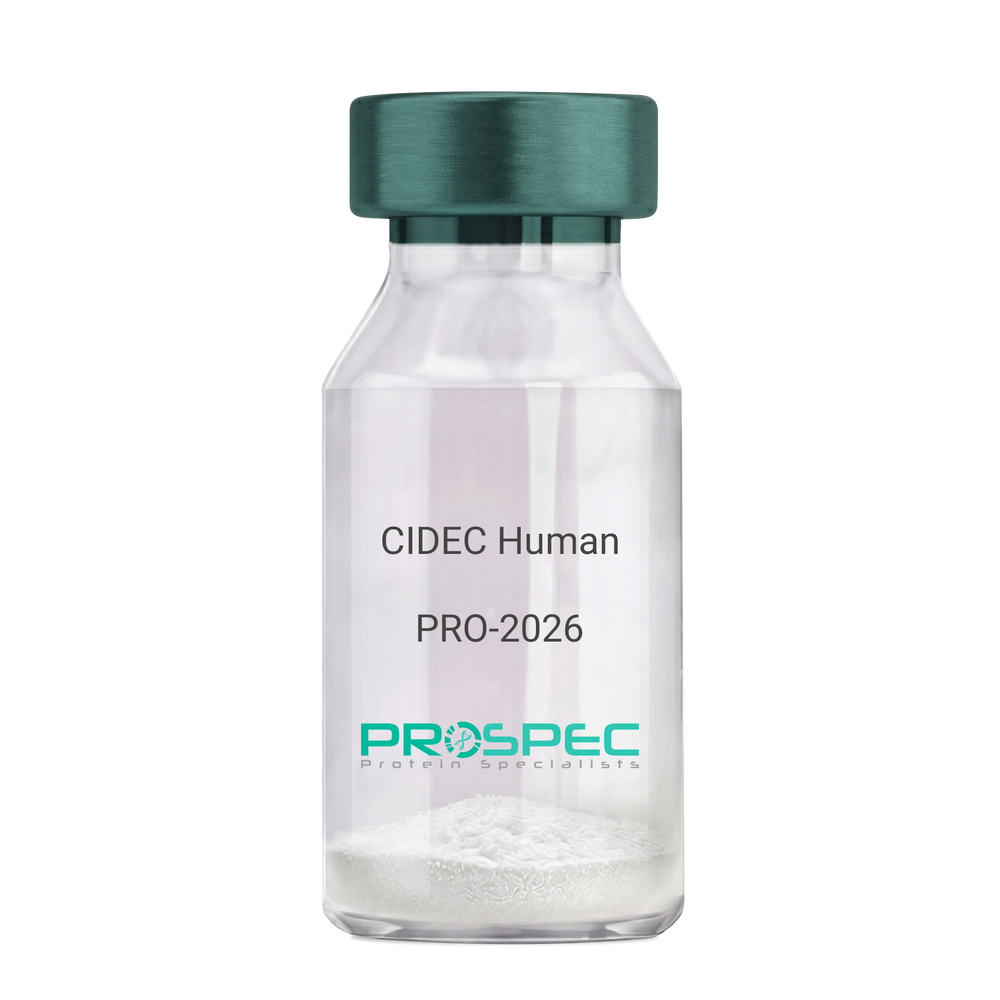
    CIDEC Human

    Description:

    Cell Death-Inducing DFFA-Like Effector C Human Recombinant

    Cell Death-Inducing DFFA-Like Effector C, FSP27, CIDE3, FPLD5, Cell Death-Inducing DFFA-Like Effector Protein C, Fat-Specific Protein FSP27 Homolog, Cell Death Activator CIDE-3, Fat Specific Protein 27, CIDE-3, CIDEC.

    Product # :

    PRO-2026

    Price :

    Quantity :

    Shipping Method :

    Ice Icon

    Shipped with Ice Packs

    Add To Cart

    More Info

    • description
    • source
    • formulation
    • purity
    • More Info

    Description

    CIDEC Human Recombinant produced in E.Coli is a single, non-glycosylated, polypeptide chain (Glu2-Gln238) containing 247 amino acids including a 10 aa His tag at N-terminus. The total calculated molecular mass is 28kDa.

    Source

    Escherichia Coli.

    Formulation

    CIDEC filtered (0.4µm) solution at a concentration of 0.4mg/ml in 30mM acetate buffer and 10mM dithiothreitol, pH 4.

    Purity

    Greater than 95.0% as determined by SDS-PAGE.

    More Info

    • Introduction

      Cell Death-Inducing DFFA-Like Effector C (CIDEC) belongs to the cell death-inducing DNA fragmentation factor-like effector family, whose members have significant roles in apoptosis. CIDEC is expressed mainly in adipocytes, intestine, heart, stomach, and weakly in the brain, kidney and liver. CIDEC overexpression in preadipocytes induces apoptosis. CIDEC regulates enlargement of lipid droplets.

    • Synonyms

      Cell Death-Inducing DFFA-Like Effector C, FSP27, CIDE3, FPLD5, Cell Death-Inducing DFFA-Like Effector Protein C, Fat-Specific Protein FSP27 Homolog, Cell Death Activator CIDE-3, Fat Specific Protein 27, CIDE-3, CIDEC.

    • Physical Appearance

      Filtered colorless solution.

    • Stability

      Store at 4°C if entire vial will be used within 2-4 weeks. Store, frozen at -20°C for longer periods of time. For long term storage it is recommended to add a carrier protein (0.1% HSA or BSA).Avoid multiple freeze-thaw cycles.

    • Amino Acid Sequence

      MKHHHHHHASEYAMKSLSLL YPKSLSRHVS VRTSVVTQQL LSEPSPKAPR ARPCRVSTAD RSVRKGIMAY SLEDLLLKVR DTLMLADKPF FLVLEEDGTT VETEEYFQAL AGDTVFMVLQ KGQKWQPPSE QGTRHPLSLS HKPAKKIDVA RVTFDLYKLN PQDFIGCLNV KATFYDTYSL SYDLHCCGAK RIMKEAFRWA LFSMQATGHV LLGTSCYLQQ LLDATEEGQP PKGKASSLIP TCLKILQ.

    ProSpec's products are furnished for LABORATORY RESEARCH USE ONLY. The product may not be used as drugs, agricultural or pesticidal products, food additives or household chemicals.

    Cidec Human
  • View Data Sheet

    Name :

    LTF Human

    Description:

    Lactoferrin Human (Breast Milk)

    Lactotransferrin, Lactoferrin, Growth-inhibiting protein 12, Talalactoferrin, LTF, GIG12, LF, HLF2, Neutrophil Lactoferrin.

    Product # :

    PRO-1590

    Price :

    Quantity :

    Shipping Method :

    Room Temp Icon

    Shipped at Room temp

    Add To Cart

    More Info

    • description
    • source
    • formulation
    • purity
    • More Info

    Description

    The Human Lactoferrin produced from Human breast milk has a molecular mass of 76.165kDa (calculated without glycosylation) containing 691 amino acid residues.

    Source

    Human breast milk.

    Formulation

    LTF protein filtered (0.4µm) and lyophilized in 0.5 mg/ml in 0.05M phosphate buffer and 0.075M NaCl, pH 7.4.

    Purity

    Greater than 95.0% as determined by SDS-PAGE.

    More Info

    • Introduction

      Lactoferrin is a glycoprotein that belongs to the transferrin family of iron binding proteins. It is found in human breast milk as well as most epithelial surface secretions including tears, nasogastric, saliva, and bronchial. Lactoferrin binds 2 molecules of iron with very high affinity. Lactoferrin inhibits bacterial growth by withholding iron, its N-terminal region is an antimicrobial peptide. Lactotransferrin acts synergistically with lysozyme to potentiate the activity of both proteins. The multifunctional protein lactoferrin has many physiological possible roles. It is often referred to as an innate defense protein and frequently serves as the first line of defense in protection against pathogens. It has been shown to have the ability to bind iron, it is a natural anti-bacterial, anti-fungal and anti-viral, it is an antioxidant and it also has immunomodulatory properties. It has many beneficial properties, which make it a good candidate for a number of product applications. Considerable research is currently going on to explain the various suggested biological functions of lactoferrin.

    • Synonyms

      Lactotransferrin, Lactoferrin, Growth-inhibiting protein 12, Talalactoferrin, LTF, GIG12, LF, HLF2, Neutrophil Lactoferrin.

    • Physical Appearance

      Filtered White lyophilized (freeze-dried) powder.

    • Stability

      Store lyophilized protein at -20°C. Aliquot the product after reconstitution to avoid repeated freezing/thawing cycles. Reconstituted protein can be stored at 4°C for a limited period of time; it does not show any change after two weeks at 4°C.

    • Solubility

      It is recommended to add deionized water to prepare a working stock solution of approximately 0.5 mg/ml and let the lyophilized pellet dissolve completely. Product is not sterile! Please filter the product by an appropriate sterile filter before using it in the cell culture.

    • Amino Acid Sequence

      GRRRSVQWCA VSQPEATKCF QWQRNMRKVR GPPVSCIKRD SPIQCIQAIA ENRADAVTLD GGFIYEAGLA PYKLRPVAAE VYGTERQPRT HYYAVAVVKK GGSFQLNELQ GLKSCHTGLR RTAGWNVPIG TLRPFLNWTG PPEPIEAAVA RFFSASCVPG ADKGQFPNLC RLCAGTGENK CAFSSQEPYF SYSGAFKCLR DGAGDVAFIR ESTVFEDLSD EAERDEYELL CPDNTRKPVD KFKDCHLARV PSHAVVARSV NGKEDAIWNL LRQAQEKFGK DKSPKFQLFG SPSGQKDLLF KDSAIGFSRV PPRIDSGLYL GSGYFTAIQN LRKSEEEVAA RRARVVWCAV GEQELRKCNQ WSGLSEGSVT CSSASTTEDC IALVLKGEAD AMSLDGGYVY TAGKCGLVPV LAENYKSQQS SDPDPNCVDR PVEGYLAVAV VRRSDTSLTW NSVKGKKSCH TAVDRTAGWN IPMGLLFNQT GSCKFDEYFS QSCAPGSDPR SNLCALCIGD EQGENKCVPN SNERYYGYTG AFRCLAENAG DVAFVKDVTV LQNTDGNNNE AWAKDLKLAD FALLCLDGKR KPVTEARSCH LAMAPNHAVV SRMDKVERLK QVLLHQQAKF GRNGSDCPDK FCLFQSETKN LLFNDNTECL ARLHGKTTYE KYLGPQYVAG ITNLKKCSTS PLLEACEFLR K.

    ProSpec's products are furnished for LABORATORY RESEARCH USE ONLY. The product may not be used as drugs, agricultural or pesticidal products, food additives or household chemicals.

    Ltf Human
  • View Data Sheet

    Name :

    PTMA Human

    Description:

    Prothymosin Alpha Human Recombinant

    Prothymosin alpha, TMSA, PTMA, Prothymosin alpha, N-terminally processed, Thymosin alpha-1.

    Product # :

    PRO-1694

    Price :

    Quantity :

    Shipping Method :

    Ice Icon

    Shipped with Ice Packs

    Add To Cart

    More Info

    • description
    • source
    • formulation
    • purity
    • More Info

    Description

    PTMA Human Recombinant produced in E.coli is a single, non-glycosylated polypeptide chain containing 133 amino acids (1-110) and having a molecular mass of 14.5 kDa.PTMA is fused to a 23 amino acid His-tag at N-terminus & purified by proprietary chromatographic techniques.

    Source

    Escherichia Coli.

    Formulation

    The PTMA solution (0.25mg/ml) contains 20mM Tris-HCl buffer (pH 8.0), 0.15M NaCl and 10% glycerol.

    Purity

    Greater than 95.0% as determined by SDS-PAGE.

    More Info

    • Introduction

      Prothymosin alpha (PTMA) is a part of the pro/parathymosin family. PTMA mediates immune function by conferring resistance to some opportunistic infections.

    • Synonyms

      Prothymosin alpha, TMSA, PTMA, Prothymosin alpha, N-terminally processed,
      Thymosin alpha-1.

    • Physical Appearance

      Sterile Filtered colorless solution.

    • Stability

      Store at 4°C if entire vial will be used within 2-4 weeks. Store, frozen at -20°C for longer periods of time. For long term storage it is recommended to add a carrier protein (0.1% HSA or BSA).Avoid multiple freeze-thaw cycles.

    • Amino Acid Sequence

      MGSSHHHHHH SSGLVPRGSH MGSMSDAAVD TSSEITTKDL KEKKEVVEEA ENGRDAPANG NANEENGEQE ADNEVDEEEE EGGEEEEEEE EGDGEEEDGD EDEEAESATG KRAAEDDEDD DVDTKKQKTD EDD.

    ProSpec's products are furnished for LABORATORY RESEARCH USE ONLY. The product may not be used as drugs, agricultural or pesticidal products, food additives or household chemicals.

    Ptma Human
  • View Data Sheet

    Name :

    VEGF (121a.a.) Human, HEK

    Description:

    Vascular Endothelial Growth Factor (121) Human Recombinant, HEK

    Vascular endothelial growth factor A, VEGF-A, Vascular permeability factor, VPF, VEGF, MGC70609.

    Product # :

    CYT-116

    Price :

    Quantity :

    Shipping Method :

    Room Temp Icon

    Shipped at Room temp

    Add To Cart

    More Info

    • description
    • source
    • formulation
    • purity
    • biological activity
    • More Info

    Description

    Recombinant Human VEGF 121 amino acids, produced in HEK cells is a glycosylated 37kDa homodimer and 50kDa homotrimer.The VEGF is purified by proprietary chromatographic techniques.

    Source

    HEK.

    Formulation

    VEGF was lyophilized from a 0.2µm filtered solution containing 1xPBS.

    Purity

    Greater than 95% as obsereved by SDS-PAGE.

    Biological Activity

    The specific activity was determined by the dose-dependent stimulation of the proliferation of HUVEC cells (Human Umbilical Vein Endothelial Cells), the ED50 is 3ng/ml.

    More Info

    • Introduction

      Vascular endothelial growth factor is an important signaling protein involved in both vasculogenesis and angiogenesis. As its name implies, VEGF activity has been mostly studied on cells of the vascular endothelium, although it does have effects on a number of other cell types (e.g. stimulation monocyte/ macrophagemigration, neurons, cancer cells, kidney epithelial cells ).VEGF mediates increased vascular permeability, induces angiogenesis, vasculogenesis and endothelial cell growth, promotes cell migration, and inhibits apoptosis. In vitro, VEGF has been shown to stimulate endothelial cell mitogenesisand cell migration. VEGF is also a vasodilator and increases microvascular permeability and was originally referred to as vascular permeability factor.
      Elevated levels of this protein are linked to POEMS syndrome, also known as Crow-Fukase syndrome. Mutations in this gene have been associated with proliferative and nonproliferative diabetic retinopathy.

    • Synonyms

      Vascular endothelial growth factor A, VEGF-A, Vascular permeability factor, VPF, VEGF, MGC70609.

    • Physical Appearance

      Sterile Filtered White lyophilized (freeze-dried) powder.

    • Stability

      Lyophilized VEGF although stable at room temperature for 3 weeks, should be stored desiccated below -18°C. Upon reconstitution VEGF should be stored at 4°C between 2-7 days and for future use below -18°C.For long term storage it is recommended to add a carrier protein (0.1% HSA or BSA).Please prevent freeze-thaw cycles.

    • Solubility

      It is recommended to reconstitute the lyophilized VEGF in sterile PBS containing 0.1% endotoxin-free recombinant HSA.

    ProSpec's products are furnished for LABORATORY RESEARCH USE ONLY. The product may not be used as drugs, agricultural or pesticidal products, food additives or household chemicals.

    Vegf121 Human Hek
  • View Data Sheet

    Name :

    SIGLEC10 Human

    Description:

    Sialic Acid Binding Ig Like Lectin 10 Human Recombinant

    SIGLEC10, PRO940, SLG2, SIGLEC-10, Sialic acid-binding Ig-like lectin 10 isoform 3, Siglec-like protein 2.

    Product # :

    PRO-2610

    Price :

    Quantity :

    Shipping Method :

    Ice Icon

    Shipped with Ice Packs

    Add To Cart

    More Info

    • description
    • source
    • formulation
    • purity
    • More Info

    Description

    SIGLEC10 Human produced in Sf9 Insect cells is a single, glycosylated polypeptide chain containing 678 amino acids (17-455 a.a.) and having a molecular mass of 75.6kDa. SIGLEC10 is expressed with a 239 hIgG-His-tag at C-Terminus and purified by proprietary chromatographic techniques.

    Source

    Sf9, Baculovirus cells.

    Formulation

    The SIGLEC10 solution (0.25mg/ml) contains Phosphate Buffered Saline (pH 7.4) and 10% glycerol.

    Purity

    Greater than 85.0% as determined by SDS-PAGE.

    More Info

    • Introduction

      Sialic Acid Binding Ig Like Lectin 10(SIGLEC10) is a part of the immunoglobulin superfamily that is expressed on eosinophils, B cells, monocytes and neutrophils. SIGLEC10 is an adhesion molecule that mediates sialic-acid dependent binding to cells.SIGLEC10 is a ligand for CD52, the target of the therapeutic monoclonal antibody Alemtuzumab. Also, it binds to Vascular adhesion protein 1 (VAP-1) and to the co-stimulatory molecule CD24.This binding is modulated by cis interactions of SIGLEC10 with sialated molecules on the same cell.

    • Synonyms

      SIGLEC10, PRO940, SLG2, SIGLEC-10, Sialic acid-binding Ig-like lectin 10 isoform 3, Siglec-like protein 2.

    • Physical Appearance

      Sterile Filtered colorless solution.

    • Stability

      Store at 4°C if entire vial will be used within 2-4 weeks. Store, frozen at -20°C for longer periods of time. For long term storage it is recommended to add a carrier protein (0.1% HSA or BSA).Avoid multiple freeze-thaw cycles.

    • Amino Acid Sequence

      MDGRFWIRVQ ESVMVPEGLC ISVPCSFSYP RQDWTGSTPA YGYWFKAVTE TTKGAPVATN
      HQSREVEMST RGRFQLTGDP AKGNCSLVIR DAQMQDESQY FFRVERGSYV RYNFMNDGFF
      LKVTALTQKP DVYIPETLEP GQPVTVICVF NWAFEECPPP SFSWTGAALS SQGTKPTTSH
      FSVLSFTPRP QDHNTDLTCH VDFSRKGVSA QRTVRLRVAY APRDLVISIS RDNTPALEPQ
      PQGNVPYLEA QKGQFLRLLC AADSQPPATL SWVLQNRVLS SSHPWGPRPL GLELPGVKAG
      DSGRYTCRAE NRLGSQQRAL DLSVQYPPEN LRVMVSQANR TVLENLGNGT SLPVLEGQSL
      CLVCVTHSSP PARLSWTQRG QVLSPSQPSD PGVLELPRVQ VEHEGEFTCH ARHPLGSQHV
      SLSLSVHYKK GLISTAFSNL EPKSCDKTHT CPPCPAPELL GGPSVFLFPP KPKDTLMISR
      TPEVTCVVVD VSHEDPEVKF NWYVDGVEVH NAKTKPREEQ YNSTYRVVSV LTVLHQDWLN
      GKEYKCKVSN KALPAPIEKT ISKAKGQPRE PQVYTLPPSR DELTKNQVSL TCLVKGFYPS
      DIAVEWESNG QPENNYKTTP PVLDSDGSFF LYSKLTVDKS RWQQGNVFSC SVMHEALHNH YTQKSLSLSP GKHHHHHH.

    ProSpec's products are furnished for LABORATORY RESEARCH USE ONLY. The product may not be used as drugs, agricultural or pesticidal products, food additives or household chemicals.

    Siglec10 Human
  • View Data Sheet

    Name :

    SERPINA5 Human, Active

    Description:

    Serpin Peptidase Inhibitor, Clade A Member 5 Human Recombinant, Active

    Serpin Family A Member 5, Serine (Or Cysteine) Proteinase Inhibitor, Clade A (Alpha-1 Antiproteinase, Antitrypsin), Member 5, Serpin Peptidase Inhibitor, Clade A (Alpha-1 Antiproteinase, Antitrypsin), Member 5, Acrosomal Serine Protease Inhibitor 3 4 Protein C Inhibitor, PLANH3, PAI-3, PROCI, PAI3, PCI, Plasminogen Activator Inhibitor III, Plasminogen Activator Inhibitor-3, Plasminogen Activator Inhibitor 3, Plasma Serine Protease Inhibitor, Serpin A5, PCI-B.

    Product # :

    PRO-2523

    Price :

    Quantity :

    Shipping Method :

    Ice Icon

    Shipped with Ice Packs

    Add To Cart

    More Info

    • description
    • source
    • formulation
    • purity
    • biological activity
    • More Info

    Description

    SERPINA5 Human Recombinant produced in E.Coli is a single, non-glycosylated polypeptide chain containing 408 amino acids (20-406 a.a) and having a molecular mass of 45.9kDa.SERPINA5 is fused to a 21 amino acid His-tag at N-terminus & purified by proprietary chromatographic techniques.

    Source

    Escherichia Coli.

    Formulation

    SERPINA5 protein solution (0.5mg/ml) contains 150mM NaCl, 10% glycerol & 20 mM MES buffer (pH6.0).

    Purity

    Greater than 90.0% as determined by SDS-PAGE.

    Biological Activity

    Measured by its ability to inhibit Thrombin cleavage of substrate Boc-VPR-AMC. The IC50 for this effect is less or equal to 2 nM.

    More Info

    • Introduction

      SERPINA5 up regulates TAFI activation by inhibiting the protein C activation. SERPINA5 is a significant regulator in the equilibrium between coagulation and fibrinolysis by differentially inhibiting the activation of TAFI and of Protein-C. SERPINA5 belongs to the serpin serine proteinase inhibitor family. SERPINA5 protein inhibits plasminogen activators as well as activated protein C.
      SERPINA5 is secreted in plasma & liver. SERPINA5 is involved in cell inflammation, proliferation, apoptosis, tumour cell migration, invasion, and metastasis. Moreover, SERPINA5 controls the invasive potential of renal cell carcinoma by inhibiting urinary plasminogen activator secreted by the cells. SERPINA5 participtes in regulating key serine proteases which are involved in metastatic prostate disease.

    • Synonyms

      Serpin Family A Member 5, Serine (Or Cysteine) Proteinase Inhibitor, Clade A (Alpha-1 Antiproteinase, Antitrypsin), Member 5, Serpin Peptidase Inhibitor, Clade A (Alpha-1 Antiproteinase, Antitrypsin), Member 5, Acrosomal Serine Protease Inhibitor 3 4 Protein C Inhibitor, PLANH3, PAI-3, PROCI, PAI3, PCI, Plasminogen Activator Inhibitor III, Plasminogen Activator Inhibitor-3, Plasminogen Activator Inhibitor 3, Plasma Serine Protease Inhibitor, Serpin A5, PCI-B.

    • Physical Appearance

      Sterile Filtered colorless solution.

    • Stability

      Store at 4°C if entire vial will be used within 2-4 weeks.Store, frozen at -20°C for longer periods of time. For long term storage it is recommended to add a carrier protein (0.1% HSA or BSA).Avoid multiple freeze-thaw cycles.

    • Amino Acid Sequence

      MGSSHHHHHH SSGLVPRGSH MHRHHPREMK KRVEDLHVGA TVAPSSRRDF TFDLYRALAS AAPSQNIFFS PVSISMSLAM LSLGAGSSTK MQILEGLGLN LQKSSEKELH RGFQQLLQEL NQPRDGFQLS LGNALFTDLV VDLQDTFVSA MKTLYLADTF PTNFRDSAGA MKQINDYVAK QTKGKIVDLL KNLDSNAVVI MVNYIFFKAK WETSFNHKGT QEQDFYVTSE TVVRVPMMSR EDQYHYLLDR NLSCRVVGVP YQGNATALFI LPSEGKMQQV ENGLSEKTLR KWLKMFKKRQ LELYLPKFSI EGSYQLEKVL PSLGISNVFT SHADLSGISN HSNIQVSEMV HKAVVEVDES GTRAAAATGT IFTFRSARLN SQRLVFNRPF LMFIVDNNIL FLGKVNRP.

    ProSpec's products are furnished for LABORATORY RESEARCH USE ONLY. The product may not be used as drugs, agricultural or pesticidal products, food additives or household chemicals.

    Serpina5 Protein
  • 1
  • …
  • 24
  • 25
  • 26
  • 27
  • 28
  • …
  • 42
Your browser does not support the video tag.

Products

  • Cytokines
  • Growth Factors
  • Chemokines
  • CD Antigens
  • Neurotrophins
  • Hormones
  • Enzymes
  • Viral Antigens
  • Recombinant Proteins
  • Natural Proteins
  • Monoclonal Antibodies
  • Polyclonal Antibodies
  • Thermal Packaging

About

  • Company
  • Founder
  • Contribution
  • Contact Us
  • My Account

Ordering

  • Ordering Method
  • Ordering - Credit Card
  • Ordering PO
  • Shipping Fees
  • FAQ's

Legal

  • Terms & Conditions
  • Privacy
  • Site Map
  • info@prospecbio.com
  • Facebook
  • Instagram
  • Linkedin Profile

© 2026 ProSpec-Tany TechnoGene Ltd. All Rights Reserved.

  • Choosing a selection results in a full page refresh.
  • Opens in a new window.