Search results
1000 results found for “anti human enzyme”
Name
Description
Product #
Price
Quantity
Shipping Method
- View Data Sheet
Name :
UROS HumanDescription:
Uroporphyrinogen III Synthase Human Recombinant
Uroporphyrinogen-III synthase, UROIIIS, UROS, Hydroxymethylbilane hydrolyase [cyclizing], Uroporphyrinogen-III cosynthase.
Product # :
ENZ-140Price :
Quantity :
Shipping Method :
Shipped with Ice Packs
More Info
- description
- source
- formulation
- purity
- More Info
Description
UROS produced in E.Coli is a single, non-glycosylated polypeptide chain containing 285 amino acids (1-265 a.a.) and having a molecular mass of 30.7kDa.UROS is fused to a 20 amino acid His-tag at N-terminus & purified by proprietary chromatographic techniques.
Source
Escherichia Coli.
Formulation
UROS protein solution (1mg/ml) containing 20mM Tris-HCl buffer (pH8.0), 10% glycerol and 0.1M NaCl.
Purity
Greater than 95.0% as determined by SDS-PAGE.
More Info
-
Introduction
Uroporphyrinogen III synthase (UROS) is an enzyme involved in the 4th step of porphyrin metabolism and in the conversion of hydroxymethyl bilane into uroporphyrinogen III. Defects in the UROS protein can cause molecular lesions which lead to the autosomal recessive Gunther disease, otherwise known as congenital erythropoietic porphyria (CEP).
-
Synonyms
Uroporphyrinogen-III synthase, UROIIIS, UROS, Hydroxymethylbilane hydrolyase [cyclizing], Uroporphyrinogen-III cosynthase.
-
Physical Appearance
Sterile filtered colorless solution.
-
Stability
UROS Human Recombinant although stable at 4°C for 1 week, should be stored below -18°C. Please prevent freeze thaw cycles.
-
Amino Acid Sequence
MGSSHHHHHH SSGLVPRGSH MKVLLLKDAK EDDCGQDPYI RELGLYGLEA TLIPVLSFEF LSLPSFSEKL SHPEDYGGLI FTSPRAVEAA ELCLEQNNKT EVWERSLKEK WNAKSVYVVG NATASLVSKI GLDTEGETCG NAEKLAEYIC SRESSALPLL FPCGNLKREI LPKALKDKGI AMESITVYQT VAHPGIQGNL NSYYSQQGVP ASITFFSPSG LTYSLKHIQE LSGDNIDQIK FAAIGPTTAR ALAAQGLPVS CTAESPTPQA LATGIRKALQ PHGCC.
ProSpec's products are furnished for LABORATORY RESEARCH USE ONLY. The product may not be used as drugs, agricultural or pesticidal products, food additives or household chemicals.
- View Data Sheet
Name :
AKR1A1 HumanDescription:
Aldo-Keto Reductase Family 1 Member A1 Human Recombinant
Alcohol dehydrogenase, ALR, ARM, DD3, ALDR1, MGC1380, MGC12529, AKR1A1, Alcohol dehydrogenase [NADP+], Aldehyde reductase, Aldo-keto reductase family 1 member A1.
Product # :
ENZ-464Price :
Quantity :
Shipping Method :
Shipped with Ice Packs
More Info
- description
- source
- formulation
- purity
- More Info
Description
AKR1A1 Human Recombinant produced in E.Coli is a single, non-glycosylated, polypeptide chain containing 325 amino acids (1-325 a.a.) and having a molecular mass of 36.5 kDa. AKR1A1 is purified by proprietary chromatographic techniques.
Source
Escherichia Coli.
Formulation
AKR1A1 solution containing 20mM Tris pH-8, 50mM NaCl and 10% glycerol.
Purity
Greater than 90% as determined by SDS-PAGE.
More Info
-
Introduction
AKR1A1 is part of the aldo/keto reductase superfamily, it catalyzes the NADPH-dependent reduction from a range of aromatic and aliphatic aldehydes to their related alcohols. AKR1A1 corresponds (65% identity) to aldose reductase, an enzyme that takes part in the pathogenesis of some diabetic and galactosemic complications. AKR1A1 is involved in the activation of procarcinogens, such as polycyclic aromatic hydrocarbon trans-dihydrodiols, and in the metabolism of various xenobiotics and drugs.
-
Synonyms
Alcohol dehydrogenase, ALR, ARM, DD3, ALDR1, MGC1380, MGC12529, AKR1A1, Alcohol dehydrogenase [NADP+], Aldehyde reductase, Aldo-keto reductase family 1 member A1.
-
Physical Appearance
Sterile filtered colorless solution.
-
Stability
AKR1A1 Human Recombinant although stable at 4°C for 1 week, should be stored below -18°C. Please prevent freeze thaw cycles.
-
Amino Acid Sequence
MAASCVLLHT GQKMPLIGLG TWKSEPGQVK AAVKYALSVG YRHIDCAAIY GNEPEIGEAL KEDVGPGKAV PREELFVTSK LWNTKHHPED VEPALRKTLA DLQLEYLDLY LMHWPYAFER GDNPFPKNAD GTICYDSTHY KETWKALEAL VAKGLVQALG LSNFNSRQID DILSVASVRP AVLQVECHPY LAQNELIAHC QARGLEVTAY SPLGSSDRAW RDPDEPVLLE EPVVLALAEKYGRSPAQILL RWQVQRKVIC IPKSITPSRI LQNIKVFDFT FSPEEMKQLN ALNKNWRYIV PMLTVDGKRV PRDAGHPLYP FNDPY
ProSpec's products are furnished for LABORATORY RESEARCH USE ONLY. The product may not be used as drugs, agricultural or pesticidal products, food additives or household chemicals.
- View Data Sheet
Name :
PNMT HumanDescription:
Phenylethanolamine-N-Methyltransferase Human Recombinant
PENT, PNMTase, Noradrenaline-N-methyltransferase, Phenylethanolamine N-methyltransferase, PNMT, MGC34570.
Product # :
ENZ-457Price :
Quantity :
Shipping Method :
Shipped with Ice Packs
More Info
- description
- source
- formulation
- purity
- More Info
Description
Recombinant Human PNMT produced in E.Coli is a single, non-glycosylated polypeptide chain containing 282 amino acids (1-282 a.a.) and having a molecular mass of 30.8 kDa.PNMT is purified by conventional chromatographic techniques.
Source
Escherichia Coli.
Formulation
The PNMT protein solution contains 20mM Tris-HCl, pH-8 & 10% Glycerol.
Purity
Greater than 95.0% as determined by SDS-PAGE.
More Info
-
Introduction
PNMT is an enzyme located in the adrenal medulla and it catalyzes the final step of the catecholamine biosynthesis pathway. PNMT has beta-carboline 2N-methyltransferase activity. PNMT takes part in regulating epinephrine production. Glucocorticoid receptors form multimers of PNMT independent of the DNA binding domain. PNMT expression is regulated late in mouse gestation by AP2-alpha and glucocorticoids.
-
Synonyms
PENT, PNMTase, Noradrenaline-N-methyltransferase, Phenylethanolamine N-methyltransferase, PNMT, MGC34570.
-
Physical Appearance
Sterile filtered colorless solution.
-
Stability
Store at 4°C if entire vial will be used within 2-4 weeks. Store, frozen at -20°C for longer periods of time. For long term storage it is recommended to add a carrier protein (0.1% HSA or BSA). Avoid multiple freeze-thaw cycles.
-
Amino Acid Sequence
MSGADRSPNA GAAPDSAPGQ AAVASAYQRF EPRAYLRNNY APPRGDLCNP NGVGPWKLRC LAQTFATGEV SGRTLIDIGS GPTVYQLLSA CSHFEDITMT DFLEVNRQEL GRWLQEEPGA FNWSMYSQHA CLIEGKGECW QDKERQLRAR VKRVLPIDVH QPQPLGAGSP APLPADALVS AFCLEAVSPD LASFQRALDH ITTLLRPGGH LLLIGALEES WYLAGEARLT VVPVSEEEVR EALVRSGYKV RDLRTYIMPA HLQTGVDDVK GVFFAWAQKV GL.
ProSpec's products are furnished for LABORATORY RESEARCH USE ONLY. The product may not be used as drugs, agricultural or pesticidal products, food additives or household chemicals.
- View Data Sheet
Name :
GPBB HumanDescription:
Glycogen Phosphorylase Human Recombinant
Glycogen phosphorylase brain form, EC 2.4.1.1, GPBB, MGC9213, PYGB.
Product # :
ENZ-282Price :
Quantity :
Shipping Method :
Shipped with Ice Packs
More Info
- description
- source
- formulation
- purity
- More Info
Description
Glycogen Phosphorylase Human Recombinant produced in E.Coli is a single, non-glycosylated, polypeptide chain. The Human GPBB mature chain: 2 - 843 aa; that is a total of 842 aa having a molecular mass of 96695.96 Dalton. The theoretical pI is 6.40.The GPBB is purified by proprietary chromatographic techniques.
Source
Escherichia Coli.
Formulation
Each mg of protein contains 50% glycerol.
Purity
Greater than 85.0% as determined by:
(a) Analysis by RP-HPLC.
(b) Analysis by SDS-PAGE.More Info
-
Introduction
Glycogen phosphorylase is one of the phosphorylaseenzymes(EC2.4.1.1). It breaks up glycogeninto glucosesubunits. Glycogenis left with one less glucosemolecule, and the free glucosemolecule is in the form of glucose-1-phosphate. In order to be used for metabolism, it must be converted to glucose-6-phosphateby the enzyme phosphoglucomutase.
Glycogen phosphorylase can only act on linearchainsof glycogen(a 1-4 glycosidic linkage). Its work will immediately come to a halt four residues away from a 1-6 branch(which are exceedingly common in glycogen). In these situations, a debranching enzymeis necessary, which will straighten out the chain in that area. Additionally, an alpha 1-6 glucosidaseenzymeis required to break the remaining 1-6 residue that remains in the new linear chain. After all this is done, glycogen phosphorylase can continue.
An insulinstimulated enzyme known as phosphoprotein phosphatase(PP-1) inactivates glycogen phosphorylase to prevent glycogen break up.
GPBB - a sensitive marker for the AMI diagnosis within 4 hours after the onset of chest pain. It has also been shown that GPBB is increased in a considerable proportion of AMI patients within 2-3 hours from chest pain onset. GPBB is increased early in patients with unstable angina. GPBB can also be a sensitive marker for the detection of peri-operative myocardial ischaemia and infarction in patients undergoing coronary artery bypass grafting. -
Synonyms
Glycogen phosphorylase brain form, EC 2.4.1.1, GPBB, MGC9213, PYGB.
-
Physical Appearance
Sterile Filtered colourless liquid formualtion.
-
Stability
GPBB although stable at 10°C for 7 days, should be stored below -18°C. Please prevent freeze-thaw cycles.
-
Applications
Immunoassays and western blot.
ProSpec's products are furnished for LABORATORY RESEARCH USE ONLY. The product may not be used as drugs, agricultural or pesticidal products, food additives or household chemicals.
- View Data Sheet
Name :
HPRT1 Human, ActiveDescription:
Hypoxanthine-Guanine Phosphoribosyltransferase, Human Recombinant, Active
Hypoxanthine Phosphoribosyltransferase 1, EC 2.4.2.8, HGPRTase, HGPRT, HPRT , Hypoxanthine-Guanine Phosphoribosyltransferase 1, Hypoxanthine-Guanine Phosphoribosyltransferase, Testicular Tissue Protein Li 89, Lesch-Nyhan Syndrome, HPRT1.
Product # :
ENZ-1006Price :
Quantity :
Shipping Method :
Shipped with Ice Packs
More Info
- description
- source
- formulation
- purity
- biological activity
- More Info
Description
HPRT1 Human Recombinant produced in E.Coli is a single, non-glycosylated polypeptide chain containing 238 amino acids (1-218 a.a) and having a molecular mass of 26.7kDa. HPRT1 is fused to a 20 amino acid His-tag at N-terminus & purified by proprietary chromatographic techniques.
Source
Escherichia Coli.
Formulation
HPRT1 protein solution (0.5mg/ml) containing 20mM Tris-HCl buffer (pH 8.0) and 20% glycerol.
Purity
Greater than 95.0% as determined by SDS-PAGE.
Biological Activity
Specific activity is > 15 units/mg and is defined as the amount of enzyme that catalyze the formation of 1 umole of guanosine 5’-monophosphate (GMP) per minute from guanine and phosphoribosyl pyrophosphate at pH 7.5 at 37C.More Info
-
Introduction
HPRT1 has a main part in the generation of purine nucleotides through the purine salvage pathway. HPRT1 primarily functions to salvage purines from degraded DNA to renewed purine synthesis. Therefore, it performs as a catalyst in the reaction between guanine and phosphoribosyl pyrophosphate to form GMP.
-
Synonyms
Hypoxanthine Phosphoribosyltransferase 1, EC 2.4.2.8, HGPRTase, HGPRT, HPRT , Hypoxanthine-Guanine Phosphoribosyltransferase 1, Hypoxanthine-Guanine Phosphoribosyltransferase, Testicular Tissue Protein Li 89, Lesch-Nyhan Syndrome, HPRT1.
-
Physical Appearance
Sterile Filtered clear solution.
-
Stability
Store at 4°C if entire vial will be used within 2-4 weeks. Store, frozen at -20°C for longer periods of time. For long term storage it is recommended to add a carrier protein (0.1% HSA or BSA).Avoid multiple freeze-thaw cycles.
-
Amino Acid Sequence
MGSSHHHHHH SSGLVPRGSH MATRSPGVVI SDDEPGYDLD LFCIPNHYAE DLERVFIPHG LIMDRTERLA RDVMKEMGGH HIVALCVLKG GYKFFADLLD YIKALNRNSD RSIPMTVDFI RLKSYCNDQS TGDIKVIGGD DLSTLTGKNV LIVEDIIDTG KTMQTLLSLV RQYNPKMVKVASLLVKRTPR SVGYKPDFVG FEIPDKFVVG YALDYNEYFR DLNHVCVISE TGKAKYKA
ProSpec's products are furnished for LABORATORY RESEARCH USE ONLY. The product may not be used as drugs, agricultural or pesticidal products, food additives or household chemicals.
- View Data Sheet
Name :
PNPT1 HumanDescription:
Polyribonucleotide Nucleotidyltransferase 1 Human Recombinant
Polyribonucleotide Nucleotidyltransferase 1, Polynucleotide Phosphorylase-Like Protein, Polynucleotide Phosphorylase 1, 3-5 RNA Exonuclease OLD35, PNPase Old-35, EC 2.7.7.8, PNPase 1, COXPD13, DFNB70, PNPASE, OLD35, Polyribonucleotide Nucleotidyltransferase 1, Mitochondrial, Deafness, Autosomal Recessive 70, Polynucleotide Phosphorylase, 3-5 RNA Exonuclease, EC 2.7.7, Old-35, Polyribonucleotide nucleotidyltransferase 1, mitochondrial, 3'-5' RNA exonuclease OLD35, PNPase old-35.
Product # :
ENZ-888Price :
Quantity :
Shipping Method :
Shipped with Ice Packs
More Info
- description
- source
- formulation
- purity
- More Info
Description
PNPT1 Human Recombinant produced in E.Coli is a single, non-glycosylated polypeptide chain containing 761 amino acids (46-783 a.a) and having a molecular mass of 83.3kDa. PNPT1 is fused to a 23 amino acid His-tag at N-terminus & purified by proprietary chromatographic techniques.
Source
Escherichia Coli.
Formulation
PNPT1 protein solution (0.25mg/ml) containing Phosphate buffered saline (pH7.4), 10% glycerol and 1mM DTT.
Purity
Greater than 85.0% as determined by SDS-PAGE.
More Info
-
Introduction
Polyribonucleotide nucleotidyltransferase 1, also known as PNPT1 is predominantly localized in the mitochondrial intermembrane space and is implicated in the import of RNA to mitochondria. Mutations in PNPT1 have been connected with combined oxidative phosphorylation deficiency-13 as well as autosomal recessive nonsyndromic deafness-70. Related pseudogenes have been found on chromosomes 3 & 7.
-
Synonyms
Polyribonucleotide Nucleotidyltransferase 1, Polynucleotide Phosphorylase-Like Protein, Polynucleotide Phosphorylase 1, 3-5 RNA Exonuclease OLD35, PNPase Old-35, EC 2.7.7.8, PNPase 1, COXPD13, DFNB70, PNPASE, OLD35, Polyribonucleotide Nucleotidyltransferase 1, Mitochondrial, Deafness, Autosomal Recessive 70, Polynucleotide Phosphorylase, 3-5 RNA Exonuclease, EC 2.7.7, Old-35, Polyribonucleotide nucleotidyltransferase 1, mitochondrial, 3'-5' RNA exonuclease OLD35, PNPase old-35.
-
Physical Appearance
Sterile filtered colorless solution.
-
Stability
Store at 4°C if entire vial will be used within 2-4 weeks. Store, frozen at -20°C for longer periods of time. For long term storage it is recommended to add a carrier protein (0.1% HSA or BSA). Avoid multiple freeze-thaw cycles.
-
Amino Acid Sequence
MGSSHHHHHH SSGLVPRGSH MGSAVAVDLG NRKLEISSGK LARFADGSAV VQSGDTAVMV TAVSKTKPSP SQFMPLVVDY RQKAAAAGRI PTNYLRREIG TSDKEILTSR IIDRSIRPLF PAGYFYDTQV LCNLLAVDGV NEPDVLAING ASVALSLSDI PWNGPVGAVR IGIIDGEYVV NPTRKEMSSS TLNLVVAGAP KSQIVMLEAS AENILQQDFC HAIKVGVKYT QQIIQGIQQL VKETGVTKRT PQKLFTPSPE IVKYTHKLAM ERLYAVFTDY EHDKVSRDEA VNKIRLDTEE QLKEKFPEAD PYEIIESFNV VAKEVFRSIV LNEYKRCDGR DLTSLRNVSC EVDMFKTLHG SALFQRGQTQ VLCTVTFDSL ESGIKSDQVI TAINGIKDKN FMLHYEFPPY ATNEIGKVTG LNRRELGHGA LAEKALYPVI PRDFPFTIRV TSEVLESNGS SSMASACGGS LALMDSGVPI SSAVAGVAIG LVTKTDPEKG EIEDYRLLTD ILGIEDYNGD MDFKIAGTNK GITALQADIK LPGIPIKIVM EAIQQASVAK KEILQIMNKT ISKPRASRKE NGPVVETVQV PLSKRAKFVG PGGYNLKKLQ AETGVTISQV DEETFSVFAP TPSAMHEARD FITEICKDDQ EQQLEFGAVY TATITEIRDT GVMVKLYPNM TAVLLHNTQL DQRKIKHPTA LGLEVGQEIQ VKYFGRDPAD GRMRLSRKVL QSPATTVVRT LNDRSSIVMG EPISQSSSNS Q.
ProSpec's products are furnished for LABORATORY RESEARCH USE ONLY. The product may not be used as drugs, agricultural or pesticidal products, food additives or household chemicals.
- View Data Sheet
Name :
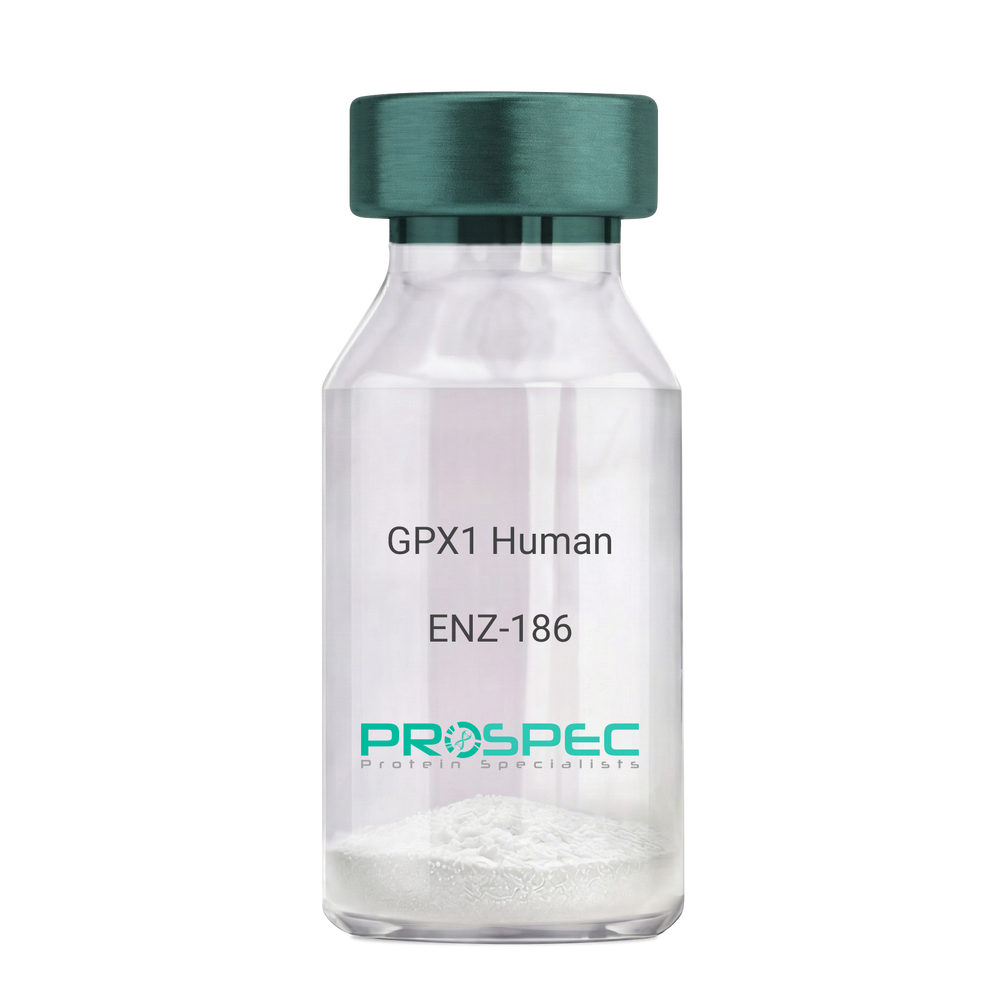
GPX1 HumanDescription:
Glutathione Peroxidase 1 Human Recombinant
Glutathione peroxidase 1, GPx-1, GSHPx-1, Cellular glutathione peroxidase, GPX1, GPXD, GSHPX1.
Product # :
ENZ-186Price :
Quantity :
Shipping Method :
Shipped with Ice Packs
More Info
- description
- source
- formulation
- purity
- More Info
Description
GPX1 Human Recombinant produced in E.coli is a single, non-glycosylated polypeptide chain containing 223 amino acids (1-203) and having a molecular mass of 24.2kDa.GPX1 is fused to a 20 amino acid His-tag at N-terminus & purified by proprietary chromatographic techniques.
Source
Escherichia Coli.
Formulation
The GPX1 solution (0.5mg/ml) contains 20mM Tris-HCl buffer (pH 8.0), 2mM DTT, 30% glycerol and 100mM NaCl.
Purity
Greater than 90% as determined by SDS-PAGE.
More Info
-
Introduction
Glutathione peroxidase 1 (GPX1) is a member of the glutathione peroxidase family, consisting of 8 identified glutathione peroxidases (Gpx1-8) in humans. Glutathione peroxidase serves in the detoxification of hydrogen peroxide, and is one of the most vital antioxidant enzymes in humans. The GPX1 is a component of the enzymatic antioxidant defense, preventing oxidative damage to DNA, proteins and lipids by detoxifying hydrogen and lipid peroxides which may contribute to prostate cancer development. GPX1 is one of only a small number of proteins known in higher vertebrates to contain selenocysteine, which occurs at the active site of glutathione peroxidase and is coded by the nonsense (stop) codon TGA. Furthermore, the GPX1 protein is characterized in a polyalanine sequence polymorphism in the N-terminal region, which includes 3 alleles with 5, 6 or 7 alanine (ALA) repeats in this sequence. The allele with 5 ALA repeats is significantly linked to breast cancer risk.
-
Synonyms
Glutathione peroxidase 1, GPx-1, GSHPx-1, Cellular glutathione peroxidase, GPX1, GPXD, GSHPX1.
-
Physical Appearance
Sterile filtered colorless solution.
-
Stability
Store at 4°C if entire vial will be used within 2-4 weeks. Store, frozen at -20°C for longer periods of time. For long term storage it is recommended to add a carrier protein (0.1% HSA or BSA).Avoid multiple freeze-thaw cycles.
-
Amino Acid Sequence
MGSSHHHHHH SSGLVPRGSH MCAARLAAAA AAAQSVYAFS ARPLAGGEPV SLGSLRGKVL LIENVASLCG TTVRDYTQMN ELQRRLGPRG LVVLGFPCNQ FGHQENAKNE EILNSLKYVR PGGGFEPNFM LFEKCEVNGA GAHPLFAFLR EALPAPSDDA TALMTDPKLI TWSPVCRNDV AWNFEKFLVG PDGVPLRRYS RRFQTIDIEP DIEALLSQGP SCA.
ProSpec's products are furnished for LABORATORY RESEARCH USE ONLY. The product may not be used as drugs, agricultural or pesticidal products, food additives or household chemicals.
- View Data Sheet
Name :
TDG HumanDescription:
Thymine-DNA Glycosylase Human Recombinant
Thymine-DNA Glycosylase, G/T Mismatch-Specific Thymine DNA Glycosylase, EC 3.2.2.29.
Product # :
ENZ-649Price :
Quantity :
Shipping Method :
Shipped with Ice Packs
More Info
- description
- source
- formulation
- purity
- More Info
Description
TDG Human Recombinant produced in E. coli is a single polypeptide chain containing 433 amino acids (1-410) and having a molecular mass of 48.4 kDa.TDG is fused to a 23 amino acid His-tag at N-terminus & purified by proprietary chromatographic techniques.
Source
E.coli.
Formulation
The TDG solution (0.5mg/1ml) contains 20mM Tris-HCl buffer (pH 8.0), 0.1M NaCl, 0.4M Urea and 10% glycerol.
Purity
Greater than 85% as determined by SDS-PAGE.
More Info
-
Introduction
Thymine-DNA glycosylase (TDG) is a member of the TDG/mug DNA glycosylase family.
TDG is a nuclear protein that fixes G/T mismatches to G/C pairs by hydrolyzing the carbon-nitrogen bond between the sugar-phosphate backbone of the DNA and the mispaired thymin. In addition, TDG removes uracil and 5-bromouracil from mispairings with guanine. The TDG enzyme has an essential role in cellular defense against genetic mutation triggered by the spontaneous deamination of 5-methylcytosine and cytosine. -
Synonyms
Thymine-DNA Glycosylase, G/T Mismatch-Specific Thymine DNA Glycosylase, EC 3.2.2.29.
-
Physical Appearance
Sterile Filtered colorless solution.
-
Stability
Store at 4°C if entire vial will be used within 2-4 weeks. Store, frozen at -20°C for longer periods of time. For long term storage it is recommended to add a carrier protein (0.1% HSA or BSA).Avoid multiple freeze-thaw cycles.
-
Amino Acid Sequence
MGSSHHHHHH SSGLVPRGSH MGSMEAENAG SYSLQQAQAF YTFPFQQLMA EAPNMAVVNE QQMPEEVPAP APAQEPVQEA PKGRKRKPRT TEPKQPVEPK KPVESKKSGK SAKSKEKQEK ITDTFKVKRK VDRFNGVSEA ELLTKTLPDI LTFNLDIVII GINPGLMAAY KGHHYPGPGN HFWKCLFMSG LSEVQLNHMD DHTLPGKYGI GFTNMVERTT PGSKDLSSKE FREGGRILVQ KLQKYQPRIA VFNGKCIYEI FSKEVFGVKV KNLEFGLQPH KIPDTETLCY GMPSSSARCA QFPRAQDKVH YYIKLKDLRD QLKGIERNMD VQEVQYTFDL QLAQEDAKKM AVKEEKYDPG YEAAYGGAYG ENPCSSEPCG FSSNGLIESV ELRGESAFSG IPNGQWMTQS FTDQIPSFSN HCGTQEQEEE SHA.
ProSpec's products are furnished for LABORATORY RESEARCH USE ONLY. The product may not be used as drugs, agricultural or pesticidal products, food additives or household chemicals.
- View Data Sheet
Name :
PFKM HumanDescription:
Phosphofructokinase, Muscle Human Recombinant
EC 2.7.1.11, GSD7, PFK-1, PFK1, PFKA, PFKX, Phosphofructokinase-M, Phosphofructokinase 1, Phosphohexokinase, Phosphofructo-1-kinase isozyme A, MGC8699, PFKM.
Product # :
PKA-365Price :
Quantity :
Shipping Method :
Shipped with Ice Packs
More Info
- description
- source
- formulation
- purity
- More Info
Description
PFKM Human Recombinant produced in E.Coli is a single, non-glycosylated, polypeptide chain containing 800 amino acids (1-780 a.a.) and having a molecular mass of 87.3 kDa. PFKM protein is fused to a 20 amino acid His-Tag at N-terminus and purified by standard chromatography.
Source
Escherichia Coli.
Formulation
PFKM Human solution containing 20mM Trsi HCl pH-8, 5mM DTT, 0.2M NaCl and 20% glycerol.
Purity
Greater than 80% as determined by SDS-PAGE.
More Info
-
Introduction
PFKM is a regulatory glycolytic enzyme that converts fructose 6-phosphate and ATP into fructose 1,6-bisphosphate (through PFK-1), fructose 2,6-bisphosphate (through PFK-2) and ADP. Three phosphofructokinase isozymes exist in humans: muscle, liver and platelet. Mutations in PFKM gene have been related with glycogen storage disease type VII, also identified as Tarui disease.
-
Synonyms
EC 2.7.1.11, GSD7, PFK-1, PFK1, PFKA, PFKX, Phosphofructokinase-M, Phosphofructokinase 1, Phosphohexokinase, Phosphofructo-1-kinase isozyme A, MGC8699, PFKM.
-
Physical Appearance
Sterile filtered colorless solution.
-
Stability
Store at 4°C if entire vial will be used within 2-4 weeks. Store, frozen at -20°C for longer periods of time. For long term storage it is recommended to add a carrier protein (0.1% HSA or BSA). Please prevent freeze thaw cycles.
-
Amino Acid Sequence
MGSSHHHHHH SSGLVPRGSH MTHEEHHAAK TLGIGKAIAV LTSGGDAQGM NAAVRAVVRV GIFTGARVFF VHEGYQGLVD GGDHIKEATW ESVSMMLQLG GTVIGSARCK DFREREGRLR AAYNLVKRGI TNLCVIGGDG SLTGADTFRS EWSDLLSDLQ KAGKITDEEA TKSSYLNIVG LVGSIDNDFC GTDMTIGTDS ALHRIMEIVD AITTTAQSHQ RTFVLEVMGR HCGYLALVTS LSCGADWVFI PECPPDDDWE EHLCRRLSET RTRGSRLNII IVAEGAIDKN GKPITSEDIK NLVVKRLGYD TRVTVLGHVQ RGGTPSAFDR ILGSRMGVEA VMALLEGTPD TPACVVSLSG NQAVRLPLME CVQVTKDVTK AMDEKKFDEA LKLRGRSFMN NWEVYKLLAH VRPPVSKSGS HTVAVMNVGA PAAGMNAAVR STVRIGLIQG NRVLVVHDGF EGLAKGQIEE AGWSYVGGWT GQGGSKLGTK RTLPKKSFEQ ISANITKFNI QGLVIIGGFE AYTGGLELME GRKQFDELCI PFVVIPATVS NNVPGSDFSV GADTALNTIC TTCDRIKQSA AGTKRRVFII ETMGGYCGYL ATMAGLAAGA DAAYIFEEPF TIRDLQANVE HLVQKMKTTV KRGLVLRNEK CNENYTTDFI FNLYSEEGKG IFDSRKNVLG HMQQGGSPTP FDRNFATKMG AKAMNWMSGK IKESYRNGRI FANTPDSGCV LGMRKRALVF QPVAELKDQT DFEHRIPKEQ WWLKLRPILK ILAKYEIDLD TSDHAHLEHI TRKRSGEAAV.
ProSpec's products are furnished for LABORATORY RESEARCH USE ONLY. The product may not be used as drugs, agricultural or pesticidal products, food additives or household chemicals.
- View Data Sheet
Name :
TSTD1 HumanDescription:
Thiosulfate Sulfurtransferase Like Domain Containing 1 Human Recombinant
Thiosulfate sulfurtransferase/rhodanese-like domain-containing protein 1, TSTD1, KAT.
Product # :
ENZ-094Price :
Quantity :
Shipping Method :
Shipped with Ice Packs
More Info
- description
- source
- formulation
- purity
- More Info
Description
TSTD1 Human Recombinant produced in E.Coli is a single, non-glycosylated, polypeptide chain containing 135 amino acids (1-115 a.a.) and having a molecular mass of 14.6kDa.TSTD1 is fused to a 20 amino acid His tag at N-terminus and purified by proprietary chromatographic techniques.
Source
Escherichia Coli.
Formulation
The TSTD1 solution (1 mg/ml) contains 20mM Tris-HCl buffer (pH 8.0), 1mM DTT, 10% glycerol and 100mM NaCl.
Purity
Greater than 95.0% as determined by SDS-PAGE.
More Info
-
Introduction
Thiosulfate sulfurtransferase like domain containing 1 (TSTD1) is a member of a family of transferases, specifically the sulfurtransferases, which transfer sulfur-containing groups. TSTD1 is localized around the nuclear membranes. TSTD1 is expressed in a number of human tissues, including the kidney, liver, skeletal muscle, heart, colon, thymus, spleen, placenta and lung. TSTD1 may participate in cyanide detoxification, the formation of iron-sulfur proteins, and the modification of sulfur-containing enzymes.
-
Synonyms
Thiosulfate sulfurtransferase/rhodanese-like domain-containing protein 1, TSTD1, KAT.
-
Physical Appearance
Sterile Filtered colorless solution.
-
Stability
Store at 4°C if entire vial will be used within 2-4 weeks. Store, frozen at -20°C for longer periods of time. For long term storage it is recommended to add a carrier protein (0.1% HSA or BSA).Avoid multiple freeze-thaw cycles.
-
Amino Acid Sequence
MGSSHHHHHH SSGLVPRGSH MAGAPTVSLP ELRSLLASGR ARLFDVRSRE EAAAGTIPGA LNIPVSELES ALQMEPAAFQ ALYSAEKPKL EDEHLVFFCQ MGKRGLQATQ LARSLGYTGA RNYAGAYREW LEKES.
ProSpec's products are furnished for LABORATORY RESEARCH USE ONLY. The product may not be used as drugs, agricultural or pesticidal products, food additives or household chemicals.
- View Data Sheet
Name :
MSRA HumanDescription:
Methionine Sulfoxide Reductase A Human Recombinant
Mitochondrial peptide methionine sulfoxide reductase, Peptide-methionine (S)-S-oxide reductase, Peptide Met(O) reductase, Protein-methionine-S-oxide reductase, PMSR, MSRA.
Product # :
ENZ-621Price :
Quantity :
Shipping Method :
Shipped with Ice Packs
More Info
- description
- source
- formulation
- purity
- More Info
Description
MSRA Human Recombinant produced in E.coli is a single, non-glycosylated polypeptide chain containing 237 amino acids (24-235) and having a molecular mass of 26.2kDa.The MSRA is fused to a 24 amino acid His-Tag at N-terminus and purified by proprietary chromatographic techniques.
Source
Escherichia Coli.
Formulation
MSRA protein solution (0.5mg/ml) is supplied in 20mM Tris-HCl buffer, pH8.0, 10% glycerol, 1mM DTT and 50mM NaCl.
Purity
Greater than 90.0% as determined by SDS-PAGE.
More Info
-
Introduction
Methionine sulfoxide reductase A (MSRA) is a member of the MsrA Met sulfoxide reductase family. The MSRA enzyme has a vital function as a repair enzyme for proteins which have been inactivated by oxidation. MSRA catalyzes the reversible oxidation-reduction of methionine sulfoxide in proteins to methionine. The three substrates of the MSRA enzyme are peptide-L-methionine, thioredoxin disulfide, and H2O, while its 2 products are peptide-L-methionine (R)-S-oxide and thioredoxin. The MSRA protein is ubiquitous and extremely conserved. Human and animal studies have shown the ultimate levels of expression in kidney and nervous tissue.
-
Synonyms
Mitochondrial peptide methionine sulfoxide reductase, Peptide-methionine (S)-S-oxide reductase, Peptide Met(O) reductase, Protein-methionine-S-oxide reductase, PMSR, MSRA.
-
Physical Appearance
Sterile Filtered clear colorless solution.
-
Stability
Store at 4°C if entire vial will be used within 2-4 weeks. Store, frozen at -20°C for longer periods of time. For long term storage it is recommended to add a carrier protein (0.1% HSA or BSA).Avoid multiple freeze-thaw cycles.
-
Amino Acid Sequence
MGSSHHHHHH SSGLVPRGSH MGSHMGNSAS NIVSPQEALP GRKEQTPVAA KHHVNGNRTV EPFPEGTQMA VFGMGCFWGA ERKFWVLKGV YSTQVGFAGG YTSNPTYKEV CSEKTGHAEV VRVVYQPEHM SFEELLKVFW ENHDPTQGMR QGNDHGTQYR SAIYPTSAKQ MEAALSSKEN YQKVLSEHGF GPITTDIREG QTFYYAEDYH QQYLSKNPNG YCGLGGTGVS CPVGIKK.
ProSpec's products are furnished for LABORATORY RESEARCH USE ONLY. The product may not be used as drugs, agricultural or pesticidal products, food additives or household chemicals.
- View Data Sheet
Name :
FOLH1 HumanDescription:
Folate Hydrolase 1 Human Recombinant
Glutamate carboxypeptidase 2 isoform 1,Cell growth-inhibiting gene 27 protein, Folate hydrolase 1, Folylpolygamma-glutamate carboxypeptidase, Glutamate carboxypeptidase II, Membrane glutamate carboxypeptidase, Nacetylated-alpha-linked acidic dipeptidase I, Prostate-specific membrane antigen, Pteroylpoly-gamma glutamate carboxypeptidase, Folh1, FGCP, FOLH, GCP2, GCPII, mGCP, NAALAD1, NAALAdase, PSM, PSMA
Product # :
ENZ-1170Price :
Quantity :
Shipping Method :
Shipped with Ice Packs
More Info
- description
- source
- formulation
- purity
- More Info
Description
FOLH1 produced in Sf9 Baculovirus cells is a single, glycosylated polypeptide chain containing 717 amino acids (44-750 a.a) and having a molecular mass of 80.7kDa.FOLH1 is expressed with a 6 amino acid His tag at C-Terminus and purified by proprietary chromatographic techniques.
Source
Sf9, Baculovirus cells.
Formulation
FOLH1 protein solution (0.25mg/ml) contains Phosphate buffered saline (pH 7.4) and 20% glycerol.
Purity
Greater than 90.0% as determined by SDS-PAGE.
More Info
-
Introduction
FOLH1, also known as glutamate carboxypeptidase 2 (GCPII), is a single pass type 2 membrane protein which belongs to the peptidase M28 family. FOLH1 is highly produced in prostate epithelium. FOLH1 is also found in ovary, live, stomach, small intestine colon, urinary bladder, kidney, testis, and the capillary endothelium of a variety of tumours. Therefore, it plays a role in directed imaging and therapy of recurrent of metastatic disease. FOLH1 is a zinc metalloenzyme that resides in membranes and catalyses the hydrolysis of N-acetylaspartylglutamate to glutamate and N-acetylaspartate.
-
Synonyms
Glutamate carboxypeptidase 2 isoform 1,Cell growth-inhibiting gene 27 protein, Folate hydrolase 1, Folylpolygamma-glutamate carboxypeptidase, Glutamate carboxypeptidase II, Membrane glutamate carboxypeptidase, Nacetylated-alpha-linked acidic dipeptidase I, Prostate-specific membrane antigen, Pteroylpoly-gamma glutamate carboxypeptidase, Folh1, FGCP, FOLH, GCP2, GCPII, mGCP, NAALAD1, NAALAdase, PSM, PSMA
-
Physical Appearance
Sterile Filtered colorless solution.
-
Stability
Store at 4°C if entire vial will be used within 2-4 weeks.Store, frozen at -20°C for longer periods of time.For long term storage it is recommended to add a carrier protein (0.1% HSA or BSA).Avoid multiple freeze-thaw cycles.
-
Amino Acid Sequence
ADPMKSSNEA TNITPKHNMK AFLDELKAEN IKKFLYNFTQ IPHLAGTEQN FQLAKQIQSQ WKEFGLDSVE LAHYDVLLSY PNKTHPNYIS IINEDGNEIF NTSLFEPPPP GYENVSDIVP PFSAFSPQGM PEGDLVYVNY ARTEDFFKLE RDMKINCSGK IVIARYGKVF RGNKVKNAQL AGAKGVILYS DPADYFAPGV KSYPDGWNLP GGGVQRGNIL NLNGAGDPLT PGYPANEYAY RRGIAEAVGL PSIPVHPIGY YDAQKLLEKM GGSAPPDSSW RGSLKVPYNV GPGFTGNFST QKVKMHIHST NEVTRIYNVI GTLRGAVEPD RYVILGGHRD SWVFGGIDPQ SGAAVVHEIV RSFGTLKKEG WRPRRTILFA SWDAEEFGLL GSTEWAEENS RLLQERGVAY INADSSIEGN YTLRVDCTPL MYSLVHNLTK ELKSPDEGFE GKSLYESWTK KSPSPEFSGM PRISKLGSGN DFEVFFQRLG IASGRARYTK NWETNKFSGY PLYHSVYETY ELVEKFYDPM FKYHLTVAQV RGGMVFELAN SIVLPFDCRD YAVVLRKYAD KIYSISMKHP QEMKTYSVSF DSLFSAVKNF TEIASKFSER LQDFDKSNPI VLRMMNDQLM FLERAFIDPL GLPDRPFYRH VIYAPSSHNK YAGESFPGIY DALFDIESKV DPSKAWGEVK RQIYVAAFTV QAAAETLSEV AHHHHHH
ProSpec's products are furnished for LABORATORY RESEARCH USE ONLY. The product may not be used as drugs, agricultural or pesticidal products, food additives or household chemicals.
- View Data Sheet
Name :
BPNT1 HumanDescription:
3(2) 5-Bisphosphate Nucleotidase 1 Human Recombinant
3'(2'), 5'-bisphosphate nucleotidase 1, Bisphosphate 3'-nucleotidase 1, PAP-inositol-1,4-phosphatase, PIP, EC 3.1.3.7, BPntase.
Product # :
ENZ-061Price :
Quantity :
Shipping Method :
Shipped with Ice Packs
More Info
- description
- source
- formulation
- purity
- More Info
Description
BPNT1 produced in E.Coli is a single, non-glycosylated polypeptide chain containing 344 amino acids (1-308a.a.) and having a molecular mass of 37.5kDa.BPNT1 is fused to a 36 amino acid His-tag at N-terminus & purified by proprietary chromatographic techniques.
Source
Escherichia Coli.
Formulation
The BPNT1 protein solution (0.5mg/1ml) is formulated in 20mM Tris-HCl buffer (pH8.0) 5mM DTT, 0.1M NaCl and 10% glycerol.
Purity
Greater than 90% as determined by SDS-PAGE.
More Info
-
Introduction
BPNT1 belongs to the magnesium-dependent, lithium-sensitive phosphomono-esterase superfamily. BPNT1 catalyzes the conversion of PAPS (adenosine 3'-phosphate 5' phosphosulfate) to APS (adenosine 5'-phosphosulfate) and the conversion of PAP (3'(2')-phosphoadenosine 5' phosphate) to AMP (adenosine 5'-phosphate) using magnesium as a cofactor. BPNT1 is expressed everywhere but at maximum levels in brain and kidney. BPNT1 is potently inhibited by lithium, a drug used for the treatment of manic depression and bipolar affective disorder, which suggests that BPNT1 has a possible role in the etiology of mood disorders.
-
Synonyms
3'(2'), 5'-bisphosphate nucleotidase 1, Bisphosphate 3'-nucleotidase 1, PAP-inositol-1,4-phosphatase, PIP, EC 3.1.3.7, BPntase.
-
Physical Appearance
Sterile Filtered clear solution.
-
Stability
Store at 4°C if entire vial will be used within 2-4 weeks. Store, frozen at -20°C for longer periods of time.Please avoid freeze thaw cycles.
-
Amino Acid Sequence
MRGSHHHHHH GMASMTGGQQ MGRDLYDDDD KDRWGSMASS NTVLMRLVAS AYSIAQKAGM IVRRVIAEGD LGIVEKTCAT DLQTKADRLA QMSICSSLAR KFPKLTIIGE EDLPSEEVDQ ELIEDSQWEE ILKQPCPSQY SAIKEEDLVV WVDPLDGTKE YTEGLLDNVT VLIGIAYEGK AIAGVINQPY YNYEAGPDAV LGRTIWGVLG LGAFGFQLKE VPAGKHIITT TRSHSNKLVT DCVAAMNPDA VLRVGGAGNK IIQLIEGKAS AYVFASPGCK KWDTCAPEVI LHAVGGKLTD IHGNVLQYHK DVKHMNSAGV LATLRNYDYY ASRVPESIKN ALVP
ProSpec's products are furnished for LABORATORY RESEARCH USE ONLY. The product may not be used as drugs, agricultural or pesticidal products, food additives or household chemicals.
- View Data Sheet
Name :
TPSAB1 HumanDescription:
Tryptase Alpha/Beta 1 Human Recombinant
Tryptase Alpha/Beta 1, Tryptase Alpha II, Tryptase Beta-1, Tryptase Alpha-1, Tryptase Alpha/Beta-1, Tryptase-I, TPS1, TPS2, TPSB1, Tryptase-III, Mast Cell Alpha II Tryptase, Mast Cell Beta I Tryptase, EC 3.4.21.59.
Product # :
ENZ-652Price :
Quantity :
Shipping Method :
Shipped with Ice Packs
More Info
- description
- source
- formulation
- purity
- More Info
Description
TPSAB1 Human Recombinant produced in E. coli is a single polypeptide chain containing 270 amino acids (31-275) and having a molecular mass of 30.1 kDa.TPSAB1 is fused to a 25 amino acid His-tag at N-terminus & purified by proprietary chromatographic techniques.
Source
E.coli.
Formulation
The TPSAB1 solution (1mg/1ml) contains 20mM Tris-HCl buffer (pH 8.0), 0.4M Urea and 10% glycerol.
Purity
Greater than 85% as determined by SDS-PAGE.
More Info
-
Introduction
Tryptase alpha/beta-1 (TPSAB1) is a tryptase which is the key neutral protease present in mast cells and is discharged upon the coupled activation-degranulation response of this cell type. TPSAB1 is enzymatically active only as a heparin-stabilized tetramer, and is resistant to all known endogenous proteinase inhibitors. TPSAB1 is implicated as a mediator in the pathogenesis of asthma and other allergic and inflammatory disorders.
-
Synonyms
Tryptase Alpha/Beta 1, Tryptase Alpha II, Tryptase Beta-1, Tryptase Alpha-1, Tryptase Alpha/Beta-1, Tryptase-I, TPS1, TPS2, TPSB1, Tryptase-III, Mast Cell Alpha II Tryptase, Mast Cell Beta I Tryptase, EC 3.4.21.59.
-
Physical Appearance
Sterile Filtered colorless solution.
-
Stability
Store at 4°C if entire vial will be used within 2-4 weeks. Store, frozen at -20°C for longer periods of time. For long term storage it is recommended to add a carrier protein (0.1% HSA or BSA).Avoid multiple freeze-thaw cycles.
-
Amino Acid Sequence
MGSSHHHHHH SSGLVPRGSH MGSHMIVGGQ EAPRSKWPWQ VSLRVHGPYW MHFCGGSLIH PQWVLTAAHC VGPDVKDLAA LRVQLREQHL YYQDQLLPVS RIIVHPQFYT AQIGADIALL ELEEPVNVSS HVHTVTLPPA SETFPPGMPC WVTGWGDVDN DERLPPPFPL KQVKVPIMEN HICDAKYHLG AYTGDDVRIV RDDMLCAGNT RRDSCQGDSG GPLVCKVNGT WLQAGVVSWG EGCAQPNRPG IYTRVTYYLD WIHHYVPKKP.
ProSpec's products are furnished for LABORATORY RESEARCH USE ONLY. The product may not be used as drugs, agricultural or pesticidal products, food additives or household chemicals.
- View Data Sheet
Name :
GPD1L HumanDescription:
Glycerol-3-Phosphate Dehydrogenase 1 Like Human Recombinant
Glycerol-3-phosphate dehydrogenase 1-like protein, GPD1-L, GPD1L, KIAA0089.
Product # :
ENZ-171Price :
Quantity :
Shipping Method :
Shipped with Ice Packs
More Info
- description
- source
- formulation
- purity
- More Info
Description
GPD1L Human Recombinant produced in E.Coli is a single, non-glycosylated polypeptide chain containing 371 amino acids (1-351 a.a.) and having a molecular mass of 40.6kDa.GPD1L is fused to a 20 amino acid His-tag at N-terminus & purified by proprietary chromatographic techniques.
Source
Escherichia Coli.
Formulation
GPD1L protein solution (1mg/ml) containing 20mM Tris-HCl buffer (pH8.0), 20% glycerol and 1mM DTT.
Purity
Greater than 95.0% as determined by SDS-PAGE.
More Info
-
Introduction
Glycerol-3-phosphate dehydrogenase 1-like protein (GPD1L) converts sn-glycerol 3-phosphate to glycerone phosphate. GPD1L is found in the cytoplasm, associated with the plasma membrane, where it binds the sodium channel, voltage-gated, type V, alpha subunit (SCN5A). Mutations in the GPD1L gene are the cause of SIDS (sudden infant death syndrome) and Brugada syndrome type 2 (an autosomal dominant tachyarrhythmia).
-
Synonyms
Glycerol-3-phosphate dehydrogenase 1-like protein, GPD1-L, GPD1L, KIAA0089.
-
Physical Appearance
Sterile Filtered colorless solution.
-
Stability
Store at 4°C if entire vial will be used within 2-4 weeks. Store, frozen at -20°C for longer periods of time. For long term storage it is recommended to add a carrier protein (0.1% HSA or BSA).Avoid multiple freeze-thaw cycles.
-
Amino Acid Sequence
MGSSHHHHHH SSGLVPRGSH MAAAPLKVCI VGSGNWGSAV AKIIGNNVKK LQKFASTVKM WVFEETVNGR KLTDIINNDH ENVKYLPGHK LPENVVAMSN LSEAVQDADL LVFVIPHQFI HRICDEITGR VPKKALGITL IKGIDEGPEG LKLISDIIRE KMGIDISVLM GANIANEVAA EKFCETTIGS KVMENGLLFK ELLQTPNFRI TVVDDADTVE LCGALKNIVA VGAGFCDGLR CGDNTKAAVI RLGLMEMIAF ARIFCKGQVS TATFLESCGV ADLITTCYGG RNRRVAEAFA RTGKTIEELE KEMLNGQKLQ GPQTSAEVYR ILKQKGLLDK FPLFTAVYQI CYESRPVQEM LSCLQSHPEH T.
ProSpec's products are furnished for LABORATORY RESEARCH USE ONLY. The product may not be used as drugs, agricultural or pesticidal products, food additives or household chemicals.
- View Data Sheet
Name :
GALE HumanDescription:
UDP-Galactose-4-Epimerase Human Recombinant
UDP-glucose 4-epimerase, EC=5.1.3.2, Galactowaldenase, UDP-galactose 4 epimerase, GALE, SDR1E1, FLJ95174, FLJ97302.
Product # :
ENZ-537Price :
Quantity :
Shipping Method :
Shipped with Ice Packs
More Info
- description
- source
- formulation
- purity
- More Info
Description
GALE Recombinant Human produced in E.Coli is a single, non-glycosylated polypeptide chain containing 368 amino acids (1-348 a.a.) and having a molecular mass of 40.4 kDa. The GALE is fused to a 20 amino acids His-Tag at N-terminus and purified by proprietary chromatographic techniques.
Source
Escherichia Coli.
Formulation
GALE Human solution containing 20mM Tris pH-8, 5mM DTT, 0.1M NaCl, 1mM EDTA & 10% glycerol.
Purity
Greater than 95.0% as determined by SDS-PAGE.
More Info
-
Introduction
GALE is an enzyme that participates as the third enzyme in the Leloir pathway of galactose metabolism. GALE is a homodimeric epimerase localized in bacterial, plant, and mammalian cells. GALE inhances the reverse chemical reaction, the conversion of UDP-glucose to UDP-galactose. UDP-galactose builds galactose-containing proteins and fats, which have a crucial part in chemical signaling, building cellular structures, transporting molecules, and producing energy.
-
Synonyms
UDP-glucose 4-epimerase, EC=5.1.3.2, Galactowaldenase, UDP-galactose 4 epimerase, GALE, SDR1E1, FLJ95174, FLJ97302.
-
Physical Appearance
Sterile filtered colorless solution.
-
Stability
Store at 4°C if entire vial will be used within 2-4 weeks. Store, frozen at -20°C for longer periods of time. For long term storage it is recommended to add a carrier protein (0.1% HSA or BSA).Avoid multiple freeze-thaw cycles.
-
Amino Acid Sequence
MGSSHHHHHH SSGLVPRGSH MAEKVLVTGG AGYIGSHTVL ELLEAGYLPV VIDNFHNAFR GGGSLPESLR RVQELTGRSV EFEEMDILDQ GALQRLFKKY SFMAVIHFAG LKAVGESVQK PLDYYRVNLT GTIQLLEIMK AHGVKNLVFS SSATVYGNPQ YLPLDEAHPT GGCTNPYGKS KFFIEEMIRD LCQADKTWNA VLLRYFNPTG AHASGCIGED PQGIPNNLMP YVSQVAIGRR EALNVFGNDY DTEDGTGVRD YIHVVDLAKG HIAALRKLKE QCGCRIYNLG TGTGYSVLQM VQAMEKASGK KIPYKVVARR EGDVAACYAN PSLAQEELGW TAALGLDRMC EDLWRWQKQN PSGFGTQA.
ProSpec's products are furnished for LABORATORY RESEARCH USE ONLY. The product may not be used as drugs, agricultural or pesticidal products, food additives or household chemicals.
- View Data Sheet
Name :
TPI1 HumanDescription:
Triosephosphate Isomerase 1 Human Recombinant
TPI, TIM, Triosephosphate Isomerase 1.
Product # :
ENZ-017Price :
Quantity :
Shipping Method :
Shipped with Ice Packs
More Info
- description
- source
- formulation
- purity
- More Info
Description
TPI1 produced in E.Coli is a single, non-glycosylated polypeptide chain containing 269 amino acids (1-249a.a.) and having a molecular mass of 28.8kDa.TPI1 is fused to a 20 amino acid His-tag at N-terminus & purified by proprietary chromatographic techniques.
Source
Escherichia Coli.
Formulation
The TPI1 protein solution (0.5mg/1ml) is formulated in 20mM Tris-HCl buffer (pH8.0), 1mM DTT and 10% glycerol.
Purity
Greater than 95% as determined by SDS-PAGE.
More Info
-
Introduction
TPI1 is one of the triosephosphate isomerase family. TPI1 catalyzes the isomerization of glyceraldehydes 3-phosphate (G3P) and dihydroxy-acetone phosphate (DHAP) in glycolysis and gluconeogenesis. Mutations in TPI1 causes triosephosphate isomerase deficiency (TPI deficiency). TPI deficiency is an autosomal recessive disorder which is the most severe clinical disorder of glycolysis and is related to neonatal jaundice, chronic hemolytic anemia, progressive neuromuscular dysfunction, cardiomyopathy and increased susceptibility to infection.
-
Synonyms
TPI, TIM, Triosephosphate Isomerase 1.
-
Physical Appearance
Sterile Filtered clear solution.
-
Stability
Store at 4°C if entire vial will be used within 2-4 weeks. Store, frozen at -20°C for longer periods of time. For long term storage it is recommended to add a carrier protein (0.1% HSA or BSA).Avoid multiple freeze-thaw cycles.
-
Amino Acid Sequence
MGSSHHHHHH SSGLVPRGSH MAPSRKFFVG GNWKMNGRKQ SLGELIGTLN AAKVPADTEV VCAPPTAYID FARQKLDPKI AVAAQNCYKV TNGAFTGEIS PGMIKDCGAT WVVLGHSERR HVFGESDELI GQKVAHALAE GLGVIACIGE KLDEREAGIT EKVVFEQTKV IADNVKDWSK VVLAYEPVWA IGTGKTATPQ QAQEVHEKLR GWLKSNVSDA VAQSTRIIYG GSVTGATCKE LASQPDVDGF LVGGASLKPE FVDIINAKQ
ProSpec's products are furnished for LABORATORY RESEARCH USE ONLY. The product may not be used as drugs, agricultural or pesticidal products, food additives or household chemicals.
- View Data Sheet
Name :
MMP1 Human, sf9Description:
Matrix Metalloproteinase-1 Human Recombinant, sf9
Matrix Metallopeptidase 1, Interstitial Collagenase, Fibroblast Collagenase, EC 3.4.24.7, CLG, Matrix Metalloproteinase 1 (Interstitial Collagenase), Matrix Metallopeptidase 1 (Interstitial Collagenase), Matrix Metalloproteinase 1, Matrix Metalloproteinase-1, Matrix Metalloprotease 1, EC 3.4.24, MMP-1, CLGN, Fibroblast collagenase, Matrix metalloproteinase-1, MMP-1.
Product # :
ENZ-989Price :
Quantity :
Shipping Method :
Shipped with Ice Packs
More Info
- description
- source
- formulation
- purity
- More Info
Description
MMP1 Human Recombinant produced in Sf9 Baculovirus cells is a single, non-glycosylated polypeptide chain containing 460 amino acids (18-469a.a) and having a molecular mass of 53.1kDa (Molecular size on SDS-PAGE will appear at approximately 50-70kDa). MMP1 is fused to an 8 amino acid His-tag at C-terminus & purified by proprietary chromatographic techniques.
Source
Sf9, Baculovirus cells.
Formulation
MMP1 protein solution (0.25mg/ml) containing 20mM MES buffer (pH 5.5), 10mM CaCl2, 100 mM NaCl, 0.05% Brij35 and 30% glycerol.
Purity
Greater than 95% as determined by SDS-PAGE.
More Info
-
Introduction
MMP-1 (interstitial collagenase) can break down a wide range of substrates including types I, II, III, VII, VIII, and X collagens as well as L-Selectin, pro-TNF, IL-1?, IGFBP-3, IGFBP-5, casein, gelatin, ?1 antitrypsin, myelin basic protein, pro-MMP2 and pro-MMP9. A significant function of MMP-1 is the degradation of fibrillar collagens in extracellular matrix remodeling. MMP-1 is expressed in fibroblasts, keratinocytes, endothelial cells, monocytes and macrophages. MMP1 can be divided into a number of distinct domains: a prodomain which is cleaved on activation, a catalytic domain containing the zinc binding site and a short hinge region with a carboxyl terminal domain. MMP1 is part of a cluster of MMP genes which localize to chromosome 11q22.3.
-
Synonyms
Matrix Metallopeptidase 1, Interstitial Collagenase, Fibroblast Collagenase, EC 3.4.24.7, CLG, Matrix Metalloproteinase 1 (Interstitial Collagenase), Matrix Metallopeptidase 1 (Interstitial Collagenase), Matrix Metalloproteinase 1, Matrix Metalloproteinase-1, Matrix Metalloprotease 1, EC 3.4.24, MMP-1, CLGN, Fibroblast collagenase, Matrix metalloproteinase-1, MMP-1.
-
Physical Appearance
Sterile Filtered colorless solution.
-
Stability
Store at 4°C if entire vial will be used within 2-4 weeks. Store, frozen at -20°C for longer periods of time. For long term storage it is recommended to add a carrier protein (0.1% HSA or BSA). Avoid multiple freeze-thaw cycles.
-
Amino Acid Sequence
HSFPATLETQ EQDVDLVQKY LEKYYNLKND GRQVEKRRNS GPVVEKLKQM QEFFGLKVTG KPDAETLKVM KQPRCGVPDV AQFVLTEGNP RWEQTHLTYR IENYTPDLPR ADVDHAIEKA FQLWSNVTPL TFTKVSEGQA DIMISFVRGD HRDNSPFDGP GGNLAHAFQP GPGIGGDAHF DEDERWTNNF REYNLHRVAA HELGHSLGLS HSTDIGALMY PSYTFSGDVQ LAQDDIDGIQ AIYGRSQNPV QPIGPQTPKA CDSKLTFDAI TTIRGEVMFF KDRFYMRTNP FYPEVELNFI SVFWPQLPNG LEAAYEFADR DEVRFFKGNK YWAVQGQNVL HGYPKDIYSS FGFPRTVKHI DAALSEENTG KTYFFVANKY WRYDEYKRSM DPGYPKMIAH DFPGIGHKVD AVFMKDGFFY FFHGTRQYKF DPKTKRILTL QKANSWFNCR KNLEHHHHHH.
ProSpec's products are furnished for LABORATORY RESEARCH USE ONLY. The product may not be used as drugs, agricultural or pesticidal products, food additives or household chemicals.
- View Data Sheet
Name :
GCK HumanDescription:
Glucokinase/Hexokinase-4 Human Recombinant
Glucokinase, EC 2.7.1.2, Hexokinase-4, Hexokinase type IV, HK IV, HK4, Hexokinase-D, GCK, GK, GLK, HHF3, HKIV, HXKP, MODY2.
Product # :
PKA-236Price :
Quantity :
Shipping Method :
Shipped with Ice Packs
More Info
- description
- source
- formulation
- purity
- More Info
Description
Glucokinase Human Recombinant produced in E.Coli is a single, non-glycosylated, polypeptide chain (aa 1-465) fused to a 20aa His tag at the N-terminal encoding the sequence of 485 amino acids and having a molecular mass of 54.3 kDa.HK4 is purified by proprietary chromatographic techniques.
Source
Escherichia Coli.
Formulation
The protein (1mg/ml) contains 20mM Tris-HCl pH-8.0 and 10% glycerol.
Purity
Greater than 95.0% as determined by SDS-PAGE.
More Info
-
Introduction
Hexokinases phosphorylate glucose to produce glucose-6-phosphate, thus committing glucose to the glycolytic pathway. Alternative splicing of Glucokinase results in three tissue-specific forms of glucokinase, one found in pancreatic islet beta cells and two found in liver. The protein localizes to the outer membrane of mitochondria. In contrast to other forms of hexokinase, HK4 is not inhibited by its product glucose-6-phosphate but remains active while glucose is abundant. Mutations in this gene have been associated with non-insulin dependent diabetes mellitus (NIDDM), maturity onset diabetes of the young, type 2 (MODY2) and persistent hyperinsulinemic hypoglycemia of infancy (PHHI).
-
Synonyms
Glucokinase, EC 2.7.1.2, Hexokinase-4, Hexokinase type IV, HK IV, HK4, Hexokinase-D, GCK, GK, GLK, HHF3, HKIV, HXKP, MODY2.
-
Physical Appearance
Sterile filtered colorless solution.
-
Stability
Store at 4°C if entire vial will be used within 2-4 weeks.Store, frozen at -20°C for longer periods of time. For long term storage it is recommended to add a carrier protein (0.1% HSA or BSA). Please avoid freeze-thaw cycles.
-
Amino Acid Sequence
MGSSHHHHHH SSGLVPRGSH MLDDRARMEA AKKEKVEQIL AEFQLQEEDL KKVMRRMQKE MDRGLRLETH EEASVKMLPT YVRSTPEGSE VGDFLSLDLG GTNFRVMLVK VGEGEEGQWS VKTKHQMYSI PEDAMTGTAE MLFDYISECI SDFLDKHQMK HKKLPLGFTF SFPVRHEDID KGILLNWTKG FKASGAEGNN VVGLLRDAIK RRGDFEMDVV AMVNDTVATM ISCYYEDHQC EVGMIVGTGC NACYMEEMQN VELVEGDEGR MCVNTEWGAF GDSGELDEFL LEYDRLVDES SANPGQQLYE KLIGGKYMGE LVRLVLLRLV DENLLFHGEA SEQLRTRGAF ETRFVSQVES DTGDRKQIYN ILSTLGLRPS TTDCDIVRRA CESVSTRAAH MCSAGLAGVI NRMRESRSED VMRITVGVDG SVYKLHPSFK ERFHASVRRL TPSCEITFIE SEEGSGRGAA LVSAVACKKA CMLGQ.
ProSpec's products are furnished for LABORATORY RESEARCH USE ONLY. The product may not be used as drugs, agricultural or pesticidal products, food additives or household chemicals.
- View Data Sheet
Name :
Dopa Decarboxylase HumanDescription:
Dopa Decarboxylase Human Recombinant
DDC, AADC, Aromatic-L-amino-acid decarboxylase, DOPA decarboxylase.
Product # :
ENZ-413Price :
Quantity :
Shipping Method :
Shipped with Ice Packs
More Info
- description
- source
- formulation
- purity
- More Info
Description
Dopa decarboxylase human recombinant produced in E.Coli is a single, non-glycosylated, polypeptide chain containing 503 amino acids (1-480 a.a.) and having a molecular mass of 56.4 kDa. The Dopa decarboxylase is fused to a 23 amino acid His Tag at N-terminus and purified by conventional chromatpgraphy.
Source
Escherichia Coli.
Formulation
The Dopa decarboxylase protein solution (1mg/ml) contains 20mM Tris-HCl, pH-8, 2mM DTT and 10% glycerol.
Purity
Greater than 95.0% as determined by SDS-PAGE.
More Info
-
Introduction
Dopa decarboxylase is a homodimeric, pyridoxal phosphate dependent enzyme.
Dopa decarboxylase is involved in 2 metabolic pathways, synthesizing 2 significant neurotransmitters the take part in numerous clinical disorders, including Parkinson’s disease. Dopa decarboxylase is located in different areas of the brain and is mostly found in basal ganglia. Dopa decarboxylase catalyzes the decarboxylation of L-3,4-dihydroxyphenylalanine (DOPA) to dopa, L-5-hydroxytryptophan to serotonin and L-tryptophan to tryptamine. Defects in Dopa decarboxylase leads to aromatic L-amino-acid decarboxylase deficiency (AADCD). AADCD deficiency is an inborn error in neurotransmitter metabolism that causes combined serotonin and catecholamine deficiency. -
Synonyms
DDC, AADC, Aromatic-L-amino-acid decarboxylase, DOPA decarboxylase.
-
Physical Appearance
Sterile filtered colorless solution.
-
Stability
Store at 4°C if entire vial will be used within 2-4 weeks. Store, frozen at -20°C for longer periods of time. For long term storage it is recommended to add a carrier protein (0.1% HSA or BSA).Avoid multiple freeze-thaw cycles.
-
Amino Acid Sequence
MGSSHHHHHH SSGLVPRGSH TRSMNASEFR RRGKEMVDYV ANYMEGIEGR QVYPDVEPGY LRPLIPAAAP QEPDTFEDII NDVEKIIMPG VTHWHSPYFF AYFPTASSYP AMLADMLCGA IGCIGFSWAA SPACTELETV MMDWLGKMLE LPKAFLNEKA GEGGGVIQGS ASEATLVALL AARTKVIHRL QAASPELTQA AIMEKLVAYS SDQAHSSVER AGLIGGVKLK AIPSDGNFAM RASALQEALE RDKAAGLIPF FMVATLGTTT CCSFDNLLEV GPICNKEDIW LHVDAAYAGS AFICPEFRHL LNGVEFADSF NFNPHKWLLV NFDCSAMWVK KRTDLTGAFR LDPTYLKHSH QDSGLITDYR HWQIPLGRRF RSLKMWFVFR MYGVKGLQAY IRKHVQLSHE FESLVRQDPR FEICVEVILG LVCFRLKGSN KVNEALLQRI NSAKKIHLVP CHLRDKFVLR FAICSRTVES AHVQRAWEHI KELAADVLRA ERE.
ProSpec's products are furnished for LABORATORY RESEARCH USE ONLY. The product may not be used as drugs, agricultural or pesticidal products, food additives or household chemicals.
- View Data Sheet
Name :
HARS HumanDescription:
Histidyl-tRNA Synthetase Human Recombinant
Histidyl-tRNA synthetase, EC 6.1.1.21, Histidine-tRNA ligase, HisRS, HRS, FLJ20491, JO-1, HARS.
Product # :
ENZ-268Price :
Quantity :
Shipping Method :
Shipped with Ice Packs
More Info
- description
- source
- formulation
- purity
- More Info
Description
Histidyl-tRNA Synthetase Human Recombinant produced in E.Coli is a single, non-glycosylated, polypeptide chain having a molecular mass of 55 kDa.
Source
Escherichia Coli.
Formulation
The protein solution contains 500mM NaCl and 10mM Tris (pH 8.0) and 6M Urea.
Purity
Greater than 95.0% as determined by Analysis by SDS-PAGE.
More Info
-
Introduction
Aminoacyl-tRNA synthetases are a class of enzymes that charge tRNAs with their cognate amino acids. The protein encoded by this gene is a cytoplasmic enzyme which belongs to the class II family of aminoacyl-tRNA synthetases. The enzyme is responsible for the synthesis of histidyl-transfer RNA, which is essential for the incorporation of histidine into proteins. The gene is located in a head-to-head orientation with HARSL on chromosome five, where the homologous genes share a bidirectional promoter. The gene product is a frequent target of autoantibodies in the human autoimmune disease polymyositis/dermatomyositis.
-
Synonyms
Histidyl-tRNA synthetase, EC 6.1.1.21, Histidine-tRNA ligase, HisRS, HRS, FLJ20491, JO-1, HARS.
-
Physical Appearance
Sterile Filtered clear solution.
-
Stability
Histidyl-tRNA Synthetase although stable at 4°C for 3 weeks, should be stored below -18°C.Please prevent freeze-thaw cycles.
-
Applications
Western Blot: Strongly reactive with human anti Histidyl-tRNA Synthetase antisera.
ProSpec's products are furnished for LABORATORY RESEARCH USE ONLY. The product may not be used as drugs, agricultural or pesticidal products, food additives or household chemicals.
- View Data Sheet
Name :
QPRT AntibodyDescription:
Quinolinate Phosphoribosyltransferase, Mouse Anti Human
Quinolinate phosphoribosyltransferase , QPRTase, QAPRTase.
Product # :
ANT-635Price :
Quantity :
Shipping Method :
Shipped with Ice Packs
More Info
- formulation
- More Info
Formulation
1mg/ml containing PBS, pH-7.4, 10% Glycerol and 0.02% Sodium Azide.
More Info
-
Introduction
QPRT is a key enzyme in the catabolism of quinolinate. QPRT is in between the tryptophannicotinamide adenine dinucleotide (NAD) pathway, resulting in the production of nicotinic acid, carbon dioxide and pyrophosphate. Rise of QPRT levels in the brain is related to the pathogenesis of neurodegenerative disorders such as epilepsy, Alzheimer's disease, and Huntington's disease.
-
Synonyms
Quinolinate phosphoribosyltransferase , QPRTase, QAPRTase.
-
Physical Appearance
Sterile filtered colorless solution.
-
Immunogen
Anti-human QPRT mAb, is derived from hybridization of mouse F0 myeloma cells with spleen cells from BALB/c mice immunized with recombinant human QPRT amino acids 1-297 purified from E. coli.
-
Ig Subclass
Mouse IgG2a heavy chain and k light chain.
-
Clone
PAT24C4AT.
-
Applications
QPRT antibody has been tested by ELISA, Western blot analysis, Flow cytometry and ICC/IF to assure specificity and reactivity. Since application varies, however, each investigation should be titrated by the reagent to obtain optimal results.
-
Type
Mouse Anti Human Monoclonal.
-
Storage Procedures
For periods up to 1 month store at 4°C, for longer periods of time, store at -20°C. Prevent freeze thaw cycles.
-
Purification Method
QPRT antibody was purified from mouse ascitic fluids by protein-A affinity chromatography.
ProSpec's products are furnished for LABORATORY RESEARCH USE ONLY. The product may not be used as drugs, agricultural or pesticidal products, food additives or household chemicals.
- View Data Sheet
Name :
GMPR HumanDescription:
Guanosine Monophosphate Reductase Human Recombinant
GMP reductase 1, Guanosine 5'-monophosphate oxidoreductase 1, Guanosine monophosphate reductase 1, GMPR, GMPR1.
Product # :
ENZ-570Price :
Quantity :
Shipping Method :
Shipped with Ice Packs
More Info
- description
- source
- formulation
- purity
- More Info
Description
GMPR Human Recombinant produced in E.coli is a single, non-glycosylated polypeptide chain containing 365 amino acids (1-345) and having a molecular mass of 39.5kDa.GMPR is fused to a 20 amino acid His-tag at N-terminus & purified by proprietary chromatographic techniques.
Source
Escherichia Coli.
Formulation
The GMPR solution (0.5mg/ml) contains 20mM Tris-HCl buffer (pH8.0), 40% glycerol, 0.15M NaCl and 1mM DTT.
Purity
Greater than 95.0% as determined by SDS-PAGE.
More Info
-
Introduction
Guanosine monophosphate reductase (GMPR) catalyzes the irreversible NADPH-dependent deamination of GMP to IMP. GMPR acts in the conversion of nucleobase, nucleoside and nucleotide derivatives of G to A nucleotides, and in upholding the intracellular balance of A and G nucleotides. In addition, the GMPR protein functions in the re-utilization of free intracellular bases and purine nucleosides.
-
Synonyms
GMP reductase 1, Guanosine 5'-monophosphate oxidoreductase 1, Guanosine monophosphate reductase 1, GMPR, GMPR1.
-
Physical Appearance
Sterile Filtered clear colorless solution.
-
Stability
Store at 4°C if entire vial will be used within 2-4 weeks. Store, frozen at -20°C for longer periods of time. For long term storage it is recommended to add a carrier protein (0.1% HSA or BSA).Avoid multiple freeze-thaw cycles.
-
Amino Acid Sequence
MGSSHHHHHH SSGLVPRGSH MPRIDADLKL DFKDVLLRPK RSSLKSRAEV DLERTFTFRN SKQTYSGIPI IVANMDTVGT FEMAAVMSQH SMFTAIHKHY SLDDWKLFAT NHPECLQNVA VSSGSGQNDL EKMTSILEAV PQVKFICLDV ANGYSEHFVE FVKLVRAKFP EHTIMAGNVV TGEMVEELIL SGADIIKVGV GPGSVCTTRT KTGVGYPQLS AVIECADSAH GLKGHIISDG GCTCPGDVAK AFGAGADFVM LGGMFSGHTE CAGEVIERNG RKLKLFYGMS SDTAMNKHAG GVAEYRASEG KTVEVPYKGD VENTILDILG GLRSTCTYVG AAKLKELSRR ATFIRVTQQH
NTVFS.
ProSpec's products are furnished for LABORATORY RESEARCH USE ONLY. The product may not be used as drugs, agricultural or pesticidal products, food additives or household chemicals.
- View Data Sheet
Name :
PGAM2 HumanDescription:
Phosphoglycerate Mutase 2 Human Recombinant
Phosphoglycerate mutase 2, BPG-dependent PGAM 2, Muscle-specific phosphoglycerate mutase, Phosphoglycerate mutase isozyme M, PGAM-M, PGAM2, PGAMM, GSD10.
Product # :
ENZ-578Price :
Quantity :
Shipping Method :
Shipped with Ice Packs
More Info
- description
- source
- formulation
- purity
- More Info
Description
PGAM2 Human Recombinant produced in E.coli is a single, non-glycosylated polypeptide chain containing 273 amino acids (1-253) and having a molecular mass of 30.9kDa.PGAM2 is fused to a 20 amino acid His-tag at N-terminus & purified by proprietary chromatographic techniques.
Source
Escherichia Coli.
Formulation
The PGAM2 solution (1mg/ml) contains 20mM Tris-HCl buffer (pH8.0), 20% glycerol, 0.1M NaCl and 1mM DTT.
Purity
Greater than 95.0% as determined by SDS-PAGE.
More Info
-
Introduction
Phosphoglycerate mutase 2 (PGAM2) is a member of the phosphoglycerate mutase family. PGAM is a dimeric enzyme which contains in separate tissues, different proportions of a slow-migrating muscle (MM) isozyme, a fast-migrating brain (BB) isozyme, and a hybrid form (MB). PGAM (Phosphoglycerate mutase) catalyzes the reversible reaction of 3-phosphoglycerate (3-PGA) to 2-phosphoglycerate (2-PGA) in the glycolytic pathway. PGAM2 gene mutations cause muscle phosphoglycerate mutase efficiency, otherwise known as glycogen storage disease X.
-
Synonyms
Phosphoglycerate mutase 2, BPG-dependent PGAM 2, Muscle-specific phosphoglycerate mutase, Phosphoglycerate mutase isozyme M, PGAM-M, PGAM2, PGAMM, GSD10.
-
Physical Appearance
Sterile Filtered colorless solution.
-
Stability
Store at 4°C if entire vial will be used within 2-4 weeks. Store, frozen at -20°C for longer periods of time. For long term storage it is recommended to add a carrier protein (0.1% HSA or BSA).Avoid multiple freeze-thaw cycles.
-
Amino Acid Sequence
MGSSHHHHHH SSGLVPRGSH MATHRLVMVR HGESTWNQEN RFCGWFDAEL SEKGTEEAKR GAKAIKDAKM EFDICYTSVL KRAIRTLWAI LDGTDQMWLP VVRTWRLNER HYGGLTGLNK AETAAKHGEE QVKIWRRSFD IPPPPMDEKH PYYNSISKER RYAGLKPGEL PTCESLKDTI ARALPFWNEE IVPQIKAGKR VLIAAHGNSL RGIVKHLEGM SDQAIMELNL PTGIPIVYEL NKELKPTKPM QFLGDEETVR KAMEAVAAQG KAK.
ProSpec's products are furnished for LABORATORY RESEARCH USE ONLY. The product may not be used as drugs, agricultural or pesticidal products, food additives or household chemicals.