Skip to content

High-quality research proteins.

  • 1-800-805-6531

  • Mon - Sat 8.00-18.00, Sun - Closed

  • info@prospecbio.com

  • PO Box 6591 East Brunswick NJ 08816

  • Products
    • Cytokines
    • Growth factors
    • Chemokines
    • Cd antigens
    • Neurotrophins
    • Hormones
    • Enzymes
    • Viral antigens
    • Recombinant proteins
    • Natural proteins
    • Monoclonal antibodies
    • Polyclonal antibodies
    • Thermal Packaging
  • About
    • Company
    • Founder
    • Contribution
  • Customers
    • Eastern Asia
    • Eastern Europe
    • North America
    • South America
    • South East Asia
    • Southern Asia
    • Western Europe
  • Ordering
    • Ordering Method
    • Ordering - Credit Card
    • Ordering - PO
    • Shipping Fees
    • FAQs
  • Services
    • DNA Cloning
    • Protein Expression
    • Monoclonal Antibody
    • Fermentation
    • Technology License
  • Contact us
Log in

Country/region

  • USD $ | Albania
  • USD $ | Andorra
  • USD $ | Argentina
  • USD $ | Armenia
  • USD $ | Australia
  • USD $ | Austria
  • USD $ | Azerbaijan
  • USD $ | Belarus
  • USD $ | Belgium
  • USD $ | Bolivia
  • USD $ | Brazil
  • USD $ | Bulgaria
  • USD $ | Cambodia
  • USD $ | Canada
  • USD $ | Chile
  • USD $ | China
  • USD $ | Colombia
  • USD $ | Costa Rica
  • USD $ | Croatia
  • USD $ | Cyprus
  • USD $ | Czechia
  • USD $ | Denmark
  • USD $ | Estonia
  • USD $ | Finland
  • USD $ | France
  • USD $ | Georgia
  • USD $ | Germany
  • USD $ | Greece
  • USD $ | Hong Kong SAR
  • USD $ | Hungary
  • USD $ | Iceland
  • USD $ | India
  • USD $ | Ireland
  • USD $ | Israel
  • USD $ | Italy
  • USD $ | Japan
  • USD $ | Kazakhstan
  • USD $ | Latvia
  • USD $ | Liechtenstein
  • USD $ | Lithuania
  • USD $ | Madagascar
  • USD $ | Malta
  • USD $ | Mexico
  • USD $ | Moldova
  • USD $ | Monaco
  • USD $ | Netherlands
  • USD $ | New Zealand
  • USD $ | North Macedonia
  • USD $ | Norway
  • USD $ | Panama
  • USD $ | Paraguay
  • USD $ | Peru
  • USD $ | Philippines
  • USD $ | Poland
  • USD $ | Portugal
  • USD $ | Romania
  • USD $ | Singapore
  • USD $ | Slovakia
  • USD $ | Slovenia
  • USD $ | South Africa
  • USD $ | South Korea
  • USD $ | Spain
  • USD $ | Sri Lanka
  • USD $ | Sweden
  • USD $ | Switzerland
  • USD $ | Taiwan
  • USD $ | Thailand
  • USD $ | Türkiye
  • USD $ | Ukraine
  • USD $ | United Kingdom
  • USD $ | United States
  • USD $ | Uruguay
  • USD $ | Vatican City
  • USD $ | Venezuela
  • USD $ | Vietnam
  • Facebook
  • Instagram
logoProSpec - Recombinant Protein Manufacturer for academic and R&D industry
Become a distributor
Account Log in
Wishlist
Cart Cart(0)
  • Products
    +
    • Cytokines
    • Growth factors
    • Chemokines
    • Cd antigens
    • Neurotrophins
    • Hormones
    • Enzymes
    • Viral antigens
    • Recombinant proteins
    • Natural proteins
    • Monoclonal antibodies
    • Polyclonal antibodies
    • Thermal Packaging
  • About
    +
    • Company
    • Founder
    • Contribution
  • Customers
    +
    • Eastern Asia
    • Eastern Europe
    • North America
    • South America
    • South East Asia
    • Southern Asia
    • Western Europe
  • Ordering
    +
    • Ordering Method
    • Ordering - Credit Card
    • Ordering - PO
    • Shipping Fees
    • FAQs
  • Services
    +
    • DNA Cloning
    • Protein Expression
    • Monoclonal Antibody
    • Fermentation
    • Technology License
  • Contact us

Item added to your cart

View cart
View All
  • Cytokines
  • Growth factors
  • Chemokines
  • Cd antigens
  • Neurotrophins
  • Hormones
  • Enzymes
  • Viral antigens
  • Recombinant proteins
  • Natural proteins
  • Monoclonal antibodies
  • Polyclonal antibodies
  • Thermal Packaging
  • Tumor Necrosis Factor

    Tumor Necrosis Factor

    View All
  • 4-1BB

    4-1BB

    View All
  • Adiponectin

    Adiponectin

    View All
  • AIF1

    AIF1

    View All
  • Other Cytokines

    Other Cytokines

    View All
  • AITRL

    AITRL

    View All
  • Angiopoietin

    Angiopoietin

    View All
  • Apolipoprotein

    Apolipoprotein

    View All
  • B-Cell Activating Factor

    B-Cell Activating Factor

    View All
  • Beta Defensin

    Beta Defensin

    View All
  • Bone Morphogenetic Protein

    Bone Morphogenetic Protein

    View All
  • B type Natriuretic Peptide

    B type Natriuretic Peptide

    View All
  • BST

    BST

    View All
  • Betacellulin

    Betacellulin

    View All
  • Cardiotrophin

    Cardiotrophin

    View All
  • Activin

    Activin

    View All
  • Fibroblast Growth Factor

    Fibroblast Growth Factor

    View All
  • Other Growth Factors

    Other Growth Factors

    View All
  • CSF

    CSF

    View All
  • CTGF

    CTGF

    View All
  • IGFBP

    IGFBP

    View All
  • VEGF Protein

    VEGF Protein

    View All
  • EGF

    EGF

    View All
  • Epigen

    Epigen

    View All
  • Erythropoietin

    Erythropoietin

    View All
  • Insulin-Like Growth Factor

    Insulin-Like Growth Factor

    View All
  • Growth Hormone

    Growth Hormone

    View All
  • HDGF

    HDGF

    View All
  • Hepatocyte Growth Factor

    Hepatocyte Growth Factor

    View All
  • Insulin

    Insulin

    View All
  • BCA-1/ BLC (CXCL13)

    BCA-1/ BLC (CXCL13)

    View All
  • BRAK (CXCL14)

    BRAK (CXCL14)

    View All
  • C-10 (CCL6)

    C-10 (CCL6)

    View All
  • Other Chemokines

    Other Chemokines

    View All
  • MEC (CCL28)

    MEC (CCL28)

    View All
  • LD78-beta (CCL3L1)

    LD78-beta (CCL3L1)

    View All
  • CTACK (CCL27)

    CTACK (CCL27)

    View All
  • CXCL16

    CXCL16

    View All
  • CXCL17

    CXCL17

    View All
  • Platelet Factor-4 (CXCL4)

    Platelet Factor-4 (CXCL4)

    View All
  • ENA-78 (CXCL5)

    ENA-78 (CXCL5)

    View All
  • Eotaxin (CCL11,24,26)

    Eotaxin (CCL11,24,26)

    View All
  • Exodus-2 (CCL21)

    Exodus-2 (CCL21)

    View All
  • Fractalkine (CX3CL1)

    Fractalkine (CX3CL1)

    View All
  • CXCL6

    CXCL6

    View All
  • Other CD Antigens

    Other CD Antigens

    View All
  • CD14

    CD14

    View All
  • CD164

    CD164

    View All
  • CD1

    CD1

    View All
  • CD2

    CD2

    View All
  • CD200

    CD200

    View All
  • CD207

    CD207

    View All
  • CD226

    CD226

    View All
  • CD23

    CD23

    View All
  • CD244

    CD244

    View All
  • CD247

    CD247

    View All
  • CD27

    CD27

    View All
  • CD274

    CD274

    View All
  • CD300

    CD300

    View All
  • CD33

    CD33

    View All
  • Other Neurotrophins

    Other Neurotrophins

    View All
  • Beta-NGF

    Beta-NGF

    View All
  • BDNF

    BDNF

    View All
  • CDNF

    CDNF

    View All
  • CNTF

    CNTF

    View All
  • GDNF

    GDNF

    View All
  • Glia Maturation Factor

    Glia Maturation Factor

    View All
  • MANF

    MANF

    View All
  • Midkine

    Midkine

    View All
  • Neuroglobin

    Neuroglobin

    View All
  • Neurotrophic factors

    Neurotrophic factors

    View All
  • Neuregulin

    Neuregulin

    View All
  • Neuropilin

    Neuropilin

    View All
  • Pigment Epithelium-Derived Factor

    Pigment Epithelium-Derived Factor

    View All
  • Pleiotrophin

    Pleiotrophin

    View All
  • Peptide Hormones

    Peptide Hormones

    View All
  • Other Hormones

    Other Hormones

    View All
  • HCG

    HCG

    View All
  • Endothelin

    Endothelin

    View All
  • Exendin

    Exendin

    View All
  • FSH

    FSH

    View All
  • Glucagon

    Glucagon

    View All
  • GHRP

    GHRP

    View All
  • GLP

    GLP

    View All
  • Thyrostimulin

    Thyrostimulin

    View All
  • Inhibin A

    Inhibin A

    View All
  • LHRH

    LHRH

    View All
  • Melanotan

    Melanotan

    View All
  • Procalcitonin

    Procalcitonin

    View All
  • PTH

    PTH

    View All
  • Peroxiredoxin

    Peroxiredoxin

    View All
  • Peptidase

    Peptidase

    View All
  • Synthetase

    Synthetase

    View All
  • Transferase

    Transferase

    View All
  • Hydrolase

    Hydrolase

    View All
  • Dehydrogenase

    Dehydrogenase

    View All
  • ACE2

    ACE2

    View All
  • Esterase

    Esterase

    View All
  • Protein Kinases

    Protein Kinases

    View All
  • Other Enzymes

    Other Enzymes

    View All
  • Phosphatase

    Phosphatase

    View All
  • Deaminase

    Deaminase

    View All
  • Oxygenase

    Oxygenase

    View All
  • Adenylate Kinase

    Adenylate Kinase

    View All
  • Lyase

    Lyase

    View All
  • Chagas

    Chagas

    View All
  • SARS

    SARS

    View All
  • Influenza

    Influenza

    View All
  • ASFV

    ASFV

    View All
  • Astrovirus

    Astrovirus

    View All
  • Borrelia

    Borrelia

    View All
  • Helicobacter Pylori

    Helicobacter Pylori

    View All
  • Chikungunya

    Chikungunya

    View All
  • Chlamydia

    Chlamydia

    View All
  • Cytomegalo

    Cytomegalo

    View All
  • Dengue

    Dengue

    View All
  • EBV

    EBV

    View All
  • Ebola

    Ebola

    View All
  • Feline Leukemia Virus

    Feline Leukemia Virus

    View All
  • Hepatitis A

    Hepatitis A

    View All
  • Other

    Other

    View All
  • Actin

    Actin

    View All
  • ADAM

    ADAM

    View All
  • Complement Component

    Complement Component

    View All
  • Ag85

    Ag85

    View All
  • Eukaryotic Translation Initiation Factor

    Eukaryotic Translation Initiation Factor

    View All
  • Anterior Gradient Protein

    Anterior Gradient Protein

    View All
  • Heat Shock Protein

    Heat Shock Protein

    View All
  • Alpha-2-HS-Glycoprotein

    Alpha-2-HS-Glycoprotein

    View All
  • Hemoglobin

    Hemoglobin

    View All
  • Allergy

    Allergy

    View All
  • Anaplasma

    Anaplasma

    View All
  • Angiogenin

    Angiogenin

    View All
  • Ankyrin Repeat Domain

    Ankyrin Repeat Domain

    View All
  • Annexin

    Annexin

    View All
  • Other Natural Proteins

    Other Natural Proteins

    View All
  • Aprotinin

    Aprotinin

    View All
  • Transferrin

    Transferrin

    View All
  • Avidin

    Avidin

    View All
  • Anti Coagulation Factors

    Anti Coagulation Factors

    View All
  • Natural Albumin

    Natural Albumin

    View All
  • Natural Coagulation Factors

    Natural Coagulation Factors

    View All
  • Fibronectin

    Fibronectin

    View All
  • Thrombin

    Thrombin

    View All
  • Anti Human Enzyme

    Anti Human Enzyme

    View All
  • Other Monoclonal Antibodies

    Other Monoclonal Antibodies

    View All
  • Anti Human Cytokine

    Anti Human Cytokine

    View All
  • Anti Human Heat Shock Protein

    Anti Human Heat Shock Protein

    View All
  • Anti Mouse Lymphocyte

    Anti Mouse Lymphocyte

    View All
  • Anti Human Chemokine

    Anti Human Chemokine

    View All
  • Anti Human Lymphocyte

    Anti Human Lymphocyte

    View All
  • Anti Viral Monoclonal

    Anti Viral Monoclonal

    View All
  • Anti Mouse Cytokine

    Anti Mouse Cytokine

    View All
  • Anti-GST Monoclonal

    Anti-GST Monoclonal

    View All
  • Other Polyclonal Antibodies

    Other Polyclonal Antibodies

    View All
  • Anti Viral

    Anti Viral

    View All
  • Anti-GST Monoclonal

    Anti-GST Monoclonal

    View All
Back

Search results

1000 results found for “Other Growth Factors”

Name

Description

Product #

Price

Quantity

Shipping Method

  • View Data Sheet

    Name :

    Leptin tA Rat, PEG

    Description:

    Leptin Antagonist Triple Mutant Pegylated Rat Recombinant

    Product # :

    CYT-567

    Price :

    Quantity :

    Shipping Method :

    Room Temp Icon

    Shipped at Room temp

    Add To Cart

    More Info

    • description
    • source
    • formulation
    • purity
    • biological activity
    • More Info

    Description

    Leptin Antagonist Triple Mutant Rat Recombinant is a single non-glycosilated polypeptide chain containing 146 amino and additional Ala at N-terminus acids and having a molecular mass of ~ 16 kDa.The Rat Leptin antagonist was mutated, resulting in L39A/D40A/F41A mutant.The Rat Leptin antagonist is bound to 20 kDa mono-PEG at N-terminus, resulting in 35.6 kDa. The Rat Leptin triple anatagonist runs as a 48 kDa.Leptin Antagonist Triple Mutant Rat Recombinant was purified by proprietary chromatographic techniques.

    Source

    Escherichia coli.

    Formulation

    The Rat Leptin triple anatagonist was lyophilized from a concentrated (0.65mg/ml) solution with 0.003mM NaHCO3.

    Purity

    Greater than 99.0% as determined by:
    (a) Gel filtration analysis.
    (b) Analysis by SDS-PAGE.

    Biological Activity

    Leptin Antagonist Triple Mutant Rat Recombinant half-life in circulation after SC injection was over 20 hours.
    Leptin Antagonist Triple Mutant Rat Recombinant is capable of inhibiting leptin-induced proliferation of BAF/3 cells stably transfected with the long form of human leptin receptor. Leptin Antagonist Triple Mutant Rat Recombinant in vitro activity is 5-6 fold lower than the non-pegylated antagonist, though in vivo it has profound weight gain effect (as compared to the non-pegylated antagonist), resulting mainly from increased food intake.

    More Info

    • Physical Appearance

      White lyophilized (freeze-dried) powder.

    • Stability

      Lyophilized Leptin Antagonist Triple Mutant Rat Recombinant although stable at room temperature for several weeks, should be stored desiccated below -18°C. Upon reconstitution at > 0.1 Leptin mutant mg/ml and up to 2 mM and filter sterilization LEP mutant can be stored at 4°C or even room temperature for several weeks making it suitable for long term infusion studies using osmotic pumps. At lower concentration addition of a carrier protein (0.1% HSA or BSA) is suggested.Please prevent freeze-thaw cycles.

    • Solubility

      It is recommended to reconstitute the lyophilized Leptin Antagonist Triple Mutant Rat Recombinant in sterile water or sterile 0.4% NaHCO3 adjusted to pH 8-9, not less than 100µg/ml, which can then be further diluted with other aqueous solutions.

    • Protein content

      Protein quantization was carried out by UV spectroscopy at 280 nm using the absorbency value of 0.2 as the extinction coefficient for a 0.1% (1mg/ml) solution at pH 8.0. This value is calculated by the PC GENE computer analysis program of protein sequences (IntelliGenetics).

    ProSpec's products are furnished for LABORATORY RESEARCH USE ONLY. The product may not be used as drugs, agricultural or pesticidal products, food additives or household chemicals.

    Leptin Ta Rat Peg
  • View Data Sheet

    Name :

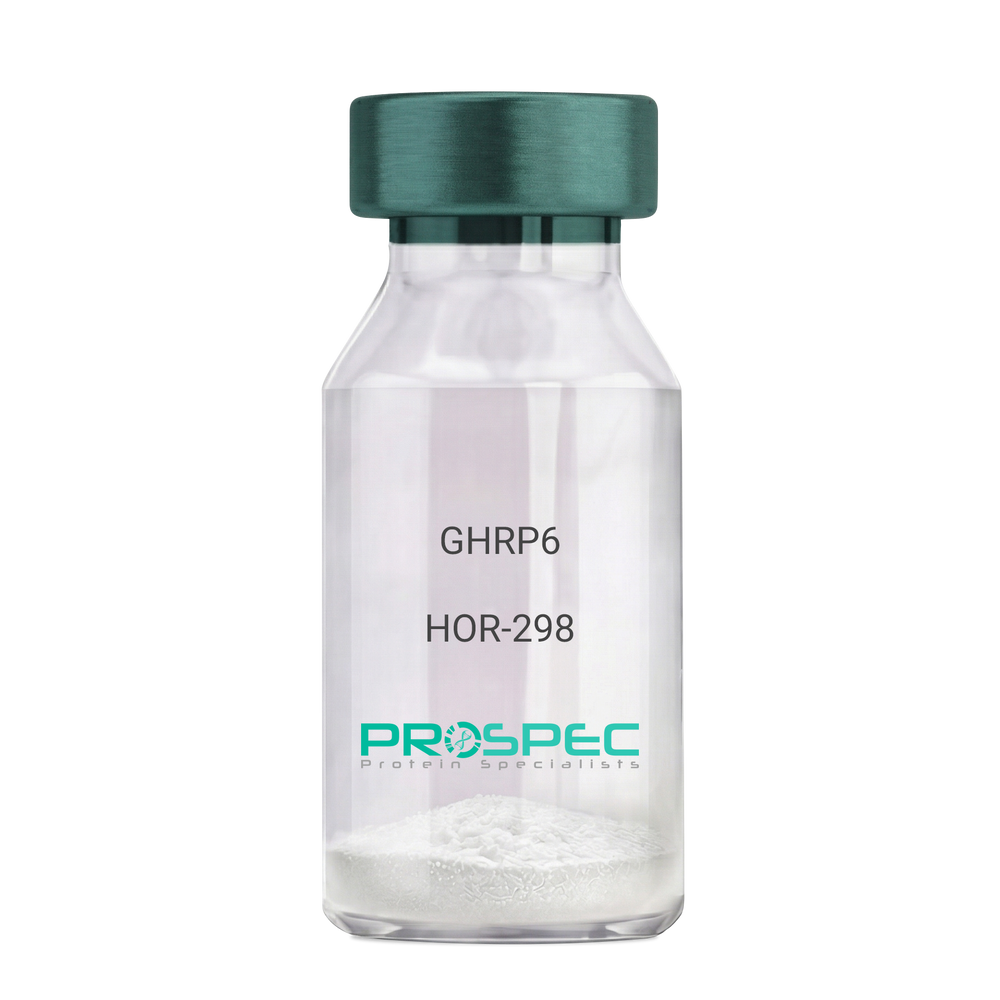
    GHRP6

    Description:

    Growth Hormone Releasing Peptide-6

    GHRP-6, GHRP6

    Product # :

    HOR-298

    Price :

    Quantity :

    Shipping Method :

    Room Temp Icon

    Shipped at Room temp

    Add To Cart

    More Info

    • description
    • formulation
    • purity
    • More Info

    Description

    Growth Hormone Releasing Peptide-6 Synthetic is a single, non-glycosylated polypeptide chain containing 6 amino acids, having a molecular mass of 873 Dalton and a Molecular formula of C46H56N12O6.

    Formulation

    The GHRP-6 peptide was lyophilized with no additives.

    Purity

    Greater than 98.0% as determined by analysis by RP-HPLC.

    More Info

    • Introduction

      GH-releasing peptides (GHRPs) are synthetic peptides that like GHRH act directly on pituitary somatotrophs to stimulate GH release. Growth hormone (GH) release is stimulated by a variety of synthetic secretagogues, of which growth hormone-releasing hexapeptide (GHRP-6) has been most thoroughly studied; it is thought to have actions at both pituitary and hypothalamic site.

    • Synonyms

      GHRP-6, GHRP6

    • Physical Appearance

      Sterile Filtered White lyophilized (freeze-dried) powder.

    • Stability

      Lyophilized Growth Hormone Releasing Peptide-6 although stable at room temperature for 3 weeks, should be stored desiccated below -18°C. Upon reconstitution GHRP-6 should be stored at 4°C between 2-7 days and for future use below -18°C. For long term storage it is recommended to add a carrier protein (0.1% HSA or BSA).Please prevent freeze-thaw cycles.

    • Solubility

      It is recommended to reconstitute the lyophilized GHRP-6 in sterile 18MΩ-cm H2O not less than 100 µg/ml, which can then be further diluted to other aqueous solutions.

    • Amino Acid Sequence

      His-D-Trp-Ala-Trp-D-Phe-Lys-NH2.

    ProSpec's products are furnished for LABORATORY RESEARCH USE ONLY. The product may not be used as drugs, agricultural or pesticidal products, food additives or household chemicals.

    Ghrp 6
  • View Data Sheet

    Name :

    KLF12 Human

    Description:

    Kruppel-Like Factor 12 Human Recombinant

    AP-2rep, AP2REP, HSPC122, Krueppel-like factor 12, Transcriptional repressor AP-2rep.

    Product # :

    PRO-2090

    Price :

    Quantity :

    Shipping Method :

    Ice Icon

    Shipped with Ice Packs

    Add To Cart

    More Info

    • description
    • source
    • formulation
    • purity
    • More Info

    Description

    KLF12 Human Recombinant produced in E.Coli is a single, non-glycosylated polypeptide chain containing 425 amino acids (1-402 a.a) and having a molecular mass of 46.6kDa.KLF12 is fused to a 23 amino acid His-tag at N-terminus & purified by proprietary chromatographic techniques.

    Source

    Escherichia Coli.

    Formulation

    KLF12 protein solution (0.5mg/ml) contains 20mM Tris-HCl buffer, (pH8.0) ,10% glycerol and 0.4M Urea.

    Purity

    Greater than 85.0% as determined by SDS-PAGE.

    More Info

    • Introduction

      Krueppel-like factor 12 (KLF12) belongs to the Kruppel-like zinc finger protein family and can repress expression of the AP-2 alpha gene by binding to a particular site in the AP-2 alpha gene promoter. AP-2 alpha (Activator protein-2 alpha) is a developmentally-regulated transcription factor and vital regulator of gene expression during vertebrate development and carcinogenesis. KLF12 gene repression entails binding with a corepressor, CtBP1.

    • Synonyms

      AP-2rep, AP2REP, HSPC122, Krueppel-like factor 12, Transcriptional repressor AP-2rep.

    • Physical Appearance

      Sterile Filtered clear solution.

    • Stability

      Store at 4°C if entire vial will be used within 2-4 weeks. Store, frozen at -20°C for longer periods of time. For long term storage it is recommended to add a carrier protein (0.1% HSA or BSA).Avoid multiple freeze-thaw cycles.

    • Amino Acid Sequence

      MGSSHHHHHH SSGLVPRGSH MGSMNIHMKR KTIKNINTFE NRMLMLDGMP AVRVKTELLE SEQGSPNVHN YPDMEAVPLL LNNVKGEPPE DSLSVDHFQT QTEPVDLSIN KARTSPTAVS SSPVSMTASA SSPSSTSTSS SSSSRLASSP TVITSVSSAS SSSTVLTPGP LVASASGVGG QQFLHIIHPV PPSSPMNLQS NKLSHVHRIP VVVQSVPVVY TAVRSPGNVN NTIVVPLLED GRGHGKAQMD PRGLSPRQSK SDSDDDDLPN VTLDSVNETG STALSIARAV QEVHPSPVSR VRGNRMNNQK FPCSISPFSI ESTRRQRRSE SPDSRKRRIH RCDFEGCNKV YTKSSHLKAH RRTHTGEKPY KCTWEGCTWK FARSDELTRH YRKHTGVKPF KCADCDRSFS RSDHLALHRR RHMLV.

    ProSpec's products are furnished for LABORATORY RESEARCH USE ONLY. The product may not be used as drugs, agricultural or pesticidal products, food additives or household chemicals.

    Klf12 Human
  • View Data Sheet

    Name :

    ATF3 Human

    Description:

    Activating Transcription Factor-3 Human Recombinant

    Activating transcription factor 3, cyclic AMP-dependent transcription factor ATF-3, FLJ41705.

    Product # :

    PKA-270

    Price :

    Quantity :

    Shipping Method :

    Ice Icon

    Shipped with Ice Packs

    Add To Cart

    More Info

    • description
    • source
    • formulation
    • purity
    • More Info

    Description

    ATF3 Human Recombinant produced in E.coli is a single, non-glycosylated polypeptide chain containing 181 amino acids (1-181) and having a molecular mass of 20.6 kDa.The ATF3 is purified by proprietary chromatographic techniques.

    Source

    Escherichia Coli.

    Formulation

    ATF3 protein (1mg/ml) is supplied in 20mM Tris-HCl, pH-8, 2M Urea and 20% Glycerol.

    Purity

    Greater than 90.0% as determined by SDS-PAGE.

    More Info

    • Introduction

      ATF3 belongs to the mammalian activation transcription factor/cAMP responsive element-binding (CREB) protein family of transcription factors. ATF3 binds the cAMP response element (CRE) (consensus: 5'-GTGACGT[AC][AG]-3'), a sequence present in numerous viral and cellular promoters. Multiple transcript variants encoding two different isoforms are known for this gene. The longer isoform represses transcription from promoters with ATF binding elements instead of activating it. The shorter isoform (deltaZip2) which stimulates transcription by sequestering inhibitory co-factors away from the promoter has no leucine zipper protein-dimerization motif and does not bind to DNA.

    • Synonyms

      Activating transcription factor 3, cyclic AMP-dependent transcription factor ATF-3, FLJ41705.

    • Physical Appearance

      ATF3 is supplied as a sterile filtered clear solution.

    • Stability

      Store at 4°C if entire vial will be used within 2-4 weeks. Store, frozen at -20°C for longer periods of time. For long term storage it is recommended to add a carrier protein (0.1% HSA or BSA).Avoid multiple freeze-thaw cycles.

    • Amino Acid Sequence

      MMLQHPGQVS ASEVSASAIV PCLSPPGSLV FEDFANLTPF VKEELRFAIQ NKHLCHRMSS ALESVTVSDR PLGVSITKAE VAPEEDERKK RRRERNKIAA AKCRNKKKEK TECLQKESEK LESVNAELKA QIEELKNEKQ HLIYMLNLHR PTCIVRAQNG RTPEDERNLF IQQIKEGTLQ S.

    ProSpec's products are furnished for LABORATORY RESEARCH USE ONLY. The product may not be used as drugs, agricultural or pesticidal products, food additives or household chemicals.

    Atf3 Human
  • View Data Sheet

    Name :

    PRLR Human, Antagonist

    Description:

    Prolactin Receptor Antagonist Human Recombinant

    Mammotropin, Luteotropic hormone, Luteotropin, PRL.

    Product # :

    CYT-1254

    Price :

    Quantity :

    Shipping Method :

    Room Temp Icon

    Shipped at Room temp

    Add To Cart

    More Info

    • description
    • source
    • formulation
    • purity
    • biological activity
    • More Info

    Description

    Prolactin Human Receptor Antagonist del 1-9, G129R mutant produced in E.Coli is a single, non-glycosylated polypeptide chain containing 190 amino acids + an additional Ala at n-terminal and having a molecular mass of ~ 22 kDa. The Human Prolactin Receptor Antagonist is purified by proprietary chromatographic techniques.

    Source

    Escherichia coli.

    Formulation

    The protein was lyophilized from a concentrated (1-2mg/ml) solution with 0.02% -0.03% NaHCO3.

    Purity

    Greater than 97.0% as determined by:

    (a) Analysis by Gel Filtration.

    (b) Analysis by SDS-PAGE.

    Biological Activity

    fully biologically active as evidenced by inhibiting PRLR-induced proliferation of Nb2 cells or Baf3 cells stably transfected with hPRL receptors. It also interacts at 1:1 molar ratio with human prolactin receptor extracellular domain as documented by SEC and SPR (Biacore analysis).

    More Info

    • Synonyms

      Mammotropin, Luteotropic hormone, Luteotropin, PRL.

    • Physical Appearance

      Sterile Filtered White lyophilized (freeze-dried) powder.

    • Stability

      Lyophilized PRLR although stable at room temperature for 3 weeks, should be stored desiccated below -18°C. Upon reconstitution at > 0.1 mg/ml and up to 3 mg/ml and filter sterilization PRLR can be stored at 4C for several weeks. Please prevent freeze-thaw cycles.

    • Solubility

      It is recommended to reconstitute the lyophilized PRLR in sterile 0.4% NaHCO3 adjusted to pH 8-9 not less than 100µg/ml, which can then be further diluted to other aqueous solutions.

    • Amino Acid Sequence

      The sequence of the first six N-terminal amino acids was determined and was found to be Ala-Arg-Ser-Gln-Val-Thr

    • Background

      Prolactin is a pituitary hormone which takes part in the stimulation of milk production, salt and water regulation, development, growth and reproduction. The primary step in its action is binding a specific membrane receptor (prolactin receptor) which belongs to the superfamily of class 1 cytokine receptors. PRLR varies in size (short and long forms) with tissue source and species, from ~40 kDa to 100 kDa. The PRL-R consists of at least 3 separate domains: an extracellular region with 5 cysteines which contains the prolactin binding site, a single transmembrane domain and a cytoplasmic region, the length of which appears to influence ligand binding and regulate cellular function.

    ProSpec's products are furnished for LABORATORY RESEARCH USE ONLY. The product may not be used as drugs, agricultural or pesticidal products, food additives or household chemicals.

    Prolactin Receptor Antagonist
  • View Data Sheet

    Name :

    GMFB Mouse

    Description:

    Glia Maturation Factor Beta Mouse Recombinant

    Glia maturation factor beta, GMFB, GMF-B, GMF-beta, GMF, C79176, AI851627, D14Ertd630e, 3110001H22Rik, 3110001O16Rik.

    Product # :

    CYT-006

    Price :

    Quantity :

    Shipping Method :

    Room Temp Icon

    Shipped at Room temp

    Add To Cart

    More Info

    • description
    • source
    • formulation
    • purity
    • More Info

    Description

    Glia Maturation Factor-Beta (GMF-Beta) Mouse Recombinant produced in E.Coli is a signle, non-glycosylated, polypeptide chain containing 141 amino acids and having a total molecular mass of 16.6kDa. GMF-Beta, Mouse Recombinant is purified by proprietary chromatographic techniques.

    Source

    Escherichia Coli.

    Formulation

    The GMF-beta protein was lyophilized from a 0.2µm filtered concentrated solution in PBS, pH 7.4.

    Purity

    Greater than 97.0% as determined by:
    (a) Analysis by RP-HPLC.
    (b) Analysis by SDS-PAGE.

    More Info

    • Introduction

      GMFB is part of the GMF subfamily of the larger actin-binding protein ADF family. GMFB is phosphorylated after phorbol ester stimulation, and is crucial for the nervous system. GMFB causes brain cell differentiation, stimulates neural regeneration and inhibits tumor cell proliferation. GMFB overexpression in astrocytes results in the increase of BDNF production. GMFB expression is increased by exercise, thus BDNF is important for exercise-induction of BDNF.

    • Synonyms

      Glia maturation factor beta, GMFB, GMF-B, GMF-beta, GMF, C79176, AI851627, D14Ertd630e, 3110001H22Rik, 3110001O16Rik.

    • Physical Appearance

      Sterile Filtered White lyophilized (freeze-dried) powder.

    • Stability

      Lyophilized GMF-B although stable at room temperature for 3 weeks, should be stored desiccated below -18°C. Upon reconstitution GMF-beta should be stored at 4°C between 2-7 days and for future use below -18°C.For long term storage it is recommended to add a carrier protein (0.1% HSA or BSA).Please prevent freeze-thaw cycles.

    • Solubility

      It is recommended to reconstitute the lyophilized GMFB in sterile 18MΩ-cm H2O not less than 100µg/ml, which can then be further diluted to other aqueous solutions.

    • Amino Acid Sequence

      SESLVVCDVA EDLVEKLRKF RFRKETHNAA IIMKIDKDER LVVLDEELEG
      VSPDELKDEL PERQPRFIVY SYKYQHDDGR VSYPLCFIFS SPVGCKPEQQ
      MMYAGSKNKL VQTAELTKVF EIRNTEDLTE EWLREKLGFF H.

    • Background

      What is the molecular weight/Mw of GMFB MOUSE Protein?
      GMFB MOUSE Protein has a total Mw of 16.6kDa.

      What is the source or expression system of GMFB MOUSE Protein?
      Escherichia Coli.

      What is the Purity of GMFB MOUSE Protein?
      GMFB MOUSE Protein is >97% pure as determined by SDS-PAGE.

      What is the Biological Activity of GMFB MOUSE Protein?
      The biological functionality of GMFB MOUSE Protein will be determined in the future.

      What is the amino acid sequence of GMFB MOUSE Protein?
      SESLVVCDVA EDLVEKLRKF RFRKETHNAA IIMKIDKDER LVVLDEELEG
      VSPDELKDEL PERQPRFIVY SYKYQHDDGR VSYPLCFIFS SPVGCKPEQQ
      MMYAGSKNKL VQTAELTKVF EIRNTEDLTE EWLREKLGFF H.

      What applications can GMFB MOUSE Protein be used in?
      GMFB MOUSE Protein can probably be used in western blot, ELISA and Lateral Flow.

      What is the endotoxin level for GMFB MOUSE Protein?
      The endotoxin level is minimal, GMFB MOUSE Protein was purified using conventional chromatography techniques.


    ProSpec's products are furnished for LABORATORY RESEARCH USE ONLY. The product may not be used as drugs, agricultural or pesticidal products, food additives or household chemicals.

    Gmfb Mouse
  • View Data Sheet

    Name :

    BTF3 Human

    Description:

    Basic Transcription Factor 3 Human Recombinant

    Transcription factor BTF3, RNA polymerase B transcription factor 3, BTF3, NACB, BTF3a; BTF3b, BETA-NAC.

    Product # :

    PRO-1333

    Price :

    Quantity :

    Shipping Method :

    Ice Icon

    Shipped with Ice Packs

    Add To Cart

    More Info

    • description
    • source
    • formulation
    • purity
    • More Info

    Description

    BTF3 Human Recombinant produced in E.Coli is a single, non-glycosylated polypeptide chain containing 229 amino acids (1-206 a.a) and having a molecular mass of 24.6kDa.BTF3 is fused to a 23 amino acid His-tag at N-terminus & purified by proprietary chromatographic techniques.

    Source

    Escherichia Coli.

    Formulation

    BTF3 protein solution (0.25mg/ml) containing 20mM Tris-HCl buffer (pH 8.0), 0.2M NaCl, 50% glycerol and 2mM DTT.

    Purity

    Greater than 85.0% as determined by SDS-PAGE.

    More Info

    • Introduction

      Basic transcription factor 3 (BTF3), which is a member of the NAC-beta family, forms a stable complex with RNA polymerase II. The BTF3 protein is vital for the initiation of transcription.

    • Synonyms

      Transcription factor BTF3, RNA polymerase B transcription factor 3, BTF3, NACB, BTF3a; BTF3b, BETA-NAC.

    • Physical Appearance

      Sterile Filtered colorless solution.

    • Stability

      Store at 4°C if entire vial will be used within 2-4 weeks. Store, frozen at -20°C for longer periods of time. For long term storage it is recommended to add a carrier protein (0.1% HSA or BSA).Avoid multiple freeze-thaw cycles.

    • Amino Acid Sequence

      MGSSHHHHHH SSGLVPRGSH MGSMRRTGAP AQADSRGRGR ARGGCPGGEA TLSQPPPRGG TRGQEPQMKE TIMNQEKLAK LQAQVRIGGK GTARRKKKVV HRTATADDKK LQFSLKKLGV NNISGIEEVN MFTNQGTVIH FNNPKVQASL AANTFTITGH AETKQLTEML PSILNQLGAD SLTSLRRLAE ALPKQSVDGK APLATGEDDD DEVPDLVENF DEASKNEAN.

    ProSpec's products are furnished for LABORATORY RESEARCH USE ONLY. The product may not be used as drugs, agricultural or pesticidal products, food additives or household chemicals.

    Btf3 Human
  • View Data Sheet

    Name :

    Leptin qA Human

    Description:

    Leptin Antagonist Quadruple Mutant Human Recombinant

    Product # :

    CYT-353

    Price :

    Quantity :

    Shipping Method :

    Room Temp Icon

    Shipped at Room temp

    Add To Cart

    More Info

    • description
    • source
    • formulation
    • purity
    • biological activity
    • More Info

    Description

    Leptin Quadruple Mutant Human Recombinant is a single polypeptide chain containing 146 amino and additional Ala at N-terminus acids and having a Mw of 16 kDa, Human Leptin was mutated, resulting in L39A/D40A/F41A/I42A.Leptin Antagonist Quadruple Mutant was purified by proprietary chromatographic techniques.

    Source

    Escherichia coli.

    Formulation

    The protein was lyophilized from a concentrated (1mg/ml) solution with 0.0045mM NaHCO3.

    Purity

    Greater than 98.0% as determined by:
    (a) Gel filtration analysis.
    (b) Analysis by SDS-PAGE.

    Biological Activity

    ProSpec’s Leptin Quadruple Antagonist Mutant is capable of inhibiting leptin-induced proliferation of BAF/3 cells stably transected with the long form of human Leptin receptor. It also inhibits various Leptin effects in several in vitro bioassays.

    More Info

    • Physical Appearance

      White lyophilized (freeze-dried) powder.

    • Stability

      Lyophilized Leptin Antagonist Quadruple Mutant although stable at room temperature for several weeks, should be stored desiccated below -18°C. Upon reconstitution at > 0.1 Leptin mutant mg/ml and up to 2 mM and filter sterilization LEP mutant can be stored at 4°C or even room temperature for several weeks making it suitable for long term infusion studies using osmotic pumps. At lower concentration addition of a carrier protein (0.1% HSA or BSA) is suggested. Please prevent freeze-thaw cycles.

    • Solubility

      It is recommended to reconstitute the lyophilized Leptin Antagonist Quadruple Mutant in sterile 0.4% NaHCO3 adjusted to pH 8-9, not less than 100µg/ml, which can then be further diluted to other aqueous solutions.

    • Amino Acid Sequence

      The sequence of the first five N-terminal amino acids was determined and was found to be Ala-Val-Pro-Ile-Gln.

    • Protein content

      Protein quantitation was carried out by UV spectroscopy at 280 nm using the absorbency value of 0.89 as the extinction coefficient for a 0.1% (1mg/ml) solution at pH 8.0. This value is calculated by the PC GENE computer analysis program of protein sequences (IntelliGenetics).

    ProSpec's products are furnished for LABORATORY RESEARCH USE ONLY. The product may not be used as drugs, agricultural or pesticidal products, food additives or household chemicals.

    Leptin Qa Human
  • View Data Sheet

    Name :

    PRL R Rabbit

    Description:

    Prolactin Rabbit Soluble Receptor Recombinant

    PRL-R.

    Product # :

    CYT-268

    Price :

    Quantity :

    Shipping Method :

    Room Temp Icon

    Shipped at Room temp

    Add To Cart

    More Info

    • description
    • source
    • formulation
    • purity
    • biological activity
    • More Info

    Description

    Prolactin Receptor Rabbit Extra Celleular Domain Recombinant ?produced in E.Coli is a non-glycosylated, Polypeptide chain containing 207 amino acids and having a molecular mass of 23972 Dalton. The Prolactin Receptor is purified by proprietary chromatographic techniques.

    Source

    Escherichia Coli.

    Formulation

    The protein was lyophilized from a concentrated (1mg/ml) solution with 0.0045mM NaHCO3.

    Purity

    Greater than 97.0% as determined by:
    (a) Analysis by SEC-HPLC.
    (b) Analysis by SDS-PAGE.

    Biological Activity

    Activity is determined by the dose-dependant inhibition of Prolactin-stimuled proliferation of Nb2 cells and by high affinity binding of oPLR and other lactogenic hormones. Refs:
    1) Bignon et al. (1994) JBC 269; 3318-24
    2) Gertler et al. (1996) JBC 271; 24482-91.

    More Info

    • Introduction

      Prolactin is a pituitary hormone involved in the stimulation of milk production, salt and water regulation, growth, development and reproduction. The initial step in its action is the binding to a specific membrane receptor (prolactin receptor) which belongs to the superfamily of class 1 cytokine receptors. The function of the prolactin receptor is mediated, at least in part, by two families of signaling molecules: Janus kinases and signal transducers and activators of transcription. Prolactin (PRL) is a hormone involved in a variety of important functions including ion transport and osmoregulation, stimulation of milk, protein synthesis as well as the regulation of numerous reproductive functions. PRL exerts its influence on different cell types through a signal transduction pathway which begins with the binding of the hormone to a transmembrane PRL receptor. Immunoreactive PRL receptor, a member of the cytokine receptor family, varies in size (short and long forms) with tissue source and species, from ~40 kDa to 100 kDa. The PRL receptor consists of at least three separate domains: an extracellular region with 5 cysteines which contains the prolactin binding site, a single transmembrane domain and a cytoplasmic region, the length of which appears to influence ligand binding and regulate cellular function.

    • Synonyms

      PRL-R.

    • Physical Appearance

      Sterile Filtered White lyophilized (freeze-dried) powder.

    • Stability

      Lyophilized PRL-R although stable at room temperature for 3 weeks, should be stored desiccated below -18°C. Upon reconstitution Prolactin Receptor should be stored at 4°C between 2-7 days and for future use below -18°C.For long term storage it is recommended to add a carrier protein (0.1% HSA or BSA).Please prevent freeze-thaw cycles.

    • Solubility

      It is recommended to reconstitute the lyophilized PRL-R in sterile 18MΩ-cm H2O not less than 100µg/ml, which can then be further diluted to other aqueous solutions.

    • Amino Acid Sequence

      The sequence of the first five N-terminal amino acids was determined and was found to be Gly-Lys-Pro-Phe-Ile.

    • Protein content

      UV spectroscopy at 280 nm using the absorbency value of 2.63 as the extinction coefficient for a 0.1% (1mg/ml) solution. This value is calculated by the PC GENEcomputer analysis program of protein sequences (IntelliGenetics).

    ProSpec's products are furnished for LABORATORY RESEARCH USE ONLY. The product may not be used as drugs, agricultural or pesticidal products, food additives or household chemicals.

    Prlr Rabbit
  • View Data Sheet

    Name :

    IL 3 Human, Sf9

    Description:

    Interleukin-3 Human Recombinant, Sf9

    MCGF (Mast cell growth factor), Multi-CSF, HCGF, P-cell stimulation factor, IL-3, MGC79398, MGC79399.

    Product # :

    CYT-417

    Price :

    Quantity :

    Shipping Method :

    Room Temp Icon

    Shipped at Room temp

    Add To Cart

    More Info

    • description
    • source
    • formulation
    • purity
    • biological activity
    • More Info

    Description

    Interleukin-3 Human Recombinant produced in insect cells is a single, glycosylated polypeptide chain containing 133 amino acids and having a molecular mass of 15000 Dalton. The IL-3 CSF is fused to a C-terminal His-tag (6x His) and purified by proprietary chromatographic techniques.

    Source

    Insect Cells.

    Formulation

    Lyophilized from a concentrated (1mg/ml) solution in water containing 0.5X PBS pH-7.4.

    Purity

    Greater than 95.0% as determined by(a) Analysis by RP-HPLC.
    (b) Analysis by SDS-PAGE.

    Biological Activity

    The ED50 as determined by the dose-dependant stimulation of TF-1 cells is < 0.1 ng/ml, corresponding to a Specific Activity of 10,000,000IU/mg.

    More Info

    • Introduction

      IL3 is a potent growth promoting cytokine. This cytokine is capable of supporting the proliferation of a broad range of hematopoietic cell types. It is involved in a variety of cell activities such as cell growth, differentiation and apoptosis. This cytokine has been shown to also possess neurotrophic activity, and it may be associated with neurologic disorders.

    • Synonyms

      MCGF (Mast cell growth factor), Multi-CSF, HCGF, P-cell stimulation factor, IL-3, MGC79398, MGC79399.

    • Physical Appearance

      Sterile Filtered White lyophilized (freeze-dried) powder.

    • Stability

      Lyophilized Interleukin-3 although stable at room temperature for 3 weeks, should be stored desiccated below -18°C. Upon reconstitution IL3 should be stored at 4°C between 2-7 days and for future use below -18°C.For long term storage it is recommended to add a carrier protein (0.1% HSA or BSA).Please prevent freeze-thaw cycles.

    • Solubility

      It is recommended to reconstitute the lyophilized Interleukin-3 in sterile 18MΩ-cm H2O not less than 100µg/ml, which can then be further diluted to other aqueous solutions.

    • Amino Acid Sequence

      The sequence of the first five N-terminal amino acids was determined and was found to be Ala-Pro-Ala-Pro-Thr.

    ProSpec's products are furnished for LABORATORY RESEARCH USE ONLY. The product may not be used as drugs, agricultural or pesticidal products, food additives or household chemicals.

    Il 3 Human Sf9
  • View Data Sheet

    Name :

    NTRK2 Mouse

    Description:

    Neurotrophic Receptor Tyrosine Kinase 2 Mouse Recombinant

    TrkB, NTRK2, NTRK-2, Tyrosine Kinase Receptor B, BDNF/NT-3 Growth Factors Receptor

    Product # :

    CYT-919

    Price :

    Quantity :

    Shipping Method :

    Ice Icon

    Shipped with Ice Packs

    Add To Cart

    More Info

    • description
    • source
    • formulation
    • purity
    • More Info

    Description

    NTRK2 Mouse produced in Sf9 Insect cells is a single, glycosylated polypeptide chain containing 409 amino acids (32-429a.a.) and having a molecular mass of 45.7kDa (Molecular size on SDS-PAGE will appear at approximately 57-70kDa under reducing conditions).NTRK2 Mouse is expressed with an 11 amino acid His tag at C-Terminus and purified by proprietary chromatographic techniques.

    Source

    Sf9, Insect cells.

    Formulation

    NTRK2 Mouse protein solution (0.5mg/ml) contains PBS pH 7.4 and 10% glycerol.

    Purity

    Greater than 95.0% as determined by SDS-PAGE.

    More Info

    • Introduction

      NTRK2 plays a role in the growth and the development of the central and the peripheral nervous systems using the regulation of neuron proliferation, migration, survival, differentiation, and synapse production. NTRK2 is a receptor for B-DNF and NT4. NTRK2 binds to neurotrophin-3 which regulates neuron survival through NTRK2. NTRK-2 activates numerous effectors such as SHC-1, SH2B-1, PLCG-1 and SH2B-2 that control overlapping signaling cascades.

    • Synonyms

      TrkB, NTRK2, NTRK-2, Tyrosine Kinase Receptor B, BDNF/NT-3 Growth Factors Receptor

    • Physical Appearance

      Sterile filtered colorless solution.

    • Stability

      Store at 4°C if entire vial will be used within 2-4 weeks.Store, frozen at -20°C for longer periods of time. For long term storage it is recommended to add a carrier protein (0.1% HSA or BSA).Avoid multiple freeze-thaw cycles.

    • Amino Acid Sequence

      CPTSCKCSSA RIWCTEPSPG IVAFPRLEPN SVDPENITEI LIANQKRLEI INEDDVEAYV GLRNLTIVDS GLKFVAYKAF LKNSNLRHIN FTRNKLTSLS RRHFRHLDLS DLILTGNPFT CSCDIMWLKT LQETKSSPDT QDLYCLNESS KNMPLANLQI PNCGLPSARL AAPNLTVEEG KSVTLSCSVG GDPLPTLYWD VGNLVSKHMN ETSHTQGSLR ITNISSDDSG KQISCVAENL VGEDQDSVNL TVHFAPTITF LESPTSDHHW CIPFTVRGNP KPALQWFYNG AILNESKYIC TKIHVTNHTE YHGCLQLDNP THMNNGDYTL MAKNEYGKDE RQISAHFMGR PGVDYETNPN YPEVLYEDWT TPTDIGDTTN KSNEIPSTDV ADQSNREHAA ALEHHHHHH.

    ProSpec's products are furnished for LABORATORY RESEARCH USE ONLY. The product may not be used as drugs, agricultural or pesticidal products, food additives or household chemicals.

    Bdnf Mouse
  • View Data Sheet

    Name :

    EEF1G Human

    Description:

    Eukaryotic Translation Elongation Factor 1 Gamma Human Recombinant

    EF1G, GIG35, Elongation factor 1-gamma, Eukaryotic Translation Elongation Factor 1 Gamma, EEF1G, EF-1-gamma, eEF-1B gamma, PRO1608.

    Product # :

    PRO-2048

    Price :

    Quantity :

    Shipping Method :

    Ice Icon

    Shipped with Ice Packs

    Add To Cart

    More Info

    • description
    • source
    • formulation
    • purity
    • More Info

    Description

    EEF1G Human Recombinant produced in E.coli is a single, non-glycosylated polypeptide chain containing 460 amino acids (1-437) and having a molecular mass of 52.5 kDa.EEF1G is fused to a 23 amino acid His-Tag at N-terminus and purified by proprietary chromatographic techniques.

    Source

    E.coli.

    Formulation

    The EEF1G solution (1mg/ml) contains 20mM Tris-HCl buffer (pH 8.0), 0.15M NaCl, 10% glycerol and 1mM DTT.

    Purity

    Greater than 90% as determined by SDS-PAGE.

    More Info

    • Introduction

      Eukaryotic Translation Elongation Factor 1 Gamma (EEF1G) takes part in anchoring the complex to additional cellular components. EEF1G is a multi-protein complex which is in charge of the delivery of aminoacyl-tRNAs to the ribosome. Over expression of EEF1G is linked with pancreatic cancer, due to the role of EEF1G protein in the oncogenic transformation process.

    • Synonyms

      EF1G, GIG35, Elongation factor 1-gamma, Eukaryotic Translation Elongation Factor 1 Gamma, EEF1G, EF-1-gamma, eEF-1B gamma, PRO1608.

    • Physical Appearance

      Sterile Filtered colorless solution.

    • Stability

      Store at 4°C if entire vial will be used within 2-4 weeks. Store, frozen at -20°C for longer periods of time. For long term storage it is recommended to add a carrier protein (0.1% HSA or BSA).Avoid multiple freeze-thaw cycles.

    • Amino Acid Sequence

      MGSSHHHHHH SSGLVPRGSH MGSMAAGTLY TYPENWRAFK ALIAAQYSGA QVRVLSAPPH FHFGQTNRTP EFLRKFPAGK VPAFEGDDGF CVFESNAIAY YVSNEELRGS TPEAAAQVVQ WVSFADSDIV PPASTWVFPT LGIMHHNKQA TENAKEEVRR ILGLLDAYLK TRTFLVGERV TLADITVVCT LLWLYKQVLE PSFRQAFPNT NRWFLTCINQ PQFRAVLGEV KLCEKMAQFD AKKFAETQPK KDTPRKEKGS REEKQKPQAE RKEEKKAAAP APEEEMDECE QALAAEPKAK DPFAHLPKST FVLDEFKRKY SNEDTLSVAL PYFWEHFDKD GWSLWYSEYR FPEELTQTFM SCNLITGMFQ RLDKLRKNAF ASVILFGTNN SSSISGVWVF RGQELAFPLS PDWQVDYESY TWRKLDPGSE ETQTLVREYF SWEGAFQHVG KAFNQGKIFK.

    ProSpec's products are furnished for LABORATORY RESEARCH USE ONLY. The product may not be used as drugs, agricultural or pesticidal products, food additives or household chemicals.

    Eef1G Human
  • View Data Sheet

    Name :

    CNTF Human, His

    Description:

    Ciliary Neurotrophic Factor Human Recombinant, His Tag

    HCNTF, CNTF, Ciliary Neurotrophic Factor.

    Product # :

    CYT-573

    Price :

    Quantity :

    Shipping Method :

    Ice Icon

    Shipped with Ice Packs

    Add To Cart

    More Info

    • description
    • source
    • formulation
    • purity
    • More Info

    Description

    Ciliary Neurotrophic Factor Recombinant Human produced in E.Coli is a single, non-glycosylated polypeptide chain (aa 1-200) containing a total of 220 amino acids and having a molecular mass of 25kDa. The CNTF protein is fused to a 20 aa His Tag at N-terminus and purified by proprietary chromatographic techniques.

    Source

    Escherichia Coli.

    Formulation

    CNTF protein solution (1mg/ml) contains 20mM Tris-HCl buffer pH-8 and 1mM DTT.

    Purity

    Greater than 95.0% as determined by SDS-PAGE.

    More Info

    • Introduction

      CNTF is a polypeptide hormone whose actions appear to be restricted to the nervous system where it promotes neurotransmitter synthesis and neurite outgrowth in certain neuronal populations. The protein is a potent survival factor for neurons and oligodendrocytes and may be relevant in reducing tissue destruction during inflammatory attacks. A mutation in this gene, which results in aberrant splicing, leads to ciliary neurotrophic factor deficiency, but this phenotype is not causally related to neurologic disease. In addition to the predominant monocistronic transcript originating from this locus, the gene is also co-transcribed with the upstream ZFP91 gene. Co-transcription from the two loci results in a transcript that contains a complete coding region for the zinc finger protein but lacks a complete coding region for ciliary neurotrophic factor.
      CNTF is a survival factor for various neuronal cell types. Seems to prevent the degeneration of motor axons after axotomy.

    • Synonyms

      HCNTF, CNTF, Ciliary Neurotrophic Factor.

    • Physical Appearance

      Sterile Filtered colorless clear solution.

    • Stability

      Store at 4°C if entire vial will be used within 2-4 weeks. Store, frozen at -20°C for longer periods of time. For long term storage it is recommended to add a carrier protein (0.1% HSA or BSA).Avoid multiple freeze-thaw cycles.

    • Amino Acid Sequence

      MGSSHHHHHH SSGLVPRGSH MAFTEHSPLT PHRRDLCSRS IWLARKIRSDLTALTESYVK HQGLNKNINL DSADGMPVAS TDQWSELTEA ERLQENLQAY RTFHVLLARL LEDQQVHFTP TEGDFHQAIH TLLLQVAAFA YQIEELMILL EYKIPRNEAD GMPINVGDGG LFEKKLWGLK VLQELSQWTV RSIHDLRFIS SHQTGIPARG SHYIANNKKM.

    • Background

      What is the molecular weight/Mw of CNTF Protein?
      CNTF Protein has a total Mw of 25kDa.

      What is the source or expression system of CNTF Protein?
      Escherichia Coli.

      What is the Purity of CNTF Protein?
      CNTF Protein is >95% pure as determined by SDS-PAGE.

      What is the Biological Activity of CNTF Protein?
      The biological functionality of CNTF Protein will be determined in the future.

      What is the amino acid sequence of CNTF Protein?
      MGSSHHHHHH SSGLVPRGSH MAFTEHSPLT PHRRDLCSRS IWLARKIRSDLTALTESYVK HQGLNKNINL DSADGMPVAS TDQWSELTEA ERLQENLQAY RTFHVLLARL LEDQQVHFTP TEGDFHQAIH TLLLQVAAFA YQIEELMILL EYKIPRNEAD GMPINVGDGG LFEKKLWGLK VLQELSQWTV RSIHDLRFIS SHQTGIPARG SHYIANNKKM.

      What applications can CNTF Protein be used in?
      CNTF Protein can probably be used in western blot, ELISA and Lateral Flow.

      What is the endotoxin level for CNTF Protein?
      The endotoxin level is minimal, CNTF Protein was purified using conventional chromatography techniques.

    ProSpec's products are furnished for LABORATORY RESEARCH USE ONLY. The product may not be used as drugs, agricultural or pesticidal products, food additives or household chemicals.

    Cntf Human His
  • View Data Sheet

    Name :

    Leptin Mouse

    Description:

    Leptin Mouse Recombinant

    OB Protein, Obesity Protein, OBS, Obesity factor.

    Product # :

    CYT-351

    Price :

    Quantity :

    Shipping Method :

    Room Temp Icon

    Shipped at Room temp

    Add To Cart

    More Info

    • description
    • source
    • formulation
    • purity
    • biological activity
    • More Info

    Description

    Leptin Mouse Recombinant produced in E.Coli is a single, non-glycosylated, polypeptide chain containing 147 amino acids and having a molecular mass of 16 kDa. The Leptin is purified by proprietary chromatographic techniques.

    Source

    Escherichia Coli.

    Formulation

    The mouse Leptin was lyophilized from a concentrated (1mg/ml) solution containing 0.0045mM NaHCO3.

    Purity

    Greater than 95.0% as determined by:
    (a) Analysis by gel filtration analysis.
    (b) Analysis by SDS-PAGE.

    Biological Activity

    Biological activity of Mouse Leptin is performed by including proliferation of BAF/3 cells stably transfected with the long form of human leptin receptor.

    More Info

    • Introduction

      A 16-kDa peptide hormone secreted from white adipocytes and implicated in the regulation of food intake and energy balance. Leptin provides the key afferent signal from fat cells in the feedback system that controls body fat stores.

    • Synonyms

      OB Protein, Obesity Protein, OBS, Obesity factor.

    • Physical Appearance

      Sterile Filtered White lyophilized (freeze-dried) powder.

    • Stability

      Lyophilized Leptin although stable at room temperature for 3 weeks, should be stored desiccated below -18°C. Upon reconstitution Leptin should be stored at 4°C between 2-7 days and for future use below -18°C.For long term storage it is recommended to add a carrier protein (0.1% HSA or BSA).Please prevent freeze-thaw cycles.

    • Solubility

      It is recommended to reconstitute the lyophilized Leptin in sterile 18MΩ-cm H2O not less than 100µg/ml, which can then be further diluted to other aqueous solutions.

    • Amino Acid Sequence

      AVPIQKVQDD TKTLIKTIVT RINDISHTQS VSAKQRVTGL DFIPGLHPIL SLSKMDQTLA VYQQVLTSLP SQNVLQIAND LENLRDLLHL LAFSKSCSLP QTSGLQKPES LDGVLEASLY STEVVALSRL QGSLQDILQQ LDVSPEC.

    • Protein content

      Protein quantitation was carried out by UV spectroscopy at 280 nm using the absorbency value of 0.20 as the extinction coefficient for a 0.1% (1mg/ml) solution at pH-8.0. This value is calculated by the PC GENE computer analysis program of protein sequences (IntelliGenetics).

    ProSpec's products are furnished for LABORATORY RESEARCH USE ONLY. The product may not be used as drugs, agricultural or pesticidal products, food additives or household chemicals.

    Leptin Mouse
  • View Data Sheet

    Name :

    IL 3 Mouse

    Description:

    Interleukin-3 Mouse Recombinant

    MCGF (Mast cell growth factor), Multi-CSF, HCGF, P-cell stimulation factor, IL-3, MGC79398, MGC79399.

    Product # :

    CYT-371

    Price :

    Quantity :

    Shipping Method :

    Room Temp Icon

    Shipped at Room temp

    Add To Cart

    More Info

    • description
    • source
    • formulation
    • purity
    • biological activity
    • More Info

    Description

    Interleukin-3 mouse Recombinant produced in E.Coli is a single, non-glycosylated polypeptide chain containing 135 amino acids and having a molecular mass of 15100 Dalton. The IL-3 is purified by proprietary chromatographic techniques.

    Source

    Escherichia Coli.

    Formulation

    Lyophilized from a concentrated (1mg/ml) solution in water containing no additives.

    Purity

    Greater than 97.0% as determined by:
    (a) Analysis by SEC-HPLC.
    (b) Analysis by SDS-PAGE.

    Biological Activity

    The ED50 as determined by the dose-dependant stimulation of murine M-NFS-60 cells is < 0.05 ng/ml, corresponding to a Specific Activity of 20,000,000IU/mg.

    More Info

    • Introduction

      Interleukin-3 is a pleiotropic cytokine produced primarily by activated T cells.
      IL-3 is thought to function via specific cell surface receptors to stimulate the proliferation, differentiation and survival of haematopoietic cell lines. IL-3 has also been shown to affect the functional activity of a variety of other cell types including mast cells, eosinophils, megakaryocytes and basophils.

    • Synonyms

      MCGF (Mast cell growth factor), Multi-CSF, HCGF, P-cell stimulation factor, IL-3, MGC79398, MGC79399.

    • Physical Appearance

      Sterile Filtered White lyophilized (freeze-dried) powder.

    • Stability

      Lyophilized Interleukin-3 although stable at room temperature for 3 weeks, should be stored desiccated below -18°C. Upon reconstitution IL-3 should be stored at 4°C between 2-7 days and for future use below -18°C.For long term storage it is recommended to add a carrier protein (0.1% HSA or BSA).Please prevent freeze-thaw cycles.

    • Solubility

      It is recommended to reconstitute the lyophilized Interleukin-3 in sterile 18MΩ-cm H2O not less than 100µg/ml, which can then be further diluted to other aqueous solutions.

    • Amino Acid Sequence

      The sequence of the first five N-terminal amino acids was determined and was found to be Met-Asp-Thr-His-Arg.

    • Protein content

      Protein quantitation was carried out by two independent methods1. UV spectroscopy at 280 nm using the absorbency value of 0.154 as the extinction coefficient for a 0.1% (1mg/ml) solution. This value is calculated by the PC GENE computer analysis program of protein sequences (IntelliGenetics). 2. Analysis by RP-HPLC, using a standard solution of IL3 as a Reference Standard.

    ProSpec's products are furnished for LABORATORY RESEARCH USE ONLY. The product may not be used as drugs, agricultural or pesticidal products, food additives or household chemicals.

    Il 3 Mouse
  • View Data Sheet

    Name :

    MLF1 Human

    Description:

    Myeloid Leukemia Factor 1 Human Recombinant

    Myeloid leukemia factor 1, Myelodysplasia-myeloid leukemia factor 1, MLF1.

    Product # :

    PRO-100

    Price :

    Quantity :

    Shipping Method :

    Ice Icon

    Shipped with Ice Packs

    Add To Cart

    More Info

    • description
    • source
    • formulation
    • purity
    • More Info

    Description

    MLF1 Human Recombinant fused with a 20 amino acid His tag at N-terminus produced in E.Coli is a single, non-glycosylated, polypeptide chain containing 288 amino acids (1-268 a.a.) and having a molecular mass of 32.8kDa (Molecular weight on SDS-PAGE will appear higher). The MLF1 is purified by proprietary chromatographic techniques.

    Source

    Escherichia Coli.

    Formulation

    The MLF1 solution (0.5 mg/ml) contains 20mM Tris-HCl buffer (pH8.0), 40% glycerol, 5mM DTT and 200mM NaCl.

    Purity

    Greater than 85.0% as determined by SDS-PAGE.

    More Info

    • Introduction

      Myeloid leukemia factor 1 (MLF1) is a member of the MLF family, and is a widely expressed negative regulator of cell cycle progression functioning upstream of the tumor suppressor p53. MLF1 hinders the erythropoietin-induced erythroid terminal differentiation by averting cells from exiting the cell cycle through suppression of CDKN1B/p27Kip1 levels. MLF1 generally functions in multi-potent progenitor cells, and its dysregulation may be to some extent responsible for leukemogenesis. Translocations between the MLF1 gene and nucleophosmin are linked to myelodysplastic syndrome and acute myeloid leukemia.

    • Synonyms

      Myeloid leukemia factor 1, Myelodysplasia-myeloid leukemia factor 1, MLF1.

    • Physical Appearance

      Sterile Filtered colorless solution.

    • Stability

      Store at 4°C if entire vial will be used within 2-4 weeks. Store, frozen at -20°C for longer periods of time. For long term storage it is recommended to add a carrier protein (0.1% HSA or BSA).Avoid multiple freeze-thaw cycles.

    • Amino Acid Sequence

      MGSSHHHHHH SSGLVPRGSH MFRMLNSSFE DDPFFSESIL AHRENMRQMI RSFSEPFGRD LLSISDGRGR AHNRRGHNDG EDSLTHTDVS SFQTMDQMVS NMRNYMQKLE RNFGQLSVDP NGHSFCSSSV MTYSKIGDEP PKVFQASTQT RRAPGGIKET RKAMRDSDSG LEKMAIGHHI HDRAHVIKKS KNKKTGDEEV NQEFINMNES DAHAFDEEWQ SEVLKYKPGR HNLGNTRMRS VGHENPGSRE LKRREKPQQS PAIEHGRRSN VLGDKLHIKG SSVKSNKK.

    ProSpec's products are furnished for LABORATORY RESEARCH USE ONLY. The product may not be used as drugs, agricultural or pesticidal products, food additives or household chemicals.

    Mlf1 Human
  • View Data Sheet

    Name :

    Activin A Human

    Description:

    Activin A Human Recombinant

    Activin Beta-A chain, Erythroid differentiation protein, EDF, FRP, Activin-A, Inhibin-B, Inihibin-Beta A chain.

    Product # :

    CYT-569

    Price :

    Quantity :

    Shipping Method :

    Ice Icon

    Shipped with Ice Packs

    Add To Cart

    More Info

    • description
    • source
    • formulation
    • purity
    • More Info
    • sds-page

    Description

    Activin-A Human Recombinant produced in E.coli is a single, non-glycosylated polypeptide chain containing 137 amino acids (311-426) and having a molecular mass of 15.2kDa.Activin-A is fused to a 21 amino acid His-tag at N-terminus & purified by proprietary chromatographic techniques.

    Source

    Escherichia Coli.

    Formulation

    Activin-A protein solution (1mg/ml) contains 20mM Tris pH 8.0 and 10% glycerol.

    Purity

    Greater than 90.0% as determined by SDS-PAGE.

    sds-page

    Activin A Human sds-page - Product image 1

    More Info

    • Introduction

      Inhibins are dimeric peptide hormones produced by female ovarian granulose cells and male Sertoli cells as well as a variety of other tissues. Inhibins have two isoforms, A and B, with the same alpha subunit but different beta subunits. Inhibin A is a dimer of alpha and beta A subunits, inhibin B is a dimer of alpha and beta B subunits.
      Inhibins are thought to inhibit the production of follicle-stimulating hormone (FSH) by the pituitary gland. In addition, Inhibins are also thought to play a role in the control of gametogenesis, and embryonic and fetal development.

    • Synonyms

      Activin Beta-A chain, Erythroid differentiation protein, EDF, FRP, Activin-A, Inhibin-B, Inihibin-Beta A chain.

    • Physical Appearance

      Sterile Filtered clear solution.

    • Stability

      Store at 4°C if entire vial will be used within 2-4 weeks. Store, frozen at -20°C for longer periods of time. For long term storage it is recommended to add a carrier protein (0.1% HSA or BSA).Avoid multiple freeze-thaw cycles.

    • Amino Acid Sequence

      MGSSHHHHHH SSGLVPRGSH MGLECDGKVN ICCKKQFFVS FKDIGWNDWI IAPSGYHANY CEGECPSHIA GTSGSSLSFH STVINHYRMR GHSPFANLKS CCVPTKLRPM SMLYYDDGQN IIKKDIQNMI VEECGCS.

    • Background

      What is the molecular weight / Mw of Activin A Protein?
      Activin A Protein has a total Mw of 15.2 kDa.

      What is the source or expression system of Activin A Protein?
      E.Coli

      What is the Purity of Activin A Protein?
      Activin A Protein is >90% pure as determined by SDS-PAGE.

      What is the Biological Activity of Activin A Protein?
      The biological functionality of Activin-A Protein will be determined in the future.

      What is the endotoxin level for Activin A Protein?
      The endotoxin level is minimal, ACTIVIN A Protein was purified using conventional chromatography techniques.

      What is the amino acid sequence of ACTIVIN A Protein?MGSSHHHHHH SSGLVPRGSH MGLECDGKVN ICCKKQFFVS FKDIGWNDWI IAPSGYHANY CEGECPSHIA GTSGSSLSFH STVINHYRMR GHSPFANLKS CCVPTKLRPM SMLYYDDGQN IIKKDIQNMI VEECGCS

      What applications can ACTIVIN-A Protein be used in?

      ACTIVIN A Protein can probably be used in western blot, ELISA and Lateral Flow.

    ProSpec's products are furnished for LABORATORY RESEARCH USE ONLY. The product may not be used as drugs, agricultural or pesticidal products, food additives or household chemicals.

    Activin A Human
  • View Data Sheet

    Name :

    Leptin qA Ovine, PEG

    Description:

    Leptin Quadruple Antagonist Pegylated Ovine Recombinant

    Product # :

    CYT-1246

    Price :

    Quantity :

    Shipping Method :

    Room Temp Icon

    Shipped at Room temp

    Add To Cart

    More Info

    • description
    • source
    • formulation
    • purity
    • biological activity
    • More Info

    Description

    Leptin Antagonist Quadruple Mutant Ovine Recombinant is a single non-glycosilated polypeptide chain containing 146 amino acids and additional Ala at N-terminus. The Ovine Leptin antagonist was mutated, resulting in D23L/L39A/D40A/F41A mutant. The Ovine Leptin antagonist is bound to 20 kDa mono-PEG at N-terminus, resulting in 35.6 kDa. The Ovine Leptin Quadruple anatagonist Pegylated runs as a 48 kDa due to enlarged hydrodymanic volume. Leptin Antagonist Quadruple Mutant Ovine Recombinant was purified by proprietary chromatographic techniques.

    Source

    Escherichia coli.

    Formulation

    The Ovine Leptin Quadruple anatagonist was lyophilized from a concentrated (0.65mg/ml) solution with 0.003mM NaHCO3.

    Purity

    Greater than 95.0% as determined by:

    (a) Gel filtration analysis.

    (b) Analysis by SDS-PAGE.

    Biological Activity

    Pegylated Ovine Leptin Quadruple Antagonist inhibits leptin-induced proliferation of BAF/3 cells stably transfected with the long form of human leptin receptor. Pegylated recombinant Ovine leptin antagonist in vitro activity is 6-8 fold lower than the non-pegylated recombinant super Ovine leptin antagonist but is 15 fold higher as compared to pegylated recombinant super active ovine leptin antagonist.

    More Info

    • Physical Appearance

      White lyophilized (freeze-dried) powder.

    • Stability

      Lyophilized Leptin Antagonist Quadruple Mutant Ovine Recombinant although stable at room temperature for several weeks, should be stored desiccated below -18°C. Upon reconstitution at > 0.1 mg/ml and up to 2mM and filter sterilization LEP mutant can be stored at 4°C or even room temperature for several weeks making it suitable for long term infusion studies using osmotic pumps. At lower concentration addition of a carrier protein (0.1% HSA or BSA) is suggested. Please prevent freeze-thaw cycles.

    • Solubility

      It is recommended to reconstitute the lyophilized Leptin Antagonist Quadruple Mutant Ovine Recombinant in sterile water or sterile 0.4% NaHCO3adjusted to pH 8-9, not less than 100µg/ml, which can then be further diluted with other aqueous solutions.

    • Background

      Leptin is mainly produced by adipocytes. Leptin’s main part is to regulate long-term energy balance. Leptin is encoded by the LEP gene. Leptin effects mostly on leptin receptors in the cell mambrane of various cells in the human body. The leptin receptor can be found on a various cell types. The leptin receptor is a single-transmembrane-domain type 1 cytokine receptor. leptin levels influence satiety, appetite and triggers behaviours which save energy. High leptin levels are interpreted by the brain that energy reserves are high, whereas low leptin levels means that energy reserves are low, in the process adapting the organism to starvation through a variety of metabolic, neurobiochemical, endocrine and behavioral change.

    • Protein content

      Protein quantization was carried out by UV spectroscopy at 280 nm using the absorbency value of 0.2 as the extinction coefficient for a 0.1% (1mg/ml) solution at pH 8.0. This value is calculated by the PC GENE computer analysis program of protein sequences (IntelliGenetics).

    ProSpec's products are furnished for LABORATORY RESEARCH USE ONLY. The product may not be used as drugs, agricultural or pesticidal products, food additives or household chemicals.

    Leptin Antagonist Peg Ovine
  • View Data Sheet

    Name :

    NELL2 Antibody

    Description:

    NEL-Like 2, Monoclonal Mouse Anti Human Antibody

    NEL-like 2, NRP2, Nel-related protein 2, protein kinase C-binding protein NELL2, neural epidermal growth factor-like 2.

    Product # :

    ANT-030

    Price :

    Quantity :

    Shipping Method :

    Ice Icon

    Shipped with Ice Packs

    Add To Cart

    More Info

    • formulation
    • More Info

    Formulation

    1mg/ml containing Phosphate-Buffered Saline (pH 7.4) with 0.1% Sodium Azide.

    More Info

    • Introduction

      NELL2 is expressed in large quantities in neural tissues and has a significant role in the development of neural tissues. In addition, NELL protein has six epidermal growth factor (EGF)-like repeat domains which plays a part in calcium binding.

    • Synonyms

      NEL-like 2, NRP2, Nel-related protein 2, protein kinase C-binding protein NELL2, neural epidermal growth factor-like 2.

    • Immunogen

      Anti-human NELL2 mAb, is derived from hybridization of mouse F0 myeloma cells with spleen cells from BALB/c mice immunized with a recombinant human NELL2 protein.

    • Ig Subclass

      Mouse IgG2b heavy chain and Kappa light chain

    • Clone

      AT13E7.

    • Applications

      The antibody has been tested by ELISA and Western blot analysis to assure specificity and reactivity. Since application varies, however, each investigation should be titrated by the reagent to obtain optimal results. Recommended dilution range for Western blot analysis is 1:500.
      Recommended starting dilution is 1:500

    • Type

      Mouse Anti Human Monoclonal.

    • Storage Procedures

      For periods up to 1 month store at 4°C, for longer periods of time, store at -20°C. Prevent freeze thaw cycles.

    • Purification Method

      Recombinant human NELL2 antibody (30-258aa) is purified from E. coli.

    ProSpec's products are furnished for LABORATORY RESEARCH USE ONLY. The product may not be used as drugs, agricultural or pesticidal products, food additives or household chemicals.

    Nell2 Antibody
  • View Data Sheet

    Name :

    Resistin Human (64-110)

    Description:

    Resistin (64-110) Human Recombinant

    Cysteine-rich secreted protein FIZZ3, Adipose tissue-specific secretory factor, ADSF.

    Product # :

    CYT-1232

    Price :

    Quantity :

    Shipping Method :

    Room Temp Icon

    Shipped at Room temp

    Add To Cart

    More Info

    • description
    • source
    • formulation
    • purity
    • More Info

    Description

    The Resistin Human is created as a recombinant protein with a 4kda N-terminal fusion of His Tag. The Resistin His-Tagged Fusion Protein, produced in E. coli, is a 12kDa protein containing 47 amino acid residues of the Resistin Human, 64-110 amino acids.

    Source

    Escherichia Coli.

    Formulation

    Each mg was lyophilized with 1xPBS, 0.4% SDS and 4mM DTT.

    Purity

    Greater than 80% as determined by SDS-PAGE.

    More Info

    • Synonyms

      Cysteine-rich secreted protein FIZZ3, Adipose tissue-specific secretory factor, ADSF.

    • Physical Appearance

      Filtered White lyophilized (freeze-dried) powder.

    • Stability

      Store lyophilized Resistin at -20°C. Aliquot the product after reconstitution to avoid repeated freezing/thawing cycles. Reconstituted protein can be stored at 4°C for a limited period of time; it does not show any change after two weeks at 4°C.

    • Solubility

      It is recommended to add deionized water to prepare a working stock solution of approximately 0.5mg/ml and let the lyophilized pellet dissolve completely. Product is not sterile! Please filter the product by an appropriate sterile filter before using it on cell culture.

    • Background

      Human resistin is an adipokine primarily secreted by adipose tissue, mainly in response to obesity and inflammatory conditions.

      Resistin Function

      Resistin takes part in insulin resistance, which can be the cause of the development of type 2 diabetes. Resistin can also affect glucose metabolism and insulin signalling.

      Regulation

      Levels of resistin are influenced by factors such as inflammation, obesity and certain hormones. It tends to increase in conditions associated with obesity and metabolic syndrome.

      Clinical Relevance

      Elevated levels of resistin have been associated with obesity-related conditions, cardiovascular diseases, and metabolic disorders. Resisting is considered as a potential biomarker for these conditions.

      Resistin Mechanism

      Resistin promotes insulin resistance through different pathways such as the modulation of inflammatory processes and the inhibition of insulin signaling in target tissues like liver and muscle.

      Research

      Ongoing studies are exploring resistin’s role in metabolic regulation, the exact mechanisms of action of resistin and its potential as a therapeutic target for treating metabolic diseases.

      Overall, resistin is a critical factor in metabolic health, mainly in the context of diabetes and obesity.

    ProSpec's products are furnished for LABORATORY RESEARCH USE ONLY. The product may not be used as drugs, agricultural or pesticidal products, food additives or household chemicals.

    Resistin Human Protein
  • View Data Sheet

    Name :

    ING2 Human

    Description:

    Inhibitor of Growth Family, Member 2 Human Recombinant

    Inhibitor Of Growth Family Member 2, ING1L, Inhibitor Of Growth 1-Like Protein, P33ING2, ING1Lp, P32, Inhibitor Of Growth Family Member 1-Like, Inhibitor Of Growth Protein 2, ING2.

    Product # :

    PRO-1739

    Price :

    Quantity :

    Shipping Method :

    Ice Icon

    Shipped with Ice Packs

    Add To Cart

    More Info

    • description
    • source
    • formulation
    • purity
    • More Info

    Description

    ING2 Human Recombinant produced in E.Coli is a single, non-glycosylated polypeptide chain containing 303 amino acids (1-280 a.a) and having a molecular mass of 35.2kDa.ING2 is fused to a 23 amino acid His-tag at N-terminus & purified by proprietary chromatographic techniques.

    Source

    Escherichia Coli.

    Formulation

    ING2 protein solution (1mg/ml) containing 20mM Tris-HCl buffer (pH 8.0), 0.4M UREA and 10% glycerol.

    Purity

    Greater than 85.0% as determined by SDS-PAGE.

    More Info

    • Introduction

      Inhibitor of Growth Family, Member 2 (ING2) belongs to the inhibitor of growth (ING) family. ING family members associate with and modulate the activity of histone acetyltransferase (HAT) and histone deacetylase (HDAC) complexes and serve in DNA repair and apoptosis. ING2 appears to be involved in p53/TP53 activation and p53/TP53-dependent apoptotic pathways, most likely by enhancing acetylation of p53/TP53. ING2 is a component of an mSin3A-like corepressor complex, which is probably involved in deacetylation of nucleosomal histones. ING2 activity is modulated by binding to phosphoinositides (PtdInsPs).

    • Synonyms

      Inhibitor Of Growth Family Member 2, ING1L, Inhibitor Of Growth 1-Like Protein, P33ING2, ING1Lp, P32, Inhibitor Of Growth Family Member 1-Like, Inhibitor Of Growth Protein 2, ING2.

    • Physical Appearance

      Sterile Filtered clear solution.

    • Stability

      Store at 4°C if entire vial will be used within 2-4 weeks. Store, frozen at -20°C for longer periods of time. For long term storage it is recommended to add a carrier protein (0.1% HSA or BSA).Avoid multiple freeze-thaw cycles.

    • Amino Acid Sequence

      MGSSHHHHHH SSGLVPRGSH MGSMLGQQQQ QLYSSAALLT GERSRLLTCY VQDYLECVES LPHDMQRNVS VLRELDNKYQ ETLKEIDDVY EKYKKEDDLN QKKRLQQLLQ RALINSQELG DEKIQIVTQM LELVENRARQ MELHSQCFQD PAESERASDK AKMDSSQPER SSRRPRRQRT SESRDLCHMA NGIEDCDDQP PKEKKSKSAK KKKRSKAKQE REASPVEFAI DPNEPTYCLC NQVSYGEMIG CDNEQCPIEW FHFSCVSLTY KPKGKWYCPK CRGDNEKTMD KSTEKTKKDR RSR.

    ProSpec's products are furnished for LABORATORY RESEARCH USE ONLY. The product may not be used as drugs, agricultural or pesticidal products, food additives or household chemicals.

    Ing2 Human
  • View Data Sheet

    Name :

    EGFR Human, CHO

    Description:

    Epidermal Growth Factor Receptor, CHO Human Recombinant

    Epidermal Growth Factor Receptor, Receptor Tyrosine-Protein Kinase ErbB-1, Erb-B2 Receptor Tyrosine Kinase, Proto-Oncogene C-ErbB-1, EC 2.7.10.1, ERBB1, ERBB, HER1, Epidermal Growth Factor Receptor (Avian Erythroblastic Leukemia Viral (V-Erb-B) Oncogene Homolog), Erythroblastic Leukemia Viral (V-Erb-B) Oncogene Homolog (Avian), Avian Erythroblastic Leukemia Viral (V-Erb-B) Oncogene Homolog, Cell Proliferation-Inducing Protein 61, Cell Growth Inhibiting Protein 40, EC 2.7.10, NISBD2, PIG61, MENA.

    Product # :

    PKA-086

    Price :

    Quantity :

    Shipping Method :

    Ice Icon

    Shipped with Ice Packs

    Add To Cart

    More Info

    • description
    • source
    • formulation
    • purity
    • More Info

    Description

    EGFR produced in CHO cells is a single, glycosylated polypeptide chain containing 860 amino acids (25-645 a.a.) and having a molecular mass of 95.5 kDa (Migrates at 100-150 on SDS-PAGE under reducing conditions). EGFR is expressed with a 239 amino acid hIgG-His tag at C-Terminus and purified by proprietary chromatographic techniques.

    Source

    Chinese Hamster Ovary cells.

    Formulation

    EGFR protein solution (0.25mg/ml) contains Phosphate Buffered Saline (pH 7.4) and 10% glycerol.

    Purity

    Greater than 90.0% as determined by SDS-PAGE.

    More Info

    • Introduction

      The epidermal growth factor receptor (EGF R) subfamily of receptor tyrosine kinases comprises four members: EGF R (also known as HER1, ErbB1 or ErbB), ErbB2 (Neu, HER-2), ErbB3 (HER-3), and ErbB4 (HER-4). All family members are type I transmembrane glycoprotein that has an extracellular domain which contains two cysteine-rich domains separated by a spacer region that is involved in ligand-binding, and a cytoplasmic domain which has a membrane-proximal tyrosine kinase domain and a C-terminal tail with multiple tyrosine autophosphorylation sites. The human EGF R gene encodes a 1210 amino acid (aa) residue precursor with a 24 aa putative signal peptide, a 621 aa extracellular domain, a 23 aa transmembrane domain, and a 542 aa cytoplasmic domain. EGF R has been shown to bind a subset of the EGF family ligands, including EGF, amphiregulin, TGFa , betacellulin, epiregulin, heparin-binding EGF and neuregulin-2 in the absence of a co-receptor. Ligand binding induces EGF R homodimerization as well as heterdimerization with ErbB2, resulting in kinase activation, tyrosine phosphorylation and cell signaling. EGF R can also be recruited to form heterodimers with the ligand-activated ErbB3 or ErbB4. EGF R signaling has been shown to regulate multiple biological functions including cell proliferation, differentiation, motility and apoptosis. In addition, EGF R signaling has also been shown to play a role in carcinogenesis.

    • Synonyms

      Epidermal Growth Factor Receptor, Receptor Tyrosine-Protein Kinase ErbB-1, Erb-B2 Receptor Tyrosine Kinase, Proto-Oncogene C-ErbB-1, EC 2.7.10.1, ERBB1, ERBB, HER1, Epidermal Growth Factor Receptor (Avian Erythroblastic Leukemia Viral (V-Erb-B) Oncogene Homolog), Erythroblastic Leukemia Viral (V-Erb-B) Oncogene Homolog (Avian), Avian Erythroblastic Leukemia Viral (V-Erb-B) Oncogene Homolog, Cell Proliferation-Inducing Protein 61, Cell Growth Inhibiting Protein 40, EC 2.7.10, NISBD2, PIG61, MENA.

    • Physical Appearance

      Sterile Filtered colorless solution.

    • Stability

      Store at 4°C if entire vial will be used within 2-4 weeks. Store, frozen at -20°C for longer periods of time. For long term storage it is recommended to add a carrier protein (0.1% HSA or BSA). Avoid multiple freeze-thaw cycles.

    • Amino Acid Sequence

      LEEKKVCQGT SNKLTQLGTF EDHFLSLQRM FNNCEVVLGN LEITYVQRNY DLSFLKTIQE VAGYVLIALN TVERIPLENL QIIRGNMYYE NSYALAVLSN YDANKTGLKE LPMRNLQEIL HGAVRFSNNP ALCNVESIQW RDIVSSDFLS NMSMDFQNHL GSCQKCDPSC PNGSCWGAGE ENCQKLTKII CAQQCSGRCR GKSPSDCCHN QCAAGCTGPR ESDCLVCRKF RDEATCKDTC PPLMLYNPTT YQMDVNPEGK YSFGATCVKK CPRNYVVTDH GSCVRACGAD SYEMEEDGVR KCKKCEGPCR KVCNGIGIGE FKDSLSINAT NIKHFKNCTS ISGDLHILPV AFRGDSFTHT PPLDPQELDI LKTVKEITGF LLIQAWPENR TDLHAFENLE IIRGRTKQHG QFSLAVVSLN ITSLGLRSLK EISDGDVIIS GNKNLCYANT INWKKLFGTS GQKTKIISNR GENSCKATGQ VCHALCSPEG CWGPEPRDCV SCRNVSRGRE CVDKCNLLEG EPREFVENSE CIQCHPECLP QAMNITCTGR GPDNCIQCAH YIDGPHCVKT CPAGVMGENN TLVWKYADAG HVCHLCHPNC TYGCTGPGLE GCPTNGPKIP SRSPKSCDKT HTCPPCPAPE LLGGPSVFLF PPKPKDTLMI SRTPEVTCVV VDVSHEDPEV KFNWYVDGVE VHNAKTKPRE EQYNSTYRVV SVLTVLHQDW LNGKEYKCKV SNKALPAPIE KTISKAKGQP REPQVYTLPP SRDELTKNQV SLTCLVKGFY PSDIAVEWES NGQPENNYKT TPPVLDSDGS FFLYSKLTVD KSRWQQGNVF SCSVMHEALH NHYTQKSLSL SPGKHHHHHH.

    ProSpec's products are furnished for LABORATORY RESEARCH USE ONLY. The product may not be used as drugs, agricultural or pesticidal products, food additives or household chemicals.

    Egfr Human Cho
  • View Data Sheet

    Name :

    GTF2A1 Human

    Description:

    General Transcription Factor IIA, 1 Human Recombinant

    General transcription factor IIA, 1, 19/37kDa, TF2A1, TFIIA, TFIIA-42, TFIIAL, Transcription initiation factor IIA subunit 1, Transcription initiation factor TFIIA 42 kDa subunit, GTF2A1.

    Product # :

    PRO-1808

    Price :

    Quantity :

    Shipping Method :

    Ice Icon

    Shipped with Ice Packs

    Add To Cart

    More Info

    • description
    • source
    • formulation
    • purity
    • More Info

    Description

    GTF2A1 Human Recombinant produced in E. coli is. a single polypeptide chain containing 297 amino acids (1-274) and having a molecular mass of 32.2kDa. GTF2A1 is fused to a 23 amino acid His-tag at N-terminus & purified by proprietary chromatographic techniques.

    Source

    Escherichia Coli.

    Formulation

    The GTF2A1 solution (0.5mg/ml) contains 20mM Tris-HCl(pH8.0), 20% glycerol, 0.15M NaCl and 1mM DTT.

    Purity

    Greater than 90% as determined by SDS-PAGE.

    More Info

    • Introduction

      General Transcription Factor IIA, 1 (GTF2A1) in a complex along with TBP mediates transcriptional activity. GTF2A1 is a part of the transcription machinery of RNA polymerase II and is also participates in transcriptional activation.

    • Synonyms

      General transcription factor IIA, 1, 19/37kDa, TF2A1, TFIIA, TFIIA-42, TFIIAL, Transcription initiation factor IIA subunit 1, Transcription initiation factor TFIIA 42 kDa subunit, GTF2A1.

    • Physical Appearance

      Sterile Filtered clear solution.

    • Stability

      Store at 4°C if entire vial will be used within 2-4 weeks. Store frozen at -20°C for longer periods of time. For long term storage it is recommended to add a carrier protein (0.1% HSA or BSA).Avoid multiple freeze-thaw cycles.

    • Amino Acid Sequence

      MGSSHHHHHH SSGLVPRGSH MGSMANSANT NTVPKLYRSV IEDVINDVRD IFLDDGVDEQ VLMELKTLWE NKLMQSRAVD GFHSEEQQLL LQVQQQHQPQ QQQHHHHHHH QQAQPQQTVP QQAQTQQVLI PASQQATAPQ VIVPDSKLIQ HMNASNMSAA ATAATLALPA GVTPVQQILT NSGQLLQVVR AANGAQYIFQ PQQSVVLQQQ VIPQMQPGGV QAPVIQQVLA PLPGGISPQT GVIIQPQQIL FTGNKTQVIP TTVAAPTPAQ AQITATGQQQ PQAQPAQTQA PLVLQVD.

    ProSpec's products are furnished for LABORATORY RESEARCH USE ONLY. The product may not be used as drugs, agricultural or pesticidal products, food additives or household chemicals.

    Gtf2A1 Human
  • View Data Sheet

    Name :

    PEX26 Human

    Description:

    Peroxisomal Biogenesis Factor 26 Human Recombinant

    PBD7A, PBD7B, PEX26M1T, Pex26pM1T, Peroxisome assembly protein 26, PEX26.

    Product # :

    PRO-1544

    Price :

    Quantity :

    Shipping Method :

    Ice Icon

    Shipped with Ice Packs

    Add To Cart

    More Info

    • description
    • source
    • formulation
    • purity
    • More Info

    Description

    PEX26 Human Recombinant produced in E. coli is a single polypeptide chain containing 269 amino acids (1-246) and having a molecular mass of 29.3kDa. PEX26 is fused to a 23 amino acid His-tag at N-terminus & purified by proprietary chromatographic techniques.

    Source

    Escherichia Coli.

    Formulation

    The PEX26 solution (0.5mg/ml) contains 20mM Tris-HCl buffer (pH 8.0), 0.15M NaCl, 20% glycerol and 1mM DTT.

    Purity

    Greater than 90% as determined by SDS-PAGE.

    More Info

    • Introduction

      Peroxisomal Biogenesis Factor 26 (PEX26) which is a part of the peroxin-26 gene family is probably required for protein import into peroxisomes. PEX26 attaches PEX1 and PEX6 to peroxisome membranes to form heteromeric AAA ATPase complexes needed for the import of proteins into peroxisomes. Deficiencies in this gene are the cause of peroxisome biogenesis disorder complementation group 8. PBD is a group of peroxisomal disorders evolving from a failure of protein import into the peroxisomal membrane or matrix.

    • Synonyms

      PBD7A, PBD7B, PEX26M1T, Pex26pM1T, Peroxisome assembly protein 26, PEX26.

    • Physical Appearance

      Sterile Filtered clear solution.

    • Stability

      Store at 4°C if entire vial will be used within 2-4 weeks. Store frozen at -20°C for longer periods of time. For long term storage it is recommended to add a carrier protein (0.1% HSA or BSA).Avoid multiple freeze-thaw cycles.

    • Amino Acid Sequence

      MGSSHHHHHH SSGLVPRGSH MGSMKSDSST SAAPLRGLGG PLRSSEPVRA VPARAPAVDL LEEAADLLVV HLDFRAALET CERAWQSLAN HAVAEEPAGT SLEVKCSLCV VGIQALAEMD RWQEVLSWVL QYYQVPEKLP PKVLELCILL YSKMQEPGAV LDVVGAWLQD PANQNLPEYG ALAEFHVQRV LLPLGCLSEA EELVVGSAAF GEERRLDVLQ AIHTARQQQK QEHSGSEEAQ KPNLEGSVSH KFLSLPMLVR QLWDSAVSH.

    ProSpec's products are furnished for LABORATORY RESEARCH USE ONLY. The product may not be used as drugs, agricultural or pesticidal products, food additives or household chemicals.

    Pex26 Human
  • 1
  • …
  • 24
  • 25
  • 26
  • 27
  • 28
  • …
  • 42
Your browser does not support the video tag.

Products

  • Cytokines
  • Growth Factors
  • Chemokines
  • CD Antigens
  • Neurotrophins
  • Hormones
  • Enzymes
  • Viral Antigens
  • Recombinant Proteins
  • Natural Proteins
  • Monoclonal Antibodies
  • Polyclonal Antibodies
  • Thermal Packaging

About

  • Company
  • Founder
  • Contribution
  • Contact Us
  • My Account

Ordering

  • Ordering Method
  • Ordering - Credit Card
  • Ordering PO
  • Shipping Fees
  • FAQ's

Legal

  • Terms & Conditions
  • Privacy
  • Site Map
  • info@prospecbio.com
  • Facebook
  • Instagram
  • Linkedin Profile

© 2026 ProSpec-Tany TechnoGene Ltd. All Rights Reserved.

  • Choosing a selection results in a full page refresh.
  • Opens in a new window.