Search results
1000 results found for “Hydratase”
Name
Description
Product #
Price
Quantity
Shipping Method
- View Data Sheet
Name :
GALNT1 HumanDescription:
Polypeptide N-Acetylgalactosaminyltransferase 1 Human Recombinant
Polypeptide N-acetylgalactosaminyltransferase 1, GALNT1, GALNAC-T1
Product # :
enz-1098Price :
Quantity :
Shipping Method :
Shipped with Ice Packs
More Info
- description
- source
- formulation
- purity
- biological activity
- More Info
Description
GALNT1 produced in Sf9 Insect cells is a single, glycosylated polypeptide chain containing 528 amino acids (41-559a.a.) and having a molecular mass of 60.4kDa.GALNT1 is expressed with an 9 amino acid His tag at C-Terminus and purified by proprietary chromatographic techniques.
Source
Sf9, Insect cells.
Formulation
GALNT1 protein solution (1mg/ml) contains 20mM Tris-HCl buffer (pH 8.0) containing 0.1M NaCl and 10% glycerol.
Purity
Greater than 90.0% as determined by SDS-PAGE.
Biological Activity
The specific activity which is defined as the amount of enzyme that transfer 1.0 pmole of GalNAc from UDP-GalNAc to peptide EA2 per minute at pH 8.0 at 37C is > 300 pmol/min/ug.
More Info
-
Introduction
Polypeptide N-Acetylgalactosaminyltransferase 1 (Galnt1) is a part of the UDP-N-acetyl-alpha-D-galactosamine:polypeptide N-acetylgalactosaminyltransferase (GalNAc-T) family of enzymes. The initial reaction in O-linked oligosaccharide biosynthesis is catalyzed by Glant1, the transfer of an N-acetyl-D-galactosamine residue to a serine or threonine residue on the protein receptor. Moreover, Galnt1 is implicated in the glycosylation of proteins vital for bone formation for instance osteopontin and bone sialoprotein.
-
Synonyms
Polypeptide N-acetylgalactosaminyltransferase 1, GALNT1, GALNAC-T1
-
Physical Appearance
Sterile filtered colorless solution.
-
Stability
Store at 4°C if entire vial will be used within 2-4 weeks. Store, frozen at -20°C for longer periods of time. For long term storage it is recommended to add a carrier protein (0.1% HSA or BSA).Avoid multiple freeze-thaw cycles.
-
Amino Acid Sequence
ADPGLPAGDV LEPVQKPHEG PGEMGKPVVI PKEDQEKMKE MFKINQFNLM ASEMIALNRS
LPDVRLEGCK TKVYPDNLPT TSVVIVFHNE AWSTLLRTVH SVINRSPRHM IEEIVLVDDA
SERDFLKRPL ESYVKKLKVP VHVIRMEQRS GLIRARLKGA AVSKGQVITF LDAHCECTVG
WLEPLLARIK HDRRTVVCPI IDVISDDTFE YMAGSDMTYG GFNWKLNFRW YPVPQREMDR
RKGDRTLPVR TPTMAGGLFS IDRDYFQEIG TYDAGMDIWG GENLEISFRI WQCGGTLEIV
TCSHVGHVFR KATPYTFPGG TGQIINKNNR RLAEVWMDEF KNFFYIISPG VTKVDYGDIS
SRVGLRHKLQ CKPFSWYLEN IYPDSQIPRH YFSLGEIRNV ETNQCLDNMA RKENEKVGIF
NCHGMGGNQV FSYTANKEIR TDDLCLDVSK LNGPVTMLKC HHLKGNQLWE YDPVKLTLQH
VNSNQCLDKA TEEDSQVPSI RDCNGSRSQQ WLLRNVTLPE IFHHHHHH.
ProSpec's products are furnished for LABORATORY RESEARCH USE ONLY. The product may not be used as drugs, agricultural or pesticidal products, food additives or household chemicals.
- View Data Sheet
Name :
C.Albicans EnolaseDescription:
Candida Albicans Enolase Recombinant
Product # :
PRO-2297Price :
Quantity :
Shipping Method :
Shipped with Ice Packs
More Info
- description
- source
- formulation
- purity
- More Info
Description
Recombinant Candida Albicans Enolase produced in SF9 is a glycosylated, polypeptide chain having a calculated molecular mass of 46kDa. C.Albicans Enolase is expressed with a 10xHis tag at N-terminus and purified by proprietary chromatographic techniques.
Source
Sf9 insect cells.
Formulation
C.Albicans Enolase is supplied in 20mM HEPES buffer pH-8, 200mM NaCl and 20% glycerol.
Purity
Greater than 95.0% as determined by SDS-PAGE.
More Info
-
Introduction
Candida albicans is a diploid fungus, which grows both as yeast and filamentous cells and a contributory agent of opportunistic oral and genital infections in humans, and candidal onychomycosis (an infection of the nail plate). Systemic fungal infections (fungemias) including those by C. albicans are regarded as key causes of morbidity and mortality in immunocompromised patients (e.g., AIDS, cancer chemotherapy, organ or bone marrow transplantation). C. albicans biofilms may develop on the surface of implantable medical devices. C. albicans is commensal and a constituent of the normal gut flora containing microorganisms which live in the human mouth and gastrointestinal tract. Overgrowth of the fungus leads to in candidiasis (candidosis). Candidiasis is frequently detected in immunocompromised persons, including HIV-infected patients. To infect host tissue, the habitual unicellular yeast-like form of C. albicans reacts to environmental signals and changes into an invasive, multicellular filamentous form, a phenomenon which is known as dimorphism.
-
Physical Appearance
Sterile Filtered clear solution.
-
Stability
Store at 4°C if entire vial will be used within 2-4 weeks. Store, frozen at -20°C for longer periods of time. Avoid multiple freeze-thaw cycles.
ProSpec's products are furnished for LABORATORY RESEARCH USE ONLY. The product may not be used as drugs, agricultural or pesticidal products, food additives or household chemicals.
- View Data Sheet
Name :
DNase HumanDescription:
Deoxyribonuclease I Human Recombinant
EC 3.1.21.1, Deoxyribonuclease I, DNase I, DNL1, DRNI, FLJ38093, DNASE1.
Product # :
ENZ-319Price :
Quantity :
Shipping Method :
Shipped with Ice Packs
More Info
- description
- source
- formulation
- More Info
Description
Deoxyribonuclease I Human Recombinant produced in CHO is a glycosylated, polypeptide chain containing 260 amino acids and having a total molecular mass of 37,000 Dalton with a molecular formula of C1321H1999N339O396S9. DNase is purified by proprietary chromatographic techniques.
Source
Chinese Hamster Ovary Cells.
Formulation
Each mg contains 150 µg calcium chloride dehydrate and 8.77 mg NaCl.
More Info
-
Introduction
Deoxyribonuclease I Human Recombinant (rhDNase), an enzyme which selectively cleaves DNA. Recombinant Human Dnase is an endonuclease enzyme which splits phosphodiester linkages within polynucleotides, acting primarely on single stranded DNA (ssDNA), double stranded DNA (ddDNA) and chromatin. Dnase is activated by bivalent metals such as Mg+2 and Ca+2 .
Dnase enzymes are common reagents used in biochemical methods requiring diestion of DNA and recovery of RNA, or where DNA is to be removed without affecting structural proteins or enzymes. Dnase enzymes are also used in tissue culture to digest DNA from damaged cells, resulting in reduced viscosity, and for removal of membrane-bound DNA fragments. -
Synonyms
EC 3.1.21.1, Deoxyribonuclease I, DNase I, DNL1, DRNI, FLJ38093, DNASE1.
-
Physical Appearance
Sterile liquid colorless solution at a concentration of 1mg/ml.
-
Stability
2 years when stored at 4°C, three weeks at 15°C, pH-6.3.
-
Unit Definition
Dnase is generally assayed according to the photometric method developed by Kunitz. One Dnase unit results in an increase in absorbance at 260nm of 0.001/minute at 25°C when acting upon highly polymerized solution of DNA at pH-5. Also 0.005 Kunitz unit digests 1µgof lambda phage DNA in 10 minutes at 37°C in50mM Tris, 1mMMg++, pH 7.8 in a 50ul reaction.
-
Specific Activity
1000IU/1mg.
ProSpec's products are furnished for LABORATORY RESEARCH USE ONLY. The product may not be used as drugs, agricultural or pesticidal products, food additives or household chemicals.
- View Data Sheet
Name :
BPNT1 HumanDescription:
3(2) 5-Bisphosphate Nucleotidase 1 Human Recombinant
3'(2'), 5'-bisphosphate nucleotidase 1, Bisphosphate 3'-nucleotidase 1, PAP-inositol-1,4-phosphatase, PIP, EC 3.1.3.7, BPntase.
Product # :
ENZ-061Price :
Quantity :
Shipping Method :
Shipped with Ice Packs
More Info
- description
- source
- formulation
- purity
- More Info
Description
BPNT1 produced in E.Coli is a single, non-glycosylated polypeptide chain containing 344 amino acids (1-308a.a.) and having a molecular mass of 37.5kDa.BPNT1 is fused to a 36 amino acid His-tag at N-terminus & purified by proprietary chromatographic techniques.
Source
Escherichia Coli.
Formulation
The BPNT1 protein solution (0.5mg/1ml) is formulated in 20mM Tris-HCl buffer (pH8.0) 5mM DTT, 0.1M NaCl and 10% glycerol.
Purity
Greater than 90% as determined by SDS-PAGE.
More Info
-
Introduction
BPNT1 belongs to the magnesium-dependent, lithium-sensitive phosphomono-esterase superfamily. BPNT1 catalyzes the conversion of PAPS (adenosine 3'-phosphate 5' phosphosulfate) to APS (adenosine 5'-phosphosulfate) and the conversion of PAP (3'(2')-phosphoadenosine 5' phosphate) to AMP (adenosine 5'-phosphate) using magnesium as a cofactor. BPNT1 is expressed everywhere but at maximum levels in brain and kidney. BPNT1 is potently inhibited by lithium, a drug used for the treatment of manic depression and bipolar affective disorder, which suggests that BPNT1 has a possible role in the etiology of mood disorders.
-
Synonyms
3'(2'), 5'-bisphosphate nucleotidase 1, Bisphosphate 3'-nucleotidase 1, PAP-inositol-1,4-phosphatase, PIP, EC 3.1.3.7, BPntase.
-
Physical Appearance
Sterile Filtered clear solution.
-
Stability
Store at 4°C if entire vial will be used within 2-4 weeks. Store, frozen at -20°C for longer periods of time.Please avoid freeze thaw cycles.
-
Amino Acid Sequence
MRGSHHHHHH GMASMTGGQQ MGRDLYDDDD KDRWGSMASS NTVLMRLVAS AYSIAQKAGM IVRRVIAEGD LGIVEKTCAT DLQTKADRLA QMSICSSLAR KFPKLTIIGE EDLPSEEVDQ ELIEDSQWEE ILKQPCPSQY SAIKEEDLVV WVDPLDGTKE YTEGLLDNVT VLIGIAYEGK AIAGVINQPY YNYEAGPDAV LGRTIWGVLG LGAFGFQLKE VPAGKHIITT TRSHSNKLVT DCVAAMNPDA VLRVGGAGNK IIQLIEGKAS AYVFASPGCK KWDTCAPEVI LHAVGGKLTD IHGNVLQYHK DVKHMNSAGV LATLRNYDYY ASRVPESIKN ALVP
ProSpec's products are furnished for LABORATORY RESEARCH USE ONLY. The product may not be used as drugs, agricultural or pesticidal products, food additives or household chemicals.
- View Data Sheet
Name :
MMP 8 HumanDescription:
Matrix Metalloproteinase-8 Human Recombinant
EC 3.4.24.34, Matrix metalloproteinase-8, MMP-8, PMNL-CL, HNC, CLG1.
Product # :
ENZ-301Price :
Quantity :
Shipping Method :
Shipped with Ice Packs
More Info
- description
- source
- formulation
- purity
- biological activity
- More Info
Description
Matrix Metalloproteinase-8 Human Recombinant produced in E.Coli is a single, non-glycosylated, polypeptide chain having a molecular mass of 75 kDa.The MMP-8 is purified by proprietary chromatographic techniques.
Source
Escherichia Coli.
Formulation
The MMP-8 protein solution (100 units/ml) in 0.05M Tris-HCl buffer, pH 7.6, 0.2M NaCl, 5mM CaCl2, 0.0025% NaN3 and 0.1% BSA.
Purity
Greater than 90% as determined by SDS-PAGE.
Biological Activity
100 units/ml after activation with APMA by solution assay method.
One unit of collagenolytic activity is defined as the cleavage of 1µg of collagen per minute by the solution method.More Info
-
Introduction
Full-length recombinant human neutrophil MMP-8, latent form.
Matrix metalloproteinase 8 (MMP-8), degrades interstitial collagens, acting preferentially on collagen type I.
Increased full-length MMP-8 protein was associated with infiltration into the skin of neutrophils, which are the major cell type that expresses MMP-8.
MMP-8 is synthesized and stored in specific granules in neutrophil leukocytes. MMP-8 activity is therefore regulated by factors such as surface-bound ligands (IgG or complement components) that release it through degranulation.Once released and activated through proteolytic or oxidative mechanisms, MMP-8 plays a major role in the connective tissue turnover that accompanies inflammatory processes. -
Synonyms
EC 3.4.24.34, Matrix metalloproteinase-8, MMP-8, PMNL-CL, HNC, CLG1.
-
Physical Appearance
Sterile Filtered clear solution.
-
Stability
Store at 4°C if entire vial will be used within 2-4 weeks. Store, frozen at -20°C for longer periods of time. Avoid multiple freeze-thaw cycles.
-
Applications
Used as a standard for analyzing mammalian colagenase activity.
ProSpec's products are furnished for LABORATORY RESEARCH USE ONLY. The product may not be used as drugs, agricultural or pesticidal products, food additives or household chemicals.
- View Data Sheet
Name :
QPCT HumanDescription:
Glutaminyl-Peptide Cyclotransferase Human Recombinant
Glutaminyl-Peptide Cyclotransferase, Glutaminyl Cyclase, QC, Glutaminyl-TRNA Cyclotransferase, Glutamyl Cyclase, EC 2.3.2.5, SQC, EC, GCT, Glutaminyl-peptide cyclotransferase.
Product # :
ENZ-912Price :
Quantity :
Shipping Method :
Shipped with Ice Packs
More Info
- description
- source
- formulation
- purity
- More Info
Description
QPCT produced in Sf9 Baculovirus cells is a single, glycosylated polypeptide chain containing 339 amino acids (29-361a.a.) and having a molecular mass of 38.7kDa (Molecular size on SDS-PAGE will appear at approximately 28-40kDa). QPCT is expressed with a 6 amino acid His tag at C-Terminus and purified by proprietary chromatographic techniques.
Source
Sf9, Baculovirus cells.
Formulation
QPCT protein solution (0.5mg/ml) contains Phosphate Buffered Saline (pH 7.4) and 10% glycerol.
Purity
Greater than 90.0% as determined by SDS-PAGE.
More Info
-
Introduction
Glutaminyl-Peptide Cyclotransferase, also known as QPCT is a member of the glutaminyl-peptide cyclotransferase family. QPCT is responsible for the biosynthesis of pyroglutamyl peptides. Furthermore, QPCT is partial against acidic and tryptophan residues adjacent to the N-terminal glutaminyl residue and a lack of importance of chain length following the second residue. QPCT catalyzes N-terminal pyroglutamate formation, also in vitro, it catalyzes pyroglutamate formation of N-terminally truncated form of APP amyloid-beta peptides [Glu-3]-beta-amyloid.
-
Synonyms
Glutaminyl-Peptide Cyclotransferase, Glutaminyl Cyclase, QC, Glutaminyl-TRNA Cyclotransferase, Glutamyl Cyclase, EC 2.3.2.5, SQC, EC, GCT, Glutaminyl-peptide cyclotransferase.
-
Physical Appearance
Sterile Filtered colorless solution.
-
Stability
Store at 4°C if entire vial will be used within 2-4 weeks. Store, frozen at -20°C for longer periods of time. For long term storage it is recommended to add a carrier protein (0.1% HSA or BSA).Avoid multiple freeze-thaw cycles.
-
Amino Acid Sequence
VSPSASAWPE EKNYHQPAIL NSSALRQIAE GTSISEMWQN DLQPLLIERY PGSPGSYAAR QHIMQRIQRL QADWVLEIDT FLSQTPYGYR SFSNIISTLN PTAKRHLVLA CHYDSKYFSH WNNRVFVGAT DSAVPCAMML ELARALDKKL LSLKTVSDSK PDLSLQLIFF DGEEAFLHWS PQDSLYGSRH LAAKMASTPH PPGARGTSQL HGMDLLVLLD LIGAPNPTFP NFFPNSARWF ERLQAIEHEL HELGLLKDHS LEGRYFQNYS YGGVIQDDHI PFLRRGVPVL HLIPSPFPEV WHTMDDNEEN LDESTIDNLN KILQVFVLEY LHLHHHHHH.
ProSpec's products are furnished for LABORATORY RESEARCH USE ONLY. The product may not be used as drugs, agricultural or pesticidal products, food additives or household chemicals.
- View Data Sheet
Name :
HSV-1 gDDescription:
Herpes Simplex Virus-1 gD Recombinant
Product # :
HSV-221Price :
Quantity :
Shipping Method :
Shipped with Ice Packs
More Info
- description
- formulation
- purity
- More Info
Description
The E.Coli derived recombinant protein contains the HSV-1 gD immunodominant regions, 266-394 amino acids and fused to a GST-Tag at C-terminus.
Formulation
25mM Tris-HCl pH 8, 1mM EDTA, and 50% glycerol.
Purity
HSV-1 gD protein is >95% pure as determined by 10% PAGE (coomassie staining).
More Info
-
Introduction
Entry of HSV into the host cell involves interactions of several viral glycoproteins with cell surface receptors. The virus particle is covered by an envelope which, when bound to specific receptors on the cell surface, will fuse with the cell membrane and create an opening, or pore, through which the virus enters the host cell. The sequential stages of HSV entry are analagous to those of other viruses. At first, complementary receptors on the virus and cell surface bring the two membranes into proximity. In an intermediate state, the two membranes begin to merge, forming a hemifusion state. Finally, a stable entry pore is formed through which the viral envelope contents are introduced to the host cell.
-
Physical Appearance
Sterile Filtered clear solution.
-
Stability
HSV-1 gD protein although stable at 4°C for 1 week, should be stored below -18°C. Please prevent freeze thaw cycles.
-
Specificity
Immunoreactive with sera of HSV-infected individuals.
-
Purification Method
HSV-1 gD was purified by proprietary chromatographic technique.
ProSpec's products are furnished for LABORATORY RESEARCH USE ONLY. The product may not be used as drugs, agricultural or pesticidal products, food additives or household chemicals.
- View Data Sheet
Name :
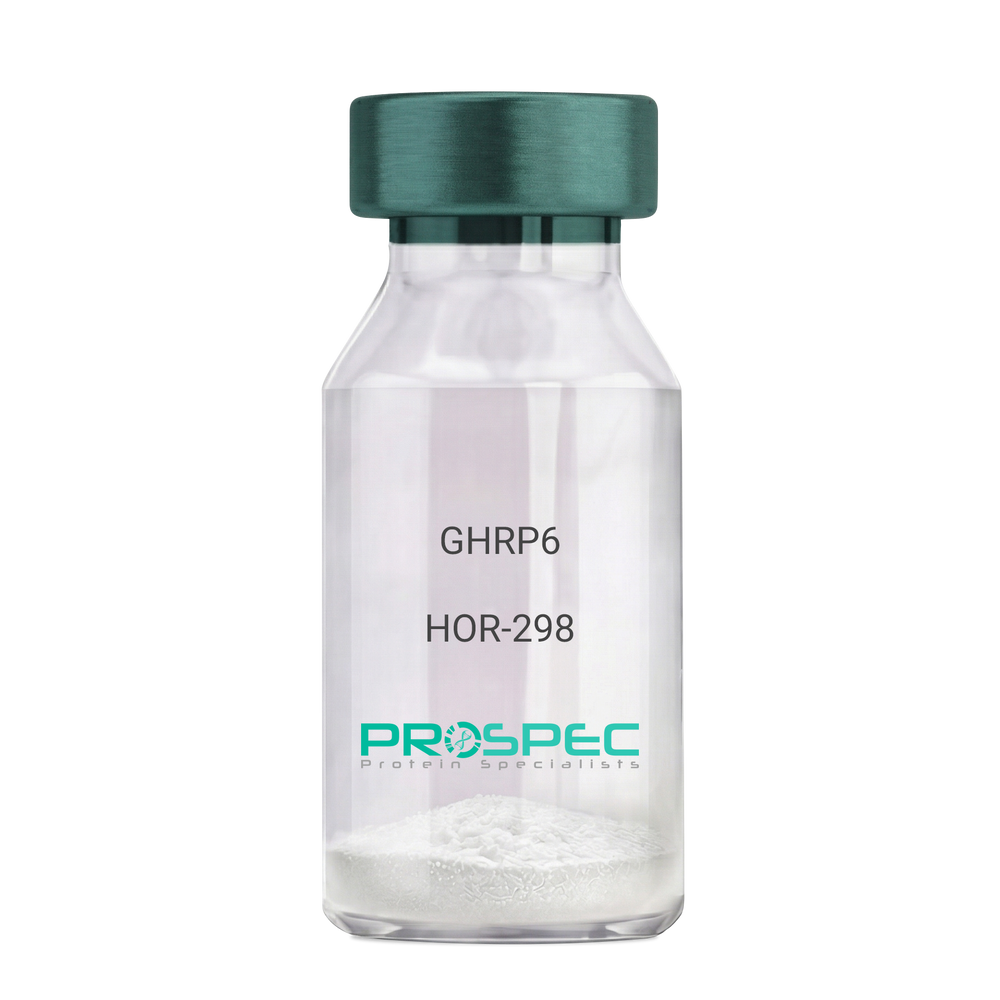
GHRP6Description:
Growth Hormone Releasing Peptide-6
GHRP-6, GHRP6
Product # :
HOR-298Price :
Quantity :
Shipping Method :
Shipped at Room temp
More Info
- description
- formulation
- purity
- More Info
Description
Growth Hormone Releasing Peptide-6 Synthetic is a single, non-glycosylated polypeptide chain containing 6 amino acids, having a molecular mass of 873 Dalton and a Molecular formula of C46H56N12O6.
Formulation
The GHRP-6 peptide was lyophilized with no additives.
Purity
Greater than 98.0% as determined by analysis by RP-HPLC.
More Info
-
Introduction
GH-releasing peptides (GHRPs) are synthetic peptides that like GHRH act directly on pituitary somatotrophs to stimulate GH release. Growth hormone (GH) release is stimulated by a variety of synthetic secretagogues, of which growth hormone-releasing hexapeptide (GHRP-6) has been most thoroughly studied; it is thought to have actions at both pituitary and hypothalamic site.
-
Synonyms
GHRP-6, GHRP6
-
Physical Appearance
Sterile Filtered White lyophilized (freeze-dried) powder.
-
Stability
Lyophilized Growth Hormone Releasing Peptide-6 although stable at room temperature for 3 weeks, should be stored desiccated below -18°C. Upon reconstitution GHRP-6 should be stored at 4°C between 2-7 days and for future use below -18°C. For long term storage it is recommended to add a carrier protein (0.1% HSA or BSA).Please prevent freeze-thaw cycles.
-
Solubility
It is recommended to reconstitute the lyophilized GHRP-6 in sterile 18MΩ-cm H2O not less than 100 µg/ml, which can then be further diluted to other aqueous solutions.
-
Amino Acid Sequence
His-D-Trp-Ala-Trp-D-Phe-Lys-NH2.
ProSpec's products are furnished for LABORATORY RESEARCH USE ONLY. The product may not be used as drugs, agricultural or pesticidal products, food additives or household chemicals.
- View Data Sheet
Name :
IDI1 HumanDescription:
Isopentenyl-Diphosphate Delta Isomerase 1 Human Recombinant
Isopentenyl-diphosphate Delta-isomerase 1, Isopentenyl pyrophosphate isomerase 1, IPP isomerase 1, IPPI1, IDI1, IPP1.
Product # :
ENZ-189Price :
Quantity :
Shipping Method :
Shipped with Ice Packs
More Info
- description
- source
- formulation
- purity
- More Info
Description
IDI1 Human Recombinant produced in E.coli is a single, non-glycosylated polypeptide chain containing 248 amino acids (1-228) and having a molecular mass of 28.6kDa.IDI1 is fused to a 20 amino acid His-tag at N-terminus & purified by proprietary chromatographic techniques.
Source
E.coli.
Formulation
The IDI1 solution (1mg/ml) contains 20mM Tris-HCl buffer (pH 8.0), 1mM DTT, 10% glycerol and 0.1M NaCl.
Purity
Greater than 90% as determined by SDS-PAGE.
More Info
-
Introduction
Isopentenyl-diphosphate isomerase 1 (IDI1) belongs to the IPP isomerase type I family and is involved in cholesterol biosynthesis. IDI1 is a peroxisomally-localized enzyme which catalyzes the interconversion of isopentenyl diphosphate (IPP) to its highly electrophilic isomer, dimethylallyl diphosphate (DMAPP), which is the substrate for the sequential reaction that results in the synthesis of farnesyl diphosphate and, eventually, cholesterol. Peroxisomal deficiency diseases such as Zellweger syndrome and neonatal adrenoleukodystrophy show a reduction in IPP isomerase activity.
-
Synonyms
Isopentenyl-diphosphate Delta-isomerase 1, Isopentenyl pyrophosphate isomerase 1, IPP isomerase 1, IPPI1, IDI1, IPP1.
-
Physical Appearance
Sterile Filtered colorless solution.
-
Stability
Store at 4°C if entire vial will be used within 2-4 weeks. Store, frozen at -20°C for longer periods of time. For long term storage it is recommended to add a carrier protein (0.1% HSA or BSA).Avoid multiple freeze-thaw cycles.
-
Amino Acid Sequence
MGSSHHHHHH SSGLVPRGSH MMPEINTNHL DKQQVQLLAE MCILIDENDN KIGAETKKNC HLNENIEKGL LHRAFSVFLF NTENKLLLQQ RSDAKITFPG CFTNTCCSHP LSNPAELEES DALGVRRAAQ RRLKAELGIP LEEVPPEEIN YLTRIHYKAQ SDGIWGEHEI DYILLVRKNV
TLNPDPNEIK SYCYVSKEEL KELLKKAASG EIKITPWFKI IAATFLFKWW DNLNHLNQFV DHEKIYRM.
ProSpec's products are furnished for LABORATORY RESEARCH USE ONLY. The product may not be used as drugs, agricultural or pesticidal products, food additives or household chemicals.
- View Data Sheet
Name :
OTOR Human, HisDescription:
Otoraplin Human Recombinant, His Tag
Otoraplin, Melanoma Inhibitory Activity-Like Protein, Fibrocyte-Derived Protein, FDP, MIAL1, MIAL, Melanoma inhibitory activity-like protein.
Product # :
CYT-884Price :
Quantity :
Shipping Method :
Shipped with Ice Packs
More Info
- description
- source
- formulation
- purity
- More Info
Description
OTOR Human Recombinant produced in E.Coli is a single, non-glycosylated polypeptide chain containing 128 amino acids (26-128 a.a) and having a molecular mass of 14.3kDa. OTOR is fused to a 25 amino acid His-tag at N-terminus & purified by proprietary chromatographic techniques.
Source
Escherichia Coli.
Formulation
OTOR protein solution (0.25mg/ml) containing Phosphate buffered saline (pH7.4), 30% glycerol and 1mM DTT.
Purity
Greater than 90% as determined by SDS-PAGE.
More Info
-
Introduction
OTOR proteins is also known as fibrocyte-derived protein (Fdp) and Melanoma inhibitory activity-like (MIAL). Otoraplin is a member of the melanoma-inhibiting activity gene family. Otoraplin is a secreted 16 kDa globular protein that is expressed in the inner ear by periotic mesenchyme and developing and mature fibrocytes. OTOR is highly homologous to MIA/cartilage-derived retinoic acid-sensitive protein (CD-RAP), which is a cartilage-specific protein that is also expressed in malignant melanoma cells. The 111 amino acid mature human otoraplin contains 1 SH3 domain (46 – 107 amino acids) and a Tyr at position 50 that is reportedly sulfated. Otoraplin takes pasrt in the initiation of periotic mesenchyme chondrogenesis.
Otoraplin is secreted through the Golgi apparatus and plays a role in cartilage development and maintenance. A frequent polymorphism in the translation start codon of OTOR can abolish translation and may be associated with forms of deafness. -
Synonyms
Otoraplin, Melanoma Inhibitory Activity-Like Protein, Fibrocyte-Derived Protein, FDP, MIAL1, MIAL, Melanoma inhibitory activity-like protein.
-
Physical Appearance
Sterile Filtered clear solution.
-
Stability
Store at 4°C if entire vial will be used within 2-4 weeks. Store, frozen at -20°C for longer periods of time. For long term storage it is recommended to add a carrier protein (0.1% HSA or BSA).Avoid multiple freeze-thaw cycles.
-
Amino Acid Sequence
MGSSHHHHHH SSGLVPRGSH MGSHMLASKK LCADDECVYT ISLASAQEDY NAPDCRFINV KKGQQIYVYS KLVKENGAGE FWAGSVYGDG QDEMGVVGYF PRNLVKEQRV YQEATKEVPT TDIDFFCE.
ProSpec's products are furnished for LABORATORY RESEARCH USE ONLY. The product may not be used as drugs, agricultural or pesticidal products, food additives or household chemicals.
- View Data Sheet
Name :
PHOSPHO2 HumanDescription:
Phosphatase Orphan-2 Human Recombinant
Pyridoxal phosphate phosphatase PHOSPHO2, PHOSPHO2.
Product # :
ENZ-231Price :
Quantity :
Shipping Method :
Shipped with Ice Packs
More Info
- description
- source
- formulation
- purity
- More Info
Description
PHOSPHO2 Human Recombinant produced in E.coli is a single, non-glycosylated polypeptide chain containing 265 amino acids (1-241) and having a molecular mass of 30.3kDa.PHOSPHO2 is fused to a 24 amino acid His-tag at N-terminus & purified by proprietary chromatographic techniques.
Source
Escherichia Coli.
Formulation
The PHOSPHO2 solution (0.25mg/ml) contains 20mM Tris-HCl buffer (pH 8.0), 1mM DTT, 10% glycerol and 0.1M NaCl.
Purity
Greater than 85.0% as determined by SDS-PAGE.
More Info
-
Introduction
Pyridoxal phosphate phosphatase PHOSPHO2, orphan 2 (PHOSPHO2) is a member of the haloacid dehalogenase (HAD) superfamily. Phosphatase has an elevated activity toward phosphoethanolamine (PEA) and phosphocholine (PCho). PHOSPHO 1, a phosphoethanolamine/phosphocholine phosphatase, is upregulated in mineralizing cells and is believed to be implicated in the production of inorganic phosphate for bone mineralization. PHOSPHO2 is a recognized phosphatase sharing a 42% sequence identity with PHOSPHO1. PHOSPHO1 and PHOSPHO2 are especially similar, however surprisingly recombinant PHOSPHO2 hydrolyses phosphoethanolamine and phosphocholine comparatively inadequately.
-
Synonyms
Pyridoxal phosphate phosphatase PHOSPHO2, PHOSPHO2.
-
Physical Appearance
Sterile filtered colorless solution.
-
Stability
Store at 4°C if entire vial will be used within 2-4 weeks. Store, frozen at -20°C for longer periods of time. For long term storage it is recommended to add a carrier protein (0.1% HSA or BSA).Avoid multiple freeze-thaw cycles.
-
Amino Acid Sequence
MGSSHHHHHH SSGLVPRGSH MGSHMKILLV FDFDNTIIDD NSDTWIVQCA PNKKLPIELR DSYRKGFWTE FMGRVFKYLG DKGVREHEMK RAVTSLPFTP GMVELFNFIR KNKDKFDCII ISDSNSVFID WVLEAASFHD IFDKVFTNPA AFNSNGHLTV ENYHTHSCNR CPKNLCKKVV
LIEFVDKQLQ QGVNYTQIVY IGDGGNDVCP VTFLKNDDVA MPRKGYTLQK TLSRMSQNLE PMEYSVVVWS SGVDIISHLQ FLIKD.
ProSpec's products are furnished for LABORATORY RESEARCH USE ONLY. The product may not be used as drugs, agricultural or pesticidal products, food additives or household chemicals.
- View Data Sheet
Name :
TIMP2 Human HEKDescription:
Tissue Inhibitor of Metalloprotease 2 Human Recombinant, HEK
TIMP metallopeptidase inhibitor 2, CSC-21K, tissue inhibitor of metalloproteinase 2, TIMP-2, metalloproteinase inhibitor 2.
Product # :
ENZ-120Price :
Quantity :
Shipping Method :
Shipped at Room temp
More Info
- description
- source
- formulation
- purity
- biological activity
- More Info
Description
TIMP2 Human Recombinant produced in HEK-293 cells is a secreted protein with the sequence of Human TIMP-2 (amino acids Cys27-Pro220) and is fused to a polyhistidine tag at the C-terminus.
Source
HEK293 Cells.
Formulation
The TIMP2 protein was lyophilized after extensive dialysis against PBS.
Purity
Greater than 95.0% as determined by SDS-PAGE.
Biological Activity
The IC50 of 3 nM is measured by its ability to inhibit recombinant human MMP-2 cleavage of the colorimetric peptide substrate, Mca-PLGL-DpaAR-NH2.More Info
-
Introduction
TIMP2 belongs to the TIMP gene family. The proteins encoded by this gene family are natural inhibitors of the matrix metalloproteinases, a group of peptidases that take part in degradation of the extracellular matrix. Besides having an inhibitory role against metalloproteinases, the encoded protein has a exclusive part among TIMPfamily members in its capability to directly suppress the proliferation of endothelial cells. Consequently, the encoded protein is crucial to the conservation of tissue homeostasis by suppressing the production of quiescent tissues as an answer to angiogenic factors, and by inhibiting protease activity in tissues undergoing renovation of the extracellular matrix.
-
Synonyms
TIMP metallopeptidase inhibitor 2, CSC-21K, tissue inhibitor of metalloproteinase 2, TIMP-2, metalloproteinase inhibitor 2.
-
Physical Appearance
Sterile Filtered White lyophilized (freeze-dried) powder.
-
Stability
Lyophilized TIMP2 although stable at room temperature for 3 weeks, should be stored desiccated below -18°C. Upon reconstitution TIMP2 should be stored at 4°C between 2-7 days and for future use below -18°C.For long term storage it is recommended to add a carrier protein (0.1% HSA or BSA).Please prevent freeze-thaw cycles.
-
Solubility
It is recommended to reconstitute the lyophilized TIMP2 in sterile assay buffer (50mM Tris, 10mM CaCl2, 150mM NaCl, 0.05% Brij-35, PH 7.5) not less than 100µg/ml.
ProSpec's products are furnished for LABORATORY RESEARCH USE ONLY. The product may not be used as drugs, agricultural or pesticidal products, food additives or household chemicals.
- View Data Sheet
Name :
GAPDH Mouse, ActiveDescription:
GAPDH Mouse Recombinant, Active
Glyceraldehyde-3-phosphate dehydrogenase, GAPDH, Peptidyl-cysteine S-nitrosylase GAPDH, Gapdh, Gapd, Glyceraldehyde-3-phosphate dehydrogenase isoform 2, G3PD, GAPD, HEL-S-162eP.
Product # :
ENZ-986Price :
Quantity :
Shipping Method :
Shipped with Ice Packs
More Info
- description
- source
- formulation
- purity
- biological activity
- More Info
Description
GAPDH Mouse Recombinant produced in E.Coli is a single, non-glycosylated polypeptide chain containing 356 amino acids (1-333a.a.) and having a molecular mass of 38.2kDa.GAPDH is fused to a 23 amino acid His-tag at N-terminus & purified by proprietary chromatographic techniques.
Source
E.coli.
Formulation
GAPDH protein solution (0.25mg/ml) containing Phosphate buffered saline (pH7.4), 20% glycerol and 1mM DTT.
Purity
Greater than 95% as determined by SDS-PAGE.
Biological Activity
Specific activity is > 40 units/mg, and is defined as the amount of enzyme that convert 1.0 umole of glyceraldehyde-3-phosphate to 1,3-Bisphosphoglycerate per minute at pH 8.5 at 37C.More Info
-
Introduction
GAPDH is a catalytic enzyme normally known to play a role in glycolysis. GAPDH exists as a tetramer composed of 36-kDa subunits and has a range of intracellular functions. GAPDH catalyzes the reversible reduction of 1,3-bisphosphoglycerate to glyceraldehyde 3-phosphophate in the presence of NADPH. Besides functioning as a glycolytic enzyme in cytoplasm, GAPDH has function in intracellular processes such as membrane fusion, microtubule bundling, phosphotransferase activity, nuclear RNA export, DNA replication and DNA repair. GAPDH catalyzes a vital energy-yielding step in carbohydrate metabolism, the reversible oxidative phosphorylation of glyceraldehyde-3-phosphate in the presence of inorganic phosphate and nicotinamide adenine dinucleotide (NAD). The enzyme exists as a tetramer of identical chains.
-
Synonyms
Glyceraldehyde-3-phosphate dehydrogenase, GAPDH, Peptidyl-cysteine S-nitrosylase GAPDH, Gapdh, Gapd, Glyceraldehyde-3-phosphate dehydrogenase isoform 2, G3PD, GAPD, HEL-S-162eP.
-
Physical Appearance
Sterile Filtered colorless solution.
-
Stability
Store at 4°C if entire vial will be used within 2-4 weeks. Store, frozen at -20°C for longer periods of time. For long term storage it is recommended to add a carrier protein (0.1% HSA or BSA).Avoid multiple freeze-thaw cycles.
-
Amino Acid Sequence
MGSSHHHHHH SSGLVPRGSH MGSMVKVGVN GFGRIGRLVT RAAICSGKVE IVAINDPFID LNYMVYMFQY DSTHGKFNGT VKAENGKLVI NGKPITIFQE RDPTNIKWGE AGAEYVVEST GVFTTMEKAG AHLKGGAKRV IISAPSADAP MFVMGVNHEK YDNSLKIVSN ASCTTNCLAP LAKVIHDNFG IVEGLMTTVH AITATQKTVD GPSGKLWRDG RGAAQNIIPA STGAAKAVGK VIPELNGKLT GMAFRVPTPN VSVVDLTCRL EKPAKYDDIK KVVKQASEGP LKGILGYTED QVVSCDFNSN SHSSTFDAGA GIALNDNFVK LISWYDNEYG YSNRVVDLMA YMASKE.
ProSpec's products are furnished for LABORATORY RESEARCH USE ONLY. The product may not be used as drugs, agricultural or pesticidal products, food additives or household chemicals.
- View Data Sheet
Name :
KMT5A HumanDescription:
Lysine Methyltransferase 5A Human Recombinant
KMT5A, PR-Set7, SET07, SET8, SETD8, H4-K20-HMTase KMT5A.
Product # :
ENZ-1080Price :
Quantity :
Shipping Method :
Shipped with Ice Packs
More Info
- description
- source
- formulation
- purity
- More Info
Description
KMT5A produced in Sf9 Baculovirus cells is a single, glycosylated polypeptide chain containing 165 amino acids (195-352 a.a.) and having a molecular mass of 18.9kDa (Migrates at 18-28 kDa on SDS-PAGE under reducing conditions).KMT5A is expressed with a 7 amino acid His tag at C-Terminus and purified by proprietary chromatographic techniques.
Source
Sf9, Baculovirus cells.
Formulation
KMT5A protein solution (0.25mg/ml) contains 20mM Tris-HCl buffer (pH8.0), 5mM DTT, 0.2M NaCl, 1mM EDTA and 50% glycerol.
Purity
Greater than 85.0% as determined by SDS-PAGE.
More Info
-
Introduction
Lysine Methyltransferase 5A (KMT5A) is an enzyme which catalyzes both histones and non-histone proteins. KMT5A contributes to the maintenance of proper higher-order structure of DNA during mitosis. KMT5A takes part in cell-cycle-dependent transcriptional silencing and mitotic regulation in metazoans. KMT5A plays a role as a barrier to prevent cellular senescence through chromatinmediated regulation of senescence-associated metabolic remodeling. KMT5A mediates monomethylation of p53/TP53 at 'Lys-382', which leads to repress p53/TP53-target genes. The loss of KMT5A simultaneously stimulate nucleolar function and retinoblastoma protein-mediated mitochondrial metabolism.
-
Synonyms
KMT5A, PR-Set7, SET07, SET8, SETD8, H4-K20-HMTase KMT5A.
-
Physical Appearance
Sterile Filtered colorless solution.
-
Stability
Store at 4°C if entire vial will be used within 2-4 weeks. Store, frozen at -20°C for longer periods of time. For long term storage it is recommended to add a carrier protein (0.1% HSA or BSA). Avoid multiple freeze-thaw cycles.
-
Amino Acid Sequence
MKAELQSEER KRIDELIESG KEEGMKIDLI DGKGRGVIAT KQFSRGDFVV EYHGDLIEIT DAKKREALYA QDPSTGCYMY YFQYLSKTYC VDATRETNRL GRLINHSKCG NCQTKLHDID GVPHLILIAS RDIAAGEELL YDYGDRSKAS IEAHPWLKHH HHHHH.
ProSpec's products are furnished for LABORATORY RESEARCH USE ONLY. The product may not be used as drugs, agricultural or pesticidal products, food additives or household chemicals.
- View Data Sheet
Name :
GNMT Human, ActiveDescription:
Glycine N-Methyltransferase Human Recombinant , Active
Glycine N-methyltransferase, GNMT, Glycine N-Methyltransferase, EC 2.1.1.20Epididymis Secretory Sperm Binding Protein Li 182mP, HEL-S-182mP.
Product # :
ENZ-1059Price :
Quantity :
Shipping Method :
Shipped with Ice Packs
More Info
- description
- source
- formulation
- purity
- biological activity
- More Info
Description
GNMT Human Recombinant produced in E.Coli is a single, non-glycosylated polypeptide chain containing 315 amino acids (1-295 a.a) and having a molecular mass of 34.9kDa.GNMT is fused to a 20 amino acid His-tag at N-terminus & purified by proprietary chromatographic techniques.
Source
Escherichia Coli.
Formulation
GNMT protein solution (1mg/ml) containing 20 mM Tris-HCl buffer (pH 8.0) and 20% glycerol.
Purity
Greater than 95.0% as determined by SDS-PAGE.
Biological Activity
Specific activity is > 100 nmol/min/mg, and is defined as the amount of enzyme that transfer 1.0 nmole of methyl group per minute at 37C.
More Info
-
Introduction
GNMT is an enzyme that catalyzes the conversion of S-adenosyl-L-methionine with glycine to S-adenosyl-L-homocysteine and sarcosine. GNMT is located in the cytoplasm and acts as a homotetramer. Defects in the GNMT gene causes of GNMT deficiency (hypermethioninemia). GNMT affects DNA methylation by regulating the ratio of S-adenosylmethionine to S-adenosylhomocystine and is involved in the detoxification pathway in liver cells. GNMT expression is diminished in human hepatocellular carcinoma (HCC). GNMT catalyzes the methylation of glycine by using s- adenosylmethionine (adomet) to form n-methylglycine (sarcosine) with the concomitant production of s-adenosylhomocysteine (adohcy). GNMT plays an essential role in the regulation of tissue concentration of adomet and of metabolism of methionine.
-
Synonyms
Glycine N-methyltransferase, GNMT, Glycine N-Methyltransferase, EC 2.1.1.20
Epididymis Secretory Sperm Binding Protein Li 182mP, HEL-S-182mP. -
Physical Appearance
Sterile filtered colorless solution.
-
Stability
Store at 4°C if entire vial will be used within 2-4 weeks. Store, frozen at -20°C for longer periods of time. For long term storage it is recommended to add a carrier protein (0.1% HSA or BSA).Avoid multiple freeze-thaw cycles.
-
Amino Acid Sequence
MGSSHHHHHH SSGLVPRGSH MVDSVYRTRS LGVAAEGLPD QYADGEAARV WQLYIGDTRS RTAEYKAWLL GLLRQHGCQR VLDVACGTGV DSIMLVEEGF SVTSVDASDK MLKYALKERW NRRHEPAFDK WVIEEANWMT LDKDVPQSAE GGFDAVICLG NSFAHLPDCK GDQSEHRLAL KNIASMVRAG GLLVIDHRNY DHILSTGCAP PGKNIYYKSD LTKDVTTSVL IVNNKAHMVT LDYTVQVPGA GQDGSPGLSK FRLSYYPHCL ASFTELLQAA FGGKCQHSVL GDFKPYKPGQ TYIPCYFIHV LKRTD.
ProSpec's products are furnished for LABORATORY RESEARCH USE ONLY. The product may not be used as drugs, agricultural or pesticidal products, food additives or household chemicals.
- View Data Sheet
Name :
UBE2Z HumanDescription:
Ubiquitin Conjugating Enzyme E2Z Human Recombinant
HOYS7, USE1, Ubiquitin-conjugating enzyme E2 Z, E2 ubiquitin-conjugating enzyme Z, Uba6-specific E2 conjugating enzyme 1, Ubiquitin carrier protein Z, Ubiquitin-protein ligase Z, UBE2Z.
Product # :
ENZ-804Price :
Quantity :
Shipping Method :
Shipped with Ice Packs
More Info
- description
- source
- formulation
- purity
- More Info
Description
UBE2Z Human Recombinant produced in E.coli is a single, non-glycosylated polypeptide chain containing 269 amino acids (1-246a.a) and having a molecular mass of 30.5kDa. UBE2Z is fused to a 23 amino acid His-tag at N-terminus & purified by proprietary chromatographic techniques.
Source
Escherichia Coli.
Formulation
The UBE2Z solution (0.25mg/ml) contains 20mM Tris-HCl buffer (pH 8.0), 0.15M NaCl, 20% glycerol and 1mM DTT.
Purity
Greater than 95% as determined by SDS-PAGE.
More Info
-
Introduction
Ubiquitin Conjugating Enzyme E2Z, also known as UBE2z, is a protein coding gene which is a part of the ubiquitin-conjugating enzyme family. UBE2z catalyzes the covalent attachment of ubiquitin to various proteins. UBE2z takes part in in apoptosis regulation and is also a specific substrate for UBA6, not charged with ubiquitin by UBE1.
-
Synonyms
HOYS7, USE1, Ubiquitin-conjugating enzyme E2 Z, E2 ubiquitin-conjugating enzyme Z, Uba6-specific E2 conjugating enzyme 1, Ubiquitin carrier protein Z, Ubiquitin-protein ligase Z, UBE2Z.
-
Physical Appearance
Sterile Filtered colorless solution.
-
Stability
Store at 4°C if entire vial will be used within 2-4 weeks. Store, frozen at -20°C for longer periods of time. For long term storage it is recommended to add a carrier protein (0.1% HSA or BSA). Avoid multiple freeze-thaw cycles.
-
Amino Acid Sequence
MGSSHHHHHH SSGLVPRGSH MGSMSIYKEP PPGMFVVPDT VDMTKIHALI TGPFDTPYEG GFFLFVFRCP PDYPIHPPRV KLMTTGNNTV RFNPNFYRNG KVCLSILGTW TGPAWSPAQS ISSVLISIQS LMTENPYHNE PGFEQERHPG DSKNYNECIR HETIRVAVCD MMEGKCPCPE PLRGVMEKSF LEYYDFYEVA CKDRLHLQGQ TMQDPFGEKR GHFDYQSLLM RLGLIRQKVL ERLHNENAEM DSDSSSSGTE TDLHGSLRV.
ProSpec's products are furnished for LABORATORY RESEARCH USE ONLY. The product may not be used as drugs, agricultural or pesticidal products, food additives or household chemicals.
- View Data Sheet
Name :
PYCRL HumanDescription:
Pyrroline-5-Carboxylate Reductase Like Human Recombinant
Pyrroline-5-carboxylate reductase 3, P5C reductase 3, P5CR 3, Pyrroline-5-carboxylate reductase-like protein, PYCRL.
Product # :
ENZ-678Price :
Quantity :
Shipping Method :
Shipped with Ice Packs
More Info
- description
- source
- formulation
- purity
- More Info
Description
PYCRL Human Recombinant produced in E.coli is a single, non-glycosylated polypeptide chain containing 297 amino acids (1-274) and having a molecular mass of 31kDa.PYCRL is fused to a 23 amino acid His-tag at N-terminus & purified by proprietary chromatographic techniques.
Source
Escherichia Coli.
Formulation
The PYCRL solution (0.25mg/ml) contains 20mM Tris-HCl buffer (pH 8.0), 0.2M NaCl, 50% glycerol and 2mM DTT.
Purity
Greater than 90.0% as determined by SDS-PAGE.
More Info
-
Introduction
Pyrroline-5-Carboxylate Reductase Like (PYCRL) is a member of the pyrroline-5-carboxylate reductase family and acts as a homodecamer. PYCRL plays a key role in proline bio-synthesis. Proline serves as a non-enzymatic antioxidant to reduce damage caused by reactive oxygen species (ROS) in microorganisms, animals and plants. In the final stage of proline biosynthesis, PYCRL catalyzes the reduction of aldehyde dehydrogenase 4A1 (ALDH4A1) to proline with NAD(P)H as the cofactor.
-
Synonyms
Pyrroline-5-carboxylate reductase 3, P5C reductase 3, P5CR 3, Pyrroline-5-carboxylate reductase-like protein, PYCRL.
-
Physical Appearance
Sterile Filtered colorless solution.
-
Stability
Store at 4°C if entire vial will be used within 2-4 weeks.Store, frozen at -20°C for longer periods of time. For long term storage it is recommended to add a carrier protein (0.1% HSA or BSA).Avoid multiple freeze-thaw cycles.
-
Amino Acid Sequence
MGSSHHHHHH SSGLVPRGSH MGSMAAAEPS PRRVGFVGAG RMAGAIAQGL IRAGKVEAQH ILASAPTDRN LCHFQALGCR TTHSNQEVLQ SCLLVIFATK PHVLPAVLAE VAPVVTTEHI LVSVAAGVSL STLEELLPPN TRVLRVLPNL PCVVQEGAIV MARGRHVGSS ETNLLQHLLE ACGRCEEVPE AYVDIHTGLS GSGVAFVCAF SEALAEGAVK MGMPSSLAHR IAAQTLLGTA KMLLHEGQHP AQLRSDVCTP GGTTIYGLHA LEQGGLRAAT MSAVEAATCR AKELSRK.
ProSpec's products are furnished for LABORATORY RESEARCH USE ONLY. The product may not be used as drugs, agricultural or pesticidal products, food additives or household chemicals.
- View Data Sheet
Name :
OrnipressinDescription:
Ornipressin
Product # :
HOR-036Price :
Quantity :
Shipping Method :
Shipped at Room temp
More Info
- description
- formulation
- purity
- More Info
Description
Ornipressin Synthetic is a single, non-glycosylated polypeptide chain containing 9 amino acids, having a molecular mass of 1042.19 Dalton and a Molecular formula of C45H63N13O12 S2.
Formulation
The protein was lyophilized with no additives.
Purity
Greater than 97.0% as determined by analysis by RP-HPLC.
More Info
-
Physical Appearance
Sterile Filtered White lyophilized (freeze-dried) powder.
-
Stability
Lyophilized Ornipressin although stable at room temperature for 3 weeks, should be stored desiccated below -18°C. Upon reconstitution Ornipressin should be stored at 4°C between 2-7 days and for future use below -18°C. For long term storage it is recommended to add a carrier protein (0.1% HSA or BSA). Please prevent freeze-thaw cycles.
-
Solubility
It is recommended to reconstitute the lyophilized Ornipressin in sterile 18MΩ-cm H2O not less than 100 µg/ml, which can then be further diluted to other aqueous solutions.
-
Amino Acid Sequence
H-Cys-Tyr-Phe-Gln-Asn-Cys-Pro-Orn-Gly-NH2.
-
Background
Ornipressin, a naturally occurring non-mammalian vasopressin analogue, has been recognized for its role in vasoconstriction and antidiuresis, making it an invaluable agent in certain clinical settings (Holmes et al., 2003). This paper aims to comprehensively review ornipressin's biochemical properties, its clinical applications, and potential future directions for therapeutic use.
Ornipressin is characterized by its strong vasopressin V1 receptor agonist activity, resulting in intense vasoconstriction. It also exhibits antidiuretic properties through the activation of V2 receptors in the renal collecting ducts, albeit to a lesser extent compared to vasopressin (Evans & Davidson, 1964).
Clinical applications of ornipressin are mainly driven by its potent vasoconstrictor activity. It has shown promise in managing esophageal variceal bleeding, where its vasoconstrictive properties help achieve hemostasis (Bosch et al., 2004).
Furthermore, it has been used as a rescue therapy in vasodilatory shock, where traditional vasoconstrictors may have limited effect (Morelli et al., 2005).
As our understanding of ornipressin continues to expand, future research is directed toward fine-tuning its application in various clinical scenarios and exploring potential new therapeutic roles. Current research is investigating the possible neuroprotective role of ornipressin in conditions such as cerebral ischemia (Uchida et al., 2010).Ornipressin, with its robust vasoconstrictor and antidiuretic properties, plays a crucial role in managing certain clinical situations. As we continue to explore this intriguing compound, its therapeutic potential appears to be far-reaching, warranting continued research in this field
ProSpec's products are furnished for LABORATORY RESEARCH USE ONLY. The product may not be used as drugs, agricultural or pesticidal products, food additives or household chemicals.
- View Data Sheet
Name :
BMP 4 HumanDescription:
Bone Morphogenetic Protein-4 Human Recombinant
BMP4, ZYME, BMP2B, BMP2B1.
Product # :
CYT-361Price :
Quantity :
Shipping Method :
Shipped at Room temp
More Info
- description
- source
- formulation
- purity
- More Info
Description
Bone Morphogenetic Protein-4 Human Recombinant produced in E.Coli is a monomeric, non-glycosylated, Polypeptide chain containing 116 amino acids and having a molecular mass of 13kDa. The BMP-4 is purified by proprietary chromatographic techniques.
Source
Escherichia Coli.
Formulation
BMP-4 was lyophilized from a 0.2µm filtered concentrated (1mg/ml) solution in 20mM Na2CO3 buffer, pH 9.0.
Purity
Greater than 95.0% as determined by:
(a) Analysis by RP-HPLC.
(b) Analysis by SDS-PAGE.More Info
-
Introduction
The protein encoded by this gene is a member of the bone morphogenetic protein family which is part of the transforming growth factor-beta superfamily. The superfamily includes large families of growth and differentiation factors. Bone morphogenetic proteins were originally identified by an ability of demineralized bone extract to induce endochondral osteogenesis in vivo in an extraskeletal site. This particular family member plays an important role in the onset of endochondral bone formation in humans, and a reduction in expression has been associated with a variety of bone diseases, including the heritable disorder Fibrodysplasia Ossificans Progressiva. Alternative splicing in the 5' untranslated region of this gene has been described and three variants are described, all encoding an identical protein.
-
Synonyms
BMP4, ZYME, BMP2B, BMP2B1.
-
Physical Appearance
Sterile Filtered White lyophilized (freeze-dried) powder.
-
Stability
Lyophilized Bone Morphogenetic Protein-4 although stable at room temperature for 3 weeks, should be stored desiccated below -18°C. Upon reconstitution BMP4 should be stored at 4°C between 2-7 days and for future use below -18°C.For long term storage it is recommended to add a carrier protein (0.1% HSA or BSA).Please prevent freeze-thaw cycles.
-
Solubility
It is recommended to reconstitute the lyophilized Bone Morphogenetic Protein-4 in sterile 18M-cm H2O not less than 100µg/ml, which can then be further diluted to other aqueous solutions.
-
Amino Acid Sequence
SPKHHSQRAR KKNKNCRRHS LYVDFSDVGW NDWIVAPPGY QAFYCHGDCP FPLADHLNST NHAIVQTLVN SVNSSIPKAC CVPTELSAIS MLYLDEYDKV VLKNYQEMVV EGCGCR.
-
Background
What You Should Know About Bone Morphogenetic Protein-4 (BMP-4) Human Recombinant
As part of the transforming growth factor-beta (TGF-β) superfamily, Bone morphogenetic protein-4 (BMP-4) participates in multiple developmental processes, from embryogenesis to bone and cartilage formation.
Since this signaling protein is involved in many physiological processes, its laboratory-produced version has been studied for different medical applications. Additionally, a reduction in BMP-4 expression has been associated with multiple diseases, leading to further research into its potential therapeutic benefits.
Are you interested in learning more about Bone Morphogenetic Protein-4 (BMP-4) human recombinant? Read on to find more information!
How Does Bone Morphogenetic Protein-4 (BMP-4) Work?
Bone Morphogenetic Protein-4 (BMP-4) regulates microRNAs miR-494 and miR-126-5p expression, controlling endothelial cells' involvement and function in angiogenesis. As such, it has diverse effects on cell growth, differentiation, and survival.
The Role of BMP-4
This protein emits signals that promote the formation of different tissues and organs, including the bones and cartilage, kidneys, teeth, and the neural tube. In other words, it's essential for the development of the heart, skeleton, and central nervous system.
However, the role of BMP-4 goes beyond these processes. It participates in different physiological activities, such as:
- Embryonic development
- Wound healing
- Bone remodeling
- Immune response modulation
- Tissue repair
- Cardiac development and function
What Is Bone Morphogenetic Protein-4 (BMP-4) Human Recombinant?
To replicate the effects of the BMP4 found in humans and explore its possible therapeutic applications, many laboratories have started producing this protein in Chinese hamster ovary (CHO) cells.
As mentioned, decreased BMP-4 expression has been associated with different diseases, including bone disorders, fibrosis, and cancer, which can cause other conditions, such as organ dysfunction.
More research is needed, but BMP-4 human recombinant (rhBMP4) produced in CHO has the potential to address these diseases and could be used for other medical applications. These are some examples:
- Cancer therapy
- Development of engineered tissues and organs
- Bone regeneration for the treatment of osteoporosis and nonunion fractures
- Bone growth and fusion in spinal fusion surgeries (the U.S. Food and Drug Administration approved some bone morphogenetic proteins for these procedures)
- Promotion of tissue repair and regeneration
Final Thoughts BMP-4
Although BMP-4 human recombinant produced in CHO offers potential benefits, several challenges remain, including possible side effects, as high doses can cause inflammation, bone overgrowth, and other issues.
However, the long-term effects of rhBMP4 are still under investigation. Further research will provide solutions to address these challenges and allow experts to explore this laboratory-produced protein's power in different medical fields.
What is the molecular weight/Mw of BMP4 Protein?
BMP4 Protein has a total Mw of 13kDa.
What is the source or expression system of BMP4 Protein?
Escherichia Coli.
What is the Purity of BMP4 Protein?
BMP4 Protein is >95% pure as determined by SDS-PAGE.
What is the Biological Activity of BMP4 Protein?
The biological functionality of BMP4 Protein will be determined in the future.
What is the amino acid sequence of BMP4 Protein?
SPKHHSQRAR KKNKNCRRHS LYVDFSDVGW NDWIVAPPGY QAFYCHGDCP FPLADHLNST NHAIVQTLVN SVNSSIPKAC CVPTELSAIS MLYLDEYDKV VLKNYQEMVV EGCGCR.
What applications can BMP4 Protein be used in?
BMP4 Protein can probably be used in western blot, ELISA and Lateral Flow.
What is the endotoxin level for BMP4 Protein?
The endotoxin level is minimal, BMP4 Protein was purified using conventional chromatography techniques.
ProSpec's products are furnished for LABORATORY RESEARCH USE ONLY. The product may not be used as drugs, agricultural or pesticidal products, food additives or household chemicals.
- View Data Sheet
Name :
ACAD8 HumanDescription:
Acyl-Coenzyme A Dehydrogenase 8 Human Recombinant
Acyl-CoA dehydrogenase family member 8 mitochondrial, ACAD-8, Isobutyryl-CoA dehydrogenase, Activator-recruited cofactor 42 kDa component, ARC42, FLJ22590.
Product # :
ENZ-294Price :
Quantity :
Shipping Method :
Shipped with Ice Packs
More Info
- description
- source
- formulation
- purity
- More Info
Description
ACAD8 Human Recombinant produced in E.coli is a single, non-glycosylated polypeptide chain containing 416 amino acids (23-415) and having a molecular mass of 45.1kDa.ACAD8 is fused to a 23 amino acid His-tag at N-terminus & purified by proprietary chromatographic techniques.
Source
Escherichia Coli.
Formulation
The ACAD8 solution contains 20mM Tris-HCl buffer (pH 8.0), 0.15M NaCl, 1mM DTT and 30% glycerol.
Purity
Greater than 95% as determined by SDS-PAGE.
More Info
-
Introduction
Acyl CoA dehydrogenase is the enzymeused to catalyzethe first step of ?-oxidationin Fatty acid metabolism.
Acyl-coenzyme A (CoA) dehydrogenases (ACADs) are a family of mitochondrial enzymes that catalyze the first dehydrogenation step in the bets-oxidation of fatty acyl-CoA derivatives. Several human ACADs exist and all ACADs catalyze the same initial dehydrogenation of the substrate at the beta-carbon atom and require electron transfer flavoprotein as an alectron acceptor. The predicted 415-amino acid ACAD8 protein contains many of the residues conserved in most other ACADs, including an active site glutamic acid residue and residues important for tetramer formation. -
Synonyms
Acyl-CoA dehydrogenase family member 8 mitochondrial, ACAD-8, Isobutyryl-CoA dehydrogenase, Activator-recruited cofactor 42 kDa component, ARC42, FLJ22590.
-
Physical Appearance
Sterile Filtered clear solution.
-
Stability
Store at 4°C if entire vial will be used within 2-4 weeks. Store, frozen at -20°C for longer periods of time. For long term storage it is recommended to add a carrier protein (0.1% HSA or BSA).Avoid multiple freeze-thaw cycles.
-
Amino Acid Sequence
MGSSHHHHHH SSGLVPRGSH MGSLVQTGHR SLTSCIDPSM GLNEEQKEFQ KVAFDFAARE MAPNMAEWDQ KELFPVDVMR KAAQLGFGGV YIQTDVGGSG LSRLDTSVIF EALATGCTST TAYISIHNMC AWMIDSFGNE EQRHKFCPPL CTMEKFASYC LTEPGSGSDA ASLLTSAKKQ GDHYILNGSK AFISGAGESD IYVVMCRTGG PGPKGISCIV VEKGTPGLSF GKKEKKVGWN SQPTRAVIFE DCAVPVANRI GSEGQGFLIA VRGLNGGRIN IASCSLGAAH ASVILTRDHL NVRKQFGEPL ASNQYLQFTL ADMATRLVAA RLMVRNAAVA LQEERKDAVA LCSMAKLFAT DECFAICNQA LQMHGGYGYL KDYAVQQYVR DSRVHQILEG SNEVMRILIS RSLLQE.
ProSpec's products are furnished for LABORATORY RESEARCH USE ONLY. The product may not be used as drugs, agricultural or pesticidal products, food additives or household chemicals.
- View Data Sheet
Name :
CTSE HumanDescription:
Cathepsin-E Human Recombinant
Cathepsin E, EC 3.4.23.34, CATE, Erythrocyte Membrane Aspartic Proteinase, Slow-Moving Proteinase, EC 3.4.23.
Product # :
ENZ-776Price :
Quantity :
Shipping Method :
Shipped with Ice Packs
More Info
- description
- source
- formulation
- purity
- More Info
Description
CTSE Human Recombinant produced in E.Coli is a single, non-glycosylated polypeptide chain containing 330 amino acids (57-363 a.a) and having a molecular mass of 35.4kDa.CTSE is fused to a 23 amino acid His-tag at N-terminus & purified by proprietary chromatographic techniques.
Source
Escherichia Coli.
Formulation
CTSE protein solution (1mg/ml) containing 20mM Tris-HCl buffer (pH 8.0), 0.4M urea and 10% glycerol.
Purity
Greater than 85% as determined by SDS-PAGE.
More Info
-
Introduction
Cathepsin-E also known as CTSE is a gastric aspartyl protease which functions as a disulfide-linked homodimer. CTSE belongs to the peptidase C1 family; furthermore it has specificity similar to pepsin A and cathepsin D. CTSE is an intracellular proteinase which does not seem to be involved in the digestion of dietary protein and is found in the uppermost concentration in the surface of epithelial mucus-producing cells of the stomach. CTSE is the first aspartic proteinaseexpressed in the fetal stomach and is discovered in more than half of gastric cancers. For that reason CTSE is anoncofetal antigen. In addition, transcript variants utilizing alternative polyadenylation signals and two transcript variantsencoding different isoforms exist for this gene.
-
Synonyms
Cathepsin E, EC 3.4.23.34, CATE, Erythrocyte Membrane Aspartic Proteinase, Slow-Moving Proteinase, EC 3.4.23.
-
Physical Appearance
Sterile Filtered clear solution.
-
Stability
Store at 4°C if entire vial will be used within 2-4 weeks. Store, frozen at -20°C for longer periods of time.For long term storage it is recommended to add a carrier protein (0.1% HSA or BSA).Please avoid freeze thaw cycles.
-
Amino Acid Sequence
MGSSHHHHHH SSGLVPRGSH MGSTESCSMD QSAKEPLINY LDMEYFGTIS IGSPPQNFTV IFDTGSSNLW VPSVYCTSPA CKTHSRFQPS QSSTYSQPGQ SFSIQYGTGS LSGIIGADQV SVEGLTVVGQ QFGESVTEPG QTFVDAEFDG ILGLGYPSLA VGGVTPVFDN MMAQNLVDLP MFSVYMSSNP EGGAGSELIF GGYDHSHFSG SLNWVPVTKQ AYWQIALDNM LWSVPTLTSC RMSPSPLTES PIPSAQLPTP YWTSWMECSS AAVAFKDLTS TLQLGPSGSW GMSSFDSFTQ SLTVGITVWD WPQQSPKEGP CVCACLSDRP
ProSpec's products are furnished for LABORATORY RESEARCH USE ONLY. The product may not be used as drugs, agricultural or pesticidal products, food additives or household chemicals.
- View Data Sheet
Name :
AHSGDescription:
Alpha-2-HS-Glycoprotein Human
Alpha-2-HS-glycoprotein, Fetuin-A, Alpha-2-Z-globulin, Ba-alpha-2-glycoprotein, AHSG, FETUA, AHS, A2HS, HSGA, PRO2743.
Product # :
PRO-418Price :
Quantity :
Shipping Method :
Shipped at Room temp
More Info
- description
- source
- formulation
- purity
- More Info
Description
The human Alpha-2-HS-Glycoprotein containing 349 a.a was purified from the human plasma. The total molecular mass is 37.3kDa (calculated without glycosylation).
Source
Purified from the human plasma.
Formulation
Filtered (0.4µm) and lyophilized from 0.5 mg/ml in 20Mm Tris buffer and 200mM NaCl, pH 8.0.
Purity
Greater than 95% as determined by SDS-PAGE.
More Info
-
Introduction
Fetuin is a liver-produced negative acute phase protein composed of two subunits, the A and B chains.
Fetuin homologs have been identified in several species including rat, sheep, pig, rabbit, guinea pig, cattle, mouse and human. Multiple physiological roles for these homologs have been suggested, including ability to bind to hydroxyapatite crystals and to specifically inhibit the tyrosine kinase (TK) activity of the insulin receptor (IR).
Fetuin-A (alpha2-Heremans-Schmid glycoprotein; AHSG) is an important circulating inhibitor of calcification in vivo, and is downregulated during the acute-phase response.
Sera from patients on long-term dialysis with low AHSG concentrations showed impaired ex-vivo capacity to inhibit CaxPO4 precipitation.
Fetuin may influence the resolution of inflammation by modulating the phagocytosis of apoptotic cells by macrophages.
ASHG blocks TGF-beta-dependent signaling in osteoblastic cells, and mice lacking ASHG display growth plate defects, increased bone formation with age, and enhanced cytokine-dependent osteogenesis. -
Synonyms
Alpha-2-HS-glycoprotein, Fetuin-A, Alpha-2-Z-globulin, Ba-alpha-2-glycoprotein, AHSG, FETUA, AHS, A2HS, HSGA, PRO2743.
-
Physical Appearance
Filtered White lyophilized (freeze-dried) powder.
-
Stability
Store the lyophilized protein at -20°C. Aliquot the product after reconstitution to avoid repeated freezing/thawing cycles. Reconstituted protein can be stored at 4°C for a limited period of time; it does not show any change after two weeks at 4°C.
-
Solubility
It is recommended to add deionized water to prepare a working stock solution of approximately 0.5mg/ml and let the lyophilized pellet dissolve completely. Product is not sterile! Please filter the product by an appropriate sterile filter before using it in the cell culture.
ProSpec's products are furnished for LABORATORY RESEARCH USE ONLY. The product may not be used as drugs, agricultural or pesticidal products, food additives or household chemicals.
- View Data Sheet
Name :
AHSG HumanDescription:
Alpha-2-HS-Glycoprotein Human Recombinant
PRO2743, A2HS, AHS, FETUA, HSGA, Alpha-2-HS-glycoprotein, Alpha-2-Z-globulin, Ba-alpha-2-glycoprotein, Fetuin-A.
Product # :
PRO-1450Price :
Quantity :
Shipping Method :
Shipped with Ice Packs
More Info
- description
- source
- formulation
- purity
- More Info
Description
AHSG Human Recombinant produced in E.Coli is a single, non-glycosylated polypeptide chain containing 372 amino acids (19-367 a.a) and having a molecular mass of 39.7kDa (Molecular size on SDS-PAGE will appear higher).AHSG is fused to a 23 amino acid His-tag at N-terminus & purified by proprietary chromatographic techniques.
Source
Escherichia Coli.
Formulation
AHSG protein solution (0.5mg/ml) containing 20mM Tris-HCl buffer (pH8.0), 10% glycerol 0.1M NaCl and 1mM DTT.
Purity
Greater than 90.0% as determined by SDS-PAGE.
More Info
-
Introduction
AHSG (fetuin-A) which is a glycoprotein present in the serum, is synthesized by hepatocytes. AHSG is one of the fetuin class of plasma binding proteins. It is involved in a number of functions, such as endocytosis, brain development and the formation of bone tissue. It is usually present in the cortical plate of the immature cerebral cortex and bone marrow hemopoietic matrix, hence it has been postulated that it participates in the development of the tissues. Yet, its exact significance is still vague. AHSG promotes endocytosis, hold opsonic properties and influences the mineral phase of the bone. Affinity for calcium and barium ions has been shown.
-
Synonyms
PRO2743, A2HS, AHS, FETUA, HSGA, Alpha-2-HS-glycoprotein, Alpha-2-Z-globulin, Ba-alpha-2-glycoprotein, Fetuin-A.
-
Physical Appearance
Sterile Filtered colorless solution.
-
Stability
Store at 4°C if entire vial will be used within 2-4 weeks. Store, frozen at -20°C for longer periods of time. For long term storage it is recommended to add a carrier protein (0.1% HSA or BSA).Avoid multiple freeze-thaw cycles.
-
Amino Acid Sequence
MGSSHHHHHH SSGLVPRGSH MGSAPHGPGL IYRQPNCDDP ETEEAALVAI DYINQNLPWG YKHTLNQIDE VKVWPQQPSG ELFEIEIDTL ETTCHVLDPT PVARCSVRQL KEHAVEGDCD FQLLKLDGKF SVVYAKCDSS PDSAEDVRKV CQDCPLLAPL NDTRVVHAAK AALAAFNAQN NGSNFQLEEI SRAQLVPLPP STYVEFTVSG TDCVAKEATE AAKCNLLAEK QYGFCKATLS EKLGGAEVAV TCTVFQTQPV TSQPQPEGAN EAVPTPVVDP DAPPSPPLGA PGLPPAGSPP DSHVLLAAPP GHQLHRAHYD LRHTFMGVVS LGSPSGEVSH PRKTRTVVQP SVGAAAGPVV PPCPGRIRHF KV.
ProSpec's products are furnished for LABORATORY RESEARCH USE ONLY. The product may not be used as drugs, agricultural or pesticidal products, food additives or household chemicals.
- View Data Sheet
Name :
ALKBH2 HumanDescription:
ALKB Alkylation Repair Homolog 2 Human Recombinant
Alpha-ketoglutarate-dependent dioxygenase alkB homolog 2, Alkylated DNA repair protein alkB homolog 2, Oxy DC1, ALKBH2, ABH2, FLJ99103, MGC90512.
Product # :
ENZ-112Price :
Quantity :
Shipping Method :
Shipped with Ice Packs
More Info
- description
- source
- formulation
- purity
- More Info
Description
ALKBH2 produced in E.Coli is a single, non-glycosylated polypeptide chain containing 281 amino acids (1-261 a.a.) and having a molecular mass of 31.4kDa.ALKBH2 is fused to a 20 amino acid His-tag at N-terminus & purified by proprietary chromatographic techniques.
Source
Escherichia Coli.
Formulation
ALKBH2 solution (0.5mg/ml) containing 20mM Tris-HCl buffer (pH 8.0), 1mM DTT and 30% glycerol.
Purity
Greater than 90.0% as determined by SDS-PAGE.
More Info
-
Introduction
ALKBH2 is a member of the ALKB family.ALKBH2 is expressed in the heart, colon, liver, testis, ovary, prostate and the small intestine. ALKBH2 uses iron as a cofactor and acts as a dioxygenase which catalyzes the repair of alkylated DNA and RNA containing 1-methyladenine and 3-meth-ylcytosine. ALKBH2 is functionally activated by ascorbate and requires oxygen and ?-ketoglutarate for enzymatic activity.
-
Synonyms
Alpha-ketoglutarate-dependent dioxygenase alkB homolog 2, Alkylated DNA repair protein alkB homolog 2, Oxy DC1, ALKBH2, ABH2, FLJ99103, MGC90512.
-
Physical Appearance
Sterile filtered colorless solution.
-
Stability
Store at 4°C if entire vial will be used within 2-4 weeks. Store, frozen at -20°C for longer periods of time. For long term storage it is recommended to add a carrier protein (0.1% HSA or BSA).Avoid multiple freeze-thaw cycles.
-
Amino Acid Sequence
MGSSHHHHHH SSGLVPRGSH MDRFLVKGAQ GGLLRKQEEQ EPTGEEPAVL GGDKESTRKR PRREAPGNGG HSAGPSWRHI RAEGLDCSYT VLFGKAEADE IFQELEKEVE YFTGALARVQ VFGKWHSVPR KQATYGDAGL TYTFSGLTLS PKPWIPVLER IRDHVSGVTG QTFNFVLINR YKDGCDHIGE HRDDERELAP GSPIASVSFG ACRDFVFRHK DSRGKSPSRR VAVVRLPLAH GSLLMMNHPT NTHWYHSLPV RKKVLAPRVN LTFRKILLTK K.
ProSpec's products are furnished for LABORATORY RESEARCH USE ONLY. The product may not be used as drugs, agricultural or pesticidal products, food additives or household chemicals.