Search results
1000 results found for “FSH”
Name
Description
Product #
Price
Quantity
Shipping Method
- View Data Sheet
Name :
EFNB3 HumanDescription:
Ephrin- B3 Human Recombinant
Ephrin-B3, EPH-related receptor transmembrane ligand ELK-L3, EPH-related receptor tyrosine kinase ligand 8, LERK-8, EFNB3, EPLG8, LERK8, EFL6.
Product # :
PRO-1169Price :
Quantity :
Shipping Method :
Shipped with Ice Packs
More Info
- description
- source
- formulation
- purity
- More Info
- Citations
Description
EFNB3 Human Recombinant produced in E.Coli is a single, non-glycosylated polypeptide chain containing 224 amino acids (28-226 a.a) and having a molecular mass of 24.6kDa.EFNB3 is fused to a 25 amino acid His-tag at N-terminus & purified by proprietary chromatographic techniques.
Source
E.coli.
Formulation
EFNB3 protein solution (1mg/ml) containing 20mM Tris-HCl buffer (pH8.0), 20% glycerol, 0.1M NaCl and 2M urea.
Purity
Greater than 90% as determined by SDS-PAGE.
Citations
More Info
-
Introduction
Ephrin-B3 (EFNB3) which belongs to the ephrin gene family is essential in brain development as well as in its maintenance. EFNB3 binds to, and induces the collapse of, commissural axons/growth cones in vitro. EFNB3 loosely binds Eph receptors located on bordering cells, leading to contact-dependent bidirectional signaling into neighboring cells. The EPH and EPH-related receptors comprise the largest subfamily of receptor protein-tyrosine kinases and are implicated in mediating developmental events, mostly in the nervous system.
-
Synonyms
Ephrin-B3, EPH-related receptor transmembrane ligand ELK-L3, EPH-related receptor tyrosine kinase ligand 8, LERK-8, EFNB3, EPLG8, LERK8, EFL6.
-
Physical Appearance
Sterile Filtered colorless solution.
-
Stability
Store at 4°C if entire vial will be used within 2-4 weeks. Store, frozen at -20°C for longer periods of time. For long term storage it is recommended to add a carrier protein (0.1% HSA or BSA).Avoid multiple freeze-thaw cycles.
-
Amino Acid Sequence
MGSSHHHHHH SSGLVPRGSH MGSHMLSLEP VYWNSANKRF QAEGGYVLYP QIGDRLDLLC PRARPPGPHS SPNYEFYKLY LVGGAQGRRC EAPPAPNLLL TCDRPDLDLR FTIKFQEYSP NLWGHEFRSH HDYYIIATSD GTREGLESLQ GGVCLTRGMK VLLRVGQSPR GGAVPRKPVS EMPMERDRGA AHSLEPGKEN LPGDPTSNAT SRGAEGPLPP PSMP.
ProSpec's products are furnished for LABORATORY RESEARCH USE ONLY. The product may not be used as drugs, agricultural or pesticidal products, food additives or household chemicals.
- View Data Sheet
Name :
PFKM HumanDescription:
Phosphofructokinase, Muscle Human Recombinant
EC 2.7.1.11, GSD7, PFK-1, PFK1, PFKA, PFKX, Phosphofructokinase-M, Phosphofructokinase 1, Phosphohexokinase, Phosphofructo-1-kinase isozyme A, MGC8699, PFKM.
Product # :
PKA-365Price :
Quantity :
Shipping Method :
Shipped with Ice Packs
More Info
- description
- source
- formulation
- purity
- More Info
- Citations
Description
PFKM Human Recombinant produced in E.Coli is a single, non-glycosylated, polypeptide chain containing 800 amino acids (1-780 a.a.) and having a molecular mass of 87.3 kDa. PFKM protein is fused to a 20 amino acid His-Tag at N-terminus and purified by standard chromatography.
Source
Escherichia Coli.
Formulation
PFKM Human solution containing 20mM Trsi HCl pH-8, 5mM DTT, 0.2M NaCl and 20% glycerol.
Purity
Greater than 80% as determined by SDS-PAGE.
Citations
More Info
-
Introduction
PFKM is a regulatory glycolytic enzyme that converts fructose 6-phosphate and ATP into fructose 1,6-bisphosphate (through PFK-1), fructose 2,6-bisphosphate (through PFK-2) and ADP. Three phosphofructokinase isozymes exist in humans: muscle, liver and platelet. Mutations in PFKM gene have been related with glycogen storage disease type VII, also identified as Tarui disease.
-
Synonyms
EC 2.7.1.11, GSD7, PFK-1, PFK1, PFKA, PFKX, Phosphofructokinase-M, Phosphofructokinase 1, Phosphohexokinase, Phosphofructo-1-kinase isozyme A, MGC8699, PFKM.
-
Physical Appearance
Sterile filtered colorless solution.
-
Stability
Store at 4°C if entire vial will be used within 2-4 weeks. Store, frozen at -20°C for longer periods of time. For long term storage it is recommended to add a carrier protein (0.1% HSA or BSA). Please prevent freeze thaw cycles.
-
Amino Acid Sequence
MGSSHHHHHH SSGLVPRGSH MTHEEHHAAK TLGIGKAIAV LTSGGDAQGM NAAVRAVVRV GIFTGARVFF VHEGYQGLVD GGDHIKEATW ESVSMMLQLG GTVIGSARCK DFREREGRLR AAYNLVKRGI TNLCVIGGDG SLTGADTFRS EWSDLLSDLQ KAGKITDEEA TKSSYLNIVG LVGSIDNDFC GTDMTIGTDS ALHRIMEIVD AITTTAQSHQ RTFVLEVMGR HCGYLALVTS LSCGADWVFI PECPPDDDWE EHLCRRLSET RTRGSRLNII IVAEGAIDKN GKPITSEDIK NLVVKRLGYD TRVTVLGHVQ RGGTPSAFDR ILGSRMGVEA VMALLEGTPD TPACVVSLSG NQAVRLPLME CVQVTKDVTK AMDEKKFDEA LKLRGRSFMN NWEVYKLLAH VRPPVSKSGS HTVAVMNVGA PAAGMNAAVR STVRIGLIQG NRVLVVHDGF EGLAKGQIEE AGWSYVGGWT GQGGSKLGTK RTLPKKSFEQ ISANITKFNI QGLVIIGGFE AYTGGLELME GRKQFDELCI PFVVIPATVS NNVPGSDFSV GADTALNTIC TTCDRIKQSA AGTKRRVFII ETMGGYCGYL ATMAGLAAGA DAAYIFEEPF TIRDLQANVE HLVQKMKTTV KRGLVLRNEK CNENYTTDFI FNLYSEEGKG IFDSRKNVLG HMQQGGSPTP FDRNFATKMG AKAMNWMSGK IKESYRNGRI FANTPDSGCV LGMRKRALVF QPVAELKDQT DFEHRIPKEQ WWLKLRPILK ILAKYEIDLD TSDHAHLEHI TRKRSGEAAV.
ProSpec's products are furnished for LABORATORY RESEARCH USE ONLY. The product may not be used as drugs, agricultural or pesticidal products, food additives or household chemicals.
- View Data Sheet
Name :
LGALS3 Human, HisDescription:
Galectin-3 Human Recombinant, His Tag
Galectin-3, GAL3, MAC2, CBP35, GALB, GALIG, LGALS2, LGALS3, Galactose-specific lectin 3, Mac-2 antigen, IgE-binding protein, 35 kDa lectin, Carbohydrate-binding protein 35, CBP 35, Laminin-binding protein, Lectin L-29, L-31, Galactoside-binding protein, GALBP.
Product # :
CYT-693Price :
Quantity :
Shipping Method :
Shipped with Ice Packs
More Info
- description
- source
- formulation
- purity
- biological activity
- More Info
- sds-page
- Citations
Description
LGALS3 Human Recombinant produced in E.Coli is a single, non-glycosylated, polypeptide chain containing 270 amino acids (1-250 a.a.) and having a molecular mass of 28.3 kDa. The LGALS3 is fused to a 20 amino acid His-Tag at N-terminus and purified by proprietary chromatographic techniques.
Source
Escherichia Coli.
Formulation
The Galectin-3 protein solution (0.5mg/ml) contains 20mM Tris-HCl buffer (pH8.0), 0.1M NaCl, 1mM DTT and 10% Glycerol.
Purity
Greater than 95.0% as determined by SDS-PAGE.
Biological Activity
The ED50 for this effect is < 15ug/ml as measured by its ability to agglutinate human red blood cells.sds-page
Citations
More Info
-
Introduction
Galectin-3 mediates with the alpha-3, beta-1 integrin the stimulation by cspg4 of endothelial cells migration. Galectin-3 plays an necessary part during the acquisition of vasculogenic mimicry and angiogenic properties associated with melanoma progression. LGALS3 overexpression is highly expressed in early stages of papillary carcinoma, and its expression intensity declines during tumor progression. Serum levels of LGALS3 are high in patients with thyroid malignancy but there is considerable overlap in serum LGALS3 concentrations between those with benign and malignant nodular thyroid disease. LGLAS3 takes part as an immune regulator to inhibit T-cell immune responses and promote tumor growth, as a result providing a new mechanism for tumor immune tolerance.
-
Synonyms
Galectin-3, GAL3, MAC2, CBP35, GALB, GALIG, LGALS2, LGALS3, Galactose-specific lectin 3, Mac-2 antigen, IgE-binding protein, 35 kDa lectin, Carbohydrate-binding protein 35, CBP 35, Laminin-binding protein, Lectin L-29, L-31, Galactoside-binding protein, GALBP.
-
Physical Appearance
Sterile Filtered colorless solution.
-
Stability
Store at 4°C if entire vial will be used within 2-4 weeks. Store, frozen at -20°C for longer periods of time. For long term storage it is recommended to add a carrier protein (0.1% HSA or BSA).Avoid multiple freeze-thaw cycles.
-
Amino Acid Sequence
MGSSHHHHHH SSGLVPRGSH MADNFSLHDA LSGSGNPNPQ GWPGAWGNQP AGAGGYPGAS YPGAYPGQAP PGAYPGQAPP GAYPGAPGAY PGAPAPGVYP GPPSGPGAYP SSGQPSATGA YPATGPYGAP AGPLIVPYNL PLPGGVVPRM LITILGTVKP NANRIALDFQ RGNDVAFHFN PRFNENNRRV IVCNTKLDNN WGREERQSVF PFESGKPFKI QVLVEPDHFK VAVNDAHLLQ YNHRVKKLNE ISKLGISGDI DLTSASYTMI.
-
Background
What is the molecular weight/Mw of LGALS3 HUMAN, HIS Protein?
LGALS3 HUMAN, HIS Protein has a total Mw of 28.3kDa.
What is the source or expression system of LGALS3 HUMAN, HIS Protein?
Escherichia Coli.
What is the Purity of LGALS3 HUMAN, HIS Protein?
LGALS3 HUMAN, HIS Protein is >95% pure as determined by SDS-PAGE.
What is the Biological Activity of LGALS3 HUMAN, HIS Protein?
The ED50 for this effect is < 2.5ug/ml as measured by its ability to agglutinate human red blood cells.
What is the amino acid sequence of LGALS3 HUMAN, HIS Protein?
MGSSHHHHHH SSGLVPRGSH MADNFSLHDA LSGSGNPNPQ GWPGAWGNQP AGAGGYPGAS YPGAYPGQAP PGAYPGQAPP GAYPGAPGAY PGAPAPGVYP GPPSGPGAYP SSGQPSATGA YPATGPYGAP AGPLIVPYNL PLPGGVVPRM LITILGTVKP NANRIALDFQ RGNDVAFHFN PRFNENNRRV IVCNTKLDNN WGREERQSVF PFESGKPFKI QVLVEPDHFK VAVNDAHLLQ YNHRVKKLNE ISKLGISGDI DLTSASYTMI.
What applications can LGALS3 HUMAN, HIS Protein be used in?
LGALS3 HUMAN, HIS Protein can probably be used in western blot, ELISA and Lateral Flow.
What is the endotoxin level for LGALS3 HUMAN, HIS Protein?
The endotoxin level is minimal, LGALS3 HUMAN, HIS Protein was purified using conventional chromatography techniques.
ProSpec's products are furnished for LABORATORY RESEARCH USE ONLY. The product may not be used as drugs, agricultural or pesticidal products, food additives or household chemicals.
- View Data Sheet
Name :
PSG1 HumanDescription:
Pregnancy Specific Beta-1-Glycoprotein 1 Human Recombinant
Pregnancy Specific Beta-1-Glycoprotein 1, PSBG1, B1G1, Fetal Liver Non-Specific Cross-Reactive Antigen 1/2, Pregnancy-Specific Beta-1 Glycoprotein C/D, CD66 Antigen-Like Family Member F, PS-Beta-C/D, PS-Beta-G-1, FL-NCA-1/2, PSBG-1, PSGGA, PSG95, SP1, Pregnancy-Specific Beta-1-Glycoprotein 1, Pregnancy-Specific B-1 Glycoprotein, Pregnancy-Specific Glycoprotein 1, CD66f Antigen, DHFRP2, PSGIIA, CD66f, PBG1, PSG1.
Product # :
PRO-1966Price :
Quantity :
Shipping Method :
Shipped with Ice Packs
More Info
- description
- source
- formulation
- purity
- More Info
- Citations
Description
PSG1 Human Recombinant produced in E.coli is a single, non-glycosylated polypeptide chain containing 408 amino acids (35-419) and having a molecular mass of 45.9 kDa.PSG1 is fused to a 23 amino acid His-tag at N-terminus & purified by proprietary chromatographic techniques.
Source
Escherichia Coli.
Formulation
The PSG1 solution (1mg/ml) contains 20mM Tris-HCl buffer (pH 8.0), 0.4M Urea and 10% glycerol.
Purity
Greater than 80% as determined by SDS-PAGE.
Citations
More Info
-
Introduction
Pregnancy Specific Beta-1-Glycoprotein 1 (PSG1) is a member of a subgroup of transcription factors which are phosphorylated upon binding to promoter sequences. PSGs belong to the carcinoembryonic antigen (CEA) family and function as early biochemical markers of syncytiotrophoblast formation. Furthermore, PSG1 is assumed to mediate placental vascular morphogenesis by enhancing VEGF-A production and endothelial tube formation. PSG1 is a major product of the syncytiotrophoblast, reaching concentrations of 100- 290 mg/l at term in the serum of pregnant women.
-
Synonyms
Pregnancy Specific Beta-1-Glycoprotein 1, PSBG1, B1G1, Fetal Liver Non-Specific Cross-Reactive Antigen 1/2, Pregnancy-Specific Beta-1 Glycoprotein C/D, CD66 Antigen-Like Family Member F, PS-Beta-C/D, PS-Beta-G-1, FL-NCA-1/2, PSBG-1, PSGGA, PSG95, SP1, Pregnancy-Specific Beta-1-Glycoprotein 1, Pregnancy-Specific B-1 Glycoprotein, Pregnancy-Specific Glycoprotein 1, CD66f Antigen, DHFRP2, PSGIIA, CD66f, PBG1, PSG1.
-
Physical Appearance
Sterile filtered colorless solution.
-
Stability
Store at 4°C if entire vial will be used within 2-4 weeks. Store, frozen at -20°C for longer periods of time. For long term storage it is recommended to add a carrier protein (0.1% HSA or BSA).Avoid multiple freeze-thaw cycles.
-
Amino Acid Sequence
MGSSHHHHHH SSGLVPRGSH MGSQVTIEAE PTKVSEGKDV LLLVHNLPQN LTGYIWYKGQ MRDLYHYITS YVVDGEIIIY GPAYSGRETA YSNASLLIQN VTREDAGSYT LHIIKGDDGT RGVTGRFTFT LHLETPKPSI SSSNLNPRET MEAVSLTCDP ETPDASYLWW MNGQSLPMTH SLKLSETNRT LFLLGVTKYT AGPYECEIRN PVSASRSDPV TLNLLPKLPK PYITINNLNP RENKDVLNFT CEPKSENYTY IWWLNGQSLP VSPRVKRPIE NRILILPSVT RNETGPYQCE IRDRYGGIRS DPVTLNVLYG PDLPRIYPSF TYYRSGEVLY LSCSADSNPP AQYSWTINEK FQLPGQKLFI RHITTKHSGL YVCSVRNSAT GKESSKSMTV EVSGKWIP.
ProSpec's products are furnished for LABORATORY RESEARCH USE ONLY. The product may not be used as drugs, agricultural or pesticidal products, food additives or household chemicals.
- View Data Sheet
Name :
PSPH HumanDescription:
Phosphoserine Phosphatase Human Recombinant
Phosphoserine phosphatase, EC 3.1.3.3, PSP, O-phosphoserine phosphohydrolase, PSPase, L-3-phosphoserine phosphatase, PSPH.
Product # :
PKA-224Price :
Quantity :
Shipping Method :
Shipped with Ice Packs
More Info
- description
- source
- formulation
- purity
- More Info
- Citations
Description
Phosphoserine Phosphatase Human Recombinant produced in E.Coli is a single, non-glycosylated polypeptide chain containing 225 amino acids and having a molecular mass of 25 kDa. PSP was overexpressed in E. coli and purified by conventional chromatography.
Source
Escherichia Coli.
Formulation
The protein contains 20mM Hepes pH 7.5, 1mM DTT &100mM KCl2.
Purity
Greater than 95.0% as determined by:
(a) Analysis by RP-HPLC.
(b) Analysis by SDS-PAGE.Citations
More Info
-
Introduction
Human Phosphoserine phosphatase (hPSP) is an important enzyme in the phosphorylated pathway of serine biosynthesis, which contributes a major portion of the endogenous L-serine. Similar to known L-3-phosphoserine phosphatases, it catalyzed the Mg2+-dependent hydrolysis of L-phosphoserine and an exchange reaction between L-serine and L-phosphoserine. Recently, its complex structures reveal that the open-closed environmental change of the active site, generated -helical bundle domain, is important to substrate by local rearrangement of the recognition and hydrolysis.
-
Synonyms
Phosphoserine phosphatase, EC 3.1.3.3, PSP, O-phosphoserine phosphohydrolase, PSPase, L-3-phosphoserine phosphatase, PSPH.
-
Physical Appearance
Sterile filtered colorless solution.
-
Stability
Store at 4°C if entire vial will be used within 2-4 weeks. Store, frozen at -20°C for longer periods of time. For long term storage it is recommended to add a carrier protein (0.1% HSA or BSA). Avoid multiple freeze-thaw cycles.
-
Amino Acid Sequence
MVSHSELRKL FYSADAVCFD VDSTVIREEG IDELAKICGV EDAVSEMTRR AMGGAVPFKA ALTERLALIQ PSREQVQRLI AEQPPHLTPG IRELVSRLQE RNVQVFLISG GFRSIVEHVA SKLNIPATNV FANRLKFYFN GEYAGFDETQ PTAESGGKGK VIKLLKEKFH FKKIIMIGDG ATDMEACPPA DAFIGFGGNV IRQQVKDNAK WYITDFVELL GELEE.
ProSpec's products are furnished for LABORATORY RESEARCH USE ONLY. The product may not be used as drugs, agricultural or pesticidal products, food additives or household chemicals.
- View Data Sheet
Name :
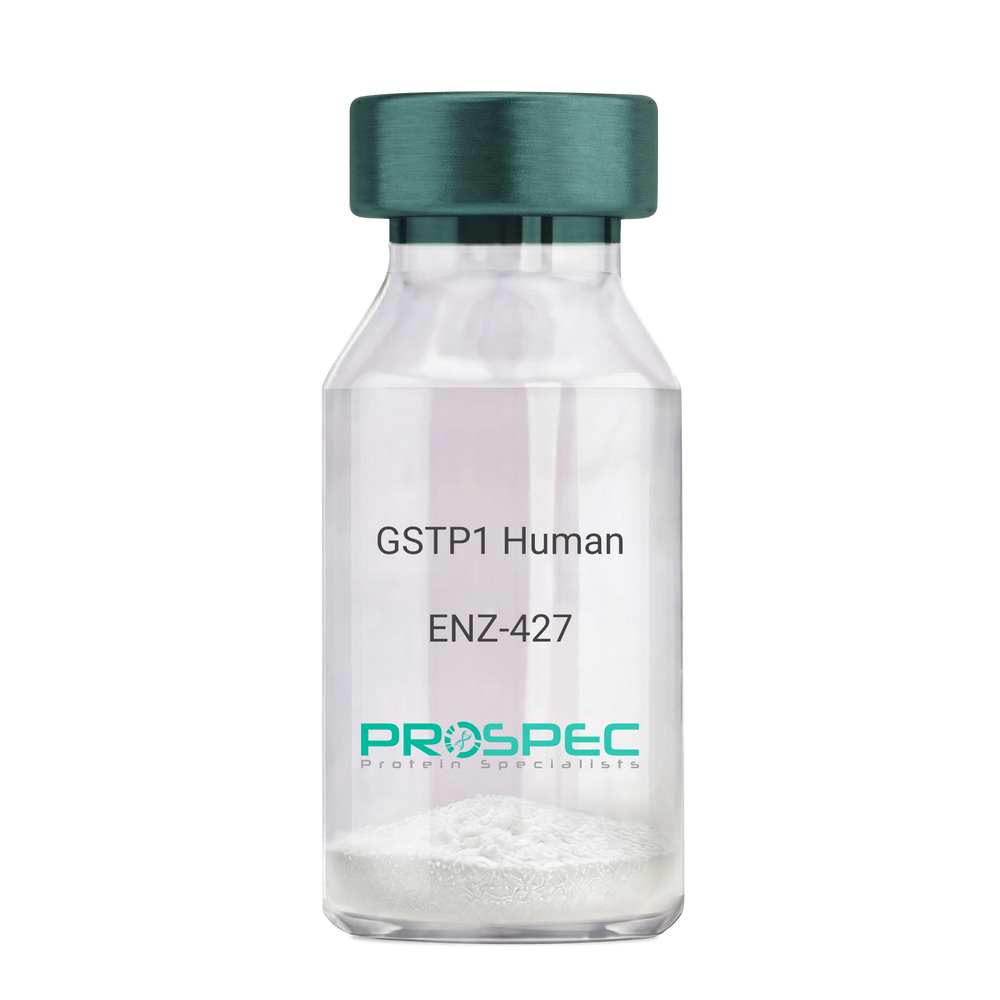
GSTP1 HumanDescription:
Glutathione S-Transferase pi 1 Human Recombinant
Glutathione S-transferase P, GST class-pi, GSTP1-1, GSTP1, FAEES3, GST3, PI, DFN7.
Product # :
ENZ-427Price :
Quantity :
Shipping Method :
Shipped with Ice Packs
More Info
- description
- source
- formulation
- purity
- biological activity
- More Info
- Citations
Description
GSTP1 Human Recombinant fused with 36 amino acid His tag at N-terminus produced in E.Coli is a single, non-glycosylated, polypeptide chain containing 246 amino acids (1-210 a.a.) And having a molecular mass of 27.4kDa. The GSTP1 is purified by proprietary chromatographic techniques.
Source
Escherichia Coli.
Formulation
The GSTP1 solution (0.5mg/ml) contains 20mM Tris-HCl buffer (pH7.0), 30% glycerol, 1mM EDTA and 0.1mM PMSF.
Purity
Greater than 95.0% as determined by SDS-PAGE.
Biological Activity
Specific activity is > 80 units/mg, and is defined as the amount of enzyme that conjugate 1.0 u mole of 1-chloro-2,4-dinitrobenzene (CDNB) with reduced glutathione per minute at pH 6.5 at 25°C.
Citations
More Info
-
Introduction
GSTP1 is a polymorphic gene encoding active, functionally different GSTP1 variant proteins that are believed to function in xenobiotic metabolism and have a part in susceptibility to cancer, and other diseases. GSTP1 is a glutathione S-transferase belonging to the pi class. GST family enzymes play a significant role in detoxification by catalyzing the conjugation of many hydrophobic and electrophilic compounds with reduced glutathione. Based upon the biochemical, immunologic and structural properties of the soluble GSTs they are grouped into 4 main classes: alpha, mu, pi, and theta. The GSTP1 enzyme acts by catalyzing the reaction of glutathione with an acceptor molecule to form a Sulfur-substituted glutathione. The reactions employing glutathione contribute the transformation of a broad range of electrophiles, including reactive products of lipid, protein, carcinogens, therapeutic drugs, environmental toxins, and products of oxidative stress.
The GSTP1 inactivation through CpG hypermethylation is frequent in pituitary adenomas and may be a factor in aggressive pituitary tumor behavior. GSTP1 is may be a transcriptional target of the p53 tumor suppressor gene. Single-nucleotide polymorphism in GSTP1 is linked to modified protein binding, which influence GSTP1's contribution to carcinogen and drug metabolism, and possibly disease pathogenesis and/or drug response. GST-pi might have central roles in proliferation of androgen-independent human prostate cancer cells. -
Synonyms
Glutathione S-transferase P, GST class-pi, GSTP1-1, GSTP1, FAEES3, GST3, PI, DFN7.
-
Physical Appearance
Sterile Filtered colorless solution.
-
Stability
Store at 4°C if entire vial will be used within 2-4 weeks. Store, frozen at -20°C for longer periods of time. For long term storage it is recommended to add a carrier protein (0.1% HSA or BSA). Avoid multiple freeze-thaw cycles.
-
Amino Acid Sequence
MRGSHHHHHH GMASMTGGQQ MGRDLYDDDD KDRWGSMPPY TVVYFPVRGR CAALRMLLAD QGQSWKEEVV TVETWQEGSL KASCLYGQLP KFQDGDLTLY QSNTILRHLG RTLGLYGKDQ QEAALVDMVN DGVEDLRCKY ISLIYTNYEA GKDDYVKALP GQLKPFETLL SQNQGGKTFI VGDQISFADY NLLDLLLIHE VLAPGCLDAF PLLSAYVGRL SARPKLKAFL ASPEYVNLPI NGNGKQ.
ProSpec's products are furnished for LABORATORY RESEARCH USE ONLY. The product may not be used as drugs, agricultural or pesticidal products, food additives or household chemicals.
- View Data Sheet
Name :
RAET1E Human, Sf9Description:
Retinoic Acid Early Transcript 1E Human Recombinant, Sf9
Retinoic Acid Early Transcript 1E, Lymphocyte Effector Toxicity Activation Ligand, RAE-1-Like Transcript 4, NKG2DL4, N2DL-4, LETAL, ULBP4, RL-4, NKG2D Ligand 4, BA350J20.7, RAET1E2, N2DL4.
Product # :
PRO-2467Price :
Quantity :
Shipping Method :
Shipped with Ice Packs
More Info
- description
- source
- formulation
- purity
- More Info
- Citations
Description
RAET1E Human Recombinant produced in Sf9 Insect cells is a single, glycosylated polypeptide chain containing 204 amino acids (31-225 a.a.) and having a molecular mass of 23.4kDa (Molecular size on SDS-PAGE will appear at approximately 28-40kDa).RAET1E is expressed with a 6 amino acids His tag at C-Terminus and purified by proprietary chromatographic techniques.
Source
Sf9, Baculovirus cells.
Formulation
RAET1E protein solution (0.5mg/ml) contains Phosphate Buffered Saline (pH 7.4) and 10% glycerol.
Purity
Greater than 90.0% as determined by SDS-PAGE.
Citations
More Info
-
Introduction
RAET1E is a member of the MHC class I family. MHC class I family contains main histocompatibility complex (MHC) class I-related genes positioned in a cluster on chromosome 6q24.2-q25.3. RAET1E and RAET1G protein are different from other RAET1 proteins since they have type I membrane-spanning sequences at their C termini instead glycosylphosphatidylinositol anchor sequences.RAET1E acts as a ligand for NKG2D receptor, expressed on the surface of numerous types of immune cells, involves in innate adaptive immune reactions.RAET1E delivers signals to NK cells and advances tumor immune surveillance by inducing the growth of anti-tumor cytotoxic lymphocyte.
-
Synonyms
Retinoic Acid Early Transcript 1E, Lymphocyte Effector Toxicity Activation Ligand, RAE-1-Like Transcript 4, NKG2DL4, N2DL-4, LETAL, ULBP4, RL-4, NKG2D Ligand 4, BA350J20.7, RAET1E2, N2DL4.
-
Physical Appearance
Sterile Filtered colorless solution.
-
Stability
Store at 4°C if entire vial will be used within 2-4 weeks. Store, frozen at -20°C for longer periods of time. For long term storage it is recommended to add a carrier protein (0.1% HSA or BSA).Avoid multiple freeze-thaw cycles.
-
Amino Acid Sequence
ADPHSLCFNF TIKSLSRPGQ PWCEAQVFLN KNLFLQYNSD NNMVKPLGLL GKKVYATSTW GELTQTLGEV GRDLRMLLCD IKPQIKTSDP STLQVEMFCQ REAERCTGAS WQFATNGEKS LLFDAMNMTW TVINHEASKI KETWKKDRGL EKYFRKLSKG DCDHWLREFL GHWEAMPEPT VSPVNASDIH WSSSSLPDHH HHHH.
ProSpec's products are furnished for LABORATORY RESEARCH USE ONLY. The product may not be used as drugs, agricultural or pesticidal products, food additives or household chemicals.
- View Data Sheet
Name :
FCGR1A AntibodyDescription:
CD64, Mouse Anti Human
Fc Fragment Of IgG High Affinity Ia Receptor (CD64), High Affinity Immunoglobulin Gamma Fc Receptor I, Fc-Gamma Receptor I A1, FcgammaRIa, CD64 Antigen, IgG Fc Receptor I, Fc-Gamma RI, CD64, CD64A, IGFR1, FCRI.
Product # :
ANT-550Price :
Quantity :
Shipping Method :
Shipped with Ice Packs
More Info
- formulation
- More Info
- Citations
Formulation
1mg/ml containing PBS, pH-7.4, 10% Glycerol and 0.02% Sodium Azide.
Citations
More Info
-
Introduction
FCGR1A is a member of to the immunoglobulin superfamily. FCGR1A protein acts as a high affinity receptor for the Fc region of immunoglobulins gamma and has a vital part in both innate and adaptive immune response.
-
Synonyms
Fc Fragment Of IgG High Affinity Ia Receptor (CD64), High Affinity Immunoglobulin Gamma Fc Receptor I, Fc-Gamma Receptor I A1, FcgammaRIa, CD64 Antigen, IgG Fc Receptor I, Fc-Gamma RI, CD64, CD64A, IGFR1, FCRI.
-
Physical Appearance
Sterile filtered colorless solution.
-
Immunogen
Anti-human FCGR1A mAb, is derived from hybridization of mouse F0 myeloma cells with spleen cells from BALB/c mice immunized with a recombinant human FCGR1A protein 16-292 amino acids purified from E. coli.
-
Ig Subclass
Mouse IgG2b heavy chain and k light chain.
-
Clone
PAT11D10AT.
-
Applications
FCGR1A antibody has been tested by ELISA, Western blot analysis to assure specificity and reactivity. Since application varies, however, each investigation should be titrated by the reagent to obtain optimal results. Recommended starting dilution is 1:2000.
-
Type
Mouse Anti Human Monoclonal.
-
Storage Procedures
For periods up to 1 month store at 4°C, for longer periods of time, store at -20°C. Prevent freeze thaw cycles.
-
Purification Method
FCGR1A antibody was purified from mouse ascitic fluids by protein-A affinity chromatography.
ProSpec's products are furnished for LABORATORY RESEARCH USE ONLY. The product may not be used as drugs, agricultural or pesticidal products, food additives or household chemicals.
- View Data Sheet
Name :
ASF1A HumanDescription:
ASF1 Anti-Silencing Function 1 Homolog A Human Recombinant
CGI-98, HSPC146, DKFZp547E2110, ASF1A, Histone chaperone ASF1A, Anti-silencing function protein 1 homolog A, hAsf1, hAsf1a, CCG1-interacting factor A, CIA, hCIA.
Product # :
PRO-682Price :
Quantity :
Shipping Method :
Shipped with Ice Packs
More Info
- description
- source
- formulation
- purity
- More Info
- Citations
Description
ASF1A Human Recombinant produced in E.Coli is a single, non-glycosylated polypeptide chain containing 240 amino acids (1-204 a.a.) and having a molecular mass of 27kDa.ASF1A is fused to a 36 amino acid His Tag and purified by proprietary chromatographic techniques.
Source
Escherichia Coli.
Formulation
The ASF1A protein solution contains 20mM Tris-HCl, pH-8, 1mM DTT and 10% glycerol.
Purity
Greater than 90.0% as determined by SDS-PAGE.
Citations
More Info
-
Introduction
ASF1A is part of the H3/H4 family of histone chaperone proteins corresponding to the anti-silencing function-1 gene in yeast. ASF1A is an important element of the histone donor complex that functions in nucleosome assembly. ASF1A interacts with histones H3 and H4, and functions together with a chromatin assembly factor during DNA replication and repair. Deletion of ASF1A in yeast and Drosophila confers sensitivity to various DNA damaging agents and inhibitors of DNA replication, increases genomic instability and sister chromatid exchange, and activates the DNA damage checkpoint.
-
Synonyms
CGI-98, HSPC146, DKFZp547E2110, ASF1A, Histone chaperone ASF1A, Anti-silencing function protein 1 homolog A, hAsf1, hAsf1a, CCG1-interacting factor A, CIA, hCIA.
-
Physical Appearance
Sterile filtered colorless solution.
-
Stability
Store at 4°C if entire vial will be used within 2-4 weeks. Store, frozen at -20°C for longer periods of time. For long term storage it is recommended to add a carrier protein (0.1% HSA or BSA).Avoid multiple freeze-thaw cycles.
-
Amino Acid Sequence
MRGSHHHHHH GMASMTGGQQ MGRDLYDDDD KDRWGSMAKV QVNNVVVLDN PSPFYNPFQF EITFECIEDL SEDLEWKIIY VGSAESEEYD QVLDSVLVGP VPAGRHMFVF QADAPNPGLI PDADAVGVTV VLITCTYRGQ EFIRVGYYVN NEYTETELRE NPPVKPDFSK LQRNILASNPRVTRFHINWE DNTEKLEDAE SSNPNLQSLL STDALPSASK GWSTSENSLN VMLESHMDCM.
ProSpec's products are furnished for LABORATORY RESEARCH USE ONLY. The product may not be used as drugs, agricultural or pesticidal products, food additives or household chemicals.
- View Data Sheet
Name :
FUT5 HumanDescription:
Fucosyltransferase 5 Human Recombinant
FUT-5
Product # :
ENZ-1199Price :
Quantity :
Shipping Method :
Shipped at Room temp
More Info
- description
- source
- formulation
- purity
- More Info
- Citations
Description
The FUT5 Human is created as a recombinant protein with a 4kda N-terminal fusion of His Tag. The FUT5 His-Tagged Fusion Protein produced in E. coli, is a 30kDa protein containing 172 amino acid residues of the FUT5 Human, 203-374 amino acids.
Source
Escherichia Coli.
Formulation
Each mg was lyophilized with 1xPBS, 0.4% SDS and 4mM DTT.
Purity
Greater than 90% as determined by SDS-PAGE.
Citations
More Info
-
Synonyms
FUT-5
-
Physical Appearance
Filtered White lyophilized (freeze-dried) powder.
-
Stability
Store lyophilized FUT5 at -20°C. Aliquot the product after reconstitution to avoid repeated freezing/thawing cycles. Reconstituted protein can be stored at 4°C for a limited period of time; it does not show any change after two weeks at 4°C.
-
Solubility
It is recommended to add deionized water to prepare a working stock solution of approximately 0.5mg/ml and let the lyophilized pellet dissolve completely. Product is not sterile! Please filter the product by an appropriate sterile filter before using it on cell culture.
-
Background
Fucosyltransferase 5 also known as FUT5 is a glycosyltransferase which takes part in the biosynthesis of glycolipids and glycoproteins. FUT5 mainly catalyzes the transfer of fucose (a monosaccharide) to the type 2 chain of oligosaccharides (Galβ1-4GlcNAc). FUT5 takes an important part in various biological processes which include regulation of inflammation, cell-cell interactions and immune response modulation. FUT5 is expressed mainly in tissues such as the pancreas, liver and various immune cells.
ProSpec's products are furnished for LABORATORY RESEARCH USE ONLY. The product may not be used as drugs, agricultural or pesticidal products, food additives or household chemicals.
- View Data Sheet
Name :
GH Antagonist ChickenDescription:
Growth Hormone Antagonist Chicken Recombinant
GH1, GH, GHN, GH-N, hGH-N, Pituitary growth hormone, Growth hormone 1, Somatotropin.
Product # :
CYT-538Price :
Quantity :
Shipping Method :
Shipped at Room temp
More Info
- description
- source
- formulation
- purity
- biological activity
- More Info
- Citations
Description
Somatotropin Chicken Antagonist Recombinant mutein G119R produced in E.Coli is a single, non-glycosylated polypeptide chain containing 191 amino acids with an additional Ala at the N-terminus and having a molecular mass of 22.3 kDa. The Chicken Growth-Hormone Antagonist Recombinant is purified by proprietary chromatographic techniques.
Source
Escherichia Coli.
Formulation
The protein was lyophilized from a concentrated (1mg/ml) solution with 0.03% NaHCO3 pH-8.
Purity
Greater than 98.0% as determined by:
(a) Analysis by SEC-HPLC.
(b) Analysis by SDS-PAGE.Biological Activity
Recombinant Chicken Growth Hormone G119R mutant did not bind to ovine GHR-ECD and was devoid of any biological activity in FDC-P1 3B9 cells.
However, in binding experiments that were carried out using chicken liver membranes, both ovine GH and chicken GH showed similar IC50 values in competition with 125I-ovine GH, while the IC50 of G119R mutein was 10-fold higher.
These results emphasize the importance of species specificity and indicate the possibility of antagonistic activity of chGH G119R in homologous system.Citations
More Info
-
Introduction
GH is a member of the somatotropin/prolactin family of hormones which play an important role in growth control. The gene, along with four other related genes, is located at the growth hormone locus on chromosome 17 where they are interspersed in the same transcriptional orientation; an arrangement which is thought to have evolved by a series of gene duplications. The five genes share a remarkably high degree of sequence identity. Alternative splicing generates additional isoforms of each of the five growth hormones, leading to further diversity and potential for specialization. This particular family member is expressed in the pituitary but not in placental tissue as is the case for the other four genes in the growth hormone locus. Mutations in or deletions of the gene lead to growth hormone deficiency and short stature.
-
Synonyms
GH1, GH, GHN, GH-N, hGH-N, Pituitary growth hormone, Growth hormone 1, Somatotropin.
-
Physical Appearance
Sterile Filtered White lyophilized (freeze-dried) powder.
-
Stability
Lyophilized Growth-Hormone Chicken antagonist although stable at room temperature for at least two weeks, should be stored desiccated below -18°C. Upon reconstitution and filter sterilization GH can be stored at 4°C, pH 9 for up to 4 weeks. For long term storage and more diluted solutions it is recommended to add a carrier protein (0.1% HSA or BSA). Please prevent freeze-thaw cycles.
-
Solubility
It is recommended to reconstitute the lyophilized Growth-Hormone Chicken antagonist in 0.4% NaHCO3 or water adjusted to pH 8-9, not less than 100µg/ml, which can then be further diluted to other aqueous solutions, preferably in a presence of a carrier protein such as BSA or similar.
-
Amino Acid Sequence
The sequence of the first five N-terminal amino acids was determined and was found to be Ala-Thr-Phe-Pro-Ala.
-
Protein content
Protein quantitation was carried out by: UV spectroscopy at 280 nm using the absorbency value of 0.74 as the extinction coefficient for a 0.1% (1mg/ml) solution. This value is calculated by the PC GENE computer analysis program of protein sequences (IntelliGenetics).
ProSpec's products are furnished for LABORATORY RESEARCH USE ONLY. The product may not be used as drugs, agricultural or pesticidal products, food additives or household chemicals.
- View Data Sheet
Name :
Vimentin Antibody, FITCDescription:
Vimentin, Mouse Anti Human Antibody, FITC
Product # :
ANT-247Price :
Quantity :
Shipping Method :
Shipped at Room temp
More Info
- formulation
- More Info
- Citations
Formulation
1mg/ml in PBS (after reconstitution).
Citations
More Info
-
Introduction
Vimentin expression in human malignant glioma cells depends on cellular density, algorithms of drug delivery and chemo/radio treatment. Vimentin and detyrosinated microtubules provide structural support for the extensive microtentacles observed in detached tumor cells and a mechanism to promote successful metastatic spread. Primary colorectal carcinomas display aberrant expression of vimentin, and have activated Notch and TGFbeta signaling pathways. Vimentin is a strong arterial substrate for transglutaminases. Transglutaminase-mediated vimentin dimerization results in a novel unifying pathway by which vasodilatory and remodeling responses may be regulated. Ablation of vimentin expression inhibits migration and invasion of colon and breast cancer cell lines.
-
Solubility
Reconstitute with H20. Mix gently, wash the sides of the vial and wait 30-60 seconds before use.
-
Immunogen
Purified Human Vimentin.
-
Ig Subclass
mouse IgG1.
-
Clone
hVimentin.
-
Applications
Immunohistochemistry.
-
Cross reactivity
Vimentin antibody will recognize most mammalian Vimentin except mouse and rat.
-
Titer
For intra-cellular staining, use 5-10µl/1,000,000 cells. Wash twice with PBS/Azide before adding the appropriate amount of secondary fluorescent reagent.
-
Shipping Conditions
Antibody is shipped lyophilized at ambient temperature.
-
Available Conjugates
This antibody is also available conjugated to Biotin and non conjugate form.
-
Type
Mouse Anti Human Monoclonal Antibody.
-
Storage Procedures
In lyophilized form, for long periods, store at 4°C in a dry environment. After reconstitution, if not intended for use within a month, aliquot and store at -20°C.
-
Purification Method
Ion exchange column.
ProSpec's products are furnished for LABORATORY RESEARCH USE ONLY. The product may not be used as drugs, agricultural or pesticidal products, food additives or household chemicals.
- View Data Sheet
Name :
TNFSF7 Human, sf9Description:
CD70 Human Recombinant, sf9
CD70 Molecule, Tumor Necrosis Factor (Ligand) Superfamily, Member 7, Tumor Necrosis Factor Ligand Superfamily Member 7 , CD27 Ligand, CD27LG, TNFSF7, CD27-L, CD27L, Tumor Necrosis Factor Ligand 8A, Surface Antigen CD70, Ki-24 Antigen, CD70 Antigen, TNLG8A.
Product # :
CYT-953Price :
Quantity :
Shipping Method :
Shipped with Ice Packs
More Info
- description
- source
- formulation
- purity
- More Info
- Citations
Description
TNFSF7 produced in Sf9 Baculovirus cells is a single, glycosylated polypeptide chain containing 164 amino acids (39-193 a.a.) and having a molecular mass of 18.2kDa. TNFSF7 is expressed with a 6 amino acid His tag at C-Terminus and purified by proprietary chromatographic techniques.
Source
Sf9, Baculovirus cells.
Formulation
TNFSF7 protein solution (0.25mg/ml) contains Phosphate Buffered Saline (pH 7.4) and 10% glycerol.
Purity
Greater than 90.0% as determined by SDS-PAGE.
Citations
More Info
-
Introduction
CD70 also known as TNFSF7 is a cytokine which binds to CD27. TNFSF7 takes part in T-cell activation as well as induces the proliferation of costimulated T-cells. Moreover, TNFSF7 enhances the generation of cytolytic T-cells. Among the diseases which are associated with TNFSF7: Include acute myocarditis & Myocarditis.
-
Synonyms
CD70 Molecule, Tumor Necrosis Factor (Ligand) Superfamily, Member 7, Tumor Necrosis Factor Ligand Superfamily Member 7 , CD27 Ligand, CD27LG, TNFSF7, CD27-L, CD27L, Tumor Necrosis Factor Ligand 8A, Surface Antigen CD70, Ki-24 Antigen, CD70 Antigen, TNLG8A.
-
Physical Appearance
Sterile Filtered colorless solution.
-
Stability
Store at 4°C if entire vial will be used within 2-4 weeks. Store, frozen at -20°C for longer periods of time. For long term storage it is recommended to add a carrier protein (0.1% HSA or BSA). Avoid multiple freeze-thaw cycles.
-
Amino Acid Sequence
ADPQRFAQAQ QQLPLESLGW DVAELQLNHT GPQQDPRLYW QGGPALGRSF LHGPELDKGQ LRIHRDGIYM VHIQVTLAIC SSTTASRHHP TTLAVGICSP ASRSISLLRL SFHQGCTIAS QRLTPLARGD TLCTNLTGTL LPSRNTDETF FGVQWVRPHH HHHH.
ProSpec's products are furnished for LABORATORY RESEARCH USE ONLY. The product may not be used as drugs, agricultural or pesticidal products, food additives or household chemicals.
- View Data Sheet
Name :
M CSF MouseDescription:
Macrophage-Colony Stimulating Factor Mouse Recombinant
CSF-1, Lanimostim, MCSF, M-CSF.
Product # :
CYT-439Price :
Quantity :
Shipping Method :
Shipped at Room temp
More Info
- description
- source
- formulation
- purity
- biological activity
- More Info
- Citations
Description
Macrophage Colony Stimulating Factor Mouse Recombinant produced in E.coli is a disulfide linked homodimer, non-glycosylated, polypeptide chain containing 2 x 156 amino acids and having a total molecular mass of 36.4 KD.MCSF is purified by proprietary chromatographic techniques.
Source
Escherichia Coli.
Formulation
The protein was lyophilized from a sterile (0.2µm) filtered solution containing 10mM sodium phosphate, 50mM sodium chloride, pH 7.5.
Purity
Greater than 95.0% as determined by SDS-PAGE.
Biological Activity
The ED50, as calculated by the dose-dependant stimulation of the proliferation of murine M-NFS-60 indicator cells is 1.33ng/ml corresponding to a specific activity of 7.5x10⁵ units/mg.
Citations
More Info
-
Introduction
Granulocyte/Macrophage Colony-Stimulating Factors are cytokines that act in hematopoiesis by controlling the production, differentiation, and function of 2 related white cell populations of the blood, the granulocytes and the monocytes-macrophages. CSF-1 induces cells of the monocyte/macrophage lineage. It plays a role in immunological defenses, bone metabolism, lipoproteins clearance, fertility and pregnancy.
-
Synonyms
CSF-1, Lanimostim, MCSF, M-CSF.
-
Physical Appearance
Sterile Filtered White lyophilized (freeze-dried) powder.
-
Stability
Lyophilized M-CSF although stable at room temperature for 3 weeks, should be stored desiccated below -18°C. Upon reconstitution MCSF should be stored at 4°C between 2-7 days and for future use below -18°C.Please prevent freeze-thaw cycles.
-
Solubility
It is recommended to reconstitute the lyophilized M-CSF in sterile 18MΩ-cm H2O not less than 100µg/ml, which can then be further diluted to other aqueous solutions.
-
Amino Acid Sequence
MKEVSEHCSH MIGNGHLKVL QQLIDSQMET SCQIAFEFVD QEQLDDPVCY LKKAFFLVQD IIDETMRFKD NTPNANATER LQELSNNLNS CFTKDYEEQN KACVRTFHET PLQLLEKIKN FFNETKNLLE KDWNIFTKNC NNSFAKCSSR DVVTKP.
-
Background
Macrophage-Colony Stimulating Factor Mouse Recombinant: An In-Depth Analysis
Abstract:
Macrophage-Colony Stimulating Factor (M-CSF) is a crucial cytokine involved in the regulation of macrophage biology, including their differentiation, survival, and function. This research paper provides an in-depth analysis of M-CSF Mouse Recombinant, focusing on its structure, signaling pathways, and diverse functions in the context of human research. Additionally, the paper explores the therapeutic potential of M-CSF modulation in various diseases.
Introduction:
M-CSF plays a vital role in the development and maintenance of macrophages, key immune cells involved in innate immunity and tissue homeostasis. This paper aims to provide a comprehensive analysis of M-CSF Mouse Recombinant, highlighting its importance in human macrophage biology and its potential therapeutic applications.
Structure and Function of M-CSF:
M-CSF is a homodimeric protein that binds to its receptor, CSF-1R, leading to the activation of downstream signaling pathways. It regulates the proliferation, survival, and activation of macrophages, influencing immune responses and tissue remodeling processes.
Signaling Pathways:
Upon binding to CSF-1R, M-CSF triggers various intracellular signaling pathways, including the MAPK pathway, PI3K/Akt pathway, and JAK/STAT pathway. These pathways regulate gene expression and mediate cellular responses, impacting macrophage functions.
Role in Macrophage Development and Function:
M-CSF is essential for the differentiation and maturation of macrophages from hematopoietic progenitor cells. It promotes the survival, proliferation, and activation of macrophages, enhancing their phagocytic activity, cytokine production, and antigen presentation capabilities.
Therapeutic Potential:
Given its crucial role in macrophage biology, M-CSF modulation has emerged as a potential therapeutic strategy. M-CSF inhibitors and CSF-1R antagonists have shown promise in the treatment of inflammatory and autoimmune diseases, as well as certain cancers. Targeting M-CSF signaling can modulate immune responses and affect disease progression.
Clinical Applications and Future Directions:
The therapeutic potential of M-CSF modulation is being explored in various clinical settings. Clinical trials investigating M-CSF inhibitors as monotherapy or combination therapy are underway in diseases such as rheumatoid arthritis and cancer. Future research should focus on understanding the intricate mechanisms of M-CSF signaling, optimizing therapeutic strategies, and developing personalized treatment approaches.
ProSpec's products are furnished for LABORATORY RESEARCH USE ONLY. The product may not be used as drugs, agricultural or pesticidal products, food additives or household chemicals.
- View Data Sheet
Name :
PentagastrinDescription:
Pentagastrin
Product # :
HOR-045Price :
Quantity :
Shipping Method :
Shipped at Room temp
More Info
- description
- formulation
- purity
- More Info
- Citations
Description
Pentagastrin Synthetic is a single, non-glycosylated polypeptide chain containing 5 amino acids, having a molecular mass of 768 Dalton and a Molecular formula of C37H49N7O9S .
Formulation
The protein was lyophilized with no additives.
Purity
Greater than 97.0% as determined by analysis by RP-HPLC.
Citations
More Info
-
Physical Appearance
Sterile Filtered White lyophilized (freeze-dried) powder.
-
Stability
Lyophilized Pentagastrin although stable at room temperature for 3 weeks, should be stored desiccated below -18°C. Upon reconstitution Pentagastrin should be stored at 4°C between 2-7 days and for future use below -18°C. For long term storage it is recommended to add a carrier protein (0.1% HSA or BSA). Please prevent freeze-thaw cycles.
-
Solubility
It is recommended to reconstitute the lyophilized Pentagastrin in sterile 18MΩ-cm H2O not less than 100 µg/ml, which can then be further diluted to other aqueous solutions.
-
Amino Acid Sequence
Boc-β-Ala-Trp-Met-Asp-Phe-NH2.
-
Background
Pentagastrin is a synthetic peptide that has long been recognized for its significant influence on gastric physiology. Its ability to stimulate gastric acid secretion and regulate various aspects of gastrointestinal function has made it a valuable tool in both basic research and clinical practice.
This research aims to comprehensively investigate the multifaceted effects of pentagastrin on the gastrointestinal system, shedding light on its mechanisms of action and potential clinical applications.
The primary objective of this study is to elucidate the mechanisms underlying pentagastrin-induced gastric acid secretion.In vitro experiments using isolated gastric cells or tissue preparations will be conducted to explore the signaling pathways activated by pentagastrin. This will include investigations into the role of intracellular messengers, such as cyclic AMP (cAMP), calcium ions (Ca2+), and protein kinases, in mediating the secretory response.
The second objective is to assess the impact of pentagastrin on gastrointestinal motility. In vivo studies using animal models or human volunteers will be employed to investigate its effects on gastric emptying, intestinal transit, and colonic motility. These experiments may provide insights into the potential use of pentagastrin in the management of gastrointestinal motility disorders.
The third objective is to explore the clinical applications of pentagastrin. Clinical trials and studies involving human subjects will be conducted to evaluate its potential therapeutic uses, such as in the diagnosis and treatment of gastric acid-related disorders, including peptic ulcers and gastroesophageal reflux disease (GERD). Additionally, the safety and efficacy of pentagastrin as an adjunct to medical imaging techniques, such as gastric scintigraphy, will be examined.
By investigating the diverse effects of pentagastrin on the gastrointestinal system, this research aims to enhance our understanding of gastric physiology and its clinical relevance. The findings may lead to improved diagnostic and therapeutic strategies for gastrointestinal disorders, ultimately benefiting patients affected by these conditions.
ProSpec's products are furnished for LABORATORY RESEARCH USE ONLY. The product may not be used as drugs, agricultural or pesticidal products, food additives or household chemicals.
- View Data Sheet
Name :
ElamipretideDescription:
Elamipretide
SS-31, MTP-131, Bendavia.
Product # :
HOR-040Price :
Quantity :
Shipping Method :
Shipped at Room temp
More Info
- description
- source
- formulation
- purity
- More Info
- HPLC, MS
- Citations
Description
Elamipretide Synthetic is a single, non-glycosylated polypeptide chain containing 4 amino acids, having a molecular mass of 639.79 Dalton and a Molecular formula of C32H49N9O5
.Source
Synthetic Peptide
Formulation
The protein was lyophilized with no additives.
Purity
Greater than 97.0% as determined by analysis by RP-HPLC.
HPLC, MS
Citations
More Info
-
Synonyms
SS-31, MTP-131, Bendavia.
-
Physical Appearance
Sterile Filtered White lyophilized (freeze-dried) powder.
-
Stability
Lyophilized Elamipretide although stable at room temperature for 3 weeks, should be stored desiccated below -18°C. Upon reconstitution Elamipretide should be stored at 4°C between 2-7 days and for future use below -18°C.For long term storage it is recommended to add a carrier protein (0.1% HSA or BSA). Please prevent freeze-thaw cycles.
-
Solubility
It is recommended to reconstitute the lyophilized Elamipretide in sterile 18MΩ-cm H2O not less than 100 µg/ml, which can then be further diluted to other aqueous solutions.
-
Amino Acid Sequence
H-D-Arg-(2',6'-dimethyl-Tyr)-Lys-Phe-NH2
-
Background
What is the molecular weight/Mw of Elamipretide Protein?
Elamipretide Protein has a total Mw of 639Da.
What is the source or expression system of Elamipretide Protein?
Synthetic peptide
What is the Purity of Elamipretide Protein?
Elamipretide Protein is >97% pure as determined by SDS-PAGE.
What is the Biological Activity of Elamipretide Protein?
The biological functionality of Elamipretide Protein will be determined in the future.
What is the amino acid sequence of Elamipretide Protein?
H-D-Arg-(2',6'-dimethyl-Tyr)-Lys-Phe-NH2
What applications can Elamipretide Protein be used in?
Elamipretide Protein can probably be used in western blot, ELISA and Lateral Flow.
What is the endotoxin level for Elamipretide Protein?
The endotoxin level is minimal, Elamipretide Protein was purified using conventional chromatography techniques.Elamipretide (also known as SS-31) is a novel mitochondrial-targeted peptide with immense promise as a therapeutic agent in mitochondrial dysfunction-related disorders. This research paper aims to provide a comprehensive analysis of Elamipretide, delving into its biochemical properties, mechanisms of action, and potential applications in various disease conditions.
Elamipretide, a mitochondria-targeting tetrapeptide, has garnered attention for its unique ability to protect mitochondria from oxidative stress and attenuate mitochondrial dysfunction (Siegel et al., 2013). This paper endeavors to explore Elamipretide's biochemical basis and its potential as a therapeutic agent in various diseases linked to mitochondrial impairment.
Elamipretide selectively accumulates within the inner mitochondrial membrane, where it exerts its cytoprotective effects. By reducing reactive oxygen species (ROS) production and enhancing electron transport chain efficiency, Elamipretide plays a crucial role in mitochondrial homeostasis (Kloner et al., 2015).
The mitochondrial protective actions of Elamipretide arise from its interaction with cardiolipin, a phospholipid predominantly localized in the inner mitochondrial membrane. By binding to cardiolipin, Elamipretide stabilizes mitochondrial cristae, improves membrane integrity, and enhances oxidative phosphorylation (Minkler et al., 2015).
Elamipretide's potential applications extend to a myriad of disease conditions characterized by mitochondrial dysfunction. In preclinical studies, Elamipretide has shown promise in mitigating tissue damage following ischemia-reperfusion injury, preserving cardiac function after myocardial infarction, and ameliorating neurodegenerative processes (Birk et al., 2017; Cho et al., 2015).
As the research on Elamipretide progresses, further investigation is warranted to better understand its pharmacokinetics, long-term safety, and potential off-target effects. Clinical trials exploring its therapeutic efficacy in human diseases offer exciting prospects for the future.
Elamipretide, a mitochondria-targeting peptide, emerges as a promising candidate in combating mitochondrial dysfunction-related disorders. Its unique ability to stabilize mitochondrial membranes and enhance cellular bioenergetics positions Elamipretide as a novel therapeutic option for a diverse range of diseases.
ProSpec's products are furnished for LABORATORY RESEARCH USE ONLY. The product may not be used as drugs, agricultural or pesticidal products, food additives or household chemicals.
- View Data Sheet
Name :
Bartonella SucBDescription:
Bartonella Henselae SucB Recombinant
Product # :
PRO-2570Price :
Quantity :
Shipping Method :
Shipped with Ice Packs
More Info
- description
- source
- formulation
- purity
- More Info
- Citations
Description
Recombinant Bartonella Henselae SucB produced in E.Coli is a single, non-glycosylated polypeptide chain having a molecular mass of 48kDa. Bartonella SucB is expressed with a -10x His tag at N-terminus and purified by proprietary chromatographic techniques.
Source
Escherichia Coli.
Formulation
Bartonella SucB is supplied at a 20mM HEPES buffer pH-8.0, 200mM NaCl and 20% Glycerol.
Purity
Greater than 95% as determined by SDS-PAGE.
Citations
More Info
-
Introduction
Numerous forms of Bartonellosis are caused by Bartonella henselae as well as Cat Scratch Disease & Bacillary Angiomatosis. It has been found that up to 95% of patients with Cat Scratch Disease show antibodies against Bartonella henselae antigens. Highly immunoreactive proteins which are produced by the Bartonella henselae are the most important antigens used for the diagnosis of Cat Scratch Disease. The immunogenic protein dihydrolipoamide-succinyltransferase also named SucB is an enzyme of the alpha-ketoglutarate dehydrogenase complex, which catalyzes the transport of a succinyl group from the S-succinyldihydrolipoyl moiety to coenzyme A.
-
Physical Appearance
Sterile Filtered solution.
-
Stability
Store at 4°C if entire vial will be used within 2-4 weeks. Store, frozen at -20°C for longer periods of time. Avoid multiple freeze-thaw cycles.
ProSpec's products are furnished for LABORATORY RESEARCH USE ONLY. The product may not be used as drugs, agricultural or pesticidal products, food additives or household chemicals.
- View Data Sheet
Name :
CagrilintideDescription:
Cagrilintide
Product # :
HOR-059Price :
Quantity :
Shipping Method :
Shipped at Room temp
More Info
- description
- formulation
- purity
- More Info
- Citations
Description
Cagrilintide is a synthetic single, non-glycosylated polypeptide chain containing 37 amino acids, having a molecular mass of 4409 Dalton and a Molecular formula of C194H312N54O59.
Formulation
The protein was lyophilized with no additives.
Purity
Greater than 97.0% as determined by analysis by RP-HPLC.
Citations
More Info
-
Physical Appearance
Sterile Filtered White lyophilized (freeze-dried) powder.
-
Stability
Lyophilized Cagrilintide although stable at room temperature for 3 weeks, should be stored desiccated below -18°C. Upon reconstitution Cagrilintide should be stored at 4°C between 2-7 days and for future use below -18°C.
For long term storage it is recommended to add a carrier protein (0.1% HSA or BSA).
Please prevent freeze-thaw cycles.
-
Solubility
It is recommended to reconstitute the lyophilized Cagrilintide in sterile 18MΩ-cm H2O not less than 100 µg/ml, which can then be further diluted to other aqueous solutions.
-
Amino Acid Sequence
(Eicosanedioic acid-γ-Glu)-Lys-CysAsn-Thr-Ala-Thr-Cys-Ala-Thr-Gln-Arg-Leu-Ala-Glu-Phe-Leu-Arg-HisSer-Ser-Asn-Asn-Phe-Gly-Pro-Ile-Leu-Pro-Pro-Thr-Asn-Val-Gly-SerAsn-Thr-Pro-NH2 (Disulfide bridge:Cys3-Cys8).
-
Background
Cagrilintide plays a role as a pioneering long-acting amylin analogue and integrates into the fixed-dose combination CagriSema (Cagrilintide + Semaglutide). Unlike GLP-1 agonists, Cagrilintide mimics amylin, a hormone co-secreted with insulin takes part in regulating satiety and slows gastric emptying through brainstem pathways.
ProSpec's products are furnished for LABORATORY RESEARCH USE ONLY. The product may not be used as drugs, agricultural or pesticidal products, food additives or household chemicals.
- View Data Sheet
Name :
LypressinDescription:
Lypressin
Product # :
HOR-278Price :
Quantity :
Shipping Method :
Shipped at Room temp
More Info
- description
- formulation
- purity
- More Info
- Citations
Description
Lypressin is a hormone used to prevent or control the frequent urination, increased thirst, and loss of water associated with diabetes insipidus (water diabetes). Its molecular weight is 1056.2 Dalton having an amino acid sequence of Cys-Tyr-Phe-Gln-Asn-Cys-Pro-Lys-Gly-NH2. The Molecular Formula is: C46H65N13O12S2. The CAS Number is: 50-57-7.
Formulation
The protein (1mg/ml) was lyophilized with no additives.
Purity
Greater than 99.0% as determined by RP-HPLC.
Citations
More Info
-
Physical Appearance
Sterile Filtered White lyophilized (freeze-dried) powder.
-
Stability
Store the lyophilized Lypressin between 2-8°C, do not freeze. Upon reconstitution Lypressin should be stored at 4°C between 2-7 days and for future use below -18°C. Please prevent freeze-thaw cycles.
-
Solubility
It is recommended to reconstitute the lyophilized Lypressin in sterile 18MΩ-cm H2O not less than 100 µg/ml, which can then be further diluted to other aqueous solutions.
Lypressin is also soluble in 1% Acetic Acid.
ProSpec's products are furnished for LABORATORY RESEARCH USE ONLY. The product may not be used as drugs, agricultural or pesticidal products, food additives or household chemicals.
- View Data Sheet
Name :
CHST5 HumanDescription:
Carbohydrate Sulfotransferase 5 Human Recombinant
Carbohydrate sulfotransferase 5, Galactose/N-acetylglucosamine/N-acetylglucosamine 6-O-sulfotransferase 4, GST4, Intestinal N-acetylglucosamine-6-O-sulfotransferase, I-GlcNAc6ST, Intestinal GlcNAc-6-sulfotransferase, mIGn6ST, N-acetylglucosamine 6-O-sulfotransferase 3, GlcNAc6ST-3, Gn6st-3, Chst5, Gst4.
Product # :
ENZ-1165Price :
Quantity :
Shipping Method :
Shipped with Ice Packs
More Info
- description
- source
- formulation
- purity
- biological activity
- More Info
- Citations
Description
CHST5 Human produced in Sf9 Baculovirus cells is a single, glycosylated polypeptide chain containing 380 amino acids (27-395 a.a.) and having a molecular mass of 42.9kDa.CHST5 is expressed with a 6 amino acid His tag at C-Terminus and purified by proprietary chromatographic techniques.
Source
Sf9, Baculovirus cells.
Formulation
CHST5 protein solution (0.25mg/ml) containing 20% glycerol and Phosphate-Buffered Saline (pH 7.4).
Purity
Greater than 90.0% as determined by SDS-PAGE.
Biological Activity
Specific activity is greater than 10,000 pmol/min/ug, and is defined as the amount of enzyme that sulfate from PAPS to Nacetyl-D-glucosamine per minute at pH 7.5, at 37˚C.
Citations
More Info
-
Introduction
Carbohydrate Sulfotransferase 5 (CHST5) is a Golgi-embedded enzyme that is found in B cells, T cells and intestinal epithelium and is also mediates sulfation of keratan in cornea. CHST5 is a sulfotransferase that utilizes 3'-phospho-5'-adenylyl sulfate (PAPS) as sulfonate donor to catalyze the transfer of sulfate to position 6 of non-reducing N-acetylglucosamine residues of keratan. CHST5 works on the non-reducing terminal GlcNAc of short andlong carbohydrate substrates that have poly-N-acetyllactosamine structures.
-
Synonyms
Carbohydrate sulfotransferase 5, Galactose/N-acetylglucosamine/N-acetylglucosamine 6-O-sulfotransferase 4, GST4, Intestinal N-acetylglucosamine-6-O-sulfotransferase, I-GlcNAc6ST, Intestinal GlcNAc-6-sulfotransferase, mIGn6ST, N-acetylglucosamine 6-O-sulfotransferase 3, GlcNAc6ST-3, Gn6st-3, Chst5, Gst4.
-
Physical Appearance
Sterile filtered colorless solution.
-
Stability
Store at 4°C if entire vial will be used within 2-4 weeks.Store, frozen at -20°C for longer periods of time.For long term storage it is recommended to add a carrier protein (0.1% HSA or BSA).Avoid multiple freeze-thaw cycles.
-
Amino Acid Sequence
ADPEFSRQVP SSPAGLGERV HVLVLSSWRS GSSFVGQLFS QHPDVFYLME PAWHVWDTLS QGSAPALHMA VRDLIRSVFL CDMDVFDAYL PWRRNISDLF QWAVSRALCS PPVCEAFARG NISSEEVCKP LCATRPFGLA QEACSSYSHV VLKEVRFFNL QVLYPLLSDP ALNLRIVHLV RDPRAVLRSR EQTAKALARD NGIVLGTNGT WVEADPRLRV VNEVCRSHVR IAEAALHKPP PFLQDRYRLV RYEDLARDPL TVIRELYAFT GLGLTPQLQT WIHNITHGSG PGARREAFKT TSRDALSVSQ AWRHTLPFAK IRRVQELCGG ALQLLGYRSV HSELEQRDLS LDLLLPRGMD SFKWASSTEK QPESHHHHHH
ProSpec's products are furnished for LABORATORY RESEARCH USE ONLY. The product may not be used as drugs, agricultural or pesticidal products, food additives or household chemicals.
- View Data Sheet
Description:
MHC CLASS II, (I-E) Mouse Antibody, FITC
Product # :
ANT-299Price :
Quantity :
Shipping Method :
Shipped at Room temp
More Info
- formulation
- More Info
- Citations
Formulation
1mg/ml in PBS (after reconstitution).
Citations
More Info
-
Introduction
MHC Class II is consists of 2 membrane spanning proteins. Each of these proteins is roughly 30 kDa, and has of two Globular domains, Alpha-1, Alpha-2, Beta-1 and Beta-2. The two regions farthest away from the membrane are alpha-1 and beta-1. The two proteins link without Covalent Bonds. The MHC Class II protein mainly presents peptides, which have been digested from external sources. MHC Class II is normally only expressed by Antigen Presenting Cells (APC) which digest foreign protein. Within the RER the alpha and beta proteins of the molecule, associate with each other, while a third protein called the "invariant chain," is necessary for stabilizing the complex, without it, they will not associate. The MHC-invariant complex is then passed from the RER, into and out of, the Golgi body. It fuses with an Endocytic compartment, where an external protein has been sampled and degraded.
-
Solubility
Reconstitute with of H20. Mix gently, wash the sides of the vial and wait 30-60 seconds before use.
-
Immunogen
Purified mouse LN B cells (C3H anti-C57Bl6).
-
Ig Subclass
Mouse IgG2a.
-
Clone
NYRmI-E.
-
Applications
Cytotoxic and staining antibody. For staining, use 10ml/1,000,000 cells. Titer for cytotoxicity should be determined by the investigator.
-
Specificity
Recognizes most MHC I-E class II haplotypes Reacts with H-2k, H-2d, H-2p and H-2r.
-
Available Conjugates
This antibody is also available as unconjugated antibody and conjugated to Biotin.
-
Type
Mouse Antibody Monoclonal.
-
Storage Procedures
Lyophilized: store at 4°C. After reconstitution, if not intended for use within a month, aliquot and store at -20°C.
-
Purification Method
Ion exchange column.
ProSpec's products are furnished for LABORATORY RESEARCH USE ONLY. The product may not be used as drugs, agricultural or pesticidal products, food additives or household chemicals.
- View Data Sheet
Name :
ERH HumanDescription:
Enhancer of Rudimentary Human Recombinant
Enhancer of rudimentary homolog, ERH, DROER, FLJ27340.
Product # :
PRO-121Price :
Quantity :
Shipping Method :
Shipped with Ice Packs
More Info
- description
- source
- formulation
- purity
- More Info
- Citations
Description
ERH Human Recombinant fused with a 23 amino acid His tag at N-terminus produced in E.Coli is a single, non-glycosylated, polypeptide chain containing 127 amino acids (1-104 a.a.) and having a molecular mass of 14.6kDa. The ERH is purified by proprietary chromatographic techniques.
Source
Escherichia Coli.
Formulation
The ERH solution (1 mg/ml) contains 20mM Tris-HCl buffer (pH8.0), 20% glycerol and 0.1M NaCl.
Purity
Greater than 95.0% as determined by SDS-PAGE.
Citations
More Info
-
Introduction
Enhancer of rudimentary homolog (ERH) is a ubiquitously expressed transcriptional coregulator which is highly conserved among eukaryotes. ERH may have a role in cell cycle regulation and pyrimidine biosynthesis. ERH has two casein kinase II phosphorylation sites which are thought to upset the ability of ERH to dimerize.
-
Synonyms
Enhancer of rudimentary homolog, ERH, DROER, FLJ27340.
-
Physical Appearance
Sterile Filtered colorless solution.
-
Stability
Store at 4°C if entire vial will be used within 2-4 weeks. Store, frozen at -20°C for longer periods of time. For long term storage it is recommended to add a carrier protein (0.1% HSA or BSA).Avoid multiple freeze-thaw cycles.
-
Amino Acid Sequence
MGSSHHHHHH SSGLVPRGSH MGSMSHTILL VQPTKRPEGR TYADYESVNE CMEGVCKMYE EHLKRMNPNS PSITYDISQL FDFIDDLADL SCLVYRADTQ TYQPYNKDWI KEKIYVLLRR QAQQAGK.
ProSpec's products are furnished for LABORATORY RESEARCH USE ONLY. The product may not be used as drugs, agricultural or pesticidal products, food additives or household chemicals.
- View Data Sheet
Description:
SARS-Associated Coronavirus Nuclecapsid (340-390 a.a.) Recombinant, His Tag
Product # :
SARS-006Price :
Quantity :
Shipping Method :
Shipped with Ice Packs
More Info
- description
- source
- formulation
- purity
- More Info
- Citations
Description
The E.coli derived recombinant protein contains the Nucleocapsid C-Terminal protein 340-390 amino acids immunodominant regions fused to 6xHis tag at C-terminal.
Source
Escherichia Coli.
Formulation
SARS Nucleocapsid protein solution is supplied in PBS.
Purity
Protein is >90% pure as determined SDS-PAGE.
Citations
More Info
-
Introduction
SARS-Associated Coronavirus Nuclecapsid is an enveloped viral componentthat contains three external structural antigens, the mains are membrane (M), envelope (E), and spike (S) proteins. Spike (S)-glycoprotein of the virus interacts with a membrenal receptor and mediates membrane fusion to grant viral entry into the target cells. therefore, S-protein has a crucial part in virus infection cycle and is the main target of neutralizing antibodies.
-
Physical Appearance
Sterile Filtered clear solution.
-
Stability
Protein is shipped on ice packs. Upon arrival, Store at -20°C.
-
Specificity
Immunoreactive with sera of SARS-infected individuals.
-
Purification Method
Purified by proprietary chromatographic technique.
ProSpec's products are furnished for LABORATORY RESEARCH USE ONLY. The product may not be used as drugs, agricultural or pesticidal products, food additives or household chemicals.
- View Data Sheet
Name :
SH2D1B HumanDescription:
SH2 domain containing 1B Human Recombinant
SH2 Domain Containing 1B, EWS/FLI1-Activated Transcript 2, EAT-2, EAT2, SH2 Domain-Containing Molecule EAT2, SH2 Domain-Containing Protein 1B, SH2 domain-containing protein 1B, EWS/FLI1-activated transcript 2, EAT-2.
Product # :
PRO-2470Price :
Quantity :
Shipping Method :
Shipped with Ice Packs
More Info
- description
- source
- formulation
- purity
- More Info
- Citations
Description
SH2D1B Human Recombinant produced in Sf9 Baculovirus cells is a single, glycosylated polypeptide chain containing 141 amino acids (1-132a.a.) and having a molecular mass of 16.4kDa (Molecular size on SDS-PAGE will appear at approximately 18-28kDa). SH2D1B is expressed with a 6 amino acid His tag at C-Terminus and purified by proprietary chromatographic techniques.
Source
Sf9, Baculovirus cells.
Formulation
SH2D1B protein solution (0.25mg/ml) contains Phosphate Buffered Saline (pH 7.4) and 20% glycerol.
Purity
Greater than 90.0% as determined by SDS-PAGE.
Citations
More Info
-
Introduction
SH2 domain-containing protein 1B, also known as SH2D1B activates NK cells. SH2D1B participates in controlling signal transduction through at least 4 receptors, CD84, SLAMF1, LY9 and CD244, expressed on the surface of professional antigen-presenting cells. Two isoforms of the human SH2D1B are produced by alternative splicing. Superior Mesenteric Artery Syndrome is one of the diseases which is associated with SH2D1B.
-
Synonyms
SH2 Domain Containing 1B, EWS/FLI1-Activated Transcript 2, EAT-2, EAT2, SH2 Domain-Containing Molecule EAT2, SH2 Domain-Containing Protein 1B, SH2 domain-containing protein 1B, EWS/FLI1-activated transcript 2, EAT-2.
-
Physical Appearance
Sterile filtered colorless solution.
-
Stability
Store at 4°C if entire vial will be used within 2-4 weeks.Store, frozen at -20°C for longer periods of time. For long term storage it is recommended to add a carrier protein (0.1% HSA or BSA).Avoid multiple freeze-thaw cycles.
-
Amino Acid Sequence
ADPMDLPYYH GRLTKQDCET LLLKEGVDGN FLLRDSESIP GVLCLCVSFK NIVYTYRIFR EKHGYYRIQT AEGSPKQVFP SLKELISKFE KPNQGMVVHL LKPIKRTSPS LRWRGLKLEL ETFVNSNSDY VDVLPHHHHH H.
ProSpec's products are furnished for LABORATORY RESEARCH USE ONLY. The product may not be used as drugs, agricultural or pesticidal products, food additives or household chemicals.