Skip to content

High-quality research proteins.

  • 1-800-805-6531

  • Mon - Sat 8.00-18.00, Sun - Closed

  • info@prospecbio.com

  • PO Box 6591 East Brunswick NJ 08816

  • Products
    • Cytokines
    • Growth factors
    • Chemokines
    • Cd antigens
    • Neurotrophins
    • Hormones
    • Enzymes
    • Viral antigens
    • Recombinant proteins
    • Natural proteins
    • Monoclonal antibodies
    • Polyclonal antibodies
    • Thermal Packaging
  • About
    • Company
    • Founder
    • Contribution
  • Customers
    • Eastern Asia
    • Eastern Europe
    • North America
    • South America
    • South East Asia
    • Southern Asia
    • Western Europe
  • Ordering
    • Ordering Method
    • Ordering - Credit Card
    • Ordering - PO
    • Shipping Fees
    • FAQs
  • Services
    • DNA Cloning
    • Protein Expression
    • Monoclonal Antibody
    • Fermentation
    • Technology License
  • Contact us
Log in

Country/region

  • USD $ | Albania
  • USD $ | Andorra
  • USD $ | Argentina
  • USD $ | Armenia
  • USD $ | Australia
  • USD $ | Austria
  • USD $ | Azerbaijan
  • USD $ | Belarus
  • USD $ | Belgium
  • USD $ | Bolivia
  • USD $ | Brazil
  • USD $ | Bulgaria
  • USD $ | Cambodia
  • USD $ | Canada
  • USD $ | Chile
  • USD $ | China
  • USD $ | Colombia
  • USD $ | Costa Rica
  • USD $ | Croatia
  • USD $ | Cyprus
  • USD $ | Czechia
  • USD $ | Denmark
  • USD $ | Estonia
  • USD $ | Finland
  • USD $ | France
  • USD $ | Georgia
  • USD $ | Germany
  • USD $ | Greece
  • USD $ | Hong Kong SAR
  • USD $ | Hungary
  • USD $ | Iceland
  • USD $ | India
  • USD $ | Ireland
  • USD $ | Israel
  • USD $ | Italy
  • USD $ | Japan
  • USD $ | Kazakhstan
  • USD $ | Latvia
  • USD $ | Liechtenstein
  • USD $ | Lithuania
  • USD $ | Madagascar
  • USD $ | Malta
  • USD $ | Mexico
  • USD $ | Moldova
  • USD $ | Monaco
  • USD $ | Netherlands
  • USD $ | New Zealand
  • USD $ | North Macedonia
  • USD $ | Norway
  • USD $ | Panama
  • USD $ | Paraguay
  • USD $ | Peru
  • USD $ | Philippines
  • USD $ | Poland
  • USD $ | Portugal
  • USD $ | Romania
  • USD $ | Singapore
  • USD $ | Slovakia
  • USD $ | Slovenia
  • USD $ | South Africa
  • USD $ | South Korea
  • USD $ | Spain
  • USD $ | Sri Lanka
  • USD $ | Sweden
  • USD $ | Switzerland
  • USD $ | Taiwan
  • USD $ | Thailand
  • USD $ | Türkiye
  • USD $ | Ukraine
  • USD $ | United Kingdom
  • USD $ | United States
  • USD $ | Uruguay
  • USD $ | Vatican City
  • USD $ | Venezuela
  • USD $ | Vietnam
  • Facebook
  • Instagram
logoProSpec - Recombinant Protein Manufacturer for academic and R&D industry
Become a distributor
Account Log in
Wishlist
Cart Cart(0)
  • Products
    +
    • Cytokines
    • Growth factors
    • Chemokines
    • Cd antigens
    • Neurotrophins
    • Hormones
    • Enzymes
    • Viral antigens
    • Recombinant proteins
    • Natural proteins
    • Monoclonal antibodies
    • Polyclonal antibodies
    • Thermal Packaging
  • About
    +
    • Company
    • Founder
    • Contribution
  • Customers
    +
    • Eastern Asia
    • Eastern Europe
    • North America
    • South America
    • South East Asia
    • Southern Asia
    • Western Europe
  • Ordering
    +
    • Ordering Method
    • Ordering - Credit Card
    • Ordering - PO
    • Shipping Fees
    • FAQs
  • Services
    +
    • DNA Cloning
    • Protein Expression
    • Monoclonal Antibody
    • Fermentation
    • Technology License
  • Contact us

Item added to your cart

View cart
View All
  • Cytokines
  • Growth factors
  • Chemokines
  • Cd antigens
  • Neurotrophins
  • Hormones
  • Enzymes
  • Viral antigens
  • Recombinant proteins
  • Natural proteins
  • Monoclonal antibodies
  • Polyclonal antibodies
  • Thermal Packaging
  • Tumor Necrosis Factor

    Tumor Necrosis Factor

    View All
  • 4-1BB

    4-1BB

    View All
  • Adiponectin

    Adiponectin

    View All
  • AIF1

    AIF1

    View All
  • Other Cytokines

    Other Cytokines

    View All
  • AITRL

    AITRL

    View All
  • Angiopoietin

    Angiopoietin

    View All
  • Apolipoprotein

    Apolipoprotein

    View All
  • B-Cell Activating Factor

    B-Cell Activating Factor

    View All
  • Beta Defensin

    Beta Defensin

    View All
  • Bone Morphogenetic Protein

    Bone Morphogenetic Protein

    View All
  • B type Natriuretic Peptide

    B type Natriuretic Peptide

    View All
  • BST

    BST

    View All
  • Betacellulin

    Betacellulin

    View All
  • Cardiotrophin

    Cardiotrophin

    View All
  • Activin

    Activin

    View All
  • Fibroblast Growth Factor

    Fibroblast Growth Factor

    View All
  • Other Growth Factors

    Other Growth Factors

    View All
  • CSF

    CSF

    View All
  • CTGF

    CTGF

    View All
  • IGFBP

    IGFBP

    View All
  • VEGF Protein

    VEGF Protein

    View All
  • EGF

    EGF

    View All
  • Epigen

    Epigen

    View All
  • Erythropoietin

    Erythropoietin

    View All
  • Insulin-Like Growth Factor

    Insulin-Like Growth Factor

    View All
  • Growth Hormone

    Growth Hormone

    View All
  • HDGF

    HDGF

    View All
  • Hepatocyte Growth Factor

    Hepatocyte Growth Factor

    View All
  • Insulin

    Insulin

    View All
  • BCA-1/ BLC (CXCL13)

    BCA-1/ BLC (CXCL13)

    View All
  • BRAK (CXCL14)

    BRAK (CXCL14)

    View All
  • C-10 (CCL6)

    C-10 (CCL6)

    View All
  • Other Chemokines

    Other Chemokines

    View All
  • MEC (CCL28)

    MEC (CCL28)

    View All
  • LD78-beta (CCL3L1)

    LD78-beta (CCL3L1)

    View All
  • CTACK (CCL27)

    CTACK (CCL27)

    View All
  • CXCL16

    CXCL16

    View All
  • CXCL17

    CXCL17

    View All
  • Platelet Factor-4 (CXCL4)

    Platelet Factor-4 (CXCL4)

    View All
  • ENA-78 (CXCL5)

    ENA-78 (CXCL5)

    View All
  • Eotaxin (CCL11,24,26)

    Eotaxin (CCL11,24,26)

    View All
  • Exodus-2 (CCL21)

    Exodus-2 (CCL21)

    View All
  • Fractalkine (CX3CL1)

    Fractalkine (CX3CL1)

    View All
  • CXCL6

    CXCL6

    View All
  • Other CD Antigens

    Other CD Antigens

    View All
  • CD14

    CD14

    View All
  • CD164

    CD164

    View All
  • CD1

    CD1

    View All
  • CD2

    CD2

    View All
  • CD200

    CD200

    View All
  • CD207

    CD207

    View All
  • CD226

    CD226

    View All
  • CD23

    CD23

    View All
  • CD244

    CD244

    View All
  • CD247

    CD247

    View All
  • CD27

    CD27

    View All
  • CD274

    CD274

    View All
  • CD300

    CD300

    View All
  • CD33

    CD33

    View All
  • Other Neurotrophins

    Other Neurotrophins

    View All
  • Beta-NGF

    Beta-NGF

    View All
  • BDNF

    BDNF

    View All
  • CDNF

    CDNF

    View All
  • CNTF

    CNTF

    View All
  • GDNF

    GDNF

    View All
  • Glia Maturation Factor

    Glia Maturation Factor

    View All
  • MANF

    MANF

    View All
  • Midkine

    Midkine

    View All
  • Neuroglobin

    Neuroglobin

    View All
  • Neurotrophic factors

    Neurotrophic factors

    View All
  • Neuregulin

    Neuregulin

    View All
  • Neuropilin

    Neuropilin

    View All
  • Pigment Epithelium-Derived Factor

    Pigment Epithelium-Derived Factor

    View All
  • Pleiotrophin

    Pleiotrophin

    View All
  • Peptide Hormones

    Peptide Hormones

    View All
  • Other Hormones

    Other Hormones

    View All
  • HCG

    HCG

    View All
  • Endothelin

    Endothelin

    View All
  • Exendin

    Exendin

    View All
  • FSH

    FSH

    View All
  • Glucagon

    Glucagon

    View All
  • GHRP

    GHRP

    View All
  • GLP

    GLP

    View All
  • Thyrostimulin

    Thyrostimulin

    View All
  • Inhibin A

    Inhibin A

    View All
  • LHRH

    LHRH

    View All
  • Melanotan

    Melanotan

    View All
  • Procalcitonin

    Procalcitonin

    View All
  • PTH

    PTH

    View All
  • Peroxiredoxin

    Peroxiredoxin

    View All
  • Peptidase

    Peptidase

    View All
  • Synthetase

    Synthetase

    View All
  • Transferase

    Transferase

    View All
  • Hydrolase

    Hydrolase

    View All
  • Dehydrogenase

    Dehydrogenase

    View All
  • ACE2

    ACE2

    View All
  • Esterase

    Esterase

    View All
  • Protein Kinases

    Protein Kinases

    View All
  • Other Enzymes

    Other Enzymes

    View All
  • Phosphatase

    Phosphatase

    View All
  • Deaminase

    Deaminase

    View All
  • Oxygenase

    Oxygenase

    View All
  • Adenylate Kinase

    Adenylate Kinase

    View All
  • Lyase

    Lyase

    View All
  • Chagas

    Chagas

    View All
  • SARS

    SARS

    View All
  • Influenza

    Influenza

    View All
  • ASFV

    ASFV

    View All
  • Astrovirus

    Astrovirus

    View All
  • Borrelia

    Borrelia

    View All
  • Helicobacter Pylori

    Helicobacter Pylori

    View All
  • Chikungunya

    Chikungunya

    View All
  • Chlamydia

    Chlamydia

    View All
  • Cytomegalo

    Cytomegalo

    View All
  • Dengue

    Dengue

    View All
  • EBV

    EBV

    View All
  • Ebola

    Ebola

    View All
  • Feline Leukemia Virus

    Feline Leukemia Virus

    View All
  • Hepatitis A

    Hepatitis A

    View All
  • Other

    Other

    View All
  • Actin

    Actin

    View All
  • ADAM

    ADAM

    View All
  • Complement Component

    Complement Component

    View All
  • Ag85

    Ag85

    View All
  • Eukaryotic Translation Initiation Factor

    Eukaryotic Translation Initiation Factor

    View All
  • Anterior Gradient Protein

    Anterior Gradient Protein

    View All
  • Heat Shock Protein

    Heat Shock Protein

    View All
  • Alpha-2-HS-Glycoprotein

    Alpha-2-HS-Glycoprotein

    View All
  • Hemoglobin

    Hemoglobin

    View All
  • Allergy

    Allergy

    View All
  • Anaplasma

    Anaplasma

    View All
  • Angiogenin

    Angiogenin

    View All
  • Ankyrin Repeat Domain

    Ankyrin Repeat Domain

    View All
  • Annexin

    Annexin

    View All
  • Other Natural Proteins

    Other Natural Proteins

    View All
  • Aprotinin

    Aprotinin

    View All
  • Transferrin

    Transferrin

    View All
  • Avidin

    Avidin

    View All
  • Anti Coagulation Factors

    Anti Coagulation Factors

    View All
  • Natural Albumin

    Natural Albumin

    View All
  • Natural Coagulation Factors

    Natural Coagulation Factors

    View All
  • Fibronectin

    Fibronectin

    View All
  • Thrombin

    Thrombin

    View All
  • Anti Human Enzyme

    Anti Human Enzyme

    View All
  • Other Monoclonal Antibodies

    Other Monoclonal Antibodies

    View All
  • Anti Human Cytokine

    Anti Human Cytokine

    View All
  • Anti Human Heat Shock Protein

    Anti Human Heat Shock Protein

    View All
  • Anti Mouse Lymphocyte

    Anti Mouse Lymphocyte

    View All
  • Anti Human Chemokine

    Anti Human Chemokine

    View All
  • Anti Human Lymphocyte

    Anti Human Lymphocyte

    View All
  • Anti Viral Monoclonal

    Anti Viral Monoclonal

    View All
  • Anti Mouse Cytokine

    Anti Mouse Cytokine

    View All
  • Anti-GST Monoclonal

    Anti-GST Monoclonal

    View All
  • Other Polyclonal Antibodies

    Other Polyclonal Antibodies

    View All
  • Anti Viral

    Anti Viral

    View All
  • Anti-GST Monoclonal

    Anti-GST Monoclonal

    View All
Back

Search results

1000 results found for “Cyclin”

Name

Description

Product #

Price

Quantity

Shipping Method

  • View Data Sheet

    Name :

    KLK1 Human, His

    Description:

    Kallikrein-1 Human Recombinant, His Tag

    KLK1, KLK-1, HK1, HK-1, KLKR, KLK6, Tissue Kallikrein, hKLK1, EC 3.4.21.35, Kidney/pancreas/salivary gland kallikrein, Kallikrein-1.

    Product # :

    ENZ-690

    Price :

    Quantity :

    Shipping Method :

    Ice Icon

    Shipped with Ice Packs

    Add To Cart

    More Info

    • description
    • source
    • formulation
    • purity
    • More Info

    Description

    Kallikrein-1 Human Recombinant produced in E.coli is a single, non-glycosylated polypeptide chain containing 259 amino acids (25-262) and having a molecular mass of 28.7kDa.KLK1 is fused to a 21 amino acid His-tag at N-terminus & purified by proprietary chromatographic techniques.

    Source

    Escherichia Coli.

    Formulation

    The KLK1 solution (0.25mg/ml) contains 20mM Tris-HCl buffer (pH 8.0), 0.15M NaCl, 10% glycerol and 1mM DTT.

    Purity

    Greater than 90.0% as determined by SDS-PAGE.

    More Info

    • Introduction

      Kallikreins are serine protease enzymes having various physiological functions.
      Kallikreins are implicated in carcinogenesis and have potenital as novel cancer disease biomarkers. KLK1 is one of the fifteen kallikrein subfamily members located in a cluster on chromosome 19. KLK1 is functionally conserved in its ability to release the vasoactive peptide, Lys-bradykinin, from low molecular weight kininogen.
      Human Kallikrein-1, also called as Kallidinogenase, Kininogenase or Kininogenin, is an active protein enzyme present in saliva, pancreatic juices, and urine that catalyzes the proteolysis of bradykininogen to bradykinin.
      Kallikrein-1, which derived from human or porcine, have been used as drugs for a long time, they are mainly used in the treatment f light to medium hypertension and occlusion of cerebral and surrounding blood vessels.
      KLK1 demonstrates both trypsin- and chymotrypsin-like selectivities with Tyr/Arg preferred at site P1, Ser/Arg strongly preferred at P1', and Phe/Leu at P2.
      rs5517 in the KLK1 gene is considerably connected with hypertension in a Chinese Han population. KLK1 is expressed de novo in endothelial cells and mediates relaxation of human umbilical veins. The K allele of KLK1 promoter and TT genotype of TGF-beta1 are a genetic KLK1 -130 GN and -128 G-C, and the defenselessness factor contributing to progressive renal descent in Taiwanese primary vesicoureteric reflux children.
      Induction of KLK1 in carotid arteriosclerosis doesn’t lead to kallikrein-kinins pathway activation. Transgenic rats expressing KLK1 have impaired renal response to acute volume expansion Endothelial cells synthesize and release active form of KLK1on the surface which is important function in maintenance of circulation homeostasis.
      KLK1 participates in epidermal desquamation through cleavage of desmoglein 1 and regulation by lympho-epithelial Kazal-type-related inhibitor (LEKTI).

    • Synonyms

      KLK1, KLK-1, HK1, HK-1, KLKR, KLK6, Tissue Kallikrein, hKLK1, EC 3.4.21.35, Kidney/pancreas/salivary gland kallikrein, Kallikrein-1.

    • Physical Appearance

      Sterile Filtered clear solution.

    • Stability

      Store at 4°C if entire vial will be used within 2-4 weeks. Store, frozen at -20°C for longer periods of time. For long term storage it is recommended to add a carrier protein (0.1% HSA or BSA).Avoid multiple freeze-thaw cycles.

    • Amino Acid Sequence

      MGSSHHHHHH SSGLVPRGSH MIVGGWECEQ HSQPWQAALY HFSTFQCGGI LVHRQWVLTA AHCISDNYQL WLGRHNLFDD ENTAQFVHVS ESFPHPGFNM SLLENHTRQA DEDYSHDLML LRLTEPADTI TDAVKVVELP TQEPEVGSTC LASGWGSIEP ENFSFPDDLQ CVDLKILPND ECKKVHVQKV TDFMLCVGHL EGGKDTCVGD SGGPLMCDGV LQGVTSWGYV PCGTPNKPSV AVRVLSYVKW IEDTIAENS.

    ProSpec's products are furnished for LABORATORY RESEARCH USE ONLY. The product may not be used as drugs, agricultural or pesticidal products, food additives or household chemicals.

    Klk1 Human His
  • View Data Sheet

    Name :

    KLK15 Human, sf9

    Description:

    Kallikrein-15 Human Recombinant, sf9

    Kallikrein Related Peptidase 15, ACO Protease, Kallikrein-Like Serine Protease, Kallikrein 15, Kallikrein-15, Prostinogen, EC 3.4.21.4, EC 3.4.21.-,  EC 3.4.21, HSRNASPH, ACO.

    Product # :

    ENZ-1047

    Price :

    Quantity :

    Shipping Method :

    Ice Icon

    Shipped with Ice Packs

    Add To Cart

    More Info

    • description
    • source
    • formulation
    • purity
    • More Info

    Description

    KLK15 Human Recombinant produced in Sf9 Baculovirus cells is a single, glycosylated polypeptide chain containing 249 amino acids (17-256a.a.) and having a molecular mass of 27.4kDa (Molecular size on SDS-PAGE will appear at approximately 28-40kDa).KLK15 is expressed with a 6 amino acids His tag at C-Terminus and purified by proprietary chromatographic techniques.

    Source

    Sf9, Baculovirus cells.

    Formulation

    KLK15 protein solution (0.25mg/ml) contains Phosphate Buffered Saline (pH 7.4) and 10% glycerol.

    Purity

    Greater than 80.0% as determined by SDS-PAGE.

    More Info

    • Introduction

      Kallikrein-15 (KLK15) is one of the 15 kallikrein subfamily members located in a cluster on chromosome 19. KLK15 contains numerous polyadenylation sites and alternative splicing results in multiple transcript variants encoding different isoforms. KLK15 is over expressed in prostate cancer and therefore uses as a diagnostic or prognostic marker for prostate cancer.

    • Synonyms

      Kallikrein Related Peptidase 15, ACO Protease, Kallikrein-Like Serine Protease, Kallikrein 15, Kallikrein-15, Prostinogen, EC 3.4.21.4, EC 3.4.21.-, EC 3.4.21, HSRNASPH, ACO.

    • Physical Appearance

      Sterile Filtered colorless solution.

    • Stability

      Store at 4°C if entire vial will be used within 2-4 weeks. Store, frozen at -20°C for longer periods of time. For long term storage it is recommended to add a carrier protein (0.1% HSA or BSA). Avoid multiple freeze-thaw cycles.

    • Amino Acid Sequence

      ADPQDGDKLL EGDECAPHSQ PWQVALYERG RFNCGASLIS PHWVLSAAHC QSRFMRVRLG EHNLRKRDGP EQLRTTSRVI PHPRYEARSH RNDIMLLRLV QPARLNPQVR PAVLPTRCPH PGEACVVSGW GLVSHNEPGT AGSPRSQVSL PDTLHCANIS IISDTSCDKS YPGRLTNTMV CAGAEGRGAE SCEGDSGGPL VCGGILQGIV SWGDVPCDNT TKPGVYTKVC HYLEWIRETM KRNHHHHHH.

    ProSpec's products are furnished for LABORATORY RESEARCH USE ONLY. The product may not be used as drugs, agricultural or pesticidal products, food additives or household chemicals.

    Klk15 Human Sf9
  • View Data Sheet

    Name :

    KLRB1 Human, Sf9

    Description:

    Killer Cell Lectin-Like Receptor Subfamily B, Member 1 Human Recombinant, Sf9

    Killer Cell Lectin Like Receptor B1, Natural Killer Cell Surface Protein P1A, Killer Cell Lectin-Like Receptor Subfamily B, Member 1, C-Type Lectin Domain Family 5 Member B, HNKR-P1A, NKR-P1A, CLEC5B, NKRP1A, Killer Cell Lectin-Like Receptor Subfamily B Member 1, CD161 Antigen, NKR-P1, CD161, NKR.

    Product # :

    PRO-2488

    Price :

    Quantity :

    Shipping Method :

    Ice Icon

    Shipped with Ice Packs

    Add To Cart

    More Info

    • description
    • source
    • formulation
    • purity
    • More Info

    Description

    KLRB1 produced in Sf9 Baculovirus cells is a single, glycosylated polypeptide chain containing 401 amino acids (67-225a.a.) and having a molecular mass of 45.7kDa. KLRB1 is expressed with a 239 amino acid hIgG-His-tag at C-Terminus and purified by proprietary chromatographic techniques.

    Source

    Sf9, Baculovirus cells.

    Formulation

    KLRB1 protein solution (0.25mg/ml) contains Phosphate Buffered Saline (pH 7.4) and 10% glycerol.

    Purity

    Greater than 90% as determined by SDS-PAGE.

    More Info

    • Introduction

      KLRB1 has an inhibitory role on natural killer (NK) cells cytotoxicity which are lymphocytes who facilitate cytotoxicity and secrete cytokines subsequent to immune stimulation. Some genes of the C-type lectin superfamily, like the rodent NKRP1 family of glycoproteins, are expressed by NK cells and take part in NK cell function regulation. KLRB1 holds an extracellular domain with a few characteristic motifs of C-type lectins, a transmembrane domain, and a cytoplasmic domain. Due to its external C terminus KLRB1 is considered to be a type II membrane protein.

    • Synonyms

      Killer Cell Lectin Like Receptor B1, Natural Killer Cell Surface Protein P1A, Killer Cell Lectin-Like Receptor Subfamily B, Member 1, C-Type Lectin Domain Family 5 Member B, HNKR-P1A, NKR-P1A, CLEC5B, NKRP1A, Killer Cell Lectin-Like Receptor Subfamily B Member 1, CD161 Antigen, NKR-P1, CD161, NKR.

    • Physical Appearance

      Sterile Filtered colorless solution.

    • Stability

      Store at 4°C if entire vial will be used within 2-4 weeks. Store, frozen at -20°C for longer periods of time. For long term storage it is recommended to add a carrier protein (0.1% HSA or BSA).Avoid multiple freeze-thaw cycles.

    • Amino Acid Sequence

      ADPQKSSIEK CSVDIQQSRN KTTERPGLLN CPIYWQQLRE KCLLFSHTVN PWNNSLADCS TKESSLLLIR DKDELIHTQN LIRDKAILFW IGLNFSLSEK NWKWINGSFL NSNDLEIRGD AKENSCISIS QTSVYSEYCS TEIRWICQKE LTPVRNKVYP DSLEPKSCDK THTCPPCPAP ELLGGPSVFL FPPKPKDTLM ISRTPEVTCV VVDVSHEDPE VKFNWYVDGV EVHNAKTKPR EEQYNSTYRV VSVLTVLHQD WLNGKEYKCK VSNKALPAPI EKTISKAKGQ PREPQVYTLP PSRDELTKNQ VSLTCLVKGF YPSDIAVEWE SNGQPENNYK TTPPVLDSDG SFFLYSKLTV DKSRWQQGNV FSCSVMHEAL HNHYTQKSLS LSPGKHHHHH H.

    ProSpec's products are furnished for LABORATORY RESEARCH USE ONLY. The product may not be used as drugs, agricultural or pesticidal products, food additives or household chemicals.

    Klrb1 Protein
  • View Data Sheet

    Name :

    MAGED1 Human

    Description:

    Melanoma Antigen Family D, 1 Human Recombinant

    MAGED1, Melanoma Antigen Family D 1, Neurotrophin Receptor-Interacting, MAGE Homolog, NRAGE, MAGE Tumor Antigen CCF, MAGE-D1 Antigen, DLXIN-1, Melanoma-Associated Antigen D1.

    Product # :

    PRO-1796

    Price :

    Quantity :

    Shipping Method :

    Ice Icon

    Shipped with Ice Packs

    Add To Cart

    More Info

    • description
    • source
    • formulation
    • purity
    • More Info

    Description

    MAGED1 Human Recombinant produced in E.Coli is a single, non-glycosylated polypeptide chain containing 280 amino acids (504-760 a.a) and having a molecular mass of 31.7kDa.MAGED1 is fused to a 23 amino acid His-tag at N-terminus & purified by proprietary chromatographic techniques.

    Source

    E.coli.

    Formulation

    MAGED1 protein solution (0.25mg/ml) containing 20mM Tris-HCl buffer (pH8.0), 20% glycerol and 1mM DTT.

    Purity

    Greater than 85% as determined by SDS-PAGE.

    More Info

    • Introduction

      Melanoma-associated antigen D1 (MAGED1) belongs to the melanoma antigen gene (MAGE) family and expressed in virtually all normal adult tissues. MAGED1 is involved in the p75 neurotrophin receptor mediated programmed cell death pathway. MAGED1 is involved in Prader-Willi syndrome including hyperphagia, repetitive and compulsive behaviors, and cognitive impairment. MAGED1 is involved in the apoptotic response following NGF (nerve growth factor) binding in neuronal cells. MAGED1 hinders cell cycle progression, and facilitates NGFR-mediated apoptosis. MAGED1 functions as a regulator of the function of DLX family members. MAGED1 has a role in the circadian rythm regulation.

    • Synonyms

      MAGED1, Melanoma Antigen Family D 1, Neurotrophin Receptor-Interacting, MAGE Homolog, NRAGE, MAGE Tumor Antigen CCF, MAGE-D1 Antigen, DLXIN-1, Melanoma-Associated Antigen D1.

    • Physical Appearance

      Sterile Filtered colorless solution.

    • Stability

      Store at 4°C if entire vial will be used within 2-4 weeks. Store, frozen at -20°C for longer periods of time. For long term storage it is recommended to add a carrier protein (0.1% HSA or BSA).Avoid multiple freeze-thaw cycles.

    • Amino Acid Sequence

      MGSSHHHHHH SSGLVPRGSH MGSLRPSPNS RASQNPGAAQ PRDVALLQER ANKLVKYLML KDYTKVPIKR SEMLRDIIRE YTDVYPEIIE RACFVLEKKF GIQLKEIDKE EHLYILISTP ESLAGILGTT KDTPKLGLLL VILGVIFMNG NRASEAVLWE ALRKMGLRPG VRHPLLGDLR KLLTYEFVKQ KYLDYRRVPN SNPPEYEFLW GLRSYHETSK MKVLRFIAEV QKRDPRDWTA QFMEAADEAL DALDAAAAEA EARAEARTRM GIGDEAVSGP.

    ProSpec's products are furnished for LABORATORY RESEARCH USE ONLY. The product may not be used as drugs, agricultural or pesticidal products, food additives or household chemicals.

    Maged1 Human
  • View Data Sheet

    Name :

    CCL13 Human, His

    Description:

    Monocyte Chemotactic Protein-4 Human Recombinant (CCL13), His-Tag

    CKb10, MCP-4, NCC-1, NCC1, SCYA1, SCYL1, CK-beta-10, Small-inducible cytokine A13.

    Product # :

    CHM-275

    Price :

    Quantity :

    Shipping Method :

    Ice Icon

    Shipped with Ice Packs

    Add To Cart

    More Info

    • description
    • source
    • formulation
    • purity
    • More Info

    Description

    MCP4 Human Recombinant produced in E.Coli is a non-glycosylated, Polypeptide chain containing 96 amino acids (24-98) and having a molecular mass of 10.8 kDa. The MCP-4 is fused to 21 amino acids His-Tag at N-terminus and purified by proprietary chromatographic techniques.

    Source

    Escherichia Coli.

    Formulation

    The His Tag 0.25mg/ml MCP4 protein solution contains PBS pH-7.4, 1mM DTT, 0.1M NaCl and 10% glycerol.

    Purity

    Greater than 90.0% as determined by SDS-PAGE.

    More Info

    • Introduction

      CCL13 chemokine is part of the CC chemokine family (TARC). CCL13 protein induces chemotaxis in monocytes, eosinophils, T lymphocytes, and basophils by binding cell surface G-protein linked chemokine receptors such as CCR2, CCR3 and CCR5. CCL13 is induced by the inflammatory cytokines IL1 & TNFA.

    • Synonyms

      CKb10, MCP-4, NCC-1, NCC1, SCYA1, SCYL1, CK-beta-10, Small-inducible cytokine A13.

    • Physical Appearance

      Sterile Filtered colorless clear solution.

    • Stability

      Store at 4°C if entire vial will be used within 2-4 weeks. Store, frozen at -20°C for longer periods of time. Please avoid freeze thaw cycles.

    • Amino Acid Sequence

      MGSSHHHHHH SSGLVPRGSH MQPDALNVPS TCCFTFSSKK ISLQRLKSYV ITTSRCPQKA VIFRTKLGKE ICADPKEKWV QNYMKHLGRK
      .AHTLKT

    • Background

      What is the molecular weight/Mw of CCL13 HUMAN, HIS Protein?
      CCL13 HUMAN, HIS Protein has a total Mw of 10.8kDa.

      What is the source or expression system of CCL13 HUMAN, HIS Protein?
      Escherichia Coli.

      What is the Purity of CCL13 HUMAN, HIS Protein?
      CCL13 HUMAN, HIS Protein is > 90% pure as determined by SDS-PAGE.

      What is the Biological Activity of CCL13 HUMAN, HIS Protein?
      The biological functionality of CCL13 HUMAN, HIS Protein will be determined in the future.

      What is the amino acid sequence of CCL13 HUMAN, HIS Protein?
      MGSSHHHHHH SSGLVPRGSH MQPDALNVPS TCCFTFSSKK ISLQRLKSYV ITTSRCPQKA VIFRTKLGKE ICADPKEKWV QNYMKHLGRK
      .AHTLKT

      What applications can CCL13 HUMAN, HIS Protein be used in?
      CCL13 HUMAN, HIS Protein can probably be used in western blot, ELISA and Lateral Flow.

      What is the endotoxin level for CCL13 HUMAN, HIS Protein?
      The endotoxin level is minimal, CCL13 HUMAN, HIS Protein was purified using conventional chromatography techniques.

    ProSpec's products are furnished for LABORATORY RESEARCH USE ONLY. The product may not be used as drugs, agricultural or pesticidal products, food additives or household chemicals.

    Mcp4 Human His
  • View Data Sheet

    Name :

    PCOLCE Human

    Description:

    Procollagen C-Endopeptidase Enhancer Human Recombinant

    Procollagen C-Endopeptidase Enhancer, Procollagen C-Proteinase Enhancer 1, Type I Procollagen COOH-Terminal Proteinase Enhancer, Type 1 Procollagen C-Proteinase Enhancer Protein, Procollagen COOH-Terminal Proteinase Enhancer 1, PCPE-1, PCPE1, Procollagen, Type 1, COOH-Terminal Proteinase Enhancer, Procollagen C-Endopeptidase Enhancer 1, COOH-Terminal Proteinase Enhancer, Procollagen, Type 1, PCPE, Procollagen C-endopeptidase enhancer 1.

    Product # :

    ENZ-863

    Price :

    Quantity :

    Shipping Method :

    Ice Icon

    Shipped with Ice Packs

    Add To Cart

    More Info

    • description
    • source
    • formulation
    • purity
    • More Info

    Description

    PCOLCE Human Recombinant produced in E.Coli is a single, non-glycosylated polypeptide chain containing 447 amino acids (26-449 a.a) and having a molecular mass of 47.9kDa. PCOLCE is fused to a 23 amino acid His-tag at N-terminus & purified by proprietary chromatographic techniques.

    Source

    Escherichia Coli.

    Formulation

    PCOLCE protein solution (1mg/ml) containing 20mM Tris-HCl buffer (pH 8.0) and 10% glycerol.

    Purity

    Greater than 85.0% as determined by SDS-PAGE.

    More Info

    • Introduction

      Procollagen C-endopeptidase enhancer 1, also known as PCOLCE binds to the C-terminal propeptide of type I procollagen and enhances procollagen C-proteinase activity. In addition, C-terminal processed part of PCPE (CT-PCPE) has a metalloproteinase inhibitory activity. Among the diseases which are associated with PCOLCE: bone fracture & oculopharyngeal muscular dystrophy.

    • Synonyms

      Procollagen C-Endopeptidase Enhancer, Procollagen C-Proteinase Enhancer 1, Type I Procollagen COOH-Terminal Proteinase Enhancer, Type 1 Procollagen C-Proteinase Enhancer Protein, Procollagen COOH-Terminal Proteinase Enhancer 1, PCPE-1, PCPE1, Procollagen, Type 1, COOH-Terminal Proteinase Enhancer, Procollagen C-Endopeptidase Enhancer 1, COOH-Terminal Proteinase Enhancer, Procollagen, Type 1, PCPE, Procollagen C-endopeptidase enhancer 1.

    • Physical Appearance

      Sterile filtered colorless solution.

    • Stability

      Store at 4°C if entire vial will be used within 2-4 weeks. Store, frozen at -20°C for longer periods of time. For long term storage it is recommended to add a carrier protein (0.1% HSA or BSA).Avoid multiple freeze-thaw cycles.

    • Amino Acid Sequence

      MGSSHHHHHH SSGLVPRGSH MGSQTPNYTR PVFLCGGDVK GESGYVASEG FPNLYPPNKE CIWTITVPEG QTVSLSFRVF DLELHPACRY DALEVFAGSG TSGQRLGRFC GTFRPAPLVA PGNQVTLRMT TDEGTGGRGF LLWYSGRATS GTEHQFCGGR LEKAQGTLTT PNWPESDYPP GISCSWHIIA PPDQVIALTF EKFDLEPDTY CRYDSVSVFN GAVSDDSRRL GKFCGDAVPG SISSEGNELL VQFVSDLSVT ADGFSASYKT LPRGTAKEGQ GPGPKRGTEP KVKLPPKSQP PEKTEESPSA PDAPTCPKQC RRTGTLQSNF CASSLVVTAT VKSMVREPGE GLAVTVSLIG AYKTGGLDLP SPPTGASLKF YVPCKQCPPM KKGVSYLLMG QVEENRGPVL PPESFVVLHR PNQDQILTNL SKRKCPSQPV RAAASQD.

    ProSpec's products are furnished for LABORATORY RESEARCH USE ONLY. The product may not be used as drugs, agricultural or pesticidal products, food additives or household chemicals.

    Pcolce Human
  • View Data Sheet

    Name :

    ARC Human

    Description:

    Activity-Regulated Cytoskeleton-Associated Protein Human Recombinant

    Arg3.1, KIAA0278, Activity-regulated cytoskeleton-associated protein, Activity-regulated gene 3.1 protein homolog, ARC.

    Product # :

    PRO-1403

    Price :

    Quantity :

    Shipping Method :

    Ice Icon

    Shipped with Ice Packs

    Add To Cart

    More Info

    • description
    • source
    • formulation
    • purity
    • More Info

    Description

    ARC Human Recombinant produced in E.Coli is a single, non-glycosylated polypeptide chain containing 416 amino acids (1-396 a.a.) and having a molecular mass of 47.4kDa. ARC is fused to a 20 amino acid His-tag at N-terminus & purified by proprietary chromatographic techniques.

    Source

    E.coli.

    Formulation

    ARC protein solution (0.5mg/ml) contains 20mM Tris-HCl buffer (pH 8.0), 0.15M NaCl, 10% glycerol and 1mM DTT.

    Purity

    Greater than 90% as determined by SDS-PAGE.

    More Info

    • Introduction

      Activity-regulated cytoskeleton-associated protein (ARC) takes part in the regulation of cell morphology and cytoskeletal organization and is required for consolidation of synaptic plasticity as well as formation of long-term memory. ARC regulates endocytosis of AMPA receptors in response to synaptic activity and is also required for homeostatic synaptic scaling of AMPA receptors. ARC is required in the stress fiber dynamics and cell migration.

    • Synonyms

      Arg3.1, KIAA0278, Activity-regulated cytoskeleton-associated protein, Activity-regulated gene 3.1 protein homolog, ARC.

    • Physical Appearance

      Sterile Filtered colorless solution.

    • Stability

      Store at 4°C if entire vial will be used within 2-4 weeks. Store, frozen at -20°C for longer periods of time. For long term storage it is recommended to add a carrier protein (0.1% HSA or BSA).Avoid multiple freeze-thaw cycles.

    • Amino Acid Sequence

      MGSSHHHHHH SSGLVPRGSH MELDHRTSGG LHAYPGPRGG QVAKPNVILQ IGKCRAEMLE HVRRTHRHLL AEVSKQVERE LKGLHRSVGK LESNLDGYVP TSDSQRWKKS IKACLCRCQE TIANLERWVK REMHVWREVF YRLERWADRL ESTGGKYPVG SESARHTVSV GVGGPESYCH EADGYDYTVS PYAITPPPAA GELPGQEPAE AQQYQPWVPG EDGQPSPGVD TQIFEDPREF LSHLEEYLRQ VGGSEEYWLS QIQNHMNGPA KKWWEFKQGS VKNWVEFKKE FLQYSEGTLS REAIQRELDL PQKQGEPLDQ FLWRKRDLYQ TLYVDADEEE IIQYVVGTLQ PKLKRFLRHP LPKTLEQLIQ RGMEVQDDLE QAAEPAGPHL PVEDEAETLT PAPNSESVAS DRTQPE.

    ProSpec's products are furnished for LABORATORY RESEARCH USE ONLY. The product may not be used as drugs, agricultural or pesticidal products, food additives or household chemicals.

    Arc Human
  • View Data Sheet

    Name :

    ARPC2 Human

    Description:

    Actin Related Protein 2/3 Complex, Subunit 2 Human Recombinant

    ARC34, p34-Arc, PNAS-139, PRO2446, Actin-related protein 2/3 complex subunit 2, Arp2/3 complex 34 kDa subuni, ARPC2.

    Product # :

    PRO-1418

    Price :

    Quantity :

    Shipping Method :

    Ice Icon

    Shipped with Ice Packs

    Add To Cart

    More Info

    • description
    • source
    • formulation
    • purity
    • More Info

    Description

    ARPC2 Human Recombinant produced in E.Coli is a single, non-glycosylated polypeptide chain containing 323 amino acids (1-300a.a) and having a molecular mass of 36.7kDa. ARPC2 is fused to a 23 amino acid His-tag at N-terminus & purified by proprietary chromatographic techniques.

    Source

    E.coli.

    Formulation

    ARPC2 protein solution (0.25mg/ml) containing 20mM Tris-HCl buffer (pH 8.0), 0.15M NaCl, 50% glycerol and 1mM DTT.

    Purity

    Greater than 90% as determined by SDS-PAGE.

    More Info

    • Introduction

      Actin-related protein 2/3 complex subunit 2 (ARPC2), is a part of the Rho family of small GTPases and one of seven subunits of the human Arp2/3 protein complex. The Arp2/3 protein complex has been implicated in the control of actin polymerization in cells and has been conserved through evolution. Nevertheless, the exact role of the protein (the p34 subunit) has yet to be determined.

    • Synonyms

      ARC34, p34-Arc, PNAS-139, PRO2446, Actin-related protein 2/3 complex subunit 2, Arp2/3 complex 34 kDa subuni, ARPC2.

    • Physical Appearance

      Sterile Filtered colorless solution.

    • Stability

      Store at 4°C if entire vial will be used within 2-4 weeks. Store, frozen at -20°C for longer periods of time. For long term storage it is recommended to add a carrier protein (0.1% HSA or BSA).Avoid multiple freeze-thaw cycles.

    • Amino Acid Sequence

      MGSSHHHHHH SSGLVPRGSH MGSMILLEVN NRIIEETLAL KFENAAAGNK PEAVEVTFAD FDGVLYHISN PNGDKTKVMV SISLKFYKEL QAHGADELLK RVYGSFLVNP ESGYNVSLLY DLENLPASKD SIVHQAGMLK RNCFASVFEK YFQFQEEGKE GENRAVIHYR DDETMYVESK KDRVTVVFST VFKDDDDVVI GKVFMQEFKE GRRASHTAPQ VLFSHREPPL ELKDTDAAVG DNIGYITFVL FPRHTNASAR DNTINLIHTF RDYLHYHIKC SKAYIHTRMR AKTSDFLKVL NRARPDAEKK EMKTITGKTF SSR.

    ProSpec's products are furnished for LABORATORY RESEARCH USE ONLY. The product may not be used as drugs, agricultural or pesticidal products, food additives or household chemicals.

    Arpc2 Human
  • View Data Sheet

    Name :

    SNX1 Human

    Description:

    Sorting Nexin 1 Human Recombinant

    HsT17379, SNX1A, Vps5.

    Product # :

    PRO-665

    Price :

    Quantity :

    Shipping Method :

    Ice Icon

    Shipped with Ice Packs

    Add To Cart

    More Info

    • description
    • source
    • formulation
    • purity
    • More Info

    Description

    SNX1 Human Recombinant produced in E.Coli is a single, non-glycosylated, polypeptide chain containing 415 amino acids (146-522 a.a.) and having a molecular mass of 48 kDa. SNX1 is fused to 38 a.a. His-Tag at N-terminus and purified by proprietary chromatographic techniques.

    Source

    Escherichia Coli.

    Formulation

    The SNX1 0.25mg/ml solution contains 20mM Tris-HCl buffer pH-8, 0.1M NaCl, 1mM DTT and 10% glycerol.

    Purity

    Greater than 90.0% as determined by SDS-PAGE.

    More Info

    • Introduction

      SNX1 belongs to the large family of hydrophilic proteins that interact with a range of receptor types that participate in intracellular trafficking. SNX1 and the associated splice variant, SNX1A, bind the EGFR, enable its transport to the lysosome, and thus contribute to the degradation of the receptor. SNX1 is related with cellular membranes, and they, also, associate with EGF, PDGF and the receptor tyrosine kinases.

    • Synonyms

      HsT17379, SNX1A, Vps5.

    • Physical Appearance

      Sterile filtered colorless solution.

    • Stability

      SNX1 although stable at 4°C for 1 week, should be stored below -18°C. For long term storage it is recommended to add a carrier protein (0.1% HSA or BSA). Please prevent freeze thaw cycles.

    • Amino Acid Sequence

      MRGSHHHHHH GMASMTGGQQ MGRDLYDDDD KDRWGGSMTV GITDPEKIGD GMNAYVAYKV TTQTSLPLFR SKQFAVKRRF SDFLGLYEKL
      SEKHSQNGFI VPPPPEKSLI GMTKVKVGKE DSSSAEFLEK RRAALERYLQ RIVNHPTMLQ DPDVREFLEK EELPRAVGTQ TLSGAGLLKM
      FNKATDAVSK MTIKMNESDI WFEEKLQEVE CEEQRLRKLH AVVETLVNHR KELALNTAQF AKSLAMLGSS EDNTALSRAL SQLAEVEEKI
      EQLHQEQANN DFFLLAELLS DYIRLLAIVR AAFDQRMKTW QRWQDAQATL QKKREAEARL LWANKPDKLQ QAKDEILEWE SRVTQYERDF
      ERISTVVRKE VIRFEKEKSK DFKNHVIKYL ETLLYSQQQL AKYWEAFLPE AKAIS.

    ProSpec's products are furnished for LABORATORY RESEARCH USE ONLY. The product may not be used as drugs, agricultural or pesticidal products, food additives or household chemicals.

    Snx1 Human
  • View Data Sheet

    Name :

    EGLN3 Human

    Description:

    Egl Nine Homolog 3 Human Recombinant

    Egl nine homolog 3 (C. elegans), Hypoxia-inducible factor prolyl hydroxylase 3, Prolyl hydroxylase domain-containing protein 3, HIF-PH3, PHD3, egl nine-like protein 3 isoform, HIF prolyl hydroxylase 3, EC 1.14.11.29, HPH-1, HPH-3.

    Product # :

    PRO-1143

    Price :

    Quantity :

    Shipping Method :

    Ice Icon

    Shipped with Ice Packs

    Add To Cart

    More Info

    • description
    • source
    • formulation
    • purity
    • More Info

    Description

    EGLN3 Human Recombinant produced in E. coli is a single polypeptide chain containing 263 amino acids (1-239) and having a molecular mass of 29.8 kDa.EGLN3 is fused to a 24 amino acid His-tag at N-terminus & purified by proprietary chromatographic techniques.

    Source

    E.coli.

    Formulation

    The EGLN3 solution (0.25mg/1ml) contains 20mM Tris-HCl buffer (pH 8.0), 300mM NaCl, 5mM DTT, 2mM EDTA and 50% glycerol.

    Purity

    Greater than 90% as determined by SDS-PAGE.

    More Info

    • Introduction

      Egl Nine Homolog 3 (EGLN3) belongs to the EGLN family of prolyl hydroxylases. EGLN3 catalyzes hydroxylation of the ? subunit of hypoxia-inducible factor-?, which targets hypoxia-inducible factor-? for ubiquitination by a ubiquitin ligase complex containing the von Hippel-Lindau (VHL) tumor suppressor. EGLN3 is the most significant isozyme in limiting physiological activation of HIFs (especially HIF2A) in hypoxia. EGLN3 is activated in cardiovascular cells and Hela cells after exposure to hypoxia. In addition, EGLN3 hydroxylates PKM2 in hypoxia, thus limiting glycolysis. Under normoxia, EGLN3 hydroxylates and regulates the stability of ADRB2. EGLN3 is inhibited by polynitrogen compounds possibly by chelation to Fe2+ ions.

    • Synonyms

      Egl nine homolog 3 (C. elegans), Hypoxia-inducible factor prolyl hydroxylase 3, Prolyl hydroxylase domain-containing protein 3, HIF-PH3, PHD3, egl nine-like protein 3 isoform, HIF prolyl hydroxylase 3, EC 1.14.11.29, HPH-1, HPH-3.

    • Physical Appearance

      Sterile Filtered colorless solution.

    • Stability

      Store at 4°C if entire vial will be used within 2-4 weeks. Store, frozen at -20°C for longer periods of time. For long term storage it is recommended to add a carrier protein (0.1% HSA or BSA).Avoid multiple freeze-thaw cycles.

    • Amino Acid Sequence

      MGSSHHHHHH SSGLVPRGSH MGSHMPLGHI MRLDLEKIAL EYIVPCLHEV GFCYLDNFLG EVVGDCVLER VKQLHCTGAL RDGQLAGPRA GVSKRHLRGD QITWIGGNEE GCEAISFLLS LIDRLVLYCG SRLGKYYVKE RSKAMVACYP GNGTGYVRHV DNPNGDGRCI TCIYYLNKNW DAKLHGGILR IFPEGKSFIA DVEPIFDRLL FFWSDRRNPH EVQPSYATRY AMTVWYFDAE ERAEAKKKFR NLTRKTESAL TED

    ProSpec's products are furnished for LABORATORY RESEARCH USE ONLY. The product may not be used as drugs, agricultural or pesticidal products, food additives or household chemicals.

    Egln3 Human
  • View Data Sheet

    Name :

    SPARC Human, His

    Description:

    Secreted Protein acidic & Rich in Cysteine Human Recombinant, His Tag

    Osteonectin, ON, Basement-membrane protein 40, BM-40, SPARC, Secreted Protein acidic and Rich in Cysteine.

    Product # :

    PRO-582

    Price :

    Quantity :

    Shipping Method :

    Room Temp Icon

    Shipped at Room temp

    Add To Cart

    More Info

    • description
    • source
    • formulation
    • purity
    • More Info

    Description

    Osteonectin Human Recombinant fused with 6X His tag produced in E.Coli is a single, non-glycosylated, polypeptide chain containing 295 amino acids and having a molecular mass of 34 kDa.SPARC is expressed with a 6 amino acid His tag at N-Terminus and purified by proprietary chromatographic techniques.

    Source

    Escherichia Coli.

    Formulation

    The SPARC (1 mg/ml) was lyophilized after extensive dialyses against 20mM PBS pH-7.4.

    Purity

    Greater than 95.0% as determined by:
    (a) Analysis by RP-HPLC.
    (b) Analysis by SDS-PAGE.

    More Info

    • Introduction

      SPARC, an acronym for “secreted protein, acidic and rich in cysteine”, is also known as osteonectin or BM-40. It is the founding member of a family of secreted matricellular proteins with similar domain structure. The 303 amino acid, 43 kDa protein contains a 17 aa signal sequence, an N-terminal acidic region that binds calcium, a follistatin domain containing Kazal-like sequences, and a C-terminal extracellular calcium (EC) binding domain with two EF-hand motifs. SPARC is produced by fibroblasts, capillary endothelial cells, platelets and macrophages, especially in areas of tissue morphogenesis and remodeling. SPARC shows context-specific effects, but generally inhibits adhesion, spreading and proliferation, and promotes collagen matrix formation. For endothelial cells, SPARC disrupts focal adhesions and binds and sequesters PDGF and VEGF. SPARC is abundantly expressed in bone, where it promotes osteoblast differentiation and inhibits adipogenesis.

    • Synonyms

      Osteonectin, ON, Basement-membrane protein 40, BM-40, SPARC, Secreted Protein acidic and Rich in Cysteine.

    • Physical Appearance

      Sterile Filtered White lyophilized (freeze-dried) powder.

    • Stability

      Lyophilized Osteonectin although stable at room temperature for 3 weeks, should be stored desiccated below -18°C. Upon reconstitution BM-40 should be stored at 4°C between 2-7 days and for future use below -18°C.For long term storage it is recommended to add a carrier protein (0.1% HSA or BSA).Please prevent freeze-thaw cycles.

    • Solubility

      It is recommended to reconstitute the lyophilized SPARC in sterile 18MΩ-cm H2O not less than 100 µg/ml, which can then be further diluted to other aqueous solutions.

    • Amino Acid Sequence

      MSYYHHHHHHPQQEALPDETEVVEETVAEVTEVSVGANPVQVEVGEFD
      DGAEETEEEVVAENPCQNHHCKHGKVCELDENNTPMCVCQDPTSCP
      APIGEFEKVCSNDNKTFDSSCHFFATKCTLEGTKKGHKLHLDYIGPCK
      YIPPCLDSELTEFPLRMRDWLKNVLVTLYERDEDNNLLTKQKLRVKKI
      HENEKRLEAGDHPVELLARDFEKNYNMYIFPVHWQFGQLDQHPIDGY
      LSHTELAPLRAPLIPMEHCTTRFFETCDLDNDKYIALDEWAGCFGIKQK
      DIDKDLVI.

    ProSpec's products are furnished for LABORATORY RESEARCH USE ONLY. The product may not be used as drugs, agricultural or pesticidal products, food additives or household chemicals.

    Osteonectin Human
  • View Data Sheet

    Name :

    STX12 Human

    Description:

    Syntaxin-12 Human Recombinant

    Syntaxin 12, STX13, STX14.

    Product # :

    PRO-1099

    Price :

    Quantity :

    Shipping Method :

    Ice Icon

    Shipped with Ice Packs

    Add To Cart

    More Info

    • description
    • source
    • formulation
    • purity
    • More Info

    Description

    STX12 Human Recombinant produced in E. coli is a single polypeptide chain containing 272 amino acids (1-248) and having a molecular mass of 31.0kDa.STX12 is fused to a 24 amino acid His-tag at N-terminus & purified by proprietary chromatographic techniques.

    Source

    E.coli.

    Formulation

    The STX12 solution (0.5mg/1ml) contains 20mM Tris-HCl buffer (pH 8.0), 200mM NaCl, 1mM DTT and 20% glycerol.

    Purity

    Greater than 85% as determined by SDS-PAGE.

    More Info

    • Introduction

      STX12 is a member of the syntaxin family which are cellular receptors for transport of vesicles that take part in exocytosis in neutrophils. STX12 regulates protein transport from late endosomes and the trans-Golgi network and back. Additionally, STX12 cooperates with ABC1 (ATP-binding cassette transporter A1), which enables cellular release of cholesterol and choline-phospholipids to apoA-I (apolipoprotein A-I).

    • Synonyms

      Syntaxin 12, STX13, STX14.

    • Physical Appearance

      Sterile Filtered colorless solution.

    • Stability

      Store at 4°C if entire vial will be used within 2-4 weeks. Store, frozen at -20°C for longer periods of time. For long term storage it is recommended to add a carrier protein (0.1% HSA or BSA).Avoid multiple freeze-thaw cycles.

    • Amino Acid Sequence

      MGSSHHHHHH SSGLVPRGSH MGSHMSYGPL DMYRNPGPSG PQLRDFSSII QTCSGNIQRI SQATAQIKNL MSQLGTKQDS SKLQENLQQL QHSTNQLAKE TNELLKELGS LPLPLSTSEQ RQQRLQKERL MNDFSAALNN FQAVQRRVSE KEKESIARAR AGSRLSAEER QREEQLVSFD SHEEWNQMQS QEDEVAITEQ DLELIKERET AIRQLEADIL DVNQIFKDLA MMIHDQGDLI DSIEANVESS EVHVERATEQ LQRAAYYQKK SR

    ProSpec's products are furnished for LABORATORY RESEARCH USE ONLY. The product may not be used as drugs, agricultural or pesticidal products, food additives or household chemicals.

    Stx12 Human
  • View Data Sheet

    Name :

    FBLIM1 Human

    Description:

    Filamin Binding LIM Protein 1 Human Recombinant

    Filamin binding LIM protein 1, CAL, FBLP-1, FBLP1, RP11-169K16.5, Migfilin, Mitogen-inducible 2-interacting protein, MIG2-interacting protein.

    Product # :

    PRO-1473

    Price :

    Quantity :

    Shipping Method :

    Ice Icon

    Shipped with Ice Packs

    Add To Cart

    More Info

    • description
    • source
    • formulation
    • purity
    • More Info

    Description

    FBLIM1 Human Recombinant produced in E.coli is a single, non-glycosylated polypeptide chain containing 396 amino acids (1-373) and having a molecular mass of 43.1 kDa. FBLIM1 is fused to a 23 amino acid His-tag at N-terminus & purified by proprietary chromatographic techniques.

    Source

    Escherichia Coli.

    Formulation

    The FBLIM1 solution (0.25mg/ml) contains 20mM Tris-HCl buffer (pH 8.0), 0.15M NaCl, 10% glycerol and 1mM DTT.

    Purity

    Greater than 85.0% as determined by SDS-PAGE.

    More Info

    • Introduction

      Filamin binding LIM protein 1 (FBLIM1) plays a role as an anchoring site for cell-ECM adhesion proteins and filamin-containing actin filaments. FBLIM1 is involved in cell shape spreading and motility. FBLIM1 participates in the regulation of filamin-mediated cross-linking and stabilization of actin filaments. FBLIM1 promotes stimulation of integrins and regulates integrin-mediated cell-cell adhesion.

    • Synonyms

      Filamin binding LIM protein 1, CAL, FBLP-1, FBLP1, RP11-169K16.5, Migfilin, Mitogen-inducible 2-interacting protein, MIG2-interacting protein.

    • Physical Appearance

      Sterile Filtered colorless solution.

    • Stability

      Store at 4°C if entire vial will be used within 2-4 weeks. Store, frozen at -20°C for longer periods of time. For long term storage it is recommended to add a carrier protein (0.1% HSA or BSA).Avoid multiple freeze-thaw cycles.

    • Amino Acid Sequence

      MGSSHHHHHH SSGLVPRGSH MGSMASKPEK RVASSVFITL APPRRDVAVA EEVRQAVCEA RRGRPWEAPA PMKTPEAGLA GRPSPWTTPG RAAATVPAAP MQLFNGGCPP PPPVLDGEDV LPDLDLLPPP PPPPPVLLPS EEEAPAPMGA SLIADLEQLH LSPPPPPPQA PAEGPSVQPG PLRPMEEELP PPPAEPVEKG ASTDICAFCH KTVSPRELAV EAMKRQYHAQ CFTCRTCRRQ LAGQSFYQKD GRPLCEPCYQ DTLERCGKCG EVVRDHIIRA LGQAFHPSCF TCVTCARCIG DESFALGSQN EVYCLDDFYR KFAPVCSICE NPIIPRDGKD AFKIECMGRN FHENCYRCED CRILLSVEPT DQGCYPLNNH LFCKPCHVKR SAAGCC.

    ProSpec's products are furnished for LABORATORY RESEARCH USE ONLY. The product may not be used as drugs, agricultural or pesticidal products, food additives or household chemicals.

    Fblim1 Human
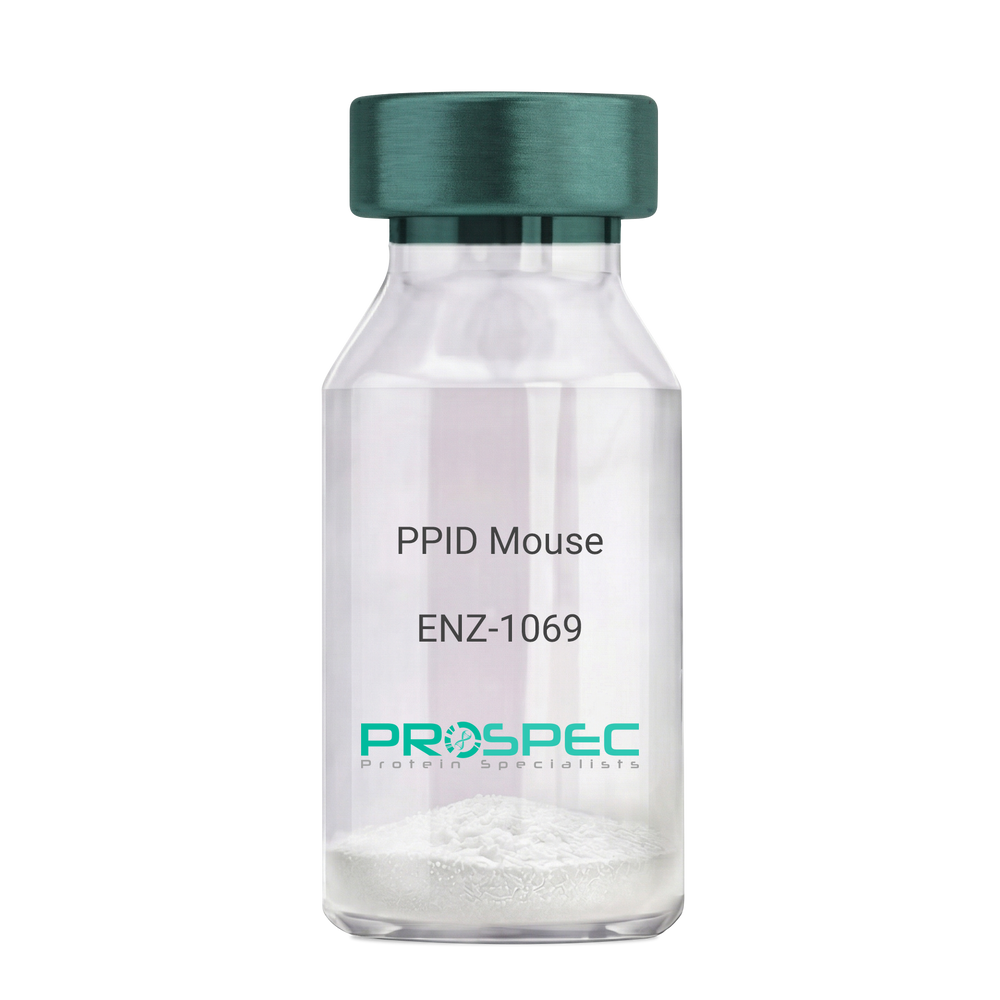
  • View Data Sheet

    Name :

    PPID Mouse

    Description:

    Peptidylprolyl Isomerase D Mouse Recombinant

    Peptidyl-prolyl cis-trans isomerase D, PPIase D, 40 kDa peptidyl-prolyl cis-trans isomerase, Cyclophilin-40, CYP-40, Cyclophilin-related protein, CYP40, CYPD, PPID, Peptidylprolyl Isomerase D.

    Product # :

    ENZ-1069

    Price :

    Quantity :

    Shipping Method :

    Ice Icon

    Shipped with Ice Packs

    Add To Cart

    More Info

    • description
    • source
    • formulation
    • purity
    • biological activity
    • More Info

    Description

    PPID Mouse Recombinant produced in E.Coli is a single, non-glycosylated polypeptide chain containing 395 amino acids (1-370a.a.) and having a molecular mass of 43.4kDa. PPID is fused to a 25 amino acid His-tag at N-terminus & purified by proprietary chromatographic techniques.

    Source

    Escherichia Coli.

    Formulation

    PPID protein solution (1mg/ml) containing 20mM Tris-Hcl buffer (pH8.0), 10% glycerol and 1mM DTT.

    Purity

    Greater than 90.0% as determined by SDS-PAGE.

    Biological Activity

    Specific activity is > 700nmol/min/mg, and is defined as the amount of enzyme that cleaves 1umole of suc-AAFP-PNA per minute at 37°C in Tris–HCl pH 8.0 using chymotrypsin.

    More Info

    • Introduction

      Cyclophilin-D is a member of the peptidyl-prolyl cis-trans isomerase (PPIase) family. PPIases catalyze the cis-trans isomerization of proline imidic peptide bonds in oligopeptides and speeds up the protein folding. Cyclophilin-D possess PPIase activity and binds to the immunosuppressant cyclosporin-A. Cyclophilin-D is very well known that its overexpression suppresses the apoptosis in cancer cell. Cyclophilin-D suppresses apoptotic cell death by the use of mitochondrial hexokinase-2 dependent mechanism in cancer cells.

    • Synonyms

      Peptidyl-prolyl cis-trans isomerase D, PPIase D, 40 kDa peptidyl-prolyl cis-trans isomerase, Cyclophilin-40, CYP-40, Cyclophilin-related protein, CYP40, CYPD, PPID, Peptidylprolyl Isomerase D.

    • Physical Appearance

      Sterile Filtered colorless solution.

    • Stability

      Store at 4°C if entire vial will be used within 2-4 weeks. Store, frozen at -20°C for longer periods of time. For long term storage it is recommended to add a carrier protein (0.1% HSA or BSA). Please prevent freeze-thaw cycles.

    • Amino Acid Sequence

      MGSSHHHHHH SSGLVPRGSH MGSEFMSHAS PAAKPSNSKN PRVFFDVDIG GERVGRIVLE LFADIVPKTA ENFRALCTGE KGTGSTTGKP LHFKGCPFHR IIKKFMIQGG DFSNQNGTGG ESIYGEKFED ENFHYKHDRE GLLSMANAGP NTNGSQFFIT TVPTPHLDGK HVVFGQVIKG LGVARTLENV EVNGEKPAKL CVIAECGELK EGDDWGIFPK DGSGDSHPDF PEDADIDLKD VDKILLISED LKNIGNTFFK SQNWEMAIKK YAKVLRYVDS SKAVIEKADR SRLQPIALSC VLNIGACKLK MSNWQGAIDS CLEALEMDPS NTKALYRKAQ GWQGLKEYDQ ALADLKKAQE IAPGDKAIQA ELLKVKQMIK AQKDKEKAVY AKMFA.

    ProSpec's products are furnished for LABORATORY RESEARCH USE ONLY. The product may not be used as drugs, agricultural or pesticidal products, food additives or household chemicals.

    Ppid Mouse
  • View Data Sheet

    Name :

    CHMP5 Human

    Description:

    Charged Multivesicular Body Protein 5 Human Recombinant

    Charged Multivesicular Body Protein 5, SNF7 Domain-Containing Protein 2, Chromosome 9 Open Reading Frame 83, Chromatin-Modifying Protein 5, Apoptosis-Related Protein PNAS-2, Vacuolar Protein Sorting-Associated Protein 60, Chromatin Modifying Protein 5, HSPC177, PNAS-2, HVps60, SNF7DC2, CGI-34, C9orf83.

    Product # :

    PRO-1232

    Price :

    Quantity :

    Shipping Method :

    Ice Icon

    Shipped with Ice Packs

    Add To Cart

    More Info

    • description
    • source
    • formulation
    • purity
    • More Info

    Description

    CHMP5 Human Recombinant produced in E. coli is a single polypeptide chain containing 243 amino acids (1-219) and having a molecular mass of 27.0 kDa.CHMP5 is fused to a 24 amino acid His-tag at N-terminus & purified by proprietary chromatographic techniques.

    Source

    E.coli.

    Formulation

    The CHMP5 solution (0.25mg/1ml) contains 20mM Tris-HCl buffer (pH 8.0), 0.15M NaCl and 30% glycerol.

    Purity

    Greater than 80% as determined by SDS-PAGE.

    More Info

    • Introduction

      Charged Multivesicular Body Protein 5 (CHMP5) is a member of the chromatin-modifying protein/charged multivesicular body protein (CHMP) family. These proteins comprise the ESCRT-III (endosomal sorting complex required for transport III), a complex involved in degradation of surface receptor proteins and development of endocytic multivesicular bodies (MVBs). Certain CHMPs have both nuclear and cytoplasmic/vesicular distributions, and one such CHMP the CHMP1A, is essential for both MVB formation and regulation of cell cycle progression.

    • Synonyms

      Charged Multivesicular Body Protein 5, SNF7 Domain-Containing Protein 2, Chromosome 9 Open Reading Frame 83, Chromatin-Modifying Protein 5, Apoptosis-Related Protein PNAS-2, Vacuolar Protein Sorting-Associated Protein 60, Chromatin Modifying Protein 5, HSPC177, PNAS-2, HVps60, SNF7DC2, CGI-34, C9orf83.

    • Physical Appearance

      Sterile Filtered colorless solution.

    • Stability

      Store at 4°C if entire vial will be used within 2-4 weeks. Store, frozen at -20°C for longer periods of time. For long term storage it is recommended to add a carrier protein (0.1% HSA or BSA).Avoid multiple freeze-thaw cycles.

    • Amino Acid Sequence

      MGSSHHHHHH SSGLVPRGSH MGSH MNRLFG KAKPKAPPPS LTDCIGTVDS RAESIDKKIS RLDAELVKYK DQIKKMREGP AKNMVKQKAL RVLKQKRMYE QQRDNLAQQS FNMEQANYTI QSLKDTKTTV DAMKLGVKEM KKAYKQVKID QIEDLQDQLE DMMEDANEIQ EALSRSYGTP ELDEDDLEAE LDALGDELLA DEDSSYLDEA ASAPAIPEGV PTDTKNKDGV LVDEFGLPQI PAS

    ProSpec's products are furnished for LABORATORY RESEARCH USE ONLY. The product may not be used as drugs, agricultural or pesticidal products, food additives or household chemicals.

    Chmp5 Human
  • View Data Sheet

    Name :

    MAGEA6 Human

    Description:

    Melanoma Antigen Family A, 6 Human Recombinant

    Melanoma-associated antigen 6, Cancer/testis antigen 1.6, CT1.6, MAGE-6 antigen, MAGE3B antigen, MAGEA6, MAGE6, MAGE3B, MAGE-3b.

    Product # :

    PRO-1113

    Price :

    Quantity :

    Shipping Method :

    Ice Icon

    Shipped with Ice Packs

    Add To Cart

    More Info

    • description
    • source
    • formulation
    • purity
    • More Info

    Description

    MAGEA6 Human Recombinant produced in E.Coli is a single, non-glycosylated polypeptide chain containing 322 amino acids (1-314 a.a) and having a molecular mass of 35.9kDa.MAGEA6 is fused to an 8 amino acid His-tag at C-terminus & purified by proprietary chromatographic techniques.

    Source

    E.coli.

    Formulation

    MAGEA6 protein solution (1mg/ml) containing 20mM Tris-HCl buffer (pH 8.0), 0.1M NaCl, 10% glycerol and 1mM DTT.

    Purity

    Greater than 90% as determined by SDS-PAGE.

    More Info

    • Introduction

      MAGEA6 belongs to the MAGEA family, which directs the expression of tumor antigens which are seen on a human melanoma by autologous cytolytic T lymphocytes (CTL). Members of the MAGEA family encode proteins with 50 to 80% sequence identity to each other. The MAGE genes, which are clustered at chromosomal location Xq28, were originally isolated from separate kinds of tumors, and based on their practically exclusive tumor-specific expression in adult tissues; they are objects for cancer immunotherapy. MAGEA genes’ promoters and first exons exhibit substantial variability, implying that the existence of the MAGEA gene family enables the same function to be expressed under different transcriptional controls. MAGEA genes are implicated in several hereditary disorders, such as dyskeratosis congenita.

    • Synonyms

      Melanoma-associated antigen 6, Cancer/testis antigen 1.6, CT1.6, MAGE-6 antigen, MAGE3B antigen, MAGEA6, MAGE6, MAGE3B, MAGE-3b.

    • Physical Appearance

      Sterile Filtered colorless solution.

    • Stability

      Store at 4°C if entire vial will be used within 2-4 weeks. Store, frozen at -20°C for longer periods of time. For long term storage it is recommended to add a carrier protein (0.1% HSA or BSA).Avoid multiple freeze-thaw cycles.

    • Amino Acid Sequence

      MPLEQRSQHC KPEEGLEARG EALGLVGAQA PATEEQEAAS SSSTLVEVTL GEVPAAESPD PPQSPQGASS LPTTMNYPLW SQSYEDSSNQ EEEGPSTFPD LESEFQAALS RKVAKLVHFL LLKYRAREPV TKAEMLGSVV GNWQYFFPVI FSKASDSLQL VFGIELMEVD PIGHVYIFAT
      CLGLSYDGLL GDNQIMPKTG FLIIILAIIA KEGDCAPEEK IWEELSVLEV FEGREDSIFG DPKKLLTQYF VQENYLEYRQ VPGSDPACYE FLWGPRALIE TSYVKVLHHM VKISGGPRIS YPLLHEWALR EGEELEHHHH HH.

    ProSpec's products are furnished for LABORATORY RESEARCH USE ONLY. The product may not be used as drugs, agricultural or pesticidal products, food additives or household chemicals.

    Magea6 Human
  • View Data Sheet

    Name :

    MAGEA8 Human

    Description:

    Melanoma Antigen Family A, 8 Human Recombinant

    Melanoma Antigen Family A8, MAGE-8 Antigen, MAGE8, Cancer/Testis Antigen 1.8, CT1.8, Cancer/Testis Antigen Family 1, Member 8, Cancer/Testis Antigen Family 1, Melanoma-Associated Antigen 8, Melanoma Antigen Family A, 8, Member 8, MAGEA8.

    Product # :

    PRO-2206

    Price :

    Quantity :

    Shipping Method :

    Ice Icon

    Shipped with Ice Packs

    Add To Cart

    More Info

    • description
    • source
    • formulation
    • purity
    • More Info

    Description

    MAGEA8 Human Recombinant produced in E.Coli is a single, non-glycosylated polypeptide chain containing 341 amino acids (1-318 a.a) and having a molecular mass of 37.6kDa.MAGEA8 is fused to a 23 amino acid His-tag at N-terminus & purified by proprietary chromatographic techniques.

    Source

    Escherichia Coli.

    Formulation

    MAGEA8 protein solution (0.25mg/ml) containing Phosphate Buffered Saline, 10% glycerol and 1mM DTT.

    Purity

    Greater than 85% as determined by SDS-PAGE.

    More Info

    • Introduction

      Melanoma Antigen Family A 8, also known as MAGEA8 belongs to the MAGE gene family, which includes twelve known genes, of which six are expressed in tumors. Furthermore, the MAGE genes were at first isolated from different kinds of tumors, and according to their virtually exclusive tumor-specific expression in adult tissues, they have been used as targets for cancer immunotherapy.

    • Synonyms

      Melanoma Antigen Family A8, MAGE-8 Antigen, MAGE8, Cancer/Testis Antigen 1.8, CT1.8, Cancer/Testis Antigen Family 1, Member 8, Cancer/Testis Antigen Family 1, Melanoma-Associated Antigen 8, Melanoma Antigen Family A, 8, Member 8, MAGEA8.

    • Physical Appearance

      Sterile Filtered clear solution.

    • Stability

      Store at 4°C if entire vial will be used within 2-4 weeks.Store, frozen at -20°C for longer periods of time. For long term storage it is recommended to add a carrier protein (0.1% HSA or BSA).Avoid multiple freeze-thaw cycles.

    • Amino Acid Sequence

      MGSSHHHHHH SSGLVPRGSH MGSMLLGQKS QRYKAEEGLQ AQGEAPGLMD VQIPTAEEQK AASSSSTLIM GTLEEVTDSG SPSPPQSPEG ASSSLTVTDS TLWSQSDEGS SSNEEEGPST SPDPAHLESL FREALDEKVA ELVRFLLRKY QIKEPVTKAE MLESVIKNYK NHFPDIFSKA SECMQVIFGI DVKEVDPAGH SYILVTCLGL SYDGLLGDDQ STPKTGLLII VLGMILMEGS RAPEEAIWEA LSVMGLYDGR EHSVYWKLRK LLTQEWVQEN YLEYRQAPGS DPVRYEFLWG PRALAETSYV KVLEHVVRVN ARVRISYPSL HEEALGEEKG V.

    ProSpec's products are furnished for LABORATORY RESEARCH USE ONLY. The product may not be used as drugs, agricultural or pesticidal products, food additives or household chemicals.

    Magea8 Human
  • View Data Sheet

    Name :

    NHLH1 Human

    Description:

    Nescient Helix Loop Helix 1 Human Recombinant

    Nescient Helix Loop Helix 1, Class A Basic Helix-Loop-Helix Protein 35, Helix-Loop-Helix Protein 1, BHLHA35, NSCL1, HEN1.

    Product # :

    PRO-1547

    Price :

    Quantity :

    Shipping Method :

    Ice Icon

    Shipped with Ice Packs

    Add To Cart

    More Info

    • description
    • source
    • formulation
    • purity
    • More Info

    Description

    NHLH1 Human Recombinant produced in E.coli is a single, non-glycosylated polypeptide chain containing 156 amino acids (1-133) and having a molecular mass of 17.0kDa.NHLH1 is fused to a 23 amino acid His-tag at N-terminus & purified by proprietary chromatographic techniques.

    Source

    Escherichia Coli.

    Formulation

    The NHLH1 solution (0.25mg/ml) contains 20mM Tris-HCl buffer (pH 8.0), 0.2M NaCl, 2mM DTT and 40% glycerol.

    Purity

    Greater than 85% as determined by SDS-PAGE.

    More Info

    • Introduction

      HLH (helix-loop-helix) proteins are a putative transcription factors family. Several HLH proteins take part in growth and development of an extensive range of tissues and species. NHLH1 functions as a DNA-binding protein and has a role in the regulation of cell-type determination in the developing nervous system.

    • Synonyms

      Nescient Helix Loop Helix 1, Class A Basic Helix-Loop-Helix Protein 35, Helix-Loop-Helix Protein 1, BHLHA35, NSCL1, HEN1.

    • Physical Appearance

      Sterile Filtered clear solution.

    • Stability

      Store at 4°C if entire vial will be used within 2-4 weeks. Store, frozen at -20°C for longer periods of time. For long term storage it is recommended to add a carrier protein (0.1% HSA or BSA).Avoid multiple freeze-thaw cycles.

    • Amino Acid Sequence

      MGSSHHHHHH SSGLVPRGSH MGSMMLNSDT MELDLPPTHS ETESGFSDCG GGAGPDGAGP GGPGGGQARG PEPGEPGRKD LQHLSREERR RRRRATAKYR TAHATRERIR VEAFNLAFAE LRKLLPTLPP DKKLSKIEIL RLAICYISYL NHVLDV

    ProSpec's products are furnished for LABORATORY RESEARCH USE ONLY. The product may not be used as drugs, agricultural or pesticidal products, food additives or household chemicals.

    Nhlh1 Human
  • View Data Sheet

    Name :

    GDF15 Human, His

    Description:

    Growth and Differentiation Factor 15 Human Recombinant, His Tag

    GDF-15, MIC1, MIC-1, NAG-1, PDF, PLAB, PTGFB, Growth/differentiation factor 15, Placental bone morphogenetic protein, Placental TGF-beta, Macrophage inhibitory cytokine 1, Prostate differentiation factor, NSAID-activated gene 1 protein, NSAID-regulated gene 1 protein, NRG-1, GDF15.

    Product # :

    CYT-691

    Price :

    Quantity :

    Shipping Method :

    Ice Icon

    Shipped with Ice Packs

    Add To Cart

    More Info

    • description
    • source
    • formulation
    • purity
    • More Info

    Description

    Recombinant Human GDF15 produced in E.Coli is a single, non-glycosylated polypeptide chain containing 151 amino acids (195-308) and having a molecular mass of 16.7 kDa(molecular weight on SDS-PAGE will appear higher).GDF15 is expressed with a 36 amino acid His tag fused at N-Terminus and purified by proprietary chromatographic techniques.

    Source

    Escherichia Coli.

    Formulation

    The GDF15 protein solution contains 10mM sodium citrate, pH-3.5 & 10% glycerol.

    Purity

    Greater than 95.0% as determined by SDS-PAGE.

    More Info

    • Introduction

      GDF15 is part of the TGF-Beta superfamily that is involved in regulating inflammatory and apoptotic pathways in injured tissues and throughout disease processes. GDF15 is most abundant in the liver. Its expression in liver can be considerably up-regulated in during injury of organs such as liver, kidney, heart and lung. GDF-15 promotes proliferation or growth arrest and differentiation due to differences in cellular differentiation. GDF15 prevents apoptosis in cerebellar granule neurons by activating Akt and inhibiting endogenously active ERK. GDF15 is a novel autocrine/endocrine factor that antagonizes the hypertrophic response and loss of ventricular performance.

    • Synonyms

      GDF-15, MIC1, MIC-1, NAG-1, PDF, PLAB, PTGFB, Growth/differentiation factor 15, Placental bone morphogenetic protein, Placental TGF-beta, Macrophage inhibitory cytokine 1, Prostate differentiation factor, NSAID-activated gene 1 protein, NSAID-regulated gene 1 protein, NRG-1, GDF15.

    • Physical Appearance

      Sterile filtered colorless solution.

    • Stability

      Store at 4°C if entire vial will be used within 2-4 weeks. Store, frozen at -20°C for longer periods of time. For long term storage it is recommended to add a carrier protein (0.1% HSA or BSA). Avoid multiple freeze-thaw cycles.

    • Amino Acid Sequence

      MRGSHHHHHH GMASMTGGQQ MGRDLYDDDD KDRWGSMARA RNGDHCPLGP GRCCRLHTVR ASLEDLGWAD WVLSPREVQV TMCIGACPSQ FRAANMHAQI KTSLHRLKPD TVPAPCCVPA SYNPMVLIQK TDTGVSLQTY DDLLAKDCHC I.

    • Background

      What is the molecular weight/Mw of GDF15 HUMAN, HIS Protein?
      GDF15 HUMAN, HIS Protein has a total Mw of 16.7kDa.

      What is the source or expression system of GDF15 HUMAN, HIS Protein?
      Escherichia Coli.

      What is the Purity of GDF15 HUMAN, HIS Protein?
      GDF15 HUMAN, HIS Protein is >95% pure as determined by SDS-PAGE.

      What is the Biological Activity of GDF15 HUMAN, HIS Protein?
      The biological functionality of GDF15 HUMAN, HIS Protein will be determined in the future.

      What is the amino acid sequence of GDF15 HUMAN, HIS Protein?
      MRGSHHHHHH GMASMTGGQQ MGRDLYDDDD KDRWGSMARA RNGDHCPLGP GRCCRLHTVR ASLEDLGWAD WVLSPREVQV TMCIGACPSQ FRAANMHAQI KTSLHRLKPD TVPAPCCVPA SYNPMVLIQK TDTGVSLQTY DDLLAKDCHC I.

      What applications can GDF15 HUMAN, HIS Protein be used in?
      GDF15 HUMAN, HIS Protein can probably be used in western blot, ELISA and
      Lateral Flow.

      What is the endotoxin level for GDF15 HUMAN, HIS Protein?
      The endotoxin level is minimal, GDF15 HUMAN, HIS Protein was purified using conventional chromatography techniques.

    ProSpec's products are furnished for LABORATORY RESEARCH USE ONLY. The product may not be used as drugs, agricultural or pesticidal products, food additives or household chemicals.

    Gdf15 Human
  • View Data Sheet

    Name :

    CX3CL1 Human, Sf9

    Description:

    Fractalkine (CX3CL1) Human Recombinant, Sf9

    Fractalkine, CX3CL1, Neurotactin, CX3C membrane-anchored chemokine, Small inducible cytokine D1, NTN, NTT, CXC3, CXC3C, SCYD1, ABCD-3, C3Xkine.

    Product # :

    CHM-042

    Price :

    Quantity :

    Shipping Method :

    Ice Icon

    Shipped with Ice Packs

    Add To Cart

    More Info

    • description
    • source
    • formulation
    • purity
    • More Info
    • SDS-PAGE

    Description

    Fractalkine Human Recombinant produced in Sf9 Baculovirus cells is a single, glycosylated polypeptide chain containing 323 amino acids (25-339aa) and having a molecular mass of 34.3kDa.Fractalkine is fused to a 8 amino acid His tag at C-terminus and purified by proprietary chromatographic techniques.

    Source

    Sf9, Baculovirus cells.

    Formulation

    The Fractalkine solution (1 mg/ml) contains 10% Glycerol and Phosphate Buffered Saline (pH 7.4).

    Purity

    Greater than 90.0% as determined by SDS-PAGE.

    SDS-PAGE

    CX3CL1 Human, Sf9-SDS-PAGE - Product image 1

    More Info

    • Introduction

      Fractalkine soluble form is chemotactic for t-cells and monocytes, but not for neutrophils. Fractalkine membrane-bound form promotes adhesion of those leukocytes to endothelial cells. Fractalkine regulates leukocyte adhesion and migration processes at the endothelium and binds to CX3CR1. Fractalkine gene is located on human chromosome 16 along with some CC chemokines known as CCL17 and CCL22.

    • Synonyms

      Fractalkine, CX3CL1, Neurotactin, CX3C membrane-anchored chemokine, Small inducible cytokine D1, NTN, NTT, CXC3, CXC3C, SCYD1, ABCD-3, C3Xkine.

    • Physical Appearance

      Sterile Filtered colorless solution.

    • Stability

      Store at 4°C if entire vial will be used within 2-4 weeks. Store, frozen at -20°C for longer periods of time. For long term storage it is recommended to add a carrier protein (0.1% HSA or BSA).Avoid multiple freeze-thaw cycles.

    • Amino Acid Sequence

      QHHGVTKCNI TCSKMTSKIP VALLIHYQQN QASCGKRAII LETRQHRLFC ADPKEQWVKD
      AMQHLDRQAA ALTRNGGTFE KQIGEVKPRT TPAAGGMDES VVLEPEATGE SSSLEPTPSS
      QEAQRALGTS PELPTGVTGS SGTRLPPTPK AQDGGPVGTE LFRVPPVSTA ATWQSSAPHQ
      PGPSLWAEAK TSEAPSTQDP STQASTASSP APEENAPSEG QRVWGQGQSP RPENSLEREE
      MGPVPAHTDA FQDWGPGSMA HVSVVPVSSE GTPSREPVAS GSWTPKAEEP IHATMDPQRL GVLITPVPDA QAATRLEHHH HHH

    • Background

      What is the molecular weight/Mw of CX3CL1 HUMAN, SF9 Protein?
      CX3CL1 HUMAN, SF9 Protein has a total Mw of 34.3kDa.

      What is the source or expression system of CX3CL1 HUMAN, SF9 Protein?
      Sf9, Baculovirus cells.

      What is the Purity of CX3CL1 HUMAN, SF9 Protein?
      CX3CL1 HUMAN, SF9 Protein is >90% pure as determined by SDS-PAGE.

      What is the Biological Activity of CX3CL1 HUMAN, SF9 Protein?
      The biological functionality of CX3CL1 HUMAN, SF9 Protein will be determined in the future.

      What is the amino acid sequence of CX3CL1 HUMAN, SF9 Protein?
      QHHGVTKCNI TCSKMTSKIP VALLIHYQQN QASCGKRAII LETRQHRLFC ADPKEQWVKD
      AMQHLDRQAA ALTRNGGTFE KQIGEVKPRT TPAAGGMDES VVLEPEATGE SSSLEPTPSS
      QEAQRALGTS PELPTGVTGS SGTRLPPTPK AQDGGPVGTE LFRVPPVSTA ATWQSSAPHQ
      PGPSLWAEAK TSEAPSTQDP STQASTASSP APEENAPSEG QRVWGQGQSP RPENSLEREE
      MGPVPAHTDA FQDWGPGSMA HVSVVPVSSE GTPSREPVAS GSWTPKAEEP IHATMDPQRL GVLITPVPDA QAATRLEHHH HHH

      What applications can CX3CL1 HUMAN, SF9 Protein be used in?
      CX3CL1 HUMAN, SF9 Protein can probably be used in western blot, ELISA and Lateral Flow.

      What is the endotoxin level for CX3CL1 HUMAN, SF9 Protein?
      The endotoxin level is minimal, CX3CL1 HUMAN, SF9 Protein was purified using conventional chromatography techniques.


    ProSpec's products are furnished for LABORATORY RESEARCH USE ONLY. The product may not be used as drugs, agricultural or pesticidal products, food additives or household chemicals.

    Cx3Cl1 Human
  • View Data Sheet

    Name :

    Midkine Rat

    Description:

    Midkine Rat Recombinant

    Midkine, MK, Mdk.

    Product # :

    CYT-747

    Price :

    Quantity :

    Shipping Method :

    Room Temp Icon

    Shipped at Room temp

    Add To Cart

    More Info

    • description
    • source
    • formulation
    • purity
    • biological activity
    • More Info

    Description

    Midkine Rat Recombinant produced in E.Coli is a single, non-glycosylated, polypeptide chain containing 120 amino acids and having a molecular mass of 13.2kDa.The Midkine Rat is purified by proprietary chromatographic techniques.

    Source

    Escherichia Coli.

    Formulation

    Lyophilized from a 0.2µm filtered concentrated solution in 1xPBS, pH 7.4.

    Purity

    Greater than 97.0% as determined by:
    (a) Analysis by RP-HPLC.
    (b) Analysis by SDS-PAGE.

    Biological Activity

    The biological activity determined by a chemotaxis bioassay using human neutrophils is in a concentration range of 10-100 ng/ml.

    More Info

    • Introduction

      Midkine (MK) is the product of a retinoic acid responsive gene, MK, and is a member of a family of heparin binding factors. It contains 121 amino acid residues including 10 conserved cysteine residues, all of which appear to be disulphide linked.
      Midkine is expressed during embryogenesis, showing an expression pattern that suggests functions in neurogenesis, cell migration, secondary organogenetic induction, and mesoderm-epithelial interaction.
      The widespread downregulation of MK in the adult human is reverted in a number of cancers, in which polypeptides are able to act as both transforming growth factors and promoters of angiogenesis.
      Midkine (MK), induces chemotaxis of human neutrophils and was found to trigger mobilization of intracellular calcium of these cells.
      Midkine induces histamine release from rat peritoneal mast cells with a rapid response in a dose dependent manner.
      Midkine is also a potent stimulator of collagen and glycosaminoglycan synthesis.

    • Synonyms

      Midkine, MK, Mdk.

    • Physical Appearance

      Sterile Filtered White lyophilized (freeze-dried) powder.

    • Stability

      Lyophilized Midkine Rat although stable at room temperature for 3 weeks, should be stored desiccated below -18°C. Upon reconstitution Midkine Rat should be stored at 4°C between 2-7 days and for future use below -18°C.Please prevent freeze-thaw cycles.

    • Solubility

      It is recommended to reconstitute the lyophilized Midkine Rat in sterile 18M-cm H2O not less than 100µg/ml, which can then be further diluted to other aqueous solutions.

    • Amino Acid Sequence

      VAKKKDKVKK GSECSEWTWG PCTPSSKDCG MGFREGTCGA QTQRIHCKVP CNWKKEFGAD CKYKFESWGA CDGSTGTKAR QGTLKKARYN AQCQETIRVT KPCTSKTKSK AKAKKGKGKD.

    ProSpec's products are furnished for LABORATORY RESEARCH USE ONLY. The product may not be used as drugs, agricultural or pesticidal products, food additives or household chemicals.

    Midkine Rat
  • View Data Sheet

    Name :

    Atosiban

    Description:

    Atosiban

    Product # :

    HOR-239

    Price :

    Quantity :

    Shipping Method :

    Room Temp Icon

    Shipped at Room temp

    Add To Cart

    More Info

    • description
    • formulation
    • purity
    • More Info
    • HPLC, MS

    Description

    Atosiban also called ADH (Anti-Diuretic Hormone) has a molecular formula of C43H67N11O12S2, 3-Mercaptopropionyl-D-Tyr(ET)-Ile-Thr-Asn-Cys-Pro-Orn-Gly-NH2 having a Mw of 994.2 Dalton.

    Formulation

    The Atosiban peptide was lyophilized with no additives.

    Purity

    Greater than 98.0% as determined by analysis by RP-HPLC.

    HPLC, MS

    atosiban hplc - Product image 1
    atosiban hplc - Product image 2

    More Info

    • Introduction

      Atosiban is the first oxytocin antagonist to be specifically developed for the treatment of preterm labor. Atosiban has a specific mode of action, inhibiting oxytocin-induced uterine contractions by blocking oxytocin receptors in the uterus. Extensive clinical investigations have shown Atosiban to be at least as effective as current tocolytic agents. In addition, due to its novel and specific mode of action, Atosiban has a markedly improved maternal side effects profile compared with conventional therapies.

    • Physical Appearance

      Sterile Filtered White lyophilized (freeze-dried) powder.

    • Stability

      Lyophilized Atosiban although stable at room temperature for 3 weeks, should be stored desiccated below -18°C. Upon reconstitution Atosiban should be stored at 4°C between 2-7 days and for future use below -18°C. For long term storage it is recommended to add a carrier protein (0.1% HSA or BSA).Please prevent freeze-thaw cycles.

    • Solubility

      It is recommended to reconstitute the lyophilized Atosiban in sterile 18MΩ-cm H2O not less than 100µg/ml, which can then be further diluted to other aqueous solutions.

    ProSpec's products are furnished for LABORATORY RESEARCH USE ONLY. The product may not be used as drugs, agricultural or pesticidal products, food additives or household chemicals.

    Atosiban
  • View Data Sheet

    Name :

    Leptin tA Mouse, PEG

    Description:

    Leptin Antagonist Triple Mutant Pegylated Mouse Recombinant

    Product # :

    CYT-566

    Price :

    Quantity :

    Shipping Method :

    Room Temp Icon

    Shipped at Room temp

    Add To Cart

    More Info

    • description
    • source
    • formulation
    • purity
    • biological activity
    • More Info

    Description

    Leptin Antagonist Triple Mutant Mouse Recombinant is a single non-glycosilated polypeptide chain containing 146 amino and additional Ala at N-terminus acids and having a molecular mass of ~ 16 kDa.The Mouse Leptin antagonist was mutated, resulting in L39A/D40A/F41A mutant.The Mouse Leptin antagonist is bound to 20 kDa mono-PEG at N-terminus, resulting in 35.6 kDa. The Mouse Leptin triple anatagonist runs as a 48 kDa.Leptin Antagonist Triple Mutant Mouse Recombinant was purified by proprietary chromatographic techniques.

    Source

    Escherichia coli.

    Formulation

    The Mouse Leptin triple anatagonist was lyophilized from a concentrated (0.65mg/ml) solution with 0.003mM NaHCO3.

    Purity

    Greater than 99.0% as determined by:
    (a) Gel filtration analysis.
    (b) Analysis by SDS-PAGE.

    Biological Activity

    Leptin Antagonist Triple Mutant Mouse Recombinant half-life in circulation after SC injection was over 20 hours.
    Leptin Antagonist Triple Mutant Mouse Recombinant is capable of inhibiting leptin-induced proliferation of BAF/3 cells stably transfected with the long form of human leptin receptor. Leptin Antagonist Triple Mutant Mouse Recombinant in vitro activity is 5-6 fold lower than the non-pegylated antagonist, though in vivo it has profound weight gain effect (as compared to the non-pegylated antagonist), resulting mainly from increased food intake.

    More Info

    • Physical Appearance

      White lyophilized (freeze-dried) powder.

    • Stability

      Lyophilized Leptin Antagonist Triple Mutant Mouse Recombinant although stable at room temperature for several weeks, should be stored desiccated below -18°C. Upon reconstitution at > 0.1 Leptin mutant mg/ml and up to 2mM and filter sterilization LEP mutant can be stored at 4°C or even room temperature for several weeks making it suitable for long term infusion studies using osmotic pumps. At lower concentration addition of a carrier protein (0.1% HSA or BSA) is suggested.Please prevent freeze-thaw cycles.

    • Solubility

      It is recommended to reconstitute the lyophilized Leptin Antagonist Triple Mutant Mouse Recombinant in sterile water or sterile 0.4% NaHCO3 adjusted to pH 8-9, not less than 100µg/ml, which can then be further diluted with other aqueous solutions.

    • Protein content

      Protein quantization was carried out by UV spectroscopy at 280 nm using the absorbency value of 0.2 as the extinction coefficient for a 0.1% (1mg/ml) solution at pH 8.0. This value is calculated by the PC GENE computer analysis program of protein sequences (IntelliGenetics).

    ProSpec's products are furnished for LABORATORY RESEARCH USE ONLY. The product may not be used as drugs, agricultural or pesticidal products, food additives or household chemicals.

    Leptin Ta Mouse Peg
  • View Data Sheet

    Name :

    Sincalide

    Description:

    Sincalide

    Product # :

    HOR-274

    Price :

    Quantity :

    Shipping Method :

    Room Temp Icon

    Shipped at Room temp

    Add To Cart

    More Info

    • description
    • formulation
    • purity
    • More Info

    Description

    Sincalide also called CCK-8 has a molecular formula of C49H62N10O16S3 , H-Asp-Tyr(SO3H)-Met-Gly-Trp-Met-Asp-Phe-NH2 having an Mw of 1143.29 Dalton.

    Formulation

    The Sincalide was lyophilized from a concentrated (1mg/ml) solution with no additives.

    Purity

    Greater than 99.0% as determined by RP-HPLC.

    More Info

    • Introduction

      Sincalide corresponds to the C-terminal octapeptide of cholecystokinin (CCK) which acts on receptors within the gallbladder wall causing it to contract.
      Cholecystokinin (CCK) is a hormone originally isolated from porcine intestinal mucosa and described as a linear 33-amino acid peptide containing a sulfated tyrosine, which is essential for its biological activity. It has been found in mammals in both the digestive tract and the central nervous system. Among its multiple biological functions, this hormone stimulates pancreatic exocrine secretion, gallbladder contraction, and intestine motility and may also act as a neurotransmitter/neuromodulator in the central nervous system.

    • Physical Appearance

      Sterile Filtered White lyophilized (freeze-dried) powder.

    • Stability

      Lyophilized Sincalide although stable at room temperature for 3 weeks, should be stored desiccated below -18°C. Upon reconstitution CCK-8 should be stored at 4°C between 2-7 days and for future use below -18°C.For long term storage it is recommended to add a carrier protein (0.1% HSA or BSA).Please prevent freeze-thaw cycles.

    • Solubility

      It is recommended to reconstitute the lyophilized Sincalide in sterile 18MΩ-cm H2O at a concentration of 0.5mg/ml, which can then be further diluted to other aqueous solutions.

    ProSpec's products are furnished for LABORATORY RESEARCH USE ONLY. The product may not be used as drugs, agricultural or pesticidal products, food additives or household chemicals.

    Sincalide
  • 1
  • …
  • 24
  • 25
  • 26
  • 27
  • 28
  • …
  • 42
Your browser does not support the video tag.

Products

  • Cytokines
  • Growth Factors
  • Chemokines
  • CD Antigens
  • Neurotrophins
  • Hormones
  • Enzymes
  • Viral Antigens
  • Recombinant Proteins
  • Natural Proteins
  • Monoclonal Antibodies
  • Polyclonal Antibodies
  • Thermal Packaging

About

  • Company
  • Founder
  • Contribution
  • Contact Us
  • My Account

Ordering

  • Ordering Method
  • Ordering - Credit Card
  • Ordering PO
  • Shipping Fees
  • FAQ's

Legal

  • Terms & Conditions
  • Privacy
  • Site Map
  • info@prospecbio.com
  • Facebook
  • Instagram
  • Linkedin Profile

© 2026 ProSpec-Tany TechnoGene Ltd. All Rights Reserved.

  • Choosing a selection results in a full page refresh.
  • Opens in a new window.