Skip to content

High-quality research proteins.

  • 1-800-805-6531

  • Mon - Sat 8.00-18.00, Sun - Closed

  • info@prospecbio.com

  • PO Box 6591 East Brunswick NJ 08816

  • Products
    • Cytokines
    • Growth factors
    • Chemokines
    • Cd antigens
    • Neurotrophins
    • Hormones
    • Enzymes
    • Viral antigens
    • Recombinant proteins
    • Natural proteins
    • Monoclonal antibodies
    • Polyclonal antibodies
    • Thermal Packaging
  • About
    • Company
    • Founder
    • Contribution
  • Customers
    • Eastern Asia
    • Eastern Europe
    • North America
    • South America
    • South East Asia
    • Southern Asia
    • Western Europe
  • Ordering
    • Ordering Method
    • Ordering - Credit Card
    • Ordering - PO
    • Shipping Fees
    • FAQs
  • Services
    • DNA Cloning
    • Protein Expression
    • Monoclonal Antibody
    • Fermentation
    • Technology License
  • Contact us
Log in

Country/region

  • USD $ | Albania
  • USD $ | Andorra
  • USD $ | Argentina
  • USD $ | Armenia
  • USD $ | Australia
  • USD $ | Austria
  • USD $ | Azerbaijan
  • USD $ | Belarus
  • USD $ | Belgium
  • USD $ | Bolivia
  • USD $ | Brazil
  • USD $ | Bulgaria
  • USD $ | Cambodia
  • USD $ | Canada
  • USD $ | Chile
  • USD $ | China
  • USD $ | Colombia
  • USD $ | Costa Rica
  • USD $ | Croatia
  • USD $ | Cyprus
  • USD $ | Czechia
  • USD $ | Denmark
  • USD $ | Estonia
  • USD $ | Finland
  • USD $ | France
  • USD $ | Georgia
  • USD $ | Germany
  • USD $ | Greece
  • USD $ | Hong Kong SAR
  • USD $ | Hungary
  • USD $ | Iceland
  • USD $ | India
  • USD $ | Ireland
  • USD $ | Israel
  • USD $ | Italy
  • USD $ | Japan
  • USD $ | Kazakhstan
  • USD $ | Latvia
  • USD $ | Liechtenstein
  • USD $ | Lithuania
  • USD $ | Madagascar
  • USD $ | Malta
  • USD $ | Mexico
  • USD $ | Moldova
  • USD $ | Monaco
  • USD $ | Netherlands
  • USD $ | New Zealand
  • USD $ | North Macedonia
  • USD $ | Norway
  • USD $ | Panama
  • USD $ | Paraguay
  • USD $ | Peru
  • USD $ | Philippines
  • USD $ | Poland
  • USD $ | Portugal
  • USD $ | Romania
  • USD $ | Singapore
  • USD $ | Slovakia
  • USD $ | Slovenia
  • USD $ | South Africa
  • USD $ | South Korea
  • USD $ | Spain
  • USD $ | Sri Lanka
  • USD $ | Sweden
  • USD $ | Switzerland
  • USD $ | Taiwan
  • USD $ | Thailand
  • USD $ | Türkiye
  • USD $ | Ukraine
  • USD $ | United Kingdom
  • USD $ | United States
  • USD $ | Uruguay
  • USD $ | Vatican City
  • USD $ | Venezuela
  • USD $ | Vietnam
  • Facebook
  • Instagram
logoProSpec - Recombinant Protein Manufacturer for academic and R&D industry
Become a distributor
Account Log in
Wishlist
Cart Cart(0)
  • Products
    +
    • Cytokines
    • Growth factors
    • Chemokines
    • Cd antigens
    • Neurotrophins
    • Hormones
    • Enzymes
    • Viral antigens
    • Recombinant proteins
    • Natural proteins
    • Monoclonal antibodies
    • Polyclonal antibodies
    • Thermal Packaging
  • About
    +
    • Company
    • Founder
    • Contribution
  • Customers
    +
    • Eastern Asia
    • Eastern Europe
    • North America
    • South America
    • South East Asia
    • Southern Asia
    • Western Europe
  • Ordering
    +
    • Ordering Method
    • Ordering - Credit Card
    • Ordering - PO
    • Shipping Fees
    • FAQs
  • Services
    +
    • DNA Cloning
    • Protein Expression
    • Monoclonal Antibody
    • Fermentation
    • Technology License
  • Contact us

Item added to your cart

View cart
View All
  • Cytokines
  • Growth factors
  • Chemokines
  • Cd antigens
  • Neurotrophins
  • Hormones
  • Enzymes
  • Viral antigens
  • Recombinant proteins
  • Natural proteins
  • Monoclonal antibodies
  • Polyclonal antibodies
  • Thermal Packaging
  • Tumor Necrosis Factor

    Tumor Necrosis Factor

    View All
  • 4-1BB

    4-1BB

    View All
  • Adiponectin

    Adiponectin

    View All
  • AIF1

    AIF1

    View All
  • Other Cytokines

    Other Cytokines

    View All
  • AITRL

    AITRL

    View All
  • Angiopoietin

    Angiopoietin

    View All
  • Apolipoprotein

    Apolipoprotein

    View All
  • B-Cell Activating Factor

    B-Cell Activating Factor

    View All
  • Beta Defensin

    Beta Defensin

    View All
  • Bone Morphogenetic Protein

    Bone Morphogenetic Protein

    View All
  • B type Natriuretic Peptide

    B type Natriuretic Peptide

    View All
  • BST

    BST

    View All
  • Betacellulin

    Betacellulin

    View All
  • Cardiotrophin

    Cardiotrophin

    View All
  • Activin

    Activin

    View All
  • Fibroblast Growth Factor

    Fibroblast Growth Factor

    View All
  • Other Growth Factors

    Other Growth Factors

    View All
  • CSF

    CSF

    View All
  • CTGF

    CTGF

    View All
  • IGFBP

    IGFBP

    View All
  • VEGF Protein

    VEGF Protein

    View All
  • EGF

    EGF

    View All
  • Epigen

    Epigen

    View All
  • Erythropoietin

    Erythropoietin

    View All
  • Insulin-Like Growth Factor

    Insulin-Like Growth Factor

    View All
  • Growth Hormone

    Growth Hormone

    View All
  • HDGF

    HDGF

    View All
  • Hepatocyte Growth Factor

    Hepatocyte Growth Factor

    View All
  • Insulin

    Insulin

    View All
  • BCA-1/ BLC (CXCL13)

    BCA-1/ BLC (CXCL13)

    View All
  • BRAK (CXCL14)

    BRAK (CXCL14)

    View All
  • C-10 (CCL6)

    C-10 (CCL6)

    View All
  • Other Chemokines

    Other Chemokines

    View All
  • MEC (CCL28)

    MEC (CCL28)

    View All
  • LD78-beta (CCL3L1)

    LD78-beta (CCL3L1)

    View All
  • CTACK (CCL27)

    CTACK (CCL27)

    View All
  • CXCL16

    CXCL16

    View All
  • CXCL17

    CXCL17

    View All
  • Platelet Factor-4 (CXCL4)

    Platelet Factor-4 (CXCL4)

    View All
  • ENA-78 (CXCL5)

    ENA-78 (CXCL5)

    View All
  • Eotaxin (CCL11,24,26)

    Eotaxin (CCL11,24,26)

    View All
  • Exodus-2 (CCL21)

    Exodus-2 (CCL21)

    View All
  • Fractalkine (CX3CL1)

    Fractalkine (CX3CL1)

    View All
  • CXCL6

    CXCL6

    View All
  • Other CD Antigens

    Other CD Antigens

    View All
  • CD14

    CD14

    View All
  • CD164

    CD164

    View All
  • CD1

    CD1

    View All
  • CD2

    CD2

    View All
  • CD200

    CD200

    View All
  • CD207

    CD207

    View All
  • CD226

    CD226

    View All
  • CD23

    CD23

    View All
  • CD244

    CD244

    View All
  • CD247

    CD247

    View All
  • CD27

    CD27

    View All
  • CD274

    CD274

    View All
  • CD300

    CD300

    View All
  • CD33

    CD33

    View All
  • Other Neurotrophins

    Other Neurotrophins

    View All
  • Beta-NGF

    Beta-NGF

    View All
  • BDNF

    BDNF

    View All
  • CDNF

    CDNF

    View All
  • CNTF

    CNTF

    View All
  • GDNF

    GDNF

    View All
  • Glia Maturation Factor

    Glia Maturation Factor

    View All
  • MANF

    MANF

    View All
  • Midkine

    Midkine

    View All
  • Neuroglobin

    Neuroglobin

    View All
  • Neurotrophic factors

    Neurotrophic factors

    View All
  • Neuregulin

    Neuregulin

    View All
  • Neuropilin

    Neuropilin

    View All
  • Pigment Epithelium-Derived Factor

    Pigment Epithelium-Derived Factor

    View All
  • Pleiotrophin

    Pleiotrophin

    View All
  • Peptide Hormones

    Peptide Hormones

    View All
  • Other Hormones

    Other Hormones

    View All
  • HCG

    HCG

    View All
  • Endothelin

    Endothelin

    View All
  • Exendin

    Exendin

    View All
  • FSH

    FSH

    View All
  • Glucagon

    Glucagon

    View All
  • GHRP

    GHRP

    View All
  • GLP

    GLP

    View All
  • Thyrostimulin

    Thyrostimulin

    View All
  • Inhibin A

    Inhibin A

    View All
  • LHRH

    LHRH

    View All
  • Melanotan

    Melanotan

    View All
  • Procalcitonin

    Procalcitonin

    View All
  • PTH

    PTH

    View All
  • Peroxiredoxin

    Peroxiredoxin

    View All
  • Peptidase

    Peptidase

    View All
  • Synthetase

    Synthetase

    View All
  • Transferase

    Transferase

    View All
  • Hydrolase

    Hydrolase

    View All
  • Dehydrogenase

    Dehydrogenase

    View All
  • ACE2

    ACE2

    View All
  • Esterase

    Esterase

    View All
  • Protein Kinases

    Protein Kinases

    View All
  • Other Enzymes

    Other Enzymes

    View All
  • Phosphatase

    Phosphatase

    View All
  • Deaminase

    Deaminase

    View All
  • Oxygenase

    Oxygenase

    View All
  • Adenylate Kinase

    Adenylate Kinase

    View All
  • Lyase

    Lyase

    View All
  • Chagas

    Chagas

    View All
  • SARS

    SARS

    View All
  • Influenza

    Influenza

    View All
  • ASFV

    ASFV

    View All
  • Astrovirus

    Astrovirus

    View All
  • Borrelia

    Borrelia

    View All
  • Helicobacter Pylori

    Helicobacter Pylori

    View All
  • Chikungunya

    Chikungunya

    View All
  • Chlamydia

    Chlamydia

    View All
  • Cytomegalo

    Cytomegalo

    View All
  • Dengue

    Dengue

    View All
  • EBV

    EBV

    View All
  • Ebola

    Ebola

    View All
  • Feline Leukemia Virus

    Feline Leukemia Virus

    View All
  • Hepatitis A

    Hepatitis A

    View All
  • Other

    Other

    View All
  • Actin

    Actin

    View All
  • ADAM

    ADAM

    View All
  • Complement Component

    Complement Component

    View All
  • Ag85

    Ag85

    View All
  • Eukaryotic Translation Initiation Factor

    Eukaryotic Translation Initiation Factor

    View All
  • Anterior Gradient Protein

    Anterior Gradient Protein

    View All
  • Heat Shock Protein

    Heat Shock Protein

    View All
  • Alpha-2-HS-Glycoprotein

    Alpha-2-HS-Glycoprotein

    View All
  • Hemoglobin

    Hemoglobin

    View All
  • Allergy

    Allergy

    View All
  • Anaplasma

    Anaplasma

    View All
  • Angiogenin

    Angiogenin

    View All
  • Ankyrin Repeat Domain

    Ankyrin Repeat Domain

    View All
  • Annexin

    Annexin

    View All
  • Other Natural Proteins

    Other Natural Proteins

    View All
  • Aprotinin

    Aprotinin

    View All
  • Transferrin

    Transferrin

    View All
  • Avidin

    Avidin

    View All
  • Anti Coagulation Factors

    Anti Coagulation Factors

    View All
  • Natural Albumin

    Natural Albumin

    View All
  • Natural Coagulation Factors

    Natural Coagulation Factors

    View All
  • Fibronectin

    Fibronectin

    View All
  • Thrombin

    Thrombin

    View All
  • Anti Human Enzyme

    Anti Human Enzyme

    View All
  • Other Monoclonal Antibodies

    Other Monoclonal Antibodies

    View All
  • Anti Human Cytokine

    Anti Human Cytokine

    View All
  • Anti Human Heat Shock Protein

    Anti Human Heat Shock Protein

    View All
  • Anti Mouse Lymphocyte

    Anti Mouse Lymphocyte

    View All
  • Anti Human Chemokine

    Anti Human Chemokine

    View All
  • Anti Human Lymphocyte

    Anti Human Lymphocyte

    View All
  • Anti Viral Monoclonal

    Anti Viral Monoclonal

    View All
  • Anti Mouse Cytokine

    Anti Mouse Cytokine

    View All
  • Anti-GST Monoclonal

    Anti-GST Monoclonal

    View All
  • Other Polyclonal Antibodies

    Other Polyclonal Antibodies

    View All
  • Anti Viral

    Anti Viral

    View All
  • Anti-GST Monoclonal

    Anti-GST Monoclonal

    View All
Back

Search results

609 results found for “toll like receptor”

Name

Description

Product #

Price

Quantity

Shipping Method

  • View Data Sheet

    Name :

    LRPAP1 Human

    Description:

    Low Density Lipoprotein Receptor-Related Protein Associated Protein 1 Human Recombinant

    Low density lipoprotein-related protein-associated protein 1 (alpha-2-macroglobulin receptor-associated protein 1), A2MRAP, HBP44, RAP, A2RAP, Alpha-2-MRAP.

    Product # :

    PRO-1029

    Price :

    Quantity :

    Shipping Method :

    Ice Icon

    Shipped with Ice Packs

    Add To Cart

    More Info

    • description
    • source
    • formulation
    • purity
    • More Info

    Description

    LRPAP1 Human Recombinant produced in E.coli is a single, non-glycosylated polypeptide chain containing 348 amino acids (35-357) and having a molecular mass of 40.4kDa.LRPAP1 is fused to a 25 amino acid His-tag at N-terminus & purified by proprietary chromatographic techniques.

    Source

    E.coli.

    Formulation

    The LRPAP1 solution (1mg/ml) contains 20mM Tris-HCl buffer (pH 8.0), 1mM DTT and 20% glycerol.

    Purity

    Greater than 90% as determined by SDS-PAGE.

    More Info

    • Introduction

      LRPAP1 is a member of the alpha-2-MRAP family. LRPAP1 cooperates with LRP1/alpha-2-macroglobulin receptor and glycoprotein 330. LRPAP1, located on the cell surface, creates a complex with the alpha 2 macroglobulin receptor light and heavy chains and has part in the pathogenesis of membrane glomerular nephritis.

    • Synonyms

      Low density lipoprotein-related protein-associated protein 1 (alpha-2-macroglobulin receptor-associated protein 1), A2MRAP, HBP44, RAP, A2RAP, Alpha-2-MRAP.

    • Physical Appearance

      Sterile Filtered colorless solution.

    • Stability

      Store at 4°C if entire vial will be used within 2-4 weeks. Store, frozen at -20°C for longer periods of time. For long term storage it is recommended to add a carrier protein (0.1% HSA or BSA).Avoid multiple freeze-thaw cycles.

    • Amino Acid Sequence

      MGSSHHHHHH SSGLVPRGSH MGSHMYSREK NQPKPSPKRE SGEEFRMEKL NQLWEKAQRL HLPPVRLAEL HADLKIQERD ELAWKKLKLD GLDEDGEKEA RLIRNLNVIL AKYGLDGKKD ARQVTSNSLS GTQEDGLDDP RLEKLWHKAK TSGKFSGEEL DKLWREFLHH KEKVHEYNVL LETLSRTEEI HENVISPSDL SDIKGSVLHS RHTELKEKLR SINQGLDRLR RVSHQGYSTE AEFEEPRVID LWDLAQSANL TDKELEAFRE ELKHFEAKIE KHNHYQKQLE IAHEKLRHAE SVGDGERVSR SREKHALLEG RTKELGYTVK KHLQDLSGRI SRARHNEL

    ProSpec's products are furnished for LABORATORY RESEARCH USE ONLY. The product may not be used as drugs, agricultural or pesticidal products, food additives or household chemicals.

    Lrpap1 Human
  • View Data Sheet

    Name :

    RAPSN Mouse

    Description:

    Receptor-Associated Protein Of The Synapse Mouse Recombinant

    Receptor-Associated Protein Of The Synapse, 43 KDa Postsynaptic Protein, Acetylcholine Receptor-Associated 43 KDa Protein, RNF205, RING Finger Protein 205, rapsyn, Receptor-Associated Protein Of The Synapse, 43Kd, 43 KDa Receptor-Associated Protein Of The Synapse, RAPSYN, RAPsyn, CMS1D, CMS1E.

    Product # :

    PRO-1751

    Price :

    Quantity :

    Shipping Method :

    Ice Icon

    Shipped with Ice Packs

    Add To Cart

    More Info

    • description
    • source
    • formulation
    • purity
    • More Info

    Description

    RAPSN Mouse Recombinant produced in E.Coli is a single, non-glycosylated polypeptide chain containing 435 amino acids (1-412aa) and having a molecular mass of 48.8kDa.RAPSN is fused to a 23 amino acid His-tag at N-terminus & purified by proprietary chromatographic techniques.

    Source

    Escherichia Coli.

    Formulation

    RAPSN protein solution (0.5mg/ml) containing 20mM Tris-HCl buffer (pH 8.0), 0.4M Urea and 10% glycerol.

    Purity

    Greater than 85% as determined by SDS-PAGE.

    More Info

    • Introduction

      43 kDa receptor-associated protein of the synapse (RAPSN), is expressed in the postsynaptic membrane of skeletal muscle. RAPSN is essential for the clustering of nicotinic acetylcholine receptors (nAChR). In addition RAPSN self-associates via at least two of its seven tetra-tricopeptide repeats (TPRs). RAPSN interacts with the large intracellular domain of the nAChR a subunit all the way through the hydrophobic surface of the coiled-coil domain. RAPSN modifies trafficking of AChR within the cell. Overexpression inhibits agrin-induced AChR clustering pathway. RAPSN also plays a role in postsynaptic congenital myasthenic syndromes.

    • Synonyms

      Receptor-Associated Protein Of The Synapse, 43 KDa Postsynaptic Protein, Acetylcholine Receptor-Associated 43 KDa Protein, RNF205, RING Finger Protein 205, rapsyn, Receptor-Associated Protein Of The Synapse, 43Kd, 43 KDa Receptor-Associated Protein Of The Synapse, RAPSYN, RAPsyn, CMS1D, CMS1E.

    • Physical Appearance

      Sterile Filtered clear solution.

    • Stability

      Store at 4°C if entire vial will be used within 2-4 weeks. Store, frozen at -20°C for longer periods of time.For long term storage it is recommended to add a carrier protein (0.1% HSA or BSA).Please avoid freeze thaw cycles.

    • Amino Acid Sequence

      MGSSHHHHHH SSGLVPRGSH MGSMGQDQTK QQIEKGLQLY QSNQTEKALQ VWMKVLEKGS DLVGRFRVLG CLVTAHSEMG RYKEMLKFAV VQIDTARGLE DADFLLESYL NLARSNEKLC EFHKTISYCK TCLGLPGTRA GAQLGGQVSL SMGNAFLGLS LFQKALESFE KALRYAHNND DTMLECRVCC SLGSFYAQVK DYEKALFFPC KAAELVNDYG KGWSLKYRAM SQYHMAVAYR LLGHLGSAME CCEESMKIAL QHGDRPLQAL CLLCFADIHR SRGDLETAFP RYDSAMSIMT EIGNRLGQVH VLLGVAKCWM ARKVQDKALD AIEKAQDLAE EVGNKLSQLK LHCLSESIYR SKGLQRELRT HVVRFHECVE ETELYCGLCG ESIGERNSRL QALPCSHIFH LRCLQNNGTR SCPNCRRSSM KPGFV

    ProSpec's products are furnished for LABORATORY RESEARCH USE ONLY. The product may not be used as drugs, agricultural or pesticidal products, food additives or household chemicals.

    Rapsn Mouse
  • View Data Sheet

    Name :

    ATP6AP2 Human

    Description:

    ATPase Transporting Lysosomal Accessory Protein 2 Human Recombinant

    Renin receptor, ATPase H(+)-transporting lysosomal accessory protein 2, ATPase H(+)-transporting lysosomal-interacting protein 2, ER-localized type I transmembrane adaptor, Embryonic liver differentiation factor 10, N14F, Renin/prorenin receptor, Vacuolar ATP synthase membrane sector-associated protein M8-9, ATP6M8-9, V-ATPase M8.9 subunit, ATP6AP2, ATP6IP2, CAPER, ELDF10, M8-9, MRXE, XMRE, XPDS, HT028, MRXSH, MSTP009, APT6M8-9.

    Product # :

    PRO-1599

    Price :

    Quantity :

    Shipping Method :

    Room Temp Icon

    Shipped at Room temp

    Add To Cart

    More Info

    • description
    • source
    • formulation
    • purity
    • More Info

    Description

    ATP6AP2 Human Recombinant produced in E.Coli is a single, non-glycosylated, polypeptide chain containing 296 amino acids including a 10 a.a N-terminal His tag. The total molecular mass is 33kDa (calculated).

    Source

    Escherichia Coli.

    Formulation

    ATP6AP2 filtered (0.4 µm) and lyophilized from 0.5mg/ml in 20mM Tris buffer and 50mM NaCl, pH 7.5.

    Purity

    Greater than 90.0% as determined by SDS-PAGE.

    More Info

    • Introduction

      ATPase Transporting Lysosomal Accessory Protein 2 (ATP6AP2) is a protein associated with triphosphatases (ATPases). Proton-translocating ATPases have vital roles in energy conservation, secondary active transport, acidification of intracellular compartments, and cellular pH homeostasis. ATP6AP2 is linked with the transmembrane sector of the V-type ATPases, which have a transmembrane proton-conducting sector and an extramembrane catalytic sector. ATP6AP2 serves as a renin and prorenin cellular receptor; it mediates renin-dependent cellular responses by activating ERK1 and ERK2. ATP6AP2 is expressed in the brain, heart, placenta, liver, kidney and pancreas. ATP6AP2 is hardly detectable in the lung and skeletal muscles. ATP6AP2 is also expressed in the vascular structures and by syncytiotrophoblast cells in the mature fetal placenta.

    • Synonyms

      Renin receptor, ATPase H(+)-transporting lysosomal accessory protein 2, ATPase H(+)-transporting lysosomal-interacting protein 2, ER-localized type I transmembrane adaptor, Embryonic liver differentiation factor 10, N14F, Renin/prorenin receptor, Vacuolar ATP synthase membrane sector-associated protein M8-9, ATP6M8-9, V-ATPase M8.9 subunit, ATP6AP2, ATP6IP2, CAPER, ELDF10, M8-9, MRXE, XMRE, XPDS, HT028, MRXSH, MSTP009, APT6M8-9.

    • Physical Appearance

      Filtered White lyophilized (freeze-dried) powder.

    • Stability

      Store lyophilized protein at -20°C. Aliquot the product after reconstitution to avoid repeated freezing/thawing cycles. Reconstituted protein can be stored at 4°C for a limited period of time; it does not show any change after two weeks at 4°C.

    • Solubility

      It is recommended to add deionized water to prepare a working stock solution of approximately 0.5mg/ml and let the lyophilized pellet dissolve completely. ATP6AP2 is not sterile! Please filter the product by an appropriate sterile filter before using it in the cell culture.

    • Amino Acid Sequence

      MKHHHHHHAS NEFSILKSPG SVVFRNGNWP IPGERIPDVA ALSMGFSVKE DLSWPGLAVG NLFHRPRATV MVMVKGVNKL ALPPGSVISY PLENAVPFSL DSVANSIHSL FSEETPVVLQ LAPSEERVYM VGKANSVFED LSVTLRQLRN RLFQENSVLS SLPLNSLSRN NEVDLLFLSE LQVLHDISSL LSRHKHLAKD HSPDLYSLEL AGLDEIGKRY GEDSEQFRDA SKILVDALQK FADDMYSLYG GNAVVELVTV KSFDTSLIRK TRTILEAKQA KNPASPYNLA YKYNFE.

    ProSpec's products are furnished for LABORATORY RESEARCH USE ONLY. The product may not be used as drugs, agricultural or pesticidal products, food additives or household chemicals.

    Atp6Ap2 Human
  • View Data Sheet

    Name :

    MED4 Human

    Description:

    Mediator Complex Subunit 4 Human Recombinant

    Mediator of RNA polymerase II transcription subunit 4, Mediator complex subunit 4, Vitamin D3 receptor-interacting protein complex 36 kDa component, Activator-recruited cofactor 36 kDa component, TRAP/SMCC/PC2 subunit p36 subunit, DRIP36, ARC36, MED4, VDRIP, TRAP36, HSPC126, FLJ10956, RP11-90M2.2.

    Product # :

    PRO-785

    Price :

    Quantity :

    Shipping Method :

    Ice Icon

    Shipped with Ice Packs

    Add To Cart

    More Info

    • description
    • source
    • formulation
    • purity
    • More Info

    Description

    MED4 produced in E.Coli is a single, non-glycosylated polypeptide chain containing 278 amino acids (1-270 a.a.) and having a molecular mass of 30.7kDa. MED4 is fused to 8 amino acids His Tag at C-terminus and purified by proprietary chromatographic techniques.

    Source

    Escherichia Coli.

    Formulation

    The MED4 protein solution (0.5mg/ml) contains 20mM Tris-HCl buffer (pH8.0), 20% glycerol, 1mM DTT and 100mM NaCl.

    Purity

    Greater than 80.0% as determined by SDS-PAGE.

    More Info

    • Introduction

      Mediator complex subunit 4 (MED4) is a component of the Mediator complex, a coactivator involved in the regulated transcription of nearly all RNA polymerase II-dependent genes. MED4 is a component of the vitamin D receptor-interacting protein (DRIP) complex which functions as a nuclear receptor coactivator. The DRIP complex is able to activate nuclear receptors in a ligand-dependent manner. MED4 functions as a link to convey information from gene-specific regulatory proteins to the basal RNA polymerase II transcription apparatus. MED4 is recruited to promoters by direct interactions with regulatory proteins and serves as a scaffold for the assembly of a functional preinitiation complex with RNA polymerase II and the general transcription factors.

    • Synonyms

      Mediator of RNA polymerase II transcription subunit 4, Mediator complex subunit 4, Vitamin D3 receptor-interacting protein complex 36 kDa component, Activator-recruited cofactor 36 kDa component, TRAP/SMCC/PC2 subunit p36 subunit, DRIP36, ARC36, MED4, VDRIP, TRAP36, HSPC126, FLJ10956, RP11-90M2.2.

    • Physical Appearance

      Sterile filtered colorless solution.

    • Stability

      Store at 4°C if entire vial will be used within 2-4 weeks. Store, frozen at -20°C for longer periods of time. For long term storage it is recommended to add a carrier protein (0.1% HSA or BSA). Avoid multiple freeze-thaw cycles.

    • Amino Acid Sequence

      MAASSSGEKE KERLGGGLGV AGGNSTRERL LSALEDLEVL SRELIEMLAI SRNQKLLQAG EENQVLELLI HRDGEFQELM KLALNQGKIH HEMQVLEKEV EKRDGDIQQL QKQLKEAEQI LATAVYQAKE KLKSIEKARK GAISSEEIIK YAHRISASNA VCAPLTWVPG DPRRPYPTDL EMRSGLLGQM NNPSTNGVNG HLPGDALAAG RLPDVLAPQY PWQSNDMSMN MLPPNHSSDF LLEPPGHNKE DEDDVEIMST DSSSSSSESD LEHHHHHH.

    ProSpec's products are furnished for LABORATORY RESEARCH USE ONLY. The product may not be used as drugs, agricultural or pesticidal products, food additives or household chemicals.

    Med4 Human
  • View Data Sheet

    Name :

    ErbB3 Human

    Description:

    Tyrosine Kinase ErbB-3 Human Recombinant

    Receptor tyrosine-protein kinase erbB-3, EC 2.7.10.1, c-erbB3, Tyrosine kinase-type cell surface receptor HER3, ErbB3, HER3.

    Product # :

    PKA-342

    Price :

    Quantity :

    Shipping Method :

    Ice Icon

    Shipped with Ice Packs

    Add To Cart

    More Info

    • description
    • source
    • formulation
    • purity
    • biological activity
    • More Info

    Description

    Tyrosine Kinase ErbB3 Human Recombinant (HER3) produced in E.Coli is a single, non-glycosylated polypeptide consisting of several epitopes of extracellular domain of human Erb-b3, and having a total molecular mass of approximately 12.0 kDa.The ErbB3 is purified by proprietary chromatographic techniques.

    Source

    Escherichia Coli.

    Formulation

    Each mg protein contains 1 mg aluminum hydroxide 10mM arginine, 10mM sodium chloride, 20mM sodium phosphate buffer and 5mM potassium phosphate.

    Dilution: It is recommended that sterile phosphate-buffered saline containing 1mg aluminum hydroxide be added to the vial to prepare a stock solution.

    Purity

    Greater than 95.0% as determined by:
    (a) Analysis by RP-HPLC.
    (b) Analysis by SDS-PAGE.

    Biological Activity

    Measured by its ability to postpone tumor emerge time of spontaneous breast cancer in FVB/N transgenic mice and inhibit the development of tumor, effectively inhibit the growth of in situ transplanted breast cancer in FVB/N transgenic mice.

    More Info

    • Introduction

      ErbB3, also called Her3 (human epidermal growth factor receptor 3), is a type I membrane glycoprotein that is a member of the ErbB family of tyrosine kinase receptors. ErbB family members serve as receptors for the epidermal growth factor (EGF) family of growth factors. Among ErbB family members, ErbB3 is unique in that it contains a defective kinase domain. ErbB3 is expressed in keratinocytes, melanocytes, skeletal muscle cells, embryonic myoblasts and Schwann cells. Monomeric ErbB3 serves as a low affinity receptor for the heregulins (HRG). ErbB3 can induce specific antibody production in vivo, hence to inhibit tumor cell growth. ErbB-3 can be used to treat early, medium and advanced or post-operative breast cancer with over-expression of ErbB2. According to its mechanism of action, ErbB3 is classified as a therapeutic for cancer.

    • Synonyms

      Receptor tyrosine-protein kinase erbB-3, EC 2.7.10.1, c-erbB3, Tyrosine kinase-type cell surface receptor HER3, ErbB3, HER3.

    • Physical Appearance

      A white semitransparent suspension at a concentration of 1 mg/ml.

    • Stability

      ErbB3 although stable at 4°C for 1 week, should be stored below -18°C. For long term storage it is recommended to add a carrier protein (0.1% HSA or BSA).Please prevent freeze-thaw cycles.

    ProSpec's products are furnished for LABORATORY RESEARCH USE ONLY. The product may not be used as drugs, agricultural or pesticidal products, food additives or household chemicals.

    Her 3 Human
  • View Data Sheet

    Name :

    KIT Human

    Description:

    KIT Proto-Oncogene Receptor Tyrosine Human Recombinant

    Mast/stem cell growth factor receptor Kit, SCFR, Piebald trait protein, PBT, Proto-oncogene c-Kit, Tyrosine-protein kinase Kit, p145 c-kit, v-kit Hardy-Zuckerman 4 feline sarcoma viral oncogene homolog, CD117.

    Product # :

    PKA-102

    Price :

    Quantity :

    Shipping Method :

    Ice Icon

    Shipped with Ice Packs

    Add To Cart

    More Info

    • description
    • source
    • formulation
    • purity
    • More Info

    Description

    KIT produced in Sf9 Insect cells is a single, glycosylated polypeptide chain containing 507 amino acids (26-524 a.a.) and having a molecular mass of 57.1kDa (Molecular size on SDS-PAGE will appear at approximately 50-70kDa).KIT is expressed with an 8 amino acid His tag at C-Terminus and purified by proprietary chromatographic techniques.

    Source

    Sf9, Baculovirus.

    Formulation

    KIT protein solution (0.25mg/ml) contains Phosphate Buffered Saline (pH 7.4) and 10% glycerol.

    Purity

    Greater than 90.0% as determined by SDS-PAGE.

    More Info

    • Introduction

      KIT, also known as KIT Proto-Oncogene Receptor Tyrosine, is a cytokine receptor which is expressed not only in hematopoietic stem cells but likewise in other cell types. KIT binds to receptor tyrosine kinase type III, which is a stem cell factor, also named a "rigid factor" or "c-kit ligand". Once this receptor binds to stem cell factor (SCF), it forms a dimer which activates intrinsic tyrosine kinase activity, which sequentially phosphorylates & activates signaling molecules which breed signals in cells. This receptor protects vascular smooth muscle cells from apoptosis in addition to restoring cardiac function after myocardial infarction.

    • Synonyms

      Mast/stem cell growth factor receptor Kit, SCFR, Piebald trait protein, PBT, Proto-oncogene c-Kit, Tyrosine-protein kinase Kit, p145 c-kit, v-kit Hardy-Zuckerman 4 feline sarcoma viral oncogene homolog, CD117.

    • Physical Appearance

      Sterile Filtered colorless solution.

    • Stability

      Store at 4°C if entire vial will be used within 2-4 weeks.Store, frozen at -20°C for longer periods of time. For long term storage it is recommended to add a carrier protein (0.1% HSA or BSA).Avoid multiple freeze-thaw cycles.

    • Amino Acid Sequence

      QPSVSPGEPS PPSIHPGKSD LIVRVGDEIR LLCTDPGFVK WTFEILDETN ENKQNEWITE KAEATNTGKY TCTNKHGLSN SIYVFVRDPA KLFLVDRSLY GKEDNDTLVR CPLTDPEVTN YSLKGCQGKP LPKDLRFIPD PKAGIMIKSV KRAYHRLCLH CSVDQEGKSV LSEKFILKVR PAFKAVPVVS VSKASYLLRE GEEFTVTCTI KDVSSSVYST WKRENSQTKL QEKYNSWHHG DFNYERQATL TISSARVNDS GVFMCYANNT FGSANVTTTL EVVDKGFINI FPMINTTVFV NDGENVDLIV EYEAFPKPEH QQWIYMNRTF TDKWEDYPKS ENESNIRYVS ELHLTRLKGT
      EGGTYTFLVS NSDVNAAIAF NVYVNTKPEI LTYDRLVNGM LQCVAAGFPE PTIDWYFCPG TEQRCSASVL PVDVQTLNSS GPPFGKLVVQ SSIDSSAFKH NGTVECKAYN DVGKTSAYFN FAFKGNNKEQ IHPHTLFTPL EHHHHHH.

    ProSpec's products are furnished for LABORATORY RESEARCH USE ONLY. The product may not be used as drugs, agricultural or pesticidal products, food additives or household chemicals.

    Kit Human
  • View Data Sheet

    Name :

    PTPN7 Human

    Description:

    Protein Tyrosine Phosphatase Non Receptor Type-7 Human Recombinant

    Protein tyrosine phosphatase non-receptor type 7, HEPTP, LC-PTP, Hematopoietic protein-tyrosine phosphatase, Protein-tyrosine phosphatase LC-PTP, PTPNI, LPTP, BPTP-4, dual specificity phosphatase 1, protein-tyrosine phosphatase non-receptor-type, stress induced, EC 3.1.3.48.

    Product # :

    PKA-025

    Price :

    Quantity :

    Shipping Method :

    Ice Icon

    Shipped with Ice Packs

    Add To Cart

    More Info

    • description
    • source
    • formulation
    • purity
    • More Info

    Description

    PTPN7 Human Recombinant produced in E. coli is a single polypeptide chain containing 384 amino acids (1-360) and having a molecular mass of 43.1kDa.PTPN7 is fused to a 24 amino acid His-tag at N-terminus & purified by proprietary chromatographic techniques.

    Source

    E.coli.

    Formulation

    The PTPN7 solution (0.5mg/ml) contains 20mM Tris-HCl buffer (pH 8.0), 100mM NaCl, 1mM DTT and 20% glycerol.

    Purity

    Greater than 90% as determined by SDS-PAGE.

    More Info

    • Introduction

      PTPN7 performs specifically on tyrosine-phosphorylated MAPK1. PTPN7 takes part in the regulation of signal transduction and T and B-lymphocyte development.

    • Synonyms

      Protein tyrosine phosphatase non-receptor type 7, HEPTP, LC-PTP, Hematopoietic protein-tyrosine phosphatase, Protein-tyrosine phosphatase LC-PTP, PTPNI, LPTP, BPTP-4, dual specificity phosphatase 1, protein-tyrosine phosphatase non-receptor-type, stress induced, EC 3.1.3.48.

    • Physical Appearance

      Sterile Filtered colorless solution.

    • Stability

      Store at 4°C if entire vial will be used within 2-4 weeks. Store, frozen at -20°C for longer periods of time. For long term storage it is recommended to add a carrier protein (0.1% HSA or BSA).Avoid multiple freeze-thaw cycles.

    • Amino Acid Sequence

      MGSSHHHHHH SSGLVPRGSH MGSHMVQAHG GRSRAQPLTL SLGAAMTQPP PEKTPAKKHV RLQERRGSNV ALMLDVRSLG AVEPICSVNT PREVTLHFLR TAGHPLTRWA LQRQPPSPKQ LEEEFLKIPS NFVSPEDLDI PGHASKDRYK TILPNPQSRV CLGRAQSQED GDYINANYIR GYDGKEKVYI ATQGPMPNTV SDFWEMVWQE EVSLIVMLTQ LREGKEKCVH YWPTEEETYG PFQIRIQDMK ECPEYTVRQL TIQYQEERRS VKHILFSAWP DHQTPESAGP LLRLVAEVEE SPETAAHPGP IVVHCSAGIG RTGCFIATRI GCQQLKARGE VDILGIVCQL RLDRGGMIQT AEQYQFLHHT LALYAGQLPE EPSP

    ProSpec's products are furnished for LABORATORY RESEARCH USE ONLY. The product may not be used as drugs, agricultural or pesticidal products, food additives or household chemicals.

    Ptpn7 Human
  • View Data Sheet

    Name :

    EFNB1 Human, Sf9

    Description:

    Ephrin-B1 Human Recombinant, Sf9

    Ephrin B1, ELK Ligand, Ephrin-B1, Elk-L, EPLG2, LERK2, EFL3, Craniofrontonasal Syndrome (Craniofrontonasal Dysplasia), Eph-Related Receptor Tyrosine Kinase Ligand 2, EPH-Related Receptor Tyrosine Kinase Ligand 2, LERK-2, EFL-3, CFND, EFB1, CFNS, ELK ligand, ELK-L, EPH-related receptor tyrosine kinase ligand 2. 

    Product # :

    PRO-2543

    Price :

    Quantity :

    Shipping Method :

    Ice Icon

    Shipped with Ice Packs

    Add To Cart

    More Info

    • description
    • source
    • formulation
    • purity
    • More Info

    Description

    EFNB1 produced in Sf9 Baculovirus cells is a single, glycosylated polypeptide chain containing 452 amino acids (28-237a.a.) and having a molecular mass of 50.3kDa. (Molecular size on SDS-PAGE will appear at approximately 50-70kDa).EFNB1 is expressed with a 242 amino acid hIgG-His-tag at C-Terminus and purified by proprietary chromatographic techniques.

    Source

    Sf9, Baculovirus cells.

    Formulation

    EFNB1 protein solution (1mg/ml) contains 10% glycerol & Phosphate Buffered Saline (pH 7.4).

    Purity

    Greater than 90% as determined by SDS-PAGE.

    More Info

    • Introduction

      EFNB1 is a member of the Eph family. The cell-surface proteins Ephrins split into two groups, ephrin-A and ephrin-B, based on their structure and function and perform as ligands for Eph receptors. The transmembrane EFNB1 proteins have conserved cytoplasmic tyrosine residues that are phosphorylated upon interaction with an EphB receptor. In addition, EFNB1 transduces outside-in signals by C-terminal protein interfaces which influence integrin-mediated cell attachment and migration.

    • Synonyms

      Ephrin B1, ELK Ligand, Ephrin-B1, Elk-L, EPLG2, LERK2, EFL3, Craniofrontonasal Syndrome (Craniofrontonasal Dysplasia), Eph-Related Receptor Tyrosine Kinase Ligand 2, EPH-Related Receptor Tyrosine Kinase Ligand 2, LERK-2, EFL-3, CFND, EFB1, CFNS, ELK ligand, ELK-L, EPH-related receptor tyrosine kinase ligand 2.

    • Physical Appearance

      Sterile Filtered colorless solution.

    • Stability

      Store at 4°C if entire vial will be used within 2-4 weeks. Store, frozen at -20°C for longer periods of time. For long term storage it is recommended to add a carrier protein (0.1% HSA or BSA).Avoid multiple freeze-thaw cycles.

    • Amino Acid Sequence

      ADPLAKNLEP VSWSSLNPKF LSGKGLVIYP KIGDKLDIIC PRAEAGRPYE YYKLYLVRPE QAAACSTVLD PNVLVTCNRP EQEIRFTIKF QEFSPNYMGL EFKKHHDYYI TSTSNGSLEG LENREGGVCR TRTMKIIMKV GQDPNAVTPE QLTTSRPSKE ADNTVKMATQ APGSRGSLGD
      SDGKHETVNQ EEKSGPGASG GSSGDPDGFF NSKLEPKSCD KTHTCPPCPA PELLGGPSVF LFPPKPKDTL MISRTPEVTC VVVDVSHEDP EVKFNWYVDG VEVHNAKTKP REEQYNSTYR VVSVLTVLHQ DWLNGKEYKC KVSNKALPAP IEKTISKAKG QPREPQVYTL PPSRDELTKN
      QVSLTCLVKG FYPSDIAVEW ESNGQPENNY KTTPPVLDSD GSFFLYSKLT VDKSRWQQGN VFSCSVMHEA LHNHYTQKSL SLSPGKHHHH HH.

    ProSpec's products are furnished for LABORATORY RESEARCH USE ONLY. The product may not be used as drugs, agricultural or pesticidal products, food additives or household chemicals.

    Ephrin B1
  • View Data Sheet

    Name :

    EFNA1 Human, Sf9

    Description:

    Ephrin A1 Human Recombinant, Sf9

    Ephrin A1, Immediate Early Response Protein B61, TNF Alpha-Induced Protein 4, Ephrin-A1, TNFAIP4, LERK-1, EPLG1, LERK1, Tumor Necrosis Factor, Alpha-Induced Protein 4, Eph-Related Receptor Tyrosine Kinase Ligand 1, EPH-Related Receptor Tyrosine Kinase Ligand 1, Tumor Necrosis Factor Alpha-Induced Protein 4, Ligand Of Eph-Related Kinase 1, ECKLG, EFL1, B61, EPH-related receptor tyrosine kinase ligand 1, LERK-1.

    Product # :

    PRO-2538

    Price :

    Quantity :

    Shipping Method :

    Ice Icon

    Shipped with Ice Packs

    Add To Cart

    More Info

    • description
    • source
    • formulation
    • purity
    • More Info

    Description

    EFNA1 produced in Sf9 Baculovirus cells is a single, glycosylated polypeptide chain containing 406 amino acids (19-182a.a.) and having a molecular mass of 46.6kDa. (Molecular size on SDS-PAGE will appear at approximately 40-57kDa).EFNA1 is expressed with a 242 amino acid hIgG-His-tag at C-Terminus and purified by proprietary chromatographic techniques.

    Source

    Sf9, Baculovirus cells.

    Formulation

    EFNA1 protein solution (0.5mg/ml) contains 10% glycerol & Phosphate Buffered Saline (pH 7.4).

    Purity

    Greater than 90% as determined by SDS-PAGE.

    More Info

    • Introduction

      EFNA1 belongs to the ephrin (EPH) family. The EPH subfamily is the biggest group of receptor protein kinases and they take part in vital nervous system function and development.

    • Synonyms

      Ephrin A1, Immediate Early Response Protein B61, TNF Alpha-Induced Protein 4, Ephrin-A1, TNFAIP4, LERK-1, EPLG1, LERK1, Tumor Necrosis Factor, Alpha-Induced Protein 4, Eph-Related Receptor Tyrosine Kinase Ligand 1, EPH-Related Receptor Tyrosine Kinase Ligand 1, Tumor Necrosis Factor Alpha-Induced Protein 4, Ligand Of Eph-Related Kinase 1, ECKLG, EFL1, B61, EPH-related receptor tyrosine kinase ligand 1, LERK-1.

    • Physical Appearance

      Sterile Filtered colorless solution.

    • Stability

      Store at 4°C if entire vial will be used within 2-4 weeks.Store, frozen at -20°C for longer periods of time. For long term storage it is recommended to add a carrier protein (0.1% HSA or BSA).Avoid multiple freeze-thaw cycles.

    • Amino Acid Sequence

      ADPDRHTVFW NSSNPKFRNE DYTIHVQLND YVDIICPHYE DHSVADAAME QYILYLVEHE EYQLCQPQSK DQVRWQCNRP SAKHGPEKLS EKFQRFTPFT LGKEFKEGHS YYYISKPIHQ HEDRCLRLKV TVSGKITHSP QAHVNPQEKR LAADDPEVRV LHSIGHSLEP KSCDKTHTCP PCPAPELLGG PSVFLFPPKP KDTLMISRTP EVTCVVVDVS HEDPEVKFNW YVDGVEVHNA KTKPREEQYN STYRVVSVLT VLHQDWLNGK EYKCKVSNKA LPAPIEKTIS KAKGQPREPQ VYTLPPSRDE LTKNQVSLTC LVKGFYPSDI AVEWESNGQP ENNYKTTPPV LDSDGSFFLY SKLTVDKSRW QQGNVFSCSV MHEALHNHYT QKSLSLSPGK HHHHHH

    ProSpec's products are furnished for LABORATORY RESEARCH USE ONLY. The product may not be used as drugs, agricultural or pesticidal products, food additives or household chemicals.

    Ephrin A1
  • View Data Sheet

    Name :

    EFNB3 Human, Sf9

    Description:

    Ephrin- B3 Human Recombinant, Sf9

    Ephrin B3, EPH-Related Receptor Transmembrane Ligand ELK-L3, Ephrin-B3, EPLG8, LERK8, Eph-Related Receptor Tyrosine Kinase Ligand 8, EPH-Related Receptor Tyrosine Kinase Ligand 8, LERK-8, EFL6, Ephrin-B3, EPH-related receptor transmembrane ligand ELK-L3, EPH-related receptor tyrosine kinase ligand 8, LERK-8.

    Product # :

    PRO-2381

    Price :

    Quantity :

    Shipping Method :

    Ice Icon

    Shipped with Ice Packs

    Add To Cart

    More Info

    • description
    • source
    • formulation
    • purity
    • More Info

    Description

    EFNB3 produced in Sf9 Baculovirus cells is a single, glycosylated polypeptide chain containing 208 amino acids (28-226a.a.) and having a molecular mass of 23.0kDa. (Molecular size on SDS-PAGE will appear at approximately 28-40kDa). EFNB3 is expressed with a 6 amino acid His tag at C-Terminus and purified by proprietary chromatographic techniques.

    Source

    Sf9, Baculovirus cells.

    Formulation

    EFNB3 protein solution (0.5mg/ml) contains Phosphate Buffered Saline (pH 7.4) and 10% glycerol.

    Purity

    Greater than 95% as determined by SDS-PAGE.

    More Info

    • Introduction

      Ephrin-B3 (EFNB3) which belongs to the ephrin gene family is essential in brain development as well as in its maintenance. EFNB3 binds to, and induces the collapse of, commissural axons/growth cones in vitro. EFNB3 loosely binds Eph receptors located on bordering cells, leading to contact-dependent bidirectional signaling into neighboring cells. The EPH and EPH-related receptors comprise the largest subfamily of receptor protein-tyrosine kinases and are implicated in mediating developmental events, mostly in the nervous system.

    • Synonyms

      Ephrin B3, EPH-Related Receptor Transmembrane Ligand ELK-L3, Ephrin-B3, EPLG8, LERK8, Eph-Related Receptor Tyrosine Kinase Ligand 8, EPH-Related Receptor Tyrosine Kinase Ligand 8, LERK-8, EFL6, Ephrin-B3, EPH-related receptor transmembrane ligand ELK-L3, EPH-related receptor tyrosine kinase ligand 8, LERK-8.

    • Physical Appearance

      Sterile Filtered colorless solution.

    • Stability

      Store at 4°C if entire vial will be used within 2-4 weeks.Store, frozen at -20°C for longer periods of time. For long term storage it is recommended to add a carrier protein (0.1% HSA or BSA).Avoid multiple freeze-thaw cycles.

    • Amino Acid Sequence

      ADPLSLEPVY WNSANKRFQA EGGYVLYPQI GDRLDLLCPR ARPPGPHSSP NYEFYKLYLV GGAQGRRCEA PPAPNLLLTC DRPDLDLRFT IKFQEYSPNL WGHEFRSHHD YYIIATSDGT REGLESLQGG VCLTRGMKVL LRVGQSPRGG AVPRKPVSEM PMERDRGAAH SLEPGKENLP GDPTSNATSR GAEGPLPPPS MPHHHHHH.

    ProSpec's products are furnished for LABORATORY RESEARCH USE ONLY. The product may not be used as drugs, agricultural or pesticidal products, food additives or household chemicals.

    Efnb3 Human Sf9
  • View Data Sheet

    Name :

    GHBP Mouse

    Description:

    Growth Hormone Binding Protein Mouse Recombinant

    GHR, GHBP, GH receptor, Somatotropin receptor.

    Product # :

    CYT-1256

    Price :

    Quantity :

    Shipping Method :

    Room Temp Icon

    Shipped at Room temp

    Add To Cart

    More Info

    • description
    • source
    • formulation
    • purity
    • biological activity
    • More Info

    Description

    Growth Hormone Binding Protein Mouse Recombinant produced in E.Coli is a single, non-glycosylated, polypeptide chain containing 247 amino acids and having a molecular mass of 28 kDa. GHBP Mouse is purified by proprietary chromatographic techniques.

    Source

    Escherichia Coli.

    Formulation

    The Growth Hormone Binding Protein Mouse was lyophilized from a concentrated (1mg/ml) solution with 0.5mg/ml NaHCO3.

    Purity

    Greater than 95.0% as determined by:

    (a) Gel filtration analysis.

    (b) Analysis by SDS-PAGE.

    Biological Activity

    fully biologically active as evidenced by its ability of forming 2:1 complex with human and non-primate GHs.

    More Info

    • Synonyms

      GHR, GHBP, GH receptor, Somatotropin receptor.

    • Physical Appearance

      Sterile Filtered White lyophilized (freeze-dried) powder.

    • Stability

      Lyophilized GHBP Mouse although stable at room temperature for 3 weeks, should be stored desiccated below -20C. Upon reconstitution at > 0.1 GHBP Mouse -ECD mg/ml and filter sterilization GHBP can be stored at 4C for several weeks. At lower concentration addition of a carrier protein (0.1% HSA or BSA) is suggested. Please prevent freeze-thaw cycles.

    • Solubility

      It is recommended to reconstitute the lyophilized GHBP Mouse in sterile 0.4% NaHCO3 adjusted to pH 8 or in distilled water, not less than 100µg/ml, which can then be further diluted to other aqueous solutions.

    • Amino Acid Sequence

      The sequence of the first five N-terminal amino acids was determined and was found to be Ala-Phe-Ser-Gly-Ser.

    • Background

      GHBP is a transmembrane receptor for growth hormone. Binding of growth hormone to the receptor leads to receptor dimerization and the activation of an intra- and intercellular signal transduction pathway leading to growth. A common alternate allele of this gene, called GHRd3, lacks exon 3 and has been well-characterized. Mutations in GHBP have been associated with Laron syndrome, also known as the growth hormone insensitivity syndrome (GHIS), a disorder characterized by short height.

    ProSpec's products are furnished for LABORATORY RESEARCH USE ONLY. The product may not be used as drugs, agricultural or pesticidal products, food additives or household chemicals.

    Ghbp Mouse
  • View Data Sheet

    Name :

    CD27 Human, sf9

    Description:

    CD27 Human Recombinant, sf9

    Tumor Necrosis Factor Receptor Superfamily Member 7, T-Cell Activation Antigen CD27, CD27 Molecule, CD27 Antigen, T Cell Activation Antigen S152, CD27L Receptor, TNFRSF7, S152, Tp55, T14.

    Product # :

    PRO-2345

    Price :

    Quantity :

    Shipping Method :

    Ice Icon

    Shipped with Ice Packs

    Add To Cart

    More Info

    • description
    • source
    • formulation
    • purity
    • More Info

    Description

    CD27 Human Recombinant produced in Sf9 Baculovirus cells is a single, glycosylated polypeptide chain containing 413 amino acids (21-191a.a.) and having a molecular mass of 46.4kDa (Molecular size on SDS-PAGE will appear at approximately 28-57kDa).CD27 is fused with a 239 amino acids hIgG-His tag at C-Terminus and purified by proprietary chromatographic techniques.

    Source

    Sf9, Baculovirus cells.

    Formulation

    CD27 protein solution (0.5mg/ml) contains Phosphate Buffered Saline (pH7.4) and 10% glycerol.

    Purity

    Greater than 85.0% as determined by SDS-PAGE.

    More Info

    • Introduction

      CD27 belongs to the TNF-receptor superfamily. CD27 is necessary for initiation and long-term maintenance of T cell immunity. CD27 binds to ligand CD70, and has a crucial role in regulating B-cell activation and immunoglobulin synthesis. The CD27 receptor transduces signals which result in the activation of NF-kappaB and MAPK8/JNK. Adaptor proteins TRAF2 and TRAF5 mediate the signaling process of CD27. CD27-binding protein (SIVA), which is a proapoptotic protein, can bind to the CD27 receptor and is believed to have a significant role in the apoptosis induced by CD27.

    • Synonyms

      Tumor Necrosis Factor Receptor Superfamily Member 7, T-Cell Activation Antigen CD27, CD27 Molecule, CD27 Antigen, T Cell Activation Antigen S152, CD27L Receptor, TNFRSF7, S152, Tp55, T14.

    • Physical Appearance

      Sterile Filtered colorless solution.

    • Stability

      Store at 4°C if entire vial will be used within 2-4 weeks. Store, frozen at -20°C for longer periods of time. For long term storage it is recommended to add a carrier protein (0.1% HSA or BSA). Avoid multiple freeze-thaw cycles.

    • Amino Acid Sequence

      ADPTPAPKSC PERHYWAQGK LCCQMCEPGT FLVKDCDQHR KAAQCDPCIP GVSFSPDHHT RPHCESCRHC NSGLLVRNCT ITANAECACR NGWQCRDKEC TECDPLPNPS LTARSSQALS PHPQPTHLPY VSEMLEARTA GHMQTLADFR QLPARTLSTH WPPQRSLCSS DFIRLEPKSC DKTHTCPPCP APELLGGPSV FLFPPKPKDT LMISRTPEVT CVVVDVSHED PEVKFNWYVD GVEVHNAKTK PREEQYNSTY RVVSVLTVLH QDWLNGKEYK CKVSNKALPA PIEKTISKAK GQPREPQVYT LPPSRDELTK NQVSLTCLVK GFYPSDIAVE WESNGQPENN YKTTPPVLDS DGSFFLYSKL TVDKSRWQQG NVFSCSVMHE ALHNHYTQKS LSLSPGKHHH HHH.

    ProSpec's products are furnished for LABORATORY RESEARCH USE ONLY. The product may not be used as drugs, agricultural or pesticidal products, food additives or household chemicals.

    Cd27 Human Sf9
  • View Data Sheet

    Name :

    TIE1 Human

    Description:

    TIE1 Human Recombinant

    Tyrosine-protein kinase receptor Tie-1, TIE1, TIE, JTK14, LMPHM11.

    Product # :

    PKA-131

    Price :

    Quantity :

    Shipping Method :

    Ice Icon

    Shipped with Ice Packs

    Add To Cart

    More Info

    • description
    • source
    • formulation
    • purity
    • More Info

    Description

    TIE1 Human Recombinant produced in HEK293 Cells is a single, glycosylated polypeptide chain containing 977 amino acids (22-759 a.a) and having a molecular mass of 106.8kDa.TIE1 is fused to a 239 amino acid hIgG-His-Tag at C-terminus and is purified by proprietary chromatographic techniques.

    Source

    HEK293 Cells.

    Formulation

    The TIE1 solution (0.5mg/ml) contains 20mM Tris-HCl (pH 8.0), 0.1M NaCl and 50% glycerol.

    Purity

    Greater than 90.0% as determined by SDS-PAGE.

    More Info

    • Introduction

      TIE1 is an angiopoitein receptor which takes part in hematopoiesis,angiogenesis and vasculogenesis.TIE1 is expressed primarily on endothelial and hematopoietic progenitor cells. TIE1 is expressed in immature hematopoietic Recombinant Human TIE1 protein cells and platelets. TIE1 upregulates the cell adhesion molecules(CAMs) VCAM-1,ICAM-1 and E-selectinthrough a p38-dependent mechanism. TIE1 has a proinflammatory effect and takes part in the endothelial inflammatory diseases such as atherosclerosis.

    • Synonyms

      Tyrosine-protein kinase receptor Tie-1, TIE1, TIE, JTK14, LMPHM11.

    • Physical Appearance

      Sterile Filtered colorless solution.

    • Stability

      Store at 4°C if entire vial will be used within 2-4 weeks. Store, frozen at -20°C for longer periods of time. For long term storage it is recommended to add a carrier protein (0.1% HSA or BSA).Avoid multiple freeze-thaw cycles.

    • Amino Acid Sequence

      AVDLTLLANL RLTDPQRFFL TCVSGEAGAG RGSDAWGPPL LLEKDDRIVR TPPGPPLRLA RNGSHQVTLR GFSKPSDLVG VFSCVGGAGA RRTRVIYVHN SPGAHLLPDK VTHTVNKGDT AVLSARVHKE KQTDVIWKSN GSYFYTLDWH EAQDGRFLLQ LPNVQPPSSG IYSATYLEAS PLGSAFFRLI VRGCGAGRWG PGCTKECPGC LHGGVCHDHD GECVCPPGFT GTRCEQACRE GRFGQSCQEQ CPGISGCRGL TFCLPDPYGC SCGSGWRGSQ CQEACAPGHF GADCRLQCQC QNGGTCDRFS GCVCPSGWHG VHCEKSDRIP QILNMASELE FNLETMPRIN CAAAGNPFPV RGSIELRKPD GTVLLSTKAI VEPEKTTAEF EVPRLVLADS GFWECRVSTS GGQDSRRFKV NVKVPPVPLA APRLLTKQSR QLVVSPLVSF SGDGPISTVR LHYRPQDSTM DWSTIVVDPS ENVTLMNLRP KTGYSVRVQL SRPGEGGEGA WGPPTLMTTD CPEPLLQPWL EGWHVEGTDR LRVSWSLPLV PGPLVGDGFL LRLWDGTRGQ ERRENVSSPQ ARTALLTGLT PGTHYQLDVQ LYHCTLLGPA SPPAHVLLPP SGPPAPRHLH AQALSDSEIQ LTWKHPEALP GPISKYVVEV QVAGGAGDPL WIDVDRPEET STIIRGLNAS TRYLFRMRAS IQGLGDWSNT VEESTLGNGL QAEGPVQESR AAEEGLDQLE PKSCDKTHTC PPCPAPELLG GPSVFLFPPK PKDTLMISRT PEVTCVVVDV SHEDPEVKFN WYVDGVEVHN AKTKPREEQY NSTYRVVSVL TVLHQDWLNG KEYKCKVSNK ALPAPIEKTI SKAKGQPREP QVYTLPPSRD ELTKNQVSLT CLVKGFYPSD IAVEWESNGQ PENNYKTTPP VLDSDGSFFL YSKLTVDKSR WQQGNVFSCS VMHEALHNHY TQKSLSLSPG KHHHHHH

    ProSpec's products are furnished for LABORATORY RESEARCH USE ONLY. The product may not be used as drugs, agricultural or pesticidal products, food additives or household chemicals.

    Tie1 Human
  • View Data Sheet

    Name :

    GHBP Human, His

    Description:

    Growth Hormone Binding Protein Human Recombinant, His Tag

    Growth Hormone Receptor, Growth Hormone Binding Protein, Somatotropin Receptor GH Receptor, Serum Binding Protein, GHBP, GHIP.

    Product # :

    CYT-921

    Price :

    Quantity :

    Shipping Method :

    Ice Icon

    Shipped with Ice Packs

    Add To Cart

    More Info

    • description
    • source
    • formulation
    • purity
    • biological activity
    • More Info

    Description

    GHBP produced in Sf9 Insect cells is a single, glycosylated polypeptide chain containing 254 amino acids (19-264a.a.) and having a molecular mass of 29.4kDa.GHBP is expressed with an 8 amino acid His tag at C-Terminus and purified by proprietary chromatographic techniques.

    Source

    Sf9, Insect cells.

    Formulation

    GHBP protein solution (1mg/ml) contains phosphate buffered saline (pH7.4) and 10% glycerol.

    Purity

    Greater than 95.0% as determined by SDS-PAGE.

    Biological Activity

    The ED50 range ≤ 10ng/ml and is measured by ability to inhibit GH-induced proliferation assay using Nb2-11 Rat lymphoma cells in the presence of 1.25ng/ml of human growth hormone.

    More Info

    • Introduction

      Growth hormone receptor, also known as GHR is part of the cytokine receptor family. GHR binds 2 receptor molecules and in this manner induces signal transduction through receptor dimerization. Furthermore, at high concentrations, growth hormone performs as an antagonist since there is a large difference in affinities at the respective binding sites. The antagonist action can be enhanced further by reducing binding in the low affinity binding site.

    • Synonyms

      Growth Hormone Receptor, Growth Hormone Binding Protein, Somatotropin Receptor GH Receptor, Serum Binding Protein, GHBP, GHIP.

    • Physical Appearance

      Sterile filtered colorless solution.

    • Stability

      Store at 4°C if entire vial will be used within 2-4 weeks.Store, frozen at -20°C for longer periods of time. For long term storage it is recommended to add a carrier protein (0.1% HSA or BSA).Avoid multiple freeze-thaw cycles.

    • Amino Acid Sequence

      FSGSEATAAI LSRAPWSLQS VNPGLKTNSS KEPKFTKCRS PERETFSCHW TDEVHHGTKN LGPIQLFYTR RNTQEWTQEW KECPDYVSAG ENSCYFNSSF TSIWIPYCIK LTSNGGTVDE KCFSVDEIVQ PDPPIALNWT LLNVSLTGIH ADIQVRWEAP RNADIQKGWM VLEYELQYKE
      VNETKWKMMD PILTTSVPVY SLKVDKEYEV RVRSKQRNSG NYGEFSEVLY VTLPQMSQFT CEEDFYLEHH HHHH.

    ProSpec's products are furnished for LABORATORY RESEARCH USE ONLY. The product may not be used as drugs, agricultural or pesticidal products, food additives or household chemicals.

    Ghr Human
  • View Data Sheet

    Name :

    CD29 Antibody

    Description:

    CD29, Mouse Anti Human

    Integrin beta-1, Fibronectin receptor subunit beta, Integrin VLA-4 subunit beta, CD29 antigen, ITGB1, CD29, FNRB, MDF2, VLAB, GPIIA, MSK12.

    Product # :

    ANT-340

    Price :

    Quantity :

    Shipping Method :

    Ice Icon

    Shipped with Ice Packs

    Add To Cart

    More Info

    • formulation
    • More Info

    Formulation

    1mg/ml containing PBS, pH-7.4, & 0.02% Sodium Azide and 10% Glycerol.

    More Info

    • Introduction

      Integrin beta 1, also known as CD29, is a 130 kDa transmembrane glycoprotein that forms noncovalent complexes with various Integrin alpha subunits (including alpha 1, alpha 2, alpha 3, alpha 4, alpha 5, and alpha 6, also known as CD49a, CD49b, CD49c, CD49d, CD49e, and CD49f, respectively) to form the functional receptors that bind to specific extracellular matrix proteins. Integrin receptors are involved in the regulation of a variety of important biological functions, including embryonic development, wound repair, hemostasis, and prevention of programmed cell death. They are also implicated in abnormal pathological states such as tumor directed angiogenesis, tumor cell growth, and metastasis. These heterodimeric receptors bridge the cytoplasmic actin cytoskeleton with proteins present in the extracellular matrix and/or on adjacent cells. The clustering of integrins on a cell surface leads to the formation of focal contacts. Interactions between integrins and the extracellular matrix l

    • Synonyms

      Integrin beta-1, Fibronectin receptor subunit beta, Integrin VLA-4 subunit beta, CD29 antigen, ITGB1, CD29, FNRB, MDF2, VLAB, GPIIA, MSK12.

    • Immunogen

      Anti-human CD29 mAb is derived from hybridization of mouse F0 myeloma cells with spleen cells from BALB/c mice immunized with recombinant human CD29 amino acids 34-141 purified from E. coli.

    • Ig Subclass

      Mouse IgG1 heavy chain and κ light chain.

    • Clone

      Pk2D5AT.

    • Applications

      CD29 antibody has been tested by ELISA and Western blot analysis to assure specificity and reactivity. Since application varies, however, each investigation should be titrated by the reagent to obtain optimal results. Recommended dilution range for Western blot analysis is 1:500 ~ 1,000. Recommended starting dilution is 1:500.

    • Type

      Mouse Anti Human Monoclonal.

    • Storage Procedures

      For periods up to 1 month store at 4°C, for longer periods of time, store at -20°C. Prevent freeze thaw cycles.

    • Purification Method

      CD29 antibody was purified from mouse ascitic fluids by protein-G affinity chromatography.

    ProSpec's products are furnished for LABORATORY RESEARCH USE ONLY. The product may not be used as drugs, agricultural or pesticidal products, food additives or household chemicals.

    Cd29 Antibody
  • View Data Sheet

    Name :

    ErbB3 Human, sf9

    Description:

    Tyrosine Kinase ErbB-3 Human Recombinant, sf9

    Tyrosine Kinase ErbB-3, sf9, ErbB3 sf9, Receptor tyrosine-protein kinase erbB-3, ERBB3, Proto-oncogene-like protein c-ErbB-3, Tyrosine kinase-type cell surface receptor HER3, HER3, Receptor tyrosine-protein kinase erbB-3 isoform, c-erbB-3, ErbB-3, erbB3-S, LCCS2, MDA-BF-1, p180-ErbB3, p45-sErbB3, p85-sErbB3.

    Product # :

    PKA-081

    Price :

    Quantity :

    Shipping Method :

    Ice Icon

    Shipped with Ice Packs

    Add To Cart

    More Info

    • description
    • source
    • formulation
    • purity
    • More Info

    Description

    ErbB3 Human Recombinant produced in Sf9 Baculovirus cells is a single, glycosylated polypeptide chain containing 863 amino acids (20-643 a.a.) and having a molecular mass of 95.6kDa (Migrates at 100-150kDa on SDS-PAGE under reducing conditions).ErbB3 is expressed with a 239 amino acid hIgG-His tag at C-Terminus and purified by proprietary chromatographic techniques.

    Source

    Sf9, Baculovirus cells.

    Formulation

    ErbB3 protein solution (0.25mg/ml) contains Phosphate Buffered Saline (pH 7.4) and 10% glycerol.

    Purity

    Greater than 90.0% as determined by SDS-PAGE.

    More Info

    • Introduction

      ErbB3, also called Her3 (human epidermal growth factor receptor 3), is a type I membrane glycoprotein that is a member of the ErbB family of tyrosine kinase receptors. ErbB family members serve as receptors for the epidermal growth factor (EGF) family of growth factors. Among ErbB family members, ErbB3 is unique in that it contains a defective kinase domain. ErbB3 is expressed in keratinocytes, melanocytes, skeletal muscle cells, embryonic myoblasts and Schwann cells. Monomeric ErbB3 serves as a low affinity receptor for the heregulins (HRG). ErbB3 can induce specific antibody production in vivo, hence to inhibit tumor cell growth. ErbB-3 can be used to treat early, medium and advanced or post-operative breast cancer with over-expression of ErbB2. According to its mechanism of action, ErbB3 is classified as a therapeutic for cancer.

    • Synonyms

      Tyrosine Kinase ErbB-3, sf9, ErbB3 sf9, Receptor tyrosine-protein kinase erbB-3, ERBB3, Proto-oncogene-like protein c-ErbB-3, Tyrosine kinase-type cell surface receptor HER3, HER3, Receptor tyrosine-protein kinase erbB-3 isoform, c-erbB-3, ErbB-3, erbB3-S, LCCS2, MDA-BF-1, p180-ErbB3, p45-sErbB3, p85-sErbB3.

    • Physical Appearance

      Sterile Filtered colorless solution.

    • Stability

      Store at 4°C if entire vial will be used within 2-4 weeks. Store, frozen at -20°C for longer periods of time. For long term storage it is recommended to add a carrier protein (0.1% HSA or BSA). Avoid multiple freeze-thaw cycles.

    • Amino Acid Sequence

      SEVGNSQAVC PGTLNGLSVT GDAENQYQTL YKLYERCEVV MGNLEIVLTG HNADLSFLQW IREVTGYVLV AMNEFSTLPL PNLRVVRGTQ VYDGKFAIFV MLNYNTNSSH ALRQLRLTQL TEILSGGVYI EKNDKLCHMD TIDWRDIVRD RDAEIVVKDN GRSCPPCHEV CKGRCWGPGS EDCQTLTKTI CAPQCNGHCF GPNPNQCCHD ECAGGCSGPQ DTDCFACRHF NDSGACVPRC PQPLVYNKLT FQLEPNPHTK YQYGGVCVAS CPHNFVVDQT SCVRACPPDK MEVDKNGLKM CEPCGGLCPK ACEGTGSGSR FQTVDSSNID GFVNCTKILG NLDFLITGLN GDPWHKIPAL DPEKLNVFRT VREITGYLNI QSWPPHMHNF SVFSNLTTIG GRSLYNRGFS LLIMKNLNVT SLGFRSLKEI SAGRIYISAN RQLCYHHSLN WTKVLRGPTE ERLDIKHNRP RRDCVAEGKV CDPLCSSGGC WGPGPGQCLS CRNYSRGGVC VTHCNFLNGE PREFAHEAEC FSCHPECQPM EGTATCNGSG SDTCAQCAHF RDGPHCVSSC PHGVLGAKGP IYKYPDVQNE CRPCHENCTQ GCKGPELQDC LGQTLVLIGK THLTRSPKSC DKTHTCPPCP APELLGGPSV FLFPPKPKDT LMISRTPEVT CVVVDVSHED PEVKFNWYVD GVEVHNAKTK PREEQYNSTY RVVSVLTVLH QDWLNGKEYK CKVSNKALPA PIEKTISKAK GQPREPQVYT LPPSRDELTK NQVSLTCLVK GFYPSDIAVE WESNGQPENN YKTTPPVLDS DGSFFLYSKL TVDKSRWQQG NVFSCSVMHE ALHNHYTQKS LSLSPGKHHH HHH.

    ProSpec's products are furnished for LABORATORY RESEARCH USE ONLY. The product may not be used as drugs, agricultural or pesticidal products, food additives or household chemicals.

    Erbb3 Human Sf9
  • View Data Sheet

    Name :

    PRMT1 Mouse

    Description:

    Protein Arginine Methyltransferase 1 Mouse Recombinant

    ANM1, HCP1, HRMT1L2, IR1B4, Interferon receptor 1-bound protein 4, EC 2.1.1, Protein arginine N-methyltransferase 1, Prmt1, AW214366, 6720434D09Rik.

    Product # :

    ENZ-365

    Price :

    Quantity :

    Shipping Method :

    Ice Icon

    Shipped with Ice Packs

    Add To Cart

    More Info

    • description
    • source
    • formulation
    • purity
    • biological activity
    • More Info

    Description

    PRMT1 Mouse Recombinant fused with His-MBP tag at N-terminus produced in E.Coli is a single, non-glycosylated, polypeptide chain containing 750 amino acids and having a molecular mass of 84 kDa.The PRMT1 is purified by proprietary chromatographic techniques.

    Source

    Escherichia Coli.

    Formulation

    The PRMT1 solution (1mg/ml) contains 40mM Tris-HCl pH 8.0, 100mM NaCl, 4mM MgCl2, 2mM DTT and 40% glycerol.

    Purity

    Greater than 90.0% as determined by SDS-PAGE.

    Biological Activity

    Specific activity is defined as the amount of enzyme that transfer 1.0nmole of methyl group per minute at 37C and was found to be > 30nmol/min/mg.

    More Info

    • Introduction

      PRMT1 Methylates (mono & asymmetric dimethylation) the guanidino nitrogens of arginyl residues present in a glycine and arginine-rich domain (may methylate HNRNPA1 and histones). Methylates SUPT5H.
      The PRMT1 protein functions as a histone methyltransferase specific for H4.
      PRMT1 is an essential factor in oncogenesis and is a potential novel therapeutic target in cancer.
      PRMT1-mediated methylation serves as a positive modulator of IR/IRS-1/PI3K pathway and glucose uptake in skeletal muscle cells.
      CAF1 is a new regulator of PRMT1-dependent arginine methylation.
      PRMT1 arginine-methylates MRE11 therefore it regulates the activity of MRE11-RAD50-NBS1 complex during the intra-S-phase DNA damage checkpoint response.
      PRMT1 plays a post-translationally part in regulating the transcriptional activity.
      PRMT1is found predominantly in the cytoplasma though a fraction of PRMT1 is located in the nucleus.

    • Synonyms

      ANM1, HCP1, HRMT1L2, IR1B4, Interferon receptor 1-bound protein 4, EC 2.1.1, Protein arginine N-methyltransferase 1, Prmt1, AW214366, 6720434D09Rik.

    • Physical Appearance

      Sterile Filtered colorless solution.

    • Stability

      Store at 4°C if entire vial will be used within 2-4 weeks.Store, frozen at -20°C for longer periods of time. For long term storage it is recommended to add a carrier protein (0.1% HSA or BSA).Avoid multiple freeze-thaw cycles.

    • Amino Acid Sequence

      MHHHHHHMKI EEGKLVIWIN GDKGYNGLAE VGKKFEKDTG IKVTVEHPDK LEEKFPQVAA TGDGPDIIFW AHDRFGGYAQ SGLLAEITPD KAFQDKLYPF TWDAVRYNGK LIAYPIAVEA LSLIYNKDLL PNPPKTWEEI PALDKELKAK GKSALMFNLQ EPYFTWPLIA ADGGYAFKYE NGKYDIKDVG VDNAGAKAGL TFLVDLIKNK HMNADTDYSI AEAAFNKGET AMTINGPWAW SNIDTSKVNY GVTVLPTFKG QPSKPFVGVL SAGINAASPN KELAKEFLEN YLLTDEGLEA
      VNKDKPLGAV ALKSYEEELA KDPRIAATME NAQKGEIMPN IPQMSAFWYA VRTAVINAAS GRQTVDEALK DAQTNSSSNN NNNNNNNNLG IEGRGSHMAA AEAANCIMEV SCGQAESSEK PNAEDMTSKD YYFDSYAHFG IHEEMLKDEV RTLTYRNSMF HNRHLFKDKV VLDVGSGTGILCMFAAKAGA RKVIGIECSS ISDYAVKIVK ANKLDHVVTI IKGKVEEVEL PVEKVDIIIS EWMGYCLFYE SMLNTVLHAR DKWLAPDGLI FPDRATLYVT AIEDRQYKDY KIHWWENVYG
      FDMSCIKDVA IKEPLVDVVD PKQLVTNACL IKEVDIYTVK VEDLTFTSPF CLQVKRNDYVHALVAYFNIE FTRCHKRTGF STSPESPYTH WKQTVFYMED YLTVKTGEEI FGTIGMRPNA KNNRDLDFTI DLDFKGQLCE LSCSTDYRMR.

    ProSpec's products are furnished for LABORATORY RESEARCH USE ONLY. The product may not be used as drugs, agricultural or pesticidal products, food additives or household chemicals.

    Prmt1 Mouse
  • View Data Sheet

    Name :

    EEF1A1 Antibody

    Description:

    Eukaryotic Translation Elongation Factor 1 Alpha 1, Mouse Anti Human

    Eukaryotic Translation Elongation Factor 1 Alpha 1, EF1A, EEF1A, LENG7, Leukocyte Receptor Cluster (LRC) Member 7, Elongation Factor Tu, Eukaryotic Elongation Factor 1 A-1, Leukocyte Receptor Cluster Member 7, EF-1-alpha-1, EF-Tu, eEF1A-1, CCS-3, CCS3, EE1A1, EEF-1, GRAF-1EF, HNGC:16303, PTI1, Cervical Cancer Suppressor 3, CTCL Tumor Antigen, EF1a-Like Protein, Elongation Factor 1 Alpha Subunit, Elongation Factor 1-Alpha 1, Eukaryotic Translation Elongation Factor 1 Alpha 1-Like 14, Glucocorticoid Receptor AF-1 Specific Elongation Factor, Prostate Tumor-Inducing Protein 1, Translation Elongation Factor 1 Alpha 1-Like 14.

    Product # :

    ANT-578

    Price :

    Quantity :

    Shipping Method :

    Ice Icon

    Shipped with Ice Packs

    Add To Cart

    More Info

    • formulation
    • More Info

    Formulation

    1mg/ml containing PBS, pH-7.4, 10% Glycerol and 0.02% Sodium Azide.

    More Info

    • Introduction

      EEF1A1 is an isoform of the alpha subunit of the elongation factor-1 complex, which is responsible for the enzymatic release of aminoacyl tRNAs to the ribosome. EEF1A1 is expressed in brain, placenta, lung, liver, kidney, and pancreas, and the other isoform (alpha 2) is expressed in brain, heart and skeletal muscle.

    • Synonyms

      Eukaryotic Translation Elongation Factor 1 Alpha 1, EF1A, EEF1A, LENG7, Leukocyte Receptor Cluster (LRC) Member 7, Elongation Factor Tu, Eukaryotic Elongation Factor 1 A-1, Leukocyte Receptor Cluster Member 7, EF-1-alpha-1, EF-Tu, eEF1A-1, CCS-3, CCS3, EE1A1, EEF-1, GRAF-1EF, HNGC:16303, PTI1, Cervical Cancer Suppressor 3, CTCL Tumor Antigen, EF1a-Like Protein, Elongation Factor 1 Alpha Subunit, Elongation Factor 1-Alpha 1, Eukaryotic Translation Elongation Factor 1 Alpha 1-Like 14, Glucocorticoid Receptor AF-1 Specific Elongation Factor, Prostate Tumor-Inducing Protein 1, Translation Elongation Factor 1 Alpha 1-Like 14.

    • Physical Appearance

      Sterile filtered colorless solution.

    • Immunogen

      Anti-human EEF1A1 mAb, is derived from hybridization of mouse F0 myeloma cells with spleen cells from BALB/c mice immunized with a recombinant human EEF1A1 protein 1-462 amino acids purified from E. coli.

    • Ig Subclass

      Mouse IgG2a heavy chain and k light chain.

    • Clone

      PAT23C11AT.

    • Applications

      EEF1A1 antibody has been tested by ELISA, Western blot analysis and Flow cytometry to assure specificity and reactivity. Since application varies, however, each investigation should be titrated by the reagent to obtain optimal results.

    • Type

      Mouse Anti Human Monoclonal.

    • Storage Procedures

      For periods up to 1 month store at 4°C, for longer periods of time, store at -20°C. Prevent freeze thaw cycles.

    • Purification Method

      EEF1A1 antibody was purified from mouse ascitic fluids by protein-A affinity chromatography.

    ProSpec's products are furnished for LABORATORY RESEARCH USE ONLY. The product may not be used as drugs, agricultural or pesticidal products, food additives or household chemicals.

    Eef1A1 Antibody
  • View Data Sheet

    Name :

    DBI Human

    Description:

    DBI Human Recombinant

    ACBP, ACBD1, CCK-RP, EP, DBI, EP, MGC70414, Acyl-CoA-binding protein, GABA receptor modulator.

    Product # :

    PRO-832

    Price :

    Quantity :

    Shipping Method :

    Ice Icon

    Shipped with Ice Packs

    Add To Cart

    More Info

    • description
    • source
    • formulation
    • purity
    • More Info

    Description

    DBI Human Recombinant produced in E.Coli is a single, non-glycosylated, polypeptide chain containing 107 amino acids (1-87a.a.) and having a molecular mass of 12.2kDa. DBI protein is fused to a 20 amino acid His tag at N-terminus and is purified by standard chromatography.

    Source

    Escherichia Coli.

    Formulation

    DBI Human solution containing 20mM Tris-HCl pH-8, 0.1M NaCl & 10% glycerol.

    Purity

    Greater than 95% as determined by SDS-PAGE.

    More Info

    • Introduction

      DBI, also known as Acyl-CoA-binding protein isoform 2, is a binding inhibitor, which is regulated by hormones. DBI participates in lipid metabolism and in the displacement of beta-carbolines & benzodiazepines, which modulate signal transduction at type A gamma-aminobutyric acid receptors located in brain synapses. Moreover, during adipocyte differentiation the expression of DBI is significantly induced. DBI preforms as an acyl-CoA pool former and regulates LCFA (long-chain fatty acids) metabolism in peripheral tissues.

    • Synonyms

      ACBP, ACBD1, CCK-RP, EP, DBI, EP, MGC70414, Acyl-CoA-binding protein, GABA receptor modulator.

    • Physical Appearance

      Sterile filtered colorless solution.

    • Stability

      Store at 4°C if entire vial will be used within 2-4 weeks.Store, frozen at -20°C for longer periods of time. For long term storage it is recommended to add a carrier protein (0.1% HSA or BSA).Avoid multiple freeze-thaw cycles.

    • Amino Acid Sequence

      MGSSHHHHHH SSGLVPRGSH MSQAEFEKAA EEVRHLKTKP SDEEMLFIYG HYKQATVGDI NTERPGMLDF TGKAKWDAWN ELKGTSKEDA MKAYINKVEE LKKKYGI.

    ProSpec's products are furnished for LABORATORY RESEARCH USE ONLY. The product may not be used as drugs, agricultural or pesticidal products, food additives or household chemicals.

    Dbi Human
  • View Data Sheet

    Name :

    PTGES3 Human

    Description:

    Prostaglandin E Synthase 3 Human Recombinant

    TEBP, CPGES, SID3177, 5730442A20Rik, p23, HSP90 co-chaperone, Prostaglandin E synthase 3, Cytosolic prostaglandin E2 synthase, Telomerase-binding protein p23, Progesterone receptor complex p23, PTGES3.

    Product # :

    ENZ-458

    Price :

    Quantity :

    Shipping Method :

    Ice Icon

    Shipped with Ice Packs

    Add To Cart

    More Info

    • description
    • source
    • formulation
    • purity
    • More Info

    Description

    Recombinant Human PTGES3 produced in E.Coli is a single,non-glycosylated polypeptide chain containing 160 amino acids (1-160 a.a.) and having a molecular mass of 18.6 kDa.PTGES3 is purified by convential chromatogrpahy techniques.

    Source

    Escherichia Coli.

    Formulation

    The PTGES3 protein solution contains 20mM Tris-HCl, pH-8, 1mM DTT & 10% Glycerol.

    Purity

    Greater than 95.0% as determined by SDS-PAGE.

    More Info

    • Introduction

      PTGES3 takes part as a cochaperone and is involved in signal transduction.
      PTGES3 is a molecular chaperone that localizes to genomic response elements in a hormone-dependent manner and disrupts receptor-mediated transcriptional activation, by promoting disassembly of transcriptional regulatory complexess. PTGES3 is necessary for appropriate functioning of the glucocorticoid and other steroid receptors.
      PTGES3 localizes to genomic response elements in a hormone-dependent method and disrupts receptor-mediated transcriptional activation, by promoting disassembly of transcriptional regulatory complexes.

    • Synonyms

      TEBP, CPGES, SID3177, 5730442A20Rik, p23, HSP90 co-chaperone, Prostaglandin E synthase 3, Cytosolic prostaglandin E2 synthase, Telomerase-binding protein p23, Progesterone receptor complex p23, PTGES3.

    • Physical Appearance

      Sterile filtered colorless solution.

    • Stability

      Store at 4°C if entire vial will be used within 2-4 weeks. Store, frozen at -20°C for longer periods of time. For long term storage it is recommended to add a carrier protein (0.1% HSA or BSA). Avoid multiple freeze-thaw cycles.

    • Amino Acid Sequence

      MQPASAKWYD RRDYVFIEFC VEDSKDVNVN FEKSKLTFSC LGGSDNFKHL NEIDLFHCID PNDSKHKRTD RSILCCLRKG ESGQSWPRLT KERAKLNWLS VDFNNWKDWE DDSDEDMSNF DRFSEMMNNM GGDEDVDLPE VDGADDDSQD SDDEKMPDLE.

    ProSpec's products are furnished for LABORATORY RESEARCH USE ONLY. The product may not be used as drugs, agricultural or pesticidal products, food additives or household chemicals.

    Ptges3 Human
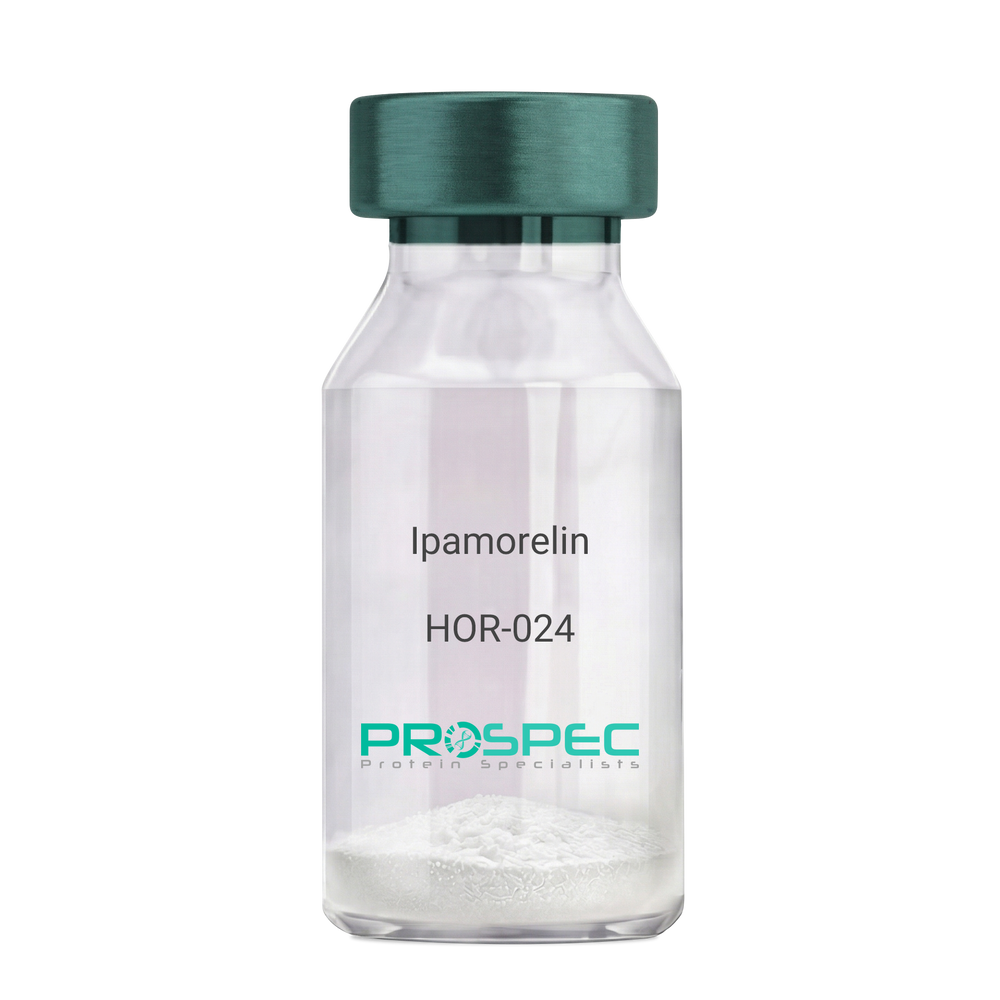
  • View Data Sheet

    Name :

    Ipamorelin

    Description:

    Ipamorelin

    Ipamorelin

    Product # :

    HOR-024

    Price :

    Quantity :

    Shipping Method :

    Room Temp Icon

    Shipped at Room temp

    Add To Cart

    More Info

    • description
    • formulation
    • purity
    • More Info

    Description

    Ipamorelin Synthetic is a single, non-glycosylated polypeptide chain containing 4 amino acids, having a molecular mass of 711.85 Dalton and a Molecular formula of C38H49N9O5.

    Formulation

    The protein was lyophilized with no additives.

    Purity

    Greater than 97.0% as determined by analysis by RP-HPLC.

    More Info

    • Introduction

      Ipamorelin is a peptide selective agonist of the ghrelin/growth hormone secretagogue receptor and a growth hormone secretagogue. Ipamorelin is a pentapeptide that was derived from GHRP1. Ipamorelin significantly increases plasma growth hormone levels in both animals and humans. Like pralmorelin and GHRP-6, ipamorelin does not affect prolactin, FSH, LH or TSH levels. However, unlike GHRP2 and GHRP6, but as growth hormone-releasing hormone (GHRH), ipamorelin does not stimulate the secretion of adrenocorticotropic hormone (ACTH) or cortisol, and is highly selective for inducing the secretion only of GH.

    • Synonyms

      Ipamorelin

    • Physical Appearance

      Sterile Filtered White lyophilized (freeze-dried) powder.

    • Stability

      Lyophilized Ipamorelin although stable at room temperature for 3 weeks, should be stored desiccated below -18°C. Upon reconstitution Ipamorelin should be stored at 4°C between 2-7 days and for future use below -18°C. For long term storage it is recommended to add a carrier protein (0.1% HSA or BSA). Please prevent freeze-thaw cycles.

    • Solubility

      It is recommended to reconstitute the lyophilized Ipamorelin in sterile 18MΩ-cm H2O not less than 100 µg/ml, which can then be further diluted to other aqueous solutions.

    • Amino Acid Sequence

      Aib-His-D-2-Nal-D-Phe-Lys-NH2.

    ProSpec's products are furnished for LABORATORY RESEARCH USE ONLY. The product may not be used as drugs, agricultural or pesticidal products, food additives or household chemicals.

    Ipamorelin
  • View Data Sheet

    Name :

    EPHA2 PAT66G9AT Antibody

    Description:

    EPH receptor A2 PAT66G9AT, Mouse Anti Human

    EPHA2, EPH Receptor A2, ECK, Tyrosine-Protein Kinase Receptor ECK, EC 2.7.10.1, CTRCT6, ARCC2, CTPP1, CTPA, Epithelial Cell Receptor Protein Tyrosine Kinase, Ephrin Type-A Receptor 2, Soluble EPHA2 Variant 1, Epithelial Cell Kinase, EC 2.7.10, EphA2.

    Product # :

    ANT-672

    Price :

    Quantity :

    Shipping Method :

    Ice Icon

    Shipped with Ice Packs

    Add To Cart

    More Info

    • formulation
    • More Info

    Formulation

    1mg/ml containing PBS, pH-7.4, 10% Glycerol and 0.02% Sodium Azide.

    More Info

    • Introduction

      EPH Receptor A2 (EPHA2) is a member of the ephrin receptor subfamily of the protein-tyrosine kinase family. EPHA2 is a protein which binds ephrin-A ligands. EPH and EPH-related receptors are associated with mediating developmental events, particularly in the nervous system. Receptors in the EPH subfamily normally have a single kinase domain and an extracellular region containing a Cys-rich domain and 2 fibronectin type III repeats. The ephrin receptors are divided into two groups based on the similarity of their extracellular domain sequences and their affinities for binding ephrin-A and ephrin-B ligands. EPHA2 gene mutations are the cause of certain genetically-related cataract disorders.

    • Synonyms

      EPHA2, EPH Receptor A2, ECK, Tyrosine-Protein Kinase Receptor ECK, EC 2.7.10.1, CTRCT6, ARCC2, CTPP1, CTPA, Epithelial Cell Receptor Protein Tyrosine Kinase, Ephrin Type-A Receptor 2, Soluble EPHA2 Variant 1, Epithelial Cell Kinase, EC 2.7.10, EphA2.

    • Physical Appearance

      Sterile filtered colorless solution.

    • Immunogen

      Anti-human EPHA2 mAb, is derived from hybridization of mouse F0 myeloma cells with spleen cells from BALB/c mice immunized with a recombinant human EPHA2 protein 27-537 amino acids purified from E. coli.

    • Ig Subclass

      Mouse IgG2b heavy chain and k light chain.

    • Clone

      PAT66G9AT.

    • Applications

      The antibody has been tested by ELISA, Western blot analysis, Flow cytometry and ICC/IF to assure specificity and reactivity. Since application varies, however, each investigation should be titrated by the reagent to obtain optimal results.

    • Type

      Mouse Anti Human Monoclonal.

    • Storage Procedures

      For periods up to 1 month store at 4°C, for longer periods of time, store at -20°C. Prevent freeze thaw cycles.

    • Purification Method

      EPHA2 antibody was purified from mouse ascitic fluids by protein-A affinity chromatography.

    ProSpec's products are furnished for LABORATORY RESEARCH USE ONLY. The product may not be used as drugs, agricultural or pesticidal products, food additives or household chemicals.

    Epha2 Pat66G9At Antibody
  • View Data Sheet

    Name :

    GLB1 Human

    Description:

    Galactosidase-Beta 1 Human Recombinant

    lacZ, beta-gal, b-gal, Acid beta-galactosidase, Lactase, Elastin receptor 1

    Product # :

    ENZ-1136

    Price :

    Quantity :

    Shipping Method :

    Ice Icon

    Shipped with Ice Packs

    Add To Cart

    More Info

    • description
    • source
    • formulation
    • purity
    • More Info

    Description

    GLB1 Human produced in Sf9 Baculovirus cells is a single, glycosylated polypeptide chain containing 662 amino acids (24-677 a.a.) and having a molecular mass of 74.6 kDa.GLB1 is fused to an 8 amino acid His tag at C-Terminus and purified by proprietary chromatographic techniques.

    Source

    Sf9, Baculovirus cells.

    Formulation

    GLB1 Human protein (0.25mg/ml) is formulated in 10% glycerol and Phosphate-Buffered Saline (pH 7.4).

    Purity

    Greater than 90.0% as determined by SDS-PAGE.

    More Info

    • Introduction

      Beta-galactosidase or GLB1 is a B-galactosidase found in the lysosome. This enzyme hydrolyzes the finale B-galactose from the precursors ganglioside & keratin sulfate. GLB1 has a crucial part in the creation of elastogenesis (extracellular elastic fibers) and connective tissue development. This enzyme is similar to elastin-binding protein which is a key part in non-integrin cell surface receptor. In cells that extort elastin GLB1 is linked to tropoelastin intracellularly and act as recycling molecular chaperone.

    • Synonyms

      lacZ, beta-gal, b-gal, Acid beta-galactosidase, Lactase, Elastin receptor 1

    • Physical Appearance

      Sterile Filtered colorless solution.

    • Stability

      Store at 4°C if entire vial will be used within 2-4 weeks. Store, frozen at -20°C for longer periods of time. For long term storage it is recommended to add a carrier protein (0.1% HSA or BSA).Avoid multiple freeze-thaw cycles.

    • Amino Acid Sequence

      LRNATQRMFE IDYSRDSFLK DGQPFRYISG SIHYSRVPRF YWKDRLLKMK MAGLNAIQTY VPWNFHEPWP GQYQFSEDHD VEYFLRLAHE LGLLVILRPG PYICAEWEMG GLPAWLLEKE SILLRSSDPD YLAAVDKWLG VLLPKMKPLL YQNGGPVITV QVENEYGSYF ACDFDYLRFL QKRFRHHLGD DVVLFTTDGA HKTFLKCGAL QGLYTTVDFG TGSNITDAFL SQRKCEPKGP LINSEFYTGW LDHWGQPHST IKTEAVASSL YDILARGASV NLYMFIGGTN FAYWNGANSP YAAQPTSYDY DAPLSEAGDL TEKYFALRNI IQKFEKVPEG PIPPSTPKFA YGKVTLEKLK TVGAALDILC PSGPIKSLYP LTFIQVKQHY GFVLYRTTLP QDCSNPAPLS SPLNGVHDRA YVAVDGIPQG VLERNNVITL NITGKAGATL DLLVENMGRV NYGAYINDFK GLVSNLTLSS NILTDWTIFP LDTEDAVRSH LGGWGHRDSG HHDEAWAHNS SNYTLPAFYM GNFSIPSGIP DLPQDTFIQF PGWTKGQVWI NGFNLGRYWP ARGPQLTLFV PQHILMTSAP NTITVLELEW APCSSDDPEL CAVTFVDRPV IGSSVTYDHP SKPVEKRLMP PPPQKNKDSW LDHVLEHHHH HH

    ProSpec's products are furnished for LABORATORY RESEARCH USE ONLY. The product may not be used as drugs, agricultural or pesticidal products, food additives or household chemicals.

    Glb1 Human
  • View Data Sheet

    Name :

    TGFBRAP1 Human

    Description:

    Transforming Growth Factor Beta Receptor Associated Protein 1 Human Recombinant

    TRAP-1, TRAP1, Transforming growth factor-beta receptor-associated protein 1, TGF-beta receptor-associated protein 1.

    Product # :

    PRO-1890

    Price :

    Quantity :

    Shipping Method :

    Ice Icon

    Shipped with Ice Packs

    Add To Cart

    More Info

    • description
    • source
    • formulation
    • purity
    • More Info

    Description

    TGFBRAP1 Human Recombinant produced in E.Coli is a single, non-glycosylated polypeptide chain containing 296 amino acids (601-860 a.a) and having a molecular mass of 33kDa.TGFBRAP1 is fused to a 36 amino acid His-tag at N-terminus & purified by proprietary chromatographic techniques.

    Source

    Escherichia Coli.

    Formulation

    TGFBRAP1 protein solution (0.5mg/ml) containing 20mM Tris-HCl buffer (pH 8.0), 0.4M Urea and 10% glycerol.

    Purity

    Greater than 80% as determined by SDS-PAGE.

    More Info

    • Introduction

      TGF-beta receptor-associated protein 1 also known as TGFBRAP1 takes part in the TGF-beta/activin signaling pathway. TGFBRAP1 is related with inactive heteromeric TGF-beta and activin receptor complexes, mainly through the type II receptor, and is released upon activation of signaling. TGFBRAP1recruits SMAD4 to the vicinity of the receptor complex and smoothes the progress of its interaction with receptor-regulated Smads, such as SMAD2.

    • Synonyms

      TRAP-1, TRAP1, Transforming growth factor-beta receptor-associated protein 1, TGF-beta receptor-associated protein 1.

    • Physical Appearance

      Sterile Filtered clear solution.

    • Stability

      Store at 4°C if entire vial will be used within 2-4 weeks. Store, frozen at -20°C for longer periods of time.For long term storage it is recommended to add a carrier protein (0.1% HSA or BSA).Please avoid freeze thaw cycles.

    • Amino Acid Sequence

      MRGSHHHHHH GMASMTGGQQ MGRDLYDDDD KDRWGSKRLQ KEEYHTHLAV LYLEEVLLQR ASASGKGAEA TETQAKLRRL LQKSDLYRVH FLLERLQGAG LPMESAILHG KLGEHEKALH ILVHELQDFA AAEDYCLWCS EGRDPPHRQQ LFHTLLAIYL HAGPTAHELA VAAVDLLNRH ATEFDAAQVL QMLPDTWSVQ LLCPFLMGAM RDSIHARRTM QVALGLARSE NLIYTYDKMK LKGSSIQLSD KKLCQICQNP FCEPVFVRYP NGGLVHTHCA ASRHTNPSSS SPGTRT

    ProSpec's products are furnished for LABORATORY RESEARCH USE ONLY. The product may not be used as drugs, agricultural or pesticidal products, food additives or household chemicals.

    Tgfbrap1 Human
  • 1
  • …
  • 23
  • 24
  • 25
  • 26
Your browser does not support the video tag.

Products

  • Cytokines
  • Growth Factors
  • Chemokines
  • CD Antigens
  • Neurotrophins
  • Hormones
  • Enzymes
  • Viral Antigens
  • Recombinant Proteins
  • Natural Proteins
  • Monoclonal Antibodies
  • Polyclonal Antibodies
  • Thermal Packaging

About

  • Company
  • Founder
  • Contribution
  • Contact Us
  • My Account

Ordering

  • Ordering Method
  • Ordering - Credit Card
  • Ordering PO
  • Shipping Fees
  • FAQ's

Legal

  • Terms & Conditions
  • Privacy
  • Site Map
  • info@prospecbio.com
  • Facebook
  • Instagram
  • Linkedin Profile

© 2026 ProSpec-Tany TechnoGene Ltd. All Rights Reserved.

  • Choosing a selection results in a full page refresh.
  • Opens in a new window.