Skip to content

High-quality research proteins.

  • 1-800-805-6531

  • Mon - Sat 8.00-18.00, Sun - Closed

  • info@prospecbio.com

  • PO Box 6591 East Brunswick NJ 08816

  • Products
    • Cytokines
    • Growth factors
    • Chemokines
    • Cd antigens
    • Neurotrophins
    • Hormones
    • Enzymes
    • Viral antigens
    • Recombinant proteins
    • Natural proteins
    • Monoclonal antibodies
    • Polyclonal antibodies
    • Thermal Packaging
  • About
    • Company
    • Founder
    • Contribution
  • Customers
    • Eastern Asia
    • Eastern Europe
    • North America
    • South America
    • South East Asia
    • Southern Asia
    • Western Europe
  • Ordering
    • Ordering Method
    • Ordering - Credit Card
    • Ordering - PO
    • Shipping Fees
    • FAQs
  • Services
    • DNA Cloning
    • Protein Expression
    • Monoclonal Antibody
    • Fermentation
    • Technology License
  • Contact us
Log in

Country/region

  • USD $ | Albania
  • USD $ | Andorra
  • USD $ | Argentina
  • USD $ | Armenia
  • USD $ | Australia
  • USD $ | Austria
  • USD $ | Azerbaijan
  • USD $ | Belarus
  • USD $ | Belgium
  • USD $ | Bolivia
  • USD $ | Brazil
  • USD $ | Bulgaria
  • USD $ | Cambodia
  • USD $ | Canada
  • USD $ | Chile
  • USD $ | China
  • USD $ | Colombia
  • USD $ | Costa Rica
  • USD $ | Croatia
  • USD $ | Cyprus
  • USD $ | Czechia
  • USD $ | Denmark
  • USD $ | Estonia
  • USD $ | Finland
  • USD $ | France
  • USD $ | Georgia
  • USD $ | Germany
  • USD $ | Greece
  • USD $ | Hong Kong SAR
  • USD $ | Hungary
  • USD $ | Iceland
  • USD $ | India
  • USD $ | Ireland
  • USD $ | Israel
  • USD $ | Italy
  • USD $ | Japan
  • USD $ | Kazakhstan
  • USD $ | Latvia
  • USD $ | Liechtenstein
  • USD $ | Lithuania
  • USD $ | Madagascar
  • USD $ | Malta
  • USD $ | Mexico
  • USD $ | Moldova
  • USD $ | Monaco
  • USD $ | Netherlands
  • USD $ | New Zealand
  • USD $ | North Macedonia
  • USD $ | Norway
  • USD $ | Panama
  • USD $ | Paraguay
  • USD $ | Peru
  • USD $ | Philippines
  • USD $ | Poland
  • USD $ | Portugal
  • USD $ | Romania
  • USD $ | Singapore
  • USD $ | Slovakia
  • USD $ | Slovenia
  • USD $ | South Africa
  • USD $ | South Korea
  • USD $ | Spain
  • USD $ | Sri Lanka
  • USD $ | Sweden
  • USD $ | Switzerland
  • USD $ | Taiwan
  • USD $ | Thailand
  • USD $ | Türkiye
  • USD $ | Ukraine
  • USD $ | United Kingdom
  • USD $ | United States
  • USD $ | Uruguay
  • USD $ | Vatican City
  • USD $ | Venezuela
  • USD $ | Vietnam
  • Facebook
  • Instagram
logoProSpec - Recombinant Protein Manufacturer for academic and R&D industry
Become a distributor
Account Log in
Wishlist
Cart Cart(0)
  • Products
    +
    • Cytokines
    • Growth factors
    • Chemokines
    • Cd antigens
    • Neurotrophins
    • Hormones
    • Enzymes
    • Viral antigens
    • Recombinant proteins
    • Natural proteins
    • Monoclonal antibodies
    • Polyclonal antibodies
    • Thermal Packaging
  • About
    +
    • Company
    • Founder
    • Contribution
  • Customers
    +
    • Eastern Asia
    • Eastern Europe
    • North America
    • South America
    • South East Asia
    • Southern Asia
    • Western Europe
  • Ordering
    +
    • Ordering Method
    • Ordering - Credit Card
    • Ordering - PO
    • Shipping Fees
    • FAQs
  • Services
    +
    • DNA Cloning
    • Protein Expression
    • Monoclonal Antibody
    • Fermentation
    • Technology License
  • Contact us

Item added to your cart

View cart
View All
  • Cytokines
  • Growth factors
  • Chemokines
  • Cd antigens
  • Neurotrophins
  • Hormones
  • Enzymes
  • Viral antigens
  • Recombinant proteins
  • Natural proteins
  • Monoclonal antibodies
  • Polyclonal antibodies
  • Thermal Packaging
  • Tumor Necrosis Factor

    Tumor Necrosis Factor

    View All
  • 4-1BB

    4-1BB

    View All
  • Adiponectin

    Adiponectin

    View All
  • AIF1

    AIF1

    View All
  • Other Cytokines

    Other Cytokines

    View All
  • AITRL

    AITRL

    View All
  • Angiopoietin

    Angiopoietin

    View All
  • Apolipoprotein

    Apolipoprotein

    View All
  • B-Cell Activating Factor

    B-Cell Activating Factor

    View All
  • Beta Defensin

    Beta Defensin

    View All
  • Bone Morphogenetic Protein

    Bone Morphogenetic Protein

    View All
  • B type Natriuretic Peptide

    B type Natriuretic Peptide

    View All
  • BST

    BST

    View All
  • Betacellulin

    Betacellulin

    View All
  • Cardiotrophin

    Cardiotrophin

    View All
  • Activin

    Activin

    View All
  • Fibroblast Growth Factor

    Fibroblast Growth Factor

    View All
  • Other Growth Factors

    Other Growth Factors

    View All
  • CSF

    CSF

    View All
  • CTGF

    CTGF

    View All
  • IGFBP

    IGFBP

    View All
  • VEGF Protein

    VEGF Protein

    View All
  • EGF

    EGF

    View All
  • Epigen

    Epigen

    View All
  • Erythropoietin

    Erythropoietin

    View All
  • Insulin-Like Growth Factor

    Insulin-Like Growth Factor

    View All
  • Growth Hormone

    Growth Hormone

    View All
  • HDGF

    HDGF

    View All
  • Hepatocyte Growth Factor

    Hepatocyte Growth Factor

    View All
  • Insulin

    Insulin

    View All
  • BCA-1/ BLC (CXCL13)

    BCA-1/ BLC (CXCL13)

    View All
  • BRAK (CXCL14)

    BRAK (CXCL14)

    View All
  • C-10 (CCL6)

    C-10 (CCL6)

    View All
  • Other Chemokines

    Other Chemokines

    View All
  • MEC (CCL28)

    MEC (CCL28)

    View All
  • LD78-beta (CCL3L1)

    LD78-beta (CCL3L1)

    View All
  • CTACK (CCL27)

    CTACK (CCL27)

    View All
  • CXCL16

    CXCL16

    View All
  • CXCL17

    CXCL17

    View All
  • Platelet Factor-4 (CXCL4)

    Platelet Factor-4 (CXCL4)

    View All
  • ENA-78 (CXCL5)

    ENA-78 (CXCL5)

    View All
  • Eotaxin (CCL11,24,26)

    Eotaxin (CCL11,24,26)

    View All
  • Exodus-2 (CCL21)

    Exodus-2 (CCL21)

    View All
  • Fractalkine (CX3CL1)

    Fractalkine (CX3CL1)

    View All
  • CXCL6

    CXCL6

    View All
  • Other CD Antigens

    Other CD Antigens

    View All
  • CD14

    CD14

    View All
  • CD164

    CD164

    View All
  • CD1

    CD1

    View All
  • CD2

    CD2

    View All
  • CD200

    CD200

    View All
  • CD207

    CD207

    View All
  • CD226

    CD226

    View All
  • CD23

    CD23

    View All
  • CD244

    CD244

    View All
  • CD247

    CD247

    View All
  • CD27

    CD27

    View All
  • CD274

    CD274

    View All
  • CD300

    CD300

    View All
  • CD33

    CD33

    View All
  • Other Neurotrophins

    Other Neurotrophins

    View All
  • Beta-NGF

    Beta-NGF

    View All
  • BDNF

    BDNF

    View All
  • CDNF

    CDNF

    View All
  • CNTF

    CNTF

    View All
  • GDNF

    GDNF

    View All
  • Glia Maturation Factor

    Glia Maturation Factor

    View All
  • MANF

    MANF

    View All
  • Midkine

    Midkine

    View All
  • Neuroglobin

    Neuroglobin

    View All
  • Neurotrophic factors

    Neurotrophic factors

    View All
  • Neuregulin

    Neuregulin

    View All
  • Neuropilin

    Neuropilin

    View All
  • Pigment Epithelium-Derived Factor

    Pigment Epithelium-Derived Factor

    View All
  • Pleiotrophin

    Pleiotrophin

    View All
  • Peptide Hormones

    Peptide Hormones

    View All
  • Other Hormones

    Other Hormones

    View All
  • HCG

    HCG

    View All
  • Endothelin

    Endothelin

    View All
  • Exendin

    Exendin

    View All
  • FSH

    FSH

    View All
  • Glucagon

    Glucagon

    View All
  • GHRP

    GHRP

    View All
  • GLP

    GLP

    View All
  • Thyrostimulin

    Thyrostimulin

    View All
  • Inhibin A

    Inhibin A

    View All
  • LHRH

    LHRH

    View All
  • Melanotan

    Melanotan

    View All
  • Procalcitonin

    Procalcitonin

    View All
  • PTH

    PTH

    View All
  • Peroxiredoxin

    Peroxiredoxin

    View All
  • Peptidase

    Peptidase

    View All
  • Synthetase

    Synthetase

    View All
  • Transferase

    Transferase

    View All
  • Hydrolase

    Hydrolase

    View All
  • Dehydrogenase

    Dehydrogenase

    View All
  • ACE2

    ACE2

    View All
  • Esterase

    Esterase

    View All
  • Protein Kinases

    Protein Kinases

    View All
  • Other Enzymes

    Other Enzymes

    View All
  • Phosphatase

    Phosphatase

    View All
  • Deaminase

    Deaminase

    View All
  • Oxygenase

    Oxygenase

    View All
  • Adenylate Kinase

    Adenylate Kinase

    View All
  • Lyase

    Lyase

    View All
  • Chagas

    Chagas

    View All
  • SARS

    SARS

    View All
  • Influenza

    Influenza

    View All
  • ASFV

    ASFV

    View All
  • Astrovirus

    Astrovirus

    View All
  • Borrelia

    Borrelia

    View All
  • Helicobacter Pylori

    Helicobacter Pylori

    View All
  • Chikungunya

    Chikungunya

    View All
  • Chlamydia

    Chlamydia

    View All
  • Cytomegalo

    Cytomegalo

    View All
  • Dengue

    Dengue

    View All
  • EBV

    EBV

    View All
  • Ebola

    Ebola

    View All
  • Feline Leukemia Virus

    Feline Leukemia Virus

    View All
  • Hepatitis A

    Hepatitis A

    View All
  • Other

    Other

    View All
  • Actin

    Actin

    View All
  • ADAM

    ADAM

    View All
  • Complement Component

    Complement Component

    View All
  • Ag85

    Ag85

    View All
  • Eukaryotic Translation Initiation Factor

    Eukaryotic Translation Initiation Factor

    View All
  • Anterior Gradient Protein

    Anterior Gradient Protein

    View All
  • Heat Shock Protein

    Heat Shock Protein

    View All
  • Alpha-2-HS-Glycoprotein

    Alpha-2-HS-Glycoprotein

    View All
  • Hemoglobin

    Hemoglobin

    View All
  • Allergy

    Allergy

    View All
  • Anaplasma

    Anaplasma

    View All
  • Angiogenin

    Angiogenin

    View All
  • Ankyrin Repeat Domain

    Ankyrin Repeat Domain

    View All
  • Annexin

    Annexin

    View All
  • Other Natural Proteins

    Other Natural Proteins

    View All
  • Aprotinin

    Aprotinin

    View All
  • Transferrin

    Transferrin

    View All
  • Avidin

    Avidin

    View All
  • Anti Coagulation Factors

    Anti Coagulation Factors

    View All
  • Natural Albumin

    Natural Albumin

    View All
  • Natural Coagulation Factors

    Natural Coagulation Factors

    View All
  • Fibronectin

    Fibronectin

    View All
  • Thrombin

    Thrombin

    View All
  • Anti Human Enzyme

    Anti Human Enzyme

    View All
  • Other Monoclonal Antibodies

    Other Monoclonal Antibodies

    View All
  • Anti Human Cytokine

    Anti Human Cytokine

    View All
  • Anti Human Heat Shock Protein

    Anti Human Heat Shock Protein

    View All
  • Anti Mouse Lymphocyte

    Anti Mouse Lymphocyte

    View All
  • Anti Human Chemokine

    Anti Human Chemokine

    View All
  • Anti Human Lymphocyte

    Anti Human Lymphocyte

    View All
  • Anti Viral Monoclonal

    Anti Viral Monoclonal

    View All
  • Anti Mouse Cytokine

    Anti Mouse Cytokine

    View All
  • Anti-GST Monoclonal

    Anti-GST Monoclonal

    View All
  • Other Polyclonal Antibodies

    Other Polyclonal Antibodies

    View All
  • Anti Viral

    Anti Viral

    View All
  • Anti-GST Monoclonal

    Anti-GST Monoclonal

    View All
Back

Search results

625 results found for “otoraplin”

Name

Description

Product #

Price

Quantity

Shipping Method

  • View Data Sheet

    Name :

    IL17F Mouse

    Description:

    Interleukin-17F Mouse Recombinant

    Cytokine ML-1, IL-17F, Interleukin-17F precursor, IL17F, ML1, ML-1.

    Product # :

    CYT-642

    Price :

    Quantity :

    Shipping Method :

    Room Temp Icon

    Shipped at Room temp

    Add To Cart

    More Info

    • description
    • source
    • formulation
    • purity
    • More Info
    • Citations

    Description

    IL17F Mouse Recombinant produced in E.Coli is a homodimeric, non-glycosylated polypeptide chain containing a total of 266 amino acids and having a molecular mass of 29.8 kDa. The Mouse IL-17F is purified by proprietary chromatographic techniques.

    Source

    Escherichia Coli.

    Formulation

    IL17F was lyophilized from a concentrated (1mg/ml) solution containing no additives.

    Purity

    Greater than 97.0% as determined by(a) Analysis by RP-HPLC.
    (b) Analysis by SDS-PAGE.

    Citations

    More Info

    • Introduction

      IL-17F having an accession number of Q96PD4 is a cytokine that shares sequence similarity with IL17. IL-17F is expressed by activated T cells, and has been shown to stimulate the production of several other cytokines, including IL6, IL8, and CSF2/GM-CSF. IL-17F inhibits the angiogenesis of endothelial cells and induce endothelial cells to produce IL2, TGFB1/TGFB, and monocyte chemoattractant protein-1. IL-17F induces stromal cells to produce proinflammatory and hematopoietic cytokines. Intestinal IL17F gene expression is increased in active CD.
      IL-17A & IL-17F alleles influence the susceptibility to and pathophysiological features of ulcerative colitis independently. IL-17F and MIF gene polymorphisms are significantly associated with the development of functional dyspepsia.
      The initiation of IL-17F/IL-17R signaling pathway requires the receptor ubiquitination by TRAF6. IL-17F induces expression of IFN-gamma-inducible protein 10 (IP-10) by activating Raf1-mitogen-activated protein kinase 1/2-extracellular-regulated kinase 1/2-p90 ribosomal S6 kinase-cyclic AMP response element-binding protein signaling pathway.

    • Synonyms

      Cytokine ML-1, IL-17F, Interleukin-17F precursor, IL17F, ML1, ML-1.

    • Physical Appearance

      Sterile Filtered White lyophilized (freeze-dried) powder.

    • Stability

      Lyophilized Murine IL17F although stable at room temperature for 3 weeks, should be stored desiccated below -18°C. Upon reconstitution IL17F should be stored at 4°C between 2-7 days and for future use below -18°C.For long term storage it is recommended to add a carrier protein (0.1% HSA or BSA).Please prevent freeze-thaw cycles.

    • Solubility

      It is recommended to reconstitute the lyophilized Mouse IL17F in sterile 18MΩ-cm H2O not less than 100µg/ml, which can then be further diluted to other aqueous solutions.

    • Amino Acid Sequence

      RKNPKAGVPALQKAGNCPPLEDNTVRVDIRIFNQNQGISVPREFQNRSSSP
      WDYNITRDPHRFPSEIAEAQCRHSGCINAQGQEDSTMNSVAIQQEILVLRR
      EPQGCSNSFRLEKMLLKVGCTCVKPIVHQAA.

    ProSpec's products are furnished for LABORATORY RESEARCH USE ONLY. The product may not be used as drugs, agricultural or pesticidal products, food additives or household chemicals.

    Il17F Mouse
  • View Data Sheet

    Name :

    IL36RN Human

    Description:

    Interleukin-36 Receptor Antagonist Human Recombinant

    Interleukin-36 receptor antagonist protein, FIL1 delta, IL-1-related protein 3, IL-1RP3, Interleukin-1 HY1, IL-1HY1, Interleukin-1 delta, IL-1 delta, Interleukin-1 family member 5, IL-1F5, Interleukin-1 receptor antagonist homolog 1, IL-1ra homolog 1, Interleukin-1-like protein 1, IL-1L1, IL36RN, FIL1D, IL1F5, IL1HY1, IL1L1, IL1RP3, FIL1, PSORP, IL36RA, FIL1(DELTA).

    Product # :

    CYT-009

    Price :

    Quantity :

    Shipping Method :

    Room Temp Icon

    Shipped at Room temp

    Add To Cart

    More Info

    • description
    • source
    • formulation
    • purity
    • biological activity
    • More Info
    • Citations

    Description

    IL1F5 Human Recombinant produced in E.Coli is a single, non-glycosylated, Polypeptide chain containing 155 amino acids and having a molecular mass of 17kDa.The IL1F5 is purified by proprietary chromatographic techniques.

    Source

    Escherichia Coli.

    Formulation

    IL1F5 was lyophilized after extensive dialysis against 20mM Phosphate buffer, pH7.4.

    Purity

    Greater than 95.0% as determined by:
    (a) Analysis by RP-HPLC.
    (b) Analysis by SDS-PAGE.

    Biological Activity

    As measured by its binding ability in a functional ELISA, immobilized IL1F5 at 1 µg/ml (100 µl/well) can bind rHuIL-1 Rrp2/Fc Chimera with a linear range of 0.15- 5 µg/ml.

    Citations

    More Info

    • Introduction

      Human interleukin family 1, member 5 (IL-1F5 / FIL1-delta) belongs to the interleukin 1 cytokine family. IL1F5 is expressed by a variety of cells including monocytes, Bcells, dendritic cells/Langerhans cells, keratinocytes,and gastric fundus Parietal and Chief cells. IL1F5 is an antagonist of IL1F9; however IL1F5 activity related to receptor binding remains unclear. Human and mouse IL1F5 share 90% amino acid sequence identity.

    • Synonyms

      Interleukin-36 receptor antagonist protein, FIL1 delta, IL-1-related protein 3, IL-1RP3, Interleukin-1 HY1, IL-1HY1, Interleukin-1 delta, IL-1 delta, Interleukin-1 family member 5, IL-1F5, Interleukin-1 receptor antagonist homolog 1, IL-1ra homolog 1, Interleukin-1-like protein 1, IL-1L1, IL36RN, FIL1D, IL1F5, IL1HY1, IL1L1, IL1RP3, FIL1, PSORP, IL36RA, FIL1(DELTA).

    • Physical Appearance

      Sterile Filtered White lyophilized (freeze-dried) powder.

    • Stability

      Lyophilized IL1F5 although stable at room temperature for 3 weeks, should be stored desiccated below -18°C. Upon reconstitution IL1F5 should be stored at 4°C between 2-7 days and for future use below -18°C.Please prevent freeze-thaw cycles.

    • Solubility

      It is recommended to quick spin followed by reconstitution of IL1F5 in PBS to a concentration no less than 100 µg/ml, which can then be further diluted to other aqueous solutions.

    • Amino Acid Sequence

      The sequence of the first five N-terminal amino acids was determined and was found to be Met-Val-Leu-Ser-Gly.

    ProSpec's products are furnished for LABORATORY RESEARCH USE ONLY. The product may not be used as drugs, agricultural or pesticidal products, food additives or household chemicals.

    Il1F5 Human
  • View Data Sheet

    Name :

    IL36RN Human, His

    Description:

    Interleukin-36 Receptor Antagonist Human Recombinant, His Tag

    Interleukin 36 receptor antagonist, FIL1, FIL1(DELTA), FIL1D, IL1F5, IL1HY1, IL1L1, IL1RP3, IL36RA, PSORP, FIL1 delta, Interleukin-1 HY1, IL-1 delta, Interleukin-1 receptor antagonist homolog 1, Interleukin-1-like protein 1, UNQ1896/PRO4342.

    Product # :

    CYT-844

    Price :

    Quantity :

    Shipping Method :

    Ice Icon

    Shipped with Ice Packs

    Add To Cart

    More Info

    • description
    • source
    • formulation
    • purity
    • More Info
    • Citations

    Description

    IL36RN Human Recombinant produced in E.Coli is a single, non-glycosylated polypeptide chain containing 175 amino acids (1-155 a.a) and having a molecular mass of 19.1kDa.IL36RN is fused to a 20 amino acid His-tag at N-terminus & purified by proprietary chromatographic techniques.

    Source

    Escherichia Coli.

    Formulation

    IL36RN protein solution (0.5mg/ml) containing Phosphate buffered saline (pH7.4) and 10% glycerol.

    Purity

    Greater than 95% as determined by SDS-PAGE.

    Citations

    More Info

    • Introduction

      Human interleukin family 1, member 5 (IL-1F5 / FIL1-delta) belongs to the interleukin 1 cytokine family. IL1F5 is expressed by a variety of cells including monocytes, Bcells, dendritic cells/Langerhans cells, keratinocytes,and gastric fundus Parietal and Chief cells. IL1F5 is an antagonist of IL1F9; however IL1F5 activity related to receptor binding remains unclear. Human and mouse IL1F5 share 90% amino acid sequence identity.

    • Synonyms

      Interleukin 36 receptor antagonist, FIL1, FIL1(DELTA), FIL1D, IL1F5, IL1HY1, IL1L1, IL1RP3, IL36RA, PSORP, FIL1 delta, Interleukin-1 HY1, IL-1 delta, Interleukin-1 receptor antagonist homolog 1, Interleukin-1-like protein 1, UNQ1896/PRO4342.

    • Physical Appearance

      Sterile filtered colorless solution.

    • Stability

      Store at 4°C if entire vial will be used within 2-4 weeks. Store, frozen at -20°C for longer periods of time. For long term storage it is recommended to add a carrier protein (0.1% HSA or BSA).Avoid multiple freeze-thaw cycles.

    • Amino Acid Sequence

      MGSSHHHHHH SSGLVPRGSH MVLSGALCFR MKDSALKVLY LHNNQLLAGG LHAGKVIKGE EISVVPNRWL DASLSPVILG VQGGSQCLSC GVGQEPTLTL EPVNIMELYL GAKESKSFTF YRRDMGLTSS FESAAYPGWF LCTVPEADQP VRLTQLPENG GWNAPITDFY FQQCD.

    ProSpec's products are furnished for LABORATORY RESEARCH USE ONLY. The product may not be used as drugs, agricultural or pesticidal products, food additives or household chemicals.

    Il36Rn Human His
  • View Data Sheet

    Name :

    TFF3 Human

    Description:

    Trefoil Factor-3 Human Recombinant

    TFF-3, ITF, TFI, HITF, hP1.B, TFF3, Trefoil factor 3, Intestinal trefoil factor.

    Product # :

    CYT-005

    Price :

    Quantity :

    Shipping Method :

    Room Temp Icon

    Shipped at Room temp

    Add To Cart

    More Info

    • description
    • source
    • formulation
    • purity
    • biological activity
    • More Info
    • Citations

    Description

    TFF-3 Human Recombinant produced in E.Coli is a homodimeric, non-glycosylated, polypeptide chain containing 2 x 59 amino acid chains which includes a 40 amino acid trefoil motif containing 3 conserved interamolecular disulfide bonds and having a total molecular mass of 13.2kDa. TFF-3 Human Recombinant is purified by proprietary chromatographic techniques.

    Source

    Escherichia Coli.

    Formulation

    Lyophilized from a 0.2µm filtered concentrated solution in PBS, pH 7.4.

    Purity

    Greater than 97.0% as determined by RP-HPLC and SDS-PAGE analysis.

    Biological Activity

    The ED50 as determined by a chemotaxis bioassay using human MCF-7 cells is less than 10µg/ml, corresponding to a specific activity of > 100IU/mg.

    Citations

    More Info

    • Introduction

      Proteins of the TFF family are characterized by obtaining a minimum of 1 copy of the trefoil motif, a 40-amino acid domain that contains 3 conserved disulfides. Trefoil Factors are stable secretory proteins expressed in gastrointestinal mucosa which protect the mucosa from insults, stabilize the mucus layer and affect healing of the epithelium.TFF2 inhibits gastric acid motility & secretion. TFF2 stabilizes glycoproteins in the mucus gel through interactions with carbohydrate side chains. TFF3 induces ciliogenesis and promotes airway epithelial ciliated cell differentiation, relatively through an epidermal growth factor receptor-dependent pathway. TFF3 overexpression is crucial for progression in mouse and human hepatocellular carcinogenesis. TFF-3 is normally expressed in hepatocellular carcinoma and its expression associates with tumor grade.

    • Synonyms

      TFF-3, ITF, TFI, HITF, hP1.B, TFF3, Trefoil factor 3, Intestinal trefoil factor.

    • Physical Appearance

      Sterile Filtered White lyophilized (freeze-dried) powder.

    • Stability

      Lyophilized TFF3 although stable at room temperature for 3 weeks, should be stored desiccated below -18°C. Upon reconstitution TFF3 should be stored at 4°C between 2-7 days and for future use below -18°C.For long term storage it is recommended to add a carrier protein (0.1% HSA or BSA).Please prevent freeze-thaw cycles.

    • Solubility

      It is recommended to reconstitute the lyophilized TFF3 in sterile 18M-cm H2O not less than 100µg/ml, which can then be further diluted to other aqueous solutions.

    • Amino Acid Sequence

      EEYVGLSANQ CAVPAKDRVD CGYPHVTPKE CNNRGCCFDS RIPGVPWCFK PLQEAECTF.

    ProSpec's products are furnished for LABORATORY RESEARCH USE ONLY. The product may not be used as drugs, agricultural or pesticidal products, food additives or household chemicals.

    Tff3 Human
  • View Data Sheet

    Name :

    TNF a Mouse

    Description:

    Tumor Necrosis Factor-Alpha Mouse Recombinant

    TNF-alpha, Tumor necrosis factor ligand superfamily member 2, TNF-a, Cachectin, DIF, TNFA, TNFSF2.

    Product # :

    CYT-252

    Price :

    Quantity :

    Shipping Method :

    Room Temp Icon

    Shipped at Room temp

    Add To Cart

    More Info

    • description
    • source
    • formulation
    • purity
    • biological activity
    • More Info
    • Citations

    Description

    Tumor Necrosis Factor-a Mouse Recombinant produced in E. coli is a single, non glycosylated, polypeptide chain containing 157 amino acids and having a molecular mass of 17301.32 Dalton. The TNF-alpha is purified by standard chromatographic techniques.

    Source

    Escherichia Coli.

    Formulation

    Lyophilized from a 0.2µm filtered concentrated solution in PBS, pH 7.2.

    Purity

    Greater than 97.0% as determined by:
    (a) Analysis by RP-HPLC.
    (c) Analysis by SDS-PAGE.

    Biological Activity

    The ED50 as determined by the cytolysis of murine L929 cells in the presence of Actinomycin D is < 0.1ng/ml, corresponding to a Specific Activity of 10,000,000 Units/mg.

    Citations

    More Info

    • Introduction

      Tumor necrosis factor is a cytokine involved in systemic inflammation and is a member of a group of cytokines that all stimulate the acute phase reaction. TNF is mainly secreted by macrophages.
      TNF causes apoptotic cell death, cellular proliferation, differentiation, inflammation, tumorigenesis and viral replication, TNF is also involved in lipid metabolism, and coagulation. TNF's primary role is in the regulation of immune cells.
      Dysregulation and, in particular, overproduction of TNF have been implicated in a variety of human diseases- autoimmune diseases, insulin resistance, and cancer.

    • Synonyms

      TNF-alpha, Tumor necrosis factor ligand superfamily member 2, TNF-a, Cachectin, DIF, TNFA, TNFSF2.

    • Physical Appearance

      Sterile Filtered White lyophilized (freeze-dried) powder.

    • Stability

      Lyophilized Tumor Necrosis Factor-a although stable at room temperature for 3 weeks, should be stored desiccated below -18°C. Upon reconstitution TNF-a should be stored at 4°C between 2-7 days and for future use below -18°C.For long term storage it is recommended to add a carrier protein (0.1% HSA or BSA).Please prevent freeze-thaw cycles.

    • Solubility

      It is recommended to reconstitute the lyophilized Tumor Necrosis Factor-alpha in sterile 18M-cm H2O not less than 100µg/ml, which can then be further diluted to other aqueous solutions.

    • Amino Acid Sequence

      MLRSSSQNSS DKPVAHVVAN HQVEEQLEWL SQRANALLAN GMDLKDNQLV VPADGLYLVY SQVLFKGQGC PDYVLLTHTV SRFAISYQEK VNLLSAVKSP CPKDTPEGAE LKPWYEPIYL GGVFQLEKGD QLSAEVNLPK YLDFAESGQV YFGVIAL

    • Background

      Tumor Necrosis Factor-alpha (TNF-α) is a pro-inflammatory cytokine that plays a critical role in the regulation of immune responses, inflammation, and cell survival. It is primarily produced by activated macrophages, but can also be secreted by other immune cells, such as T cells, natural killer cells, and mast cells. TNF-α is involved in a wide range of physiological and pathological processes, including the defense against infections, the development of autoimmune diseases, and the progression of cancer.

      TNF-α exerts its effects by binding to two distinct cell surface receptors, TNF receptor 1 (TNFR1) and TNF receptor 2 (TNFR2). Upon binding to its receptors, TNF-α activates multiple signaling pathways, including the nuclear factor-kappa B (NF-κB) pathway, the mitogen-activated protein kinase (MAPK) pathway, and the apoptotic pathway. These signaling pathways regulate various cellular processes, such as inflammation, cell proliferation, differentiation, and apoptosis.

      In the context of infections, TNF-α plays a crucial role in the body's defense against pathogens. It promotes the recruitment and activation of immune cells, enhances the production of other pro-inflammatory cytokines, and stimulates the expression of adhesion molecules on endothelial cells, facilitating the migration of immune cells to the site of infection. TNF-α also helps to induce fever, which is an important component of the body's immune response to infections.

      However, excessive or prolonged production of TNF-α can contribute to the development of chronic inflammatory diseases, such as rheumatoid arthritis, inflammatory bowel disease, and psoriasis. In these conditions, elevated levels of TNF-α promote the infiltration of immune cells into the affected tissues, leading to tissue damage and the perpetuation of inflammation. The central role of TNF-α in the pathogenesis of these diseases has led to the development of anti-TNF-α therapies, which have revolutionized the treatment of chronic inflammatory diseases. These therapies include monoclonal antibodies, such as infliximab and adalimumab, and soluble TNF receptor fusion proteins, such as etanercept. Anti-TNF-α therapies have been shown to be effective in reducing inflammation, improving symptoms, and slowing disease progression in patients with chronic inflammatory diseases.

      In the context of cancer, TNF-α has complex and context-dependent effects on tumor development and progression. On one hand, TNF-α can promote anti-tumor immunity by activating immune cells and stimulating the production of other pro-inflammatory cytokines. On the other hand, chronic inflammation driven by TNF-α can promote tumor growth, angiogenesis, and metastasis. Therefore, the role of TNF-α in cancer is still an area of active research, and the development of TNF-α-targeted therapies for cancer remains a challenge.

      In conclusion, TNF-α is a pro-inflammatory cytokine that plays a critical role in the regulation of immune responses, inflammation, and cell survival. Its involvement in various physiological and pathological processes has made it an important target for the development of therapies for chronic inflammatory diseases and cancer. Anti-TNF-α therapies have revolutionized the treatment of chronic inflammatory diseases, but the complex role of TNF-α in cancer remains an area of ongoing research. Understanding the precise mechanisms by which TNF-α contributes to disease pathogenesis will be crucial for the development of more effective and targeted therapies.

    • Protein content

      Protein quantitation was carried out by two independent methods1. UV spectroscopy at 280 nm using the absorbency value of 1.24 as the extinction coefficient for a 0.1% (1mg/ml) solution. This value is calculated by the PC GENE computer analysis program of protein sequences (IntelliGenetics). 2. Analysis by RP-HPLC, using a calibrated solution of TNF-a as a Reference Standard.

    ProSpec's products are furnished for LABORATORY RESEARCH USE ONLY. The product may not be used as drugs, agricultural or pesticidal products, food additives or household chemicals.

    Tnf Alpha Mouse
  • View Data Sheet

    Name :

    PPIL3 Human

    Description:

    Cyclophilin-J Human Recombinant

    Peptidyl-prolyl cis-trans isomerase-like 3, PPIase, Cyclophilin J, CyPJ, Cyclophilin-like protein PPIL3, Rotamase PPIL3, PPIL3.

    Product # :

    ENZ-174

    Price :

    Quantity :

    Shipping Method :

    Ice Icon

    Shipped with Ice Packs

    Add To Cart

    More Info

    • description
    • source
    • formulation
    • purity
    • biological activity
    • More Info
    • Citations

    Description

    PPIL3 Human Recombinant produced in E.Coli is a single, non-glycosylated polypeptide chain containing 181 amino acids (1-161 a.a.) and having a molecular mass of 20.3kDa.PPIL3 is fused to a 20 amino acid His-tag at N-terminus & purified by proprietary chromatographic techniques.

    Source

    Escherichia Coli.

    Formulation

    PPIL3 protein solution (1mg/ml) containing 20mM Tris-HCl buffer (pH8.0), 20% glycerol, 0.1M NaCl and 1mM DTT.

    Purity

    Greater than 90.0% as determined by SDS-PAGE.

    Biological Activity

    Specific activity is > 280 nmoles/min/mg, and is defined as the amount of enzyme that cleaves 1umole of suc-AAFP-pNA per minute at 25C in Tris-Hcl pH8.0 using chymotrypsin.

    Citations

    More Info

    • Introduction

      Peptidyl-prolyl cis-trans isomerase-like 3 (PPIL3) belongs to the cyclophilin family which catalyzes the cis-trans isomerization of peptidylprolyl imide bonds in oligopeptides. PPIL3 acts either as catalyst or as molecular chaperone in protein-folding events.

    • Synonyms

      Peptidyl-prolyl cis-trans isomerase-like 3, PPIase, Cyclophilin J, CyPJ, Cyclophilin-like protein PPIL3, Rotamase PPIL3, PPIL3.

    • Physical Appearance

      Sterile Filtered colorless solution.

    • Stability

      Store at 4°C if entire vial will be used within 2-4 weeks.Store, frozen at -20°C for longer periods of time. For long term storage it is recommended to add a carrier protein (0.1% HSA or BSA).Avoid multiple freeze-thaw cycles.

    • Amino Acid Sequence

      MGSSHHHHHH SSGLVPRGSH MSVTLHTDVG DIKIEVFCER TPKTCENFLA LCASNYYNGC IFHRNIKGFM VQTGDPTGTG RGGNSIWGKK FEDEYSEYLK HNVRGVVSMA NNGPNTNGSQ FFITYGKQPH LDMKYTVFGK VIDGLETLDE LEKLPVNEKT YRPLNDVHIK DITIHANPFA Q.

    ProSpec's products are furnished for LABORATORY RESEARCH USE ONLY. The product may not be used as drugs, agricultural or pesticidal products, food additives or household chemicals.

    Ppil3 Human
  • View Data Sheet

    Name :

    Leptin Super Antagonist Rat

    Description:

    Leptin Super Antagonist Rat Recombinant

    Product # :

    CYT-1240

    Price :

    Quantity :

    Shipping Method :

    Room Temp Icon

    Shipped at Room temp

    Add To Cart

    More Info

    • description
    • source
    • formulation
    • purity
    • biological activity
    • More Info
    • Citations

    Description

    Super Leptin Antagonist Rat Recombinant is a single polypeptide chain containing 146 amino acids. Super Rat Leptin Antagonist was mutated, resulting in D23L/L39A/D40A/F41A super Rat leptin antagonist that was purified by proprietary chromatographic techniques.

    Source

    Escherichia coli.

    Formulation

    The protein was lyophilized from a concentrated (1mg/ml) solution with 0.003mM NaHCO3.

    Purity

    Greater than 98.0% as determined by:

    (a) Gel filtration analysis.

    (b) Analysis by SDS-PAGE.

    Biological Activity

    ProSpec’s super Rat leptin antagonist is capable of inhibiting leptin-induced proliferation of BAF/3 cells stably transfected with the long form of human leptin receptor. Super Rat leptin antagonist also inhibits various leptin effects in several in vitro bioassays.

    Citations

    More Info

    • Physical Appearance

      White lyophilized (freeze-dried) powder.

    • Stability

      Lyophilized Super Leptin Antagonist although stable at room temperature for several weeks, should be stored desiccated below -18°C. Upon reconstitution of super Rat leptin antagonist at > 0.1 mg/ml and up to 2 mg/ml and filter sterilization super Rat leptin antagonist can be stored at 4C or even room temperature for several weeks making it suitable for long term infusion studies using osmotic pumps. At lower concentration addition of a carrier protein (0.1% HSA or BSA) is suggested. Please prevent freeze-thaw cycles.

    • Solubility

      It is recommended to reconstitute the lyophilized Super Leptin Antagonist in sterile 0.4% NaHCO3 adjusted to pH 8-9, not less than 100µg/ml, which can then be further diluted to other aqueous solutions.

    • Amino Acid Sequence

      The sequence of the first five N-terminal amino acids was determined and was found to be Ala-Val-Pro-Ile-His.

    • Background

      Leptin is a hormone which takes part in regulating body weight, metabolism and reproductive function and is encoded by the obese gene. Leptin is expressed predominantly by adipocytes, which fits with the idea that body weight is sensed as the total mass of fat in the body. Smaller amounts of leptin are also secreted by cellsin the epithelium of the stomach and in the placenta. Leptin receptors are expressed mainly in areas of the hypothalamus which regulates body weight, as well as in T lymphocytes and vascular endothelial cells.

    ProSpec's products are furnished for LABORATORY RESEARCH USE ONLY. The product may not be used as drugs, agricultural or pesticidal products, food additives or household chemicals.

    Leptin Antagonist Super Rat
  • View Data Sheet

    Name :

    CCL2 Mouse

    Description:

    Monocyte Chemotactic Protein-1 Mouse Recombinant (CCL2)

    Small inducible cytokine A2, CCL2, Monocyte chemotactic protein 1, MCP-1, Monocyte chemoattractant protein 1, Monocyte chemotactic and activating factor, MCAF, Monocyte secretory protein JE, HC11, chemokine (C-C motif) ligand 2, MCP1, SCYA2, GDCF-2, SMC-CF, HSMCR30, MGC9434, GDCF-2 HC11, Platelet-derived growth factor-inducible protein JE.

    Product # :

    CHM-313

    Price :

    Quantity :

    Shipping Method :

    Room Temp Icon

    Shipped at Room temp

    Add To Cart

    More Info

    • description
    • source
    • formulation
    • purity
    • biological activity
    • More Info
    • Citations

    Description

    Monocyte Chemotactic Protein-1 Mouse Recombinant produced in E.Coli is a single,non-glycosylated, polypeptide chain containing 125 amino acids and having a molecular mass of 14 kDa. The MCP-1 is purified by proprietary chromatographic techniques.

    Source

    Escherichia Coli.

    Formulation

    The protein was lyophilized with no additives.

    Purity

    Greater than 90.0% as determined by:
    (a) Analysis by RP-HPLC.
    (b) Analysis by SDS-PAGE.

    Biological Activity

    The biological activity was determined by calculating its ability to chemoattract Balb/C mouse spleen MNCs at 1.0-20.0 ng/ml.

    Citations

    More Info

    • Introduction

      Chemokine (C-C motif) ligand 2 (CCL2) is a small cytokine belonging to the CC chemokine family that is also known as monocyte chemotactic protein-1 (MCP-1). It is found at the site of tooth eruption and bone degradation. In the bone, CCL2 is expressed by mature osteoclasts and osteoblasts and is under the control of nuclear factor ?B (NF?B). CCL2 recruits immune cells, such as monocytes, to sites of tissue injury and infection. This chemokine is produced as a protein precursor containing signal peptide of 23 amino acidsand a mature peptide of 76 amino acids. It is a monomeric polypeptide, with a molecular weight of approximately 13kDa. As with many other CC chemokines, CCL2 is located on chromosome 17 in humans. The cell surface receptors that bind CCL2 are CCR2 and CCR5.

    • Synonyms

      Small inducible cytokine A2, CCL2, Monocyte chemotactic protein 1, MCP-1, Monocyte chemoattractant protein 1, Monocyte chemotactic and activating factor, MCAF, Monocyte secretory protein JE, HC11, chemokine (C-C motif) ligand 2, MCP1, SCYA2, GDCF-2, SMC-CF, HSMCR30, MGC9434, GDCF-2 HC11, Platelet-derived growth factor-inducible protein JE.

    • Physical Appearance

      Sterile Filtered White lyophilized (freeze-dried) powder.

    • Stability

      Lyophilized MCP-1 although stable at room temperature for 3 weeks, should be stored desiccated below -18°C. Upon reconstitution CCL2 should be stored at 4°C between 2-7 days and for future use below -18°C. For long term storage it is recommended to add a carrier protein (0.1% HSA or BSA).Please prevent freeze-thaw cycles.

    • Solubility

      It is recommended to reconstitute the lyophilized Monocyte Chemotactic Protein-1 in sterile 18MΩ-cm H2O not less than 100µg/ml, which can then be further diluted to other aqueous solutions.

    • Amino Acid Sequence

      The sequence of the first five N-terminal amino acids was determined and was found to be Gln-Pro-Asp-Ala-Val.

    • Background

      What is the molecular weight/Mw of CCL2 MOUSE Protein?
      CCL2 MOUSE Protein has a total Mw of 14kDa.

      What is the source or expression system of CCL2 MOUSE Protein?
      Escherichia Coli.

      What is the Purity of CCL2 MOUSE Protein?
      CCL2 MOUSE Protein is >90% pure as determined by SDS-PAGE.

      What is the Biological Activity of CCL2 MOUSE Protein?
      The biological activity was determined by calculating its ability to chemoattract Balb/C mouse spleen MNCs at 1.0-20.0 ng/ml.

      What is the amino acid sequence of CCL2 MOUSE Protein?
      The sequence of the first five N-terminal amino acids was determined and was found to be Gln-Pro-Asp-Ala-Val.

      What applications can CCL2 MOUSE Protein be used in?
      CCL2 MOUSE Protein can probably be used in western blot, ELISA and Lateral Flow.

      What is the endotoxin level for CCL2 MOUSE Protein?
      The endotoxin level is minimal, CCL2 MOUSE Protein was purified using conventional chromatography techniques.

      Who supplies recombinant CCL2 MOUSE that is in stock and available to order?
      ProSpec has the protein in stock and available for immediate delivery.

      Where can I order bulk mg quantities of CCL2 MOUSE?
      ProSpec supplies bulk mg quantities at affordable prices that meets research and academic budgets.

    ProSpec's products are furnished for LABORATORY RESEARCH USE ONLY. The product may not be used as drugs, agricultural or pesticidal products, food additives or household chemicals.

    Mcp 1 Mouse
  • View Data Sheet

    Name :

    CRABP1 Human

    Description:

    Cellular Retinoic Acid binding Protein 1 Human Recombinant

    Cellular retinoic acid-binding protein 1, Cellular retinoic acid-binding protein I, CRABP-I, CRABP1, RBP5, CRABP, CRABPI.

    Product # :

    PRO-710

    Price :

    Quantity :

    Shipping Method :

    Ice Icon

    Shipped with Ice Packs

    Add To Cart

    More Info

    • description
    • source
    • formulation
    • purity
    • More Info
    • Citations

    Description

    CRABP1 Human Recombinant produced in E.Coli is a single, non-glycosylated polypeptide chain containing 137 amino acids and having a molecular mass of 15.5kDa. The CRABP1 is purified by proprietary chromatographic techniques.

    Source

    Escherichia Coli.

    Formulation

    The CRABP1 (1mg/ml) protein solution contains 20mM Tris-HCl buffer (pH8.0) and 10% glycerol.

    Purity

    Greater than 95.0% as determined by SDS-PAGE.

    Citations

    More Info

    • Introduction

      CRABP1 is a member of special carrier proteins for members of the vitamin A family. It is believed that CRABP1 has an essential role in retinoic acid-mediated differentiation and proliferation processes. Though, CRABP1 is structurally similar to the cellular retinol-binding proteins, it binds only retinoic acid at specific sites within the nucleus, which may contribute to vitamin A-directed differentiation in epithelial tissue. CRABP1 is constitutively expressed and is thought to have different functions in the cell than the related CRABP2. CRABP1 forms a beta-barrel structure which accommodates hydrophobic ligands in its interior.
      Loss of CRABP1 function as a result of hypermethylation of its promoter leads to pathogenesis of papillary thyroid carcinoma. Furthermore, frequent methylation-associated silencing of CRABP1 is linked to esophageal squamous-cell carcinoma.

    • Synonyms

      Cellular retinoic acid-binding protein 1, Cellular retinoic acid-binding protein I, CRABP-I, CRABP1, RBP5, CRABP, CRABPI.

    • Physical Appearance

      Sterile Filtered colorless solution.

    • Stability

      Store at 4°C if entire vial will be used within 2-4 weeks. Store, frozen at -20°C for longer periods of time. For long term storage it is recommended to add a carrier protein (0.1% HSA or BSA).Avoid multiple freeze-thaw cycles.

    • Amino Acid Sequence

      MPNFAGTWKM RSSENFDELL KALGVNAMLR KVAVAAASKP HVEIRQDGDQ FYIKTSTTVR TTEINFKVGE GFEEETVDGR KCRSLATWEN ENKIHCTQTL LEGDGPKTYW TRELANDELI LTFGADDVVC TRIYVRE.

    ProSpec's products are furnished for LABORATORY RESEARCH USE ONLY. The product may not be used as drugs, agricultural or pesticidal products, food additives or household chemicals.

    Crabp1 Human
  • View Data Sheet

    Name :

    RB1 Human

    Description:

    Retinoblastoma Associated Protein Human Recombinant

    RB, OSRC, RB-1, RB1, p105-Rb, OSTEOSARCOMA, RETINOBLASTOMA-RELATED,PP110, Retinoblastoma-associated protein.

    Product # :

    PRO-584

    Price :

    Quantity :

    Shipping Method :

    Room Temp Icon

    Shipped at Room temp

    Add To Cart

    More Info

    • description
    • source
    • formulation
    • purity
    • More Info
    • Citations

    Description

    Retinoblastoma Human Recombinant fused with 6X His tag produced in E.Coli is a single, non-glycosylated, polypeptide chain containing 146 amino acids and having a molecular mass of 16.5 kDa.The Retinoblastoma is purified by proprietary chromatographic techniques.

    Source

    Escherichia Coli.

    Formulation

    The RB1 was lyophilized from 1xPBS pH-7.4.

    Purity

    Greater than 95.0% as determined by:
    (a) Analysis by RP-HPLC.
    (b) Analysis by SDS-PAGE.

    Citations

    More Info

    • Introduction

      Retinoblastoma (RB) is an embryonic malignant neoplasm of retinal origin. It almost always presents in early childhood and is often bilateral. Spontaneous regression ('cure') occurs in some cases. Retinoblastoma acts as a regulator of other genes and forms a complex with adenovirus e1a and with sv40 large t antigen. Retinoblastoma acts as a tumor suppressor and modulats functionally certain cellular proteins with which t and e1a compete for pocket binding. Retinoblastoma is potent inhibitor of e2f-mediated trans-activation, recruits and targets histone methyltransferase suv39h1 leading to epigenetic transcriptional repression, inhibits the intrinsic kinase activity of taf1.

    • Synonyms

      RB, OSRC, RB-1, RB1, p105-Rb, OSTEOSARCOMA, RETINOBLASTOMA-RELATED,PP110, Retinoblastoma-associated protein.

    • Physical Appearance

      Sterile Filtered White lyophilized (freeze-dried) powder.

    • Stability

      Lyophilized Retinoblastoma although stable at room temperature for 3 weeks, should be stored desiccated below -18°C. Upon reconstitution Retinoblastoma should be stored at 4°C between 2-7 days and for future use below -18°C.For long term storage it is recommended to add a carrier protein (0.1% HSA or BSA).Please prevent freeze-thaw cycles.

    • Solubility

      It is recommended to reconstitute the lyophilized Retinoblastoma in sterile 18MΩ-cm H2O not less than 100 µg/ml, which can then be further diluted to other aqueous solutions.

    • Amino Acid Sequence

      MASFPSSPLRIPGGNIYISPLKSPYKISEGLPTPTKMTPRSRILVSIGESFG
      TSEKFQKINQMVCNSDRVLKRSAEGSNPPKPLKKLRFDIEGSDEADGSK
      HLPGESKFQQKLAEMTSTRTRMQKQKMNDSMDTSNKEEKHHHHHH.

    ProSpec's products are furnished for LABORATORY RESEARCH USE ONLY. The product may not be used as drugs, agricultural or pesticidal products, food additives or household chemicals.

    Rb1 Human
  • View Data Sheet

    Name :

    MBP Human

    Description:

    Myelin Basic Protein Human Recombinant

    Myelin basic protein, MBP, Myelin A1 protein, Myelin membrane encephalitogenic protein.

    Product # :

    PRO-1713

    Price :

    Quantity :

    Shipping Method :

    Ice Icon

    Shipped with Ice Packs

    Add To Cart

    More Info

    • description
    • source
    • formulation
    • purity
    • More Info
    • Citations

    Description

    MBP Human Recombinant produced in E.coli is a single, non-glycosylated polypeptide chain containing 220 amino acids (1-197) and having a molecular mass of 23.9kDa.MBP is fused to a 23 amino acid His-tag at N-terminus & purified by proprietary chromatographic techniques.

    Source

    Escherichia Coli.

    Formulation

    The MBP solution (0.5mg/ml) contains 20mM Tris-HCl buffer (pH8.0), 0.15M NaCl and 10% glycerol.

    Purity

    Greater than 85.0% as determined by SDS-PAGE.

    Citations

    More Info

    • Introduction

      MBP is a major component of the myelin sheath of oligodendrocytes and Schwann cells in the nervous system, although, MBP-related transcripts are also present in the bone marrow and the immune system. These mRNAs emerge from the long MBP gene which holds three additional exons located upstream of the classic MBP exons. The Golli mRNAs contain three exons unique to Golli-MBP, spliced in-frame to one or more MBP exons. The second family of transcripts contains only MBP exons and produces the well characterized myelin basic proteins. MBP transcription unit is an essential part of the Golli transcription unit and the arrangement is important for the function and/or regulation of these genes.

    • Synonyms

      Myelin basic protein, MBP, Myelin A1 protein, Myelin membrane encephalitogenic protein.

    • Physical Appearance

      Sterile Filtered clear solution.

    • Stability

      Store at 4°C if entire vial will be used within 2-4 weeks. Store, frozen at -20°C for longer periods of time. For long term storage it is recommended to add a carrier protein (0.1% HSA or BSA).Avoid multiple freeze-thaw cycles.

    • Amino Acid Sequence

      MGSSHHHHHH SSGLVPRGSH MGSMGNHAGK RELNAEKAST NSETNRGESE KKRNLGELSR TTSEDNEVFG EADANQNNGT SSQDTAVTDS KRTADPKNAW QDAHPADPGS RPHLIRLFSR DAPGREDNTF KDRPSESDEL QTIQEDSAAT SESLDVMASQ KRPSQRHGSK YLATASTMDH ARHGFLPRHR DTGILDSIGR FFGGDRGAPK RGSGKVSSEE

    ProSpec's products are furnished for LABORATORY RESEARCH USE ONLY. The product may not be used as drugs, agricultural or pesticidal products, food additives or household chemicals.

    Mbp Protein
  • View Data Sheet

    Name :

    GDF15 Mouse

    Description:

    Growth and Differentiation factor 15 Mouse Recombinant

    Growth/differentiation factor 15, GDF-15.

    Product # :

    CYT-857

    Price :

    Quantity :

    Shipping Method :

    Ice Icon

    Shipped with Ice Packs

    Add To Cart

    More Info

    • description
    • source
    • formulation
    • purity
    • More Info
    • sds-page
    • Citations

    Description

    GDF15 Mouse Recombinant produced in E.Coli is a single, non-glycosylated polypeptide chain containing 138 amino acids (189-303 a.a) and having a molecular mass of 14.9kDa. GDF15 is fused to a 23 amino acid His-tag at N-terminus & purified by proprietary chromatographic techniques.

    Source

    Escherichia Coli.

    Formulation

    GDF15 protein solution (1.0mg/ml) containing 20mM Phosphate buffer (pH 8.0) and 10% glycerol.

    Purity

    Greater than 90.0% as determined by SDS-PAGE.

    sds-page

    GDF15 Mouse - Product image 1

    Citations

    More Info

    • Introduction

      GDF15 is part of the TGF-Beta superfamily which is involved in regulating inflammatory and apoptotic pathways in injured tissues and throughout disease processes. GDF15 is most abundant in the liver. Its expression in liver can be considerably up-regulated in during injury of organs such as liver, kidney, heart and lung. GDF-15 promotes proliferation or growth arrest and differentiation due to differences in cellular differentiation. GDF15 prevents apoptosis in cerebellar granule neurons by activating Akt and inhibiting endogenously active ERK. GDF15 is a novel autocrine/endocrine factor that antagonizes the hypertrophic response and loss of ventricular performance.

    • Synonyms

      Growth/differentiation factor 15, GDF-15.

    • Physical Appearance

      Sterile Filtered colorless solution.

    • Stability

      Store at 4°C if entire vial will be used within 2-4 weeks. Store, frozen at -20°C for longer periods of time. For long term storage it is recommended to add a carrier protein (0.1% HSA or BSA).Avoid multiple freeze-thaw cycles.

    • Amino Acid Sequence

      MGSSHHHHHH SSGLVPRGSH MGSSAHAHPR DSCPLGPGRC CHLETVQATL EDLGWSDWVL SPRQLQLSMC VGECPHLYRS ANTHAQIKAR LHGLQPDKVP APCCVPSSYT PVVLMHRTDS GVSLQTYDDL VARGCHCA.

    • Background

      What is the molecular weight/Mw of GDF15 MOUSE Protein?
      GDF15 MOUSE Protein has a total Mw of 14.9kDa.

      What is the source or expression system of GDF15 MOUSE Protein?
      Escherichia Coli.

      What is the Purity of GDF15 MOUSE Protein?
      GDF15 MOUSE Protein is >90% pure as determined by SDS-PAGE.

      What is the Biological Activity of GDF15 MOUSE Protein?
      The biological functionality of GDF15 MOUSE Protein will be determined in the future.

      What is the amino acid sequence of GDF15 MOUSE Protein?
      MGSSHHHHHH SSGLVPRGSH MGSSAHAHPR DSCPLGPGRC CHLETVQATL EDLGWSDWVL SPRQLQLSMC VGECPHLYRS ANTHAQIKAR LHGLQPDKVP APCCVPSSYT PVVLMHRTDS GVSLQTYDDL VARGCHCA.

      What applications can GDF15 MOUSE Protein be used in?
      GDF15 MOUSE Protein can probably be used in western blot, ELISA and Lateral Flow.

      What is the endotoxin level for GDF15 MOUSE Protein?
      The endotoxin level is minimal, GDF15 MOUSE Protein was purified using conventional chromatography techniques.

    ProSpec's products are furnished for LABORATORY RESEARCH USE ONLY. The product may not be used as drugs, agricultural or pesticidal products, food additives or household chemicals.

    Gdf15 Mouse
  • View Data Sheet

    Name :

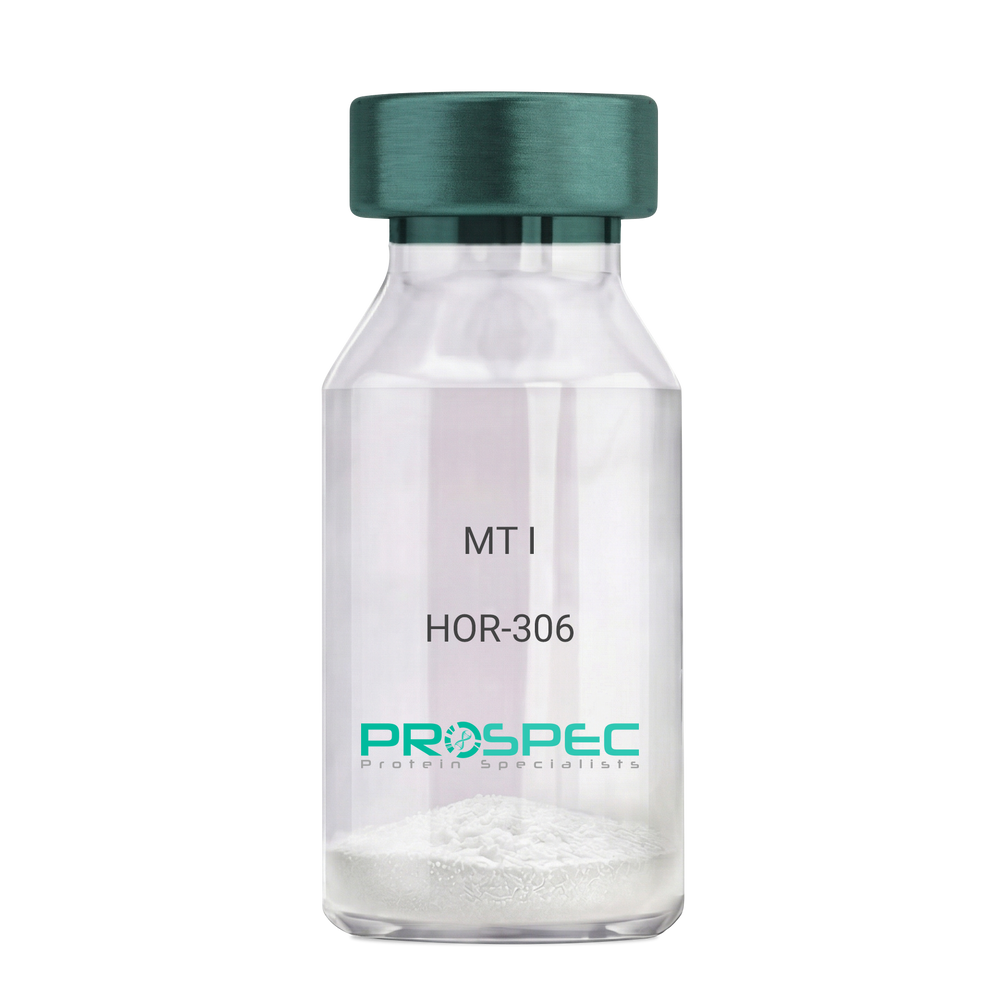
    MT I

    Description:

    Melanotan-I

    Melanotan-I, MT-I, Melanotan-1.

    Product # :

    HOR-306

    Price :

    Quantity :

    Shipping Method :

    Room Temp Icon

    Shipped at Room temp

    Add To Cart

    More Info

    • description
    • formulation
    • purity
    • More Info
    • Citations

    Description

    Melanotan-I has the amino acid sequence of Ser-Tyr-Ser-Nle-Glu-His-D-Phe-Arg-Trp-Gly-Lys-Pro-Val and a molecular weight of 1647.4 Dalton.

    Formulation

    The protein (1mg/ml) was lyophilized with no additives.

    Purity

    Greater than 98.0% as determined by RP-HPLC.

    Citations

    More Info

    • Synonyms

      Melanotan-I, MT-I, Melanotan-1.

    • Physical Appearance

      Sterile Filtered off-White lyophilized (freeze-dried) powder.

    • Stability

      Lyophilized Melanotan-I although stable at room temperature for 3 weeks, should be stored desiccated below -18°C. Upon reconstitution MT-I should be stored at 4°C between 2-7 days and for future use below -18°C.For long term storage it is recommended to add a carrier protein (0.1% HSA or BSA).Please prevent freeze-thaw cycles.

    • Solubility

      It is recommended to reconstitute the lyophilized Melanotan-I in sterile 1% acetic acid not less than 100 µg/ml, which can then be further diluted to other aqueous solutions.

    ProSpec's products are furnished for LABORATORY RESEARCH USE ONLY. The product may not be used as drugs, agricultural or pesticidal products, food additives or household chemicals.

    Melanotan I
  • View Data Sheet

    Name :

    CST3 Mouse, Active

    Description:

    Cystatin-C Mouse Recombinant, Active

    Cystatin-C, Cystatin-3,  Cst3,  CST3    

    Product # :

    PRO-2433

    Price :

    Quantity :

    Shipping Method :

    Ice Icon

    Shipped with Ice Packs

    Add To Cart

    More Info

    • description
    • source
    • formulation
    • purity
    • biological activity
    • More Info
    • Citations

    Description

    CST3 Mouse produced in Sf9 Insect cells is a single, glycosylated polypeptide chain containing 126 amino acids (21-140 a.a.) and having a molecular mass of 14.2kDa (Molecular size on SDS-PAGE will appear at approximately 13.5-18kDa).CST3 is expressed with a 6 amino acid His tag at C-Terminus and purified by proprietary chromatographic techniques.

    Source

    Sf9, Baculovirus cells.

    Formulation

    CST3 protein solution (1mg/ml) contains Phosphate Buffered Saline (pH 7.4) and 10% glycerol.

    Purity

    Greater than 95% as determined by SDS-PAGE.

    Biological Activity

    The IC50 value is < 1.0nM. The inhibitory function of Cystatin 3 on protease activity of papain was measured by a fluorometric assay using Z-FR-AMC at pH 7.5 at 25°C.

    Citations

    More Info

    • Introduction

      Cystatins are a superfamily of cysteine proteinase inhibitors found in both plants and animals. They comprise a group of proteinase inhibitors, widely distributed in tissues and body fluids, and form tight complexes with cysteine proteases such as cathepsin B, H, L and S. Cystatin C, a secreted molecule of this family, is of interest from biochemical, medicine and evolutionary points of view. Cystatin C, with molecular weight of 13260 Da, is composed of 120 amino acids, lacks carbohydrate and has two disulfide bridges located near the carboxyl terminus. Cystatin C is increased in patients with malignant diseases, and is related to the insufficiency of renal function and appears to be a better marker than creatinine. On the other hand, low levels of cystatin C involve cause the breakdown of the elastic laminae and, subsequently, the atherosclerosis and abdominal aortic aneurysm.

    • Synonyms

      Cystatin-C, Cystatin-3, Cst3, CST3

    • Physical Appearance

      Sterile Filtered colorless solution.

    • Stability

      Store at 4°C if entire vial will be used within 2-4 weeks. Store, frozen at -20°C for longer periods of time. For long term storage it is recommended to add a carrier protein (0.1% HSA or BSA). Avoid multiple freeze-thaw cycles.

    • Amino Acid Sequence

      ATPKQGPRML GAPEEADANE EGVRRALDFA VSEYNKGSND AYHSRAIQVV RARKQLVAGV NYFLDVEMGR TTCTKSQTNL TDCPFHDQPH LMRKALCSFQ IYSVPWKGTH SLTKFSCKNA HHHHHH

    ProSpec's products are furnished for LABORATORY RESEARCH USE ONLY. The product may not be used as drugs, agricultural or pesticidal products, food additives or household chemicals.

    Cst3 Mouse Active
  • View Data Sheet

    Name :

    SCGB1A1 Human

    Description:

    Uteroglobin Human Recombinant

    Uteroglobin, Clara cell phospholipid-binding protein, CCPBP, Clara cells 10 kDa secretory protein, CC10, Secretoglobin family 1A member 1, Urinary protein 1, UP-1, UP1, Urine protein 1, SCGB1A1, CCSP, UGB, CC16.

    Product # :

    CYT-743

    Price :

    Quantity :

    Shipping Method :

    Room Temp Icon

    Shipped at Room temp

    Add To Cart

    More Info

    • description
    • source
    • formulation
    • purity
    • biological activity
    • More Info
    • Citations

    Description

    Uteroglobin Human Recombinant produced in E.coli is a single, non-glycosylated polypeptide chain containing 70 amino acids and having a molecular mass of 15.8kDa.The SCGB1A1 is purified by proprietary chromatographic techniques.

    Source

    Escherichia Coli.

    Formulation

    The Uteroglobin protein was lyophilized from a 0.2µm filtered concentrated solution in PBS, pH 7.4.

    Purity

    Greater than 98.0% as determined by:
    (a) Analysis by RP-HPLC.
    (b) Analysis by SDS-PAGE.

    Biological Activity

    The ED50 as determined by the ability of the immobilized protein to support the adhesion of the A549 human lung carcinoma cells is less than 5.0µg/ml, corresponding to a specific activity of > 200 IU/mg.

    Citations

    More Info

    • Introduction

      Uteroglobin (SCGB1A1) which belongs to the Secretoglobin (SCGBs) superfamily, is a multifunctional protein that exerts anti-inflammatory and anti-tumorigenic effects by binding small hydrophobic molecules such as phospholipids and prostaglandins. Uteroglobin is involved in numerous functions including anti-inflammation, inhibition of phospholipase A2 and the sequestering of hydrophobic ligands. SCGB1A1 is expressed by Clara cells, the non-ciliated, non-mucous secretory cells predominant in lung bronchioles, and by other epithelia which communicate with the external environment. On top of sequestering pro-inflammatory mediators and carcinogens, Uteroglobin is implicated in the inhibition of cell migration and invasion, platelet aggregation, and T cell differentiation. SCGB1A1 gene defects are associated with a susceptibility to asthma.

    • Synonyms

      Uteroglobin, Clara cell phospholipid-binding protein, CCPBP, Clara cells 10 kDa secretory protein, CC10, Secretoglobin family 1A member 1, Urinary protein 1, UP-1, UP1, Urine protein 1, SCGB1A1, CCSP, UGB, CC16.

    • Physical Appearance

      Sterile Filtered White lyophilized (freeze-dried) powder.

    • Stability

      Lyophilized Uteroglobin although stable at room temperature for 3 weeks, should be stored desiccated below -18°C. Upon reconstitution SCGB1A1 should be stored at 4°C between 2-7 days and for future use below -18°C. For long term storage it is recommended to add a carrier protein (0.1% HSA or BSA). Please prevent freeze-thaw cycles.

    • Solubility

      It is recommended to reconstitute the lyophilized SCGB1A1 in sterile 18M-cm H2O not less than 100µg/ml, which can then be further diluted to other aqueous solutions.

    • Amino Acid Sequence

      EICPSFQRVI ETLLMDTPSS YEAAMELFSP DQDMREAGAQ LKKLVDTLPQ KPRESIIKLM EKIAQSSLCN.

    ProSpec's products are furnished for LABORATORY RESEARCH USE ONLY. The product may not be used as drugs, agricultural or pesticidal products, food additives or household chemicals.

    Scgb1A1 Human
  • View Data Sheet

    Name :

    BLyS Human, Plant

    Description:

    BAFF (BLyS) Human Recombinant, Plant

    BAFF, BLYS, CD257, TALL1, THANK, ZTNF4, TALL-1, TNFSF20, TNFSF13B, B-cell Activating Factor.

    Product # :

    CYT-054

    Price :

    Quantity :

    Shipping Method :

    Room Temp Icon

    Shipped at Room temp

    Add To Cart

    More Info

    • description
    • source
    • formulation
    • purity
    • biological activity
    • More Info
    • Citations

    Description

    BAFF human Recombinant produced in Nicotiana benthamiana plant is a single glycosilated polypeptide chain containing 151 amino acids fragment (134-285).BAFF (C830H1277N223O242S5) is fused to a 10-His-tag at the N-terminal having the total molecular mass of 18-20kDa and purified by standard chromatographic techniques.

    Source

    Nicotiana benthamiana plant

    Formulation

    Lyophilized from 1mg/ml solution in 20 mM PBS buffer pH 7 and 0.2 M NaCl.

    Purity

    Greater than 97.0% as determined by Analysis by SDS-PAGE.

    Biological Activity

    The activity is determined by dose-dependent stimulation of proliferation B cell from Human PBMC. Cell proliferation was measured by MTT method.
    *activity results may vary with PBMC donors.
    ED50 ? 50ng/ml

    Citations

    More Info

    • Introduction

      BAFF binds to tnfrsf13b/taci and tnfrsf17/bcma. Tnfsf13/april binds to the same 2 receptors, together, they form a 2 ligands -2 receptors pathway involved in the stimulation of b- and t-cell function and the regulation of humoral immunity.A third b-cell specific baff-receptor (baffr/br3) promotes the survival of mature b-cells and the b-cell response.
      B Lymphocyte Stimulator functions as a potent B-cell growth factor in costimulation assays.
      Administration of BAFF Human recombinant to mice disrupts splenic B-cell and T-cell zones and results in elevated levels of serum immunoglobulin.

    • Synonyms

      BAFF, BLYS, CD257, TALL1, THANK, ZTNF4, TALL-1, TNFSF20, TNFSF13B, B-cell Activating Factor.

    • Physical Appearance

      Sterile Filtered White lyophilized (freeze-dried) powder.

    • Stability

      Lyophilized BAFF although stable at room temperature for 3 weeks, should be stored desiccated below -18°C. Upon reconstitution BAFF should be stored at 4°C between 2-7 days and for future use below -18°C. For long term storage it is recommended to add a carrier protein (0.1% HSA or BSA). Please prevent freeze-thaw cycles.

    • Solubility

      It is recommended to reconstitute the lyophilized BAFF in sterile 18M-cm H2O not less than 100µg/ml, which can then be further diluted to other aqueous solutions.

    • Amino Acid Sequence

      HHHHHHHHHH AVQGPEETVT QDCLQLIADS ETPTIQKGSY TFVPWLLSFK RGSALEEKEN KILVKETGYF FIYGQVLYTD KTYAMGHLIQ RKKVHVFGDE LSLVTLFRCI QNMPETLPNN SCYSAGIAKL EEGDELQLAI PRENAQISLD GDVTFFGALK LL

    • Background

      What is the molecular weight/Mw of BLYS Protein?
      BLYS Protein has a total Mw of 19kDa.

      What is the source or expression system of BLYS Protein?
      Escherichia Coli.

      What is the Purity of BLYS Protein?
      BLYS Protein is >97% pure as determined by SDS-PAGE.

      What is the Biological Activity of BLYS Protein?
      The activity is determined by dose-dependent stimulation of proliferation B cell from Human PBMC. Cell proliferation was measured by MTT method.

      What is the amino acid sequence of BLYS Protein?
      HHHHHHHHHH AVQGPEETVT QDCLQLIADS ETPTIQKGSY TFVPWLLSFK RGSALEEKEN KILVKETGYF FIYGQVLYTD KTYAMGHLIQ RKKVHVFGDE LSLVTLFRCI QNMPETLPNN SCYSAGIAKL EEGDELQLAI PRENAQISLD GDVTFFGALK LL

      What applications can BLYS Protein be used in?
      BLYS Protein can probably be used in western blot, ELISA and Lateral Flow.

      What is the endotoxin level for BLYS Protein?
      The endotoxin level is minimal, BLYS Protein was purified using conventional chromatography techniques.

    ProSpec's products are furnished for LABORATORY RESEARCH USE ONLY. The product may not be used as drugs, agricultural or pesticidal products, food additives or household chemicals.

    Baff Human Plant
  • View Data Sheet

    Name :

    sRANKL (158-316) Mouse

    Description:

    Soluble RANK Ligand (158-316 a.a) Mouse Recombinant

    Soluble Receptor Activator of NFkB Ligand, TNFSF11, TRANCE, TNF-related activation-induced cytokine, OPGL, ODF, Osteoclast differentiation factor, Tumor necrosis factor ligand superfamily member 11, Receptor activator of nuclear factor kappa B ligand, RANKL, Osteoprotegerin ligand, CD254 antigen, sRANKL, sOdf.

    Product # :

    CYT-958

    Price :

    Quantity :

    Shipping Method :

    Ice Icon

    Shipped with Ice Packs

    Add To Cart

    More Info

    • description
    • source
    • formulation
    • purity
    • biological activity
    • More Info
    • Citations

    Description

    sRANKL Mouse Recombinant produced in E.Coli is a single, non-glycosylated polypeptide chain containing 160 amino acids (158-316 a.a.) and having a molecular mass of 17.9kDa. sRANKL is purified by proprietary chromatographic techniques.

    Source

    Escherichia Coli.

    Formulation

    sRANKL protein solution (1mg/ml) containing Tris-Hcl buffer pH-8.5 and 0.1M NaCl.

    Purity

    Greater than 90% as determined by SDS-PAGE.

    Biological Activity

    The ED50, as measured by its ability to induce osteoclast differentiation of RAW 264.7 mouse monocyte/macrophage cells, is less than 2ng/ml.

    Citations

    More Info

    • Introduction

      RANKL binds to tnfrsf11b/opg and to tnfrsf11a/rank. Osteoclast differentiation and activation factor. augments the ability of dendritic cells to stimulate naive t-cell proliferation. May be an important regulator of interactions between t-cells and dendritic cells and may play a role in the regulation of the t-cell-dependent immune response. sRANKL may also play an important role in enhanced bone-resorption in humoral hypercalcemia of malignancy.

    • Synonyms

      Soluble Receptor Activator of NFkB Ligand, TNFSF11, TRANCE, TNF-related activation-induced cytokine, OPGL, ODF, Osteoclast differentiation factor, Tumor necrosis factor ligand superfamily member 11, Receptor activator of nuclear factor kappa B ligand, RANKL, Osteoprotegerin ligand, CD254 antigen, sRANKL, sOdf.

    • Physical Appearance

      Sterile Filtered colorless solution.

    • Stability

      Store at 4°C if entire vial will be used within 2-4 weeks. Store, frozen at -20°C for longer periods of time. For long term storage it is recommended to add a carrier protein (0.1% HSA or BSA). Avoid multiple freeze-thaw cycles.

    • Amino Acid Sequence

      MKPEAQPFAH LTINAASIPS GSHKVTLSSW YHDRGWAKIS NMTLSNGKLR VNQDGFYYLY ANICFRHHET SGSVPTDYLQ LMVYVVKTSI KIPSSHNLMK GGSTKNWSGN SEFHFYSINV GGFFKLRAGE EISIQVSNPS LLDPDQDATY FGAFKVQDID

    ProSpec's products are furnished for LABORATORY RESEARCH USE ONLY. The product may not be used as drugs, agricultural or pesticidal products, food additives or household chemicals.

    Srankl 158 316 Mouse
  • View Data Sheet

    Name :

    BD 3 Human

    Description:

    Beta Defensin-3 Human Recombinant

    HBD3, HBP3, DEFB3, HBD-3, HBP-3, DEFB103.

    Product # :

    CYT-461

    Price :

    Quantity :

    Shipping Method :

    Room Temp Icon

    Shipped at Room temp

    Add To Cart

    More Info

    • description
    • source
    • formulation
    • purity
    • More Info
    • Citations

    Description

    Beta Defensin-3 Human Recombinant produced in E.Coli is a single, non-glycosylated polypeptide chain containing 45 amino acids and having a molecular mass of 5161.2 Dalton. The BD-3 is purified by proprietary chromatographic techniques.

    Source

    Escherichia Coli.

    Formulation

    The HBD-3 was lyophilized without additives.

    Purity

    Greater than 95.0% as determined by(a) Analysis by RP-HPLC.
    (b) Analysis by SDS-PAGE.

    Citations

    More Info

    • Introduction

      Defensins form a family of microbicidal and cytotoxic peptides made by neutrophils. Members of the defensin family are highly similar in protein sequence. This gene encodes defensin, beta 103A, which has broad spectrum antimicrobial activity and may play an important role in innate epithelial defense.

    • Synonyms

      HBD3, HBP3, DEFB3, HBD-3, HBP-3, DEFB103.

    • Physical Appearance

      Sterile Filtered lyophilized (freeze-dried) powder.

    • Stability

      Lyophilized Beta Defensin-3 Recombinant although stable at room temperature for 3 weeks, should be stored desiccated below -18°C. Upon reconstitution BD-3 should be stored at 4°C between 2-7 days and for future use below -18°C.Please prevent freeze-thaw cycles.

    • Solubility

      It is recommended to reconstitute the lyophilized Beta Defensin-3 in sterile 18MΩ-cm H2O not less than 100µg/ml, which can then be further diluted to other aqueous solutions.

    • Amino Acid Sequence

      GIINTLQKYY CRVRGGRCAV LSCLPKEEQI GKCSTRGRKC CRRKK.

    • Background

      Beta Defensin-3 Human Recombinant: Advancements in Antimicrobial Peptide Therapy

      Abstract:


      Beta Defensin-3 (hBD-3) human recombinant is a promising antimicrobial peptide with broad-spectrum activity against bacteria, viruses, and fungi. This research paper provides an overview of hBD-3, including its properties, mode of action, and potential applications. Additionally, novel methodologies for the production and optimization of hBD-3 human recombinant are discussed, highlighting its future implications in the field of infectious disease management.

      Introduction:


      The rise of drug-resistant pathogens necessitates exploring alternative therapeutic approaches, such as antimicrobial peptides. Beta Defensin-3 (hBD-3) human recombinant has emerged as a potent candidate due to its broad-spectrum antimicrobial activity. This paper aims to examine the unique features of hBD-3 and propose innovative methodologies for its production and optimization.

      Properties and Mode of Action:


      hBD-3 possesses a distinct structural composition consisting of 45 amino acids, including an N-terminal loop, three antiparallel β-strands, and a C-terminal α-helix. These structural elements contribute to its ability to disrupt microbial membranes and target selectivity. The mode of action involves electrostatic interactions with negatively charged microbial membranes, leading to membrane disruption and subsequent cell death. Furthermore, hBD-3 exhibits immunomodulatory functions by promoting chemotaxis, enhancing phagocytic activity, and modulating the release of pro-inflammatory cytokines.

      Production of hBD-3 Human Recombinant:


      Various expression systems, such as bacterial, yeast, and mammalian cell-based platforms, have been explored for the efficient production of hBD-3 human recombinant. Each system offers distinct advantages and challenges, requiring careful selection to achieve high yields and desired protein quality. Optimization strategies, including codon optimization, fusion protein tags, and appropriate growth conditions, have been employed to enhance production efficiency. Purification techniques, such as chromatography and ultrafiltration, have been optimized to isolate high-quality hBD-3 recombinant.

      Applications and Future Perspectives:


      hBD-3 human recombinant exhibits significant therapeutic potential against drug-resistant pathogens, making it a promising alternative to conventional antibiotics. It also demonstrates promise in wound healing and tissue regeneration by stimulating angiogenesis, extracellular matrix production, and keratinocyte migration. Moreover, the unique physicochemical properties of hBD-3 open avenues for its utilization in nanomedicine, enabling targeted therapy and improved drug delivery.

      Conclusion:


      hBD-3 human recombinant represents a potent antimicrobial peptide with broad-spectrum activity against diverse pathogens. The optimization of production methodologies and further exploration of its mechanisms of action will contribute to its clinical utility. With its potential applications in infectious disease management, wound healing, and nanomedicine, hBD-3 human recombinant holds promise as a versatile therapeutic agent.

      What is the molecular weight/Mw of BD3 Protein?
      BD3 Protein has a total Mw of 5.1kDa.

      What is the source or expression system of BD3 Protein?
      Escherichia Coli.

      What is the Purity of BD3 Protein?
      BD3 Protein is >95% pure as determined by SDS-PAGE.

      What is the Biological Activity of BD3 Protein?
      The biological functionality of BD3 Protein will be determined in the future.

      What is the amino acid sequence of BD3 Protein?
      GIINTLQKYY CRVRGGRCAV LSCLPKEEQI GKCSTRGRKC CRRKK.

      What applications can BD3 Protein be used in?
      BD3 Protein can probably be used in western blot, ELISA and Lateral Flow.

      What is the endotoxin level for BD3 Protein?
      The endotoxin level is minimal, BD3 Protein was purified using conventional chromatography techniques.

    ProSpec's products are furnished for LABORATORY RESEARCH USE ONLY. The product may not be used as drugs, agricultural or pesticidal products, food additives or household chemicals.

    Beta Defensin 3 Human
  • View Data Sheet

    Name :

    IL 18 Mouse

    Description:

    Interleukin-18 Mouse Recombinant

      Interleukin-18, IL-18, IFN gamma-inducing factor, IFN-gamma-inducing factor, Interleukin-1 gamma, IL-1 gamma.

    Product # :

    CYT-882

    Price :

    Quantity :

    Shipping Method :

    Ice Icon

    Shipped with Ice Packs

    Add To Cart

    More Info

    • description
    • source
    • formulation
    • purity
    • More Info
    • Citations

    Description

    IL 18 Mouse Recombinant produced in E.Coli is a single, non-glycosylated, polypeptide chain containing 158 amino acids (36-192 a.a.) and having a molecular mass of 18.2kDa. The IL 18 is purified by proprietary chromatographic techniques.

    Source

    Escherichia Coli.

    Formulation

    The IL 18 protein solution (0.5mg/ml) contains Phosphate Buffered Saline (pH7.4).

    Purity

    Greater than 90.0% as determined by SDS-PAGE.

    Citations

    More Info

    • Introduction

      IL-18 is a proinflammatory cytokine. This cytokine can induce the IFN-gamma production of T cells. The combination of this cytokine and IL12 has been shown to inhibit IL4 dependent IgE and IgG1 production, and enhance IgG2a production of B cells. IL-18 binding protein (IL18BP) can specifically interact with this cytokine, and thus negatively regulate its biological activity.

    • Synonyms

      Interleukin-18, IL-18, IFN gamma-inducing factor, IFN-gamma-inducing factor, Interleukin-1 gamma, IL-1 gamma.

    • Physical Appearance

      Sterile Filtered clear solution.

    • Stability

      Store at 4°C if entire vial will be used within 2-4 weeks. Store, frozen at -20°C for longer periods of time. Please avoid freeze thaw cycles.

    • Amino Acid Sequence

      MNFGRLHCTT AVIRNINDQV LFVDKRQPVF EDMTDIDQSA SEPQTRLIIY MYKDSEVRGL AVTLSVKDSK MSTLSCKNKI ISFEEMDPPE NIDDIQSDLI FFQKRVPGHN KMEFESSLYE GHFLACQKED DAFKLILKKK DENGDKSVMF TLTNLHQS.

    ProSpec's products are furnished for LABORATORY RESEARCH USE ONLY. The product may not be used as drugs, agricultural or pesticidal products, food additives or household chemicals.

    Il 18 Mouse
  • View Data Sheet

    Name :

    OXM Porcine

    Description:

    Oxyntomodulin Porcine Recombinant

    Product # :

    HOR-292

    Price :

    Quantity :

    Shipping Method :

    Room Temp Icon

    Shipped at Room temp

    Add To Cart

    More Info

    • description
    • source
    • formulation
    • purity
    • More Info
    • Citations

    Description

    Oxyntomodulin Porcine Recombinant produced in E.Coli is a single, non-glycosylated polypeptide chain containing 37 amino acids and having a molecular mass of 4420.86 Dalton. The OXM is purified by proprietary chromatographic techniques.

    Source

    Escherichia Coli.

    Formulation

    Lyophilized from a concentrated (1mg/ml) solution in water containing no additives.

    Purity

    Greater than 99.0% as determined by:
    (a) Analysis by RP-HPLC.
    (b) Analysis by SDS-PAGE.

    Citations

    More Info

    • Introduction

      OXM a 37 amino acid peptide which contains the glucagon sequence extended by a C-terminal basic octapeptide, its primary structure is identical in all mammals except in pig and cattle. OXM is released from the gut during digestion, together with glicentin another octapeptide containing molecule. It is considered as a putative physiological regulator of gastric acid secretion, it inhibits histamine.

    • Physical Appearance

      Sterile Filtered White lyophilized (freeze-dried) powder.

    • Stability

      Lyophilized Oxyntomodulin although stable at room temperature for 3 weeks, should be stored desiccated below -18°C. Upon reconstitution OXM should be stored at 4°C between 2-7 days and for future use below -18°C.For long term storage it is recommended to add a carrier protein (0.1% HSA or BSA).Please prevent freeze-thaw cycles.

    • Solubility

      It is recommended to reconstitute the lyophilized Oxyntomodulin in 20mM acetic acid.

    • Amino Acid Sequence

      His-Ser-Gln-Gly-Thr-Phe-Thr-Ser-Asp-Tyr-Ser-Lys-Tyr-Leu-Asp-Ser-Arg-Arg-Ala-Gln-Asp-Phe-Val-Gln-Trp-Leu-Met-Asn-Thr-Lys-Arg-Asn-Lys-Asn-Asn-Ile-Ala.

    ProSpec's products are furnished for LABORATORY RESEARCH USE ONLY. The product may not be used as drugs, agricultural or pesticidal products, food additives or household chemicals.

    Oxyntomodulin Porcine
  • View Data Sheet

    Name :

    BSND Human

    Description:

    Bartter Syndrome Infantile with Sensorineural Deafness Human Recombinant

    Bartter Syndrome Infantile With Sensorineural Deafness (Barttin) , Deafness Autosomal Recessive 73, DFNB73, BART, barttin.

    Product # :

    PRO-1551

    Price :

    Quantity :

    Shipping Method :

    Ice Icon

    Shipped with Ice Packs

    Add To Cart

    More Info

    • description
    • source
    • formulation
    • purity
    • More Info
    • Citations

    Description

    BSND Human Recombinant produced in E.coli is a single, non-glycosylated polypeptide chain containing 290 amino acids (54-320) and having a molecular mass of 31.7kDa.BSND is fused to a 23 amino acid His-tag at N-terminus & purified by proprietary chromatographic techniques.

    Source

    Escherichia Coli.

    Formulation

    The BSND solution (0.25mg/ml) contains 20mM Tris-HCl buffer (pH 8.0), 0.15M NaCl, 1mM DTT and 10% glycerol.

    Purity

    Greater than 90% as determined by SDS-PAGE.

    Citations

    More Info

    • Introduction

      BSND is a vital beta subunit for CLC chloride channels. These heteromeric channels are restricted to basolateral membranes of renal tubules and of potassium-secreting epithelia of the inner ear. BSND gene mutations are linked with Bartter syndrome with sensorineural deafness.

    • Synonyms

      Bartter Syndrome Infantile With Sensorineural Deafness (Barttin) , Deafness Autosomal Recessive 73, DFNB73, BART, barttin.

    • Physical Appearance

      Sterile Filtered clear solution.

    • Stability

      Store at 4°C if entire vial will be used within 2-4 weeks. Store, frozen at -20°C for longer periods of time. For long term storage it is recommended to add a carrier protein (0.1% HSA or BSA).Avoid multiple freeze-thaw cycles.

    • Amino Acid Sequence

      MGSSHHHHHH SSGLVPRGSH MGSCQCYPKI TFVPADSDFQ GILSPKAMGL LENGLAAEMK SPSPQPPYVR LWEEAAYDQS LPDFSHIQMK VMSYSEDHRS LLAPEMGQPK LGTSDGGEGG PGDVQAWMEA AVVIHKGSDE SEGERRLTQS WPGPLACPQG PAPLASFQDD LDMDSSEGSS PNASPHDREE ACSPQQEPQG CRCPLDRFQD FALIDAPTLE DEPQEGQQWE IALPNNWQRY PRTKVEEKEA SDTGGEEPEK EEEDLYYGLP DGAGDLLPDK ELGFEPDTQG

    ProSpec's products are furnished for LABORATORY RESEARCH USE ONLY. The product may not be used as drugs, agricultural or pesticidal products, food additives or household chemicals.

    Bsnd Human
  • View Data Sheet

    Name :

    IL12 Human

    Description:

    Interleukin-12 Human Recombinant

    NKSF, CTL maturation factor (TCMF), Cytotoxic lymphocyte maturation factor (CLMF), TSF, Edodekin-alpha, IL-12.

    Product # :

    CYT-101

    Price :

    Quantity :

    Shipping Method :

    Room Temp Icon

    Shipped at Room temp

    Add To Cart

    More Info

    • description
    • source
    • formulation
    • purity
    • biological activity
    • More Info
    • Citations

    Description

    Interleukin-12 Human Recombinant produced in HEK cells is a glycosylated heterodimer, having a total molecular weight of 57kDa.The IL12 is purified by proprietary chromatographic techniques.

    Source

    HEK.

    Formulation

    IL12 was lyophilized from a 0.2µm filtered solution containing 1xPBS.

    Purity

    Greater than 95% as obsereved by SDS-PAGE.

    Biological Activity

    The specific activity was determined by the dose-dependent release of IFN-gamma from the human NK92 cell line in presence of 20ng/mL rIL-2.
    The EC50 is 0.5ng/ml.

    Citations

    More Info

    • Introduction

      IL-12 is a heterodimeric cytokine that stimulates the production of IFNgamma from T-cells and natural killer cells, and also induces differentiation of Th1 helper cells. IL-12 is an initiator of cell-mediated immunity.

    • Synonyms

      NKSF, CTL maturation factor (TCMF), Cytotoxic lymphocyte maturation factor (CLMF), TSF, Edodekin-alpha, IL-12.

    • Physical Appearance

      Sterile Filtered White lyophilized (freeze-dried) powder.

    • Stability

      Lyophilized IL-12 although stable at room temperature for 3 weeks, should be stored desiccated below -18°C. Upon reconstitution IL12 should be stored at 4°C between 2-7 days and for future use below -18°C.For long term storage it is recommended to add a carrier protein (0.1% HSA or BSA).Please prevent freeze-thaw cycles.

    • Solubility

      It is recommended to reconstitute the lyophilized IL12 in sterile PBS containing 0.1% endotoxin-free recombinant HSA.

    • Amino Acid Sequence

      IL-12 is a heterodimer of IL-12A and IL-12B linked through a disulfide-bond between cysteines in red in sequences below.
      >IL-12 A
      RNLPVATPDPGMFPCLHHSQNLLRAVSNMLQKARQTLEFYPCTSEEIDHEDITKDKTSTVEACLP
      LELTKNESCLNSRETSFITNGSCLASRKTSFMMALCLSSIYEDLKMYQVEFKTMNAKLLMDPKRQ
      IFLDQNMLAVIDELMQALNFNSETVPQKSSLEEPDFYKTKIKLCILLHAFRIRAVTIDRVMSYLNAS.
      >IL-12B
      IWELKKDVYVVELDWYPDAPGEMVVLTCDTPEEDGITWTLDQSSEVLGSGKTLTIQVKEFGDAG
      QYTCHKGGEVLSHSLLLLHKKEDGIWSTDILKDQKEPKNKTFLRCEAKNYSGRFTCWWLTTISTD
      LTFSVKSSRGSSDPQGVTCGAATLSAERVRGDNKEYEYSVECQEDSACPAAEESLPIEVMVDAV
      HKLKYENYTSSFFIRDIIKPDPPKNLQLKPLKNSRQVEVSWEYPDTWSTPHSYFSLTFCVQVQGK
      SKREKKDRVFTDKTSATVICRKNASISVRAQDRYYSSSWSEWASVPCS.

    • Background

      What is the molecular weight/Mw of IL12 HUMAN Protein?
      IL12 HUMAN Protein has a total Mw of 57kDa.

      What is the source or expression system of IL12 HUMAN Protein?
      HEK.

      What is the Purity of IL12 HUMAN Protein?
      IL12 HUMAN Protein is >95% pure as determined by SDS-PAGE.

      What is the Biological Activity of IL12 HUMAN Protein?
      The specific activity was determined by the dose-dependent release of IFN-gamma from the human NK92 cell line in presence of 20ng/mL rIL-2.
      The EC50 is 0.5ng/ml.
      What is the amino acid sequence of IL12 HUMAN Protein?
      IL-12 is a heterodimer of IL-12A and IL-12B linked through a disulfide-bond between cysteines in red in sequences below.
      >IL-12 A
      RNLPVATPDPGMFPCLHHSQNLLRAVSNMLQKARQTLEFYPCTSEEIDHEDITKDKTSTVEACLP
      LELTKNESCLNSRETSFITNGSCLASRKTSFMMALCLSSIYEDLKMYQVEFKTMNAKLLMDPKRQ
      IFLDQNMLAVIDELMQALNFNSETVPQKSSLEEPDFYKTKIKLCILLHAFRIRAVTIDRVMSYLNAS.
      >IL-12B
      IWELKKDVYVVELDWYPDAPGEMVVLTCDTPEEDGITWTLDQSSEVLGSGKTLTIQVKEFGDAG
      QYTCHKGGEVLSHSLLLLHKKEDGIWSTDILKDQKEPKNKTFLRCEAKNYSGRFTCWWLTTISTD
      LTFSVKSSRGSSDPQGVTCGAATLSAERVRGDNKEYEYSVECQEDSACPAAEESLPIEVMVDAV
      HKLKYENYTSSFFIRDIIKPDPPKNLQLKPLKNSRQVEVSWEYPDTWSTPHSYFSLTFCVQVQGK
      SKREKKDRVFTDKTSATVICRKNASISVRAQDRYYSSSWSEWASVPCS.

      What applications can IL12 HUMAN Protein be used in?
      IL12 HUMAN Protein can probably be used in western blot, ELISA and Lateral Flow.

      What is the endotoxin level for IL12 HUMAN Protein?
      The endotoxin level is minimal, IL12 HUMAN Protein was purified using conventional chromatography techniques.

      Who supplies recombinant IL12 HUMAN that is in stock and available to order?
      ProSpec has the protein in stock and available for immediate delivery.

      Where can I order bulk mg quantities of IL12 HUMAN?
      ProSpec supplies bulk mg quantities at affordable prices that meets research and academic budgets.

    ProSpec's products are furnished for LABORATORY RESEARCH USE ONLY. The product may not be used as drugs, agricultural or pesticidal products, food additives or household chemicals.

    Il 12 Human Hek
  • View Data Sheet

    Name :

    IL6ST Human

    Description:

    Interleukin-6 Signal Transducer Human Recombinant

    Interleukin 6 signal transducer, oncostatin M receptor, IL6ST, CD130, CDw130, GP130, GP130-RAPS, IL6R-beta

    Product # :

    CYT-1156

    Price :

    Quantity :

    Shipping Method :

    Ice Icon

    Shipped with Ice Packs

    Add To Cart

    More Info

    • description
    • source
    • formulation
    • purity
    • More Info
    • Citations

    Description

    IL6ST Human produced in Sf9 Baculovirus cells is a single, glycosylated polypeptide chain containing 605 amino acids (23-619 a.a) and having a molecular mass of 68.9kDa.IL6ST is fused to an 8 amino acid His tag at C-terminus and purified by proprietary chromatographic techniques.

    Source

    Sf9, Baculovirus cells.

    Formulation

    The IL6ST solution (0.25mg/ml) contains 10% Glycerol and Phosphate-Buffered Saline (pH 7.4).

    Purity

    Greater than 95% as determined by SDS-PAGE.

    Citations

    More Info

    • Introduction

      Interleukin-6 Signal Transducer or IL6ST is a receptor, part of the family of class 1 cytokine receptor. IL6ST binds to IL-6 through membrane-anchored or soluble IL-6R starts a connection between another complex of IL6ST and IL-6 , thus forming a homo-dimer and a signal transduction occurs.

    • Synonyms

      Interleukin 6 signal transducer, oncostatin M receptor, IL6ST, CD130, CDw130, GP130, GP130-RAPS, IL6R-beta

    • Physical Appearance

      Sterile Filtered colorless solution.

    • Stability

      Store at 4°C if entire vial will be used within 2-4 weeks. Store, frozen at -20°C for longer periods of time. For long term storage it is recommended to add a carrier protein (0.1% HSA or BSA).Avoid multiple freeze-thaw cycles.

    • Amino Acid Sequence

      ELLDPCGYIS PESPVVQLHS NFTAVCVLKE KCMDYFHVNA NYIVWKTNHF TIPKEQYTII NRTASSVTFT DIASLNIQLT CNILTFGQLE QNVYGITIIS GLPPEKPKNL SCIVNEGKKM RCEWDRGRET HLETNFTLKS EWATHKFADC KAKRDTPTSC TVDYSTVYFV NIEVWVEAEN ALGKVTSDHI NFDPVYKVKP NPPHNLSVIN SEELSSILKL TWTNPSIKSV IILKYNIQYR TKDASTWSQI PPEDTASTRS SFTVQDLKPF TEYVFRIRCM KEDGKGYWSD WSEEASGITY EDRPSKAPSF WYKIDPSHTQ GYRTVQLVWK TLPPFEANGK ILDYEVTLTR WKSHLQNYTV NATKLTVNLT NDRYVATLTV RNLVGKSDAA VLTIPACDFQ ATHPVMDLKA FPKDNMLWVE WTTPRESVKK YILEWCVLSD KAPCITDWQQ EDGTVHRTYL RGNLAESKCY LITVTPVYAD GPGSPESIKA YLKQAPPSKG PTVRTKKVGK NEAVLEWDQL PVDVQNGFIR NYTIFYRTII GNETAVNVDS SHTEYTLSSL TSDTLYMVRM AAYTDEGGKD GPEFTFTTPK FAQGEIELEH HHHHH

    • Background

      Significance of Human Recombinant Interleukin-6 Signal Transducer: Insights and Implications

      Abstract:

      The Interleukin-6 (IL-6) signal transducer holds a pivotal role in the complex IL-6 signaling pathway, orchestrating crucial cellular responses. This paper delves into the significance of Human Recombinant IL-6 Signal Transducer in unraveling IL-6-mediated cellular communication and highlights its potential applications in research and therapeutic development. The review sheds light on the methodology of producing this transducer and its relevance in advancing our understanding of cytokine signaling.

      Introduction:

      IL-6, a pleiotropic cytokine, is known to exert its diverse effects through a complex signaling cascade, wherein the signal transducer plays a crucial role. The availability of Human Recombinant IL-6 Signal Transducer enables the investigation of its role in health and disease. This transducer is vital for transmitting IL-6 signals, influencing processes like immune response, inflammation, and cell differentiation.

      IL-6 Signal Transduction Pathway:

      The IL-6 signal transduction pathway involves binding of IL-6 to its receptor, leading to the recruitment of the signal transducer and subsequent activation of downstream signaling molecules such as JAK/STAT pathway. This orchestrated response modulates gene expression, thereby impacting cellular behavior.

      Methods of Production:

      Human Recombinant IL-6 Signal Transducer is produced by expressing the corresponding gene in a suitable expression system, often utilizing bacterial or mammalian cells. Proper post-translational modifications are necessary to ensure its biological activity and appropriate functioning within the signaling cascade.

      Applications in Research:

      Human Recombinant IL-6 Signal Transducer serves as a fundamental tool in elucidating IL-6-mediated signaling mechanisms. Its availability facilitates the exploration of how aberrant signaling contributes to diseases such as autoimmune disorders, inflammatory conditions, and certain cancers. The transducer's interaction with other signaling pathways is also of interest for comprehensive pathway analysis.

      Therapeutic Implications:

      Understanding the IL-6 signal transduction pathway has led to the development of targeted therapies for IL-6-related diseases. Modulation of this pathway presents potential opportunities for novel therapeutic interventions, thereby offering a new dimension in precision medicine.

      Challenges and Future Directions:

      While the availability of Human Recombinant IL-6 Signal Transducer has significantly advanced our knowledge, challenges remain in deciphering the intricate nuances of IL-6 signaling. Developing strategies to selectively intervene in this pathway without disturbing physiological homeostasis presents an ongoing challenge.

      Conclusion:

      The Human Recombinant IL-6 Signal Transducer serves as a cornerstone in unraveling the complexities of IL-6 signaling, shedding light on its roles in health and disease. Its applications span from fundamental research to therapeutic development, showcasing its potential to shape the future of precision medicine.

      What is the molecular weight/Mw of IL6ST HUMAN Protein?
      IL6ST HUMAN Protein has a total Mw of 68.9kDa.

      What is the source or expression system of IL6ST HUMAN Protein?
      Sf9, Baculovirus cells.

      What is the Purity of IL6ST HUMAN Protein?
      IL6ST HUMAN Protein is >95% pure as determined by SDS-PAGE.

      What is the Biological Activity of IL6ST HUMAN Protein?
      The biological functionality of IL6ST HUMAN Protein will be determined in the future.

      What is the amino acid sequence of IL6ST HUMAN Protein?
      ELLDPCGYIS PESPVVQLHS NFTAVCVLKE KCMDYFHVNA NYIVWKTNHF TIPKEQYTII NRTASSVTFT DIASLNIQLT CNILTFGQLE QNVYGITIIS GLPPEKPKNL SCIVNEGKKM RCEWDRGRET HLETNFTLKS EWATHKFADC KAKRDTPTSC TVDYSTVYFV NIEVWVEAEN ALGKVTSDHI NFDPVYKVKP NPPHNLSVIN SEELSSILKL TWTNPSIKSV IILKYNIQYR TKDASTWSQI PPEDTASTRS SFTVQDLKPF TEYVFRIRCM KEDGKGYWSD WSEEASGITY EDRPSKAPSF WYKIDPSHTQ GYRTVQLVWK TLPPFEANGK ILDYEVTLTR WKSHLQNYTV NATKLTVNLT NDRYVATLTV RNLVGKSDAA VLTIPACDFQ ATHPVMDLKA FPKDNMLWVE WTTPRESVKK YILEWCVLSD KAPCITDWQQ EDGTVHRTYL RGNLAESKCY LITVTPVYAD GPGSPESIKA YLKQAPPSKG PTVRTKKVGK NEAVLEWDQL PVDVQNGFIR NYTIFYRTII GNETAVNVDS SHTEYTLSSL TSDTLYMVRM AAYTDEGGKD GPEFTFTTPK FAQGEIELEH HHHHH.

      What applications can IL6ST HUMAN Protein be used in?
      IL6ST HUMAN Protein can probably be used in western blot, ELISA and Lateral Flow.

      What is the endotoxin level for IL6ST HUMAN Protein?
      The endotoxin level is minimal, IL6ST HUMAN Protein was purified using conventional chromatography techniques.

      Who supplies recombinant IL6ST HUMAN that is in stock and available to order?
      ProSpec has the protein in stock and available for immediate delivery.

      Where can I order bulk mg quantities of IL6ST HUMAN?
      ProSpec supplies bulk mg quantities at affordable prices that meets research and academic budgets.

    ProSpec's products are furnished for LABORATORY RESEARCH USE ONLY. The product may not be used as drugs, agricultural or pesticidal products, food additives or household chemicals.

    Il6St Human
  • View Data Sheet

    Name :

    TNFRSF10A Human Fc

    Description:

    TRAIL Receptor-1 Human Recombinant Fc

    Tumor Necrosis Factor Receptor Superfamily Member 10a, TRAILR1, APO2, DR4, TNF-Related Apoptosis-Inducing Ligand Receptor 1, Death Receptor 4, TRAIL Receptor 1, TRAIL-R1, Tumor Necrosis Factor Receptor Superfamily Member 10a Variant 2, Tumor Necrosis Factor Receptor Superfamily Member 10A, Cytotoxic TRAIL Receptor, CD261 Antigen, TRAILR-1, CD261, TNFRSF10A.

    Product # :

    CYT-877

    Price :

    Quantity :

    Shipping Method :

    Room Temp Icon

    Shipped at Room temp

    Add To Cart

    More Info

    • description
    • source
    • formulation
    • purity
    • biological activity
    • More Info
    • Citations

    Description

    TRAIL R1 Fc Human Recombinant (24-240) produced in E.Coli is a non-glycosylated, disulfide-linked homodimer containing two polypeptide chains of 217 amino acids each and having a molecular mass of 41kDa [including tag] each chain. TRAILR1 is fused to a 236 amino acid Fc tag at C-terminal and purified by proprietary chromatographic techniques.

    Source

    Escherichia Coli.

    Formulation

    Lyophilized from a 0.2µm filtered solution in PBS.

    Purity

    Greater than 95.0% as determined by SDS-PAGE.

    Biological Activity

    The ED50, as measured by its ability to inhibit Trail-mediated cytotoxicity in mouse L-929 cells, is less than 1.25ng/ml.

    Citations

    More Info

    • Introduction

      Human TNFRSF10A is a type 1 transmembrane protein in the TNF R superfamily. TNFRSF10A is not expressed in rodents. The trimeric ligand Trail binds TNFRSF10A and induces apoptosis, and recombinant, soluble forms of the receptor inhibit Trail-induced apoptosis. TNFRSF10A is expressed generally in damaged, infected, and malignant cells. TNFRSF10A functions in immune surveillance, inducing apoptosis in cancer cells but not normal cells.

    • Synonyms

      Tumor Necrosis Factor Receptor Superfamily Member 10a, TRAILR1, APO2, DR4, TNF-Related Apoptosis-Inducing Ligand Receptor 1, Death Receptor 4, TRAIL Receptor 1, TRAIL-R1, Tumor Necrosis Factor Receptor Superfamily Member 10a Variant 2, Tumor Necrosis Factor Receptor Superfamily Member 10A, Cytotoxic TRAIL Receptor, CD261 Antigen, TRAILR-1, CD261, TNFRSF10A.

    • Physical Appearance

      Sterile Filtered White lyophilized (freeze-dried) powder.

    • Stability

      Lyophilized TNFRSF10A although stable at room temperature for 3 weeks, should be stored desiccated below -18°C. Upon reconstitution TRAIL-R1 should be stored at 4°C between 2-7 days and for future use below -18°C.For long term storage it is recommended to add a carrier protein (0.1% HSA or BSA).Please prevent freeze-thaw cycles.

    • Solubility

      It is recommended to reconstitute the lyophilized TNFRSF10A in sterile 18M-cm H2O not less than 100µg/ml, which can then be further diluted to other aqueous solutions.

    • Amino Acid Sequence

      ASGTEAAAAT PSKVWGSSAG RIEPRGGGRG ALPTSMGQHG PSARARAGRA PGPRPAREAS PRLRVHKTFK FVVVGVLLQV VPSSAATIKL HDQSIGTQQW EHSPLGELCP PGSHRSERPG ACNRCTEGVG YTNASNNLFA CLPCTACKSD EEERSPCTTT RNTACQCKPG TFRNDNSAEM CRKCSTGCPR GMVKVKDCTP WSDIECVHKE SGNGHNIEGR MDPKSCDKTH TCPPCPAPEL LGGPSVFLFP PKPKDTLMIS RTPEVTCVVV DVSHEDPEVK FNWYVDGVEV HNAKTKPREE QYNSTYRVVS VLTVLHQDWL NGKEYKCKVS NKALPAPIEK TISKAKGQPR EPQVYTLPPS RDELTKNQVS LTCLVKGFYP SDIAVEWESN GQPENNYKTT PPVLDSDGSF FLYSKLTVDK SRWQQGNVFS CSVMHEALHN HYTQKSLSLS PGK.

    ProSpec's products are furnished for LABORATORY RESEARCH USE ONLY. The product may not be used as drugs, agricultural or pesticidal products, food additives or household chemicals.

    Tnfrsf10A Human Fc
  • 1
  • …
  • 23
  • 24
  • 25
  • 26
  • 27
Your browser does not support the video tag.

Products

  • Cytokines
  • Growth Factors
  • Chemokines
  • CD Antigens
  • Neurotrophins
  • Hormones
  • Enzymes
  • Viral Antigens
  • Recombinant Proteins
  • Natural Proteins
  • Monoclonal Antibodies
  • Polyclonal Antibodies
  • Thermal Packaging

About

  • Company
  • Founder
  • Contribution
  • Contact Us
  • My Account

Ordering

  • Ordering Method
  • Ordering - Credit Card
  • Ordering PO
  • Shipping Fees
  • FAQ's

Legal

  • Terms & Conditions
  • Privacy
  • Site Map
  • info@prospecbio.com
  • Facebook
  • Instagram
  • Linkedin Profile

© 2026 ProSpec-Tany TechnoGene Ltd. All Rights Reserved.

  • Choosing a selection results in a full page refresh.
  • Opens in a new window.