Search results
589 results found for “met proto-oncogene”
Name
Description
Product #
Price
Quantity
Shipping Method
- View Data Sheet
Name :
PTH (1-84) N15 HumanDescription:
Parathyroid Hormone (1-84) N15 Labeled Human Recombinant
Parathyrin, PTH, Parathormone.
Product # :
HOR-002Price :
Quantity :
Shipping Method :
Shipped at Room temp
More Info
- description
- source
- formulation
- purity
- biological activity
- More Info
Description
PTH (1-84) N15 Human Recombinant produced in E.coli is a single, non-glycosylated polypeptide chain containing 84 amino acids and having a molecular mass of 9550 Dalton labeled by the stable isotope N15.The PTH (1-84) N15 is purified by proprietary chromatographic techniques.
Source
Escherichia Coli.
Formulation
PTH (1-84) N15 protein was lyophilized from a 0.2µm filtered concentrated solution in 1xPBS, pH 7.4.
Purity
Greater than 97.0% as determined by:
(a) Analysis by RP-HPLC.
(b) Analysis by SDS-PAGE.Biological Activity
The activity calculated by UMR106 cell/cAMP method corresponding to a specific activity of 9,000 Units/mg.More Info
-
Introduction
Parathyroid hormone (PTH), or parathormone, is secreted by the parathyroid glands as a polypeptide containing 84 amino acids. It acts to increase the concentration of calciumin the blood, whereas calcitonin (a hormone produced by the parafollicular cells of the thyroid gland) acts to decrease calcium concentration. PTH acts to increase the concentration of calcium in the blood by acting upon parathyroid hormone receptorin three parts of the body: In the bones- It enhances the release of calcium from the large reservoir contained in the bones. Bone resorption is the normal destruction of bone by osteoclasts, which are indirectly stimulated by PTH. Stimulation is indirect since osteoclasts do not have a receptor for PTH; rather, PTH binds to osteoblasts, the cells responsible for creating bone. Binding stimulates osteoblasts to increase their expression of RANKL, which can bind to osteoclast precursors containing RANK, a receptor for RANKL. The binding of RANKL to RANK stimulates these precursors to fuse, forming new osteoclasts which ultimately enhances the resorption of bone.
In the kidney- It enhances active reabsorption of calcium from distal tubules and the thick ascending limb.
In the intestine- It enhances the absorption of calcium in the intestine by increasing the production of vitamin D and upregulating the enzyme responsible for 1-alpha hydroxylationof 25-hydroxy vitamin D, converting vitamin D to its active form (1,25-dihydroxy vitamin D) which effects the actual absorption of calcium (as Ca2+ ions) by the intestine via calbindin.
Recombinant Human full length PTH 1-84 has potential as an anti-osteoporotic agent, due to its properties as a bone formation stimulant, it increases bone turnover, stimulating osteoblasts and reducing both vertebral and non vertebral fractures. -
Synonyms
Parathyrin, PTH, Parathormone.
-
Physical Appearance
Sterile Filtered White lyophilized (freeze-dried) powder.
-
Stability
Lyophilized Parathyrin although stable at room temperature for 3 weeks, should be stored desiccated below -18°C. Upon reconstitution PTH should be stored at 4°C between 2-7 days and for future use below -18°C.For long term storage it is recommended to add a carrier protein (0.1% HSA or BSA).Please prevent freeze-thaw cycles.
-
Solubility
It is recommended to reconstitute the lyophilized Parathormone in sterile 18MΩ-cm H2O not less than 100 µg/ml, which can then be further diluted to other aqueous solutions.
-
Amino Acid Sequence
SVSEIQLMHN LGKHLNSMER VEWLRKKLQD VHNFVALGAP LAPRDAGSQR PRKKEDNVLV ESHEKSLGEA DKADVNVLTK AKSQ.
ProSpec's products are furnished for LABORATORY RESEARCH USE ONLY. The product may not be used as drugs, agricultural or pesticidal products, food additives or household chemicals.
- View Data Sheet
Name :
VEGF EquineDescription:
Vascular Endothelial Growth Factor Equine Recombinant
VEGF-A, VPF, glioma-derived endothelial cell mitogen.
Product # :
CYT-1200Price :
Quantity :
Shipping Method :
Shipped at Room temp
More Info
- description
- source
- formulation
- purity
- biological activity
- More Info
Description
VEGF Equine Recombinant produced in E.Coli is a single, non-glycosylated, polypeptide chain containing 2 x 165 amino acids and having a total molecular mass of 38.6 kDa.The VEGF is purified by proprietary chromatographic techniques.
Source
Escherichia Coli.
Formulation
Lyophilized from a sterile (0.2 micron) filtered aqueous solution containing 10 mM Sodium Phosphate, pH 7.5.
Purity
Greater than 95.0% as determined by SDS-PAGE.
Biological Activity
The ED50 as determined by HUVEC Proliferation is ≤ 10 ng/mL, corresponding to a specific activity of ≥ 1.0 x 10^5 units/mg.
More Info
-
Introduction
Vascular endothelial growth factor is an important signaling protein involved in both vasculogenesis and angiogenesis. As its name implies, VEGF activity has been mostly studied on cells of the vascular endothelium, although it does have effects on a number of other cell types (e.g. stimulation monocyte/macrophage migration, neurons, cancer cells, kidney epithelial cells ).VEGF mediates increased vascular permeability, induces angiogenesis, vasculogenesis and endothelial cell growth, promotes cell migration, and inhibits apoptosis. In vitro, VEGF has been shown to stimulate endothelial cell mitogenesis and cell migration. VEGF is also a vasodilator and increases microvascular permeability and was originally referred to as vascular permeability factor. Elevated levels of this protein is linked to POEMS syndrome, also known as Crow-Fukase syndrome. Mutations in this gene have been associated with proliferative and nonproliferative diabetic retinopathy.
-
Synonyms
VEGF-A, VPF, glioma-derived endothelial cell mitogen.
-
Physical Appearance
Sterile Filtered White lyophilized (freeze-dried) powder.
-
Stability
Lyophilized VEGF although stable at room temperature for 3 weeks, should be stored desiccated below -18°C. Upon reconstitution VEGF Human should be stored at 4°C between 2-7 days and for future use below -18°C.For long term storage it is recommended to add a carrier protein (0.1% HSA or BSA).Please prevent freeze-thaw cycles.
-
Solubility
It is recommended to reconstitute the lyophilized VEGF in sterile water at a concentration of 0.1 mg/ml, which can then be further diluted to other aqueous solutions.
-
Amino Acid Sequence
MAPMAEGEHK THEVVKFMDV YQRSYCRPIE TLVDIFQEYP DEIEYIFKPS CVPLMRCGGC CNDEGLECVP TAEFNITMQI MRIKPHQSQH IGEMSFLQHS KCECRPKKDK ARQENPCGPC SERRKHLFVQ DPQTCKCSCK NTDSRCKARQ LELNERTCRC DKPRR
ProSpec's products are furnished for LABORATORY RESEARCH USE ONLY. The product may not be used as drugs, agricultural or pesticidal products, food additives or household chemicals.
- View Data Sheet
Name :
Protein A/GDescription:
Protein A/G Recombinant
Product # :
PRO-646Price :
Quantity :
Shipping Method :
Shipped at Room temp
More Info
- description
- source
- formulation
- purity
- More Info
Description
The recombinant Protein A/G consists of 5 IgG-binding regions of protein A and 2 of protein G, which corresponds to the Protein A and G domains that are included in the recombinant sequence. Cell wall binding region, cell membrane binding region and albumin binding region have been removed from the recombinant Protein A/G to ensure the maximum specific IgG binding. The Protein A portion is from Staphylococcus aureus segments E, D, A, B and C. The Protein G portion is from Streptococcus segments C1 and C3. The fusion protein has a predicted molecular mass of 47.7kDa and containing 429 amino acids.
Source
Escherichia coli.
Formulation
Lyophilized white Powder containing no additives.
Purity
>97% as determined by SDS-PAGE and RP-HPLC.
More Info
-
Introduction
Recombinant Protein A/G fusion protein joins IgG binding domains of both Protein A and Protein G.
Protein A/G includes four Fc binding domains from Protein A and two from Protein G, yielding a final mass of 50.4 kDa. The binding dependency to pH of Protein A/G lower than Protein A, but has the additive properties of Protein A and G together. Protein A/G binds to all subclasses of human IgG, making it helpful for purifying polyclonal or monoclonal IgG antibodies whose subclasses have not been identifieed. Protein A/G binds to IgA, IgE, IgM and IgD. Protein A/G binds to all subclasses of mouse IgG excluding mouse IgA, IgM or serum albumin. This permits Protein A/G to be used in purification and detection of mouse monoclonal IgG antibodies, with no interference from IgA, IgM and serum albumin. Mouse monoclonal antibodies normally have a stronger affinity to the chimeric Protein A/G than to either Protein A or Protein G. Protein A/G also has been used for purification of macaque IgG. -
Stability
After reconstitution, aliquot and store at -20°C. Avoid repeated freeze/thaw cycles.
-
Solubility
It is recommended to reconstitute the lyophilized Protein-A/G in sterile 18M-cm H2O not less than 0.1mg/ml, which can then be further diluted to other aqueous solutions.
-
Amino Acid Sequence
NAAQHDEAQQ NAFYQVLNMP NLNADQRNGF IQSLKDDPSQ SANVLGEAQK LNDSQAPKAD AQQNNFNKDQ QSAFYEILNM PNLNEAQRNG FIQSLKDDPS QSTNVLGEAK KLNESQAPKA DNNFNKEQQN AFYEILNMPN LNEEQRNGFI QSLKDDPSQS ANLLSEAKKL NESQAPKADN KFNKEQQNAF YEILHLPNLN EEQRNGFIQS LKDDPSQSAN LLAEAKKLND AQAPKADNKF NKEQQNAFYE ILHLPNLTEE QRNGFIQSLK DDPSVSKEIL AEAKKLNDAQ APKEEDSLEG SGSGTYKLIL NGKTLKGETT TEAVDAATAE KVFKQYANDN GVDGEWTYDD ATKTFTVTEK PEVIDASELT PAVTTYKLVI NGKTLKGETT TKAVDAETAE KAFKQYANDN GVDGVWTYDD ATKTFTVTE.
ProSpec's products are furnished for LABORATORY RESEARCH USE ONLY. The product may not be used as drugs, agricultural or pesticidal products, food additives or household chemicals.
- View Data Sheet
Name :
Protein-L, HisDescription:
Protein L Recombinant, His Tag
Product # :
PRO-1930Price :
Quantity :
Shipping Method :
Shipped at Room temp
More Info
- description
- source
- formulation
- purity
- More Info
Description
Recombinant Protein-L produced in E.Coli is a single non-glycosylated polypeptide chain fused with a 6×His tag at N-terminus. Protein-L is comprised of 5 IgG-binding regions of protein L (B1-B2-B3-B4-B5) containing 372 amino acids in total and having a molecular mass of 41.5kDa, however, it migrates with an apparent molecular mass of 46kDa on SDS-PAGE. Cell wall binding region, cell membrane binding region and albumin binding region have been eliminated from the recombinant Protein-L to guarantee the maximum specific IgG binding.
Source
Escherichia Coli.
Formulation
Protein-L was lyophilized without any additives.
Purity
Greater than 97.0% as determined by:
(a) Analysis by SEC-HPLC.
(b) Analysis by SDS-PAGE.More Info
-
Introduction
The Recombinant Protein L is comprised of 5 kappa-binding domains. Protein L has the exceptional ability to bind through kappa light chain interactions without hindering with the antibody’s antigen-binding site. This gives Protein L the capacity to bind a broader range of Ig classes and subclasses than other antibody-binding proteins. The recombinant Protein L is perfect for purification of polyclonal or monoclonal IgG antibodies. Protein L binds to IgG from humans, mice, rats and pigs.
-
Physical Appearance
Sterile Filtered White lyophilized (freeze-dried) powder.
-
Stability
Lyophilized Protein-L although stable at room temperature for 3 weeks, should be stored desiccated below -18°C. Upon reconstitution Protein-L should be stored at 4°C between 2-7 days and for future use below -18°C. For long term storage it is recommended to add a carrier protein (0.1% HSA or BSA). Please prevent freeze-thaw cycles.
-
Solubility
It is recommended to reconstitute the lyophilized Protein-L in sterile 18M-cm H2O not less than 0.1mg/ml, which can then be further diluted to other aqueous solutions.
-
Amino Acid Sequence
MHHHHHHKEE TPETPETDSE EEVTIKANLI FANGSTQTAE FKGTFEKATS EAYAYADTLK KDNGEYTVDV ADKGYTLNIK FAGKEKTPEE PKEEVTIKAN LIYADGKTQT AEFKGTFEEA TAEAYRYADA LKKDNGEYTV DVADKGYTLN IKFAGKEKTP EEPKEEVTIK ANLIYADGKT QTAEFKGTFE EATAEAYRYA DLLAKENGKY TVDVADKGYT LNIKFAGKEK TPEEPKEEVT IKANLIYADG KTQTAEFKGT FAEATAEAYR YADLLAKENG KYTADLEDGG YTINIRFAGK KVDEKPEEKE QVTIKENIYF EDGTVQTATF KGTFAEATAE AYRYADLLSK EHGKYTADLE DGGYTINIRF AG.
ProSpec's products are furnished for LABORATORY RESEARCH USE ONLY. The product may not be used as drugs, agricultural or pesticidal products, food additives or household chemicals.
- View Data Sheet
Name :
MIF AntibodyDescription:
Macrophage Migration Inhibitory Factor, Mouse Anti Human
Phenylpyruvate tautomerase, Glycosylation- inhibiting factor, GIF, MMIF, MIF.
Product # :
ANT-311Price :
Quantity :
Shipping Method :
Shipped with Ice Packs
More Info
- formulation
- More Info
Formulation
1mg/ml containing PBS, pH-7.4, 0.02% Sodium Azide and 10% Glycerol.
More Info
-
Introduction
The cytokine Macrophage migration inhibitory factor (MIF) has been identified to be secreted by the pituitary gland and the monocyte/macrophage and to play an important role in endotoxic shock. MIF has the unique property of being released from macrophages and T cells in response to physiological concentrations of glucocorticoids. The secretion of MIF is tightly regulated and decreases at high, anti-inflammatory steroid concentration.
-
Synonyms
Phenylpyruvate tautomerase, Glycosylation- inhibiting factor, GIF, MMIF, MIF.
-
Immunogen
Anti-human MIF mAb, is derived from hybridization of mouse SP2/0 myeloma cells with spleen cells from BALB/c mice immunized with Recombinant human MIF amino acids 1-114 purified from E. coli.
-
Ig Subclass
Mouse IgG1 heavy chain and κ light chain.
-
Clone
P4E4AT.
-
Applications
MIF antibody has been tested by ELISA and Western blot analysis to assure specificity and reactivity. Since application varies, however, each investigation should be titrated by the reagent to obtain optimal results.
-
Type
Mouse Anti Human Monoclonal.
-
Storage Procedures
For periods up to 1 month store at 4°C, for longer periods of time, store at -20°C. Prevent freeze thaw cycles.
-
Purification Method
MIF antibody was purified from mouse ascitic fluids by protein-G affinity chromatography.
ProSpec's products are furnished for LABORATORY RESEARCH USE ONLY. The product may not be used as drugs, agricultural or pesticidal products, food additives or household chemicals.
- View Data Sheet
Name :
CAPNS1 AntibodyDescription:
Calpain, Small Subunit 1, Mouse Anti Human
Calpain Small Subunit 1, CAPN4, Calcium-Activated Neutral Proteinase Small Subunit, Calcium-Dependent Protease Small Subunit 1, Calpain Regulatory Subunit, CANP Small Subunit, CDPS, CSS1, Calcium-Dependent Protease Small Subunit, Calcium-Dependent Protease Small Subunit, Calpain 4 Small Subunit (30K), Calpain Small Polypeptide, Calpain Small Subunit 1, CALPAIN4, CANPS, CAPNS, CANP, CAPNS1.
Product # :
ANT-587Price :
Quantity :
Shipping Method :
Shipped with Ice Packs
More Info
- formulation
- More Info
Formulation
1mg/ml containing PBS, pH-7.4, 10% Glycerol and 0.02% Sodium Azide.
More Info
-
Introduction
Calpain, Small Subunit 1 (CAPNS1) belongs to the calpain small subunit family. Calpains are a ubiquitous, well-conserved family of calcium-dependent, cysteine proteases, widely distributed in mammalian cells. Calpain families are implicated in neurodegenerative processes, considering that their activation can be triggered by calcium influx and oxidative stress. Calpains function as heterodimers, comprising a specific large catalytic subunit (calpain 1 subunit in Calpain I, and calpain 2 subunit in Calpain II), and a common small regulatory subunit encoded by the CAPNS1 gene. The CAPNS1 protein is vital for the stability and function of both calpain heterodimers, whose proteolytic activities influence numerous cellular functions including apoptosis, proliferation, migration, adhesion, and autophagy.
-
Synonyms
Calpain Small Subunit 1, CAPN4, Calcium-Activated Neutral Proteinase Small Subunit, Calcium-Dependent Protease Small Subunit 1, Calpain Regulatory Subunit, CANP Small Subunit, CDPS, CSS1, Calcium-Dependent Protease Small Subunit, Calcium-Dependent Protease Small Subunit, Calpain 4 Small Subunit (30K), Calpain Small Polypeptide, Calpain Small Subunit 1, CALPAIN4, CANPS, CAPNS, CANP, CAPNS1.
-
Physical Appearance
Sterile filtered colorless solution.
-
Immunogen
Anti-human CAPNS1 mAb, is derived from hybridization of mouse F0 myeloma cells with spleen cells from BALB/c mice immunized with a recombinant human CAPNS1 protein 84-268 amino acids purified from E. coli.
-
Ig Subclass
Mouse IgG1 heavy chain and k light chain.
-
Clone
PAT1D11AT.
-
Applications
CAPNS1 antibody has been tested by ELISA, Western blot analysis, ICC/IF and Flow cytometry to assure specificity and reactivity. Since application varies, however, each investigation should be titrated by the reagent to obtain optimal results.
-
Type
Mouse Anti Human Monoclonal.
-
Storage Procedures
For periods up to 1 month store at 4°C, for longer periods of time, store at -20°C. Prevent freeze thaw cycles.
-
Purification Method
CAPNS1 antibody was purified from mouse ascitic fluids by protein-A affinity chromatography.
ProSpec's products are furnished for LABORATORY RESEARCH USE ONLY. The product may not be used as drugs, agricultural or pesticidal products, food additives or household chemicals.
- View Data Sheet
Name :
BNP ProteinDescription:
B-type Natriuretic Peptide Human Recombinant
NPPB, Natriuretic Peptide Precursor B, BNP, B-type Natriuretic Peptide.
Product # :
CYT-327Price :
Quantity :
Shipping Method :
Shipped at Room temp
More Info
- description
- source
- formulation
- purity
- More Info
Description
B-type Natriuretic Peptide Recombinant Human produced in E.Coli is a single, non-glycosylated, polypeptide chain containing 32 amino acids and having a molecular mass of 3,500 Dalton. NPPB is purified by proprietary chromatographic techniques.
Source
Escherichia Coli.
Formulation
Natriuretic Peptide Precursor B was lyophilized from a 0.2 µm filtered concentrated solution in PBS, pH 7.4.
Purity
Greater than 97.0% as determined by:
(a) Analysis by RP-HPLC.
(b) Analysis by SDS-PAGE.More Info
-
Introduction
Natriuretic Peptide Precursor B acts as a cardiac hormone with a variety of biological actions including natriuresis, diuresis, vasorelaxation, and inhibition of renin and aldosterone secretion. It is thought to play a key role in cardiovascular homeostasis. Helps restore the body's salt and water balance. Improves heart function.
-
Synonyms
NPPB, Natriuretic Peptide Precursor B, BNP, B-type Natriuretic Peptide.
-
Physical Appearance
Sterile Filtered White lyophilized (freeze-dried) powder.
-
Stability
Lyophilized B-type Natriuretic Peptide although stable at room temperature for 3 weeks, should be stored desiccated below -18°C. Upon reconstitution NPPB should be stored at 4°C between 2-7 days and for future use below -18°C.For long term storage it is recommended to add a carrier protein (0.1% HSA or BSA).Please prevent freeze-thaw cycles.
-
Solubility
It is recommended to reconstitute the lyophilized B-type Natriuretic Peptide in sterile 18MΩ-cm H2O not less than 100µg/ml, which can then be further diluted to other aqueous solutions.
-
Amino Acid Sequence
SPKMVQGSGCFGRKMDRISSSSGLGCKVLRRH.
-
Background
What is the molecular weight / Mw of BNP Protein?
BNP Protein has a total Mw of 3.5kDa.
What is the source or expression system of BNP Protein?
Escherichia Coli.
What is the Purity of BNP Protein?
BNP Protein is >97% pure as determined by SDS-PAGE.
What is the Biological Activity of BNP Protein?
The biological functionality of BNP Protein will be determined in the future.
What is the amino acid sequence of BNP Protein?
SPKMVQGSGCFGRKMDRISSSSGLGCKVLRRH.
What applications can BNP Protein Protein be used in?
BNP Protein can probably be used in western blot, ELISA and Lateral Flow.
What is the endotoxin level for BNP Protein?
The endotoxin level is minimal, BNP Protein was purified using conventional chromatography techniques.
ProSpec's products are furnished for LABORATORY RESEARCH USE ONLY. The product may not be used as drugs, agricultural or pesticidal products, food additives or household chemicals.
- View Data Sheet
Name :
Protein ADescription:
Staphylococcal Protein A Recombinant
Immunoglobulin G-binding protein A, IgG-binding protein A, Staphylococcal protein A, SPA.
Product # :
PRO-356Price :
Quantity :
Shipping Method :
Shipped with Ice Packs
More Info
- description
- source
- formulation
- purity
- biological activity
- More Info
Description
Recombinant Staphylococcal Protein A produced in E.Coli is a non-glycosylated, Polypeptide chain having a molecular mass of 46.7 kDa.Recombinant Staphylococcal Protein A is purified by proprietary chromatographic techniques.
Source
Escherichia Coli.
Formulation
The protein solution contains no additives.
Purity
Greater than 95.0% as determined by RP-HPLC.
Biological Activity
Greater than 95.0% binding activity to human IgG.
More Info
-
Introduction
Protein A is a cell wall protein deriving from Staphylococcus aureus which exhibits unique binding properties for IgG from a variety of mammalian species and for some IgM and IgA as well. It binds with the Fc region of immunoglobulins through interaction with the heavy chain. It couples to a wide variety of reporter molecules including fluorescent dyes, enzyme markers, biotin, colloidal gold and radioactive iodine without affecting the antibody binding site. Recombinant Protein A was developed to increase the specificity of the molecule for IgG and is widely used both in research and bioprocessing. The recombinant protein A is produced by expressing a modified protein A gene in E.coli. A specific purification process with strict quality control was taken to get the recombinant protein A with the purity of more than 98% , no human IgG affinity step is used during validated fermentation and purification and devoid of bacterial contaminant found normally in native Protein A. (Free of Staphylococcus endotoxins and hemolysin).
-
Synonyms
Immunoglobulin G-binding protein A, IgG-binding protein A, Staphylococcal protein A, SPA.
-
Physical Appearance
Sterile Filtered clear colorless solution.
-
Stability
SPA should be stored at -20°C.
ProSpec's products are furnished for LABORATORY RESEARCH USE ONLY. The product may not be used as drugs, agricultural or pesticidal products, food additives or household chemicals.
- View Data Sheet
Name :
FCGR1A AntibodyDescription:
CD64, Mouse Anti Human
Fc Fragment Of IgG High Affinity Ia Receptor (CD64), High Affinity Immunoglobulin Gamma Fc Receptor I, Fc-Gamma Receptor I A1, FcgammaRIa, CD64 Antigen, IgG Fc Receptor I, Fc-Gamma RI, CD64, CD64A, IGFR1, FCRI.
Product # :
ANT-550Price :
Quantity :
Shipping Method :
Shipped with Ice Packs
More Info
- formulation
- More Info
Formulation
1mg/ml containing PBS, pH-7.4, 10% Glycerol and 0.02% Sodium Azide.
More Info
-
Introduction
FCGR1A is a member of to the immunoglobulin superfamily. FCGR1A protein acts as a high affinity receptor for the Fc region of immunoglobulins gamma and has a vital part in both innate and adaptive immune response.
-
Synonyms
Fc Fragment Of IgG High Affinity Ia Receptor (CD64), High Affinity Immunoglobulin Gamma Fc Receptor I, Fc-Gamma Receptor I A1, FcgammaRIa, CD64 Antigen, IgG Fc Receptor I, Fc-Gamma RI, CD64, CD64A, IGFR1, FCRI.
-
Physical Appearance
Sterile filtered colorless solution.
-
Immunogen
Anti-human FCGR1A mAb, is derived from hybridization of mouse F0 myeloma cells with spleen cells from BALB/c mice immunized with a recombinant human FCGR1A protein 16-292 amino acids purified from E. coli.
-
Ig Subclass
Mouse IgG2b heavy chain and k light chain.
-
Clone
PAT11D10AT.
-
Applications
FCGR1A antibody has been tested by ELISA, Western blot analysis to assure specificity and reactivity. Since application varies, however, each investigation should be titrated by the reagent to obtain optimal results. Recommended starting dilution is 1:2000.
-
Type
Mouse Anti Human Monoclonal.
-
Storage Procedures
For periods up to 1 month store at 4°C, for longer periods of time, store at -20°C. Prevent freeze thaw cycles.
-
Purification Method
FCGR1A antibody was purified from mouse ascitic fluids by protein-A affinity chromatography.
ProSpec's products are furnished for LABORATORY RESEARCH USE ONLY. The product may not be used as drugs, agricultural or pesticidal products, food additives or household chemicals.
- View Data Sheet
Name :
TSH ProteinDescription:
Thyroid Stimulating Hormone Human Recombinant
Glycoprotein hormones alpha chain, Anterior pituitary glycoprotein hormones common subunit alpha, Follitropin alpha chain, Follicle-stimulating hormone alpha chain, FSH-alpha, Lutropin alpha chain, Luteinizing hormone alpha chain, LSH-alpha, Thyrotropin alpha chain, Thyroid-stimulating hormone alpha chain, TSH-alpha, Choriogonadotropin alpha chain, Chorionic gonadotrophin alpha subunit, CG-alpha, Thyrotropin subunit beta, Thyroid-stimulating hormone subunit beta, TSH-beta, TSH-B, Thyrotropin beta chain, Thyrotropin alfa.
Product # :
HOR-050Price :
Quantity :
Shipping Method :
Shipped at Room temp
More Info
- description
- source
- formulation
- purity
- biological activity
- More Info
Description
Thyroid Stimulating Hormone Human Recombinant produced in HEK 293 cells.
Source
HEK 293 cells.
Formulation
Lyophilized from a concentrated 50mM ammonium bicarbonate.
Purity
Greater than 95.0% as determined by SDS-PAGE.
Biological Activity
The protein is biologically active using Siemens Centaur CP is standardized against WHO 3rd IS 81/565.
More Info
-
Synonyms
Glycoprotein hormones alpha chain, Anterior pituitary glycoprotein hormones common subunit alpha, Follitropin alpha chain, Follicle-stimulating hormone alpha chain, FSH-alpha, Lutropin alpha chain, Luteinizing hormone alpha chain, LSH-alpha, Thyrotropin alpha chain, Thyroid-stimulating hormone alpha chain, TSH-alpha, Choriogonadotropin alpha chain, Chorionic gonadotrophin alpha subunit, CG-alpha, Thyrotropin subunit beta, Thyroid-stimulating hormone subunit beta, TSH-beta, TSH-B, Thyrotropin beta chain, Thyrotropin alfa.
-
Physical Appearance
Sterile Filtered White lyophilized (freeze-dried) powder.
-
Stability
Lyophilized Recombinant TSH although stable at room temperature for 3 weeks, should be stored desiccated below -18°C. Upon reconstitution Recombinant TSH should be stored at 4°C between 2-7 days and for future use below -18°C. For long term storage it is recommended to add a carrier protein (0.1% HSA or BSA). Please prevent freeze-thaw cycles.
-
Solubility
It is recommended to reconstitute the lyophilized recombinant TSH in sterile 10 mM Sodium Phosphate, 150 mM Sodium Chloride, 1 mg/ml BSA, 0.1% Sodium Azide (optional), pH 7.4.
-
Background
Thyroid-stimulating hormone (TSH), also known as thyrotropin, is a glycoprotein hormone produced by the anterior pituitary gland. Its primary function is to regulate thyroid gland activity by stimulating the synthesis and secretion of thyroid hormones, thyroxine (T4) and triiodothyronine (T3). Recombinant human TSH (rhTSH) has emerged as a valuable tool in clinical practice, particularly in the management of thyroid disorders and in diagnostic procedures involving the thyroid gland. This paper aims to provide an overview of research on rhTSH, including its mechanism of action, activity, and therapeutic applications.
The mechanism of action of rhTSH involves binding to the TSH receptor (TSHR) on the surface of thyroid follicular cells. This interaction activates intracellular signalling pathways, including cyclic adenosine monophosphate (cAMP) production and protein kinase A (PKA) activation. These pathways stimulate various cellular processes within thyroid follicular cells, such as iodine uptake, thyroid hormone synthesis, and secretion.
What is the source or expression system of TSH PROTEIN Protein?
HEK 293 cells.
What is the Purity of TSH PROTEIN Protein?
TSH PROTEIN Protein is >95% pure as determined by SDS-PAGE.
What is the Biological Activity of TSH PROTEIN Protein?
The protein is biologically active using Siemens Centaur CP is standardized against WHO 3rd IS 81/565.
What applications can TSH PROTEIN Protein be used in?
TSH PROTEIN Protein can probably be used in western blot, ELISA and Lateral Flow.
What is the endotoxin level for TSH PROTEIN Protein?
The endotoxin level is minimal, TSH PROTEIN Protein was purified using conventional chromatography techniques.
ProSpec's products are furnished for LABORATORY RESEARCH USE ONLY. The product may not be used as drugs, agricultural or pesticidal products, food additives or household chemicals.
- View Data Sheet
Name :
KRAS AntibodyDescription:
Kirsten Rat Sarcoma Viral Oncogene, Mouse Anti Human
GTPase KRas, K-Ras 2, Ki-Ras, c-K-ras, c-Ki-ras, KRAS, KRAS2, RASK2, C-K-RAS, CFC2, K-RAS2A, K-RAS2B, K-RAS4A, K-RAS4B, KI-RAS, KRAS1, NS, NS3, Kirsten rat sarcoma viral oncogene homolog.
Product # :
ANT-575Price :
Quantity :
Shipping Method :
Shipped with Ice Packs
More Info
- formulation
- More Info
Formulation
1mg/ml containing PBS, pH-7.4, 10% Glycerol and 0.02% Sodium Azide.
More Info
-
Introduction
Kirsten Rat Sarcoma Viral Oncogene, Isoform 2A (KRAS-2A) belongs to the small GTPase superfamily. The KRAS-2A protein is involved in a variety of malignancies, including lung adenocarcinoma, mucinous adenoma, ductal carcinoma of the pancreas and colorectal carcinoma. Ras family members impact cell growth and differentiation events in a subcellular membrane compartmentalization-based signaling system under normal conditions. Oncogenic Ras can deregulate processes which control both cell proliferation and apoptosis.
-
Synonyms
GTPase KRas, K-Ras 2, Ki-Ras, c-K-ras, c-Ki-ras, KRAS, KRAS2, RASK2, C-K-RAS, CFC2, K-RAS2A, K-RAS2B, K-RAS4A, K-RAS4B, KI-RAS, KRAS1, NS, NS3, Kirsten rat sarcoma viral oncogene homolog.
-
Physical Appearance
Sterile filtered colorless solution.
-
Immunogen
Anti-human KRAS mAb, is derived from hybridization of mouse F0 myeloma cells with spleen cells from BALB/c mice immunized with a recombinant human KRAS protein 1-186 amino acids purified from E. coli.
-
Ig Subclass
Mouse IgG2b heavy chain and k light chain.
-
Clone
PAT2F8AT.
-
Applications
KRAS antibody has been tested by ELISA, Western blot analysis, ICC/IF and Flow cytometry to assure specificity and reactivity. Since application varies, however, each investigation should be titrated by the reagent to obtain optimal results.
-
Type
Mouse Anti Human Monoclonal.
-
Storage Procedures
For periods up to 1 month store at 4°C, for longer periods of time, store at -20°C. Prevent freeze thaw cycles.
-
Purification Method
KRAS antibody was purified from mouse ascitic fluids by protein-A affinity chromatography.
ProSpec's products are furnished for LABORATORY RESEARCH USE ONLY. The product may not be used as drugs, agricultural or pesticidal products, food additives or household chemicals.
- View Data Sheet
Name :
GNB2L1 HumanDescription:
Guanine Nucleotide Binding Protein beta polypeptide 2-like 1 Human Recombinant
Guanine nucleotide binding protein (G protein) beta polypeptide 2-like 1, RACK1, Receptor for Activated C Kinase 1, Gnb2-rs1, H12.3, Cell proliferation-inducing gene 21 protein, Guanine nucleotide-binding protein subunit beta-like protein 12.3, Human lung cancer oncogene 7 protein, Receptor of activated protein kinase C 1, HLC-7, PIG21, proliferation-inducing gene 21, protein homologous to chicken B complex protein guanine nucleotide binding.
Product # :
PRO-1023Price :
Quantity :
Shipping Method :
Shipped with Ice Packs
More Info
- description
- source
- formulation
- purity
- More Info
Description
GNB2L1 Human Recombinant produced in E.coli is a single, non-glycosylated polypeptide chain containing 337 amino acids (1-317 and having a molecular mass of 37.2kDa.GNB2L1 is fused to a 20 amino acid His-tag at N-terminus & purified by proprietary chromatographic techniques.
Source
E.coli.
Formulation
The GNB2L1 solution (0.25mg/ml) contains 20mM Tris-HCl buffer (pH 8.0), 200mM NaCl, 5mM DTT and 50% glycerol.
Purity
Greater than 95% as determined by SDS-PAGE.
More Info
-
Introduction
GNB2L1 was first known as an anchoring protein for protein kinase C beta (PKCbeta), which it stabilizes in the active state and anchors to membranes or functional sites. But, there is now confirmation that GNB2L1 has an essential part of in critical biological responses. GNB2L1 binds specifically to the active form of PKCbeta isoforms and cooperates with numerous other vital signaling proteins such as the androgen receptor, the Src kinase family, integrin beta1, integrin beta2, integrin beta3 and integrin beta5, beta-spectrin and dynamin, RasGAP, IGF-1r, Epstein-Barr virus trans-activator protein BZLF1, p73 and pRB. GNB2L1 is highly expressed in tissues of higher mammals and humans including spleen, liver and brain.
-
Synonyms
Guanine nucleotide binding protein (G protein) beta polypeptide 2-like 1, RACK1, Receptor for Activated C Kinase 1, Gnb2-rs1, H12.3, Cell proliferation-inducing gene 21 protein, Guanine nucleotide-binding protein subunit beta-like protein 12.3, Human lung cancer oncogene 7 protein, Receptor of activated protein kinase C 1, HLC-7, PIG21, proliferation-inducing gene 21, protein homologous to chicken B complex protein guanine nucleotide binding.
-
Physical Appearance
Sterile Filtered colorless solution.
-
Stability
Store at 4°C if entire vial will be used within 2-4 weeks. Store, frozen at -20°C for longer periods of time. For long term storage it is recommended to add a carrier protein (0.1% HSA or BSA).Avoid multiple freeze-thaw cycles.
-
Amino Acid Sequence
MGSSHHHHHH SSGLVPRGSH MTEQMTLRGT LKGHNGWVTQ IATTPQFPDM ILSASRDKTI IMWKLTRDET NYGIPQRALR GHSHFVSDVV ISSDGQFALS GSWDGTLRLW DLTTGTTTRR FVGHTKDVLS VAFSSDNRQI VSGSRDKTIK LWNTLGVCKY TVQDESHSEW VSCVRFSPNS SNPIIVSCGW DKLVKVWNLA NCKLKTNHIG HTGYLNTVTV SPDGSLCASG GKDGQAMLWD LNEGKHLYTL DGGDIINALC FSPNRYWLCA ATGPSIKIWD LEGKIIVDEL KQEVISTSSK AEPPQCTSLA WSADGQTLFA GYTDNLVRVW QVTIGTR
ProSpec's products are furnished for LABORATORY RESEARCH USE ONLY. The product may not be used as drugs, agricultural or pesticidal products, food additives or household chemicals.
- View Data Sheet
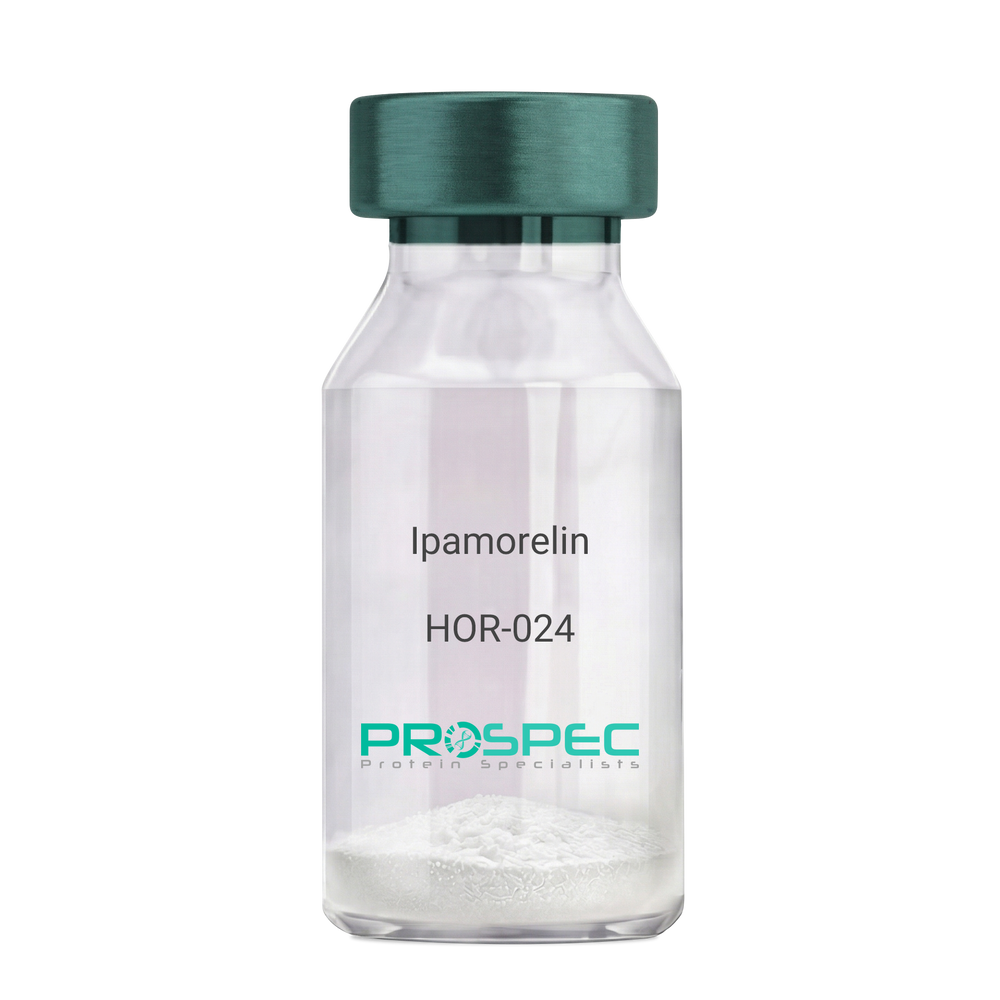
Name :
IpamorelinDescription:
Ipamorelin
Ipamorelin
Product # :
HOR-024Price :
Quantity :
Shipping Method :
Shipped at Room temp
More Info
- description
- formulation
- purity
- More Info
Description
Ipamorelin Synthetic is a single, non-glycosylated polypeptide chain containing 4 amino acids, having a molecular mass of 711.85 Dalton and a Molecular formula of C38H49N9O5.
Formulation
The protein was lyophilized with no additives.
Purity
Greater than 97.0% as determined by analysis by RP-HPLC.
More Info
-
Introduction
Ipamorelin is a peptide selective agonist of the ghrelin/growth hormone secretagogue receptor and a growth hormone secretagogue. Ipamorelin is a pentapeptide that was derived from GHRP1. Ipamorelin significantly increases plasma growth hormone levels in both animals and humans. Like pralmorelin and GHRP-6, ipamorelin does not affect prolactin, FSH, LH or TSH levels. However, unlike GHRP2 and GHRP6, but as growth hormone-releasing hormone (GHRH), ipamorelin does not stimulate the secretion of adrenocorticotropic hormone (ACTH) or cortisol, and is highly selective for inducing the secretion only of GH.
-
Synonyms
Ipamorelin
-
Physical Appearance
Sterile Filtered White lyophilized (freeze-dried) powder.
-
Stability
Lyophilized Ipamorelin although stable at room temperature for 3 weeks, should be stored desiccated below -18°C. Upon reconstitution Ipamorelin should be stored at 4°C between 2-7 days and for future use below -18°C. For long term storage it is recommended to add a carrier protein (0.1% HSA or BSA). Please prevent freeze-thaw cycles.
-
Solubility
It is recommended to reconstitute the lyophilized Ipamorelin in sterile 18MΩ-cm H2O not less than 100 µg/ml, which can then be further diluted to other aqueous solutions.
-
Amino Acid Sequence
Aib-His-D-2-Nal-D-Phe-Lys-NH2.
ProSpec's products are furnished for LABORATORY RESEARCH USE ONLY. The product may not be used as drugs, agricultural or pesticidal products, food additives or household chemicals.