Search results
1000 results found for “Listeriolysin”
Name
Description
Product #
Price
Quantity
Shipping Method
- View Data Sheet
Name :
CD200 MouseDescription:
CD200 Mouse Recombinant
MOX1, MOX2, MRC, OX-2, OX-2 membrane glycoprotein, CD_antigen, CD200.
Product # :
PRO-2612Price :
Quantity :
Shipping Method :
Shipped with Ice Packs
More Info
- description
- source
- formulation
- purity
- More Info
Description
CD200 Mouse Recombinant produced in Baculovirus is a single, glycosylated, polypeptide chain containing 441 amino acids (31-232aa) and having a molecular mass of 49.5kDa.CD200 is fused to a 239 amino acid hIgG-His-Tag at C-terminus and purified by proprietary chromatographic techniques.
Source
Sf9, Baculovirus cells.
Formulation
The CD200 solution (0.25mg/ml) contains Phosphate Buffered Saline (pH 7.4) and 10% glycerol.
Purity
Greater than 95.0% as determined by SDS-PAGE.
More Info
-
Introduction
CD200 Mouse Recombinant produced in Baculovirus is a single, glycosylated, polypeptide chain containing 210 amino acids (31-232aa) and having a molecular mass of 23.5kDa. CD200 is fused to an 8 amino acid His-Tag at C-terminus and purified by proprietary chromatographic techniques.
-
Synonyms
MOX1, MOX2, MRC, OX-2, OX-2 membrane glycoprotein, CD_antigen, CD200.
-
Physical Appearance
Sterile Filtered colorless solution.
-
Stability
Store at 4°C if entire vial will be used within 2-4 weeks. Store, frozen at -20°C for longer periods of time. For long term storage it is recommended to add a carrier protein (0.1% HSA or BSA).Avoid multiple freeze-thaw cycles.
-
Amino Acid Sequence
QVEVVTQDER KALHTTASLR CSLKTSQEPL IVTWQKKKAV SPENMVTYSK THGVVIQPAY KDRINVTELG LWNSSITFWN TTLEDEGCYM CLFNTFGSQK VSGTACLTLY VQPIVHLHYN YFEDHLNITC SATARPAPAI SWKGTGTGIE NSTESHFHSN GTTSVTSILR VKDPKTQVGK EVICQVLYLG NVIDYKQSLD KGLEHHHHHH.
ProSpec's products are furnished for LABORATORY RESEARCH USE ONLY. The product may not be used as drugs, agricultural or pesticidal products, food additives or household chemicals.
- View Data Sheet
Name :
HAVCR1 Human, HEKDescription:
Hepatitis A Virus Cellular Receptor 1 Human Recombinant, HEK
Hepatitis A Virus Cellular Receptor 1, T-Cell Immunoglobulin Mucin Family Member 1, T-Cell Immunoglobulin Mucin Receptor 1, T-Cell Membrane Protein 1, Kidney Injury Molecule 1, HAVCR-1, TIMD-1, HAVCR, KIM-1, TIM-1, TIMD1, TIM1, KIM1, TIM, T-Cell Immunoglobulin And Mucin Domain-Containing Protein 1, T Cell Immunoglobin Domain And Mucin Domain Protein 1, HAVCR1.
Product # :
HAV-223Price :
Quantity :
Shipping Method :
Shipped at Room temp
More Info
- description
- source
- formulation
- purity
- More Info
Description
HAVCR1 Human Recombinant produced in HEK cells is a single, glycosylated, polypeptide chain (Ser21-Thr288) containing a total of 283 amino acids, having a calculated molecular mass of 30.5kDa. HAVCR1 is fused to a 2 aa N-terminal linker, a 2 aa C-terminal linker and a 6 aa His tag at C-Terminus.
Source
HEK 293.
Formulation
HAVCR1 was filtered (0.4µm) and lyophilized from 0.5mg/ml solution in phosphate buffered saline and 5% (w/v) Trehalose.
Purity
Greater than 90.0% as determined by SDS-PAGE.
More Info
-
Introduction
Hepatitis A virus cellular receptor 1 (HAVCR1) is a membrane receptor for both human hepatitis A virus (HHAV) and TIMD4. HAVCR1 is a type I trans-membrane structural glycoprotein located in the renal proximal tubule epithelial cells. HAVCR1 protein may be involved in the control of asthma and allergic diseases. The reference genome represents an allele which retains a MTTVP amino acid segment that presents defense against atopy in HHAV seropositive individuals.
-
Synonyms
Hepatitis A Virus Cellular Receptor 1, T-Cell Immunoglobulin Mucin Family Member 1, T-Cell Immunoglobulin Mucin Receptor 1, T-Cell Membrane Protein 1, Kidney Injury Molecule 1, HAVCR-1, TIMD-1, HAVCR, KIM-1, TIM-1, TIMD1, TIM1, KIM1, TIM, T-Cell Immunoglobulin And Mucin Domain-Containing Protein 1, T Cell Immunoglobin Domain And Mucin Domain Protein 1, HAVCR1.
-
Physical Appearance
Filtered White lyophilized (freeze-dried) powder.
-
Stability
Store lyophilized protein at -20°C. Aliquot the product after reconstitution to avoid repeated freezing/thawing cycles. Reconstituted protein can be stored at 4°C for a limited period of time; it does not show any change after two weeks at 4°C.
-
Solubility
It is recommended to add deionized water to prepare a working stock solution of approximately 0.5 mg/ml and let the lyophilized pellet dissolve completely. HAVCR1 is not sterile! Please filter the product by an appropriate sterile filter before using it in the cell culture.
-
Amino Acid Sequence
ASSVKVGGEA GPSVTLPCHY SGAVTSMCWN RGSCSLFTCQ NGIVWTNGTH VTYRKDTRYK LLGDLSRRDV SLTIENTAVS DSGVYCCRVE HRGWFNDMKI TVSLEIVPPK VTTTPIVTTV PTVTTVRTST TVPTTTTVPM TTVPTTTVPT TMSIPTTTTV LTTMTVSTTT SVPTTTSIPT TTSVPVTTTV STFVPPMPLP RQNHEPVATS PSSPQPAETH PTTLQGAIRR EPTSSPLYSY TTDGNDTVTE SSDGLWNNNQ TQLFLEHSLL TANTTKLHHH HHH.
ProSpec's products are furnished for LABORATORY RESEARCH USE ONLY. The product may not be used as drugs, agricultural or pesticidal products, food additives or household chemicals.
- View Data Sheet
Name :
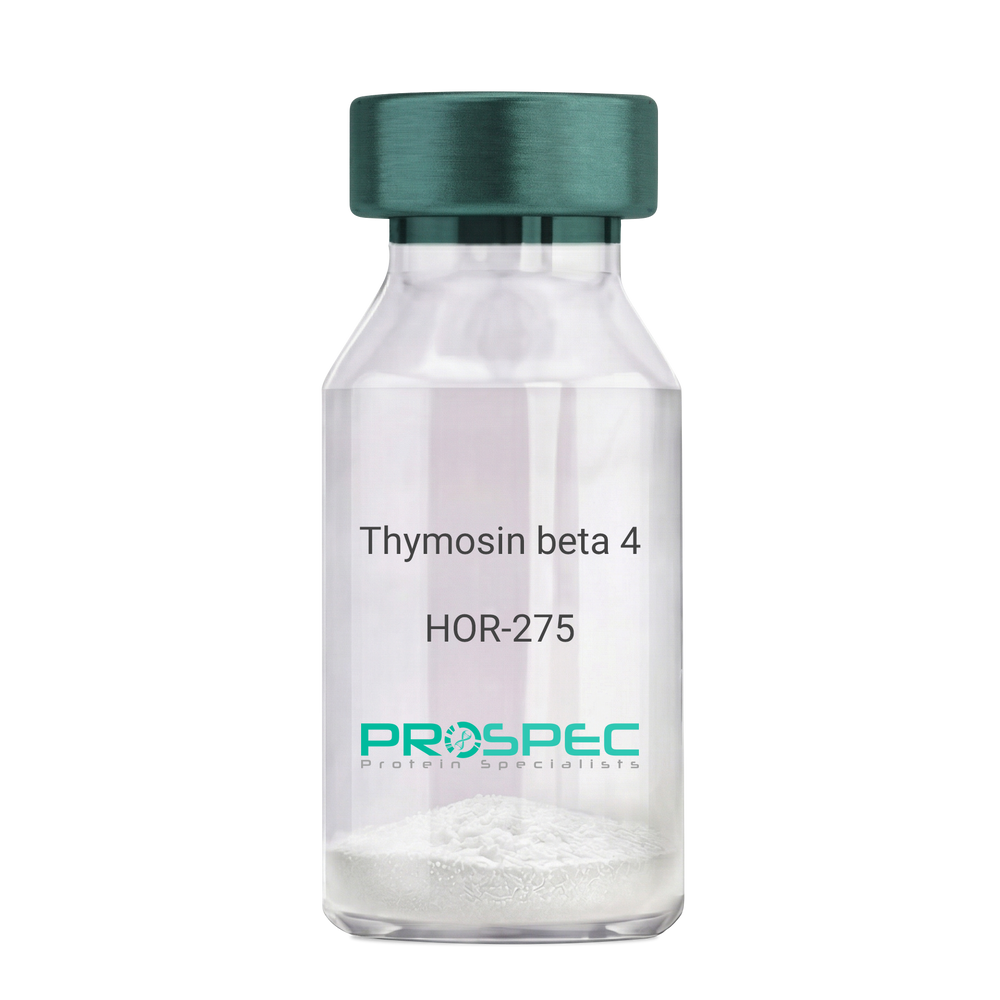
Thymosin beta 4Description:
Thymosin β4
Thymosin beta-4. TB500, TB-500
Product # :
HOR-275Price :
Quantity :
Shipping Method :
Shipped at Room temp
More Info
- description
- formulation
- purity
- More Info
Description
Thymosin b4 is a 43 amino acid peptide which is regarded as the main intracellular G-actin sequestering peptide. It has a molecular weight of 4963.55 Da, and its molecular formula is: C212H350N56O78S1. Extracellular Thymosin b4 may contribute to physiological processes such as angiogenesis, wound healing, and regulation of inflammation.
Formulation
The protein (1mg/ml) was lyophilized with no additives.
Purity
Greater than 98.0% as determined by RP-HPLC.
More Info
-
Introduction
Thymosin is a hormone secreted from the thymus. Its primary function is to stimulate the production of T cells, which are an important part of the immune system. Thymosin also assists in the development of B cells to plasma cells to produce antibodies. The predominant form of thymosin, thymosin b4, is a member of a highly conserved family of actin monomer-sequestering proteins. b-thymosins are the primary regulators of unpolymerized actin, and are essential for maintaining the small cytoplasmic pool of free G-actin monomers required for rapid filament elongation and allowing for the flux of monomers between the thymosin-bound pool and F-actin.
-
Synonyms
Thymosin beta-4. TB500, TB-500
-
Physical Appearance
Sterile Filtered White lyophilized (freeze-dried) powder.
-
Stability
Lyophilized Thymosin b4 although stable at room temperature for 3 weeks, should be stored desiccated below -18°C. Upon reconstitution T beta 4 should be stored at 4°C between 2-7 days and for future use below -18°C.For long term storage it is recommended to add a carrier protein (0.1% HSA or BSA).Please prevent freeze-thaw cycles.
-
Solubility
It is recommended to reconstitute the lyophilized Thymosin beta-4 in sterile 18MΩ-cm H2O not less than 100 µg/ml, which can then be further diluted to other aqueous solutions.
-
Amino Acid Sequence
Thymosin b4 has an a.a. sequence of Ac-Ser-Asp-Lys-Pro-Asp-Met-Ala-Glu-Ile-Glu-Lys-Phe-Asp-Lys-Ser-Lys-Leu-Lys-Lys-Thr-Glu-Thr-Gln-Glu-Lys-Asn-Pro-Leu-Pro-Ser-Lys-Glu-Thr-Ile-Glu-Gln-Glu-Lys-Gln-Ala-Gly-Glu-Ser-OH.
ProSpec's products are furnished for LABORATORY RESEARCH USE ONLY. The product may not be used as drugs, agricultural or pesticidal products, food additives or household chemicals.
- View Data Sheet
Name :
UTI HumanDescription:
Urinary Trypsin Inhibitor-Ulinastatin Human
UTI, Ulinastatin, Urinary Trypsin Inhibitor.
Product # :
PRO-321Price :
Quantity :
Shipping Method :
Shipped at Room temp
More Info
- description
- source
- formulation
- biological activity
- More Info
Description
Ulinastatin is derived from human urine.
Source
Human Urine.
Formulation
Lyophilized from a (1mg/ml) solution containing no additives.
Biological Activity
Human UTI has an activity of 2350IU/mg.
More Info
-
Introduction
Urinary-Trypsin Inhibitor is a glucoprotein proteinase inhibitor which inhibits the activity of trypsin, chymotrypsin, lactate, lipase, hyaluronidase and various pancreatic enzymes. Ulinastatin is effective for acute pancreatitis, chronic recurrent pancreatitis and hemorrhagic, traumatic and endotoxic shocks. Ulinastatin is has strong inhibition effect to various protease, sugar and fat hydrolase. Ulinastatin precursor is proteolytically processed into distinct functioning proteins. Urinary trypsin inhibitor belongs to the superfamily of Kunitz-type protease inhibitors and plays an important role in many physiological and pathological processes. Uristatin gene is located on chromosome 9 in a cluster of lipocalin genes.
High levels of Ulinastatin secretion is an early marker of renal tubular involvement and has radical scavenging activity. Bikunin localizes cell membrane.
Free uristatin and bikunin pass readily into urine and are primarily bound to heavy chains that constitute the proinhibitor form in plasma. UTI has a calculated Mw of approx. 20kDa and 40kDa by SDS-PAGE analysis.
Ulinastatin particularly interacts with ORF3 protein of hepatitis E virus and in charge for enhancing alpha microglobulin export from the hepatocyte. -
Synonyms
UTI, Ulinastatin, Urinary Trypsin Inhibitor.
-
Physical Appearance
Sterile Filtered White lyophilized (freeze-dried) powder.
-
Stability
Store the lyophilized UTI between 2-8°C, do not freeze. Upon reconstitution UTI should be stored at 4°C between 2-7 days and for future use below -18°C. Please prevent freeze-thaw cycles.
-
Solubility
It is recommended to reconstitute the lyophilized UTI in sterile 18MΩ-cm H2O not less than 100µg/ml, which can then be further diluted to other aqueous solutions.
ProSpec's products are furnished for LABORATORY RESEARCH USE ONLY. The product may not be used as drugs, agricultural or pesticidal products, food additives or household chemicals.
- View Data Sheet
Name :
CTSE HumanDescription:
Cathepsin-E Human Recombinant
Cathepsin E, EC 3.4.23.34, CATE, Erythrocyte Membrane Aspartic Proteinase, Slow-Moving Proteinase, EC 3.4.23.
Product # :
ENZ-776Price :
Quantity :
Shipping Method :
Shipped with Ice Packs
More Info
- description
- source
- formulation
- purity
- More Info
Description
CTSE Human Recombinant produced in E.Coli is a single, non-glycosylated polypeptide chain containing 330 amino acids (57-363 a.a) and having a molecular mass of 35.4kDa.CTSE is fused to a 23 amino acid His-tag at N-terminus & purified by proprietary chromatographic techniques.
Source
Escherichia Coli.
Formulation
CTSE protein solution (1mg/ml) containing 20mM Tris-HCl buffer (pH 8.0), 0.4M urea and 10% glycerol.
Purity
Greater than 85% as determined by SDS-PAGE.
More Info
-
Introduction
Cathepsin-E also known as CTSE is a gastric aspartyl protease which functions as a disulfide-linked homodimer. CTSE belongs to the peptidase C1 family; furthermore it has specificity similar to pepsin A and cathepsin D. CTSE is an intracellular proteinase which does not seem to be involved in the digestion of dietary protein and is found in the uppermost concentration in the surface of epithelial mucus-producing cells of the stomach. CTSE is the first aspartic proteinaseexpressed in the fetal stomach and is discovered in more than half of gastric cancers. For that reason CTSE is anoncofetal antigen. In addition, transcript variants utilizing alternative polyadenylation signals and two transcript variantsencoding different isoforms exist for this gene.
-
Synonyms
Cathepsin E, EC 3.4.23.34, CATE, Erythrocyte Membrane Aspartic Proteinase, Slow-Moving Proteinase, EC 3.4.23.
-
Physical Appearance
Sterile Filtered clear solution.
-
Stability
Store at 4°C if entire vial will be used within 2-4 weeks. Store, frozen at -20°C for longer periods of time.For long term storage it is recommended to add a carrier protein (0.1% HSA or BSA).Please avoid freeze thaw cycles.
-
Amino Acid Sequence
MGSSHHHHHH SSGLVPRGSH MGSTESCSMD QSAKEPLINY LDMEYFGTIS IGSPPQNFTV IFDTGSSNLW VPSVYCTSPA CKTHSRFQPS QSSTYSQPGQ SFSIQYGTGS LSGIIGADQV SVEGLTVVGQ QFGESVTEPG QTFVDAEFDG ILGLGYPSLA VGGVTPVFDN MMAQNLVDLP MFSVYMSSNP EGGAGSELIF GGYDHSHFSG SLNWVPVTKQ AYWQIALDNM LWSVPTLTSC RMSPSPLTES PIPSAQLPTP YWTSWMECSS AAVAFKDLTS TLQLGPSGSW GMSSFDSFTQ SLTVGITVWD WPQQSPKEGP CVCACLSDRP
ProSpec's products are furnished for LABORATORY RESEARCH USE ONLY. The product may not be used as drugs, agricultural or pesticidal products, food additives or household chemicals.
- View Data Sheet
Name :
CCL21 MouseDescription:
Exodus-2 Mouse Recombinant (CCL21)
Small inducible cytokine A21, CCL21, Beta chemokine exodus-2, 6Ckine, Secondary lymphoid-tissue chemokine, SLC, chemokine (C-C motif) ligand 21, ECL, CKb9, TCA4, SCYA21, MGC34555.
Product # :
CHM-371Price :
Quantity :
Shipping Method :
Shipped at Room temp
More Info
- description
- source
- formulation
- purity
- biological activity
- More Info
Description
Exodus-2 Mouse Recombinant produced in E.Coli is a single, non-glycosylated, polypeptide chain containing 110 amino acids and having a molecular mass of 12kDa. The CCL21 is purified by proprietary chromatographic techniques.
Source
Escherichia Coli.
Formulation
Lyophilized from a concentrated (1mg/ml) solution in water containing 20mM Phosphate buffer and 0.15M NaCl pH-7.4.
Purity
Greater than 97.0% as determined by SDS-PAGE & RP-HPLC.
Biological Activity
Determined by its ability to chemoattract total murine T cell population using a concentration range of 10-100ng/ml corresponding to a Specific Activity of 10,000-100,000IU/mg.More Info
-
Introduction
Chemokine (C-C motif) ligand 21 (CCL21) is a small cytokine belonging to the CC chemokine family. This chemokine is also known as 6Ckine (because it has six conserved cysteine residues instead of the four cysteines typical to chemokines), exodus-2, and secondary lymphoid-tissue chemokine (SLC). CCL21 is expressed predominantly in the lymph nodes and, in contrast to other CC chemokines, is chemotactic for lymphocytes. The gene for CCL21 is located on human chromosome 9. CCL21 elicits its effects by binding to a cell surface chemokine receptor known as CCR7.
-
Synonyms
Small inducible cytokine A21, CCL21, Beta chemokine exodus-2, 6Ckine, Secondary lymphoid-tissue chemokine, SLC, chemokine (C-C motif) ligand 21, ECL, CKb9, TCA4, SCYA21, MGC34555.
-
Physical Appearance
Sterile Filtered White lyophilized (freeze-dried) powder.
-
Stability
Lyophilized Exodus-2 although stable at room temperature for 3 weeks, should be stored desiccated below -18°C. Upon reconstitution CCL21 should be stored at 4°C between 2-7 days and for future use below -18°C. For long term storage it is recommended to add a carrier protein (0.1% HSA or BSA). Please prevent freeze-thaw cycles.
-
Solubility
It is recommended to reconstitute the lyophilized Exodus2 in sterile 18MΩ-cm H2O not less than 100µg/ml, which can then be further diluted to other aqueous solutions
-
Amino Acid Sequence
SDGGGQDCCL KYSQKKIPYS IVRGYRKQEP SLGCPIPAIL FLPRKHSKPE LCANPEEGWV QNLMRRLDQP PAPGKQSPGC RKNRGTSKSG KKGKGSKGCK RTEQTQPSRG.
-
Background
What is the molecular weight/Mw of CCL21 MOUSE Protein?
CCL21 MOUSE Protein has a total Mw of 12kDa.
What is the source or expression system of CCL21 MOUSE Protein?
Escherichia Coli.
What is the Purity of CCL21 MOUSE Protein?
CCL21 MOUSE Protein is >97% pure as determined by SDS-PAGE.
What is the Biological Activity of CCL21 MOUSE Protein?
Determined by its ability to chemoattract total murine T cell population using a concentration range of 10-100ng/ml corresponding to a Specific Activity of 10,000-100,000IU/mg.
What is the amino acid sequence of CCL21 MOUSE Protein?
SDGGGQDCCL KYSQKKIPYS IVRGYRKQEP SLGCPIPAIL FLPRKHSKPE LCANPEEGWV QNLMRRLDQP PAPGKQSPGC RKNRGTSKSG KKGKGSKGCK RTEQTQPSRG.
What applications can CCL21 MOUSE Protein be used in?
CCL21 MOUSE Protein can probably be used in western blot, ELISA and Lateral Flow.
What is the endotoxin level for CCL21 MOUSE Protein?
The endotoxin level is minimal, CCL21 MOUSE Protein was purified using conventional chromatography techniques.
ProSpec's products are furnished for LABORATORY RESEARCH USE ONLY. The product may not be used as drugs, agricultural or pesticidal products, food additives or household chemicals.
- View Data Sheet
Name :
LAG-1 Human, HisDescription:
LAG-1 (CCL4L1) Human Recombinant, His Tag
C-C motif chemokine 4-like, Lymphocyte activation gene 1 protein, LAG-1, Macrophage inflammatory protein 1-beta, MIP-1-beta, Monocyte adherence-induced protein 5-alpha, Small-inducible cytokine A4-like, CCL4L1, CCL4L, LAG1, SCYA4L1, CCL4L2, SCYA4L2, AT744.2.
Product # :
CHM-272Price :
Quantity :
Shipping Method :
Shipped with Ice Packs
More Info
- description
- source
- formulation
- purity
- More Info
Description
LAG-1 Human Recombinant produced in E.Coli is a single, non-glycosylated polypeptide chain containing 94 amino acids (24-92 a.a.) and having a molecular mass of 10.5kDa (Molecular weight on SDS-PAGE will appear higher).LAG-1 is fused to a 25 amino acid His-tag at N-terminus & purified by proprietary chromatographic techniques.
Source
Escherichia Coli.
Formulation
LAG-1 protein solution (0.5mg/ml) containing 10mM sodium citrate (pH 3.5) and 10% glycerol.
Purity
Greater than 90.0% as determined by SDS-PAGE.
More Info
-
Introduction
CCL4L1 (C-C motif chemokine 4-like) is a member of to intercrine beta (chemokine CC) family. The CCL4L1 protein is similar to CCL4 which inhibits HIV replication in peripheral blood monocytes which express CCR5.
-
Synonyms
C-C motif chemokine 4-like, Lymphocyte activation gene 1 protein, LAG-1, Macrophage inflammatory protein 1-beta, MIP-1-beta, Monocyte adherence-induced protein 5-alpha, Small-inducible cytokine A4-like, CCL4L1, CCL4L, LAG1, SCYA4L1, CCL4L2, SCYA4L2, AT744.2.
-
Physical Appearance
Sterile Filtered colorless solution.
-
Stability
Store at 4°C if entire vial will be used within 2-4 weeks. Store, frozen at -20°C for longer periods of time. For long term storage it is recommended to add a carrier protein (0.1% HSA or BSA).Avoid multiple freeze-thaw cycles.
-
Amino Acid Sequence
MGSSHHHHHH SSGLVPRGSH MGSHMAPMGS DPPTACCFSY TARKLPRNFV VDYYETSSLC SQPAVVFQTK RGKQVCADPS ESWVQEYVYD LELN.
ProSpec's products are furnished for LABORATORY RESEARCH USE ONLY. The product may not be used as drugs, agricultural or pesticidal products, food additives or household chemicals.
- View Data Sheet
Name :
LGALS3 Human, HisDescription:
Galectin-3 Human Recombinant, His Tag
Galectin-3, GAL3, MAC2, CBP35, GALB, GALIG, LGALS2, LGALS3, Galactose-specific lectin 3, Mac-2 antigen, IgE-binding protein, 35 kDa lectin, Carbohydrate-binding protein 35, CBP 35, Laminin-binding protein, Lectin L-29, L-31, Galactoside-binding protein, GALBP.
Product # :
CYT-693Price :
Quantity :
Shipping Method :
Shipped with Ice Packs
More Info
- description
- source
- formulation
- purity
- biological activity
- More Info
- sds-page
Description
LGALS3 Human Recombinant produced in E.Coli is a single, non-glycosylated, polypeptide chain containing 270 amino acids (1-250 a.a.) and having a molecular mass of 28.3 kDa. The LGALS3 is fused to a 20 amino acid His-Tag at N-terminus and purified by proprietary chromatographic techniques.
Source
Escherichia Coli.
Formulation
The Galectin-3 protein solution (0.5mg/ml) contains 20mM Tris-HCl buffer (pH8.0), 0.1M NaCl, 1mM DTT and 10% Glycerol.
Purity
Greater than 95.0% as determined by SDS-PAGE.
Biological Activity
The ED50 for this effect is < 15ug/ml as measured by its ability to agglutinate human red blood cells.sds-page
More Info
-
Introduction
Galectin-3 mediates with the alpha-3, beta-1 integrin the stimulation by cspg4 of endothelial cells migration. Galectin-3 plays an necessary part during the acquisition of vasculogenic mimicry and angiogenic properties associated with melanoma progression. LGALS3 overexpression is highly expressed in early stages of papillary carcinoma, and its expression intensity declines during tumor progression. Serum levels of LGALS3 are high in patients with thyroid malignancy but there is considerable overlap in serum LGALS3 concentrations between those with benign and malignant nodular thyroid disease. LGLAS3 takes part as an immune regulator to inhibit T-cell immune responses and promote tumor growth, as a result providing a new mechanism for tumor immune tolerance.
-
Synonyms
Galectin-3, GAL3, MAC2, CBP35, GALB, GALIG, LGALS2, LGALS3, Galactose-specific lectin 3, Mac-2 antigen, IgE-binding protein, 35 kDa lectin, Carbohydrate-binding protein 35, CBP 35, Laminin-binding protein, Lectin L-29, L-31, Galactoside-binding protein, GALBP.
-
Physical Appearance
Sterile Filtered colorless solution.
-
Stability
Store at 4°C if entire vial will be used within 2-4 weeks. Store, frozen at -20°C for longer periods of time. For long term storage it is recommended to add a carrier protein (0.1% HSA or BSA).Avoid multiple freeze-thaw cycles.
-
Amino Acid Sequence
MGSSHHHHHH SSGLVPRGSH MADNFSLHDA LSGSGNPNPQ GWPGAWGNQP AGAGGYPGAS YPGAYPGQAP PGAYPGQAPP GAYPGAPGAY PGAPAPGVYP GPPSGPGAYP SSGQPSATGA YPATGPYGAP AGPLIVPYNL PLPGGVVPRM LITILGTVKP NANRIALDFQ RGNDVAFHFN PRFNENNRRV IVCNTKLDNN WGREERQSVF PFESGKPFKI QVLVEPDHFK VAVNDAHLLQ YNHRVKKLNE ISKLGISGDI DLTSASYTMI.
-
Background
What is the molecular weight/Mw of LGALS3 HUMAN, HIS Protein?
LGALS3 HUMAN, HIS Protein has a total Mw of 28.3kDa.
What is the source or expression system of LGALS3 HUMAN, HIS Protein?
Escherichia Coli.
What is the Purity of LGALS3 HUMAN, HIS Protein?
LGALS3 HUMAN, HIS Protein is >95% pure as determined by SDS-PAGE.
What is the Biological Activity of LGALS3 HUMAN, HIS Protein?
The ED50 for this effect is < 2.5ug/ml as measured by its ability to agglutinate human red blood cells.
What is the amino acid sequence of LGALS3 HUMAN, HIS Protein?
MGSSHHHHHH SSGLVPRGSH MADNFSLHDA LSGSGNPNPQ GWPGAWGNQP AGAGGYPGAS YPGAYPGQAP PGAYPGQAPP GAYPGAPGAY PGAPAPGVYP GPPSGPGAYP SSGQPSATGA YPATGPYGAP AGPLIVPYNL PLPGGVVPRM LITILGTVKP NANRIALDFQ RGNDVAFHFN PRFNENNRRV IVCNTKLDNN WGREERQSVF PFESGKPFKI QVLVEPDHFK VAVNDAHLLQ YNHRVKKLNE ISKLGISGDI DLTSASYTMI.
What applications can LGALS3 HUMAN, HIS Protein be used in?
LGALS3 HUMAN, HIS Protein can probably be used in western blot, ELISA and Lateral Flow.
What is the endotoxin level for LGALS3 HUMAN, HIS Protein?
The endotoxin level is minimal, LGALS3 HUMAN, HIS Protein was purified using conventional chromatography techniques.
ProSpec's products are furnished for LABORATORY RESEARCH USE ONLY. The product may not be used as drugs, agricultural or pesticidal products, food additives or household chemicals.
- View Data Sheet
Name :
LITAF HumanDescription:
Lipopolysaccharide-Induced TNF Factor Human Recombinant
Lipopolysaccharide-induced TNF-alpha factor, PIG7, SIMPLE, Lipopolysaccharide-induced tumor necrosis factor-alpha factor, LPS-induced TNF-alpha factor, p53-induced gene 7 protein, Small integral membrane protein of lysosome/late endosome, LITAF.
Product # :
PRO-1350Price :
Quantity :
Shipping Method :
Shipped with Ice Packs
More Info
- description
- source
- formulation
- purity
- More Info
Description
LITAF Human Recombinant produced in E.coli is a single, non-glycosylated polypeptide chain containing 181 amino acids (1-161) and having a molecular mass of 19.2 kDa. LITAF is fused to a 20 amino acid His-tag at N-terminus & purified by proprietary chromatographic techniques.
Source
Escherichia Coli.
Formulation
The LITAF solution (0.25mg/ml) contains 20mM Tris-HCl buffer (pH 8.0), 0.4M Urea and 10% glycerol.
Purity
Greater than 85% as determined by SDS-PAGE.
More Info
-
Introduction
Lipopolysaccharide-induced TNF-alpha factor (LITAF) is a small integral membrane protein of lysosome/late endosome. The expression of inflammatory cytokines such as TNF-alpha in Lipopolysaccharide-induced processes is mediated by LITAF. LITAF connects to STAT6B, which belongs to the STAT6 family forming a complex on the TNF-alpha promoter that modifies TNF activity. High levels of expression of LITAF mRNA are observed mostly in the placenta, peripheral blood leukocytes, lymph nodes and spleen.
-
Synonyms
Lipopolysaccharide-induced TNF-alpha factor, PIG7, SIMPLE, Lipopolysaccharide-induced tumor necrosis factor-alpha factor, LPS-induced TNF-alpha factor, p53-induced gene 7 protein, Small integral membrane protein of lysosome/late endosome, LITAF.
-
Physical Appearance
Sterile Filtered colorless solution.
-
Stability
Store at 4°C if entire vial will be used within 2-4 weeks. Store, frozen at -20°C for longer periods of time. For long term storage it is recommended to add a carrier protein (0.1% HSA or BSA).Avoid multiple freeze-thaw cycles.
-
Amino Acid Sequence
MGSSHHHHHH SSGLVPRGSH MSVPGPYQAA TGPSSAPSAP PSYEETVAVN SYYPTPPAPM PGPTTGLVTG PDGKGMNPPS YYTQPAPIPN NNPITVQTVY VQHPITFLDR PIQMCCPSCN KMIVSQLSYN AGALTWLSCG SLCLLGCIAG CCFIPFCVDA LQDVDHYCPN CRALLGTYKR L.
ProSpec's products are furnished for LABORATORY RESEARCH USE ONLY. The product may not be used as drugs, agricultural or pesticidal products, food additives or household chemicals.
- View Data Sheet
Name :
GSTM1 Mouse, HisDescription:
Glutathione S-Transferase M1 Mouse Recombinant, His Tag
GST1, GTH4, GTM1, GSTM1-1, MGC26563, GSTM1a-1a, GSTM1b-1b, GSTM1, Glutathione S-transferase Mu 1, GST class-mu 1, Glutathione S-transferase GT8.7, pmGT10, GST 1-1.
Product # :
ENZ-456Price :
Quantity :
Shipping Method :
Shipped with Ice Packs
More Info
- description
- source
- formulation
- purity
- biological activity
- More Info
Description
GSTM1 Mouse Recombinant produced in E.Coli is a single, non-glycosylated, polypeptide chain containing 238 amino acids (1-218 a.a.) and having a molecular mass of 28.1kDa. The GTM1 is fused to a 20 amino acid His-Tag at N-Terminus and purified by proprietary chromatographic techniques.
Source
Escherichia Coli.
Formulation
The GSTM1 solution contains 20 mM Tris-HCl buffer ( pH8.0), 1mM DTT and 10% glycerol
Purity
Greater than 95.0% as determined by SDS-PAGE.
Biological Activity
Specific activity is < 11 units/mg, and is defined as the amount of enzyme that conjugate 1.0 u mole of 1-chloro-2,4-dinitrobenzene (CDNB) with reduced glutathione per minute at pH 6.5 at 25C.More Info
-
Introduction
Cytosolic and membrane-bound types of GST are encoded by 2 different supergene families. There are 8 classes of the soluble cytoplasmic mammalian GST: alpha, kappa, mu, omega, pi, sigma, theta and zeta. The mu class of enzymes functions in the detoxification of electrophilic compounds, including carcinogens, therapeutic drugs, environmental toxins and products of oxidative stress, by conjugation with glutathione. The genes encoding the mu class of enzymes are arranged in a gene cluster on chromosome 1p13.3 and aare highly polymorphic. These genetic differences can change an individual's resistance to carcinogens and toxins as well as affect the toxicity and efficacy of certain drugs. Null mutations of this class mu gene have been linked with the rise in a number of cancers.
-
Synonyms
GST1, GTH4, GTM1, GSTM1-1, MGC26563, GSTM1a-1a, GSTM1b-1b, GSTM1, Glutathione S-transferase Mu 1, GST class-mu 1, Glutathione S-transferase GT8.7, pmGT10, GST 1-1.
-
Physical Appearance
Sterile Filtered colorless solution.
-
Stability
Store at 4°C if entire vial will be used within 2-4 weeks. Store, frozen at -20°C for longer periods of time. For long term storage it is recommended to add a carrier protein (0.1% HSA or BSA).Avoid multiple freeze-thaw cycles.
-
Amino Acid Sequence
MGSSHHHHHH SSGLVPRGSH MPMILGYWNV RGLTHPIRML LEYTDSSYDE KRYTMGDAPD FDRSQWLNEK FKLGLDFPNL PYLIDGSHKI TQSNAILRYL ARKHHLDGET EEERIRADIV ENQVMDTRMQ LIMLCYNPDF EKQKPEFLKT IPEKMKLYSE FLGKRPWFAG DKVTYVDFLA YDILDQYRMF EPKCLDAFPN LRDFLARFEG LKKISAYMKS SRYIATPIFS KMAHWSNK.
ProSpec's products are furnished for LABORATORY RESEARCH USE ONLY. The product may not be used as drugs, agricultural or pesticidal products, food additives or household chemicals.
- View Data Sheet
Name :
ACY1 MouseDescription:
AminoAcylase-1 Mouse Recombinant
Aminoacylase-1, ACY-1, N-acyl-L-amino-acid amidohydrolase, Aminoacylase 1, Acy1.
Product # :
ENZ-905Price :
Quantity :
Shipping Method :
Shipped with Ice Packs
More Info
- description
- source
- formulation
- purity
- More Info
Description
ACY1 Mouse Recombinant produced in E.Coli is a single, non-glycosylated polypeptide chain containing 433 amino acids (1-408 a.a) and having a molecular mass of 48.4kDa. ACY1 is fused to a 25 amino acid His-tag at N-terminus & purified by proprietary chromatographic techniques.
Source
Escherichia Coli.
Formulation
ACY1 protein solution (0.25mg/ml) containing Phosphate buffered saline (pH7.4) and 10% glycerol.
Purity
Greater than 90.0% as determined by SDS-PAGE.
More Info
-
Introduction
Acy1 or Aminoacylase1 is a cytosolic, homodimeric, zinc-binding enzyme which catalyzes the hydrolysis of acylated L-amino acids to L-amino acids and acyl group, and has been suggested to operate in the catabolism and salvage of acylated amino acids. ACY1 is localized in chromosome 3p21.1, a region reduced to homozygosity in small-cell lung cancer (SCLC), and its expression has been observed to be reduced or undetectable in SCLC cell lines and tumors.
-
Synonyms
Aminoacylase-1, ACY-1, N-acyl-L-amino-acid amidohydrolase, Aminoacylase 1, Acy1.
-
Physical Appearance
Sterile Filtered colorless solution.
-
Stability
Store at 4°C if entire vial will be used within 2-4 weeks. Store, frozen at -20°C for longer periods of time. For long term storage it is recommended to add a carrier protein (0.1% HSA or BSA).Avoid multiple freeze-thaw cycles.
-
Amino Acid Sequence
MGSSHHHHHH SSGLVPRGSH MGSEFMTTKD PESEHPSVTL FRQYLRICTV QPNPDYGGAI TFLEERARQL GLSCQKIEVV PGFVITVLTW PGTNPSLPSI LLNSHTDVVP VFKEHWHHDP FEAFKDSEGY IYARGSQDMK SVSIQYLEAV RRLKSEGHRF PRTIHMTFVP DEEVGGHKGM ELFVKRPEFQ ALRAGFALDE GLANPTDAFT VFYSERSPWW VRVTSTGKPG HASRFIEDTA AEKLHKVISS ILAFREKERQ RLQANPHLKE GAVTSVNLTK LEGGVAYNVV PATMSASFDF RVAPDVDMKA FEKQLQRWCQ EAGEGVTFEF AQKFTEPRMT PTDDSDPWWA AFSGACKAMN LTLEPEIFPA ATDSRYIRAV GIPALGFSPM NRTPVLLHDH NERLHEDIFL RGVDIYTGLL SALASVPTLP GES.
ProSpec's products are furnished for LABORATORY RESEARCH USE ONLY. The product may not be used as drugs, agricultural or pesticidal products, food additives or household chemicals.
- View Data Sheet
Name :
MMP9 MouseDescription:
Matrix Metalloproteinase-9 Mouse Recombinant
Matrix metalloproteinase-9, MMP-9, 92 kDa gelatinase, Gelatinase B, GELB, MMP9, CLG4B.
Product # :
ENZ-1177Price :
Quantity :
Shipping Method :
Shipped with Ice Packs
More Info
- description
- source
- formulation
- purity
- biological activity
- More Info
Description
MMP9 Mouse produced in Sf9 Insect cells is a single, glycosylated polypeptide chain containing 717 amino acids (20-730 a.a.) and having a molecular mass of 79.3 kDa. MMP9 is expressed with a 6 amino acid His tag at C-Terminus and purified by proprietary chromatographic techniques.
Source
Sf9, Baculovirus cells.
Formulation
MMP9 Mouse protein solution (0.25mg/ml) contains 20mM Tris-HCl pH-7.5, 10mM CaCl2, 100mM NaCl, 0.05% Brij35 and 10% glycerol.
Purity
Greater than 85% as determined by SDS-PAGE.
Biological Activity
Defined as the amount of enzyme that cleaves 1pmol of Mca-PLGLDpa-AR-NH2 per minute at pH 7.5 at 25C. Specific activity is > 500 pmol/min/ug.
More Info
-
Introduction
MMP9 is part of the matrix metalloproteinase family. MMP enzymes take part in the dismantle of extracellular matrix in different physiological pathways, for instance wound healing, bone development, reproduction etc. the enzyme is also involved in pathological pathways: metastasis, arthritis and intracerebral hemorrhage.
-
Synonyms
Matrix metalloproteinase-9, MMP-9, 92 kDa gelatinase, Gelatinase B, GELB, MMP9, CLG4B.
-
Physical Appearance
Sterile Filtered colorless solution.
-
Stability
Store at 4°C if entire vial will be used within 2-4 weeks. Store, frozen at -20°C for longer periods of time. For long term storage it is recommended to add a carrier protein (0.1% HSA or BSA).Avoid multiple freeze-thaw cycles.
-
Amino Acid Sequence
APYQRQPTFV VFPKDLKTSN LTDTQLAEAY LYRYGYTRAA QMMGEKQSLR PALLMLQKQL SLPQTGELDS QTLKAIRTPR CGVPDVGRFQ TFKGLKWDHH NITYWIQNYS EDLPRDMIDD AFARAFAVWG EVAPLTFTRV YGPEADIVIQ FGVAEHGDGY PFDGKDGLLA HAFPPGAGVQ GDAHFDDDEL WSLGKGVVIP TYYGNSNGAP CHFPFTFEGR SYSACTTDGR NDGTPWCSTT ADYDKDGKFG FCPSERLYTE HGNGEGKPCV FPFIFEGRSY SACTTKGRSD GYRWCATTAN YDQDKLYGFC PTRVDATVVG GNSAGELCVF PFVFLGKQYS SCTSDGRRDG RLWCATTSNF DTDKKWGFCP DQGYSLFLVA AHEFGHALGL DHSSVPEALM YPLYSYLEGF PLNKDDIDGI QYLYGRGSKP DPRPPATTTT EPQPTAPPTM CPTIPPTAYP TVGPTVGPTG APSPGPTSSP SPGPTGAPSP GPTAPPTAGS SEASTESLSP ADNPCNVDVF DAIAEIQGAL HFFKDGWYWK FLNHRGSPLQ GPFLTARTWP ALPATLDSAF EDPQTKRVFF FSGRQMWVYT GKTVLGPRSL DKLGLGPEVT HVSGLLPRRL GKALLFSKGR VWRFDLKSQK VDPQSVIRVD KEFSGVPWNS HDIFQYQDKA YFCHGKFFWR VSFQNEVNKV DHEVNQVDDV GYVTYDLLQC P-HHHHHH
ProSpec's products are furnished for LABORATORY RESEARCH USE ONLY. The product may not be used as drugs, agricultural or pesticidal products, food additives or household chemicals.
- View Data Sheet
Name :
SCGB1A1 MouseDescription:
Uteroglobin Mouse Recombinant
Uteroglobin, Clara cell 17 kDa protein, Clara cell phospholipid-binding protein, CCPBP, Clara cells 10 kDa secretory protein, CC10, PCB-binding protein, Secretoglobin family 1A member 1, Scgb1a1, Ugb, Utg, UG, CC16, CCSP, PCB-BP.
Product # :
CYT-746Price :
Quantity :
Shipping Method :
Shipped at Room temp
More Info
- description
- source
- formulation
- purity
- biological activity
- More Info
Description
Uteroglobin Mouse Recombinant produced in E.coli is a non-glycosylated disulfide-linked homodimeric protein containing 2x75 amino acids chains and having a molecular mass of 16.7kDa.The SCGB1A1 is purified by proprietary chromatographic techniques.
Source
Escherichia Coli.
Formulation
The Uteroglobin protein was lyophilized from a 0.2µm filtered concentrated solution in PBS, pH 7.4.
Purity
Greater than 98.0% as determined by:
(a) Analysis by RP-HPLC.
(b) Analysis by SDS-PAGE.Biological Activity
The ED50 as determined by the ability of the immobilized protein to support the adhesion of the A549 human lung carcinoma cells is less than 5.0µg/ml, corresponding to a specific activity of > 200 IU/mg.More Info
-
Introduction
Uteroglobin (SCGB1A1) which belongs to the Secretoglobin (SCGBs) superfamily, is a multifunctional protein that exerts anti-inflammatory and anti-tumorigenic effects by binding small hydrophobic molecules such as phospholipids and prostaglandins. Uteroglobin is involved in numerous functions including anti-inflammation, inhibition of phospholipase A2 and the sequestering of hydrophobic ligands. SCGB1A1 is expressed by Clara cells, the non-ciliated, non-mucous secretory cells predominant in lung bronchioles, and by other epithelia which communicate with the external environment. On top of sequestering pro-inflammatory mediators and carcinogens, Uteroglobin is implicated in the inhibition of cell migration and invasion, platelet aggregation, and T cell differentiation. SCGB1A1 gene defects are associated with a susceptibility to asthma.
-
Synonyms
Uteroglobin, Clara cell 17 kDa protein, Clara cell phospholipid-binding protein, CCPBP, Clara cells 10 kDa secretory protein, CC10, PCB-binding protein, Secretoglobin family 1A member 1, Scgb1a1, Ugb, Utg, UG, CC16, CCSP, PCB-BP.
-
Physical Appearance
Sterile Filtered White lyophilized (freeze-dried) powder.
-
Stability
Lyophilized Uteroglobin although stable at room temperature for 3 weeks, should be stored desiccated below -18°C. Upon reconstitution SCGB1A1 should be stored at 4°C between 2-7 days and for future use below -18°C. For long term storage it is recommended to add a carrier protein (0.1% HSA or BSA). Please prevent freeze-thaw cycles.
-
Solubility
It is recommended to reconstitute the lyophilized SCGB1A1 in sterile 18M-cm H2O not less than 100µg/ml, which can then be further diluted to other aqueous solutions.
-
Amino Acid Sequence
DICPGFLQVL EALLMESESG YVASLKPFNP GSDLQNAGTQ LKRLVDTLPQ ETRINIMKLT EKILTSPLCK QDLRF.
ProSpec's products are furnished for LABORATORY RESEARCH USE ONLY. The product may not be used as drugs, agricultural or pesticidal products, food additives or household chemicals.
- View Data Sheet
Name :
SERPINA9 MouseDescription:
Serpin Peptidase Inhibitor, Clade A Mouse Recombinant
Serpin A9, Serpina9, SERPINA9.
Product # :
PRO-2366Price :
Quantity :
Shipping Method :
Shipped with Ice Packs
More Info
- description
- source
- formulation
- purity
- More Info
Description
SERPINA9 Mouse Recombinant produced in Sf9 Baculovirus cells is a single, glycosylated polypeptide chain containing 401 amino acids (26-418 a.a) and having a molecular mass of 45.2kDa (Molecular size on SDS-PAGE will appear at approximately 50-70kDa).SERPINA9 is fused to an 8 amino acid His-tag at C-terminus & purified by proprietary chromatographic techniques.
Source
Sf9, Baculovirus cells.
Formulation
SERPINA9 protein solution (0.25mg/ml) contains Phosphate Buffered Saline (pH 7.4) and 10% glycerol.
Purity
Greater than 85.0% as determined by SDS-PAGE.
More Info
-
Introduction
Serpin Peptidase Inhibitor, Clade A Member 9, also known as serpin A9, belongs to the Serpin superfamily of serine protease inhibitors. Serpins are the most extensively distributed superfamily of protease inhibitors which use a conformational modification to inhibit target enzymes. Serpins are known to inhibit serine proteases as well as inhibiting caspases in addition to papain-like cysteine proteases. Serpins are conformational labile and numerous of the disease-linked mutations of serpins outcome in misfolding or in pathogenic, inactive polymers. serpin A9 demonstrates inhibition towards trypsin, thrombin, as well as plasmin and binds DNA and heparin.
-
Synonyms
Serpin A9, Serpina9, SERPINA9.
-
Physical Appearance
Sterile Filtered colorless solution.
-
Stability
Store at 4°C if entire vial will be used within 2-4 weeks. Store, frozen at -20°C for longer periods of time. For long term storage it is recommended to add a carrier protein (0.1% HSA or BSA). Avoid multiple freeze-thaw cycles.
-
Amino Acid Sequence
NPYNQESSHL PSMKKNPASQ VSPSNTRFSF LLYQRLAQEN PGQNILFSPV SISTSLAMLS LGARSATKTQ ILRTLGFNFT WVSEPTIHMG FEYLVRSLNK CHQGRELRMG SVLFIRKELQ LQATFLDRVK KLYGAKVFSE DFSNAATAQA QINSYVEKET KGKVVDVIQD LDSQTAMVLV NHIFFKANWT QPFSTANTNK SFPFLLSKGT TVHVPMMHQT ESFAFGVDKE LGCSILQMDY RGDAVAFFVL PGKGKMRQLE KSLSARRLRK WSRSLQKRWI KVFIPKFSIS ASYNLETILP KMGIRDAFNS NADFSGITKT HFLQVSKAAH KAVLDVSEEG TEAAAATTTK LIVRSRDTPS SIIAFKEPFL ILLLDKNTES VLFLGKVENP RKMLEHHHHH H
ProSpec's products are furnished for LABORATORY RESEARCH USE ONLY. The product may not be used as drugs, agricultural or pesticidal products, food additives or household chemicals.
- View Data Sheet
Name :
STX1A (1-265) HumanDescription:
Syntaxin-1A (1-265 a.a) Human Recombinant
Syntaxin 1A, Neuron-Specific Antigen HPC-1, Syntaxin 1A (Brain), STX1, Syntaxin-1A, HPC-1, P35-1, SYN1A.
Product # :
PRO-2335Price :
Quantity :
Shipping Method :
Shipped with Ice Packs
More Info
- description
- source
- formulation
- purity
- More Info
Description
STX1A Human Recombinant produced in E.Coli is a single, non-glycosylated polypeptide chain containing 265 amino acids (1-265 a.a) and having a molecular mass of 30.7kDa. STX1A is purified by proprietary chromatographic techniques.
Source
Escherichia Coli.
Formulation
STX1A protein solution (1mg/ml) containing phosphate buffered saline (pH 7.4), 10% glycerol and 1mM DTT.
Purity
Greater than 95.0% as determined by SDS-PAGE.
More Info
-
Introduction
Syntaxin is membrane integrated Q-SNARE protein participating in exocytosis. Syntaxin is composed of an N-terminal regulatory domain (Habc), a SNARE domain (known as H3), and a single C-terminal transmembrane domain. The SNARE (H3) domain binds to both synaptobrevin and SNAP-25 forming the core SNARE complex. Synaptic vesicles store neurotransmitters that are released during calcium-regulated exocytosis. The specificity of neurotransmitter release requires the localization of both synaptic vesicles and calcium channels to the presynaptic active zone. Syntaxins function in this vesicle fusion process. Syntaxins also serve as a substrate for botulinum neurotoxin type C, a metalloprotease that blocks exocytosis and has high affinity for a molecular complex that includes the alpha-latrotoxin receptor which produces exocytosis.
-
Synonyms
Syntaxin 1A, Neuron-Specific Antigen HPC-1, Syntaxin 1A (Brain), STX1, Syntaxin-1A, HPC-1, P35-1, SYN1A.
-
Physical Appearance
Sterile Filtered colorless solution.
-
Stability
Store at 4°C if entire vial will be used within 2-4 weeks. Store, frozen at -20°C for longer periods of time. For long term storage it is recommended to add a carrier protein (0.1% HSA or BSA). Avoid multiple freeze-thaw cycles.
-
Amino Acid Sequence
MKDRTQELRT AKDSDDDDDV AVTVDRDRFM DEFFEQVEEI RGFIDKIAEN VEEVKRKHSA ILASPNPDEK TKEELEELMS DIKKTANKVR SKLKSIEQSI EQEEGLNRSS ADLRIRKTQH STLSRKFVEV MSEYNATQSD YRERCKGRIQ RQLEITGRTT TSEELEDMLE SGNPAIFASG IIMDSSISKQ ALSEIETRHS EIIKLENSIR ELHDMFMDMA MLVESQGEMI DRIEYNVEHA VDYVERAVSD TKKAVKYQSK ARRKK.
ProSpec's products are furnished for LABORATORY RESEARCH USE ONLY. The product may not be used as drugs, agricultural or pesticidal products, food additives or household chemicals.
- View Data Sheet
Name :
TLR3 HumanDescription:
Toll Like Receptor 3 Human Recombinant
Toll Like Receptor 3, Toll-Like Receptor 3, CD283 Antigen, CD283, IIAE2, Toll-like receptor 3.
Product # :
PRO-2511Price :
Quantity :
Shipping Method :
Shipped with Ice Packs
More Info
- description
- source
- formulation
- purity
- More Info
Description
TLR3 produced in Sf9 Baculovirus cells is a single, glycosylated polypeptide chain containing 690 amino acids (23-704 a.a.) and having a molecular mass of 78.5kDa. (Molecular size on SDS-PAGE will appear at approximately 70-100kDa).TLR3 is expressed with an 8 amino acid His tag at C-Terminus and purified by proprietary chromatographic techniques.
Source
Sf9, Baculovirus cells.
Formulation
TLR3 protein solution (0.5 mg/ml) contains 20% glycerol, 20mM Tris-HCl Buffer (pH 8.0), 0.1M NaCl & 1mM DTT.
Purity
Greater than 90.0% as determined by SDS-PAGE.
More Info
-
Introduction
TLR3 (Toll-like receptor 3) belongs to the toll-like receptor family which takes an essential part in pathogen recognition as well as activation of innate immunity. TLR3 has innate immune receptors for sensing microbial molecules in addition to damage-associated molecular patterns released from host cells. TLR3 recognizes dsRNA and activation of the receptor which induces the activation of NF-kappaB and the production of type I interferons. TLR3 signaling activation is related with ischemic preconditioning-induced protection against brain ischemia and attenuation of reactive astrogliosis. TLR3 is most plentifully expressed in the placenta & pancreas, and is limited to the dendritic subpopulation of the leukocytes.
-
Synonyms
Toll Like Receptor 3, Toll-Like Receptor 3, CD283 Antigen, CD283, IIAE2, Toll-like receptor 3.
-
Physical Appearance
Sterile Filtered colorless solution.
-
Stability
Store at 4°C if entire vial will be used within 2-4 weeks. Store, frozen at -20°C for longer periods of time. For long term storage it is recommended to add a carrier protein (0.1% HSA or BSA).Avoid multiple freeze-thaw cycles.
-
Amino Acid Sequence
SSTTKCTVSH EVADCSHLKL TQVPDDLPTN ITVLNLTHNQ LRRLPAANFT RYSQLTSLDV GFNTISKLEP ELCQKLPMLK VLNLQHNELS QLSDKTFAFC TNLTELHLMS NSIQKIKNNP FVKQKNLITL DLSHNGLSST KLGTQVQLEN LQELLLSNNK IQALKSEELD IFANSSLKKL ELSSNQIKEF SPGCFHAIGR LFGLFLNNVQ LGPSLTEKLC LELANTSIRN LSLSNSQLST TSNTTFLGLK WTNLTMLDLS YNNLNVVGND SFAWLPQLEY FFLEYNNIQH LFSHSLHGLF NVRYLNLKRS FTKQSISLAS LPKIDDFSFQ WLKCLEHLNM EDNDIPGIKS NMFTGLINLK YLSLSNSFTS LRTLTNETFV SLAHSPLHIL NLTKNKISKI ESDAFSWLGH LEVLDLGLNE IGQELTGQEW RGLENIFEIY LSYNKYLQLT RNSFALVPSL QRLMLRRVAL KNVDSSPSPF QPLRNLTILD LSNNNIANIN DDMLEGLEKL EILDLQHNNL ARLWKHANPG GPIYFLKGLS HLHILNLESN GFDEIPVEVF KDLFELKIID LGLNNLNTLP ASVFNNQVSL KSLNLQKNLI TSVEKKVFGP AFRNLTELDM RFNPFDCTCE SIAWFVNWIN ETHTNIPELS SHYLCNTPPH YHGFPVRLFD TSSCKDSAPF ELLEHHHHHH.
ProSpec's products are furnished for LABORATORY RESEARCH USE ONLY. The product may not be used as drugs, agricultural or pesticidal products, food additives or household chemicals.
- View Data Sheet
Name :
GLO1 MouseDescription:
Glyoxalase-I Mouse Recombinant
Lactoylglutathione lyase, Aldoketomutase, Glyoxalase I, Glx I, Ketone-aldehyde mutase, Methylglyoxalase, S-D-lactoylglutathione methylglyoxal lyase.
Product # :
ENZ-953Price :
Quantity :
Shipping Method :
Shipped with Ice Packs
More Info
- description
- source
- formulation
- purity
- biological activity
- More Info
Description
GLO1 Mouse Recombinant produced in Sf9 Baculovirus cells is a single, glycosylated polypeptide chain containing 192 amino acids (1-184a.a.) and having a molecular mass of 21.8kDa (Molecular size on SDS-PAGE will appear at approximately 28-40kDa). GLO1 is expressed with an 8 amino acid His tag at C-Terminus and purified by proprietary chromatographic techniques.
Source
Sf9, Baculovirus cells.
Formulation
GLO1 protein solution (0.5mg/ml) containing Phosphate Buffered Saline (pH 7.4) and 10% glycerol.
Purity
Greater than 95.0% as determined by SDS-PAGE.
Biological Activity
Specific activity is > 210 units/mg, and is defined as the amount of enzyme that will form 1.0 µmol of S-lactoylglutathione from methylglyoxal and reduced glutathione per minute at pH 6.5 at 25C.More Info
-
Introduction
GLO1 is involved in the catalysis and formation of S-lactoyl-glutathione from methylglyoxal condensation and reduced glutatione. GLO1 is linked to HLA and is localized to 6p21.3-p21.1, between HLA and the centromere. GLO1 enzyme is ubundantly expressed and present in numerous tumor cell lines, in which its concentration is often upregulated ubiquitisly. GLO1 is a major susceptible gene for autism in an ethnic Chinese population from Taiwan. GLO1 might be involved in the pathophysiology of mood disorders. GLO1 plays a role in the pathophysiology of mood disorders. Overexpression of GLO1 is associated with kidney tumor.
-
Synonyms
Lactoylglutathione lyase, Aldoketomutase, Glyoxalase I, Glx I, Ketone-aldehyde mutase, Methylglyoxalase, S-D-lactoylglutathione methylglyoxal lyase.
-
Physical Appearance
Sterile Filtered colorless solution.
-
Stability
Store at 4°C if entire vial will be used within 2-4 weeks. Store, frozen at -20°C for longer periods of time. For long term storage it is recommended to add a carrier protein (0.1% HSA or BSA).Avoid multiple freeze-thaw cycles.
-
Amino Acid Sequence
MAEPQPASSG LTDETAFSCC SDPDPSTKDF LLQQTMLRIK DPKKSLDFYT RVLGLTLLQK LDFPAMKFSL YFLAYEDKND IPKDKSEKTA WTFSRKATLE LTHNWGTEDD ETQSYHNGNS DPRGFGHIGI AVPDVYSACK RFEELGVKFV KKPDDGKMKG LAFIQDPDGY WIEILNPNKI ATIILEHHHH HH.
ProSpec's products are furnished for LABORATORY RESEARCH USE ONLY. The product may not be used as drugs, agricultural or pesticidal products, food additives or household chemicals.
- View Data Sheet
Name :
sRANKL Human, GSTDescription:
Soluble RANK Ligand Human Recombinant, GST tag
Soluble Receptor Activator of NFkB Ligand, TNFSF11, TRANCE, TNF-related activation-induced cytokine, OPGL, ODF, Osteoclast differentiation factor, Tumor necrosis factor ligand superfamily member 11, Receptor activator of nuclear factor kappa B ligand, RANKL, Osteoprotegerin ligand, CD254 antigen, sRANKL, sOdf, hRANKL2.
Product # :
CYT-631Price :
Quantity :
Shipping Method :
Shipped with Ice Packs
More Info
- description
- source
- formulation
- purity
- More Info
Description
RANKL Human Recombinant fused to GST tag produced in E.Coli is a single, non-glycosylated polypeptide having a molecular mass of 47 kDa. RANKL is purified by proprietary chromatographic techniques.
Source
Escherichia Coli.
Formulation
The soluble RANKL protein solution contains 1mM EDTA and PBS pH-7.4.
Purity
Greater than 95.0% as determined by SDS-PAGE.
More Info
-
Introduction
RANKL binds to tnfrsf11b/opg and to tnfrsf11a/rank. Osteoclast differentiation and activation factor. Augments the ability of dendritic cells to stimulate naive t-cell proliferation. May be an important regulator of interactions between t-cells and dendritic cells and may play a role in the regulation of the t-cell-dependent immune response. sRANKL may also play an important role in enhanced bone-resorption in humoral hypercalcemia of malignancy. By injecting soluble RANKL, novel osteopenia model mice were established in only 50 hours. Degree of bone loss can be controlled by changing doses of sRANKL. RANKL can be used in establishing osteopenia model for in vivo screening of drugs for osteoporosis, determination of effect and mechanism, evaluation of bone anabolic drugs.
-
Synonyms
Soluble Receptor Activator of NFkB Ligand, TNFSF11, TRANCE, TNF-related activation-induced cytokine, OPGL, ODF, Osteoclast differentiation factor, Tumor necrosis factor ligand superfamily member 11, Receptor activator of nuclear factor kappa B ligand, RANKL, Osteoprotegerin ligand, CD254 antigen, sRANKL, sOdf, hRANKL2.
-
Physical Appearance
Sterile Filtered colorelss clear solution.
-
Stability
Store at 4°C if entire vial will be used within 2-4 weeks. Store, frozen at -20°C for longer periods of time. Please avoid freeze thaw cycles.
ProSpec's products are furnished for LABORATORY RESEARCH USE ONLY. The product may not be used as drugs, agricultural or pesticidal products, food additives or household chemicals.
- View Data Sheet
Name :
Thyroglobulin Human, BiotinDescription:
Thyroglobulin Human, Biotinylated
Thyroglobulin, TGN, AITD3, TG.
Product # :
PRO-2563Price :
Quantity :
Shipping Method :
Shipped with Ice Packs
More Info
- description
- source
- formulation
- purity
- More Info
Description
Human Thyroglobulin is a biotinylated, glycosylated, polypeptide chain having a total molecular mass of 662 kDa (331 kDa per subunit).
Source
Native, Isolated from human thyroid glands.
Formulation
Human Thyroglobulin biotinylated is supplied at a 20mM HEPES buffer pH-7.6, 150mM NaCl and 40% Sucrose (w/v).
Purity
Greater than 80% as determined by SDS-PAGE.
More Info
-
Introduction
Thyroglobulin (TG) represents one of the main autoantigenic targets in autoimmune thyroid disease of humans. TG is a large globular dimeric glycoprotein with a total molecular weight of 660 kDa, which occupies a key precursor role in the biosynthesis of the thyroid hormones. Approximately 75% of the total protein content of the thyroid follicle consists of TG. The thyroid gland uses the Thyroglobulin in order to produce the thyroid hormones thyroxine (T4) and triiodothyronine (T3). Thyroglobulin is produced by the thyroid epithelial cells (thyrocytes) which form spherical follicles. Thyroglobulin is subsequently secreted and stored in the follicular lumen.
Patients with Hashimoto's thyroiditis or Graves' disease, frequently develop antibodies against Thyroglobulin. Tg-specific antibodies help in the diagnosis of the above diseases, however they also may be present in apparently healthy euthyroid individuals. Blood Thyroglobulin levels can be used as a tumor marker for certain kinds of thyroid cancer, and the may also be elevated in cases of Graves' disease. -
Synonyms
Thyroglobulin, TGN, AITD3, TG.
-
Physical Appearance
Sterile Filtered solution.
-
Stability
Store at 4°C if entire vial will be used within 2-4 weeks. Store, frozen at -20°C for longer periods of time. Avoid multiple freeze-thaw cycles.
-
Immunological Functions
1. Binds IgG type human auto antibodies.2. Auto antibodies to thyroglobulin recognize conformation dependent epitopes. 3.Functional Streptavidin based ELISA test (analysis of positive/negative samples.)
ProSpec's products are furnished for LABORATORY RESEARCH USE ONLY. The product may not be used as drugs, agricultural or pesticidal products, food additives or household chemicals.
- View Data Sheet
Name :
LGALS13 HumanDescription:
Galectin-13 Human Recombinant
Galactoside-binding soluble lectin 13, Galectin-13, Gal-13, Placental tissue protein 13, PP13, Placental protein 13, LGALS13, PLAC8, GAL13.
Product # :
CYT-004Price :
Quantity :
Shipping Method :
Shipped with Ice Packs
More Info
- description
- source
- formulation
- purity
- More Info
Description
Recombinant Human LGALS13 produced in E.Coli is a single, non-glycosylated polypeptide chain having a molecular mass of 16kDa. The LGALS13 also might appear as a homodimer, having a total Mw of 32kDa. LGALS13 is fused to a 6xHis tag at n-terminal and purified using standard chromatography techniques.
Source
Escherichia Coli.
Formulation
LGALS13 protein solution (0.5mg/ml) is formulated in 1xPBS buffer pH 7.4.
Purity
Greater than 90.0% as determined by SDS-PAGE.
More Info
-
Introduction
Recombinant Galectin-13 is an E. coli expressed peptide, this protein is one of human placenta specific galectins, like all galectin family, it contains a carbohydrate recognition domain (CRD) as well. Increased blood concentration was found highly asscoaited with preeclampsia and HELLP syndrome in pregnant women. The molecular weight of galectin-13 is 16kDa.
-
Synonyms
Galactoside-binding soluble lectin 13, Galectin-13, Gal-13, Placental tissue protein 13, PP13, Placental protein 13, LGALS13, PLAC8, GAL13.
-
Physical Appearance
Sterile Filtered colorless solution.
-
Stability
Store at 4°C if entire vial will be used within 2-4 weeks.Store, frozen at -20°C for longer periods of time. For long term storage it is recommended to add a carrier protein (0.1% HSA or BSA). Avoid multiple freeze-thaw cycles.
-
Amino Acid Sequence
MSSLPVPYKLPVSLSVGSCVIIKGTPIHSFINDPQLQVDFYTDM DEDSDIAFRFRVHFGNHVVMNRREFGIWMLEETTDYVPFEDGK
QFELCIYVHYNEYEIKVNGIRIYGFVHRIPPSFVKMVQVSRDISLTSVCVCN
-
Background
What is the molecular weight/Mw of LGALS13 HUMAN Protein?
LGALS13 HUMAN Protein has a total Mw of 32kDa.
What is the source or expression system of LGALS13 HUMAN Protein?
Escherichia Coli.
What is the Purity of LGALS13 HUMAN Protein?
LGALS13 HUMAN Protein is >90% pure as determined by SDS-PAGE.
What is the Biological Activity of LGALS13 HUMAN Protein?
The biological functionality of LGALS13 HUMAN Protein will be determined in the future.
What is the amino acid sequence of LGALS13 HUMAN Protein?
MSSLPVPYKLPVSLSVGSCVIIKGTPIHSFINDPQLQVDFYTDM DEDSDIAFRFRVHFGNHVVMNRREFGIWMLEETTDYVPFEDGK
QFELCIYVHYNEYEIKVNGIRIYGFVHRIPPSFVKMVQVSRDISLTSVCVCN
What applications can LGALS13 HUMAN Protein be used in?
LGALS13 HUMAN Protein can probably be used in western blot, ELISA and Lateral Flow.
What is the endotoxin level for LGALS13 HUMAN Protein?
The endotoxin level is minimal, LGALS13 HUMAN Protein was purified using conventional chromatography techniques.
ProSpec's products are furnished for LABORATORY RESEARCH USE ONLY. The product may not be used as drugs, agricultural or pesticidal products, food additives or household chemicals.
- View Data Sheet
Name :
OX40L HumanDescription:
OX40 Ligand Human Recombinant
Tumor necrosis factor ligand superfamily member 4, OX40 ligand, OX40L, OX-40L, CD252, Tnfsf4, Ox40l, Txgp1l, gp3, OX4, Ath-1, Ath1, CD134L, gp34, Tnlg2b, Txgp1l.
Product # :
CYT-1226Price :
Quantity :
Shipping Method :
Shipped with Ice Packs
More Info
- description
- source
- formulation
- purity
- biological activity
- More Info
Description
OX40L Human Recombinant is a single, glycosylated, polypeptide chain (51-183 a.a) containing a total of139 amino acids and having a molecular mass of 16.2 kDa. OX40L is fused to a 6 a.a his-Tag at C-terminus and is purified by proprietary chromatographic techniques.
Source
HEK293 Cells.
Formulation
The OX40L solution (1mg/ml) contains 10% Glycerol and Phosphate-Buffered Saline (pH 7.4).
Purity
Greater than 90.0% as determined by SDS-PAGE.
Biological Activity
Measured by its binding ability in a functional ELISA with Human OX40/TNFRSF4.
More Info
-
Synonyms
Tumor necrosis factor ligand superfamily member 4, OX40 ligand, OX40L, OX-40L, CD252, Tnfsf4, Ox40l, Txgp1l, gp3, OX4, Ath-1, Ath1, CD134L, gp34, Tnlg2b, Txgp1l.
-
Physical Appearance
Sterile Filtered colorless solution.
-
Stability
Store at 4°C if entire vial will be used within 2-4 weeks. Store, frozen at -20°C for longer periods of time. For long term storage it is recommended to add a carrier protein (0.1% HSA or BSA). Avoid multiple freeze-thaw cycles.
-
Amino Acid Sequence
QVSHRYPRIQ SIKVQFTEYK KEKGFILTSQ KEDEIMKVQN NSVIINCDGF YLISLKGYFS QEVNISLHYQ KDEEPLFQLK KVRSVNSLMV ASLTYKDKVY LNVTTDNTSL DDFHVNGGEL ILIHQNPGEF CVLHHHHHH.
-
Background
OX40 Ligand (OX40L), a member of the tumor necrosis factor (TNF) superfamily, plays a pivotal role in regulating immune responses and orchestrating the delicate balance between activation and tolerance. The human recombinant form of OX40L has emerged as a potent tool in immunology, offering insights into its molecular intricacies and potential applications in therapeutic interventions. This research embarks on a journey to unravel the multifaceted role of OX40L Human Recombinant, shedding light on its structural attributes, signaling pathways, and its promising avenues in immunotherapy. By delving into the properties of OX40L, scientists aim to expand our understanding of immune modulation and open new frontiers in the treatment of immune-related disorders.
Structural Insights into OX40L Human Recombinant:
OX40L, as a trimeric transmembrane protein, exhibits a unique structural configuration that governs its interactions with the OX40 receptor on T cells. The human recombinant form, engineered for controlled study, provides a window into the three-dimensional intricacies of the ligand. Understanding its structure is pivotal for deciphering how OX40L engages with its receptor and modulates immune responses.
Immunomodulatory Signaling Pathways:
OX40L binding to its cognate receptor OX40 on T cells triggers intricate signaling cascades that impact immune cell activation, proliferation, and cytokine production. The OX40-OX40L axis is a crucial regulator of T cell function, influencing both effector and regulatory T cell responses. Unraveling the specific pathways activated by OX40L Human Recombinant provides valuable insights into the modulation of immune responses in health and disease.
Applications in Immunotherapy:
The immunomodulatory properties of OX40L make it an attractive candidate for therapeutic interventions. OX40L Human Recombinant, in preclinical and clinical studies, is being explored for its potential in enhancing antitumor immune responses. By harnessing the ligand's ability to stimulate effector T cells and memory T cell formation, researchers aim to develop novel immunotherapies for cancer and other immune-related disorders.
OX40L in Autoimmune Diseases:
Conversely, OX40L's role in autoimmune diseases has spurred investigations into its inhibition as a therapeutic strategy. Blocking the OX40-OX40L interaction has shown promise in mitigating autoimmune responses, presenting a potential avenue for the development of treatments for conditions such as rheumatoid arthritis and inflammatory bowel disease.
While the potential of OX40L Human Recombinant in immunotherapy is promising, challenges persist. Fine-tuning its applications, understanding potential side effects, and optimizing dosages are critical considerations for translational success. Additionally, comprehending the context-dependent nature of OX40L signaling is essential for tailoring therapeutic strategies to specific diseases and patient profiles.
OX40L Human Recombinant stands at the forefront of immunomodulation research, offering a lens through which we can unravel the complexities of immune responses. Its structural insights, signaling pathways, and therapeutic applications position it as a key player in the evolving landscape of immunotherapy. As researchers continue to dissect the molecular nuances of OX40L, they not only expand our understanding of immune regulation but also pave the way for transformative advancements in the treatment of cancer and autoimmune diseases, shaping the future of precision medicine and immunotherapy.
ProSpec's products are furnished for LABORATORY RESEARCH USE ONLY. The product may not be used as drugs, agricultural or pesticidal products, food additives or household chemicals.
- View Data Sheet
Name :
IL 12 MouseDescription:
Interleukin-12 Mouse Recombinant
NKSF, CTL maturation factor (TCMF), Cytotoxic lymphocyte maturation factor (CLMF), TSF, Edodekin-alpha, IL-12.
Product # :
CYT-144Price :
Quantity :
Shipping Method :
Shipped at Room temp
More Info
- description
- source
- formulation
- purity
- biological activity
- More Info
Description
Interleukin-12 Mouse Recombinant produced in HEK 293 cells is a glycosylated disulfide linked heterodimeric polypeptide containing 506 amino acids and having a molecular weight of 75 kDa comprised of disulfide-bonded 35 kDa (p35) and 40 kDa (p40) subunits.The IL-12 is purified by proprietary chromatographic techniques.
Source
HEK-293 Cells.
Formulation
The protein was lyophilized from 0.5xPBS, pH 7.5.
Purity
Greater than 95% as determined by SDS-PAGE.
Biological Activity
IL-12 Mouse has full biological activity when compared to standards. The ED50 is determined by the dose-dependent induces secretion of SEAP in HEK-Blue IL-12 cells is 2.302 ng/ml corresponding to a specific activity of 4.3x10⁵ units/mg.
More Info
-
Introduction
IL-12 is a heterodimeric cytokine that stimulates the production of IFNgamma from T-cells and natural killer cells, and also induces differentiation of Th1 helper cells. It is an initiator of cell-mediated immunity.
-
Synonyms
NKSF, CTL maturation factor (TCMF), Cytotoxic lymphocyte maturation factor (CLMF), TSF, Edodekin-alpha, IL-12.
-
Physical Appearance
Sterile Filtered White lyophilized (freeze-dried) powder.
-
Stability
Lyophilized mouse IL-12 although stable at room temperature for 3 weeks, should be stored below -18°C. Upon reconstitution IL12 should be stored at 4°C between 2-7 days and for future use below -18°C.For long term storage it is recommended to add a carrier protein (0.1% HSA or BSA).Please prevent freeze-thaw cycles.
-
Solubility
It is recommended to reconstitute the lyophilized murine IL12 in sterile distilled pyrogen free water at 100µg/ml, which can then be further diluted to other aqueous solutions.
-
Amino Acid Sequence
p35 Subunit: RVIPVSGPAR CLSQSRNLLK TTDDMVKTAR EKLKHYSCTA EDIDHEDITR DQTSTLKTCL PLELHKNESC LATRETSSTT RGSCLPPQKT SLMMTLCLGS IYEDLKMYQT EFQAINAALQ NHNHQQIILD KGMLVAIDEL MQSLNHNGET LRQKPPVGEA DPYRVKMKLC ILLHAFSTRV VTINRVMGYL SSA.
p40 Subunit: MWELEKDVYV VEVDWTPDAP GETVNLTCDT PEEDDITWTS DQRHGVIGSG KTLTITVKEF LDAGQYTCHK GGETLSHSHL LLHKKENGIW STEILKNFKN KTFLKCEAPN YSGRFTCSWL VQRNMDLKFN IKSSSSSPDS RAVTCGMASL SAEKVTLDQR DYEKYSVSCQ EDVTCPTAEE TLPIELALEA RQQNKYENYS TSFFIRDIIK PDPPKNLQMK PLKNSQVEVS
WEYPDSWSTP HSYFSLKFFV RIQRKKEKMK ETEEGCNQKG AFLVEKTSTE VQCKGGNVCV QAQDRYYNSS CSKWACVPCR VRS.
ProSpec's products are furnished for LABORATORY RESEARCH USE ONLY. The product may not be used as drugs, agricultural or pesticidal products, food additives or household chemicals.
- View Data Sheet
Name :
MUC1 ( 47 a.a.) HumanDescription:
Mucin-1 (47 a.a.) Human Recombinant
KL-6, ADMCKD1, ADMCKD, Ca15-3, CD227.
Product # :
PRO-2829Price :
Quantity :
Shipping Method :
Shipped at Room temp
More Info
- description
- source
- formulation
- purity
- More Info
Description
The MUC1Human is created as a recombinant protein with a 4kda N-terminal fusion of His Tag. The MUC1His-Tagged Fusion Protein, produced in E. coli, is a 10kDa protein containing 47 amino acid residues of the MUC1Human, 1094-1140 amino acids.
Source
Escherichia Coli.
Formulation
Each mg was lyophilized with 1xPBS, 0.4% SDS and 4mM DTT.
Purity
Greater than 90% as determined by SDS-PAGE.
More Info
-
Synonyms
KL-6, ADMCKD1, ADMCKD, Ca15-3, CD227.
-
Physical Appearance
Filtered White lyophilized (freeze-dried) powder.
-
Stability
Store lyophilized MUC1at -20°C. Aliquot the product after reconstitution to avoid repeated freezing/thawing cycles. Reconstituted protein can be stored at 4°C for a limited period of time; it does not show any change after two weeks at 4°C.
-
Solubility
It is recommended to add deionized water to prepare a working stock solution of approximately 0.5mg/ml and let the lyophilized pellet dissolve completely. Product is not sterile! Please filter the product by an appropriate sterile filter before using it on cell culture.
-
Amino Acid Sequence
L R P G S V V V Q L T L A F R E G T I N V H D V E T Q F N Q Y K T E A A S R Y N L T I S D V
S G
-
Background
Human Mucin-1 also known as MUC1, is a glycoprotein with extensive O-linked glycosylation of its extracellular domain.
MUC1 has alpha and beta subunits that form a heterodimeric complex.
The N-terminal alpha subunit roles in cell-adhesion and the C-terminal beta subunit is involved in cell signaling.
Mucins line the apical surface of epithelial cells in the stomach, lungs, intestines, eyes and other tissues.
Mucins protect the body from infection by pathogen binding to oligosaccharides in the extracellular domain, preventing the pathogen from reaching the cell surface.
Overexpression of MUC1 can be related to various cancers.
ProSpec's products are furnished for LABORATORY RESEARCH USE ONLY. The product may not be used as drugs, agricultural or pesticidal products, food additives or household chemicals.
- View Data Sheet
Name :
HTLV-1 mosaicDescription:
HTLV-1 Mosaic Recombinant
Product # :
HIV-144Price :
Quantity :
Shipping Method :
Shipped with Ice Packs
More Info
- description
- formulation
- purity
- More Info
Description
The E.Coli derived recombinant mosiac protein contains the gp21 and gp46 immunodominant regions, 374-400 amino acids and 190-201 amino acids. The protein is fused with GST at N-terminus.
Formulation
20mM Phosphate buffer PH 7.5.
Purity
Protein is >95% pure as determined by SDS-PAGE.
More Info
-
Introduction
Human T-lymphotropic virus (HTLV) is a human, single-stranded RNA retrovirus that causes T-cell leukemia and T-cell lymphoma. The virus activates a subset of T-helper cellscalled Th1cells. The result is a proliferation of Th1 cells and overproduction of Th1 related cytokines (mainly IFN-gamma and TNF-alpha). Feedback mechanisms of these cytokines cause a suppression of the Th2 lymphocytes and a reduction of Th2 cytokine production (mainly IL-4, IL-5, IL-10 and IL-13). The end result is a reduction in the ability of the infected host to mount an adequate immune response to invading organisms that require a predominantly Th2 dependant response (these include parasitic infections and production of mucosal and humoral antibodies).
-
Stability
HTLV-1 Mosaic although stable at 4°C for 1 week, should be stored below -18°C. Please prevent freeze thaw cycles.
-
Applications
HTLV-1 Mosaic can be used as an antigen in ELISA and Western Blots. Excellent reagent for correct detection of HTLV infections, with minimal specificity problems.
-
Specificity
Immunoreactive with sera of HTLV-I infected individuals
-
Purification Method
HTLV-1 Mosaic was purified by proprietary chromatographic technique.
ProSpec's products are furnished for LABORATORY RESEARCH USE ONLY. The product may not be used as drugs, agricultural or pesticidal products, food additives or household chemicals.