Skip to content

High-quality research proteins.

  • 1-800-805-6531

  • Mon - Sat 8.00-18.00, Sun - Closed

  • info@prospecbio.com

  • PO Box 6591 East Brunswick NJ 08816

  • Products
    • Cytokines
    • Growth factors
    • Chemokines
    • Cd antigens
    • Neurotrophins
    • Hormones
    • Enzymes
    • Viral antigens
    • Recombinant proteins
    • Natural proteins
    • Monoclonal antibodies
    • Polyclonal antibodies
    • Thermal Packaging
  • About
    • Company
    • Founder
    • Contribution
  • Customers
    • Eastern Asia
    • Eastern Europe
    • North America
    • South America
    • South East Asia
    • Southern Asia
    • Western Europe
  • Ordering
    • Ordering Method
    • Ordering - Credit Card
    • Ordering - PO
    • Shipping Fees
    • FAQs
  • Services
    • DNA Cloning
    • Protein Expression
    • Monoclonal Antibody
    • Fermentation
    • Technology License
  • Contact us
Log in

Country/region

  • USD $ | Albania
  • USD $ | Andorra
  • USD $ | Argentina
  • USD $ | Armenia
  • USD $ | Australia
  • USD $ | Austria
  • USD $ | Azerbaijan
  • USD $ | Belarus
  • USD $ | Belgium
  • USD $ | Bolivia
  • USD $ | Brazil
  • USD $ | Bulgaria
  • USD $ | Cambodia
  • USD $ | Canada
  • USD $ | Chile
  • USD $ | China
  • USD $ | Colombia
  • USD $ | Costa Rica
  • USD $ | Croatia
  • USD $ | Cyprus
  • USD $ | Czechia
  • USD $ | Denmark
  • USD $ | Estonia
  • USD $ | Finland
  • USD $ | France
  • USD $ | Georgia
  • USD $ | Germany
  • USD $ | Greece
  • USD $ | Hong Kong SAR
  • USD $ | Hungary
  • USD $ | Iceland
  • USD $ | India
  • USD $ | Ireland
  • USD $ | Israel
  • USD $ | Italy
  • USD $ | Japan
  • USD $ | Kazakhstan
  • USD $ | Latvia
  • USD $ | Liechtenstein
  • USD $ | Lithuania
  • USD $ | Madagascar
  • USD $ | Malta
  • USD $ | Mexico
  • USD $ | Moldova
  • USD $ | Monaco
  • USD $ | Netherlands
  • USD $ | New Zealand
  • USD $ | North Macedonia
  • USD $ | Norway
  • USD $ | Panama
  • USD $ | Paraguay
  • USD $ | Peru
  • USD $ | Philippines
  • USD $ | Poland
  • USD $ | Portugal
  • USD $ | Romania
  • USD $ | Singapore
  • USD $ | Slovakia
  • USD $ | Slovenia
  • USD $ | South Africa
  • USD $ | South Korea
  • USD $ | Spain
  • USD $ | Sri Lanka
  • USD $ | Sweden
  • USD $ | Switzerland
  • USD $ | Taiwan
  • USD $ | Thailand
  • USD $ | Türkiye
  • USD $ | Ukraine
  • USD $ | United Kingdom
  • USD $ | United States
  • USD $ | Uruguay
  • USD $ | Vatican City
  • USD $ | Venezuela
  • USD $ | Vietnam
  • Facebook
  • Instagram
logoProSpec - Recombinant Protein Manufacturer for academic and R&D industry
Become a distributor
Account Log in
Wishlist
Cart Cart(0)
  • Products
    +
    • Cytokines
    • Growth factors
    • Chemokines
    • Cd antigens
    • Neurotrophins
    • Hormones
    • Enzymes
    • Viral antigens
    • Recombinant proteins
    • Natural proteins
    • Monoclonal antibodies
    • Polyclonal antibodies
    • Thermal Packaging
  • About
    +
    • Company
    • Founder
    • Contribution
  • Customers
    +
    • Eastern Asia
    • Eastern Europe
    • North America
    • South America
    • South East Asia
    • Southern Asia
    • Western Europe
  • Ordering
    +
    • Ordering Method
    • Ordering - Credit Card
    • Ordering - PO
    • Shipping Fees
    • FAQs
  • Services
    +
    • DNA Cloning
    • Protein Expression
    • Monoclonal Antibody
    • Fermentation
    • Technology License
  • Contact us

Item added to your cart

View cart
View All
  • Cytokines
  • Growth factors
  • Chemokines
  • Cd antigens
  • Neurotrophins
  • Hormones
  • Enzymes
  • Viral antigens
  • Recombinant proteins
  • Natural proteins
  • Monoclonal antibodies
  • Polyclonal antibodies
  • Thermal Packaging
  • Tumor Necrosis Factor

    Tumor Necrosis Factor

    View All
  • 4-1BB

    4-1BB

    View All
  • Adiponectin

    Adiponectin

    View All
  • AIF1

    AIF1

    View All
  • Other Cytokines

    Other Cytokines

    View All
  • AITRL

    AITRL

    View All
  • Angiopoietin

    Angiopoietin

    View All
  • Apolipoprotein

    Apolipoprotein

    View All
  • B-Cell Activating Factor

    B-Cell Activating Factor

    View All
  • Beta Defensin

    Beta Defensin

    View All
  • Bone Morphogenetic Protein

    Bone Morphogenetic Protein

    View All
  • B type Natriuretic Peptide

    B type Natriuretic Peptide

    View All
  • BST

    BST

    View All
  • Betacellulin

    Betacellulin

    View All
  • Cardiotrophin

    Cardiotrophin

    View All
  • Activin

    Activin

    View All
  • Fibroblast Growth Factor

    Fibroblast Growth Factor

    View All
  • Other Growth Factors

    Other Growth Factors

    View All
  • CSF

    CSF

    View All
  • CTGF

    CTGF

    View All
  • IGFBP

    IGFBP

    View All
  • VEGF Protein

    VEGF Protein

    View All
  • EGF

    EGF

    View All
  • Epigen

    Epigen

    View All
  • Erythropoietin

    Erythropoietin

    View All
  • Insulin-Like Growth Factor

    Insulin-Like Growth Factor

    View All
  • Growth Hormone

    Growth Hormone

    View All
  • HDGF

    HDGF

    View All
  • Hepatocyte Growth Factor

    Hepatocyte Growth Factor

    View All
  • Insulin

    Insulin

    View All
  • BCA-1/ BLC (CXCL13)

    BCA-1/ BLC (CXCL13)

    View All
  • BRAK (CXCL14)

    BRAK (CXCL14)

    View All
  • C-10 (CCL6)

    C-10 (CCL6)

    View All
  • Other Chemokines

    Other Chemokines

    View All
  • MEC (CCL28)

    MEC (CCL28)

    View All
  • LD78-beta (CCL3L1)

    LD78-beta (CCL3L1)

    View All
  • CTACK (CCL27)

    CTACK (CCL27)

    View All
  • CXCL16

    CXCL16

    View All
  • CXCL17

    CXCL17

    View All
  • Platelet Factor-4 (CXCL4)

    Platelet Factor-4 (CXCL4)

    View All
  • ENA-78 (CXCL5)

    ENA-78 (CXCL5)

    View All
  • Eotaxin (CCL11,24,26)

    Eotaxin (CCL11,24,26)

    View All
  • Exodus-2 (CCL21)

    Exodus-2 (CCL21)

    View All
  • Fractalkine (CX3CL1)

    Fractalkine (CX3CL1)

    View All
  • CXCL6

    CXCL6

    View All
  • Other CD Antigens

    Other CD Antigens

    View All
  • CD14

    CD14

    View All
  • CD164

    CD164

    View All
  • CD1

    CD1

    View All
  • CD2

    CD2

    View All
  • CD200

    CD200

    View All
  • CD207

    CD207

    View All
  • CD226

    CD226

    View All
  • CD23

    CD23

    View All
  • CD244

    CD244

    View All
  • CD247

    CD247

    View All
  • CD27

    CD27

    View All
  • CD274

    CD274

    View All
  • CD300

    CD300

    View All
  • CD33

    CD33

    View All
  • Other Neurotrophins

    Other Neurotrophins

    View All
  • Beta-NGF

    Beta-NGF

    View All
  • BDNF

    BDNF

    View All
  • CDNF

    CDNF

    View All
  • CNTF

    CNTF

    View All
  • GDNF

    GDNF

    View All
  • Glia Maturation Factor

    Glia Maturation Factor

    View All
  • MANF

    MANF

    View All
  • Midkine

    Midkine

    View All
  • Neuroglobin

    Neuroglobin

    View All
  • Neurotrophic factors

    Neurotrophic factors

    View All
  • Neuregulin

    Neuregulin

    View All
  • Neuropilin

    Neuropilin

    View All
  • Pigment Epithelium-Derived Factor

    Pigment Epithelium-Derived Factor

    View All
  • Pleiotrophin

    Pleiotrophin

    View All
  • Peptide Hormones

    Peptide Hormones

    View All
  • Other Hormones

    Other Hormones

    View All
  • HCG

    HCG

    View All
  • Endothelin

    Endothelin

    View All
  • Exendin

    Exendin

    View All
  • FSH

    FSH

    View All
  • Glucagon

    Glucagon

    View All
  • GHRP

    GHRP

    View All
  • GLP

    GLP

    View All
  • Thyrostimulin

    Thyrostimulin

    View All
  • Inhibin A

    Inhibin A

    View All
  • LHRH

    LHRH

    View All
  • Melanotan

    Melanotan

    View All
  • Procalcitonin

    Procalcitonin

    View All
  • PTH

    PTH

    View All
  • Peroxiredoxin

    Peroxiredoxin

    View All
  • Peptidase

    Peptidase

    View All
  • Synthetase

    Synthetase

    View All
  • Transferase

    Transferase

    View All
  • Hydrolase

    Hydrolase

    View All
  • Dehydrogenase

    Dehydrogenase

    View All
  • ACE2

    ACE2

    View All
  • Esterase

    Esterase

    View All
  • Protein Kinases

    Protein Kinases

    View All
  • Other Enzymes

    Other Enzymes

    View All
  • Phosphatase

    Phosphatase

    View All
  • Deaminase

    Deaminase

    View All
  • Oxygenase

    Oxygenase

    View All
  • Adenylate Kinase

    Adenylate Kinase

    View All
  • Lyase

    Lyase

    View All
  • Chagas

    Chagas

    View All
  • SARS

    SARS

    View All
  • Influenza

    Influenza

    View All
  • ASFV

    ASFV

    View All
  • Astrovirus

    Astrovirus

    View All
  • Borrelia

    Borrelia

    View All
  • Helicobacter Pylori

    Helicobacter Pylori

    View All
  • Chikungunya

    Chikungunya

    View All
  • Chlamydia

    Chlamydia

    View All
  • Cytomegalo

    Cytomegalo

    View All
  • Dengue

    Dengue

    View All
  • EBV

    EBV

    View All
  • Ebola

    Ebola

    View All
  • Feline Leukemia Virus

    Feline Leukemia Virus

    View All
  • Hepatitis A

    Hepatitis A

    View All
  • Other

    Other

    View All
  • Actin

    Actin

    View All
  • ADAM

    ADAM

    View All
  • Complement Component

    Complement Component

    View All
  • Ag85

    Ag85

    View All
  • Eukaryotic Translation Initiation Factor

    Eukaryotic Translation Initiation Factor

    View All
  • Anterior Gradient Protein

    Anterior Gradient Protein

    View All
  • Heat Shock Protein

    Heat Shock Protein

    View All
  • Alpha-2-HS-Glycoprotein

    Alpha-2-HS-Glycoprotein

    View All
  • Hemoglobin

    Hemoglobin

    View All
  • Allergy

    Allergy

    View All
  • Anaplasma

    Anaplasma

    View All
  • Angiogenin

    Angiogenin

    View All
  • Ankyrin Repeat Domain

    Ankyrin Repeat Domain

    View All
  • Annexin

    Annexin

    View All
  • Other Natural Proteins

    Other Natural Proteins

    View All
  • Aprotinin

    Aprotinin

    View All
  • Transferrin

    Transferrin

    View All
  • Avidin

    Avidin

    View All
  • Anti Coagulation Factors

    Anti Coagulation Factors

    View All
  • Natural Albumin

    Natural Albumin

    View All
  • Natural Coagulation Factors

    Natural Coagulation Factors

    View All
  • Fibronectin

    Fibronectin

    View All
  • Thrombin

    Thrombin

    View All
  • Anti Human Enzyme

    Anti Human Enzyme

    View All
  • Other Monoclonal Antibodies

    Other Monoclonal Antibodies

    View All
  • Anti Human Cytokine

    Anti Human Cytokine

    View All
  • Anti Human Heat Shock Protein

    Anti Human Heat Shock Protein

    View All
  • Anti Mouse Lymphocyte

    Anti Mouse Lymphocyte

    View All
  • Anti Human Chemokine

    Anti Human Chemokine

    View All
  • Anti Human Lymphocyte

    Anti Human Lymphocyte

    View All
  • Anti Viral Monoclonal

    Anti Viral Monoclonal

    View All
  • Anti Mouse Cytokine

    Anti Mouse Cytokine

    View All
  • Anti-GST Monoclonal

    Anti-GST Monoclonal

    View All
  • Other Polyclonal Antibodies

    Other Polyclonal Antibodies

    View All
  • Anti Viral

    Anti Viral

    View All
  • Anti-GST Monoclonal

    Anti-GST Monoclonal

    View All
Back

Search results

1000 results found for “Hemopexin”

Name

Description

Product #

Price

Quantity

Shipping Method

  • View Data Sheet

    Name :

    HERPUD1 Human

    Description:

    HERPUD1 Human Recombinant

    Homocysteine-responsive endoplasmic reticulum-resident ubiquitin-like domain member 1 protein, HERPUD1, Methyl methanesulfonate (MMF)-inducible fragment protein 1, HERP, KIAA0025, MIF1, Mif1, SUP.

    Product # :

    PRO-2105

    Price :

    Quantity :

    Shipping Method :

    Ice Icon

    Shipped with Ice Packs

    Add To Cart

    More Info

    • description
    • source
    • formulation
    • purity
    • More Info

    Description

    HERPUD1 Human Recombinant produced in E. coli is a single polypeptide chain containing 286 amino acids (1-263) and having a molecular mass of 31.6kDa.HERPUD1 is fused to a 23 amino acid His-tag at N-terminus & purified by proprietary chromatographic techniques.

    Source

    Escherichia Coli.

    Formulation

    The HERPUD1 solution (0.5mg/1ml) contains Phosphate buffer saline (pH 7.4) and 10% glycerol.

    Purity

    Greater than 85.0% as determined by SDS-PAGE.

    More Info

    • Introduction

      HERPUD1 is a multi-pass membrane protein which is a part of the endoplasmic reticulum quality control system. HERPUD1 owns 1 N-terminal ubiquitin-like domain and is expressed highly in the brain. HERPUD1 is also known as ER-associated degradation (ERAD) which takes part in ubiquitin-dependent degradation of misfolded endoplasmic reticulum proteins.

    • Synonyms

      Homocysteine-responsive endoplasmic reticulum-resident ubiquitin-like domain member 1 protein, HERPUD1, Methyl methanesulfonate (MMF)-inducible fragment protein 1, HERP, KIAA0025, MIF1, Mif1, SUP.

    • Physical Appearance

      Sterile Filtered clear solution.

    • Stability

      Store at 4°C if entire vial will be used within 2-4 weeks. Store, frozen at -20°C for longer periods of time. For long term storage it is recommended to add a carrier protein (0.1% HSA or BSA).Avoid multiple freeze-thaw cycles.

    • Amino Acid Sequence

      MGSSHHHHHH SSGLVPRGSH MGSMESETEP EPVTLLVKSP NQRHRDLELS GDRGWSVGHL KAHLSRVYPE RPRPEDQRLI YSGKLLLDHQ CLRDLLPKQE KRHVLHLVCN VKSPSKMPEI NAKVAESTEE PAGSNRGQYP EDSSSDGLRQ REVLRNLSSP GWENISRPEA AQQAFQGLGP GFSGYTPYGW LQLSWFQQIY ARQYYMQYLA ATAASGAFVP PPSAQEIPVV SAPAPAPIHN QFPAENQPAN QNAAPQVVVN PGANQNLRMN AQGGPIVEED DEINRD.

    ProSpec's products are furnished for LABORATORY RESEARCH USE ONLY. The product may not be used as drugs, agricultural or pesticidal products, food additives or household chemicals.

    Herpud1 Human
  • View Data Sheet

    Name :

    Myostatin Human, HEK

    Description:

    Myostatin Human Recombinant, HEK

    GDF-8, MSTN, Growth Differentiation Factor 8, MSTN Muscle Hypertrophy.

    Product # :

    CYT-833

    Price :

    Quantity :

    Shipping Method :

    Ice Icon

    Shipped with Ice Packs

    Add To Cart

    More Info

    • description
    • source
    • formulation
    • purity
    • More Info

    Description

    Myostatin Human Recombinant produced in HEK cells is a single, glycosylated, polypeptide chain (Asn24-Ser375) containing a total of 360 amino acids, having a calculated molecular mass of 41.1kDa. Myostatin is fused to a 2 aa N-terminal linker and a 6 aa His tag at N-Terminus.

    Source

    HEK 293.

    Formulation

    Myostatin solution at a concentration of 0.25mg/ml in phosphate buffered saline (PBS) pH 8.0 and 20% (w/v) glycerol.

    Purity

    Greater than 95.0% as determined by SDS-PAGE.

    More Info

    • Introduction

      GDF8 is a member of the bone morphogenetic protein (BMP) family and the TGF-beta superfamily. This group of proteins is characterized by a polybasic proteolytic processing site which is cleaved to produce a mature protein containing seven conserved cysteine residues. The members of this family are regulators of cell growth and differentiation in both embryonic and adult tissues. This gene is thought to encode a secreted protein which negatively regulates skeletal muscle growth.

    • Synonyms

      GDF-8, MSTN, Growth Differentiation Factor 8, MSTN Muscle Hypertrophy.

    • Physical Appearance

      Filtered colorless solution.

    • Stability

      Store at 4°C if entire vial will be used within 2-4 weeks. Store, frozen at -20°C for longer periods of time. For long term storage it is recommended to add a carrier protein (0.1% HSA or BSA).Avoid multiple freeze-thaw cycles.

    • Amino Acid Sequence

      HHHHHHASNE NSEQKENVEK EGLCNACTWR QNTKSSRIEA IKIQILSKLR LETAPNISKD VIRQLLPKAP PLRELIDQYD VQRDDSSDGS LEDDDYHATT ETIITMPTES DFLMQVDGKP KCCFFKFSSK IQYNKVVKAQ LWIYLRPVET PTTVFVQILR LIKPMKDGTR YTGIRSLKLD MNPGTGIWQS IDVKTVLQNW LKQPESNLGI EIKALDENGH DLAVTFPGPG EDGLNPFLEV KVTDTPKRSR RDFGLDCDEH STESRCCRYP LTVDFEAFGW DWIIAPKRYK ANYCSGECEF VFLQKYPHTH LVHQANPRGS AGPCCTPTKM SPINMLYFNG KEQIIYGKIP AMVVDRCGCS.

    ProSpec's products are furnished for LABORATORY RESEARCH USE ONLY. The product may not be used as drugs, agricultural or pesticidal products, food additives or household chemicals.

    Myostatin Human Hek
  • View Data Sheet

    Name :

    HPR Human

    Description:

    Haptoglobin-Related Protein Human Recombinant

    Haptoglobin-Related Protein, A-259H10.2, Haptoglobin-Related Locus, HP.

    Product # :

    PRO-1884

    Price :

    Quantity :

    Shipping Method :

    Ice Icon

    Shipped with Ice Packs

    Add To Cart

    More Info

    • description
    • source
    • formulation
    • purity
    • More Info

    Description

    HPR Human Recombinant produced in E.Coli is a single, non-glycosylated polypeptide chain containing 352 amino acids (20-348 a.a) and having a molecular mass of 39.3kDa.HPR is fused to a 23 amino acid His-tag at N-terminus & purified by proprietary chromatographic techniques.

    Source

    Escherichia Coli.

    Formulation

    HPR protein solution (0.5mg/ml) containing 20mM Tris-HCl buffer (pH8.5), 20% glycerol 1mM DTT and 0.15M NaCl.

    Purity

    Greater than 85% as determined by SDS-PAGE.

    More Info

    • Introduction

      Haptoglobin-Related Protein also known as HPR, is a primate-specific plasma protein related with apolipoprotein L-I (apoL-I)-containing high-density lipoprotein (HDL) particles which shown to be a part of the innate immune defense. HPR-bound hemoglobin might contribute to the biologic activity of the circulating apoL-I/Hprcontaining HDL particles. HPR is a clinically significant forecaster of recurrence of breast cancer.

    • Synonyms

      Haptoglobin-Related Protein, A-259H10.2, Haptoglobin-Related Locus, HP.

    • Physical Appearance

      Sterile Filtered clear solution.

    • Stability

      Store at 4°C if entire vial will be used within 2-4 weeks. Store, frozen at -20°C for longer periods of time.For long term storage it is recommended to add a carrier protein (0.1% HSA or BSA).Please avoid freeze thaw cycles.

    • Amino Acid Sequence

      MGSSHHHHHH SSGLVPRGSH MGSLYSGNDV TDISDDRFPK PPEIANGYVE HLFRYQCKNY YRLRTEGDGV YTLNDKKQWI NKAVGDKLPE CEAVCGKPKN PANPVQRILG GHLDAKGSFP WQAKMVSHHN LTTGATLINE QWLLTTAKNL FLNHSENATA KDIAPTLTLY VGKKQLVEIE KVVLHPNYHQ VDIGLIKLKQ KVLVNERVMP ICLPSKNYAE VGRVGYVSGW GQSDNFKLTD HLKYVMLPVA DQYDCITHYE GSTCPKWKAP KSPVGVQPIL NEHTFCVGMS KYQEDTCYGD AGSAFAVHDL EEDTWYAAGI LSFDKSCAVA EYGVYVKVTS IQHWVQKTIA EN

    ProSpec's products are furnished for LABORATORY RESEARCH USE ONLY. The product may not be used as drugs, agricultural or pesticidal products, food additives or household chemicals.

    Hpr Human
  • View Data Sheet

    Name :

    NCF1 Human

    Description:

    Neutrophil Cytosolic Factor 1 Human Recombinant

    NCF1A, NOXO2, p47phox, SH3PXD1A .

    Product # :

    PRO-488

    Price :

    Quantity :

    Shipping Method :

    Ice Icon

    Shipped with Ice Packs

    Add To Cart

    More Info

    • description
    • source
    • formulation
    • purity
    • More Info

    Description

    NCF1 Recombinant Human produced in E.Coli is a single, non-glycosylated polypeptide chain containing 398 amino acids (1-390 a.a.) and having a molecular mass of 45.7 kDa. The NCF1 is fused to an 8 amino acid His-Tag at C-terminus and purified by proprietary chromatographic techniques.

    Source

    Escherichia Coli.

    Formulation

    0.5mg/ml solution containing 20mM Tris-HCl pH-8, 1mM DTT, 0.1M NaCl & 20% glycerol.

    Purity

    Greater than 90.0% as determined by SDS-PAGE.

    More Info

    • Introduction

      NCF1 is a cytosolic subunit protein of neutrophil NADPH oxidase which a
      Multi-component enzyme that is activates production of superoxide anion. NCF1, along with NCF2 and a membrane bound cytochrome b558, is necessary for activation of the latent NADPH oxidase necessary for superoxide production. Mutations in this NCF1 have been related with chronic granulomatous disease.

    • Synonyms

      NCF1A, NOXO2, p47phox, SH3PXD1A .

    • Physical Appearance

      Sterile filtered colorless solution.

    • Stability

      Store at 4°C if entire vial will be used within 2-4 weeks. Store, frozen at -20°C for longer periods of time. For long term storage it is recommended to add a carrier protein (0.1% HSA or BSA).Avoid multiple freeze-thaw cycles.

    • Amino Acid Sequence

      MGDTFIRHIA LLGFEKRFVP SQHYVYMFLV KWQDLSEKVV YRRFTEIYEF HKTLKEMFPI EAGAINPENR IIPHLPAPKW FDGQRAAENR QGTLTEYCST LMSLPTKISR CPHLLDFFKV RPDDLKLPTD NQTKKPETYL MPKDGKSTAT DITGPIILQT YRAIANYEKT SGSEMALSTG DVVEVVEKSE SGWWFCQMKA KRGWIPASFL EPLDSPDETE DPEPNYAGEP YVAIKAYTAV EGDEVSLLEG EAVEVIHKLL DGWWVIRKDDVTGYFPSMYL QKSGQDVSQA QRQIKRGAPP RRSSIRNAHS IHQRSRKRLS QDAYRRNSVR FLQQRRRQAR PGPQSPGSPL EEERQTQRSK PQPAVPPRPS ADLILNRCSE STKRKLASAV VEHHHHHH.

    ProSpec's products are furnished for LABORATORY RESEARCH USE ONLY. The product may not be used as drugs, agricultural or pesticidal products, food additives or household chemicals.

    Ncf1 Human
  • View Data Sheet

    Name :

    NOV Human, HEK

    Description:

    Nephroblastoma Overexpressed Human Recombinant, HEK

    Protein NOV homolog, NovH, CCN family member 3, nsulin-like growth factor-binding protein 9, IBP-9, IGF-binding protein 9, IGFBP-9, Nephroblastoma-overexpressed gene protein homolog, NOV, CCN3, IGFBP9, NOVH.

    Product # :

    CYT-1032

    Price :

    Quantity :

    Shipping Method :

    Room Temp Icon

    Shipped at Room temp

    Add To Cart

    More Info

    • description
    • source
    • formulation
    • purity
    • More Info

    Description

    NOV Human Recombinant produced in HEK293 cells is a single, glycosylated polypeptide chain (a.a 33-357) containing 331 amino acids including a 6 a.a C-terminal His tag. The total molecular mass is 36.5kDa (calculated).

    Source

    HEK293 cells.

    Formulation

    NOV filtered (0.4 µm) and lyophilized from 0.5mg/ml in PBS and 5 % (w/v) trehalose.

    Purity

    Greater than 90.0% as determined by SDS-PAGE.

    More Info

    • Introduction

      Nephroblastoma Overexpressed (NOV) which is encoded by the NOV gene is a part of the CCN (CTGF/CYR61/NOV) family. NOV takes part in reducing tumorgenicity and proliferation of certain cancer cell lines. NOV interacts with numerous proteins and is involved in both internal and external cell signaling. NOV is expressed in particular tumors, including Wilm’s tumor and most nephroblastomas and is also exerts proangiogenic activities.

    • Synonyms

      Protein NOV homolog, NovH, CCN family member 3, nsulin-like growth factor-binding protein 9, IBP-9, IGF-binding protein 9, IGFBP-9, Nephroblastoma-overexpressed gene protein homolog, NOV, CCN3, IGFBP9, NOVH.

    • Physical Appearance

      Filtered White lyophilized (freeze-dried) powder.

    • Stability

      Store lyophilized protein at -20°C. Aliquot the product after reconstitution to avoid repeated freezing/thawing cycles. Reconstituted protein can be stored at 4°C for a limited period of time; it does not show any change after one week at 4°C.

    • Solubility

      It is recommended to add deionized water to prepare a working stock solution of approximately 0.5mg/ml and let the lyophilized pellet dissolve completely. NOV is not sterile! Please filter the product by an appropriate sterile filter before using it in the cell culture.

    • Amino Acid Sequence

      QRCPPQCPGR CPATPPTCAP GVRAVLDGCS CCLVCARQRG ESCSDLEPCD ESSGLYCDRS ADPSNQTGIC TAVEGDNCVF DGVIYRSGEK FQPSCKFQCT CRDGQIGCVP RCQLDVLLPE PNCPAPRKVE VPGECCEKWI CGPDEEDSLG GLTLAAYRPE ATLGVEVSDS SVNCIEQTTE WTACSKSCGM GFSTRVTNRN RQCEMLKQTR LCMVRPCEQE PEQPTDKKGK KCLRTKKSLK AIHLQFKNCT SLHTYKPRFC GVCSDGRCCT PHNTKTIQAE FQCSPGQIVK KPVMVIGTCT CHTNCPKNNE AFLQELELKT TRGKMHHHHH H.

    ProSpec's products are furnished for LABORATORY RESEARCH USE ONLY. The product may not be used as drugs, agricultural or pesticidal products, food additives or household chemicals.

    Nov Protein
  • View Data Sheet

    Name :

    SPINK7 Human

    Description:

    Serine Peptidase Inhibitor Kazal Type 7 Human Recombinant

    Serine peptidase inhibitor Kazal type 7, ECG2, ECRG2, Serine protease inhibitor Kazal-type 7, Esophagus cancer-related gene 2 protein, ECRG-2, SPINK7.

    Product # :

    PRO-1507

    Price :

    Quantity :

    Shipping Method :

    Ice Icon

    Shipped with Ice Packs

    Add To Cart

    More Info

    • description
    • source
    • formulation
    • purity
    • More Info

    Description

    SPINK7 Human Recombinant produced in E.coli is a single, non-glycosylated polypeptide chain containing 89 amino acids (20-85) and having a molecular mass of 9.6 kDa.SPINK7 is fused to a 23 amino acid His-tag at N-terminus & purified by proprietary chromatographic techniques.

    Source

    Escherichia Coli.

    Formulation

    The SPINK7 solution (0.25mg/ml) contains 20mM Tris-HCl buffer (pH 8.0), 0.2M NaCl, 40% glycerol and 2mM DTT.

    Purity

    Greater than 85.0% as determined by SDS-PAGE.

    More Info

    • Introduction

      Serine peptidase inhibitor Kazal type 7 (SPINK7) which includes one Kazal-like domain is most likely serine protease inhibitor. Diseases linked with SPINK7 include esophageal cancer, and oral squamous cell carcinoma

    • Synonyms

      Serine peptidase inhibitor Kazal type 7, ECG2, ECRG2, Serine protease inhibitor Kazal-type 7, Esophagus cancer-related gene 2 protein, ECRG-2, SPINK7.

    • Physical Appearance

      Sterile Filtered colorless solution.

    • Stability

      Store at 4°C if entire vial will be used within 2-4 weeks. Store, frozen at -20°C for longer periods of time. For long term storage it is recommended to add a carrier protein (0.1% HSA or BSA).Avoid multiple freeze-thaw cycles.

    • Amino Acid Sequence

      MGSSHHHHHH SSGLVPRGSH MGSSEAASLS PKKVDCSIYK KYPVVAIPCP ITYLPVCGSD YITYGNECHL CTESLKSNGR VQFLHDGSC.

    ProSpec's products are furnished for LABORATORY RESEARCH USE ONLY. The product may not be used as drugs, agricultural or pesticidal products, food additives or household chemicals.

    Spink7 Human
  • View Data Sheet

    Name :

    SPINT2 Human, Sf9

    Description:

    Serine Peptidase Inhibitor, Kunitz Type 2 Human Recombinant, Sf9

    Serine Peptidase Inhibitor, Kunitz Type, 2, Placental Bikunin, Hepatocyte Growth Factor Activator Inhibitor Type 2, Serine Protease Inhibitor, Kunitz Type, 2, HAI-2, HAI2, Kop, Kunitz-Type Protease Inhibitor 2, Placental, Bikunin, DIAR3, PB, Kunitz-type protease inhibitor 2.

    Product # :

    PRO-2219

    Price :

    Quantity :

    Shipping Method :

    Ice Icon

    Shipped with Ice Packs

    Add To Cart

    More Info

    • description
    • source
    • formulation
    • purity
    • More Info

    Description

    SPINT2 produced in Sf9 Baculovirus cells is a single, glycosylated polypeptide chain containing 176 amino acids (28-197 a.a.) and having a molecular mass of 20kDa. (Molecular size on SDS-PAGE will appear at approximately 18-28kDa). SPINT2 is expressed with a 6 amino acid His tag at C-Terminus and purified by proprietary chromatographic techniques.

    Source

    Sf9, Baculovirus cells.

    Formulation

    SPINT2 protein solution (0.2mg/ml) contains phosphate buffered saline (pH 7.4) and 10% glycerol.

    Purity

    Greater than 80.0% as determined by SDS-PAGE.

    More Info

    • Introduction

      SPINT2 is a transmembrane protein acts as an inhibitor of HGF activator. SPINT2 inhibits plasmin, plasma and tissue kallikrein, and factor XIa. SPINT2 has two extracellular Kunitz domains that inhibit few serine proteases. SPINT2 is assumed tumor suppressor, mutations in SPINT2 leads to a congenital sodium diarrhea.

    • Synonyms

      Serine Peptidase Inhibitor, Kunitz Type, 2, Placental Bikunin, Hepatocyte Growth Factor Activator Inhibitor Type 2, Serine Protease Inhibitor, Kunitz Type, 2, HAI-2, HAI2, Kop, Kunitz-Type Protease Inhibitor 2, Placental, Bikunin, DIAR3, PB, Kunitz-type protease inhibitor 2.

    • Physical Appearance

      Sterile Filtered clear solution.

    • Stability

      Store at 4°C if entire vial will be used within 2-4 weeks. Store, frozen at -20°C for longer periods of time. For long term storage it is recommended to add a carrier protein (0.1% HSA or BSA).Avoid multiple freeze-thaw cycles.

    • Amino Acid Sequence

      ADRERSIHDF CLVSKVVGRC RASMPRWWYN VTDGSCQLFV YGGCDGNSNN YLTKEECLKK CATVTENATG DLATSRNAAD SSVPSAPRRQ DSEDHSSDMF NYEEYCTANA VTGPCRASFP RWYFDVERNS CNNFIYGGCR GNKNSYRSEE ACMLRCFRQQ ENPPLPLGSK HHHHHH.

    ProSpec's products are furnished for LABORATORY RESEARCH USE ONLY. The product may not be used as drugs, agricultural or pesticidal products, food additives or household chemicals.

    Spint2 Human Sf9
  • View Data Sheet

    Name :

    KLK1 Human, HEK

    Description:

    Kallikrein-1 Human Recombinant, HEK

    KLK1, KLK-1, HK1, HK-1, KLKR, KLK6, Tissue Kallikrein, hKLK1, EC 3.4.21.35, Kidney/pancreas/salivary gland kallikrein, Kallikrein-1.

    Product # :

    ENZ-293

    Price :

    Quantity :

    Shipping Method :

    Ice Icon

    Shipped with Ice Packs

    Add To Cart

    More Info

    • description
    • source
    • formulation
    • purity
    • More Info

    Description

    KLK1 Human Recombinant produced in HEK293 cells is a single, glycosylated, polypeptide chain containing 244 amino acids ( Pro19-Ser262 ).KLK-1 is expressed with an 6 amino acid His tag at C-Terminus and purified by proprietary chromatographic techniques.

    Source

    HEK293 cells

    Formulation

    Provided as a solution in 20mM TrisHCl, 150mM NaCl, 2mM CaCl2, pH- 8.

    Purity

    Greater than 95.0% as determined by SDS-PAGE.

    More Info

    • Introduction

      Kallikreins are serine protease enzymes having various physiological functions.
      Kallikreins are implicated in carcinogenesis and have potenital as novel cancer disease biomarkers. KLK1 is one of the fifteen kallikrein subfamily members located in a cluster on chromosome 19. KLK1 is functionally conserved in its ability to release the vasoactive peptide, Lys-bradykinin, from low molecular weight kininogen.
      Human Kallikrein-1, also called as Kallidinogenase, Kininogenase or Kininogenin, is an active protein enzyme present in saliva, pancreatic juices, and urine that catalyzes the proteolysis of bradykininogen to bradykinin.
      Kallikrein-1, which derived from human or porcine, have been used as drugs for a long time, they are mainly used in the treatment f light to medium hypertension and occlusion of cerebral and surrounding blood vessels.
      KLK1 demonstrates both trypsin- and chymotrypsin-like selectivities with Tyr/Arg preferred at site P1, Ser/Arg strongly preferred at P1', and Phe/Leu at P2.
      rs5517 in the KLK1 gene is considerably connected with hypertension in a Chinese Han population. KLK1 is expressed de novo in endothelial cells and mediates relaxation of human umbilical veins. The K allele of KLK1 promoter and TT genotype of TGF-beta1 are a genetic KLK1 -130 GN and -128 G-C, and the defenselessness factor contributing to progressive renal descent in Taiwanese primary vesicoureteric reflux children.
      Induction of KLK1 in carotid arteriosclerosis doesn’t lead to kallikrein-kinins pathway activation. Transgenic rats expressing KLK1 have impaired renal response to acute volume expansion Endothelial cells synthesize and release active form of KLK1on the surface which is important function in maintenance of circulation homeostasis.
      KLK1 participates in epidermal desquamation through cleavage of desmoglein 1 and regulation by lympho-epithelial Kazal-type-related inhibitor (LEKTI).

    • Synonyms

      KLK1, KLK-1, HK1, HK-1, KLKR, KLK6, Tissue Kallikrein, hKLK1, EC 3.4.21.35, Kidney/pancreas/salivary gland kallikrein, Kallikrein-1.

    • Physical Appearance

      Sterile Filtered clear solution.

    • Stability

      Store KLK1 at 4°C if entire vial will be used within 2-4 weeks.Store, frozen at -20°C for longer periods of time.For long term storage it is recommended to add a carrier protein (0.1% HSA or BSA). Please avoid freeze thaw cycles.

    ProSpec's products are furnished for LABORATORY RESEARCH USE ONLY. The product may not be used as drugs, agricultural or pesticidal products, food additives or household chemicals.

    Klk 1 Human
  • View Data Sheet

    Name :

    TREM2 Human

    Description:

    Triggering Receptor Expressed on Myeloid Cells 2 Human Recombinant

    Triggering receptor expressed on myeloid cells 2, Triggering receptor expressed on monocytes 2, TREM-2, TREM2, Trem2a, Trem2b, Trem2c.

    Product # :

    PRO-1794

    Price :

    Quantity :

    Shipping Method :

    Ice Icon

    Shipped with Ice Packs

    Add To Cart

    More Info

    • description
    • source
    • formulation
    • purity
    • More Info

    Description

    TREM2 Human Recombinant produced in E.Coli is a single, non-glycosylated polypeptide chain containing 181 amino acids (19-161 a.a) and having a molecular mass of 20.4kDa.TREM2 is fused to a 38 amino acid His-tag at N-terminus & purified by proprietary chromatographic techniques.

    Source

    Escherichia Coli.

    Formulation

    TREM2 protein solution (0.25mg/ml) contains 20mM Tris-HCl buffer (pH 8.0), 0.15M NaCl, 10% glycerol and 1mM DTT.

    Purity

    Greater than 90.0% as determined by SDS-PAGE.

    More Info

    • Introduction

      TREM2 is a membrane protein that forms a receptor signaling complex with TYROBP. TREM2 may be involved in chronic inflammation by triggering the production of constitutive inflammatory cytokines. Defects in the TREM2 gene are a source of polycystic lipomembranous osteodysplasia with sclerosing leukoencephalopathy (PLOSL).

    • Synonyms

      Triggering receptor expressed on myeloid cells 2, Triggering receptor expressed on monocytes 2, TREM-2, TREM2, Trem2a, Trem2b, Trem2c.

    • Physical Appearance

      Sterile Filtered colorless solution.

    • Stability

      Store at 4°C if entire vial will be used within 2-4 weeks. Store, frozen at -20°C for longer periods of time. For long term storage it is recommended to add a carrier protein (0.1% HSA or BSA).Avoid multiple freeze-thaw cycles.

    • Amino Acid Sequence

      MRGSHHHHHH GMASMTGGQQ MGRDLYDDDD KDRWGSHMHN TTVFQGVAGQ SLQVSCPYDS MKHWGRRKAW CRQLGEKGPC QRVVSTHNLW LLSFLRRWNG STAITDDTLG GTLTITLRNL QPHDAGLYQC QSLHGSEADT LRKVLVEVLA DPLDHRDAGD LWFPGESESF EDAHVEHSIS R.

    ProSpec's products are furnished for LABORATORY RESEARCH USE ONLY. The product may not be used as drugs, agricultural or pesticidal products, food additives or household chemicals.

    Trem2 Human
  • View Data Sheet

    Name :

    LPL Human, HEK

    Description:

    Lipoprotein Lipase Human Recombinant, HEK

    Lipoprotein lipase, LPL, LIPD, HDLCQ11.

    Product # :

    ENZ-087

    Price :

    Quantity :

    Shipping Method :

    Room Temp Icon

    Shipped at Room temp

    Add To Cart

    More Info

    • description
    • source
    • formulation
    • More Info

    Description

    The Recombinant Human LPL produced in HEK293 cell line has a molecular mass of 51.8kDa containing 461 amino acid residues of the human LPL (Ala28-Gly475, variant Asn > Ser318) and fused to a 13 a.a. Flag-tag at N-terminus.

    Source

    HEK293 (Human Embryonic Kidney cell line).

    Formulation

    LPL was filtered (0.4 µm) and lyophilized from 0.5mg/ml in 20mM Tris buffer and 50mM NaCl, pH 7.5.

    More Info

    • Introduction

      LPL is a lipoprotein lipase, which is expressed in the heart, muscle, and adipose tissue. LPL acts as a homodimer, and has the dual functions of triglyceride hydrolase and ligand/bridging factor for receptor-mediated lipoprotein uptake. Type I hyperlipoproteinemia is a result of severe mutations which cause LPL deficiency, whereas less extreme mutations in LPL are linked to many disorders of lipoprotein metabolism. Lipoprotein lipase (LPL) is a fundamental enzyme in plasma triglyceride hydrolysis and is secreted by macrophages in the subendothelial space. LPL also promotes the development of atherosclerosis through facilitation of monocyte adhesion to endothelial cells, stimulation of tumor necrosis factor alpha (TNF) secretion and induction of vascular smooth muscle cell proliferation.

    • Synonyms

      Lipoprotein lipase, LPL, LIPD, HDLCQ11.

    • Physical Appearance

      Filtered white lyophilized powder.

    • Stability

      Store lyophilized protein at -20°C. Aliquot the product after reconstitution to avoid repeated freezing/thawing cycles. Reconstituted protein can be stored at 4°C for a limited period of time; it does not show any change after two weeks at 4°C.

    • Solubility

      It is recommended to add deionized water to prepare a working stock solution of approximately 0.5 mg/ml and let the lyophilized pellet dissolve completely. Product is not sterile! Please filter the product by an appropriate sterile filter before using it in the cell culture.

    • Amino Acid Sequence

      HVDYKDDDDK PAGADQRRDF IDIESKFALR TPEDTAEDTC HLIPGVAESV ATCHFNHSSK TFMVIHGWTV TGMYESWVPK ADQRRDF IDIESKFALR TPEDTAEDTC HLIPGVAESV ATCHFNHSSK TFMVIHGWTV TGMYESWVPK LVAALYKREP DSNVIVVDWL SRAQEHYPVS AGYTKLVGQD VARFINWMEE EFNYPLDNVH LLGYSLGAHA AGIAGSLTNK KVNRITGLDP AGPNFEYAEA PSRLSPDDAD FVDVLHTFTR GSPGRSIGIQ KPVGHVDIYP NGGTFQPGCN IGEAIRVIAE RGLGDVDQLV KCSHERSIHL FIDSLLNEEN PSKAYRCSSK EAFEKGLCLS CRKNRCNNLG YEISKVRAKR SSKMYLKTRS QMPYKVFHYQ VKIHFSGTES ETHTNQAFEI SLYGTVAESE NIPFTLPEVS TNKTYSFLIY TEVDIGELLM LKLKWKSDSY FSWSDWWSSP GFAIQKIRVK AGETQKKVIF CSREKVSHLQ KGKAPAVFVK CHDKSLNKKS G.

    ProSpec's products are furnished for LABORATORY RESEARCH USE ONLY. The product may not be used as drugs, agricultural or pesticidal products, food additives or household chemicals.

    Lpl Human Hek
  • View Data Sheet

    Name :

    M CSF Rat HEK

    Description:

    Macrophage Colony Stimulating Factor Rat Recombinant HEK

    CSF-1, Lanimostim, MCSF, MGC31930, M-CSF.

    Product # :

    CYT-046

    Price :

    Quantity :

    Shipping Method :

    Room Temp Icon

    Shipped at Room temp

    Add To Cart

    More Info

    • description
    • source
    • formulation
    • purity
    • biological activity
    • More Info

    Description

    MCSF Rat Recombinant produced in HEK-293 cells is a secreted protein (amino acids Glu33-Arg254). M-CSF is disulfide-linked homodimer containing 2 x 222 a.a chains.

    Source

    HEK293

    Formulation

    The recombinant MCSF was lyophilized after extensive dialysis against PBS.

    Purity

    Greater than 95.0% as determined by SDS-PAGE.

    Biological Activity

    The ED50 of 3-4ng/ml is measured by its ability to stimulate the proliferation of mouse M-NFS-60 cells.

    More Info

    • Introduction

      Granulocyte/Macrophage Colony-Stimulating Factors are cytokines that act in hematopoiesis by controlling the production, differentiation, and function of 2 related white cell populations of the blood, the granulocytes and the monocytes-macrophages. CSF-1 induces cells of the monocyte/macrophage lineage. It plays a role in immunological defenses, bone metabolism, lipoproteins clearance, fertility and pregnancy.

    • Synonyms

      CSF-1, Lanimostim, MCSF, MGC31930, M-CSF.

    • Physical Appearance

      Sterile Filtered White lyophilized (freeze-dried) powder.

    • Stability

      Lyophilized MCSF although stable at room temperature for 3 weeks, should be stored desiccated below -18°C. Upon reconstitution MCSF should be stored at 4°C between 2-7 days and for future use below -18°C.For long term storage it is recommended to add a carrier protein (0.1% HSA or BSA).Please prevent freeze-thaw cycles.

    • Solubility

      It is recommended to reconstitute the MCSF in sterile PBS not less than 100 µg/ml, which can then be further diluted to other aqueous solutions.

    ProSpec's products are furnished for LABORATORY RESEARCH USE ONLY. The product may not be used as drugs, agricultural or pesticidal products, food additives or household chemicals.

    M Csf Rat
  • View Data Sheet

    Name :

    Haptoglobin (19-347) Human

    Description:

    Haptoglobin (19-347 a.a) Human Recombinant

    Haptoglobin, Zonulin, Haptoglobin alpha chain, Haptoglobin beta chain, Haptoglobin isoform 2 preproprotein, BP, HP2ALPHA2, HPA1S.

    Product # :

    PRO-1897

    Price :

    Quantity :

    Shipping Method :

    Ice Icon

    Shipped with Ice Packs

    Add To Cart

    More Info

    • description
    • source
    • formulation
    • purity
    • More Info

    Description

    Haptoglobin Human Recombinant produced in E. coli is a single polypeptide chain containing 352 amino acids (19-347) and having a molecular mass of 39.0 kDa. Haptoglobin is fused to a 23 amino acid His-tag at N-terminus & purified by proprietary chromatographic techniques.

    Source

    Escherichia Coli.

    Formulation

    The Haptoglobin solution (0.5mg/1ml) contains 20mM Tris-HCl buffer (pH 8.0), 10% glycerol and 0.4M Urea.

    Purity

    Greater than 80.0% as determined by SDS-PAGE.

    More Info

    • Introduction

      Haptoglogin participates in intestinal permeability, permitting intercellular tight junction disassembly, and controlling the equilibrium among tolerance and immunity to non-self antigens. Haptoglobin has antibacterial activity and takes part in modulating many aspects of the acute phase response. Haptoglobin is processed to yield both alpha and beta chains, which later unite as a tetramer to produce haptoglobin. Haptoglobin binds free hemoglobin (Hb) secreted from erythrocytes In blood plasma with high affinity and thus inhibits its oxidative activity. Further, the haptoglobin-hemoglobin complex is being removed by the reticuloendothelial system.

    • Synonyms

      Haptoglobin, Zonulin, Haptoglobin alpha chain, Haptoglobin beta chain, Haptoglobin isoform 2 preproprotein, BP, HP2ALPHA2, HPA1S.

    • Physical Appearance

      Sterile Filtered colorless solution.

    • Stability

      Store at 4°C if entire vial will be used within 2-4 weeks. Store, frozen at -20°C for longer periods of time. For long term storage it is recommended to add a carrier protein (0.1% HSA or BSA).Avoid multiple freeze-thaw cycles.

    • Amino Acid Sequence

      MGSSHHHHHH SSGLVPRGSH MGSVDSGNDV TDIADDGCPK PPEIAHGYVE HSVRYQCKNY YKLRTEGDGV YTLNNEKQWI NKAVGDKLPE CEAVCGKPKN PANPVQRILG GHLDAKGSFP WQAKMVSHHN LTTGATLINE QWLLTTAKNL FLNHSENATA KDIAPTLTLY VGKKQLVEIE KVVLHPNYSQ VDIGLIKLKQ KVSVNERVMP ICLPSKDYAE VGRVGYVSGW GRNANFKFTD HLKYVMLPVA DQDQCIRHYE GSTVPEKKTP KSPVGVQPIL NEHTFCAGMS KYQEDTCYGD AGSAFAVHDL EEDTWYATGI LSFDKSCAVA EYGVYVKVTS IQDWVQKTIA EN.

    ProSpec's products are furnished for LABORATORY RESEARCH USE ONLY. The product may not be used as drugs, agricultural or pesticidal products, food additives or household chemicals.

    Haptoglobin 19 347 Human
  • View Data Sheet

    Name :

    MED7 Human

    Description:

    Mediator Complex Subunit 7 Human Recombinant

    Mediator complex subunit 7, cofactor required for Sp1 transcriptional activation subunit 9 33kDa, Activator-recruited cofactor 34 kDa component, Transcriptional coactivator CRSP33, RNA polymerase transcriptional regulation mediator subunit 7 homolog, mediator of RNA polymerase II transcription subunit 7, CRSP complex subunit 9, CRSP33, CRSP9, ARC34, hMED7.

    Product # :

    PRO-1319

    Price :

    Quantity :

    Shipping Method :

    Ice Icon

    Shipped with Ice Packs

    Add To Cart

    More Info

    • description
    • source
    • formulation
    • purity
    • More Info

    Description

    MED7 Human Recombinant produced in E. coli is a single polypeptide chain containing 256 amino acids (1-233) and having a molecular mass of 29.7 kDa.MED7 is fused to a 23 amino acid His-tag at N-terminus & purified by proprietary chromatographic techniques.

    Source

    E.coli.

    Formulation

    The MED7 solution (0.5mg/1ml) contains 20mM Tris-HCl buffer (pH 8.0), 0.1M NaCl, and 10% glycerol.

    Purity

    Greater than 85% as determined by SDS-PAGE.

    More Info

    • Introduction

      MED7 is a member of the Mediator complex subunit 7 family. The activation of gene transcription is a multistep course which is initiated by factors which identify transcriptional enhancer sites in DNA and collaborate with co-activators to direct transcriptional initiation by the RNA polymerase II apparatus. The gene encode a subunit of the CRSP (cofactor required for SP1 activation) complex, that, together with TFIID, is needed for effective activation by SP1. Additionally, MED7 is also an element of other multisubunit complexes e.g. thyroid hormone receptor-(TR-) associated proteins that cooperate with TR and enables TR function on DNA templates in conjunction with initiation factors and cofactors.

    • Synonyms

      Mediator complex subunit 7, cofactor required for Sp1 transcriptional activation subunit 9 33kDa, Activator-recruited cofactor 34 kDa component, Transcriptional coactivator CRSP33, RNA polymerase transcriptional regulation mediator subunit 7 homolog, mediator of RNA polymerase II transcription subunit 7, CRSP complex subunit 9, CRSP33, CRSP9, ARC34, hMED7.

    • Physical Appearance

      Sterile Filtered colorless solution.

    • Stability

      Store at 4°C if entire vial will be used within 2-4 weeks. Store, frozen at -20°C for longer periods of time. For long term storage it is recommended to add a carrier protein (0.1% HSA or BSA).Avoid multiple freeze-thaw cycles.

    • Amino Acid Sequence

      MGSSHHHHHH SSGLVPRGSH MGSMGEPQQV SALPPPPMQY IKEYTDENIQ EGLAPKPPPP IKDSYMMFGN QFQCDDLIIR PLESQGIERL HPMQFDHKKE LRKLNMSILI NFLDLLDILI RSPGSIKREE KLEDLKLLFV HVHHLINEYR PHQARETLRV MMEVQKRQRL ETAERFQKHL ERVIEMIQNC LASLPDDLPH SEAGMRVKTE PMDADDSNNC TGQNEHQREN SGHRRDQIIE KDAALCVLID EMNERP

    ProSpec's products are furnished for LABORATORY RESEARCH USE ONLY. The product may not be used as drugs, agricultural or pesticidal products, food additives or household chemicals.

    Med7 Human
  • View Data Sheet

    Name :

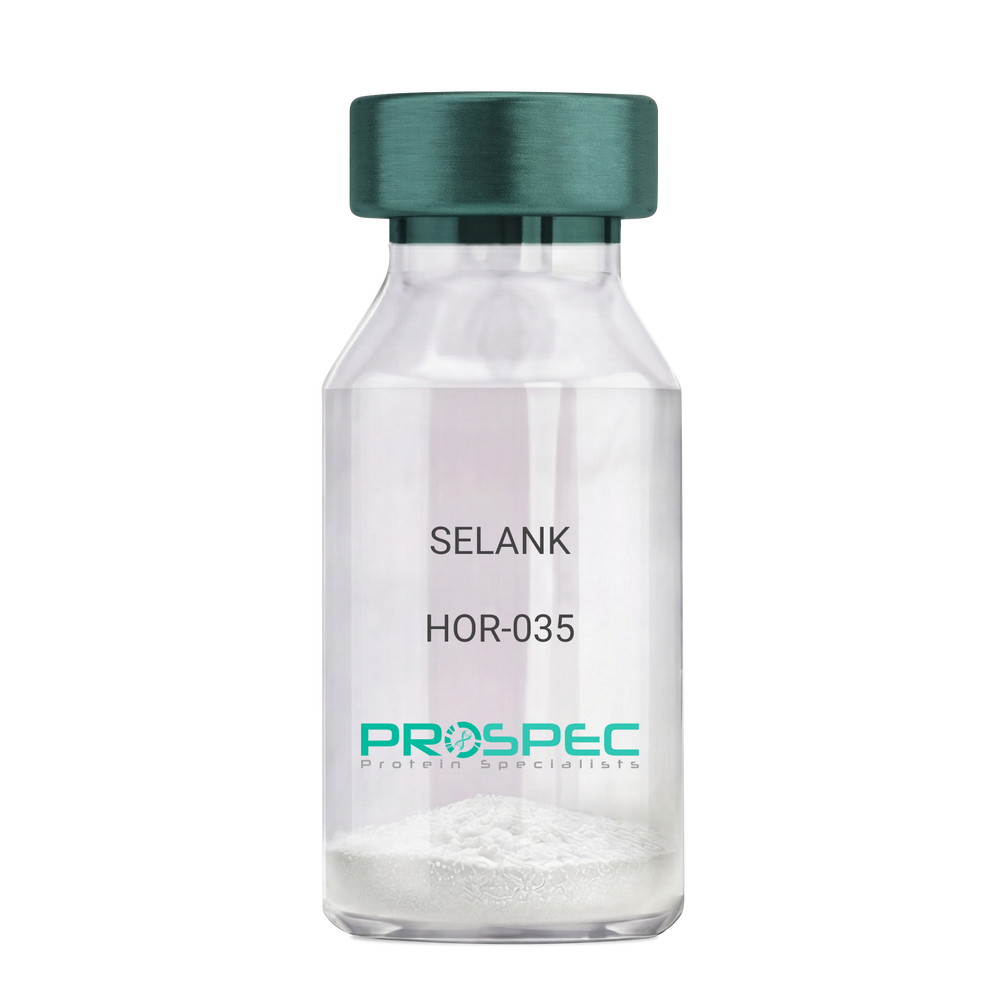
    SELANK

    Description:

    SELANK

    Product # :

    HOR-035

    Price :

    Quantity :

    Shipping Method :

    Room Temp Icon

    Shipped at Room temp

    Add To Cart

    More Info

    • description
    • formulation
    • purity
    • More Info

    Description

    SELANK Synthetic is a single, non-glycosylated polypeptide chain containing 7 amino acids, having a molecular mass of 751.89 Dalton and a Molecular formula of C33H57N11O9.

    Formulation

    The protein was lyophilized with no additives.

    Purity

    Greater than 97.0% as determined by analysis by RP-HPLC.

    More Info

    • Physical Appearance

      Sterile Filtered White lyophilized (freeze-dried) powder.

    • Stability

      Lyophilized SELANK although stable at room temperature for 3 weeks, should be stored desiccated below -18°C. Upon reconstitution SELANK should be stored at 4°C between 2-7 days and for future use below -18°C. For long term storage it is recommended to add a carrier protein (0.1% HSA or BSA). Please prevent freeze-thaw cycles.

    • Solubility

      It is recommended to reconstitute the lyophilized SELANK in sterile 18MΩ-cm H2O not less than 100 µg/ml, which can then be further diluted to other aqueous solutions.

    • Amino Acid Sequence

      H-Thr-Lys-Pro-Arg-Pro-Gly-Pro-OH.

    • Background

      Selank, also known as TP-7, is a synthetic peptide that has garnered significant attention in the scientific community due to its potential anxiolytic, neuroprotective, and nootropic effects. This heptapeptide, derived from the naturally occurring human tetrapeptide Tuftsin, has been shown to possess a wide range of biological activities, including enhancing memory, reducing anxiety, and potentially mitigating the effects of neurodegenerative diseases.

      Selank's primary mechanism of action involves its interaction with the GABAergic system, the body's main inhibitory neurotransmitter system. By modulating the activity of GABA receptors, Selank can exert a calming effect on the brain, reducing anxiety and enhancing cognitive function. Studies by Semenova et al. (2014) have demonstrated that Selank can enhance memory and learning in rats, suggesting potential applications in cognitive enhancement and the treatment of cognitive disorders.

      In addition to its anxiolytic and nootropic effects, Selank has been shown to possess neuroprotective properties. Research by Ershov et al. (2016) found that Selank could protect neurons from oxidative stress, suggesting potential applications in the treatment of neurodegenerative diseases such as Alzheimer's and Parkinson's disease.

      Given its anxiolytic, nootropic, and neuroprotective effects, Selank has been proposed as a potential therapeutic agent for a variety of conditions, including anxiety disorders, cognitive disorders, and neurodegenerative diseases. For instance, a study by Medvedev et al. (2017) found that Selank could improve symptoms in patients with generalized anxiety disorder, indicating its potential as a therapeutic agent in the treatment of anxiety disorders.

      While research on Selank is promising, it is important to note that most studies have been conducted in animals or in vitro. More research is needed to fully understand the potential effects and applications of Selank in humans. However, the existing body of research suggests that Selank could be a promising tool in the treatment of anxiety disorders, cognitive disorders, and neurodegenerative diseases.

    ProSpec's products are furnished for LABORATORY RESEARCH USE ONLY. The product may not be used as drugs, agricultural or pesticidal products, food additives or household chemicals.

    Selank
  • View Data Sheet

    Name :

    Thymalin

    Description:

    Thymulin

    Product # :

    HOR-047

    Price :

    Quantity :

    Shipping Method :

    Room Temp Icon

    Shipped at Room temp

    Add To Cart

    More Info

    • description
    • formulation
    • purity
    • More Info

    Description

    Thymulin Synthetic is a single, non-glycosylated polypeptide chain containing 9 amino acids, having a molecular mass of 858 Dalton and a Molecular formula of C33H54N12O15.

    Formulation

    The protein was lyophilized with no additives.

    Purity

    Greater than 97.0% as determined by analysis by RP-HPLC.

    More Info

    • Physical Appearance

      Sterile Filtered White lyophilized (freeze-dried) powder.

    • Stability

      Lyophilized Thymulin although stable at room temperature for 3 weeks, should be stored desiccated below -18°C. Upon reconstitution Thymulin should be stored at 4°C between 2-7 days and for future use below -18°C. For long term storage it is recommended to add a carrier protein (0.1% HSA or BSA). Please prevent freeze-thaw cycles.

    • Solubility

      It is recommended to reconstitute the lyophilized Thymulin in sterile 18MΩ-cm H2O not less than 100 µg/ml, which can then be further diluted to other aqueous solutions.

    • Amino Acid Sequence

      Pyr-Ala-Lys-Ser-Gln-Gly-Gly-Ser-Asn-OH.

    • Background

      Thymulin, a nonapeptide hormone, is produced primarily by the thymus gland and has been recognized for its pivotal role in the immune system. It plays a significant role in the maturation and differentiation of T lymphocytes, which are crucial for immune function. Beyond its immune-related functions, research has increasingly unveiled the diverse physiological roles of thymulin. This study aims to comprehensively investigate thymulin, shedding light on its immunological functions and exploring its potential applications in various aspects of health and medicine.

      The primary objective of this research is to elucidate the mechanisms underlying thymulin's role in immune regulation. In vitro and in vivo experiments will be conducted to explore thymulin's interactions with immune cells, its impact on T cell development and function, and its potential modulation of immune responses. Understanding these mechanisms is fundamental for harnessing thymulin's immunomodulatory properties.

      The second objective is to assess the clinical relevance of thymulin in immune-related disorders. Clinical trials and studies involving individuals with autoimmune diseases, immunodeficiencies, and age-related immune decline will be conducted to evaluate the potential therapeutic applications of thymulin. These investigations may offer insights into the use of thymulin as an immunomodulatory agent in various clinical settings.

      The third objective is to explore the broader implications of thymulin in health and medicine. Research will investigate its potential roles in areas beyond immunology, such as neuroprotection, wound healing, and tissue regeneration. Understanding the multifaceted properties of thymulin may open new avenues for therapeutic interventions in various medical specialties.

      By delving into the diverse functions of thymulin, this research aims to expand our knowledge of its physiological roles and clinical applications. The findings may have implications for the development of innovative approaches in immunology and healthcare, ultimately benefiting patients affected by immune-related disorders and other medical conditions.

      What is the molecular weight/Mw of THYMALIN Protein?
      THYMALIN Protein has a total Mw of 0.85kDa.

      What is the Purity of THYMALIN Protein?
      THYMALIN Protein is >97% pure as determined by SDS-PAGE.

      What is the Biological Activity of THYMALIN Protein?
      The biological functionality of THYMALIN Protein will be determined in the future.

      What is the amino acid sequence of THYMALIN Protein?
      Pyr-Ala-Lys-Ser-Gln-Gly-Gly-Ser-Asn-OH.

      What applications can THYMALIN Protein be used in?
      THYMALIN Protein can probably be used in western blot, ELISA and Lateral Flow.

      What is the endotoxin level for THYMALIN Protein?
      The endotoxin level is minimal, THYMALIN Protein was purified using conventional chromatography techniques.

    ProSpec's products are furnished for LABORATORY RESEARCH USE ONLY. The product may not be used as drugs, agricultural or pesticidal products, food additives or household chemicals.

    Thymulin
  • View Data Sheet

    Name :

    AAMDC Human

    Description:

    Adipogenesis Associated, Mth938 Domain Containing Human Recombinant

    Adipogenesis Associated, Mth938 Domain Containing, Adipogenesis Associated Mth938 Domain-Containing Protein , C11orf67, Chromosome 11 Open Reading Frame 67, Mth938 Domain-Containing Protein, UPF0366 Protein C11orf67, PTD015, CK067,AAMDC.

    Product # :

    PRO-2116

    Price :

    Quantity :

    Shipping Method :

    Ice Icon

    Shipped with Ice Packs

    Add To Cart

    More Info

    • description
    • source
    • formulation
    • purity
    • More Info

    Description

    AAMDC Human Recombinant produced in E.Coli is a single, non-glycosylated polypeptide chain containing 145 amino acids (1-122 a.a) and having a molecular mass of 15.7 kDa.AAMDC is fused to a 23 amino acid His-tag at N-terminus & purified by proprietary chromatographic techniques.

    Source

    Escherichia Coli.

    Formulation

    AAMDC protein solution (1mg/ml) containing Phosphate buffered saline (pH7.4), 20% glycerol and 1mM DTT.

    Purity

    Greater than 90.0% as determined by SDS-PAGE.

    More Info

    • Introduction

      Adipogenesis Associated, Mth938 Domain Containing, also known as AAMDC is a member of the AAMDC family and takes part in preadipocyte differentiation andadipogenesis.

    • Synonyms

      Adipogenesis Associated, Mth938 Domain Containing, Adipogenesis Associated Mth938 Domain-Containing Protein , C11orf67, Chromosome 11 Open Reading Frame 67, Mth938 Domain-Containing Protein, UPF0366 Protein C11orf67, PTD015, CK067,AAMDC.

    • Physical Appearance

      Sterile Filtered clear solution.

    • Stability

      Store at 4°C if entire vial will be used within 2-4 weeks. Store, frozen at -20°C for longer periods of time. For long term storage it is recommended to add a carrier protein (0.1% HSA or BSA).Avoid multiple freeze-thaw cycles.

    • Amino Acid Sequence

      MGSSHHHHHH SSGLVPRGSH MGSMTSPEIA SLSWGQMKVK GSNTTYKDCK VWPGGSRTWD WRETGTEHSP GVQPADVKEV VEKGVQTLVI GRGMSEALKV PSSTVEYLKK HGIDVRVLQT EQAVKEYNAL VAQGVRVGGV FHSTC.

    ProSpec's products are furnished for LABORATORY RESEARCH USE ONLY. The product may not be used as drugs, agricultural or pesticidal products, food additives or household chemicals.

    Aamdc Human
  • View Data Sheet

    Name :

    S100A8 Mouse

    Description:

    S100 Calcium Binding Protein A8 Mouse Recombinant

    Calgranulin A, MRP8, CAGA, CGLA, CFAG, Protein S100-A8, S100 calcium-binding protein A8, Migration inhibitory factor-related protein 8, MRP-8, p8, Cystic fibrosis antigen, Leukocyte L1 complex light chain, Calprotectin L1L subunit, Urinary stone protein band A, S100A8, MIF, NIF, L1Ag, CP-10, MA387, 60B8AG.

    Product # :

    PRO-233

    Price :

    Quantity :

    Shipping Method :

    Ice Icon

    Shipped with Ice Packs

    Add To Cart

    More Info

    • description
    • source
    • formulation
    • purity
    • More Info

    Description

    S100A8 Mouse Recombinant produced in E.Coli is a single, non-glycosylated polypeptide chain containing 109 amino acids (1-89a.a) and having a molecular mass of 12.4kDa.S100A8 is fused to a 20 amino acid His-tag at N-terminus & purified by proprietary chromatographic techniques.

    Source

    Escherichia Coli.

    Formulation

    S100A8 protein solution (1mg/1ml) containing 20mM Tris-HCl buffer (pH8.0), 30% glycerol, 0.1M NaCl and 1mM DTT.

    Purity

    Greater than 95.0% as determined by SDS-PAGE.

    More Info

    • Introduction

      S100A8 is a part of the S100 family of proteins containing 2 EF-hand calcium-binding motifs. S100 proteins are localized in the cytoplasm and/or nucleus of a broad range of cells, and participate in the regulation of cellular processes such as cell cycle progression and differentiation. S100A8 plays a role in the inhibition of casein kinase and as a cytokine. S100A8 altered expression is related with cystic fibrosis disease. S100A8 is a calcium-binding protein that has antimicrobial activity against bacteria and fungi.S100A8 is crucial for resistance towards invasion by pathogenic bacteria. S100A8 up-regulates transcription of genes that are under the control of NF-kappa-B. S100A8 plays a role in the development of endotoxic shock in response to bacterial lipopolysaccharide. S100A8 endorses tubulin polymerization and promotes phagocyte migration and infiltration of granulocytes at sites of wounding. S100A8 takes part as a pro-inflammatory mediator in acute and chronic inflammation and up-regulates the release of IL8 and cell-surface expression of ICAM1.

    • Synonyms

      Calgranulin A, MRP8, CAGA, CGLA, CFAG, Protein S100-A8, S100 calcium-binding protein A8, Migration inhibitory factor-related protein 8, MRP-8, p8, Cystic fibrosis antigen, Leukocyte L1 complex light chain, Calprotectin L1L subunit, Urinary stone protein band A, S100A8, MIF, NIF, L1Ag, CP-10, MA387, 60B8AG.

    • Physical Appearance

      Sterile Filtered clear solution.

    • Stability

      Store at 4°C if entire vial will be used within 2-4 weeks. Store, frozen at -20°C for longer periods of time. For long term storage it is recommended to add a carrier protein (0.1% HSA or BSA).Avoid multiple freeze-thaw cycles.

    • Amino Acid Sequence

      MGSSHHHHHH SSGLVPRGSH MPSELEKALS NLIDVYHNYS NIQGNHHALY KNDFKKMVTT ECPQFVQNIN IENLFRELDI NSDNAINFEE FLAMVIKVGV ASHKDSHKE

    ProSpec's products are furnished for LABORATORY RESEARCH USE ONLY. The product may not be used as drugs, agricultural or pesticidal products, food additives or household chemicals.

    S100A8 Mouse
  • View Data Sheet

    Name :

    MIP 1a Human

    Description:

    Macrophage Inflammatory Protein-1 Alpha Human Recombinant (CCL3)

    Small inducible cytokine A3, CCL3, Macrophage inflammatory protein 1-alpha, MIP-1-alpha, Tonsillar lymphocyte LD78 alpha protein, G0/G1 switch regulatory protein 19-1, G0S19-1 protein, SIS-beta, PAT 464.1, chemokine (C-C motif) ligand 3, MIP1A, SCYA3, G0S19-1, LD78ALPHA.

    Product # :

    CHM-233

    Price :

    Quantity :

    Shipping Method :

    Room Temp Icon

    Shipped at Room temp

    Add To Cart

    More Info

    • description
    • source
    • formulation
    • purity
    • biological activity
    • More Info

    Description

    Macrophage Inflammatory Protein-1 alpha Human Recombinant produced in E.Coli is a single, non-glycosylated, polypeptide chain containing 70 amino acids and having a molecular mass of 7820 Dalton. The MIP-1a is purified by proprietary chromatographic techniques.

    Source

    Escherichia Coli.

    Formulation

    The protein was lyophilized from 0.55 mg/ml solution containing no additives.

    Purity

    Greater than 98.0% as determined by:
    (a) Analysis by RP-HPLC.
    (b) Analysis by SDS-PAGE.

    Biological Activity

    The Activity is calculated by the ability of chemo-attraction of Human monocytes using 1-10ng/ml corresponding to a Specific Activity of 100,000-1,000,000IU/mg.

    More Info

    • Introduction

      Macrophage Inflammatory Proteins (MIP) belong to the family of chemotactic cytokines known as chemokines. In humans, there are two major forms, MIP-1a and MIP-1b that are now officially named CCL3 and CCL4 respectively. Both are major factors produced by macrophages after they are stimulated with bacterial endotoxins. They activate human granulocytes (neutrophils, eosinophilsand basophils) which can lead to acute neutrophilic inflammation. They also induce the synthesis and release of other pro-inflammatory cytokines such as interleukin 1 (IL-1), IL-6 and TNF-a from fibroblasts and macrophages. The genes for CCL3 and CCL4 are both located on human chromosome 17.

    • Synonyms

      Small inducible cytokine A3, CCL3, Macrophage inflammatory protein 1-alpha, MIP-1-alpha, Tonsillar lymphocyte LD78 alpha protein, G0/G1 switch regulatory protein 19-1, G0S19-1 protein, SIS-beta, PAT 464.1, chemokine (C-C motif) ligand 3, MIP1A, SCYA3, G0S19-1, LD78ALPHA.

    • Physical Appearance

      Sterile Filtered White lyophilized (freeze-dried) powder.

    • Stability

      Lyophilized MIP-1a although stable at room temperature for 3 weeks, should be stored desiccated below -18°C. Upon reconstitution CCL3 should be stored at 4°C between 2-7 days and for future use below -18°C. For long term storage it is recommended to add a carrier protein (0.1% HSA or BSA).Please prevent freeze-thaw cycles.

    • Solubility

      It is recommended to reconstitute the lyophilized Macrophage Inflammatory Protein-1a in sterile 18MΩ-cm H2O not less than 100µg/ml, which can then be further diluted to other aqueous solutions.

    • Amino Acid Sequence

      The sequence of the first five N-terminal amino acids was determined and was found to be, Ala-Ser-Leu-Ala-Ala.

    • Background

      What is the molecular weight/Mw of MIP 1A HUMAN Protein?
      MIP 1A HUMAN Protein has a total Mw of 7.82kDa.

      What is the source or expression system of MIP 1A HUMAN Protein?
      Escherichia Coli.

      What is the Purity of MIP 1A HUMAN Protein?
      MIP 1A HUMAN Protein is >98% pure as determined by SDS-PAGE.

      What is the Biological Activity of MIP 1A HUMAN Protein?
      The Activity is calculated by the ability of chemo-attraction of Human monocytes using 1-10ng/ml corresponding to a Specific Activity of 100,000-1,000,000IU/mg.

      What is the amino acid sequence of MIP 1A HUMAN Protein?
      The sequence of the first five N-terminal amino acids was determined and was found to be, Ala-Ser-Leu-Ala-Ala.

      What applications can MIP 1A HUMAN Protein be used in?
      MIP 1A HUMAN Protein can probably be used in western blot, ELISA and Lateral Flow.

      What is the endotoxin level for MIP 1A HUMAN Protein?
      The endotoxin level is minimal, MIP 1A HUMAN Protein was purified using conventional chromatography techniques.


    ProSpec's products are furnished for LABORATORY RESEARCH USE ONLY. The product may not be used as drugs, agricultural or pesticidal products, food additives or household chemicals.

    Mip 1A Human
  • View Data Sheet

    Name :

    HRP

    Description:

    Horseradish Peroxidase

    Horseradish Peroxidase, HRP, EC 1.11.1.7.

    Product # :

    ENZ-321

    Price :

    Quantity :

    Shipping Method :

    Room Temp Icon

    Shipped at Room temp

    Add To Cart

    More Info

    • description
    • source
    • purity
    • biological activity
    • More Info

    Description

    HRP consists of the basic isoenzyme having a molecular weight of 44 kDa.The Horseradish Peroxidase is purified by affinity chromatography, which results in an enzyme of high specific activity and purity.

    Source

    Root extracts of horseradish.

    Purity

    (A403/A275) = RZ: 3.0.

    Biological Activity

    276 U/mg (25°C, guaiacol as the hydrogen donor, pH-7 and H2O2 as substrates).

    More Info

    • Introduction

      The enzyme horseradish peroxidase, found in horseradish, is used extensively in molecular biologyand in antibody amplification and detection, among other things. For example, "In recent years the technique of marking neurons with the enzyme horseradish peroxidase (HRP) has become a major tool. In its brief history, this method has probably been used by more neurobiologists than have used the Golgi stainsince its discovery in 1870." Horseradish peroxidase is also highly used in techniques such as Western blottingand ELISAs.
      HRP is widely used as an enzymatic label in immunoassays. Usually, the enzyme is coupled to antibodies, lectins or haptens. Coupling to antibodies etc. may be performed through the carbohydrate side chains of the HRP.

    • Synonyms

      Horseradish Peroxidase, HRP, EC 1.11.1.7.

    • Physical Appearance

      Sterile Filtered red-brown lyophilized powder.

    • Stability

      Lyophilized HRP although stable at room temperature for 3 weeks, should be stored desiccated below -18°C. Upon reconstitution HRP should be stored at 4°C between 2-7 days and for future use below -18°C.Please prevent freeze-thaw cycles.

    • Solubility

      It is recommended to reconstitute the lyophilized HRP in sterile 18MΩ-cm H2O not less than 100 µg/ml.

    ProSpec's products are furnished for LABORATORY RESEARCH USE ONLY. The product may not be used as drugs, agricultural or pesticidal products, food additives or household chemicals.

    Horseradish Peroxidase
  • View Data Sheet

    Name :

    SNAPIN Human

    Description:

    SNAP Associated Protein Human Recombinant

    SNAPAP, SNARE-associated protein Snapin, Synaptosomal-associated protein 25-binding protein, SNAP-associated protein, SNAPIN, SNAP25BP.

    Product # :

    PRO-663

    Price :

    Quantity :

    Shipping Method :

    Ice Icon

    Shipped with Ice Packs

    Add To Cart

    More Info

    • description
    • source
    • formulation
    • purity
    • More Info

    Description

    SNAPIN Human Recombinant produced in E.Coli is a single, non-glycosylated polypeptide chain containing 156 amino acids (1-136) and having a molecular mass of 17 kDa. SNAPIN is fused to 20 amino acid His Tag at N-terminus and purified by standard chromatography techniques.

    Source

    Escherichia Coli.

    Formulation

    The protein solution contains 20mM Tris-HCl pH-8, 5mM DTT, 2mM EDTA, 0.2M NaCl, and 40% glycerol.

    Purity

    Greater than 90.0% as determined by SDS-PAGE.

    More Info

    • Introduction

      SNAPIN is involved in the neurotransmitter release process through its modulation of the sequential interactions between the SNAREs and synaptotagmin. SNAPIN is part of the SNARE complex of proteins that is needed for synaptic vesicle docking and fusion. SNAPAP is enriched in neurons and exclusively located on synaptic vesicle membrane protein. SNAPIN is also an important factor of the BLOC1 multisubunit protein complex. BLOC1 is required for normal biogenesis of specialized organelles of the endosomal-lysosomal system, such as melanosomes and platelet dense granules.

    • Synonyms

      SNAPAP, SNARE-associated protein Snapin, Synaptosomal-associated protein 25-binding protein, SNAP-associated protein, SNAPIN, SNAP25BP.

    • Physical Appearance

      Sterile Filtered colorless solution.

    • Stability

      Store at 4°C if entire vial will be used within 2-4 weeks. Store, frozen at -20°C for longer periods of time. For long term storage it is recommended to add a carrier protein (0.1% HSA or BSA).Avoid multiple freeze-thaw cycles.

    • Amino Acid Sequence

      MGSSHHHHHH SSGLVPRGSH MAGAGSAAVS GAGTPVAGPT GRDLFAEGLL EFLRPAVQQL DSHVHAVRES QVELREQIDN LATELCRINEDQKVALDLDP YVKKLLNARR RVVLVNNILQ NAQERLRRLN HSVAKETARR RAMLDSGIYP PGSPGK.

    ProSpec's products are furnished for LABORATORY RESEARCH USE ONLY. The product may not be used as drugs, agricultural or pesticidal products, food additives or household chemicals.

    Snapin Human
  • View Data Sheet

    Name :

    STC 2 Human, His

    Description:

    Stanniocalcin-2 Human Recombinant, His Tag

    Stanniocalcin-2, STC, STC2, STCRP, STC-2, Stanniocalcin-related protein, STC-related protein.

    Product # :

    HOR-008

    Price :

    Quantity :

    Shipping Method :

    Ice Icon

    Shipped with Ice Packs

    Add To Cart

    More Info

    • description
    • source
    • formulation
    • purity
    • More Info

    Description

    STC 2 Human Recombinant produced in E.Coli is a single, non-glycosylated polypeptide chain containing 301 amino acids (25-302 a.a.) and having a molecular mass of 33kDa. STC 2 is fused to a 23 amino acid His-tag at N-terminus & purified by proprietary chromatographic techniques.

    Source

    Escherichia Coli.

    Formulation

    STC 2 protein solution (0.25mg/ml) containing 20mM Tris-HCl buffer (pH 8.0), 0.25M NaCl, 30% glycerol and 1mM DTT.

    Purity

    Greater than 90% as determined by SDS-PAGE.

    More Info

    • Introduction

      STC2 is a homodimeric glycoprotein that is expressed in a wide variety of tissues and may have autocrine or paracrine functions. The encoded protein has 10 of its 15 cysteine residues conserved among stanniocalcin family members and is phosphorylated by casein kinase 2 exclusively on its serine residues. Its C-terminus contains a cluster of histidine residues which may interact with metal ions. The protein may play a role in the regulation of renal and intestinal calcium and phosphate transport, cell metabolism, or cellular calcium/phosphate homeostasis. Constitutive over expression of human stanniocalcin 2 in mice resulted in pre- and postnatal growth restriction, reduced bone and skeletal muscle growth, and organomegaly. Expression of this gene is induced by estrogen and altered in some breast cancers.

    • Synonyms

      Stanniocalcin-2, STC, STC2, STCRP, STC-2, Stanniocalcin-related protein, STC-related protein.

    • Physical Appearance

      Sterile filtered colorless solution.

    • Stability

      Store at 4°C if entire vial will be used within 2-4 weeks. Store, frozen at -20°C for longer periods of time. For long term storage it is recommended to add a carrier protein (0.1% HSA or BSA).Avoid multiple freeze-thaw cycles.

    • Amino Acid Sequence

      MGSSHHHHHH SSGLVPRGSH MGSTDATNPP EGPQDRSSQQ KGRLSLQNTA EIQHCLVNAG DVGCGVFECF ENNSCEIRGL HGICMTFLHN AGKFDAQGKS FIKDALKCKA HALRHRFGCI SRKCPAIREM VSQLQRECYL KHDLCAAAQE NTRVIVEMIH FKDLLLHEPY VDLVNLLLTC GEEVKEAITH SVQVQCEQNW GSLCSILSFC TSAIQKPPTA PPERQPQVDR TKLSRAHHGE AGHHLPEPSS RETGRGAKGE RGSKSHPNAH ARGRVGGLGA QGPSGSSEWE DEQSEYSDIR R.

    ProSpec's products are furnished for LABORATORY RESEARCH USE ONLY. The product may not be used as drugs, agricultural or pesticidal products, food additives or household chemicals.

    Stc 2 Human His
  • View Data Sheet

    Name :

    OSCAR Human

    Description:

    Osteoclast Associated, Immunoglobulin-Like Receptor Human Recombinant

    PIGR3, Osteoclast-associated immunoglobulin-like receptor, hOSCAR, Polymeric immunoglobulin receptor 3, OSCAR, PIgR-3, PIgR3, Poly-Ig receptor 3.

    Product # :

    PRO-1486

    Price :

    Quantity :

    Shipping Method :

    Ice Icon

    Shipped with Ice Packs

    Add To Cart

    More Info

    • description
    • source
    • formulation
    • purity
    • More Info

    Description

    OSCAR Human Recombinant produced in E.Coli is a single, non-glycosylated polypeptide chain containing 291 amino acids (19-286 a.a.) and having a molecular mass of 31kDa.OSCAR is fused to a 23 amino acid His-tag at N-terminus & purified by proprietary chromatographic techniques.

    Source

    Escherichia Coli.

    Formulation

    OSCAR protein solution (0.25mg/ml) contains 20mM Tris-HCl buffer, (pH 8.0), 0.4M Urea and 10% glycerol.

    Purity

    Greater than 85.0% as determined by SDS-PAGE.

    More Info

    • Introduction

      Osteoclasts are multinucleated cells that resorb bone and are essential for bone homeostasis. OSCAR plays crucial roles in the regulation of the innate and adaptive immune responses.Unlike the other LRC members, OSCAR expression is found specifically in preosteoclasts or mature osteoclasts. OSCAR is an important bone-specific regulator of osteoclast differentiation. Multiple alternative splicing transcript variants encodes different isoforms have been found for this gene.

    • Synonyms

      PIGR3, Osteoclast-associated immunoglobulin-like receptor, hOSCAR, Polymeric immunoglobulin receptor 3, OSCAR, PIgR-3, PIgR3, Poly-Ig receptor 3.

    • Physical Appearance

      Sterile Filtered clear solution.

    • Stability

      Store at 4°C if entire vial will be used within 2-4 weeks. Store, frozen at -20°C for longer periods of time. For long term storage it is recommended to add a carrier protein (0.1% HSA or BSA).Avoid multiple freeze-thaw cycles.

    • Amino Acid Sequence

      MGSSHHHHHH SSGLVPRGSH MGSDITPSVA IIVPPASYHP KPWLGAQPAT VVTPGVNVTL RCRAPQPAWR FGLFKPGEIA PLLFRDVSSE LAEFFLEEVT PAQGGIYRCC YRRPDWGPGV WSQPSDVLEL LVTEELPRPS LVALPGPVVG PGANVSLRCA GRLRNMSFVL YREGVAAPLQ YRHSAQPWAD FTLLGARAPG TYSCYYHTPS APYVLSQRSE VLVISWEGEG PEARPASSAP GMQAPGPPPS DPGAQAPSLS SFRPRGLVLQ PLLPQTQDSW DPAPPPSDPG V.

    ProSpec's products are furnished for LABORATORY RESEARCH USE ONLY. The product may not be used as drugs, agricultural or pesticidal products, food additives or household chemicals.

    Oscar Human
  • View Data Sheet

    Name :

    Super Leptin qA Ovine

    Description:

    Super Leptin Antagonist Ovine Recombinant

    Product # :

    CYT-1245

    Price :

    Quantity :

    Shipping Method :

    Room Temp Icon

    Shipped at Room temp

    Add To Cart

    More Info

    • description
    • source
    • formulation
    • purity
    • biological activity
    • More Info

    Description

    Super Leptin Antagonist Ovine Recombinant is a single polypeptide chain containing 146 amino acids, an additional Ala at N-terminus acids and having a molecular mass of ~ 16 kDa. Super Ovine Leptin Antagonist was mutated, resulting in D23L/L39A/D40A/F41A that was purified by proprietary chromatographic techniques.

    Source

    Escherichia coli.

    Formulation

    The protein was lyophilized from a concentrated (1mg/ml) solution with 0.003mM NaHCO3.

    Purity

    Greater than 98.0% as determined by:

    (a) Gel filtration analysis.

    (b) Analysis by SDS-PAGE.

    Biological Activity

    ProSpec’s super Ovine leptin antagonist is capable of inhibiting leptin-induced proliferation of BAF/3 cells stably transfected with the long form of human leptin receptor. Super Ovine leptin antagonist also inhibits various leptin effects in several in vitro bioassays.

    More Info

    • Physical Appearance

      White lyophilized (freeze-dried) powder.

    • Stability

      Lyophilized Super Leptin Antagonist although stable at room temperature for several weeks, should be stored desiccated below -18°C. Upon reconstitution of super Ovine leptin antagonist at > 0.1 mg/ml and up to 2 mg/ml and filter sterilization super Ovine leptin antagonist can be stored at 4C or even room temperature for several weeks making it suitable for long term infusion studies using osmotic pumps. At lower concentration addition of a carrier protein (0.1% HSA or BSA) is suggested. Please prevent freeze-thaw cycles.

    • Solubility

      It is recommended to reconstitute the lyophilized Super Leptin Antagonist in sterile water or sterile 0.4% NaHCO3 adjusted to pH 10, not less than 100µg/ml, which can then be further diluted to other aqueous solutions.

    • Amino Acid Sequence

      The sequence of the first five N-terminal amino acids was determined and was found to be Ala-Val-Pro-Ile-Arg.

    • Background

      Leptin is a hormone which mainly produced by adipocytes. Leptin’s main part is to regulate long-term energy balance. Leptin is encoded by the LEP gene. Leptin receptors are expressed by various brain and peripheral cell types. leptin levels influence satiety, appetite and triggers behaviours which save energy. When leptin levels are high, the brain interprets that energy reserves are high, whereas low leptin levels means that energy reserves are low, in the process adapting the organism to starvation through a variety of metabolic, neurobiochemical, endocrine and behavioral change.

    • Protein content

      Protein quantitation was carried out by UV spectroscopy at 280 nm using the absorbency value of 0.2 as the extinction coefficient for a 0.1% (1mg/ml) solution at pH 8.0. This value is calculated by the PC GENE computer analysis program of protein sequences (IntelliGenetics).

    ProSpec's products are furnished for LABORATORY RESEARCH USE ONLY. The product may not be used as drugs, agricultural or pesticidal products, food additives or household chemicals.

    Leptin Super Antagonist Ovine
  • View Data Sheet

    Name :

    CXCL14 Rat

    Description:

    BRAK (CXCL14) Rat Recombinant

    C-X-C motif chemokine 14, B-cell and monocyte-activating chemokine, Chemokine BRAK, Kidney-expressed chemokine CXC, MIP-2G, Small-inducible cytokine B14, Cxcl14, Bmac, Kec, Ks1, Mip2g, Scyb14, BRAK, NJAC, AI414372, bolekine, MIP2gamma, 1110031L23Rik, 1200006I23Rik.

    Product # :

    CHM-021

    Price :

    Quantity :

    Shipping Method :

    Room Temp Icon

    Shipped at Room temp

    Add To Cart

    More Info

    • description
    • source
    • formulation
    • purity
    • biological activity
    • More Info

    Description

    CXCL14 Rat Recombinant produced in E.Coli is a single, non-glycosylated, Polypeptide chain containing 77 amino acids and having a molecular mass of 9.4kDa.The CXCL14 is purified by proprietary chromatographic techniques.

    Source

    Escherichia Coli.

    Formulation

    CXCL14 was lyophilized from a 0.2µm filtered concentrated solution in 30% Acetonitrile and 0.1% TFA.

    Purity

    Greater than 95.0% as determined by:
    (a) Analysis by RP-HPLC.
    (b) Analysis by SDS-PAGE.

    Biological Activity

    Determined by its ability to chemoattract activated monocytes using a concentration range of 1.0-10.0 ng/ml.

    More Info

    • Introduction

      CXCL14 is involved in immunoregulatory and inflammatory processes. BRAK protein is structurally related to the CXC (Cys-X-Cys) subfamily of cytokines. CXCL14 displays chemotactic activity for monocytes but not for lymphocytes, dendritic cells, neutrophils or macrophages. CXCL14 is involved in the homeostasis of monocyte-derived macrophages.

    • Synonyms

      C-X-C motif chemokine 14, B-cell and monocyte-activating chemokine, Chemokine BRAK, Kidney-expressed chemokine CXC, MIP-2G, Small-inducible cytokine B14, Cxcl14, Bmac, Kec, Ks1, Mip2g, Scyb14, BRAK, NJAC, AI414372, bolekine, MIP2gamma, 1110031L23Rik, 1200006I23Rik.

    • Physical Appearance

      Sterile Filtered White lyophilized (freeze-dried) powder.

    • Stability

      Lyophilized CXCL14 although stable at room temperature for 3 weeks, should be stored desiccated below -18°C. Upon reconstitution CXCL14 should be stored at 4°C between 2-7 days and for future use below -18°C.Please prevent freeze-thaw cycles.

    • Solubility

      It is recommended to reconstitute the lyophilized CXCL14 in sterile 18M-cm H2O not less than 100µg/ml, which can then be further diluted to other aqueous solutions.

    • Amino Acid Sequence

      SKCKCSRKGP KIRYSDVKKL EMKPKYPHCE EKMVIITTKS MSRYRGQEHC LHPKLQSTKR FIKWYNAWNE KRRVYEE.

    • Background

      What is the molecular weight/Mw of CXCL14 RAT Protein?
      CXCL14 RAT Protein has a total Mw of 9.4kDa.

      What is the source or expression system of CXCL14 RAT Protein?
      Escherichia Coli.

      What is the Purity of CXCL14 RAT Protein?
      CXCL14 RAT Protein is >95% pure as determined by SDS-PAGE.

      What is the Biological Activity of CXCL14 RAT Protein?
      Determined by its ability to chemoattract activated monocytes using a concentration range of 1.0-10.0 ng/ml.

      What is the amino acid sequence of CXCL14 RAT Protein?
      SKCKCSRKGP KIRYSDVKKL EMKPKYPHCE EKMVIITTKS MSRYRGQEHC LHPKLQSTKR FIKWYNAWNE KRRVYEE.

      What applications can CXCL14 RAT Protein be used in?
      CXCL14 RAT Protein can probably be used in western blot, ELISA and Lateral Flow.

      What is the endotoxin level for CXCL14 RAT Protein?
      The endotoxin level is minimal, CXCL14 RAT Protein was purified using conventional chromatography techniques.

    ProSpec's products are furnished for LABORATORY RESEARCH USE ONLY. The product may not be used as drugs, agricultural or pesticidal products, food additives or household chemicals.

    Cxcl14 Rat
  • 1
  • …
  • 23
  • 24
  • 25
  • 26
  • 27
  • …
  • 42
Your browser does not support the video tag.

Products

  • Cytokines
  • Growth Factors
  • Chemokines
  • CD Antigens
  • Neurotrophins
  • Hormones
  • Enzymes
  • Viral Antigens
  • Recombinant Proteins
  • Natural Proteins
  • Monoclonal Antibodies
  • Polyclonal Antibodies
  • Thermal Packaging

About

  • Company
  • Founder
  • Contribution
  • Contact Us
  • My Account

Ordering

  • Ordering Method
  • Ordering - Credit Card
  • Ordering PO
  • Shipping Fees
  • FAQ's

Legal

  • Terms & Conditions
  • Privacy
  • Site Map
  • info@prospecbio.com
  • Facebook
  • Instagram
  • Linkedin Profile

© 2026 ProSpec-Tany TechnoGene Ltd. All Rights Reserved.

  • Choosing a selection results in a full page refresh.
  • Opens in a new window.