Skip to content

High-quality research proteins.

  • 1-800-805-6531

  • Mon - Sat 8.00-18.00, Sun - Closed

  • info@prospecbio.com

  • PO Box 6591 East Brunswick NJ 08816

  • Products
    • Cytokines
    • Growth factors
    • Chemokines
    • Cd antigens
    • Neurotrophins
    • Hormones
    • Enzymes
    • Viral antigens
    • Recombinant proteins
    • Natural proteins
    • Monoclonal antibodies
    • Polyclonal antibodies
    • Thermal Packaging
  • About
    • Company
    • Founder
    • Contribution
  • Customers
    • Eastern Asia
    • Eastern Europe
    • North America
    • South America
    • South East Asia
    • Southern Asia
    • Western Europe
  • Ordering
    • Ordering Method
    • Ordering - Credit Card
    • Ordering - PO
    • Shipping Fees
    • FAQs
  • Services
    • DNA Cloning
    • Protein Expression
    • Monoclonal Antibody
    • Fermentation
    • Technology License
  • Contact us
Log in

Country/region

  • USD $ | Albania
  • USD $ | Andorra
  • USD $ | Argentina
  • USD $ | Armenia
  • USD $ | Australia
  • USD $ | Austria
  • USD $ | Azerbaijan
  • USD $ | Belarus
  • USD $ | Belgium
  • USD $ | Bolivia
  • USD $ | Brazil
  • USD $ | Bulgaria
  • USD $ | Cambodia
  • USD $ | Canada
  • USD $ | Chile
  • USD $ | China
  • USD $ | Colombia
  • USD $ | Costa Rica
  • USD $ | Croatia
  • USD $ | Cyprus
  • USD $ | Czechia
  • USD $ | Denmark
  • USD $ | Estonia
  • USD $ | Finland
  • USD $ | France
  • USD $ | Georgia
  • USD $ | Germany
  • USD $ | Greece
  • USD $ | Hong Kong SAR
  • USD $ | Hungary
  • USD $ | Iceland
  • USD $ | India
  • USD $ | Ireland
  • USD $ | Israel
  • USD $ | Italy
  • USD $ | Japan
  • USD $ | Kazakhstan
  • USD $ | Latvia
  • USD $ | Liechtenstein
  • USD $ | Lithuania
  • USD $ | Madagascar
  • USD $ | Malta
  • USD $ | Mexico
  • USD $ | Moldova
  • USD $ | Monaco
  • USD $ | Netherlands
  • USD $ | New Zealand
  • USD $ | North Macedonia
  • USD $ | Norway
  • USD $ | Panama
  • USD $ | Paraguay
  • USD $ | Peru
  • USD $ | Philippines
  • USD $ | Poland
  • USD $ | Portugal
  • USD $ | Romania
  • USD $ | Singapore
  • USD $ | Slovakia
  • USD $ | Slovenia
  • USD $ | South Africa
  • USD $ | South Korea
  • USD $ | Spain
  • USD $ | Sri Lanka
  • USD $ | Sweden
  • USD $ | Switzerland
  • USD $ | Taiwan
  • USD $ | Thailand
  • USD $ | Türkiye
  • USD $ | Ukraine
  • USD $ | United Kingdom
  • USD $ | United States
  • USD $ | Uruguay
  • USD $ | Vatican City
  • USD $ | Venezuela
  • USD $ | Vietnam
  • Facebook
  • Instagram
logoProSpec - Recombinant Protein Manufacturer for academic and R&D industry
Become a distributor
Account Log in
Wishlist
Cart Cart(0)
  • Products
    +
    • Cytokines
    • Growth factors
    • Chemokines
    • Cd antigens
    • Neurotrophins
    • Hormones
    • Enzymes
    • Viral antigens
    • Recombinant proteins
    • Natural proteins
    • Monoclonal antibodies
    • Polyclonal antibodies
    • Thermal Packaging
  • About
    +
    • Company
    • Founder
    • Contribution
  • Customers
    +
    • Eastern Asia
    • Eastern Europe
    • North America
    • South America
    • South East Asia
    • Southern Asia
    • Western Europe
  • Ordering
    +
    • Ordering Method
    • Ordering - Credit Card
    • Ordering - PO
    • Shipping Fees
    • FAQs
  • Services
    +
    • DNA Cloning
    • Protein Expression
    • Monoclonal Antibody
    • Fermentation
    • Technology License
  • Contact us

Item added to your cart

View cart
View All
  • Cytokines
  • Growth factors
  • Chemokines
  • Cd antigens
  • Neurotrophins
  • Hormones
  • Enzymes
  • Viral antigens
  • Recombinant proteins
  • Natural proteins
  • Monoclonal antibodies
  • Polyclonal antibodies
  • Thermal Packaging
  • Tumor Necrosis Factor

    Tumor Necrosis Factor

    View All
  • 4-1BB

    4-1BB

    View All
  • Adiponectin

    Adiponectin

    View All
  • AIF1

    AIF1

    View All
  • Other Cytokines

    Other Cytokines

    View All
  • AITRL

    AITRL

    View All
  • Angiopoietin

    Angiopoietin

    View All
  • Apolipoprotein

    Apolipoprotein

    View All
  • B-Cell Activating Factor

    B-Cell Activating Factor

    View All
  • Beta Defensin

    Beta Defensin

    View All
  • Bone Morphogenetic Protein

    Bone Morphogenetic Protein

    View All
  • B type Natriuretic Peptide

    B type Natriuretic Peptide

    View All
  • BST

    BST

    View All
  • Betacellulin

    Betacellulin

    View All
  • Cardiotrophin

    Cardiotrophin

    View All
  • Activin

    Activin

    View All
  • Fibroblast Growth Factor

    Fibroblast Growth Factor

    View All
  • Other Growth Factors

    Other Growth Factors

    View All
  • CSF

    CSF

    View All
  • CTGF

    CTGF

    View All
  • IGFBP

    IGFBP

    View All
  • VEGF Protein

    VEGF Protein

    View All
  • EGF

    EGF

    View All
  • Epigen

    Epigen

    View All
  • Erythropoietin

    Erythropoietin

    View All
  • Insulin-Like Growth Factor

    Insulin-Like Growth Factor

    View All
  • Growth Hormone

    Growth Hormone

    View All
  • HDGF

    HDGF

    View All
  • Hepatocyte Growth Factor

    Hepatocyte Growth Factor

    View All
  • Insulin

    Insulin

    View All
  • BCA-1/ BLC (CXCL13)

    BCA-1/ BLC (CXCL13)

    View All
  • BRAK (CXCL14)

    BRAK (CXCL14)

    View All
  • C-10 (CCL6)

    C-10 (CCL6)

    View All
  • Other Chemokines

    Other Chemokines

    View All
  • MEC (CCL28)

    MEC (CCL28)

    View All
  • LD78-beta (CCL3L1)

    LD78-beta (CCL3L1)

    View All
  • CTACK (CCL27)

    CTACK (CCL27)

    View All
  • CXCL16

    CXCL16

    View All
  • CXCL17

    CXCL17

    View All
  • Platelet Factor-4 (CXCL4)

    Platelet Factor-4 (CXCL4)

    View All
  • ENA-78 (CXCL5)

    ENA-78 (CXCL5)

    View All
  • Eotaxin (CCL11,24,26)

    Eotaxin (CCL11,24,26)

    View All
  • Exodus-2 (CCL21)

    Exodus-2 (CCL21)

    View All
  • Fractalkine (CX3CL1)

    Fractalkine (CX3CL1)

    View All
  • CXCL6

    CXCL6

    View All
  • Other CD Antigens

    Other CD Antigens

    View All
  • CD14

    CD14

    View All
  • CD164

    CD164

    View All
  • CD1

    CD1

    View All
  • CD2

    CD2

    View All
  • CD200

    CD200

    View All
  • CD207

    CD207

    View All
  • CD226

    CD226

    View All
  • CD23

    CD23

    View All
  • CD244

    CD244

    View All
  • CD247

    CD247

    View All
  • CD27

    CD27

    View All
  • CD274

    CD274

    View All
  • CD300

    CD300

    View All
  • CD33

    CD33

    View All
  • Other Neurotrophins

    Other Neurotrophins

    View All
  • Beta-NGF

    Beta-NGF

    View All
  • BDNF

    BDNF

    View All
  • CDNF

    CDNF

    View All
  • CNTF

    CNTF

    View All
  • GDNF

    GDNF

    View All
  • Glia Maturation Factor

    Glia Maturation Factor

    View All
  • MANF

    MANF

    View All
  • Midkine

    Midkine

    View All
  • Neuroglobin

    Neuroglobin

    View All
  • Neurotrophic factors

    Neurotrophic factors

    View All
  • Neuregulin

    Neuregulin

    View All
  • Neuropilin

    Neuropilin

    View All
  • Pigment Epithelium-Derived Factor

    Pigment Epithelium-Derived Factor

    View All
  • Pleiotrophin

    Pleiotrophin

    View All
  • Peptide Hormones

    Peptide Hormones

    View All
  • Other Hormones

    Other Hormones

    View All
  • HCG

    HCG

    View All
  • Endothelin

    Endothelin

    View All
  • Exendin

    Exendin

    View All
  • FSH

    FSH

    View All
  • Glucagon

    Glucagon

    View All
  • GHRP

    GHRP

    View All
  • GLP

    GLP

    View All
  • Thyrostimulin

    Thyrostimulin

    View All
  • Inhibin A

    Inhibin A

    View All
  • LHRH

    LHRH

    View All
  • Melanotan

    Melanotan

    View All
  • Procalcitonin

    Procalcitonin

    View All
  • PTH

    PTH

    View All
  • Peroxiredoxin

    Peroxiredoxin

    View All
  • Peptidase

    Peptidase

    View All
  • Synthetase

    Synthetase

    View All
  • Transferase

    Transferase

    View All
  • Hydrolase

    Hydrolase

    View All
  • Dehydrogenase

    Dehydrogenase

    View All
  • ACE2

    ACE2

    View All
  • Esterase

    Esterase

    View All
  • Protein Kinases

    Protein Kinases

    View All
  • Other Enzymes

    Other Enzymes

    View All
  • Phosphatase

    Phosphatase

    View All
  • Deaminase

    Deaminase

    View All
  • Oxygenase

    Oxygenase

    View All
  • Adenylate Kinase

    Adenylate Kinase

    View All
  • Lyase

    Lyase

    View All
  • Chagas

    Chagas

    View All
  • SARS

    SARS

    View All
  • Influenza

    Influenza

    View All
  • ASFV

    ASFV

    View All
  • Astrovirus

    Astrovirus

    View All
  • Borrelia

    Borrelia

    View All
  • Helicobacter Pylori

    Helicobacter Pylori

    View All
  • Chikungunya

    Chikungunya

    View All
  • Chlamydia

    Chlamydia

    View All
  • Cytomegalo

    Cytomegalo

    View All
  • Dengue

    Dengue

    View All
  • EBV

    EBV

    View All
  • Ebola

    Ebola

    View All
  • Feline Leukemia Virus

    Feline Leukemia Virus

    View All
  • Hepatitis A

    Hepatitis A

    View All
  • Other

    Other

    View All
  • Actin

    Actin

    View All
  • ADAM

    ADAM

    View All
  • Complement Component

    Complement Component

    View All
  • Ag85

    Ag85

    View All
  • Eukaryotic Translation Initiation Factor

    Eukaryotic Translation Initiation Factor

    View All
  • Anterior Gradient Protein

    Anterior Gradient Protein

    View All
  • Heat Shock Protein

    Heat Shock Protein

    View All
  • Alpha-2-HS-Glycoprotein

    Alpha-2-HS-Glycoprotein

    View All
  • Hemoglobin

    Hemoglobin

    View All
  • Allergy

    Allergy

    View All
  • Anaplasma

    Anaplasma

    View All
  • Angiogenin

    Angiogenin

    View All
  • Ankyrin Repeat Domain

    Ankyrin Repeat Domain

    View All
  • Annexin

    Annexin

    View All
  • Other Natural Proteins

    Other Natural Proteins

    View All
  • Aprotinin

    Aprotinin

    View All
  • Transferrin

    Transferrin

    View All
  • Avidin

    Avidin

    View All
  • Anti Coagulation Factors

    Anti Coagulation Factors

    View All
  • Natural Albumin

    Natural Albumin

    View All
  • Natural Coagulation Factors

    Natural Coagulation Factors

    View All
  • Fibronectin

    Fibronectin

    View All
  • Thrombin

    Thrombin

    View All
  • Anti Human Enzyme

    Anti Human Enzyme

    View All
  • Other Monoclonal Antibodies

    Other Monoclonal Antibodies

    View All
  • Anti Human Cytokine

    Anti Human Cytokine

    View All
  • Anti Human Heat Shock Protein

    Anti Human Heat Shock Protein

    View All
  • Anti Mouse Lymphocyte

    Anti Mouse Lymphocyte

    View All
  • Anti Human Chemokine

    Anti Human Chemokine

    View All
  • Anti Human Lymphocyte

    Anti Human Lymphocyte

    View All
  • Anti Viral Monoclonal

    Anti Viral Monoclonal

    View All
  • Anti Mouse Cytokine

    Anti Mouse Cytokine

    View All
  • Anti-GST Monoclonal

    Anti-GST Monoclonal

    View All
  • Other Polyclonal Antibodies

    Other Polyclonal Antibodies

    View All
  • Anti Viral

    Anti Viral

    View All
  • Anti-GST Monoclonal

    Anti-GST Monoclonal

    View All
Back

Search results

1000 results found for “hdgf”

Name

Description

Product #

Price

Quantity

Shipping Method

  • View Data Sheet

    Name :

    HSBP 1 Human

    Description:

    Heat Shock Factor Binding Protein - 1 Human Recombinant

    NPC-A-13, HSBP1, Heat shock factor-binding protein 1, Nasopharyngeal carcinoma-associated antigen 13, HSF1BP, DKFZp686D1664, DKFZp686O24200.

    Product # :

    HSP-001

    Price :

    Quantity :

    Shipping Method :

    Ice Icon

    Shipped with Ice Packs

    Add To Cart

    More Info

    • description
    • source
    • formulation
    • purity
    • More Info

    Description

    Recombinant Human HSBP1 produced in E.Coli is a single,non-glycosylated polypeptide chain containing 76 amino acids and having a molecular mass of 8.5 kDa.

    Source

    Escherichia Coli.

    Formulation

    The HSBP1 protein (1mg/ml) solution contains 20mM Tris-HCl buffer pH-7.5, 50mM NaCl, 1mM EDTA and 20% Glycerol.

    Purity

    Greater than 95.0% as determined by SDS-PAGE.

    More Info

    • Introduction

      The heat-shock response is elicited by exposure of cells to thermal and chemical stress and through the activation of HSFs (heat shock factors) results in the elevated expression of heat-shock induced genes. Heat shock factor binding protein-1 (HSBP1), is a 76-amino-acid protein that binds to heat shock factor 1(HSF1), which is a transcription factor involved in the HS response. During HS response, HSF1 undergoes conformational transition from an inert non-DNA-binding monomer to active functional trimers. HSBP1 is nuclear-localized and interacts with the active trimeric state of HSF1 to negatively regulate HSF1 DNA-binding activity. Overexpression of HSBP1 in mammalian cells represses the transactivation activity of HSF1. When overexpressed in C.elegans HSBP1 has severe effects on survival of the animals after thermal and chemical stress consistent with a role of HSBP1 as a negative regulator of heat shock response.

    • Synonyms

      NPC-A-13, HSBP1, Heat shock factor-binding protein 1, Nasopharyngeal carcinoma-associated antigen 13, HSF1BP, DKFZp686D1664, DKFZp686O24200.

    • Physical Appearance

      Sterile filtered colorless solution.

    • Stability

      Store at 4°C if entire vial will be used within 2-4 weeks. Store, frozen at -20°C for longer periods of time. For long term storage it is recommended to add a carrier protein (0.1% HSA or BSA).Avoid multiple freeze-thaw cycles.

    • Amino Acid Sequence

      MAETDPKTVQ DLTSVVQTLL QQMQDKFQTM SDQIIGRIDD MSSRIDDLEK NIADLMTQAG VEELESENKI PATQKS.

    ProSpec's products are furnished for LABORATORY RESEARCH USE ONLY. The product may not be used as drugs, agricultural or pesticidal products, food additives or household chemicals.

    Hsbp 1 Human
  • View Data Sheet

    Name :

    HPSE Active

    Description:

    Recombinant Human Heparanase-1 Active

    Product # :

    ENZ-1032

    Price :

    Quantity :

    Shipping Method :

    Ice Icon

    Shipped with Ice Packs

    Add To Cart

    More Info

    • description
    • formulation
    • purity
    • biological activity
    • More Info

    Description

    Heparanase Active Enzyme is produced in CHO cells.The protein is purified by several orthogonal chromatography steps.

    Formulation

    Heparanase Active Enzyme is supplied in20mM Acetate buffer and 750mM NaCl pH 5.4.

    Purity

    Greater than 95.0% as determined by:
    (a) Analysis by RP-HPLC.
    (b) Analysis by SDS-PAGE.

    Biological Activity

    The specific activity of Heparanase Active Enzyme in-house standard is about 0.7 Units (1 unit = 1 μmole of reducing ends of heparan sulfate substrate formed per minute per mg Heparanase Active Enzyme at 37°C). The enzymatic activity of each Heparanase Active Enzyme batch is comparable to the standard as determined by activity assay in which immobilized heparan, released due to heparanase activity, is quantified colorimetrically. Recommended reaction buffer: 20 mM Citrate Phosphate buffer, pH 5.4; 50mM NaCl; 1mM CaCl2.

    More Info

    • Introduction

      Heparanase is an endo β-D-glucuronidase, which degrades heparan sulfate side chains of heparan sulfate proteoglycans (HSPGs) in the extracellular matrix. Heparanase plays an important role in ECM degradation, facilitating the migration and extravasation of tumor cells and inflammatory leukocytes (1,2,3). Upon degradation, heparanase releases growth factors and cytokines that stimulate cell proliferation and chemotaxis (4,5). Heparanase is a heterodimer comprised of a 50 kDa subunit harboring the active site and a 8 kDa subunit. It is produced as a latent 65 kDa precursor and proteolytically processed to its active form (1,6). Heparanase is highly expressed in myeloid leukocytes (i.e. neutrophils) in platelets and in human placenta. Human heparanase was found to be upregulated in various types of primary tumors, correlating in some cases with increased tumor invasiveness and vascularity and with poor prospective survival (7,8).

    • Data Sheet

      To view the FULL VERSION data sheet click Heparanase-1 Active Enzyme

    • Specificity

      Heparanase Active Enzyme is identified by Western blot analysis with polyclonalrabbit anti-HPA1 antibodies as 2 subunits of 8-kDa and 50-kDa.

    • Shipping Conditions

      Heparanase Active Enzyme is shipped frozen on dry ice unless stated otherwise by the customer. Shipping fees to N. America and W. Europe is $400 Shipping fees to Asia, Australia and E. Europe is $500

    • Storage Procedures

      Store at –80ºC, avoid repeated freeze-thaw cycles.

    ProSpec's products are furnished for LABORATORY RESEARCH USE ONLY. The product may not be used as drugs, agricultural or pesticidal products, food additives or household chemicals.

    Heparanase Active
  • View Data Sheet

    Name :

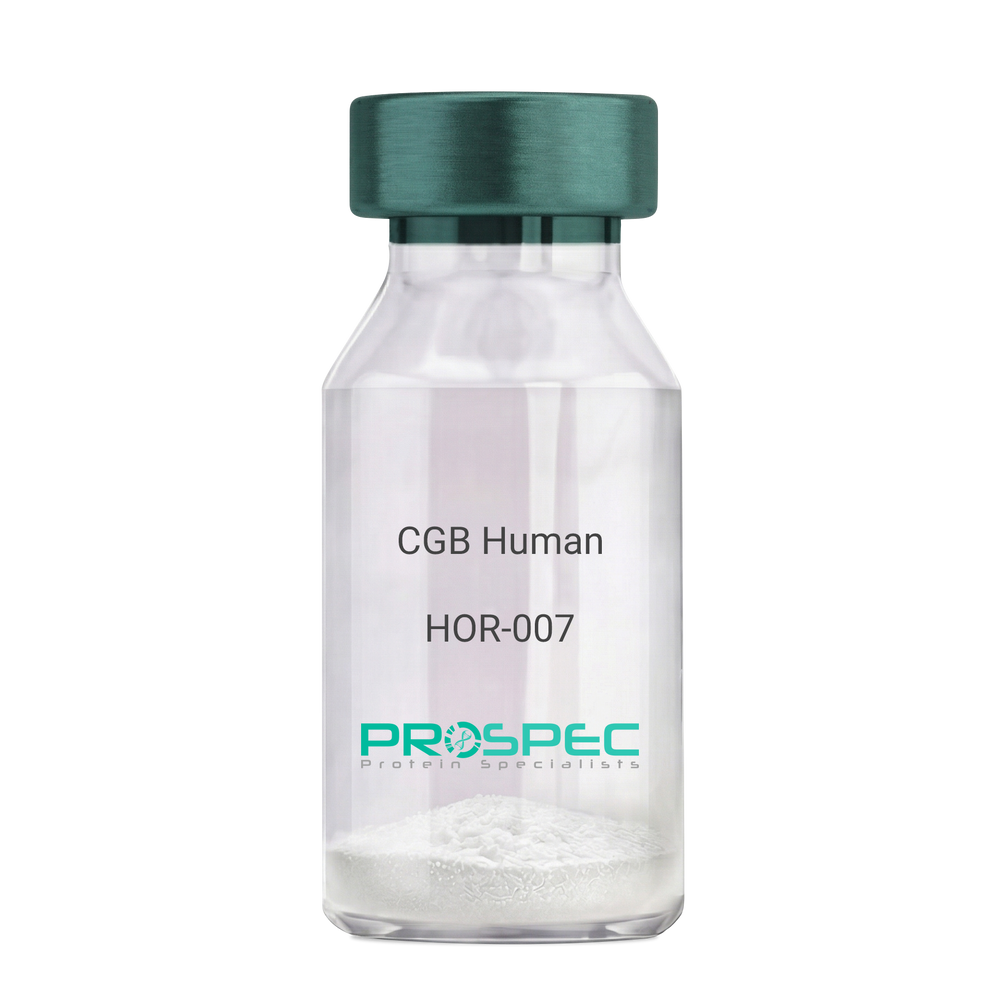
    CGB Human

    Description:

    CGB Human Recombinant

    CGB3, CGB5, CGB7, CGB8, hCGB,  CG-beta, CGB.

    Product # :

    HOR-007

    Price :

    Quantity :

    Shipping Method :

    Ice Icon

    Shipped with Ice Packs

    Add To Cart

    More Info

    • description
    • source
    • formulation
    • purity
    • More Info

    Description

    CGB Human Recombinant produced in E.Coli is a single, non-glycosylated polypeptide chain containing 168 amino acids (21-165 a.a.) and having a molecular mass of 17.9kDa. CGB is fused to a 23 amino acid His-tag at N-terminus & purified by proprietary chromatographic techniques.

    Source

    Escherichia Coli.

    Formulation

    CGB protein solution (0.5mg/ml) containing 20mM Tris-HCl buffer (pH 8.0), 0.4M Urea and 10% glycerol.

    Purity

    Greater than 85.0% as determined by SDS-PAGE.

    More Info

    • Introduction

      Glycoprotein hormones are heterodimers consisting of a common alpha subunit and a unique beta subunit which confers biological specificity. CGB is a member of the glycoprotein hormone beta chain family and is the beta 3 subunit of (CG). CG is produced by the trophoblastic cells of the placenta and stimulates the ovaries. The beta subunit of CG is encoded by 6 genes which are arranged in tandem and inverted pairs on chromosome 19q13.3 and contiguous with the luteinizing hormone beta subunit gene.

    • Synonyms

      CGB3, CGB5, CGB7, CGB8, hCGB, CG-beta, CGB.

    • Physical Appearance

      Sterile filtered colorless solution.

    • Stability

      Store at 4°C if entire vial will be used within 2-4 weeks. Store, frozen at -20°C for longer periods of time. For long term storage it is recommended to add a carrier protein (0.1% HSA or BSA).Avoid multiple freeze-thaw cycles.

    • Amino Acid Sequence

      MGSSHHHHHH SSGLVPRGSH MGSSKEPLRP RCRPINATLA VEKEGCPVCI TVNTTICAGY CPTMTRVLQG VLPALPQVVC NYRDVRFESI RLPGCPRGVN PVVSYAVALS CQCALCRRST TDCGGPKDHP LTCDDPRFQD SSSSKAPPPS LPSPSRLPGP SDTPILPQ.

    ProSpec's products are furnished for LABORATORY RESEARCH USE ONLY. The product may not be used as drugs, agricultural or pesticidal products, food additives or household chemicals.

    Cgb Human
  • View Data Sheet

    Name :

    IFIH1 Human

    Description:

    Interferon Induced With Helicase C Domain 1 Human Recombinant

    Interferon-induced helicase C domain-containing protein 1, Clinically amyopathic dermatomyositis autoantigen 140 kDa, CADM-140 autoantigen, Helicase with 2 CARD domains, Helicard, Interferon-induced with helicase C domain protein 1, Melanoma differentiation-associated protein 5, MDA-5, Murabutide down-regulated protein, RIG-I-like receptor 2, RLR-2, RNA helicase-DEAD box protein 116, IFIH1, MDA5, RH116, Hlcd, IDDM19.

    Product # :

    PRO-1505

    Price :

    Quantity :

    Shipping Method :

    Ice Icon

    Shipped with Ice Packs

    Add To Cart

    More Info

    • description
    • source
    • formulation
    • purity
    • More Info

    Description

    IFIH1 Human Recombinant produced in SF9 is a glycosylated, polypeptide chain having a calculated molecular mass of 152,000 Dalton. IFIH1 is expressed with a -10xHis tag at N-terminus and purified by proprietary chromatographic techniques.

    Source

    Sf9 Insect Cells.

    Formulation

    IFIH1 is supplied in 20mM HEPES buffer pH-7.9, 550mM NaCl and 6M Urea.

    Purity

    Greater than 93.0% as determined by SDS-PAGE.

    More Info

    • Introduction

      IFIH1 is a DEAD box protein which is upregulated in response to treatment with beta-interferon and a protein kinase C-activating compound, mezerein. Irreversible reprogramming of melanomas can be attained by therapy with both these agents; treatment with either agent alone only achieves reversible differentiation. DEAD box proteins are implicated in several cellular processes involving alteration of RNA secondary structure such as translation initiation, nuclear and mitochondrial splicing, and ribosome and spliceosome assembly.

    • Synonyms

      Interferon-induced helicase C domain-containing protein 1, Clinically amyopathic dermatomyositis autoantigen 140 kDa, CADM-140 autoantigen, Helicase with 2 CARD domains, Helicard, Interferon-induced with helicase C domain protein 1, Melanoma differentiation-associated protein 5, MDA-5, Murabutide down-regulated protein, RIG-I-like receptor 2, RLR-2, RNA helicase-DEAD box protein 116, IFIH1, MDA5, RH116, Hlcd, IDDM19.

    • Physical Appearance

      Sterile Filtered clear solution.

    • Stability

      Store at 4°C if entire vial will be used within 2-4 weeks. Store, frozen at -20°C for longer periods of time. Avoid multiple freeze-thaw cycles.

    ProSpec's products are furnished for LABORATORY RESEARCH USE ONLY. The product may not be used as drugs, agricultural or pesticidal products, food additives or household chemicals.

    Ifih1 Human
  • View Data Sheet

    Name :

    EIF3K (50-94) Human

    Description:

    Eukaryotic Translation Initiation Factor 3K (50-94 a.a.) Human Recombinant

    PLAC-24, eIF3k, eIF-3 p25, eIF-3 p28, EIF3S12.

    Product # :

    PRO-2833

    Price :

    Quantity :

    Shipping Method :

    Room Temp Icon

    Shipped at Room temp

    Add To Cart

    More Info

    • description
    • source
    • formulation
    • purity
    • More Info

    Description

    The EIF3KHuman is created as a recombinant protein with a 4kda N-terminal fusion of His Tag. The EIF3KHis-Tagged Fusion Protein, produced in E. coli, is a 10kDa protein containing 45 amino acid residues of the EIF3KHuman, 50-94 amino acids.

    Source

    Escherichia Coli.

    Formulation

    Each mg was lyophilized with 1xPBS, 0.4% SDS and 4mM DTT.

    Purity

    Greater than 90% as determined by SDS-PAGE.

    More Info

    • Synonyms

      PLAC-24, eIF3k, eIF-3 p25, eIF-3 p28, EIF3S12.

    • Physical Appearance

      Filtered White lyophilized (freeze-dried) powder.

    • Stability

      Store lyophilized EIF3Kat -20°C. Aliquot the product after reconstitution to avoid repeated freezing/thawing cycles. Reconstituted protein can be stored at 4°C for a limited period of time; it does not show any change after two weeks at 4°C.

    • Solubility

      It is recommended to add deionized water to prepare a working stock solution of approximately 0.5mg/ml and let the lyophilized pellet dissolve completely. Product is not sterile! Please filter the product by an appropriate sterile filter before using it on cell culture.

    • Background

      Eukaryotic Translation Initiation Factor 3K (EIF3K) is a part of the eIF3 subunit K family. EIF3K is the smallest subunit of eIF3 and it interacts with a few other subunits of the 40S ribosomal subunit and eIF3. EIF3K is found both in nucleus and cytoplasm and colocalized with cyclin D3, a regulatory subunit of cyclin-dependent kinase 4. EIF3K is conserved among high eukaryotes, including mammals, plants and insects and is expressed in human tissues.

    ProSpec's products are furnished for LABORATORY RESEARCH USE ONLY. The product may not be used as drugs, agricultural or pesticidal products, food additives or household chemicals.

    Eif3K Protein
  • View Data Sheet

    Name :

    GFPT1 Human

    Description:

    Glutamine--Fructose-6-Phosphate Transaminase 1 Human Recombinant

    Glutamine--fructose-6-phosphate aminotransferase [isomerizing] 1, D-fructose-6-phosphate amidotransferase 1, Glutamine:fructose-6-phosphate amidotransferase 1, GFAT 1, GFAT1, Hexosephosphate aminotransferase 1, GFPT1, GFAT, GFPT, CMSTA1, GFA, GFAT1m, GFPT1L, MSLG, Glutamine--Fructose-6-Phosphate Transaminase 1.

    Product # :

    ENZ-818

    Price :

    Quantity :

    Shipping Method :

    Ice Icon

    Shipped with Ice Packs

    Add To Cart

    More Info

    • description
    • source
    • formulation
    • purity
    • More Info

    Description

    GFPT1 Human Recombinant produced in E.Coli is a single, non-glycosylated polypeptide chain containing 391 amino acids (332-699 a.a) and having a molecular mass of 43.7kDa.GFPT1 is fused to a 23 amino acid His-tag at N-terminus & purified by proprietary chromatographic techniques.

    Source

    Escherichia Coli.

    Formulation

    GFPT1 protein solution (1mg/ml) containing 20mM Tris-HCl buffer (pH 8.0), 0.15M NaCl, 50% glycerol, 2mM DTT and 2mM EDTA.

    Purity

    Greater than 95.0% as determined by SDS-PAGE.

    More Info

    • Introduction

      Glutamine--Fructose-6-Phosphate Transaminase 1 (GFPT1) participates in the hexosamine pathway and controls the glucose fluidity into the hexosamine pathway. GFPT1 regulates the availability of precursors for N- and O-linked glycosylation of proteins. GFPT1 controls the circadian expression of clock genes ARNTL/BMAL1 and CRY1.

    • Synonyms

      Glutamine--fructose-6-phosphate aminotransferase [isomerizing] 1, D-fructose-6-phosphate amidotransferase 1, Glutamine:fructose-6-phosphate amidotransferase 1, GFAT 1, GFAT1, Hexosephosphate aminotransferase 1, GFPT1, GFAT, GFPT, CMSTA1, GFA, GFAT1m, GFPT1L, MSLG, Glutamine--Fructose-6-Phosphate Transaminase 1.

    • Physical Appearance

      Sterile Filtered colorless solution.

    • Stability

      Store at 4°C if entire vial will be used within 2-4 weeks. Store, frozen at -20°C for longer periods of time. For long term storage it is recommended to add a carrier protein (0.1% HSA or BSA).Avoid multiple freeze-thaw cycles.

    • Amino Acid Sequence

      MGSSHHHHHH SSGLVPRGSH MGSQQIMKGN FSSFMQKEIF EQPESVVNTM RGRVNFDDYT VNLGGLKDHI KEIQRCRRLI LIACGTSYHA GVATRQVLEE LTELPVMVEL ASDFLDRNTP VFRDDVCFFL SQSGETADTL MGLRYCKERG ALTVGITNTV GSSISRETDC GVHINAGPEI GVASTKAYTS QFVSLVMFAL MMCDDRISMQ ERRKEIMLGL KRLPDLIKEV LSMDDEIQKL ATELYHQKSV LIMGRGYHYA TCLEGALKIK EITYMHSEGI LAGELKHGPL ALVDKLMPVI MIIMRDHTYA KCQNALQQVV ARQGRPVVIC DKEDTETIKN TKRTIKVPHS VDCLQGILSV IPLQLLAFHL AVLRGYDVDF PRNLAKSVTV E.

    ProSpec's products are furnished for LABORATORY RESEARCH USE ONLY. The product may not be used as drugs, agricultural or pesticidal products, food additives or household chemicals.

    Gfpt1 Human
  • View Data Sheet

    Name :

    KHDC1L Human

    Description:

    KH Homology Domain Containing 1-Like Human Recombinant

    KH Homology Domain Containing 1-Like, RP11-257K9.7, Putative KHDC1-Like Protein.

    Product # :

    PRO-1720

    Price :

    Quantity :

    Shipping Method :

    Ice Icon

    Shipped with Ice Packs

    Add To Cart

    More Info

    • description
    • source
    • formulation
    • purity
    • More Info

    Description

    KHDC1L Human Recombinant produced in E.Coli is a single, non-glycosylated polypeptide chain containing 151 amino acids (1-128 a.a) and having a molecular mass of 16.9kDa.KHDC1L is fused to a 23 amino acid His-tag at N-terminus & purified by proprietary chromatographic techniques.

    Source

    Escherichia Coli.

    Formulation

    KHDC1L protein solution (0.25mg/ml) containing 20mM Tris-HCl buffer (pH 8.0), 0.2M NaCl, 50% glycerol and 2mM DTT.

    Purity

    Greater than 90.0% as determined by SDS-PAGE.

    More Info

    • Introduction

      KH homology domain containing 1-like, also known as KHDC1L is a member of the KHDC1 family.KHDC1L is a protein-coding gene; an important paralog of this gene is KHDC1.

    • Synonyms

      KH Homology Domain Containing 1-Like, RP11-257K9.7, Putative KHDC1-Like Protein.

    • Physical Appearance

      Sterile Filtered clear solution.

    • Stability

      Store at 4°C if entire vial will be used within 2-4 weeks. Store, frozen at -20°C for longer periods of time. For long term storage it is recommended to add a carrier protein (0.1% HSA or BSA).Avoid multiple freeze-thaw cycles.

    • Amino Acid Sequence

      MGSSHHHHHH SSGLVPRGSH MGSMAVGTSA LSKEPWWTLP ENFHSPMVFH MEEDQEELIF GLDDTYLRCI ELHSHTLIQL ERCFTATGQT RVTVVGPPMA KQWLLLMFHC VGSQDSKCHA RGLKMLERVR SQPLTNDDLV TSVSLPPYTG D.

    ProSpec's products are furnished for LABORATORY RESEARCH USE ONLY. The product may not be used as drugs, agricultural or pesticidal products, food additives or household chemicals.

    Khdc1L Human
  • View Data Sheet

    Name :

    pro-IGF2 Human

    Description:

    Pro-Insulin Like Growth Factor-2 Human Recombinant

    Pro-Insulin Like Growth Factor-2, pro-IGF2.

    Product # :

    CYT-110

    Price :

    Quantity :

    Shipping Method :

    Room Temp Icon

    Shipped at Room temp

    Add To Cart

    More Info

    • description
    • source
    • formulation
    • purity
    • biological activity
    • More Info

    Description

    Pro-IGF2 Human Recombinant produced in HEK cells is a glycosylated monomer, contains 157 a.a. (24-180) having a total molecular weight of 25kDa.The Pro-IGF2 contains a C-terminal propeptide (E peptide) Arg92 to Lys180 and is purified by proprietary chromatographic techniques.

    Source

    HEK.

    Formulation

    The Pro-IGF2 was lyophilized in 50mM Sodium Acetate pH 4.5 and 350mM NaCl.

    Purity

    Greater than 90% as obsereved by SDS-PAGE.

    Biological Activity

    The specific activity was determined by the dose-dependent stimulation of the proliferation of MCF-7 cells (human breast cancer cell line) and is typically 2-8ng/ml.

    More Info

    • Introduction

      IGF-2 is a member of the insulin family of polypeptide growth factors that is involved in development and growth. It is an imprinted gene and is expressed only from the paternally inherited allele. It is a candidate gene for eating disorders. There is a read-through, INS-IGF2, which aligns to this gene at the 3' region and to the upstream INS gene at the 5' region. Two alternatively spliced transcript variants encoding the same protein have been found for this gene.

    • Synonyms

      Pro-Insulin Like Growth Factor-2, pro-IGF2.

    • Physical Appearance

      Sterile Filtered White lyophilized (freeze-dried) powder.

    • Stability

      Lyophilized Pro-IGF2 although stable at room temperature for 3 weeks, should be stored desiccated below -18°C. Upon reconstitution Pro-IGF2 should be stored at 4°C between 2-7 days and for future use below -18°C.For long term storage it is recommended to add a carrier protein (0.1% HSA or BSA).Please prevent freeze-thaw cycles.

    • Solubility

      It is recommended to reconstitute the lyophilized Pro-IGF2 in sterile PBS containing 0.1% endotoxin-free recombinant HSA.

    ProSpec's products are furnished for LABORATORY RESEARCH USE ONLY. The product may not be used as drugs, agricultural or pesticidal products, food additives or household chemicals.

    Pro Igf2 Human
  • View Data Sheet

    Name :

    GSTO1 Human

    Description:

    Glutathione S-Transferase Omega 1 Human Recombinant

    Glutathione S-transferase omega-1, GSTO 1-1, GSTO1, GSTTLP28, P28, DKFZp686H13163.

    Product # :

    ENZ-434

    Price :

    Quantity :

    Shipping Method :

    Ice Icon

    Shipped with Ice Packs

    Add To Cart

    More Info

    • description
    • source
    • formulation
    • purity
    • More Info

    Description

    GSTO1 Human Recombinant produced in E.Coli is single, a non-glycosylated, Polypeptide chain containing 241 amino acids fragment (1-241) having a Mw of 32.1 kDa.GSTO1 is fused with an amino-terminal hexahistidine tag having a total Mw of 36kDa and purified by proprietary chromatographic techniques.

    Source

    Escherichia Coli.

    Formulation

    GSTO1 protein is supplied in 20 mM Tris pH 8.0 and 50% glycerol.

    Purity

    Greater than 95.0% as determined by SDS-PAGE.

    More Info

    • Introduction

      GSTO1 belongs to the theta class glutathione S-transferase-like (GSTTL) protein family. GSTO1 is expressed in a broad array of human tissues and exhibits glutathione-dependent thiol transferase and dehydroascorbate reductase activities as well as catalyzing the reduction of monomethylarsonate which is an intermediate in the pathway of arsenic biotransformation. Furthermore, GSTO1 shields from oxidative stress which is a risk factor for Alzheimer disease, vascular dementia and stroke. GSTO1 is abundant in alveolar macrophages and airway secretions, with the levels reduced in chronic obstructive pulmonary disease patients. In mouse, the GSTO1 protein acts as a small stress response protein, probably involved in cellular redox homeostasis.

    • Synonyms

      Glutathione S-transferase omega-1, GSTO 1-1, GSTO1, GSTTLP28, P28, DKFZp686H13163.

    • Physical Appearance

      Sterile Filtered clear solution.

    • Stability

      Store at 4°C if entire vial will be used within 2-4 weeks. Store, frozen at -20°C for longer periods of time. Please avoid freeze thaw cycles.

    ProSpec's products are furnished for LABORATORY RESEARCH USE ONLY. The product may not be used as drugs, agricultural or pesticidal products, food additives or household chemicals.

    Gsto1 Human
  • View Data Sheet

    Name :

    GHRP5

    Description:

    Growth Hormone Releasing Peptide-5

    GHRP-5, GHRP5.

    Product # :

    HOR-023

    Price :

    Quantity :

    Shipping Method :

    Room Temp Icon

    Shipped at Room temp

    Add To Cart

    More Info

    • description
    • formulation
    • purity
    • More Info

    Description

    Growth Hormone Releasing Peptide-5 Synthetic is a single, non-glycosylated polypeptide chain containing 5 amino acids, having a molecular mass of 770.91 Dalton and a Molecular formula of C43H46N8O6.

    Formulation

    The protein was lyophilized with no additives.

    Purity

    Greater than 97.0% as determined by analysis by RP-HPLC.

    More Info

    • Introduction

      GH-releasing peptides (GHRPs) are synthetic peptides that like GHRH effect on pituitary somatotrophs to stimulate GH release. The GHRP5 is one of several synthetic met-enkephalin analogs that owns unnatural D-amino acids. They were developed for their growth hormone (GH) releasing activity and called GH secretatogues. They lack opioid activity but are potent stimulators of GH release. These secretatogues are distinct from the growth hormone releasing hormone (GHRH or GHRF) as they share no sequence relation and derive their function through action at a completely different receptor, the ghrelin receptor.

    • Synonyms

      GHRP-5, GHRP5.

    • Physical Appearance

      Sterile Filtered White lyophilized (freeze-dried) powder.

    • Stability

      Lyophilized Growth Hormone Releasing Peptide-5 although stable at room temperature for 3 weeks, should be stored desiccated below -18°C. Upon reconstitution GHRP5 should be stored at 4°C between 2-7 days and for future use below -18°C. For long term storage it is recommended to add a carrier protein (0.1% HSA or BSA). Please prevent freeze-thaw cycles.

    • Solubility

      It is recommended to reconstitute the lyophilized GHRP5 in sterile 18MΩ-cm H2O not less than 100 µg/ml, which can then be further diluted to other aqueous solutions.

    • Amino Acid Sequence

      Tyr-(D-Trp)-Ala-Trp-(D-Phe)-NH2.

    ProSpec's products are furnished for LABORATORY RESEARCH USE ONLY. The product may not be used as drugs, agricultural or pesticidal products, food additives or household chemicals.

    Ghrp5
  • View Data Sheet

    Name :

    HPD Mouse

    Description:

    4-Hydroxyphenylpyruvate Dioxygenase Mouse Recombinant

    4-hydroxyphenylpyruvate dioxygenase, 4-hydroxyphenylpyruvic acid oxidase, 4HPPD, HPD, HPPDase, F Alloantigen, F protein.

    Product # :

    ENZ-1067

    Price :

    Quantity :

    Shipping Method :

    Ice Icon

    Shipped with Ice Packs

    Add To Cart

    More Info

    • description
    • source
    • formulation
    • purity
    • More Info

    Description

    HPD Mouse Recombinant produced in E.Coli is a single, non-glycosylated polypeptide chain containing 416 amino acids (1-393 a.a) and having a molecular mass of 47.4kDa.HPD is fused to a 23 amino acid His-tag at N-terminus & purified by proprietary chromatographic techniques.

    Source

    Escherichia Coli.

    Formulation

    HPD protein solution (0.5mg/ml) contains 10% glycerol & 20mM Tris-HCl (pH 8.0).

    Purity

    Greater than 90% as determined by SDS-PAGE.

    More Info

    • Introduction

      HPGD is the essential enzyme of prostaglandin degradation. 15-PGDH protein strongly decreases the biologic activity of these molecules by catalyzing the oxidation of the 15-hydroxyl group of prostaglandins to a keto group. GDH1 is involved in numerous physiologic and cellular processes, for instance inflammation.

    • Synonyms

      4-hydroxyphenylpyruvate dioxygenase, 4-hydroxyphenylpyruvic acid oxidase, 4HPPD, HPD, HPPDase, F Alloantigen, F protein.

    • Physical Appearance

      Sterile Filtered clear solution.

    • Stability

      Store at 4°C if entire vial will be used within 2-4 weeks. Store, frozen at -20°C for longer periods of time. For long term storage it is recommended to add a carrier protein (0.1% HSA or BSA).Avoid multiple freeze-thaw cycles.

    • Amino Acid Sequence

      MGSSHHHHHH SSGLVPRGSH MGSMTTYNNK GPKPERGRFL HFHSVTFWVG NAKQAASFYC NKMGFEPLAY RGLETGSREV VSHVIKQGKI VFVLCSALNP WNKEMGDHLV KHGDGVKDIA FEVEDCDHIV QKARERGAKI VREPWVEQDK FGKVKFAVLQ TYGDTTHTLV EKINYTGRFL PGFEAPTYKD TLLPKLPRCN LEIIDHIVGN QPDQEMQSAS EWYLKNLQFH RFWSVDDTQV HTEYSSLRSI VVTNYEESIK MPINEPAPGR KKSQIQEYVD YNGGAGVQHI ALKTEDIITA IRHLRERGTE FLAAPSSYYK LLRENLKSAK IQVKESMDVL EELHILVDYD EKGYLLQIFT KPMQDRPTLF LEVIQRHNHQ GFGAGNFNSL FKAFEEEQAL RGNLTDLEPN GVRSGM.

    ProSpec's products are furnished for LABORATORY RESEARCH USE ONLY. The product may not be used as drugs, agricultural or pesticidal products, food additives or household chemicals.

    Hpd Mouse
  • View Data Sheet

    Name :

    CGREF1 Human

    Description:

    Cell Growth Regulator With EF-Hand Domain 1 Human Recombinant

    Cell Growth Regulator With EF-Hand Domain 1, Cell Growth Regulatory Gene 11 Protein, Hydrophobestin, CGR11, Cell Growth Regulator With EF Hand Domain Protein 1, Cell Growth Regulator With EF Hand Domain 1, Cell growth regulator with EF hand domain protein 1.

    Product # :

    PRO-2154

    Price :

    Quantity :

    Shipping Method :

    Ice Icon

    Shipped with Ice Packs

    Add To Cart

    More Info

    • description
    • source
    • formulation
    • purity
    • More Info

    Description

    CGREF1 Human Recombinant produced in E.Coli is a single, non-glycosylated polypeptide chain containing 305 amino acids (20-301 a.a) and having a molecular mass of 32.3kDa. CGREF1 is fused to a 23 amino acid His-tag at N-terminus & purified by proprietary chromatographic techniques.

    Source

    Escherichia Coli.

    Formulation

    CGREF1 protein solution (0.5mg/ml) containing Phosphate Buffered Saline (pH7.4).

    Purity

    Greater than 85% as determined by SDS-PAGE.

    More Info

    • Introduction

      Cell Growth Regulator with EF-Hand Domain 1, also known as CGREF1 is a secreted calcium ion binding protein. CGREF1 includes two EF-hand domains & both EF-hands are essential for function. CGREF1 is most likely digested extracellularly by an unfamiliar serine protease generating extremely hydrophobic bioactive peptides. CGREF1 mediates cell-cell adhesion in a calcium-dependent manner. In addition, CGREF1 is capable to inhibit growth in more than a few cell lines.

    • Synonyms

      Cell Growth Regulator With EF-Hand Domain 1, Cell Growth Regulatory Gene 11 Protein, Hydrophobestin, CGR11, Cell Growth Regulator With EF Hand Domain Protein 1, Cell Growth Regulator With EF Hand Domain 1, Cell growth regulator with EF hand domain protein 1.

    • Physical Appearance

      Sterile filtered colorless solution.

    • Stability

      Store at 4°C if entire vial will be used within 2-4 weeks. Store, frozen at -20°C for longer periods of time. For long term storage it is recommended to add a carrier protein (0.1% HSA or BSA).Avoid multiple freeze-thaw cycles.

    • Amino Acid Sequence

      MGSSHHHHHH SSGLVPRGSH MGSAPKDGVT RPDSEVQHQL LPNPFQPGQE QLGLLQSYLK GLGRTEVQLE HLSREQVLLY LFALHDYDQS GQLDGLELLS MLTAALAPGA ANSPTTNPVI LIVDKVLETQ DLNGDGLMTP AELINFPGVA LRHVEPGEPL APSPQEPQAV GRQSLLAKSP LRQETQEAPG PREEAKGQVE ARRESLDPVQ EPGGQAEADG DVPGPRGEAE GQAEAKGDAP GPRGEAGGQA EAEGDAPGPR GEAGGQAEAR ENGEEAKELP GETLESKNTQ NDFEVHIVQV ENDEI.

    ProSpec's products are furnished for LABORATORY RESEARCH USE ONLY. The product may not be used as drugs, agricultural or pesticidal products, food additives or household chemicals.

    Cgref1 Human
  • View Data Sheet

    Name :

    FGF 2 Bovine

    Description:

    Fibroblast Growth Factor-Basic Bovine Recombinant

    HBGH-2, HBGF-2, Prostatropin, FGF-2, FGB-b.

    Product # :

    CYT-288

    Price :

    Quantity :

    Shipping Method :

    Room Temp Icon

    Shipped at Room temp

    Add To Cart

    More Info

    • description
    • source
    • formulation
    • purity
    • biological activity
    • More Info

    Description

    FGF-2 Bovine Recombinant produced in E.Coli is a single, non-glycosylated, polypeptide chain containing 155 amino acids and having a molecular mass of 17250 Dalton. The Fibroblast Growth Factor 2 is purified by proprietary chromatographic techniques.

    Source

    Escherichia Coli.

    Formulation

    The FGF-b Bovine was lyophilized from a concentrated (1mg/ml) sterile solution containing 1% HSA.

    Purity

    Greater than 97.0% as determined by:
    (a) Analysis by RP-HPLC.
    (b) Analysis by SDS-PAGE.

    Biological Activity

    The ED50, measured in a mitogenic assay using quiescent NR6R-3T3 fibroblasts was found to be <0.1ng/ml, corresponding to a specific activity of 3 x 10⁶ Units/mg.

    More Info

    • Introduction

      FGF-basic is a member of the fibroblast growth factor (FGF) family. FGF family members bind heparin and possess broad mitogenic and angiogenic activities. This protein has been implicated in diverse biological processes, such as limb and nervous system development, wound healing, and tumor growth. The mRNA for this gene contains multiple polyadenylation sites, and is alternatively translated from AUG and non-AUG (CUG) initiation codons resulting in five different isoforms with distinct properties. The CUG-initiated isoforms are localized in the nucleus and are responsible for the intracrine effect, whereas, the AUG-initiated form is mostly cytosolic and is responsible for the paracrine and autocrine effects of this FGF.
      The heparin-binding growth factors are angiogenic agents in vivo and are potent mitogens for a variety of cell types in vitro. there are differences in the tissue distribution and concentration of these 2 growth factors.

    • Synonyms

      HBGH-2, HBGF-2, Prostatropin, FGF-2, FGB-b.

    • Physical Appearance

      Sterile Filtered White lyophilized (freeze-dried) powder.

    • Stability

      Lyophilized Fibroblast Growth Factor 2 Bovine although stable at room temperature for 3 weeks, should be stored desiccated below -18°C. Upon reconstitution FGF-b Bovine Recombinant should be stored at 4°C between 2-7 days and for future use below -18°C.Please prevent freeze-thaw cycles.

    • Solubility

      It is recommended to reconstitute the lyophilized Fibroblast Growth Factor-2 Bovine Recombinant in sterile 18MΩ-cm H2O not less than 100µg/ml, which can then be further diluted to other aqueous solutions.

    • Amino Acid Sequence

      The sequence of the first five N-terminal amino acids was determined and was found to be Met-Ala-Ala-Gly-Ser.

    • Background

      What is the molecular weight/Mw of FGF-2 BOVINE Protein?
      FGF-2 BOVINE Protein has a total Mw of 17.5kDa.

      What is the source or expression system of FGF-2 BOVINE Protein?
      Escherichia Coli.

      What is the Purity of FGF-2 BOVINE Protein?
      FGF-2 BOVINE Protein is >97% pure as determined by SDS-PAGE.

      What is the Biological Activity of FGF-2 BOVINE Protein?
      The ED50, measured in a mitogenic assay using quiescent NR6R-3T3 fibroblasts was found to be <0.1ng/ml, corresponding to a specific activity of 3 x 10⁶ Units/mg.

      What is the amino acid sequence of FGF-2 BOVINE Protein?
      FGF-2 BOVINE Protein is composed from 155 amino acids.

      What applications can FGF-2 BOVINE Protein be used in?
      FGF-2 BOVINE Protein can probably be used in western blot, ELISA and Lateral Flow.

      What is the endotoxin level for FGF-2 BOVINE Protein?
      The endotoxin level is minimal, FGF-2 BOVINE Protein was purified using conventional chromatography techniques.

    • Protein content

      Protein quantitation was carried out by two independent methods:1. UV spectroscopy at 280 nm using the absorbency value of 0.85 as the extinction coefficient for a 0.1% (1mg/ml) solution. This value is calculated by the PC GENE computer analysis program of protein sequences (IntelliGenetics).2. Analysis by RP-HPLC, using a calibrated solution of FGF-2 Bovine as a Reference Standard.

    ProSpec's products are furnished for LABORATORY RESEARCH USE ONLY. The product may not be used as drugs, agricultural or pesticidal products, food additives or household chemicals.

    Fgf 2 Bovine Recombinant
  • View Data Sheet

    Name :

    LGALS4 Human

    Description:

    Galectin-4 Human Recombinant

    Galectin-4, Gal-4, Lactose-binding lectin 4, L-36 lactose-binding protein, L36LBP, Antigen NY-CO-27, LGALS4, lectin galactoside-binding soluble 4, GAL4.

    Product # :

    CYT-686

    Price :

    Quantity :

    Shipping Method :

    Ice Icon

    Shipped with Ice Packs

    Add To Cart

    More Info

    • description
    • source
    • formulation
    • purity
    • More Info
    • sds-page

    Description

    Galectin-4 produced in E.Coli is a single, non-glycosylated polypeptide chain containing 343 amino acids (1-323 a.a.) and having a molecular mass of 38.1kDa.Galectin-4 is fused to 20 amino acid His-Tag at N-terminus and purified by proprietary chromatographic techniques.

    Source

    Escherichia Coli.

    Formulation

    The LGALS4 protein solution contains 20mM Tris-HCl, pH-8, 1mM DTT and 10% glycerol.

    Purity

    Greater than 95.0% as determined by SDS-PAGE.

    sds-page

    LGALS4 Human-SDS-PAGE - Product image 1

    More Info

    • Introduction

      Galectin-4 is a member of the subfamily of galectins composed of two carbohydrate recognition domains having similar peptide chains. The galectins are a family of beta-galactoside-binding proteins having a role in modulating cell-cell and cell-matrix interactions, which inhibits chronic inflammations, GVHD, and allergic responses. LGALS4 expression is limited to small intestine, colon, and rectum, and it is underexpressed in colorectal cancer. LGALS4 binds as an endogenous ligand to glycosphingolipids having 3-O-sulfated Gal residues and bind as well to cholesterol-3-sulfate. LGALS4 takes part in cell adhesion. LGALS4 plays a role in crosslinking the lateral cell membranes of the surface-lining epithelial cells, thus supporting epithelial integrity against mechanical stress exerted by the bowel lume. LGALS4 is in charge of intestinal inflammation via selective regulation of peripheral and mucosal T-cell cell cycle, in addition to cell death by apoptosis of T-cells by a pathway independent of the activation of caspases. LGALS4 blockade decreases TNF-alpha inhibitor induced T-cell death. LGALS4 decreases pro-inflammatory cytokine secretion including IL-6 & IL-17.

    • Synonyms

      Galectin-4, Gal-4, Lactose-binding lectin 4, L-36 lactose-binding protein, L36LBP, Antigen NY-CO-27, LGALS4, lectin galactoside-binding soluble 4, GAL4.

    • Physical Appearance

      Sterile filtered colorless solution.

    • Stability

      Store at 4°C if entire vial will be used within 2-4 weeks. Store, frozen at -20°C for longer periods of time. For long term storage it is recommended to add a carrier protein (0.1% HSA or BSA).Avoid multiple freeze-thaw cycles.

    • Amino Acid Sequence

      MGSSHHHHHH SSGLVPRGSH MAYVPAPGYQ PTYNPTLPYY QPIPGGLNVG MSVYIQGVAS EHMKRFFVNF VVGQDPGSDV AFHFNPRFDG WDKVVFNTLQ GGKWGSEERK RSMPFKKGAA FELVFIVLAE HYKVVVNGNP FYEYGHRLPL QMVTHLQVDG DLQLQSINFI GGQPLRPQGP PMMPPYPGPG HCHQQLNSLP TMEGPPTFNP PVPYFGRLQG GLTARRTIII KGYVPPTGKS FAINFKVGSS GDIALHINPR MGNGTVVRNS LLNGSWGSEE KKITHNPFGP GQFFDLSIRC GLDRFKVYAN GQHLFDFAHR LSAFQRVDTL EIQGDVTLSY VQI.

    • Background

      What is the molecular weight/Mw of LGALS4 HUMAN Protein?
      LGALS4 HUMAN Protein has a total Mw of 38.1kDa.

      What is the source or expression system of LGALS4 HUMAN Protein?
      Escherichia Coli.

      What is the Purity of LGALS4 HUMAN Protein?
      LGALS4 HUMAN Protein is >95% pure as determined by SDS-PAGE.

      What is the Biological Activity of LGALS4 HUMAN Protein?
      The biological functionality of LGALS4 HUMAN Protein will be determined in the future.

      What is the amino acid sequence of LGALS4 HUMAN Protein?
      MGSSHHHHHH SSGLVPRGSH MAYVPAPGYQ PTYNPTLPYY QPIPGGLNVG MSVYIQGVAS EHMKRFFVNF VVGQDPGSDV AFHFNPRFDG WDKVVFNTLQ GGKWGSEERK RSMPFKKGAA FELVFIVLAE HYKVVVNGNP FYEYGHRLPL QMVTHLQVDG DLQLQSINFI GGQPLRPQGP PMMPPYPGPG HCHQQLNSLP TMEGPPTFNP PVPYFGRLQG GLTARRTIII KGYVPPTGKS FAINFKVGSS GDIALHINPR MGNGTVVRNS LLNGSWGSEE KKITHNPFGP GQFFDLSIRC GLDRFKVYAN GQHLFDFAHR LSAFQRVDTL EIQGDVTLSY VQI.

      What applications can LGALS4 HUMAN Protein be used in?
      LGALS4 HUMAN Protein can probably be used in western blot, ELISA and Lateral Flow.

      What is the endotoxin level for LGALS4 HUMAN Protein?
      The endotoxin level is minimal, LGALS4 HUMAN Protein was purified using conventional chromatography techniques.


    ProSpec's products are furnished for LABORATORY RESEARCH USE ONLY. The product may not be used as drugs, agricultural or pesticidal products, food additives or household chemicals.

    Lgals4 Human
  • View Data Sheet

    Name :

    SHBG Protein

    Description:

    Sex Hormone-Binding Globulin Human

    Sex hormone-binding globulin, SHBG, Sex steroid-binding protein, SBP, Testis-specific androgen-binding protein, ABP, Testosterone-estradiol-binding globulin, TeBG, Testosterone-estrogen-binding globulin, SHBG.

    Product # :

    PRO-2757

    Price :

    Quantity :

    Shipping Method :

    Ice Icon

    Shipped with Ice Packs

    Add To Cart

    More Info

    • description
    • source
    • formulation
    • More Info

    Description

    SHBG is a protein of approximately 45kD.

    Source

    Human serum.

    Formulation

    The protein is supplied in 0.01M HEPES, PH 7.4 and 0.15M NaCl.

    More Info

    • Introduction

      Sex-hormone-binding globulin (SHBG) is a beta-globulin which specifically binds steroid hormones; it is involved in the transport of sex steroids in plasma. The main site of SHBG synthesis is assumed to be the hepatocytes. The production of SHBG is regulated by androgen/estrogen balance, thyroid hormones, insulin and dietary factors, among others. The concentration of SHBG is a key factor regulating their distribution between protein-bound and free states. SHBG concentration determination is primarily significant in the evaluation of mild disorders of androgen metabolism and it allows detection of women with hirsutism who are likely to react to estrogen therapy. Testosterone/SHBG-ratios correlate well with both measured and calculated values for free testosterone thus aid to distinguish between subjects with excessive androgen activity and normal individuals. SHBG gene polymorphisms are linked with polycystic ovary syndrome and type 2 diabetes mellitus.

    • Synonyms

      Sex hormone-binding globulin, SHBG, Sex steroid-binding protein, SBP, Testis-specific androgen-binding protein, ABP, Testosterone-estradiol-binding globulin, TeBG, Testosterone-estrogen-binding globulin, SHBG.

    • Physical Appearance

      Streile filtered colorless solution.

    • Stability

      Upon arrival, Store at -20°C. Please prevent freeze-thaw cycles.

    • Human Virus Test

      FDA approved Plasma from each donor has been tested and found negative for antibodies to HIV-1 & 2, HCV, HBsAG, Parvovirus B19, HBc, HBV, HIV and Syphilis.

    ProSpec's products are furnished for LABORATORY RESEARCH USE ONLY. The product may not be used as drugs, agricultural or pesticidal products, food additives or household chemicals.

    Shbg Protein
  • View Data Sheet

    Name :

    FLT1 Human

    Description:

    Vascular Endothelial Growth Factor Receptor-1 Human Recombinant

    FLT-1, FLT1, Tyrosine-protein kinase receptor FLT, Flt-1, Tyrosine-protein kinase FRT, Fms-like tyrosine kinase 1, VEGFR-1.

    Product # :

    PKA-240

    Price :

    Quantity :

    Shipping Method :

    Room Temp Icon

    Shipped at Room temp

    Add To Cart

    More Info

    • description
    • source
    • formulation
    • purity
    • biological activity
    • More Info

    Description

    Soluble FLT1 Human Recombinant produced in baculovirus is monomeric, glycosylated, polypeptide containing 687 amino acids and having a molecular mass of 96 kDa. The soluble receptor protein contains only the first 6 extracellular domains, which contain all the information necessary for binding of VEGF.The FLT1 is purified by proprietary chromatographic techniques.

    Source

    Insect Cells.

    Formulation

    FLT1 was lyophilized from a concentrated (1mg/ml) sterile solution containing 1xPBS.

    Purity

    Greater than 90.0% as determined by:
    (a) Analysis by RP-HPLC.
    (b) Analysis by SDS-PAGE.

    Biological Activity

    The activity of FLT1 was determined by its ability to inhibit the VEGF (165)-induced proliferation of HUVECs.

    More Info

    • Introduction

      Endothelial cells express three different vascular endothelial growth factor (VEGF) receptors, belonging to the family of receptor tyrosine kinases (RTKs). They are named VEGFR-1 (Flt-1), VEGFR-2 (KDR/Flk-1), VEGFR-3 (Flt-4). Their expression is almost exclusively restricted to endothelial cells, but VEGFR-1 can also be found on monocytes, dendritic cells and on trophoblast cells. The flt-1 gene was first described in 1990. The receptor contains seven immunoglobulin-like extracellular domains, a single transmembrane region and an intracellular splited tyrosine kinase domain. Compared to VEGFR-2 the Flt-1 receptor has a higher affinity for VEGF but a weaker signaling activity. VEGFR-1 thus leads not to proliferation of endothelial cells, but mediates signals for differentiation. Interestingly a naturally occuring soluble variant of VEGFR-1 (sVEGFR-1) was found in HUVE supernatants in 1996, which is generated by alternative splicing of the flt-1 mRNA. The biological functions of sVEGFR-1 still are not clear, but it seems to be an endogenous regulator of angiogenesis, binding VEGF with the same affinity as the full-length receptor.

    • Synonyms

      FLT-1, FLT1, Tyrosine-protein kinase receptor FLT, Flt-1, Tyrosine-protein kinase FRT, Fms-like tyrosine kinase 1, VEGFR-1.

    • Physical Appearance

      Sterile Filtered White lyophilized (freeze-dried) powder.

    • Stability

      Lyophilized FLT-1 although stable at room temperature for 3 weeks, should be stored desiccated below -18°C. Upon reconstitution FLT1 should be stored at 4°C between 2-7 days and for future use below -18°C. For long term storage it is recommended to add a carrier protein (0.1% HSA or BSA).Please prevent freeze-thaw cycles.

    • Solubility

      It is recommended to reconstitute the lyophilized FLT1 in sterile water not less than 100µg/ml, which can then be further diluted to other aqueous solutions.

    • Amino Acid Sequence

      SKLK DPELSLKGTQ HIMQAGQTLH LQCRGEAAHK WSLPEMVSKE SERLSITKSA CGRNGKQFCS TLTLNTAQAN HTGFYSCKYL AVPTSKKKET ESAIYIFISD TGRPFVEMYS EIPEIIHMTE GRELVIPCRV TSPNITVTLK KFPLDTLIPD GKRIIWDSRK GFIISNATYK EIGLLTCEAT VNGHLYKTNY LTHRQTNTII DVQISTPRPV KLLRGHTLVL NCTATTPLNT RVQMTWSYPD EKNKRASVRR RIDQSNSHAN IFYSVLTIDK MQNKDKGLYT CRVRSGPSFK SVNTSVHIYD KAFITVKHRK QQVLETVAGK RSYRLSMKVK AFPSPEVVWL KDGLPATEKS ARYLTRGYSL IIKDVTEEDA GNYTILLSIK QSNVFKNLTA TLIVNVKPQI YEKAVSSFPD PALYPLGSRQ ILTCTAYGIP QPTIKWFWHP CNHNHSEARC DFCSNNEESF ILDADSNMGN RIESITQRMA IIEGKNKMAS TLVVADSRIS GIYICIASNK VGTVGRNISF YITDVPNGFH VNLEKMPTEG EDLKLSCTVN KFLYRDVTWI LLRTVNNRTM HYSISKQKMA ITKEHSITLN LTIMNVSLQD SGTYACRARN VYTGEEILQK KEITIRGEHC NKKAVFSRIS KFKSTRNDCT TQSNVKH

    ProSpec's products are furnished for LABORATORY RESEARCH USE ONLY. The product may not be used as drugs, agricultural or pesticidal products, food additives or household chemicals.

    Flt1 Human
  • View Data Sheet

    Name :

    VEGF Human, CHO

    Description:

    Vascular Endothelial Growth Factor Human Recombinant, CHO

    Vascular endothelial growth factor A, VEGF-A, Vascular permeability factor, VPF, VEGF, MGC70609.

    Product # :

    CYT-260

    Price :

    Quantity :

    Shipping Method :

    Room Temp Icon

    Shipped at Room temp

    Add To Cart

    More Info

    • description
    • source
    • formulation
    • purity
    • biological activity
    • More Info

    Description

    Vascular Endothelial Growth Factor Human Recombinant produced in CHO cells is a double, glycosylated, polypeptide chain containing 165 amino acids and migrates as 44 kDa in SDS-PAGE under non-reducing conditions. The VEGF is purified by proprietary chromatographic techniques.

    Source

    Chinese Hamster Ovarian Cell.

    Formulation

    The protein was lyophilized from a Phosphate- Buffered Saline, pH 7.4.

    Purity

    Greater than 97.0% as determined by SDS-PAGE.

    Biological Activity

    The protein was tested in HUVEC cells, the ED50 for this effect was found to be 2-6ng/ml.

    More Info

    • Introduction

      Vascular endothelial growth factor is an important signaling protein involved in both vasculogenesis and angiogenesis. As its name implies, VEGF activity has been mostly studied on cells of the vascular endothelium, although it does have effects on a number of other cell types (e.g. stimulation monocyte/ macrophagemigration, neurons, cancer cells, kidney epithelial cells ). VEGF mediates increased vascular permeability, induces angiogenesis, vasculogenesis and endothelial cell growth, promotes cell migration, and inhibits apoptosis. In vitro, VEGF has been shown to stimulate endothelial cell mitogenesisand cell migration. VEGF is also a vasodilator and increases microvascular permeability and was originally referred to as vascular permeability factor.
      Elevated levels of this protein are linked to POEMS syndrome, also known as Crow-Fukase syndrome. Mutations in this gene have been associated with proliferative and nonproliferative diabetic retinopathy.

    • Synonyms

      Vascular endothelial growth factor A, VEGF-A, Vascular permeability factor, VPF, VEGF, MGC70609.

    • Physical Appearance

      Sterile Filtered White lyophilized (freeze-dried) powder.

    • Stability

      Lyophilized Vascular Endothelial Growth Factor Human although stable at room temperature for 3 weeks, should be stored desiccated below -18°C. Upon reconstitution VEGF Human Recombinant should be stored at 4°C between 2-7 days and for future use below -18°C.For long term storage it is recommended to add a carrier protein (0.1% HSA or BSA).Please prevent freeze-thaw cycles.

    • Solubility

      It is recommended to reconstitute the lyophilized Vascular Endothelial Growth Factor Human in sterile 18MΩ-cm H2O not less than 100µg/ml, which can then be further diluted to other aqueous solutions.

    ProSpec's products are furnished for LABORATORY RESEARCH USE ONLY. The product may not be used as drugs, agricultural or pesticidal products, food additives or household chemicals.

    Vegf Human Cho
  • View Data Sheet

    Name :

    SERF2 Human

    Description:

    Small EDRK-Rich Factor 2 Human Recombinant

    Small EDRK-rich factor 2, Gastric cancer-related protein VRG107, Protein 4F5-related, 4F5re, h4F5rel, FAM2C, HsT17089.

    Product # :

    PRO-1730

    Price :

    Quantity :

    Shipping Method :

    Ice Icon

    Shipped with Ice Packs

    Add To Cart

    More Info

    • description
    • source
    • formulation
    • purity
    • More Info

    Description

    SERF2 Human Recombinant produced in E.Coli is a single, non-glycosylated polypeptide chain containing 82 amino acids (1-59 a.a) and having a molecular mass of 9.3kDa.SERF2 is fused to a 23 amino acid His-tag at N-terminus & purified by proprietary chromatographic techniques.

    Source

    Escherichia Coli.

    Formulation

    SERF2 protein solution (0.25mg/ml) containing 20mM Tris-HCl buffer (pH 8.0), 0.15M NaCl and 30% glycerol.

    Purity

    Greater than 85.0% as determined by SDS-PAGE.

    More Info

    • Introduction

      SERF2 (small EDRK-rich factor 2) is a member of the SERF family. SERF2 is a protein-coding gene. Among the diseases associated with SERF2 are spinal muscular atrophy, and muscular atrophy.

    • Synonyms

      Small EDRK-rich factor 2, Gastric cancer-related protein VRG107, Protein 4F5-related, 4F5re, h4F5rel, FAM2C, HsT17089.

    • Physical Appearance

      Sterile Filtered clear solution.

    • Stability

      Store at 4°C if entire vial will be used within 2-4 weeks. Store, frozen at -20°C for longer periods of time. For long term storage it is recommended to add a carrier protein (0.1% HSA or BSA).Avoid multiple freeze-thaw cycles.

    • Amino Acid Sequence

      MGSSHHHHHH SSGLVPRGSH MGSMTRGNQR ELARQKNMKK QSDSVKGKRR DDGLSAAARK QRDSEIMQQK QKKANEKKEE PK

    ProSpec's products are furnished for LABORATORY RESEARCH USE ONLY. The product may not be used as drugs, agricultural or pesticidal products, food additives or household chemicals.

    Serf2 Human
  • View Data Sheet

    Name :

    ATF1 Human

    Description:

    Activating Transcription Factor-1 Human Recombinant

    Activating transcription factor 1, cyclic AMP-dependent transcription factor ATF-1, Protein TREB36, EWS-ATF1, FUS/ATF-1.

    Product # :

    PKA-019

    Price :

    Quantity :

    Shipping Method :

    Ice Icon

    Shipped with Ice Packs

    Add To Cart

    More Info

    • description
    • source
    • formulation
    • purity
    • More Info

    Description

    ATF1 Human Recombinant produced in E.coli is a single, non-glycosylated polypeptide chain containing 295 amino acids (1-271 and having a molecular mass of 31.8kDa.ATF1 is fused to a 24 amino acid His-tag at N-terminus & purified by proprietary chromatographic techniques.

    Source

    E.coli.

    Formulation

    The ATF1 solution (0.25mg/ml) contains 20mM Tris-HCl buffer (pH 8.0), 200mM NaCl, 5mM DTT, 2mM EDTA and 50% glycerol.

    Purity

    Greater than 85% as determined by SDS-PAGE.

    More Info

    • Introduction

      ATF1, a cyclic-AMP dependent transcription factor, is expressed in a large selection of cell types and can dimerize with CREB. MSK1 and MSK2 protein kinases are essential for the stress-induced phosphorylation of transcription factors CREB and ATF1 in primary embryonic fibroblasts. Epidermal growth factor induction of c-jun expression needs ATF1 and MEF2 sites in the c-jun promoter.

    • Synonyms

      Activating transcription factor 1, cyclic AMP-dependent transcription factor ATF-1, Protein TREB36, EWS-ATF1, FUS/ATF-1.

    • Physical Appearance

      Sterile Filtered colorless solution.

    • Stability

      Store at 4°C if entire vial will be used within 2-4 weeks. Store, frozen at -20°C for longer periods of time. For long term storage it is recommended to add a carrier protein (0.1% HSA or BSA).Avoid multiple freeze-thaw cycles.

    • Amino Acid Sequence

      MGSSHHHHHH SSGLVPRGSH MGSHMEDSHK STTSETAPQP GSAVQGAHIS HIAQQVSSLS ESEESQDSSD SIGSSQKAHG ILARRPSYRK ILKDLSSEDT RGRKGDGENS GVSAAVTSMS VPTPIYQTSS GQYIAIAPNG ALQLASPGTD GVQGLQTLTM TNSGSTQQGT TILQYAQTSD GQQILVPSNQ VVVQTASGDM QTYQIRTTPS ATSLPQTVVM TSPVTLTSQT TKTDDPQLKR EIRLMKNREA ARECRRKKKE YVKCLENRVA VLENQNKTLI EELKTLKDLY SNKSV

    ProSpec's products are furnished for LABORATORY RESEARCH USE ONLY. The product may not be used as drugs, agricultural or pesticidal products, food additives or household chemicals.

    Atf1 Human
  • View Data Sheet

    Name :

    HSV-1 gD (84-175)

    Description:

    Herpes Simplex Virus-1 gD (84-175 a.a.) Recombinant

    Product # :

    HSV-231

    Price :

    Quantity :

    Shipping Method :

    Ice Icon

    Shipped with Ice Packs

    Add To Cart

    More Info

    • description
    • source
    • formulation
    • purity
    • More Info

    Description

    The E.Coli derived recombinant protein contains the HSV-1 gD (84-175) immunodominant region.

    Source

    Escherichia Coli.

    Formulation

    0.1 % SDS, 50% glycerol and 100 mM NaCl.

    Purity

    Protein is >95% pure as determined by SDS-PAGE

    More Info

    • Introduction

      Receptors across the cell membrane interact with some viral glycoproteins therefor enabling HSV to enter the host cell. The HSV enter through pores created by the binding of particular receptors across the cell membrane with the virus's coating envelope, following by a fusion of the HSV and the host cell. HSV enters the host cell through the same mechanism and stages as other viruses do. Initially, matching receptors across the virus's envelope and host cell's membrane interacts and bring the two together. During the transitional stage, begins fusion between the host cell and virus (hemifusion state). The closing stage happens when a steady pore was made; through these pores the virus's particles enter the cell.

    • Physical Appearance

      Sterile Filtered clear solution.

    • Stability

      HSV-1 gD although stable at 4°C for 1 week, should be stored below -18°C. Please prevent freeze thaw cycles.

    ProSpec's products are furnished for LABORATORY RESEARCH USE ONLY. The product may not be used as drugs, agricultural or pesticidal products, food additives or household chemicals.

    Hsv1 Gd
  • View Data Sheet

    Name :

    IGF1 Gilthead Seabream

    Description:

    IGF1 Gilthead Seabream Recombinant

    Somatomedin C, IGF-I, IGFI.

    Product # :

    CYT-295

    Price :

    Quantity :

    Shipping Method :

    Room Temp Icon

    Shipped at Room temp

    Add To Cart

    More Info

    • description
    • source
    • formulation
    • purity
    • biological activity
    • More Info

    Description

    IGF1 Gilthead SeabreamRecombinant produced in E.Coli is a single, non-glycosylated, polypeptide chain containing 68 amino acids and having a molecular mass of 7545.4 Dalton, the predicted pI=7.72.IGF-1 is purified by proprietary chromatographic techniques.

    Source

    Escherichia Coli.

    Formulation

    The protein was lyophilized from a concentrated (1mg/ml) solution with 0.02% NaHCO3.

    Purity

    Greater than 98.0% as determined by:
    (a) Analysis by SEC-HPLC.
    (b) Analysis by SDS-PAGE.

    Biological Activity

    Binding assays of the 125I-Gealthead Seabream IGF1 to Gilthead Seabream or carp (Cyprinus carpio) sera resulted in high specific binding, indicating the existence of one or more IGF-binding proteins. In binding experiments to crude Gilthead Seabream brain homogenate, using human (h) IGF-I as a ligand, the respective IC50 value of hIGF1 was about fourfold lower than that of Gilthead Seabream IGF-1. Recombinant Gilthead Seabream IGF-1 exhibited mitogenic activity in a mouse mammary gland-derived MME-L1 cell line which was approximately 200-fold lower than that of hIGF1. Binding experiments to intact MME-L1 cells suggests that this difference most likely results from a correspondingly lower affinity for IGF1 receptor in these cells. In contrast, the activities of Gilthead Seabream IGF-I and hIGF-I measured by 35S uptake by gill arches from the goldfish (Carassius auratus) were identical, indicating that the recombinant Gilthead Seabream IGF-I is biologically active.

    More Info

    • Introduction

      The somatomedins, or IGFs, comprise a family of peptides that play important roles in mammalian growth and development. IGF1 mediates many of the growth-promoting effects of GH. Early studies showed that GH did not directly stimulate the incorporation of sulfate into cartilage, but rather acted through a serum factor, termed 'sulfation factor,' which later became known as somatomedin. Three main somatomedins have been characterized: somatomedin C (IGF1), somatomedin A (IGF2), and somatomedin B.

    • Synonyms

      Somatomedin C, IGF-I, IGFI.

    • Physical Appearance

      Sterile Filtered White lyophilized (freeze-dried) powder.

    • Stability

      Lyophilized IGF1 although stable at room temperature for 3 weeks, should be stored desiccated below -18°C. Upon reconstitution IGF1 should be stored at 4°C between 2-7 days and for future use below -18°C.For long term storage it is recommended to add a carrier protein (0.1% HSA or BSA).Please prevent freeze-thaw cycles.

    • Solubility

      It is recommended to reconstitute the lyophilized IGF-1 in sterile 0.4% NaHCO3 adjusted to ph 8-9, not less than 100µg/ml, which can then be further diluted to other aqueous solutions.

    • Amino Acid Sequence

      MSPETLCGAELVDTLQFVCGERGFYFSKPGYGPNARRSRGIVDECCFQSCELRRLEMYCAPAKTSK

    • Protein content

      Somatomedin C quantitation was carried out by two independent methods1. UV spectroscopy at 280 nm using the absorbency value of 0.60 as the extinction coefficient for a 0.1% (1mg/ml) solution at pH 8.0. This value is calculated by the PC GENE computer analysis program of protein sequences (IntelliGenetics). 2. Analysis by RP-HPLC, using a calibrated solution of IGF1 as a Reference Standard.

    ProSpec's products are furnished for LABORATORY RESEARCH USE ONLY. The product may not be used as drugs, agricultural or pesticidal products, food additives or household chemicals.

    Igf 1 Denis
  • View Data Sheet

    Name :

    BDH2 Human

    Description:

    3-Hydroxybutyrate Dehydrogenase, Type 2 Human Recombinant

    3-hydroxybutyrate dehydrogenase type 2, FLJ13261, PRO20933, SDR15C1, UCPA-OR, UNQ6308, dehydrogenase/reductase (SDR family) member 6, Oxidoreductase UCPA, DHRS6, R-beta-hydroxybutyrate dehydrogenase, EFA6R, EC 1.1.1.30.

    Product # :

    ENZ-060

    Price :

    Quantity :

    Shipping Method :

    Ice Icon

    Shipped with Ice Packs

    Add To Cart

    More Info

    • description
    • source
    • formulation
    • purity
    • More Info

    Description

    BDH2 produced in E.Coli is a single, non-glycosylated polypeptide chain containing 265 amino acids (1-245a.a.) and having a molecular mass of 28.8kDa.BDH2 is fused to a 20 amino acid His-tag at N-terminus & purified by proprietary chromatographic techniques.

    Source

    Escherichia Coli.

    Formulation

    The BDH2 protein solution (1mg/1ml) is formulated in 20mM Tris-HCl buffer (pH8.0) 0.1M NaCl and 10% glycerol.

    Purity

    Greater than 95% as determined by SDS-PAGE.

    More Info

    • Introduction

      BDH2 is a member of the short-chain dehydrogenases/reductases (SDR) family. BDH2 protein has a significant part in the peripheral utilization of 3-hydroxybutyrate. BDH2 can convert high levels of circulating 3-hydroxybutyrate into acetoacetate due to cytoplasmic localization in high ratio of oxidized NAD+, the NAD+ dependence and the kinetic parameters.

    • Synonyms

      3-hydroxybutyrate dehydrogenase type 2, FLJ13261, PRO20933, SDR15C1, UCPA-OR, UNQ6308, dehydrogenase/reductase (SDR family) member 6, Oxidoreductase UCPA, DHRS6, R-beta-hydroxybutyrate dehydrogenase, EFA6R, EC 1.1.1.30.

    • Physical Appearance

      Sterile Filtered clear solution.

    • Stability

      Store at 4°C if entire vial will be used within 2-4 weeks. Store, frozen at -20°C for longer periods of time.Please avoid freeze thaw cycles.

    • Amino Acid Sequence

      MGSSHHHHHH SSGLVPRGSH MGRLDGKVII LTAAAQGIGQ AAALAFAREG AKVIATDINE SKLQELEKYP GIQTRVLDVT KKKQIDQFAN EVERLDVLFN VAGFVHHGTV LDCEEKDWDF SMNLNVRSMY LMIKAFLPKM LAQKSGNIIN MSSVASSVKG VVNRCVYSTT KAAVIGLTKS VAADFIQQGI RCNCVCPGTV DTPSLQERIQ ARGNPEEARN DFLKRQKTGR FATAEEIAML CVYLASDESA YVTGNPVIID GGWSL

    ProSpec's products are furnished for LABORATORY RESEARCH USE ONLY. The product may not be used as drugs, agricultural or pesticidal products, food additives or household chemicals.

    Bdh2 Human
  • View Data Sheet

    Name :

    CNTF Human, His

    Description:

    Ciliary Neurotrophic Factor Human Recombinant, His Tag

    HCNTF, CNTF, Ciliary Neurotrophic Factor.

    Product # :

    CYT-573

    Price :

    Quantity :

    Shipping Method :

    Ice Icon

    Shipped with Ice Packs

    Add To Cart

    More Info

    • description
    • source
    • formulation
    • purity
    • More Info

    Description

    Ciliary Neurotrophic Factor Recombinant Human produced in E.Coli is a single, non-glycosylated polypeptide chain (aa 1-200) containing a total of 220 amino acids and having a molecular mass of 25kDa. The CNTF protein is fused to a 20 aa His Tag at N-terminus and purified by proprietary chromatographic techniques.

    Source

    Escherichia Coli.

    Formulation

    CNTF protein solution (1mg/ml) contains 20mM Tris-HCl buffer pH-8 and 1mM DTT.

    Purity

    Greater than 95.0% as determined by SDS-PAGE.

    More Info

    • Introduction

      CNTF is a polypeptide hormone whose actions appear to be restricted to the nervous system where it promotes neurotransmitter synthesis and neurite outgrowth in certain neuronal populations. The protein is a potent survival factor for neurons and oligodendrocytes and may be relevant in reducing tissue destruction during inflammatory attacks. A mutation in this gene, which results in aberrant splicing, leads to ciliary neurotrophic factor deficiency, but this phenotype is not causally related to neurologic disease. In addition to the predominant monocistronic transcript originating from this locus, the gene is also co-transcribed with the upstream ZFP91 gene. Co-transcription from the two loci results in a transcript that contains a complete coding region for the zinc finger protein but lacks a complete coding region for ciliary neurotrophic factor.
      CNTF is a survival factor for various neuronal cell types. Seems to prevent the degeneration of motor axons after axotomy.

    • Synonyms

      HCNTF, CNTF, Ciliary Neurotrophic Factor.

    • Physical Appearance

      Sterile Filtered colorless clear solution.

    • Stability

      Store at 4°C if entire vial will be used within 2-4 weeks. Store, frozen at -20°C for longer periods of time. For long term storage it is recommended to add a carrier protein (0.1% HSA or BSA).Avoid multiple freeze-thaw cycles.

    • Amino Acid Sequence

      MGSSHHHHHH SSGLVPRGSH MAFTEHSPLT PHRRDLCSRS IWLARKIRSDLTALTESYVK HQGLNKNINL DSADGMPVAS TDQWSELTEA ERLQENLQAY RTFHVLLARL LEDQQVHFTP TEGDFHQAIH TLLLQVAAFA YQIEELMILL EYKIPRNEAD GMPINVGDGG LFEKKLWGLK VLQELSQWTV RSIHDLRFIS SHQTGIPARG SHYIANNKKM.

    • Background

      What is the molecular weight/Mw of CNTF Protein?
      CNTF Protein has a total Mw of 25kDa.

      What is the source or expression system of CNTF Protein?
      Escherichia Coli.

      What is the Purity of CNTF Protein?
      CNTF Protein is >95% pure as determined by SDS-PAGE.

      What is the Biological Activity of CNTF Protein?
      The biological functionality of CNTF Protein will be determined in the future.

      What is the amino acid sequence of CNTF Protein?
      MGSSHHHHHH SSGLVPRGSH MAFTEHSPLT PHRRDLCSRS IWLARKIRSDLTALTESYVK HQGLNKNINL DSADGMPVAS TDQWSELTEA ERLQENLQAY RTFHVLLARL LEDQQVHFTP TEGDFHQAIH TLLLQVAAFA YQIEELMILL EYKIPRNEAD GMPINVGDGG LFEKKLWGLK VLQELSQWTV RSIHDLRFIS SHQTGIPARG SHYIANNKKM.

      What applications can CNTF Protein be used in?
      CNTF Protein can probably be used in western blot, ELISA and Lateral Flow.

      What is the endotoxin level for CNTF Protein?
      The endotoxin level is minimal, CNTF Protein was purified using conventional chromatography techniques.

    ProSpec's products are furnished for LABORATORY RESEARCH USE ONLY. The product may not be used as drugs, agricultural or pesticidal products, food additives or household chemicals.

    Cntf Human His
  • View Data Sheet

    Name :

    GSTP2 Mouse, His

    Description:

    Glutathione S-Transferase pi 2 Mouse Recombinant, His Tag

    Glutathione S-transferase P 2 (EC:2.5.1.18), Gst P2, GST YF-YF, GST class-pi, GST-piA, Gstp2, Gstpia.

    Product # :

    ENZ-928

    Price :

    Quantity :

    Shipping Method :

    Ice Icon

    Shipped with Ice Packs

    Add To Cart

    More Info

    • description
    • source
    • formulation
    • purity
    • More Info

    Description

    GSTP2 Mouse Recombinant produced in E.Coli is a single, non-glycosylated polypeptide chain containing 233 amino acids (1-210 a.a) and having a molecular mass of 25.9kDa. GSTP2 is fused to a 23 amino acid His-tag at N-terminus & purified by proprietary chromatographic techniques.

    Source

    Escherichia Coli.

    Formulation

    GSTP2 protein solution (1mg/ml) containing Phosphate Buffered Saline (pH 7.4) and 10% glycerol.

    Purity

    Greater than 95.0% as determined by SDS-PAGE.

    More Info

    • Introduction

      Gltathione S-transferase PI 2, also known as GSTP2 is multifunctional enzyme which is involved in theprotection of cellular components against anti-cancer drugs or peroxidative stress. Furthermore, down regulation of GSTP2induces an increase of oxidative damage in the pyramidal cells of the CA1&CA3 regions as well as in the granular layer ofthe dentate gyrus, which at the end leads to structural and functional damage.

    • Synonyms

      Glutathione S-transferase P 2 (EC:2.5.1.18), Gst P2, GST YF-YF, GST class-pi, GST-piA, Gstp2, Gstpia.

    • Physical Appearance

      Sterile filtered colorless solution.

    • Stability

      Store at 4°C if entire vial will be used within 2-4 weeks. Store, frozen at -20°C for longer periods of time. For long term storage it is recommended to add a carrier protein (0.1% HSA or BSA).Avoid multiple freeze-thaw cycles.

    • Amino Acid Sequence

      MGSSHHHHHH SSGLVPRGSH MGSMPPYTIV YFPSPGRCEA MRMLLADQGQ SWKEEVVTID TWMQGLLKPT CLYGQLPKFE DGDLTLYQSN AILRHLGRSL GLYGKNQREA AQVDMVNDGV EDLRGKYGTM IYRNYENGKN DYVKALPGHL KPFETLLSQN QGGKAFIVGD QISFADYNLL DLLLIHQVLA PGCLDNFPLL SAYVARLSAR PKIKAFLSSP EHVNRPINGN GKQ.

    ProSpec's products are furnished for LABORATORY RESEARCH USE ONLY. The product may not be used as drugs, agricultural or pesticidal products, food additives or household chemicals.

    Gstp2 Mouse
  • 1
  • …
  • 22
  • 23
  • 24
  • 25
  • 26
  • …
  • 42
Your browser does not support the video tag.

Products

  • Cytokines
  • Growth Factors
  • Chemokines
  • CD Antigens
  • Neurotrophins
  • Hormones
  • Enzymes
  • Viral Antigens
  • Recombinant Proteins
  • Natural Proteins
  • Monoclonal Antibodies
  • Polyclonal Antibodies
  • Thermal Packaging

About

  • Company
  • Founder
  • Contribution
  • Contact Us
  • My Account

Ordering

  • Ordering Method
  • Ordering - Credit Card
  • Ordering PO
  • Shipping Fees
  • FAQ's

Legal

  • Terms & Conditions
  • Privacy
  • Site Map
  • info@prospecbio.com
  • Facebook
  • Instagram
  • Linkedin Profile

© 2026 ProSpec-Tany TechnoGene Ltd. All Rights Reserved.

  • Choosing a selection results in a full page refresh.
  • Opens in a new window.