Skip to content

High-quality research proteins.

  • 1-800-805-6531

  • Mon - Sat 8.00-18.00, Sun - Closed

  • info@prospecbio.com

  • PO Box 6591 East Brunswick NJ 08816

  • Products
    • Cytokines
    • Growth factors
    • Chemokines
    • Cd antigens
    • Neurotrophins
    • Hormones
    • Enzymes
    • Viral antigens
    • Recombinant proteins
    • Natural proteins
    • Monoclonal antibodies
    • Polyclonal antibodies
    • Thermal Packaging
  • About
    • Company
    • Founder
    • Contribution
  • Customers
    • Eastern Asia
    • Eastern Europe
    • North America
    • South America
    • South East Asia
    • Southern Asia
    • Western Europe
  • Ordering
    • Ordering Method
    • Ordering - Credit Card
    • Ordering - PO
    • Shipping Fees
    • FAQs
  • Services
    • DNA Cloning
    • Protein Expression
    • Monoclonal Antibody
    • Fermentation
    • Technology License
  • Contact us
Log in

Country/region

  • USD $ | Albania
  • USD $ | Andorra
  • USD $ | Argentina
  • USD $ | Armenia
  • USD $ | Australia
  • USD $ | Austria
  • USD $ | Azerbaijan
  • USD $ | Belarus
  • USD $ | Belgium
  • USD $ | Bolivia
  • USD $ | Brazil
  • USD $ | Bulgaria
  • USD $ | Cambodia
  • USD $ | Canada
  • USD $ | Chile
  • USD $ | China
  • USD $ | Colombia
  • USD $ | Costa Rica
  • USD $ | Croatia
  • USD $ | Cyprus
  • USD $ | Czechia
  • USD $ | Denmark
  • USD $ | Estonia
  • USD $ | Finland
  • USD $ | France
  • USD $ | Georgia
  • USD $ | Germany
  • USD $ | Greece
  • USD $ | Hong Kong SAR
  • USD $ | Hungary
  • USD $ | Iceland
  • USD $ | India
  • USD $ | Ireland
  • USD $ | Israel
  • USD $ | Italy
  • USD $ | Japan
  • USD $ | Kazakhstan
  • USD $ | Latvia
  • USD $ | Liechtenstein
  • USD $ | Lithuania
  • USD $ | Madagascar
  • USD $ | Malta
  • USD $ | Mexico
  • USD $ | Moldova
  • USD $ | Monaco
  • USD $ | Netherlands
  • USD $ | New Zealand
  • USD $ | North Macedonia
  • USD $ | Norway
  • USD $ | Panama
  • USD $ | Paraguay
  • USD $ | Peru
  • USD $ | Philippines
  • USD $ | Poland
  • USD $ | Portugal
  • USD $ | Romania
  • USD $ | Singapore
  • USD $ | Slovakia
  • USD $ | Slovenia
  • USD $ | South Africa
  • USD $ | South Korea
  • USD $ | Spain
  • USD $ | Sri Lanka
  • USD $ | Sweden
  • USD $ | Switzerland
  • USD $ | Taiwan
  • USD $ | Thailand
  • USD $ | Türkiye
  • USD $ | Ukraine
  • USD $ | United Kingdom
  • USD $ | United States
  • USD $ | Uruguay
  • USD $ | Vatican City
  • USD $ | Venezuela
  • USD $ | Vietnam
  • Facebook
  • Instagram
logoProSpec - Recombinant Protein Manufacturer for academic and R&D industry
Become a distributor
Account Log in
Wishlist
Cart Cart(0)
  • Products
    +
    • Cytokines
    • Growth factors
    • Chemokines
    • Cd antigens
    • Neurotrophins
    • Hormones
    • Enzymes
    • Viral antigens
    • Recombinant proteins
    • Natural proteins
    • Monoclonal antibodies
    • Polyclonal antibodies
    • Thermal Packaging
  • About
    +
    • Company
    • Founder
    • Contribution
  • Customers
    +
    • Eastern Asia
    • Eastern Europe
    • North America
    • South America
    • South East Asia
    • Southern Asia
    • Western Europe
  • Ordering
    +
    • Ordering Method
    • Ordering - Credit Card
    • Ordering - PO
    • Shipping Fees
    • FAQs
  • Services
    +
    • DNA Cloning
    • Protein Expression
    • Monoclonal Antibody
    • Fermentation
    • Technology License
  • Contact us

Item added to your cart

View cart
View All
  • Cytokines
  • Growth factors
  • Chemokines
  • Cd antigens
  • Neurotrophins
  • Hormones
  • Enzymes
  • Viral antigens
  • Recombinant proteins
  • Natural proteins
  • Monoclonal antibodies
  • Polyclonal antibodies
  • Thermal Packaging
  • Tumor Necrosis Factor

    Tumor Necrosis Factor

    View All
  • 4-1BB

    4-1BB

    View All
  • Adiponectin

    Adiponectin

    View All
  • AIF1

    AIF1

    View All
  • Other Cytokines

    Other Cytokines

    View All
  • AITRL

    AITRL

    View All
  • Angiopoietin

    Angiopoietin

    View All
  • Apolipoprotein

    Apolipoprotein

    View All
  • B-Cell Activating Factor

    B-Cell Activating Factor

    View All
  • Beta Defensin

    Beta Defensin

    View All
  • Bone Morphogenetic Protein

    Bone Morphogenetic Protein

    View All
  • B type Natriuretic Peptide

    B type Natriuretic Peptide

    View All
  • BST

    BST

    View All
  • Betacellulin

    Betacellulin

    View All
  • Cardiotrophin

    Cardiotrophin

    View All
  • Activin

    Activin

    View All
  • Fibroblast Growth Factor

    Fibroblast Growth Factor

    View All
  • Other Growth Factors

    Other Growth Factors

    View All
  • CSF

    CSF

    View All
  • CTGF

    CTGF

    View All
  • IGFBP

    IGFBP

    View All
  • VEGF Protein

    VEGF Protein

    View All
  • EGF

    EGF

    View All
  • Epigen

    Epigen

    View All
  • Erythropoietin

    Erythropoietin

    View All
  • Insulin-Like Growth Factor

    Insulin-Like Growth Factor

    View All
  • Growth Hormone

    Growth Hormone

    View All
  • HDGF

    HDGF

    View All
  • Hepatocyte Growth Factor

    Hepatocyte Growth Factor

    View All
  • Insulin

    Insulin

    View All
  • BCA-1/ BLC (CXCL13)

    BCA-1/ BLC (CXCL13)

    View All
  • BRAK (CXCL14)

    BRAK (CXCL14)

    View All
  • C-10 (CCL6)

    C-10 (CCL6)

    View All
  • Other Chemokines

    Other Chemokines

    View All
  • MEC (CCL28)

    MEC (CCL28)

    View All
  • LD78-beta (CCL3L1)

    LD78-beta (CCL3L1)

    View All
  • CTACK (CCL27)

    CTACK (CCL27)

    View All
  • CXCL16

    CXCL16

    View All
  • CXCL17

    CXCL17

    View All
  • Platelet Factor-4 (CXCL4)

    Platelet Factor-4 (CXCL4)

    View All
  • ENA-78 (CXCL5)

    ENA-78 (CXCL5)

    View All
  • Eotaxin (CCL11,24,26)

    Eotaxin (CCL11,24,26)

    View All
  • Exodus-2 (CCL21)

    Exodus-2 (CCL21)

    View All
  • Fractalkine (CX3CL1)

    Fractalkine (CX3CL1)

    View All
  • CXCL6

    CXCL6

    View All
  • Other CD Antigens

    Other CD Antigens

    View All
  • CD14

    CD14

    View All
  • CD164

    CD164

    View All
  • CD1

    CD1

    View All
  • CD2

    CD2

    View All
  • CD200

    CD200

    View All
  • CD207

    CD207

    View All
  • CD226

    CD226

    View All
  • CD23

    CD23

    View All
  • CD244

    CD244

    View All
  • CD247

    CD247

    View All
  • CD27

    CD27

    View All
  • CD274

    CD274

    View All
  • CD300

    CD300

    View All
  • CD33

    CD33

    View All
  • Other Neurotrophins

    Other Neurotrophins

    View All
  • Beta-NGF

    Beta-NGF

    View All
  • BDNF

    BDNF

    View All
  • CDNF

    CDNF

    View All
  • CNTF

    CNTF

    View All
  • GDNF

    GDNF

    View All
  • Glia Maturation Factor

    Glia Maturation Factor

    View All
  • MANF

    MANF

    View All
  • Midkine

    Midkine

    View All
  • Neuroglobin

    Neuroglobin

    View All
  • Neurotrophic factors

    Neurotrophic factors

    View All
  • Neuregulin

    Neuregulin

    View All
  • Neuropilin

    Neuropilin

    View All
  • Pigment Epithelium-Derived Factor

    Pigment Epithelium-Derived Factor

    View All
  • Pleiotrophin

    Pleiotrophin

    View All
  • Peptide Hormones

    Peptide Hormones

    View All
  • Other Hormones

    Other Hormones

    View All
  • HCG

    HCG

    View All
  • Endothelin

    Endothelin

    View All
  • Exendin

    Exendin

    View All
  • FSH

    FSH

    View All
  • Glucagon

    Glucagon

    View All
  • GHRP

    GHRP

    View All
  • GLP

    GLP

    View All
  • Thyrostimulin

    Thyrostimulin

    View All
  • Inhibin A

    Inhibin A

    View All
  • LHRH

    LHRH

    View All
  • Melanotan

    Melanotan

    View All
  • Procalcitonin

    Procalcitonin

    View All
  • PTH

    PTH

    View All
  • Peroxiredoxin

    Peroxiredoxin

    View All
  • Peptidase

    Peptidase

    View All
  • Synthetase

    Synthetase

    View All
  • Transferase

    Transferase

    View All
  • Hydrolase

    Hydrolase

    View All
  • Dehydrogenase

    Dehydrogenase

    View All
  • ACE2

    ACE2

    View All
  • Esterase

    Esterase

    View All
  • Protein Kinases

    Protein Kinases

    View All
  • Other Enzymes

    Other Enzymes

    View All
  • Phosphatase

    Phosphatase

    View All
  • Deaminase

    Deaminase

    View All
  • Oxygenase

    Oxygenase

    View All
  • Adenylate Kinase

    Adenylate Kinase

    View All
  • Lyase

    Lyase

    View All
  • Chagas

    Chagas

    View All
  • SARS

    SARS

    View All
  • Influenza

    Influenza

    View All
  • ASFV

    ASFV

    View All
  • Astrovirus

    Astrovirus

    View All
  • Borrelia

    Borrelia

    View All
  • Helicobacter Pylori

    Helicobacter Pylori

    View All
  • Chikungunya

    Chikungunya

    View All
  • Chlamydia

    Chlamydia

    View All
  • Cytomegalo

    Cytomegalo

    View All
  • Dengue

    Dengue

    View All
  • EBV

    EBV

    View All
  • Ebola

    Ebola

    View All
  • Feline Leukemia Virus

    Feline Leukemia Virus

    View All
  • Hepatitis A

    Hepatitis A

    View All
  • Other

    Other

    View All
  • Actin

    Actin

    View All
  • ADAM

    ADAM

    View All
  • Complement Component

    Complement Component

    View All
  • Ag85

    Ag85

    View All
  • Eukaryotic Translation Initiation Factor

    Eukaryotic Translation Initiation Factor

    View All
  • Anterior Gradient Protein

    Anterior Gradient Protein

    View All
  • Heat Shock Protein

    Heat Shock Protein

    View All
  • Alpha-2-HS-Glycoprotein

    Alpha-2-HS-Glycoprotein

    View All
  • Hemoglobin

    Hemoglobin

    View All
  • Allergy

    Allergy

    View All
  • Anaplasma

    Anaplasma

    View All
  • Angiogenin

    Angiogenin

    View All
  • Ankyrin Repeat Domain

    Ankyrin Repeat Domain

    View All
  • Annexin

    Annexin

    View All
  • Other Natural Proteins

    Other Natural Proteins

    View All
  • Aprotinin

    Aprotinin

    View All
  • Transferrin

    Transferrin

    View All
  • Avidin

    Avidin

    View All
  • Anti Coagulation Factors

    Anti Coagulation Factors

    View All
  • Natural Albumin

    Natural Albumin

    View All
  • Natural Coagulation Factors

    Natural Coagulation Factors

    View All
  • Fibronectin

    Fibronectin

    View All
  • Thrombin

    Thrombin

    View All
  • Anti Human Enzyme

    Anti Human Enzyme

    View All
  • Other Monoclonal Antibodies

    Other Monoclonal Antibodies

    View All
  • Anti Human Cytokine

    Anti Human Cytokine

    View All
  • Anti Human Heat Shock Protein

    Anti Human Heat Shock Protein

    View All
  • Anti Mouse Lymphocyte

    Anti Mouse Lymphocyte

    View All
  • Anti Human Chemokine

    Anti Human Chemokine

    View All
  • Anti Human Lymphocyte

    Anti Human Lymphocyte

    View All
  • Anti Viral Monoclonal

    Anti Viral Monoclonal

    View All
  • Anti Mouse Cytokine

    Anti Mouse Cytokine

    View All
  • Anti-GST Monoclonal

    Anti-GST Monoclonal

    View All
  • Other Polyclonal Antibodies

    Other Polyclonal Antibodies

    View All
  • Anti Viral

    Anti Viral

    View All
  • Anti-GST Monoclonal

    Anti-GST Monoclonal

    View All
Back

Search results

1000 results found for “alkaline phosphatase”

Name

Description

Product #

Price

Quantity

Shipping Method

  • View Data Sheet

    Name :

    BLMH Mouse

    Description:

    Bleomycin Hydrolase Mouse Recombinant

    BMH, BH, BLM hydrolase, Bleomycin Hydrolase.

    Product # :

    ENZ-1109

    Price :

    Quantity :

    Shipping Method :

    Ice Icon

    Shipped with Ice Packs

    Add To Cart

    More Info

    • description
    • source
    • formulation
    • purity
    • biological activity
    • More Info
    • Citations

    Description

    BLMH Mouse Recombinant produced in E.Coli is a single, non-glycosylated polypeptide chain containing 478 amino acids (1-455 aa) and having a molecular mass of 54.9 kDa.BLMH is fused to a 23 amino acid His tag at N-terminus and purified by proprietary chromatographic techniques.

    Source

    Escherichia Coli.

    Formulation

    The BLMH solution (0.25 mg/ml) contains 1mM DTT, 30% Glycerol, 20mM Tris-HCl(pH8.0) and 0.1M NaCl.

    Purity

    Greater than 90.0% as determined by SDS-PAGE.

    Biological Activity

    Specific activity is > 1,500 pmole/min/ug. Measured by hydrolysis of 1pmole of Met-AMC to Methionine and AMC per minute at pH7.5 at 37C˚.

    Citations

    More Info

    • Introduction

      BLMH is affiliate to the papain superfamily of the cysteine protease and the peptidase C1 family. BLMH is a cytoplasmic cysteinepeptidase usually found as a homohexamer. BLMH shields normal and malignant cells from the glycopeptide antitumor drug BLM. BLMH catalyzes the inactivation of the antitumor drug BLM (a glycopeptide) by hydrolyzing the carboxyamide bond of its B-aminoalaninamide moiety and in addition demonstrates general aminopeptidase activity.

    • Synonyms

      BMH, BH, BLM hydrolase, Bleomycin Hydrolase.

    • Physical Appearance

      Sterile Filtered colorless solution.

    • Stability

      Store at 4°C if entire vial will be used within 2-4 weeks. Store, frozen at -20°C for longer periods of time. For long term storage it is recommended to add a carrier protein (0.1% HSA or BSA).Avoid multiple freeze-thaw cycles.

    • Amino Acid Sequence

      MGSSHHHHHH SSGLVPRGSH MGSMNNAGLN SEKVSALIQK LNSDPQFVLA QNVGTTHDLL
      DICLRRATVQ GAQHVFQHVV PQEGKPVTNQ KSSGRCWIFS CLNVMRLPFM KKFNIEEFEF
      SQSYLFFWDK VERCYFFLNA FVDTAQKKEP EDGRLVQYLL MNPTNDGGQW DMLVNIVEKY
      GVVPKKCFPE SHTTEATRRM NDILNHKMRE FCIRLRNLVH SGATKGEISS TQDAMMEEIF
      RVVCICLGNP PETFTWEYRD KDKNYHKIGP ITPLQFYKEH VKPLFNMEDK ICFVNDPRPQ
      HKYNKLYTVD YLSNMVGGRK TLYNNQPIDF LKKMVAASIK DGEAVWFGCD VGKHFNGKLG
      LSDMNVYDHE LVFGVSLKNM NKAERLAFGE SLMTHAMTFT AVSEKDNQEG TFVKWRVENS
      WGEDHGHKGY LCMTDEWFSE YVYEVVVDKK HVPEEVLAVL EQEPIVLPAW DPMGALAE

    ProSpec's products are furnished for LABORATORY RESEARCH USE ONLY. The product may not be used as drugs, agricultural or pesticidal products, food additives or household chemicals.

    Blmh Mouse
  • View Data Sheet

    Name :

    KLK2 Human, sf9

    Description:

    Kallikrein-2 Human Recombinant, sf9

    hK2, KLK2A2, Kallikrein-2, Glandular kallikrein-1, hGK-1, issue kallikrein-2, KLK2.

    Product # :

    ENZ-971

    Price :

    Quantity :

    Shipping Method :

    Ice Icon

    Shipped with Ice Packs

    Add To Cart

    More Info

    • description
    • source
    • formulation
    • purity
    • More Info
    • Citations

    Description

    KLK2 Human Recombinant produced in Sf9 Baculovirus cells is a single, glycosylated polypeptide chain containing 246 amino acids (25-261 aa) and having a molecular mass of 27.2kDa (Migrates at 28-40kDa on SDS-PAGE under reducing conditions).KLK2 is expressed with a 6 amino acid His tag at C-Terminus and purified by proprietary chromatographic techniques.

    Source

    Sf9, Baculovirus cells.

    Formulation

    KLK2 protein solution (0.25mg/ml) containing Phosphate Buffered Saline (pH 7.4) and 10% glycerol.

    Purity

    Greater than 90.0% as determined by SDS-PAGE.

    Citations

    More Info

    • Introduction

      KLK2 is a part of the grandular kallikrein protein family whose Members are engaged in a diverse array of biological functions. Kallikreins are a subgroup of serine proteases which are clustered on chromosome 19. KLK2 is a highly active trypsin-like serine protease which selectively cleaves at arginine remains. KLK2 is mostly expressed in prostatic tissue and is accountable for cleaving pro-prostate-specific antigen into its enzymatically active form. KLK2 is greatly expressed in prostate tumor cells and may possibly be a prognostic maker for prostate cancer risk.

    • Synonyms

      hK2, KLK2A2, Kallikrein-2, Glandular kallikrein-1, hGK-1, issue kallikrein-2, KLK2.

    • Physical Appearance

      Sterile Filtered colorless solution.

    • Stability

      Store at 4°C if entire vial will be used within 2-4 weeks. Store, frozen at -20°C for longer periods of time. For long term storage it is recommended to add a carrier protein (0.1% HSA or BSA).Avoid multiple freeze-thaw cycles.

    • Amino Acid Sequence

      ADPIVGGWEC EKHSQPWQVA VYSHGWAHCG GVLVHPQWVL TAAHCLKKNS QVWLGRHNLF EPEDTGQRVP VSHSFPHPLY NMSLLKHQSL RPDEDSSHDL MLLRLSEPAK ITDVVKVLGL PTQEPALGTT CYASGWGSIE PEEFLRPRSL QCVSLHLLSN DMCARAYSEK VTEFMLCAGL WTGGKDTCGG DSGGPLVCNG VLQGITSWGP EPCALPEKPA VYTKVVHYRK WIKDTIAANP HHHHHH

    ProSpec's products are furnished for LABORATORY RESEARCH USE ONLY. The product may not be used as drugs, agricultural or pesticidal products, food additives or household chemicals.

    Klk2 Human Sf9
  • View Data Sheet

    Name :

    Enterokinase Bovine His

    Description:

    Enteropeptidase/ Enterokinase Bovine Recombinant His Tag

    Enteropeptidase, EC 3.4.21.9, Enterokinase, Serine protease 7, ENTK, MGC133046.

    Product # :

    ENZ-655

    Price :

    Quantity :

    Shipping Method :

    Ice Icon

    Shipped with Ice Packs

    Add To Cart

    More Info

    • description
    • source
    • formulation
    • More Info
    • Citations

    Description

    Enterokinase Bovine Recombinant produced in E.Coli is a single, non-glycosylated, polypeptide chain containing 241 amino acids with a 6 × His at C-terminus and having a molecular mass of 28.0kDa.The Enterokinase Bovine is purified by proprietary chromatographic techniques.

    Source

    Escherichia Coli.

    Formulation

    Bovine EK is supplied in 50mM Tris-HCl, pH 8.0, 0.5M NaCl and 50% glycerol.

    Citations

    More Info

    • Introduction

      Enteropeptidase or enterokinase is an enzymeinvolved in human digestion. It is produced by cells in the duodenum wall, and is secreted from duodenum's glands, the crypts of Lieberk?hn, whenever ingested food enters the duodenum from the stomach. Enteropeptidase has the critical job of turning trypsinogen(a zymogen) to trypsin, indirectly activating a number of pancreaticdigestive enzymes.
      Enteropeptidase is a serine proteaseenzyme(EC3.4.21.9). Enteropeptidase is a part of the Chymotrypsin-clan of serine proteases, and is structurally similar to these proteins.

    • Synonyms

      Enteropeptidase, EC 3.4.21.9, Enterokinase, Serine protease 7, ENTK, MGC133046.

    • Physical Appearance

      Sterile liquid solution.

    • Stability

      One year when stored at -20°C. Please avoid freeze-thaw cycles.

    • Unit Definition

      One unit is defined as the amount of enzyme needed to cleave 50ug of fusion protein in 16 hours to 95% completion at 25°C in a buffer containing 25mM Tris-HCl, pH 7.6, 50mM NaCl, and 2mM CaCl2.

    ProSpec's products are furnished for LABORATORY RESEARCH USE ONLY. The product may not be used as drugs, agricultural or pesticidal products, food additives or household chemicals.

    Enterokinase Bovine His
  • View Data Sheet

    Name :

    AURKB Human

    Description:

    Aurora Kinase B Human Recombinant

    Serine/threonine-protein kinase 12, Aurora kinase B, Serine/threonine-protein kinase aurora-B, Aurora- and Ipl1-like midbody-associated protein 1, Aurora/IPL1-related kinase 2, Aurora-related kinase 2, AIM-1, ARK-2, STK-1, AURKB, AIK2, AIM1, ARK2, STK12, AurB, IPL1, STK5, aurkb-sv1, aurkb-sv2.

    Product # :

    PKA-355

    Price :

    Quantity :

    Shipping Method :

    Ice Icon

    Shipped with Ice Packs

    Add To Cart

    More Info

    • description
    • source
    • formulation
    • purity
    • More Info
    • Citations

    Description

    AURKB Human Recombinant produced in E.Coli is a single, non-glycosylated, polypeptide chain containing 364 amino acids (1-344) and having a molecular mass of 41.4kDa. AURKB is fused to 20 a.a. His-Tag at N-terminus and purified by proprietary chromatographic techniques.

    Source

    Escherichia Coli.

    Formulation

    The AURKB solution containing 20mM Tris-HCl buffer (pH8.0), 0.5mM DTT, 20% glycerol, 0.1mM EDTA, 0.1mM EGTA, 0.1M NaCl and 0.1mM PMSF.

    Purity

    Greater than 90.0% as determined by SDS-PAGE.

    Citations

    More Info

    • Introduction

      Aurora Kinase B (AURKB) belongs to a family of mitotic serine/threonine kinases. AURKB connects with chromosomes for the period of prophase prior to relocalizing to the spindle at anaphase. AURKB localizes to microtubules near kinetochores, specifically to the specialized microtubules called K-fibers. AURKB controls chromosome segregation through the control of microtubule-kinetochore attachment and cytokinesis. AURKB is required for kinetochore localization of BUB1 and SGOL1. AURKB expression during the G2/M phase transition is firmly coordinated with histone H3 phosphorylation, while overexpression is seen in many kinds of cancers. AURKB phosphorylates 'Ser-10' and 'Ser-28' of histone H3 during mitosis. AURKB is a component of the CPC (chromosomal passenger complex), which is a complex that acts as a key regulator of mitosis.
      High level expression of AURKB is seen in the thymus, which is also expressed in the spleen, lung, testis, colon, placenta and fetal liver. AURKB is expressed during S and G2/M phase and expression is up-regulated in cancer cells during M phase.

    • Synonyms

      Serine/threonine-protein kinase 12, Aurora kinase B, Serine/threonine-protein kinase aurora-B, Aurora- and Ipl1-like midbody-associated protein 1, Aurora/IPL1-related kinase 2, Aurora-related kinase 2, AIM-1, ARK-2, STK-1, AURKB, AIK2, AIM1, ARK2, STK12, AurB, IPL1, STK5, aurkb-sv1, aurkb-sv2.

    • Physical Appearance

      Sterile filtered colorless solution.

    • Stability

      AURKB although stable at 4°C for 1 week, should be stored below -18°C. For long term storage it is recommended to add a carrier protein (0.1% HSA or BSA).Please prevent freeze thaw cycles.

    • Amino Acid Sequence

      MGSSHHHHHH SSGLVPRGSH MAQKENSYPW PYGRQTAPSG LSTLPQRVLR KEPVTPSALV LMSRSNVQPT AAPGQKVMEN SSGTPDILTR HFTIDDFEIG RPLGKGKFGN VYLAREKKSH FIVALKVLFK SQIEKEGVEH QLRREIEIQA HLHHPNILRL YNYFYDRRRI YLILEYAPRG ELYKELQKSC TFDEQRTATI MEELADALMY CHGKKVIHRD IKPENLLLGL KGELKIADFG WSVHAPSLRR KTMCGTLDYL PPEMIEGRMH NEKVDLWCIG VLCYELLVGN PPFESASHNE TYRRIVKVDL KFPASVPMGA QDLISKLLRH NPSERLPLAQ VSAHPWVRAN SRRVLPPSAL QSVA.

    ProSpec's products are furnished for LABORATORY RESEARCH USE ONLY. The product may not be used as drugs, agricultural or pesticidal products, food additives or household chemicals.

    Aurkb Human
  • View Data Sheet

    Name :

    NAT6 Human

    Description:

    N-Acetyltransferase 6 Human Recombinant

    Protein fusion-2, FUS2, FUS-2, NAT6, N-acetyltransferase 6, Protein fus-2.

    Product # :

    ENZ-410

    Price :

    Quantity :

    Shipping Method :

    Ice Icon

    Shipped with Ice Packs

    Add To Cart

    More Info

    • description
    • source
    • formulation
    • purity
    • More Info
    • Citations

    Description

    Recombinant Human NAT6 produced in E.Coli is a single, non-glycosylated polypeptide chain containing 328 amino acids (1-308 a.a.) and having a molecular mass of 35.9 kDa. NAT6 is fused to a 20 amino acid His Tag at N-terminus and purified by conventional chromatography techniques.

    Source

    Escherichia Coli.

    Formulation

    The NAT6 protein solution contains 20mM Tris-HCl, pH-8, 100mM NaCl and 20% Glycerol.

    Purity

    Greater than 95.0% as determined by SDS-PAGE.

    Citations

    More Info
    • Introduction

      NAT6 is an enzyme that catalyzes the transfer of acetyl groups from acetyl-CoA to acrylamines. NAT6 is located mainly in the cytoplasm and its activity has been recognized by its feasibility to acetylate the N-terminus of proteins using a ping-pong-like mechanism and by its substrate specificity. Given that the NAT6 gene maps to the chromosomal region 3p21.3, which includes at least one tumor suppressor gene, the function of NAT6 plays an important role in cancer.

    • Synonyms

      Protein fusion-2, FUS2, FUS-2, NAT6, N-acetyltransferase 6, Protein fus-2.

    • Physical Appearance

      Sterile filtered colorless solution.

    • Stability

      Store at 4°C if entire vial will be used within 2-4 weeks. Store, frozen at -20°C for longer periods of time.For long term storage it is recommended to add a carrier protein (0.1% HSA or BSA).Avoid multiple freeze-thaw cycles.

    • Amino Acid Sequence

      MGSSHHHHHH SSGLVPRGSH MQELTLSPGP AKLTPTLDPT HRMELILSTS PAELTLDPAC QPKLPLDSTC QPEMTFNPGP TELTLDPEHQ PEETPAPSLA ELTLEPVHRR PELLDACADL INDQWPRSRT SRLHSLGQSS DAFPLCLMLL SPHPTLEAAP VVVGHARLSR VLNQPQSLLV ETVVVARALR GRGFGRRLME GLEVFARARG FRKLHLTTHD QVHFYTHLGY QLGEPVQGLV FTSRRLPATL LNAFPTAPSP RPPRKAPNLT AQAAPRGPKG PPLPPPPPLP ECLTISPPVP SGPPSKSLLE TQYQNVRGRP IFWMEKDI.

    ProSpec's products are furnished for LABORATORY RESEARCH USE ONLY. The product may not be used as drugs, agricultural or pesticidal products, food additives or household chemicals.

    Nat6 Human
  • View Data Sheet

    Name :

    SUMF1 Human

    Description:

    Sulfatase Modifying Factor 1 Human Recombinant

    Sulfatase modifying factor 1, FGE, C-alpha-formylglycine-generating enzyme 1, FGly-generating enzyme, UNQ3037, AAPA3037, EC 1.8.99.

    Product # :

    PRO-986

    Price :

    Quantity :

    Shipping Method :

    Ice Icon

    Shipped with Ice Packs

    Add To Cart

    More Info

    • description
    • source
    • formulation
    • purity
    • More Info
    • Citations

    Description

    SUMF1 Human Recombinant produced in E.Coli is a single, non-glycosylated polypeptide chain containing 304 amino acids (91-374 a.a.) and having a molecular mass of 34.1kDa.SUMF1 is fused to a 20 amino acid His-tag at N-terminus & purified by proprietary chromatographic techniques.

    Source

    E.coli.

    Formulation

    SUMF1 protein solution (0.5mg/ml) containing 20mM Tris-HCl buffer (pH8.0), 2M UREA, 2mM DTT and 20% glycerol.

    Purity

    Greater than 85% as determined by SDS-PAGE.

    Citations

    More Info

    • Introduction

      SUMF1 is a member of the SUMF family. SUMF1 catalyzes the hydrolysis of sulfate esters by oxidizing a cysteine residue in the substrate sulfatase to an active site 3-oxoalanine residue called C-alpha-formylglycine. Alterations in this gene result in multiple sulfatase deficiency which is a lysosomal storage disorder.

    • Synonyms

      Sulfatase modifying factor 1, FGE, C-alpha-formylglycine-generating enzyme 1, FGly-generating enzyme, UNQ3037, AAPA3037, EC 1.8.99.

    • Physical Appearance

      Sterile Filtered colorless solution.

    • Stability

      Store at 4°C if entire vial will be used within 2-4 weeks. Store, frozen at -20°C for longer periods of time. For long term storage it is recommended to add a carrier protein (0.1% HSA or BSA).Avoid multiple freeze-thaw cycles.

    • Amino Acid Sequence

      MGSSHHHHHH SSGLVPRGSH MVPIPAGVFT MGTDDPQIKQ DGEAPARRVT IDAFYMDAYE VSNTEFEKFV NSTGYLTEAE KFGDSFVFEG MLSEQVKTNI QQAVAAAPWW LPVKGANWRH PEGPDSTILH RPDHPVLHVS WNDAVAYCTW AGKRLPTEAE WEYSCRGGLH NRLFPWGNKL QPKGQHYANI WQGEFPVTNT GEDGFQGTAP VDAFPPNGYG LYNIVGNAWE TSDWWTVHH SVEETLNPKG PPSGKDRVKK GGSYMCHRSY CYRYRCAARS QNTPDSSASN LGFRCAADRL PTMD

    ProSpec's products are furnished for LABORATORY RESEARCH USE ONLY. The product may not be used as drugs, agricultural or pesticidal products, food additives or household chemicals.

    Sumf1 Human
  • View Data Sheet

    Name :

    TGM2 Human

    Description:

    Tissue Transglutaminase Human Recombinant

    Protein gamma-glutamyltransferase 2, EC 2.3.2.13, Tissue transglutaminase, TGase C, TGC, TG(C), Transglutaminase-2, TGase-H, TG2, TGM2.

    Product # :

    ENZ-394

    Price :

    Quantity :

    Shipping Method :

    Ice Icon

    Shipped with Ice Packs

    Add To Cart

    More Info

    • description
    • source
    • formulation
    • purity
    • More Info
    • Citations

    Description

    Tissue Transglutaminase Human Recombinant produced in E.coli is a non-glycosylated, polypeptide chain having a molecular mass of 78,018 Dalton. tTG is expressed with a -6xHis tag and purified by proprietary chromatographic techniques. By point mutation of the active center the catalytic transglutaminase activity has been eliminated, resulting in increased stability during storage and coating.

    Source

    Escherichia Coli.

    Formulation

    TGM2 is supplied in 16mM HEPES buffer pH-8.0, 400mM NaCl, and 20% glycerol.

    Purity

    Greater than 95% as determined by SDS-PAGE.

    Citations

    More Info

    • Introduction

      Celiac disease is an enteropathy that is characterized by intestinal lesions of variable severity. Tissue-type transglutaminase (tTG) is believed to be the predominant autoantigen for celiac disease and the corresponding autoantibodies show higher sensitivity and specificity than anti-gliadin antibodies. Highly pure recombinant human tTG is now available to replace the traditionally used tTG fraction from guinea pig.
      Tissue-type transglutaminase antigens have been specifically modified for improved handling: exchange of an active site amino acid eliminates the protein cross-linking activity of the enzyme, while maintaining the native three-dimensional structure and the enzyme's secondary GTPase activity. This engineering assures reproducible properties of the antigen preparations through the absence of variable and ill-defined covalent aggregates of tTG antigen and host cell proteins.

    • Synonyms

      Protein gamma-glutamyltransferase 2, EC 2.3.2.13, Tissue transglutaminase, TGase C, TGC, TG(C), Transglutaminase-2, TGase-H, TG2, TGM2.

    • Physical Appearance

      Sterile Filtered clear solution.

    • Stability

      Store at 4°C if entire vial will be used within 2-4 weeks. Store, frozen at -20°C for longer periods of time. Avoid multiple freeze-thaw cycles.

    ProSpec's products are furnished for LABORATORY RESEARCH USE ONLY. The product may not be used as drugs, agricultural or pesticidal products, food additives or household chemicals.

    Tgm2 Human
  • View Data Sheet

    Name :

    TGM2 Human, Sf9

    Description:

    Tissue Transglutaminase Human Recombinant, Sf9

    Protein-glutamine gamma-glutamyltransferase 2, EC 2.3.2.13, Tissue transglutaminase, TGase C, TGC, TG(C), Transglutaminase-2, TGase-H, TG2, TGM2.

    Product # :

    ENZ-303

    Price :

    Quantity :

    Shipping Method :

    Ice Icon

    Shipped with Ice Packs

    Add To Cart

    More Info

    • description
    • source
    • formulation
    • purity
    • More Info
    • Citations

    Description

    Tissue Transglutaminase Human Recombinant produced in SF9 is a glycosylated, polypeptide chain having a molecular mass of 83 kDa. tTG is expressed with a -6xHis tag and purified by proprietary chromatographic techniques. By point mutation of the active center the catalytic transglutaminase activity has been eliminated, resulting in increased stability during storage and coating.

    Source

    Sf9 insect cells.

    Formulation

    TGM2 is supplied in 16mM HEPES buffer pH-8.0, 320mM NaCl and 20% glycerol.

    Purity

    Greater than 95% as determined by SDS-PAGE.

    Citations

    More Info

    • Introduction

      Celiac disease is an enteropathy that is characterized by intestinal lesions of variable severity. Tissue-type transglutaminase (tTG) is believed to be the predominant autoantigen for celiac disease and the corresponding autoantibodies show higher sensitivity and specificity than anti-gliadin antibodies. Highly pure recombinant human tTG is now available to replace the traditionally used tTG fraction from guinea pig.
      Tissue-type transglutaminase antigens have been specifically modified for improved handling: exchange of an active site amino acid eliminates the protein cross-linking activity of the enzyme, while maintaining the native three-dimensional structure and the enzyme's secondary GTPase activity. This engineering assures reproducible properties of the antigen preparations through the absence of variable and ill-defined covalent aggregates of tTG antigen and host cell proteins.

    • Synonyms

      Protein-glutamine gamma-glutamyltransferase 2, EC 2.3.2.13, Tissue transglutaminase, TGase C, TGC, TG(C), Transglutaminase-2, TGase-H, TG2, TGM2.

    • Stability

      Store at 4°C if entire vial will be used within 2-4weeks. Store, frozen at -20°C for longer periods of time. Avoid multiple freeze-thaw cycles.

    ProSpec's products are furnished for LABORATORY RESEARCH USE ONLY. The product may not be used as drugs, agricultural or pesticidal products, food additives or household chemicals.

    Tgm2 Human Sf9
  • View Data Sheet

    Name :

    PIN1 Mouse

    Description:

    Peptidyl-Prolyl Cis/Trans Isomerase NIMA-Interacting 1 Mouse Recombinant

    Peptidyl-prolyl cis-trans isomerase NIMA-interacting 1 (EC:5.2.1.8), Peptidyl-prolyl cis-trans isomerase Pin1, PPIase Pin1, Pin1, PIN1.

    Product # :

    ENZ-1045

    Price :

    Quantity :

    Shipping Method :

    Ice Icon

    Shipped with Ice Packs

    Add To Cart

    More Info

    • description
    • source
    • formulation
    • purity
    • biological activity
    • More Info
    • Citations

    Description

    PIN1 Mouse Recombinant produced in E.Coli is a single, non-glycosylated polypeptide chain containing 188 amino acids (1-165 a.a) and having a molecular mass of 20.8kDa. PIN1 is fused to a 23 amino acid His-tag at N-terminus & purified by proprietary chromatographic techniques.

    Source

    Escherichia Coli.

    Formulation

    PIN1 protein solution (1mg/ml) containing Phosphate buffered saline (pH7.4) and 10% glycerol.

    Purity

    Greater than 95.0% as determined by SDS-PAGE.

    Biological Activity

    Specific activity is > 1,200 nmol/min/mg, and is defined as the amount of enzyme that cleaves 1nmole of suc-AAFP-PNA per minute at 37°C in Tris-HCl pH 8.0 using chymotrypsin.

    Citations

    More Info

    • Introduction

      Pin 1 is a peptidyl-prolyl cis/trans isomerase (PPIase) which interacts with NIMA and essential for cell cycle regulation Pin1 is nuclear PPIase containing a WW protein interaction domain, and is structurally and functionally related to Ess1/Ptf1, an essential protein in budding yeast. PPIase activity is necessary for Ess1/Pin1 function in yeast. Pin1 is thus an essential PPIase that regulates mitosis presumably by interacting with NIMA and attenuating its mitosis-promoting activity. Substrates of Pin1 include the mitotic regulators (Cdc25 phosphatase and NIMA, PLK I, Wee, and Myt1 kinases), several transcription factors like b-Catenin, c-Jun, and the tumor suppressor protein p53, and some specific proteins like the RNA Pol II, the cytoskeleton protein tau, and the G1/S protein Cyclin D1.

    • Synonyms

      Peptidyl-prolyl cis-trans isomerase NIMA-interacting 1 (EC:5.2.1.8), Peptidyl-prolyl cis-trans isomerase Pin1, PPIase Pin1, Pin1, PIN1.

    • Physical Appearance

      Sterile Filtered clear solution.

    • Stability

      Store at 4°C if entire vial will be used within 2-4 weeks. Store, frozen at -20°C for longer periods of time. For long term storage it is recommended to add a carrier protein (0.1% HSA or BSA).Avoid multiple freeze-thaw cycles.

    • Amino Acid Sequence

      MGSSHHHHHH SSGLVPRGSH MGSMADEEKL PPGWEKRMSR SSGRVYYFNH ITNASQWERP SGGSTVGGSS KNGQGEPAKV RCSHLLVKHS QSRRPSSWRQ EKITRSKEEA LELINGYIQK IKSGEEDFES LASQFSDCSS AKARGDLGPF SRGQMQKPFE DASFALRTGE MSGPVFTDSG IHIILRTE.

    ProSpec's products are furnished for LABORATORY RESEARCH USE ONLY. The product may not be used as drugs, agricultural or pesticidal products, food additives or household chemicals.

    Pin1 Mouse
  • View Data Sheet

    Name :

    UBE2D3 Human

    Description:

    Ubiquitin Conjugating Enzyme E2D3 Human Recombinant

    Ubiquitin-conjugating enzyme E2 D3, EC 6.3.2.19, Ubiquitin-protein ligase D3, Ubiquitin carrier protein D3, Ubiquitin-conjugating enzyme E2-17 kDa 3, E2(17)KB 3, UBC4/5, UBCH5C, MGC5416, MGC43926, UBE2D3.

    Product # :

    ENZ-343

    Price :

    Quantity :

    Shipping Method :

    Ice Icon

    Shipped with Ice Packs

    Add To Cart

    More Info

    • description
    • source
    • formulation
    • purity
    • More Info
    • Citations

    Description

    UBE2D3 Human Recombinant produced in E.Coli is a single, non-glycosylated polypeptide chain containing 169 amino acids (1-149a.a.) and having a molecular mass of 19.1kDa. UBE2D3 is fused to a 20 amino acid His-tag at N-terminus & purified by proprietary chromatographic techniques.

    Source

    Escherichia Coli.

    Formulation

    The UBE2D3 solution (0.25mg/ml) contains 20mM Tris-HCl buffer (pH8.0), 40% glycerol, 0.15M NaCl and 1mM DTT.

    Purity

    Greater than 90.0% as determined by SDS-PAGE.

    Citations

    More Info

    • Introduction

      UBE2D3 enzymes are human homologs of the yeast UBC4/5 family and play many important regulatory roles in inflammation and cancer. UbcH5a mediates the degradation of a myriad of short-lived regulatory proteins (such as p53 in the presence of E6/E6-AP or MDM2, c-Fos, I?B?, p105) and abnormal proteins. UBE2D3 has 88% and 89% sequence identity with UbcH5a and UbcH5b respectively.

    • Synonyms

      Ubiquitin-conjugating enzyme E2 D3, EC 6.3.2.19, Ubiquitin-protein ligase D3, Ubiquitin carrier protein D3, Ubiquitin-conjugating enzyme E2-17 kDa 3, E2(17)KB 3, UBC4/5, UBCH5C, MGC5416, MGC43926, UBE2D3.

    • Physical Appearance

      Sterile filtered colorless solution.

    • Stability

      Store at 4°C if entire vial will be used within 2-4 weeks. Store, frozen at -20°C for longer periods of time. For long term storage it is recommended to add a carrier protein (0.1% HSA or BSA).Avoid multiple freeze-thaw cycles.

    • Amino Acid Sequence

      MGSSHHHHHH SSGLVPRGSH MLSNRKCLSK ELSDLARDPP AQCSAGPVGD DMFHWQATIM GPNDSPYQGG VFFLTIHFPT DYPFKPPKVA FTTRIYHPNI NSNGSICLDI LRSQWSPALT ISKVLLSICS LLCDPNPDDP LVPEIARIYK TDRDKYNRIS REWTQKYAM.

    ProSpec's products are furnished for LABORATORY RESEARCH USE ONLY. The product may not be used as drugs, agricultural or pesticidal products, food additives or household chemicals.

    Ube2D3 Human
  • View Data Sheet

    Name :

    CASP3 Human, Sf9

    Description:

    Caspase 3 Apoptosis-Related Cysteine Peptidase Human Recombinant, Sf9

    CASP3, CPP32, CPP32B, SCA-1, CASP-3, Apopain, Cysteine protease CPP32, CPP-32, Protein Yama, SREBP cleavage activity 1.

    Product # :

    ENZ-1106

    Price :

    Quantity :

    Shipping Method :

    Ice Icon

    Shipped with Ice Packs

    Add To Cart

    More Info

    • description
    • source
    • formulation
    • purity
    • biological activity
    • More Info
    • Citations

    Description

    CASP3 Human produced in Sf9 Baculovirus cells is a single, glycosylated polypeptide chain containing 256 amino acids (29-277 a.a.) and having a molecular mass of 29.4kDa (Migrates at 13.5-18kDa on SDS-PAGE under reducing conditions). CASP3 is expressed with a 6 amino acid His tag at C-Terminus and purified by proprietary chromatographic techniques.

    Source

    Sf9, Baculovirus cells.

    Formulation

    CASP3 protein solution (0.5mg/ml) containing 20mM HEPES buffer (pH 7.5), 0.1M NaCl, 1mM EDTA, 20% Glycerol and 1mM DTT.

    Purity

    Greater than 90.0% as determined by SDS-PAGE.

    Biological Activity

    Specific activity is  greater than 5,000 pmol/min/ug. One unit will liberate 1 pmoles of Ac-DEVD-AFC to Ac-DEVD and AFC per minute at pH7.5 at 25C.

    Citations

    More Info

    • Introduction

      Caspase 3 Apoptosis-Related Cysteine Peptidase (CASP3) belongs to the cysteine-aspartic acid protease (caspase) family. Sequential activation of caspases plays a key role in the execution-phase of cell apoptosis. Caspases exist as inactive proenzymes which undergo proteolytic processing at conserved aspartic residues to generate 2 subunits, large and small, that dimerize to create the active enzyme. CASP3 protein cleaves and activates caspases 6, 7 and 9, and the protein itself is processed by caspases 8, 9 and 10. CASP3 is the leading caspase involved in the cleavage of amyloid-beta 4A precursor protein, which is linked with neuronal death in Alzheimer's disease. In addition, CASP3 is involved in the cleavage of huntingtin. CASP3 also cleaves and activates sterol regulatory element binding proteins (SREBPs) between the basic helix-loop-helix leucine zipper domain and the membrane attachment domain. CASP3 initiates cell adhesion in sympathetic neurons through RET cleavage.

    • Synonyms

      CASP3, CPP32, CPP32B, SCA-1, CASP-3, Apopain, Cysteine protease CPP32, CPP-32, Protein Yama, SREBP cleavage activity 1.

    • Physical Appearance

      Sterile Filtered colorless solution.

    • Stability

      Store at 4°C if entire vial will be used within 2-4 weeks. Store, frozen at -20°C for longer periods of time. For long term storage it is recommended to add a carrier protein (0.1% HSA or BSA).Avoid multiple freeze-thaw cycles.

    • Amino Acid Sequence

      MSGISLDNSY KMDYPEMGLC IIINNKNFHK STGMTSRSGT DVDAANLRET FRNLKYEVRN
      KNDLTREEIV ELMRDVSKED HSKRSSFVCV LLSHGEEGII FGTNGPVDLK KITNFFRGDR
      CRSLTGKPKL FIIQACRGTE LDCGIETDSG VDDDMACHKI PVEADFLYAY STAPGYYSWR
      NSKDGSWFIQ SLCAMLKQYA DKLEFMHILT RVNRKVATEF ESFSFDATFH AKKQIPCIVS MLTKELYFYH HHHHHH

    ProSpec's products are furnished for LABORATORY RESEARCH USE ONLY. The product may not be used as drugs, agricultural or pesticidal products, food additives or household chemicals.

    Caspase 3 Protein
  • View Data Sheet

    Name :

    HEXA Human

    Description:

    Hexosaminidase A Human Recombinant

    TSD, hexosaminidase A, Beta-hexosaminidase subunit alpha, Beta-N-acetylhexosaminidase subunit alpha, Hexosaminidase subunit A, N-acetyl-beta-glucosaminidase subunit alpha.

    Product # :

    ENZ-683

    Price :

    Quantity :

    Shipping Method :

    Ice Icon

    Shipped with Ice Packs

    Add To Cart

    More Info

    • description
    • source
    • formulation
    • purity
    • More Info
    • Citations

    Description

    HEXA Human Recombinant produced in E.Coli is a single, non-glycosylated polypeptide chain containing 464 amino acids (89-529 a.a) and having a molecular mass of 52.9 kDa.HEXA is fused to a 23 amino acid His-tag at N-terminus.

    Source

    Escherichia Coli.

    Formulation

    HEXA protein solution (1mg/ml) contains 20mM Tris-HCl buffer (pH 8.0), 0.4M UREA and 10% glycerol.

    Purity

    Greater than 85.0% as determined by SDS-PAGE.

    Citations

    More Info

    • Introduction

      HEXA is the alpha subunit of the lysosomal enzyme beta-hexosaminidase which, combined with the cofactor GM2 activator protein, catalyzes the degradation of the ganglioside GM2, and other molecules having N-acetyl hexosamines terminus. The two subunits composing Beta-hexosaminidase, alpha and beta, belong to the glycosyl hydrolases family and are encoded by distinct genes. Alpha subunit gene mutations can cause Tay-Sachs disease (GM2-gangliosidosis type I).

    • Synonyms

      TSD, hexosaminidase A, Beta-hexosaminidase subunit alpha, Beta-N-acetylhexosaminidase subunit alpha, Hexosaminidase subunit A, N-acetyl-beta-glucosaminidase subunit alpha.

    • Physical Appearance

      Sterile Filtered clear solution.

    • Stability

      Store at 4°C if entire vial will be used within 2-4 weeks. Store, frozen at -20°C for longer periods of time. For long term storage it is recommended to add a carrier protein (0.1% HSA or BSA).Avoid multiple freeze-thaw cycles.

    • Amino Acid Sequence

      MGSSHHHHHH SSGLVPRGSH MGSTLEKNVL VVSVVTPGCN QLPTLESVEN YTLTINDDQC LLLSETVWGA LRGLETFSQL VWKSAEGTFF INKTEIEDFP RFPHRGLLLD TSRHYLPLSS ILDTLDVMAY NKLNVFHWHL VDDPSFPYES FTFPELMRKG SYNPVTHIYT AQDVKEVIEY ARLRGIRVLA EFDTPGHTLS WGPGIPGLLT PCYSGSEPSG TFGPVNPSLN NTYEFMSTFF LEVSSVFPDF YLHLGGDEVD FTCWKSNPEI QDFMRKKGFG EDFKQLESFY IQTLLDIVSS YGKGYVVWQE VFDNKVKIQP DTIIQVWRED IPVNYMKELE LVTKAGFRAL LSAPWYLNRI SYGPDWKDFY VVEPLAFEGT PEQKALVIGG EACMWGEYVD NTNLVPRLWP RAGAVAERLW SNKLTSDLTF AYERLSHFRC ELLRRGVQAQ PLNVGFCEQE FEQT.

    ProSpec's products are furnished for LABORATORY RESEARCH USE ONLY. The product may not be used as drugs, agricultural or pesticidal products, food additives or household chemicals.

    Hexa Human
  • View Data Sheet

    Name :

    DCXR Human

    Description:

    Dicarbonyl/L-Xylulose Reductase Human Recombinant

    DCR, HCR2, HCRII, KIDCR, P34H, SDR20C1, Dicarbonyl/L-Xylulose Reductase, EC=1.1.1.10, Carbonyl reductase II, Kidney dicarbonyl reductase, Sperm surface protein P34H.

    Product # :

    ENZ-540

    Price :

    Quantity :

    Shipping Method :

    Ice Icon

    Shipped with Ice Packs

    Add To Cart

    More Info

    • description
    • source
    • formulation
    • purity
    • More Info
    • Citations

    Description

    DCXR Recombinant Human produced in E.Coli is a single, non-glycosylated polypeptide chain containing 264 amino acids (1-244 a.a.) and having a molecular mass of 28 kDa. The DCXR is fused to a 20 amino acids His-Tag at N-terminus and purified by proprietary chromatographic techniques.

    Source

    Escherichia Coli.

    Formulation

    DCXR Human solution containing 20mM Tris-HCl pH-8, 1mM DTT, 50mM NaCl & 20% glycerol.

    Purity

    Greater than 95.0% as determined by SDS-PAGE.

    Citations

    More Info

    • Introduction

      DCXR catalyzes the NADPH-dependent reduction of numerous pentoses, tetroses, trioses, alpha-dicarbonyl molecules and L-xylulose. DCXR takes part in the uronate cycle of glucose metabolism. DCXR participates in the water absorption and cellular osmoregulation in the proximal renal tubules by producing xylitol, an osmolyte, thus preventing osmolytic stress from occurring in the renal tubules.

    • Synonyms

      DCR, HCR2, HCRII, KIDCR, P34H, SDR20C1, Dicarbonyl/L-Xylulose Reductase, EC=1.1.1.10, Carbonyl reductase II, Kidney dicarbonyl reductase, Sperm surface protein P34H.

    • Physical Appearance

      Sterile filtered colorless solution.

    • Stability

      Store at 4°C if entire vial will be used within 2-4 weeks. Store, frozen at -20°C for longer periods of time. For long term storage it is recommended to add a carrier protein (0.1% HSA or BSA).Avoid multiple freeze-thaw cycles.

    • Amino Acid Sequence

      MGSSHHHHHH SSGLVPRGSH MELFLAGRRV LVTGAGKGIG RGTVQALHAT GARVVAVSRT QADLDSLVRE CPGIEPVCVD LGDWEATERA LGSVGPVDLL VNNAAVALLQ PFLEVTKEAF DRSFEVNLRA VIQVSQIVAR GLIARGVPGA IVNVSSQCSQ RAVTNHSVYC STKGALDMLT KVMALELGPH KIRVNAVNPT VVMTSMGQAT WSDPHKAKTM LNRIPLGKFA EVEHVVNAIL FLLSDRSGMT TGSTLPVEGG FWAC.

    ProSpec's products are furnished for LABORATORY RESEARCH USE ONLY. The product may not be used as drugs, agricultural or pesticidal products, food additives or household chemicals.

    Dcxr Human
  • View Data Sheet

    Name :

    ARG1 Human

    Description:

    Arginase-1 Human Recombinant

    EC 3.5.3.1, Arginase 1, Type I Arginase, Liver-Type Arginase.

    Product # :

    ENZ-517

    Price :

    Quantity :

    Shipping Method :

    Ice Icon

    Shipped with Ice Packs

    Add To Cart

    More Info

    • description
    • source
    • formulation
    • purity
    • More Info
    • Citations

    Description

    ARG1 Human Recombinant produced in E.Coli is a single, non-glycosylated, polypeptide chain containing 330 amino acids (1-322a.a.) and having a molecular mass of 35.8kDa. ARG1 protein is fused to an 8 amino acid His tag at C-terminus and is purified by standard chromatography.

    Source

    Escherichia Coli.

    Formulation

    ARG1 Human protein solution (0.5mg/ml) containing 20mM Tris-HCl pH-8, 2mM DTT, 0.1M NaCl & 20% glycerol.

    Purity

    Greater than 85% as determined by SDS-PAGE.

    Citations

    More Info

    • Introduction

      ARG1 catalyzes the hydrolysis of arginine to ornithine and urea. 2 isoforms of mammalian arginase exist which vary in their tissue distribution, subcellular localization, immunologic crossreactivity and physiologic role. ARG1 is a cytosolic enzyme and expressed widely in the liver as part of the urea cycle. Inherited deficiency of this ARG1 causes argininemia, which is an autosomal recessive disorder characterized by hyperammonemia.

    • Synonyms

      EC 3.5.3.1, Arginase 1, Type I Arginase, Liver-Type Arginase.

    • Physical Appearance

      Sterile filtered colorless solution.

    • Stability

      Store at 4°C if entire vial will be used within 2-4 weeks. Store, frozen at -20°C for longer periods of time. For long term storage it is recommended to add a carrier protein (0.1% HSA or BSA).Avoid multiple freeze-thaw cycles.

    • Amino Acid Sequence

      MSAKSRTIGI IGAPFSKGQP RGGVEEGPTV LRKAGLLEKL KEQECDVKDY GDLPFADIPN DSPFQIVKNP RSVGKASEQL AGKVAEVKKN GRISLVLGGD HSLAIGSISG HARVHPDLGV IWVDAHTDIN TPLTTTSGNL HGQPVSFLLK ELKGKIPDVP GFSWVTPCIS AKDIVYIGLR DVDPGEHYIL KTLGIKYFSM TEVDRLGIGK VMEETLSYLL GRKKRPIHLS FDVDGLDPSF TPATGTPVVG GLTYREGLYI TEEIYKTGLL SGLDIMEVNP SLGKTPEEVT RTVNTAVAIT LACFGLAREG NHKPIDYLNP PKLEHHHHHH.

    ProSpec's products are furnished for LABORATORY RESEARCH USE ONLY. The product may not be used as drugs, agricultural or pesticidal products, food additives or household chemicals.

    Arg1 Human
  • View Data Sheet

    Name :

    ASPRV1 Human

    Description:

    Aspartic Peptidase, Retroviral-Like 1 Human Recombinant

    Retroviral-like aspartic protease 1, Skin-specific retroviral-like aspartic protease, SASPase, Skin aspartic protease, TPA-inducible aspartic proteinase-like protein, TAPS, ASPRV1, SASP, MUNO.

    Product # :

    ENZ-659

    Price :

    Quantity :

    Shipping Method :

    Ice Icon

    Shipped with Ice Packs

    Add To Cart

    More Info

    • description
    • source
    • formulation
    • purity
    • More Info
    • Citations

    Description

    ASPRV1 Human Recombinant produced in E.coli is a single, non-glycosylated polypeptide chain containing 159 amino acids (191-326) and having a molecular mass of 17.2kDa.ASPRV1 is fused to a 23 amino acid His-tag at N-terminus & purified by proprietary chromatographic techniques.

    Source

    Escherichia Coli.

    Formulation

    The ASPRV1 solution (0.25mg/ml) contains 20mM Tris-HCl buffer (pH 8.0), 0.15M NaCl, 10% glycerol and 1mM DTT.

    Purity

    Greater than 90.0% as determined by SDS-PAGE.

    Citations

    More Info

    • Introduction

      Aspartic Peptidase, Retroviral-Like 1 (ASPRV1) is a protein which contains one peptidase A2 domain. ASPRV1 undergoes autocleavage which is essential for activation of the protein. ASPRV1 is expressed mostly in the granular layer of the epidermis and inner root sheath of hair follicles and localized to membrane region. In the psoriatic skin, ASPRV1 is expressed throughout the stratum corneum. In the ulcerated skin, ASPRV1 is expressed in the stratum granulosum of intact epidermis; however it is virtually nonexistent from ulcerated regions. In addition, ASPRV1 is expressed in differentiated areas of squamous cell carcinomas but not in the undifferentiated tumors.

    • Synonyms

      Retroviral-like aspartic protease 1, Skin-specific retroviral-like aspartic protease, SASPase, Skin aspartic protease, TPA-inducible aspartic proteinase-like protein, TAPS, ASPRV1, SASP, MUNO.

    • Physical Appearance

      Sterile filtered colorless solution.

    • Stability

      Store at 4°C if entire vial will be used within 2-4 weeks. Store, frozen at -20°C for longer periods of time. For long term storage it is recommended to add a carrier protein (0.1% HSA or BSA).Avoid multiple freeze-thaw cycles.

    • Amino Acid Sequence

      MGSSHHHHHH SSGLVPRGSH MGSSMGKGYY LKGKIGKVPV RFLVDSGAQV SVVHPNLWEE VTDGDLDTLQ PFENVVKVAN GAEMKILGVW DTAVSLGKLK LKAQFLVANA SAEEAIIGTD VLQDHNAILD FEHRTCTLKG KKFRLLPVGG SLEDEFDLE.

    ProSpec's products are furnished for LABORATORY RESEARCH USE ONLY. The product may not be used as drugs, agricultural or pesticidal products, food additives or household chemicals.

    Asprv1 Human
  • View Data Sheet

    Name :

    NUDT1 Human

    Description:

    Nudix Type Motif 1 Human Recombinant

    7,8-dihydro-8-oxoguanine triphosphatase, 8-oxo-dGTPase, Nucleoside diphosphate-linked moiety X motif 1, Nudix motif 1, NUDT1, MTH1.

    Product # :

    ENZ-010

    Price :

    Quantity :

    Shipping Method :

    Ice Icon

    Shipped with Ice Packs

    Add To Cart

    More Info

    • description
    • source
    • formulation
    • purity
    • More Info
    • Citations

    Description

    NUDT1 Human Recombinant fused with a 20 amino acid His tag at N-terminus produced in E.Coli is a single, non-glycosylated, polypeptide chain containing 176 amino acids (1-156 a.a.) and having a molecular mass of 20.1kDa. The NUDT1 is purified by proprietary chromatographic techniques.

    Source

    Escherichia Coli.

    Formulation

    The NUDT1 solution (1mg/ml) contains 20mM Tris-HCl buffer (pH8.0), 10% glycerol, 2mM DTT and 100mM NaCl.

    Purity

    Greater than 95.0% as determined by SDS-PAGE.

    Citations

    More Info

    • Introduction

      NUDT1 is an enzyme that hydrolyzes oxidized purine nucleoside triphosphates, such as 8-oxo-dGTP, 8-oxo-dATP, 2-hydroxy-dATP, and 2-hydroxy rATP, to monophosphates, thereby preventing misincorporation of 8-oxo-dGTP into DNA thus preventing A:T to C:G transversions. NUDT1 is found mostly in the cytoplasm, with some in the mitochondria, suggesting that it is involved in the sanitization of nucleotide pools both for nuclear and mitochondrial genomes. Moreover, NUDT1 is expressed at much higher levels in proliferating cells than in resting cells. Misincorporation of oxidized nucleoside triphosphates into DNA/RNA during replication and transcription can cause mutations which may result in carcinogenesis or neurodegeneration.

    • Synonyms

      7,8-dihydro-8-oxoguanine triphosphatase, 8-oxo-dGTPase, Nucleoside diphosphate-linked moiety X motif 1, Nudix motif 1, NUDT1, MTH1.

    • Physical Appearance

      Sterile Filtered colorless solution.

    • Stability

      Store at 4°C if entire vial will be used within 2-4 weeks. Store, frozen at -20°C for longer periods of time. For long term storage it is recommended to add a carrier protein (0.1% HSA or BSA).Avoid multiple freeze-thaw cycles.

    • Amino Acid Sequence

      MGSSHHHHHH SSGLVPRGSH MGASRLYTLV LVLQPQRVLL GMKKRGFGAG RWNGFGGKVQ EGETIEDGAR RELQEESGLT VDALHKVGQI VFEFVGEPEL MDVHVFCTDS IQGTPVESDE MRPCWFQLDQ IPFKDMWPDD SYWFPLLLQK KKFHGYFKFQ GQDTILDYTL REVDTV.

    ProSpec's products are furnished for LABORATORY RESEARCH USE ONLY. The product may not be used as drugs, agricultural or pesticidal products, food additives or household chemicals.

    Nudt1 Human
  • View Data Sheet

    Name :

    G6PD Human

    Description:

    Glucose-6-Phosphate Dehydrogenase Human Recombinant

    G6PD, G6PD1, Glucose-6-phosphate 1-dehydrogenase.

    Product # :

    ENZ-608

    Price :

    Quantity :

    Shipping Method :

    Ice Icon

    Shipped with Ice Packs

    Add To Cart

    More Info

    • description
    • source
    • formulation
    • purity
    • biological activity
    • More Info
    • Citations

    Description

    G6PD Human Recombinant produced in Hi-5 cells is a single polypeptide chain containing 535 amino acids (1-515) and having a molecular mass of 61.4kDa.G6PD is fused to a 20 amino acid His-tag at N-terminus & purified by proprietary chromatographic techniques.

    Source

    Hi-5 cells.

    Formulation

    The G6PD solution (0.5mg/1ml) contains 20mM Tris-HCl buffer (pH 8.0), 0.1mM PMSF, 2mM EDTA, 2mM DTT, 200mM NaCl and 20% glycerol.

    Purity

    Greater than 95% as determined by SDS-PAGE.

    Biological Activity

    Specific activity is > 45 units/ml obtained by measuring the increase of beta-NADPH in absorbance at 340 nm resulting from the reduction of beta NADP. One unit oxidizes 1.0 umole D-glucose-6-phosphate to 6-phospho-D-gluconate per min in the presence of beta-NADP at pH 7.4 at 25C.

    Citations

    More Info

    • Introduction

      G6PD is the rate-limiting enzyme of the pentose phosphate pathway, a metabolic pathway that supplies reducing energy to cells by maintaining the level of NADPH. G6PD converts glucose-6-phosphate into 6-phosphoglucono-?-lactone and at the same time produces NADPH. The NADPH maintains the level of glutathione in these cells that helps protect the red blood cells against oxidative damage. G6PD deficiency causes acute hemolytic anemia, neonatal jaundice or acute hemolysis. G6PD is a cytosolic enzyme encoded by an X-linked gene whose main function is to produce NADPH, a crucial electron donor in the defense against oxidizing agents and in reductive biosynthetic reactions. G6PD produces pentose sugars for nucleic acid synthesis and is a main producer of NADPH reducing power.

    • Synonyms

      G6PD, G6PD1, Glucose-6-phosphate 1-dehydrogenase.

    • Physical Appearance

      Sterile Filtered colorless solution.

    • Stability

      Store at 4°C if entire vial will be used within 2-4 weeks. Store, frozen at -20°C for longer periods of time. For long term storage it is recommended to add a carrier protein (0.1% HSA or BSA).Avoid multiple freeze-thaw cycles.

    • Amino Acid Sequence

      MGSSHHHHHH SSGLVPRGSH MAEQVALSRT QVCGILREEL FQGDAFHQSD THIFIIMGAS GDLAKKKIYP TIWWLFRDGL LPENTFIVGY ARSRLTVADI RKQSEPFFKA TPEEKLKLED FFARNSYVAG QYDDAASYQR LNSHMNALHL GSQANRLFYL ALPPTVYEAV TKNIHESCMS QIGWNRIIVE KPFGRDLQSS DRLSNHISSL FREDQIYRID HYLGKEMVQN LMVLRFANRI FGPIWNRDNI ACVILTFKEP FGTEGRGGYF DEFGIIRDVM QNHLLQMLCL VAMEKPASTN SDDVRDEKVK VLKCISEVQA NNVVLGQYVG NPDGEGEATK GYLDDPTVPR GSTTATFAAV VLYVENERWD GVPFILRCGK ALNERKAEVR LQFHDVAGDI FHQQCKRNEL VIRVQPNEAV YTKMMTKKPG MFFNPEESEL DLTYGNRYKN VKLPDAYERL ILDVFCGSQM HFVRSDELRE AWRIFTPLLH QIELEKPKPI PYIYGSRGPT EADELMKRVG FQYEGTYKWV NPHKL

    ProSpec's products are furnished for LABORATORY RESEARCH USE ONLY. The product may not be used as drugs, agricultural or pesticidal products, food additives or household chemicals.

    G6Pd Human
  • View Data Sheet

    Name :

    TXNRD1 Human

    Description:

    Thioredoxin Reductase 1 Human Recombinant

    Thioredoxin reductase 1 cytoplasmic, TR, GRIM-12, Gene associated with retinoic and IFN-induced mortality 12 protein, KM-102-derived reductase-like factor, Thioredoxin reductase TR1, TXNRD1, GRIM12, KDRF, TR1, TXNR, TRXR1, MGC9145.

    Product # :

    ENZ-518

    Price :

    Quantity :

    Shipping Method :

    Ice Icon

    Shipped with Ice Packs

    Add To Cart

    More Info

    • description
    • source
    • formulation
    • purity
    • biological activity
    • More Info
    • Citations

    Description

    TXNRD1 Human Recombinant produced in E.Coli is a single, non-glycosylated,polypeptide chain containing 508 amino acids (161-647 a.a.) and having a molecular mass of 55.7 kDa. TXNRD1 protein is fused to a 21 amino acid His tag at N-terminus and is purified by standard chromatography.

    Source

    Escherichia Coli.

    Formulation

    TXNRD1 Human solution (0.5mg/ml) containing 1x PBS pH-7.4 & 20% glycerol.

    Purity

    Greater than 90% as determined by SDS-PAGE.

    Biological Activity

    Specific activity is > 15 units/mg, and was measured in a coupled assay with 5,5'-Dithiobis(2-nitrobenzoic acid)(DTNB)and NADPH. The amount of TNB generated by NADPH was measured in absorbance at 412 nm.

    Citations

    More Info

    • Introduction

      TXNRD1 belongs to the selenium-containing pyridine nucleotide-disulphide oxidoreductase family, which has a conserved catalytic site of Cys-Val-Asn-Val-Gly-Cys. TXNRD1 decreases thioredoxins as well as other substrates, and participates in selenium metabolism and protection against oxidative stress. Inhibition of TXNRD1 activity serves as a potential treatment for cancer, AIDS and other autoimmune diseases as well as bacterial infections and parasitic diseases.

    • Synonyms

      Thioredoxin reductase 1 cytoplasmic, TR, GRIM-12, Gene associated with retinoic and IFN-induced mortality 12 protein, KM-102-derived reductase-like factor, Thioredoxin reductase TR1, TXNRD1, GRIM12, KDRF, TR1, TXNR, TRXR1, MGC9145.

    • Physical Appearance

      Sterile filtered colorless solution.

    • Stability

      Store at 4°C if entire vial will be used within 2-4 weeks. Store, frozen at -20°C for longer periods of time. For long term storage it is recommended to add a carrier protein (0.1% HSA or BSA).Avoid multiple freeze-thaw cycles.

    • Amino Acid Sequence

      MGSSHHHHHH SSGLVPRGSH MYDYDLIIIG GGSGGLAAAK EAAQYGKKVM VLDFVTPTPL GTRWGLGGTC VNVGCIPKKL MHQAALLGQALQDSRNYGWK VEETVKHDWD RMIEAVQNHI GSLNWGYRVA LREKKVVYEN AYGQFIGPHR IKATNNKGKE KIYSAERFLI ATGERPRYLGIPGDKEYCIS SDDLFSLPYC PGKTLVVGAS YVALECAGFL AGIGLDVTVM VRSILLRGFD QDMANKIGEH MEEHGIKFIR QFVPIKVEQIEAGTPGRLRV VAQSTNSEEI IEGEYNTVML AIGRDACTRK IGLETVGVKI NEKTGKIPVT DEEQTNVPYI YAIGDILEDK VELTPVAIQAGRLLAQRLYA GSTVKCDYEN VPTTVFTPLE YGACGLSEEK AVEKFGEENI EVYHSYFWPL EWTIPSRDNN KCYAKIICNT KDNERVVGFH VLGPNAGEVT QGFAAALKCG LTKKQLDSTI GIHPVCAEVF TTLSVTKRSG ASILQAGC.

    ProSpec's products are furnished for LABORATORY RESEARCH USE ONLY. The product may not be used as drugs, agricultural or pesticidal products, food additives or household chemicals.

    Txnrd1 Human
  • View Data Sheet

    Name :

    UBA3 Human

    Description:

    Ubiquitin-Like Modifier Activating Enzyme 3 Human Recombinant

    NEDD8-activating enzyme E1 catalytic subunit, NEDD8-activating enzyme E1C, Ubiquitin-activating enzyme E1C, Ubiquitin-like modifier-activating enzyme 3, Ubiquitin-activating enzyme 3, UBA3, UBE1C, hUBA3.

    Product # :

    ENZ-576

    Price :

    Quantity :

    Shipping Method :

    Ice Icon

    Shipped with Ice Packs

    Add To Cart

    More Info

    • description
    • source
    • formulation
    • purity
    • More Info
    • Citations

    Description

    UBA3 Human Recombinant produced in E.coli is a single, non-glycosylated polypeptide chain containing 487 amino acids (1-463) and having a molecular mass of 54.4kDa.UBA3 is fused to a 24 amino acid His-tag at N-terminus & purified by proprietary chromatographic techniques.

    Source

    Escherichia Coli.

    Formulation

    The UBA3 solution (1mg/ml) contains 20mM Tris-HCl buffer (pH8.0), 20% glycerol and 1mM DTT.

    Purity

    Greater than 90.0% as determined by SDS-PAGE.

    Citations

    More Info

    • Introduction

      NEDD8-activating enzyme E1 catalytic subunit (UBA3) is the catalytic subunit of the dimeric UBA3-NAE1 E1 enzyme, which belongs to the E1 ubiquitin-activating enzyme family. E1 activates NEDD8 by initially adenylating its C-terminal glycine residue with ATP, afterwards linking this residue to the side chain of the catalytic cysteine, generating a NEDD8-UBA3 thioester and free AMP. E1 at last transfers NEDD8 to the catalytic cysteine of UBE2M. The UBA3 enzyme connects with AppBp1, an amyloid beta precursor protein binding protein, to form a heterodimer, and at that point the enzyme complex activates NEDD8, a ubiquitin-like protein, which controls cell division, signaling and embryogenesis.

    • Synonyms

      NEDD8-activating enzyme E1 catalytic subunit, NEDD8-activating enzyme E1C, Ubiquitin-activating enzyme E1C, Ubiquitin-like modifier-activating enzyme 3, Ubiquitin-activating enzyme 3, UBA3, UBE1C, hUBA3.

    • Physical Appearance

      Sterile filtered colorless solution.

    • Stability

      Store at 4°C if entire vial will be used within 2-4 weeks. Store, frozen at -20°C for longer periods of time. For long term storage it is recommended to add a carrier protein (0.1% HSA or BSA).Avoid multiple freeze-thaw cycles.

    • Amino Acid Sequence

      MGSSHHHHHH SSGLVPRGSH MGSHMADGEE PERKRRRIEE LLAEKMAVDG GCGDTGDWEG RWNHVKKFLE RSGPFTHPDF EPSTESLQFL LDTCKVLVIG AGGLGCELLK NLALSGFRQI HVIDMDTIDV SNLNRQFLFR PKDIGRPKAE VAAEFLNDRV PNCNVVPHFN KIQDFNDTFY RQFHIIVCGL DSIIARRWIN GMLISLLNYE DGVLDPSSIV PLIDGGTEGF KGNARVILPG MTACIECTLE LYPPQVNFPM CTIASMPRLP EHCIEYVRML QWPKEQPFGE GVPLDGDDPE HIQWIFQKSL ERASQYNIRG VTYRLTQGVV KRIIPAVAST NAVIAAVCAT EVFKIATSAY IPLNNYLVFN DVDGLYTYTF EAERKENCPA CSQLPQNIQF SPSAKLQEVL DYLTNSASLQ MKSPAITATL EGKNRTLYLQ SVTSIEERTR PNLSKTLKEL GLVDGQELAV ADVTTPQTVL FKLHFTS.

    ProSpec's products are furnished for LABORATORY RESEARCH USE ONLY. The product may not be used as drugs, agricultural or pesticidal products, food additives or household chemicals.

    Uba3 Human
  • View Data Sheet

    Name :

    GOT1 Human

    Description:

    Glutamic-Oxaloacetic Transaminase 1 Human Recombinant

    EC 2.6.1.1, Aspartate aminotransferase 1, Transaminase A, GIG18.

    Product # :

    ENZ-528

    Price :

    Quantity :

    Shipping Method :

    Ice Icon

    Shipped with Ice Packs

    Add To Cart

    More Info

    • description
    • source
    • formulation
    • purity
    • More Info
    • Citations

    Description

    GOT1 Recombinant E.coli produced in E.Coli is a single, non-glycosylated polypeptide chain containing 433 amino acids (1-413 a.a.) and having a molecular mass of 48.4 kDa. The GOT1 is fused to a 20 amino acids His-Tag at N-terminus and purified by proprietary chromatographic techniques.

    Source

    Escherichia Coli.

    Formulation

    GOT1 Human solution containing 20mM Tris-HCl pH-8.0, 2mM DTT, 0.1M NaCl & 20% glycerol.

    Purity

    Greater than 95.0% as determined by SDS-PAGE.

    Citations

    More Info

    • Introduction

      GOT1 is a pyridoxal phosphate-dependent enzyme which exists in cytoplasmic and mitochondrial forms, GOT1 and GOT2, which participate in amino acid metabolism and the urea and tricarboxylic acid cycles. Both enzymes are homodimeric and show close homology.

    • Synonyms

      EC 2.6.1.1, Aspartate aminotransferase 1, Transaminase A, GIG18.

    • Physical Appearance

      Sterile filtered colorless solution.

    • Stability

      Store at 4°C if entire vial will be used within 2-4 weeks. Store, frozen at -20°C for longer periods of time. For long term storage it is recommended to add a carrier protein (0.1% HSA or BSA).Avoid multiple freeze-thaw cycles.

    • Amino Acid Sequence

      MGSSHHHHHH SSGLVPRGSH MAPPSVFAEV PQAQPVLVFK LTADFREDPD PRKVNLGVGA YRTDDCHPWV LPVVKKVEQK IANDNSLNHE YLPILGLAEF RSCASRLALG DDSPALKEKR VGGVQSLGGT GALRIGADFL ARWYNGTNNK NTPVYVSSPT WENHNAVFSA AGFKDIRSYR YWDAEKRGLD LQGFLNDLEN APEFSIVVLH ACAHNPTGID PTPEQWKQIA SVMKHRFLFP FFDSAYQGFA SGNLERDAWA IRYFVSEGFE FFCAQSFSKN FGLYNERVGN LTVVGKEPES ILQVLSQMEK IVRITWSNPP AQGARIVAST LSNPELFEEW TGNVKTMADR ILTMRSELRA RLEALKTPGT WNHITDQIGM FSFTGLNPKQ VEYLVNEKHI YLLPSGRINV SGLTTKNLDY VATSIHEAVT KIQ.

    ProSpec's products are furnished for LABORATORY RESEARCH USE ONLY. The product may not be used as drugs, agricultural or pesticidal products, food additives or household chemicals.

    Got1 Human
  • View Data Sheet

    Name :

    UCHL5 Human

    Description:

    Ubiquitin Carboxyl-Terminal Esterase L5 Human Recombinant

    Ubiquitin Carboxyl-terminal Hydrolase L5, UCH37, CGI-70, UCH-L5, INO80R, Ubiquitin thioesterase L5, INO80 complex subunit R, EC 3.4.19.12, Ubiquitin Carboxyl-terminal Esterase L5.

    Product # :

    ENZ-097

    Price :

    Quantity :

    Shipping Method :

    Ice Icon

    Shipped with Ice Packs

    Add To Cart

    More Info

    • description
    • source
    • formulation
    • purity
    • biological activity
    • More Info
    • Citations

    Description

    UCHL5 produced in E.Coli is a single, non-glycosylated polypeptide chain containing349 amino acids (1-329a.a.) and having a molecular mass of 39.7kDa.UCHL5 is fused to a 20 amino acid His-tag at N-terminus & purified by proprietary chromatographic techniques.

    Source

    Escherichia Coli.

    Formulation

    The UCHL5 protein solution (0.5mg/ml) is formulated in 20mM Tris-HCl buffer (pH8.0), 5mM DTT, 200mM NaCl, 0.1mM PMSF, 2mM EDTA and 30% glycerol.

    Purity

    Greater than 90% as determined by SDS-PAGE.

    Biological Activity

    Specific activity: > 500 pmole/min/ug. Measured by the hydrolysis of Ubiquitin-AMC at
     pH 8.0, at 37°C.

    Citations

    More Info

    • Introduction

      UCHL5 is a member of the peptidase C12 family. UCHL5 protein is a protease that specifically cleaves 'Lys-48'-linked polyubiquitin chains, and deubiquitinating enzyme related to the 19S regulatory subunit of the 26S proteasome.

    • Synonyms

      Ubiquitin Carboxyl-terminal Hydrolase L5, UCH37, CGI-70, UCH-L5, INO80R, Ubiquitin thioesterase L5, INO80 complex subunit R, EC 3.4.19.12, Ubiquitin Carboxyl-terminal Esterase L5.

    • Physical Appearance

      Sterile Filtered clear solution.

    • Stability

      Store at 4°C if entire vial will be used within 2-4 weeks. Store, frozen at -20°C for longer periods of time. For long term storage it is recommended to add a carrier protein (0.1% HSA or BSA).Avoid multiple freeze-thaw cycles.

    • Amino Acid Sequence

      MGSSHHHHHHSSGLVPRGSH MTGNAGEWCL MESDPGVFTE LIKGFGCRGA QVEEIWSLEP ENFEKLKPVH GLIFLFKWQP GEEPAGSVVQ DSRLDTIFFA KQVINNACAT QAIVSVLLNC THQDVHLGET LSEFKEFSQS FDAAMKGLAL SNSDVIRQVH NSFARQQMFE FDTKTSAKEE DAFHFVSYVP VNGRLYELDG LREGPIDLGA CNQDDWISAV RPVIEKRIQK YSEGEIRFNL MAIVSDRKMI YEQKIAELQR QLAEEEPMDT DQGNSMLSAI QSEVAKNQML IEEEVQKLKR YKIENIRRKH NYLPFIMELL KTLAEHQQLI PLVEKAKEKQ NAKKAQETK

    ProSpec's products are furnished for LABORATORY RESEARCH USE ONLY. The product may not be used as drugs, agricultural or pesticidal products, food additives or household chemicals.

    Uchl5 Human
  • View Data Sheet

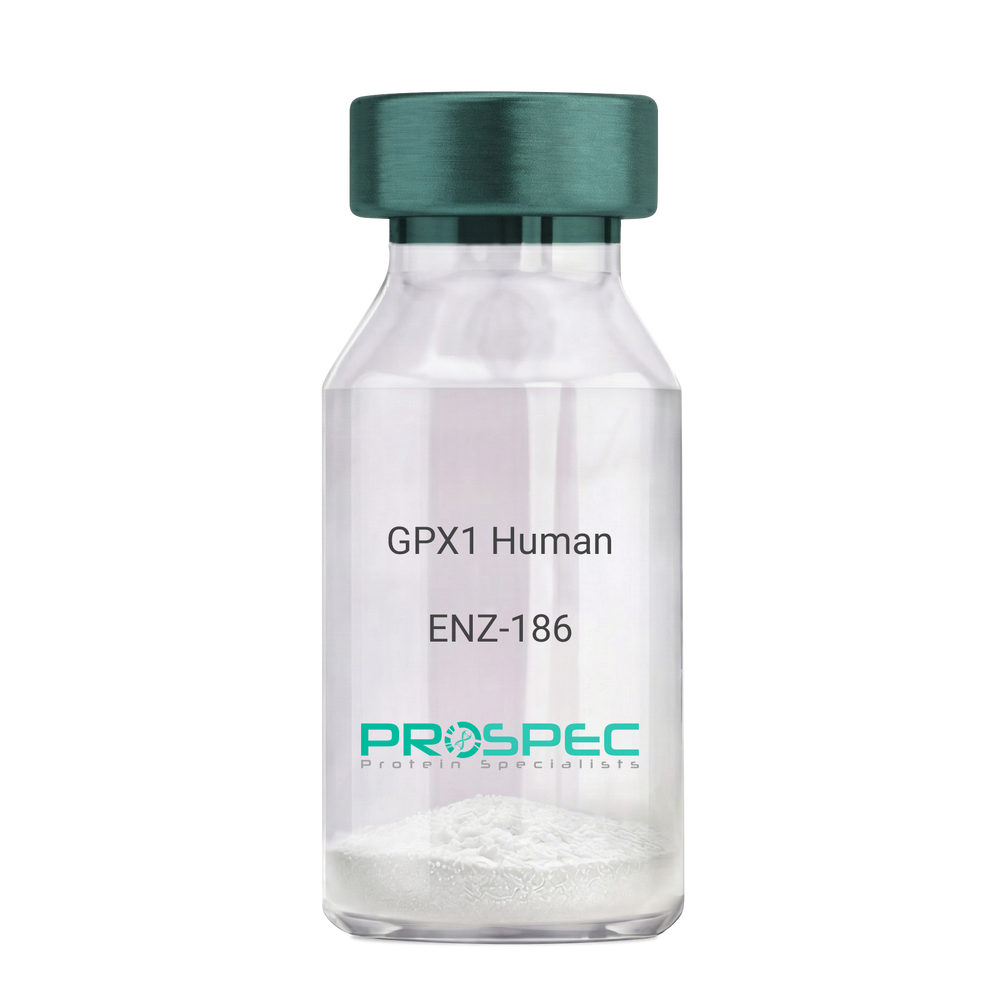
    Name :

    GPX1 Human

    Description:

    Glutathione Peroxidase 1 Human Recombinant

    Glutathione peroxidase 1, GPx-1, GSHPx-1, Cellular glutathione peroxidase, GPX1, GPXD, GSHPX1.

    Product # :

    ENZ-186

    Price :

    Quantity :

    Shipping Method :

    Ice Icon

    Shipped with Ice Packs

    Add To Cart

    More Info

    • description
    • source
    • formulation
    • purity
    • More Info
    • Citations

    Description

    GPX1 Human Recombinant produced in E.coli is a single, non-glycosylated polypeptide chain containing 223 amino acids (1-203) and having a molecular mass of 24.2kDa.GPX1 is fused to a 20 amino acid His-tag at N-terminus & purified by proprietary chromatographic techniques.

    Source

    Escherichia Coli.

    Formulation

    The GPX1 solution (0.5mg/ml) contains 20mM Tris-HCl buffer (pH 8.0), 2mM DTT, 30% glycerol and 100mM NaCl.

    Purity

    Greater than 90% as determined by SDS-PAGE.

    Citations

    More Info

    • Introduction

      Glutathione peroxidase 1 (GPX1) is a member of the glutathione peroxidase family, consisting of 8 identified glutathione peroxidases (Gpx1-8) in humans. Glutathione peroxidase serves in the detoxification of hydrogen peroxide, and is one of the most vital antioxidant enzymes in humans. The GPX1 is a component of the enzymatic antioxidant defense, preventing oxidative damage to DNA, proteins and lipids by detoxifying hydrogen and lipid peroxides which may contribute to prostate cancer development. GPX1 is one of only a small number of proteins known in higher vertebrates to contain selenocysteine, which occurs at the active site of glutathione peroxidase and is coded by the nonsense (stop) codon TGA. Furthermore, the GPX1 protein is characterized in a polyalanine sequence polymorphism in the N-terminal region, which includes 3 alleles with 5, 6 or 7 alanine (ALA) repeats in this sequence. The allele with 5 ALA repeats is significantly linked to breast cancer risk.

    • Synonyms

      Glutathione peroxidase 1, GPx-1, GSHPx-1, Cellular glutathione peroxidase, GPX1, GPXD, GSHPX1.

    • Physical Appearance

      Sterile filtered colorless solution.

    • Stability

      Store at 4°C if entire vial will be used within 2-4 weeks. Store, frozen at -20°C for longer periods of time. For long term storage it is recommended to add a carrier protein (0.1% HSA or BSA).Avoid multiple freeze-thaw cycles.

    • Amino Acid Sequence

      MGSSHHHHHH SSGLVPRGSH MCAARLAAAA AAAQSVYAFS ARPLAGGEPV SLGSLRGKVL LIENVASLCG TTVRDYTQMN ELQRRLGPRG LVVLGFPCNQ FGHQENAKNE EILNSLKYVR PGGGFEPNFM LFEKCEVNGA GAHPLFAFLR EALPAPSDDA TALMTDPKLI TWSPVCRNDV AWNFEKFLVG PDGVPLRRYS RRFQTIDIEP DIEALLSQGP SCA.

    ProSpec's products are furnished for LABORATORY RESEARCH USE ONLY. The product may not be used as drugs, agricultural or pesticidal products, food additives or household chemicals.

    Gpx1 Human
  • View Data Sheet

    Name :

    GSTP1 Mouse

    Description:

    Glutathione S-Transferase pi 1 Mouse Recombinant

    Glutathione S-transferase P 1, Gst P1, GST YF-YF, GST class-pi, GST-piB, Preadipocyte growth factor.

    Product # :

    ENZ-909

    Price :

    Quantity :

    Shipping Method :

    Ice Icon

    Shipped with Ice Packs

    Add To Cart

    More Info

    • description
    • source
    • formulation
    • purity
    • biological activity
    • More Info
    • Citations

    Description

    GSTP1 Mouse Recombinant produced in E.Coli is a single, non-glycosylated polypeptide chain containing 233 amino acids (1-210 a.a) and having a molecular mass of 26kDa. GSTP1 is fused to a 23 amino acid His-tag at N-terminus & purified by proprietary chromatographic techniques.

    Source

    Escherichia Coli.

    Formulation

    GSTP1 protein solution (1mg/ml) containing Phosphate Buffered Saline (pH 7.4) and 10% glycerol.

    Purity

    Greater than 90.0% as determined by SDS-PAGE.

    Biological Activity

    Specific activity is > 40 units/mg, and is defined as the amount of enzyme that conjugate 1.0 umole of 1-chloro-2,4-dinitrobenzene (CDNB) with reduced glutathione per minute at pH 6.5 at 25C.

    Citations

    More Info

    • Introduction

      GSTP1 is a polymorphic gene encoding active, functionally different GSTP1 variant proteins that are believed to function in xenobiotic metabolism and have a part in susceptibility to cancer, and other diseases. GSTP1 is a glutathione S-transferase belonging to the pi class. GST family enzymes play a significant role in detoxification by catalyzing the conjugation of many hydrophobic and electrophilic compounds with reduced glutathione. Based upon the biochemical, immunologic and structural properties of the soluble GSTs they are grouped into 4 main classes: alpha, mu, pi, and theta. The GSTP1 enzyme acts by catalyzing the reaction of glutathione with an acceptor molecule to form a Sulfur-substituted glutathione. The reactions employing glutathione contribute the transformation of a broad range of electrophiles, including reactive products of lipid, protein, carcinogens, therapeutic drugs, environmental toxins, and products of oxidative stress.
      The GSTP1 inactivation through CpG hypermethylation is frequent in pituitary adenomas and may be a factor in aggressive pituitary tumor behavior. GSTP1 is may be a transcriptional target of the p53 tumor suppressor gene. Single-nucleotide polymorphism in GSTP1 is linked to modified protein binding, which influence GSTP1's contribution to carcinogen and drug metabolism, and possibly disease pathogenesis and/or drug response. GST-pi might have central roles in proliferation of androgen-independent human prostate cancer cells.

    • Synonyms

      Glutathione S-transferase P 1, Gst P1, GST YF-YF, GST class-pi, GST-piB, Preadipocyte growth factor.

    • Physical Appearance

      Sterile Filtered colorless solution.

    • Stability

      Store at 4°C if entire vial will be used within 2-4 weeks. Store, frozen at -20°C for longer periods of time. For long term storage it is recommended to add a carrier protein (0.1% HSA or BSA).Avoid multiple freeze-thaw cycles.

    • Amino Acid Sequence

      MGSSHHHHHH SSGLVPRGSH MGSMPPYTIV YFPVRGRCEA MRMLLADQGQ SWKEEVVTID TWMQGLLKPT CLYGQLPKFE DGDLTLYQSN AILRHLGRSL GLYGKNQREA AQMDMVNDGV EDLRGKYVTL IYTNYENGKN DYVKALPGHL KPFETLLSQN QGGKAFIVGD QISFADYNLL DLLLIHQVLA PGCLDNFPLL SAYVARLSAR PKIKAFLSSP EHVNRPINGN GKQ.

    ProSpec's products are furnished for LABORATORY RESEARCH USE ONLY. The product may not be used as drugs, agricultural or pesticidal products, food additives or household chemicals.

    Gstp1 Mouse
  • View Data Sheet

    Name :

    XPNPEP1 Human

    Description:

    X-Prolyl Aminopeptidase-1 Human Recombinant

    X-Prolyl Aminopeptidase (Aminopeptidase P) 1, Soluble, XPNPEPL, SAMP, X-Prolyl Aminopeptidase 1, Soluble, Aminoacylproline Aminopeptidase, Cytosolic Aminopeptidase P, Soluble Aminopeptidase P, X-Pro Aminopeptidase 1, EC 3.4.11.9, XPNPEPL1, X-Prolyl Aminopeptidase (Aminopeptidase P)-Like, Aminopeptidase P, Cytosolic, Xaa-Pro Aminopeptidase 1, XPNPEP, APP1, Xaa-Pro aminopeptidase 1.

    Product # :

    ENZ-880

    Price :

    Quantity :

    Shipping Method :

    Ice Icon

    Shipped with Ice Packs

    Add To Cart

    More Info

    • description
    • source
    • formulation
    • purity
    • More Info
    • Citations

    Description

    XPNPEP1 Human Recombinant produced in E.Coli is a single, non-glycosylated polypeptide chain containing 655 amino acids (1-623 a.a) and having a molecular mass of 73.4kDa. XPNPEP1 is fused to a 32 amino acid His-tag at N-terminus & purified by proprietary chromatographic techniques.

    Source

    Escherichia Coli.

    Formulation

    XPNPEP1 protein solution (1mg/ml) containing Phosphate buffered saline (pH7.4) and 20% glycerol.

    Purity

    Greater than 85.0% as determined by SDS-PAGE.

    Citations

    More Info

    • Introduction

      X-Prolyl Aminopeptidase-1, also known as XPNPEP1 is a member of the peptidase M24B family. XPNPEP1 encodes the cytosolic form of a metalloaminopeptidase which catalyzes the cleavage of the N-terminal amino acid adjacent to a proline residue. Furthermore, XPNPEP1 plays a role in degradation as well as maturation of tachykinins, neuropeptides and peptide hormones.

    • Synonyms

      X-Prolyl Aminopeptidase (Aminopeptidase P) 1, Soluble, XPNPEPL, SAMP, X-Prolyl Aminopeptidase 1, Soluble, Aminoacylproline Aminopeptidase, Cytosolic Aminopeptidase P, Soluble Aminopeptidase P, X-Pro Aminopeptidase 1, EC 3.4.11.9, XPNPEPL1, X-Prolyl Aminopeptidase (Aminopeptidase P)-Like, Aminopeptidase P, Cytosolic, Xaa-Pro Aminopeptidase 1, XPNPEP, APP1, Xaa-Pro aminopeptidase 1.

    • Physical Appearance

      Sterile filtered colorless solution.

    • Stability

      Store at 4°C if entire vial will be used within 2-4 weeks. Store, frozen at -20°C for longer periods of time. For long term storage it is recommended to add a carrier protein (0.1% HSA or BSA).Avoid multiple freeze-thaw cycles.

    • Amino Acid Sequence

      MGSSHHHHHH SSGLVPRGSH MGSEFELRRQ ASMPPKVTSE LLRQLRQAMR NSEYVTEPIQ AYIIPSGDAH QSEYIAPCDC RRAFVSGFDG SAGTAIITEE HAAMWTDGRY FLQAAKQMDS NWTLMKMGLK DTPTQEDWLV SVLPEGSRVG VDPLIIPTDY WKKMAKVLRS AGHHLIPVKE NLVDKIWTDR PERPCKPLLT LGLDYTGISW KDKVADLRLK MAERNVMWFV VTALDEIAWL FNLRGSDVEH NPVFFSYAII GLETIMLFID GDRIDAPSVK EHLLLDLGLE AEYRIQVHPY KSILSELKAL CADLSPREKV WVSDKASYAV SETIPKDHRC CMPYTPICIA KAVKNSAESE GMRRAHIKDA VALCELFNWL EKEVPKGGVT EISAADKAEE FRRQQADFVD LSFPTISSTG PNGAIIHYAP VPETNRTLSL DEVYLIDSGA QYKDGTTDVT RTMHFGTPTA YEKECFTYVL KGHIAVSAAV FPTGTKGHLL DSFARSALWD SGLDYLHGTG HGVGSFLNVH EGPCGISYKT FSDEPLEAGM IVTDEPGYYE DGAFGIRIEN VVLVVPVKTK YNFNNRGSLT FEPLTLVPIQ TKMIDVDSLT DKECDWLNNY HLTCRDVIGK ELQKQGRQEA LEWLIRETQP ISKQH.

    ProSpec's products are furnished for LABORATORY RESEARCH USE ONLY. The product may not be used as drugs, agricultural or pesticidal products, food additives or household chemicals.

    Xpnpep1 Human
  • 1
  • …
  • 22
  • 23
  • 24
  • 25
  • 26
  • …
  • 42
Your browser does not support the video tag.

Products

  • Cytokines
  • Growth Factors
  • Chemokines
  • CD Antigens
  • Neurotrophins
  • Hormones
  • Enzymes
  • Viral Antigens
  • Recombinant Proteins
  • Natural Proteins
  • Monoclonal Antibodies
  • Polyclonal Antibodies
  • Thermal Packaging

About

  • Company
  • Founder
  • Contribution
  • Contact Us
  • My Account

Ordering

  • Ordering Method
  • Ordering - Credit Card
  • Ordering PO
  • Shipping Fees
  • FAQ's

Legal

  • Terms & Conditions
  • Privacy
  • Site Map
  • info@prospecbio.com
  • Facebook
  • Instagram
  • Linkedin Profile

© 2026 ProSpec-Tany TechnoGene Ltd. All Rights Reserved.

  • Choosing a selection results in a full page refresh.
  • Opens in a new window.