Skip to content

High-quality research proteins.

  • 1-800-805-6531

  • Mon - Sat 8.00-18.00, Sun - Closed

  • info@prospecbio.com

  • PO Box 6591 East Brunswick NJ 08816

  • Products
    • Cytokines
    • Growth factors
    • Chemokines
    • Cd antigens
    • Neurotrophins
    • Hormones
    • Enzymes
    • Viral antigens
    • Recombinant proteins
    • Natural proteins
    • Monoclonal antibodies
    • Polyclonal antibodies
    • Thermal Packaging
  • About
    • Company
    • Founder
    • Contribution
  • Customers
    • Eastern Asia
    • Eastern Europe
    • North America
    • South America
    • South East Asia
    • Southern Asia
    • Western Europe
  • Ordering
    • Ordering Method
    • Ordering - Credit Card
    • Ordering - PO
    • Shipping Fees
    • FAQs
  • Services
    • DNA Cloning
    • Protein Expression
    • Monoclonal Antibody
    • Fermentation
    • Technology License
  • Contact us
Log in

Country/region

  • USD $ | Albania
  • USD $ | Andorra
  • USD $ | Argentina
  • USD $ | Armenia
  • USD $ | Australia
  • USD $ | Austria
  • USD $ | Azerbaijan
  • USD $ | Belarus
  • USD $ | Belgium
  • USD $ | Bolivia
  • USD $ | Brazil
  • USD $ | Bulgaria
  • USD $ | Cambodia
  • USD $ | Canada
  • USD $ | Chile
  • USD $ | China
  • USD $ | Colombia
  • USD $ | Costa Rica
  • USD $ | Croatia
  • USD $ | Cyprus
  • USD $ | Czechia
  • USD $ | Denmark
  • USD $ | Estonia
  • USD $ | Finland
  • USD $ | France
  • USD $ | Georgia
  • USD $ | Germany
  • USD $ | Greece
  • USD $ | Hong Kong SAR
  • USD $ | Hungary
  • USD $ | Iceland
  • USD $ | India
  • USD $ | Ireland
  • USD $ | Israel
  • USD $ | Italy
  • USD $ | Japan
  • USD $ | Kazakhstan
  • USD $ | Latvia
  • USD $ | Liechtenstein
  • USD $ | Lithuania
  • USD $ | Madagascar
  • USD $ | Malta
  • USD $ | Mexico
  • USD $ | Moldova
  • USD $ | Monaco
  • USD $ | Netherlands
  • USD $ | New Zealand
  • USD $ | North Macedonia
  • USD $ | Norway
  • USD $ | Panama
  • USD $ | Paraguay
  • USD $ | Peru
  • USD $ | Philippines
  • USD $ | Poland
  • USD $ | Portugal
  • USD $ | Romania
  • USD $ | Singapore
  • USD $ | Slovakia
  • USD $ | Slovenia
  • USD $ | South Africa
  • USD $ | South Korea
  • USD $ | Spain
  • USD $ | Sri Lanka
  • USD $ | Sweden
  • USD $ | Switzerland
  • USD $ | Taiwan
  • USD $ | Thailand
  • USD $ | Türkiye
  • USD $ | Ukraine
  • USD $ | United Kingdom
  • USD $ | United States
  • USD $ | Uruguay
  • USD $ | Vatican City
  • USD $ | Venezuela
  • USD $ | Vietnam
  • Facebook
  • Instagram
logoProSpec - Recombinant Protein Manufacturer for academic and R&D industry
Become a distributor
Account Log in
Wishlist
Cart Cart(0)
  • Products
    +
    • Cytokines
    • Growth factors
    • Chemokines
    • Cd antigens
    • Neurotrophins
    • Hormones
    • Enzymes
    • Viral antigens
    • Recombinant proteins
    • Natural proteins
    • Monoclonal antibodies
    • Polyclonal antibodies
    • Thermal Packaging
  • About
    +
    • Company
    • Founder
    • Contribution
  • Customers
    +
    • Eastern Asia
    • Eastern Europe
    • North America
    • South America
    • South East Asia
    • Southern Asia
    • Western Europe
  • Ordering
    +
    • Ordering Method
    • Ordering - Credit Card
    • Ordering - PO
    • Shipping Fees
    • FAQs
  • Services
    +
    • DNA Cloning
    • Protein Expression
    • Monoclonal Antibody
    • Fermentation
    • Technology License
  • Contact us

Item added to your cart

View cart
View All
  • Cytokines
  • Growth factors
  • Chemokines
  • Cd antigens
  • Neurotrophins
  • Hormones
  • Enzymes
  • Viral antigens
  • Recombinant proteins
  • Natural proteins
  • Monoclonal antibodies
  • Polyclonal antibodies
  • Thermal Packaging
  • Tumor Necrosis Factor

    Tumor Necrosis Factor

    View All
  • 4-1BB

    4-1BB

    View All
  • Adiponectin

    Adiponectin

    View All
  • AIF1

    AIF1

    View All
  • Other Cytokines

    Other Cytokines

    View All
  • AITRL

    AITRL

    View All
  • Angiopoietin

    Angiopoietin

    View All
  • Apolipoprotein

    Apolipoprotein

    View All
  • B-Cell Activating Factor

    B-Cell Activating Factor

    View All
  • Beta Defensin

    Beta Defensin

    View All
  • Bone Morphogenetic Protein

    Bone Morphogenetic Protein

    View All
  • B type Natriuretic Peptide

    B type Natriuretic Peptide

    View All
  • BST

    BST

    View All
  • Betacellulin

    Betacellulin

    View All
  • Cardiotrophin

    Cardiotrophin

    View All
  • Activin

    Activin

    View All
  • Fibroblast Growth Factor

    Fibroblast Growth Factor

    View All
  • Other Growth Factors

    Other Growth Factors

    View All
  • CSF

    CSF

    View All
  • CTGF

    CTGF

    View All
  • IGFBP

    IGFBP

    View All
  • VEGF Protein

    VEGF Protein

    View All
  • EGF

    EGF

    View All
  • Epigen

    Epigen

    View All
  • Erythropoietin

    Erythropoietin

    View All
  • Insulin-Like Growth Factor

    Insulin-Like Growth Factor

    View All
  • Growth Hormone

    Growth Hormone

    View All
  • HDGF

    HDGF

    View All
  • Hepatocyte Growth Factor

    Hepatocyte Growth Factor

    View All
  • Insulin

    Insulin

    View All
  • BCA-1/ BLC (CXCL13)

    BCA-1/ BLC (CXCL13)

    View All
  • BRAK (CXCL14)

    BRAK (CXCL14)

    View All
  • C-10 (CCL6)

    C-10 (CCL6)

    View All
  • Other Chemokines

    Other Chemokines

    View All
  • MEC (CCL28)

    MEC (CCL28)

    View All
  • LD78-beta (CCL3L1)

    LD78-beta (CCL3L1)

    View All
  • CTACK (CCL27)

    CTACK (CCL27)

    View All
  • CXCL16

    CXCL16

    View All
  • CXCL17

    CXCL17

    View All
  • Platelet Factor-4 (CXCL4)

    Platelet Factor-4 (CXCL4)

    View All
  • ENA-78 (CXCL5)

    ENA-78 (CXCL5)

    View All
  • Eotaxin (CCL11,24,26)

    Eotaxin (CCL11,24,26)

    View All
  • Exodus-2 (CCL21)

    Exodus-2 (CCL21)

    View All
  • Fractalkine (CX3CL1)

    Fractalkine (CX3CL1)

    View All
  • CXCL6

    CXCL6

    View All
  • Other CD Antigens

    Other CD Antigens

    View All
  • CD14

    CD14

    View All
  • CD164

    CD164

    View All
  • CD1

    CD1

    View All
  • CD2

    CD2

    View All
  • CD200

    CD200

    View All
  • CD207

    CD207

    View All
  • CD226

    CD226

    View All
  • CD23

    CD23

    View All
  • CD244

    CD244

    View All
  • CD247

    CD247

    View All
  • CD27

    CD27

    View All
  • CD274

    CD274

    View All
  • CD300

    CD300

    View All
  • CD33

    CD33

    View All
  • Other Neurotrophins

    Other Neurotrophins

    View All
  • Beta-NGF

    Beta-NGF

    View All
  • BDNF

    BDNF

    View All
  • CDNF

    CDNF

    View All
  • CNTF

    CNTF

    View All
  • GDNF

    GDNF

    View All
  • Glia Maturation Factor

    Glia Maturation Factor

    View All
  • MANF

    MANF

    View All
  • Midkine

    Midkine

    View All
  • Neuroglobin

    Neuroglobin

    View All
  • Neurotrophic factors

    Neurotrophic factors

    View All
  • Neuregulin

    Neuregulin

    View All
  • Neuropilin

    Neuropilin

    View All
  • Pigment Epithelium-Derived Factor

    Pigment Epithelium-Derived Factor

    View All
  • Pleiotrophin

    Pleiotrophin

    View All
  • Peptide Hormones

    Peptide Hormones

    View All
  • Other Hormones

    Other Hormones

    View All
  • HCG

    HCG

    View All
  • Endothelin

    Endothelin

    View All
  • Exendin

    Exendin

    View All
  • FSH

    FSH

    View All
  • Glucagon

    Glucagon

    View All
  • GHRP

    GHRP

    View All
  • GLP

    GLP

    View All
  • Thyrostimulin

    Thyrostimulin

    View All
  • Inhibin A

    Inhibin A

    View All
  • LHRH

    LHRH

    View All
  • Melanotan

    Melanotan

    View All
  • Procalcitonin

    Procalcitonin

    View All
  • PTH

    PTH

    View All
  • Peroxiredoxin

    Peroxiredoxin

    View All
  • Peptidase

    Peptidase

    View All
  • Synthetase

    Synthetase

    View All
  • Transferase

    Transferase

    View All
  • Hydrolase

    Hydrolase

    View All
  • Dehydrogenase

    Dehydrogenase

    View All
  • ACE2

    ACE2

    View All
  • Esterase

    Esterase

    View All
  • Protein Kinases

    Protein Kinases

    View All
  • Other Enzymes

    Other Enzymes

    View All
  • Phosphatase

    Phosphatase

    View All
  • Deaminase

    Deaminase

    View All
  • Oxygenase

    Oxygenase

    View All
  • Adenylate Kinase

    Adenylate Kinase

    View All
  • Lyase

    Lyase

    View All
  • Chagas

    Chagas

    View All
  • SARS

    SARS

    View All
  • Influenza

    Influenza

    View All
  • ASFV

    ASFV

    View All
  • Astrovirus

    Astrovirus

    View All
  • Borrelia

    Borrelia

    View All
  • Helicobacter Pylori

    Helicobacter Pylori

    View All
  • Chikungunya

    Chikungunya

    View All
  • Chlamydia

    Chlamydia

    View All
  • Cytomegalo

    Cytomegalo

    View All
  • Dengue

    Dengue

    View All
  • EBV

    EBV

    View All
  • Ebola

    Ebola

    View All
  • Feline Leukemia Virus

    Feline Leukemia Virus

    View All
  • Hepatitis A

    Hepatitis A

    View All
  • Other

    Other

    View All
  • Actin

    Actin

    View All
  • ADAM

    ADAM

    View All
  • Complement Component

    Complement Component

    View All
  • Ag85

    Ag85

    View All
  • Eukaryotic Translation Initiation Factor

    Eukaryotic Translation Initiation Factor

    View All
  • Anterior Gradient Protein

    Anterior Gradient Protein

    View All
  • Heat Shock Protein

    Heat Shock Protein

    View All
  • Alpha-2-HS-Glycoprotein

    Alpha-2-HS-Glycoprotein

    View All
  • Hemoglobin

    Hemoglobin

    View All
  • Allergy

    Allergy

    View All
  • Anaplasma

    Anaplasma

    View All
  • Angiogenin

    Angiogenin

    View All
  • Ankyrin Repeat Domain

    Ankyrin Repeat Domain

    View All
  • Annexin

    Annexin

    View All
  • Other Natural Proteins

    Other Natural Proteins

    View All
  • Aprotinin

    Aprotinin

    View All
  • Transferrin

    Transferrin

    View All
  • Avidin

    Avidin

    View All
  • Anti Coagulation Factors

    Anti Coagulation Factors

    View All
  • Natural Albumin

    Natural Albumin

    View All
  • Natural Coagulation Factors

    Natural Coagulation Factors

    View All
  • Fibronectin

    Fibronectin

    View All
  • Thrombin

    Thrombin

    View All
  • Anti Human Enzyme

    Anti Human Enzyme

    View All
  • Other Monoclonal Antibodies

    Other Monoclonal Antibodies

    View All
  • Anti Human Cytokine

    Anti Human Cytokine

    View All
  • Anti Human Heat Shock Protein

    Anti Human Heat Shock Protein

    View All
  • Anti Mouse Lymphocyte

    Anti Mouse Lymphocyte

    View All
  • Anti Human Chemokine

    Anti Human Chemokine

    View All
  • Anti Human Lymphocyte

    Anti Human Lymphocyte

    View All
  • Anti Viral Monoclonal

    Anti Viral Monoclonal

    View All
  • Anti Mouse Cytokine

    Anti Mouse Cytokine

    View All
  • Anti-GST Monoclonal

    Anti-GST Monoclonal

    View All
  • Other Polyclonal Antibodies

    Other Polyclonal Antibodies

    View All
  • Anti Viral

    Anti Viral

    View All
  • Anti-GST Monoclonal

    Anti-GST Monoclonal

    View All
Back

Search results

1000 results found for “Thrombin”

Name

Description

Product #

Price

Quantity

Shipping Method

  • View Data Sheet

    Name :

    Glucagon-Like Peptide1

    Description:

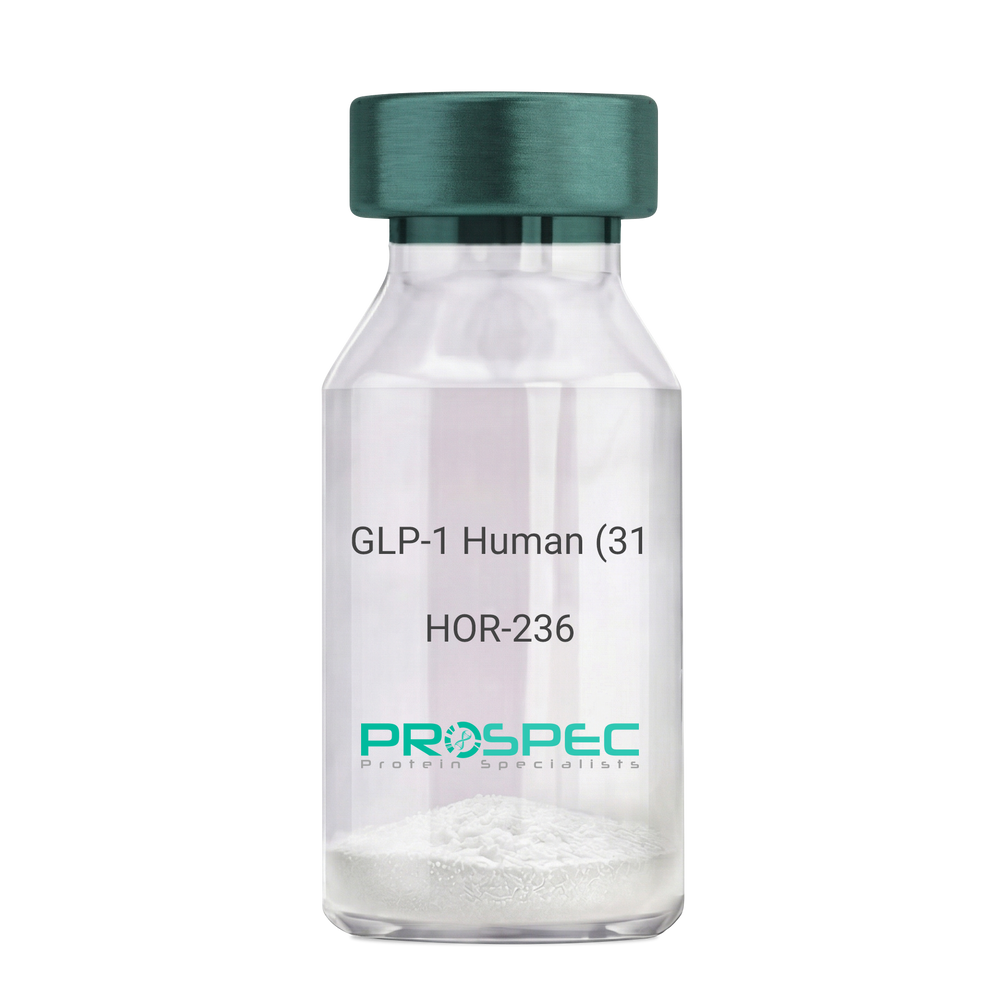
    Glucagon Like Peptide-1 (31 a.a.) Human Recombinant

    GLP1, GLP2, GRPP.

    Product # :

    HOR-236

    Price :

    Quantity :

    Shipping Method :

    Room Temp Icon

    Shipped at Room temp

    Add To Cart

    More Info

    • description
    • source
    • formulation
    • purity
    • More Info
    • HPLC, MS
    • Citations

    Description

    Glucagon Like Peptide-1 Human Recombinant produced in E.Coli is a single, non-glycosylated, polypeptide chain containing 31 amino acids and having a molecular mass of 3.3 kDa. The GLP-1 is purified by proprietary chromatographic techniques.

    Source

    Escherichia Coli.

    Formulation

    The Recombinant GLP-1 concentrated solution (1mg/ml) was lyophilized after extensive dialyses against 0.1mg sodium phosphate monobasic & 1.6mg sodium phosphate dibasic.

    Purity

    Greater than 98.0% as determined by:
    (a) Analysis by RP-HPLC.
    (b) Analysis by SDS-PAGE.

    HPLC, MS

    Glucagon-Like Peptide1 hplc - Product image 1
    Glucagon-Like Peptide1 Mass Spec - Product image 2

    Citations

    More Info

    • Introduction

      Glucagon-like peptide-1 (GLP-1) is derived from the transcription product of the proglucagon gene. The major source of GLP-1 in the body is the intestinal L cell that secretes GLP-1 as a guthormone. The biologically active forms of GLP-1 are: GLP-1-(7-37) and GLP-1-(7-36)NH2.
      GLP-1 secretion by L cells is dependent on the presence of nutrients in the lumen of the small intestine. The secretagogues (agents that causes or stimulates secretion) of this hormone include major nutrients like carbohydrate, proteinand lipid. Once in the circulation, GLP-1 has a half life of less than 2 minutes, due to rapid degradation by the enzyme dipeptidyl peptidase-4.
      GLP-1 possesses several physiological properties that make it a subject of intensive investigation as a potential treatment of diabetes mellitus. The known physiological functions of GLP-1 include: Increases insulin secretion from the pancreas in a glucose-dependent manner, decreases glucagon secretion from the pancreas, increases beta cells mass and insulin gene expression, inhibits acid secretion and gastric emptying in the stomach, decreases food intake by increasing satiety.

    • Synonyms

      GLP1, GLP2, GRPP.

    • Physical Appearance

      Sterile Filtered White lyophilized (freeze-dried) powder.

    • Stability

      Lyophilized Glucagon Like Peptide-1 although stable at room temperature for 3 weeks, should be stored desiccated below -18°C. Upon reconstitution GLP-1 should be stored at 4°C between 2-7 days and for future use below -18°C. For long term storage it is recommended to add a carrier protein (0.1% HSA or BSA).Please prevent freeze-thaw cycles.

    • Solubility

      It is recommended to reconstitute the lyophilized Glucagon Like Peptide-1 in sterile 18MΩ-cm H2O not less than 100µg/ml, which can then be further diluted to other aqueous solutions.

    • Amino Acid Sequence

      HAEGTFTSDV SSYLEGQAAK EFIAWLVKGR G.

    • Background

      What is the molecular weight/Mw of GLUCAGON-LIKE PEPTIDE1 Protein?
      GLUCAGON-LIKE PEPTIDE1 Protein has a total Mw of 3.3kDa.

      What is the source or expression system of GLUCAGON-LIKE PEPTIDE1 Protein?
      Escherichia Coli.

      What is the Purity of GLUCAGON-LIKE PEPTIDE1 Protein?
      GLUCAGON-LIKE PEPTIDE1 Protein is >98% pure as determined by SDS-PAGE.

      What is the Biological Activity of GLUCAGON-LIKE PEPTIDE1 Protein?
      The biological functionality of GLUCAGON-LIKE PEPTIDE1 Protein will be determined in the future.

      What is the amino acid sequence of GLUCAGON-LIKE PEPTIDE1 Protein?
      HAEGTFTSDV SSYLEGQAAK EFIAWLVKGR G.

      What applications can GLUCAGON-LIKE PEPTIDE1 Protein be used in?
      GLUCAGON-LIKE PEPTIDE1 Protein can probably be used in western blot, ELISA and Lateral Flow.

      What is the endotoxin level for GLUCAGON-LIKE PEPTIDE1 Protein?
      The endotoxin level is minimal, GLUCAGON-LIKE PEPTIDE1 Protein was purified using conventional chromatography techniques.

      Who supplies recombinant GLUCAGON-LIKE PEPTIDE1 that is in stock and available to order?
      ProSpec has the protein in stock and available for immediate delivery.

      Where can I order bulk mg quantities of GLUCAGON-LIKE PEPTIDE1?
      ProSpec supplies bulk mg quantities at affordable prices that meets research and academic budgets.

    ProSpec's products are furnished for LABORATORY RESEARCH USE ONLY. The product may not be used as drugs, agricultural or pesticidal products, food additives or household chemicals.

    Glucagon Like Peptide 1 Human
  • View Data Sheet

    Name :

    ARPC5 Human

    Description:

    Actin Related Protein 2/3 Complex, Subunit 5 Human Recombinant

    Actin-related protein 2/3 complex subunit 5, Arp2/3 complex 16 kDa subunit, p16-ARC, ARPC5, ARC16, MGC88523, dJ127C7.3.

    Product # :

    PRO-145

    Price :

    Quantity :

    Shipping Method :

    Ice Icon

    Shipped with Ice Packs

    Add To Cart

    More Info

    • description
    • source
    • formulation
    • purity
    • More Info
    • Citations

    Description

    ARPC5 Human Recombinant fused with a 20 amino acid His tag at N-terminus produced in E.Coli is a single, non-glycosylated, polypeptide chain containing 171 amino acids (1-151 a.a.) and having a molecular mass of 18.4kDa. The ARPC5 is purified by proprietary chromatographic techniques.

    Source

    Escherichia Coli.

    Formulation

    The ARPC5 solution (0.5mg/ml) contains 20mM Tris-HCl buffer (pH 8.0), 1mM DTT, 50% glycerol and 0.1M NaCl.

    Purity

    Greater than 90.0% as determined by SDS-PAGE.

    Citations

    More Info

    • Introduction

      ARPC5 is a 151 amino acid subunit of the Arp2/3 complex. ARPC5 is believed to have a role in maintaining the integrity of Arp2/3. ARPC5 is a substrate for MAPKAPK-2 which, via phosphorylation of ARPC5, may participate in Arp2/3 regulatory functions and remodeling of the Actin cytoskeleton.

    • Synonyms

      Actin-related protein 2/3 complex subunit 5, Arp2/3 complex 16 kDa subunit, p16-ARC, ARPC5, ARC16, MGC88523, dJ127C7.3.

    • Physical Appearance

      Sterile Filtered colorless solution.

    • Stability

      Store at 4°C if entire vial will be used within 2-4 weeks. Store, frozen at -20°C for longer periods of time. For long term storage it is recommended to add a carrier protein (0.1% HSA or BSA).Avoid multiple freeze-thaw cycles.

    • Amino Acid Sequence

      MGSSHHHHHH SSGLVPRGSH MSKNTVSSAR FRKVDVDEYD ENKFVDEEDG GDGQAGPDEG EVDSCLRQGN MTAALQAALK NPPINTKSQA VKDRAGSIVL KVLISFKAND IEKAVQSLDK NGVDLLMKYI YKGFESPSDN SSAMLLQWHE KALAAGGVGS IVRVLTARKT V.

    ProSpec's products are furnished for LABORATORY RESEARCH USE ONLY. The product may not be used as drugs, agricultural or pesticidal products, food additives or household chemicals.

    Arpc5 Human
  • View Data Sheet

    Name :

    CTSF Human

    Description:

    Cathepsin-F Human Recombinant

    800x600 CATSF, CLN13, Cathepsin F, EC=3.4.22.41. Normal 0 false false false EN-US X-NONE HE MicrosoftInternetExplorer4 /* Style Definitions */ table.MsoNormalTable {mso-style-name:"Table Normal"; mso-tstyle-rowband-size:0; mso-tstyle-colband-size:0; mso-style-noshow:yes; mso-style-priority:99; mso-style-parent:""; mso-padding-alt:0cm 5.4pt 0cm 5.4pt; mso-para-margin:0cm; mso-para-margin-bottom:.0001pt; mso-pagination:widow-orphan; font-size:10.0pt; font-family:"Calibri","sans-serif";}

    Product # :

    ENZ-738

    Price :

    Quantity :

    Shipping Method :

    Ice Icon

    Shipped with Ice Packs

    Add To Cart

    More Info

    • description
    • source
    • formulation
    • purity
    • More Info
    • Citations

    Description

    800x600 CTSF Human Recombinant produced in E.coli is a single, non-glycosylated polypeptide chain containing 237 amino acids (271-484) and having a molecular mass of 26kDa.CTSF is fused to a 23 amino acid His-tag at N-terminus & purified by proprietary chromatographic techniques.

    Source

    Escherichia Coli.

    Formulation

    The CTSF solution (1mg/ml) contains 20mM Tris-HCl buffer (pH 8.0), 0.4M Urea and 10% glycerol.

    Purity

    Greater than 90.0% as determined by SDS-PAGE.

    Citations

    More Info

    • Introduction

      Cathepsin F ( CTSF) is a member of the peptidase C1 family. Cathepsins are papain familycysteine proteinases which are a main component of the lysosomal proteolytic system. The CTSF gene isubiquitously expressed, and it maps to chromosome 11q13, close to the gene encoding cathepsin W. CTSF plays a role in normal protein catabolism. CTSF involved in some degradative processes occurring in tumor progression since it is highly expressed in some cancer cell lines.

    • Synonyms

      CATSF, CLN13, Cathepsin F, EC=3.4.22.41.

    • Physical Appearance

      Sterile Filtered colorless solution.

    • Stability

      Store at 4°C if entire vial will be used within 2-4 weeks. Store, frozen at -20°C for longer periods of time. For long term storage it is recommended to add a carrier protein (0.1% HSA or BSA).Avoid multiple freeze-thaw cycles.

    • Amino Acid Sequence

      MGSSHHHHHH SSGLVPRGSH MGSAPPEWDW RSKGAVTKVK DQGMCGSCWA FSVTGNVEGQ WFLNQGTLLS LSEQELLDCD KMDKACMGGL PSNAYSAIKN LGGLETEDDY SYQGHMQSCN FSAEKAKVYI NDSVELSQNE QKLAAWLAKR GPISVAINAF GMQFYRHGIS RPLRPLCSPW LIDHAVLLVG YGNRSDVPFW AIKNSWGTDW GEKGYYYLHR GSGACGVNTM ASSAVVD.

    ProSpec's products are furnished for LABORATORY RESEARCH USE ONLY. The product may not be used as drugs, agricultural or pesticidal products, food additives or household chemicals.

    Ctsf Human
  • View Data Sheet

    Name :

    CXCL12 Human gamma

    Description:

    Stromal Cell-Derived Factor-1 gamma Human Recombinant (CXCL12)

    Stromal cell-derived factor 1, SDF-1, hSDF-1, C-X-C motif chemokine 12, Intercrine reduced in hepatomas, IRH, hIRH, Pre-B cell growth-stimulating factor, PBSF, CXCL12, SDF1, hSDF-1gamma, SDF-1g, TLSF, TPAR1, SCYB12.

    Product # :

    CHM-020

    Price :

    Quantity :

    Shipping Method :

    Room Temp Icon

    Shipped at Room temp

    Add To Cart

    More Info

    • description
    • source
    • formulation
    • purity
    • biological activity
    • More Info
    • Citations

    Description

    SDF-1 gamma Human Recombinant produced in E.coli is a single, non-glycosylated polypeptide chain containing 99 amino acids and having a molecular mass of 11.6kDa.The SDF-1g is purified by proprietary chromatographic techniques.

    Source

    Escherichia Coli.

    Formulation

    SDF-1g protein was lyophilized from a 0.2µm filtered concentrated solution in PBS, pH 7.4.

    Purity

    Greater than 96.0% as determined by:
    (a) Analysis by RP-HPLC.
    (b) Analysis by SDS-PAGE.

    Biological Activity

    The biological activity determined by a chemotaxis bioassay using PHA and rHuIL-2 activated human peripheral blood T-lymphocytes is in a concentration range of 30-100 ng/ml.

    Citations

    More Info

    • Introduction

      SDF-1 (stromal cell-derived factor-1) is small cytokine belonging to the chemokine family that is officially designated Chemokine (C-X-C motif) ligand 12 (CXCL12). It is produced in two forms, SDF-1a/CXCL12a and SDF-1b/CXCL12b, by alternate splicing of the same gene. Chemokines are characterized by the presence of four conserved cysteines, which form two disulfide bonds. The CXCL12 proteins belong to the group of CXC chemokines, whose initial pair of cysteines are separated by one intervening amino acid. CXCL12 is strongly chemotactic for lymphocytes and has been implicated as an important cell co-ordinator during development. During embryogenesis it directs the migration of hematopoietic cells from foetal liver to bone marrow. Mice which were knocked-out for CXCL12 gene were lethal before the birth or within just 1 hour of life. As another role, CXCL12a alters also the electrophysiology of neurons. CXCL12 was shown to be expressend in many tissues in mice (including brain, thymus, heart, lung, liver, kidney, spleen and bone marrow).
      The receptor for this chemokine is CXCR4, which was previously called fusin. This CXCL12-CXCR4 interaction used to be considered exclusive (unlike for other chemokines and their receptors), but recently it was suggested that CXCL12 is also bound by CXCR7 receptor.
      The gene for CXCL12 is located on human chromosome 10. In human and mouse both CXCL12 and CXCR4 show high identity of sequence: 99% and 90%, respectively.

    • Synonyms

      Stromal cell-derived factor 1, SDF-1, hSDF-1, C-X-C motif chemokine 12, Intercrine reduced in hepatomas, IRH, hIRH, Pre-B cell growth-stimulating factor, PBSF, CXCL12, SDF1, hSDF-1gamma, SDF-1g, TLSF, TPAR1, SCYB12.

    • Physical Appearance

      Sterile Filtered White lyophilized (freeze-dried) powder.

    • Stability

      Lyophilized SDF-1g although stable at room temperature for 3 weeks, should be stored desiccated below -18°C. Upon reconstitution SDF-1 gamma should be stored at 4°C between 2-7 days and for future use below -18°C. For long term storage it is recommended to add a carrier protein (0.1% HSA or BSA). Please prevent freeze-thaw cycles.

    • Solubility

      It is recommended to reconstitute the lyophilized SDF-1g in sterile 18M-cm H2O not less than 100µg/ml, which can then be further diluted to other aqueous solutions.

    • Amino Acid Sequence

      GKPVSLSYRC PCRFFESHVA RANVKHLKIL NTPNCALQIV ARLKNNNRQV CIDPKLKWIQ EYLEKALNKG RREEKVGKKE KIGKKKRQKK RKAAQKRKN.

    • Background

      What is the molecular weight/Mw of CXCL12 HUMAN GAMMA Protein?
      CXCL12 HUMAN GAMMA Protein has a total Mw of 11.6kDa.

      What is the source or expression system of CXCL12 HUMAN GAMMA Protein?
      Escherichia Coli.

      What is the Purity of CXCL12 HUMAN GAMMA Protein?
      CXCL12 HUMAN GAMMA Protein is > 96% pure as determined by SDS-PAGE.

      What is the Biological Activity of CXCL12 HUMAN GAMMA Protein?
      The biological activity determined by a chemotaxis bioassay using PHA and rHuIL-2 activated human peripheral blood T-lymphocytes is in a concentration range of 30-100 ng/ml.

      What is the amino acid sequence of CXCL12 HUMAN GAMMA Protein?
      GKPVSLSYRC PCRFFESHVA RANVKHLKIL NTPNCALQIV ARLKNNNRQV CIDPKLKWIQ EYLEKALNKG RREEKVGKKE KIGKKKRQKK RKAAQKRKN.

      What applications can CXCL12 HUMAN GAMMA Protein be used in?
      CXCL12 HUMAN GAMMA Protein can probably be used in western blot, ELISA and Lateral Flow.

      What is the endotoxin level for CXCL12 HUMAN GAMMA Protein?
      The endotoxin level is minimal, CXCL12 HUMAN GAMMA Protein was purified using conventional chromatography techniques.

      Who supplies recombinant CXCL12 HUMAN GAMMA that is in stock and available to order?
      ProSpec has the protein in stock and available for immediate delivery.

      Where can I order bulk mg quantities of CXCL12 HUMAN GAMMA?
      ProSpec supplies bulk mg quantities at affordable prices that meets research and academic budgets.

    ProSpec's products are furnished for LABORATORY RESEARCH USE ONLY. The product may not be used as drugs, agricultural or pesticidal products, food additives or household chemicals.

    Sdf 1G Human
  • View Data Sheet

    Name :

    MYOZ1 Human

    Description:

    Myozenin 1 Human Recombinant

    CS-2, FATZ, MYOZ, Calsarcin-2, Filamin-, actinin- and telethonin-binding protein,Protein FATZ, MYOZ1.

    Product # :

    PRO-1652

    Price :

    Quantity :

    Shipping Method :

    Ice Icon

    Shipped with Ice Packs

    Add To Cart

    More Info

    • description
    • source
    • formulation
    • purity
    • More Info
    • Citations

    Description

    MYOZ1 Human Recombinant produced in E.Coli is a single, non-glycosylated polypeptide chain containing 322 amino acids (1-299 a.a.) and having a molecular mass of 34.1kDa.MYOZ1 is fused to a 23 amino acid His-tag at N-terminus & purified by proprietary chromatographic techniques.

    Source

    Escherichia Coli.

    Formulation

    MYOZ1 protein solution (1mg/ml) contains 20mM Tris-HCl buffer, (pH 8.0), 0.4M UREA and 10% glycerol.

    Purity

    Greater than 90.0% as determined by SDS-PAGE.

    Citations

    More Info

    • Introduction

      Myozenin 1 (MYOZ1) is a member of the myozenin family. MYOZ1 is mostly expressed in the skeletal muscle. Members of the myozenin family act as calcineurin-interacting proteins which helps tether calcineurin to the sarcomere of cardiac and skeletal muscle. The myozenin family plays a significant role in modulation of calcineurin signaling.

    • Synonyms

      CS-2, FATZ, MYOZ, Calsarcin-2, Filamin-, actinin- and telethonin-binding protein,Protein FATZ, MYOZ1.

    • Physical Appearance

      Sterile Filtered clear solution.

    • Stability

      Store at 4°C if entire vial will be used within 2-4 weeks. Store, frozen at -20°C for longer periods of time. For long term storage it is recommended to add a carrier protein (0.1% HSA or BSA).Avoid multiple freeze-thaw cycles.

    • Amino Acid Sequence

      MGSSHHHHHH SSGLVPRGSH MGSMPLSGTP APNKKRKSSK LIMELTGGGQ ESSGLNLGKK ISVPRDVMLE ELSLLTNRGS KMFKLRQMRV EKFIYENHPD VFSDSSMDHF QKFLPTVGGQ LGTAGQGFSY SKSNGRGGSQ AGGSGSAGQY GSDQQHHLGS GSGAGGTGGP AGQAGRGGAA GTAGVGETGS GDQAGGEGKH ITVFKTYISP WERAMGVDPQ QKMELGIDLL AYGAKAELPK YKSFNRTAMP YGGYEKASKR MTFQMPKFDL GPLLSEPLVL YNQNLSNRPS FNRTPIPWLS SGEPVDYNVD IGIPLDGETE EL.

    ProSpec's products are furnished for LABORATORY RESEARCH USE ONLY. The product may not be used as drugs, agricultural or pesticidal products, food additives or household chemicals.

    Myoz1 Human
  • View Data Sheet

    Name :

    ST6GAL1 Human

    Description:

    ST6 Beta-Galactosamide Alpha-2,6-Sialyltranferase 1 Human Recombinant

    ST6 Beta-Galactosamide Alpha-2,6-Sialyltranferase 1, ST6Gal I, SIAT1, CMP-N-Acetylneuraminate-Beta-Galactosamide-Alpha-2,6-Sialyltransferase 1, B-Cell Antigen CD75, Alpha 2,6-ST 1, EC 2.4.99.1, ST6GalI, CMP-N-Acetylneuraminate Beta-Galactosamide Alpha-2,6-Sialyltransferase, Sialyltransferase 1 (Beta-Galactoside Alpha-2,6-Sialyltransferase), Sialyltransferase 1 (Beta-Galactoside Alpha-2,6-Sialytransferase),Beta-Galactoside Alpha-2,6-Sialyltransferase 1, Sialyltransferase 1, ST6N, ST6GAL1.

    Product # :

    ENZ-893

    Price :

    Quantity :

    Shipping Method :

    Ice Icon

    Shipped with Ice Packs

    Add To Cart

    More Info

    • description
    • source
    • formulation
    • purity
    • More Info
    • Citations

    Description

    ST6GAL1 Human Recombinant produced in E.Coli is a single, non-glycosylated polypeptide chain containing 403 amino acids (27-406 a.a) and having a molecular mass of 46kDa.ST6GAL1 is fused to a 23 amino acid His-tag at N-terminus & purified by proprietary chromatographic techniques.

    Source

    Escherichia Coli.

    Formulation

    ST6GAL1 protein solution (1mg/ml) containing 20mM Tris-HCl (pH 8.0) and 10% glycerol.

    Purity

    Greater than 90.0% as determined by SDS-PAGE.

    Citations

    More Info

    • Introduction

      ST6GAL1 also known as ST6 Beta-Galactosamide Alpha-2,6-Sialyltranferase 1, is part of the glycosyltransferase family 29. ST6GAL1 is a type II membrane protein which catalyzes the transfer of sialic acid from CMP-sialic acid to galactose-containing substrates. Furthermore, ST6GAL1 is normally found in the Golgi however it can be proteolytically processed to a soluble form, ST6GAL1 is also involved in the generation of the cell-surface carbohydrate determinants as well differentiation antigens HB-6, CD75, and CD76.

    • Synonyms

      ST6 Beta-Galactosamide Alpha-2,6-Sialyltranferase 1, ST6Gal I, SIAT1, CMP-N-Acetylneuraminate-Beta-Galactosamide-Alpha-2,6-Sialyltransferase 1, B-Cell Antigen CD75, Alpha 2,6-ST 1, EC 2.4.99.1, ST6GalI, CMP-N-Acetylneuraminate Beta-Galactosamide Alpha-2,6-Sialyltransferase, Sialyltransferase 1 (Beta-Galactoside Alpha-2,6-Sialyltransferase), Sialyltransferase 1 (Beta-Galactoside Alpha-2,6-Sialytransferase),Beta-Galactoside Alpha-2,6-Sialyltransferase 1, Sialyltransferase 1, ST6N, ST6GAL1.

    • Physical Appearance

      Sterile Filtered colorless solution.

    • Stability

      Store at 4°C if entire vial will be used within 2-4 weeks. Store, frozen at -20°C for longer periods of time. For long term storage it is recommended to add a carrier protein (0.1% HSA or BSA).Avoid multiple freeze-thaw cycles.

    • Amino Acid Sequence

      MGSSHHHHHH SSGLVPRGSH MGSKEKKKGS YYDSFKLQTK EFQVLKSLGK LAMGSDSQSV SSSSTQDPHR GRQTLGSLRG LAKAKPEASF QVWNKDSSSK NLIPRLQKIW KNYLSMNKYK VSYKGPGPGI KFSAEALRCH LRDHVNVSMV EVTDFPFNTS EWEGYLPKES IRTKAGPWGR CAVVSSAGSL KSSQLGREID DHDAVLRFNG APTANFQQDV GTKTTIRLMN SQLVTTEKRF LKDSLYNEGI LIVWDPSVYH SDIPKWYQNP DYNFFNNYKT YRKLHPNQPF YILKPQMPWE LWDILQEISP EEIQPNPPSS GMLGIIIMMT LCDQVDIYEF LPSKRKTDVC YYYQKFFDSA CTMGAYHPLL YEKNLVKHLN QGTDEDIYLL GKATLPGFRT IHC

    ProSpec's products are furnished for LABORATORY RESEARCH USE ONLY. The product may not be used as drugs, agricultural or pesticidal products, food additives or household chemicals.

    St6Gal1 Human
  • View Data Sheet

    Name :

    FBXO6 Human

    Description:

    F-Box Protein 6 Human Recombinant

    FBG2, FBS2, FBX6, Fbx6b, F-box only protein 6, F-box protein that recognizes sugar chains 2, F-box/G-domain protein 2, FBXO6.

    Product # :

    PRO-1522

    Price :

    Quantity :

    Shipping Method :

    Ice Icon

    Shipped with Ice Packs

    Add To Cart

    More Info

    • description
    • source
    • formulation
    • purity
    • More Info
    • Citations

    Description

    FBXO6 Human Recombinant produced in E. coli is a single polypeptide chain containing 316 amino acids (1-293) and having a molecular mass of 36.3kDa. FBXO6 is fused to a 23 amino acid His-tag at N-terminus & purified by proprietary chromatographic techniques.

    Source

    Escherichia Coli.

    Formulation

    The FBXO6 solution (1mg/ml) contains 20mM Tris-HCl buffer (pH 8.0), 0.4M Urea and 10% glycerol.

    Purity

    Greater than 90% as determined by SDS-PAGE.

    Citations

    More Info

    • Introduction

      F-Box Protein 6, also known as FBXO6, is a part of the F-box protein family which is characterized by a roughly forty amino acid motif, the F-box. The F-box proteins are one of the 4 subunits of the ubiquitin protein ligase complex called SCFs (SKP1-cullin-F-box) that operates in phosphorylation-dependent ubiquitination. The F-box proteins are divided into three categories: Fbws containing WD-40 domains, Fbls containing leucine-rich repeats, and Fbxs containing different protein-protein interaction modules or no recognizable motifs. FBXO6 is a part of the Fbxs category, and its C-terminal area is very similar to that of rat NFB42 (neural F Box 42 kDa) which is involved in the control of the cell cycle.

    • Synonyms

      FBG2, FBS2, FBX6, Fbx6b, F-box only protein 6, F-box protein that recognizes sugar chains 2, F-box/G-domain protein 2, FBXO6.

    • Physical Appearance

      Sterile Filtered clear solution.

    • Stability

      Store at 4°C if entire vial will be used within 2-4 weeks. Store, frozen at -20°C for longer periods of time. For long term storage it is recommended to add a carrier protein (0.1% HSA or BSA).Avoid multiple freeze-thaw cycles.

    • Amino Acid Sequence

      MGSSHHHHHH SSGLVPRGSH MGSMDAPHSK AALDSINELP ENILLELFTH VPARQLLLNC RLVCSLWRDL IDLMTLWKRK CLREGFITKD WDQPVADWKI FYFLRSLHRN LLRNPCAEED MFAWQIDFNG GDRWKVESLP GAHGTDFPDP KVKKYFVTSY EMCLKSQLVD LVAEGYWEEL

      LDTFRPDIVV KDWFAARADC GCTYQLKVQL ASADYFVLAS FEPPPVTIQQ WNNATWTEVS YTFSDYPRGV RYILFQHGGR DTQYWAGWYG PRVTNSSIVV SPKMTRNQAS SEAQPGQKHG QEEAAQSPYR AVVQIF.

    ProSpec's products are furnished for LABORATORY RESEARCH USE ONLY. The product may not be used as drugs, agricultural or pesticidal products, food additives or household chemicals.

    Fbxo6 Human
  • View Data Sheet

    Name :

    TCEA2 Human

    Description:

    Transcription Elongation Factor A (SII)-2 Human Recombinant

    Transcription elongation factor A protein 2, Testis-specific S-II, Transcription elongation factor S-II protein 2, Transcription elongation factor TFIIS.l, TCEA2, TFIIS, Transcription Elongation Factor A (SII) 2.

    Product # :

    PRO-1489

    Price :

    Quantity :

    Shipping Method :

    Ice Icon

    Shipped with Ice Packs

    Add To Cart

    More Info

    • description
    • source
    • formulation
    • purity
    • More Info
    • Citations

    Description

    TCEA2 Human Recombinant produced in E.Coli is a single, non-glycosylated polypeptide chain containing 322 amino acids (1-299 a.a) and having a molecular mass of 36kDa.TCEA2 is fused to a 23 amino acid His-tag at N-terminus & purified by proprietary chromatographic techniques.

    Source

    E.coli.

    Formulation

    TCEA2 protein solution (0.25mg/ml) containing 20mM Tris-HCl buffer (pH 8.0), 1mM DTT, 30% glycerol and 0.25M NaCl.

    Purity

    Greater than 85% as determined by SDS-PAGE.

    Citations

    More Info

    • Introduction

      Transcription Elongation Factor A (SII)- 2 (TCEA2) is located in the nucleus, where it serves as an SII class transcription elongation factor. Elongation factors in this class are responsible for discharging RNA polymerase II ternary complexes from transcriptional arrest at template-encoded arresting sites. TCEA2 interacts with general transcription factor IIB, a basal transcription factor.

    • Synonyms

      Transcription elongation factor A protein 2, Testis-specific S-II, Transcription elongation factor S-II protein 2, Transcription elongation factor TFIIS.l, TCEA2, TFIIS, Transcription Elongation Factor A (SII) 2.

    • Physical Appearance

      Sterile Filtered colorless solution.

    • Stability

      Store at 4°C if entire vial will be used within 2-4 weeks. Store, frozen at -20°C for longer periods of time. For long term storage it is recommended to add a carrier protein (0.1% HSA or BSA).Avoid multiple freeze-thaw cycles.

    • Amino Acid Sequence

      MGSSHHHHHH SSGLVPRGSH MGSMMGKEEE IARIARRLDK MVTKKSAEGA MDLLRELKAM PITLHLLQST RVGMSVNALR KQSSDEEVIA LAKSLIKSWK KLLDASDAKA RERGRGMPLP TSSRDASEAP DPSRKRPELP RAPSTPRITT FPPVPVTCDA VRNKCREMLT AALQTDHDHV AIGADCERLS AQIEECIFRD VGNTDMKYKN RVRSRISNLK DAKNPDLRRN VLCGAITPQQ IAVMTSEEMA SDELKEIRKA MTKEAIREHQ MARTGGTQTD LFTCGKCRKK NCTYTQVQTR SSDEPMTTFV VCNECGNRWK FC.

    ProSpec's products are furnished for LABORATORY RESEARCH USE ONLY. The product may not be used as drugs, agricultural or pesticidal products, food additives or household chemicals.

    Tcea2 Human
  • View Data Sheet

    Name :

    TEK Human

    Description:

    TEK Tyrosine Kinase Endothelial Human Recombinant

    TEK Receptor Tyrosine Kinase, Tyrosine Kinase With Ig And EGF Homology Domains-2, Tunica Interna Endothelial Cell Kinase, Tyrosine-Protein Kinase Receptor TIE-2, Tyrosine-Protein Kinase Receptor TEK, TEK Tyrosine Kinase, Endothelial, Endothelial Tyrosine Kinase, EC 2.7.10.1, VMCM1, VMCM, TIE2, Venous Malformations, Multiple Cutaneous And Mucosal, Angiopoietin-1 Receptor, CD202b Antigen, EC 2.7.10, P140 TEK, CD202B, GLC3E, TIE-2, HTIE2.

    Product # :

    PKA-110

    Price :

    Quantity :

    Shipping Method :

    Ice Icon

    Shipped with Ice Packs

    Add To Cart

    More Info

    • description
    • source
    • formulation
    • purity
    • biological activity
    • More Info
    • Citations

    Description

    TEK produced in Sf9 Baculovirus cells is a single, glycosylated polypeptide chain containing 965 amino acids (23-748 a.a.) and having a molecular mass of 107.9kDa. (Molecular size on SDS-PAGE will appear at approximately 100-150 kDa).TEK is expressed with a 239 amino acid hIgG-His-tag at C-Terminus and purified by proprietary chromatographic techniques.

    Source

    Sf9, Baculovirus cells.

    Formulation

    TEK protein solution (0.5mg/ml) contains 10% glycerol & Phosphate Buffered Saline (pH 7.4).

    Purity

    Greater than 90.0% as determined by SDS-PAGE.

    Biological Activity

    Measured by the ability of the binding activity in a functional ELISA. The ED50 range ≤1ug/ml.

    Citations

    More Info

    • Introduction

      TIE-1 (tyrosine kinase with Ig and EGF homology domains 1) and TIE-2/Tek comprise a receptor tyrosine kinase (RTK) subfamily with unique structural characteristics: two immunoglobulin-like domains flanking three epidermal growth factor (EGF)-like domains and followed by three fibronectin type III-like repeats in the extracellular region and a split tyrosine kinase domain in the cytoplasmic region. These receptors are expressed primarily on endothelial and hematopoietic progenitor cells and play critical roles in angiogenesis, vasculogenesis and hematopoiesis. Human TIE-1 cDNA encodes a 1122 amino acid (aa) residue precursor protein with an 18 residue putative signal peptide, a 726 residue extracellular domain and a 353 residue cytoplasmic domain. Two ligands, angiopoietin-1 (Ang1) and angiopoietin-2 (Ang2), which bind TIE-2 with high-affinity have been identified. Ang2 has been reported to act as an antagonist for Ang1. Mice engineered to overexpress Ang2 or to lack Ang1 or Tie-1 display similar angiogenic defects.

    • Synonyms

      TEK Receptor Tyrosine Kinase, Tyrosine Kinase With Ig And EGF Homology Domains-2, Tunica Interna Endothelial Cell Kinase, Tyrosine-Protein Kinase Receptor TIE-2, Tyrosine-Protein Kinase Receptor TEK, TEK Tyrosine Kinase, Endothelial, Endothelial Tyrosine Kinase, EC 2.7.10.1, VMCM1, VMCM, TIE2, Venous Malformations, Multiple Cutaneous And Mucosal, Angiopoietin-1 Receptor, CD202b Antigen, EC 2.7.10, P140 TEK, CD202B, GLC3E, TIE-2, HTIE2.

    • Physical Appearance

      Sterile Filtered colorless solution.

    • Stability

      Store at 4°C if entire vial will be used within 2-4 weeks. Store, frozen at -20°C for longer periods of time. For long term storage it is recommended to add a carrier protein (0.1% HSA or BSA). Avoid multiple freeze-thaw cycles.

    • Amino Acid Sequence

      AMDLILINSL PLVSDAETSL TCIASGWRPH EPITIGRDFE ALMNQHQDPL EVTQDVTREW AKKVVWKREK ASKINGAYFC EGRVRGEAIR IRTMKMRQQA SFLPATLTMT VDKGDNVNIS FKKVLIKEED AVIYKNGSFI HSVPRHEVPD ILEVHLPHAQ PQDAGVYSAR YIGGNLFTSA FTRLIVRRCE AQKWGPECNH LCTACMNNGV CHEDTGECIC PPGFMGRTCE KACELHTFGR TCKERCSGQE GCKSYVFCLP DPYGCSCATG WKGLQCNEAC HPGFYGPDCK LRCSCNNGEM CDRFQGCLCS PGWQGLQCER EGIPRMTPKI VDLPDHIEVN SGKFNPICKA SGWPLPTNEE MTLVKPDGTV LHPKDFNHTD HFSVAIFTIH RILPPDSGVW VCSVNTVAGM VEKPFNISVK VLPKPLNAPN VIDTGHNFAV INISSEPYFG DGPIKSKKLL YKPVNHYEAW QHIQVTNEIV TLNYLEPRTE YELCVQLVRR GEGGEGHPGP VRRFTTASIG LPPPRGLNLL PKSQTTLNLT WQPIFPSSED DFYVEVERRS VQKSDQQNIK VPGNLTSVLL NNLHPREQYV VRARVNTKAQ GEWSEDLTAW TLSDILPPQP ENIKISNITH SSAVISWTIL DGYSISSITI RYKVQGKNED QHVDVKIKNA TITQYQLKGL EPETAYQVDI FAENNIGSSN PAFSHELVTL PESQAPADLG GGKMLLLEPK SCDKTHTCPP CPAPELLGGP SVFLFPPKPK DTLMISRTPE VTCVVVDVSH EDPEVKFNWY VDGVEVHNAK TKPREEQYNS TYRVVSVLTV LHQDWLNGKE YKCKVSNKAL PAPIEKTISK AKGQPREPQV YTLPPSRDEL TKNQVSLTCL VKGFYPSDIA VEWESNGQPE NNYKTTPPVL DSDGSFFLYS KLTVDKSRWQ QGNVFSCSVM HEALHNHYTQ KSLSLSPGKH HHHHH.

    ProSpec's products are furnished for LABORATORY RESEARCH USE ONLY. The product may not be used as drugs, agricultural or pesticidal products, food additives or household chemicals.

    Tie2 Human
  • View Data Sheet

    Name :

    CXCL4 Mouse

    Description:

    Platelet Factor-4 Mouse Recombinant (CXCL4)

    CXCL4, PF-4, PF4, Iroplact, Oncostatin-A, SCYB4, MGC138298.

    Product # :

    CHM-245

    Price :

    Quantity :

    Shipping Method :

    Room Temp Icon

    Shipped at Room temp

    Add To Cart

    More Info

    • description
    • source
    • formulation
    • purity
    • biological activity
    • More Info
    • Citations

    Description

    CXCL4 Mouse Recombinant produced in E.Coli is a single, non-glycosylated polypeptide chain containing 76 amino acids and having a molecular mass of 8.2kDa.

    Source

    Escherichia Coli.

    Formulation

    The Mouse CXCL4 protein was lyophilized from a 0.2µm filtered concentrated solution in 20mM PB, pH 7.4 and 1.5M NaCl.

    Purity

    Greater than 97.0% as determined by:
    (a) Analysis by RP-HPLC.
    (b) Analysis by SDS-PAGE.

    Biological Activity

    Determined by its ability to chemoattract human neutrophils using a concentration range of 10-100ng/ml.

    Citations

    More Info

    • Introduction

      Platelet factor-4 is a 70-amino acid protein that is released from the alpha-granules of activated platelets. Its major physiologic role appears to be neutralization of molecules on the endothelial surface of blood vessels, thereby inhibiting local activity and promoting coagulation. As a strong chemoattractant for neutrophils and fibroblasts, PF4 probably has a role in inflammation and wound repair. Oncostatin-A is a member of the CXC chemocinfamily.

    • Synonyms

      CXCL4, PF-4, PF4, Iroplact, Oncostatin-A, SCYB4, MGC138298.

    • Physical Appearance

      Sterile Filtered white lyophilized powder.

    • Stability

      Lyophilized CXCL4 Mouse Recombinant although stable at room temperature for 3 weeks, should be stored desiccated below -18°C. Upon reconstitution Mouse CXCL4 should be stored at 4°C between 2-7 days and for future use below -18°C.For long term storage it is recommended to add a carrier protein (0.1% HSA or BSA).Please prevent freeze-thaw cycles.

    • Solubility

      It is recommended to reconstitute the lyophilized CXCL4 in sterile 18MΩ-cm H2O not less than 100µg/ml, which can then be further diluted to other aqueous solutions.

    • Amino Acid Sequence

      VTSAGPEESD GDLSCVCVKT ISSGIHLKHI TSLEVIKAGR HCAVPQLIAT LKNGRKICLD RQAPLYKKVI KKILES.

    • Background

      What is the molecular weight/Mw of CXCL4 MOUSE Protein?
      CXCL4 MOUSE Protein has a total Mw of 8.2kDa.

      What is the source or expression system of CXCL4 MOUSE Protein?
      Escherichia Coli.

      What is the Purity of CXCL4 MOUSE Protein?
      CXCL4 MOUSE Protein is > 97% pure as determined by SDS-PAGE.

      What is the Biological Activity of CXCL4 MOUSE Protein?
      Determined by its ability to chemoattract human neutrophils using a concentration range of 10-100ng/ml.

      What is the amino acid sequence of CXCL4 MOUSE Protein?
      VTSAGPEESD GDLSCVCVKT ISSGIHLKHI TSLEVIKAGR HCAVPQLIAT LKNGRKICLD RQAPLYKKVI KKILES.

      What applications can CXCL4 MOUSE Protein be used in?
      CXCL4 MOUSE Protein can probably be used in western blot, ELISA and Lateral Flow.

      What is the endotoxin level for CXCL4 MOUSE Protein?
      The endotoxin level is minimal, CXCL4 MOUSE Protein was purified using conventional chromatography techniques.

      Who supplies recombinant CXCL4 MOUSE that is in stock and available to order?
      ProSpec has the protein in stock and available for immediate delivery.

      Where can I order bulk mg quantities of CXCL4 MOUSE?
      ProSpec supplies bulk mg quantities at affordable prices that meets research and academic budgets.

    ProSpec's products are furnished for LABORATORY RESEARCH USE ONLY. The product may not be used as drugs, agricultural or pesticidal products, food additives or household chemicals.

    Platelet Factor 4 Mouse
  • View Data Sheet

    Name :

    FGF12 Human

    Description:

    Fibroblast Growth Factor 12 Human Recombinant

    FGF-12, FGF12, FGF12B, FHF1, Fibroblast growth factor 12, Fibroblast growth factor homologous factor 1, FHF-1, Myocyte-activating factor.

    Product # :

    CYT-1113

    Price :

    Quantity :

    Shipping Method :

    Room Temp Icon

    Shipped at Room temp

    Add To Cart

    More Info

    • description
    • source
    • formulation
    • purity
    • biological activity
    • More Info
    • Citations

    Description

    Fibroblast Growth Factor 12 Human Recombinant produced in E.Coli is a single, non-glycosylated polypeptide chain containing 181 amino acids and having a molecular mass of 20.5kDa. The FGF12 is purified by proprietary chromatographic techniques.

    Source

    Escherichia Coli.

    Formulation

    Lyophilized from a 0.2μm filtered concentrated solution in PBS, pH7.4 and 1mM DTT.

    Purity

    Greater than 98.0% as determined by:
    (a) Analysis by RP-HPLC.
    (b) Analysis by SDS-PAGE.

    Biological Activity

    Determined by FGF12 binding ability in a functional ELISA. Immobilized FGFR4/Fc Chimera at 5 µg/mL (100 µL/well) can bind FGF12 with a linear range of 1.6100 ng/mL.

    Citations

    More Info

    • Introduction

      FGF12 is part of the Fibroblast Growth Factor (FGF) family which has a vast mitogenic and cell survival functions, and play a role in a range of biological activities, among them are embryonic development, cell growth, morphogenesis, tissue repair, tumor growth, and invasion. FGF-12 doesn’t obtain the N-terminal signal sequence present in the majority of the FGF family members, but it contains clusters of basic residues that act as a nuclear localization signal. When transfected into mammalian cells, FGF12 accumulated in the nucleus, but was not secreted. FGF12 is involved in nervous system development and function. FGF12 binds to IB2 (islet brain-2), a cellular kinase scaffold, and voltage gated sodium channels and is also involved in intracellular signalling and ion exchange.

    • Synonyms

      FGF-12, FGF12, FGF12B, FHF1, Fibroblast growth factor 12, Fibroblast growth factor homologous factor 1, FHF-1, Myocyte-activating factor.

    • Physical Appearance

      Sterile Filtered White lyophilized (freeze-dried) powder.

    • Stability

      Lyophilized FGF12 although stable at room temperature for 3 weeks, should be stored desiccated below -18°C. Upon reconstitution Fibroblast Growth Factor 12 should be stored at 4°C between 2-7 days and for future use below -18°C. Please prevent freeze-thaw cycles.

    • Solubility

      It is recommended to reconstitute the lyophilized Fibroblast Growth Factor 12 in sterile 18MΩ-cm H2O not less than 100µg/ml, which can then be further diluted to other aqueous solutions.

    • Amino Acid Sequence

      MESKEPQLKG IVTRLFSQQG YFLQMHPDGT IDGTKDENSD YTLFNLIPVG LRVVAIQGVK ASLYVAMNGE GYLYSSDVFT PECKFKESVF ENYYVIYSST LYRQQESGRA WFLGLNKEGQ IMKGNRVKKT KPSSHFVPKP IEVCMYREQS LHEIGEKQGR SRKSSGTPTM NGGKVVNQDS T.

    • Background

      What is the molecular weight/Mw of FGF12 Protein?
      FGF12 Protein has a total Mw of 20.5kDa.

      What is the source or expression system of FGF12 Protein?
      Escherichia Coli.

      What is the Purity of FGF12 Protein?
      FGF12 Protein is >98% pure as determined by SDS-PAGE.

      What is the Biological Activity of FGF12 Protein?
      Determined by FGF12 binding ability in a functional ELISA. Immobilized FGFR4/Fc Chimera at 5 µg/mL (100 µL/well) can bind FGF12 with a linear range of 1.6100 ng/mL.

      What is the amino acid sequence of FGF12 Protein?
      MESKEPQLKG IVTRLFSQQG YFLQMHPDGT IDGTKDENSD YTLFNLIPVG LRVVAIQGVK ASLYVAMNGE GYLYSSDVFT PECKFKESVF ENYYVIYSST LYRQQESGRA WFLGLNKEGQ IMKGNRVKKT KPSSHFVPKP IEVCMYREQS LHEIGEKQGR SRKSSGTPTM NGGKVVNQDS T.

      What applications can FGF12 Protein be used in?
      FGF12 Protein can probably be used in western blot, ELISA and Lateral Flow.

      What is the endotoxin level for FGF12 Protein?
      The endotoxin level is minimal, FGF12 Protein was purified using conventional chromatography techniques.

    ProSpec's products are furnished for LABORATORY RESEARCH USE ONLY. The product may not be used as drugs, agricultural or pesticidal products, food additives or household chemicals.

    Fgf 12 Protein
  • View Data Sheet

    Name :

    PHB2 Human

    Description:

    Prohibitin 2 Human Recombinant

    BAP, Bap37, BCAP37, p22, PNAS-141, REA, Prohibitin-2, B-cell receptor-associated protein BAP37, D-prohibitin, Repressor of estrogen receptor activity, PHB2.

    Product # :

    PRO-1533

    Price :

    Quantity :

    Shipping Method :

    Ice Icon

    Shipped with Ice Packs

    Add To Cart

    More Info

    • description
    • source
    • formulation
    • purity
    • More Info
    • Citations

    Description

    PHB2 Human Recombinant produced in E. coli is a single polypeptide chain containing 322 amino acids (1-299) and having a molecular mass of 35.7kDa. PHB2 is fused to a 23 amino acid His-tag at N-terminus & purified by proprietary chromatographic techniques.

    Source

    Escherichia Coli.

    Formulation

    The PHB2 solution (1mg/ml) contains 20mM Tris-HCl buffer (pH 8.0), 0.4M UREA and 10% glycerol.

    Purity

    Greater than 85% as determined by SDS-PAGE.

    Citations

    More Info

    • Introduction

      Prohibitin 2, also known as PHB2, mediates transcriptional repression by nuclear hormone receptors via recruitment of histone deacetylases by similarity. PHB2 functions as an estrogen receptor (ER)-selective coregulator which potentiates the inhibitory activities of antiestrogens and represses the activity of estrogens. PHB2 which is involved in regulating mitochondrial respiration activity and in aging, competes with NCOA1 for modulation of ER transcriptional activity.

    • Synonyms

      BAP, Bap37, BCAP37, p22, PNAS-141, REA, Prohibitin-2, B-cell receptor-associated protein BAP37, D-prohibitin, Repressor of estrogen receptor activity, PHB2.

    • Physical Appearance

      Sterile Filtered clear solution.

    • Stability

      Store at 4°C if entire vial will be used within 2-4 weeks. Store frozen at -20°C for longer periods of time. For long term storage it is recommended to add a carrier protein (0.1% HSA or BSA).Avoid multiple freeze-thaw cycles.

    • Amino Acid Sequence

      MGSSHHHHHH SSGLVPRGSH MGSMAQNLKD LAGRLPAGPR GMGTALKLLL GAGAVAYGVR ESVFTVEGGH RAIFFNRIGG VQQDTILAEG LHFRIPWFQY PIIYDIRARP RKISSPTGSK DLQMVNISLR VLSRPNAQEL PSMYQRLGLD YEERVLPSIV NEVLKSVVAK FNASQLITQR AQVSLLIRRE LTERAKDFSL ILDDVAITEL SFSREYTAAV EAKQVAQQEA QRAQFLVEKA KQEQRQKIVQ AEGEAEAAKM LGEALSKNPG YIKLRKIRAA QNISKTIATS QNRIYLTADN LVLNLQDESF TRGSDSLIKG KK.

    ProSpec's products are furnished for LABORATORY RESEARCH USE ONLY. The product may not be used as drugs, agricultural or pesticidal products, food additives or household chemicals.

    Phb2 Human
  • View Data Sheet

    Name :

    TIAF1 Human

    Description:

    TGFB1-Induced Anti-Apoptotic Factor 1 Human Recombinant

    TGFB1-Induced Anti-Apoptotic Factor 1, 12 KDa TGF-Beta-1-Induced Antiapoptotic Factor, Molecule Associated With Jak-3 N-Terminal, KIAA0216, MYO18A, MYSPDZ, MAJN, SPR210.

    Product # :

    PRO-1211

    Price :

    Quantity :

    Shipping Method :

    Ice Icon

    Shipped with Ice Packs

    Add To Cart

    More Info

    • description
    • source
    • formulation
    • purity
    • More Info
    • Citations

    Description

    TIAF1 Human Recombinant produced in E. coli is a single polypeptide chain containing 152 amino acids (1-115) and having a molecular mass of 16.6 kDa.TIAF1 is fused to a 37 amino acid His-tag at N-terminus & purified by proprietary chromatographic techniques.

    Source

    E.coli.

    Formulation

    The TIAF1 solution (0.5mg/1ml) contains 20mM Tris-HCl buffer (pH 8.0), 0.4M Urea and 10% glycerol.

    Purity

    Greater than 85% as determined by SDS-PAGE.

    Citations

    More Info

    • Introduction

      TGFB1-induced anti-apoptotic factor 1 (TIAF1) hinders the cytotoxic effects of TNF-alpha and overexpressed TNF receptor adapters TRADD, FADD, and RIPK1. The TIAF1 protein is involved in TGF-beta1 inhibition of IkappaB-alpha expression and suppression of TNF-mediated IkappaB-alpha degradation. TIAF1 is not detected in normal kidney and liver. TIAF1 is up-regulated in chronic and acute allograft rejection: expressed in the inflammatory infiltrate and in tubular epithelial cells.

    • Synonyms

      TGFB1-Induced Anti-Apoptotic Factor 1, 12 KDa TGF-Beta-1-Induced Antiapoptotic Factor, Molecule Associated With Jak-3 N-Terminal, KIAA0216, MYO18A, MYSPDZ, MAJN, SPR210.

    • Physical Appearance

      Sterile Filtered colorless solution.

    • Stability

      Store at 4°C if entire vial will be used within 2-4 weeks. Store, frozen at -20°C for longer periods of time. For long term storage it is recommended to add a carrier protein (0.1% HSA or BSA).Avoid multiple freeze-thaw cycles.

    • Amino Acid Sequence

      MRGSHHHHHH GMASMTGGQQ MGRDLYDDDD KDRWGSHMSS PSSPFREQSF LCAAGDAGEE SRVQVLKNEV RRGSPVLLGW VEQAYADKCV CGPSAPPAPT PPSLSQRVMC NDLFKVNPFQ LQQFRADPST ASLLLCPGGL DHKLNLRGKA WG

    ProSpec's products are furnished for LABORATORY RESEARCH USE ONLY. The product may not be used as drugs, agricultural or pesticidal products, food additives or household chemicals.

    Tiaf1 Human
  • View Data Sheet

    Name :

    PIGR Human

    Description:

    Polymeric Immunoglobulin Receptor Human Recombinant

    Polymeric immunoglobulin receptor, PIGR, PIgR, Poly-Ig receptor, Hepatocellular carcinoma-associated protein TB6, polymeric immunoglobulin receptor precursor.

    Product # :

    PRO-2671

    Price :

    Quantity :

    Shipping Method :

    Ice Icon

    Shipped with Ice Packs

    Add To Cart

    More Info

    • description
    • source
    • formulation
    • purity
    • biological activity
    • More Info
    • Citations

    Description

    PIGR Human produced in Sf9 Baculovirus cells is a single, glycosylated polypeptide chain containing 629 amino acids (19-638 aa) and having a molecular mass of 68.9 kDa.PIGR is fused to a 6 amino acid His tag at C-terminus and purified by proprietary chromatographic techniques.

    Source

    Sf9, Baculovirus cells.

    Formulation

    PIGR protein solution (1mg/ml) containing Phosphate-Buffered Saline (pH7.4) and 10% glycerol.

    Purity

    Greater than 95.0% as determined by SDS-PAGE.

    Biological Activity

    Measured by its binding ability in a functional ELISA with Human IgM. The ED50 range ≤10 ug/ml.

    Citations

    More Info

    • Introduction

      Polymeric immunoglobulin receptor (PIGR) is responsible for transcytosis of soluble dimeric IgAs and immune. PIGR binds polymeric IgA and IgM at the basolateral surface of epithelial cells, then the complex is transported across the cell to be secreted at the apical surface.cytokines, hormones, and pathogenic stimuliregulate PIGR expression. The expression of PIGR is critically regulated by the pro-inflammatory cytokines, such as IL-1, IL-4, TNF-α, and IFN-γ.

    • Synonyms

      Polymeric immunoglobulin receptor, PIGR, PIgR, Poly-Ig receptor, Hepatocellular carcinoma-associated protein TB6, polymeric immunoglobulin receptor precursor.

    • Physical Appearance

      Sterile Filtered colorless solution.

    • Stability

      Store at 4°C if entire vial will be used within 2-4 weeks. Store, frozen at -20°C for longer periods of time. For long term storage it is recommended to add a carrier protein (0.1% HSA or BSA).Avoid multiple freeze-thaw cycles.

    • Amino Acid Sequence

      ADLKSPIFGP EEVNSVEGNS VSITCYYPPT SVNRHTRKYW CRQGARGGCI TLISSEGYVS SKYAGRANLT NFPENGTFVV NIAQLSQDDS GRYKCGLGIN SRGLSFDVSL EVSQGPGLLN DTKVYTVDLG RTVTINCPFK TENAQKRKSL YKQIGLYPVL VIDSSGYVNP NYTGRIRLDI QGTGQLLFSV VINQLRLSDA GQYLCQAGDD SNSNKKNADL QVLKPEPELV YEDLRGSVTF
      HCALGPEVAN VAKFLCRQSS GENCDVVVNT LGKRAPAFEG RILLNPQDKD GSFSVVITGL RKEDAGRYLC GAHSDGQLQE GSPIQAWQLF VNEESTIPRS PTVVKGVAGG SVAVLCPYNR KESKSIKYWC LWEGAQNGRC PLLVDSEGWV KAQYEGRLSL LEEPGNGTFT VILNQLTSRD AGFYWCLTNG DTLWRTTVEI KIIEGEPNLK VPGNVTAVLG ETLKVPCHFP CKFSSYEKYW
      CKWNNTGCQA LPSQDEGPSK AFVNCDENSR LVSLTLNLVT RADEGWYWCG VKQGHFYGET AAVYVAVEER KAAGSRDVSL AKADAAPDEK VLDSGFREIE NKAIQDPRLF AEEKAVADTR DQADGSRASV DSGSSEEQGG SSRHHHHHH

    ProSpec's products are furnished for LABORATORY RESEARCH USE ONLY. The product may not be used as drugs, agricultural or pesticidal products, food additives or household chemicals.

    Pigr Human
  • View Data Sheet

    Name :

    TIMP1 Human, Sf9

    Description:

    Tissue Inhibitor of Metalloprotease 1 Human Recombinant, Sf9

    TIMP Metallopeptidase Inhibitor 1, TIMP, EPA, Tissue Inhibitor Of Metalloproteinases 1, Fibroblast Collagenase Inhibitor, Erythroid-Potentiating Activity, Collagenase Inhibitor, TIMP-1, CLGI, Tissue Inhibitor Of Metalloproteinase 1 (Erythroid Potentiating Activity, Collagenase Inhibitor), Erythroid Potentiating Activity, Metalloproteinase Inhibitor 1, EPO, HCI, Metalloproteinase inhibitor 1.

    Product # :

    ENZ-876

    Price :

    Quantity :

    Shipping Method :

    Ice Icon

    Shipped with Ice Packs

    Add To Cart

    More Info

    • description
    • source
    • formulation
    • purity
    • More Info
    • Citations

    Description

    TIMP1 produced in Sf9 Baculovirus cells is a single, glycosylated polypeptide chain containing 190 amino acids (24-207a.a.) and having a molecular mass of 21.5kDa. TIMP1 is expressed with a 6 amino acid His tag at C-Terminus and purified by proprietary chromatographic techniques.

    Source

    Sf9, Baculovirus cells.

    Formulation

    TIMP1 protein solution (0.2mg/ml) contains phosphate buffered saline (pH7.4).

    Purity

    Greater than 90.0% as determined by SDS-PAGE.

    Citations

    More Info

    • Introduction

      TIMP1 is a member of the TIMP family. TIMP1 is an inducible glycoprotein produced by various cell types. The TIMP1 glycoprotein is a natural inhibitor of the matrix metalloproteinases, which a group of peptidases involved in degradation of the extracellular matrix. TIMP1 binds in a reversible mode to MMPs, with regions in the N-terminal domain binding to the MMP substrate-binding site. On top of its inhibitory function against most of the known MMPs, TIMP1 is able to promote cell proliferation in a broad range of cell types, and may also have an anti-apoptotic role. Furthermore, TIMP1 has erthyroid-potentiating activity via translocation to the nucleus and also inhibits apoptosis in B-cells. The TIMP1 gene is situated within intron 6 of the synapsin I gene and is transcribed in the opposite direction. TIMP1 activity is dependent on the existence of disulfide bonds. TIMP1 transcription is extremely inducible in reaction to many cytokines and hormones.
      Increased TIMP1 levels are connected with squamous cell laryngeal carcinoma. TIMP1 overexpression is linked to gastric cancer.

    • Synonyms

      TIMP Metallopeptidase Inhibitor 1, TIMP, EPA, Tissue Inhibitor Of Metalloproteinases 1, Fibroblast Collagenase Inhibitor, Erythroid-Potentiating Activity, Collagenase Inhibitor, TIMP-1, CLGI, Tissue Inhibitor Of Metalloproteinase 1 (Erythroid Potentiating Activity, Collagenase Inhibitor), Erythroid Potentiating Activity, Metalloproteinase Inhibitor 1, EPO, HCI, Metalloproteinase inhibitor 1.

    • Physical Appearance

      Sterile Filtered clear solution.

    • Stability

      Store at 4°C if entire vial will be used within 2-4 weeks. Store, frozen at -20°C for longer periods of time. Please avoid freeze thaw cycles.

    ProSpec's products are furnished for LABORATORY RESEARCH USE ONLY. The product may not be used as drugs, agricultural or pesticidal products, food additives or household chemicals.

    Timp1 Human Sf9
  • View Data Sheet

    Name :

    PINK1 Human

    Description:

    PTEN Induced Putative Kinase 1 Human Recombinant

    PTEN induced putative kinase 1, PARK6, protein kinase BRPK, Parkinson disease (autosomal recessive) 6, serine/threonine-protein kinase PINK1 mitochondrial, EC 2.7.11.1.

    Product # :

    PKA-010

    Price :

    Quantity :

    Shipping Method :

    Ice Icon

    Shipped with Ice Packs

    Add To Cart

    More Info

    • description
    • source
    • formulation
    • purity
    • More Info
    • Citations

    Description

    PINK1 Human Recombinant produced in E.coli is a single, non-glycosylated polypeptide chain containing 353 amino acids (156-507) and having a molecular mass of 37.9 kDa.PINK1 is purified by proprietary chromatographic techniques.

    Source

    E.coli.

    Formulation

    The PINK1 solution (1mg/ml) contains 20mM Tris-HCl buffer (pH 8.0), 1M Urea and 5% glycerol.

    Purity

    Greater than 90% as determined by SDS-PAGE.

    Citations

    More Info

    • Introduction

      PINK1 is a serine/threonine protein kinase which is found in the mitochondria. PINK1 shields cells from stress-induced mitochondrial dysfunction. Mutations results in one form of autosomal recessive early-onset Parkinson disease.

    • Synonyms

      PTEN induced putative kinase 1, PARK6, protein kinase BRPK, Parkinson disease (autosomal recessive) 6, serine/threonine-protein kinase PINK1 mitochondrial, EC 2.7.11.1.

    • Physical Appearance

      Sterile Filtered colorless solution.

    • Stability

      Store at 4°C if entire vial will be used within 2-4 weeks. Store, frozen at -20°C for longer periods of time. For long term storage it is recommended to add a carrier protein (0.1% HSA or BSA).Avoid multiple freeze-thaw cycles.

    • Amino Acid Sequence

      MYLIGQSIGK GCSAAVYEAT MPTLPQNLEV TKSTGLLPGR GPGTSAPGEG QERAPGAPAF PLAIKMMWNI SAGSSSEAIL NTMSQELVPA SRVALAGEYG AVTYRKSKRG PKQLAPHPNI IRVLRAFTSS VPLLPGALVD YPDVLPSRLH PEGLGHGRTL FLVMKNYPCT LRQYLCVNTP SPRLAAMMLL QLLEGVDHLV QQGIAHRDLK SDNILVELDP DGCPWLVIAD FGCCLADESI GLQLPFSSWY VDRGGNGCLM APEVSTARPG PRAVIDYSKA DAWAVGAIAY EIFGLVNPFY GQGKAHLESR SYQEAQLPAL PESVPPDVRQ LVRALLQREA SKRPSARVAA NVL.

    ProSpec's products are furnished for LABORATORY RESEARCH USE ONLY. The product may not be used as drugs, agricultural or pesticidal products, food additives or household chemicals.

    Pink1 Human
  • View Data Sheet

    Name :

    PRSS7 Human

    Description:

    Protease Serine 7 Human Recombinant

    PRSS7,ENTK,Protease, Serine, 7 (Enterokinase), Transmembrane Protease, Serine 15, Serine Protease 7, Enteropeptidase, EC 3.4.21.9, Transmembrane Protease Serine 15,Enterokinase Catalytic Subunit, Proenterokinase, Enterokinase, EC 3.4.21.

    Product # :

    ENZ-850

    Price :

    Quantity :

    Shipping Method :

    Ice Icon

    Shipped with Ice Packs

    Add To Cart

    More Info

    • description
    • source
    • formulation
    • purity
    • More Info
    • Citations

    Description

    PRSS7 Human Recombinant produced in E.Coli is a single, non-glycosylated, polypeptide chain containing 237 amino acids (785-1019 a.a.) and having a molecular mass of 26.4kDa. The PRSS7 is purified by proprietary chromatographic techniques.

    Source

    Escherichia Coli.

    Formulation

    The PRSS7 protein solution (1mg/ml) contains 20mM Tris-HCl buffer (pH8.0) and 10% glycerol.

    Purity

    Greater than 85% as determined by SDS-PAGE.

    Citations

    More Info

    • Introduction

      Protease Serine 7, also known as PRSS7, is in charge of initiating the activation of pancreatic proteolytic proenzymes such as trypsin, chymotrypsin and carboxypeptidase A. PRSS7 catalyzes the conversion of trypsinogen to trypsin which in turn activates other proenzymes including chymotrypsinogen, procarboxypeptidases, as well as proelastases.

    • Synonyms

      PRSS7,ENTK,Protease, Serine, 7 (Enterokinase), Transmembrane Protease, Serine 15, Serine Protease 7, Enteropeptidase, EC 3.4.21.9, Transmembrane Protease Serine 15,Enterokinase Catalytic Subunit, Proenterokinase, Enterokinase, EC 3.4.21.

    • Physical Appearance

      Sterile filtered colorless solution.

    • Stability

      Store at 4°C if entire vial will be used within 2-4 weeks. Store, frozen at -20°C for longer periods of time. For long term storage it is recommended to add a carrier protein (0.1% HSA or BSA). Avoid multiple freeze-thaw cycles.

    • Amino Acid Sequence

      MAIVGGSNAK EGAWPWVVGL YYGGRLLCGA SLVSSDWLVS AAHCVYGRNL EPSKWTAILG LHMKSNLTSP QTVPRLIDEI VINPHYNRRR KDNDIAMMHL EFKVNYTDYI QPICLPEENQ VFPPGRNCSI AGWGTVVYQG TTANILQEAD VPLLSNERCQ QQMPEYNITE NMICAGYEEG GIDSCQGDSG GPLMCQENNR WFLAGVTSFG YKCALPNRPG VYARVSRFTE WIQSFLH

    ProSpec's products are furnished for LABORATORY RESEARCH USE ONLY. The product may not be used as drugs, agricultural or pesticidal products, food additives or household chemicals.

    Prss7 Human
  • View Data Sheet

    Name :

    GPC4 511 aa Human

    Description:

    Glypican-4 511 aa Human Recombinant

    Glypican 4, Glypican Proteoglycan 4, K-glypican, DJ900E8.1 (Glypican 4), glypican-4.

    Product # :

    PRO-2034

    Price :

    Quantity :

    Shipping Method :

    Ice Icon

    Shipped with Ice Packs

    Add To Cart

    More Info

    • description
    • source
    • formulation
    • purity
    • More Info
    • Citations

    Description

    Glypican-4 Human Recombinant produced in E.Coli is a single, non-glycosylated, polypeptide chain (Ala19-Ser529) containing 521 amino acids including a 10 aa His tag at N-terminus. The total calculated molecular mass is 58.7kDa.

    Source

    Escherichia Coli.

    Formulation

    Glypican-4 filtered (0.4µm) solution at a concentration of 0.2mg/ml in 20mM Tris buffer, 50mM NaCl, pH 8.0 and 5mM DTT.

    Purity

    Greater than 90.0% as determined by SDS-PAGE.

    Citations

    More Info

    • Introduction

      Glypican 4, also known as GPC4, is part of a family of glycosylphosphatidylinositol (GPI)-anchored heparan sulphate proteoglycans (HSPGs) which take part in the control of cell division and growth regulation. GPC4 is broadly expressed in human tissues, including lung, kidney, heart, placenta, skeletal muscle, and pancreas. In addition, GPC4 has been shown to be present in astrocytes, haematopoietic-progenitor and bone-marrow-stromal cells.

    • Synonyms

      Glypican 4, Glypican Proteoglycan 4, K-glypican, DJ900E8.1 (Glypican 4), glypican-4.

    • Physical Appearance

      Filtered colorless solution.

    • Stability

      Store at 4°C if entire vial will be used within 2-4 weeks. Store, frozen at -20°C for longer periods of time. For long term storage it is recommended to add a carrier protein (0.1% HSA or BSA).Avoid multiple freeze-thaw cycles.

    • Amino Acid Sequence

      MKHHHHHHASALLAAELKSK SCSEVRRLYV SKGFNKNDAP LHEINGDHLK ICPQGSTCCS QEMEEKYSLQ SKDDFKSVVS EQCNHLQAVF ASRYKKFDEF FKELLENAEK SLNDMFVKTY GHLYMQNSEL FKDLFVELKR YYVVGNVNLE EMLNDFWARL LERMFRLVNS QYHFTDEYLE CVSKYTEQLK PFGDVPRKLK LQVTRAFVAA RTFAQGLAVA GDVVSKVSVV NPTAQCTHAL LKMIYCSHCR GLVTVKPCYN YCSNIMRGCL ANQGDLDFEW NNFIDAMLMV AERLEGPFNI ESVMDPIDVK ISDAIMNMQD NSVQVSQKVF QGCGPPKPLP AGRISRSISE SAFSARFRPH HPEERPTTAA GTSLDRLVTD VKEKLKQAKK FWSSLPSNVC NDERMAAGNG NEDDCWNGKG KSRYLFAVTG NGLANQGNNP EVQVDTSKPD ILILRQIMAL RVMTSKMKNA YNGNDVDFFD ISDESSGEGS GSGCEYQQCP SEFDYNATDH AGKSANEKAD S.

    ProSpec's products are furnished for LABORATORY RESEARCH USE ONLY. The product may not be used as drugs, agricultural or pesticidal products, food additives or household chemicals.

    Gpc4 511 Aa Human
  • View Data Sheet

    Name :

    PSMD9 Human

    Description:

    Proteasome 26S Subunit, Non-ATPase 9 Human Recombinant

    p27, Rpn4, 26S proteasome non-ATPase regulatory subunit 9, 26S proteasome regulatory subunit p27, PSMD9.

    Product # :

    ENZ-666

    Price :

    Quantity :

    Shipping Method :

    Ice Icon

    Shipped with Ice Packs

    Add To Cart

    More Info

    • description
    • source
    • formulation
    • purity
    • More Info
    • Citations

    Description

    PSMD9 Human Recombinant produced in E.coli is a single, non-glycosylated polypeptide chain containing 246 amino acids (1-223) and having a molecular mass of 27.1kDa. PSMD9 is fused to a 23 amino acid His-tag at N-terminus & purified by proprietary chromatographic techniques.

    Source

    Escherichia Coli.

    Formulation

    The PSMD9 solution (1mg/ml) contains 20mM Tris-HCl buffer (pH 8.0), 0.15M NaCl, 10% glycerol and 1mM DTT.

    Purity

    Greater than 90.0% as determined by SDS-PAGE.

    Citations

    More Info

    • Introduction

      PSMD9 is a multicatalytic proteinase complex with a highly ordered structure composed of 2 complexes, a 20S core and a 19S regulator. PSMD9 acts as a chaperone through the assembly of the 26S proteasome, specifically of the base subcomplex of the PA700/19S regulatory complex (RC). During the base subcomplex compilation, PSMD9 is part of an intermediate PSMD9:PSMC6:PSMC3 module, also called modulator trimer complex. PSMD9 is released during the further base assembly process.

    • Synonyms

      p27, Rpn4, 26S proteasome non-ATPase regulatory subunit 9, 26S proteasome regulatory subunit p27, PSMD9.

    • Physical Appearance

      Sterile Filtered colorless solution.

    • Stability

      Store at 4°C if entire vial will be used within 2-4 weeks.Store, frozen at -20°C for longer periods of time. For long term storage it is recommended to add a carrier protein (0.1% HSA or BSA).Avoid multiple freeze-thaw cycles.

    • Amino Acid Sequence

      MGSSHHHHHH SSGLVPRGSH MGSMSDEEAR QSGGSSQAGV VTVSDVQELM RRKEEIEAQI KANYDVLESQ KGIGMNEPLV DCEGYPRSDV DLYQVRTARH NIICLQNDHK AVMKQVEEAL HQLHARDKEK QARDMAEAHK EAMSRKLGQS ESQGPPRAFA KVNSISPGSP ASIAGLQVDD EIVEFGSVNT QNFQSLHNIG SVVQHSEGKP LNVTVIRRGE KHQLRLVPTR WAGKGLLGCN IIPLQR.

    ProSpec's products are furnished for LABORATORY RESEARCH USE ONLY. The product may not be used as drugs, agricultural or pesticidal products, food additives or household chemicals.

    Psmd9 Human
  • View Data Sheet

    Name :

    PTTG1 Human

    Description:

    Pituitary Tumor-Transforming Protein 1 Human Recombinant

    Securin, Pituitary tumor-transforming gene 1 protein, hPTTG, Tumor-transforming protein 1, Esp1-associated protein, PTTG1, EAP1, PTTG, TUTR1, MGC126883, MGC138276.

    Product # :

    PRO-717

    Price :

    Quantity :

    Shipping Method :

    Ice Icon

    Shipped with Ice Packs

    Add To Cart

    More Info

    • description
    • source
    • formulation
    • purity
    • More Info
    • Citations

    Description

    PTTG1 Human Recombinant fused with a 20 amino acid His tag at N-terminus produced in E.Coli is a single, non-glycosylated, polypeptide chain containing 222 amino acids (1- 202 a.a.) and having a molecular mass of 24.1kDa.The PTTG1 is purified by proprietary chromatographic techniques.

    Source

    Escherichia Coli.

    Formulation

    The PTTG1 solution (1mg/ml) contains 20mM Tris-HCl buffer (pH8.0), 0.1M NaCl, 20% glycerol, 1mM EDTA and 0.1mM PMSF.

    Purity

    Greater than 90.0% as determined by SDS-PAGE.

    Citations

    More Info

    • Introduction

      PTTG1 (Securin) is mainly involved in the regulation of sister chromatid separation during cell division. Securin is a regulatory protein, which has a central role in chromosome stability, in the p53/TP53 pathway, and DNA repair. Additional two roles have been identified for PTTG1; the first one is to facilitate the transport of separase (cysteine protease) to the nucleus and the second role is to hinder the catalytic activity of separase. PTTG1 is ubiquitinated by the APC (Anaphase Promoting Complex), and subsequently degraded by the Proteasome, releasing separase. During the mitosis, PTTG1 blocks Separase/ESPL1 function, thus preventing the proteolysis of the cohesin complex and the ensuing segregation of the chromosomes. However, PTTG1 function is not restricted to a blocking activity only, since it is required to activate ESPL1. PTTG1 is ubiquitinated at the beginning of anaphase, leading to its destruction and to the liberation of ESPL1.
      PTTG1 contains two PXXP motifs, which are necessary for its transforming and tumorigenic activities, in addition to its stimulation of basic fibroblast growth factor expression. It also contains a D box (destruction box) which is essential for its degradation by the APC. The acidic C-terminal region of the Securin can function as a transactivation domain. Even though, PTTG1 is primarily a cytosolic protein, it partially localizes in the nucleus.
      PTTG1 is highly expressed in various tumors; it also has transforming activity in vitro and tumorigenic activity in vivo. Furthermore, PTTG1 negatively regulates the transcriptional activity and related apoptosis activity of TP53.

    • Synonyms

      Securin, Pituitary tumor-transforming gene 1 protein, hPTTG, Tumor-transforming protein 1, Esp1-associated protein, PTTG1, EAP1, PTTG, TUTR1, MGC126883, MGC138276.

    • Physical Appearance

      Sterile Filtered colorless solution.

    • Stability

      Store at 4°C if entire vial will be used within 2-4 weeks. Store, frozen at -20°C for longer periods of time. For long term storage it is recommended to add a carrier protein (0.1% HSA or BSA).Avoid multiple freeze-thaw cycles.

    • Amino Acid Sequence

      MGSSHHHHHH SSGLVPRGSH MATLIYVDKE NGEPGTRVVA KDGLKLGSGP SIKALDGRSQ VSTPRFGKTF DAPPALPKAT RKALGTVNRA TEKSVKTKGP LKQKQPSFSA KKMTEKTVKA KSSVPASDDA YPEIEKFFPF NPLDFESFDL PEEHQIAHLP LSGVPLMILD EERELEKLFQ LGPPSPVKMP SPPWESNLLQ SPSSILSTLD VELPPVCCDI DI.

    ProSpec's products are furnished for LABORATORY RESEARCH USE ONLY. The product may not be used as drugs, agricultural or pesticidal products, food additives or household chemicals.

    Pttg1 Human
  • View Data Sheet

    Name :

    YWHAG Human

    Description:

    Tyr-3/Trp-5 Monooxygenase Activation Protein Gamma Human Recombinant

    14-3-3 protein gamma, Protein kinase C inhibitor protein 1, KCIP-1, YWHAG, Tyrosine 3-monooxygenase/tryptophan 5-monooxygenase activation protein, gamma polypeptide.

    Product # :

    PKA-238

    Price :

    Quantity :

    Shipping Method :

    Ice Icon

    Shipped with Ice Packs

    Add To Cart

    More Info

    • description
    • source
    • formulation
    • purity
    • More Info
    • Citations

    Description

    YWHAG Human Recombinant produced in E.Coli is a single, non-glycosylated, polypeptide chain containing 247 amino acids (1-247) and having a molecular mass of 28 kDa. YWHAG is purified by proprietary chromatographic techniques.

    Source

    Escherichia Coli.

    Formulation

    YWHAG solution containing 20mM Tris 7.5.

    Purity

    Greater than 95.0% as determined by SDS-PAGE.

    Citations

    More Info

    • Introduction

      The 14-3-3 family of proteins plays a key regulatory role in signal transduction, checkpoint control, apoptotic and nutrient-sensing pathways. 14-3-3 proteins are highly conserved and ubiquitously expressed. There are at least seven isoforms that have been identified in mammals. The 14-3-3gamma, a subtype of the 14-3-3 family of proteins, was thought to be brain and neuron-specific. It has been shown to interact with RAF1 and protein kinase C, proteins involved in various signal transduction pathways.

    • Synonyms

      14-3-3 protein gamma, Protein kinase C inhibitor protein 1, KCIP-1, YWHAG, Tyrosine 3-monooxygenase/tryptophan 5-monooxygenase activation protein, gamma polypeptide.

    • Physical Appearance

      Sterile filtered colorless solution.

    • Stability

      Store at 4°C if entire vial will be used within 2-4 weeks. Store, frozen at -20°C for longer periods of time. For long term storage it is recommended to add a carrier protein (0.1% HSA or BSA).Avoid multiple freeze-thaw cycles.

    • Amino Acid Sequence

      MVDREQLVQK ARLAEQAERY DDMAAAMKNV TELNEPLSNE ERNLLSVAYK NVVGARRSSW RVISSIEQKT SADGNEKKIE MVRAYREKIE KELEAVCQDV LSLLDNYLIK NCSETQYESK VFYLKMKGDY YRYLAEVATG EKRATVVESS EKAYSEAHEI SKEHMQPTHP IRLGLALNYS VFYYEIQNAP EQACHLAKTA FDDAIAELDT LNEDSYKDST LIMQLLRDNL TLWTSDQQDD DGGEGNN.

    ProSpec's products are furnished for LABORATORY RESEARCH USE ONLY. The product may not be used as drugs, agricultural or pesticidal products, food additives or household chemicals.

    Ywhag Human
  • View Data Sheet

    Name :

    Bartonella 26kDa

    Description:

    Bartonella Henselae 26kDa Recombinant

    Product # :

    PRO-2569

    Price :

    Quantity :

    Shipping Method :

    Ice Icon

    Shipped with Ice Packs

    Add To Cart

    More Info

    • description
    • source
    • formulation
    • purity
    • More Info
    • Citations

    Description

    Recombinant Bartonella Henselae 26kDa produced in E.Coli is a single, non-glycosylated polypeptide chain having a molecular mass of 25kDa. Bartonella 26kDa is expressed with a -10x His tag at N-terminus and purified by proprietary chromatographic techniques.

    Source

    Escherichia Coli.

    Formulation

    Bartonella 26kDa is supplied at a 20mM HEPES buffer pH-8.0, 200mM NaCl and 20% Glycerol.

    Purity

    Greater than 95% as determined by SDS-PAGE.

    Citations

    More Info

    • Introduction

      Numerous forms of Bartonellosis are caused by Bartonella henselae as well as Cat Scratch Disease & Bacillary Angiomatosis. It has been found that up to 95% of patients with Cat Scratch Disease show antibodies against Bartonella henselae antigens.

      Highly immunoreactive proteins which are produced by the Bartonella henselae are the most important antigens used for the diagnosis of Cat Scratch Disease.

      Bartonella henselae of outer membrane protein p26 has an important nucleotide identity with orthologs in Bartonella spp, Brucella spp in addition to more than a few plant-associated bacteria.

    • Physical Appearance

      Sterile Filtered solution.

    • Stability

      Store at 4°C if entire vial will be used within 2-4 weeks. Store, frozen at -20°C for longer periods of time. Avoid multiple freeze-thaw cycles.

    ProSpec's products are furnished for LABORATORY RESEARCH USE ONLY. The product may not be used as drugs, agricultural or pesticidal products, food additives or household chemicals.

    Bartonella Henselae 26Kda
  • View Data Sheet

    Name :

    Gliadin Native

    Description:

    Gliadin Triticum Aestivum Grain Native

    Product # :

    PRO-2675

    Price :

    Quantity :

    Shipping Method :

    Ice Icon

    Shipped with Ice Packs

    Add To Cart

    More Info

    • description
    • formulation
    • purity
    • More Info
    • Citations

    Description

    The native Gliadin Triticum Aestivum Grain is purified from wheat by protein chemical methods.

    Formulation

    Gliadin is supplied in 20mM HEPES buffer pH-7.4 and 6M Urea.

    Purity

    Greater than 95.0% as determined by SDS-PAGE.

    Citations

    More Info

    • Introduction

      Gliadin is a common substrate of transglutaminase, which generates neo-epitopes by deamidation of glutamine side chains. In the past, serologic tests for gliadin antibodies usually were not very precise and were not enough for accurate diagnosis due to missing deamidated epitopes within the authentic gliadin fraction traditionally used in diagnostic test kits. ProSpec's deamidated Gliadin isoform matches to the deamidated neo-epitopes, which in the natural antigen are formed by transglutaminase-mediated glutamine side chain deamidation.

    • Physical Appearance

      Sterile Filtered clear solution.

    • Stability

      Store at 4°C if entire vial will be used within 2-4 weeks. Store, frozen at -20°C for longer periods of time. Avoid multiple freeze-thaw cycles.

    • Immunological Functions

      1. Binds IgG and IgA-type human auto antibodies in sera of patients diagnosed with celiac disease.2. Immunodot analysis with positive/negative samples.

    • Applications

      Western blot with patient sample.

    ProSpec's products are furnished for LABORATORY RESEARCH USE ONLY. The product may not be used as drugs, agricultural or pesticidal products, food additives or household chemicals.

    Gliadin Protein
  • View Data Sheet

    Name :

    Gly m 4.0101

    Description:

    Stress-Induced Protein SAM22 Recombinant

    Stress-induced protein SAM22, Starvation-associated message 22, Gly m 4.

    Product # :

    PRO-2278

    Price :

    Quantity :

    Shipping Method :

    Ice Icon

    Shipped with Ice Packs

    Add To Cart

    More Info

    • description
    • source
    • formulation
    • purity
    • More Info
    • Citations

    Description

    Recombinant Stress-Induced Protein SAM22 produced in SF9 is a glycosylated, polypeptide chain having a calculated molecular mass of 19,484 Dalton. Gly m 4.0101 is expressed with a 10xHis tag at N-terminus and purified by proprietary chromatographic techniques.

    Source

    Sf9 insect cells.

    Formulation

    Gly m 4.0101 is supplied in in 20mM HEPES buffer pH-7.9 and 6M Urea.

    Purity

    Greater than 80.0% as determined by SDS-PAGE.

    Citations

    More Info

    • Introduction

      Stress-Induced Protein SAM22 (Gly m 4.0101) causes an allergic reaction in humans. Gly m 4 is the main soy allergen for patients allergic to birch pollen with soy allergy.

    • Synonyms

      Stress-induced protein SAM22, Starvation-associated message 22, Gly m 4.

    • Physical Appearance

      Sterile Filtered clear solution.

    • Stability

      Store at 4°C if entire vial will be used within 2-4 weeks. Store, frozen at -20°C for longer periods of time. Avoid multiple freeze-thaw cycles.

    • Immunological Functions

      1. Binds IgE type human antibodies. 2. Immunodot test with positive/negative sera panels.

    ProSpec's products are furnished for LABORATORY RESEARCH USE ONLY. The product may not be used as drugs, agricultural or pesticidal products, food additives or household chemicals.

    Gly M 40101
  • 1
  • …
  • 22
  • 23
  • 24
  • 25
  • 26
  • …
  • 42
Your browser does not support the video tag.

Products

  • Cytokines
  • Growth Factors
  • Chemokines
  • CD Antigens
  • Neurotrophins
  • Hormones
  • Enzymes
  • Viral Antigens
  • Recombinant Proteins
  • Natural Proteins
  • Monoclonal Antibodies
  • Polyclonal Antibodies
  • Thermal Packaging

About

  • Company
  • Founder
  • Contribution
  • Contact Us
  • My Account

Ordering

  • Ordering Method
  • Ordering - Credit Card
  • Ordering PO
  • Shipping Fees
  • FAQ's

Legal

  • Terms & Conditions
  • Privacy
  • Site Map
  • info@prospecbio.com
  • Facebook
  • Instagram
  • Linkedin Profile

© 2026 ProSpec-Tany TechnoGene Ltd. All Rights Reserved.

  • Choosing a selection results in a full page refresh.
  • Opens in a new window.