Skip to content

High-quality research proteins.

  • 1-800-805-6531

  • Mon - Sat 8.00-18.00, Sun - Closed

  • info@prospecbio.com

  • PO Box 6591 East Brunswick NJ 08816

  • Products
    • Cytokines
    • Growth factors
    • Chemokines
    • Cd antigens
    • Neurotrophins
    • Hormones
    • Enzymes
    • Viral antigens
    • Recombinant proteins
    • Natural proteins
    • Monoclonal antibodies
    • Polyclonal antibodies
    • Thermal Packaging
  • About
    • Company
    • Founder
    • Contribution
  • Customers
    • Eastern Asia
    • Eastern Europe
    • North America
    • South America
    • South East Asia
    • Southern Asia
    • Western Europe
  • Ordering
    • Ordering Method
    • Ordering - Credit Card
    • Ordering - PO
    • Shipping Fees
    • FAQs
  • Services
    • DNA Cloning
    • Protein Expression
    • Monoclonal Antibody
    • Fermentation
    • Technology License
  • Contact us
Log in

Country/region

  • USD $ | Albania
  • USD $ | Andorra
  • USD $ | Argentina
  • USD $ | Armenia
  • USD $ | Australia
  • USD $ | Austria
  • USD $ | Azerbaijan
  • USD $ | Belarus
  • USD $ | Belgium
  • USD $ | Bolivia
  • USD $ | Brazil
  • USD $ | Bulgaria
  • USD $ | Cambodia
  • USD $ | Canada
  • USD $ | Chile
  • USD $ | China
  • USD $ | Colombia
  • USD $ | Costa Rica
  • USD $ | Croatia
  • USD $ | Cyprus
  • USD $ | Czechia
  • USD $ | Denmark
  • USD $ | Estonia
  • USD $ | Finland
  • USD $ | France
  • USD $ | Georgia
  • USD $ | Germany
  • USD $ | Greece
  • USD $ | Hong Kong SAR
  • USD $ | Hungary
  • USD $ | Iceland
  • USD $ | India
  • USD $ | Ireland
  • USD $ | Israel
  • USD $ | Italy
  • USD $ | Japan
  • USD $ | Kazakhstan
  • USD $ | Latvia
  • USD $ | Liechtenstein
  • USD $ | Lithuania
  • USD $ | Madagascar
  • USD $ | Malta
  • USD $ | Mexico
  • USD $ | Moldova
  • USD $ | Monaco
  • USD $ | Netherlands
  • USD $ | New Zealand
  • USD $ | North Macedonia
  • USD $ | Norway
  • USD $ | Panama
  • USD $ | Paraguay
  • USD $ | Peru
  • USD $ | Philippines
  • USD $ | Poland
  • USD $ | Portugal
  • USD $ | Romania
  • USD $ | Singapore
  • USD $ | Slovakia
  • USD $ | Slovenia
  • USD $ | South Africa
  • USD $ | South Korea
  • USD $ | Spain
  • USD $ | Sri Lanka
  • USD $ | Sweden
  • USD $ | Switzerland
  • USD $ | Taiwan
  • USD $ | Thailand
  • USD $ | Türkiye
  • USD $ | Ukraine
  • USD $ | United Kingdom
  • USD $ | United States
  • USD $ | Uruguay
  • USD $ | Vatican City
  • USD $ | Venezuela
  • USD $ | Vietnam
  • Facebook
  • Instagram
logoProSpec - Recombinant Protein Manufacturer for academic and R&D industry
Become a distributor
Account Log in
Wishlist
Cart Cart(0)
  • Products
    +
    • Cytokines
    • Growth factors
    • Chemokines
    • Cd antigens
    • Neurotrophins
    • Hormones
    • Enzymes
    • Viral antigens
    • Recombinant proteins
    • Natural proteins
    • Monoclonal antibodies
    • Polyclonal antibodies
    • Thermal Packaging
  • About
    +
    • Company
    • Founder
    • Contribution
  • Customers
    +
    • Eastern Asia
    • Eastern Europe
    • North America
    • South America
    • South East Asia
    • Southern Asia
    • Western Europe
  • Ordering
    +
    • Ordering Method
    • Ordering - Credit Card
    • Ordering - PO
    • Shipping Fees
    • FAQs
  • Services
    +
    • DNA Cloning
    • Protein Expression
    • Monoclonal Antibody
    • Fermentation
    • Technology License
  • Contact us

Item added to your cart

View cart
View All
  • Cytokines
  • Growth factors
  • Chemokines
  • Cd antigens
  • Neurotrophins
  • Hormones
  • Enzymes
  • Viral antigens
  • Recombinant proteins
  • Natural proteins
  • Monoclonal antibodies
  • Polyclonal antibodies
  • Thermal Packaging
  • Tumor Necrosis Factor

    Tumor Necrosis Factor

    View All
  • 4-1BB

    4-1BB

    View All
  • Adiponectin

    Adiponectin

    View All
  • AIF1

    AIF1

    View All
  • Other Cytokines

    Other Cytokines

    View All
  • AITRL

    AITRL

    View All
  • Angiopoietin

    Angiopoietin

    View All
  • Apolipoprotein

    Apolipoprotein

    View All
  • B-Cell Activating Factor

    B-Cell Activating Factor

    View All
  • Beta Defensin

    Beta Defensin

    View All
  • Bone Morphogenetic Protein

    Bone Morphogenetic Protein

    View All
  • B type Natriuretic Peptide

    B type Natriuretic Peptide

    View All
  • BST

    BST

    View All
  • Betacellulin

    Betacellulin

    View All
  • Cardiotrophin

    Cardiotrophin

    View All
  • Activin

    Activin

    View All
  • Fibroblast Growth Factor

    Fibroblast Growth Factor

    View All
  • Other Growth Factors

    Other Growth Factors

    View All
  • CSF

    CSF

    View All
  • CTGF

    CTGF

    View All
  • IGFBP

    IGFBP

    View All
  • VEGF Protein

    VEGF Protein

    View All
  • EGF

    EGF

    View All
  • Epigen

    Epigen

    View All
  • Erythropoietin

    Erythropoietin

    View All
  • Insulin-Like Growth Factor

    Insulin-Like Growth Factor

    View All
  • Growth Hormone

    Growth Hormone

    View All
  • HDGF

    HDGF

    View All
  • Hepatocyte Growth Factor

    Hepatocyte Growth Factor

    View All
  • Insulin

    Insulin

    View All
  • BCA-1/ BLC (CXCL13)

    BCA-1/ BLC (CXCL13)

    View All
  • BRAK (CXCL14)

    BRAK (CXCL14)

    View All
  • C-10 (CCL6)

    C-10 (CCL6)

    View All
  • Other Chemokines

    Other Chemokines

    View All
  • MEC (CCL28)

    MEC (CCL28)

    View All
  • LD78-beta (CCL3L1)

    LD78-beta (CCL3L1)

    View All
  • CTACK (CCL27)

    CTACK (CCL27)

    View All
  • CXCL16

    CXCL16

    View All
  • CXCL17

    CXCL17

    View All
  • Platelet Factor-4 (CXCL4)

    Platelet Factor-4 (CXCL4)

    View All
  • ENA-78 (CXCL5)

    ENA-78 (CXCL5)

    View All
  • Eotaxin (CCL11,24,26)

    Eotaxin (CCL11,24,26)

    View All
  • Exodus-2 (CCL21)

    Exodus-2 (CCL21)

    View All
  • Fractalkine (CX3CL1)

    Fractalkine (CX3CL1)

    View All
  • CXCL6

    CXCL6

    View All
  • Other CD Antigens

    Other CD Antigens

    View All
  • CD14

    CD14

    View All
  • CD164

    CD164

    View All
  • CD1

    CD1

    View All
  • CD2

    CD2

    View All
  • CD200

    CD200

    View All
  • CD207

    CD207

    View All
  • CD226

    CD226

    View All
  • CD23

    CD23

    View All
  • CD244

    CD244

    View All
  • CD247

    CD247

    View All
  • CD27

    CD27

    View All
  • CD274

    CD274

    View All
  • CD300

    CD300

    View All
  • CD33

    CD33

    View All
  • Other Neurotrophins

    Other Neurotrophins

    View All
  • Beta-NGF

    Beta-NGF

    View All
  • BDNF

    BDNF

    View All
  • CDNF

    CDNF

    View All
  • CNTF

    CNTF

    View All
  • GDNF

    GDNF

    View All
  • Glia Maturation Factor

    Glia Maturation Factor

    View All
  • MANF

    MANF

    View All
  • Midkine

    Midkine

    View All
  • Neuroglobin

    Neuroglobin

    View All
  • Neurotrophic factors

    Neurotrophic factors

    View All
  • Neuregulin

    Neuregulin

    View All
  • Neuropilin

    Neuropilin

    View All
  • Pigment Epithelium-Derived Factor

    Pigment Epithelium-Derived Factor

    View All
  • Pleiotrophin

    Pleiotrophin

    View All
  • Peptide Hormones

    Peptide Hormones

    View All
  • Other Hormones

    Other Hormones

    View All
  • HCG

    HCG

    View All
  • Endothelin

    Endothelin

    View All
  • Exendin

    Exendin

    View All
  • FSH

    FSH

    View All
  • Glucagon

    Glucagon

    View All
  • GHRP

    GHRP

    View All
  • GLP

    GLP

    View All
  • Thyrostimulin

    Thyrostimulin

    View All
  • Inhibin A

    Inhibin A

    View All
  • LHRH

    LHRH

    View All
  • Melanotan

    Melanotan

    View All
  • Procalcitonin

    Procalcitonin

    View All
  • PTH

    PTH

    View All
  • Peroxiredoxin

    Peroxiredoxin

    View All
  • Peptidase

    Peptidase

    View All
  • Synthetase

    Synthetase

    View All
  • Transferase

    Transferase

    View All
  • Hydrolase

    Hydrolase

    View All
  • Dehydrogenase

    Dehydrogenase

    View All
  • ACE2

    ACE2

    View All
  • Esterase

    Esterase

    View All
  • Protein Kinases

    Protein Kinases

    View All
  • Other Enzymes

    Other Enzymes

    View All
  • Phosphatase

    Phosphatase

    View All
  • Deaminase

    Deaminase

    View All
  • Oxygenase

    Oxygenase

    View All
  • Adenylate Kinase

    Adenylate Kinase

    View All
  • Lyase

    Lyase

    View All
  • Chagas

    Chagas

    View All
  • SARS

    SARS

    View All
  • Influenza

    Influenza

    View All
  • ASFV

    ASFV

    View All
  • Astrovirus

    Astrovirus

    View All
  • Borrelia

    Borrelia

    View All
  • Helicobacter Pylori

    Helicobacter Pylori

    View All
  • Chikungunya

    Chikungunya

    View All
  • Chlamydia

    Chlamydia

    View All
  • Cytomegalo

    Cytomegalo

    View All
  • Dengue

    Dengue

    View All
  • EBV

    EBV

    View All
  • Ebola

    Ebola

    View All
  • Feline Leukemia Virus

    Feline Leukemia Virus

    View All
  • Hepatitis A

    Hepatitis A

    View All
  • Other

    Other

    View All
  • Actin

    Actin

    View All
  • ADAM

    ADAM

    View All
  • Complement Component

    Complement Component

    View All
  • Ag85

    Ag85

    View All
  • Eukaryotic Translation Initiation Factor

    Eukaryotic Translation Initiation Factor

    View All
  • Anterior Gradient Protein

    Anterior Gradient Protein

    View All
  • Heat Shock Protein

    Heat Shock Protein

    View All
  • Alpha-2-HS-Glycoprotein

    Alpha-2-HS-Glycoprotein

    View All
  • Hemoglobin

    Hemoglobin

    View All
  • Allergy

    Allergy

    View All
  • Anaplasma

    Anaplasma

    View All
  • Angiogenin

    Angiogenin

    View All
  • Ankyrin Repeat Domain

    Ankyrin Repeat Domain

    View All
  • Annexin

    Annexin

    View All
  • Other Natural Proteins

    Other Natural Proteins

    View All
  • Aprotinin

    Aprotinin

    View All
  • Transferrin

    Transferrin

    View All
  • Avidin

    Avidin

    View All
  • Anti Coagulation Factors

    Anti Coagulation Factors

    View All
  • Natural Albumin

    Natural Albumin

    View All
  • Natural Coagulation Factors

    Natural Coagulation Factors

    View All
  • Fibronectin

    Fibronectin

    View All
  • Thrombin

    Thrombin

    View All
  • Anti Human Enzyme

    Anti Human Enzyme

    View All
  • Other Monoclonal Antibodies

    Other Monoclonal Antibodies

    View All
  • Anti Human Cytokine

    Anti Human Cytokine

    View All
  • Anti Human Heat Shock Protein

    Anti Human Heat Shock Protein

    View All
  • Anti Mouse Lymphocyte

    Anti Mouse Lymphocyte

    View All
  • Anti Human Chemokine

    Anti Human Chemokine

    View All
  • Anti Human Lymphocyte

    Anti Human Lymphocyte

    View All
  • Anti Viral Monoclonal

    Anti Viral Monoclonal

    View All
  • Anti Mouse Cytokine

    Anti Mouse Cytokine

    View All
  • Anti-GST Monoclonal

    Anti-GST Monoclonal

    View All
  • Other Polyclonal Antibodies

    Other Polyclonal Antibodies

    View All
  • Anti Viral

    Anti Viral

    View All
  • Anti-GST Monoclonal

    Anti-GST Monoclonal

    View All
Back

Search results

1000 results found for “integrin”

Name

Description

Product #

Price

Quantity

Shipping Method

  • View Data Sheet

    Name :

    LGALS8 Human, His

    Description:

    Galectin-8 Human Recombinant, His Tag

    Gal-8, PCTA1, Po66-CBP, Prostate carcinoma tumor antigen 1.

    Product # :

    CYT-727

    Price :

    Quantity :

    Shipping Method :

    Ice Icon

    Shipped with Ice Packs

    Add To Cart

    More Info

    • description
    • source
    • formulation
    • purity
    • biological activity
    • More Info
    • SDS-PAGE

    Description

    LGALS8 Human Recombinant produced in E.Coli is a single, non-glycosylated, polypeptide chain containing 337 amino acids (1-317 a.a.) and having a molecular mass of 37.9 kDa. The LGALS8 is fused to a 20 amino acid His-Tag at N-terminus and purified by proprietary chromatographic techniques.

    Source

    Escherichia Coli.

    Formulation

    The Galectin-8 His tag 0.5mg/ml protein solution contains 20mM Tris-HCl pH-8, 0.1M NaCl, 10% glycerol & 1mM DTT.

    Purity

    Greater than 90.0% as determined by SDS-PAGE.

    Biological Activity

    The ED50 for this effect is 5–10ug/ml. Measured by its ability to agglutinate human red blood cells corresponding to a specific activity of 100-200IU/mg.

    SDS-PAGE

    LGALS8 Human, His-SDS-PAGE - Product image 1

    More Info

    • Introduction

      LGALS8 is a prostate-specific antigen that is solely overexpressed in malignant tumors and thus is a supplementary specific identifier of malignancies. LGALS8 is part of the galectin gene family which facilitates both cell-cell and cell matrix interactions in a method parallel to the selectin subgroup of C-type lectins.

    • Synonyms

      Gal-8, PCTA1, Po66-CBP, Prostate carcinoma tumor antigen 1.

    • Physical Appearance

      Sterile Filtered colorless solution.

    • Stability

      Store at 4°C if entire vial will be used within 2-4 weeks. Store, frozen at -20°C for longer periods of time. For long term storage it is recommended to add a carrier protein (0.1% HSA or BSA).Avoid multiple freeze-thaw cycles.

    • Amino Acid Sequence

      MGSSHHHHHH SSGLVPRGSH MMLSLNNLQN IIYNPVIPFV GTIPDQLDPG TLIVIRGHVP SDADRFQVDL QNGSSMKPRA DVAFHFNPRF
      KRAGCIVCNT LINEKWGREE ITYDTPFKRE KSFEIVIMVL KDKFQVAVNG KHTLLYGHRI GPEKIDTLGI YGKVNIHSIG FSFSSDLQST
      QASSLELTEI SRENVPKSGT PQLRLPFAAR LNTPMGPGRT VVVKGEVNAN AKSFNVDLLA GKSKDIALHL NPRLNIKAFV RNSFLQESWG
      EEERNITSFP FSPGMYFEMI IYCDVREFKV AVNGVHSLEY KHRFKELSSI DTLEINGDIH LLEVRSW.

    • Background

      What is the molecular weight/Mw of LGALS8 HUMAN, HIS Protein?
      LGALS8 HUMAN, HIS Protein has a total Mw of 37.9kDa.

      What is the source or expression system of LGALS8 HUMAN, HIS Protein?
      Escherichia Coli.

      What is the Purity of LGALS8 HUMAN, HIS Protein?
      LGALS8 HUMAN, HIS Protein is >90% pure as determined by SDS-PAGE.

      What is the Biological Activity of LGALS8 HUMAN, HIS Protein?
      The ED50 for this effect is 5–10ug/ml. Measured by its ability to agglutinate human red blood cells corresponding to a specific activity of 100-200IU/mg.What is the amino acid
      sequence of LGALS8 HUMAN, HIS Protein?
      MGSSHHHHHH SSGLVPRGSH MMLSLNNLQN IIYNPVIPFV GTIPDQLDPG TLIVIRGHVP SDADRFQVDL QNGSSMKPRA DVAFHFNPRF
      KRAGCIVCNT LINEKWGREE ITYDTPFKRE KSFEIVIMVL KDKFQVAVNG KHTLLYGHRI GPEKIDTLGI YGKVNIHSIG FSFSSDLQST
      QASSLELTEI SRENVPKSGT PQLRLPFAAR LNTPMGPGRT VVVKGEVNAN AKSFNVDLLA GKSKDIALHL NPRLNIKAFV RNSFLQESWG
      EEERNITSFP FSPGMYFEMI IYCDVREFKV AVNGVHSLEY KHRFKELSSI DTLEINGDIH LLEVRSW.

      What applications can LGALS8 HUMAN, HIS Protein be used in?
      LGALS8 HUMAN, HIS Protein can probably be used in western blot, ELISA and Lateral Flow.

      What is the endotoxin level for LGALS8 HUMAN, HIS Protein?
      The endotoxin level is minimal, LGALS8 HUMAN, HIS Protein was purified using conventional chromatography techniques.


    ProSpec's products are furnished for LABORATORY RESEARCH USE ONLY. The product may not be used as drugs, agricultural or pesticidal products, food additives or household chemicals.

    Lgals8 Human His
  • View Data Sheet

    Name :

    CRYGD Mouse

    Description:

    Crystallin, Gamma D Mouse Recombinant

    Gamma-crystallin D, Gamma-D-crystallin , Gamma-crystallin 1, CRYGD.

    Product # :

    PRO-2484

    Price :

    Quantity :

    Shipping Method :

    Ice Icon

    Shipped with Ice Packs

    Add To Cart

    More Info

    • description
    • source
    • formulation
    • purity
    • More Info

    Description

    CRYGD Mouse Recombinant produced in E.Coli is a single, non-glycosylated polypeptide chain containing 197 amino acids (1-174 a.a.) and having a molecular mass of 23.5kDa.CRYGD is fused to a 23 amino acid His-tag at N-terminus & purified by proprietary chromatographic techniques.

    Source

    Escherichia Coli.

    Formulation

    CRYGD protein solution (1mg/ml) containing 20mM Tris-HCl buffer (pH 8.0), 0.1M NaCl and 10% glycerol.

    Purity

    Greater than 95.0% as determined by SDS-PAGE.

    More Info

    • Introduction

      CRYGD is a member of the beta/gamma-crystallin family. Crystallins are the principal structural components of the vertebrate eye lens. The mammalian lens crystallins are divided into alpha, beta, and gamma families. Gamma-crystallins are involved in cataract formation. Defects in the CRYGD gene are responsible for cataract autosomal dominant (ADC), cataract congenital non-nuclear polymorphic autosomal dominant (CCP), cataract congenital cerulean type 3 (CCA3) and cataract crystalline aculeiform (CACA).

    • Synonyms

      Gamma-crystallin D, Gamma-D-crystallin , Gamma-crystallin 1, CRYGD.

    • Physical Appearance

      Sterile filtered colorless solution.

    • Stability

      Store at 4°C if entire vial will be used within 2-4 weeks. Store, frozen at -20°C for longer periods of time. For long term storage it is recommended to add a carrier protein (0.1% HSA or BSA).Avoid multiple freeze-thaw cycles.

    • Amino Acid Sequence

      MGSSHHHHHH SSGLVPRGSH MGSMGKITFY EDRGFQGRHY ECSTDHSNLQ PYFSRCNSVR VDSGCWMLYE QPNFTGCQYF LRRGDYPDYQ QWMGFSDSVR SCRLIPHAGS HRIRLYEREE YRGQMIEFTE DCPSLQDRFH FNEIYSLNVL EGCWVLYDMT NYRGRQYLLR PGEYRRYHDW
      GAMNARVGSL RRVMDFY

    ProSpec's products are furnished for LABORATORY RESEARCH USE ONLY. The product may not be used as drugs, agricultural or pesticidal products, food additives or household chemicals.

    Crygd Mouse
  • View Data Sheet

    Name :

    CSTA Human, Active

    Description:

    Cystatin-A Human Recombinant, Active

    Cystatin-A, Cystatin-AS, Stefin-A, CSTA, STF1, STFA.

    Product # :

    PRO-086

    Price :

    Quantity :

    Shipping Method :

    Ice Icon

    Shipped with Ice Packs

    Add To Cart

    More Info

    • description
    • source
    • formulation
    • purity
    • biological activity
    • More Info

    Description

    Cystatin A Human Recombinant produced in E.Coli is a single, non-glycosylated, Polypeptide chain containing 118 amino acids (1-98a.a.) and having a molecular mass of 13.1 kDa.The Cystatin A is fused to a 20 amino acid His tag at N-terminus and purified by proprietary chromatographic techniques.

    Source

    Escherichia Coli.

    Formulation

    Cystatin-A (1mg/ml) in 20mM Tris-HCl buffer (pH8.0), 1mM DTT and 10% glycerol.

    Purity

    Greater than 95% as determined by reducing SDS-PAGE.

    Biological Activity

    The IC50 value is < 1.0nM. The inhibitory function of CSTA on protease activity of papain was measured by a fluorometric assay using Z-FR-AMC at pH 7.5 at 25C.

    More Info

    • Introduction

      Human Cystatin A (CSTA or Stefin A) belongs to family 1 of the cystatin superfamily, which is characterized by the lack of disulphide bonds and carbohydrates. CSTA is an intracellular inhibitor regulating the activities of cysteine proteases of the papain family such as Cathepsins B, H and L. Cystatin A has also been implicated in several disease states. Because of altered proteolytic state in cancer progression, CSTA may have a role in the proteolitic pathways.

    • Synonyms

      Cystatin-A, Cystatin-AS, Stefin-A, CSTA, STF1, STFA.

    • Physical Appearance

      Sterile Filtered clear solution.

    • Stability

      Store at 4°C if entire vial will be used within 2-4 weeks. Store, frozen at -20°C for longer periods of time. For long term storage it is recommended to add a carrier protein (0.1% HSA or BSA).Avoid multiple freeze-thaw cycles.

    • Amino Acid Sequence

      MGSSHHHHHH SSGLVPRGSH MIPGGLSEAK PATPEIQEIV DKVKPQLEEK TNETYGKLEA VQYKTQVVAG TNYYIKVRAG DNKYMHLKVF KSLPGQNEDL VLTGYQVDKN KDDELTGF.

    ProSpec's products are furnished for LABORATORY RESEARCH USE ONLY. The product may not be used as drugs, agricultural or pesticidal products, food additives or household chemicals.

    Csta Human
  • View Data Sheet

    Name :

    CTACK Mouse

    Description:

    CTACK Mouse Recombinant (CCL27)

    C-C motif chemokine 27, CC chemokine ILC, Cutaneous T-cell-attracting chemokine, CTACK, ESkine, IL-11 R-alpha-locus chemokine, ALP, mILC, Skinkine, Small-inducible cytokine A27, Ccl27, Ilc, Scya27.

    Product # :

    CHM-013

    Price :

    Quantity :

    Shipping Method :

    Room Temp Icon

    Shipped at Room temp

    Add To Cart

    More Info

    • description
    • source
    • formulation
    • purity
    • biological activity
    • More Info

    Description

    CTACK Mouse Recombinant produced in E.Coli is a single, non-glycosylated, polypeptide chain containing 95 amino acids and having a molecular mass of 10.9kDa. The CTACK is purified by proprietary chromatographic techniques.

    Source

    Escherichia Coli.

    Formulation

    Lyophilized from a 0.2µm filtered concentrated solution in 20mM PB, pH7.4 and 300mM NaCl.

    Purity

    Greater than 98.0% as determined by:
    (a) Analysis by RP-HPLC.
    (b) Analysis by SDS-PAGE.

    Biological Activity

    The biological activity determined by a chemotaxis bioassay using human peripheral blood lymphocytes is in a concentration range of 10-100 ng/ml.

    More Info

    • Introduction

      CTACK is a chemotactic factor that attracts skin-associated memory T-lymphocytes. CTACK is involved in mediating homing of lymphocytes to cutaneous sites. CTACK Binds to CCR10.

    • Synonyms

      C-C motif chemokine 27, CC chemokine ILC, Cutaneous T-cell-attracting chemokine, CTACK, ESkine, IL-11 R-alpha-locus chemokine, ALP, mILC, Skinkine, Small-inducible cytokine A27, Ccl27, Ilc, Scya27.

    • Physical Appearance

      Sterile Filtered White lyophilized (freeze-dried) powder.

    • Stability

      Lyophilized CTACK although stable at room temperature for 3 weeks, should be stored desiccated below -18°C. Upon reconstitution CTACK should be stored at 4°C between 2-7 days and for future use below -18°C. For long term storage it is recommended to add a carrier protein (0.1% HSA or BSA). Please prevent freeze-thaw cycles.

    • Solubility

      It is recommended to reconstitute the lyophilized CTACK in sterile 18MΩ-cm H2O not less than 100µg/ml, which can then be further diluted to other aqueous solutions.

    • Amino Acid Sequence

      LPLPSSTSCC TQLYRQPLPS RLLRRIVHME LQEADGDCHL QAVVLHLARR SVCVHPQNRS LARWLERQGK RLQGTVPSLN LVLQKKMYSN PQQQN.

    • Background

      What is the molecular weight/Mw of CTACK MOUSE Protein?
      CTACK MOUSE Protein has a total Mw of 10.9kDa.

      What is the source or expression system of CTACK MOUSE Protein?
      Escherichia Coli.

      What is the Purity of CTACK MOUSE Protein?
      CTACK MOUSE Protein is >98% pure as determined by SDS-PAGE.

      What is the Biological Activity of CTACK MOUSE Protein?
      The biological activity determined by a chemotaxis bioassay using human peripheral blood lymphocytes is in a concentration range of 10-100 ng/ml.

      What is the amino acid sequence of CTACK MOUSE Protein?
      LPLPSSTSCC TQLYRQPLPS RLLRRIVHME LQEADGDCHL QAVVLHLARR SVCVHPQNRS LARWLERQGK RLQGTVPSLN LVLQKKMYSN PQQQN.

      What applications can CTACK MOUSE Protein be used in?
      CTACK MOUSE Protein can probably be used in western blot, ELISA and Lateral Flow.

      What is the endotoxin level for CTACK MOUSE Protein?
      The endotoxin level is minimal, CTACK MOUSE Protein was purified using conventional chromatography techniques.


    ProSpec's products are furnished for LABORATORY RESEARCH USE ONLY. The product may not be used as drugs, agricultural or pesticidal products, food additives or household chemicals.

    Ctack Mouse
  • View Data Sheet

    Name :

    SERPING1 Human HEK

    Description:

    Serpin Peptidase Inhibitor, Clade G Member 1 Human Recombinant HEK

    C1IN, C1INH, C1NH, HAE1, HAE2 , Plasma protease C1 inhibitor, C1 esterase inhibitor, C1-inhibiting factor, Serpin G1, Name, SERPING1.

    Product # :

    PRO-1639

    Price :

    Quantity :

    Shipping Method :

    Room Temp Icon

    Shipped at Room temp

    Add To Cart

    More Info

    • description
    • source
    • formulation
    • purity
    • More Info

    Description

    SERPING1 Human Recombinant produced by transfected human cells is a single polypeptide chain containing 486 amino acids (23-500). SERPING1 is fused to an 8 amino acid His-tag at C-terminus & purified by proprietary chromatographic techniques.

    Source

    HEK293 cells.

    Formulation

    SERPING1 was lyophilized from a 0.2 µM filtered solution of 20mM Tris-HCl and 150mM NaCl, pH 8.0.

    Purity

    Greater than 95% as determined by SDS-PAGE.

    More Info

    • Introduction

      Plasma protease C1 inhibitor (SERPING1) is a part of the serpin superfamily of serine protease inhibitors. SERPING1 plays an important role in regulating activation of both the complement and contact systems. That isdue to the fact that SERPING1 regulates the activation of complement factor C1 in addition to the activity of activated C1 by coupling with the active catalytic site at the light chains of C1r and C1s. SERPING1 insufficiency results in hereditary angioedema, which is characterized by recurrent episodes of localized angioedema of the skin, gastrointestinal mucosa or upper respiratory mucosa.

    • Synonyms

      C1IN, C1INH, C1NH, HAE1, HAE2 , Plasma protease C1 inhibitor, C1 esterase inhibitor, C1-inhibiting factor, Serpin G1, Name, SERPING1.

    • Physical Appearance

      Sterile Filtered White lyophilized (freeze-dried) powder.

    • Stability

      Lyophilized SERPING1 although stable at room temperature for 3 weeks, should be stored desiccated below -18°C. Upon reconstitution SERPING1 should be stored at 4°C between 2-7 days and for future use below -18°C. Please prevent freeze-thaw cycles.

    • Solubility

      It is recommended to reconstitute the lyophilized SERPING1 in 1xPBS to a concentration no less than 100 µg/ml, which can then be further diluted to other aqueous solutions.

    • Amino Acid Sequence

      NPNATSSSSQDPESLQDRGEGKVATTVISKMLFVEPILEVSSLPTTNSTTNSATKITANTTDEPTTQPTT
      EPTTQPTIQPTQPTTQLPTDSPTQPTTGSFCPGPVTLCSDLESHSTEAVLGDALVDFSLKLYHAFSAMKK
      VETNMAFSPFSIASLLTQVLLGAGENTKTNLESILSYPKDFTCVHQALKGFTTKGVTSVSQIFHSPDLAI
      RDTFVNASRTLYSSSPRVLSNNSDANLELINTWVAKNTNNKISRLLDSLPSDTRLVLLNAIYLSAKWKTT
      FDPKKTRMEPFHFKNSVIKVPMMNSKKYPVAHFIDQTLKAKVGQLQLSHNLSLVILVPQNLKHRLEDMEQ
      ALSPSVFKAIMEKLEMSKFQPTLLTLPRIKVTTSQDMLSIMEKLEFFDFSYDLNLCGLTEDPDLQVSAMQ
      HQTVLELTETGVEAAAASAISVARTLLVFEVQQPFLFMLWDQQHKFPVFMGRVYDPRAVDHHHHHH

    ProSpec's products are furnished for LABORATORY RESEARCH USE ONLY. The product may not be used as drugs, agricultural or pesticidal products, food additives or household chemicals.

    Serping1 Human Hek
  • View Data Sheet

    Name :

    APP Human

    Description:

    Amyloid beta (A4) Precursor Protein Human Recombinant

    Amyloid beta A4 protein, ABPP, APPI, APP, Alzheimer disease amyloid protein, Cerebral vascular amyloid peptide, CVAP, PreA4, Protease nexin-II, PN-II, APP, A4, AD1, AAA, PN2, ABETA, CTFgamma.

    Product # :

    PRO-1080

    Price :

    Quantity :

    Shipping Method :

    Ice Icon

    Shipped with Ice Packs

    Add To Cart

    More Info

    • description
    • source
    • formulation
    • purity
    • More Info

    Description

    APP Human Recombinant produced in E.Coli is a single, non-glycosylated polypeptide chain containing 308 amino acids (18-289 a.a) and having a molecular mass of 34.7kDa (Molecular size on SDS-PAGE will appear higher).APP is fused to a 36 amino acid His-tag at N-terminus & purified by proprietary chromatographic techniques.

    Source

    Escherichia Coli.

    Formulation

    APP protein solution (0.5mg/ml) containing 20mM Tris-HCl buffer (pH8.0), 20% glycerol, 0.1M NaCl and 1mM DTT.

    Purity

    Greater than 85.0% as determined by SDS-PAGE.

    More Info

    • Introduction

      Amyloid beta A4 protein (APP) functions as a cell surface receptor and transmembrane precursor protein which is cleaved by secretases to form a number of peptides. A number of these peptides are secreted and can bind to the acetyltransferase complex APBB1/TIP60 to stimulate transcriptional activation, whereas others form the protein basis of the amyloid plaques found in the brains of patients with Alzheimer disease. APP gene mutations are implicated in autosomal dominant Alzheimer disease and cerebroarterial amyloidosis (cerebral amyloid angiopathy).

    • Synonyms

      Amyloid beta A4 protein, ABPP, APPI, APP, Alzheimer disease amyloid protein, Cerebral vascular amyloid peptide, CVAP, PreA4, Protease nexin-II, PN-II, APP, A4, AD1, AAA, PN2, ABETA, CTFgamma.

    • Physical Appearance

      Sterile Filtered colorless solution.

    • Stability

      Store at 4°C if entire vial will be used within 2-4 weeks. Store, frozen at -20°C for longer periods of time. For long term storage it is recommended to add a carrier protein (0.1% HSA or BSA).Avoid multiple freeze-thaw cycles.

    • Amino Acid Sequence

      MRGSHHHHHH GMASMTGGQQ MGRDLYDDDD KDRWGSLEVP TDGNAGLLAE PQIAMFCGRL NMHMNVQNGK WDSDPSGTKT CIDTKEGILQ YCQEVYPELQ ITNVVEANQP VTIQNWCKRG RKQCKTHPHF VIPYRCLVGE FVSDALLVPD KCKFLHQERM DVCETHLHWH TVAKETCSEK STNLHDYGML LPCGIDKFRG VEFVCCPLAE ESDNVDSADA EEDDSDVWWG GADTDYADGS EDKVVEVAEE EEVAEVEEEE ADDDEDDEDG DEVEEEAEEP YEEATERTTS IATTTTTTTE SVEEVVRE.

    ProSpec's products are furnished for LABORATORY RESEARCH USE ONLY. The product may not be used as drugs, agricultural or pesticidal products, food additives or household chemicals.

    App Human
  • View Data Sheet

    Name :

    IDNK E.Coli

    Description:

    Thermosensitive Gluconokinase E.Coli Recombinant

    Thermosensitive gluconokinase, Gluconate kinase 1, idnK.

    Product # :

    PKA-060

    Price :

    Quantity :

    Shipping Method :

    Ice Icon

    Shipped with Ice Packs

    Add To Cart

    More Info

    • description
    • source
    • formulation
    • purity
    • More Info

    Description

    IDNK E.Coli Recombinant produced in E.Coli is a single, non-glycosylated polypeptide chain containing 210 amino acids (1-187 a.a) and having a molecular mass of 23.4kDa. IDNK is fused to a 23 amino acid His-tag at N-terminus & purified by proprietary chromatographic techniques.

    Source

    E.coli.

    Formulation

    IDNK protein solution (1mg/ml) containing 20mM Tris-HCl buffer (pH 8.0), 0.15M NaCl, 10% glycerol and 1mM DTT.

    Purity

    Greater than 95% as determined by SDS-PAGE.

    More Info

    • Introduction

      Thermosensitive Gluconokinase, also known as IDNK is a 187 a.a protein which is a member of the gluconokinase gntK/gntV family. IDNK catalyzes theconversion of ATP and D-gluconate to ADP and 6-phospho-D-gluconate. In addition, IDNK is considered to take part in gender determination, deletion of the distal portion of 9p is able to lead to a development of male to female sex reversal, the phenotype of a female with a male X, Y genotype.

    • Synonyms

      Thermosensitive gluconokinase, Gluconate kinase 1, idnK.

    • Physical Appearance

      Sterile Filtered colorless solution.

    • Stability

      Store at 4°C if entire vial will be used within 2-4 weeks. Store, frozen at -20°C for longer periods of time. For long term storage it is recommended to add a carrier protein (0.1% HSA or BSA).Avoid multiple freeze-thaw cycles.

    • Amino Acid Sequence

      MGSSHHHHHH SSGLVPRGSH MGSMAGESFI LMGVSGSGKT LIGSKVAALL SAKFIDGDDL HPAKNIDKMS QGIPLSDEDR LPWLERLNDA SYSLYKKNET GFIVCSSLKK QYRDILRKGS PHVHFLWLDG DYETILARMQ RRAGHFMPVA LLKSQFEALE RPQADEQDIV RIDINHDIAN VTEQCRQAVL AIRQNRICAK EGSASDQRCE.

    ProSpec's products are furnished for LABORATORY RESEARCH USE ONLY. The product may not be used as drugs, agricultural or pesticidal products, food additives or household chemicals.

    Idnk Ecoli
  • View Data Sheet

    Name :

    IFN Beta 1b Human

    Description:

    IFN-Beta 1b Human Recombinant

    Leukocyte IFN, B cell IFN, Type I IFN, IFNB1, IFB, IFF, IFNB, IFN-b 1b, MGC96956.

    Product # :

    CYT-234

    Price :

    Quantity :

    Shipping Method :

    Room Temp Icon

    Shipped at Room temp

    Add To Cart

    More Info

    • description
    • source
    • formulation
    • purity
    • biological activity
    • More Info

    Description

    IFN beta 1b Human Recombinant produced in E.Coli is a single, non-glycosylated mutein (variant form) of human IFN beta-1b polypeptide chain containing 165 amino acids and having a molecular mass of 18510.86 Dalton.The IFN-beta gene was cloned from human fibroblasts and altered to substitute Serine for the Cysteine residue found at position 17. IFN beta-1b is purified by proprietary chromatographic techniques.

    Source

    Escherichia Coli.

    Formulation

    Lyophilized from 1mg/ml solution containing 50mg Human Albumin & 50mg dextrose.

    Purity

    Greater than 98.0% as determined by:
    (a) Analysis by RP-HPLC.
    (b) Analysis by SDS-PAGE.

    Biological Activity

    The specific activity as determined in a viral resistance assay (human "Wish" cell line and VSV virus or the monkey VERO cell line with EMCV virus) was found to be 32 x 106 IU/mg.

    More Info

    • Introduction

      IFN-beta 1b has antiviral, antibacterial and anticancer activities.

    • Synonyms

      Leukocyte IFN, B cell IFN, Type I IFN, IFNB1, IFB, IFF, IFNB, IFN-b 1b, MGC96956.

    • Physical Appearance

      Sterile Filtered White lyophilized (freeze-dried) powder.

    • Stability

      Lyophilized IFN-beta 1b although stable at room temperature for 3 weeks, should be stored desiccated below -18°C. Upon reconstitution IFNB 1b should be stored at 4°C between 2-7 days and for future use below -18°C.Please prevent freeze-thaw cycles.

    • Solubility

      It is recommended to reconstitute the lyophilized IFN beta-1b in sterile 18M-cm H2O at a concentration of 0.25mg/ml, which can then be further diluted to other aqueous solutions.

    • Amino Acid Sequence

      The sequence of the first five N-terminal amino acids was determined and was found to be Ser-Tyr-Asn-Leu-Leu.

    • Background

      What is the molecular weight/Mw of IFN BETA 1B HUMAN Protein?
      IFN BETA 1B HUMAN Protein has a total Mw of 18.5kDa.

      What is the source or expression system of IFN BETA 1B HUMAN Protein?
      Escherichia Coli.

      What is the Purity of IFN BETA 1B HUMAN Protein?
      IFN BETA 1B HUMAN Protein is >98% pure as determined by SDS-PAGE.

      What is the Biological Activity of IFN BETA 1B HUMAN Protein?
      The specific activity as determined in a viral resistance assay (human "Wish" cell line and VSV virus or the monkey VERO cell line with EMCV virus) was found to be 32 x 106 IU/mg.

      What is the amino acid sequence of IFN BETA 1B HUMAN Protein?
      The sequence of the first five N-terminal amino acids was determined and was found to be Ser-Tyr-Asn-Leu-Leu.

      What applications can IFN BETA 1B HUMAN Protein be used in?
      IFN BETA 1B HUMAN Protein can probably be used in western blot, ELISA and Lateral Flow.

      What is the endotoxin level for IFN BETA 1B HUMAN Protein?
      The endotoxin level is minimal, IFN BETA 1B HUMAN Protein was purified using conventional chromatography techniques.


    • Protein content

      Protein quantitation was carried out by two independent methods:1. UV spectroscopy at 280 nm using the absorbency value of 1.493 as the extinction coefficient for a 0.1% (1mg/ml) solution. This value is calculated by the PC GENE computer analysis program of protein sequences (IntelliGenetics).2. Analysis by RP-HPLC, using a calibrated solution of IFN-beta as a Reference Standard.

    ProSpec's products are furnished for LABORATORY RESEARCH USE ONLY. The product may not be used as drugs, agricultural or pesticidal products, food additives or household chemicals.

    Interferon Beta 1B Human
  • View Data Sheet

    Name :

    Noggin Human

    Description:

    Noggin Human Recombinant

    SYM1, SYNS1, NOG.

    Product # :

    CYT-475

    Price :

    Quantity :

    Shipping Method :

    Room Temp Icon

    Shipped at Room temp

    Add To Cart

    More Info

    • description
    • source
    • formulation
    • purity
    • biological activity
    • More Info

    Description

    Noggin Human Recombinant produced in E.Coli is a non-glycosylated, non-disulfide-linked homodimer consisting of two 206 amino acid polypeptide chains, having a total molecular mass of approximately 46.3kDa. Noggin is purified by proprietary chromatographic techniques.

    Source

    Escherichia Coli.

    Formulation

    Lyophilized from a 0.2μm filtered solution in 30% CH3CN, 0.1% TFA.

    Purity

    Greater than 95.0% as determined by SDS-PAGE.

    Biological Activity

    The ED50 was determined by its ability to inhibit 5.0ng/ml of BMP-4 induced alkaline phosphatase production by murine ATDC-5 cells. The expected ED50 for this effect  is < 3ng/ml of Noggin, corresponding to a Specific Activity of 3.3x10⁵units/mg.

    More Info

    • Introduction

      The secreted polypeptide noggin, encoded by the NOG gene, binds and inactivates members of the transforming growth factor-beta (TGF-beta) superfamily signaling proteins, such as bone morphogenetic protein-4 (BMP4). By diffusing through extracellular matrices more efficiently than members of the TGF-beta superfamily, noggin may have a principal role in creating morphogenic gradients. Noggin appears to have pleiotropic effect, both early in development as well as in later stages. It was originally isolated from Xenopus based on its ability to restore normal dorsal-ventral body axis in embryos that had been artificially ventralized by UV treatment. The results of the mouse knockout of noggin suggest that it is involved in numerous developmental processes, such as neural tube fusion and joint formation. Recently, several dominant human NOG mutations in unrelated families with proximal symphalangism (SYM1) and multiple synostoses syndrome (SYNS1) were identified; both SYM1 and SYNS1 have multiple joint fusion as their principal feature, and map to the same region (17q22) as NOG. All NOG mutations altered evolutionarily conserved amino acid residues. The amino acid sequence of human noggin is highly homologous to that of Xenopus, rat and mouse.

    • Synonyms

      SYM1, SYNS1, NOG.

    • Physical Appearance

      Sterile Filtered White lyophilized (freeze-dried) powder.

    • Stability

      Lyophilized Noggin although stable at room temperature for 3 weeks, should be stored desiccated below -18°C. Upon reconstitution Noggin should be stored at 4°C between 2-7 days and for future use below -18°C.For long term storage it is recommended to add a carrier protein (0.1% HSA or BSA).Please prevent freeze-thaw cycles.

    • Solubility

      It is recommended to be briefly centrifuged prior to opening to bring the contents to the bottom. Reconstitute in 10mM HCl to a concentration of 0.1-1.0 mg/ml. Further dilutions should be made in appropriate buffered solutions.

    • Amino Acid Sequence

      MQHYLHIRPAPSDNLPLVDLIEHPDPIFDPKEKDLNETLLRSLLGGHYDPGFMATSPP
      EDRPGGGGGAAGGAEDLAELDQLLRQRPSGAMPSEIKGLEFSEGLAQGKKQRLSKKLR
      RKLQMWLWSQTFCPVLYAWNDLGSRFWPRYVKVGSCFSKRSCSVPEGMVCKPSKSVHL
      TVLRWRCQRRGGQRCGWIPIQYPIISECKCSC.

    • Background

      Recombinant Human Noggin Growth Beta Factor: A Potent Inhibitor of Bone Morphogenetic Protein Signaling.

      Abstract:

      Recombinant human Noggin Growth Beta Factor (Noggin) is a highly conserved protein that acts as a potent antagonist of the Bone Morphogenetic Protein (BMP) signaling pathway.

      Noggin plays a critical role in embryonic development, tissue homeostasis, and disease processes.

      This research paper provides a comprehensive analysis of the molecular characteristics, signaling mechanisms, and diverse physiological functions of recombinant human Noggin.

      Additionally, it explores the therapeutic implications of Noggin in various disorders. Synonyms such as SYM1, SYNS1, and NOG associated with Noggin are discussed throughout the paper to highlight their relevance in scientific literature.

      Introduction:

      1. Recombinant human Noggin Growth Beta Factor (Noggin) is a protein with multifaceted roles in development, tissue homeostasis, and disease. This section introduces Noggin and its synonyms, including SYM1, SYNS1, and NOG, emphasizing their significance and relevance in scientific research.

      Molecular Characteristics of Noggin :

      1. This section explores the molecular characteristics of Noggin, including its primary amino acid sequence, protein structure, and post-translational modifications. The interactions of Noggin with BMPs and other regulatory molecules are also discussed, highlighting the importance of these interactions in modulating BMP signaling.

      Inhibition of BMP Signaling by Noggin:

      1. Noggin acts as a potent inhibitor of BMP signaling by binding to BMP ligands and preventing their interaction with BMP receptors. This section delves into the mechanisms through which Noggin interferes with BMP signaling, including competition for receptor binding and sequestration of BMPs in extracellular spaces. The implications of Noggin-mediated inhibition of BMP signaling in development and tissue homeostasis are also discussed.

      Physiological Functions of Noggin:

      1. Noggin plays critical roles in various physiological processes, including embryonic development, neurogenesis, skeletal development, and joint formation. This section provides an in-depth analysis of Noggin's contributions to these processes, highlighting its role in maintaining proper tissue patterning, cell fate determination, and morphogenesis.

      Therapeutic Implications of Noggin:

      1. The unique inhibitory properties of Noggin make it an attractive therapeutic candidate for various disorders. This section discusses the potential applications of Noggin in bone and joint diseases, neurological disorders, and cancer. Additionally, it explores the challenges and future prospects of utilizing Noggin as a therapeutic agent.

      Clinical Studies and Translational Research:

      1. This section reviews clinical studies and translational research involving Noggin, emphasizing its potential in regenerative medicine and tissue engineering. It highlights ongoing efforts to develop Noggin-based therapeutics and discusses the promising results observed in preclinical and clinical studies.

    ProSpec's products are furnished for LABORATORY RESEARCH USE ONLY. The product may not be used as drugs, agricultural or pesticidal products, food additives or household chemicals.

    Noggin Human
  • View Data Sheet

    Name :

    Noggin Mouse

    Description:

    Noggin Mouse Recombinant

    Noggin, SYM1, SYNS1, NOG.

    Product # :

    CYT-600

    Price :

    Quantity :

    Shipping Method :

    Room Temp Icon

    Shipped at Room temp

    Add To Cart

    More Info

    • description
    • source
    • formulation
    • purity
    • biological activity
    • More Info

    Description

    Noggin Mouse Recombinant produced in E.Coli is a non-glycosylated, disulfide-linked protein consisting of two 206 amino acid polypeptide chains, having a total molecular mass of approximately 46.4 kDa (each chain 23.2 kDa).

    Source

    Escherichia Coli.

    Formulation

    Lyophilized from a 0.2μm filtered solution in 30% acetonitrile, 0.1% TFA.

    Purity

    Greater than 95.0% as determined by SDS-PAGE.

    Biological Activity

    The ED50 as determined by inhibiting BMP-4-induced alkaline phosphatase production of murine ATDC5 cells is less than 2ng/ml, corresponding to a specific activity of > 5.0 × 10⁵ IU/mg in the presence of 5ng/ml BMP-4.

    More Info

    • Introduction

      The secreted polypeptide noggin, encoded by the NOG gene, binds and inactivates members of the transforming growth factor-beta (TGF-beta) superfamily signaling proteins, such as bone morphogenetic protein-4 (BMP4). By diffusing through extracellular matrices more efficiently than members of the TGF-beta superfamily, noggin may have a principal role in creating morphogenic gradients. Noggin appears to have pleiotropic effect, both early in development as well as in later stages. It was originally isolated from Xenopus based on its ability to restore normal dorsal-ventral body axis in embryos that had been artificially ventralized by UV treatment. The results of the mouse knockout of noggin suggest that it is involved in numerous developmental processes, such as neural tube fusion and joint formation. Recently, several dominant human NOG mutations in unrelated families with proximal symphalangism (SYM1) and multiple synostoses syndrome (SYNS1) were identified; both SYM1 and SYNS1 have multiple joint fusion as their principal feature, and map to the same region (17q22) as NOG. All NOG mutations altered evolutionarily conserved amino acid residues. The amino acid sequence of human noggin is highly homologous to that of Xenopus, rat and mouse.

    • Synonyms

      Noggin, SYM1, SYNS1, NOG.

    • Physical Appearance

      Sterile Filtered White lyophilized (freeze-dried) powder.

    • Stability

      Lyophilized Mouse Noggin although stable at room temperature for 3 weeks, should be stored desiccated below -18°C. Upon reconstitution Mouse Noggin should be stored at 4°C between 2-7 days and for future use below -18°C.For long term storage it is recommended to add a carrier protein (0.1% HSA or BSA).Please prevent freeze-thaw cycles.

    • Solubility

      It is recommended to be briefly centrifuged prior to opening to bring the contents to the bottom. Reconstitute in 10mM HAc to a concentration of 0.1-1.0 mg/ml. Further dilutions should be made in appropriate buffered solutions.

    • Amino Acid Sequence

      MQHYLHIRPAPSDNLPLVDLIEHPDPIFDPKEKDLNETLLRSLLGGHYD
      PGFMATSPPEDRPGGGGGPAGGAEDLAELDQLLRQRPSGAMPSEIKG
      LEFSEGLAQGKKQRLSKKLRRKLQMWLWSQTFCPVLYAWNDLGSRF
      WPRYVKVGSCFSKRSCSVPEGMVCKPSKSVHLTVLRWRCQRRGQR
      CGWIPIQYPIISECKCSC.

    ProSpec's products are furnished for LABORATORY RESEARCH USE ONLY. The product may not be used as drugs, agricultural or pesticidal products, food additives or household chemicals.

    Noggin Mouse
  • View Data Sheet

    Name :

    IFNG Canine, His

    Description:

    Interferon-gamma Canine Recombinant, His Tag

    Immune Interferon, type II interferon, T cell interferon, MAF, IFNG, IFG, IFI, IFN-gamma. 

    Product # :

    CYT-1022

    Price :

    Quantity :

    Shipping Method :

    Ice Icon

    Shipped with Ice Packs

    Add To Cart

    More Info

    • description
    • source
    • formulation
    • purity
    • More Info

    Description

    IFNG Canine Recombinant produced in E.Coli is a single, non-glycosylated polypeptide chain containing 166 amino acids (24-166 a.a) and having a molecular mass of 19.3kDa. IFNG is fused to a 23 amino acid His-tag at N-terminus & purified by proprietary chromatographic techniques.

    Source

    Escherichia Coli.

    Formulation

    IFNG protein solution (0.5mg/ml) contains 20mM MES (pH6.0), 20% glycerol, 0.1M NaCl and 1mM EDTA.

    Purity

    Greater than 95.0% as determined by SDS-PAGE.

    More Info

    • Introduction

      IFN-gamma produced by lymphocytes activated by specific antigens or mitogens.
      IFN-gamma, in addition to having antiviral activity, has important immunoregulatory functions, it is a potent activator of macrophages, and has antiproliferative effects on transformed cells and it can potentiate the antiviral and antitumor effects of the type I interferons.

    • Synonyms

      Immune Interferon, type II interferon, T cell interferon, MAF, IFNG, IFG, IFI, IFN-gamma.

    • Physical Appearance

      Sterile Filtered colorless solution.

    • Stability

      Store at 4°C if entire vial will be used within 2-4 weeks. Store, frozen at -20°C for longer periods of time. For long term storage it is recommended to add a carrier protein (0.1% HSA or BSA).Avoid multiple freeze-thaw cycles.

    • Amino Acid Sequence

      MGSSHHHHHH SSGLVPRGSH MGSQAMFFKE IENLKEYFNA SNPDVSDGGS LFVDILKKWR EESDKTIIQS QIVSFYLKLF DNFKDNQIIQ RSMDTIKEDM LGKFLNSSTS KREDFLKLIQ IPVNDLQVQR KAINELIKVM NDLSPRSNLR KRKRSQNLFR GRRASK.

    • Background

      What is the molecular weight/Mw of IFNG CANINE, HIS Protein?
      IFNG CANINE, HIS Protein has a total Mw of 19.3kDa.

      What is the source or expression system of IFNG CANINE, HIS Protein?
      Escherichia Coli.

      What is the Purity of IFNG CANINE, HIS Protein?
      IFNG CANINE, HIS Protein is >95% pure as determined by SDS-PAGE.

      What is the Biological Activity of IFNG CANINE, HIS Protein?
      The biological functionality of IFNG CANINE, HIS Protein will be determined in the future.

      What is the amino acid sequence of IFNG CANINE, HIS Protein?
      MGSSHHHHHH SSGLVPRGSH MGSQAMFFKE IENLKEYFNA SNPDVSDGGS LFVDILKKWR EESDKTIIQS QIVSFYLKLF DNFKDNQIIQ RSMDTIKEDM LGKFLNSSTS KREDFLKLIQ IPVNDLQVQR KAINELIKVM NDLSPRSNLR KRKRSQNLFR GRRASK.

      What applications can IFNG CANINE, HIS Protein be used in?
      IFNG CANINE, HIS Protein can probably be used in western blot, ELISA and Lateral Flow.

      What is the endotoxin level for IFNG CANINE, HIS Protein?
      The endotoxin level is minimal, IFNG CANINE, HIS Protein was purified using conventional chromatography techniques.


    ProSpec's products are furnished for LABORATORY RESEARCH USE ONLY. The product may not be used as drugs, agricultural or pesticidal products, food additives or household chemicals.

    Canine Ifng
  • View Data Sheet

    Name :

    IFNW1 Human, HEK

    Description:

    Interferon-Omega 1 Human Recombinant, HEK

    IFN omega-1, IFN alpha-II-1, IFNW1.

    Product # :

    CYT-1225

    Price :

    Quantity :

    Shipping Method :

    Ice Icon

    Shipped with Ice Packs

    Add To Cart

    More Info

    • description
    • source
    • formulation
    • purity
    • biological activity
    • More Info

    Description

    IFNW1 Human Recombinant is a single, glycosylated, polypeptide chain (22-195 a.a) containing a total of 180 amino acids and having a molecular mass of 20.9 kDa. IFNW1 is fused to a 6 a.a his-Tag at C-terminus and is purified by proprietary chromatographic techniques.

    Source

    HEK293 Cells.

    Formulation

    The IFNW1 solution (1mg/ml) contains 10% Glycerol and Phosphate-Buffered Saline (pH 7.4).

    Purity

    Greater than 95.0% as determined by SDS-PAGE.

    Biological Activity

    The ED50 is ≤0.07 ng/ml, measured  in a cytotoxicity assay using TF-1 human erythroleukemic cells .

    More Info

    • Synonyms

      IFN omega-1, IFN alpha-II-1, IFNW1.

    • Physical Appearance

      Sterile Filtered colorless solution.

    • Stability

      Store at 4°C if entire vial will be used within 2-4 weeks. Store, frozen at -20°C for longer periods of time. For long term storage it is recommended to add a carrier protein (0.1% HSA or BSA).Avoid multiple freeze-thaw cycles.

    • Amino Acid Sequence

      LGCDLPQNHG LLSRNTLVLL HQMRRISPFL CLKDRRDFRF PQEMVKGSQL QKAHVMSVLH EMLQQIFSLF HTERSSAAWN MTLLDQLHTG LHQQLQHLET CLLQVVGEGE SAGAISSPAL TLRRYFQGIR VYLKEKKYSD CAWEVVRMEI MKSLFLSTNM QERLRSKDRD LGSSHHHHHH.

    • Background

      Interferons, a family of signaling proteins, play a pivotal role in the immune system’s defense against viral infections and other threats. Among these, Interferon W1 (IFNW1), a member of the Type I interferon family, has emerged as a key player in orchestrating antiviral responses and modulating immune reactions. This research embarks on a detailed exploration of the IFNW1 protein, unveiling its structural intricacies, signaling pathways, and its broader implications in immune regulation and disease. By delving into IFNW1, scientists aim to comprehend the nuances of its functions, decipher its interactions within the complex interferon network, and explore its potential applications in therapeutic interventions and beyond.

      Structural Insights into IFNW1:

      IFNW1, like other Type I interferons, exhibits a unique tertiary structure that enables it to interact with specific cell surface receptors. This interaction triggers a cascade of events, leading to the activation of various antiviral genes and immune modulatory pathways. Understanding the structural basis of IFNW1 is crucial for elucidating its binding affinities, biological activities, and its significance in immune responses.

      Signaling Pathways and Antiviral Defense:

      IFNW1 engages with its cognate receptors, initiating Janus kinase (JAK)-Signal Transducer and Activator of Transcription (STAT) signaling pathways. This activation leads to the transcription of interferon-stimulated genes (ISGs) with potent antiviral properties. IFNW1’s ability to induce an antiviral state in infected and neighboring cells is fundamental for restricting viral replication and curtailing the spread of infections. Additionally, IFNW1 plays a role in modulating adaptive immune responses, contributing to the broader immune defense mechanisms.

      IFNW1 in Immunomodulation and Disease:

      Beyond its antiviral functions, IFNW1 is implicated in immunomodulation and disease pathogenesis. Dysregulation of IFNW1 signaling is associated with autoimmune disorders, including lupus and rheumatoid arthritis, highlighting its involvement in immune-related diseases. Moreover, IFNW1 is being explored in cancer immunotherapy, where its ability to modulate the tumor microenvironment and enhance immune surveillance presents opportunities for novel treatment strategies.

      Therapeutic Potential and Future Prospects:

      The unique properties of IFNW1, particularly its role in immune regulation and antiviral defense, position it as a potential therapeutic target. Research efforts are directed towards harnessing its immunomodulatory functions for developing therapies against infectious diseases, autoimmune disorders, and certain cancers. Additionally, understanding IFNW1’s interactions with other components of the immune system opens avenues for innovative approaches in personalized medicine and targeted immunotherapies.

      IFNW1 Protein, as an integral component of the interferon network, stands as a sentinel in the body’s defense against viral invasions and immune dysregulations. Its multifaceted roles in antiviral defense, immune modulation, and disease pathogenesis underscore its significance in biology and medicine. As researchers delve deeper into the intricacies of IFNW1, they pave the way for innovative therapies, immunomodulatory interventions, and a deeper understanding of immune responses. This research not only illuminates the pivotal role of IFNW1 but also holds the promise of transformative advancements in medicine, shaping the future of immunology and disease therapeutics.

      What is the molecular weight/Mw of IFNW1 HUMAN, HEK Protein?
      IFNW1 HUMAN, HEK Protein has a total Mw of 20.9kDa.

      What is the source or expression system of IFNW1 HUMAN, HEK Protein?
      HEK293 Cells.

      What is the Purity of IFNW1 HUMAN, HEK Protein?
      IFNW1 HUMAN, HEK Protein is >95% pure as determined by SDS-PAGE.

      What is the Biological Activity of IFNW1 HUMAN, HEK Protein?
      The ED50 is ≤0.07 ng/ml, measured in a cytotoxicity assay using TF-1 human erythroleukemic cells .

      What is the amino acid sequence of IFNW1 HUMAN, HEK Protein?
      LGCDLPQNHG LLSRNTLVLL HQMRRISPFL CLKDRRDFRF PQEMVKGSQL QKAHVMSVLH EMLQQIFSLF HTERSSAAWN MTLLDQLHTG LHQQLQHLET CLLQVVGEGE SAGAISSPAL TLRRYFQGIR VYLKEKKYSD CAWEVVRMEI MKSLFLSTNM QERLRSKDRD LGSSHHHHHH.

      What applications can IFNW1 HUMAN, HEK Protein be used in?
      IFNW1 HUMAN, HEK Protein can probably be used in western blot, ELISA and Lateral Flow.

      What is the endotoxin level for IFNW1 HUMAN, HEK Protein?
      The endotoxin level is minimal, IFNW1 HUMAN, HEK Protein was purified using conventional chromatography techniques.


    ProSpec's products are furnished for LABORATORY RESEARCH USE ONLY. The product may not be used as drugs, agricultural or pesticidal products, food additives or household chemicals.

    Ifn Omega Human
  • View Data Sheet

    Name :

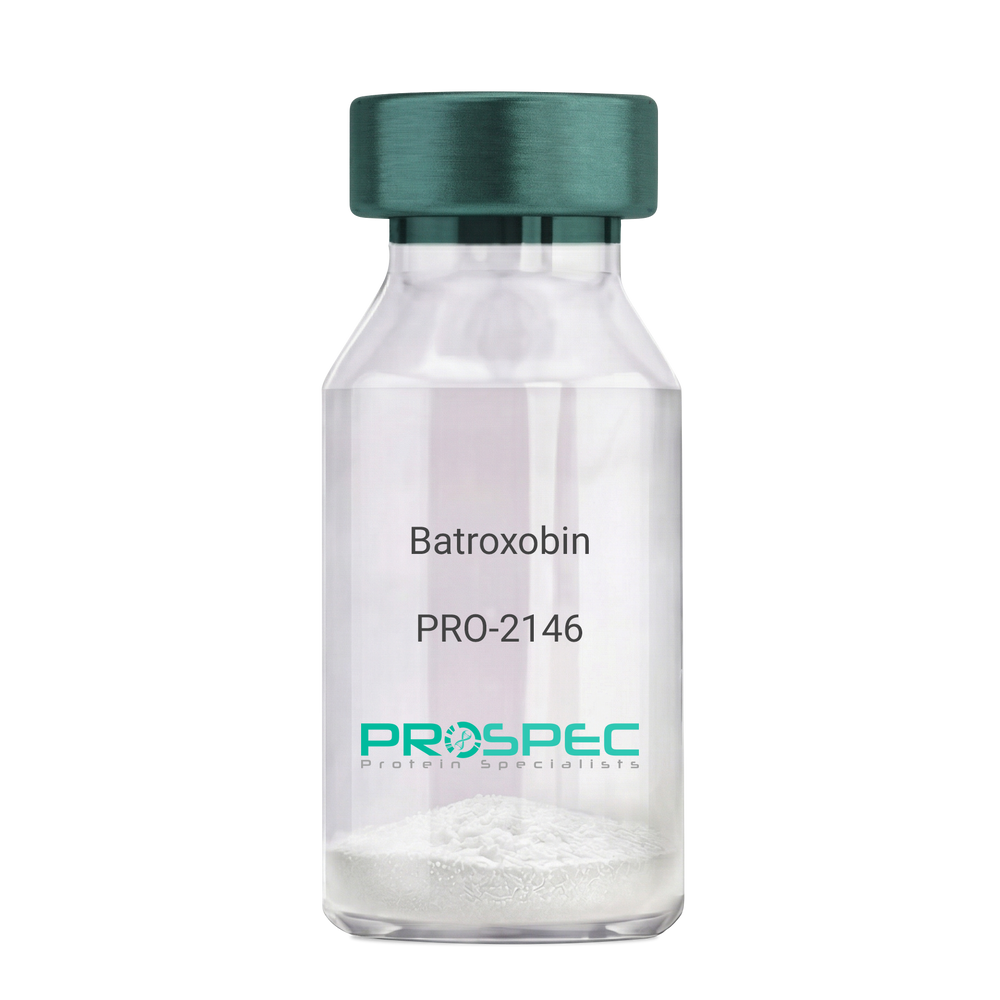
    Batroxobin

    Description:

    Batroxobin

    Thrombin-like enzyme batroxobin, EC 3.4.21.74, BX, Bothrops atrox serine proteinase, Venombin-A, Batroxobin.

    Product # :

    PRO-2146

    Price :

    Quantity :

    Shipping Method :

    Room Temp Icon

    Shipped at Room temp

    Add To Cart

    More Info

    • description
    • formulation
    • More Info

    Description

    Batroxobin, isolated from Bothrops atrox snake venom, has an Mw of approximately 43kDa.

    Formulation

    The Batroxobin protein was lyophilized from a concentrated (1mg/ml) solution with no additives.

    More Info

    • Introduction

      Batroxobin is a serin protease that reduces fibronogen levels and is originally extracted from snake venom of Bothrops Atrox. Batroxobin is used in defibrinogenation and thrombolysis and also has an effect on c-fos gene and growth factor.
      Batroxobin can efficiently restrain proliferation of VSMCs, by blocking the release and uptake of Ca2+, thus influencing [Ca2+]i.
      Batroxobin converts fibrinogen to fibrin through the restricted release of fibrinopeptide-A from fibrinogen to promote blood to clot. Unlike thrombin, it is not affected by heparin and hirudin.

    • Synonyms

      Thrombin-like enzyme batroxobin, EC 3.4.21.74, BX, Bothrops atrox serine proteinase, Venombin-A, Batroxobin.

    • Physical Appearance

      Sterile Filtered white lyophilized powder.

    • Stability

      Store the lyophilized Batroxobin between 2-8°C. Do not freeze!

    • Solubility

      It is recommended to reconstitute the lyophilized Batroxobin in sterile 18MΩ-cm H2O not less than 100µg/ml or more than 10mg/ml solutions.

    • Unit Definition

      100BU [Batroxobin Units]=1mg.

    ProSpec's products are furnished for LABORATORY RESEARCH USE ONLY. The product may not be used as drugs, agricultural or pesticidal products, food additives or household chemicals.

    Batroxobin Native
  • View Data Sheet

    Name :

    IgG1 Fc Human

    Description:

    Immunoglobulin Heavy Constant Gamma 1 Human Recombinant

    IGHG1, IGHG-1, IGG-1FC, IGG1FC, IGG1-FC

    Product # :

    PRO-2763

    Price :

    Quantity :

    Shipping Method :

    Ice Icon

    Shipped with Ice Packs

    Add To Cart

    More Info

    • description
    • source
    • formulation
    • purity
    • biological activity
    • More Info

    Description

    IgG1 Fc Human Recombinant produced in HEK is a single polypeptide chain containing 231 amino acids (100-330) and having a molecular mass of 25.9kDa. IgG1 Fc is purified by proprietary chromatographic techniques.

    Source

    HEK293 Cells

    Formulation

    The IgG1 Fc solution (1mg/ml) contains 1x PBS and 10% glycerol.

    Purity

    Greater than 90% as determined by SDS-PAGE.

    Biological Activity

    Determined functional ELISA with Human Recombinant CD16a (cat# pro-2360). The ED50 range ≤ 1.5 ug/ml

    More Info

    • Introduction

      IgG1 Fcplays a role in antigen binding activity and immunoglobulin receptor binding activity. IgG1 Fc takes part in the activation of immune & defensive response. IgG1 Fc takes part in the upstream of immunoglobulin mediated immune response, positive regulation of hypersensitivity & regulation of phagocytosis.

    • Synonyms

      IGHG1, IGHG-1, IGG-1FC, IGG1FC, IGG1-FC

    • Physical Appearance

      Sterile Filtered colorless solution.

    • Stability

      Store at 4°C if entire vial will be used within 2-4 weeks. Store, frozen at -20°C for longer periods of time. For long term storage it is recommended to add a carrier protein (0.1% HSA or BSA).Avoid multiple freeze-thaw cycles.

    • Amino Acid Sequence

      PKSCDKTHTC PPCPAPELLG GPSVFLFPPK PKDTLMISRT PEVTCVVVDV SHEDPEVKFN WYVDGVEVHN AKTKPREEQY NSTYRVVSVL TVLHQDWLNG KEYKCKVSNK ALPAPIEKTI SKAKGQPREP QVYTLPPSRD ELTKNQVSLT CLVKGFYPSD IAVEWESNGQ PENNYKTTPP VLDSDGSFFL YSKLTVDKSR WQQGNVFSCS VMHEALHNHY TQKSLSLSPG K

    ProSpec's products are furnished for LABORATORY RESEARCH USE ONLY. The product may not be used as drugs, agricultural or pesticidal products, food additives or household chemicals.

    Igg1 Fc Human
  • View Data Sheet

    Name :

    NTS Human

    Description:

    Neurotensin Human Recombinant

    NTS, Neurotensin, NT/N, NMN-125, NTS1, NN, Neurotensin/Neuromedin N, NT.

    Product # :

    PRO-1311

    Price :

    Quantity :

    Shipping Method :

    Ice Icon

    Shipped with Ice Packs

    Add To Cart

    More Info

    • description
    • source
    • formulation
    • purity
    • More Info

    Description

    NTS Human Recombinant produced in E.Coli is a single, non-glycosylated polypeptide chain containing 172 amino acids (24-170 a.a.) and having a molecular mass of 19.9kDa.NTS is fused to a 25 amino acid His-tag at N-terminus & purified by proprietary chromatographic techniques.

    Source

    Escherichia Coli.

    Formulation

    NTS protein solution (1mg/ml) containing 20mM Tris-HCl buffer (pH 8.0), 0.4M urea and 10% glycerol.

    Purity

    Greater than 90.0% as determined by SDS-PAGE.

    More Info

    • Introduction

      Neurotensin (NTS) is a common precursor for 2 peptides, neuromedin N and neurotensin. Neurotensin is a secreted tridecapeptide, which is generally distributed throughout the central nervous system, and may serve as a neurotransmitter or a neuromodulator. NTS is involved in the maintenance of gut structure and function, and in the regulation of fat metabolism. Tissue-specific processing may initiate the formation in some tissues of larger forms of neuromedin N and neurotensin. The large forms may embody more stable peptides which are also biologically active.

    • Synonyms

      NTS, Neurotensin, NT/N, NMN-125, NTS1, NN, Neurotensin/Neuromedin N, NT.

    • Physical Appearance

      Sterile Filtered colorless solution.

    • Stability

      Store at 4°C if entire vial will be used within 2-4 weeks. Store, frozen at -20°C for longer periods of time. For long term storage it is recommended to add a carrier protein (0.1% HSA or BSA).Avoid multiple freeze-thaw cycles.

    • Amino Acid Sequence

      MGSSHHHHHH SSGLVPRGSH MGSHMSDSEE EMKALEADFL TNMHTSKISK AHVPSWKMTL LNVCSLVNNL NSPAEETGEV HEEELVARRK LPTALDGFSL EAMLTIYQLH KICHSRAFQH WELIQEDILD TGNDKNGKEE VIKRKIPYIL KRQLYENKPR RPYILKRDSY YY.

    ProSpec's products are furnished for LABORATORY RESEARCH USE ONLY. The product may not be used as drugs, agricultural or pesticidal products, food additives or household chemicals.

    Nts Human
  • View Data Sheet

    Name :

    BGN Human

    Description:

    Biglycan Human Recombinant

    DSPG1, PG-S1, PGI, SLRR1A, Biglycan, Bone/cartilage proteoglycan I, BGN.

    Product # :

    PRO-1382

    Price :

    Quantity :

    Shipping Method :

    Ice Icon

    Shipped with Ice Packs

    Add To Cart

    More Info

    • description
    • source
    • formulation
    • purity
    • More Info

    Description

    BGN Human Recombinant produced in E.Coli is a single, non-glycosylated polypeptide chain containing 352 amino acids (38-368a.a) and having a molecular mass of 39.5kDa. BGN is fused to a 21 amino acid His-tag at N-terminus & purified by proprietary chromatographic techniques.

    Source

    E.coli.

    Formulation

    BGN protein solution (1mg/ml) containing 20mM Tris-HCl buffer (pH8.0), 10% glycerol and 0.4M Urea.

    Purity

    Greater than 85% as determined by SDS-PAGE.

    More Info

    • Introduction

      Biglycan (BGN) is a small cellular or pericellular matrix proteoglycan which takes part in assembly of collagen fibrils and muscle regeneration. BGN is closely correlated in structure to two other small proteoglycans, decorin and fibromodulin. BGN interacts with several proteins involved in muscular dystrophy, including alpha-dystroglycan, alpha- and gamma-sarcoglycan and collagen VI. BGN is also critical for the assembly of the dystrophin-associated protein complex.

    • Synonyms

      DSPG1, PG-S1, PGI, SLRR1A, Biglycan, Bone/cartilage proteoglycan I, BGN.

    • Physical Appearance

      Sterile Filtered colorless solution.

    • Stability

      Store at 4°C if entire vial will be used within 2-4 weeks. Store, frozen at -20°C for longer periods of time. For long term storage it is recommended to add a carrier protein (0.1% HSA or BSA).Avoid multiple freeze-thaw cycles.

    • Amino Acid Sequence

      MGSSHHHHHH SSGLVPRGSH MDEEASGADT SGVLDPDSVT PTYSAMCPFG CHCHLRVVQC SDLGLKSVPK EISPDTTLLD LQNNDISELR KDDFKGLQHL YALVLVNNKI SKIHEKAFSP LRKLQKLYIS KNHLVEIPPN LPSSLVELRI HDNRIRKVPK GVFSGLRNMN CIEMGGNPLE NSGFEPGAFD GLKLNYLRIS EAKLTGIPKD LPETLNELHL DHNKIQAIEL EDLLRYSKLY RLGLGHNQIR MIENGSLSFL PTLRELHLDN NKLARVPSGL PDLKLLQVVY LHSNNITKVG VNDFCPMGFG VKRAYYNGIS LFNNPVPYWE VQPATFRCVT DRLAIQFGNY KK.

    ProSpec's products are furnished for LABORATORY RESEARCH USE ONLY. The product may not be used as drugs, agricultural or pesticidal products, food additives or household chemicals.

    Bgn Human
  • View Data Sheet

    Name :

    ERGIC3 Human

    Description:

    ERGIC And Golgi 3 Human Recombinant

    ERGIC And Golgi 3,Serologically Defined Breast Cancer Antigen NY-BR-84, Serologically Defined Breast Cancer Antigen 84, C20orf47, SDBCAG84, Erv46, Endoplasmic Reticulum-Golgi Intermediate Compartment Protein 3, Endoplasmic Reticulum-Localized Protein ERp43,Chromosome 20 Open Reading Frame 47,DJ477O4.2, NY-BR-84, PRO0989,CGI-54, ERGIC3.

    Product # :

    PRO-2158

    Price :

    Quantity :

    Shipping Method :

    Ice Icon

    Shipped with Ice Packs

    Add To Cart

    More Info

    • description
    • source
    • formulation
    • purity
    • More Info

    Description

    ERGIC3 Human Recombinant produced in E.Coli is a single, non-glycosylated polypeptide chain containing 318 amino acids (47-341 a.a) and having a molecular mass of 36.1kDa.ERGIC3 is fused to a 23 amino acid His-tag at N-terminus & purified by proprietary chromatographic techniques.

    Source

    Escherichia Coli.

    Formulation

    ERGIC3 protein solution (1mg/ml) containing Phosphate buffered saline (pH7.4), 10% glycerol and 1mM DTT.

    Purity

    Greater than 95.0% as determined by SDS-PAGE.

    More Info

    • Introduction

      ERGIC And Golgi 3, also known as ERGIC3 is a member of the ERGIC family and interacts with ERGIC1/ERGIC32. ERGIC3 takes part in the transport between endoplasmic reticulum and Golgi. One of the diseases which is associated with ERGIC3 is Breast Cancer.

    • Synonyms

      ERGIC And Golgi 3,Serologically Defined Breast Cancer Antigen NY-BR-84, Serologically Defined Breast Cancer Antigen 84, C20orf47, SDBCAG84, Erv46, Endoplasmic Reticulum-Golgi Intermediate Compartment Protein 3, Endoplasmic Reticulum-Localized Protein ERp43,Chromosome 20 Open Reading Frame 47,DJ477O4.2, NY-BR-84, PRO0989,CGI-54, ERGIC3.

    • Physical Appearance

      Sterile Filtered clear solution.

    • Stability

      Store at 4°C if entire vial will be used within 2-4 weeks. Store, frozen at -20°C for longer periods of time. For long term storage it is recommended to add a carrier protein (0.1% HSA or BSA).Avoid multiple freeze-thaw cycles.

    • Amino Acid Sequence

      MGSSHHHHHH SSGLVPRGSH MGSQYYLTTE VHPELYVDKS RGDKLKINID VLFPHMPCAY LSIDAMDVAG EQQLDVEHNL FKQRLDKDGI PVSSEAERHE LGKVEVTVFD PDSLDPDRCE SCYGAEAEDI KCCNTCEDVR EAYRRRGWAF KNPDTIEQCR REGFSQKMQE QKNEGCQVYG FLEVNKVAGN FHFAPGKSFQ QSHVHVHDLQ SFGLDNINMT HYIQHLSFGE DYPGIVNPLD HTNVTAPQAS MMFQYFVKVV PTVYMKVDGE VLRTNQFSVT RHEKVANGLL GDQGLPGVFV LYELSPMMVK LTEKHRSF

    ProSpec's products are furnished for LABORATORY RESEARCH USE ONLY. The product may not be used as drugs, agricultural or pesticidal products, food additives or household chemicals.

    Ergic3 Human
  • View Data Sheet

    Name :

    CXCL8 Human, His

    Description:

    Interleukin-8 (1-77 a.a) Human Recombinant (CXCL8), His Tag

    IL-8, CXCL8, Monocyte-derived neutrophil chemotactic factor, MDNCF, T-cell chemotactic factor, Neutrophil-activating protein 1, NAP-1, Protein 3-10C, Granulocyte chemotactic protein 1, GCP-1, Monocyte-derived neutrophil-activating peptide, MONAP, Emoctakin, K60, NAF, LECT, LUCT, 3-10C, LYNAP, SCYB8, TSG-1, AMCF-I, b-ENAP.

    Product # :

    CHM-345

    Price :

    Quantity :

    Shipping Method :

    Ice Icon

    Shipped with Ice Packs

    Add To Cart

    More Info

    • description
    • source
    • formulation
    • purity
    • More Info

    Description

    Interleukin-8 Human Recombinant produced in E.Coli is single, a non-glycosylated, Polypeptide chain containing 77 amino acids fragment (23-99) and having a total molecular mass of 13.7kDa with an amino-terminal hexahistidine tag. The IL-8 His is purified by proprietary chromatographic techniques.

    Source

    Escherichia Coli.

    Formulation

    IL8 His is supplied in 10mM Tris-HCl pH 8, 250mM NaCl and 50% glycerol.

    Purity

    Greater than 95.0% as determined by SDS-PAGE.

    More Info

    • Introduction

      Interleukin-8 (IL-8) is a chemokine produced by macrophages and other cell types such as epithelial cells. It is also synthesized by endothelial cells, which store IL-8 in their storage vesicles, the Weibel-Palade bodies. When first encountering an antigen, the primary cells to encounter it are the macrophages who phagocytose the particle. Upon processing, they release chemokines to signal other immune cells to come in to the site of inflammation. IL-8 is one such chemokine. It serves as a chemical signal that attracts neutrophils at the site of inflammation, and therefore is also known as Neutrophil Chemotactic Factor.

    • Synonyms

      IL-8, CXCL8, Monocyte-derived neutrophil chemotactic factor, MDNCF, T-cell chemotactic factor, Neutrophil-activating protein 1, NAP-1, Protein 3-10C, Granulocyte chemotactic protein 1, GCP-1, Monocyte-derived neutrophil-activating peptide, MONAP, Emoctakin, K60, NAF, LECT, LUCT, 3-10C, LYNAP, SCYB8, TSG-1, AMCF-I, b-ENAP.

    • Physical Appearance

      Sterile Filtered clear solution.

    • Stability

      Store at 4°C if entire vial will be used within 2-4 weeks. Store, frozen at -20°C for longer periods of time. Please avoid freeze thaw cycles.

    • Background

      What is the molecular weight/Mw of CXCL8 HUMAN, HIS Protein?
      CXCL8 HUMAN, HIS Protein has a total Mw of 13.7kDa.

      What is the source or expression system of CXCL8 HUMAN, HIS Protein?
      Escherichia Coli.

      What is the Purity of CXCL8 HUMAN, HIS Protein?
      CXCL8 HUMAN, HIS Protein is >95% pure as determined by SDS-PAGE.

      What is the Biological Activity of CXCL8 HUMAN, HIS Protein?
      The biological functionality of CXCL8 HUMAN, HIS Protein will be determined in the future.

      What is the amino acid sequence of CXCL8 HUMAN, HIS Protein?
      CXCL8 HUMAN, HIS Protein is composed from 77 amino acids.

      What applications can CXCL8 HUMAN, HIS Protein be used in?
      CXCL8 HUMAN, HIS Protein can probably be used in western blot, ELISA and Lateral Flow.

      What is the endotoxin level for CXCL8 HUMAN, HIS Protein?
      The endotoxin level is minimal, CXCL8 HUMAN, HIS Protein was purified using conventional chromatography techniques.


    ProSpec's products are furnished for LABORATORY RESEARCH USE ONLY. The product may not be used as drugs, agricultural or pesticidal products, food additives or household chemicals.

    Il 8 77 Human His
  • View Data Sheet

    Name :

    PEX26 Human

    Description:

    Peroxisomal Biogenesis Factor 26 Human Recombinant

    PBD7A, PBD7B, PEX26M1T, Pex26pM1T, Peroxisome assembly protein 26, PEX26.

    Product # :

    PRO-1544

    Price :

    Quantity :

    Shipping Method :

    Ice Icon

    Shipped with Ice Packs

    Add To Cart

    More Info

    • description
    • source
    • formulation
    • purity
    • More Info

    Description

    PEX26 Human Recombinant produced in E. coli is a single polypeptide chain containing 269 amino acids (1-246) and having a molecular mass of 29.3kDa. PEX26 is fused to a 23 amino acid His-tag at N-terminus & purified by proprietary chromatographic techniques.

    Source

    Escherichia Coli.

    Formulation

    The PEX26 solution (0.5mg/ml) contains 20mM Tris-HCl buffer (pH 8.0), 0.15M NaCl, 20% glycerol and 1mM DTT.

    Purity

    Greater than 90% as determined by SDS-PAGE.

    More Info

    • Introduction

      Peroxisomal Biogenesis Factor 26 (PEX26) which is a part of the peroxin-26 gene family is probably required for protein import into peroxisomes. PEX26 attaches PEX1 and PEX6 to peroxisome membranes to form heteromeric AAA ATPase complexes needed for the import of proteins into peroxisomes. Deficiencies in this gene are the cause of peroxisome biogenesis disorder complementation group 8. PBD is a group of peroxisomal disorders evolving from a failure of protein import into the peroxisomal membrane or matrix.

    • Synonyms

      PBD7A, PBD7B, PEX26M1T, Pex26pM1T, Peroxisome assembly protein 26, PEX26.

    • Physical Appearance

      Sterile Filtered clear solution.

    • Stability

      Store at 4°C if entire vial will be used within 2-4 weeks. Store frozen at -20°C for longer periods of time. For long term storage it is recommended to add a carrier protein (0.1% HSA or BSA).Avoid multiple freeze-thaw cycles.

    • Amino Acid Sequence

      MGSSHHHHHH SSGLVPRGSH MGSMKSDSST SAAPLRGLGG PLRSSEPVRA VPARAPAVDL LEEAADLLVV HLDFRAALET CERAWQSLAN HAVAEEPAGT SLEVKCSLCV VGIQALAEMD RWQEVLSWVL QYYQVPEKLP PKVLELCILL YSKMQEPGAV LDVVGAWLQD PANQNLPEYG ALAEFHVQRV LLPLGCLSEA EELVVGSAAF GEERRLDVLQ AIHTARQQQK QEHSGSEEAQ KPNLEGSVSH KFLSLPMLVR QLWDSAVSH.

    ProSpec's products are furnished for LABORATORY RESEARCH USE ONLY. The product may not be used as drugs, agricultural or pesticidal products, food additives or household chemicals.

    Pex26 Human
  • View Data Sheet

    Name :

    CALB2 Human

    Description:

    Calbindin-2 Human Recombinant

    Calretinin, CR, CALB2, CAB29, CAL2, CaBP29K, 29 kDa calbindin.

    Product # :

    PRO-401

    Price :

    Quantity :

    Shipping Method :

    Ice Icon

    Shipped with Ice Packs

    Add To Cart

    More Info

    • description
    • source
    • formulation
    • purity
    • More Info

    Description

    CALB2 Human Recombinant produced in E.Coli is a single, non-glycosylated, polypeptide chain containing 291 amino acids (1-271 a.a.) and having a molecular mass of 33.7kDa.The CALB2 is fused to a 20 amino acid His-Tag at N-terminus and purified by proprietary chromatographic techniques.

    Source

    Escherichia Coli.

    Formulation

    The CALB2 1mg/ml protein solution contains 20mM Tris-HCl buffer pH-8 & 10% glycerol.

    Purity

    Greater than 95% as determined by SDS-PAGE.

    More Info

    • Introduction

      Calretinin is an intracellular calcium-binding protein belonging to the troponin C superfamily characterized by a structural motif described as the EF-hand domain. The immunohistochemical detection of calretinin in developing cerebellum is restricted to the later stages indicated by weak staining from week 21 of gestation, in Purkinje and basket cells and in neurons of the dentate nucleus. The intensity of staining increases as the cerebellum matures. In tumors, calretinin has been detected in mesotheliomas and some pulmonary adenocarcinomas.

    • Synonyms

      Calretinin, CR, CALB2, CAB29, CAL2, CaBP29K, 29 kDa calbindin.

    • Physical Appearance

      Sterile Filtered colorless solution.

    • Stability

      Store at 4°C if entire vial will be used within 2-4 weeks. Store, frozen at -20°C for longer periods of time. For long term storage it is recommended to add a carrier protein (0.1% HSA or BSA).Avoid multiple freeze-thaw cycles.

    • Amino Acid Sequence

      MGSSHHHHHH SSGLVPRGSH MAGPQQQPPY LHLAELTASQ FLEIWKHFDA DGNGYIEGKE LENFFQELEK ARKGSGMMSK SDNFGEKMKE FMQKYDKNSD GKIEMAELAQ ILPTEENFLL CFRQHVGSST EFMEAWRKYD TDRSGYIEAN ELKGFLSDLL KKANRPYDEP KLQEYTQTIL RMFDLNGDGK LGLSEMSRLL PVQENFLLKF QGMKLTSEEF NAIFTFYDKD RSGYIDEHEL DALLKDLYEK NKKEMNIQQL TNYRKSVMSL AEAGKLYRKD LEIVLCSEPP M.

    ProSpec's products are furnished for LABORATORY RESEARCH USE ONLY. The product may not be used as drugs, agricultural or pesticidal products, food additives or household chemicals.

    Calb2 Human
  • View Data Sheet

    Name :

    CCL28 Human

    Description:

    Mucosae-Associated Epithelial Chemokine Human Recombinant (CCL28)

    MEC, CCK1, SCYA28, MGC71902, CCL28, C-C motif chemokine 28, Small-inducible cytokine A28, Mucosae-associated epithelial chemokine, Protein CCK1.

    Product # :

    CHM-353

    Price :

    Quantity :

    Shipping Method :

    Room Temp Icon

    Shipped at Room temp

    Add To Cart

    More Info

    • description
    • source
    • formulation
    • purity
    • biological activity
    • More Info

    Description

    CCL28 Human Recombinant produced in E.Coli is a single, non-glycosylated, polypeptide chain containing 108 amino acids and having a molecular mass of 12.3 kDa. The CCL28 is purified by proprietary chromatographic techniques.

    Source

    Escherichia Coli.

    Formulation

    Lyophilized from a concentrated (1mg/ml) solution in water containing 20mM PBS and 150mM NaCl.

    Purity

    Greater than 97.0% as determined by:
    (a) Analysis by RP-HPLC.
    (b) Analysis by SDS-PAGE.

    Biological Activity

    Determined by its ability to chemoattract human lymphocytes using a concentration range of 1-10ng/ml corresponding to a Specific Activity of 100,000-1,000,000IU/mg.

    More Info

    • Introduction

      CCL28 is part of the subfamily of small cytokine CC genes. CCL28 shows chemotactic activity for resting CD4 or CD8 T cells and eosinophils. CCL28 binds to chemokine receptors CCR3 and CCR10. CCL28 is involved in the physiology of extracutaneous epithelial tissues, including diverse mucosal organs. CCL28 mediates mucosal immunity in HIV exposure and infection. CCL28 is involved in the pathogenesis of inflammatory skin diseases.
      Human CCL28 cDNA encodes a 127 amino acid residue precursor protein with a putative 22 amino acid residue signal peptide that is cleaved to produce the 105 amino acid residue mature protein. Human and mouse CCL28 are highly conserved, sharing 83% amino acid identity in their mature regions. CCL28 shares the most homology with CCL27/CTACK. Human and mouse CCL28 RNA expression was found to be highest in normal and pathologic colon with the protein being expressed by epithelial cells. Human CCL28 RNA was also present in normal and asthmatic lung tissues.

    • Synonyms

      MEC, CCK1, SCYA28, MGC71902, CCL28, C-C motif chemokine 28, Small-inducible cytokine A28, Mucosae-associated epithelial chemokine, Protein CCK1.

    • Physical Appearance

      Sterile Filtered White lyophilized (freeze-dried) powder.

    • Stability

      Lyophilized CCL28 although stable at room temperature for 3 weeks, should be stored desiccated below -18°C. Upon reconstitution CCL28 should be stored at 4°C between 2-7 days and for future use below -18°C.For long term storage it is recommended to add a carrier protein (0.1% HSA or BSA).Please prevent freeze-thaw cycles.

    • Solubility

      It is recommended to reconstitute the lyophilized CCL28 in sterile 18MΩ-cm H2O not less than 100µg/ml, which can then be further diluted to other aqueous solutions.

    • Amino Acid Sequence

      SEAILPIASS CCTEVSHHIS RRLLERVNMC RIQRADGDCD LAAVILHVKR RRICVSPHNH TVKQWMKVQA AKKNGKGNVC HRKKHHGKRN SNRAHQGKHE TYGHKTPY.

    • Background

      What is the molecular weight/Mw of CCL28 HUMAN Protein?
      CCL28 HUMAN Protein has a total Mw of 12.3kDa.

      What is the source or expression system of CCL28 HUMAN Protein?
      Escherichia Coli.

      What is the Purity of CCL28 HUMAN Protein?
      CCL28 HUMAN Protein is > 97% pure as determined by SDS-PAGE.

      What is the Biological Activity of CCL28 HUMAN Protein?
      Determined by its ability to chemoattract human lymphocytes using a concentration range of 1-10ng/ml corresponding to a Specific Activity of 100,000-1,000,000IU/mg.

      What is the amino acid sequence of CCL28 HUMAN Protein?
      SEAILPIASS CCTEVSHHIS RRLLERVNMC RIQRADGDCD LAAVILHVKR RRICVSPHNH TVKQWMKVQA AKKNGKGNVC HRKKHHGKRN SNRAHQGKHE TYGHKTPY.

      What applications can CCL28 HUMAN Protein be used in?
      CCL28 HUMAN Protein can probably be used in western blot, ELISA and Lateral Flow.

      What is the endotoxin level for CCL28 HUMAN Protein?
      The endotoxin level is minimal, CCL28 HUMAN Protein was purified using conventional chromatography techniques.

    ProSpec's products are furnished for LABORATORY RESEARCH USE ONLY. The product may not be used as drugs, agricultural or pesticidal products, food additives or household chemicals.

    Ccl28 Human
  • View Data Sheet

    Name :

    IP 10 Mouse

    Description:

    IP-10 Mouse Recombinant (CXCL10)

    Small inducible cytokine B10, CXCL10, 10 kDa, Gamma-IP10, IP-10, chemokine (C-X-C motif) ligand 10, C7, IFI10, INP10, crg-2, mob-1, SCYB10, gIP-10.

    Product # :

    CHM-336

    Price :

    Quantity :

    Shipping Method :

    Room Temp Icon

    Shipped at Room temp

    Add To Cart

    More Info

    • description
    • source
    • formulation
    • purity
    • biological activity
    • More Info
    • sds-page

    Description

    IP-10 Mouse Recombinant produced in E.Coli is a single,non-glycosylated, polypeptide chain containing 77 amino acids and having a molecular mass of 8701 Dalton. The IP-10 is purified by proprietary chromatographic techniques.

    Source

    Escherichia Coli.

    Formulation

    IP-10 was lyophilized from a 0.2µm filtered concentrated solution in 1×PBS, pH 7.4.

    Purity

    Greater than 97.0% as determined by:
    (a) Analysis by RP-HPLC.
    (b) Analysis by SDS-PAGE.

    Biological Activity

    Determined by its ability to chemoattract hCXCR3/HEK293 cells using a concentration range of 100.0-500.0 ng/ml.

    sds-page

    cxcl10 mouse sds-page - Product image 1

    More Info

    • Introduction

      Chemokine (C-X-C motif) ligand 10 (CXCL10) is a small cytokine belonging to the CXC chemokine family. CXCL10 is secreted by several cell types. These cell types include monocytes, endothelial cells and fibroblasts. CXCL10 has been attributed to several roles, such as chemoattraction for monocytes and T cells, promotion of T cell adhesion to endothelial cells, antitumor activity, and inhibition of bone marrow colony formation and angiogenesis. The gene for CXCL10 is located on human chromosome 4 in a cluster among several other CXC chemokines. This chemokine elicits its effects by binding to the cell surface chemokine receptor CXCR3. The three-dimensional crystal structure of this chemokine has been determined under 3 different conditions to a resolution of up to 1.92A.

    • Synonyms

      Small inducible cytokine B10, CXCL10, 10 kDa, Gamma-IP10, IP-10, chemokine (C-X-C motif) ligand 10, C7, IFI10, INP10, crg-2, mob-1, SCYB10, gIP-10.

    • Physical Appearance

      Sterile Filtered White lyophilized (freeze-dried) powder.

    • Stability

      Lyophilized IP-10 although stable at room temperature for 3 weeks, should be stored desiccated below -18°C. Upon reconstitution CXCL10 should be stored at 4°C between 2-7 days and for future use below -18°C. For long term storage it is recommended to add a carrier protein (0.1% HSA or BSA).Please prevent freeze-thaw cycles.

    • Solubility

      It is recommended to reconstitute the lyophilized IP-10 in sterile 18MΩ-cm H2O not less than 100µg/ml, which can then be further diluted to other aqueous solutions.

    • Amino Acid Sequence

      IPLARTVRCN CIHIDDGPVR MRAIGKLEII PASLSCPRVE IIATMKKNDE QRCLNPESKT IKNLMKAFSQ KRSKRAP.

    • Protein content

      Protein quantitation was carried out by two independent methods:1. UV spectroscopy at 280 nm using the absorbency value of 0.02 as the extinction coefficient for a 0.1% (1mg/ml) solution. This value is calculated by the PC GENE computer analysis program of protein sequences (IntelliGenetics). 2. Analysis by RP-HPLC, using a standard solution of IP-10 as a Reference Standard.

    ProSpec's products are furnished for LABORATORY RESEARCH USE ONLY. The product may not be used as drugs, agricultural or pesticidal products, food additives or household chemicals.

    Ip 10 Mouse
  • View Data Sheet

    Name :

    PLAC8 Human

    Description:

    Placenta-Specific 8 Human Recombinant

     Placenta-Specific 8, C15, Onzin, Placenta-Specific Gene 8 Protein, Protein C15.

    Product # :

    PRO-1725

    Price :

    Quantity :

    Shipping Method :

    Ice Icon

    Shipped with Ice Packs

    Add To Cart

    More Info

    • description
    • source
    • formulation
    • purity
    • More Info

    Description

    PLAC8 Human Recombinant produced in E.Coli is a single, non-glycosylated polypeptide chain containing 138 amino acids (1-115 a.a) and having a molecular mass of 14.9kDa.PLAC8 is fused to a 23 amino acid His-tag at N-terminus & purified by proprietary chromatographic techniques.

    Source

    Escherichia Coli.

    Formulation

    PLAC8 protein solution (1mg/ml) containing 20mM Tris-HCl buffer (pH8.0),0.4M urea and 10% glycerol.

    Purity

    Greater than 85.0% as determined by SDS-PAGE.

    More Info

    • Introduction

      Placenta-Specific 8 (PLAC8) is a member of the cornifelin family. The PLAC8 protein is expressed at high levels in the plasmacytoid dendritic cells, spleen, lymph nodes, peripheral blood leukocytes, and bone marrow.

    • Synonyms

      Placenta-Specific 8, C15, Onzin, Placenta-Specific Gene 8 Protein, Protein C15.

    • Physical Appearance

      Sterile Filtered clear solution.

    • Stability

      Store at 4°C if entire vial will be used within 2-4 weeks. Store, frozen at -20°C for longer periods of time. For long term storage it is recommended to add a carrier protein (0.1% HSA or BSA).Avoid multiple freeze-thaw cycles.

    • Amino Acid Sequence

      MGSSHHHHHH SSGLVPRGSH MGSMQAQAPV VVVTQPGVGP GPAPQNSNWQ TGMCDCFSDC GVCLCGTFCF PCLGCQVAAD MNECCLCGTS VAMRTLYRTR YGIPGSICDD YMATLCCPHC TLCQIKRDIN RRRAMRTF.

    ProSpec's products are furnished for LABORATORY RESEARCH USE ONLY. The product may not be used as drugs, agricultural or pesticidal products, food additives or household chemicals.

    Plac8 Human
  • View Data Sheet

    Name :

    LAG-1 Human

    Description:

    LAG-1 Human Recombinant (CCL4L1)

    C-C motif chemokine 4-like, Lymphocyte activation gene 1 protein, LAG-1, Macrophage inflammatory protein 1-beta, MIP-1-beta, Monocyte adherence-induced protein 5-alpha, Small-inducible cytokine A4-like, CCL4L1, CCL4L, LAG1, SCYA4L1, CCL4L2, SCYA4L2, AT744.2.

    Product # :

    CHM-018

    Price :

    Quantity :

    Shipping Method :

    Room Temp Icon

    Shipped at Room temp

    Add To Cart

    More Info

    • description
    • source
    • formulation
    • purity
    • biological activity
    • More Info

    Description

    LAG-1 Human Recombinant produced in E.Coli is a single, non-glycosylated, Polypeptide chain containing 69 amino acids and having a molecular mass of 7.8kDa.The CCL4L1 is purified by proprietary chromatographic techniques.

    Source

    Escherichia Coli.

    Formulation

    LAG-1 was lyophilized from a 0.2µm filtered concentrated solution in PBS, pH 7.4.

    Purity

    Greater than 95.0% as determined by:
    (a) Analysis by RP-HPLC.
    (b) Analysis by SDS-PAGE.

    Biological Activity

    The ED50 as determined by a cell proliferation assay using human CCR5 transfected murine BaF3 cells is less than 2.0 ng/ml, corresponding to a specific activity of > 5.0 × 10⁵ IU/mg.

    More Info

    • Introduction

      CCL4L1 (C-C motif chemokine 4-like) is a member of to intercrine beta (chemokine CC) family. The CCL4L1 protein is similar to CCL4 which inhibits HIV replication in peripheral blood monocytes which express CCR5.

    • Synonyms

      C-C motif chemokine 4-like, Lymphocyte activation gene 1 protein, LAG-1, Macrophage inflammatory protein 1-beta, MIP-1-beta, Monocyte adherence-induced protein 5-alpha, Small-inducible cytokine A4-like, CCL4L1, CCL4L, LAG1, SCYA4L1, CCL4L2, SCYA4L2, AT744.2.

    • Physical Appearance

      Sterile Filtered White lyophilized (freeze-dried) powder.

    • Stability

      Lyophilized LAG-1 although stable at room temperature for 3 weeks, should be stored desiccated below -18°C. Upon reconstitution CCL4L1 should be stored at 4°C between 2-7 days and for future use below -18°C.Please prevent freeze-thaw cycles.

    • Solubility

      It is recommended to reconstitute the lyophilized LAG-1 in sterile 18M-cm H2O not less than 100µg/ml, which can then be further diluted to other aqueous solutions.

    • Amino Acid Sequence

      APMGSDPPTA CCFSYTARKL PRNFVVDYYE TSSLCSQPAV VFQTKRGKQV CADPSESWVQ EYVYDLELN.

    ProSpec's products are furnished for LABORATORY RESEARCH USE ONLY. The product may not be used as drugs, agricultural or pesticidal products, food additives or household chemicals.

    Lag 1 Human
  • 1
  • …
  • 21
  • 22
  • 23
  • 24
  • 25
  • …
  • 42
Your browser does not support the video tag.

Products

  • Cytokines
  • Growth Factors
  • Chemokines
  • CD Antigens
  • Neurotrophins
  • Hormones
  • Enzymes
  • Viral Antigens
  • Recombinant Proteins
  • Natural Proteins
  • Monoclonal Antibodies
  • Polyclonal Antibodies
  • Thermal Packaging

About

  • Company
  • Founder
  • Contribution
  • Contact Us
  • My Account

Ordering

  • Ordering Method
  • Ordering - Credit Card
  • Ordering PO
  • Shipping Fees
  • FAQ's

Legal

  • Terms & Conditions
  • Privacy
  • Site Map
  • info@prospecbio.com
  • Facebook
  • Instagram
  • Linkedin Profile

© 2026 ProSpec-Tany TechnoGene Ltd. All Rights Reserved.

  • Choosing a selection results in a full page refresh.
  • Opens in a new window.