Search results
1000 results found for “insulin-like growth factor”
Name
Description
Product #
Price
Quantity
Shipping Method
- View Data Sheet
Name :
BMP3 HumanDescription:
Bone Morphogenetic protein-3 Human Recombinant
Bone Morphogenetic Protein 3, Osteogenin, Bone Morphogenetic Protein 3 (Osteogenic), Bone Morphogenetic Protein 3A, BMP-3A, BMP-3, Bone Morphogenetic Protein-3, BMP3A, BMP3.
Product # :
CYT-937Price :
Quantity :
Shipping Method :
Shipped at Room temp
More Info
- description
- source
- formulation
- purity
- biological activity
- More Info
Description
BMP3 Human Recombinant produced in E.coli is a non-glycosylated disulfide linked homodimer containing 2 chains of 110 amino acids and having a molecular mass of 24.8kDa.The BMP-3 is purified by proprietary chromatographic techniques.
Source
Escherichia Coli.
Formulation
BMP-3 protein was lyophilized from a 0.2µm filtered concentrated solution in 30% Acetonitrile and 0.1% TFA.
Purity
Greater than 95.0% as determined by: (a) Analysis by HPLC. (b) Analysis by SDS-PAGE.
Biological Activity
The ED50 as determined by its ability to inhibit BMP-2-induced activity in murine MC3T3- E1 cells.More Info
-
Introduction
Bone Morphogenetic Protein 3 (BMP3) is one of the BMPs, some of which are members of the TGF-beta superfamily (BMP2-7). There are more than 13 BMPs, which are involved in inducing cartilage and bone formation, embryogenesis and morphogenesis of various tissues and organs. In addition, BMPs regulate the growth, differentiation, chemotaxis, and apoptosis of various cell types. Akin to most other TGF-beta family proteins, BMPs are extremely conserved across animal species. At the amino acid sequence level, mature human and rat BMP3 are 98% identical.
-
Synonyms
Bone Morphogenetic Protein 3, Osteogenin, Bone Morphogenetic Protein 3 (Osteogenic), Bone Morphogenetic Protein 3A, BMP-3A, BMP-3, Bone Morphogenetic Protein-3, BMP3A, BMP3.
-
Physical Appearance
Sterile Filtered White lyophilized (freeze-dried) powder.
-
Stability
Lyophilized BMP3 although stable at room temperature for 3 weeks, should be stored desiccated below -18°C. Upon reconstitution BMP-3 should be stored at 4°C between 2-7 days and for future use below -18°C. For long term storage it is recommended to add a carrier protein (0.1% HSA or BSA). Please prevent freeze-thaw cycles.
-
Solubility
It is recommended to reconstitute the lyophilized BMP3 in sterile 4mM HCl not less than 100µg/ml, which can then be further diluted to other aqueous solutions.
-
Amino Acid Sequence
QWIEPRNCAR RYLKVDFADI GWSEWIISPK SFDAYYCSGA CQFPMPKSLK PSNHATIQSI VRAVGVVPGI PEPCCVPEKM SSLSILFFDE NKNVVLKVYP NMTVESCACR.
-
Background
Bone Morphogenetic Protein-3 Human Recombinant: Unveiling the Potential of a Key Regulator in Tissue Regeneration
Abstract:
Bone Morphogenetic Protein-3 (BMP-3) human recombinant is a critical member of the bone morphogenetic protein family, known for its role in tissue development, repair, and regeneration. This research paper provides a comprehensive analysis of BMP-3, including its characteristics, signaling pathways, and potential therapeutic applications. Additionally, innovative methodologies for the production and optimization of BMP-3 human recombinant are proposed, shedding light on its future implications in the field of regenerative medicine.
Introduction:
Tissue regeneration is a complex biological process requiring precise molecular cues. BMP-3, a crucial member of the BMP family, plays a significant role in tissue development and regeneration. This paper explores the unique features of BMP-3 and presents novel approaches for its production and optimization, aiming to unlock its therapeutic potential in various regenerative contexts.
Characteristics and Signaling Pathways:
BMP-3 is a secreted protein that binds to cell surface receptors, initiating intracellular signaling cascades. It influences cell differentiation, proliferation, and extracellular matrix synthesis through both Smad-dependent and Smad-independent signaling pathways. BMP-3 signaling regulates critical processes involved in tissue regeneration, including chondrogenesis and osteogenesis.
Production of BMP-3 Human Recombinant:
Efficient production methodologies are essential for harnessing the therapeutic potential of BMP-3 human recombinant. Recombinant protein expression systems, such as Escherichia coli or mammalian cells, have been utilized to produce functional BMP-3. Optimization strategies, including codon optimization, signal peptide engineering, and protein folding optimization, have been employed to enhance the yield and activity of BMP-3 recombinant protein.
Potential Therapeutic Applications:
BMP-3 human recombinant holds significant promise in the field of regenerative medicine. It plays a crucial role in bone and cartilage regeneration, making it a potential candidate for the treatment of skeletal disorders and tissue injuries. Additionally, BMP-3 signaling influences tissue remodeling and wound healing, suggesting its broader therapeutic applications in other regenerative processes.
Conclusion:
BMP-3 human recombinant represents a key regulator in tissue regeneration, with immense potential in regenerative medicine. Optimizing production methodologies and further unraveling its signaling mechanisms will enhance its therapeutic applications. With its implications in bone and cartilage regeneration and its role in tissue remodeling, BMP-3 human recombinant emerges as a promising tool for promoting tissue repair and regeneration.
What is the molecular weight/Mw of BMP3 Protein?
BMP3 Protein has a total Mw of 24.8kDa.
What is the source or expression system of BMP3 Protein?
Escherichia Coli.
What is the Purity of BMP3 Protein?
BMP3 Protein is >95% pure as determined by SDS-PAGE.
What is the Biological Activity of BMP3 Protein?
The ED50 as determined by its ability to inhibit BMP-2-induced activity in murine MC3T3- E1 cells.
What is the amino acid sequence of BMP3 Protein?
QWIEPRNCAR RYLKVDFADI GWSEWIISPK SFDAYYCSGA CQFPMPKSLK PSNHATIQSI VRAVGVVPGI PEPCCVPEKM SSLSILFFDE NKNVVLKVYP NMTVESCACR.
What applications can BMP3 Protein be used in?
BMP3 Protein can probably be used in western blot, ELISA and Lateral Flow.
What is the endotoxin level for BMP3 Protein?
The endotoxin level is minimal, BMP3 Protein was purified using conventional chromatography techniques.
ProSpec's products are furnished for LABORATORY RESEARCH USE ONLY. The product may not be used as drugs, agricultural or pesticidal products, food additives or household chemicals.
- View Data Sheet
Name :
GH Gilthead SeabreamDescription:
Growth Hormone Gilthead Seabream Recombinant
GH1, GH, GHN, GH-N, hGH-N, Pituitary growth hormone, Growth hormone 1, Somatotropin.
Product # :
CYT-529Price :
Quantity :
Shipping Method :
Shipped at Room temp
More Info
- description
- source
- formulation
- purity
- biological activity
- More Info
Description
Somatotropin Gilthead Seabream Recombinant Sparus Aurata produced in E.Coli is a single, non-glycosylated polypeptide chain containing 188 amino acids with an additional Ala at the N-terminus and having a molecular mass of 21.4 kDa. The Gilthead Seabream Growth-Hormone Recombinant is purified by proprietary chromatographic techniques.
Source
Escherichia Coli.
Formulation
The protein was lyophilized from a concentrated (1mg/ml) solution with 0.02% NaHCO3.
Purity
Greater than 98.0% as determined by:
(a) Analysis by SEC-HPLC.
(b) Analysis by SDS-PAGE.Biological Activity
Binding assays of the 125I-labeled gilthead seabream GH to dolphin fish liver microsomal fraction resulted in high specific binding characterized by a Ka of 1.93 nM and a Bmax of 540 fmol/mg microsomal fraction protein. Recombinant gilthead seabream Growth Hormone, like ovine placental lactogen, exhibited growth-stimulating activity when applied orally to Sparus aurata larvae or intraperitoneally to juvenile fish.More Info
-
Introduction
GH is a member of the somatotropin/prolactin family of hormones which play an important role in growth control. The gene, along with four other related genes, is located at the growth hormone locus on chromosome 17 where they are interspersed in the same transcriptional orientation; an arrangement which is thought to have evolved by a series of gene duplications. The five genes share a remarkably high degree of sequence identity. Alternative splicing generates additional isoforms of each of the five growth hormones, leading to further diversity and potential for specialization. This particular family member is expressed in the pituitary but not in placental tissue as is the case for the other four genes in the growth hormone locus. Mutations in or deletions of the gene lead to growth hormone deficiency and short stature.
-
Synonyms
GH1, GH, GHN, GH-N, hGH-N, Pituitary growth hormone, Growth hormone 1, Somatotropin.
-
Physical Appearance
Sterile Filtered White lyophilized (freeze-dried) powder.
-
Stability
Lyophilized Growth-Hormone Gilthead Seabream although stable at room temperature for at least two weeks, should be stored desiccated below -18°C. Upon reconstitution and filter sterilization GH can be stored at 4°C, pH 9 for up to 4 weeks. For long term storage and more diluted solutions it is recommended to add a carrier protein (0.1% HSA or BSA). Please prevent freeze-thaw cycles.
-
Solubility
It is recommended to reconstitute the lyophilized Growth-Hormone Gilthead Seabream in 0.4% NaHCO3 or water adjusted to pH 8-9, not less than 100µg/ml, which can then be further diluted to other aqueous solutions, preferably in a presence of a carrier protein such as BSA or similar.
-
Amino Acid Sequence
AQPITDGQRLFSIAVSRVQHLHLLAQRLFSDFESSLQTEEQPQLNKIFLQ
DFCNCDYIISPIDKHETQRSSVLKLLSISYRLVESWEFPSRSLSGGSAPR
NQISPKLSELKTGIHLLIRANEDGAEIFPDRSALQLAPYGNYYQSLGTDE
SLRRTYELLACFKKDMHKVETYLTVAKCRLSPEANCTL
ProSpec's products are furnished for LABORATORY RESEARCH USE ONLY. The product may not be used as drugs, agricultural or pesticidal products, food additives or household chemicals.
- View Data Sheet
Name :
GTF2B HumanDescription:
General Transcription Factor IIB Human Recombinant
TF2B, TFIIB, GTF2B, Transcription initiation factor IIB, General transcription factor TFIIB, S300-II.
Product # :
PRO-762Price :
Quantity :
Shipping Method :
Shipped with Ice Packs
More Info
- description
- source
- formulation
- purity
- More Info
Description
GTF2B Human Recombinant produced in E.Coli is a single, non-glycosylated, polypeptide chain containing 336 amino acids (1-316 a.a.) and having a molecular mass of 36.9 kDa. The GTF2B is fused to a 20 amino acid His Tag at N-terminus and purified by proprietary chromatographic techniques.
Source
Escherichia Coli.
Formulation
The GTF2B solution contains 20mM Tris-HCl buffer (pH 8.0), 0.1M NaCl and 20% glycerol.
Purity
Greater than 90.0% as determined by SDS-PAGE.
More Info
-
Introduction
GTF2B is one of the ubiquitous factors needed for transcription initiation by RNA polymerase II preinitiation factor. GTF2B localizes to the nucleus where it forms a complex (the DAB complex) with transcription factors IID and IIA. GTF2 plays a role as a bridge between IID, which initially recognizes the promoter sequence, and RNA polymerase II. GTF2B is involved in the selection of the transcription start site.
-
Synonyms
TF2B, TFIIB, GTF2B, Transcription initiation factor IIB, General transcription factor TFIIB, S300-II.
-
Physical Appearance
Sterile Filtered colorless solution.
-
Stability
Store at 4°C if entire vial will be used within 2-4 weeks. Store, frozen at -20°C for longer periods of time. For long term storage it is recommended to add a carrier protein (0.1% HSA or BSA).Avoid multiple freeze-thaw cycles.
-
Amino Acid Sequence
MGSSHHHHHH SSGLVPRGSH MASTSRLDAL PRVTCPNHPD AILVEDYRAG DMICPECGLV VGDRVIDVGS EWRTFSNDKA TKDPSRVGDS QNPLLSDGDL STMIGKGTGA ASFDEFGNSK YQNRRTMSSS DRAMMNAFKE ITTMADRINL PRNIVDRTNN LFKQVYEQKS LKGRANDAIA SACLYIACRQ EGVPRTFKEI CAVSRISKKE IGRCFKLILK ALETSVDLIT TGDFMSRFCS NLCLPKQVQM AATHIARKAV ELDLVPGRSP ISVAAAAIYM ASQASAEKRT QKEIGDIAGV ADVTIRQSYR LIYPRAPDLF PTDFKFDTPV DKLPQL.
ProSpec's products are furnished for LABORATORY RESEARCH USE ONLY. The product may not be used as drugs, agricultural or pesticidal products, food additives or household chemicals.
- View Data Sheet
Name :
ICOS HumanDescription:
Inducible T Cell Costimulator 4 Human Recombinant
Inducible T Cell Costimulator, Activation-Inducible Lymphocyte Immunomediatory Molecule, Inducible T-Cell Costimulator, AILIM, Inducible T-Cell Co-Stimulator, Inducible Costimulator, CD278 Antigen, CD278, CVID1.
Product # :
PRO-2534Price :
Quantity :
Shipping Method :
Shipped with Ice Packs
More Info
- description
- source
- formulation
- purity
- More Info
Description
ICOS produced in Sf9 Baculovirus cells is a single, glycosylated polypeptide chain containing 362 amino acids (21-140a.a.) and having a molecular mass of 40.8kDa. (Molecular size on SDS-PAGE will appear at approximately 40-57kDa). ICOS is expressed with an 242 amino acid His tag at C-Terminus and purified by proprietary chromatographic techniques.
Source
Sf9, Baculovirus cells.
Formulation
ICOS protein solution (0.25mg/ml) contains 20mM MES buffer (pH 5.5), 40% glycerol, 2mM DTT and 1mM EDTA 0.1M NaCl.
Purity
Greater than 90.0% as determined by SDS-PAGE.
More Info
-
Introduction
ICOS (inducible T-cell costimulatory) belongs to the CD28 family of immune-assisted stimulatory receptors. ICOS forms homodimers and takes a significant part in immune responses, cell-cell signaling, as well as regulation of cell proliferation. The interaction of B7-H2 / ICOS takes a vital role in T-cell differentiation, T-B cell interaction in addition to humoral immune response is essential for the formation of reproductive centers as well as the production of cytokine IL-4. Moreover, ICOS is more effective in inducing IL-10 production, a cytokine which is important for the inhibitory function of T regulatory cells. The ICOS-B7RP-1 and B7-1 / B7-2-CD28 / CTLA-4 pathways offer a significant second signal which can regulate the inhibition, activation and fine regulation of T-lymphocyte responses. ICOS stimulates the production of Th1 and Th2 cytokines, however it can also participate in the generation of Th2 cells.
-
Synonyms
Inducible T Cell Costimulator, Activation-Inducible Lymphocyte Immunomediatory Molecule, Inducible T-Cell Costimulator, AILIM, Inducible T-Cell Co-Stimulator, Inducible Costimulator, CD278 Antigen, CD278, CVID1.
-
Physical Appearance
Sterile Filtered colorless solution.
-
Stability
Store at 4°C if entire vial will be used within 2-4 weeks. Store, frozen at -20°C for longer periods of time. For long term storage it is recommended to add a carrier protein (0.1% HSA or BSA). Avoid multiple freeze-thaw cycles.
-
Amino Acid Sequence
ADPEINGSAN YEMFIFHNGG VQILCKYPDI VQQFKMQLLK GGQILCDLTK TKGSGNTVSI KSLKFCHSQL SNNSVSFFLY NLDHSHANYY FCNLSIFDPP PFKVTLTGGY LHIYESQLCC QLKLEPKSCD KTHTCPPCPA PELLGGPSVF LFPPKPKDTL MISRTPEVTC VVVDVSHEDP EVKFNWYVDG VEVHNAKTKP REEQYNSTYR VVSVLTVLHQ DWLNGKEYKC KVSNKALPAP IEKTISKAKG QPREPQVYTL PPSRDELTKN QVSLTCLVKG FYPSDIAVEW ESNGQPENNY KTTPPVLDSD GSFFLYSKLT VDKSRWQQGN VFSCSVMHEA LHNHYTQKSL SLSPGKHHHH
HH
ProSpec's products are furnished for LABORATORY RESEARCH USE ONLY. The product may not be used as drugs, agricultural or pesticidal products, food additives or household chemicals.
- View Data Sheet
Name :
ITGB4 HumanDescription:
Integrin Beta 4 Human Recombinant
Integrin beta-4, GP150, CD104, ITGB4, Integrin Subunit Beta 4, CD104 Antigen, Integrin, Beta 4, Integrin Beta-4.
Product # :
PRO-2528Price :
Quantity :
Shipping Method :
Shipped with Ice Packs
More Info
- description
- source
- formulation
- purity
- More Info
Description
ITGB4 produced in Sf9 Baculovirus cells is a single, glycosylated polypeptide chain containing 691 amino acids (28-710a.a.) and having a molecular mass of 77.5kDa. (Molecular size on SDS-PAGE will appear at approximately 70-100kDa). ITGB4 is expressed with an 8 amino acid His tag at C-Terminus and purified by proprietary chromatographic techniques.
Source
Sf9, Baculovirus cells.
Formulation
ITGB4 protein solution (0.5mg/ml) contains Phosphate Buffered Saline (pH 7.4) & 10% glycerol.
Purity
Greater than 90.0% as determined by SDS-PAGE.
More Info
-
Introduction
ITGB4 (integrin beta-4 isoform 1) belongs to the Integrin beta family. ITGB4 forms noncovalent heterodimers with Integrin alpha 6 and takes part in the formation of epithelial hemidesmosomes. ITGB4 has a vital structural role in the hemidesmosome of epithelial cells and is needed for the regulation of keratinocyte motility & polarity. ITGB4 leans towards the association with alpha 6 subunit and is expected to take a key role in the biology of invasive carcinoma.
-
Synonyms
Integrin beta-4, GP150, CD104, ITGB4, Integrin Subunit Beta 4, CD104 Antigen, Integrin, Beta 4, Integrin Beta-4.
-
Physical Appearance
Sterile Filtered colorless solution.
-
Stability
Store at 4°C if entire vial will be used within 2-4 weeks. Store, frozen at -20°C for longer periods of time. For long term storage it is recommended to add a carrier protein (0.1% HSA or BSA). Avoid multiple freeze-thaw cycles.
-
Amino Acid Sequence
NRCKKAPVKS CTECVRVDKD CAYCTDEMFR DRRCNTQAEL LAAGCQRESI VVMESSFQIT EETQIDTTLR RSQMSPQGLR VRLRPGEERH FELEVFEPLE SPVDLYILMD FSNSMSDDLD NLKKMGQNLA RVLSQLTSDY TIGFGKFVDK VSVPQTDMRP EKLKEPWPNS DPPFSFKNVI SLTEDVDEFR NKLQGERISG NLDAPEGGFD AILQTAVCTR DIGWRPDSTH LLVFSTESAF HYEADGANVL AGIMSRNDER CHLDTTGTYT QYRTQDYPSV PTLVRLLAKH NIIPIFAVTN YSYSYYEKLH TYFPVSSLGV LQEDSSNIVE LLEEAFNRIR SNLDIRALDS PRGLRTEVTS KMFQKTRTGS FHIRRGEVGI YQVQLRALEH VDGTHVCQLP EDQKGNIHLK PSFSDGLKMD AGIICDVCTC ELQKEVRSAR CSFNGDFVCG QCVCSEGWSG QTCNCSTGSL SDIQPCLREG EDKPCSGRGE CQCGHCVCYG EGRYEGQFCE YDNFQCPRTS GFLCNDRGRC SMGQCVCEPG WTGPSCDCPL SNATCIDSNG GICNGRGHCE CGRCHCHQQS LYTDTICEIN YSAIHPGLCE DLRSCVQCQA WGTGEKKGRT CEECNFKVKM VDELKRAEEV VVRCSFRDED DDCTYSYTME GDGAPGPNST VLVHKKKDCP PGSLEHHHHH H
ProSpec's products are furnished for LABORATORY RESEARCH USE ONLY. The product may not be used as drugs, agricultural or pesticidal products, food additives or household chemicals.
- View Data Sheet
Name :
IL 22 RatDescription:
Interleukin-22 Rat Recombinant
IL-TIF, TIFa, IL-10-related T-cell-derived-inducible factor, IL-22, ILTIF, IL-D110, zcyto18, MGC79382, MGC79384, TIFIL-23.
Product # :
CYT-173Price :
Quantity :
Shipping Method :
Shipped at Room temp
More Info
- description
- source
- formulation
- purity
- biological activity
- More Info
Description
IL-22 Rat Recombinant produced in E.Coli is a single, non-glycosylated, polypeptide chain containing 146 amino acids and having a molecular mass of 16.6kDa.The IL22 is purified by proprietary chromatographic techniques.
Source
Escherichia Coli.
Formulation
Lyophilized from a 0.2µm filtered concentrated solution in 1xPBS, pH 7.4.
Purity
Greater than 97.0% as determined by:
(a) Analysis by RP-HPLC.
(b) Analysis by SDS-PAGE.Biological Activity
The biological activity is measured by its ability to induce IL-10 secretion in COLO 205 (human colon carcinoma cells). The expected ED50 for this effect is 0.15-0.75ng/ml.More Info
-
Introduction
IL-22 is a member of the IL-10 family of regulatory cytokines.Members of this family share partial homology in their amino acid sequences, but they are dissimilar in their biological functions. Produced by T lymphocytes, IL-22 inhibits IL-4 production by Th2 cells, and induces acute phase reactants in the liver and pancreas. IL-22 signals through a receptor system consisting of IL-10R-beta/CRF2-4 and IL-22R, both of which are members of the class II cytokine-receptor family.
-
Synonyms
IL-TIF, TIFa, IL-10-related T-cell-derived-inducible factor, IL-22, ILTIF, IL-D110, zcyto18, MGC79382, MGC79384, TIFIL-23.
-
Physical Appearance
Sterile Filtered White lyophilized (freeze-dried) powder.
-
Stability
Lyophilized Interleukin-22 although stable at room temperature for 3 weeks, should be stored desiccated below -18°C. Upon reconstitution IL22 should be stored at 4°C between 2-7 days and for future use below -18°C.Please prevent freeze-thaw cycles.
-
Solubility
It is recommended to reconstitute the lyophilized Interleukin -22 in sterile 18MΩ-cm H2O not less than 100µg/ml, which can then be further diluted to other aqueous solutions.
-
Amino Acid Sequence
LPINSQCKLE AANFQQPYIV NRTFMLAKEA SLADNNTDVR LIGEELFRGV KAKDQCYLMK QVLNFTLEDV LLPQSDRFQP YMQEVVPFLT KLSIHLSPCH ISGDDQNIQK NVRQLKETVQ KLGESGEIKA IGELDLLFMS LRNACV.
ProSpec's products are furnished for LABORATORY RESEARCH USE ONLY. The product may not be used as drugs, agricultural or pesticidal products, food additives or household chemicals.
- View Data Sheet
Name :
ITGB1 HumanDescription:
Integrin Beta 1 Human Recombinant
Integrin beta-1, Fibronectin receptor subunit beta, Glycoprotein IIa, GPIIA, VLA-4 subunit beta, CD29, ITGB1, FNRB, MDF2, MSK12, Integrin beta 1, CD29, VLAB.
Product # :
PRO-1817Price :
Quantity :
Shipping Method :
Shipped with Ice Packs
More Info
- description
- source
- formulation
- purity
- More Info
Description
ITGB1 Human Recombinant produced in E. coli is a single polypeptide chain containing 462 amino acids (21-461) and having a molecular mass of 51.2 kDa.ITGB1 is fused to a 20 amino acid His-tag at N-terminus & purified by proprietary chromatographic techniques.
Source
Escherichia Coli.
Formulation
The ITGB1 solution (1mg/1ml) contains 20mM Tris-HCl buffer (pH 8.0), 0.4M Urea and 10% glycerol.
Purity
Greater than 80% as determined by SDS-PAGE.
More Info
-
Introduction
Integrins are heterodimeric proteins consist of alpha and beta subunits. There are more than 18 alpha and 8 beta subunits discovered in mammals. Integrin family members are membrane receptors that participates in cell adhesion and recognition in a variety of processes including embryogenesis, hemostasis, tissue repair, immune response and metastatic diffusion of tumor cells. ITGB1 encodes a beta subunit.
-
Synonyms
Integrin beta-1, Fibronectin receptor subunit beta, Glycoprotein IIa, GPIIA, VLA-4 subunit beta, CD29, ITGB1, FNRB, MDF2, MSK12, Integrin beta 1, CD29, VLAB.
-
Physical Appearance
Sterile filtered colorless solution.
-
Stability
Store at 4°C if entire vial will be used within 2-4 weeks. Store, frozen at -20°C for longer periods of time. For long term storage it is recommended to add a carrier protein (0.1% HSA or BSA).Avoid multiple freeze-thaw cycles.
-
Amino Acid Sequence
MGSSHHHHHH SSGLVPRGSH MQTDENRCLK ANAKSCGECI QAGPNCGWCT NSTFLQEGMP TSARCDDLEA LKKKGCPPDD IENPRGSKDI KKNKNVTNRS KGTAEKLKPE DITQIQPQQL VLRLRSGEPQ TFTLKFKRAE DYPIDLYYLM DLSYSMKDDL ENVKSLGTDL MNEMRRITSD
FRIGFGSFVE KTVMPYISTT PAKLRNPCTS EQNCTSPFSY KNVLSLTNKG EVFNELVGKQ RISGNLDSPE GGFDAIMQVA VCGSLIGWRN VTRLLVFSTD AGFHFAGDGK LGGIVLPNDG QCHLENNMYT MSHYYDYPSI AHLVQKLSEN NIQTIFAVTE EFQPVYKELK NLIPKSAVGT LSANSSNVIQ LIIDAYNSLS SEVILENGKL SEGVTISYKS YCKNGVNGTG ENGRKCSNIS IGDEVQFEIS ITSNKCPKKD SDSFKIRPLG FTEEVEVILQ YI.
ProSpec's products are furnished for LABORATORY RESEARCH USE ONLY. The product may not be used as drugs, agricultural or pesticidal products, food additives or household chemicals.
- View Data Sheet
Name :
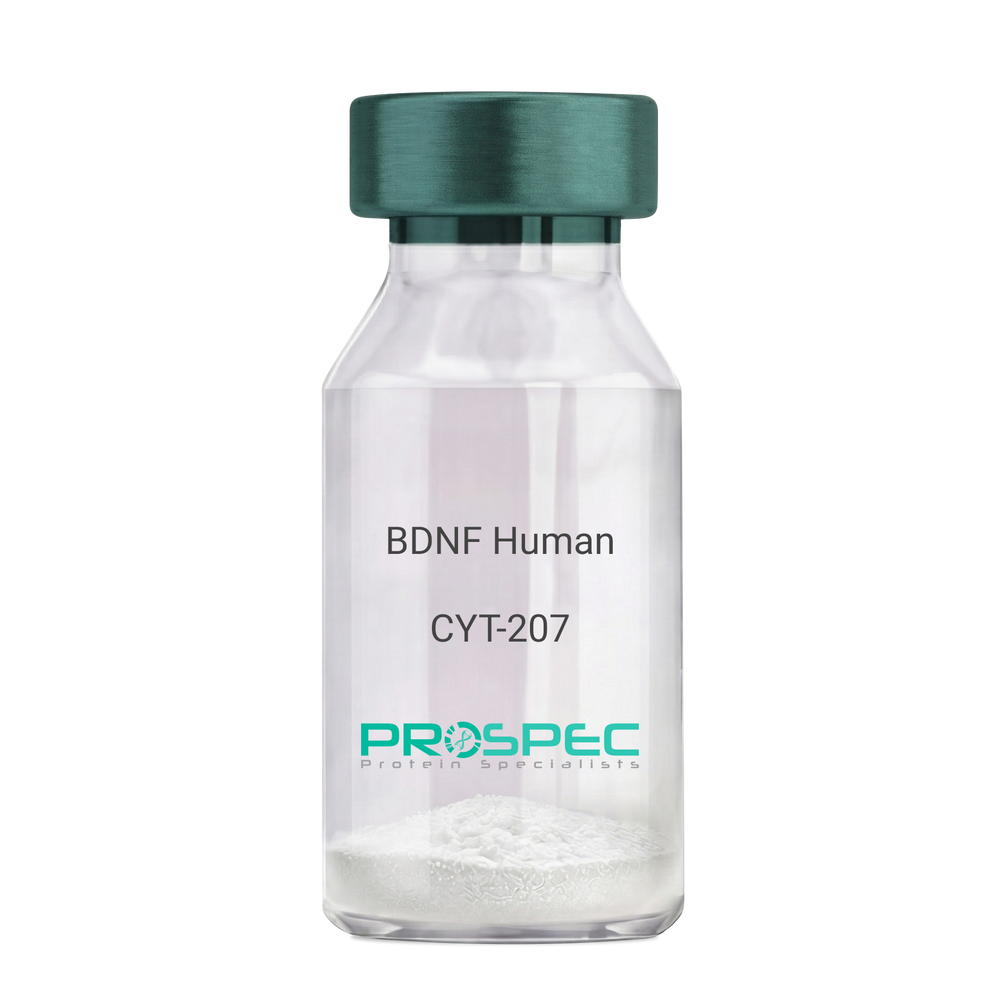
BDNF HumanDescription:
Brain-Derived Neurotrophic Factor Human Recombinant
Brain-Derived Neurotrophic Factor, BDNF, MGC34632.
Product # :
CYT-207Price :
Quantity :
Shipping Method :
Shipped at Room temp
More Info
- description
- source
- formulation
- purity
- biological activity
- More Info
- Activity
Description
BDNF Human Recombinant produced in E.Coli is a homodimer, non-glycosylated, polypeptide chain containing 2 x 119 amino acids (and an N-terminal Met) and having a total molecular mass of 28kDa. BDNF Human Recombinant is purified by proprietary chromatographic techniques.
Source
Escherichia Coli.
Formulation
The protein was lyophilized with 20mM PB and 400mM NaCl, pH 7.2.
Purity
BDNF is greater than 950% as determined SDS-PAGE.
Biological Activity
The activity was determined using Immobilized Human TrkB-His tag protein 2ug/ml (100 μl/well) for its binding to NHS-Biotin BDNF. The ED50 of was found to be ≤20ng/mLActivity
More Info
-
Introduction
BDNF promotes the survival of neuronal populations that are all located either in the central nervous system or directly connected to it. BDNF is a major regulator of synaptic transmission and plasticity at adult synapses in many regions of the cns. The versatility of BDNF is emphasized by its contribution to a range of adaptive neuronal responses including long-term potentiation (ltp), long-term depression (ltd), certain forms of short-term synaptic plasticity, as well as homeostatic regulation of intrinsic neuronal excitability.
-
Synonyms
Brain-Derived Neurotrophic Factor, BDNF, MGC34632.
-
Physical Appearance
Sterile Filtered White lyophilized (freeze-dried) powder.
-
Stability
Lyophilized BDNF although stable at room temperature for 3 weeks, should be stored desiccated below -18°C. Upon reconstitution BDNF should be stored at 4°C between 2-7 days and for future use below -18°C.For long term storage it is recommended to add a carrier protein (0.1% HSA or BSA).Please prevent freeze-thaw cycles.
-
Solubility
It is recommended to reconstitute the lyophilized BDNF in sterile 18M-cm H2O not less than 100µg/ml, which can then be further diluted to other aqueous solutions.
-
Amino Acid Sequence
HSDPARRGE LSVCDSISEW VTAADKKTAV DMSGGTVTVL EKVPVSKGQL KQYFYETKCN PMGYTKEGCR GIDKRHWNSQ CRTTQSYVRA LTMDSKKRIG WRFIRIDTSC VCTLTIKRGR.
-
Background
Final Thoughts
Although more research is needed on the safety and effectiveness of BDNF human recombinant, trials suggest that this laboratory-produced protein may be effective in managing and treating several neurological and psychiatric disorders. It's important for experts to stay up to date on the latest developments and research to learn more about potential risks and benefits.
What is the molecular weight/Mw of BDNF Protein?
BDNF Protein has a total Mw of 27kDa.
What is the source or expression system of BDNF Protein?
Escherichia Coli.
What is the Purity of BDNF Protein?
BDNF Protein is >97% pure as determined by SDS-PAGE.
What is the Biological Activity of BDNF Protein?
The ED50, as determined by the dose-dependent induction of C6 cells proliferation, is 1.3-2µg/ml.
What is the amino acid sequence of BDNF Protein?
MHSDPARRGE LSVCDSISEW VTAADKKTAV DMSGGTVTVL EKVPVSKGQL KQYFYETKCN PMGYTKEGCR GIDKRHWNSQ CRTTQSYVRA LTMDSKKRIG WRFIRIDTSC VCTLTIKRGR.
What applications can BDNF Protein be used in?
BDNF Protein can probably be used in western blot, ELISA and Lateral Flow.
What is the endotoxin level for BDNF Protein?
The endotoxin level is minimal, BDNF Protein was purified using conventional chromatography techniques.
-
Protein content
BDNF quantitation was carried out by two independent methods:1. UV spectroscopy at 280 nm using the absorbency value of 1.6 as the extinction coefficient for a 0.1% (1mg/ml) solution. This value is calculated by the PC GENE computer analysis program of protein sequences (IntelliGenetics). 2. Analysis by RP-HPLC, using a standard solution of Brain-derived Neurotrophic Factor as a Reference Standard.
ProSpec's products are furnished for LABORATORY RESEARCH USE ONLY. The product may not be used as drugs, agricultural or pesticidal products, food additives or household chemicals.
- View Data Sheet
Name :
MET HumanDescription:
Met Proto-Oncogene Human Recombinant
Hepatocyte growth factor receptor, HGF receptor, HGF/SF receptor, Proto-oncogene c-Met, Scatter factor receptor, SF receptor, Tyrosine-protein kinase Met, MET,HGFR, AUTS9, RCCP2.
Product # :
PRO-207Price :
Quantity :
Shipping Method :
Shipped with Ice Packs
More Info
- description
- source
- formulation
- purity
- More Info
Description
Met Proto-Oncogene Human Recombinant produced in Insect cells amino acids 1039-1345, having a molecular weight of 34.6kDa.MET is purified by proprietary chromatographic techniques.
Source
Insect cells.
Formulation
MET protein (1mg/ml) is supplied in 50mM Tris, 300mM NaCl, 10% Glycerol, pH 7.5.
Purity
Greater than 90.0% as determined by SDS-PAGE.
More Info
-
Introduction
Mesenchymal epithelial transition factor (c-MET) is a proto-oncogenic receptor tyrosine kinase. The endogenous ligand for c-MET is HGF (hepatocyte growth factor), which is a disulfide-linked heterodimeric molecule produced predominantly by mesenchymal cells. In the adult, c-MET protein expression is limited to stem and progenitor cells and is required for wound healing and hepatocyte regeneration. In the embryo, c-MET receptors are expressed on cells of epithelial origin, which are vital for invasive growth and mediate epithelial-mesenchymal transition (EMT). Abnormal activation of the HGF/MET pathway leads to a variety of cancers. c-MET mutation is linked with a poor prognosis since it can trigger tumor growth, angiogenesis and metastasis.
-
Synonyms
Hepatocyte growth factor receptor, HGF receptor, HGF/SF receptor, Proto-oncogene c-Met, Scatter factor receptor, SF receptor, Tyrosine-protein kinase Met, MET,HGFR, AUTS9, RCCP2.
-
Physical Appearance
Sterile Filtered clear colorless solution.
-
Stability
Store at 4°C if entire vial will be used within 2-4 weeks. Store, frozen at -20°C for longer periods of time.Please avoid freeze thaw cycles.
-
Amino Acid Sequence
DSDISSPLLQNTVHIDLSALNPELVQAVQHVVIGPSSLIVHFNEVIGRGHFGCVYHGTL
LDNDGKKIHCAVKSLNRITDIGEVSQFLTEGIIMKDFSHPNVLSLLGICLRSEGSPLVVL
PYMKHGDLRNFIRNETHNPTVKDLIGFGLQVAKGMKYLASKKFVHRDLAARNCMLDE
KFTVKVADFGLARDMYDKEYYSVHNKTGAKLPVKWMALESLQTQKFTTKSDVWSFG
VLLWELMTRGAPPYPDVNTFDITVYLLQGRRLLQPEYCPDPLYEVMLKCWHPKAEM
RPSFSELVSRISAIFSTFI.
ProSpec's products are furnished for LABORATORY RESEARCH USE ONLY. The product may not be used as drugs, agricultural or pesticidal products, food additives or household chemicals.
- View Data Sheet
Name :
Pleiotrophin HumanDescription:
Pleiotrophin Human Recombinant
PTN, Heparin Affin Regulatory Protein, HARP, Heparin-binding growth factor-8, HBGF-8, Osteoblast-Specific Factor-1, OSF-1, Heparin-binding growth-associated molecule, HB-GAM, HBNF-1 Heparin-binding brain mitogen, Heparin-binding neurite outgrowth-promoting factor 1, HBBM, NEGF1.
Product # :
CYT-749Price :
Quantity :
Shipping Method :
Shipped at Room temp
More Info
- description
- source
- formulation
- purity
- More Info
- sds-page
Description
Pleiotrophin Human Recombinant produced in E.coli is a single, non-glycosylated polypeptide chain containing 136 amino acids and having a molecular mass of 15.3kDa.The Pleiotrophin is purified by proprietary chromatographic techniques.
Source
Escherichia Coli.
Formulation
The Pleiotrophin protein was lyophilized from a 0.2µm filtered concentrated solution in PBS, pH 7.4.
Purity
Greater than 97.0% as determined by:
(a) Analysis by RP-HPLC.
(b) Analysis by SDS-PAGE.sds-page
More Info
-
Introduction
Pleiotrophin (Osteoblast-Specific Factor-1, OSF-1) contains 136 amino acid residues. The sequence is very rich in cationic amino acids (24% of the residues); lysine cluster sequences are found in the N-terminal and C-terminal ends of the structure.
The OSF-1 gene was shown by Northern blotting analysis to be expressed in mouse calvarial osteoblast-enriched cells and in mouse brain tissues, but not in thymus, spleen, kidney, liver, lung, testis or heart. Pleiotrophin has the ability to promote adhesion, migration, expansion, and differentiation of human osteoprogenitor cells. In addition to certain types of cancer, the embryonic growth and differentiation factor pleiotrophin is found also in adults in inflammatory diseases. In osteoarthritis, pleiotrophin is especially expressed in early stages, and its concentrations in the synovial fluid could serve as a marker for the progress of the disease. Pleitrophin might be involved in cartilage repair in osteoarthritis, in particular, in earlier stages. -
Synonyms
PTN, Heparin Affin Regulatory Protein, HARP, Heparin-binding growth factor-8, HBGF-8, Osteoblast-Specific Factor-1, OSF-1, Heparin-binding growth-associated molecule, HB-GAM, HBNF-1 Heparin-binding brain mitogen, Heparin-binding neurite outgrowth-promoting factor 1, HBBM, NEGF1.
-
Physical Appearance
Sterile Filtered White lyophilized (freeze-dried) powder.
-
Stability
Lyophilized Pleiotrophin although stable at room temperature for 3 weeks, should be stored desiccated below -18°C. Upon reconstitution Pleiotrophin should be stored at 4°C between 2-7 days and for future use below -18°C. For long term storage it is recommended to add a carrier protein (0.1% HSA or BSA). Please prevent freeze-thaw cycles.
-
Solubility
It is recommended to reconstitute the lyophilized Pleiotrophin in sterile 18M-cm H2O not less than 100µg/ml, which can then be further diluted to other aqueous solutions.
-
Amino Acid Sequence
GKKEKPEKKV KKSDCGEWQW SVCVPTSGDC GLGTREGTRT GAECKQTMKT QRCKIPCNWK KQFGAECKYQ FQAWGECDLN TALKTRTGSL KRALHNAECQ KTVTISKPCG KLTKPKPQAE SKKKKKEGKK QEKMLD.
ProSpec's products are furnished for LABORATORY RESEARCH USE ONLY. The product may not be used as drugs, agricultural or pesticidal products, food additives or household chemicals.
- View Data Sheet
Name :
pGH 20kDa HumanDescription:
Growth Hormone Placental 20kDa Human Recombinant
GHL, GHV, GH-V, hGH-V, PGH.
Product # :
CYT-337Price :
Quantity :
Shipping Method :
Shipped at Room temp
More Info
- description
- source
- formulation
- purity
- More Info
Description
Growth Hormone Placental 20kDa Human Recombinant produced in E.Coli is a single, non-glycosylated, polypeptide chain containing 177 amino acids and having a molecular mass of 20498 Dalton. Predicted pI=8.20. Growth Hormone 20K placental is devoid of lactogenic (prolactin receptor mediated) activity characteristic to pituitary GHs. GH 20K placental is purified by proprietary chromatographic techniques.
Source
Escherichia Coli.
Formulation
pGH 20kDa was lyophilized from a concentrated (1mg/ml) solution with0.0045mM NaHCO3 previously adjusted pH 11.
Purity
Greater than 98.0% as determined by:
(a) Analysis by SEC-HPLC.
(b) Analysis by SDS-PAGE.More Info
-
Introduction
GH is a member of the somatotropin/prolactin family of hormones which play an important role in growth control. The gene, along with four other related genes, is located at the growth hormone locus on chromosome 17 where they are interspersed in the same transcriptional orientation; an arrangement which is thought to have evolved by a series of gene duplications. The five genes share a remarkably high degree of sequence identity. Alternative splicing generates additional isoforms of each of the five growth hormones, leading to further diversity and potential for specialization. This particular family member is expressed in the pituitary but not in placental tissue as is the case for the other four genes in the growth hormone locus. Mutations in or deletions of the gene lead to growth hormone deficiency and short stature.
-
Synonyms
GHL, GHV, GH-V, hGH-V, PGH.
-
Physical Appearance
Sterile Filtered White lyophilized (freeze-dried) powder.
-
Stability
Lyophilized Growth Hormone 20K Placental although stable at room temperature for 3 weeks, should be stored desiccated below -18°C. Upon reconstitution and filter sterilization GH 20K pl can be stored at 4°C for up to 4 weeks. For long term storage and more diluted solutions it is recommended to add a carrier protein (0.1% HSA or BSA). Please prevent freeze-thaw cycles.
-
Solubility
It is recommended to reconstitute the lyophilized Placental Growth Hormone in 0.4% NaHCO3or water adjusted to pH 11, not less than 100µg/ml, which can then be further diluted to other aqueous solutions.
-
Amino Acid Sequence
AFPTI PLSRLFDNAM LRARRLYQLA YDTYQEFNPQ TSLCFSESIP TPSNRVKTQQ KSNLELLRIS LLLIQSWLEP VQLLRSVFAN SLVYGASDSN VYRHLKDLEE GIQTLMWRLE DGSPRTGQIF NQSYSKFDTK SHNDDALLKN YGLLYCFRKD MDKVETFLRI VQCRSVEGSC GF
ProSpec's products are furnished for LABORATORY RESEARCH USE ONLY. The product may not be used as drugs, agricultural or pesticidal products, food additives or household chemicals.
- View Data Sheet
Name :
EGFL6 MouseDescription:
EGF Like Domain Multiple 6 Mouse Recombinant
Epidermal growth factor-like protein 6, EGF-L6, Egfl6, Maeg.
Product # :
CYT-1105Price :
Quantity :
Shipping Method :
Shipped with Ice Packs
More Info
- description
- source
- formulation
- purity
- More Info
Description
EGFL6 Mouse Recombinant produced in Sf9 Insect cells is a single, glycosylated polypeptide chain containing 273 amino acids (287-550a.a.) and having a molecular mass of 31.1kDa (Molecular size on SDS-PAGE will appear at approximately 28-40kDa).EGFL6 is expressed with a 9 amino acid His tag at C-Terminus and purified by proprietary chromatographic techniques.
Source
Sf9, Insect cells.
Formulation
EGFL6 protein solution ( 0.5mg/ml ) contains Phosphate Buffered Saline (pH 7.4) containing 10% glycerol.
Purity
Greater than 95.0% as determined by SDS-PAGE.
More Info
-
Introduction
Epidermal Growth Factorlike Domain Multiple 6 (EGFL6) belongs to the EGF repeat superfamily of proteins, whose members are involved in the regulation of cell cycle, proliferation, and developmental processes. EGFL6 gene product contains a signal peptide, suggesting that EGFL6 is secreted; an EGF repeat region consisting of four complete EGF-like repeats and 1 partial EGF-like repeat, 3 of which have a calcium-binding consensus sequence; an arg-gly-asp integrin association motif; and a MAM domain, which is assumed to have an adhesive function. Within shared regions, human EGFL6 shares 75% and 78% amino acid sequence identity with the mouse and rat orthologs, respectively. EGFL6 is expressed in various fetal tissues during early development such as the lung, heart, liver, spleen, cochlea and the placenta, as well as meningioma tumors.
-
Synonyms
Epidermal growth factor-like protein 6, EGF-L6, Egfl6, Maeg.
-
Physical Appearance
Sterile filtered colorless solution.
-
Stability
Store at 4°C if entire vial will be used within 2-4 weeks. Store, frozen at -20°C for longer periods of time. For long term storage it is recommended to add a carrier protein (0.1% HSA or BSA).Avoid multiple freeze-thaw cycles.
-
Amino Acid Sequence
ADLTMKKKVK LKMVTPRPAS TRVPKVNLPY SSEEGVSRGR NYDGEQKKKE EGKRERLEEE
KGEKTLRNEV EQERTLRGDV FSPKVNEAED LDLVYVQRKE LNSKLKHKDL NISVDCSFDL
GVCDWKQDRE DDFDWHPADR DNDVGYYMAV PALAGHKKNI GRLKLLLPNL TPQSNFCLLF
DYRLAGDKVG KLRVFVKNSN NALAWEETKN EDGRWRTGKI QLYQGIDTTK SVIFEAERGK GKTGEIAVDG VLLVSGLCPD DFLSVEGHHH HHH. -
Background
Title: EGF-Like Domain Multiple 6 Mouse Recombinant: Insights into its Biological Significance and Potential Applications
Abstract:
EGF-Like Domain Multiple 6 (EGFL6) is a critical protein involved in various biological processes, including development, tissue homeostasis, and cancer progression. This research paper provides a comprehensive analysis of mouse recombinant EGFL6, focusing on its production, characterization, and potential applications in studying its biological functions. The paper highlights the significance of EGFL6 in cellular processes and its role in disease pathogenesis. Furthermore, it discusses ongoing research and potential therapeutic applications of recombinant EGFL6 in cancer and regenerative medicine. The information presented in this paper aims to enhance our understanding of mouse recombinant EGFL6 and its utility as a research tool and a potential therapeutic agent.Introduction:
EGF-Like Domain Multiple 6 (EGFL6) is a secreted protein that belongs to the epidermal growth factor (EGF) family. Mouse recombinant EGFL6, produced through genetic engineering techniques, provides a valuable tool for investigating its biological functions and potential therapeutic applications.Production and Characterization:
Recombinant EGFL6 is typically generated using expression systems such as bacteria or mammalian cells. The protein is then purified and characterized to ensure its structural integrity and functional activity. Rigorous quality control measures are implemented to confirm the specificity and potency of the recombinant EGFL6.Biological Significance:
EGFL6 plays a crucial role in diverse cellular processes, including angiogenesis, tissue regeneration, and cell proliferation. It is involved in the modulation of signaling pathways, such as the Wnt/β-catenin pathway, and interacts with extracellular matrix components. Recombinant EGFL6 offers a valuable tool for investigating the molecular mechanisms underlying its biological functions and its involvement in disease pathogenesis.Role in Cancer:
EGFL6 is implicated in cancer progression and metastasis. It promotes tumor angiogenesis, invasion, and resistance to chemotherapy. Studies utilizing recombinant EGFL6 can contribute to a better understanding of its role in tumor microenvironment remodeling and the development of targeted therapeutic strategies.Therapeutic Implications:
Given its involvement in various cellular processes and disease pathogenesis, EGFL6 has emerged as a potential therapeutic target. Recombinant EGFL6-based therapies, such as antibody-based approaches or small molecule inhibitors, hold promise for cancer treatment and regenerative medicine. Ongoing research is focused on developing strategies to modulate EGFL6 activity for therapeutic benefit.Conclusion:
Mouse recombinant EGFL6 serves as a valuable research tool for studying its biological functions and exploring its therapeutic potential. Its production, characterization, and applications in understanding cellular processes and disease pathogenesis contribute to our knowledge of EGFL6 biology and the development of targeted interventions. Continued research and clinical investigations exploring the therapeutic applications of recombinant EGFL6 offer promising avenues for improving outcomes in cancer and regenerative medicine.What is the molecular weight/Mw of EGFL6 MOUSE Protein?
EGFL6 MOUSE Protein has a total Mw of 31.1kDa.
What is the source or expression system of EGFL6 MOUSE Protein?
Sf9, Insect cells.
What is the Purity of EGFL6 MOUSE Protein?
EGFL6 MOUSE Protein is >95% pure as determined by SDS-PAGE.
What is the Biological Activity of EGFL6 MOUSE Protein?
The biological functionality of EGFL6 MOUSE Protein will be determined in the future.
What is the amino acid sequence of EGFL6 MOUSE Protein?
EGFL6 MOUSE Protein is composed from 273 amino acids.
What applications can EGFL6 MOUSE Protein be used in?
EGFL6 MOUSE Protein can probably be used in western blot, ELISA and Lateral Flow.
What is the endotoxin level for EGFL6 MOUSE Protein?
The endotoxin level is minimal, EGFL6 MOUSE Protein was purified using conventional chromatography techniques.
ProSpec's products are furnished for LABORATORY RESEARCH USE ONLY. The product may not be used as drugs, agricultural or pesticidal products, food additives or household chemicals.
- View Data Sheet
Name :
PEX26 HumanDescription:
Peroxisomal Biogenesis Factor 26 Human Recombinant
PBD7A, PBD7B, PEX26M1T, Pex26pM1T, Peroxisome assembly protein 26, PEX26.
Product # :
PRO-1544Price :
Quantity :
Shipping Method :
Shipped with Ice Packs
More Info
- description
- source
- formulation
- purity
- More Info
Description
PEX26 Human Recombinant produced in E. coli is a single polypeptide chain containing 269 amino acids (1-246) and having a molecular mass of 29.3kDa. PEX26 is fused to a 23 amino acid His-tag at N-terminus & purified by proprietary chromatographic techniques.
Source
Escherichia Coli.
Formulation
The PEX26 solution (0.5mg/ml) contains 20mM Tris-HCl buffer (pH 8.0), 0.15M NaCl, 20% glycerol and 1mM DTT.
Purity
Greater than 90% as determined by SDS-PAGE.
More Info
-
Introduction
Peroxisomal Biogenesis Factor 26 (PEX26) which is a part of the peroxin-26 gene family is probably required for protein import into peroxisomes. PEX26 attaches PEX1 and PEX6 to peroxisome membranes to form heteromeric AAA ATPase complexes needed for the import of proteins into peroxisomes. Deficiencies in this gene are the cause of peroxisome biogenesis disorder complementation group 8. PBD is a group of peroxisomal disorders evolving from a failure of protein import into the peroxisomal membrane or matrix.
-
Synonyms
PBD7A, PBD7B, PEX26M1T, Pex26pM1T, Peroxisome assembly protein 26, PEX26.
-
Physical Appearance
Sterile Filtered clear solution.
-
Stability
Store at 4°C if entire vial will be used within 2-4 weeks. Store frozen at -20°C for longer periods of time. For long term storage it is recommended to add a carrier protein (0.1% HSA or BSA).Avoid multiple freeze-thaw cycles.
-
Amino Acid Sequence
MGSSHHHHHH SSGLVPRGSH MGSMKSDSST SAAPLRGLGG PLRSSEPVRA VPARAPAVDL LEEAADLLVV HLDFRAALET CERAWQSLAN HAVAEEPAGT SLEVKCSLCV VGIQALAEMD RWQEVLSWVL QYYQVPEKLP PKVLELCILL YSKMQEPGAV LDVVGAWLQD PANQNLPEYG ALAEFHVQRV LLPLGCLSEA EELVVGSAAF GEERRLDVLQ AIHTARQQQK QEHSGSEEAQ KPNLEGSVSH KFLSLPMLVR QLWDSAVSH.
ProSpec's products are furnished for LABORATORY RESEARCH USE ONLY. The product may not be used as drugs, agricultural or pesticidal products, food additives or household chemicals.
- View Data Sheet
Name :
VEGF Human (121 a.a.), HisDescription:
Vascular Endothelial Growth Factor-121 Human Recombinant, His Tag
Vascular endothelial growth factor A, VEGF-A, Vascular permeability factor, VPF, VEGF, MGC70609.
Product # :
CYT-619Price :
Quantity :
Shipping Method :
Shipped with Ice Packs
More Info
- description
- source
- formulation
- purity
- biological activity
- More Info
Description
Vascular Endothelial Growth Factor-121 Human Recombinant produced in E.Coli is a double, non-glycosylated, polypeptide chain (aa 207-327) containing a total of 142 amino acids and having a molecular mass of 16.3 kDa. The VEGF-121 is fused to a 20 amino acid His tag at N-terminus and purified by proprietary chromatographic techniques.
Source
Escherichia Coli.
Formulation
VEGF-121 His Tag in 20mM Tris pH-8 and 10% glycerol.
Purity
Greater than 90.0% as determined by SDS-PAGE.
Biological Activity
The ED50 for this effect is <4.2 ng/ml. Measured in a cell proliferation assay using NIH-3T3 cell, corresponding to a specific activity of less than 238,095.23units/mg.More Info
-
Introduction
Vascular endothelial growth factor is an important signaling protein involved in both vasculogenesis and angiogenesis. As its name implies, VEGF activity has been mostly studied on cells of the vascular endothelium, although it does have effects on a number of other cell types (e.g. stimulation monocyte/macrophage migration, neurons, cancer cells, kidney epithelial cells ).VEGF mediates increased vascular permeability, induces angiogenesis, vasculogenesis and endothelial cell growth, promotes cell migration, and inhibits apoptosis. In vitro, VEGF has been shown to stimulate endothelial cell mitogenesis and cell migration. VEGF is also a vasodilator and increases microvascular permeability and was originally referred to as vascular permeability factor.
Elevated levels of this protein is linked to POEMS syndrome, also known as Crow-Fukase syndrome. Mutations in this gene have been associated with proliferative and nonproliferative diabetic retinopathy. -
Synonyms
Vascular endothelial growth factor A, VEGF-A, Vascular permeability factor, VPF, VEGF, MGC70609.
-
Physical Appearance
Sterile Filtered colorless solution.
-
Stability
Store at 4°C if entire vial will be used within 2-4 weeks. Store, frozen at -20°C for longer periods of time. For long term storage it is recommended to add a carrier protein (0.1% HSA or BSA).Avoid multiple freeze-thaw cycles.
-
Amino Acid Sequence
MGSSHHHHHH SSGLVPRGSH MAPMAEGGGQ NHHEVVKFMD VYQRSYCHPI ETLVDIFQEY PDEIEYIFKP SCVPLMRCGG CCNDEGLECV PTEESNITMQ IMRIKPHQGQ HIGEMSFLQH NKCECRPKKD RARQEKCDKP RR.
ProSpec's products are furnished for LABORATORY RESEARCH USE ONLY. The product may not be used as drugs, agricultural or pesticidal products, food additives or household chemicals.
- View Data Sheet
Name :
BATF HumanDescription:
Basic Leucine Zipper Transcription Factor Human Recombinant
Basic leucine zipper transcriptional factor ATF-like, B-cell-activating transcription factor, B-ATF, SF-HT-activated gene 2 protein, SFA-2, BATF, SFA2, BATF1.
Product # :
PRO-119Price :
Quantity :
Shipping Method :
Shipped with Ice Packs
More Info
- description
- source
- formulation
- purity
- More Info
Description
BATF Human Recombinant fused with a 20 amino acid His tag at N-terminus produced in E.Coli is a single, non-glycosylated, polypeptide chain containing 145 amino acids (1-125 a.a.) and having a molecular mass of 16.2kDa. The BATF is purified by proprietary chromatographic techniques.
Source
Escherichia Coli.
Formulation
The BATF solution (1 mg/ml) contains 20mM Tris-HCl buffer (pH8.0), 0.2M NaCl and 40% glycerol.
Purity
BATF purity was found to be greater than 90.0% as determined by SDS-PAGE.
More Info
-
Introduction
BATF is a nuclear basic leucine zipper protein which is a member of the AP-1/ATF superfamily of transcription factors. BATF is intensely expressed in mature T and B lymphocytes, and is up-regulated after transformation by human T-cell leukemia virus type I. BATF acts as a tissue-specific modulator of the AP-1 transcription complex in human cells. Furthermore, BATF connects with IFP35 which is a leucine zipper protein that translocates to the nucleus following IFN treatment.
-
Synonyms
Basic leucine zipper transcriptional factor ATF-like, B-cell-activating transcription factor, B-ATF, SF-HT-activated gene 2 protein, SFA-2, BATF, SFA2, BATF1.
-
Physical Appearance
BATF is supplied as a sterile filtered colorless solution.
-
Stability
Store at 4°C if entire vial will be used within 2-4 weeks. Store, frozen at -20°C for longer periods of time. For long term storage it is recommended to add a carrier protein (0.1% HSA or BSA).Avoid multiple freeze-thaw cycles.
-
Amino Acid Sequence
MGSSHHHHHH SSGLVPRGSH MPHSSDSSDS SFSRSPPPGK QDSSDDVRRV QRREKNRIAA QKSRQRQTQK ADTLHLESED LEKQNAALRK EIKQLTEELK YFTSVLNSHE PLCSVLAAST PSPPEVVYSA HAFHQPHVSS PRFQP.
ProSpec's products are furnished for LABORATORY RESEARCH USE ONLY. The product may not be used as drugs, agricultural or pesticidal products, food additives or household chemicals.
- View Data Sheet
Name :
FLT1 D5 HumanDescription:
Vascular Endothelial Growth Factor Receptor-1 D5 Human Recombinant
FLT-1, FLT1, Tyrosine-protein kinase receptor FLT, Flt-1, Tyrosine-protein kinase FRT, Fms-like tyrosine kinase 1, VEGFR-1.
Product # :
PKA-239Price :
Quantity :
Shipping Method :
Shipped at Room temp
More Info
- description
- source
- formulation
- purity
- biological activity
- More Info
Description
Soluble FLT1 D1-5 Human Recombinant produced in baculovirus is monomeric, glycosylated, polypeptide containing 562 amino acids and having a molecular mass of 70 kDa. The soluble receptor protein contains only the first 5 extracellular domains, which contain all the information necessary for binding of VEGF.The FLT1 is purified by proprietary chromatographic techniques.
Source
Insect Cells.
Formulation
FLT1 D1-5 was lyophilized from a concentrated (1 mg/ml) sterile solution containing no additives.
Purity
Greater than 90.0% as determined by(a)Analysis by RP-HPLC.
(b)Analysis by SDS-PAGE.Biological Activity
The activity of FLT1 D5 was determined by its ability to abolish the binding of iodinated VEGF to solid surfaces or cell surfaces. The ED50 for this effect is typically 10 ng/ml, corresponding to a specific activity of 100,000IU/mg.
In a 13 day CAM-assay sVEGFR-1 is able to inhibit VEGF stimulated sprouting of capillaries at 30 pM.More Info
-
Introduction
Endothelial cells express three different vascular endothelial growth factor (VEGF) receptors, belonging to the family of receptor tyrosine kinases (RTKs). They are named VEGFR-1 (Flt-1), VEGFR-2 (KDR/Flk-1), VEGFR-3 (Flt-4). Their expression is almost exclusively restricted to endothelial cells, but VEGFR-1 can also be found on monocytes, dendritic cells and on trophoblast cells. The flt-1 gene was first described in 1990. The receptor contains seven immunoglobulin-like extracellular domains, a single transmembrane region and an intracellular splited tyrosine kinase domain. Compared to VEGFR-2 the Flt-1 receptor has a higher affinity for VEGF but a weaker signaling activity. VEGFR-1 thus leads not to proliferation of endothelial cells, but mediates signals for differentiation. Interestingly a naturally occuring soluble variant of VEGFR-1 (sVEGFR-1) was found in HUVE supernatants in 1996, which is generated by alternative splicing of the flt-1 mRNA. The biological functions of sVEGFR-1 still are not clear, but it seems to be an endogenous regulator of angiogenesis, binding VEGF with the same affinity as the full-length receptor.
-
Synonyms
FLT-1, FLT1, Tyrosine-protein kinase receptor FLT, Flt-1, Tyrosine-protein kinase FRT, Fms-like tyrosine kinase 1, VEGFR-1.
-
Physical Appearance
Sterile Filtered White lyophilized (freeze-dried) powder.
-
Stability
Lyophilized FLT-1 although stable at room temperature for 3 weeks, should be stored desiccated below -18°C. Upon reconstitution FLT1 should be stored at 4°C between 2-7 days and for future use below -18°C.For long term storage it is recommended to add a carrier protein (0.1% HSA or BSA).Please prevent freeze-thaw cycles.
-
Solubility
It is recommended to reconstitute the lyophilized FLT1 D5 in sterile water not less than 100µg/ml, which can then be further diluted to other aqueous solutions.
ProSpec's products are furnished for LABORATORY RESEARCH USE ONLY. The product may not be used as drugs, agricultural or pesticidal products, food additives or household chemicals.
- View Data Sheet
Name :
Prolactin HumanDescription:
Prolactin Human Recombinant
Mammotropin, Luteotropic hormone, Luteotropin, PRL.
Product # :
CYT-267Price :
Quantity :
Shipping Method :
Shipped at Room temp
More Info
- description
- source
- formulation
- purity
- biological activity
- More Info
Description
Prolactin Human Recombinant produced in E.Coli is a single, non-glycosylated polypeptide chain containing 200 amino acids and having a molecular mass of 23007 Dalton. The Prolactin is purified by proprietary chromatographic techniques.
Source
Escherichia Coli.
Formulation
The protein was lyophilized from a concentrated (1mg/ml) solution with 10mM sodium Phosphate buffer pH=8 and 50mM Nacl.
Purity
Greater than 95.0% as determined by:
(a) Analysis by SEC-HPLC.
(b) Analysis by SDS-PAGE.Biological Activity
The ED50 as determined by the dose-dependant stimulation of the proliferation of rat lymphoma, Nb2-11 was found to be < 0.065ng/ml corresponding to a Specific Activity of 15,385,000IU/mg.More Info
-
Introduction
Prolactin is a neuroendocrine hormone synthesized primarily by the pituitary gland but also a variety of other cell types including the placenta, brain and uterus. Its primary function is to promote and maintain lactation but has also been shown to have a role in breast cancer development, regulation of reproductive function and immunoregulation.
-
Synonyms
Mammotropin, Luteotropic hormone, Luteotropin, PRL.
-
Physical Appearance
Sterile Filtered White lyophilized (freeze-dried) powder.
-
Stability
Lyophilized Prolactin although stable at room temperature for 3 weeks, should be stored desiccated below -18°C. Upon reconstitution Prolactin should be stored at 4°C between 2-7 days and for future use below -18°C.For long term storage it is recommended to add a carrier protein (0.1% HSA or BSA).Please prevent freeze-thaw cycles.
-
Solubility
It is recommended to reconstitute the lyophilized Prolactin in sterile 18MΩ-cm H2O not less than 100µg/ml, which can then be further diluted to other aqueous solutions.
-
Amino Acid Sequence
The sequence of the first five N-terminal amino acids was determined and was found to be Met-Leu-Pro-Ile-Cys.
ProSpec's products are furnished for LABORATORY RESEARCH USE ONLY. The product may not be used as drugs, agricultural or pesticidal products, food additives or household chemicals.
- View Data Sheet
Name :
VEGF Human, CHODescription:
Vascular Endothelial Growth Factor Human Recombinant, CHO
Vascular endothelial growth factor A, VEGF-A, Vascular permeability factor, VPF, VEGF, MGC70609.
Product # :
CYT-260Price :
Quantity :
Shipping Method :
Shipped at Room temp
More Info
- description
- source
- formulation
- purity
- biological activity
- More Info
Description
Vascular Endothelial Growth Factor Human Recombinant produced in CHO cells is a double, glycosylated, polypeptide chain containing 165 amino acids and migrates as 44 kDa in SDS-PAGE under non-reducing conditions. The VEGF is purified by proprietary chromatographic techniques.
Source
Chinese Hamster Ovarian Cell.
Formulation
The protein was lyophilized from a Phosphate- Buffered Saline, pH 7.4.
Purity
Greater than 97.0% as determined by SDS-PAGE.
Biological Activity
The protein was tested in HUVEC cells, the ED50 for this effect was found to be 2-6ng/ml.More Info
-
Introduction
Vascular endothelial growth factor is an important signaling protein involved in both vasculogenesis and angiogenesis. As its name implies, VEGF activity has been mostly studied on cells of the vascular endothelium, although it does have effects on a number of other cell types (e.g. stimulation monocyte/ macrophagemigration, neurons, cancer cells, kidney epithelial cells ). VEGF mediates increased vascular permeability, induces angiogenesis, vasculogenesis and endothelial cell growth, promotes cell migration, and inhibits apoptosis. In vitro, VEGF has been shown to stimulate endothelial cell mitogenesisand cell migration. VEGF is also a vasodilator and increases microvascular permeability and was originally referred to as vascular permeability factor.
Elevated levels of this protein are linked to POEMS syndrome, also known as Crow-Fukase syndrome. Mutations in this gene have been associated with proliferative and nonproliferative diabetic retinopathy. -
Synonyms
Vascular endothelial growth factor A, VEGF-A, Vascular permeability factor, VPF, VEGF, MGC70609.
-
Physical Appearance
Sterile Filtered White lyophilized (freeze-dried) powder.
-
Stability
Lyophilized Vascular Endothelial Growth Factor Human although stable at room temperature for 3 weeks, should be stored desiccated below -18°C. Upon reconstitution VEGF Human Recombinant should be stored at 4°C between 2-7 days and for future use below -18°C.For long term storage it is recommended to add a carrier protein (0.1% HSA or BSA).Please prevent freeze-thaw cycles.
-
Solubility
It is recommended to reconstitute the lyophilized Vascular Endothelial Growth Factor Human in sterile 18MΩ-cm H2O not less than 100µg/ml, which can then be further diluted to other aqueous solutions.
ProSpec's products are furnished for LABORATORY RESEARCH USE ONLY. The product may not be used as drugs, agricultural or pesticidal products, food additives or household chemicals.
- View Data Sheet
Name :
FGFR2 Human, HisDescription:
Fibroblast Growth Factor Receptor-2 Human Recombinant, His Tag
EC 2.7.10, FGFR-2, BFR-1, CD332, BBDS, CEK3, ECT1, TK14, TK25, CFD1, KSAM, JWS, Fibroblast Growth Factor Receptor 2, Keratinocyte Growth Factor Receptor, Bacteria-Expressed Kinase, EC 2.7.10.1, K-SAM, KGFR, BEK, Protein Tyrosine Kinase, Receptor Like 14, BEK Fibroblast Growth Factor Receptor, Craniofacial Dysostosis 1, Jackson-Weiss Syndrome, Pfeiffer Syndrome, Crouzon Syndrome, CD332 Antigen.
Product # :
PKA-098Price :
Quantity :
Shipping Method :
Shipped with Ice Packs
More Info
- description
- source
- formulation
- purity
- More Info
Description
FGFR2 Human Recombinant produced in Sf9 Baculovirus cells is a single, glycosylated polypeptide chain containing 596 amino acids (22-378a.a.) and having a molecular mass of 66.6kDa (Molecular size on SDS-PAGE will appear at approximately 70-100kDa).FGFR2 is expressed with a 239 amino acids hIgG-His tag at C-Terminus and purified by proprietary chromatographic techniques.
Source
Sf9, Baculovirus cells.
Formulation
FGFR2 protein solution (1mg/ml) contains Phosphate Buffered Saline (pH 7.4) and 10% glycerol.
Purity
Greater than 95.0% as determined by SDS-PAGE.
More Info
-
Introduction
Fibroblast Growth Factors (FGFs) comprise a family of at least eighteen structurally realted proteins that are involved in a multitude of physiological and pathological cellular processes, including cell growth, differentation, angiogenesis, wound healing and tumorgenesis. The biological activities of the FGFs are mediated by a family if type I transmembrane tyrosine kinases which undergo dimerization and autophosphorylation after ligand binding. Four distinct genes encoding closely related FGF receptors, FGFR-1to -4 are known. Multiple forms of FGFR-1 to -3 are generated by alternative splicing of the mRNAs. A frequent splicing event involving FGFR-1 and -2 results in receptors containing all three Ig domains, referred to as the alpha isoform, or only IgII and IgIII, referred to as the ? isoform. Only the alpha isoform has been identified for FGFR-3 and FGFR-4. Additional splicing events for FGFR-1 to -3, involving the C-terminal half of the IgIII domain encoded by two mutually exclusive alternative exons, generate FGF receptors with alternative IgIII domains (IIIb and IIIc). A IIIa isoform which is a secreted FGF binding protein containing only the N-terminal half of the IgIII domain plus some intron sequences has also been reported for FGFR-1. Mutations in FGFR-1 to -3 have been found in patients with birth defects involving craniosynostosis.
-
Synonyms
EC 2.7.10, FGFR-2, BFR-1, CD332, BBDS, CEK3, ECT1, TK14, TK25, CFD1, KSAM, JWS, Fibroblast Growth Factor Receptor 2, Keratinocyte Growth Factor Receptor, Bacteria-Expressed Kinase, EC 2.7.10.1, K-SAM, KGFR, BEK, Protein Tyrosine Kinase, Receptor Like 14, BEK Fibroblast Growth Factor Receptor, Craniofacial Dysostosis 1, Jackson-Weiss Syndrome, Pfeiffer Syndrome, Crouzon Syndrome, CD332 Antigen.
-
Physical Appearance
Sterile Filtered colorless solution.
-
Stability
Store at 4°C if entire vial will be used within 2-4 weeks. Store, frozen at -20°C for longer periods of time. For long term storage it is recommended to add a carrier protein (0.1% HSA or BSA). Avoid multiple freeze-thaw cycles.
-
Amino Acid Sequence
RPSFSLVEDT TLEPEEPPTK YQISQPEVYV AAPGESLEVR CLLKDAAVIS WTKDGVHLGP NNRTVLIGEY LQIKGATPRD SGLYACTASR TVDSETWYFM VNVTDAISSG DDEDDTDGAE DFVSENSNNK RAPYWTNTEK MEKRLHAVPA ANTVKFRCPA GGNPMPTMRW LKNGKEFKQE HRIGGYKVRN QHWSLIMESV VPSDKGNYTC VVENEYGSIN HTYHLDVVER SPHRPILQAG LPANASTVVG GDVEFVCKVY SDAQPHIQWI KHVEKNGSKY GPDGLPYLKV LKHSGINSSN AEVLALFNVT EADAGEYICK VSNYIGQANQ SAWLTVLPKQ QAPGREKEIT ASPDYLELEP KSCDKTHTCP PCPAPELLGG PSVFLFPPKP KDTLMISRTP EVTCVVVDVS HEDPEVKFNW YVDGVEVHNA KTKPREEQYN STYRVVSVLT VLHQDWLNGK EYKCKVSNKA LPAPIEKTIS KAKGQPREPQ VYTLPPSRDE LTKNQVSLTC LVKGFYPSDI AVEWESNGQP ENNYKTTPPV LDSDGSFFLY SKLTVDKSRW QQGNVFSCSV MHEALHNHYT QKSLSLSPGK HHHHHH.
ProSpec's products are furnished for LABORATORY RESEARCH USE ONLY. The product may not be used as drugs, agricultural or pesticidal products, food additives or household chemicals.
- View Data Sheet
Name :
LGALS8 HumanDescription:
Galectin-8 Human Recombinant
Galectin-8, Gal-8, Po66 carbohydrate-binding protein, Po66-CBP, Prostate carcinoma tumor antigen 1, PCTA-1, LGALS8.
Product # :
CYT-017Price :
Quantity :
Shipping Method :
Shipped at Room temp
More Info
- description
- source
- formulation
- purity
- biological activity
- More Info
Description
Galectin-8 Human Recombinant produced in E.Coli is a single, non-glycosylated, Polypeptide chain containing 317 amino acids and having a molecular mass of 35.8kDa.The LGALS8 is purified by proprietary chromatographic techniques.
Source
Escherichia Coli.
Formulation
LGALS8 was lyophilized from a concentrated (1mg/ml) solution in 20mM PBS, pH 7.4.
Purity
Greater than 95.0% as determined by:
(a) Analysis by RP-HPLC.
(b) Analysis by SDS-PAGE.Biological Activity
The ED50 of Galectin-8 as determined by its ability to agglutinate human red blood cells is 0.8~4 µg/ml.More Info
-
Introduction
Galectins are a family of animal lectins with an affinity for beta-galactosides. This family has at least 14 identified members. Galectins share similarities in the CRD (the carbohydrate recognition domain). Galectins are synthesized as cytosolic proteins. Though localized principally in the cytoplasm and lacking a classical signal peptide, galectins can also be stimulated to secretion by non-classical pathways or alternatively targeted to the nucleus. Galectins are involved in modulating cell-cell and cell-matrix interactions. Galectin-8 is a tandem-repeat-type member of the galectin family, consisting of 2 CRDs attached by a linker peptide. Galectin-8 is greatly expressed in lung carcinomas, a number of forms of prostate carcinomas, in addition to other tumor cells. Galectin-8 attaches to a subset of cell surface integrins to modulate ECM-integrin interactions. Once immobilized, Galectin-8 promotes cell adhesion by ligation and clustering of cell surface integrin receptors. On the other hand, as a soluble ligand, Galectin-8 can inhibit cell adhesion.
-
Synonyms
Galectin-8, Gal-8, Po66 carbohydrate-binding protein, Po66-CBP, Prostate carcinoma tumor antigen 1, PCTA-1, LGALS8.
-
Physical Appearance
Sterile Filtered White lyophilized (freeze-dried) powder.
-
Stability
Lyophilized LGALS8 although stable at room temperature for 3 weeks, should be stored desiccated below -18°C. Upon reconstitution Galectin-8 should be stored at 4°C between 2-7 days and for future use below -18°C.Please prevent freeze-thaw cycles.
-
Solubility
It is recommended to reconstitute the lyophilized Galectin-8 in sterile 18M-cm H2O not less than 100µg/ml, which can then be further diluted to other aqueous solutions.
-
Amino Acid Sequence
The sequence of the first five N-terminal amino acids was determined and was found to be Met-Met-Leu-Ser-Leu.
-
Background
What is the molecular weight/Mw of LGALS8 HUMAN Protein?
LGALS8 HUMAN Protein has a total Mw of 35.8kDa.
What is the source or expression system of LGALS8 HUMAN Protein?
Escherichia Coli.
What is the Purity of LGALS8 HUMAN Protein?
LGALS8 HUMAN Protein is >95% pure as determined by SDS-PAGE.
What is the Biological Activity of LGALS8 HUMAN Protein?
The ED50 of Galectin-8 as determined by its ability to agglutinate human red blood cells is 0.8~4 µg/ml.
What is the amino acid sequence of LGALS8 HUMAN Protein?
LGALS8 HUMAN Protein is composed from 317 amino acids.
What applications can LGALS8 HUMAN Protein be used in?
LGALS8 HUMAN Protein can probably be used in western blot, ELISA and Lateral Flow.
What is the endotoxin level for LGALS8 HUMAN Protein?
The endotoxin level is minimal, LGALS8 HUMAN Protein was purified using conventional chromatography techniques.
ProSpec's products are furnished for LABORATORY RESEARCH USE ONLY. The product may not be used as drugs, agricultural or pesticidal products, food additives or household chemicals.
- View Data Sheet
Name :
Noggin Human, HEKDescription:
Noggin Human Recombinant, HEK
Noggin, Symphalangism 1 (Proximal), Synostoses (Multiple) Syndrome 1, SYNS1A, SYNS1, SYM1.
Product # :
CYT-977Price :
Quantity :
Shipping Method :
Shipped with Ice Packs
More Info
- description
- source
- formulation
- purity
- More Info
Description
Noggin produced in HEK293 cells is a polypeptide chain containing 211 amino acids (28-232a.a.) and having a molecular mass of 23.8kDa. (Molecular size on SDS-PAGE will appear at approximately 28-40kDa).Noggin is expressed with a 6 amino acid His tag at C-Terminus and purified by proprietary chromatographic techniques.
Source
HEK293 Cells.
Formulation
Recombinant Human Noggin hek293 derived protein is provided as a solution (0.25mg/ml) containing 50mM MES (pH 6.5) and 30% glycerol.
Purity
Greater than 90.0% as determined by SDS-PAGE.
More Info
-
Introduction
The secreted polypeptide noggin, encoded by the NOG gene, binds and inactivates members of the transforming growth factor-beta (TGF-beta) superfamily signaling proteins, such as bone morphogenetic protein-4 (BMP4). By diffusing through extracellular matrices more efficiently than members of the TGF-beta superfamily, noggin may have a principal role in creating morphogenic gradients. Noggin appears to have pleiotropic effect, both early in development as well as in later stages. It was originally isolated from Xenopus based on its ability to restore normal dorsal-ventral body axis in embryos that had been artificially ventralized by UV treatment. The results of the mouse knockout of noggin suggest that it is involved in numerous developmental processes, such as neural tube fusion and joint formation. Recently, several dominant human NOG mutations in unrelated families with proximal symphalangism (SYM1) and multiple synostoses syndrome (SYNS1) were identified; both SYM1 and SYNS1 have multiple joint fusion as their principal feature, and map to the same region (17q22) as NOG. All NOG mutations altered evolutionarily conserved amino acid residues. The amino acid sequence of human noggin is highly homologous to that of Xenopus, rat and mouse.
-
Synonyms
Noggin, Symphalangism 1 (Proximal), Synostoses (Multiple) Syndrome 1, SYNS1A, SYNS1, SYM1.
-
Physical Appearance
Sterile filtered colorless solution.
-
Stability
Store at 4°C if entire vial will be used within 2-4 weeks.Store, frozen at -20°C for longer periods of time. For long term storage it is recommended to add a carrier protein (0.1% HSA or BSA).Avoid multiple freeze-thaw cycles.
-
Amino Acid Sequence
QHYLHIRPAP SDNLPLVDLI EHPDPIFDPK EKDLNETLLR SLLGGHYDPG FMATSPPEDR PGGGGGAAGG AEDLAELDQL LRQRPSGAMP SEIKGLEFSE GLAQGKKQRL SKKLRRKLQM WLWSQTFCPV LYAWNDLGSR FWPRYVKVGS CFSKRSCSVP EGMVCKPSKS VHLTVLRWRC QRRGGQRCGW IPIQYPIISE CKCSCHHHHH H.
ProSpec's products are furnished for LABORATORY RESEARCH USE ONLY. The product may not be used as drugs, agricultural or pesticidal products, food additives or household chemicals.
- View Data Sheet
Name :
Leptin N82K Human, PEGDescription:
Leptin N82K Human Recombinant, Pegylated
OB Protein, Obesity Protein, OBS, Obesity factor.
Product # :
CYT-1107Price :
Quantity :
Shipping Method :
Shipped at Room temp
More Info
- description
- source
- formulation
- purity
- biological activity
- More Info
Description
Pegylated Leptin N82K Human Recombinant produced in E.Coli is a single non-glycosilated polypeptide chain containing 146 amino acids, an additional Ala at N-terminus and one molecule of PEG 20 kDa at its N-terminus acids and having a molecular weight of 35.6kDa. However due to enlarged hydrodymanic volume it runs on the SDS-PAGE as 48 kDa protein and in gel-filtration on Superdex 200 as over 200 kDa protein. Pegylated Leptin N82K Human Recombinant was purified by proprietary chromatographic techniques.
Source
Escherichia Coli.
Formulation
Lyophilized from a concentrated (0.65mg/ml) solution with 0.003mM NaHCO3 Having 35-40% protein.
Purity
Greater than 99.0% as determined by:
(a) Gel filtration analysis.
(b) Analysis by SDS-PAGE.Biological Activity
Pegylated Leptin Human is capable of stimulatng proliferation of BAF/3 cells stably transfected with the long form of human leptin receptor. Pegylated Leptin in vitro activity is 5-7 fold lower than the non-pegylated recombinant human leptin but in vivo Pegylated Leptin has profound weight reducing effect (as compared to the non-pegylated recombinant human leptin), resulting mainly from reduced food intake.
More Info
-
Introduction
Leptin takes an important part in the regulation of energy balance and body weight control.After entering the circulation, Leptin binds LEPRwhich results in the activation of several major signalling pathways. In the hypothalamus Leptin acts as an appetite-regulating factor that induces a decrease in food intake and an increase in energy consumption and also regulates bone mass and secretion of hypothalamo-pituitary-adrenal hormones. In the periphery, increases basal metabolism, regulates pancreatic beta-cell function and insulin secretion and affects innate and adaptive immunity.
-
Synonyms
OB Protein, Obesity Protein, OBS, Obesity factor.
-
Physical Appearance
Sterile Filtered White lyophilized (freeze-dried) powder.
-
Stability
Lyophilized Pegylated Leptin although stable at room temperature for 3 weeks, should be stored desiccated below -18°C. Upon reconstitution Pegylated Leptin N82K should be stored at 4°C between 2-7 days and for future use below -18°C. For long term storage it is recommended to add a carrier protein (0.1% HSA or BSA). Please prevent freeze-thaw cycles.
-
Solubility
It is recommended to reconstitute the lyophilized Pegylated Leptin in sterile water or 0.4% NaHCO3 adjusted to pH 8-9, not less than 100µg/ml, which can then be further diluted to other aqueous solutions.
ProSpec's products are furnished for LABORATORY RESEARCH USE ONLY. The product may not be used as drugs, agricultural or pesticidal products, food additives or household chemicals.
- View Data Sheet
Name :
GFRA1 HumanDescription:
GDNF Family Receptor Alpha 1 Human Recombinant
GDNF receptor alpha-1, GDNFR-alpha-1, GFRalpha-1, RET ligand 1, TGF-beta-related neurotrophic factor receptor 1, GDNFRA1, RET1L2, RETL1, Glial Cell LineDerived Neurotrophic Factor Receptor Alpha, TRNR1, GPILinked Anchor Protein, PI-Linked Cell-Surface.
Product # :
CYT-1026Price :
Quantity :
Shipping Method :
Shipped at Room temp
More Info
- description
- source
- formulation
- purity
- More Info
Description
GFRA1 Human Recombinant produced in HEK293 cells is a single, glycosylated polypeptide chain (a.a 25-423) containing 409 amino acids including a 10 a.a C-terminal His tag. The total molecular mass is 46.0kDa (calculated).
Source
HEK293 cells.
Formulation
GFRA1 filtered (0.4 µm) and lyophilized from 0.5mg/ml in phosphate buffered saline pH 7.5 containing 5 % (w/v) trehalose.
Purity
Greater than 95.0% as determined by SDS-PAGE.
More Info
-
Introduction
GDNF family receptor alpha-1 (GFRA1) belongs to the GDNF receptor family. GFRA1 is a glycosyl-phosphatidylinositol(GPI)-linked cell surface receptor for both Glial cell line-derived growth factor (GDNF), neurturin (NTN), and mediates activation of the RET tyrosine kinase receptor. The GFRA1 protein is a potent survival factor for central and peripheral neurons, and is vital for the development of kidneys and the enteric nervous system.
-
Synonyms
GDNF receptor alpha-1, GDNFR-alpha-1, GFRalpha-1, RET ligand 1, TGF-beta-related neurotrophic factor receptor 1, GDNFRA1, RET1L2, RETL1, Glial Cell LineDerived Neurotrophic Factor Receptor Alpha, TRNR1, GPILinked Anchor Protein, PI-Linked Cell-Surface.
-
Physical Appearance
Filtered White lyophilized (freeze-dried) powder.
-
Stability
Store lyophilized protein at -20°C. Aliquot the product after reconstitution to avoid repeated freezing/thawing cycles. Reconstituted protein can be stored at 4°C for a limited period of time; it does not show any change after two weeks at 4°C.
-
Solubility
It is recommended to add deionized water to prepare a working stock solution of approximately 0.5mg/ml and let the lyophilized pellet dissolve completely. GFRA1 is not sterile! Please filter the product by an appropriate sterile filter before using it in the cell culture.
-
Amino Acid Sequence
DRLDCVKASD QCLKEQSCST KYRTLRQCVA GKETNFSLAS GLEAKDECRS AMEALKQKSL YNCRCKRGMK KEKNCLRIYW SMYQSLQGND LLEDSPYEPV NSRLSDIFRV VPFISVEHIP KGNNCLDAAK ACNLDDICKK YRSAYITPCT TSVSNDVCNR RKCHKALRQF FDKVPAKHSY GMLFCSCRDI ACTERRRQTI VPVCSYEERE KPNCLNLQDS CKTNYICRSR LADFFTNCQP ESRSVSSCLK ENYADCLLAY SGLIGTVMTP NYIDSSSLSV APWCDCSNSG NDLEECLKFL NFFKDNTCLK NAIQAFGNGS DVTVWQPAFP VQTTTATTTT ALRVKNKPLG PAGSENEIPT HVLPPCANLQ AQKLKSNVSG NTHLCISNGN YEKEGLGAS H HHHHHHHHH.
-
Background
What is the molecular weight/Mw of GFRA1 Protein?
GFRA1 Protein has a total Mw of 46kDa.
What is the source or expression system of GFRA1 Protein?
HEK293 cells.
What is the Purity of GFRA1 Protein?
GFRA1 Protein is >95% pure as determined by SDS-PAGE.
What is the Biological Activity of GFRA1 Protein?
The biological functionality of GFRA1 Protein will be determined in the future.
What is the amino acid sequence of GFRA1 Protein?
DRLDCVKASD QCLKEQSCST KYRTLRQCVA GKETNFSLAS GLEAKDECRS AMEALKQKSL YNCRCKRGMK KEKNCLRIYW SMYQSLQGND LLEDSPYEPV NSRLSDIFRV VPFISVEHIP KGNNCLDAAK ACNLDDICKK YRSAYITPCT TSVSNDVCNR RKCHKALRQF FDKVPAKHSY GMLFCSCRDI ACTERRRQTI VPVCSYEERE KPNCLNLQDS CKTNYICRSR LADFFTNCQP ESRSVSSCLK ENYADCLLAY SGLIGTVMTP NYIDSSSLSV APWCDCSNSG NDLEECLKFL NFFKDNTCLK NAIQAFGNGS DVTVWQPAFP VQTTTATTTT ALRVKNKPLG PAGSENEIPT HVLPPCANLQ AQKLKSNVSG NTHLCISNGN YEKEGLGAS H HHHHHHHHH.
What applications can GFRA1 Protein be used in?
GFRA1 Protein can probably be used in western blot, ELISA and Lateral Flow.
What is the endotoxin level for GFRA1 Protein?
The endotoxin level is minimal, GFRA1 Protein was purified using conventional chromatography techniques.
ProSpec's products are furnished for LABORATORY RESEARCH USE ONLY. The product may not be used as drugs, agricultural or pesticidal products, food additives or household chemicals.
- View Data Sheet
Name :
RANK Human, Sf9Description:
RANK Human Recombinant, Sf9
TNFRSF11A, ODFR, RANK, Tumor Necrosis Factor Receptor Superfamily, Member 11a, Activator Of NFKB, Receptor Activator Of Nuclear Factor-Kappa B, CD265 Antigen, LOH18CR1, TRANCER, CD265
Product # :
CYT-932Price :
Quantity :
Shipping Method :
Shipped with Ice Packs
More Info
- description
- source
- formulation
- purity
- More Info
Description
RANK produced in Sf9 Baculovirus cells is a single, glycosylated polypeptide chain containing 427 amino acids (28-212a.a.) and having a molecular mass of 47.6kDa. (Molecular size on SDS-PAGE will appear at approximately 40-57kDa). RANK is expressed with a 242 amino acid hIgG-His-tag at C-Terminus and purified by proprietary chromatographic techniques.
Source
Sf9, Baculovirus cells.
Formulation
RANK protein solution (1mg/ml) contains Phosphate Buffered Saline (pH 7.4) and 10% glycerol.
Purity
Greater than 90.0% as determined by SDS-PAGE.
More Info
-
Introduction
RANK, is part of the tumor necrosis factor receptor family. RANK is widely expressed with uppermost levels in the skeletal muscle, thymus, liver, colon, small intestine, adrenal gland as well as dendritic cells. Furthermore, in activated human peripheral blood T lymphocytes, RANK expression is induced by IL4 and TGF-b.
-
Synonyms
TNFRSF11A, ODFR, RANK, Tumor Necrosis Factor Receptor Superfamily, Member 11a, Activator Of NFKB, Receptor Activator Of Nuclear Factor-Kappa B, CD265 Antigen, LOH18CR1, TRANCER, CD265
-
Physical Appearance
Sterile Filtered colorless solution.
-
Stability
Store at 4°C if entire vial will be used within 2-4 weeks. Store, frozen at -20°C for longer periods of time.For long term storage it is recommended to add a carrier protein (0.1% HSA or BSA).Avoid multiple freeze-thaw cycles.
-
Amino Acid Sequence
ADPLQIAPPC TSEKHYEHLG RCCNKCEPGK YMSSKCTTTS DSVCLPCGPD EYLDSWNEED KCLLHKVCDT GKALVAVVAG NSTTPRRCAC TAGYHWSQDC ECCRRNTECA PGLGAQHPLQ LNKDTVCKPC LAGYFSDAFS STDKCRPWTN CTFLGKRVEH HGTEKSDAVC SSSLPARKPP NEPHVYLPLE PKSCDKTHTC PPCPAPELLG GPSVFLFPPK PKDTLMISRT PEVTCVVVDV SHEDPEVKFN WYVDGVEVHN AKTKPREEQY NSTYRVVSVL TVLHQDWLNG KEYKCKVSNK ALPAPIEKTI SKAKGQPREP QVYTLPPSRD ELTKNQVSLT CLVKGFYPSD IAVEWESNGQ PENNYKTTPP VLDSDGSFFL YSKLTVDKSR WQQGNVFSCS VMHEALHNHY TQKSLSLSPGKHHHHHH.
ProSpec's products are furnished for LABORATORY RESEARCH USE ONLY. The product may not be used as drugs, agricultural or pesticidal products, food additives or household chemicals.