Skip to content

High-quality research proteins.

  • 1-800-805-6531

  • Mon - Sat 8.00-18.00, Sun - Closed

  • info@prospecbio.com

  • PO Box 6591 East Brunswick NJ 08816

  • Products
    • Cytokines
    • Growth factors
    • Chemokines
    • Cd antigens
    • Neurotrophins
    • Hormones
    • Enzymes
    • Viral antigens
    • Recombinant proteins
    • Natural proteins
    • Monoclonal antibodies
    • Polyclonal antibodies
    • Thermal Packaging
  • About
    • Company
    • Founder
    • Contribution
  • Customers
    • Eastern Asia
    • Eastern Europe
    • North America
    • South America
    • South East Asia
    • Southern Asia
    • Western Europe
  • Ordering
    • Ordering Method
    • Ordering - Credit Card
    • Ordering - PO
    • Shipping Fees
    • FAQs
  • Services
    • DNA Cloning
    • Protein Expression
    • Monoclonal Antibody
    • Fermentation
    • Technology License
  • Contact us
Log in

Country/region

  • USD $ | Albania
  • USD $ | Andorra
  • USD $ | Argentina
  • USD $ | Armenia
  • USD $ | Australia
  • USD $ | Austria
  • USD $ | Azerbaijan
  • USD $ | Belarus
  • USD $ | Belgium
  • USD $ | Bolivia
  • USD $ | Brazil
  • USD $ | Bulgaria
  • USD $ | Cambodia
  • USD $ | Canada
  • USD $ | Chile
  • USD $ | China
  • USD $ | Colombia
  • USD $ | Costa Rica
  • USD $ | Croatia
  • USD $ | Cyprus
  • USD $ | Czechia
  • USD $ | Denmark
  • USD $ | Estonia
  • USD $ | Finland
  • USD $ | France
  • USD $ | Georgia
  • USD $ | Germany
  • USD $ | Greece
  • USD $ | Hong Kong SAR
  • USD $ | Hungary
  • USD $ | Iceland
  • USD $ | India
  • USD $ | Ireland
  • USD $ | Israel
  • USD $ | Italy
  • USD $ | Japan
  • USD $ | Kazakhstan
  • USD $ | Latvia
  • USD $ | Liechtenstein
  • USD $ | Lithuania
  • USD $ | Madagascar
  • USD $ | Malta
  • USD $ | Mexico
  • USD $ | Moldova
  • USD $ | Monaco
  • USD $ | Netherlands
  • USD $ | New Zealand
  • USD $ | North Macedonia
  • USD $ | Norway
  • USD $ | Panama
  • USD $ | Paraguay
  • USD $ | Peru
  • USD $ | Philippines
  • USD $ | Poland
  • USD $ | Portugal
  • USD $ | Romania
  • USD $ | Singapore
  • USD $ | Slovakia
  • USD $ | Slovenia
  • USD $ | South Africa
  • USD $ | South Korea
  • USD $ | Spain
  • USD $ | Sri Lanka
  • USD $ | Sweden
  • USD $ | Switzerland
  • USD $ | Taiwan
  • USD $ | Thailand
  • USD $ | Türkiye
  • USD $ | Ukraine
  • USD $ | United Kingdom
  • USD $ | United States
  • USD $ | Uruguay
  • USD $ | Vatican City
  • USD $ | Venezuela
  • USD $ | Vietnam
  • Facebook
  • Instagram
logoProSpec - Recombinant Protein Manufacturer for academic and R&D industry
Become a distributor
Account Log in
Wishlist
Cart Cart(0)
  • Products
    +
    • Cytokines
    • Growth factors
    • Chemokines
    • Cd antigens
    • Neurotrophins
    • Hormones
    • Enzymes
    • Viral antigens
    • Recombinant proteins
    • Natural proteins
    • Monoclonal antibodies
    • Polyclonal antibodies
    • Thermal Packaging
  • About
    +
    • Company
    • Founder
    • Contribution
  • Customers
    +
    • Eastern Asia
    • Eastern Europe
    • North America
    • South America
    • South East Asia
    • Southern Asia
    • Western Europe
  • Ordering
    +
    • Ordering Method
    • Ordering - Credit Card
    • Ordering - PO
    • Shipping Fees
    • FAQs
  • Services
    +
    • DNA Cloning
    • Protein Expression
    • Monoclonal Antibody
    • Fermentation
    • Technology License
  • Contact us

Item added to your cart

View cart
View All
  • Cytokines
  • Growth factors
  • Chemokines
  • Cd antigens
  • Neurotrophins
  • Hormones
  • Enzymes
  • Viral antigens
  • Recombinant proteins
  • Natural proteins
  • Monoclonal antibodies
  • Polyclonal antibodies
  • Thermal Packaging
  • Tumor Necrosis Factor

    Tumor Necrosis Factor

    View All
  • 4-1BB

    4-1BB

    View All
  • Adiponectin

    Adiponectin

    View All
  • AIF1

    AIF1

    View All
  • Other Cytokines

    Other Cytokines

    View All
  • AITRL

    AITRL

    View All
  • Angiopoietin

    Angiopoietin

    View All
  • Apolipoprotein

    Apolipoprotein

    View All
  • B-Cell Activating Factor

    B-Cell Activating Factor

    View All
  • Beta Defensin

    Beta Defensin

    View All
  • Bone Morphogenetic Protein

    Bone Morphogenetic Protein

    View All
  • B type Natriuretic Peptide

    B type Natriuretic Peptide

    View All
  • BST

    BST

    View All
  • Betacellulin

    Betacellulin

    View All
  • Cardiotrophin

    Cardiotrophin

    View All
  • Activin

    Activin

    View All
  • Fibroblast Growth Factor

    Fibroblast Growth Factor

    View All
  • Other Growth Factors

    Other Growth Factors

    View All
  • CSF

    CSF

    View All
  • CTGF

    CTGF

    View All
  • IGFBP

    IGFBP

    View All
  • VEGF Protein

    VEGF Protein

    View All
  • EGF

    EGF

    View All
  • Epigen

    Epigen

    View All
  • Erythropoietin

    Erythropoietin

    View All
  • Insulin-Like Growth Factor

    Insulin-Like Growth Factor

    View All
  • Growth Hormone

    Growth Hormone

    View All
  • HDGF

    HDGF

    View All
  • Hepatocyte Growth Factor

    Hepatocyte Growth Factor

    View All
  • Insulin

    Insulin

    View All
  • BCA-1/ BLC (CXCL13)

    BCA-1/ BLC (CXCL13)

    View All
  • BRAK (CXCL14)

    BRAK (CXCL14)

    View All
  • C-10 (CCL6)

    C-10 (CCL6)

    View All
  • Other Chemokines

    Other Chemokines

    View All
  • MEC (CCL28)

    MEC (CCL28)

    View All
  • LD78-beta (CCL3L1)

    LD78-beta (CCL3L1)

    View All
  • CTACK (CCL27)

    CTACK (CCL27)

    View All
  • CXCL16

    CXCL16

    View All
  • CXCL17

    CXCL17

    View All
  • Platelet Factor-4 (CXCL4)

    Platelet Factor-4 (CXCL4)

    View All
  • ENA-78 (CXCL5)

    ENA-78 (CXCL5)

    View All
  • Eotaxin (CCL11,24,26)

    Eotaxin (CCL11,24,26)

    View All
  • Exodus-2 (CCL21)

    Exodus-2 (CCL21)

    View All
  • Fractalkine (CX3CL1)

    Fractalkine (CX3CL1)

    View All
  • CXCL6

    CXCL6

    View All
  • Other CD Antigens

    Other CD Antigens

    View All
  • CD14

    CD14

    View All
  • CD164

    CD164

    View All
  • CD1

    CD1

    View All
  • CD2

    CD2

    View All
  • CD200

    CD200

    View All
  • CD207

    CD207

    View All
  • CD226

    CD226

    View All
  • CD23

    CD23

    View All
  • CD244

    CD244

    View All
  • CD247

    CD247

    View All
  • CD27

    CD27

    View All
  • CD274

    CD274

    View All
  • CD300

    CD300

    View All
  • CD33

    CD33

    View All
  • Other Neurotrophins

    Other Neurotrophins

    View All
  • Beta-NGF

    Beta-NGF

    View All
  • BDNF

    BDNF

    View All
  • CDNF

    CDNF

    View All
  • CNTF

    CNTF

    View All
  • GDNF

    GDNF

    View All
  • Glia Maturation Factor

    Glia Maturation Factor

    View All
  • MANF

    MANF

    View All
  • Midkine

    Midkine

    View All
  • Neuroglobin

    Neuroglobin

    View All
  • Neurotrophic factors

    Neurotrophic factors

    View All
  • Neuregulin

    Neuregulin

    View All
  • Neuropilin

    Neuropilin

    View All
  • Pigment Epithelium-Derived Factor

    Pigment Epithelium-Derived Factor

    View All
  • Pleiotrophin

    Pleiotrophin

    View All
  • Peptide Hormones

    Peptide Hormones

    View All
  • Other Hormones

    Other Hormones

    View All
  • HCG

    HCG

    View All
  • Endothelin

    Endothelin

    View All
  • Exendin

    Exendin

    View All
  • FSH

    FSH

    View All
  • Glucagon

    Glucagon

    View All
  • GHRP

    GHRP

    View All
  • GLP

    GLP

    View All
  • Thyrostimulin

    Thyrostimulin

    View All
  • Inhibin A

    Inhibin A

    View All
  • LHRH

    LHRH

    View All
  • Melanotan

    Melanotan

    View All
  • Procalcitonin

    Procalcitonin

    View All
  • PTH

    PTH

    View All
  • Peroxiredoxin

    Peroxiredoxin

    View All
  • Peptidase

    Peptidase

    View All
  • Synthetase

    Synthetase

    View All
  • Transferase

    Transferase

    View All
  • Hydrolase

    Hydrolase

    View All
  • Dehydrogenase

    Dehydrogenase

    View All
  • ACE2

    ACE2

    View All
  • Esterase

    Esterase

    View All
  • Protein Kinases

    Protein Kinases

    View All
  • Other Enzymes

    Other Enzymes

    View All
  • Phosphatase

    Phosphatase

    View All
  • Deaminase

    Deaminase

    View All
  • Oxygenase

    Oxygenase

    View All
  • Adenylate Kinase

    Adenylate Kinase

    View All
  • Lyase

    Lyase

    View All
  • Chagas

    Chagas

    View All
  • SARS

    SARS

    View All
  • Influenza

    Influenza

    View All
  • ASFV

    ASFV

    View All
  • Astrovirus

    Astrovirus

    View All
  • Borrelia

    Borrelia

    View All
  • Helicobacter Pylori

    Helicobacter Pylori

    View All
  • Chikungunya

    Chikungunya

    View All
  • Chlamydia

    Chlamydia

    View All
  • Cytomegalo

    Cytomegalo

    View All
  • Dengue

    Dengue

    View All
  • EBV

    EBV

    View All
  • Ebola

    Ebola

    View All
  • Feline Leukemia Virus

    Feline Leukemia Virus

    View All
  • Hepatitis A

    Hepatitis A

    View All
  • Other

    Other

    View All
  • Actin

    Actin

    View All
  • ADAM

    ADAM

    View All
  • Complement Component

    Complement Component

    View All
  • Ag85

    Ag85

    View All
  • Eukaryotic Translation Initiation Factor

    Eukaryotic Translation Initiation Factor

    View All
  • Anterior Gradient Protein

    Anterior Gradient Protein

    View All
  • Heat Shock Protein

    Heat Shock Protein

    View All
  • Alpha-2-HS-Glycoprotein

    Alpha-2-HS-Glycoprotein

    View All
  • Hemoglobin

    Hemoglobin

    View All
  • Allergy

    Allergy

    View All
  • Anaplasma

    Anaplasma

    View All
  • Angiogenin

    Angiogenin

    View All
  • Ankyrin Repeat Domain

    Ankyrin Repeat Domain

    View All
  • Annexin

    Annexin

    View All
  • Other Natural Proteins

    Other Natural Proteins

    View All
  • Aprotinin

    Aprotinin

    View All
  • Transferrin

    Transferrin

    View All
  • Avidin

    Avidin

    View All
  • Anti Coagulation Factors

    Anti Coagulation Factors

    View All
  • Natural Albumin

    Natural Albumin

    View All
  • Natural Coagulation Factors

    Natural Coagulation Factors

    View All
  • Fibronectin

    Fibronectin

    View All
  • Thrombin

    Thrombin

    View All
  • Anti Human Enzyme

    Anti Human Enzyme

    View All
  • Other Monoclonal Antibodies

    Other Monoclonal Antibodies

    View All
  • Anti Human Cytokine

    Anti Human Cytokine

    View All
  • Anti Human Heat Shock Protein

    Anti Human Heat Shock Protein

    View All
  • Anti Mouse Lymphocyte

    Anti Mouse Lymphocyte

    View All
  • Anti Human Chemokine

    Anti Human Chemokine

    View All
  • Anti Human Lymphocyte

    Anti Human Lymphocyte

    View All
  • Anti Viral Monoclonal

    Anti Viral Monoclonal

    View All
  • Anti Mouse Cytokine

    Anti Mouse Cytokine

    View All
  • Anti-GST Monoclonal

    Anti-GST Monoclonal

    View All
  • Other Polyclonal Antibodies

    Other Polyclonal Antibodies

    View All
  • Anti Viral

    Anti Viral

    View All
  • Anti-GST Monoclonal

    Anti-GST Monoclonal

    View All
Back

Search results

1000 results found for “glucagon”

Name

Description

Product #

Price

Quantity

Shipping Method

  • View Data Sheet

    Name :

    GH Antagonist Rat

    Description:

    Growth Hormone Anatagonist Rat Recombinant

    GH1, GH, GHN, GH-N, hGH-N, Pituitary growth hormone, Growth hormone 1, Somatotropin.

    Product # :

    CYT-1250

    Price :

    Quantity :

    Shipping Method :

    Room Temp Icon

    Shipped at Room temp

    Add To Cart

    More Info

    • description
    • source
    • formulation
    • purity
    • biological activity
    • More Info
    • Citations

    Description

    Rat Growth Hormone Anatagonist produced in E.Coli is a single, non-glycosylated polypeptide chain containing 191 amino acids and having a molecular mass of 22 kDa. GH Antagonist Rat is purified by proprietary chromatographic techniques.

    Source

    Escherichia coli.

    Formulation

    The protein was lyophilized from a concentrated (1mg/ml) solution with 0.0045M NaHCO3.

    Purity

    Greater than 98.0% as determined by:

    (a) Analysis by RP-HPLC

    (b) Analysis by Gel Filtration.

    (c) Analysis by SDS-PAGE.

    Biological Activity

    Plays a role as antagonist using an in vitro bioassay in PDF-P1 3B9 cells stably transfected with rabbit GH receptors. It is capable of forming a 1:1 complex with the recombinant ovine growth hormone receptor extracellular domain and binds to this ECD with affinity similar the the wild type rGH.

    Citations

    More Info

    • Synonyms

      GH1, GH, GHN, GH-N, hGH-N, Pituitary growth hormone, Growth hormone 1, Somatotropin.

    • Physical Appearance

      Sterile Filtered White lyophilized (freeze-dried) powder.

    • Stability

      Lyophilized GH Antagonist Rat although stable at room temperature for at least two weeks, should be stored desiccated below -18°C. Upon reconstitution and filter sterilization GH can be stored at 4°C, pH 9 for up to 4 weeks. For long term storage and more diluted solutions it is recommended to add a carrier protein (0.1% HSA or BSA). Please prevent freeze-thaw cycles.

    • Solubility

      It is recommended to reconstitute the lyophilized GH Antagonist Rat in 0.4% NaHCO3 or water adjusted to pH 9, not less than 100µg/ml, which can then be further diluted to other aqueous solutions, preferably in a presence of a carrier protein such as BSA or similar.

    • Amino Acid Sequence

      The sequence of the first five N-terminal amino acids was determined and was found to be Ala-Phe-Pro-Ala-Met.

    • Background

      GH is a member of the somatotropin/prolactin family of hormones which play an important role in growth control. The gene, along with 4 other related genes, is located at the growth hormone locus on chromosome 17 where they are interspersed in the same transcriptional orientation; an arrangement which was evolved by a series of gene duplications. The 5 genes share a remarkably high degree of sequence identity. Alternative splicing generates additional isoforms of each of the 5 growth hormones, leading to further diversity and potential for specialization. This particular family member is expressed in the pituitary but not in placental tissue as is the case for the other 4 genes in the growth hormone locus.

    • Protein content

      Protein quantitation was carried out by UV spectroscopy at 280 nm using the absorbency value of 0.69 as the extinction coefficient for a 0.1% (1mg/ml) solution. This value is calculated by the DNAman analysis program of protein sequences.

    ProSpec's products are furnished for LABORATORY RESEARCH USE ONLY. The product may not be used as drugs, agricultural or pesticidal products, food additives or household chemicals.

    Growth Hormone Antagonist Rat
  • View Data Sheet

    Name :

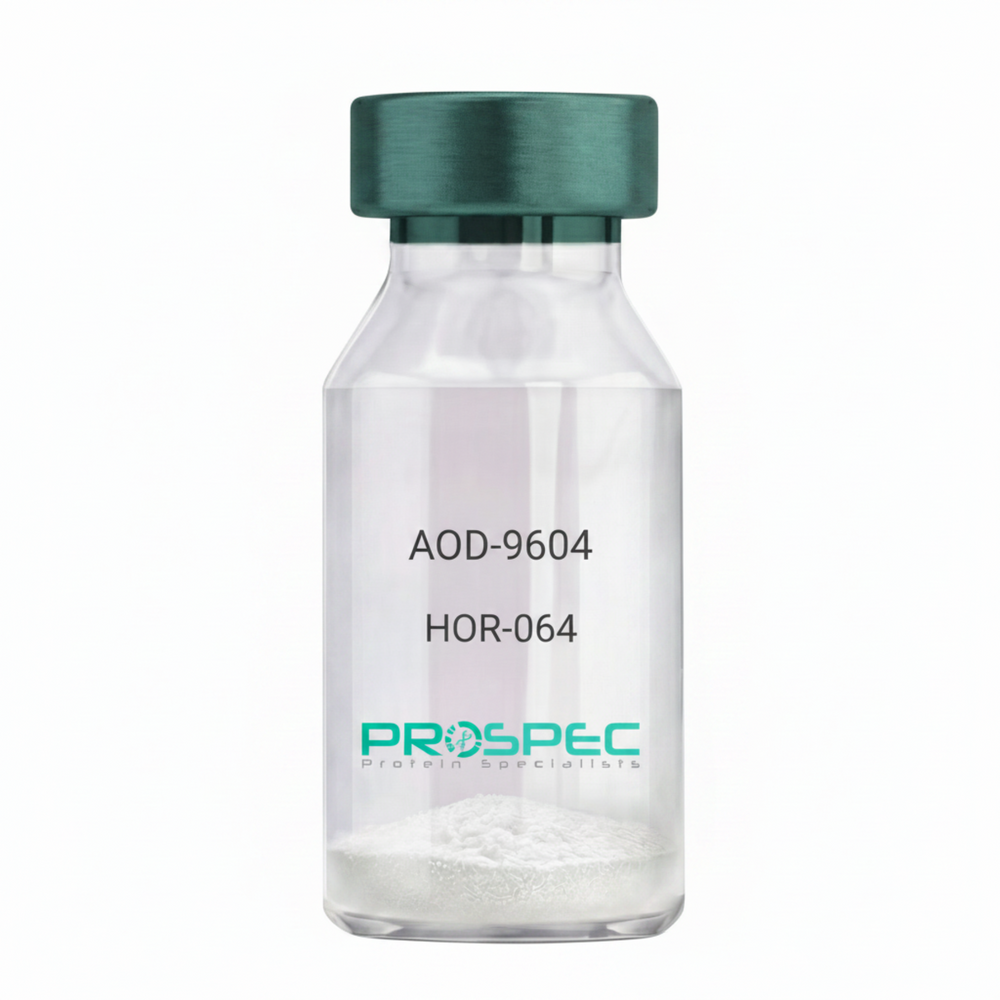
    AOD-9604

    Description:

    AOD-9604

    Product # :

    HOR-064

    Price :

    Quantity :

    Shipping Method :

    Room Temp Icon

    Shipped at Room temp

    Add To Cart

    More Info

    • description
    • formulation
    • purity
    • More Info
    • Citations

    Description

    AOD-9604 is a synthetic single, non-glycosylated polypeptide chain containing 16 amino acids, having a molecular mass of 1815 Dalton and a Molecular formula of C78H123N23O23 S2.

    Formulation

    The protein was lyophilized with no additives.

    Purity

    Greater than 97.0% as determined by analysis by RP-HPLC.

    Citations

    More Info

    • Physical Appearance

      Sterile Filtered White lyophilized (freeze-dried) powder.

    • Stability

      Lyophilized AOD-9604 although stable at room temperature for 3 weeks, should be stored desiccated below -18°C. Upon reconstitution AOD-9604 should be stored at 4°C between 2-7 days and for future use below -18°C.
      For long term storage it is recommended to add a carrier protein (0.1% HSA or BSA).
      Please prevent freeze-thaw cycles.

    • Solubility

      It is recommended to reconstitute the lyophilized AOD-9604 in sterile 18MΩ-cm H2O not less than 100 µg/ml, which can then be further diluted to other aqueous solutions.

    • Amino Acid Sequence

      H-Tyr-Leu-Arg-Ile-Val-Gln-Cys-Arg-SerVal-Glu-Gly-Ser-Cys-Gly-Phe-OH (Disulfide bond).

    • Background

      AOD-9604 is a synthetic analog of the C-terminal fragment (177–191) AOD-9604 stimulates lipolysis (fat breakdown) without the unwanted growth-promoting or insulin-antagonizing effects of full-length hGH. AOD-9604 is a potent lipolytic tool in animal models and researchers focus on its regenerative properties in joint health and its ability to modulate beta3 adrenergic receptors without the systemic risks of growth hormone.

    ProSpec's products are furnished for LABORATORY RESEARCH USE ONLY. The product may not be used as drugs, agricultural or pesticidal products, food additives or household chemicals.

    AOD-9604
  • View Data Sheet

    Name :

    IGF1 Human

    Description:

    IGF-1 Human Recombinant

    Somatomedin C, IGF-I, IGFI, IGF1, IGF-IA MGF.

    Product # :

    CYT-216

    Price :

    Quantity :

    Shipping Method :

    Room Temp Icon

    Shipped at Room temp

    Add To Cart

    More Info

    • description
    • source
    • formulation
    • purity
    • biological activity
    • More Info
    • Citations

    Description

    IGF1 Human Recombinant produced in E.Coli is a single, non-glycosylated, polypeptide chain containing 70 amino acids and having a molecular mass of 7.6kDa.IGF-1 is purified by proprietary chromatographic techniques.

    Source

    Escherichia Coli.

    Formulation

    The protein was lyophilized from a concentrated solution in PBS, pH 7.0.

    Purity

    Greater than 97.0% as determined by:
    (a) Analysis by RP-HPLC.
    (b) Analysis by SDS-PAGE.

    Biological Activity

    The biological activity was determined by the cell proliferation assay using serum free human MCF-7 cells in <2ng/ml, corresponding to a Specific Activity of >5.0 x 10⁵IU/mg.

    Citations

    More Info

    • Introduction

      The somatomedins, IGFs, comprise a family of peptides that play important roles in mammalian growth and development. IGF1 mediates many of the growth-promoting effects of GH. Early studies showed that GH did not directly stimulate the incorporation of sulfate into cartilage, but rather acted through a serum factor, termed 'sulfation factor,' which later became known as 'somatomedin. Three main somatomedins have been characterized: somatomedin C (IGF1), somatomedin A (IGF2; MIM 147470), and somatomedin B.

    • Synonyms

      Somatomedin C, IGF-I, IGFI, IGF1, IGF-IA MGF.

    • Physical Appearance

      Sterile Filtered White lyophilized (freeze-dried) powder.

    • Stability

      Lyophilized IGF1 although stable at room temperature for 3 weeks, should be stored desiccated below -18°C. Upon reconstitution IGF1 should be stored at 4°C between 2-7 days and for future use below -18°C.For long term storage it is recommended to add a carrier protein (0.1% HSA or BSA).Please prevent freeze-thaw cycles.

    • Solubility

      It is recommended to reconstitute the lyophilized IGF-1 in sterile 18MΩ-cm H2O not less than 100µg/ml, which can then be further diluted to other aqueous solutions.

    • Amino Acid Sequence

      GPETLCGAEL VDALQFVCGD RGFYFNKPTG YGSSSRRAPQ TGIVDECCFR SCDLRRLEMY CAPLKPAKSA.

    • Background

      IGF stands for INS like growth factors, which are proteins that have a high similarity to INS. They are part of a complicated process that uses cells to communication with the physiologic environment around them. IGF’s complex system is often called the ‘axis’. This consists of:
      ● Two cell-surface receptors (IGF1R and IGF2R)
      ● Two ligands (IGF-1 and IGF-2)
      ● A family of six high-affinity IGF-binding proteins.
      ● Proteases.

      The Effect IGF Has On The Body
      Many unique tissue types express the IGF-1 receptor, and the effects can vary. It induces the survival of neurons, may catalyse skeletal muscle hypertrophy by inducing protein synthesis, and by blocking muscle atrophy. It works as a protector for cartilage cells, and may work to be an anabolic factor for the bones. When used in high concentrations, it can activate the INS receptor, and can even complement the effects that INS has on the body.

      Diseases And IGF
      Diseases and IGF are closely related, and a number of them can be affected. The INS IGF axis is thought to have an effect on aging, with an increased life span shown in fruit flies when used in studies.
      It is also important to note the crucial role that IGF plays in cancer and diabetes - IGF- 1 has been shown to stimulate growth in both prostate and breast cancer cells. The degree of risk that IGF-1 poses is up for debate, and many scientists are not in agreement. IGF has also shown to have the ability to decrease blood glucose levels, although not quite as effective as INS.

      How Was IGF Discovered?
      Investigators began studying the effects of biological substances on cells and tissues outside the body when IGFs were discovered. The name is self explanatory in the fact that IGF performs INS actions in some tissues, but is less potent than INS at decreasing blood sugar. Its fundamental action is to stimulate growth, whether that be within the epidermal growth factor or the nerve growth factor.

      What’s The Difference Between IGF-1 And IGF-2?
      The two types of IGF are IGF-1 and IGF-2. Although the names are similar, the specific actions that they take are different - they bind and activate completely difference receptors. The major actor in them both is the effect that they have on cell growth. Most of the actions of the pituitary GH are mediated by IGFs, but predominantly IGF-1. GH works to stimulate many tissues within the body, especially the liver which then secretes IGF-1. This then causes hypertrophy, or in layman's terms, an increase in cell size, as well as hyperplasia which is an increase in the number of cells.
      The IGF-1 concentration will increase during childhood and hit peak during puberty, but will then decrease afterwards, as does the hormone secretion itself. It has been proven that children and adults with a deficiency of the GH have low serum IGF-1 concentrations when put in comparison with others in the same age range. Patients who have conditions like acromegaly have been shown to have increased serum IGF-1 concentrations. The production of IGF-2 is less dependent on the secretion of GH than IGF-1, and is much less important for stimulating linear growth.

      What is the molecular weight/Mw of IGF1 HUMAN Protein?
      IGF1 HUMAN Protein has a total Mw of 7.6kDa.

      What is the source or expression system of IGF1 HUMAN Protein?
      Escherichia Coli.

      What is the Purity of IGF1 HUMAN Protein?
      IGF1 HUMAN Protein is >97% pure as determined by SDS-PAGE.

      What is the Biological Activity of IGF1 HUMAN Protein?
      The biological activity was determined by the cell proliferation assay using serum free human MCF-7 cells in <2ng/ml, corresponding to a Specific Activity of >5.0 x 10⁵IU/mg.
      What is the amino acid sequence of IGF1 HUMAN Protein?
      GPETLCGAEL VDALQFVCGD RGFYFNKPTG YGSSSRRAPQ TGIVDECCFR SCDLRRLEMY CAPLKPAKSA.

      What applications can IGF1 HUMAN Protein be used in?
      IGF1 HUMAN Protein can probably be used in western blot, ELISA and Lateral Flow.

      What is the endotoxin level for IGF1 HUMAN Protein?
      The endotoxin level is minimal, IGF1 HUMAN Protein was purified using conventional chromatography techniques.


    ProSpec's products are furnished for LABORATORY RESEARCH USE ONLY. The product may not be used as drugs, agricultural or pesticidal products, food additives or household chemicals.

    Igf 1 Human
  • View Data Sheet

    Name :

    MOG

    Description:

    Myelin Oligodendrocyte Glycoprotein

    Myelin Oligodendrocyte Glycoprotein, MOG.

    Product # :

    PRO-371

    Price :

    Quantity :

    Shipping Method :

    Room Temp Icon

    Shipped at Room temp

    Add To Cart

    More Info

    • description
    • formulation
    • purity
    • More Info
    • Citations

    Description

    Myelin Oligodendrocyte Glycoprotein is a single, non-glycosylated polypeptide chain containing 21 amino acids and having a molecular mass of 2581 Dalton, the molecular formula: C118H177N35O29S.

    Formulation

    The protein was lyophilized with no additives.

    Purity

    Greater than 98.0% as determined by RP-HPLC.

    Citations

    More Info

    • Introduction

      MOG is a transmembrane protein expressed on the surface of oligodendrocyte cell and on the outermost surface of myelin sheaths. MOG comprises about 0.1% of total CNS myelin protein. The MOG gene is a member of the immunoglobulin gene superfamily and is found within the MHC. The MOG gene is found on chromosome 6p21.3-p22. Myelin Oligodendrocyte Glycoprotein is a glycoprotein thought to be significant in the process of myelinization of nerves in the central nervous system (CNS). MOG peptide (35-55) is highly encephalitogenic and can induce strong T and B cell responses. A single injection of this peptide produces a relapsing- remitting neurologic disease with extensive plaque-like demyelination. Because of the clinical, histophathologic, and immunologic similarities with multiple sclerosis (MS), the MOG induced demyelinating encephalomyelitis may serve as a model for investigating MS.

    • Synonyms

      Myelin Oligodendrocyte Glycoprotein, MOG.

    • Physical Appearance

      Sterile Filtered White lyophilized (freeze-dried) powder.

    • Stability

      Lyophilized MOG although stable at room temperature for 3 weeks, should be stored desiccated below -18°C. Upon reconstitution MOG should be stored at 4°C between 2-7 days and for future use below -18°C.For long term storage it is recommended to add a carrier protein (0.1% HSA or BSA).Please prevent freeze-thaw cycles.

    • Solubility

      It is recommended to reconstitute the lyophilized MOG in sterile 18MΩ-cm H2O not less than 100µg/ml, which can then be further diluted to other aqueous solutions.

    • Amino Acid Sequence

      H-Met-Glu-Val-Gly-Trp-Tyr-Arg-Ser-Pro-Phe-Ser-Arg-Val-Val-His-Leu-Tyr-Arg-Asn-Gly-Lys-OH.

    ProSpec's products are furnished for LABORATORY RESEARCH USE ONLY. The product may not be used as drugs, agricultural or pesticidal products, food additives or household chemicals.

    Mog
  • View Data Sheet

    Name :

    MBP E.Coli, His

    Description:

    Maltose Binding Protein E.coli Recombinant, His Tag

    Maltose-binding periplasmic protein, MBP, MMBP, Maltodextrin-binding protein, malE, b4034, JW3994.

    Product # :

    PRO-2322

    Price :

    Quantity :

    Shipping Method :

    Ice Icon

    Shipped with Ice Packs

    Add To Cart

    More Info

    • description
    • source
    • formulation
    • purity
    • More Info
    • Citations

    Description

    Recombinant E.Coli MBP produced in E.Coli is a single, non-glycosylated polypeptide chain containing 410 amino acids (27-392 a.a) and having a molecular mass of 44.9kDa. MBP is fused to a 24 amino acid His-tag at N-terminus & purified by proprietary chromatographic techniques.

    Source

    Escherichia Coli.

    Formulation

    MBP protein solution (0.5mg/ml) containing 20mM Tris-HCl buffer (pH 8.0), 0.1M NaCl and 10% glycerol.

    Purity

    Greater than 95.0% as determined by SDS-PAGE.

    Citations

    More Info

    • Introduction

      Maltose Binding Protein is a member of the maltose/maltodextrin system of E.Coli, which is accountable for the uptake and efficient catabolism of maltodextrins. The maltose/maltodextrin is a complex regulatory and transport system involving many proteins and protein complexes.
      MBP elevates the yield of its fusion partner in many cases and is often able to promote the solubility of polypeptides to which it is fused.

    • Synonyms

      Maltose-binding periplasmic protein, MBP, MMBP, Maltodextrin-binding protein, malE, b4034, JW3994.

    • Physical Appearance

      Sterile Filtered colorless solution.

    • Stability

      Store at 4°C if entire vial will be used within 2-4 weeks. Store, frozen at -20°C for longer periods of time. For long term storage it is recommended to add a carrier protein (0.1% HSA or BSA).Avoid multiple freeze-thaw cycles.

    • Amino Acid Sequence

      MGSSHHHHHH SSGLVPRGSH MGSMKIEEGK LVIWINGDKG YNGLAEVGKK FEKDTGIKVT VEHPDKLEEK FPQVAATGDG PDIIFWAHDR FGGYAQSGLL AEITPDKAFQ DKLYPFTWDA VRYNGKLIAY PIAVEALSLI YNKDLLPNPP KTWEEIPALD KELKAKGKSA LMFNLQEPYF TWPLIAADGG YAFKYENGKY DIKDVGVDNA GAKAGLTFLV DLIKNKHMNA DTDYSIAEAA FNKGETAMTI NGPWAWSNID TSKVNYGVTV LPTFKGQPSK PFVGVLSAGI NAASPNKELA KEFLENYLLT DEGLEAVNKD KPLGAVALKS YEEELAKDPR IAATMENAQK GEIMPNIPQM SAFWYAVRTA VINAASGRQT VDEALKDAQT NSSSNNNNNN NNNNLGIEGR.

    ProSpec's products are furnished for LABORATORY RESEARCH USE ONLY. The product may not be used as drugs, agricultural or pesticidal products, food additives or household chemicals.

    Mbp Ecoli His
  • View Data Sheet

    Name :

    IGF1 E3R Human

    Description:

    Insulin Like Growth Factor-1, Mutant E3R Human Recombinant

    Insulin-Like Growth Factor-1.

    Product # :

    CYT-1217

    Price :

    Quantity :

    Shipping Method :

    Room Temp Icon

    Shipped at Room temp

    Add To Cart

    More Info

    • description
    • source
    • formulation
    • purity
    • More Info
    • Citations

    Description

    IGF1 E3R Human Recombinant produced in E.Coli is a single, non-glycosylated polypeptide chain containing 77 amino acids (Gly49-Ala118) and having a molecular mass of 8.6kDa. IGF1 E3R Human is fused to a 6 a.a his tag at C-Terminus and is purified by proprietary chromatographic techniques.

    Source

    Escherichia Coli.

    Formulation

    The filtered (0.4µm) concentrated protein solution was lyophilized from 0.5mg/ml solution in 50 mM NaCl, 20 mM Tris and 5% (w/v) trehalose, pH 8.0.

    Purity

    Greater than 95% as determined by SDS-PAGE.

    Citations

    More Info

    • Synonyms

      Insulin-Like Growth Factor-1.

    • Physical Appearance

      Sterile Filtered White lyophilized (freeze-dried) powder.

    • Stability

      Store lyophilized protein at -20°C. Aliquot the product after reconstitution to avoid repeated freezing/thawing cycles. Reconstituted protein can be stored at 4°C for a limited period of time.

    • Solubility

      It is recommended to add deionized water to prepare a working stock solution of approximately 0.5mg/ml and let the lyophilized pellet dissolve completely. IGF1 E3R is not sterile! Please filter the product by an appropriate sterile filter before using it in the cell culture.

    • Amino Acid Sequence

      MGPRTLCGAE LVDALQFVCG DRGFYFNKPT GYGSSSRRAP QTGIVDECCF RSCDLRRLEM YCAPLKPAKS AHHHHHH.

    • Background

      Insulin-like Growth Factor 1 (IGF-1) is a critical peptide hormone that plays a central role in regulating growth and development. Genetic mutations in the IGF-1 gene can result in altered IGF-1 variants, leading to various physiological consequences. Understanding these IGF-1 mutants is of paramount importance as they offer insights into growth disorders, metabolic regulation, and potential therapeutic avenues. This research delves into the world of IGF-1 mutants, shedding light on their diverse functions and implications for human health.

      The primary objective of this research is to elucidate the impact of IGF-1 mutations on growth regulation. In vitro and in vivo experiments will be conducted to investigate how these mutants interact with IGF-1 receptors, influence downstream signaling pathways, and modulate growth plate dynamics. Understanding these mechanisms is crucial for unraveling the complexities of growth disorders associated with IGF-1 mutations.

      The second objective is to assess the clinical relevance of IGF-1 mutants in growth-related conditions. Clinical studies involving individuals with growth hormone deficiencies or growth disorders linked to IGF-1 mutations will be conducted to evaluate the effects of these mutants on stature and overall health. These investigations may provide valuable insights into potential therapeutic strategies for individuals affected by growth-related disorders.

      The third objective is to explore the broader implications of IGF-1 mutants in metabolic regulation and age-related conditions. Research will investigate their roles in metabolic homeostasis, longevity, and susceptibility to age-related diseases. Understanding the multifaceted properties of IGF-1 mutants may open new avenues for therapeutic interventions in various health and aging-related conditions.

      By delving into the diverse functions of IGF-1 mutants, this research aims to expand our understanding of their physiological roles and clinical applications. The findings may contribute to the development of targeted interventions for growth disorders, metabolic conditions, and age-related diseases.

      What is the molecular weight/Mw of IGF1 E3R HUMAN Protein?
      IGF1 E3R HUMAN Protein has a total Mw of 8.6kDa.

      What is the source or expression system of IGF1 E3R HUMAN Protein?
      Escherichia Coli.

      What is the Purity of IGF1 E3R HUMAN Protein?
      IGF1 E3R HUMAN Protein is >95% pure as determined by SDS-PAGE.

      What is the Biological Activity of IGF1 E3R HUMAN Protein?
      The biological functionality of IGF1 E3R HUMAN Protein will be determined in the future.

      What is the amino acid sequence of IGF1 E3R HUMAN Protein?
      MGPRTLCGAE LVDALQFVCG DRGFYFNKPT GYGSSSRRAP QTGIVDECCF RSCDLRRLEM YCAPLKPAKS AHHHHHH.

      What applications can IGF1 E3R HUMAN Protein be used in?
      IGF1 E3R HUMAN Protein can probably be used in western blot, ELISA and Lateral Flow.

      What is the endotoxin level for IGF1 E3R HUMAN Protein?
      The endotoxin level is minimal, IGF1 E3R HUMAN Protein was purified using conventional chromatography techniques.


    ProSpec's products are furnished for LABORATORY RESEARCH USE ONLY. The product may not be used as drugs, agricultural or pesticidal products, food additives or household chemicals.

    Igf1 Mutant
  • View Data Sheet

    Name :

    IFNG Mouse

    Description:

    IFN-Gamma Mouse Recombinant

    Immune IFN, type II IFN, T cell IFN, MAF, IFNG, IFG, IFI, IFN-gamma.

    Product # :

    CYT-358

    Price :

    Quantity :

    Shipping Method :

    Room Temp Icon

    Shipped at Room temp

    Add To Cart

    More Info

    • description
    • source
    • formulation
    • purity
    • biological activity
    • More Info
    • Citations

    Description

    IFN-gamma Mouse Recombinant produced in E.Coli is a single, non-glycosylated, polypeptide chain containing 134 amino acids and having a molecular mass of 15.6kDa.The IFN-gamma is purified by proprietary chromatographic techniques.

    Source

    Escherichia Coli.

    Formulation

    Lyophilized from a 0.2µm filtered concentrated (1mg/ml) solution in PBS, pH 7.4 and 5% trehalose.

    Purity

    Greater than 95.0% as determined by:
    (a) Analysis by RP-HPLC.
    (b) Analysis by SDS-PAGE.

    Biological Activity

    The specific activity as determined in a viral resistance assay is < 0.1 ng/ml, corresponding to a specific activity of 10,000,000 IU/mg


    Citations

    More Info

    • Introduction

      IFN-gamma produced by lymphocytes activated by specific antigens or mitogens.
      IFN-gamma, in addition to having antiviral activity, has important immunoregulatory functions, it is a potent activator of macrophages, and has antiproliferative effects on transformed cells and it can potentiate the antiviral and antitumor effects of the type I IFNs.

    • Synonyms

      Immune IFN, type II IFN, T cell IFN, MAF, IFNG, IFG, IFI, IFN-gamma.

    • Physical Appearance

      Sterile Filtered White lyophilized (freeze-dried) powder.

    • Stability

      Lyophilized IFN-gamma although stable at room temperature for 3 weeks, should be stored desiccated below -18°C. Upon reconstitution IFN-gamma should be stored at 4°C between 2-7 days and for future use below -18°C.For long term storage it is recommended to add a carrier protein (0.1% HSA or BSA).Please prevent freeze-thaw cycles.

    • Solubility

      It is recommended to reconstitute the lyophilized IFN-gamma in sterile distilled water or 20mM AcOH at concentrations ranging between 0.1mg-0.5mg/ml, which can then be further diluted to other aqueous solutions.

    • Amino Acid Sequence

      MHGTVIESLE SLNNYFNSSG IDVEEKSLFL DIWRNWQKDG DMKILQSQII SFYLRLFEVL KDNQAISNNI SVIESHLITT FFSNSKAKKD AFMSIAKFEV NNPQVQRQAF NELIRVVHQL LPESSLRKRK RSRC.

    • Background

      What is the molecular weight/Mw of IFNG MOUSE Protein?
      IFNG MOUSE Protein has a total Mw of 15.6kDa.

      What is the source or expression system of IFNG MOUSE Protein?
      Escherichia Coli.

      What is the Purity of IFNG MOUSE Protein?
      IFNG MOUSE Protein is >95% pure as determined by SDS-PAGE.

      What is the Biological Activity of IFNG MOUSE Protein?
      The specific activity as determined in a viral resistance assay is < 0.1 ng/ml, corresponding to a specific activity of 10,000,000 IU/mg


      What is the amino acid sequence of IFNG MOUSE Protein?
      MHGTVIESLE SLNNYFNSSG IDVEEKSLFL DIWRNWQKDG DMKILQSQII SFYLRLFEVL KDNQAISNNI SVIESHLITT FFSNSKAKKD AFMSIAKFEV NNPQVQRQAF NELIRVVHQL LPESSLRKRK RSRC.

      What applications can IFNG MOUSE Protein be used in?
      IFNG MOUSE Protein can probably be used in western blot, ELISA and Lateral Flow.

      What is the endotoxin level for IFNG MOUSE Protein?
      The endotoxin level is minimal, IFNG MOUSE Protein was purified using conventional chromatography techniques.

    ProSpec's products are furnished for LABORATORY RESEARCH USE ONLY. The product may not be used as drugs, agricultural or pesticidal products, food additives or household chemicals.

    Interferon Gamma Mouse
  • View Data Sheet

    Name :

    RGS16 Human

    Description:

    Regulator of G-Protein Signaling 16 Human Recombinant

    A28-RGS14, A28-RGS14P, RGS-R, Regulator of G-protein signaling 16, RGS16, Retinally abundant regulator of G-protein signaling, Retinal-specific RGS, hRGS-r, RGSR.

    Product # :

    PRO-798

    Price :

    Quantity :

    Shipping Method :

    Ice Icon

    Shipped with Ice Packs

    Add To Cart

    More Info

    • description
    • source
    • formulation
    • purity
    • More Info
    • Citations

    Description

    RGS16 Human Recombinant produced in E.Coli is a single, non-glycosylated, polypeptide chain containing 222 amino acids (1-202 a.a.) and having a molecular mass of 24.9 kDa. The RGS16 is fused to a 20 amino acid His Tag at N-terminal and purified by proprietary chromatographic techniques.

    Source

    Escherichia Coli.

    Formulation

    The RGS16 solution (0.5mg/ml) contains Phosphate Buffered Saline (pH7.4), 0.1M NaCl and 20% glycerol.

    Purity

    Greater than 90% as determined by SDS-PAGE.

    Citations

    More Info

    • Introduction

      RGS16 is part of the ''regulator of G protein signaling'' family. RGS16 inhibits signal transduction by increasing the GTPase activity of G protein alpha subunits thereby driving them into their inactive GDP-bound form. RGS16 Binds to G(i)-alpha and G(o)-alpha, but not to G(s)-alpha. RGS16 regulates the kinetics of signaling in the phototransduction cascade.

    • Synonyms

      A28-RGS14, A28-RGS14P, RGS-R, Regulator of G-protein signaling 16, RGS16, Retinally abundant regulator of G-protein signaling, Retinal-specific RGS, hRGS-r, RGSR.

    • Physical Appearance

      Sterile Filtered clear colorless solution.

    • Stability

      Store at 4°C if entire vial will be used within 2-4 weeks. Store, frozen at -20°C for longer periods of time. For long term storage it is recommended to add a carrier protein (0.1% HSA or BSA). Avoid multiple freeze-thaw cycles.

    • Amino Acid Sequence

      MGSSHHHHHH SSGLVPRGSH MCRTLAAFPT TCLERAKEFK TRLGIFLHKS ELGCDTGSTG KFEWGSKHSK ENRNFSEDVL GWRESFDLLL SSKNGVAAFH AFLKTEFSEE NLEFWLACEE FKKIRSATKL ASRAHQIFEE FICSEAPKEV NIDHETRELT RMNLQTATAT CFDAAQGKTR TLMEKDSYPR FLKSPAYRDL AAQASAASAT LSSCSLDEPS HT.

    ProSpec's products are furnished for LABORATORY RESEARCH USE ONLY. The product may not be used as drugs, agricultural or pesticidal products, food additives or household chemicals.

    Rgs16 Human
  • View Data Sheet

    Name :

    Insulin Antibody

    Description:

    Insulin, Mouse Anti-Human

    Product # :

    ANT-100

    Price :

    Quantity :

    Shipping Method :

    Ice Icon

    Shipped with Ice Packs

    Add To Cart

    More Info

    • description
    • formulation
    • More Info
    • Citations

    Description

    These clones have been derived from hybridization of X63-Ag8-653 myeloma cells with spleen cells of Balb/c mice immunised with purified human insulin.

    Formulation

    The vial contains antibody in PBS, pH 7.4, containing 0.09% of sodium azide (NaN3) as preservative.

    Citations

    More Info

    • Introduction

      Insulin decreases blood glucose concentration. It increases cell permeability to monosaccharides, amino acids and fatty acids. It accelerates glycolysis, the pentose phosphate cycle, and glycogen synthesis in liver.

    • Physical Appearance

      Sterile Filtered solution.

    • Stability

      Store at + 4°C.

    • Clone

      7F8.

    • Species Reactivity

      These antibodies cross-react with human proinsulin, bovine insulin (30%) and porcine insulin. No cross-reaction with free C-peptide.

    • Specificity

      Insulin, human.

    • Isotype

      IgG1 kappa.

    • Type

      Mouse Anti Human Monoclonal.

    • Purification Method

      Purified by chromatography on protein A chromatography.

    ProSpec's products are furnished for LABORATORY RESEARCH USE ONLY. The product may not be used as drugs, agricultural or pesticidal products, food additives or household chemicals.

    Insulin Antibody
  • View Data Sheet

    Name :

    GLDA E.coli

    Description:

    Glycerol dehydrogenase E.coli Recombinant

    ECK3937, JW5556, Glycerol dehydrogenase, GDH, GLDH, b3945.

    Product # :

    ENZ-827

    Price :

    Quantity :

    Shipping Method :

    Ice Icon

    Shipped with Ice Packs

    Add To Cart

    More Info

    • description
    • source
    • formulation
    • purity
    • More Info
    • Citations

    Description

    GLDA E.coli Recombinant produced in E.Coli is a single, non-glycosylated polypeptide chain containing 390 amino acids (1-367 a.a) and having a molecular mass of 41.1kDa.GLDA is fused to a 23 amino acid His-tag at N-terminus & purified by proprietary chromatographic techniques.

    Source

    Escherichia Coli.

    Formulation

    GLDA protein solution (1mg/ml) containing Phosphate buffered saline (pH7.4) and 10% glycerol.

    Purity

    Greater than 95.0% as determined by SDS-PAGE.

    Citations

    More Info

    • Introduction

      Glycerol dehydrogenase (GldA) catalyzes the NAD-dependent oxidation of glycerol to dihydroxyacetone (glycerone). The GldA protein allows microorganisms to use glycerol as a source of carbon under anaerobic conditions. Furthermore, in E.coli GldA has an imperative role by regulating the intracellular level of dihydroxyacetone by catalyzing the reverse reaction, i.e. the conversion of dihydroxyacetone into glycerol. GldA possesses an extensive substrate specificity, due to its ability to oxidize 1,2-propanediol and to reduce glycolaldehyde, methylglyoxal and hydroxyacetone into ethylene glycol, lactaldehyde and 1,2-propanediol, respectively.

    • Synonyms

      ECK3937, JW5556, Glycerol dehydrogenase, GDH, GLDH, b3945.

    • Physical Appearance

      Sterile Filtered colorless solution.

    • Stability

      Store at 4°C if entire vial will be used within 2-4 weeks. Store, frozen at -20°C for longer periods of time. For long term storage it is recommended to add a carrier protein (0.1% HSA or BSA).Avoid multiple freeze-thaw cycles.

    • Amino Acid Sequence

      MGSSHHHHHH SSGLVPRGSH MGSMDRIIQS PGKYIQGADV INRLGEYLKP LAERWLVVGD KFVLGFAQST VEKSFKDAGL VVEIAPFGGE CSQNEIDRLR GIAETAQCGA ILGIGGGKTL DTAKALAHFM GVPVAIAPTI ASTDAPCSAL SVIYTDEGEF DRYLLLPNNP NMVIVDTKIV AGAPARLLAA GIGDALATWF EARACSRSGA TTMAGGKCTQ AALALAELCY NTLLEEGEKA MLAAEQHVVT PALERVIEAN TYLSGVGFES GGLAAAHAVH NGLTAIPDAH HYYHGEKVAF GTLTQLVLEN APVEEIETVA ALSHAVGLPI TLAQLDIKED VPAKMRIVAE AACAEGETIH NMPGGATPDQ VYAALLVADQ YGQRFLQEWE.

    ProSpec's products are furnished for LABORATORY RESEARCH USE ONLY. The product may not be used as drugs, agricultural or pesticidal products, food additives or household chemicals.

    Glda Ecoli
  • View Data Sheet

    Name :

    GlpK E. coli

    Description:

    Glycerol kinase E. Coli Recombinant

    Glycerol kinase, glycerol 3-phosphotransferase, Glycerokinase, GK.

    Product # :

    PKA-038

    Price :

    Quantity :

    Shipping Method :

    Ice Icon

    Shipped with Ice Packs

    Add To Cart

    More Info

    • description
    • source
    • formulation
    • purity
    • More Info
    • Citations

    Description

    GlpK E. Coli Recombinant produced in E. coli is a single, non-glycosylated polypeptide chain containing 525 amino acids (1-502 a.a) and having a molecular mass of 58.6 kDa.GlpK is fused to a 23 amino acid His-tag at N-terminus& purified by proprietary chromatographic techniques.

    Source

    Escherichia Coli.

    Formulation

    GlpK protein solution (1mg/ml) containing Phosphate buffered saline (pH7.4),10% glycerol and 1mM DTT.

    Purity

    Greater than 95.0% as determined by SDS-PAGE.

    Citations

    More Info

    • Introduction

      GlpK also known as glycerol kinase, is a member of the FGGY kinase family. GlpK catalyzes the transfer of a phosphate group from ATP to glycerol, thereby forming glycerol phosphate. Furthermore, this intermediate can then be converted to dihydroxyacetone phosphate (DHAP), which is utilized in either glycolysis or gluconeogenesis. The activity of GlpK is affected by numerous metabolites. The non-competitive allosteric inhibition by fructose 1,6-bisphosphate (FBP) triggers modifications in the quaternary structure of Glpk.

    • Synonyms

      Glycerol kinase, glycerol 3-phosphotransferase, Glycerokinase, GK.

    • Physical Appearance

      Sterile Filtered clear solution.

    • Stability

      Store at 4°C if entire vial will be used within 2-4 weeks.Store, frozen at -20°C for longer periods of time. For long term storage it is recommended to add a carrier protein (0.1% HSA or BSA).Avoid multiple freeze-thaw cycles.

    • Amino Acid Sequence

      MGSSHHHHHH SSGLVPRGSH MGSMTEKKYI VALDQGTTSS RAVVMDHDAN IISVSQREFE QIYPKPGWVE HDPMEIWATQ SSTLVEVLAK ADISSDQIAA IGITNQRETT IVWEKETGKP IYNAIVWQCR RTAEICEHLK RDGLEDYIRS NTGLVIDPYF SGTKVKWILD HVEGSRERAR RGELLFGTVD TWLIWKMTQG RVHVTDYTNA SRTMLFNIHT LDWDDKMLEV LDIPREMLPE VRRSSEVYGQ TNIGGKGGTR IPISGIAGDQ QAALFGQLCV KEGMAKNTYG TGCFMLMNTG EKAVKSENGL LTTIACGPTG EVNYALEGAV FMAGASIQWL RDEMKLINDA YDSEYFATKV QNTNGVYVVP AFTGLGAPYW DPYARGAIFG LTRGVNANHI IRATLESIAY QTRDVLEAMQ ADSGIRLHAL RVDGGAVANN FLMQFQSDIL GTRVERPEVR EVTALGAAYL AGLAVGFWQN LDELQEKAVI EREFRPGIET TERNYRYAGW KKAVKRAMAW EEHDE.

    ProSpec's products are furnished for LABORATORY RESEARCH USE ONLY. The product may not be used as drugs, agricultural or pesticidal products, food additives or household chemicals.

    Glpk E Coli
  • View Data Sheet

    Name :

    Ganirelix peptide

    Description:

    Ganirelix

    Product # :

    HOR-276

    Price :

    Quantity :

    Shipping Method :

    Ice Icon

    Shipped with Ice Packs

    Add To Cart

    More Info

    • description
    • formulation
    • purity
    • More Info
    • Citations

    Description

    Ganirelix acetate is a synthetic decapeptide with high antagonistic activity against naturally occurring gonadotropin-releasing hormone (GnRH). Ganirelix acetate is derived from native GnRH with substitutions of amino acids at positions 1, 2, 3, 6, 8, and 10 to form the following molecular formula of the peptide: N-acetyl-3-(2-napthyl)-D-alanyl-4-chloro-D-phenylalanyl-3-(3-pyridyl)-D-alanyl-L-seryl-L-tyrosyl-N 9 ,N 10 -diethyl- D-homoarginyl-L-leucyl-N 9 ,N 10 -diethyl-L-homoarginyl-L-prolyl-D-alanylamide acetate. The molecular weight for Ganirelix acetate is 1570.4 Dalton as an anhydrous free base.

    Formulation

    The Ganirelix hormone (0.5mg/ml) contains 0.1mg acetic acid and 23.5mg mannitol pH-5.

    Purity

    Greater than 98.0% as determined by:
    (a) Analysis by RP-HPLC.
    (b) Analysis by SDS-PAGE.

    Citations

    More Info

    • Physical Appearance

      Sterile Filtered colorless liquid formulation.

    • Stability

      Ganirelix should be stored between 2°C- 8°C at all time. DO NOT FREEZE.

    • Background

      What is the molecular weight/Mw of GANIRELIX PEPTIDE Protein?
      GANIRELIX PEPTIDE Protein has a total Mw of 1.57kDa.


      What is the Purity of GANIRELIX PEPTIDE Protein?
      GANIRELIX PEPTIDE Protein is >98% pure as determined by SDS-PAGE.

      What is the Biological Activity of GANIRELIX PEPTIDE Protein?
      The biological functionality of GANIRELIX PEPTIDE Protein will be determined in the future.


      What applications can GANIRELIX PEPTIDE Protein be used in?
      GANIRELIX PEPTIDE Protein can probably be used in western blot, ELISA and Lateral Flow.

      What is the endotoxin level for GANIRELIX PEPTIDE Protein?
      The endotoxin level is minimal, GANIRELIX PEPTIDE Protein was purified using conventional chromatography techniques.


    ProSpec's products are furnished for LABORATORY RESEARCH USE ONLY. The product may not be used as drugs, agricultural or pesticidal products, food additives or household chemicals.

    Ganirelix
  • View Data Sheet

    Name :

    S100A11 Human

    Description:

    S100 Calcium Binding Protein A11 Human Recombinant

    Protein S100-A11, S100 calcium-binding protein A11, Calgizzarin, MLN 70, S100A11, MLN70, S100C.

    Product # :

    PRO-385

    Price :

    Quantity :

    Shipping Method :

    Ice Icon

    Shipped with Ice Packs

    Add To Cart

    More Info

    • description
    • source
    • formulation
    • purity
    • More Info
    • Citations

    Description

    S100A11 Human Recombinant is expressed in E. coli having a molecular weight of 17kDa fused to an amino terminal hexahistidine tag.

    Source

    Escherichia Coli.

    Formulation

    S100A11 is supplied in PBS and 50% glycerol.

    Purity

    Greater than 95% as determined by SDS-PAGE.
    2 bands on Western blot at 17 and 34 kDa, respectively representing monomeric and dimeric form.

    Citations

    More Info

    • Introduction

      S100A11 is a member of the S100 family of proteins which contains two EF-hand calcium-binding motifs and is thought to be involved in the regulation of a number of cellular processes including cell cycle progression and differentiation. S100A11 may function in motility, invasion and tubulin polymerisation. S100 proteins are localized either in the cytoplasm or the nucleus of a wide range of cells. There are at least 13 members in the S100 gene family, which are located as a cluster on chromosome 1q21. Chromosomal rearrangements and altered expression of S100A11 have been implicated in tumor metastasis.

    • Synonyms

      Protein S100-A11, S100 calcium-binding protein A11, Calgizzarin, MLN 70, S100A11, MLN70, S100C.

    • Stability

      Store at 4°C if entire vial will be used within 1-2 weeks. Store, frozen at -20°C for longer periods of time. Avoid multiple freeze-thaw cycles.

    • Applications

      S100A11 can be used directly as a positive control in Western blotting, ELISA, immunoprecipitation and other immunological experiments.
      The biological activity of this product has not yet been tested.

    ProSpec's products are furnished for LABORATORY RESEARCH USE ONLY. The product may not be used as drugs, agricultural or pesticidal products, food additives or household chemicals.

    S100A11 Human
  • View Data Sheet

    Name :

    TIPIN Human

    Description:

    TIMELESS Interacting Protein Human Recombinant

    TIMELESS Interacting Protein, CSM3 Homolog.

    Product # :

    PRO-1710

    Price :

    Quantity :

    Shipping Method :

    Ice Icon

    Shipped with Ice Packs

    Add To Cart

    More Info

    • description
    • source
    • formulation
    • purity
    • More Info
    • Citations

    Description

    TIPIN Human Recombinant produced in E.coli is a single, non-glycosylated polypeptide chain containing 324 amino acids (1-301) and having a molecular mass of 36.9kDa.TIPIN is fused to a 23 amino acid His-tag at N-terminus & purified by proprietary chromatographic techniques.

    Source

    Escherichia Coli.

    Formulation

    The TIPIN solution (0.5mg/ml) contains 20mM Tris-HCl buffer (pH8.0), 0.15M NaCl, 1mM DTT and 10% glycerol.

    Purity

    Greater than 85.0% as determined by SDS-PAGE.

    Citations

    More Info

    • Introduction

      TIPIN is a member of the CSM3 family. TIPIN protein is essential for normal advancement of S-phase and vital for cell existence after DNA damage or replication stress. TIPIN is specifically necessary for the ATR - CHEK1 pathway in the replication checkpoint induced by ultraviolet light.

    • Synonyms

      TIMELESS Interacting Protein, CSM3 Homolog.

    • Physical Appearance

      Sterile Filtered clear solution.

    • Stability

      Store at 4°C if entire vial will be used within 2-4 weeks. Store, frozen at -20°C for longer periods of time. For long term storage it is recommended to add a carrier protein (0.1% HSA or BSA).Avoid multiple freeze-thaw cycles.

    • Amino Acid Sequence

      MGSSHHHHHH SSGLVPRGSH MGSMLEPQEN GVIDLPDYEH VEDETFPPFP PPASPERQDG EGTEPDEESG NGAPVPVPPK RTVKRNIPKL DAQRLISERG LPALRHVFDK AKFKGKGHEA EDLKMLIRHM EHWAHRLFPK LQFEDFIDRV EYLGSKKEVQ TCLKRIRLDL PILHEDFVSN NDEVAENNEH DVTSTELDPF LTNLSESEMF ASELSRSLTE EQQQRIERNK QLALERRQAK LLSNSQTLGN DMLMNTPRAH TVEEVNTDED QKEESNGLNE DILDNPCNDA IANTLNEEET LLDQSFKNVQ QQLDATSRNI TEAR

    ProSpec's products are furnished for LABORATORY RESEARCH USE ONLY. The product may not be used as drugs, agricultural or pesticidal products, food additives or household chemicals.

    Tipin Human
  • View Data Sheet

    Name :

    TKT Human

    Description:

    Transketolase Human Recombinant

    Transketolase, TK, TKT1, EC 2.2.1.1.

    Product # :

    ENZ-588

    Price :

    Quantity :

    Shipping Method :

    Ice Icon

    Shipped with Ice Packs

    Add To Cart

    More Info

    • description
    • source
    • formulation
    • purity
    • More Info
    • Citations

    Description

    TKT Human Recombinant produced in E. coli is a single polypeptide chain containing 643 amino acids (1-623) and having a molecular mass of 70.0kDa.TKT is fused to a 20 amino acid His-tag at N-terminus & purified by proprietary chromatographic techniques.

    Source

    E.coli.

    Formulation

    The TKT solution (0.25mg/ml) contains 20mM Tris-HCl buffer (pH 8.0), 100mM Nacl, 1mM DTT and 10% glycerol.

    Purity

    Greater than 85% as determined by SDS-PAGE.

    Citations

    More Info

    • Introduction

      TKT is a thiamine-dependent enzyme that takes part in the channeling of leftover sugar phosphates to glycolysis in the pentose phosphate pathway. Multiple alternatively spliced variants are known that encode the same protein.

    • Synonyms

      Transketolase, TK, TKT1, EC 2.2.1.1.

    • Physical Appearance

      Sterile Filtered colorless solution.

    • Stability

      Store at 4°C if entire vial will be used within 2-4 weeks. Store, frozen at -20°C for longer periods of time. For long term storage it is recommended to add a carrier protein (0.1% HSA or BSA).Avoid multiple freeze-thaw cycles.

    • Amino Acid Sequence

      MGSSHHHHHH SSGLVPRGSH MESYHKPDQQ KLQALKDTAN RLRISSIQAT TAAGSGHPTS CCSAAEIMAV LFFHTMRYKS QDPRNPHNDR FVLSKGHAAP ILYAVWAEAG FLAEAELLNL RKISSDLDGH PVPKQAFTDV ATGSLGQGLG AACGMAYTGK YFDKASYRVY CLLGDGELSE GSVWEAMAFA SIYKLDNLVA ILDINRLGQS DPAPLQHQMD IYQKRCEAFG WHAIIVDGHS VEELCKAFGQ AKHQPTAIIA KTFKGRGITG VEDKESWHGK PLPKNMAEQI IQEIYSQIQS KKKILATPPQ EDAPSVDIAN IRMPSLPSYK VGDKIATRKA YGQALAKLGH ASDRIIALDG DTKNSTFSEI FKKEHPDRFI ECYIAEQNMV SIAVGCATRN RTVPFCSTFA AFFTRAFDQI RMAAISESNI NLCGSHCGVS IGEDGPSQMA LEDLAMFRSV PTSTVFYPSD GVATEKAVEL AANTKGICFI RTSRPENAII YNNNEDFQVG QAKVVLKSKD DQVTVIGAGV TLHEALAAAE LLKKEKINIR VLDPFTIKPL DRKLILDSAR ATKGRILTVE DHYYEGGIGE AVSSAVVGEP GITVTHLAVN RVPRSGKPAE LLKMFGIDRD AIAQAVRGLI TKA.

    ProSpec's products are furnished for LABORATORY RESEARCH USE ONLY. The product may not be used as drugs, agricultural or pesticidal products, food additives or household chemicals.

    Tkt Human
  • View Data Sheet

    Name :

    GDI1 Human

    Description:

    GDP Dissociation Inhibitor 1 Human Recombinant

    Rab GDP dissociation inhibitor alpha, Rab GDI alpha, GDP Dissociation Inhibitor 1, GDI1, Guanosine diphosphate dissociation inhibitor 1, GDI-1, Oligophrenin-2, XAP-4, GDIL, OPHN2, RABGDIA, XAP4, MRX41, MRX48, 1A, RABGD1A.

    Product # :

    PRO-2023

    Price :

    Quantity :

    Shipping Method :

    Ice Icon

    Shipped with Ice Packs

    Add To Cart

    More Info

    • description
    • source
    • formulation
    • purity
    • More Info
    • Citations

    Description

    GDI1 Human Recombinant produced in E. coli is a single polypeptide chain containing 470 amino acids (1-447) and having a molecular mass of 53 kDa.GDI1 is fused to 23 amino acid His-tag at N-terminus & purified by proprietary chromatographic techniques.

    Source

    Escherichia Coli.

    Formulation

    The GDI1 solution (0.25mg/1ml) contains 20mM Tris-HCl buffer (pH 8.0), 0.15M NaCl, 20% glycerol and 1mM DTT.

    Purity

    Greater than 90.0% as determined by SDS-PAGE.

    Citations

    More Info

    • Introduction

      GDP Dissociation Inhibitor 1 (GDI1) is expressed mainly in neural and sensory tissues. GDI1 regulates the GDP/GTP exchange reaction of nearly all Rab proteins by inhibiting the dissociation of GDP from them, and the subsequent binding of GTP to them. GDI1 is also promoting the dissociation of GDP-bound Rab proteins from the membrane and inhibits their activation. Mutations in GDI1 have been associated with X-linked nonspecific mental retardation.

    • Synonyms

      Rab GDP dissociation inhibitor alpha, Rab GDI alpha, GDP Dissociation Inhibitor 1, GDI1, Guanosine diphosphate dissociation inhibitor 1, GDI-1, Oligophrenin-2, XAP-4, GDIL, OPHN2, RABGDIA, XAP4, MRX41, MRX48, 1A, RABGD1A.

    • Physical Appearance

      Sterile Filtered clear solution.

    • Stability

      Store at 4°C if entire vial will be used within 2-4 weeks. Store, frozen at -20°C for longer periods of time. For long term storage it is recommended to add a carrier protein (0.1% HSA or BSA).Avoid multiple freeze-thaw cycles.

    • Amino Acid Sequence

      MGSSHHHHHH SSGLVPRGSH MGSMDEEYDV IVLGTGLTEC ILSGIMSVNG KKVLHMDRNP YYGGESSSIT PLEELYKRFQ LLEGPPESMG RGRDWNVDLI PKFLMANGQL VKMLLYTEVT RYLDFKVVEG SFVYKGGKIY KVPSTETEAL ASNLMGMFEK RRFRKFLVFV ANFDENDPKT FEGVDPQTTS MRDVYRKFDL GQDVIDFTGH ALALYRTDDY LDQPCLETVN RIKLYSESLA RYGKSPYLYP LYGLGELPQG FARLSAIYGG TYMLNKPVDD IIMENGKVVG VKSEGEVARC KQLICDPSYI PDRVRKAGQV IRIICILSHP IKNTNDANSC QIIIPQNQVN RKSDIYVCMI SYAHNVAAQG KYIAIASTTV ETTDPEKEVE PALELLEPID QKFVAISDLY EPIDDGCESQ VFCSCSYDAT THFETTCNDI KDIYKRMAGT AFDFENMKRK QNDVFGEAEQ.

    ProSpec's products are furnished for LABORATORY RESEARCH USE ONLY. The product may not be used as drugs, agricultural or pesticidal products, food additives or household chemicals.

    Gdi1 Human
  • View Data Sheet

    Name :

    GKN2 Human

    Description:

    Gastrokine 2 Human Recombinant

    Gastrokine-2, Blottin, Down-regulated in gastric cancer, Trefoil factor interactions(z) 1, GKN2, BLOT, GDDR, TFIZ1, PRO813, BRICD1B, VLTI465.

    Product # :

    PRO-1588

    Price :

    Quantity :

    Shipping Method :

    Room Temp Icon

    Shipped at Room temp

    Add To Cart

    More Info

    • description
    • source
    • formulation
    • purity
    • More Info
    • Citations

    Description

    Gastrokine 2 Human Recombinant produced in E.Coli is a single, non-glycosylated, polypeptide chain (a.a 21-184) containing 174 amino acids including a 10 a.a N-terminal His tag. The total molecular mass is 19.6kDa (calculated).

    Source

    Escherichia Coli.

    Formulation

    GKN2 filtered (0.4 µm) and lyophilized from 0.5mg/ml in 0.05M Acetate buffer pH-4.0.

    Purity

    Greater than 90.0% as determined by SDS-PAGE.

    Citations

    More Info

    • Introduction

      Gastrokine-2 (GKN2) is expressed in the gastric mucosa. GKN2 forms a heterodimer with TFF1- disulfide linked. GKN2 interacts with TFF2.

    • Synonyms

      Gastrokine-2, Blottin, Down-regulated in gastric cancer, Trefoil factor interactions(z) 1, GKN2, BLOT, GDDR, TFIZ1, PRO813, BRICD1B, VLTI465.

    • Physical Appearance

      Filtered White lyophilized (freeze-dried) powder.

    • Stability

      Store lyophilized protein at -20°C. Aliquot the product after reconstitution to avoid repeated freezing/thawing cycles. Reconstituted protein can be stored at 4°C for a limited period of time; it does not show any change after two weeks at 4°C.

    • Solubility

      It is recommended to add 0.1M Acetate buffer pH-4 to prepare a working stock solution of approximately 0.5mg/ml and let the lyophilized pellet dissolve completely at 37°C. For conversion into higher pH value, we recommend intensive dilution by relevant buffer to a concentration of 10µg/ml. In higher concentrations the solubility of this antigen is limited. GKN2 is not sterile! Please filter the product by an appropriate sterile filter before using it in the cell culture.

    • Amino Acid Sequence

      MKHHHHHHASYEVFNIISPS NNGGNVQETV TIDNEKNTAI INIHAGSCSS TTIFDYKHGY IASRVLSRRA CFILKMDHQN IPPLNNLQWY IYEKQALDNM FSSKYTWVKY NPLESLIKDV DWFLLGSPIE KLCKHIPLYK GEVVENTHNV GAGGCAKAGL LGILGISICA DIHV.

    ProSpec's products are furnished for LABORATORY RESEARCH USE ONLY. The product may not be used as drugs, agricultural or pesticidal products, food additives or household chemicals.

    Gkn2 Human
  • View Data Sheet

    Name :

    Procalcitonin Human

    Description:

    Procalcitonin Human Recombinant

    Procalcitonin, PCT.

    Product # :

    HOR-304

    Price :

    Quantity :

    Shipping Method :

    Room Temp Icon

    Shipped at Room temp

    Add To Cart

    More Info

    • description
    • source
    • formulation
    • purity
    • More Info
    • Citations

    Description

    Procalcitonin Human Recombinant produced in E.Coli is a single, non-glycosylated, polypeptide chain containing 116 amino acids and having a molecular mass of 12.8 kDa.The Procalcitonin is purified by standard chromatographic techniques.

    Source

    Escherichia Coli.

    Formulation

    Lyophilized from 10mM sodium phosphate pH-7.5.

    Purity

    Greater than 95.0% as determined by SDS-PAGE.

    Citations

    More Info

    • Introduction

      Procalcitonin is a peptide hormone mainly produced by the C cells of the thyroid and certain endocrine cells of the lung. Under normal expression conditions, procalcitonin is immediately cleaved into three specific fragments, an N terminal residue, calcitonin and katacalcin. Levels of unprocessed procalcitonin rise significantly after bacterial infection, trauma or shock.

    • Synonyms

      Procalcitonin, PCT.

    • Physical Appearance

      Sterile Filtered White lyophilized (freeze-dried) powder.

    • Stability

      Lyophilized procalcitonin although stable at room temperature for 3 weeks, should be stored desiccated below -18°C. Upon reconstitution procalcitonin should be stored at 4°C between 2-7 days and for future use below -18°C.For long term storage it is recommended to add a carrier protein (0.1% HSA or BSA).Please prevent freeze-thaw cycles.

    • Solubility

      It is recommended to reconstitute the lyophilized procalcitonin sterile 18MΩ-cm H2O at 100 µg/ml, which can then be further diluted to other aqueous solutions.

    • Amino Acid Sequence

      APFRSALESS PADPATLSED EARLLLAALV QDYVQMKASE LEQEQEREGS SLDSPRSKRC GNLSTCMLGT YTQDFNKFHT FPQTAIGVGA PGKKRDMSSD LERDHRPHVS MPQNAN.

    ProSpec's products are furnished for LABORATORY RESEARCH USE ONLY. The product may not be used as drugs, agricultural or pesticidal products, food additives or household chemicals.

    Procalcitonin Human
  • View Data Sheet

    Name :

    PTGR2 Human

    Description:

    Prostaglandin Reductase 2 Human Recombinant

    Prostaglandin reductase 2, PRG-2, 15-oxoprostaglandin 13-reductase, Zinc-binding alcohol dehydrogenase domain-containing protein 1, PTGR2, ZADH1, PGR2.

    Product # :

    ENZ-601

    Price :

    Quantity :

    Shipping Method :

    Ice Icon

    Shipped with Ice Packs

    Add To Cart

    More Info

    • description
    • source
    • formulation
    • purity
    • More Info
    • Citations

    Description

    PTGR2 Human Recombinant produced in E.coli is a single, non-glycosylated polypeptide chain containing 375 amino acids (1-351) and having a molecular mass of 41.1kDa.PTGR2 is fused to a 24 amino acid His-tag at N-terminus & purified by proprietary chromatographic techniques.

    Source

    Escherichia Coli.

    Formulation

    The PTGR2 solution (1mg/ml) contains 20mM Tris-HCl buffer, pH8.0, 10% glycerol, 1mM DTT and 50mM NaCl.

    Purity

    Greater than 90.0% as determined by SDS-PAGE.

    Citations

    More Info

    • Introduction

      Prostaglandin Reductase 2 (PTGR2) is a member of the medium-chain dehydrogenase/reductase superfamily. PTGR2 is an enzyme involved in the metabolism of prostaglandins. PTGR2 catalyzes an NADPH-dependent reduction of the conjugated alpha, beta-unsaturated double bond of 15-keto-PGE(2), which is a fundamental step in terminal inactivation of prostaglandins and suppression of PPARgamma-mediated adipocyte differentiation. PTGR2 may also be involved in controlling activation of the peroxisome proliferator-activated receptor.

    • Synonyms

      Prostaglandin reductase 2, PRG-2, 15-oxoprostaglandin 13-reductase, Zinc-binding alcohol dehydrogenase domain-containing protein 1, PTGR2, ZADH1, PGR2.

    • Physical Appearance

      Sterile filtered colorless solution.

    • Stability

      Store at 4°C if entire vial will be used within 2-4 weeks. Store, frozen at -20°C for longer periods of time. For long term storage it is recommended to add a carrier protein (0.1% HSA or BSA).Avoid multiple freeze-thaw cycles.

    • Amino Acid Sequence

      MGSSHHHHHH SSGLVPRGSH MGSHMIVQRV VLNSRPGKNG NPVAENFRME EVYLPDNINE GQVQVRTLYL SVDPYMRCRM NEDTGTDYIT PWQLSQVVDG GGIGIIEESK HTNLTKGDFV TSFYWPWQTK VILDGNSLEK VDPQLVDGHL SYFLGAIGMP GLTSLIGIQE KGHITAGSNK
      TMVVSGAAGA CGSVAGQIGH FLGCSRVVGI CGTHEKCILL TSELGFDAAI NYKKDNVAEQ LRESCPAGVD VYFDNVGGNI SDTVISQMNE NSHIILCGQI SQYNKDVPYP PPLSPAIEAI QKERNITRER FLVLNYKDKF EPGILQLSQW FKEGKLKIKE TVINGLENMG AAFQSMMTGG
      NIGKQIVCIS EEISL.

    ProSpec's products are furnished for LABORATORY RESEARCH USE ONLY. The product may not be used as drugs, agricultural or pesticidal products, food additives or household chemicals.

    Ptgr2 Human
  • View Data Sheet

    Name :

    WB123 Wuchereria

    Description:

    Wb123 Wuchereria Bancrofti Recombinant

    Product # :

    PRO-2820

    Price :

    Quantity :

    Shipping Method :

    Ice Icon

    Shipped with Ice Packs

    Add To Cart

    More Info

    • description
    • source
    • formulation
    • purity
    • More Info
    • Citations

    Description

    The E.Coli derived Recombinant Wuchereria Bancrofti Wb123 is a 43kDa protein which is fused to a His tag in N-terminus.

    Source

    Escherichia Coli.

    Formulation

    25mM K2CO3 and PBS.

    Purity

    Protein is >95% pure as determined by 10% PAGE (coomassie staining).

    Citations

    More Info

    • Physical Appearance

      Sterile Filtered clear solution.

    • Stability

      Although stable at 4°C for 1 week, should be stored below -18°C. Please prevent freeze thaw cycles.

    • Background

      One of the key antigens associated with Wuchereria bancrofti is Wb123, a protein that has emerged as a potential diagnostic marker for early infection and a target for vaccine development. Wb123 is a highly immunogenic protein that elicits a strong antibody response in individuals infected with Wuchereria bancrofti. Recombinant Wb123 is utilized in serological assays to detect specific IgG4 antibodies, which are indicative of active infection, particularly in the early stages before clinical symptoms manifest. Studies using rWb123 have demonstrated its high sensitivity and specificity, making it a valuable tool for diagnosing lymphatic filariasis and monitoring the effectiveness of mass drug administration (MDA) programs aimed at eliminating the disease.

    • Specificity

      Immunoassay.

    • Purification Method

      Purified by proprietary chromatographic technique.

    ProSpec's products are furnished for LABORATORY RESEARCH USE ONLY. The product may not be used as drugs, agricultural or pesticidal products, food additives or household chemicals.

    Wuchereria Bancrofti Wb123
  • View Data Sheet

    Name :

    Thymalin

    Description:

    Thymulin

    Product # :

    HOR-047

    Price :

    Quantity :

    Shipping Method :

    Room Temp Icon

    Shipped at Room temp

    Add To Cart

    More Info

    • description
    • formulation
    • purity
    • More Info
    • Citations

    Description

    Thymulin Synthetic is a single, non-glycosylated polypeptide chain containing 9 amino acids, having a molecular mass of 858 Dalton and a Molecular formula of C33H54N12O15.

    Formulation

    The protein was lyophilized with no additives.

    Purity

    Greater than 97.0% as determined by analysis by RP-HPLC.

    Citations

    More Info

    • Physical Appearance

      Sterile Filtered White lyophilized (freeze-dried) powder.

    • Stability

      Lyophilized Thymulin although stable at room temperature for 3 weeks, should be stored desiccated below -18°C. Upon reconstitution Thymulin should be stored at 4°C between 2-7 days and for future use below -18°C. For long term storage it is recommended to add a carrier protein (0.1% HSA or BSA). Please prevent freeze-thaw cycles.

    • Solubility

      It is recommended to reconstitute the lyophilized Thymulin in sterile 18MΩ-cm H2O not less than 100 µg/ml, which can then be further diluted to other aqueous solutions.

    • Amino Acid Sequence

      Pyr-Ala-Lys-Ser-Gln-Gly-Gly-Ser-Asn-OH.

    • Background

      Thymulin, a nonapeptide hormone, is produced primarily by the thymus gland and has been recognized for its pivotal role in the immune system. It plays a significant role in the maturation and differentiation of T lymphocytes, which are crucial for immune function. Beyond its immune-related functions, research has increasingly unveiled the diverse physiological roles of thymulin. This study aims to comprehensively investigate thymulin, shedding light on its immunological functions and exploring its potential applications in various aspects of health and medicine.

      The primary objective of this research is to elucidate the mechanisms underlying thymulin's role in immune regulation. In vitro and in vivo experiments will be conducted to explore thymulin's interactions with immune cells, its impact on T cell development and function, and its potential modulation of immune responses. Understanding these mechanisms is fundamental for harnessing thymulin's immunomodulatory properties.

      The second objective is to assess the clinical relevance of thymulin in immune-related disorders. Clinical trials and studies involving individuals with autoimmune diseases, immunodeficiencies, and age-related immune decline will be conducted to evaluate the potential therapeutic applications of thymulin. These investigations may offer insights into the use of thymulin as an immunomodulatory agent in various clinical settings.

      The third objective is to explore the broader implications of thymulin in health and medicine. Research will investigate its potential roles in areas beyond immunology, such as neuroprotection, wound healing, and tissue regeneration. Understanding the multifaceted properties of thymulin may open new avenues for therapeutic interventions in various medical specialties.

      By delving into the diverse functions of thymulin, this research aims to expand our knowledge of its physiological roles and clinical applications. The findings may have implications for the development of innovative approaches in immunology and healthcare, ultimately benefiting patients affected by immune-related disorders and other medical conditions.

      What is the molecular weight/Mw of THYMALIN Protein?
      THYMALIN Protein has a total Mw of 0.85kDa.

      What is the Purity of THYMALIN Protein?
      THYMALIN Protein is >97% pure as determined by SDS-PAGE.

      What is the Biological Activity of THYMALIN Protein?
      The biological functionality of THYMALIN Protein will be determined in the future.

      What is the amino acid sequence of THYMALIN Protein?
      Pyr-Ala-Lys-Ser-Gln-Gly-Gly-Ser-Asn-OH.

      What applications can THYMALIN Protein be used in?
      THYMALIN Protein can probably be used in western blot, ELISA and Lateral Flow.

      What is the endotoxin level for THYMALIN Protein?
      The endotoxin level is minimal, THYMALIN Protein was purified using conventional chromatography techniques.

    ProSpec's products are furnished for LABORATORY RESEARCH USE ONLY. The product may not be used as drugs, agricultural or pesticidal products, food additives or household chemicals.

    Thymulin
  • View Data Sheet

    Name :

    NRG1 A Human

    Description:

    Neuregulin-1/Heregulin Alpha (EGF Domain) Human Recombinant

    Neuregulin-1, Heregulin Alpha, NRG1-A, NRG1 A.

    Product # :

    CYT-736

    Price :

    Quantity :

    Shipping Method :

    Room Temp Icon

    Shipped at Room temp

    Add To Cart

    More Info

    • description
    • source
    • formulation
    • purity
    • biological activity
    • More Info
    • Citations

    Description

    Recombinant Human Neuregulin-1/Heregulin Alpha (EGF Domain) produced in E.Coli is a single, non-glycosylated, polypeptide chain containing 65 amino acids and having a total molecular mass of 7.4kDa. NRG1-A is purified by proprietary chromatographic techniques.

    Source

    Escherichia Coli.

    Formulation

    Lyophilized from a 0.2µm filtered solution in 20mM PB, pH 6.0 and 150mM NaCl.

    Purity

    Greater than 97.0% as determined by:
    (a) Analysis by RP-HPLC.
    (b) Analysis by SDS-PAGE.

    Biological Activity

    The ED50 was determined by the dose-dependent stimulation of the proliferation of human MCF-7 cells is less than 40 ng/ml, corresponding to a specific activity of > 2.5×10⁴ units/mg.

    Citations

    More Info

    • Introduction

      Neuregulin/Heregulin is a family of structurally related polypeptide growth factors which are stemmed from alternatively spliced genes (NRG1, NRG2, NRG3 and NRG4). Thus far, there are more than 14 soluble and transmembrane proteins derived from the NRG1 gene. Proteolytic processing of the extracellular domain of the transmembrane NRG1 isoforms release soluble growth factors. These isoforms contain the heregulins (HRGs), glial growth factors (GGFs) and sensory and motor neuron-derived factor (SMDF). All these factors have the Ig and EGF-like domain, and are able to bind to ErbB3 and ErbB4 receptor tyrosin kinases. This binding stimulates erb3 and erb4 heterodimerization with erb2, promoting intrinsic kinase activity, which results in tyrosine phosphorylation. NRG1 isoforms act to induce the growth and differentiation of epithelial, neuronal, glial, and other types of cells.

    • Synonyms

      Neuregulin-1, Heregulin Alpha, NRG1-A, NRG1 A.

    • Physical Appearance

      Sterile Filtered White lyophilized (freeze-dried) powder.

    • Stability

      Lyophilized NRG1-A although stable at room temperature for 3 weeks, should be stored desiccated below -18°C. Upon reconstitution NRG1-A should be stored at 4°C between 2-7 days and for future use below -18°C. Please prevent freeze-thaw cycles.

    • Solubility

      It is recommended to reconstitute the lyophilized NRG1-A in sterile 18M-cm H2O not less than 100µg/ml, which can then be further diluted to other aqueous solutions.

    • Amino Acid Sequence

      SHLVKCAEKE KTFCVNGGEC FMVKDLSNPS RYLCKCQPGF TGARCTENVP MKVQNQEKAE ELYQK.

    ProSpec's products are furnished for LABORATORY RESEARCH USE ONLY. The product may not be used as drugs, agricultural or pesticidal products, food additives or household chemicals.

    Nrg1 A Human
  • View Data Sheet

    Name :

    S100A6 Human

    Description:

    S100 Calcium Binding Protein A6 Human Recombinant

    Protein S100-A6, Calcyclin, Growth factor-inducible protein 2A9, MLN 4, Prolactin receptor-associated protein, PRA, S100 calcium-binding protein A6, S100A6, CACY, 2A9, 5B10, CABP.

    Product # :

    PRO-148

    Price :

    Quantity :

    Shipping Method :

    Ice Icon

    Shipped with Ice Packs

    Add To Cart

    More Info

    • description
    • source
    • formulation
    • purity
    • More Info
    • Citations

    Description

    S100A6 Human Recombinant fused with a 20 amino acid His tag at N-terminus produced in E.Coli is a single, non-glycosylated, polypeptide chain containing 110 amino acids (1-90 a.a.) and having a molecular mass of 12.3kDa. The S100A6 is purified by proprietary chromatographic techniques.

    Source

    Escherichia Coli.

    Formulation

    The S100A6 solution (1 mg/ml) contains 20mM Tris-HCl buffer (pH8.0), 0.1M NaCl, 1mM DTT and 30% glycerol.

    Purity

    Greater than 95.0% as determined by SDS-PAGE.

    Citations

    More Info

    • Introduction

      S100A6 is a member of the S100 family of proteins containing 2 EF-hand calcium-binding motifs. S100 proteins are localized either in the cytoplasm or the nucleus of a wide range of cells. S100 proteins are involved in the regulation of a number of cellular processes such as cell cycle progression and differentiation. There are at least 13 members in the S100 gene family, which are located as a cluster on chromosome 1q21. S100A6 function in stimulation of prolactin secretion and exocytosis. Chromosomal rearrangements and altered expression of the S100A6 gene are implicated in melanoma.

    • Synonyms

      Protein S100-A6, Calcyclin, Growth factor-inducible protein 2A9, MLN 4, Prolactin receptor-associated protein, PRA, S100 calcium-binding protein A6, S100A6, CACY, 2A9, 5B10, CABP.

    • Physical Appearance

      Sterile Filtered colorless solution.

    • Stability

      Store at 4°C if entire vial will be used within 2-4 weeks. Store, frozen at -20°C for longer periods of time. For long term storage it is recommended to add a carrier protein (0.1% HSA or BSA).Avoid multiple freeze-thaw cycles.

    • Amino Acid Sequence

      MGSSHHHHHH SSGLVPRGSH MACPLDQAIG LLVAIFHKYS GREGDKHTLS KKELKELIQK ELTIGSKLQD AEIARLMEDL DRNKDQEVNF QEYVTFLGAL ALIYNEALKG.

    ProSpec's products are furnished for LABORATORY RESEARCH USE ONLY. The product may not be used as drugs, agricultural or pesticidal products, food additives or household chemicals.

    S100A6 Human
  • View Data Sheet

    Name :

    S100A8 Human, His-Myc

    Description:

    S100 Calcium Binding Protein A8, His-Myc Tag Human Recombinant

    S100 Calcium Binding Protein A8, S100 Calcium-Binding Protein A8 (Calgranulin A), Migration Inhibitory Factor-Related Protein 8, Leukocyte L1 Complex Light Chain , Urinary Stone Protein Band A, Calprotectin L1L Subunit, Cystic Fibrosis Antigen, Calgranulin-A, MRP8, CAGA, CFAG, P8, S100 Calcium Binding Protein A8 (Calgranulin A), S100 Calcium-Binding Protein A8, Calgranulin A, 60B8AG, CP-10, MA38, MRP-8, CGLA, L1Ag, MIF, NIF.

    Product # :

    PRO-2329

    Price :

    Quantity :

    Shipping Method :

    Ice Icon

    Shipped with Ice Packs

    Add To Cart

    More Info

    • description
    • source
    • formulation
    • purity
    • More Info
    • Citations

    Description

    S100A8 Human Recombinant produced in E.coli is a single, non-glycosylated polypeptide chain containing 127 amino acids (1-93) and having a molecular mass of 14.5kDa. S100A8 is fused to a 24 aa His-tag at N-terminus and to a 10 aa Myc-tag at C-terminus.

    Source

    Escherichia Coli.

    Formulation

    The S100A8 solution (1mg/ml) contains 20mM Tris-HCl (pH 8.0), 10% glycerol and 0.1M NaCl.

    Purity

    Greater than 90.0% as determined by SDS-PAGE.

    Citations

    More Info

    • Introduction

      S100A8 is a part of the S100 family of proteins containing 2 EF-hand calcium-binding motifs. S100 proteins are localized in the cytoplasm and/or nucleus of a broad range of cells, and participate in the regulation of cellular processes such as cell cycle progression and differentiation. S100A8 plays a role in the inhibition of casein kinase and as a cytokine. S100A8 altered expression is related with cystic fibrosis disease. S100A8 is a calcium-binding protein that has antimicrobial activity against bacteria and fungi.S100A8 is crucial for resistance towards invasion by pathogenic bacteria. S100A8 up-regulates transcription of genes that are under the control of NF-kappa-B. S100A8 plays a role in the development of endotoxic shock in response to bacterial lipopolysaccharide. S100A8 endorses tubulin polymerization and promotes phagocyte migration and infiltration of granulocytes at sites of wounding. S100A8 takes part as a pro-inflammatory mediator in acute and chronic inflammation and up-regulates the release of IL8 and cell-surface expression of ICAM1.

    • Synonyms

      S100 Calcium Binding Protein A8, S100 Calcium-Binding Protein A8 (Calgranulin A), Migration Inhibitory Factor-Related Protein 8, Leukocyte L1 Complex Light Chain , Urinary Stone Protein Band A, Calprotectin L1L Subunit, Cystic Fibrosis Antigen, Calgranulin-A, MRP8, CAGA, CFAG, P8, S100 Calcium Binding Protein A8 (Calgranulin A), S100 Calcium-Binding Protein A8, Calgranulin A, 60B8AG, CP-10, MA38, MRP-8, CGLA, L1Ag, MIF, NIF.

    • Physical Appearance

      Sterile Filtered colorless solution.

    • Stability

      Store at 4°C if entire vial will be used within 2-4 weeks. Store, frozen at -20°C for longer periods of time. For long term storage it is recommended to add a carrier protein (0.1% HSA or BSA).Avoid multiple freeze-thaw cycles.

    • Amino Acid Sequence

      MGSSHHHHHH SSGLVPRGSH MGSHMLTELE KALNSIIDVY HKYSLIKGNF HAVYRDDLKK LLETECPQYI RKKGADVWFK ELDINTDGAV NFQEFLILVI KMGVAAHKKS HEESHKEEQK LISEEDL.

    ProSpec's products are furnished for LABORATORY RESEARCH USE ONLY. The product may not be used as drugs, agricultural or pesticidal products, food additives or household chemicals.

    S100A8 His Myc Human
  • 1
  • …
  • 21
  • 22
  • 23
  • 24
  • 25
  • …
  • 42
Your browser does not support the video tag.

Products

  • Cytokines
  • Growth Factors
  • Chemokines
  • CD Antigens
  • Neurotrophins
  • Hormones
  • Enzymes
  • Viral Antigens
  • Recombinant Proteins
  • Natural Proteins
  • Monoclonal Antibodies
  • Polyclonal Antibodies
  • Thermal Packaging

About

  • Company
  • Founder
  • Contribution
  • Contact Us
  • My Account

Ordering

  • Ordering Method
  • Ordering - Credit Card
  • Ordering PO
  • Shipping Fees
  • FAQ's

Legal

  • Terms & Conditions
  • Privacy
  • Site Map
  • info@prospecbio.com
  • Facebook
  • Instagram
  • Linkedin Profile

© 2026 ProSpec-Tany TechnoGene Ltd. All Rights Reserved.

  • Choosing a selection results in a full page refresh.
  • Opens in a new window.