Skip to content

High-quality research proteins.

  • 1-800-805-6531

  • Mon - Sat 8.00-18.00, Sun - Closed

  • info@prospecbio.com

  • PO Box 6591 East Brunswick NJ 08816

  • Products
    • Cytokines
    • Growth factors
    • Chemokines
    • Cd antigens
    • Neurotrophins
    • Hormones
    • Enzymes
    • Viral antigens
    • Recombinant proteins
    • Natural proteins
    • Monoclonal antibodies
    • Polyclonal antibodies
    • Thermal Packaging
  • About
    • Company
    • Founder
    • Contribution
  • Customers
    • Eastern Asia
    • Eastern Europe
    • North America
    • South America
    • South East Asia
    • Southern Asia
    • Western Europe
  • Ordering
    • Ordering Method
    • Ordering - Credit Card
    • Ordering - PO
    • Shipping Fees
    • FAQs
  • Services
    • DNA Cloning
    • Protein Expression
    • Monoclonal Antibody
    • Fermentation
    • Technology License
  • Contact us
Log in

Country/region

  • USD $ | Albania
  • USD $ | Andorra
  • USD $ | Argentina
  • USD $ | Armenia
  • USD $ | Australia
  • USD $ | Austria
  • USD $ | Azerbaijan
  • USD $ | Belarus
  • USD $ | Belgium
  • USD $ | Bolivia
  • USD $ | Brazil
  • USD $ | Bulgaria
  • USD $ | Cambodia
  • USD $ | Canada
  • USD $ | Chile
  • USD $ | China
  • USD $ | Colombia
  • USD $ | Costa Rica
  • USD $ | Croatia
  • USD $ | Cyprus
  • USD $ | Czechia
  • USD $ | Denmark
  • USD $ | Estonia
  • USD $ | Finland
  • USD $ | France
  • USD $ | Georgia
  • USD $ | Germany
  • USD $ | Greece
  • USD $ | Hong Kong SAR
  • USD $ | Hungary
  • USD $ | Iceland
  • USD $ | India
  • USD $ | Ireland
  • USD $ | Israel
  • USD $ | Italy
  • USD $ | Japan
  • USD $ | Kazakhstan
  • USD $ | Latvia
  • USD $ | Liechtenstein
  • USD $ | Lithuania
  • USD $ | Madagascar
  • USD $ | Malta
  • USD $ | Mexico
  • USD $ | Moldova
  • USD $ | Monaco
  • USD $ | Netherlands
  • USD $ | New Zealand
  • USD $ | North Macedonia
  • USD $ | Norway
  • USD $ | Panama
  • USD $ | Paraguay
  • USD $ | Peru
  • USD $ | Philippines
  • USD $ | Poland
  • USD $ | Portugal
  • USD $ | Romania
  • USD $ | Singapore
  • USD $ | Slovakia
  • USD $ | Slovenia
  • USD $ | South Africa
  • USD $ | South Korea
  • USD $ | Spain
  • USD $ | Sri Lanka
  • USD $ | Sweden
  • USD $ | Switzerland
  • USD $ | Taiwan
  • USD $ | Thailand
  • USD $ | Türkiye
  • USD $ | Ukraine
  • USD $ | United Kingdom
  • USD $ | United States
  • USD $ | Uruguay
  • USD $ | Vatican City
  • USD $ | Venezuela
  • USD $ | Vietnam
  • Facebook
  • Instagram
logoProSpec - Recombinant Protein Manufacturer for academic and R&D industry
Become a distributor
Account Log in
Wishlist
Cart Cart(0)
  • Products
    +
    • Cytokines
    • Growth factors
    • Chemokines
    • Cd antigens
    • Neurotrophins
    • Hormones
    • Enzymes
    • Viral antigens
    • Recombinant proteins
    • Natural proteins
    • Monoclonal antibodies
    • Polyclonal antibodies
    • Thermal Packaging
  • About
    +
    • Company
    • Founder
    • Contribution
  • Customers
    +
    • Eastern Asia
    • Eastern Europe
    • North America
    • South America
    • South East Asia
    • Southern Asia
    • Western Europe
  • Ordering
    +
    • Ordering Method
    • Ordering - Credit Card
    • Ordering - PO
    • Shipping Fees
    • FAQs
  • Services
    +
    • DNA Cloning
    • Protein Expression
    • Monoclonal Antibody
    • Fermentation
    • Technology License
  • Contact us

Item added to your cart

View cart
View All
  • Cytokines
  • Growth factors
  • Chemokines
  • Cd antigens
  • Neurotrophins
  • Hormones
  • Enzymes
  • Viral antigens
  • Recombinant proteins
  • Natural proteins
  • Monoclonal antibodies
  • Polyclonal antibodies
  • Thermal Packaging
  • Tumor Necrosis Factor

    Tumor Necrosis Factor

    View All
  • 4-1BB

    4-1BB

    View All
  • Adiponectin

    Adiponectin

    View All
  • AIF1

    AIF1

    View All
  • Other Cytokines

    Other Cytokines

    View All
  • AITRL

    AITRL

    View All
  • Angiopoietin

    Angiopoietin

    View All
  • Apolipoprotein

    Apolipoprotein

    View All
  • B-Cell Activating Factor

    B-Cell Activating Factor

    View All
  • Beta Defensin

    Beta Defensin

    View All
  • Bone Morphogenetic Protein

    Bone Morphogenetic Protein

    View All
  • B type Natriuretic Peptide

    B type Natriuretic Peptide

    View All
  • BST

    BST

    View All
  • Betacellulin

    Betacellulin

    View All
  • Cardiotrophin

    Cardiotrophin

    View All
  • Activin

    Activin

    View All
  • Fibroblast Growth Factor

    Fibroblast Growth Factor

    View All
  • Other Growth Factors

    Other Growth Factors

    View All
  • CSF

    CSF

    View All
  • CTGF

    CTGF

    View All
  • IGFBP

    IGFBP

    View All
  • VEGF Protein

    VEGF Protein

    View All
  • EGF

    EGF

    View All
  • Epigen

    Epigen

    View All
  • Erythropoietin

    Erythropoietin

    View All
  • Insulin-Like Growth Factor

    Insulin-Like Growth Factor

    View All
  • Growth Hormone

    Growth Hormone

    View All
  • HDGF

    HDGF

    View All
  • Hepatocyte Growth Factor

    Hepatocyte Growth Factor

    View All
  • Insulin

    Insulin

    View All
  • BCA-1/ BLC (CXCL13)

    BCA-1/ BLC (CXCL13)

    View All
  • BRAK (CXCL14)

    BRAK (CXCL14)

    View All
  • C-10 (CCL6)

    C-10 (CCL6)

    View All
  • Other Chemokines

    Other Chemokines

    View All
  • MEC (CCL28)

    MEC (CCL28)

    View All
  • LD78-beta (CCL3L1)

    LD78-beta (CCL3L1)

    View All
  • CTACK (CCL27)

    CTACK (CCL27)

    View All
  • CXCL16

    CXCL16

    View All
  • CXCL17

    CXCL17

    View All
  • Platelet Factor-4 (CXCL4)

    Platelet Factor-4 (CXCL4)

    View All
  • ENA-78 (CXCL5)

    ENA-78 (CXCL5)

    View All
  • Eotaxin (CCL11,24,26)

    Eotaxin (CCL11,24,26)

    View All
  • Exodus-2 (CCL21)

    Exodus-2 (CCL21)

    View All
  • Fractalkine (CX3CL1)

    Fractalkine (CX3CL1)

    View All
  • CXCL6

    CXCL6

    View All
  • Other CD Antigens

    Other CD Antigens

    View All
  • CD14

    CD14

    View All
  • CD164

    CD164

    View All
  • CD1

    CD1

    View All
  • CD2

    CD2

    View All
  • CD200

    CD200

    View All
  • CD207

    CD207

    View All
  • CD226

    CD226

    View All
  • CD23

    CD23

    View All
  • CD244

    CD244

    View All
  • CD247

    CD247

    View All
  • CD27

    CD27

    View All
  • CD274

    CD274

    View All
  • CD300

    CD300

    View All
  • CD33

    CD33

    View All
  • Other Neurotrophins

    Other Neurotrophins

    View All
  • Beta-NGF

    Beta-NGF

    View All
  • BDNF

    BDNF

    View All
  • CDNF

    CDNF

    View All
  • CNTF

    CNTF

    View All
  • GDNF

    GDNF

    View All
  • Glia Maturation Factor

    Glia Maturation Factor

    View All
  • MANF

    MANF

    View All
  • Midkine

    Midkine

    View All
  • Neuroglobin

    Neuroglobin

    View All
  • Neurotrophic factors

    Neurotrophic factors

    View All
  • Neuregulin

    Neuregulin

    View All
  • Neuropilin

    Neuropilin

    View All
  • Pigment Epithelium-Derived Factor

    Pigment Epithelium-Derived Factor

    View All
  • Pleiotrophin

    Pleiotrophin

    View All
  • Peptide Hormones

    Peptide Hormones

    View All
  • Other Hormones

    Other Hormones

    View All
  • HCG

    HCG

    View All
  • Endothelin

    Endothelin

    View All
  • Exendin

    Exendin

    View All
  • FSH

    FSH

    View All
  • Glucagon

    Glucagon

    View All
  • GHRP

    GHRP

    View All
  • GLP

    GLP

    View All
  • Thyrostimulin

    Thyrostimulin

    View All
  • Inhibin A

    Inhibin A

    View All
  • LHRH

    LHRH

    View All
  • Melanotan

    Melanotan

    View All
  • Procalcitonin

    Procalcitonin

    View All
  • PTH

    PTH

    View All
  • Peroxiredoxin

    Peroxiredoxin

    View All
  • Peptidase

    Peptidase

    View All
  • Synthetase

    Synthetase

    View All
  • Transferase

    Transferase

    View All
  • Hydrolase

    Hydrolase

    View All
  • Dehydrogenase

    Dehydrogenase

    View All
  • ACE2

    ACE2

    View All
  • Esterase

    Esterase

    View All
  • Protein Kinases

    Protein Kinases

    View All
  • Other Enzymes

    Other Enzymes

    View All
  • Phosphatase

    Phosphatase

    View All
  • Deaminase

    Deaminase

    View All
  • Oxygenase

    Oxygenase

    View All
  • Adenylate Kinase

    Adenylate Kinase

    View All
  • Lyase

    Lyase

    View All
  • Chagas

    Chagas

    View All
  • SARS

    SARS

    View All
  • Influenza

    Influenza

    View All
  • ASFV

    ASFV

    View All
  • Astrovirus

    Astrovirus

    View All
  • Borrelia

    Borrelia

    View All
  • Helicobacter Pylori

    Helicobacter Pylori

    View All
  • Chikungunya

    Chikungunya

    View All
  • Chlamydia

    Chlamydia

    View All
  • Cytomegalo

    Cytomegalo

    View All
  • Dengue

    Dengue

    View All
  • EBV

    EBV

    View All
  • Ebola

    Ebola

    View All
  • Feline Leukemia Virus

    Feline Leukemia Virus

    View All
  • Hepatitis A

    Hepatitis A

    View All
  • Other

    Other

    View All
  • Actin

    Actin

    View All
  • ADAM

    ADAM

    View All
  • Complement Component

    Complement Component

    View All
  • Ag85

    Ag85

    View All
  • Eukaryotic Translation Initiation Factor

    Eukaryotic Translation Initiation Factor

    View All
  • Anterior Gradient Protein

    Anterior Gradient Protein

    View All
  • Heat Shock Protein

    Heat Shock Protein

    View All
  • Alpha-2-HS-Glycoprotein

    Alpha-2-HS-Glycoprotein

    View All
  • Hemoglobin

    Hemoglobin

    View All
  • Allergy

    Allergy

    View All
  • Anaplasma

    Anaplasma

    View All
  • Angiogenin

    Angiogenin

    View All
  • Ankyrin Repeat Domain

    Ankyrin Repeat Domain

    View All
  • Annexin

    Annexin

    View All
  • Other Natural Proteins

    Other Natural Proteins

    View All
  • Aprotinin

    Aprotinin

    View All
  • Transferrin

    Transferrin

    View All
  • Avidin

    Avidin

    View All
  • Anti Coagulation Factors

    Anti Coagulation Factors

    View All
  • Natural Albumin

    Natural Albumin

    View All
  • Natural Coagulation Factors

    Natural Coagulation Factors

    View All
  • Fibronectin

    Fibronectin

    View All
  • Thrombin

    Thrombin

    View All
  • Anti Human Enzyme

    Anti Human Enzyme

    View All
  • Other Monoclonal Antibodies

    Other Monoclonal Antibodies

    View All
  • Anti Human Cytokine

    Anti Human Cytokine

    View All
  • Anti Human Heat Shock Protein

    Anti Human Heat Shock Protein

    View All
  • Anti Mouse Lymphocyte

    Anti Mouse Lymphocyte

    View All
  • Anti Human Chemokine

    Anti Human Chemokine

    View All
  • Anti Human Lymphocyte

    Anti Human Lymphocyte

    View All
  • Anti Viral Monoclonal

    Anti Viral Monoclonal

    View All
  • Anti Mouse Cytokine

    Anti Mouse Cytokine

    View All
  • Anti-GST Monoclonal

    Anti-GST Monoclonal

    View All
  • Other Polyclonal Antibodies

    Other Polyclonal Antibodies

    View All
  • Anti Viral

    Anti Viral

    View All
  • Anti-GST Monoclonal

    Anti-GST Monoclonal

    View All
Back

Search results

1000 results found for “gdnf”

Name

Description

Product #

Price

Quantity

Shipping Method

  • View Data Sheet

    Name :

    IL17F Mouse

    Description:

    Interleukin-17F Mouse Recombinant

    Cytokine ML-1, IL-17F, Interleukin-17F precursor, IL17F, ML1, ML-1.

    Product # :

    CYT-642

    Price :

    Quantity :

    Shipping Method :

    Room Temp Icon

    Shipped at Room temp

    Add To Cart

    More Info

    • description
    • source
    • formulation
    • purity
    • More Info

    Description

    IL17F Mouse Recombinant produced in E.Coli is a homodimeric, non-glycosylated polypeptide chain containing a total of 266 amino acids and having a molecular mass of 29.8 kDa. The Mouse IL-17F is purified by proprietary chromatographic techniques.

    Source

    Escherichia Coli.

    Formulation

    IL17F was lyophilized from a concentrated (1mg/ml) solution containing no additives.

    Purity

    Greater than 97.0% as determined by(a) Analysis by RP-HPLC.
    (b) Analysis by SDS-PAGE.

    More Info

    • Introduction

      IL-17F having an accession number of Q96PD4 is a cytokine that shares sequence similarity with IL17. IL-17F is expressed by activated T cells, and has been shown to stimulate the production of several other cytokines, including IL6, IL8, and CSF2/GM-CSF. IL-17F inhibits the angiogenesis of endothelial cells and induce endothelial cells to produce IL2, TGFB1/TGFB, and monocyte chemoattractant protein-1. IL-17F induces stromal cells to produce proinflammatory and hematopoietic cytokines. Intestinal IL17F gene expression is increased in active CD.
      IL-17A & IL-17F alleles influence the susceptibility to and pathophysiological features of ulcerative colitis independently. IL-17F and MIF gene polymorphisms are significantly associated with the development of functional dyspepsia.
      The initiation of IL-17F/IL-17R signaling pathway requires the receptor ubiquitination by TRAF6. IL-17F induces expression of IFN-gamma-inducible protein 10 (IP-10) by activating Raf1-mitogen-activated protein kinase 1/2-extracellular-regulated kinase 1/2-p90 ribosomal S6 kinase-cyclic AMP response element-binding protein signaling pathway.

    • Synonyms

      Cytokine ML-1, IL-17F, Interleukin-17F precursor, IL17F, ML1, ML-1.

    • Physical Appearance

      Sterile Filtered White lyophilized (freeze-dried) powder.

    • Stability

      Lyophilized Murine IL17F although stable at room temperature for 3 weeks, should be stored desiccated below -18°C. Upon reconstitution IL17F should be stored at 4°C between 2-7 days and for future use below -18°C.For long term storage it is recommended to add a carrier protein (0.1% HSA or BSA).Please prevent freeze-thaw cycles.

    • Solubility

      It is recommended to reconstitute the lyophilized Mouse IL17F in sterile 18MΩ-cm H2O not less than 100µg/ml, which can then be further diluted to other aqueous solutions.

    • Amino Acid Sequence

      RKNPKAGVPALQKAGNCPPLEDNTVRVDIRIFNQNQGISVPREFQNRSSSP
      WDYNITRDPHRFPSEIAEAQCRHSGCINAQGQEDSTMNSVAIQQEILVLRR
      EPQGCSNSFRLEKMLLKVGCTCVKPIVHQAA.

    ProSpec's products are furnished for LABORATORY RESEARCH USE ONLY. The product may not be used as drugs, agricultural or pesticidal products, food additives or household chemicals.

    Il17F Mouse
  • View Data Sheet

    Name :

    GLSA1 E.Coli

    Description:

    Glutaminase 1 E.Coli Recombinant

    Glutaminase 1, ybaS.

    Product # :

    ENZ-133

    Price :

    Quantity :

    Shipping Method :

    Ice Icon

    Shipped with Ice Packs

    Add To Cart

    More Info

    • description
    • source
    • formulation
    • purity
    • More Info

    Description

    GLSA1 E.Coli Recombinant fused with a 20 amino acid His tag at N-terminus produced in E.Coli is a single, non-glycosylated, polypeptide chain containing 330 amino acids (1-310a.a.) and having a molecular mass of 35.0kDa. The GLSA1 is purified by proprietary chromatographic techniques.

    Source

    Escherichia Coli.

    Formulation

    The GLSA1 solution (1mg/1ml) contains 20mM Tris-HCl buffer (pH8.0), 0.1M NaCl, 1mM DTT and 10% glycerol.

    Purity

    Greater than 95.0% as determined by SDS-PAGE.

    More Info

    • Introduction

      GlsA1 is a member of the great superfamily of serine-dependent beta-lactamases and penicillin-binding proteins which exist almost in every bacteria and eukaryotes and catalyze the hydrolytic deamidation of l-glutamine to l-glutamate and free NH4+.

    • Synonyms

      Glutaminase 1, ybaS.

    • Physical Appearance

      Sterile Filtered colorless solution.

    • Stability

      Store at 4°C if entire vial will be used within 2-4 weeks. Store, frozen at -20°C for longer periods of time. For long term storage it is recommended to add a carrier protein (0.1% HSA or BSA).Avoid multiple freeze-thaw cycles.

    • Amino Acid Sequence

      MGSSHHHHHH SSGLVPRGSH MLDANKLQQA VDQAYTQFHS LNGGQNADYI PFLANVPGQL AAVAIVTCDG NVYSAGDSDY RFALESISKV CTLALALEDV GPQAVQDKIG ADPTGLPFNS VIALELHGGK PLSPLVNAGA IATTSLINAE NVEQRWQRIL HIQQQLAGEQ VALSDEVNQS EQTTNFHNRA IAWLLYSAGY LYCDAMEACD VYTRQCSTLL NTIELATLGA TLAAGGVNPL THKRVLQADN VPYILAEMMM EGLYGRSGDW AYRVGLPGKS GVGGGILAVV PGVMGIAAFS PPLDEDGNSV RGQKMVASVA KQLGYNVFKG

    ProSpec's products are furnished for LABORATORY RESEARCH USE ONLY. The product may not be used as drugs, agricultural or pesticidal products, food additives or household chemicals.

    Glsa1 Ecoli
  • View Data Sheet

    Name :

    SNRPG Human

    Description:

    Small Nuclear Ribonucleoprotein Polypeptide G Human Recombinant

    Small nuclear ribonucleoprotein G, snRNP-G, Sm protein G, Sm-G, SmG, SNRPG, PBSCG, MGC117317.

    Product # :

    PRO-196

    Price :

    Quantity :

    Shipping Method :

    Ice Icon

    Shipped with Ice Packs

    Add To Cart

    More Info

    • description
    • source
    • formulation
    • purity
    • More Info

    Description

    SNRPG Human Recombinant fused with a 20 amino acid His tag at N-terminus produced in E.Coli is a single, non-glycosylated, polypeptide chain containing 96 amino acids (1-76 a.a.) and having a molecular mass of 10.6kDa. The SNRPG is purified by proprietary chromatographic techniques.

    Source

    Escherichia Coli.

    Formulation

    The SNRPG solution (1 mg/ml) contains 20mM Tris-HCl buffer (pH 8.0), 1mM DTT, 50% glycerol and 0.1M NaCl.

    Purity

    Greater than 95.0% as determined by SDS-PAGE.

    More Info

    • Introduction

      Small nuclear ribonucleoprotein polypeptide G (SNRPG) is a member of the snRNP Sm proteins family. There are at least 7 isoforms, B/B, E, F, G, D1, D2, and D3. This class of common proteins has a vital role in the biogenesis of the snRNPs. The human Sm G genes are mapped to chromosomes 2. Furthermore, these proteins represent the major targets for the supposed anti-Sm auto-antibodies which are diagnostic for SLE (systemic lupus erythematosus). One class of these autoantibodies reacts specifically with native Sm E-F-G complexes.

    • Synonyms

      Small nuclear ribonucleoprotein G, snRNP-G, Sm protein G, Sm-G, SmG, SNRPG, PBSCG, MGC117317.

    • Physical Appearance

      Sterile Filtered colorless solution.

    • Stability

      Store at 4°C if entire vial will be used within 2-4 weeks. Store, frozen at -20°C for longer periods of time. For long term storage it is recommended to add a carrier protein (0.1% HSA or BSA).Avoid multiple freeze-thaw cycles.

    • Amino Acid Sequence

      MGSSHHHHHH SSGLVPRGSH MSKAHPPELK KFMDKKLSLK LNGGRHVQGI LRGFDPFMNL VIDECVEMAT SGQQNNIGMV VIRGNSIIML EALERV.

    ProSpec's products are furnished for LABORATORY RESEARCH USE ONLY. The product may not be used as drugs, agricultural or pesticidal products, food additives or household chemicals.

    Snrpg Human
  • View Data Sheet

    Name :

    FGF 1 Human, Sf9

    Description:

    Fibroblast Growth Factor-Acidic Human Recombinant, Sf9

    HBGF-1, ECGF-beta, FIBP, FGFIBP, FIBP-1, ECGF, ECGFA, GLIO703, FGF1, FGF-a.

    Product # :

    CYT-364

    Price :

    Quantity :

    Shipping Method :

    Ice Icon

    Shipped with Ice Packs

    Add To Cart

    More Info

    • description
    • source
    • formulation
    • purity
    • biological activity
    • More Info

    Description

    Fibroblast Growth Factor-1 Human Recombinant (FGF-1) produced in Sf9 insect cells is a single, glycosylated, polypeptide chain containing 140 amino acids and having a molecular mass of 15803 Dalton. The FGF-a is purified by proprietary chromatographic techniques.

    Source

    Baculovirus.

    Formulation

    The sterile protein solution (1.8mg/ml) contains 20mM Tris HCl pH=7.9, 100mM KCl, 0.2mM DTT and 20% glycerol.

    Purity

    Greater than 95.0% as determined by(a) Analysis by RP-HPLC.
    (b) Analysis by SDS-PAGE.

    Biological Activity

    The ED50, calculated by the dose-dependant proliferation of BAF3 cells expressing FGF receptors (measured by 3H-thymidine uptake) is <10 ng/ml, corresponding to a specific activity of 100,000IU/mg.

    More Info

    • Introduction

      Acidic fibroblast growth factor is a member of the fibroblast growth factor (FGF) family. FGF family members possess broad mitogenic and cell survival activities, and are involved in a variety of biological processes, including embryonic development, cell growth, morphogenesis, tissue repair, tumor growth and invasion. This protein functions as a modifier of endothelial cell migration and proliferation, as well as an angiogenic factor. It acts as a mitogen for a variety of mesoderm- and neuroectoderm-derived cells in vitro, thus is thought to be involved in organogenesis. Three alternatively spliced variants encoding different isoforms have been described. The heparin-binding growth factors are angiogenic agents in vivo and are potent mitogens for a variety of cell types in vitro. There are differences in the tissue distribution and concentration of these 2 growth factors.

    • Synonyms

      HBGF-1, ECGF-beta, FIBP, FGFIBP, FIBP-1, ECGF, ECGFA, GLIO703, FGF1, FGF-a.

    • Physical Appearance

      Sterile Filtered liquid formulation.

    • Stability

      Store at 4°C if entire vial will be used within 2-4 weeks. Store, frozen at -20°C for longer periods of time. For long term storage it is recommended to add a carrier protein (0.1% HSA or BSA).Avoid multiple freeze-thaw cycles.

    • Amino Acid Sequence

      The sequence of the first five N-terminal amino acids as determined and was found to be Met-Phe-Asn-Leu-Pro.

    • Background

      What is the molecular weight/Mw of FGF 1 Protein?
      FGF 1 Protein has a total Mw of 15.8kDa.

      What is the source or expression system of FGF 1 Protein?
      Baculovirus.

      What is the Purity of FGF 1 Protein?
      FGF 1 Protein is >95% pure as determined by SDS-PAGE.

      What is the Biological Activity of FGF 1 Protein?
      The ED50, calculated by the dose-dependant proliferation of BAF3 cells expressing FGF receptors (measured by 3H-thymidine uptake) is <10 ng/ml, corresponding to a specific activity of 100,000IU/mg.

      What is the amino acid sequence of FGF 1 Protein?
      FGF 1 Protein is composed from 140 amino acids.

      What applications can FGF 1 Protein be used in?
      FGF 1 Protein can probably be used in western blot, ELISA and Lateral Flow.

      What is the endotoxin level for FGF 1 Protein?
      The endotoxin level is minimal, FGF 1 Protein was purified using conventional chromatography techniques.

    ProSpec's products are furnished for LABORATORY RESEARCH USE ONLY. The product may not be used as drugs, agricultural or pesticidal products, food additives or household chemicals.

    Fgf 1 Human Sf9
  • View Data Sheet

    Name :

    FGFR1OP Human

    Description:

    FGFR1 Oncogene Partner Human Recombinant

    FGFR1 oncogene partner, FGFR1OP, FOP.

    Product # :

    PKA-031

    Price :

    Quantity :

    Shipping Method :

    Ice Icon

    Shipped with Ice Packs

    Add To Cart

    More Info

    • description
    • source
    • formulation
    • purity
    • More Info

    Description

    FGFR1OP Human Recombinant produced in E.Coli is a single, non-glycosylated polypeptide chain containing 403 amino acids (1-379 a.a) and having a molecular mass of 43.5kDa.FGFR1OP is fused to a 24 amino acid His-tag at N-terminus & purified by proprietary chromatographic techniques.

    Source

    Escherichia Coli.

    Formulation

    FGFR1OP protein solution (1mg/ml) containing 20mM Tris-HCl buffer (pH8.0), 10% glycerol and 1mM DTT.

    Purity

    Greater than 85.0% as determined by SDS-PAGE.

    More Info

    • Introduction

      FGFR1 oncogene partner (FGFR1OP) is a member of the FGFR1OP family. The FGFR1OP protein is an essentially hydrophilic protein proposed to be a leucine-rich protein family member. A t(6;8)(q27;p11) chromosomal translocation, fusing the FGFR1OP gene and the FGFR1 gene, is seen in cases of myeloproliferative disorder. The ensuing chimeric protein contains the N-terminal leucine-rich region of the FGFR1OP protein fused to the catalytic domain of FGFR1. The FGFR1OP gene is believed to play a significant role in normal proliferation and differentiation of the erythroid lineage.

    • Synonyms

      FGFR1 oncogene partner, FGFR1OP, FOP.

    • Physical Appearance

      Sterile filtered colorless solution.

    • Stability

      Store at 4°C if entire vial will be used within 2-4 weeks. Store, frozen at -20°C for longer periods of time. For long term storage it is recommended to add a carrier protein (0.1% HSA or BSA).Avoid multiple freeze-thaw cycles.

    • Amino Acid Sequence

      MGSSHHHHHH SSGLVPRGSH MGSHMAATAA AVVAEEDTEL RDLLVQTLEN SGVLNRIKAE LRAAVFLALE EQEKVENKTP LVNESLKKFL NTKDGRLVAS LVAEFLQFFN LDFTLAVFQP ETSTLQGLEG RENLARDLGI IEAEGTVGGP LLLEVIRRCQ QKEKGPTTGE GALDLSDVHS PPKSPEGKTS AQTTPSKKAN DEANQSDTSV SLSEPKSKSS LHLLSHETKI GSFLSNRTLD GKDKAGLCPD EDDMEGDSFF DDPIPKPEKT YGLRKEPRKQ AGSLASLSDA PPLKSGLSSL AGAPSLKDSE SKRGNTVLKD LKLISDKIGS LGLGTGEDDD YVDDFNSTSH RSEKSEISIG EEIEEDLSVE IDDINTSDKL DDLTQDLTVS QLSDVADYLE DVA.

    ProSpec's products are furnished for LABORATORY RESEARCH USE ONLY. The product may not be used as drugs, agricultural or pesticidal products, food additives or household chemicals.

    Fgfr1Op Human
  • View Data Sheet

    Name :

    TGFBR2 Human

    Description:

    Transforming Growth Factor Beta Receptor II Human Recombinant

    AAT3, FAA3, MFS2, RIIC, LDS1B, LDS2B, TAAD2, TGFR-2, TGFbeta-RII, TGFBR-2, TGF-beta receptor type-2, Transforming growth factor-beta receptor type II, TGF-beta receptor type II, TGF-beta type II receptor, TbetaR-II, TGFBR2.

    Product # :

    PKA-261

    Price :

    Quantity :

    Shipping Method :

    Room Temp Icon

    Shipped at Room temp

    Add To Cart

    More Info

    • description
    • source
    • formulation
    • purity
    • biological activity
    • More Info

    Description

    TGFBR2 Human Recombinant produced in E.Coli is a single, non-glycosylated, polypeptide chain encoding 133 amino acids (27-159 a.a.), the extracellular domain of TGFBR2, having a molecular mass of 15.1 kDa.TGFBR2 is purified by proprietary chromatographic techniques

    Source

    Escherichia Coli.

    Formulation

    Lyophilized from a 0.2 μm filtered solution in buffer containing 150mM NaCl & 50mM sodium phosphate buffer pH-7.5.

    Purity

    Greater than 97.0% as determined by SDS-PAGE.

    Biological Activity

    In ELISA assay, concentrations 0.5-1µg/ml can be used for TGF-beta measurements

    More Info

    • Introduction

      TGFBR2 is part of the Ser/Thr protein kinase family and the TGFB receptor subfamily. TGFBR2 is a transmembrane protein that has a protein kinase domain, forms a heterodimeric complex with another receptor protein, and binds TGF-beta. This receptor/ligand complex phosphorylates proteins, which then enter the nucleus and regulate the transcription of a subset of genes related to cell proliferation. Mutations in TGFBR2 gene have been associated with Marfan syndrome, Loeys-Deitz Aortic Aneurysm Syndrome, and the development of various types of tumors. TGFBR2 expression is increased in oral squamous cell carcinoma cells. TGFBR2 attenuates the biological activities of TGF-beta in colorectal cancer. TGFBR2 expression is decreased by IL-1beta while inducing Sp3 via NFkappaB.

    • Synonyms

      AAT3, FAA3, MFS2, RIIC, LDS1B, LDS2B, TAAD2, TGFR-2, TGFbeta-RII, TGFBR-2, TGF-beta receptor type-2, Transforming growth factor-beta receptor type II, TGF-beta receptor type II, TGF-beta type II receptor, TbetaR-II, TGFBR2.

    • Physical Appearance

      Sterile Filtered White lyophilized (freeze-dried) powder.

    • Stability

      Lyophilized TGFBR2 although stable at room temperature for 3 weeks, should be stored desiccated below -18°C. Upon reconstitution TGFBR2 should be stored at 4°C between 2-7 days and for future use below -18°C. For long term storage it is recommended to add a carrier protein (0.1% HSA or BSA).Please prevent freeze-thaw cycles.

    • Solubility

      It is recommended to reconstitute the lyophilized TGFBR2 in sterile 18MΩ-cm H2O not less than 100µg/ml, which can then be further diluted to other aqueous solutions.

    • Amino Acid Sequence

      HVQK SVNNDMIVTD NNGAVKFPQL CKFCDVRFST CDNQKSCMSN CSITSICEKP QEVCVAVWRK NDENITLETV CHDPKLPYHD FILEDAASPK CIMKEKKKPG ETFFMCSCSS DECNDNIIFS EEYNTSNPD

    ProSpec's products are furnished for LABORATORY RESEARCH USE ONLY. The product may not be used as drugs, agricultural or pesticidal products, food additives or household chemicals.

    Tgfbr2 Human
  • View Data Sheet

    Name :

    GHBP Human, Sf9

    Description:

    Growth Hormone Binding Protein Human Recombinant, Sf9

    GHR, GHBP, GHIP.

    Product # :

    CYT-1152

    Price :

    Quantity :

    Shipping Method :

    Ice Icon

    Shipped with Ice Packs

    Add To Cart

    More Info

    • description
    • source
    • formulation
    • purity
    • biological activity
    • More Info

    Description

    GHBP Human produced in Sf9 Baculovirus cells is a single, glycosylated polypeptide chain containing 254 amino acids (19-264aa) and having a molecular mass of 29.4kDa.GHBP is fused to a 8 amino acid His tag at C-terminus and purified by proprietary chromatographic techniques.

    Source

    Sf9, Baculovirus cells.

    Formulation

    The GHBP solution (1mg/ml) contains 10% Glycerol and Phosphate-Buffered Saline (pH 7.4).

    Purity

    Greater than 95.0% as determined by SDS-PAGE.

    Biological Activity

    Measured by ability to inhibit GH-induced proliferation assay using Nb2-11 Rat lymphoma cells in the presence of 1.25ng/ml of human growth hormone. The ED50 for this effect is equal or less than 10ng/ml.

    More Info

    • Introduction

      Growth Hormone Binding Protein or GHR, is a protein, part of the cytokine receptor superfamily. GHR binds to 2 receptors, therefore it enhances signal transduction via dimerization of receptors. In elevated levels, growth hormone operates as an antagonist due to high variance in the binding sites affinities. The antagonist operation can be embellished even more when the binding site is reduced its affinity.

    • Synonyms

      GHR, GHBP, GHIP.

    • Physical Appearance

      Sterile Filtered colorless solution.

    • Stability

      Store at 4°C if entire vial will be used within 2-4 weeks. Store, frozen at -20°C for longer periods of time. For long term storage it is recommended to add a carrier protein (0.1% HSA or BSA).Avoid multiple freeze-thaw cycles.

    • Amino Acid Sequence

      FSGSEATAAI LSRAPWSLQS VNPGLKTNSS KEPKFTKCRS PERETFSCHW TDEVHHGTKN LGPIQLFYTR RNTQEWTQEW KECPDYVSAG ENSCYFNSSF TSIWIPYCIK LTSNGGTVDE KCFSVDEIVQ PDPPIALNWT LLNVSLTGIH ADIQVRWEAP RNADIQKGWM VLEYELQYKE VNETKWKMMD PILTTSVPVY SLKVDKEYEV RVRSKQRNSG NYGEFSEVLY VTLPQMSQFT
      CEEDFYLEHH HHHH

    ProSpec's products are furnished for LABORATORY RESEARCH USE ONLY. The product may not be used as drugs, agricultural or pesticidal products, food additives or household chemicals.

    Ghr Protein
  • View Data Sheet

    Name :

    GPT Human

    Description:

    Glutamic-Pyruvate Transaminase Human Recombinant

    Glutamic-pyruvate transaminase (alanine aminotransferase), GPT1, ALT1, AAT1, Glutamic-alanine transaminase 1, EC 2.6.1.2.

    Product # :

    ENZ-192

    Price :

    Quantity :

    Shipping Method :

    Ice Icon

    Shipped with Ice Packs

    Add To Cart

    More Info

    • description
    • source
    • formulation
    • purity
    • More Info

    Description

    GPT Human Recombinant produced in E.coli is a single, non-glycosylated polypeptide chain containing 516 amino acids (1-496) and having a molecular mass of 56.8 kDa.GPT is fused to a 20 amino acid His-tag at N-terminus & purified by proprietary chromatographic techniques.

    Source

    E.coli.

    Formulation

    The GPT solution (0.5mg/ml) contains 20mM Tris-HCl buffer (pH 8.0), 2mM DTT and 20% glycerol.

    Purity

    Greater than 90% as determined by SDS-PAGE.

    More Info

    • Introduction

      GPT catalyzes the reversible transamination between alanine and 2-oxoglutarate to create pyruvate and glutamate. GPT has a crucial part in the intermediary metabolism of glucose and amino acids. GPT is broadly used as an indicator of liver reliability or hepatocellular destruction in clinical tests.

    • Synonyms

      Glutamic-pyruvate transaminase (alanine aminotransferase), GPT1, ALT1, AAT1, Glutamic-alanine transaminase 1, EC 2.6.1.2.

    • Physical Appearance

      Sterile Filtered colorless solution.

    • Stability

      Store at 4°C if entire vial will be used within 2-4 weeks. Store, frozen at -20°C for longer periods of time. For long term storage it is recommended to add a carrier protein (0.1% HSA or BSA).Avoid multiple freeze-thaw cycles.

    • Amino Acid Sequence

      MGSSHHHHHH SSGLVPRGSH MASSTGDRSQ AVRHGLRAKV LTLDGMNPRV RRVEYAVRGP IVQRALELEQ ELRQGVKKPF TEVIRANIGD AQAMGQRPIT FLRQVLALCV NPDLLSSPNF PDDAKKRAER ILQACGGHSL GAYSVSSGIQ LIREDVARYI ERRDGGIPAD PNNVFLSTGA SDAIVTVLKL LVAGEGHTRT GVLIPIPQYP LYSATLAELG AVQVDYYLDE ERAWALDVAE LHRALGQARD HCRPRALCVI NPGNPTGQVQ TRECIEAVIR FAFEERLFLL ADEVYQDNVY AAGSQFHSFK KVLMEMGPPY AGQQELASFH STSKGYMGEC GFRGGYVEVV NMDAAVQQQM LKLMSVRLCP PVPGQALLDL VVSPPAPTDP SFAQFQAEKQ AVLAELAAKA KLTEQVFNEA PGISCNPVQG AMYSFPRVQL PPRAVERAQE LGLAPDMFFC LRLLEETGIC VVPGSGFGQR EGTYHFRMTI LPPLEKLRLL LEKLSRFHAK FTLEYS

    ProSpec's products are furnished for LABORATORY RESEARCH USE ONLY. The product may not be used as drugs, agricultural or pesticidal products, food additives or household chemicals.

    Gpt Human
  • View Data Sheet

    Name :

    GPT Human, His Active

    Description:

    Glutamic-Pyruvate Transaminase, His Tag Active Human Recombinant

    Glutamic-pyruvate transaminase (alanine aminotransferase), GPT1, ALT1, AAT1, Glutamic-alanine transaminase 1, EC 2.6.1.2.

    Product # :

    ENZ-1000

    Price :

    Quantity :

    Shipping Method :

    Ice Icon

    Shipped with Ice Packs

    Add To Cart

    More Info

    • description
    • source
    • formulation
    • purity
    • biological activity
    • More Info

    Description

    GPT Human Recombinant produced in E.coli is a single, non-glycosylated polypeptide chain containing 516 amino acids (1-496) and having a molecular mass of 56.8 kDa.GPT is fused to a 20 amino acid His-tag at N-terminus & purified by proprietary chromatographic techniques.

    Source

    E.coli.

    Formulation

    The GPT solution (0.5mg/ml) contains 20mM Tris-HCl buffer (pH 8.0), 2mM DTT and 20% glycerol.

    Purity

    Greater than 90% as determined by SDS-PAGE.

    Biological Activity

    Specific activity is > 100units/mg, and is defined as the amount of enzyme that cleaves 1umole of L-Alanine to L-Glutamate per minute at pH 7.5 at 37C.

    More Info

    • Introduction

      GPT catalyzes the reversible transamination between alanine and 2-oxoglutarate to create pyruvate and glutamate. GPT has a crucial part in the intermediary metabolism of glucose and amino acids. GPT is broadly used as an indicator of liver reliability or hepatocellular destruction in clinical tests.

    • Synonyms

      Glutamic-pyruvate transaminase (alanine aminotransferase), GPT1, ALT1, AAT1, Glutamic-alanine transaminase 1, EC 2.6.1.2.

    • Physical Appearance

      Sterile Filtered colorless solution.

    • Stability

      Store at 4°C if entire vial will be used within 2-4 weeks. Store, frozen at -20°C for longer periods of time. For long term storage it is recommended to add a carrier protein (0.1% HSA or BSA).Avoid multiple freeze-thaw cycles.

    • Amino Acid Sequence

      MGSSHHHHHH SSGLVPRGSH MASSTGDRSQ AVRHGLRAKV LTLDGMNPRV RRVEYAVRGP IVQRALELEQ ELRQGVKKPF TEVIRANIGD AQAMGQRPIT FLRQVLALCV NPDLLSSPNF PDDAKKRAER ILQACGGHSL GAYSVSSGIQ LIREDVARYI ERRDGGIPAD PNNVFLSTGA SDAIVTVLKL LVAGEGHTRT GVLIPIPQYP LYSATLAELG AVQVDYYLDE ERAWALDVAE LHRALGQARD HCRPRALCVI NPGNPTGQVQ TRECIEAVIR FAFEERLFLL ADEVYQDNVY AAGSQFHSFK KVLMEMGPPY AGQQELASFH STSKGYMGEC GFRGGYVEVV NMDAAVQQQM LKLMSVRLCP PVPGQALLDL VVSPPAPTDP SFAQFQAEKQ AVLAELAAKA KLTEQVFNEA PGISCNPVQG AMYSFPRVQL PPRAVERAQE LGLAPDMFFC LRLLEETGIC VVPGSGFGQR EGTYHFRMTI LPPLEKLRLL LEKLSRFHAK FTLEYS

    ProSpec's products are furnished for LABORATORY RESEARCH USE ONLY. The product may not be used as drugs, agricultural or pesticidal products, food additives or household chemicals.

    Gpt Human His Active
  • View Data Sheet

    Name :

    GPT Mouse

    Description:

    Glutamic-Pyruvate Transaminase Mouse Recombinant

    Alanine aminotransferase 1, ALT1, Glutamate pyruvate transaminase 1, GPT 1, Glutamic--alanine transaminase 1, Glutamic--pyruvic transaminase 1.

    Product # :

    ENZ-1030

    Price :

    Quantity :

    Shipping Method :

    Ice Icon

    Shipped with Ice Packs

    Add To Cart

    More Info

    • description
    • source
    • formulation
    • purity
    • biological activity
    • More Info

    Description

    GPT Mouse Recombinant produced in E.Coli is a single, non-glycosylated polypeptide chain containing 519 amino acids (1-496 a.a) and having a molecular mass of 57.5kDa.GPT is fused to a 23 amino acid His-tag at N-terminus & purified by proprietary chromatographic techniques.

    Source

    Escherichia Coli.

    Formulation

    GPT protein solution (0.5mg/ml) containing Phosphate Buffered Saline (pH7.4), 1mM DTT and 10% glycerol.

    Purity

    Greater than 90.0% as determined by SDS-PAGE.

    Biological Activity

    Specific activity is > 40units/mg, and is defined as the amount of enzyme that convert 1umole of L-Alanine to L-Glutamate per minute at pH 7.5 at 37C. 

    More Info

    • Introduction

      GPT catalyzes the reversible transamination between alanine and 2-oxoglutarate to create pyruvate and glutamate. GPT has a crucial part in the intermediary metabolism of glucose and amino acids. GPT is broadly used as an indicator of liver reliability or hepatocellular destruction in clinical tests.

    • Synonyms

      Alanine aminotransferase 1, ALT1, Glutamate pyruvate transaminase 1, GPT 1, Glutamic--alanine transaminase 1, Glutamic--pyruvic transaminase 1.

    • Physical Appearance

      Sterile filtered colorless solution.

    • Stability

      Store at 4°C if entire vial will be used within 2-4 weeks. Store, frozen at -20°C for longer periods of time. For long term storage it is recommended to add a carrier protein (0.1% HSA or BSA).Avoid multiple freeze-thaw cycles.

    • Amino Acid Sequence

      MGSSHHHHHH SSGLVPRGSH MGSMASQRND RIQASRNGLK GKVLTLDTMN PCVRRVEYAV RGPIVQRALE LEQELRQGVK KPFTEVIRAN IGDAQAMGQR PITFFRQVLA LCVYPNLLSS PDFPEDAKRR AERILQACGG HSLGAYSISS GIQPIREDVA QYIERRDGGI PADPNNIFLS TGASDAIVTM LKLLVAGEGR ARTGVLIPIP QYPLYSAALA ELDAVQVDYY LDEERAWALD IAELRRALCQ ARDRCCPRVL CVINPGNPTG QVQTRECIEA VIRFAFEEGL FLMADEVYQD NVYAEGSQFH SFKKVLTEMG PPYATQQELA SFHSVSKGYM GECGFRGGYV EVVNMDAEVQ KQMAKLMSVR LCPPVPGQAL MGMVVSPPTP SEPSFKQFQA ERQEVLAELA AKAKLTEQVF NEAPGIRCNP VQGAMYSFPQ IQLPLKAVQR AQDLGLAPDM FFCLCLLEET GICVVPGSGF GQQEGTYHFR MTILPPMEKL RVLLEKLRHF HAKFTHEYS.

    ProSpec's products are furnished for LABORATORY RESEARCH USE ONLY. The product may not be used as drugs, agricultural or pesticidal products, food additives or household chemicals.

    Gpt Mouse
  • View Data Sheet

    Name :

    CNPY1 Human

    Description:

    Canopy FGF Signaling Regulator 1 Human Recombinant

    Protein canopy homolog 1, CNPY1.

    Product # :

    PRO-1872

    Price :

    Quantity :

    Shipping Method :

    Ice Icon

    Shipped with Ice Packs

    Add To Cart

    More Info

    • description
    • source
    • formulation
    • purity
    • More Info

    Description

    CNPY1 Human Recombinant produced in E.Coli is a single, non-glycosylated polypeptide chain containing 115 amino acids (1-92 a.a) and having a molecular mass of 13.3kDa. CNPY1 is fused to a 23 amino acid His-tag at N-terminus & purified by proprietary chromatographic techniques.

    Source

    Escherichia Coli.

    Formulation

    CNPY1 protein solution (0.5mg/ml) containing 20mM Tris-HCl buffer (pH 8.0), 0.15M NaCl, 10% glycerol and 1mM DTT.

    Purity

    Greater than 90.0% as determined by SDS-PAGE.

    More Info

    • Introduction

      Canopy FGF Signaling Regulator 1, also known as CNPY1, is expressed in the midbrain-hindbrain (MHB) boundary in zebrafish. CNPY1, which binds FGFR1, also takes part in FGF signaling.

    • Synonyms

      Protein canopy homolog 1, CNPY1.

    • Physical Appearance

      Sterile Filtered colorless solution.

    • Stability

      Store at 4°C if entire vial will be used within 2-4 weeks. Store, frozen at -20°C for longer periods of time. For long term storage it is recommended to add a carrier protein (0.1% HSA or BSA).Avoid multiple freeze-thaw cycles.

    • Amino Acid Sequence

      MGSSHHHHHH SSGLVPRGSH MGSMNDYKLE EDPVTKERTF KRFAPRKGDK IYQEFKKLYF YSDAYRPLKF ACETIIEEYE DEISSLIAQE THYLADKLCS EKSDLCETSA NHTEL.

    ProSpec's products are furnished for LABORATORY RESEARCH USE ONLY. The product may not be used as drugs, agricultural or pesticidal products, food additives or household chemicals.

    Cnpy1 Human
  • View Data Sheet

    Name :

    CNTFR Rat

    Description:

    Ciliary Neurotrophic Factor Receptor Rat Recombinant

    Ciliary neurotrophic factor receptor subunit alpha, CNTF receptor subunit alpha, CNTFR-alpha.

    Product # :

    CYT-959

    Price :

    Quantity :

    Shipping Method :

    Ice Icon

    Shipped with Ice Packs

    Add To Cart

    More Info

    • description
    • source
    • formulation
    • purity
    • More Info

    Description

    CNTFR Rat Recombinant produced in Sf9 Baculovirus cells is a single, glycosylated polypeptide chain containing 328 amino acids (23-342a.a) and having a molecular mass of 36.9kDa (Molecular size on SDS-PAGE will appear at approximately 40-57kDa). CNTFR is fused to an 8 amino acid His-tag at C-terminus & purified by proprietary chromatographic techniques.

    Source

    Sf9, Baculovirus cells.

    Formulation

    CNTFR protein solution (0.5mg/ml) containing Phosphate Buffered Saline (pH 7.4) and 10% glycerol.

    Purity

    Greater than 90.0% as determined by SDS-PAGE.

    More Info

    • Introduction

      Ciliary Neurotrophic Factor Receptor, also known as CNTFR is a member of the type I cytokine receptor family. CNTFR binds to CNTF.The alpha subunit provides the receptor specificity.Sole nucleotide polymorphisms in CNTFR has been associated with variations in muscle strength, in addition to early onset of eating disorders.

    • Synonyms

      Ciliary neurotrophic factor receptor subunit alpha, CNTF receptor subunit alpha, CNTFR-alpha.

    • Physical Appearance

      Sterile Filtered colorless clear solution.

    • Stability

      Store at 4°C if entire vial will be used within 2-4 weeks. Store, frozen at -20°C for longer periods of time. For long term storage it is recommended to add a carrier protein (0.1% HSA or BSA).Avoid multiple freeze-thaw cycles.

    • Amino Acid Sequence

      QKHSPQEAPH VQYERLGTDV TLPCGTASWD AAVTWRVNGT DLAPDLLNGS QLILRSLELG HSGLYACFHR DSWHLRHQVL LHVGLPPREP VLSCRSNTYP KGFYCSWHLS APTYIPNTFN VTVLHGSKMM VCEKDPALKN RCHIRYMHLF STIKYKVSIS VSNALGHNTT AITFDEFTIV KPDPPENVVA RPVPSNPRRL EVTWQTPSTW PDPESFPLKF FLRYRPLILD QWQHVELSNG TAHTITDAYA GKEYIIQVAA KDNEIGTWSD WSVAAHATPW TEEPRHLTTE AQAPETTTST TSSLAPPPTT KICDPGELSS LEHHHHHH.

    • Background

      What is the molecular weight/Mw of CNTFR Protein?
      CNTFR Protein has a total Mw of 36.9kDa.

      What is the source or expression system of CNTFR Protein?
      Sf9, Baculovirus cells.

      What is the Purity of CNTFR Protein?
      CNTFR Protein is >90% pure as determined by SDS-PAGE.

      What is the Biological Activity of CNTFR Protein?
      The biological functionality of CNTFR Protein will be determined in the future.

      What is the amino acid sequence of CNTFR Protein?
      QKHSPQEAPH VQYERLGTDV TLPCGTASWD AAVTWRVNGT DLAPDLLNGS QLILRSLELG HSGLYACFHR DSWHLRHQVL LHVGLPPREP VLSCRSNTYP KGFYCSWHLS APTYIPNTFN VTVLHGSKMM VCEKDPALKN RCHIRYMHLF STIKYKVSIS VSNALGHNTT AITFDEFTIV KPDPPENVVA RPVPSNPRRL EVTWQTPSTW PDPESFPLKF FLRYRPLILD QWQHVELSNG TAHTITDAYA GKEYIIQVAA KDNEIGTWSD WSVAAHATPW TEEPRHLTTE AQAPETTTST TSSLAPPPTT KICDPGELSS LEHHHHHH.

      What applications can CNTFR Protein be used in?
      CNTFR Protein can probably be used in western blot, ELISA and Lateral Flow.

      What is the endotoxin level for CNTFR Protein?
      The endotoxin level is minimal, CNTFR Protein was purified using conventional chromatography techniques.

    ProSpec's products are furnished for LABORATORY RESEARCH USE ONLY. The product may not be used as drugs, agricultural or pesticidal products, food additives or household chemicals.

    Cntfr Rat
  • View Data Sheet

    Name :

    MGP Human

    Description:

    Matrix Gla Protein Human Recombinant

    Matrix Gla protein, Cell growth-inhibiting gene 36 protein, MGLAP, NTI.

    Product # :

    PRO-922

    Price :

    Quantity :

    Shipping Method :

    Ice Icon

    Shipped with Ice Packs

    Add To Cart

    More Info

    • description
    • source
    • formulation
    • purity
    • More Info

    Description

    MGP Human Recombinant produced in E.coli is a single, non-glycosylated polypeptide chain containing 98 amino acids (20-96) and having a molecular mass of 11.8 kDa.The MGP is fused to a 21 amino acid His-Tag at N-terminus and purified by proprietary chromatographic techniques.

    Source

    E.coli.

    Formulation

    The MGP solution (1mg/ml) contains 20mM Tris-HCl buffer (pH 8.0) and 10% glycerol.

    Purity

    Greater than 90% as determined by SDS-PAGE.

    More Info

    • Introduction

      MGP is vital for the regulation of calcification in the extracellular matrix, particularly in cartilage and arteries. The K-dependent vitamin MGP has five to six residues of Gla, a Ca2+ binding amino acid crucial for vitamin K-dependent gamma carboxylase for its formation. MGP is formed by COOH-terminal processing by carboxypeptidase B-like enzymatic activity and localized in the human bone.

    • Synonyms

      Matrix Gla protein, Cell growth-inhibiting gene 36 protein, MGLAP, NTI.

    • Physical Appearance

      Sterile Filtered colorless solution.

    • Stability

      Store at 4°C if entire vial will be used within 2-4 weeks. Store, frozen at -20°C for longer periods of time. For long term storage it is recommended to add a carrier protein (0.1% HSA or BSA).Avoid multiple freeze-thaw cycles.

    • Amino Acid Sequence

      MGSSHHHHHH SSGLVPRGSH MYESHESMES YELNPFINRR NANTFISPQQ RWRAKVQERI RERSKPVHEL NREACDDYRL CERYAMVYGY NAAYNRYF

    ProSpec's products are furnished for LABORATORY RESEARCH USE ONLY. The product may not be used as drugs, agricultural or pesticidal products, food additives or household chemicals.

    Mgp Human
  • View Data Sheet

    Name :

    NAP 2 Rat

    Description:

    Neutrophil Activating Protein-2 Rat Recombinant (CXCL7)

    Platelet basic protein, PBP, Small inducible cytokine B7, CXCL7, Leukocyte-derived growth factor, LDGF, Macrophage-derived growth factor, MDGF, pro-platelet basic protein (chemokine (C-X-C motif) ligand 7), TC1, TC2, TGB, TGB1, B-TG1, CTAP3, NAP-2, SCYB7, THBGB, LA-PF4, THBGB1, Beta-TG, CTAPIII, CTAP-III.

    Product # :

    CHM-269

    Price :

    Quantity :

    Shipping Method :

    Room Temp Icon

    Shipped at Room temp

    Add To Cart

    More Info

    • description
    • source
    • formulation
    • purity
    • biological activity
    • More Info

    Description

    NAP-2 Rat Recombinant produced in E.coli is a single, non-glycosylated polypeptide chain containing 62 amino acids and having a molecular mass of 6.8kDa.The NAP 2 is purified by proprietary chromatographic techniques.

    Source

    Escherichia Coli.

    Formulation

    NAP-2 protein was lyophilized from a 0.2µm filtered concentrated solution in 1×PBS, pH 7.4.

    Purity

    Greater than 97.0% as determined by:
    (a) Analysis by RP-HPLC.
    (b) Analysis by SDS-PAGE.

    Biological Activity

    Measured by its ability to chemoattract BaF3 mouse pro-B cells transfected with human CXCR2. The ED50 for this effect is less than 10ng/ml, corresponding to a specific activity of 100,000units/mg.

    More Info

    • Introduction

      Chemokine (C-X-C motif) ligand (CXCL7) is a small cytokine belonging to the CXC chemokine family. It is a protein that is released in large amounts from platelets following their activation. It stimulates various processes including mitogenesis, synthesis of extracellular matrix, glucose metabolism and synthesis of plasminogen activator.

    • Synonyms

      Platelet basic protein, PBP, Small inducible cytokine B7, CXCL7, Leukocyte-derived growth factor, LDGF, Macrophage-derived growth factor, MDGF, pro-platelet basic protein (chemokine (C-X-C motif) ligand 7), TC1, TC2, TGB, TGB1, B-TG1, CTAP3, NAP-2, SCYB7, THBGB, LA-PF4, THBGB1, Beta-TG, CTAPIII, CTAP-III.

    • Physical Appearance

      Sterile Filtered White lyophilized (freeze-dried) powder.

    • Stability

      Lyophilized NAP-2 although stable at room temperature for 3 weeks, should be stored desiccated below -18°C. Upon reconstitution CXCL7 should be stored at 4°C between 2-7 days and for future use below -18°C. For long term storage it is recommended to add a carrier protein (0.1% HSA or BSA). Please prevent freeze-thaw cycles.

    • Solubility

      It is recommended to reconstitute the lyophilized NAP-2 in sterile 18M-cm H2O not less than 100µg/ml, which can then be further diluted to other aqueous solutions.

    • Amino Acid Sequence

      IELRCRCTNT LSGIPLNSIS RVNVFRPGAH CDNVEVIATL KNGKEVCLDP TAPMIKKIVK KI.

    ProSpec's products are furnished for LABORATORY RESEARCH USE ONLY. The product may not be used as drugs, agricultural or pesticidal products, food additives or household chemicals.

    Nap 2 Rat
  • View Data Sheet

    Name :

    NDUFV2 Human

    Description:

    NADH Dehydrogenase Flavoprotein 2 Human Recombinant

    CI-24k, NADH dehydrogenase [ubiquinone] flavoprotein 2, mitochondrial, NADH-ubiquinone oxidoreductase 24 kDa subunit, NDUFV2.

    Product # :

    ENZ-743

    Price :

    Quantity :

    Shipping Method :

    Ice Icon

    Shipped with Ice Packs

    Add To Cart

    More Info

    • description
    • source
    • formulation
    • purity
    • More Info

    Description

    NDUFV2 Human Recombinant produced in E.Coli is a single, non-glycosylated polypeptide chain containing 240 amino acids (33-249 a.a) and having a molecular mass of 26.1kDa.NDUFV2 is fused to a 23 amino acid His-tag at N-terminus & purified by proprietary chromatographic techniques.

    Source

    Escherichia Coli.

    Formulation

    NDUFV2 protein solution (1mg/ml) containing 20mM Tris-HCl buffer (pH 8.0), 0.15M NaCl, 10% glycerol and 1mM DTT.

    Purity

    Greater than 90.0% as determined by SDS-PAGE.

    More Info

    • Introduction

      NADH Dehydrogenase Flavoprotein 2 (NDUFV2) is a 24 kDa Core subunit of the mitochondrial membrane respiratory chain NADH dehydrogenase (Complex I) which is a part of the minimal assembly required for catalysisthe. NDUFV2 is aslo involved in electron transfer. Mutations in NDUFV2 are implicated in Parkinson's disease, bipolar disorder, schizophrenia, and have been discovered in one case of early onset hypertrophic cardiomyopathy and encephalopathy.

    • Synonyms

      CI-24k, NADH dehydrogenase [ubiquinone] flavoprotein 2, mitochondrial, NADH-ubiquinone oxidoreductase 24 kDa subunit, NDUFV2.

    • Physical Appearance

      Sterile Filtered colorless solution.

    • Stability

      Store at 4°C if entire vial will be used within 2-4 weeks. Store, frozen at -20°C for longer periods of time. For long term storage it is recommended to add a carrier protein (0.1% HSA or BSA).Avoid multiple freeze-thaw cycles.

    • Amino Acid Sequence

      MGSSHHHHHH SSGLVPRGSH MGSGAGGALF VHRDTPENNP DTPFDFTPEN YKRIEAIVKN YPEGHKAAAV LPVLDLAQRQ NGWLPISAMN KVAEVLQVPP MRVYEVATFY TMYNRKPVGK YHIQVCTTTP CMLRNSDSIL EAIQKKLGIK VGETTPDKLF TLIEVECLGA CVNAPMVQIN DNYYEDLTAK DIEEIIDELK AGKIPKPGPR SGRFSCEPAG GLTSLTEPPK GPGFGVQAGL.

    ProSpec's products are furnished for LABORATORY RESEARCH USE ONLY. The product may not be used as drugs, agricultural or pesticidal products, food additives or household chemicals.

    Ndufv2 Human
  • View Data Sheet

    Name :

    IGFBP 1 Human

    Description:

    Insulin-Like Growth Factor Binding Protein-1 Human Recombinant

    IBP-1, IGF-Binding Protein 1, AFBP, PP12, IGF-BP25, hIGFBP-1, IGFBP-1.

    Product # :

    CYT-299

    Price :

    Quantity :

    Shipping Method :

    Room Temp Icon

    Shipped at Room temp

    Add To Cart

    More Info

    • description
    • source
    • formulation
    • purity
    • biological activity
    • More Info

    Description

    IGFBP-1 Human Recombinant (26-259 a.a.) produced in NS0 is a single, glycosylated, polypeptide chain containing 234 amino acids and having a molecular mass of 25kDa. The IGFBP1 is purified by proprietary chromatographic techniques.

    Source

    Mouse myeloma cell line, NS0.

    Formulation

    IGFBP-1 protein was lyophilized from a 0.2µm filtered concentrated solution in PBS.

    Purity

    Greater than 95.0% as determined by SDS-PAGE.

    Biological Activity

    The ED50, as determined by the inhibition of rHuIGF-I-induced proliferation of human MCF-7 cells, is less than 4µg/ml.

    More Info

    • Introduction

      IGFBP1 is a member of the insulin-like growth factor binding protein (IGFBP) family and encodes a protein with an IGFBP domain and a thyroglobulin type-I domain. The protein binds both insulin-like growth factors (IGFs) I and II and circulates in the plasma. Binding of this protein prolongs the half-life of the IGFs and alters their interaction with cell surface receptors. Alternate transcriptional splice variants, encoding different isoforms, have been characterized.

    • Synonyms

      IBP-1, IGF-Binding Protein 1, AFBP, PP12, IGF-BP25, hIGFBP-1, IGFBP-1.

    • Physical Appearance

      Sterile Filtered White lyophilized (freeze-dried) powder.

    • Stability

      Lyophilized IGFBP1 although stable at room temperature for 3 weeks, should be stored desiccated below -18°C. Upon reconstitution IGF-BP1 should be stored at 4°C between 2-7 days and for future use below -18°C.For long term storage it is recommended to add a carrier protein (0.1% HSA or BSA).Please prevent freeze-thaw cycles.

    • Solubility

      It is recommended to reconstitute the lyophilized IBP-1 in sterile 18MΩ-cm H2O not less than 100µg/ml, which can then be further diluted to other aqueous solutions.

    • Amino Acid Sequence

      APWQCAPCSA EKLALCPPVS ASCSEVTRSA GCGCCPMCAL PLGAACGVAT ARCARGLSCR ALPGEQQPLH ALTRGQGACV QESDASAPHA AEAGSPESPE STEITEEELL DNFHLMAPSE EDHSILWDAI STYDGSKALH VTNIKKWKEP CRIELYRVVE SLAKAQETSG EEISKFYLPN CNKNGFYHSR QCETSMDGEA GLCWCVYPWN GKRIPGSPEI RGDPNCQIYF NVQN.

    ProSpec's products are furnished for LABORATORY RESEARCH USE ONLY. The product may not be used as drugs, agricultural or pesticidal products, food additives or household chemicals.

    Igfbp 1 Human
  • View Data Sheet

    Name :

    BGN Human

    Description:

    Biglycan Human Recombinant

    DSPG1, PG-S1, PGI, SLRR1A, Biglycan, Bone/cartilage proteoglycan I, BGN.

    Product # :

    PRO-1382

    Price :

    Quantity :

    Shipping Method :

    Ice Icon

    Shipped with Ice Packs

    Add To Cart

    More Info

    • description
    • source
    • formulation
    • purity
    • More Info

    Description

    BGN Human Recombinant produced in E.Coli is a single, non-glycosylated polypeptide chain containing 352 amino acids (38-368a.a) and having a molecular mass of 39.5kDa. BGN is fused to a 21 amino acid His-tag at N-terminus & purified by proprietary chromatographic techniques.

    Source

    E.coli.

    Formulation

    BGN protein solution (1mg/ml) containing 20mM Tris-HCl buffer (pH8.0), 10% glycerol and 0.4M Urea.

    Purity

    Greater than 85% as determined by SDS-PAGE.

    More Info

    • Introduction

      Biglycan (BGN) is a small cellular or pericellular matrix proteoglycan which takes part in assembly of collagen fibrils and muscle regeneration. BGN is closely correlated in structure to two other small proteoglycans, decorin and fibromodulin. BGN interacts with several proteins involved in muscular dystrophy, including alpha-dystroglycan, alpha- and gamma-sarcoglycan and collagen VI. BGN is also critical for the assembly of the dystrophin-associated protein complex.

    • Synonyms

      DSPG1, PG-S1, PGI, SLRR1A, Biglycan, Bone/cartilage proteoglycan I, BGN.

    • Physical Appearance

      Sterile Filtered colorless solution.

    • Stability

      Store at 4°C if entire vial will be used within 2-4 weeks. Store, frozen at -20°C for longer periods of time. For long term storage it is recommended to add a carrier protein (0.1% HSA or BSA).Avoid multiple freeze-thaw cycles.

    • Amino Acid Sequence

      MGSSHHHHHH SSGLVPRGSH MDEEASGADT SGVLDPDSVT PTYSAMCPFG CHCHLRVVQC SDLGLKSVPK EISPDTTLLD LQNNDISELR KDDFKGLQHL YALVLVNNKI SKIHEKAFSP LRKLQKLYIS KNHLVEIPPN LPSSLVELRI HDNRIRKVPK GVFSGLRNMN CIEMGGNPLE NSGFEPGAFD GLKLNYLRIS EAKLTGIPKD LPETLNELHL DHNKIQAIEL EDLLRYSKLY RLGLGHNQIR MIENGSLSFL PTLRELHLDN NKLARVPSGL PDLKLLQVVY LHSNNITKVG VNDFCPMGFG VKRAYYNGIS LFNNPVPYWE VQPATFRCVT DRLAIQFGNY KK.

    ProSpec's products are furnished for LABORATORY RESEARCH USE ONLY. The product may not be used as drugs, agricultural or pesticidal products, food additives or household chemicals.

    Bgn Human
  • View Data Sheet

    Name :

    PDAP1 Human

    Description:

    PDGFA Associated Protein 1 Human Recombinant

    PAP1, HASPP28.

    Product # :

    PRO-490

    Price :

    Quantity :

    Shipping Method :

    Ice Icon

    Shipped with Ice Packs

    Add To Cart

    More Info

    • description
    • source
    • formulation
    • purity
    • More Info

    Description

    PDAP1 Recombinant Human produced in E.Coli is a single, non-glycosylated polypeptide chain containing 189 amino acids (1-181 a.a.) and having a molecular mass of 21.7 kDa. The PDAP1 is fused to an 8 amino acid His-Tag at C-terminus and purified by proprietary chromatographic techniques.

    Source

    Escherichia Coli.

    Formulation

    The PDAP1 solution (1mg/ml) contains 20mM Tris-HCl pH-8, 2mM DTT, 0.1M NaCl, 0.1mM PMSF & 20% glycerol.

    Purity

    Greater than 90.0% as determined by SDS-PAGE.

    More Info

    • Introduction

      PDAP1, increases PDGFA-stimulated cell growth in fibroblasts, however inhibits the mitogenic effect of PDGFB. PDAP1 expression is induced by TNF-alpha, and cells overexpressing PDAP1 show significantly less apoptosis on exposure to TNF-alpha.

    • Synonyms

      PAP1, HASPP28.

    • Physical Appearance

      Sterile filtered colorless solution.

    • Stability

      Store at 4°C if entire vial will be used within 2-4 weeks. Store, frozen at -20°C for longer periods of time. For long term storage it is recommended to add a carrier protein (0.1% HSA or BSA).Avoid multiple freeze-thaw cycles.

    • Amino Acid Sequence

      MPKGGRKGGH KGRARQYTSP EEIDAQLQAE KQKAREEEEQ KEGGDGAAGD PKKEKKSLDS DESEDEEDDY QQKRKGVEGL IDIENPNRVA
      QTTKKVTQLD LDGPKELSRR EREEIEKQKA KERYMKMHLA GKTEQAKADL ARLAIIRKQR EEAARKKEEE RKAKDDATLS GKRMQSLSLN
      KLEHHHHHH.

    ProSpec's products are furnished for LABORATORY RESEARCH USE ONLY. The product may not be used as drugs, agricultural or pesticidal products, food additives or household chemicals.

    Pdap1 Human
  • View Data Sheet

    Name :

    C17ORF103 Human

    Description:

    Chromosome 17 Open Reading Frame 103 Human Recombinant

    Chromosome 17 Open Reading Frame 103, Transcript Expressed During Hematopoiesis 2, Gene Trap Locus F3b, Gtlf3b, Protein GTLF3B.

    Product # :

    PRO-1619

    Price :

    Quantity :

    Shipping Method :

    Ice Icon

    Shipped with Ice Packs

    Add To Cart

    More Info

    • description
    • source
    • formulation
    • purity
    • More Info

    Description

    C17ORF103 Human Recombinant produced in E.coli is a single, non-glycosylated polypeptide chain containing 136 amino acids (1-113) and having a molecular mass of 15.4kDa.C17ORF103 is fused to a 23 amino acid His-tag at N-terminus & purified by proprietary chromatographic techniques.

    Source

    Escherichia Coli.

    Formulation

    The C17ORF103 solution contains 20mM Tris-HCl buffer (pH 8.0), 0.1M NaCl, 1mM DTT and 20% glycerol.

    Purity

    Greater than 95% as determined by SDS-PAGE.

    More Info

    • Introduction

      C17orf103 is a member of the GTLF3B family and is encoded by a gene which is located in human chromosome 17p11.2. BRCA1 and p53 are 2 main tumor suppressor genes which are linked to chromosome 17. Tumor suppressor p53 is necessary for maintenance of cellular genetic integrity by moderating cell fate through DNA repair versus cell death. C17orf103 is also related to neurofibromatosis, a disorder characterized by neural and epidermal lesions, and dysregulated Schwann cell growth.

    • Synonyms

      Chromosome 17 Open Reading Frame 103, Transcript Expressed During Hematopoiesis 2, Gene Trap Locus F3b, Gtlf3b, Protein GTLF3B.

    • Physical Appearance

      Sterile filtered colorless solution.

    • Stability

      Store at 4°C if entire vial will be used within 2-4 weeks. Store, frozen at -20°C for longer periods of time. For long term storage it is recommended to add a carrier protein (0.1% HSA or BSA).Avoid multiple freeze-thaw cycles.

    • Amino Acid Sequence

      MGSSHHHHHH SSGLVPRGSH MGSMAHSAAA VPLGALEQGC PIRVEHDRRR RQFTVRLNGC HDRAVLLYEY VGKRIVDLQH TEVPDAYRGR GIAKHLAKAA LDFVVEEDLK AHLTCWYIQK YVKENPLPQY LERLQP

    ProSpec's products are furnished for LABORATORY RESEARCH USE ONLY. The product may not be used as drugs, agricultural or pesticidal products, food additives or household chemicals.

    C17Orf103 Human
  • View Data Sheet

    Name :

    PDGF BB Human, Yeast

    Description:

    Platelet Derived Growth Factor-BB Human Recombinant, Yeast

    Glioma-derived growth factor, GDGF, Osteosarcoma-derived Growth Factor, ODGF, SIS, SSV, PDGF2, c-sis, FLJ12858, PDGF-BB, PDGF B-chain, Platelet-derived growth factor beta polypeptide, Becaplermin.

    Product # :

    CYT-242

    Price :

    Quantity :

    Shipping Method :

    Room Temp Icon

    Shipped at Room temp

    Add To Cart

    More Info

    • description
    • source
    • formulation
    • purity
    • biological activity
    • More Info

    Description

    Platelet-Derived Growth Factor BB Human Recombinant is a glycosylated homodimer produced in Saccharomyces cerevisiae, containing 2x10⁹ amino acids and having a molecular mass of 32kDa. PDGF-BB is purified by proprietary chromatographic techniques.

    Source

    Saccharomyces cerevisiae.

    Formulation

    The PDGF-BB was lyophilized from 0.2 µm filtered solution in 20mM sodium phosphate in absence of any carrier protein.

    Purity

    Greater than 98.0% as determined by SDS-PAGE.

    Biological Activity

    The ED50, as measured by its ability to stimulate proliferation of mouse 3T3 fibroblasts is typically 1 ng/ml, corresponding to a Specific Activity of 1,000,000IU/mg.

    More Info

    • Introduction

      PDGF-BB is a member of the platelet-derived growth factor family. The four members of this family are mitogenic factors for cells of mesenchymal origin and are characterized by a motif of eight cysteines. This gene product can exist either as a homodimer (PDGF-BB) or as a heterodimer with the platelet-derived growth factor alpha polypeptide (PDGF-AB), where the dimers are connected by disulfide bonds. Mutations in this gene are associated with meningioma. Reciprocal translocations between chromosomes 22 and 7, at sites where this gene and that for COL1A1 are located, are associated with a particular type of skin tumor called dermatofibrosarcoma protuberans resulting from unregulated expression of growth factor. Two splice variants have been identified for this gene.

    • Synonyms

      Glioma-derived growth factor, GDGF, Osteosarcoma-derived Growth Factor, ODGF, SIS, SSV, PDGF2, c-sis, FLJ12858, PDGF-BB, PDGF B-chain, Platelet-derived growth factor beta polypeptide, Becaplermin.

    • Physical Appearance

      Sterile Filtered White lyophilized (freeze-dried) powder.

    • Stability

      Lyophilized Platelet-derived Growth Factor BB although stable at room temperature for 3 weeks, should be stored desiccated below -18°C. Upon reconstitution PDGF BB should be stored at 4°C between 2-7 days and for future use below -18°C.Please prevent freeze-thaw cycles.

    • Solubility

      It is recommended to reconstitute the lyophilized Platelet-derived Growth Factor-BB in sterile 18M-cm H2O not less than 100µg/ml, which can then be further diluted to other aqueous solutions.

    • Amino Acid Sequence

      The sequence of the first five N-terminal amino acids was determined and was found to be Ser-Leu-Gly-Ser-Leu.

    ProSpec's products are furnished for LABORATORY RESEARCH USE ONLY. The product may not be used as drugs, agricultural or pesticidal products, food additives or household chemicals.

    Pdgf Bb Human Yeast
  • View Data Sheet

    Name :

    FGF 9 Mouse

    Description:

    Fibroblast Growth Factor-9 Mouse Recombinant

    GAF (Glia-activating factor), HBGF-9, MGC119914, MGC119915, FGF-9.

    Product # :

    CYT-349

    Price :

    Quantity :

    Shipping Method :

    Room Temp Icon

    Shipped at Room temp

    Add To Cart

    More Info

    • description
    • source
    • formulation
    • purity
    • biological activity
    • More Info

    Description

    Fibroblast Growth Factor-9 Mouse Recombinant produced in E.Coli is a single, non-glycosylated, polypeptide chain containing 205 amino acids and having a molecular mass of 23308 Dalton.The FGF-9 Mouse Recombinant is purified by proprietary chromatographic techniques.

    Source

    Escherichia Coli.

    Formulation

    The protein was lyophilized from 10mM Tris, pH 8.0, 0.15M Amonium Sulfate.

    Purity

    Greater than 95.0% as determined by:
    (a) Analysis by RP-HPLC.
    (b) Analysis by SDS-PAGE.

    Biological Activity

    The ED50, calculated by the dose-dependant proliferation of BAF3 cells expressing FGF receptors (measured by 3H-thymidine uptake) is <0.5 ng/ml, corresponding to a specific activity of 2MU/mg.

    More Info

    • Introduction

      Rat and mouse FGF-9 show a very high homology to human FGF-9. The transcripts for FGF-9 have been found in brain and in kidney tissue. Fibroblast Growth Factor-9 is a member of the fibroblast growth factor (FGF) family. FGF family members possess broad mitogenic and cell survival activities, and are involved in a variety of biological processes, including embryonic development, cell growth, morphogenesis, tissue repair, tumor growth and invasion. FGF9 was isolated as a secreted factor that exhibits a growth-stimulating effect on cultured glial cells. In nervous system, this protein is produced mainly by neurons and may be important for glial cell development. Expression of the mouse homolog of this gene was found to be dependent on Sonic hedgehog (Shh) signaling. Mice lacking the homolog gene displayed a male-to-female sex reversal phenotype, which suggested a role in testicular embryogenesis Fibroblast Growth Factor 9 may have a role in glial cell growth and differentiation during development, gliosis during repair and regeneration of brain tissue after damage, differentiation and survival of neuronal cells, and growth stimulation of glial tumors.

    • Synonyms

      GAF (Glia-activating factor), HBGF-9, MGC119914, MGC119915, FGF-9.

    • Physical Appearance

      Sterile Filtered White lyophilized (freeze-dried) powder.

    • Stability

      Lyophilized Fibroblast Growth Factor-9 although stable at room temperature for 3 weeks, should be stored desiccated below -18°C. Upon reconstitution FGF9 Mouse Recombinant should be stored at 4°C between 2-7 days and for future use below -18°C.For long term storage it is recommended to add a carrier protein (0.1% HSA or BSA).Please prevent freeze-thaw cycles.

    • Solubility

      It is recommended to reconstitute the lyophilized Fibroblast Growth Factor 9 in sterile 18MΩ-cm H2O not less than 100µg/ml, which can then be further diluted to other aqueous solutions.

    • Amino Acid Sequence

      The sequence of the first five N-terminal amino acids was determined and was found to be Pro-Leu-Gly-Glu-Val.

    • Background

      What is the molecular weight/Mw of FGF9 Protein?
      FGF9 Protein has a total Mw of 23.3kDa.

      What is the source or expression system of FGF9 Protein?
      Escherichia Coli.

      What is the Purity of FGF9 Protein?
      FGF9 Protein is >95% pure as determined by SDS-PAGE.

      What is the Biological Activity of FGF9 Protein?
      The ED50, calculated by the dose-dependant proliferation of BAF3 cells expressing FGF receptors (measured by 3H-thymidine uptake) is <0.5 ng/ml, corresponding to a specific activity of 2MU/mg.

      What is the amino acid sequence of FGF9 Protein?
      FGF9 Protein is composed from 205 amino acids.

      What applications can FGF9 Protein be used in?
      FGF9 Protein can probably be used in western blot, ELISA and Lateral Flow.

      What is the endotoxin level for FGF9 Protein?
      The endotoxin level is minimal, FGF9 Protein was purified using conventional chromatography techniques.

    ProSpec's products are furnished for LABORATORY RESEARCH USE ONLY. The product may not be used as drugs, agricultural or pesticidal products, food additives or household chemicals.

    Fgf9 Mouse
  • View Data Sheet

    Name :

    TRAF1 Human

    Description:

    TNF receptor-Associated Factor 1 Human Recombinant

    TRAF-1, EBI6, Epstein-Barr virus-induced protein 6, TNF Receptor-Associated Factor 1, MGC:10353.

    Product # :

    PRO-834

    Price :

    Quantity :

    Shipping Method :

    Ice Icon

    Shipped with Ice Packs

    Add To Cart

    More Info

    • description
    • source
    • formulation
    • purity
    • More Info

    Description

    TRAF1 Human Recombinant produced in E.Coli is a single, non-glycosylated, polypeptide chain containing 172 amino acids (266-416 a.a.) and having a molecular mass of 19.5 kDa. TRAF1 protein is fused to a 21 amino acid His tag at N-terminus and is purified by standard chromatography.

    Source

    Escherichia Coli.

    Formulation

    TRAF1 Human solution containing 20mM Tris-HCl pH-8, 0.1M NaCl, 1mM DTT & 20% glycerol.

    Purity

    Greater than 95% as determined by SDS-PAGE.

    More Info

    • Introduction

      TRAF1 is an adapter protein and signal transducer that connects members of the TNFR family to different signaling pathways by association with the receptor cytoplasmic domain and kinases. TRAF1 mediates activation of NF-kappa-B and JNK and participates in apoptosis. The TRAF1/TRAF2 complex recruits the apoptotic suppressors BIRC2 and BIRC3 to TNFRSF1B/TNFR2.

    • Synonyms

      TRAF-1, EBI6, Epstein-Barr virus-induced protein 6, TNF Receptor-Associated Factor 1, MGC:10353.

    • Physical Appearance

      Sterile filtered colorless solution.

    • Stability

      Store at 4°C if entire vial will be used within 2-4 weeks. Store, frozen at -20°C for longer periods of time. For long term storage it is recommended to add a carrier protein (0.1% HSA or BSA).Avoid multiple freeze-thaw cycles.

    • Amino Acid Sequence

      MGSSHHHHHH SSGLVPRGSH MDGTFLWKIT NVTRRCHESA CGRTVSLFSP AFYTAKYGYK LCLRLYLNGD GTGKRTHLSL FIVIMRGEYD ALLPWPFRNK VTFMLLDQNN REHAIDAFRP DLSSASFQRP QSETNVASGC PLFFPLSKLQ SPKHAYVKDD TMFLKCIVET ST.

    ProSpec's products are furnished for LABORATORY RESEARCH USE ONLY. The product may not be used as drugs, agricultural or pesticidal products, food additives or household chemicals.

    Traf1 Human
  • View Data Sheet

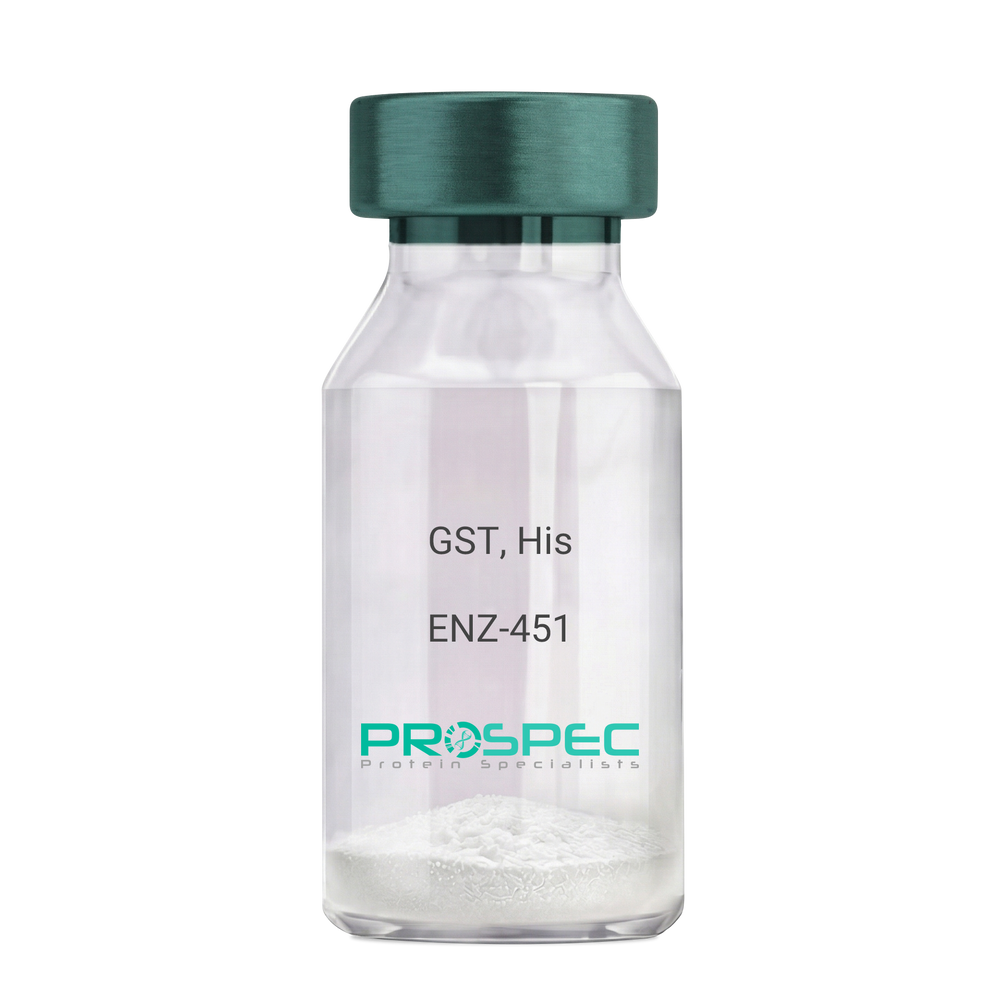
    Name :

    GST, His

    Description:

    Glutathione S-Transferase Recombinant, His Tag

    Glutathione S-Transferase, GST, Glutathione S-transferase class-mu 28 kDa isozyme, GST 28, EC 2.5.1.18, Sj28GST, Sj28 antigen.

    Product # :

    ENZ-451

    Price :

    Quantity :

    Shipping Method :

    Ice Icon

    Shipped with Ice Packs

    Add To Cart

    More Info

    • description
    • source
    • formulation
    • purity
    • biological activity
    • More Info

    Description

    Recombinant Schistosoma japonicum GST full length protein contains a total of 244 amino acids (1-218 a.a.) expressed in E.coli, having a molecular mass of 28.3kDa. The GST protein is fused to a 20 amino acids His-Tag at N-terminus. The GST protein is purified by proprietary chromatographic techniques.

    Source

    Escherichia Coli.

    Formulation

    GST is supplied in PBS pH 7.4 & 10% glycerol.

    Purity

    Greater than 90% as determined by SDS-PAGE.

    Biological Activity

    >10 units/mg, & is defined as the amount of enzyme that conjugate 1.0 u mole of 1-chloro-2,4-dinitrobenzene (CDNB) with reduced glutathione per minute at pH-6.5 at 25C.

    More Info

    • Introduction

      Antioxidant enzyme Glutathione S- Transferase (GST) is thought to do the primary cellular defense mechanism against reactive oxygen species. GST reduces lipid hydroperoxides through its Se-independent glutathione peroxidase activity. The enzyme also detoxifies lipid peroxidation end products such as 4-hydroxynonenal (4-HNE).
      The soluble GST is a 26 kDa protein which occurs as a dimer in all aerobic organisms. Each monomer has two domains, one that binds GSH and is an /-structure similar to thioredoxin and the other, all helical, that binds the hydrophobic substrate. The GST -fusion protein expression system is a widely used recombinant protein expression system that allows a peptide or a regulatory protein domain to be expressed as a fusion to the C-terminus of Schistosoma japonicum GST. Fusion proteins also possess GST -enzymatic activity and can undergo dimerization similar to in vivo. The fusion protein can be purified via GST -affinity column chromatography. In most cases, the desired peptides or domains are removed from GST by applying a specific protease that recognizes and cleaves the linker between the protein domain and GST. The technique has been widely used to generate different kinds of proteins for crystallization, molecular immunology studies, the production of vaccines and studies involving protein-protein and protein-DNA interactions.

    • Synonyms

      Glutathione S-Transferase, GST, Glutathione S-transferase class-mu 28 kDa isozyme, GST 28, EC 2.5.1.18, Sj28GST, Sj28 antigen.

    • Physical Appearance

      Sterile Filtered clear solution.

    • Stability

      Store at 4°C if entire vial will be used within 2-4 weeks. Store, frozen at -20°C for longer periods of time. For long term storage it is recommended to add a carrier protein (0.1% HSA or BSA).Avoid multiple freeze-thaw cycles.

    • Amino Acid Sequence

      MGSSHHHHHH SSGLVPRGSH MSPILGYWKI KGLVQPTRLL LEYLEEKYEE HLYERDEGDK WRNKKFELGL EFPNLPYYID GDVKLTQSMAIIRYIADKHN MLGGCPKERA EISMLEGAVL DIRYGVSRIA YSKDFETLKV DFLSKLPEML KMFEDRLCHK TYLNGDHVTH PDFMLYDALDVVLYMDPMCL DAFPKLVCFK KRIEAIPQID KYLKSSKYIA WPLQGWQATF GGGDHPPKSD LVPR.

    ProSpec's products are furnished for LABORATORY RESEARCH USE ONLY. The product may not be used as drugs, agricultural or pesticidal products, food additives or household chemicals.

    Glutathione S Transferase His
  • View Data Sheet

    Name :

    GSTA1 Human

    Description:

    Glutathione S-Transferase Alpha-1 Human Recombinant

    GST2, GSTA1-1, GTH1, GSTA-1, GSTAI, GSTA-I, EC 2.5.1.18, Glutathione S-transferase A1, GST HA subunit 1, GST-epsilon, GST class-alpha member 1, GSTA1, MGC131939.

    Product # :

    ENZ-469

    Price :

    Quantity :

    Shipping Method :

    Ice Icon

    Shipped with Ice Packs

    Add To Cart

    More Info

    • description
    • source
    • formulation
    • purity
    • biological activity
    • More Info

    Description

    GSTA1 Human Recombinant produced in E.Coli is a single, non-glycosylated, polypeptide chain containing 222 amino acids (1-222 a.a.) and having a molecular mass of 25.6 kDa. The GSTA1 is purified by proprietary chromatographic techniques.

    Source

    Escherichia Coli.

    Formulation

    The GSTA1 solution (1mg/ml) contains 20mM Tris-HCl buffer (pH 8.0), 1mM DTT and 10% glycerol.

    Purity

    Greater than 90.0% as determined by SDS-PAGE.

    Biological Activity

    Specific activity is 35,000 pmol/min/ug, and is defined as the amount of enzyme that conjugate 1.0 u mole of 1-chloro-2,4-dinitrobenzene (CDNB) with reduced glutathione per minute at pH 6.5 at 25°C.

    More Info

    • Introduction

      Membrane-bound & Cytosolic forms of GST are encoded by 2 separate supergene families. These enzymes function in the detoxification of electrophilic compounds, including carcinogens, therapeutic drugs, environmental toxins and products of oxidative stress, by conjugation with glutathione. There are 8 different classes of soluble cytoplasmic mammalian GST: alpha, kappa, mu, omega, pi, sigma, theta and zeta. The GSTA1 is found in a cluster mapped to chromosome 6, and is highly expressed in the liver. GSTA1 protects the cells from reactive oxygen species.

    • Synonyms

      GST2, GSTA1-1, GTH1, GSTA-1, GSTAI, GSTA-I, EC 2.5.1.18, Glutathione S-transferase A1, GST HA subunit 1, GST-epsilon, GST class-alpha member 1, GSTA1, MGC131939.

    • Physical Appearance

      Sterile Filtered colorless solution.

    • Stability

      Store at 4°C if entire vial will be used within 2-4 weeks. Store, frozen at -20°C for longer periods of time. For long term storage it is recommended to add a carrier protein (0.1% HSA or BSA).Avoid multiple freeze-thaw cycles.

    • Amino Acid Sequence

      MAEKPKLHYF NARGRMESTR WLLAAAGVEF EEKFIKSAED LDKLRNDGYL MFQQVPMVEI DGMKLVQTRA ILNYIASKYN LYGKDIKERA LIDMYIEGIA DLGEMILLLP VCPPEEKDAK LALIKEKIKN RYFPAFEKVL KSHGQDYLVG NKLSRADIHL VELLYYVEEL DSSLISSFPL LKALKTRISN LPTVKKFLQP GSPRKPPMDE KSLEEARKIF RF.

    ProSpec's products are furnished for LABORATORY RESEARCH USE ONLY. The product may not be used as drugs, agricultural or pesticidal products, food additives or household chemicals.

    Gsta1 Human
  • 1
  • …
  • 21
  • 22
  • 23
  • 24
  • 25
  • …
  • 42
Your browser does not support the video tag.

Products

  • Cytokines
  • Growth Factors
  • Chemokines
  • CD Antigens
  • Neurotrophins
  • Hormones
  • Enzymes
  • Viral Antigens
  • Recombinant Proteins
  • Natural Proteins
  • Monoclonal Antibodies
  • Polyclonal Antibodies
  • Thermal Packaging

About

  • Company
  • Founder
  • Contribution
  • Contact Us
  • My Account

Ordering

  • Ordering Method
  • Ordering - Credit Card
  • Ordering PO
  • Shipping Fees
  • FAQ's

Legal

  • Terms & Conditions
  • Privacy
  • Site Map
  • info@prospecbio.com
  • Facebook
  • Instagram
  • Linkedin Profile

© 2026 ProSpec-Tany TechnoGene Ltd. All Rights Reserved.

  • Choosing a selection results in a full page refresh.
  • Opens in a new window.