Search results
1000 results found for “cyclophilin”
Name
Description
Product #
Price
Quantity
Shipping Method
- View Data Sheet
Name :
VEGF Human, BaculovirusDescription:
Vascular Endothelial Growth Factor Human Recombinant, Baculovirus
Vascular Endothelial Growth Factor A, VEGF, Vascular Permeability Factor, MVCD1, VPF, Vascular Endothelial Growth Factor, VEGF-A, Vascular endothelial growth factor A.
Product # :
CYT-849Price :
Quantity :
Shipping Method :
Shipped with Ice Packs
More Info
- description
- source
- formulation
- purity
- More Info
Description
VEGF produced in Sf9 Baculovirus cells is a single, glycosylated polypeptide chain containing 171 amino acids (27-191 a.a.) and having a molecular mass of 19.9 kDa. VEGF is expressed with a 6 amino acid His tag at C-Terminus and purified by proprietary chromatographic techniques.
Source
Sf9, Baculovirus cells.
Formulation
VEGF protein solution (0.25mg/ml) contains Phosphate buffered saline (pH7.4), 30% glycerol, 1mM DTT and 0.1mM PMSF.
Purity
Greater than 85.0% as determined by SDS-PAGE.
More Info
-
Introduction
Vascular endothelial growth factor is an important signaling protein involved in both vasculogenesis and angiogenesis. As its name implies, VEGF activity has been mostly studied on cells of the vascular endothelium, although it does have effects on a number of other cell types (e.g. stimulation monocyte/ macrophagemigration, neurons, cancer cells, kidney epithelial cells ).VEGF mediates increased vascular permeability, induces angiogenesis, vasculogenesis and endothelial cell growth, promotes cell migration, and inhibits apoptosis. In vitro, VEGF has been shown to stimulate endothelial cell mitogenesisand cell migration. VEGF is also a vasodilator and increases microvascular permeability and was originally referred to as vascular permeability factor. Elevated levels of this protein are linked to POEMS syndrome, also known as Crow-Fukase syndrome. Mutations in this gene have been associated with proliferative and nonproliferative diabetic retinopathy.
-
Synonyms
Vascular Endothelial Growth Factor A, VEGF, Vascular Permeability Factor, MVCD1, VPF, Vascular Endothelial Growth Factor, VEGF-A, Vascular endothelial growth factor A.
-
Physical Appearance
Sterile filtered colorless solution.
-
Stability
Store at 4°C if entire vial will be used within 2-4 weeks. Store, frozen at -20°C for longer periods of time. For long term storage it is recommended to add a carrier protein (0.1% HSA or BSA). Avoid multiple freeze-thaw cycles.
-
Amino Acid Sequence
APMAEGGGQN HHEVVKFMDV YQRSYCHPIE TLVDIFQEYP DEIEYIFKPS CVPLMRCGGC CNDEGLECVP TEESNITMQI MRIKPHQGQH IGEMSFLQHN KCECRPKKDR ARQENPCGPC SERRKHLFVQ DPQTCKCSCK NTDSRCKARQ LELNERTCRC DKPRRHHHHH H.
ProSpec's products are furnished for LABORATORY RESEARCH USE ONLY. The product may not be used as drugs, agricultural or pesticidal products, food additives or household chemicals.
- View Data Sheet
Name :
CCL1 HumanDescription:
I-309 Human Recombinant (CCL1)
Small inducible cytokine A1, CCL1, T lymphocyte-secreted protein I-309, chemokine (C-C motif) ligand 1, P500, SISe, TCA3, I-309, SCYA1.
Product # :
CHM-312Price :
Quantity :
Shipping Method :
Shipped at Room temp
More Info
- description
- source
- formulation
- purity
- biological activity
- More Info
Description
I-309 Human Recombinant produced in E.Coli is a single,non-glycosylated, polypeptide chain containing 74 amino acids and having a molecular mass of 8504 Dalton. The I-309 is purified by proprietary chromatographic techniques.
Source
Escherichia Coli.
Formulation
The CCL1 protein was lyophilized with no additives.
Purity
Greater than 99.0% as determined by:
(a) Analysis by RP-HPLC.
(b) Analysis by SDS-PAGE.Biological Activity
The Biological activity is calculated by its ability to chemoattract human T cells at 10-100ng/ml corresponding to a Specific Activity of 10,000-100,000IU/mg.More Info
-
Introduction
Chemokine (C-C motif) ligand 1 (CCL1) is a small glycoprotein secreted by activated T cells that belongs to a family inflammatory cytokines known as chemokines. CCL1 attracts monocytes, NK cells, and immature B cells and dendritic cells by interacting with a cell surface chemokine receptor called CCR8. This chemokine resides in a large cluster of CC chemokines on human chromosome 17.
-
Synonyms
Small inducible cytokine A1, CCL1, T lymphocyte-secreted protein I-309, chemokine (C-C motif) ligand 1, P500, SISe, TCA3, I-309, SCYA1.
-
Physical Appearance
Sterile Filtered White lyophilized (freeze-dried) powder.
-
Stability
Lyophilized I-309 although stable at room temperature for 3 weeks, should be stored desiccated below -18°C. Upon reconstitution CCL1 should be stored at 4°C between 2-7 days and for future use below -18°C. For long term storage it is recommended to add a carrier protein (0.1% HSA or BSA).Please prevent freeze-thaw cycles.
-
Solubility
It is recommended to reconstitute the lyophilized I-309 in sterile 18MΩ-cm H2O not less than 100µg/ml, which can then be further diluted to other aqueous solutions.
-
Amino Acid Sequence
The sequence of the first five N-terminal amino acids was determined and was found to be Ser-Lys-Ser-Met-Gln.
-
Background
What is the molecular weight/Mw of CCL1 HUMAN Protein?
CCL1 HUMAN Protein has a total Mw of 8.5kDa.
What is the source or expression system of CCL1 HUMAN Protein?
Escherichia Coli.
What is the Purity of CCL1 HUMAN Protein?
CCL1 HUMAN Protein is >99% pure as determined by SDS-PAGE.
What is the Biological Activity of CCL1 HUMAN Protein?
The Biological activity is calculated by its ability to chemoattract human T cells at 10-100ng/ml corresponding to a Specific Activity of 10,000-100,000IU/mg.
What is the amino acid sequence of CCL1 HUMAN Protein?
The sequence of the first five N-terminal amino acids was determined and was found to be Ser-Lys-Ser-Met-Gln.
What applications can CCL1 HUMAN Protein be used in?
CCL1 HUMAN Protein can probably be used in western blot, ELISA and Lateral Flow.
What is the endotoxin level for CCL1 HUMAN Protein?
The endotoxin level is minimal, CCL1 HUMAN Protein was purified using conventional chromatography techniques.
ProSpec's products are furnished for LABORATORY RESEARCH USE ONLY. The product may not be used as drugs, agricultural or pesticidal products, food additives or household chemicals.
- View Data Sheet
Name :
Ang K1-3 HumanDescription:
Angiostatin Kringles 1-3 Human Recombinant
Angiostatin, Angiostatin Kringles 1-3, Ang K1-3.
Product # :
PRO-284Price :
Quantity :
Shipping Method :
Shipped at Room temp
More Info
- description
- source
- formulation
- purity
- biological activity
- More Info
Description
Angiostatin Human Recombinant produced in E.coli is a single, non-glycosylated polypeptide chain containing 259 amino acids and having a molecular mass of approximately 29.7 kDa. The Ang K1-3 is purified by proprietary chromatographic techniques.
Source
Escherichia coli.
Formulation
Lyophilized from a 0.2μm filtered concentrated (1.0mg/ml) solution in 20mM NaAc, pH5.5, 4% mannitol.
Purity
Greater than 95.0% as determined by:
(a) Analysis by RP-HPLC.
(b) Analysis by SDS-PAGE.Biological Activity
The activity is assayed on anti-proliferation and anti-migration of endothelial cells in vitro and anti-angiogenesis in vivo. The specific activity of anti-migration of endothelial cells in vitro is 550,000 Units/mg.
More Info
-
Introduction
Ang K1-3 is a proteolytic fragment of plasminogen containing the first three kringle structures. A specific inhibitor of endothelial cell growth and angiogenesis. More active relative to kringles 1-4. Ang K1-3 reduces endothelial cell proliferation and acts as a potent inhibitor of angiogenesis and tumor growth.
-
Synonyms
Angiostatin, Angiostatin Kringles 1-3, Ang K1-3.
-
Physical Appearance
Sterile Filtered White lyophilized (freeze-dried) powder.
-
Stability
The lyophilized Angiostatin K1-3 is stable for several weeks at 2-8°C, but should be kept at -20°C for long term storage, preferably desiccated. Upon reconstitution, the preparation is stable for up to one week at 2-8°C. For maximal stability, apportion the reconstituted preparation into working aliquots and store at -20°C to -70°C. Avoid repeated freeze/thaw cycles.
-
Solubility
We recommend to briefly centrifuge the vial prior to opening to bring the contents to the bottom. Reconstitute in sterile distilled water or aqueous buffer containing 0.1% BSA to a concentration of 0.1-1.0 mg/ml. Stock solutions should be apportioned into working aliquots and stored at <-20°C. Further dilutions should be made in appropriate buffered solutions.
-
Amino Acid Sequence
VYLSECKTGN GKNYRGTMSK TKNGITCQKW SSTSPHRPRF SPATHPSEGL EENYCRNPDN DPQGPWCYTT DPEKRYDYCD ILECEEECMH CSGENYDGKI SKTMSGLECQ AWDSQSPHAH GYIPSKFPNK NLKKNYCRNP DRELRPWCFT TDPNKRWELC DIPRCTTPPP SSGPTYQCLKGTGENYRGNV AVTVSGHTCQ HWSAQTPHTH NRTPENFPCK NLDENYCRNP DGKRAPWCHT TNSQVRWEYC KIPSCDSSP.
ProSpec's products are furnished for LABORATORY RESEARCH USE ONLY. The product may not be used as drugs, agricultural or pesticidal products, food additives or household chemicals.
- View Data Sheet
Name :
STMN1 HumanDescription:
Stathmin-1 Human Recombinant
Metablastin, Phosphoprotein p19, Oncoprotein p18, PP17, PP19, PR22, Prosolin, C1orf215, FLJ32206, MGC138869, MGC138870, STMN1, Stathmin, Leukemia-associated phosphoprotein p18, Op18, Protein Pr22, LAP18, Lag, SMN.
Product # :
PRO-676Price :
Quantity :
Shipping Method :
Shipped with Ice Packs
More Info
- description
- source
- formulation
- purity
- More Info
Description
Recombinant Human Stathmin-1 produced in E.Coli is a single, non-glycosylated polypeptide chain containing 169 amino acids (1-149 a.a) and having a molecular mass of 19.4 kDa. STMN1 is fused to 20 amino acid His Tga at N-Terminus and purified by conventional chromatography techniques.
Source
Escherichia Coli.
Formulation
The STMN1 protein solution contains 20mM Tris-HCl, pH-8 and 10% Glycerol.
Purity
Greater than 95.0% as determined by SDS-PAGE.
More Info
-
Introduction
STMN1 takes part in the regulation of the microtubule filament structure by destabilizing microtubules. STMN1 promotes the disassembly of microtubules and prevents assembly. STMN1 is a ubiquitous cytosolic phosphoprotein which functions as an intracellular relay integrating regulatory signals of the cellular environment. Stathmin functions as an Oncoprotein in regulation of the cell cycle. Stathmin mutation results in uncontrolled cell proliferation. Stathmin expression associates with cervical carcinogenesis and tumor progression, thus Stathmin is an important prognostic marker in cervical carcinoma. STMN1, takes part in the prevenative progression of ER-positive primary in breast cancer. Somatic mutation in STMN1 effects cell homeostasis that leads to tumorigenicity.
-
Synonyms
Metablastin, Phosphoprotein p19, Oncoprotein p18, PP17, PP19, PR22, Prosolin, C1orf215, FLJ32206, MGC138869, MGC138870, STMN1, Stathmin, Leukemia-associated phosphoprotein p18, Op18, Protein Pr22, LAP18, Lag, SMN.
-
Physical Appearance
Sterile filtered colorless solution.
-
Stability
Store at 4°C if entire vial will be used within 2-4 weeks. Store, frozen at -20°C for longer periods of time. For long term storage it is recommended to add a carrier protein (0.1% HSA or BSA). Avoid multiple freeze-thaw cycles.
-
Amino Acid Sequence
MGSSHHHHHH SSGLVPRGSH MASSDIQVKE LEKRASGQAF ELILSPRSKE SVPEFPLSPP KKKDLSLEEI QKKLEAAEER RKSHEAEVLK QLAEKREHEK EVLQKAIEEN NNFSKMAEEK LTHKMEANKE NREAQMAAKL ERLREKDKHI EEVRKNKESK DPADETEAD.
ProSpec's products are furnished for LABORATORY RESEARCH USE ONLY. The product may not be used as drugs, agricultural or pesticidal products, food additives or household chemicals.
- View Data Sheet
Name :
PARVA HumanDescription:
Parvin Alpha Human Recombinant
Alpha-parvin, Actopaxin, CH-ILKBP, Calponin-like integrin-linked kinase-binding protein, Matrix-remodeling-associated protein 2, PARVA, MXRA2.
Product # :
PRO-1257Price :
Quantity :
Shipping Method :
Shipped with Ice Packs
More Info
- description
- source
- formulation
- purity
- More Info
Description
PARVA Human Recombinant produced in E.Coli is a single, non-glycosylated polypeptide chain containing 395 amino acids (1-372 a.a) and having a molecular mass of 44.6kDa.PARVA is fused to a 23 amino acid His-tag at N-terminus & purified by proprietary chromatographic techniques.
Source
Escherichia Coli.
Formulation
PARVA protein solution (0.5mg/ml) containing 20mM Tris-HCl buffer (pH 8.0), 0.15M NaCl, 10% glycerol and 1mM DTT.
Purity
Greater than 85.0% as determined by SDS-PAGE.
More Info
-
Introduction
Alpha-parvin (PARVA) belongs to the parvin family of actin-binding proteins. PARVA has a role in the regulation of cell adhesion, cytoskeleton organization, motility and survival as well as in ciliogenesis. Parvins are related with focal contacts and contain calponin homology domains which connect to actin filaments. PARVA is extensively expressed, with the highest levels in heart, skeletal muscle, kidney and liver.
-
Synonyms
Alpha-parvin, Actopaxin, CH-ILKBP, Calponin-like integrin-linked kinase-binding protein, Matrix-remodeling-associated protein 2, PARVA, MXRA2.
-
Physical Appearance
Sterile Filtered colorless solution.
-
Stability
Store at 4°C if entire vial will be used within 2-4 weeks. Store, frozen at -20°C for longer periods of time. For long term storage it is recommended to add a carrier protein (0.1% HSA or BSA).Avoid multiple freeze-thaw cycles.
-
Amino Acid Sequence
MGSSHHHHHH SSGLVPRGSH MGSMATSPQK SPSVPKSPTP KSPPSRKKDD SFLGKLGGTL ARRKKAKEVS ELQEEGMNAI NLPLSPIPFE LDPEDTMLEE NEVRTMVDPN SRSDPKLQEL MKVLIDWIND VLVGERIIVK DLAEDLYDGQ VLQKLFEKLE SEKLNVAEVT QSEIAQKQKL QTVLEKINET LKLPPRSIKW NVDSVHAKSL VAILHLLVAL SQYFRAPIRL PDHVSIQVVV VQKREGILQS RQIQEEITGN TEALSGRHER DAFDTLFDHA PDKLNVVKKT LITFVNKHLN KLNLEVTELE TQFADGVYLV LLMGLLEGYF VPLHSFFLTP DSFEQKVLNV SFAFELMQDG GLEKPKPRPE DIVNCDLKST LRVLYNLFTK YRNVE.
ProSpec's products are furnished for LABORATORY RESEARCH USE ONLY. The product may not be used as drugs, agricultural or pesticidal products, food additives or household chemicals.
- View Data Sheet
Name :
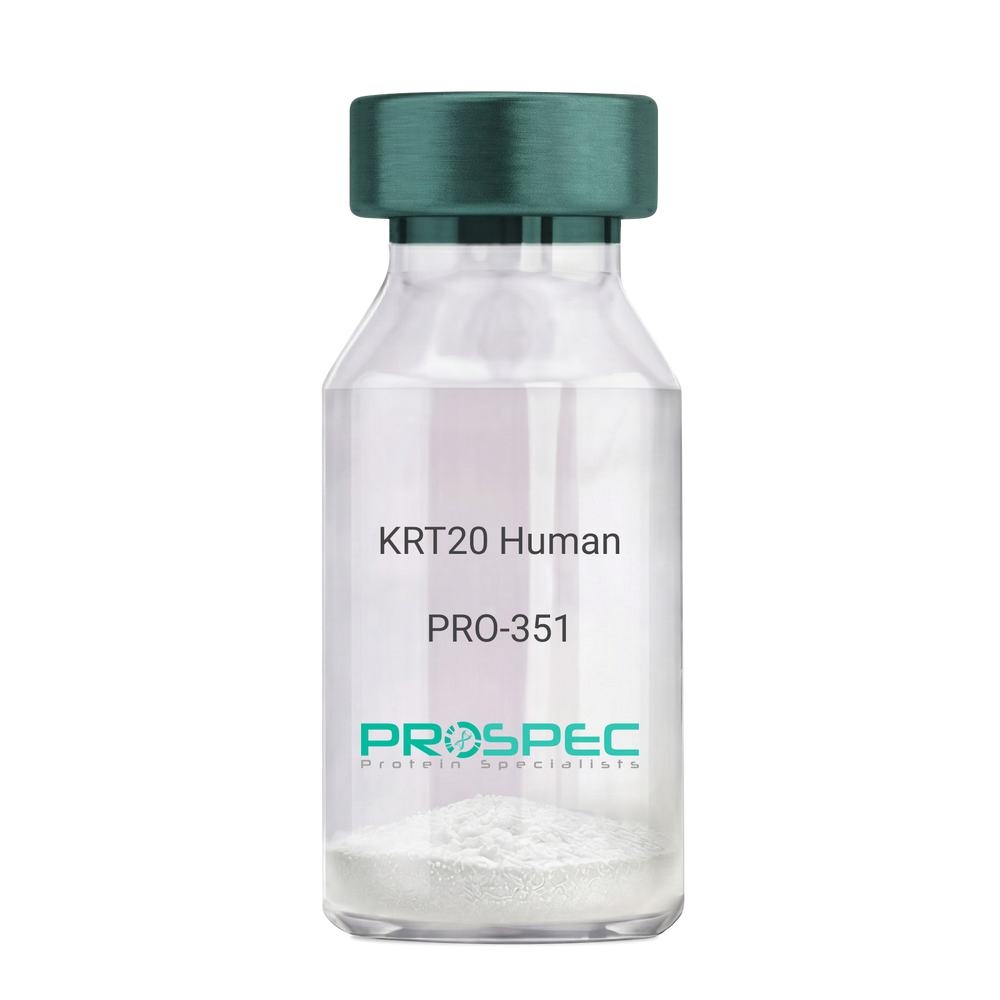
KRT20 HumanDescription:
Cytokeratin 20 Human Recombinant
Keratin type I cytoskeletal 20, Cytokeratin-20, CK-20, Keratin-20, K20, Protein IT, KRT20, CD20, CK20, KRT21, MGC35423.
Product # :
PRO-351Price :
Quantity :
Shipping Method :
Shipped at Room temp
More Info
- description
- source
- formulation
- purity
- More Info
Description
Cytokeratin 20 Human Recombinant produced in E.Coli is a single,non-glycosylated polypeptide chain having a molecular mass of 48,553 Dalton. The KRT20 is purified by proprietary chromatographic techniques.
Source
Escherichia Coli.
Formulation
The protein (1mg/1ml) was lyophilized after from a sterile solution containing 30mM Tris-HCL pH-8, 9.5M urea, 2mM DDT, 2mM EDTA and 10mM methylammonium chloride.
Purity
Greater than 95.0% as determined by SDS-PAGE.
More Info
-
Introduction
KRT20 is a member of the keratin family. The keratins are intermediate filament proteins responsible for the structural integrity of epithelial cells and are subdivided into cytokeratins and hair keratins. The type I cytokeratins consist of acidic proteins which are arranged in pairs of heterotypic keratin chains. This cytokeratin is a major cellular protein of mature enterocytes and goblet cells and is specifically expressed in the gastric and intestinal mucosa. The type I cytokeratin genes are clustered in a region of chromosome 17q12-q21.
-
Synonyms
Keratin type I cytoskeletal 20, Cytokeratin-20, CK-20, Keratin-20, K20, Protein IT, KRT20, CD20, CK20, KRT21, MGC35423.
-
Physical Appearance
Sterile Filtered White lyophilized (freeze-dried) powder.
-
Stability
Lyophilized KRT20 although stable at room temperature for 3 weeks, should be stored desiccated below -18°C. Upon reconstitution KRT20 should be stored at 4°C between 2-7 days and for future use below -18°C.For long term storage it is recommended to add a carrier protein (0.1% HSA or BSA).Please prevent freeze-thaw cycles.
-
Solubility
It is recommended to reconstitute the lyophilized KRT20 in sterile 18MΩ-cm H2O not less than 100µg/ml, which can then be further diluted to other aqueous solutions.
-
Reconstitution to filaments
Performed by mixing equimolar amounts of cytokeratins of type I and type II at concentrations of approx. 0.5 mg/ml, both dissolved in 9.5 M urea buffer (see above). Protofilaments and filament complexes are obtained by dialyzing the resulting polypeptide solution stepwise to a concentration of 4 M urea and then to low salt condition (50 mM NaCI, 2 mM dithiothreitol, 10 mM Tris-HCI, pH 7.4). For immunization purposes, the solution can be further dialyzed against PBS (phosphate buffered saline, e.g. Dulbecco's PBS).
ProSpec's products are furnished for LABORATORY RESEARCH USE ONLY. The product may not be used as drugs, agricultural or pesticidal products, food additives or household chemicals.
- View Data Sheet
Name :
CFH RatDescription:
Complement Factor H Rat
Complement factor H, H factor 1, CFH, HF, HF1, HF2.
Product # :
PRO-2709Price :
Quantity :
Shipping Method :
Shipped with Ice Packs
More Info
- description
- source
- formulation
- purity
- More Info
Description
Rat Complement Factor H produced in Rat plasma having a total molecular mass of 155kDa.
Source
Rat Plasma.
Formulation
CFH protein solution contains phosphate Buffered Saline, pH 7.2.
Purity
Greater than 95.0% as determined by SDS-PAGE.
More Info
-
Introduction
Complement factor H (CFH) is an important regulatory component of the alternative pathway of complement. CFH is prevents complement activation on host cells and tissues, mainly the kidney. CFH controls the formation and decay of the alternative pathway C3/C5 convertase and acts as a cofactor for factor I which proteolytically inactivates C3b when C3b is bound to factor H. The N-terminal 5 domains of CFH bind to C3b and inhibit binding of factor B thus reducing the formation of C3/C5 convertase. CFH also binds to preformed C3/C5 convertases and causes quick release of the catalytic subunit Bb. These activities are necessary for controlling the spontaneous activation of the alternative pathway amplification process in plasma. In addition, CFH controls the formation and decay of these enzymes when C3b is attached to the surface of particles.
-
Synonyms
Complement factor H, H factor 1, CFH, HF, HF1, HF2.
-
Physical Appearance
Sterile filtered solution.
-
Stability
CFH Rat is stable at 4°C if entire vial will be used within 2-4 weeks.Store, frozen below -20°C for longer periods of time.For long term storage it is recommended to add a carrier protein (0.1% HSA or BSA).Avoid multiple freeze-thaw cycles.
ProSpec's products are furnished for LABORATORY RESEARCH USE ONLY. The product may not be used as drugs, agricultural or pesticidal products, food additives or household chemicals.
- View Data Sheet
Name :
KLRK1 Human, Sf9Description:
Killer Cell lectin-Like Receptor Subfamily K, Member 1 Human Recombinant, Sf9
Killer Cell Lectin Like Receptor K1, Killer Cell Lectin-Like Receptor Subfamily K, Member 1, NKG2-D-Activating NK Receptor, NK Cell Receptor D, D12S2489E, NKG2D, DNA Segment On Chromosome 12 (Unique) 2489 Expressed Sequence, Killer Cell Lectin-Like Receptor Subfamily K Member 1, NKG2-D Type II Integral Membrane Protein, CD314 Antigen, NKG2-D, CD314, KLR.
Product # :
PRO-2474Price :
Quantity :
Shipping Method :
Shipped with Ice Packs
More Info
- description
- source
- formulation
- purity
- More Info
Description
KLRK1 Human Recombinant produced in Sf9 Baculovirus cells is a single, glycosylated polypeptide chain containing 386 amino acids (73-216a.a.) and having a molecular mass of 43.9kDa (Molecular size on SDS-PAGE will appear at approximately 40-57kDa). KLRK1 is expressed with a 242 amino acids hIgG-His tag at C-Terminus and purified by proprietary chromatographic techniques.
Source
Sf9, Baculovirus cells.
Formulation
KLRK1 protein solution (0.5mg/ml) contains Phosphate Buffered Saline (pH 7.4) and 10% glycerol.
Purity
Greater than 95.0% as determined by SDS-PAGE.
More Info
-
Introduction
Killer Cell lectin-Like Receptor Subfamily K, Member 1 (KLRK1) is an activating receptor which has recently generated considerable interest. The most fascinating of these, are a couple of closely related proteins known as MICA and MICB. These are cell-surface molecules distantly related to MHC class I proteins, and their genes have elements of heat shock promoters. Thus, MICA and MICB are expressed in the course of cell stress and are up-regulated in tumor cells and during viral infections. This receptor-ligand combination has a crucial role in the immune response to various pathologies.
-
Synonyms
Killer Cell Lectin Like Receptor K1, Killer Cell Lectin-Like Receptor Subfamily K, Member 1, NKG2-D-Activating NK Receptor, NK Cell Receptor D, D12S2489E, NKG2D, DNA Segment On Chromosome 12 (Unique) 2489 Expressed Sequence, Killer Cell Lectin-Like Receptor Subfamily K Member 1, NKG2-D Type II Integral Membrane Protein, CD314 Antigen, NKG2-D, CD314, KLR.
-
Physical Appearance
Sterile Filtered colorless solution.
-
Stability
Store at 4°C if entire vial will be used within 2-4 weeks. Store, frozen at -20°C for longer periods of time. For long term storage it is recommended to add a carrier protein (0.1% HSA or BSA).Avoid multiple freeze-thaw cycles.
-
Amino Acid Sequence
ADPIWSAVFL NSLFNQEVQI PLTESYCGPC PKNWICYKNN CYQFFDESKN WYESQASCMS QNASLLKVYS KEDQDLLKLV KSYHWMGLVH IPTNGSWQWE DGSILSPNLL TIIEMQKGDC ALYASSFKGY IENCSTPNTY ICMQRTVVEP KSCDKTHTCP PCPAPELLGG PSVFLFPPKP KDTLMISRTP EVTCVVVDVS HEDPEVKFNW YVDGVEVHNA KTKPREEQYN STYRVVSVLT VLHQDWLNGK EYKCKVSNKA LPAPIEKTIS KAKGQPREPQ VYTLPPSRDE LTKNQVSLTC LVKGFYPSDI AVEWESNGQP ENNYKTTPPV LDSDGSFFLY SKLTVDKSRW QQGNVFSCSV MHEALHNHYT QKSLSLSPGK HHHHHH.
ProSpec's products are furnished for LABORATORY RESEARCH USE ONLY. The product may not be used as drugs, agricultural or pesticidal products, food additives or household chemicals.
- View Data Sheet
Name :
Osteocrin Human, HEKDescription:
Osteocrin Human Recombinant, HEK
Osteocrin, Musclin, OSTN.
Product # :
PRO-2818Price :
Quantity :
Shipping Method :
Shipped with Ice Packs
More Info
- description
- source
- formulation
- purity
- biological activity
- More Info
Description
Osteocrin Human Recombinant is a single, glycosylated, polypeptide chain (28-133 a.a) containing a total of 112 amino acids and having a molecular mass of 12.5 kDa. Osteocrin is fused to a 6 a.a His-Tag at C-terminus and is purified by proprietary chromatographic techniques.
Source
HEK293 Cells.
Formulation
The Osteocrin solution (0.5mg/ml) contains 10% Glycerol and Phosphate-Buffered Saline (pH 7.4).
Purity
Greater than 95.0% as determined by SDS-PAGE.
Biological Activity
The ED50 range ≤ 20 ng/ml measured by its binding ability in a functional ELISA with Human NPRC.
More Info
-
Synonyms
Osteocrin, Musclin, OSTN.
-
Physical Appearance
Sterile Filtered colorless solution.
-
Stability
Store at 4°C if entire vial will be used within 2-4 weeks. Store, frozen at -20°C for longer periods of time. For long term storage it is recommended to add a carrier protein (0.1% HSA or BSA). Avoid multiple freeze-thaw cycles.
-
Amino Acid Sequence
VDVTTTEAFD SGVIDVQSTP TVREEKSATD LTAKLLLLDE LVSLENDVIE TKKKRSFSGF GSPLDRLSAG SVDHKGKQRK VVDHPKRRFG IPMDRIGRNR LSNSRGHHHH HH.
-
Background
Research has demonstrated that osteocrin influences bone formation by enhancing the anabolic effects of osteoblasts, the cells responsible for new bone formation. In addition to its skeletal roles, osteocrin has been shown to regulate cardiovascular functions by modulating blood pressure and cardiac hypertrophy. Furthermore, emerging evidence suggests that osteocrin may play a role in the central nervous system, impacting cognitive function and neuroprotection.
ProSpec's products are furnished for LABORATORY RESEARCH USE ONLY. The product may not be used as drugs, agricultural or pesticidal products, food additives or household chemicals.
- View Data Sheet
Name :
Desmin ChickenDescription:
Desmin Chicken Gizzard
Desmin, DES, CSM1, CSM2, CMD1I, FLJ12025, FLJ39719, FLJ41013, FLJ41793.
Product # :
PRO-2783Price :
Quantity :
Shipping Method :
Shipped at Room temp
More Info
- description
- source
- formulation
- purity
- More Info
Description
Desmin Chicken having a calculated molecular mass of 53 kDa, pI-5.4.
Source
Chicken gizzard.
Formulation
Desmin was lyophilized from a 1mg/ml solution containing 10 mM sodium phosphate buffer pH 7.5, 6M urea, 1mM EDTA, 2mM DTT and 10mM methylammonium chloride.
Purity
Greater than 98.0% as determined by SDS-PAGE.
More Info
-
Synonyms
Desmin, DES, CSM1, CSM2, CMD1I, FLJ12025, FLJ39719, FLJ41013, FLJ41793.
-
Physical Appearance
Sterile Filtered White lyophilized (freeze-dried) powder.
-
Stability
Store the lyophilized Desmin between 2-8°C, do not freeze. Upon reconstitution Desmin should be stored at -20°C. Please prevent freeze-thaw cycles.
-
Solubility
It is recommended to reconstitute the lyophilized Desmin in sterile 18MΩ-cm H2O not less than 100µg/ml, which can then be further diluted to other aqueous solutions.
-
Background
Desmin, an intermediate filament protein, plays a fundamental role in maintaining the structural integrity and function of muscle cells. While extensive research has been conducted on desmin in mammals, the study of desmin in chickens is an emerging area with considerable potential for advancing our understanding of muscle biology. Chickens are valuable model organisms for studying muscle development, growth, and regeneration due to their relatively simple muscular system and economic significance in poultry production. This research aims to provide a comprehensive exploration of desmin in chickens, shedding light on its functions and implications for muscle structure and function.
The primary objective of this research is to elucidate the role of desmin in chicken muscle structure and development. In vitro and in vivo experiments, utilizing chicken cell cultures and embryonic models, will be conducted to investigate how desmin contributes to the organization of muscle fibers, sarcomere assembly, and myofibrillogenesis. Understanding these mechanisms is fundamental for deciphering the complexities of muscle development in chickens.
The second objective is to assess the clinical and economic relevance of desmin in poultry production. Studies involving broiler chickens will be conducted to evaluate the impact of desmin mutations or variations on muscle growth, meat quality, and disease susceptibility. These investigations may provide valuable insights into potential strategies for enhancing poultry production efficiency and meat quality.
The third objective is to explore the potential applications of desmin in biotechnology and tissue engineering. Research will investigate the use of desmin-expressing chicken cells as models for studying muscle-related diseases and for developing tissue engineering approaches for muscle repair and regeneration.
By delving into the functions and roles of desmin in chickens, this research aims to expand our knowledge of muscle biology, its implications for poultry production, and its potential applications in biotechnology and regenerative medicine.
ProSpec's products are furnished for LABORATORY RESEARCH USE ONLY. The product may not be used as drugs, agricultural or pesticidal products, food additives or household chemicals.
- View Data Sheet
Name :
NEFMDescription:
Neurofilament Medium Polypeptide Bovine
Neurofilament medium polypeptide, NF-M, Neurofilament triplet M protein, 160 kDa neurofilament protein, Neurofilament 3, NEFM, NEF3, NFM.
Product # :
PRO-523Price :
Quantity :
Shipping Method :
Shipped at Room temp
More Info
- description
- source
- formulation
- purity
- More Info
Description
Ultra Pure NeuroFilament Protein having a Molecular mass of 160 kDa produced from Bovine Spinal Cord.
Source
Bovine Spinal Cord.
Formulation
The protein was lyophilized from a 1mg/ml solution containing 10mM sodium phosphate, pH-7.5, 2mM DTT, 6M urea, 10mM methylammonium chloride and 1mM EDTA.
Purity
Greater than 95.0% as determined by SDS-PAGE.
More Info
-
Introduction
Neurofilaments are type IV intermediate filament heteropolymers that are composed of light, medium, and heavy chains. Neurofilaments comprise the axoskeleton and functionally maintain neuronal caliber and may also have a role in intracellular transport to axons and dendrites.
NeuroFilament 160kDa is a medium neurofilament protein, which is commonly used as a biomarker of neuronal damage. -
Synonyms
Neurofilament medium polypeptide, NF-M, Neurofilament triplet M protein, 160 kDa neurofilament protein, Neurofilament 3, NEFM, NEF3, NFM.
-
Physical Appearance
Sterile Filtered White lyophilized (freeze-dried) powder.
-
Stability
Store the lyophilized NEFM between 2-8°C, do not freeze. Upon reconstitution NEFM should be stored below -18°C. Please prevent freeze-thaw cycles.
-
Solubility
It is recommended to reconstitute the lyophilized NEFM in sterile 18MΩ-cm H2O.
ProSpec's products are furnished for LABORATORY RESEARCH USE ONLY. The product may not be used as drugs, agricultural or pesticidal products, food additives or household chemicals.
- View Data Sheet
Name :
KRT18 HumanDescription:
Cytokeratin 18 Human Recombinant
Keratin type I cytoskeletal 18, Cytokeratin-18, CK-18, Keratin-18, K18, KRT18,CYK18,Cell proliferation-inducing gene 46 protein.
Product # :
PRO-349Price :
Quantity :
Shipping Method :
Shipped at Room temp
More Info
- description
- source
- formulation
- purity
- More Info
Description
Cytokeratin 18 Human Recombinant produced in E.Coli is a single, non-glycosylated polypeptide chain having a calculated molecular mass of 48,201 Dalton, showing a 45kDa band on SDS-page, pI-5.7.The KRT18 is purified by proprietary chromatographic techniques.
Source
Escherichia Coli.
Formulation
The protein (1mg/ml) was lyophilized from a sterile solution containing 30mM Tris-HCl pH-8, 9.5M urea, 2mM EDTA, 2mM DTT and 10mM methylammonium chloride.
Purity
Greater than 95.0% as determined by analysis by SDS-PAGE.
More Info
-
Introduction
KRT18 encodes the type I intermediate filament chain keratin 18. Keratin 18, together with its filament partner keratin 8, are perhaps the most commonly found members of the intermediate filament gene family. They are expressed in single layer epithelial tissues of the body. Mutations in this gene have been linked to cryptogenic cirrhosis. Two transcript variants encoding the same protein have been found for this gene.
-
Synonyms
Keratin type I cytoskeletal 18, Cytokeratin-18, CK-18, Keratin-18, K18, KRT18,CYK18,Cell proliferation-inducing gene 46 protein.
-
Physical Appearance
Sterile Filtered White lyophilized (freeze-dried) powder.
-
Stability
Lyophilized CK-18 although stable at room temperature for 3 weeks, should be stored between 2-8°C. Upon reconstitution CK-18 should be stored at 4°C between 2-7 days and for future use below -18°C. For long term storage it is recommended to add a carrier protein (0.1% HSA or BSA). Please prevent freeze-thaw cycles.
-
Solubility
It is recommended to reconstitute the lyophilized 1mg CK-18 in sterile 18MΩ-cm H2O not less than 700µl, which can then be further diluted to other aqueous solutions.
-
Reconstitution to filaments
Performed by mixing equimolar amounts of cytokeratins of type I and type II at concentrations of approx. 0.5 mg/ml, both dissolved in 9.5M urea buffer (see above). Protofilaments and filament complexes are obtained by dialyzing the resulting polypeptide solution stepwise to a concentration of 4M urea and then to low salt condition (50mM NaCl, 2mM dithiothreitol, 10mM Tris-HCI, pH 7.4). For immunization purposes, the solution can be further dialyzed against PBS (phosphate buffered saline, e.g. Dulbecco's PBS).
ProSpec's products are furnished for LABORATORY RESEARCH USE ONLY. The product may not be used as drugs, agricultural or pesticidal products, food additives or household chemicals.
- View Data Sheet
Name :
CXCL13 HumanDescription:
BCA-1/BLC Human Recombinant (CXCL13)
C-X-C motif chemokine 13, Small-inducible cytokine B13, B lymphocyte chemoattractant, CXC chemokine BLC, CXCL13, BCA1, BCA-1, CXCL-13, B cell Attracting Chemokine-1, BLC, ANGIE, BLR1L, SCYB13, ANGIE2.
Product # :
CHM-348Price :
Quantity :
Shipping Method :
Shipped at Room temp
More Info
- description
- source
- formulation
- purity
- biological activity
- More Info
Description
CXCL13 Human Recombinant produced in E.Coli is a single,non-glycosylated, polypeptide chain containing 87 amino acids and having a molecular mass of 10.3 kDa. The BCA-1 is purified by proprietary chromatographic techniques.
Source
Escherichia Coli.
Formulation
The BCA-1 protein was lyophilized from a concentrated (0.5mg/ml) solution containing 20mM PBS & 150mM NaCl pH-7.4.
Purity
Greater than 97.0% as determined by:
(a) Analysis by RP-HPLC.
(b) Analysis by SDS-PAGE.Biological Activity
Determined by its ability to chemoattract human B cells using a concentration range of 1-10ng/ml corresponding to a Specific Activity of 100,000-1,000,000IU/mg.More Info
-
Introduction
BCA-1 is a CXC chemokine that is highly expressed in thesecondary lymphoid organs, such as follicles of the spleen, lymph nodes, and Peyer's patches. CXCL13 promotes the migration of B lymphocytes (compared to T cells and macrophages), by stimulating calcium influx into, and chemotaxis of, cells expressing Burkitt's lymphoma receptor 1 (BLR1). BCA1 therefore function in the homing of B lymphocytes to follicles. Human BCA-1 shares a 64% amino acid sequence similarity with the mouse protein and 23 - 34% amino acid sequence identity with other known CXC chemokines. Recombinant or chemically synthesized BCA1 is a potent chemoattractant for B lymphocytes but not T lymphocytes, monocytes or neutrophils. BLR1, a G protein-coupled receptor originally isolated from Burkitt’s lymphoma cells, has now been shown to be the specific receptor for BCA1. Among cells of the hematopoietic lineages, the expression of BLR-1, now designated CXCR-5, is restricted to B lymphocytes and a subpopulation of T helper memory cells.
-
Synonyms
C-X-C motif chemokine 13, Small-inducible cytokine B13, B lymphocyte chemoattractant, CXC chemokine BLC, CXCL13, BCA1, BCA-1, CXCL-13, B cell Attracting Chemokine-1, BLC, ANGIE, BLR1L, SCYB13, ANGIE2.
-
Physical Appearance
Sterile Filtered White lyophilized (freeze-dried) powder.
-
Stability
Lyophilized BCA1 although stable at room temperature for 3 weeks, should be stored desiccated below -18°C. Upon reconstitution BCA1 should be stored at 4°C between 2-7 days and for future use below -18°C.For long term storage it is recommended to add a carrier protein (0.1% HSA or BSA).Please prevent freeze-thaw cycles.
-
Solubility
It is recommended to reconstitute the lyophilized CXCL13 in sterile 18MΩ-cm H2O not less than 100µg/ml, which can then be further diluted to other aqueous solutions.
-
Amino Acid Sequence
VLEVYYTSLRCRCVQESSVFIPRRFIDRIQILPRGNG CPRKEIIVWKKNKSIVCVDPQAEWIQRMMEVLRKR SSSTLPVPVFKRKIP.
-
Background
What is the molecular weight/Mw of CXCL13 HUMAN Protein?
CXCL13 HUMAN Protein has a total Mw of 10.3kDa.
What is the source or expression system of CXCL13 HUMAN Protein?
Escherichia Coli.
What is the Purity of CXCL13 HUMAN Protein?
CXCL13 HUMAN Protein is >97% pure as determined by SDS-PAGE.
What is the Biological Activity of CXCL13 HUMAN Protein?
Determined by its ability to chemoattract human B cells using a concentration range of 1-10ng/ml corresponding to a Specific Activity of 100,000-1,000,000IU/mg.
What is the amino acid sequence of CXCL13 HUMAN Protein?
VLEVYYTSLRCRCVQESSVFIPRRFIDRIQILPRGNG CPRKEIIVWKKNKSIVCVDPQAEWIQRMMEVLRKR SSSTLPVPVFKRKIP.
What applications can CXCL13 HUMAN Protein be used in?
CXCL13 HUMAN Protein can probably be used in western blot, ELISA and Lateral Flow.
What is the endotoxin level for CXCL13 HUMAN Protein?
The endotoxin level is minimal, CXCL13 HUMAN Protein was purified using conventional chromatography techniques.
ProSpec's products are furnished for LABORATORY RESEARCH USE ONLY. The product may not be used as drugs, agricultural or pesticidal products, food additives or household chemicals.
- View Data Sheet
Name :
CTGF Human, HEKDescription:
Connective Tissue Growth Factor Human Recombinant , HEK
CCN2, NOV2, HCS24, IGFBP8, MGC102839, CTGF.
Product # :
CYT-687Price :
Quantity :
Shipping Method :
Shipped with Ice Packs
More Info
- description
- source
- formulation
- purity
- More Info
Description
The CTGF Human Recombinant produced in HEK293 cells, is 36kDa protein containing a total of 329 amino acid residues (aa 27-349) including a C-terminal 6×His tag.
Source
HEK293 cells.
Formulation
CTGF filtered (0.2µm) solution in 0.1M Citrate buffer pH 4.7 and 20% (w/v) glycerol.
Purity
Greater than 90.0% as determined by SDS-PAGE.
More Info
-
Introduction
Connective Tissue Growth Factor belongs to the CCN family of proteins. The CCN family presently consists of six members in human also known as: Cyr61 (Cystein rich 61), CTGF (Connective Tissue Growth Factor), Nov (Nephroblastoma Overexpressed gene), WISP-1, 2 and 3 (Wnt-1 Induced Secreted Proteins). The CCN genes encode secreted proteins associated with the Extracellular Matrix (ECM) and cell membrane.
CCN proteins are matricellular proteins which are involved in the regulation of various cellular functions including: proliferation, differentiation, survival, adhesion and migration. They are expressed in derivatives of the three embryonic sheets and are implicated in the development of kidney, nervous system, muscle, bone marrow, cartilage and bone. During adulthood, they are implicated in wound healing, bone fracture repair, and pathologies such as: fibrosis, vascular ailments and tumorigenesis.
Full length secreted CCN proteins can show an antiproliferative activity, whereas truncated isoforms are likely to stimulate proliferation and behave as oncogenes.
The full length protein consists of four modules: Module I shares partial identity with the N-terminal part of the Insulin-like Growth Factor Binding Proteins (IGFBPs).
Module II includes a stretch of 70amino acid residues – which shares sequence identity with the Von Willebrand Factor Type C repeat (VWC).
Module III contains sequences sharing identity with the Thrombospondin type 1 repeat (TSP1) (WSXCSXXCG), which is thought to be implicated in the binding of sulfated glycoconjugates and to be important for cell adhesion.
Module IV, also designated CT, is encoded by exon5. It is the leasts conserved one of the four domains at the level of nucleotide sequence, but it appears to be critical for several of the biological functions attributed to the CCN proteins. Module IV resembles the CT domain of several extracellular protein including, Von Willebrand's factor and mucins. Sequence similarities to heparin-binding motifs are also found within this domain.
Proteolysis of the secreted full-length CCN proteins that has been reported in the case of CCN2 and CCN3 might result in the production of CCN-derived peptides with high affinity for ligands that full-length CNN proteins bind only poorly. Amino-truncated CCN2 isoforms were biologically active whereas no specific biological activity has been attributed to the truncated CCN3. Although the molecular processes underlying the production of these secreted isoforms is presently unknown, it is important to note that proteolysis occur at the same amino acid residues in both CCN2 and CCN3. An elevated expression of CCN2 has also been detected by Northern blotting in human invasive mammary ductal carcinomas, dermatofibromas, pyogenic granuloma, endothelial cells of angiolipomas and angioleiomyomas, and in pancreatic tumors. A study performed with chondrosarcomas representative of various histological grades established that CCN2 expression was closely correlated with increasing levels of malignancy.
In agreement with CCN2 playing a role in brain tumor angiogenesis, immunocytochemistry studies indicated that both glioblastoma tumor cells and proliferating endothelial cells stained positive for CCN2. In astrocytomas, CCN2 expression was particularly elevated in high grade tumors, with a marked effect of CCN2 on cell proliferation. Downregulation of CCN2 expression in these cells was associated with a growth arrest at the G1/S transition while over-expression of CCN2 induced a two-fold increase of the number of cells in the G1 phase. Gene profiling analysis allowed to identify a set of about 50 genes whose expression might account for the proliferative activity of CCN2 in these cells.
CCN2 was seen in a higher proportion of mononuclear cells of patients with acute lymphoblastic leukemia. -
Synonyms
CCN2, NOV2, HCS24, IGFBP8, MGC102839, CTGF.
-
Physical Appearance
Filtered colorless solution.
-
Stability
Store at 4°C if entire vial will be used within 2-4 weeks. Store, frozen at -20°C for longer periods of time. For long term storage it is recommended to add a carrier protein (0.1% HSA or BSA).Avoid multiple freeze-thaw cycles.
-
Amino Acid Sequence
QNCSGPCRCP DEPAPRCPAG VSLVLDGCGC CRVCAKQLGE LCTERDPCDP HKGLFCHFGS PANRKIGVCT AKDGAPCIFG GTVYRSGESF QSSCKYQCTC LDGAVGCMPL CSMDVRLPSP DCPFPRRVKL PGKCCEEWVC DEPKDQTVVG PALAAYRLED TFGPDPTMIR ANCLVQTTEW SACSKTCGMG ISTRVTNDNA SCRLEKQSRL CMVRPCEADL EENIKKGKKC IRTPKISKPI KFELSGCTSM KTYRAKFCGV CTDGRCCTPH RTTTLPVEFK CPDGEVMKKN MMFIKTCACH YNCPGDNDIF ESLYYRKMYG DMA HHHHHH.
-
Background
What is the molecular weight/Mw of CTGF Protein?
CTGF Protein has a total Mw of 36kDa.
What is the source or expression system of CTGF Protein?
HEK293 cells.
What is the Purity of CTGF Protein?
CTGF Protein is >90% pure as determined by SDS-PAGE.
What is the Biological Activity of CTGF Protein?
The biological functionality of CTGF Protein will be determined in the future.
What is the amino acid sequence of CTGF Protein?
QNCSGPCRCP DEPAPRCPAG VSLVLDGCGC CRVCAKQLGE LCTERDPCDP HKGLFCHFGS PANRKIGVCT AKDGAPCIFG GTVYRSGESF QSSCKYQCTC LDGAVGCMPL CSMDVRLPSP DCPFPRRVKL PGKCCEEWVC DEPKDQTVVG PALAAYRLED TFGPDPTMIR ANCLVQTTEW SACSKTCGMG ISTRVTNDNA SCRLEKQSRL CMVRPCEADL EENIKKGKKC IRTPKISKPI KFELSGCTSM KTYRAKFCGV CTDGRCCTPH RTTTLPVEFK CPDGEVMKKN MMFIKTCACH YNCPGDNDIF ESLYYRKMYG DMA HHHHHH.
What applications can CTGF Protein be used in?
CTGF Protein can probably be used in western blot, ELISA and Lateral Flow.
What is the endotoxin level for CTGF Protein?
The endotoxin level is minimal, CTGF Protein was purified using conventional chromatography techniques.
ProSpec's products are furnished for LABORATORY RESEARCH USE ONLY. The product may not be used as drugs, agricultural or pesticidal products, food additives or household chemicals.
- View Data Sheet
Name :
ASF1A HumanDescription:
ASF1 Anti-Silencing Function 1 Homolog A Human Recombinant
CGI-98, HSPC146, DKFZp547E2110, ASF1A, Histone chaperone ASF1A, Anti-silencing function protein 1 homolog A, hAsf1, hAsf1a, CCG1-interacting factor A, CIA, hCIA.
Product # :
PRO-682Price :
Quantity :
Shipping Method :
Shipped with Ice Packs
More Info
- description
- source
- formulation
- purity
- More Info
Description
ASF1A Human Recombinant produced in E.Coli is a single, non-glycosylated polypeptide chain containing 240 amino acids (1-204 a.a.) and having a molecular mass of 27kDa.ASF1A is fused to a 36 amino acid His Tag and purified by proprietary chromatographic techniques.
Source
Escherichia Coli.
Formulation
The ASF1A protein solution contains 20mM Tris-HCl, pH-8, 1mM DTT and 10% glycerol.
Purity
Greater than 90.0% as determined by SDS-PAGE.
More Info
-
Introduction
ASF1A is part of the H3/H4 family of histone chaperone proteins corresponding to the anti-silencing function-1 gene in yeast. ASF1A is an important element of the histone donor complex that functions in nucleosome assembly. ASF1A interacts with histones H3 and H4, and functions together with a chromatin assembly factor during DNA replication and repair. Deletion of ASF1A in yeast and Drosophila confers sensitivity to various DNA damaging agents and inhibitors of DNA replication, increases genomic instability and sister chromatid exchange, and activates the DNA damage checkpoint.
-
Synonyms
CGI-98, HSPC146, DKFZp547E2110, ASF1A, Histone chaperone ASF1A, Anti-silencing function protein 1 homolog A, hAsf1, hAsf1a, CCG1-interacting factor A, CIA, hCIA.
-
Physical Appearance
Sterile filtered colorless solution.
-
Stability
Store at 4°C if entire vial will be used within 2-4 weeks. Store, frozen at -20°C for longer periods of time. For long term storage it is recommended to add a carrier protein (0.1% HSA or BSA).Avoid multiple freeze-thaw cycles.
-
Amino Acid Sequence
MRGSHHHHHH GMASMTGGQQ MGRDLYDDDD KDRWGSMAKV QVNNVVVLDN PSPFYNPFQF EITFECIEDL SEDLEWKIIY VGSAESEEYD QVLDSVLVGP VPAGRHMFVF QADAPNPGLI PDADAVGVTV VLITCTYRGQ EFIRVGYYVN NEYTETELRE NPPVKPDFSK LQRNILASNPRVTRFHINWE DNTEKLEDAE SSNPNLQSLL STDALPSASK GWSTSENSLN VMLESHMDCM.
ProSpec's products are furnished for LABORATORY RESEARCH USE ONLY. The product may not be used as drugs, agricultural or pesticidal products, food additives or household chemicals.
- View Data Sheet
Name :
NUCB2 Human, HisDescription:
Nucleobindin-2 Human Recombinant, His Tag
Nucleobindin-2, DNA-binding protein NEFA, Gastric cancer antigen Zg4, NUCB2, NEFA, Nesfatin.
Product # :
PRO-142Price :
Quantity :
Shipping Method :
Shipped at Room temp
More Info
- description
- source
- formulation
- More Info
Description
The Recombinant Human NUCB2 (Nesfatin) produced in E.coli has a molecular mass of 10.79kDa containing 92 amino acid residues of the human NUCB2 and fused to a 10 a.a. His tag at N-terminus.
Source
Escherichia Coli.
Formulation
NUCB2 (Nesfatin) was filtered (0.4 µm) and lyophilized from 0.5 mg/ml in 20mM Tris and 50mM NaCl, pH 7.5.
More Info
-
Introduction
Nucleobindin-2 (also known as NUCB2 or Nesfatin) is a EF-hand calcium-binding protein. Nucleobindin-2 takes part in calcium homeostasis and is a multifunctional protein that interacts with Ca(2+) nucleic acids & various regulatory proteins in different signaling pathways. NUCB2 (Nesfatin) is localized in neuronal perikarya and dendrites of mouse brain.
-
Synonyms
Nucleobindin-2, DNA-binding protein NEFA, Gastric cancer antigen Zg4, NUCB2, NEFA, Nesfatin.
-
Stability
Store lyophilized protein at -20°C. Aliquot the product after reconstitution to avoid repeated freezing/thawing cycles. Reconstituted protein can be stored at 4°C for a limited period of time; it does not show any change after two weeks at 4°C.
-
Solubility
It is recommended to add deionized water to prepare a working stock solution of approximately 0.5 mg/ml and let the lyophilized pellet dissolve completely. Product is not sterile! Please filter the product by an appropriate sterile filter before using it in the cell culture.
-
Amino Acid Sequence
MKHHHHHHAS VPIDIDKTKV QNIHPVESAK IEPPDTGLYY DEYLKQVIDV LETDKHFREK LQKADIEEIK SGRLSKELDL VPIDIDKTKV QNIHPVESAK IEPPDTGLYY DEYLKQVIDV LETDKHFREK LQKADIEEIK SGRLSKELDL VSHHVRTKLD EL.
-
Applications
Western blotting.
ProSpec's products are furnished for LABORATORY RESEARCH USE ONLY. The product may not be used as drugs, agricultural or pesticidal products, food additives or household chemicals.
- View Data Sheet
Name :
HIF1AN HumanDescription:
Hypoxia-Inducible Factor-1 Alpha Inhibitor Human Recombinant
FIH1, FIH-1, HIF1AN, Factor Inhibiting HIF1A, Hypoxia-inducible factor 1-alpha inhibitor, Hypoxia-inducible factor asparagine hydroxylase, Factor inhibiting HIF-1, FLJ20615, FLJ22027, DKFZp762F1811.
Product # :
PRO-662Price :
Quantity :
Shipping Method :
Shipped with Ice Packs
More Info
- description
- source
- formulation
- purity
- More Info
Description
HIF1AN Human Recombinant produced in E.Coli is a single, non-glycosylated polypeptide chain containing 349 amino acids (1-349) and having a molecular mass of 40.2kDa. The HIF1AN is purified by proprietary chromatographic techniques.
Source
Escherichia Coli.
Formulation
The protein solution (1mg/ml) contains 20mM Tris-HCl pH-8.
Purity
Greater than 90% as determined by SDS-PAGE.
More Info
-
Introduction
Overexpression of the HIF1AN is linked with tumor aggressiveness in pancreatic endocrine tumors. HIF1AN hydroxylates Notch ICD at two residues that are crucial for the function of Notch ICD as a transactivator within cells and during neurogenesis and myogenesis. HIF1AN is commonly expressed in invasive breast carcinoma. The hypoxic response and survival recommends that tumour regulation of HIF1AN is an additional important mechanism for HIF pathway activation. HIF1AN is an asparaginyl hydroxylase enzyme that controls the transcriptional activity of hypoxia-inducible factor. FIH1 is a part of the Fe2+ and 2-oxoglutarate-dependent dioxygenase superfamily, FIH1 is protein that hydoxylates a specific asparagine residue (Asn-803) within the HIF1A C-terminal transactivation domain. In normoxia, the HIF1AN-mediated hydroxylation of the HIF1? transactivation domain which results in blockage of the HIF1A-p300/CBP interaction and represses transcriptional activity of HIF1A targeted genes.
-
Synonyms
FIH1, FIH-1, HIF1AN, Factor Inhibiting HIF1A, Hypoxia-inducible factor 1-alpha inhibitor, Hypoxia-inducible factor asparagine hydroxylase, Factor inhibiting HIF-1, FLJ20615, FLJ22027, DKFZp762F1811.
-
Physical Appearance
Sterile Filtered colorless solution.
-
Stability
Store at 4°C if entire vial will be used within 2-4 weeks.Store, frozen at -20°C for longer periods of time. For long term storage it is recommended to add a carrier protein (0.1% HSA or BSA).Avoid multiple freeze-thaw cycles.
-
Amino Acid Sequence
MAATAAEAVA SGSGEPREEA GALGPAWDES QLRSYSFPTR PIPRLSQSDP RAEELIENEE PVVLTDTNLV YPALKWDLEY LQENIGNGDF SVYSASTHKF LYYDEKKMAN FQNFKPRSNR EEMKFHEFVE KLQDIQQRGG EERLYLQQTL NDTVGRKIVM DFLGFNWNWI NKQQGKRGWG QLTSNLLLIG MEGNVTPAHY DEQQNFFAQI KGYKRCILFP PDQFECLYPY PVHHPCDRQS QVDFDNPDYE RFPNFQNVVG YETVVGPGDV LYIPMYWWHH IESLLNGGIT ITVNFWYKGA PTPKRIEYPL KAHQKVAIMR NIEKMLGEAL GNPQEVGPLL NTMIKGRYN.
ProSpec's products are furnished for LABORATORY RESEARCH USE ONLY. The product may not be used as drugs, agricultural or pesticidal products, food additives or household chemicals.
- View Data Sheet
Name :
ARHGEF39 HumanDescription:
Rho Guanine Nucleotide Exchange Factor 39 Human Recombinant
Rho guanine nucleotide exchange factor 39, ARHGEF39, C9orf100, RP11-331F9.7.
Product # :
PRO-2101Price :
Quantity :
Shipping Method :
Shipped with Ice Packs
More Info
- description
- source
- formulation
- purity
- More Info
Description
ARHGEF39 Human Recombinant produced in E.Coli is a single, non-glycosylated polypeptide chain containing 358 amino acids (1-335 a.a) and having a molecular mass of 40.7kDa.ARHGEF39 is fused to a 23 amino acid His-tag at N-terminus & purified by proprietary chromatographic techniques.
Source
Escherichia Coli.
Formulation
ARHGEF39 protein solution (1mg/ml) containing 20mM Tris-HCl buffer (pH 8.0) and 10% glycerol.
Purity
Greater than 85.0% as determined by SDS-PAGE.
More Info
-
Introduction
Rho Guanine Nucleotide Exchange Factor 39, also known as ARHGEF39, is a protein coding gene which owns one DH (DBL-homology) domain and one PH domain. ARHGEF39 encourages cell proliferation.
-
Synonyms
Rho guanine nucleotide exchange factor 39, ARHGEF39, C9orf100, RP11-331F9.7.
-
Physical Appearance
Sterile Filtered clear solution.
-
Stability
Store at 4°C if entire vial will be used within 2-4 weeks. Store, frozen at -20°C for longer periods of time. For long term storage it is recommended to add a carrier protein (0.1% HSA or BSA).Avoid multiple freeze-thaw cycles.
-
Amino Acid Sequence
MGSSHHHHHH SSGLVPRGSH MGSMELSCPG SRCPVQEQRA RWERKRACTA RELLETERRY QEQLGLVATY FLGILKAKGT LRPPERQALF GSWELIYGAS QELLPYLEGG CWGQGLEGFC RHLELYNQFA ANSERSQTTL QEQLKKNKGF RRFVRLQEGR PEFGGLQLQD LLPLPLQRLQ QYENLVVALA ENTGPNSPDH QQLTRAARLI SETAQRVHTI GQKQKNDQHL RRVQALLSGR QAKGLTSGRW FLRQGWLLVV PPHGEPRPRM FFLFTDVLLM AKPRPPLHLL RSGTFACKAL YPMAQCHLSR VFGHSGGPCG GLLSLSFPHE KLLLMSTDQE ELSRWYHSLT WAISSQKN.
ProSpec's products are furnished for LABORATORY RESEARCH USE ONLY. The product may not be used as drugs, agricultural or pesticidal products, food additives or household chemicals.
- View Data Sheet
Name :
ETHE1 HumanDescription:
Ethylmalonic Encephalopathy 1 Human Recombinant
Ethylmalonic encephalopathy protein 1, HSCO, Hepatoma subtracted clone one protein, YF13H12, protein ETHE1 mitochondrial, D83198, EC 3.1.2.6.
Product # :
PRO-1027Price :
Quantity :
Shipping Method :
Shipped with Ice Packs
More Info
- description
- source
- formulation
- purity
- More Info
Description
ETHE1 Human Recombinant produced in E.coli is a single, non-glycosylated polypeptide chain containing 267 amino acids (13-254) and having a molecular mass of 29.1kDa.ETHE1 is fused to a 25 amino acid His-tag at N-terminus & purified by proprietary chromatographic techniques.
Source
E.coli.
Formulation
The ETHE1 solution (1mg/ml) contains 20mM Tris-HCl buffer (pH 8.0), 100mM NaCl and 10% glycerol.
Purity
Greater than 90% as determined by SDS-PAGE.
More Info
-
Introduction
ETHE1 is a mitochondrial sulfur dioxygenase involved in catabolism of sulfide that accumulates to toxic levels in ethylmalonic encephalopathy. Mutations of ETHE1 were detected in all the typical ethylmalonic encephalopathy patients analysed, but no ETHE1 mutations were identified in patients presenting with early onset progressive encephalopathy with ethylmalonic aciduria.
-
Synonyms
Ethylmalonic encephalopathy protein 1, HSCO, Hepatoma subtracted clone one protein, YF13H12, protein ETHE1 mitochondrial, D83198, EC 3.1.2.6.
-
Physical Appearance
Sterile Filtered colorless solution.
-
Stability
Store at 4°C if entire vial will be used within 2-4 weeks. Store, frozen at -20°C for longer periods of time. For long term storage it is recommended to add a carrier protein (0.1% HSA or BSA).Avoid multiple freeze-thaw cycles.
-
Amino Acid Sequence
MGSSHHHHHH SSGLVPRGSH MGSHMLSQRG GSGAPILLRQ MFEPVSCTFT YLLGDRESRE AVLIDPVLET APRDAQLIKE LGLRLLYAVN THCHADHITG SGLLRSLLPG CQSVISRLSG AQADLHIEDG DSIRFGRFAL ETRASPGHTP GCVTFVLNDH SMAFTGDALL IRGCGRTDFQ QGCAKTLYHS VHEKIFTLPG DCLIYPAHDY HGFTVSTVEE ERTLNPRLTL SCEEFVKIMG NLNLPKPQQI DFAVPANMRC GVQTPTA
ProSpec's products are furnished for LABORATORY RESEARCH USE ONLY. The product may not be used as drugs, agricultural or pesticidal products, food additives or household chemicals.
- View Data Sheet
Name :
C11ORF31 HumanDescription:
Chromosome 11 Open Reading Frame 31 Human Recombinant
Chromosome 11 Open Reading Frame 31, Selenoprotein H, SELH, C17orf10, C11orf31.
Product # :
PRO-1960Price :
Quantity :
Shipping Method :
Shipped with Ice Packs
More Info
- description
- source
- formulation
- purity
- More Info
Description
C11ORF31 Human Recombinant produced in E.coli is a single, non-glycosylated polypeptide chain containing 145 amino acids (1-122) and having a molecular mass of 15.8 kDa.C11ORF31 is fused to a 23 amino acid His-tag at N-terminus & purified by proprietary chromatographic techniques.
Source
Escherichia Coli.
Formulation
The C11ORF31 solution (0.5mg/ml) contains 20mM Tris-HCl buffer (pH 8.0), 0.15M NaCl, 20% glycerol and 1mM DTT.
Purity
Greater than 90.0% as determined by SDS-PAGE.
More Info
-
Introduction
C11ORF31 (Chromosome 11 Open Reading Frame 31) is a selenoprotein, which contains a selenocysteine (Sec) residue at its active site. The selenocysteine is encoded by the UGA codon which ordinarily signals translation termination. The 3' UTR of selenoprotein genes have a mutual stem-loop structure, the sec insertion sequence (SECIS), which is essential for the recognition of UGA as a Sec codon rather than as a stop signal. The exact function of the C11ORF31 gene is not known, however, selenoproteins are assumed to be responsible for most biomedical effects of dietary selenium. C11ORF31 is involved in a redox-related process.
-
Synonyms
Chromosome 11 Open Reading Frame 31, Selenoprotein H, SELH, C17orf10, C11orf31.
-
Physical Appearance
Sterile Filtered colorless solution.
-
Stability
Store at 4°C if entire vial will be used within 2-4 weeks. Store, frozen at -20°C for longer periods of time. For long term storage it is recommended to add a carrier protein (0.1% HSA or BSA).Avoid multiple freeze-thaw cycles.
-
Amino Acid Sequence
MGSSHHHHHH SSGLVPRGSH MGSMAPRGRK RKAEAAVVAV AEKREKLANG GEGMEEATVV IEHCTSCRVY GRNAAALSQA LRLEAPELPV KVNPTKPRRG SFEVTLLRPD GSSAELWTGI KKGPPRKLKF PEPQEVVEEL KKYLS.
ProSpec's products are furnished for LABORATORY RESEARCH USE ONLY. The product may not be used as drugs, agricultural or pesticidal products, food additives or household chemicals.
- View Data Sheet
Name :
CCDC23 HumanDescription:
Coiled-Coil Domain Containing 23 Human Recombinant
Coiled-Coil Domain Containing 23, CCDC23.
Product # :
PRO-2132Price :
Quantity :
Shipping Method :
Shipped with Ice Packs
More Info
- description
- source
- formulation
- purity
- More Info
Description
CCDC23 Human Recombinant produced in E.Coli is a single, non-glycosylated polypeptide chain containing 91 amino acids (1-66 a.a) and having a molecular mass of 10.5kDa.CCDC23 is fused to a 25 amino acid His-tag at N-terminus & purified by proprietary chromatographic techniques.
Source
E.coli.
Formulation
CCDC23 protein solution (0.5mg/ml) containing Phosphate buffered saline (pH7.4), 20% glycerol and 1mM DTT.
Purity
Greater than 90% as determined by SDS-PAGE.
More Info
-
Introduction
Coiled-Coil Domain Containing 23, also known as CCDC23 is a 66 amino acid protein which is encoded by a gene mapping tohuman chromosome 1. Chromosome 1 is the biggest human chromosome spanning approximately 260 million base pairsand making up 8% of the human genome. In addition, there are about 3,000 genes on chromosome 1, and taking into account thehuge number of genes there are also a big number of diseases connected with chromosome 1. One of the diseasesthat have been associated with CCDC23 is endotheliitis.
-
Synonyms
Coiled-Coil Domain Containing 23, CCDC23.
-
Physical Appearance
Sterile Filtered colorless solution.
-
Stability
Store at 4°C if entire vial will be used within 2-4 weeks. Store, frozen at -20°C for longer periods of time. For long term storage it is recommended to add a carrier protein (0.1% HSA or BSA).Avoid multiple freeze-thaw cycles.
-
Amino Acid Sequence
MGSSHHHHHH SSGLVPRGSH MGSEFMDPPA RKEKTKVKES VSRVEKAKQK SAQQELKQRQ RAEIYALNRV MTELEQQQFD EFCKQMQPPG E.
ProSpec's products are furnished for LABORATORY RESEARCH USE ONLY. The product may not be used as drugs, agricultural or pesticidal products, food additives or household chemicals.
- View Data Sheet
Name :
GLIPR2 HumanDescription:
GLI Pathogenesis-Related 2 Human Recimbinant
GAPR-1, Golgi-associated plant pathogenesis-related protein 1, GAPR1, GLIPR-2, Golgi-associated PR-1 protein.
Product # :
PRO-550Price :
Quantity :
Shipping Method :
Shipped with Ice Packs
More Info
- description
- source
- formulation
- purity
- More Info
Description
GLIPR2 Human Recombinant produced in E.Coli is a single, non-glycosylated polypeptide chain containing 174 amino acids (1-154) & having a molecular mass of 19.3 kDa.The GLIPR2 is fused to a 20 amino acid His-Tag at N-terminus and purified by standard chromatography techniques.
Source
Escherichia Coli.
Formulation
The GLIPR2 1mg/ml protein contains 20mM Tris-HCl pH-8, 1mM DTT, 0.1M NaCl and 10% Glycerol.
Purity
Greater than 90.0% as determined by SDS-PAGE.
More Info
-
Introduction
GLIPR2 is linked to plant pathogenesis-related (PR-1) proteins, which are upregulated in reaction to pathogen attack. GLIPR2 is localized within lipid-enriched microdomains on the cytosolic side of the endomembrane system. GLIPR2 is closely attached to membranes and lacks the cytosol, though it lacks a membrane-spanning domain.
-
Synonyms
GAPR-1, Golgi-associated plant pathogenesis-related protein 1, GAPR1, GLIPR-2, Golgi-associated PR-1 protein.
-
Physical Appearance
Sterile filtered colorless solution.
-
Stability
Store GLIPR2 at 4°C if entire vial will be used within 2-4 weeks. Store, frozen at -20°C for longer periods of time. For long term storage it is recommended to add a carrier protein (0.1% HSA or BSA). Avoid multiple freeze-thaw cycles.
-
Amino Acid Sequence
MGSSHHHHHH SSGLVPRGSH MGKSASKQFH NEVLKAHNEY RQKHGVPPLK LCKNLNREAQ QYSEALASTR ILKHSPESSR GQCGENLAWA SYDQTGKEVA DRWYSEIKNY NFQQPGFTSG TGHFTAMVWK NTKKMGVGKA SASDGSSFVV ARYFPAGNVV NEGFFEENVL PPKK.
ProSpec's products are furnished for LABORATORY RESEARCH USE ONLY. The product may not be used as drugs, agricultural or pesticidal products, food additives or household chemicals.
- View Data Sheet
Name :
LXN MouseDescription:
Latexin Mouse Recombinant
Latexin, Endogenous carboxypeptidase inhibitor, ECI, Tissue carboxypeptidase inhibitor, TCI.
Product # :
PRO-2218Price :
Quantity :
Shipping Method :
Shipped with Ice Packs
More Info
- description
- source
- formulation
- purity
- More Info
Description
LXN Mouse Recombinant produced in E.Coli is a single, non-glycosylated polypeptide chain containing 245 amino acids (1-222 a.a) and having a molecular mass of 27.9kDa. LXN is fused to a 23 amino acid His-tag at N-terminus & purified by proprietary chromatographic techniques.
Source
Escherichia Coli.
Formulation
LXN protein solution (1mg/ml) containing Phosphate Buffer Saline (pH7.4), 30% glycerol and 1mM DTT.
Purity
Greater than 95.0% as determined by SDS-PAGE.
More Info
-
Introduction
Lxn also known as Latexin is a member of the protease inhibitor I47 (latexin) family. Lxn's function is hardly reversible, non-competitive, as well as potent inhibitor of CPA1, CPA2 and CPA4. Furthermore, Lxn plays a role in inflammation. Among the diseases associated with LXN are endocervicitis and listeriosis.
-
Synonyms
Latexin, Endogenous carboxypeptidase inhibitor, ECI, Tissue carboxypeptidase inhibitor, TCI.
-
Physical Appearance
Sterile Filtered colorless solution.
-
Stability
Store at 4°C if entire vial will be used within 2-4 weeks. Store, frozen at -20°C for longer periods of time. For long term storage it is recommended to add a carrier protein (0.1% HSA or BSA).Avoid multiple freeze-thaw cycles.
-
Amino Acid Sequence
MGSSHHHHHH SSGLVPRGSH MGSMEIPPTH YAASRAASVA ENCINYQQGT PHKLFLVQTV QQASKEDIPG RGHKYHLKFS VEEIIQKQVT VNCTAEVLYP QMGQGSAPEV NFTFEGEIGK NPDEEDNTFY QSLMSLKRPL EAQDIPDNFG NVSPQMKPVQ HLAWVACGYV MWQNSTEDTW YKMLKIQTVK QVQRNDDFIE LDYTILLHDI ASQEIIPWQM QVLWHPQYGT KVKHNSRLPK EGQAE.
ProSpec's products are furnished for LABORATORY RESEARCH USE ONLY. The product may not be used as drugs, agricultural or pesticidal products, food additives or household chemicals.
- View Data Sheet
Name :
MT3 HumanDescription:
Metallothionein 3 Human Recombinant
GIF, GIFB, GRIF, ZnMT3, Metallothionein-3, MT-3, Growth inhibitory factor, Metallothionein-III, MT-III, MT3.
Product # :
PRO-1856Price :
Quantity :
Shipping Method :
Shipped with Ice Packs
More Info
- description
- source
- formulation
- purity
- More Info
Description
MT3 Human Recombinant produced in E. coli is a single polypeptide chain containing 91 amino acids (1-68) and having a molecular mass of 9.3kDa (molecular size on SDS-PAGE will appear higher).MT3 is fused to a 23 amino acid His-tag at N-terminus & purified by proprietary chromatographic techniques.
Source
Escherichia Coli.
Formulation
The MT3 solution (0.5mg/ml) contains 20mM Tris-HCl buffer (pH 8.0), 0.15M NaCl and 10% glycerol.
Purity
Greater than 85% as determined by SDS-PAGE.
More Info
-
Introduction
Metallothionein 3 (MT3) contains 3 zinc and 3 copper atoms per polypeptide chain and a minor amount of cadmium. MT3 inhibits survival and neurite formation of cortical neurons in vitro. MT3 also binds heavy metals.
-
Synonyms
GIF, GIFB, GRIF, ZnMT3, Metallothionein-3, MT-3, Growth inhibitory factor, Metallothionein-III, MT-III, MT3.
-
Physical Appearance
Sterile Filtered clear solution.
-
Stability
Store at 4°C if entire vial will be used within 2-4 weeks. Store frozen at -20°C for longer periods of time. For long term storage it is recommended to add a carrier protein (0.1% HSA or BSA).Avoid multiple freeze-thaw cycles.
-
Amino Acid Sequence
MGSSHHHHHH SSGLVPRGSH MGSMDPETCP CPSGGSCTCA DSCKCEGCKC TSCKKSCCSC CPAECEKCAK DCVCKGGEAA EAEAEKCSCC Q.
ProSpec's products are furnished for LABORATORY RESEARCH USE ONLY. The product may not be used as drugs, agricultural or pesticidal products, food additives or household chemicals.