Skip to content

High-quality research proteins.

  • 1-800-805-6531

  • Mon - Sat 8.00-18.00, Sun - Closed

  • info@prospecbio.com

  • PO Box 6591 East Brunswick NJ 08816

  • Products
    • Cytokines
    • Growth factors
    • Chemokines
    • Cd antigens
    • Neurotrophins
    • Hormones
    • Enzymes
    • Viral antigens
    • Recombinant proteins
    • Natural proteins
    • Monoclonal antibodies
    • Polyclonal antibodies
    • Thermal Packaging
  • About
    • Company
    • Founder
    • Contribution
  • Customers
    • Eastern Asia
    • Eastern Europe
    • North America
    • South America
    • South East Asia
    • Southern Asia
    • Western Europe
  • Ordering
    • Ordering Method
    • Ordering - Credit Card
    • Ordering - PO
    • Shipping Fees
    • FAQs
  • Services
    • DNA Cloning
    • Protein Expression
    • Monoclonal Antibody
    • Fermentation
    • Technology License
  • Contact us
Log in

Country/region

  • USD $ | Albania
  • USD $ | Andorra
  • USD $ | Argentina
  • USD $ | Armenia
  • USD $ | Australia
  • USD $ | Austria
  • USD $ | Azerbaijan
  • USD $ | Belarus
  • USD $ | Belgium
  • USD $ | Bolivia
  • USD $ | Brazil
  • USD $ | Bulgaria
  • USD $ | Cambodia
  • USD $ | Canada
  • USD $ | Chile
  • USD $ | China
  • USD $ | Colombia
  • USD $ | Costa Rica
  • USD $ | Croatia
  • USD $ | Cyprus
  • USD $ | Czechia
  • USD $ | Denmark
  • USD $ | Estonia
  • USD $ | Finland
  • USD $ | France
  • USD $ | Georgia
  • USD $ | Germany
  • USD $ | Greece
  • USD $ | Hong Kong SAR
  • USD $ | Hungary
  • USD $ | Iceland
  • USD $ | India
  • USD $ | Ireland
  • USD $ | Israel
  • USD $ | Italy
  • USD $ | Japan
  • USD $ | Kazakhstan
  • USD $ | Latvia
  • USD $ | Liechtenstein
  • USD $ | Lithuania
  • USD $ | Madagascar
  • USD $ | Malta
  • USD $ | Mexico
  • USD $ | Moldova
  • USD $ | Monaco
  • USD $ | Netherlands
  • USD $ | New Zealand
  • USD $ | North Macedonia
  • USD $ | Norway
  • USD $ | Panama
  • USD $ | Paraguay
  • USD $ | Peru
  • USD $ | Philippines
  • USD $ | Poland
  • USD $ | Portugal
  • USD $ | Romania
  • USD $ | Singapore
  • USD $ | Slovakia
  • USD $ | Slovenia
  • USD $ | South Africa
  • USD $ | South Korea
  • USD $ | Spain
  • USD $ | Sri Lanka
  • USD $ | Sweden
  • USD $ | Switzerland
  • USD $ | Taiwan
  • USD $ | Thailand
  • USD $ | Türkiye
  • USD $ | Ukraine
  • USD $ | United Kingdom
  • USD $ | United States
  • USD $ | Uruguay
  • USD $ | Vatican City
  • USD $ | Venezuela
  • USD $ | Vietnam
  • Facebook
  • Instagram
logoProSpec - Recombinant Protein Manufacturer for academic and R&D industry
Become a distributor
Account Log in
Wishlist
Cart Cart(0)
  • Products
    +
    • Cytokines
    • Growth factors
    • Chemokines
    • Cd antigens
    • Neurotrophins
    • Hormones
    • Enzymes
    • Viral antigens
    • Recombinant proteins
    • Natural proteins
    • Monoclonal antibodies
    • Polyclonal antibodies
    • Thermal Packaging
  • About
    +
    • Company
    • Founder
    • Contribution
  • Customers
    +
    • Eastern Asia
    • Eastern Europe
    • North America
    • South America
    • South East Asia
    • Southern Asia
    • Western Europe
  • Ordering
    +
    • Ordering Method
    • Ordering - Credit Card
    • Ordering - PO
    • Shipping Fees
    • FAQs
  • Services
    +
    • DNA Cloning
    • Protein Expression
    • Monoclonal Antibody
    • Fermentation
    • Technology License
  • Contact us

Item added to your cart

View cart
View All
  • Cytokines
  • Growth factors
  • Chemokines
  • Cd antigens
  • Neurotrophins
  • Hormones
  • Enzymes
  • Viral antigens
  • Recombinant proteins
  • Natural proteins
  • Monoclonal antibodies
  • Polyclonal antibodies
  • Thermal Packaging
  • Tumor Necrosis Factor

    Tumor Necrosis Factor

    View All
  • 4-1BB

    4-1BB

    View All
  • Adiponectin

    Adiponectin

    View All
  • AIF1

    AIF1

    View All
  • Other Cytokines

    Other Cytokines

    View All
  • AITRL

    AITRL

    View All
  • Angiopoietin

    Angiopoietin

    View All
  • Apolipoprotein

    Apolipoprotein

    View All
  • B-Cell Activating Factor

    B-Cell Activating Factor

    View All
  • Beta Defensin

    Beta Defensin

    View All
  • Bone Morphogenetic Protein

    Bone Morphogenetic Protein

    View All
  • B type Natriuretic Peptide

    B type Natriuretic Peptide

    View All
  • BST

    BST

    View All
  • Betacellulin

    Betacellulin

    View All
  • Cardiotrophin

    Cardiotrophin

    View All
  • Activin

    Activin

    View All
  • Fibroblast Growth Factor

    Fibroblast Growth Factor

    View All
  • Other Growth Factors

    Other Growth Factors

    View All
  • CSF

    CSF

    View All
  • CTGF

    CTGF

    View All
  • IGFBP

    IGFBP

    View All
  • VEGF Protein

    VEGF Protein

    View All
  • EGF

    EGF

    View All
  • Epigen

    Epigen

    View All
  • Erythropoietin

    Erythropoietin

    View All
  • Insulin-Like Growth Factor

    Insulin-Like Growth Factor

    View All
  • Growth Hormone

    Growth Hormone

    View All
  • HDGF

    HDGF

    View All
  • Hepatocyte Growth Factor

    Hepatocyte Growth Factor

    View All
  • Insulin

    Insulin

    View All
  • BCA-1/ BLC (CXCL13)

    BCA-1/ BLC (CXCL13)

    View All
  • BRAK (CXCL14)

    BRAK (CXCL14)

    View All
  • C-10 (CCL6)

    C-10 (CCL6)

    View All
  • Other Chemokines

    Other Chemokines

    View All
  • MEC (CCL28)

    MEC (CCL28)

    View All
  • LD78-beta (CCL3L1)

    LD78-beta (CCL3L1)

    View All
  • CTACK (CCL27)

    CTACK (CCL27)

    View All
  • CXCL16

    CXCL16

    View All
  • CXCL17

    CXCL17

    View All
  • Platelet Factor-4 (CXCL4)

    Platelet Factor-4 (CXCL4)

    View All
  • ENA-78 (CXCL5)

    ENA-78 (CXCL5)

    View All
  • Eotaxin (CCL11,24,26)

    Eotaxin (CCL11,24,26)

    View All
  • Exodus-2 (CCL21)

    Exodus-2 (CCL21)

    View All
  • Fractalkine (CX3CL1)

    Fractalkine (CX3CL1)

    View All
  • CXCL6

    CXCL6

    View All
  • Other CD Antigens

    Other CD Antigens

    View All
  • CD14

    CD14

    View All
  • CD164

    CD164

    View All
  • CD1

    CD1

    View All
  • CD2

    CD2

    View All
  • CD200

    CD200

    View All
  • CD207

    CD207

    View All
  • CD226

    CD226

    View All
  • CD23

    CD23

    View All
  • CD244

    CD244

    View All
  • CD247

    CD247

    View All
  • CD27

    CD27

    View All
  • CD274

    CD274

    View All
  • CD300

    CD300

    View All
  • CD33

    CD33

    View All
  • Other Neurotrophins

    Other Neurotrophins

    View All
  • Beta-NGF

    Beta-NGF

    View All
  • BDNF

    BDNF

    View All
  • CDNF

    CDNF

    View All
  • CNTF

    CNTF

    View All
  • GDNF

    GDNF

    View All
  • Glia Maturation Factor

    Glia Maturation Factor

    View All
  • MANF

    MANF

    View All
  • Midkine

    Midkine

    View All
  • Neuroglobin

    Neuroglobin

    View All
  • Neurotrophic factors

    Neurotrophic factors

    View All
  • Neuregulin

    Neuregulin

    View All
  • Neuropilin

    Neuropilin

    View All
  • Pigment Epithelium-Derived Factor

    Pigment Epithelium-Derived Factor

    View All
  • Pleiotrophin

    Pleiotrophin

    View All
  • Peptide Hormones

    Peptide Hormones

    View All
  • Other Hormones

    Other Hormones

    View All
  • HCG

    HCG

    View All
  • Endothelin

    Endothelin

    View All
  • Exendin

    Exendin

    View All
  • FSH

    FSH

    View All
  • Glucagon

    Glucagon

    View All
  • GHRP

    GHRP

    View All
  • GLP

    GLP

    View All
  • Thyrostimulin

    Thyrostimulin

    View All
  • Inhibin A

    Inhibin A

    View All
  • LHRH

    LHRH

    View All
  • Melanotan

    Melanotan

    View All
  • Procalcitonin

    Procalcitonin

    View All
  • PTH

    PTH

    View All
  • Peroxiredoxin

    Peroxiredoxin

    View All
  • Peptidase

    Peptidase

    View All
  • Synthetase

    Synthetase

    View All
  • Transferase

    Transferase

    View All
  • Hydrolase

    Hydrolase

    View All
  • Dehydrogenase

    Dehydrogenase

    View All
  • ACE2

    ACE2

    View All
  • Esterase

    Esterase

    View All
  • Protein Kinases

    Protein Kinases

    View All
  • Other Enzymes

    Other Enzymes

    View All
  • Phosphatase

    Phosphatase

    View All
  • Deaminase

    Deaminase

    View All
  • Oxygenase

    Oxygenase

    View All
  • Adenylate Kinase

    Adenylate Kinase

    View All
  • Lyase

    Lyase

    View All
  • Chagas

    Chagas

    View All
  • SARS

    SARS

    View All
  • Influenza

    Influenza

    View All
  • ASFV

    ASFV

    View All
  • Astrovirus

    Astrovirus

    View All
  • Borrelia

    Borrelia

    View All
  • Helicobacter Pylori

    Helicobacter Pylori

    View All
  • Chikungunya

    Chikungunya

    View All
  • Chlamydia

    Chlamydia

    View All
  • Cytomegalo

    Cytomegalo

    View All
  • Dengue

    Dengue

    View All
  • EBV

    EBV

    View All
  • Ebola

    Ebola

    View All
  • Feline Leukemia Virus

    Feline Leukemia Virus

    View All
  • Hepatitis A

    Hepatitis A

    View All
  • Other

    Other

    View All
  • Actin

    Actin

    View All
  • ADAM

    ADAM

    View All
  • Complement Component

    Complement Component

    View All
  • Ag85

    Ag85

    View All
  • Eukaryotic Translation Initiation Factor

    Eukaryotic Translation Initiation Factor

    View All
  • Anterior Gradient Protein

    Anterior Gradient Protein

    View All
  • Heat Shock Protein

    Heat Shock Protein

    View All
  • Alpha-2-HS-Glycoprotein

    Alpha-2-HS-Glycoprotein

    View All
  • Hemoglobin

    Hemoglobin

    View All
  • Allergy

    Allergy

    View All
  • Anaplasma

    Anaplasma

    View All
  • Angiogenin

    Angiogenin

    View All
  • Ankyrin Repeat Domain

    Ankyrin Repeat Domain

    View All
  • Annexin

    Annexin

    View All
  • Other Natural Proteins

    Other Natural Proteins

    View All
  • Aprotinin

    Aprotinin

    View All
  • Transferrin

    Transferrin

    View All
  • Avidin

    Avidin

    View All
  • Anti Coagulation Factors

    Anti Coagulation Factors

    View All
  • Natural Albumin

    Natural Albumin

    View All
  • Natural Coagulation Factors

    Natural Coagulation Factors

    View All
  • Fibronectin

    Fibronectin

    View All
  • Thrombin

    Thrombin

    View All
  • Anti Human Enzyme

    Anti Human Enzyme

    View All
  • Other Monoclonal Antibodies

    Other Monoclonal Antibodies

    View All
  • Anti Human Cytokine

    Anti Human Cytokine

    View All
  • Anti Human Heat Shock Protein

    Anti Human Heat Shock Protein

    View All
  • Anti Mouse Lymphocyte

    Anti Mouse Lymphocyte

    View All
  • Anti Human Chemokine

    Anti Human Chemokine

    View All
  • Anti Human Lymphocyte

    Anti Human Lymphocyte

    View All
  • Anti Viral Monoclonal

    Anti Viral Monoclonal

    View All
  • Anti Mouse Cytokine

    Anti Mouse Cytokine

    View All
  • Anti-GST Monoclonal

    Anti-GST Monoclonal

    View All
  • Other Polyclonal Antibodies

    Other Polyclonal Antibodies

    View All
  • Anti Viral

    Anti Viral

    View All
  • Anti-GST Monoclonal

    Anti-GST Monoclonal

    View All
Back

Search results

1000 results found for “clathrin”

Name

Description

Product #

Price

Quantity

Shipping Method

  • View Data Sheet

    Name :

    GP9 Human

    Description:

    Glycoprotein-9 Human Recombinant

    Platelet glycoprotein IX, GP-IX, GPIX, Glycoprotein 9, CD42a, Glycoprotein IX (Platelet).

    Product # :

    PRO-055

    Price :

    Quantity :

    Shipping Method :

    Ice Icon

    Shipped with Ice Packs

    Add To Cart

    More Info

    • description
    • source
    • formulation
    • purity
    • More Info

    Description

    GP9 Human Recombinant produced in E.coli is a single, non-glycosylated polypeptide chain containing 154 amino acids (17-147) and having a molecular mass of 16.8kDa. GP9 is fused to a 23 amino acid His-tag at N-terminus & purified by proprietary chromatographic techniques.

    Source

    Escherichia Coli.

    Formulation

    GP9 protein solution (1mg/ml) containing 20mM Tris-HCl buffer (pH 8.0), 2M UREA and 10% glycerol.

    Purity

    Greater than 90.0% as determined by SDS-PAGE.

    More Info

    • Introduction

      Glycoprotein-9 (GP9) is a small membrane glycoprotein found on the surface of human platelets. GP9 forms a one to one noncovalent complex with glycoprotein Ib, a platelet surface membrane glycoprotein complex which functions as a receptor for von Willebrand factor. The complete receptor complex includes noncovalent association of the alpha and beta subunits with the protein and platelet glycoprotein V. GP9 gene defects cause the Bernard-Soulier syndrome, aka giant platelet disease whose patients have unusually large platelets and have a clinical bleeding tendency.

    • Synonyms

      Platelet glycoprotein IX, GP-IX, GPIX, Glycoprotein 9, CD42a, Glycoprotein IX (Platelet).

    • Physical Appearance

      Sterile Filtered colorless solution.

    • Stability

      Store at 4°C if entire vial will be used within 2-4 weeks. Store, frozen at -20°C for longer periods of time. For long term storage it is recommended to add a carrier protein (0.1% HSA or BSA).Avoid multiple freeze-thaw cycles.

    • Amino Acid Sequence

      MGSSHHHHHH SSGLVPRGSH MGSTKDCPSP CTCRALETMG LWVDCRGHGL TALPALPART RHLLLANNSL QSVPPGAFDH LPQLQTLDVT QNPWHCDCSL TYLRLWLEDR TPEALLQVRC ASPSLAAHGP LGRLTGYQLG SCGWQLQASW VRPG.

    ProSpec's products are furnished for LABORATORY RESEARCH USE ONLY. The product may not be used as drugs, agricultural or pesticidal products, food additives or household chemicals.

    Gp9 Human
  • View Data Sheet

    Name :

    LY6G6F Human

    Description:

    Lymphocyte Antigen 6 Complex Locus G6F Human Recombinant

    Lymphocyte Antigen 6 Complex Locus G6F, Lymphocyte Antigen 6 Complex Locus G6D, Chromosome 6 Open Reading Frame 21, C6orf21, LY6G6D, NG32, G6F.

    Product # :

    PRO-1782

    Price :

    Quantity :

    Shipping Method :

    Ice Icon

    Shipped with Ice Packs

    Add To Cart

    More Info

    • description
    • source
    • formulation
    • purity
    • More Info

    Description

    LY6G6F Human Recombinant produced in E.coli is a single, non-glycosylated polypeptide chain containing 242 amino acids (17-235) and having a molecular mass of 26.2kDa.LY6G6F is fused to a 23 amino acid His-tag at N-terminus & purified by proprietary chromatographic techniques.

    Source

    Escherichia Coli.

    Formulation

    The LY6G6F solution contains 20mM Tris-HCl buffer (pH 8.0), 0.4M Urea and 10% glycerol.

    Purity

    Greater than 90% as determined by SDS-PAGE.

    More Info

    • Introduction

      The human Lymphocyte Antigen 6 Complex Locus G6F (LY6G6F) protein is a type I transmembrane protein belonging to the immunoglobin (Ig) superfamily, which contains cell-surface proteins involved in the immune system and cellular recognition. The LY6G6F protein has a role in the downstream signal transduction pathways involving GRB2 and GRB7.

    • Synonyms

      Lymphocyte Antigen 6 Complex Locus G6F, Lymphocyte Antigen 6 Complex Locus G6D, Chromosome 6 Open Reading Frame 21, C6orf21, LY6G6D, NG32, G6F.

    • Physical Appearance

      Sterile filtered colorless solution.

    • Stability

      Store at 4°C if entire vial will be used within 2-4 weeks. Store, frozen at -20°C for longer periods of time. For long term storage it is recommended to add a carrier protein (0.1% HSA or BSA).Avoid multiple freeze-thaw cycles.

    • Amino Acid Sequence

      MGSSHHHHHH SSGLVPRGSH MGSADNMQAI YVALGEAVEL PCPSPPTLHG DEHLSWFCSP AAGSFTTLVA QVQVGRPAPD PGKPGRESRL RLLGNYSLWL EGSKEEDAGR YWCAVLGQHH NYQNWRVYDV LVLKGSQLSA RAADGSPCNV LLCSVVPSRR MDSVTWQEGK GPVRGRVQSF WGSEAALLLV CPGEGLSEPR SRRPRIIRCL MTHNKGVSFS LAASIDASPA LCAPSTGWDM PW

    ProSpec's products are furnished for LABORATORY RESEARCH USE ONLY. The product may not be used as drugs, agricultural or pesticidal products, food additives or household chemicals.

    Ly6G6F Human
  • View Data Sheet

    Name :

    Visfatin Human

    Description:

    Visfatin Human Recombinant

    PBEF, Pre-B cell colony-enhancing factor, Nicotinamide phosphoribosyltransferase NAmPRTase, Nampt, MGC117256, DKFZP666B131, 1110035O14Rik.

    Product # :

    CYT-318

    Price :

    Quantity :

    Shipping Method :

    Room Temp Icon

    Shipped at Room temp

    Add To Cart

    More Info

    • description
    • source
    • formulation
    • purity
    • biological activity
    • More Info

    Description

    Visfatin Human Recombinant produced in E.Coli is a single, non-glycosylated, polypeptide chain containing 466 amino acids. The total molecular mass is 52.6kDa (calculated). The Visfatin is purified by Flag-affinity chromatography.

    Source

    Escherichia Coli.

    Formulation

    Visfatin was lyophilized with no additives.

    Purity

    Greater than 90.0% as determined by SDS-PAGE.

    Biological Activity

    The activity is determined by its ability to induce IL-6, IL-1 beta and TNF alpha production from human PBMCs at 100ng/ml.

    More Info

    • Introduction

      Excess adiposity is the most important risk in the development of type 2 diabetes mellitus (T2DM). Adipose tissue produces several proteins (adipocytokines) such as leptin, adiponectin, resistin, tumor necrosis factor-a, and IL-6, that modulate sensitivity and appear to play an important role in the pathogenesis, diabetes, dyslipidemia, inflammation, and atherosclerosis. Visfatin, also known as pre-B cell colony-enhancing factor (PBEF), is a cytokine that is highly expressed in visceral fat and was originally isolated as a secreted factor that synergizes with IL-7 and stem cell factors to promote the growth of B cell precursors. Visfatin homologs have been identified in carp, invertebrate mollusks, and bacteria, as well as in vertebrates, including humans and the mouse. It has been postulated to play a role in innate immunity.
      Visfatin exerts mimetic effects that are dose-dependent and quantitatively similar to stimulating muscle and adipocyte glucose transport, and in inhibiting hepatocyte glucose production. Intravenous injection of recombinant visfatin in mice decreased plasma glucose in a dose-dependent fashion. In keeping with its mimetic effects, visfatin was as effective in reducing hyperglycemia in deficient diabetic mice. Visfatin was also found to be bound to and activate receptor, causing receptor phosphorylation and the activation of downstream signaling molecules. However, visfatin did not compete for binding to the receptor, indicating that the two proteins were recognized by different regions of the receptor. Thus, visfatin might play a role in glucose homeostasis and dysregulation in biosynthesis or signal transduction, and might contribute to the pathogenesis of diabetes.

    • Synonyms

      PBEF, Pre-B cell colony-enhancing factor, Nicotinamide phosphoribosyltransferase NAmPRTase, Nampt, MGC117256, DKFZP666B131, 1110035O14Rik.

    • Physical Appearance

      Filtered White lyophilized (freeze-dried) powder.

    • Stability

      Lyophilized Visfatin although stable at room temperature for 3 weeks, should be stored desiccated below -18°C. Upon reconstitution Visfatin should be stored at 4°C between 2-7 days and for future use below -18°C.For long term storage it is recommended to add a carrier protein (0.1% HSA or BSA).Please prevent freeze-thaw cycles.

    • Solubility

      Centrifuge vial before opening. When reconstituting the product, gently pipet and wash down the sides of the vial to ensure full recovery of the protein into solution. It is recommended to reconstitute the lyophilized product with 20 mM HCl at a concentration of 0.1 mg/mL, which can be further diluted into other aqueous solutions. Wait several minutes for full reconstitution and solubility.

    • Amino Acid Sequence

      MPPNTSKVYS YFECREKKTE NSKLRKVKYE ETVFYGLQYI LNKYLKGKVV TKEKIQEAKD VYKEHFQDDV FNEKGWNYIL EKYDGHLPIE IKAVPEGFVI PRGNVLFTVE NTDPECYWLT NWIETILVQS WYPITVATNS REQKKILAKY LLETSGNLDG LEYKLHDFGY RGVSSQETAG IGASAHLVNF KGTDTVAGLA LIKKYYGTKD PVPGYSVPAA EHSTITAWGK DHEKDAFEHI VTQFSSVPVS VVSDSYDIYN ACEKIWGEDL RHLIVSRSTQ APLIIRPDSG NPLDTVLKVL EILGKKFPVT ENSKGYKLLP PYLRVIQGDG VDINTLQEIV EGMKQKMWSI ENIAFGSGGG LLQKLTRDLL NCSFKCSYVV TNGLGINVFK DPVADPNKRS KKGRLSLHRT PAGNFVTLEE GKGDLEEYGQ DLLHTVFKNG KVTKSYSFDE IRKNAQLNIE LEAAHH.

    • Background

      About Visfatin Human


      Visfatin is a cytokine expressed in visceral fat that was originally isolated as a secreted
      element that synergized with stem cell factors and IL-7. One of its main functions is to
      enhance the development of B cell precursors.

      The cytokine is also known as the “Pre-B Cell Colony-Enhancing Factor (PBEF).” It has been
      identified in vertebrates, including mice and humans, and it’s being studied due to its link
      to inflammatory conditions, beta cell function, and cardiovascular disease.


      What’s the Function of Visfatin Human Recombinant?

      Visfatin human recombinant is produced in E. Coli. It’s a single, non-glycosylated,
      polypeptide chain that contains 466 amino acids, it’s purified by FLAG-affinity
      chromatography, and it contains a total molecular mass of 52.6 kDa.


      What Are the Main Applications of Visfatin Human Recombinant?

      The cytokine is being researched because of its involvement in glucose homeostasis,
      dysregulation in biosynthesis and signal transduction, and the pathogenesis of diabetes.
      Visfatin human recombinant is tailored exclusively for laboratory research, ensuring
      experts can get further answers regarding the cytokine’s involvement in different
      processes, including pathogenesis, diabetes, inflammation, dyslipidemia, and
      atherosclerosis.

      Findings can also help during the identification of high-risk people for cardiovascular
      disease and diabetes.

    ProSpec's products are furnished for LABORATORY RESEARCH USE ONLY. The product may not be used as drugs, agricultural or pesticidal products, food additives or household chemicals.

    Visfatin Human
  • View Data Sheet

    Name :

    Gly m 4.0101

    Description:

    Stress-Induced Protein SAM22 Recombinant

    Stress-induced protein SAM22, Starvation-associated message 22, Gly m 4.

    Product # :

    PRO-2278

    Price :

    Quantity :

    Shipping Method :

    Ice Icon

    Shipped with Ice Packs

    Add To Cart

    More Info

    • description
    • source
    • formulation
    • purity
    • More Info

    Description

    Recombinant Stress-Induced Protein SAM22 produced in SF9 is a glycosylated, polypeptide chain having a calculated molecular mass of 19,484 Dalton. Gly m 4.0101 is expressed with a 10xHis tag at N-terminus and purified by proprietary chromatographic techniques.

    Source

    Sf9 insect cells.

    Formulation

    Gly m 4.0101 is supplied in in 20mM HEPES buffer pH-7.9 and 6M Urea.

    Purity

    Greater than 80.0% as determined by SDS-PAGE.

    More Info

    • Introduction

      Stress-Induced Protein SAM22 (Gly m 4.0101) causes an allergic reaction in humans. Gly m 4 is the main soy allergen for patients allergic to birch pollen with soy allergy.

    • Synonyms

      Stress-induced protein SAM22, Starvation-associated message 22, Gly m 4.

    • Physical Appearance

      Sterile Filtered clear solution.

    • Stability

      Store at 4°C if entire vial will be used within 2-4 weeks. Store, frozen at -20°C for longer periods of time. Avoid multiple freeze-thaw cycles.

    • Immunological Functions

      1. Binds IgE type human antibodies. 2. Immunodot test with positive/negative sera panels.

    ProSpec's products are furnished for LABORATORY RESEARCH USE ONLY. The product may not be used as drugs, agricultural or pesticidal products, food additives or household chemicals.

    Gly M 40101
  • View Data Sheet

    Name :

    Activin A Human Plant

    Description:

    Activin A Human Recombinant, Plant

    Inhba, Inhibin beta A, FSH releasing protein.

    Product # :

    CYT-052

    Price :

    Quantity :

    Shipping Method :

    Room Temp Icon

    Shipped at Room temp

    Add To Cart

    More Info

    • description
    • source
    • formulation
    • purity
    • More Info

    Description

    Activin A human Recombinant produced in Nicotiana benthamiana plant is a disulfide-linked homodimers of two betaA chains, each containing 116 amino residues (molecular formula C600H911N173O174S13) and 6-His-tag at the N-terminal having the total molecular mass of 27.4kDa.

    Source

    Nicotiana benthamiana plant

    Formulation

    Lyophilized from 1mg/ml solution in Tris HCl 0.05M buffer at pH 7.4.

    Purity

    Greater than 97.0% as determined by Analysis by SDS-PAGE.

    More Info

    • Introduction

      Activins are homodimers or heterodimers of the different ? subunit isoforms, part of the TGF? family. Mature Activin A has two 116 amino acids residues betaA subunits (bA-bA). Activin displays an extensive variety of biological activities, including mesoderm induction, neural cell differentiation, bone remodelling, haematopoiesis, and reproductive physiology. Activins takes part in the production and regulation of hormones such as FSH, LH, GnRH and ACTH. Cells that are identified to express Activin A include fibroblasts, endothelial cells, hepatocytes, vascular smooth muscle cells, macrophages, keratinocytes, osteoclasts, bone marrow monocytes, prostatic epithelium, neurons, chondrocytes, osteoblasts, Leydig cells, Sertoli cells, and ovarian granulosa cells.

    • Synonyms

      Inhba, Inhibin beta A, FSH releasing protein.

    • Physical Appearance

      Sterile Filtered White lyophilized (freeze-dried) powder.

    • Stability

      Lyophilized Activin A although stable at room temperature for 3 weeks, should be stored desiccated below -18°C. Upon reconstitution Activin A should be stored at 4°C between 2-7 days and for future use below -18°C. For long term storage it is recommended to add a carrier protein (0.1% HSA or BSA). Please prevent freeze-thaw cycles.

    • Solubility

      It is recommended to reconstitute the lyophilized Activin A in sterile 18MΩ-cm H2O not less than 100µg/ml, which can then be further diluted to other aqueous solutions.

    • Amino Acid Sequence

      HHHHHHGLEC DGKVNICCKK QFFVSFKDIG WNDWIIAPSG YHANYCEGEC PSHIAGTSGS SLSFHSTVIN HYRMRGHSPF ANLKSCCVPT KLRPMSMLYY DDGQNIIKKD IQNMIVEECG CS

    • Background

      What is the molecular weight / Mw of Activin A Protein?
      Activin A Protein has a total Mw of 27.4 kDa.
      What is the source or expression system of Activin A Protein?
      Nicotinia

      What is the Purity of Activin A Protein?
      Activin A Protein is >97% pure as determined by SDS-PAGE.

      What is the Biological Activity of Activin A Protein?
      The biological functionality of Activin-A Protein will be determined in the future.

      What is the endotoxin level for Activin A Protein?
      The endotoxin level is minimal, ACTIVIN A Protein was purified using conventional chromatography techniques.

      What is the amino acid sequence of ACTIVIN A Protein?
      HHHHHHGLEC DGKVNICCKK QFFVSFKDIG WNDWIIAPSG YHANYCEGEC PSHIAGTSGS SLSFHSTVIN HYRMRGHSPF ANLKSCCVPT KLRPMSMLYY DDGQNIIKKD IQNMIVEECG CS

      What applications can ACTIVIN A Protein be used in?
      ACTIVIN A Protein can probably be used in western blot, ELISA and Lateral Flow.

    • Serological Identification

      The protein was electrophoresed under reducing condition on a 15% SDS-polyacrylamide gel, transferred by electroblotting to a NC membrane and visualized by immune-detection with specific antibody Activin A.

    ProSpec's products are furnished for LABORATORY RESEARCH USE ONLY. The product may not be used as drugs, agricultural or pesticidal products, food additives or household chemicals.

    Activin A Human Plant
  • View Data Sheet

    Name :

    ENTPD6 Mouse

    Description:

    Ectonucleoside Triphosphate Diphosphohydrolase 6 Mouse Recombinant

    ectonucleoside triphosphate diphosphohydrolase 6 isoform1, 2700026H11Rik, Cd39l, Cd39l2, dJ738P15.3, NTPDa, NTPDase-6, Entpd6.

    Product # :

    PRO-2672

    Price :

    Quantity :

    Shipping Method :

    Ice Icon

    Shipped with Ice Packs

    Add To Cart

    More Info

    • description
    • source
    • formulation
    • purity
    • biological activity
    • More Info

    Description

    ENTPD6 Mouse Recombinant produced in HEK293 cells is a single, glycosylated polypeptide chain (33-455 a.a) containing 433 amino acids and having a molecular mass of 47.3 kDa.ENTPD6 is fused to a 6 amino acid His-tag at C-terminus & purified by proprietary chromatographic techniques.

    Source

    HEK293 cells.

    Formulation

    ENTPD6 protein (0.25mg/ml) contains 20% glycerol and Phosphate-Buffered Saline (pH 7.4).

    Purity

    Greater than 95.0% as determined by SDS-PAGE.

    Biological Activity

    Specific activity is > 80,000 pmol/min/ug, and is defined as the amount of enzyme that hydrolyze GDP per minute at pH 7.5 at 25C.

    More Info

    • Introduction

      Ectonucleoside Triphosphate Diphosphohydrolase 6 or ENTPD6 is an enzyme, akin to E-type nucleotidases. E-type nucleotidases, for instance CD39, are responsible for extracellular nucleotides catabolism. ENTPD6 has four apyrase-conserved areas like all to E-type nucleotidases. Rather spliced transcript agents that codes various isoforms were discovered for the DNA segment.

    • Synonyms

      ectonucleoside triphosphate diphosphohydrolase 6 isoform1, 2700026H11Rik, Cd39l, Cd39l2, dJ738P15.3, NTPDa, NTPDase-6, Entpd6.

    • Physical Appearance

      Sterile Filtered colorless solution.

    • Stability

      Store at 4°C if entire vial will be used within 2-4 weeks. Store, frozen at -20°C for longer periods of time. For long term storage it is recommended to add a carrier protein (0.1% HSA or BSA).Avoid multiple freeze-thaw cycles.

    • Amino Acid Sequence

      DGSMKWHRAS AAQAFFTIAG AASGARWTQQ AFSSPGSAAR GHEVFYGIMF DAGSTGTRIH VFQFARPPGE TPTLTHETFK ALKPGLSAYA DDVEKSAQGI QELLNVAKQH IPYDFWKATP LVLKATAGLR LLPGEKAQKL LQKVKEVFKA SPFLVGDDCV SIMNGTDEGV SAWITVNFLT GSLKTPGSSS VGMLDLGGGS TQITFLPRVE GTLQASPPGH LTALQMFNRT
      YKLYSYSYLG LGLMSARLAI LGGVEGKPAE NDKELVSPCL SPRFRGEWEH AEVTYRISGQ KAVGLYELCA SRVSEVLRNK VHRTEEAQHV DFYAFSYYYD LAASFGLIDA EKGGSLVVGD FEIAAKYVCR TLETQPPSSP FACMDLTYIS LLLHEFGFPG DKVLKLARKI DNVETSWALG AIFHYIDSLK RQKVPALHHH HHH

    ProSpec's products are furnished for LABORATORY RESEARCH USE ONLY. The product may not be used as drugs, agricultural or pesticidal products, food additives or household chemicals.

    Entpd6 Mouse
  • View Data Sheet

    Name :

    ECHS1 Human

    Description:

    Enoyl CoA Hydratase, Short chain, 1, Mitochondrial Human Recombinant

    Enoyl-CoA hydratase 1, SCEH.

    Product # :

    ENZ-556

    Price :

    Quantity :

    Shipping Method :

    Ice Icon

    Shipped with Ice Packs

    Add To Cart

    More Info

    • description
    • source
    • formulation
    • purity
    • More Info

    Description

    ECHS1 Human Recombinant produced in E.Coli is a single, non-glycosylated polypeptide chain containing 284 amino acids (28-290 a.a.) and having a molecular mass of 30.6kDa.ECHS1 is fused to a 21 amino acid His-tag at N-terminus & purified by proprietary chromatographic techniques.

    Source

    Escherichia Coli.

    Formulation

    The ECHS1 protein solution (1mg/ml) contains 20mM Tris-HCl buffer (pH-8), 1mM DTT,0.1M NaCl and 20% glycerol.

    Purity

    Greater than 95.0% as determined by SDS-PAGE.

    More Info

    • Introduction

      ECHS1 is part of the hydratase/isomerase superfamily. ECHS1 is localized in the mitochondrial matrix and Expressed in muscle, liver and fibroblasts, with low expression in kidney and spleen, ECHS1 exists as a homohexamer that takes part in the second phase of the mitochondrial fatty acid β-oxidation pathway.

    • Synonyms

      Enoyl-CoA hydratase 1, SCEH.

    • Physical Appearance

      Sterile filtered colorless solution.

    • Stability

      Store at 4°C if entire vial will be used within 2-4 weeks. Store, frozen at -20°C for longer periods of time. For long term storage it is recommended to add a carrier protein (0.1% HSA or BSA).Avoid multiple freeze-thaw cycles.

    • Amino Acid Sequence

      MGSSHHHHHH SSGLVPRGSH MASGANFEYI IAEKRGKNNT VGLIQLNRPK ALNALCDGLI DELNQALKIF EEDPAVGAIV LTGGDKAFAA GADIKEMQNL SFQDCYSSKF LKHWDHLTQV KKPVIAAVNG YAFGGGCELA MMCDIIYAGE KAQFAQPEIL IGTIPGAGGT QRLTRAVGKS LAMEMVLTGD RISAQDAKQA GLVSKICPVE TLVEEAIQCA EKIASNSKIV VAMAKESVNA AFEMTLTEGS KLEKKLFYST FATDDRKEGM TAFVEKRKAN FKDQ.

    ProSpec's products are furnished for LABORATORY RESEARCH USE ONLY. The product may not be used as drugs, agricultural or pesticidal products, food additives or household chemicals.

    Echs1 Human
  • View Data Sheet

    Name :

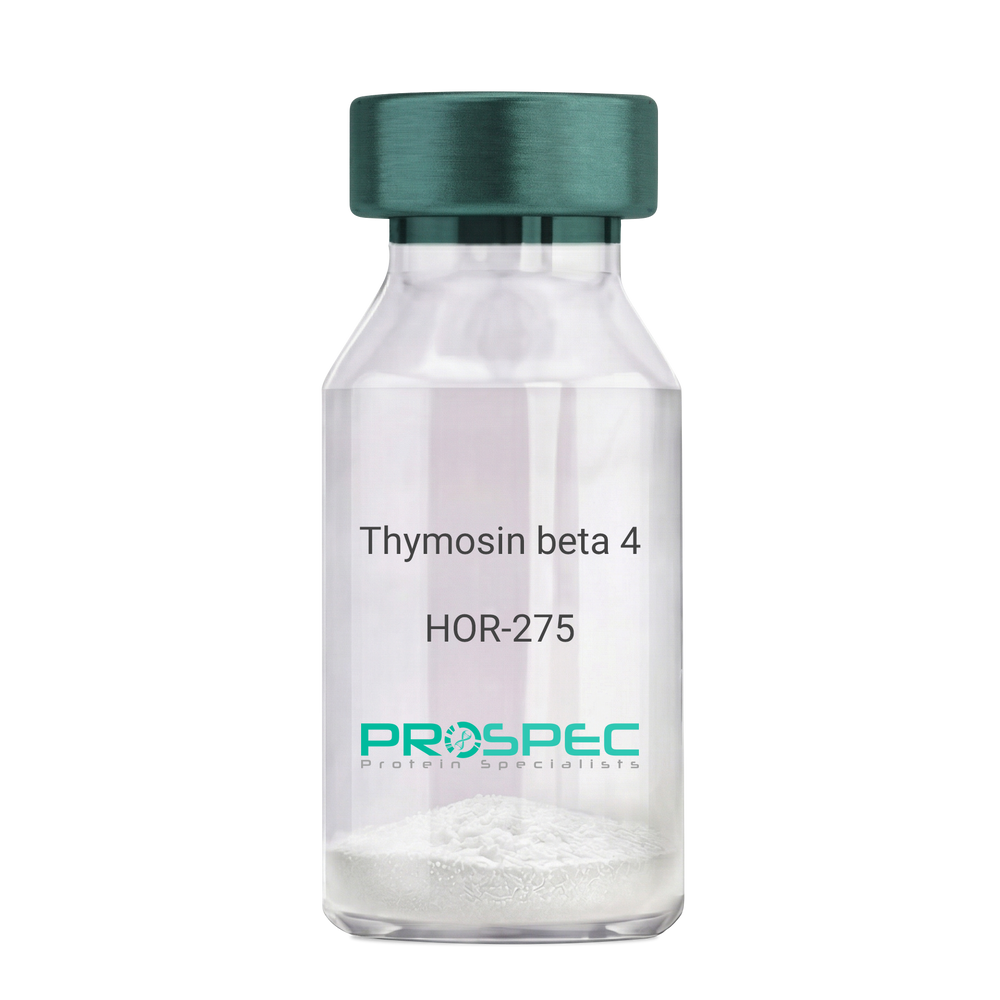
    Thymosin beta 4

    Description:

    Thymosin β4

    Thymosin beta-4. TB500, TB-500

    Product # :

    HOR-275

    Price :

    Quantity :

    Shipping Method :

    Room Temp Icon

    Shipped at Room temp

    Add To Cart

    More Info

    • description
    • formulation
    • purity
    • More Info

    Description

    Thymosin b4 is a 43 amino acid peptide which is regarded as the main intracellular G-actin sequestering peptide. It has a molecular weight of 4963.55 Da, and its molecular formula is: C212H350N56O78S1. Extracellular Thymosin b4 may contribute to physiological processes such as angiogenesis, wound healing, and regulation of inflammation.

    Formulation

    The protein (1mg/ml) was lyophilized with no additives.

    Purity

    Greater than 98.0% as determined by RP-HPLC.

    More Info

    • Introduction

      Thymosin is a hormone secreted from the thymus. Its primary function is to stimulate the production of T cells, which are an important part of the immune system. Thymosin also assists in the development of B cells to plasma cells to produce antibodies. The predominant form of thymosin, thymosin b4, is a member of a highly conserved family of actin monomer-sequestering proteins. b-thymosins are the primary regulators of unpolymerized actin, and are essential for maintaining the small cytoplasmic pool of free G-actin monomers required for rapid filament elongation and allowing for the flux of monomers between the thymosin-bound pool and F-actin.

    • Synonyms

      Thymosin beta-4. TB500, TB-500

    • Physical Appearance

      Sterile Filtered White lyophilized (freeze-dried) powder.

    • Stability

      Lyophilized Thymosin b4 although stable at room temperature for 3 weeks, should be stored desiccated below -18°C. Upon reconstitution T beta 4 should be stored at 4°C between 2-7 days and for future use below -18°C.For long term storage it is recommended to add a carrier protein (0.1% HSA or BSA).Please prevent freeze-thaw cycles.

    • Solubility

      It is recommended to reconstitute the lyophilized Thymosin beta-4 in sterile 18MΩ-cm H2O not less than 100 µg/ml, which can then be further diluted to other aqueous solutions.

    • Amino Acid Sequence

      Thymosin b4 has an a.a. sequence of Ac-Ser-Asp-Lys-Pro-Asp-Met-Ala-Glu-Ile-Glu-Lys-Phe-Asp-Lys-Ser-Lys-Leu-Lys-Lys-Thr-Glu-Thr-Gln-Glu-Lys-Asn-Pro-Leu-Pro-Ser-Lys-Glu-Thr-Ile-Glu-Gln-Glu-Lys-Gln-Ala-Gly-Glu-Ser-OH.

    ProSpec's products are furnished for LABORATORY RESEARCH USE ONLY. The product may not be used as drugs, agricultural or pesticidal products, food additives or household chemicals.

    Thymosin Beta 4
  • View Data Sheet

    Name :

    CXCL9 Human, His

    Description:

    MIG Human Recombinant (CXCL9), His Tag

    C-X-C motif chemokine 9, CMK, crg-10, Humig, MIG, SCYB9, Gamma-interferon-induced monokine, Monokine induced by interferon-gamma, HuMIG, Small-inducible cytokine B9, CXCL9.

    Product # :

    CHM-016

    Price :

    Quantity :

    Shipping Method :

    Ice Icon

    Shipped with Ice Packs

    Add To Cart

    More Info

    • description
    • source
    • formulation
    • purity
    • More Info

    Description

    MIG Human Recombinant produced in E.Coli is a single, non-glycosylated polypeptide chain containing 126 amino acids (23-125 a.a.) and having a molecular mass of 14kDa.MIG is fused to a 23 amino acid His-tag at N-terminus & purified by proprietary chromatographic techniques.

    Source

    Escherichia Coli.

    Formulation

    MIG protein solution (0.25mg/ml) contains 20mM Tris-HCl buffer (pH 8.0), 0.15M NaCl and 30% glycerol.

    Purity

    Greater than 85.0% as determined by SDS-PAGE.

    More Info

    • Introduction

      MIG (CXCL9) is a small cytokine which is part of the CXC chemokine family. MIG, which is also recognized as monokine is induced by gamma interferon. MIG is related to 2 other CXC chemokines named CXCL10 and CXCL11, whose genes are located next to the gene for CXCL9 on human chromosome 4. CXCL9, CXCL10 and CXCL11 obtain their chemotactic functions by interacting with the chemokine receptor CXCR3.

    • Synonyms

      C-X-C motif chemokine 9, CMK, crg-10, Humig, MIG, SCYB9, Gamma-interferon-induced monokine, Monokine induced by interferon-gamma, HuMIG, Small-inducible cytokine B9, CXCL9.

    • Physical Appearance

      Sterile Filtered colorless solution.

    • Stability

      Store at 4°C if entire vial will be used within 2-4 weeks. Store, frozen at -20°C for longer periods of time. For long term storage it is recommended to add a carrier protein (0.1% HSA or BSA).Avoid multiple freeze-thaw cycles.

    • Amino Acid Sequence

      MGSSHHHHHH SSGLVPRGSH MGSTPVVRKG RCSCISTNQG TIHLQSLKDL KQFAPSPSCE KIEIIATLKN GVQTCLNPDS ADVKELIKKW EKQVSQKKKQ KNGKKHQKKK VLKVRKSQRS RQKKTT.

    • Background

      What is the molecular weight/Mw of CXCL9 HUMAN, HIS Protein?
      CXCL9 HUMAN, HIS Protein has a total Mw of 14kDa.

      What is the source or expression system of CXCL9 HUMAN, HIS Protein?
      Escherichia Coli.

      What is the Purity of CXCL9 HUMAN, HIS Protein?
      CXCL9 HUMAN, HIS Protein is > 85% pure as determined by SDS-PAGE.

      What is the Biological Activity of CXCL9 HUMAN, HIS Protein?
      The biological functionality of CXCL9 HUMAN, HIS Protein will be determined in the future.

      What is the amino acid sequence of CXCL9 HUMAN, HIS Protein?
      MGSSHHHHHH SSGLVPRGSH MGSTPVVRKG RCSCISTNQG TIHLQSLKDL KQFAPSPSCE KIEIIATLKN GVQTCLNPDS ADVKELIKKW EKQVSQKKKQ KNGKKHQKKK VLKVRKSQRS RQKKTT.

      What applications can CXCL9 HUMAN, HIS Protein be used in?
      CXCL9 HUMAN, HIS Protein can probably be used in western blot, ELISA and Lateral Flow.

      What is the endotoxin level for CXCL9 HUMAN, HIS Protein?
      The endotoxin level is minimal, CXCL9 HUMAN, HIS Protein was purified using conventional chromatography techniques.


    ProSpec's products are furnished for LABORATORY RESEARCH USE ONLY. The product may not be used as drugs, agricultural or pesticidal products, food additives or household chemicals.

    Mig Human His
  • View Data Sheet

    Name :

    CTDSPL Human

    Description:

    CTD Small Phosphatase-Like Human Recombinant

    CTD small phosphatase-like protein, CTDSP-like, Carboxy-terminal domain RNA polymerase II polypeptide A small phosphatase 3, NIF-like protein, Nuclear LIM interactor-interacting factor 1, NLI-interacting factor 1, Protein YA22, hYA22, RBSP3, Small C-terminal domain phosphatase 3, SCP3, Small CTD phosphatase 3, CTDSPL, C3orf8, NIF1, NIFL, SCP3, YA22, PSR1.

    Product # :

    ENZ-569

    Price :

    Quantity :

    Shipping Method :

    Ice Icon

    Shipped with Ice Packs

    Add To Cart

    More Info

    • description
    • source
    • formulation
    • purity
    • More Info

    Description

    CTDSPL Human Recombinant produced in E.coli is a single, non-glycosylated polypeptide chain containing 209 amino acids (82-265) and having a molecular mass of 23.9kDa.CTDSPL is fused to a 24 amino acid His-tag at N-terminus & purified by proprietary chromatographic techniques.

    Source

    Escherichia Coli.

    Formulation

    The CTDSPL solution (0.5mg/ml) contains 20mM Tris-HCl buffer (pH8.0), 40% glycerol, 0.15M NaCl and 1mM DTT.

    Purity

    Greater than 90.0% as determined by SDS-PAGE.

    More Info

    • Introduction

      CTD small phosphatase-like protein (CTDSPL) specially catalyzes the dephosphorylation of 'Ser-5' within the tandem 7 residues repeats in the C-terminal domain (CTD) of the biggest RNA polymerase II subunit POLR2A. CTDSPL negatively regulates RNA polymerase II transcription, probably by directing the transition from initiation/capping to processive transcript elongation. CTDSPL is employed by REST to neuronal genes which contain RE-1 elements, directing to neuronal gene silencing in non-neuronal cells.

    • Synonyms

      CTD small phosphatase-like protein, CTDSP-like, Carboxy-terminal domain RNA polymerase II polypeptide A small phosphatase 3, NIF-like protein, Nuclear LIM interactor-interacting factor 1, NLI-interacting factor 1, Protein YA22, hYA22, RBSP3, Small C-terminal domain phosphatase 3, SCP3, Small CTD phosphatase 3, CTDSPL, C3orf8, NIF1, NIFL, SCP3, YA22, PSR1.

    • Physical Appearance

      Sterile filtered colorless solution.

    • Stability

      Store at 4°C if entire vial will be used within 2-4 weeks. Store, frozen at -20°C for longer periods of time. For long term storage it is recommended to add a carrier protein (0.1% HSA or BSA).Avoid multiple freeze-thaw cycles.

    • Amino Acid Sequence

      MGSSHHHHHH SSGLVPRGSH MGSHMKYLLP EVTVLDYGKK CVVIDLDETL VHSSFKPISN ADFIVPVEID GTIHQVYVLK RPHVDEFLQR MGQLFECVLF TASLAKYADP VADLLDRWGV FRARLFRESC VFHRGNYVKD LSRLGRELSK VIIVDNSPAS YIFHPENAVP VQSWFDDMTD TELLDLIPFF EGLSREDDVY SMLHRLCNR.

    ProSpec's products are furnished for LABORATORY RESEARCH USE ONLY. The product may not be used as drugs, agricultural or pesticidal products, food additives or household chemicals.

    Ctdspl Human
  • View Data Sheet

    Name :

    DGCR6 Human

    Description:

    DiGeorge Syndrome Critical Region Gene 6 Human Recombinant

    DiGeorge syndrome critical region gene 6, Protein DGCR6, DGCR6.

    Product # :

    PRO-1372

    Price :

    Quantity :

    Shipping Method :

    Ice Icon

    Shipped with Ice Packs

    Add To Cart

    More Info

    • description
    • source
    • formulation
    • purity
    • More Info

    Description

    DGCR6 Human Recombinant produced in E.Coli is a single, non-glycosylated polypeptide chain containing 243 amino acids (1-220 a.a) and having a molecular mass of 27kDa. DGCR6 is fused to a 23 amino acid His-tag at N-terminus & purified by proprietary chromatographic techniques.

    Source

    E.coli.

    Formulation

    DGCR6 protein solution (0.5mg/ml) containing 20mM Tris-HCl buffer (pH 8.0), 0.2M NaCl and 20% glycerol.

    Purity

    Greater than 95% as determined by SDS-PAGE.

    More Info

    • Introduction

      DiGeorge syndrome critical region gene 6 (DGCR6) shares homology with the Drosophila melanogaster gonadal protein, that participates in gonadal and germ cell development, and also with the gamma-1 subunit of human laminin. DGCR6 is involved in DiGeorge syndrome pathology and in schizophrenia.

    • Synonyms

      DiGeorge syndrome critical region gene 6, Protein DGCR6, DGCR6.

    • Physical Appearance

      Sterile Filtered colorless solution.

    • Stability

      Store at 4°C if entire vial will be used within 2-4 weeks. Store, frozen at -20°C for longer periods of time. For long term storage it is recommended to add a carrier protein (0.1% HSA or BSA).Avoid multiple freeze-thaw cycles.

    • Amino Acid Sequence

      MGSSHHHHHH SSGLVPRGSH MGSMERYAGA LEEVADGARQ QERHYQLLSA LQSLVKELPS SFQQRLSYTT LSDLALALLD GTVFEIVQGL LEIQHLTEKS LYNQRLRLQN EHRVLRQALR QKHQEAQQAC RPHNLPVLQA AQQRELEAVE HRIREEQRAM DQKIVLELDR KVADQQSTLE KAGVAGFYVT TNPQELMLQM NLLELIRKLQ QRGCWAGKAA LGLGGPWQLP AAQCDQKGSP VPP.

    ProSpec's products are furnished for LABORATORY RESEARCH USE ONLY. The product may not be used as drugs, agricultural or pesticidal products, food additives or household chemicals.

    Dgcr6 Human
  • View Data Sheet

    Name :

    ANXA11 Human

    Description:

    Annexin A11 Human Recombinant

    Annexin A11, 56 kDa autoantigen, Annexin XI, Annexin-11, Calcyclin-associated annexin 50, CAP-50, ANXA11, ANX11, CAP50.

    Product # :

    PRO-278

    Price :

    Quantity :

    Shipping Method :

    Ice Icon

    Shipped with Ice Packs

    Add To Cart

    More Info

    • description
    • source
    • formulation
    • purity
    • More Info

    Description

    ANXA11 Human Recombinant produced in E.coli is a single, non-glycosylated polypeptide chain containing 525 amino acids (1-505) and having a molecular mass of 56.6 kDa. The ANXA11 is fused to a 20 amino acid His-Tag at N-terminus and purified by proprietary chromatographic techniques.

    Source

    Escherichia Coli.

    Formulation

    The ANXA11 solution (0.25mg/ml) contains 20mM MES buffer (Ph 5.0), 20% glycerol, 2mM DTT and 100mM NaCl.

    Purity

    Greater than 95.0% as determined by SDS-PAGE.

    More Info

    • Introduction

      Annexin A11 (ANXA11) belongs to the annexin family, which is a group of calcium-dependent phospholipid-binding proteins. Annexins have distinctive N-terminal domains and conserved C-terminal domains, which contain the calcium-dependent phospholipid-binding sites. Annexin A11 binds specifically to calcyclin in a calcium-dependent manner. Moreover, ANXA11 is required for midbody formation and completion of the terminal phase of cytokinesis. The ANXA11 protein is a 56kDa antigen recognized by sera from patients with various autoimmune diseases.

    • Synonyms

      Annexin A11, 56 kDa autoantigen, Annexin XI, Annexin-11, Calcyclin-associated annexin 50, CAP-50, ANXA11, ANX11, CAP50.

    • Physical Appearance

      Sterile Filtered colorless solution.

    • Stability

      Store at 4°C if entire vial will be used within 2-4 weeks. Store, frozen at -20°C for longer periods of time. For long term storage it is recommended to add a carrier protein (0.1% HSA or BSA).Avoid multiple freeze-thaw cycles.

    • Amino Acid Sequence

      MGSSHHHHHH SSGLVPRGSH MSYPGYPPPP GGYPPAAPGG GPWGGAAYPP PPSMPPIGLD NVATYAGQFN QDYLSGMAAN MSGTFGGANM PNLYPGAPGA GYPPVPPGGF GQPPSAQQPV PPYGMYPPPG NPPSRMPSY PPYPGAPVPG QPMPPPGQQP PGAYPGQPPV TYPGQPPVPL PGQQQPVPSY PGYPGSGTVT PAVPPTQFGS RGTITDAPGF DPLRDAEVLR KAMKGFGTDE QAIIDCLGSR SNKQRQQILL SFKTAYGKDL IKDLKSELSG NFEKTILALM KTPVLFDIYE IKEAIKGVGT DEACLIEILA SRSNEHIREL NRAYKAEFKK TLEEAIRSDT GHFQRLLIS LSQGNRDEST NVDMSLAQRD AQELYAAGEN RLGTDESKFN AVLCSRSRAH LVAVFNEYQR MTGRDIEKSI CREMSGDLEE GMLAVVKCLK NTPAFFAERL NKAMRGAGTK DRTLIRIMVS RSETDLLDIR SEYKRMYGKS LYHDISGDTS GDYRKILLKI CGGND.

    ProSpec's products are furnished for LABORATORY RESEARCH USE ONLY. The product may not be used as drugs, agricultural or pesticidal products, food additives or household chemicals.

    Anxa11 Human
  • View Data Sheet

    Name :

    NCR3 Human

    Description:

    Natural Cytotoxicity Triggering Receptor 3 Human Recombinant

    Natural Cytotoxicity Triggering Receptor 3, LY117, 1C7, Lymphocyte Antigen 117, Activating Natural Killer Receptor P30, Natural Killer Cell P30-Related Protein, NK-p30, NKp30, CD337, MALS, Activating NK-A1 Receptor, CD337 Antigen, NKP30.

    Product # :

    PRO-1886

    Price :

    Quantity :

    Shipping Method :

    Ice Icon

    Shipped with Ice Packs

    Add To Cart

    More Info

    • description
    • source
    • formulation
    • purity
    • More Info

    Description

    NCR3 Human Recombinant produced in E.Coli is a single, non-glycosylated polypeptide chain containing 141 amino acids (19-138 a.a) and having a molecular mass of 15.3kDa.NCR3 is fused to a 21 amino acid His-tag at N-terminus & purified by proprietary chromatographic techniques.

    Source

    Escherichia Coli.

    Formulation

    NCR3 protein solution (0.5mg/ml) containing 20mM Tris-HCl buffer (pH 8.0), 0.15M NaCl, 10% glycerol and 1mM DTT.

    Purity

    Greater than 90% as determined by SDS-PAGE.

    More Info

    • Introduction

      Cytotoxicity Triggering Receptor 3 also known as NCR3 is a natural cytotoxicity receptor (NCR) which assists NK cells in the lysis of tumor cells. Moreover, NCR3 interacts with CD3-zeta (CD247), a T-cell receptor. A single nucleotide polymorphism in the 5' untranslated region of NCR3 has been related with mild malaria suceptibility. Three transcript variants encoding various isoforms have been found for this gene.

    • Synonyms

      Natural Cytotoxicity Triggering Receptor 3, LY117, 1C7, Lymphocyte Antigen 117, Activating Natural Killer Receptor P30, Natural Killer Cell P30-Related Protein, NK-p30, NKp30, CD337, MALS, Activating NK-A1 Receptor, CD337 Antigen, NKP30.

    • Physical Appearance

      Sterile Filtered clear solution.

    • Stability

      Store at 4°C if entire vial will be used within 2-4 weeks. Store, frozen at -20°C for longer periods of time.For long term storage it is recommended to add a carrier protein (0.1% HSA or BSA).Please avoid freeze thaw cycles.

    • Amino Acid Sequence

      MGSSHHHHHH SSGLVPRGSH MLWVSQPPEI RTLEGSSAFL PCSFNASQGR LAIGSVTWFR DEVVPGKEVR NGTPEFRGRL APLASSRFLH DHQAELHIRD VRGHDASIYV CRVEVLGLGV GTGNGTRLVV EKEHPQLGAG T

    ProSpec's products are furnished for LABORATORY RESEARCH USE ONLY. The product may not be used as drugs, agricultural or pesticidal products, food additives or household chemicals.

    Ncr3 Human
  • View Data Sheet

    Name :

    EFNA1 Human

    Description:

    Ephrin A1 Human Recombinant

    Ephrin-A1, EPLG1, TNFAIP4, LERK1, EFL1, ECKLG, EPH-related receptor tyrosine kinase ligand 1, Immediate early response protein B61, Tumor necrosis factor alpha-induced protein 4, TNF alpha-induced protein 4, ligand of eph-related kinase 1, tumor necrosis factor, alpha-induced protein 4.

    Product # :

    PRO-971

    Price :

    Quantity :

    Shipping Method :

    Ice Icon

    Shipped with Ice Packs

    Add To Cart

    More Info

    • description
    • source
    • formulation
    • purity
    • More Info

    Description

    EFNA1 Human Recombinant produced in E.coli is a single, non-glycosylated polypeptide chain containing 185 amino acids (19-182) and having a molecular mass of 21.6 kDa.EFNA1 is fused to a 21 amino acid His-tag at N-terminus & purified by proprietary chromatographic techniques.

    Source

    E.coli.

    Formulation

    The EFNA1 solution (1mg/ml) contains 20mM Tris-HCl buffer (pH 8.0), 0.4M Urea and 10% glycerol.

    Purity

    Greater than 90% as determined by SDS-PAGE.

    More Info

    • Introduction

      EFNA1 belongs to the ephrin (EPH) family. The EPH subfamily is the biggest group of receptor protein kinases and they take part in vital nervous system function and development.

    • Synonyms

      Ephrin-A1, EPLG1, TNFAIP4, LERK1, EFL1, ECKLG, EPH-related receptor tyrosine kinase ligand 1, Immediate early response protein B61, Tumor necrosis factor alpha-induced protein 4, TNF alpha-induced protein 4, ligand of eph-related kinase 1, tumor necrosis factor, alpha-induced protein 4.

    • Physical Appearance

      Sterile Filtered colorless solution.

    • Stability

      Store at 4°C if entire vial will be used within 2-4 weeks. Store, frozen at -20°C for longer periods of time. For long term storage it is recommended to add a carrier protein (0.1% HSA or BSA).Avoid multiple freeze-thaw cycles.

    • Amino Acid Sequence

      MGSSHHHHHH SSGLVPRGSH MDRHTVFWNS SNPKFRNEDY TIHVQLNDYV DIICPHYEDH SVADAAMEQY ILYLVEHEEY QLCQPQSKDQ VRWQCNRPSA KHGPEKLSEK FQRFTPFTLG KEFKEGHSYY YISKPIHQHE DRCLRLKVTV SGKITHSPQA HVNPQEKRLA ADDPEVRVLH SIGHS

    ProSpec's products are furnished for LABORATORY RESEARCH USE ONLY. The product may not be used as drugs, agricultural or pesticidal products, food additives or household chemicals.

    Efna1 Human
  • View Data Sheet

    Name :

    TECK Human, His

    Description:

    Thymus Expressed Chemokine (CCL25) Human Recombinant, His Tag

    C-C motif chemokine 25, Small-inducible cytokine A25, Thymus-expressed chemokine, Chemokine TECK, CCL25, SCYA25, TECK, Ckb15, MGC150327.

    Product # :

    CHM-032

    Price :

    Quantity :

    Shipping Method :

    Ice Icon

    Shipped with Ice Packs

    Add To Cart

    More Info

    • description
    • source
    • formulation
    • purity
    • More Info

    Description

    TECK Human Recombinant produced in E.Coli is a single, non-glycosylated polypeptide chain containing 152 amino acids (24-150 a.a.) and having a molecular mass of 16.8kDa.TECK is fused to a 25 amino acid His-tag at N-terminus & purified by proprietary chromatographic techniques.

    Source

    Escherichia Coli.

    Formulation

    TECK protein solution (1mg/ml) containing 20mM Tris-HCl buffer (pH 8.0) and 10% glycerol.

    Purity

    Greater than 90.0% as determined by SDS-PAGE.

    More Info

    • Introduction

      CCL25 (Teck) is a novel CC chemokine, which is distantly related (about 20% amino acid sequence identity) to other CC chemokines. The mouse CCL25 cDNA has also been cloned and shown to encode a 144 a.a. protein, which exhibits 49% a.a. sequence identity to the human CCL25. Human and mouse CCL25 expression was shown to be greatly restricted to the thymus and small intestine. While dendritic cells are identified as the source of CCL25 production in the thymus, dendritic cells derived from bone marrow do not express CCL25. CCL25 signals through the CCR9 receptor. Teck is possibly involved in T-cell development.
      Recombinant human and mouse Teck were shown to be chemotactic for activated macrophages, dendritic cells and thymocytes. The recombinant protein demonstrates chemotactic activity on thymocytes, macrophages, THP-1 cells, and dendritic cells but is inactive on peripheral blood lymphocytes and neutrophils.

    • Synonyms

      C-C motif chemokine 25, Small-inducible cytokine A25, Thymus-expressed chemokine, Chemokine TECK, CCL25, SCYA25, TECK, Ckb15, MGC150327.

    • Physical Appearance

      Filtered colorless solution.

    • Stability

      Store at 4°C if entire vial will be used within 2-4 weeks. Store, frozen at -20°C for longer periods of time. For long term storage it is recommended to add a carrier protein (0.1% HSA or BSA).Avoid multiple freeze-thaw cycles.

    • Amino Acid Sequence

      MGSSHHHHHH SSGLVPRGSH MGSHMQGVFE DCCLAYHYPI GWAVLRRAWT YRIQEVSGSC NLPAAIFYLP KRHRKVCGNP KSREVQRAMK LLDARNKVFA KLHHNTQTFQ AGPHAVKKLS SGNSKLSSSK FSNPISSSKR NVSLLISANS GL.

    ProSpec's products are furnished for LABORATORY RESEARCH USE ONLY. The product may not be used as drugs, agricultural or pesticidal products, food additives or household chemicals.

    Teck Human His
  • View Data Sheet

    Name :

    LCN1 Human

    Description:

    Lipocalin-1 Human Recombinant

    Lipocalin-1, PMFA, TLC, TP, VEGP, Tear lipocalin, Tear prealbumin, Von Ebner gland protein, VEG protein.

    Product # :

    ENZ-825

    Price :

    Quantity :

    Shipping Method :

    Ice Icon

    Shipped with Ice Packs

    Add To Cart

    More Info

    • description
    • source
    • formulation
    • purity
    • More Info

    Description

    LCN1 Human Recombinant produced in E.Coli is a single, non-glycosylated polypeptide chain containing 183 amino acids (19-176 a.a) and having a molecular mass of 20.1kDa. LCN1 is fused to a 25 amino acid His-tag at N-terminus & purified by proprietary chromatographic techniques.

    Source

    Escherichia Coli.

    Formulation

    LCN1 protein solution (1mg/ml) containing Phosphate buffered saline (pH7.4), 10% glycerol and 1mM DTT.

    Purity

    Greater than 90.0% as determined by SDS-PAGE.

    More Info

    • Introduction

      Lipocalin-1 (LCN1) belongs to the lipocalin family of small secretory proteins. Lipocalins are extracellular transport proteins, which bind to various hydrophobic ligands. LCN1 protein is the principal lipid binding protein in tears and is overproduced in response to numerous stimuli including infection and stress. LCN1 is a marker for chromosome aneuploidy as well as an autoantigen in Sjogren's syndrome.

    • Synonyms

      Lipocalin-1, PMFA, TLC, TP, VEGP, Tear lipocalin, Tear prealbumin, Von Ebner gland protein, VEG protein.

    • Physical Appearance

      Sterile Filtered colorless solution.

    • Stability

      Store at 4°C if entire vial will be used within 2-4 weeks. Store, frozen at -20°C for longer periods of time. For long term storage it is recommended to add a carrier protein (0.1% HSA or BSA).Avoid multiple freeze-thaw cycles.

    • Amino Acid Sequence

      MGSSHHHHHH SSGLVPRGSH MGSHMHHLLA SDEEIQDVSG TWYLKAMTVD REFPEMNLES VTPMTLTTLE GGNLEAKVTM LISGRCQEVK AVLEKTDEPG KYTADGGKHV AYIIRSHVKD HYIFYCEGEL HGKPVRGVKL VGRDPKNNLE ALEDFEKAAG ARGLSTESIL IPRQSETCSP GSD.

    ProSpec's products are furnished for LABORATORY RESEARCH USE ONLY. The product may not be used as drugs, agricultural or pesticidal products, food additives or household chemicals.

    Lcn1 Human
  • View Data Sheet

    Name :

    LECT1 Human

    Description:

    Leukocyte Cell Derived Chemotaxin 1 Human Recombinant

    BRICD3, CHM-I, CHM1, MYETS1, Leukocyte cell-derived chemotaxin 1, Chondrosurfactant protein, CH-SP, Chondromodulin-1, ChM-I, LECT1.

    Product # :

    PRO-1846

    Price :

    Quantity :

    Shipping Method :

    Ice Icon

    Shipped with Ice Packs

    Add To Cart

    More Info

    • description
    • source
    • formulation
    • purity
    • More Info

    Description

    LECT1 Human Recombinant produced in E. coli is. a single polypeptide chain containing 144 amino acids (214-334) and having a molecular mass of 16.3kDa. LECT1 is fused to a 23 amino acid His-tag at N-terminus & purified by proprietary chromatographic techniques.

    Source

    Escherichia Coli.

    Formulation

    The LECT1 solution (1mg/ml) contains 20mM Tris-HCl buffer (pH 8.0), 0.4M UREA and 10% glycerol.

    Purity

    Greater than 90% as determined by SDS-PAGE.

    More Info

    • Introduction

      Leukocyte Cell Derived Chemotaxin 1, also known as LECT1, is a glycosylated transmembrane protein which is cleaved to form a mature, secreted protein. The mature protein encourages chondrocyte growth and inhibits angiogenesis. The mature protein takes part in endochondral bone development by permitting cartilaginous anlagen to be vascularized and replaced by bone. LECT1 is expressed in the avascular area of prehypertrophic cartilage and its expression reduces during vascular invasion and chondrocyte hypertrophy.

    • Synonyms

      BRICD3, CHM-I, CHM1, MYETS1, Leukocyte cell-derived chemotaxin 1, Chondrosurfactant protein, CH-SP, Chondromodulin-1, ChM-I, LECT1.

    • Physical Appearance

      Sterile Filtered clear solution.

    • Stability

      Store at 4°C if entire vial will be used within 2-4 weeks. Store frozen at -20°C for longer periods of time. For long term storage it is recommended to add a carrier protein (0.1% HSA or BSA).Avoid multiple freeze-thaw cycles.

    • Amino Acid Sequence

      MGSSHHHHHH SSGLVPRGSH MGSREVVRKI VPTTTKRPHS GPRSNPGAGR LNNETRPSVQ EDSQAFNPDN PYHQQEGESM TFDPRLDHEG ICCIECRRSY THCQKICEPL GGYYPWPYNY QGCRSACRVI MPCSWWVARI LGMV.

    ProSpec's products are furnished for LABORATORY RESEARCH USE ONLY. The product may not be used as drugs, agricultural or pesticidal products, food additives or household chemicals.

    Lect1 Human
  • View Data Sheet

    Name :

    CHP Human

    Description:

    Calcium Binding Protein P22 Human Recombinant

    CHP, CHP Human, Calcium-binding protein p22, Calcium-binding protein CHP, Calcineurin homologous protein, Calcineurin B homolog, SLC9A1BP.

    Product # :

    PRO-847

    Price :

    Quantity :

    Shipping Method :

    Ice Icon

    Shipped with Ice Packs

    Add To Cart

    More Info

    • description
    • source
    • formulation
    • purity
    • More Info

    Description

    CHP Recombinant E.coli produced in E.Coli is a single, non-glycosylated polypeptide chain containing 216 amino acids (1-195 a.a.) and having a molecular mass of 24.7 kDa. The CHP is fused to 21 amino acid His-Tag at N-terminus and purified by proprietary chromatographic techniques.

    Source

    Escherichia Coli.

    Formulation

    CHP Human solution containing 20mM Tris-HCl pH-7.5 & 10% glycerol.

    Purity

    Greater than 95.0% as determined by SDS-PAGE.

    More Info

    • Introduction

      Calcium-binding protein P22 is a phosphoprotein that binds to the sodium-hydrogen exchangers (NHEs). CHP is an essential cofactor which maintains the physiological activity of NHE family members. CHP has protein sequence resemblance to calcineurin B and it is also identified to be an endogenous inhibitor of calcineurin activity.CHP is necessary for constitutive membrane traffic. CHP Inhibits GTPase-stimulated Na(+)/H(+) exchange. CHP inhibits calcineurin phosphatase activity. Required for activity of SLC9A1/NHE1.

    • Synonyms

      CHP, CHP Human, Calcium-binding protein p22, Calcium-binding protein CHP, Calcineurin homologous protein, Calcineurin B homolog, SLC9A1BP.

    • Physical Appearance

      Sterile filtered colorless solution.

    • Stability

      Store at 4°C if entire vial will be used within 2-4 weeks. Store, frozen at -20°C for longer periods of time. For long term storage it is recommended to add a carrier protein (0.1% HSA or BSA).Avoid multiple freeze-thaw cycles.

    • Amino Acid Sequence

      MGSSHHHHHH SSGLVPRGSH MMGSRASTLL RDEELEEIKK ETGFSHSQIT RLYSRFTSLD KGENGTLSRE DFQRIPELAI NPLGDRIINA FFPEGEDQVN FRGFMRTLAH FRPIEDNEKS KDVNGPEPLN SRSNKLHFAF RLYDLDKDEK ISRDELLQVL RMMVGVNISD EQLGSIADRT IQEADQDGDS AISFTEFVKV LEKVDVEQKM SIRFLH.

    ProSpec's products are furnished for LABORATORY RESEARCH USE ONLY. The product may not be used as drugs, agricultural or pesticidal products, food additives or household chemicals.

    Chp Human
  • View Data Sheet

    Name :

    CXCL2 Mouse

    Description:

    GRO-Beta Mouse Recombinant (CXCL2)

    Macrophage inflammatory protein 2-alpha, MIP2-alpha, CXCL2, Growth- regulated protein beta, Gro-beta, chemokine (C-X-C motif) ligand 2, GRO2, GROb, MIP2, MIP2A, SCYB2, MGSA-b, MIP-2a, CINC-2a, MGSA beta.

    Product # :

    CHM-338

    Price :

    Quantity :

    Shipping Method :

    Room Temp Icon

    Shipped at Room temp

    Add To Cart

    More Info

    • description
    • source
    • formulation
    • purity
    • biological activity
    • More Info

    Description

    GRO-Beta Mouse Recombinant also caled mouse MIP-2 produced in E.Coli is a single,non-glycosylated, polypeptide chain containing 73 amino acids and having a molecular mass of 7849 Dalton. The CXCL2 is purified by proprietary chromatographic techniques.

    Source

    Escherichia Coli.

    Formulation

    The protein was lyophilized from a concentrated (1.0mg/ml) solution in 20mM PB, pH 7.4, 150mM NaCl.

    Purity

    Greater than 97.0% as determined by:
    (a) Analysis by RP-HPLC.
    (b) Analysis by SDS-PAGE.

    Biological Activity

    The Biological activity was determined by its ability to chemoattract total human neutrophils using a concentration range of 1.0-10.0 ng/ml, corresponding to a specific activity of 105-106units/mg.

    More Info

    • Introduction

      Chemokine (C-X-C motif) ligand 2 (CXCL2) is a small cytokine belonging to the CXC chemokine family that is also called macrophage inflammatory protein 2-alpha (MIP2-alpha), Growth-regulated protein beta (Gro-beta) and Gro oncogene-2 (Gro-2). CXCL2 is 90% identical in amino acid sequence as a related chemokine, CXCL1. This chemokine is secreted by monocytes and macrophages and is chemotactic for polymorphonuclear leukocytes and hematopoietic stem cells. The gene for CXCL2 is located on human chromosome 4 in a cluster of other CXC chemokines. CXCL2 mobilizes cells by interacting with a cell surface chemokine receptor called CXCR2.

    • Synonyms

      Macrophage inflammatory protein 2-alpha, MIP2-alpha, CXCL2, Growth- regulated protein beta, Gro-beta, chemokine (C-X-C motif) ligand 2, GRO2, GROb, MIP2, MIP2A, SCYB2, MGSA-b, MIP-2a, CINC-2a, MGSA beta.

    • Physical Appearance

      Sterile Filtered White lyophilized (freeze-dried) powder.

    • Stability

      Lyophilized CXCL2 although stable at room temperature for 3 weeks, should be stored desiccated below -18°C. Upon reconstitution CXCL2 should be stored at 4°C between 2-7 days and for future use below -18°C. For long term storage it is recommended to add a carrier protein (0.1% HSA or BSA).Please prevent freeze-thaw cycles.

    • Solubility

      It is recommended to reconstitute the lyophilized GRO-beta Mouse in sterile 18MΩ-cm H2O not less than 100µg/ml, which can then be further diluted to other aqueous solutions.

    • Amino Acid Sequence

      AVVASELRCQ CLKTLPRVDF KNIQSLSVTP PGPHCAQTEV IATLKGGQKV CLDPEAPLVQ KIIQKILNKG KAN.

    • Background

      What is the molecular weight/Mw of CXCL2 MOUSE Protein?
      CXCL2 MOUSE Protein has a total Mw of 7.84kDa.

      What is the source or expression system of CXCL2 MOUSE Protein?
      Escherichia Coli.

      What is the Purity of CXCL2 MOUSE Protein?
      CXCL2 MOUSE Protein is >97% pure as determined by SDS-PAGE.

      What is the Biological Activity of CXCL2 MOUSE Protein?
      The Biological activity was determined by its ability to chemoattract total human neutrophils using a concentration range of 1.0-10.0 ng/ml, corresponding to a specific activity of 105-106units/mg.

      What is the amino acid sequence of CXCL2 MOUSE Protein?
      AVVASELRCQ CLKTLPRVDF KNIQSLSVTP PGPHCAQTEV IATLKGGQKV CLDPEAPLVQ KIIQKILNKG KAN.

      What applications can CXCL2 MOUSE Protein be used in?
      CXCL2 MOUSE Protein can probably be used in western blot, ELISA and Lateral Flow.

      What is the endotoxin level for CXCL2 MOUSE Protein?
      The endotoxin level is minimal, CXCL2 MOUSE Protein was purified using conventional chromatography techniques.


    • Protein content

      Protein quantitation was carried out by two independent methods:1. UV spectroscopy at 280 nm using the absorbency value of 0.015 as the extinction coefficient for a 0.1% (1mg/ml) solution. This value is calculated by the PC GENE computer analysis program of protein sequences (IntelliGenetics). 2. Analysis by RP-HPLC, using a standard solution of GRO-b as a Reference Standard.

    ProSpec's products are furnished for LABORATORY RESEARCH USE ONLY. The product may not be used as drugs, agricultural or pesticidal products, food additives or household chemicals.

    Gro Beta Mouse
  • View Data Sheet

    Name :

    Darbepoetin

    Description:

    Darbepoetin-Alpha Human Recombinant

    Erythropoietin-Mutant, EPO-mutant, NESP, Novel Erythropoiesis Stimulating Protein, EPO Mutant.

    Product # :

    CYT-1263

    Price :

    Quantity :

    Shipping Method :

    Room Temp Icon

    Shipped at Room temp

    Add To Cart

    More Info

    • description
    • source
    • formulation
    • purity
    • biological activity
    • More Info

    Description

    Darbepoetin-alpha Human Recombinant is produced in Chinese hamster ovary (CHO) cells by recombinant DNA technology is a glycosylated polypeptide chain containing 165 amino acids and having a predicted molecular mass of 18,200 Dalton and apparent glycosylated molecular mass of 37-40kDa. Darbepoetin is purified by proprietary chromatographic techniques.

    Source

    Chinese Hamster Ovary Cells(CHO).

    Formulation

    Each mg of lyophilized Darbepoetin powder contains 20mM Phosphate Buffer, 0.15M NaCl pH-6.2 & 0.005% Tween-80.

    Purity

    Greater than 97.0% as determined by SDS-PAGE.

    Biological Activity

    The Specific Activity was measured by Normocyth -aemic mice and was found to be 1,000,000 IU/mg.

    More Info

    • Introduction

      Darbepoetin is a mutant recombinant human EPO-Alpha protein re-engineered, containing 5 amino acid changes at N30, T32, V87, N88, T90. Darbepoetin exhibits longer half-life stimulating red blood cell production than Erythropoietin. Darbepoetin maintains hemoglobin more effectively compared to EPO-Alpha.

    • Synonyms

      NESP, Novel Erythropoiesis Stimulating Protein, EPO Mutant.

    • Physical Appearance

      Sterile Filtered White lyophilized (freeze-dried) powder.

    • Stability

      Lyophilized Darbepoetin although stable at room temperature for 3 weeks, should be stored desiccated below -18°C. Upon reconstitution Darbepoetin should be stored at 4°C between 2-7 days and for future use below -18°C.For long term storage it is recommended to add a carrier protein (0.1% HSA or BSA).Please prevent freeze-thaw cycles.

    • Solubility

      It is recommended to reconstitute the lyophilized Darbepoetin in sterile 18MΩ-cm H2O not less than 100µg/ml, which can then be further diluted to other aqueous solutions.

    • Amino Acid Sequence

      APPRLICDSR VLERYLLEAK EAENITTGCN ETCSLNENIT VPDTKVNFYA WKRMEVGQQA VEVWQGLALL SEAVLRGQAL LVNSSQVNET LQLHVDKAVS GLRSLTTLLR ALGAQKEAIS PPDAASAAPL RTITADTFRK LFRVYSNFLR GKLKLYTGEA CRTGD.

    • Background

      What is the molecular weight/Mw of DARBEPOETIN Protein?
      DARBEPOETIN Protein has a total Mw of 38.5kDa.

      What is the source or expression system of DARBEPOETIN Protein?
      Chinese Hamster Ovary Cells(CHO).

      What is the Purity of DARBEPOETIN Protein?
      DARBEPOETIN Protein is >97% pure as determined by SDS-PAGE.

      What is the Biological Activity of DARBEPOETIN Protein?
      The Specific Activity was measured by Normocyth -aemic mice and was found to be 1,000,000 IU/mg.

      What is the amino acid sequence of DARBEPOETIN Protein?
      APPRLICDSR VLERYLLEAK EAENITTGCN ETCSLNENIT VPDTKVNFYA WKRMEVGQQA VEVWQGLALL SEAVLRGQAL LVNSSQVNET LQLHVDKAVS GLRSLTTLLR ALGAQKEAIS PPDAASAAPL RTITADTFRK LFRVYSNFLR GKLKLYTGEA CRTGD

      What applications can DARBEPOETIN Protein be used in?
      DARBEPOETIN Protein can probably be used in western blot, ELISA and Lateral Flow.

      What is the endotoxin level for DARBEPOETIN Protein?
      The endotoxin level is minimal, DARBEPOETIN Protein was purified using conventional chromatography techniques

    ProSpec's products are furnished for LABORATORY RESEARCH USE ONLY. The product may not be used as drugs, agricultural or pesticidal products, food additives or household chemicals.

    Darbepoetin
  • View Data Sheet

    Name :

    ANKRA2 Human

    Description:

    Ankyrin Repeat Family A2 Human Recombinant

    Ankyrin Repeat, Family A (RFXANK-Like), 2, ANKRA, RFXANK-Like Protein 2, Ankyrin Repeat Family A Protein 2, ANKRA2.

    Product # :

    PRO-2062

    Price :

    Quantity :

    Shipping Method :

    Ice Icon

    Shipped with Ice Packs

    Add To Cart

    More Info

    • description
    • source
    • formulation
    • purity
    • More Info

    Description

    ANKRA2 Human Recombinant produced in E.Coli is a single, non-glycosylated polypeptide chain containing 336 amino acids (1-313a.a) and having a molecular mass of 36.7kDa. ANKRA2 is fused to a 23 amino acid His-tag at N-terminus & purified by proprietary chromatographic techniques.

    Source

    Escherichia Coli.

    Formulation

    ANKRA2 protein solution (0.25 mg/ml) containing 20mM Tris-HCl buffer (pH 8.0), 0.1M NaCl, 10% glycerol and 1mM DTT.

    Purity

    Greater than 85.0% as determined by SDS-PAGE.

    More Info

    • Introduction

      Ankyrin Repeat Family A2, also known as ANKRA2 contains 5 ANK repeats. ANKRA2 assist endocytosis by linking megalin to components of the cytoskeleton or endocytic machinery.

    • Synonyms

      Ankyrin Repeat, Family A (RFXANK-Like), 2, ANKRA, RFXANK-Like Protein 2, Ankyrin Repeat Family A Protein 2, ANKRA2.

    • Physical Appearance

      Sterile Filtered clear solution.

    • Stability

      Store at 4°C if entire vial will be used within 2-4 weeks. Store, frozen at -20°C for longer periods of time. For long term storage it is recommended to add a carrier protein (0.1% HSA or BSA).Avoid multiple freeze-thaw cycles.

    • Amino Acid Sequence

      MGSSHHHHHH SSGLVPRGSH MGSMDTSTNL DIGAQLIVEE CPSTYSLTGM PDIKIEHPLD PNSEEGSAQG VAMGMKFILP NRFDMNVCSR FVKSLNEEDS KNIQDQVNSD LEVASVLFKA ECNIHTSPSP GIQVRHVYTP STTKHFSPIK QSTTLTNKHR GNEVSTTPLL ANSLSVHQLA AQGEMLYLAT RIEQENVINH TDEEGFTPLM WAAAHGQIAV VEFLLQNGAD PQLLGKGRES ALSLACSKGY TDIVKMLLDC GVDVNEYDWN GGTPLLYAVH GNHVKCVKML LESGADPTIE TDSGYNSMDL AVALGYRSVQ QVIESHLLKL LQNIKE.

    ProSpec's products are furnished for LABORATORY RESEARCH USE ONLY. The product may not be used as drugs, agricultural or pesticidal products, food additives or household chemicals.

    Ankra2 Human
  • View Data Sheet

    Name :

    EFNA5 Human, Active

    Description:

    Ephrin A5 Human Recombinant, Active

    EFNA5, AF1, EFL5, EPLG7, GLC1M, LERK7, RAGS, Ephrin-A5, AL-1, EPH-related receptor tyrosine kinase ligand 7.

    Product # :

    PRO-2816

    Price :

    Quantity :

    Shipping Method :

    Ice Icon

    Shipped with Ice Packs

    Add To Cart

    More Info

    • description
    • source
    • formulation
    • purity
    • biological activity
    • More Info

    Description

    EFNA5 Human Recombinant is a single, glycosylated, polypeptide chain (21-203 a.a) containing a total of 422 amino acids and having a molecular mass of 48.1 kDa. EFNA5 is fused to a 239 a.a hIgG-His-Tag at C-terminus and is purified by proprietary chromatographic techniques.

    Source

    Sf9, Baculovirus cells.

    Formulation

    The EFNA5 solution (0.5mg/ml) contains 10% Glycerol and Phosphate-Buffered Saline (pH 7.4).

    Purity

    Greater than 95.0% as determined by SDS-PAGE.

    Biological Activity

    The ED50 range ≤ 60 ng/ml measured by its binding ability in a functional ELISA with Mouse EphA3 (CAT# pro-2817).

    More Info

    • Synonyms

      EFNA5, AF1, EFL5, EPLG7, GLC1M, LERK7, RAGS, Ephrin-A5, AL-1, EPH-related receptor tyrosine kinase ligand 7.

    • Physical Appearance

      Sterile Filtered colorless solution.

    • Stability

      Store at 4°C if entire vial will be used within 2-4 weeks. Store, frozen at -20°C for longer periods of time. For long term storage it is recommended to add a carrier protein (0.1% HSA or BSA). Avoid multiple freeze-thaw cycles.

    • Amino Acid Sequence

      QDPGSKAVAD RYAVYWNSSN PRFQRGDYHI DVCINDYLDV FCPHYEDSVP EDKTERYVLY MVNFDGYSAC DHTSKGFKRW ECNRPHSPNG PLKFSEKFQL FTPFSLGFEF RPGREYFYIS SAIPDNGRRS CLKLKVFVRP TNSCMKTIGV HDRVFDVNDK VENSLEPADD TVHESAEPSR GENLEPKSCD KTHTCPPCPA PELLGGPSVF LFPPKPKDTL MISRTPEVTC VVVDVSHEDP EVKFNWYVDG VEVHNAKTKP REEQYNSTYR VVSVLTVLHQ DWLNGKEYKC KVSNKALPAP IEKTISKAKG QPREPQVYTL PPSRDELTKN QVSLTCLVKG FYPSDIAVEW ESNGQPENNY KTTPPVLDSD GSFFLYSKLT VDKSRWQQGN VFSCSVMHEA LHNHYTQKSL SLSPGKHHHH HH.

    • Background

      EFNA5 functions through contact-mediated signaling, which can result in either forward signaling (through Eph receptors) or reverse signaling (through ephrins themselves). These signaling pathways regulate various cellular processes such as migration, adhesion, and proliferation. Disruptions or alterations in EFNA5 signaling have been implicated in neurodevelopmental disorders, cancer metastasis, and angiogenesis, highlighting the importance of understanding this protein's roles at a molecular level.

    ProSpec's products are furnished for LABORATORY RESEARCH USE ONLY. The product may not be used as drugs, agricultural or pesticidal products, food additives or household chemicals.

    Efna5 Protein
  • View Data Sheet

    Name :

    CD52 Human

    Description:

    CD52 Human Recombinant

    CD52 Molecule, Human Epididymis-Specific Protein 5, CD52 Antigen, Epididymal Secretory Protein E5, Cambridge Pathology 1 Antigen, CDW52, He5, Epididymis Secretory Sperm Binding Protein Li 171mP, CDW52 Antigen, CD52 Antigen, HEL-S-171mP, EDDM5, CDw52, HE5.

    Product # :

    PRO-2525

    Price :

    Quantity :

    Shipping Method :

    Ice Icon

    Shipped with Ice Packs

    Add To Cart

    More Info

    • description
    • source
    • formulation
    • purity
    • More Info

    Description

    CD52 produced in Sf9 Baculovirus cells is a single, glycosylated polypeptide chain containing 251 amino acids (25-36 a.a.) and having a molecular mass of 28.2kDa. (Molecular size on SDS-PAGE will appear at approximately 28-40kDa).CD52 is expressed with a 239 amino acid hIgG-His-tag at C-Terminus and purified by proprietary chromatographic techniques.

    Source

    Sf9, Baculovirus cells.

    Formulation

    CD52 protein solution (0.5mg/ml) contains 10% glycerol & Phosphate Buffered Saline (pH 7.4).

    Purity

    Greater than 95.0% as determined by SDS-PAGE.

    More Info

    • Introduction

      CD52 is a small GPI (glycosylphosphatidylinositol) anchored glycoprotein which is tied to the cell surface with a GPI linkage. CD52 induces immune suppression by complement-meditated cell lysis. Moreover, CD52 is expressed on lymphocytes, eosinophils, monocytes-derived dendritic cells, monocytes, as well as neutrophils, however not on the stem cells from which these lymphocytes were derived. Furthermore, CD52 is a significant goal for therapeutic interventions intended for leukocyte depletion in post-transplant immunosuppression & hematological malignancies.

    • Synonyms

      CD52 Molecule, Human Epididymis-Specific Protein 5, CD52 Antigen, Epididymal Secretory Protein E5, Cambridge Pathology 1 Antigen, CDW52, He5, Epididymis Secretory Sperm Binding Protein Li 171mP, CDW52 Antigen, CD52 Antigen, HEL-S-171mP, EDDM5, CDw52, HE5.

    • Physical Appearance

      Sterile filtered colorless solution.

    • Stability

      Store at 4°C if entire vial will be used within 2-4 weeks. Store, frozen at -20°C for longer periods of time. For long term storage it is recommended to add a carrier protein (0.1% HSA or BSA).Avoid multiple freeze-thaw cycles.

    • Amino Acid Sequence

      GQNDTSQTSS PSLEPKSCDK THTCPPCPAP ELLGGPSVFL FPPKPKDTLM ISRTPEVTCV VVDVSHEDPE VKFNWYVDGV EVHNAKTKPR EEQYNSTYRV VSVLTVLHQD WLNGKEYKCK VSNKALPAPI EKTISKAKGQ PREPQVYTLP PSRDELTKNQ VSLTCLVKGF YPSDIAVEWE
      SNGQPENNYK TTPPVLDSDG SFFLYSKLTV DKSRWQQGNV FSCSVMHEAL HNHYTQKSLS LSPGKHHHHH H.

    ProSpec's products are furnished for LABORATORY RESEARCH USE ONLY. The product may not be used as drugs, agricultural or pesticidal products, food additives or household chemicals.

    Cd52 Human
  • View Data Sheet

    Name :

    GFRA1 Rat

    Description:

    GDNF Family Receptor Alpha 1 Rat Recombinant

    GDNF family receptor alpha-1, GDNF receptor alpha-1, GDNFR-alpha-1, GFR-alpha-1, RET ligand 1, TGF-beta-related neurotrophic factor receptor 1, Gfra1, Gdnfra, Retl1, Trnr1.

    Product # :

    CYT-1012

    Price :

    Quantity :

    Shipping Method :

    Ice Icon

    Shipped with Ice Packs

    Add To Cart

    More Info

    • description
    • source
    • formulation
    • purity
    • More Info

    Description

    GFRA1 Rat Recombinant produced in Sf9 Baculovirus cells is a single, glycosylated polypeptide chain containing 645 amino acids (25-430a.a.) and having a molecular mass of 72.3kDa (Molecular size on SDS-PAGE will appear at approximately 70-100kDa). GFRA1 is expressed with a 239 amino acid hIgG-His tag at C-Terminus and purified by proprietary chromatographic techniques.

    Source

    Sf9, Baculovirus cells.

    Formulation

    GFRA1 protein solution (0.25mg/ml) contains Phosphate Buffered Saline (pH 7.4) and 10% glycerol.

    Purity

    Greater than 85% as determined by SDS-PAGE.

    More Info

    • Introduction

      GDNF family receptor alpha-1 (GFRA1) belongs to the GDNF receptor family. GFRA1 is a glycosyl-phosphatidylinositol(GPI)-linked cell surface receptor for both Glial cell line-derived growth factor (GDNF), neurturin (NTN), and mediates activation of the RET tyrosine kinase receptor. The GFRA1 protein is a potent survival factor for central and peripheral neurons, and is vital for the development of kidneys and the enteric nervous system.

    • Synonyms

      GDNF family receptor alpha-1, GDNF receptor alpha-1, GDNFR-alpha-1, GFR-alpha-1, RET ligand 1, TGF-beta-related neurotrophic factor receptor 1, Gfra1, Gdnfra, Retl1, Trnr1.

    • Physical Appearance

      Sterile Filtered colorless solution.

    • Stability

      Store at 4°C if entire vial will be used within 2-4 weeks. Store, frozen at -20°C for longer periods of time. For long term storage it is recommended to add a carrier protein (0.1% HSA or BSA).Avoid multiple freeze-thaw cycles.

    • Amino Acid Sequence

      DRLDCVKASD QCLKEQSCST KYRTLRQCVA GKETNFSLTS GLEAKDECRS AMEALKQKSL YNCRCKRGMK KEKNCLRIYW SMYQSLQGND LLEDSPYEPV NSRLSDIFRA VPFISDVFQQ VEHISKGNNC LDAAKACNLD DTCKKYRSAY ITPCTTSMSN EVCNRRKCHK ALRQFFDKVP AKHSYGMLFC SCRDIACTER RRQTIVPVCS YEERERPNCL SLQDSCKTNY ICRSRLADFF TNCQPESRSV SNCLKENYAD CLLAYSGLIG TVMTPNYVDS SSLSVAPWCD CSNSGNDLED CLKFLNFFKD NTCLKNAIQA FGNGSDVTMW QPAPPVQTTT ATTTTAFRVK NKPLGPAGSE NEIPTHVLPP CANLQAQKLK SNVSGSTHLC LSDSDFGKDG LAGASSLEPK SCDKTHTCPP CPAPELLGGP SVFLFPPKPK DTLMISRTPE VTCVVVDVSH EDPEVKFNWY VDGVEVHNAK TKPREEQYNS TYRVVSVLTV LHQDWLNGKE YKCKVSNKAL PAPIEKTISK AKGQPREPQV YTLPPSRDEL TKNQVSLTCL VKGFYPSDIA VEWESNGQPE NNYKTTPPVL DSDGSFFLYS KLTVDKSRWQ QGNVFSCSVM HEALHNHYTQ KSLSLSPGKH HHHHH.

    • Background

      What is the molecular weight/Mw of GFRA1 RAT Protein?
      GFRA1 RAT Protein has a total Mw of 72.3kDa.

      What is the source or expression system of GFRA1 RAT Protein?
      Sf9, Baculovirus cells.

      What is the Purity of GFRA1 RAT Protein?
      GFRA1 RAT Protein is >85% pure as determined by SDS-PAGE.

      What is the Biological Activity of GFRA1 RAT Protein?
      The biological functionality of GFRA1 RAT Protein will be determined in the future.

      What is the amino acid sequence of GFRA1 RAT Protein?
      DRLDCVKASD QCLKEQSCST KYRTLRQCVA GKETNFSLTS GLEAKDECRS AMEALKQKSL YNCRCKRGMK KEKNCLRIYW SMYQSLQGND LLEDSPYEPV NSRLSDIFRA VPFISDVFQQ VEHISKGNNC LDAAKACNLD DTCKKYRSAY ITPCTTSMSN EVCNRRKCHK ALRQFFDKVP AKHSYGMLFC SCRDIACTER RRQTIVPVCS YEERERPNCL SLQDSCKTNY ICRSRLADFF TNCQPESRSV SNCLKENYAD CLLAYSGLIG TVMTPNYVDS SSLSVAPWCD CSNSGNDLED CLKFLNFFKD NTCLKNAIQA FGNGSDVTMW QPAPPVQTTT ATTTTAFRVK NKPLGPAGSE NEIPTHVLPP CANLQAQKLK SNVSGSTHLC LSDSDFGKDG LAGASSLEPK SCDKTHTCPP CPAPELLGGP SVFLFPPKPK DTLMISRTPE VTCVVVDVSH EDPEVKFNWY VDGVEVHNAK TKPREEQYNS TYRVVSVLTV LHQDWLNGKE YKCKVSNKAL PAPIEKTISK AKGQPREPQV YTLPPSRDEL TKNQVSLTCL VKGFYPSDIA VEWESNGQPE NNYKTTPPVL DSDGSFFLYS KLTVDKSRWQ QGNVFSCSVM HEALHNHYTQ KSLSLSPGKH HHHHH.

      What applications can GFRA1 RAT Protein be used in?
      GFRA1 RAT Protein can probably be used in western blot, ELISA and Lateral Flow.

      What is the endotoxin level for GFRA1 RAT Protein?
      The endotoxin level is minimal, GFRA1 RAT Protein was purified using conventional chromatography techniques.


    ProSpec's products are furnished for LABORATORY RESEARCH USE ONLY. The product may not be used as drugs, agricultural or pesticidal products, food additives or household chemicals.

    Gfra1 Rat
  • 1
  • …
  • 21
  • 22
  • 23
  • 24
  • 25
  • …
  • 42
Your browser does not support the video tag.

Products

  • Cytokines
  • Growth Factors
  • Chemokines
  • CD Antigens
  • Neurotrophins
  • Hormones
  • Enzymes
  • Viral Antigens
  • Recombinant Proteins
  • Natural Proteins
  • Monoclonal Antibodies
  • Polyclonal Antibodies
  • Thermal Packaging

About

  • Company
  • Founder
  • Contribution
  • Contact Us
  • My Account

Ordering

  • Ordering Method
  • Ordering - Credit Card
  • Ordering PO
  • Shipping Fees
  • FAQ's

Legal

  • Terms & Conditions
  • Privacy
  • Site Map
  • info@prospecbio.com
  • Facebook
  • Instagram
  • Linkedin Profile

© 2026 ProSpec-Tany TechnoGene Ltd. All Rights Reserved.

  • Choosing a selection results in a full page refresh.
  • Opens in a new window.