Skip to content

High-quality research proteins.

  • 1-800-805-6531

  • Mon - Sat 8.00-18.00, Sun - Closed

  • info@prospecbio.com

  • PO Box 6591 East Brunswick NJ 08816

  • Products
    • Cytokines
    • Growth factors
    • Chemokines
    • Cd antigens
    • Neurotrophins
    • Hormones
    • Enzymes
    • Viral antigens
    • Recombinant proteins
    • Natural proteins
    • Monoclonal antibodies
    • Polyclonal antibodies
    • Thermal Packaging
  • About
    • Company
    • Founder
    • Contribution
  • Customers
    • Eastern Asia
    • Eastern Europe
    • North America
    • South America
    • South East Asia
    • Southern Asia
    • Western Europe
  • Ordering
    • Ordering Method
    • Ordering - Credit Card
    • Ordering - PO
    • Shipping Fees
    • FAQs
  • Services
    • DNA Cloning
    • Protein Expression
    • Monoclonal Antibody
    • Fermentation
    • Technology License
  • Contact us
Log in

Country/region

  • USD $ | Albania
  • USD $ | Andorra
  • USD $ | Argentina
  • USD $ | Armenia
  • USD $ | Australia
  • USD $ | Austria
  • USD $ | Azerbaijan
  • USD $ | Belarus
  • USD $ | Belgium
  • USD $ | Bolivia
  • USD $ | Brazil
  • USD $ | Bulgaria
  • USD $ | Cambodia
  • USD $ | Canada
  • USD $ | Chile
  • USD $ | China
  • USD $ | Colombia
  • USD $ | Costa Rica
  • USD $ | Croatia
  • USD $ | Cyprus
  • USD $ | Czechia
  • USD $ | Denmark
  • USD $ | Estonia
  • USD $ | Finland
  • USD $ | France
  • USD $ | Georgia
  • USD $ | Germany
  • USD $ | Greece
  • USD $ | Hong Kong SAR
  • USD $ | Hungary
  • USD $ | Iceland
  • USD $ | India
  • USD $ | Ireland
  • USD $ | Israel
  • USD $ | Italy
  • USD $ | Japan
  • USD $ | Kazakhstan
  • USD $ | Latvia
  • USD $ | Liechtenstein
  • USD $ | Lithuania
  • USD $ | Madagascar
  • USD $ | Malta
  • USD $ | Mexico
  • USD $ | Moldova
  • USD $ | Monaco
  • USD $ | Netherlands
  • USD $ | New Zealand
  • USD $ | North Macedonia
  • USD $ | Norway
  • USD $ | Panama
  • USD $ | Paraguay
  • USD $ | Peru
  • USD $ | Philippines
  • USD $ | Poland
  • USD $ | Portugal
  • USD $ | Romania
  • USD $ | Singapore
  • USD $ | Slovakia
  • USD $ | Slovenia
  • USD $ | South Africa
  • USD $ | South Korea
  • USD $ | Spain
  • USD $ | Sri Lanka
  • USD $ | Sweden
  • USD $ | Switzerland
  • USD $ | Taiwan
  • USD $ | Thailand
  • USD $ | Türkiye
  • USD $ | Ukraine
  • USD $ | United Kingdom
  • USD $ | United States
  • USD $ | Uruguay
  • USD $ | Vatican City
  • USD $ | Venezuela
  • USD $ | Vietnam
  • Facebook
  • Instagram
logoProSpec - Recombinant Protein Manufacturer for academic and R&D industry
Become a distributor
Account Log in
Wishlist
Cart Cart(0)
  • Products
    +
    • Cytokines
    • Growth factors
    • Chemokines
    • Cd antigens
    • Neurotrophins
    • Hormones
    • Enzymes
    • Viral antigens
    • Recombinant proteins
    • Natural proteins
    • Monoclonal antibodies
    • Polyclonal antibodies
    • Thermal Packaging
  • About
    +
    • Company
    • Founder
    • Contribution
  • Customers
    +
    • Eastern Asia
    • Eastern Europe
    • North America
    • South America
    • South East Asia
    • Southern Asia
    • Western Europe
  • Ordering
    +
    • Ordering Method
    • Ordering - Credit Card
    • Ordering - PO
    • Shipping Fees
    • FAQs
  • Services
    +
    • DNA Cloning
    • Protein Expression
    • Monoclonal Antibody
    • Fermentation
    • Technology License
  • Contact us

Item added to your cart

View cart
View All
  • Cytokines
  • Growth factors
  • Chemokines
  • Cd antigens
  • Neurotrophins
  • Hormones
  • Enzymes
  • Viral antigens
  • Recombinant proteins
  • Natural proteins
  • Monoclonal antibodies
  • Polyclonal antibodies
  • Thermal Packaging
  • Tumor Necrosis Factor

    Tumor Necrosis Factor

    View All
  • 4-1BB

    4-1BB

    View All
  • Adiponectin

    Adiponectin

    View All
  • AIF1

    AIF1

    View All
  • Other Cytokines

    Other Cytokines

    View All
  • AITRL

    AITRL

    View All
  • Angiopoietin

    Angiopoietin

    View All
  • Apolipoprotein

    Apolipoprotein

    View All
  • B-Cell Activating Factor

    B-Cell Activating Factor

    View All
  • Beta Defensin

    Beta Defensin

    View All
  • Bone Morphogenetic Protein

    Bone Morphogenetic Protein

    View All
  • B type Natriuretic Peptide

    B type Natriuretic Peptide

    View All
  • BST

    BST

    View All
  • Betacellulin

    Betacellulin

    View All
  • Cardiotrophin

    Cardiotrophin

    View All
  • Activin

    Activin

    View All
  • Fibroblast Growth Factor

    Fibroblast Growth Factor

    View All
  • Other Growth Factors

    Other Growth Factors

    View All
  • CSF

    CSF

    View All
  • CTGF

    CTGF

    View All
  • IGFBP

    IGFBP

    View All
  • VEGF Protein

    VEGF Protein

    View All
  • EGF

    EGF

    View All
  • Epigen

    Epigen

    View All
  • Erythropoietin

    Erythropoietin

    View All
  • Insulin-Like Growth Factor

    Insulin-Like Growth Factor

    View All
  • Growth Hormone

    Growth Hormone

    View All
  • HDGF

    HDGF

    View All
  • Hepatocyte Growth Factor

    Hepatocyte Growth Factor

    View All
  • Insulin

    Insulin

    View All
  • BCA-1/ BLC (CXCL13)

    BCA-1/ BLC (CXCL13)

    View All
  • BRAK (CXCL14)

    BRAK (CXCL14)

    View All
  • C-10 (CCL6)

    C-10 (CCL6)

    View All
  • Other Chemokines

    Other Chemokines

    View All
  • MEC (CCL28)

    MEC (CCL28)

    View All
  • LD78-beta (CCL3L1)

    LD78-beta (CCL3L1)

    View All
  • CTACK (CCL27)

    CTACK (CCL27)

    View All
  • CXCL16

    CXCL16

    View All
  • CXCL17

    CXCL17

    View All
  • Platelet Factor-4 (CXCL4)

    Platelet Factor-4 (CXCL4)

    View All
  • ENA-78 (CXCL5)

    ENA-78 (CXCL5)

    View All
  • Eotaxin (CCL11,24,26)

    Eotaxin (CCL11,24,26)

    View All
  • Exodus-2 (CCL21)

    Exodus-2 (CCL21)

    View All
  • Fractalkine (CX3CL1)

    Fractalkine (CX3CL1)

    View All
  • CXCL6

    CXCL6

    View All
  • Other CD Antigens

    Other CD Antigens

    View All
  • CD14

    CD14

    View All
  • CD164

    CD164

    View All
  • CD1

    CD1

    View All
  • CD2

    CD2

    View All
  • CD200

    CD200

    View All
  • CD207

    CD207

    View All
  • CD226

    CD226

    View All
  • CD23

    CD23

    View All
  • CD244

    CD244

    View All
  • CD247

    CD247

    View All
  • CD27

    CD27

    View All
  • CD274

    CD274

    View All
  • CD300

    CD300

    View All
  • CD33

    CD33

    View All
  • Other Neurotrophins

    Other Neurotrophins

    View All
  • Beta-NGF

    Beta-NGF

    View All
  • BDNF

    BDNF

    View All
  • CDNF

    CDNF

    View All
  • CNTF

    CNTF

    View All
  • GDNF

    GDNF

    View All
  • Glia Maturation Factor

    Glia Maturation Factor

    View All
  • MANF

    MANF

    View All
  • Midkine

    Midkine

    View All
  • Neuroglobin

    Neuroglobin

    View All
  • Neurotrophic factors

    Neurotrophic factors

    View All
  • Neuregulin

    Neuregulin

    View All
  • Neuropilin

    Neuropilin

    View All
  • Pigment Epithelium-Derived Factor

    Pigment Epithelium-Derived Factor

    View All
  • Pleiotrophin

    Pleiotrophin

    View All
  • Peptide Hormones

    Peptide Hormones

    View All
  • Other Hormones

    Other Hormones

    View All
  • HCG

    HCG

    View All
  • Endothelin

    Endothelin

    View All
  • Exendin

    Exendin

    View All
  • FSH

    FSH

    View All
  • Glucagon

    Glucagon

    View All
  • GHRP

    GHRP

    View All
  • GLP

    GLP

    View All
  • Thyrostimulin

    Thyrostimulin

    View All
  • Inhibin A

    Inhibin A

    View All
  • LHRH

    LHRH

    View All
  • Melanotan

    Melanotan

    View All
  • Procalcitonin

    Procalcitonin

    View All
  • PTH

    PTH

    View All
  • Peroxiredoxin

    Peroxiredoxin

    View All
  • Peptidase

    Peptidase

    View All
  • Synthetase

    Synthetase

    View All
  • Transferase

    Transferase

    View All
  • Hydrolase

    Hydrolase

    View All
  • Dehydrogenase

    Dehydrogenase

    View All
  • ACE2

    ACE2

    View All
  • Esterase

    Esterase

    View All
  • Protein Kinases

    Protein Kinases

    View All
  • Other Enzymes

    Other Enzymes

    View All
  • Phosphatase

    Phosphatase

    View All
  • Deaminase

    Deaminase

    View All
  • Oxygenase

    Oxygenase

    View All
  • Adenylate Kinase

    Adenylate Kinase

    View All
  • Lyase

    Lyase

    View All
  • Chagas

    Chagas

    View All
  • SARS

    SARS

    View All
  • Influenza

    Influenza

    View All
  • ASFV

    ASFV

    View All
  • Astrovirus

    Astrovirus

    View All
  • Borrelia

    Borrelia

    View All
  • Helicobacter Pylori

    Helicobacter Pylori

    View All
  • Chikungunya

    Chikungunya

    View All
  • Chlamydia

    Chlamydia

    View All
  • Cytomegalo

    Cytomegalo

    View All
  • Dengue

    Dengue

    View All
  • EBV

    EBV

    View All
  • Ebola

    Ebola

    View All
  • Feline Leukemia Virus

    Feline Leukemia Virus

    View All
  • Hepatitis A

    Hepatitis A

    View All
  • Other

    Other

    View All
  • Actin

    Actin

    View All
  • ADAM

    ADAM

    View All
  • Complement Component

    Complement Component

    View All
  • Ag85

    Ag85

    View All
  • Eukaryotic Translation Initiation Factor

    Eukaryotic Translation Initiation Factor

    View All
  • Anterior Gradient Protein

    Anterior Gradient Protein

    View All
  • Heat Shock Protein

    Heat Shock Protein

    View All
  • Alpha-2-HS-Glycoprotein

    Alpha-2-HS-Glycoprotein

    View All
  • Hemoglobin

    Hemoglobin

    View All
  • Allergy

    Allergy

    View All
  • Anaplasma

    Anaplasma

    View All
  • Angiogenin

    Angiogenin

    View All
  • Ankyrin Repeat Domain

    Ankyrin Repeat Domain

    View All
  • Annexin

    Annexin

    View All
  • Other Natural Proteins

    Other Natural Proteins

    View All
  • Aprotinin

    Aprotinin

    View All
  • Transferrin

    Transferrin

    View All
  • Avidin

    Avidin

    View All
  • Anti Coagulation Factors

    Anti Coagulation Factors

    View All
  • Natural Albumin

    Natural Albumin

    View All
  • Natural Coagulation Factors

    Natural Coagulation Factors

    View All
  • Fibronectin

    Fibronectin

    View All
  • Thrombin

    Thrombin

    View All
  • Anti Human Enzyme

    Anti Human Enzyme

    View All
  • Other Monoclonal Antibodies

    Other Monoclonal Antibodies

    View All
  • Anti Human Cytokine

    Anti Human Cytokine

    View All
  • Anti Human Heat Shock Protein

    Anti Human Heat Shock Protein

    View All
  • Anti Mouse Lymphocyte

    Anti Mouse Lymphocyte

    View All
  • Anti Human Chemokine

    Anti Human Chemokine

    View All
  • Anti Human Lymphocyte

    Anti Human Lymphocyte

    View All
  • Anti Viral Monoclonal

    Anti Viral Monoclonal

    View All
  • Anti Mouse Cytokine

    Anti Mouse Cytokine

    View All
  • Anti-GST Monoclonal

    Anti-GST Monoclonal

    View All
  • Other Polyclonal Antibodies

    Other Polyclonal Antibodies

    View All
  • Anti Viral

    Anti Viral

    View All
  • Anti-GST Monoclonal

    Anti-GST Monoclonal

    View All
Back

Search results

930 results found for “Single-Stranded DNA Binding Protein”

Name

Description

Product #

Price

Quantity

Shipping Method

  • View Data Sheet

    Name :

    PFN1 Rat

    Description:

    Profilin-1 Rat Recombinant

    Profilin-1, Profilin I.

    Product # :

    PRO-2231

    Price :

    Quantity :

    Shipping Method :

    Ice Icon

    Shipped with Ice Packs

    Add To Cart

    More Info

    • description
    • source
    • formulation
    • purity
    • More Info

    Description

    PFN1 Rat Recombinant produced in E.Coli is a single, non-glycosylated polypeptide chain containing 164 amino acids (1-140 a.a) and having a molecular mass of 17.5kDa. PFN1 is fused to a 24 amino acid His-tag at N-terminus & purified by proprietary chromatographic techniques.

    Source

    Escherichia Coli.

    Formulation

    PFN1 protein solution (1mg/ml) containing Phosphate Buffered Saline (pH 7.4) and 10% glycerol 1mM DTT.

    Purity

    Greater than 95.0% as determined by SDS-PAGE.

    More Info

    • Introduction

      Profilin-1 also known as Pfn1 is a ubiquitous actin monomer-binding protein which is a member of the profilin family. Pfn1 significantly enhances skin wound healing in-vitro as well as in-vivo which is mediated by purinergic receptors. Furthermore, Pfn1 is also active in endothelial cell migration and vessel sprouting. Pfn1 is considered to regulate actin polymerization in response to extracellular signals.

    • Synonyms

      Profilin-1, Profilin I.

    • Physical Appearance

      Sterile Filtered colorless solution.

    • Stability

      Store at 4°C if entire vial will be used within 2-4 weeks. Store, frozen at -20°C for longer periods of time. For long term storage it is recommended to add a carrier protein (0.1% HSA or BSA).Avoid multiple freeze-thaw cycles.

    • Amino Acid Sequence

      MGSSHHHHHH SSGLVPRGSH MGSHMAGWNA YIDSLMADGT CQDAAIVGYK DSPSVWAAVP GKTFVSITPA EVGVLVGKDR SSFFVNGLTL GGQKCSVIRD SLLQDGEFTM DLRTKSTGGA PTFNVTVTMT AKTLVLLMGK EGVHGGLINK KCYEMASHLR RSQY.

    ProSpec's products are furnished for LABORATORY RESEARCH USE ONLY. The product may not be used as drugs, agricultural or pesticidal products, food additives or household chemicals.

    Pfn1 Rat
  • View Data Sheet

    Name :

    HAX1 Human

    Description:

    HCLS1 Associated Protein X-1 Human Recombinant

    HCLS1-associated protein X-1, HS1-associating protein X-1, HS1-binding protein 1, HAX-1, HSP1BP-1, HAX1, HS1BP1.

    Product # :

    PRO-1417

    Price :

    Quantity :

    Shipping Method :

    Ice Icon

    Shipped with Ice Packs

    Add To Cart

    More Info

    • description
    • source
    • formulation
    • purity
    • More Info

    Description

    HAX1 Human Recombinant produced in E. coli is a single polypeptide chain containing 299 amino acids (1-279) and having a molecular mass of 33.7kDa. HAX1 is fused to a 20 amino acid His-tag at N-terminus & purified by proprietary chromatographic techniques.

    Source

    E.coli.

    Formulation

    The HAX1 solution (0.5mg/ml) contains 20mM Tris-HCl buffer (pH8.0), 10% glycerol and 0.1M NaCl.

    Purity

    Greater than 80% as determined by SDS-PAGE.

    More Info

    • Introduction

      HAX1 associates with hematopoietic cell-specific Lyn substrate 1, which is a substrate of Src family tyrosine kinases. HAX1 also interacts with the product of the polycystic kidney disease 2 gene, mutations in which are associated with autosomal-dominant polycystic kidney disease, and with the F-actin-binding protein, cortactin. It was earlier thought HAX1 is mainly localized to the mitochondria, however, recent studies indicate it to be localized in the cell body. Mutations in the HAX1 gene result in autosomal recessive severe congenital neutropenia, aka Kostmann disease.

    • Synonyms

      HCLS1-associated protein X-1, HS1-associating protein X-1, HS1-binding protein 1, HAX-1, HSP1BP-1, HAX1, HS1BP1.

    • Physical Appearance

      Sterile Filtered colorless solution.

    • Stability

      Store at 4°C if entire vial will be used within 2-4 weeks. Store, frozen at -20°C for longer periods of time. For long term storage it is recommended to add a carrier protein (0.1% HSA or BSA).Avoid multiple freeze-thaw cycles.

    • Amino Acid Sequence

      MGSSHHHHHH SSGLVPRGSH MSLFDLFRGF FGFPGPRSHR DPFFGGMTRD EDDDEEEEEE GGSWGRGNPR FHSPQHPPEE FGFGFSFSPG GGIRFHDNFG FDDLVRDFNS IFSDMGAWTL PSHPPELPGP ESETPGERLR EGQTLRDSML KYPDSHQPRI FGGVLESDAR SESPQPAPDW GSQRPFHRFD DVWPMDPHPR TREDNDLDSQ VSQEGLGPVL QPQPKSYFKS ISVTKITKPD GIVEERRTVV DSEGRTETTV TRHEADSSPR GDPESPRPPA LDDAFSILDL FLGRWFRSR.

    ProSpec's products are furnished for LABORATORY RESEARCH USE ONLY. The product may not be used as drugs, agricultural or pesticidal products, food additives or household chemicals.

    Hax1 Human
  • View Data Sheet

    Name :

    BIN1 Human

    Description:

    Bridging Integrator 1 Human Recombinant

    AMPH2, AMPHL, MGC10367, SH3P9, Amphiphysin II.

    Product # :

    PRO-546

    Price :

    Quantity :

    Shipping Method :

    Ice Icon

    Shipped with Ice Packs

    Add To Cart

    More Info

    • description
    • source
    • formulation
    • purity
    • More Info

    Description

    BIN1 Recombinant Human produced in E.Coli is a single, non-glycosylated polypeptide chain containing 459 amino acids (1-439 a.a) and having a molecular mass of 50.4 kDa. The BIN1 is fused to a 20 amino acid His-Tag at N-terminus and purified by proprietary chromatographic techniques.

    Source

    Escherichia Coli.

    Formulation

    BIN1 protein solution (1mg/ml) containing 20mM Tris buffer pH-8, 1mM DTT & 10% glycerol.

    Purity

    Greater than 90.0% as determined by SDS-PAGE.

    More Info

    • Introduction

      BIN1 is a nucleocytoplasmic adaptor protein, one of which was primarily identified as MYC-interacting protein having the characteristics of a tumor suppressor. BIN1 protein interacts with and inhibits the oncogenic activity of the myc oncoprotein that is a key player in many human cancers. The absence of Bin1 contributes to growth deregulation in cancer cells in carcinoma of the breast, colon, lung, cervix, prostate and liver.

    • Synonyms

      AMPH2, AMPHL, MGC10367, SH3P9, Amphiphysin II.

    • Physical Appearance

      Sterile filtered colorless solution.

    • Stability

      Store at 4°C if entire vial will be used within 2-4 weeks. Store, frozen at -20°C for longer periods of time. For long term storage it is recommended to add a carrier protein (0.1% HSA or BSA).Avoid multiple freeze-thaw cycles.

    • Amino Acid Sequence

      MGSSHHHHHH SSGLVPRGSH MAEMGSKGVT AGKIASNVQK KLTRAQEKVL QKLGKADETK DEQFEQCVQN FNKQLTEGTR LQKDLRTYLA SVKAMHEASK KLNECLQEVY EPDWPGRDEA NKIAENNDLL WMDYHQKLVD QALLTMDTYL GQFPDIKSRI AKRGRKLVDY DSARHHYESL QTAKKKDEAK IAKAEEELIK AQKVFEEMNV DLQEELPSLW NSRVGFYVNT FQSIAGLEEN FHKEMSKLNQ NLNDVLVGLE KQHGSNTFTV KAQPSDNAPA KGNKSPSPPD GSPAATPEIR VNHEPEPAGG ATPGATLPKS PSQPAEASEV AGGTQPAAGA QEPGETAASE AASSSLPAVV VETFPATVNG TVEGGSGAGR LDLPPGFMFK VQAQHDYTAT DTDELQLRAG DVVLVIPFQN PEEQDEGWLM GVKESDWNQH KELEKCRGVF PENFTERVP.

    ProSpec's products are furnished for LABORATORY RESEARCH USE ONLY. The product may not be used as drugs, agricultural or pesticidal products, food additives or household chemicals.

    Bin1 Human
  • View Data Sheet

    Name :

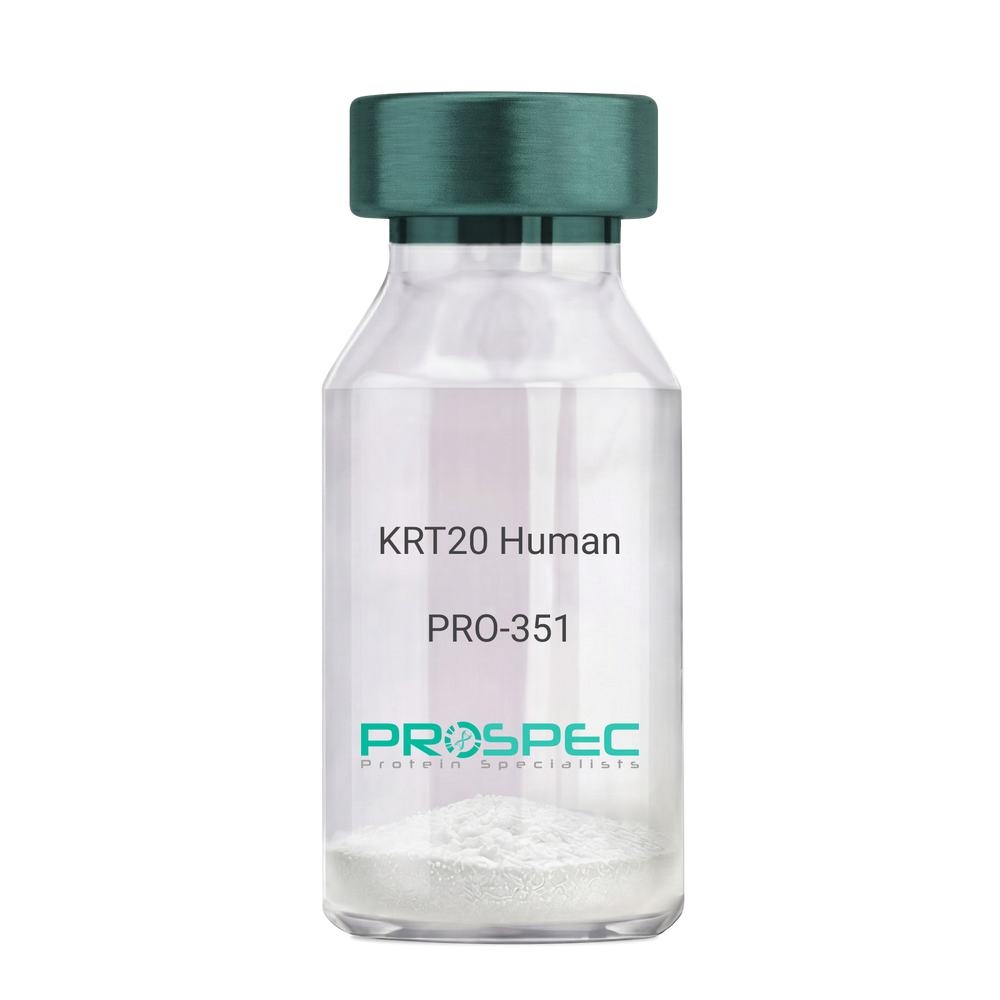
    KRT20 Human

    Description:

    Cytokeratin 20 Human Recombinant

    Keratin type I cytoskeletal 20, Cytokeratin-20, CK-20, Keratin-20, K20, Protein IT, KRT20, CD20, CK20, KRT21, MGC35423.

    Product # :

    PRO-351

    Price :

    Quantity :

    Shipping Method :

    Room Temp Icon

    Shipped at Room temp

    Add To Cart

    More Info

    • description
    • source
    • formulation
    • purity
    • More Info

    Description

    Cytokeratin 20 Human Recombinant produced in E.Coli is a single,non-glycosylated polypeptide chain having a molecular mass of 48,553 Dalton. The KRT20 is purified by proprietary chromatographic techniques.

    Source

    Escherichia Coli.

    Formulation

    The protein (1mg/1ml) was lyophilized after from a sterile solution containing 30mM Tris-HCL pH-8, 9.5M urea, 2mM DDT, 2mM EDTA and 10mM methylammonium chloride.

    Purity

    Greater than 95.0% as determined by SDS-PAGE.

    More Info

    • Introduction

      KRT20 is a member of the keratin family. The keratins are intermediate filament proteins responsible for the structural integrity of epithelial cells and are subdivided into cytokeratins and hair keratins. The type I cytokeratins consist of acidic proteins which are arranged in pairs of heterotypic keratin chains. This cytokeratin is a major cellular protein of mature enterocytes and goblet cells and is specifically expressed in the gastric and intestinal mucosa. The type I cytokeratin genes are clustered in a region of chromosome 17q12-q21.

    • Synonyms

      Keratin type I cytoskeletal 20, Cytokeratin-20, CK-20, Keratin-20, K20, Protein IT, KRT20, CD20, CK20, KRT21, MGC35423.

    • Physical Appearance

      Sterile Filtered White lyophilized (freeze-dried) powder.

    • Stability

      Lyophilized KRT20 although stable at room temperature for 3 weeks, should be stored desiccated below -18°C. Upon reconstitution KRT20 should be stored at 4°C between 2-7 days and for future use below -18°C.For long term storage it is recommended to add a carrier protein (0.1% HSA or BSA).Please prevent freeze-thaw cycles.

    • Solubility

      It is recommended to reconstitute the lyophilized KRT20 in sterile 18MΩ-cm H2O not less than 100µg/ml, which can then be further diluted to other aqueous solutions.

    • Reconstitution to filaments

      Performed by mixing equimolar amounts of cytokeratins of type I and type II at concentrations of approx. 0.5 mg/ml, both dissolved in 9.5 M urea buffer (see above). Protofilaments and filament complexes are obtained by dialyzing the resulting polypeptide solution stepwise to a concentration of 4 M urea and then to low salt condition (50 mM NaCI, 2 mM dithiothreitol, 10 mM Tris-HCI, pH 7.4). For immunization purposes, the solution can be further dialyzed against PBS (phosphate buffered saline, e.g. Dulbecco's PBS).

    ProSpec's products are furnished for LABORATORY RESEARCH USE ONLY. The product may not be used as drugs, agricultural or pesticidal products, food additives or household chemicals.

    Krt20 Human
  • View Data Sheet

    Name :

    POLE3 Human

    Description:

    Polymerase (DNA Directed), Epsilon 3 Human Recombinant

    CHARAC17, CHRAC17, p17, YBL1,DNA polymerase epsilon subunit 3, Arsenic-transactivated protein,AsTP, Chromatin accessibility complex 17 kDa protein, HuCHRAC17, DNA polymerase II subunit 3, DNA polymerase epsilon subunit p17, POLE3.

    Product # :

    PRO-1496

    Price :

    Quantity :

    Shipping Method :

    Ice Icon

    Shipped with Ice Packs

    Add To Cart

    More Info

    • description
    • source
    • formulation
    • purity
    • More Info

    Description

    POLE3 Human Recombinant produced in E. coli is a single polypeptide chain containing 170 amino acids (1-147) and having a molecular mass of 19kDa. POLE3 is fused to a 23 amino acid His-tag at N-terminus & purified by proprietary chromatographic techniques.

    Source

    Escherichia Coli.

    Formulation

    The POLE3 solution (0.5mg/ml) contains 20mM Tris-HCl buffer (pH 8.0), 0.2M NaCl, 20% glycerol and 1mM DTT.

    Purity

    Greater than 90.0% as determined by SDS-PAGE.

    More Info

    • Introduction

      Polymerase (DNA Directed), Epsilon 3, also know as POLE3, is a histone-fold protein which interacts with other histone-fold proteins to bind DNA in a sequence-independent manner. These histone-fold protein dimers merge into larger enzymatic complexes for DNA transcription, replication, and packaging.

    • Synonyms

      CHARAC17, CHRAC17, p17, YBL1,DNA polymerase epsilon subunit 3, Arsenic-transactivated protein,AsTP, Chromatin accessibility complex 17 kDa protein, HuCHRAC17, DNA polymerase II subunit 3, DNA polymerase epsilon subunit p17, POLE3.

    • Physical Appearance

      Sterile Filtered clear solution.

    • Stability

      Store at 4°C if entire vial will be used within 2-4 weeks. Store, frozen at -20°C for longer periods of time. For long term storage it is recommended to add a carrier protein (0.1% HSA or BSA).Avoid multiple freeze-thaw cycles.

    • Amino Acid Sequence

      MGSSHHHHHH SSGLVPRGSH MGSMAERPED LNLPNAVITR IIKEALPDGV NISKEARSAI SRAASVFVLY ATSCANNFAM KGKRKTLNAS DVLSAMEEME FQRFVTPLKE ALEAYRREQK GKKEASEQKK KDKDKKTDSE EQDKSRDEDN DEDEERLEEE EQNEEEEVDN.

    ProSpec's products are furnished for LABORATORY RESEARCH USE ONLY. The product may not be used as drugs, agricultural or pesticidal products, food additives or household chemicals.

    Pole3 Human
  • View Data Sheet

    Name :

    XPA Human

    Description:

    Xeroderma Pigmentosum, Complementation Group A Human Recombinant

    XP1, XPAC, DNA repair protein complementing XP-A cells.

    Product # :

    PRO-026

    Price :

    Quantity :

    Shipping Method :

    Ice Icon

    Shipped with Ice Packs

    Add To Cart

    More Info

    • description
    • source
    • formulation
    • purity
    • More Info

    Description

    XPA Human Recombinant produced in E.Coli is a single, non-glycosylated polypeptide chain containing 296 amino acids (1-273 a.a.) and having a molecular mass of 33.8 kDa.XPA is fused to a 23 amino acid His-tag at N-terminus & purified by proprietary chromatographic techniques.

    Source

    Escherichia Coli.

    Formulation

    XPA protein solution (1mg/ml) contains 20mM Tris-HCl buffer (pH 8.0), 0.4M Urea and 10% glycerol.

    Purity

    Greater than 85.0% as determined by SDS-PAGE.

    More Info

    • Introduction

      DNA repair protein complementing XP-A cells, (XPA), is a member of the XPA family. XPA protein takes a part in DNA excision repair. It Inductees repair by binding to damaged sites with different affinities depending on the photoproduct and the transcriptional state of the region. Defects in XPA is the reason of xeroderma pigmentosum complementation group A (XP-A), which is infrequent human autosomal recessive disease which characterized by solar sensitivity, high predisposition for developing cancers on areas exposed to sunlight, also may cause to neurological abnormalities.

    • Synonyms

      XP1, XPAC, DNA repair protein complementing XP-A cells.

    • Physical Appearance

      Sterile Filtered clear solution.

    • Stability

      Store at 4°C if entire vial will be used within 2-4 weeks. Store, frozen at -20°C for longer periods of time. For long term storage it is recommended to add a carrier protein (0.1% HSA or BSA).Avoid multiple freeze-thaw cycles.

    • Amino Acid Sequence

      MGSSHHHHHH SSGLVPRGSH MGSMAAADGA LPEAAALEQP AELPASVRAS IERKRQRALM LRQARLAARP YSATAAAATG GMANVKAAPK IIDTGGGFIL EEEEEEEQKI GKVVHQPGPV MEFDYVICEE CGKEFMDSYL MNHFDLPTCD NCRDADDKHK LITKTEAKQE YLLKDCDLEK REPPLKFIVK KNPHHSQWGD MKLYLKLQIV KRSLEVWGSQ EALEEAKEVR QENREKMKQK KFDKKVKELR RAVRSSVWKR ETIVHQHEYG PEENLEDDMY RKTCTMCGHE LTYEKM .

    ProSpec's products are furnished for LABORATORY RESEARCH USE ONLY. The product may not be used as drugs, agricultural or pesticidal products, food additives or household chemicals.

    Xpa Human
  • View Data Sheet

    Name :

    TIFA Human

    Description:

    TRAF-Interacting Protein with Forkhead-Associated Domain Human Recombinant

    TRAF-interacting protein with FHA domain-containing protein A, Putative MAPK-activating protein PM14, Putative NF-kappa-B-activating protein 20, TRAF2-binding protein, TIFA, T2BP, T6BP, TIFAA.

    Product # :

    PRO-1041

    Price :

    Quantity :

    Shipping Method :

    Ice Icon

    Shipped with Ice Packs

    Add To Cart

    More Info

    • description
    • source
    • formulation
    • purity
    • More Info

    Description

    TIFA Human Recombinant produced in E.Coli is a single, non-glycosylated polypeptide chain containing 208 amino acids (1-184 a.a.) and having a molecular mass of 24kDa.TIFA is fused to a 24 amino acid His-tag at N-terminus & purified by proprietary chromatographic techniques.

    Source

    Escherichia Coli.

    Formulation

    TIFA protein solution (0.5mg/ml) containing 20mM Tris-HCl buffer (pH8.0), 20% glycerol and 1mM DTT.

    Purity

    Greater than 90.0% as determined by SDS-PAGE.

    More Info

    • Introduction

      TRAF-interacting protein with FHA domain-containing protein A (TIFA) is an adapter protein that mediates the IRAK1 and TRAF6 interaction following IL-1 stimulation, triggering the downstream activation of NF-kappa-B and AP-1 pathways. The TIFA protein stimulates the oligomerization and polyubiquitination of TRAF6, leading to the activation of TAK1 and IKK through a proteasome-independent mechanism.

    • Synonyms

      TRAF-interacting protein with FHA domain-containing protein A, Putative MAPK-activating protein PM14, Putative NF-kappa-B-activating protein 20, TRAF2-binding protein, TIFA, T2BP, T6BP, TIFAA.

    • Physical Appearance

      Sterile Filtered clear solution.

    • Stability

      Store at 4°C if entire vial will be used within 2-4 weeks. Store, frozen at -20°C for longer periods of time. For long term storage it is recommended to add a carrier protein (0.1% HSA or BSA).Avoid multiple freeze-thaw cycles.

    • Amino Acid Sequence

      MGSSHHHHHH SSGLVPRGSH MGSHMTSFED ADTEETVTCL QMTVYHPGQL QCGIFQSISF NREKLPSSEV VKFGRNSNIC HYTFQDKQVS RVQFSLQLFK KFNSSVLSFE IKNMSKKTNL IVDSRELGYL NKMDLPYRCM VRFGEYQFLM EKEDGESLEF FETQFILSPR SLLQENNWPP HRPIPEYGTY SLCSSQSSSP TEMDENES.

    ProSpec's products are furnished for LABORATORY RESEARCH USE ONLY. The product may not be used as drugs, agricultural or pesticidal products, food additives or household chemicals.

    Tifa Human
  • View Data Sheet

    Name :

    AUH Human

    Description:

    AU RNA Binding Protein/Enoyl-CoA Hydratase Human Recombinant

    Methylglutaconyl-CoA hydratase, mitochondrial, AU-specific RNA-binding enoyl-CoA hydratase, AU-binding protein/enoyl-CoA hydratase, AUH.

    Product # :

    ENZ-046

    Price :

    Quantity :

    Shipping Method :

    Ice Icon

    Shipped with Ice Packs

    Add To Cart

    More Info

    • description
    • source
    • formulation
    • purity
    • More Info

    Description

    AUH Human Recombinant fused with a 21 amino acid His tag at N-terminus produced in E.Coli is a single, non-glycosylated, polypeptide chain containing 293 amino acids (68-339 a.a.) and having a molecular mass of 31.4kDa. The AUH is purified by proprietary chromatographic techniques.

    Source

    Escherichia Coli.

    Formulation

    The AUH solution (1 mg/ml) contains 20mM Tris-HCl buffer (pH8.0), 20% glycerol, 0.1M NaCl and 1mM DTT.

    Purity

    Greater than 95.0% as determined by SDS-PAGE.

    More Info

    • Introduction

      Mitochondrial methylglutaconyl-CoA hydratase (AUH) is involved in the amino acid degradation pathway by catalyzing the conversion of 3-methylglutaconyl-CoA to 3-hydroxy-3-methylglutaryl-CoA and water. AUH Human is expressed as a single mRNA species of 1.8 kb, and translated as a 40kDa precursor protein which is consequently processed to a 32kDa mature form. AUH has a very low enoyl-CoA hydratase activity. The AUH protein binds to the AU-rich element (ARE), which is a common element found in the 3' UTR of rapidly decaying mRNA such as c-fos, c-myc and granulocyte/ macrophage colony stimulating factor. AU-rich elements are involved in directing RNA to rapid degradation and deadenylation. In addition, AUH is homologous to enol-CoA hydratase, which is an enzyme involved in fatty acid degradation, and has been shown to have intrinsic hydratase enzymatic activity. AUH is therefore a bifunctional chimera between RNA binding and metabolic enzyme activity.

    • Synonyms

      Methylglutaconyl-CoA hydratase, mitochondrial, AU-specific RNA-binding enoyl-CoA hydratase, AU-binding protein/enoyl-CoA hydratase, AUH.

    • Physical Appearance

      Sterile Filtered colorless solution.

    • Stability

      Store at 4°C if entire vial will be used within 2-4 weeks. Store, frozen at -20°C for longer periods of time. For long term storage it is recommended to add a carrier protein (0.1% HSA or BSA).Avoid multiple freeze-thaw cycles.

    • Amino Acid Sequence

      MGSSHHHHHH SSGLVPRGSH MSSEMKTEDE LRVRHLEEEN RGIVVLGINR AYGKNSLSKN LIKMLSKAVD ALKSDKKVRT IIIRSEVPGI FCAGADLKER AKMSSSEVGP FVSKIRAVIN DIANLPVPTI AAIDGLALGG GLELALACDI RVAASSAKMG LVETKLAIIP GGGGTQRLPR AIGMSLAKEL IFSARVLDGK EAKAVGLISH VLEQNQEGDA AYRKALDLAR EFLPQGPVAM RVAKLAINQG MEVDLVTGLA IEEACYAQTI PTKDRLEGLL AFKEKRPPRY KGE.

    ProSpec's products are furnished for LABORATORY RESEARCH USE ONLY. The product may not be used as drugs, agricultural or pesticidal products, food additives or household chemicals.

    Auh Human
  • View Data Sheet

    Name :

    BID Mouse, GST

    Description:

    BH3 Interacting Domain Death Agonist Mouse Recombinant, GST

    BH3-interacting domain death agonist, p22 BID, BID, FP497, MGC15319, MGC42355.

    Product # :

    PRO-643

    Price :

    Quantity :

    Shipping Method :

    Ice Icon

    Shipped with Ice Packs

    Add To Cart

    More Info

    • description
    • source
    • formulation
    • purity
    • More Info

    Description

    BID Mouse Recombinant produced in E.Coli is a single, non-glycosylated polypeptide chain containing 1-195 amino acids and having a molecular mass of 48 kDa.The Mouse BID is expressed as GST-Tag fusion protein and purified by proprietary chromatographic technique.

    Source

    Escherichia Coli.

    Formulation

    The Mouse GST tag BID protein solution contains 10mM Tris-HCl pH-8, 1mM EDTA and 250mM NaCl.

    Purity

    Greater than 95.0% as determined by: (a) Analysis by RP-HPLC.
    (b) Analysis by SDS-PAGE.

    More Info

    • Introduction

      BID is a pro-apoptotic Bcl-2 protein having only the BH3 domain. In reaction to apoptotic signaling, BID interacts with another Bcl-2 family of cell death regulators, called Bax, they form a heterodimer resulting to the insertion of Bax into the outer mitochondrial membrane. Bax induces the opening of the mitochondrial voltage-dependent anion channel which lead to the release of cytochrome c and other pro-apoptotic factors from the mitochondria resulting in activation of caspases. BID is a mediator of mitochondrial damage induced by caspase-8 (CASP8). CASP8 cleaves BID, and the COOH-terminal part translocates to mitochondria where it triggers cytochrome c release. The major proteolytic product p15 BID releasea cytochrome c. Isoform 1, Isoform 2 and Isoform 4 induce ice-like proteases and apoptosis while Isoform 3 does not induce apoptosis.

    • Synonyms

      BH3-interacting domain death agonist, p22 BID, BID, FP497, MGC15319, MGC42355.

    • Physical Appearance

      Sterile Filtered colorless liquid formulation.

    • Stability

      Store at 4°C if entire vial will be used within 2-4 weeks. Store, frozen at -20°C for longer periods of time. For long term storage it is recommended to add a carrier protein (0.1% HSA or BSA).Avoid multiple freeze-thaw cycles.

    ProSpec's products are furnished for LABORATORY RESEARCH USE ONLY. The product may not be used as drugs, agricultural or pesticidal products, food additives or household chemicals.

    Bid Mouse Gst
  • View Data Sheet

    Name :

    SNAI1 Antibody

    Description:

    Snail Family Zinc Finger 1, Mouse Anti Human

    Snail Family Zinc Finger 1, Protein Sna, Protein Snail Homolog 1, SNAH, Snail 1 (Drosophila Homolog), Zinc Finger Protein, Snail Homolog 1 (Drosophila), SLUGH2, SNA, SNAIL, SNAIL1, dJ710H13.1, Snail 1 Homolog, Snail 1 Zinc Finger Protein, Snail 1, Zinc Finger Protein, Snail Homolog 1, Zinc Finger Protein SNAI1.

    Product # :

    ANT-511

    Price :

    Quantity :

    Shipping Method :

    Ice Icon

    Shipped with Ice Packs

    Add To Cart

    More Info

    • formulation
    • More Info

    Formulation

    1mg/ml containing PBS, pH-7.4, 10% Glycerol and 0.02% Sodium Azide.

    More Info

    • Introduction

      Snail homolog 1 (SNAI1) is involved in induction of the epithelial to mesenchymal transition (EMT), formation and maintenance of embryonic mesoderm, growth arrest, survival and cell migration. SNAI1 binds to 3 E-boxes of the E-cadherin gene promoter and represses its transcription. The nuclear protein encoded by SNAI1 is structurally identical to the Drosophila snail protein, and is considered as well to be vital for mesoderm formation in the developing embryo. At least two variants of a similar processed pseudogene have been found on chromosome 2.Among the diseases associated with SNAI1 are waardenburg syndrome type iid, and inappropriate adh syndrome.

    • Synonyms

      Snail Family Zinc Finger 1, Protein Sna, Protein Snail Homolog 1, SNAH, Snail 1 (Drosophila Homolog), Zinc Finger Protein, Snail Homolog 1 (Drosophila), SLUGH2, SNA, SNAIL, SNAIL1, dJ710H13.1, Snail 1 Homolog, Snail 1 Zinc Finger Protein, Snail 1, Zinc Finger Protein, Snail Homolog 1, Zinc Finger Protein SNAI1.

    • Physical Appearance

      Sterile filtered colorless solution.

    • Immunogen

      Anti-human SNAI1 mAb, clone PAT2D5AT, is derived from hybridization of mouse F0 myeloma cells with spleen cells from BALB/c mice immunized with a recombinant human SNAI1 protein 1-264 amino acids purified from E. coli.

    • Ig Subclass

      Mouse IgG2b heavy chain and k light chain.

    • Clone

      PAT2D5AT.

    • Applications

      The antibody has been tested by ELISA, Western blot analysis to assure specificity and reactivity. Since application varies, however, each investigation should be titrated by the reagent to obtain optimal results. Recommended starting dilution is 1:1000.

    • Type

      Mouse Anti Human Monoclonal.

    • Storage Procedures

      For periods up to 1 month store at 4°C, for longer periods of time, store at -20°C. Prevent freeze thaw cycles.

    • Purification Method

      SNAI1 Antibody was purified from mouse ascitic fluids by protein-A affinity chromatography.

    ProSpec's products are furnished for LABORATORY RESEARCH USE ONLY. The product may not be used as drugs, agricultural or pesticidal products, food additives or household chemicals.

    Snai1 Antibody
  • View Data Sheet

    Name :

    MICB Human

    Description:

    MHC Class-I chain related gene B Human Recombinant

    MHC class I polypeptide-related sequence B, MIC-B, MICB, PERB11.2.

    Product # :

    PRO-368

    Price :

    Quantity :

    Shipping Method :

    Room Temp Icon

    Shipped at Room temp

    Add To Cart

    More Info

    • description
    • source
    • formulation
    • purity
    • biological activity
    • More Info

    Description

    MICB Human Recombinant produced in E.Coli is a single, non-glycosylated polypeptide chain containing 326 amino acids and having a molecular mass of 37kDa. The sequence contains the extracellular domain of the mature human MICB (amino acid residues Ala23 – Tyr312). The MICB is purified by proprietary chromatographic techniques.

    Source

    Escherichia Coli.

    Formulation

    Lyophilized from a concentrated (1mg/ml) solution containing no additives.

    Purity

    Greater than 95.0% as determined by(a) Analysis by RP-HPLC.
    (b) Analysis by SDS-PAGE.

    Biological Activity

    Measured by its ability to bind MICB antibody in ELISA.

    More Info

    • Introduction

      MICB (MHC class I chain-related gene B) is a transmembrane glycoprotein that functions as a ligand for human NKG2D type II receptor. A closely related protein, MICA, shares 85% amino acid identity with MICB. These 2 proteins are distantly related to the MHC class I proteins. MICA and MICB (MICA/B) possess three extracellular immunoglobulin-like domains, but have no capacity to bind peptide or interact with ?2-microglobulin. The genes encoding MICA/B are found within the major histocompatibility complex on human chromosome 6. The MICB locus is polymorphic with more than 15 recognized human alleles. MICA/B are minimally expressed on normal cells, but are frequently expressed on epithelial tumors and can be induced by bacterial and viral infections. MICA/B are ligands for NKG2D, an activating receptor expressed on NK cells, NKT cells, ?? T cells, and CD8+ ?? T cells. Recognition of MICA/B by NKG2D results in the activation of cytolytic activity and/or cytokine production by these effector cells. MICA/B recognition is involved in tumor surveillance, viral infections, and autoimmune diseases. The release of soluble forms of MICA/B from tumors down-regulates NKG2D surface expression on effector cells resulting in the impairment of anti-tumor immune response.

    • Synonyms

      MHC class I polypeptide-related sequence B, MIC-B, MICB, PERB11.2.

    • Physical Appearance

      Sterile Filtered White lyophilized (freeze-dried) powder.

    • Stability

      Lyophilized MICB although stable at room temperature for 3 weeks, should be stored desiccated below -18°C. Upon reconstitution MICB should be stored at 4°C between 2-7 days and for future use below -18°C.For long term storage it is recommended to add a carrier protein (0.1% HSA or BSA).Please prevent freeze-thaw cycles.

    • Solubility

      It is recommended to reconstitute the lyophilized MICB in sterile 18MΩ-cm H2O not less than 100µg/ml, which can then be further diluted to other aqueous solutions.

    ProSpec's products are furnished for LABORATORY RESEARCH USE ONLY. The product may not be used as drugs, agricultural or pesticidal products, food additives or household chemicals.

    Mic B Human
  • View Data Sheet

    Name :

    SOD2 Mouse

    Description:

    Superoxide Dismutase-2 Mouse Recombinant

    Superoxide dismutase [Mn], Superoxide Dismutase-2, mitochondrial, Sod-2.

    Product # :

    PRO-2192

    Price :

    Quantity :

    Shipping Method :

    Ice Icon

    Shipped with Ice Packs

    Add To Cart

    More Info

    • description
    • source
    • formulation
    • purity
    • More Info

    Description

    SOD2 Mouse Recombinant produced in E.Coli is a single, non-glycosylated polypeptide chain containing 221 amino acids (25-222 a.a) and having a molecular mass of 24.6kDa.SOD2 is fused to a 23 amino acid His-tag at N-terminus & purified by proprietary chromatographic techniques.

    Source

    Escherichia Coli.

    Formulation

    SOD2 protein solution (1mg/ml) containing Phosphate buffered saline (pH7.4), 10% glycerol and 1mM DTT.

    Purity

    Greater than 95.0% as determined by SDS-PAGE.

    More Info

    • Introduction

      SOD2 is part of the iron/manganese superoxide dismutase family. It encodes a mitochondrial protein that forms a homotetramer and binds one manganese ion per subunit. SOD2 binds to the superoxide byproducts of oxidative phosphorylation and converts them to hydrogen peroxide and diatomic oxygen. Mutations in SOD2 gene have been associated with idiopathic cardiomyopathy (IDC), premature aging, sporadic motor neuron disease, and cancer. SOD2 destroys radicals which are usually produced within the cells and which are toxic to biological systems.

    • Synonyms

      Superoxide dismutase [Mn], Superoxide Dismutase-2, mitochondrial, Sod-2.

    • Physical Appearance

      Sterile Filtered clear solution.

    • Stability

      Store at 4°C if entire vial will be used within 2-4 weeks. Store, frozen at -20°C for longer periods of time. For long term storage it is recommended to add a carrier protein (0.1% HSA or BSA).Avoid multiple freeze-thaw cycles.

    • Amino Acid Sequence

      MGSSHHHHHH SSGLVPRGSH MGSKHSLPDL PYDYGALEPH INAQIMQLHH SKHHAAYVNN LNATEEKYHE ALAKGDVTTQ VALQPALKFN GGGHINHTIF WTNLSPKGGG EPKGELLEAI KRDFGSFEKF KEKLTAVSVG VQGSGWGWLG FNKEQGRLQI AACSNQDPLQ GTTGLIPLLG IDVWEHAYYL QYKNVRPDYL KAIWNVINWE NVTERYTACK K.

    ProSpec's products are furnished for LABORATORY RESEARCH USE ONLY. The product may not be used as drugs, agricultural or pesticidal products, food additives or household chemicals.

    Sod2 Mouse
  • View Data Sheet

    Name :

    JAM2 Human

    Description:

    Junctional Adhesion Molecule 2 Human Recombinant

    Junctional adhesion molecule B, JAM-B, Junctional adhesion molecule 2, JAM-2, Vascular endothelial junction-associated molecule, VE-JAM, CD322.

    Product # :

    PRO-1336

    Price :

    Quantity :

    Shipping Method :

    Ice Icon

    Shipped with Ice Packs

    Add To Cart

    More Info

    • description
    • source
    • formulation
    • purity
    • More Info

    Description

    JAM2 Human Recombinant produced in E.coli is a single, non-glycosylated polypeptide chain containing 241 amino acids (21-238) and having a molecular mass of 26.7kDa. JAM2 is fused to a 23 amino acid His-tag at N-terminus & purified by proprietary chromatographic techniques.

    Source

    Escherichia Coli.

    Formulation

    JAM2 protein solution (1mg/ml) containing 20mM Tris-HCl buffer (pH 8.0), 0.4M urea and 10% glycerol.

    Purity

    Greater than 90.0% as determined by SDS-PAGE.

    More Info

    • Introduction

      Junctional Adhesion Molecule 2 (JAM2) is a member of the immunoglobulin superfamily, and the junctional adhesion molecule (JAM) family. JAM2 is a type I membrane protein which is localized at the tight junctions of both epithelial and endothelial cells. JAM2 functions as an adhesive ligand for interacting with various immune cell types, and may have a role in lymphocyte homing to secondary lymphoid organs.

    • Synonyms

      Junctional adhesion molecule B, JAM-B, Junctional adhesion molecule 2, JAM-2, Vascular endothelial junction-associated molecule, VE-JAM, CD322.

    • Physical Appearance

      Sterile Filtered colorless solution.

    • Stability

      Store at 4°C if entire vial will be used within 2-4 weeks. Store, frozen at -20°C for longer periods of time. For long term storage it is recommended to add a carrier protein (0.1% HSA or BSA).Avoid multiple freeze-thaw cycles.

    • Amino Acid Sequence

      MGSSHHHHHH SSGLVPRGSH MGSLGYHKAY GFSAPKDQQV VTAVEYQEAI LACKTPKKTV SSRLEWKKLG RSVSFVYYQQ TLQGDFKNRA EMIDFNIRIK NVTRSDAGKY RCEVSAPSEQ GQNLEEDTVT LEVLVAPAVP SCEVPSSALS GTVVELRCQD KEGNPAPEYT WFKDGIRLLE NPRLGSQSTN SSYTMNTKTG TLQFNTVSKL DTGEYSCEAR NSVGYRRCPG KRMQVDDLNI S.

    ProSpec's products are furnished for LABORATORY RESEARCH USE ONLY. The product may not be used as drugs, agricultural or pesticidal products, food additives or household chemicals.

    Jam2 Human
  • View Data Sheet

    Name :

    SOST Human, HEK

    Description:

    Sclerostin Human Recombinant, HEK

    Sclerostin, SOST, CDD, VBCH.

    Product # :

    PRO-2481

    Price :

    Quantity :

    Shipping Method :

    Room Temp Icon

    Shipped at Room temp

    Add To Cart

    More Info

    • description
    • source
    • formulation
    • purity
    • More Info

    Description

    SOST Human Recombinant produced in HEK293 cells is a single, glycosylated polypeptide chain (a.a 24-213) containing 196 amino acids including a 6 a.a C-terminal His tag. The total molecular mass is 22.4kDa (calculated).

    Source

    HEK293 Cells.

    Formulation

    SOST filtered (0.4 µm) and lyophilized from 0.5mg/ml in PBS and 5 % (w/v) trehalose, pH 7.4.

    Purity

    Greater than 95.0% as determined by SDS-PAGE.

    More Info

    • Introduction

      Sclerostin (SOST) is a secreted glycoprotein with a C-terminal cysteine knot-like (CTCK) domain and sequence similarity to the DAN (differential screening-selected gene aberrative in neuroblastoma) family of bone morphogenetic protein (BMP) antagonists. Sclerostin functions as a negative regulator of bone growth, by inhibiting bone formation. SOST is widely expressed at low levels, with highest levels in the bone, cartilage, kidney, liver, bone marrow and primary osteoblasts differentiated for 21 days. SOST gene defects cause sclerosteosis and bone dysplasia.

    • Synonyms

      Sclerostin, SOST, CDD, VBCH.

    • Physical Appearance

      Filtered White lyophilized (freeze-dried) powder.

    • Stability

      Store lyophilized protein at -20°C. Aliquot the product after reconstitution to avoid repeated freezing/thawing cycles. Reconstituted protein can be stored at 4°C for a limited period of time; it does not show any change after one week at 4°C.

    • Solubility

      It is recommended to add deionized water to prepare a working stock solution of approximately 0.5mg/ml and let the lyophilized pellet dissolve completely. SOST is not sterile! Please filter the product by an appropriate sterile filter before using it in the cell culture.

    • Amino Acid Sequence

      QGWQAFKNDA TEIIPELGEY PEPPPELENN KTMNRAENGG RPPHHPFETK DVSEYSCREL HFTRYVTDGP CRSAKPVTEL VCSGQCGPAR LLPNAIGRGK WWRPSGPDFR CIPDRYRAQR VQLLCPGGEA PRARKVRLVA SCKCKRLTRF HNQSELKDFG TEAARPQKGR KPRPRARSAK ANQAELENAY HHHHHH.

    ProSpec's products are furnished for LABORATORY RESEARCH USE ONLY. The product may not be used as drugs, agricultural or pesticidal products, food additives or household chemicals.

    Sost Protein
  • View Data Sheet

    Name :

    MBP Protein

    Description:

    Myelin Basic Protein Human

    Maltose-binding periplasmic protein, MBP, MMBP, Maltodextrin-binding protein, malE, b4034, JW3994.

    Product # :

    PRO-2798

    Price :

    Quantity :

    Shipping Method :

    Room Temp Icon

    Shipped at Room temp

    Add To Cart

    More Info

    • description
    • source
    • formulation
    • purity
    • More Info

    Description

    MBP Human produced in Human brain is checked using poly and monoclonal antibodies against MBP.

    Source

    Human brain.

    Formulation

    MBP was lyophilized containing no additives.

    Purity

    Greater than 95.0% as determined by SDS-PAGE.

    More Info

    • Synonyms

      Maltose-binding periplasmic protein, MBP, MMBP, Maltodextrin-binding protein, malE, b4034, JW3994.

    • Physical Appearance

      Sterile Filtered White lyophilized (freeze-dried) powder.

    • Stability

      Lyophilized MBP although stable at room temperature for 3 weeks, should be stored desiccated below -18°C. Upon reconstitution Myelin Basic Protein should be stored at 4°C between 2-7 days and for future use below -18°C. For long term storage it is recommended to add a carrier protein (0.1% HSA or BSA). Please prevent freeze-thaw cycles.

    • Solubility

      It is recommended to reconstitute the lyophilized MBP in sterile 18MΩ-cm H2O not less than 100µg/ml, which can then be further diluted to other aqueous solutions.

    • Background

      Myelin Basic Protein (MBP) stands as a cornerstone in the intricate architecture of the nervous system. As a vital component of the myelin sheath, MBP plays a pivotal role in ensuring the integrity and rapid transmission of nerve impulses. Over the years, scientific inquiry into MBP has revealed its multifaceted functions, not only as a structural element but also as a regulatory molecule involved in various cellular processes. This research seeks to unravel the complexities of MBP, exploring its structural characteristics, physiological significance, and its involvement in neurological disorders.

      Structural Marvel of MBP:

      MBP, an intrinsically disordered protein, boasts a unique structure allowing it to interact with lipid membranes, especially those found in the myelin sheath. Its high arginine and lysine content gives it a positive charge, enabling strong electrostatic interactions with the negatively charged lipids in myelin. This structural adaptation is crucial for the compact wrapping of myelin around axons, facilitating efficient electrical signal conduction.

      Physiological Significance in Myelination:

      In the central nervous system (CNS), oligodendrocytes produce myelin, a lipid-rich substance that insulates axons. MBP, as a major constituent of myelin, plays an indispensable role in this process. It stabilizes the myelin sheath’s structure, ensuring its tight adherence to the axon and promoting the fast, saltatory conduction of nerve impulses. Without functional MBP, myelin integrity is compromised, leading to reduced nerve conduction velocity and impaired neural communication.

      Beyond Structural Functions:

      Recent studies have revealed that MBP is not merely a structural protein but also possesses regulatory functions. It participates in signaling pathways crucial for oligodendrocyte development and myelination. Moreover, MBP’s interaction with cytoskeletal elements suggests its involvement in cellular processes such as axon guidance and neuronal plasticity. Understanding these regulatory roles provides insights into the broader impact of MBP on neural development and function.

      Implications in Neurological Disorders:

      Alterations in MBP have been linked to various neurological disorders, including multiple sclerosis (MS). In MS, the immune system erroneously targets MBP, leading to demyelination and subsequent neurological impairments. Research into MBP-related pathologies not only aids in understanding disease mechanisms but also offers potential therapeutic avenues. Targeting MBP-specific immune responses is a focus of research for developing MS treatments.

      Conclusion:

      MBP, as the guardian of neural transmission, stands as a testament to the marvels of biological architecture. Its intricate structure and multifaceted functions make it indispensable for the proper functioning of the nervous system. Beyond its role as a structural protein, MBP’s involvement in cellular signalling adds layers to its significance. In the realm of neurological disorders, MBP’s complexities provide both challenges and opportunities, guiding scientists toward innovative therapies. This research delves into the world of MBP, appreciating its contributions to neuroscience while aiming to decipher the mysteries that lie within its molecular intricacies.

    ProSpec's products are furnished for LABORATORY RESEARCH USE ONLY. The product may not be used as drugs, agricultural or pesticidal products, food additives or household chemicals.

    Mbp Human
  • View Data Sheet

    Name :

    GTF2A1 Human

    Description:

    General Transcription Factor IIA, 1 Human Recombinant

    General transcription factor IIA, 1, 19/37kDa, TF2A1, TFIIA, TFIIA-42, TFIIAL, Transcription initiation factor IIA subunit 1, Transcription initiation factor TFIIA 42 kDa subunit, GTF2A1.

    Product # :

    PRO-1808

    Price :

    Quantity :

    Shipping Method :

    Ice Icon

    Shipped with Ice Packs

    Add To Cart

    More Info

    • description
    • source
    • formulation
    • purity
    • More Info

    Description

    GTF2A1 Human Recombinant produced in E. coli is. a single polypeptide chain containing 297 amino acids (1-274) and having a molecular mass of 32.2kDa. GTF2A1 is fused to a 23 amino acid His-tag at N-terminus & purified by proprietary chromatographic techniques.

    Source

    Escherichia Coli.

    Formulation

    The GTF2A1 solution (0.5mg/ml) contains 20mM Tris-HCl(pH8.0), 20% glycerol, 0.15M NaCl and 1mM DTT.

    Purity

    Greater than 90% as determined by SDS-PAGE.

    More Info

    • Introduction

      General Transcription Factor IIA, 1 (GTF2A1) in a complex along with TBP mediates transcriptional activity. GTF2A1 is a part of the transcription machinery of RNA polymerase II and is also participates in transcriptional activation.

    • Synonyms

      General transcription factor IIA, 1, 19/37kDa, TF2A1, TFIIA, TFIIA-42, TFIIAL, Transcription initiation factor IIA subunit 1, Transcription initiation factor TFIIA 42 kDa subunit, GTF2A1.

    • Physical Appearance

      Sterile Filtered clear solution.

    • Stability

      Store at 4°C if entire vial will be used within 2-4 weeks. Store frozen at -20°C for longer periods of time. For long term storage it is recommended to add a carrier protein (0.1% HSA or BSA).Avoid multiple freeze-thaw cycles.

    • Amino Acid Sequence

      MGSSHHHHHH SSGLVPRGSH MGSMANSANT NTVPKLYRSV IEDVINDVRD IFLDDGVDEQ VLMELKTLWE NKLMQSRAVD GFHSEEQQLL LQVQQQHQPQ QQQHHHHHHH QQAQPQQTVP QQAQTQQVLI PASQQATAPQ VIVPDSKLIQ HMNASNMSAA ATAATLALPA GVTPVQQILT NSGQLLQVVR AANGAQYIFQ PQQSVVLQQQ VIPQMQPGGV QAPVIQQVLA PLPGGISPQT GVIIQPQQIL FTGNKTQVIP TTVAAPTPAQ AQITATGQQQ PQAQPAQTQA PLVLQVD.

    ProSpec's products are furnished for LABORATORY RESEARCH USE ONLY. The product may not be used as drugs, agricultural or pesticidal products, food additives or household chemicals.

    Gtf2A1 Human
  • View Data Sheet

    Name :

    FABP4 Human

    Description:

    Fatty Acid Binding Protein 4 Human

    Fatty acid-binding protein adipocyte, AFABP, Fatty acid-binding protein 4, Adipocyte lipid-binding protein, ALBP, A-FABP, FABP4.

    Product # :

    PRO-1568

    Price :

    Quantity :

    Shipping Method :

    Room Temp Icon

    Shipped at Room temp

    Add To Cart

    More Info

    • description
    • source
    • formulation
    • purity
    • More Info

    Description

    The Human FABP4 produced from Human Adipose Tissue has a molecular mass of 14.587kDa (calculated without glycosylation) containing 131 amino acid residues.

    Source

    Human Adipose Tissue.

    Formulation

    FABP4 protein filtered (0.4µm) and lyophilized in 0.5mg/ml in 0.05M phosphate buffer and 0.075M NaCl, pH 6.5.

    Purity

    Greater than 85.0% as determined by SDS-PAGE.

    More Info

    • Introduction

      Adipocyte fatty acid binding protein FABP4 is a 15 kDa member of the intracellular fatty acid binding protein (FABP) family, which is known for the ability to bind fatty acids and related compounds (bile acids or retinoids) in an internal cavity. FABP4 is expressed in a differentiation-dependent fashion in adipocytes and is a critical gene in the regulation of the biological function of these cells.
      In mice, targeted mutations in FABP4 provide significant protection from IR in the context of both dietary and genetic obesity. Adipocytes obtained from FABP4-deficient mice also have reduced efficiency of ipolysis in vitro and in vivo, and these mice exhibited moderately improved systemic dyslipidemia. Recent studies also demonstrated FABP4 expression in macrophages upon differentiation and activation. In these cells, FABP4 modulates inflammatory responses and cholesterol ester accumulation, and total or macrophage-specific FABP4 deficiency confers dramatic protection against atherosclerosis in the apoE-/- mice. These results indicate a central role for FABP4 in the development of major components of the metabolic syndrome through its distinct actions in adipocytes and macrophages.

    • Synonyms

      Fatty acid-binding protein adipocyte, AFABP, Fatty acid-binding protein 4, Adipocyte lipid-binding protein, ALBP, A-FABP, FABP4.

    • Physical Appearance

      Filtered White lyophilized (freeze-dried) powder.

    • Stability

      Store lyophilized protein at -20°C. Aliquot the product after reconstitution to avoid repeated freezing/thawing cycles. Reconstituted protein can be stored at 4°C for a limited period of time; it does not show any change after two weeks at 4°C.

    • Solubility

      It is recommended to add deionized water to prepare a working stock solution of approximately 0.5 mg/ml and let the lyophilized pellet dissolve completely. Product is not sterile! Please filter the product by an appropriate sterile filter before using it in the cell culture.

    • Amino Acid Sequence

      CDAFVGTWKL VSSENFDDYM KEVGVGFATR KVAGMAKPNM IISVNGDVIT IKSESTFKNT EISFILGQEF DEVTADDRKV KSTITLDGGV LVHVQKWDGK STTIKRKRED DKLVVECVMK GVTSTRVYER A.

    ProSpec's products are furnished for LABORATORY RESEARCH USE ONLY. The product may not be used as drugs, agricultural or pesticidal products, food additives or household chemicals.

    Human Fabp4
  • View Data Sheet

    Name :

    SSR4 Human

    Description:

    Signal Sequence Receptor, Delta Human Recombinant

    TRAPD, Translocon-associated protein subunit delta, TRAP-delta, Signal sequence receptor subunit delta SSR-delta.

    Product # :

    PRO-1294

    Price :

    Quantity :

    Shipping Method :

    Ice Icon

    Shipped with Ice Packs

    Add To Cart

    More Info

    • description
    • source
    • formulation
    • purity
    • More Info

    Description

    SSR4 Human Recombinant produced in E.Coli is a single, non-glycosylated polypeptide chain containing 144 amino acids (24-144 a.a.) and having a molecular mass of 16.1kDa.SSR4 is fused to a 23 amino acid His-tag at N-terminus & purified by proprietary chromatographic techniques.

    Source

    Escherichia Coli.

    Formulation

    SSR4 protein solution (1mg/ml) contains 20mM Tris-HCl buffer (pH 8.0), 0.4M UREA and 10% glycerol.

    Purity

    Greater than 90.0% as determined by SDS-PAGE.

    More Info

    • Introduction

      SSR4 is a member of the TRAP-delta family. SSR4 is the delta subunit of the translocon-associated protein complex that participates in translocating proteins through the endoplasmic reticulum membrane. SSR4 positioned in the Xq28 region and organized in a compact head-to-head manner with the isocitrate dehydrogenase 3 (NAD+) gamma gene. Both genes are motivated by a CpG-embedded bidirectional promoter.

    • Synonyms

      TRAPD, Translocon-associated protein subunit delta, TRAP-delta, Signal sequence receptor subunit delta SSR-delta.

    • Physical Appearance

      Sterile Filtered clear solution.

    • Stability

      Store at 4°C if entire vial will be used within 2-4 weeks. Store, frozen at -20°C for longer periods of time. For long term storage it is recommended to add a carrier protein (0.1% HSA or BSA).Avoid multiple freeze-thaw cycles.

    • Amino Acid Sequence

      MGSSHHHHHH SSGLVPRGSH MGSEACLEPQ ITPSYYTTSD AVISTETVFI VEISLTCKNR VQNMALYADV GGKQFPVTRG QDVGRYQVSW SLDHKSAHAG TYEVRFFDEE SYSLLRKAQR NNEDISIIPP LFTVSVDHRG TWNG.

    ProSpec's products are furnished for LABORATORY RESEARCH USE ONLY. The product may not be used as drugs, agricultural or pesticidal products, food additives or household chemicals.

    Ssr4 Human
  • View Data Sheet

    Name :

    NECTIN1 Human

    Description:

    Nectin Cell Adhesion Molecule 1 Human Recombinant

    PVRL1, CD111, CLPED1, ED4, HIgR, HVIS, HVEC, Nectin-1, OFC7, PRR, PRR1, PVRR, PVRR1, SK-12.

    Product # :

    PRO-2648

    Price :

    Quantity :

    Shipping Method :

    Ice Icon

    Shipped with Ice Packs

    Add To Cart

    More Info

    • description
    • source
    • formulation
    • purity
    • More Info

    Description

    NECTIN1 Human Recombinant produced in Sf9 Baculovirus cells is a single, glycosylated polypeptide chain containing 334amino acids (31-355a.a) and having a molecular mass of 37.3kDa.NECTIN1 is fused to an 9 amino acid His-tag at C-terminus & purified by proprietary chromatographic techniques.

    Source

    Sf9, Baculovirus cells.

    Formulation

    The NECTIN1 solution (1mg/ml) contains Phosphate-Buffered Saline (pH 7.4) and 10% glycerol.

    Purity

    Greater than 95.0% as determined by SDS-PAGE.

    More Info

    • Introduction

      Nectin-1, also referred to as ED4, is a poliovirus receptor- related 1 protein is a part of the Nectin family. Nectin-1 endorses cell-cell contacts by forming homophilic or heterophilic trans-dimers. Heterophilic interactions among PVRL1/nectin-1 & PVRL4/nectin-4 and among PVRL1/nectin-1 & PVRL3/nectin-3 have been found. Nectin-1 acts as an entry receptor for herpes simplex virus & pseudorabies virus as well. Likewise, Neurite outgrowth-promoting activity has been shown by Nectin-1.

    • Synonyms

      PVRL1, CD111, CLPED1, ED4, HIgR, HVIS, HVEC, Nectin-1, OFC7, PRR, PRR1, PVRR, PVRR1, SK-12.

    • Physical Appearance

      Sterile Filtered colorless solution.

    • Stability

      Store at 4°C if entire vial will be used within 2-4 weeks. Store, frozen at -20°C for longer periods of time. For long term storage it is recommended to add a carrier protein (0.1% HSA or BSA).Avoid multiple freeze-thaw cycles.

    • Amino Acid Sequence

      ADPQVVQVND SMYGFIGTDV VLHCSFANPL PSVKITQVTW QKSTNGSKQN VAIYNPSMGV SVLAPYRERV EFLRPSFTDG TIRLSRLELE DEGVYICEFA TFPTGNRESQ LNLTVMAKPT NWIEGTQAVL RAKKGQDDKV LVATCTSANG KPPSVVSWET RLKGEAEYQE IRNPNGTVTV ISRYRLVPSR EAHQQSLACI VNYHMDRFKE SLTLNVQYEP EVTIEGFDGN WYLQRMDVKL
      TCKADANPPA TEYHWTTLNG SLPKGVEAQN RTLFFKGPIN YSLAGTYICE ATNPIGTRSG QVEVNITEFP YTPSPPEHGR RAGPVPTAHH HHHH

    ProSpec's products are furnished for LABORATORY RESEARCH USE ONLY. The product may not be used as drugs, agricultural or pesticidal products, food additives or household chemicals.

    Nectin1 Human
  • View Data Sheet

    Name :

    CANX Human

    Description:

    Calnexin Human Recombinant

    Calnexin, Major histocompatibility complex class I antigen-binding protein p88, p90, IP90, CANX, CNX, FLJ26570.

    Product # :

    PRO-725

    Price :

    Quantity :

    Shipping Method :

    Ice Icon

    Shipped with Ice Packs

    Add To Cart

    More Info

    • description
    • source
    • formulation
    • purity
    • More Info

    Description

    CANX Human Recombinant produced in E.Coli is a single, non-glycosylated, polypeptide chain containing 462 amino acids (21-481 a.a.) and having a molecular mass of 52.5kDa.The CANX is purified by proprietary chromatographic techniques.

    Source

    Escherichia Coli.

    Formulation

    The CANX protein solution contains 20mM Tris-HCl buffer (pH8.0), 1mM DTT and 20% glycerol.

    Purity

    Greater than 90.0% as determined by SDS-PAGE.

    More Info

    • Introduction

      Calnexin (CANX) belongs to the calnexin family of molecular chaperones. Calnexin is a calcium-binding, ER-associated protein that interacts briefly with newly synthesized N-linked glycoproteins, facilitating protein folding and assembly. Calnexin may also have a key role in the quality control of protein folding by retaining incorrectly folded protein subunits within the ER for degradation. Calnexin grants long-term protection of wild-type Shaker protein from ER-associated degradation. Polypeptide substrate recognition by Calnexin requires specific conformations of the Calnexin protein. Calnexin dwindles with aging and might contribute to a cytoprotection in an array of human age-related diseases.

    • Synonyms

      Calnexin, Major histocompatibility complex class I antigen-binding protein p88, p90, IP90, CANX, CNX, FLJ26570.

    • Physical Appearance

      Sterile Filtered colorless solution.

    • Stability

      Store at 4°C if entire vial will be used within 2-4 weeks. Store, frozen at -20°C for longer periods of time. For long term storage it is recommended to add a carrier protein (0.1% HSA or BSA).Avoid multiple freeze-thaw cycles.

    • Amino Acid Sequence

      MHDGHDDDVI DIEDDLDDVI EEVEDSKPDT TAPPSSPKVT YKAPVPTGEV YFADSFDRGT LSGWILSKAK KDDTDDEIAK YDGKWEVEEM KESKLPGDKG LVLMSRAKHH AISAKLNKPF LFDTKPLIVQ YEVNFQNGIE CGGAYVKLLS KTPELNLDQF HDKTPYTIMF GPDKCGEDYK LHFIFRHKNP KTGIYEEKHA KRPDADLKTY FTDKKTHLYT LILNPDNSFE ILVDQSVVNS GNLLNDMTPP VNPSREIEDP EDRKPEDWDE RPKIPDPEAV KPDDWDEDAP AKIPDEEATK PEGWLDDEPE YVPDPDAEKP EDWDEDMDGE WEAPQIANPR CESAPGCGVW QRPVIDNPNY KGKWKPPMID NPSYQGIWKP RKIPNPDFFE DLEPFRMTPF SAIGLELWSM TSDIFFDNFI ICADRRIVDD WANDGWGLKK AADGAAEPGV VGQMIEAAEE RP.

    ProSpec's products are furnished for LABORATORY RESEARCH USE ONLY. The product may not be used as drugs, agricultural or pesticidal products, food additives or household chemicals.

    Canx Human
  • View Data Sheet

    Name :

    SNRPC Human

    Description:

    Small Nuclear Ribonucleoprotein Polypeptide C Human Recombinant

    U1 small nuclear ribonucleoprotein C, U1 snRNP C, U1-C, U1C, SNRPC, Yhc1.

    Product # :

    PRO-1004

    Price :

    Quantity :

    Shipping Method :

    Ice Icon

    Shipped with Ice Packs

    Add To Cart

    More Info

    • description
    • source
    • formulation
    • purity
    • More Info

    Description

    SNRPC Human Recombinant produced in E.Coli is a single, non-glycosylated polypeptide chain containing 182 amino acids (1-159 a.a.) and having a molecular mass of 19.8kDa (Molecular weight on SDS-PAGE will appear higher).SNRPC is fused to a 23 amino acid His-tag at N-terminus & purified by proprietary chromatographic techniques.

    Source

    Escherichia Coli.

    Formulation

    SNRPC protein solution (0.25mg/ml) containing 20mM Tris-HCl buffer (pH8.0), 50% glycerol, 0.3M NaCl, 5mM DTT and 2mM EDTA.

    Purity

    Greater than 85% as determined by SDS-PAGE.

    More Info

    • Introduction

      SNRPC is a member of the U1 small nuclear ribonucleoprotein C family. The SNRPC protein component of the U1 small nuclear ribonucleoprotein (snRNP) particle required for the formation of the spliceosome. SNRPC participates in the processing of nuclear precursor messenger RNA splicing. snRNP particles are tackled by autoantibodies frequently produced by patients with connective tissue diseases.

    • Synonyms

      U1 small nuclear ribonucleoprotein C, U1 snRNP C, U1-C, U1C, SNRPC, Yhc1.

    • Physical Appearance

      Sterile Filtered clear solution.

    • Stability

      Store at 4°C if entire vial will be used within 2-4 weeks. Store, frozen at -20°C for longer periods of time. For long term storage it is recommended to add a carrier protein (0.1% HSA or BSA).Avoid multiple freeze-thaw cycles.

    • Amino Acid Sequence

      MGSSHHHHHH SSGLVPRGSH MGSMPKFYCD YCDTYLTHDS PSVRKTHCSG RKHKENVKDY YQKWMEEQAQ SLIDKTTAAF QQGKIPPTPF SAPPPAGAMI PPPPSLPGPP RPGMMPAPHM GGPPMMPMMG PPPPGMMPVG PAPGMRPPMG GHMPMMPGPP MMRPPARPMM VPTRPGMTRP DR.

    ProSpec's products are furnished for LABORATORY RESEARCH USE ONLY. The product may not be used as drugs, agricultural or pesticidal products, food additives or household chemicals.

    Snrpc Human
  • View Data Sheet

    Name :

    DFFA Human

    Description:

    DNA Fragmentation Factor Subunit Alpha Human Recombinant

    DNA fragmentation factor subunit alpha, DNA fragmentation factor 45 kDa subunit, DFF-45, Inhibitor of CAD, ICAD, DFFA, DFF1, DFF45.

    Product # :

    PRO-718

    Price :

    Quantity :

    Shipping Method :

    Ice Icon

    Shipped with Ice Packs

    Add To Cart

    More Info

    • description
    • source
    • formulation
    • purity
    • More Info

    Description

    DFFA Human Recombinant fused with 20 amino acid His tag at N-terminus produced in E.Coli is a single, non-glycosylated, polypeptide chain containing 351 amino acids (1- 331 a.a.) and having a molecular mass of 38.7kDa.The DFFA is purified by proprietary chromatographic techniques.

    Source

    Escherichia Coli.

    Formulation

    The DFFA solution (1mg/ml) contains 20mM Tris-HCl buffer (pH 8.0), 10% glycerol and 1mM DTT.

    Purity

    Greater than 90.0% as determined by SDS-PAGE.

    More Info

    • Introduction

      DFF is a heterodimeric protein of 40kDa (DFFB) and 45kDa (DFFA) subunits. DFFA (DNA fragmentation factor subunit alpha) is the substrate for caspase-3 and triggers DNA fragmentation during apoptosis. DFF is activated once DFFA is cleaved by caspase-3. The cleaved fragments of DFFA detach from DFFB (the active component of DFF), which in turn triggers DNA fragmentation as well as chromatin condensation during apoptosis. Apoptosis is accompanied by shrinkage and fragmentation of the cells and nuclei and degradation of the chromosomal DNA into nucleosomal units.
      A reduced level of DFFA detected in ovarian endometriosis may be a part of an apoptosis-resistant mechanism enhancing the disease progression.
      DFFA at chromosome 1 shows rare allelic variants in neuroblastoma tumors.

    • Synonyms

      DNA fragmentation factor subunit alpha, DNA fragmentation factor 45 kDa subunit, DFF-45, Inhibitor of CAD, ICAD, DFFA, DFF1, DFF45.

    • Physical Appearance

      Sterile Filtered colorless solution.

    • Stability

      Store at 4°C if entire vial will be used within 2-4 weeks. Store, frozen at -20°C for longer periods of time. For long term storage it is recommended to add a carrier protein (0.1% HSA or BSA).Avoid multiple freeze-thaw cycles.

    • Amino Acid Sequence

      MGSSHHHHHH SSGLVPRGSH MEVTGDAGVP ESGEIRTLKP CLLRRNYSRE QHGVAASCLE DLRSKACDIL AIDKSLTPVT LVLAEDGTIV DDDDYFLCLP SNTKFVALAS NEKWAYNNSD GGTAWISQES FDVDETDSGA GLKWKNVARQ LKEDLSSIIL LSEEDLQMLV DAPCSDLAQE LRQSCATVQR LQHTLQQVLD QREEVRQSKQ LLQLYLQALE KEGSLLSKQE ESKAAFGEEV DAVDTGISRE TSSDVALASH ILTALREKQA PELSLSSQDL ELVTKEDPKA LAVALNWDIK KTETVQEACE WELALRLQQT QSLHSLRSIS ASKASPPGDL QNPKRARQDP T.

    ProSpec's products are furnished for LABORATORY RESEARCH USE ONLY. The product may not be used as drugs, agricultural or pesticidal products, food additives or household chemicals.

    Dffa Human
  • View Data Sheet

    Name :

    FABP1 Antibody

    Description:

    Fatty Acid Binding Protein-1, Mouse Anti Human

    Fatty acid-binding protein 1 liver, L-FABP, FABPL, FABP-1, FABP1, Z-protein.

    Product # :

    ANT-346

    Price :

    Quantity :

    Shipping Method :

    Ice Icon

    Shipped with Ice Packs

    Add To Cart

    More Info

    • formulation
    • More Info

    Formulation

    1mg/ml containing PBS, pH-7.4, 10% Glycerol and 0.02% Sodium Azide.

    More Info

    • Introduction

      FABP1 (Fatty acid binding protein1) encodes the fatty acid binding protein found in liver. FABP1 is composed of ten antiparallel β strands that form a barrel with a bigger binding pocket than the other FABPs allowing it to accommodate two fatty acids. This protein binds free fatty acids and their coenzyme A derivatives, bilirubin, and some other small molecules in the cytoplasm; it may be involved in intracellular lipid transport and metabolism.

    • Synonyms

      Fatty acid-binding protein 1 liver, L-FABP, FABPL, FABP-1, FABP1, Z-protein.

    • Immunogen

      Anti-human FABP1 mAb is derived from hybridization of mouse F0 myeloma cells with spleen cells from BALB/c mice immunized with recombinant human FABP1 amino acids 1-127 purified from E. coli.

    • Ig Subclass

      Mouse IgG1 heavy chain and k light chain.

    • Clone

      P2G4AT.

    • Applications

      FABP1 antibody has been tested by ELISA, Western blot and immunohistochemistry analysis to assure specificity and reactivity. Since application varies, however, each investigation should be titrated by the reagent to obtain optimal results. Recommended dilution range for Western blot is 1:1,000 ~ 1:2,000 and immunohistochemistry analysis is 1:100~300. Recommended starting dilution for Western blot is 1:1,000 and Immunohistochemistry is 1:100.

    • Type

      Mouse Anti Human Monoclonal.

    • Storage Procedures

      For periods up to 1 month store at 4°C, for longer periods of time, store at -20°C. Prevent freeze thaw cycles.

    • Purification Method

      FABP1 antibody was purified from mouse ascitic fluids by protein-G affinity chromatography.

    ProSpec's products are furnished for LABORATORY RESEARCH USE ONLY. The product may not be used as drugs, agricultural or pesticidal products, food additives or household chemicals.

    Fabp1 Antibody
  • View Data Sheet

    Name :

    ESM1 Human

    Description:

    Endothelial Cell-Specific Molecule 1 Human Recombinant

    Endothelial cell-specific molecule 1, ESM-1, ESM1, endocan.

    Product # :

    PRO-1328

    Price :

    Quantity :

    Shipping Method :

    Ice Icon

    Shipped with Ice Packs

    Add To Cart

    More Info

    • description
    • source
    • formulation
    • purity
    • More Info

    Description

    ESM1 Human Recombinant produced in E.Coli is a single, non-glycosylated polypeptide chain containing 188 amino acids (20-184 a.a.) and having a molecular mass of 20.5kDa.ESM1 is fused to a 23 amino acid His-tag at N-terminus & purified by proprietary chromatographic techniques.

    Source

    Escherichia Coli.

    Formulation

    ESM1 protein solution (1mg/ml) contains 20mM Tris-HCl buffer (pH 8.0), 2M Urea and 10% glycerol.

    Purity

    Greater than 90.0% as determined by SDS-PAGE.

    More Info

    • Introduction

      Endothelial cell-specific molecule 1 (ESM1) is a proteoglycan secreted by endothelial cells (mostly in the human lung and kidney tissues) and its mRNA expression is regulated by inflammatory cytokines. ESM1 has potent implications in lung endothelial cell-leukocyte interactions. In addition, ESM1 expression is detected in various epithelia and in adipocytes. ESM1 is involved in angiogenesis and it also promotes angiogenic sprouting. ESM1 expression is upregulated by TNF alpha, IL1 beta, or lipopolysaccharide and downregulated by IFN gamma. Genetically engineered cells overexpressing ESM1 induce tumor formation, implying that ESM1 might be involved in the pathophysiology of tumor growth in vivo.

    • Synonyms

      Endothelial cell-specific molecule 1, ESM-1, ESM1, endocan.

    • Physical Appearance

      Sterile Filtered colorless solution.

    • Stability

      Store at 4°C if entire vial will be used within 2-4 weeks. Store, frozen at -20°C for longer periods of time. For long term storage it is recommended to add a carrier protein (0.1% HSA or BSA).Avoid multiple freeze-thaw cycles.

    • Amino Acid Sequence

      MGSSHHHHHH SSGLVPRGSH MGSWSNNYAV DCPQHCDSSE CKSSPRCKRT VLDDCGCCRV CAAGRGETCY RTVSGMDGMK CGPGLRCQPS NGEDPFGEEF GICKDCPYGT FGMDCRETCN CQSGICDRGT GKCLKFPFFQ YSVTKSSNRF VSLTEHDMAS GDGNIVREEV VKENAAGSPV MRKWLNPR.

    ProSpec's products are furnished for LABORATORY RESEARCH USE ONLY. The product may not be used as drugs, agricultural or pesticidal products, food additives or household chemicals.

    Esm1 Human
  • 1
  • …
  • 21
  • 22
  • 23
  • 24
  • 25
  • …
  • 39
Your browser does not support the video tag.

Products

  • Cytokines
  • Growth Factors
  • Chemokines
  • CD Antigens
  • Neurotrophins
  • Hormones
  • Enzymes
  • Viral Antigens
  • Recombinant Proteins
  • Natural Proteins
  • Monoclonal Antibodies
  • Polyclonal Antibodies
  • Thermal Packaging

About

  • Company
  • Founder
  • Contribution
  • Contact Us
  • My Account

Ordering

  • Ordering Method
  • Ordering - Credit Card
  • Ordering PO
  • Shipping Fees
  • FAQ's

Legal

  • Terms & Conditions
  • Privacy
  • Site Map
  • info@prospecbio.com
  • Facebook
  • Instagram
  • Linkedin Profile

© 2026 ProSpec-Tany TechnoGene Ltd. All Rights Reserved.

  • Choosing a selection results in a full page refresh.
  • Opens in a new window.