Skip to content

High-quality research proteins.

  • 1-800-805-6531

  • Mon - Sat 8.00-18.00, Sun - Closed

  • info@prospecbio.com

  • PO Box 6591 East Brunswick NJ 08816

  • Products
    • Cytokines
    • Growth factors
    • Chemokines
    • Cd antigens
    • Neurotrophins
    • Hormones
    • Enzymes
    • Viral antigens
    • Recombinant proteins
    • Natural proteins
    • Monoclonal antibodies
    • Polyclonal antibodies
    • Thermal Packaging
  • About
    • Company
    • Founder
    • Contribution
  • Customers
    • Eastern Asia
    • Eastern Europe
    • North America
    • South America
    • South East Asia
    • Southern Asia
    • Western Europe
  • Ordering
    • Ordering Method
    • Ordering - Credit Card
    • Ordering - PO
    • Shipping Fees
    • FAQs
  • Services
    • DNA Cloning
    • Protein Expression
    • Monoclonal Antibody
    • Fermentation
    • Technology License
  • Contact us
Log in

Country/region

  • USD $ | Albania
  • USD $ | Andorra
  • USD $ | Argentina
  • USD $ | Armenia
  • USD $ | Australia
  • USD $ | Austria
  • USD $ | Azerbaijan
  • USD $ | Belarus
  • USD $ | Belgium
  • USD $ | Bolivia
  • USD $ | Brazil
  • USD $ | Bulgaria
  • USD $ | Cambodia
  • USD $ | Canada
  • USD $ | Chile
  • USD $ | China
  • USD $ | Colombia
  • USD $ | Costa Rica
  • USD $ | Croatia
  • USD $ | Cyprus
  • USD $ | Czechia
  • USD $ | Denmark
  • USD $ | Estonia
  • USD $ | Finland
  • USD $ | France
  • USD $ | Georgia
  • USD $ | Germany
  • USD $ | Greece
  • USD $ | Hong Kong SAR
  • USD $ | Hungary
  • USD $ | Iceland
  • USD $ | India
  • USD $ | Ireland
  • USD $ | Israel
  • USD $ | Italy
  • USD $ | Japan
  • USD $ | Kazakhstan
  • USD $ | Latvia
  • USD $ | Liechtenstein
  • USD $ | Lithuania
  • USD $ | Madagascar
  • USD $ | Malta
  • USD $ | Mexico
  • USD $ | Moldova
  • USD $ | Monaco
  • USD $ | Netherlands
  • USD $ | New Zealand
  • USD $ | North Macedonia
  • USD $ | Norway
  • USD $ | Panama
  • USD $ | Paraguay
  • USD $ | Peru
  • USD $ | Philippines
  • USD $ | Poland
  • USD $ | Portugal
  • USD $ | Romania
  • USD $ | Singapore
  • USD $ | Slovakia
  • USD $ | Slovenia
  • USD $ | South Africa
  • USD $ | South Korea
  • USD $ | Spain
  • USD $ | Sri Lanka
  • USD $ | Sweden
  • USD $ | Switzerland
  • USD $ | Taiwan
  • USD $ | Thailand
  • USD $ | Türkiye
  • USD $ | Ukraine
  • USD $ | United Kingdom
  • USD $ | United States
  • USD $ | Uruguay
  • USD $ | Vatican City
  • USD $ | Venezuela
  • USD $ | Vietnam
  • Facebook
  • Instagram
logoProSpec - Recombinant Protein Manufacturer for academic and R&D industry
Become a distributor
Account Log in
Wishlist
Cart Cart(0)
  • Products
    +
    • Cytokines
    • Growth factors
    • Chemokines
    • Cd antigens
    • Neurotrophins
    • Hormones
    • Enzymes
    • Viral antigens
    • Recombinant proteins
    • Natural proteins
    • Monoclonal antibodies
    • Polyclonal antibodies
    • Thermal Packaging
  • About
    +
    • Company
    • Founder
    • Contribution
  • Customers
    +
    • Eastern Asia
    • Eastern Europe
    • North America
    • South America
    • South East Asia
    • Southern Asia
    • Western Europe
  • Ordering
    +
    • Ordering Method
    • Ordering - Credit Card
    • Ordering - PO
    • Shipping Fees
    • FAQs
  • Services
    +
    • DNA Cloning
    • Protein Expression
    • Monoclonal Antibody
    • Fermentation
    • Technology License
  • Contact us

Item added to your cart

View cart
View All
  • Cytokines
  • Growth factors
  • Chemokines
  • Cd antigens
  • Neurotrophins
  • Hormones
  • Enzymes
  • Viral antigens
  • Recombinant proteins
  • Natural proteins
  • Monoclonal antibodies
  • Polyclonal antibodies
  • Thermal Packaging
  • Tumor Necrosis Factor

    Tumor Necrosis Factor

    View All
  • 4-1BB

    4-1BB

    View All
  • Adiponectin

    Adiponectin

    View All
  • AIF1

    AIF1

    View All
  • Other Cytokines

    Other Cytokines

    View All
  • AITRL

    AITRL

    View All
  • Angiopoietin

    Angiopoietin

    View All
  • Apolipoprotein

    Apolipoprotein

    View All
  • B-Cell Activating Factor

    B-Cell Activating Factor

    View All
  • Beta Defensin

    Beta Defensin

    View All
  • Bone Morphogenetic Protein

    Bone Morphogenetic Protein

    View All
  • B type Natriuretic Peptide

    B type Natriuretic Peptide

    View All
  • BST

    BST

    View All
  • Betacellulin

    Betacellulin

    View All
  • Cardiotrophin

    Cardiotrophin

    View All
  • Activin

    Activin

    View All
  • Fibroblast Growth Factor

    Fibroblast Growth Factor

    View All
  • Other Growth Factors

    Other Growth Factors

    View All
  • CSF

    CSF

    View All
  • CTGF

    CTGF

    View All
  • IGFBP

    IGFBP

    View All
  • VEGF Protein

    VEGF Protein

    View All
  • EGF

    EGF

    View All
  • Epigen

    Epigen

    View All
  • Erythropoietin

    Erythropoietin

    View All
  • Insulin-Like Growth Factor

    Insulin-Like Growth Factor

    View All
  • Growth Hormone

    Growth Hormone

    View All
  • HDGF

    HDGF

    View All
  • Hepatocyte Growth Factor

    Hepatocyte Growth Factor

    View All
  • Insulin

    Insulin

    View All
  • BCA-1/ BLC (CXCL13)

    BCA-1/ BLC (CXCL13)

    View All
  • BRAK (CXCL14)

    BRAK (CXCL14)

    View All
  • C-10 (CCL6)

    C-10 (CCL6)

    View All
  • Other Chemokines

    Other Chemokines

    View All
  • MEC (CCL28)

    MEC (CCL28)

    View All
  • LD78-beta (CCL3L1)

    LD78-beta (CCL3L1)

    View All
  • CTACK (CCL27)

    CTACK (CCL27)

    View All
  • CXCL16

    CXCL16

    View All
  • CXCL17

    CXCL17

    View All
  • Platelet Factor-4 (CXCL4)

    Platelet Factor-4 (CXCL4)

    View All
  • ENA-78 (CXCL5)

    ENA-78 (CXCL5)

    View All
  • Eotaxin (CCL11,24,26)

    Eotaxin (CCL11,24,26)

    View All
  • Exodus-2 (CCL21)

    Exodus-2 (CCL21)

    View All
  • Fractalkine (CX3CL1)

    Fractalkine (CX3CL1)

    View All
  • CXCL6

    CXCL6

    View All
  • Other CD Antigens

    Other CD Antigens

    View All
  • CD14

    CD14

    View All
  • CD164

    CD164

    View All
  • CD1

    CD1

    View All
  • CD2

    CD2

    View All
  • CD200

    CD200

    View All
  • CD207

    CD207

    View All
  • CD226

    CD226

    View All
  • CD23

    CD23

    View All
  • CD244

    CD244

    View All
  • CD247

    CD247

    View All
  • CD27

    CD27

    View All
  • CD274

    CD274

    View All
  • CD300

    CD300

    View All
  • CD33

    CD33

    View All
  • Other Neurotrophins

    Other Neurotrophins

    View All
  • Beta-NGF

    Beta-NGF

    View All
  • BDNF

    BDNF

    View All
  • CDNF

    CDNF

    View All
  • CNTF

    CNTF

    View All
  • GDNF

    GDNF

    View All
  • Glia Maturation Factor

    Glia Maturation Factor

    View All
  • MANF

    MANF

    View All
  • Midkine

    Midkine

    View All
  • Neuroglobin

    Neuroglobin

    View All
  • Neurotrophic factors

    Neurotrophic factors

    View All
  • Neuregulin

    Neuregulin

    View All
  • Neuropilin

    Neuropilin

    View All
  • Pigment Epithelium-Derived Factor

    Pigment Epithelium-Derived Factor

    View All
  • Pleiotrophin

    Pleiotrophin

    View All
  • Peptide Hormones

    Peptide Hormones

    View All
  • Other Hormones

    Other Hormones

    View All
  • HCG

    HCG

    View All
  • Endothelin

    Endothelin

    View All
  • Exendin

    Exendin

    View All
  • FSH

    FSH

    View All
  • Glucagon

    Glucagon

    View All
  • GHRP

    GHRP

    View All
  • GLP

    GLP

    View All
  • Thyrostimulin

    Thyrostimulin

    View All
  • Inhibin A

    Inhibin A

    View All
  • LHRH

    LHRH

    View All
  • Melanotan

    Melanotan

    View All
  • Procalcitonin

    Procalcitonin

    View All
  • PTH

    PTH

    View All
  • Peroxiredoxin

    Peroxiredoxin

    View All
  • Peptidase

    Peptidase

    View All
  • Synthetase

    Synthetase

    View All
  • Transferase

    Transferase

    View All
  • Hydrolase

    Hydrolase

    View All
  • Dehydrogenase

    Dehydrogenase

    View All
  • ACE2

    ACE2

    View All
  • Esterase

    Esterase

    View All
  • Protein Kinases

    Protein Kinases

    View All
  • Other Enzymes

    Other Enzymes

    View All
  • Phosphatase

    Phosphatase

    View All
  • Deaminase

    Deaminase

    View All
  • Oxygenase

    Oxygenase

    View All
  • Adenylate Kinase

    Adenylate Kinase

    View All
  • Lyase

    Lyase

    View All
  • Chagas

    Chagas

    View All
  • SARS

    SARS

    View All
  • Influenza

    Influenza

    View All
  • ASFV

    ASFV

    View All
  • Astrovirus

    Astrovirus

    View All
  • Borrelia

    Borrelia

    View All
  • Helicobacter Pylori

    Helicobacter Pylori

    View All
  • Chikungunya

    Chikungunya

    View All
  • Chlamydia

    Chlamydia

    View All
  • Cytomegalo

    Cytomegalo

    View All
  • Dengue

    Dengue

    View All
  • EBV

    EBV

    View All
  • Ebola

    Ebola

    View All
  • Feline Leukemia Virus

    Feline Leukemia Virus

    View All
  • Hepatitis A

    Hepatitis A

    View All
  • Other

    Other

    View All
  • Actin

    Actin

    View All
  • ADAM

    ADAM

    View All
  • Complement Component

    Complement Component

    View All
  • Ag85

    Ag85

    View All
  • Eukaryotic Translation Initiation Factor

    Eukaryotic Translation Initiation Factor

    View All
  • Anterior Gradient Protein

    Anterior Gradient Protein

    View All
  • Heat Shock Protein

    Heat Shock Protein

    View All
  • Alpha-2-HS-Glycoprotein

    Alpha-2-HS-Glycoprotein

    View All
  • Hemoglobin

    Hemoglobin

    View All
  • Allergy

    Allergy

    View All
  • Anaplasma

    Anaplasma

    View All
  • Angiogenin

    Angiogenin

    View All
  • Ankyrin Repeat Domain

    Ankyrin Repeat Domain

    View All
  • Annexin

    Annexin

    View All
  • Other Natural Proteins

    Other Natural Proteins

    View All
  • Aprotinin

    Aprotinin

    View All
  • Transferrin

    Transferrin

    View All
  • Avidin

    Avidin

    View All
  • Anti Coagulation Factors

    Anti Coagulation Factors

    View All
  • Natural Albumin

    Natural Albumin

    View All
  • Natural Coagulation Factors

    Natural Coagulation Factors

    View All
  • Fibronectin

    Fibronectin

    View All
  • Thrombin

    Thrombin

    View All
  • Anti Human Enzyme

    Anti Human Enzyme

    View All
  • Other Monoclonal Antibodies

    Other Monoclonal Antibodies

    View All
  • Anti Human Cytokine

    Anti Human Cytokine

    View All
  • Anti Human Heat Shock Protein

    Anti Human Heat Shock Protein

    View All
  • Anti Mouse Lymphocyte

    Anti Mouse Lymphocyte

    View All
  • Anti Human Chemokine

    Anti Human Chemokine

    View All
  • Anti Human Lymphocyte

    Anti Human Lymphocyte

    View All
  • Anti Viral Monoclonal

    Anti Viral Monoclonal

    View All
  • Anti Mouse Cytokine

    Anti Mouse Cytokine

    View All
  • Anti-GST Monoclonal

    Anti-GST Monoclonal

    View All
  • Other Polyclonal Antibodies

    Other Polyclonal Antibodies

    View All
  • Anti Viral

    Anti Viral

    View All
  • Anti-GST Monoclonal

    Anti-GST Monoclonal

    View All
Back

Search results

1000 results found for “Cytochrome”

Name

Description

Product #

Price

Quantity

Shipping Method

  • View Data Sheet

    Name :

    Rhodanese Human

    Description:

    Thiosulfate Sulfurtransferase Human Recombinant

    EC 2.8.1.1, TST, MGC19578, RDS, Thiosulfate sulfurtransferase, Rhodanese.

    Product # :

    ENZ-459

    Price :

    Quantity :

    Shipping Method :

    Ice Icon

    Shipped with Ice Packs

    Add To Cart

    More Info

    • description
    • source
    • formulation
    • purity
    • More Info

    Description

    Recombinant Human Rhodanese produced in E.Coli is a single, non-glycosylated polypeptide chain containing 317 amino acids (1-297 a.a) and having a molecular mass of 35.6 kDa. Rhodanese is fused to a 20 amino acid His-Tag at N-terminus and purified by conventional chromatography techniques.

    Source

    Escherichia Coli.

    Formulation

    The Rhodanese protein solution contains 20mM Tris-HCl, pH-8 and 10% Glycerol.

    Purity

    Greater than 95.0% as determined by SDS-PAGE.

    More Info

    • Introduction

      Rhodanese is a mitochondrial matrix enzyme that is encoded by the nucleus. Rhodanese is involved in cyanide detoxification, the formation of iron-sulfur proteins, and the modification of sulfur-containing enzymes. Rhodanese catalyzes the chemical reaction of thiosulfate & cyanide to sulfite & thiocyanate (detoxification). Rhodanese is part of the transferase family of proteins. Rhodanese includes two highly conservative domains, identified as rhodanese homology domains. In mammals, the majority of cyanide is converted to thiocyanate. Rhodanese has weak mercaptopyruvate sulfurtransferase activity.

    • Synonyms

      EC 2.8.1.1, TST, MGC19578, RDS, Thiosulfate sulfurtransferase, Rhodanese.

    • Physical Appearance

      Sterile filtered colorless solution.

    • Stability

      Store at 4°C if entire vial will be used within 2-4 weeks. Store, frozen at -20°C for longer periods of time. For long term storage it is recommended to add a carrier protein (0.1% HSA or BSA). Avoid multiple freeze-thaw cycles.

    • Amino Acid Sequence

      MGSSHHHHHH SSGLVPRGSH MVHQVLYRAL VSTKWLAESI RTGKLGPGLR VLDASWYSPG TREARKEYLE RHVPGASFFD IEECRDTASP YEMMLPSEAG FAEYVGRLGI SNHTHVVVYD GEHLGSFYAP RVWWMFRVFG HRTVSVLNGG FRNWLKEGHP VTSEPSRPEP AVFKATLDRS LLKTYEQVLE NLESKRFQLV DSRSQGRFLG TEPEPDAVGL DSGHIRGAVN MPFMDFLTED GFEKGPEELR ALFQTKKVDL SQPLIATCRK GVTACHVALA AYLCGKPDVA VYDGSWSEWF RRAPPESRVS QGKSEKA.

    ProSpec's products are furnished for LABORATORY RESEARCH USE ONLY. The product may not be used as drugs, agricultural or pesticidal products, food additives or household chemicals.

    Rhodanese Human
  • View Data Sheet

    Name :

    Hepatocyte Growth Factor Human, HEK

    Description:

    Hepatocyte Growth Factor Human Recombinant, HEK

    Scatter Factor (SF), Hepatopoietin (HPTA), HGF, HGFB, F-TCF.

    Product # :

    CYT-090

    Price :

    Quantity :

    Shipping Method :

    Room Temp Icon

    Shipped at Room temp

    Add To Cart

    More Info

    • description
    • source
    • formulation
    • purity
    • biological activity
    • More Info

    Description

    HGF Human Recombinant produced in HEK cells is a glycosylated disulfide-linked heterodimer, containing 697 a.a. (Gln-32 to Ser-728) having a total molecular weight of 80kDa. The HGF is purified by proprietary chromatographic techniques.

    Source

    HEK.

    Formulation

    The HGF was lyophilized from a solution (1mg/ml) containing 10mM Sodium phosphate, 150mM NaCl, 0.01% Tween 80 and 100mM L-Arginine, pH 6.5.

    Purity

    Greater than 90.0% as determined by SDS-PAGE.

    Biological Activity

    The activity was measured in a cell proliferation assay using 4MBr-5 rhesus monkey epithelial cells (ATCC CCL-208). The EC50 for this effect is typically 20-40ng/ml.

    More Info

    • Introduction

      Hepatocyte Growth Factor (HGF) is a multifunctional growth factor which regulates both cell growth and cell motility. It exerts a strong mitogenic effect on hepatocytes and primary epithelial cells. HGF synergizes with Interleukin-3 and GM-CSF to stimulate colony formation of hematopoietic progenitor cells in vitro and may, therefore, also modulate hematopoiesis.

    • Synonyms

      Scatter Factor (SF), Hepatopoietin (HPTA), HGF, HGFB, F-TCF.

    • Physical Appearance

      Sterile Filtered White lyophilized (freeze-dried) powder.

    • Stability

      Lyophilized HGF although stable at room temperature for 3 weeks, should be stored desiccated below -18°C. Upon reconstitution HGF should be stored at 4°C between 2-7 days and for future use below -18°C.For long term storage it is recommended to add a carrier protein (0.1% HSA or BSA).Please prevent freeze-thaw cycles.

    • Solubility

      It is recommended to reconstitute the lyophilized Hepatocyte Growth Factor in sterile 18MΩ-cm H2O not less than 100µg/ml, which can then be further diluted to other aqueous solutions.

    • Amino Acid Sequence

      32-QRKRRNTIHE FKKSAKTTLI KIDPALKIKT KKVNTADQCA NRCTRNKGLP FTCKAFVFDK ARKQCLWFPF NSMSSGVKKE FGHEFDLYEN KDYIRNCIIG KGRSYKGTVS ITKSGIKCQP WSSMIPHEHS FLPSSYRGKD LQENYCRNPR GEEGGPWCFT SNPEVRYEVC DIPQCSEVEC MTCNGESYRG LMDHTESGKI CQRWDHQTPH RHKFLPERYP DKGFDDNYCR NPDGQPRPWC YTLDPHTRWE YCAIKTCADN TMNDTDVPLE TTECIQGQGE GYRGTVNTIW NGIPCQRWDS QYPHEHDMTP ENFKCKDLRE NYCRNPDGSE SPWCFTTDPN IRVGYCSQIP NCDMSHGQDC YRGNGKNYMG NLSQTRSGLT CSMWDKNMED LHRHIFWEPD ASKLNENYCR NPDDDAHGPW CYTGNPLIPW DYCPISRCEG DTTPTIVNLD HPVISCAKTK QLRVVNGIPT RTNIGWMVSL RYRNKHICGG SLIKESWVLT ARQCFPSRDL KDYEAWLGIH DVHGRGDEKC KQVLNVSQLV YGPEGSDLVL MKLARPAVLD DFVSTIDLPN YGCTIPEKTS CSVYGWGYTG LINYDGLLRV AHLYIMGNEK CSQHHRGKVT LNESEICAGA EKIGSGPCEG DYGGPLVCEQ HKMRMVLGVI VPGRGCAIPN RPGIFVRVAY YAKWIHKIIL TYKVPQS-728

    • Background

      What is the molecular weight/Mw of HEPATOCYTE GROWTH FACTOR HUMAN,HEK Protein?
      HEPATOCYTE GROWTH FACTOR HUMAN,HEK Protein has a total Mw of 80kDa.

      What is the source or expression system of HEPATOCYTE GROWTH FACTOR HUMAN,HEK Protein?
      HEK.
      What is the Purity of HEPATOCYTE GROWTH FACTOR HUMAN,HEK Protein?
      HEPATOCYTE GROWTH FACTOR HUMAN,HEK Protein is >90% pure as determined by SDS-PAGE.

      What is the Biological Activity of HEPATOCYTE GROWTH FACTOR HUMAN,HEK Protein?
      The activity was measured in a cell proliferation assay using 4MBr-5 rhesus monkey epithelial cells (ATCC CCL-208). The EC50 for this effect is typically 20-40ng/ml.
      What is the amino acid sequence of HEPATOCYTE GROWTH FACTOR HUMAN,HEK Protein?
      32-QRKRRNTIHE FKKSAKTTLI KIDPALKIKT KKVNTADQCA NRCTRNKGLP FTCKAFVFDK ARKQCLWFPF NSMSSGVKKE FGHEFDLYEN KDYIRNCIIG KGRSYKGTVS ITKSGIKCQP WSSMIPHEHS FLPSSYRGKD LQENYCRNPR GEEGGPWCFT SNPEVRYEVC DIPQCSEVEC MTCNGESYRG LMDHTESGKI CQRWDHQTPH RHKFLPERYP DKGFDDNYCR NPDGQPRPWC YTLDPHTRWE YCAIKTCADN TMNDTDVPLE TTECIQGQGE GYRGTVNTIW NGIPCQRWDS QYPHEHDMTP ENFKCKDLRE NYCRNPDGSE SPWCFTTDPN IRVGYCSQIP NCDMSHGQDC YRGNGKNYMG NLSQTRSGLT CSMWDKNMED LHRHIFWEPD ASKLNENYCR NPDDDAHGPW CYTGNPLIPW DYCPISRCEG DTTPTIVNLD HPVISCAKTK QLRVVNGIPT RTNIGWMVSL RYRNKHICGG SLIKESWVLT ARQCFPSRDL KDYEAWLGIH DVHGRGDEKC KQVLNVSQLV YGPEGSDLVL MKLARPAVLD DFVSTIDLPN YGCTIPEKTS CSVYGWGYTG LINYDGLLRV AHLYIMGNEK CSQHHRGKVT LNESEICAGA EKIGSGPCEG DYGGPLVCEQ HKMRMVLGVI VPGRGCAIPN RPGIFVRVAY YAKWIHKIIL TYKVPQS-728

      What applications can HEPATOCYTE GROWTH FACTOR HUMAN,HEK Protein be used in?
      HEPATOCYTE GROWTH FACTOR HUMAN,HEK Protein can probably be used in western blot, ELISA and Lateral Flow.

      What is the endotoxin level for HEPATOCYTE GROWTH FACTOR HUMAN,HEK Protein?
      The endotoxin level is minimal, HEPATOCYTE GROWTH FACTOR HUMAN,HEK Protein was purified using conventional chromatography techniques.


    ProSpec's products are furnished for LABORATORY RESEARCH USE ONLY. The product may not be used as drugs, agricultural or pesticidal products, food additives or household chemicals.

    Hgf Human Hek
  • View Data Sheet

    Name :

    Protein-A/G Cys

    Description:

    Protein A/G Cys Recombinant

    Product # :

    PRO-1928

    Price :

    Quantity :

    Shipping Method :

    Room Temp Icon

    Shipped at Room temp

    Add To Cart

    More Info

    • description
    • source
    • formulation
    • purity
    • More Info
    • sds-page, HPLC

    Description

    Protein-A/G Recombinant produced in E.Coli is a single non-glycosylated polypeptide chain fused with a Cys at C-terminus. Protein-A/G is comprised of 5 IgG-binding regions of protein A (E-D-A-B-C) and 2 of protein G (C1-C3) containing 430 amino acids in total and having a molecular mass of 47.8kDa. Cell wall binding region, cell membrane binding region and albumin binding region have been eliminated from the recombinant Protein A/G to guarantee the maximum specific IgG binding.

    Source

    Escherichia Coli.

    Formulation

    Protein-A/G was lyophilized without any additives.

    Purity

    Greater than 96.0% as determined by:
    (a) Analysis by HPLC.
    (b) Analysis by SDS-PAGE.

    sds-page, HPLC

    protein a/g cys hplc - Product image 1
    protein a/g cys sds-page - Product image 2

    More Info

    • Introduction

      The recombinant Protein A/G is a genetically engineered protein comprised of 7 IgG-binding domains EDABC-C1C3, corresponding to the Protein A and G domains which are included in the recombinant sequence. The Protein A part is from Staphylococcus aureus segments E, D, A, B and C. The Protein G part is from Streptococcus segments C1 and C3. The recombinant Protein A/G has a broader binding capacity than either Protein A or Protein G alone. The recombinant Protein A/G is ideal for purification of monoclonal or polyclonal IgG antibodies. Protein A/G binds to various human, mouse and rat IgG subclasses such as the human IgG1, IgG2, IgG3, IgG4; mouse IgG2a, IgG2b, IgG3 and rat IgG2a, IgG2c. In addition, Protein A/G binds to total IgG from cow, goat, sheep, horse, rabbit, guinea pig, pig, dog and cat.

    • Physical Appearance

      Sterile Filtered White lyophilized (freeze-dried) powder.

    • Stability

      Lyophilized Protein-A/G although stable at room temperature for 3 weeks, should be stored desiccated below -18°C. Upon reconstitution Protein-A/G should be stored at 4°C between 2-7 days and for future use below -18°C. For long term storage it is recommended to add a carrier protein (0.1% HSA or BSA). Please prevent freeze-thaw cycles.

    • Solubility

      It is recommended to reconstitute the lyophilized Protein-A/G in sterile 18M-cm H2O not less than 0.1mg/ml, which can then be further diluted to other aqueous solutions.

    • Amino Acid Sequence

      NAAQHDEAQQ NAFYQVLNMP NLNADQRNGF IQSLKDDPSQ SANVLGEAQK LNDSQAPKAD AQQNNFNKDQ QSAFYEILNM PNLNEAQRNG FIQSLKDDPS QSTNVLGEAK KLNESQAPKA DNNFNKEQQN AFYEILNMPN LNEEQRNGFI QSLKDDPSQS ANLLSEAKKL NESQAPKADN KFNKEQQNAF YEILHLPNLN EEQRNGFIQS LKDDPSQSAN LLAEAKKLND AQAPKADNKF NKEQQNAFYE ILHLPNLTEE QRNGFIQSLK DDPSVSKEIL AEAKKLNDAQ APKEEDSLEG SGSGTYKLIL NGKTLKGETT TEAVDAATAE KVFKQYANDN GVDGEWTYDD ATKTFTVTEK PEVIDASELT PAVTTYKLVI NGKTLKGETT TKAVDAETAE KAFKQYANDN GVDGVWTYDD ATKTFTVTEC.

    ProSpec's products are furnished for LABORATORY RESEARCH USE ONLY. The product may not be used as drugs, agricultural or pesticidal products, food additives or household chemicals.

    Protein A G Cys
  • View Data Sheet

    Name :

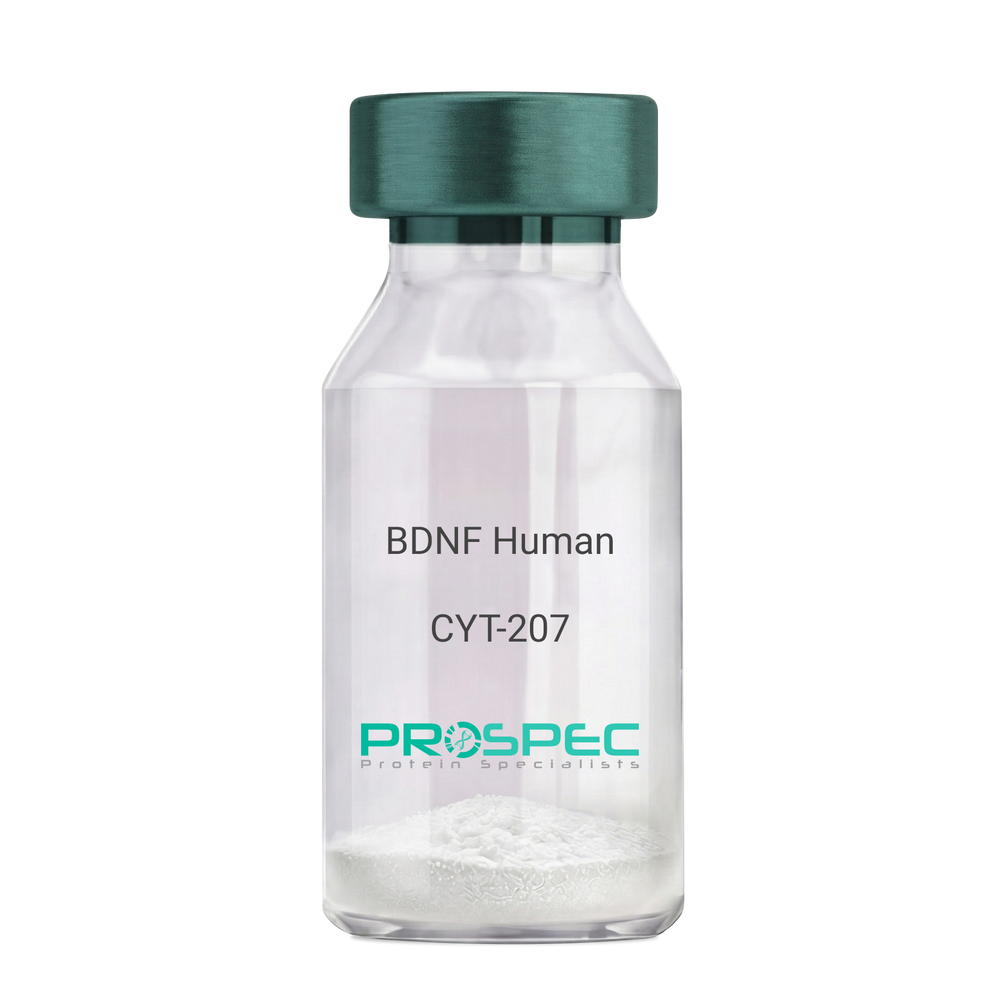
    BDNF Human

    Description:

    Brain-Derived Neurotrophic Factor Human Recombinant

    Brain-Derived Neurotrophic Factor, BDNF, MGC34632.

    Product # :

    CYT-207

    Price :

    Quantity :

    Shipping Method :

    Room Temp Icon

    Shipped at Room temp

    Add To Cart

    More Info

    • description
    • source
    • formulation
    • purity
    • biological activity
    • More Info
    • Activity

    Description

    BDNF Human Recombinant produced in E.Coli is a homodimer, non-glycosylated, polypeptide chain containing 2 x 119 amino acids (and an N-terminal Met) and having a total molecular mass of 28kDa. BDNF Human Recombinant is purified by proprietary chromatographic techniques.

    Source

    Escherichia Coli.

    Formulation

    The protein was lyophilized with 20mM PB and 400mM NaCl, pH 7.2.

    Purity

    BDNF is greater than 950% as determined SDS-PAGE.

    Biological Activity

    The activity was determined using Immobilized Human TrkB-His tag protein 2ug/ml (100 μl/well) for its binding to NHS-Biotin BDNF. The ED50 of was found to be ≤20ng/mL

    Activity

    bdnf activity - Product image 1

    More Info

    • Introduction

      BDNF promotes the survival of neuronal populations that are all located either in the central nervous system or directly connected to it. BDNF is a major regulator of synaptic transmission and plasticity at adult synapses in many regions of the cns. The versatility of BDNF is emphasized by its contribution to a range of adaptive neuronal responses including long-term potentiation (ltp), long-term depression (ltd), certain forms of short-term synaptic plasticity, as well as homeostatic regulation of intrinsic neuronal excitability.

    • Synonyms

      Brain-Derived Neurotrophic Factor, BDNF, MGC34632.

    • Physical Appearance

      Sterile Filtered White lyophilized (freeze-dried) powder.

    • Stability

      Lyophilized BDNF although stable at room temperature for 3 weeks, should be stored desiccated below -18°C. Upon reconstitution BDNF should be stored at 4°C between 2-7 days and for future use below -18°C.For long term storage it is recommended to add a carrier protein (0.1% HSA or BSA).Please prevent freeze-thaw cycles.

    • Solubility

      It is recommended to reconstitute the lyophilized BDNF in sterile 18M-cm H2O not less than 100µg/ml, which can then be further diluted to other aqueous solutions.

    • Amino Acid Sequence

      HSDPARRGE LSVCDSISEW VTAADKKTAV DMSGGTVTVL EKVPVSKGQL KQYFYETKCN PMGYTKEGCR GIDKRHWNSQ CRTTQSYVRA LTMDSKKRIG WRFIRIDTSC VCTLTIKRGR.

    • Background

      Final Thoughts

      Although more research is needed on the safety and effectiveness of BDNF human recombinant, trials suggest that this laboratory-produced protein may be effective in managing and treating several neurological and psychiatric disorders. It's important for experts to stay up to date on the latest developments and research to learn more about potential risks and benefits.

      What is the molecular weight/Mw of BDNF Protein?
      BDNF Protein has a total Mw of 27kDa.

      What is the source or expression system of BDNF Protein?
      Escherichia Coli.

      What is the Purity of BDNF Protein?
      BDNF Protein is >97% pure as determined by SDS-PAGE.

      What is the Biological Activity of BDNF Protein?
      The ED50, as determined by the dose-dependent induction of C6 cells proliferation, is 1.3-2µg/ml.

      What is the amino acid sequence of BDNF Protein?
      MHSDPARRGE LSVCDSISEW VTAADKKTAV DMSGGTVTVL EKVPVSKGQL KQYFYETKCN PMGYTKEGCR GIDKRHWNSQ CRTTQSYVRA LTMDSKKRIG WRFIRIDTSC VCTLTIKRGR.

      What applications can BDNF Protein be used in?
      BDNF Protein can probably be used in western blot, ELISA and Lateral Flow.

      What is the endotoxin level for BDNF Protein?
      The endotoxin level is minimal, BDNF Protein was purified using conventional chromatography techniques.

    • Protein content

      BDNF quantitation was carried out by two independent methods:1. UV spectroscopy at 280 nm using the absorbency value of 1.6 as the extinction coefficient for a 0.1% (1mg/ml) solution. This value is calculated by the PC GENE computer analysis program of protein sequences (IntelliGenetics). 2. Analysis by RP-HPLC, using a standard solution of Brain-derived Neurotrophic Factor as a Reference Standard.

    ProSpec's products are furnished for LABORATORY RESEARCH USE ONLY. The product may not be used as drugs, agricultural or pesticidal products, food additives or household chemicals.

    Bdnf Human
  • View Data Sheet

    Name :

    GLDA E.coli, Active

    Description:

    Glycerol dehydrogenase E.coli Recombinant, Active

    ECK3937, JW5556, Glycerol dehydrogenase, GDH, GLDH, b3945.

    Product # :

    ENZ-904

    Price :

    Quantity :

    Shipping Method :

    Ice Icon

    Shipped with Ice Packs

    Add To Cart

    More Info

    • description
    • source
    • formulation
    • purity
    • biological activity
    • More Info

    Description

    GLDA E.coli Recombinant produced in E.Coli is a single, non-glycosylated polypeptide chain containing 390 amino acids (1-367 a.a) and having a molecular mass of 41.1kDa. GLDA is fused to a 23 amino acid His-tag at N-terminus & purified by proprietary chromatographic techniques.

    Source

    Escherichia Coli.

    Formulation

    GLDA protein solution (1mg/ml) containing Phosphate buffered saline (pH7.4) and 10% glycerol.

    Purity

    Greater than 95.0% as determined by SDS-PAGE.

    Biological Activity

    Specific activity: > 14 Units/ml. One unit will oxidize 1.0 umole of glycerol to dihydroxyacetone per minute at pH 8.0 at 25C.

    More Info

    • Introduction

      Glycerol dehydrogenase (GldA) catalyzes the NAD-dependent oxidation of glycerol to dihydroxyacetone (glycerone). The GldA protein allows microorganisms to use glycerol as a source of carbon under anaerobic conditions. Furthermore, in E.coli GldA has an imperative role by regulating the intracellular level of dihydroxyacetone by catalyzing the reverse reaction, i.e. the conversion of dihydroxyacetone into glycerol. GldA possesses an extensive substrate specificity, due to its ability to oxidize 1,2-propanediol and to reduce glycolaldehyde, methylglyoxal and hydroxyacetone into ethylene glycol, lactaldehyde and 1,2-propanediol, respectively.

    • Synonyms

      ECK3937, JW5556, Glycerol dehydrogenase, GDH, GLDH, b3945.

    • Physical Appearance

      Sterile Filtered colorless solution.

    • Stability

      Store at 4°C if entire vial will be used within 2-4 weeks. Store, frozen at -20°C for longer periods of time. For long term storage it is recommended to add a carrier protein (0.1% HSA or BSA).Avoid multiple freeze-thaw cycles.

    • Amino Acid Sequence

      MGSSHHHHHH SSGLVPRGSH MGSMDRIIQS PGKYIQGADV INRLGEYLKP LAERWLVVGD KFVLGFAQST VEKSFKDAGL VVEIAPFGGE CSQNEIDRLR GIAETAQCGA ILGIGGGKTL DTAKALAHFM GVPVAIAPTI ASTDAPCSAL SVIYTDEGEF DRYLLLPNNP NMVIVDTKIV AGAPARLLAA GIGDALATWF EARACSRSGA TTMAGGKCTQ AALALAELCY NTLLEEGEKA MLAAEQHVVT PALERVIEAN TYLSGVGFES GGLAAAHAVH NGLTAIPDAH HYYHGEKVAF GTLTQLVLEN APVEEIETVA ALSHAVGLPI TLAQLDIKED VPAKMRIVAE AACAEGETIH NMPGGATPDQ VYAALLVADQ YGQRFLQEWE.

    ProSpec's products are furnished for LABORATORY RESEARCH USE ONLY. The product may not be used as drugs, agricultural or pesticidal products, food additives or household chemicals.

    Glda Ecoli Active
  • View Data Sheet

    Name :

    CEA Human, His

    Description:

    Carcinoembryonic Antigen Human Recombinant, His Tag

    Carcinoembryonic Antigen Related Cell Adhesion Molecule 5, Carcinoembryonic Antigen-Related Cell Adhesion Molecule 5, Meconium Antigen 100, CEA, Carcinoembryonic Antigen, CD66e Antigen, CD66e, Carcinoembryonic antigen-related cell adhesion molecule 5, Carcinoembryonic antigen, CEA.

    Product # :

    PRO-2407

    Price :

    Quantity :

    Shipping Method :

    Ice Icon

    Shipped with Ice Packs

    Add To Cart

    More Info

    • description
    • source
    • formulation
    • purity
    • More Info

    Description

    CEA Human Recombinant produced in Sf9 Baculovirus cells is a single, glycosylated polypeptide chain containing 659 amino acids (35-685a.a.) and having a molecular mass of 72.3kDa (Molecular size on SDS-PAGE will appear at approximately 70-150kDa). CEA is expressed with an 8 amino acids His tag at C-Terminus and purified by proprietary chromatographic techniques.

    Source

    Sf9, Baculovirus cells.

    Formulation

    CEA protein solution (0.5mg/ml) contains Phosphate Buffered Saline (pH 7.4) and 10% glycerol.

    Purity

    Greater than 95.0% as determined by SDS-PAGE.

    More Info

    • Introduction

      Carcinoembryonic antigen (CEA) is a glycoprotein present in fetal digestive-tract tissues; it’s involved in cell adhesion. The production of CEA stops before birth. CEA is called tumor marker since its elevated levels are found in the serum from individuals with colorectal, gastric, pancreatic, lung and breast carcinomas and in heavy smokers.
      There are also benign conditions that elevate CEA levels such as smoking, infection, inflammatory bowel disease, pancreatitis, cirrhosis of the liver, and some benign tumors (in the equivalent organs which have cancers with elevated CEA). Typically, higher levels of CEA are found in men, smokers, and older individuals.
      The presence of CEA assists in screening, in evaluating recurrent or disseminated disease, and in determining the success of surgical removal of malignant tumors.
      CEA levels can be used as indicators of treatment success. The normal values range from 0.0 to 2.5 ng/ml of serum (from blood), in non-smokers, a greater amount than that may be suggestive of cancer. Levels above 20 ng/ml before treatment are associated with cancer which has already metastasized. Benign conditions do not usually cause a CEA increase over 10 ng/ml.
      The high levels of CEA should return to normal after successful therapy, however if during follow up there’s an elevation in CEA levels it indicates a recurrence of tumor.
      Carcinoembryonic antigen family belongs to the immunoglobulin superfamily; it consists of 29 genes, 18 of which are normally expressed.

    • Synonyms

      Carcinoembryonic Antigen Related Cell Adhesion Molecule 5, Carcinoembryonic Antigen-Related Cell Adhesion Molecule 5, Meconium Antigen 100, CEA, Carcinoembryonic Antigen, CD66e Antigen, CD66e, Carcinoembryonic antigen-related cell adhesion molecule 5, Carcinoembryonic antigen, CEA.

    • Physical Appearance

      Sterile Filtered colorless solution.

    • Stability

      Store at 4°C if entire vial will be used within 2-4 weeks. Store, frozen at -20°C for longer periods of time. For long term storage it is recommended to add a carrier protein (0.1% HSA or BSA). Avoid multiple freeze-thaw cycles.

    • Amino Acid Sequence

      KLTIESTPFN VAEGKEVLLL VHNLPQHLFG YSWYKGERVD GNRQIIGYVI GTQQATPGPA YSGREIIYPN ASLLIQNIIQ NDTGFYTLHV IKSDLVNEEA TGQFRVYPEL PKPSISSNNS KPVEDKDAVA FTCEPETQDA TYLWWVNNQS LPVSPRLQLS NGNRTLTLFN VTRNDTASYK CETQNPVSAR RSDSVILNVL YGPDAPTISP LNTSYRSGEN LNLSCHAASN PPAQYSWFVN GTFQQSTQEL FIPNITVNNS GSYTCQAHNS DTGLNRTTVT TITVYAEPPK PFITSNNSNP VEDEDAVALT CEPEIQNTTY LWWVNNQSLP VSPRLQLSND NRTLTLLSVT RNDVGPYECG IQNKLSVDHS DPVILNVLYG PDDPTISPSY TYYRPGVNLS LSCHAASNPP AQYSWLIDGN IQQHTQELFI SNITEKNSGL YTCQANNSAS GHSRTTVKTI TVSAELPKPS ISSNNSKPVE DKDAVAFTCE PEAQNTTYLW WVNGQSLPVS PRLQLSNGNR TLTLFNVTRN DARAYVCGIQ NSVSANRSDP VTLDVLYGPD TPIISPPDSS YLSGANLNLS CHSASNPSPQ YSWRINGIPQ QHTQVLFIAK ITPNNNGTYA CFVSNLATGR NNSIVKSITV SASGTSPGLS ALEHHHHHH.

    ProSpec's products are furnished for LABORATORY RESEARCH USE ONLY. The product may not be used as drugs, agricultural or pesticidal products, food additives or household chemicals.

    Ceacam5 Human
  • View Data Sheet

    Name :

    HPRT1 Human, Active

    Description:

    Hypoxanthine-Guanine Phosphoribosyltransferase, Human Recombinant, Active

    Hypoxanthine Phosphoribosyltransferase 1, EC 2.4.2.8, HGPRTase, HGPRT, HPRT , Hypoxanthine-Guanine Phosphoribosyltransferase 1, Hypoxanthine-Guanine Phosphoribosyltransferase, Testicular Tissue Protein Li 89, Lesch-Nyhan Syndrome, HPRT1.

    Product # :

    ENZ-1006

    Price :

    Quantity :

    Shipping Method :

    Ice Icon

    Shipped with Ice Packs

    Add To Cart

    More Info

    • description
    • source
    • formulation
    • purity
    • biological activity
    • More Info

    Description

    HPRT1 Human Recombinant produced in E.Coli is a single, non-glycosylated polypeptide chain containing 238 amino acids (1-218 a.a) and having a molecular mass of 26.7kDa. HPRT1 is fused to a 20 amino acid His-tag at N-terminus & purified by proprietary chromatographic techniques.

    Source

    Escherichia Coli.

    Formulation

    HPRT1 protein solution (0.5mg/ml) containing 20mM Tris-HCl buffer (pH 8.0) and 20% glycerol.

    Purity

    Greater than 95.0% as determined by SDS-PAGE.

    Biological Activity

    Specific activity is > 15 units/mg and is defined as the amount of enzyme that catalyze the formation of 1 umole of guanosine 5’-monophosphate (GMP) per minute from guanine and phosphoribosyl pyrophosphate at pH 7.5 at 37C.

    More Info

    • Introduction

      HPRT1 has a main part in the generation of purine nucleotides through the purine salvage pathway. HPRT1 primarily functions to salvage purines from degraded DNA to renewed purine synthesis. Therefore, it performs as a catalyst in the reaction between guanine and phosphoribosyl pyrophosphate to form GMP.

    • Synonyms

      Hypoxanthine Phosphoribosyltransferase 1, EC 2.4.2.8, HGPRTase, HGPRT, HPRT , Hypoxanthine-Guanine Phosphoribosyltransferase 1, Hypoxanthine-Guanine Phosphoribosyltransferase, Testicular Tissue Protein Li 89, Lesch-Nyhan Syndrome, HPRT1.

    • Physical Appearance

      Sterile Filtered clear solution.

    • Stability

      Store at 4°C if entire vial will be used within 2-4 weeks. Store, frozen at -20°C for longer periods of time. For long term storage it is recommended to add a carrier protein (0.1% HSA or BSA).Avoid multiple freeze-thaw cycles.

    • Amino Acid Sequence

      MGSSHHHHHH SSGLVPRGSH MATRSPGVVI SDDEPGYDLD LFCIPNHYAE DLERVFIPHG LIMDRTERLA RDVMKEMGGH HIVALCVLKG GYKFFADLLD YIKALNRNSD RSIPMTVDFI RLKSYCNDQS TGDIKVIGGD DLSTLTGKNV LIVEDIIDTG KTMQTLLSLV RQYNPKMVKVASLLVKRTPR SVGYKPDFVG FEIPDKFVVG YALDYNEYFR DLNHVCVISE TGKAKYKA

    ProSpec's products are furnished for LABORATORY RESEARCH USE ONLY. The product may not be used as drugs, agricultural or pesticidal products, food additives or household chemicals.

    Hprt1 Human Active
  • View Data Sheet

    Name :

    BCL2L2 Human

    Description:

    BCL2 Like 2 Human Recombinant

    B-Cell Lymphoma Protein 2, BCL2 Like 2, BCL2 Like protein 2, BCLW, Bcl2-L-2, Apoptosis regulator Bcl-W, BCL2L2, BCL-W, KIAA0271.

    Product # :

    PRO-1577

    Price :

    Quantity :

    Shipping Method :

    Ice Icon

    Shipped with Ice Packs

    Add To Cart

    More Info

    • description
    • source
    • formulation
    • purity
    • More Info

    Description

    Recombinant Human BCL2L2 produced in E.coli cells is a non-glycosylated, homodimeric protein containing 171 amino acid chain and having a molecular mass of 18.6kDa. The Human BCL2L2 is purified by proprietary chromatographic techniques.

    Source

    Escherichia Coli.

    Formulation

    BCL2L2 is a 0.2µm filtered concentrated solution which contains 25 mM Hepes, pH 7.4, 100 mM KCl, 10 % Glycerol, 5 % Trehalose, and 0.02 % Tween-80.

    Purity

    Greater than 95.0% as determined by:
    (a) Analysis by RP-HPLC.
    (b) Analysis by SDS-PAGE.

    More Info

    • Introduction

      BCL2L2 promotes cell survival. BCL2L2 mediates survival of postmitotic Sertoli cells by suppressing death-promoting activity of BAX. BCL2L2 is part of the BCL-2 protein family which form hetero- or homodimers and play an important role as anti and proapoptotic regulators. BCL2L2 causes reduced cell apoptosis under cytotoxic conditions. BCL2L2 is involved in the survival of NGF- and BDNF-dependent neurons. BCL2L2 plays an important role in adult spermatogenesis.

    • Synonyms

      B-Cell Lymphoma Protein 2, BCL2 Like 2, BCL2 Like protein 2, BCLW, Bcl2-L-2, Apoptosis regulator Bcl-W, BCL2L2, BCL-W, KIAA0271.

    • Physical Appearance

      Sterile Filtered clear solution.

    • Stability

      BCL2L2 although stable at room temperature for 3 weeks, should be stored at 4°C.For long term storage it is recommended to add a carrier protein (0.1% HSA or BSA).

    • Amino Acid Sequence

      ATPASAPDTR ALVADFVGYK LRQKGYVCGA GPGEGPAADP LHQAMRAAGD EFETRFRRTF SDLAAQLHVT PGSAQQRFTQ VSDELFQGGP NWGRLVAFFV FGAALCAESV NKEMEPLVGQ VQEWMVAYLE TQLADWIHSS GGWAEFTALY GDGALEEARR LREGNWASVR T

    ProSpec's products are furnished for LABORATORY RESEARCH USE ONLY. The product may not be used as drugs, agricultural or pesticidal products, food additives or household chemicals.

    Human Bcl2L2
  • View Data Sheet

    Name :

    BCL2L2 Human, His

    Description:

    BCL2 Like 2 Human Recombinant, His Tag

    B-Cell Lymphoma Protein 2, BCL2 Like 2, BCL2 Like protein 2, BCLW, Bcl2-L-2, Apoptosis regulator Bcl-W, BCL2L2, BCL-W, KIAA0271.

    Product # :

    PRO-768

    Price :

    Quantity :

    Shipping Method :

    Ice Icon

    Shipped with Ice Packs

    Add To Cart

    More Info

    • description
    • source
    • formulation
    • purity
    • More Info

    Description

    BCL2L2 Human Recombinant produced in E.Coli is a single, non-glycosylated polypeptide chain containing 192 amino acids (1-172 a.a.) and having a molecular weight of 20.9kDa.The BCL2L2 is fused to a 20 a.a His-Tag at N-terminus and purified by proprietary chromatographic techniques.

    Source

    Escherichia Coli.

    Formulation

    The BCL2L2 protein solution contains 20mM Tris-HCl, pH-8, 100mM NaCl and 10% glycerol.

    Purity

    Greater than 95.0% as determined by SDS-PAGE.

    More Info

    • Introduction

      BCL2L2 promotes cell survival and blocks dexamethasone-induced apoptosis. BCL2L2 mediates survival of postmitotic Sertoli cells by suppressing death-promoting activity of BAX. BCL2L2 is part of the BCL-2 protein family which form hetero- or homodimers and play an important role as anti and proapoptotic regulators. BCL2L2 causes reduced cell apoptosis under cytotoxic conditions. BCL2L2 is involved in the survival of NGF- and BDNF-dependent neurons. BCL2L2 plays an important role in adult spermatogenesis.

    • Synonyms

      B-Cell Lymphoma Protein 2, BCL2 Like 2, BCL2 Like protein 2, BCLW, Bcl2-L-2, Apoptosis regulator Bcl-W, BCL2L2, BCL-W, KIAA0271.

    • Physical Appearance

      Sterile filtered colorless solution.

    • Stability

      Store at 4°C if entire vial will be used within 2-4 weeks. Store, frozen at -20°C for longer periods of time. For long term storage it is recommended to add a carrier protein (0.1% HSA or BSA). Avoid multiple freeze-thaw cycles.

    • Amino Acid Sequence

      MGSSHHHHHH SSGLVPRGSH MATPASAPDT RALVADFVGY KLRQKGYVCG AGPGEGPAAD PLHQAMRAAG DEFETRFRRT FSDLAAQLHV TPGSAQQRFT QVSDELFQGG PNWGRLVAFF VFGAALCAES VNKEMEPLVG QVQEWMVAYL ETRLADWIHS SGGWAEFTAL YGDGALEEAR RLREGNWASV RT.

    ProSpec's products are furnished for LABORATORY RESEARCH USE ONLY. The product may not be used as drugs, agricultural or pesticidal products, food additives or household chemicals.

    Bcl2L2 Human
  • View Data Sheet

    Name :

    CTSC Mouse

    Description:

    Cathepsin-C Mouse Recombinant

    DPPI, Cathepsin C, CTSC

    Product # :

    PRO-2769

    Price :

    Quantity :

    Shipping Method :

    Ice Icon

    Shipped with Ice Packs

    Add To Cart

    More Info

    • description
    • source
    • formulation
    • purity
    • biological activity
    • More Info

    Description

    CTSC Mouse Recombinant produced in HEK293 cells is a single, polypeptide chain containing 444 amino acids (25-462 a.a.) and having a molecular mass of 50.5kDa. CTSC is expressed with a 6 amino acid His tag at C-Terminus and purified by proprietary chromatographic techniques.

    Source

    HEK293 cells.

    Formulation

    CTSC protein solution (0.5mg/ml) containing Phosphate Buffered Saline (pH 7.4) and 10% glycerol.

    Purity

    Greater than 95% as determined by SDS-PAGE.

    Biological Activity

    > 50,000 pmol/min/ug and is defined as the amount of enzyme that hydrolyzes 1pmole of GlyArg-AMC / minute at pH 6.0 at 37C.

    More Info

    • Introduction

      CTSC has an important role in the activation of granule serine proteases in inflammatory cells.CTSC catalyses excision of dipeptides from the N-terminus of protein and peptide substrates. Once activated by CTSC, proteases are capable of degrading extracellular matrix components, which can result in tissue damage and chronic inflammation. CTSCcomprises of 4 subunits, each composed of the N-terminal proregion fragment, heavy chain and light chains. Defects in the CTSC protein have been demonstratedto result in Papillon-Lefevre disease which is an autosomal recessive disorder.

    • Synonyms

      DPPI, Cathepsin C, CTSC

    • Physical Appearance

      Sterile Filtered clear solution.

    • Stability

      Store at 4°C if entire vial will be used within 2-4 weeks. Store, frozen at -20°C for longer periods of time.For long term storage it is recommended to add a carrier protein (0.1% HSA or BSA).Please avoid freeze thaw cycles.

    • Amino Acid Sequence

      DTPANCTYPD LLGTWVFQVG PRSSRSDINC SVMEATEEKV VVHLKKLDTA YDELGNSGHF TLIYNQGFEI VLNDYKWFAF FKYEVRGHTA ISYCHETMTG WVHDVLGRNW ACFVGKKVES HIEKVNMNAA HLGGLQERYS ERLYTHNHNF VKAINTVQKS WTATAYKEYE KMSLRDLIRR SGHSQRIPRP KPAPMTDEIQ QQILNLPESW DWRNVQGVNY VSPVRNQESC GSCYSFASMG MLEARIRILT NNSQTPILSP QEVVSCSPYA QGCDGGFPYL IAGKYAQDFG VVEESCFPYT AKDSPCKPRE NCLRYYSSDY YYVGGFYGGC NEALMKLELV KHGPMAVAFE VHDDFLHYHS GIYHHTGLSD PFNPFELTNH AVLLVGYGRD PVTGIEYWII KNSWGSNWGE SGYFRIRRGT DECAIESIAV AAIPIPKL-HHHHHH

    ProSpec's products are furnished for LABORATORY RESEARCH USE ONLY. The product may not be used as drugs, agricultural or pesticidal products, food additives or household chemicals.

    Ctsc Mouse
  • View Data Sheet

    Name :

    MS4A1 Human

    Description:

    Membrane Spanning 4-Domains A1 Human Recombinant

    MS4A1, B1, Bp35, CD20, CVID5, LEU-16, MS4A2, S7, B-lymphocyte surface antigen B1, Leukocyte surface antigen Leu-16, Membrane-spanning 4-domains subfamily A member 1.

    Product # :

    PRO-2515

    Price :

    Quantity :

    Shipping Method :

    Ice Icon

    Shipped with Ice Packs

    Add To Cart

    More Info

    • description
    • source
    • formulation
    • purity
    • More Info

    Description

    MS4A1 Human Recombinant produced in Sf9 Baculovirus cells is a single, glycosylated polypeptide chain containing 97 amino acids (210-297a.a.) and having a molecular mass of 11.1kDa (Molecular size on SDS-PAGE will appear at approximately 18-28kDa).MS4A1 is fused with a 9 amino acids His tag at C-Terminus and purified by proprietary chromatographic techniques.

    Source

    Sf9, Insect cells.

    Formulation

    MS4A1 protein solution (0. 5mg/ml) contains Phosphate buffered saline (pH7.4) and 10% glycerol.

    Purity

    Greater than 90% as determined by SDS-PAGE.

    More Info

    • Introduction

      MS4A1 is an activated-glycosylated phosphoprotein expressed on the surface of all B-cells. The expression begins at the pro-B phase and until maturity the concentration increases in order to allow optimal B-cell immune response, specifically against T-independent antigens. MS4A1 takes part in the microenvironmental interactions of B cells and also in the regulation of B-cell activation and proliferation. MS4A1 also plays a role as a calcium channel in the cell membrane.

    • Synonyms

      MS4A1, B1, Bp35, CD20, CVID5, LEU-16, MS4A2, S7, B-lymphocyte surface antigen B1, Leukocyte surface antigen Leu-16, Membrane-spanning 4-domains subfamily A member 1.

    • Physical Appearance

      Sterile Filtered colorless solution.

    • Stability

      Store at 4°C if entire vial will be used within 2-4 weeks. Store, frozen at -20°C for longer periods of time. For long term storage it is recommended to add a carrier protein (0.1% HSA or BSA).Avoid multiple freeze-thaw cycles.

    • Amino Acid Sequence

      ADPGIVENEW KRTCSRPKSN IVLLSAEEKK EQTIEIKEEV VGLTETSSQP KNEEDIEIIP IQEEEEEETE TNFPEPPQDQ ESSPIENDSS PHHHHHH.

    ProSpec's products are furnished for LABORATORY RESEARCH USE ONLY. The product may not be used as drugs, agricultural or pesticidal products, food additives or household chemicals.

    Ms4A1 Human
  • View Data Sheet

    Name :

    Myoglobin Human

    Description:

    Myoglobin Human Recombinant

    Myoglobin, MB, PVALB, MGC13548.

    Product # :

    PRO-336

    Price :

    Quantity :

    Shipping Method :

    Ice Icon

    Shipped with Ice Packs

    Add To Cart

    More Info

    • description
    • source
    • formulation
    • purity
    • More Info

    Description

    Myoglobin Human Recombinant produced in E.Coli is a non-glycosylated polypeptide chain having a molecular mass of 17.67 kDa. The Myoglobin is purified by proprietary chromatographic techniques.

    Source

    Escherichia Coli.

    Formulation

    The sterile solution contains phosphate-buffered saline (pH 7.4) and 0.05% NaN3.

    Purity

    Greater than 95.0% as determined by SDS-PAGE.

    More Info

    • Introduction

      Myoglobin is a member of the globin superfamily and can be found in skeletal and cardiac muscles. It is a haemoprotein that contributs to intracellular oxygen storage and transcellular facilitated diffusion of oxygen. Myoglobin has a single-chain globular structure of 153 amino acids, containing a heme prosthetic group (iron-containing porphyrin) in the core around which the remaining apoprotein folds. Myoglobin has 8 alpha helices and a hydrophobic core. Myoglobin’s molecular weight is 16.7 kDa, and it is the primary oxygen-carrying pigment of muscle tissues. The binding of oxygen in myoglobin is different from the cooperative oxygen binding in hemoglobin, since positive collaboration is a property of multimeric/oligomeric proteins only. Instead, the binding of oxygen by myoglobin is uninfluenced by the oxygen pressure in the surrounding tissue. Myoglobin is frequently referred to as having an "instant binding tenacity" to oxygen given its hyperbolic oxygen dissociation curve. Different organisms are able to hold their breaths longer due to high concentrations of myoglobin in their muscle cells. Myoglobin is responsible for the pigments that make meat red. The color of the meat is partly determined by the charge of the iron atom in myoglobin and the oxygen attached to it. Myoglobin is found in Type I muscle, Type II A and Type II B, but it is mostly deemed that myoglobin is not found in smooth muscle. Myoglobin is discharged from damaged muscle tissue (rhabdomyolysis), which contains very high concentrations of myoglobin. Even though the released myoglobin is filtered by the kidneys, it is toxic to the renal tubular epithelium and thus may cause acute renal failure.

    • Synonyms

      Myoglobin, MB, PVALB, MGC13548.

    • Physical Appearance

      Sterile Filtered brownish solution.

    • Stability

      Myoglobin should be stored at 4°C. For long term storage it is recommended to add a carrier protein (0.1% HSA or BSA).Please do not freeze.

    ProSpec's products are furnished for LABORATORY RESEARCH USE ONLY. The product may not be used as drugs, agricultural or pesticidal products, food additives or household chemicals.

    Myoglobin Human Recombinant
  • View Data Sheet

    Name :

    HPD Mouse

    Description:

    4-Hydroxyphenylpyruvate Dioxygenase Mouse Recombinant

    4-hydroxyphenylpyruvate dioxygenase, 4-hydroxyphenylpyruvic acid oxidase, 4HPPD, HPD, HPPDase, F Alloantigen, F protein.

    Product # :

    ENZ-1067

    Price :

    Quantity :

    Shipping Method :

    Ice Icon

    Shipped with Ice Packs

    Add To Cart

    More Info

    • description
    • source
    • formulation
    • purity
    • More Info

    Description

    HPD Mouse Recombinant produced in E.Coli is a single, non-glycosylated polypeptide chain containing 416 amino acids (1-393 a.a) and having a molecular mass of 47.4kDa.HPD is fused to a 23 amino acid His-tag at N-terminus & purified by proprietary chromatographic techniques.

    Source

    Escherichia Coli.

    Formulation

    HPD protein solution (0.5mg/ml) contains 10% glycerol & 20mM Tris-HCl (pH 8.0).

    Purity

    Greater than 90% as determined by SDS-PAGE.

    More Info

    • Introduction

      HPGD is the essential enzyme of prostaglandin degradation. 15-PGDH protein strongly decreases the biologic activity of these molecules by catalyzing the oxidation of the 15-hydroxyl group of prostaglandins to a keto group. GDH1 is involved in numerous physiologic and cellular processes, for instance inflammation.

    • Synonyms

      4-hydroxyphenylpyruvate dioxygenase, 4-hydroxyphenylpyruvic acid oxidase, 4HPPD, HPD, HPPDase, F Alloantigen, F protein.

    • Physical Appearance

      Sterile Filtered clear solution.

    • Stability

      Store at 4°C if entire vial will be used within 2-4 weeks. Store, frozen at -20°C for longer periods of time. For long term storage it is recommended to add a carrier protein (0.1% HSA or BSA).Avoid multiple freeze-thaw cycles.

    • Amino Acid Sequence

      MGSSHHHHHH SSGLVPRGSH MGSMTTYNNK GPKPERGRFL HFHSVTFWVG NAKQAASFYC NKMGFEPLAY RGLETGSREV VSHVIKQGKI VFVLCSALNP WNKEMGDHLV KHGDGVKDIA FEVEDCDHIV QKARERGAKI VREPWVEQDK FGKVKFAVLQ TYGDTTHTLV EKINYTGRFL PGFEAPTYKD TLLPKLPRCN LEIIDHIVGN QPDQEMQSAS EWYLKNLQFH RFWSVDDTQV HTEYSSLRSI VVTNYEESIK MPINEPAPGR KKSQIQEYVD YNGGAGVQHI ALKTEDIITA IRHLRERGTE FLAAPSSYYK LLRENLKSAK IQVKESMDVL EELHILVDYD EKGYLLQIFT KPMQDRPTLF LEVIQRHNHQ GFGAGNFNSL FKAFEEEQAL RGNLTDLEPN GVRSGM.

    ProSpec's products are furnished for LABORATORY RESEARCH USE ONLY. The product may not be used as drugs, agricultural or pesticidal products, food additives or household chemicals.

    Hpd Mouse
  • View Data Sheet

    Name :

    SNCG Mouse

    Description:

    Gamma-Synuclein Mouse Recombinant

    Gamma-synuclein, Persyn.

    Product # :

    PRO-2490

    Price :

    Quantity :

    Shipping Method :

    Ice Icon

    Shipped with Ice Packs

    Add To Cart

    More Info

    • description
    • source
    • formulation
    • purity
    • More Info

    Description

    SNCG Mouse Recombinant produced in E.Coli is a single, non-glycosylated polypeptide chain containing 146 amino acids (1-123 a.a) and having a molecular mass of 15.5kDa.SNCG is fused to a 23 amino acid His-tag at N-terminus & purified by proprietary chromatographic techniques.

    Source

    Escherichia Coli.

    Formulation

    SNCG protein solution (1mg/ml) containing 20mM Tris-HCl(pH8.0) and 0.1M NaCl.

    Purity

    Greater than 95.0% as determined by SDS-PAGE.

    More Info

    • Introduction

      g-synuclein(Originally known as a breast cancer specific gene product, BCSG1) is an acidic neuronal protein of 127 amino acids. Gamma-Synuclein is a member of the Synuclein protein family, which is believed to be involved in the pathogenesis of neurodegenerative diseases. High levels of Gamma-Synuclein have been found in advanced breast carcinomas suggesting a correlation between overexpression of SNCG and breast tumor development. Synuclein-Gamma is found mostly in the peripheral nervous system (in primary sensory neurons, sympathetic neurons, and motor neurons) and retina. SNCG is also identified in the brain, ovarian tumors, and in the olfactory epithelium. SNCG expression in breast tumors is a marker for tumor progression. A modification in the expression of gamma-synuclein has been detected in the retina of Alzheimer's patients.

    • Synonyms

      Gamma-synuclein, Persyn.

    • Physical Appearance

      Sterile filtered colorless solution.

    • Stability

      Store at 4°C if entire vial will be used within 2-4 weeks. Store, frozen at -20°C for longer periods of time.For long term storage it is recommended to add a carrier protein (0.1% HSA or BSA). Avoid multiple freeze-thaw cycles.

    • Amino Acid Sequence

      MGSSHHHHHH SSGLVPRGSH MGSMDVFKKG FSIAKEGVVG AVEKTKQGVT EAAEKTKEGV MYVGTKTKEN VVQSVTSVAE KTKEQANAVS AVVSSVNTV ANKTVEEAEN IVVTTGVVRK EDLEPPAQDQ EAKEQEENEE AKSGED.

    ProSpec's products are furnished for LABORATORY RESEARCH USE ONLY. The product may not be used as drugs, agricultural or pesticidal products, food additives or household chemicals.

    Sncg Mouse
  • View Data Sheet

    Name :

    SORBS3 Human

    Description:

    Sorbin And SH3 Domain Containing 3 Human Recombinant

    Sorbin And SH3 Domain Containing 3, SCAM1, Vinexin Beta (SH3-Containing Adaptor Molecule-1), vinexin, SH3-Containing Adapter Molecule 1.

    Product # :

    PRO-1829

    Price :

    Quantity :

    Shipping Method :

    Ice Icon

    Shipped with Ice Packs

    Add To Cart

    More Info

    • description
    • source
    • formulation
    • purity
    • More Info

    Description

    SORBS3 Human Recombinant produced in E.coli is a single, non-glycosylated polypeptide chain containing 352 amino acids (1-329) and having a molecular mass of 39.1 kDa. SORBS3 is fused to a 23 amino acid His-tag at N-terminus.

    Source

    Escherichia Coli.

    Formulation

    The SORBS3 solution (0.25mg/ml) contains 20mM Tris-HCl buffer (pH 8.0), 1mM DTT and 20% glycerol.

    Purity

    Greater than 90% as determined by SDS-PAGE.

    More Info

    • Introduction

      SORBS3 is an SH3 domain-containing adaptor protein. The existence of SH3 domains in the SORBS3 protein have a role in its capability to attach to other cytoplasmic molecules and contribute to cystoskeletal organization, cell adhesion and migration, signaling, and gene expression. Various transcript variants encoding different isoforms are known for this gene.

    • Synonyms

      Sorbin And SH3 Domain Containing 3, SCAM1, Vinexin Beta (SH3-Containing Adaptor Molecule-1), vinexin, SH3-Containing Adapter Molecule 1.

    • Physical Appearance

      Sterile Filtered clear solution.

    • Stability

      Store at 4°C if entire vial will be used within 2-4 weeks. Store, frozen at -20°C for longer periods of time. For long term storage it is recommended to add a carrier protein (0.1% HSA or BSA).Avoid multiple freeze-thaw cycles.

    • Amino Acid Sequence

      MGSSHHHHHH SSGLVPRGSH MGSMADGGSP FLGRRDFVYP SSTRDPSASN GGGSPARREE KKRKAARLKF DFQAQSPKEL TLQKGDIVYI HKEVDKNWLE GEHHGRLGIF PANYVEVLPA DEIPKPIKPP TYQVLEYGEA VAQYTFKGDL EVELSFRKGE HICLIRKVNE NWYEGRITGT GRQGIFPASY VQVSREPRLR LCDDGPQLPT SPRLTAAARS ARHPSSPSAL RSPADPIDLG GQTSPRRTGF SFPTQEPRPQ TQNLGTPGPA LSHSRGPSHP LDLGTSSPNT SQIHWTPYRA MYQYRPQNED ELELREGDRV DVMQQCDDGW FVGVSRRTQK FGTFPGNYVA PV

    ProSpec's products are furnished for LABORATORY RESEARCH USE ONLY. The product may not be used as drugs, agricultural or pesticidal products, food additives or household chemicals.

    Sorbs3 Human
  • View Data Sheet

    Name :

    BLMH Mouse

    Description:

    Bleomycin Hydrolase Mouse Recombinant

    BMH, BH, BLM hydrolase, Bleomycin Hydrolase.

    Product # :

    ENZ-1109

    Price :

    Quantity :

    Shipping Method :

    Ice Icon

    Shipped with Ice Packs

    Add To Cart

    More Info

    • description
    • source
    • formulation
    • purity
    • biological activity
    • More Info

    Description

    BLMH Mouse Recombinant produced in E.Coli is a single, non-glycosylated polypeptide chain containing 478 amino acids (1-455 aa) and having a molecular mass of 54.9 kDa.BLMH is fused to a 23 amino acid His tag at N-terminus and purified by proprietary chromatographic techniques.

    Source

    Escherichia Coli.

    Formulation

    The BLMH solution (0.25 mg/ml) contains 1mM DTT, 30% Glycerol, 20mM Tris-HCl(pH8.0) and 0.1M NaCl.

    Purity

    Greater than 90.0% as determined by SDS-PAGE.

    Biological Activity

    Specific activity is > 1,500 pmole/min/ug. Measured by hydrolysis of 1pmole of Met-AMC to Methionine and AMC per minute at pH7.5 at 37C˚.

    More Info

    • Introduction

      BLMH is affiliate to the papain superfamily of the cysteine protease and the peptidase C1 family. BLMH is a cytoplasmic cysteinepeptidase usually found as a homohexamer. BLMH shields normal and malignant cells from the glycopeptide antitumor drug BLM. BLMH catalyzes the inactivation of the antitumor drug BLM (a glycopeptide) by hydrolyzing the carboxyamide bond of its B-aminoalaninamide moiety and in addition demonstrates general aminopeptidase activity.

    • Synonyms

      BMH, BH, BLM hydrolase, Bleomycin Hydrolase.

    • Physical Appearance

      Sterile Filtered colorless solution.

    • Stability

      Store at 4°C if entire vial will be used within 2-4 weeks. Store, frozen at -20°C for longer periods of time. For long term storage it is recommended to add a carrier protein (0.1% HSA or BSA).Avoid multiple freeze-thaw cycles.

    • Amino Acid Sequence

      MGSSHHHHHH SSGLVPRGSH MGSMNNAGLN SEKVSALIQK LNSDPQFVLA QNVGTTHDLL
      DICLRRATVQ GAQHVFQHVV PQEGKPVTNQ KSSGRCWIFS CLNVMRLPFM KKFNIEEFEF
      SQSYLFFWDK VERCYFFLNA FVDTAQKKEP EDGRLVQYLL MNPTNDGGQW DMLVNIVEKY
      GVVPKKCFPE SHTTEATRRM NDILNHKMRE FCIRLRNLVH SGATKGEISS TQDAMMEEIF
      RVVCICLGNP PETFTWEYRD KDKNYHKIGP ITPLQFYKEH VKPLFNMEDK ICFVNDPRPQ
      HKYNKLYTVD YLSNMVGGRK TLYNNQPIDF LKKMVAASIK DGEAVWFGCD VGKHFNGKLG
      LSDMNVYDHE LVFGVSLKNM NKAERLAFGE SLMTHAMTFT AVSEKDNQEG TFVKWRVENS
      WGEDHGHKGY LCMTDEWFSE YVYEVVVDKK HVPEEVLAVL EQEPIVLPAW DPMGALAE

    ProSpec's products are furnished for LABORATORY RESEARCH USE ONLY. The product may not be used as drugs, agricultural or pesticidal products, food additives or household chemicals.

    Blmh Mouse
  • View Data Sheet

    Name :

    SYCE3 Human

    Description:

    Synaptonemal Complex Central Element Protein 3 Human Recombinant

    Synaptonemal complex central element protein 3, chromosome 22 open reading frame 41, Testis highly expressed gene 2 protein, testis highly expressed protein 2, THEG2, C22orf41.

    Product # :

    PRO-1179

    Price :

    Quantity :

    Shipping Method :

    Ice Icon

    Shipped with Ice Packs

    Add To Cart

    More Info

    • description
    • source
    • formulation
    • purity
    • More Info

    Description

    SYCE3 Human Recombinant produced in E. coli is a single polypeptide chain containing 108 amino acids (1-88) and having a molecular mass of 12.8 kDa.SYCE3 is fused to a 20 amino acid His-tag at N-terminus & purified by proprietary chromatographic techniques.

    Source

    E.coli.

    Formulation

    The SYCE3 solution (0.5mg/1ml) contains 20mM Tris-HCl buffer (pH 8.0), 200mM NaCl, 2mM DTT and 20% glycerol.

    Purity

    Greater than 90% as determined by SDS-PAGE.

    More Info

    • Introduction

      Synaptonemal complex central element protein 3 (SYCE3) is key component of the transverse central element of synaptonemal complexes (SCS). The synaptonemal complex is a protein structure which forms between homologous chromosomes (2 pairs of sister chromatids) during meiosis and is assumed to mediate chromosome pairing, synapsis, and recombination (crossing-over). The SYCE3 protein is essential for chromosome loading of the central element-specific SCS proteins, as well as for initiating synapsis between homologous chromosomes. SYCE3 is also vital for fertility.

    • Synonyms

      Synaptonemal complex central element protein 3, chromosome 22 open reading frame 41, Testis highly expressed gene 2 protein, testis highly expressed protein 2, THEG2, C22orf41.

    • Physical Appearance

      Sterile Filtered colorless solution.

    • Stability

      Store at 4°C if entire vial will be used within 2-4 weeks. Store, frozen at -20°C for longer periods of time. For long term storage it is recommended to add a carrier protein (0.1% HSA or BSA).Avoid multiple freeze-thaw cycles.

    • Amino Acid Sequence

      MGSSHHHHHH SSGLVPRGSH MDDADPEERN YDNMLKMLSD LNKDLEKLLE EMEKISVQAT WMAYDMVVMR TNPTLAESMR RLEDAFVNCK EEMEKNWQEL LHETKQRL

    ProSpec's products are furnished for LABORATORY RESEARCH USE ONLY. The product may not be used as drugs, agricultural or pesticidal products, food additives or household chemicals.

    Syce3 Human
  • View Data Sheet

    Name :

    PDHX Human

    Description:

    Pyruvate Dehydrogenase Complex, Component X Human Recombinant

    DLDBP, E3BP, OPDX, PDX1, proX, Pyruvate Dehydrogenase Complex, Component X, Dihydrolipoamide Dehydrogenase-Binding Protein Of Pyruvate Dehydrogenase Complex, Lipoyl-Containing Pyruvate Dehydrogenase Complex Component X, Pyruvate Dehydrogenase Complex, Lipoyl-Containing Component X, Pyruvate Dehydrogenase Complex, E3-Binding Protein Subunit, Pyruvate Dehydrogenase Protein X Component, Mitochondrial, E3-Binding Protein.

    Product # :

    ENZ-843

    Price :

    Quantity :

    Shipping Method :

    Ice Icon

    Shipped with Ice Packs

    Add To Cart

    More Info

    • description
    • source
    • formulation
    • purity
    • More Info

    Description

    PDHX Human Recombinant produced in E.Coli is a single, non-glycosylated polypeptide chain containing 471 amino acids (54-501 a.a) and having a molecular mass of 50.4kDa. PDHX is fused to a 23 amino acid His-tag at N-terminus & purified by proprietary chromatographic techniques.

    Source

    Escherichia Coli.

    Formulation

    PDHX protein solution (0.25mg/ml) containing Phosphate buffer saline (pH 7.4) and 20% glycerol, 1mM DTT.

    Purity

    Greater than 85.0% as determined by SDS-PAGE.

    More Info

    • Introduction

      Pyruvate Dehydrogenase Complex, Component X, also known as PDHX, encodes the E3 binding protein subunit of the PDH complex which contains 3 catalytic subunits. PDHX tethers E3 dimers to the E2 core of the pyruvate dehydrogenase complexes of eukaryotes. This specific binding is critical for a functional PDH complex.

    • Synonyms

      DLDBP, E3BP, OPDX, PDX1, proX, Pyruvate Dehydrogenase Complex, Component X, Dihydrolipoamide Dehydrogenase-Binding Protein Of Pyruvate Dehydrogenase Complex, Lipoyl-Containing Pyruvate Dehydrogenase Complex Component X, Pyruvate Dehydrogenase Complex, Lipoyl-Containing Component X, Pyruvate Dehydrogenase Complex, E3-Binding Protein Subunit, Pyruvate Dehydrogenase Protein X Component, Mitochondrial, E3-Binding Protein.

    • Physical Appearance

      Sterile Filtered clear solution.

    • Stability

      Store at 4°C if entire vial will be used within 2-4 weeks. Store, frozen at -20°C for longer periods of time. For long term storage it is recommended to add a carrier protein (0.1% HSA or BSA).Avoid multiple freeze-thaw cycles.

    • Amino Acid Sequence

      MGSSHHHHHH SSGLVPRGSH MGSGDPIKIL MPSLSPTMEE GNIVKWLKKE GEAVSAGDAL CEIETDKAVV TLDASDDGIL AKIVVEEGSK NIRLGSLIGL IVEEGEDWKH VEIPKDVGPP PPVSKPSEPR PSPEPQISIP VKKEHIPGTL RFRLSPAARN ILEKHSLDAS QGTATGPRGI FTKEDALKLV QLKQTGKITE SRPTPAPTAT PTAPSPLQAT AGPSYPRPVI PPVSTPGQPN AVGTFTEIPA SNIRRVIAKR LTESKSTVPH AYATADCDLG AVLKVRQDLV KDDIKVSVND FIIKAAAVTL KQMPDVNVSW DGEGPKQLPF IDISVAVATD KGLLTPIIKD AAAKGIQEIA DSVKALSKKA RDGKLLPEEY QGGSFSISNL GMFGIDEFTA VINPPQACIL AVGRFRPVLK LTEDEEGNAK LQQRQLITVT MSSDSRVVDD ELATRFLKSF KANLENPIRL A.

    ProSpec's products are furnished for LABORATORY RESEARCH USE ONLY. The product may not be used as drugs, agricultural or pesticidal products, food additives or household chemicals.

    Pdhx Human
  • View Data Sheet

    Name :

    TFAM Human

    Description:

    Transcription Factor-A Recombinant Human

    Transcription factor A, mitochondrial, TCF6, TCF6L2, Mitochondrial transcription factor 1, Transcription factor 6-like 2, MtTF1, mtTFA, TCF6L1, TCF6L3.

    Product # :

    PRO-095

    Price :

    Quantity :

    Shipping Method :

    Ice Icon

    Shipped with Ice Packs

    Add To Cart

    More Info

    • description
    • source
    • formulation
    • purity
    • More Info

    Description

    TFAM produced in E.Coli is a single, non-glycosylated polypeptide chain containing 225 amino acids (43-246.a.a) and having a molecular mass of 26.6kDa. TFAM is fused to a 21 amino acid His-tag at N-terminus & purified by proprietary chromatographic techniques.

    Source

    Escherichia Coli.

    Formulation

    The TFAM protein solution (0.25mg/1ml) is formulated in 20 mM Tris-HCl buffer (pH8.0), 0.2M NaCl, 5mM DTT and 20% glycerol.

    Purity

    Greater than 90% as determined by SDS-PAGE.

    More Info

    • Introduction

      TFAM is a mitochondrial transcription factor which is a main activator of mitochondrial transcription and is also a participant in mitochondrial genome replication. TFAM is situated primarily in the nuclei of elongated spermatids and takes part in the regulation of gene expression of the haploid male genome. TFAM is linked to mitochondrial disorder in humans characterized by ocular myopathy, exercise intolerance and muscle wasting.

    • Synonyms

      Transcription factor A, mitochondrial, TCF6, TCF6L2, Mitochondrial transcription factor 1, Transcription factor 6-like 2, MtTF1, mtTFA, TCF6L1, TCF6L3.

    • Physical Appearance

      Sterile Filtered clear solution.

    • Stability

      Store at 4°C if entire vial will be used within 2-4 weeks. Store, frozen at -20°C for longer periods of time.Please avoid freeze thaw cycles.

    • Amino Acid Sequence

      MGSSHHHHHH SSGLVPRGSH MSSVLASCPK KPVSSYLRFS KEQLPIFKAQ NPDAKTTELI RRIAQRWREL PDSKKKIYQD AYRAEWQVYK EEISRFKEQL TPSQIMSLEK EIMDKHLKRK AMTKKKELTL LGKPKRPRSA YNVYVAERFQ EAKGDSPQEK LKTVKENWKN LSDSEKELYI QHAKEDETRY HNEMKSWEEQ MIEVGRKDLL RRTIKKQRKY GAEEC

    ProSpec's products are furnished for LABORATORY RESEARCH USE ONLY. The product may not be used as drugs, agricultural or pesticidal products, food additives or household chemicals.

    Tfam Human
  • View Data Sheet

    Name :

    CCNB1 Human

    Description:

    Cyclin-B1 Human Recombinant

    G2/mitotic-specific cyclin-B1, cyclin B1, CCNB.

    Product # :

    PKA-037

    Price :

    Quantity :

    Shipping Method :

    Ice Icon

    Shipped with Ice Packs

    Add To Cart

    More Info

    • description
    • source
    • formulation
    • purity
    • More Info

    Description

    CCNB1 Human Recombinant produced in E. coli is a single polypeptide chain containing 457 amino acids (1-433) and having a molecular mass of 50.9 kDa.CCNB1 is fused to a 24 amino acid His-tag at N-terminus & purified by proprietary chromatographic techniques.

    Source

    E.coli.

    Formulation

    The CCNB1 solution (0.25mg/1ml) contains 20mM Tris-HCl buffer (pH 8.0), 150mM NaCl and 20% glycerol.

    Purity

    Greater than 85% as determined by SDS-PAGE.

    More Info

    • Introduction

      Cyclin B1 (CCNB1) is a regulatory protein involved in mitosis. CCNB1 creates a complex with p34(cdc2) to form the maturation-promoting factor (MPF). CCNB1 is vital for the control of the cell cycle at the G2/M (mitosis) transition. CCNB1 builds up steadily during the G2 and is immediately destroyed at mitosis. The 2 alternative transcripts produce a constitutively expressed transcript and a cell cycle-regulated transcript which is expressed predominantly during G2/M phase. These transcripts are a result of alternate transcription initiation sites.

    • Synonyms

      G2/mitotic-specific cyclin-B1, cyclin B1, CCNB.

    • Physical Appearance

      Sterile Filtered colorless solution.

    • Stability

      Store at 4°C if entire vial will be used within 2-4 weeks. Store, frozen at -20°C for longer periods of time. For long term storage it is recommended to add a carrier protein (0.1% HSA or BSA).Avoid multiple freeze-thaw cycles.

    • Amino Acid Sequence

      MGSSHHHHHH SSGLVPRGSH MGSHMALRVT RNSKINAENK AKINMAGAKR VPTAPAATSK PGLRPRTALG DIGNKVSEQL QAKMPMKKEA KPSATGKVID KKLPKPLEKV PMLVPVPVSE PVPEPEPEPE PEPVKEEKLS PEPILVDTAS PSPMETSGCA PAEEDLCQAF SDVILAVNDV DAEDGADPNL CSEYVKDIYA YLRQLEEEQA VRPKYLLGRE VTGNMRAILI DWLVQVQMKF RLLQETMYMT VSIIDRFMQN NCVPKKMLQL VGVTAMFIAS KYEEMYPPEI GDFAFVTDNT YTKHQIRQME MKILRALNFG LGRPLPLHFL RRASKIGEVD VEQHTLAKYL MELTMLDYDM VHFPPSQIAA GAFCLALKIL DNGEWTPTLQ HYLSYTEESL LPVMQHLAKN VVMVNQGLTK HMTVKNKYAT SKHAKISTLP QLNSALVQDL AKAVAKV.

    ProSpec's products are furnished for LABORATORY RESEARCH USE ONLY. The product may not be used as drugs, agricultural or pesticidal products, food additives or household chemicals.

    Ccnb1 Human
  • View Data Sheet

    Name :

    KIR2DL4 Human

    Description:

    Killer Cell Immunoglobulin-Like Receptor, 2 Domains Long Cytoplasmic Tail 4 Human Recombinant

    Killer Cell Immunoglobulin Like Receptor, Two Ig Domains And Long Cytoplasmic Tail 4,Killer Cell Immunoglobulin-Like Receptor, Two Domains, Long Cytoplasmic Tail 4,Killer Cell Inhibitory Receptor 103AS, MHC Class I NK Cell Receptor KIR103AS,CD158 Antigen-Like Family Member D, KIR-103AS, KIR103AS, CD158D, G9P, Killer Cell Immunoglobulin-Like Receptor 2DL4, CD158d Antigen, KIR-2DL4, KIR103, KIR2DL4.  

    Product # :

    PRO-2460

    Price :

    Quantity :

    Shipping Method :

    Ice Icon

    Shipped with Ice Packs

    Add To Cart

    More Info

    • description
    • source
    • formulation
    • purity
    • More Info

    Description

    KIR2DL4 Human Recombinant produced in Sf9 Insect cells is a single, glycosylated polypeptide chain containing 458 amino acids (24-242 a.a.) and having a molecular mass of 51kDa (Molecular size on SDS-PAGE will appear at approximately 50-70kDa). KIR2DL4 is expressed with a 239 amino acids hIgG-His tag at C-Terminus and purified by proprietary chromatographic techniques.

    Source

    Sf9, Baculovirus cells.

    Formulation

    KIR2DL4 protein solution (0.25mg/ml) contains Phosphate buffered saline (pH7.4) and 10% glycerol.

    Purity

    Greater than 85.0% as determined by SDS-PAGE.

    More Info

    • Introduction

      Killer cell immunoglobulin-like receptor 2DL4, also known as KIR2DL4 is part of the killer cell Ig-like receptor (KIR) family. KIR proteins with the long cytoplasmic domain transduce inhibitory signals through an immune tyrosine-based inhibitory motif (ITIM), whereas KIR proteins which contain the short cytoplasmic domain, lack the ITIM motif and as a substitute associate with the TYRO protein tyrosine kinase binding protein to transduce activating signals. KIR2DL4 stimulates NK cells to produce IFN-gamma and stimulation with IL-2 upregulates cell surface expression on CD56dimcells and leads to the inhibition of the cytolytic NK cell function.

    • Synonyms

      Killer Cell Immunoglobulin Like Receptor, Two Ig Domains And Long Cytoplasmic Tail 4,Killer Cell Immunoglobulin-Like Receptor, Two Domains, Long Cytoplasmic Tail 4,Killer Cell Inhibitory Receptor 103AS, MHC Class I NK Cell Receptor KIR103AS,CD158 Antigen-Like Family Member D, KIR-103AS, KIR103AS, CD158D, G9P, Killer Cell Immunoglobulin-Like Receptor 2DL4, CD158d Antigen, KIR-2DL4, KIR103, KIR2DL4.

    • Physical Appearance

      Sterile Filtered colorless solution.

    • Stability

      Store at 4°C if entire vial will be used within 2-4 weeks. Store, frozen at -20°C for longer periods of time. For long term storage it is recommended to add a carrier protein (0.1% HSA or BSA).Avoid multiple freeze-thaw cycles.

    • Amino Acid Sequence

      HVGGQDKPFC SAWPSAVVPQ GGHVTLRCHY RRGFNIFTLY KKDGVPVPEL YNRIFWNSFL ISPVTPAHAG TYRCRGFHPH SPTEWSAPSN PLVIMVTGLY EKPSLTARPG PTVRAGENVT LSCSSQSSFD IYHLSREGEA HELRLPAVPS INGTFQADFP LGPATHGETY RCFGSFHGSP
      YEWSDPSDPL PVSVTGNPSS SWPSPTEPSF KTGIARHLHL EPKSCDKTHT CPPCPAPELL GGPSVFLFPP KPKDTLMISR TPEVTCVVVD VSHEDPEVKF NWYVDGVEVH NAKTKPREEQ YNSTYRVVSV LTVLHQDWLN GKEYKCKVSN KALPAPIEKT ISKAKGQPRE PQVYTLPPSR
      DELTKNQVSL TCLVKGFYPS DIAVEWESNG QPENNYKTTP PVLDSDGSFF LYSKLTVDKS RWQQGNVFSC SVMHEALHNH YTQKSLSLSP GKHHHHHH

    ProSpec's products are furnished for LABORATORY RESEARCH USE ONLY. The product may not be used as drugs, agricultural or pesticidal products, food additives or household chemicals.

    Kir2Dl4 Human
  • View Data Sheet

    Name :

    TRAPPC4 Human

    Description:

    Trafficking Protein Particle Complex 4 Human Recombinant

    Trafficking protein particle complex subunit 4, TRS23 homolog, Synbindin, Hematopoietic stem/progenitor cell protein 172.

    Product # :

    PRO-1273

    Price :

    Quantity :

    Shipping Method :

    Ice Icon

    Shipped with Ice Packs

    Add To Cart

    More Info

    • description
    • source
    • formulation
    • purity
    • More Info

    Description

    TRAPPC4 Human Recombinant produced in E.coli is a single, non-glycosylated polypeptide chain containing 242 amino acids (1-219) and having a molecular mass of 26.7kDa. TRAPPC4 is fused to a 23 amino acid His-tag at N-terminus & purified by proprietary chromatographic techniques.

    Source

    Escherichia Coli.

    Formulation

    TRAPPC4 protein solution (0.25mg/ml) containing 20mM Tris-HCl buffer (pH 8.0), 0.2M NaCl, 20% glycerol and 1mM DTT.

    Purity

    Greater than 90.0% as determined by SDS-PAGE.

    More Info

    • Introduction

      Trafficking protein particle complex 4 (TRAPPC4) is part of the multisubunit TRAPP (transport protein particle) complex and interacts with SDC2. TRAPPC4 has a role in vesicular transport from endoplasmic reticulum to Golgi.

    • Synonyms

      Trafficking protein particle complex subunit 4, TRS23 homolog, Synbindin, Hematopoietic stem/progenitor cell protein 172.

    • Physical Appearance

      Sterile Filtered colorless solution.

    • Stability

      Store at 4°C if entire vial will be used within 2-4 weeks. Store, frozen at -20°C for longer periods of time. For long term storage it is recommended to add a carrier protein (0.1% HSA or BSA).Avoid multiple freeze-thaw cycles.

    • Amino Acid Sequence

      MGSSHHHHHH SSGLVPRGSH MGSMAIFSVY VVNKAGGLIY QLDSYAPRAE AEKTFSYPLD LLLKLHDERV LVAFGQRDGI RVGHAVLAIN GMDVNGRYTA DGKEVLEYLG NPANYPVSIR FGRPRLTSNE KLMLASMFHS LFAIGSQLSP EQGSSGIEML ETDTFKLHCY QTLTGIKFVV LADPRQAGID SLLRKIYEIY SDFALKNPFY SLEMPIRCEL FDQNLKLALE VAEKAGTFGP GS.

    ProSpec's products are furnished for LABORATORY RESEARCH USE ONLY. The product may not be used as drugs, agricultural or pesticidal products, food additives or household chemicals.

    Trappc4 Human
  • View Data Sheet

    Name :

    GINS4 Human

    Description:

    GINS Complex Subunit 4 Protein Human Recombinant

    SLD5, GINS complex subunit 4, DNA replication complex GINS protein SLD5.

    Product # :

    PRO-1270

    Price :

    Quantity :

    Shipping Method :

    Ice Icon

    Shipped with Ice Packs

    Add To Cart

    More Info

    • description
    • source
    • formulation
    • purity
    • More Info

    Description

    GINS4 Human Recombinant produced in E.Coli is a single, non-glycosylated polypeptide chain containing 243 amino acids (1-223 a.a.) and having a molecular mass of 28.2kDa.GINS4 is fused to a 20 amino acid His-tag at N-terminus & purified by proprietary chromatographic techniques.

    Source

    Escherichia Coli.

    Formulation

    GINS4 protein solution (0.5 mg/ml) contains 20mM Tris-HCl buffer (pH 8.0), 0.2M NaCl,20% glycerol and 1mM DTT.

    Purity

    Greater than 90.0% as determined by SDS-PAGE.

    More Info

    • Introduction

      GINS4, a member of the GINS4/SLD5 family, has a key part in the initiation of DNA replication, and progression of DNA replication forks. GINS4 is significant for GINS complex assembly. GINS complex connects favorably to singlestranded DNA. Recombinant human GINS4 protein, fused to His-tag at N-terminus was purified by using conventional chromatography techniques.

    • Synonyms

      SLD5, GINS complex subunit 4, DNA replication complex GINS protein SLD5.

    • Physical Appearance

      Sterile Filtered clear solution.

    • Stability

      Store at 4°C if entire vial will be used within 2-4 weeks. Store, frozen at -20°C for longer periods of time. For long term storage it is recommended to add a carrier protein (0.1% HSA or BSA).Avoid multiple freeze-thaw cycles.

    • Amino Acid Sequence

      MGSSHHHHHH SSGLVPRGSH MTEEVDFLGQ DSDGGSEEVV LTPAELIERL EQAWMNEKFA PELLESKPEI VECVMEQLEH MEENLRRAKR EDLKVSIHQM EMERIRYVLS SYLRCRLMKI EKFFPHVLEK EKTRPEGEPS SLSPEELAFA REFMANTESY LKNVALKHMP PNLQKVDLFR AVPKPDLDSY VFLRVRERQE NILVEPDTDE QRDYVIDLEK GSQHLIRYKT IAPLVASGAV QLI

    ProSpec's products are furnished for LABORATORY RESEARCH USE ONLY. The product may not be used as drugs, agricultural or pesticidal products, food additives or household chemicals.

    Gins4 Human
  • View Data Sheet

    Name :

    TXNDC12 Human

    Description:

    Thioredoxin Domain Containing 12 Human Recombinant

    Thioredoxin domain containing 12 (endoplasmic reticulum), Endoplasmic reticulum resident protein 18, Endoplasmic reticulum resident protein 19, endoplasmic reticulum thioredoxin superfamily member 18 kDa, thioredoxin domain-containing protein 12, protein disulfide isomerase family A member 16, endoplasmic reticulum protein ERp19, anterior gradient homolog 1, Thioredoxin-like protein p19, ER protein 18, ERP18, ER protein 19, ERP19, ERP16, TLP19, AGR1, PDIA16, hAG-1, EC 1.8.4.2.

    Product # :

    PRO-1133

    Price :

    Quantity :

    Shipping Method :

    Ice Icon

    Shipped with Ice Packs

    Add To Cart

    More Info

    • description
    • source
    • formulation
    • purity
    • More Info

    Description

    TXNDC12 Human Recombinant produced in E. coli is a single polypeptide chain containing 184 amino acids (27-172) and having a molecular mass of 20.8 kDa.TXNDC12 is fused to a 38 amino acid His-tag at N-terminus & purified by proprietary chromatographic techniques.

    Source

    E.coli.

    Formulation

    The TXNDC12 solution (0.25mg/ml) contains 20mM Tris-HCl buffer (pH 8.0), 0.15M NaCl and 10% glycerol.

    Purity

    Greater than 90% as determined by SDS-PAGE.

    More Info

    • Introduction

      TXNDC12 is a member of the thioredoxin super family. This Family members have a thioredoxin fold with a consensus active-site sequence (CxxC) and take part in redox regulation, protection against oxidative stress, refolding of disulfide-containing proteins, and regulation of transcription factors.

    • Synonyms

      Thioredoxin domain containing 12 (endoplasmic reticulum), Endoplasmic reticulum resident protein 18, Endoplasmic reticulum resident protein 19, endoplasmic reticulum thioredoxin superfamily member 18 kDa, thioredoxin domain-containing protein 12, protein disulfide isomerase family A member 16, endoplasmic reticulum protein ERp19, anterior gradient homolog 1, Thioredoxin-like protein p19, ER protein 18, ERP18, ER protein 19, ERP19, ERP16, TLP19, AGR1, PDIA16, hAG-1, EC 1.8.4.2.

    • Physical Appearance

      Sterile Filtered colorless solution.

    • Stability

      Store at 4°C if entire vial will be used within 2-4 weeks. Store, frozen at -20°C for longer periods of time. For long term storage it is recommended to add a carrier protein (0.1% HSA or BSA).Avoid multiple freeze-thaw cycles.

    • Amino Acid Sequence

      MRGSHHHHHH GMASMTGGQQ MGRDLYDDDD KDRWGSHMHN GLGKGFGDHI HWRTLEDGKK EAAASGLPLM VIIHKSWCGA CKALKPKFAE STEISELSHN FVMVNLEDEE EPKDEDFSPD GGYIPRILFL DPSGKVHPEI INENGNPSYK YFYVSAEQVV QGMKEAQERL TGDAFRKKHL EDEL

    ProSpec's products are furnished for LABORATORY RESEARCH USE ONLY. The product may not be used as drugs, agricultural or pesticidal products, food additives or household chemicals.

    Txndc12 Human
  • 1
  • …
  • 21
  • 22
  • 23
  • 24
  • 25
  • …
  • 42
Your browser does not support the video tag.

Products

  • Cytokines
  • Growth Factors
  • Chemokines
  • CD Antigens
  • Neurotrophins
  • Hormones
  • Enzymes
  • Viral Antigens
  • Recombinant Proteins
  • Natural Proteins
  • Monoclonal Antibodies
  • Polyclonal Antibodies
  • Thermal Packaging

About

  • Company
  • Founder
  • Contribution
  • Contact Us
  • My Account

Ordering

  • Ordering Method
  • Ordering - Credit Card
  • Ordering PO
  • Shipping Fees
  • FAQ's

Legal

  • Terms & Conditions
  • Privacy
  • Site Map
  • info@prospecbio.com
  • Facebook
  • Instagram
  • Linkedin Profile

© 2026 ProSpec-Tany TechnoGene Ltd. All Rights Reserved.

  • Choosing a selection results in a full page refresh.
  • Opens in a new window.