Skip to content

High-quality research proteins.

  • 1-800-805-6531

  • Mon - Sat 8.00-18.00, Sun - Closed

  • info@prospecbio.com

  • PO Box 6591 East Brunswick NJ 08816

  • Products
    • Cytokines
    • Growth factors
    • Chemokines
    • Cd antigens
    • Neurotrophins
    • Hormones
    • Enzymes
    • Viral antigens
    • Recombinant proteins
    • Natural proteins
    • Monoclonal antibodies
    • Polyclonal antibodies
    • Thermal Packaging
  • About
    • Company
    • Founder
    • Contribution
  • Customers
    • Eastern Asia
    • Eastern Europe
    • North America
    • South America
    • South East Asia
    • Southern Asia
    • Western Europe
  • Ordering
    • Ordering Method
    • Ordering - Credit Card
    • Ordering - PO
    • Shipping Fees
    • FAQs
  • Services
    • DNA Cloning
    • Protein Expression
    • Monoclonal Antibody
    • Fermentation
    • Technology License
  • Contact us
Log in

Country/region

  • USD $ | Albania
  • USD $ | Andorra
  • USD $ | Argentina
  • USD $ | Armenia
  • USD $ | Australia
  • USD $ | Austria
  • USD $ | Azerbaijan
  • USD $ | Belarus
  • USD $ | Belgium
  • USD $ | Bolivia
  • USD $ | Brazil
  • USD $ | Bulgaria
  • USD $ | Cambodia
  • USD $ | Canada
  • USD $ | Chile
  • USD $ | China
  • USD $ | Colombia
  • USD $ | Costa Rica
  • USD $ | Croatia
  • USD $ | Cyprus
  • USD $ | Czechia
  • USD $ | Denmark
  • USD $ | Estonia
  • USD $ | Finland
  • USD $ | France
  • USD $ | Georgia
  • USD $ | Germany
  • USD $ | Greece
  • USD $ | Hong Kong SAR
  • USD $ | Hungary
  • USD $ | Iceland
  • USD $ | India
  • USD $ | Ireland
  • USD $ | Israel
  • USD $ | Italy
  • USD $ | Japan
  • USD $ | Kazakhstan
  • USD $ | Latvia
  • USD $ | Liechtenstein
  • USD $ | Lithuania
  • USD $ | Madagascar
  • USD $ | Malta
  • USD $ | Mexico
  • USD $ | Moldova
  • USD $ | Monaco
  • USD $ | Netherlands
  • USD $ | New Zealand
  • USD $ | North Macedonia
  • USD $ | Norway
  • USD $ | Panama
  • USD $ | Paraguay
  • USD $ | Peru
  • USD $ | Philippines
  • USD $ | Poland
  • USD $ | Portugal
  • USD $ | Romania
  • USD $ | Singapore
  • USD $ | Slovakia
  • USD $ | Slovenia
  • USD $ | South Africa
  • USD $ | South Korea
  • USD $ | Spain
  • USD $ | Sri Lanka
  • USD $ | Sweden
  • USD $ | Switzerland
  • USD $ | Taiwan
  • USD $ | Thailand
  • USD $ | Türkiye
  • USD $ | Ukraine
  • USD $ | United Kingdom
  • USD $ | United States
  • USD $ | Uruguay
  • USD $ | Vatican City
  • USD $ | Venezuela
  • USD $ | Vietnam
  • Facebook
  • Instagram
logoProSpec - Recombinant Protein Manufacturer for academic and R&D industry
Become a distributor
Account Log in
Wishlist
Cart Cart(0)
  • Products
    +
    • Cytokines
    • Growth factors
    • Chemokines
    • Cd antigens
    • Neurotrophins
    • Hormones
    • Enzymes
    • Viral antigens
    • Recombinant proteins
    • Natural proteins
    • Monoclonal antibodies
    • Polyclonal antibodies
    • Thermal Packaging
  • About
    +
    • Company
    • Founder
    • Contribution
  • Customers
    +
    • Eastern Asia
    • Eastern Europe
    • North America
    • South America
    • South East Asia
    • Southern Asia
    • Western Europe
  • Ordering
    +
    • Ordering Method
    • Ordering - Credit Card
    • Ordering - PO
    • Shipping Fees
    • FAQs
  • Services
    +
    • DNA Cloning
    • Protein Expression
    • Monoclonal Antibody
    • Fermentation
    • Technology License
  • Contact us

Item added to your cart

View cart
View All
  • Cytokines
  • Growth factors
  • Chemokines
  • Cd antigens
  • Neurotrophins
  • Hormones
  • Enzymes
  • Viral antigens
  • Recombinant proteins
  • Natural proteins
  • Monoclonal antibodies
  • Polyclonal antibodies
  • Thermal Packaging
  • Tumor Necrosis Factor

    Tumor Necrosis Factor

    View All
  • 4-1BB

    4-1BB

    View All
  • Adiponectin

    Adiponectin

    View All
  • AIF1

    AIF1

    View All
  • Other Cytokines

    Other Cytokines

    View All
  • AITRL

    AITRL

    View All
  • Angiopoietin

    Angiopoietin

    View All
  • Apolipoprotein

    Apolipoprotein

    View All
  • B-Cell Activating Factor

    B-Cell Activating Factor

    View All
  • Beta Defensin

    Beta Defensin

    View All
  • Bone Morphogenetic Protein

    Bone Morphogenetic Protein

    View All
  • B type Natriuretic Peptide

    B type Natriuretic Peptide

    View All
  • BST

    BST

    View All
  • Betacellulin

    Betacellulin

    View All
  • Cardiotrophin

    Cardiotrophin

    View All
  • Activin

    Activin

    View All
  • Fibroblast Growth Factor

    Fibroblast Growth Factor

    View All
  • Other Growth Factors

    Other Growth Factors

    View All
  • CSF

    CSF

    View All
  • CTGF

    CTGF

    View All
  • IGFBP

    IGFBP

    View All
  • VEGF Protein

    VEGF Protein

    View All
  • EGF

    EGF

    View All
  • Epigen

    Epigen

    View All
  • Erythropoietin

    Erythropoietin

    View All
  • Insulin-Like Growth Factor

    Insulin-Like Growth Factor

    View All
  • Growth Hormone

    Growth Hormone

    View All
  • HDGF

    HDGF

    View All
  • Hepatocyte Growth Factor

    Hepatocyte Growth Factor

    View All
  • Insulin

    Insulin

    View All
  • BCA-1/ BLC (CXCL13)

    BCA-1/ BLC (CXCL13)

    View All
  • BRAK (CXCL14)

    BRAK (CXCL14)

    View All
  • C-10 (CCL6)

    C-10 (CCL6)

    View All
  • Other Chemokines

    Other Chemokines

    View All
  • MEC (CCL28)

    MEC (CCL28)

    View All
  • LD78-beta (CCL3L1)

    LD78-beta (CCL3L1)

    View All
  • CTACK (CCL27)

    CTACK (CCL27)

    View All
  • CXCL16

    CXCL16

    View All
  • CXCL17

    CXCL17

    View All
  • Platelet Factor-4 (CXCL4)

    Platelet Factor-4 (CXCL4)

    View All
  • ENA-78 (CXCL5)

    ENA-78 (CXCL5)

    View All
  • Eotaxin (CCL11,24,26)

    Eotaxin (CCL11,24,26)

    View All
  • Exodus-2 (CCL21)

    Exodus-2 (CCL21)

    View All
  • Fractalkine (CX3CL1)

    Fractalkine (CX3CL1)

    View All
  • CXCL6

    CXCL6

    View All
  • Other CD Antigens

    Other CD Antigens

    View All
  • CD14

    CD14

    View All
  • CD164

    CD164

    View All
  • CD1

    CD1

    View All
  • CD2

    CD2

    View All
  • CD200

    CD200

    View All
  • CD207

    CD207

    View All
  • CD226

    CD226

    View All
  • CD23

    CD23

    View All
  • CD244

    CD244

    View All
  • CD247

    CD247

    View All
  • CD27

    CD27

    View All
  • CD274

    CD274

    View All
  • CD300

    CD300

    View All
  • CD33

    CD33

    View All
  • Other Neurotrophins

    Other Neurotrophins

    View All
  • Beta-NGF

    Beta-NGF

    View All
  • BDNF

    BDNF

    View All
  • CDNF

    CDNF

    View All
  • CNTF

    CNTF

    View All
  • GDNF

    GDNF

    View All
  • Glia Maturation Factor

    Glia Maturation Factor

    View All
  • MANF

    MANF

    View All
  • Midkine

    Midkine

    View All
  • Neuroglobin

    Neuroglobin

    View All
  • Neurotrophic factors

    Neurotrophic factors

    View All
  • Neuregulin

    Neuregulin

    View All
  • Neuropilin

    Neuropilin

    View All
  • Pigment Epithelium-Derived Factor

    Pigment Epithelium-Derived Factor

    View All
  • Pleiotrophin

    Pleiotrophin

    View All
  • Peptide Hormones

    Peptide Hormones

    View All
  • Other Hormones

    Other Hormones

    View All
  • HCG

    HCG

    View All
  • Endothelin

    Endothelin

    View All
  • Exendin

    Exendin

    View All
  • FSH

    FSH

    View All
  • Glucagon

    Glucagon

    View All
  • GHRP

    GHRP

    View All
  • GLP

    GLP

    View All
  • Thyrostimulin

    Thyrostimulin

    View All
  • Inhibin A

    Inhibin A

    View All
  • LHRH

    LHRH

    View All
  • Melanotan

    Melanotan

    View All
  • Procalcitonin

    Procalcitonin

    View All
  • PTH

    PTH

    View All
  • Peroxiredoxin

    Peroxiredoxin

    View All
  • Peptidase

    Peptidase

    View All
  • Synthetase

    Synthetase

    View All
  • Transferase

    Transferase

    View All
  • Hydrolase

    Hydrolase

    View All
  • Dehydrogenase

    Dehydrogenase

    View All
  • ACE2

    ACE2

    View All
  • Esterase

    Esterase

    View All
  • Protein Kinases

    Protein Kinases

    View All
  • Other Enzymes

    Other Enzymes

    View All
  • Phosphatase

    Phosphatase

    View All
  • Deaminase

    Deaminase

    View All
  • Oxygenase

    Oxygenase

    View All
  • Adenylate Kinase

    Adenylate Kinase

    View All
  • Lyase

    Lyase

    View All
  • Chagas

    Chagas

    View All
  • SARS

    SARS

    View All
  • Influenza

    Influenza

    View All
  • ASFV

    ASFV

    View All
  • Astrovirus

    Astrovirus

    View All
  • Borrelia

    Borrelia

    View All
  • Helicobacter Pylori

    Helicobacter Pylori

    View All
  • Chikungunya

    Chikungunya

    View All
  • Chlamydia

    Chlamydia

    View All
  • Cytomegalo

    Cytomegalo

    View All
  • Dengue

    Dengue

    View All
  • EBV

    EBV

    View All
  • Ebola

    Ebola

    View All
  • Feline Leukemia Virus

    Feline Leukemia Virus

    View All
  • Hepatitis A

    Hepatitis A

    View All
  • Other

    Other

    View All
  • Actin

    Actin

    View All
  • ADAM

    ADAM

    View All
  • Complement Component

    Complement Component

    View All
  • Ag85

    Ag85

    View All
  • Eukaryotic Translation Initiation Factor

    Eukaryotic Translation Initiation Factor

    View All
  • Anterior Gradient Protein

    Anterior Gradient Protein

    View All
  • Heat Shock Protein

    Heat Shock Protein

    View All
  • Alpha-2-HS-Glycoprotein

    Alpha-2-HS-Glycoprotein

    View All
  • Hemoglobin

    Hemoglobin

    View All
  • Allergy

    Allergy

    View All
  • Anaplasma

    Anaplasma

    View All
  • Angiogenin

    Angiogenin

    View All
  • Ankyrin Repeat Domain

    Ankyrin Repeat Domain

    View All
  • Annexin

    Annexin

    View All
  • Other Natural Proteins

    Other Natural Proteins

    View All
  • Aprotinin

    Aprotinin

    View All
  • Transferrin

    Transferrin

    View All
  • Avidin

    Avidin

    View All
  • Anti Coagulation Factors

    Anti Coagulation Factors

    View All
  • Natural Albumin

    Natural Albumin

    View All
  • Natural Coagulation Factors

    Natural Coagulation Factors

    View All
  • Fibronectin

    Fibronectin

    View All
  • Thrombin

    Thrombin

    View All
  • Anti Human Enzyme

    Anti Human Enzyme

    View All
  • Other Monoclonal Antibodies

    Other Monoclonal Antibodies

    View All
  • Anti Human Cytokine

    Anti Human Cytokine

    View All
  • Anti Human Heat Shock Protein

    Anti Human Heat Shock Protein

    View All
  • Anti Mouse Lymphocyte

    Anti Mouse Lymphocyte

    View All
  • Anti Human Chemokine

    Anti Human Chemokine

    View All
  • Anti Human Lymphocyte

    Anti Human Lymphocyte

    View All
  • Anti Viral Monoclonal

    Anti Viral Monoclonal

    View All
  • Anti Mouse Cytokine

    Anti Mouse Cytokine

    View All
  • Anti-GST Monoclonal

    Anti-GST Monoclonal

    View All
  • Other Polyclonal Antibodies

    Other Polyclonal Antibodies

    View All
  • Anti Viral

    Anti Viral

    View All
  • Anti-GST Monoclonal

    Anti-GST Monoclonal

    View All
Back

Search results

1000 results found for “Chagas”

Name

Description

Product #

Price

Quantity

Shipping Method

  • View Data Sheet

    Name :

    CST1 Human

    Description:

    Cystatin SN Human Recombinant

    Cystatin-SN, Cystain-SA-I, Cystatin-1, Salivary cystatin-SA-1, CST1.

    Product # :

    PRO-1006

    Price :

    Quantity :

    Shipping Method :

    Ice Icon

    Shipped with Ice Packs

    Add To Cart

    More Info

    • description
    • source
    • formulation
    • purity
    • More Info
    • Citations

    Description

    CST1 Human Recombinant produced in E.Coli is a single, non-glycosylated polypeptide chain containing 145 amino acids (21-141 a.a.) and having a molecular mass of 16.9kDa. CST1 is fused to a 24 amino acid His-tag at N-terminus & purified by proprietary chromatographic techniques.

    Source

    E.coli.

    Formulation

    CST1 protein solution (1mg/ml) containing 20mM Tris-HCl buffer (pH 8.0), 2mM DTT, 10% glycerol and 100mM NaCl.

    Purity

    Greater than 95% as determined by SDS-PAGE.

    Citations

    More Info

    • Introduction

      Cystatin-SN (CST1) belongs to the type 2 salivary cystatin family found in a variety of fluids and secretions, including plasma, tears, and saliva. The cystatin superfamily includes proteins which contain multiple cystatin-like sequences. Some of the members are active cysteine protease inhibitors, whereas others have lost or possibly never developed this inhibitory activity. CST1 is up-regulated in cancerous lesions of gastric cancer tissues compared to noncancerous regions, in addition clinicopathological analysis revealed a significant correlation between high expression of CST1.

    • Synonyms

      Cystatin-SN, Cystain-SA-I, Cystatin-1, Salivary cystatin-SA-1, CST1.

    • Physical Appearance

      Sterile Filtered colorless solution.

    • Stability

      Store at 4°C if entire vial will be used within 2-4 weeks. Store, frozen at -20°C for longer periods of time. For long term storage it is recommended to add a carrier protein (0.1% HSA or BSA).Avoid multiple freeze-thaw cycles.

    • Amino Acid Sequence

      MGSSHHHHHH SSGLVPRGSH MGSMWSPKEE DRIIPGGIYN ADLNDEWVQR ALHFAISEYN KATKDDYYRR PLRVLRARQQ TVGGVNYFFD VEVGRTICTK SQPNLDTCAF HEQPELQKKQ LCSFEIYEVP WENRRSLVKS RCQES.

    ProSpec's products are furnished for LABORATORY RESEARCH USE ONLY. The product may not be used as drugs, agricultural or pesticidal products, food additives or household chemicals.

    Cst1 Human
  • View Data Sheet

    Name :

    NUDT5 Human

    Description:

    Nudix Type Motif 5 Human Recombinant

    hYSAH1, YSA1, YSA1H, ADP-sugar pyrophosphatase, EC=3.6.1.-, EC=3.6.1.13, Nucleoside diphosphate-linked moiety X motif 5, Nudix motif 5, HSPC115.

    Product # :

    ENZ-547

    Price :

    Quantity :

    Shipping Method :

    Ice Icon

    Shipped with Ice Packs

    Add To Cart

    More Info

    • description
    • source
    • formulation
    • purity
    • More Info
    • Citations

    Description

    NUDT5 Recombinant Human produced in E.Coli is a single, non-glycosylated polypeptide chain containing 239 amino acids (1-219 a.a.) and having a molecular mass of 26.5 kDa. The NUDT5 is fused to a 20 amino acid His-Tag at N-terminus and purified by proprietary chromatographic techniques.

    Source

    Escherichia Coli.

    Formulation

    NUDT5 Human 1mg/ml solution containing 20mM Tris-HCl pH-8, 1mM DTT, 0.1M NaCl & 10% glycerol.

    Purity

    Greater than 85.0% as determined by SDS-PAGE.

    Citations

    More Info

    • Introduction

      NUDT5 is part of the nudix hydrolase family which remove toxic nucleotide derivatives from the cell. NUDT5 hydrolyzes ADP-ribose and ADP-mannose in the presence of magnesium, and in addition hydrolyzes nucleotide sugars with decreasing activity such as ADP-glucose and diadenosine diphosphate. As a nudix hydrolase, NUDT5 holds a central nudix motif and functions to eliminate toxic nucleotide metabolites from the cell while maintaining the levels of signaling nucleotides.
      NUDT5 is broadly expressed but is most abundant in liver as a homodimer.

    • Synonyms

      hYSAH1, YSA1, YSA1H, ADP-sugar pyrophosphatase, EC=3.6.1.-, EC=3.6.1.13, Nucleoside diphosphate-linked moiety X motif 5, Nudix motif 5, HSPC115.

    • Physical Appearance

      Sterile filtered colorless solution.

    • Stability

      Store at 4°C if entire vial will be used within 2-4 weeks. Store, frozen at -20°C for longer periods of time. For long term storage it is recommended to add a carrier protein (0.1% HSA or BSA).Avoid multiple freeze-thaw cycles.

    • Amino Acid Sequence

      MGSSHHHHHH SSGLVPRGSH MESQEPTESS QNGKQYIISE ELISEGKWVK LEKTTYMDPT GKTRTWESVK RTTRKEQTAD GVAVIPVLQR TLHYECIVLV KQFRPPMGGY CIEFPAGLID DGETPEAAAL RELEEETGYK GDIAECSPAV CMDPGLSNCT IHIVTVTING DDAENARPKP KPGDGEFVEV ISLPKNDLLQ RLDALVAEEH LTVDARVYSY ALALKHANAK PFEVPFLKF.

    ProSpec's products are furnished for LABORATORY RESEARCH USE ONLY. The product may not be used as drugs, agricultural or pesticidal products, food additives or household chemicals.

    Nudt5 Human
  • View Data Sheet

    Name :

    CCL24 Rat

    Description:

    Eotaxin-2 Rat Recombinant (CCL24)

    C-C motif chemokine 24, Small-inducible cytokine A24, Myeloid progenitor inhibitory factor 2, CK-beta-6, Eosinophil chemotactic protein 2, Eotaxin-2, CCL24, Ckb-6, MPIF2, MPIF-2, SCYA24, Eotaxin2, CCL-24.

    Product # :

    CHM-282

    Price :

    Quantity :

    Shipping Method :

    Room Temp Icon

    Shipped at Room temp

    Add To Cart

    More Info

    • description
    • source
    • formulation
    • purity
    • biological activity
    • More Info
    • Citations

    Description

    CCL24 Rat Recombinant produced in E.Coli is a single, non-glycosylated polypeptide chain containing 93 amino acids and having a molecular mass of 10.2kDa. The CCL24 is purified by proprietary chromatographic techniques.

    Source

    Escherichia Coli.

    Formulation

    Lyophilized from a 0.2µm filtered concentrated solution in 1×PBS, pH 7.4.

    Purity

    Greater than 97.0% as determined by:
    (a) Analysis by RP-HPLC.
    (b) Analysis by SDS-PAGE.

    Biological Activity

    Determined by its ability to chemoattract murine lymphocytes using a concentration range of 10-100ng/ml corresponding to a Specific Activity of 10,000-100,000IU/mg.

    Citations

    More Info

    • Introduction

      Eotaxin-2, also called MPIF2 & Ckb6, is a novel CC chemokine produced by activated monocytes and T lymphocytes. Eotaxin-2 selectively chemoattracts cells expressing CCR3 including eosinophils, basophils, Th2 T cells, mast cells, and certain subsets of dendritic cells. Furthermore, Eotaxin-2 inhibits the proliferation of multipotential hematopoietic progenitor cells. The mature protein, which includes C-terminal truncation, contains 78 amino acids (92 amino acids for the mouse homolog, without C-terminal truncation).
      CCL24 functions as a chemotactic chemokine for resting t-lymphocytes, and eosinophils. CCL24 has lower chemotactic activity for neutrophils but none for monocytes and activated lymphocytes. CCL24 is a strong suppressor of colony formation by a multipotential hematopoietic progenitor cell line and binds to CCR3.

    • Synonyms

      C-C motif chemokine 24, Small-inducible cytokine A24, Myeloid progenitor inhibitory factor 2, CK-beta-6, Eosinophil chemotactic protein 2, Eotaxin-2, CCL24, Ckb-6, MPIF2, MPIF-2, SCYA24, Eotaxin2, CCL-24.

    • Physical Appearance

      Sterile Filtered White lyophilized (freeze-dried) powder.

    • Stability

      Lyophilized Eotaxin-2 although stable at room temperature for 3 weeks, should be stored desiccated below -18°C. Upon reconstitution CCL24 should be stored at 4°C between 2-7 days and for future use below -18°C. For long term storage it is recommended to add a carrier protein (0.1% HSA or BSA).Please prevent freeze-thaw cycles.

    • Solubility

      It is recommended to reconstitute the lyophilized CCL24 Rat Recombinant in sterile 18M-cm H2O not less than 100µg/ml, which can then be further diluted to other aqueous solutions.

    • Amino Acid Sequence

      VTIPSSCCVT FISKKIPVNR VISYQLANGS ICPKAGVIFI TKKGHKICTD PKLPWVQKHI KNLDAKRNQP SEGAKALGPK FVIQKLRGNS TKV.

    • Background

      What is the molecular weight/Mw of CCL24 RAT Protein?
      CCL24 RAT Protein has a total Mw of 10.2kDa.

      What is the source or expression system of CCL24 RAT Protein?
      Escherichia Coli.

      What is the Purity of CCL24 RAT Protein?
      CCL24 RAT Protein is >97% pure as determined by SDS-PAGE.

      What is the Biological Activity of CCL24 RAT Protein?
      Determined by its ability to chemoattract murine lymphocytes using a concentration range of 10-100ng/ml corresponding to a Specific Activity of 10,000-100,000IU/mg.

      What is the amino acid sequence of CCL24 RAT Protein?
      VTIPSSCCVT FISKKIPVNR VISYQLANGS ICPKAGVIFI TKKGHKICTD PKLPWVQKHI KNLDAKRNQP SEGAKALGPK FVIQKLRGNS TKV.

      What applications can CCL24 RAT Protein be used in?
      CCL24 RAT Protein can probably be used in western blot, ELISA and Lateral Flow.

      What is the endotoxin level for CCL24 RAT Protein?
      The endotoxin level is minimal, CCL24 RAT Protein was purified using conventional chromatography techniques.

      Who supplies recombinant CCL24 RAT that is in stock and available to order?
      ProSpec has the protein in stock and available for immediate delivery.

      Where can I order bulk mg quantities of CCL24 RAT?
      ProSpec supplies bulk mg quantities at affordable prices that meets research and academic budgets.

    ProSpec's products are furnished for LABORATORY RESEARCH USE ONLY. The product may not be used as drugs, agricultural or pesticidal products, food additives or household chemicals.

    Eotaxin 2 Rat
  • View Data Sheet

    Name :

    PGAM2 Human

    Description:

    Phosphoglycerate Mutase 2 Human Recombinant

    Phosphoglycerate mutase 2, BPG-dependent PGAM 2, Muscle-specific phosphoglycerate mutase, Phosphoglycerate mutase isozyme M, PGAM-M, PGAM2, PGAMM, GSD10.

    Product # :

    ENZ-578

    Price :

    Quantity :

    Shipping Method :

    Ice Icon

    Shipped with Ice Packs

    Add To Cart

    More Info

    • description
    • source
    • formulation
    • purity
    • More Info
    • Citations

    Description

    PGAM2 Human Recombinant produced in E.coli is a single, non-glycosylated polypeptide chain containing 273 amino acids (1-253) and having a molecular mass of 30.9kDa.PGAM2 is fused to a 20 amino acid His-tag at N-terminus & purified by proprietary chromatographic techniques.

    Source

    Escherichia Coli.

    Formulation

    The PGAM2 solution (1mg/ml) contains 20mM Tris-HCl buffer (pH8.0), 20% glycerol, 0.1M NaCl and 1mM DTT.

    Purity

    Greater than 95.0% as determined by SDS-PAGE.

    Citations

    More Info

    • Introduction

      Phosphoglycerate mutase 2 (PGAM2) is a member of the phosphoglycerate mutase family. PGAM is a dimeric enzyme which contains in separate tissues, different proportions of a slow-migrating muscle (MM) isozyme, a fast-migrating brain (BB) isozyme, and a hybrid form (MB). PGAM (Phosphoglycerate mutase) catalyzes the reversible reaction of 3-phosphoglycerate (3-PGA) to 2-phosphoglycerate (2-PGA) in the glycolytic pathway. PGAM2 gene mutations cause muscle phosphoglycerate mutase efficiency, otherwise known as glycogen storage disease X.

    • Synonyms

      Phosphoglycerate mutase 2, BPG-dependent PGAM 2, Muscle-specific phosphoglycerate mutase, Phosphoglycerate mutase isozyme M, PGAM-M, PGAM2, PGAMM, GSD10.

    • Physical Appearance

      Sterile Filtered colorless solution.

    • Stability

      Store at 4°C if entire vial will be used within 2-4 weeks. Store, frozen at -20°C for longer periods of time. For long term storage it is recommended to add a carrier protein (0.1% HSA or BSA).Avoid multiple freeze-thaw cycles.

    • Amino Acid Sequence

      MGSSHHHHHH SSGLVPRGSH MATHRLVMVR HGESTWNQEN RFCGWFDAEL SEKGTEEAKR GAKAIKDAKM EFDICYTSVL KRAIRTLWAI LDGTDQMWLP VVRTWRLNER HYGGLTGLNK AETAAKHGEE QVKIWRRSFD IPPPPMDEKH PYYNSISKER RYAGLKPGEL PTCESLKDTI ARALPFWNEE IVPQIKAGKR VLIAAHGNSL RGIVKHLEGM SDQAIMELNL PTGIPIVYEL NKELKPTKPM QFLGDEETVR KAMEAVAAQG KAK.

    ProSpec's products are furnished for LABORATORY RESEARCH USE ONLY. The product may not be used as drugs, agricultural or pesticidal products, food additives or household chemicals.

    Pgam2 Human
  • View Data Sheet

    Name :

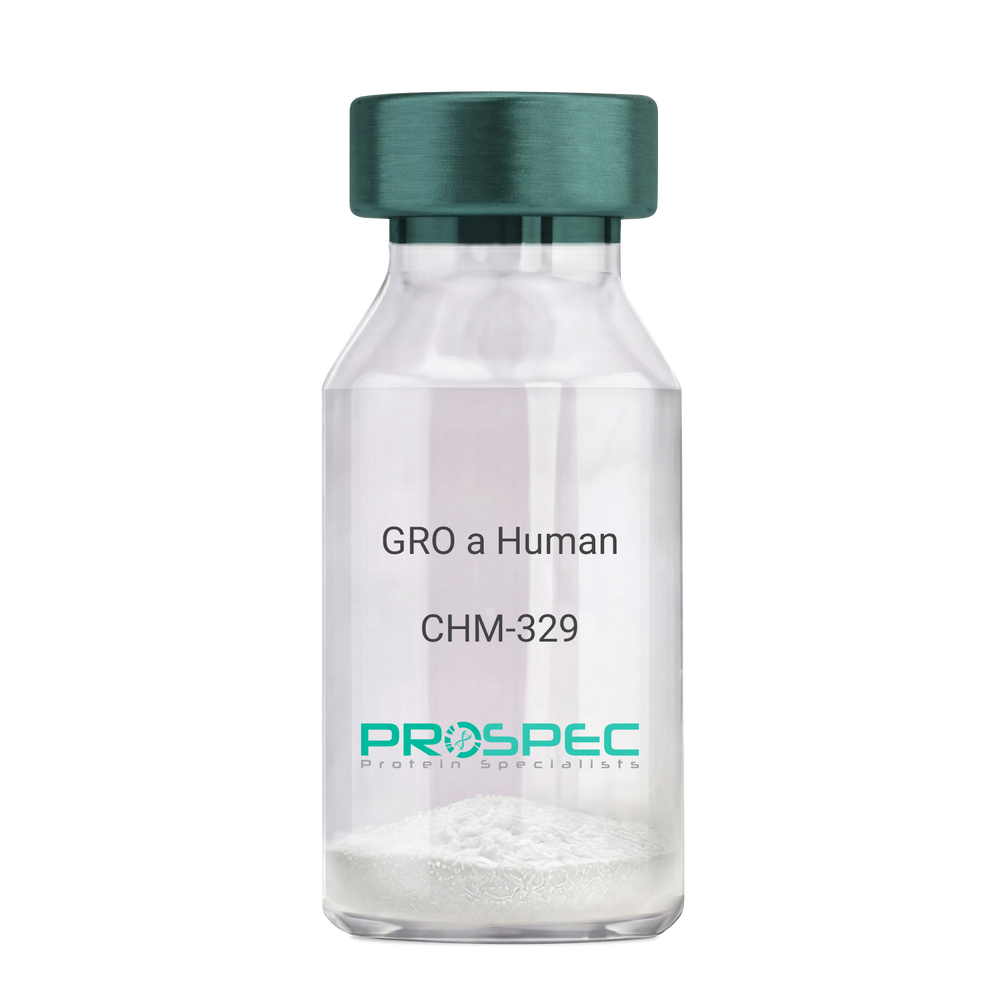
    CXCL1 Human

    Description:

    GRO-Alpha Human Recombinant (CXCL1)

    Growth-regulated protein alpha, CXCL1, Melanoma growth stimulatory activity, MGSA, Neutrophil-activating protein 3, NAP-3, GRO-alpha (1-73), chemokine (C-X-C motif) ligand 1, GRO1, GROa, SCYB1, MGSA-a, MGSA alpha.

    Product # :

    CHM-329

    Price :

    Quantity :

    Shipping Method :

    Room Temp Icon

    Shipped at Room temp

    Add To Cart

    More Info

    • description
    • source
    • formulation
    • purity
    • biological activity
    • More Info
    • sds-page
    • Citations

    Description

    GRO Alpha Human Recombinant produced in E.Coli is a single,non-glycosylated, polypeptide chain containing 73 amino acids and having a molecular mass of 7811 Dalton. The GRO-alpha is purified by proprietary chromatographic techniques.

    Source

    Escherichia Coli.

    Formulation

    Lyophilized from a 0.2µm filtered concentrated (1mg/ml) solution in 20mM PB, pH 7.4, 50mM NaCl.

    Purity

    Greater than 97.0% as determined by:
    (a) Analysis by RP-HPLC.
    (b) Analysis by SDS-PAGE.

    Biological Activity

    Determined by its ability to chemoattract human peripheral blood neutrophils using a concentration range of 10.0-100.0 ng/ml.

    sds-page

    CXCL1 Human SDS-PAGE - Product image 1

    Citations

    More Info

    • Introduction

      Chemokine (C-X-C motif) ligand 1 (CXCL1) is a small cytokine belonging to the CXC chemokine family that was previously called GRO1 oncogene, Neutrophil-activating protein 3 (NAP-3) and melanoma growth stimulating activity, alpha (MSGA-a). It is secreted by human melanoma cells, has mitogenic properties and is implicated in melanoma pathogenesis. CXCL1 is expressed by macrophages, neutrophilsand epithelial cells, and has neutrophil chemoattractant activity. CXCL1 plays a role in spinal cord development by inhibiting the migration of oligodendrocyte precursors and is involved in the processes of angiogenesis, inflammation, wound healing, and tumorigenesis. This chemokine elicits its effects by signaling through the chemokine receptor CXCR2. The gene for CXCL1 is located on human chromosome 4 amongst genes for other CXC chemokines.

    • Synonyms

      Growth-regulated protein alpha, CXCL1, Melanoma growth stimulatory activity, MGSA, Neutrophil-activating protein 3, NAP-3, GRO-alpha (1-73), chemokine (C-X-C motif) ligand 1, GRO1, GROa, SCYB1, MGSA-a, MGSA alpha.

    • Physical Appearance

      Sterile Filtered White lyophilized (freeze-dried) powder.

    • Stability

      Lyophilized GRO-alpha although stable at room temperature for 3 weeks, should be stored desiccated below -18°C. Upon reconstitution CXCL1 should be stored at 4°C between 2-7 days and for future use below -18°C. For long term storage it is recommended to add a carrier protein (0.1% HSA or BSA).Please prevent freeze-thaw cycles.

    • Solubility

      It is recommended to reconstitute the lyophilized CXCL1 in sterile 18MΩ-cm H2O not less than 100µg/ml, which can then be further diluted to other aqueous solutions.

    • Amino Acid Sequence

      The sequence of the first five N-terminal amino acids was determined and was found to be Ala-Ser-Val-Ala-Thr.

    • Background

      What is the molecular weight/Mw of CXCL1 HUMAN Protein?
      CXCL1 HUMAN Protein has a total Mw of 7.81kDa.

      What is the source or expression system of CXCL1 HUMAN Protein?
      Escherichia Coli.

      What is the Purity of CXCL1 HUMAN Protein?
      CXCL1 HUMAN Protein is >97% pure as determined by SDS-PAGE.

      What is the Biological Activity of CXCL1 HUMAN Protein?
      Determined by its ability to chemoattract human peripheral blood neutrophils using a concentration range of 10.0-100.0 ng/ml.

      What is the amino acid sequence of CXCL1 HUMAN Protein?
      The sequence of the first five N-terminal amino acids was determined and was found to be Ala-Ser-Val-Ala-Thr.

      What applications can CXCL1 HUMAN Protein be used in?
      CXCL1 HUMAN Protein can probably be used in western blot, ELISA and Lateral Flow.

      What is the endotoxin level for CXCL1 HUMAN Protein?
      The endotoxin level is minimal, CXCL1 HUMAN Protein was purified using conventional chromatography techniques.

      Who supplies recombinant CXCL1 HUMAN that is in stock and available to order?
      ProSpec has the protein in stock and available for immediate delivery.

      Where can I order bulk mg quantities of CXCL1 HUMAN?
      ProSpec supplies bulk mg quantities at affordable prices that meets research and academic budgets.

    ProSpec's products are furnished for LABORATORY RESEARCH USE ONLY. The product may not be used as drugs, agricultural or pesticidal products, food additives or household chemicals.

    Gro A Human
  • View Data Sheet

    Name :

    CXCL2 Human

    Description:

    GRO-Beta Human Recombinant (CXCL2)

    Macrophage inflammatory protein 2-alpha, MIP2-alpha, CXCL2, Growth- regulated protein beta, Gro-beta, chemokine (C-X-C motif) ligand 2, GRO2, GROb, MIP2, MIP2A, SCYB2, MGSA-b, MIP-2a, CINC-2a, MGSA beta.

    Product # :

    CHM-309

    Price :

    Quantity :

    Shipping Method :

    Room Temp Icon

    Shipped at Room temp

    Add To Cart

    More Info

    • description
    • source
    • formulation
    • purity
    • biological activity
    • More Info
    • Citations

    Description

    GRO-Beta Human Recombinant produced in E.Coli is a single,non-glycosylated, polypeptide chain containing 73 amino acids and having a molecular mass of 7908 Dalton. The CXCL2 is purified by proprietary chromatographic techniques.

    Source

    Escherichia Coli.

    Formulation

    The protein was lyophilized with no additives.

    Purity

    Greater than 98.0% as determined by:
    (a) Analysis by RP-HPLC.
    (b) Analysis by SDS-PAGE.

    Biological Activity

    The Biological activity is calculated by its ability to chemoattract CXCR2 transfected 293 cells using 10-100ng/ml corresponding to a Specific Activity of 10,000-100,000IU/mg.

    Citations

    More Info

    • Introduction

      Chemokine (C-X-C motif) ligand 2 (CXCL2) is a small cytokine belonging to the CXC chemokine family that is also called macrophage inflammatory protein 2-alpha (MIP2-alpha), Growth-regulated protein beta (Gro-beta) and Gro oncogene-2 (Gro-2). CXCL2 is 90% identical in amino acid sequence as a related chemokine, CXCL1. This chemokine is secreted by monocytes and macrophages and is chemotactic for polymorphonuclear leukocytes and hematopoietic stem cells. The gene for CXCL2 is located on human chromosome 4 in a cluster of other CXC chemokines. CXCL2 mobilizes cells by interacting with a cell surface chemokine receptor called CXCR2.

    • Synonyms

      Macrophage inflammatory protein 2-alpha, MIP2-alpha, CXCL2, Growth- regulated protein beta, Gro-beta, chemokine (C-X-C motif) ligand 2, GRO2, GROb, MIP2, MIP2A, SCYB2, MGSA-b, MIP-2a, CINC-2a, MGSA beta.

    • Physical Appearance

      Sterile Filtered White lyophilized (freeze-dried) powder.

    • Stability

      Lyophilized CXCL2 although stable at room temperature for 3 weeks, should be stored desiccated below -18°C. Upon reconstitution CXCL2 should be stored at 4°C between 2-7 days and for future use below -18°C. For long term storage it is recommended to add a carrier protein (0.1% HSA or BSA).Please prevent freeze-thaw cycles.

    • Solubility

      It is recommended to reconstitute the lyophilized GRO-beta Human in sterile 18MΩ-cm H2O not less than 100µg/ml, which can then be further diluted to other aqueous solutions.

    • Amino Acid Sequence

      The sequence of the first five N-terminal amino acids was determined and was found to be Ala-Pro-Leu-Ala-Thr.

    • Background

      What is the molecular weight/Mw of CXCL2 HUMAN Protein?
      CXCL2 HUMAN Protein has a total Mw of 7.9kDa.

      What is the source or expression system of CXCL2 HUMAN Protein?
      Escherichia Coli.

      What is the Purity of CXCL2 HUMAN Protein?
      CXCL2 HUMAN Protein is >98% pure as determined by SDS-PAGE.

      What is the Biological Activity of CXCL2 HUMAN Protein?
      The Biological activity is calculated by its ability to chemoattract CXCR2 transfected 293 cells using 10-100ng/ml corresponding to a Specific Activity of 10,000-100,000IU/mg.

      What is the amino acid sequence of CXCL2 HUMAN Protein?
      The sequence of the first five N-terminal amino acids was determined and was found to be Ala-Pro-Leu-Ala-Thr.

      What applications can CXCL2 HUMAN Protein be used in?
      CXCL2 HUMAN Protein can probably be used in western blot, ELISA and Lateral Flow.

      What is the endotoxin level for CXCL2 HUMAN Protein?
      The endotoxin level is minimal, CXCL2 HUMAN Protein was purified using conventional chromatography techniques.

      Who supplies recombinant CXCL2 HUMAN that is in stock and available to order?
      ProSpec has the protein in stock and available for immediate delivery.

      Where can I order bulk mg quantities of CXCL2 HUMAN?
      ProSpec supplies bulk mg quantities at affordable prices that meets research and academic budgets.

    ProSpec's products are furnished for LABORATORY RESEARCH USE ONLY. The product may not be used as drugs, agricultural or pesticidal products, food additives or household chemicals.

    Gro Beta Human
  • View Data Sheet

    Name :

    CXCL2 Rat

    Description:

    GRO-beta/MIP-2 Rat Recombinant (CXCL2)

    Macrophage inflammatory protein 2-alpha, MIP2-alpha, CXCL2, Growth- regulated protein beta, Gro-beta, chemokine (C-X-C motif) ligand 2, GRO2, GROb, MIP2, MIP2A, SCYB2, MGSA-b, MIP-2a, CINC-2a, MGSA beta, CINC-3.

    Product # :

    CHM-372

    Price :

    Quantity :

    Shipping Method :

    Room Temp Icon

    Shipped at Room temp

    Add To Cart

    More Info

    • description
    • source
    • formulation
    • purity
    • biological activity
    • More Info
    • Citations

    Description

    GRO-Beta Rat Recombinant also called Rat MIP-2 produced in E.Coli is a single, non-glycosylated, polypeptide chain containing 73 amino acids and having a molecular mass of 7923 Dalton. The GRO-b is purified by proprietary chromatographic techniques.

    Source

    Escherichia Coli.

    Formulation

    Lyophilized from a 0.2µm filtered concentrated solution in PBS, pH 7.4.

    Purity

    Greater than 99.0% as determined by SDS-PAGE.

    Biological Activity

    The biological activity was determined by its ability to chemoattract total human neutrophils using a concentration range of 1.0-10.0 ng/ml, corresponding to a specific activity of 100,000-1,000,000 units/mg.

    Citations

    More Info

    • Introduction

      Chemokine (C-X-C motif) ligand 2 (CXCL2) is a small cytokine belonging to the CXC chemokine family that is also called macrophage inflammatory protein 2-alpha (MIP2-alpha), Growth-regulated protein beta (Gro-beta) and Gro oncogene-2 (Gro-2). CXCL2 is 90% identical in amino acid sequence as a related chemokine, CXCL1. This chemokine is secreted by monocytes and macrophages and is chemotactic for polymorphonuclear leukocytes and hematopoietic stem cells. The gene for CXCL2 is located on human chromosome 4 in a cluster of other CXC chemokines. CXCL2 mobilizes cells by interacting with a cell surface chemokine receptor called CXCR2.

    • Synonyms

      Macrophage inflammatory protein 2-alpha, MIP2-alpha, CXCL2, Growth- regulated protein beta, Gro-beta, chemokine (C-X-C motif) ligand 2, GRO2, GROb, MIP2, MIP2A, SCYB2, MGSA-b, MIP-2a, CINC-2a, MGSA beta, CINC-3.

    • Physical Appearance

      Sterile Filtered White lyophilized (freeze-dried) powder.

    • Stability

      Lyophilized GRO-b although stable at room temperature for 3 weeks, should be stored desiccated below -18°C. Upon reconstitution CXCL2 should be stored at 4°C between 2-7 days and for future use below -18°C. For long term storage it is recommended to add a carrier protein (0.1% HSA or BSA). Please prevent freeze-thaw cycles.

    • Solubility

      It is recommended to reconstitute the lyophilized GRO-beta Rat in sterile 18MΩ-cm H2O not less than 100µg/ml, which can then be further diluted to other aqueous solutions.

    • Amino Acid Sequence

      VVVASELRCQ CLTTLPRVDF KNIQSLTVTP PGPHCAQTEV IATLKDGHEV CLNPEAPLVQ RIVQKILNKG KAN.

    • Background

      What is the molecular weight/Mw of CXCL2 RAT Protein?
      CXCL2 RAT Protein has a total Mw of 7.92kDa.

      What is the source or expression system of CXCL2 RAT Protein?
      Escherichia Coli.

      What is the Purity of CXCL2 RAT Protein?
      CXCL2 RAT Protein is >99% pure as determined by SDS-PAGE.

      What is the Biological Activity of CXCL2 RAT Protein?
      The biological activity was determined by its ability to chemoattract total human neutrophils using a concentration range of 1.0-10.0 ng/ml, corresponding to a specific activity of 100,000-1,000,000 units/mg.

      What is the amino acid sequence of CXCL2 RAT Protein?
      VVVASELRCQ CLTTLPRVDF KNIQSLTVTP PGPHCAQTEV IATLKDGHEV CLNPEAPLVQ RIVQKILNKG KAN.

      What applications can CXCL2 RAT Protein be used in?
      CXCL2 RAT Protein can probably be used in western blot, ELISA and Lateral Flow.

      What is the endotoxin level for CXCL2 RAT Protein?
      The endotoxin level is minimal, CXCL2 RAT Protein was purified using conventional chromatography techniques.

      Who supplies recombinant CXCL2 RAT that is in stock and available to order?
      ProSpec has the protein in stock and available for immediate delivery.

      Where can I order bulk mg quantities of CXCL2 RAT?
      ProSpec supplies bulk mg quantities at affordable prices that meets research and academic budgets.

    ProSpec's products are furnished for LABORATORY RESEARCH USE ONLY. The product may not be used as drugs, agricultural or pesticidal products, food additives or household chemicals.

    Gro B Rat
  • View Data Sheet

    Name :

    CPOX Human

    Description:

    Coproporphyrinogen Oxidase Human Recombinant

    CPO, CPX, HCP, Coproporphyrinogen-III oxidase, mitochondrial, COX, Coprogen oxidase, Coproporphyrinogenase, CPOX.

    Product # :

    ENZ-701

    Price :

    Quantity :

    Shipping Method :

    Ice Icon

    Shipped with Ice Packs

    Add To Cart

    More Info

    • description
    • source
    • formulation
    • purity
    • More Info
    • Citations

    Description

    CPOX Human Recombinant produced in E.coli is a single, non-glycosylated polypeptide chain containing 367 amino acids (111-454) and having a molecular mass of 41.6kDa. CPOX is fused to a 23 amino acid His-tag at N-terminus & purified by proprietary chromatographic techniques.

    Source

    E.coli.

    Formulation

    The CPOX solution (1mg/ml) contains 20mM Tris-HCl buffer (pH 8.0), 0.15M NaCl, 10% glycerol and 1mM DTT.

    Purity

    Greater than 95% as determined by SDS-PAGE.

    Citations

    More Info

    • Introduction

      Coproporphyrinogen Oxidase (CPOX) which is localized to the internal membrane space of erythrocytes takes part in the 6th phase of heme biosynthesis. CPOX catalyzes the oxidative decarboxylation of propionic acid side chains of rings A and B of coproporphyrinogen III. Mutations in human CPOX gene forecast the clinical result of the disease, with either hepatic hereditary coproporphyria or hematological manifestations of erythropoietic harderoporphyria.

    • Synonyms

      CPO, CPX, HCP, Coproporphyrinogen-III oxidase, mitochondrial, COX, Coprogen oxidase, Coproporphyrinogenase, CPOX.

    • Physical Appearance

      Sterile Filtered colorless solution.

    • Stability

      Store at 4°C if entire vial will be used within 2-4 weeks. Store, frozen at -20°C for longer periods of time. For long term storage it is recommended to add a carrier protein (0.1% HSA or BSA).Avoid multiple freeze-thaw cycles.

    • Amino Acid Sequence

      MGSSHHHHHH SSGLVPRGSH MGSTSLGRPE EEEDELAHRC SSFMAPPVTD LGELRRRPGD MKTKMELLIL ETQAQVCQAL AQVDGGANFS VDRWERKEGG GGISCVLQDG CVFEKAGVSI SVVHGNLSEE AAKQMRSRGK VLKTKDGKLP FCAMGVSSVI HPKNPHAPTI HFNYRYFEVE EADGNKQWWF GGGCDLTPTY LNQEDAVHFH RTLKEACDQH GPDLYPKFKK WCDDYFFIAH RGERRGIGGI FFDDLDSPSK EEVFRFVQSC ARAVVPSYIP LVKKHCDDSF TPQEKLWQQL RRGRYVEFNL LYDRGTKFGL FTPGSRIESI LMSLPLTARW EYMHSPSENS KEAEILEVLR HPRDWVR.

    ProSpec's products are furnished for LABORATORY RESEARCH USE ONLY. The product may not be used as drugs, agricultural or pesticidal products, food additives or household chemicals.

    Cpox Human
  • View Data Sheet

    Name :

    RELM g Mouse

    Description:

    RELM-Gamma Mouse Recombinant

    Resistin-like gamma, RELMgamma,RELM-γ, RELM-g. 

    Product # :

    CYT-1035

    Price :

    Quantity :

    Shipping Method :

    Room Temp Icon

    Shipped at Room temp

    Add To Cart

    More Info

    • description
    • source
    • formulation
    • purity
    • More Info
    • Citations

    Description

    RELM g Mouse Recombinant produced in E.Coli is a non glycosylated, homodimeric polypeptide chain containing 2 x 89 amino acids and having a total molecular mass of 18.9kDa. The RELM is purified by proprietary chromatographic techniques.

    Source

    Escherichia Coli.

    Formulation

    Lyophilized from a sterile filtered solution containing 0.1 % trifluoroacetic acid (TFA).

    Purity

    Greater than 95.0% as determined by SDS-PAGE.

    Citations

    More Info

    • Introduction

      RELM-gamma is a novel member of the resistin-like molecule/found in inflammatory zone (RELM/FIZZ) family in mice and rats. Microarray and real-time RT-PCR experiments revealed a repression of RELMgamma mRNA in nasal respiratory epithelium of cigarette smoke-exposed versus untreated rats. The analysis of the physiological tissue-specific expression revealed highest expression in hematopoietic tissues, suggesting a cytokine-like role for RELM-gamma. RELM-gamma-mRNA is detectable in bone marrow, spleen, and lung as well as in peripheral blood granulocytes. Promyelocytic HL60 cells transfected with a RELM-gamma expression plasmid have an increased proliferation rate compared to mock-transfected cells and display an altered response to retinoic acid-induced granulocytic differentiation. Taken together, these data provide the first experimental evidence that RELM-gamma is a secreted molecule with a restricted expression pattern that may play a role in promyelocytic differentiation.

    • Synonyms

      Resistin-like gamma, RELMgamma,RELM-γ, RELM-g.

    • Physical Appearance

      Sterile Filtered White lyophilized (freeze-dried) powder.

    • Stability

      Lyophilized RELM g although stable at room temperature for 3 weeks, should be stored desiccated below -18°C. Upon reconstitution RELM g Mouse should be stored at 4°C between 2-7 days and for future use below -18°C. For long term storage it is recommended to add a carrier protein (0.1% HSA or BSA). Please prevent freeze-thaw cycles.

    • Solubility

      It is recommended to reconstitute the lyophilized RELM g in sterile 18MΩ-cm H2O at a concentration of 100µg/ml, which can then be further diluted to other aqueous solutions.

    • Amino Acid Sequence

      MEGTLESIVE KKVKELLANR DDCPSTVTKT FSCTSITASG RLASCPSGMT VTGCACGYGC GSWDIRDGNT CHCQCSTMDW ATARCCQLA.

    ProSpec's products are furnished for LABORATORY RESEARCH USE ONLY. The product may not be used as drugs, agricultural or pesticidal products, food additives or household chemicals.

    Mouse Relm Gamma
  • View Data Sheet

    Name :

    SERPINA9 Mouse

    Description:

    Serpin Peptidase Inhibitor, Clade A Mouse Recombinant

    Serpin A9, Serpina9, SERPINA9.

    Product # :

    PRO-2366

    Price :

    Quantity :

    Shipping Method :

    Ice Icon

    Shipped with Ice Packs

    Add To Cart

    More Info

    • description
    • source
    • formulation
    • purity
    • More Info
    • Citations

    Description

    SERPINA9 Mouse Recombinant produced in Sf9 Baculovirus cells is a single, glycosylated polypeptide chain containing 401 amino acids (26-418 a.a) and having a molecular mass of 45.2kDa (Molecular size on SDS-PAGE will appear at approximately 50-70kDa).SERPINA9 is fused to an 8 amino acid His-tag at C-terminus & purified by proprietary chromatographic techniques.

    Source

    Sf9, Baculovirus cells.

    Formulation

    SERPINA9 protein solution (0.25mg/ml) contains Phosphate Buffered Saline (pH 7.4) and 10% glycerol.

    Purity

    Greater than 85.0% as determined by SDS-PAGE.

    Citations

    More Info

    • Introduction

      Serpin Peptidase Inhibitor, Clade A Member 9, also known as serpin A9, belongs to the Serpin superfamily of serine protease inhibitors. Serpins are the most extensively distributed superfamily of protease inhibitors which use a conformational modification to inhibit target enzymes. Serpins are known to inhibit serine proteases as well as inhibiting caspases in addition to papain-like cysteine proteases. Serpins are conformational labile and numerous of the disease-linked mutations of serpins outcome in misfolding or in pathogenic, inactive polymers. serpin A9 demonstrates inhibition towards trypsin, thrombin, as well as plasmin and binds DNA and heparin.

    • Synonyms

      Serpin A9, Serpina9, SERPINA9.

    • Physical Appearance

      Sterile Filtered colorless solution.

    • Stability

      Store at 4°C if entire vial will be used within 2-4 weeks. Store, frozen at -20°C for longer periods of time. For long term storage it is recommended to add a carrier protein (0.1% HSA or BSA). Avoid multiple freeze-thaw cycles.

    • Amino Acid Sequence

      NPYNQESSHL PSMKKNPASQ VSPSNTRFSF LLYQRLAQEN PGQNILFSPV SISTSLAMLS LGARSATKTQ ILRTLGFNFT WVSEPTIHMG FEYLVRSLNK CHQGRELRMG SVLFIRKELQ LQATFLDRVK KLYGAKVFSE DFSNAATAQA QINSYVEKET KGKVVDVIQD LDSQTAMVLV NHIFFKANWT QPFSTANTNK SFPFLLSKGT TVHVPMMHQT ESFAFGVDKE LGCSILQMDY RGDAVAFFVL PGKGKMRQLE KSLSARRLRK WSRSLQKRWI KVFIPKFSIS ASYNLETILP KMGIRDAFNS NADFSGITKT HFLQVSKAAH KAVLDVSEEG TEAAAATTTK LIVRSRDTPS SIIAFKEPFL ILLLDKNTES VLFLGKVENP RKMLEHHHHH H

    ProSpec's products are furnished for LABORATORY RESEARCH USE ONLY. The product may not be used as drugs, agricultural or pesticidal products, food additives or household chemicals.

    Serpina9 Mouse
  • View Data Sheet

    Name :

    NARS Human

    Description:

    Asparaginyl-TRNA Synthetase Human Recombinant

    NARS, Asparaginyl-TRNA Synthetase, AsnRS, EC 6.1.1.22, Asparaginyl-TRNA Synthetase, Cytoplasmic, Asparagine TRNA Ligase 1, Cytoplasmic, Asparagine--TRNA Ligase, Cytoplasmic, Asparagine TRNA Ligase 1, Cytoplasmic, NARS1.

    Product # :

    ENZ-915

    Price :

    Quantity :

    Shipping Method :

    Ice Icon

    Shipped with Ice Packs

    Add To Cart

    More Info

    • description
    • source
    • formulation
    • purity
    • More Info
    • Citations

    Description

    NARS Human Recombinant produced in E.Coli is a single, non-glycosylated polypeptide chain containing 571 amino acids (1-548 a.a) and having a molecular mass of 65.3kDa. NARS is fused to a 23 amino acid His-tag at N-terminus & purified by proprietary chromatographic techniques.

    Source

    E.coli.

    Formulation

    NARS protein solution (0.25mg/ml) containing Phosphate Buffered Saline (pH7.4) and 10% glycerol.

    Purity

    Greater than 80.0% as determined by SDS-PAGE.

    Citations

    More Info

    • Introduction

      Aminoacyl-tRNA synthetases are a class of enzymes which charge tRNAs with their cognate amino acids. Asparaginyl-tRNA synthetase (NARS) is localized to the cytoplasm and is a member of the class II family of tRNA synthetases. The N-terminal domain characterizes the signature sequence for the eukaryotic asparaginyl-tRNA synthetases.

    • Synonyms

      NARS, Asparaginyl-TRNA Synthetase, AsnRS, EC 6.1.1.22, Asparaginyl-TRNA Synthetase, Cytoplasmic, Asparagine TRNA Ligase 1, Cytoplasmic, Asparagine--TRNA Ligase, Cytoplasmic, Asparagine TRNA Ligase 1, Cytoplasmic, NARS1.

    • Physical Appearance

      Sterile Filtered colorless solution.

    • Stability

      Store at 4°C if entire vial will be used within 2-4 weeks. Store, frozen at -20°C for longer periods of time. For long term storage it is recommended to add a carrier protein (0.1% HSA or BSA).Avoid multiple freeze-thaw cycles.

    • Amino Acid Sequence

      GSSHHHHHH SSGLVPRGSH MGSMVLAELY VSDREGSDAT GDGTKEKPFK TGLKALMTVG KEPFPTIYVD SQKENERWNV ISKSQLKNIK KMWHREQMKS ESREKKEAED SLRREKNLEE AKKITIKNDP SLPEPKCVKI GALEGYRGQR VKVFGWVHRL RRQGKNLMFL VLRDGTGYLQ CVLADELCQC YNGVLLSTES SVAVYGMLNL TPKGKQAPGG HELSCDFWEL IGLAPAGGAD NLINEESDVD VQLNNRHMMI RGENMSKILK ARSMVTRCFR DHFFDRGYYE VTPPTLVQTQ VEGGATLFKL DYFGEEAFLT QSSQLYLETC LPALGDVFCI AQSYRAEQSR TRRHLAEYTH VEAECPFLTF DDLLNRLEDL VCDVVDRILK SPAGSIVHEL NPNFQPPKRP FKRMNYSDAI VWLKEHDVKK EDGTFYEFGE DIPEAPERLM TDTINEPILL CRFPVEIKSF YMQRCPEDSR LTESVDVLMP NVGEIVGGSM RIFDSEEILA GYKREGIDPT PYYWYTDQRK YGTCPHGGYG LGLERFLTWI LNRYHIRDVC LYPRFVQRCT P.

    ProSpec's products are furnished for LABORATORY RESEARCH USE ONLY. The product may not be used as drugs, agricultural or pesticidal products, food additives or household chemicals.

    Human Nars
  • View Data Sheet

    Name :

    NKIRAS1 Human

    Description:

    NFKB Inhibitor Interacting Ras-Like 1 Human Recombinant

    NF-kappa-B inhibitor-interacting Ras-like protein 1, I-kappa-B-interacting Ras-like protein 1, Kappa B-Ras protein 1, KappaB-Ras1, NKIRAS1, KBRAS1.

    Product # :

    PRO-1039

    Price :

    Quantity :

    Shipping Method :

    Ice Icon

    Shipped with Ice Packs

    Add To Cart

    More Info

    • description
    • source
    • formulation
    • purity
    • More Info
    • Citations

    Description

    NKIRAS1 Human Recombinant produced in E.Coli is a single, non-glycosylated polypeptide chain containing 212 amino acids (1-192 a.a) and having a molecular mass of 23.8kDa (Molecular weight on SDS-PAGE will appear higher).NKIRAS1 is fused to a 20 amino acid His-tag at N-terminus & purified by proprietary chromatographic techniques.

    Source

    Escherichia Coli.

    Formulation

    NKIRAS1 protein solution (0.25mg/ml) containing 20mM Tris-HCl buffer (pH8.0), 20% glycerol and 1mM DTT.

    Purity

    Greater than 95.0% as determined by SDS-PAGE.

    Citations

    More Info

    • Introduction

      NF-kappa-B inhibitor-interacting Ras-like protein 1 (NKIRAS1) is a member of the small GTPase superfamily. NKIRAS1 is an unusual Ras-like protein which acts as a potent regulator of NF-kappa-B activity by thwarting the degradation of NF-kappa-B inhibitor beta (NFKBIB) by most signals, describing why NFKBIB is more resistant to degradation. NKIRAS1 functions by blocking phosphorylation of NFKBIB and mediating cytoplasmic retention of p65/RELA NF-kappa-B subunit. Both GTP- and GDP-bound forms block phosphorylation of NFKBIB.

    • Synonyms

      NF-kappa-B inhibitor-interacting Ras-like protein 1, I-kappa-B-interacting Ras-like protein 1, Kappa B-Ras protein 1, KappaB-Ras1, NKIRAS1, KBRAS1.

    • Physical Appearance

      Sterile Filtered clear solution.

    • Stability

      Store at 4°C if entire vial will be used within 2-4 weeks. Store, frozen at -20°C for longer periods of time. For long term storage it is recommended to add a carrier protein (0.1% HSA or BSA).Avoid multiple freeze-thaw cycles.

    • Amino Acid Sequence

      MGSSHHHHHH SSGLVPRGSH MGKGCKVVVC GLLSVGKTAI LEQLLYGNHT IGMEDCETME DVYMASVETD RGVKEQLHLY DTRGLQEGVE LPKHYFSFAD GFVLVYSVNN LESFQRVELL KKEIDKFKDK KEVAIVVLGN KIDLSEQRQV DAEVAQQWAK SEKVRLWEVT VTDRKTLIEP FTLLASKLSQ PQSKSSFPLP GRKNKGNSNS EN.

    ProSpec's products are furnished for LABORATORY RESEARCH USE ONLY. The product may not be used as drugs, agricultural or pesticidal products, food additives or household chemicals.

    Nkiras1 Human
  • View Data Sheet

    Name :

    PECAM1 Mouse

    Description:

    Platelet Endothelial Cell Adhesion Molecule 1 MouseRecombinant

    Platelet endothelial cell adhesion molecule, PECAM1, CD31, CD31/EndoCAM, endoCAM, GPIIA', PECA1, PECAM-1, Platelet Endothelial Cell Adhesion Molecule 1.

    Product # :

    CYT-1211

    Price :

    Quantity :

    Shipping Method :

    Ice Icon

    Shipped with Ice Packs

    Add To Cart

    More Info

    • description
    • source
    • formulation
    • purity
    • More Info
    • Citations

    Description

    PECAM1 Mouse Recombinant produced in HEK293 is a single, non-glycosylated polypeptide chain containing 579 amino acids (18-590 a.a.) and having a molecular mass of 65.3 kDa. PECAM1 Mouse is fused to an 6 amino acid His-tag at C-terminus & purified by proprietary chromatographic techniques.

    Source

    Sf9, Baculovirus cells.

    Formulation

    PECAM1 Mouse protein solution (0.25mg/ml) containing Phosphate Buffered Saline (pH 7.4) and 10% glycerol.

    Purity

    Greater than 90% as determined by SDS-PAGE.

    Citations

    More Info

    • Introduction

      Platelet endothelial cell adhesion molecule (PECAM1) induces susceptibility to atherosclerosis. PECAM1 averts phagocyte ingestion of closely apposed viable cells by transmitting detachment signals, and transforms function upon apoptosis, thus promoting tethering of dying cells to phagocytes. The encounter of a viable cell with a phagocyte via the homophilic interaction of PECAM1 on both cell surfaces as a result causing the viable cell's active repulsion from the phagocyte.

    • Synonyms

      Platelet endothelial cell adhesion molecule, PECAM1, CD31, CD31/EndoCAM, endoCAM, GPIIA', PECA1, PECAM-1, Platelet Endothelial Cell Adhesion Molecule 1.

    • Physical Appearance

      Sterile filtered colorless solution.

    • Stability

      Store at 4°C if entire vial will be used within 2-4 weeks. Store, frozen at -20°C for longer periods of time. For long term storage it is recommended to add a carrier protein (0.1% HSA or BSA).Avoid multiple freeze-thaw cycles.

    • Amino Acid Sequence

      EENSFTINSI HMESLPSWEV MNGQQLTLEC LVDISTTSKS RSQHRVLFYK DDAMVYNVTS REHTESYVIP QARVFHSGKY KCTVMLNNKE KTTIEYEVKV HGVSKPKVTL DKKEVTEGGV VTVNCSLQEE KPPIFFKIEK LEVGTKFVKR RIDKTSNENF VLMEFPIEAQ DHVLVFRCQA GILSGFKLQE SEPIRSEYVT VQESFSTPKF EIKPPGMIIE GDQLHIRCIV QVTHLVQEFT EIIIQKDKAI VATSKQSSEA VYSVMAMVEY SGHYTCKVES NRISKASSIM VNITELFPKP KLEFSSSRLD QGELLDLSCS VSGTPVANFT IQKEETVLSQ YQNFSKIAEE SDSGEYSCTA GIGKVVKRSG LVPIQVCEML SKPSIFHDAK SEIIKGHAIG ISCQSENGTA PITYHLMKAK SDFQTLEVTS NDPATFTDKP TRDMEYQCRA DNCHSHPAVF SEILRVRVIA PVDEVVISIL SSNEVQSGSE MVLRCSVKEG TSPITFQFYK EKEDRPFHQA VVNDTQAFWH NKQASKKQEG QYYCTASNRA SSMRTSPRSS TLAVRVFLAP WKK HHHHH

    ProSpec's products are furnished for LABORATORY RESEARCH USE ONLY. The product may not be used as drugs, agricultural or pesticidal products, food additives or household chemicals.

    Pecam1 Mouse
  • View Data Sheet

    Name :

    GKN1 Human

    Description:

    Gastrokine 1 Human Recombinant

    BRICHOS domain containing 1, 18 kDa antrum mucosa protein, gastrokine 1, Protein CA11, AMP-18, BRICD1, foveolin, FOV.

    Product # :

    PRO-1206

    Price :

    Quantity :

    Shipping Method :

    Ice Icon

    Shipped with Ice Packs

    Add To Cart

    More Info

    • description
    • source
    • formulation
    • purity
    • More Info
    • Citations

    Description

    GKN1 Human Recombinant produced in E. coli is a single polypeptide chain containing 223 amino acids (1-199) and having a molecular mass of 24.5 kDa.GKN1 is fused to a 24 amino acid His-tag at N-terminus & purified by proprietary chromatographic techniques.

    Source

    E.coli.

    Formulation

    The GKN1 solution (0.25mg/1ml) contains 20mM Tris-HCl buffer (pH 8.0), 0.1M NaCl, 1mM DTT and 10% glycerol.

    Purity

    Greater than 85% as determined by SDS-PAGE.

    Citations

    More Info

    • Introduction

      Gastrokine-1 (GKN1) is a member of the gastrokine family. GKN1 has mitogenic activity and is involved in preserving the integrity of the gastric mucosal epithelium. GKN1 is down-regulated in human gastric cancer tissue in comparison to normal gastric mucosa. GKN1 is expressed in the stomach; however no expression is detected in cancer tissue or gastric cancer cell lines.

    • Synonyms

      BRICHOS domain containing 1, 18 kDa antrum mucosa protein, gastrokine 1, Protein CA11, AMP-18, BRICD1, foveolin, FOV.

    • Physical Appearance

      Sterile Filtered colorless solution.

    • Stability

      Store at 4°C if entire vial will be used within 2-4 weeks. Store, frozen at -20°C for longer periods of time. For long term storage it is recommended to add a carrier protein (0.1% HSA or BSA).Avoid multiple freeze-thaw cycles.

    • Amino Acid Sequence

      MGSSHHHHHH SSGLVPRGSH MGSH MLAYSS VHCFREDKMK FTIVFAGLLG VFLAPALANY NINVNDDNNN AGSGQQSVSV NNEHNVANVD NNNGWDSWNS IWDYGNGFAA TRLFQKKTCI VHKMNKEVMP SIQSLDALVK EKKLQGKGPG GPPPKGLMYS VNPNKVDDLS KFGKNIANMC RGIPTYMAEE MQEASLFFYS GTCYTTSVLW IVDISFCGDT VEN.

    ProSpec's products are furnished for LABORATORY RESEARCH USE ONLY. The product may not be used as drugs, agricultural or pesticidal products, food additives or household chemicals.

    Gkn1 Human
  • View Data Sheet

    Name :

    CES1D Mouse

    Description:

    Carboxylesterase 1D Mouse Recombinant

    Carboxylesterase 1D, Carboxylesterase 3 (EC:3.1.1.1, EC:3.1.1.67), Fatty acid ethyl ester synthase, FAEE synthase, Triacylglycerol hydrolase, TGH, CES1D.

    Product # :

    ENZ-1007

    Price :

    Quantity :

    Shipping Method :

    Ice Icon

    Shipped with Ice Packs

    Add To Cart

    More Info

    • description
    • source
    • formulation
    • purity
    • biological activity
    • More Info
    • Citations

    Description

    CES1D Mouse Recombinant produced in Sf9 Baculovirus cells is a single, glycosylated polypeptide chain containing 555 amino acids (19-565 a.a) and having a molecular mass of 60.9kDa (Molecular size on SDS-PAGE will appear at approximately 50-70kDa).CES1D is fused to an 8 amino acid His-tag at C-terminus & purified by proprietary chromatographic techniques.

    Source

    Sf9, Baculovirus cells.

    Formulation

    CES1D protein solution (0.5mg/ml) contains Phosphate Buffered Saline (pH 7.4) and 10% glycerol.

    Purity

    Greater than 90.0% as determined by SDS-PAGE.

    Biological Activity

    Specific activity is > 80,000 pmol/min/ug and is defined as the amount of enzyme that hydrolyze 1pmole of p-nitrophenyl acetate to pnitrophenol per minute at pH 7.5 at 37C.

    Citations

    More Info

    • Introduction

      Carboxylesterase 1D, also known as CES1D is part of a big family of carboxylesterases which are responsible for the hydrolysis of ester in addition to amide bonds. CES1D is the principle lipase of white adipose tissue fat cake extracts. Partially purified white adipose tissue Ces1d had lipase activity in addition to lesser but detectable neutral cholesteryl ester hydrolase activity. CES1D demonstrates low catalytic efficiency for hydrolysis of CPT-11, a prodrugs for camptothecin used in cancer therapeutics.

    • Synonyms

      Carboxylesterase 1D, Carboxylesterase 3 (EC:3.1.1.1, EC:3.1.1.67), Fatty acid ethyl ester synthase, FAEE synthase, Triacylglycerol hydrolase, TGH, CES1D.

    • Physical Appearance

      Sterile Filtered colorless solution.

    • Stability

      Store at 4°C if entire vial will be used within 2-4 weeks. Store, frozen at -20°C for longer periods of time. For long term storage it is recommended to add a carrier protein (0.1% HSA or BSA). Avoid multiple freeze-thaw cycles.

    • Amino Acid Sequence

      YPSSPPVVNT VKGKVLGKYV NLEGFTQPVA VFLGVPFAKP PLGSLRFAPP QPAEPWSFVK NTTSYPPMCS QDAVGGQVLS ELFTNRKENI PLQFSEDCLY LNIYTPADLT KNSRLPVMVW IHGGGLVVGG ASTYDGLALS AHENVVVVTI QYRLGIWGFF STGDEHSRGN WGHLDQVAALRWVQDNIANF GGNPGSVTIF GESAGGFSVS VLVLSPLAKN LFHRAISESG VSLTAALITT DVKPIAGLVA TLSGCKTTTS AVMVHCLRQK TEDELLETSL KLNLFKLDLL GNPKESYPFL PTVIDGVVLP KAPEEILAEK SFSTVPYIVG INKQEFGWII PTLMGYPLAE GKLDQKTANSLLWKSYPTLK ISENMIPVVA EKYLGGTDDL TKKKDLFQDL MADVVFGVPS VIVSRSHRDA GASTYMYEFE YRPSFVSAMR PKAVIGDHGD EIFSVFGSPF LKDGASEEET NLSKMVMKFW ANFARNGNPN GGGLPHWPEY DQKEGYLKIG ASTQAAQRLK DKEVSFWAEL RAKESAQRPSHREHVELLEH HHHHH.

    ProSpec's products are furnished for LABORATORY RESEARCH USE ONLY. The product may not be used as drugs, agricultural or pesticidal products, food additives or household chemicals.

    Ces1D Mouse
  • View Data Sheet

    Name :

    CCL20 Mouse

    Description:

    Macrophage Inflammatory Protein-3 alpha Mouse Recombinant (CCL20)

    Small inducible cytokine A20 precursor, CCL20, Macrophage inflammatory protein 3 alpha, MIP-3-alpha, Liver and activation- regulated chemokine, CC chemokine LARC, Beta chemokine exodus-1, CKb4, LARC, ST38, MIP3A, MIP-3a, SCYA20, C-C motif chemokine 20, CC chemokine ST38, exodus-1.

    Product # :

    CHM-236

    Price :

    Quantity :

    Shipping Method :

    Room Temp Icon

    Shipped at Room temp

    Add To Cart

    More Info

    • description
    • source
    • formulation
    • purity
    • biological activity
    • More Info
    • Citations

    Description

    Macrophage Inflammatory Protein-3 alpha Mouse Recombinant produced in E.Coli is a single, non-glycosylated, polypeptide chain containing 70 amino acids and having a molecular mass of 7.9 kDa. The MIP-3a is purified by proprietary chromatographic techniques.

    Source

    Escherichia Coli.

    Formulation

    Lyophilized from a concentrated (1mg/ml) solution in water containing no additives.

    Purity

    Greater than 95.0% as determined by(a) Analysis by RP-HPLC.
    (b) Analysis by SDS-PAGE.

    Biological Activity

    The Activity is calculated by its ability to chemoattract primary human T cells at 2-20ng/ml, corresponding to a specific activity of 50,000-500,000 units/mg.

    Citations

    More Info

    • Introduction

      CCL20 is a chemotactic factor that draws lymphocytes & neutrophils, rather than monocytes. MIP-3 alpha inhibits proliferation of myeloid progenitors in colony formation assays. MIP3A plays a role in the formation and function of the mucosal lymphoid tissues by attracting lymphocytes and dendritic cells towards epithelial cells. C-terminal processed forms have been shown to be equally chemotactically active for leukocytes. CCL20 holdes antibacterial activity e.coli atcc 25922 and s.aureus atcc 29213. CCL20 gene transcription is activated by H. pylori, which activates NF-kappaB through intracellular signal pathway which involves IkappaB kinase and NF-kappaB-inducing kinase. MIP-3 alpha is invloved in chemokine-mediated lymphocyte trafficking during gastric inflammation in Helicobacter infection. CCL20 expression is involved in the recruitment of CD45R0-positive T cell subsets into the intestinal lamina propria.
      MIP-3A is in charge of the advancement of pulpal inflammation through the recruitment of C-C motif Receptor 6-expressing lymphocytes Vaginal epithelial cells respond to factors present in semen by secreting MIP-3 alpha, which increases langerhans cells recruitment during HIV transmission.

    • Synonyms

      Small inducible cytokine A20 precursor, CCL20, Macrophage inflammatory protein 3 alpha, MIP-3-alpha, Liver and activation- regulated chemokine, CC chemokine LARC, Beta chemokine exodus-1, CKb4, LARC, ST38, MIP3A, MIP-3a, SCYA20, C-C motif chemokine 20, CC chemokine ST38, exodus-1.

    • Physical Appearance

      Sterile Filtered White lyophilized (freeze-dried) powder.

    • Stability

      Lyophilized MIP-3a although stable at room temperature for 3 weeks, should be stored desiccated below -18°C. Upon reconstitution CCL-20 should be stored at 4°C between 2-7 days and for future use below -18°C.For long term storage it is recommended to add a carrier protein (0.1% HSA or BSA).Please prevent freeze-thaw cycles.

    • Solubility

      It is recommended to reconstitute the lyophilized MIP-3a in sterile 18MΩ-cm H2O not less than 100µg/ml, which can then be further diluted to other aqueous solutions.

    • Amino Acid Sequence

      ASNYDCCLSY IQTPLPSRAI VGFTRQMADE ACDINAIIFH TKKRKSVCAD PKQNWVKRAV NLLSLRVKKM.

    • Background

      What is the molecular weight/Mw of CCL20 MOUSE Protein?
      CCL20 MOUSE Protein has a total Mw of 7.9kDa.

      What is the source or expression system of CCL20 MOUSE Protein?
      Escherichia Coli.

      What is the Purity of CCL20 MOUSE Protein?
      CCL20 MOUSE Protein is > 95% pure as determined by SDS-PAGE.

      What is the Biological Activity of CCL20 MOUSE Protein?
      The Activity is calculated by its ability to chemoattract primary human T cells at 2-20ng/ml, corresponding to a specific activity of 50,000-500,000 units/mg.

      What is the amino acid sequence of CCL20 MOUSE Protein?
      ASNYDCCLSY IQTPLPSRAI VGFTRQMADE ACDINAIIFH TKKRKSVCAD PKQNWVKRAV NLLSLRVKKM.

      What applications can CCL20 MOUSE Protein be used in?
      CCL20 MOUSE Protein can probably be used in western blot, ELISA and Lateral Flow.

      What is the endotoxin level for CCL20 MOUSE Protein?
      The endotoxin level is minimal, CCL20 MOUSE Protein was purified using conventional chromatography techniques.


    ProSpec's products are furnished for LABORATORY RESEARCH USE ONLY. The product may not be used as drugs, agricultural or pesticidal products, food additives or household chemicals.

    Mip 3A Mouse
  • View Data Sheet

    Name :

    CTSZ Antibody

    Description:

    Cathepsin-Z, Mouse Anti Human

    Cathepsin Z preproprotein, Cathepsin Z, CTSX, Cathepsin P, Cathepsin X, CTSZ, Cathepsin-Z.

    Product # :

    ANT-528

    Price :

    Quantity :

    Shipping Method :

    Ice Icon

    Shipped with Ice Packs

    Add To Cart

    More Info

    • formulation
    • More Info
    • Citations

    Formulation

    1mg/ml containing PBS, pH-7.4, 10% Glycerol and 0.02% Sodium Azide.

    Citations

    More Info

    • Introduction

      Cathepsin-Z (CTSZ) is a lysosomal cysteine proteinase and member of the peptidase C1 family. CTSZ, which has been also known as cathepsin X and cathepsin P, exhibits carboxy-monopeptidase and carboxy-dipeptidase activities. CTSZ is expressed ubiquitously in cancer cell lines and primary tumors and, similar to other members of this family, takes part in tumorigenesis.

    • Synonyms

      Cathepsin Z preproprotein, Cathepsin Z, CTSX, Cathepsin P, Cathepsin X, CTSZ, Cathepsin-Z.

    • Physical Appearance

      Sterile filtered colorless solution.

    • Immunogen

      Anti-human CTSZ mAb, clone PAT6G11AT, is derived from hybridization of mouse F0 myeloma cells with spleen cells from BALB/c mice immunized with a recombinant human CTSZ protein 62-303 amino acids purified from E. coli.

    • Ig Subclass

      Mouse IgG2b heavy chain and k light chain.

    • Clone

      PAT6G11AT.

    • Applications

      The antibody has been tested by ELISA, Western blot analysis to assure specificity and reactivity. Since application varies, however, each investigation should be titrated by the reagent to obtain optimal results. Recommended starting dilution is 1:1000.

    • Type

      Mouse Anti Human Monoclonal.

    • Storage Procedures

      For periods up to 1 month store at 4°C, for longer periods of time, store at -20°C. Prevent freeze thaw cycles.

    • Purification Method

      CTSZ antibody was purified from mouse ascitic fluids by protein-A affinity chromatography.

    ProSpec's products are furnished for LABORATORY RESEARCH USE ONLY. The product may not be used as drugs, agricultural or pesticidal products, food additives or household chemicals.

    Ctsz Antibody
  • View Data Sheet

    Name :

    B.Microti p41

    Description:

    Babesia Microti p41 Recombinant

    Product # :

    PRO-2567

    Price :

    Quantity :

    Shipping Method :

    Ice Icon

    Shipped with Ice Packs

    Add To Cart

    More Info

    • description
    • source
    • formulation
    • purity
    • More Info
    • Citations

    Description

    Recombinant Babesia Microti p41 produced in SF9 is a glycosylated, polypeptide chain having a calculated molecular mass of 38kDa. B.Microti p41 is expressed with a 6xHis tag at N-terminus and purified by proprietary chromatographic techniques.

    Source

    Sf9 insect cells.

    Formulation

    B.Microti p41 is supplied in 20mM HEPES buffer pH-7.6, 250mM NaCl and 20% glycerol.

    Purity

    Greater than 80.0% as determined by SDS-PAGE.

    Citations

    More Info

    • Introduction

      Babesiosis is a disease caused by apicomplexan parasites of the Babesia genus. The Babesia microti life cycle involves 2 hosts, which include a rodent, mainly the white-footed mouse (Peromyscus leucopus) and a tick in the Ixodes genus. During a blood meal, a Babesia-infected tick introduces sporozoites into the mouse host. Sporozoites pass into the erythrocytes and undergo asexual reproduction (budding). In the blood, some parasites differentiate into male and female gametes, though these cannot be distinguished by light microscopy. The definitive host is the tick. Once ingested by an proper tick, gametes unite and undergo a sporogonic cycle resulting in sporozoites. Transovarial transmission (aka vertical or hereditary transmission) has been detected for "large" Babesia species but not for the "small" Babesia, such as B. microti. Humans enter the cycle when bitten by the infected ticks. Thus during a blood meal, a Babesia-infected tick introduces sporozoites into the human host. Sporozoites then enter erythrocytes and undergo asexual replication (budding). Multiplication of the blood-stage parasites is responsible for the clinical manifestations of the disease. Humans typically are dead-end hosts. However, human-to-human transmission is well acknowledged to occur via contaminated blood transfusions.

    • Physical Appearance

      Sterile Filtered clear solution.

    • Stability

      Store at 4°C if entire vial will be used within 2-4 weeks. Store, frozen at -20°C for longer periods of time. Avoid multiple freeze-thaw cycles.

    ProSpec's products are furnished for LABORATORY RESEARCH USE ONLY. The product may not be used as drugs, agricultural or pesticidal products, food additives or household chemicals.

    Babesia Microti P41
  • View Data Sheet

    Name :

    EREG Human, HEK

    Description:

    Epiregulin Human Recombinant, HEK

    EPR, Epiregulin, Ep, ER, Proepiregulin, EREG.

    Product # :

    CYT-1206

    Price :

    Quantity :

    Shipping Method :

    Ice Icon

    Shipped with Ice Packs

    Add To Cart

    More Info

    • description
    • source
    • formulation
    • purity
    • biological activity
    • More Info
    • Citations

    Description

    EREG Human Recombinant produced in HEK293 cells is a single, glycosylated polypeptide chain (63-108a.a) containing 289 amino acids and having a molecular mass of 32.6 kDa.EREG is fused to a 239 amino acid hIgG-His-Tag at C-terminus & purified by proprietary chromatographic techniques.

    Source

    HEK293 cells.

    Formulation

    EREG protein (0.25mg/ml) contains 10% glycerol and Phosphate-Buffered Saline (pH 7.4).

    Purity

    Greater than 90.0% as determined by SDS-PAGE.

    Biological Activity

    Measured in a cell proliferation assay using Balb/3T3 mouse embryonic fibroblast cells. The ED50 range ≤ 1ug/ml.

    Citations

    More Info

    • Introduction

      "Epiregulin is part of the EGF family. Epiregulin functions as a ligand of EGFR, as well as a ligand of most members of the ERBB (v-erb-b2 oncogene homolog) family of tyrosine-kinase receptors.Epiregulin is expressed mostly in the placenta and peripheral blood leukocytes and in specific carcinomas of the bladder, lung, kidney and colon. Epiregulin stimulates the proliferation of keratinocytes, hepatocytes, fibroblasts and vascular smooth muscle cells. Epiregulin inhibits the growth of several tumor-derived epithelial cell lines. Human Epiregulin is initially synthesized as a glycosylated 19.0 kDa transmembrane precursor protein, which is processed by proteolytic cleavage to produce a 6.0 kDa mature secreted sequence."

    • Synonyms

      EPR, Epiregulin, Ep, ER, Proepiregulin, EREG.

    • Physical Appearance

      Sterile filtered colorless solution.

    • Stability

      Store at 4°C if entire vial will be used within 2-4 weeks.Store, frozen at -20°C for longer periods of time.For long term storage it is recommended to add a carrier protein (0.1% HSA or BSA).Avoid multiple freeze-thaw cycles.

    • Amino Acid Sequence

      DGSMVSITKC SSDMNGYCLH GQCIYLVDMS QNYCRCEVGY TGVRCEHFFL LEPKSCDKTH TCPPCPAPEL LGGPSVFLFP PKPKDTLMIS RTPEVTCVVV DVSHEDPEVK FNWYVDGVEV HNAKTKPREE QYNSTYRVVS VLTVLHQDWL NGKEYKCKVS NKALPAPIEK TISKAKGQPR EPQVYTLPPS RDELTKNQVS LTCLVKGFYP SDIAVEWESN GQPENNYKTT PPVLDSDGSF FLYSKLTVDK SRWQQGNVFS CSVMHEALHN HYTQKSLSLS PGKHHHHHH

    • Background

      What is the molecular weight/Mw of EREG Protein?
      EREG Protein has a total Mw of 32.6kDa.

      What is the source or expression system of EREG Protein?
      HEK293 cells.

      What is the Purity of EREG Protein?
      EREG Protein is >90% pure as determined by SDS-PAGE.

      What is the Biological Activity of EREG Protein?
      Measured in a cell proliferation assay using Balb/3T3 mouse embryonic fibroblast cells. The ED50 range ≤ 1ug/ml.

      What is the amino acid sequence of EREG Protein?
      DGSMVSITKC SSDMNGYCLH GQCIYLVDMS QNYCRCEVGY TGVRCEHFFL LEPKSCDKTH TCPPCPAPEL LGGPSVFLFP PKPKDTLMIS RTPEVTCVVV DVSHEDPEVK FNWYVDGVEV HNAKTKPREE QYNSTYRVVS VLTVLHQDWL NGKEYKCKVS NKALPAPIEK TISKAKGQPR EPQVYTLPPS RDELTKNQVS LTCLVKGFYP SDIAVEWESN GQPENNYKTT PPVLDSDGSF FLYSKLTVDK SRWQQGNVFS CSVMHEALHN HYTQKSLSLS PGKHHHHHH

      What applications can EREG Protein be used in?
      EREG Protein can probably be used in western blot, ELISA and Lateral Flow.

      What is the endotoxin level for EREG Protein?
      The endotoxin level is minimal, EREG Protein was purified using conventional chromatography techniques.

    ProSpec's products are furnished for LABORATORY RESEARCH USE ONLY. The product may not be used as drugs, agricultural or pesticidal products, food additives or household chemicals.

    Ereg Human
  • View Data Sheet

    Name :

    THG1L Human

    Description:

    tRNA-Histidine Guanylyltransferase 1-Like Human Recombinant

    tRNA-histidine guanylyltransferase 1-like (S. cerevisiae), Interphase cytoplasmic foci protein 45, probable tRNA(His) guanylyltransferase, induced by high glucose-1, FLJ11601, FLJ20546, ICF45, IHG-1, EC 2.7.7.79, EC 2.7.7.6.

    Product # :

    ENZ-639

    Price :

    Quantity :

    Shipping Method :

    Ice Icon

    Shipped with Ice Packs

    Add To Cart

    More Info

    • description
    • source
    • formulation
    • purity
    • More Info
    • Citations

    Description

    THG1L Human Recombinant produced in E. coli is a single polypeptide chain containing 292 amino acids (30-298) and having a molecular mass of 34.0 kDa.THG1L is fused to a 23 amino acid His-tag at N-terminus & purified by proprietary chromatographic techniques.

    Source

    E.coli.

    Formulation

    The THG1L solution (0.5mg/1ml) contains 20mM Tris-HCl buffer (pH 8.0), 100mM NaCl, 1mM DTT and 20% glycerol.

    Purity

    Greater than 90% as determined by SDS-PAGE.

    Citations

    More Info

    • Introduction

      Probable tRNA (His) guanylyltransferase (THG1L) is a member of the tRNA (His) gyanylytransferase family. THG1L which is localized to the cytoplasm also found adjacent to the nuclear membrane and expressed in various tissues, including liver and lung. THG1L is expressed in a cell cycle-dependent manner and may be involved in cell cycle progression and cell proliferation. THG1L adds a GMP to the 5'-end of tRNA(His) after transcription and RNase P cleavage. This step is vital for accurate recognition of the tRNA and for the fidelity of protein synthesis. Upon DNA damage, THG1L is phosphorylated, presumably by ATM or ATR.

    • Synonyms

      tRNA-histidine guanylyltransferase 1-like (S. cerevisiae), Interphase cytoplasmic foci protein 45, probable tRNA(His) guanylyltransferase, induced by high glucose-1, FLJ11601, FLJ20546, ICF45, IHG-1, EC 2.7.7.79, EC 2.7.7.6.

    • Physical Appearance

      Sterile Filtered colorless solution.

    • Stability

      Store at 4°C if entire vial will be used within 2-4 weeks. Store, frozen at -20°C for longer periods of time. For long term storage it is recommended to add a carrier protein (0.1% HSA or BSA).Avoid multiple freeze-thaw cycles.

    • Amino Acid Sequence

      MGSSHHHHHH SSGLVPRGSH MGSMAKSKFE YVRDFEADDT CLAHCWVVVR LDGRNFHRFA EKHNFAKPND SRALQLMTKC AQTVMEELED IVIAYGQSDE YSFVFKRKTN WFKRRASKFM THVASQFASS YVFYWRDYFE DQPLLYPPGF DGRVVVYPSN QTLKDYLSWR QADCHINNLY NTVFWALIQQ SGLTPVQAQG RLQGTLAADK NEILFSEFNI NYNNELPMYR KGTVLIWQKV DEVMTKEIKL PTEMEGKKMA VTRTRTKPVP LHCDIIGDAF WKEHPEILDE DS.

    ProSpec's products are furnished for LABORATORY RESEARCH USE ONLY. The product may not be used as drugs, agricultural or pesticidal products, food additives or household chemicals.

    Thg1L Human
  • View Data Sheet

    Name :

    KAAG1 Human

    Description:

    Kidney Associated Antigen 1 Human Recombinant

    Kidney-associated antigen 1, RU2 antisense gene protein, KAAG1, RU2AS, MGC78738.

    Product # :

    PRO-192

    Price :

    Quantity :

    Shipping Method :

    Ice Icon

    Shipped with Ice Packs

    Add To Cart

    More Info

    • description
    • source
    • formulation
    • purity
    • More Info
    • Citations

    Description

    KAAG1 Human Recombinant fused with a 20 amino acid His tag at N-terminus produced in E.Coli is a single, non-glycosylated, polypeptide chain containing 104 amino acids (1-84 a.a.) and having a molecular mass of 11.1kDa. The KAAG1 is purified by proprietary chromatographic techniques.

    Source

    Escherichia Coli.

    Formulation

    The KAAG1 solution (0.5 mg/ml) contains 20mM Tris-HCl buffer (pH 8.0), 1mM DTT, 10% glycerol and 100mM NaCl.

    Purity

    Greater than 90.0% as determined by SDS-PAGE.

    Citations

    More Info

    • Introduction

      Kidney associated antigen 1 (KAAG1) is expressed in testis and kidney, and, at lower levels, in urinary bladder and liver. KAAG1 is expressed by numerous tumors of various histologic origin, including melanomas, sarcomas and colorectal carcinomas.

    • Synonyms

      Kidney-associated antigen 1, RU2 antisense gene protein, KAAG1, RU2AS, MGC78738.

    • Physical Appearance

      Sterile Filtered colorless solution.

    • Stability

      Store at 4°C if entire vial will be used within 2-4 weeks. Store, frozen at -20°C for longer periods of time. For long term storage it is recommended to add a carrier protein (0.1% HSA or BSA).Avoid multiple freeze-thaw cycles.

    • Amino Acid Sequence

      MGSSHHHHHH SSGLVPRGSH MDDDAAPRVE GVPVAVHKHA LHDGLRQVAG PGAAAAHLPR WPPPQLAASR REAPPLSQRP HRTQGAGSPP ETNEKLTNPQ VKEK.

    ProSpec's products are furnished for LABORATORY RESEARCH USE ONLY. The product may not be used as drugs, agricultural or pesticidal products, food additives or household chemicals.

    Kaag1 Human
  • View Data Sheet

    Name :

    Glucagon-Like Peptide1

    Description:

    Glucagon Like Peptide-1 (31 a.a.) Human Recombinant

    GLP1, GLP2, GRPP.

    Product # :

    HOR-236

    Price :

    Quantity :

    Shipping Method :

    Room Temp Icon

    Shipped at Room temp

    Add To Cart

    More Info

    • description
    • source
    • formulation
    • purity
    • More Info
    • Citations

    Description

    Glucagon Like Peptide-1 Human Recombinant produced in E.Coli is a single, non-glycosylated, polypeptide chain containing 31 amino acids and having a molecular mass of 3.3 kDa. The GLP-1 is purified by proprietary chromatographic techniques.

    Source

    Escherichia Coli.

    Formulation

    The Recombinant GLP-1 concentrated solution (1mg/ml) was lyophilized after extensive dialyses against 0.1mg sodium phosphate monobasic & 1.6mg sodium phosphate dibasic.

    Purity

    Greater than 98.0% as determined by:
    (a) Analysis by RP-HPLC.
    (b) Analysis by SDS-PAGE.

    Citations

    More Info

    • Introduction

      Glucagon-like peptide-1 (GLP-1) is derived from the transcription product of the proglucagon gene. The major source of GLP-1 in the body is the intestinal L cell that secretes GLP-1 as a guthormone. The biologically active forms of GLP-1 are: GLP-1-(7-37) and GLP-1-(7-36)NH2.
      GLP-1 secretion by L cells is dependent on the presence of nutrients in the lumen of the small intestine. The secretagogues (agents that causes or stimulates secretion) of this hormone include major nutrients like carbohydrate, proteinand lipid. Once in the circulation, GLP-1 has a half life of less than 2 minutes, due to rapid degradation by the enzyme dipeptidyl peptidase-4.
      GLP-1 possesses several physiological properties that make it a subject of intensive investigation as a potential treatment of diabetes mellitus. The known physiological functions of GLP-1 include: Increases insulin secretion from the pancreas in a glucose-dependent manner, decreases glucagon secretion from the pancreas, increases beta cells mass and insulin gene expression, inhibits acid secretion and gastric emptying in the stomach, decreases food intake by increasing satiety.

    • Synonyms

      GLP1, GLP2, GRPP.

    • Physical Appearance

      Sterile Filtered White lyophilized (freeze-dried) powder.

    • Stability

      Lyophilized Glucagon Like Peptide-1 although stable at room temperature for 3 weeks, should be stored desiccated below -18°C. Upon reconstitution GLP-1 should be stored at 4°C between 2-7 days and for future use below -18°C. For long term storage it is recommended to add a carrier protein (0.1% HSA or BSA).Please prevent freeze-thaw cycles.

    • Solubility

      It is recommended to reconstitute the lyophilized Glucagon Like Peptide-1 in sterile 18MΩ-cm H2O not less than 100µg/ml, which can then be further diluted to other aqueous solutions.

    • Amino Acid Sequence

      HAEGTFTSDV SSYLEGQAAK EFIAWLVKGR G.

    • Background

      What is the molecular weight/Mw of GLUCAGON-LIKE PEPTIDE1 Protein?
      GLUCAGON-LIKE PEPTIDE1 Protein has a total Mw of 3.3kDa.

      What is the source or expression system of GLUCAGON-LIKE PEPTIDE1 Protein?
      Escherichia Coli.

      What is the Purity of GLUCAGON-LIKE PEPTIDE1 Protein?
      GLUCAGON-LIKE PEPTIDE1 Protein is >98% pure as determined by SDS-PAGE.

      What is the Biological Activity of GLUCAGON-LIKE PEPTIDE1 Protein?
      The biological functionality of GLUCAGON-LIKE PEPTIDE1 Protein will be determined in the future.

      What is the amino acid sequence of GLUCAGON-LIKE PEPTIDE1 Protein?
      HAEGTFTSDV SSYLEGQAAK EFIAWLVKGR G.

      What applications can GLUCAGON-LIKE PEPTIDE1 Protein be used in?
      GLUCAGON-LIKE PEPTIDE1 Protein can probably be used in western blot, ELISA and Lateral Flow.

      What is the endotoxin level for GLUCAGON-LIKE PEPTIDE1 Protein?
      The endotoxin level is minimal, GLUCAGON-LIKE PEPTIDE1 Protein was purified using conventional chromatography techniques.

      Who supplies recombinant GLUCAGON-LIKE PEPTIDE1 that is in stock and available to order?
      ProSpec has the protein in stock and available for immediate delivery.

      Where can I order bulk mg quantities of GLUCAGON-LIKE PEPTIDE1?
      ProSpec supplies bulk mg quantities at affordable prices that meets research and academic budgets.

    ProSpec's products are furnished for LABORATORY RESEARCH USE ONLY. The product may not be used as drugs, agricultural or pesticidal products, food additives or household chemicals.

    Glucagon Like Peptide 1 Human
  • View Data Sheet

    Name :

    SCGB1A1 Rat

    Description:

    Uteroglobin Rat Recombinant

    Uteroglobin, Clara cell 17 kDa protein, Clara cell phospholipid-binding protein, CCPBP, Clara cells 10 kDa secretory protein, CC10, PCB-binding protein, Secretoglobin family 1A member 1, Scgb1a1, Ugb, Utg, UG, CC16, CCSP, PCB-BP.

    Product # :

    CYT-820

    Price :

    Quantity :

    Shipping Method :

    Room Temp Icon

    Shipped at Room temp

    Add To Cart

    More Info

    • description
    • source
    • formulation
    • purity
    • biological activity
    • More Info
    • Citations

    Description

    SCGB1A1 Rat Recombinant produced in E.Coli is a homodimeric non-glycosylated polypeptide chains consisting of two 77 amino acids and having a molecular mass of 17.0kDa.

    Source

    Escherichia Coli.

    Formulation

    SCGB1A1 protein was lyophilized from a 0.2 µm filtered concentrated solution in PBS, pH 7.4.

    Purity

    Greater than 97.0% as determined by:
    (a) Analysis by RP-HPLC.
    (b) Analysis by SDS-PAGE.

    Biological Activity

    Fully biologically active when compared to standard. The ED50 as determined by the ability of the immobilized protein to support the adhesion of the A549 human lung carcinoma cells is less than 5.0 ?g/ml, corresponding to a specific activity of >200IU/mg.

    Citations

    More Info

    • Introduction

      Uteroglobin (SCGB1A1) which belongs to the Secretoglobin (SCGBs) superfamily, is a multifunctional protein that exerts anti-inflammatory and anti-tumorigenic effects by binding small hydrophobic molecules such as phospholipids and prostaglandins. Uteroglobin is involved in numerous functions including anti-inflammation, inhibition of phospholipase A2 and the sequestering of hydrophobic ligands. SCGB1A1 is expressed by Clara cells, the non-ciliated, non-mucous secretory cells predominant in lung bronchioles, and by other epithelia which communicate with the external environment. On top of sequestering pro-inflammatory mediators and carcinogens, Uteroglobin is implicated in the inhibition of cell migration and invasion, platelet aggregation, and T cell differentiation. SCGB1A1 gene defects are associated with a susceptibility to asthma.

    • Synonyms

      Uteroglobin, Clara cell 17 kDa protein, Clara cell phospholipid-binding protein, CCPBP, Clara cells 10 kDa secretory protein, CC10, PCB-binding protein, Secretoglobin family 1A member 1, Scgb1a1, Ugb, Utg, UG, CC16, CCSP, PCB-BP.

    • Physical Appearance

      Sterile Filtered White lyophilized (freeze-dried) powder.

    • Stability

      Lyophilized SCGB1A1 although stable at room temperature for 3 weeks, should be stored desiccated below -18°C. Upon reconstitution SCGB1A1 should be stored at 4°C between 2-7 days and for future use below -18°C. For long term storage it is recommended to add a carrier protein (0.1% HSA or BSA). Please prevent freeze-thaw cycles.

    • Solubility

      It is recommended to reconstitute the lyophilized SCGB1A1 in sterile 18MΩ-cm H2O not less than 100µg/ml, which can then be further diluted to other aqueous solutions.

    • Amino Acid Sequence

      SSDICPGFLQ VLEALLLGSE SNYEAALKPF NPASDLQNAG TQLKRLVDTL PQETRINIVK LTEKILTSPL CEQDLRV

    ProSpec's products are furnished for LABORATORY RESEARCH USE ONLY. The product may not be used as drugs, agricultural or pesticidal products, food additives or household chemicals.

    Scgb1A1 Rat
  • View Data Sheet

    Name :

    HBsAgA Antibody

    Description:

    Hepatitis B surface Antigen A, Polyclonal Goat Antibody

    Product # :

    ANT-163

    Price :

    Quantity :

    Shipping Method :

    Ice Icon

    Shipped with Ice Packs

    Add To Cart

    More Info

    • description
    • formulation
    • More Info
    • Citations

    Description

    Affinity-purified Goat antibodies against the Native Ad/AyHBsAg antigens.1mg/ml in PBS, was passed through a 0.2um Filter into a 50ml sterile conic Tube.

    Formulation

    (1ml) PBS.

    Citations

    More Info

    • Introduction

      Hepatitis B is one of a few known non-retroviralviruses which employ reverse transcriptionas a part of its replication process. (HIV, a completely unrelated virus, also uses reverse transcription, but it is a retrovirus.) HBV invades the cell by binding to surface receptor and become internalized. The viral core particles then migrate to the hepatocyte nucleus and the partially double-stranded, relaxed circular genomes (RC-DNA) are repaired to form a covalently closed circular DNA (cccDNA), which is the template for viral genomic and sub-genomic RNAs by cellular RNA polymerase II. Of these, the pregenomic RNA (pgRNA is selectively packaged into progeny capsids and is then reverse-transcribed into new RC-DNA. The core can either bud into the endoplasmic reticulum to be enveloped or exported from the cell or recycled back into the genome for conversion to cccDNA.

    • Physical Appearance

      Sterile Filtered solution.

    • Host

      Rabbit.

    • Specificity

      Immunoreactive with all HBsAg A antigens. Direct ELISA shows signal above cut-off at antibody levels of 100ng/test and above.

    • Type

      Polyclonal Goat Antibody.

    • Storage Procedures

      Store at -20°C.

    ProSpec's products are furnished for LABORATORY RESEARCH USE ONLY. The product may not be used as drugs, agricultural or pesticidal products, food additives or household chemicals.

    HBsAgA Antibody
  • 1
  • …
  • 21
  • 22
  • 23
  • 24
  • 25
  • …
  • 42
Your browser does not support the video tag.

Products

  • Cytokines
  • Growth Factors
  • Chemokines
  • CD Antigens
  • Neurotrophins
  • Hormones
  • Enzymes
  • Viral Antigens
  • Recombinant Proteins
  • Natural Proteins
  • Monoclonal Antibodies
  • Polyclonal Antibodies
  • Thermal Packaging

About

  • Company
  • Founder
  • Contribution
  • Contact Us
  • My Account

Ordering

  • Ordering Method
  • Ordering - Credit Card
  • Ordering PO
  • Shipping Fees
  • FAQ's

Legal

  • Terms & Conditions
  • Privacy
  • Site Map
  • info@prospecbio.com
  • Facebook
  • Instagram
  • Linkedin Profile

© 2026 ProSpec-Tany TechnoGene Ltd. All Rights Reserved.

  • Choosing a selection results in a full page refresh.
  • Opens in a new window.