Skip to content

High-quality research proteins.

  • 1-800-805-6531

  • Mon - Sat 8.00-18.00, Sun - Closed

  • info@prospecbio.com

  • PO Box 6591 East Brunswick NJ 08816

  • Products
    • Cytokines
    • Growth factors
    • Chemokines
    • Cd antigens
    • Neurotrophins
    • Hormones
    • Enzymes
    • Viral antigens
    • Recombinant proteins
    • Natural proteins
    • Monoclonal antibodies
    • Polyclonal antibodies
    • Thermal Packaging
  • About
    • Company
    • Founder
    • Contribution
  • Customers
    • Eastern Asia
    • Eastern Europe
    • North America
    • South America
    • South East Asia
    • Southern Asia
    • Western Europe
  • Ordering
    • Ordering Method
    • Ordering - Credit Card
    • Ordering - PO
    • Shipping Fees
    • FAQs
  • Services
    • DNA Cloning
    • Protein Expression
    • Monoclonal Antibody
    • Fermentation
    • Technology License
  • Contact us
Log in

Country/region

  • USD $ | Albania
  • USD $ | Andorra
  • USD $ | Argentina
  • USD $ | Armenia
  • USD $ | Australia
  • USD $ | Austria
  • USD $ | Azerbaijan
  • USD $ | Belarus
  • USD $ | Belgium
  • USD $ | Bolivia
  • USD $ | Brazil
  • USD $ | Bulgaria
  • USD $ | Cambodia
  • USD $ | Canada
  • USD $ | Chile
  • USD $ | China
  • USD $ | Colombia
  • USD $ | Costa Rica
  • USD $ | Croatia
  • USD $ | Cyprus
  • USD $ | Czechia
  • USD $ | Denmark
  • USD $ | Estonia
  • USD $ | Finland
  • USD $ | France
  • USD $ | Georgia
  • USD $ | Germany
  • USD $ | Greece
  • USD $ | Hong Kong SAR
  • USD $ | Hungary
  • USD $ | Iceland
  • USD $ | India
  • USD $ | Ireland
  • USD $ | Israel
  • USD $ | Italy
  • USD $ | Japan
  • USD $ | Kazakhstan
  • USD $ | Latvia
  • USD $ | Liechtenstein
  • USD $ | Lithuania
  • USD $ | Madagascar
  • USD $ | Malta
  • USD $ | Mexico
  • USD $ | Moldova
  • USD $ | Monaco
  • USD $ | Netherlands
  • USD $ | New Zealand
  • USD $ | North Macedonia
  • USD $ | Norway
  • USD $ | Panama
  • USD $ | Paraguay
  • USD $ | Peru
  • USD $ | Philippines
  • USD $ | Poland
  • USD $ | Portugal
  • USD $ | Romania
  • USD $ | Singapore
  • USD $ | Slovakia
  • USD $ | Slovenia
  • USD $ | South Africa
  • USD $ | South Korea
  • USD $ | Spain
  • USD $ | Sri Lanka
  • USD $ | Sweden
  • USD $ | Switzerland
  • USD $ | Taiwan
  • USD $ | Thailand
  • USD $ | Türkiye
  • USD $ | Ukraine
  • USD $ | United Kingdom
  • USD $ | United States
  • USD $ | Uruguay
  • USD $ | Vatican City
  • USD $ | Venezuela
  • USD $ | Vietnam
  • Facebook
  • Instagram
logoProSpec - Recombinant Protein Manufacturer for academic and R&D industry
Become a distributor
Account Log in
Wishlist
Cart Cart(0)
  • Products
    +
    • Cytokines
    • Growth factors
    • Chemokines
    • Cd antigens
    • Neurotrophins
    • Hormones
    • Enzymes
    • Viral antigens
    • Recombinant proteins
    • Natural proteins
    • Monoclonal antibodies
    • Polyclonal antibodies
    • Thermal Packaging
  • About
    +
    • Company
    • Founder
    • Contribution
  • Customers
    +
    • Eastern Asia
    • Eastern Europe
    • North America
    • South America
    • South East Asia
    • Southern Asia
    • Western Europe
  • Ordering
    +
    • Ordering Method
    • Ordering - Credit Card
    • Ordering - PO
    • Shipping Fees
    • FAQs
  • Services
    +
    • DNA Cloning
    • Protein Expression
    • Monoclonal Antibody
    • Fermentation
    • Technology License
  • Contact us

Item added to your cart

View cart
View All
  • Cytokines
  • Growth factors
  • Chemokines
  • Cd antigens
  • Neurotrophins
  • Hormones
  • Enzymes
  • Viral antigens
  • Recombinant proteins
  • Natural proteins
  • Monoclonal antibodies
  • Polyclonal antibodies
  • Thermal Packaging
  • Tumor Necrosis Factor

    Tumor Necrosis Factor

    View All
  • 4-1BB

    4-1BB

    View All
  • Adiponectin

    Adiponectin

    View All
  • AIF1

    AIF1

    View All
  • Other Cytokines

    Other Cytokines

    View All
  • AITRL

    AITRL

    View All
  • Angiopoietin

    Angiopoietin

    View All
  • Apolipoprotein

    Apolipoprotein

    View All
  • B-Cell Activating Factor

    B-Cell Activating Factor

    View All
  • Beta Defensin

    Beta Defensin

    View All
  • Bone Morphogenetic Protein

    Bone Morphogenetic Protein

    View All
  • B type Natriuretic Peptide

    B type Natriuretic Peptide

    View All
  • BST

    BST

    View All
  • Betacellulin

    Betacellulin

    View All
  • Cardiotrophin

    Cardiotrophin

    View All
  • Activin

    Activin

    View All
  • Fibroblast Growth Factor

    Fibroblast Growth Factor

    View All
  • Other Growth Factors

    Other Growth Factors

    View All
  • CSF

    CSF

    View All
  • CTGF

    CTGF

    View All
  • IGFBP

    IGFBP

    View All
  • VEGF Protein

    VEGF Protein

    View All
  • EGF

    EGF

    View All
  • Epigen

    Epigen

    View All
  • Erythropoietin

    Erythropoietin

    View All
  • Insulin-Like Growth Factor

    Insulin-Like Growth Factor

    View All
  • Growth Hormone

    Growth Hormone

    View All
  • HDGF

    HDGF

    View All
  • Hepatocyte Growth Factor

    Hepatocyte Growth Factor

    View All
  • Insulin

    Insulin

    View All
  • BCA-1/ BLC (CXCL13)

    BCA-1/ BLC (CXCL13)

    View All
  • BRAK (CXCL14)

    BRAK (CXCL14)

    View All
  • C-10 (CCL6)

    C-10 (CCL6)

    View All
  • Other Chemokines

    Other Chemokines

    View All
  • MEC (CCL28)

    MEC (CCL28)

    View All
  • LD78-beta (CCL3L1)

    LD78-beta (CCL3L1)

    View All
  • CTACK (CCL27)

    CTACK (CCL27)

    View All
  • CXCL16

    CXCL16

    View All
  • CXCL17

    CXCL17

    View All
  • Platelet Factor-4 (CXCL4)

    Platelet Factor-4 (CXCL4)

    View All
  • ENA-78 (CXCL5)

    ENA-78 (CXCL5)

    View All
  • Eotaxin (CCL11,24,26)

    Eotaxin (CCL11,24,26)

    View All
  • Exodus-2 (CCL21)

    Exodus-2 (CCL21)

    View All
  • Fractalkine (CX3CL1)

    Fractalkine (CX3CL1)

    View All
  • CXCL6

    CXCL6

    View All
  • Other CD Antigens

    Other CD Antigens

    View All
  • CD14

    CD14

    View All
  • CD164

    CD164

    View All
  • CD1

    CD1

    View All
  • CD2

    CD2

    View All
  • CD200

    CD200

    View All
  • CD207

    CD207

    View All
  • CD226

    CD226

    View All
  • CD23

    CD23

    View All
  • CD244

    CD244

    View All
  • CD247

    CD247

    View All
  • CD27

    CD27

    View All
  • CD274

    CD274

    View All
  • CD300

    CD300

    View All
  • CD33

    CD33

    View All
  • Other Neurotrophins

    Other Neurotrophins

    View All
  • Beta-NGF

    Beta-NGF

    View All
  • BDNF

    BDNF

    View All
  • CDNF

    CDNF

    View All
  • CNTF

    CNTF

    View All
  • GDNF

    GDNF

    View All
  • Glia Maturation Factor

    Glia Maturation Factor

    View All
  • MANF

    MANF

    View All
  • Midkine

    Midkine

    View All
  • Neuroglobin

    Neuroglobin

    View All
  • Neurotrophic factors

    Neurotrophic factors

    View All
  • Neuregulin

    Neuregulin

    View All
  • Neuropilin

    Neuropilin

    View All
  • Pigment Epithelium-Derived Factor

    Pigment Epithelium-Derived Factor

    View All
  • Pleiotrophin

    Pleiotrophin

    View All
  • Peptide Hormones

    Peptide Hormones

    View All
  • Other Hormones

    Other Hormones

    View All
  • HCG

    HCG

    View All
  • Endothelin

    Endothelin

    View All
  • Exendin

    Exendin

    View All
  • FSH

    FSH

    View All
  • Glucagon

    Glucagon

    View All
  • GHRP

    GHRP

    View All
  • GLP

    GLP

    View All
  • Thyrostimulin

    Thyrostimulin

    View All
  • Inhibin A

    Inhibin A

    View All
  • LHRH

    LHRH

    View All
  • Melanotan

    Melanotan

    View All
  • Procalcitonin

    Procalcitonin

    View All
  • PTH

    PTH

    View All
  • Peroxiredoxin

    Peroxiredoxin

    View All
  • Peptidase

    Peptidase

    View All
  • Synthetase

    Synthetase

    View All
  • Transferase

    Transferase

    View All
  • Hydrolase

    Hydrolase

    View All
  • Dehydrogenase

    Dehydrogenase

    View All
  • ACE2

    ACE2

    View All
  • Esterase

    Esterase

    View All
  • Protein Kinases

    Protein Kinases

    View All
  • Other Enzymes

    Other Enzymes

    View All
  • Phosphatase

    Phosphatase

    View All
  • Deaminase

    Deaminase

    View All
  • Oxygenase

    Oxygenase

    View All
  • Adenylate Kinase

    Adenylate Kinase

    View All
  • Lyase

    Lyase

    View All
  • Chagas

    Chagas

    View All
  • SARS

    SARS

    View All
  • Influenza

    Influenza

    View All
  • ASFV

    ASFV

    View All
  • Astrovirus

    Astrovirus

    View All
  • Borrelia

    Borrelia

    View All
  • Helicobacter Pylori

    Helicobacter Pylori

    View All
  • Chikungunya

    Chikungunya

    View All
  • Chlamydia

    Chlamydia

    View All
  • Cytomegalo

    Cytomegalo

    View All
  • Dengue

    Dengue

    View All
  • EBV

    EBV

    View All
  • Ebola

    Ebola

    View All
  • Feline Leukemia Virus

    Feline Leukemia Virus

    View All
  • Hepatitis A

    Hepatitis A

    View All
  • Other

    Other

    View All
  • Actin

    Actin

    View All
  • ADAM

    ADAM

    View All
  • Complement Component

    Complement Component

    View All
  • Ag85

    Ag85

    View All
  • Eukaryotic Translation Initiation Factor

    Eukaryotic Translation Initiation Factor

    View All
  • Anterior Gradient Protein

    Anterior Gradient Protein

    View All
  • Heat Shock Protein

    Heat Shock Protein

    View All
  • Alpha-2-HS-Glycoprotein

    Alpha-2-HS-Glycoprotein

    View All
  • Hemoglobin

    Hemoglobin

    View All
  • Allergy

    Allergy

    View All
  • Anaplasma

    Anaplasma

    View All
  • Angiogenin

    Angiogenin

    View All
  • Ankyrin Repeat Domain

    Ankyrin Repeat Domain

    View All
  • Annexin

    Annexin

    View All
  • Other Natural Proteins

    Other Natural Proteins

    View All
  • Aprotinin

    Aprotinin

    View All
  • Transferrin

    Transferrin

    View All
  • Avidin

    Avidin

    View All
  • Anti Coagulation Factors

    Anti Coagulation Factors

    View All
  • Natural Albumin

    Natural Albumin

    View All
  • Natural Coagulation Factors

    Natural Coagulation Factors

    View All
  • Fibronectin

    Fibronectin

    View All
  • Thrombin

    Thrombin

    View All
  • Anti Human Enzyme

    Anti Human Enzyme

    View All
  • Other Monoclonal Antibodies

    Other Monoclonal Antibodies

    View All
  • Anti Human Cytokine

    Anti Human Cytokine

    View All
  • Anti Human Heat Shock Protein

    Anti Human Heat Shock Protein

    View All
  • Anti Mouse Lymphocyte

    Anti Mouse Lymphocyte

    View All
  • Anti Human Chemokine

    Anti Human Chemokine

    View All
  • Anti Human Lymphocyte

    Anti Human Lymphocyte

    View All
  • Anti Viral Monoclonal

    Anti Viral Monoclonal

    View All
  • Anti Mouse Cytokine

    Anti Mouse Cytokine

    View All
  • Anti-GST Monoclonal

    Anti-GST Monoclonal

    View All
  • Other Polyclonal Antibodies

    Other Polyclonal Antibodies

    View All
  • Anti Viral

    Anti Viral

    View All
  • Anti-GST Monoclonal

    Anti-GST Monoclonal

    View All
Back

Search results

1000 results found for “secreted frizzled-related protein”

Name

Description

Product #

Price

Quantity

Shipping Method

  • View Data Sheet

    Name :

    COPZ1 Human

    Description:

    Coatomer Protein Complex, Subunit Zeta 1 Human Recombinant

    Coatomer protein complex subunit zeta 1, Zeta-1 COP, CGI-120, COPZ.

    Product # :

    PRO-221

    Price :

    Quantity :

    Shipping Method :

    Ice Icon

    Shipped with Ice Packs

    Add To Cart

    More Info

    • description
    • source
    • formulation
    • purity
    • More Info

    Description

    COPZ1 Human Recombinant fused with a 20 amino acid His tag at N-terminus produced in E.Coli is a single, non-glycosylated, polypeptide chain containing 197 amino acids (1-177a.a.) and having a molecular mass of 22.3kDa. The COPZ1 is purified by proprietary chromatographic techniques.

    Source

    Escherichia Coli.

    Formulation

    The COPZ1 solution (1mg/1ml) contains 20mM Tris-HCl buffer (pH 8.0), 10% glycerol, 1mM DTT and 0.1M NaCl.

    Purity

    Greater than 95.0% as determined by SDS-PAGE.

    More Info

    • Introduction

      COPZ1 is a member of the adaptor complexes small subunit family. Coatomer is an oligomeric complex which contains as a minimum the alpha, beta, beta', gamma, delta, epsilon and zeta subunits. The zeta subunit has a part in regulating the coat assembly and, therefore, the rate of biosynthetic protein transport due to its association-dissociation properties with the coatomer complex.

    • Synonyms

      Coatomer protein complex subunit zeta 1, Zeta-1 COP, CGI-120, COPZ.

    • Physical Appearance

      Sterile Filtered colorless solution.

    • Stability

      Store at 4°C if entire vial will be used within 2-4 weeks. Store, frozen at -20°C for longer periods of time. For long term storage it is recommended to add a carrier protein (0.1% HSA or BSA).Avoid multiple freeze-thaw cycles.

    • Amino Acid Sequence

      MGSSHHHHHH SSGLVPRGSH MEALILEPSL YTVKAILILD NDGDRLFAKY YDDTYPSVKE QKAFEKNIFN KTHRTDSEIA LLEGLTVVYK SSIDLYFYVI GSSYENELML MAVLNCLFDS LSQMLRKNVE KRALLENMEG LFLAVDEIVD GGVILESDPQ QVVHRVALRG EDVPLTEQTV SQVLQSAKEQ IKWSLLR.

    ProSpec's products are furnished for LABORATORY RESEARCH USE ONLY. The product may not be used as drugs, agricultural or pesticidal products, food additives or household chemicals.

    Copz1 Human
  • View Data Sheet

    Name :

    HSPA5 (19-654) Human

    Description:

    Heat Shock 70kDa protein 5 (19-654 a.a.) Human Recombinant

    78 kDa glucose-regulated protein, GRP-78, Endoplasmic reticulum lumenal Ca(2+)-binding protein grp78, Heat shock 70 kDa protein 5, Immunoglobulin heavy chain-binding protein, BiP, HSPA5, GRP78, MIF2, FLJ26106.

    Product # :

    HSP-058

    Price :

    Quantity :

    Shipping Method :

    Ice Icon

    Shipped with Ice Packs

    Add To Cart

    More Info

    • description
    • source
    • formulation
    • purity
    • More Info

    Description

    HSPA5 (19-654) Human Recombinant produced in E.coli is a single, non-glycosylated polypeptide chain containing 659 amino acids (19-654) and having a molecular mass of 72.9kDa.HSPA5 (19-654) is fused to a 23 amino acid His-tag at N-terminus & purified by proprietary chromatographic techniques.

    Source

    Escherichia Coli.

    Formulation

    The HSPA5 (19-654) solution (1mg/ml) contains 20mM Tris-HCl buffer (pH 8.0), 0.15M NaCl, 1mM DTT and 20% glycerol.

    Purity

    Greater than 90% as determined by SDS-PAGE.

    More Info

    • Introduction

      Binding immunoglobulin protein (BiP or HSPA5) is a member of the family of ~70kDa heat shock proteins (HSP 70). HSPA5 is a stress response protein which is induced by agents or conditions that adversely affect endoplasmic reticulum (ER) function. HSPA5 is crucial for the proper glycosylation, folding as well as for the maintenance of cell homeostasis and the prevention of apoptosis.

    • Synonyms

      78 kDa glucose-regulated protein, GRP-78, Endoplasmic reticulum lumenal Ca(2+)-binding protein grp78, Heat shock 70 kDa protein 5, Immunoglobulin heavy chain-binding protein, BiP, HSPA5, GRP78, MIF2, FLJ26106.

    • Physical Appearance

      Sterile Filtered clear solution.

    • Stability

      Store at 4°C if entire vial will be used within 2-4 weeks. Store, frozen at -20°C for longer periods of time. For long term storage it is recommended to add a carrier protein (0.1% HSA or BSA).Avoid multiple freeze-thaw cycles.

    • Amino Acid Sequence

      MGSSHHHHHH SSGLVPRGSH MGSEEEDKKE DVGTVVGIDL GTTYSCVGVF KNGRVEIIAN DQGNRITPSY VAFTPEGERL IGDAAKNQLT SNPENTVFDA KRLIGRTWND PSVQQDIKFL PFKVVEKKTK PYIQVDIGGG QTKTFAPEEI SAMVLTKMKE TAEAYLGKKV THAVVTVPAY FNDAQRQATK DAGTIAGLNV MRIINEPTAA AIAYGLDKRE GEKNILVFDL GGGTFDVSLL TIDNGVFEVV ATNGDTHLGG EDFDQRVMEH FIKLYKKKTG KDVRKDNRAV QKLRREVEKA KRALSSQHQA RIEIESFYEG EDFSETLTRA KFEELNMDLF RSTMKPVQKV LEDSDLKKSD IDEIVLVGGS TRIPKIQQLV KEFFNGKEPS RGINPDEAVA YGAAVQAGVL SGDQDTGDLV LLDVCPLTLG IETVGGVMTK LIPRNTVVPT KKSQIFSTAS DNQPTVTIKV YEGERPLTKD NHLLGTFDLT GIPPAPRGVP QIEVTFEIDV NGILRVTAED KGTGNKNKIT ITNDQNRLTP EEIERMVNDA EKFAEEDKKL KERIDTRNEL ESYAYSLKNQ IGDKEKLGGK LSSEDKETME KAVEEKIEWL ESHQDADIED FKAKKKELEE IVQPIISKLY GSAGPPPTGE EDTAEKDEL.

    ProSpec's products are furnished for LABORATORY RESEARCH USE ONLY. The product may not be used as drugs, agricultural or pesticidal products, food additives or household chemicals.

    Hspa5 19 654 Human
  • View Data Sheet

    Name :

    PhI p 6

    Description:

    Pollen allergen Phl p 6 Recombinant

    Pollen allergen Phl p 6, Allergen Phl p VI, Phl p 6, PHLPVI.

    Product # :

    PRO-2308

    Price :

    Quantity :

    Shipping Method :

    Ice Icon

    Shipped with Ice Packs

    Add To Cart

    More Info

    • description
    • source
    • formulation
    • purity
    • More Info

    Description

    Recombinant Pollen allergen Phl p 6 produced in SF9 is a glycosylated, polypeptide chain having a calculated molecular mass of 13,162 Dalton. PhI p 6 is expressed with a 10xHis tag at N-terminus and purified by proprietary chromatographic techniques.

    Source

    Sf9 insect cells.

    Formulation

    PhI p 6 is supplied in 20mM HEPES buffer pH-7.9 and 6M Urea.

    Purity

    Greater than 80.0% as determined by SDS-PAGE.

    More Info

    • Introduction

      Pollen allergen Phl p 6 (PhI p 6) causes an allergic reaction in humans.

    • Synonyms

      Pollen allergen Phl p 6, Allergen Phl p VI, Phl p 6, PHLPVI.

    • Physical Appearance

      Sterile Filtered clear solution.

    • Stability

      Store at 4°C if entire vial will be used within 2-4 weeks. Store, frozen at -20°C for longer periods of time. Avoid multiple freeze-thaw cycles.

    • Immunological Functions

      1. Binds IgE type human antibodies. 2. Immunodot test with positive/negative sera panels.

    • Molar extinction coefficient

      5960; A280(1mg/ml)=0.453

    ProSpec's products are furnished for LABORATORY RESEARCH USE ONLY. The product may not be used as drugs, agricultural or pesticidal products, food additives or household chemicals.

    Phi P 6
  • View Data Sheet

    Name :

    HINT1 Human

    Description:

    Histidine Triad Nucleotide Binding Protein 1 Human Recombinant

    HINT, PKCI-1, PRKCNH1, FLJ30414, FLJ32340, HINT1, Histidine triad nucleotide-binding protein 1, Adenosine 5'-monophosphoramidase, Protein kinase C inhibitor 1, Protein kinase C-interacting protein 1, PKCI1.

    Product # :

    PRO-702

    Price :

    Quantity :

    Shipping Method :

    Ice Icon

    Shipped with Ice Packs

    Add To Cart

    More Info

    • description
    • source
    • formulation
    • purity
    • More Info

    Description

    HINT1 Human Recombinant produced in E.Coli is a single, non-glycosylated, polypeptide chain containing 126 amino acids (1-126 a.a.) and having a molecular mass of 13.8 kDa.The HINT1 is purified by proprietary chromatographic techniques.

    Source

    Escherichia Coli.

    Formulation

    The HINT1 solution contains 20mM Tris pH-8 & 10% glycerol.

    Purity

    Greater than 90.0% as determined by SDS-PAGE.

    More Info

    • Introduction

      HINT1, also known as Histidine triad nucleotide-binding protein 1 is part of the superfamily named for a near C-terminal HXHXHXX motif (H:Histidine, X:a hydrophobic amino acid) positioned at the ?-phosphate of nucleotide substrates. HINT1 hydrolyzes adenosine 5'-monophosphoramidate substrates such as AMP-morpholidate, AMP-N-alanine methyl ester, AMP-alpha-acetyl lysine methyl ester and AMP-NH2. Though it was initially considered to be a protein kinase C inhibitor and act as a haplod-insufficient tumor suppressor including spontaneous tumor formation in Hint+/- and Hint-/- , its actual physiologic function is not known.

    • Synonyms

      HINT, PKCI-1, PRKCNH1, FLJ30414, FLJ32340, HINT1, Histidine triad nucleotide-binding protein 1, Adenosine 5'-monophosphoramidase, Protein kinase C inhibitor 1, Protein kinase C-interacting protein 1, PKCI1.

    • Physical Appearance

      Sterile Filtered colorless solution.

    • Stability

      Store at 4°C if entire vial will be used within 2-4 weeks. Store, frozen at -20°C for longer periods of time. For long term storage it is recommended to add a carrier protein (0.1% HSA or BSA).Avoid multiple freeze-thaw cycles.

    • Amino Acid Sequence

      MADEIAKAQV ARPGGDTIFG KIIRKEIPAK IIFEDDRCLA FHDISPQAPT HFLVIPKKHI SQISVAEDDD ESLLGHLMIV GKKCAADLGL NKGYRMVVNE GSDGGQSVYH VHLHVLGGRQ MHWPPG.

    ProSpec's products are furnished for LABORATORY RESEARCH USE ONLY. The product may not be used as drugs, agricultural or pesticidal products, food additives or household chemicals.

    Hint1 Human
  • View Data Sheet

    Name :

    MRPL28 Human

    Description:

    Mitochondrial Ribosomal Protein L28 Human Recombinant

    MAAT1, p15, 39S ribosomal protein L28, mitochondrial, L28mt, MRP-L28, Melanoma-associated antigen recognized by T-lymphocytes.

    Product # :

    PRO-1279

    Price :

    Quantity :

    Shipping Method :

    Ice Icon

    Shipped with Ice Packs

    Add To Cart

    More Info

    • description
    • source
    • formulation
    • purity
    • More Info

    Description

    MRPL28 Human Recombinant produced in E. coli is a single polypeptide chain containing 222 amino acids (56-256) and having a molecular mass of 25.8 kDa. MRPL28 is fused to 21 amino acid His-tag at N-terminus & purified by proprietary chromatographic techniques.

    Source

    E.coli.

    Formulation

    The MRPL28 solution (1mg/1ml) contains 20mM Tris-HCl buffer (pH 8.5), 0.1M NaCl, 10% glycerol and 1mM DTT.

    Purity

    Greater than 95% as determined by SDS-PAGE.

    More Info

    • Introduction

      MRPL28 is found in a variety of normal tissues such as spleen, testis, thymus, liver, kidney, brain, adrenal, lung and retinal tissue. 39S ribosomal protein L28, mitochondrial (MRPL28), is a part of the ribosomal protein L28P family. Mammalian mitochondrial ribosomal proteins encoded by nuclear genes and helps in protein synthesis within the mitochondrion. Mitochondrial ribosomes (mitoribosomes) consist of a small 28S subunit and a large 39S subunit. MRPL28 is an important therapeutic reagent for HLA-A24 (A24) patients since this antigen is distinguished by tumor-infiltrating lymphocyte (TIL) 1290, which targets the A24 serotype.

    • Synonyms

      MAAT1, p15, 39S ribosomal protein L28, mitochondrial, L28mt, MRP-L28, Melanoma-associated antigen recognized by T-lymphocytes.

    • Physical Appearance

      Sterile Filtered colorless solution.

    • Stability

      Store at 4°C if entire vial will be used within 2-4 weeks. Store, frozen at -20°C for longer periods of time. For long term storage it is recommended to add a carrier protein (0.1% HSA or BSA).Avoid multiple freeze-thaw cycles.

    • Amino Acid Sequence

      MGSSHHHHHH SSGLVPRGSH MNGQRERVED VPIPIYFPPE SQRGLWGGEG WILGQIYANN DKLSKRLKKV WKPQLFEREF YSEILDKKFT VTVTMRTLDL IDEAYGLDFY ILKTPKEDLC SKFGMDLKRG MLLRLARQDP QLHPEDPERR AAIYDKYKEF AIPEEEAEWV GLTLEEAIEK QRLLEEKDPV PLFKIYVAEL IQQLQQQALS EPAVVQKRAS GQ.

    ProSpec's products are furnished for LABORATORY RESEARCH USE ONLY. The product may not be used as drugs, agricultural or pesticidal products, food additives or household chemicals.

    Mrpl28 Human
  • View Data Sheet

    Name :

    SPSB1 Human

    Description:

    SPRY Domain-Containing SOCS Cox Protein 1 Human Recombinant

    SPRY domain-containing SOCS box protein 1, SSB-1, SPSB1, SSB1.

    Product # :

    PRO-223

    Price :

    Quantity :

    Shipping Method :

    Ice Icon

    Shipped with Ice Packs

    Add To Cart

    More Info

    • description
    • source
    • formulation
    • purity
    • More Info

    Description

    SPSB1 produced in E.Coli is a single, non-glycosylated polypeptide chain containing 231 amino acids (24-223 a.a.) and having a molecular mass of 26.1kDa.SPSB1 is fused to a 21 amino acid His-tag at N-terminus & purified by proprietary chromatographic techniques.

    Source

    Escherichia Coli.

    Formulation

    SPSB1 protein solution (1mg/ml) containing 20mM Tris-HCl buffer (pH 8.0), 1mM DTT, 30% glycerol and 0.1M NaCl.

    Purity

    Greater than 90.0% as determined by SDS-PAGE.

    More Info

    • Introduction

      SPRY domain-containing SOCS box protein 1 (SPSB1) belongs to the SOCS box protein subfamily. SPSB1 includes a central SPRY domain and a C-terminal SOCS box. Even though, some of the SOCS protein subfamilies function as adaptors for a large family of ubiquitin-protein isopeptide ligases to regulate certain signaling pathways, the function of the SSB subfamily remains to be determined. SPSB1 may have an imperative role in enhancing the HGF-induced Erk-Elk-1-SRE pathway. SPSB1 overexpression exhibited no effect on the basal level or epidermal growth factor-induced SRE-luciferase activity.

    • Synonyms

      SPRY domain-containing SOCS box protein 1, SSB-1, SPSB1, SSB1.

    • Physical Appearance

      Sterile Filtered colorless solution.

    • Stability

      Store at 4°C if entire vial will be used within 2-4 weeks.Store, frozen at -20°C for longer periods of time. For long term storage it is recommended to add a carrier protein (0.1% HSA or BSA).Avoid multiple freeze-thaw cycles.

    • Amino Acid Sequence

      MGSSHHHHHH SSGLVPRGSH MQELQGLDYC KPTRLDLLLD MPPVSYDVQL LHSWNNNDRS LNVFVKEDDK LIFHRHPVAQ STDAIRGKVG YTRGLHVWQI TWAMRQRGTH AVVGVATADA PLHSVGYTTL VGNNHESWGW DLGRNRLYHD GKNQPSKTYP AFLEPDETFI VPDSFLVALD
      MDDGTLSFIV DGQYMGVAFR GLKGKKLYPV VSAVWGHCEI RMRYLNGLDP E.

    ProSpec's products are furnished for LABORATORY RESEARCH USE ONLY. The product may not be used as drugs, agricultural or pesticidal products, food additives or household chemicals.

    Spsb1 Human
  • View Data Sheet

    Name :

    VCPKMT Human

    Description:

    Valosin Containing Protein Lysine Methyltransferase Human Recombinant

    Valosin Containing Protein Lysine (K) Methyltransferase, Methyltransferase-Like Protein 21D, VCP Lysine Methyltransferase, Protein-Lysine Methyltransferase METTL21D, Chromosome 14 Open Reading Frame 138, C14orf138, METTL21D, VCP-KMT, EC 2.1.1.- .

    Product # :

    PRO-2145

    Price :

    Quantity :

    Shipping Method :

    Ice Icon

    Shipped with Ice Packs

    Add To Cart

    More Info

    • description
    • source
    • formulation
    • purity
    • More Info

    Description

    VCPKMT Human Recombinant produced in E.Coli is a single, non-glycosylated polypeptide chain containing 252 amino acids (1-229 a.a.) and having a molecular mass of 28.2kDa.VCPKMT is fused to a 23 amino acid His-tag at N-terminus & purified by proprietary chromatographic techniques.

    Source

    Escherichia Coli.

    Formulation

    VCPKMT protein solution (1mg/ml) containing 20mM Phosphate buffer saline (pH 8.0), 1mM DTT and 10% glycerol.

    Purity

    Greater than 95.0% as determined by SDS-PAGE.

    More Info

    • Introduction

      VCPKMT is a member of the methyltransferase superfamily. VCPKMT is a protein-lysine N-methyltransferase which specifically trimethylates 'Lys-315' of VCP/p97; this alteration reduces VCP ATPase activity.

    • Synonyms

      Valosin Containing Protein Lysine (K) Methyltransferase, Methyltransferase-Like Protein 21D, VCP Lysine Methyltransferase, Protein-Lysine Methyltransferase METTL21D, Chromosome 14 Open Reading Frame 138, C14orf138, METTL21D, VCP-KMT, EC 2.1.1.- .

    • Physical Appearance

      Sterile Filtered colorless solution.

    • Stability

      Store at 4°C if entire vial will be used within 2-4 weeks. Store, frozen at -20°C for longer periods of time. For long term storage it is recommended to add a carrier protein (0.1% HSA or BSA).Avoid multiple freeze-thaw cycles.

    • Amino Acid Sequence

      MGSSHHHHHH SSGLVPRGSH MGSMADTLES SLEDPLRSFV RVLEKRDGTV LRLQQYSSGG VGCVVWDAAI VLSKYLETPE FSGDGAHALS RRSVLELGSG TGAVGLMAAT LGADVVVTDL EELQDLLKMN INMNKHLVTG SVQAKVLKWG EEIEGFPSPP DFILMADCIY YEESLEPLLK TLKDISGFET CIICCYEQRT MGKNPEIEKK YFELLQLDFD FEKIPLEKHD EEYRSEDIHI IYIRKKKSKF PS

    ProSpec's products are furnished for LABORATORY RESEARCH USE ONLY. The product may not be used as drugs, agricultural or pesticidal products, food additives or household chemicals.

    Vcpkmt Human
  • View Data Sheet

    Name :

    PCNP Human

    Description:

    PEST proteolytic Signal Containing Nuclear Protein Human Recombinant

    PEST proteolytic signal-containing nuclear protein, PCNP, PEST-containing nuclear protein.

    Product # :

    PRO-906

    Price :

    Quantity :

    Shipping Method :

    Ice Icon

    Shipped with Ice Packs

    Add To Cart

    More Info

    • description
    • source
    • formulation
    • purity
    • More Info

    Description

    PCNP Human Recombinant produced in E.Coli is a single, non-glycosylated polypeptide chain containing 202 amino acids (1-178 a.a.) and having a molecular mass of 21.5kDa.PCNP is fused to a 24 amino acid His-tag at N-terminus & purified by proprietary chromatographic techniques.

    Source

    Escherichia Coli.

    Formulation

    PCNP protein solution (1mg/ml) containing 20mM Tris-HCl buffer (pH 8.0) and 10% glycerol.

    Purity

    Greater than 95.0% as determined by SDS-PAGE.

    More Info

    • Introduction

      PEST proteolytic signal containing nuclear protein (PCNP) is a nuclear protein involved in cell cycle regulation and tumorigenesis. The PCNP protein is ubiquitinated post-translationally by NIRF (an ubiquitin ligase). The PCNP exists as 3 isoforms produced by alternative splicing events.

    • Synonyms

      PEST proteolytic signal-containing nuclear protein, PCNP, PEST-containing nuclear protein.

    • Physical Appearance

      Sterile Filtered clear solution.

    • Stability

      Store at 4°C if entire vial will be used within 2-4 weeks. Store, frozen at -20°C for longer periods of time. For long term storage it is recommended to add a carrier protein (0.1% HSA or BSA).Avoid multiple freeze-thaw cycles.

    • Amino Acid Sequence

      MGSSHHHHHH SSGLVPRGSH MGSHMADGKA GDEKPEKSQR AGAAGGPEEE AEKPVKTKTV SSSNGGESSS RSAEKRSAEE EAADLPTKPT KISKFGFAIG SQTTKKASAI SIKLGSSKPK ETVPTLAPKT LSVAAAFNED EDSEPEEMPP EAKMRMKNIG RDTPTSAGPN SFNKGKHGFS DNQKLWERNI KSHLGNVHDQ DN.

    ProSpec's products are furnished for LABORATORY RESEARCH USE ONLY. The product may not be used as drugs, agricultural or pesticidal products, food additives or household chemicals.

    Pcnp Human
  • View Data Sheet

    Name :

    SUMO3 Human

    Description:

    Small Ubiquitin-Related Modifier 3 Human Recombinant

    SUMO-3, SMT3A, SMT3H1, SMT3 homolog 1, Small Ubiquitin-related modifier 3, Ubiquitin-like protein SMT3A.

    Product # :

    PRO-267

    Price :

    Quantity :

    Shipping Method :

    Ice Icon

    Shipped with Ice Packs

    Add To Cart

    More Info

    • description
    • source
    • formulation
    • purity
    • More Info

    Description

    SUMO3 produced in E.Coli is a single, non-glycosylated polypeptide chain containing 112 amino acids (1-92a.a.) and having a molecular mass of 12.6kDa (molecular weight on SDS-PAGE will appear higher).SUMO3 is fused to a 20 amino acid His-tag at N-terminus & purified by proprietary chromatographic techniques.

    Source

    Escherichia Coli.

    Formulation

    The SUMO3 protein solution (1mg/1ml) is formulated in 20mM Tris-HCl buffer (pH8.0) 0.1M NaCl,1mM DTT and 20% glycerol.

    Purity

    Greater than 95% as determined by SDS-PAGE.

    More Info

    • Introduction

      SUMO3 belongs to the SUMO protein family and operates like ubiquitin. Nevertheless, unlike ubiquitin that targets proteins for degradation, SUMO3 protein takes part in several cellular processes, like nuclear transport, transcriptional regulation, apoptosis, and protein stability. SUMO3 regulates amyloid beta generation and is crucial in the onset or progression of Alzheimer’s disease.

    • Synonyms

      SUMO-3, SMT3A, SMT3H1, SMT3 homolog 1, Small Ubiquitin-related modifier 3, Ubiquitin-like protein SMT3A.

    • Physical Appearance

      Sterile Filtered clear solution.

    • Stability

      Store at 4°C if entire vial will be used within 2-4 weeks.Store, frozen at -20°C for longer periods of time. For long term storage it is recommended to add a carrier protein (0.1% HSA or BSA).Avoid multiple freeze-thaw cycles.

    • Amino Acid Sequence

      MGSSHHHHHH SSGLVPRGSH MSEEKPKEGV KTENDHINLK VAGQDGSVVQ FKIKRHTPLS KLMKAYCERQ GLSMRQIRFR FDGQPINETD TPAQLEMEDE DTIDVFQQQT GG

    ProSpec's products are furnished for LABORATORY RESEARCH USE ONLY. The product may not be used as drugs, agricultural or pesticidal products, food additives or household chemicals.

    Sumo3 Human
  • View Data Sheet

    Name :

    FCER1A Human

    Description:

    Fc-Epsilon RI-Alpha Human Recombinant

    Fc Fragment Of IgE, High Affinity I, Receptor For; Alpha Polypeptide, FCE1A, IgE Fc Receptor Subunit Alpha, FcERI, Fc-Epsilon RI-Alpha, Fc Epsilon RI Alpha-Chain, Fc IgE Receptor, Alpha Polypeptide, High Affinity Immunoglobulin Epsilon Receptor Alpha-Subunit, High Affinity Immunoglobulin Epsilon Receptor Subunit Alpha, Immunoglobulin E Receptor, High-Affinity, Of Mast Cells, Alpha Polypeptide.

    Product # :

    PRO-1741

    Price :

    Quantity :

    Shipping Method :

    Ice Icon

    Shipped with Ice Packs

    Add To Cart

    More Info

    • description
    • source
    • formulation
    • purity
    • More Info

    Description

    FCER1A Human Recombinant produced in E.Coli is a single, non-glycosylated polypeptide chain containing 203 amino acids (26-205aa) and having a molecular mass of 23.4kDa.FCER1A is fused to a 23 amino acid His-tag at N-terminus & purified by proprietary chromatographic techniques.

    Source

    Escherichia Coli.

    Formulation

    FCER1A protein solution (0.25mg/ml) containing 20mM Tris-HCl buffer (pH 8.0), 0.15M NaCl, 30% glycerol and 1mM DTT.

    Purity

    Greater than 85% as determined by SDS-PAGE.

    More Info

    • Introduction

      Fc fragment of IgE, high affinity I, receptor for; alpha polypeptide (FCER1A) binds to the Fc region of immunoglobulins epsilon. FCER1A is a high affinity receptor. In addition FCER1A is responsible for starting the allergic response. Binding of allergen to receptor-bound IgE leads to cell activation and the release of mediators such as histamine which is responsible for the manifestations of allergy. This receptor is contains of an alpha subunit, a beta subunit, and two gamma subunits. FCER1A stands for the alpha subunit. Among the diseases associated with FCER1A are mast-cell leukemia, and allergic asthma.

    • Synonyms

      Fc Fragment Of IgE, High Affinity I, Receptor For; Alpha Polypeptide, FCE1A, IgE Fc Receptor Subunit Alpha, FcERI, Fc-Epsilon RI-Alpha, Fc Epsilon RI Alpha-Chain, Fc IgE Receptor, Alpha Polypeptide, High Affinity Immunoglobulin Epsilon Receptor Alpha-Subunit, High Affinity Immunoglobulin Epsilon Receptor Subunit Alpha, Immunoglobulin E Receptor, High-Affinity, Of Mast Cells, Alpha Polypeptide.

    • Physical Appearance

      Sterile Filtered clear solution.

    • Stability

      Store at 4°C if entire vial will be used within 2-4 weeks. Store, frozen at -20°C for longer periods of time.For long term storage it is recommended to add a carrier protein (0.1% HSA or BSA).Please avoid freeze thaw cycles.

    • Amino Acid Sequence

      MGSSHHHHHH SSGLVPRGSH MGSVPQKPKV SLNPPWNRIF KGENVTLTCN GNNFFEVSST KWFHNGSLSE ETNSSLNIVN AKFEDSGEYK CQHQQVNESE PVYLEVFSDW LLLQASAEVV MEGQPLFLRC HGWRNWDVYK VIYYKDGEAL KYWYENHNIS ITNATVEDSG TYYCTGKVWQ LDYESEPLNI TVIKAPREKY WLQ

    ProSpec's products are furnished for LABORATORY RESEARCH USE ONLY. The product may not be used as drugs, agricultural or pesticidal products, food additives or household chemicals.

    Fcer1A Human
  • View Data Sheet

    Name :

    Tri a 14.0101

    Description:

    Non-Specific Lipid-Transfer Protein Tri a 14 Recombinant

    Non-specific lipid-transfer protein, ltp142.

    Product # :

    ALR-025

    Price :

    Quantity :

    Shipping Method :

    Ice Icon

    Shipped with Ice Packs

    Add To Cart

    More Info

    • description
    • source
    • formulation
    • purity
    • More Info

    Description

    Recombinant Non-Specific Lipid-Transfer Protein Tri a 14 produced in SF9 is a glycosylated, polypeptide chain having a calculated molecular mass of 13kDa. Tri a 14.0101 is expressed with a 6xHis tag and purified by proprietary chromatographic techniques.

    Source

    Sf9 insect cells.

    Formulation

    Tri a 14.0101 is supplied in 20mM HEPES buffer pH-8.0, 200mM NaCl and 20% glycerol.

    Purity

    Greater than 80.0% as determined by SDS-PAGE.

    More Info

    • Introduction

      Tri a 14.0101 is a non-specific lipid transfer protein and a major wheat allergen. Those who are sensitive to this allergen may have baker’s asthma, a frequent occupational allergic disease caused mainly by inhalation of cereal flour, especially wheat flour. Tri a 14.0101 consists of 4 helical fragments and irregular C-terminal regions which are highly stable to heat treatment and proteolytic attack.

    • Synonyms

      Non-specific lipid-transfer protein, ltp142.

    • Physical Appearance

      Sterile Filtered clear solution.

    • Stability

      Store at 4°C if entire vial will be used within 2-4 weeks. Store, frozen at -20°C for longer periods of time. Avoid multiple freeze-thaw cycles.

    • Immunological Functions

      1. Binds IgE-type human antibodies.2. Immunodot test with positive/negative samples.

    • Applications

      Tested by LAL (Limulus Amoebocyte Lysate) chromogenic endotoxin assay.

    ProSpec's products are furnished for LABORATORY RESEARCH USE ONLY. The product may not be used as drugs, agricultural or pesticidal products, food additives or household chemicals.

    Tri A 140101
  • View Data Sheet

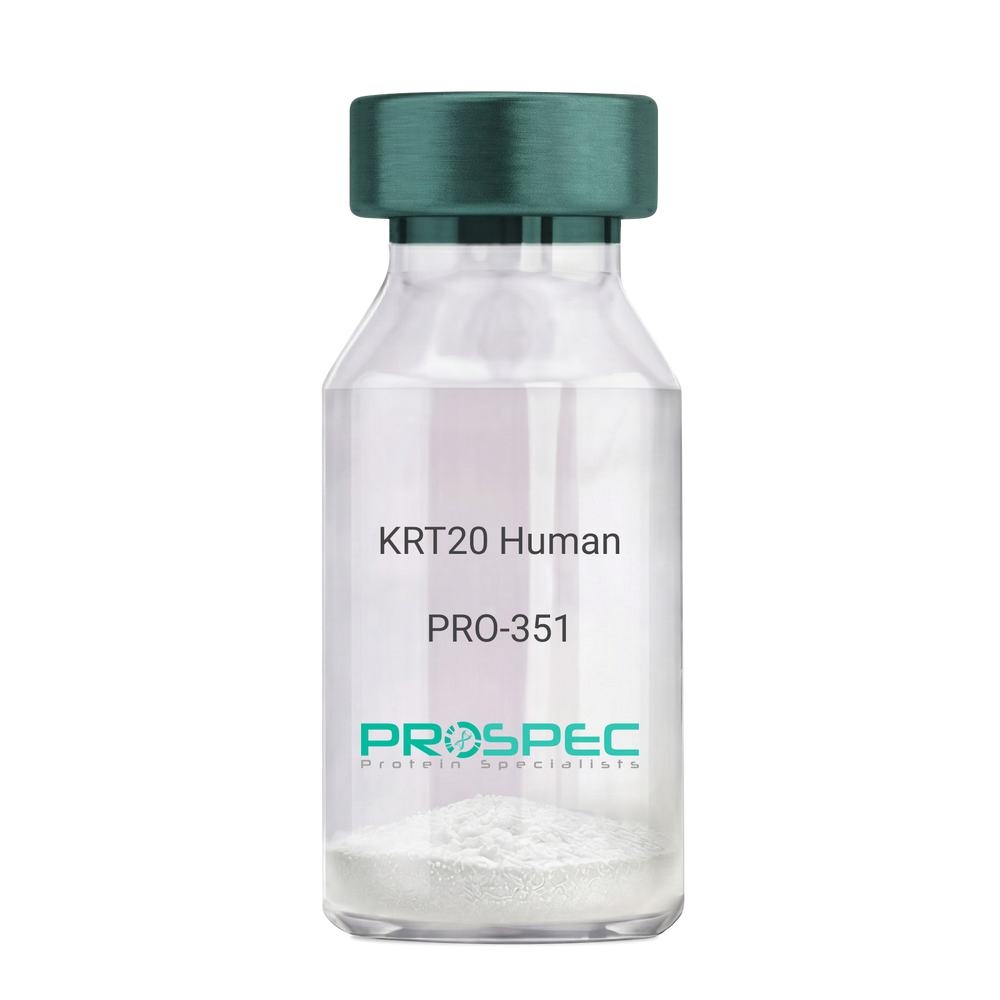
    Name :

    KRT20 Human

    Description:

    Cytokeratin 20 Human Recombinant

    Keratin type I cytoskeletal 20, Cytokeratin-20, CK-20, Keratin-20, K20, Protein IT, KRT20, CD20, CK20, KRT21, MGC35423.

    Product # :

    PRO-351

    Price :

    Quantity :

    Shipping Method :

    Room Temp Icon

    Shipped at Room temp

    Add To Cart

    More Info

    • description
    • source
    • formulation
    • purity
    • More Info

    Description

    Cytokeratin 20 Human Recombinant produced in E.Coli is a single,non-glycosylated polypeptide chain having a molecular mass of 48,553 Dalton. The KRT20 is purified by proprietary chromatographic techniques.

    Source

    Escherichia Coli.

    Formulation

    The protein (1mg/1ml) was lyophilized after from a sterile solution containing 30mM Tris-HCL pH-8, 9.5M urea, 2mM DDT, 2mM EDTA and 10mM methylammonium chloride.

    Purity

    Greater than 95.0% as determined by SDS-PAGE.

    More Info

    • Introduction

      KRT20 is a member of the keratin family. The keratins are intermediate filament proteins responsible for the structural integrity of epithelial cells and are subdivided into cytokeratins and hair keratins. The type I cytokeratins consist of acidic proteins which are arranged in pairs of heterotypic keratin chains. This cytokeratin is a major cellular protein of mature enterocytes and goblet cells and is specifically expressed in the gastric and intestinal mucosa. The type I cytokeratin genes are clustered in a region of chromosome 17q12-q21.

    • Synonyms

      Keratin type I cytoskeletal 20, Cytokeratin-20, CK-20, Keratin-20, K20, Protein IT, KRT20, CD20, CK20, KRT21, MGC35423.

    • Physical Appearance

      Sterile Filtered White lyophilized (freeze-dried) powder.

    • Stability

      Lyophilized KRT20 although stable at room temperature for 3 weeks, should be stored desiccated below -18°C. Upon reconstitution KRT20 should be stored at 4°C between 2-7 days and for future use below -18°C.For long term storage it is recommended to add a carrier protein (0.1% HSA or BSA).Please prevent freeze-thaw cycles.

    • Solubility

      It is recommended to reconstitute the lyophilized KRT20 in sterile 18MΩ-cm H2O not less than 100µg/ml, which can then be further diluted to other aqueous solutions.

    • Reconstitution to filaments

      Performed by mixing equimolar amounts of cytokeratins of type I and type II at concentrations of approx. 0.5 mg/ml, both dissolved in 9.5 M urea buffer (see above). Protofilaments and filament complexes are obtained by dialyzing the resulting polypeptide solution stepwise to a concentration of 4 M urea and then to low salt condition (50 mM NaCI, 2 mM dithiothreitol, 10 mM Tris-HCI, pH 7.4). For immunization purposes, the solution can be further dialyzed against PBS (phosphate buffered saline, e.g. Dulbecco's PBS).

    ProSpec's products are furnished for LABORATORY RESEARCH USE ONLY. The product may not be used as drugs, agricultural or pesticidal products, food additives or household chemicals.

    Krt20 Human
  • View Data Sheet

    Name :

    STUB1 Human

    Description:

    STIP1 Homology and U-Box Containing Protein 1 Human Recombinant

    CHIP, UBOX1, HSPABP2, NY-CO-7, SDCCAG7, STUB1, STIP1 homology and U box-containing protein 1, Carboxy terminus of Hsp70-interacting protein, E3 ubiquitin-protein ligase CHIP, CLL-associated antigen KW-8, Antigen NY-CO-7.

    Product # :

    HSP-019

    Price :

    Quantity :

    Shipping Method :

    Ice Icon

    Shipped with Ice Packs

    Add To Cart

    More Info

    • description
    • source
    • formulation
    • purity
    • More Info

    Description

    STUB1 Human Recombinant produced in E.Coli is a single, non-glycosylated polypeptide chain containing 303 amino acids and having a molecular mass of 34.8 kDa.STUB1 is expressed and purified by proprietary chromatographic techniques.

    Source

    Escherichia Coli.

    Formulation

    The STUB1 protein solution contains 20mM Tris-HCl, pH-7.5, 10% glycerol and 5mM DTT.

    Purity

    Greater than 90.0% as determined by SDS-PAGE.

    More Info

    • Introduction

      STUB1, is a cytoplasmic protein whose amino acid sequence is highly preserved across species. STUB1 interacts with the molecular chaperones Hsc70-Hsp70 and Hsp90 through its TPR domain, whereas its U-box domain contains its E3 ubiquitin ligase activity. STUB1 interaction with these molecular chaperones lead to in client substrate ubiquitylation and degradation by the proteasome. therefore, STUB1 acts to tilt the folding-refolding mechanism towards the degradative pathway, and it serves as a link between the two. STUB1 inhibits anchorage-independent cell growth and metastatic potential by degrading oncogenic proteins including SRC-3. Inhibition of tyrosine kinase activity of Her-2/neu by quercetin specifies an lateration in the Her-2/neu structure which promotes STUB1 recruitments and down-regulation of Her-2/neu. STUB1 recognizes and mediates degradation of toxic, oligomeric forms of alphaSyn.

    • Synonyms

      CHIP, UBOX1, HSPABP2, NY-CO-7, SDCCAG7, STUB1, STIP1 homology and U box-containing protein 1, Carboxy terminus of Hsp70-interacting protein, E3 ubiquitin-protein ligase CHIP, CLL-associated antigen KW-8, Antigen NY-CO-7.

    • Physical Appearance

      Sterile filtered colorless solution.

    • Stability

      Store at 4°C if entire vial will be used within 2-4 weeks. Store, frozen at -20°C for longer periods of time. For long term storage it is recommended to add a carrier protein (0.1% HSA or BSA). Avoid multiple freeze-thaw cycles.

    • Amino Acid Sequence

      MKGKEEKEGG ARLGAGGGSP EKSPSAQELK EQGNRLFVGR KYPEAAACYG RAITRNPLVA VYYTNRALCY LKMQQHEQAL ADCRRALELD GQSVKAHFFL GQCQLEMESY DEAIANLQRA YSLAKEQRLN FGDDIPSALR IAKKKRWNSI EERRIHQESE LHSYLSRLIA AERERELEEC QRNHEGDEDD SHVRAQQACI EAKHDKYMAD MDELFSQVDE KRKKRDIPDY LCGKISFELM REPCITPSGI TYDRKDIEEH LQRVGHFDPV TRSPLTQEQL IPNLAMKEVI DAFISENGWV EDY.

    ProSpec's products are furnished for LABORATORY RESEARCH USE ONLY. The product may not be used as drugs, agricultural or pesticidal products, food additives or household chemicals.

    Stub1 Human
  • View Data Sheet

    Name :

    SPRY4 Human

    Description:

    Sprouty Homolog 4 Human Recombinant

    Protein sprouty homolog 4, SPRY4, Sprouty Homolog 4, Spry-4, Protein sprouty homolog 4 isoform 2, Sprouty homolog 4 (Drosophila).

    Product # :

    PRO-1698

    Price :

    Quantity :

    Shipping Method :

    Ice Icon

    Shipped with Ice Packs

    Add To Cart

    More Info

    • description
    • source
    • formulation
    • purity
    • More Info

    Description

    SPRY4 Human Recombinant produced in E.coli is a single, non-glycosylated polypeptide chain containing 322 amino acids (1-299) and having a molecular mass of 34.9 kDa.SPRY4 is fused to a 23 amino acid His-tag at N-terminus & purified by proprietary chromatographic techniques.

    Source

    Escherichia Coli.

    Formulation

    The SPRY4 solution (1mg/ml) contains 20mM Tris-HCl buffer (pH 8.0), 10% glycerol and 0.4M Urea.

    Purity

    Greater than 85.0% as determined by SDS-PAGE.

    More Info

    • Introduction

      Sprouty Homolog 4 (SPRY4) is an inhibitor of the receptor-transduced mitogen-activated protein kinase (MAPK) signaling pathway. SPRY4 is positioned upstream of RAS activation. SPRY4 protein functions include suppressing the EGFR-transduced MAPK signaling pathway as well as impairing the formation of GTP-Ras.

    • Synonyms

      Protein sprouty homolog 4, SPRY4, Sprouty Homolog 4, Spry-4, Protein sprouty homolog 4 isoform 2, Sprouty homolog 4 (Drosophila).

    • Physical Appearance

      Sterile Filtered colorless solution.

    • Stability

      Store at 4°C if entire vial will be used within 2-4 weeks. Store, frozen at -20°C for longer periods of time. For long term storage it is recommended to add a carrier protein (0.1% HSA or BSA).Avoid multiple freeze-thaw cycles.

    • Amino Acid Sequence

      MGSSHHHHHH SSGLVPRGSH MGSMEPPIPQ SAPLTPNSVM VQPLLDSRMS HSRLQHPLTI LPIDQVKTSH VENDYIDNPS LALTTGPKRT RGGAPELAPT PARCDQDVTH HWISFSGRPS SVSSSSSTSS DQRLLDHMAP PPVADQASPR AVRIQPKVVH CQPLDLKGPA VPPELDKHFL LCEACGKCKC KECASPRTLP SCWVCNQECL CSAQTLVNYG TCMCLVQGIF YHCTNEDDEG SCADHPCSCS RSNCCARWSF MGALSVVLPC LLCYLPATGC VKLAQRGYDR LRRPGCRCKH TNSVICKAAS GDAKTSRPDK PF.

    ProSpec's products are furnished for LABORATORY RESEARCH USE ONLY. The product may not be used as drugs, agricultural or pesticidal products, food additives or household chemicals.

    Spry4 Human
  • View Data Sheet

    Name :

    BAIAP2 Human

    Description:

    BAI1-Associated Protein 2 Human Recombinant

    Brain-specific angiogenesis inhibitor 1-associated protein 2, BAI1-associated protein 2, Protein BAP2, Fas ligand-associated factor 3, FLAF3, IRS-58, IRSp53/58, IRSP53.

    Product # :

    PRO-1022

    Price :

    Quantity :

    Shipping Method :

    Ice Icon

    Shipped with Ice Packs

    Add To Cart

    More Info

    • description
    • source
    • formulation
    • purity
    • More Info

    Description

    BAIAP2 Human Recombinant produced in E.coli is a single, non-glycosylated polypeptide chain containing 530 amino acids (1-522) and having a molecular mass of 58.4kDa.BAIAP2 is fused to an 8 amino acid His-tag at C-terminus & purified by proprietary chromatographic techniques.

    Source

    E.coli.

    Formulation

    The BAIAP2 solution (0.5mg/ml) contains 20mM Tris-HCl buffer (pH 8.0), 100mM NaCl, 1mM DTT and 30% glycerol.

    Purity

    Greater than 90% as determined by SDS-PAGE.

    More Info

    • Introduction

      BAIAP2 is a ubiquitous regulator of the actin cytoskeleton. Controled by the Rho-family GTPases BAIAP2 facilitates filopodia development. BAIAP2 is expressed in the cytoplasm and binds small membrane-bound G-proteins to cytoplasmic effector proteins. BAIAP2 was identified as interacting with the dentatorubral-pallidoluysian atrophy gene, which is related to an autosomal dominant neurodegenerative disease.

    • Synonyms

      Brain-specific angiogenesis inhibitor 1-associated protein 2, BAI1-associated protein 2, Protein BAP2, Fas ligand-associated factor 3, FLAF3, IRS-58, IRSp53/58, IRSP53.

    • Physical Appearance

      Sterile Filtered colorless solution.

    • Stability

      Store at 4°C if entire vial will be used within 2-4 weeks. Store, frozen at -20°C for longer periods of time. For long term storage it is recommended to add a carrier protein (0.1% HSA or BSA).Avoid multiple freeze-thaw cycles.

    • Amino Acid Sequence

      MSLSRSEEMH RLTENVYKTI MEQFNPSLRN FIAMGKNYEK ALAGVTYAAK GYFDALVKMG ELASESQGSK ELGDVLFQMA EVHRQIQNQL EEMLKSFHNE LLTQLEQKVE LDSRYLSAAL KKYQTEQRSK GDALDKCQAE LKKLRKKSQG SKNPQKYSDK ELQYIDAISN KQGELENYVS DGYKTALTEE RRRFCFLVEK QCAVAKNSAA YHSKGKELLA QKLPLWQQAC ADPSKIPERA VQLMQQVASN GATLPSALSA SKSNLVISDP IPGAKPLPVP PELAPFVGRM SAQESTPIMN GVTGPDGEDY SPWADRKAAQ PKSLSPPQSQ SKLSDSYSNT LPVRKSVTPK NSYATTAENK TLPRSSSMAA GLERNGRMRV KAIFSHAAGD NSTLLSFKEG DLITLLVPEA RDGWHYGESE KTKMRGWFPF SYTRVLDSDG SDRLHMSLQQ GKSSSTGNLL DKDDLAIPPP DYGAASRAFP AQTASGFKQR PYSVAVPAFS QGLDDYGARS MSSGSGTLVS TVVEHHHHHH

    ProSpec's products are furnished for LABORATORY RESEARCH USE ONLY. The product may not be used as drugs, agricultural or pesticidal products, food additives or household chemicals.

    Baiap2 Human
  • View Data Sheet

    Name :

    CST7 Human

    Description:

    Cystatin 7 Human Recombinant

    Cystatin-F, Cystatin-7, Cystatin-like metastasis-associated protein, CMAP, Leukocystatin, Cystatin 7, CST7, CMAP.

    Product # :

    PRO-2222

    Price :

    Quantity :

    Shipping Method :

    Ice Icon

    Shipped with Ice Packs

    Add To Cart

    More Info

    • description
    • source
    • formulation
    • purity
    • More Info

    Description

    CST7 Human Recombinant produced in E. coli is a single polypeptide chain containing 132 amino acids (20-145) and having a molecular mass of 15.3kDa.CST7 is fused to a 7 amino acid His-tag at C-terminus & purified by proprietary chromatographic techniques.

    Source

    Escherichia Coli.

    Formulation

    The CST7 solution (0.5mg/1ml) contains phosphate buffered saline (pH7.4).

    Purity

    Greater than 95.0% as determined by SDS-PAGE.

    More Info

    • Introduction

      Cystatin 7 (CST7) is a glycosylated cysteine protease inhibitor with a putative role in immune regulation through inhibition of a unique target in the hematopoietic system. Cystatin-7 is comprised of multiple cystatin-like sequences. The superfamily is comprised of 3 inhibitory families: the type 1 cystatins (stefins), type 2 cystatins and the kininogens. Some members are active cysteine protease inhibitors, while others have lost or possibly never had this inhibitory activity. Type 2 cystatin proteins are a class of cysteine proteinase inhibitors found in various human fluids and secretions. CST7 protein expression has been observed in numerous human cancer cell lines established from malignant tumors.

    • Synonyms

      Cystatin-F, Cystatin-7, Cystatin-like metastasis-associated protein, CMAP, Leukocystatin, Cystatin 7, CST7, CMAP.

    • Physical Appearance

      Sterile Filtered clear solution.

    • Stability

      Store at 4°C if entire vial will be used within 2-4 weeks. Store, frozen at -20°C for longer periods of time. For long term storage it is recommended to add a carrier protein (0.1% HSA or BSA).Avoid multiple freeze-thaw cycles.

    • Amino Acid Sequence

      GPSPDTCSQD LNSRVKPGFP KTIKTNDPGV LQAARYSVEK FNNCTNDMFL FKESRITRAL VQIVKGLKYM LEVEIGRTTC KKNQHLRLDD CDFQTNHTLK QTLSCYSEVW VVPWLQHFEV PVLRCHHHHH HH.

    ProSpec's products are furnished for LABORATORY RESEARCH USE ONLY. The product may not be used as drugs, agricultural or pesticidal products, food additives or household chemicals.

    Cst7 Human
  • View Data Sheet

    Name :

    DCUN1D2 Human

    Description:

    DCN1 Defective in Cullin Neddylation 1 Domain Containing 2 Human Recombinant

    DCN1-like protein 2, DCUN1 domain-containing protein 2, Defective in cullin neddylation protein 1-like protein 2, DCUN1D2, C13orf17, DCUN1L2.

    Product # :

    PRO-899

    Price :

    Quantity :

    Shipping Method :

    Ice Icon

    Shipped with Ice Packs

    Add To Cart

    More Info

    • description
    • source
    • formulation
    • purity
    • More Info

    Description

    DCUN1D2 Human Recombinant produced in E.Coli is a single, non-glycosylated polypeptide chain containing 279 amino acids (1-259 a.a.) and having a molecular mass of 32.3kDa.DCUN1D2 is fused to a 20 amino acid His-tag at N-terminus & purified by proprietary chromatographic techniques.

    Source

    Escherichia Coli.

    Formulation

    DCUN1D2 protein solution (1mg/ml) containing 20mM Tris-HCl buffer (pH 8.0), 1mM DTT, 30% glycerol and 0.1M NaCl.

    Purity

    Greater than 95.0% as determined by SDS-PAGE.

    More Info

    • Introduction

      DCN1-like protein 2 (DCUN1D2) which contains one DCUN1 domain and 1 UBA-like domain, may have a role in the neddylation of cullins which regulate SCF-type ubiquitin ligase complexes. The gene encoding Dcun1D2 is located on human chromosome 13. Chromosome 13 contains major tumor suppressor genes, including BRCA2 and RB1, which are linked with breast cancer susceptibility and retinoblastoma, respectively.

    • Synonyms

      DCN1-like protein 2, DCUN1 domain-containing protein 2, Defective in cullin neddylation protein 1-like protein 2, DCUN1D2, C13orf17, DCUN1L2.

    • Physical Appearance

      Sterile Filtered clear solution.

    • Stability

      Store at 4°C if entire vial will be used within 2-4 weeks. Store, frozen at -20°C for longer periods of time. For long term storage it is recommended to add a carrier protein (0.1% HSA or BSA).Avoid multiple freeze-thaw cycles.

    • Amino Acid Sequence

      MGSSHHHHHH SSGLVPRGSH MHKLKSSQKD KVRQFMACTQ AGERTAIYCL TQNEWRLDEA TDSFFQNPDS LHRESMRNAV DKKKLERLYG RYKDPQDENK IGVDGIQQFC DDLSLDPASI SVLVIAWKFR AATQCEFSRK EFLDGMTELG CDSMEKLKAL LPRLEQELKD TAKFKDFYQF
      TFTFAKNPGQ KGLDLEMAVA YWKLVLSGRF KFLDLWNTFL MEHHKRSIPR DTWNLLLDFG NMIADDMSNY DEEGAWPVLI DDFVEYARPV VTGGKRSLF.

    ProSpec's products are furnished for LABORATORY RESEARCH USE ONLY. The product may not be used as drugs, agricultural or pesticidal products, food additives or household chemicals.

    Dcun1D2 Human
  • View Data Sheet

    Name :

    AMBP

    Description:

    Alpha-1 Microglobulin Human Recombinant

    Alpha-1-microglobulin/bikunin precursor, HCP, ITIL, ITI, EDC1, HI30, IATIL, ITILC, UTI, A1M, bikunin, complex-forming glycoprotein heterogeneous in charge, growth-inhibiting protein 19, inter-alpha-trypsin inhibitor light chain, protein AMBP, protein HC, trypstatin, uristatin, uronic-acid-rich protein.

    Product # :

    PRO-957

    Price :

    Quantity :

    Shipping Method :

    Ice Icon

    Shipped with Ice Packs

    Add To Cart

    More Info

    • description
    • source
    • formulation
    • purity
    • More Info

    Description

    AMBP Human Recombinant produced in E.coli is a single, non-glycosylated polypeptide chain containing 205 amino acids (20-203) and having a molecular mass of 23.1 kDa.AMBP is fused to a 21 amino acid His-tag at N-terminus & purified by proprietary chromatographic techniques.

    Source

    E.coli.

    Formulation

    The AMBP solution (0.5mg/ml) contains 20mM Tris-HCl buffer (pH 8.0), 1mM DTT, 0.1M NaCl and 10% glycerol.

    Purity

    Greater than 90% as determined by SDS-PAGE.

    More Info

    • Introduction

      Alpha 1-microglobulin (A1M) is a lipocalin superfamily member (kernal lipocalins). A1M is a low molecular weight protein component of plasma. A1M is distributed in plasma and extravascular compartments of all organs. Alpha-1 Microglobulin is found in mammals, birds, amphibians and fish. The primary sites of A1M synthesis are the liver and the kidney. Around the opening of the lipocalin pocket three lysyl residues are situated; those residues carry yellow-brown modification derived from the binding and degradation of heme and kynurenin (a tryptophan metabolite). A1-Microglobulin’s reductase and dehydrogenase have broad biological substrate specificity properties due to its’ free cysteine side-chain which is located in a flexible loop. Alpha-1-microglobulin is glycosylated by three separate carbohydrate chains: two complex carbohydrates which are N-linked to asparagines at residues 17 and 96, and the other simple carbohydrate which is O-linked to threonine at position 5. The carbohydrates comprise 22% of the total molecular mass of the protein. The glycosylation varies between species.
      A1M exists in two forms- a free form and complexed to other macromolecules: in humans- complexed to immunoglobulin A (IgA), in rat- complexed to alpha-1-inhibitor-3. Free A1M is exceptionally heterogeneous in charge (therefore also known as protein HC), and is found tightly linked to a chromophore. The free Alpha-1-microglobulin is a monomeric protein composed of one 188 residue polypeptide and contains three cysteines, two of which (residues 75 and 173) form a conserved intra-molecular disulphide link. The chromophoric group is covalently bound to the free cysteine residue at position 34. A1M binds retinol as a major ligand, but this is probably distinct from its covalent chromophore.
      Half of all human plasma A1M (approximately 0.03mg/ml) forms a 1:1 complex with about 5% of plasma immunoglobulin A. The resulting macromolecular complexes’ molecular weight is 200000, and a plasma concentration of 0.3mg/ml. The complex can exhibit both antibody activity and affect many of the biological actions of free Alpha-1-microglobulin.
      Alpha-1-microglobulin was first discovered in pathological human urine.
      It was suggested that A1M might be involved in tissue defense against reactive oxygen species, oxidation by heme and kynurenin. Evidence also suggests that A1M functions in the regulation of the immune system. Other functions include inhibition of stimulation of cultured lymphocytes by protein antigens; induction of cell division of lymphocytes, a mitogenic effect that can either be enhanced or inhibited by the action of other plasma components; inhibition of neutrophil granulocyte migration in vitro; and inhibition of chemotaxis.

    • Synonyms

      Alpha-1-microglobulin/bikunin precursor, HCP, ITIL, ITI, EDC1, HI30, IATIL, ITILC, UTI, A1M, bikunin, complex-forming glycoprotein heterogeneous in charge, growth-inhibiting protein 19, inter-alpha-trypsin inhibitor light chain, protein AMBP, protein HC, trypstatin, uristatin,
      uronic-acid-rich protein.

    • Physical Appearance

      Sterile Filtered colorless solution.

    • Stability

      Store at 4°C if entire vial will be used within 2-4 weeks. Store, frozen at -20°C for longer periods of time. For long term storage it is recommended to add a carrier protein (0.1% HSA or BSA).Avoid multiple freeze-thaw cycles.

    • Amino Acid Sequence

      MGSSHHHHHH SSGLVPRGSH MGPVPTPPDN IQVQENFNIS RIYGKWYNLA IGSTCPWLKK IMDRMTVSTL VLGEGATEAE ISMTSTRWRK GVCEETSGAY EKTDTDGKFL YHKSKWNITM ESYVVHTNYD EYAIFLTKKF SRHHGPTITA KLYGRAPQLR ETLLQDFRVV AQGVGIPEDS IFTMADRGEC VPGEQEPEPI LIPRV.

    ProSpec's products are furnished for LABORATORY RESEARCH USE ONLY. The product may not be used as drugs, agricultural or pesticidal products, food additives or household chemicals.

    Ambp Human
  • View Data Sheet

    Name :

    FABP1 Mouse

    Description:

    Fatty Acid Binding Protein-1 Mouse Recombinant

    Fatty acid-binding protein 1 liver, L-FABP, FABPL, FABP-1, FABP1, Z-protein.

    Product # :

    PRO-1121

    Price :

    Quantity :

    Shipping Method :

    Room Temp Icon

    Shipped at Room temp

    Add To Cart

    More Info

    • description
    • source
    • formulation
    • purity
    • More Info

    Description

    Fatty Acid Binding Protein-1 Recombinant Mouse produced in E.Coli is a single, non-glycosylated polypeptide chain containing 127 amino acids and having a molecular mass of 14.2kDa. The FABP1 is purified by proprietary chromatographic techniques.

    Source

    Escherichia Coli.

    Formulation

    Lyophilized from a 0.2µm filtered concentrated solution in PBS, pH 7.4.

    Purity

    Greater than 95.0% as determined by:
    (a) Analysis by RP-HPLC.
    (b) Analysis by SDS-PAGE.

    More Info

    • Introduction

      FABP1 (Fatty acid binding protein1) encodes the fatty acid binding protein found in liver. FABP1 is composed of ten antiparallel beta strands that form a barrel with a bigger binding pocket than the other FABPs allowing it to accommodate two fatty acid. This protein binds free fatty acids and their coenzyme A derivatives, bilirubin, and some other small molecules in the cytoplasm; it may be involved in intracellular lipid transport and metabolism.

    • Synonyms

      Fatty acid-binding protein 1 liver, L-FABP, FABPL, FABP-1, FABP1, Z-protein.

    • Physical Appearance

      Sterile Filtered White lyophilized (freeze-dried) powder.

    • Stability

      Lyophilized FABP1 although stable at room temperature for 3 weeks, should be stored desiccated below -18°C. Upon reconstitution FABP1 should be stored at 4°C between 2-7 days and for future use below -18°C.Please prevent freeze-thaw cycles.

    • Solubility

      It is recommended to reconstitute the lyophilized FABP1 in sterile 18MΩ-cm H2O not less than 100µg/ml, which can then be further diluted to other aqueous solutions.

    • Amino Acid Sequence

      MNFSGKYQLQ SQENFEPFMK AIGLPEDLIQ KGKDIKGVSE IVHEGKKIKL TITYGPKVVR NEFTLGEECE LETMTGEKVK AVVKLEGDNK MVTTFKGIKS VTELNGDTIT NTMTLGDIVY KRVSKRI.

    ProSpec's products are furnished for LABORATORY RESEARCH USE ONLY. The product may not be used as drugs, agricultural or pesticidal products, food additives or household chemicals.

    Fabp1 Mouse
  • View Data Sheet

    Name :

    ASF1A Human

    Description:

    ASF1 Anti-Silencing Function 1 Homolog A Human Recombinant

    CGI-98, HSPC146, DKFZp547E2110, ASF1A, Histone chaperone ASF1A, Anti-silencing function protein 1 homolog A, hAsf1, hAsf1a, CCG1-interacting factor A, CIA, hCIA.

    Product # :

    PRO-682

    Price :

    Quantity :

    Shipping Method :

    Ice Icon

    Shipped with Ice Packs

    Add To Cart

    More Info

    • description
    • source
    • formulation
    • purity
    • More Info

    Description

    ASF1A Human Recombinant produced in E.Coli is a single, non-glycosylated polypeptide chain containing 240 amino acids (1-204 a.a.) and having a molecular mass of 27kDa.ASF1A is fused to a 36 amino acid His Tag and purified by proprietary chromatographic techniques.

    Source

    Escherichia Coli.

    Formulation

    The ASF1A protein solution contains 20mM Tris-HCl, pH-8, 1mM DTT and 10% glycerol.

    Purity

    Greater than 90.0% as determined by SDS-PAGE.

    More Info

    • Introduction

      ASF1A is part of the H3/H4 family of histone chaperone proteins corresponding to the anti-silencing function-1 gene in yeast. ASF1A is an important element of the histone donor complex that functions in nucleosome assembly. ASF1A interacts with histones H3 and H4, and functions together with a chromatin assembly factor during DNA replication and repair. Deletion of ASF1A in yeast and Drosophila confers sensitivity to various DNA damaging agents and inhibitors of DNA replication, increases genomic instability and sister chromatid exchange, and activates the DNA damage checkpoint.

    • Synonyms

      CGI-98, HSPC146, DKFZp547E2110, ASF1A, Histone chaperone ASF1A, Anti-silencing function protein 1 homolog A, hAsf1, hAsf1a, CCG1-interacting factor A, CIA, hCIA.

    • Physical Appearance

      Sterile filtered colorless solution.

    • Stability

      Store at 4°C if entire vial will be used within 2-4 weeks. Store, frozen at -20°C for longer periods of time. For long term storage it is recommended to add a carrier protein (0.1% HSA or BSA).Avoid multiple freeze-thaw cycles.

    • Amino Acid Sequence

      MRGSHHHHHH GMASMTGGQQ MGRDLYDDDD KDRWGSMAKV QVNNVVVLDN PSPFYNPFQF EITFECIEDL SEDLEWKIIY VGSAESEEYD QVLDSVLVGP VPAGRHMFVF QADAPNPGLI PDADAVGVTV VLITCTYRGQ EFIRVGYYVN NEYTETELRE NPPVKPDFSK LQRNILASNPRVTRFHINWE DNTEKLEDAE SSNPNLQSLL STDALPSASK GWSTSENSLN VMLESHMDCM.

    ProSpec's products are furnished for LABORATORY RESEARCH USE ONLY. The product may not be used as drugs, agricultural or pesticidal products, food additives or household chemicals.

    Asf1A Human
  • View Data Sheet

    Name :

    ANXA1 Human

    Description:

    Annexin A1 Human Recombinant

    ANX1, LPC1, ANXA1, Lipocortin I, Calpactin II, Chrombindin-9, p35, Annexin-1, Phospholipase A2 inhibitory protein, Annexin I, Annexin A1.

    Product # :

    PRO-679

    Price :

    Quantity :

    Shipping Method :

    Ice Icon

    Shipped with Ice Packs

    Add To Cart

    More Info

    • description
    • source
    • formulation
    • purity
    • More Info

    Description

    ANXA1 produced in E.Coli is a single, non-glycosylated polypeptide chain containing 346 amino acids (1-346 a.a.) and having a molecular mass of 38.7 kDa.ANXA1 is purified by proprietary chromatographic techniques.

    Source

    Escherichia Coli.

    Formulation

    The ANXA1 protein solution contains 20mM Tris-HCl, pH-8, 100mM NaCl, 1mM DTT and 10% glycerol.

    Purity

    Greater than 90.0% as determined by SDS-PAGE.

    More Info

    • Introduction

      ANXA1 is part of the family of Ca(2+)-dependent phospholipid binding proteins which have a Mw between 35kDa-40kDa and are situated on the cytosolic face of the plasma membrane. ANXA1 protein has a Mw of 40kDa, with phospholipase A2 inhibitory activity to bind from two to four calcium ions with high affinity. Since phospholipase A2 is necessary for the biosynthesis of the potent mediators of inflammation, prostaglandins and leukotrienes, ANXA1 might have potential anti-inflammatory activity. ANXA1 promotes membrane fusion and iplays a role in exocytosis. The recognition of ANXA1 protein by immunocytochemical leads a simple, highly sensitive and specific assay for diagnosis of hairy cell leukemia.

    • Synonyms

      ANX1, LPC1, ANXA1, Lipocortin I, Calpactin II, Chrombindin-9, p35, Annexin-1, Phospholipase A2 inhibitory protein, Annexin I, Annexin A1.

    • Physical Appearance

      Sterile filtered colorless solution.

    • Stability

      Store at 4°C if entire vial will be used within 2-4 weeks. Store, frozen at -20°C for longer periods of time. For long term storage it is recommended to add a carrier protein (0.1% HSA or BSA).Avoid multiple freeze-thaw cycles.

    • Amino Acid Sequence

      MAMVSEFLKQ AWFIENEEQE YVQTVKSSKG GPGSAVSPYP TFNPSSDVAA LHKAIMVKGV DEATIIDILT KRNNAQRQQI KAAYLQETGK
      PLDETLKKAL TGHLEEVVLA LLKTPAQFDA DELRAAMKGL GTDEDTLIEI LASRTNKEIR DINRVYREEL KRDLAKDITS DTSGDFRNAL
      LSLAKGDRSE DFGVNEDLAD SDARALYEAG ERRKGTDVNV FNTILTTRSY PQLRRVFQKY TKYSKHDMNK VLDLELKGDI EKCLTAIVKCATSKPAFFAE KLHQAMKGVG TRHKALIRIM VSRSEIDMND IKAFYQKMYG ISLCQAILDE TKGDYEKILV ALCGGN.

    ProSpec's products are furnished for LABORATORY RESEARCH USE ONLY. The product may not be used as drugs, agricultural or pesticidal products, food additives or household chemicals.

    Anxa1 Human
  • View Data Sheet

    Name :

    SAP18 Human

    Description:

    Sin3A-Associated Protein 18kDa Human Recombinant

    Histone deacetylase complex subunit SAP18, Sin3-associated polypeptide 18 kDa, Sin3-associated polypeptide p18, Cell growth-inhibiting protein 38, 2HOR0202, SAP18, GIG38.

    Product # :

    PRO-707

    Price :

    Quantity :

    Shipping Method :

    Ice Icon

    Shipped with Ice Packs

    Add To Cart

    More Info

    • description
    • source
    • formulation
    • purity
    • More Info

    Description

    SAP18 Human Recombinant fused with 20 amino acid His tag at N-terminus produced in E.Coli is a single, non-glycosylated, polypeptide chain containing 173 amino acids (20- 172 a.a.) and having a molecular mass of 19.7 kDa.The SAP18 is purified by proprietary chromatographic techniques.

    Source

    Escherichia Coli.

    Formulation

    The SAP18 solution contains 20mM Tris-HCl buffer (pH8.0), 0.1M NaCl, 30% glycerol, 1mM DTT.

    Purity

    Greater than 90.0% as determined by SDS-PAGE.

    More Info

    • Introduction

      SAP18 is a component of the histone deacetylase complex which has a significant role in the regulation of eukaryotic gene expression. SAP18 directly interacts with SIN3 and enhances SIN3-mediated transcriptional repression once bound to the promoter. SAP18 plays an important part in gene-specific recruitment of the HDAC complex by a number of transcription factors including Gli, GAGA, and Bicoid. Histone acetylation is significant in the regulation of eukaryotic gene expression. Histone acetylation and deacetylation is catalyzed by multisubunit complexes. SAP18 is a component of the histone deacetylase complex, which includes SIN3, SAP30, HDAC1, HDAC2, RbAp46, RbAp48, and other polypeptides. SAP18 is a component of a splicing-dependent multiprotein EJC (exon junction complex) placed at splice junction on mRNAs.

    • Synonyms

      Histone deacetylase complex subunit SAP18, Sin3-associated polypeptide 18 kDa, Sin3-associated polypeptide p18, Cell growth-inhibiting protein 38, 2HOR0202, SAP18, GIG38.

    • Physical Appearance

      Sterile Filtered colorless solution.

    • Stability

      Store at 4°C if entire vial will be used within 2-4 weeks. Store, frozen at -20°C for longer periods of time. For long term storage it is recommended to add a carrier protein (0.1% HSA or BSA).Avoid multiple freeze-thaw cycles.

    • Amino Acid Sequence

      MGSSHHHHHH SSGLVPRGSH MAVESRVTQE EIKKEPEKPI DREKTCPLLL RVFTTNNGRH HRMDEFSRGN VPSSELQIYT WMDATLKELT SLVKEVYPEA RKKGTHFNFA IVFTDVKRPG YRVKEIGSTM SGRKGTDDSM TLQSQKFQIG DYLDIAITPP NRAPPPSGRM RPY.

    ProSpec's products are furnished for LABORATORY RESEARCH USE ONLY. The product may not be used as drugs, agricultural or pesticidal products, food additives or household chemicals.

    Sap18 Human
  • View Data Sheet

    Name :

    AGR3 Human

    Description:

    Anterior Gradient Protein 3 Homolog Human Recombinant

    Anterior gradient protein 3 homolog, AG-3, AG3, hAG-3, Breast cancer membrane protein 11, AGR3, BCMP11, UNQ642/PRO1272, HAG3, PDIA18.

    Product # :

    PRO-242

    Price :

    Quantity :

    Shipping Method :

    Ice Icon

    Shipped with Ice Packs

    Add To Cart

    More Info

    • description
    • source
    • formulation
    • purity
    • More Info

    Description

    AGR3 produced in E.Coli is a single, non-glycosylated polypeptide chain containing 169 amino acids (22-166 a.a) and having a molecular mass of 19.5kDa.AGR3 is fused to a 20 amino acid His-tag at N-terminus & purified by proprietary chromatographic techniques.

    Source

    Escherichia Coli.

    Formulation

    AGR3 protein solution (1mg/ml) containing 20mM Tris-HCl buffer (pH8.0), 20% glycerol, 0.1M NaCl and 1mM DTT.

    Purity

    Greater than 90.0% as determined by SDS-PAGE.

    More Info

    • Introduction

      Anterior gradient protein 3 homolog precursor (AGR3) is a secreted cytoplasmic protein that is involved in metastasis induction and p53 tumor suppressor inhibition. AGR3 may function as molecular marker and potential therapeutic target for hormone-responsive breast tumors.

    • Synonyms

      Anterior gradient protein 3 homolog, AG-3, AG3, hAG-3, Breast cancer membrane protein 11, AGR3, BCMP11, UNQ642/PRO1272, HAG3, PDIA18.

    • Physical Appearance

      Sterile Filtered colorless solution.

    • Stability

      Store at 4°C if entire vial will be used within 2-4 weeks. Store, frozen at -20°C for longer periods of time. For long term storage it is recommended to add a carrier protein (0.1% HSA or BSA). Avoid multiple freeze-thaw cycles.

    • Amino Acid Sequence

      MGSSHHHHHH SSGLVPRGSH MGSMIAIKKE KRPPQTLSRG WGDDITWVQT YEEGLFYAQK SKKPLMVIHH LEDCQYSQAL KKVFAQNEEI QEMAQNKFIM LNLMHETTDK NLSPDGQYVP RIMFVDPSLT VRADIAGRYS NRLYTYEPRD LPLLIENMKK ALRLIQSEL.

    ProSpec's products are furnished for LABORATORY RESEARCH USE ONLY. The product may not be used as drugs, agricultural or pesticidal products, food additives or household chemicals.

    Agr3 Human
  • View Data Sheet

    Name :

    SPA-Cys His

    Description:

    Staphylococcal Protein-A Cys Recombinant, His Tag

    Immunoglobulin G-binding protein A, IgG-binding protein A, Staphylococcal protein A, SPA.

    Product # :

    PRO-1923

    Price :

    Quantity :

    Shipping Method :

    Room Temp Icon

    Shipped at Room temp

    Add To Cart

    More Info

    • description
    • source
    • formulation
    • purity
    • More Info

    Description

    SPA-Cys His Recombinant produced in E.Coli is a single non-glycosylated polypeptide chain with 6×His-tag and a Cys on C-terminus. SPA-Cys His is comprised of 5 IgG-binding domains E-D-A-B-C aligned in series containing 307 amino acids and having a molecular mass of 34.8kDa containing little or no carbohydrate. Cell wall binding region, cell membrane binding region and albumin binding region were removed to ensure the highest specific IgG binding.

    Source

    Escherichia Coli.

    Formulation

    SPA protein was lyophilized with no additives.

    Purity

    Greater than 96.0% as determined by: (a) Analysis by RP-HPLC.(b) Analysis by SDS-PAGE.

    More Info

    • Introduction

      Protein A is a cell wall component produced by several strains of Staphylococcus aureus. The recombinant Protein A is genetically engineered protein and holds 5 IgG-binding regions of protein A. Recombinant Protein A functions basically the same as native Protein A and is perfect for purification of polyclonal or monoclonal IgG antibodies. Protein A binds to human IgG1, IgG2 and IgG4, mouse IgG2a, IgG2b and IgG3 and rat IgG2c. Protein A also binds to total IgG from rabbit, pig, dog, cat, and guinea pig.

    • Synonyms

      Immunoglobulin G-binding protein A, IgG-binding protein A, Staphylococcal protein A, SPA.

    • Physical Appearance

      Sterile Filtered White lyophilized (freeze-dried) powder.

    • Stability

      Lyophilized SPA although stable at room temperature for 3 weeks, should be stored desiccated below -18°C. Upon reconstitution SPA should be stored at 4°C between 2-7 days and for future use below -18°C. For long term storage it is recommended to add a carrier protein (0.1% HSA or BSA). Please prevent freeze-thaw cycles.

    • Solubility

      It is recommended to reconstitute the lyophilized SPA in sterile 18MΩ-cm H2O not less than 0.1mg/ml, which can then be further diluted to other aqueous solutions.

    • Amino Acid Sequence

      MNAAQHDEAQ QNAFYQVLNM PNLNADQRNG FIQSLKDDPS QSANVLGEAQ KLNDSQAPKA DAQQNNFNKD QQSAFYEILN MPNLNEAQRN GFIQSLKDDP SQSTNVLGEA KKLNESQAPK ADNNFNKEQQ NAFYEILNMP NLNEEQRNGF IQSLKDDPSQ SANLLSEAKK LNESQAPKAD NKFNKEQQNA FYEILHLPNL NEEQRNGFIQ SLKDDPSQSA NLLAEAKKLN DAQAPKADNK FNKEQQNAFY EILHLPNLTE EQRNGFIQSL KDDPSVSKEI LAEAKKLNDA QAPKEEDSLE HHHHHHC

    ProSpec's products are furnished for LABORATORY RESEARCH USE ONLY. The product may not be used as drugs, agricultural or pesticidal products, food additives or household chemicals.

    Spa Cys His
  • 1
  • …
  • 20
  • 21
  • 22
  • 23
  • 24
  • …
  • 42
Your browser does not support the video tag.

Products

  • Cytokines
  • Growth Factors
  • Chemokines
  • CD Antigens
  • Neurotrophins
  • Hormones
  • Enzymes
  • Viral Antigens
  • Recombinant Proteins
  • Natural Proteins
  • Monoclonal Antibodies
  • Polyclonal Antibodies
  • Thermal Packaging

About

  • Company
  • Founder
  • Contribution
  • Contact Us
  • My Account

Ordering

  • Ordering Method
  • Ordering - Credit Card
  • Ordering PO
  • Shipping Fees
  • FAQ's

Legal

  • Terms & Conditions
  • Privacy
  • Site Map
  • info@prospecbio.com
  • Facebook
  • Instagram
  • Linkedin Profile

© 2026 ProSpec-Tany TechnoGene Ltd. All Rights Reserved.

  • Choosing a selection results in a full page refresh.
  • Opens in a new window.