Search results
1000 results found for “cytokeratin”
Name
Description
Product #
Price
Quantity
Shipping Method
- View Data Sheet
Name :
IL 3 RatDescription:
Interleukin-3 Rat Recombinant
MCGF (Mast cell growth factor), Multi-CSF, HCGF, P-cell stimulation factor, IL-3, MGC79398, MGC79399.
Product # :
CYT-383Price :
Quantity :
Shipping Method :
Shipped at Room temp
More Info
- description
- source
- formulation
- purity
- biological activity
- More Info
Description
Interleukin-3 Rat Recombinant produced in E.Coli is a single, non-glycosylated polypeptide chain containing 144 amino acids and having a molecular mass of 16.3kDa. The IL-3 is purified by proprietary chromatographic techniques.
Source
Escherichia Coli.
Formulation
Interleukin-3 Rat was lyophilized from a 0.2µm filtered concentrated solution in PBS, pH 7.4.
Purity
Greater than 97.0% as determined by:
(a) Analysis by RP-HPLC.
(b) Analysis by SDS-PAGE.Biological Activity
The ED50 as determined by the dose-dependent stimulation of the proliferation of thymidine uptake by murine MC-9 cells is < 10 ng/ml, corresponding to a specific activity of >1.0 x 10⁵ units/mg.More Info
-
Introduction
Interleukin-3 is a pleiotropic cytokine produced primarily by activated T cells.
IL-3 is thought to function via specific cell surface receptors to stimulate the proliferation, differentiation and survival of haematopoietic cell lines. IL-3 has also been shown to affect the functional activity of a variety of other cell types including mast cells, eosinophils, megakaryocytes and basophils. -
Synonyms
MCGF (Mast cell growth factor), Multi-CSF, HCGF, P-cell stimulation factor, IL-3, MGC79398, MGC79399.
-
Physical Appearance
Sterile Filtered White lyophilized (freeze-dried) powder.
-
Stability
Lyophilized Interleukin-3 although stable at room temperature for 3 weeks, should be stored desiccated below -18°C. Upon reconstitution IL3 should be stored at 4°C between 2-7 days and for future use below -18°C.For long term storage it is recommended to add a carrier protein (0.1% HSA or BSA).Please prevent freeze-thaw cycles.
-
Solubility
It is recommended to reconstitute the lyophilized Interleukin 3 in sterile 18MΩ-cm H2O not less than 100µg/ml, which can then be further diluted to other aqueous solutions.
-
Amino Acid Sequence
MISDRGSDAH HLLRTLDCRT IALEILVKLP YPQVSGLNNS DDKANLRNST LRRVNLDEFL KSQEEFDSQD TTDIKSKLQK LKCCIPAAAS DSVLPGVYNK DLDDFKKKLR FYVIHLKDLQ PVSVSRPPQP TSSSDNFRPM TVEC.
ProSpec's products are furnished for LABORATORY RESEARCH USE ONLY. The product may not be used as drugs, agricultural or pesticidal products, food additives or household chemicals.
- View Data Sheet
Name :
IL 17 RatDescription:
Interleukin-17 Rat Recombinant
CTLA-8, IL-17, IL-17A, Cytotoxic T-lymphocyte-associated antigen 8, Interleukin-17A.
Product # :
CYT-542Price :
Quantity :
Shipping Method :
Shipped at Room temp
More Info
- description
- source
- formulation
- purity
- biological activity
- More Info
Description
Interleukin-17A Rat Recombinant produced in E.Coli is a homodimeric, non-glycosylated polypeptide chain having a molecular mass of 30 kDa. The IL-17A Rat is purified by proprietary chromatographic techniques.
Source
Escherichia Coli.
Formulation
Lyophilized from a concentrated (1mg/ml) solution containing 10mM NaCitrate, pH-3.0.
Purity
Greater than 97.0% as determined by:
(a) Analysis by RP-HPLC.
(b) Analysis by SDS-PAGE.Biological Activity
The ED50 as determined by dose-dependent induction of IL-6 by mouse NIH 3T3 fibroblasts is 0.44-0.66ng/ml.More Info
-
Introduction
IL17 is a proinflammatory cytokine produced by activated T cells. IL-17 regulates the activities of NF-kappaB and mitogen-activated protein kinases. Interleukin-17 can stimulate the expression of IL6 and cyclooxygenase-2 (PTGS2/COX-2), as well as enhance the production of nitric oxide (NO). High levels of IL-17 are associated with several chronic inflammatory diseases including rheumatoid arthritis, psoriasis and multiple sclerosis.
-
Synonyms
CTLA-8, IL-17, IL-17A, Cytotoxic T-lymphocyte-associated antigen 8, Interleukin-17A.
-
Physical Appearance
Sterile Filtered White lyophilized (freeze-dried) powder.
-
Stability
Lyophilized Interleukin Rat 17A although stable at room temperature for 3 weeks, should be stored desiccated below -18°C. Upon reconstitution Rat IL17 should be stored at 4°C between 2-7 days and for future use below -18°C. For long term storage it is recommended to add a carrier protein (0.1% HSA or BSA).Please prevent freeze-thaw cycles.
-
Solubility
It is recommended to reconstitute the lyophilized Interleukin Rat 17A in sterile 18MΩ-cm H2O not less than 100µg/ml, which can then be further diluted to other aqueous solutions.
-
Amino Acid Sequence
MAVLIPQSSV CPNAEANNFL QNVKVNLKVL NSLSSKASSR RPSDYLNRST SPWTLSRNED PDRYPSVIWE AQCRHQRCVN AEGKLDHHMN SVLIQQEILV LKREPEKCPF TFRVEKMLVG VGCTCVSSIV RHAS.
ProSpec's products are furnished for LABORATORY RESEARCH USE ONLY. The product may not be used as drugs, agricultural or pesticidal products, food additives or household chemicals.
- View Data Sheet
Name :
KGF 2 RatDescription:
Keratinocyte Growth Factor-2 Rat Recombinant
FGFA, FGF10, FGF-10, KGF-2, Fibroblast growth factor 10.
Product # :
CYT-127Price :
Quantity :
Shipping Method :
Shipped at Room temp
More Info
- description
- source
- formulation
- purity
- biological activity
- More Info
- sds-page
Description
KGF 2 Rat Recombinant produced in E.Coli is a single, non-glycosylated polypeptide chain containing 179 amino acids and having a molecular mass of 20.0kDa. The KGF 2 is purified by proprietary chromatographic techniques.
Source
Escherichia Coli.
Formulation
Lyophilized from a 0.2µm filtered concentrated solution in 1×PBS, pH 7.4 containing 5% trehalose.
Purity
Greater than 97.0% as determined by:
(a) Analysis by RP-HPLC.
(b) Analysis by SDS-PAGE.Biological Activity
Fully biologically active when compared to standard. The ED50 as determined by the dose-dependent stimulation of thymidine uptake by BaF3 cells expressing FGF receptors is <0.5ng/ml.sds-page
More Info
-
Introduction
KGF-2 is a member of the fibroblast growth factor (FGF) family. FGF family members possess broad mitogenic and cell survival activities, and are involved in a variety of biological processes, including embryonic development, cell growth, morphogenesis, tissue repair, tumor growth and invasion. FGF-10 exhibits mitogenic activity for keratinizing epidermal cells, but essentially no activity for fibroblasts, which is similar to the biological activity of FGF7. Studies of the mouse homolog of suggested that this gene is required for embryonic epidermal morphogenesis including brain development, lung morphogenesis, and initiation of lim bud formation. This gene is also implicated to be a primary factor in the process of wound healing.
-
Synonyms
FGFA, FGF10, FGF-10, KGF-2, Fibroblast growth factor 10.
-
Physical Appearance
Sterile Filtered White lyophilized (freeze-dried) powder.
-
Stability
Lyophilized KGF 2 although stable at room temperature for 3 weeks, should be stored desiccated below -18°C. Upon reconstitution KGF 2 should be stored at 4°C between 2-7 days and for future use below -18°C. For long term storage it is recommended to add a carrier protein (0.1% HSA or BSA).Please prevent freeze-thaw cycles.
-
Solubility
It is recommended to reconstitute the lyophilized KGF 2 Rat Recombinant in sterile 18M-cm H2O not less than 100µg/ml, which can then be further diluted to other aqueous solutions.
-
Amino Acid Sequence
QALGQDMVSP EATNSSSSSS SSSSSSSFSS PSSAGRHVRS YNHLQGDVRW RKLFSFTKYF LKIEKNGKVS GTKKENCPYS ILEITSVEIG VVAVKAINSN YYLAMNKKGK LYGSKEFNND CKLKERIEEN GYNTYASFNW QHNGRQMYVA LNGKGAPRRG QKTRRKNTSA HFLPMVVHS
ProSpec's products are furnished for LABORATORY RESEARCH USE ONLY. The product may not be used as drugs, agricultural or pesticidal products, food additives or household chemicals.
- View Data Sheet
Name :
Ferritin Human, FTLDescription:
Ferritin Human Recombinant, Light Chain
Ferritin, FTL, MGC71996, Ferritin light chain.
Product # :
PRO-650Price :
Quantity :
Shipping Method :
Shipped with Ice Packs
More Info
- description
- source
- formulation
- purity
- More Info
Description
Ferritin Human Recombinant Light Chain produced in E.Coli is a single, non-glycosylated polypeptide chain containing 175 amino acids and having a molecular mass of 20 kDa.
Source
Escherichia Coli.
Formulation
The protein solution (1mg/ml) contains 20mM Tris-HCl pH-7.5.
Purity
Greater than 90.0% as determined by SDS-PAGE.
More Info
-
Introduction
Ferritin is a fairly large, iron-storage heteropolymeric protein composed of 2 subunit types, light Ferritin & heavy Ferritin polypeptides, which is expressed in most kinds of cells and co-assemble in different proportion in a tissue-specific manner. Ferritin is composed of 24 self-assembled polypeptide subunits of the heavy and light ferritin chains and is characterized by the capacity to remove Fe from solution in the presence of oxygen.
Ferritin light polypeptide protein is the main intracellular iron storage protein in prokaryotes and eukaryotes. Variation in ferritin subunit composition influence the rates of iron uptake and release in various tissues. A key function of ferritin is the storage of iron in a soluble and nontoxic state. Defects in this light chain ferritin gene are associated with several neurodegenerative diseases and hyper ferrit anemia-cataract syndrome.
Ferritin stores iron in a soluble, nontoxic, readily accessible form. Ferritin is needed for iron homeostasis. Iron is taken up in the ferrous form and deposited as ferric hydroxides after it has been oxidized. -
Synonyms
Ferritin, FTL, MGC71996, Ferritin light chain.
-
Physical Appearance
Sterile Filtered solution.
-
Stability
Store at 4°C if entire vial will be used within 2-4 weeks. Store, frozen at -20°C for longer periods of time. For long term storage it is recommended to add a carrier protein (0.1% HSA or BSA).Avoid multiple freeze-thaw cycles.
-
Amino Acid Sequence
MSSQIRQNYS TDVEAAVNSL VNLYLQASYT YLSLGFYFDR DDVALEGVSH FFRELAEEKR EGYERLLKMQ NQRGGRALFQ DIKKPAEDEW GKTPDAMKAA MALEKKLNQA LLDLHALGSA RTDPHLCDFL ETHFLDEEVK LIKKMGDHLT NLHRLGGPEA GLGEYLFERL TLKHD.
ProSpec's products are furnished for LABORATORY RESEARCH USE ONLY. The product may not be used as drugs, agricultural or pesticidal products, food additives or household chemicals.
- View Data Sheet
Name :
FSTL1 HumanDescription:
Follistatin Like 1 Human Recombinant
Follistatin-related protein 1, Follistatin-like protein 1, FSTL1, FRP, Follistatin Like 1, FSL1.
Product # :
CYT-792Price :
Quantity :
Shipping Method :
Shipped with Ice Packs
More Info
- description
- source
- formulation
- purity
- More Info
- sds-page
Description
FSTL1 Human Recombinant produced in E. coli is a single polypeptide chain containing 309 amino acids (21-308) and having a molecular mass of 34.9 kDa.FSTL1 is fused to a 21 amino acid His-tag at N-terminus & purified by proprietary chromatographic techniques.
Source
E.coli.
Formulation
The FSTL1 solution (0.5mg/1ml) contains 20mM Tris-HCl buffer (pH 8.0), 0.15M NaCl, 20% glycerol and 1mM DTT.
Purity
Greater than 90% as determined by SDS-PAGE.
sds-page
More Info
-
Introduction
FSTL1 protein resembles follistatin, an ACTV-binding protein. FSTL1 is an autoantigen associated with rheumatoid arthritis and it holds an FS section, a follistatin-like sequence having 10 conserved cysteine residues.
-
Synonyms
Follistatin-related protein 1, Follistatin-like protein 1, FSTL1, FRP, Follistatin Like 1, FSL1.
-
Physical Appearance
Sterile Filtered colorless solution.
-
Stability
Store at 4°C if entire vial will be used within 2-4 weeks. Store, frozen at -20°C for longer periods of time. For long term storage it is recommended to add a carrier protein (0.1% HSA or BSA).Avoid multiple freeze-thaw cycles.
-
Amino Acid Sequence
MGSSHHHHHH SSGLVPRGSH MEEELRSKSK ICANVFCGAG RECAVTEKGE PTCLCIEQCK PHKRPVCGSN GKTYLNHCEL HRDACLTGSK IQVDYDGHCK EKKSVSPSAS PVVCYQSNRD ELRRRIIQWL EAEIIPDGWF SKGSNYSEIL DKYFKNFDNG DSRLDSSEFL KFVEQNETAI NITTYPDQEN NKLLRGLCVD ALIELSDENA DWKLSFQEFL KCLNPSFNPP EKKCALEDET YADGAETEVD CNRCVCACGN WVCTAMTCDG KNQKGAQTQT EEEMTRYVQE LQKHQETAEK TKRVSTKEI.
-
Background
What is the molecular weight/Mw of FSTL1 HUMAN Protein?
FSTL1 HUMAN Protein has a total Mw of 34.9kDa.
What is the source or expression system of FSTL1 HUMAN Protein?
Escherichia Coli.
What is the Purity of FSTL1 HUMAN Protein?
FSTL1 HUMAN Protein is >90% pure as determined by SDS-PAGE.
What is the Biological Activity of FSTL1 HUMAN Protein?
The biological functionality of FSTL1 HUMAN Protein will be determined in the future.
What is the amino acid sequence of FSTL1 HUMAN Protein?
MGSSHHHHHH SSGLVPRGSH MEEELRSKSK ICANVFCGAG RECAVTEKGE PTCLCIEQCK PHKRPVCGSN GKTYLNHCEL HRDACLTGSK IQVDYDGHCK EKKSVSPSAS PVVCYQSNRD ELRRRIIQWL EAEIIPDGWF SKGSNYSEIL DKYFKNFDNG DSRLDSSEFL KFVEQNETAI NITTYPDQEN NKLLRGLCVD ALIELSDENA DWKLSFQEFL KCLNPSFNPP EKKCALEDET YADGAETEVD CNRCVCACGN WVCTAMTCDG KNQKGAQTQT EEEMTRYVQE LQKHQETAEK TKRVSTKEI.
What applications can FSTL1 HUMAN Protein be used in?
FSTL1 HUMAN Protein can probably be used in western blot, ELISA and Lateral Flow.
What is the endotoxin level for FSTL1 HUMAN Protein?
The endotoxin level is minimal, FSTL1 HUMAN Protein was purified using conventional chromatography techniques.
ProSpec's products are furnished for LABORATORY RESEARCH USE ONLY. The product may not be used as drugs, agricultural or pesticidal products, food additives or household chemicals.
- View Data Sheet
Name :
Adiponectin Human, HisDescription:
Adiponectin Human Recombinant, His tag
Acrp30, AdipoQ, GBP-28, APM-1, ACDC.
Product # :
CYT-433Price :
Quantity :
Shipping Method :
Shipped at Room temp
More Info
- description
- source
- formulation
- purity
- More Info
Description
The Acrp30 Human is created as a recombinant protein with N-terminal fusion of His Tag. The Adiponectin His-Tagged Fusion Protein, produced in E. coli, is 26.4 kDa protein containing 230 amino acid residues of the Acrp30 Human and 12 additional amino acid residues - HisTag (underlined).
Source
Escherichia Coli.
Formulation
Acrp30 Human was filtered (0.4µm) and lyophilized from 0.5 mg/ml in 0.02M Tris buffer pH7.5, 0.15M NaCl.
Purity
Acrp30 Human purity is greater than 95% as determined by SDS-PAGE.
More Info
-
Introduction
Adiponectin, also referred to as Acrp30, AdipoQ and GBP-28, is a recently discovered 244 amino acid protein, the product of the apM1 gene, which is physiologically active and specifically and highly expressed in adipose cells (Adipokine). The protein belongs to the soluble defense collagen super family; it has a collagen-like domain structurally homologous with collagen VIII and X and complement factor C1q-like globular domain. APM-1 forms homotrimers, which are the building blocks for higher order complexes found circulating in serum.
-
Synonyms
Acrp30, AdipoQ, GBP-28, APM-1, ACDC.
-
Physical Appearance
Filtered White lyophilized (freeze-dried) powder.
-
Stability
Store lyophilized Acrp30 Human at -20°C. Aliquot the product after reconstitution to avoid repeated freezing/thawing cycles. Reconstituted Acrp30 Human can be stored at 4°C for a limited period of time; it does not show any change after two weeks at 4°C.
-
Solubility
It is recommended to add deionized water to prepare a working stock solution of approximately 0.5mg/ml and let the lyophilized pellet dissolve completely. Product is not sterile! Please filter the product by an appropriate sterile filter before using it on cell culture.
-
Amino Acid Sequence
MRGSHHHHHHGSGHDQETTT QGPGVLLPLP KGACTGWMAG IPGHPGHNGA PGRDGRDGTP GEKGEKGDPG LIGPKGDIGE TGVPGAEGPR GFPGIQGRKG EPGEGAYVYR SAFSVGLETY VTIPNMPIRF TKIFYNQQNH YDGSTGKFHC NIPGLYYFAY HITVYMKDVK VSLFKKDKAM LFTYDQYQEN NVDQASGSVL LHLEVGDQVW LQVYGEGERN GLYADNDNDS TFTGFLLYHD TN.
-
Background
What is the molecular weight / Mw of ADIPONECTIN Protein?
ADIPONECTIN Protein has a total Mw of 26.4kDa.
What is the source or expression system of ADIPONECTIN Protein?
Escherichia Coli.
What is the Purity of ADIPONECTIN Protein?
ADIPONECTIN Protein is >95% pure as determined by SDS-PAGE.
What is the Biological Activity of ADIPONECTIN Protein?
The biological functionality of ADIPONECTIN Protein will be determined in the future.
What is the amino acid sequence of ADIPONECTIN Protein?
MRGSHHHHHHGSGHDQETTT QGPGVLLPLP KGACTGWMAG IPGHPGHNGA PGRDGRDGTP GEKGEKGDPG LIGPKGDIGE TGVPGAEGPR GFPGIQGRKG EPGEGAYVYR SAFSVGLETY VTIPNMPIRF TKIFYNQQNH YDGSTGKFHC NIPGLYYFAY HITVYMKDVK VSLFKKDKAM LFTYDQYQEN NVDQASGSVL LHLEVGDQVW LQVYGEGERN GLYADNDNDS TFTGFLLYHD TN.
What applications can ADIPONECTIN Protein be used in?
ADIPONECTIN Protein can probably be used in western blot, ELISA and Lateral Flow.
What is the endotoxin level for ADIPONECTIN Protein?
The endotoxin level is minimal, ADIPONECTIN Protein was purified using conventional chromatography techniques
ProSpec's products are furnished for LABORATORY RESEARCH USE ONLY. The product may not be used as drugs, agricultural or pesticidal products, food additives or household chemicals.
- View Data Sheet
Name :
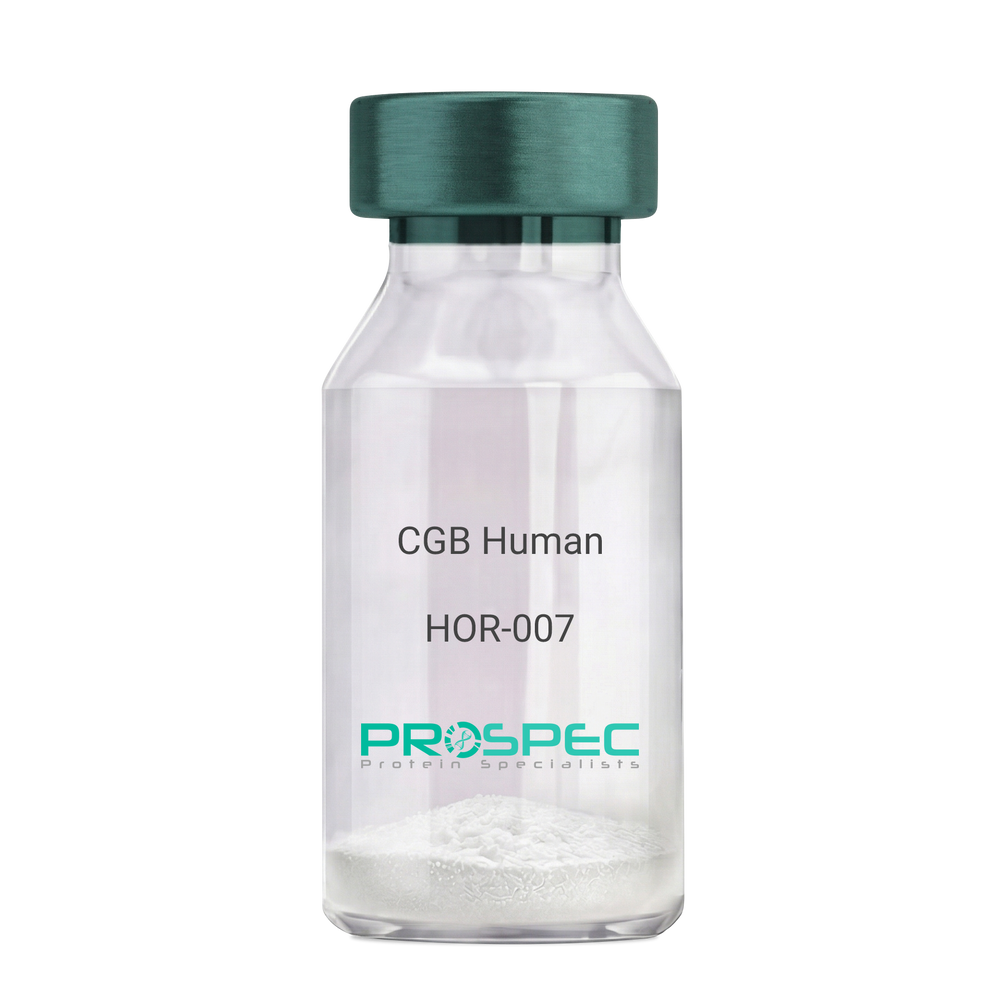
CGB HumanDescription:
CGB Human Recombinant
CGB3, CGB5, CGB7, CGB8, hCGB, CG-beta, CGB.
Product # :
HOR-007Price :
Quantity :
Shipping Method :
Shipped with Ice Packs
More Info
- description
- source
- formulation
- purity
- More Info
Description
CGB Human Recombinant produced in E.Coli is a single, non-glycosylated polypeptide chain containing 168 amino acids (21-165 a.a.) and having a molecular mass of 17.9kDa. CGB is fused to a 23 amino acid His-tag at N-terminus & purified by proprietary chromatographic techniques.
Source
Escherichia Coli.
Formulation
CGB protein solution (0.5mg/ml) containing 20mM Tris-HCl buffer (pH 8.0), 0.4M Urea and 10% glycerol.
Purity
Greater than 85.0% as determined by SDS-PAGE.
More Info
-
Introduction
Glycoprotein hormones are heterodimers consisting of a common alpha subunit and a unique beta subunit which confers biological specificity. CGB is a member of the glycoprotein hormone beta chain family and is the beta 3 subunit of (CG). CG is produced by the trophoblastic cells of the placenta and stimulates the ovaries. The beta subunit of CG is encoded by 6 genes which are arranged in tandem and inverted pairs on chromosome 19q13.3 and contiguous with the luteinizing hormone beta subunit gene.
-
Synonyms
CGB3, CGB5, CGB7, CGB8, hCGB, CG-beta, CGB.
-
Physical Appearance
Sterile filtered colorless solution.
-
Stability
Store at 4°C if entire vial will be used within 2-4 weeks. Store, frozen at -20°C for longer periods of time. For long term storage it is recommended to add a carrier protein (0.1% HSA or BSA).Avoid multiple freeze-thaw cycles.
-
Amino Acid Sequence
MGSSHHHHHH SSGLVPRGSH MGSSKEPLRP RCRPINATLA VEKEGCPVCI TVNTTICAGY CPTMTRVLQG VLPALPQVVC NYRDVRFESI RLPGCPRGVN PVVSYAVALS CQCALCRRST TDCGGPKDHP LTCDDPRFQD SSSSKAPPPS LPSPSRLPGP SDTPILPQ.
ProSpec's products are furnished for LABORATORY RESEARCH USE ONLY. The product may not be used as drugs, agricultural or pesticidal products, food additives or household chemicals.
- View Data Sheet
Name :
KLRG1 HumanDescription:
Killer Cell Lectin-like Receptor Subfamily G, Member 1 Human Recombinant
Killer cell lectin-like receptor subfamily G member 1, C-type lectin domain family 15 member A, ITIM-containing receptor MAFA-L, MAFA-like receptor, Mast cell function-associated antigen, KLRG1, CLEC15A, MAFA, MAFAL, 2F1, MAFA-L, MAFA-2F1, MAFA-LIKE.
Product # :
PRO-1344Price :
Quantity :
Shipping Method :
Shipped with Ice Packs
More Info
- description
- source
- formulation
- purity
- More Info
Description
KLRG1 Human Recombinant produced in E.Coli is a single, non-glycosylated polypeptide chain containing 153 amino acids (60-189 a.a) and having a molecular mass of 17kDa.KLRG1 is fused to a 23 amino acid His-tag at N-terminus & purified by proprietary chromatographic techniques.
Source
Escherichia Coli.
Formulation
KLRG1 protein solution (0.5mg/ml) containing 20mM Tris-HCl buffer (pH 8.0), 0.4M UREA and 10% glycerol.
Purity
Greater than 85.0% as determined by SDS-PAGE.
More Info
-
Introduction
Killer Cell Lectin-like Receptor Subfamily G, Member 1 (KLRG1) is a member of the killer cell lectin-like receptor (KLR) family, which is a group of transmembrane proteins preferentially expressed in NK cells. Natural killer (NK) cells are lymphocytes which mediate lysis of certain tumor cells and virus-infected cells without previous activation. NK cells can also regulate specific humoral and cell-mediated immunity. The cell surface expression of KLRG1 is up-regulated by MHC class I molecules expression.
-
Synonyms
Killer cell lectin-like receptor subfamily G member 1, C-type lectin domain family 15 member A, ITIM-containing receptor MAFA-L, MAFA-like receptor, Mast cell function-associated antigen, KLRG1, CLEC15A, MAFA, MAFAL, 2F1, MAFA-L, MAFA-2F1, MAFA-LIKE.
-
Physical Appearance
Sterile Filtered colorless solution.
-
Stability
Store at 4°C if entire vial will be used within 2-4 weeks. Store, frozen at -20°C for longer periods of time. For long term storage it is recommended to add a carrier protein (0.1% HSA or BSA).Avoid multiple freeze-thaw cycles.
-
Amino Acid Sequence
MGSSHHHHHH SSGLVPRGSH MGSLCQGSNY STCASCPSCP DRWMKYGNHC YYFSVEEKDW NSSLEFCLAR DSHLLVITDN QEMSLLQVFL SEAFCWIGLR NNSGWRWEDG SPLNFSRISS NSFVQTCGAI NKNGLQASSC EVPLHWVCKK VRL.
ProSpec's products are furnished for LABORATORY RESEARCH USE ONLY. The product may not be used as drugs, agricultural or pesticidal products, food additives or household chemicals.
- View Data Sheet
Name :
LIN28 HumanDescription:
LIN28 Human Recombinant
CSDD1, FLJ12457, LIN-28, LIN28A, Protein lin-28 homolog A, ZCCHC1, Zinc finger CCHC domain-containing protein 1, Lin-28A, LIN28.
Product # :
PRO-743Price :
Quantity :
Shipping Method :
Shipped with Ice Packs
More Info
- description
- source
- formulation
- purity
- More Info
Description
Recombinant Human LIN28 produced in E.Coli is a single, non-glycosylated polypeptide chain containing 191 amino acids (42-209) and having a molecular mass of 21.1 kDa.LIN28 is expressed with a 23 amino acid His tag fused at N-Terminus and purified by proprietary chromatographic techniques.
Source
Escherichia Coli.
Formulation
The LIN28 protein solution (0.5mg/ml) contains 20mM Tris-HCl, pH-8, 10% glycerol, 0.1mM PMSF and 0.1M NaCl.
Purity
Greater than 85.0% as determined by SDS-PAGE
More Info
-
Introduction
LIN28 plays an important role as a 'translational enhancer', leading specific mRNAs to polysomes and therefore increasing the competence of protein synthesis. LIN28 is a marker of undifferentiated human embryonic stem cells and it enhances the efficiency of the formation of induced pluripotent stem (iPS) cells from human fibroblasts. LIN28 binds to the let-7 pre-miRNA and blocks production of the mature let-7 microRNA in mouse embryonic stem cells. Overexpression of LIN28 is associated with human germ-cell tumors.
-
Synonyms
CSDD1, FLJ12457, LIN-28, LIN28A, Protein lin-28 homolog A, ZCCHC1, Zinc finger CCHC domain-containing protein 1, Lin-28A, LIN28.
-
Physical Appearance
Sterile filtered colorless solution.
-
Stability
Store at 4°C if entire vial will be used within 2-4 weeks. Store, frozen at -20°C for longer periods of time. For long term storage it is recommended to add a carrier protein (0.1% HSA or BSA). Avoid multiple freeze-thaw cycles.
-
Amino Acid Sequence
MGSSHHHHHH SSGLVPRGSHRSMGICKWFN VRMGFGFLSM TARAGVALDP PVDVFVHQSK LHMEGFRSLK EGEAVEFTFK KSAKGLESIR VTGPGGVFCI GSERRPKGKS MQKRRSKGDR CYNCGGLDHH AKECKLPPQP KKCHFCQSIS HMVASCPLKA QQGPSAQGKP TYFREEEEEI HSPTLLPEAQ N.
ProSpec's products are furnished for LABORATORY RESEARCH USE ONLY. The product may not be used as drugs, agricultural or pesticidal products, food additives or household chemicals.
- View Data Sheet
Name :
PCYT2 HumanDescription:
Phosphate Cytidylyltransferase 2 Human Recombinant
MEA-phosphate cytidylyltransferase, CTP:phospho MEA cytidylyltransferase, Phosphoryl MEA transferase, PCYT2, ET.
Product # :
ENZ-221Price :
Quantity :
Shipping Method :
Shipped with Ice Packs
More Info
- description
- source
- formulation
- purity
- More Info
Description
PCYT2 Human Recombinant produced in E.coli is a single, non-glycosylated polypeptide chain containing 409 amino acids (1-389) and having a molecular mass of 45.9kDa.PCYT2 is fused to a 20 amino acid His-tag at N-terminus & purified by proprietary chromatographic techniques.
Source
Escherichia Coli.
Formulation
The PCYT2 solution (0.25mg/ml) contains 20mM Tris-HCl buffer (pH8.0), 20% glycerol, 0.1M NaCl, 1mM DTT and 0.1mM PMSF.
Purity
Greater than 90.0% as determined by SDS-PAGE.
More Info
-
Introduction
PCYT2 is a member of the cytidylyltransferase family. PCYT2 is an enzyme which catalyzes the formation of CDP-MEA from CTP and phospho MEA in the Kennedy pathway of phospholipid synthesis. PCYT2 has the strongest expression in the liver, heart, and skeletal muscle.
-
Synonyms
MEA-phosphate cytidylyltransferase, CTP:phospho MEA cytidylyltransferase, Phosphoryl MEA transferase, PCYT2, ET.
-
Physical Appearance
Sterile Filtered colorless solution.
-
Stability
Store at 4°C if entire vial will be used within 2-4 weeks. Store, frozen at -20°C for longer periods of time. For long term storage it is recommended to add a carrier protein (0.1% HSA or BSA).Avoid multiple freeze-thaw cycles.
-
Amino Acid Sequence
MGSSHHHHHH SSGLVPRGSH MIRNGRGAAG GAEQPGPGGR RAVRVWCDGC YDMVHYGHSN QLRQARAMGD YLIVGVHTDE EIAKHKGPPV FTQEERYKMV QAIKWVDEVV PAAPYVTTLE TLDKYNCDFC VHGNDITLTV DGRDTYEEVK QAGRYRECKR TQGVSTTDLV GRMLLVTKAH HSSQEMSSEY REYADSFGKC PGGRNPWTGV SQFLQTSQKI IQFASGKEPQ PGETVIYVAG AFDLFHIGHV DFLEKVHRLA ERPYIIAGLH FDQEVNHYKG KNYPIMNLHE RTLSVLACRY VSEVVIGAPY AVTAELLSHF KVDLVCHGKT EIIPDRDGSD PYQEPKRRGI FRQIDSGSNL TTDLIVQRII TNRLEYEARN QKKEAKELAF LEAARQQAAQ PLGERDGDF.
ProSpec's products are furnished for LABORATORY RESEARCH USE ONLY. The product may not be used as drugs, agricultural or pesticidal products, food additives or household chemicals.
- View Data Sheet
Name :
HCV Core Genotype-1aDescription:
Hepatitis C Virus Core Genotype-1a Recombinant
Product # :
HCV-203Price :
Quantity :
Shipping Method :
Shipped with Ice Packs
More Info
- description
- formulation
- purity
- More Info
Description
The E.coli derived recombinant protein fused to a His tag at C-terminus contains the HCV core nucleocapsid immunodominant regions, amino acids 2-119.
Formulation
1.5M urea, 25mM Tris-HCl pH 8.0, 0.2% tween-20 and 50% Glycerol.
Purity
HCV Core Genotype-1a protein is >95% pure as determined by 10% PAGE (coomassie staining).
More Info
-
Introduction
HCV is a small 50nm, enveloped, single-stranded, positive sense RNAvirus in the family Flaviviridae.
HCV has a high rate of replication with approximately one trillion particles produced each day in an infected individual. Due to lack of proofreading by the HCV RNA polymerase, the HCV has an exceptionally high mutation rate, a factor that may help it elude the host's immune response. Hepatitis C virus is classified into six genotypes(1-6) with several subtypes within each genotype. The preponderance and distribution of HCV genotypes varies globally. Genotype is clinically important in determining potential response to interferon-based therapy and the required duration of such therapy. Genotypes 1 and 4 are less responsive to interferon-based treatment than are the other genotypes (2, 3, 5 and 6). -
Stability
HCV Core Genotype-1a although stable at 4°C for 1 week, should be stored below -18°C. Please prevent freeze thaw cycles.
-
Specificity
Immunoreactive with sera of HCV-infected individuals.
-
Purification Method
HCV Core Genotype-1a protein was purified by proprietary chromatographic technique.
ProSpec's products are furnished for LABORATORY RESEARCH USE ONLY. The product may not be used as drugs, agricultural or pesticidal products, food additives or household chemicals.
- View Data Sheet
Name :
IL17E MouseDescription:
Interleukin-17E Mouse Recombinant
IL-25, IL-17E, IL17E, IL25, Interleukin-25.
Product # :
CYT-641Price :
Quantity :
Shipping Method :
Shipped at Room temp
More Info
- description
- source
- formulation
- purity
- biological activity
- More Info
Description
Recombinant mouse IL-17E is a non-glycosylated, disulfide-linked homodimer, containing 2x145 amino acid chains, with a total molecular weight of 35.5 kDa. The Mouse IL-17E is purified by proprietary chromatographic techniques.
Source
Escherichia Coli.
Formulation
IL17E was lyophilized from a concentrated (1mg/ml) solution containing no additives.
Purity
Greater than 95.0% as determined by:
(a) Analysis by RP-HPLC.
(b) Analysis by SDS-PAGE.Biological Activity
The activity is determined by the dose-dependent production of IL-8 by human PBMCs and is 322-488ng/ml.More Info
-
Introduction
IL-25 also called IL-17E cytokine has a sequence similarity with IL17.
IL-17E indluces NF-kappaB activation, and stimulates the production of IL-8. IL17E and IL17B are ligands for the cytokine receptor IL17BR. IL-25 is a proinflammatory cytokine favoring Th2-type immune response. The upregulation of costimulation-induced IL-17E receptors and release of cytokines and chemokines from IL-17E treated costimulated Th cells are differentially regulated by intracellular JNK, p38 MAPK and NF-kappaB activity. Blocking Iinterleukin-25 prevents airway hyperresponsiveness, a critical feature of clinical asthma. IL25 produced by innate effector eosinophils and basophils increase the allergic inflammation by enhancing the maintenance and functions of TSLP-DC activated adaptive Th2 memory cells. Over expression of IL-25 up-regulates gene expression of Th2 cytokines and induces growth retardation, jaundice, and multiorgan inflammation in a transgenic mouse model. IL-25 contributes to the induction and maintenance of eosinophilic inflammation by acting on lung fibroblasts which supports the fact that IL-17E is an important factor in asthma pathophysiology. IL-17E operates by amplifying TH2 cell-mediated allergic airway inflammation but doesn’t induce allergic inflammation in vivo. -
Synonyms
IL-25, IL-17E, IL17E, IL25, Interleukin-25.
-
Physical Appearance
Sterile Filtered White lyophilized (freeze-dried) powder.
-
Stability
Lyophilized Murine IL17E although stable at room temperature for 3 weeks, should be stored desiccated below -18°C. Upon reconstitution IL17E should be stored at 4°C between 2-7 days and for future use below -18°C.For long term storage it is recommended to add a carrier protein (0.1% HSA or BSA).Please prevent freeze-thaw cycles.
-
Solubility
It is recommended to reconstitute the lyophilized Mouse IL17E in sterile 10mM HCl at a concentration not less than 100µg/ml, which can then be further diluted to other aqueous solutions.
-
Amino Acid Sequence
VSLRIQEGCSHLPSCCPSKEQEPPEEWLKWSSASVS
PPEPLSHTHHAESCRASKDGPLNSRAISPWSYELDRD
LNRVPQDLYHARCLCPHCVSLQTGSHMDPLGNSVPL
YHNQTVFYRRPCHGEEGTHRRYCLERRLYRVSLACV
CVRPRVMA.
ProSpec's products are furnished for LABORATORY RESEARCH USE ONLY. The product may not be used as drugs, agricultural or pesticidal products, food additives or household chemicals.
- View Data Sheet
Name :
Fibronectin RatDescription:
Fibronectin Rat
Product # :
PRO-131Price :
Quantity :
Shipping Method :
Shipped at Room temp
More Info
- description
- source
- formulation
- purity
- More Info
Description
Plasma fibronectin level is elevated in severe coronary artery disease. Increased plasma fibronectin levels are related with venous thromboembolism (VTE) particularly in males, and extend the probable association between biomarkers and risk factors for arterial atherothrombosis and VTE. Fibronectin plays a role in several cellular processes, including tissue repair, embryogenesis, blood clotting, and cell migration/adhesion. Fibronectin consists in two main forms: 1) as an insoluble glycoprotein dimer that serves as a linker in the etracellular matrix and 2) as a soluble disulphide linked dimer found in the plasma. The plasma form is produced by hepatocytes, and the ECM form is synthesized by fibroblasts, chondrocytes, endothelial cells, macrophages, as well as certain epithelial cells. Fibronectin alos takes part as a general cell adhesion molecule by anchoring cells to collagen or proteoglycan substrates. Fibronectin organizes cellular interaction with the ECM by binding to different components of the extracellular matrix and to membrane-bound Fibronectin receptors on cell surfaces. Molecular Weight 220kDa.
Source
Rat Plasma.
Formulation
The Rat Fibronectin was lyophilized from a concentrated 1mg/ml solution containing 20mM Tris Cl pH-7.5.
Purity
Greater than 95.0% as determined by SDS-PAGE.
More Info
-
Physical Appearance
Sterile Filtered White lyophilized (freeze-dried) powder.
-
Stability
Store the lyophilized fibronectin at 4°C. Upon reconstitution fibronectin should be stored at 4°C for 2 weeks and for future use below -18°C.Please prevent freeze-thaw cycles.
-
Solubility
It is recommended to reconstitute the lyophilized Rat Fibronectin in sterile 18M-cm H2O not less than 100µg/ml, which can then be further diluted to other aqueous solutions.
ProSpec's products are furnished for LABORATORY RESEARCH USE ONLY. The product may not be used as drugs, agricultural or pesticidal products, food additives or household chemicals.
- View Data Sheet
Name :
CXCL2 RatDescription:
GRO-beta/MIP-2 Rat Recombinant (CXCL2)
Macrophage inflammatory protein 2-alpha, MIP2-alpha, CXCL2, Growth- regulated protein beta, Gro-beta, chemokine (C-X-C motif) ligand 2, GRO2, GROb, MIP2, MIP2A, SCYB2, MGSA-b, MIP-2a, CINC-2a, MGSA beta, CINC-3.
Product # :
CHM-372Price :
Quantity :
Shipping Method :
Shipped at Room temp
More Info
- description
- source
- formulation
- purity
- biological activity
- More Info
Description
GRO-Beta Rat Recombinant also called Rat MIP-2 produced in E.Coli is a single, non-glycosylated, polypeptide chain containing 73 amino acids and having a molecular mass of 7923 Dalton. The GRO-b is purified by proprietary chromatographic techniques.
Source
Escherichia Coli.
Formulation
Lyophilized from a 0.2µm filtered concentrated solution in PBS, pH 7.4.
Purity
Greater than 99.0% as determined by SDS-PAGE.
Biological Activity
The biological activity was determined by its ability to chemoattract total human neutrophils using a concentration range of 1.0-10.0 ng/ml, corresponding to a specific activity of 100,000-1,000,000 units/mg.More Info
-
Introduction
Chemokine (C-X-C motif) ligand 2 (CXCL2) is a small cytokine belonging to the CXC chemokine family that is also called macrophage inflammatory protein 2-alpha (MIP2-alpha), Growth-regulated protein beta (Gro-beta) and Gro oncogene-2 (Gro-2). CXCL2 is 90% identical in amino acid sequence as a related chemokine, CXCL1. This chemokine is secreted by monocytes and macrophages and is chemotactic for polymorphonuclear leukocytes and hematopoietic stem cells. The gene for CXCL2 is located on human chromosome 4 in a cluster of other CXC chemokines. CXCL2 mobilizes cells by interacting with a cell surface chemokine receptor called CXCR2.
-
Synonyms
Macrophage inflammatory protein 2-alpha, MIP2-alpha, CXCL2, Growth- regulated protein beta, Gro-beta, chemokine (C-X-C motif) ligand 2, GRO2, GROb, MIP2, MIP2A, SCYB2, MGSA-b, MIP-2a, CINC-2a, MGSA beta, CINC-3.
-
Physical Appearance
Sterile Filtered White lyophilized (freeze-dried) powder.
-
Stability
Lyophilized GRO-b although stable at room temperature for 3 weeks, should be stored desiccated below -18°C. Upon reconstitution CXCL2 should be stored at 4°C between 2-7 days and for future use below -18°C. For long term storage it is recommended to add a carrier protein (0.1% HSA or BSA). Please prevent freeze-thaw cycles.
-
Solubility
It is recommended to reconstitute the lyophilized GRO-beta Rat in sterile 18MΩ-cm H2O not less than 100µg/ml, which can then be further diluted to other aqueous solutions.
-
Amino Acid Sequence
VVVASELRCQ CLTTLPRVDF KNIQSLTVTP PGPHCAQTEV IATLKDGHEV CLNPEAPLVQ RIVQKILNKG KAN.
-
Background
What is the molecular weight/Mw of CXCL2 RAT Protein?
CXCL2 RAT Protein has a total Mw of 7.92kDa.
What is the source or expression system of CXCL2 RAT Protein?
Escherichia Coli.
What is the Purity of CXCL2 RAT Protein?
CXCL2 RAT Protein is >99% pure as determined by SDS-PAGE.
What is the Biological Activity of CXCL2 RAT Protein?
The biological activity was determined by its ability to chemoattract total human neutrophils using a concentration range of 1.0-10.0 ng/ml, corresponding to a specific activity of 100,000-1,000,000 units/mg.
What is the amino acid sequence of CXCL2 RAT Protein?
VVVASELRCQ CLTTLPRVDF KNIQSLTVTP PGPHCAQTEV IATLKDGHEV CLNPEAPLVQ RIVQKILNKG KAN.
What applications can CXCL2 RAT Protein be used in?
CXCL2 RAT Protein can probably be used in western blot, ELISA and Lateral Flow.
What is the endotoxin level for CXCL2 RAT Protein?
The endotoxin level is minimal, CXCL2 RAT Protein was purified using conventional chromatography techniques.
ProSpec's products are furnished for LABORATORY RESEARCH USE ONLY. The product may not be used as drugs, agricultural or pesticidal products, food additives or household chemicals.
- View Data Sheet
Name :
LL-37Description:
LL-37
LL37, antibacterial protein LL-37, cathelicidin LL 37, camp.
Product # :
HOR-041Price :
Quantity :
Shipping Method :
Shipped at Room temp
More Info
- description
- formulation
- purity
- More Info
Description
LL-37 Synthetic is a single, non-glycosylated polypeptide chain containing 37 amino acids, having a molecular mass of 4493 Dalton and a Molecular formula of C205H340N60O53.
Formulation
The protein was lyophilized with no additives.
Purity
Greater than 97.0% as determined by analysis by RP-HPLC.
More Info
-
Synonyms
LL37, antibacterial protein LL-37, cathelicidin LL 37, camp.
-
Physical Appearance
Sterile Filtered White lyophilized (freeze-dried) powder.
-
Stability
Lyophilized LL-37 although stable at room temperature for 3 weeks, should be stored desiccated below -18°C. Upon reconstitution LL-37 should be stored at 4°C between 2-7 days and for future use below -18°C.For long term storage it is recommended to add a carrier protein (0.1% HSA or BSA). Please prevent freeze-thaw cycles.
-
Solubility
It is recommended to reconstitute the lyophilized LL-37 in sterile 18MΩ-cm H2O not less than 100 µg/ml, which can then be further diluted to other aqueous solutions.
-
Amino Acid Sequence
H-Leu-Leu-Gly-Asp-Phe-Phe-Arg-Lys-Ser-Lys-Glu-Lys-Ile-Gly-Lys-Glu-Phe-Lys-Arg-Ile-Val-Gln-Arg-Ile-Lys-Asp-Phe-Leu-Arg-Asn-Leu-Val-Pro-Arg-Thr-Glu-Ser-OH.
-
Background
LL-37, a prominent member of the human cathelicidin family, has emerged as a pivotal host defense peptide with diverse biological functions. This research paper aims to provide a comprehensive analysis of LL-37, elucidating its biochemical properties, antimicrobial activity, immunomodulatory effects, and potential therapeutic applications.
LL-37, derived from the precursor protein hCAP18, plays a crucial role in innate immunity and host defense against microbial pathogens. Beyond its well-established antimicrobial properties, LL-37 exhibits various immunomodulatory effects, making it an intriguing target for therapeutic interventions (Lai & Gallo, 2009). This paper aims to delve into the complexities of LL-37, uncovering its multifaceted nature and potential clinical applications.
LL-37 is a cationic peptide characterized by a helical structure that facilitates its interaction with microbial membranes. Its amphipathic nature enables it to penetrate microbial membranes, leading to disruption and subsequent cell death (Zaiou, 2007). Additionally, LL-37 can undergo proteolytic processing to release smaller bioactive fragments with distinct functions (Bowdish et al., 2005).
LL-37's antimicrobial activity extends beyond direct microbial killing. It also exhibits immunomodulatory effects, stimulating the recruitment of immune cells and promoting the clearance of pathogens through phagocytosis (Scott et al., 2002). Furthermore, LL-37 can neutralize endotoxins, reducing inflammation caused by microbial products (Davidson et al., 2004).
LL-37 possesses immunomodulatory properties that influence various immune cells, including neutrophils, macrophages, dendritic cells, and lymphocytes (Nagaoka et al., 2001). It can promote the differentiation and maturation of immune cells, modulate cytokine production, and contribute to wound healing and tissue repair (van Harten et al., 2018).
The multifunctional nature of LL-37 renders it a promising candidate for various therapeutic applications. LL-37-based therapies are being explored in wound healing, infectious diseases, and immune-related disorders (Pena et al., 2014). Furthermore, LL-37 has shown potential as a vaccine adjuvant, enhancing the immune response to antigens (Howell et al., 2018).
LL-37's diverse roles in immunity and host defense warrant further research to unravel its precise mechanisms of action and potential applications in clinical medicine. As we deepen our understanding of LL-37's complexities, its therapeutic potential continues to expand, offering exciting prospects for the future.
ProSpec's products are furnished for LABORATORY RESEARCH USE ONLY. The product may not be used as drugs, agricultural or pesticidal products, food additives or household chemicals.
- View Data Sheet
Name :
CMV Pp28Description:
Cytomegalo Virus Pp28 (UL99) Recombinant
Product # :
CMV-212Price :
Quantity :
Shipping Method :
Shipped with Ice Packs
More Info
- description
- source
- formulation
- purity
- More Info
Description
The E.Coli derived recombinant protein contains the CMV Pp28 (UL99) immunodominant regions, 130-160 amino acids.
Source
Escherichia Coli.
Formulation
50mM Tris-Hcl pH 7.2, 1mM EDTA and 50% glycerol.
Purity
CMV Pp28 protein is >95% pure as determined by 10% PAGE (coomassie staining).
More Info
-
Introduction
The human cytomegalovirus UL99-encoded pp28 is a myristylated phosphoprotein that is a constituent of the virion. The pp28 protein is positioned within the tegument of the virus particle, a protein structure that resides between the capsid and envelope. In the infected cell, pp28 is found in a cytoplasmic compartment derived from the Golgi apparatus, where the virus buds into vesicles to acquire its final membrane.
-
Stability
CMV Pp28 protein although stable at 4°C for 1 week, should be stored below -18°C. Please prevent freeze thaw cycles.
-
Applications
CMV Pp28 antigen is suitable for ELISA and Western blots, excellent antigen for detection of CMV with minimal specificity problems.
-
Specificity
Immunoreactive with sera of CMV-infected individuals.
-
Purification Method
Purified by GS-4B Sepharose-Affinity Purification.
ProSpec's products are furnished for LABORATORY RESEARCH USE ONLY. The product may not be used as drugs, agricultural or pesticidal products, food additives or household chemicals.
- View Data Sheet
Name :
FGF 2 Human (147 a.a.)Description:
Fibroblast Growth Factor Basic 147 a.a. Human Recombinant
Prostatropin, HBGH-2, HBGF-2, FGF-2, FGF-b.
Product # :
CYT-557Price :
Quantity :
Shipping Method :
Shipped at Room temp
More Info
- description
- source
- formulation
- purity
- biological activity
- More Info
Description
Fibroblast Growth Factor-2 Human Recombinant (FGF-2) produced in E.Coli is a single, non-glycosylated, polypeptide chain containing 147 amino acids and having a molecular mass of 16.5kDa. The FGF2 is purified by proprietary chromatographic techniques.
Source
Escherichia Coli.
Formulation
The bFGF was lyophilized from a sterile filtered solution containing 20mM Tris-HCl, pH 7.6 and 150mM NaCl.
Purity
Greater than 98.0% as determined by SDS-PAGE.
Biological Activity
The ED50, Calculated by the dose- dependent proliferation of mouse BALB/c 3T3 cells is < 0.05ng/ml corresponding to a specific activity of 2.0x10⁷ units/mg.
More Info
-
Introduction
FGF-basic is a member of the fibroblast growth factor (FGF) family. FGF family members possess broad mitogenic and cell survival activities, and are involved in a variety of biological processes, including embryonic development, cell growth, morphogenesis, tissue repair, tumor growth and invasion. This protein functions as a modifier of endothelial cell migration and proliferation, as well as an angiogenic factor. It acts as a mitogen for a variety of mesoderm- and neuroectoderm-derived cells in vitro, thus is thought to be involved in organogenesis. Three alternatively spliced variants encoding different isoforms have been described. The heparin-binding growth factors are angiogenic agents in vivo and are potent mitogens for a variety of cell types in vitro. There are differences in the tissue distribution and concentration of these 2 growth factors.
-
Synonyms
Prostatropin, HBGH-2, HBGF-2, FGF-2, FGF-b.
-
Physical Appearance
Sterile Filtered White lyophilized (freeze-dried) powder.
-
Stability
Lyophilized basic-FGF although stable at room temperature for 3 weeks, should be stored desiccated below -18°C. Upon reconstitution FGFb should be stored at 4°C between 2-7 days and for future use below -18°C.For long term storage it is recommended to add a carrier protein (0.1% HSA or BSA).Please prevent freeze-thaw cycles.
-
Solubility
It is recommended to reconstitute the lyophilized FGF-B in sterile 18MΩ-cm H2O not less than 100µg/ml, which can then be further diluted to other aqueous solutions.
-
Amino Acid Sequence
MPALPEDGGS GAFPPGHFKD PKRLYCKNGG FFLRIHPDGR VDGVREKSDP HIKLQLQAEE RGVVSIKGVC ANRYLAMKED GRLLASKCVT DECFFFERLE SNNYNTYRSR KYTSWYVALK RTGQYKLGSK TGPGQKAILF LPMSAKS.
-
Background
What is the molecular weight/Mw of FGF 2 Protein?
FGF 2 Protein has a total Mw of 16.5kDa.
What is the source or expression system of FGF 2 Protein?
Escherichia Coli.
What is the Purity of FGF 2 Protein?
FGF 2 Protein is >98% pure as determined by SDS-PAGE.
What is the Biological Activity of FGF 2 Protein?
The ED50, Calculated by the dose- dependent proliferation of mouse BALB/c 3T3 cells is < 0.05ng/ml corresponding to a specific activity of 2.0x10⁷ units/mg.
What is the amino acid sequence of FGF 2 Protein?
MPALPEDGGS GAFPPGHFKD PKRLYCKNGG FFLRIHPDGR VDGVREKSDP HIKLQLQAEE RGVVSIKGVC ANRYLAMKED GRLLASKCVT DECFFFERLE SNNYNTYRSR KYTSWYVALK RTGQYKLGSK TGPGQKAILF LPMSAKS.
What applications can FGF 2 Protein be used in?
FGF 2 Protein can probably be used in western blot, ELISA and Lateral Flow.
What is the endotoxin level for FGF 2 Protein?
The endotoxin level is minimal, FGF 2 Protein was purified using conventional chromatography techniques.
ProSpec's products are furnished for LABORATORY RESEARCH USE ONLY. The product may not be used as drugs, agricultural or pesticidal products, food additives or household chemicals.
- View Data Sheet
Name :
M CSF Rat HEKDescription:
Macrophage Colony Stimulating Factor Rat Recombinant HEK
CSF-1, Lanimostim, MCSF, MGC31930, M-CSF.
Product # :
CYT-046Price :
Quantity :
Shipping Method :
Shipped at Room temp
More Info
- description
- source
- formulation
- purity
- biological activity
- More Info
Description
MCSF Rat Recombinant produced in HEK-293 cells is a secreted protein (amino acids Glu33-Arg254). M-CSF is disulfide-linked homodimer containing 2 x 222 a.a chains.
Source
HEK293
Formulation
The recombinant MCSF was lyophilized after extensive dialysis against PBS.
Purity
Greater than 95.0% as determined by SDS-PAGE.
Biological Activity
The ED50 of 3-4ng/ml is measured by its ability to stimulate the proliferation of mouse M-NFS-60 cells.More Info
-
Introduction
Granulocyte/Macrophage Colony-Stimulating Factors are cytokines that act in hematopoiesis by controlling the production, differentiation, and function of 2 related white cell populations of the blood, the granulocytes and the monocytes-macrophages. CSF-1 induces cells of the monocyte/macrophage lineage. It plays a role in immunological defenses, bone metabolism, lipoproteins clearance, fertility and pregnancy.
-
Synonyms
CSF-1, Lanimostim, MCSF, MGC31930, M-CSF.
-
Physical Appearance
Sterile Filtered White lyophilized (freeze-dried) powder.
-
Stability
Lyophilized MCSF although stable at room temperature for 3 weeks, should be stored desiccated below -18°C. Upon reconstitution MCSF should be stored at 4°C between 2-7 days and for future use below -18°C.For long term storage it is recommended to add a carrier protein (0.1% HSA or BSA).Please prevent freeze-thaw cycles.
-
Solubility
It is recommended to reconstitute the MCSF in sterile PBS not less than 100 µg/ml, which can then be further diluted to other aqueous solutions.
ProSpec's products are furnished for LABORATORY RESEARCH USE ONLY. The product may not be used as drugs, agricultural or pesticidal products, food additives or household chemicals.
- View Data Sheet
Name :
Fibronectin HumanDescription:
Fibronectin Human
Product # :
PRO-448Price :
Quantity :
Shipping Method :
Shipped at Room temp
More Info
- description
- source
- formulation
- purity
- More Info
Description
Human Fibronectin produced purified from Human Plasma having a Molecular Weight of 440kDa.
Source
Human Plasma.
Formulation
The Fibronectin was lyophilized from a non sterile 2mg/ml buffer of 10mM sodium phosphate, pH 7.5 and 0.15M NaCl.
Purity
≥ 95.0% as determined by SDS-PAGE.
More Info
-
Introduction
Plasma fibronectin level is elevated in severe coronary artery disease. Increased plasma fibronectin levels are related with venous thromboembolism (VTE) particularly in males, and extend the probable association between biomarkers and risk factors for arterial atherothrombosis and VTE. Fibronectin plays a role in several cellular processes, including tissue repair, embryogenesis, blood clotting, and cell migration/adhesion. Fibronectin consists in two main forms: 1) as an insoluble glycoprotein dimer that serves as a linker in the extracellular matrix and 2) as a soluble disulphide linked dimer found in the plasma. The plasma form is produced by hepatocytes, and the ECM form is synthesized by fibroblasts, chondrocytes, endothelial cells, macrophages, as well as certain epithelial cells. Fibronectin also takes part as a general cell adhesion molecule by anchoring cells to collagen or proteoglycan substrates. Fibronectin organizes cellular interaction with the ECM by binding to different components of the extracellular matrix and to membrane-bound Fibronectin receptors on cell surfaces.
-
Physical Appearance
Filtered White lyophilized (freeze-dried) powder.
-
Stability
Lyophilized Fibronectin although stable at room temperature for 3 weeks, should be stored desiccated below -18°C. Upon reconstitution Fibronectin should be stored at 4°C between 2-7 days and for future use below -18°C.
-
Solubility
We suggest reconstituting the 1mg Fibronectin with a chaotropic agent such as urea at room temperature at a concentration of 0.2mg/ml using sterile water. Let stand 1-2 hours. The recommended concentration is 4M-5M urea.
When using the protein as an attachment factor, wash the urea off after attaching the fibronectin to the growth surface (plate or dish).
ProSpec's products are furnished for LABORATORY RESEARCH USE ONLY. The product may not be used as drugs, agricultural or pesticidal products, food additives or household chemicals.
- View Data Sheet
Name :
IL 28A Human, HisDescription:
Interleukin-28A Human Recombinant, His Tag
Interleukin-28A, IL-28A, IFN-Lambda 2, Interferon-Lambda 2, Cytokine ZCYTO20, IL28A, IFNL2, ZCYTO20.
Product # :
CYT-813Price :
Quantity :
Shipping Method :
Shipped with Ice Packs
More Info
- description
- source
- formulation
- purity
- More Info
Description
IL 28A Human Recombinant produced in E.Coli is a single, non-glycosylated polypeptide chain containing 198 amino acids (26-200 a.a.) and having a molecular mass of 22.1kDa. IL 28A is fused to a 23 amino acid His-tag at N-terminus & purified by proprietary chromatographic techniques.
Source
Escherichia Coli.
Formulation
IL 28A protein solution (0.5mg/ml) contains 20mM Tris-HCl buffer (pH 8.0), 10% glycerol and 0.4M Urea.
Purity
Greater than 85% as determined by SDS-PAGE.
More Info
-
Introduction
IL-28A is distantly related to type I interferons and the IL-10 family. Expression of IL-28A is induced by viral infection which interacts with a heterodimeric class II cytokine receptor that consists of interleukin 10 receptor, beta (IL10RB) and interleukin 28 receptor, alpha. IL-28A exhibits common features with type I IFNs such as antiviral activity, antiproliferative activity and in vivo antitumour activity.
IL-28A acts similarly to IFNs, but is less effective generally and has activity in a more limited range of cell lines. IFN-ambda 1, IFN-lambda 2 and IFN-lambda 3 are closely positioned genes on human chromosome 19.
IL-28A induces ELR(-) CXC chemokine mRNA in human peripheral blood mononuclear cells, in an IFN-gamma-independent manner.
IL-28A is able to generate tolerogenic DCs, an activity that could thwart IFN-beta functions. IL-28A produced in response to viral infection, activates both monocytes and macrophages producing a restricted panel of cytokines and therefore is an important factor in activating innate immune responses at the site of viral infection. -
Synonyms
Interleukin-28A, IL-28A, IFN-Lambda 2, Interferon-Lambda 2, Cytokine ZCYTO20, IL28A, IFNL2, ZCYTO20.
-
Physical Appearance
Sterile filtered colorless solution.
-
Stability
Store at 4°C if entire vial will be used within 2-4 weeks. Store, frozen at -20°C for longer periods of time. For long term storage it is recommended to add a carrier protein (0.1% HSA or BSA).Avoid multiple freeze-thaw cycles.
-
Amino Acid Sequence
MGSSHHHHHH SSGLVPRGSH MGSVPVARLH GALPDARGCH IAQFKSLSPQ ELQAFKRAKD ALEESLLLKD CRCHSRLFPR TWDLRQLQVR ERPMALEAEL ALTLKVLEAT ADTDPALVDV LDQPLHTLHH ILSQFRACIQ PQPTAGPRTR GRLHHWLYRL QEAPKKESPG CLEASVTFNL FRLLTRDLNC VASGDLCV .
ProSpec's products are furnished for LABORATORY RESEARCH USE ONLY. The product may not be used as drugs, agricultural or pesticidal products, food additives or household chemicals.
- View Data Sheet
Name :
Betacellulin His HumanDescription:
Betacellulin Human Recombinant, His Tag
Betacellulin, Probetacellulin.
Product # :
CYT-077Price :
Quantity :
Shipping Method :
Shipped with Ice Packs
More Info
- description
- source
- formulation
- purity
- More Info
- sds-page
Description
BTC Human Recombinant produced in E.coli is a single, non-glycosylated polypeptide chain containing 101 amino acids (32-111) and having a molecular mass of 11.3 kDa.BTC is fused to a 21 amino acid His-tag at N-terminus & purified by proprietary chromatographic techniques.
Source
E.coli.
Formulation
The BTC solution (0.25mg/ml) contains 20mM Tris-HCl buffer (pH 8.0), 5mM DTT, 0.2M NaCl and 20% glycerol.
Purity
Greater than 90% as determined by SDS-PAGE.
sds-page
More Info
-
Introduction
Btc is a potent mitogen for retinal pigment epithelial cells and vascular smooth muscle cells. The effects of betacellulin are probably mediated by the egf receptor and other related receptors.
-
Synonyms
Betacellulin, Probetacellulin.
-
Physical Appearance
Sterile Filtered colorless solution.
-
Stability
Store at 4°C if entire vial will be used within 2-4 weeks. Store, frozen at -20°C for longer periods of time. For long term storage it is recommended to add a carrier protein (0.1% HSA or BSA).Avoid multiple freeze-thaw cycles.
-
Amino Acid Sequence
MGSSHHHHHH SSGLVPRGSH MDGNSTRSPE TNGLLCGDPE ENCAATTTQS KRKGHFSRCP KQYKHYCIKG RCRFVVAEQT PSCVCDEGYI GARCERVDLF Y
-
Background
What is the molecular weight/Mw of BETACELLULIN Protein?
BETACELLULIN Protein has a total Mw of 11.3kDa.
What is the source or expression system of BETACELLULIN Protein?
Escherichia Coli.
What is the Purity of BETACELLULIN Protein?
BETACELLULIN Protein is >90% pure as determined by SDS-PAGE.
What is the Biological Activity of BETACELLULIN Protein?
The biological functionality of BETACELLULIN Protein will be determined in the future.
What is the amino acid sequence of BETACELLULIN Protein?
MGSSHHHHHH SSGLVPRGSH MDGNSTRSPE TNGLLCGDPE ENCAATTTQS KRKGHFSRCP KQYKHYCIKG RCRFVVAEQT PSCVCDEGYI GARCERVDLF Y
What applications can BETACELLULIN Protein be used in?
BETACELLULIN Protein can probably be used in western blot, ELISA and Lateral Flow.
What is the endotoxin level for BETACELLULIN Protein?
The endotoxin level is minimal, BETACELLULIN Protein was purified using conventional chromatography techniques.
ProSpec's products are furnished for LABORATORY RESEARCH USE ONLY. The product may not be used as drugs, agricultural or pesticidal products, food additives or household chemicals.
- View Data Sheet
Name :
KLRC2 HumanDescription:
Killer Cell Lectin-Like Receptor Subfamily C, Member 2 Human Recombinant
Killer cell lectin-like receptor subfamily C member 2, NKG2-C type II integral membrane protein, NKG2-C-activating NK receptor, CD159 antigen-like family member C, NK cell receptor C, NKG2C, CD159c.
Product # :
PRO-1190Price :
Quantity :
Shipping Method :
Shipped with Ice Packs
More Info
- description
- source
- formulation
- purity
- More Info
Description
KLRC2 Human Recombinant produced in E. coli is a single polypeptide chain containing 162 amino acids (94-231) and having a molecular mass of 18.4 kDa.KLRC2 is fused to a 24 amino acid His-tag at N-terminus & purified by proprietary chromatographic techniques.
Source
E.coli.
Formulation
The KLRC2 solution (0.5mg/1ml) contains 20mM Tris-HCl buffer (pH 8.0), 0.4M urea and 10% glycerol.
Purity
Greater than 85% as determined by SDS-PAGE.
More Info
-
Introduction
KLRC2 has a part as a receptor for the recognition of MHC class I HLA-E molecules by NK cells and some cytotoxic T-cells. The group, designated KLRC (NKG2) are expressed mainly in natural killer (NK) cells and encodes a family of transmembrane proteins categorized by a type II membrane orientation (extracellular C terminus) and the presence of a C-type lectin domain. The KLRC (NKG2) gene family is situated inside the NK complex, a region which holds a few C-type lectin genes specially expressed on NK cells. KLRC2 alternative splice variants are known but their full-length nature is yet to be determined.
-
Synonyms
Killer cell lectin-like receptor subfamily C member 2, NKG2-C type II integral membrane protein, NKG2-C-activating NK receptor, CD159 antigen-like family member C, NK cell receptor C, NKG2C, CD159c.
-
Physical Appearance
Sterile Filtered colorless solution.
-
Stability
Store at 4°C if entire vial will be used within 2-4 weeks. Store, frozen at -20°C for longer periods of time. For long term storage it is recommended to add a carrier protein (0.1% HSA or BSA).Avoid multiple freeze-thaw cycles.
-
Amino Acid Sequence
MGSSHHHHHH SSGLVPRGSH MGSMIPFLEQ NNFSPNTRTQ KARHCGHCPE EWITYSNSCY YIGKERRTWE ESLLACTSKN SSLLSIDNEE EMKFLASILP SSWIGVFRNS SHHPWVTING LAFKHKIKDS DNAELNCAVL QVNRLKSAQC GSSMIYHCKH KL
ProSpec's products are furnished for LABORATORY RESEARCH USE ONLY. The product may not be used as drugs, agricultural or pesticidal products, food additives or household chemicals.
- View Data Sheet
Name :
Chitinase ProteinDescription:
Chitinase Clostridium Paraputrificum Recombinant
Product # :
ENZ-031Price :
Quantity :
Shipping Method :
Shipped at Room temp
More Info
- description
- source
- formulation
- purity
- More Info
Description
Chitinase Clostridium Paraputrificum Recombinant fused with a His tag at N-terminus produced in E.Coli is a single, non-glycosylated, polypeptide chain containing 582 amino acids and having a molecular mass of 64.2kDa. The Chitinase is purified by proprietary chromatographic techniques.
Source
Escherichia Coli.
Formulation
Chitinase lyophilized from a 0.2µm filtered concentrated solution in PBS.
Purity
Greater than 95.0% as determined by SDS-PAGE.
More Info
-
Introduction
Chitinase is a digestive enzyme which breaks down glycosidic bonds in chitin. Due to chitin being a component of the cell walls of fungi and exoskeletal elements of some animals (including worms and arthropods), chitinases are usually found in organisms that either need to remake their own chitin or to dissolve and digest the chitin of fungi or animals. Chitinivorous organisms include many bacteria genuses such as Aeromonas, Bacillus, Vibrio, among others, which may be pathogenic or detritivorous. Chitinase expression is mediated by the NPR1 gene and the salicylic acid pathway, both of which are involved in resisting fungal and insect attack. Human chitinases appear in gastric juices. They are likely to be digestive chitinases, for catabolic activity. Chitinase activity is identified systemically in humans, in the blood, and possibly cartilage. Chitinase has been related to allergies, asthma in particular has been linked to enhanced chitinase expression levels, also dust mites and mold spores which are both chitin covered.
-
Physical Appearance
Sterile Filtered White lyophilized (freeze-dried) powder.
-
Stability
Lyophilized Chitinase although stable at room temperature for 3 weeks, should be stored desiccated below -18°C. Upon reconstitution Chitinase should be stored at 4°C between 2-7 days and for future use below -18°C.For long term storage it is recommended to add a carrier protein (0.1% HSA or BSA).Please prevent freeze-thaw cycles.
-
Solubility
It is recommended to reconstitute the lyophilized Chitinase in sterile 18MΩ-cm H2O not less than 100µg/ml, which can then be further diluted to other aqueous solutions.
-
Amino Acid Sequence
MRGSGSHHHH HHMYYGDWSI WGGQGNFYPK DIPADKLTHL NFAFMDFNSS GELIYCDKDA AIGHPLGNLG VTYGDVNGGI LNAFQVLKSE NPNLKIGVSL GGWSKSGDFS TIAATPSIRA KFVENVMKFI KYTNMDFVDI DWEYPGDYRE PDKTDNINDE GTPNASAGDK ENYILLLQDL KEALNKQGKE LGKVYELSVA LPAGVSKIEK GIDVDKLFNI VDFANIMTYD MAGAWSTTSG HQTALYTNPN APEEYKGLSV DESVKYYISQ GAEREKIVVG AAYYTRGWEQ VSDKGTDPNN PGLFGEAAVV NKDADLSPTP GALNEAPMKN GEGGRAGGVW GYNALDKLKS KYTGLKEYWD DSAKAPYLYN SETGAFFTYD NIRSIQEKAK YVKENNLGGI IGWMASQDAT TNSTKRDELT TATKESLFGK EDLPKYEIKY TENDITCTVT PVKQSWGSGG VLKMSITNNE KLDESGEVLS TVETSAKTVK NMKVYIKTDG IAITGSQYPA GPVTKEGDYY VIDFGKISDG KLMKAGITFT FDLNLDKAIE DTNNIISIEV SQRMYQTSPE FNRQTIWENT NS.
ProSpec's products are furnished for LABORATORY RESEARCH USE ONLY. The product may not be used as drugs, agricultural or pesticidal products, food additives or household chemicals.
- View Data Sheet
Name :
CXCL7 RatDescription:
Neutrophil Activating Protein-2 Rat Recombinant (CXCL7)
Platelet basic protein, PBP, Small inducible cytokine B7, CXCL7, Leukocyte-derived growth factor, LDGF, Macrophage-derived growth factor, MDGF, pro-platelet basic protein (chemokine (C-X-C motif) ligand 7), TC1, TC2, TGB, TGB1, B-TG1, CTAP3, NAP-2, SCYB7, THBGB, LA-PF4, THBGB1, Beta-TG, CTAPIII, CTAP-III.
Product # :
CHM-269Price :
Quantity :
Shipping Method :
Shipped at Room temp
More Info
- description
- source
- formulation
- purity
- biological activity
- More Info
Description
NAP-2 Rat Recombinant produced in E.coli is a single, non-glycosylated polypeptide chain containing 62 amino acids and having a molecular mass of 6.8kDa.The NAP 2 is purified by proprietary chromatographic techniques.
Source
Escherichia Coli.
Formulation
NAP-2 protein was lyophilized from a 0.2µm filtered concentrated solution in 1×PBS, pH 7.4.
Purity
Greater than 97.0% as determined by:
(a) Analysis by RP-HPLC.
(b) Analysis by SDS-PAGE.Biological Activity
Measured by its ability to chemoattract BaF3 mouse pro-B cells transfected with human CXCR2. The ED50 for this effect is less than 10ng/ml, corresponding to a specific activity of 100,000units/mg.More Info
-
Introduction
Chemokine (C-X-C motif) ligand (CXCL7) is a small cytokine belonging to the CXC chemokine family. It is a protein that is released in large amounts from platelets following their activation. It stimulates various processes including mitogenesis, synthesis of extracellular matrix, glucose metabolism and synthesis of plasminogen activator.
-
Synonyms
Platelet basic protein, PBP, Small inducible cytokine B7, CXCL7, Leukocyte-derived growth factor, LDGF, Macrophage-derived growth factor, MDGF, pro-platelet basic protein (chemokine (C-X-C motif) ligand 7), TC1, TC2, TGB, TGB1, B-TG1, CTAP3, NAP-2, SCYB7, THBGB, LA-PF4, THBGB1, Beta-TG, CTAPIII, CTAP-III.
-
Physical Appearance
Sterile Filtered White lyophilized (freeze-dried) powder.
-
Stability
Lyophilized NAP-2 although stable at room temperature for 3 weeks, should be stored desiccated below -18°C. Upon reconstitution CXCL7 should be stored at 4°C between 2-7 days and for future use below -18°C. For long term storage it is recommended to add a carrier protein (0.1% HSA or BSA). Please prevent freeze-thaw cycles.
-
Solubility
It is recommended to reconstitute the lyophilized NAP-2 in sterile 18M-cm H2O not less than 100µg/ml, which can then be further diluted to other aqueous solutions.
-
Amino Acid Sequence
IELRCRCTNT LSGIPLNSIS RVNVFRPGAH CDNVEVIATL KNGKEVCLDP TAPMIKKIVK KI.
-
Background
What is the molecular weight/Mw of CXCL7 RAT Protein?
CXCL7 RAT Protein has a total Mw of 6.8kDa.
What is the source or expression system of CXCL7 RAT Protein?
Escherichia Coli.
What is the Purity of CXCL7 RAT Protein?
CXCL7 RAT Protein is > 97% pure as determined by SDS-PAGE.
What is the Biological Activity of CXCL7 RAT Protein?
Measured by its ability to chemoattract BaF3 mouse pro-B cells transfected with human CXCR2. The ED50 for this effect is less than 10ng/ml, corresponding to a specific activity of 100,000units/mg.
What is the amino acid sequence of CXCL7 RAT Protein?
IELRCRCTNT LSGIPLNSIS RVNVFRPGAH CDNVEVIATL KNGKEVCLDP TAPMIKKIVK KI.
What applications can CXCL7 RAT Protein be used in?
CXCL7 RAT Protein can probably be used in western blot, ELISA and Lateral Flow.
What is the endotoxin level for CXCL7 RAT Protein?
The endotoxin level is minimal, CXCL7 RAT Protein was purified using conventional chromatography techniques.
ProSpec's products are furnished for LABORATORY RESEARCH USE ONLY. The product may not be used as drugs, agricultural or pesticidal products, food additives or household chemicals.