Skip to content

High-quality research proteins.

  • 1-800-805-6531

  • Mon - Sat 8.00-18.00, Sun - Closed

  • info@prospecbio.com

  • PO Box 6591 East Brunswick NJ 08816

  • Products
    • Cytokines
    • Growth factors
    • Chemokines
    • Cd antigens
    • Neurotrophins
    • Hormones
    • Enzymes
    • Viral antigens
    • Recombinant proteins
    • Natural proteins
    • Monoclonal antibodies
    • Polyclonal antibodies
    • Thermal Packaging
  • About
    • Company
    • Founder
    • Contribution
  • Customers
    • Eastern Asia
    • Eastern Europe
    • North America
    • South America
    • South East Asia
    • Southern Asia
    • Western Europe
  • Ordering
    • Ordering Method
    • Ordering - Credit Card
    • Ordering - PO
    • Shipping Fees
    • FAQs
  • Services
    • DNA Cloning
    • Protein Expression
    • Monoclonal Antibody
    • Fermentation
    • Technology License
  • Contact us
Log in

Country/region

  • USD $ | Albania
  • USD $ | Andorra
  • USD $ | Argentina
  • USD $ | Armenia
  • USD $ | Australia
  • USD $ | Austria
  • USD $ | Azerbaijan
  • USD $ | Belarus
  • USD $ | Belgium
  • USD $ | Bolivia
  • USD $ | Brazil
  • USD $ | Bulgaria
  • USD $ | Cambodia
  • USD $ | Canada
  • USD $ | Chile
  • USD $ | China
  • USD $ | Colombia
  • USD $ | Costa Rica
  • USD $ | Croatia
  • USD $ | Cyprus
  • USD $ | Czechia
  • USD $ | Denmark
  • USD $ | Estonia
  • USD $ | Finland
  • USD $ | France
  • USD $ | Georgia
  • USD $ | Germany
  • USD $ | Greece
  • USD $ | Hong Kong SAR
  • USD $ | Hungary
  • USD $ | Iceland
  • USD $ | India
  • USD $ | Ireland
  • USD $ | Israel
  • USD $ | Italy
  • USD $ | Japan
  • USD $ | Kazakhstan
  • USD $ | Latvia
  • USD $ | Liechtenstein
  • USD $ | Lithuania
  • USD $ | Madagascar
  • USD $ | Malta
  • USD $ | Mexico
  • USD $ | Moldova
  • USD $ | Monaco
  • USD $ | Netherlands
  • USD $ | New Zealand
  • USD $ | North Macedonia
  • USD $ | Norway
  • USD $ | Panama
  • USD $ | Paraguay
  • USD $ | Peru
  • USD $ | Philippines
  • USD $ | Poland
  • USD $ | Portugal
  • USD $ | Romania
  • USD $ | Singapore
  • USD $ | Slovakia
  • USD $ | Slovenia
  • USD $ | South Africa
  • USD $ | South Korea
  • USD $ | Spain
  • USD $ | Sri Lanka
  • USD $ | Sweden
  • USD $ | Switzerland
  • USD $ | Taiwan
  • USD $ | Thailand
  • USD $ | Türkiye
  • USD $ | Ukraine
  • USD $ | United Kingdom
  • USD $ | United States
  • USD $ | Uruguay
  • USD $ | Vatican City
  • USD $ | Venezuela
  • USD $ | Vietnam
  • Facebook
  • Instagram
logoProSpec - Recombinant Protein Manufacturer for academic and R&D industry
Become a distributor
Account Log in
Wishlist
Cart Cart(0)
  • Products
    +
    • Cytokines
    • Growth factors
    • Chemokines
    • Cd antigens
    • Neurotrophins
    • Hormones
    • Enzymes
    • Viral antigens
    • Recombinant proteins
    • Natural proteins
    • Monoclonal antibodies
    • Polyclonal antibodies
    • Thermal Packaging
  • About
    +
    • Company
    • Founder
    • Contribution
  • Customers
    +
    • Eastern Asia
    • Eastern Europe
    • North America
    • South America
    • South East Asia
    • Southern Asia
    • Western Europe
  • Ordering
    +
    • Ordering Method
    • Ordering - Credit Card
    • Ordering - PO
    • Shipping Fees
    • FAQs
  • Services
    +
    • DNA Cloning
    • Protein Expression
    • Monoclonal Antibody
    • Fermentation
    • Technology License
  • Contact us

Item added to your cart

View cart
View All
  • Cytokines
  • Growth factors
  • Chemokines
  • Cd antigens
  • Neurotrophins
  • Hormones
  • Enzymes
  • Viral antigens
  • Recombinant proteins
  • Natural proteins
  • Monoclonal antibodies
  • Polyclonal antibodies
  • Thermal Packaging
  • Tumor Necrosis Factor

    Tumor Necrosis Factor

    View All
  • 4-1BB

    4-1BB

    View All
  • Adiponectin

    Adiponectin

    View All
  • AIF1

    AIF1

    View All
  • Other Cytokines

    Other Cytokines

    View All
  • AITRL

    AITRL

    View All
  • Angiopoietin

    Angiopoietin

    View All
  • Apolipoprotein

    Apolipoprotein

    View All
  • B-Cell Activating Factor

    B-Cell Activating Factor

    View All
  • Beta Defensin

    Beta Defensin

    View All
  • Bone Morphogenetic Protein

    Bone Morphogenetic Protein

    View All
  • B type Natriuretic Peptide

    B type Natriuretic Peptide

    View All
  • BST

    BST

    View All
  • Betacellulin

    Betacellulin

    View All
  • Cardiotrophin

    Cardiotrophin

    View All
  • Activin

    Activin

    View All
  • Fibroblast Growth Factor

    Fibroblast Growth Factor

    View All
  • Other Growth Factors

    Other Growth Factors

    View All
  • CSF

    CSF

    View All
  • CTGF

    CTGF

    View All
  • IGFBP

    IGFBP

    View All
  • VEGF Protein

    VEGF Protein

    View All
  • EGF

    EGF

    View All
  • Epigen

    Epigen

    View All
  • Erythropoietin

    Erythropoietin

    View All
  • Insulin-Like Growth Factor

    Insulin-Like Growth Factor

    View All
  • Growth Hormone

    Growth Hormone

    View All
  • HDGF

    HDGF

    View All
  • Hepatocyte Growth Factor

    Hepatocyte Growth Factor

    View All
  • Insulin

    Insulin

    View All
  • BCA-1/ BLC (CXCL13)

    BCA-1/ BLC (CXCL13)

    View All
  • BRAK (CXCL14)

    BRAK (CXCL14)

    View All
  • C-10 (CCL6)

    C-10 (CCL6)

    View All
  • Other Chemokines

    Other Chemokines

    View All
  • MEC (CCL28)

    MEC (CCL28)

    View All
  • LD78-beta (CCL3L1)

    LD78-beta (CCL3L1)

    View All
  • CTACK (CCL27)

    CTACK (CCL27)

    View All
  • CXCL16

    CXCL16

    View All
  • CXCL17

    CXCL17

    View All
  • Platelet Factor-4 (CXCL4)

    Platelet Factor-4 (CXCL4)

    View All
  • ENA-78 (CXCL5)

    ENA-78 (CXCL5)

    View All
  • Eotaxin (CCL11,24,26)

    Eotaxin (CCL11,24,26)

    View All
  • Exodus-2 (CCL21)

    Exodus-2 (CCL21)

    View All
  • Fractalkine (CX3CL1)

    Fractalkine (CX3CL1)

    View All
  • CXCL6

    CXCL6

    View All
  • Other CD Antigens

    Other CD Antigens

    View All
  • CD14

    CD14

    View All
  • CD164

    CD164

    View All
  • CD1

    CD1

    View All
  • CD2

    CD2

    View All
  • CD200

    CD200

    View All
  • CD207

    CD207

    View All
  • CD226

    CD226

    View All
  • CD23

    CD23

    View All
  • CD244

    CD244

    View All
  • CD247

    CD247

    View All
  • CD27

    CD27

    View All
  • CD274

    CD274

    View All
  • CD300

    CD300

    View All
  • CD33

    CD33

    View All
  • Other Neurotrophins

    Other Neurotrophins

    View All
  • Beta-NGF

    Beta-NGF

    View All
  • BDNF

    BDNF

    View All
  • CDNF

    CDNF

    View All
  • CNTF

    CNTF

    View All
  • GDNF

    GDNF

    View All
  • Glia Maturation Factor

    Glia Maturation Factor

    View All
  • MANF

    MANF

    View All
  • Midkine

    Midkine

    View All
  • Neuroglobin

    Neuroglobin

    View All
  • Neurotrophic factors

    Neurotrophic factors

    View All
  • Neuregulin

    Neuregulin

    View All
  • Neuropilin

    Neuropilin

    View All
  • Pigment Epithelium-Derived Factor

    Pigment Epithelium-Derived Factor

    View All
  • Pleiotrophin

    Pleiotrophin

    View All
  • Peptide Hormones

    Peptide Hormones

    View All
  • Other Hormones

    Other Hormones

    View All
  • HCG

    HCG

    View All
  • Endothelin

    Endothelin

    View All
  • Exendin

    Exendin

    View All
  • FSH

    FSH

    View All
  • Glucagon

    Glucagon

    View All
  • GHRP

    GHRP

    View All
  • GLP

    GLP

    View All
  • Thyrostimulin

    Thyrostimulin

    View All
  • Inhibin A

    Inhibin A

    View All
  • LHRH

    LHRH

    View All
  • Melanotan

    Melanotan

    View All
  • Procalcitonin

    Procalcitonin

    View All
  • PTH

    PTH

    View All
  • Peroxiredoxin

    Peroxiredoxin

    View All
  • Peptidase

    Peptidase

    View All
  • Synthetase

    Synthetase

    View All
  • Transferase

    Transferase

    View All
  • Hydrolase

    Hydrolase

    View All
  • Dehydrogenase

    Dehydrogenase

    View All
  • ACE2

    ACE2

    View All
  • Esterase

    Esterase

    View All
  • Protein Kinases

    Protein Kinases

    View All
  • Other Enzymes

    Other Enzymes

    View All
  • Phosphatase

    Phosphatase

    View All
  • Deaminase

    Deaminase

    View All
  • Oxygenase

    Oxygenase

    View All
  • Adenylate Kinase

    Adenylate Kinase

    View All
  • Lyase

    Lyase

    View All
  • Chagas

    Chagas

    View All
  • SARS

    SARS

    View All
  • Influenza

    Influenza

    View All
  • ASFV

    ASFV

    View All
  • Astrovirus

    Astrovirus

    View All
  • Borrelia

    Borrelia

    View All
  • Helicobacter Pylori

    Helicobacter Pylori

    View All
  • Chikungunya

    Chikungunya

    View All
  • Chlamydia

    Chlamydia

    View All
  • Cytomegalo

    Cytomegalo

    View All
  • Dengue

    Dengue

    View All
  • EBV

    EBV

    View All
  • Ebola

    Ebola

    View All
  • Feline Leukemia Virus

    Feline Leukemia Virus

    View All
  • Hepatitis A

    Hepatitis A

    View All
  • Other

    Other

    View All
  • Actin

    Actin

    View All
  • ADAM

    ADAM

    View All
  • Complement Component

    Complement Component

    View All
  • Ag85

    Ag85

    View All
  • Eukaryotic Translation Initiation Factor

    Eukaryotic Translation Initiation Factor

    View All
  • Anterior Gradient Protein

    Anterior Gradient Protein

    View All
  • Heat Shock Protein

    Heat Shock Protein

    View All
  • Alpha-2-HS-Glycoprotein

    Alpha-2-HS-Glycoprotein

    View All
  • Hemoglobin

    Hemoglobin

    View All
  • Allergy

    Allergy

    View All
  • Anaplasma

    Anaplasma

    View All
  • Angiogenin

    Angiogenin

    View All
  • Ankyrin Repeat Domain

    Ankyrin Repeat Domain

    View All
  • Annexin

    Annexin

    View All
  • Other Natural Proteins

    Other Natural Proteins

    View All
  • Aprotinin

    Aprotinin

    View All
  • Transferrin

    Transferrin

    View All
  • Avidin

    Avidin

    View All
  • Anti Coagulation Factors

    Anti Coagulation Factors

    View All
  • Natural Albumin

    Natural Albumin

    View All
  • Natural Coagulation Factors

    Natural Coagulation Factors

    View All
  • Fibronectin

    Fibronectin

    View All
  • Thrombin

    Thrombin

    View All
  • Anti Human Enzyme

    Anti Human Enzyme

    View All
  • Other Monoclonal Antibodies

    Other Monoclonal Antibodies

    View All
  • Anti Human Cytokine

    Anti Human Cytokine

    View All
  • Anti Human Heat Shock Protein

    Anti Human Heat Shock Protein

    View All
  • Anti Mouse Lymphocyte

    Anti Mouse Lymphocyte

    View All
  • Anti Human Chemokine

    Anti Human Chemokine

    View All
  • Anti Human Lymphocyte

    Anti Human Lymphocyte

    View All
  • Anti Viral Monoclonal

    Anti Viral Monoclonal

    View All
  • Anti Mouse Cytokine

    Anti Mouse Cytokine

    View All
  • Anti-GST Monoclonal

    Anti-GST Monoclonal

    View All
  • Other Polyclonal Antibodies

    Other Polyclonal Antibodies

    View All
  • Anti Viral

    Anti Viral

    View All
  • Anti-GST Monoclonal

    Anti-GST Monoclonal

    View All
Back

Search results

1000 results found for “noggin”

Name

Description

Product #

Price

Quantity

Shipping Method

  • View Data Sheet

    Name :

    hCG Protein

    Description:

    Chorionic Gonadotropin Human

    Chorionic gonadotropin, hCG, CG.

    Product # :

    HOR-250

    Price :

    Quantity :

    Shipping Method :

    Room Temp Icon

    Shipped at Room temp

    Add To Cart

    More Info

    • description
    • source
    • formulation
    • biological activity
    • More Info
    • Activity Assay

    Description

    Human Chorionic Gonadotropin is produced from a sterile preparation of placental glucoprotein urine of pregnant women having a total molecular mass of 36,700 Dalton. The hCG consists of 237 amino acids, a chain-92 amino acids and b chain-145 amino acids. The hCG is purified by proprietary chromatographic techniques.

    Source

    Urine of pregnant women.

    Formulation

    The hCG was lyophilized with no additives.

    Biological Activity

    The activity was found to be 5212IU/mg.

    Activity Assay

    hcg activity assay - Product image 1
    hcg bioactivity assay - Product image 2

    More Info

    • Introduction

      Human chorionic gonadotropin (hCG) is a peptide hormone produced in pregnancy, that is made by the embryosoon after conception and later by the syncytiotrophoblast(part of the placenta). Its role is to prevent the disintegration of the corpus luteumof the ovaryand thereby maintain progesterone production that is critical for a pregnancy in humans. hCG may have additional functions, for instance it is thought that it affects the immune tolerance of the pregnancy. Early pregnancy testing generally is based on the detection or measurement of hCG.

    • Synonyms

      Chorionic gonadotropin, hCG, CG.

    • Physical Appearance

      Sterile Filtered White lyophilized (freeze-dried) powder.

    • Stability

      Lyophilized hCG although stable at room temperature for 3 weeks, should be stored desiccated below -18°C. Upon reconstitution CG-beta should be stored at 4°C between 2-7 days and for future use below -18°C. For long term storage it is recommended to add a carrier protein (0.1% HSA or BSA).Please prevent freeze-thaw cycles.

    • Solubility

      It is recommended to reconstitute the lyophilized Human Chorionic Gonadotropin in sterile 18MΩ-cm H2O not less than 100 µg/ml, which can then be further diluted to other aqueous solutions.

    • Contaminants

      Free of: HbsAg and antibodies to HIV and HCV.

    ProSpec's products are furnished for LABORATORY RESEARCH USE ONLY. The product may not be used as drugs, agricultural or pesticidal products, food additives or household chemicals.

    Hcg Human
  • View Data Sheet

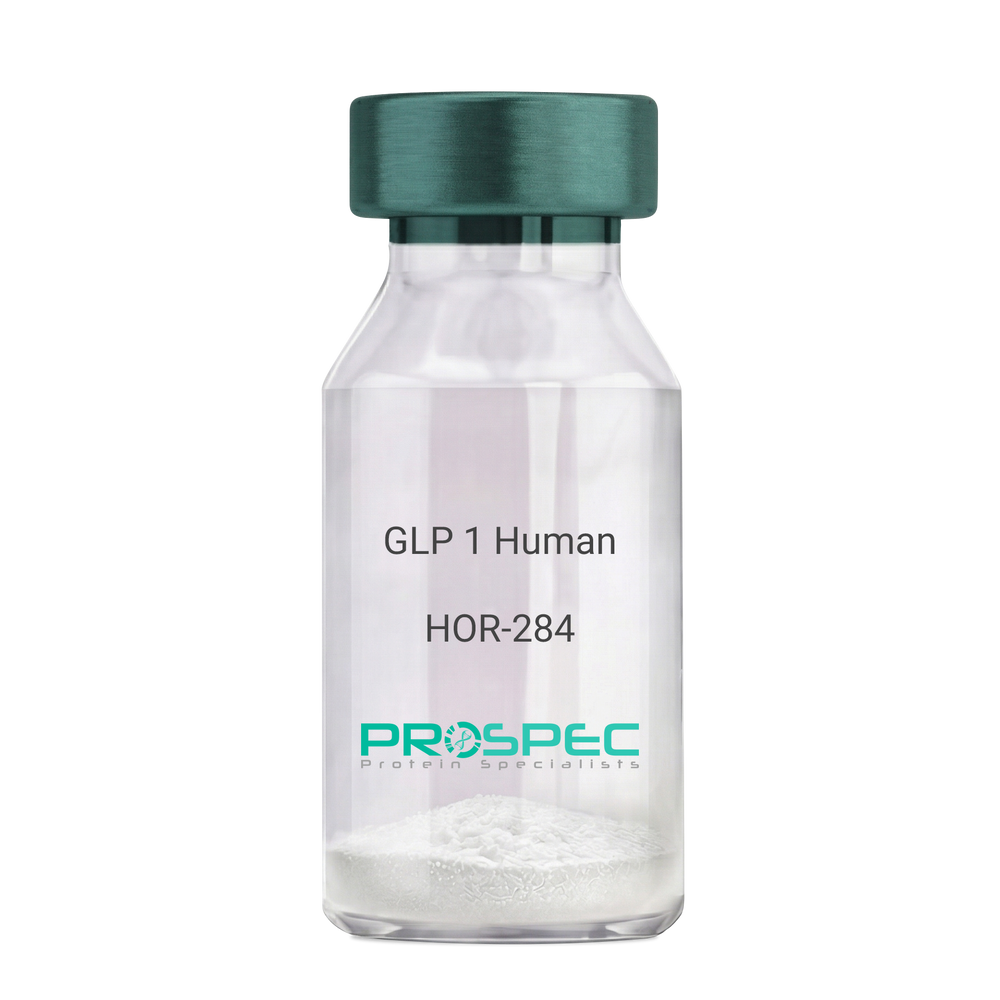
    Name :

    GLP 1 Human

    Description:

    Human Glucagon Like Peptide-1

    GLP1, Glucagon Like Peptide-1, Incretin hormone.

    Product # :

    HOR-284

    Price :

    Quantity :

    Shipping Method :

    Room Temp Icon

    Shipped at Room temp

    Add To Cart

    More Info

    • description
    • formulation
    • purity
    • More Info

    Description

    Glucagon Like Peptide-1 is a single, non-glycosylated, polypeptide chain containing 30 amino acids and having a molecular mass of 3297.7 Dalton.The GLP-1 is purified by proprietary chromatographic techniques.

    Formulation

    The GLP-1 peptide was lyophilized with no additives.

    Purity

    Greater than 96.0% as determined by RP-HPLC.

    More Info

    • Introduction

      Glucagon-like peptide-1 (GLP-1) is derived from the transcription product of the proglucagon gene. The major source of GLP-1 in the body is the intestinal L cell that secretes GLP-1 as a guthormone. The biologically active forms of GLP-1 are: GLP-1-(7-37) and GLP-1-(7-36)NH2.
      GLP-1 secretion by L cells is dependent on the presence of nutrients in the lumen of the small intestine. The secretagogues (agents that causes or stimulates secretion) of this hormone include major nutrients like carbohydrate, proteinand lipid. Once in the circulation, GLP-1 has a half life of less than 2 minutes, due to rapid degradation by the enzyme dipeptidyl peptidase-4.
      GLP-1 possesses several physiological properties that make it a subject of intensive investigation as a potential treatment of diabetes mellitus. The known physiological functions of GLP-1 include: Increases insulin secretion from the pancreas in a glucose-dependent manner, decreases glucagon secretion from the pancreas, increases beta cells mass and insulin gene expression, inhibits acid secretion and gastric emptying in the stomach, decreases food intake by increasing satiety.

    • Synonyms

      GLP1, Glucagon Like Peptide-1, Incretin hormone.

    • Physical Appearance

      Sterile Filtered White lyophilized (freeze-dried) powder.

    • Stability

      Lyophilized Glucagon Like Peptide-1 although stable at room temperature for 3 weeks, should be stored desiccated below -18°C. Upon reconstitution GLP-1 should be stored at 4°C between 2-7 days and for future use below -18°C. For long term storage it is recommended to add a carrier protein (0.1% HSA or BSA).Please prevent freeze-thaw cycles.

    • Solubility

      It is recommended to reconstitute the lyophilized Glucagon Like Peptide-1 in sterile H2O at 0.5mg/ml, which can then be further diluted to other aqueous solutions.

    • Amino Acid Sequence

      H-His-Ala-Glu-Gly-Thr-Phe-Thr-Ser-Asp-Val-Ser-Ser-Tyr-Leu-Glu-Gly-Gln-Ala-Ala-Lys-Glu-Phe-Ile-Ala-Trp-Leu-Val-Lys-Gly-Arg-NH2.

    ProSpec's products are furnished for LABORATORY RESEARCH USE ONLY. The product may not be used as drugs, agricultural or pesticidal products, food additives or household chemicals.

    Glp 1 Human
  • View Data Sheet

    Name :

    ASB8 Human

    Description:

    Ankyrin Repeat And SOCS Box Containing 8 Human Recombinant

    Ankyrin Repeat And SOCS Box Containing 8, ASB-8.

    Product # :

    PRO-1709

    Price :

    Quantity :

    Shipping Method :

    Ice Icon

    Shipped with Ice Packs

    Add To Cart

    More Info

    • description
    • source
    • formulation
    • purity
    • More Info

    Description

    ASB8 Human Recombinant produced in E.coli is a single, non-glycosylated polypeptide chain containing 311 amino acids (1-288) and having a molecular mass of 34.0kDa.ASB8 is fused to a 23 amino acid His-tag at N-terminus & purified by proprietary chromatographic techniques.

    Source

    Escherichia Coli.

    Formulation

    The ASB8 solution (0.25mg/ml) contains 20mM Tris-HCl buffer (pH8.0), 0.15M NaCl, 1mM DTT and 10% glycerol.

    Purity

    Greater than 90.0% as determined by SDS-PAGE.

    More Info

    • Introduction

      ASB8 is a substrate-recognition component of a SCF-like ECS (Elongin-Cullin-SOCS-box protein) E3 ubiquitin-protein ligase complex that facilitates the ubiquitination and consequent proteasomal degradation of objective proteins.

    • Synonyms

      Ankyrin Repeat And SOCS Box Containing 8, ASB-8.

    • Physical Appearance

      Sterile Filtered clear solution.

    • Stability

      Store at 4°C if entire vial will be used within 2-4 weeks. Store, frozen at -20°C for longer periods of time. For long term storage it is recommended to add a carrier protein (0.1% HSA or BSA).Avoid multiple freeze-thaw cycles.

    • Amino Acid Sequence

      MGSSHHHHHH SSGLVPRGSH MGSMSSSMWY IMQSIQSKYS LSERLIRTIA AIRSFPHDNV EDLIRGGADV NCTHGTLKPL HCACMVSDAD CVELLLEKGA EVNALDGYNR TALHYAAEKD EACVEVLLEY GANPNALDGN RDTPLHWAAF KNNAECVRAL LESGASVNAL DYNNDTPLSW AAMKGNLESV SILLDYGAEV RVINLIGQTP ISRLVALLVR GLGTEKEDSC FELLHRAVGH FELRKNGTMP REVARDPQLC EKLTVLCSAP GTLKTLARYA VRRSLGLQYL PDAVKGLPLP ASLKEYLLLL E

    ProSpec's products are furnished for LABORATORY RESEARCH USE ONLY. The product may not be used as drugs, agricultural or pesticidal products, food additives or household chemicals.

    Asb8 Human
  • View Data Sheet

    Name :

    iL22RA (Y51A) Mouse, PEG

    Description:

    Interleukin-22 Receptor Antagonist (Y51A), PEG Mouse Recombinant

    Product # :

    CYT-1248

    Price :

    Quantity :

    Shipping Method :

    Room Temp Icon

    Shipped at Room temp

    Add To Cart

    More Info

    • description
    • source
    • formulation
    • purity
    • biological activity
    • More Info

    Description

    Interleukin 22 Y51A mutan Mouse Recombinant is a single non-glycosilated polypeptide chain containing 147 amino acids and additional Ala at N-terminus. The iL22RA is bound to 20 kDa PEG molecule at N-terminus, resulting in 36.0 kDa. The Mouse iL22RA (Y51A) Pegylated runs as a 50 kDa due to enlarged hydrodymanic volume. iL22RA Mutant Mouse Recombinant was purified by proprietary chromatographic techniques.

    Source

    Escherichia coli.

    Formulation

    The Mouse iL22RA (Y51A) was lyophilized from a concentrated (1mg/ml) solution with 0.003mM NaHCO3.

    Purity

    Greater than 98.0% as determined by:

    (a) Gel filtration analysis.

    (b) Analysis by SDS-PAGE.

    Biological Activity

    Pegylated Mouse iL22RA inhibits mouse IL-22 induced STAT3 phosphorylation in HepG cells. Its inhibitory acrtivity in vitro is ~ 10-20% compared to the non-pegylated mIL22 (Y51A) mutant.

    More Info

    • Physical Appearance

      White lyophilized (freeze-dried) powder.

    • Stability

      Lyophilized iL22RA (Y51A) Mutant Mouse Recombinant although stable at room temperature for several weeks, should be stored desiccated below -18°C. Upon reconstitution at > 0.1 mg/ml and up to 2mM and filter sterilization iL22RA mutant can be stored at 4°C or even room temperature for several weeks making it suitable for long term infusion studies using osmotic pumps. At lower concentration addition of a carrier protein (0.1% HSA or BSA) is suggested. Please prevent freeze-thaw cycles.

    • Solubility

      It is recommended to reconstitute the lyophilized iL22RA (Y51A) Mutant Mouse Recombinant in sterile water or sterile 0.4% NaHCO3 adjusted to pH 8-9, not less than 100µg/ml, which can then be further diluted with other aqueous solutions.

    • Background

      IL-22 is a part of the IL-10 family of regulatory cytokines and produced by several populations of immune cells at a site of inflammation. Members of this family share partial homology in their amino acid sequences, but varies in their biological functions. IL-22 takes effect on non-hematopoietic cells. IL-22 takes part in wound healing and in protection against microbs. Produced by T lymphocytes, IL-22 inhibits IL-4 production by Th2 cells, and induces acute phase reactants in the pancreas and liver.

    • Protein content

      Protein quantization was carried out by UV spectroscopy at 280 nm using the absorbency value of 0.18 as the extinction coefficient for a 0.1% (1mg/ml) solution at pH 8.0. This value is calculated by the DNAman computer analysis program of protein sequences.

    ProSpec's products are furnished for LABORATORY RESEARCH USE ONLY. The product may not be used as drugs, agricultural or pesticidal products, food additives or household chemicals.

    Il22Ra Mouse Peg
  • View Data Sheet

    Name :

    POGLUT1 Human

    Description:

    Protein O-Glucosyltransferase 1 Human Recombinant

    POGLUT1, C3orf9, CLP46, hCLP46, KDELCL1, KTELC1, Protein O-glucosyltransferase 1, CAP10-like 46 kDa protein, KTEL motif-containing protein 1, Myelodysplastic syndromes relative protein, O-glucosyltransferase Rumi homolog, hRumi, Protein O-xylosyltransferase, MDSRP.

    Product # :

    ENZ-956

    Price :

    Quantity :

    Shipping Method :

    Ice Icon

    Shipped with Ice Packs

    Add To Cart

    More Info

    • description
    • source
    • formulation
    • purity
    • More Info

    Description

    POGLUT1 Human Recombinant produced in in Sf9 Baculovirus cells is a single, non-glycosylated polypeptide chain containing 377 amino acids (24-392a.a) and having a molecular mass of 44.5kDa (Migrates at 40-57kDa on SDS-PAGE under reducing conditions). POGLUT1 is fused to a 8 amino acid His-tag at C-Terminus and purified by proprietary chromatographic techniques.

    Source

    Sf9, Baculovirus cells.

    Formulation

    The POGLUT1 solution (0.25mg/ml) contains Phosphate Buffered Saline (pH 7.4) and 10% glycerol.

    Purity

    Greater than 90% as determined by SDS-PAGE.

    More Info

    • Introduction

      POGLUT1 is a homologue of Rumi from Drosophila, an endoplasmic reticulum (ER)-retaining glucosyltransferase which catalyzes the transfer of glucose and xylose from UDP-glucose and UDP-xylose, respectively, to EGF repeats on the consensus sequence C-X-S-X-P-C. POGLUT1 positively regulates Notch signaling without affecting Notch ligand binding.

    • Synonyms

      POGLUT1, C3orf9, CLP46, hCLP46, KDELCL1, KTELC1, Protein O-glucosyltransferase 1, CAP10-like 46 kDa protein, KTEL motif-containing protein 1, Myelodysplastic syndromes relative protein, O-glucosyltransferase Rumi homolog, hRumi, Protein O-xylosyltransferase, MDSRP.

    • Physical Appearance

      Sterile Filtered colorless solution.

    • Stability

      Store at 4°C if entire vial will be used within 2-4 weeks. Store, frozen at -20°C for longer periods of time. For long term storage it is recommended to add a carrier protein (0.1% HSA or BSA). Avoid multiple freeze-thaw cycles.

    • Amino Acid Sequence

      RQKESGSKWK VFIDQINRSL ENYEPCSSQN CSCYHGVIEE DLTPFRGGIS RKMMAEVVRR KLGTHYQITK NRLYRENDCM FPSRCSGVEH FILEVIGRLP DMEMVINVRD YPQVPKWMEP AIPVFSFSKT SEYHDIMYPA WTFWEGGPAV WPIYPTGLGR WDLFREDLVR SAAQWPWKKK NSTAYFRGSR TSPERDPLIL LSRKNPKLVD AEYTKNQAWK SMKDTLGKPA AKDVHLVDHC KYKYLFNFRG VAASFRFKHL FLCGSLVFHV GDEWLEFFYP QLKPWVHYIP VKTDLSNVQE LLQFVKANDD VAQEIAERGS QFIRNHLQMD DITCYWENLL SEYSKFLSYN VTRRKGYDQI IPKMLKTELL EHHHHHH.

    ProSpec's products are furnished for LABORATORY RESEARCH USE ONLY. The product may not be used as drugs, agricultural or pesticidal products, food additives or household chemicals.

    Poglut1 Human
  • View Data Sheet

    Name :

    DAG1 Human

    Description:

    Dystroglycan 1 Human Recombinant

    Dystroglycan, Dystrophin-associated glycoprotein 1, DAG1, A3a, DAG, AGRNR, 156DAG, MDDGC7, MDDGC9.

    Product # :

    PRO-1571

    Price :

    Quantity :

    Shipping Method :

    Room Temp Icon

    Shipped at Room temp

    Add To Cart

    More Info

    • description
    • source
    • formulation
    • purity
    • More Info

    Description

    DAG1 Human Recombinant produced in E.Coli is a single, non-glycosylated, polypeptide chain (a.a 30-312) containing 293 amino acids including a 10 a.a N-terminal His tag. The total molecular mass is 31.87kDa (calculated).

    Source

    Escherichia Coli.

    Formulation

    DAG1 filtered (0.4 µm) and lyophilized from 0.5mg/ml in 0.05M phosphate buffer and 0.075M NaCl, pH 7.4.

    Purity

    Greater than 90.0% as determined by SDS-PAGE.

    More Info

    • Introduction

      Dystroglycan 1 (DAG1) is a laminin binding component of the dystrophin-glycoprotein complex which provides a connection between the subsarcolemmal cytoskeleton and the extracellular matrix. The N-terminal domain of alpha-dystroglycan is secreted into the cerebrospinal fluid. The effect of DAG1 on the nervous system remains vague. The complete dystroglycan complex is expressed in a various tissues and has a role in processes such as laminin and basement membrane assembly, sarcolemmal stability, cell survival, peripheral nerve myelination, nodal structure, cell migration, and epithelial polarization. DAG1 is a candidate gene for the site of the mutation in autosomal recessive muscular dystrophies. The dramatic decrease of DAG1 in Duchenne muscular dystrophy leads to a loss of linkage between the sarcolemma and extracellular matrix, making muscle fibers more susceptible to necrosis.

    • Synonyms

      Dystroglycan, Dystrophin-associated glycoprotein 1, DAG1, A3a, DAG, AGRNR, 156DAG, MDDGC7, MDDGC9.

    • Physical Appearance

      Filtered White lyophilized (freeze-dried) powder.

    • Stability

      Store lyophilized protein at -20°C. Aliquot the product after reconstitution to avoid repeated freezing/thawing cycles. Reconstituted protein can be stored at 4°C for a limited period of time; it does not show any change after two weeks at 4°C.

    • Solubility

      It is recommended to add deionized water to prepare a working stock solution of approximately 0.5mg/ml and let the lyophilized pellet dissolve completely. DAG1 is not sterile! Please filter the product by an appropriate sterile filter before using it in the cell culture.

    • Amino Acid Sequence

      MKHHHHHHASHWPSEPSEAV RDWENQLEAS MHSVLSDLHE AVPTVVGIPD GTAVVGRSFR VTIPTDLIAS SGDIIKVSAA GKEALPSWLH WDSQSHTLEG LPLDTDKGVH YISVSATRLG ANGSHIPQTS SVFSIEVYPE DHSELQSVRT ASPDPGEVVS SACAADEPVT VLTVILDADL TKMTPKQRID LLHRMRSFSE VELHNMKLVP VVNNRLFDMS AFMAGPGNAK KVVENGALLS WKLGCSLNQN SVPDIHGVEA PAREGAMSAQ LGYPVVGWHI ANKKPPLPKR VRR.

    ProSpec's products are furnished for LABORATORY RESEARCH USE ONLY. The product may not be used as drugs, agricultural or pesticidal products, food additives or household chemicals.

    Dag1 Human
  • View Data Sheet

    Name :

    SCRN1 Human

    Description:

    Secernin 1 Human Recombinant

    Secernin-1, SES1, KIAA0193, Secernin 1.

    Product # :

    PRO-2212

    Price :

    Quantity :

    Shipping Method :

    Ice Icon

    Shipped with Ice Packs

    Add To Cart

    More Info

    • description
    • source
    • formulation
    • purity
    • More Info

    Description

    SCRN1 Human Recombinant produced in E.Coli is a single, non-glycosylated polypeptide chain containing 437 amino acids (1-414 a.a) and having a molecular mass of 48.8kDa. SCRN1 is fused to a 23 amino acid His-tag at N-terminus & purified by proprietary chromatographic techniques.

    Source

    Escherichia Coli.

    Formulation

    SCRN1 protein solution (0.5mg/ml) containing Phosphate buffered saline (pH7.4) , 10% glycerol and 1mM DTT.

    Purity

    Greater than 90.0% as determined by SDS-PAGE.

    More Info

    • Introduction

      Secernin 1 (SCRN1) which is a member of the peptidase C69 family, regulates exocytosis in mast cells. SCRN1 increases both the level of secretion and the sensitivity of mast cells to stimulation with calcium.

    • Synonyms

      Secernin-1, SES1, KIAA0193, Secernin 1.

    • Physical Appearance

      Sterile Filtered colorless solution.

    • Stability

      Store at 4°C if entire vial will be used within 2-4 weeks. Store, frozen at -20°C for longer periods of time. For long term storage it is recommended to add a carrier protein (0.1% HSA or BSA). Avoid multiple freeze-thaw cycles.

    • Amino Acid Sequence

      GSSHHHHHH SSGLVPRGSH MGSMAAAPPS YCFVAFPPRA KDGLVVFGKN SARPRDEVQE VVYFSAADHE PESKVECTYI SIDQVPRTYA IMISRPAWLW GAEMGANEHG VCIANEAINT REPAAEIEAL LGMDLVRLGL ERGETAKEAL DVIVSLLEEH GQGGNYFEDA NSCHSFQSAY LIVDRDEAWV LETIGKYWAA EKVTEGVRCI CSQLSLTTKM DAEHPELRSY AQSQGWWTGE GEFNFSEVFS PVEDHLDCGA GKDSLEKQEE SITVQTMMNT LRDKASGVCI DSEFFLTTAS GVSVLPQNRS SPCIHYFTGT PDPSRSIFKP FIFVDDVKLV PKTQSPCFGD DDPAKKEPRF QEKPDRRHEL YKAHEWARAI IESDQEQGRK LRSTMLELEK QGLEAMEEIL TSSEPLDPAE VGDLFYDCVD TEIKFFK.

    ProSpec's products are furnished for LABORATORY RESEARCH USE ONLY. The product may not be used as drugs, agricultural or pesticidal products, food additives or household chemicals.

    Scrn1 Human
  • View Data Sheet

    Name :

    NKp46 Human

    Description:

    Natural Cytotoxicity Receptor NKp46 Human Recombinant

    Natural cytotoxicity triggering receptor 1, Natural killer cell p46-related protein, hNKp46, NK-p46, NKp46, NK cell-activating receptor, Lymphocyte antigen 94 homolog, CD335 antigen, NCR1, LY94, NCRNKp46, CD335.

    Product # :

    PRO-432

    Price :

    Quantity :

    Shipping Method :

    Ice Icon

    Shipped with Ice Packs

    Add To Cart

    More Info

    • description
    • source
    • formulation
    • purity
    • More Info

    Description

    NKp46 Human Recombinant produced in E.Coli is a single, non-glycosylated polypeptide chain containing 235 amino acids (22-255) and having a molecular mass of 26.6kDa. NKp46 is purified by proprietary chromatographic techniques.

    Source

    Escherichia Coli.

    Formulation

    NKp46 (1mg/ml) contains phosphate buffered saline (pH7.4) & 1mM EDTA.

    Purity

    Greater than 95.0% as determined by SDS-PAGE.

    More Info

    • Introduction

      A natural cytotoxicity receptor (NCR) NKp46 has been shown to represent a novel NK cell-specific molecule involved in human NK cell activation. The natural cytotoxicity receptors (NCRs) are a recently characterized family of Ig-like activation receptors that appear to be major triggering receptors in tumor cell recognition. The three known NCRs include NKp46 and NKp30, which are expressed on circulating NKcells, and NKp44, which is expressed only on activating NK cells. NKp46 has been implicated in NK cell-mediated lysis of several autologous tumor cells, pathogen-infected cell lines and mononuclear phagocytes infected with an intracellular bacterium. The Lysis of tumor cells by NK-cells involves recognition by NKp46 of heparan sulfate moieties of membrane heparan sulfate proteoglycans. Furthermore, NKp46 is a surface receptor involved in NK-cell cell death by apoptosis. NKp46 has two extracellular Ig-like domains followed by a ~40 residue stalk region, a type I transmembrane domain, and a short cytoplasmic tail. The extracellular Ig-like domain of NKp46 (22-255aa) is purified by FPLC gel-filtration chromatography, after refolding of the isolated inclusion bodies in a redox buffer. In addition, engagement of the antigen with the monoclonal antibody stimulates intracellular calcium levels and the synthesis of cytokines. CD59 is an NKp46 coreceptor (by physical association) together they activate cytotoxicity of human NK-cells, their engagement results in tyrosine phosphorylation of CD3-zeta chains associated with NKp46. Reduced cell surface expression of NKp46 and other NK-cell receptors is linked to the impaired NK-cell cytolytic function in viremic HIV-1 infection.

    • Synonyms

      Natural cytotoxicity triggering receptor 1, Natural killer cell p46-related protein, hNKp46, NK-p46, NKp46, NK cell-activating receptor, Lymphocyte antigen 94 homolog, CD335 antigen, NCR1, LY94, NCRNKp46, CD335.

    • Physical Appearance

      Sterile filtered colorless solution.

    • Stability

      Store at 4°C if entire vial will be used within 2-4 weeks. Store, frozen at -20°C for longer periods of time. For long term storage it is recommended to add a carrier protein (0.1% HSA or BSA). Avoid multiple freeze-thaw cycles.

    • Amino Acid Sequence

      MQQQTLPKPF IWAEPHFMVP KEKQVTICCQ GNYGAVEYQL HFEGSLFAVD RPKPPERINKVKFYIPDMNS RMAGQYSCIY RVGELWSEPS NLLDLVVTEM YDTPTLSVHP GPEVISGEEV TFYCRLDTAT SMFLLLKEGR SSHVQRGYGK VQAEFPLGPV TTAHRGTYRX FGSYNNHAWSFPSEPVKLLV TGDIENTSLA PEDPTFSADT WGTYLLTTET GLQKDHALWD HTAQN.

    ProSpec's products are furnished for LABORATORY RESEARCH USE ONLY. The product may not be used as drugs, agricultural or pesticidal products, food additives or household chemicals.

    Nkp46 Human
  • View Data Sheet

    Name :

    BCCIP Human

    Description:

    BRCA2 And CDKN1A Interacting Protein Human Recombinant

    BRCA2 and CDKN1A-interacting protein, P21- and CDK-associated protein 1, Protein TOK-1, BCCIP, TOK1, BRCA2 and CDKN1A-interacting protein.

    Product # :

    PRO-2014

    Price :

    Quantity :

    Shipping Method :

    Ice Icon

    Shipped with Ice Packs

    Add To Cart

    More Info

    • description
    • source
    • formulation
    • purity
    • More Info

    Description

    BCCIP Human Recombinant produced in E.Coli is a single, non-glycosylated polypeptide chain containing 339 amino acids (1-314 a.a.) and having a molecular mass of 38.6kDa.BCCIP is fused to a 25 amino acid His-tag at N-terminus & purified by proprietary chromatographic techniques.

    Source

    Escherichia Coli.

    Formulation

    BCCIP protein solution (0.5mg/ml) containing 20mM Tris-HCl buffer (pH 8.0), 0.15M NaCl, 10% glycerol and 1mM DTT.

    Purity

    Greater than 90.0% as determined by SDS-PAGE.

    More Info

    • Introduction

      BRCA2 And CDKN1A Interacting Protein (BCCIP) is a nuclear protein with multiple interacting domains which remained conserved throughout the evolution. BCCIP is an important cofactor for BRCA2 in tumor suppression, and a modulator of CDK2 kinase activity via p21. BCCIP takes also part in the regulation of BRCA2 and RAD51 nuclear focus formation, doublestrand break-induced homologous recombination, and cell cycle progression.

    • Synonyms

      BRCA2 and CDKN1A-interacting protein, P21- and CDK-associated protein 1, Protein TOK-1, BCCIP, TOK1, BRCA2 and CDKN1A-interacting protein.

    • Physical Appearance

      Sterile Filtered colorless solution.

    • Stability

      Store at 4°C if entire vial will be used within 2-4 weeks. Store, frozen at -20°C for longer periods of time. For long term storage it is recommended to add a carrier protein (0.1% HSA or BSA).Avoid multiple freeze-thaw cycles.

    • Amino Acid Sequence

      MGSSHHHHHH SSGLVPRGSH MGSEFMASRS KRRAVESGVP QPPDPPVQRD EEEEKEVENE DEDDDDSDKE KDEEDEVIDE EVNIEFEAYS LSDNDYDGIK KLLQQLFLKA PVNTAELTDL LIQQNHIGSV IKQTDVSEDS NDDMDEDEVF GFISLLNLTE RKGTQCVEQI QELVLRFCEK NCEKSMVEQL DKFLNDTTKP VGLLLSERFI NVPPQIALPM YQQLQKELAG AHRTNKPCGK CYFYLLISKT FVEAGKNNSK KKPSNKKKAA LMFANAEEEF FYEKAILKFN YSVQEESDTC LGGKWSFDDV PMTPLRTVML IPGDKMNEIM DKLKEYLSV.

    ProSpec's products are furnished for LABORATORY RESEARCH USE ONLY. The product may not be used as drugs, agricultural or pesticidal products, food additives or household chemicals.

    Bccip Human
  • View Data Sheet

    Name :

    EMG1 Human

    Description:

    EMG1 Nucleolar Protein Human Recombinant

    EMG1 nucleolar protein homolog (S. cerevisiae), 18S rRNA Psi1248 methyltransferase, 18S rRNA (pseudouridine-N1-)-methyltransferase NEP1, Ribosome biogenesis protein NEP1, essential for mitotic growth 1, ribosomal RNA small subunit methyltransferase NEP1, Protein C2f, BWCNS, Grcc2f, NEP1, EC 2.1.1.-.

    Product # :

    PRO-1122

    Price :

    Quantity :

    Shipping Method :

    Ice Icon

    Shipped with Ice Packs

    Add To Cart

    More Info

    • description
    • source
    • formulation
    • purity
    • More Info

    Description

    EMG1 Human Recombinant produced in E. coli is a single polypeptide chain containing 267 amino acids (1-244) and having a molecular mass of 29.1kDa.EMG1 is fused to a 23 amino acid His-tag at N-terminus & purified by proprietary chromatographic techniques.

    Source

    E.coli.

    Formulation

    The EMG1 solution (1mg/ml) contains 20mM Tris-HCl buffer (pH 8.0), 100mM Nacl, 1mM DTT and 20% glycerol.

    Purity

    Greater than 95% as determined by SDS-PAGE.

    More Info

    • Introduction

      EMG1 is a 244 aa protein which has a role in ribosome biogenesis. EMG1 is a key protein in the small ribosomal subunit assembly, controls methylation during ribosome synthesis and takes part in pre-18S rRNA processing. EMG1 is localized to the nucleolus and a mutation in this gene is linked with Bowen-Conradi syndrome.

    • Synonyms

      EMG1 nucleolar protein homolog (S. cerevisiae), 18S rRNA Psi1248 methyltransferase, 18S rRNA (pseudouridine-N1-)-methyltransferase NEP1, Ribosome biogenesis protein NEP1, essential for mitotic growth 1, ribosomal RNA small subunit methyltransferase NEP1, Protein C2f, BWCNS, Grcc2f, NEP1, EC 2.1.1.-.

    • Physical Appearance

      Sterile Filtered colorless solution.

    • Stability

      Store at 4°C if entire vial will be used within 2-4 weeks. Store, frozen at -20°C for longer periods of time. For long term storage it is recommended to add a carrier protein (0.1% HSA or BSA).Avoid multiple freeze-thaw cycles.

    • Amino Acid Sequence

      MGSSHHHHHH SSGLVPRGSH MGSMAAPSDG FKPRERSGGE QAQDWDALPP KRPRLGAGNK IGGRRLIVVL EGASLETVKV GKTYELLNCD KHKSILLKNG RDPGEARPDI THQSLLMLMD SPLNRAGLLQ VYIHTQKNVL IEVNPQTRIP RTFDRFCGLM VQLLHKLSVR AADGPQKLLK VIKNPVSDHF PVGCMKVGTS FSIPVVSDVR ELVPSSDPIV FVVGAFAHGK VSVEYTEKMV SISNYPLSAA LTCAKLTTAF EEVWGVI

    ProSpec's products are furnished for LABORATORY RESEARCH USE ONLY. The product may not be used as drugs, agricultural or pesticidal products, food additives or household chemicals.

    Emg1 Human
  • View Data Sheet

    Name :

    ODC1 Human

    Description:

    Ornithine Decarboxylase 1 Human Recombinant

    ODC, Ornithine decarboxylase 1, EC 4.1.1.17.

    Product # :

    ENZ-181

    Price :

    Quantity :

    Shipping Method :

    Ice Icon

    Shipped with Ice Packs

    Add To Cart

    More Info

    • description
    • source
    • formulation
    • purity
    • More Info

    Description

    ODC1 Human Recombinant produced in E.coli is a single, non-glycosylated polypeptide chain containing 484 amino acids (1-461) and having a molecular mass of 53.5 kDa.ODC1 is fused to a 23 amino acid His-tag at N-terminus & purified by proprietary chromatographic techniques.

    Source

    E.coli.

    Formulation

    The ODC1 solution (0.5mg/ml) contains 20mM Tris-HCl buffer (pH 8.0), 1mM DTT, 0.1M NaCl and 10% glycerol.

    Purity

    Greater than 95% as determined by SDS-PAGE.

    More Info

    • Introduction

      Ornithine decarboxylase is the preliminary and rate-limiting enzyme in the biosynthetic pathway of polyamines and it takes part in the alteration of ornithine to putrescine. ODC1 is a key member of various biological processes, such as cell growth, transformation, differentiation and apoptosis. Overexpression of the ODC1 gene has a vital part in cell proliferation and the progress of cancer.

    • Synonyms

      ODC, Ornithine decarboxylase 1, EC 4.1.1.17.

    • Physical Appearance

      Sterile Filtered colorless solution.

    • Stability

      Store at 4°C if entire vial will be used within 2-4 weeks. Store, frozen at -20°C for longer periods of time. For long term storage it is recommended to add a carrier protein (0.1% HSA or BSA).Avoid multiple freeze-thaw cycles.

    • Amino Acid Sequence

      MGSSHHHHHH SSGLVPRGSH MGSMNNFGNE EFDCHFLDEG FTAKDILDQK INEVSSSDDK DAFYVADLGD ILKKHLRWLK ALPRVTPFYA VKCNDSKAIV KTLAATGTGF DCASKTEIQL VQSLGVPPER IIYANPCKQV SQIKYAANNG VQMMTFDSEV ELMKVARAHP KAKLVLRIAT DDSKAVCRLS VKFGATLRTS RLLLERAKEL NIDVVGVSFH VGSGCTDPET FVQAISDARC VFDMGAEVGF SMYLLDIGGG FPGSEDVKLK FEEITGVINP ALDKYFPSDS GVRIIAEPGR YYVASAFTLA VNIIAKKIVL KEQTGSDDED ESSEQTFMYY VNDGVYGSFN CILYDHAHVK PLLQKRPKPD EKYYSSSIWG PTCDGLDRIV ERCDLPEMHV GDWMLFENMG AYTVAAASTF NGFQRPTIYY VMSGPAWQLM QQFQNPDFPP EVEEQDASTL PVSCAWESGM KRHRAACASA SINV

    ProSpec's products are furnished for LABORATORY RESEARCH USE ONLY. The product may not be used as drugs, agricultural or pesticidal products, food additives or household chemicals.

    Odc1 Human
  • View Data Sheet

    Name :

    STMN3 Human

    Description:

    Stathmin Like-3 Human Recombinant

    Stathmin-3, SCG10-like protein, STMN3, SCLIP

    Product # :

    PRO-838

    Price :

    Quantity :

    Shipping Method :

    Ice Icon

    Shipped with Ice Packs

    Add To Cart

    More Info

    • description
    • source
    • formulation
    • purity
    • More Info

    Description

    STMN3 Recombinant Human produced in E.Coli is a single, non-glycosylated polypeptide chain containing 163 amino acids (39-180 a.a.) and having a molecular mass of 18.9 kDa. The STMN3 is fused to a 21 amino acid His-Tag at N-terminus and purified by proprietary chromatographic techniques.

    Source

    Escherichia Coli.

    Formulation

    STMN3 Human solution containing 20mM Tris-HCl pH-8, 1mM DTT & 10% glycerol.

    Purity

    Greater than 85.0% as determined by SDS-PAGE.

    More Info

    • Introduction

      STMN3 is a neuronal specific protein which belongs to the stathmin/oncoprotein 18 family of microtubule-destabilizing phosphoproteins. It is similar to the SCG10 protein and is involved in signal transduction and regulation of microtubule dynamics.

    • Synonyms

      Stathmin-3, SCG10-like protein, STMN3, SCLIP

    • Physical Appearance

      Sterile filtered colorless solution.

    • Stability

      Store at 4°C if entire vial will be used within 2-4 weeks. Store, frozen at -20°C for longer periods of time. For long term storage it is recommended to add a carrier protein (0.1% HSA or BSA).Avoid multiple freeze-thaw cycles.

    • Amino Acid Sequence

      MGSSHHHHHH SSGLVPRGSH MDMEVKQLDK RASGQSFEVI LKSPSDLSPE SPMLSSPPKK KDTSLEELQK RLEAAEERRK TQEAQVLKQL AERREHEREV LHKALEENNN FSRQAEEKLN YKMELSKEIR EAHLAALRER LREKELHAAE VRRNKEQREE MSG.

    ProSpec's products are furnished for LABORATORY RESEARCH USE ONLY. The product may not be used as drugs, agricultural or pesticidal products, food additives or household chemicals.

    Stmn3 Human
  • View Data Sheet

    Name :

    PFN2 Human

    Description:

    Profilin-2 Human Recombinant

    Profilin-II, PFN2, Profilin-2, PFL, D3S1319E.

    Product # :

    PRO-809

    Price :

    Quantity :

    Shipping Method :

    Ice Icon

    Shipped with Ice Packs

    Add To Cart

    More Info

    • description
    • source
    • formulation
    • purity
    • More Info

    Description

    PFN2 Human Recombinant produced in E.Coli is a single, non-glycosylated, polypeptide chain containing 160 amino acids (1-140 a.a.) and having a molecular mass of 17.2 kDa. PFN2 protein is fused to a 20 amino acid His-Tag at N-terminus and purified by standard chromatography.

    Source

    Escherichia Coli.

    Formulation

    PFN2 protein solution (1mg/ml) containing 20mM Tris-HCl pH-8, 1mM DTT and 10% glycerol.

    Purity

    Greater than 95% as determined by SDS-PAGE.

    More Info

    • Introduction

      PFN2 is a ubiquitous actin monomer-binding protein which is part of the profilin family. PFN2 regulates actin polymerization in response to extra cellular signals. PFN2 binds to actin and affects the structure of the cytoskeleton. At high concentrations, profilin prevents the polymerization of actin, while it increases it at low concentrations. PFN2 binds to PIP2, it inhibits the formation of IP3 and DG.

    • Synonyms

      Profilin-II, PFN2, Profilin-2, PFL, D3S1319E.

    • Physical Appearance

      Sterile filtered colorless solution.

    • Stability

      Store at 4°C if entire vial will be used within 2-4 weeks. Store, frozen at -20°C for longer periods of time. For long term storage it is recommended to add a carrier protein (0.1% HSA or BSA).Avoid multiple freeze-thaw cycles.

    • Amino Acid Sequence

      MGSSHHHHHH SSGLVPRGSH MAGWQSYVDN LMCDGCCQEA AIVGYCDAKY VWAATAGGVF QSITPIEIDM IVGKDREGFF TNGLALGAKK CSVIRDSLYV DGDCTMDIRT KSQGGEPTYN VAVGRAGRVL VFVMGKEGVH GGGLNKKAYS MAKYLRDSGF.

    ProSpec's products are furnished for LABORATORY RESEARCH USE ONLY. The product may not be used as drugs, agricultural or pesticidal products, food additives or household chemicals.

    Pfn2 Human
  • View Data Sheet

    Name :

    CCDC104 Human

    Description:

    Coiled-Coil Domain Containing 104 Human Recombinant

    Coiled-Coil Domain Containing 104, Coiled-CoilDomain- Protein104, CCDC104.

    Product # :

    PRO-1728

    Price :

    Quantity :

    Shipping Method :

    Ice Icon

    Shipped with Ice Packs

    Add To Cart

    More Info

    • description
    • source
    • formulation
    • purity
    • More Info

    Description

    CCDC104 Human Recombinant produced in E.Coli is a single, non-glycosylated polypeptide chain containing 365 amino acids (1-342 a.a) and having a molecular mass of 41.8kDa.CCDC104 is fused to a 23 amino acid His-tag at N-terminus & purified by proprietary chromatographic techniques.

    Source

    Escherichia Coli.

    Formulation

    CCDC104 protein solution (1mg/ml) containing 20mM Tris-HCl buffer (pH 8.0) and 10% glycerol.

    Purity

    Greater than 90.0% as determined by SDS-PAGE.

    More Info

    • Introduction

      CCDC104 also known as coiled-coil domain-containing protein 104 is a 342 amino acid protein that exists as two alternatively spliced isoforms. CCDC104 undergoes post-translational phosphorylation following DNA damage, most likely by either ATR or ATM. Among the diseases associated with CCDC104 are pancreatic cancer, and pancreatitis.

    • Synonyms

      Coiled-Coil Domain Containing 104, Coiled-CoilDomain- Protein104, CCDC104.

    • Physical Appearance

      Sterile Filtered clear solution.

    • Stability

      Store at 4°C if entire vial will be used within 2-4 weeks. Store, frozen at -20°C for longer periods of time. For long term storage it is recommended to add a carrier protein (0.1% HSA or BSA).Avoid multiple freeze-thaw cycles.

    • Amino Acid Sequence

      MGSSHHHHHH SSGLVPRGSH MGSMAAEEED EVEWVVESIA GFLRGPDWSI PILDFVEQKC EVFDDEEESK LTYTEIHQEY KELVEKLLEG YLKEIGINED QFQEACTSPL AKTHTSQAIL QPVLAAEDFT IFKAMMVQKN IEMQLQAIRI IQERNGVLPD CLTDGSDVVS DLEHEEMKIL REVLRKSKEE YDQEEERKRK KQLSEAKTEE PTVHSSEAAI MNNSQGDGEH FAHPPSEVKM HFANQSIEPL GRKVERSETS SLPQKDLKIP GLEHASIEGP IANLSVLGTE ELRQREHYLK QKRDKLMSMR KDMRTKQIQN MEQKGKPTGE VEEMTEKPEM TAEEKQTLLK RRLLAEKLKE EVINK

    ProSpec's products are furnished for LABORATORY RESEARCH USE ONLY. The product may not be used as drugs, agricultural or pesticidal products, food additives or household chemicals.

    Ccdc104 Human
  • View Data Sheet

    Name :

    CDC37 Human

    Description:

    Cell Division Cycle 37 Human Recombinant

    P50CDC37, CDC-37, CDC37, Hsp90 co-chaperone Cdc37, Hsp90 chaperone protein kinase-targeting subunit, CDC37A, Cell Division Cycle 37.

    Product # :

    PRO-464

    Price :

    Quantity :

    Shipping Method :

    Ice Icon

    Shipped with Ice Packs

    Add To Cart

    More Info

    • description
    • source
    • formulation
    • purity
    • More Info

    Description

    CDC37 Human Recombinant produced in E.Coli is a single, non-glycosylated polypeptide chain containing 378 amino acids and having a molecular mass of 44.4 kDa.

    Source

    Escherichia Coli.

    Formulation

    The CDC37 protein solution contains 20mM Tris-HCl pH-8 & 10% glycerol.

    Purity

    Greater than 95.0% as determined by SDS-PAGE.

    More Info

    • Introduction

      CDC37 is an essential protein in Saccharomyces cerevisiae and is a molecular chaperone with precise function in cell signal transduction. CDC37 forms a complex/associates with Hsp90 molecular chaperone as one of several auxiliary proteins that are collectively referred to as Hsp90 co-chaperones. CDC37 also forms complex with a number of protein kinases such as CDK4, CDK6, SRC, RAF-1, MOK, as well as eIF2 alpha kinases. CDC34 is involved in directing Hsp90 to its target kinases. CDC37 up-regulation is a common early event in some localized human cancers. CDC37 is necessary for maintaining prostate tumor cell growth and represents a novel target in the exploration for multitargeted therapies. CDC37 plays a role in regulating Hsp90 ATPase activity. CDC37 binds to Akt and HSP90 in the signal transduction pathway in human tumor cells. Tnf-induced recruitment and activation of the IKK complex require Cdc37 and Hsp90. CDC37 and heat shock protein 90 bind specifically to the kinase domain of LKB1.

    • Synonyms

      P50CDC37, CDC-37, CDC37, Hsp90 co-chaperone Cdc37, Hsp90 chaperone protein kinase-targeting subunit, CDC37A, Cell Division Cycle 37.

    • Physical Appearance

      Sterile Filtered colorless solution.

    • Stability

      Store at 4°C if entire vial will be used within 2-4 weeks. Store, frozen at -20°C for longer periods of time. For long term storage it is recommended to add a carrier protein (0.1% HSA or BSA).Avoid multiple freeze-thaw cycles.

    • Amino Acid Sequence

      MVDYSVWDHI EVSDDEDETH PNIDTASLFR WRHQARVERM EQFQKEKEEL DRGCRECKRK VAECQRKLKE LEVAEGGKAE LERLQAEAQQ LRKEERSWEQ KLEEMRKKEK SMPWNVDTLS KDGFSKSMVN TKPEKTEEDS EEVREQKHKT FVEKYEKQIK HFGMLRRWDD SQKYLSDNVH LVCEETANYL VIWCIDLEVE EKCALMEQVA HQTIVMQFIL ELAKSLKVDP RACFRQFFTK IKTADRQYME GFNDELEAFK ERVRGRAKLR IEKAMKEYEE EERKKRLGPG GLDPVEVYES LPEELQKCFD VKDVQMLQDA ISKMDPTDAK YHMQRCIDSG LWVPNSKASE AKEGEEAGPG DPLLEAVPKT GDEKDVSV.

    ProSpec's products are furnished for LABORATORY RESEARCH USE ONLY. The product may not be used as drugs, agricultural or pesticidal products, food additives or household chemicals.

    Cdc37 Human
  • View Data Sheet

    Name :

    GMNN Human

    Description:

    Geminin Human Recombinant

    GMNN, Geminin, DNA Replication Inhibitor, Gem, RP3-369A17.3.

    Product # :

    PRO-579

    Price :

    Quantity :

    Shipping Method :

    Ice Icon

    Shipped with Ice Packs

    Add To Cart

    More Info

    • description
    • source
    • formulation
    • purity
    • More Info

    Description

    Geminin Human Recombinant fused to N-terminal His-Tag produced in E.Coli is a single, non-glycosylated polypeptide chain containing 245 amino acids and having a molecular mass of 27.7 kDa.

    Source

    Escherichia Coli.

    Formulation

    The protein solution contains 20mM Tris pH 8, 100mM NaCl and 10% glycerol.

    Purity

    Greater than 95.0% as determined by:
    (a) Analysis by RP-HPLC.
    (b) Analysis by SDS-PAGE.

    More Info

    • Introduction

      Geminin is a 25 kDa nuclear protein, which inhibits DNA replication and is degraded during the mitotic phase of the cell cycle. Geminin controls replication by binding to the licensing factor Cdt1, and is involved in neural differentiation. In addition, Geminin directly interacts with Six3 and Hox homeodomain proteins during embryogenesis and inhibits their functions. Geminin can also promote DNA replication. Geminin has 2 roles in 2 different stages of the cell cycle: Geminin is a negative regulator of DNA replication during the “S phase” of the cell cycle. Inhibition of Geminin during the “S phase” (by RNAi) results in an additional round of replication of portions of the genome. During the “M phase” of the cell cycle (mitosis) Geminin stabilizes the replication factor Cdt1 promoting DNA replication during the next cell cycle. Moreover, inhibition of Geminin during mitosis (by RNAi) causes destabilization of Cdt1 protein and impairment of DNA replication during the next cell cycle. Geminin thus guarantees that only one round of replication occurs during each cell cycle. It was discovered that Geminin is overexpressed in a number of malignancies and cancer cell lines. This maintains the concept that Geminin has also a positive role in DNA replication and cell cycle progression. Geminin accumulates through S, G2 and M phases of the cell cycle but is absent during the G1 phase. During the metaphase/anaphase transition of mitosis Geminin levels decrease.

    • Synonyms

      GMNN, Geminin, DNA Replication Inhibitor, Gem, RP3-369A17.3.

    • Physical Appearance

      Sterile Filtered colorless solution.

    • Stability

      Store at 4°C if entire vial will be used within 2-4 weeks. Store, frozen at -20°C for longer periods of time. For long term storage it is recommended to add a carrier protein (0.1% HSA or BSA).Avoid multiple freeze-thaw cycles.

    • Amino Acid Sequence

      MRGSHHHHHH GMASMTGGQQ MGRDLYDDDD KDRWGSMNPS MKQKQEEIKE NIKNSSVPRR TLKMIQPSAS GSLVGRENEL SAGLSKRKHR NDHLTSTTSS PGVIVPESSE NKNLGGVTQE SFDLMIKENP SSQYWKEVAE KRRKALYEAL KENEKLHKEI EQKDNEIARL KKENKELAEV AEHVQYMAEL IERLNGEPLD NFESLDNQEF DSEEETVEDS LVEDSEIGTC AEGTVSSSTD
      AKPCI.

    ProSpec's products are furnished for LABORATORY RESEARCH USE ONLY. The product may not be used as drugs, agricultural or pesticidal products, food additives or household chemicals.

    Geminin Human
  • View Data Sheet

    Name :

    PLGF-1 Human

    Description:

    Placental Growth Factor-1 Human Recombinant

    PIGF, PGF, PLGF-1.

    Product # :

    CYT-1227

    Price :

    Quantity :

    Shipping Method :

    Ice Icon

    Shipped with Ice Packs

    Add To Cart

    More Info

    • description
    • source
    • formulation
    • purity
    • biological activity
    • More Info

    Description

    PLGF1 Human Recombinant produced in HEK293 cells is a single, glycosylated polypeptide chain (a.a 19-149) containing 137 amino acids and having a molecular mass of 15.5kDa. PLGF1 is fused to a 6 amino acid His tag at C-terminus and purified by proprietary chromatographic techniques.

    Source

    HEK293 cells.

    Formulation

    PLGF1 protein (0.5mg/ml) contains Phosphate-Buffered Saline (pH 7.4) and 10% glycerol.

    Purity

    Greater than 90.0% as determined by SDS-PAGE.

    Biological Activity

    Measured by its binding ability in a functional ELISA with Human VEGFR1/Flt-1.

    More Info

    • Synonyms

      PIGF, PGF, PLGF-1.

    • Physical Appearance

      Sterile Filtered colorless solution.

    • Stability

      Store at 4°C if entire vial will be used within 2-4 weeks. Store, frozen at -20°C for longer periods of time. For long term storage it is recommended to add a carrier protein (0.1% HSA or BSA). Avoid multiple freeze-thaw cycles.

    • Amino Acid Sequence

      LPAVPPQQWA LSAGNGSSEV EVVPFQEVWG RSYCRALERL VDVVSEYPSE VEHMFSPSCV SLLRCTGCCG DENLHCVPVE TANVTMQLLK IRSGDRPSYV ELTFSQHVRC ECRPLREKMK PERCGDAVPR RHHHHHH.

    • Background

      Implications in Pathological Angiogenesis:

      While PLGF1 is essential for normal vascular development, dysregulation of its expression is associated with pathological angiogenesis. In conditions such as cancer, PLGF1 can contribute to the formation of abnormal blood vessels that support tumor growth and metastasis. Investigations involving PLGF1 Human Recombinant provide insights into the mechanisms by which PLGF1 contributes to pathological angiogenesis, offering potential targets for anti-angiogenic therapies.

      Challenges and Future Directions:

      While the potential of PLGF1 Human Recombinant in understanding angiogenesis is evident, challenges persist. Fine-tuning its applications, understanding its interactions with other angiogenic factors, and deciphering the context-dependent nature of its functions are critical considerations for translational success. Additionally, developing strategies to selectively target PLGF1 in pathological conditions without compromising its physiological roles poses a challenge in the pursuit of therapeutic interventions.

      PLGF1 Human Recombinant stands at the forefront of angiogenesis research, offering a controlled platform for scientific exploration. Its structural insights, angiogenic signaling functions, and implications in both physiological and pathological contexts position it as a key player in the evolving landscape of vascular biology. As researchers continue to delve into the molecular intricacies of PLGF1, they not only enhance our understanding of angiogenesis but also pave the way for transformative advancements in vascular-targeted therapies, shaping the future of precision medicine and anti-angiogenic interventions.

    ProSpec's products are furnished for LABORATORY RESEARCH USE ONLY. The product may not be used as drugs, agricultural or pesticidal products, food additives or household chemicals.

    Plgf1 Human
  • View Data Sheet

    Name :

    RNF181 Human

    Description:

    Ring Finger Protein 181 Human Recombinant

    Ring Finger Protein 181, E3 Ubiquitin-Protein Ligase RNF181, HSPC238, EC 6.3.2.-.

    Product # :

    PRO-1218

    Price :

    Quantity :

    Shipping Method :

    Ice Icon

    Shipped with Ice Packs

    Add To Cart

    More Info

    • description
    • source
    • formulation
    • purity
    • More Info

    Description

    RNF181 Human Recombinant produced in E. coli is a single polypeptide chain containing 176 amino acids (1-153) and having a molecular mass of 20.3 kDa.RNF181 is fused to a 23 amino acid His-tag at N-terminus & purified by proprietary chromatographic techniques.

    Source

    E.coli.

    Formulation

    The RNF181 solution (1mg/1ml) contains 20mM Tris-HCl buffer (pH 8.0), 0.15M NaCl, 1mM DTT and 10% glycerol.

    Purity

    Greater than 95% as determined by SDS-PAGE.

    More Info

    • Introduction

      E3 ubiquitin-protein ligase RNF181 (RNF181) accepts ubiquitin from an E2 ubiquitin-conjugating enzyme in the thioester form and subsequently directly transfers the ubiquitin to targeted substrates. RNF181 is widely expressed, with the highest levels in the liver and heart and the lowest levels in the brain and skeletal muscle. RNF181 is also expressed in platelets (at protein level).

    • Synonyms

      Ring Finger Protein 181, E3 Ubiquitin-Protein Ligase RNF181, HSPC238, EC 6.3.2.-.

    • Physical Appearance

      Sterile Filtered colorless solution.

    • Stability

      Store at 4°C if entire vial will be used within 2-4 weeks. Store, frozen at -20°C for longer periods of time. For long term storage it is recommended to add a carrier protein (0.1% HSA or BSA).Avoid multiple freeze-thaw cycles.

    • Amino Acid Sequence

      MGSSHHHHHH SSGLVPRGSH MGSMASYFDE HDCEPSDPEQ ETRTNMLLEL ARSLFNRMDF EDLGLVVDWD HHLPPPAAKT VVENLPRTVI RGSQAELKCP VCLLEFEEEE TAIEMPCHHL FHSSCILPWL SKTNSCPLCR YELPTDDDTY EEHRRDKARK QQQQHRLENL HGAMYT.

    ProSpec's products are furnished for LABORATORY RESEARCH USE ONLY. The product may not be used as drugs, agricultural or pesticidal products, food additives or household chemicals.

    Rnf181 Human
  • View Data Sheet

    Name :

    Vimentin PAT5H8AT Antibody

    Description:

    Vimentin PAT5H8AT, Mouse Anti Human

    Vimentin, Vim, FLJ36605.

    Product # :

    ANT-682

    Price :

    Quantity :

    Shipping Method :

    Ice Icon

    Shipped with Ice Packs

    Add To Cart

    More Info

    • formulation
    • More Info

    Formulation

    1mg/ml containing PBS, pH-7.4, 10% Glycerol and 0.02% Sodium Azide.

    More Info

    • Introduction

      Vimentin expression in human malignant glioma cells depends on cellular density, algorithms of drug delivery and chemo/radio treatment. Vimentin and detyrosinated microtubules provide structural support for the extensive microtentacles observed in detached tumor cells and a mechanism to promote successful metastatic spread. Primary colorectal carcinomas display aberrant expression of vimentin, and have activated Notch and TGFbeta signaling pathways. Vimentin is a strong arterial substrate for transglutaminases. Transglutaminase-mediated vimentin dimerization results in a novel unifying pathway by which vasodilatory and remodeling responses may be regulated. Ablation of vimentin expression inhibits migration and invasion of colon and breast cancer cell lines. Vimentin is the main intermediate filament protein in mesenchymal cells and is therefore of value in the differential diagnosis of undifferentiated neoplasms.

    • Synonyms

      Vimentin, Vim, FLJ36605.

    • Physical Appearance

      Sterile filtered colorless solution.

    • Immunogen

      Anti-human Vimentin mAb, is derived from hybridization of mouse F0 myeloma cells with spleen cells from BALB/c mice immunized with a recombinant human Vimentin protein 1-466 amino acids purified from E. coli.

    • Ig Subclass

      Mouse IgG1 heavy chain and k light chain.

    • Clone

      PAT5H8AT.

    • Applications

      Vimentin antibody has been tested by ELISA, Western blot analysis, Flow cytometry and ICC/IF to assure specificity and reactivity. Since application varies, however, each investigation should be titrated by the reagent to obtain optimal results.

    • Type

      Mouse Anti Human Monoclonal.

    • Storage Procedures

      For periods up to 1 month store at 4°C, for longer periods of time, store at -20°C. Prevent freeze thaw cycles.

    • Purification Method

      Vimentin antibody was purified from mouse ascitic fluids by protein-A affinity chromatography.

    ProSpec's products are furnished for LABORATORY RESEARCH USE ONLY. The product may not be used as drugs, agricultural or pesticidal products, food additives or household chemicals.

    Vimentin Pat5H8At Antibody
  • View Data Sheet

    Name :

    SERPINE1 Human

    Description:

    Plasminogen Activator Inhibitor-1 Human Recombinant

    PAI-1, PAI1, PLANH1, SERPINE1, PAIE, PLASMINOGEN ACTIVATOR INHIBITOR, BETA-MIGRATING ENDOTHELIAL-CELL-DERIVED TYPE.

    Product # :

    ENZ-357

    Price :

    Quantity :

    Shipping Method :

    Ice Icon

    Shipped with Ice Packs

    Add To Cart

    More Info

    • description
    • source
    • formulation
    • purity
    • biological activity
    • More Info

    Description

    SERPINE1 Human Recombinant fused to an N-terminal His-Tag produced in E.Coli is a single, non-glycosylated polypeptide chain containing 400 amino acids (24-402) and having a molecular mass of 45kDa.SERPINE1 is fused to a 21 amino acid His-Tag at N-terminus and purified by proprietary chromatographic techniques.

    Source

    Escherichia Coli.

    Formulation

    50mM NaAc (pH 5.5), 10% glycerol and 0.1M NaCl.

    Purity

    Greater than 95.0% as determined by SDS-PAGE.

    Biological Activity

    The IC50 for this effect is less than 3nM, measured by its ability to inhibit uPA cleavage of the substrate Z-GGRAMC.

    More Info

    • Introduction

      Plasminogen activator inhibitor-1 is the principal inhibitor of tissue plasminogen activator(tPA) and uPA, the activators of plasminogenand hence fibrinolysis(the physiological breakdown of blood clots). It is a serine protease inhibitor(serpin) protein (SERPINE1). The other PAI, plasminogen activator inhibitor-2(PAI-2) is secreted by the placentaand only present in significant amounts during pregnancy. In addition, protease nexinacts as an inhibitor of tPA. SERPINE1, however, is the main inhibitor of the plasminogen activators.

    • Synonyms

      PAI-1, PAI1, PLANH1, SERPINE1, PAIE, PLASMINOGEN ACTIVATOR INHIBITOR, BETA-MIGRATING ENDOTHELIAL-CELL-DERIVED TYPE.

    • Physical Appearance

      Sterile Filtered clear colorless solution.

    • Stability

      Store at 4°C if entire vial will be used within 2-4 weeks. Store, frozen at -20°C for longer periods of time. For long term storage it is recommended to add a carrier protein (0.1% HSA or BSA).Avoid multiple freeze-thaw cycles.

    • Amino Acid Sequence

      MGSSHHHHHH SSGLVPRGSH MVHHPPSYVA HLASDFGVRV FQQVAQASKD RNVVFSPYGVASVLAMLQLT TGGETQQQIQ AAMGFKIDDK GMAPALRHLY KELMGPWNKD EISTTDAIFVQRDLKLVQGF MPHFFRLFRS TVKQVDFSEV ERARFIINDW VKTHTKGMIS NLLGKGAVDQLTRLVLVNAL YFNGQWKTPF PDSSTHRRLF HKSDGSTVSV PMMAQTNKFN YTEFTTPDGHYYDILELPYH GDTLSMFIAA PYEKEVPLSA LTNILSAQLI SHWKGNMTRL PRLLVLPKFSLETEVDLRKP LENLGMTDMF RQFQADFTSL SDQEPLHVAQ ALQKVKIEVN ESGTVASSSTAVIVSARMAP EEIIMDRPFL FVVRHNPTGT VLFMGQVMEP.

    ProSpec's products are furnished for LABORATORY RESEARCH USE ONLY. The product may not be used as drugs, agricultural or pesticidal products, food additives or household chemicals.

    Serpine1 Human Recombinant
  • View Data Sheet

    Name :

    APP Human

    Description:

    Amyloid beta (A4) Precursor Protein Human Recombinant

    Amyloid beta A4 protein, ABPP, APPI, APP, Alzheimer disease amyloid protein, Cerebral vascular amyloid peptide, CVAP, PreA4, Protease nexin-II, PN-II, APP, A4, AD1, AAA, PN2, ABETA, CTFgamma.

    Product # :

    PRO-1080

    Price :

    Quantity :

    Shipping Method :

    Ice Icon

    Shipped with Ice Packs

    Add To Cart

    More Info

    • description
    • source
    • formulation
    • purity
    • More Info

    Description

    APP Human Recombinant produced in E.Coli is a single, non-glycosylated polypeptide chain containing 308 amino acids (18-289 a.a) and having a molecular mass of 34.7kDa (Molecular size on SDS-PAGE will appear higher).APP is fused to a 36 amino acid His-tag at N-terminus & purified by proprietary chromatographic techniques.

    Source

    Escherichia Coli.

    Formulation

    APP protein solution (0.5mg/ml) containing 20mM Tris-HCl buffer (pH8.0), 20% glycerol, 0.1M NaCl and 1mM DTT.

    Purity

    Greater than 85.0% as determined by SDS-PAGE.

    More Info

    • Introduction

      Amyloid beta A4 protein (APP) functions as a cell surface receptor and transmembrane precursor protein which is cleaved by secretases to form a number of peptides. A number of these peptides are secreted and can bind to the acetyltransferase complex APBB1/TIP60 to stimulate transcriptional activation, whereas others form the protein basis of the amyloid plaques found in the brains of patients with Alzheimer disease. APP gene mutations are implicated in autosomal dominant Alzheimer disease and cerebroarterial amyloidosis (cerebral amyloid angiopathy).

    • Synonyms

      Amyloid beta A4 protein, ABPP, APPI, APP, Alzheimer disease amyloid protein, Cerebral vascular amyloid peptide, CVAP, PreA4, Protease nexin-II, PN-II, APP, A4, AD1, AAA, PN2, ABETA, CTFgamma.

    • Physical Appearance

      Sterile Filtered colorless solution.

    • Stability

      Store at 4°C if entire vial will be used within 2-4 weeks. Store, frozen at -20°C for longer periods of time. For long term storage it is recommended to add a carrier protein (0.1% HSA or BSA).Avoid multiple freeze-thaw cycles.

    • Amino Acid Sequence

      MRGSHHHHHH GMASMTGGQQ MGRDLYDDDD KDRWGSLEVP TDGNAGLLAE PQIAMFCGRL NMHMNVQNGK WDSDPSGTKT CIDTKEGILQ YCQEVYPELQ ITNVVEANQP VTIQNWCKRG RKQCKTHPHF VIPYRCLVGE FVSDALLVPD KCKFLHQERM DVCETHLHWH TVAKETCSEK STNLHDYGML LPCGIDKFRG VEFVCCPLAE ESDNVDSADA EEDDSDVWWG GADTDYADGS EDKVVEVAEE EEVAEVEEEE ADDDEDDEDG DEVEEEAEEP YEEATERTTS IATTTTTTTE SVEEVVRE.

    ProSpec's products are furnished for LABORATORY RESEARCH USE ONLY. The product may not be used as drugs, agricultural or pesticidal products, food additives or household chemicals.

    App Human
  • View Data Sheet

    Name :

    TNIP1 Human

    Description:

    TNFAIP3 Interacting Protein 1 Human Recombinant

    TNFAIP3-interacting protein 1, HIV-1 Nef-interacting protein, Nef-associated factor 1, Naf1, Nip40-1, Virion-associated nuclear shuttling protein, VAN, hVAN, TNIP1, KIAA0113, NAF1, ABIN-1.

    Product # :

    PRO-005

    Price :

    Quantity :

    Shipping Method :

    Ice Icon

    Shipped with Ice Packs

    Add To Cart

    More Info

    • description
    • source
    • formulation
    • purity
    • More Info

    Description

    TNIP1 Human Recombinant fused with a 20 amino acid His tag at N-terminus produced in E.Coli is a single, non-glycosylated, polypeptide chain containing 458 amino acids (94-530 a.a.) and having a molecular mass of 51.8kDa. The TNIP1 is purified by proprietary chromatographic techniques.

    Source

    Escherichia Coli.

    Formulation

    The TNIP1 solution (0.25 mg/ml) contains 20mM Tris-HCl buffer (pH7.5), 20% glycerol, 5mM DTT and 200mM NaCl.

    Purity

    Greater than 75.0% as determined by SDS-PAGE.

    More Info

    • Introduction

      TNFAIP3-interacting protein 1 (TNIP1) interacts with zinc finger protein A20/TNFAIP3 and inhibits TNF-induced NF-kappa-B-dependent gene expression by interfering with a RIP- or TRAF2-mediated transactivation signal. Furthermore, TNIP1 interacts with HIV-1 matrix protein and is packaged into virions and its overexpression can inhibit viral replication. TNIP1 can regulate matrix nuclear localization, both nuclear import of Preintegration complex (PIC) and export of GAG polyprotein and viral genomic RNA during virion production.

    • Synonyms

      TNFAIP3-interacting protein 1, HIV-1 Nef-interacting protein, Nef-associated factor 1, Naf1, Nip40-1, Virion-associated nuclear shuttling protein, VAN, hVAN, TNIP1, KIAA0113, NAF1, ABIN-1.

    • Physical Appearance

      Sterile Filtered colorless solution.

    • Stability

      Store at 4°C if entire vial will be used within 2-4 weeks. Store, frozen at -20°C for longer periods of time. For long term storage it is recommended to add a carrier protein (0.1% HSA or BSA).Avoid multiple freeze-thaw cycles.

    • Amino Acid Sequence

      MGSSHHHHHH SSGLVPRGSH MSNVTASPTA PACPSDKPAP VQKPPSSGTS SEFEVVTPEE QNSPESSSHA NAMALGPLPR EDGNLMLHLQ RLETTLSVCA EEPDHGQLFT HLGRMALEFN RLASKVHKNE QRTSILQTLC EQLRKENEAL KAKLDKGLEQ RDQAAERLRE ENLELKKLLM SNGNKEGASG RPGSPKMEGT GKKAVAGQQQ ASVTAGKVPE VVALGAAEKK VKMLEQQRSE LLEVNKQWDQ HFRSMKQQYE QKITELRQKL ADLQKQVTDL EAEREQKQRD FDRKLLLAKS KIEMEETDKE QLTAEAKELR QKVKYLQDQL SPLTRQREYQ EKEIQRLNKA LEEALSIQTP PSSPPTAFGS PEGAGALLRK QELVTQNELL KQQVKIFEED FQRERSDRER MNEEKEELKK QVEKLQAQVT LSNAQLKAFK DEEKAREALR QQKRKAKA.

    ProSpec's products are furnished for LABORATORY RESEARCH USE ONLY. The product may not be used as drugs, agricultural or pesticidal products, food additives or household chemicals.

    Tnip1 Human
  • View Data Sheet

    Name :

    GKN1 Human

    Description:

    Gastrokine 1 Human Recombinant

    BRICHOS domain containing 1, 18 kDa antrum mucosa protein, gastrokine 1, Protein CA11, AMP-18, BRICD1, foveolin, FOV.

    Product # :

    PRO-1206

    Price :

    Quantity :

    Shipping Method :

    Ice Icon

    Shipped with Ice Packs

    Add To Cart

    More Info

    • description
    • source
    • formulation
    • purity
    • More Info

    Description

    GKN1 Human Recombinant produced in E. coli is a single polypeptide chain containing 223 amino acids (1-199) and having a molecular mass of 24.5 kDa.GKN1 is fused to a 24 amino acid His-tag at N-terminus & purified by proprietary chromatographic techniques.

    Source

    E.coli.

    Formulation

    The GKN1 solution (0.25mg/1ml) contains 20mM Tris-HCl buffer (pH 8.0), 0.1M NaCl, 1mM DTT and 10% glycerol.

    Purity

    Greater than 85% as determined by SDS-PAGE.

    More Info

    • Introduction

      Gastrokine-1 (GKN1) is a member of the gastrokine family. GKN1 has mitogenic activity and is involved in preserving the integrity of the gastric mucosal epithelium. GKN1 is down-regulated in human gastric cancer tissue in comparison to normal gastric mucosa. GKN1 is expressed in the stomach; however no expression is detected in cancer tissue or gastric cancer cell lines.

    • Synonyms

      BRICHOS domain containing 1, 18 kDa antrum mucosa protein, gastrokine 1, Protein CA11, AMP-18, BRICD1, foveolin, FOV.

    • Physical Appearance

      Sterile Filtered colorless solution.

    • Stability

      Store at 4°C if entire vial will be used within 2-4 weeks. Store, frozen at -20°C for longer periods of time. For long term storage it is recommended to add a carrier protein (0.1% HSA or BSA).Avoid multiple freeze-thaw cycles.

    • Amino Acid Sequence

      MGSSHHHHHH SSGLVPRGSH MGSH MLAYSS VHCFREDKMK FTIVFAGLLG VFLAPALANY NINVNDDNNN AGSGQQSVSV NNEHNVANVD NNNGWDSWNS IWDYGNGFAA TRLFQKKTCI VHKMNKEVMP SIQSLDALVK EKKLQGKGPG GPPPKGLMYS VNPNKVDDLS KFGKNIANMC RGIPTYMAEE MQEASLFFYS GTCYTTSVLW IVDISFCGDT VEN.

    ProSpec's products are furnished for LABORATORY RESEARCH USE ONLY. The product may not be used as drugs, agricultural or pesticidal products, food additives or household chemicals.

    Gkn1 Human
  • View Data Sheet

    Name :

    Placental Lactogen Bovine

    Description:

    Placental Lactogen Bovine Recombinant

    Chorionic Somatomammotropin Hormone 1, CSH1, CSB, CS-1, hCS-B, BPL, BPLP-I.

    Product # :

    CYT-511

    Price :

    Quantity :

    Shipping Method :

    Room Temp Icon

    Shipped at Room temp

    Add To Cart

    More Info

    • description
    • source
    • formulation
    • purity
    • biological activity
    • More Info

    Description

    Placental Lactogen Bovine Recombinant, is a single polypeptide chain containing 199 amino acids and an additional Ala at the N-terminus having a molecular mass of 23 kDa. Placental Lactogen Recombinant is purified by proprietary chromatographic techniques.

    Source

    Escherichia Coli.

    Formulation

    The protein was lyophilized from a concentrated (1mg/ml) solution with 0.02-0.03% NaHCO3.

    Purity

    Greater than 99.0% as determined by:
    (a) Analysis by SEC-HPLC.
    (b) Analysis by SDS-PAGE.

    Biological Activity

    Placental Lactogen Bovine is biologically active as evidenced by inducing proliferation of Nb2 cells.

    More Info

    • Introduction

      Placental Lactogen is a polypeptide hormone that is produced by the Syncytiotrophoblasts of the Placenta, also known as chorionic somatomammotropin. It has both Growth Hormone and Prolactin activities on growth, lactation, and luteal steroid production. In women, placental lactogen secretion begins soon after implantation and increases to 1 g or more a day in late pregnancy. Placental lactogen is also an insulin antagonist.
      Placental Lactogen Bovine is also capable of activating human and other heterologous GH receptors but not ruminat GH receptors.

    • Synonyms

      Chorionic Somatomammotropin Hormone 1, CSH1, CSB, CS-1, hCS-B, BPL, BPLP-I.

    • Physical Appearance

      Sterile Filtered White lyophilized (freeze-dried) powder.

    • Stability

      Lyophilized Placental Lactogen Bovine Recombinant although stable at room temperature for 3 weeks, should be stored desiccated below -18°C. Upon reconstitution Placental Lactogen should be stored at 4°C between 2-7 days and for future use below -18°C. For long term storage it is recommended to add a carrier protein (0.1% HSA or BSA).Please prevent freeze-thaw cycles.

    • Solubility

      It is recommended to reconstitute the lyophilized Placental Lactogen in sterile 18MΩ-cm H2O not less than 100µg/ml, which can then be further diluted to other aqueous solutions.

    • Amino Acid Sequence

      The sequence of the first six N-terminal amino acids was determined and was found to be Ala-Glu-Asp-Tyr-Ala-Pro.

    • Protein content

      UV spectroscopy at 280 nm using the absorbency value of 0.86 as the extinction coefficient for a 0.1% (1mg/ml) solution at pH 8. This value is calculated by the DNAman computer analysis program of protein sequences.

    ProSpec's products are furnished for LABORATORY RESEARCH USE ONLY. The product may not be used as drugs, agricultural or pesticidal products, food additives or household chemicals.

    Placental Lactogen Bovine
  • 1
  • …
  • 19
  • 20
  • 21
  • 22
  • 23
  • …
  • 42
Your browser does not support the video tag.

Products

  • Cytokines
  • Growth Factors
  • Chemokines
  • CD Antigens
  • Neurotrophins
  • Hormones
  • Enzymes
  • Viral Antigens
  • Recombinant Proteins
  • Natural Proteins
  • Monoclonal Antibodies
  • Polyclonal Antibodies
  • Thermal Packaging

About

  • Company
  • Founder
  • Contribution
  • Contact Us
  • My Account

Ordering

  • Ordering Method
  • Ordering - Credit Card
  • Ordering PO
  • Shipping Fees
  • FAQ's

Legal

  • Terms & Conditions
  • Privacy
  • Site Map
  • info@prospecbio.com
  • Facebook
  • Instagram
  • Linkedin Profile

© 2026 ProSpec-Tany TechnoGene Ltd. All Rights Reserved.

  • Choosing a selection results in a full page refresh.
  • Opens in a new window.