Skip to content

High-quality research proteins.

  • 1-800-805-6531

  • Mon - Sat 8.00-18.00, Sun - Closed

  • info@prospecbio.com

  • PO Box 6591 East Brunswick NJ 08816

  • Products
    • Cytokines
    • Growth factors
    • Chemokines
    • Cd antigens
    • Neurotrophins
    • Hormones
    • Enzymes
    • Viral antigens
    • Recombinant proteins
    • Natural proteins
    • Monoclonal antibodies
    • Polyclonal antibodies
    • Thermal Packaging
  • About
    • Company
    • Founder
    • Contribution
  • Customers
    • Eastern Asia
    • Eastern Europe
    • North America
    • South America
    • South East Asia
    • Southern Asia
    • Western Europe
  • Ordering
    • Ordering Method
    • Ordering - Credit Card
    • Ordering - PO
    • Shipping Fees
    • FAQs
  • Services
    • DNA Cloning
    • Protein Expression
    • Monoclonal Antibody
    • Fermentation
    • Technology License
  • Contact us
Log in

Country/region

  • USD $ | Albania
  • USD $ | Andorra
  • USD $ | Argentina
  • USD $ | Armenia
  • USD $ | Australia
  • USD $ | Austria
  • USD $ | Azerbaijan
  • USD $ | Belarus
  • USD $ | Belgium
  • USD $ | Bolivia
  • USD $ | Brazil
  • USD $ | Bulgaria
  • USD $ | Cambodia
  • USD $ | Canada
  • USD $ | Chile
  • USD $ | China
  • USD $ | Colombia
  • USD $ | Costa Rica
  • USD $ | Croatia
  • USD $ | Cyprus
  • USD $ | Czechia
  • USD $ | Denmark
  • USD $ | Estonia
  • USD $ | Finland
  • USD $ | France
  • USD $ | Georgia
  • USD $ | Germany
  • USD $ | Greece
  • USD $ | Hong Kong SAR
  • USD $ | Hungary
  • USD $ | Iceland
  • USD $ | India
  • USD $ | Ireland
  • USD $ | Israel
  • USD $ | Italy
  • USD $ | Japan
  • USD $ | Kazakhstan
  • USD $ | Latvia
  • USD $ | Liechtenstein
  • USD $ | Lithuania
  • USD $ | Madagascar
  • USD $ | Malta
  • USD $ | Mexico
  • USD $ | Moldova
  • USD $ | Monaco
  • USD $ | Netherlands
  • USD $ | New Zealand
  • USD $ | North Macedonia
  • USD $ | Norway
  • USD $ | Panama
  • USD $ | Paraguay
  • USD $ | Peru
  • USD $ | Philippines
  • USD $ | Poland
  • USD $ | Portugal
  • USD $ | Romania
  • USD $ | Singapore
  • USD $ | Slovakia
  • USD $ | Slovenia
  • USD $ | South Africa
  • USD $ | South Korea
  • USD $ | Spain
  • USD $ | Sri Lanka
  • USD $ | Sweden
  • USD $ | Switzerland
  • USD $ | Taiwan
  • USD $ | Thailand
  • USD $ | Türkiye
  • USD $ | Ukraine
  • USD $ | United Kingdom
  • USD $ | United States
  • USD $ | Uruguay
  • USD $ | Vatican City
  • USD $ | Venezuela
  • USD $ | Vietnam
  • Facebook
  • Instagram
logoProSpec - Recombinant Protein Manufacturer for academic and R&D industry
Become a distributor
Account Log in
Wishlist
Cart Cart(0)
  • Products
    +
    • Cytokines
    • Growth factors
    • Chemokines
    • Cd antigens
    • Neurotrophins
    • Hormones
    • Enzymes
    • Viral antigens
    • Recombinant proteins
    • Natural proteins
    • Monoclonal antibodies
    • Polyclonal antibodies
    • Thermal Packaging
  • About
    +
    • Company
    • Founder
    • Contribution
  • Customers
    +
    • Eastern Asia
    • Eastern Europe
    • North America
    • South America
    • South East Asia
    • Southern Asia
    • Western Europe
  • Ordering
    +
    • Ordering Method
    • Ordering - Credit Card
    • Ordering - PO
    • Shipping Fees
    • FAQs
  • Services
    +
    • DNA Cloning
    • Protein Expression
    • Monoclonal Antibody
    • Fermentation
    • Technology License
  • Contact us

Item added to your cart

View cart
View All
  • Cytokines
  • Growth factors
  • Chemokines
  • Cd antigens
  • Neurotrophins
  • Hormones
  • Enzymes
  • Viral antigens
  • Recombinant proteins
  • Natural proteins
  • Monoclonal antibodies
  • Polyclonal antibodies
  • Thermal Packaging
  • Tumor Necrosis Factor

    Tumor Necrosis Factor

    View All
  • 4-1BB

    4-1BB

    View All
  • Adiponectin

    Adiponectin

    View All
  • AIF1

    AIF1

    View All
  • Other Cytokines

    Other Cytokines

    View All
  • AITRL

    AITRL

    View All
  • Angiopoietin

    Angiopoietin

    View All
  • Apolipoprotein

    Apolipoprotein

    View All
  • B-Cell Activating Factor

    B-Cell Activating Factor

    View All
  • Beta Defensin

    Beta Defensin

    View All
  • Bone Morphogenetic Protein

    Bone Morphogenetic Protein

    View All
  • B type Natriuretic Peptide

    B type Natriuretic Peptide

    View All
  • BST

    BST

    View All
  • Betacellulin

    Betacellulin

    View All
  • Cardiotrophin

    Cardiotrophin

    View All
  • Activin

    Activin

    View All
  • Fibroblast Growth Factor

    Fibroblast Growth Factor

    View All
  • Other Growth Factors

    Other Growth Factors

    View All
  • CSF

    CSF

    View All
  • CTGF

    CTGF

    View All
  • IGFBP

    IGFBP

    View All
  • VEGF Protein

    VEGF Protein

    View All
  • EGF

    EGF

    View All
  • Epigen

    Epigen

    View All
  • Erythropoietin

    Erythropoietin

    View All
  • Insulin-Like Growth Factor

    Insulin-Like Growth Factor

    View All
  • Growth Hormone

    Growth Hormone

    View All
  • HDGF

    HDGF

    View All
  • Hepatocyte Growth Factor

    Hepatocyte Growth Factor

    View All
  • Insulin

    Insulin

    View All
  • BCA-1/ BLC (CXCL13)

    BCA-1/ BLC (CXCL13)

    View All
  • BRAK (CXCL14)

    BRAK (CXCL14)

    View All
  • C-10 (CCL6)

    C-10 (CCL6)

    View All
  • Other Chemokines

    Other Chemokines

    View All
  • MEC (CCL28)

    MEC (CCL28)

    View All
  • LD78-beta (CCL3L1)

    LD78-beta (CCL3L1)

    View All
  • CTACK (CCL27)

    CTACK (CCL27)

    View All
  • CXCL16

    CXCL16

    View All
  • CXCL17

    CXCL17

    View All
  • Platelet Factor-4 (CXCL4)

    Platelet Factor-4 (CXCL4)

    View All
  • ENA-78 (CXCL5)

    ENA-78 (CXCL5)

    View All
  • Eotaxin (CCL11,24,26)

    Eotaxin (CCL11,24,26)

    View All
  • Exodus-2 (CCL21)

    Exodus-2 (CCL21)

    View All
  • Fractalkine (CX3CL1)

    Fractalkine (CX3CL1)

    View All
  • CXCL6

    CXCL6

    View All
  • Other CD Antigens

    Other CD Antigens

    View All
  • CD14

    CD14

    View All
  • CD164

    CD164

    View All
  • CD1

    CD1

    View All
  • CD2

    CD2

    View All
  • CD200

    CD200

    View All
  • CD207

    CD207

    View All
  • CD226

    CD226

    View All
  • CD23

    CD23

    View All
  • CD244

    CD244

    View All
  • CD247

    CD247

    View All
  • CD27

    CD27

    View All
  • CD274

    CD274

    View All
  • CD300

    CD300

    View All
  • CD33

    CD33

    View All
  • Other Neurotrophins

    Other Neurotrophins

    View All
  • Beta-NGF

    Beta-NGF

    View All
  • BDNF

    BDNF

    View All
  • CDNF

    CDNF

    View All
  • CNTF

    CNTF

    View All
  • GDNF

    GDNF

    View All
  • Glia Maturation Factor

    Glia Maturation Factor

    View All
  • MANF

    MANF

    View All
  • Midkine

    Midkine

    View All
  • Neuroglobin

    Neuroglobin

    View All
  • Neurotrophic factors

    Neurotrophic factors

    View All
  • Neuregulin

    Neuregulin

    View All
  • Neuropilin

    Neuropilin

    View All
  • Pigment Epithelium-Derived Factor

    Pigment Epithelium-Derived Factor

    View All
  • Pleiotrophin

    Pleiotrophin

    View All
  • Peptide Hormones

    Peptide Hormones

    View All
  • Other Hormones

    Other Hormones

    View All
  • HCG

    HCG

    View All
  • Endothelin

    Endothelin

    View All
  • Exendin

    Exendin

    View All
  • FSH

    FSH

    View All
  • Glucagon

    Glucagon

    View All
  • GHRP

    GHRP

    View All
  • GLP

    GLP

    View All
  • Thyrostimulin

    Thyrostimulin

    View All
  • Inhibin A

    Inhibin A

    View All
  • LHRH

    LHRH

    View All
  • Melanotan

    Melanotan

    View All
  • Procalcitonin

    Procalcitonin

    View All
  • PTH

    PTH

    View All
  • Peroxiredoxin

    Peroxiredoxin

    View All
  • Peptidase

    Peptidase

    View All
  • Synthetase

    Synthetase

    View All
  • Transferase

    Transferase

    View All
  • Hydrolase

    Hydrolase

    View All
  • Dehydrogenase

    Dehydrogenase

    View All
  • ACE2

    ACE2

    View All
  • Esterase

    Esterase

    View All
  • Protein Kinases

    Protein Kinases

    View All
  • Other Enzymes

    Other Enzymes

    View All
  • Phosphatase

    Phosphatase

    View All
  • Deaminase

    Deaminase

    View All
  • Oxygenase

    Oxygenase

    View All
  • Adenylate Kinase

    Adenylate Kinase

    View All
  • Lyase

    Lyase

    View All
  • Chagas

    Chagas

    View All
  • SARS

    SARS

    View All
  • Influenza

    Influenza

    View All
  • ASFV

    ASFV

    View All
  • Astrovirus

    Astrovirus

    View All
  • Borrelia

    Borrelia

    View All
  • Helicobacter Pylori

    Helicobacter Pylori

    View All
  • Chikungunya

    Chikungunya

    View All
  • Chlamydia

    Chlamydia

    View All
  • Cytomegalo

    Cytomegalo

    View All
  • Dengue

    Dengue

    View All
  • EBV

    EBV

    View All
  • Ebola

    Ebola

    View All
  • Feline Leukemia Virus

    Feline Leukemia Virus

    View All
  • Hepatitis A

    Hepatitis A

    View All
  • Other

    Other

    View All
  • Actin

    Actin

    View All
  • ADAM

    ADAM

    View All
  • Complement Component

    Complement Component

    View All
  • Ag85

    Ag85

    View All
  • Eukaryotic Translation Initiation Factor

    Eukaryotic Translation Initiation Factor

    View All
  • Anterior Gradient Protein

    Anterior Gradient Protein

    View All
  • Heat Shock Protein

    Heat Shock Protein

    View All
  • Alpha-2-HS-Glycoprotein

    Alpha-2-HS-Glycoprotein

    View All
  • Hemoglobin

    Hemoglobin

    View All
  • Allergy

    Allergy

    View All
  • Anaplasma

    Anaplasma

    View All
  • Angiogenin

    Angiogenin

    View All
  • Ankyrin Repeat Domain

    Ankyrin Repeat Domain

    View All
  • Annexin

    Annexin

    View All
  • Other Natural Proteins

    Other Natural Proteins

    View All
  • Aprotinin

    Aprotinin

    View All
  • Transferrin

    Transferrin

    View All
  • Avidin

    Avidin

    View All
  • Anti Coagulation Factors

    Anti Coagulation Factors

    View All
  • Natural Albumin

    Natural Albumin

    View All
  • Natural Coagulation Factors

    Natural Coagulation Factors

    View All
  • Fibronectin

    Fibronectin

    View All
  • Thrombin

    Thrombin

    View All
  • Anti Human Enzyme

    Anti Human Enzyme

    View All
  • Other Monoclonal Antibodies

    Other Monoclonal Antibodies

    View All
  • Anti Human Cytokine

    Anti Human Cytokine

    View All
  • Anti Human Heat Shock Protein

    Anti Human Heat Shock Protein

    View All
  • Anti Mouse Lymphocyte

    Anti Mouse Lymphocyte

    View All
  • Anti Human Chemokine

    Anti Human Chemokine

    View All
  • Anti Human Lymphocyte

    Anti Human Lymphocyte

    View All
  • Anti Viral Monoclonal

    Anti Viral Monoclonal

    View All
  • Anti Mouse Cytokine

    Anti Mouse Cytokine

    View All
  • Anti-GST Monoclonal

    Anti-GST Monoclonal

    View All
  • Other Polyclonal Antibodies

    Other Polyclonal Antibodies

    View All
  • Anti Viral

    Anti Viral

    View All
  • Anti-GST Monoclonal

    Anti-GST Monoclonal

    View All
Back

Search results

1000 results found for “isomerase”

Name

Description

Product #

Price

Quantity

Shipping Method

  • View Data Sheet

    Name :

    NNMT Human, Active

    Description:

    Nicotinamide N-Methyltransferase Human Recombinant, Active

    Nicotinamide N-methyltransferase, EC 2.1.1.1, NNMT.

    Product # :

    ENZ-1060

    Price :

    Quantity :

    Shipping Method :

    Ice Icon

    Shipped with Ice Packs

    Add To Cart

    More Info

    • description
    • source
    • formulation
    • purity
    • biological activity
    • More Info

    Description

    NNMT Human Recombinant produced in E.Coli is a single, non-glycosylated polypeptide chain containing 284 amino acids (1-264 a.a) and having a molecular mass of 37.7kDa.NNMT is fused to a 20 amino acid His-tag at N-terminus & purified by proprietary chromatographic techniques.

    Source

    Escherichia Coli.

    Formulation

    NNMT protein solution (1mg/ml) containing 20 mM Tris-HCl buffer (pH 8.0) and 20% glycerol.

    Purity

    Greater than 95.0% as determined by SDS-PAGE.

    Biological Activity

    Specific activity is > 100 nmol/min/mg, and is defined as the amount of enzyme that transfer 1.0 nmole of methyl group per minute at 37C.

    More Info

    • Introduction

      NNMT is part of the family of transferases, especially those transferring one-carbon group methyltransferases. NNMT is mostly expressed in the liver, and a lower expression is seen in the kidney, lung, skeletal muscle, placenta and heart. NNMT catalyzes the N-methylation of nicotinamide and other pyridines to form pyridinium ions. This activity is significant for biotransformation of many drugs and xenobiotic compounds. NNMT is accountable for the enzymatic activity which uses S-adenosyl methionine as the methyl donor. NNMT expression is related with tumor stage and DFS time in hepatocellular carcinoma cases. NNMT is a good candidate as a tumor marker of various kinds of cancers. NNMT serum levels have significance in the premature detection and in the management of patients with colorectal cancer.

    • Synonyms

      Nicotinamide N-methyltransferase, EC 2.1.1.1, NNMT.

    • Physical Appearance

      Sterile filtered colorless solution.

    • Stability

      Store at 4°C if entire vial will be used within 2-4 weeks. Store, frozen at -20°C for longer periods of time. For long term storage it is recommended to add a carrier protein (0.1% HSA or BSA).Avoid multiple freeze-thaw cycles.

    • Amino Acid Sequence

      MGSSHHHHHH SSGLVPRGSH MESGFTSKDT YLSHFNPRDY LEKYYKFGSR HSAESQILKH LLKNLFKIFC LDGVKGDLLI DIGSGPTIYQ LLSACESFKE IVVTDYSDQN LQELEKWLKK EPEAFDWSPV VTYVCDLEGN RVKGPEKEEK LRQAVKQVLK CDVTQSQPLG AVPLPPADCV LSTLCLDAAC PDLPTYCRAL RNLGSLLKPG GFLVIMDALK SSYYMIGEQK FSSLPLGREA VEAAVKEAGY TIEWFEVISQ SYSSTMANNE GLFSLVARKL SRPL.

    ProSpec's products are furnished for LABORATORY RESEARCH USE ONLY. The product may not be used as drugs, agricultural or pesticidal products, food additives or household chemicals.

    Nnmt Human Active
  • View Data Sheet

    Name :

    EOGT Mouse

    Description:

    EGF Domain-Specific O-Linked N-Acetylglucosamine Transferase Mouse Recombinant

    EGF domain-specific O-linked N-acetylglucosamine transferase, Extracellular O-linked N-acetylglucosamine transferase.

    Product # :

    ENZ-946

    Price :

    Quantity :

    Shipping Method :

    Ice Icon

    Shipped with Ice Packs

    Add To Cart

    More Info

    • description
    • source
    • formulation
    • purity
    • More Info

    Description

    EOGT produced in Sf9 Baculovirus cells is a single, glycosylated polypeptide chain containing 516 amino acids (20-527 a.a.) and having a molecular mass of 60.4kDa (Migrates at 50-70kDa on SDS-PAGE under reducing conditions). EOGT is expressed with an 8 amino acid His tag at C-Terminus and purified by proprietary chromatographic techniques.

    Source

    Sf9, Baculovirus cells.

    Formulation

    EOGT protein solution (0.5mg/ml) contains Phosphate Buffered Saline (pH 7.4) and 10% glycerol.

    Purity

    Greater than 85.0% as determined by SDS-PAGE.

    More Info

    • Introduction

      EGF Domain-Specific O-Linked N-Acetylglucosamine Transferase (EOGT) takes part in the regulation of Notch receptor. EOGT catalyzes the transfer of a single N-acetylglucosamine from UDP-GlcNAc to a serine/ threonine residue in extracellular proteins resulting in their modification with a beta-linked N-acetylglucosamine (O-GlcNAc). EOGT mainly glycosylates the Thr residue positioned between the fifth and sixth conserved cysteines of folded EGF-like domains.

    • Synonyms

      EGF domain-specific O-linked N-acetylglucosamine transferase, Extracellular O-linked N-acetylglucosamine transferase.

    • Physical Appearance

      Sterile Filtered colorless solution.

    • Stability

      Store at 4°C if entire vial will be used within 2-4 weeks. Store, frozen at -20°C for longer periods of time. For long term storage it is recommended to add a carrier protein (0.1% HSA or BSA). Avoid multiple freeze-thaw cycles.

    • Amino Acid Sequence

      DKAHSEADDA PGKALYDYSS LRLPAEHIPF FLHNNRHVAS VCREDSHCPY KKHLENLNYC WGYEKSCAPE FRFGSPVCSY VDLGWTDTLE SAQDMFWRQA DFGYARERLG EIRTICQPER ASDSSLVCSR YLQYCRATGL YLDLRNIKRN HDRFKEDFLQ GGEIGGYCKL DSHALVSEGQ RKSPLQSWFA ELQGYTQLNF RPIEDAKCDI VVEKPTYFMK LDAGINMYHH FCDFLNLYLT QHVNNSFSTD VYIVMWDTST YGYGDLFSDT WKAFTDYDVI HLKTYDSKKV CFKEAVFSLL PRMRYGLFYN TPLISGCQNT GLFRAFSQHV LHRLNITQEG PKDGKVRVTI LARSTEYRKI LNQDELVNAL KTVSTFEVRV VDYKYRELGF LDQLRITHNT DIFIGMHGAG LTHLLFLPDW AAVFELYNCE DERCYLDLAR LRGIHYITWR KPSKVFPQDK GHHPTLGEHP KFTNYSFDVE EFMYLVLQAA EHVLQHPQWP FKKKHDELLE HHHHHH.

    ProSpec's products are furnished for LABORATORY RESEARCH USE ONLY. The product may not be used as drugs, agricultural or pesticidal products, food additives or household chemicals.

    Eogt Mouse
  • View Data Sheet

    Name :

    PHOSPHO1 Human

    Description:

    Phosphatase Orphan-1 Human Recombinant

    Phosphoethanolamine/phosphocholine phosphatase, Phosphatase, Orphan 1, EC 3.1.3.75, Phospho1.

    Product # :

    ENZ-363

    Price :

    Quantity :

    Shipping Method :

    Room Temp Icon

    Shipped at Room temp

    Add To Cart

    More Info

    • description
    • source
    • formulation
    • purity
    • More Info

    Description

    Human Phospho1 Recombinant produced in E.Coli is a single, non-glycosylated, polypeptide chain containing 295 amino acids and having a molecular mass of 31.3 kDa. The Human Phospho1 is fused to a 14 aa His tag at N-Terminus. Human Phosphocholine Phosphatase is purified by proprietary chromatographic techniques.

    Source

    Escherichia Coli.

    Formulation

    Filtered (0.4µm) and lyophilized from 0.5mg/ml in 30mM acetate buffer pH-4.

    Purity

    Greater than 95% as determined by SDS-PAGE.

    More Info

    • Introduction

      PHOSPHO1 is involved in mineralization process & plays a role in bone and cartilage matrix mineralization.
      PHOSPHO1 is expressed at sites of mineralization in bone and cartilage. Highly expressed in osteoblast cell line SaOS-2 which produces a mineralized matrix.
      Orphan-1 is collagen type -2 is specific for cartilaginous tissues. Orphan1 is essential for the normal embryonic development of the skeleton, for linear growth and for the ability of cartilage to resist compressive forces.
      Phosphoethanolamine (2-O3POCH2CH2NH3) is a key intermediate in the formation of cephalins, it is formed in liver and brain by phosphorylation of ethanolamine.
      PHOSPHO2 and PHOSPHO1 suggest subtle differences in the charge distributions around the putative substrate entry site and in the location of potential H-bond donors.
      PHOSPHO1 exhibits high specific phosphoethanolamine and phosphocholine phosphatase activities PHOSPHO1 is a phosphatase enzyme for which expression is upregulated in mineralizing cells. PHOSPHO1 has been implicated in the generation of Pi for matrix mineralization, a process central to skeletal development. PHOSPHO1 is a member of the haloacid dehalogenase (HAD) superfamily of Mg2+-dependent hydrolases. PHOSPHO1 exhibits high specific activities toward phosphoethanolamine (PEA) and phosphocholine (PCho).

    • Synonyms

      Phosphoethanolamine/phosphocholine phosphatase, Phosphatase, Orphan 1, EC 3.1.3.75, Phospho1.

    • Physical Appearance

      Filtered lyophilized (freeze-dried) powder.

    • Stability

      Store lyophilized protein at -20°C. Aliquot the product after reconstitution to avoid repeated freezing/thawing cycles. Reconstituted protein can be stored at 4°C for a limited period of time.

    • Solubility

      It is recommended to add 0.1M Acetate buffer pH4 to prepare a working stock solution of approximately 0.5mg/ml and let the lyophilized pellet dissolve completely. For conversion into higher pH value, we recommend intensive dilution by relevant buffer to a concentration of 10µg/ml. In higher concentrations the solubility of this protein is limited. Product is not sterile! Please filter the product by an appropriate sterile filter before using it in the cell culture.

    • Amino Acid Sequence

      MRGSHHHHHH GMASMSGCFP VSGLRCLSRD GRMAAQGAPR FLLTFDFDET IVDENSDDSI VRAAPGQRLP ESLRATYREG FYNEYMQRVF KYLGEQGVRP RDLSAIYEAI PLSPGMSDLL QFVAKQGACF EVILISDANT FGVESSLRAA GHHSLFRRIL SNPSGPDARG LLALRPFHTH SCARCPANMC KHKVLSDYLR ERAHDGVHFE RLFYVGDGAN DFCPMGLLAG GDVAFPRRGY PMHRLIQEAQ KAEPSSFRAS VVPWETAADV RLHLQQVLKSC.

    ProSpec's products are furnished for LABORATORY RESEARCH USE ONLY. The product may not be used as drugs, agricultural or pesticidal products, food additives or household chemicals.

    Phospho1 Human
  • View Data Sheet

    Name :

    GLO1 Human, Active

    Description:

    Glyoxalase-I Human Recombinant, Active

    GLYI, GLOD1, GLO1, Glyoxalase-1, Lactoylglutathione lyase, Methylglyoxalase, Aldoketomutase, Ketone-aldehyde mutase, Glyoxalase I, S-D-lactoylglutathione methylglyoxal lyase, Glx I.

    Product # :

    ENZ-999

    Price :

    Quantity :

    Shipping Method :

    Ice Icon

    Shipped with Ice Packs

    Add To Cart

    More Info

    • description
    • source
    • formulation
    • purity
    • biological activity
    • More Info

    Description

    Glyoxalase-I Human Recombinant produced in E.Coli is a single, non-glycosylated, polypeptide chain containing 184 amino acids and having a molecular mass of 20.7 kDa. Glyoxalase-1 is purified by proprietary chromatographic techniques.

    Source

    Escherichia Coli.

    Formulation

    Glyoxalase-1 solution containing 20mM Tris-HCl pH-8, 1mM DTT and 10% glycerol.

    Purity

    Greater than 90.0% as determined by SDS-PAGE.

    Biological Activity

    Specific activity: > 400 units/mg. One unit will form 1.0umol of S-lactoylgutathione from methylglyoxal and reduced glutathione per minute at pH6.5 at 25C

    More Info

    • Introduction

      GLO1 is involved in the catalysis and formation of S-lactoyl-glutathione from methylglyoxal condensation and reduced glutatione. GLO1 is linked to HLA and is localized to 6p21.3-p21.1, between HLA and the centromere. GLO1 enzyme is ubundantly expressed and present in numerous tumor cell lines, in which its concentration is often upregulated ubiquitisly. GLO1 is a major susceptible gene for autism in an ethnic Chinese population from Taiwan. GLO1 might be involved in the pathophysiology of mood disorders. GLO1 plays a role in the pathophysiology of mood disorders. Overexpression of GLO1 is associated with kidney tumor.

    • Synonyms

      GLYI, GLOD1, GLO1, Glyoxalase-1, Lactoylglutathione lyase, Methylglyoxalase, Aldoketomutase, Ketone-aldehyde mutase, Glyoxalase I, S-D-lactoylglutathione methylglyoxal lyase, Glx I.

    • Physical Appearance

      Sterile filtered colorless solution.

    • Stability

      Store at 4°C if entire vial will be used within 2-4 weeks. Store, frozen at -20°C for longer periods of time. For long term storage it is recommended to add a carrier protein (0.1% HSA or BSA).Avoid multiple freeze-thaw cycles.

    • Amino Acid Sequence

      MAEPQPPSGG LTDEAALSCC SDADPSTKDF LLQQTMLRVK DPKKSLDFYT RVLGMTLIQK CDFPIMKFSL YFLAYEDKND IPKEKDEKIAWALSRKATLE LTHNWGTEDD ETQSYHNGNS DPRGFGHIGI AVPDVYSACK RFEELGVKFV KKPDDGKMKG LAFIQDPDGY WIEILNPNKM ATLM.

    ProSpec's products are furnished for LABORATORY RESEARCH USE ONLY. The product may not be used as drugs, agricultural or pesticidal products, food additives or household chemicals.

    Glo1 Human Active
  • View Data Sheet

    Name :

    LGMN Human

    Description:

    Legumain Human Recombinant

    Legumain, PRSC1, Protease, Cysteine, 1 (Legumain), Asparaginyl Endopeptidase, Protease, Cysteine 1, EC 3.4.22.34, Cysteine Protease 1, LGMN1, AEP.

    Product # :

    ENZ-923

    Price :

    Quantity :

    Shipping Method :

    Ice Icon

    Shipped with Ice Packs

    Add To Cart

    More Info

    • description
    • source
    • formulation
    • purity
    • More Info
    • sds-page

    Description

    LGMN produced in Sf9 Baculovirus cells is a single, glycosylated polypeptide chain (18-433 a.a.) and fused to a 6 aa His Tag at C-terminus containing a total of 422 amino acids and having a molecular mass of 48.4kDa (Molecular size on SDS-PAGE will appear at approximately 40-57kDa).LGMN is purified by proprietary chromatographic techniques.

    Source

    Sf9, Baculovirus cells.

    Formulation

    LGMN protein solution (1mg/ml) contains Phosphate buffered saline (pH7.4) and 10% glycerol.

    Purity

    Greater than 95.0% as determined by SDS-PAGE.

    sds-page

    lgmn human sds-page - Product image 1

    More Info

    • Introduction

      Legumain, also known as LGMN, is a cysteine endopeptidase which demonstrates strict specificity for hydrolysis of asparaginyl bonds. Furthermore, LGMN can also cleave aspartyl bonds slowly, in particular under acidic conditions. LGMN plays an essential role in the endosomal/lysosomal degradation system as the Legumain deficiency causes the accumulation of pro cathepsins B, H & L, another group of lysosomal cysteine proteases. Furthermore, over expression of LGMN in tumors is important for invasion/metastasis.

    • Synonyms

      Legumain, PRSC1, Protease, Cysteine, 1 (Legumain), Asparaginyl Endopeptidase, Protease, Cysteine 1, EC 3.4.22.34, Cysteine Protease 1, LGMN1, AEP.

    • Physical Appearance

      Sterile filtered colorless solution.

    • Stability

      Store at 4°C if entire vial will be used within 2-4 weeks. Store, frozen at -20°C for longer periods of time. For long term storage it is recommended to add a carrier protein (0.1% HSA or BSA).Avoid multiple freeze-thaw cycles.

    • Amino Acid Sequence

      VPIDDPEDGG KHWVVIVAGS NGWYNYRHQA DACHAYQIIH RNGIPDEQIV VMMYDDIAYS EDNPTPGIVI NRPNGTDVYQ GVPKDYTGED VTPQNFLAVL RGDAEAVKGI GSGKVLKSGP QDHVFIYFTD HGSTGILVFP NEDLHVKDLN ETIHYMYKHK MYRKMVFYIE ACESGSMMNH LPDNINVYAT TAANPRESSY ACYYDEKRST YLGDWYSVNW MEDSDVEDLT KETLHKQYHL VKSHTNTSHV MQYGNKTIST MKVMQFQGMK RKASSPVPLP PVTHLDLTPS PDVPLTIMKR KLMNTNDLEE SRQLTEEIQR HLDARHLIEK SVRKIVSLLA ASEAEVEQLL SERAPLTGHS CYPEALLHFR THCFNWHSPT YEYALRHLYV LVNLCEKPYP LHRIKLSMDH VCLGHYHHHH HH.

    ProSpec's products are furnished for LABORATORY RESEARCH USE ONLY. The product may not be used as drugs, agricultural or pesticidal products, food additives or household chemicals.

    Lgmn Human
  • View Data Sheet

    Name :

    GMPS Human

    Description:

    GMPS Human Recombinant

    GMP synthase [glutamine-hydrolyzing], GMP synthetase, Glutamine amidotransferase, GMPS, GMP synthase, guanosine 5'-monophosphate synthase, MLL/GMPS fusion protein.

    Product # :

    ENZ-244

    Price :

    Quantity :

    Shipping Method :

    Ice Icon

    Shipped with Ice Packs

    Add To Cart

    More Info

    • description
    • source
    • formulation
    • purity
    • More Info

    Description

    GMPS Human Recombinant produced in E.coli is a single, non-glycosylated polypeptide chain containing 717 amino acids (1-693) and having a molecular mass of 79.2kDa.GMPS is fused to a 24 amino acid His-tag at N-terminus & purified by proprietary chromatographic techniques.

    Source

    Escherichia Coli.

    Formulation

    The GMPS solution (0.5mg/ml) contains 20mM Tris-HCl buffer (pH 8.0), 1mM DTT, 30% glycerol and 0.1M NaCl.

    Purity

    Greater than 90.0% as determined by SDS-PAGE.

    More Info

    • Introduction

      GMP synthase (GMPS) is involved in purine biosynthesis. GMPS, which is a homodimer, catalyzes the last step in the GMP synthesis pathway, specifically the ATP-dependent amination of XMP to GMP. GMPS is comprised of one GMP-binding domain and one glutamine amidotransferase type-1 domain through which it communicates its catalytic activity. GMPS is engaged in the de novo synthesis of nucleotides which are not only vital for DNA and RNA synthesis, but also supply GTP, which is involved in sevral cellular processes important for cell division. GMPS gene chromosomal translocations are linked with acute myeloid leukemias, suggesting a possible role for GMPS in carcinogenesis.

    • Synonyms

      GMP synthase [glutamine-hydrolyzing], GMP synthetase, Glutamine amidotransferase, GMPS, GMP synthase, guanosine 5'-monophosphate synthase, MLL/GMPS fusion protein.

    • Physical Appearance

      Sterile Filtered colorless solution.

    • Stability

      Store at 4°C if entire vial will be used within 2-4 weeks. Store, frozen at -20°C for longer periods of time. For long term storage it is recommended to add a carrier protein (0.1% HSA or BSA).Avoid multiple freeze-thaw cycles.

    • Amino Acid Sequence

      MGSSHHHHHH SSGLVPRGSH MGSHMALCNG DSKLENAGGD LKDGHHHYEG AVVILDAGAQ YGKVIDRRVR ELFVQSEIFP LETPAFAIKE QGFRAIIISG GPNSVYAEDA PWFDPAIFTI GKPVLGICYG MQMMNKVFGG TVHKKSVRED GVFNISVDNT CSLFRGLQKE EVVLLTHGDS
      VDKVADGFKV VARSGNIVAG IANESKKLYG AQFHPEVGLT ENGKVILKNF LYDIAGCSGT FTVQNRELEC IREIKERVGT SKVLVLLSGG VDSTVCTALL NRALNQEQVI AVHIDNGFMR KRESQSVEEA LKKLGIQVKV INAAHSFYNG TTTLPISDED RTPRKRISKT LNMTTSPEEK
      RKIIGDTFVK IANEVIGEMN LKPEEVFLAQ GTLRPDLIES ASLVASGKAE LIKTHHNDTE LIRKLREEGK VIEPLKDFHK DEVRILGREL GLPEELVSRH PFPGPGLAIR VICAEEPYIC KDFPETNNIL KIVADFSASV KKPHTLLQRV KACTTEEDQE KLMQITSLHS LNAFLLPIKT
      VGVQGDCRSY SYVCGISSKD EPDWESLIFL ARLIPRMCHN VNRVVYIFGP PVKEPPTDVT PTFLTTGVLS TLRQADFEAH NILRESGYAG KISQMPVILT PLHFDRDPLQ KQPSCQRSVV IRTFITSDFM TGIPATPGNE IPVEVVLKMV TEIKKIPGIS RIMYDLTSKP PGTTEWE.

    ProSpec's products are furnished for LABORATORY RESEARCH USE ONLY. The product may not be used as drugs, agricultural or pesticidal products, food additives or household chemicals.

    Gmps Human
  • View Data Sheet

    Name :

    UNG E.Coli

    Description:

    Uracil DNA Glycosylase E.Coli Recombinant

    UDG, b2580, JW2564, EC 3.2.2.27, DGU, UNG15, HIGM5, Uracil-DNA Glycosylase 1, EC 3.2.2, HIGM4, UNG2.

    Product # :

    ENZ-752

    Price :

    Quantity :

    Shipping Method :

    Ice Icon

    Shipped with Ice Packs

    Add To Cart

    More Info

    • description
    • source
    • formulation
    • purity
    • More Info

    Description

    UNG E.Coli Recombinant produced in E.Coli is a single, non-glycosylated polypeptide chain containing 252 amino acids (1-229 a.a) and having a molecular mass of 28.1kDa.UNG is fused to a 23 amino acid His-tag at N-terminus & purified by proprietary chromatographic techniques.

    Source

    Escherichia Coli.

    Formulation

    UNG protein solution (0.5mg/ml) containing 20mM Tris-HCl buffer (pH8.0) and 10% glycerol.

    Purity

    Greater than 90.0% as determined by SDS-PAGE.

    More Info

    • Introduction

      UNG is a member of the Uracil-DNA glycosylase family. One of his functions is to prevent mutagenesis by eliminating uracil from DNAmolecules by cleaving the N-glycosylic bond and initiating the base-excision repair (BER) pathway. Uracil basesare formed as a result of cytosine deamination or misincorporation of dUMP residues. After a mutation is formed, the mutagenicthreat of uracil propagates through any subsequent DNA replication steps. Among the diseases associated with UNG are: congenital rubella, and immunodeficiency with hyper igm type 4.

    • Synonyms

      UDG, b2580, JW2564, EC 3.2.2.27, DGU, UNG15, HIGM5, Uracil-DNA Glycosylase 1, EC 3.2.2, HIGM4, UNG2.

    • Physical Appearance

      Sterile Filtered clear solution.

    • Stability

      Store at 4°C if entire vial will be used within 2-4 weeks. Store, frozen at -20°C for longer periods of time. For long term storage it is recommended to add a carrier protein (0.1% HSA or BSA).Avoid multiple freeze-thaw cycles.

    • Amino Acid Sequence

      MGSSHHHHHH SSGLVPRGSH MGSMANELTW HDVLAEEKQQ PYFLNTLQTV ASERQSGVTI YPPQKDVFNA FRFTELGDVK VVILGQDPYH GPGQAHGLAF SVRPGIAIPP SLLNMYKELE NTIPGFTRPN HGYLESWARQ GVLLLNTVLT VRAGQAHSHA SLGWETFTDK VISLINQHRE GVVFLLWGSH AQKKGAIIDK QRHHVLKAPH PSPLSAHRGF FGCNHFVLAN QWLEQRGETP IDWMPVLPAE SE

    ProSpec's products are furnished for LABORATORY RESEARCH USE ONLY. The product may not be used as drugs, agricultural or pesticidal products, food additives or household chemicals.

    Ung Ecoli
  • View Data Sheet

    Name :

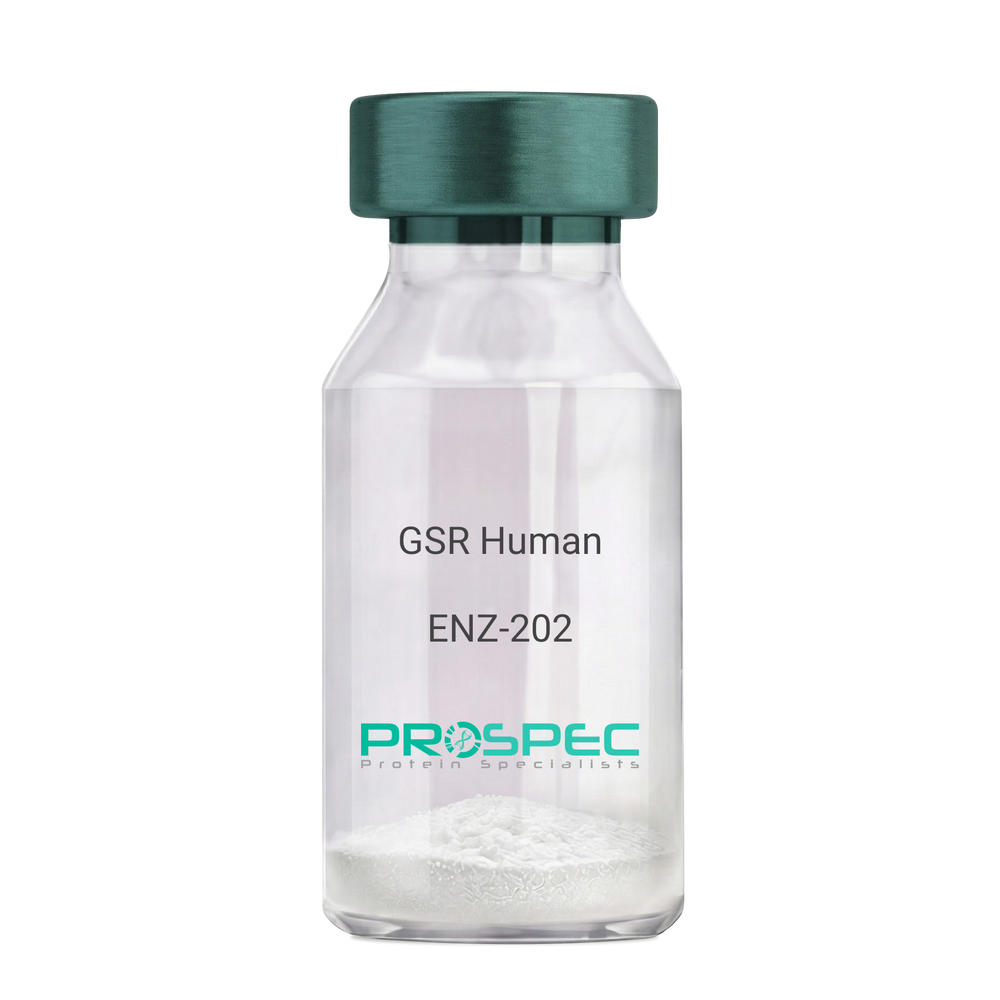
    GSR Human

    Description:

    Glutathione Reductase Human Recombinant

    Glutathione reductase mitochondrial, GR, GRase, GSR, GLUR, GRD1.

    Product # :

    ENZ-202

    Price :

    Quantity :

    Shipping Method :

    Ice Icon

    Shipped with Ice Packs

    Add To Cart

    More Info

    • description
    • source
    • formulation
    • purity
    • biological activity
    • More Info

    Description

    GSR Human Recombinant produced in E.coli is a single, non-glycosylated polypeptide chain containing 504 amino acids (43-522) and having a molecular mass of 54.3kDa.GSR is fused to a 24 amino acid His-tag at N-terminus & purified by proprietary chromatographic techniques.

    Source

    Escherichia Coli.

    Formulation

    The GSR solution (1mg/ml) contains 20mM Tris-HCl buffer (pH 8.0), 1mM DTT, 10% glycerol and 0.1M NaCl.

    Purity

    Greater than 95.0% as determined by SDS-PAGE.

    Biological Activity

    Specific activity: > 29 unit/ml.
    One unit will reduce 1.0 umol of oxidized glutathione per minute at pH 7.5 at 25°C.

    More Info

    • Introduction

      Glutathione reductase (GSR) belongs to the class-I pyridine nucleotide-disulfide oxidoreductase family. The GSR enzyme is a homodimeric flavoprotein and has a role in maintaining glutathione (GSH) in its reduced form by catalyzing the reduction of glutathione disulfide (GSSG): GSSG + NADPH + H+ ->2GSH + NADP+. In the majority of eukaryotic cells, GSR upholds the ratio of [GSH] / [GSSG], and partakes in quite a few critical functions such as the detoxification of reactive oxygen species as well as protein and DNA biosynthesis.

    • Synonyms

      Glutathione reductase mitochondrial, GR, GRase, GSR, GLUR, GRD1.

    • Physical Appearance

      Sterile Filtered colorless solution.

    • Stability

      Store at 4°C if entire vial will be used within 2-4 weeks.Store, frozen at -20°C for longer periods of time. For long term storage it is recommended to add a carrier protein (0.1% HSA or BSA).Avoid multiple freeze-thaw cycles.

    • Amino Acid Sequence

      MGSSHHHHHH SSGLVPRGSH MGSMAMACRQ EPQPQGPPPA AGAVASYDYL VIGGGSGGLA SARRAAELGA RAAVVESHKL GGTCVNVGCV PKKVMWNTAV HSEFMHDHAD YGFPSCEGKF NWRVIKEKRD AYVSRLNAIY QNNLTKSHIE IIRGHAAFTS DPKPTIEVSG KKYTAPHILI
      ATGGMPSTPH ESQIPGASLG ITSDGFFQLE ELPGRSVIVG AGYIAVEMAG ILSALGSKTS LMIRHDKVLR SFDSMISTNC TEELENAGVE VLKFSQVKEV KKTLSGLEVS MVTAVPGRLP VMTMIPDVDC LLWAIGRVPN TKDLSLNKLG IQTDDKGHII VDEFQNTNVK GIYAVGDVCG
      KALLTPVAIA AGRKLAHRLF EYKEDSKLDY NNIPTVVFSH PPIGTVGLTE DEAIHKYGIE NVKTYSTSFT PMYHAVTKRK TKCVMKMVCA NKEEKVVGIH MQGLGCDEML QGFAVAVKMG ATKADFDNTV AIHPTSSEEL VTLR.

    ProSpec's products are furnished for LABORATORY RESEARCH USE ONLY. The product may not be used as drugs, agricultural or pesticidal products, food additives or household chemicals.

    Gsr Human
  • View Data Sheet

    Name :

    COMT Human

    Description:

    Catechol-O-Methyltransferase Human Recombinant

    COMT, EC 2.1.1.6, Catechol O-methyltransferase.

    Product # :

    ENZ-400

    Price :

    Quantity :

    Shipping Method :

    Ice Icon

    Shipped with Ice Packs

    Add To Cart

    More Info

    • description
    • source
    • formulation
    • purity
    • More Info

    Description

    COMT Human Recombinant produced in E.Coli is a single, non-glycosylated polypeptide chain containing 221 amino acids (51-271 a.a.) & having a molecular mass of 24.4 kDa. The COMT is purified by proprietary chromatographic techniques.

    Source

    Escherichia Coli.

    Formulation

    COMT protein in 20mM Tris-HCl buffer, pH-8, 1mM MgCl2 and 10% Glycerol.

    Purity

    Greater than 95.0% as determined by SDS-PAGE.

    More Info

    • Introduction

      COMT catalyzes the transfer of a methyl group from S-adenosylmethionine (SAM) to catechol substrates such as the neurotransmitters. This O-methylation results in one of the main degradative pathways of the catecholamine transmitters. COMT COMT is located in the postsynaptic neuron and is involved in the metabolism of catechol estrogen drugs used in the treatment of hypertension, asthma, Parkinson disease and the inactivation of catecholamine neurotransmitters though enzymatic degradation. COMT appears in tissues in 2 forms, a soluble form and a membrane-bound form which differ in their N-termini. COMT inhibitors increase its availability and are used in the treatment of patients with Parkinson's disease.

    • Synonyms

      COMT, EC 2.1.1.6, Catechol O-methyltransferase.

    • Physical Appearance

      Sterile Filtered clear solution.

    • Stability

      Store at 4°C if entire vial will be used within 2-4 weeks. Store, frozen at -20°C for longer periods of time. For long term storage it is recommended to add a carrier protein (0.1% HSA or BSA).Avoid multiple freeze-thaw cycles.

    • Amino Acid Sequence

      MGDTKEQRIL NHVLQHAEPG NAQSVLEAID TYCEQKEWAM NVGDKKGKIV DAVIQEHQPS VLLELGAYCG YSAVRMARLL SPGARLITIE INPDCAAITQ RMVDFAGVKD KVTLVVGASQ DIIPQLKKKY DVDTLDMVFL DHWKDRYLPD TLLLEECGLL RKGTVLLADN VICPGAPDFL AHVRGSSCFE CTHYQSFLEY REVVDGLEKA IYKGPGSEAG P.

    ProSpec's products are furnished for LABORATORY RESEARCH USE ONLY. The product may not be used as drugs, agricultural or pesticidal products, food additives or household chemicals.

    Comt Human
  • View Data Sheet

    Name :

    MMP 1 Human, HEK

    Description:

    Matrix Metalloproteinase-1 Human Recombinant, HEK

    Interstitial collagenase, Fibroblast collagenase, Matrix metalloproteinase-1, MMP-1, MMP1, CLG, CLGN.

    Product # :

    ENZ-099

    Price :

    Quantity :

    Shipping Method :

    Ice Icon

    Shipped with Ice Packs

    Add To Cart

    More Info

    • description
    • source
    • formulation
    • purity
    • biological activity
    • More Info
    • sds-page

    Description

    MMP-1 Human Recombinant produced in HEK293 cells is a proform of the Human MMP1 (Met1-Asn469) and fused with a ployhistide tag at the C-terminus, having an Mw of 52kDa. MMP-1 is purified by proprietary chromatographic techniques.

    Source

    HEK293 cells.

    Formulation

    The MMP-1 is supplied as a 0.2µm filtered solution in MES, NaCl, Glycerol and Brij35.

    Purity

    Greater than 95% as determined by SDS-PAGE.

    Biological Activity

    The activity was measured by its ability to cleave fluorogenic peptide substrate, Mca-KPLGL-Dpa-AR-NH2, The specific activity is > 400 pmoles/min/µg.
    Recombinant Human MMP-1 protein pro form needs to be activated with p-aminophenylmercuric acetate (APMA).
    Activation Protocol:
    1. Dilute MMP1 to 50µg/ml in the Assay Buffer: 50mM Tris, 10mM CaCl2, 150mM NaCl, 0.05% (w/v) and Brij 35, pH 7.5.
    2. Activate MMP1 by adding APMA to a final concentration of 1mM. (Sigma, Catalog # A9563) and 100mM stock in DMSO.
    3. Incubate at 37°C for 2 hours.

    sds-page

    mmp1 human hek sds-page - Product image 1

    More Info

    • Introduction

      MMP-1 (interstitial collagenase) can break down a wide range of substrates including types I, II, III, VII, VIII, and X collagens as well as L-Selectin, pro-TNF, IL-1?, IGFBP-3, IGFBP-5, casein, gelatin, ?1 antitrypsin, myelin basic protein, pro-MMP2 and pro-MMP9. A significant function of MMP-1 is the degradation of fibrillar collagens in extracellular matrix remodeling. MMP-1 is expressed in fibroblasts, keratinocytes, endothelial cells, monocytes and macrophages. MMP1 can be divided into a number of distinct domains: a prodomain which is cleaved on activation, a catalytic domain containing the zinc binding site and a short hinge region with a carboxyl terminal domain. MMP1 is part of a cluster of MMP genes which localize to chromosome 11q22.3.

    • Synonyms

      Interstitial collagenase, Fibroblast collagenase, Matrix metalloproteinase-1, MMP-1, MMP1, CLG, CLGN.

    • Physical Appearance

      Sterile Filtered colorless solution.

    • Stability

      Store at 4°C if entire vial will be used within 2-4 weeks. Store, frozen at -20°C for longer periods of time.Avoid multiple freeze-thaw cycles.

    ProSpec's products are furnished for LABORATORY RESEARCH USE ONLY. The product may not be used as drugs, agricultural or pesticidal products, food additives or household chemicals.

    Mmp 1 Human
  • View Data Sheet

    Name :

    IFIT3 Human

    Description:

    IFN-Induced Protein With Tetratricopeptide Repeats 3 Human Recombinant

    IFN-Induced Protein With Tetratricopeptide Repeats 3, IFN-Induced Protein With Tetratricopeptide Repeats 4, IFIT4, Retinoic Acid-Induced Gene G Protein, IFN-Induced 60 KDa Protein, IFI-60K, CIG-49, IFIT-3, IFIT-4, ISG-60, CIG49, IFI60, ISG60, RIG-G, P60, GARG-49, IRG2, IFN-induced protein with tetratricopeptide repeats 3.

    Product # :

    CYT-898

    Price :

    Quantity :

    Shipping Method :

    Ice Icon

    Shipped with Ice Packs

    Add To Cart

    More Info

    • description
    • source
    • formulation
    • purity
    • More Info
    • SDS-PAGE

    Description

    IFIT3 Human Recombinant produced in E.Coli is a single, non-glycosylated polypeptide chain containing 513 amino acids (1-490 a.a) and having a molecular mass of 58.4kDa. IFIT3 is fused to a 23 amino acid His-tag at N-terminus & purified by proprietary chromatographic techniques.

    Source

    E.coli.

    Formulation

    IFIT3 protein solution (1mg/ml) containing Phosphate buffered saline (pH7.4), 20% glycerol and 1mM DTT.

    Purity

    Greater than 85% as determined by SDS-PAGE.

    SDS-PAGE

    IFIT3 Human - Product image 1

    More Info

    • Introduction

      IFN-Induced Protein With Tetratricopeptide Repeats 3, also known as IFIT3 is a member of the IFIT family. IFN-induced antiviral protein which performs as an inhibitor of cellular and viral processes, cell migration, proliferation, signaling, as well as viral replication. Furthermore, IFIT3 is significantly induced upon RNA virus infection. Ectopic expression or alternatively knockdown of IFIT3 might, respectively, enhance or impair IRF3-mediated gene expression.

    • Synonyms

      IFN-Induced Protein With Tetratricopeptide Repeats 3, IFN-Induced Protein With Tetratricopeptide Repeats 4, IFIT4, Retinoic Acid-Induced Gene G Protein, IFN-Induced 60 KDa Protein, IFI-60K, CIG-49, IFIT-3, IFIT-4, ISG-60, CIG49, IFI60, ISG60, RIG-G, P60, GARG-49, IRG2, IFN-induced protein with tetratricopeptide repeats 3.

    • Physical Appearance

      Sterile Filtered colorless solution.

    • Stability

      Store at 4°C if entire vial will be used within 2-4 weeks. Store, frozen at -20°C for longer periods of time. For long term storage it is recommended to add a carrier protein (0.1% HSA or BSA).Avoid multiple freeze-thaw cycles.

    • Amino Acid Sequence

      MGSSHHHHHH SSGLVPRGSH MGSMSEVTKN SLEKILPQLK CHFTWNLFKE DSVSRDLEDR VCNQIEFLNT EFKATMYNLL AYIKHLDGNN EAALECLRQA EELIQQEHAD QAEIRSLVTW GNYAWVYYHL GRLSDAQIYV DKVKQTCKKF SNPYSIEYSE LDCEEGWTQL KCGRNERAKV CFEKALEEKP NNPEFSSGLA IAMYHLDNHP EKQFSTDVLK QAIELSPDNQ YVKVLLGLKL QKMNKEAEGE QFVEEALEKS PCQTDVLRSA AKFYRRKGDL DKAIELFQRV LESTPNNGYL YHQIGCCYKA KVRQMQNTGE SEASGNKEMI EALKQYAMDY SNKALEKGLN PLNAYSDLAE FLETECYQTP FNKEVPDAEK QQSHQRYCNL QKYNGKSEDT AVQHGLEGLS ISKKSTDKEE IKDQPQNVSE NLLPQNAPNY WYLQGLIHKQ NGDLLQAAKC YEKELGRLLR DAPSGIGSIF LSASELEDGS EEMGQGAVSS SPRELLSNSE QLN.

    • Background

      What is the molecular weight/Mw of IFIT3 HUMAN Protein?
      IFIT3 HUMAN Protein has a total Mw of 58.4kDa.

      What is the source or expression system of IFIT3 HUMAN Protein?
      Escherichia Coli.

      What is the Purity of IFIT3 HUMAN Protein?
      IFIT3 HUMAN Protein is >85% pure as determined by SDS-PAGE.

      What is the Biological Activity of IFIT3 HUMAN Protein?
      The biological functionality of IFIT3 HUMAN Protein will be determined in the future.

      What is the amino acid sequence of IFIT3 HUMAN Protein?
      MGSSHHHHHH SSGLVPRGSH MGSMSEVTKN SLEKILPQLK CHFTWNLFKE DSVSRDLEDR VCNQIEFLNT EFKATMYNLL AYIKHLDGNN EAALECLRQA EELIQQEHAD QAEIRSLVTW GNYAWVYYHL GRLSDAQIYV DKVKQTCKKF SNPYSIEYSE LDCEEGWTQL KCGRNERAKV CFEKALEEKP NNPEFSSGLA IAMYHLDNHP EKQFSTDVLK QAIELSPDNQ YVKVLLGLKL QKMNKEAEGE QFVEEALEKS PCQTDVLRSA AKFYRRKGDL DKAIELFQRV LESTPNNGYL YHQIGCCYKA KVRQMQNTGE SEASGNKEMI EALKQYAMDY SNKALEKGLN PLNAYSDLAE FLETECYQTP FNKEVPDAEK QQSHQRYCNL QKYNGKSEDT AVQHGLEGLS ISKKSTDKEE IKDQPQNVSE NLLPQNAPNY WYLQGLIHKQ NGDLLQAAKC YEKELGRLLR DAPSGIGSIF LSASELEDGS EEMGQGAVSS SPRELLSNSE QLN.

      What applications can IFIT3 HUMAN Protein be used in?
      IFIT3 HUMAN Protein can probably be used in western blot, ELISA and Lateral Flow.

      What is the endotoxin level for IFIT3 HUMAN Protein?
      The endotoxin level is minimal, IFIT3 HUMAN Protein was purified using conventional chromatography techniques.

    ProSpec's products are furnished for LABORATORY RESEARCH USE ONLY. The product may not be used as drugs, agricultural or pesticidal products, food additives or household chemicals.

    Ifit3 Human
  • View Data Sheet

    Name :

    CS Human

    Description:

    Citrate Synthase Human Recombinant

    Citrate Synthase, EC 2.3.3.1, Citrate (Si)-Synthase, EC 2.3.3, Citrate synthase, mitochondrial.

    Product # :

    ENZ-824

    Price :

    Quantity :

    Shipping Method :

    Ice Icon

    Shipped with Ice Packs

    Add To Cart

    More Info

    • description
    • source
    • formulation
    • purity
    • More Info

    Description

    CS Human Recombinant produced in E.Coli is a single, non-glycosylated polypeptide chain containing 462 amino acids (28-466 a.a) and having a molecular mass of 51.4kDa. CS is fused to a 23 amino acid His-tag at N-terminus & purified by proprietary chromatographic techniques.

    Source

    Escherichia Coli.

    Formulation

    CS protein solution (1mg/ml) containing 20mM Tris-HCl buffer (pH 8.0), 0.15M NaCl, 10% glycerol and 1mM DTT.

    Purity

    Greater than 90.0% as determined by SDS-PAGE.

    More Info

    • Introduction

      Citrate synthase also known as CS is a Krebs tricarboxylic acid cycle enzyme which catalyzes the synthesis of citrate from oxaloacetate and acetyl coenzyme A. CS is present in almost all cells capable of oxidative metabolism. CS is nuclear encoded and transported into the mitochondrial matrix, where the mature form is found. The diseases related to CS are: critical illness polyneuropathy and mitochondrial cardiomyopathy.

    • Synonyms

      Citrate Synthase, EC 2.3.3.1, Citrate (Si)-Synthase, EC 2.3.3, Citrate synthase, mitochondrial.

    • Physical Appearance

      Sterile Filtered colorless solution.

    • Stability

      Store at 4°C if entire vial will be used within 2-4 weeks. Store, frozen at -20°C for longer periods of time. For long term storage it is recommended to add a carrier protein (0.1% HSA or BSA).Avoid multiple freeze-thaw cycles.

    • Amino Acid Sequence

      MGSSHHHHHH SSGLVPRGSH MGSASSTNLK DILADLIPKE QARIKTFRQQ HGKTVVGQIT VDMMYGGMRG MKGLVYETSV LDPDEGIRFR GFSIPECQKL LPKAKGGEEP LPEGLFWLLV TGHIPTEEQV SWLSKEWAKR AALPSHVVTM LDNFPTNLHP MSQLSAAVTA LNSESNFARA YAQGISRTKY WELIYEDSMD LIAKLPCVAA KIYRNLYREG SGIGAIDSNL DWSHNFTNML GYTDHQFTEL TRLYLTIHSD HEGGNVSAHT SHLVGSALSD PYLSFAAAMN GLAGPLHGLA NQEVLVWLTQ LQKEVGKDVS DEKLRDYIWN TLNSGRVVPG YGHAVLRKTD PRYTCQREFA LKHLPNDPMF KLVAQLYKIV PNVLLEQGKA KNPWPNVDAH SGVLLQYYGM TEMNYYTVLF GVSRALGVLA QLIWSRALGF PLERPKSMST EGLMKFVDSK SG.

    ProSpec's products are furnished for LABORATORY RESEARCH USE ONLY. The product may not be used as drugs, agricultural or pesticidal products, food additives or household chemicals.

    Cs Human
  • View Data Sheet

    Name :

    ADI1 Human

    Description:

    Acireductone Dioxygenase 1 Human Recombinant

    APL1, ARD, FLJ10913, HMFT1638, MTCBP-1, SIPL, 1,2-dihydroxy-3-keto-5-methylthiopentene dioxygenase, Acireductone dioxygenase, Fe-ARD, Membrane-type 1 matrix metalloproteinase cytoplasmic tail-binding protein 1, Submergence-induced protein-like factor.

    Product # :

    ENZ-700

    Price :

    Quantity :

    Shipping Method :

    Ice Icon

    Shipped with Ice Packs

    Add To Cart

    More Info

    • description
    • source
    • formulation
    • purity
    • More Info

    Description

    ADI1 produced in E.Coli is a single, non-glycosylated polypeptide chain containing 216 amino acids (1-179 a.a.) and having a molecular mass of 25.6kDa. ADI1 is fused to a 37 amino acid His-tag at N-terminus & purified by proprietary chromatographic techniques.

    Source

    Escherichia Coli.

    Formulation

    The ADI1 protein solution (0.5mg/1ml) is formulated in 20mM Tris-HCl buffer (pH 8.0), 0.15M NaCl, 10% glycerol and 1mM DTT.

    Purity

    Greater than 90% as determined by SDS-PAGE.

    More Info

    • Introduction

      Acireductone dioxygenase 1 (ADI1) is a part of the acireductone dioxygenase family of metal-binding enzymes, which are involved in methionine salvage. ADI1 regulates mRNA processing in the nucleus, and carries out different functions depending on its localization. Related pseudogenes have been defined on chromosomes 8 and 20. ADI1 down-regulates cell migration arbitrated by MMP14.

    • Synonyms

      APL1, ARD, FLJ10913, HMFT1638, MTCBP-1, SIPL, 1,2-dihydroxy-3-keto-5-methylthiopentene dioxygenase, Acireductone dioxygenase, Fe-ARD, Membrane-type 1 matrix metalloproteinase cytoplasmic tail-binding protein 1, Submergence-induced protein-like factor.

    • Physical Appearance

      Sterile Filtered colorless solution.

    • Stability

      Store at 4°C if entire vial will be used within 2-4 weeks.Store, frozen at -20°C for longer periods of time. For long term storage it is recommended to add a carrier protein (0.1% HSA or BSA).Avoid multiple freeze-thaw cycles.

    • Amino Acid Sequence

      MRGSHHHHHH GMASMTGGQQ MGRDLYDDDD KDRWGSSMVL AWYMDDAPGD PRQPHRPDPG RPVGLEQLRR LGVLYWKLDA DKYENDPELE KIRRERNYSW MDIITICKDK LPNYEEKIKM FYEEHLHLDD EIRYILDGSG YFDVRDKEDQ WIRIFMEKGD MVTLPAGIYH RFTVDEKNYT KAMRLFVGEP VWTAYNRPAD HFEARGQYVK FLAQTA.

    ProSpec's products are furnished for LABORATORY RESEARCH USE ONLY. The product may not be used as drugs, agricultural or pesticidal products, food additives or household chemicals.

    Adi1 Human
  • View Data Sheet

    Name :

    CYB5R2 Human

    Description:

    Cytochrome B5 Reductase 2 Human Recombinant

    CYB5R2, Cytochrome B5 Reductase 2, EC 1.6.2.2, B5R.2, Cytochrome B5 Reductase B5R.2, NADH-Cytochrome B5 Reductase 2, b5R.2.

    Product # :

    ENZ-799

    Price :

    Quantity :

    Shipping Method :

    Ice Icon

    Shipped with Ice Packs

    Add To Cart

    More Info

    • description
    • source
    • formulation
    • purity
    • More Info

    Description

    CYB5R2 Human Recombinant produced in E.Coli is a single, non-glycosylated polypeptide chain containing 299 amino acids (1-276 a.a.) and having a molecular mass of 33.8kDa. CYB5R2 is fused to a 23 amino acid His-tag at N-terminus.

    Source

    Escherichia Coli.

    Formulation

    CYB5R2 protein solution (1mg/ml) contains 20mM Tris-HCl buffer (pH 8.0), 0.15M NaCl, 10% glycerol and 1mM DTT.

    Purity

    Greater than 90.0% as determined by SDS-PAGE.

    More Info

    • Introduction

      Cytochrome b5 reductase 2 (CYB5R2) is involved in desaturation and elongation of fatty acids, cholesterol biosynthesis, drug metabolism, and, in erythrocyte, methemoglobin reduction. CYB5R2 is responsible for NADH-dependent lucigenin chemiluminescence in spermatozoa by reducing both lucigenin and 2-[4-iodophenyl]-3-[4-nitrophenyl]-5-[2,4-disulfophenyl]-2H tetrazolium monosodium salt (WST-1).

    • Synonyms

      CYB5R2, Cytochrome B5 Reductase 2, EC 1.6.2.2, B5R.2, Cytochrome B5 Reductase B5R.2, NADH-Cytochrome B5 Reductase 2, b5R.2.

    • Physical Appearance

      Sterile Filtered colorless solution.

    • Stability

      Store at 4°C if entire vial will be used within 2-4 weeks. Store, frozen at -20°C for longer periods of time. For long term storage it is recommended to add a carrier protein (0.1% HSA or BSA).Avoid multiple freeze-thaw cycles.

    • Amino Acid Sequence

      MGSSHHHHHH SSGLVPRGSH MGSMNSRRRE PITLQDPEAK YPLPLIEKEK ISHNTRRFRF GLPSPDHVLG LPVGNYVQLL AKIDNELVVR AYTPVSSDDD RGFVDLIIKI YFKNVHPQYP EGGKMTQYLE NMKIGETIFF RGPRGRLFYH GPGNLGIRPD QTSEPKKTLA DHLGMIAGGT GITPMLQLIR HITKDPSDRT RMSLIFANQT EEDILVRKEL EEIARTHPDQ FNLWYTLDRP PIGWKYSSGF VTADMIKEHL PPPAKSTLIL VCGPPPLIQT AAHPNLEKLG YTQDMIFTY.

    ProSpec's products are furnished for LABORATORY RESEARCH USE ONLY. The product may not be used as drugs, agricultural or pesticidal products, food additives or household chemicals.

    Cyb5R2 Human
  • View Data Sheet

    Name :

    NDUFS4 Human

    Description:

    Histidine NADH Dehydrogenase Fe-S Protein 4 Human Recombinant

    AQDQ, NDUFS4, NADH dehydrogenase [ubiquinone] iron-sulfur protein 4 mitochondrial, NADH-ubiquinone oxidoreductase 18 kDa subunit, Complex I-18 kDa, CI-18 kDa, Complex I-AQDQ, CI-AQDQ.

    Product # :

    ENZ-421

    Price :

    Quantity :

    Shipping Method :

    Ice Icon

    Shipped with Ice Packs

    Add To Cart

    More Info

    • description
    • source
    • formulation
    • purity
    • More Info

    Description

    NDUFS4 Human Recombinant produced in E.Coli is a single, non-glycosylated, polypeptide chain containing 134 amino acids (43-175 a.a.) and having a molecular mass of 15.5 kDa.The NDUFS4 is purified by proprietary chromatographic techniques.

    Source

    Escherichia Coli.

    Formulation

    The NDUFS4 solution contains 20mM Tris pH-8 & 30% glycerol.

    Purity

    Greater than 90.0% as determined by SDS-PAGE.

    More Info

    • Introduction

      NDUFS4 is a subunit of the mitochondrial membrane respiratory chain NADH dehydrogenase (Complex I), the primary multi-subunit enzyme complex of the mitochondrial respiratory chain. Complex I is involved in cellular ATP production, the main source of energy for numerous vital processes in living cells. NDUFS4 removes electrons from NADH and passes them by a series of diverse protein-coupled redox centers to the electron acceptor ubiquinone. NDUFS4 presents a hotspot of mutations in the genetic apparatus of oxidative phosphorylation and the correct assembly of the subunit it encodes is essential for completion of the assembly of complex I.

    • Synonyms

      AQDQ, NDUFS4, NADH dehydrogenase [ubiquinone] iron-sulfur protein 4 mitochondrial, NADH-ubiquinone oxidoreductase 18 kDa subunit, Complex I-18 kDa, CI-18 kDa, Complex I-AQDQ, CI-AQDQ.

    • Physical Appearance

      Sterile Filtered colorless solution.

    • Stability

      Store at 4°C if entire vial will be used within 2-4 weeks. Store, frozen at -20°C for longer periods of time. For long term storage it is recommended to add a carrier protein (0.1% HSA or BSA).Please prevent freeze-thaw cycles.

    • Amino Acid Sequence

      MAQDQTQDTQ LITVDEKLDI TTLTGVPEEH IKTRKVRIFV PARNNMQSGV NNTKKWKMEF DTRERWENPL MGWASTADPL SNMVLTFSTK EDAVSFAEKN GWSYDIEERK VPKPKSKSYG ANFSWNKRTR VSTK.

    ProSpec's products are furnished for LABORATORY RESEARCH USE ONLY. The product may not be used as drugs, agricultural or pesticidal products, food additives or household chemicals.

    Ndufs4 Human
  • View Data Sheet

    Name :

    DUT Human

    Description:

    Deoxyuridine Triphosphatase Human Recombinant

    Deoxyuridine 5''-triphosphate nucleotidohydrolase mitochondrial, dUTPase, dUTP pyrophosphatase, Deoxyuridine Triphosphatase, DUT, FLJ20622.

    Product # :

    ENZ-568

    Price :

    Quantity :

    Shipping Method :

    Ice Icon

    Shipped with Ice Packs

    Add To Cart

    More Info

    • description
    • source
    • formulation
    • purity
    • More Info

    Description

    DUT Human Recombinant fused with a 21 amino acid His tag at N-terminus produced in E.Coli is a single, non-glycosylated, polypeptide chain containing 204 amino acids (70-252 a.a.) and having a molecular mass of 21.6kDa. The DUT is purified by proprietary chromatographic techniques.

    Source

    Escherichia Coli.

    Formulation

    The DUT solution (1mg/ml) contains 20mM Tris-HCl buffer(pH 8.0), 10% glycerol, 1mM DTT and 0.1M NaCl.

    Purity

    Greater than 90.0% as determined by SDS-PAGE.

    More Info

    • Introduction

      Deoxyuridine Triphosphatase (DUT) is a ubiquitous enzyme that functions in nucleotide metabolism. Deoxyuridine Triphosphatase, in the presence of magnesium ions, is responsible for hydrolyzing dUTP to dUMP and diphosphate. This reaction is imperative for keeping the intracellular dUTP concentration low so that uracil does not become incorporated into DNA. Extensive integration of uracil into DNA can eventually lead to cell death. This suggests that DUT is crucial for cell viability, further implying that it is a prospective target for anticancer therapy.

    • Synonyms

      Deoxyuridine 5''-triphosphate nucleotidohydrolase mitochondrial, dUTPase, dUTP pyrophosphatase, Deoxyuridine Triphosphatase, DUT, FLJ20622.

    • Physical Appearance

      Sterile Filtered colorless solution.

    • Stability

      Store at 4°C if entire vial will be used within 2-4 weeks. Store, frozen at -20°C for longer periods of time. For long term storage it is recommended to add a carrier protein (0.1% HSA or BSA). Please prevent freeze-thaw cycles.

    • Amino Acid Sequence

      MGSSHHHHHH SSGLVPRGSH MASTVGAAGW KGELPKAGGS PAPGPETPAI SPSKRARPAE VGGMQLRFAR LSEHATAPTR GSARAAGYDL YSAYDYTIPP MEKAVVKTDI QIALPSGCYG RVAPRSGLAA KHFIDVGAGV IDEDYRGNVG VVLFNFGKEK FEVKKGDRIA QLICERIFYP EIEEVQALDD TERGSGGFGS TGKN.

    ProSpec's products are furnished for LABORATORY RESEARCH USE ONLY. The product may not be used as drugs, agricultural or pesticidal products, food additives or household chemicals.

    Dut Human
  • View Data Sheet

    Name :

    KARS Human

    Description:

    Lysyl-tRNA Synthetase Human Recombinant

    Lysine--tRNA ligase, Lysyl-tRNA synthetase, LysRS, KARS, KIAA0070, KRS, KARS2, CMTRIB.

    Product # :

    ENZ-161

    Price :

    Quantity :

    Shipping Method :

    Ice Icon

    Shipped with Ice Packs

    Add To Cart

    More Info

    • description
    • source
    • formulation
    • purity
    • More Info

    Description

    KARS Human Recombinant produced in E.Coli is a single, non-glycosylated polypeptide chain containing 558 amino acids (63-597 a.a.) and having a molecular mass of 63.7kDa.KARS is fused to a 23 amino acid His-tag at N-terminus & purified by proprietary chromatographic techniques.

    Source

    Escherichia Coli.

    Formulation

    KARS protein solution (1mg/ml) containing 20mM Tris-HCl buffer (pH8.0), 20% glycerol, 0.1M NaCl and 1mM DTT.

    Purity

    Greater than 95.0% as determined by SDS-PAGE.

    More Info

    • Introduction

      Lysyl-tRNA synthetase (KARS) is a member of the class-II aminoacyl-tRNA synthetase family. KARS exists as both mitochondrial and cytoplasmic isoforms produced by alternative splicing, and believed to have a role in autoimmune diseases, such as polymyositis or dermatomyositis. The KARS protein functions to catalyze the aminoacylation of tRNAs by their corresponding amino acids, so linking amino acids with tRNA-contained nucleotide triplets.

    • Synonyms

      Lysine--tRNA ligase, Lysyl-tRNA synthetase, LysRS, KARS, KIAA0070, KRS, KARS2, CMTRIB.

    • Physical Appearance

      Sterile Filtered colorless solution.

    • Stability

      Store at 4°C if entire vial will be used within 2-4 weeks. Store, frozen at -20°C for longer periods of time. For long term storage it is recommended to add a carrier protein (0.1% HSA or BSA).Avoid multiple freeze-thaw cycles.

    • Amino Acid Sequence

      MGSSHHHHHH SSGLVPRGSH MGSGVGPEEE SVDPNQYYKI RSQAIHQLKV NGEDPYPHKF HVDISLTDFI QKYSHLQPGD HLTDITLKVA GRIHAKRASG GKLIFYDLRG EGVKLQVMAN SRNYKSEEEF IHINNKLRRG DIIGVQGNPG KTKKGELSII PYEITLLSPC LHMLPHLHFG LKDKETRYRQ RYLDLILNDF VRQKFIIRSK IITYIRSFLD ELGFLEIETP MMNIIPGGAV AKPFITYHNE LDMNLYMRIA PELYHKMLVV GGIDRVYEIG RQFRNEGIDL THNPEFTTCE FYMAYADYHD LMEITEKMVS GMVKHITGSY KVTYHPDGPE GQAYDVDFTP PFRRINMVEE LEKALGMKLP ETNLFETEET RKILDDICVA KAVECPPPRT TARLLDKLVG EFLEVTCINP TFICDHPQIM SPLAKWHRSK EGLTERFELF VMKKEICNAY TELNDPMRQR QLFEEQAKAK AAGDDEAMFI DENFCTALEY GLPPTAGWGM GIDRVAMFLT DSNNIKEVLL FPAMKPEDKK ENVATTDTLE STTVGTSV.

    ProSpec's products are furnished for LABORATORY RESEARCH USE ONLY. The product may not be used as drugs, agricultural or pesticidal products, food additives or household chemicals.

    Kars Human
  • View Data Sheet

    Name :

    PMM2 Human

    Description:

    Phosphomannomutase 2 Human Recombinant

    Phosphomannomutase 2, PMM 2, PMM2, CDG1, CDGS, CDG1a.

    Product # :

    ENZ-002

    Price :

    Quantity :

    Shipping Method :

    Ice Icon

    Shipped with Ice Packs

    Add To Cart

    More Info

    • description
    • source
    • formulation
    • purity
    • More Info

    Description

    PMM2 Human Recombinant fused with a 20 amino acid His tag at N-terminus produced in E.Coli is a single, non-glycosylated, polypeptide chain containing 266 amino acids (1-246 a.a.) and having a molecular mass of 30.2kDa. The PMM2 is purified by proprietary chromatographic techniques.

    Source

    Escherichia Coli.

    Formulation

    The PMM2 solution (1 mg/ml) contains 20mM Tris-HCl buffer(pH 8.0), 10% glycerol,
    1mM DTT and 0.1M NaCl.

    Purity

    Greater than 95.0% as determined by SDS-PAGE.

    More Info

    • Introduction

      Phosphomannomutase 2 (PMM2) is a member of the eukaryotic PMM family. Phosphomannomutase 2 is involved in the synthesis of the GDP-mannose and dolichol-phosphate-mannose required for a number of critical mannosyl transfer reactions. PMM2 catalyzes the isomerization of mannose 6-phosphate to mannose 1-phosphate. PMM2 mutations are linked to congenital disorders of glycosylation (CDG)-Ia, an autosomal recessive disorder characterized by central nervous system dysfunction and multiorgan failure.

    • Synonyms

      Phosphomannomutase 2, PMM 2, PMM2, CDG1, CDGS, CDG1a.

    • Physical Appearance

      Sterile Filtered colorless solution.

    • Stability

      Store at 4°C if entire vial will be used within 2-4 weeks. Store, frozen at -20°C for longer periods of time. For long term storage it is recommended to add a carrier protein (0.1% HSA or BSA).Avoid multiple freeze-thaw cycles.

    • Amino Acid Sequence

      MGSSHHHHHH SSGLVPRGSH MAAPGPALCL FDVDGTLTAP RQKITKEMDD FLQKLRQKIK IGVVGGSDFE KVQEQLGNDV VEKYDYVFPE NGLVAYKDGK LLCRQNIQSH LGEALIQDLI NYCLSYIAKI KLPKKRGTFI EFRNGMLNVS PIGRSCSQEE RIEFYELDKK ENIRQKFVAD LRKEFAGKGL TFSIGGQISF DVFPDGWDKR YCLRHVENDG YKTIYFFGDK TMPGGNDHEI FTDPRTMGYS VTAPEDTRRI CELLFS.

    ProSpec's products are furnished for LABORATORY RESEARCH USE ONLY. The product may not be used as drugs, agricultural or pesticidal products, food additives or household chemicals.

    Pmm2 Human
  • View Data Sheet

    Name :

    GAMT Human

    Description:

    Guanidinoacetate N-Methyltransferase Human Recombinant

    PIG2, TP53I2, GAMT, Guanidinoacetate N-methyltransferase.

    Product # :

    ENZ-460

    Price :

    Quantity :

    Shipping Method :

    Ice Icon

    Shipped with Ice Packs

    Add To Cart

    More Info

    • description
    • source
    • formulation
    • purity
    • More Info

    Description

    Recombinant Human GAMT produced in E.Coli is a single, non-glycosylated polypeptide chain containing 256 amino acids (1-236 a.a) and having a molecular mass of 28.4 kDa. GAMT is fused to a 20 amino acids His-Tag at N-terminus and purified by conventional chromatography techniques.

    Source

    Escherichia Coli.

    Formulation

    The GAMT protein solution contains 20mM Tris-HCl, pH-8, 1mM DTT and 10% Glycerol.

    Purity

    Greater than 95.0% as determined by SDS-PAGE.

    More Info

    • Introduction

      GAMT is a methyltransferase that transfers guanidoacetate to creatine, using S-adenosylmethionine as the methyl donor. Defects GAMT gene result in neurologic syndromes and muscular hypotonia, probably due to creatine deficiency and accumulation of guanidinoacetate in the brain of affected individuals. GAMT take parts in the two-step synthesis of creatine from the protein building blocks glycine, arginine, and methionine. GAMT takes part in supplying the energy for muscle contraction, and is in addition a significant player in nervous system functioning. GAMT is active in the liver, pancreas, and kidne.

    • Synonyms

      PIG2, TP53I2, GAMT, Guanidinoacetate N-methyltransferase.

    • Physical Appearance

      Sterile filtered colorless solution.

    • Stability

      Store at 4°C if entire vial will be used within 2-4 weeks. Store, frozen at -20°C for longer periods of time. For long term storage it is recommended to add a carrier protein (0.1% HSA or BSA). Avoid multiple freeze-thaw cycles.

    • Amino Acid Sequence

      MGSSHHHHHH SSGLVPRGSH MSAPSATPIF APGENCSPAW GAAPAAYDAA DTHLRILGKP VMERWETPYM HALAAAASSK GGRVLEVGFG MAIAASKVQE APIDEHWIIE CNDGVFQRLR DWAPRQTHKV IPLKGLWEDV APTLPDGHFD GILYDTYPLS EETWHTHQFN FIKNHAFRLL KPGGVLTYCN LTSWGELMKS KYSDITIMFE ETQVPALLEA GFRRENIRTE VMALVPPADC RYYAFPQMIT PLVTKG.

    ProSpec's products are furnished for LABORATORY RESEARCH USE ONLY. The product may not be used as drugs, agricultural or pesticidal products, food additives or household chemicals.

    Gamt Human
  • View Data Sheet

    Name :

    GlpK E. coli

    Description:

    Glycerol kinase E. Coli Recombinant

    Glycerol kinase, glycerol 3-phosphotransferase, Glycerokinase, GK.

    Product # :

    PKA-038

    Price :

    Quantity :

    Shipping Method :

    Ice Icon

    Shipped with Ice Packs

    Add To Cart

    More Info

    • description
    • source
    • formulation
    • purity
    • More Info

    Description

    GlpK E. Coli Recombinant produced in E. coli is a single, non-glycosylated polypeptide chain containing 525 amino acids (1-502 a.a) and having a molecular mass of 58.6 kDa.GlpK is fused to a 23 amino acid His-tag at N-terminus& purified by proprietary chromatographic techniques.

    Source

    Escherichia Coli.

    Formulation

    GlpK protein solution (1mg/ml) containing Phosphate buffered saline (pH7.4),10% glycerol and 1mM DTT.

    Purity

    Greater than 95.0% as determined by SDS-PAGE.

    More Info

    • Introduction

      GlpK also known as glycerol kinase, is a member of the FGGY kinase family. GlpK catalyzes the transfer of a phosphate group from ATP to glycerol, thereby forming glycerol phosphate. Furthermore, this intermediate can then be converted to dihydroxyacetone phosphate (DHAP), which is utilized in either glycolysis or gluconeogenesis. The activity of GlpK is affected by numerous metabolites. The non-competitive allosteric inhibition by fructose 1,6-bisphosphate (FBP) triggers modifications in the quaternary structure of Glpk.

    • Synonyms

      Glycerol kinase, glycerol 3-phosphotransferase, Glycerokinase, GK.

    • Physical Appearance

      Sterile Filtered clear solution.

    • Stability

      Store at 4°C if entire vial will be used within 2-4 weeks.Store, frozen at -20°C for longer periods of time. For long term storage it is recommended to add a carrier protein (0.1% HSA or BSA).Avoid multiple freeze-thaw cycles.

    • Amino Acid Sequence

      MGSSHHHHHH SSGLVPRGSH MGSMTEKKYI VALDQGTTSS RAVVMDHDAN IISVSQREFE QIYPKPGWVE HDPMEIWATQ SSTLVEVLAK ADISSDQIAA IGITNQRETT IVWEKETGKP IYNAIVWQCR RTAEICEHLK RDGLEDYIRS NTGLVIDPYF SGTKVKWILD HVEGSRERAR RGELLFGTVD TWLIWKMTQG RVHVTDYTNA SRTMLFNIHT LDWDDKMLEV LDIPREMLPE VRRSSEVYGQ TNIGGKGGTR IPISGIAGDQ QAALFGQLCV KEGMAKNTYG TGCFMLMNTG EKAVKSENGL LTTIACGPTG EVNYALEGAV FMAGASIQWL RDEMKLINDA YDSEYFATKV QNTNGVYVVP AFTGLGAPYW DPYARGAIFG LTRGVNANHI IRATLESIAY QTRDVLEAMQ ADSGIRLHAL RVDGGAVANN FLMQFQSDIL GTRVERPEVR EVTALGAAYL AGLAVGFWQN LDELQEKAVI EREFRPGIET TERNYRYAGW KKAVKRAMAW EEHDE.

    ProSpec's products are furnished for LABORATORY RESEARCH USE ONLY. The product may not be used as drugs, agricultural or pesticidal products, food additives or household chemicals.

    Glpk E Coli
  • View Data Sheet

    Name :

    CMBL Human

    Description:

    Carboxymethylenebutenolidase Human Recombinant

    Carboxymethylenebutenolidase homolog, CMBL, JS-1.

    Product # :

    ENZ-634

    Price :

    Quantity :

    Shipping Method :

    Ice Icon

    Shipped with Ice Packs

    Add To Cart

    More Info

    • description
    • source
    • formulation
    • purity
    • More Info

    Description

    CMBL Human Recombinant produced in E. coli is a single polypeptide chain containing 269 amino acids (1-245) and having a molecular mass of 30.6kDa.CMBL is fused to a 24 amino acid His-tag at N-terminus & purified by proprietary chromatographic techniques.

    Source

    Escherichia Coli.

    Formulation

    The CMBL solution (0.5mg/ml) contains 20mM Tris-HCl buffer (pH 8.0), 0.1M NaCl, 10% glycerol and 1mM EDTA.

    Purity

    Greater than 95.0% as determined by SDS-PAGE.

    More Info

    • Introduction

      Carboxymethylenebutenolidase homolog (CMBL) is a cysteine hydrolase of the dienelactone hydrolase family which is highly expressed in the liver cytosol. CMBL is the human homolog of Pseudomonas dienelactone hydrolase, which is a protein that participates in the bacterial halocatechol degradation pathway. CMBL which preferentially cleaves cyclic esters activates medoxomil-ester prodrugs in which the medoxomil moiety is coupled with an oxygen atom. CMBL is inhibited by PCMB (p-chloromercuribenzoate) and is encoded by a gene which maps to human chromosome 5p15.2. CMBL can also activate beta-lactam antibiotics faropenem medoxomil and lenampicillin. CMBL is widely expressed, with the highest levels in the liver, followed by the kidney, small intestine and the colon.

    • Synonyms

      Carboxymethylenebutenolidase homolog, CMBL, JS-1.

    • Physical Appearance

      Sterile filtered colorless solution.

    • Stability

      Store at 4°C if entire vial will be used within 2-4 weeks. Store, frozen at -20°C for longer periods of time. For long term storage it is recommended to add a carrier protein (0.1% HSA or BSA).Avoid multiple freeze-thaw cycles.

    • Amino Acid Sequence

      MGSSHHHHHH SSGLVPRGSH MGSHMANEAY PCPCDIGHRL EYGGLGREVQ VEHIKAYVTK SPVDAGKAVI VIQDIFGWQL PNTRYIADMI SGNGYTTIVP DFFVGQEPWD PSGDWSIFPE WLKTRNAQKI DREISAILKY LKQQCHAQKI GIVGFCWGGT AVHHLMMKYS EFRAGVSVYG IVKDSEDIYN LKNPTLFIFA ENDVVIPLKD VSLLTQKLKE HCKVEYQIKT FSGQTHGFVH RKREDCSPAD KPYIDEARRN LIEWLNKYM.

    ProSpec's products are furnished for LABORATORY RESEARCH USE ONLY. The product may not be used as drugs, agricultural or pesticidal products, food additives or household chemicals.

    Cmbl Human
  • View Data Sheet

    Name :

    CNDP2 Human

    Description:

    CNDP Dipeptidase 2 Human Recombinant

    Cytosolic non-specific dipeptidase, CNDP dipeptidase 2, CN2, CPGL, HsT2298, PEPA, Glutamate carboxypeptidase-like protein 1, Peptidase A.

    Product # :

    ENZ-681

    Price :

    Quantity :

    Shipping Method :

    Ice Icon

    Shipped with Ice Packs

    Add To Cart

    More Info

    • description
    • source
    • formulation
    • purity
    • More Info

    Description

    CNDP2 Human Recombinant produced in E. coli is a single polypeptide chain containing 498 amino acids (1-475) and having a molecular mass of 55.3 kDa. CNDP2 is fused to a 23 amino acid His-tag at N-terminus & purified by proprietary chromatographic techniques.

    Source

    Escherichia Coli.

    Formulation

    The CNDP2 solution (1mg/1ml) contains 20mM Tris-HCl buffer (pH 8.0), 0.1M NaCl, 10% glycerol and 1mM DTT.

    Purity

    Greater than 90% as determined by SDS-PAGE.

    More Info

    • Introduction

      CNDP Dipeptidase 2 (CNDP2), is a cytosolic, non-specific dipeptidase which is a part of the peptidase M20A protein family. CNDP2 is a secreted peptidase homologous to M20 peptidases. CNDP2 expresses through all adult and fetal tissue, though, an isoform missing exons 3 and 4 expresses in all fetal tissue in adult liver. Over expression of CPGL-B in hepatocellular carcinoma cells results in significant inhibition of HC cell viability, colony formation, cell invasiveness and tumor configuration.

    • Synonyms

      Cytosolic non-specific dipeptidase, CNDP dipeptidase 2, CN2, CPGL, HsT2298, PEPA, Glutamate carboxypeptidase-like protein 1, Peptidase A.

    • Physical Appearance

      Sterile Filtered colorless solution.

    • Stability

      Store at 4°C if entire vial will be used within 2-4 weeks. Store, frozen at -20°C for longer periods of time. For long term storage it is recommended to add a carrier protein (0.1% HSA or BSA).Avoid multiple freeze-thaw cycles.

    • Amino Acid Sequence

      MGSSHHHHHH SSGLVPRGSH MGSMAALTTL FKYIDENQDR YIKKLAKWVA IQSVSAWPEK RGEIRRMMEV AAADVKQLGG SVELVDIGKQ KLPDGSEIPL PPILLGRLGS DPQKKTVCIY GHLDVQPAAL EDGWDSEPFT LVERDGKLYG RGSTDDKGPV AGWINALEAY QKTGQEIPVN VRFCLEGMEE SGSEGLDELI FARKDTFFKD VDYVCISDNY WLGKKKPCIT YGLRGICYFF IEVECSNKDL HSGVYGGSVH EAMTDLILLM GSLVDKRGNI LIPGINEAVA AVTEEEHKLY DDIDFDIEEF AKDVGAQILL HSHKKDILMH RWRYPSLSLH GIEGAFSGSG AKTVIPRKVV GKFSIRLVPN MTPEVVGEQV TSYLTKKFAE LRSPNEFKVY MGHGGKPWVS DFSHPHYLAG RRAMKTVFGV EPDLTREGGS IPVTLTFQEA TGKNVMLLPV GSADDGAHSQ NEKLNRYNYI EGTKMLAAYL YEVSQLKD.

    ProSpec's products are furnished for LABORATORY RESEARCH USE ONLY. The product may not be used as drugs, agricultural or pesticidal products, food additives or household chemicals.

    Cndp2 Human
  • View Data Sheet

    Name :

    CKMT1A Human

    Description:

    Creatine Kinase, Mitochondrial 1A Human Recombinant

    Creatine kinase mitochondrial 1A, creatine kinase mitochondrial 1 (ubiquitous), creatine kinase U-type mitochondrial, Acidic-type mitochondrial creatine kinase, Ubiquitous mitochondrial creatine kinase, CKMT1, U-MtCK, mia-CK, EC 2.7.3, EC 2.7.3.2.

    Product # :

    CKI-275

    Price :

    Quantity :

    Shipping Method :

    Ice Icon

    Shipped with Ice Packs

    Add To Cart

    More Info

    • description
    • source
    • formulation
    • purity
    • biological activity
    • More Info

    Description

    CKMT1A Human Recombinant produced in E. coli is a single polypeptide chain containing 403 amino acids (40-417) and having a molecular mass of 45.0 kDa.CKMT1A is fused to a 25 amino acid His-tag at N-terminus & purified by proprietary chromatographic techniques.

    Source

    E.coli.

    Formulation

    The CKMT1A solution (1mg/ml) contains 20mM Tris-HCl buffer (pH 8.0), 0.15M NaCl and 10% glycerol.

    Purity

    Greater than 95% as determined by SDS-PAGE.

    Biological Activity

    Specific activity is greater than 50unit/mg and is defined as the amount of enzyme that convert 1.0 umole of phosphate from phosphocreatine to ADP per minute at pH 7.5 at 37C.

    More Info

    • Introduction

      CKMT1A is in charge of the transfer of high energy phosphate from mitochondria to the cytosolic carrier, creatine. CKMT1A is a member of the creatine kinase isoenzyme family and exists as two isoenzymes, sarcomeric MtCK and ubiquitous MtCK, encoded by separate genes. Mitochondrial creatine kinase arises in two different oligomeric forms: dimers and octamers, unlike the exclusively dimeric cytosolic creatine kinase isoenzymes. Numerous malignant cancers with poor prognosis have displayed overexpression of ubiquitous mitochondrial creatine kinase which is linked to high energy turnover and inability to remove cancer cells through apoptosis.

    • Synonyms

      Creatine kinase mitochondrial 1A, creatine kinase mitochondrial 1 (ubiquitous), creatine kinase U-type mitochondrial, Acidic-type mitochondrial creatine kinase, Ubiquitous mitochondrial creatine kinase, CKMT1, U-MtCK, mia-CK, EC 2.7.3, EC 2.7.3.2.

    • Physical Appearance

      Sterile Filtered colorless solution.

    • Stability

      Store at 4°C if entire vial will be used within 2-4 weeks. Store, frozen at -20°C for longer periods of time. For long term storage it is recommended to add a carrier protein (0.1% HSA or BSA).Avoid multiple freeze-thaw cycles.

    • Amino Acid Sequence

      MGSSHHHHHH SSGLVPRGSH MGSHMASERR RLYPPSAEYP DLRKHNNCMA SHLTPAVYAR LCDKTTPTGW TLDQCIQTGV DNPGHPFIKT VGMVAGDEET YEVFADLFDP VIQERHNGYD PRTMKHTTDL DASKIRSGYF DERYVLSSRV RTGRSIRGLS LPPACTRAER REVERVVVDA LSGLKGDLAG RYYRLSEMTE AEQQQLIDDH FLFDKPVSPL LTAAGMARDW PDARGIWHNN EKSFLIWVNE EDHTRVISME KGGNMKRVFE RFCRGLKEVE RLIQERGWEF MWNERLGYIL TCPSNLGTGL RAGVHIKLPL LSKDSRFPKI LENLRLQKRG TGGVDTAATG GVFDISNLDR LGKSEVELVQ LVIDGVNYLI DCERRLERGQ DIRIPTPVIH TKH

    ProSpec's products are furnished for LABORATORY RESEARCH USE ONLY. The product may not be used as drugs, agricultural or pesticidal products, food additives or household chemicals.

    Ckmt1A Human
  • View Data Sheet

    Name :

    FUT7 Human

    Description:

    Fucosyltransferase 7 Human Recombinant

    Fucosyltransferase 7 (Alpha (1,3) Fucosyltransferase), Fucosyltransferase VII, Galactoside 3-L-Fucosyltransferase, Selectin Ligand Synthase, FucT-VII, Fuc-TVII, FUT7, Alpha-(1,3)-Fucosyltransferase 7, Selectin-Ligand Synthase, EC 2.4.1.-, Fuc-TVII, Fucosyltransferase 7, EC 2.4.1, EC 2.4.1.65.

    Product # :

    ENZ-784

    Price :

    Quantity :

    Shipping Method :

    Ice Icon

    Shipped with Ice Packs

    Add To Cart

    More Info

    • description
    • source
    • formulation
    • purity
    • More Info

    Description

    FUT7 Human Recombinant produced in E.coli is a single, non-glycosylated polypeptide chain containing 329 amino acids (37-342) and having a molecular mass of 37.9kDa.FUT7 is fused to a 23 amino acid His-tag at N-terminus & purified by proprietary chromatographic techniques.

    Source

    Escherichia Coli.

    Formulation

    The FUT7 solution (0.25mg/ml) contains 20mM Tris-HCl buffer (pH 8.0), 0.4M Urea and 10% glycerol.

    Purity

    Greater than 85.0% as determined by SDS-PAGE.

    More Info

    • Introduction

      Fucosyltransferase 7 (FUT7) is a golgi stack membrane protein which is involved in the creation of sialyl-Lewis X antigens. The FUT7 protein leads the synthesis of the E-selectin-binding sialyl-Lewis X moiety. FUT7 catalyzes alpha-1,3 glycosidic linkages involved in the expression of sialyl Lewis X antigens.

    • Synonyms

      Fucosyltransferase 7 (Alpha (1,3) Fucosyltransferase), Fucosyltransferase VII, Galactoside 3-L-Fucosyltransferase, Selectin Ligand Synthase, FucT-VII, Fuc-TVII, FUT7, Alpha-(1,3)-Fucosyltransferase 7, Selectin-Ligand Synthase, EC 2.4.1.-, Fuc-TVII, Fucosyltransferase 7, EC 2.4.1, EC 2.4.1.65.

    • Physical Appearance

      Sterile Filtered colorless solution.

    • Stability

      Store at 4°C if entire vial will be used within 2-4 weeks. Store, frozen at -20°C for longer periods of time. For long term storage it is recommended to add a carrier protein (0.1% HSA or BSA).Avoid multiple freeze-thaw cycles.

    • Amino Acid Sequence

      MGSSHHHHHH SSGLVPRGSH MGSPRGTPAP QPTITILVWH WPFTDQPPEL PSDTCTRYGI ARCHLSANRS LLASADAVVF HHRELQTRRS HLPLAQRPRG QPWVWASMES PSHTHGLSHL RGIFNWVLSY RRDSDIFVPY GRLEPHWGPS PPLPAKSRVA AWVVSNFQER QLRARLYRQL APHLRVDVFG RANGRPLCAS CLVPTVAQYR FYLSFENSQH RDYITEKFWR NALVAGTVPV VLGPPRATYE AFVPADAFVH VDDFGSAREL AAFLTGMNES RYQRFFAWRD RLRVRLFTDW RERFCAICDR YPHLPRSQVY EDLEGWFQA.

    ProSpec's products are furnished for LABORATORY RESEARCH USE ONLY. The product may not be used as drugs, agricultural or pesticidal products, food additives or household chemicals.

    Fut7 Human
  • 1
  • …
  • 19
  • 20
  • 21
  • 22
  • 23
  • …
  • 42
Your browser does not support the video tag.

Products

  • Cytokines
  • Growth Factors
  • Chemokines
  • CD Antigens
  • Neurotrophins
  • Hormones
  • Enzymes
  • Viral Antigens
  • Recombinant Proteins
  • Natural Proteins
  • Monoclonal Antibodies
  • Polyclonal Antibodies
  • Thermal Packaging

About

  • Company
  • Founder
  • Contribution
  • Contact Us
  • My Account

Ordering

  • Ordering Method
  • Ordering - Credit Card
  • Ordering PO
  • Shipping Fees
  • FAQ's

Legal

  • Terms & Conditions
  • Privacy
  • Site Map
  • info@prospecbio.com
  • Facebook
  • Instagram
  • Linkedin Profile

© 2026 ProSpec-Tany TechnoGene Ltd. All Rights Reserved.

  • Choosing a selection results in a full page refresh.
  • Opens in a new window.