Skip to content

High-quality research proteins.

  • 1-800-805-6531

  • Mon - Sat 8.00-18.00, Sun - Closed

  • info@prospecbio.com

  • PO Box 6591 East Brunswick NJ 08816

  • Products
    • Cytokines
    • Growth factors
    • Chemokines
    • Cd antigens
    • Neurotrophins
    • Hormones
    • Enzymes
    • Viral antigens
    • Recombinant proteins
    • Natural proteins
    • Monoclonal antibodies
    • Polyclonal antibodies
    • Thermal Packaging
  • About
    • Company
    • Founder
    • Contribution
  • Customers
    • Eastern Asia
    • Eastern Europe
    • North America
    • South America
    • South East Asia
    • Southern Asia
    • Western Europe
  • Ordering
    • Ordering Method
    • Ordering - Credit Card
    • Ordering - PO
    • Shipping Fees
    • FAQs
  • Services
    • DNA Cloning
    • Protein Expression
    • Monoclonal Antibody
    • Fermentation
    • Technology License
  • Contact us
Log in

Country/region

  • USD $ | Albania
  • USD $ | Andorra
  • USD $ | Argentina
  • USD $ | Armenia
  • USD $ | Australia
  • USD $ | Austria
  • USD $ | Azerbaijan
  • USD $ | Belarus
  • USD $ | Belgium
  • USD $ | Bolivia
  • USD $ | Brazil
  • USD $ | Bulgaria
  • USD $ | Cambodia
  • USD $ | Canada
  • USD $ | Chile
  • USD $ | China
  • USD $ | Colombia
  • USD $ | Costa Rica
  • USD $ | Croatia
  • USD $ | Cyprus
  • USD $ | Czechia
  • USD $ | Denmark
  • USD $ | Estonia
  • USD $ | Finland
  • USD $ | France
  • USD $ | Georgia
  • USD $ | Germany
  • USD $ | Greece
  • USD $ | Hong Kong SAR
  • USD $ | Hungary
  • USD $ | Iceland
  • USD $ | India
  • USD $ | Ireland
  • USD $ | Israel
  • USD $ | Italy
  • USD $ | Japan
  • USD $ | Kazakhstan
  • USD $ | Latvia
  • USD $ | Liechtenstein
  • USD $ | Lithuania
  • USD $ | Madagascar
  • USD $ | Malta
  • USD $ | Mexico
  • USD $ | Moldova
  • USD $ | Monaco
  • USD $ | Netherlands
  • USD $ | New Zealand
  • USD $ | North Macedonia
  • USD $ | Norway
  • USD $ | Panama
  • USD $ | Paraguay
  • USD $ | Peru
  • USD $ | Philippines
  • USD $ | Poland
  • USD $ | Portugal
  • USD $ | Romania
  • USD $ | Singapore
  • USD $ | Slovakia
  • USD $ | Slovenia
  • USD $ | South Africa
  • USD $ | South Korea
  • USD $ | Spain
  • USD $ | Sri Lanka
  • USD $ | Sweden
  • USD $ | Switzerland
  • USD $ | Taiwan
  • USD $ | Thailand
  • USD $ | Türkiye
  • USD $ | Ukraine
  • USD $ | United Kingdom
  • USD $ | United States
  • USD $ | Uruguay
  • USD $ | Vatican City
  • USD $ | Venezuela
  • USD $ | Vietnam
  • Facebook
  • Instagram
logoProSpec - Recombinant Protein Manufacturer for academic and R&D industry
Become a distributor
Account Log in
Wishlist
Cart Cart(0)
  • Products
    +
    • Cytokines
    • Growth factors
    • Chemokines
    • Cd antigens
    • Neurotrophins
    • Hormones
    • Enzymes
    • Viral antigens
    • Recombinant proteins
    • Natural proteins
    • Monoclonal antibodies
    • Polyclonal antibodies
    • Thermal Packaging
  • About
    +
    • Company
    • Founder
    • Contribution
  • Customers
    +
    • Eastern Asia
    • Eastern Europe
    • North America
    • South America
    • South East Asia
    • Southern Asia
    • Western Europe
  • Ordering
    +
    • Ordering Method
    • Ordering - Credit Card
    • Ordering - PO
    • Shipping Fees
    • FAQs
  • Services
    +
    • DNA Cloning
    • Protein Expression
    • Monoclonal Antibody
    • Fermentation
    • Technology License
  • Contact us

Item added to your cart

View cart
View All
  • Cytokines
  • Growth factors
  • Chemokines
  • Cd antigens
  • Neurotrophins
  • Hormones
  • Enzymes
  • Viral antigens
  • Recombinant proteins
  • Natural proteins
  • Monoclonal antibodies
  • Polyclonal antibodies
  • Thermal Packaging
  • Tumor Necrosis Factor

    Tumor Necrosis Factor

    View All
  • 4-1BB

    4-1BB

    View All
  • Adiponectin

    Adiponectin

    View All
  • AIF1

    AIF1

    View All
  • Other Cytokines

    Other Cytokines

    View All
  • AITRL

    AITRL

    View All
  • Angiopoietin

    Angiopoietin

    View All
  • Apolipoprotein

    Apolipoprotein

    View All
  • B-Cell Activating Factor

    B-Cell Activating Factor

    View All
  • Beta Defensin

    Beta Defensin

    View All
  • Bone Morphogenetic Protein

    Bone Morphogenetic Protein

    View All
  • B type Natriuretic Peptide

    B type Natriuretic Peptide

    View All
  • BST

    BST

    View All
  • Betacellulin

    Betacellulin

    View All
  • Cardiotrophin

    Cardiotrophin

    View All
  • Activin

    Activin

    View All
  • Fibroblast Growth Factor

    Fibroblast Growth Factor

    View All
  • Other Growth Factors

    Other Growth Factors

    View All
  • CSF

    CSF

    View All
  • CTGF

    CTGF

    View All
  • IGFBP

    IGFBP

    View All
  • VEGF Protein

    VEGF Protein

    View All
  • EGF

    EGF

    View All
  • Epigen

    Epigen

    View All
  • Erythropoietin

    Erythropoietin

    View All
  • Insulin-Like Growth Factor

    Insulin-Like Growth Factor

    View All
  • Growth Hormone

    Growth Hormone

    View All
  • HDGF

    HDGF

    View All
  • Hepatocyte Growth Factor

    Hepatocyte Growth Factor

    View All
  • Insulin

    Insulin

    View All
  • BCA-1/ BLC (CXCL13)

    BCA-1/ BLC (CXCL13)

    View All
  • BRAK (CXCL14)

    BRAK (CXCL14)

    View All
  • C-10 (CCL6)

    C-10 (CCL6)

    View All
  • Other Chemokines

    Other Chemokines

    View All
  • MEC (CCL28)

    MEC (CCL28)

    View All
  • LD78-beta (CCL3L1)

    LD78-beta (CCL3L1)

    View All
  • CTACK (CCL27)

    CTACK (CCL27)

    View All
  • CXCL16

    CXCL16

    View All
  • CXCL17

    CXCL17

    View All
  • Platelet Factor-4 (CXCL4)

    Platelet Factor-4 (CXCL4)

    View All
  • ENA-78 (CXCL5)

    ENA-78 (CXCL5)

    View All
  • Eotaxin (CCL11,24,26)

    Eotaxin (CCL11,24,26)

    View All
  • Exodus-2 (CCL21)

    Exodus-2 (CCL21)

    View All
  • Fractalkine (CX3CL1)

    Fractalkine (CX3CL1)

    View All
  • CXCL6

    CXCL6

    View All
  • Other CD Antigens

    Other CD Antigens

    View All
  • CD14

    CD14

    View All
  • CD164

    CD164

    View All
  • CD1

    CD1

    View All
  • CD2

    CD2

    View All
  • CD200

    CD200

    View All
  • CD207

    CD207

    View All
  • CD226

    CD226

    View All
  • CD23

    CD23

    View All
  • CD244

    CD244

    View All
  • CD247

    CD247

    View All
  • CD27

    CD27

    View All
  • CD274

    CD274

    View All
  • CD300

    CD300

    View All
  • CD33

    CD33

    View All
  • Other Neurotrophins

    Other Neurotrophins

    View All
  • Beta-NGF

    Beta-NGF

    View All
  • BDNF

    BDNF

    View All
  • CDNF

    CDNF

    View All
  • CNTF

    CNTF

    View All
  • GDNF

    GDNF

    View All
  • Glia Maturation Factor

    Glia Maturation Factor

    View All
  • MANF

    MANF

    View All
  • Midkine

    Midkine

    View All
  • Neuroglobin

    Neuroglobin

    View All
  • Neurotrophic factors

    Neurotrophic factors

    View All
  • Neuregulin

    Neuregulin

    View All
  • Neuropilin

    Neuropilin

    View All
  • Pigment Epithelium-Derived Factor

    Pigment Epithelium-Derived Factor

    View All
  • Pleiotrophin

    Pleiotrophin

    View All
  • Peptide Hormones

    Peptide Hormones

    View All
  • Other Hormones

    Other Hormones

    View All
  • HCG

    HCG

    View All
  • Endothelin

    Endothelin

    View All
  • Exendin

    Exendin

    View All
  • FSH

    FSH

    View All
  • Glucagon

    Glucagon

    View All
  • GHRP

    GHRP

    View All
  • GLP

    GLP

    View All
  • Thyrostimulin

    Thyrostimulin

    View All
  • Inhibin A

    Inhibin A

    View All
  • LHRH

    LHRH

    View All
  • Melanotan

    Melanotan

    View All
  • Procalcitonin

    Procalcitonin

    View All
  • PTH

    PTH

    View All
  • Peroxiredoxin

    Peroxiredoxin

    View All
  • Peptidase

    Peptidase

    View All
  • Synthetase

    Synthetase

    View All
  • Transferase

    Transferase

    View All
  • Hydrolase

    Hydrolase

    View All
  • Dehydrogenase

    Dehydrogenase

    View All
  • ACE2

    ACE2

    View All
  • Esterase

    Esterase

    View All
  • Protein Kinases

    Protein Kinases

    View All
  • Other Enzymes

    Other Enzymes

    View All
  • Phosphatase

    Phosphatase

    View All
  • Deaminase

    Deaminase

    View All
  • Oxygenase

    Oxygenase

    View All
  • Adenylate Kinase

    Adenylate Kinase

    View All
  • Lyase

    Lyase

    View All
  • Chagas

    Chagas

    View All
  • SARS

    SARS

    View All
  • Influenza

    Influenza

    View All
  • ASFV

    ASFV

    View All
  • Astrovirus

    Astrovirus

    View All
  • Borrelia

    Borrelia

    View All
  • Helicobacter Pylori

    Helicobacter Pylori

    View All
  • Chikungunya

    Chikungunya

    View All
  • Chlamydia

    Chlamydia

    View All
  • Cytomegalo

    Cytomegalo

    View All
  • Dengue

    Dengue

    View All
  • EBV

    EBV

    View All
  • Ebola

    Ebola

    View All
  • Feline Leukemia Virus

    Feline Leukemia Virus

    View All
  • Hepatitis A

    Hepatitis A

    View All
  • Other

    Other

    View All
  • Actin

    Actin

    View All
  • ADAM

    ADAM

    View All
  • Complement Component

    Complement Component

    View All
  • Ag85

    Ag85

    View All
  • Eukaryotic Translation Initiation Factor

    Eukaryotic Translation Initiation Factor

    View All
  • Anterior Gradient Protein

    Anterior Gradient Protein

    View All
  • Heat Shock Protein

    Heat Shock Protein

    View All
  • Alpha-2-HS-Glycoprotein

    Alpha-2-HS-Glycoprotein

    View All
  • Hemoglobin

    Hemoglobin

    View All
  • Allergy

    Allergy

    View All
  • Anaplasma

    Anaplasma

    View All
  • Angiogenin

    Angiogenin

    View All
  • Ankyrin Repeat Domain

    Ankyrin Repeat Domain

    View All
  • Annexin

    Annexin

    View All
  • Other Natural Proteins

    Other Natural Proteins

    View All
  • Aprotinin

    Aprotinin

    View All
  • Transferrin

    Transferrin

    View All
  • Avidin

    Avidin

    View All
  • Anti Coagulation Factors

    Anti Coagulation Factors

    View All
  • Natural Albumin

    Natural Albumin

    View All
  • Natural Coagulation Factors

    Natural Coagulation Factors

    View All
  • Fibronectin

    Fibronectin

    View All
  • Thrombin

    Thrombin

    View All
  • Anti Human Enzyme

    Anti Human Enzyme

    View All
  • Other Monoclonal Antibodies

    Other Monoclonal Antibodies

    View All
  • Anti Human Cytokine

    Anti Human Cytokine

    View All
  • Anti Human Heat Shock Protein

    Anti Human Heat Shock Protein

    View All
  • Anti Mouse Lymphocyte

    Anti Mouse Lymphocyte

    View All
  • Anti Human Chemokine

    Anti Human Chemokine

    View All
  • Anti Human Lymphocyte

    Anti Human Lymphocyte

    View All
  • Anti Viral Monoclonal

    Anti Viral Monoclonal

    View All
  • Anti Mouse Cytokine

    Anti Mouse Cytokine

    View All
  • Anti-GST Monoclonal

    Anti-GST Monoclonal

    View All
  • Other Polyclonal Antibodies

    Other Polyclonal Antibodies

    View All
  • Anti Viral

    Anti Viral

    View All
  • Anti-GST Monoclonal

    Anti-GST Monoclonal

    View All
Back

Search results

594 results found for “Regulator of G-Protein Signaling”

Name

Description

Product #

Price

Quantity

Shipping Method

  • View Data Sheet

    Name :

    NUDC Human

    Description:

    NudC Nuclear Distribution Protein Human Recombinant

    Nuclear Distribution C Dynein Complex Regulator, NudC Nuclear Distribution Protein, Nuclear Distribution Protein C Homolog, Nuclear Distribution Gene C Homolog, Nuclear Distribution C Homolog, Nuclear Migration Protein NudC, NPD011, HNUDC, MNUDC, NUDC.

    Product # :

    PRO-2347

    Price :

    Quantity :

    Shipping Method :

    Ice Icon

    Shipped with Ice Packs

    Add To Cart

    More Info

    • description
    • source
    • formulation
    • purity
    • More Info

    Description

    NUDC Human Recombinant produced in E.Coli is a single, non-glycosylated polypeptide chain containing 354 amino acids (1-331 a.a) and having a molecular mass of 40.6kDa. NUDC is fused to a 23 amino acid His-tag at N-terminus & purified by proprietary chromatographic techniques.

    Source

    Escherichia Coli.

    Formulation

    NUDC protein solution (1mg/ml) containing 20mM Tris-HCl (pH 8.0), 10% glycerol and 1mM DTT.

    Purity

    Greater than 90.0% as determined by SDS-PAGE.

    More Info

    • Introduction

      Nuclear distribution gene C homolog (NUDC) is a nuclear distribution protein. The NUDC protein has a key role in mitosis and cytokinesis. NUDC is involved in spindle formation during mitosis and in microtubule organization during cytokinesis. NUDC is required for correct formation of mitotic spindles and chromosome separation during mitosis, as well as cell proliferation. NUDC also has a role in neurogenesis and neuronal migration.

    • Synonyms

      Nuclear Distribution C Dynein Complex Regulator, NudC Nuclear Distribution Protein, Nuclear Distribution Protein C Homolog, Nuclear Distribution Gene C Homolog, Nuclear Distribution C Homolog, Nuclear Migration Protein NudC, NPD011, HNUDC, MNUDC, NUDC.

    • Physical Appearance

      Sterile Filtered colorless solution.

    • Stability

      Store at 4°C if entire vial will be used within 2-4 weeks. Store, frozen at -20°C for longer periods of time. For long term storage it is recommended to add a carrier protein (0.1% HSA or BSA).Avoid multiple freeze-thaw cycles.

    • Amino Acid Sequence

      MGSSHHHHHH SSGLVPRGSH MGSMGGEQEE ERFDGMLLAM AQQHEGGVQE LVNTFFSFLR RKTDFFIGGE EGMAEKLITQ TFSHHNQLAQ KTRREKRARQ EAERREKAER AARLAKEAKS ETSGPQIKEL TDEEAERLQL EIDQKKDAEN HEAQLKNGSL DSPGKQDTEE DEEEDEKDKG KLKPNLGNGA DLPNYRWTQT LSELDLAVPF CVNFRLKGKD MVVDIQRRHL RVGLKGQPAI IDGELYNEVK VEESSWLIED GKVVTVHLEK INKMEWWSRL VSSDPEINTK KINPENSKLS DLDSETRSMV EKMMYDQRQK SMGLPTSDEQ KKQEILKKFM DQHPEMDFSK AKFN.

    ProSpec's products are furnished for LABORATORY RESEARCH USE ONLY. The product may not be used as drugs, agricultural or pesticidal products, food additives or household chemicals.

    Nudc Human
  • View Data Sheet

    Name :

    Prolactin Ovine Antagonist, Mutant

    Description:

    Prolactin Antagonist Ovine Recombinant, Mutant

    Mammotropin, Luteotropic hormone, Luteotropin, PRL, Prolactin.

    Product # :

    CYT-705

    Price :

    Quantity :

    Shipping Method :

    Room Temp Icon

    Shipped at Room temp

    Add To Cart

    More Info

    • description
    • source
    • formulation
    • purity
    • biological activity
    • More Info

    Description

    Prolactin Ovine Antagonist Recombinant produced in E.Coli is a single, non-glycosylated polypeptide chain containing 199 amino acids and an additional Ala at N-terminus and having a molecular mass of 23kDa. The mutant R129G is DES 9 amino acids truncated form from its N-terminus which has higher inhibitory activity. Ovine Prolactin Antagonist is purified by proprietary chromatographic techniques.

    Source

    Escherichia Coli.

    Formulation

    Ovine Prolactin was lyophilized from a concentrated (1mg/ml) solution with 0.02%-0.03% NaHCO3.

    Purity

    Greater than 99.0% as determined by Gel Filtration & SDS-PAGE.

    Biological Activity

    Ovine Prolactin Antagonist mutant form is devoid of agonistic activity and capable of inhibiting biological activity of oPRL or other lactogenic hormones as evidenced by proliferation assay of Nb2 or other cells. The truncated form is more potent inhibitor.

    More Info

    • Introduction

      Prolactin is a lactogenic hormone secreted by the adenohypophysis .Besides its major action on lactation, in some species prolactin exerts effects on reproduction, maternal behavior, fat metabolism, immunomodulation and osmoregulation.Prolactin has been shown also to have cytokine-like activities and to have important immunoregulatory activities. It contributes to the development of lymphoid tissues and the maintenance of physiological immune function and also modulates a variety of T-cell immune responses. Prolactin has been reported to activate cellular proliferation in nonreproductive tissue, such as liver, spleen, and thymus. It induces significant proliferation in aortic smooth muscle cells and also enhances proliferation of these cells induced by PDGF . Prolactin also appears to be directly mitogenic for pancreatic beta cells. Prolactin is also mitogenic for cultured astrocytes.

    • Synonyms

      Mammotropin, Luteotropic hormone, Luteotropin, PRL, Prolactin.

    • Physical Appearance

      Sterile Filtered White lyophilized (freeze-dried) powder.

    • Stability

      Lyophilized Ovine Prolactin Antagonist although stable at room temperature for 3 weeks, should be stored desiccated below -18°C. Upon reconstitution Ovine Prolactin Antagonist should be stored at 4°C between 2-7 days and for future use below -18°C. For long term storage it is recommended to add a carrier protein (0.1% HSA or BSA). Please prevent freeze-thaw cycles.

    • Solubility

      It is recommended to reconstitute the lyophilized Ovine Prolactin Antagonist in sterile 18MΩ-cm H2O not less than 100µg/ml, which can then be further diluted to other aqueous solutions.

    • Amino Acid Sequence

      The sequence of the first five N-terminal amino acids was determined and was found to be Ala-Thr-Pro-Val-Cys-Pro.

    ProSpec's products are furnished for LABORATORY RESEARCH USE ONLY. The product may not be used as drugs, agricultural or pesticidal products, food additives or household chemicals.

    Prolactin Antagonist Ovine Mutant
  • View Data Sheet

    Name :

    PSME2 Human

    Description:

    Proteasome Activator Subunit 2 Human Recombinant

    Proteasome (prosome, macropain) activator subunit 2 (PA28 beta), PA28beta, Activator of multicatalytic protease subunit 2, Proteasome activator 28 subunit beta, 11S regulator complex subunit beta, PA28B, REG-beta, cell migration-inducing protein 22, MCP activator 31-kD subunit, proteasome activator complex subunit 2, Proteasome activator hPA28 subunit beta.

    Product # :

    PRO-975

    Price :

    Quantity :

    Shipping Method :

    Ice Icon

    Shipped with Ice Packs

    Add To Cart

    More Info

    • description
    • source
    • formulation
    • purity
    • More Info

    Description

    PSME2 Human Recombinant produced in E.coli is a single, non-glycosylated polypeptide chain containing 259 amino acids (1-239) and having a molecular mass of 29.5 kDa.PSME2 is fused to a 20 amino acid His-tag at N-terminus & purified by proprietary chromatographic techniques.

    Source

    E.coli.

    Formulation

    The PSME2 solution (1mg/ml) contains 20mM Tris-HCl buffer (pH 8.0), 0.1M NaCl, 1mM DTT, 0.1mM PMSF and 20% glycerol.

    Purity

    Greater than 95% as determined by SDS-PAGE.

    More Info

    • Introduction

      PSME2 is an IFN-gamma inducible proteasome activator essential for production of several key histocompatibility (MHC) class I antigens. Downregulation of PSME2 causes unusual proteasome activation and is connected to the development of intimal hyperplasia (IH) in animal models.

    • Synonyms

      Proteasome (prosome, macropain) activator subunit 2 (PA28 beta), PA28beta, Activator of multicatalytic protease subunit 2, Proteasome activator 28 subunit beta, 11S regulator complex subunit beta, PA28B, REG-beta, cell migration-inducing protein 22, MCP activator 31-kD subunit, proteasome activator complex subunit 2, Proteasome activator hPA28 subunit beta.

    • Physical Appearance

      Sterile Filtered colorless solution.

    • Stability

      Store at 4°C if entire vial will be used within 2-4 weeks. Store, frozen at -20°C for longer periods of time. For long term storage it is recommended to add a carrier protein (0.1% HSA or BSA).Avoid multiple freeze-thaw cycles.

    • Amino Acid Sequence

      MGSSHHHHHH SSGLVPRGSH MAKPCGVRLS GEARKQVEVF RQNLFQEAEE FLYRFLPQKI IYLNQLLQED SLNVADLTSL RAPLDIPIPD PPPKDDEMET DKQEKKEVPK CGFLPGNEKV LSLLALVKPE VWTLKEKCIL VITWIQHLIP KIEDGNDFGV AIQEKVLERV NAVKTKVEAF QTTISKYFSE RGDAVAKASK ETHVMDYRAL VHERDEAAYG ELRAMVLDLR AFYAELYHII SSNLEKIVNP KGEEKPSMY

    ProSpec's products are furnished for LABORATORY RESEARCH USE ONLY. The product may not be used as drugs, agricultural or pesticidal products, food additives or household chemicals.

    Psme2 Human
  • View Data Sheet

    Name :

    HSP90B1 Antibody

    Description:

    Heat Shock Protein 90kDa Beta (GRP94) Member 1, Mouse Anti Human

    ECGP, GP96, TRA1, GRP94, HSP90B1, Endoplasmin, Heat shock protein 90 kDa beta member 1, 94 kDa glucose-regulated protein, gp96 homolog, Tumor rejection antigen 1.

    Product # :

    ANT-325

    Price :

    Quantity :

    Shipping Method :

    Ice Icon

    Shipped with Ice Packs

    Add To Cart

    More Info

    • formulation
    • More Info

    Formulation

    1mg/ml containing PBS, pH-7.4, & 0.1% Sodium Azide.

    More Info

    • Introduction

      HSP90B1 is an abundant molecular chaperone resident endoplasmic reticulum (ER) lumenal stress protein which is part of the Hsp90 family. HSP90B1 is involved in maintaining protein homeostasis in the secretory pathway as well as functioning in the intracellular trafficking of peptides from the extracellular space to the MHC class I antigen processing pathway of antigen presentation cells. HSP90B1 has key roles in signal transduction, protein folding, protein degradation, and morphologic evolution. HSP90B1 protein associates with numerous cochaperones and involved in folding of newly synthesized proteins or stabilizing and refolding denatured proteins after stress. HSP90B1 is highly expressed in human gastric carcinoma BGC-823 cells during the whole cell cycle.

    • Synonyms

      ECGP, GP96, TRA1, GRP94, HSP90B1, Endoplasmin, Heat shock protein 90 kDa beta member 1, 94 kDa glucose-regulated protein, gp96 homolog, Tumor rejection antigen 1.

    • Physical Appearance

      Sterile Filtered clear solution.

    • Immunogen

      Anti-human HSP90B1 mAb, is derived from hybridization of mouse SP2/O myeloma cells with spleen cells from BALB/c mice immunized with recombinant human HSP90B1 amino acids 676-803 purified from E. coli.

    • Ig Subclass

      Mouse IgG2a heavy chain and κ light chain.

    • Clone

      P2H3AT.

    • Applications

      HSP90B1 antibody has been tested by ELISA and Western blot analysis to assure specificity and reactivity. Since application varies, however, each investigation should be titrated by the reagent to obtain optimal results. Recommended dilution range for Immunofluorescence analysis is 1:100 ~ 1:200. Recommended starting dilution is 1:100.

    • Type

      Mouse Anti Human Monoclonal.

    • Storage Procedures

      For periods up to 1 month store at 4°C, for longer periods of time, store at -20°C. Prevent freeze thaw cycles.

    • Purification Method

      HSP90B1 antibody was purified from mouse ascitic fluids by protein-G affinity chromatography.

    ProSpec's products are furnished for LABORATORY RESEARCH USE ONLY. The product may not be used as drugs, agricultural or pesticidal products, food additives or household chemicals.

    Hsp90B1 Antibody
  • View Data Sheet

    Name :

    NRP1 Mouse

    Description:

    Neuropilin 1 Mouse Recombinant

    Neuropilin-1, A5 protein, CD304, Nrp1, Nrp.

    Product # :

    CYT-971

    Price :

    Quantity :

    Shipping Method :

    Ice Icon

    Shipped with Ice Packs

    Add To Cart

    More Info

    • description
    • source
    • formulation
    • purity
    • More Info

    Description

    NRP1 Mouse Recombinant produced in Sf9 Baculovirus cells is a single, glycosylated polypeptide chain containing 843 amino acids (22-856 a.a.) and having a molecular mass of 94.7kDa (Migrates at 100-150kDa on SDS-PAGE under reducing conditions).NRP1 is expressed with an 8 amino acid His tag at C-Terminus and purified by proprietary chromatographic techniques.

    Source

    Sf9, Baculovirus cells.

    Formulation

    NRP1 protein solution (0.25mg/ml) containing Phosphate Buffered Saline (pH 7.4) and 20% glycerol.

    Purity

    Greater than 90.0% as determined by SDS-PAGE.

    More Info

    • Introduction

      Neuropilin 1 (Nrp1) is a transmembrane glycoprotein which functions as a co-receptor for several extracellular ligands including class III/IV semaphorins, some isoforms of vascular endothelial growth factor and transforming growth factor beta. Nrp1 binds vascular endothelial growth factor (VEGF)-A and is believed to serve as a coreceptor for kinase insert domain-containing receptor (KDR) by connecting with KDR and enhancing VEGF signaling. Nrp1 is a marker of regulatory T cells.

    • Synonyms

      Neuropilin-1, A5 protein, CD304, Nrp1, Nrp.

    • Physical Appearance

      Sterile Filtered colorless solution.

    • Stability

      Store at 4°C if entire vial will be used within 2-4 weeks. Store, frozen at -20°C for longer periods of time. For long term storage it is recommended to add a carrier protein (0.1% HSA or BSA). Avoid multiple freeze-thaw cycles.

    • Amino Acid Sequence

      FRSDKCGGTI KIENPGYLTS PGYPHSYHPS EKCEWLIQAP EPYQRIMINF NPHFDLEDRD CKYDYVEVID GENEGGRLWG KFCGKIAPSP VVSSGPFLFI KFVSDYETHG AGFSIRYEIF KRGPECSQNY TAPTGVIKSP GFPEKYPNSL ECTYIIFAPK MSEIILEFES FDLEQDSNPP GGMFCRYDRL EIWDGFPEVG PHIGRYCGQK TPGRIRSSSG VLSMVFYTDS AIAKEGFSAN YSVLQSSISE DFKCMEALGM ESGEIHSDQITASSQYGTNW SVERSRLNYP ENGWTPGEDS YKEWIQVDLG LLRFVTAVGT QGAISKETKK KYYVKTYRVD ISSNGEDWIS LKEGNKAIIF QGNTNPTDVV LGVFSKPLIT RFVRIKPVSW ETGISMRFEV YGCKITDYPC SGMLGMVSGL ISDSQITASN QADRNWMPEN IRLVTSRTGW ALPPSPHPYT NEWLQVDLGD EKIVRGVIIQ GGKHRENKVF MRKFKIAYSN NGSDWKTIMD DSKRKAKSFE GNNNYDTPEL RTFSPLSTRF IRIYPERATH SGLGLRMELL GCEVEAPTAG PTTPNGNPVD ECDDDQANCH SGTGDDFQLT GGTTVLATEK PTIIDSTIQS EFPTYGFNCE FGWGSHKTFC HWEHDSHAQL RWSVLTSKTG PIQDHTGDGN FIYSQADENQ KGKVARLVSP VVYSQSSAHC MTFWYHMSGS HVGTLRVKLR YQKPEEYDQL VWMVVGHQGD HWKEGRVLLH KSLKLYQVIF EGEIGKGNLG GIAVDDISIN NHISQEDCAK PTDLDKKNTE IKIDETGSTP GYEGEGEGDK NISRKPGNVL KTLDPLEHHH HHH

    ProSpec's products are furnished for LABORATORY RESEARCH USE ONLY. The product may not be used as drugs, agricultural or pesticidal products, food additives or household chemicals.

    Nrp1 Mouse
  • View Data Sheet

    Name :

    Leptin Rat, PEG

    Description:

    Pegylated Rat Leptin Recombinant

    OB Protein, Obesity Protein, OBS, Obesity factor.

    Product # :

    CYT-592

    Price :

    Quantity :

    Shipping Method :

    Room Temp Icon

    Shipped at Room temp

    Add To Cart

    More Info

    • description
    • source
    • formulation
    • purity
    • biological activity
    • More Info

    Description

    Mono-Pegylated Leptin Rat Recombinant produced in E.Coli is a single, non-glycosylated, polypeptide chain containing 146 amino acids and an additional Ala at N-terminus having a molecular mass of 35.6 kDa (with 20 kDa PEG) as determined by mass spectometry. However due to enlarged hydrodymanic volume it runs on the SDS-PAGE as 48 kDa protein and in gel-filtration on Superdex 200 as over 100 kDa protein. Its half-life in circulation after SC injection was over 20 hours. Rat Leptin was purified by proprietary chromatographic techniques according to Salomon et al (2006) Protein Expression and Purification 47, 128–136 and then pegylated.

    Source

    Escherichia Coli.

    Formulation

    The protein was lyophilized from a concentrated (0.65mg/ml) solution with 0.003mM NaHCO3.

    Purity

    Greater than 99.0% as determined by:
    (a) Analysis by Gel-Filtration.
    (b) Analysis by SDS-PAGE.

    Biological Activity

    Pegylated Rat Leptin is capable of stimulatng proliferation of BAF/3 cells stably transfected with the long form of human leptin receptor. Its in vitro activity is only slightly lower than the non-pegylated antagonist but in vivo it has profound weight reducing effect (as compared to the non-pegylated leptin), resulting mainly from reduced food intake.

    More Info

    • Introduction

      A 16-kDa peptide hormone secreted from white adipocytes and implicated in the regulation of food intake and energy balance. Leptin provides the key afferent signal from fat cells in the feedback system that controls body fat stores.

    • Synonyms

      OB Protein, Obesity Protein, OBS, Obesity factor.

    • Physical Appearance

      Sterile Filtered White lyophilized (freeze-dried) powder.

    • Stability

      Lyophilized pegylated Rat Leptin Antagonist although stable at room temperature for several weeks, should be stored desiccated below -18°C. Upon reconstitution of pegylated Rat Leptin at > 0.1 mg/ml and up to 2 mg/ml and filter sterilization Rat leptin can be stored at 4C or even room temperature for several weeks making it suitable for long term infusion studies using osmotic pumps. At lower concentration addition of a carrier protein (0.1% HSA or BSA) is suggested. Please prevent freeze-thaw cycles.

    • Solubility

      It is recommended to reconstitute the lyophilized pegylated Rat Leptin in sterile water or in sterile 0.4% NaHCO3 adjusted to pH-8.5, not less than 100µg/ml, which can then be further diluted to other aqueous solutions.

    ProSpec's products are furnished for LABORATORY RESEARCH USE ONLY. The product may not be used as drugs, agricultural or pesticidal products, food additives or household chemicals.

    Leptin Rat Pegylated
  • View Data Sheet

    Name :

    CXCL4 Variant 1 Human

    Description:

    Platelet Factor-4 Variant 1 Human Recombinant

    CXCL4, PF-4, PF4, Iroplact, Oncostatin-A, SCYB4, MGC138298.

    Product # :

    CHM-243

    Price :

    Quantity :

    Shipping Method :

    Room Temp Icon

    Shipped at Room temp

    Add To Cart

    More Info

    • description
    • source
    • formulation
    • purity
    • More Info

    Description

    CXCL4 Variant-1 Human Recombinant produced in E.Coli is a single, non-glycosylated polypeptide chain containing 77 amino acids and having a molecular mass of 8.7 kDa. The CXCL4 Variant-1 is fused to 6xHis tag at N-Terminus and purified by standard chromatography techniques.

    Source

    Escherichia Coli.

    Formulation

    The protein was lyophilized without additives.

    Purity

    Greater than 95.0% as determined by SDS-PAGE.

    More Info

    • Introduction

      Platelet factor-4 is a 70-amino acid protein that is released from the alpha-granules of activated platelets . Its major physiologic role appears to be neutralization of molecules on the endothelial surface of blood vessels, thereby inhibiting local antithrombin III activity and promoting coagulation. As a strong chemoattractant for neutrophils and fibroblasts, PF4 probably has a role in inflammation and wound repair. Oncostatin-A is a member of the CXC chemocinfamily. Human PF4 is used for the proof of induced thrombocytopenia. Furthermore it is used as an inhibitor in the angiogenesis during tumor therapy.

    • Synonyms

      CXCL4, PF-4, PF4, Iroplact, Oncostatin-A, SCYB4, MGC138298.

    • Physical Appearance

      Sterile Filtered white lyophilized powder.

    • Stability

      Human CXCL4 although stable at 25°C 1 week, should be stored desiccated below -18°C. Please prevent freeze-thaw cycles.

    • Solubility

      It is recommended to reconstitute the lyophilized CXCL4 in sterile 18MΩ-cm H2O not less than 100µg/ml, which can then be further diluted to other aqueous solutions.

    • Amino Acid Sequence

      MHHHHHHEAE EDGDLQCLCV KTTSQVRPRH ITSLEVIKAG PHCPTAQLIA TLKNGRKICL DLQALLYKKI IKEHLES.

    ProSpec's products are furnished for LABORATORY RESEARCH USE ONLY. The product may not be used as drugs, agricultural or pesticidal products, food additives or household chemicals.

    Cxcl4 Variant 1
  • View Data Sheet

    Name :

    MIP 1b Mouse

    Description:

    Macrophage Inflammatory Protein-1 beta Mouse Recombinant (CCL4)

    Small inducible cytokine A4, CCL4, Macrophage inflammatory protein 1-beta, MIP-1- beta, MIP-1-beta(1-69), T-cell activation protein 2, ACT-2, PAT 744, H400, SIS-gamma, Lymphocyte activation gene 1 protein, LAG-1, HC21, G-26 T-lymphocyte-secreted protein, chemokine (C-C motif) ligand 4, ACT2, G-26, LAG1, MIP1B, SCYA2, SCYA4, AT744.1, MGC104418, MGC126025, MGC126026.

    Product # :

    CHM-321

    Price :

    Quantity :

    Shipping Method :

    Room Temp Icon

    Shipped at Room temp

    Add To Cart

    More Info

    • description
    • source
    • formulation
    • purity
    • biological activity
    • More Info

    Description

    Macrophage Inflammatory Protein-1 beta Mouse Recombinant produced in E.Coli is a single, non-glycosylated, polypeptide chain containing 69 amino acids and having a molecular mass of 7808 Dalton. The MIP-1b is purified by proprietary chromatographic techniques.

    Source

    Escherichia Coli.

    Formulation

    Lyophilized from a concentrated (1 mg/ml) solution in water containing no additives.

    Purity

    Greater than 98.0% as determined by:
    (a) Analysis by RP-HPLC.
    (b) Analysis by SDS-PAGE.

    Biological Activity

    Mouse MIP-1 beta activity is calculated by the ability to chemoattract Human blood monocytes at 20-100ng/ml corresponding to a Specific Activity of 10,000-50,000IU/mg.

    More Info

    • Introduction

      Macrophage Inflammatory Proteins (MIP) belong to the family of chemotactic cytokines known as chemokines. In humans, there are two major forms, MIP-1? and MIP-1? that are now officially named CCL3 and CCL4 respectively. Both are major factors produced by macrophages after they are stimulated with bacterial endotoxins. They activate human granulocytes (neutrophils, eosinophils and basophils) which can lead to acute neutrophilic inflammation. They also induce the synthesis and release of other pro-inflammatory cytokines such as interleukin 1 (IL-1), IL-6 and TNF-? from fibroblasts and macrophages. The genes for CCL3 and CCL4 are both located on human chromosome 17.

    • Synonyms

      Small inducible cytokine A4, CCL4, Macrophage inflammatory protein 1-beta, MIP-1- beta, MIP-1-beta(1-69), T-cell activation protein 2, ACT-2, PAT 744, H400, SIS-gamma, Lymphocyte activation gene 1 protein, LAG-1, HC21, G-26 T-lymphocyte-secreted protein, chemokine (C-C motif) ligand 4, ACT2, G-26, LAG1, MIP1B, SCYA2, SCYA4, AT744.1, MGC104418, MGC126025, MGC126026.

    • Physical Appearance

      Sterile Filtered White lyophilized (freeze-dried) powder.

    • Stability

      Lyophilized Mouse MIP-1b although stable at room temperature for 3 weeks, should be stored desiccated below -18°C. Upon reconstitution Mouse CCL4 should be stored at 4°C between 2-7 days and for future use below -18°C.For long term storage it is recommended to add a carrier protein (0.1% HSA or BSA).Please prevent freeze-thaw cycles.

    • Solubility

      It is recommended to reconstitute the lyophilized Mouse MIP-1b in sterile 18MΩ-cm H2O not less than 100µg/ml, which can then be further diluted to other aqueous solutions.

    • Amino Acid Sequence

      APYGADTPTA CCFSYSRKIP RQFIVDYFET SSLCSQPGVI FLTKRNRQIC ADSKETWVQE YITDLELNA.

    • Background

      What is the molecular weight/Mw of MIP 1B MOUSE Protein?
      MIP 1B MOUSE Protein has a total Mw of 7.8kDa.

      What is the source or expression system of MIP 1B MOUSE Protein?
      Escherichia Coli.

      What is the Purity of MIP 1B MOUSE Protein?
      MIP 1B MOUSE Protein is > 98% pure as determined by SDS-PAGE.

      What is the Biological Activity of MIP 1B MOUSE Protein?
      Mouse MIP-1 beta activity is calculated by the ability to chemoattract Human blood monocytes at 20-100ng/ml corresponding to a Specific Activity of 10,000-50,000IU/mg.

      What is the amino acid sequence of MIP 1B MOUSE Protein?
      APYGADTPTA CCFSYSRKIP RQFIVDYFET SSLCSQPGVI FLTKRNRQIC ADSKETWVQE YITDLELNA.

      What applications can MIP 1B MOUSE Protein be used in?
      MIP 1B MOUSE Protein can probably be used in western blot, ELISA and Lateral Flow.

      What is the endotoxin level for MIP 1B MOUSE Protein?
      The endotoxin level is minimal, MIP 1B MOUSE Protein was purified using conventional chromatography techniques.


    ProSpec's products are furnished for LABORATORY RESEARCH USE ONLY. The product may not be used as drugs, agricultural or pesticidal products, food additives or household chemicals.

    Mip 1 Beta Mouse
  • View Data Sheet

    Name :

    MEMO1 Antibody

    Description:

    Mediator of Cell Motility 1, Mouse Anti Human

    Protein MEMO1, C21orf19-like protein, Hepatitis C virus NS5A-transactivated protein 7, HCV NS5A-transactivated protein 7, Mediator of ErbB2-driven cell motility 1, Mediator of cell motility 1, Memo-1, MEMO1, C2orf4, MEMO, NS5ATP7, CGI-27.

    Product # :

    ANT-090

    Price :

    Quantity :

    Shipping Method :

    Ice Icon

    Shipped with Ice Packs

    Add To Cart

    More Info

    • formulation
    • More Info

    Formulation

    1mg/ml containing PBS, pH-7.4, & 0.1% Sodium Azide.

    More Info

    • Introduction

      Mediator of ErbB2-driven cell motility 1 (MEMO1) is a member of the UPF0103 family. MEMO1 regulates cell migration by transmitting extracellular chemotactic signals to the microtubule cytoskeleton. Furthermore, MEMO1 controls the localization of APC and CLASP2 to the cell membrane, using the regulation of GSK3B activity. MEMO1 is essential for breast carcinoma cell migration, suggesting a key role in tumorigenesis. MEMO1 is also a mediator of ERBB2 signaling.

    • Synonyms

      Protein MEMO1, C21orf19-like protein, Hepatitis C virus NS5A-transactivated protein 7, HCV NS5A-transactivated protein 7, Mediator of ErbB2-driven cell motility 1, Mediator of cell motility 1, Memo-1, MEMO1, C2orf4, MEMO, NS5ATP7, CGI-27.

    • Immunogen

      Anti-human MEMO1 mAb, is derived from hybridization of mouse FO myeloma cells with spleen cells from BALB/c mice immunized with recombinant human MEMO1 amino acids 1-297 purified from E. coli.

    • Ig Subclass

      Mouse IgG1 heavy chain and kappa light chain.

    • Clone

      P1E9AT.

    • Type

      Mouse Anti Human Monoclonal.

    • Storage Procedures

      For periods up to 1 month store at 4°C, for longer periods of time, store at -20°C. Prevent freeze thaw cycles.

    • Purification Method

      MEMO1 antibody was purified from mouse ascitic fluids by protein-G affinity chromatography.

    ProSpec's products are furnished for LABORATORY RESEARCH USE ONLY. The product may not be used as drugs, agricultural or pesticidal products, food additives or household chemicals.

    MEMO1 Antibody
  • View Data Sheet

    Name :

    HAX1 Human

    Description:

    HCLS1 Associated Protein X-1 Human Recombinant

    HCLS1-associated protein X-1, HS1-associating protein X-1, HS1-binding protein 1, HAX-1, HSP1BP-1, HAX1, HS1BP1.

    Product # :

    PRO-1417

    Price :

    Quantity :

    Shipping Method :

    Ice Icon

    Shipped with Ice Packs

    Add To Cart

    More Info

    • description
    • source
    • formulation
    • purity
    • More Info

    Description

    HAX1 Human Recombinant produced in E. coli is a single polypeptide chain containing 299 amino acids (1-279) and having a molecular mass of 33.7kDa. HAX1 is fused to a 20 amino acid His-tag at N-terminus & purified by proprietary chromatographic techniques.

    Source

    E.coli.

    Formulation

    The HAX1 solution (0.5mg/ml) contains 20mM Tris-HCl buffer (pH8.0), 10% glycerol and 0.1M NaCl.

    Purity

    Greater than 80% as determined by SDS-PAGE.

    More Info

    • Introduction

      HAX1 associates with hematopoietic cell-specific Lyn substrate 1, which is a substrate of Src family tyrosine kinases. HAX1 also interacts with the product of the polycystic kidney disease 2 gene, mutations in which are associated with autosomal-dominant polycystic kidney disease, and with the F-actin-binding protein, cortactin. It was earlier thought HAX1 is mainly localized to the mitochondria, however, recent studies indicate it to be localized in the cell body. Mutations in the HAX1 gene result in autosomal recessive severe congenital neutropenia, aka Kostmann disease.

    • Synonyms

      HCLS1-associated protein X-1, HS1-associating protein X-1, HS1-binding protein 1, HAX-1, HSP1BP-1, HAX1, HS1BP1.

    • Physical Appearance

      Sterile Filtered colorless solution.

    • Stability

      Store at 4°C if entire vial will be used within 2-4 weeks. Store, frozen at -20°C for longer periods of time. For long term storage it is recommended to add a carrier protein (0.1% HSA or BSA).Avoid multiple freeze-thaw cycles.

    • Amino Acid Sequence

      MGSSHHHHHH SSGLVPRGSH MSLFDLFRGF FGFPGPRSHR DPFFGGMTRD EDDDEEEEEE GGSWGRGNPR FHSPQHPPEE FGFGFSFSPG GGIRFHDNFG FDDLVRDFNS IFSDMGAWTL PSHPPELPGP ESETPGERLR EGQTLRDSML KYPDSHQPRI FGGVLESDAR SESPQPAPDW GSQRPFHRFD DVWPMDPHPR TREDNDLDSQ VSQEGLGPVL QPQPKSYFKS ISVTKITKPD GIVEERRTVV DSEGRTETTV TRHEADSSPR GDPESPRPPA LDDAFSILDL FLGRWFRSR.

    ProSpec's products are furnished for LABORATORY RESEARCH USE ONLY. The product may not be used as drugs, agricultural or pesticidal products, food additives or household chemicals.

    Hax1 Human
  • View Data Sheet

    Name :

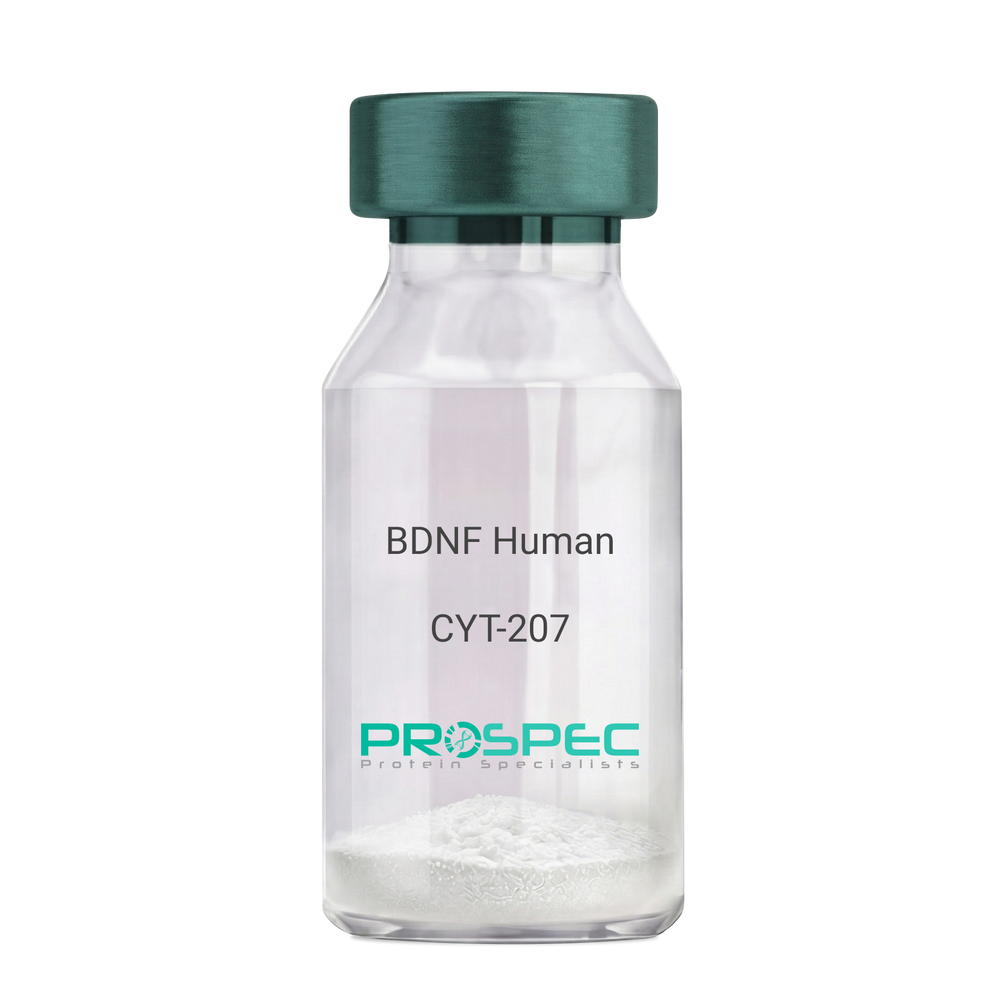
    BDNF Human

    Description:

    Brain-Derived Neurotrophic Factor Human Recombinant

    Brain-Derived Neurotrophic Factor, BDNF, MGC34632.

    Product # :

    CYT-207

    Price :

    Quantity :

    Shipping Method :

    Room Temp Icon

    Shipped at Room temp

    Add To Cart

    More Info

    • description
    • source
    • formulation
    • purity
    • biological activity
    • More Info
    • Activity

    Description

    BDNF Human Recombinant produced in E.Coli is a homodimer, non-glycosylated, polypeptide chain containing 2 x 119 amino acids (and an N-terminal Met) and having a total molecular mass of 28kDa. BDNF Human Recombinant is purified by proprietary chromatographic techniques.

    Source

    Escherichia Coli.

    Formulation

    The protein was lyophilized with 20mM PB and 400mM NaCl, pH 7.2.

    Purity

    BDNF is greater than 950% as determined SDS-PAGE.

    Biological Activity

    The activity was determined using Immobilized Human TrkB-His tag protein 2ug/ml (100 μl/well) for its binding to NHS-Biotin BDNF. The ED50 of was found to be ≤20ng/mL

    Activity

    bdnf activity - Product image 1

    More Info

    • Introduction

      BDNF promotes the survival of neuronal populations that are all located either in the central nervous system or directly connected to it. BDNF is a major regulator of synaptic transmission and plasticity at adult synapses in many regions of the cns. The versatility of BDNF is emphasized by its contribution to a range of adaptive neuronal responses including long-term potentiation (ltp), long-term depression (ltd), certain forms of short-term synaptic plasticity, as well as homeostatic regulation of intrinsic neuronal excitability.

    • Synonyms

      Brain-Derived Neurotrophic Factor, BDNF, MGC34632.

    • Physical Appearance

      Sterile Filtered White lyophilized (freeze-dried) powder.

    • Stability

      Lyophilized BDNF although stable at room temperature for 3 weeks, should be stored desiccated below -18°C. Upon reconstitution BDNF should be stored at 4°C between 2-7 days and for future use below -18°C.For long term storage it is recommended to add a carrier protein (0.1% HSA or BSA).Please prevent freeze-thaw cycles.

    • Solubility

      It is recommended to reconstitute the lyophilized BDNF in sterile 18M-cm H2O not less than 100µg/ml, which can then be further diluted to other aqueous solutions.

    • Amino Acid Sequence

      HSDPARRGE LSVCDSISEW VTAADKKTAV DMSGGTVTVL EKVPVSKGQL KQYFYETKCN PMGYTKEGCR GIDKRHWNSQ CRTTQSYVRA LTMDSKKRIG WRFIRIDTSC VCTLTIKRGR.

    • Background

      Final Thoughts

      Although more research is needed on the safety and effectiveness of BDNF human recombinant, trials suggest that this laboratory-produced protein may be effective in managing and treating several neurological and psychiatric disorders. It's important for experts to stay up to date on the latest developments and research to learn more about potential risks and benefits.

      What is the molecular weight/Mw of BDNF Protein?
      BDNF Protein has a total Mw of 27kDa.

      What is the source or expression system of BDNF Protein?
      Escherichia Coli.

      What is the Purity of BDNF Protein?
      BDNF Protein is >97% pure as determined by SDS-PAGE.

      What is the Biological Activity of BDNF Protein?
      The ED50, as determined by the dose-dependent induction of C6 cells proliferation, is 1.3-2µg/ml.

      What is the amino acid sequence of BDNF Protein?
      MHSDPARRGE LSVCDSISEW VTAADKKTAV DMSGGTVTVL EKVPVSKGQL KQYFYETKCN PMGYTKEGCR GIDKRHWNSQ CRTTQSYVRA LTMDSKKRIG WRFIRIDTSC VCTLTIKRGR.

      What applications can BDNF Protein be used in?
      BDNF Protein can probably be used in western blot, ELISA and Lateral Flow.

      What is the endotoxin level for BDNF Protein?
      The endotoxin level is minimal, BDNF Protein was purified using conventional chromatography techniques.

    • Protein content

      BDNF quantitation was carried out by two independent methods:1. UV spectroscopy at 280 nm using the absorbency value of 1.6 as the extinction coefficient for a 0.1% (1mg/ml) solution. This value is calculated by the PC GENE computer analysis program of protein sequences (IntelliGenetics). 2. Analysis by RP-HPLC, using a standard solution of Brain-derived Neurotrophic Factor as a Reference Standard.

    ProSpec's products are furnished for LABORATORY RESEARCH USE ONLY. The product may not be used as drugs, agricultural or pesticidal products, food additives or household chemicals.

    Bdnf Human
  • View Data Sheet

    Name :

    PPP1R14A Antibody

    Description:

    Protein Phosphatase-1 Regulatory Subunit-14A, Mouse Anti Human

    Protein phosphatase 1 regulatory subunit 14A, 17 kDa PKC-potentiated inhibitory protein of PP1, CPI17, CPI-17, PPP1INL, PPP1R14A.

    Product # :

    ANT-381

    Price :

    Quantity :

    Shipping Method :

    Ice Icon

    Shipped with Ice Packs

    Add To Cart

    More Info

    • formulation
    • More Info

    Formulation

    1mg/ml containing PBS, pH-7.4, & 0.1% Sodium Azide.

    More Info

    • Introduction

      PPP1R14A is a phosphorylation-dependent inhibitor of smooth muscle myosin phosphatase. Inhibition of PPP1R14A results to increased myosin phosphorylation and enhances smooth muscle contraction in the absence of increased intracellular Ca(2+) concentration. Myosin phosphatase can reverse MYL (myosin light chain) phosphorylation to induce a state of relaxation. However, during agonist-induced contraction at constant Ca2+ concurrent inhibition of myosin phosphatase leads to increases in MYL phosphorylation and tension. These calcium-independent increases in myosin phosphorylation and tension are termed calcium sensitization. Human pregnancy is characterized by the increases of PKN1 expression and CPI-17 phosphorylation in the myometrium. PPP1R14A is mapped to chromosome 19q13.13-q13.2. PPP1R14A binds directly to protein kinase C and casein kinase I. PPP1R14A siRNA decreased the level of merlin phosphorylation and consequently Ras and ERK activity in human tumor cell lines. PKC/CPI-17 medi

    • Synonyms

      Protein phosphatase 1 regulatory subunit 14A, 17 kDa PKC-potentiated inhibitory protein of PP1, CPI17, CPI-17, PPP1INL, PPP1R14A.

    • Immunogen

      Anti-human PPP1R14A mAb is derived from hybridization of mouse FO myeloma cells with spleen cells from BALB/c mice immunized with recombinant human PPP1R14A amino acids 1-147 purified from E. coli.

    • Ig Subclass

      Mouse IgG2a heavy chain and κ light chain.

    • Clone

      P4H10AT.

    • Applications

      PPP1R14A antibody has been tested by ELISA and Western blot analysis to assure specificity and reactivity. Since application varies, however, each investigation should be titrated by the reagent to obtain optimal results. Recommended dilution range for Western blot analysis is 1:500 ~ 1,000. Recommended starting dilution is 1:500.

    • Type

      Mouse Anti Human Monoclonal.

    • Storage Procedures

      For periods up to 1 month store at 4°C, for longer periods of time, store at -20°C. Prevent freeze thaw cycles.

    • Purification Method

      PPP1R14A antibody was purified from mouse ascitic fluids by protein-G affinity chromatography.

    ProSpec's products are furnished for LABORATORY RESEARCH USE ONLY. The product may not be used as drugs, agricultural or pesticidal products, food additives or household chemicals.

    Ppp1R14A Antibody
  • View Data Sheet

    Name :

    DUSP19 Human

    Description:

    Dual Specificity Phosphatase 19 Human Recombinant

    Dual specificity protein phosphatase 19, Dual specificity phosphatase TS-DSP1, Low molecular weight dual specificity phosphatase 3, LMW-DSP3, Protein phosphatase, SKRP1, Stress-activated protein kinase pathway-regulating phosphatase 1, SAPK pathway-regulating phosphatase 1, DUSP19, DUSP17, LMWDSP3, TS-DSP1.

    Product # :

    ENZ-201

    Price :

    Quantity :

    Shipping Method :

    Ice Icon

    Shipped with Ice Packs

    Add To Cart

    More Info

    • description
    • source
    • formulation
    • purity
    • More Info

    Description

    DUSP19 Human Recombinant produced in E.coli is a single, non-glycosylated polypeptide chain containing 176 amino acids (65-217) and having a molecular mass of 19.4kDa.DUSP19 is fused to a 23 amino acid His-tag at N-terminus & purified by proprietary chromatographic techniques.

    Source

    Escherichia Coli.

    Formulation

    The DUSP19 solution (0.5mg/ml) contains 20mM Tris-HCl buffer (pH 8.0), 1mM DTT, 30% glycerol and 0.1M NaCl.

    Purity

    Greater than 90.0% as determined by SDS-PAGE.

    More Info

    • Introduction

      DUSPs are distinguished by their ability to dephosphorylate both tyrosine and serine/threonine residues. DUSPs have been implicated as major modulators of critical signaling pathways. Dual specificity phosphatase 19 (DUSP19) belongs to the dual specificity protein phosphatase subfamily. DUSP19 is a protein phosphatase which functions as a stress-activated protein kinase pathway-regulating phosphatase. DUSP19 contains a variation of the consensus DUSP C-terminal catalytic domain, with the last serine residue replaced by alanine, and lacks the N-terminal CH2 domain found in the MKP class of DUSPs.

    • Synonyms

      Dual specificity protein phosphatase 19, Dual specificity phosphatase TS-DSP1, Low molecular weight dual specificity phosphatase 3, LMW-DSP3, Protein phosphatase, SKRP1, Stress-activated protein kinase pathway-regulating phosphatase 1, SAPK pathway-regulating phosphatase 1, DUSP19, DUSP17, LMWDSP3, TS-DSP1.

    • Physical Appearance

      Sterile Filtered colorless solution.

    • Stability

      Store at 4°C if entire vial will be used within 2-4 weeks. Store, frozen at -20°C for longer periods of time. For long term storage it is recommended to add a carrier protein (0.1% HSA or BSA).Avoid multiple freeze-thaw cycles.

    • Amino Acid Sequence

      MGSSHHHHHH SSGLVPRGSH MGSQVGVIKP WLLLGSQDAA HDLDTLKKNK VTHILNVAYG VENAFLSDFT YKSISILDLP ETNILSYFPE CFEFIEEAKR KDGVVLVHCN AGVSRAAAIV IGFLMNSEQT SFTSAFSLVK NARPSICPNS GFMEQLRTYQ EGKESNKCDR IQENSS.

    ProSpec's products are furnished for LABORATORY RESEARCH USE ONLY. The product may not be used as drugs, agricultural or pesticidal products, food additives or household chemicals.

    Dusp19 Human
  • View Data Sheet

    Name :

    SPP1 Mouse

    Description:

    Osteopontin 1 Mouse Recombinant

    Secreted Phosphoprotein-1, OPN, BNSP, BSPI, ETA-1, MGC110940, SPP-1, Osteopontin, Bone sialoprotein 1, Urinary stone protein, Nephropontin, Uropontin, SPP1

    Product # :

    CYT-1201

    Price :

    Quantity :

    Shipping Method :

    Ice Icon

    Shipped with Ice Packs

    Add To Cart

    More Info

    • description
    • source
    • formulation
    • purity
    • biological activity
    • More Info

    Description

    SPP1 Mouse Recombinant produced in HEK293 Cells is a single, glycosylated polypeptide chain containing 287 amino acids (17-294 a.a) and having a molecular mass of 31.8kDa.SPP1 is expressed with a 6 amino acid His tag at C-Terminus and purified by proprietary chromatographic techniques.

    Source

    HEK293 Cells.

    Formulation

    The SPP1 solution (0.25mg/1ml) contains phosphate buffered saline (pH7.4) and 10% glycerol.

    Purity

    Greater than 90.0% as determined by SDS-PAGE.

    Biological Activity

    Measured by the ability of the immobilized protein to support the adhesion of HEK293 HEK cells when the cells are added to mouse SPP1 coated plates.  The ED50 range is ≤ 1.5 ug/ml.

    More Info

    • Introduction

      Osteopontin is a glycoprotein that was first identified in osteoblasts and is involved in bone remodeling, immune functions in fibroblasts, macrophages, and lymphocytes during inflammation and wound healing. SPP1 binds tightly to hydroxyapatite. SPP1 forms an integral part of the mineralized matrix. SPP1 is vital to cell-matrix interaction. Secreted Phosphoprotein-1 protects against cardiac ischemia-reperfusion injury via late preconditioning. Expression of both Ostepontin and CD44 in hepatocellular carcinoma is linked with advanced tumor stage and contributes to prognosis information. SPP1 is the most over-expressed gene in intrahepatic cholangiocarcinoma. Secreted Phosphoprotein-1 overexpression is related with interstitial lung diseases.

    • Synonyms

      Secreted Phosphoprotein-1, OPN, BNSP, BSPI, ETA-1, MGC110940, SPP-1, Osteopontin, Bone sialoprotein 1, Urinary stone protein, Nephropontin, Uropontin, SPP1

    • Physical Appearance

      Sterile Filtered colorless solution.

    • Stability

      Store at 4°C if entire vial will be used within 2-4 weeks.Store, frozen at -20°C for longer periods of time.For long term storage it is recommended to add a carrier protein (0.1% HSA or BSA).Avoid multiple freeze-thaw cycles.

    • Amino Acid Sequence

      DGSLPVKVTD SGSSEEKLYS LHPDPIATWL VPDPSQKQNL LAPQNAVSSE EKDDFKQETL PSNSNESHDH MDDDDDDDDD DGDHAESEDS VDSDESDESH HSDESDETVT ASTQADTFTP IVPTVDVPNG RGDSLAYGLR SKSRSFQVSD EQYPDATDED LTSHMKSGES KESLDVIPVA QLLSMPSDQD NNGKGSHESS QLDEPSLETH RLEHSKESQE SADQSDVIDS QASSKASLEH QSHKFHSHKD KLVLDPKSKE DDRYLKFRIS HELESSSSEV NHHHHHH

    ProSpec's products are furnished for LABORATORY RESEARCH USE ONLY. The product may not be used as drugs, agricultural or pesticidal products, food additives or household chemicals.

    Osteopontin Mouse
  • View Data Sheet

    Name :

    Prolactin Mouse, His

    Description:

    Prolactin Mouse Recombinant, His Tag

    AV290867, Gha1, Prl1a1, Growth hormone a1, Mammotropin, Luterotropic hormone, Lutetropin, PRL.

    Product # :

    CYT-1060

    Price :

    Quantity :

    Shipping Method :

    Ice Icon

    Shipped with Ice Packs

    Add To Cart

    More Info

    • description
    • source
    • formulation
    • purity
    • More Info

    Description

    Prolactin Mouse produced in E.Coli is a single, non-glycosylated, polypeptide chain containing 222 amino acids (30-228a.a.) and having a molecular mass of 25 kDa. Prolactin Mouse protein is fused to a 23 amino acid His tag at N-terminus and is purified by standard chromatography.

    Source

    Escherichia Coli.

    Formulation

    The Prolactin Mouse solution (0.25mg/ml) contains Phosphate Buffered Saline (pH 7.4) and 20% glycerol.

    Purity

    Greater than 90% as determined by SDS-PAGE.

    More Info

    • Introduction

      Prolactin is a neuroendocrine hormone synthesized primarily by the pituitary gland but also a variety of other cell types including the placenta, brain and uterus. Its primary function is to promote and maintain lactation but has also been shown to have a role in breast cancer development, regulation of reproductive function and immunoregulation.

    • Synonyms

      AV290867, Gha1, Prl1a1, Growth hormone a1, Mammotropin, Luterotropic hormone, Lutetropin, PRL.

    • Physical Appearance

      Sterile filtered colorless solution.

    • Stability

      Store at 4°C if entire vial will be used within 2-4 weeks. Store, frozen at -20°C for longer periods of time. For long term storage it is recommended to add a carrier protein (0.1% HSA or BSA). Avoid multiple freeze-thaw cycles.

    • Amino Acid Sequence

      MGSSHHHHHH SSGLVPRGSH MGSQPLPICS AGDCQTSLRE LFDRVVILSH YIHTLYTDMF IEFDKQYVQD REFMVKVIND CPTSSLATPE DKEQALKVPP EVLLNLILSL VQSSSDPLFQ LITGVGGIQE APEYILSRAK EIEEQNKQLL EGVEKIISQA YPEAKGNGIY VWSQLPSLQ GVDEESKILS LRNTIRCLRR DSHKVDNFLK VLRCQIAHQN NC.

    ProSpec's products are furnished for LABORATORY RESEARCH USE ONLY. The product may not be used as drugs, agricultural or pesticidal products, food additives or household chemicals.

    Mouse Prolactin
  • View Data Sheet

    Name :

    SIRT5 Human

    Description:

    Sirtuin-5 Human Recombinant

    Sirtuin 5, NAD-Dependent Lysine Demalonylase And Desuccinylase Sirtuin-5,Mitochondria, NAD-Dependent Protein Deacylase Sirtuin-5 Mitochondrial, Silent Mating Type Information Regulation 2 (S.Cerevisiae) Homolog 5, NAD-Dependent Deacetylase Sirtuin-5, Regulatory Protein SIR2 Homolog 5, SIR2-Like Protein 5, SIR2L5, Sirtuin Type 5, Sir2-Like 5, EC 3.5.1.-.

    Product # :

    PRO-1774

    Price :

    Quantity :

    Shipping Method :

    Ice Icon

    Shipped with Ice Packs

    Add To Cart

    More Info

    • description
    • source
    • formulation
    • purity
    • More Info

    Description

    SIRT5 Human Recombinant produced in E.Coli is a single, non-glycosylated polypeptide chain topological domain containing 300 amino acids (34-310 a.a) and having a molecular mass of 32.5kDa. SIRT5 is fused to a 23 amino acid His-tag at N-terminus & purified by proprietary chromatographic techniques.

    Source

    Escherichia Coli.

    Formulation

    SIRT5 protein solution (0.5mg/ml) containing 20mM Tris-HCl buffer (pH8.0), 0.15M NaCl, 1mM DTT and 30% glycerol.

    Purity

    Greater than 90.0% as determined by SDS-PAGE.

    More Info

    • Introduction

      SIRT5 belongs to the Sirtuin family of proteins, homologs to the yeast Sir2 protein. Sirtuin family members hold a sirtuin core domain and grouped into four classes. The protein encoded by this gene is included in class III of the sirtuin family. Human sirtuins functions were not yet determined; still, yeast sirtuin proteins are known to regulate epigenetic gene silencing and suppress recombination of rDNA. Studies propose that human sirtuin could operate as intracellular regulatory protein with mono-ADP-ribosyltransferase activity.

    • Synonyms

      Sirtuin 5, NAD-Dependent Lysine Demalonylase And Desuccinylase Sirtuin-5,Mitochondria, NAD-Dependent Protein Deacylase Sirtuin-5 Mitochondrial, Silent Mating Type Information Regulation 2 (S.Cerevisiae) Homolog 5, NAD-Dependent Deacetylase Sirtuin-5, Regulatory Protein SIR2 Homolog 5, SIR2-Like Protein 5, SIR2L5, Sirtuin Type 5, Sir2-Like 5, EC 3.5.1.-.

    • Physical Appearance

      Sterile Filtered clear solution.

    • Stability

      Store at 4°C if entire vial will be used within 2-4 weeks. Store, frozen at -20°C for longer periods of time.For long term storage it is recommended to add a carrier protein (0.1% HSA or BSA).Please avoid freeze thaw cycles.

    • Amino Acid Sequence

      MGSSHHHHHH SSGLVPRGSH MGSARPSSSM ADFRKFFAKA KHIVIISGAG VSAESGVPTF RGAGGYWRKW QAQDLATPLA FAHNPSRVWE FYHYRREVMG SKEPNAGHRA IAECETRLGK QGRRVVVITQ NIDELHRKAG TKNLLEIHGS LFKTRCTSCG VVAENYKSPI CPALSGKGAP EPGTQDASIP VEKLPRCEEA GCGGLLRPHV VWFGENLDPA ILEEVDRELA HCDLCLVVGT SSVVYPAAMF APQVAARGVP VAEFNTETTP ATNRFRFHFQ GPCGTTLPEA LACHENETVS

    ProSpec's products are furnished for LABORATORY RESEARCH USE ONLY. The product may not be used as drugs, agricultural or pesticidal products, food additives or household chemicals.

    Sirt5 Human
  • View Data Sheet

    Name :

    CDK1 Human

    Description:

    Cyclin-Dependent Kinase 1 Human Recombinant

    Cyclin-Dependent Kinase 1, CDC2, Cell Division Cycle 2, G1 To S And G2 To M, Cell Division Control Protein 2 Homolog, Cell Division Protein Kinase 1, P34 Protein Kinase, P34CDC2, CDC28A, Cell Cycle Controller CDC2, EC 2.7.11.22, EC 2.7.11.23, CDKN1, Cyclin-dependent kinase 1, CDK1.

    Product # :

    PKA-076

    Price :

    Quantity :

    Shipping Method :

    Ice Icon

    Shipped with Ice Packs

    Add To Cart

    More Info

    • description
    • source
    • formulation
    • purity
    • More Info

    Description

    CDK1 Human Recombinant produced in E.Coli is a single, non-glycosylated polypeptide chain containing 317 amino acids (1-297 a.a) and having a molecular mass of 36.2kDa. CDK1 is fused to a 20 amino acid His-tag at N-terminus & purified by proprietary chromatographic techniques.

    Source

    Escherichia Coli.

    Formulation

    CDK1 protein solution (1mg/ml) containing 20mM Tris-HCl (pH8.0) and 10% glycerol.

    Purity

    Greater than 85.0% as determined by SDS-PAGE.

    More Info

    • Introduction

      Cyclin-dependent kinase 1 (CDK1) plays a significant part in the control of the eukaryotic cell cycle through modulating the centrosome cycle in addition to mitotic onset; CDK1 promotes G2-M transition and regulates G1 progress and G1-S transition using association with multiple interphase cyclins. CDK1 is essential in higher cells for the entry into S-phase and mitosis.

    • Synonyms

      Cyclin-Dependent Kinase 1, CDC2, Cell Division Cycle 2, G1 To S And G2 To M, Cell Division Control Protein 2 Homolog, Cell Division Protein Kinase 1, P34 Protein Kinase, P34CDC2, CDC28A, Cell Cycle Controller CDC2, EC 2.7.11.22, EC 2.7.11.23, CDKN1, Cyclin-dependent kinase 1, CDK1.

    • Physical Appearance

      Sterile filtered colorless solution.

    • Stability

      Store at 4°C if entire vial will be used within 2-4 weeks. Store, frozen at -20°C for longer periods of time. For long term storage it is recommended to add a carrier protein (0.1% HSA or BSA).Avoid multiple freeze-thaw cycles.

    • Amino Acid Sequence

      MGSSHHHHHH SSGLVPRGSH MEDYTKIEKI GEGTYGVVYK GRHKTTGQVV AMKKIRLESE EEGVPSTAIR EISLLKELRH PNIVSLQDVL MQDSRLYLIF EFLSMDLKKY LDSIPPGQYM DSSLVKSYLY QILQGIVFCH SRRVLHRDLK PQNLLIDDKG TIKLADFGLA RAFGIPIRVY THEVVTLWYR SPEVLLGSAR YSTPVDIWSI GTIFAELATK KPLFHGDSEI DQLFRIFRAL GTPNNEVWPE VESLQDYKNT FPKWKPGSLA SHVKNLDENG LDLLSKMLIY DPAKRISGKM ALNHPYFNDL DNQIKKM.

    ProSpec's products are furnished for LABORATORY RESEARCH USE ONLY. The product may not be used as drugs, agricultural or pesticidal products, food additives or household chemicals.

    Cdk1 Human
  • View Data Sheet

    Name :

    CCL24 Mouse

    Description:

    Eotaxin-2 Mouse Recombinant (CCL24)

    C-C motif chemokine 24, Small-inducible cytokine A24, Myeloid progenitor inhibitory factor 2, CK-beta-6, Eosinophil chemotactic protein 2, Eotaxin-2, CCL24, Ckb-6, MPIF2, MPIF-2, SCYA24, Eotaxin2, CCL-24.

    Product # :

    CHM-368

    Price :

    Quantity :

    Shipping Method :

    Room Temp Icon

    Shipped at Room temp

    Add To Cart

    More Info

    • description
    • source
    • formulation
    • purity
    • biological activity
    • More Info

    Description

    CCL24 Mouse Recombinant produced in E.Coli is a single, non-glycosylated polypeptide chain containing 93 amino acids and having a molecular mass of 10.3 kDa. The CCL24 is purified by proprietary chromatographic techniques.

    Source

    Escherichia Coli.

    Formulation

    The CCL24 protein was lyophilized from a concentrated (1mg/ml) sterile solution containing 20mM Phosphate buffer pH-7.4 and 0.15M sodium chloride.

    Purity

    Greater than 97.0% as determined by:(a) Analysis by RP-HPLC.
    (b) Analysis by SDS-PAGE.

    Biological Activity

    Determined by its ability to chemoattract murine lymphocytes using a concentration range of 10-100ng/ml corresponding to a Specific Activity of 10,000-100,000IU/mg.

    More Info

    • Introduction

      Eotaxin-2, also called MPIF2 & Ckb6, is a novel CC chemokine produced by activated monocytes and T lymphocytes. Eotaxin-2 selectively chemoattracts cells expressing CCR3 including eosinophils, basophils, Th2 T cells, mast cells, and certain subsets of dendritic cells. Furthermore, Eotaxin-2 inhibits the proliferation of multipotential hematopoietic progenitor cells. The mature protein, which includes C-terminal truncation, contains 78 amino acids (92 amino acids for the mouse homolog, without C-terminal truncation).
      CCL24 functions as a chemotactic chemokine for resting t-lymphocytes, and eosinophils. CCL24 has lower chemotactic activity for neutrophils but none for monocytes and activated lymphocytes. CCL24 is a strong suppressor of colony formation by a multipotential hematopoietic progenitor cell line and binds to CCR3.

    • Synonyms

      C-C motif chemokine 24, Small-inducible cytokine A24, Myeloid progenitor inhibitory factor 2, CK-beta-6, Eosinophil chemotactic protein 2, Eotaxin-2, CCL24, Ckb-6, MPIF2, MPIF-2, SCYA24, Eotaxin2, CCL-24.

    • Physical Appearance

      Sterile Filtered White lyophilized (freeze-dried) powder.

    • Stability

      Lyophilized Eotaxin-2 although stable at room temperature for 3 weeks, should be stored desiccated below -18°C. Upon reconstitution CCL24 should be stored at 4°C between 2-7 days and for future use below -18°C. For long term storage it is recommended to add a carrier protein (0.1% HSA or BSA).Please prevent freeze-thaw cycles.

    • Solubility

      It is recommended to reconstitute the lyophilized CCL24 Mouse Recombinant in sterile 18MΩ-cm H2O not less than 100µg/ml, which can then be further diluted to other aqueous solutions.

    • Amino Acid Sequence

      VTIPSSCCTS FISKKIPENR VVSYQLANGS ICPKAGVIFI TKKGHKICTD PKLLWVQRHI QKLDAKKNQP SKGAKAVRTK FAVQRRRGNS TEV.

    • Background

      What is the molecular weight/Mw of CCL24 MOUSE Protein?
      CCL24 MOUSE Protein has a total Mw of 10.3kDa.

      What is the source or expression system of CCL24 MOUSE Protein?
      Escherichia Coli.

      What is the Purity of CCL24 MOUSE Protein?
      CCL24 MOUSE Protein is >97% pure as determined by SDS-PAGE.

      What is the Biological Activity of CCL24 MOUSE Protein?
      Determined by its ability to chemoattract murine lymphocytes using a concentration range of 10-100ng/ml corresponding to a Specific Activity of 10,000-100,000IU/mg.

      What is the amino acid sequence of CCL24 MOUSE Protein?
      VTIPSSCCTS FISKKIPENR VVSYQLANGS ICPKAGVIFI TKKGHKICTD PKLLWVQRHI QKLDAKKNQP SKGAKAVRTK FAVQRRRGNS TEV.

      What applications can CCL24 MOUSE Protein be used in?
      CCL24 MOUSE Protein can probably be used in western blot, ELISA and Lateral Flow.

      What is the endotoxin level for CCL24 MOUSE Protein?
      The endotoxin level is minimal, CCL24 MOUSE Protein was purified using conventional chromatography techniques.


    ProSpec's products are furnished for LABORATORY RESEARCH USE ONLY. The product may not be used as drugs, agricultural or pesticidal products, food additives or household chemicals.

    Ccl24 Mouse
  • View Data Sheet

    Name :

    ANXA2

    Description:

    Annexin A2 Human Recombinant

    ANX2, ANX2L4, CAL1H, LIP2, LPC2, LPC2D, P36, PAP-IV, ANXA2, Annexin A2, Annexin-2, Annexin II, Lipocortin II, Calpactin-1 heavy chain, Calpactin I heavy chain, Chromobindin-8, p36, Protein I, Placental anticoagulant protein IV.

    Product # :

    PRO-777

    Price :

    Quantity :

    Shipping Method :

    Ice Icon

    Shipped with Ice Packs

    Add To Cart

    More Info

    • description
    • source
    • formulation
    • purity
    • More Info

    Description

    ANXA2 Human Recombinant produced in E.Coli is a single, non-glycosylated, polypeptide chain containing 376 amino acids (1-339a.a.) and having a molecular mass of 42.8 kDa. ANXA2 is fused to a 37 amino acid His-Tag at N-Terminus and purified by proprietary chromatographic techniques.

    Source

    Escherichia Coli.

    Formulation

    ANXA2 (0.5mg/ml) solution containing 20mM Tris-HCl pH-8, 0.1M NaCl and 20% glycerol.

    Purity

    Greater than 95% as determined by SDS-PAGE.

    More Info

    • Introduction

      ANXA2 is part of the annexin family and is involved in the regulation of cellular growth and in signal transduction pathways. ANXA2 protein functions as an autocrine factor which increases osteoclast formation and bone resorption. ANXA2 is associated with sickle cell osteonecrosis. Reduced ANXA2 expression is associated with osteosarcoma metastases. ANXA2 is part of the putative cell surface vitamin D binding protein binding site complex and functions to mediate the chemotactic cofactor effect. ANXA2 is involved in dysferlin deficiency and in muscular dystrophies. Human colon adenocarcinoma cell differentiation is related with an up-regulation of ANXA2.

    • Synonyms

      ANX2, ANX2L4, CAL1H, LIP2, LPC2, LPC2D, P36, PAP-IV, ANXA2, Annexin A2, Annexin-2, Annexin II, Lipocortin II, Calpactin-1 heavy chain, Calpactin I heavy chain, Chromobindin-8, p36, Protein I, Placental anticoagulant protein IV.

    • Physical Appearance

      Sterile filtered colorless solution.

    • Stability

      Store at 4°C if entire vial will be used within 2-4 weeks. Store, frozen at -20°C for longer periods of time. For long term storage it is recommended to add a carrier protein (0.1% HSA or BSA).Avoid multiple freeze-thaw cycles.

    • Amino Acid Sequence

      MRGSHHHHHH GMASMTGGQQ MGRDLYDDDD KDRWGSHMST VHEILCKLSL EGDHSTPPSA YGSVKAYTNF DAERDALNIE TAIKTKGVDE VTIVNILTNR SNAQRQDIAF AYQRRTKKEL ASALKSALSG HLETVILGLL KTPAQYDASE LKASMKGLGT DEDSLIEIIC SRTNQELQEI NRVYKEMYKT DLEKDIISDT SGDFRKLMVA LAKGRRAEDG SVIDYELIDQ DARDLYDAGV KRKGTDVPKW ISIMTERSVP HLQKVFDRYK SYSPYDMLES IRKEVKGDLE NAFLNLVQCI QNKPLYFADR LYDSMKGKGT RDKVLIRIMV SRSEVDMLKI RSEFKRKYGK SLYYYIQQDT KGDYQKALLY LCGGDD.

    ProSpec's products are furnished for LABORATORY RESEARCH USE ONLY. The product may not be used as drugs, agricultural or pesticidal products, food additives or household chemicals.

    Anxa2 Human
  • View Data Sheet

    Name :

    DDIT3 Human

    Description:

    DNA Damage Inducible Transcript 3 Human Recombinant

    DNA damage-inducible transcript 3, DDIT-3, Growth arrest and DNA-damage-inducible protein GADD153, C/EBP-homologous protein, CHOP, DDIT3, GADD153, CEBPZ, CHOP10, MGC4154.

    Product # :

    PRO-638

    Price :

    Quantity :

    Shipping Method :

    Ice Icon

    Shipped with Ice Packs

    Add To Cart

    More Info

    • description
    • source
    • formulation
    • purity
    • More Info

    Description

    DDIT3 Human Recombinant produced in E.Coli is a single, non-glycosylated polypeptide chain containing 189 amino acids and having a molecular mass of 21 kDa. The DDIT3 protein is fused to a 20 amino acids His tag at N-terminus.The DDIT3 is purified by proprietary chromatographic techniques.

    Source

    Escherichia Coli.

    Formulation

    The DDIT3 protein solution (1mg/ml) contains 20mM Tris-HCl pH-8 and 20% glycerol.

    Purity

    Greater than 90.0% as determined by:
    (a) Analysis by RP-HPLC.
    (b) Analysis by SDS-PAGE.

    More Info

    • Introduction

      DDIT3 reduces DNA-binding activity of C/EBP and lap by forming heterodimers which don’t bind DNA. DDIT3, also known as GADD153, is a basic domain-leucine zipper(bZIP) transcription factor of C/EBP family. DDIT3 protein is up-regulated by several stresses, such as amino acid or glucose starvation, endoplasmic reticulum (ER) stress, osmotic stress and hypoxia. DDIT3 protein is invloved in ER stress-mediated apoptosis and in disease including diabetes, brain ischemia and neurodegenerative disease. DDIT3 plays a role in asoprisnil-induced apoptosis. Hypoglycaemia-induced necrotic cell death of neuroblastoma cells is an active process mediated via the induction of the transcription factor DDIT3. DDIT3 plays an important role in melanoma progression. HRG stimulation of mammary epithelial cells induces the expression of DDIT3 mRNA and protein and transcription of DDIT3 promoter.

    • Synonyms

      DNA damage-inducible transcript 3, DDIT-3, Growth arrest and DNA-damage-inducible protein GADD153, C/EBP-homologous protein, CHOP, DDIT3, GADD153, CEBPZ, CHOP10, MGC4154.

    • Physical Appearance

      Sterile Filtered colorless solution.

    • Stability

      Store at 4°C if entire vial will be used within 2-4 weeks. Store, frozen at -20°C for longer periods of time. For long term storage it is recommended to add a carrier protein (0.1% HSA or BSA).Avoid multiple freeze-thaw cycles.

    • Amino Acid Sequence

      MGSSHHHHHH SSGLVPRGSH MAAESLPFSF GTLSSWELEA WYEDLQEVLS SDENGGTYVS PPGNEEEESK IFTTLDPASL AWLTEEEPEP AEVTSTSQSP HSPDSSQSSL AQEEEEEDQG RTRKRKQSGH SPARAGKQRM KEKEQENERK VAQLAEENER LKQEIERLTR EVEATRRALI DRMVNLHQA.

    ProSpec's products are furnished for LABORATORY RESEARCH USE ONLY. The product may not be used as drugs, agricultural or pesticidal products, food additives or household chemicals.

    Ddit3 Human
  • View Data Sheet

    Name :

    CRABP1 Human

    Description:

    Cellular Retinoic Acid binding Protein 1 Human Recombinant

    Cellular retinoic acid-binding protein 1, Cellular retinoic acid-binding protein I, CRABP-I, CRABP1, RBP5, CRABP, CRABPI.

    Product # :

    PRO-710

    Price :

    Quantity :

    Shipping Method :

    Ice Icon

    Shipped with Ice Packs

    Add To Cart

    More Info

    • description
    • source
    • formulation
    • purity
    • More Info

    Description

    CRABP1 Human Recombinant produced in E.Coli is a single, non-glycosylated polypeptide chain containing 137 amino acids and having a molecular mass of 15.5kDa. The CRABP1 is purified by proprietary chromatographic techniques.

    Source

    Escherichia Coli.

    Formulation

    The CRABP1 (1mg/ml) protein solution contains 20mM Tris-HCl buffer (pH8.0) and 10% glycerol.

    Purity

    Greater than 95.0% as determined by SDS-PAGE.

    More Info

    • Introduction

      CRABP1 is a member of special carrier proteins for members of the vitamin A family. It is believed that CRABP1 has an essential role in retinoic acid-mediated differentiation and proliferation processes. Though, CRABP1 is structurally similar to the cellular retinol-binding proteins, it binds only retinoic acid at specific sites within the nucleus, which may contribute to vitamin A-directed differentiation in epithelial tissue. CRABP1 is constitutively expressed and is thought to have different functions in the cell than the related CRABP2. CRABP1 forms a beta-barrel structure which accommodates hydrophobic ligands in its interior.
      Loss of CRABP1 function as a result of hypermethylation of its promoter leads to pathogenesis of papillary thyroid carcinoma. Furthermore, frequent methylation-associated silencing of CRABP1 is linked to esophageal squamous-cell carcinoma.

    • Synonyms

      Cellular retinoic acid-binding protein 1, Cellular retinoic acid-binding protein I, CRABP-I, CRABP1, RBP5, CRABP, CRABPI.

    • Physical Appearance

      Sterile Filtered colorless solution.

    • Stability

      Store at 4°C if entire vial will be used within 2-4 weeks. Store, frozen at -20°C for longer periods of time. For long term storage it is recommended to add a carrier protein (0.1% HSA or BSA).Avoid multiple freeze-thaw cycles.

    • Amino Acid Sequence

      MPNFAGTWKM RSSENFDELL KALGVNAMLR KVAVAAASKP HVEIRQDGDQ FYIKTSTTVR TTEINFKVGE GFEEETVDGR KCRSLATWEN ENKIHCTQTL LEGDGPKTYW TRELANDELI LTFGADDVVC TRIYVRE.

    ProSpec's products are furnished for LABORATORY RESEARCH USE ONLY. The product may not be used as drugs, agricultural or pesticidal products, food additives or household chemicals.

    Crabp1 Human
  • View Data Sheet

    Name :

    IGF1 Gilthead Seabream

    Description:

    IGF1 Gilthead Seabream Recombinant

    Somatomedin C, IGF-I, IGFI.

    Product # :

    CYT-295

    Price :

    Quantity :

    Shipping Method :

    Room Temp Icon

    Shipped at Room temp

    Add To Cart

    More Info

    • description
    • source
    • formulation
    • purity
    • biological activity
    • More Info

    Description

    IGF1 Gilthead SeabreamRecombinant produced in E.Coli is a single, non-glycosylated, polypeptide chain containing 68 amino acids and having a molecular mass of 7545.4 Dalton, the predicted pI=7.72.IGF-1 is purified by proprietary chromatographic techniques.

    Source

    Escherichia Coli.

    Formulation

    The protein was lyophilized from a concentrated (1mg/ml) solution with 0.02% NaHCO3.

    Purity

    Greater than 98.0% as determined by:
    (a) Analysis by SEC-HPLC.
    (b) Analysis by SDS-PAGE.

    Biological Activity

    Binding assays of the 125I-Gealthead Seabream IGF1 to Gilthead Seabream or carp (Cyprinus carpio) sera resulted in high specific binding, indicating the existence of one or more IGF-binding proteins. In binding experiments to crude Gilthead Seabream brain homogenate, using human (h) IGF-I as a ligand, the respective IC50 value of hIGF1 was about fourfold lower than that of Gilthead Seabream IGF-1. Recombinant Gilthead Seabream IGF-1 exhibited mitogenic activity in a mouse mammary gland-derived MME-L1 cell line which was approximately 200-fold lower than that of hIGF1. Binding experiments to intact MME-L1 cells suggests that this difference most likely results from a correspondingly lower affinity for IGF1 receptor in these cells. In contrast, the activities of Gilthead Seabream IGF-I and hIGF-I measured by 35S uptake by gill arches from the goldfish (Carassius auratus) were identical, indicating that the recombinant Gilthead Seabream IGF-I is biologically active.

    More Info

    • Introduction

      The somatomedins, or IGFs, comprise a family of peptides that play important roles in mammalian growth and development. IGF1 mediates many of the growth-promoting effects of GH. Early studies showed that GH did not directly stimulate the incorporation of sulfate into cartilage, but rather acted through a serum factor, termed 'sulfation factor,' which later became known as somatomedin. Three main somatomedins have been characterized: somatomedin C (IGF1), somatomedin A (IGF2), and somatomedin B.

    • Synonyms

      Somatomedin C, IGF-I, IGFI.

    • Physical Appearance

      Sterile Filtered White lyophilized (freeze-dried) powder.

    • Stability

      Lyophilized IGF1 although stable at room temperature for 3 weeks, should be stored desiccated below -18°C. Upon reconstitution IGF1 should be stored at 4°C between 2-7 days and for future use below -18°C.For long term storage it is recommended to add a carrier protein (0.1% HSA or BSA).Please prevent freeze-thaw cycles.

    • Solubility

      It is recommended to reconstitute the lyophilized IGF-1 in sterile 0.4% NaHCO3 adjusted to ph 8-9, not less than 100µg/ml, which can then be further diluted to other aqueous solutions.

    • Amino Acid Sequence

      MSPETLCGAELVDTLQFVCGERGFYFSKPGYGPNARRSRGIVDECCFQSCELRRLEMYCAPAKTSK

    • Background

      What is the molecular weight/Mw of IGF1 GILTHEAD SEABREAM Protein?
      IGF1 GILTHEAD SEABREAM Protein has a total Mw of 7.54kDa.

      What is the source or expression system of IGF1 GILTHEAD SEABREAM Protein?
      Escherichia Coli.

      What is the Purity of IGF1 GILTHEAD SEABREAM Protein?
      IGF1 GILTHEAD SEABREAM Protein is >98% pure as determined by SDS-PAGE.

      What is the Biological Activity of IGF1 GILTHEAD SEABREAM Protein?
      Binding assays of the 125I-Gealthead Seabream IGF1 to Gilthead Seabream or carp (Cyprinus carpio) sera resulted in high specific binding, indicating the existence of one or more IGF-binding proteins. In binding experiments to crude Gilthead Seabream brain homogenate, using human (h) IGF-I as a ligand, the respective IC50 value of hIGF1 was about fourfold lower than that of Gilthead Seabream IGF-1. Recombinant Gilthead Seabream IGF-1 exhibited mitogenic activity in a mouse mammary gland-derived MME-L1 cell line which was approximately 200-fold lower than that of hIGF1. Binding experiments to intact MME-L1 cells suggests that this difference most likely results from a correspondingly lower affinity for IGF1 receptor in these cells. In contrast, the activities of Gilthead Seabream IGF-I and hIGF-I measured by 35S uptake by gill arches from the goldfish (Carassius auratus) were identical, indicating that the recombinant Gilthead Seabream IGF-I is biologically active.

      What is the amino acid sequence of IGF1 GILTHEAD SEABREAM Protein?
      MSPETLCGAELVDTLQFVCGERGFYFSKPGYGPNARRSRGIVDECCFQSCELRRLEMYCAPAKTSK

      What applications can IGF1 GILTHEAD SEABREAM Protein be used in?
      IGF1 GILTHEAD SEABREAM Protein can probably be used in western blot, ELISA and Lateral Flow.

      What is the endotoxin level for IGF1 GILTHEAD SEABREAM Protein?
      The endotoxin level is minimal, IGF1 GILTHEAD SEABREAM Protein was purified using conventional chromatography techniques.


    • Protein content

      Somatomedin C quantitation was carried out by two independent methods1. UV spectroscopy at 280 nm using the absorbency value of 0.60 as the extinction coefficient for a 0.1% (1mg/ml) solution at pH 8.0. This value is calculated by the PC GENE computer analysis program of protein sequences (IntelliGenetics). 2. Analysis by RP-HPLC, using a calibrated solution of IGF1 as a Reference Standard.

    ProSpec's products are furnished for LABORATORY RESEARCH USE ONLY. The product may not be used as drugs, agricultural or pesticidal products, food additives or household chemicals.

    Igf 1 Denis
  • View Data Sheet

    Name :

    Leptin Mouse, PEG

    Description:

    Pegylated Mouse Leptin Recombinant

    OB Protein, Obesity Protein, OBS, Obesity factor.

    Product # :

    CYT-591

    Price :

    Quantity :

    Shipping Method :

    Room Temp Icon

    Shipped at Room temp

    Add To Cart

    More Info

    • description
    • source
    • formulation
    • purity
    • biological activity
    • More Info

    Description

    Leptin Mono-Pegylated Mouse Recombinant produced in E.Coli is a single, non-glycosylated, polypeptide chain containing 146 amino acids and an additional Ala at N-terminus. Pegylated Mouse Leptin contains PEG 20 kDa at its N-terminus and having a molecular mass of 35.6 kDa as determined by mass spectrometry. Since its enlarged hydrodymanic volume Pegylated Leptin runs on SDS-PAGE as A 48 kDa protein and in gel-filtration on Superdex 200 as over 100 kDa protein. Pegylated Mouse Leptin half-life in circulation after SC injection was over 20 hours. Mouse Leptin was purified by proprietary chromatographic techniques according to Salomon et al (2006) Protein Expression and Purification 47, 128–136 and then pegylated.

    Source

    Escherichia Coli.

    Formulation

    The mouse Leptin was lyophilized from a concentrated (0.65mg/ml) solution containing 0.003mM NaHCO3.

    Purity

    Greater than 99.0% as determined by:
    (a) Analysis by Gel-Filtration.
    (b) Analysis by SDS-PAGE.

    Biological Activity

    Pegylated mouse Leptin is capable of stimulatng proliferation of BAF/3 cells stably transfected with the long form of human leptin receptor. Pegylated mouse Leptin in vitro activity is only slightly lower than the non-pegylated antagonist but in vivo it has profound weight reducing effect (as compared to the non-pegylated leptin), resulting mainly from reduced food intake.

    More Info

    • Introduction

      A 16-kDa peptide hormone secreted from white adipocytes and implicated in the regulation of food intake and energy balance. Leptin provides the key afferent signal from fat cells in the feedback system that controls body fat stores.

    • Synonyms

      OB Protein, Obesity Protein, OBS, Obesity factor.

    • Physical Appearance

      Sterile Filtered White lyophilized (freeze-dried) powder.

    • Stability

      Lyophilized Leptin although stable at room temperature for 3 weeks, should be stored desiccated below -18°C. Upon reconstitution Leptin should be stored at 4°C between 2-7 days and for future use below -18°C.For long term storage it is recommended to add a carrier protein (0.1% HSA or BSA).Please prevent freeze-thaw cycles.

    • Solubility

      It is recommended to reconstitute the lyophilized Leptin in sterile 0.4% NaHCO3 adjusted to pH-8.5 not less than 100µg/ml, which can then be further diluted to other aqueous solutions.

    ProSpec's products are furnished for LABORATORY RESEARCH USE ONLY. The product may not be used as drugs, agricultural or pesticidal products, food additives or household chemicals.

    Leptin Mouse Pegylated
  • View Data Sheet

    Name :

    HRAS Human

    Description:

    V-Ha-ras Harvey Rat Sarcoma Viral Oncogene Homolog Human Recombinant

    C-BAS/HAS, C-H-RAS, C-HA-RAS1, CTLO, H-RASIDX, HAMSV, HRAS1, K-RAS, N-RAS, RASH1.

    Product # :

    PRO-822

    Price :

    Quantity :

    Shipping Method :

    Ice Icon

    Shipped with Ice Packs

    Add To Cart

    More Info

    • description
    • source
    • formulation
    • purity
    • More Info

    Description

    HRAS Human Recombinant produced in E.Coli is a single, non-glycosylated, polypeptide chain containing 194 amino acids (1-186 a.a.) and having a molecular mass of 22 kDa. HRAS protein is fused to an 8 amino acid His-Tag at C-terminus and purified by standard chromatography.

    Source

    Escherichia Coli.

    Formulation

    0.5mg/ml solution containing 20mM Tris-HCl pH-8, 0.1M NaCl & 20% glycerol.

    Purity

    Greater than 90% as determined by SDS-PAGE.

    More Info

    • Introduction

      HRAS is part of the Ras oncogene family, whose members are related to the transforming genes of mammalian sarcoma retroviruses. The products encoded by these genes participate in signal transduction pathways. These proteins can bind GTP and GDP, and they have intrinsic GTPase activity. HRAS go trough a continuous cycle of de- and re-palmitoylation, which mediates its rapid exchange between the plasma membrane and the Golgi apparatus. Mutations in HRAS result in Costello syndrome, a disease characterized by increased growth at the prenatal stage, growth deficiency at the postnatal stage, predisposition to tumor formation, mental retardation, skin and musculoskeletal abnormalities, distinctive facial appearance and cardiovascular abnormalities. Defects in this HRAS gene are implicated in a range of cancers, including bladder cancer, follicular thyroid cancer, and oral squamous cell carcinoma.

    • Synonyms

      C-BAS/HAS, C-H-RAS, C-HA-RAS1, CTLO, H-RASIDX, HAMSV, HRAS1, K-RAS, N-RAS, RASH1.

    • Physical Appearance

      Sterile filtered colorless solution.

    • Stability

      Store at 4°C if entire vial will be used within 2-4 weeks. Store, frozen at -20°C for longer periods of time. For long term storage it is recommended to add a carrier protein (0.1% HSA or BSA).Avoid multiple freeze-thaw cycles.

    • Amino Acid Sequence

      MTEYKLVVVG AGGVGKSALT IQLIQNHFVD EYDPTIEDSY RKQVVIDGET CLLDILDTAG QEEYSAMRDQ YMRTGEGFLC VFAINNTKSF EDIHQYREQI KRVKDSDDVP MVLVGNKCDL AARTVESRQA QDLARSYGIP YIETSAKTRQ GVEDAFYTLV REIRQHKLRK LNPPDESGPG CMSCKCLEHH HHHH.

    ProSpec's products are furnished for LABORATORY RESEARCH USE ONLY. The product may not be used as drugs, agricultural or pesticidal products, food additives or household chemicals.

    Hras Human
  • 1
  • …
  • 19
  • 20
  • 21
  • 22
  • 23
  • …
  • 25
Your browser does not support the video tag.

Products

  • Cytokines
  • Growth Factors
  • Chemokines
  • CD Antigens
  • Neurotrophins
  • Hormones
  • Enzymes
  • Viral Antigens
  • Recombinant Proteins
  • Natural Proteins
  • Monoclonal Antibodies
  • Polyclonal Antibodies
  • Thermal Packaging

About

  • Company
  • Founder
  • Contribution
  • Contact Us
  • My Account

Ordering

  • Ordering Method
  • Ordering - Credit Card
  • Ordering PO
  • Shipping Fees
  • FAQ's

Legal

  • Terms & Conditions
  • Privacy
  • Site Map
  • info@prospecbio.com
  • Facebook
  • Instagram
  • Linkedin Profile

© 2026 ProSpec-Tany TechnoGene Ltd. All Rights Reserved.

  • Choosing a selection results in a full page refresh.
  • Opens in a new window.