Skip to content

High-quality research proteins.

  • 1-800-805-6531

  • Mon - Sat 8.00-18.00, Sun - Closed

  • info@prospecbio.com

  • PO Box 6591 East Brunswick NJ 08816

  • Products
    • Cytokines
    • Growth factors
    • Chemokines
    • Cd antigens
    • Neurotrophins
    • Hormones
    • Enzymes
    • Viral antigens
    • Recombinant proteins
    • Natural proteins
    • Monoclonal antibodies
    • Polyclonal antibodies
    • Thermal Packaging
  • About
    • Company
    • Founder
    • Contribution
  • Customers
    • Eastern Asia
    • Eastern Europe
    • North America
    • South America
    • South East Asia
    • Southern Asia
    • Western Europe
  • Ordering
    • Ordering Method
    • Ordering - Credit Card
    • Ordering - PO
    • Shipping Fees
    • FAQs
  • Services
    • DNA Cloning
    • Protein Expression
    • Monoclonal Antibody
    • Fermentation
    • Technology License
  • Contact us
Log in

Country/region

  • USD $ | Albania
  • USD $ | Andorra
  • USD $ | Argentina
  • USD $ | Armenia
  • USD $ | Australia
  • USD $ | Austria
  • USD $ | Azerbaijan
  • USD $ | Belarus
  • USD $ | Belgium
  • USD $ | Bolivia
  • USD $ | Brazil
  • USD $ | Bulgaria
  • USD $ | Cambodia
  • USD $ | Canada
  • USD $ | Chile
  • USD $ | China
  • USD $ | Colombia
  • USD $ | Costa Rica
  • USD $ | Croatia
  • USD $ | Cyprus
  • USD $ | Czechia
  • USD $ | Denmark
  • USD $ | Estonia
  • USD $ | Finland
  • USD $ | France
  • USD $ | Georgia
  • USD $ | Germany
  • USD $ | Greece
  • USD $ | Hong Kong SAR
  • USD $ | Hungary
  • USD $ | Iceland
  • USD $ | India
  • USD $ | Ireland
  • USD $ | Israel
  • USD $ | Italy
  • USD $ | Japan
  • USD $ | Kazakhstan
  • USD $ | Latvia
  • USD $ | Liechtenstein
  • USD $ | Lithuania
  • USD $ | Madagascar
  • USD $ | Malta
  • USD $ | Mexico
  • USD $ | Moldova
  • USD $ | Monaco
  • USD $ | Netherlands
  • USD $ | New Zealand
  • USD $ | North Macedonia
  • USD $ | Norway
  • USD $ | Panama
  • USD $ | Paraguay
  • USD $ | Peru
  • USD $ | Philippines
  • USD $ | Poland
  • USD $ | Portugal
  • USD $ | Romania
  • USD $ | Singapore
  • USD $ | Slovakia
  • USD $ | Slovenia
  • USD $ | South Africa
  • USD $ | South Korea
  • USD $ | Spain
  • USD $ | Sri Lanka
  • USD $ | Sweden
  • USD $ | Switzerland
  • USD $ | Taiwan
  • USD $ | Thailand
  • USD $ | Türkiye
  • USD $ | Ukraine
  • USD $ | United Kingdom
  • USD $ | United States
  • USD $ | Uruguay
  • USD $ | Vatican City
  • USD $ | Venezuela
  • USD $ | Vietnam
  • Facebook
  • Instagram
logoProSpec - Recombinant Protein Manufacturer for academic and R&D industry
Become a distributor
Account Log in
Wishlist
Cart Cart(0)
  • Products
    +
    • Cytokines
    • Growth factors
    • Chemokines
    • Cd antigens
    • Neurotrophins
    • Hormones
    • Enzymes
    • Viral antigens
    • Recombinant proteins
    • Natural proteins
    • Monoclonal antibodies
    • Polyclonal antibodies
    • Thermal Packaging
  • About
    +
    • Company
    • Founder
    • Contribution
  • Customers
    +
    • Eastern Asia
    • Eastern Europe
    • North America
    • South America
    • South East Asia
    • Southern Asia
    • Western Europe
  • Ordering
    +
    • Ordering Method
    • Ordering - Credit Card
    • Ordering - PO
    • Shipping Fees
    • FAQs
  • Services
    +
    • DNA Cloning
    • Protein Expression
    • Monoclonal Antibody
    • Fermentation
    • Technology License
  • Contact us

Item added to your cart

View cart
View All
  • Cytokines
  • Growth factors
  • Chemokines
  • Cd antigens
  • Neurotrophins
  • Hormones
  • Enzymes
  • Viral antigens
  • Recombinant proteins
  • Natural proteins
  • Monoclonal antibodies
  • Polyclonal antibodies
  • Thermal Packaging
  • Tumor Necrosis Factor

    Tumor Necrosis Factor

    View All
  • 4-1BB

    4-1BB

    View All
  • Adiponectin

    Adiponectin

    View All
  • AIF1

    AIF1

    View All
  • Other Cytokines

    Other Cytokines

    View All
  • AITRL

    AITRL

    View All
  • Angiopoietin

    Angiopoietin

    View All
  • Apolipoprotein

    Apolipoprotein

    View All
  • B-Cell Activating Factor

    B-Cell Activating Factor

    View All
  • Beta Defensin

    Beta Defensin

    View All
  • Bone Morphogenetic Protein

    Bone Morphogenetic Protein

    View All
  • B type Natriuretic Peptide

    B type Natriuretic Peptide

    View All
  • BST

    BST

    View All
  • Betacellulin

    Betacellulin

    View All
  • Cardiotrophin

    Cardiotrophin

    View All
  • Activin

    Activin

    View All
  • Fibroblast Growth Factor

    Fibroblast Growth Factor

    View All
  • Other Growth Factors

    Other Growth Factors

    View All
  • CSF

    CSF

    View All
  • CTGF

    CTGF

    View All
  • IGFBP

    IGFBP

    View All
  • VEGF Protein

    VEGF Protein

    View All
  • EGF

    EGF

    View All
  • Epigen

    Epigen

    View All
  • Erythropoietin

    Erythropoietin

    View All
  • Insulin-Like Growth Factor

    Insulin-Like Growth Factor

    View All
  • Growth Hormone

    Growth Hormone

    View All
  • HDGF

    HDGF

    View All
  • Hepatocyte Growth Factor

    Hepatocyte Growth Factor

    View All
  • Insulin

    Insulin

    View All
  • BCA-1/ BLC (CXCL13)

    BCA-1/ BLC (CXCL13)

    View All
  • BRAK (CXCL14)

    BRAK (CXCL14)

    View All
  • C-10 (CCL6)

    C-10 (CCL6)

    View All
  • Other Chemokines

    Other Chemokines

    View All
  • MEC (CCL28)

    MEC (CCL28)

    View All
  • LD78-beta (CCL3L1)

    LD78-beta (CCL3L1)

    View All
  • CTACK (CCL27)

    CTACK (CCL27)

    View All
  • CXCL16

    CXCL16

    View All
  • CXCL17

    CXCL17

    View All
  • Platelet Factor-4 (CXCL4)

    Platelet Factor-4 (CXCL4)

    View All
  • ENA-78 (CXCL5)

    ENA-78 (CXCL5)

    View All
  • Eotaxin (CCL11,24,26)

    Eotaxin (CCL11,24,26)

    View All
  • Exodus-2 (CCL21)

    Exodus-2 (CCL21)

    View All
  • Fractalkine (CX3CL1)

    Fractalkine (CX3CL1)

    View All
  • CXCL6

    CXCL6

    View All
  • Other CD Antigens

    Other CD Antigens

    View All
  • CD14

    CD14

    View All
  • CD164

    CD164

    View All
  • CD1

    CD1

    View All
  • CD2

    CD2

    View All
  • CD200

    CD200

    View All
  • CD207

    CD207

    View All
  • CD226

    CD226

    View All
  • CD23

    CD23

    View All
  • CD244

    CD244

    View All
  • CD247

    CD247

    View All
  • CD27

    CD27

    View All
  • CD274

    CD274

    View All
  • CD300

    CD300

    View All
  • CD33

    CD33

    View All
  • Other Neurotrophins

    Other Neurotrophins

    View All
  • Beta-NGF

    Beta-NGF

    View All
  • BDNF

    BDNF

    View All
  • CDNF

    CDNF

    View All
  • CNTF

    CNTF

    View All
  • GDNF

    GDNF

    View All
  • Glia Maturation Factor

    Glia Maturation Factor

    View All
  • MANF

    MANF

    View All
  • Midkine

    Midkine

    View All
  • Neuroglobin

    Neuroglobin

    View All
  • Neurotrophic factors

    Neurotrophic factors

    View All
  • Neuregulin

    Neuregulin

    View All
  • Neuropilin

    Neuropilin

    View All
  • Pigment Epithelium-Derived Factor

    Pigment Epithelium-Derived Factor

    View All
  • Pleiotrophin

    Pleiotrophin

    View All
  • Peptide Hormones

    Peptide Hormones

    View All
  • Other Hormones

    Other Hormones

    View All
  • HCG

    HCG

    View All
  • Endothelin

    Endothelin

    View All
  • Exendin

    Exendin

    View All
  • FSH

    FSH

    View All
  • Glucagon

    Glucagon

    View All
  • GHRP

    GHRP

    View All
  • GLP

    GLP

    View All
  • Thyrostimulin

    Thyrostimulin

    View All
  • Inhibin A

    Inhibin A

    View All
  • LHRH

    LHRH

    View All
  • Melanotan

    Melanotan

    View All
  • Procalcitonin

    Procalcitonin

    View All
  • PTH

    PTH

    View All
  • Peroxiredoxin

    Peroxiredoxin

    View All
  • Peptidase

    Peptidase

    View All
  • Synthetase

    Synthetase

    View All
  • Transferase

    Transferase

    View All
  • Hydrolase

    Hydrolase

    View All
  • Dehydrogenase

    Dehydrogenase

    View All
  • ACE2

    ACE2

    View All
  • Esterase

    Esterase

    View All
  • Protein Kinases

    Protein Kinases

    View All
  • Other Enzymes

    Other Enzymes

    View All
  • Phosphatase

    Phosphatase

    View All
  • Deaminase

    Deaminase

    View All
  • Oxygenase

    Oxygenase

    View All
  • Adenylate Kinase

    Adenylate Kinase

    View All
  • Lyase

    Lyase

    View All
  • Chagas

    Chagas

    View All
  • SARS

    SARS

    View All
  • Influenza

    Influenza

    View All
  • ASFV

    ASFV

    View All
  • Astrovirus

    Astrovirus

    View All
  • Borrelia

    Borrelia

    View All
  • Helicobacter Pylori

    Helicobacter Pylori

    View All
  • Chikungunya

    Chikungunya

    View All
  • Chlamydia

    Chlamydia

    View All
  • Cytomegalo

    Cytomegalo

    View All
  • Dengue

    Dengue

    View All
  • EBV

    EBV

    View All
  • Ebola

    Ebola

    View All
  • Feline Leukemia Virus

    Feline Leukemia Virus

    View All
  • Hepatitis A

    Hepatitis A

    View All
  • Other

    Other

    View All
  • Actin

    Actin

    View All
  • ADAM

    ADAM

    View All
  • Complement Component

    Complement Component

    View All
  • Ag85

    Ag85

    View All
  • Eukaryotic Translation Initiation Factor

    Eukaryotic Translation Initiation Factor

    View All
  • Anterior Gradient Protein

    Anterior Gradient Protein

    View All
  • Heat Shock Protein

    Heat Shock Protein

    View All
  • Alpha-2-HS-Glycoprotein

    Alpha-2-HS-Glycoprotein

    View All
  • Hemoglobin

    Hemoglobin

    View All
  • Allergy

    Allergy

    View All
  • Anaplasma

    Anaplasma

    View All
  • Angiogenin

    Angiogenin

    View All
  • Ankyrin Repeat Domain

    Ankyrin Repeat Domain

    View All
  • Annexin

    Annexin

    View All
  • Other Natural Proteins

    Other Natural Proteins

    View All
  • Aprotinin

    Aprotinin

    View All
  • Transferrin

    Transferrin

    View All
  • Avidin

    Avidin

    View All
  • Anti Coagulation Factors

    Anti Coagulation Factors

    View All
  • Natural Albumin

    Natural Albumin

    View All
  • Natural Coagulation Factors

    Natural Coagulation Factors

    View All
  • Fibronectin

    Fibronectin

    View All
  • Thrombin

    Thrombin

    View All
  • Anti Human Enzyme

    Anti Human Enzyme

    View All
  • Other Monoclonal Antibodies

    Other Monoclonal Antibodies

    View All
  • Anti Human Cytokine

    Anti Human Cytokine

    View All
  • Anti Human Heat Shock Protein

    Anti Human Heat Shock Protein

    View All
  • Anti Mouse Lymphocyte

    Anti Mouse Lymphocyte

    View All
  • Anti Human Chemokine

    Anti Human Chemokine

    View All
  • Anti Human Lymphocyte

    Anti Human Lymphocyte

    View All
  • Anti Viral Monoclonal

    Anti Viral Monoclonal

    View All
  • Anti Mouse Cytokine

    Anti Mouse Cytokine

    View All
  • Anti-GST Monoclonal

    Anti-GST Monoclonal

    View All
  • Other Polyclonal Antibodies

    Other Polyclonal Antibodies

    View All
  • Anti Viral

    Anti Viral

    View All
  • Anti-GST Monoclonal

    Anti-GST Monoclonal

    View All
Back

Search results

1000 results found for “Isomerase”

Name

Description

Product #

Price

Quantity

Shipping Method

  • View Data Sheet

    Name :

    QPCT Human

    Description:

    Glutaminyl-Peptide Cyclotransferase Human Recombinant

    Glutaminyl-Peptide Cyclotransferase, Glutaminyl Cyclase, QC, Glutaminyl-TRNA Cyclotransferase, Glutamyl Cyclase, EC 2.3.2.5, SQC, EC, GCT, Glutaminyl-peptide cyclotransferase.

    Product # :

    ENZ-912

    Price :

    Quantity :

    Shipping Method :

    Ice Icon

    Shipped with Ice Packs

    Add To Cart

    More Info

    • description
    • source
    • formulation
    • purity
    • More Info

    Description

    QPCT produced in Sf9 Baculovirus cells is a single, glycosylated polypeptide chain containing 339 amino acids (29-361a.a.) and having a molecular mass of 38.7kDa (Molecular size on SDS-PAGE will appear at approximately 28-40kDa). QPCT is expressed with a 6 amino acid His tag at C-Terminus and purified by proprietary chromatographic techniques.

    Source

    Sf9, Baculovirus cells.

    Formulation

    QPCT protein solution (0.5mg/ml) contains Phosphate Buffered Saline (pH 7.4) and 10% glycerol.

    Purity

    Greater than 90.0% as determined by SDS-PAGE.

    More Info

    • Introduction

      Glutaminyl-Peptide Cyclotransferase, also known as QPCT is a member of the glutaminyl-peptide cyclotransferase family. QPCT is responsible for the biosynthesis of pyroglutamyl peptides. Furthermore, QPCT is partial against acidic and tryptophan residues adjacent to the N-terminal glutaminyl residue and a lack of importance of chain length following the second residue. QPCT catalyzes N-terminal pyroglutamate formation, also in vitro, it catalyzes pyroglutamate formation of N-terminally truncated form of APP amyloid-beta peptides [Glu-3]-beta-amyloid.

    • Synonyms

      Glutaminyl-Peptide Cyclotransferase, Glutaminyl Cyclase, QC, Glutaminyl-TRNA Cyclotransferase, Glutamyl Cyclase, EC 2.3.2.5, SQC, EC, GCT, Glutaminyl-peptide cyclotransferase.

    • Physical Appearance

      Sterile Filtered colorless solution.

    • Stability

      Store at 4°C if entire vial will be used within 2-4 weeks. Store, frozen at -20°C for longer periods of time. For long term storage it is recommended to add a carrier protein (0.1% HSA or BSA).Avoid multiple freeze-thaw cycles.

    • Amino Acid Sequence

      VSPSASAWPE EKNYHQPAIL NSSALRQIAE GTSISEMWQN DLQPLLIERY PGSPGSYAAR QHIMQRIQRL QADWVLEIDT FLSQTPYGYR SFSNIISTLN PTAKRHLVLA CHYDSKYFSH WNNRVFVGAT DSAVPCAMML ELARALDKKL LSLKTVSDSK PDLSLQLIFF DGEEAFLHWS PQDSLYGSRH LAAKMASTPH PPGARGTSQL HGMDLLVLLD LIGAPNPTFP NFFPNSARWF ERLQAIEHEL HELGLLKDHS LEGRYFQNYS YGGVIQDDHI PFLRRGVPVL HLIPSPFPEV WHTMDDNEEN LDESTIDNLN KILQVFVLEY LHLHHHHHH.

    ProSpec's products are furnished for LABORATORY RESEARCH USE ONLY. The product may not be used as drugs, agricultural or pesticidal products, food additives or household chemicals.

    Qpct Human
  • View Data Sheet

    Name :

    AK2 Mouse

    Description:

    Adenylate Kinase 2 Mouse Recombinant

    Adenylate kinase 2 mitochondrial isoform a, Ak-2, D4Ertd220e, mitochondrial, ATP-AMP transphosphorylase 2, ATP:AMP phosphotransferas, Adenylate monophosphate kinase.

    Product # :

    PKA-107

    Price :

    Quantity :

    Shipping Method :

    Ice Icon

    Shipped with Ice Packs

    Add To Cart

    More Info

    • description
    • source
    • formulation
    • purity
    • biological activity
    • More Info

    Description

    AK2 Mouse Recombinant produced in E.Coli is a single, non-glycosylated polypeptide chain containing 263 amino acids (1-239 a.a) and having a molecular mass of 29kDa.AK2 is fused to a 24 amino acid His-tag at N-terminus & purified by proprietary chromatographic techniques.

    Source

    Escherichia Coli.

    Formulation

    AK2 protein solution (0.5mg/ml) containing 20mM Tris-Hcl buffer (pH8.5), 10% glycerol and 1mM DTT.

    Purity

    Greater than 95.0% as determined by SDS-PAGE.

    Biological Activity

    Specific activity is > 40 units/mg. One unit will convert 2.0 umoles of ADP to ATP + AMP per minute at pH 7.5 at 37C.

    More Info

    • Introduction

      Adenylate kinases play a role in regulating the adenine nucleotide composition within a cell by catalyzing the reversible transfer of phosphate groups among adenine nucleotides. There are 3 types of adenylate kinase isozymes, AK1, AK2, and AK3 in vertebrates. Expression of these isozymes are tissue-specific and developmentally regulated. AK2 is localized in the mitochondrial intermembrane space and is involved in apoptosis. AK2 is mutated in individuals with reticular dysgenesis.

    • Synonyms

      Adenylate kinase 2 mitochondrial isoform a, Ak-2, D4Ertd220e, mitochondrial, ATP-AMP transphosphorylase 2, ATP:AMP phosphotransferas, Adenylate monophosphate kinase.

    • Physical Appearance

      Sterile filtered colorless solution.

    • Stability

      AK2 Mouse Recombinant although stable at 4°C for 1 week, should be stored below -18°C. Please prevent freeze thaw cycles.

    • Amino Acid Sequence

      MGSSHHHHHH SSGLVPRGSH MGSHMAPNVL ASEPEIPKGI RAVLLGPPGA GKGTQAPKLA ENFCVCHLAT GDMLRAMVAS GSEL TMDAGKLVSD EMVVELIEKN LETPSCKNGF LLDGFPRTVR QAEMLDDLME KRKEKLDSVI EFSIQDSLLI RRITGRLIHP KSGRS
      NPPKEPMKDD ITGEPLIRRS DDNEKALKTR LEAYHTQTTP LVEYYRKRGI HCAIDASQTP DIVFASILAA FSKATCKDLV MFI

    ProSpec's products are furnished for LABORATORY RESEARCH USE ONLY. The product may not be used as drugs, agricultural or pesticidal products, food additives or household chemicals.

    Ak2 Mouse
  • View Data Sheet

    Name :

    ART4 Human

    Description:

    ADP-Ribosyltransferase 4 Human Recombinant

    ARTC4, DOK1, CD297 Antigen, Dombrock Blood Group, ADP-Ribosyltransferase 4, Ecto-ADP-Ribosyltransferase 4.

    Product # :

    ENZ-1072

    Price :

    Quantity :

    Shipping Method :

    Ice Icon

    Shipped with Ice Packs

    Add To Cart

    More Info

    • description
    • source
    • formulation
    • purity
    • More Info

    Description

    ART4 produced in Sf9 Insect cells is a single, glycosylated polypeptide chain containing 248 amino acids (47-285 a.a.) and having a molecular mass of 28.8kDa (Molecular size on SDS-PAGE will appear at approximately 28-40kDa). ART4 is expressed with a 9 amino acid His tag at C-Terminus and purified by proprietary chromatographic techniques.

    Source

    Sf9, Insect cells.

    Formulation

    ART4 protein solution (0.25mg/ml) contains Buffered Saline (pH 7.4) and 10% glycerol.

    Purity

    Greater than 85% as determined by SDS-PAGE.

    More Info

    • Introduction

      Ecto-ADP-Ribosyltransferase 4 or ART4 is typed as a glycosylphosphatidylinositol (GPI)-linked membrane protein which carries Dombrock blood group antigens. The development of this protein takes place at the highest levels in the fetal liver. the process of the ART4 development is regulated while the erythroid differentiation process occurs. ART4 is a is part of the Ribosyltransferase family.

    • Synonyms

      ARTC4, DOK1, CD297 Antigen, Dombrock Blood Group, ADP-Ribosyltransferase 4, Ecto-ADP-Ribosyltransferase 4.

    • Physical Appearance

      Sterile Filtered colorless solution.

    • Stability

      Store at 4°C if entire vial will be used within 2-4 weeks. Store, frozen at -20°C for longer periods of time. For long term storage it is recommended to add a carrier protein (0.1% HSA or BSA). Avoid multiple freeze-thaw cycles.

    • Amino Acid Sequence

      ADPSEVAIKI DFDFAPGSFD DQYQGCSKQV MEKLTQGDYF TKDIEAQKNY FRMWQKAHLA WLNQGKVLPQ NMTTTHAVAI LFYTLNSNVH SDFTRAMASV ARTPQQYERS FHFKYLHYYL TSAIQLLRKD SIMENGTLCY EVHYRTKDVH FNAYTGATIR FGQFLSTSLL KEEAQEFGNQ TLFTIFTCLG APVQYFSLKK EVLIPPYELF KVINMSYHPR GDWLQLRSTG NLSTYNCQLL KAHHHHHH.

    ProSpec's products are furnished for LABORATORY RESEARCH USE ONLY. The product may not be used as drugs, agricultural or pesticidal products, food additives or household chemicals.

    Art4 Human
  • View Data Sheet

    Name :

    PYCRL Human

    Description:

    Pyrroline-5-Carboxylate Reductase Like Human Recombinant

    Pyrroline-5-carboxylate reductase 3, P5C reductase 3, P5CR 3, Pyrroline-5-carboxylate reductase-like protein, PYCRL.

    Product # :

    ENZ-678

    Price :

    Quantity :

    Shipping Method :

    Ice Icon

    Shipped with Ice Packs

    Add To Cart

    More Info

    • description
    • source
    • formulation
    • purity
    • More Info

    Description

    PYCRL Human Recombinant produced in E.coli is a single, non-glycosylated polypeptide chain containing 297 amino acids (1-274) and having a molecular mass of 31kDa.PYCRL is fused to a 23 amino acid His-tag at N-terminus & purified by proprietary chromatographic techniques.

    Source

    Escherichia Coli.

    Formulation

    The PYCRL solution (0.25mg/ml) contains 20mM Tris-HCl buffer (pH 8.0), 0.2M NaCl, 50% glycerol and 2mM DTT.

    Purity

    Greater than 90.0% as determined by SDS-PAGE.

    More Info

    • Introduction

      Pyrroline-5-Carboxylate Reductase Like (PYCRL) is a member of the pyrroline-5-carboxylate reductase family and acts as a homodecamer. PYCRL plays a key role in proline bio-synthesis. Proline serves as a non-enzymatic antioxidant to reduce damage caused by reactive oxygen species (ROS) in microorganisms, animals and plants. In the final stage of proline biosynthesis, PYCRL catalyzes the reduction of aldehyde dehydrogenase 4A1 (ALDH4A1) to proline with NAD(P)H as the cofactor.

    • Synonyms

      Pyrroline-5-carboxylate reductase 3, P5C reductase 3, P5CR 3, Pyrroline-5-carboxylate reductase-like protein, PYCRL.

    • Physical Appearance

      Sterile Filtered colorless solution.

    • Stability

      Store at 4°C if entire vial will be used within 2-4 weeks.Store, frozen at -20°C for longer periods of time. For long term storage it is recommended to add a carrier protein (0.1% HSA or BSA).Avoid multiple freeze-thaw cycles.

    • Amino Acid Sequence

      MGSSHHHHHH SSGLVPRGSH MGSMAAAEPS PRRVGFVGAG RMAGAIAQGL IRAGKVEAQH ILASAPTDRN LCHFQALGCR TTHSNQEVLQ SCLLVIFATK PHVLPAVLAE VAPVVTTEHI LVSVAAGVSL STLEELLPPN TRVLRVLPNL PCVVQEGAIV MARGRHVGSS ETNLLQHLLE ACGRCEEVPE AYVDIHTGLS GSGVAFVCAF SEALAEGAVK MGMPSSLAHR IAAQTLLGTA KMLLHEGQHP AQLRSDVCTP GGTTIYGLHA LEQGGLRAAT MSAVEAATCR AKELSRK.

    ProSpec's products are furnished for LABORATORY RESEARCH USE ONLY. The product may not be used as drugs, agricultural or pesticidal products, food additives or household chemicals.

    Pycrl Human
  • View Data Sheet

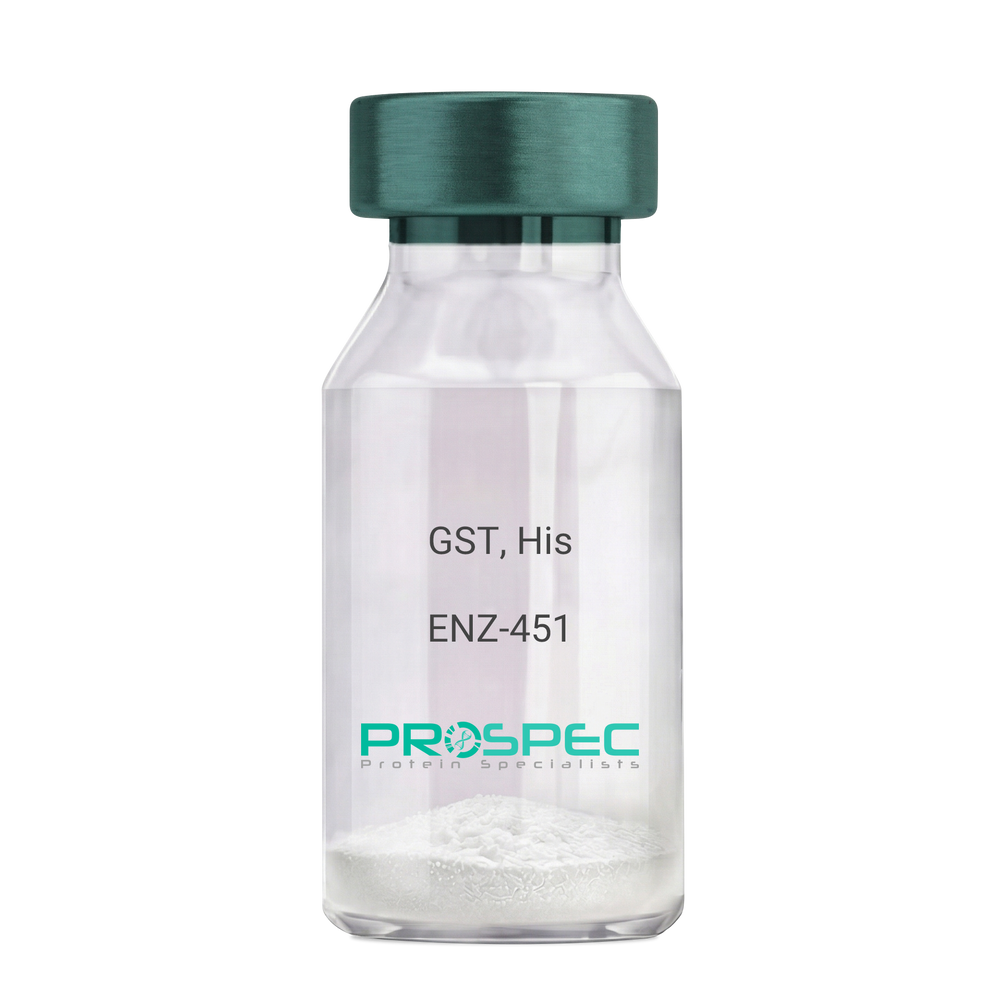
    Name :

    GST, His

    Description:

    Glutathione S-Transferase Recombinant, His Tag

    Glutathione S-Transferase, GST, Glutathione S-transferase class-mu 28 kDa isozyme, GST 28, EC 2.5.1.18, Sj28GST, Sj28 antigen.

    Product # :

    ENZ-451

    Price :

    Quantity :

    Shipping Method :

    Ice Icon

    Shipped with Ice Packs

    Add To Cart

    More Info

    • description
    • source
    • formulation
    • purity
    • biological activity
    • More Info

    Description

    Recombinant Schistosoma japonicum GST full length protein contains a total of 244 amino acids (1-218 a.a.) expressed in E.coli, having a molecular mass of 28.3kDa. The GST protein is fused to a 20 amino acids His-Tag at N-terminus. The GST protein is purified by proprietary chromatographic techniques.

    Source

    Escherichia Coli.

    Formulation

    GST is supplied in PBS pH 7.4 & 10% glycerol.

    Purity

    Greater than 90% as determined by SDS-PAGE.

    Biological Activity

    >10 units/mg, & is defined as the amount of enzyme that conjugate 1.0 u mole of 1-chloro-2,4-dinitrobenzene (CDNB) with reduced glutathione per minute at pH-6.5 at 25C.

    More Info

    • Introduction

      Antioxidant enzyme Glutathione S- Transferase (GST) is thought to do the primary cellular defense mechanism against reactive oxygen species. GST reduces lipid hydroperoxides through its Se-independent glutathione peroxidase activity. The enzyme also detoxifies lipid peroxidation end products such as 4-hydroxynonenal (4-HNE).
      The soluble GST is a 26 kDa protein which occurs as a dimer in all aerobic organisms. Each monomer has two domains, one that binds GSH and is an /-structure similar to thioredoxin and the other, all helical, that binds the hydrophobic substrate. The GST -fusion protein expression system is a widely used recombinant protein expression system that allows a peptide or a regulatory protein domain to be expressed as a fusion to the C-terminus of Schistosoma japonicum GST. Fusion proteins also possess GST -enzymatic activity and can undergo dimerization similar to in vivo. The fusion protein can be purified via GST -affinity column chromatography. In most cases, the desired peptides or domains are removed from GST by applying a specific protease that recognizes and cleaves the linker between the protein domain and GST. The technique has been widely used to generate different kinds of proteins for crystallization, molecular immunology studies, the production of vaccines and studies involving protein-protein and protein-DNA interactions.

    • Synonyms

      Glutathione S-Transferase, GST, Glutathione S-transferase class-mu 28 kDa isozyme, GST 28, EC 2.5.1.18, Sj28GST, Sj28 antigen.

    • Physical Appearance

      Sterile Filtered clear solution.

    • Stability

      Store at 4°C if entire vial will be used within 2-4 weeks. Store, frozen at -20°C for longer periods of time. For long term storage it is recommended to add a carrier protein (0.1% HSA or BSA).Avoid multiple freeze-thaw cycles.

    • Amino Acid Sequence

      MGSSHHHHHH SSGLVPRGSH MSPILGYWKI KGLVQPTRLL LEYLEEKYEE HLYERDEGDK WRNKKFELGL EFPNLPYYID GDVKLTQSMAIIRYIADKHN MLGGCPKERA EISMLEGAVL DIRYGVSRIA YSKDFETLKV DFLSKLPEML KMFEDRLCHK TYLNGDHVTH PDFMLYDALDVVLYMDPMCL DAFPKLVCFK KRIEAIPQID KYLKSSKYIA WPLQGWQATF GGGDHPPKSD LVPR.

    ProSpec's products are furnished for LABORATORY RESEARCH USE ONLY. The product may not be used as drugs, agricultural or pesticidal products, food additives or household chemicals.

    Glutathione S Transferase His
  • View Data Sheet

    Name :

    GPT2 Mouse, Active

    Description:

    Glutamic-Pyruvate Transaminase 2, Active Mouse Recombinant

    ALT2, AAT2, Alanine aminotransferase 2, Glutamate pyruvate transaminase 2, Glutamic--alanine transaminase 2, Glutamic--pyruvic transaminase 2.

    Product # :

    ENZ-1110

    Price :

    Quantity :

    Shipping Method :

    Ice Icon

    Shipped with Ice Packs

    Add To Cart

    More Info

    • description
    • source
    • formulation
    • purity
    • biological activity
    • More Info

    Description

    GPT2 Mouse Recombinant produced in E.Coli is a single, non-glycosylated polypeptide chain containing 542 amino acids (1-522 aa) and having a molecular mass of 60.1kDa.GPT2 is fused to a 20 amino acid His tag at N-terminus and purified by proprietary chromatographic techniques.

    Source

    Escherichia Coli.

    Formulation

    The GPT2 solution (1 mg/ml) contains 2mM DTT, 20% Glycerol and 20mM Tris-HCl (pH7.5).

    Purity

    Greater than 85.0% as determined by SDS-PAGE.

    Biological Activity

    Specific activity is > 50 units/mg. Measured by the amount of enzyme that cleaves 1umole of L-Alanineto L-Glutamate per minute at pH7.5 at 37C˚.

    More Info

    • Introduction

      Glutamic-Pyruvate Transaminase 2 (GPT2) catalyzes the reversible transamination among alanine and 2-oxoglutarate to create pyruvate and glutamate. GPT2 expressed mainly in muscle, fat and kidney and participates in the intermediary metabolism of glucose and amino acids.

    • Synonyms

      ALT2, AAT2, Alanine aminotransferase 2, Glutamate pyruvate transaminase 2, Glutamic--alanine transaminase 2, Glutamic--pyruvic transaminase 2.

    • Physical Appearance

      Sterile Filtered colorless solution.

    • Stability

      Store at 4°C if entire vial will be used within 2-4 weeks. Store, frozen at -20°C for longer periods of time. For long term storage it is recommended to add a carrier protein (0.1% HSA or BSA).Avoid multiple freeze-thaw cycles.

    • Amino Acid Sequence

      MGSSHHHHHH SSGLVPRGSH MQRAAVLVRR GSCPRASGPW GRSHSSAAAE ASAALKVRPE
      RSPRDRILTL ESMNPQVKAV EYAVRGPIVL KAGEIEMELQ RGIKKPFTEV IRANIGDAHA
      MGQQPITFLR QVMALCTYPN LLNSPSFPED AKKRARRILQ ACGGNSLGSY SASQGVNCIR
      EDVAAFITRR DGVPADPDNI YLTTGASDGI STILKLLVSG GGKSRTGVMI PIPQYPLYSA
      VISELDAVQV NYYLDEENCW ALNVDELRRA LRQAKDHCDP KVLCIINPGN PTGQVQSRKC
      IEDVIHFAWE EKLFLLADEV YQDNVYSPDC RFHSFKKVLY QMGHEYSSNV ELASFHSTSK
      GYMGECGYRG GYMEVINLHP EIKGQLVKLL SVRLCPPVSG QAAMDIVVNP PEPGEESFEQ
      FSREKEFVLG NLAKKAKLTE DLFNQVPGIQ CNPLQGAMYA FPRILIPAKA VEAAQSHKMA
      PDMFYCMKLL EETGICVVPG SGFGQREGTY HFRMTILPPV DKLKTVLHKV KDFHLKFLEQ YS

    ProSpec's products are furnished for LABORATORY RESEARCH USE ONLY. The product may not be used as drugs, agricultural or pesticidal products, food additives or household chemicals.

    Gpt 2 Mouse
  • View Data Sheet

    Name :

    PON1 Human (68-124)

    Description:

    Paraoxonase-1 (68-124) Human Recombinant

    Serum paraoxonase, arylesterase 1, EC 3.1.1.2, EC 3.1.8.1, PON 1.

    Product # :

    ENZ-1197

    Price :

    Quantity :

    Shipping Method :

    Room Temp Icon

    Shipped at Room temp

    Add To Cart

    More Info

    • description
    • source
    • formulation
    • purity
    • More Info

    Description

    The PON1 Human is created as a recombinant protein with a 4kda N-terminal fusion of His Tag. The PON1 His-Tagged Fusion Protein, produced in E. coli, is a 12kDa protein containing 57 amino acid residues of the PON1 Human, 68-124 amino acids.

    Source

    Escherichia Coli.

    Formulation

    Each mg was lyophilized with 1xPBS, 0.4% SDS and 4mM DTT.

    Purity

    Greater than 90% as determined by SDS-PAGE.

    More Info

    • Synonyms

      Serum paraoxonase, arylesterase 1, EC 3.1.1.2, EC 3.1.8.1, PON 1.

    • Physical Appearance

      Filtered White lyophilized (freeze-dried) powder.

    • Stability

      Store lyophilized PON1 at -20°C. Aliquot the product after reconstitution to avoid repeated freezing/thawing cycles. Reconstituted protein can be stored at 4°C for a limited period of time; it does not show any change after two weeks at 4°C.

    • Solubility

      It is recommended to add deionized water to prepare a working stock solution of approximately 0.5mg/ml and let the lyophilized pellet dissolve completely. Product is not sterile!

      Please filter the product by an appropriate sterile filter before using it on cell culture.

    • Background

      Paraoxonase 1 also known as PON1takes part in the detoxification of organophosphate insecticides such as parathion.

      PON1 is related to high-density lipoprotein (HDL) in the plasma and takes an important part in lipid metabolism and antioxidant defense.

      PON1 was first known for its ability to hydrolyze organophosphates and protect against oxidative stress.

      PON1 reduces oxidative stress by preventing the oxidation of lipids in LDL particles, which is extremely important in mitigating atherosclerosis and other cardiovascular diseases.

      PON1 has an anti-inflammatory effects which help reduce inflammatory markers in different disease states.

      PON1 takes part in cholesterol metabolism, influencing the stability and formation of HDL particles, which are vital for lipid transport and reverse cholesterol efflux.

    ProSpec's products are furnished for LABORATORY RESEARCH USE ONLY. The product may not be used as drugs, agricultural or pesticidal products, food additives or household chemicals.

    Pon1 Protein
  • View Data Sheet

    Name :

    HEXA Human, Sf9

    Description:

    Hexosaminidase A Human Recombinant, SF9

    Hexosaminidase A (Alpha Polypeptide), N-Acetyl-Beta-Glucosaminidase Subunit Alpha, Beta-N-Acetylhexosaminidase Subunit Alpha, Hexosaminidase Subunit A, EC 3.2.1.52, TSD, Beta-Hexosaminidase Subunit Alpha, GM2 Gangliosidosis, Tay Sachs Disease, EC 3.2.1, Beta-hexosaminidase subunit alpha, Beta-N-acetylhexosaminidase subunit alpha, Hexosaminidase subunit A, N-acetyl-beta-glucosaminidase subunit alpha.

    Product # :

    ENZ-881

    Price :

    Quantity :

    Shipping Method :

    Ice Icon

    Shipped with Ice Packs

    Add To Cart

    More Info

    • description
    • source
    • formulation
    • purity
    • More Info

    Description

    HEXA produced in Sf9 Baculovirus cells is a single, glycosylated polypeptide chain containing 513 amino acids (23-529a.a.) and having a molecular mass of 59.2kDa. (Molecular size on SDS-PAGE will appear at approximately 50-70kDa). HEXA is expressed with a 6 amino acid His tag at C-Terminus and purified by proprietary chromatographic techniques.

    Source

    Sf9, Baculovirus cells.

    Formulation

    HEXA protein solution (0. 5mg/ml) contains phosphate buffered saline (pH7.4).

    Purity

    Greater than 90% as determined by SDS-PAGE.

    More Info

    • Introduction

      HEXA is the alpha subunit of the lysosomal enzyme beta-hexosaminidase which, combined with the cofactor GM2 activator protein, catalyzes the degradation of the ganglioside GM2, and other molecules having N-acetyl hexosamines terminus. The two subunits composing Beta-hexosaminidase, alpha and beta, belong to the glycosyl hydrolases family and are encoded by distinct genes. Alpha subunit gene mutations can cause Tay-Sachs disease (GM2-gangliosidosis type I).

    • Synonyms

      Hexosaminidase A (Alpha Polypeptide), N-Acetyl-Beta-Glucosaminidase Subunit Alpha, Beta-N-Acetylhexosaminidase Subunit Alpha, Hexosaminidase Subunit A, EC 3.2.1.52, TSD, Beta-Hexosaminidase Subunit Alpha, GM2 Gangliosidosis, Tay Sachs Disease, EC 3.2.1, Beta-hexosaminidase subunit alpha, Beta-N-acetylhexosaminidase subunit alpha, Hexosaminidase subunit A, N-acetyl-beta-glucosaminidase subunit alpha.

    • Physical Appearance

      Sterile Filtered colorless solution.

    • Stability

      Store at 4°C if entire vial will be used within 2-4 weeks. Store, frozen at -20°C for longer periods of time. For long term storage it is recommended to add a carrier protein (0.1% HSA or BSA).Avoid multiple freeze-thaw cycles.

    • Amino Acid Sequence

      LWPWPQNFQT SDQRYVLYPN NFQFQYDVSS AAQPGCSVLD EAFQRYRDLL FGSGSWPRPY LTGKRHTLEK NVLVVSVVTP GCNQLPTLES VENYTLTIND DQCLLLSETV WGALRGLETF SQLVWKSAEG TFFINKTEIE DFPRFPHRGL LLDTSRHYLP LSSILDTLDV MAYNKLNVFH WHLVDDPSFP YESFTFPELM RKGSYNPVTH IYTAQDVKEV IEYARLRGIR VLAEFDTPGH TLSWGPGIPG LLTPCYSGSE PSGTFGPVNP SLNNTYEFMS TFFLEVSSVF PDFYLHLGGD EVDFTCWKSN PEIQDFMRKK GFGEDFKQLE SFYIQTLLDI VSSYGKGYVV WQEVFDNKVK IQPDTIIQVW REDIPVNYMK ELELVTKAGF RALLSAPWYL NRISYGPDWK DFYIVEPLAF EGTPEQKALV IGGEACMWGE YVDNTNLVPR LWPRAGAVAE RLWSNKLTSD LTFAYERLSH FRCELLRRGV QAQPLNVGFC EQEFEQTHHH HHH.

    ProSpec's products are furnished for LABORATORY RESEARCH USE ONLY. The product may not be used as drugs, agricultural or pesticidal products, food additives or household chemicals.

    Hexa Human Sf9
  • View Data Sheet

    Name :

    GLU-C S.aureus

    Description:

    Glutamyl endopeptidase Staphylococcal Recombinant

    Glutamyl endopeptidase (EC:3.4.21.19), Endoproteinase Glu-C, Staphylococcal serine proteinase, V8 protease, V8 proteinase, sspA.

    Product # :

    ENZ-955

    Price :

    Quantity :

    Shipping Method :

    Room Temp Icon

    Shipped at Room temp

    Add To Cart

    More Info

    • description
    • source
    • formulation
    • purity
    • More Info

    Description

    Recombinant Staphylococcal GLU-C produced in E.coli is a single, non-glycosylated polypeptide chain containing a total of 267 amino acids and having a molecular mass of 28.9kDa.

    Source

    Escherichia Coli.

    Formulation

    Lyophilized from a sterile (0.2µm) filtered aqueous solution containing 10mM sodium phosphate, pH 7.5.

    Purity

    Greater than 95% as determined by SDS-PAGE.

    More Info

    • Introduction

      Glutamyl endopeptidase (GLU-C) is an enzyme which cleaves peptide bonds on the carboxyl-terminal side of glutamic acid and, less frequently, aspartic acid (for example: Glu-|-Xaa, Asp-|-Xaa). GLU-C is a pathogenic factor involved in the adherence and colonization of human tissue. GLU-C preferentially cleaves peptide bonds on the carboxyl-terminal side of aspartate and glutamate. GLU-C is required for proteolytic maturation of thiol protease SspB and inactivation of SspC, an inhibitor of SspB. GLU-C is the most important protease for degradation of fibronectin-binding protein (FnBP) and surface protein A, which are involved in adherence to host cells. Furthermore, GLU-C protects bacteria against host defense mechanism by cleaving the immunoglobulin classes IgG, IgA and IgM. GLU-C may also be involved in the stability of secreted lipases.

    • Synonyms

      Glutamyl endopeptidase (EC:3.4.21.19), Endoproteinase Glu-C, Staphylococcal serine proteinase, V8 protease, V8 proteinase, sspA.

    • Physical Appearance

      Sterile Filtered lyophilized powder.

    • Stability

      Lyophilized GLU-C although stable at room temperature for 3 weeks, should be stored desiccated below -18°C. Upon reconstitution GLU-C should be stored at 4°C between 2-7 days and for future use below -18°C.For long term storage it is recommended to add a carrier protein (0.1% HSA or BSA).Please prevent freeze-thaw cycles.

    • Solubility

      It is recommended to reconstitute the lyophilized GLU-C in sterile 18M-cm H2O not less than 100µg/ml, which can then be further diluted to other aqueous solutions.

    • Amino Acid Sequence

      MLPNNDRHQI TDTTNGHYAP VTYIQVEAPT GTFIASGVVV GKDTLLTNKH VVDATHGDPH ALKAFPSAIN QDNYPNGGFT AEQITKYSGE GDLAIVKFSP NEQNKHIGEV VKPATMSNNA ETQVNQNITV TGYPGDKPVA TMWESKGKIT YLKGEAMQYD LSTTGGNSGS PVFNEKNEVI GIHWGGVPNE FNGAVFINEN VRNFLKQNIE DIHFANDDQP NNPDNPDNPN NPDNPNNPDE PNNPDNPNNP DNPDNGDNNN SDNPDAA.

    ProSpec's products are furnished for LABORATORY RESEARCH USE ONLY. The product may not be used as drugs, agricultural or pesticidal products, food additives or household chemicals.

    Glu C Saureus
  • View Data Sheet

    Name :

    SENP8 Human

    Description:

    Sentrin Specific Peptidase Family Member 8 Human Recombinant

    SUMO/sentrin specific peptidase family member 8, DEN1, NEDP1, Protease cysteine 2 (NEDD8 specific), PRSC2, NEDD8-specific protease 1, HsT17512, Deneddylase-1, NEDD8 specific-protease cysteine 2, Sentrin/SUMO-specific protease SENP8.

    Product # :

    ENZ-146

    Price :

    Quantity :

    Shipping Method :

    Ice Icon

    Shipped with Ice Packs

    Add To Cart

    More Info

    • description
    • source
    • formulation
    • purity
    • More Info

    Description

    SENP8 Human Recombinant produced in E.coli is a single, non-glycosylated polypeptide chain containing 232 amino acids (1-212) and having a molecular mass of 26.2 kDa.The SENP8 is fused to a 20 amino acid His-Tag at N-terminus and purified by proprietary chromatographic techniques.

    Source

    Escherichia Coli.

    Formulation

    SENP8 protein 1mg/ml is supplied in 20mM Tris-HCL, pH-8, 0.1M NaCl, 1mM DTT and 10% Glycerol.

    Purity

    Greater than 95.0% as determined by SDS-PAGE.

    More Info

    • Introduction

      SENP8 is a cysteine protease which belongs to the sentrin-specific protease family. SENP8 takes part in processing and deconjugation of the ubiquitin-like protein labeled, neural precursor cell expressed developmentally downregulated 8(NEDD8).

    • Synonyms

      SUMO/sentrin specific peptidase family member 8, DEN1, NEDP1, Protease cysteine 2
      (NEDD8 specific), PRSC2, NEDD8-specific protease 1, HsT17512, Deneddylase-1, NEDD8 specific-protease cysteine 2, Sentrin/SUMO-specific protease SENP8.

    • Physical Appearance

      SENP8 is supplied as a sterile filtered clear solution.

    • Stability

      Store at 4°C if entire vial will be used within 2-4 weeks. Store, frozen at -20°C for longer periods of time. For long term storage it is recommended to add a carrier protein (0.1% HSA or BSA).Avoid multiple freeze-thaw cycles.

    • Amino Acid Sequence

      MGSSHHHHHH SSGLVPRGSH MDPVVLSYMD SLLRQSDVSL LDPPSWLNDH IIGFAFEYFA NSQFHDCSDH VSFISPEVTQ FIKCTSNPAE IAMFLEPLDL PNKRVVFLAI NDNSNQAAGG THWSLLVYLQ DKNSFFHYDS HSRSNSVHAK QVAEKLEAFL GRKGDKLAFV EEKAPAQQNS YDCGMYVICN TEALCQNFFR QQTESLLQLL TPAYITKKRG EWKDLITTLA KK

    ProSpec's products are furnished for LABORATORY RESEARCH USE ONLY. The product may not be used as drugs, agricultural or pesticidal products, food additives or household chemicals.

    Senp8 Human
  • View Data Sheet

    Name :

    Urease

    Description:

    Urease Recombinant

    Product # :

    ENZ-277

    Price :

    Quantity :

    Shipping Method :

    Room Temp Icon

    Shipped at Room temp

    Add To Cart

    More Info

    • description
    • source
    • formulation
    • purity
    • biological activity
    • More Info

    Description

    The mutant Urease from microorganism source, showing shifted substrate affinity to urea. It was designed wildtype coding gene from microorganism. The subunit structure is very similar to well known microbial urease. Please refer to published literature such as JBC 262, 5963-67 (1987). It is composed of multi-subunits and shows a bit complex protein structure (alpha 2 Beta 4 Gamma 4) as compared to plant urease rUrease is genetically designed unique mutant having shifted high Km to urea, which is suited material to kinetic urea assay with wide measurable range. The enzyme comprises of three different subunits to make complete fully active form, 60.3 kD a subunit, 11.7 kD b subunit and 11.1 kD g subunit respectively.

    Source

    Escherichia Coli.

    Formulation

    Each mg of protein contains 370µg Potassium Phosphate and 30µg EDTA Na2.

    Purity

    Greater than 90.0% as determined by SDS-PAGE.

    Biological Activity

    The activity was found to be 120U/mg powder.

    More Info

    • Physical Appearance

      Sterile Lyophilized Powder.

    • Stability

      Urease although stable at 4°C for 3 weeks, should be stored desiccated below -18°C. Please prevent freeze-thaw cycles.

    • Solubility

      It is recommended to reconstitute the lyophilized Urease in sterile 18MΩ-cm H2O.

    • Unit Definition

      One Unit oxidizes one micromole of NADH per minute at 25°C, at pH 7.6.

    ProSpec's products are furnished for LABORATORY RESEARCH USE ONLY. The product may not be used as drugs, agricultural or pesticidal products, food additives or household chemicals.

    Urease
  • View Data Sheet

    Name :

    CA1 Human, Active

    Description:

    Carbonic Anhydrase-1 Human Recombinant, BioActive

    CA1, CA-I, CAB.

    Product # :

    ENZ-1137

    Price :

    Quantity :

    Shipping Method :

    Ice Icon

    Shipped with Ice Packs

    Add To Cart

    More Info

    • description
    • source
    • formulation
    • purity
    • biological activity
    • More Info

    Description

    CA1 Human Recombinant produced in E.Coli is a single, non-glycosylated polypeptide chain containing 281 amino acids (1-261) and having a molecular mass of 31.0 kDa. CA1 Humanis fused to a 20 amino acid His-Tag at N-terminus and purified by proprietary chromatographic techniques.

    Source

    Escherichia Coli.

    Formulation

    CA1 Human protein (1mg/ml) is formulated in 20mM Tris-HCl buffer (pH 8.0) containing 1mM DTT, 10% glycerol.

    Purity

    Greater than 95.0% as determined by SDS-PAGE.

    Biological Activity

    Specific activity is > 300pmol/min/ug, and is defined as the amount of enzyme that hydrolyze 1.0pmole of 4-nitrophenyl acetate to 4-nitrophenol per minute at pH 8.0 at 37C.

    More Info

    • Introduction

      CA, also known as carbonic anhydrase is an enzyme. Its main function revolves around the CO2 + H2O HCO3- + H+ (conversion of carbon dioxide to bicarbonate & protons). CA has a zinc ion in its active site. The main function of CA is to keep acid-base balance in the blood stream and various tissues. This enzyme also assists Carbonic Anhydrase I to move CO2 to and from tissues.

    • Synonyms

      CA1, CA-I, CAB.

    • Physical Appearance

      Sterile Filtered clear solution.

    • Stability

      Store at 4°C if entire vial will be used within 2-4 weeks. Store, frozen at -20°C for longer periods of time. For long term storage it is recommended to add a carrier protein (0.1% HSA or BSA).Avoid multiple freeze-thaw cycles.

    • Amino Acid Sequence

      MGSSHHHHHH SSGLVPRGSH MASPDWGYDD KNGPEQWSKL YPIANGNNQS PVDIKTSETK HDTSLKPISV SYNPATAKEI INVGHSFHVN FEDNDNRSVL KGGPFSDSYR LFQFHFHWGS TNEHGSEHTV DGVKYSAELH VAHWNSAKYS SLAEAASKAD GLAVIGVLMK VGEANPKLQK VLDALQAIKT KGKRAPFTNF DPSTLLPSSL DFWTYPGSLT HPPLYESVTW IICKESISVS SEQLAQFRSL LSNVEGDNAV PMQHNNRPTQ PLKGRTVRAS F.

    ProSpec's products are furnished for LABORATORY RESEARCH USE ONLY. The product may not be used as drugs, agricultural or pesticidal products, food additives or household chemicals.

    Ca1 Enzyme
  • View Data Sheet

    Name :

    GPT Human, Active

    Description:

    Glutamic-Pyruvate Transaminase Human Recombinant, Active

    Alanine aminotransferase 1, ALT1, EC 2.6.1.2, Glutamate pyruvate transaminase 1, GPT 1, Glutamic--alanine transaminase 1, Glutamic--pyruvic transaminase 1, GPT, AAT1, GPT1.

    Product # :

    ENZ-280

    Price :

    Quantity :

    Shipping Method :

    Ice Icon

    Shipped with Ice Packs

    Add To Cart

    More Info

    • description
    • source
    • formulation
    • purity
    • biological activity
    • More Info

    Description

    Alanine Aminotransferase Human Recombinant produced in E.Coli is a homodimer, non-glycosylated, polypeptide chain containing 495a.a and having a molecular mass of 54,479 Dalton. The amino acid sequence is the same as that of native form of human liver ALT.The ALT is purified by proprietary chromatographic techniques.

    Source

    Escherichia Coli.

    Formulation

    The protein was dialyzed against 40mM sodium acetate buffer (pH 5.5), 1mM DTT,1mM EDTA, 5mM 2-oxoglutarate and 0.1mM pyridoxal-5'-phosphate.

    Purity

    Greater than 95.0% as determined by Analysis by SDS-PAGE.

    Biological Activity

    The specific activity was found to be 839 U/mg.

    More Info

    • Introduction

      Alanine transaminase or ALT is a transaminaseenzyme.
      ALT is found in serumand in various bodily tissues, but is most commonly associated with the liver; It catalyzes the transfer of an aminogroup from alanineto a-ketoglutarate, the products of this reversible transaminationreaction being pyruvateand glutamatealanine+ a-ketoglutarate= pyruvate+ glutamate
      It is commonly measured clinically as a part of a diagnostic liver function test, to determine liver health. It is also called serum glutamate pyruvate transaminase (SGPT) or alanine aminotransferase (ALAT). Diagnostically, it is almost always measured in units/litre (U/L).

    • Synonyms

      Alanine aminotransferase 1, ALT1, EC 2.6.1.2, Glutamate pyruvate transaminase 1, GPT 1, Glutamic--alanine transaminase 1, Glutamic--pyruvic transaminase 1, GPT, AAT1, GPT1.

    • Physical Appearance

      Sterile liquid formulation.

    • Stability

      AAT1 although stable at 10°C for 5 days, should be stored below -18°C.Please prevent freeze-thaw cycles.

    ProSpec's products are furnished for LABORATORY RESEARCH USE ONLY. The product may not be used as drugs, agricultural or pesticidal products, food additives or household chemicals.

    Alanine Aminotransferase Human
  • View Data Sheet

    Name :

    GLUD1 Human

    Description:

    Glutamate Dehydrogenase 1 Human Recombinant

    Glutamate Dehydrogenase 1, GLUD, GDH 1, EC 1.4.1.3, GDH, GDH1, Glutamate Dehydrogenase (NAD(P)+), Glutamate Dehydrogenase 1 Mitochondrial, EC 1.4.1, GLUD1.

    Product # :

    ENZ-792

    Price :

    Quantity :

    Shipping Method :

    Ice Icon

    Shipped with Ice Packs

    Add To Cart

    More Info

    • description
    • source
    • formulation
    • purity
    • More Info

    Description

    GLUD1 Human Recombinant produced in E.coli is a single, non-glycosylated polypeptide chain containing 528 amino acids (54-558) and having a molecular mass of 58.4kDa.GLUD1 is fused to a 23 amino acid His-tag at N-terminus.

    Source

    Escherichia Coli.

    Formulation

    The GLUD1 solution (1mg/ml) contains 20mM Tris-HCl buffer (pH 8.0), 0.4M Urea and 10% glycerol.

    Purity

    Greater than 80.0% as determined by SDS-PAGE.

    More Info

    • Introduction

      Glutamate dehydrogenase 1, mitochondrial precursor (GLUD1) is a member of the Glu/Leu/Phe/Val dehydrogenases family. GLUD1 is a mitochondrial glutamate dehydrogenase, which converts L-glutamate into alpha-ketoglutarate. GLUD1 has a pivotal role in nitrogen metabolism in plants and animals. GLUD1 is observed in all organisms and catalyzes the oxidative deamination of 1-glutamate to 2-oxoglutarate. The GLUD1 enzyme has a vital role in regulating amino acid induced insulin secretion. GLUD1 gene mutations cause hyperinsulinism-hyperammonemia syndrome (HHS), which is an inherited condition characterized by high insulin and ammonia levels in the blood. GLUD1 enzyme is allosterically activated by ADP and inhibited by GTP and ATP.

    • Synonyms

      Glutamate Dehydrogenase 1, GLUD, GDH 1, EC 1.4.1.3, GDH, GDH1, Glutamate Dehydrogenase (NAD(P)+), Glutamate Dehydrogenase 1 Mitochondrial, EC 1.4.1, GLUD1.

    • Physical Appearance

      Sterile filtered colorless solution.

    • Stability

      Store at 4°C if entire vial will be used within 2-4 weeks.Store, frozen at -20°C for longer periods of time. For long term storage it is recommended to add a carrier protein (0.1% HSA or BSA).Avoid multiple freeze-thaw cycles.

    • Amino Acid Sequence

      MGSSHHHHHH SSGLVPRGSH MGSSEAVADR EDDPNFFKMV EGFFDRGASI VEDKLVEDLR TRESEEQKRN RVRGILRIIK PCNHVLSLSF PIRRDDGSWE VIEGYRAQHS QHRTPCKGGI RYSTDVSVDE VKALASLMTY KCAVVDVPFG GAKAGVKINP KNYTDNELEK ITRRFTMELA KKGFIGPGID VPAPDMSTGE REMSWIADTY ASTIGHYDIN AHACVTGKPI SQGGIHGRIS ATGRGVFHGI ENFINEASYM SILGMTPGFG DKTFVVQGFG NVGLHSMRYL HRFGAKCIAV GESDGSIWNP DGIDPKELED FKLQHGSILG FPKAKPYEGS ILEADCDILI PAASEKQLTK SNAPRVKAKI IAEGANGPTT PEADKIFLER NIMVIPDLYL NAGGVTVSYF EWLKNLNHVS YGRLTFKYER DSNYHLLMSV QESLERKFGK HGGTIPIVPT AEFQDRISGA SEKDIVHSGL AYTMERSARQ IMRTAMKYNL GLDLRTAAYV NAIEKVFKVY NEAGVTFT.

    ProSpec's products are furnished for LABORATORY RESEARCH USE ONLY. The product may not be used as drugs, agricultural or pesticidal products, food additives or household chemicals.

    Glud1 Human
  • View Data Sheet

    Name :

    Phosphotransacetylase

    Description:

    Phosphotransacetylase Bacillus S. Recombinant

    Phosphate Acetyltransferase, EC 2.3.1.8, Phosphotransacetylase, phosphoacylase.

    Product # :

    ENZ-1205

    Price :

    Quantity :

    Shipping Method :

    Room Temp Icon

    Shipped at Room temp

    Add To Cart

    More Info

    • description
    • source
    • formulation
    • purity
    • biological activity
    • More Info

    Description

    Phosphotransacetylase Bacillus Stearothermophilus Recombinant produced in E.Coli is a single, non glycosylated polypeptide chain containing 325 amino acids and having a total molecular mass of 34.7kDa.
    Phosphotransacetylase Recombinant is purified by proprietary chromatographic techniques.

    Source

    E.Coli

    Formulation

    The protein was lyophilized with 0.15M NaCl and 20mM Tris pH-8.

    Purity

    Greater than 95.0% as determined by SDS-PAGE.

    Biological Activity

    Phosphotransacetylase activity is assessed by using the DTNB spectrophotometric method which was found to be greater than 3,000 Units/mg.

    More Info

    • Introduction

      Phosphotransacetylase (PTA) is a metabolic enzyme (EC 2.3.1.8) that catalyzes the reversible conversion: acetyl-CoA + Pi ⇄ acetyl-phosphate + CoA. The reversible reaction of acetyl-CoA to acetate node and back, is useful in R&D and biotech assays such as Metabolic engineering, Synthetic biology, Production of biopolymers, Enzymatic synthesis of acetyl-phosphate, bacterial signaling
      and Fermentation.  Phosphotransacetylase controls acetate formation and manipulates acetyl-CoA flux thus is widely used in protein expression, metabolic engineering, and synthetic pathways.

    • Synonyms

      Xylosyltransferase 2, Peptide O-xylosyltransferase 1, Xylosyltransferase II, XT-II, XylT-II, XYLT2, XT2.

    • Physical Appearance

      Filtered White lyophilized (freeze-dried) powder.

    • Stability

      Lyophilized Phosphate Acetyltransferase although stable at room temperature for 3 weeks, should be stored desiccated below -18C. Upon reconstitution Phosphate Acetyltransferase should be stored at 4C between 2-7 days and for future use below -18C. For long term storage it is recommended to add a carrier protein (0.1% HSA or BSA). Please prevent freeze-thaw cycles.

    • Solubility

      It is recommended to reconstitute the lyophilized Phosphate Acetyltransferase in
      sterile 18MΩ-cm H2O not less than 100µg/ml, which can then be
      further diluted to other aqueous solutions.

    • Amino Acid Sequence

      TTDLFTALKA KVTGTARKIV FPEGTDDRIL TAASRLATEQ VLQPIVLGDE QAIRVKAAAL GLPLEGVEIV NPRRYGGFDE LVSAFVERRK GKVTEETARE LLFDENYFGT MLVYMGAADG LVSGAAHSTA DTVRPALQII KTKPGVGKTS GVFIMVRGDE KYVFADCAIN IAPNSQDLAE IAVESARTAK MFGLKPRVAL LSFSTKGSAS SPETEKVVEA VRLAKEMAPD LILDGEFQFD AAFVPEVAKK KAPDSVIQGD ANVFIFPSLE AGNIGYKIAQ RLGGFEAVGP ILQGLNKPVN DLSRGCSAED AYKLALITAA QSLGE

    • Unit Definition

      1 unit will convert 1umole of Coenzyme A to acetyl coenzyme A /min/pH-7.5/30˚C using acetyl phosphate as substrate

    ProSpec's products are furnished for LABORATORY RESEARCH USE ONLY. The product may not be used as drugs, agricultural or pesticidal products, food additives or household chemicals.

    Phosphotransacetylase
  • View Data Sheet

    Name :

    ALDH2 Mouse, Active

    Description:

    Aldehyde Dehydrogenase 2 Mouse Recombinant, Active

    Aldehyde dehydrogenase, mitochondrial, AHD-M1, ALDH class 2, ALDH-E2, ALDHI.

    Product # :

    ENZ-1093

    Price :

    Quantity :

    Shipping Method :

    Ice Icon

    Shipped with Ice Packs

    Add To Cart

    More Info

    • description
    • source
    • formulation
    • purity
    • biological activity
    • More Info

    Description

    ALDH2 Mouse Recombinant produced in E.Coli is a single, non-glycosylated polypeptide chain containing 523 amino acids (20-519) and having a molecular mass of 56.8kDa. ALDH2 Mouse is fused to a 23 amino acid His-Tag at N-terminus and purified by proprietary chromatographic techniques.

    Source

    Escherichia Coli.

    Formulation

    ALDH2 Mouse protein (0.5mg/ml) is formulated in Phosphate buffered saline (pH7.4), 20% glycerol and 1mM DTT.

    Purity

    Greater than 95% as determined by SDS-PAGE.

    Biological Activity

    Specific activity is > 180 pmol/min/ug, and was obtained by measuring the increase of NADH in absorbance at 340 nm resulting from the reduction of NAD at pH 8.0 at 25C.

    More Info

    • Introduction

      ALDH2 is part of the aldehyde dehydrogenase family of proteins which catalyze the chemical transformation from acetaldehyde to acetic acid. ALDH2 is the second enzyme of the major oxidative pathway of alcohol metabolism. ALDH2 has 2 major liver isoforms: cytosolic and mitochondrial, which differ by their electrophoretic mobilities, kinetic properties, and subcellular localizations. Nearly all Caucasians have 2 major isozymes, whereas roughly 50% of Orientals have only the cytosolic isozyme, omitting the mitochondrial isozyme. The extremely higher rate of acute alcohol intoxication with Orientals compared to Caucasians is due to the fact of the absence of mitochondrial isozyme. ALDH2 has a low Km for acetaldehydes, and is localized in mitochondrial matrix.

    • Synonyms

      Aldehyde dehydrogenase, mitochondrial, AHD-M1, ALDH class 2, ALDH-E2, ALDHI.

    • Physical Appearance

      Sterile Filtered clear solution.

    • Stability

      Store at 4°C if entire vial will be used within 2-4 weeks. Store, frozen at -20°C for longer periods of time. For long term storage it is recommended to add a carrier protein (0.1% HSA or BSA).Avoid multiple freeze-thaw cycles.

    • Amino Acid Sequence

      MGSSHHHHHH SSGLVPRGSH MGSSAAATSA VPAPNHQPEV FCNQIFINNE WHDAVSRKTF PTVNPSTGEV ICQVAEGNKE DVDKAVKAARAAFQLGSPWR RMDASDRGRL LYRLADLIER DRTYLAALET LDNGKPYVIS YLVDLDMVLK CLRYYAGWAD KYHGKTIPID GDFFSYTRHEPVGVCGQIIP WNFPLLMQAW KLGPALATGN VVVMKVAEQT PLTALYVANL IKEAGFPPGV VNIVPGFGPT AGAAIASHEG VDKVAFTGSTEVGHLIQVAA GSSNLKRVTL ELGGKSPNII MSDADMDWAV EQAHFALFFN QGQCCCAGSR TFVQENVYDE FVERSVARAK SRVVGNPFDSRTEQGPQVDE TQFKKILGYI KSGQQEGAKL LCGGGAAADR GYFIQPTVFG DVKDGMTIAK EEIFGPVMQI LKFKTIEEVV GRANDSKYGLAAAVFTKDLD KANYLSQALQ AGTVWINCYD VFGAQSPFGG YKMSGSGREL GEYGLQAYTE VKTVTVKVPQ KNS.

    ProSpec's products are furnished for LABORATORY RESEARCH USE ONLY. The product may not be used as drugs, agricultural or pesticidal products, food additives or household chemicals.

    Aldh2 Murine
  • View Data Sheet

    Name :

    Urokinase

    Description:

    Urokinase Human Recombinant

    PLAU, ATF, BDPLT5, QPD, u-PA, UPA, URK, Urokinase-type plasminogen activator, U-plasminogen activator, uPA, Urokinase-type plasminogen activator long chain A, Urokinase-type plasminogen activator short chain A, Urokinase-type plasminogen activator chain B.

    Product # :

    ENZ-965

    Price :

    Quantity :

    Shipping Method :

    Ice Icon

    Shipped with Ice Packs

    Add To Cart

    More Info

    • description
    • source
    • formulation
    • purity
    • More Info

    Description

    Urokinase Human Recombinant produced in Sf9 Baculovirus cells is a single, glycosylated polypeptide chain containing 419 amino acids (21-431) and having a molecular mass of 47.4kDa (Molecular size on SDS-PAGE will appear at approximately 40-57kDa).Urokinase is fused to 8 amino acid His-Tag at C-terminus and purified by proprietary chromatographic techniques.

    Source

    Sf9, Baculovirus cells.

    Formulation

    Urokinase protein solution (0.5mg/ml) containing Phosphate buffered saline (pH7.4) and 10% glycerol.

    Purity

    Greater than 95.0% as determined by SDS-PAGE.

    More Info

    • Introduction

      Urokinase (UK) is a serine protease, which is one of biological plasminogen activators.
      It is involved in a number of biological functions including fibrinolysis, embryogenesis, cell migration, tissue remodeling, ovulation, and wound healing.
      It can be obtained from human urine or kidney cell culture.

    • Synonyms

      PLAU, ATF, BDPLT5, QPD, u-PA, UPA, URK, Urokinase-type plasminogen activator, U-plasminogen activator, uPA, Urokinase-type plasminogen activator long chain A, Urokinase-type plasminogen activator short chain A, Urokinase-type plasminogen activator chain B.

    • Physical Appearance

      Sterile Filtered clear solution.

    • Stability

      Store at 4°C if entire vial will be used within 2-4 weeks. Store, frozen at -20°C for longer periods of time. For long term storage it is recommended to add a carrier protein (0.1% HSA or BSA).Avoid multiple freeze-thaw cycles.

    • Amino Acid Sequence

      SNELHQVPSN CDCLNGGTCV SNKYFSNIHW CNCPKKFGGQ HCEIDKSKTC YEGNGHFYRG KASTDTMGRP CLPWNSATVL QQTYHAHRSD ALQLGLGKHN YCRNPDNRRR PWCYVQVGLK PLVQECMVHD CADGKKPSSP PEELKFQCGQ KTLRPRFKII GGEFTTIENQ PWFAAIYRRH RGGSVTYVCG GSLISPCWVI SATHCFIDYP KKEDYIVYLG RSRLNSNTQG EMKFEVENLI LHKDYSADTL AHHNDIALLK IRSKEGRCAQ PSRTIQTICL PSMYNDPQFG TSCEITGFGK ENSTDYLYPE QLKMTVVKLI SHRECQQPHY YGSEVTTKML CAADPQWKTD SCQGDSGGPL VCSLQGRMTL TGIVSWGRGC ALKDKPGVYT RVSHFLPWIR SHTKEENGLA LLEHHHHHH.

    ProSpec's products are furnished for LABORATORY RESEARCH USE ONLY. The product may not be used as drugs, agricultural or pesticidal products, food additives or household chemicals.

    Urokinase Human 2
  • View Data Sheet

    Name :

    CEL Mouse

    Description:

    Carboxyl Ester Lipase Mouse Recombinant

    Bile salt-activated lipase, BAL, EC 3.1.1.13, EC 3.1.1.3, Bile salt-stimulated lipase, BSSL, Bucelipase, Carboxyl ester lipase, Cholesterol esterase, Pancreatic lysophospholipase, Sterol esterase, CEL, FAP, BSDL, CELL, FAPP, LIPA, Cease, MODY8.

    Product # :

    ENZ-1115

    Price :

    Quantity :

    Shipping Method :

    Ice Icon

    Shipped with Ice Packs

    Add To Cart

    More Info

    • description
    • source
    • formulation
    • purity
    • biological activity
    • More Info

    Description

    CEL Mouse produced in Sf9 Baculovirus cells is a single, glycosylated polypeptide chain containing 585 amino acids (21-599 aa) and having a molecular mass of 64.5kDa.CEL is fused to a 6 amino acid His tag at C-terminus and purified by proprietary chromatographic techniques.

    Source

    Sf9, Baculovirus cells.

    Formulation

    The CEL solution (0.5 mg/ml) contains 10% Glycerol and Phosphate-Buffered Saline (pH 7.4).

    Purity

    Greater than 90.0% as determined by SDS-PAGE.

    Biological Activity

    Specific activity is > 100,000 pmol/min/ug. Measured by the amount of enzyme that hydrolyze 1.0 umole of p-nitrophenyl butyrate to p-nitrophenol per minute at pH7.5 at 25C˚.

    More Info

    • Introduction

      Carboxyl ester lipase also known as CEL, formely called cholesterol esterase or bile salt-stimulated lipase, is an enzyme with lipolytic capablity of hydrolyzing cholesteryl esters, tri-, di-, and mono- phospholipids, acylglycerol, ceramide and lysophospholipids. The carboxyl terminus of the enzyme controls enzymatic activity by creating hydrogen bonds with the surface loop to partlyshield the active site. The active catalytic site triad of serine-histidine-aspartate is centrally located in the enzyme structure and is partly covered by a surface loop. Bile salt binding to the loop domain set free the active site for accessibility by water-insoluble substrates. CEL is produced mainly in the pancreas and lactating mammary gland, thus the protein is also expressed in liver, macrophages, and in the vessel wall.

    • Synonyms

      Bile salt-activated lipase, BAL, EC 3.1.1.13, EC 3.1.1.3, Bile salt-stimulated lipase, BSSL, Bucelipase, Carboxyl ester lipase, Cholesterol esterase, Pancreatic lysophospholipase, Sterol esterase, CEL, FAP, BSDL, CELL, FAPP, LIPA, Cease, MODY8.

    • Physical Appearance

      Sterile Filtered colorless solution.

    • Stability

      Store at 4°C if entire vial will be used within 2-4 weeks. Store, frozen at -20°C for longer periods of time. For long term storage it is recommended to add a carrier protein (0.1% HSA or BSA).Avoid multiple freeze-thaw cycles.

    • Amino Acid Sequence

      AKLGAVYTEG GFVEGVNKKL SLLGGDSVDI FKGIPFATAK TLENPQRHPG WQGTLKATNF
      KKRCLQATIT QDNTYGQEDC LYLNIWVPQG RKQVSHNLPV MVWIYGGAFL MGSGQGANFL
      KNYLYDGEEI ATRGNVIVVT FNYRVGPLGF LSTGDANLPG NFGLRDQHMA IAWVKRNIAA
      FGGDPDNITI FGESAGAASV SLQTLSPYNK GLIRRAISQS GMALSPWAIQ KNPLFWAKTI
      AKKVGCPTED TGKMAACLKI TDPRALTLAY KLPVKKQEYP VVHYLAFIPV IDGDFIPDDP
      INLYNNTADI DYIAGINNMD GHLFATIDVP AVDKTKQTVT EEDFYRLVSG HTVAKGLKGA
      QATFDIYTES WAQDPSQENM KKTVVAFETD VLFLIPTEIA LAQHKAHAKS AKTYSYLFSH
      PSRMPIYPKW MGADHADDLQ YVFGKPFATP LGYRPQDRAV SKAMIAYWTN FARSGDPNMG
      NSPVPTHWYP YTLENGNYLD ITKTITSASM KEHLREKFLK FWAVTFEVLP TVTGDQDTLT
      PPEDDSEVAP DPPSDDSQVV PVPPTDDSVE AQMPATIGFH HHHHH

    ProSpec's products are furnished for LABORATORY RESEARCH USE ONLY. The product may not be used as drugs, agricultural or pesticidal products, food additives or household chemicals.

    Carboxyl Ester Lipase Mouse
  • View Data Sheet

    Name :

    PPM1D Human

    Description:

    Protein Phosphatase 1D Human Recombinant

    Protein phosphatase 1D magnesium-dependent, delta isoform, PPM1D, Protein Phosphatase 1D, PP2C-DELTA, WIP1.

    Product # :

    ENZ-861

    Price :

    Quantity :

    Shipping Method :

    Ice Icon

    Shipped with Ice Packs

    Add To Cart

    More Info

    • description
    • source
    • formulation
    • purity
    • More Info

    Description

    PPM1D Human Recombinant produced in E.Coli is a single, non-glycosylated polypeptide chain containing 299 amino acids (98-375a.a.) and having a molecular mass of 33.2kDa.PPM1D is fused to a 20 amino acid His-tag at N-terminus & purified by proprietary chromatographic techniques.

    Source

    Escherichia Coli.

    Formulation

    PPM1D protein solution (0.5mg/ml) containing 20mM Tris-HCl (pH8.0) and 10% glycerol.

    Purity

    Greater than 85.0% as determined by SDS-PAGE.

    More Info

    • Introduction

      Protein Phosphatase 1D (PPM1D) belongs to the PP2C family of Ser/Thr protein phosphatases whose members are negative regulators of cell stress response pathways. PPM1D is induced by tumor suppressor protein TP53/p53 in response to multiple environmental stresses. PPM1D is a negative regulator of the activity of p38 MAP kinase through which it reduces the phosphorylation of p53 and suppresses p53-mediated transcription and apoptosis. PPM1D is located in a chromosomal area which enlarges in breast cancer.

    • Synonyms

      Protein phosphatase 1D magnesium-dependent, delta isoform, PPM1D, Protein Phosphatase 1D, PP2C-DELTA, WIP1.

    • Physical Appearance

      Sterile Filtered clear solution.

    • Stability

      Store at 4°C if entire vial will be used within 2-4 weeks. Store, frozen at -20°C for longer periods of time. For long term storage it is recommended to add a carrier protein (0.1% HSA or BSA).Avoid multiple freeze-thaw cycles.

    • Amino Acid Sequence

      MGSSHHHHHH SSGLVPRGSH MVAFFAVCDG HGGREAAQFA REHFWGFIKK QKGFTSSEPA KVCAAIRKGF LACHLAMWKK LAEWPKTMTG LPSTSGTTAS VVIIRGMKMY VAHVGDSGVV LGIQDDPKDD FVRAVEVTQD HKPELPKERE RIEGLGGSVM NKSGVNRVVW KRPRLTHNGP VRRSTVIDQI PFLAVARALG DLWSYDFFSG EFVVSPEPDT SVHTLDPQKH KYIILGSDGL WNMIPPQDAI SMCQDQEEKK YLMGEHGQSC AKMLVNRALG RWRQRMLRAD NTSAIVICI.

    ProSpec's products are furnished for LABORATORY RESEARCH USE ONLY. The product may not be used as drugs, agricultural or pesticidal products, food additives or household chemicals.

    Ppm1D Human
  • View Data Sheet

    Name :

    IFNG Mouse, His

    Description:

    Interferon-gamma Mouse Recombinant, His Tag

    Immune Interferon, type II interferon, T cell interferon, MAF, IFNG, IFG, IFI, IFN-gamma.

    Product # :

    CYT-1001

    Price :

    Quantity :

    Shipping Method :

    Ice Icon

    Shipped with Ice Packs

    Add To Cart

    More Info

    • description
    • source
    • formulation
    • purity
    • More Info
    • SDS-PAGE

    Description

    Interferon-gamma Mouse Recombinant produced in E.Coli is a single, non-glycosylated polypeptide chain containing 158 amino acids (23-155a.a.) and having a molecular mass of 18.2kDa.IFNG is fused to a 25 amino acid His-tag at N-terminus & purified by proprietary chromatographic techniques.

    Source

    Escherichia Coli.

    Formulation

    IFNG protein solution (0.5mg/ml) containing 20mM MES buffer (pH5.0), 1mM DTT, 0.2M NaCl & 40% glycerol.

    Purity

    Greater than 90% as determined by SDS-PAGE.

    SDS-PAGE

    IFNG Mouse, His - Product image 1

    More Info

    • Introduction

      IFN-gamma produced by lymphocytes activated by specific antigens or mitogens.
      IFN-gamma, in addition to having antiviral activity, has important immunoregulatory functions, it is a potent activator of macrophages, and has antiproliferative effects on transformed cells and it can potentiate the antiviral and antitumor effects of the type I interferons.

    • Synonyms

      Immune Interferon, type II interferon, T cell interferon, MAF, IFNG, IFG, IFI, IFN-gamma.

    • Physical Appearance

      Sterile Filtered clear solution.

    • Stability

      Store at 4°C if entire vial will be used within 2-4 weeks. Store, frozen at -20°C for longer periods of time.For long term storage it is recommended to add a carrier protein (0.1% HSA or BSA).Please avoid freeze thaw cycles.

    • Amino Acid Sequence

      MGSSHHHHHH SSGLVPRGSH MGSHMHGTVI ESLESLNNYF NSSGIDVEEK SLFLDIWRNW QKDGDMKILQ SQIISFYLRL FEVLKDNQAI SNNISVIESH LITTFFSNSK AKKDAFMSIA KFEVNNPQVQ RQAFNELIRV VHQLLPESSL RKRKRSRC.

    • Background

      What is the molecular weight/Mw of IFNG MOUSE, HIS Protein?
      IFNG MOUSE, HIS Protein has a total Mw of 18.2kDa.

      What is the source or expression system of IFNG MOUSE, HIS Protein?
      Escherichia Coli.

      What is the Purity of IFNG MOUSE, HIS Protein?
      IFNG MOUSE, HIS Protein is >90% pure as determined by SDS-PAGE.

      What is the Biological Activity of IFNG MOUSE, HIS Protein?
      The biological functionality of IFNG MOUSE, HIS Protein will be determined in the future.

      What is the amino acid sequence of IFNG MOUSE, HIS Protein?
      MGSSHHHHHH SSGLVPRGSH MGSHMHGTVI ESLESLNNYF NSSGIDVEEK SLFLDIWRNW QKDGDMKILQ SQIISFYLRL FEVLKDNQAI SNNISVIESH LITTFFSNSK AKKDAFMSIA KFEVNNPQVQ RQAFNELIRV VHQLLPESSL RKRKRSRC.

      What applications can IFNG MOUSE, HIS Protein be used in?
      IFNG MOUSE, HIS Protein can probably be used in western blot, ELISA and Lateral Flow.

      What is the endotoxin level for IFNG MOUSE, HIS Protein?
      The endotoxin level is minimal, IFNG MOUSE, HIS Protein was purified using conventional chromatography techniques.


    ProSpec's products are furnished for LABORATORY RESEARCH USE ONLY. The product may not be used as drugs, agricultural or pesticidal products, food additives or household chemicals.

    Ifng Mouse His
  • View Data Sheet

    Name :

    HARS Human, His

    Description:

    Histidyl-tRNA Synthetase Human Recombinant, His Tag

    Histidyl-tRNA synthetase cytoplasmic, Histidine--tRNA ligase, HisRS, HARS, HRS, FLJ20491.

    Product # :

    ENZ-001

    Price :

    Quantity :

    Shipping Method :

    Ice Icon

    Shipped with Ice Packs

    Add To Cart

    More Info

    • description
    • source
    • formulation
    • purity
    • More Info

    Description

    HARS Human Recombinant fused with a 23 amino acid His tag at N-terminus produced in E.Coli is a single, non-glycosylated, polypeptide chain containing 532 amino acids (1-509 a.a.) and having a molecular mass of 59.4kDa. The HARS is purified by proprietary chromatographic techniques.

    Source

    Escherichia Coli.

    Formulation

    The HARS solution (1mg/ml) contains 20mM Tris-HCl buffer(pH 8.0), 10% glycerol,
    1mM DTT and 0.1M NaCl.

    Purity

    Greater than 95.0% as determined by SDS-PAGE.

    More Info

    • Introduction

      Histidyl-tRNA synthetase (HARS) functions to catalyze the aminoacylation of tRNAs by their corresponding amino acids. HARS is a member of the class II family of aminoacyl-tRNA synthetases. HARS is responsible for the synthesis of histidyl-transfer RNA, which is vital for the incorporation of histidine into proteins. HARS is a frequent target of autoantibodies in the human autoimmune disease polymyositis/dermatomyositis.

    • Synonyms

      Histidyl-tRNA synthetase cytoplasmic, Histidine--tRNA ligase, HisRS, HARS, HRS, FLJ20491.

    • Physical Appearance

      Sterile Filtered colorless solution.

    • Stability

      Store at 4°C if entire vial will be used within 2-4 weeks.Store, frozen at -20°C for longer periods of time. For long term storage it is recommended to add a carrier protein (0.1% HSA or BSA).Avoid multiple freeze-thaw cycles.

    • Amino Acid Sequence

      MGSSHHHHHH SSGLVPRGSH MGSMAERAAL EELVKLQGER VRGLKQQKAS AELIEEEVAK LLKLKAQLGP DESKQKFVLK TPKGTRDYSP RQMAVREKVF DVIIRCFKRH GAEVIDTPVF ELKETLMGKY GEDSKLIYDL KDQGGELLSL RYDLTVPFAR YLAMNKLTNI KRYHIAKVYR RDNPAMTRGR YREFYQCDFD IAGNFDPMIP DAECLKIMCE ILSSLQIGDF LVKVNDRRIL DGMFAICGVS DSKFRTICSS VDKLDKVSWE EVKNEMVGEK GLAPEVADRI GDYVQQHGGV SLVEQLLQDP KLSQNKQALE GLGDLKLLFE YLTLFGIDDK ISFDLSLARG LDYYTGVIYE AVLLQTPAQA GEEPLGVGSV AAGGRYDGLV GMFDPKGRKV PCVGLSIGVE RIFSIVEQRL EALEEKIRTT ETQVLVASAQ KKLLEERLKL VSELWDAGIK AELLYKKNPK LLNQLQYCEE AGIPLVAIIG EQELKDGVIK LRSVTSREEV DVRREDLVEE IKRRTGQPLC IC.

    ProSpec's products are furnished for LABORATORY RESEARCH USE ONLY. The product may not be used as drugs, agricultural or pesticidal products, food additives or household chemicals.

    Hars Human
  • View Data Sheet

    Name :

    HAO1 Mouse

    Description:

    Hydroxyacid Oxidase 1 Mouse Recombinant

    (S)-2-hydroxy-acid oxidase; EC 1.1.3.15, Glycolate oxidase, GOX, GOX1MGC142227;GOXMGC142225, HAO1, HAO-1, HAOX1, hydroxyacid oxidase (glycolate oxidase) 1, hydroxyacid oxidase 1, Hydroxyacid Oxidase1, Hydroxyacid Oxidase-1.

    Product # :

    ENZ-1104

    Price :

    Quantity :

    Shipping Method :

    Ice Icon

    Shipped with Ice Packs

    Add To Cart

    More Info

    • description
    • source
    • formulation
    • purity
    • biological activity
    • More Info

    Description

    HAO1 Mouse Recombinant produced in E.coli is a single, non-glycosylated polypeptide chain containing 393 amino acids (1-370) and having a molecular mass of 43.4 kDa.HAO1 is fused to a 23 amino acid His-Tag at N-terminus and purified by proprietary chromatographic techniques.

    Source

    Escherichia Coli.

    Formulation

    HAO1 protein (1mg/ml) is containing Phosphate Buffered Saline (pH 7.4) and 10% glycerol.

    Purity

    Greater than 90.0% as determined by SDS-PAGE.

    Biological Activity

    Specific activity is > 1,000 pmol/min/ug, and defined as the amount of enzyme that oxidize glyoxylate at pH 8.0 at 25C.

    More Info

    • Introduction

      Hydroxyacid Oxidase 1 (HAO1) is a part of the superfamily of the alpha hydroxy acid oxidases (HAO) enzymes. HAO1 catalyses the FMN mediated oxidation of glycolate to glyoxylate and glyoxylate to oxalate by reducing oxygen to hydrogen peroxide. HAO1 is expressed mainly in the liver and pancreas and is most active on twocarbon substrates such as glycolate. HAO1 isthe main cause of hyperoxaluria, a disorder in which large deposits of calcium oxalate form kidney stones.

    • Synonyms

      (S)-2-hydroxy-acid oxidase; EC 1.1.3.15, Glycolate oxidase, GOX, GOX1MGC142227;
      GOXMGC142225, HAO1, HAO-1, HAOX1, hydroxyacid oxidase (glycolate oxidase) 1, hydroxyacid oxidase 1, Hydroxyacid Oxidase1, Hydroxyacid Oxidase-1.

    • Physical Appearance

      Sterile Filtered clear solution.

    • Stability

      Store at 4°C if entire vial will be used within 2-4 weeks. Store, frozen at -20°C for longer periods of time. For long term storage it is recommended to add a carrier protein (0.1% HSA or BSA).Avoid multiple freeze-thaw cycles.

    • Amino Acid Sequence

      MGSSHHHHHH SSGLVPRGSH MGSMLPRLVC ISDYEQHVRS VLQKSVYDYY RSGANDQETL ADNIQAFSRW KLYPRMLRNV ADIDLSTSVL GQRVSMPICV GATAMQCMAH VDGELATVRA CQTMGTGMML SSWATSSIEE VAEAGPEALR WMQLYIYKDR EISRQIVKRA EKQGYKAIFV TVDTPYLGNR IDDVRNRFKL PPQLRMKNFE TNDLAFSPKG NFGDNSGLAE YVAQAIDPSL SWDDITWLRR LTSLPIVVKG ILRGDDAKEA VKHGVDGILV SNHGARQLDG VPATIDVLPE IVEAVEGKVE VFLDGGVRKG TDVLKALALG AKAVFVGRPI IWGLAFQGEK GVQDVLEILK EEFRLAMALS GCQNVKVIDK TLVRKNPLAV SKI.

    ProSpec's products are furnished for LABORATORY RESEARCH USE ONLY. The product may not be used as drugs, agricultural or pesticidal products, food additives or household chemicals.

    Hao1 Mouse
  • View Data Sheet

    Name :

    Taq Plus DNA

    Description:

    Taq Plus DNA Polymerase Recombinant

    Taq Plus DNA Polymerase, Taq Plus DNA, TaqPDNA.

    Product # :

    ENZ-309

    Price :

    Quantity :

    Shipping Method :

    Ice Icon

    Shipped with Ice Packs

    Add To Cart

    More Info

    • description
    • source
    • formulation
    • More Info

    Description

    Taq Plus is a mixture of Taq and Pfu. Taq Plus, which is used to improve the reliability and yield of conventional primer extension reaction. Taq Plus has two following advantages over Taq: (1) high fidelity with an error frequency 1.6/106 (or 0.0016/103) during DNA synthesis. (2) Taq Plus increases the efficiency of polymerization reaction, resulting in a great percentage of extenuation reaction completion up to 10 kb to 30 kb. Pfu has a temperature optimum between 72-78°C and remains > 95% active following 1-hour incubation at 95°C.

    Source

    Recombinant E.coli contains Thermus aquaticus polymerase gene.

    Formulation

    5U/µl.

    More Info

    • Synonyms

      Taq Plus DNA Polymerase, Taq Plus DNA, TaqPDNA.

    • Stability

      Stable for 5 days at 10°C, for longer period of time store at -20°C.

    • Optimization of DNA Synthesis

      It is important to ad the reaction components in the following order1. H2O.2. 10 x reaction buffer.3. dNTPs.4. DNA template and primers.5. Taq Plus.

    • Reaction Conditions

      DNA synthesis is performed in 100?l of mixture containing 20-200μm dNTPs, 0.3-1μm Promers, 0.1-0.250 mg of template DNA, 10 ?l of 10 x reaction buffer and 2.5-5 units of Taq Plus. Mix the reaction gently, centrifuge briefly and then overlay with light mineral oil. Initially, denature the reaction by incubating at 95? for 5 minutes and then cool to 40-68? for 5 minutes to allow the primers to anneal to the template DNA.

    • Storage Buffer

      20mM Tris-HCl (pH 8.0), 1mM DTT, 0.1mM EDTA, 100mM KCl, Stabilizers, and 50%glycerol.

    • Note

      All reagents, including Taq Plus, should be mixed immediately before use.

    • Unit Definition

      One unit of the enzyme catalyzes the incorporation of 10nmole of deoxyribonucleotides into a polynucleotide fraction in 30 min at 74°C.

    ProSpec's products are furnished for LABORATORY RESEARCH USE ONLY. The product may not be used as drugs, agricultural or pesticidal products, food additives or household chemicals.

    Taq Plus Dna
  • View Data Sheet

    Name :

    PPME1 Human

    Description:

    Protein Phosphatase Methylesterase 1 Human Recombinant

    Protein phosphatase methylesterase 1, PME-1, FLJ22226, EC 3.1.1.

    Product # :

    ENZ-155

    Price :

    Quantity :

    Shipping Method :

    Ice Icon

    Shipped with Ice Packs

    Add To Cart

    More Info

    • description
    • source
    • formulation
    • purity
    • More Info

    Description

    PPME1 Human Recombinant produced in E.coli is a single, non-glycosylated polypeptide chain containing 406 amino acids (1-386) and having a molecular mass of 44.4 kDa.The PPME1 is fused to a 20 amino acid His-Tag at N-terminus and purified by proprietary chromatographic techniques.

    Source

    E.coli.

    Formulation

    The PPME1 solution (0.5mg/ml) contains 20mM Tris-HCl buffer (pH 8.0), 1mM DTT, 0.1M NaCl and 20% glycerol.

    Purity

    Greater than 95% as determined by SDS-PAGE.

    More Info

    • Introduction

      PPME1 catalyzes the demethylation and inactivation of protein phosphatase (PP2A), a multimeric phosphoserine/ threonine protein phosphatase related to growth inhibition and cell cycle arrest. PPME1 can demethylate PP2A catalytic subunit in vitro and okadaic acid treatment can inhibit this reaction. It is conserved from yeast to human and holds a motif found in lipases having a catalytic triad activated serine as their active site nucleophile.

    • Synonyms

      Protein phosphatase methylesterase 1, PME-1, FLJ22226, EC 3.1.1.

    • Physical Appearance

      Sterile Filtered colorless solution.

    • Stability

      Store at 4°C if entire vial will be used within 2-4 weeks. Store, frozen at -20°C for longer periods of time. For long term storage it is recommended to add a carrier protein (0.1% HSA or BSA).Avoid multiple freeze-thaw cycles.

    • Amino Acid Sequence

      MGSSHHHHHH SSGLVPRGSH MSALEKSMHL GRLPSRPPLP GSGGSQSGAK MRMGPGRKRD FSPVPWSQYF ESMEDVEVEN ETGKDTFRVY KSGSEGPVLL LLHGGGHSAL SWAVFTAAII SRVQCRIVAL DLRSHGETKV KNPEDLSAET MAKDVGNVVE AMYGDLPPPI MLIGHSMGGA IAVHTASSNL VPSLLGLCMI DVVEGTAMDA LNSMQNFLRG RPKTFKSLEN AIEWSVKSGQ IRNLESARVS MVGQVKQCEG ITSPEGSKSI VEGIIEEEEE DEEGSESISK RKKEDDMETK KDHPYTWRIE LAKTEKYWDG WFRGLSNLFL SCPIPKLLLL AGVDRLDKDL TIGQMQGKFQ MQVLPQCGHA VHEDAPDKVA EAVATFLIRH RFAEPIGGFQ CVFPGC

    ProSpec's products are furnished for LABORATORY RESEARCH USE ONLY. The product may not be used as drugs, agricultural or pesticidal products, food additives or household chemicals.

    Ppme1 Human
  • 1
  • …
  • 19
  • 20
  • 21
  • 22
  • 23
  • …
  • 42
Your browser does not support the video tag.

Products

  • Cytokines
  • Growth Factors
  • Chemokines
  • CD Antigens
  • Neurotrophins
  • Hormones
  • Enzymes
  • Viral Antigens
  • Recombinant Proteins
  • Natural Proteins
  • Monoclonal Antibodies
  • Polyclonal Antibodies
  • Thermal Packaging

About

  • Company
  • Founder
  • Contribution
  • Contact Us
  • My Account

Ordering

  • Ordering Method
  • Ordering - Credit Card
  • Ordering PO
  • Shipping Fees
  • FAQ's

Legal

  • Terms & Conditions
  • Privacy
  • Site Map
  • info@prospecbio.com
  • Facebook
  • Instagram
  • Linkedin Profile

© 2026 ProSpec-Tany TechnoGene Ltd. All Rights Reserved.

  • Choosing a selection results in a full page refresh.
  • Opens in a new window.