Search results
1000 results found for “Autophagy Related”
Name
Description
Product #
Price
Quantity
Shipping Method
- View Data Sheet
Name :
Anaplasma p44Description:
Anaplasma phagocytophilum p44 Recombinant
Product # :
PRO-2566Price :
Quantity :
Shipping Method :
Shipped with Ice Packs
More Info
- description
- source
- formulation
- purity
- More Info
Description
Recombinant Anaplasma p44 produced in E.Coli is a single, non-glycosylated polypeptide chain having a molecular mass of 49kDa. Anaplasma p44 is expressed with a -10x His tag at N-terminus and purified by proprietary chromatographic techniques.
Source
Escherichia Coli.
Formulation
Anaplasma p44 is supplied at a 20mM HEPES buffer pH-8.0, 250mM NaCl and 6M Urea.
Purity
Greater than 95% as determined by SDS-PAGE.
More Info
-
Introduction
Anaplasma p44 which belongs to the outer membrane antigen superfamily (OMP1/Msp2/p44), is a serodiagnostic antigen for HGA. Anaplasma p44 allows the bacterium to adhere to the host cell and prevents host immune surveillance.
-
Physical Appearance
Sterile Filtered solution.
-
Stability
Store at 4°C if entire vial will be used within 2-4 weeks. Store, frozen at -20°C for longer periods of time. Avoid multiple freeze-thaw cycles.
-
Immunological Functions
1. Binds IgG- and IgM-type human antibodies. 2. Immunodot test with positive/negative samples.
ProSpec's products are furnished for LABORATORY RESEARCH USE ONLY. The product may not be used as drugs, agricultural or pesticidal products, food additives or household chemicals.
- View Data Sheet
Name :
PTX3 HumanDescription:
Pentraxin-3 Human Recombinant
TSG-14, TNFAIP5, PTX3, Pentraxin-related protein PTX3, Pentaxin-related protein PTX3, Tumor necrosis factor-inducible gene 14 protein, TSG14, pentraxin-related gene rapidly induced by IL-1 beta.
Product # :
PRO-694Price :
Quantity :
Shipping Method :
Shipped with Ice Packs
More Info
- description
- source
- formulation
- purity
- More Info
Description
Recombinant Human PTX3 produced in E.Coli is a single, non-glycosylated polypeptide chain containing 401 amino acids (18-381 a.a) and having a molecular mass of 44.4 kDa. PTX3 is fused to a 37 amino acid His Tag at N-terminus and purified by proprietary chromatographic techniques.
Source
Escherichia Coli.
Formulation
The PTX3 protein contains 20mM Tris-HCl buffer pH-8, 1mM DTT and 10% glycerol.
Purity
Greater than 90% as determined by Analysis by SDS-PAGE.
More Info
-
Introduction
PTX3 is part of the pentraxin family sharing the C-terminal domain with short pentraxins and containing a unique N-terminal domain. PTX3 is produced and released at inflammatory sites by various cell types including monocytes/macrophages, endothelial cells, vascular smooth muscle cells, fibroblasts, and adipocytes. PTX3 is involved in the regulation of innate resistance to pathogens, inflammatory reactions, possibly clearance of self-components and female fertility. PTX3 is used as a marker for disease activity of psoriasis. High serum PTX3 levels are associated with the disease severity of systemic sclerosis. Elevated serum PTX3 is associated with pulmonary fungal infections.
-
Synonyms
TSG-14, TNFAIP5, PTX3, Pentraxin-related protein PTX3, Pentaxin-related protein PTX3, Tumor necrosis factor-inducible gene 14 protein, TSG14, pentraxin-related gene rapidly induced by IL-1 beta.
-
Physical Appearance
Sterile filtered colorless solution.
-
Stability
Store at 4°C if entire vial will be used within 2-4 weeks. Store, frozen at -20°C for longer periods of time. For long term storage it is recommended to add a carrier protein (0.1% HSA or BSA). Avoid multiple freeze-thaw cycles.
-
Amino Acid Sequence
MRGSHHHHHH GMASMTGGQQ MGRDLYDDDD KDRWGSMENS DDYDLMYVNL DNEIDNGLHP TEDPTPCDCG QEHSEWDKLF IMLENSQMRE RMLLQATDDV LRGELQRLRE ELGRLAESLA RPCAPGAPAE ARLTSALDEL LQATRDAGRR LARMEGAEAQ RPEEAGRALA AVLEELRQTR ADLHAVQGWA ARSWLPAGCE TAILFPMRSK KIFGSVHPVR PMRLESFSAC IWVKATDVLN KTILFSYGTK RNPYEIQLYL SYQSIVFVVG GEENKLVAEA MVSLGRWTHL CGTWNSEEGL TSLWVNGELA ATTVEMATGH IVPEGGILQI GQEKNGCCVG GGFDETLAFS GRLTGFNIWD SVLSNEEIRE TGGAESCHIR GNIVGWGVTE IQPHGGAQYV S.
ProSpec's products are furnished for LABORATORY RESEARCH USE ONLY. The product may not be used as drugs, agricultural or pesticidal products, food additives or household chemicals.
- View Data Sheet
Name :
PTX3 Human, HEKDescription:
Pentraxin-3 Human Recombinant, HEK
TSG-14, TNFAIP5, PTX3, Pentraxin-related protein PTX3, Pentaxin-related protein PTX3, Tumor necrosis factor-inducible gene 14 protein, TSG14, pentraxin-related gene rapidly induced by IL-1 beta.
Product # :
PRO-2041Price :
Quantity :
Shipping Method :
Shipped at Room temp
More Info
- description
- source
- formulation
- purity
- More Info
Description
Pentraxin-3 Human Recombinant produced in HEK cells is a single, glycosylated, polypeptide chain (Glu18-Ser381) containing a total of 370 amino acids, having a calculated molecular mass of 41kDa and fused to a 6 aa His tag at C-Terminus.
Source
HEK 293.
Formulation
PTX3 was filtered (0.4 µm) and lyophilized from 0.5mg/ml solution in phosphate buffered saline.
Purity
Greater than 95.0% as determined by SDS-PAGE.
More Info
-
Introduction
PTX3 is part of the pentraxin family sharing the C-terminal domain with short pentraxins and containing a unique N-terminal domain. PTX3 is produced and released at inflammatory sites by various cell types including monocytes/macrophages, endothelial cells, vascular smooth muscle cells, fibroblasts, and adipocytes. PTX3 is involved in the regulation of innate resistance to pathogens, inflammatory reactions, possibly clearance of self-components and female fertility. PTX3 is used as a marker for disease activity of psoriasis. High serum PTX3 levels are associated with the disease severity of systemic sclerosis. Elevated serum PTX3 is associated with pulmonary fungal infections.
-
Synonyms
TSG-14, TNFAIP5, PTX3, Pentraxin-related protein PTX3, Pentaxin-related protein PTX3, Tumor necrosis factor-inducible gene 14 protein, TSG14, pentraxin-related gene rapidly induced by IL-1 beta.
-
Physical Appearance
Filtered White lyophilized (freeze-dried) powder.
-
Stability
Store lyophilized protein at -20°C. Aliquot the product after reconstitution to avoid repeated freezing/thawing cycles. Reconstituted protein can be stored at 4°C for a limited period of time; it does not show any change after two weeks at 4°C.
-
Solubility
It is recommended to add deionized water to prepare a working stock solution of approximately 0.5 mg/ml and let the lyophilized pellet dissolve completely. PTX3 is not sterile! Please filter the product by an appropriate sterile filter before using it in the cell culture.
-
Amino Acid Sequence
ENSDDYDLMY VNLDNEIDNG LHPTEDPTPC DCGQEHSEWD KLFIMLENSQ MRERMLLQAT DDVLRGELQR LREELGRLAE SLARPCAPGA PAEARLTSAL DELLQATRDA GRRLARMEGA EAQRPEEAGR ALAAVLEELR QTRADLHAVQ GWAARSWLPA GCETAILFPM RSKKIFGSVH PVRPMRLESF SACIWVKATD VLNKTILFSY GTKRNPYEIQ LYLSYQSIVF VVGGEENKLV AEAMVSLGRW THLCGTWNSE EGLTSLWVNG ELAATTVEMA TGHIVPEGGI LQIGQEKNGC CVGGGFDETL AFSGRLTGFN IWDSVLSNEE IRETGGAESC HIRGNIVGWG VTEIQPHGGA QYVSHHHHHH.
ProSpec's products are furnished for LABORATORY RESEARCH USE ONLY. The product may not be used as drugs, agricultural or pesticidal products, food additives or household chemicals.
- View Data Sheet
Name :
PARK7 MouseDescription:
Parkinson Disease Protein 7 Mouse Recombinant
Protein deglycase DJ-1, Parkinson disease protein 7 homolog.
Product # :
PRO-2226Price :
Quantity :
Shipping Method :
Shipped with Ice Packs
More Info
- description
- source
- formulation
- purity
- More Info
Description
PARK7 Mouse Recombinant produced in E.Coli is a single, non-glycosylated polypeptide chain containing 212 amino acids (1-189 a.a) and having a molecular mass of 22.4kDa. PARK7 is fused to a 23 amino acid His-tag at N-terminus & purified by proprietary chromatographic techniques.
Source
Escherichia Coli.
Formulation
PARK7 protein solution (0.5mg/ml) containing Phosphate Buffered Saline (pH 7.4), 20% glycerol and 1mM DTT.
Purity
Greater than 90.0% as determined by SDS-PAGE.
More Info
-
Introduction
The PARK7 is a ubiquitously expressed protein involved in various cellular processes including spermatogenesis and fertilization, cancer, RNA-binding, androgen-receptor signaling and oxidative stress. Mutations in the PARK7 are the cause of autosomal recessive early-onset Parkinson’s disease 7 (Park7).
-
Synonyms
Protein deglycase DJ-1, Parkinson disease protein 7 homolog.
-
Physical Appearance
Sterile Filtered colorless solution.
-
Stability
Store at 4°C if entire vial will be used within 2-4 weeks. Store, frozen at -20°C for longer periods of time. For long term storage it is recommended to add a carrier protein (0.1% HSA or BSA).Avoid multiple freeze-thaw cycles.
-
Amino Acid Sequence
MGSSHHHHHH SSGLVPRGSH MGSMASKRAL VILAKGAEEM ETVIPVDVMR RAGIKVTVAG LAGKDPVQCS RDVMICPDTS LEDAKTQGPY DVVVLPGGNL GAQNLSESPM VKEILKEQES RKGLIAAICA GPTALLAHEV GFGCKVTTHP LAKDKMMNGS HYSYSESRVE KDGLILTSRG PGTSFEFALA IVEALVGKDM ANQVKAPLVL KD.
ProSpec's products are furnished for LABORATORY RESEARCH USE ONLY. The product may not be used as drugs, agricultural or pesticidal products, food additives or household chemicals.
- View Data Sheet
Name :
TYRP1 HumanDescription:
Tyrosinase Related Protein 1 Human Recombinant
Tyrosinase Related Protein 1, Tyrosinase-Related Protein 1, Melanoma Antigen Gp75, Glycoprotein 75, DHICA Oxidase, Catalase B, CAS2, TRP1, TYRP, TRP, 5,6-Dihydroxyindole-2-Carboxylic Acid Oxidase, EC 1.14.18.1, EC 1.14.18.-, EC 1.14.18, B-PROTEIN, TRP-1, TYRRP, CATB, GP75, OCA3, 5,6-dihydroxyindole-2-carboxylic acid oxidase.
Product # :
PRO-2350Price :
Quantity :
Shipping Method :
Shipped with Ice Packs
More Info
- description
- source
- formulation
- purity
- More Info
Description
TYRP1 Human Recombinant produced in Sf9 Baculovirus cells is a single, non-glycosylated polypeptide chain containing 462 amino acids (25-477a.a) and having a molecular mass of 52.5kDa. (Molecular size on SDS-PAGE will appear at approximately 50-70kDa).TYRP1 is fused to a 6 amino acid His-tag at C-terminus & purified by proprietary chromatographic techniques.
Source
Sf9, Baculovirus cells.
Formulation
TYRP1 protein solution (0.25mg/ml) containing Phosphate Buffered Saline (pH 7.4) and 10% glycerol.
Purity
Greater than 85.0% as determined by SDS-PAGE.
More Info
-
Introduction
TYRP1, also known as 5, 6-dihydroxyindole-2-carboxylic acid oxidase, is a melanosomal enzyme which is a member of the tyrosinase family and takes a significant part in the melanin biosynthetic pathway. TYRP1 is a melanocyte-specific gene which is involved in eumelanin synthesis. Furthermore, TYRP1 is implicated in the oxidation of 5,6-dihydroxyindole-2-carboxylic acid-DHICA into indole-5,6-quinone-2-carboxylic acid. TYRP1 is regulated by the microphthalmia-associatedtranscription factor-MITF.
-
Synonyms
Tyrosinase Related Protein 1, Tyrosinase-Related Protein 1, Melanoma Antigen Gp75, Glycoprotein 75, DHICA Oxidase, Catalase B, CAS2, TRP1, TYRP, TRP, 5,6-Dihydroxyindole-2-Carboxylic Acid Oxidase, EC 1.14.18.1, EC 1.14.18.-, EC 1.14.18, B-PROTEIN, TRP-1, TYRRP, CATB, GP75, OCA3, 5,6-dihydroxyindole-2-carboxylic acid oxidase.
-
Physical Appearance
Sterile Filtered colorless solution.
-
Stability
Store at 4°C if entire vial will be used within 2-4 weeks. Store, frozen at -20°C for longer periods of time. For long term storage it is recommended to add a carrier protein (0.1% HSA or BSA).Avoid multiple freeze-thaw cycles.
-
Amino Acid Sequence
ADLQFPRQCA TVEALRSGMC CPDLSPVSGP GTDRCGSSSG RGRCEAVTAD SRPHSPQYPH DGRDDREVWP LRFFNRTCHC NGNFSGHNCG TCRPGWRGAA CDQRVLIVRR NLLDLSKEEK NHFVRALDMA KRTTHPLFVI ATRRSEEILG PDGNTPQFEN ISIYNYFVWT HYYSVKKTFL GVGQESFGEV DFSHEGPAFL TWHRYHLLRL EKDMQEMLQE PSFSLPYWNF ATGKNVCDIC TDDLMGSRSN FDSTLISPNS VFSQWRVVCD SLEDYDTLGT LCNSTEDGPI RRNPAGNVAR PMVQRLPEPQ DVAQCLEVGL FDTPPFYSNS TNSFRNTVEG YSDPTGKYDP AVRSLHNLAH LFLNGTGGQT HLSPNDPIFV LLHTFTDAVF DEWLRRYNAD ISTFPLENAP IGHNRQYNMV PFWPPVTNTE MFVTAPDNLG YTYEIQWPSR EFSVPEHHHH HH.
ProSpec's products are furnished for LABORATORY RESEARCH USE ONLY. The product may not be used as drugs, agricultural or pesticidal products, food additives or household chemicals.
- View Data Sheet
Name :
MCL1 HumanDescription:
Myeloid Cell Leukemia Sequence 1 Human Recombinant
Myeloid cell leukemia sequence 1 (BCL2-related), induced myeloid leukemia cell differentiation protein Mcl-1, myeloid cell leukemia ES, Bcl-2-related protein EAT/mcl1, Bcl-2-like protein 3, MCL1-ES, MCL1S, mcl1/EAT, BCL2L3, MCL1L.
Product # :
PRO-1202Price :
Quantity :
Shipping Method :
Shipped with Ice Packs
More Info
- description
- source
- formulation
- purity
- More Info
Description
MCL1 Human Recombinant produced in E. coli is a single polypeptide chain containing 347 amino acids (1-327) and having a molecular mass of 37.2 kDa.MCL1 is fused to a 20 amino acid His-tag at N-terminus & purified by proprietary chromatographic techniques.
Source
E.coli.
Formulation
The MCL1 solution (0.25mg/1ml) contains 20mM Tris-HCl buffer (pH 8.0), 0.2M NaCl, 2mM DTT and 20% glycerol.
Purity
Greater than 90% as determined by SDS-PAGE.
More Info
-
Introduction
MCL1 is a member of the Bcl-2 family. MCL1 takes part in the control of apoptosis against cell existence, and in the preservation of viability but not of proliferation. Alternative splicing happens at this locus and two transcript variants encoding different isoforms are known. Isoform 1 is the longer gene product and it increases cell existence by inhibiting apoptosis. Isoform 2 is a shorter gene product which indorses apoptosis and is death-inducing.
-
Synonyms
Myeloid cell leukemia sequence 1 (BCL2-related), induced myeloid leukemia cell differentiation protein Mcl-1, myeloid cell leukemia ES, Bcl-2-related protein EAT/mcl1, Bcl-2-like protein 3, MCL1-ES, MCL1S, mcl1/EAT, BCL2L3, MCL1L.
-
Physical Appearance
Sterile Filtered colorless solution.
-
Stability
Store at 4°C if entire vial will be used within 2-4 weeks. Store, frozen at -20°C for longer periods of time. For long term storage it is recommended to add a carrier protein (0.1% HSA or BSA).Avoid multiple freeze-thaw cycles.
-
Amino Acid Sequence
MGSSHHHHHH SSGLVPRGSH MFGLKRNAVI GLNLYCGGAG LGAGSGGATR PGGRLLATEK EASARREIGG GEAGAVIGGS AGASPPSTLT PDSRRVARPP PIGAEVPDVT ATPARLLFFA PTRRAAPLEE MEAPAADAIM SPEEELDGYE PEPLGKRPAV LPLLELVGES GNNTSTDGSL PSTPPPAEEE EDELYRQSLE IISRYLREQA TGAKDTKPMG RSGATSRKAL ETLRRVGDGV QRNHETAFQG MLRKLDIKNE DDVKSLSRVM IHVFSDGVTN WGRIVTLISF GAFVAKHLKT INQESCIEPL AESITDVLVR TKRDWLVKQR GWDGFVEFFH VEDLEGG.
ProSpec's products are furnished for LABORATORY RESEARCH USE ONLY. The product may not be used as drugs, agricultural or pesticidal products, food additives or household chemicals.
- View Data Sheet
Name :
CSAG1 HumanDescription:
Chondrosarcoma Associated Gene 1 Human Recombinant
Chondrosarcoma Associated Gene 1, CSAG1, Cancer/Testis Antigen 24.1, Cancer/Testis Antigen CSAGE, CSAGE, CT24.1, Cancer/Testis Antigen Family 24, Member 1, Cancer/Testis Antigen Family 24 Member 1, Putative Chondrosarcoma-Associated Gene 1 Protein.
Product # :
PRO-1942Price :
Quantity :
Shipping Method :
Shipped with Ice Packs
More Info
- description
- source
- formulation
- purity
- More Info
Description
CSAG1 Human Recombinant produced in E.coli is a single, non-glycosylated polypeptide chain containing 82 amino acids (20-78) and having a molecular mass of 9.1 kDa.CSAG1 is fused to a 23 amino acid His-tag at N-terminus & purified by proprietary chromatographic techniques.
Source
Escherichia Coli.
Formulation
The CSAG1 solution (0.25mg/ml) contains 20mM Tris-HCl buffer (pH 8.0), 0.15M NaCl, 10% glycerol and 1mM DTT.
Purity
Greater than 90.0% as determined by SDS-PAGE.
More Info
-
Introduction
Chondrosarcoma Associated Gene 1 (CSAG1) belongs to a family of tumor antigens. The CSAG1 protein is expressed in chondrosarcomas, but may also be expressed in normal tissues such as testis.
-
Synonyms
Chondrosarcoma Associated Gene 1, CSAG1, Cancer/Testis Antigen 24.1, Cancer/Testis Antigen CSAGE, CSAGE, CT24.1, Cancer/Testis Antigen Family 24, Member 1, Cancer/Testis Antigen Family 24 Member 1, Putative Chondrosarcoma-Associated Gene 1 Protein.
-
Physical Appearance
Sterile Filtered clear solution.
-
Stability
Store at 4°C if entire vial will be used within 2-4 weeks. Store, frozen at -20°C for longer periods of time. For long term storage it is recommended to add a carrier protein (0.1% HSA or BSA).Avoid multiple freeze-thaw cycles.
-
Amino Acid Sequence
MGSSHHHHHH SSGLVPRGSH MGSDQVDWSR LYRDTGLVKM SRKPRASSPF SNNHPSTPKR FPRQPKREKG PVKEVPGTKG SP.
ProSpec's products are furnished for LABORATORY RESEARCH USE ONLY. The product may not be used as drugs, agricultural or pesticidal products, food additives or household chemicals.
- View Data Sheet
Name :
GMFB HumanDescription:
Glia Maturation Factor Beta Human Recombinant
Glia maturation factor beta, GMFB, GMF-B, GMF-beta, GMF.
Product # :
CYT-565Price :
Quantity :
Shipping Method :
Shipped at Room temp
More Info
- description
- source
- formulation
- purity
- More Info
Description
Glia Maturation Factor-Beta (GMF-Beta) Human Recombinant produced in E.Coli is a signle, non-glycosylated, polypeptide chain containing 141 amino acids and having a total molecular mass of 16.5 kDa. Glia Maturation Factor-Beta, GMF-Beta, Human Recombinant is purified by proprietary chromatographic techniques.
Source
Escherichia Coli.
Formulation
The GMF-beta protein was lyophilized after dialysis against 20mM PBS pH=7.4 and 130mM NaCl.
Purity
Greater than 98.0% as determined by(a) Analysis by RP-HPLC.
(b) Analysis by SDS-PAGE.More Info
-
Introduction
Glia Maturation Factor-Beta (GMF-Beta) is a 17 kDa protein nerve gorwth factor identified as a growth and differentiation factor in the vertebrate brain.
Glia Maturation Factor-Beta stimulates differentiation of normal neurons as well as glial cells. GMFB inhibits the proliferation of the N-18 neuroblastoma line and the C6 glioma line while promoting their phenotypic expression.
GMF-beta inhances the phenotypic expression of glia & neurons thus inhibits the proliferation of their respective tumors when added to cell culture. Although astrocytes produce GMF-b and stores it inside the cells, they don’t secrete the GMF-B into the cultured medium. Cell- surface GMFb acts on the target cells at close range when cells are in direct contact. GMF-Beta is produced by thymic epithelial cells and plays an important role in T cell development in favor of CD4+ T cells.
GMF-Beta is a brain-specific protein which belongs to the actin-binding proteins (ADF) family. GMF-beta appears to play a role in the differentiation, maintenance, and regeneration of the nervous system. It also supports the progression of certain auto-immune diseases, possibly through its ability to induce the production and secretion of various pro-inflammatory cytokines. -
Synonyms
Glia maturation factor beta, GMFB, GMF-B, GMF-beta, GMF.
-
Physical Appearance
Sterile Filtered White lyophilized (freeze-dried) powder.
-
Stability
Lyophilized GMF-B although stable at room temperature for 3 weeks, should be stored desiccated below -18°C. Upon reconstitution GMF-beta should be stored at 4°C between 2-7 days and for future use below -18°C.For long term storage it is recommended to add a carrier protein (0.1% HSA or BSA).Please prevent freeze-thaw cycles.
-
Solubility
It is recommended to reconstitute the lyophilized GMFB in sterile 18MΩ-cm H2O not less than 100µg/ml, which can then be further diluted to other aqueous solutions.
-
Amino Acid Sequence
SESLVVCDVAEDLVEKLRKFRFRKETNNAAIIMKIDKDKRLVVLDEELEGISPD
ELKELPERQPRFIVYSYKYQHDDGRVSYPLCFIFSSPVGCKPEQQMMYAGSKN
KLVQT AELTKVFEIRNTEDLTEEWLREKLGFFH. -
Background
What is the molecular weight/Mw of GMFB HUMAN Protein?
GMFB HUMAN Protein has a total Mw of 16.5kDa.
What is the source or expression system of GMFB HUMAN Protein?
Escherichia Coli.
What is the Purity of GMFB HUMAN Protein?
GMFB HUMAN Protein is >98% pure as determined by SDS-PAGE.
What is the Biological Activity of GMFB HUMAN Protein?
The biological functionality of GMFB HUMAN Protein will be determined in the future.
What is the amino acid sequence of GMFB HUMAN Protein?
SESLVVCDVAEDLVEKLRKFRFRKETNNAAIIMKIDKDKRLVVLDEELEGISPD
ELKELPERQPRFIVYSYKYQHDDGRVSYPLCFIFSSPVGCKPEQQMMYAGSKN
KLVQT AELTKVFEIRNTEDLTEEWLREKLGFFH.
What applications can GMFB HUMAN Protein be used in?
GMFB HUMAN Protein can probably be used in western blot, ELISA and Lateral Flow.
What is the endotoxin level for GMFB HUMAN Protein?
The endotoxin level is minimal, GMFB HUMAN Protein was purified using conventional chromatography techniques.
ProSpec's products are furnished for LABORATORY RESEARCH USE ONLY. The product may not be used as drugs, agricultural or pesticidal products, food additives or household chemicals.
- View Data Sheet
Name :
NDRG1 HumanDescription:
N-Myc Downstream Regulated 1 Human Recombinant
Protein NDRG1, N-myc downstream-regulated gene 1 protein, Differentiation-related gene 1 protein, Reducing agents and tunicamycin-responsive protein, Nickel-specific induction protein Cap43, DRG-1, RTP, Rit42, NDRG1, CAP43, DRG1, GC4, NDR1, NMSL, TDD5, CMT4D, HMSNL, TARG1, PROXY1.
Product # :
PRO-724Price :
Quantity :
Shipping Method :
Shipped with Ice Packs
More Info
- description
- source
- formulation
- purity
- biological activity
- More Info
Description
NDRG1 Human Recombinant fused with 8 amino acid His tag at C-terminus produced in E.Coli is a single, non-glycosylated, polypeptide chain containing 402 amino acids (1-394 a.a.) and having a molecular mass of 43.9 kDa.The NDRG1 is purified by proprietary chromatographic techniques.
Source
Escherichia Coli.
Formulation
The NDRG1 solution contains 20mM Tris-HCl buffer (pH8.0), 0.1mM PMSF and 10% Glycerol.
Purity
Greater than 95.0% as determined by SDS-PAGE.
Biological Activity
Measured in a cell proliferation assay using MCF7 cell. The ED50 for this effect is 0.5 - 1.5ng/ml, corresponding to a Specific Activity of 666,000 -2,000,000 IU/mg.More Info
-
Introduction
NDRG1 is a cytoplasmic protein that is involved in stress responses, hormone responses, cell growth, and differentiation. NDRG1 is one of 4 members of the NDRG ?/?-hydrolase family. NDRG1 is classified in databases as a tumor suppressor and heavy metal-response protein. NDRG1’s functions include cell-cycle regulation, cellular differentiation, apoptosis, hypoxia response and metal-ion sensing. NDRG1 is also essential for p53-mediated caspase activation and apoptosis. The NDRG1 is a Rab4a effector that is involved in vesicular recycling of E-cadherin. NDRG1 is ubiquitous; it is expressed most notably in placental membranes and prostate, kidney, small intestine, and ovary tissues. NDRG1 has reduced expression in adenocarcinomas compared to normal tissues.
NDRG1 gene mutations are reported to be the cause for hereditary motor and sensory neuropathy-Lom (HMSNL), which is a severe autosomal recessive form of Charcot- Marie-Tooth (CMT) disease. In addition, decreased NDRG1 expression in glioma is linked to tumor progression. On the other hand, overexpression of NDRG1 is connected to malignant status of esophageal cancer. NDRG1 may also have a role in portal vein invasion and intrahepatic metastasis in human hepatocellular carcinoma. -
Synonyms
Protein NDRG1, N-myc downstream-regulated gene 1 protein, Differentiation-related gene 1 protein, Reducing agents and tunicamycin-responsive protein, Nickel-specific induction protein Cap43, DRG-1, RTP, Rit42, NDRG1, CAP43, DRG1, GC4, NDR1, NMSL, TDD5, CMT4D, HMSNL, TARG1, PROXY1.
-
Physical Appearance
Sterile Filtered colorless solution.
-
Stability
Store at 4°C if entire vial will be used within 2-4 weeks.Store, frozen at -20°C for longer periods of time. For long term storage it is recommended to add a carrier protein (0.1% HSA or BSA).Avoid multiple freeze-thaw cycles.
-
Amino Acid Sequence
MSREMQDVDL AEVKPLVEKG ETITGLLQEF DVQEQDIETL HGSVHVTLCG TPKGNRPVIL TYHDIGMNHK TCYNPLFNYE DMQEITQHFA
VCHVDAPGQQ DGAASFPAGY MYPSMDQLAE MLPGVLQQFG LKSIIGMGTG AGAYILTRFA LNNPEMVEGL VLINVNPCAE GWMDWAASKI SGWTQALPDM VVSHLFGKEE MQSNVEVVHT YRQHIVNDMN PGNLHLFINA YNSRRDLEIE RPMPGTHTVT LQCPALLVVG DSSPAVDAVV ECNSKLDPTK TTLLKMADCG GLPQISQPAK LAEAFKYFVQ GMGYMPSASM TRLMRSRTAS GSSVTSLDGT RSRSHTSEGT RSRSHTSEGT RSRSHTSEGA HLDITPNSGA AGNSAGPKSM EVSCLEHHHH HH
ProSpec's products are furnished for LABORATORY RESEARCH USE ONLY. The product may not be used as drugs, agricultural or pesticidal products, food additives or household chemicals.
- View Data Sheet
Name :
ANGPTL3 (243-460) HumanDescription:
Angiopoietin-like Protein 3 (243-460 a.a.) Human Recombinant
Angiopoietin-Like 3, ANGPT5, Angiopoietin 5, FHBL2, ANG-5, Angiopoietin-Related Protein 3, Angiopoietin-Like Protein 3, Angiopoietin-5, ANL3, Angiopoietin-related protein 3.
Product # :
CYT-902Price :
Quantity :
Shipping Method :
Shipped with Ice Packs
More Info
- description
- source
- formulation
- purity
- More Info
- sds-page
Description
ANGPTL3 Human Recombinant produced in E.Coli is a single, non-glycosylated polypeptide chain containing 239 amino acids (243-460 a.a) and having a molecular mass of 27.7kDa. ANGPTL3 is fused to a 21 amino acid His-tag at N-terminus & purified by proprietary chromatographic techniques.
Source
E.coli.
Formulation
ANGPTL3 protein solution (1mg/ml) containing 20mM Tris-HCl (pH8.0) and 10% glycerol.
Purity
Greater than 90% as determined by SDS-PAGE.
sds-page
More Info
-
Introduction
ANGPTL3 and ANGPTL4 are angiopoietin-like proteins secreted and expressed mainly by the liver, their role being the regulation of triglyceride metabolism by inhibiting the lipolysis of triglyceride-rich lipoproteins. During different nutritional states (feeding/fasting) the levels of the circulating triglycerides are regulated by Angptl3 and Angptl4 through differential inhibition of Lipoprotein lipase (LPL) as shown by the experimental data. The molecular structure of ANGPTL3 is similar to that of the angiopoietins (vascular endothelial growth factors). Deletion mutants of human Angiopoietin 5 were used in order to demonstrate that the N-terminal domain (fragment 17-207) and not the C-terminal fibrinogen-like domain (fragment 207-460) increased the plasma triglyceride levels in mice.
-
Synonyms
Angiopoietin-Like 3, ANGPT5, Angiopoietin 5, FHBL2, ANG-5, Angiopoietin-Related Protein 3, Angiopoietin-Like Protein 3, Angiopoietin-5, ANL3, Angiopoietin-related protein 3.
-
Physical Appearance
Sterile Filtered colorless solution.
-
Stability
Store at 4°C if entire vial will be used within 2-4 weeks. Store, frozen at -20°C for longer periods of time. For long term storage it is recommended to add a carrier protein (0.1% HSA or BSA).Avoid multiple freeze-thaw cycles.
-
Amino Acid Sequence
MGSSHHHHHH SSGLVPRGSH MPAECTTIYN RGEHTSGMYA IRPSNSQVFH VYCDVISGSP WTLIQHRIDG SQNFNETWEN YKYGFGRLDG EFWLGLEKIY SIVKQSNYVL RIELEDWKDN KHYIEYSFYL GNHETNYTLH LVAITGNVPN AIPENKDLVF STWDHKAKGH FNCPEGYSGG WWWHDECGEN NLNGKYNKPR AKSKPERRRG LSWKSQNGRL YSIKSTKMLI HPTDSESFE.
-
Background
What is the molecular weight/Mw of ANGPTL3 Protein?
ANGPTL3 Protein has a total Mw of 27.7kDa.
What is the source or expression system of ANGPTL3 Protein?
Escherichia Coli.
What is the Purity of ANGPTL3 Protein?
ANGPTL3 Protein is >90% pure as determined by SDS-PAGE.
What is the Biological Activity of ANGPTL3 Protein?
The biological functionality of ANGPTL3 Protein will be determined in the future.
What is the amino acid sequence of ANGPTL3 Protein?
MGSSHHHHHH SSGLVPRGSH MPAECTTIYN RGEHTSGMYA IRPSNSQVFH VYCDVISGSP WTLIQHRIDG SQNFNETWEN YKYGFGRLDG EFWLGLEKIY SIVKQSNYVL RIELEDWKDN KHYIEYSFYL GNHETNYTLH LVAITGNVPN AIPENKDLVF STWDHKAKGH FNCPEGYSGG WWWHDECGEN NLNGKYNKPR AKSKPERRRG LSWKSQNGRL YSIKSTKMLI HPTDSESFE.
What applications can ANGPTL3 Protein be used in?
ANGPTL3 Protein can probably be used in western blot, ELISA and Lateral Flow.
What is the endotoxin level for ANGPTL3 Protein?
The endotoxin level is minimal, ANGPTL3 Protein was purified using conventional chromatography techniques.
ProSpec's products are furnished for LABORATORY RESEARCH USE ONLY. The product may not be used as drugs, agricultural or pesticidal products, food additives or household chemicals.
- View Data Sheet
Name :
MMADHC HumanDescription:
Methylmalonic Aciduria cblD type, with Homocystinuria Human Recombinant
Chromosome 2 Open Reading Frame 25, Methylmalonic Aciduria (Cobalamin Deficiency) CblD Type With Homocystinuria, Methylmalonic Aciduria And Homocystinuria Type D Protein Mitochondrial, Protein C2orf25 Mitochondrial, CL25022, C2orf25, cblD.
Product # :
PRO-1850Price :
Quantity :
Shipping Method :
Shipped with Ice Packs
More Info
- description
- source
- formulation
- purity
- More Info
Description
MMADHC Human Recombinant produced in E.coli is a single, non-glycosylated polypeptide chain containing 281 amino acids (39-296) and having a molecular mass of 31.0 kDa. MMADHC is fused to a 23 amino acid His-tag at N-terminus.
Source
Escherichia Coli.
Formulation
The MMADHC solution (1mg/ml) contains 20mM Tris-HCl buffer (pH 8.0), 0.15M NaCl, 1mM DTT and 10% glycerol.
Purity
Greater than 90% as determined by SDS-PAGE.
More Info
-
Introduction
MMADHC is a mitochondrial protein which takes part in an early step of vitamin B1 2 metabolism. Vitamin B12 (cobalamin) is vital for regular development and existence in humans. Mutations in MMADHC can result in methylmalonic aciduria and homocystinuria type cblD, a cobalamin metabolism syndrome which is characterized by decreased levels of the coenzymes methylcobalamin and adenosylcobalamin.
-
Synonyms
Chromosome 2 Open Reading Frame 25, Methylmalonic Aciduria (Cobalamin Deficiency) CblD Type With Homocystinuria, Methylmalonic Aciduria And Homocystinuria Type D Protein Mitochondrial, Protein C2orf25 Mitochondrial, CL25022, C2orf25, cblD.
-
Physical Appearance
Sterile Filtered clear solution.
-
Stability
Store at 4°C if entire vial will be used within 2-4 weeks. Store, frozen at -20°C for longer periods of time. For long term storage it is recommended to add a carrier protein (0.1% HSA or BSA).Avoid multiple freeze-thaw cycles.
-
Amino Acid Sequence
MGSSHHHHHH SSGLVPRGSH MGSSDESHVA AAPPDICSRT VWPDETMGPF GPQDQRFQLP GNIGFDCHLN GTASQKKSLV HKTLPDVLAE PLSSERHEFV MAQYVNEFQG NDAPVEQEIN SAETYFESAR VECAIQTCPE LLRKDFESLF PEVANGKLMI LTVTQKTKND MTVWSEEVEI EREVLLEKFI NGAKEICYAL RAEGYWADFI DPSSGLAFFG PYTNNTLFET DERYRHLGFS VDDLGCCKVI RHSLWGTHVV VGSIFTNATP DSHIMKKLSG N
ProSpec's products are furnished for LABORATORY RESEARCH USE ONLY. The product may not be used as drugs, agricultural or pesticidal products, food additives or household chemicals.
- View Data Sheet
Name :
Myostatin Human, HisDescription:
Myostatin Human Recombinant, His Tag
GDF-8, MSTN, Growth/Differentiation Factor 8,MSTN Muscle Hypertrophy.
Product # :
CYT-445Price :
Quantity :
Shipping Method :
Shipped at Room temp
More Info
- description
- source
- formulation
- purity
- More Info
Description
Total 152AA. M.W. 16.7kDa (calculated). N-terminal His-tag and spacer (43AA – highlighted). The AA sequence of the human myostatin part of the fusion protein is corresponding to the UniProtKB/Swiss-Prot entry O14793.
Source
Escherichia Coli.
Formulation
Filtered (0.4µm) and lyophilized from 0.5mg/ml in 0.05M acetate buffer, pH 4.5.
Purity
Greater than 95% as determined by SDS-PAGE.
More Info
-
Introduction
Myostatin (GDF-8) is expressed uniquely in human skeletal muscle as a 12 kDa mature glycoprotein consisting of 113 amino acid residues and secreted into plasma. Myostatin is a member of the transforming growth factor ? superfamily of secreted growth and differentiation factors that is essential for proper regulation of skeletal muscle mass. Studies have shown that myostatin could play an important role in cardiac development and physiology.
-
Synonyms
GDF-8, MSTN, Growth/Differentiation Factor 8,MSTN Muscle Hypertrophy.
-
Physical Appearance
Filtered white lyophilized (freeze-dried) powder.
-
Stability
Store lyophilized protein at -20°C. Aliquot the product after reconstitution to avoid repeated freezing/thawing cycles. Reconstituted protein can be stored at 4°C for a limited period of time; it does not show any change after two weeks at 4°C.
-
Solubility
Add 0.1M Acetate buffer pH-4 to prepare a working stock solution of approximately 0.5 mg/mL and let the lyophilized pellet dissolve completely. For conversion into higher pH value, we recommend intensive dilution by relevant buffer to a concentration of 10μg/ml. In higher concentrations the solubility of this antigen is limited.
-
Amino Acid Sequence
MRGSHHHHHH GMASMTGGQQ MGRDLYDDDD KDPSSRSAVR SRRDFGLDCD EHSTESRCCR YPLTVDFEAFGWDWIIAPKR YKANYCSGEC EFVFLQKYPH THLVHQANPR GSAGPCCTPT KMSPINMLYF NGKEQIIYGKIPAMVVDRCG CS.
ProSpec's products are furnished for LABORATORY RESEARCH USE ONLY. The product may not be used as drugs, agricultural or pesticidal products, food additives or household chemicals.
- View Data Sheet
Name :
TNF a MouseDescription:
Tumor Necrosis Factor-Alpha Mouse Recombinant
TNF-alpha, Tumor necrosis factor ligand superfamily member 2, TNF-a, Cachectin, DIF, TNFA, TNFSF2.
Product # :
CYT-252Price :
Quantity :
Shipping Method :
Shipped at Room temp
More Info
- description
- source
- formulation
- purity
- biological activity
- More Info
Description
Tumor Necrosis Factor-a Mouse Recombinant produced in E. coli is a single, non glycosylated, polypeptide chain containing 157 amino acids and having a molecular mass of 17301.32 Dalton. The TNF-alpha is purified by standard chromatographic techniques.
Source
Escherichia Coli.
Formulation
Lyophilized from a 0.2µm filtered concentrated solution in PBS, pH 7.2.
Purity
Greater than 97.0% as determined by:
(a) Analysis by RP-HPLC.
(c) Analysis by SDS-PAGE.Biological Activity
The ED50 as determined by the cytolysis of murine L929 cells in the presence of Actinomycin D is < 0.1ng/ml, corresponding to a Specific Activity of 10,000,000 Units/mg.More Info
-
Introduction
Tumor necrosis factor is a cytokine involved in systemic inflammation and is a member of a group of cytokines that all stimulate the acute phase reaction. TNF is mainly secreted by macrophages.
TNF causes apoptotic cell death, cellular proliferation, differentiation, inflammation, tumorigenesis and viral replication, TNF is also involved in lipid metabolism, and coagulation. TNF's primary role is in the regulation of immune cells.
Dysregulation and, in particular, overproduction of TNF have been implicated in a variety of human diseases- autoimmune diseases, insulin resistance, and cancer. -
Synonyms
TNF-alpha, Tumor necrosis factor ligand superfamily member 2, TNF-a, Cachectin, DIF, TNFA, TNFSF2.
-
Physical Appearance
Sterile Filtered White lyophilized (freeze-dried) powder.
-
Stability
Lyophilized Tumor Necrosis Factor-a although stable at room temperature for 3 weeks, should be stored desiccated below -18°C. Upon reconstitution TNF-a should be stored at 4°C between 2-7 days and for future use below -18°C.For long term storage it is recommended to add a carrier protein (0.1% HSA or BSA).Please prevent freeze-thaw cycles.
-
Solubility
It is recommended to reconstitute the lyophilized Tumor Necrosis Factor-alpha in sterile 18M-cm H2O not less than 100µg/ml, which can then be further diluted to other aqueous solutions.
-
Amino Acid Sequence
MLRSSSQNSS DKPVAHVVAN HQVEEQLEWL SQRANALLAN GMDLKDNQLV VPADGLYLVY SQVLFKGQGC PDYVLLTHTV SRFAISYQEK VNLLSAVKSP CPKDTPEGAE LKPWYEPIYL GGVFQLEKGD QLSAEVNLPK YLDFAESGQV YFGVIAL
-
Background
Tumor Necrosis Factor-alpha (TNF-α) is a pro-inflammatory cytokine that plays a critical role in the regulation of immune responses, inflammation, and cell survival. It is primarily produced by activated macrophages, but can also be secreted by other immune cells, such as T cells, natural killer cells, and mast cells. TNF-α is involved in a wide range of physiological and pathological processes, including the defense against infections, the development of autoimmune diseases, and the progression of cancer.
TNF-α exerts its effects by binding to two distinct cell surface receptors, TNF receptor 1 (TNFR1) and TNF receptor 2 (TNFR2). Upon binding to its receptors, TNF-α activates multiple signaling pathways, including the nuclear factor-kappa B (NF-κB) pathway, the mitogen-activated protein kinase (MAPK) pathway, and the apoptotic pathway. These signaling pathways regulate various cellular processes, such as inflammation, cell proliferation, differentiation, and apoptosis.
In the context of infections, TNF-α plays a crucial role in the body's defense against pathogens. It promotes the recruitment and activation of immune cells, enhances the production of other pro-inflammatory cytokines, and stimulates the expression of adhesion molecules on endothelial cells, facilitating the migration of immune cells to the site of infection. TNF-α also helps to induce fever, which is an important component of the body's immune response to infections.
However, excessive or prolonged production of TNF-α can contribute to the development of chronic inflammatory diseases, such as rheumatoid arthritis, inflammatory bowel disease, and psoriasis. In these conditions, elevated levels of TNF-α promote the infiltration of immune cells into the affected tissues, leading to tissue damage and the perpetuation of inflammation. The central role of TNF-α in the pathogenesis of these diseases has led to the development of anti-TNF-α therapies, which have revolutionized the treatment of chronic inflammatory diseases. These therapies include monoclonal antibodies, such as infliximab and adalimumab, and soluble TNF receptor fusion proteins, such as etanercept. Anti-TNF-α therapies have been shown to be effective in reducing inflammation, improving symptoms, and slowing disease progression in patients with chronic inflammatory diseases.
In the context of cancer, TNF-α has complex and context-dependent effects on tumor development and progression. On one hand, TNF-α can promote anti-tumor immunity by activating immune cells and stimulating the production of other pro-inflammatory cytokines. On the other hand, chronic inflammation driven by TNF-α can promote tumor growth, angiogenesis, and metastasis. Therefore, the role of TNF-α in cancer is still an area of active research, and the development of TNF-α-targeted therapies for cancer remains a challenge.
In conclusion, TNF-α is a pro-inflammatory cytokine that plays a critical role in the regulation of immune responses, inflammation, and cell survival. Its involvement in various physiological and pathological processes has made it an important target for the development of therapies for chronic inflammatory diseases and cancer. Anti-TNF-α therapies have revolutionized the treatment of chronic inflammatory diseases, but the complex role of TNF-α in cancer remains an area of ongoing research. Understanding the precise mechanisms by which TNF-α contributes to disease pathogenesis will be crucial for the development of more effective and targeted therapies.
-
Protein content
Protein quantitation was carried out by two independent methods1. UV spectroscopy at 280 nm using the absorbency value of 1.24 as the extinction coefficient for a 0.1% (1mg/ml) solution. This value is calculated by the PC GENE computer analysis program of protein sequences (IntelliGenetics). 2. Analysis by RP-HPLC, using a calibrated solution of TNF-a as a Reference Standard.
ProSpec's products are furnished for LABORATORY RESEARCH USE ONLY. The product may not be used as drugs, agricultural or pesticidal products, food additives or household chemicals.
- View Data Sheet
Name :
Leptin tA Mouse, PEGDescription:
Leptin Antagonist Triple Mutant Pegylated Mouse Recombinant
Product # :
CYT-566Price :
Quantity :
Shipping Method :
Shipped at Room temp
More Info
- description
- source
- formulation
- purity
- biological activity
- More Info
Description
Leptin Antagonist Triple Mutant Mouse Recombinant is a single non-glycosilated polypeptide chain containing 146 amino and additional Ala at N-terminus acids and having a molecular mass of ~ 16 kDa.The Mouse Leptin antagonist was mutated, resulting in L39A/D40A/F41A mutant.The Mouse Leptin antagonist is bound to 20 kDa mono-PEG at N-terminus, resulting in 35.6 kDa. The Mouse Leptin triple anatagonist runs as a 48 kDa.Leptin Antagonist Triple Mutant Mouse Recombinant was purified by proprietary chromatographic techniques.
Source
Escherichia coli.
Formulation
The Mouse Leptin triple anatagonist was lyophilized from a concentrated (0.65mg/ml) solution with 0.003mM NaHCO3.
Purity
Greater than 99.0% as determined by:
(a) Gel filtration analysis.
(b) Analysis by SDS-PAGE.Biological Activity
Leptin Antagonist Triple Mutant Mouse Recombinant half-life in circulation after SC injection was over 20 hours.
Leptin Antagonist Triple Mutant Mouse Recombinant is capable of inhibiting leptin-induced proliferation of BAF/3 cells stably transfected with the long form of human leptin receptor. Leptin Antagonist Triple Mutant Mouse Recombinant in vitro activity is 5-6 fold lower than the non-pegylated antagonist, though in vivo it has profound weight gain effect (as compared to the non-pegylated antagonist), resulting mainly from increased food intake.More Info
-
Physical Appearance
White lyophilized (freeze-dried) powder.
-
Stability
Lyophilized Leptin Antagonist Triple Mutant Mouse Recombinant although stable at room temperature for several weeks, should be stored desiccated below -18°C. Upon reconstitution at > 0.1 Leptin mutant mg/ml and up to 2mM and filter sterilization LEP mutant can be stored at 4°C or even room temperature for several weeks making it suitable for long term infusion studies using osmotic pumps. At lower concentration addition of a carrier protein (0.1% HSA or BSA) is suggested.Please prevent freeze-thaw cycles.
-
Solubility
It is recommended to reconstitute the lyophilized Leptin Antagonist Triple Mutant Mouse Recombinant in sterile water or sterile 0.4% NaHCO3 adjusted to pH 8-9, not less than 100µg/ml, which can then be further diluted with other aqueous solutions.
-
Protein content
Protein quantization was carried out by UV spectroscopy at 280 nm using the absorbency value of 0.2 as the extinction coefficient for a 0.1% (1mg/ml) solution at pH 8.0. This value is calculated by the PC GENE computer analysis program of protein sequences (IntelliGenetics).
ProSpec's products are furnished for LABORATORY RESEARCH USE ONLY. The product may not be used as drugs, agricultural or pesticidal products, food additives or household chemicals.
- View Data Sheet
Name :
RAB31 HumanDescription:
RAB31, Member RAS Oncogene Family Recombinant Human
Ras-related protein Rab-31, Ras-related protein Rab-22B, RAB31, RAB22B.
Product # :
PRO-1090Price :
Quantity :
Shipping Method :
Shipped with Ice Packs
More Info
- description
- source
- formulation
- purity
- More Info
Description
RAB31 Human Recombinant produced in E.Coli is a single, non-glycosylated polypeptide chain containing 232 amino acids (1-195 a.a) and having a molecular mass of 25.9kDa.RAB31 is fused to a 37 amino acid His-tag at N-terminus & purified by proprietary chromatographic techniques.
Source
Escherichia Coli.
Formulation
RAB31 protein solution (0.5mg/ml) containing 20mM Tris-HCl buffer (pH 8.0), 0.1M NaCl and 30% glycerol.
Purity
Greater than 90% as determined by SDS-PAGE.
More Info
-
Introduction
RAB31 Member RAS Oncogene Family (RAB31) is a 194 amino lipid-anchored protein which localizes to the cytoplasmic side of the cell membrane and is a member of the Ras related GTPase superfamily. RAB31 is expressed at high levels in the lung, brain and heart. RAB31 functions in a similar mode to other Rab proteins, namely playing a part in protein transport. Small GTP-binding proteins of the RAB family, for example RAB31, play critical roles in vesicle and granule targeting. RAB31 gas the highest expression in the placenta and brain with lower levels in the heart and lung. However, RAB31 is not detected in liver, skeletal muscle, kidney or pancreas.
-
Synonyms
Ras-related protein Rab-31, Ras-related protein Rab-22B, RAB31, RAB22B.
-
Physical Appearance
Sterile Filtered clear solution.
-
Stability
Store at 4°C if entire vial will be used within 2-4 weeks. Store, frozen at -20°C for longer periods of time. For long term storage it is recommended to add a carrier protein (0.1% HSA or BSA).Avoid multiple freeze-thaw cycles.
-
Amino Acid Sequence
MRGSHHHHHH GMASMTGGQQ MGRDLYDDDD KDRWGSHMMA IRELKVCLLG DTGVGKSSIV CRFVQDHFDH NISPTIGASF MTKTVPCGNE LHKFLIWDTA GQERFHSLAP MYYRGSAAAV IVYDITKQDS FYTLKKWVKE LKEHGPENIV MAIAGNKCDL SDIREVPLKD AKEYAESIGA IVVETSAKNA INIEELFQGI SRQIPPLDPH ENGNNGTIKV EKPTMQASRR CC.
ProSpec's products are furnished for LABORATORY RESEARCH USE ONLY. The product may not be used as drugs, agricultural or pesticidal products, food additives or household chemicals.
- View Data Sheet
Name :
Betacellulin His HumanDescription:
Betacellulin Human Recombinant, His Tag
Betacellulin, Probetacellulin.
Product # :
CYT-077Price :
Quantity :
Shipping Method :
Shipped with Ice Packs
More Info
- description
- source
- formulation
- purity
- More Info
- sds-page
Description
BTC Human Recombinant produced in E.coli is a single, non-glycosylated polypeptide chain containing 101 amino acids (32-111) and having a molecular mass of 11.3 kDa.BTC is fused to a 21 amino acid His-tag at N-terminus & purified by proprietary chromatographic techniques.
Source
E.coli.
Formulation
The BTC solution (0.25mg/ml) contains 20mM Tris-HCl buffer (pH 8.0), 5mM DTT, 0.2M NaCl and 20% glycerol.
Purity
Greater than 90% as determined by SDS-PAGE.
sds-page
More Info
-
Introduction
Btc is a potent mitogen for retinal pigment epithelial cells and vascular smooth muscle cells. The effects of betacellulin are probably mediated by the egf receptor and other related receptors.
-
Synonyms
Betacellulin, Probetacellulin.
-
Physical Appearance
Sterile Filtered colorless solution.
-
Stability
Store at 4°C if entire vial will be used within 2-4 weeks. Store, frozen at -20°C for longer periods of time. For long term storage it is recommended to add a carrier protein (0.1% HSA or BSA).Avoid multiple freeze-thaw cycles.
-
Amino Acid Sequence
MGSSHHHHHH SSGLVPRGSH MDGNSTRSPE TNGLLCGDPE ENCAATTTQS KRKGHFSRCP KQYKHYCIKG RCRFVVAEQT PSCVCDEGYI GARCERVDLF Y
-
Background
What is the molecular weight/Mw of BETACELLULIN Protein?
BETACELLULIN Protein has a total Mw of 11.3kDa.
What is the source or expression system of BETACELLULIN Protein?
Escherichia Coli.
What is the Purity of BETACELLULIN Protein?
BETACELLULIN Protein is >90% pure as determined by SDS-PAGE.
What is the Biological Activity of BETACELLULIN Protein?
The biological functionality of BETACELLULIN Protein will be determined in the future.
What is the amino acid sequence of BETACELLULIN Protein?
MGSSHHHHHH SSGLVPRGSH MDGNSTRSPE TNGLLCGDPE ENCAATTTQS KRKGHFSRCP KQYKHYCIKG RCRFVVAEQT PSCVCDEGYI GARCERVDLF Y
What applications can BETACELLULIN Protein be used in?
BETACELLULIN Protein can probably be used in western blot, ELISA and Lateral Flow.
What is the endotoxin level for BETACELLULIN Protein?
The endotoxin level is minimal, BETACELLULIN Protein was purified using conventional chromatography techniques.
ProSpec's products are furnished for LABORATORY RESEARCH USE ONLY. The product may not be used as drugs, agricultural or pesticidal products, food additives or household chemicals.
- View Data Sheet
Name :
SUMO1 HumanDescription:
SUMO1 Human Recombinant
Small ubiquitin-related modifier 1, SUMO-1, Sentrin, Ubiquitin-like protein SMT3C, SMT3 homolog 3, Ubiquitin-homology domain protein PIC1, Ubiquitin-like protein UBL1, GAP-modifying protein 1, GMP1, SUMO1, SMT3C, SMT3H3, UBL1, PIC1, SMT3, DAP-1, OFC10, SENP2.
Product # :
PRO-326Price :
Quantity :
Shipping Method :
Shipped with Ice Packs
More Info
- description
- source
- formulation
- purity
- More Info
Description
The active human SUMO-I (the 1-97 animo acid region of the Ubiquitin-like protein SMT3C precursor). The enzyme contains a single polypeptide band of 11 kDa. The predicted molecular weight of hSOMO I is 11 kDa. The The final fraction of enzyme contains single polypeptide band of approximately 20 kDa on SDS PAGE.
Source
Escherichia Coli.
Formulation
10mM sodium chloride, 100mM imidazole, 0.5mM PMSF, 1mM DTT and 10% glycerol.
Purity
Greater than 98.0% as determined by(a) Analysis by RP-HPLC.
(b) Analysis by SDS-PAGE.More Info
-
Introduction
SUMO1 is a protein that belongs to the SUMO (small ubiquitin-like modifier) protein family. SUMO1 functions in a manner similar to ubiquitin in that it is bound to target proteins as part of a post-translational modification system. Still, unlike ubiquitin which targets proteins for degradation, SUMO1 is involved in a variety of cellular processes, for example nuclear transport, transcriptional regulation, apoptosis, and protein stability. SUMO1 is not active until the last four amino acids of the carboxy-terminus are cleaved off.
-
Synonyms
Small ubiquitin-related modifier 1, SUMO-1, Sentrin, Ubiquitin-like protein SMT3C, SMT3 homolog 3, Ubiquitin-homology domain protein PIC1, Ubiquitin-like protein UBL1, GAP-modifying protein 1, GMP1, SUMO1, SMT3C, SMT3H3, UBL1, PIC1, SMT3, DAP-1, OFC10, SENP2.
-
Physical Appearance
Sterile Filtered clear solution.
-
Stability
Store at 4°C if entire vial will be used within 2-4 weeks. Store, frozen at -20°C for longer periods of time. For long term storage it is recommended to add a carrier protein (0.1% HSA or BSA).Avoid multiple freeze-thaw cycles.
ProSpec's products are furnished for LABORATORY RESEARCH USE ONLY. The product may not be used as drugs, agricultural or pesticidal products, food additives or household chemicals.
- View Data Sheet
Name :
AGO2 HumanDescription:
Argonaute 2 Human Recombinant
Protein argonaute-2, Argonaute2, hAgo2, Argonaute RISC catalytic component 2, Eukaryotic translation initiation factor 2C 2, eIF-2C 2, eIF2C 2, PAZ Piwi domain protein, PPD, AGO2, EIF2C2, Protein slicer.
Product # :
PRO-2577Price :
Quantity :
Shipping Method :
Shipped with Ice Packs
More Info
- description
- source
- formulation
- purity
- More Info
Description
AGO2 Human Recombinant produced in E.Coli is a single, non-glycosylated, polypeptide chain (a.a 1-859) containing 869 amino acids including a 10 a.a N-terminal His tag. The total molecular mass is 98.4kDa (calculated).
Source
Escherichia Coli.
Formulation
AGO2 filltered solution in 50mM acetate buffer, pH 4.0 and 20% (w/v) glycerol.
Purity
Greater than 90.0% as determined by SDS-PAGE.
More Info
-
Introduction
The Argonaute protein is part of the RISC or RNA-induced silencing complex, as so, the protein has a key part in the slicing processes of RNA. The RNA interference (RNAi) is being held by RISC. Small non-coding RNA fragments bond to the Argonaute proteins, through base pairing, eventually leads to the cleavage of messenger RNA or translation suppression.
-
Synonyms
Protein argonaute-2, Argonaute2, hAgo2, Argonaute RISC catalytic component 2, Eukaryotic translation initiation factor 2C 2, eIF-2C 2, eIF2C 2, PAZ Piwi domain protein, PPD, AGO2, EIF2C2, Protein slicer.
-
Physical Appearance
Filtered colorless solution.
-
Stability
Store at 4°C if entire vial will be used within 2-4 weeks. Store, frozen at -20°C for longer periods of time. For long term storage it is recommended to add a carrier protein (0.1% HSA or BSA). Avoid multiple freeze-thaw cycles.
-
Amino Acid Sequence
MKHHHHHHAS MYSGAGPALA PPAPPPPIQG YAFKPPPRPD FGTSGRTIKL QANFFEMDIP KIDIYHYELD IKPEKCPRRV NREIVEHMVQ HFKTQIFGDR KPVFDGRKNL YTAMPLPIGR DKVELEVTLP GEGKDRIFKV SIKWVSCVSL QALHDALSGR LPSVPFETIQ ALDVVMRHLP SMRYTPVGRS FFTASEGCSN PLGGGREVWF GFHQSVRPSL WKMMLNIDVS ATAFYKAQPV IEFVCEVLDF KSIEEQQKPL TDSQRVKFTK EIKGLKVEIT HCGQMKRKYR VCNVTRRPAS HQTFPLQQES GQTVECTVAQ YFKDRHKLVL RYPHLPCLQV GQEQKHTYLP LEVCNIVAGQ RCIKKLTDNQ TSTMIRATAR SAPDRQEEIS KLMRSASFNT DPYVREFGIM VKDEMTDVTG RVLQPPSILY GGRNKAIATP VQGVWDMRNK QFHTGIEIKV WAIACFAPQR QCTEVHLKSF TEQLRKISRD AGMPIQGQPC FCKYAQGADS VEPMFRHLKN TYAGLQLVVV ILPGKTPVYA EVKRVGDTVL GMATQCVQMK NVQRTTPQTL SNLCLKINVK LGGVNNILLP QGRPPVFQQP VIFLGADVTH PPAGDGKKPS IAAVVGSMDA HPNRYCATVR VQQHRQEIIQ DLAAMVRELL IQFYKSTRFK PTRIIFYRDG VSEGQFQQVL HHELLAIREA CIKLEKDYQP GITFIVVQKR HHTRLFCTDK NERVGKSGNI PAGTTVDTKI THPTEFDFYL CSHAGIQGTS RPSHYHVLWD DNRFSSDELQ ILTYQLCHTY VRCTRSVSIP APAYYAHLVA FRARYHLVDK EHDSAEGSHT SGQSNGRDHQ ALAKAVQVHQ DTLRTMYFA.
ProSpec's products are furnished for LABORATORY RESEARCH USE ONLY. The product may not be used as drugs, agricultural or pesticidal products, food additives or household chemicals.
- View Data Sheet
Name :
CEA Human, HisDescription:
Carcinoembryonic Antigen Human Recombinant, His Tag
Carcinoembryonic Antigen Related Cell Adhesion Molecule 5, Carcinoembryonic Antigen-Related Cell Adhesion Molecule 5, Meconium Antigen 100, CEA, Carcinoembryonic Antigen, CD66e Antigen, CD66e, Carcinoembryonic antigen-related cell adhesion molecule 5, Carcinoembryonic antigen, CEA.
Product # :
PRO-2407Price :
Quantity :
Shipping Method :
Shipped with Ice Packs
More Info
- description
- source
- formulation
- purity
- More Info
Description
CEA Human Recombinant produced in Sf9 Baculovirus cells is a single, glycosylated polypeptide chain containing 659 amino acids (35-685a.a.) and having a molecular mass of 72.3kDa (Molecular size on SDS-PAGE will appear at approximately 70-150kDa). CEA is expressed with an 8 amino acids His tag at C-Terminus and purified by proprietary chromatographic techniques.
Source
Sf9, Baculovirus cells.
Formulation
CEA protein solution (0.5mg/ml) contains Phosphate Buffered Saline (pH 7.4) and 10% glycerol.
Purity
Greater than 95.0% as determined by SDS-PAGE.
More Info
-
Introduction
Carcinoembryonic antigen (CEA) is a glycoprotein present in fetal digestive-tract tissues; it’s involved in cell adhesion. The production of CEA stops before birth. CEA is called tumor marker since its elevated levels are found in the serum from individuals with colorectal, gastric, pancreatic, lung and breast carcinomas and in heavy smokers.
There are also benign conditions that elevate CEA levels such as smoking, infection, inflammatory bowel disease, pancreatitis, cirrhosis of the liver, and some benign tumors (in the equivalent organs which have cancers with elevated CEA). Typically, higher levels of CEA are found in men, smokers, and older individuals.
The presence of CEA assists in screening, in evaluating recurrent or disseminated disease, and in determining the success of surgical removal of malignant tumors.
CEA levels can be used as indicators of treatment success. The normal values range from 0.0 to 2.5 ng/ml of serum (from blood), in non-smokers, a greater amount than that may be suggestive of cancer. Levels above 20 ng/ml before treatment are associated with cancer which has already metastasized. Benign conditions do not usually cause a CEA increase over 10 ng/ml.
The high levels of CEA should return to normal after successful therapy, however if during follow up there’s an elevation in CEA levels it indicates a recurrence of tumor.
Carcinoembryonic antigen family belongs to the immunoglobulin superfamily; it consists of 29 genes, 18 of which are normally expressed. -
Synonyms
Carcinoembryonic Antigen Related Cell Adhesion Molecule 5, Carcinoembryonic Antigen-Related Cell Adhesion Molecule 5, Meconium Antigen 100, CEA, Carcinoembryonic Antigen, CD66e Antigen, CD66e, Carcinoembryonic antigen-related cell adhesion molecule 5, Carcinoembryonic antigen, CEA.
-
Physical Appearance
Sterile Filtered colorless solution.
-
Stability
Store at 4°C if entire vial will be used within 2-4 weeks. Store, frozen at -20°C for longer periods of time. For long term storage it is recommended to add a carrier protein (0.1% HSA or BSA). Avoid multiple freeze-thaw cycles.
-
Amino Acid Sequence
KLTIESTPFN VAEGKEVLLL VHNLPQHLFG YSWYKGERVD GNRQIIGYVI GTQQATPGPA YSGREIIYPN ASLLIQNIIQ NDTGFYTLHV IKSDLVNEEA TGQFRVYPEL PKPSISSNNS KPVEDKDAVA FTCEPETQDA TYLWWVNNQS LPVSPRLQLS NGNRTLTLFN VTRNDTASYK CETQNPVSAR RSDSVILNVL YGPDAPTISP LNTSYRSGEN LNLSCHAASN PPAQYSWFVN GTFQQSTQEL FIPNITVNNS GSYTCQAHNS DTGLNRTTVT TITVYAEPPK PFITSNNSNP VEDEDAVALT CEPEIQNTTY LWWVNNQSLP VSPRLQLSND NRTLTLLSVT RNDVGPYECG IQNKLSVDHS DPVILNVLYG PDDPTISPSY TYYRPGVNLS LSCHAASNPP AQYSWLIDGN IQQHTQELFI SNITEKNSGL YTCQANNSAS GHSRTTVKTI TVSAELPKPS ISSNNSKPVE DKDAVAFTCE PEAQNTTYLW WVNGQSLPVS PRLQLSNGNR TLTLFNVTRN DARAYVCGIQ NSVSANRSDP VTLDVLYGPD TPIISPPDSS YLSGANLNLS CHSASNPSPQ YSWRINGIPQ QHTQVLFIAK ITPNNNGTYA CFVSNLATGR NNSIVKSITV SASGTSPGLS ALEHHHHHH.
ProSpec's products are furnished for LABORATORY RESEARCH USE ONLY. The product may not be used as drugs, agricultural or pesticidal products, food additives or household chemicals.
- View Data Sheet
Name :
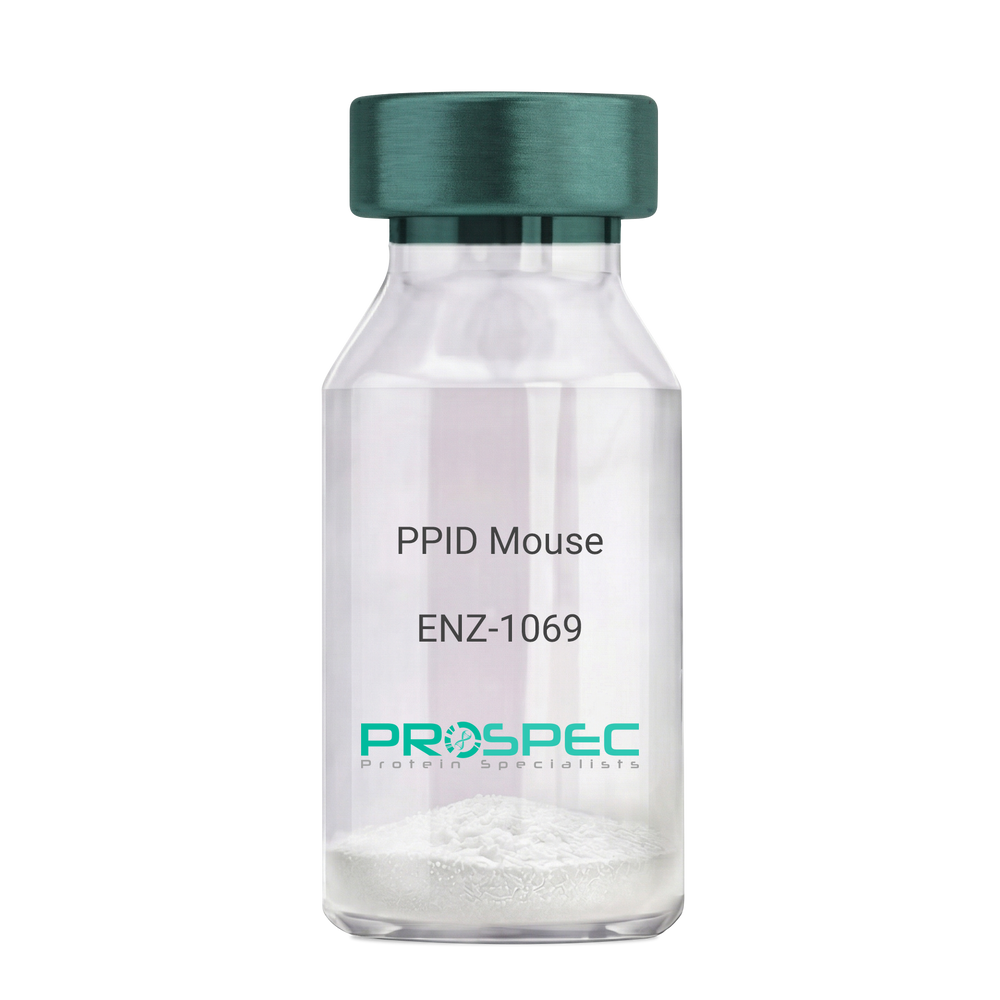
PPID MouseDescription:
Peptidylprolyl Isomerase D Mouse Recombinant
Peptidyl-prolyl cis-trans isomerase D, PPIase D, 40 kDa peptidyl-prolyl cis-trans isomerase, Cyclophilin-40, CYP-40, Cyclophilin-related protein, CYP40, CYPD, PPID, Peptidylprolyl Isomerase D.
Product # :
ENZ-1069Price :
Quantity :
Shipping Method :
Shipped with Ice Packs
More Info
- description
- source
- formulation
- purity
- biological activity
- More Info
Description
PPID Mouse Recombinant produced in E.Coli is a single, non-glycosylated polypeptide chain containing 395 amino acids (1-370a.a.) and having a molecular mass of 43.4kDa. PPID is fused to a 25 amino acid His-tag at N-terminus & purified by proprietary chromatographic techniques.
Source
Escherichia Coli.
Formulation
PPID protein solution (1mg/ml) containing 20mM Tris-Hcl buffer (pH8.0), 10% glycerol and 1mM DTT.
Purity
Greater than 90.0% as determined by SDS-PAGE.
Biological Activity
Specific activity is > 700nmol/min/mg, and is defined as the amount of enzyme that cleaves 1umole of suc-AAFP-PNA per minute at 37°C in Tris–HCl pH 8.0 using chymotrypsin.
More Info
-
Introduction
Cyclophilin-D is a member of the peptidyl-prolyl cis-trans isomerase (PPIase) family. PPIases catalyze the cis-trans isomerization of proline imidic peptide bonds in oligopeptides and speeds up the protein folding. Cyclophilin-D possess PPIase activity and binds to the immunosuppressant cyclosporin-A. Cyclophilin-D is very well known that its overexpression suppresses the apoptosis in cancer cell. Cyclophilin-D suppresses apoptotic cell death by the use of mitochondrial hexokinase-2 dependent mechanism in cancer cells.
-
Synonyms
Peptidyl-prolyl cis-trans isomerase D, PPIase D, 40 kDa peptidyl-prolyl cis-trans isomerase, Cyclophilin-40, CYP-40, Cyclophilin-related protein, CYP40, CYPD, PPID, Peptidylprolyl Isomerase D.
-
Physical Appearance
Sterile Filtered colorless solution.
-
Stability
Store at 4°C if entire vial will be used within 2-4 weeks. Store, frozen at -20°C for longer periods of time. For long term storage it is recommended to add a carrier protein (0.1% HSA or BSA). Please prevent freeze-thaw cycles.
-
Amino Acid Sequence
MGSSHHHHHH SSGLVPRGSH MGSEFMSHAS PAAKPSNSKN PRVFFDVDIG GERVGRIVLE LFADIVPKTA ENFRALCTGE KGTGSTTGKP LHFKGCPFHR IIKKFMIQGG DFSNQNGTGG ESIYGEKFED ENFHYKHDRE GLLSMANAGP NTNGSQFFIT TVPTPHLDGK HVVFGQVIKG LGVARTLENV EVNGEKPAKL CVIAECGELK EGDDWGIFPK DGSGDSHPDF PEDADIDLKD VDKILLISED LKNIGNTFFK SQNWEMAIKK YAKVLRYVDS SKAVIEKADR SRLQPIALSC VLNIGACKLK MSNWQGAIDS CLEALEMDPS NTKALYRKAQ GWQGLKEYDQ ALADLKKAQE IAPGDKAIQA ELLKVKQMIK AQKDKEKAVY AKMFA.
ProSpec's products are furnished for LABORATORY RESEARCH USE ONLY. The product may not be used as drugs, agricultural or pesticidal products, food additives or household chemicals.
- View Data Sheet
Name :
Cyclophilin F Rat BioactiveDescription:
Cyclophilin-F Rat Recombinant Bioactive
Peptidyl-prolyl cis-trans isomerase F, mitochondrial, PPIase F, Cyclophilin D, CyP-D, CypD, Cyclophilin F, Rotamase F.
Product # :
ENZ-1019Price :
Quantity :
Shipping Method :
Shipped with Ice Packs
More Info
- description
- source
- formulation
- purity
- biological activity
- More Info
Description
Cyclophilin F Rat Recombinant produced in E.Coli is a single, non-glycosylated polypeptide chain containing 200 amino acids (30-206 a.a) and having a molecular mass of 21.2Da. Cyclophilin F is fused to a 23 amino acid His-tag at N-terminus & purified by proprietary chromatographic techniques.
Source
Escherichia Coli.
Formulation
Cyclophilin F protein solution (1mg/ml) containing Phosphate Buffered Saline (pH 7.4), 10% glycerol and 1mM DTT.
Purity
Greater than 90.0% as determined by SDS-PAGE.
Biological Activity
Specific activity is > 1,300 nmol/min/mg, and is defined as the amount of enzyme that cleaves 1nmol of suc-AAFP-PNA per minute at 37C in Tris–HCl pH 8.0 using chymotrypsin.More Info
-
Introduction
PPIF is a part of the peptidyl-prolyl cis-trans isomerase (PPIase) family. PPIF accelerates the folding of proteins. It catalyzes the cis-trans isomerization of proline imidic peptide bonds in oligopeptides. PPIF is key component of the mitochondrial permeability transition pore in the inner mitochondrial membrane. Activation of this pore is thought to be involved in the induction of apoptotic and necrotic cell death.
-
Synonyms
Peptidyl-prolyl cis-trans isomerase F, mitochondrial, PPIase F, Cyclophilin D, CyP-D, CypD, Cyclophilin F, Rotamase F.
-
Physical Appearance
Sterile filtered colorless solution.
-
Stability
Store at 4°C if entire vial will be used within 2-4 weeks. Store, frozen at -20°C for longer periods of time. For long term storage it is recommended to add a carrier protein (0.1% HSA or BSA).Avoid multiple freeze-thaw cycles.
-
Amino Acid Sequence
MGSSHHHHHH SSGLVPRGSH MGSCSDGGAR GANSSSQNPL VYLDVGADGQ PLGRVVLELK ADVVPKTAEN FRALCTGEKG FGYKGSTFHR VIPAFMCQAG DFTNHNGTGG KSIYGSRFPD ENFTLKHVGP GVLSMANAGP NTNGSQFFIC TIKTDWLDGK HVVFGHVKEG MDVVKKIESF GSKSGKTSKK IVITDCGQLS.
ProSpec's products are furnished for LABORATORY RESEARCH USE ONLY. The product may not be used as drugs, agricultural or pesticidal products, food additives or household chemicals.
- View Data Sheet
Name :
UCHL5 HumanDescription:
Ubiquitin Carboxyl-Terminal Esterase L5 Human Recombinant
Ubiquitin Carboxyl-terminal Hydrolase L5, UCH37, CGI-70, UCH-L5, INO80R, Ubiquitin thioesterase L5, INO80 complex subunit R, EC 3.4.19.12, Ubiquitin Carboxyl-terminal Esterase L5.
Product # :
ENZ-097Price :
Quantity :
Shipping Method :
Shipped with Ice Packs
More Info
- description
- source
- formulation
- purity
- biological activity
- More Info
Description
UCHL5 produced in E.Coli is a single, non-glycosylated polypeptide chain containing349 amino acids (1-329a.a.) and having a molecular mass of 39.7kDa.UCHL5 is fused to a 20 amino acid His-tag at N-terminus & purified by proprietary chromatographic techniques.
Source
Escherichia Coli.
Formulation
The UCHL5 protein solution (0.5mg/ml) is formulated in 20mM Tris-HCl buffer (pH8.0), 5mM DTT, 200mM NaCl, 0.1mM PMSF, 2mM EDTA and 30% glycerol.
Purity
Greater than 90% as determined by SDS-PAGE.
Biological Activity
Specific activity: > 500 pmole/min/ug. Measured by the hydrolysis of Ubiquitin-AMC at
pH 8.0, at 37°C.More Info
-
Introduction
UCHL5 is a member of the peptidase C12 family. UCHL5 protein is a protease that specifically cleaves 'Lys-48'-linked polyubiquitin chains, and deubiquitinating enzyme related to the 19S regulatory subunit of the 26S proteasome.
-
Synonyms
Ubiquitin Carboxyl-terminal Hydrolase L5, UCH37, CGI-70, UCH-L5, INO80R, Ubiquitin thioesterase L5, INO80 complex subunit R, EC 3.4.19.12, Ubiquitin Carboxyl-terminal Esterase L5.
-
Physical Appearance
Sterile Filtered clear solution.
-
Stability
Store at 4°C if entire vial will be used within 2-4 weeks. Store, frozen at -20°C for longer periods of time. For long term storage it is recommended to add a carrier protein (0.1% HSA or BSA).Avoid multiple freeze-thaw cycles.
-
Amino Acid Sequence
MGSSHHHHHHSSGLVPRGSH MTGNAGEWCL MESDPGVFTE LIKGFGCRGA QVEEIWSLEP ENFEKLKPVH GLIFLFKWQP GEEPAGSVVQ DSRLDTIFFA KQVINNACAT QAIVSVLLNC THQDVHLGET LSEFKEFSQS FDAAMKGLAL SNSDVIRQVH NSFARQQMFE FDTKTSAKEE DAFHFVSYVP VNGRLYELDG LREGPIDLGA CNQDDWISAV RPVIEKRIQK YSEGEIRFNL MAIVSDRKMI YEQKIAELQR QLAEEEPMDT DQGNSMLSAI QSEVAKNQML IEEEVQKLKR YKIENIRRKH NYLPFIMELL KTLAEHQQLI PLVEKAKEKQ NAKKAQETK
ProSpec's products are furnished for LABORATORY RESEARCH USE ONLY. The product may not be used as drugs, agricultural or pesticidal products, food additives or household chemicals.
- View Data Sheet
Name :
AP3S1 HumanDescription:
Assembly Protein Complex 3 Subunit-1 Human Recombinant
CLAPS3, Sigma3A ,AP-3 complex subunit sigma-1, AP-3 complex subunit sigma-3A, Adapter-related protein complex 3 sigma-1 subunit, Clathrin-associated/assembly/adapter protein, small 3, Sigma-3A-adaptin, Sigma-adaptin 3a.
Product # :
PRO-1280Price :
Quantity :
Shipping Method :
Shipped with Ice Packs
More Info
- description
- source
- formulation
- purity
- More Info
Description
AP3S1 Human Recombinant produced in E. coli is a single polypeptide chain containing 213 amino acids (1-193) and having a molecular mass of 23.8 kDa. AP3S1 is fused to 20 amino acid His-tag at N-terminus & purified by proprietary chromatographic techniques.
Source
E.coli.
Formulation
The AP3S1 solution (1mg/1ml) contains 20mM Tris-HCl buffer (pH 8.0), 0.15M NaCl, 10% glycerol and 1mM DTT.
Purity
Greater than 90% as determined by SDS-PAGE.
More Info
-
Introduction
AP-3 complex subunit sigma-1 (AP3S1) belongs to the AP-3 complex, an adapter-related complex which is not clathrin-associated. AP3S1 is linkd with the Golgi region in addition to more peripheral structures. AP3S1 facilitates the budding of vesicles from the Golgi membrane and involved in trafficking to lysosomes.
-
Synonyms
CLAPS3, Sigma3A ,AP-3 complex subunit sigma-1, AP-3 complex subunit sigma-3A, Adapter-related protein complex 3 sigma-1 subunit, Clathrin-associated/assembly/adapter protein, small 3, Sigma-3A-adaptin, Sigma-adaptin 3a.
-
Physical Appearance
Sterile Filtered colorless solution.
-
Stability
Store at 4°C if entire vial will be used within 2-4 weeks. Store, frozen at -20°C for longer periods of time. For long term storage it is recommended to add a carrier protein (0.1% HSA or BSA).Avoid multiple freeze-thaw cycles.
-
Amino Acid Sequence
MGSSHHHHHH SSGLVPRGSH MIKAILIFNN HGKPRLSKFY QPYSEDTQQQ IIRETFHLVS RDENVCNFL EGGLLIGGSD NKLIYRHYAT LYFVFCVDSS ESELGILDLI QVFVETLDKC ENVCELDLI FHVDKVHNIL AEMVMGGMVL ETNMNEIVTQ IDAQNKLEKS EAGLAGAPAR AVSAVKNMNL PEIPRNINIG DISIKVPNLP SFK.
ProSpec's products are furnished for LABORATORY RESEARCH USE ONLY. The product may not be used as drugs, agricultural or pesticidal products, food additives or household chemicals.
- View Data Sheet
Name :
LRPAP1 MouseDescription:
Low Density Lipoprotein Receptor Related Protein Associated Protein 1 Mouse Recombinant
Low density lipoprotein-related protein-associated protein 1 (alpha-2-macroglobulin receptor-associated protein 1), A2MRAP, HBP44, RAP, A2RAP, Alpha-2-MRAP.
Product # :
PRO-2224Price :
Quantity :
Shipping Method :
Shipped with Ice Packs
More Info
- description
- source
- formulation
- purity
- More Info
Description
LRPAP1 Mouse Recombinant produced in E.Coli is a single, non-glycosylated polypeptide chain containing 355 amino acids (29-360 a.a) and having a molecular mass of 41.4kDa. LRPAP1 is fused to a 23 amino acid His-tag at N-terminus & purified by proprietary chromatographic techniques.
Source
Escherichia Coli.
Formulation
LRPAP1 protein solution (1mg/ml) containing Phosphate buffered saline (pH7.4) and 10% glycerol.
Purity
Greater than 90.0% as determined by SDS-PAGE.
More Info
-
Introduction
LRPAP1 is a member of the alpha-2-MRAP family. LRPAP1 cooperates with LRP1/alpha-2-macroglobulin receptor and glycoprotein 330. LRPAP1, located on the cell surface, creates a complex with the alpha 2 macroglobulin receptor light and heavy chains and has part in the pathogenesis of membrane glomerular nephritis.
-
Synonyms
Low density lipoprotein-related protein-associated protein 1 (alpha-2-macroglobulin receptor-associated protein 1), A2MRAP, HBP44, RAP, A2RAP, Alpha-2-MRAP.
-
Physical Appearance
Sterile Filtered colorless solution.
-
Stability
Store at 4°C if entire vial will be used within 2-4 weeks. Store, frozen at -20°C for longer periods of time. For long term storage it is recommended to add a carrier protein (0.1% HSA or BSA).Avoid multiple freeze-thaw cycles.
-
Amino Acid Sequence
MGSSHHHHHH SSGLVPRGSH MGSQPIAGHG GKYSREKNEP EMAAKRESGE EFRMEKLNQL WEKAKRLHLS PVRLAELHSD LKIQERDELN WKKLKVEGLD KDGEKEAKLI HNLNVILARY GLDGRKDAQM VHSNALNEDT QDELGDPRLE KLWHKAKTSG KFSSEELDKL WREFLHYKEK IQEYNVLLDT LSRAEEGYEN LLSPSDMAHI KSDTLISKHS ELKDRLRSIN QGLDRLRKVS HQGYGSTTEF EEPRVIDLWD LAQSANFTEK ELESFREELK HFEAKIEKHN HYQKQLEISH QKLKHVESIG DPEHISRNKE KYVLLEEKTK ELGYKVKKHL QDLSSRVSRA RHNEL.
ProSpec's products are furnished for LABORATORY RESEARCH USE ONLY. The product may not be used as drugs, agricultural or pesticidal products, food additives or household chemicals.