Skip to content

High-quality research proteins.

  • 1-800-805-6531

  • Mon - Sat 8.00-18.00, Sun - Closed

  • info@prospecbio.com

  • PO Box 6591 East Brunswick NJ 08816

  • Products
    • Cytokines
    • Growth factors
    • Chemokines
    • Cd antigens
    • Neurotrophins
    • Hormones
    • Enzymes
    • Viral antigens
    • Recombinant proteins
    • Natural proteins
    • Monoclonal antibodies
    • Polyclonal antibodies
    • Thermal Packaging
  • About
    • Company
    • Founder
    • Contribution
  • Customers
    • Eastern Asia
    • Eastern Europe
    • North America
    • South America
    • South East Asia
    • Southern Asia
    • Western Europe
  • Ordering
    • Ordering Method
    • Ordering - Credit Card
    • Ordering - PO
    • Shipping Fees
    • FAQs
  • Services
    • DNA Cloning
    • Protein Expression
    • Monoclonal Antibody
    • Fermentation
    • Technology License
  • Contact us
Log in

Country/region

  • USD $ | Albania
  • USD $ | Andorra
  • USD $ | Argentina
  • USD $ | Armenia
  • USD $ | Australia
  • USD $ | Austria
  • USD $ | Azerbaijan
  • USD $ | Belarus
  • USD $ | Belgium
  • USD $ | Bolivia
  • USD $ | Brazil
  • USD $ | Bulgaria
  • USD $ | Cambodia
  • USD $ | Canada
  • USD $ | Chile
  • USD $ | China
  • USD $ | Colombia
  • USD $ | Costa Rica
  • USD $ | Croatia
  • USD $ | Cyprus
  • USD $ | Czechia
  • USD $ | Denmark
  • USD $ | Estonia
  • USD $ | Finland
  • USD $ | France
  • USD $ | Georgia
  • USD $ | Germany
  • USD $ | Greece
  • USD $ | Hong Kong SAR
  • USD $ | Hungary
  • USD $ | Iceland
  • USD $ | India
  • USD $ | Ireland
  • USD $ | Israel
  • USD $ | Italy
  • USD $ | Japan
  • USD $ | Kazakhstan
  • USD $ | Latvia
  • USD $ | Liechtenstein
  • USD $ | Lithuania
  • USD $ | Madagascar
  • USD $ | Malta
  • USD $ | Mexico
  • USD $ | Moldova
  • USD $ | Monaco
  • USD $ | Netherlands
  • USD $ | New Zealand
  • USD $ | North Macedonia
  • USD $ | Norway
  • USD $ | Panama
  • USD $ | Paraguay
  • USD $ | Peru
  • USD $ | Philippines
  • USD $ | Poland
  • USD $ | Portugal
  • USD $ | Romania
  • USD $ | Singapore
  • USD $ | Slovakia
  • USD $ | Slovenia
  • USD $ | South Africa
  • USD $ | South Korea
  • USD $ | Spain
  • USD $ | Sri Lanka
  • USD $ | Sweden
  • USD $ | Switzerland
  • USD $ | Taiwan
  • USD $ | Thailand
  • USD $ | Türkiye
  • USD $ | Ukraine
  • USD $ | United Kingdom
  • USD $ | United States
  • USD $ | Uruguay
  • USD $ | Vatican City
  • USD $ | Venezuela
  • USD $ | Vietnam
  • Facebook
  • Instagram
logoProSpec - Recombinant Protein Manufacturer for academic and R&D industry
Become a distributor
Account Log in
Wishlist
Cart Cart(0)
  • Products
    +
    • Cytokines
    • Growth factors
    • Chemokines
    • Cd antigens
    • Neurotrophins
    • Hormones
    • Enzymes
    • Viral antigens
    • Recombinant proteins
    • Natural proteins
    • Monoclonal antibodies
    • Polyclonal antibodies
    • Thermal Packaging
  • About
    +
    • Company
    • Founder
    • Contribution
  • Customers
    +
    • Eastern Asia
    • Eastern Europe
    • North America
    • South America
    • South East Asia
    • Southern Asia
    • Western Europe
  • Ordering
    +
    • Ordering Method
    • Ordering - Credit Card
    • Ordering - PO
    • Shipping Fees
    • FAQs
  • Services
    +
    • DNA Cloning
    • Protein Expression
    • Monoclonal Antibody
    • Fermentation
    • Technology License
  • Contact us

Item added to your cart

View cart
View All
  • Cytokines
  • Growth factors
  • Chemokines
  • Cd antigens
  • Neurotrophins
  • Hormones
  • Enzymes
  • Viral antigens
  • Recombinant proteins
  • Natural proteins
  • Monoclonal antibodies
  • Polyclonal antibodies
  • Thermal Packaging
  • Tumor Necrosis Factor

    Tumor Necrosis Factor

    View All
  • 4-1BB

    4-1BB

    View All
  • Adiponectin

    Adiponectin

    View All
  • AIF1

    AIF1

    View All
  • Other Cytokines

    Other Cytokines

    View All
  • AITRL

    AITRL

    View All
  • Angiopoietin

    Angiopoietin

    View All
  • Apolipoprotein

    Apolipoprotein

    View All
  • B-Cell Activating Factor

    B-Cell Activating Factor

    View All
  • Beta Defensin

    Beta Defensin

    View All
  • Bone Morphogenetic Protein

    Bone Morphogenetic Protein

    View All
  • B type Natriuretic Peptide

    B type Natriuretic Peptide

    View All
  • BST

    BST

    View All
  • Betacellulin

    Betacellulin

    View All
  • Cardiotrophin

    Cardiotrophin

    View All
  • Activin

    Activin

    View All
  • Fibroblast Growth Factor

    Fibroblast Growth Factor

    View All
  • Other Growth Factors

    Other Growth Factors

    View All
  • CSF

    CSF

    View All
  • CTGF

    CTGF

    View All
  • IGFBP

    IGFBP

    View All
  • VEGF Protein

    VEGF Protein

    View All
  • EGF

    EGF

    View All
  • Epigen

    Epigen

    View All
  • Erythropoietin

    Erythropoietin

    View All
  • Insulin-Like Growth Factor

    Insulin-Like Growth Factor

    View All
  • Growth Hormone

    Growth Hormone

    View All
  • HDGF

    HDGF

    View All
  • Hepatocyte Growth Factor

    Hepatocyte Growth Factor

    View All
  • Insulin

    Insulin

    View All
  • BCA-1/ BLC (CXCL13)

    BCA-1/ BLC (CXCL13)

    View All
  • BRAK (CXCL14)

    BRAK (CXCL14)

    View All
  • C-10 (CCL6)

    C-10 (CCL6)

    View All
  • Other Chemokines

    Other Chemokines

    View All
  • MEC (CCL28)

    MEC (CCL28)

    View All
  • LD78-beta (CCL3L1)

    LD78-beta (CCL3L1)

    View All
  • CTACK (CCL27)

    CTACK (CCL27)

    View All
  • CXCL16

    CXCL16

    View All
  • CXCL17

    CXCL17

    View All
  • Platelet Factor-4 (CXCL4)

    Platelet Factor-4 (CXCL4)

    View All
  • ENA-78 (CXCL5)

    ENA-78 (CXCL5)

    View All
  • Eotaxin (CCL11,24,26)

    Eotaxin (CCL11,24,26)

    View All
  • Exodus-2 (CCL21)

    Exodus-2 (CCL21)

    View All
  • Fractalkine (CX3CL1)

    Fractalkine (CX3CL1)

    View All
  • CXCL6

    CXCL6

    View All
  • Other CD Antigens

    Other CD Antigens

    View All
  • CD14

    CD14

    View All
  • CD164

    CD164

    View All
  • CD1

    CD1

    View All
  • CD2

    CD2

    View All
  • CD200

    CD200

    View All
  • CD207

    CD207

    View All
  • CD226

    CD226

    View All
  • CD23

    CD23

    View All
  • CD244

    CD244

    View All
  • CD247

    CD247

    View All
  • CD27

    CD27

    View All
  • CD274

    CD274

    View All
  • CD300

    CD300

    View All
  • CD33

    CD33

    View All
  • Other Neurotrophins

    Other Neurotrophins

    View All
  • Beta-NGF

    Beta-NGF

    View All
  • BDNF

    BDNF

    View All
  • CDNF

    CDNF

    View All
  • CNTF

    CNTF

    View All
  • GDNF

    GDNF

    View All
  • Glia Maturation Factor

    Glia Maturation Factor

    View All
  • MANF

    MANF

    View All
  • Midkine

    Midkine

    View All
  • Neuroglobin

    Neuroglobin

    View All
  • Neurotrophic factors

    Neurotrophic factors

    View All
  • Neuregulin

    Neuregulin

    View All
  • Neuropilin

    Neuropilin

    View All
  • Pigment Epithelium-Derived Factor

    Pigment Epithelium-Derived Factor

    View All
  • Pleiotrophin

    Pleiotrophin

    View All
  • Peptide Hormones

    Peptide Hormones

    View All
  • Other Hormones

    Other Hormones

    View All
  • HCG

    HCG

    View All
  • Endothelin

    Endothelin

    View All
  • Exendin

    Exendin

    View All
  • FSH

    FSH

    View All
  • Glucagon

    Glucagon

    View All
  • GHRP

    GHRP

    View All
  • GLP

    GLP

    View All
  • Thyrostimulin

    Thyrostimulin

    View All
  • Inhibin A

    Inhibin A

    View All
  • LHRH

    LHRH

    View All
  • Melanotan

    Melanotan

    View All
  • Procalcitonin

    Procalcitonin

    View All
  • PTH

    PTH

    View All
  • Peroxiredoxin

    Peroxiredoxin

    View All
  • Peptidase

    Peptidase

    View All
  • Synthetase

    Synthetase

    View All
  • Transferase

    Transferase

    View All
  • Hydrolase

    Hydrolase

    View All
  • Dehydrogenase

    Dehydrogenase

    View All
  • ACE2

    ACE2

    View All
  • Esterase

    Esterase

    View All
  • Protein Kinases

    Protein Kinases

    View All
  • Other Enzymes

    Other Enzymes

    View All
  • Phosphatase

    Phosphatase

    View All
  • Deaminase

    Deaminase

    View All
  • Oxygenase

    Oxygenase

    View All
  • Adenylate Kinase

    Adenylate Kinase

    View All
  • Lyase

    Lyase

    View All
  • Chagas

    Chagas

    View All
  • SARS

    SARS

    View All
  • Influenza

    Influenza

    View All
  • ASFV

    ASFV

    View All
  • Astrovirus

    Astrovirus

    View All
  • Borrelia

    Borrelia

    View All
  • Helicobacter Pylori

    Helicobacter Pylori

    View All
  • Chikungunya

    Chikungunya

    View All
  • Chlamydia

    Chlamydia

    View All
  • Cytomegalo

    Cytomegalo

    View All
  • Dengue

    Dengue

    View All
  • EBV

    EBV

    View All
  • Ebola

    Ebola

    View All
  • Feline Leukemia Virus

    Feline Leukemia Virus

    View All
  • Hepatitis A

    Hepatitis A

    View All
  • Other

    Other

    View All
  • Actin

    Actin

    View All
  • ADAM

    ADAM

    View All
  • Complement Component

    Complement Component

    View All
  • Ag85

    Ag85

    View All
  • Eukaryotic Translation Initiation Factor

    Eukaryotic Translation Initiation Factor

    View All
  • Anterior Gradient Protein

    Anterior Gradient Protein

    View All
  • Heat Shock Protein

    Heat Shock Protein

    View All
  • Alpha-2-HS-Glycoprotein

    Alpha-2-HS-Glycoprotein

    View All
  • Hemoglobin

    Hemoglobin

    View All
  • Allergy

    Allergy

    View All
  • Anaplasma

    Anaplasma

    View All
  • Angiogenin

    Angiogenin

    View All
  • Ankyrin Repeat Domain

    Ankyrin Repeat Domain

    View All
  • Annexin

    Annexin

    View All
  • Other Natural Proteins

    Other Natural Proteins

    View All
  • Aprotinin

    Aprotinin

    View All
  • Transferrin

    Transferrin

    View All
  • Avidin

    Avidin

    View All
  • Anti Coagulation Factors

    Anti Coagulation Factors

    View All
  • Natural Albumin

    Natural Albumin

    View All
  • Natural Coagulation Factors

    Natural Coagulation Factors

    View All
  • Fibronectin

    Fibronectin

    View All
  • Thrombin

    Thrombin

    View All
  • Anti Human Enzyme

    Anti Human Enzyme

    View All
  • Other Monoclonal Antibodies

    Other Monoclonal Antibodies

    View All
  • Anti Human Cytokine

    Anti Human Cytokine

    View All
  • Anti Human Heat Shock Protein

    Anti Human Heat Shock Protein

    View All
  • Anti Mouse Lymphocyte

    Anti Mouse Lymphocyte

    View All
  • Anti Human Chemokine

    Anti Human Chemokine

    View All
  • Anti Human Lymphocyte

    Anti Human Lymphocyte

    View All
  • Anti Viral Monoclonal

    Anti Viral Monoclonal

    View All
  • Anti Mouse Cytokine

    Anti Mouse Cytokine

    View All
  • Anti-GST Monoclonal

    Anti-GST Monoclonal

    View All
  • Other Polyclonal Antibodies

    Other Polyclonal Antibodies

    View All
  • Anti Viral

    Anti Viral

    View All
  • Anti-GST Monoclonal

    Anti-GST Monoclonal

    View All
Back

Search results

1000 results found for “synthase”

Name

Description

Product #

Price

Quantity

Shipping Method

  • View Data Sheet

    Name :

    IDH3G Human

    Description:

    Isocitrate Dehydrogenase 3 (NAD+) Gamma Human Recombinant

    Isocitrate dehydrogenase [NAD] subunit gamma, mitochondrial, Isocitric dehydrogenase subunit gamma, NAD(+)-specific ICDH subunit gamma, IDH3G, H-IDHG.

    Product # :

    ENZ-205

    Price :

    Quantity :

    Shipping Method :

    Ice Icon

    Shipped with Ice Packs

    Add To Cart

    More Info

    • description
    • source
    • formulation
    • purity
    • More Info

    Description

    IDH3G Human Recombinant produced in E.coli is a single, non-glycosylated polypeptide chain containing 375 amino acids (40-393) and having a molecular mass of 41.1kDa.IDH3G is fused to a 21 amino acid His-tag at N-terminus & purified by proprietary chromatographic techniques.

    Source

    E.coli.

    Formulation

    The IDH3G solution (0.25mg/ml) contains 20mM Tris-HCl buffer (pH8.0), 50% glycerol, 0.2M NaCl, 5mM DTT and 2mM EDTA.

    Purity

    Greater than 85% as determined by SDS-PAGE.

    More Info

    • Introduction

      Isocitrate dehydrogenase [NAD] subunit gamma (IDH3G) mitochondrial is a member of the isocitrate and isopropylmalate dehydrogenases family. Isocitrate dehydrogenases catalyze the oxidative decarboxylation of isocitrate to 2-oxoglutarate. The IDH3G is a gamma subunit of one isozyme of isocitrate dehydrogenase which belongs to a distinct subclass, which utilizes NAD(+) as the electron acceptor, and is restricted to the mitochondrial matrix.

    • Synonyms

      Isocitrate dehydrogenase [NAD] subunit gamma, mitochondrial, Isocitric dehydrogenase subunit gamma, NAD(+)-specific ICDH subunit gamma, IDH3G, H-IDHG.

    • Physical Appearance

      Sterile Filtered colorless solution.

    • Stability

      Store at 4°C if entire vial will be used within 2-4 weeks. Store, frozen at -20°C for longer periods of time. For long term storage it is recommended to add a carrier protein (0.1% HSA or BSA).Avoid multiple freeze-thaw cycles.

    • Amino Acid Sequence

      MGSSHHHHHH SSGLVPRGSH MFSEQTIPPS AKYGGRHTVT MIPGDGIGPE LMLHVKSVFR HACVPVDFEE VHVSSNADEE DIRNAIMAIR RNRVALKGNI ETNHNLPPSH KSRNNILRTS LDLYANVIHC KSLPGVVTRH KDIDILIVRE NTEGEYSSLE HESVAGVVES LKIITKAKSL RIAEYAFKLA QESGRKKVTA VHKANIMKLG DGLFLQCCRE VAARYPQITF ENMIVDNTTM QLVSRPQQFD VMVMPNLYGN IVNNVCAGLV GGPGLVAGAN YGHVYAVFET ATRNTGKSIA NKNIANPTAT LLASCMMLDH LKLHSYATSI RKAVLASMDN ENMHTPDIGG QGTTSEAIQD VIRHIRVING RAVEA.

    ProSpec's products are furnished for LABORATORY RESEARCH USE ONLY. The product may not be used as drugs, agricultural or pesticidal products, food additives or household chemicals.

    Idh3G Human
  • View Data Sheet

    Name :

    IMPDH2 Human

    Description:

    IMP Dehydrogenase 2 Human Recombinant

    Inosine-5'-monophosphate dehydrogenase 2, IMP dehydrogenase 2, IMPD 2, IMPDH 2, IMPDH-II, IMPDH2, IMPD2.

    Product # :

    ENZ-187

    Price :

    Quantity :

    Shipping Method :

    Ice Icon

    Shipped with Ice Packs

    Add To Cart

    More Info

    • description
    • source
    • formulation
    • purity
    • More Info

    Description

    IMPDH2 Human Recombinant produced in E.coli is a single, non-glycosylated polypeptide chain containing 534 amino acids (1-514) and having a molecular mass of 58kDa.IMPDH2 is fused to a 20 amino acid His-tag at N-terminus & purified by proprietary chromatographic techniques.

    Source

    E.coli.

    Formulation

    The IMPDH2 solution (0.5mg/ml) contains 20mM Tris-HCl buffer (pH 8.0), 2mM DTT, 20% glycerol and 150mM NaCl.

    Purity

    Greater than 90% as determined by SDS-PAGE.

    More Info

    • Introduction

      IMPDH2 is a member of the IMPDH/GMPR family. IMPDH2 catalyzes the NAD-dependent oxidation of inosine-5'-monophosphate into xanthine-5'-monophosphate, which is afterward converted into guanosine-5'-monophosphate. IMPDH2 is the rate-limiting enzyme in the de novo guanine nucleotide biosynthesis. IMPDH2 is consequently involved in maintaining cellular guanine deoxy- and ribonucleotide pools required for DNA and RNA synthesis. In addition, IMPDH1 and IMPDH2 are targets for the important immunosuppressive drug, MPA. Furthermore, the IMPDH2 gene is up-regulated in some neoplasms, suggesting it may have a role in malignant transformation.

    • Synonyms

      Inosine-5'-monophosphate dehydrogenase 2, IMP dehydrogenase 2, IMPD 2, IMPDH 2, IMPDH-II, IMPDH2, IMPD2.

    • Physical Appearance

      Sterile Filtered colorless solution.

    • Stability

      Store at 4°C if entire vial will be used within 2-4 weeks. Store, frozen at -20°C for longer periods of time. For long term storage it is recommended to add a carrier protein (0.1% HSA or BSA).Avoid multiple freeze-thaw cycles.

    • Amino Acid Sequence

      MGSSHHHHHH SSGLVPRGSH MADYLISGGT SYVPDDGLTA QQLFNCGDGL TYNDFLILPG YIDFTADQVD LTSALTKKIT LKTPLVSSPM DTVTEAGMAI AMALTGGIGF IHHNCTPEFQ ANEVRKVKKY EQGFITDPVV LSPKDRVRDV FEAKARHGFC GIPITDTGRM GSRLVGIISS RDIDFLKEEE HDCFLEEIMT KREDLVVAPA GITLKEANEI LQRSKKGKLP IVNEDDELVA IIARTDLKKN RDYPLASKDA KKQLLCGAAI GTHEDDKYRL DLLAQAGVDV VVLDSSQGNS IFQINMIKYI KDKYPNLQVI GGNVVTAAQA KNLIDAGVDA LRVGMGSGSI CITQEVLACG RPQATAVYKV SEYARRFGVP VIADGGIQNV GHIAKALALG ASTVMMGSLL AATTEAPGEY FFSDGIRLKK YRGMGSLDAM DKHLSSQNRY FSEADKIKVA QGVSGAVQDK GSIHKFVPYL IAGIQHSCQD IGAKSLTQVR AMMYSGELKF EKRTSSAQVE GGVHSLHSYE KRLF.

    ProSpec's products are furnished for LABORATORY RESEARCH USE ONLY. The product may not be used as drugs, agricultural or pesticidal products, food additives or household chemicals.

    Impdh2 Human
  • View Data Sheet

    Name :

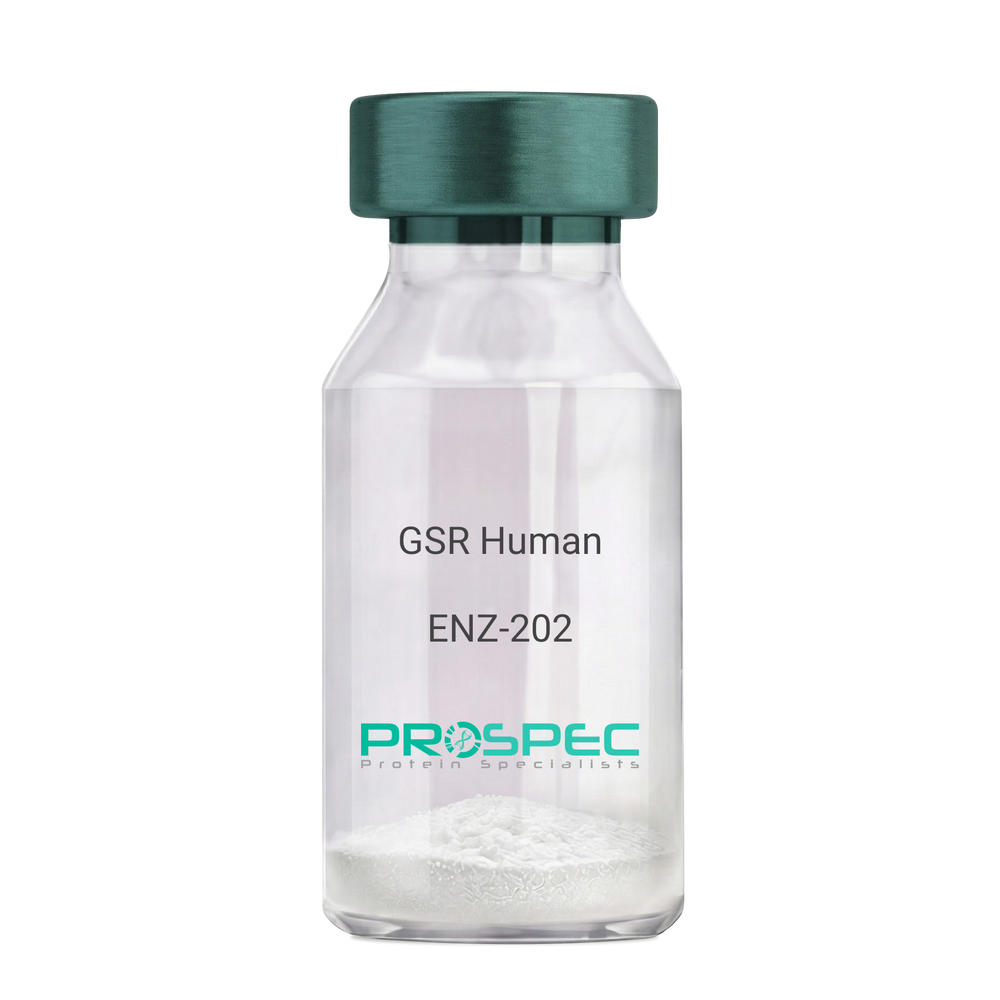
    GSR Human

    Description:

    Glutathione Reductase Human Recombinant

    Glutathione reductase mitochondrial, GR, GRase, GSR, GLUR, GRD1.

    Product # :

    ENZ-202

    Price :

    Quantity :

    Shipping Method :

    Ice Icon

    Shipped with Ice Packs

    Add To Cart

    More Info

    • description
    • source
    • formulation
    • purity
    • biological activity
    • More Info

    Description

    GSR Human Recombinant produced in E.coli is a single, non-glycosylated polypeptide chain containing 504 amino acids (43-522) and having a molecular mass of 54.3kDa.GSR is fused to a 24 amino acid His-tag at N-terminus & purified by proprietary chromatographic techniques.

    Source

    Escherichia Coli.

    Formulation

    The GSR solution (1mg/ml) contains 20mM Tris-HCl buffer (pH 8.0), 1mM DTT, 10% glycerol and 0.1M NaCl.

    Purity

    Greater than 95.0% as determined by SDS-PAGE.

    Biological Activity

    Specific activity: > 29 unit/ml.
    One unit will reduce 1.0 umol of oxidized glutathione per minute at pH 7.5 at 25°C.

    More Info

    • Introduction

      Glutathione reductase (GSR) belongs to the class-I pyridine nucleotide-disulfide oxidoreductase family. The GSR enzyme is a homodimeric flavoprotein and has a role in maintaining glutathione (GSH) in its reduced form by catalyzing the reduction of glutathione disulfide (GSSG): GSSG + NADPH + H+ ->2GSH + NADP+. In the majority of eukaryotic cells, GSR upholds the ratio of [GSH] / [GSSG], and partakes in quite a few critical functions such as the detoxification of reactive oxygen species as well as protein and DNA biosynthesis.

    • Synonyms

      Glutathione reductase mitochondrial, GR, GRase, GSR, GLUR, GRD1.

    • Physical Appearance

      Sterile Filtered colorless solution.

    • Stability

      Store at 4°C if entire vial will be used within 2-4 weeks.Store, frozen at -20°C for longer periods of time. For long term storage it is recommended to add a carrier protein (0.1% HSA or BSA).Avoid multiple freeze-thaw cycles.

    • Amino Acid Sequence

      MGSSHHHHHH SSGLVPRGSH MGSMAMACRQ EPQPQGPPPA AGAVASYDYL VIGGGSGGLA SARRAAELGA RAAVVESHKL GGTCVNVGCV PKKVMWNTAV HSEFMHDHAD YGFPSCEGKF NWRVIKEKRD AYVSRLNAIY QNNLTKSHIE IIRGHAAFTS DPKPTIEVSG KKYTAPHILI
      ATGGMPSTPH ESQIPGASLG ITSDGFFQLE ELPGRSVIVG AGYIAVEMAG ILSALGSKTS LMIRHDKVLR SFDSMISTNC TEELENAGVE VLKFSQVKEV KKTLSGLEVS MVTAVPGRLP VMTMIPDVDC LLWAIGRVPN TKDLSLNKLG IQTDDKGHII VDEFQNTNVK GIYAVGDVCG
      KALLTPVAIA AGRKLAHRLF EYKEDSKLDY NNIPTVVFSH PPIGTVGLTE DEAIHKYGIE NVKTYSTSFT PMYHAVTKRK TKCVMKMVCA NKEEKVVGIH MQGLGCDEML QGFAVAVKMG ATKADFDNTV AIHPTSSEEL VTLR.

    ProSpec's products are furnished for LABORATORY RESEARCH USE ONLY. The product may not be used as drugs, agricultural or pesticidal products, food additives or household chemicals.

    Gsr Human
  • View Data Sheet

    Name :

    FOLH1 Human

    Description:

    Folate Hydrolase 1 Human Recombinant

    Glutamate carboxypeptidase 2 isoform 1,Cell growth-inhibiting gene 27 protein, Folate hydrolase 1, Folylpolygamma-glutamate carboxypeptidase, Glutamate carboxypeptidase II, Membrane glutamate carboxypeptidase, Nacetylated-alpha-linked acidic dipeptidase I, Prostate-specific membrane antigen, Pteroylpoly-gamma glutamate carboxypeptidase, Folh1, FGCP, FOLH, GCP2, GCPII, mGCP, NAALAD1, NAALAdase, PSM, PSMA

    Product # :

    ENZ-1170

    Price :

    Quantity :

    Shipping Method :

    Ice Icon

    Shipped with Ice Packs

    Add To Cart

    More Info

    • description
    • source
    • formulation
    • purity
    • More Info

    Description

    FOLH1 produced in Sf9 Baculovirus cells is a single, glycosylated polypeptide chain containing 717 amino acids (44-750 a.a) and having a molecular mass of 80.7kDa.FOLH1 is expressed with a 6 amino acid His tag at C-Terminus and purified by proprietary chromatographic techniques.

    Source

    Sf9, Baculovirus cells.

    Formulation

    FOLH1 protein solution (0.25mg/ml) contains Phosphate buffered saline (pH 7.4) and 20% glycerol.

    Purity

    Greater than 90.0% as determined by SDS-PAGE.

    More Info

    • Introduction

      FOLH1, also known as glutamate carboxypeptidase 2 (GCPII), is a single pass type 2 membrane protein which belongs to the peptidase M28 family. FOLH1 is highly produced in prostate epithelium. FOLH1 is also found in ovary, live, stomach, small intestine colon, urinary bladder, kidney, testis, and the capillary endothelium of a variety of tumours. Therefore, it plays a role in directed imaging and therapy of recurrent of metastatic disease. FOLH1 is a zinc metalloenzyme that resides in membranes and catalyses the hydrolysis of N-acetylaspartylglutamate to glutamate and N-acetylaspartate.

    • Synonyms

      Glutamate carboxypeptidase 2 isoform 1,Cell growth-inhibiting gene 27 protein, Folate hydrolase 1, Folylpolygamma-glutamate carboxypeptidase, Glutamate carboxypeptidase II, Membrane glutamate carboxypeptidase, Nacetylated-alpha-linked acidic dipeptidase I, Prostate-specific membrane antigen, Pteroylpoly-gamma glutamate carboxypeptidase, Folh1, FGCP, FOLH, GCP2, GCPII, mGCP, NAALAD1, NAALAdase, PSM, PSMA

    • Physical Appearance

      Sterile Filtered colorless solution.

    • Stability

      Store at 4°C if entire vial will be used within 2-4 weeks.Store, frozen at -20°C for longer periods of time.For long term storage it is recommended to add a carrier protein (0.1% HSA or BSA).Avoid multiple freeze-thaw cycles.

    • Amino Acid Sequence

      ADPMKSSNEA TNITPKHNMK AFLDELKAEN IKKFLYNFTQ IPHLAGTEQN FQLAKQIQSQ WKEFGLDSVE LAHYDVLLSY PNKTHPNYIS IINEDGNEIF NTSLFEPPPP GYENVSDIVP PFSAFSPQGM PEGDLVYVNY ARTEDFFKLE RDMKINCSGK IVIARYGKVF RGNKVKNAQL AGAKGVILYS DPADYFAPGV KSYPDGWNLP GGGVQRGNIL NLNGAGDPLT PGYPANEYAY RRGIAEAVGL PSIPVHPIGY YDAQKLLEKM GGSAPPDSSW RGSLKVPYNV GPGFTGNFST QKVKMHIHST NEVTRIYNVI GTLRGAVEPD RYVILGGHRD SWVFGGIDPQ SGAAVVHEIV RSFGTLKKEG WRPRRTILFA SWDAEEFGLL GSTEWAEENS RLLQERGVAY INADSSIEGN YTLRVDCTPL MYSLVHNLTK ELKSPDEGFE GKSLYESWTK KSPSPEFSGM PRISKLGSGN DFEVFFQRLG IASGRARYTK NWETNKFSGY PLYHSVYETY ELVEKFYDPM FKYHLTVAQV RGGMVFELAN SIVLPFDCRD YAVVLRKYAD KIYSISMKHP QEMKTYSVSF DSLFSAVKNF TEIASKFSER LQDFDKSNPI VLRMMNDQLM FLERAFIDPL GLPDRPFYRH VIYAPSSHNK YAGESFPGIY DALFDIESKV DPSKAWGEVK RQIYVAAFTV QAAAETLSEV AHHHHHH

    ProSpec's products are furnished for LABORATORY RESEARCH USE ONLY. The product may not be used as drugs, agricultural or pesticidal products, food additives or household chemicals.

    Folh1 Human
  • View Data Sheet

    Name :

    ACOT7 Human

    Description:

    Acyl-CoA Thioesterase 7 Human Recombinant

    Cytosolic acyl coenzyme A thioester hydrolase, Acyl-CoA thioesterase 7, Brain acyl-CoA hydrolase, BACH, CTE-IIa, CTE-II, Long chain acyl-CoA thioester hydrolase, ACOT7, ACT, ACH1, LACH, LACH1, hBACH, RP1-120G22.10.

    Product # :

    ENZ-214

    Price :

    Quantity :

    Shipping Method :

    Ice Icon

    Shipped with Ice Packs

    Add To Cart

    More Info

    • description
    • source
    • formulation
    • purity
    • More Info

    Description

    ACOT7 Human Recombinant produced in E.coli is a single, non-glycosylated polypeptide chain containing 390 amino acids (1-370) and having a molecular mass of 42.6kDa.ACOT7 is fused to a 20 amino acid His-tag at N-terminus & purified by proprietary chromatographic techniques.

    Source

    Escherichia Coli.

    Formulation

    The ACOT7 solution (1mg/ml) contains 20mM Tris-HCl buffer (pH 8.0), 10% glycerol, 1mM DTT and 0.15M NaCl.

    Purity

    Greater than 95.0% as determined by SDS-PAGE.

    More Info

    • Introduction

      Acyl-CoA Thioesterase 7 (ACOT7) belongs to the acyl coenzyme family. ACOT7 hydrolyzes the CoA thioester of palmitoyl-CoA and other long-chain fatty acids. Decreased expression of the ACOT7 protein may be linked to mesial temporal lobe epilepsy.

    • Synonyms

      Cytosolic acyl coenzyme A thioester hydrolase, Acyl-CoA thioesterase 7, Brain acyl-CoA hydrolase, BACH, CTE-IIa, CTE-II, Long chain acyl-CoA thioester hydrolase, ACOT7, ACT, ACH1, LACH, LACH1, hBACH, RP1-120G22.10.

    • Physical Appearance

      Sterile Filtered colorless solution.

    • Stability

      Store at 4°C if entire vial will be used within 2-4 weeks. Store, frozen at -20°C for longer periods of time. For long term storage it is recommended to add a carrier protein (0.1% HSA or BSA).Avoid multiple freeze-thaw cycles.

    • Amino Acid Sequence

      MGSSHHHHHH SSGLVPRGSH MARPGLIHSA PGLPDTCALL QPPAASAAAA PSMSGPDVET PSAIQICRIM RPDDANVAGN VHGGTILKMI EEAGAIISTR HCNSQNGERC VAALARVERT DFLSPMCIGE VAHVSAEITY TSKHSVEVQV NVMSENILTG AKKLTNKATL WYVPLSLKNV DKVLEVPPVV YSRQEQEEEG RKRYEAQKLE RMETKWRNGD IVQPVLNPEP NTVSYSQSSL IHLVGPSDCT LHGFVHGGVT MKLMDEVAGI VAARHCKTNI VTASVDAINF HDKIRKGCVI TISGRMTFTS NKSMEIEVLV DADPVVDSSQ KRYRAASAFF TYVSLSQEGR SLPVPQLVPE TEDEKKRFEE GKGRYLQMKA KRQGHAEPQP.

    ProSpec's products are furnished for LABORATORY RESEARCH USE ONLY. The product may not be used as drugs, agricultural or pesticidal products, food additives or household chemicals.

    Acot7 Human
  • View Data Sheet

    Name :

    ADPRH Human

    Description:

    ADP-Ribosylarginine Hydrolase Human Recombinant

    [Protein ADP-ribosylarginine] hydrolase, ADP-ribosylarginine hydrolase, ADP-ribose-L-arginine cleaving enzyme, ADPRH, ARH1.

    Product # :

    ENZ-631

    Price :

    Quantity :

    Shipping Method :

    Ice Icon

    Shipped with Ice Packs

    Add To Cart

    More Info

    • description
    • source
    • formulation
    • purity
    • More Info

    Description

    ADPRH Human Recombinant produced in E.coli is a single, non-glycosylated polypeptide chain containing 381 amino acids (1-357) and having a molecular mass of 42.1kDa.ADPRH is fused to a 24 amino acid His-tag at N-terminus & purified by proprietary chromatographic techniques.

    Source

    E.coli.

    Formulation

    The ADPRH solution (0.5mg/ml) contains 20mM Tris-HCl buffer, pH8.0, 10% glycerol, 1mM DTT and 100mM NaCl.

    Purity

    Greater than 90% as determined by SDS-PAGE.

    More Info

    • Introduction

      ADP-ribosylarginine hydrolase (ADPRH) is a member of the ADP-ribosylglycohydrolase family. ADPRH catalyzes the removal of mono-ADP-ribose from arginine residues of proteins in the ADP-ribosylation cycle. The human ADPRH enzyme is DTT-independent as opposed to the rat and mouse enzymes, which require DTT for maximal activity.

    • Synonyms

      [Protein ADP-ribosylarginine] hydrolase, ADP-ribosylarginine hydrolase, ADP-ribose-L-arginine cleaving enzyme, ADPRH, ARH1.

    • Physical Appearance

      Sterile Filtered colorless solution.

    • Stability

      Store at 4°C if entire vial will be used within 2-4 weeks. Store, frozen at -20°C for longer periods of time. For long term storage it is recommended to add a carrier protein (0.1% HSA or BSA).Avoid multiple freeze-thaw cycles.

    • Amino Acid Sequence

      MGSSHHHHHH SSGLVPRGSH MGSHMEKYVA AMVLSAAGDA LGYYNGKWEF LQDGEKIHRQ LAQLGGLDAL DVGRWRVSDD TVMHLATAEA LVEAGKAPKL TQLYYLLAKH YQDCMEDMDG RAPGGASVHN AMQLKPGKPN GWRIPFNSHE GGCGAAMRAM CIGLRFPHHS QLDTLIQVSI ESGRMTHHHP TGYLGALASA LFTAYAVNSR PPLQWGKGLM ELLPEAKKYI VQSGYFVEEN LQHWSYFQTK WENYLKLRGI LDGESAPTFP ESFGVKERDQ FYTSLSYSGW GGSSGHDAPM IAYDAVLAAG DSWKELAHRA FFHGGDSDST AAIAGCWWGV MYGFKGVSPS NYEKLEYRNR
      LEETARALYS LGSKEDTVIS L.

    ProSpec's products are furnished for LABORATORY RESEARCH USE ONLY. The product may not be used as drugs, agricultural or pesticidal products, food additives or household chemicals.

    Adprh Human
  • View Data Sheet

    Name :

    HPGD Mouse

    Description:

    Hydroxyprostaglandin Dehydrogenase 15-(NAD) Mouse Recombinant

    15-hydroxyprostaglandin dehydrogenase [NAD(+)] (EC:1.1.1.141), 15-PGDH, Hpgd, Pgdh1, Prostaglandin dehydrogenase 1.

    Product # :

    ENZ-1027

    Price :

    Quantity :

    Shipping Method :

    Ice Icon

    Shipped with Ice Packs

    Add To Cart

    More Info

    • description
    • source
    • formulation
    • purity
    • More Info

    Description

    HPGD Mouse Recombinant produced in E. coli is a single polypeptide chain containing 292 amino acids (1-269) and having a molecular mass of 31.6kDa. HPGD is fused to a 24 amino acid His-tag at N-terminus & purified by proprietary chromatographic techniques.

    Source

    E.coli.

    Formulation

    The HPGD solution (1mg/ml) contains 20mM Tris-HCl buffer (pH8.0) and 10% glycerol.

    Purity

    Greater than 95.0% as determined by SDS-PAGE.

    More Info

    • Introduction

      HPGD is the essential enzyme of prostaglandin degradation. 15-PGDH protein strongly decreases the biologic activity of these molecules by catalyzing the oxidation of the 15-hydroxyl group of prostaglandins to a keto group. GDH1 is involved in numerous physiologic and cellular processes, for instance inflammation.

    • Synonyms

      15-hydroxyprostaglandin dehydrogenase [NAD(+)] (EC:1.1.1.141), 15-PGDH, Hpgd, Pgdh1, Prostaglandin dehydrogenase 1.

    • Physical Appearance

      Sterile Filtered colorless solution.

    • Stability

      Store at 4°C if entire vial will be used within 2-4 weeks. Store, frozen at -20°C for longer periods of time. For long term storage it is recommended to add a carrier protein (0.1% HSA or BSA). Avoid multiple freeze-thaw cycles.

    • Amino Acid Sequence

      MGSSHHHHHH SSGLVPRGSH MGSMHVNGKV ALVTGAAQGI GKAFAEALLL HGAKVALVDW NLEAGVKCKA ALDEQFEPQK TLFVQCDVAD QKQLRDTFRK VVDHFGRLDI LVNNAGVNNE KNWEQTLQIN LVSVISGTYL GLDYMSKQNG GEGGIIINMS SLAGLMPVAQ QPVYCASKHG IIGFTRSAAM AANLMKSGVR LNVICPGFVD TPILESIEKE ENMGQYIEYK DQIKAMMKFY GVLHPSTIAN GLINLIEDDA LNGAIMKITA SKGIHFQDYD ISPLLVKAPL TS.

    ProSpec's products are furnished for LABORATORY RESEARCH USE ONLY. The product may not be used as drugs, agricultural or pesticidal products, food additives or household chemicals.

    Hpgd Mouse
  • View Data Sheet

    Name :

    IDH1 Human

    Description:

    Isocitrate Dehydrogenase-1 Human Recombinant

    Isocitrate dehydrogenase [NADP] cytoplasmic, EC 1.1.1.42, Cytosolic NADP-isocitrate dehydrogenase, Oxalosuccinate decarboxylase, IDH, NADP(+)-specific ICDH, IDP, PICD.

    Product # :

    ENZ-193

    Price :

    Quantity :

    Shipping Method :

    Ice Icon

    Shipped with Ice Packs

    Add To Cart

    More Info

    • description
    • source
    • formulation
    • purity
    • biological activity
    • More Info

    Description

    IDH1 Human Recombinant produced in E.coli is a single, non-glycosylated polypeptide chain containing 434 amino acids (1-414) and having a molecular mass of 48.8 kDa.IDH1 is fused to a 20 amino acid His-tag at N-terminus & purified by proprietary chromatographic techniques.

    Source

    E.coli.

    Formulation

    The IDH1 solution (1mg/ml) contains 20mM Tris-HCl buffer (pH 8.0), 0.1M NaCl,
    1mM DTT, 0.1mM PMSF and 20% glycerol.

    Purity

    Greater than 95% as determined by SDS-PAGE.

    Biological Activity

    The Specific activity is > 0.7 units/ml. One unit will convert 1.0 umole of isocitrate to alpha-ketoglutarate per minute at pH7.5 at 25C.

    More Info

    • Introduction

      Isocitrate Dehydrogenase is an enzyme of the oxidoreductase class that catalyzes the conversion of isocitrate and NAD+ to yield 2-ketoglutarate, carbon dioxide, and NADH. It occurs in cell mitochondria. The enzyme requires Mg2+, Mn2+; it is activated by ADP, citrate, and Ca2+, and inhibited by NADH, NADPH, and ATP. The reaction is the key rate-limiting step of the citric acid (tricarboxylic) cycle.

    • Synonyms

      Isocitrate dehydrogenase [NADP] cytoplasmic, EC 1.1.1.42, Cytosolic NADP-isocitrate dehydrogenase, Oxalosuccinate decarboxylase, IDH, NADP(+)-specific ICDH, IDP, PICD.

    • Physical Appearance

      Sterile Filtered colorless solution.

    • Stability

      Store at 4°C if entire vial will be used within 2-4 weeks. Store, frozen at -20°C for longer periods of time. For long term storage it is recommended to add a carrier protein (0.1% HSA or BSA).Avoid multiple freeze-thaw cycles.

    • Amino Acid Sequence

      MGSSHHHHHH SSGLVPRGSH MSKKISGGSV VEMQGDEMTR IIWELIKEKL IFPYVELDLH SYDLGIENRD ATNDQVTKDA AEAIKKHNVG VKCATITPDE KRVEEFKLKQ MWKSPNGTIR NILGGTVFRE AIICKNIPRL VSGWVKPIII GRHAYGDQYR ATDFVVPGPG KVEITYTPSD GTQKVTYLVH NFEEGGGVAM GMYNQDKSIE DFAHSSFQMA LSKGWPLYLS TKNTILKKYD GRFKDIFQEI YDKQYKSQFE AQKIWYEHRL IDDMVAQAMK SEGGFIWACK NYDGDVQSDS VAQGYGSLGM MTSVLVCPDG KTVEAEAAHG TVTRHYRMYQ KGQETSTNPI ASIFAWTRGL AHRAKLDNNK ELAFFANALE EVSIETIEAG FMTKDLAACI KGLPNVQRSD YLNTFEFMDK LGENLKIKLA QAKL

    ProSpec's products are furnished for LABORATORY RESEARCH USE ONLY. The product may not be used as drugs, agricultural or pesticidal products, food additives or household chemicals.

    Idh1 Human
  • View Data Sheet

    Name :

    ldhA E. coli

    Description:

    Fermentative D-lactate Dehydrogenase, NAD-Dependent E.Coli Recombinant

    D-lactate dehydrogenase, D-LDH, Fermentative lactate dehydrogenase, ldhA, hslI, htpH, b1380, JW1375.

    Product # :

    ENZ-632

    Price :

    Quantity :

    Shipping Method :

    Ice Icon

    Shipped with Ice Packs

    Add To Cart

    More Info

    • description
    • source
    • formulation
    • purity
    • More Info

    Description

    ldhA E.Coli Recombinant produced in E.coli is a single, non-glycosylated polypeptide chain containing 353 amino acids (1-329) and having a molecular mass of 39.1kDa.ldhA is fused to a 24 amino acid His-tag at N-terminus & purified by proprietary chromatographic techniques.

    Source

    E.coli.

    Formulation

    The ldhA solution (1mg/ml) contains 20mM Tris-HCl buffer, pH8.0, 10% glycerol and 100mM NaCl.

    Purity

    Greater than 95% as determined by SDS-PAGE.

    More Info

    • Introduction

      D-lactate dehydrogenase (ldha) is a member of the D-isomer specific 2-hydroxyacid dehydrogenase family. In enzymology, an ldha (cytochrome) is an enzyme which catalyzes the chemical reaction. Therefore, the 2 substrates of the ldha enzyme are (D)-lactate and ferricytochrome c, whereas its 2 products are pyruvate and ferrocytochrome c.

    • Synonyms

      D-lactate dehydrogenase, D-LDH, Fermentative lactate dehydrogenase, ldhA, hslI, htpH, b1380, JW1375.

    • Physical Appearance

      Sterile Filtered colorless solution.

    • Stability

      Store at 4°C if entire vial will be used within 2-4 weeks. Store, frozen at -20°C for longer periods of time. For long term storage it is recommended to add a carrier protein (0.1% HSA or BSA).Avoid multiple freeze-thaw cycles.

    • Amino Acid Sequence

      MGSSHHHHHH SSGLVPRGSH MGSHMKLAVY STKQYDKKYL QQVNESFGFE LEFFDFLLTE KTAKTANGCE AVCIFVNDDG SRPVLEELKK HGVKYIALRC AGFNNVDLDA AKELGLKVVR VPAYDPEAVA EHAIGMMMTL NRRIHRAYQR TRDANFSLEG LTGFTMYGKT AGVIGTGKIG VAMLRILKGF GMRLLAFDPY PSAAALELGV EYVDLPTLFS ESDVISLHCP LTPENYHLLN EAAFEQMKNG VMIVNTSRGA LIDSQAAIEA LKNQKIGSLG MDVYENERDL FFEDKSNDVI QDDVFRRLSA CHNVLFTGHQ AFLTAEALTS ISQTTLQNLS NLEKGETCPN ELV.

    ProSpec's products are furnished for LABORATORY RESEARCH USE ONLY. The product may not be used as drugs, agricultural or pesticidal products, food additives or household chemicals.

    Ldha E Coli
  • View Data Sheet

    Name :

    UBE2Z Human

    Description:

    Ubiquitin Conjugating Enzyme E2Z Human Recombinant

    HOYS7, USE1, Ubiquitin-conjugating enzyme E2 Z, E2 ubiquitin-conjugating enzyme Z, Uba6-specific E2 conjugating enzyme 1, Ubiquitin carrier protein Z, Ubiquitin-protein ligase Z, UBE2Z.

    Product # :

    ENZ-804

    Price :

    Quantity :

    Shipping Method :

    Ice Icon

    Shipped with Ice Packs

    Add To Cart

    More Info

    • description
    • source
    • formulation
    • purity
    • More Info

    Description

    UBE2Z Human Recombinant produced in E.coli is a single, non-glycosylated polypeptide chain containing 269 amino acids (1-246a.a) and having a molecular mass of 30.5kDa. UBE2Z is fused to a 23 amino acid His-tag at N-terminus & purified by proprietary chromatographic techniques.

    Source

    Escherichia Coli.

    Formulation

    The UBE2Z solution (0.25mg/ml) contains 20mM Tris-HCl buffer (pH 8.0), 0.15M NaCl, 20% glycerol and 1mM DTT.

    Purity

    Greater than 95% as determined by SDS-PAGE.

    More Info

    • Introduction

      Ubiquitin Conjugating Enzyme E2Z, also known as UBE2z, is a protein coding gene which is a part of the ubiquitin-conjugating enzyme family. UBE2z catalyzes the covalent attachment of ubiquitin to various proteins. UBE2z takes part in in apoptosis regulation and is also a specific substrate for UBA6, not charged with ubiquitin by UBE1.

    • Synonyms

      HOYS7, USE1, Ubiquitin-conjugating enzyme E2 Z, E2 ubiquitin-conjugating enzyme Z, Uba6-specific E2 conjugating enzyme 1, Ubiquitin carrier protein Z, Ubiquitin-protein ligase Z, UBE2Z.

    • Physical Appearance

      Sterile Filtered colorless solution.

    • Stability

      Store at 4°C if entire vial will be used within 2-4 weeks. Store, frozen at -20°C for longer periods of time. For long term storage it is recommended to add a carrier protein (0.1% HSA or BSA). Avoid multiple freeze-thaw cycles.

    • Amino Acid Sequence

      MGSSHHHHHH SSGLVPRGSH MGSMSIYKEP PPGMFVVPDT VDMTKIHALI TGPFDTPYEG GFFLFVFRCP PDYPIHPPRV KLMTTGNNTV RFNPNFYRNG KVCLSILGTW TGPAWSPAQS ISSVLISIQS LMTENPYHNE PGFEQERHPG DSKNYNECIR HETIRVAVCD MMEGKCPCPE PLRGVMEKSF LEYYDFYEVA CKDRLHLQGQ TMQDPFGEKR GHFDYQSLLM RLGLIRQKVL ERLHNENAEM DSDSSSSGTE TDLHGSLRV.

    ProSpec's products are furnished for LABORATORY RESEARCH USE ONLY. The product may not be used as drugs, agricultural or pesticidal products, food additives or household chemicals.

    Ube2Z Human
  • View Data Sheet

    Name :

    GSTO1 Human Mutant

    Description:

    Glutathione S-Transferase Omega 1 Mutant Human Recombinant

    Glutathione S-transferase omega-1, GSTO 1-1, GSTO1, GSTTLP28, P28, DKFZp686H13163.

    Product # :

    ENZ-435

    Price :

    Quantity :

    Shipping Method :

    Ice Icon

    Shipped with Ice Packs

    Add To Cart

    More Info

    • description
    • source
    • formulation
    • purity
    • More Info

    Description

    Several polymorphisms in the coding regions of the human GSTO1 have been identified. A polymorphism causing an alanine-to-aspartate (A140D) substitution in amino acid 140 produces a variant with lowered enzyme activities in the arsenic biotransformation.GSTO1 Variant Human Recombinant produced in E.Coli is single, a non-glycosylated, Polypeptide chain containing 241 amino acids fragment (1-241) having a total molecular mass of 36kDa and fused with a 4.5kDa amino-terminal hexahistidine tag. The GSTO1 is purified by proprietary chromatographic techniques.

    Source

    Escherichia Coli.

    Formulation

    GSTO1 protein is supplied in 1x PBS and 50% glycerol.

    Purity

    Greater than 95.0% as determined by SDS-PAGE.

    More Info

    • Introduction

      GSTO1 belongs to the theta class glutathione S-transferase-like (GSTTL) protein family. GSTO1 is expressed in a broad array of human tissues and exhibits glutathione-dependent thiol transferase and dehydroascorbate reductase activities as well as catalyzing the reduction of monomethylarsonate which is an intermediate in the pathway of arsenic biotransformation. Furthermore, GSTO1 shields from oxidative stress which is a risk factor for Alzheimer disease, vascular dementia and stroke. GSTO1 is abundant in alveolar macrophages and airway secretions, with the levels reduced in chronic obstructive pulmonary disease patients. In mouse, the GSTO1 protein acts as a small stress response protein, probably involved in cellular redox homeostasis.

    • Synonyms

      Glutathione S-transferase omega-1, GSTO 1-1, GSTO1, GSTTLP28, P28, DKFZp686H13163.

    • Physical Appearance

      Sterile Filtered clear solution.

    • Stability

      Store at 4°C if entire vial will be used within 2-4 weeks. Store, frozen at -20°C for longer periods of time. Please avoid freeze thaw cycles.

    ProSpec's products are furnished for LABORATORY RESEARCH USE ONLY. The product may not be used as drugs, agricultural or pesticidal products, food additives or household chemicals.

    Gsto1 Human Mutant
  • View Data Sheet

    Name :

    UBE2W Human

    Description:

    Ubiquitin Conjugating Enzyme E2W Human Recombinant

    Probable ubiquitin-conjugating enzyme E2 W, Ubiquitin carrier protein W, Ubiquitin-protein ligase W, UBE2W, hUBC-16, FLJ11011.

    Product # :

    ENZ-117

    Price :

    Quantity :

    Shipping Method :

    Ice Icon

    Shipped with Ice Packs

    Add To Cart

    More Info

    • description
    • source
    • formulation
    • purity
    • More Info

    Description

    UBE2W produced in E.Coli is a single, non-glycosylated polypeptide chain containing 171 amino acids (1-151 a.a.) and having a molecular mass of 19.5kDa.UBE2W is fused to a 20 amino acid His-tag at N-terminus & purified by proprietary chromatographic techniques.

    Source

    Escherichia Coli.

    Formulation

    UBE2W solution (1mg/ml) containing 20mM Tris-HCl buffer (pH 8.0), 10% glycerol, 2mM DTT and 0.1M NaCl.

    Purity

    Greater than 90.0% as determined by SDS-PAGE.

    More Info

    • Introduction

      UBE2W receives ubiquitin from the E1 complex and catalyzes its covalent attachment to other proteins. In vitro, UBE2W catalyzes monoubiquitination and 'Lys-11'-linked polyubiquitination. UBE2W is broadly expressed, particularly at highest levels in the testis.

    • Synonyms

      Probable ubiquitin-conjugating enzyme E2 W, Ubiquitin carrier protein W, Ubiquitin-protein ligase W, UBE2W, hUBC-16, FLJ11011.

    • Physical Appearance

      Sterile filtered colorless solution.

    • Stability

      UBE2W Human Recombinant although stable at 4°C for 1 week, should be stored below -18°C. Please prevent freeze thaw cycles.

    • Amino Acid Sequence

      MGSSHHHHHH SSGLVPRGSH MASMQKRLQK ELLALQNDPP PGMTLNEKSV QNSITQWIVD MEGAPGTLYE GEKFQLLFKF SSRYPFDSPQ VMFTGENIPV HPHVYSNGHI CLSILTEDWS PALSVQSVCL SIISMLSSCK EKRRPPDNSF YVRTCNKNPK KTKWWYHDDT C.

    ProSpec's products are furnished for LABORATORY RESEARCH USE ONLY. The product may not be used as drugs, agricultural or pesticidal products, food additives or household chemicals.

    Ube2W Human
  • View Data Sheet

    Name :

    L-Asparaginase

    Description:

    L-Asparaginase

    Product # :

    ENZ-287

    Price :

    Quantity :

    Shipping Method :

    Room Temp Icon

    Shipped at Room temp

    Add To Cart

    More Info

    • description
    • source
    • formulation
    • purity
    • biological activity
    • More Info

    Description

    L-asparaginase was purified from E.coli ASI.357.

    Source

    Escherichia Coli.

    Formulation

    The enzyme was lyophilized with no additives.

    Purity

    Greater than 96.0% as determined by SDS-PAGE.

    Biological Activity

    One IU of L- Asparaginase is defined as that amount of enzyme required to generate 1 µmol of ammonia per minute at pH 7.3 and 37°C.

    More Info

    • Introduction

      L-Asparaginase is an enzyme that depletes L-Asparagine "an important nutrient for cancer cells" resulting in cancer/tumor cell starvation. L-asparaginase is an anti-tumor agent derived from E.coli.,which can inhibit the growth of malignant cells. It is used mainly for the induction of remission in acute lymphoblastic leukaemia. Because of the lymph node origin of malignant B cells in Multiple Myeloma, L-Asparagine is an essential amino acid for their cell metabolism, and, consequently, L-Asparaginase may be of value in managing the disease.
      The rationale behind asparaginase is that it takes advantage of the fact that ALL cellsare unable to synthesize the non-essential amino acidasparaginewhereas normal cells are able to make their own asparagine. These leukemic cells depend on circulating asparagine. Asparaginase however catalyzes the conversion of L-asparagine to aspartic acidand ammonia. This deprives the leukemic cell of circulating asparagine.

    • Physical Appearance

      Sterile Filtered White lyophilized (freeze-dried) powder.

    • Stability

      Lyophilized L-Asparaginase although stable at room temperature for 3 weeks, should be stored desiccated below -18°C. Upon reconstitution L-Asparaginase should be stored at 4°C between 2-7 days and for future use below -18°C. Please prevent freeze-thaw cycles.

    • Solubility

      It is recommended to reconstitute the lyophilized L-Asparaginase in 18M-cm H2O at 1mg/ml.

    • Background

      L-Asparaginase Enzyme: Unraveling Its Therapeutic Potential in Cancer Treatment

      Abstract: L-Asparaginase is an enzyme that plays a crucial role in cancer therapy by depleting the levels of asparagine in the blood, thereby inhibiting the growth of cancer cells.

      This research paper provides a comprehensive analysis of L-Asparaginase, including its biochemical properties, mechanisms of action, therapeutic applications, and clinical implications.

      The paper explores the significance of L-Asparaginase as a key enzyme in cancer treatment and highlights its potential for improving patient outcomes.

      1. Introduction L-Asparaginase is an enzyme widely used in cancer therapy, particularly in the treatment of acute lymphoblastic leukemia (ALL). This section introduces L-Asparaginase and its role in cancer treatment, emphasizing its importance in medical research and clinical practice.
      2. Biochemical Properties of L-Asparaginase L-Asparaginase belongs to the class of enzymes known as hydrolases and catalyzes the hydrolysis of asparagine to aspartic acid and ammonia. This section discusses the biochemical properties of L-Asparaginase, including its structure, catalytic mechanism, and factors influencing its activity and stability.
      3. Mechanisms of Action L-Asparaginase exerts its anti-cancer effects by depleting circulating asparagine, an essential amino acid for cancer cell survival. This section delves into the mechanisms of action of L-Asparaginase, including its ability to selectively target cancer cells and induce metabolic stress, leading to cell death. The impact of asparagine deprivation on cancer cell metabolism and survival is also explored.
      4. Therapeutic Applications of L-Asparaginase L-Asparaginase has demonstrated therapeutic efficacy in the treatment of various malignancies, including ALL and certain solid tumors. This section provides an overview of the therapeutic applications of L-Asparaginase, highlighting its use as a first-line treatment in ALL and its potential in other cancer types. The challenges and limitations associated with L-Asparaginase therapy are also discussed.
      5. Clinical Implications and Future Perspectives L-Asparaginase therapy has shown promising results in improving patient outcomes, but it is not without side effects and challenges. This section discusses the clinical implications of L-Asparaginase treatment, including its impact on patient survival, toxicity profile, and the development of resistance. Additionally, the future prospects of L-Asparaginase therapy, such as the development of novel formulations and combination strategies, are explored.
      6. Conclusion L-Asparaginase is a vital enzyme in cancer treatment, particularly in the management of ALL. This research paper has provided a comprehensive analysis of L-Asparaginase, highlighting its biochemical properties, mechanisms of action, therapeutic applications, and clinical implications. Further research on L-Asparaginase and its optimization in cancer therapy will enhance our understanding and pave the way for improved treatments.

    • Unit Definition

      One unit of enzyme catalyzes hydrolyzation of 10 nanomoles of dUTP to dUMP in one hour at 85 Centigrade.

    • Specific Activity

      250IU/mg.

    ProSpec's products are furnished for LABORATORY RESEARCH USE ONLY. The product may not be used as drugs, agricultural or pesticidal products, food additives or household chemicals.

    L Asparaginase
  • View Data Sheet

    Name :

    UBE2B Human

    Description:

    Ubiquitin Conjugating Enzyme E2B Human Recombinant

    Ubiquitin-conjugating enzyme E2 B, EC 6.3.2.19, Ubiquitin-protein ligase B, Ubiquitin carrier protein B, HR6B, hHR6B, E2-17 kDa UBC2, HHR6B, RAD6B, E2-17kDa, UBE2B.

    Product # :

    ENZ-340

    Price :

    Quantity :

    Shipping Method :

    Room Temp Icon

    Shipped at Room temp

    Add To Cart

    More Info

    • description
    • source
    • formulation
    • purity
    • More Info

    Description

    Ubiquitin Conjugating Enzyme E2B Human Recombinant produced in E.coli is a 19 kDa protein containing 166 amino acids.The UE2B protein contains 6xHis tag and is purified by proprietary chromatographic techniques.

    Source

    Escherichia Coli.

    Formulation

    Lyophilized from a 0.2μm filtered concentrated (1 mg/ml) solution in 1X PBS and 1mM DTT, pH 7.5.

    Purity

    Greater than 95.0% as determined by: (a) Analysis by RP-HPLC. (b) Analysis by SDS-PAGE.

    More Info

    • Introduction

      This E2 enzyme encodes for the human homolog of the yeast DNA repair gene RAD6, which is induced by DNA damaging agents. UBE2B can conjugate ubiquitin to histone H2A in an E3- independent manner in vitro, and is essential for the multi-ubiquitination and degradation of N-end rule substrates. Additionally, UBE2B may have a role in sepsis-induced muscle protein proteolysis and cancer-induced cachexia.

    • Synonyms

      Ubiquitin-conjugating enzyme E2 B, EC 6.3.2.19, Ubiquitin-protein ligase B, Ubiquitin carrier protein B, HR6B, hHR6B, E2-17 kDa UBC2, HHR6B, RAD6B, E2-17kDa, UBE2B.

    • Physical Appearance

      Sterile Filtered white lyophilized powder.

    • Stability

      Lyophilized UBE2B although stable at room temperature for 3 weeks, should be stored desiccated below -18°C. Upon reconstitution UBE2B should be stored at 4°C between 2-7 days and for future use below -18°C.For long term storage it is recommended to add a carrier protein (0.1% HSA or BSA).Please prevent freeze-thaw cycles.

    • Solubility

      It is recommended to reconstitute the lyophilized UBE2B in sterile water not less than 100µg/ml, which can then be further diluted to other aqueous solutions.

    • Amino Acid Sequence

      MHHHHHHAMGQLRSMSTPARRRLMRDFKRLQEDPPVGVSGAPSENN
      IMQWNAVIFGPEGTPFEDGTFKLVIEFSEEYPNKPPTVRFLSKMFHPNVY
      ADGSICLDILQNRWSPTYDVSSILTSIQSLLDEPNPNSPANSQAAQLYQE
      NKREYEKRVSAIVEQSWNDS.

    ProSpec's products are furnished for LABORATORY RESEARCH USE ONLY. The product may not be used as drugs, agricultural or pesticidal products, food additives or household chemicals.

    Ube2B Human
  • View Data Sheet

    Name :

    Benzonase Nuclease, 90%

    Description:

    Benzonase Nuclease Serratia Marcescens Recombinant, 90%

    Product # :

    ENZ-1150

    Price :

    Quantity :

    Shipping Method :

    Ice Icon

    Shipped with Ice Packs

    Add To Cart

    More Info

    • description
    • source
    • formulation
    • purity
    • More Info

    Description

    Benzonase Nuclease Serratia Marcescens Recombinant produced in E.coli is a single, non-glycosylated polypeptide chain containing 245 amino acids and having a molecular mass of 30kDa with 2 essential disulfide bonds. Benzonase Nuclease is purified by proprietary chromatographic techniques.

    Source

    Escherichia Coli.

    Formulation

    The Benzonase Nuclease solution contains 50% glycerol, 50 mM Tris-HCl pH 8.0, 20 mM NaCl and 2 mM MgCl2.

    Purity

    Greater than 90% as determined by SDS-PAGE.

    More Info

    • Introduction

      Serratia marcescens secretes an endonuclease that has exceptionally high specific activity to the medium that surrounds it. The Benzonase Nuclease is mainly used for elimination of nucleic acid contamination from purified proteins, downstream processing, reduction of viscosity etc. Nucleic acid contaminants are caused by nuclease released to the medium. The DNA is being destroyed by the release of the S. marcescens nuclease and it acts as the killer gene for the auto destruction of microorganisms.

    • Physical Appearance

      Sterile Filtered colorless solution.

    • Stability

      Store at 4°C if entire vial will be used within 2-4 weeks. Store, frozen at -20°C for longer periods of time. For long term storage it is recommended to add a carrier protein (0.1% HSA or BSA).Avoid multiple freeze-thaw cycles.

    • Specificity

      Unspecific (DNA, RNA) attacks all nucleic acids (single strand, double strand, circular, supercoiled) with no apparent sequence preference. Final reaction product: 5’-mono-phosphate terminated oligonucleotides (3-5 bases). Protease Activity: Not detectable

    • Unit Definition

      1U Benzonase Nuclease is defined as the amount of enzyme that causes a ΔA260 of 1 in 30 min, which corresponds to complete digestion of 37μg DNA. Standard reaction conditions are 1mg/ml sonicated DNA substrate in 50mM Tris-HCl pH 8.0, 0.1mg/ml BSA, 1mM MgCl2, incubated at 37°C.

    ProSpec's products are furnished for LABORATORY RESEARCH USE ONLY. The product may not be used as drugs, agricultural or pesticidal products, food additives or household chemicals.

    Benzonase Nuclease Enzyme
  • View Data Sheet

    Name :

    DDT Human

    Description:

    D-Dopachrome Tautomerase Human Recombinant

    EC 4.1.1.84, DDCT, D-dopachtome decarboxylase, D-Dopachrome Tautomerase.

    Product # :

    ENZ-527

    Price :

    Quantity :

    Shipping Method :

    Ice Icon

    Shipped with Ice Packs

    Add To Cart

    More Info

    • description
    • source
    • formulation
    • purity
    • More Info

    Description

    DDT Recombinant E.coli produced in E.Coli is a single, non-glycosylated polypeptide chain containing 138 amino acids (1-118 a.a.) and having a molecular mass of 14.8 kDa. The DDT is fused to a 20 amino acids His-Tag at N-terminus and purified by proprietary chromatographic techniques.

    Source

    Escherichia Coli.

    Formulation

    DDT Human solution containing 20mM Tris-HCl pH-8, & 10% glycerol.

    Purity

    Greater than 95.0% as determined by SDS-PAGE.

    More Info

    • Introduction

      DDT is an enzyme that catayzes the tautomerization of D-dopachrome to give 5,6-dihydroxyindole (DHI). DDT is part of the family of lyases, specifically the carboxy-lyases, which cleave carbon-carbon bonds. DDT shares a homologous amino acid sequence (33% identical) with MIF and has similar tautomerase activity. DDT functions a proinflammatory cytokine.

    • Synonyms

      EC 4.1.1.84, DDCT, D-dopachtome decarboxylase, D-Dopachrome Tautomerase.

    • Physical Appearance

      Sterile filtered colorless solution.

    • Stability

      Store at 4°C if entire vial will be used within 2-4 weeks. Store, frozen at -20°C for longer periods of time. For long term storage it is recommended to add a carrier protein (0.1% HSA or BSA).Avoid multiple freeze-thaw cycles.

    • Amino Acid Sequence

      MGSSHHHHHH SSGLVPRGSH MPFLELDTNL PANRVPAGLE KRLCAAAASI LGKPADRVNV TVRPGLAMAL SGSTEPCAQL SISSIGVVGT AEDNRSHSAH FFEFLTKELA LGQDRILIRF FPLESWQIGK IGTVMTFL.

    ProSpec's products are furnished for LABORATORY RESEARCH USE ONLY. The product may not be used as drugs, agricultural or pesticidal products, food additives or household chemicals.

    Ddt Human
  • View Data Sheet

    Name :

    DHFR Human

    Description:

    Dihydrofolate Reductase Human Recombinant

    Dihydrofolate reductase, DHFR, DHFRP1.

    Product # :

    ENZ-443

    Price :

    Quantity :

    Shipping Method :

    Ice Icon

    Shipped with Ice Packs

    Add To Cart

    More Info

    • description
    • source
    • formulation
    • purity
    • biological activity
    • More Info
    • sds-page

    Description

    DHFR Human Recombinant fused with a 20 amino acids His tag at N-terminus produced in E.Coli is a single, non-glycosylated, polypeptide chain containing 207 amino acids (1-187 a.a.) and having a molecular mass of 23.6kDa.The DHFR is purified by proprietary chromatographic techniques.

    Source

    Escherichia Coli.

    Formulation

    The DHFR solution (1mg/ml) contains 20mM Tris-HCl buffer (pH8.0), 0.1M NaCl, 2mM DTT and 30% glycerol.

    Purity

    Greater than 95.0% as determined by SDS-PAGE.

    Biological Activity

    Specific activity is >2000 pmol/min/ug  is defined as the amount of enzyme that converts 1.0 pmole of dihydrofolic acid to tetrahydrofolic acid per minute at pH 6.5 at 25C.

    sds-page

    dhfr-human-sds-page - Product image 1

    More Info

    • Introduction

      Dihydrofolate reductase (DHFR) is an enzyme that reduces dihydrofolic acid to tetrahydrofolic acid, with NADPH as electron donor that can be converted to the kinds of tetrahydrofolate cofactors applied in 1-carbon transfer chemistry. DHFR converts dihydrofolate into tetrahydrofolate, which is a methyl group shuttle required for the de novo synthesis of purines, thymidylic acid, and specific amino acids. Even though the functional DHFR gene is mapped to chromosome 5, numerous intronless processed pseudogenes or dihydrofolate reductase-like genes are identified on separate chromosomes.
      DHFR deficiency is associated with megaloblastic anemia.
      DHFR knockdown plays a role in the anticancer activity of 2-hydroxyoleic acid.
      DHFR gene insertion/deletion polymorphism is linked to variation in serum and red blood cell folate concentrations in women.

    • Synonyms

      Dihydrofolate reductase, DHFR, DHFRP1.

    • Physical Appearance

      Sterile Filtered colorless solution.

    • Stability

      Store at 4°C if entire vial will be used within 2-4 weeks. Store, frozen at -20°C for longer periods of time. For long term storage it is recommended to add a carrier protein (0.1% HSA or BSA).Avoid multiple freeze-thaw cycles.

    • Amino Acid Sequence

      MGSSHHHHHH SSGLVPRGSH MVGSLNCIVA VSQNMGIGKN GDLPWPPLRN EFRYFQRMTT TSSVEGKQNL VIMGKKTWFS IPEKNRPLKG RINLVLSREL KEPPQGAHFL SRSLDDALKL TEQPELANKV DMVWIVGGSS VYKEAMNHPG HLKLFVTRIM QDFESDTFFP EIDLEKYKLL PEYPGVLSDV QEEKGIKYKF EVYEKND.

    ProSpec's products are furnished for LABORATORY RESEARCH USE ONLY. The product may not be used as drugs, agricultural or pesticidal products, food additives or household chemicals.

    Dhfr Human
  • View Data Sheet

    Name :

    NDUFV2 Human

    Description:

    NADH Dehydrogenase Flavoprotein 2 Human Recombinant

    CI-24k, NADH dehydrogenase [ubiquinone] flavoprotein 2, mitochondrial, NADH-ubiquinone oxidoreductase 24 kDa subunit, NDUFV2.

    Product # :

    ENZ-743

    Price :

    Quantity :

    Shipping Method :

    Ice Icon

    Shipped with Ice Packs

    Add To Cart

    More Info

    • description
    • source
    • formulation
    • purity
    • More Info

    Description

    NDUFV2 Human Recombinant produced in E.Coli is a single, non-glycosylated polypeptide chain containing 240 amino acids (33-249 a.a) and having a molecular mass of 26.1kDa.NDUFV2 is fused to a 23 amino acid His-tag at N-terminus & purified by proprietary chromatographic techniques.

    Source

    Escherichia Coli.

    Formulation

    NDUFV2 protein solution (1mg/ml) containing 20mM Tris-HCl buffer (pH 8.0), 0.15M NaCl, 10% glycerol and 1mM DTT.

    Purity

    Greater than 90.0% as determined by SDS-PAGE.

    More Info

    • Introduction

      NADH Dehydrogenase Flavoprotein 2 (NDUFV2) is a 24 kDa Core subunit of the mitochondrial membrane respiratory chain NADH dehydrogenase (Complex I) which is a part of the minimal assembly required for catalysisthe. NDUFV2 is aslo involved in electron transfer. Mutations in NDUFV2 are implicated in Parkinson's disease, bipolar disorder, schizophrenia, and have been discovered in one case of early onset hypertrophic cardiomyopathy and encephalopathy.

    • Synonyms

      CI-24k, NADH dehydrogenase [ubiquinone] flavoprotein 2, mitochondrial, NADH-ubiquinone oxidoreductase 24 kDa subunit, NDUFV2.

    • Physical Appearance

      Sterile Filtered colorless solution.

    • Stability

      Store at 4°C if entire vial will be used within 2-4 weeks. Store, frozen at -20°C for longer periods of time. For long term storage it is recommended to add a carrier protein (0.1% HSA or BSA).Avoid multiple freeze-thaw cycles.

    • Amino Acid Sequence

      MGSSHHHHHH SSGLVPRGSH MGSGAGGALF VHRDTPENNP DTPFDFTPEN YKRIEAIVKN YPEGHKAAAV LPVLDLAQRQ NGWLPISAMN KVAEVLQVPP MRVYEVATFY TMYNRKPVGK YHIQVCTTTP CMLRNSDSIL EAIQKKLGIK VGETTPDKLF TLIEVECLGA CVNAPMVQIN DNYYEDLTAK DIEEIIDELK AGKIPKPGPR SGRFSCEPAG GLTSLTEPPK GPGFGVQAGL.

    ProSpec's products are furnished for LABORATORY RESEARCH USE ONLY. The product may not be used as drugs, agricultural or pesticidal products, food additives or household chemicals.

    Ndufv2 Human
  • View Data Sheet

    Name :

    CPE Human

    Description:

    Carboxypeptidase-E Human Recombinant

    Carboxypeptidase E, Carboxypeptidase H, CPH, CPE, CPE Human, Enkephalin convertase, Prohormone-processing carboxypeptidase.

    Product # :

    ENZ-687

    Price :

    Quantity :

    Shipping Method :

    Ice Icon

    Shipped with Ice Packs

    Add To Cart

    More Info

    • description
    • source
    • formulation
    • purity
    • More Info

    Description

    CPE Human Recombinant produced in E.Coli is a single, non-glycosylated polypeptide chain containing 457 amino acids (43-476 a.a.) and having a molecular mass of 51.4kDa. CPE is fused to a 23 amino acid His-tag at N-terminus & purified by proprietary chromatographic techniques.

    Source

    Escherichia Coli.

    Formulation

    CPE protein solution (0.5mg/ml) contains 20mM Tris-HCl buffer (pH 8.0), 0.15M NaCl, 10% glycerol and 1mM DTT.

    Purity

    Greater than 85.0% as determined by SDS-PAGE.

    More Info

    • Introduction

      Carboxypeptidase-E (CPE ) is a carboxypeptidase that cleaves C-terminal amino acid residues and is involved in the biosynthesis of peptide hormones and neurotransmitters. CPE is a peripheral membrane protein. CPE specifically connects regulated secretory pathway proteins, including prohormones, but constitutively secreted proteins. Mutations in CPE are implicated in type II diabetes.

    • Synonyms

      Carboxypeptidase E, Carboxypeptidase H, CPH, CPE, CPE Human, Enkephalin convertase, Prohormone-processing carboxypeptidase.

    • Physical Appearance

      Sterile filtered colorless solution.

    • Stability

      Store at 4°C if entire vial will be used within 2-4 weeks. Store, frozen at -20°C for longer periods of time. For long term storage it is recommended to add a carrier protein (0.1% HSA or BSA).Avoid multiple freeze-thaw cycles.

    • Amino Acid Sequence

      MGSSHHHHHH SSGLVPRGSH MGSLQQEDGI SFEYHRYPEL REALVSVWLQ CTAISRIYTV GRSFEGRELL VIELSDNPGV HEPGEPEFKY IGNMHGNEAV GRELLIFLAQ YLCNEYQKGN ETIVNLIHST RIHIMPSLNP DGFEKAASQP GELKDWFVGR SNAQGIDLNR NFPDLDRIVY VNEKEGGPNN HLLKNMKKIV DQNTKLAPET KAVIHWIMDI PFVLSANLHG GDLVANYPYD ETRSGSAHEY SSSPDDAIFQ SLARAYSSFN PAMSDPNRPP CRKNDDDSSF VDGTTNGGAW YSVPGGMQDF NYLSSNCFEI TVELSCEKFP PEETLKTYWE DNKNSLISYL EQIHRGVKGF VRDLQGNPIA NATISVEGID HDVTSAKDGD YWRLLIPGNY KLTASAPGYL AITKKVAVPY SPAAGVDFEL ESFSERKEEE KEELMEWWKM MSETLNF.

    ProSpec's products are furnished for LABORATORY RESEARCH USE ONLY. The product may not be used as drugs, agricultural or pesticidal products, food additives or household chemicals.

    Cpe Human
  • View Data Sheet

    Name :

    GSTM5 Human

    Description:

    Glutathione S-Transferase MU 5 Human Recombinant

    Glutathione S-transferase mu 5, GSTM5-5, GST class-mu 5, GTM5, glutathione S-alkyltransferase M5, S-(hydroxyalkyl) glutathione lyase M5, EC 2.5.1.18.

    Product # :

    ENZ-623

    Price :

    Quantity :

    Shipping Method :

    Ice Icon

    Shipped with Ice Packs

    Add To Cart

    More Info

    • description
    • source
    • formulation
    • purity
    • More Info

    Description

    GSTM5 Human Recombinant produced in E. coli is a single polypeptide chain containing 242 amino acids (1-218) and having a molecular mass of 28.2 kDa.GSTM5 is fused to a 24 amino acid His-tag at N-terminus & purified by proprietary chromatographic techniques.

    Source

    E.coli.

    Formulation

    The GSTM5 solution (1mg/ml) contains 20mM Tris-HCl buffer (pH 8.0), 0.1M NaCl, 1mM DTT and 10% glycerol.

    Purity

    Greater than 95% as determined by SDS-PAGE.

    More Info

    • Introduction

      Glutathione S-transferase mu 5 (GSTM5) belongs to the glutathione s-transferase (GST) family of proteins. There are 8 families of GST proteins, specifically alpha, kappa, mu, omega, pi, sigma, theta and zeta, each of which is comprised of proteins which have various functions throughout the cell. GSTM5 belongs to the mu class of enzymes which function in the detoxification of electrophilic compounds, including carcinogens, therapeutic drugs, environmental toxins and products of oxidative stress, by conjugation with glutathione. GSTM5 has an imperative role in detoxification. GSTM5 conjugates reduced glutathione to a large number of exogenous and endogenous hydrophobic electrophiles.

    • Synonyms

      Glutathione S-transferase mu 5, GSTM5-5, GST class-mu 5, GTM5, glutathione S-alkyltransferase M5, S-(hydroxyalkyl) glutathione lyase M5, EC 2.5.1.18.

    • Physical Appearance

      Sterile Filtered colorless solution.

    • Stability

      Store at 4°C if entire vial will be used within 2-4 weeks. Store, frozen at -20°C for longer periods of time. For long term storage it is recommended to add a carrier protein (0.1% HSA or BSA).Avoid multiple freeze-thaw cycles.

    • Amino Acid Sequence

      MGSSHHHHHH SSGLVPRGSH MGSHMPMTLG YWDIRGLAHA IRLLLEYTDS SYVEKKYTLG DAPDYDRSQW LNEKFKLGLD FPNLPYLIDG AHKITQSNAI LRYIARKHNL CGETEEEKIR VDILENQVMD NHMELVRLCY DPDFEKLKPK YLEELPEKLK LYSEFLGKRP WFAGDKITFV DFLAYDVLDM KRIFEPKCLD AFLNLKDFIS RFEGLKKISA YMKSSQFLRG LLFGKSATWN SK

    ProSpec's products are furnished for LABORATORY RESEARCH USE ONLY. The product may not be used as drugs, agricultural or pesticidal products, food additives or household chemicals.

    Gstm5 Human
  • View Data Sheet

    Name :

    UBA2 Human

    Description:

    Ubiquitin-Like Modifier Activating Enzyme 2 Human Recombinant

    SAE2, UBA-2, SAE-2, SUMO-1 Activating Enzyme Subunit 2.

    Product # :

    ENZ-959

    Price :

    Quantity :

    Shipping Method :

    Ice Icon

    Shipped with Ice Packs

    Add To Cart

    More Info

    • description
    • source
    • formulation
    • purity
    • More Info

    Description

    UBA2 Human Recombinant produced in in Sf9 Baculovirus cells is a single, glycosylated polypeptide chain containing 649 amino acids (1-640a.a) and having a molecular mass of 72.3kDa. UBA2 is fused to a 6 amino acid His-tag at C-Terminus and purified by proprietary chromatographic techniques.

    Source

    Sf9, Baculovirus cells.

    Formulation

    UBA2 protein solution (0.5mg/ml) containing Phosphate Buffered Saline (pH 7.4) and 10% glycerol.

    Purity

    Greater than 85.0% as determined by SDS-PAGE.

    More Info

    • Introduction

      SUMO-activating enzyme subunit 2 (UBA2) belongs to a family of small and related proteins which can be enzymatically attached to a target protein by a post-translational modification process termed sumoylation. UBA2 is conjugated to various molecules in the presence of the SAE1/UBA2 SUMO-activating(E1) enzyme and the UBE2I/Ubc9 SUMO-conjugating(E2) enzyme. UBA2 represents a vital mechanism to protect neurons during episodes of cerebral ischemia.

    • Synonyms

      SAE2, UBA-2, SAE-2, SUMO-1 Activating Enzyme Subunit 2.

    • Physical Appearance

      Sterile Filtered colorless solution.

    • Stability

      Store at 4°C if entire vial will be used within 2-4 weeks. Store, frozen at -20°C for longer periods of time. For long term storage it is recommended to add a carrier protein (0.1% HSA or BSA).Avoid multiple freeze-thaw cycles.

    • Amino Acid Sequence

      ADLMALSRGL PRELAEAVAG GRVLVVGAGG IGCELLKNLV LTGFSHIDLI DLDTIDVSNL NRQFLFQKKH VGRSKAQVAK ESVLQFYPKA NIVAYHDSIM NPDYNVEFFR QFILVMNALD NRAARNHVNR MCLAADVPLI ESGTAGYLGQ VTTIKKGVTE CYECHPKPTQ RTFPGCTIRN TPSEPIHCIV WAKYLFNQLF GEEDADQEVS PDRADPEAAW EPTEAEARAR ASNEDGDIKR ISTKEWAKST GYDPVKLFTK LFKDDIRYLL TMDKLWRKRK PPVPLDWAEV QSQGEETNAS DQQNEPQLGL KDQQVLDVKS YARLFSKSIE TLRVHLAEKG DGAELIWDKD DPSAMDFVTS AANLRMHIFS MNMKSRFDIK SMAGNIIPAI ATTNAVIAGL IVLEGLKILS GKIDQCRTIF LNKQPNPRKK LLVPCALDPP NPNCYVCASK PEVTVRLNVH KVTVLTLQDK IVKEKFAMVA PDVQIEDGKG TILISSEEGE TEANNHKKLS EFGIRNGSRL QADDFLQDYT LLINILHSED LGKDVEFEVV GDAPEKVGPK QAEDAAKSIT NGSDDGAQPS TSTAQEQDDV LIVDSDEEDS SNNADVSEEE RSRKRKLDEK ENLSAKRSRI EQKEELDDVI ALDHHHHHH

    ProSpec's products are furnished for LABORATORY RESEARCH USE ONLY. The product may not be used as drugs, agricultural or pesticidal products, food additives or household chemicals.

    Uba2 Human
  • View Data Sheet

    Name :

    CPA4 Human

    Description:

    Carboxypeptidase A4 Human Recombinant

    Carboxypeptidase A4, Carboxypeptidase A3, CPA3, EC 3.4.17.1, EC 3.4.17.-, EC 3.4.17, Carboxypeptidase A4, Carboxypeptidase A3.

    Product # :

    ENZ-942

    Price :

    Quantity :

    Shipping Method :

    Ice Icon

    Shipped with Ice Packs

    Add To Cart

    More Info

    • description
    • source
    • formulation
    • purity
    • More Info

    Description

    CPA4 produced in Sf9 Baculovirus cells is a single, glycosylated polypeptide chain containing 413 amino acids (17-421a.a.) and having a molecular mass of 46.6kDa.CPA4 is expressed with an 8 amino acid His tag at C-Terminus and purified by proprietary chromatographic techniques.

    Source

    Sf9, Baculovirus cells.

    Formulation

    CPA4 protein solution (1mg/ml) contains Phosphate Buffered Saline (pH 7.4) and 10% glycerol.

    Purity

    Greater than 95.0% as determined by SDS-PAGE.

    More Info

    • Introduction

      Carboxypeptidase A4 (CPA4) belongs to the carboxypeptidase A/B subfamily, and it is located in a cluster with 3 other family members on chromosome 7. CPA4 is a secreted, zinc-dependent metallocarboxypeptidase, which removes the C-terminal amino acid from peptides having a free C-terminal carboxyl group. CPA4 is a metalloprotease which may be involved in the histone hyperacetylation pathway. CPA4 are synthesized as zymogens which are activated by proteolytic cleavage.

    • Synonyms

      Carboxypeptidase A4, Carboxypeptidase A3, CPA3, EC 3.4.17.1, EC 3.4.17.-, EC 3.4.17, Carboxypeptidase A4, Carboxypeptidase A3.

    • Physical Appearance

      Sterile Filtered colorless solution.

    • Stability

      Store at 4°C if entire vial will be used within 2-4 weeks. Store, frozen at -20°C for longer periods of time. For long term storage it is recommended to add a carrier protein (0.1% HSA or BSA).Avoid multiple freeze-thaw cycles.

    • Amino Acid Sequence

      GQEKFFGDQV LRINVRNGDE ISKLSQLVNS NNLKLNFWKS PSSFNRPVDV LVPSVSLQAF KSFLRSQGLE YAVTIEDLQA LLDNEDDEMQ HNEGQERSSN NFNYGAYHSL EAIYHEMDNI AADFPDLARR VKIGHSFENR PMYVLKFSTG KGVRRPAVWL NAGIHSREWI SQATAIWTAR KIVSDYQRDP AITSILEKMD IFLLPVANPD GYVYTQTQNR LWRKTRSRNP GSSCIGADPN RNWNASFAGK GASDNPCSEV YHGPHANSEV EVKSVVDFIQ KHGNFKGFID LHSYSQLLMY PYGYSVKKAP DAEELDKVAR LAAKALASVS GTEYQVGPTC TTVYPASGSS IDWAYDNGIK FAFTFELRDT GTYGFLLPAN QIIPTAEETW LGLKTIMEHV RDNLYLEHHH HHH.

    ProSpec's products are furnished for LABORATORY RESEARCH USE ONLY. The product may not be used as drugs, agricultural or pesticidal products, food additives or household chemicals.

    Cpa4 Human
  • View Data Sheet

    Name :

    WWOX Human

    Description:

    WW Domain Containing Oxidoreductase Human Recombinant

    FOR, WOX1, FRA16D, HHCMA56, PRO0128, SDR41C1, D16S432E, WWOX, WW domain-containing oxidoreductase, Fragile site FRA16D oxidoreductase.

    Product # :

    ENZ-422

    Price :

    Quantity :

    Shipping Method :

    Ice Icon

    Shipped with Ice Packs

    Add To Cart

    More Info

    • description
    • source
    • formulation
    • purity
    • More Info

    Description

    WWOX Human Recombinant fused with 20 amino acid His tag at N-terminus produced in E.Coli is a single, non-glycosylated, polypeptide chain containing 254 amino acids (1-234 a.a.) and having a molecular mass of 28.3 kDa.The WWOX is purified by proprietary chromatographic techniques.

    Source

    Escherichia Coli.

    Formulation

    The WWOX solution (1mg/ml) contains 20mM Tris pH-8, & 10% glycerol.

    Purity

    Greater than 85.0% as determined by SDS-PAGE.

    More Info

    • Introduction

      WWOX is a proapoptotic protein and a tumor suppressor protein. WWOX is found in all eukaryotes and involved in the regulation of a broad range of cellular functions such as protein degradation, transcription, and RNA splicing. WWOX functions synergistically with TP53/p53 to control genotoxic stress-induced cell death. WWOX takes part in tumor necrosis factor (TNF)-mediated cell death. Loss of WWOX expression is associated with pancreatobiliary cancers. Reduced expression levels of WWOX protein is associated with the pathogenesis of basal-like differentiation in breast cancer. Loss of WWOX expression is associated with extrahepatic cholangiocarcinoma. WWOX gene alteration is an early genetic alteration contributes to oral carcinogenesis. WWOX induces apoptosis and inhibits human hepatocellular carcinoma cell growth through a mechanism enhanced by JNK inhibition.

    • Synonyms

      FOR, WOX1, FRA16D, HHCMA56, PRO0128, SDR41C1, D16S432E, WWOX, WW domain-containing oxidoreductase, Fragile site FRA16D oxidoreductase.

    • Physical Appearance

      Sterile Filtered colorless solution.

    • Stability

      Store at 4°C if entire vial will be used within 2-4 weeks. Store, frozen at -20°C for longer periods of time. For long term storage it is recommended to add a carrier protein (0.1% HSA or BSA).Avoid multiple freeze-thaw cycles.

    • Amino Acid Sequence

      MGSSHHHHHH SSGLVPRGSH MAALRYAGLD DTDSEDELPP GWEERTTKDG WVYYANHTEE KTQWEHPKTG KRKRVAGDLP YGWEQETDEN GQVFFVDHIN KRTTYLDPRL AFTVDDNPTK PTTRQRYDGS TTAMEILQGR DFTGKVVVVT GANSGIGFET AKSFALHGAH VILACRNMAR ASEAVSRILE EWQQGAATTV YCAAVPELEG LGGMYFNNCC RCMPSPEAQS EETARTLWAL SERLIQERLG SQSG.

    ProSpec's products are furnished for LABORATORY RESEARCH USE ONLY. The product may not be used as drugs, agricultural or pesticidal products, food additives or household chemicals.

    Wwox Human
  • View Data Sheet

    Name :

    IMPDH1 Human

    Description:

    IMP Dehydrogenase 1 Human Recombinant

    EC 1.1.1.205, IMP (inosine monophosphate) dehydrogenase 1, LCA11, RP10, IMPDH 1, IMPD 1, IMPDH-I, SwSS2608, DKFZp781N0678.

    Product # :

    ENZ-525

    Price :

    Quantity :

    Shipping Method :

    Ice Icon

    Shipped with Ice Packs

    Add To Cart

    More Info

    • description
    • source
    • formulation
    • purity
    • More Info

    Description

    IMPDH1 Recombinant Human produced in E.Coli is a single, non-glycosylated polypeptide chain containing 534 amino acids (1-514 a.a.) and having a molecular mass of 57.5 kDa. The IMPDH1 is fused to 20 amino acid His-Tag at N-terminus and purified by proprietary chromatographic techniques.

    Source

    Escherichia Coli.

    Formulation

    IMPDH1 Human solution containing 20mM Tris-HCl pH-8, 1mM DTT & 20% glycerol.

    Purity

    Greater than 95.0% as determined by SDS-PAGE.

    More Info

    • Introduction

      IMPDH1 is a rate limiting enzyme in the de novo synthesis of guanine nucleotides and consequently participates in the regulation of cell growth. IMPDH1 takes part in the development of malignancy and the growth progression of some tumors. IMPDH1 performs as a homotetramer to regulate cell growth. IMPDH1 catalyzes the synthesis of xanthine monophosphate (XMP) from inosine-5''-monophosphate (IMP). Defects in this gene are a cause of retinitis pigmentosa type 10 (RP10).

    • Synonyms

      EC 1.1.1.205, IMP (inosine monophosphate) dehydrogenase 1, LCA11, RP10, IMPDH 1, IMPD 1, IMPDH-I, SwSS2608, DKFZp781N0678.

    • Physical Appearance

      Sterile filtered colorless solution.

    • Stability

      Store at 4°C if entire vial will be used within 2-4 weeks. Store, frozen at -20°C for longer periods of time. For long term storage it is recommended to add a carrier protein (0.1% HSA or BSA).Avoid multiple freeze-thaw cycles.

    • Amino Acid Sequence

      MGSSHHHHHH SSGLVPRGSH MADYLISGGT GYVPEDGLTA QQLFASADGL TYNDFLILPG FIDFIADEVD LTSALTRKIT LKTPLISSPM DTVTEADMAI AMALMGGIGF IHHNCTPEFQ ANEVRKVKKF EQGFITDPVV LSPSHTVGDV LEAKMRHGFS GIPITETGTM GSKLVGIVTS RDIDFLAEKD HTTLLSEVMT PRIELVVAPA GVTLKEANEI LQRSKKGKLP IVNDCDELVA IIARTDLKKN RDYPLASKDS QKQLLCGAAV GTREDDKYRL DLLTQAGVDV IVLDSSQGNS VYQIAMVHYI KQKYPHLQVI GGNVVTAAQA KNLIDAGVDG LRVGMGCGSI CITQEVMACG RPQGTAVYKV AEYARRFGVP IIADGGIQTV GHVVKALALG ASTVMMGSLL AATTEAPGEY FFSDGVRLKK YRGMGSLDAM EKSSSSQKRY FSEGDKVKIA QGVSGSIQDK GSIQKFVPYL IAGIQHGCQD IGARSLSVLR SMMYSGELKF EKRTMSAQIE GGVHGLHSYE KRLY.

    ProSpec's products are furnished for LABORATORY RESEARCH USE ONLY. The product may not be used as drugs, agricultural or pesticidal products, food additives or household chemicals.

    Impdh1 Human
  • 1
  • …
  • 18
  • 19
  • 20
  • 21
  • 22
  • …
  • 42
Your browser does not support the video tag.

Products

  • Cytokines
  • Growth Factors
  • Chemokines
  • CD Antigens
  • Neurotrophins
  • Hormones
  • Enzymes
  • Viral Antigens
  • Recombinant Proteins
  • Natural Proteins
  • Monoclonal Antibodies
  • Polyclonal Antibodies
  • Thermal Packaging

About

  • Company
  • Founder
  • Contribution
  • Contact Us
  • My Account

Ordering

  • Ordering Method
  • Ordering - Credit Card
  • Ordering PO
  • Shipping Fees
  • FAQ's

Legal

  • Terms & Conditions
  • Privacy
  • Site Map
  • info@prospecbio.com
  • Facebook
  • Instagram
  • Linkedin Profile

© 2026 ProSpec-Tany TechnoGene Ltd. All Rights Reserved.

  • Choosing a selection results in a full page refresh.
  • Opens in a new window.