Skip to content

High-quality research proteins.

  • 1-800-805-6531

  • Mon - Sat 8.00-18.00, Sun - Closed

  • info@prospecbio.com

  • PO Box 6591 East Brunswick NJ 08816

  • Products
    • Cytokines
    • Growth factors
    • Chemokines
    • Cd antigens
    • Neurotrophins
    • Hormones
    • Enzymes
    • Viral antigens
    • Recombinant proteins
    • Natural proteins
    • Monoclonal antibodies
    • Polyclonal antibodies
    • Thermal Packaging
  • About
    • Company
    • Founder
    • Contribution
  • Customers
    • Eastern Asia
    • Eastern Europe
    • North America
    • South America
    • South East Asia
    • Southern Asia
    • Western Europe
  • Ordering
    • Ordering Method
    • Ordering - Credit Card
    • Ordering - PO
    • Shipping Fees
    • FAQs
  • Services
    • DNA Cloning
    • Protein Expression
    • Monoclonal Antibody
    • Fermentation
    • Technology License
  • Contact us
Log in

Country/region

  • USD $ | Albania
  • USD $ | Andorra
  • USD $ | Argentina
  • USD $ | Armenia
  • USD $ | Australia
  • USD $ | Austria
  • USD $ | Azerbaijan
  • USD $ | Belarus
  • USD $ | Belgium
  • USD $ | Bolivia
  • USD $ | Brazil
  • USD $ | Bulgaria
  • USD $ | Cambodia
  • USD $ | Canada
  • USD $ | Chile
  • USD $ | China
  • USD $ | Colombia
  • USD $ | Costa Rica
  • USD $ | Croatia
  • USD $ | Cyprus
  • USD $ | Czechia
  • USD $ | Denmark
  • USD $ | Estonia
  • USD $ | Finland
  • USD $ | France
  • USD $ | Georgia
  • USD $ | Germany
  • USD $ | Greece
  • USD $ | Hong Kong SAR
  • USD $ | Hungary
  • USD $ | Iceland
  • USD $ | India
  • USD $ | Ireland
  • USD $ | Israel
  • USD $ | Italy
  • USD $ | Japan
  • USD $ | Kazakhstan
  • USD $ | Latvia
  • USD $ | Liechtenstein
  • USD $ | Lithuania
  • USD $ | Madagascar
  • USD $ | Malta
  • USD $ | Mexico
  • USD $ | Moldova
  • USD $ | Monaco
  • USD $ | Netherlands
  • USD $ | New Zealand
  • USD $ | North Macedonia
  • USD $ | Norway
  • USD $ | Panama
  • USD $ | Paraguay
  • USD $ | Peru
  • USD $ | Philippines
  • USD $ | Poland
  • USD $ | Portugal
  • USD $ | Romania
  • USD $ | Singapore
  • USD $ | Slovakia
  • USD $ | Slovenia
  • USD $ | South Africa
  • USD $ | South Korea
  • USD $ | Spain
  • USD $ | Sri Lanka
  • USD $ | Sweden
  • USD $ | Switzerland
  • USD $ | Taiwan
  • USD $ | Thailand
  • USD $ | Türkiye
  • USD $ | Ukraine
  • USD $ | United Kingdom
  • USD $ | United States
  • USD $ | Uruguay
  • USD $ | Vatican City
  • USD $ | Venezuela
  • USD $ | Vietnam
  • Facebook
  • Instagram
logoProSpec - Recombinant Protein Manufacturer for academic and R&D industry
Become a distributor
Account Log in
Wishlist
Cart Cart(0)
  • Products
    +
    • Cytokines
    • Growth factors
    • Chemokines
    • Cd antigens
    • Neurotrophins
    • Hormones
    • Enzymes
    • Viral antigens
    • Recombinant proteins
    • Natural proteins
    • Monoclonal antibodies
    • Polyclonal antibodies
    • Thermal Packaging
  • About
    +
    • Company
    • Founder
    • Contribution
  • Customers
    +
    • Eastern Asia
    • Eastern Europe
    • North America
    • South America
    • South East Asia
    • Southern Asia
    • Western Europe
  • Ordering
    +
    • Ordering Method
    • Ordering - Credit Card
    • Ordering - PO
    • Shipping Fees
    • FAQs
  • Services
    +
    • DNA Cloning
    • Protein Expression
    • Monoclonal Antibody
    • Fermentation
    • Technology License
  • Contact us

Item added to your cart

View cart
View All
  • Cytokines
  • Growth factors
  • Chemokines
  • Cd antigens
  • Neurotrophins
  • Hormones
  • Enzymes
  • Viral antigens
  • Recombinant proteins
  • Natural proteins
  • Monoclonal antibodies
  • Polyclonal antibodies
  • Thermal Packaging
  • Tumor Necrosis Factor

    Tumor Necrosis Factor

    View All
  • 4-1BB

    4-1BB

    View All
  • Adiponectin

    Adiponectin

    View All
  • AIF1

    AIF1

    View All
  • Other Cytokines

    Other Cytokines

    View All
  • AITRL

    AITRL

    View All
  • Angiopoietin

    Angiopoietin

    View All
  • Apolipoprotein

    Apolipoprotein

    View All
  • B-Cell Activating Factor

    B-Cell Activating Factor

    View All
  • Beta Defensin

    Beta Defensin

    View All
  • Bone Morphogenetic Protein

    Bone Morphogenetic Protein

    View All
  • B type Natriuretic Peptide

    B type Natriuretic Peptide

    View All
  • BST

    BST

    View All
  • Betacellulin

    Betacellulin

    View All
  • Cardiotrophin

    Cardiotrophin

    View All
  • Activin

    Activin

    View All
  • Fibroblast Growth Factor

    Fibroblast Growth Factor

    View All
  • Other Growth Factors

    Other Growth Factors

    View All
  • CSF

    CSF

    View All
  • CTGF

    CTGF

    View All
  • IGFBP

    IGFBP

    View All
  • VEGF Protein

    VEGF Protein

    View All
  • EGF

    EGF

    View All
  • Epigen

    Epigen

    View All
  • Erythropoietin

    Erythropoietin

    View All
  • Insulin-Like Growth Factor

    Insulin-Like Growth Factor

    View All
  • Growth Hormone

    Growth Hormone

    View All
  • HDGF

    HDGF

    View All
  • Hepatocyte Growth Factor

    Hepatocyte Growth Factor

    View All
  • Insulin

    Insulin

    View All
  • BCA-1/ BLC (CXCL13)

    BCA-1/ BLC (CXCL13)

    View All
  • BRAK (CXCL14)

    BRAK (CXCL14)

    View All
  • C-10 (CCL6)

    C-10 (CCL6)

    View All
  • Other Chemokines

    Other Chemokines

    View All
  • MEC (CCL28)

    MEC (CCL28)

    View All
  • LD78-beta (CCL3L1)

    LD78-beta (CCL3L1)

    View All
  • CTACK (CCL27)

    CTACK (CCL27)

    View All
  • CXCL16

    CXCL16

    View All
  • CXCL17

    CXCL17

    View All
  • Platelet Factor-4 (CXCL4)

    Platelet Factor-4 (CXCL4)

    View All
  • ENA-78 (CXCL5)

    ENA-78 (CXCL5)

    View All
  • Eotaxin (CCL11,24,26)

    Eotaxin (CCL11,24,26)

    View All
  • Exodus-2 (CCL21)

    Exodus-2 (CCL21)

    View All
  • Fractalkine (CX3CL1)

    Fractalkine (CX3CL1)

    View All
  • CXCL6

    CXCL6

    View All
  • Other CD Antigens

    Other CD Antigens

    View All
  • CD14

    CD14

    View All
  • CD164

    CD164

    View All
  • CD1

    CD1

    View All
  • CD2

    CD2

    View All
  • CD200

    CD200

    View All
  • CD207

    CD207

    View All
  • CD226

    CD226

    View All
  • CD23

    CD23

    View All
  • CD244

    CD244

    View All
  • CD247

    CD247

    View All
  • CD27

    CD27

    View All
  • CD274

    CD274

    View All
  • CD300

    CD300

    View All
  • CD33

    CD33

    View All
  • Other Neurotrophins

    Other Neurotrophins

    View All
  • Beta-NGF

    Beta-NGF

    View All
  • BDNF

    BDNF

    View All
  • CDNF

    CDNF

    View All
  • CNTF

    CNTF

    View All
  • GDNF

    GDNF

    View All
  • Glia Maturation Factor

    Glia Maturation Factor

    View All
  • MANF

    MANF

    View All
  • Midkine

    Midkine

    View All
  • Neuroglobin

    Neuroglobin

    View All
  • Neurotrophic factors

    Neurotrophic factors

    View All
  • Neuregulin

    Neuregulin

    View All
  • Neuropilin

    Neuropilin

    View All
  • Pigment Epithelium-Derived Factor

    Pigment Epithelium-Derived Factor

    View All
  • Pleiotrophin

    Pleiotrophin

    View All
  • Peptide Hormones

    Peptide Hormones

    View All
  • Other Hormones

    Other Hormones

    View All
  • HCG

    HCG

    View All
  • Endothelin

    Endothelin

    View All
  • Exendin

    Exendin

    View All
  • FSH

    FSH

    View All
  • Glucagon

    Glucagon

    View All
  • GHRP

    GHRP

    View All
  • GLP

    GLP

    View All
  • Thyrostimulin

    Thyrostimulin

    View All
  • Inhibin A

    Inhibin A

    View All
  • LHRH

    LHRH

    View All
  • Melanotan

    Melanotan

    View All
  • Procalcitonin

    Procalcitonin

    View All
  • PTH

    PTH

    View All
  • Peroxiredoxin

    Peroxiredoxin

    View All
  • Peptidase

    Peptidase

    View All
  • Synthetase

    Synthetase

    View All
  • Transferase

    Transferase

    View All
  • Hydrolase

    Hydrolase

    View All
  • Dehydrogenase

    Dehydrogenase

    View All
  • ACE2

    ACE2

    View All
  • Esterase

    Esterase

    View All
  • Protein Kinases

    Protein Kinases

    View All
  • Other Enzymes

    Other Enzymes

    View All
  • Phosphatase

    Phosphatase

    View All
  • Deaminase

    Deaminase

    View All
  • Oxygenase

    Oxygenase

    View All
  • Adenylate Kinase

    Adenylate Kinase

    View All
  • Lyase

    Lyase

    View All
  • Chagas

    Chagas

    View All
  • SARS

    SARS

    View All
  • Influenza

    Influenza

    View All
  • ASFV

    ASFV

    View All
  • Astrovirus

    Astrovirus

    View All
  • Borrelia

    Borrelia

    View All
  • Helicobacter Pylori

    Helicobacter Pylori

    View All
  • Chikungunya

    Chikungunya

    View All
  • Chlamydia

    Chlamydia

    View All
  • Cytomegalo

    Cytomegalo

    View All
  • Dengue

    Dengue

    View All
  • EBV

    EBV

    View All
  • Ebola

    Ebola

    View All
  • Feline Leukemia Virus

    Feline Leukemia Virus

    View All
  • Hepatitis A

    Hepatitis A

    View All
  • Other

    Other

    View All
  • Actin

    Actin

    View All
  • ADAM

    ADAM

    View All
  • Complement Component

    Complement Component

    View All
  • Ag85

    Ag85

    View All
  • Eukaryotic Translation Initiation Factor

    Eukaryotic Translation Initiation Factor

    View All
  • Anterior Gradient Protein

    Anterior Gradient Protein

    View All
  • Heat Shock Protein

    Heat Shock Protein

    View All
  • Alpha-2-HS-Glycoprotein

    Alpha-2-HS-Glycoprotein

    View All
  • Hemoglobin

    Hemoglobin

    View All
  • Allergy

    Allergy

    View All
  • Anaplasma

    Anaplasma

    View All
  • Angiogenin

    Angiogenin

    View All
  • Ankyrin Repeat Domain

    Ankyrin Repeat Domain

    View All
  • Annexin

    Annexin

    View All
  • Other Natural Proteins

    Other Natural Proteins

    View All
  • Aprotinin

    Aprotinin

    View All
  • Transferrin

    Transferrin

    View All
  • Avidin

    Avidin

    View All
  • Anti Coagulation Factors

    Anti Coagulation Factors

    View All
  • Natural Albumin

    Natural Albumin

    View All
  • Natural Coagulation Factors

    Natural Coagulation Factors

    View All
  • Fibronectin

    Fibronectin

    View All
  • Thrombin

    Thrombin

    View All
  • Anti Human Enzyme

    Anti Human Enzyme

    View All
  • Other Monoclonal Antibodies

    Other Monoclonal Antibodies

    View All
  • Anti Human Cytokine

    Anti Human Cytokine

    View All
  • Anti Human Heat Shock Protein

    Anti Human Heat Shock Protein

    View All
  • Anti Mouse Lymphocyte

    Anti Mouse Lymphocyte

    View All
  • Anti Human Chemokine

    Anti Human Chemokine

    View All
  • Anti Human Lymphocyte

    Anti Human Lymphocyte

    View All
  • Anti Viral Monoclonal

    Anti Viral Monoclonal

    View All
  • Anti Mouse Cytokine

    Anti Mouse Cytokine

    View All
  • Anti-GST Monoclonal

    Anti-GST Monoclonal

    View All
  • Other Polyclonal Antibodies

    Other Polyclonal Antibodies

    View All
  • Anti Viral

    Anti Viral

    View All
  • Anti-GST Monoclonal

    Anti-GST Monoclonal

    View All
Back

Search results

658 results found for “hematological and neurological expressed”

Name

Description

Product #

Price

Quantity

Shipping Method

  • View Data Sheet

    Name :

    CLEC2D Human

    Description:

    C-type Lectin Domain Family 2, Member D Human Recombinant

    C-type lectin domain family 2 member D, CLAX1, LLT11, OCIL.

    Product # :

    PRO-2650

    Price :

    Quantity :

    Shipping Method :

    Ice Icon

    Shipped with Ice Packs

    Add To Cart

    More Info

    • description
    • source
    • formulation
    • purity
    • More Info
    • Citations

    Description

    CLEC2D Human Recombinant produced in E.Coli is a single, non-glycosylated polypeptide chain containing 155 amino acids (60-191 a.a.) and having a molecular mass of 17.7 kDa. CLEC2D is fused to a 23 amino acid His tag at N-Terminus and purified by proprietary chromatographic techniques.

    Source

    Escherichia Coli.

    Formulation

    The CLEC2D solution (1mg/ml) contains 20mM Tris-HCl buffer (pH 8.0), 10% glycerol and 0.4M urea.

    Purity

    Greater than 85.0% as determined by SDS-PAGE.

    Citations

    More Info

    • Introduction

      C-type lectin domain family 2, also referred to CLEC2D, is a receptor for KLRB1 which protects target cells against natural killer cell-mediated lysis.It has been shown that CLEC2Dinhibits osteoclast formation and bone resorption. The protein controls the release of interferon-gamma and contains a transmembrane domain near the N-terminus likewisethe C-type lectin-like extracellular domain.

    • Synonyms

      C-type lectin domain family 2 member D, CLAX1, LLT11, OCIL.

    • Physical Appearance

      Sterile Filtered colorless solution.

    • Stability

      Store at 4°C if entire vial will be used within 2-4 weeks. Store, frozen at -20°C for longer periods of time. For long term storage it is recommended to add a carrier protein (0.1% HSA or BSA).Avoid multiple freeze-thaw cycles.

    • Amino Acid Sequence

      MGSSHHHHHH SSGLVPRGSH MGSRANCHQE PSVCLQAACP ESWIGFQRKC FYFSDDTKNW TSSQRFCDSQ DADLAQVESF QELNFLLRYK GPSDHWIGLS REQGQPWKWI NGTEWTRQFP ILGAGECAYL NDKGASSARH YTERKWICSK SDIHV

    ProSpec's products are furnished for LABORATORY RESEARCH USE ONLY. The product may not be used as drugs, agricultural or pesticidal products, food additives or household chemicals.

    Clec2D Human
  • View Data Sheet

    Name :

    TSG Human

    Description:

    Twisted Gastrulation Protein Human Recombinant

    Twisted Gastrulation BMP Signaling Modulator 1, TSG, Twisted Gastrulation Homolog 1 (Drosophila), Twisted Gastrulation Protein Homolog 1, Twisted Gastrulation Homolog 1, TWSG1.

    Product # :

    CYT-873

    Price :

    Quantity :

    Shipping Method :

    Room Temp Icon

    Shipped at Room temp

    Add To Cart

    More Info

    • description
    • source
    • formulation
    • purity
    • biological activity
    • More Info
    • Citations

    Description

    TWSG1 Human Recombinant (26-223) produced in CHO is a single, glycosylated, polypeptide chain containing 198 amino acids and having a molecular mass ranging from 35-43kDa on SDS-PAGE due to glycosylation.The TWSG1 is purified by proprietary chromatographic techniques.

    Source

    CHO.

    Formulation

    Lyophilized from a 0.2µm filtered solution in PBS.

    Purity

    Greater than 95.0% as determined by SDS-PAGE.

    Biological Activity

    The ED50, as measured by its ability to inhibit alkaline phosphatase production induced by rHuBMP-6 in mouse ATDC5 cells, is less than 16µg/ml.

    Citations

    More Info

    • Introduction

      Twisted gastrulation Protein (TSG) is a secreted, cysteine-rich protein which has a role in dorsal/ventral patterning in Drosophila and Xenopus by regulating BMP signaling. TSG functions as an agonist for BMP signaling by controlling the inhibitory actions of the BMP antagonist, Chordin/Sog, and the cleavage properties of the metalloprotease, xolloid/tolloid. TSG N-terminal domain binds BMP protein directly and displays BMP antagonist activity.

    • Synonyms

      Twisted Gastrulation BMP Signaling Modulator 1, TSG, Twisted Gastrulation Homolog 1 (Drosophila), Twisted Gastrulation Protein Homolog 1, Twisted Gastrulation Homolog 1, TWSG1.

    • Physical Appearance

      Sterile Filtered White lyophilized (freeze-dried) powder.

    • Stability

      Lyophilized TSG although stable at room temperature for 3 weeks, should be stored desiccated below -18°C. Upon reconstitution TSG should be stored at 4°C between 2-7 days and for future use below -18°C.For long term storage it is recommended to add a carrier protein (0.1% HSA or BSA).Please prevent freeze-thaw cycles.

    • Solubility

      It is recommended to reconstitute the lyophilized TSG in sterile 18M-cm H2O not less than 100µg/ml, which can then be further diluted to other aqueous solutions.

    • Amino Acid Sequence

      CNKALCASDV SKCLIQELCQ CRPGEGNCSC CKECMLCLGA LWDECCDCVG MCNPRNYSDT PPTSKSTVEE LHEPIPSLFR ALTEGDTQLN WNIVSFPVAE ELSHHENLVS FLETVNQPHH QNVSVPSNNV HAPYSSDKEH MCTVVYFDDC MSIHQCKISC ESMGASKYRW FHNACCECIG PECIDYGSKT VKCMN CMF.

    ProSpec's products are furnished for LABORATORY RESEARCH USE ONLY. The product may not be used as drugs, agricultural or pesticidal products, food additives or household chemicals.

    Tsg Human
  • View Data Sheet

    Name :

    VEGF Human, Baculovirus

    Description:

    Vascular Endothelial Growth Factor Human Recombinant, Baculovirus

    Vascular Endothelial Growth Factor A, VEGF, Vascular Permeability Factor, MVCD1, VPF, Vascular Endothelial Growth Factor, VEGF-A, Vascular endothelial growth factor A.

    Product # :

    CYT-849

    Price :

    Quantity :

    Shipping Method :

    Ice Icon

    Shipped with Ice Packs

    Add To Cart

    More Info

    • description
    • source
    • formulation
    • purity
    • More Info
    • Citations

    Description

    VEGF produced in Sf9 Baculovirus cells is a single, glycosylated polypeptide chain containing 171 amino acids (27-191 a.a.) and having a molecular mass of 19.9 kDa. VEGF is expressed with a 6 amino acid His tag at C-Terminus and purified by proprietary chromatographic techniques.

    Source

    Sf9, Baculovirus cells.

    Formulation

    VEGF protein solution (0.25mg/ml) contains Phosphate buffered saline (pH7.4), 30% glycerol, 1mM DTT and 0.1mM PMSF.

    Purity

    Greater than 85.0% as determined by SDS-PAGE.

    Citations

    More Info

    • Introduction

      Vascular endothelial growth factor is an important signaling protein involved in both vasculogenesis and angiogenesis. As its name implies, VEGF activity has been mostly studied on cells of the vascular endothelium, although it does have effects on a number of other cell types (e.g. stimulation monocyte/ macrophagemigration, neurons, cancer cells, kidney epithelial cells ).VEGF mediates increased vascular permeability, induces angiogenesis, vasculogenesis and endothelial cell growth, promotes cell migration, and inhibits apoptosis. In vitro, VEGF has been shown to stimulate endothelial cell mitogenesisand cell migration. VEGF is also a vasodilator and increases microvascular permeability and was originally referred to as vascular permeability factor. Elevated levels of this protein are linked to POEMS syndrome, also known as Crow-Fukase syndrome. Mutations in this gene have been associated with proliferative and nonproliferative diabetic retinopathy.

    • Synonyms

      Vascular Endothelial Growth Factor A, VEGF, Vascular Permeability Factor, MVCD1, VPF, Vascular Endothelial Growth Factor, VEGF-A, Vascular endothelial growth factor A.

    • Physical Appearance

      Sterile filtered colorless solution.

    • Stability

      Store at 4°C if entire vial will be used within 2-4 weeks. Store, frozen at -20°C for longer periods of time. For long term storage it is recommended to add a carrier protein (0.1% HSA or BSA). Avoid multiple freeze-thaw cycles.

    • Amino Acid Sequence

      APMAEGGGQN HHEVVKFMDV YQRSYCHPIE TLVDIFQEYP DEIEYIFKPS CVPLMRCGGC CNDEGLECVP TEESNITMQI MRIKPHQGQH IGEMSFLQHN KCECRPKKDR ARQENPCGPC SERRKHLFVQ DPQTCKCSCK NTDSRCKARQ LELNERTCRC DKPRRHHHHH H.

    ProSpec's products are furnished for LABORATORY RESEARCH USE ONLY. The product may not be used as drugs, agricultural or pesticidal products, food additives or household chemicals.

    Vegf Human Baculovirus
  • View Data Sheet

    Name :

    PSPN Human

    Description:

    Persephin Human Recombinant

    Persephin, PSP, PSPN.

    Product # :

    CYT-801

    Price :

    Quantity :

    Shipping Method :

    Room Temp Icon

    Shipped at Room temp

    Add To Cart

    More Info

    • description
    • source
    • formulation
    • purity
    • biological activity
    • More Info
    • Citations

    Description

    PSPN Human Recombinant produced in E.Coli is a disulfide-linked homodimer containing 2x96 amino acids and having a molecular mass of 20.5kDa. The PSPN is purified by proprietary chromatographic techniques.

    Source

    Escherichia Coli.

    Formulation

    Lyophilized from a 0.2µm filtered concentrated solution in PBS, pH 7.4.

    Purity

    Greater than 95.0% as determined by:
    (a) Analysis by RP-HPLC.
    (b) Analysis by SDS-PAGE.

    Biological Activity

    Fully biologically active when compared to standard. The ED50 as determined by a cell proliferation assay using human TT medullary thyroid cancer cells is less than 10ng/ml, corresponding to a specific activity of > 1.0 × 100,000 IU/mg. 

    Citations

    More Info

    • Introduction

      Persephin is a member of the GDNF ligand subfamily of the TGF-beta superfamily. PSPN encourages the existence and growth of key dopaminergic and motor neurons, as well as taking part in kidney development. Nonetheless, persephin does not support existence of peripheral neurons.

    • Synonyms

      Persephin, PSP, PSPN.

    • Physical Appearance

      Sterile Filtered White lyophilized (freeze-dried) powder.

    • Stability

      Lyophilized PSPN although stable at room temperature for 3 weeks, should be stored desiccated below -18°C. Upon reconstitution PSPN should be stored at 4°C between 2-7 days and for future use below -18°C. For long term storage it is recommended to add a carrier protein (0.1% HSA or BSA). Please prevent freeze-thaw cycles.

    • Solubility

      It is recommended to reconstitute the lyophilized PSPN in 4mM HCl not less than 100µg/ml, which can then be further diluted to other aqueous solutions.

    • Amino Acid Sequence

      ALSGPCQLWS LTLSVAELGL GYASEEKVIF RYCAGSCPRG ARTQHGLALA RLQGQGRAHG GPCCRPTRYT DVAFLDDRHR WQRLPQLSAA ACGCGG.

    ProSpec's products are furnished for LABORATORY RESEARCH USE ONLY. The product may not be used as drugs, agricultural or pesticidal products, food additives or household chemicals.

    Pspn Human
  • View Data Sheet

    Name :

    CD25 Human, sf9

    Description:

    Interleukin-2 Receptor alpha Human Recombinant, sf9

    Interleukin 2 Receptor Subunit Alpha, Interleukin 2 Receptor, Alpha, IL-2 Receptor Subunit Alpha, IL-2R Subunit Alpha, TAC Antigen, P55, Insulin-Dependent Diabetes Mellitus 10, Interleukin-2 Receptor Subunit Alpha, CD25 Antigen, IL-2-RA, IDDM10, IL2-RA, IMD41, TCGFR, CD25, IL2R.

    Product # :

    CYT-1020

    Price :

    Quantity :

    Shipping Method :

    Ice Icon

    Shipped with Ice Packs

    Add To Cart

    More Info

    • description
    • source
    • formulation
    • purity
    • More Info
    • Citations

    Description

    IL2RA produced in Sf9 Baculovirus cells is a single, glycosylated polypeptide chain containing 461 amino acids (22-240 a.a.) and having a molecular mass of 52.1kDa (Molecular size on SDS-PAGE will appear at approximately 50-70kDa).IL2RA is expressed with a 239 amino acid hIgG-His tag at C-Terminus and purified by proprietary chromatographic techniques.

    Source

    Sf9, Baculovirus cells.

    Formulation

    IL2RA protein solution (0.5mg/ml) contains Phosphate Buffered Saline (pH 7.4) and 10% glycerol.

    Purity

    Greater than 90.0% as determined by SDS-PAGE.

    Citations

    More Info

    • Introduction

      IL2-Ra is one of the three constituent subunits of the IL2 receptor.
      IL-2Ra is released into the serum after increased cellular expression such as increased activation of B and T cells. Clinical manifestations of IL2-Ra elevation include autoimmune conditions and some leukemias and lymphomas.

    • Synonyms

      Interleukin 2 Receptor Subunit Alpha, Interleukin 2 Receptor, Alpha, IL-2 Receptor Subunit Alpha, IL-2R Subunit Alpha, TAC Antigen, P55, Insulin-Dependent Diabetes Mellitus 10, Interleukin-2 Receptor Subunit Alpha, CD25 Antigen, IL-2-RA, IDDM10, IL2-RA, IMD41, TCGFR, CD25, IL2R.

    • Physical Appearance

      Sterile Filtered colorless solution.

    • Stability

      Store at 4°C if entire vial will be used within 2-4 weeks. Store, frozen at -20°C for longer periods of time. For long term storage it is recommended to add a carrier protein (0.1% HSA or BSA). Avoid multiple freeze-thaw cycles.

    • Amino Acid Sequence

      ADPELCDDDP PEIPHATFKA MAYKEGTMLN CECKRGFRRI KSGSLYMLCT GNSSHSSWDN QCQCTSSATR NTTKQVTPQP EEQKERKTTE MQSPMQPVDQ ASLPGHCREP PPWENEATER IYHFVVGQMV YYQCVQGYRA LHRGPAESVC KMTHGKTRWT QPQLICTGEM ETSQFPGEEK PQASPEGRPE SETSCLVTTT DFQIQTEMAA TMETSIFTTE YQLEPKSCDK THTCPPCPAP ELLGGPSVFL FPPKPKDTLM ISRTPEVTCV VVDVSHEDPE VKFNWYVDGV EVHNAKTKPR EEQYNSTYRV VSVLTVLHQD WLNGKEYKCK VSNKALPAPI EKTISKAKGQ PREPQVYTLP PSRDELTKNQ VSLTCLVKGF YPSDIAVEWE SNGQPENNYK TTPPVLDSDG SFFLYSKLTV DKSRWQQGNV FSCSVMHEAL HNHYTQKSLS LSPGKHHHHH H.

    • Background

      What is the molecular weight/Mw of CD25 HUMAN, SF9 Protein?
      CD25 HUMAN, SF9 Protein has a total Mw of 52.1kDa.

      What is the source or expression system of CD25 HUMAN, SF9 Protein?
      Sf9, Baculovirus cells.

      What is the Purity of CD25 HUMAN, SF9 Protein?
      CD25 HUMAN, SF9 Protein is >90% pure as determined by SDS-PAGE.

      What is the Biological Activity of CD25 HUMAN, SF9 Protein?
      The biological functionality of CD25 HUMAN, SF9 Protein will be determined in the future.

      What is the amino acid sequence of CD25 HUMAN, SF9 Protein?
      ADPELCDDDP PEIPHATFKA MAYKEGTMLN CECKRGFRRI KSGSLYMLCT GNSSHSSWDN QCQCTSSATR NTTKQVTPQP EEQKERKTTE MQSPMQPVDQ ASLPGHCREP PPWENEATER IYHFVVGQMV YYQCVQGYRA LHRGPAESVC KMTHGKTRWT QPQLICTGEM ETSQFPGEEK PQASPEGRPE SETSCLVTTT DFQIQTEMAA TMETSIFTTE YQLEPKSCDK THTCPPCPAP ELLGGPSVFL FPPKPKDTLM ISRTPEVTCV VVDVSHEDPE VKFNWYVDGV EVHNAKTKPR EEQYNSTYRV VSVLTVLHQD WLNGKEYKCK VSNKALPAPI EKTISKAKGQ PREPQVYTLP PSRDELTKNQ VSLTCLVKGF YPSDIAVEWE SNGQPENNYK TTPPVLDSDG SFFLYSKLTV DKSRWQQGNV FSCSVMHEAL HNHYTQKSLS LSPGKHHHHH H.

      What applications can CD25 HUMAN, SF9 Protein be used in?
      CD25 HUMAN, SF9 Protein can probably be used in western blot, ELISA and Lateral Flow.

      What is the endotoxin level for CD25 HUMAN, SF9 Protein?
      The endotoxin level is minimal, CD25 HUMAN, SF9 Protein was purified using conventional chromatography techniques.

      Who supplies recombinant CD25 HUMAN, SF9 that is in stock and available to order?
      ProSpec has the protein in stock and available for immediate delivery.

      Where can I order bulk mg quantities of CD25 HUMAN, SF9?
      ProSpec supplies bulk mg quantities at affordable prices that meets research and academic budgets.

    ProSpec's products are furnished for LABORATORY RESEARCH USE ONLY. The product may not be used as drugs, agricultural or pesticidal products, food additives or household chemicals.

    Il2Ra Protein
  • View Data Sheet

    Name :

    APMAP Human

    Description:

    Adipocyte Plasma Membrane Associated Protein Human Recombinant

    Adipocyte Plasma Membrane Associated Protein, Protein BSCv, C20orf3, Adipocyte Plasma Membrane-Associated Protein, Chromosome 20 Open Reading Frame 3, BSCv, APMAP.

    Product # :

    PRO-2170

    Price :

    Quantity :

    Shipping Method :

    Ice Icon

    Shipped with Ice Packs

    Add To Cart

    More Info

    • description
    • source
    • formulation
    • purity
    • More Info
    • Citations

    Description

    APMAP Human Recombinant produced in E.Coli is a single, non-glycosylated polypeptide chain containing 378 amino acids (62-416 a.a) and having a molecular mass of 42.2kDa.APMAP is fused to a 23 amino acid His-tag at N-terminus & purified by proprietary chromatographic techniques.

    Source

    E.coli.

    Formulation

    APMAP protein solution (1mg/ml) containing 20mM Tris-HCl(pH 8.0) and 10% glycerol.

    Purity

    Greater than 85% as determined by SDS-PAGE.

    Citations

    More Info

    • Introduction

      Adipocyte plasma membrane-associated protein, also known as APMAP, is a member of the strictosidine synthase family. APMAP exhibits strong arylesterase activity with beta-naphthyl acetate in addition to phenyl acetate and takes part in adipocyte differentiation.

    • Synonyms

      Adipocyte Plasma Membrane Associated Protein, Protein BSCv, C20orf3, Adipocyte Plasma Membrane-Associated Protein, Chromosome 20 Open Reading Frame 3, BSCv, APMAP.

    • Physical Appearance

      Sterile Filtered colorless solution.

    • Stability

      Store at 4°C if entire vial will be used within 2-4 weeks. Store, frozen at -20°C for longer periods of time. For long term storage it is recommended to add a carrier protein (0.1% HSA or BSA).Avoid multiple freeze-thaw cycles.

    • Amino Acid Sequence

      MGSSHHHHHH SSGLVPRGSH MGSESPIDPQ PLSFKEPPLL LGVLHPNTKL RQAERLFENQ LVGPESIAHI GDVMFTGTAD GRVVKLENGE IETIARFGSG PCKTRDDEPV CGRPLGIRAG PNGTLFVADA YKGLFEVNPW KREVKLLLSS ETPIEGKNMS FVNDLTVTQD GRKIYFTDSS SKWQRRDYLL LVMEGTDDGR LLEYDTVTRE VKVLLDQLRF PNGVQLSPAE DFVLVAETTM ARIRRVYVSG LMKGGADLFV ENMPGFPDNI RPSSSGGYWV GMSTIRPNPG FSMLDFLSER PWIKRMIFKL FSQETVMKFV PRYSLVLELS DSGAFRRSLH DPDGLVATYI SEVHEHDGHL
      YLGSFRSPFL CRLSLQAV

    ProSpec's products are furnished for LABORATORY RESEARCH USE ONLY. The product may not be used as drugs, agricultural or pesticidal products, food additives or household chemicals.

    Apmap Human
  • View Data Sheet

    Name :

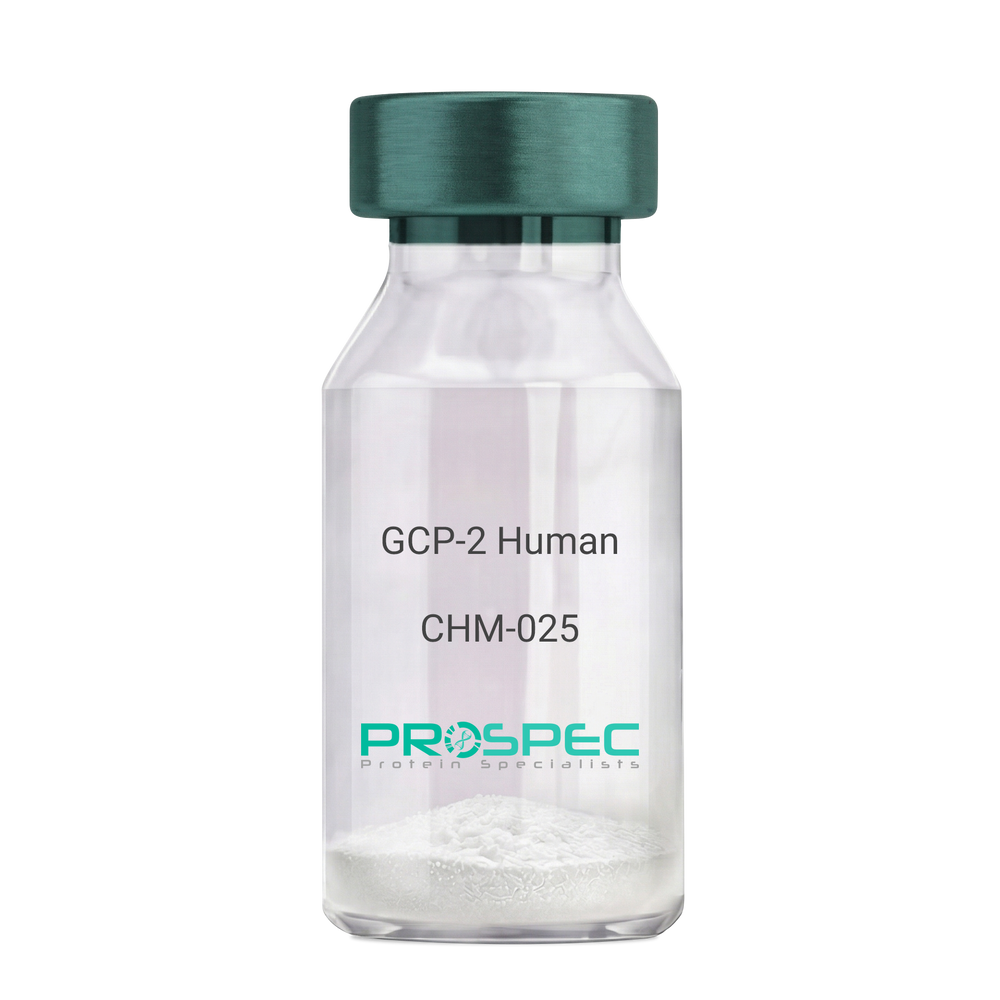
    CXCL6 Human

    Description:

    Granulocyte Chemotactic Protein 2 (CXCL6) Human Recombinant

    C-X-C motif chemokine 6, Chemokine alpha 3, CKA-3, Granulocyte chemotactic protein 2, GCP-2, Small-inducible cytokine B6.

    Product # :

    CHM-025

    Price :

    Quantity :

    Shipping Method :

    Room Temp Icon

    Shipped at Room temp

    Add To Cart

    More Info

    • description
    • source
    • formulation
    • purity
    • biological activity
    • More Info
    • Citations

    Description

    GCP-2 Human Recombinant produced in E.Coli is a single, non-glycosylated, polypeptide chain containing 72 amino acids and having a molecular mass of 7.9kDa.

    Source

    Escherichia Coli.

    Formulation

    GCP-2 protein was lyophilized from a 0.2 µm filtered concentrated solution in PBS, pH 7.4.

    Purity

    Greater than 98.0% as determined by:
    (a) Analysis by RP-HPLC.
    (b) Analysis by SDS-PAGE.

    Biological Activity

    Fully biologically active when compared to standard. The biological activity determined by a chemotaxis bioassay using human neutrophils is in a concentration range of 10-50 ng/ml corresponding to a specific activity of 20,000-100,000 IU/mg.

    Citations

    More Info

    • Introduction

      Granulocyte Chemotactic Protein 2 (CXCL6), also known as GCP-2, is a Chemotactic for neutrophil granulocytes. GCP-2 signals through binding and activation of its receptors (CXCR1 and CXCR2). GCP-2 has strong antibacterial activity against Gram-positive and Gram-negative bacteria In addition to its chemotactic and angiogenic property.

    • Synonyms

      C-X-C motif chemokine 6, Chemokine alpha 3, CKA-3, Granulocyte chemotactic protein 2, GCP-2, Small-inducible cytokine B6.

    • Physical Appearance

      Sterile Filtered White lyophilized (freeze-dried) powder.

    • Stability

      Lyophilized GCP-2 although stable at room temperature for 3 weeks, should be stored desiccated below -18°C. Upon reconstitution GCP-2 should be stored at 4°C between 2-7 days and for future use below -18°C. For long term storage it is recommended to add a carrier protein (0.1% HSA or BSA). Please prevent freeze-thaw cycles.

    • Solubility

      It is recommended to reconstitute the lyophilized GCP-2 in sterile 18M-cm H2O not less than 100µg/ml, which can then be further diluted to other aqueous solutions.

    • Amino Acid Sequence

      VLTELRCTCL RVTLRVNPKT IGKLQVFPAG PQCSKVEVVA SLKNGKQVCL DPEAPFLKKV IQKILDSGNK KN.

    • Background

      What is the molecular weight/Mw of CXCL6 HUMAN Protein?
      CXCL6 HUMAN Protein has a total Mw of 7.9kDa.

      What is the source or expression system of CXCL6 HUMAN Protein?
      Escherichia Coli.

      What is the Purity of CXCL6 HUMAN Protein?
      CXCL6 HUMAN Protein is >98% pure as determined by SDS-PAGE.

      What is the Biological Activity of CXCL6 HUMAN Protein?
      Fully biologically active when compared to standard. The biological activity determined by a chemotaxis bioassay using human neutrophils is in a concentration range of 10-50 ng/ml corresponding to a specific activity of 20,000-100,000 IU/mg.

      What is the amino acid sequence of CXCL6 HUMAN Protein?
      VLTELRCTCL RVTLRVNPKT IGKLQVFPAG PQCSKVEVVA SLKNGKQVCL DPEAPFLKKV IQKILDSGNK KN.

      What applications can CXCL6 HUMAN Protein be used in?
      CXCL6 HUMAN Protein can probably be used in western blot, ELISA and Lateral Flow.

      What is the endotoxin level for CXCL6 HUMAN Protein?
      The endotoxin level is minimal, CXCL6 HUMAN Protein was purified using conventional chromatography techniques.

      Who supplies recombinant CXCL6 HUMAN that is in stock and available to order?
      ProSpec has the protein in stock and available for immediate delivery.

      Where can I order bulk mg quantities of CXCL6 HUMAN?
      ProSpec supplies bulk mg quantities at affordable prices that meets research and academic budgets.

    ProSpec's products are furnished for LABORATORY RESEARCH USE ONLY. The product may not be used as drugs, agricultural or pesticidal products, food additives or household chemicals.

    Gcp 2 Human
  • View Data Sheet

    Name :

    CD8B Human, Sf9

    Description:

    CD8B Human Recombinant, Sf9

    CD8b Molecule, CD8 Antigen, Beta Polypeptide 1 (P37), CD8B1, T Lymphocyte Surface Glycoprotein Beta Chain, T-Cell Surface Glycoprotein CD8 Beta Chain, CD8b Antigen, Leu2, LYT3, P37, LY3, T-cell surface glycoprotein CD8 beta chain.

    Product # :

    PRO-2508

    Price :

    Quantity :

    Shipping Method :

    Ice Icon

    Shipped with Ice Packs

    Add To Cart

    More Info

    • description
    • source
    • formulation
    • purity
    • More Info
    • Citations

    Description

    CD8B produced in Sf9 Baculovirus cells is a single, glycosylated polypeptide chain containing 158 amino acids (22-170a.a.) and having a molecular mass of 17.8kDa. (Molecular size on SDS-PAGE will appear at approximately 18-28kDa).CD8B is expressed with a 6 amino acid His tag at C-Terminus and purified by proprietary chromatographic techniques.

    Source

    Sf9, Baculovirus cells.

    Formulation

    CD8B protein solution (0.5mg/ml) contains 10% glycerol & Phosphate Buffered Saline (pH 7.4).

    Purity

    Greater than 85.0% as determined by SDS-PAGE.

    Citations

    More Info

    • Introduction

      CD8B encodes the CD8 beta chain isoforms of the CD8 antigen. CD8 is a cell surface glycoprotein which facilitates efficient cell-cell interactions within the immune system and is located on most cytotoxic T lymphocytes. The T-cell receptor on the T lymphocyte and the co-receptor CD8 antigen identify antigens exposed by an antigen presenting cell (APC) in the context of class I MHC molecules. The functional co-receptor is either a heterodimer composed of one alpha and one beta chain or a homodimer composed of two alpha chains. Both alpha and beta chains share substantial homology to immunoglobulin variable light chains.

    • Synonyms

      CD8b Molecule, CD8 Antigen, Beta Polypeptide 1 (P37), CD8B1, T Lymphocyte Surface Glycoprotein Beta Chain, T-Cell Surface Glycoprotein CD8 Beta Chain, CD8b Antigen, Leu2, LYT3, P37, LY3, T-cell surface glycoprotein CD8 beta chain.

    • Physical Appearance

      Sterile filtered colorless solution.

    • Stability

      Store at 4°C if entire vial will be used within 2-4 weeks.Store, frozen at -20°C for longer periods of time. For long term storage it is recommended to add a carrier protein (0.1% HSA or BSA).Avoid multiple freeze-thaw cycles.

    • Amino Acid Sequence

      ADPLQQTPAY IKVQTNKMVM LSCEAKISLS NMRIYWLRQR QAPSSDSHHE FLALWDSAKG TIHGEEVEQE KIAVFRDASR FILNLTSVKP EDSGIYFCMI VGSPELTFGK GTQLSVVDFL PTTAQPTKKS TLKKRVCRLP RPETQKGPLC SPHHHHHH.

    ProSpec's products are furnished for LABORATORY RESEARCH USE ONLY. The product may not be used as drugs, agricultural or pesticidal products, food additives or household chemicals.

    Cd8B Protein
  • View Data Sheet

    Name :

    DHH (C23II) His Human

    Description:

    Desert HedgeHog (C23II) Human Recombinant, His Tag

    HHG-3, Desert Hedgehog homolog, MGC35145, Desert hedgehog protein, DHH.

    Product # :

    CYT-763

    Price :

    Quantity :

    Shipping Method :

    Ice Icon

    Shipped with Ice Packs

    Add To Cart

    More Info

    • description
    • source
    • formulation
    • purity
    • More Info
    • Citations

    Description

    DHH (C23II) His Human Recombinant produced in E.coli is a single, non-glycosylated polypeptide chain containing 201 amino acids (23-198) and having a molecular mass of 22.4kDa.DHH (C23II) His is fused to a 24 amino acid His-tag at N-terminus & purified by proprietary chromatographic techniques.

    Source

    Escherichia Coli.

    Formulation

    The DHH (C23II) His solution (0.25mg/ml) contains 20mM Tris-HCl buffer (pH 7.5), 0.15M NaCl, 1mM DTT and 10% glycerol.

    Purity

    Greater than 90% as determined by SDS-PAGE.

    Citations

    More Info

    • Introduction

      DHH is part of the Hedgehog family which encodes signaling molecules that are involved in regulating morphogenesis. DHH protein is a precursor that is autocatalytically cleaved, the N-terminal portion is soluble and contains the signalling activity while the C-terminal portion is involved in precursor processing. Additionally, the C-terminal product covalently attaches a cholesterol moiety to the N-terminal product, restricting the N-terminal product to the cell surface and preventing it from freely diffusing throughout the organism. Defects in DHH protein have been associated with partial gonadal dysgenesis (PGD) accompanied by minifascicular polyneuropathy. DHH plays a role both male gonadal differentiation and perineurial development.
      DHH plays a role in intercellular signaling which is essential for a variety of patterning events during development. DHH functions as a spermatocyte survival factor in the testes & is essential for testes development.

    • Synonyms

      HHG-3, Desert Hedgehog homolog, MGC35145, Desert hedgehog protein, DHH.

    • Physical Appearance

      Sterile Filtered clear solution.

    • Stability

      Store at 4°C if entire vial will be used within 2-4 weeks. Store, frozen at -20°C for longer periods of time. For long term storage it is recommended to add a carrier protein (0.1% HSA or BSA).Avoid multiple freeze-thaw cycles.

    • Amino Acid Sequence

      MGSSHHHHHH SSGLVPRGSH MGSMIIGPGR GPVGRRRYAR KQLVPLLYKQ FVPGVPERTL GASGPAEGRV ARGSERFRDL VPNYNPDIIF KDEENSGADR LMTERCKERV NALAIAVMNM WPGVRLRVTE GWDEDGHHAQ DSLHYEGRAL DITTSDRDRN KYGLLARLAV EAGFDWVYYE SRNHVHVSVK ADNSLAVRAG G

    ProSpec's products are furnished for LABORATORY RESEARCH USE ONLY. The product may not be used as drugs, agricultural or pesticidal products, food additives or household chemicals.

    Dhh C23Ii Human His
  • View Data Sheet

    Name :

    GP1BB Human

    Description:

    Glycoprotein Ib Platelet Subunit Beta Human Recombinant

    GPIBB, glycoprotein Ib platelet subunit beta, BDPLT1,GP-Ib beta, BS, CD42C ,GPIbbeta, Antigen CD42b-beta, GPIb-beta, GPIbB, Platelet glycoprotein Ib beta chain.

    Product # :

    PRO-2774

    Price :

    Quantity :

    Shipping Method :

    Ice Icon

    Shipped with Ice Packs

    Add To Cart

    More Info

    • description
    • source
    • formulation
    • purity
    • More Info
    • Citations

    Description

    GP1BB Human Recombinant is a single, glycosylated, polypeptide chain (26-147 a.a) containing a total of 131 amino acids, having a molecular mass of 14.0 kDa. GP1BB is fused to a 6 amino acid His-tag at C-terminus and is purified by proprietary chromatographic techniques.

    Source

    HEK293 Cells.

    Formulation

    The GP1BB solution (0.25mg/ml) contains 10% Glycerol and Phosphate-Buffered Saline (pH 7.4).

    Purity

    Greater than 95.0% as determined by SDS-PAGE.

    Citations

    More Info

    • Synonyms

      GPIBB, glycoprotein Ib platelet subunit beta, BDPLT1,GP-Ib beta, BS, CD42C ,GPIbbeta, Antigen CD42b-beta, GPIb-beta, GPIbB, Platelet glycoprotein Ib beta chain.

    • Physical Appearance

      Sterile Filtered colorless solution.

    • Stability

      Store at 4°C if entire vial will be used within 2-4 weeks. Store, frozen at -20°C for longer periods of time. For long term storage it is recommended to add a carrier protein (0.1% HSA or BSA). Avoid multiple freeze-thaw cycles.

    • Amino Acid Sequence

      DGSCPAPCSC AGTLVDCGRR GLTWASLPTA FPVDTTELVL TGNNLTALPP GLLDALPALR TAHLGANPWR CDCRLVPLRA WLAGRPERAP YRDLRCVAPP ALRGRLLPYL AEDELRAACA PGPLCHHHHH H.

    • Background

      Glycoprotein 1b beta (GP1BB) is a crucial component of the platelet glycoprotein Ib-IX-V complex, playing a pivotal role in platelet function and hemostasis. This research aims to explore the structure, function, and implications of GP1BB protein in platelet adhesion, aggregation, and the development of thrombotic disorders. Understanding the molecular mechanisms and regulatory roles of GP1BB can provide valuable insights into its potential as a therapeutic target for thrombotic diseases.

      Structure and Expression of GP1BB Protein:

      GP1BB is a transmembrane protein consisting of an extracellular domain, a single transmembrane region, and a short cytoplasmic tail. It is predominantly expressed on the surface of platelets, where it interacts with von Willebrand factor (VWF) and other components of the glycoprotein Ib-IX-V complex. GP1BB is crucial for mediating platelet adhesion to damaged endothelium and the formation of stable platelet aggregates at the site of injury.

      GP1BB and Platelet Adhesion:

      GP1BB interacts with VWF, which is exposed upon vascular injury. This interaction facilitates the initial attachment of platelets to the damaged endothelium. GP1BB also participates in the formation of high-affinity bonds between platelets and VWF, contributing to the stabilization of platelet adhesion and the initiation of platelet aggregation. Dysregulation of GP1BB-mediated platelet adhesion can lead to abnormal clot formation and thrombotic disorders.

      Implications of GP1BB in Thrombotic Disorders:

      Defects or mutations in the GP1BB gene can result in Bernard-Soulier syndrome (BSS), a rare inherited bleeding disorder characterized by giant platelets, thrombocytopenia, and impaired platelet adhesion. BSS patients often experience excessive bleeding and bruising due to defective GP1BB function. On the other hand, abnormal activation or overexpression of GP1BB has been associated with increased risk of thrombotic events, such as myocardial infarction and stroke.

      Therapeutic Strategies Targeting GP1BB:

      Given its crucial role in platelet function and thrombotic disorders, GP1BB represents a potential target for therapeutic interventions. Strategies aimed at modulating GP1BB expression or function have been explored. This includes the development of monoclonal antibodies or small molecule inhibitors that selectively target GP1BB and interfere with its interaction with VWF or other binding partners. Such approaches aim to prevent excessive platelet adhesion and aggregation, reducing the risk of thrombotic events.

      Challenges and Future Directions:

      While targeting GP1BB shows promise, several challenges need to be addressed. The development of specific inhibitors or modulators of GP1BB that do not interfere with its physiological functions is crucial. Additionally, understanding the complex interplay between GP1BB and other platelet receptors and signaling pathways is essential for the development of effective therapeutic strategies.

      Conclusion:

      The study of GP1BB protein provides valuable insights into its central role in platelet adhesion, aggregation, and thrombotic disorders. Understanding the molecular mechanisms and functional implications of GP1BB opens avenues for the development of targeted therapies for thrombotic diseases. Further research on GP1BB protein, its interactions, and its modulation in pathological conditions will contribute to the development of novel therapeutic interventions to mitigate the risk of thrombotic events and improve patient outcomes.

    ProSpec's products are furnished for LABORATORY RESEARCH USE ONLY. The product may not be used as drugs, agricultural or pesticidal products, food additives or household chemicals.

    Gp1Bb Human
  • View Data Sheet

    Name :

    FDX1 Human

    Description:

    Ferredoxin-1 Human Recombinant

    Adrenodoxin mitochondrial, Adrenal ferredoxin, Ferredoxin-1, Hepatoredoxin, FDX1, ADX.

    Product # :

    PRO-713

    Price :

    Quantity :

    Shipping Method :

    Ice Icon

    Shipped with Ice Packs

    Add To Cart

    More Info

    • description
    • source
    • formulation
    • purity
    • More Info
    • Citations

    Description

    FDX1 Human Recombinant fused with a 15 amino acid T7 tag at N-terminus produced in E.Coli is a single, non-glycosylated, polypeptide chain containing 139 amino acids (61-184 a.a.) and having a molecular mass of 15.0kDa.The FDX1 is purified by proprietary chromatographic techniques.

    Source

    Escherichia Coli.

    Formulation

    The FDX1 solution contains 20mM Tris-HCl buffer (pH8.0) and 10% Glycerol.

    Purity

    Greater than 90.0% as determined by SDS-PAGE.

    Citations

    More Info

    • Introduction

      Ferredoxin-1 is a small iron-sulfur protein who transfers electrons from NADPH through ferredoxin reductase to a terminal cytochrome P450. This specific oxidation/reduction system is located in steroidogenic tissues, and is involved with the synthesis of bile acid and vitamin D. FDX1 takes part in the synthesis of thyroid hormones and transfers electrons from adrenodoxin reductase to the cholesterol side chain cleavage cytochrome P450. FDX1 supports reactions catalyzed by human microsomal P450s- full length CYP17, truncated CYP17, and truncated CYP21. In addition to the FDX1 at the 11q22chromosomal locus, there are pseudogenes located on chromosomes 20 and 21.

    • Synonyms

      Adrenodoxin mitochondrial, Adrenal ferredoxin, Ferredoxin-1, Hepatoredoxin, FDX1, ADX.

    • Physical Appearance

      Sterile Filtered colorless solution.

    • Stability

      Store at 4°C if entire vial will be used within 2-4 weeks. Store, frozen at -20°C for longer periods of time. For long term storage it is recommended to add a carrier protein (0.1% HSA or BSA).Avoid multiple freeze-thaw cycles.

    • Amino Acid Sequence

      MASMTGGQQM GRGSMSSSED KITVHFINRD GETLTTKGKV GDSLLDVVVE NNLDIDGFGA CEGTLACSTC HLIFEDHIYE KLDAITDEEN DMLDLAYGLT DRSRLGCQIC LTKSMDNMTV RVPETVADAR QSIDVGKTS.

    ProSpec's products are furnished for LABORATORY RESEARCH USE ONLY. The product may not be used as drugs, agricultural or pesticidal products, food additives or household chemicals.

    Fdx1 Human
  • View Data Sheet

    Name :

    IL19 Human, HEK

    Description:

    Interleukin-19 Human Recombinant, HEK

    Melanoma differentiation association like protein, MDA1, NG.1, ZMDA1, IL-10C, IL-19

    Product # :

    CYT-1192

    Price :

    Quantity :

    Shipping Method :

    Ice Icon

    Shipped with Ice Packs

    Add To Cart

    More Info

    • description
    • source
    • formulation
    • purity
    • More Info
    • Citations

    Description

    IL19 Human Recombinant produced in HEK293 cells is a single, glycosylated polypeptide chain (a.a 25-177) containing 164 amino acids and having a molecular mass of 19.1 kDa.IL19 is fused to a 6 amino acid His-tag at C-terminus & purified by proprietary chromatographic techniques.

    Source

    HEK293 cells.

    Formulation

    IL19 protein (0.5mg/ml) contains 10% glycerol and Phosphate-Buffered Saline (pH 7.4).

    Purity

    Greater than 95.0% as determined by SDS-PAGE.

    Citations

    More Info

    • Introduction

      IL19 is a cytokine that belongs to the IL10 cytokine subfamily. IL-19 is found to be preferentially expressed in monocytes. IL19 binds the IL20 receptor complex and lead to the activation of the signal transducer and activator of transcription 3 (STAT3). A similar cytokine in mouse is reported to up-regulate the expression of IL6 and TNF-alpha and induce apoptosis, which suggests a role of this cytokine in inflammatory responses. Alternatively spliced transcript variants encoding the distinct isoforms have been described.

    • Synonyms

      Melanoma differentiation association like protein, MDA1, NG.1, ZMDA1, IL-10C, IL-19

    • Physical Appearance

      Sterile filtered colorless solution.

    • Stability

      Store at 4°C if entire vial will be used within 2-4 weeks.Store, frozen at -20°C for longer periods of time.For long term storage it is recommended to add a carrier protein (0.1% HSA or BSA).Avoid multiple freeze-thaw cycles.

    • Amino Acid Sequence

      DGSHMLRRCL ISTDMHHIEE SFQEIKRAIQ AKDTFPNVTI LSTLETLQII KPLDVCCVTK NLLAFYVDRV FKDHQEPNPK ILRKISSIAN SFLYMQKTLR QCQEQRQCHC RQEATNATRV IHDNYDQLEV HAAAIKSLGE LDVFLAWINK NHEVMFSAHH HHHH

    ProSpec's products are furnished for LABORATORY RESEARCH USE ONLY. The product may not be used as drugs, agricultural or pesticidal products, food additives or household chemicals.

    Il19 Human
  • View Data Sheet

    Name :

    RARRES2 Human

    Description:

    Retinoic Acid Receptor Responder 2 Human Recombinant

    Chemerin, TIG2, Retinoic acid receptor responder protein 2, RAR-responsive protein TIG2, RARRES2, HP10433.

    Product # :

    PRO-788

    Price :

    Quantity :

    Shipping Method :

    Room Temp Icon

    Shipped at Room temp

    Add To Cart

    More Info

    • description
    • source
    • formulation
    • purity
    • More Info
    • Citations

    Description

    RARRES2 Human Recombinant produced in E.Coli is a single, non-glycosylated, polypeptide chain containing 138 amino acids and having a total molecular mass of 16 kDa. RARRES2 Human Recombinant is purified by proprietary chromatographic techniques.

    Source

    Escherichia Coli.

    Formulation

    The RARRES2 protein was lyophilized from 0.02% TFA.

    Purity

    Greater than 98.0% as determined by: (a) Analysis by RP-HPLC. (b) Analysis by SDS-PAGE.

    Citations

    More Info

    • Introduction

      RARRES2 is a secreted chemotactic protein that initiates chemotaxis through the ChemR23 G protein-coupled seven-transmembrane domain ligand. RARRES2 acts as an adipokine, and is truncated on both termini from the proprotein. RARRES2 is structurally related to the cathelicidin precursors, cystatin C and kininogens. RARRES2 promotes calcium mobilization and chemotaxis of immature dendritic cells and macrophages. RARRES2 is secreted as a precursor of little biological activity, which requires proteolytic cleavage of its COOH-terminal domain to be exchangeed into a potent and highly specific agonist of ChemR23. RARRES2 signals via its receptor, ChemR23 (CMKLR1), as a positive regulator of adipocyte differentiation and metabolic function. The Chemerin receptor acts as a coreceptor for SIV and some primary HIV-1 strains.

    • Synonyms

      Chemerin, TIG2, Retinoic acid receptor responder protein 2, RAR-responsive protein TIG2, RARRES2, HP10433.

    • Physical Appearance

      Sterile Filtered White lyophilized (freeze-dried) powder.

    • Stability

      Lyophilized Chemerin although stable at room temperature for 3 weeks, should be stored desiccated below -18°C. Upon reconstitution Chemerin should be stored at 4°C between 2-7 days and for future use below -18°C. For long term storage it is recommended to add a carrier protein (0.1% HSA or BSA). Please prevent freeze-thaw cycles.

    • Solubility

      It is recommended to reconstitute the lyophilized Chemerin in sterile 18MΩ-cm H2O not less than 100µg/ml, which can then be further diluted to other aqueous solutions.

    • Amino Acid Sequence

      MELTEAQRRG LQVALEEFHK HPPVQWAFQE TSVESAAVDTP FPAGIFVRLE FKLQQTSRK RDWKKPECKV RPNGRKRKCL ACIKLGSEDK VLGRLVHCPI ETQVLREAEE HQETQCLRVQ RAGEDPHSFY FPGQFAFS.

    ProSpec's products are furnished for LABORATORY RESEARCH USE ONLY. The product may not be used as drugs, agricultural or pesticidal products, food additives or household chemicals.

    Rarres2 Human
  • View Data Sheet

    Name :

    SH3BGRL Human

    Description:

    SH3 Domain Binding Glutamic Acid-Rich Protein Like Human Recombinant

    SH3 domain-binding glutamic acid-rich-like protein, SH3BGRL, SH3BGR.

    Product # :

    PRO-1159

    Price :

    Quantity :

    Shipping Method :

    Ice Icon

    Shipped with Ice Packs

    Add To Cart

    More Info

    • description
    • source
    • formulation
    • purity
    • More Info
    • Citations

    Description

    SH3BGRL Human Recombinant produced in E.Coli is a single, non-glycosylated polypeptide chain containing 138 amino acids (1-114 a.a) and having a molecular mass of 15.3kDa.SH3BGRL is fused to a 24 amino acid His-tag at N-terminus & purified by proprietary chromatographic techniques.

    Source

    Escherichia Coli.

    Formulation

    SH3BGRL protein solution (1mg/ml) containing 20mM Tris-HCl buffer (pH8.0), 10% glycerol and 0.15M NaCl.

    Purity

    Greater than 95.0% as determined by SDS-PAGE.

    Citations

    More Info

    • Introduction

      SH3 domain-binding glutamic acid-rich-like protein (SH3BGRL) belongs to the human SH3BGR family. SH3BGRL gene which is located to chromosome Xq13.3, encodes a small protein of 114 amino acids that is extensively expressed in various tissues including liver and blood. SH3BGRL protein contains a prolinerich sequence (PLPPQIF), which is comprsed of both the SH3 binding (PXXP)3 and the Homer EVH1 binding (PPXXF)4 motif.

    • Synonyms

      SH3 domain-binding glutamic acid-rich-like protein, SH3BGRL, SH3BGR.

    • Physical Appearance

      Sterile Filtered colorless solution.

    • Stability

      Store at 4°C if entire vial will be used within 2-4 weeks. Store, frozen at -20°C for longer periods of time. For long term storage it is recommended to add a carrier protein (0.1% HSA or BSA).Avoid multiple freeze-thaw cycles.

    • Amino Acid Sequence

      MGSSHHHHHH SSGLVPRGSH MGSHMVIRVY IASSSGSTAI KKKQQDVLGF LEANKIGFEE KDIAANEENR KWMRENVPEN SRPATGYPLP PQIFNESQYR GDYDAFFEAR ENNAVYAFLG LTAPPGSKEA EVQAKQQA.

    ProSpec's products are furnished for LABORATORY RESEARCH USE ONLY. The product may not be used as drugs, agricultural or pesticidal products, food additives or household chemicals.

    Sh3Bgrl Human
  • View Data Sheet

    Name :

    Protein-G His

    Description:

    Protein G His Tag Recombinant

    Product # :

    PRO-1237

    Price :

    Quantity :

    Shipping Method :

    Room Temp Icon

    Shipped at Room temp

    Add To Cart

    More Info

    • description
    • source
    • formulation
    • purity
    • More Info
    • Citations

    Description

    Protein G His Tag Recombinant produced in E.Coli is a 201 amino acids protein which contains amino acid 190-384 of the Streptococcus sp with a C-terminal 6-His tag, and having a molecular mass of 21.6kDa. But it migrates with an apparent molecular mass of 32kDa in SDS-PAGE.The Protein G His Tag is purified by proprietary chromatographic techniques.

    Source

    Escherichia Coli.

    Formulation

    Lyophilized with no additives.

    Purity

    Greater than 95.0% as determined by SDS-PAGE and HPLC analyses.

    Citations

    More Info

    • Physical Appearance

      Sterile Filtered White lyophilized (freeze-dried) powder.

    • Stability

      Lyophilized Protein G although stable at room temperature for 3 weeks, should be stored desiccated below -18°C. Upon reconstitution Protein G should be stored at 4°C between 2-7 days and for future use below -18°C.Please prevent freeze-thaw cycles.

    • Solubility

      It is recommended to reconstitute the lyophilized Protein G in sterile 18M-cm H2O not less than 100µg/ml, which can then be further diluted to other aqueous solutions.

    • Applications

      Protein G binds to the constant region of many species of immunoglobulin G. It can be used to detect, quantify and purify IgG antibodies and antibody/antigen complexes. Recombinant Protein G contains only IgG binding domains. The albumin-binding domain as well as cell wall and cell membrane binding domains have been removed to ensure the maximum specific IgG binding capacity.

    • Specificity

      1. Binds with greater affinity to most mammalian immunoglobulins than Protein A, including human IgG3 and rat IgG2a.2. Does not bind to human IgM, IgD and IgA.

    ProSpec's products are furnished for LABORATORY RESEARCH USE ONLY. The product may not be used as drugs, agricultural or pesticidal products, food additives or household chemicals.

    Protein G His
  • View Data Sheet

    Name :

    F11R Human

    Description:

    F11 Receptor Human Recombinant

    Junctional adhesion molecule A, JAM-A, Junctional adhesion molecule 1, JAM-1, Platelet F11 receptor, Platelet adhesion molecule 1, PAM-1, CD321, F11R, JAM1, JCAM, JAM, KAT, JAMA.

    Product # :

    PRO-1112

    Price :

    Quantity :

    Shipping Method :

    Ice Icon

    Shipped with Ice Packs

    Add To Cart

    More Info

    • description
    • source
    • formulation
    • purity
    • More Info
    • Citations

    Description

    F11R Human Recombinant produced in E.Coli is a single, non-glycosylated polypeptide chain containing 238 amino acids (26-238 a.a) and having a molecular mass of 25.8kDa.F11R is fused to a 25 amino acid His-tag at N-terminus & purified by proprietary chromatographic techniques.

    Source

    Escherichia Coli.

    Formulation

    F11R protein solution (1mg/ml) containing 20mM Tris-HCl buffer (pH8.0), 10% glycerol, 0.15M NaCl and 1mM DTT.

    Purity

    Greater than 90.0% as determined by SDS-PAGE.

    Citations

    More Info

    • Introduction

      F11R (CD321) is a member of the immunoglobulin superfamily. F11R has a role in epithelial tight junction formation. Tight junctions exemplify one type of cell-to-cell adhesion in epithelial or endothelial cell sheets, establishing continuous seals around cells and acting as a physical barrier to thwart solutes and water from passing easily through the paracellular space. F11R protein can function as a receptor for reovirus, or as a ligand for the integrin LFA1, involved in leukocyte transmigration, or a platelet receptor.

    • Synonyms

      Junctional adhesion molecule A, JAM-A, Junctional adhesion molecule 1, JAM-1, Platelet F11 receptor, Platelet adhesion molecule 1, PAM-1, CD321, F11R, JAM1, JCAM, JAM, KAT, JAMA.

    • Physical Appearance

      Sterile Filtered colorless solution.

    • Stability

      Store at 4°C if entire vial will be used within 2-4 weeks. Store, frozen at -20°C for longer periods of time. For long term storage it is recommended to add a carrier protein (0.1% HSA or BSA).Avoid multiple freeze-thaw cycles.

    • Amino Acid Sequence

      MGSSHHHHHH SSGLVPRGSH MGSHMLGSVT VHSSEPEVRI PENNPVKLSC AYSGFSSPRV EWKFDQGDTT RLVCYNNKIT ASYEDRVTFL PTGITFKSVT REDTGTYTCM VSEEGGNSYG EVKVKLIVLV PPSKPTVNIP SSATIGNRAV LTCSEQDGSP PSEYTWFKDG IVMPTNPKST
      RAFSNSSYVL NPTTGELVFD PLSASDTGEY SCEARNGYGT PMTSNAVRME AVERNVGV.

    ProSpec's products are furnished for LABORATORY RESEARCH USE ONLY. The product may not be used as drugs, agricultural or pesticidal products, food additives or household chemicals.

    F11R Human
  • View Data Sheet

    Name :

    HSD17B11 Human

    Description:

    Hydroxysteroid (17-beta) Dehydrogenase 11 Human Recombinant

    17-beta-hydroxysteroid dehydrogenase 11, 17-beta-HSD 11, 17bHSD11, 17betaHSD11, 17-beta-hydroxysteroid dehydrogenase XI, 17-beta-HSD XI, 17betaHSDXI, Cutaneous T-cell lymphoma-associated antigen HD-CL-03, CTCL-associated antigen HD-CL-03, Dehydrogenase/reductase SDR family member 8, Retinal short-chain dehydrogenase/reductase 2, retSDR2, HSD17B11, DHRS8, PAN1B, SDR16C2, 17BHSD11.

    Product # :

    ENZ-049

    Price :

    Quantity :

    Shipping Method :

    Ice Icon

    Shipped with Ice Packs

    Add To Cart

    More Info

    • description
    • source
    • formulation
    • purity
    • More Info
    • Citations

    Description

    HSD17B11 Human Recombinant fused with a 21 amino acid His tag at N-terminus produced in E.Coli is a single, non-glycosylated, polypeptide chain containing 287 amino acids (20-285 a.a.) and having a molecular mass of 31.4kDa. The HSD17B11 is purified by proprietary chromatographic techniques.

    Source

    Escherichia Coli.

    Formulation

    The HSD17B11 solution (0.5 mg/ml) contains 20mM Tris-HCl buffer (pH8.0), 0.2M NaCl, 5mM DTT and 20% glycerol.

    Purity

    Greater than 95.0% as determined by SDS-PAGE.

    Citations

    More Info

    • Introduction

      Dehydrogenase/reductase SDR family member 8 (HSD17B11) is a member of the HSD17B family of proteins, which regulate the availability of steroids within various tissues throughout the body. HSD17B11 is widely expressed with the highest levels found in the retina, pancreas, kidney, liver, lung, adrenal, small intestine, ovary and heart as well as in steroidogenic cells. HSD17B11 converts androstan-3-?,17-?-diol (3-?-diol) to androsterone, suggesting it may participate in androgen metabolism during steroidogenesis.

    • Synonyms

      17-beta-hydroxysteroid dehydrogenase 11, 17-beta-HSD 11, 17bHSD11, 17betaHSD11, 17-beta-hydroxysteroid dehydrogenase XI, 17-beta-HSD XI, 17betaHSDXI, Cutaneous T-cell lymphoma-associated antigen HD-CL-03, CTCL-associated antigen HD-CL-03, Dehydrogenase/reductase SDR family member 8, Retinal short-chain dehydrogenase/reductase 2, retSDR2, HSD17B11, DHRS8, PAN1B, SDR16C2, 17BHSD11.

    • Physical Appearance

      Sterile Filtered colorless solution.

    • Stability

      Store at 4°C if entire vial will be used within 2-4 weeks. Store, frozen at -20°C for longer periods of time. For long term storage it is recommended to add a carrier protein (0.1% HSA or BSA).Avoid multiple freeze-thaw cycles.

    • Amino Acid Sequence

      MGSSHHHHHH SSGLVPRGSH MESFVKLFIP KRRKSVTGEI VLITGAGHGI GRLTAYEFAK LKSKLVLWDI NKHGLEETAA KCKGLGAKVH TFVVDCSNRE DIYSSAKKVK AEIGDVSILV NNAGVVYTSD LFATQDPQIE KTFEVNVLAH FWTTKAFLPA MTKNNHGHIV TVASAAGHVS VPFLLAYCSS KFAAVGFHKT LTDELAALQI TGVKTTCLCP NFVNTGFIKN PSTSLGPTLE PEEVVNRLMH GILTEQKMIF IPSSIAFLTT LERILPERFL AVLKQKI.

    ProSpec's products are furnished for LABORATORY RESEARCH USE ONLY. The product may not be used as drugs, agricultural or pesticidal products, food additives or household chemicals.

    Hsd17B11 Human
  • View Data Sheet

    Name :

    EIF3K (50-94) Human

    Description:

    Eukaryotic Translation Initiation Factor 3K (50-94 a.a.) Human Recombinant

    PLAC-24, eIF3k, eIF-3 p25, eIF-3 p28, EIF3S12.

    Product # :

    PRO-2833

    Price :

    Quantity :

    Shipping Method :

    Room Temp Icon

    Shipped at Room temp

    Add To Cart

    More Info

    • description
    • source
    • formulation
    • purity
    • More Info
    • Citations

    Description

    The EIF3KHuman is created as a recombinant protein with a 4kda N-terminal fusion of His Tag. The EIF3KHis-Tagged Fusion Protein, produced in E. coli, is a 10kDa protein containing 45 amino acid residues of the EIF3KHuman, 50-94 amino acids.

    Source

    Escherichia Coli.

    Formulation

    Each mg was lyophilized with 1xPBS, 0.4% SDS and 4mM DTT.

    Purity

    Greater than 90% as determined by SDS-PAGE.

    Citations

    More Info

    • Synonyms

      PLAC-24, eIF3k, eIF-3 p25, eIF-3 p28, EIF3S12.

    • Physical Appearance

      Filtered White lyophilized (freeze-dried) powder.

    • Stability

      Store lyophilized EIF3Kat -20°C. Aliquot the product after reconstitution to avoid repeated freezing/thawing cycles. Reconstituted protein can be stored at 4°C for a limited period of time; it does not show any change after two weeks at 4°C.

    • Solubility

      It is recommended to add deionized water to prepare a working stock solution of approximately 0.5mg/ml and let the lyophilized pellet dissolve completely. Product is not sterile! Please filter the product by an appropriate sterile filter before using it on cell culture.

    • Background

      Eukaryotic Translation Initiation Factor 3K (EIF3K) is a part of the eIF3 subunit K family. EIF3K is the smallest subunit of eIF3 and it interacts with a few other subunits of the 40S ribosomal subunit and eIF3. EIF3K is found both in nucleus and cytoplasm and colocalized with cyclin D3, a regulatory subunit of cyclin-dependent kinase 4. EIF3K is conserved among high eukaryotes, including mammals, plants and insects and is expressed in human tissues.

    ProSpec's products are furnished for LABORATORY RESEARCH USE ONLY. The product may not be used as drugs, agricultural or pesticidal products, food additives or household chemicals.

    Eif3K Protein
  • View Data Sheet

    Name :

    TSR2 Human

    Description:

    TSR2 Human Recombinant

    TSR2, 20S RRNA Accumulation, Homolog (S. Cerevisiae), WGG Motif Containing 1, Pre-RRNA-Processing Protein TSR2 Homolog, DT1P1A10, DBA14, WGG1, Pre-rRNA-processing protein TSR2 homolog.

    Product # :

    PRO-2079

    Price :

    Quantity :

    Shipping Method :

    Ice Icon

    Shipped with Ice Packs

    Add To Cart

    More Info

    • description
    • source
    • formulation
    • purity
    • More Info
    • Citations

    Description

    TSR2 Human Recombinant produced in E.Coli is a single, non-glycosylated polypeptide chain containing 213 amino acids (1-190 a.a) and having a molecular mass of 23.2kDa. TSR2 is fused to a 23 amino acid His-tag at N-terminus & purified by proprietary chromatographic techniques.

    Source

    Escherichia Coli.

    Formulation

    TSR2 protein solution (0.5mg/ml) containing PBS buffer (pH 7.4) and 10% glycerol.

    Purity

    Greater than 90% as determined by SDS-PAGE.

    Citations

    More Info

    • Introduction

      TSR2 is part of the TSR2 family. TSR2 is involved in 20S pre-rRNA processing. Among the diseases which are associated with TSR2 are blepharospasm and diamond-blackfan anemia.

    • Synonyms

      TSR2, 20S RRNA Accumulation, Homolog (S. Cerevisiae), WGG Motif Containing 1, Pre-RRNA-Processing Protein TSR2 Homolog, DT1P1A10, DBA14, WGG1, Pre-rRNA-processing protein TSR2 homolog.

    • Physical Appearance

      Sterile Filtered colorless solution.

    • Stability

      Store at 4°C if entire vial will be used within 2-4 weeks. Store, frozen at -20°C for longer periods of time. For long term storage it is recommended to add a carrier protein (0.1% HSA or BSA).Avoid multiple freeze-thaw cycles.

    • Amino Acid Sequence

      MGSSHHHHHH SSGLVPRGSH MGSMAGAAED ARALFRAGVC AALEAWPALQ IAVENGFGGV HSQEKAKWLG GAVEDYFMRN ADLELDEVED FLGELLTNEF DTVVEDGSLP QVSQQLQTMF HHFQRGDGAA LREMASCITQ RKCKVTATAL KTARETDEDE DDVDSVEEME VTATNDGAAT DGVCPQPEPS DPDAQTIKEE DIVEDGWTIV RRK.

    ProSpec's products are furnished for LABORATORY RESEARCH USE ONLY. The product may not be used as drugs, agricultural or pesticidal products, food additives or household chemicals.

    Tsr2 Human
  • View Data Sheet

    Name :

    STIP1 Human

    Description:

    Stress-Induced-Phosphoprotein 1 Human Recombinant

    Stress Induced Phosphoprotein 1, Transformation-Sensitive Protein IEF SSP 3521, Renal Carcinoma Antigen NY-REN-11, Stress-Induced-Phosphoprotein 1, Hsp70/Hsp90-Organizing Protein, Hsc70/Hsp90-Organizing Protein, STI1, HOP, Epididymis Secretory Sperm Binding Protein Li 94n, NY-REN-11 Antigen, IEF-SSP-3521, HEL-S-94n, STI1L, P60.

    Product # :

    PRO-2334

    Price :

    Quantity :

    Shipping Method :

    Ice Icon

    Shipped with Ice Packs

    Add To Cart

    More Info

    • description
    • source
    • formulation
    • purity
    • More Info
    • Citations

    Description

    STIP1 Human Recombinant produced in E.Coli is a single, non-glycosylated polypeptide chain containing 543 amino acids (1-543 a.a) and having a molecular mass of 62.6kDa. STIP1 is purified by proprietary chromatographic techniques.

    Source

    Escherichia Coli.

    Formulation

    STIP1 protein solution (0.5mg/ml) containing 20mM Tris-HCl (pH 8.0), 10% glycerol, 1mM DTT and 0.1M NaCl.

    Purity

    Greater than 95.0% as determined by SDS-PAGE.

    Citations

    More Info

    • Introduction

      STIP1 is an adaptor protein that mediates the functions of HSP70 & HSP90 in protein folding. STIP1 supports the transfer of proteins from HSP70 to HSP90 by binding together HSP90 and substrate-bound HSP70. STIP1 stimulates the ATPase activity of HSP70 and inhibits the ATPase activity of HSP90, suggesting that it regulates both the conformations and ATPase cycles of these chaperones. STIP1 genetic variations are involved in regulating corticosteroid response in asthmatic subjects with reduced lung function.

    • Synonyms

      Stress Induced Phosphoprotein 1, Transformation-Sensitive Protein IEF SSP 3521, Renal Carcinoma Antigen NY-REN-11, Stress-Induced-Phosphoprotein 1, Hsp70/Hsp90-Organizing Protein, Hsc70/Hsp90-Organizing Protein, STI1, HOP, Epididymis Secretory Sperm Binding Protein Li 94n, NY-REN-11 Antigen, IEF-SSP-3521, HEL-S-94n, STI1L, P60.

    • Physical Appearance

      Sterile Filtered colorless solution.

    • Stability

      Store at 4°C if entire vial will be used within 2-4 weeks. Store, frozen at -20°C for longer periods of time. For long term storage it is recommended to add a carrier protein (0.1% HSA or BSA). Avoid multiple freeze-thaw cycles.

    • Amino Acid Sequence

      MEQVNELKEK GNKALSVGNI DDALQCYSEA IKLDPHNHVL YSNRSAAYAK KGDYQKAYED GCKTVDLKPD WGKGYSRKAA ALEFLNRFEE AKRTYEEGLK HEANNPQLKE GLQNMEARLA ERKFMNPFNM PNLYQKLESD PRTRTLLSDP TYRELIEQLR NKPSDLGTKL QDPRIMTTLS VLLGVDLGSM DEEEEIATPP PPPPPKKETK PEPMEEDLPE NKKQALKEKE LGNDAYKKKD FDTALKHYDK AKELDPTNMT YITNQAAVYF EKGDYNKCRE LCEKAIEVGR ENREDYRQIA KAYARIGNSY FKEEKYKDAI HFYNKSLAEH RTPDVLKKCQ QAEKILKEQE RLAYINPDLA LEEKNKGNEC FQKGDYPQAM KHYTEAIKRN PKDAKLYSNR AACYTKLLEF QLALKDCEEC IQLEPTFIKG YTRKAAALEA MKDYTKAMDV YQKALDLDSS CKEAADGYQR CMMAQYNRHD SPEDVKRRAM ADPEVQQIMS DPAMRLILEQ MQKDPQALSE HLKNPVIAQK IQKLMDVGLI AIR.

    ProSpec's products are furnished for LABORATORY RESEARCH USE ONLY. The product may not be used as drugs, agricultural or pesticidal products, food additives or household chemicals.

    Human Stip1
  • View Data Sheet

    Name :

    4 1BBL Human, His

    Description:

    4-1BB Ligand Human Recombinant, His Tag

    CD137L, CD137-L, 4-1BBL, 4-1BB Ligand, TNFSF9, Tumor Necrosis Factor (ligand) Superfamily Member 9.

    Product # :

    CYT-649

    Price :

    Quantity :

    Shipping Method :

    Ice Icon

    Shipped with Ice Packs

    Add To Cart

    More Info

    • description
    • source
    • formulation
    • purity
    • More Info
    • sds-page
    • Citations

    Description

    TNFSF9 Human Recombinant fused to 37 amino acids His tag at N-terminus produced in E.Coli is a single, non-glycosylated polypeptide chain containing 222 amino acids (71-254 a.a.) and having a molecular mass of 23.8 kDa. The TNFSF9 37 aa His tag fusion protein is purified by proprietary chromatographic techniques.

    Source

    Escherichia Coli.

    Formulation

    Recombinant 4-1BBL solution (1mg/ml) contains 20mM Tris-HCl buffer pH-8, 100mM NaCl and 20% glycerol.

    Purity

    Greater than 95.0% as determined by SDS-PAGE

    sds-page

    4-1BBL-His-sds-page - Product image 1

    Citations

    More Info

    • Introduction

      4-1BBL is a transmembrane cytokine that is part of the tumor necrosis factor (TNF) ligand family. 4-1BBL is a bidirectional signal transducer that performs as a ligand for TNFRSF9, which is a costimulatory receptor molecule in T lymphocytes. TNFSF9 and its TNFRSF9 take part in the antigen presentation development and in the generation of cytotoxic T cells. 4-1BBR is absent from resting T lymphocytes but rapidly expressed upon antigenic stimulation. TNFSF9 reactivates anergic T lymphocytes as well as promoting T lymphocyte proliferation. 4-1BB Ligand is needed for the optimal CD8 responses in CD8 T cells. 4-1BBL is expressed in carcinoma cell lines, and is thought to be involved in T cell-tumor cell interaction. 4-1BBL is expressed by activated B cells, macrophages, dendritic cells, activated T cells, neurons and astrocytes. The interaction of 4-1BB with TNFRSF9 strongly regulates immunity and has been proposed to preferentially control T cell responses based on studies in various murin

    • Synonyms

      CD137L, CD137-L, 4-1BBL, 4-1BB Ligand, TNFSF9, Tumor Necrosis Factor (ligand) Superfamily Member 9.

    • Physical Appearance

      Sterile Filtered colorless solution.

    • Stability

      Store at 4°C if entire vial will be used within 2-4 weeks. Store, frozen at -20°C for longer periods of time. For long term storage it is recommended to add a carrier protein (0.1% HSA or BSA).Avoid multiple freeze-thaw cycles.

    • Amino Acid Sequence

      MRGSHHHHHH GMASMTGGQQ MGRDLYDDDD KDRWGSHMRE GPELSPDDPA GLLDLRQGMF AQLVAQNVLL IDGPLSWYSD PGLAGVSLTGGLSYKEDTKE LVVAKAGVYY VFFQLELRRV VAGEGSGSVS LALHLQPLRS AAGAAALALT VDLPPASSEA RNSAFGFQGR LLHLSAGQRL GVHLHTEARA RHAWQLTQGA TVLGLFRVTP EIPAGLPSPR SE.

    ProSpec's products are furnished for LABORATORY RESEARCH USE ONLY. The product may not be used as drugs, agricultural or pesticidal products, food additives or household chemicals.

    4-1Bbl Protein
  • View Data Sheet

    Name :

    MHC CLASS II, I-E Antibody

    Description:

    MHC CLASS II, (I-E) Mouse Antibody

    Product # :

    ANT-297

    Price :

    Quantity :

    Shipping Method :

    Room Temp Icon

    Shipped at Room temp

    Add To Cart

    More Info

    • formulation
    • More Info
    • Citations

    Formulation

    1mg/ml in PBS (after reconstitution).

    Citations

    More Info

    • Introduction

      MHC Class II is consists of 2 membrane spanning proteins. Each of these proteins is roughly 30 kDa, and has of two Globular domains, Alpha-1, Alpha-2, Beta-1 and Beta-2. The two regions farthest away from the membrane are alpha-1 and beta-1. The two proteins link without Covalent Bonds. The MHC Class II protein mainly presents peptides, which have been digested from external sources. MHC Class II is normally only expressed by Antigen Presenting Cells (APC) which digest foreign protein. Within the RER the alpha and beta proteins of the molecule, associate with each other, while a third protein called the "invariant chain," is necessary for stabilizing the complex, without it, they will not associate. The MHC-invariant complex is then passed from the RER, into and out of, the Golgi body. It fuses with an Endocytic compartment, where an external protein has been sampled and degraded.

    • Solubility

      Reconstitute with of H20. Mix gently, wash the sides of the vial and wait 30-60 seconds before use.

    • Immunogen

      Purified mouse LN B cells (C3H anti-C57Bl6).

    • Ig Subclass

      Mouse IgG2a.

    • Clone

      NYRmI-E.

    • Applications

      Cytotoxic and staining antibody. For staining, use 10ml/1,000,000 cells. Titer for cytotoxicity should be determined by the investigator.

    • Specificity

      Recognizes most MHC I-E class II haplotypes Reacts with H-2k, H-2d, H-2p and H-2r.

    • Available Conjugates

      This antibody is also available conjugated to biotin and FITC.

    • Type

      Mouse Antibody Monoclonal.

    • Storage Procedures

      Lyophilized: store at 4°C. After reconstitution, if not intended for use within a month, aliquot and store at -20°C.

    • Purification Method

      Ion exchange column.

    ProSpec's products are furnished for LABORATORY RESEARCH USE ONLY. The product may not be used as drugs, agricultural or pesticidal products, food additives or household chemicals.

    Mhc Class Ii I E Antibody
  • View Data Sheet

    Name :

    PECAM1 Mouse

    Description:

    Platelet Endothelial Cell Adhesion Molecule 1 MouseRecombinant

    Platelet endothelial cell adhesion molecule, PECAM1, CD31, CD31/EndoCAM, endoCAM, GPIIA', PECA1, PECAM-1, Platelet Endothelial Cell Adhesion Molecule 1.

    Product # :

    CYT-1211

    Price :

    Quantity :

    Shipping Method :

    Ice Icon

    Shipped with Ice Packs

    Add To Cart

    More Info

    • description
    • source
    • formulation
    • purity
    • More Info
    • Citations

    Description

    PECAM1 Mouse Recombinant produced in HEK293 is a single, non-glycosylated polypeptide chain containing 579 amino acids (18-590 a.a.) and having a molecular mass of 65.3 kDa. PECAM1 Mouse is fused to an 6 amino acid His-tag at C-terminus & purified by proprietary chromatographic techniques.

    Source

    Sf9, Baculovirus cells.

    Formulation

    PECAM1 Mouse protein solution (0.25mg/ml) containing Phosphate Buffered Saline (pH 7.4) and 10% glycerol.

    Purity

    Greater than 90% as determined by SDS-PAGE.

    Citations

    More Info

    • Introduction

      Platelet endothelial cell adhesion molecule (PECAM1) induces susceptibility to atherosclerosis. PECAM1 averts phagocyte ingestion of closely apposed viable cells by transmitting detachment signals, and transforms function upon apoptosis, thus promoting tethering of dying cells to phagocytes. The encounter of a viable cell with a phagocyte via the homophilic interaction of PECAM1 on both cell surfaces as a result causing the viable cell's active repulsion from the phagocyte.

    • Synonyms

      Platelet endothelial cell adhesion molecule, PECAM1, CD31, CD31/EndoCAM, endoCAM, GPIIA', PECA1, PECAM-1, Platelet Endothelial Cell Adhesion Molecule 1.

    • Physical Appearance

      Sterile filtered colorless solution.

    • Stability

      Store at 4°C if entire vial will be used within 2-4 weeks. Store, frozen at -20°C for longer periods of time. For long term storage it is recommended to add a carrier protein (0.1% HSA or BSA).Avoid multiple freeze-thaw cycles.

    • Amino Acid Sequence

      EENSFTINSI HMESLPSWEV MNGQQLTLEC LVDISTTSKS RSQHRVLFYK DDAMVYNVTS REHTESYVIP QARVFHSGKY KCTVMLNNKE KTTIEYEVKV HGVSKPKVTL DKKEVTEGGV VTVNCSLQEE KPPIFFKIEK LEVGTKFVKR RIDKTSNENF VLMEFPIEAQ DHVLVFRCQA GILSGFKLQE SEPIRSEYVT VQESFSTPKF EIKPPGMIIE GDQLHIRCIV QVTHLVQEFT EIIIQKDKAI VATSKQSSEA VYSVMAMVEY SGHYTCKVES NRISKASSIM VNITELFPKP KLEFSSSRLD QGELLDLSCS VSGTPVANFT IQKEETVLSQ YQNFSKIAEE SDSGEYSCTA GIGKVVKRSG LVPIQVCEML SKPSIFHDAK SEIIKGHAIG ISCQSENGTA PITYHLMKAK SDFQTLEVTS NDPATFTDKP TRDMEYQCRA DNCHSHPAVF SEILRVRVIA PVDEVVISIL SSNEVQSGSE MVLRCSVKEG TSPITFQFYK EKEDRPFHQA VVNDTQAFWH NKQASKKQEG QYYCTASNRA SSMRTSPRSS TLAVRVFLAP WKK HHHHH

    ProSpec's products are furnished for LABORATORY RESEARCH USE ONLY. The product may not be used as drugs, agricultural or pesticidal products, food additives or household chemicals.

    Pecam1 Mouse
  • View Data Sheet

    Name :

    SIRPG Human

    Description:

    Signal-Regulatory Protein Gamma Human Recombinant

    signal-regulatory protein gamma isoform 1 precursor, bA77C3.1, CD172g, SIRP-B2, SIRPB2, SIRPgamma, Signal-Regulatory Protein Gamma, SIRPG, SIRP-b2, SIRP-beta-2, CD_antigen: CD172g, CD172 antigen-like family member B, Signal-regulatory protein beta-2, SIRP-gamma.

    Product # :

    PRO-2013

    Price :

    Quantity :

    Shipping Method :

    Ice Icon

    Shipped with Ice Packs

    Add To Cart

    More Info

    • description
    • source
    • formulation
    • purity
    • More Info
    • Citations

    Description

    SIRPG Human Recombinant produced in E.Coli is a single, non-glycosylated polypeptide chain containing 355 amino acids (29-360 a.a.) and having a molecular mass of 39.1kDa.SIRPG is fused to a 23 amino acid His-tag at N-terminus & purified by proprietary chromatographic techniques.

    Source

    Escherichia Coli.

    Formulation

    SIRPG protein solution (1mg/ml) containing 20mM Tris-HCl buffer (pH 8.0), 0.4M Urea and 10% glycerol.

    Purity

    Greater than 80.0% as determined by SDS-PAGE.

    Citations

    More Info

    • Introduction

      Signal-Regulatory Protein Gamma (SIRPG) belongs to the signal-regulatory protein (SIRP) family whose members are receptor-type transmembrane glycoproteins which negatively regulate the receptor tyrosine kinase-coupled signaling processes. SIRPG is also a part of the immunoglobulin superfamily.

    • Synonyms

      signal-regulatory protein gamma isoform 1 precursor, bA77C3.1, CD172g, SIRP-B2, SIRPB2, SIRPgamma, Signal-Regulatory Protein Gamma, SIRPG, SIRP-b2, SIRP-beta-2, CD_antigen: CD172g, CD172 antigen-like family member B, Signal-regulatory protein beta-2, SIRP-gamma.

    • Physical Appearance

      Sterile Filtered colorless solution.

    • Stability

      Store at 4°C if entire vial will be used within 2-4 weeks. Store, frozen at -20°C for longer periods of time. For long term storage it is recommended to add a carrier protein (0.1% HSA or BSA).Avoid multiple freeze-thaw cycles.

    • Amino Acid Sequence

      MGSSHHHHHH SSGLVPRGSH MGSEEELQMI QPEKLLLVTV GKTATLHCTV TSLLPVGPVL WFRGVGPGRE LIYNQKEGHF PRVTTVSDLT KRNNMDFSIR ISSITPADVG TYYCVKFRKG SPENVEFKSG PGTEMALGAK PSAPVVLGPA ARTTPEHTVS FTCESHGFSP RDITLKWFKN GNELSDFQTN VDPTGQSVAY SIRSTARVVL DPWDVRSQVI CEVAHVTLQG DPLRGTANLS EAIRVPPTLE VTQQPMRVGN QVNVTCQVRK FYPQSLQLTW SENGNVCQRE TASTLTENKD GTYNWTSWFL VNISDQRDDV VLTCQVKHDG QLAVSKRLAL EVTVHQKDQS SDATP.

    ProSpec's products are furnished for LABORATORY RESEARCH USE ONLY. The product may not be used as drugs, agricultural or pesticidal products, food additives or household chemicals.

    Sirpg Human
  • 1
  • …
  • 18
  • 19
  • 20
  • 21
  • 22
  • …
  • 28
Your browser does not support the video tag.

Products

  • Cytokines
  • Growth Factors
  • Chemokines
  • CD Antigens
  • Neurotrophins
  • Hormones
  • Enzymes
  • Viral Antigens
  • Recombinant Proteins
  • Natural Proteins
  • Monoclonal Antibodies
  • Polyclonal Antibodies
  • Thermal Packaging

About

  • Company
  • Founder
  • Contribution
  • Contact Us
  • My Account

Ordering

  • Ordering Method
  • Ordering - Credit Card
  • Ordering PO
  • Shipping Fees
  • FAQ's

Legal

  • Terms & Conditions
  • Privacy
  • Site Map
  • info@prospecbio.com
  • Facebook
  • Instagram
  • Linkedin Profile

© 2026 ProSpec-Tany TechnoGene Ltd. All Rights Reserved.

  • Choosing a selection results in a full page refresh.
  • Opens in a new window.