Skip to content

High-quality research proteins.

  • 1-800-805-6531

  • Mon - Sat 8.00-18.00, Sun - Closed

  • info@prospecbio.com

  • PO Box 6591 East Brunswick NJ 08816

  • Products
    • Cytokines
    • Growth factors
    • Chemokines
    • Cd antigens
    • Neurotrophins
    • Hormones
    • Enzymes
    • Viral antigens
    • Recombinant proteins
    • Natural proteins
    • Monoclonal antibodies
    • Polyclonal antibodies
    • Thermal Packaging
  • About
    • Company
    • Founder
    • Contribution
  • Customers
    • Eastern Asia
    • Eastern Europe
    • North America
    • South America
    • South East Asia
    • Southern Asia
    • Western Europe
  • Ordering
    • Ordering Method
    • Ordering - Credit Card
    • Ordering - PO
    • Shipping Fees
    • FAQs
  • Services
    • DNA Cloning
    • Protein Expression
    • Monoclonal Antibody
    • Fermentation
    • Technology License
  • Contact us
Log in

Country/region

  • USD $ | Albania
  • USD $ | Andorra
  • USD $ | Argentina
  • USD $ | Armenia
  • USD $ | Australia
  • USD $ | Austria
  • USD $ | Azerbaijan
  • USD $ | Belarus
  • USD $ | Belgium
  • USD $ | Bolivia
  • USD $ | Brazil
  • USD $ | Bulgaria
  • USD $ | Cambodia
  • USD $ | Canada
  • USD $ | Chile
  • USD $ | China
  • USD $ | Colombia
  • USD $ | Costa Rica
  • USD $ | Croatia
  • USD $ | Cyprus
  • USD $ | Czechia
  • USD $ | Denmark
  • USD $ | Estonia
  • USD $ | Finland
  • USD $ | France
  • USD $ | Georgia
  • USD $ | Germany
  • USD $ | Greece
  • USD $ | Hong Kong SAR
  • USD $ | Hungary
  • USD $ | Iceland
  • USD $ | India
  • USD $ | Ireland
  • USD $ | Israel
  • USD $ | Italy
  • USD $ | Japan
  • USD $ | Kazakhstan
  • USD $ | Latvia
  • USD $ | Liechtenstein
  • USD $ | Lithuania
  • USD $ | Madagascar
  • USD $ | Malta
  • USD $ | Mexico
  • USD $ | Moldova
  • USD $ | Monaco
  • USD $ | Netherlands
  • USD $ | New Zealand
  • USD $ | North Macedonia
  • USD $ | Norway
  • USD $ | Panama
  • USD $ | Paraguay
  • USD $ | Peru
  • USD $ | Philippines
  • USD $ | Poland
  • USD $ | Portugal
  • USD $ | Romania
  • USD $ | Singapore
  • USD $ | Slovakia
  • USD $ | Slovenia
  • USD $ | South Africa
  • USD $ | South Korea
  • USD $ | Spain
  • USD $ | Sri Lanka
  • USD $ | Sweden
  • USD $ | Switzerland
  • USD $ | Taiwan
  • USD $ | Thailand
  • USD $ | Türkiye
  • USD $ | Ukraine
  • USD $ | United Kingdom
  • USD $ | United States
  • USD $ | Uruguay
  • USD $ | Vatican City
  • USD $ | Venezuela
  • USD $ | Vietnam
  • Facebook
  • Instagram
logoProSpec - Recombinant Protein Manufacturer for academic and R&D industry
Become a distributor
Account Log in
Wishlist
Cart Cart(0)
  • Products
    +
    • Cytokines
    • Growth factors
    • Chemokines
    • Cd antigens
    • Neurotrophins
    • Hormones
    • Enzymes
    • Viral antigens
    • Recombinant proteins
    • Natural proteins
    • Monoclonal antibodies
    • Polyclonal antibodies
    • Thermal Packaging
  • About
    +
    • Company
    • Founder
    • Contribution
  • Customers
    +
    • Eastern Asia
    • Eastern Europe
    • North America
    • South America
    • South East Asia
    • Southern Asia
    • Western Europe
  • Ordering
    +
    • Ordering Method
    • Ordering - Credit Card
    • Ordering - PO
    • Shipping Fees
    • FAQs
  • Services
    +
    • DNA Cloning
    • Protein Expression
    • Monoclonal Antibody
    • Fermentation
    • Technology License
  • Contact us

Item added to your cart

View cart
View All
  • Cytokines
  • Growth factors
  • Chemokines
  • Cd antigens
  • Neurotrophins
  • Hormones
  • Enzymes
  • Viral antigens
  • Recombinant proteins
  • Natural proteins
  • Monoclonal antibodies
  • Polyclonal antibodies
  • Thermal Packaging
  • Tumor Necrosis Factor

    Tumor Necrosis Factor

    View All
  • 4-1BB

    4-1BB

    View All
  • Adiponectin

    Adiponectin

    View All
  • AIF1

    AIF1

    View All
  • Other Cytokines

    Other Cytokines

    View All
  • AITRL

    AITRL

    View All
  • Angiopoietin

    Angiopoietin

    View All
  • Apolipoprotein

    Apolipoprotein

    View All
  • B-Cell Activating Factor

    B-Cell Activating Factor

    View All
  • Beta Defensin

    Beta Defensin

    View All
  • Bone Morphogenetic Protein

    Bone Morphogenetic Protein

    View All
  • B type Natriuretic Peptide

    B type Natriuretic Peptide

    View All
  • BST

    BST

    View All
  • Betacellulin

    Betacellulin

    View All
  • Cardiotrophin

    Cardiotrophin

    View All
  • Activin

    Activin

    View All
  • Fibroblast Growth Factor

    Fibroblast Growth Factor

    View All
  • Other Growth Factors

    Other Growth Factors

    View All
  • CSF

    CSF

    View All
  • CTGF

    CTGF

    View All
  • IGFBP

    IGFBP

    View All
  • VEGF Protein

    VEGF Protein

    View All
  • EGF

    EGF

    View All
  • Epigen

    Epigen

    View All
  • Erythropoietin

    Erythropoietin

    View All
  • Insulin-Like Growth Factor

    Insulin-Like Growth Factor

    View All
  • Growth Hormone

    Growth Hormone

    View All
  • HDGF

    HDGF

    View All
  • Hepatocyte Growth Factor

    Hepatocyte Growth Factor

    View All
  • Insulin

    Insulin

    View All
  • BCA-1/ BLC (CXCL13)

    BCA-1/ BLC (CXCL13)

    View All
  • BRAK (CXCL14)

    BRAK (CXCL14)

    View All
  • C-10 (CCL6)

    C-10 (CCL6)

    View All
  • Other Chemokines

    Other Chemokines

    View All
  • MEC (CCL28)

    MEC (CCL28)

    View All
  • LD78-beta (CCL3L1)

    LD78-beta (CCL3L1)

    View All
  • CTACK (CCL27)

    CTACK (CCL27)

    View All
  • CXCL16

    CXCL16

    View All
  • CXCL17

    CXCL17

    View All
  • Platelet Factor-4 (CXCL4)

    Platelet Factor-4 (CXCL4)

    View All
  • ENA-78 (CXCL5)

    ENA-78 (CXCL5)

    View All
  • Eotaxin (CCL11,24,26)

    Eotaxin (CCL11,24,26)

    View All
  • Exodus-2 (CCL21)

    Exodus-2 (CCL21)

    View All
  • Fractalkine (CX3CL1)

    Fractalkine (CX3CL1)

    View All
  • CXCL6

    CXCL6

    View All
  • Other CD Antigens

    Other CD Antigens

    View All
  • CD14

    CD14

    View All
  • CD164

    CD164

    View All
  • CD1

    CD1

    View All
  • CD2

    CD2

    View All
  • CD200

    CD200

    View All
  • CD207

    CD207

    View All
  • CD226

    CD226

    View All
  • CD23

    CD23

    View All
  • CD244

    CD244

    View All
  • CD247

    CD247

    View All
  • CD27

    CD27

    View All
  • CD274

    CD274

    View All
  • CD300

    CD300

    View All
  • CD33

    CD33

    View All
  • Other Neurotrophins

    Other Neurotrophins

    View All
  • Beta-NGF

    Beta-NGF

    View All
  • BDNF

    BDNF

    View All
  • CDNF

    CDNF

    View All
  • CNTF

    CNTF

    View All
  • GDNF

    GDNF

    View All
  • Glia Maturation Factor

    Glia Maturation Factor

    View All
  • MANF

    MANF

    View All
  • Midkine

    Midkine

    View All
  • Neuroglobin

    Neuroglobin

    View All
  • Neurotrophic factors

    Neurotrophic factors

    View All
  • Neuregulin

    Neuregulin

    View All
  • Neuropilin

    Neuropilin

    View All
  • Pigment Epithelium-Derived Factor

    Pigment Epithelium-Derived Factor

    View All
  • Pleiotrophin

    Pleiotrophin

    View All
  • Peptide Hormones

    Peptide Hormones

    View All
  • Other Hormones

    Other Hormones

    View All
  • HCG

    HCG

    View All
  • Endothelin

    Endothelin

    View All
  • Exendin

    Exendin

    View All
  • FSH

    FSH

    View All
  • Glucagon

    Glucagon

    View All
  • GHRP

    GHRP

    View All
  • GLP

    GLP

    View All
  • Thyrostimulin

    Thyrostimulin

    View All
  • Inhibin A

    Inhibin A

    View All
  • LHRH

    LHRH

    View All
  • Melanotan

    Melanotan

    View All
  • Procalcitonin

    Procalcitonin

    View All
  • PTH

    PTH

    View All
  • Peroxiredoxin

    Peroxiredoxin

    View All
  • Peptidase

    Peptidase

    View All
  • Synthetase

    Synthetase

    View All
  • Transferase

    Transferase

    View All
  • Hydrolase

    Hydrolase

    View All
  • Dehydrogenase

    Dehydrogenase

    View All
  • ACE2

    ACE2

    View All
  • Esterase

    Esterase

    View All
  • Protein Kinases

    Protein Kinases

    View All
  • Other Enzymes

    Other Enzymes

    View All
  • Phosphatase

    Phosphatase

    View All
  • Deaminase

    Deaminase

    View All
  • Oxygenase

    Oxygenase

    View All
  • Adenylate Kinase

    Adenylate Kinase

    View All
  • Lyase

    Lyase

    View All
  • Chagas

    Chagas

    View All
  • SARS

    SARS

    View All
  • Influenza

    Influenza

    View All
  • ASFV

    ASFV

    View All
  • Astrovirus

    Astrovirus

    View All
  • Borrelia

    Borrelia

    View All
  • Helicobacter Pylori

    Helicobacter Pylori

    View All
  • Chikungunya

    Chikungunya

    View All
  • Chlamydia

    Chlamydia

    View All
  • Cytomegalo

    Cytomegalo

    View All
  • Dengue

    Dengue

    View All
  • EBV

    EBV

    View All
  • Ebola

    Ebola

    View All
  • Feline Leukemia Virus

    Feline Leukemia Virus

    View All
  • Hepatitis A

    Hepatitis A

    View All
  • Other

    Other

    View All
  • Actin

    Actin

    View All
  • ADAM

    ADAM

    View All
  • Complement Component

    Complement Component

    View All
  • Ag85

    Ag85

    View All
  • Eukaryotic Translation Initiation Factor

    Eukaryotic Translation Initiation Factor

    View All
  • Anterior Gradient Protein

    Anterior Gradient Protein

    View All
  • Heat Shock Protein

    Heat Shock Protein

    View All
  • Alpha-2-HS-Glycoprotein

    Alpha-2-HS-Glycoprotein

    View All
  • Hemoglobin

    Hemoglobin

    View All
  • Allergy

    Allergy

    View All
  • Anaplasma

    Anaplasma

    View All
  • Angiogenin

    Angiogenin

    View All
  • Ankyrin Repeat Domain

    Ankyrin Repeat Domain

    View All
  • Annexin

    Annexin

    View All
  • Other Natural Proteins

    Other Natural Proteins

    View All
  • Aprotinin

    Aprotinin

    View All
  • Transferrin

    Transferrin

    View All
  • Avidin

    Avidin

    View All
  • Anti Coagulation Factors

    Anti Coagulation Factors

    View All
  • Natural Albumin

    Natural Albumin

    View All
  • Natural Coagulation Factors

    Natural Coagulation Factors

    View All
  • Fibronectin

    Fibronectin

    View All
  • Thrombin

    Thrombin

    View All
  • Anti Human Enzyme

    Anti Human Enzyme

    View All
  • Other Monoclonal Antibodies

    Other Monoclonal Antibodies

    View All
  • Anti Human Cytokine

    Anti Human Cytokine

    View All
  • Anti Human Heat Shock Protein

    Anti Human Heat Shock Protein

    View All
  • Anti Mouse Lymphocyte

    Anti Mouse Lymphocyte

    View All
  • Anti Human Chemokine

    Anti Human Chemokine

    View All
  • Anti Human Lymphocyte

    Anti Human Lymphocyte

    View All
  • Anti Viral Monoclonal

    Anti Viral Monoclonal

    View All
  • Anti Mouse Cytokine

    Anti Mouse Cytokine

    View All
  • Anti-GST Monoclonal

    Anti-GST Monoclonal

    View All
  • Other Polyclonal Antibodies

    Other Polyclonal Antibodies

    View All
  • Anti Viral

    Anti Viral

    View All
  • Anti-GST Monoclonal

    Anti-GST Monoclonal

    View All
Back

Search results

1000 results found for “epigen”

Name

Description

Product #

Price

Quantity

Shipping Method

  • View Data Sheet

    Name :

    Leptin tA Mouse

    Description:

    Leptin Antagonist Triple Mutant Mouse Recombinant

    Product # :

    CYT-354

    Price :

    Quantity :

    Shipping Method :

    Room Temp Icon

    Shipped at Room temp

    Add To Cart

    More Info

    • description
    • source
    • formulation
    • purity
    • biological activity
    • More Info

    Description

    Leptin Antagonist Triple Mutant Mouse Recombinant is a single non-glycosilated polypeptide chain containing 146 amino and additional Ala at N-terminus acids and having a molecular mass of ~ 16 kDa, LEP was mutated, resulting in L39A/D40A/F41A mutant. Leptin Antagonist Triple Mutant Mouse Recombinant was purified by proprietary chromatographic techniques.

    Source

    Escherichia coli.

    Formulation

    The protein was lyophilized from a concentrated (0.65mg/ml) solution with 0.003mM NaHCO3.

    Purity

    Greater than 99.0% as determined by:
    (a) Gel filtration analysis.
    (b) Analysis by SDS-PAGE.

    Biological Activity

    ProSpec’s Leptin Antagonist Triple Mutant Mouse Recombinant is capable of inhibiting Leptin-induced proliferation of BAF/3 cells stably transfected with the long form of human Leptin receptor. It also inhibits various Leptin effects in several in vitro bioassays.

    More Info

    • Physical Appearance

      White lyophilized (freeze-dried) powder.

    • Stability

      Lyophilized Leptin Antagonist Triple Mutant Mouse Recombinant although stable at room temperature for several weeks, should be stored desiccated below -18°C. Upon reconstitution at > 0.1 Leptin mutant mg/ml and up to 2 mM and filter sterilization LEP mutant can be stored at 4°C or even room temperature for several weeks making it suitable for long term infusion studies using osmotic pumps. At lower concentration addition of a carrier protein (0.1% HSA or BSA) is suggested.Please prevent freeze-thaw cycles.

    • Solubility

      It is recommended to reconstitute the lyophilized Leptin Antagonist Triple Mutant Mouse Recombinant in sterile water or sterile 0.4% NaHCO3 adjusted to pH 8-9, not less than 100µg/ml, which can then be further diluted with other aqueous solutions.

    • Amino Acid Sequence

      The sequence of the first five N-terminal amino acids was determined and was found to be Ala-Val-Pro-Ile-Gln.

    • Protein content

      Protein quantization was carried out by UV spectroscopy at 280 nm using the absorbency value of 0.201 as the extinction coefficient for a 0.1% (1mg/ml) solution at pH 8.0. This value is calculated by the PC GENE computer analysis program of protein sequences (IntelliGenetics).

    ProSpec's products are furnished for LABORATORY RESEARCH USE ONLY. The product may not be used as drugs, agricultural or pesticidal products, food additives or household chemicals.

    Leptin Ta Mouse
  • View Data Sheet

    Name :

    Leptin Horse

    Description:

    Leptin Horse Recombinant

    OB Protein, Obesity Protein, OBS, Obesity factor.

    Product # :

    CYT-504

    Price :

    Quantity :

    Shipping Method :

    Room Temp Icon

    Shipped at Room temp

    Add To Cart

    More Info

    • description
    • source
    • formulation
    • purity
    • biological activity
    • More Info

    Description

    Leptin Horse Recombinant produced in E.Coli is a single, non-glycosylated, polypeptide chain containing 146 amino acids and having a molecular mass of 16 kDa.The Leptin is purified by proprietary chromatographic techniques.

    Source

    Escherichia Coli.

    Formulation

    The protein was lyophilized from a concentrated (1mg/ml) solution with 0.0045mM NaHCO3.

    Purity

    Greater than 95.0% as determined by:
    (a) Analysis by SEC-HPLC.
    (b) Analysis by SDS-PAGE.

    Biological Activity

    Biological active as evidenced by inducing proliferation of BAF/3 cells stably transfected with the long form of human leptin receptor.

    More Info

    • Introduction

      A 16-kDa peptide hormone secreted from white adipocytes and implicated in the regulation of food intake and energy balance. Leptin provides the key afferent signal from fat cells in the feedback system that controls body fat stores.

    • Synonyms

      OB Protein, Obesity Protein, OBS, Obesity factor.

    • Physical Appearance

      Sterile Filtered White lyophilized (freeze-dried) powder.

    • Stability

      Lyophilized Leptin although stable at room temperature for 3 weeks, should be stored desiccated below -18°C. Upon reconstitution Leptin should be stored at 4°C between 2-7 days and for future use below -18°C.For long term storage it is recommended to add a carrier protein (0.1% HSA or BSA).Please prevent freeze-thaw cycles.

    • Solubility

      It is recommended to reconstitute the lyophilized Leptin in sterile 18MΩ-cm H2O not less than 100µg/ml, which can then be further diluted to other aqueous solutions.

    • Amino Acid Sequence

      The sequence of the first five N-terminal amino acids was determined and was found to be Ala-Val-Pro-Ile-Gln.

    • Protein content

      Protein quantitation was carried out by two independent methods1. UV spectroscopy at 280 nm using the absorbency value of 0.1 as the extinction coefficient for a 0.1% (1mg/ml) solution. This value is calculated by the PC GENE computer analysis program of protein sequences (IntelliGenetics). 2. Analysis by RP-HPLC,using calibrated solution of Leptin Horse as a Reference Standard.

    ProSpec's products are furnished for LABORATORY RESEARCH USE ONLY. The product may not be used as drugs, agricultural or pesticidal products, food additives or household chemicals.

    Leptin Horse
  • View Data Sheet

    Name :

    AIMP1 Antibody

    Description:

    Aminoacyl tRNA Synthetase Complex-Interacting Multifunctional Protein 1, Mouse Anti Human

    Aminoacyl tRNA synthase complex-interacting multifunctional protein 1, Multisynthase complex auxiliary component p43, AIMP1, EMAP2, SCYE1, p43, EMAPII.

    Product # :

    ANT-619

    Price :

    Quantity :

    Shipping Method :

    Ice Icon

    Shipped with Ice Packs

    Add To Cart

    More Info

    • formulation
    • More Info

    Formulation

    1mg/ml containing PBS, pH-7.4, 10% Glycerol and 0.02% Sodium Azide.

    More Info

    • Introduction

      AIMP1 (EMPA2 or p43) is a cytokine that is specifically induced by apoptosis, and it is involved in the control of angiogenesis, inflammation, and wound healing. The release of the AIMP1 cytokine renders the tumor-associated vasculature sensitive to tumor necrosis factor. Furthermore, AIMP1 is involved in the stimulation of inflammatory responses after proteolytic cleavage in tumor cells.

    • Synonyms

      Aminoacyl tRNA synthase complex-interacting multifunctional protein 1, Multisynthase complex auxiliary component p43, AIMP1, EMAP2, SCYE1, p43, EMAPII.

    • Physical Appearance

      Sterile filtered colorless solution.

    • Immunogen

      Anti-human AIMP1 mAb, is derived from hybridization of mouse F0 myeloma cells with spleen cells from BALB/c mice immunized with a recombinant human AIMP1 protein 1-336 amino acids purified from E. coli.

    • Ig Subclass

      Mouse IgG2a heavy chain and Kappa light chain.

    • Clone

      PAT6D10AT.

    • Applications

      The antibody has been tested by ELISA, Western blot analysis, Flow cytometry and ICC/IF to assure specificity and reactivity. Since application varies, however, each investigation should be titrated by the reagent to obtain optimal results.

    • Type

      Mouse Anti Human Monoclonal.

    • Storage Procedures

      For periods up to 1 month store at 4°C, for longer periods of time, store at -20°C. Prevent freeze thaw cycles.

    • Purification Method

      AIMP1 antibody was purified by protein-A affinity chromatography.

    ProSpec's products are furnished for LABORATORY RESEARCH USE ONLY. The product may not be used as drugs, agricultural or pesticidal products, food additives or household chemicals.

    Aimp1 Antibody
  • View Data Sheet

    Name :

    EPO, Clone PAT1C12AT

    Description:

    Erythropoietin clone PAT1C12AT, Mouse Anti Human

    EPO-a, EPO-alpha, Epoetin, EP, MGC138142.

    Product # :

    ANT-744

    Price :

    Quantity :

    Shipping Method :

    Ice Icon

    Shipped with Ice Packs

    Add To Cart

    More Info

    • formulation
    • More Info

    Formulation

    1mg/ml containing PBS, pH-7.4, 10% Glycerol and 0.02% Sodium Azide.

    More Info

    • Introduction

      EPO is a member of the EPO/TPO family and encodes a secreted, glycosylated cytokine composed of 4 alpha helical bundles. EPO is found in the plasma and regulates red cell production by promoting erythroid differentiation and initiating hemoglobin synthesis. EPO also has neuroprotective activity against a variety of potential brain injuries and antiapoptotic functions in several tissue types.

    • Synonyms

      EPO-a, EPO-alpha, Epoetin, EP, MGC138142.

    • Physical Appearance

      Sterile filtered colorless solution.

    • Stability

      For periods up to 1 month store at 4°C, for longer periods of time, store at -20°C. Prevent freeze thaw cycles

    • Ig Subclass

      Mouse IgG1 heavy chain and k light chain.

    • Clone

      PAT1C12AT.

    • Type

      Mouse Anti Human Monoclonal.

    • Purification Method

      EPO antibody was purified from mouse ascitic fluids by protein-A affinity chromatography.

    ProSpec's products are furnished for LABORATORY RESEARCH USE ONLY. The product may not be used as drugs, agricultural or pesticidal products, food additives or household chemicals.

    Epo Antibody
  • View Data Sheet

    Name :

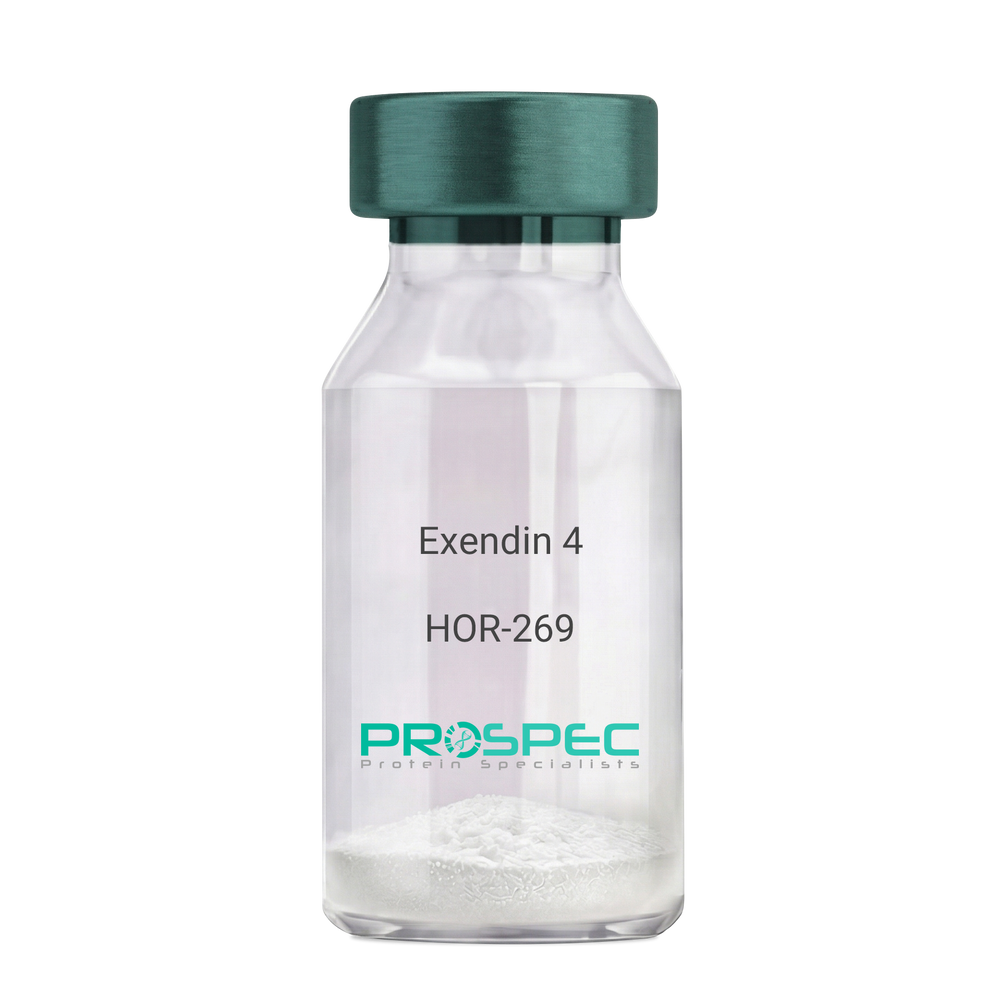
    Exendin 4

    Description:

    Exendin-4 Recombinant

    Product # :

    HOR-269

    Price :

    Quantity :

    Shipping Method :

    Room Temp Icon

    Shipped at Room temp

    Add To Cart

    More Info

    • description
    • source
    • formulation
    • purity
    • biological activity
    • More Info

    Description

    Exendin-4 Recombinant produced in E.Coli is a non-glycosylated polypeptide chain containing 39 amino acids and having a molecular mass of approximately 4.2kDa. Exendin-4 is purified by proprietary chromatographic techniques.

    Source

    Escherichia Coli.

    Formulation

    Lyophilized from a 0.2μm filtered concentrated solution in PBS, pH 7.4.

    Purity

    Greater than 96.0% as determined by:
    (a) Analysis by RP-HPLC.
    (b) Analysis by SDS-PAGE.

    Biological Activity

    1. Regulates Glucose levels rapidly
    2. Reduces Insulin resistance 
    3. Reduces Glucagon

    4. Stimulates beta cell growth production.

    More Info

    • Introduction

      Exedin-4 Recombinant is a like peptide-1 receptor agonist. The native hormone is produced in the gut of Gila monster Heloderma suspectrum (a type of reptile found in the desert) that stimulates production without causing threateningly low blood sugar, which can occur after using some anti-diabetes products. Recently, researchers used extracted saliva from gila monsters to create an unprecedented breakthrough in Diabetes Type 2 treatment. Unlike other products taken for type 2 diabetes, Exedin-4 has not been linked with weight gain and actually resulted in weight loss, according to the researchers. Exedin-4 enhances glucose-dependant secretion, suppresses inappropriately elevated secretion and slows gastric emptying in vivo. It also promotes B-cell proliferation and neogenesis in vitro and in animal models. Exedin-4 stimulates an increase in acinar cAMP, without stimulating the release of amylase.

    • Physical Appearance

      Sterile Filtered White lyophilized (freeze-dried) powder.

    • Stability

      Lyophilized Exendin Recombinant although stable at room temperature for 3 weeks, should be stored desiccated below -18°C. Upon reconstitution Exendin-4 should be stored at 4°C between 2-7 days and for future use below -18°C. For long term storage it is recommended to add a carrier protein (0.1% HSA or BSA).Please prevent freeze-thaw cycles.

    • Solubility

      It is recommended to reconstitute the lyophilized Exendin Recombinant in sterile 18MΩ-cm H2O not less than 100 µg/ml, which can then be further diluted to other aqueous solutions.

    • Amino Acid Sequence

      HGEGTFTSDL SKQMEEEAVR LFIEWLKNGG PSSGAPPPS.

    ProSpec's products are furnished for LABORATORY RESEARCH USE ONLY. The product may not be used as drugs, agricultural or pesticidal products, food additives or household chemicals.

    Exendin 4
  • View Data Sheet

    Name :

    CCL9 Mouse

    Description:

    Macrophage Inflammatory Protein-1 Gamma Mouse Recombinant (CCL9)

    CCL9/10, MRP2, CCF18.

    Product # :

    CHM-257

    Price :

    Quantity :

    Shipping Method :

    Room Temp Icon

    Shipped at Room temp

    Add To Cart

    More Info

    • description
    • source
    • formulation
    • purity
    • biological activity
    • More Info

    Description

    MIP-1 gamma Mouse Recombinant produced in E.Coli is a single, non-glycosylated, polypeptide chain containing 101 amino acids and having a molecular mass of 11.6 kDa. The MIP-1 gamma is purified by proprietary chromatographic techniques.

    Source

    Escherichia Coli.

    Formulation

    The MIP-1 gamma was lyophilized from 1xPBS solution pH-7.4.

    Purity

    Greater than 97.0% as determined by:
    (a) Analysis by RP-HPLC.
    (b) Analysis by SDS-PAGE.

    Biological Activity

    Defined by its ability to chemoattract human neutrophils using a concentration range of 0.1-10 ng/ml, corresponding to a Specific Activity of 10,000-100,000IU/mg.

    More Info

    • Introduction

      Mouse MIP-1 gamma is 75% identical in its amino acid compostion as compared to the rat specie. MIP-1 gamma is a CC chemokine localized in murine blood and a widespread range of murine tissues, without having an identified human homolog. MIP-1 gamma signals through the CCR1 receptor. MIP-1 gamma chemoattracts neutrophils and also inhibits colony formation of bone marrow myeloid immature progenitors. MIP-1 gamma has six cysteines including the four highly conserved cysteine residues present in CC chemokines.

    • Synonyms

      CCL9/10, MRP2, CCF18.

    • Physical Appearance

      Sterile Filtered White lyophilized (freeze-dried) powder.

    • Stability

      Lyophilized MIP-1 gamma although stable at room temperature for 3 weeks, should be stored desiccated below -18°C. Upon reconstitution CCL9/10 should be stored at 4°C between 2-7 days and for future use below -18°C. For long term storage it is recommended to add a carrier protein (0.1% HSA or BSA). Please prevent freeze-thaw cycles.

    • Solubility

      It is recommended to reconstitute the lyophilized MIP-1 gamma in sterile 18M-cm H2O not less than 100µg/ml, which can then be further diluted to other aqueous solutions.

    • Amino Acid Sequence

      QITHATETKE VQSSLKAQQG LEIEMFHMGF QDSSDCCLSY NSRIQCSRFI GYFPTSGGCT RPGIIFISKR GFQVCANPSD RRVQRCIERL EQNSQPRTYK Q.

    • Background

      What is the molecular weight/Mw of CCL9 MOUSE Protein?
      CCL9 MOUSE Protein has a total Mw of 11.6kDa.

      What is the source or expression system of CCL9 MOUSE Protein?
      Escherichia Coli.

      What is the Purity of CCL9 MOUSE Protein?
      CCL9 MOUSE Protein is > 97% pure as determined by SDS-PAGE.

      What is the Biological Activity of CCL9 MOUSE Protein?
      Defined by its ability to chemoattract human neutrophils using a concentration range of 0.1-10 ng/ml, corresponding to a Specific Activity of 10,000-100,000IU/mg.

      What is the amino acid sequence of CCL9 MOUSE Protein?
      QITHATETKE VQSSLKAQQG LEIEMFHMGF QDSSDCCLSY NSRIQCSRFI GYFPTSGGCT RPGIIFISKR GFQVCANPSD RRVQRCIERL EQNSQPRTYK Q.

      What applications can CCL9 MOUSE Protein be used in?
      CCL9 MOUSE Protein can probably be used in western blot, ELISA and Lateral Flow.

      What is the endotoxin level for CCL9 MOUSE Protein?
      The endotoxin level is minimal, CCL9 MOUSE Protein was purified using conventional chromatography techniques.


    ProSpec's products are furnished for LABORATORY RESEARCH USE ONLY. The product may not be used as drugs, agricultural or pesticidal products, food additives or household chemicals.

    Mip 1 Gamma Mouse
  • View Data Sheet

    Name :

    LGALS8 Mouse

    Description:

    Galectin-8 Mouse Recombinant

    Galectin-8, Gal-8, LGALS-8, AI326142, D13Ertd524e, 1200015E08Rik.

    Product # :

    CYT-185

    Price :

    Quantity :

    Shipping Method :

    Ice Icon

    Shipped with Ice Packs

    Add To Cart

    More Info

    • description
    • source
    • formulation
    • purity
    • biological activity
    • More Info
    • SDS-PAGE

    Description

    LGALS8 mouse Recombinant produced E. coli is a single polypeptide chain containing 339 amino acids (1-316) and having a molecular mass of 38kDa.LGALS8 is fused to a 23 amino acid His-tag at N-terminus & purified by proprietary chromatographic techniques.

    Source

    Escherichia Coli.

    Formulation

    The LGALS8 solution (0.5mg/ml) contains 20mM Tris-HCl buffer (pH 8.0), 0.15M NaCl, 20% glycerol and 1mM DTT.

    Purity

    Greater than 90.0% as determined by SDS-PAGE.

    Biological Activity

    The ED50 for this effect is ≤ 2ug/ml. Measured by its ability to agglutinate human red blood cells.

    SDS-PAGE

    LGALS8 Mouse-SDS-PAGE - Product image 1

    More Info

    • Introduction

      LGALS8 is a prostate-specific antigen that is solely overexpressed in malignant tumors and thus is a supplementary specific identifier of malignancies. LGALS8 is part of the galectin gene family which facilitates both cell-cell and cell matrix interactions in a method parallel to the selectin subgroup of C-type lectins.

    • Synonyms

      Galectin-8, Gal-8, LGALS-8, AI326142, D13Ertd524e, 1200015E08Rik.

    • Physical Appearance

      Sterile Filtered colorless solution.

    • Stability

      Store at 4°C if entire vial will be used within 2-4 weeks. Store, frozen at -20°C for longer periods of time. For long term storage it is recommended to add a carrier protein (0.1% HSA or BSA).Avoid multiple freeze-thaw cycles.

    • Amino Acid Sequence

      MGSSHHHHHH SSGLVPRGSH MGSMLSLNNL QNIIYNPIIP YVGTITEQLK PGSLIVIRGH VPKDSERFQV DFQLGNSLKP RADVAFHFNP RFKRSSCIVC NTLTQEKWGW EEITYDMPFR KEKSFEIVFM VLKNKFQVAV NGRHVLLYAH RISPEQIDTV GIYGKVNIHS IGFRFSSDLQ
      SMETSALGLT QINRENIQKP GKLQLSLPFE ARLNASMGPG RTVVIKGEVN TNARSFNVDL VAGKTRDIAL HLNPRLNVKA FVRNSFLQDA WGEEERNITC FPFSSGMYFE MIIYCDVREF KVAINGVHSL EYKHRFKDLS SIDTLSVDGD IRLLDVRSW.

    • Background

      What is the molecular weight/Mw of LGALS8 MOUSE Protein?
      LGALS8 MOUSE Protein has a total Mw of 38kDa.

      What is the source or expression system of LGALS8 MOUSE Protein?
      Escherichia Coli.

      What is the Purity of LGALS8 MOUSE Protein?
      LGALS8 MOUSE Protein is >90% pure as determined by SDS-PAGE.

      What is the Biological Activity of LGALS8 MOUSE Protein?
      The biological functionality of LGALS8 MOUSE Protein will be determined in the future.

      What is the amino acid sequence of LGALS8 MOUSE Protein?
      MGSSHHHHHH SSGLVPRGSH MGSMLSLNNL QNIIYNPIIP YVGTITEQLK PGSLIVIRGH VPKDSERFQV DFQLGNSLKP RADVAFHFNP RFKRSSCIVC NTLTQEKWGW EEITYDMPFR KEKSFEIVFM VLKNKFQVAV NGRHVLLYAH RISPEQIDTV GIYGKVNIHS IGFRFSSDLQ
      SMETSALGLT QINRENIQKP GKLQLSLPFE ARLNASMGPG RTVVIKGEVN TNARSFNVDL VAGKTRDIAL HLNPRLNVKA FVRNSFLQDA WGEEERNITC FPFSSGMYFE MIIYCDVREF KVAINGVHSL EYKHRFKDLS SIDTLSVDGD IRLLDVRSW.

      What applications can LGALS8 MOUSE Protein be used in?
      LGALS8 MOUSE Protein can probably be used in western blot, ELISA and Lateral Flow.

      What is the endotoxin level for LGALS8 MOUSE Protein?
      The endotoxin level is minimal, LGALS8 MOUSE Protein was purified using conventional chromatography techniques.


    • Assay Conditions

      1. Mix equal volumes of human blood and Alsever’s solution (pH 7.0). (Alsever’s solution: NaCl 0.42g, Sodium citric acid 0.8g, Citric acid 0.055g, D-glucose 2.05g in DW100 ml).2. Centrifuge at 15000rpm for 10 minutes and wash 4 times with PBS.3. Dilute packed cells in a 0.5mg/ml trypsin-EDTA solution to give 4% red cell suspension.4. Incubate for 1 hour at 37°C and wash 4 times with PBS.5. Dilute packed cells in PBS to give a 4% red cell suspension.6. Load 50µl of 0.5%BSA-in-0.15M-NaCl solution and 25µl of 4%-Red-Cell-in-PBS in U shaped wells.7. Add 25µl of serial diluted galectin protein in PBS to each well plate (Round bottom 96 well plate).8. Incubate for 30 minutes at room temperature to observe visible agglutination.

    ProSpec's products are furnished for LABORATORY RESEARCH USE ONLY. The product may not be used as drugs, agricultural or pesticidal products, food additives or household chemicals.

    Lgals8 Mouse
  • View Data Sheet

    Name :

    MUC1 Human

    Description:

    Mucin-1 (CA15-3) Human

    Product # :

    PRO-2747

    Price :

    Quantity :

    Shipping Method :

    Ice Icon

    Shipped with Ice Packs

    Add To Cart

    More Info

    • description
    • source
    • formulation
    • purity
    • More Info

    Description

    The Human Mucin-1 (CA15-3) is having a molecular mass of approximately 400kDa, and was purified from human carcinoma cell line.

    Source

    Human carcinoma cell line.

    Formulation

    MUC1 is supplied in a 0.05M sodium phosphate buffer, pH 7.5, 0.09% NaN3 and 0.15M NaCl.

    Purity

    Greater than 60%.

    More Info

    • Introduction

      Human Mucin-1 (CA15-3), aka MUC1, is a glycoprotein with extensive O-linked glycosylation of its extracellular domain. This protein has alpha and beta subunits that form a heterodimeric complex. The N-terminal alpha subunit roles in cell-adhesion and the C-terminal beta subunit is involved in cell signaling. Mucins line the apical surface of epithelial cells in the stomach, lungs, intestines, eyes and other tissues. Mucins protect the body from infection by pathogen binding to oligosaccharides in the extracellular domain, preventing the pathogen from reaching the cell surface. Overexpression of CA15-3 is often associated with colon, breast, ovarian, lung and pancreatic cancers.

    • Physical Appearance

      Clear to opalescent colorless frozen solution.

    • Stability

      Human MUC1 although stable at 4°C for 1 week, should be stored at -20°C.

    • Human Virus Test

      Tissue sample tested and found negative for HIV-1 & 2 antibodies, HBsAg, and Hepatitis-C antibodies, Syphilis and HIV/HBV/HCV NAT.

    ProSpec's products are furnished for LABORATORY RESEARCH USE ONLY. The product may not be used as drugs, agricultural or pesticidal products, food additives or household chemicals.

    Ca15 3 Muc1 Human
  • View Data Sheet

    Name :

    Midkine Human

    Description:

    Midkine Human Recombinant

    NEGF-2, Neurite Growth-Promoting Factor 2, MK, Neurite outgrowth-promoting protein, Midgestation and kidney protein, Amphiregulin-associated protein, ARAP, Neurite outgrowth-promoting factor 2, FLJ27379, Midkine, MK1, NEGF2.

    Product # :

    CYT-192

    Price :

    Quantity :

    Shipping Method :

    Room Temp Icon

    Shipped at Room temp

    Add To Cart

    More Info

    • description
    • source
    • formulation
    • purity
    • biological activity
    • More Info

    Description

    Midkine Human Recombinant produced in E.Coli is a single, non-glycosylated polypeptide chain containing 123 amino acids and having a molecular mass of 13.4kDa. The Midkine is purified by proprietary chromatographic techniques.

    Source

    Escherichia Coli.

    Formulation

    Lyophilized from a 0.2µm filtered concentrated solution in 1×PBS, pH 7.4.

    Purity

    Greater than 95.0% as determined by:
    (a) Analysis by RP-HPLC.
    (b) Analysis by SDS-PAGE.

    Biological Activity

    Determined by its ability to chemoattract human neutrophils using a concentration range of 0.1-10 ng/ml corresponding to a specific activity of 100,000-10,000,000IU/mg.

    More Info

    • Introduction

      Midkine (MK) is the product of a retinoic acid responsive gene. It contains 121 amino acid residues including 10 conserved cysteine residues, all of which appear to be disulphide linked.
      Midkine is expressed during embryogenesis, showing an expression pattern that suggests functions in neurogenesis, cell migration, secondary organogenetic induction, and mesoderm-epithelial interaction.
      The widespread downregulation of MK in the adult human is reverted in a number of cancers, in which polypeptides are able to act as both transforming growth factors and promoters of angiogenesis.
      Midkine (MK), induces chemotaxis of human neutrophils and was found to trigger mobilization of intracellular calcium of these cells.
      Midkine induces histamine release from rat peritoneal mast cells with a rapid response in a dose dependent manner.
      Midkine is also a potent stimulator of collagen and glycosaminoglycan synthesis.

    • Synonyms

      NEGF-2, Neurite Growth-Promoting Factor 2, MK, Neurite outgrowth-promoting protein, Midgestation and kidney protein, Amphiregulin-associated protein, ARAP, Neurite outgrowth-promoting factor 2, FLJ27379, Midkine, MK1, NEGF2.

    • Physical Appearance

      Sterile Filtered White lyophilized (freeze-dried) powder.

    • Stability

      Lyophilized Midkine although stable at room temperature for 3 weeks, should be stored desiccated below -18°C. Upon reconstitution Midkine should be stored at 4°C between 2-7 days and for future use below -18°C. For long term storage it is recommended to add a carrier protein (0.1% HSA or BSA).Please prevent freeze-thaw cycles.

    • Solubility

      It is recommended to reconstitute the lyophilized Midkine in sterile 18M-cm H2O not less than 100µg/ml, which can then be further diluted to other aqueous solutions.

    • Amino Acid Sequence

      VAKKKDKVKK GGPGSECAEW AWGPCTPSSK DCGVGFREGT CGAQTQRIRC RVPCNWKKEF GADCKYKFEN WGACDGGTGT KVRQGTLKKA RYNAQCQETI RVTKPCTPKT KAKAKAKKGK GKD.

    ProSpec's products are furnished for LABORATORY RESEARCH USE ONLY. The product may not be used as drugs, agricultural or pesticidal products, food additives or household chemicals.

    Midkine Human
  • View Data Sheet

    Name :

    IL 1 alpha Rat

    Description:

    Interleukin-1 alpha Rat Recombinant

    Hematopoietin-1, Lymphocyte-activating factor (LAF), Endogenous Pyrogen (EP), Leukocyte Endogenous Mediator (LEM), Mononuclear Cell Factor (MCF), IL-1 alpha,IL1, IL-1A, IL1F1.

    Product # :

    CYT-381

    Price :

    Quantity :

    Shipping Method :

    Room Temp Icon

    Shipped at Room temp

    Add To Cart

    More Info

    • description
    • source
    • formulation
    • purity
    • biological activity
    • More Info

    Description

    Interleukin-1A Rat Recombinant produced in E.Coli is single, a non-glycosylated, Polypeptide chain containing 155 amino acids and having a molecular mass of 17703 Dalton. The IL-1A is purified by proprietary chromatographic techniques.

    Source

    Escherichia Coli.

    Formulation

    The protein was lyophilized from a concentrated (1mg/ml) sterile solution containing 50mM Tris-HCl, pH=8.

    Purity

    Greater than 98.0% as determined by:
    (a) Analysis by RP-HPLC.
    (b) Analysis by SDS-PAGE.

    Biological Activity

    The ED50 as determined by the dose-dependant stimulation of murine D10S cells is < 0.005 ng/ml, corresponding to a Specific Activity of 200,000,000IU/mg.

    More Info

    • Introduction

      Interleukin-1 alpha is a proinflammatory cytokine produced by a wide variety of cell types, including macrophages, osteoblasts, monocytes and hepatocytes. Circulating levels of are normally low and only rise after stimulation by agents such as those produced byinflammation, infection or microbial endotoxins. IL-1 alpha possesses a wide variety of biological activities and exerts its effects by binding to specific cell surface receptors.

    • Synonyms

      Hematopoietin-1, Lymphocyte-activating factor (LAF), Endogenous Pyrogen (EP), Leukocyte Endogenous Mediator (LEM), Mononuclear Cell Factor (MCF), IL-1 alpha,IL1, IL-1A, IL1F1.

    • Physical Appearance

      Sterile Filtered White lyophilized (freeze-dried) powder.

    • Stability

      Lyophilized Interleukin-1a although stable at room temperature for 3 weeks, should be stored desiccated below -18°C. Upon reconstitution IL1A should be stored at 4°C between 2-7 days and for future use below -18°C. For long term storage it is recommended to add a carrier protein (0.1% HSA or BSA).Please prevent freeze-thaw cycles.

    • Solubility

      It is recommended to reconstitute the lyophilized Interleukin 1a in sterile 18MΩ-cm H2O not less than 100µg/ml, which can then be further diluted to other aqueous solutions.

    • Amino Acid Sequence

      The sequence of the first five N-terminal amino acids was determined and was found to be Ala-Pro-His-Ser-Phe.

    ProSpec's products are furnished for LABORATORY RESEARCH USE ONLY. The product may not be used as drugs, agricultural or pesticidal products, food additives or household chemicals.

    Il 1 Alpha Rat
  • View Data Sheet

    Name :

    LIF Mouse

    Description:

    Leukemia Inhibitory Factor Mouse Recombinant

    CDF, HILDA, D-FACTOR, Differentiation- stimulating factor, Melanoma-derived LPL inhibitor, MLPLI, Emfilermin, Leukemia inhibitory factor, LIF, DIA.

    Product # :

    CYT-645

    Price :

    Quantity :

    Shipping Method :

    Room Temp Icon

    Shipped at Room temp

    Add To Cart

    More Info

    • description
    • source
    • formulation
    • purity
    • biological activity
    • More Info

    Description

    Leukemia Inhibitory Factor (LIF) Murine Recombinant produced in E.Coli is a single, non-glycosylated, polypeptide chain containing 181 amino acids and having a molecular mass of 20 kDa. The Leukemia Inhibitory Factor (LIF) is purified by proprietary chromatographic techniques.

    Source

    Escherichia Coli.

    Formulation

    Leukemia Inhibitory Factor (LIF) was lyophilized from a concentrated (1mg/ml) sterile solution containing 20mM Phosphate buffer pH-7.4 and 0.02% Tween-20.

    Purity

    Greater than 95.0% as determined by(a) Analysis by RP-HPLC.
    (b) Analysis by SDS-PAGE.

    Biological Activity

    Activity of murine LIF was determined by the M1 cell differentiation assay which was found to be < 0.01 ng/ml, corresponding to a specific activity of 100,000,000 IU/mg.
    A standard of 50 Units is defined as the concentration of mouse LIF in 1.0 mL of tissue culture medium that induces the differentiation of 50% of M1 colonies.

    More Info

    • Introduction

      Leukemia Inhibitory Factor also called LIF is a lymphoid factor that promotes long-term maintenance of embryonic stem cells by suppressing spontaneous differentiation. Leukemia Inhibitory Factor has several functions such as cholinergic neuron differentiation, control of stem cell pluripotency, bone & fat metabolism, mitogenesis of factor dependent cell lines & promotion of megakaryocyte production in vivo. Human and mouse LIF exhibit a 78% identity in its amino acid sequence.

    • Synonyms

      CDF, HILDA, D-FACTOR, Differentiation- stimulating factor, Melanoma-derived LPL inhibitor, MLPLI, Emfilermin, Leukemia inhibitory factor, LIF, DIA.

    • Physical Appearance

      Sterile Filtered White lyophilized (freeze-dried) powder.

    • Stability

      Lyophilized Leukemia Inhibitory Factor (LIF) although stable at room temperature for 3 weeks, should be stored desiccated below -18°C. Upon reconstitution Leukemia Inhibitory Factor (LIF) should be stored at 4°C between 2-7 days and for future use below -18°C. For long term storage it is recommended to add a carrier protein (0.1% HSA or BSA).Please prevent freeze-thaw cycles.

    • Solubility

      It is recommended to reconstitute the lyophilized Leukemia Inhibitory Factor (LIF) in sterile water not less than 100µg/ml, which can then be further diluted to other aqueous solutions.

    • Amino Acid Sequence

      MSPLPITPVNATCAIRHPCHGNLMNQIKNQLAQLNGSANALFISYYTAQGEPFP NNVEKLCAPNMTDFPSFHGNGTEKTKLVELYRMVAYLSASLTNITRDQKVLNP TAVSLQVKLNATIDVMRGLLSNVLCRLCNKYRVGHVDVPPVPDHSDKEAFQR KKLGCQLLGTYKQVISVVVQAF.

    ProSpec's products are furnished for LABORATORY RESEARCH USE ONLY. The product may not be used as drugs, agricultural or pesticidal products, food additives or household chemicals.

    Lif Mouse
  • View Data Sheet

    Name :

    UBE2K Human

    Description:

    Ubiquitin-Conjugating Enzyme E2K Human Recombinant

    HIP2, Huntingtin Interacting protein 2, HYPG, Ubiquitin-conjugating enzyme E2-25K kDa, Ubiquitin-protein ligase, Ubiquitin carrier protein, LIG, HIP-2, E2(25K), DKFZp686J24237, OTTHUMP00000218440, EC 6.3.2.19.

    Product # :

    ENZ-339

    Price :

    Quantity :

    Shipping Method :

    Ice Icon

    Shipped with Ice Packs

    Add To Cart

    More Info

    • description
    • source
    • formulation
    • purity
    • More Info

    Description

    UBE2K produced in E.Coli is a single, non-glycosylated polypeptide chain containing 236 amino acids (1-200a.a.) and having a molecular mass of 26.5kDa.UBE2K is fused to a 36 amino acid His-tag at N-terminus & purified by proprietary chromatographic techniques.

    Source

    Escherichia Coli.

    Formulation

    The UBE2K protein solution (1mg/1ml) is formulated in 20mM Tris-HCl buffer (pH7.5) 1mM DTT, 50mM NaCl, and 10% glycerol.

    Purity

    Greater than 95.0% as determined by: (a) Analysis by RP-HPLC.
    (b) Analysis by SDS-PAGE.

    More Info

    • Introduction

      UBE2K belongs to the ubiquitin-conjugating enzymes family which take part in many cellular processes such as selective protein degradation, DNA repair, cell cycle control, and sporulation. In this mechanism, the ATP-coupled activation and subsequent ligation of ubiquitin are catalyzed by separate enzymes functionally linked by ubiquitin carrier protein UBC1. In addition, UBE2K is involved in Alzheimer's disease, Huntington's disease and antigen processing through its interaction with amyloid-?, huntingtin, and MHC-heavy chain proteins.

    • Synonyms

      HIP2, Huntingtin Interacting protein 2, HYPG, Ubiquitin-conjugating enzyme E2-25K kDa, Ubiquitin-protein ligase, Ubiquitin carrier protein, LIG, HIP-2, E2(25K), DKFZp686J24237, OTTHUMP00000218440, EC 6.3.2.19.

    • Physical Appearance

      Sterile Filtered clear solution.

    • Stability

      Store at 4°C if entire vial will be used within 2-4 weeks. Store, frozen at -20°C for longer periods of time.Please avoid freeze thaw cycles.

    • Amino Acid Sequence

      MRGSHHHHHH GMASMTGGQQ MGRDLYDDDD KDRWGSMANI AVQRIKREFK EVLKSEETSK NQIKVDLVDE NFTELRGEIA GPPDTPYEGG RYQLEIKIPE TYPFNPPKVR FITKIWHPNI SSVTGAICLD ILKDQWAAAM TLRTVLLSLQ ALLAAAEPDD PQDAVVANQY KQNPEMFKQT ARLWAHVYAG APVSSPEYTK KIENLCAMGF DRNAVIVALS SKSWDVETAT ELLLSN.

    ProSpec's products are furnished for LABORATORY RESEARCH USE ONLY. The product may not be used as drugs, agricultural or pesticidal products, food additives or household chemicals.

    Ube2K Human
  • View Data Sheet

    Name :

    G CSF Human, PEG

    Description:

    Granulocyte-Colony Stimulating Factor Pegylated Human Recombinant

    CSF-3, MGI-1G, GM-CSF beta, Pluripoietin, Filgrastim, Lenograstim, G-CSF, MGC45931, GCSF.

    Product # :

    CYT-018

    Price :

    Quantity :

    Shipping Method :

    Ice Icon

    Shipped with Ice Packs

    Add To Cart

    More Info

    • description
    • source
    • formulation
    • purity
    • biological activity
    • More Info

    Description

    Granulocyte Colony Stimulating Factor Human Recombinant produced in E.coli is a single, non-glycosylated, polypeptide chain containing 175 amino acids and having a molecular mass of 18.8kDa. The Pegylated G-CSF is produced by attaching a 20kDa methoxypolyethylene glycol propionaldehyde (mPEG-ALD) to the N-terminal amino acid of G-CSF giving a total molecular mass of 38.8kDa. G-CSF is purified by proprietary chromatographic techniques.

    Source

    Escherichia Coli.

    Formulation

    G-CSF is supplied in solution (0.69mg/ml) containing 10mM Acetate Buffer (pH 4.0), and 0.004% Polysorbate 80.

    Purity

    Greater than 95.0% as determined by SEC-HPLC.

    Biological Activity

    The ED50, calculated by the dose-dependent proliferation of murine NFS-60 indicator cells is less than 0.1 ng/ml, corresponding to a Specific Activity of 10,000,000IU/mg.

    More Info

    • Introduction

      GCSF is a cytokine that controls the production, differentiation, and function of granulocytes. The active protein is found extracellularly. Three transcript variants encoding three different isoforms have been found for this gene. Granulocyte/macrophage colony-stimulating factors are cytokines that act in hematopoiesis by controlling the production, differentiation, and function of 2 related white cell populations of the blood, the granulocytes and the monocytes-macrophages. This csf induces granulocytes.

    • Synonyms

      CSF-3, MGI-1G, GM-CSF beta, Pluripoietin, Filgrastim, Lenograstim, G-CSF, MGC45931, GCSF.

    • Physical Appearance

      Colorless, clear and transparent solution.

    • Stability

      G-CSF PEG should be stored refrigerated at 2° to 8°C. Vials should be kept in theirpackaging to protect from light until the time of use. Shaking and freezing should be avoided.

    • Background

      What is the molecular weight/Mw of G CSF HUMAN, PEG Protein?
      G CSF HUMAN, PEG Protein has a total Mw of 18.8kDa.

      What is the source or expression system of G CSF HUMAN, PEG Protein?
      Escherichia Coli.

      What is the Purity of G CSF HUMAN, PEG Protein?
      G CSF HUMAN, PEG Protein is >95% pure as determined by SDS-PAGE.

      What is the Biological Activity of G CSF HUMAN, PEG Protein?
      The ED50, calculated by the dose-dependent proliferation of murine NFS-60 indicator cells is less than 0.1 ng/ml, corresponding to a Specific Activity of 10,000,000IU/mg.

      What is the amino acid sequence of G CSF HUMAN, PEG Protein?
      G CSF HUMAN, PEG Protein is composed from 175 amino acids.

      What applications can G CSF HUMAN, PEG Protein be used in?
      G CSF HUMAN, PEG Protein can probably be used in western blot, ELISA and Lateral Flow.

      What is the endotoxin level for G CSF HUMAN, PEG Protein?
      The endotoxin level is minimal, G CSF HUMAN, PEG Protein was purified using conventional chromatography techniques.


    ProSpec's products are furnished for LABORATORY RESEARCH USE ONLY. The product may not be used as drugs, agricultural or pesticidal products, food additives or household chemicals.

    G Csf Human Pegylated
  • View Data Sheet

    Name :

    HEV ORF3

    Description:

    Hepatitis E Virus ORF3 Recombinant

    Product # :

    HEV-273

    Price :

    Quantity :

    Shipping Method :

    Ice Icon

    Shipped with Ice Packs

    Add To Cart

    More Info

    • description
    • formulation
    • purity
    • More Info

    Description

    The e.coli derived HEV protein is fused with beta-galactosidase at the N-Terminus and contains the HEV immunodominant ORF3 92-123 a.a.

    Formulation

    20mM Tris-HCl, pH-8, 10mM B-ME and 8M urea.

    Purity

    Greater than 95.0% as determined by Analysis by SDS-PAGE.

    More Info

    • Introduction

      Hepatitis E virus (HEV), the major etiologic agent of enterically transmitted non-A, non-B hepatitis worldwide, is a spherical, non-enveloped, single stranded RNA virus that is approximately 32 to 34 nm in diameter. HEV belongs to a genus of HEV-like viruses (unassigned genus). HEV has a single-stranded polyadenylated RNA genome of approximately 8 kb. Based on its physicochemical properties it is presumed to be a calici-like virus.

    • Stability

      HEV ORF3 protein although stable at 4°C for 1 week, should be stored below -18°C. Please prevent freeze thaw cycles.

    • Specificity

      Immunoreactive with sera HEV-infected individuals.

    • Purification Method

      HEV ORF3 protein was purified by proprietary chromatographic technique.

    ProSpec's products are furnished for LABORATORY RESEARCH USE ONLY. The product may not be used as drugs, agricultural or pesticidal products, food additives or household chemicals.

    Hev Orf3
  • View Data Sheet

    Name :

    PROK Tritirachium album

    Description:

    Tritirachium album Proteinase-K Recombinant

    Proteinase K (EC:3.4.21.64), Endopeptidase K, Tritirachium alkaline proteinase, PROK.

    Product # :

    ENZ-1015

    Price :

    Quantity :

    Shipping Method :

    Room Temp Icon

    Shipped at Room temp

    Add To Cart

    More Info

    • description
    • source
    • formulation
    • purity
    • biological activity
    • More Info

    Description

    Recombinant Tritirachium album Proteinase-K expressed in yeast containing 285 amino acids having a Mw of 29.3 kDa is purified by standard chromatography techniques.

    Source

    Yeast

    Formulation

    The Proteinase-K was lyophilized without any additives.

    Purity

    Greater than 95% as determined by SDS-PAGE.

    Biological Activity

    36 Units/mg.
    One unit is defined as the amount of enzyme that will hydrolyze urea-denatured hemoglobin to produce color equivalent to 1.0 mol tyrosine per min at 37°C, pH 7.5 (color by Folin-Ciocalteu reagent).

    More Info

    • Introduction

      The Proteinase K enzyme is a member of the Peptidase family S8. Proteinase K is a broad-spectrum serine protease. Proteinase K is capable of digesting hair (keratin), henceforth, the name "Proteinase K". Proteinase K is activated by calcium, the enzyme digests proteins especially after hydrophobic amino acids (aliphatic, aromatic and other hydrophobic amino acids). Proteinase K is frequently utilized in molecular biology to digest protein and remove contamination from preparations of nucleic acid. Addition of Proteinase K to nucleic acid preparations rapidly inactivates nucleases which may otherwise degrade the DNA or RNA during purification. Proteinase K is greatly fitting to this application as the enzyme is active in the presence of chemicals which denature proteins, such as SDS and urea, chelating agents such as EDTA, sulfhydryl reagents, as well as trypsin or chymotrypsin inhibitors. Proteinase K is utilized for the destruction of proteins in cell lysates (tissue, cell culture cells) and for the release of nucleic acids, given that it quite effectively inactivates DNases and RNases.

    • Synonyms

      Proteinase K (EC:3.4.21.64), Endopeptidase K, Tritirachium alkaline proteinase, PROK.

    • Physical Appearance

      Sterile Filtered lyophilized powder.

    • Stability

      Recombinant Proteinase-K although stable at room temperature, should be stored between 2-8°C. Do not freeze!

    • Solubility

      It is recommended to reconstitute the lyophilized Proteinase-K in 20mM Tris-HCl (pH 7.4~8.0), 1mM CaCl2, 50% glycerol not less than 100µg/ml, which can then be further diluted to other aqueous solutions.

    • Note

      Bulk Proteinase-K recombinant is available 1,000 grams price is $100 per gram

    ProSpec's products are furnished for LABORATORY RESEARCH USE ONLY. The product may not be used as drugs, agricultural or pesticidal products, food additives or household chemicals.

    Prok Tritirachium Album
  • View Data Sheet

    Name :

    LGALS3 Human

    Description:

    Galectin-3 Human Recombinant

    Galectin-3, GAL3, MAC2, CBP35, GALB, GALIG, LGALS2, LGALS3, Galactose-specific lectin 3, Mac-2 antigen, IgE-binding protein, 35 kDa lectin, Carbohydrate-binding protein 35, CBP 35, Laminin-binding protein, Lectin L-29, L-31, Galactoside-binding protein, GALBP.

    Product # :

    CYT-606

    Price :

    Quantity :

    Shipping Method :

    Room Temp Icon

    Shipped at Room temp

    Add To Cart

    More Info

    • description
    • source
    • formulation
    • purity
    • More Info

    Description

    LGALS3 Human Recombinant produced in E.Coli is a single, non-glycosylated, polypeptide chain containing 250 amino acids and having a molecular mass of 26.2kDa. The LGALS3 is purified by proprietary chromatographic techniques.

    Source

    Escherichia Coli.

    Formulation

    The Galectin-3 protein was lyophilized from a sterile 0.2 micron filtered aqueous solution containing 10 mM sodium phosphate and 50mM sodium chloride, pH 7.5.

    Purity

    Greater than 95.0% as determined by analysis by SDS-PAGE.

    More Info

    • Introduction

      Galectin-3 mediates with the alpha-3, beta-1 integrin the stimulation by cspg4 of endothelial cells migration. Galectin-3 plays an necessary part during the acquisition of vasculogenic mimicry and angiogenic properties associated with melanoma progression. LGALS3 overexpression is highly expressed in early stages of papillary carcinoma, and its expression intensity declines during tumor progression. Serum levels of LGALS3 are high in patients with thyroid malignancy but there is considerable overlap in serum LGALS3 concentrations between those with benign and malignant nodular thyroid disease. LGLAS3 takes part as an immune regulator to inhibit T-cell immune responses and promote tumor growth, as a result providing a new mechanism for tumor immune tolerance.

    • Synonyms

      Galectin-3, GAL3, MAC2, CBP35, GALB, GALIG, LGALS2, LGALS3, Galactose-specific lectin 3, Mac-2 antigen, IgE-binding protein, 35 kDa lectin, Carbohydrate-binding protein 35, CBP 35, Laminin-binding protein, Lectin L-29, L-31, Galactoside-binding protein, GALBP.

    • Physical Appearance

      Sterile Filtered White lyophilized (freeze-dried) powder.

    • Stability

      Lyophilized Galectin-3 Recombinant although stable at room temperature for 3 weeks, should be stored desiccated below -18°C. Upon reconstitution Galectin-3 should be stored at 4°C between 2-7 days and for future use below -18°C.For long term storage it is recommended to add a carrier protein (0.1% HSA or BSA).Please prevent freeze-thaw cycles.

    • Solubility

      It is recommended to reconstitute the lyophilized LGALS3 in sterile 18MΩ-cm H2O not less than 100µg/ml, which can then be further diluted to other aqueous solutions.

    • Amino Acid Sequence

      MADNFSLHDAL SGSGNPNPQG WPGAWGNQPA GAGGYPGASY PGAYPGQAPP GAYPGQAPPG AYPGAPGAYP GAPAPGVYPG PPSGPGAYPS SGQPSATGAY PATGPYGAPA GPLIVPYNLP LPGGVVPRML ITILGTVKPN ANRIALDFQR GNDVAFHFNP RFNENNRRVI VCNTKLDNNW GREERQSVFP FESGKPFKIQ VLVEPDHFKV AVNDAHLLQY NHRVKKLNEI SKLGISGDID LTSASYTMI.

    • Background

      What is the molecular weight/Mw of LGALS3 HUMAN Protein?
      LGALS3 HUMAN Protein has a total Mw of 26.2kDa.

      What is the source or expression system of LGALS3 HUMAN Protein?
      Escherichia Coli.

      What is the Purity of LGALS3 HUMAN Protein?
      LGALS3 HUMAN Protein is >95% pure as determined by SDS-PAGE.

      What is the Biological Activity of LGALS3 HUMAN Protein?
      The biological functionality of LGALS3 HUMAN Protein will be determined in the future.

      What is the amino acid sequence of LGALS3 HUMAN Protein?
      MADNFSLHDAL SGSGNPNPQG WPGAWGNQPA GAGGYPGASY PGAYPGQAPP GAYPGQAPPG AYPGAPGAYP GAPAPGVYPG PPSGPGAYPS SGQPSATGAY PATGPYGAPA GPLIVPYNLP LPGGVVPRML ITILGTVKPN ANRIALDFQR GNDVAFHFNP RFNENNRRVI VCNTKLDNNW GREERQSVFP FESGKPFKIQ VLVEPDHFKV AVNDAHLLQY NHRVKKLNEI SKLGISGDID LTSASYTMI.

      What applications can LGALS3 HUMAN Protein be used in?
      LGALS3 HUMAN Protein can probably be used in western blot, ELISA and Lateral Flow.

      What is the endotoxin level for LGALS3 HUMAN Protein?
      The endotoxin level is minimal, LGALS3 HUMAN Protein was purified using conventional chromatography techniques.


    ProSpec's products are furnished for LABORATORY RESEARCH USE ONLY. The product may not be used as drugs, agricultural or pesticidal products, food additives or household chemicals.

    Galectin 3 Human
  • View Data Sheet

    Name :

    Epo Antibody

    Description:

    Erythropoietin, Mouse Anti Human

    EPO-a, EPO-alpha, Epoetin, EP, MGC138142.

    Product # :

    ANT-187

    Price :

    Quantity :

    Shipping Method :

    Ice Icon

    Shipped with Ice Packs

    Add To Cart

    More Info

    • formulation
    • More Info

    Formulation

    Each vial contains 6mg/ml antibodies in PBS, pH 7.4, containing 0.09 % of sodium azide (NaN3) as preservative.

    More Info

    • Introduction

      This gene is a member of the EPO/TPO family and encodes a secreted, glycosylated cytokine composed of four alpha helical bundles. The protein is found in the plasma and regulates red cell production by promoting erythroid differentiation and initiating hemoglobin synthesis. This protein also has neuroprotective activity against a variety of potential brain injuries and antiapoptotic functions in several tissue types.

    • Synonyms

      EPO-a, EPO-alpha, Epoetin, EP, MGC138142.

    • Physical Appearance

      Sterile filtered colorless solution.

    • Stability

      Store at + 4°C.

    • Ig Subclass

      IgG1 for both Mabs.

    • Clone

      Epo2.

    • Type

      Mouse Anti Human Monoclonal.

    • Purification Method

      Purified by chromatography on protein G Sepharose. Purity is tested by electrophoresis.

    ProSpec's products are furnished for LABORATORY RESEARCH USE ONLY. The product may not be used as drugs, agricultural or pesticidal products, food additives or household chemicals.

    Epo Alpha Antibody
  • View Data Sheet

    Name :

    Bet v 2.0101

    Description:

    Profilin-1 Recombinant

    Profilin-1, Allergen Bet v II, Pollen allergen Bet v 2, Bet v 2, BETVII, Bet v 2.0101.

    Product # :

    PRO-2283

    Price :

    Quantity :

    Shipping Method :

    Ice Icon

    Shipped with Ice Packs

    Add To Cart

    More Info

    • description
    • source
    • formulation
    • purity
    • More Info

    Description

    Recombinant Profilin-1 produced in E.coli is a non-glycosylated, polypeptide chain having a calculated molecular mass of 15,625 Dalton. Bet v 2.0101 is expressed with a 10xHis tag at N-terminus and purified by proprietary chromatographic techniques.

    Source

    Escherichia Coli.

    Formulation

    Bet v 2.0101 is supplied in 20mM HEPES buffer pH-7.9 and 6M Urea.

    Purity

    Greater than 80.0% as determined by SDS-PAGE.

    More Info

    • Introduction

      Profilin-1 (Bet v 2.0101) binds to actin and affects the structure of the cytoskeleton. At high concentrations, profiling-1 averts the polymerization of actin, whereas it augments it at low concentrations. By binding to PIP2, Profilin-1 inhibits the creation of IP3 and DG.

    • Synonyms

      Profilin-1, Allergen Bet v II, Pollen allergen Bet v 2, Bet v 2, BETVII, Bet v 2.0101.

    • Physical Appearance

      Sterile Filtered clear solution.

    • Stability

      Store at 4°C if entire vial will be used within 2-4 weeks. Store, frozen at -20°C for longer periods of time. Avoid multiple freeze-thaw cycles.

    • Immunological Functions

      1. Binds IgE type human antibodies. 2. Immunodot test with positive/negative sera panels.

    ProSpec's products are furnished for LABORATORY RESEARCH USE ONLY. The product may not be used as drugs, agricultural or pesticidal products, food additives or household chemicals.

    Bet V 20101
  • View Data Sheet

    Name :

    CXCL5 Rat

    Description:

    Epithelial Neutrophil-Activating Protein 78 Rat Recombinant (CXCL5)

    C-X-C motif chemokine 5, Small-inducible cytokine B5, Cytokine LIX, Cxcl5, Scyb5, LIX, GCP-2, Scyb6, ENA-78, AMCF-II.

    Product # :

    CHM-267

    Price :

    Quantity :

    Shipping Method :

    Room Temp Icon

    Shipped at Room temp

    Add To Cart

    More Info

    • description
    • source
    • formulation
    • purity
    • biological activity
    • More Info

    Description

    Epithelial Neutrophil-Activating Protein 78 Rat Recombinant produced in E.Coli is a single, non-glycosylated, polypeptide chain containing 93 amino acids and having a molecular mass of 10.0kDa.The CXCL5 is purified by proprietary chromatographic techniques.

    Source

    Escherichia Coli.

    Formulation

    Lyophilized from a 0.2µm filtered concentrated (1.0mg/ml) solution in 1×PBS, pH 7.4.

    Purity

    Greater than 97.0% as determined by
    (a) Analysis by RP-HPLC.
    (b) Analysis by SDS-PAGE.

    Biological Activity

    Determined by its ability to chemoattract human peripheral blood neutrophils using a concentration range of 10.0-100.0 ng/ml.

    More Info

    • Introduction

      Chemokine (C-X-C motif) ligand 5 (CXCL5) is a small cytokine belonging to the CXC chemokine family that is also known as epithelial-derived neutrophil-activating peptide 78 (ENA-78). It is produced following stimulation of cells with the inflammatory cytokines interleukin-1 or tumor necrosis factor-alpha. Expression of CXCL5 has also been observed in eosinophils. This chemokine stimulates the chemotaxis of neutrophils possesses angiogenic properties. It elicits these effects by interacting with the cell surface chemokine receptor CXCR2. The gene for CXCL5 is encoded on four exons and is located on human chromosome 4 amongst several other CXC chemokine genes. CXCL5 has been implicated in connective tissue remodelling.

    • Synonyms

      C-X-C motif chemokine 5, Small-inducible cytokine B5, Cytokine LIX, Cxcl5, Scyb5, LIX, GCP-2, Scyb6, ENA-78, AMCF-II.

    • Physical Appearance

      Sterile Filtered White lyophilized (freeze-dried) powder.

    • Stability

      Lyophilized ENA-78 although stable at room temperature for 3 weeks, should be stored desiccated below -18°C. Upon reconstitution CXCL5 should be stored at 4°C between 2-7 days and for future use below -18°C.For long term storage it is recommended to add a carrier protein (0.1% HSA or BSA).Please prevent freeze-thaw cycles.

    • Solubility

      It is recommended to reconstitute the lyophilized ENA-78 in sterile 18M-cm H2O not less than 100µg/ml, which can then be further diluted to other aqueous solutions.

    • Amino Acid Sequence

      APFSAMVATE LRCVCLTLAP RINPKMIANL EVIPAGPHCP KVEVIAKLKN QKDNVCLDPQ APLIKKVIQK ILGSENKKTK RNALALVRSA STQ.

    • Background

      What is the molecular weight/Mw of CXCL5 RAT Protein?
      CXCL5 RAT Protein has a total Mw of 10.0kDa.

      What is the source or expression system of CXCL5 RAT Protein?
      Escherichia Coli.

      What is the Purity of CXCL5 RAT Protein?
      CXCL5 RAT Protein is >97% pure as determined by SDS-PAGE.

      What is the Biological Activity of CXCL5 RAT Protein?
      Determined by its ability to chemoattract human peripheral blood neutrophils using a concentration range of 10.0-100.0 ng/ml.

      What is the amino acid sequence of CXCL5 RAT Protein?
      APFSAMVATE LRCVCLTLAP RINPKMIANL EVIPAGPHCP KVEVIAKLKN QKDNVCLDPQ APLIKKVIQK ILGSENKKTK RNALALVRSA STQ.

      What applications can CXCL5 RAT Protein be used in?
      CXCL5 RAT Protein can probably be used in western blot, ELISA and Lateral Flow.

      What is the endotoxin level for CXCL5 RAT Protein?
      The endotoxin level is minimal, CXCL5 RAT Protein was purified using conventional chromatography techniques.


    ProSpec's products are furnished for LABORATORY RESEARCH USE ONLY. The product may not be used as drugs, agricultural or pesticidal products, food additives or household chemicals.

    Ena 78 Rat
  • View Data Sheet

    Name :

    SRGN Human

    Description:

    Serglycin Human Recombinant

    Serglycin, PRG, PRG1, PPG, Proteoglycan 1 secretory granule, Hematopoetic proteoglycan core protein, Platelet proteoglycan core protein, proteoglycan protein core for mast cell secretory granule.

    Product # :

    PRO-965

    Price :

    Quantity :

    Shipping Method :

    Ice Icon

    Shipped with Ice Packs

    Add To Cart

    More Info

    • description
    • source
    • formulation
    • purity
    • More Info

    Description

    SRGN Human Recombinant produced in E.coli is a single, non-glycosylated polypeptide chain containing 156 amino acids (28-158) and having a molecular mass of 17.4 kDa (Molecular weight on SDS-PAGE will appear higher).SRGN is fused to a 25 amino acid His-tag at N-terminus & purified by proprietary chromatographic techniques.

    Source

    E.coli.

    Formulation

    The SRGN solution (1mg/ml) contains 20mM Tris-HCl buffer (pH 8.0), 2mM DTT, 0.15M NaCl and 10% glycerol.

    Purity

    Greater than 90% as determined by SDS-PAGE.

    More Info

    • Introduction

      SRGN is identified as a hematopoietic cell granule proteoglycan. Proteoglycans stored in the secretory granules of various hematopoietic cells also hold a protease-resistant peptide core, and is vital for neutralizing hydrolytic enzymes. SRGN is related to the macromolecular complex of granzymes and perforin that acts as a intermediary of granule-mediated apoptosis.

    • Synonyms

      Serglycin, PRG, PRG1, PPG, Proteoglycan 1 secretory granule, Hematopoetic proteoglycan core protein, Platelet proteoglycan core protein, proteoglycan protein core for mast cell secretory granule.

    • Physical Appearance

      Sterile Filtered colorless solution.

    • Stability

      Store at 4°C if entire vial will be used within 2-4 weeks. Store, frozen at -20°C for longer periods of time. For long term storage it is recommended to add a carrier protein (0.1% HSA or BSA).Avoid multiple freeze-thaw cycles.

    • Amino Acid Sequence

      MGSSHHHHHH SSGLVPRGSH MGSHMYPTRR ARYQWVRCNP DSNSANCLEE KGPMFELLPG ESNKIPRLRT DLFPKTRIQD LNRIFPLSED YSGSGFGSGS GSGSGSGSGF LTEMEQDYQL VDESDAFHDN LRSLDRNLPS DSQDLGQHGL EEDFML.

    ProSpec's products are furnished for LABORATORY RESEARCH USE ONLY. The product may not be used as drugs, agricultural or pesticidal products, food additives or household chemicals.

    Srgn Human
  • View Data Sheet

    Name :

    ETFB Human

    Description:

    Electron-Transfer-Flavoprotein Beta Polypeptide Human Recombinant

    Electron-transfer-flavoprotein beta polypeptide, MADD, beta-ETF.

    Product # :

    PRO-220

    Price :

    Quantity :

    Shipping Method :

    Ice Icon

    Shipped with Ice Packs

    Add To Cart

    More Info

    • description
    • source
    • formulation
    • purity
    • More Info

    Description

    ETFB Human Recombinant fused with a 20 amino acid His tag at N-terminus produced in E.Coli is a single, non-glycosylated, polypeptide chain containing 275 amino acids (1-255a.a.) and having a molecular mass of 30.0kDa. The ETFB is purified by proprietary chromatographic techniques.

    Source

    Escherichia Coli.

    Formulation

    The ETFB solution (0.25mg/ml) contains 20mM Tris-HCl buffer (pH 8.0), 40% glycerol and 0.1M NaCl.

    Purity

    Greater than 90.0% as determined by SDS-PAGE.

    More Info

    • Introduction

      ETF is a heterodimer composed of alpha and beta subunit. ETFB protein is electron-transfer-flavoprotein, beta polypeptide that transports electrons between primary flavoprotein dehydrogenases involved in mitochondrial fatty acid and amino acid catabolism and the membrane-bound electron transfer flavoprotein ubiquinone oxidoreductase.

    • Synonyms

      Electron-transfer-flavoprotein beta polypeptide, MADD, beta-ETF.

    • Physical Appearance

      Sterile Filtered colorless solution.

    • Stability

      Store at 4°C if entire vial will be used within 2-4 weeks. Store, frozen at -20°C for longer periods of time. For long term storage it is recommended to add a carrier protein (0.1% HSA or BSA).Avoid multiple freeze-thaw cycles.

    • Amino Acid Sequence

      MGSSHHHHHH SSGLVPRGSH MAELRVLVAV KRVIDYAVKI RVKPDRTGVV TDGVKHSMNP FCEIAVEEAV RLKEKKLVKE VIAVSCGPAQ CQETIRTALA MGADRGIHVE VPPAEAERLG PLQVARVLAK LAEKEKVDLV LLGKQAIDDD CNQTGQMTAG FLDWPQGTFA SQVTLEGDKL
      KVEREIDGGL ETLRLKLPAV VTADLRLNEP RYATLPNIMK AKKKKIEVIK PGDLGVDLTS KLSVISVEDP PQRTAGVKVE TTEDLVAKLK EIGRI.

    ProSpec's products are furnished for LABORATORY RESEARCH USE ONLY. The product may not be used as drugs, agricultural or pesticidal products, food additives or household chemicals.

    Etfb Human
  • View Data Sheet

    Name :

    C12ORF5 Human, TAT

    Description:

    Chromosome 12 Open Reading Frame 5 Human-TAT

    Fructose-2,6-bisphosphatase TIGAR, TP53-induced glycolysis and apoptosis regulator, TIGAR, C12orf5.

    Product # :

    PRO-1580

    Price :

    Quantity :

    Shipping Method :

    Room Temp Icon

    Shipped at Room temp

    Add To Cart

    More Info

    • description
    • source
    • formulation
    • purity
    • biological activity
    • More Info

    Description

    TIGAR Human Recombinant produced in E.Coli is a single, non-glycosylated polypeptide chain containing 283 amino acids (including the 270 residues of full-length TIGAR and a 13-residue C-terminal TAT peptide) and having a molecular mass of 31.7kDa. The TIGAR is purified by proprietary chromatographic techniques.

    Source

    Escherichia Coli.

    Formulation

    TIGAR was Lyophilized from a 0.2µm filtered concentrated solution in 20mM PBS, pH7.0, 350mM NaCl and 5% Trehalose.

    Purity

    Greater than 95.0% as determined by:
    (a) Analysis by RP-HPLC.
    (b) Analysis by SDS-PAGE.

    Biological Activity

    The Specific Activity was measured by its ability to protect U2OS cells from apoptosis induced by hydrogen peroxide is in a concentration range of 0.1-5.0 µg/ml, after pretreating with rHuTIGAR-TAT for 4 hours.

    More Info

    • Introduction

      TIGAR is a p53-inducible enzyme which catalyzes the hydrolysis of fructose-2-6 bisphosphate (F-2-6-BP) to fructose-6-phosphate and inorganic phosphate. F-2-6-BP is an influential activator of 6-phosphofructose-1 kinase (the rate limiting enzyme of glycolysis). By lowering the intracellular level of F-2-6-BP, TIGAR expression leads to increased glucose processing through the pentose phosphate pathway, the main cellular source for NADPH. Protein transduction using TAT fusion proteins represents an alternative methodology for introducing transcription factors and other intracellular proteins into primary as well as transformed cells.

    • Synonyms

      Fructose-2,6-bisphosphatase TIGAR, TP53-induced glycolysis and apoptosis regulator, TIGAR, C12orf5.

    • Physical Appearance

      Sterile Filtered White lyophilized (freeze-dried) powder.

    • Stability

      Lyophilized TIGAR stable at room temperature for 3 weeks, should be stored desiccated below -18C. Upon reconstitution TIGAR should be stored at 4C between 2-7 days and for future use below -18C. For long term storage it is recommended to add a carrier protein (0.1% HSA or BSA). Please prevent freeze-thaw cycles.

    • Solubility

      It is recommended to reconstitute the lyophilized TIGAR in sterile 18M-cm H2O not less than 100µg/ml, which can then be further diluted to other aqueous solutions.

    • Amino Acid Sequence

      MARFALTVVR HGETRFNKEK IIQGQGVDEP LSETGFKQAA AAGIFLNNVK FTHAFSSDLM RTKQTMHGIL ERSKFCKDMT VKYDSRLRER KYGVVEGKAL SELRAMAKAA REECPVFTPP GGETLDQVKM RGIDFFEFLC QLILKEADQK EQFSQGSPSN CLETSLAEIF PLGKNHSSKV NSDSGIPGLA ASVLVVSHGA YMRSLFDYFL TDLKCSLPAT LSRSELMSVT PNTGMSLFII NFEEGREVKP TVQCICMNLQ DHLNGLTETR GGYGRKKRRQ RRR.

    ProSpec's products are furnished for LABORATORY RESEARCH USE ONLY. The product may not be used as drugs, agricultural or pesticidal products, food additives or household chemicals.

    Tigar Human Tat
  • View Data Sheet

    Name :

    FCGRT Mouse

    Description:

    Fc Fragment Of IgG Receptor And Transporter Mouse Recombinant

    IgG receptor FcRn large subunit p51, FcRn, IgG Fc fragment receptor transporter alpha chain, Neonatal Fc receptor, Fcgrt, Fcrn.

    Product # :

    PRO-2376

    Price :

    Quantity :

    Shipping Method :

    Ice Icon

    Shipped with Ice Packs

    Add To Cart

    More Info

    • description
    • source
    • formulation
    • purity
    • More Info

    Description

    FCGRT Mouse Recombinant produced in Sf9 Baculovirus cells is a single, glycosylated polypeptide chain containing 285 amino acids (22-297 a.a) and having a molecular mass of 32.1kDa (Molecular size on SDS-PAGE will appear at approximately 40-57kDa).FCGRT is fused to a 6 amino acid His-tag at C-terminus & purified by proprietary chromatographic techniques.

    Source

    Sf9, Baculovirus cells.

    Formulation

    FCGRT protein solution (0.5mg/ml) contains Phosphate buffered saline (pH7.4) and 10% glycerol.

    Purity

    Greater than 85.0% as determined by SDS-PAGE.

    More Info

    • Introduction

      Fc Fragment Of IgG Receptor And Transporter also known as FCGRT is a transmembrane glycoprotein with structural homology to MHC class 1 proteins. FCGRT is widely expressed in endothelial and epithelial cells and takes a vital part in IgG homeostasis. Moreover, FCGRT is expressed in neutrophils in addition myeloid antigen presenting cells. FCGRT can enhance IgG-meditated phagocytosis as well as antigen presentation by heses cells, however it promotes the degradation of opsonizing IgG rather than returning it to the circulation.

    • Synonyms

      IgG receptor FcRn large subunit p51, FcRn, IgG Fc fragment receptor transporter alpha chain, Neonatal Fc receptor, Fcgrt, Fcrn.

    • Physical Appearance

      Sterile filtered colorless solution.

    • Stability

      Store at 4°C if entire vial will be used within 2-4 weeks. Store, frozen at -20°C for longer periods of time. For long term storage it is recommended to add a carrier protein (0.1% HSA or BSA).Avoid multiple freeze-thaw cycles.

    • Amino Acid Sequence

      ADPSETRPPL MYHLTAVSNP STGLPSFWAT GWLGPQQYLT YNSLRQEADP CGAWMWENQV SWYWEKETTD LKSKEQLFLE ALKTLEKILN GTYTLQGLLG CELASDNSSV PTAVFALNGE EFMKFNPRIG NWTGEWPETE IVANLWMKQP DAARKESEFL LNSCPERLLG HLERGRRNLE WKEPPSMRLK ARPGNSGSSV LTCAAFSFYP PELKFRFLRN GLASGSGNCS TGPNGDGSFH AWSLLEVKRG DEHHYQCQVE HEGLAQPLTV DLDSSARSSH HHHHH.

    ProSpec's products are furnished for LABORATORY RESEARCH USE ONLY. The product may not be used as drugs, agricultural or pesticidal products, food additives or household chemicals.

    Fcgrt Mouse
  • View Data Sheet

    Name :

    CCNG1 Human

    Description:

    Cyclin G1 Human Recombinant

    Cyclin-G1, Cyclin-G, CCNG1, CCNG, CYCG1.

    Product # :

    PRO-1005

    Price :

    Quantity :

    Shipping Method :

    Ice Icon

    Shipped with Ice Packs

    Add To Cart

    More Info

    • description
    • source
    • formulation
    • purity
    • More Info

    Description

    CCNG1 Human Recombinant produced in E.Coli is a single, non-glycosylated polypeptide chain containing 315 amino acids (1-295 a.a.) and having a molecular mass of 36.2kDa. CCNG1 is fused to a 20 amino acid His-tag at N-terminus & purified by proprietary chromatographic techniques.

    Source

    Escherichia Coli.

    Formulation

    CCNG1 protein solution (0.25mg/ml) containing 20mM Tris-HCl buffer (pH8.0), 50% glycerol, 0.2M NaCl and 5mM DTT.

    Purity

    Greater than 85% as determined by SDS-PAGE.

    More Info

    • Introduction

      Cyclin-G1 (CCNG1) belongs to the cyclin family and contains the cyclin box. CCNG1 may have a part in growth regulation and is associated with G2/M phase arrest in response to DNA damage. CCNG1 may be an intermediate by which p53 mediates its role as an inhibitor of cellular proliferation. The CCNG1 protein lacks the protein destabilizing (PEST) sequence which is present in other family members.

    • Synonyms

      Cyclin-G1, Cyclin-G, CCNG1, CCNG, CYCG1.

    • Physical Appearance

      Sterile Filtered clear colorless solution.

    • Stability

      Store at 4°C if entire vial will be used within 2-4 weeks. Store, frozen at -20°C for longer periods of time. For long term storage it is recommended to add a carrier protein (0.1% HSA or BSA).Avoid multiple freeze-thaw cycles.

    • Amino Acid Sequence

      MGSSHHHHHH SSGLVPRGSH MIEVLTTTDS QKLLHQLNAL LEQESRCQPK VCGLRLIESA HDNGLRMTAR LRDFEVKDLL SLTQFFGFDT ETFSLAVNLL DRFLSKMKVQ PKHLGCVGLS CFYLAVKSIE EERNVPLATD LIRISQYRFT VSDLMRMEKI VLEKVCWKVK ATTAFQFLQL YYSLLQENLP LERRNSINFE RLEAQLKACH CRIIFSKAKP SVLALSIIAL EIQAQKCVEL TEGIECLQKH SKINGRDLTF WQELVSKCLT EYSSNKCSKP NVQKLKWIVS GRTARQLKHS YYRITHLPTI PEMVP.

    ProSpec's products are furnished for LABORATORY RESEARCH USE ONLY. The product may not be used as drugs, agricultural or pesticidal products, food additives or household chemicals.

    Ccng1 Human
  • 1
  • …
  • 18
  • 19
  • 20
  • 21
  • 22
  • …
  • 42
Your browser does not support the video tag.

Products

  • Cytokines
  • Growth Factors
  • Chemokines
  • CD Antigens
  • Neurotrophins
  • Hormones
  • Enzymes
  • Viral Antigens
  • Recombinant Proteins
  • Natural Proteins
  • Monoclonal Antibodies
  • Polyclonal Antibodies
  • Thermal Packaging

About

  • Company
  • Founder
  • Contribution
  • Contact Us
  • My Account

Ordering

  • Ordering Method
  • Ordering - Credit Card
  • Ordering PO
  • Shipping Fees
  • FAQ's

Legal

  • Terms & Conditions
  • Privacy
  • Site Map
  • info@prospecbio.com
  • Facebook
  • Instagram
  • Linkedin Profile

© 2026 ProSpec-Tany TechnoGene Ltd. All Rights Reserved.

  • Choosing a selection results in a full page refresh.
  • Opens in a new window.