Skip to content

High-quality research proteins.

  • 1-800-805-6531

  • Mon - Sat 8.00-18.00, Sun - Closed

  • info@prospecbio.com

  • PO Box 6591 East Brunswick NJ 08816

  • Products
    • Cytokines
    • Growth factors
    • Chemokines
    • Cd antigens
    • Neurotrophins
    • Hormones
    • Enzymes
    • Viral antigens
    • Recombinant proteins
    • Natural proteins
    • Monoclonal antibodies
    • Polyclonal antibodies
    • Thermal Packaging
  • About
    • Company
    • Founder
    • Contribution
  • Customers
    • Eastern Asia
    • Eastern Europe
    • North America
    • South America
    • South East Asia
    • Southern Asia
    • Western Europe
  • Ordering
    • Ordering Method
    • Ordering - Credit Card
    • Ordering - PO
    • Shipping Fees
    • FAQs
  • Services
    • DNA Cloning
    • Protein Expression
    • Monoclonal Antibody
    • Fermentation
    • Technology License
  • Contact us
Log in

Country/region

  • USD $ | Albania
  • USD $ | Andorra
  • USD $ | Argentina
  • USD $ | Armenia
  • USD $ | Australia
  • USD $ | Austria
  • USD $ | Azerbaijan
  • USD $ | Belarus
  • USD $ | Belgium
  • USD $ | Bolivia
  • USD $ | Brazil
  • USD $ | Bulgaria
  • USD $ | Cambodia
  • USD $ | Canada
  • USD $ | Chile
  • USD $ | China
  • USD $ | Colombia
  • USD $ | Costa Rica
  • USD $ | Croatia
  • USD $ | Cyprus
  • USD $ | Czechia
  • USD $ | Denmark
  • USD $ | Estonia
  • USD $ | Finland
  • USD $ | France
  • USD $ | Georgia
  • USD $ | Germany
  • USD $ | Greece
  • USD $ | Hong Kong SAR
  • USD $ | Hungary
  • USD $ | Iceland
  • USD $ | India
  • USD $ | Ireland
  • USD $ | Israel
  • USD $ | Italy
  • USD $ | Japan
  • USD $ | Kazakhstan
  • USD $ | Latvia
  • USD $ | Liechtenstein
  • USD $ | Lithuania
  • USD $ | Madagascar
  • USD $ | Malta
  • USD $ | Mexico
  • USD $ | Moldova
  • USD $ | Monaco
  • USD $ | Netherlands
  • USD $ | New Zealand
  • USD $ | North Macedonia
  • USD $ | Norway
  • USD $ | Panama
  • USD $ | Paraguay
  • USD $ | Peru
  • USD $ | Philippines
  • USD $ | Poland
  • USD $ | Portugal
  • USD $ | Romania
  • USD $ | Singapore
  • USD $ | Slovakia
  • USD $ | Slovenia
  • USD $ | South Africa
  • USD $ | South Korea
  • USD $ | Spain
  • USD $ | Sri Lanka
  • USD $ | Sweden
  • USD $ | Switzerland
  • USD $ | Taiwan
  • USD $ | Thailand
  • USD $ | Türkiye
  • USD $ | Ukraine
  • USD $ | United Kingdom
  • USD $ | United States
  • USD $ | Uruguay
  • USD $ | Vatican City
  • USD $ | Venezuela
  • USD $ | Vietnam
  • Facebook
  • Instagram
logoProSpec - Recombinant Protein Manufacturer for academic and R&D industry
Become a distributor
Account Log in
Wishlist
Cart Cart(0)
  • Products
    +
    • Cytokines
    • Growth factors
    • Chemokines
    • Cd antigens
    • Neurotrophins
    • Hormones
    • Enzymes
    • Viral antigens
    • Recombinant proteins
    • Natural proteins
    • Monoclonal antibodies
    • Polyclonal antibodies
    • Thermal Packaging
  • About
    +
    • Company
    • Founder
    • Contribution
  • Customers
    +
    • Eastern Asia
    • Eastern Europe
    • North America
    • South America
    • South East Asia
    • Southern Asia
    • Western Europe
  • Ordering
    +
    • Ordering Method
    • Ordering - Credit Card
    • Ordering - PO
    • Shipping Fees
    • FAQs
  • Services
    +
    • DNA Cloning
    • Protein Expression
    • Monoclonal Antibody
    • Fermentation
    • Technology License
  • Contact us

Item added to your cart

View cart
View All
  • Cytokines
  • Growth factors
  • Chemokines
  • Cd antigens
  • Neurotrophins
  • Hormones
  • Enzymes
  • Viral antigens
  • Recombinant proteins
  • Natural proteins
  • Monoclonal antibodies
  • Polyclonal antibodies
  • Thermal Packaging
  • Tumor Necrosis Factor

    Tumor Necrosis Factor

    View All
  • 4-1BB

    4-1BB

    View All
  • Adiponectin

    Adiponectin

    View All
  • AIF1

    AIF1

    View All
  • Other Cytokines

    Other Cytokines

    View All
  • AITRL

    AITRL

    View All
  • Angiopoietin

    Angiopoietin

    View All
  • Apolipoprotein

    Apolipoprotein

    View All
  • B-Cell Activating Factor

    B-Cell Activating Factor

    View All
  • Beta Defensin

    Beta Defensin

    View All
  • Bone Morphogenetic Protein

    Bone Morphogenetic Protein

    View All
  • B type Natriuretic Peptide

    B type Natriuretic Peptide

    View All
  • BST

    BST

    View All
  • Betacellulin

    Betacellulin

    View All
  • Cardiotrophin

    Cardiotrophin

    View All
  • Activin

    Activin

    View All
  • Fibroblast Growth Factor

    Fibroblast Growth Factor

    View All
  • Other Growth Factors

    Other Growth Factors

    View All
  • CSF

    CSF

    View All
  • CTGF

    CTGF

    View All
  • IGFBP

    IGFBP

    View All
  • VEGF Protein

    VEGF Protein

    View All
  • EGF

    EGF

    View All
  • Epigen

    Epigen

    View All
  • Erythropoietin

    Erythropoietin

    View All
  • Insulin-Like Growth Factor

    Insulin-Like Growth Factor

    View All
  • Growth Hormone

    Growth Hormone

    View All
  • HDGF

    HDGF

    View All
  • Hepatocyte Growth Factor

    Hepatocyte Growth Factor

    View All
  • Insulin

    Insulin

    View All
  • BCA-1/ BLC (CXCL13)

    BCA-1/ BLC (CXCL13)

    View All
  • BRAK (CXCL14)

    BRAK (CXCL14)

    View All
  • C-10 (CCL6)

    C-10 (CCL6)

    View All
  • Other Chemokines

    Other Chemokines

    View All
  • MEC (CCL28)

    MEC (CCL28)

    View All
  • LD78-beta (CCL3L1)

    LD78-beta (CCL3L1)

    View All
  • CTACK (CCL27)

    CTACK (CCL27)

    View All
  • CXCL16

    CXCL16

    View All
  • CXCL17

    CXCL17

    View All
  • Platelet Factor-4 (CXCL4)

    Platelet Factor-4 (CXCL4)

    View All
  • ENA-78 (CXCL5)

    ENA-78 (CXCL5)

    View All
  • Eotaxin (CCL11,24,26)

    Eotaxin (CCL11,24,26)

    View All
  • Exodus-2 (CCL21)

    Exodus-2 (CCL21)

    View All
  • Fractalkine (CX3CL1)

    Fractalkine (CX3CL1)

    View All
  • CXCL6

    CXCL6

    View All
  • Other CD Antigens

    Other CD Antigens

    View All
  • CD14

    CD14

    View All
  • CD164

    CD164

    View All
  • CD1

    CD1

    View All
  • CD2

    CD2

    View All
  • CD200

    CD200

    View All
  • CD207

    CD207

    View All
  • CD226

    CD226

    View All
  • CD23

    CD23

    View All
  • CD244

    CD244

    View All
  • CD247

    CD247

    View All
  • CD27

    CD27

    View All
  • CD274

    CD274

    View All
  • CD300

    CD300

    View All
  • CD33

    CD33

    View All
  • Other Neurotrophins

    Other Neurotrophins

    View All
  • Beta-NGF

    Beta-NGF

    View All
  • BDNF

    BDNF

    View All
  • CDNF

    CDNF

    View All
  • CNTF

    CNTF

    View All
  • GDNF

    GDNF

    View All
  • Glia Maturation Factor

    Glia Maturation Factor

    View All
  • MANF

    MANF

    View All
  • Midkine

    Midkine

    View All
  • Neuroglobin

    Neuroglobin

    View All
  • Neurotrophic factors

    Neurotrophic factors

    View All
  • Neuregulin

    Neuregulin

    View All
  • Neuropilin

    Neuropilin

    View All
  • Pigment Epithelium-Derived Factor

    Pigment Epithelium-Derived Factor

    View All
  • Pleiotrophin

    Pleiotrophin

    View All
  • Peptide Hormones

    Peptide Hormones

    View All
  • Other Hormones

    Other Hormones

    View All
  • HCG

    HCG

    View All
  • Endothelin

    Endothelin

    View All
  • Exendin

    Exendin

    View All
  • FSH

    FSH

    View All
  • Glucagon

    Glucagon

    View All
  • GHRP

    GHRP

    View All
  • GLP

    GLP

    View All
  • Thyrostimulin

    Thyrostimulin

    View All
  • Inhibin A

    Inhibin A

    View All
  • LHRH

    LHRH

    View All
  • Melanotan

    Melanotan

    View All
  • Procalcitonin

    Procalcitonin

    View All
  • PTH

    PTH

    View All
  • Peroxiredoxin

    Peroxiredoxin

    View All
  • Peptidase

    Peptidase

    View All
  • Synthetase

    Synthetase

    View All
  • Transferase

    Transferase

    View All
  • Hydrolase

    Hydrolase

    View All
  • Dehydrogenase

    Dehydrogenase

    View All
  • ACE2

    ACE2

    View All
  • Esterase

    Esterase

    View All
  • Protein Kinases

    Protein Kinases

    View All
  • Other Enzymes

    Other Enzymes

    View All
  • Phosphatase

    Phosphatase

    View All
  • Deaminase

    Deaminase

    View All
  • Oxygenase

    Oxygenase

    View All
  • Adenylate Kinase

    Adenylate Kinase

    View All
  • Lyase

    Lyase

    View All
  • Chagas

    Chagas

    View All
  • SARS

    SARS

    View All
  • Influenza

    Influenza

    View All
  • ASFV

    ASFV

    View All
  • Astrovirus

    Astrovirus

    View All
  • Borrelia

    Borrelia

    View All
  • Helicobacter Pylori

    Helicobacter Pylori

    View All
  • Chikungunya

    Chikungunya

    View All
  • Chlamydia

    Chlamydia

    View All
  • Cytomegalo

    Cytomegalo

    View All
  • Dengue

    Dengue

    View All
  • EBV

    EBV

    View All
  • Ebola

    Ebola

    View All
  • Feline Leukemia Virus

    Feline Leukemia Virus

    View All
  • Hepatitis A

    Hepatitis A

    View All
  • Other

    Other

    View All
  • Actin

    Actin

    View All
  • ADAM

    ADAM

    View All
  • Complement Component

    Complement Component

    View All
  • Ag85

    Ag85

    View All
  • Eukaryotic Translation Initiation Factor

    Eukaryotic Translation Initiation Factor

    View All
  • Anterior Gradient Protein

    Anterior Gradient Protein

    View All
  • Heat Shock Protein

    Heat Shock Protein

    View All
  • Alpha-2-HS-Glycoprotein

    Alpha-2-HS-Glycoprotein

    View All
  • Hemoglobin

    Hemoglobin

    View All
  • Allergy

    Allergy

    View All
  • Anaplasma

    Anaplasma

    View All
  • Angiogenin

    Angiogenin

    View All
  • Ankyrin Repeat Domain

    Ankyrin Repeat Domain

    View All
  • Annexin

    Annexin

    View All
  • Other Natural Proteins

    Other Natural Proteins

    View All
  • Aprotinin

    Aprotinin

    View All
  • Transferrin

    Transferrin

    View All
  • Avidin

    Avidin

    View All
  • Anti Coagulation Factors

    Anti Coagulation Factors

    View All
  • Natural Albumin

    Natural Albumin

    View All
  • Natural Coagulation Factors

    Natural Coagulation Factors

    View All
  • Fibronectin

    Fibronectin

    View All
  • Thrombin

    Thrombin

    View All
  • Anti Human Enzyme

    Anti Human Enzyme

    View All
  • Other Monoclonal Antibodies

    Other Monoclonal Antibodies

    View All
  • Anti Human Cytokine

    Anti Human Cytokine

    View All
  • Anti Human Heat Shock Protein

    Anti Human Heat Shock Protein

    View All
  • Anti Mouse Lymphocyte

    Anti Mouse Lymphocyte

    View All
  • Anti Human Chemokine

    Anti Human Chemokine

    View All
  • Anti Human Lymphocyte

    Anti Human Lymphocyte

    View All
  • Anti Viral Monoclonal

    Anti Viral Monoclonal

    View All
  • Anti Mouse Cytokine

    Anti Mouse Cytokine

    View All
  • Anti-GST Monoclonal

    Anti-GST Monoclonal

    View All
  • Other Polyclonal Antibodies

    Other Polyclonal Antibodies

    View All
  • Anti Viral

    Anti Viral

    View All
  • Anti-GST Monoclonal

    Anti-GST Monoclonal

    View All
Back

Search results

1000 results found for “Cystatin”

Name

Description

Product #

Price

Quantity

Shipping Method

  • View Data Sheet

    Name :

    CASP3 Human

    Description:

    Caspase 3 Apoptosis-Related Cysteine Peptidase Human Recombinant

    Caspase 3 Apoptosis-Related Cysteine Peptidase, CPP32 Caspase 3 Apoptosis-Related Cysteine Protease, Cysteine Protease CPP32, Protein Yama, CASP-3, CPP-32, SCA-1, SREBP Cleavage Activity 1, EC 3.4.22.56, CPP32B, caspase-3, PARP Cleavage Protease, procaspase3, Apopain, EC 3.4.22, CASP3.

    Product # :

    ENZ-791

    Price :

    Quantity :

    Shipping Method :

    Ice Icon

    Shipped with Ice Packs

    Add To Cart

    More Info

    • description
    • source
    • formulation
    • purity
    • More Info

    Description

    CASP3 Human Recombinant produced in E.coli is a single, non-glycosylated polypeptide chain containing 103 amino acids (176-277) and having a molecular mass of 12kDa.CASP3 is purified by proprietary chromatographic techniques.

    Source

    Escherichia Coli.

    Formulation

    The CASP3 solution (0.5mg/ml) contains 20mM Tris-HCl buffer (pH 8.0), 0.4M Urea and 10% glycerol.

    Purity

    Greater than 80.0% as determined by SDS-PAGE.

    More Info

    • Introduction

      Caspase 3 Apoptosis-Related Cysteine Peptidase (CASP3) belongs to the cysteine-aspartic acid protease (caspase) family. Sequential activation of caspases plays a key role in the execution-phase of cell apoptosis. Caspases exist as inactive proenzymes which undergo proteolytic processing at conserved aspartic residues to generate 2 subunits, large and small, that dimerize to create the active enzyme. CASP3 protein cleaves and activates caspases 6, 7 and 9, and the protein itself is processed by caspases 8, 9 and 10. CASP3 is the leading caspase involved in the cleavage of amyloid-beta 4A precursor protein, which is linked with neuronal death in Alzheimer's disease. In addition, CASP3 is involved in the cleavage of huntingtin. CASP3 also cleaves and activates sterol regulatory element binding proteins (SREBPs) between the basic helix-loop-helix leucine zipper domain and the membrane attachment domain. CASP3 initiates cell adhesion in sympathetic neurons through RET cleavage.

    • Synonyms

      Caspase 3 Apoptosis-Related Cysteine Peptidase, CPP32 Caspase 3 Apoptosis-Related Cysteine Protease, Cysteine Protease CPP32, Protein Yama, CASP-3, CPP-32, SCA-1, SREBP Cleavage Activity 1, EC 3.4.22.56, CPP32B, caspase-3, PARP Cleavage Protease, procaspase3, Apopain, EC 3.4.22, CASP3.

    • Physical Appearance

      Sterile Filtered colorless solution.

    • Stability

      Store at 4°C if entire vial will be used within 2-4 weeks. Store, frozen at -20°C for longer periods of time. For long term storage it is recommended to add a carrier protein (0.1% HSA or BSA).Avoid multiple freeze-thaw cycles.

    • Amino Acid Sequence

      MSGVDDDMAC HKIPVEADFL YAYSTAPGYY SWRNSKDGSW FIQSLCAMLK QYADKLEFMH ILTRVNRKVA TEFESFSFDA TFHAKKQIPC IVSMLTKELY FYH.

    ProSpec's products are furnished for LABORATORY RESEARCH USE ONLY. The product may not be used as drugs, agricultural or pesticidal products, food additives or household chemicals.

    Casp3 Human
  • View Data Sheet

    Name :

    CEACAM7 Human

    Description:

    Carcinoembryonic Antigen-Related Cell Adhesion Molecule 7 Human Recombinant

    CEA, CGM2, Carcinoembryonic antigen CGM2.

    Product # :

    PRO-1483

    Price :

    Quantity :

    Shipping Method :

    Ice Icon

    Shipped with Ice Packs

    Add To Cart

    More Info

    • description
    • source
    • formulation
    • purity
    • More Info

    Description

    CEACAM7 Human Recombinant produced in E.Coli is a single, non-glycosylated polypeptide chain containing 230 amino acids (36-242 a.a.) and having a molecular mass of 25.7kDa.CEACAM7 is fused to a 23 amino acid His-tag at N-terminus & purified by proprietary chromatographic techniques.

    Source

    Escherichia Coli.

    Formulation

    CEACAM7 protein solution (0.25mg/ml) contains 20mM Tris-HCl buffer (pH 8.0), 0.15M NaCl and 10% glycerol.

    Purity

    Greater than 90.0% as determined by SDS-PAGE.

    More Info

    • Introduction

      Carcinoembryonic Antigen-Related Cell Adhesion Molecule 7 (CEACAM7) is a member of the immunoglobulin superfamily, CEA family. CEACAM7 contains 1 Ig-like C2-type (immunoglobulin-like) domain and 1 Ig-like V-type (immunoglobulin-like) domain. CEACAM7 is intensely down-regulated in colonic adenocarcinomas.

    • Synonyms

      CEA, CGM2, Carcinoembryonic antigen CGM2.

    • Physical Appearance

      Sterile Filtered clear solution.

    • Stability

      Store at 4°C if entire vial will be used within 2-4 weeks. Store, frozen at -20°C for longer periods of time. For long term storage it is recommended to add a carrier protein (0.1% HSA or BSA).Avoid multiple freeze-thaw cycles.

    • Amino Acid Sequence

      MGSSHHHHHH SSGLVPRGSH MGSTNIDVVP FNVAEGKEVL LVVHNESQNL YGYNWYKGER VHANYRIIGY VKNISQENAP GPAHNGRETI YPNGTLLIQN VTHNDAGIYT LHVIKENLVN EEVTRQFYVF SEPPKPSITS NNFNPVENKD IVVLTCQPET QNTTYLWWVN NQSLLVSPRL LLSTDNRTLV LLSATKNDIG PYECEIQNPV GASRSDPVTL NVRYESVQAS.

    ProSpec's products are furnished for LABORATORY RESEARCH USE ONLY. The product may not be used as drugs, agricultural or pesticidal products, food additives or household chemicals.

    Ceacam7 Human
  • View Data Sheet

    Name :

    CRYGD Human

    Description:

    Crystallin, Gamma D Human Recombinant

    Gamma-crystallin D, Gamma-D-crystallin, Gamma-crystallin 4, CRYGD, CRYG4, CCP; CACA, CCA3, cry-g-D.

    Product # :

    PRO-913

    Price :

    Quantity :

    Shipping Method :

    Ice Icon

    Shipped with Ice Packs

    Add To Cart

    More Info

    • description
    • source
    • formulation
    • purity
    • More Info

    Description

    CRYGD Human Recombinant produced in E.Coli is a single, non-glycosylated polypeptide chain containing 194 amino acids (1-174 a.a.) and having a molecular mass of 22.9kDa.CRYGD is fused to a 20 amino acid His-tag at N-terminus & purified by proprietary chromatographic techniques.

    Source

    Escherichia Coli.

    Formulation

    CRYGD protein solution (1mg/ml) containing 20mM Tris-HCl buffer (pH 8.0), 5mM DTT, 10% glycerol and 200mM NaCl.

    Purity

    Greater than 95.0% as determined by SDS-PAGE.

    More Info

    • Introduction

      CRYGD is a member of the beta/gamma-crystallin family. Crystallins are the principal structural components of the vertebrate eye lens. The mammalian lens crystallins are divided into alpha, beta, and gamma families. Gamma-crystallins are involved in cataract formation. Defects in the CRYGD gene are responsible for cataract autosomal dominant (ADC), cataract congenital non-nuclear polymorphic autosomal dominant (CCP), cataract congenital cerulean type 3 (CCA3) and cataract crystalline aculeiform (CACA).

    • Synonyms

      Gamma-crystallin D, Gamma-D-crystallin, Gamma-crystallin 4, CRYGD, CRYG4, CCP; CACA, CCA3, cry-g-D.

    • Physical Appearance

      Sterile filtered colorless solution.

    • Stability

      Store at 4°C if entire vial will be used within 2-4 weeks. Store, frozen at -20°C for longer periods of time. For long term storage it is recommended to add a carrier protein (0.1% HSA or BSA).Avoid multiple freeze-thaw cycles.

    • Amino Acid Sequence

      MGSSHHHHHH SSGLVPRGSH MGKITLYEDR GFQGRHYECS SDHPNLQPYL SRCNSARVDS GCWMLYEQPN YSGLQYFLRR GDYADHQQWM GLSDSVRSCR LIPHSGSHRI RLYEREDYRG QMIEFTEDCS CLQDRFRFNE IHSLNVLEGS WVLYELSNYR GRQYLLMPGD YRRYQDWGAT NARVGSLRRV IDFS.

    ProSpec's products are furnished for LABORATORY RESEARCH USE ONLY. The product may not be used as drugs, agricultural or pesticidal products, food additives or household chemicals.

    Crygd Human
  • View Data Sheet

    Name :

    ANXA5 Human

    Description:

    Annexin A5 Human Recombinant

    PP4, ANX5, ENX2, ANXA5, Annexin A5, Annexin-5, Annexin V, Lipocortin V, Endonexin II, Calphobindin I, CBP-I, Placental anticoagulant protein I, PAP-I, Placental anticoagulant protein 4, Thromboplastin inhibitor, Vascular anticoagulant-alpha, VAC-alpha, Anchorin CII.

    Product # :

    PRO-732

    Price :

    Quantity :

    Shipping Method :

    Ice Icon

    Shipped with Ice Packs

    Add To Cart

    More Info

    • description
    • source
    • formulation
    • purity
    • More Info

    Description

    ANXA5 produced in E.Coli is a single, non-glycosylated polypeptide chain containing 320 amino acids (1-320 a.a.) and having a molecular mass of 35.9 kDa.ANXA5 is purified by proprietary chromatographic techniques.

    Source

    Escherichia Coli.

    Formulation

    The ANXA5 protein solution contains 20mM Tris-HCl, pH-8, 1mM DTT and 10% glycerol.

    Purity

    Greater than 95.0% as determined by SDS-PAGE.

    More Info

    • Introduction

      ANXA5 is a member of the annexin family of calcium-dependent phospholipid binding proteins which are involved in membrane-related activity along exocytotic and endocytotic pathways. ANXA5 is a phospholipase A2 and protein kinase C inhibitory protein with calcium channel properties and takes part in cellular signal transduction, inflammation, growth and differentiation. ANXA5 is an anticoagulant protein that acts as an indirect inhibitor of the thromboplastin-specific complex, which is involved in the blood coagulation cascade. ANXA5 regulates coagulability in the blood stream by binding to phosphatidylserine and sulfatide. ANXA5 protects sinsuoidal endothelial cells from ischemia reperfusion damage. ANXA5 is necessary for normal CFTR chloride channel activity.

    • Synonyms

      PP4, ANX5, ENX2, ANXA5, Annexin A5, Annexin-5, Annexin V, Lipocortin V, Endonexin II, Calphobindin I, CBP-I, Placental anticoagulant protein I, PAP-I, Placental anticoagulant protein 4, Thromboplastin inhibitor, Vascular anticoagulant-alpha, VAC-alpha, Anchorin CII.

    • Physical Appearance

      Sterile filtered colorless solution.

    • Stability

      Store at 4°C if entire vial will be used within 2-4 weeks. Store, frozen at -20°C for longer periods of time. For long term storage it is recommended to add a carrier protein (0.1% HSA or BSA).Avoid multiple freeze-thaw cycles.

    • Amino Acid Sequence

      MAQVLRGTVT DFPGFDERAD AETLRKAMKG LGTDEESILT LLTSRSNAQR QEISAAFKTL FGRDLLDDLK SELTGKFEKL IVALMKPSRL YDAYELKHAL KGAGTNEKVL TEIIASRTPE ELRAIKQVYE EEYGSSLEDD VVGDTSGYYQ RMLVVLLQAN RDPDAGIDEA QVEQDAQALF QAGELKWGTD EEKFITIFGT RSVSHLRKVF DKYMTISGFQ IEETIDRETS GNLEQLLLAV VKSIRSIPAY LAETLYYAMK GAGTDDHTLI RVMVSRSEID LFNIRKEFRK NFATSLYSMI KGDTSGDYKK ALLLLCGEDD.

    ProSpec's products are furnished for LABORATORY RESEARCH USE ONLY. The product may not be used as drugs, agricultural or pesticidal products, food additives or household chemicals.

    Anxa5 Human
  • View Data Sheet

    Name :

    CRADD Human

    Description:

    Caspase and RIP Adapter with Death Domain Human Recombinant

    RAIDD, MGC9163, CRADD, Death domain-containing protein CRADD, Caspase and RIP adapter with death domain, RIP-associated protein with a death domain, CASP2 and RIPK1 domain containing adaptor with death domain.

    Product # :

    PRO-465

    Price :

    Quantity :

    Shipping Method :

    Ice Icon

    Shipped with Ice Packs

    Add To Cart

    More Info

    • description
    • source
    • formulation
    • purity
    • More Info

    Description

    CRADD Human Recombinant produced in E.Coli is a single, non-glycosylated polypeptide chain containing 219 amino acids (1-199) and having a molecular mass of 24.9 kDa. CRADD is fused to a 20 amino acids His-Tag at N-terminus.

    Source

    Escherichia Coli.

    Formulation

    The CRADD protein solution (1mg/ml) contains 20mM Tris-HCl pH-8 and 20% glycerol.

    Purity

    Greater than 95.0% as determined by SDS-PAGE.

    More Info

    • Introduction

      CRADD is a 22kDa, widely-expressed cytosolic adaptor/signaling protein that induces cell apoptosis/cell death in numerous tissues. CRADD is a death domain (CARD) that recruits, caspase 2/ICH1 to the cell death signal transduction complex that includes TNFR1A, RIPK1/RIP kinase, and numbers of other CARD domain-containing proteins.

    • Synonyms

      RAIDD, MGC9163, CRADD, Death domain-containing protein CRADD, Caspase and RIP adapter with death domain, RIP-associated protein with a death domain, CASP2 and RIPK1 domain containing adaptor with death domain.

    • Physical Appearance

      Sterile Filtered colorless solution.

    • Stability

      Store at 4°C if entire vial will be used within 2-4 weeks. Store, frozen at -20°C for longer periods of time. For long term storage it is recommended to add a carrier protein (0.1% HSA or BSA).Avoid multiple freeze-thaw cycles.

    • Amino Acid Sequence

      MGSSHHHHHH SSGLVPRGSH MEARDKQVLR SLRLELGAEV LVEGLVLQYL YQEGILTENH IQEINAQTTG LRKTMLMLDI LPSRGPKAFD TFLDSLQEFP WVREKLKKAR EEAMTDLPAG DRLTGIPSHI LNSSPSDRQI NQLAQRLGPE WEPMVLSLGL SQTDIYRCKA NHPHNVQSQV VEAFIRWRQR FGKQATFQSL HNGLRAVEVD PSLLLHMLE.

    ProSpec's products are furnished for LABORATORY RESEARCH USE ONLY. The product may not be used as drugs, agricultural or pesticidal products, food additives or household chemicals.

    Cradd Human
  • View Data Sheet

    Name :

    HCV NS3 His

    Description:

    Hepatitis C Virus NS3 Recombinant, His Tag

    Product # :

    HCV-267

    Price :

    Quantity :

    Shipping Method :

    Ice Icon

    Shipped with Ice Packs

    Add To Cart

    More Info

    • description
    • formulation
    • purity
    • More Info

    Description

    The E.coli derived recombinant protein contains a total of 268 amino acids having a Mw of 27.9 kDa. The protein contains the HCV NS3 immunodominant regions, amino acids 1225-1456. The HCV NS3 protein is fused to a 36 His Tag at N-terminus and purified by standard chromatography techniques.

    Formulation

    HCV NS3 in 20mM Tris-HCl pH-8, 1mM DTT & 10% Glycerol.

    Purity

    Protein is >95% pure as determined by SDS-PAGE.

    More Info

    • Introduction

      HCV is a small 50nm, enveloped, single-stranded, positive sense RNA virus in the family Flaviviridae. HCV has a high rate of replication with approximately one trillion particles produced each day in an infected individual. Due to lack of proofreading by the HCV RNA polymerase, the HCV has an exceptionally high mutation rate, a factor that may help it elude the host''s immune response. Hepatitis C virus is classified into six genotypes (1-6) with several subtypes within each genotype. The preponderance and distribution of HCV genotypes varies globally. Genotype is clinically important in determining potential response to interferon-based therapy and the required duration of such therapy. Genotypes 1 and 4 are less responsive to interferon-based treatment than are the other genotypes (2, 3, 5 and 6).

    • Stability

      HCV-NS3 His although stable at 4°C for 1 week, should be stored below -18°C. Please prevent freeze thaw cycles.

    • Amino Acid Sequence

      MRGSHHHHHH GMASMTGGQQ MGRDLYDDDD KDRWGSVAHL HAPTGSGKST KVPAAYAAQG YKVLVLNPSV AATLGFGAYM SKAHGVDPNI RTGVRTITTG SPITYSTYGK FLADGGCSGG AYDIIICDEC HSTDATSILG IGTVLDQAET AGARLVVLAT ATPPGSVTVS HPNIEEVALS TTGEIPFYGK AIPLEVIKGG RHLIFCHSKK KCDELAAKLV ALGINAVAYY RGLDVSVIPT SGDVVVVSTD ALMTGFTGDF DSVIDCNT.

    ProSpec's products are furnished for LABORATORY RESEARCH USE ONLY. The product may not be used as drugs, agricultural or pesticidal products, food additives or household chemicals.

    Hcv Ns3 His
  • View Data Sheet

    Name :

    Cyclophilin-E Antibody

    Description:

    Cyclophilin-E, Mouse Anti Human

    Peptidyl-prolyl cis-trans isomerase E, PPIase E, Rotamase E, Cyclophilin-33, PPIE, peptidylprolyl isomerase E, CYP33, Cyclophilin E, CYP-33, MGC3736, MGC111222.

    Product # :

    ANT-695

    Price :

    Quantity :

    Shipping Method :

    Ice Icon

    Shipped with Ice Packs

    Add To Cart

    More Info

    • formulation
    • More Info

    Formulation

    1mg/ml containing PBS, pH-7.4, 10% Glycerol and 0.02% Sodium Azide.

    More Info

    • Introduction

      Cyclophilin-E is a member of the peptidyl-prolyl cis-trans isomerase (PPIase) family. PPIases catalyze the cis-trans isomerization of proline imidic peptide bonds in oligopeptides and speeds up the protein folding. Cyclophilin-E contains a highly conserved cyclophilin domain in addition to a RNA-binding domain. Cyclophilin-E exhibits PPIase activity, protein folding activities and possess RNA-binding activity. Cyclophilin-E contains 2 RNA binding domains at the N-terminal region and a PPIase domain at the C-terminal region.

    • Synonyms

      Peptidyl-prolyl cis-trans isomerase E, PPIase E, Rotamase E, Cyclophilin-33, PPIE, peptidylprolyl isomerase E, CYP33, Cyclophilin E, CYP-33, MGC3736, MGC111222.

    • Physical Appearance

      Sterile filtered colorless solution.

    • Immunogen

      Anti-human Cyclophilin-E mAb, is derived from hybridization of mouse F0 myeloma cells with spleen cells from BALB/c mice immunized with recombinant human Cyclophilin-E amino acids 1-301 purified from E. coli.

    • Ig Subclass

      Mouse IgG1 heavy chain and κ light chain.

    • Clone

      PAT17E8AT.

    • Applications

      Cyclophilin-E antibody has been tested by ELISA and Western blot analysis to assure specificity and reactivity. Since application varies, however, each investigation should be titrated by the reagent to obtain optimal results.

    • Type

      Mouse Anti Human Monoclonal.

    • Storage Procedures

      For periods up to 1 month store at 4°C, for longer periods of time, store at -20°C. Prevent freeze thaw cycles.

    • Purification Method

      Cyclophilin-E antibody was purified from mouse ascitic fluids by protein-A affinity chromatography.

    ProSpec's products are furnished for LABORATORY RESEARCH USE ONLY. The product may not be used as drugs, agricultural or pesticidal products, food additives or household chemicals.

    Cyclophilin E Antibody
  • View Data Sheet

    Name :

    GZMH Human

    Description:

    Granzyme-H Human Recombinant

    Granzyme H (Cathepsin G-Like 2, Protein H-CCPX), CTSGL2, Cytotoxic T-Lymphocyte Proteinase, CCP-X, CSP-C, Cytotoxic T-Lymphocyte-Associated Serine Esterase 1, Cytotoxin Serine Protease-C, Cytotoxic Serine Protease C, Cathepsin G-Like 2, EC 3.4.21.79, EC 3.4.21, Granzyme H, EC 3.4.21, CGL-2, CTLA1, CGL2, GZMH.

    Product # :

    ENZ-896

    Price :

    Quantity :

    Shipping Method :

    Ice Icon

    Shipped with Ice Packs

    Add To Cart

    More Info

    • description
    • source
    • formulation
    • purity
    • More Info

    Description

    GZMH Human Recombinant produced in E.Coli is a single, non-glycosylated polypeptide chain containing 248 amino acids (20-246 a.a) and having a molecular mass of 27.5kDa.GZMH is fused to a 21 amino acid His-tag at N-terminus & purified by proprietary chromatographic techniques.

    Source

    Escherichia Coli.

    Formulation

    GZMH protein solution (0.25mg/ml) containing 20mM Tris-HCl (pH 8.0) and 10% glycerol.

    Purity

    Greater than 85.0% as determined by SDS-PAGE.

    More Info

    • Introduction

      Granzyme H also known as GZMH belongs to the peptidase S1 family. GZMH is an essential part for HBV eradication. The HBx protein, which is required for the replication of HBV, is cleaved at Met(79) by GZMH. Furthermore, GZMH inhibitor can abolish GZNH- as well as lymphokine-activated killer cell-mediated HBx degradation and HBV clearance. A HBx-deficient HBV is resistant to GzmH- in addition to lymphokine-activated killer cell-mediated viral clearance.

    • Synonyms

      Granzyme H (Cathepsin G-Like 2, Protein H-CCPX), CTSGL2, Cytotoxic T-Lymphocyte Proteinase, CCP-X, CSP-C, Cytotoxic T-Lymphocyte-Associated Serine Esterase 1, Cytotoxin Serine Protease-C, Cytotoxic Serine Protease C, Cathepsin G-Like 2, EC 3.4.21.79, EC 3.4.21, Granzyme H, EC 3.4.21, CGL-2, CTLA1, CGL2, GZMH.

    • Physical Appearance

      Sterile Filtered clear solution.

    • Stability

      Store at 4°C if entire vial will be used within 2-4 weeks. Store, frozen at -20°C for longer periods of time. For long term storage it is recommended to add a carrier protein (0.1% HSA or BSA).Avoid multiple freeze-thaw cycles.

    • Amino Acid Sequence

      MGSSHHHHHH SSGLVPRGSH MEIIGGHEAK PHSRPYMAFV QFLQEKSRKR CGGILVRKDF VLTAAHCQGS SINVTLGAHN IKEQERTQQF IPVKRPIPHP AYNPKNFSND IMLLQLERKA KWTTAVRPLR LPSSKAQVKP GQLCSVAGWG YVSMSTLATT LQEVLLTVQK DCQCERLFHG NYSRATEICV GDPKKTQTGF KGDSGGPLVC KDVAQGILSY GNKKGTPPGV YIKVSHFLPW IKRTMKRL

    ProSpec's products are furnished for LABORATORY RESEARCH USE ONLY. The product may not be used as drugs, agricultural or pesticidal products, food additives or household chemicals.

    Gzmh Human
  • View Data Sheet

    Name :

    PCSK9 Human

    Description:

    Proprotein Convertase Subtilisin/Kexin Type 9 Human Recombinant

    Proprotein Convertase Subtilisin/Kexin Type 9, NARC1, Subtilisin/Kexin-Like Protease PC9, HCHOLA3, LDLCQ1, NARC-1, FH3, PC9, Convertase Subtilisin/Kexin Type 9 Preproprotein, Hypercholesterolemia, Autosomal Dominant 3, Neural Apoptosis Regulated Convertase 1, Neural Apoptosis-Regulated Convertase 1, Proprotein Convertase 9, EC 3.4.21.111, EC 3.4.21, EC 3.4.21, PCSK9.

    Product # :

    PRO-2043

    Price :

    Quantity :

    Shipping Method :

    Ice Icon

    Shipped with Ice Packs

    Add To Cart

    More Info

    • description
    • source
    • formulation
    • purity
    • More Info

    Description

    PCSK9 Human Recombinant produced in HEK cells is a single, glycosylated, polypeptide chain (Gln31-Gln692) containing a total of 672 amino acids, having a calculated molecular mass of 72.4kDa and fused to a 10 aa His tag at C-Terminus.

    Source

    HEK 293.

    Formulation

    PCSK9 filtered (0.4µm) solution at a concentration of 0.25-0.7mg/ml in phosphate buffered saline and 20 % (w/v) glycerol.

    Purity

    Greater than 95.0% as determined by SDS-PAGE.

    More Info

    • Introduction

      Proprotein Convertase Subtilisin/Kexin Type 9 (PCSK9) belongs to the subtilisin-like proprotein convertase family, which includes proteases that process protein and peptide precursors trafficking via regulated or constitutive branches of the secretory pathway. PCSK9 protein goes through an autocatalytic processing event with its prosegment in the ER and is constitutively secreted as an inactive protease into the extracellular matrix and trans-Golgi network. PCSK9 is expressed in the liver, intestine and kidney tissues and escorts specific receptors for lysosomal degradation. PCSK has a role in cholesterol and fatty acid metabolism. PCSK9 gene mutations are linked with autosomal dominant familial hypercholesterolemia.

    • Synonyms

      Proprotein Convertase Subtilisin/Kexin Type 9, NARC1, Subtilisin/Kexin-Like Protease PC9, HCHOLA3, LDLCQ1, NARC-1, FH3, PC9, Convertase Subtilisin/Kexin Type 9 Preproprotein, Hypercholesterolemia, Autosomal Dominant 3, Neural Apoptosis Regulated Convertase 1, Neural Apoptosis-Regulated Convertase 1, Proprotein Convertase 9, EC 3.4.21.111, EC 3.4.21, EC 3.4.21, PCSK9.

    • Physical Appearance

      Filtered colorless solution.

    • Stability

      Store at 4°C if entire vial will be used within 2-4 weeks. Store, frozen at -20°C for longer periods of time. For long term storage it is recommended to add a carrier protein (0.1% HSA or BSA).Avoid multiple freeze-thaw cycles.

    • Amino Acid Sequence

      QEDEDGDYEE LVLALRSEED GLAEAPEHGT TATFHRCAKD PWRLPGTYVV VLKEETHLSQ SERTARRLQA QAARRGYLTK ILHVFHGLLP GFLVKMSGDL LELALKLPHV DYIEEDSSVF AQSIPWNLER ITPPRYRADE YQPPDGGSLV EVYLLDTSIQ SDHREIEGRV MVTDFENVPE EDGTRFHRQA SKCDSHGTHL AGVVSGRDAG VAKGASMRSL RVLNCQGKGT VSGTLIGLEF IRKSQLVQPV GPLVVLLPLA GGYSRVLNAA CQRLARAGVV LVTAAGNFRD DACLYSPASA PEVITVGATN AQDQPVTLGT LGTNFGRCVD LFAPGEDIIG ASSDCSTCFV SQSGTSQAAA HVAGIAAMML SAEPELTLAE LRQRLIHFSA KDVINEAWFP EDQRVLTPNL VAALPPSTHG AGWQLFCRTV WSAHSGPTRM ATAVARCAPD EELLSCSSFS RSGKRRGERM EAQGGKLVCR AHNAFGGEGV YAIARCCLLP QANCSVHTAP PAEASMGTRV HCHQQGHVLT GCSSHWEVED LGTHKPPVLR PRGQPNQCVG HREASIHASC CHAPGLECKV KEHGIPAPQE QVTVACEEGW TLTGCSALPG TSHVLGAYAV DNTCVVRSRD VSTTGSTSEG AVTAVAICCR SRHLAQASQE LQHHHHHHHH HH.

    ProSpec's products are furnished for LABORATORY RESEARCH USE ONLY. The product may not be used as drugs, agricultural or pesticidal products, food additives or household chemicals.

    Pcsk9 Human
  • View Data Sheet

    Name :

    STAT3 Human

    Description:

    Signal Transducer and Activator of Transcription 3 Human Recombinant

    Signal transducer and activator of transcription 3 isoform 1, STAT3, ADMIO, DMIO1, APRF, HIES.

    Product # :

    PKA-113

    Price :

    Quantity :

    Shipping Method :

    Ice Icon

    Shipped with Ice Packs

    Add To Cart

    More Info

    • description
    • source
    • formulation
    • purity
    • More Info

    Description

    STAT3 produced in Sf9 Baculovirus cells is a single, glycosylated polypeptide chain (1-770 a.a.) and fused to a 6 aa His Tag at C-terminus containing a total of 776 amino acids and having a molecular mass of 88.8kDa.STAT3 shows multiple bands between 70-100kDa on SDS-PAGE, reducing conditions and purified by proprietary chromatographic techniques.

    Source

    Sf9, Baculovirus cells.

    Formulation

    STAT3 protein solution (0.25mg/ml) contains Phosphate Buffered Saline (pH 7.4), 30% glycerol& 1mM DTT.

    Purity

    Greater than 90.0% as determined by SDS-PAGE.

    More Info

    • Introduction

      Signal transducer and activator of transcription 3 isoform 1, STAT3, ADMIO, DMIO1, APRF, HIES.

    • Synonyms

      Signal transducer and activator of transcription 3 isoform 1, STAT3, ADMIO, DMIO1, APRF, HIES.

    • Physical Appearance

      Sterile Filtered colorless solution.

    • Stability

      Store at 4°C if entire vial will be used within 2-4 weeks. Store, frozen at -20°C for longer periods of time. For long term storage it is recommended to add a carrier protein (0.1% HSA or BSA). Avoid multiple freeze-thaw cycles.

    • Amino Acid Sequence

      MAQWNQLQQL DTRYLEQLHQ LYSDSFPMEL RQFLAPWIES QDWAYAASKE SHATLVFHNL LGEIDQQYSR FLQESNVLYQ HNLRRIKQFLQSRYLEKPME IARIVARCLW EESRLLQTAA TAAQQGGQAN HPTAAVVTEK QQMLEQHLQD VRKRVQDLEQ KMKVVENLQD DFDFNYKTLK SQGDMQDLNG NNQSVTRQKM QQLEQMLTAL DQMRRSIVSE LAGLLSAMEY VQKTLTDEEL ADWKRRQQIA CIGGPPNICL DRLENWITSLAESQLQTRQQ IKKLEELQQK VSYKGDPIVQ HRPMLEERIV ELFRNLMKSA FVVERQPCMP MHPDRPLVIK TGVQFTTKVR LLVKFPELNY QLKIKVCIDK DSGDVAALRG SRKFNILGTN TKVMNMEESN NGSLSAEFKH LTLREQRCGN GGRANCDASL IVTEELHLIT FETEVYHQGLKIDLETHSLP VVVISNICQM PNAWASILWY NMLTNNPKNV NFFTKPPIGT WDQVAEVLSW QFSSTTKRGL SIEQLTTLAE KLLGPGVNYS GCQITWAKFC KENMAGKGFS FWVWLDNIID LVKKYILALW NEGYIMGFIS KERERAILST KPPGTFLLRF SESSKEGGVT FTWVEKDISGKTQIQSVEPY TKQQLNNMSF AEIIMGYKIM DATNILVSPL VYLYPDIPKE EAFGKYCRPE SQEHPEADPG SAAPYLKTKF ICVTPTTCSN TIDLPMSPRT LDSLMQFGNN GEGAEPSAGG QFESLTFDME LTSECATSPM HHHHHH.

    ProSpec's products are furnished for LABORATORY RESEARCH USE ONLY. The product may not be used as drugs, agricultural or pesticidal products, food additives or household chemicals.

    Stat3 Human
  • View Data Sheet

    Name :

    Avidin Recombinant

    Description:

    Avidin Recombinant

    Avidin, AVD, AVID.

    Product # :

    PRO-2597

    Price :

    Quantity :

    Shipping Method :

    Room Temp Icon

    Shipped at Room temp

    Add To Cart

    More Info

    • description
    • source
    • purity
    • biological activity
    • More Info

    Description

    Recombinant Avidin produced in Plants is a polypeptide chain having a molecular mass of 66kDa and 16kda per subunit. The Recombinant Avidin is purified by affinity chromatographic techniques.

    Source

    Corn (Zea Mays).

    Purity

    Greater than 90% as visualized by SDS-PAGE.

    Biological Activity

    13.5 units/mg protein, 1 unit binds 1µg biotin.

    More Info

    • Introduction

      Avidin is a tetrameric protein of 4 identical subunits (homotetramer) which can bind to biotin with a high degree of affinity and specificity. The estimated molecular weight of Avidin in its tetrameric form is between 66-69 kDa. Avidin is produced in the oviducts of birds, reptiles and amphibians and is subsequently deposited in the whites of their eggs. In the chicken egg white, avidin makes up roughly 0.05% of total protein (approximately 1.8 mg per egg). 10% of Avidin’s molecular weight is ascribed to carbohydrate content which is composed of 4-5 mannose and 3 N-acetylglucosamine residues. Avidin has at least three distinctive oligosaccharide structural type which are similar in structure and composition. The dissociation constant (KD) of avidin is approximately 10-15M, making it one of the strongest known non-covalent bonds.

    • Synonyms

      Avidin, AVD, AVID.

    • Physical Appearance

      Sterile Filtered white lyophilized powder.

    • Stability

      Lyophilized Recombinant Avidin although stable at room temperature for 3 weeks, should be stored desiccated below -18°C. Upon reconstitution Recombinant Avidin should be stored at 4°C between 2-7 days and for future use below -18°C. For long term storage it is recommended to add a carrier protein (0.1% HSA or BSA). Please prevent freeze-thaw cycles.

    • Solubility

      It is recommended to reconstitute the lyophilized Recombinant Avidin in sterile 18MΩ-cm H2O not less than 100µg/ml or more than 10mg/ml solutions.

    ProSpec's products are furnished for LABORATORY RESEARCH USE ONLY. The product may not be used as drugs, agricultural or pesticidal products, food additives or household chemicals.

    Avidin Recombinant
  • View Data Sheet

    Name :

    KRT17 Antibody

    Description:

    Cytokeratin 17, Mouse Anti Human

    Keratin 17, PCHC1, 39.1, CK-17, K17, PC2, PC, cytokeratin-17, Keratin 17 Epitope S1, Keratin 17 Epitope S2, Keratin 17 Epitope S4, Keratin, Type I Cytoskeletal 1, keratin-17, Cytokeratin-17, Keratin-17.

    Product # :

    ANT-566

    Price :

    Quantity :

    Shipping Method :

    Ice Icon

    Shipped with Ice Packs

    Add To Cart

    More Info

    • formulation
    • More Info

    Formulation

    1mg/ml containing PBS, pH-7.4, 10% Glycerol and 0.02% Sodium Azide.

    More Info

    • Introduction

      Cytokeratin 17 also known as KRT17 is a type I cytokeratin. KRT17 is found in nail beds, hair follicles, sebaceous glands, and other epidermal appendages. Mutations in KRT17 lead to Jackson-Lawler type pachyonychia congenita and steatocystoma multiplex. KRT17 takes part in the formation and maintenance of a variety of skin appendages, particularly in determining shape and orientation of hair. KRT17 also modulates the function of TNF-alpha in the precise context of hair cycling. Moreover, KRT17 regulates protein synthesis and epithelial cell growth all through binding to the adapter protein SFN and by stimulating Akt/mTOR pathway.

    • Synonyms

      Keratin 17, PCHC1, 39.1, CK-17, K17, PC2, PC, cytokeratin-17, Keratin 17 Epitope S1, Keratin 17 Epitope S2, Keratin 17 Epitope S4, Keratin, Type I Cytoskeletal 1, keratin-17, Cytokeratin-17, Keratin-17.

    • Physical Appearance

      Sterile filtered colorless solution.

    • Immunogen

      Anti-human KRT17 mAb, is derived from hybridization of mouse F0 myeloma cells with spleen cells from BALB/c mice immunized with a recombinant human KRT17 protein 1-432 amino acids purified from E. coli.

    • Ig Subclass

      Mouse IgG2a heavy chain and k light chain.

    • Clone

      PAT9F3AT.

    • Applications

      KRT17 antibody has been tested by ELISA, Western blot analysis to assure specificity and reactivity. Since application varies, however, each investigation should be titrated by the reagent to obtain optimal results. Recommended starting dilution is 1:1000.

    • Type

      Mouse Anti Human Monoclonal.

    • Storage Procedures

      For periods up to 1 month store at 4°C, for longer periods of time, store at -20°C. Prevent freeze thaw cycles.

    • Purification Method

      KRT17 antibody was purified from mouse ascitic fluids by protein-A affinity chromatography.

    ProSpec's products are furnished for LABORATORY RESEARCH USE ONLY. The product may not be used as drugs, agricultural or pesticidal products, food additives or household chemicals.

    Krt17 Antibody
  • View Data Sheet

    Name :

    Leptin Chicken

    Description:

    Leptin Chicken Recombinant

    OB Protein, Obesity Protein, OBS, Obesity factor.

    Product # :

    CYT-505

    Price :

    Quantity :

    Shipping Method :

    Room Temp Icon

    Shipped at Room temp

    Add To Cart

    More Info

    • description
    • source
    • formulation
    • purity
    • biological activity
    • More Info

    Description

    Leptin Chicken Recombinant produced in E.Coli is a single, non-glycosylated, polypeptide chain containing 145 amino acids and having a molecular mass of 16 kDa.The Leptin is purified by proprietary chromatographic techniques.

    Source

    Escherichia Coli.

    Formulation

    The protein was lyophilized from a concentrated (1mg/ml) solution with 0.0045mM NaHCO3.

    Purity

    Greater than 95.0% as determined by:
    (a) Analysis by SEC-HPLC.
    (b) Analysis by SDS-PAGE.

    Biological Activity

    Biological active as evidenced by inducing proliferation of BAF/3 cells stably transfected with the long form of human leptin receptor. Its activity is however 5-10 fold lower as compared to mammalian leptins.

    More Info

    • Introduction

      A 16-kDa peptide hormone secreted from white adipocytes and implicated in the regulation of food intake and energy balance. Leptin provides the key afferent signal from fat cells in the feedback system that controls body fat stores.

    • Synonyms

      OB Protein, Obesity Protein, OBS, Obesity factor.

    • Physical Appearance

      Sterile Filtered White lyophilized (freeze-dried) powder.

    • Stability

      Lyophilized Leptin although stable at room temperature for 3 weeks, should be stored desiccated below -18°C. Upon reconstitution Leptin should be stored at 4°C between 2-7 days and for future use below -18°C.For long term storage it is recommended to add a carrier protein (0.1% HSA or BSA).Please prevent freeze-thaw cycles.

    • Solubility

      It is recommended to reconstitute the lyophilized Leptin in sterile 18MΩ-cm H2O not less than 100µg/ml, which can then be further diluted to other aqueous solutions.

    • Amino Acid Sequence

      The sequence of the first five N-terminal amino acids was determined and was found to be Ala-Val-Pro-Cys-Gln.

      Recombinant Chicken leptin was produced according to the a.a. sequence published by the groups of Taouis & McMutry, see Raver et al. Protein Expr Purif. 1998 Dec; 14(3):403-8.

    • Protein content

      Protein quantitation was carried out by two independent methods1. UV spectroscopy at 280 nm using the absorbency value of 0.19 as the extinction coefficient for a 0.1% (1mg/ml) solution. This value is calculated by the PC GENE computer analysis program of protein sequences (IntelliGenetics). 2. Analysis by RP-HPLC,using calibrated solution of Leptin Chicken as a Reference Standard.

    ProSpec's products are furnished for LABORATORY RESEARCH USE ONLY. The product may not be used as drugs, agricultural or pesticidal products, food additives or household chemicals.

    Leptin Chicken
  • View Data Sheet

    Name :

    KLK3 Protein

    Description:

    Kallikrein-3 Recombinant Human

    Prostate-specific antigen, PSA, Gamma-seminoprotein, Seminin, Kallikrein-3, P-30 antigen, Semenogelase, KLK3, APS, hK3, KLK2A1.

    Product # :

    ENZ-1102

    Price :

    Quantity :

    Shipping Method :

    Room Temp Icon

    Shipped at Room temp

    Add To Cart

    More Info

    • description
    • source
    • formulation
    • purity
    • More Info

    Description

    Kallikrein-3 Human Recombinant produced in E.Coli is a single, non- glycosylated polypeptide chain containing 237 amino acids and having a molecular mass of 26.1kDa.KLK3 is purified by proprietary chromatographic techniques.

    Source

    Escherichia Coli.

    Formulation

    Lyophilized from a 0.2μm filtered concentrated solution in 20mM Tris-HCl, pH 8.0, 150mM NaCl and 3% trehalose.

    Purity

    Greater than 95.0% as determined by:
    (a) Analysis by RP-HPLC.
    (b) Analysis by SDS-PAGE.

    More Info

    • Introduction

      Kallikrein-3 (KLK3) is a part of the kallikrein-related peptidase family. Kallikreins are a subgroup of serine proteases having various physiological functions. Numerous kallikreins take part in carcinogenesis and some may be prospective cancer and other disease biomarkers. Kallikrein-3 is 1 of the 15 kallikrein subfamily members located in a cluster on chromosome 19 and is a protease present in seminal plasma. KLK3 hydrolyzes semenogelin-1 consequently leading to the liquefaction of the seminal coagulum. KLK3 acts normally in the liquefaction of seminal coagulum, probably by hydrolysis of the high molecular mass seminal vesicle protein. Serum level of the KLK3 protein, called PSA in the clinical setting, is beneficial in the diagnosis and monitoring of prostatic carcinoma.

    • Synonyms

      Prostate-specific antigen, PSA, Gamma-seminoprotein, Seminin, Kallikrein-3, P-30 antigen, Semenogelase, KLK3, APS, hK3, KLK2A1.

    • Physical Appearance

      Sterile Filtered White lyophilized (freeze-dried) powder.

    • Stability

      Lyophilized KLK3 although stable at room temperature for 3 weeks, should be stored desiccated below -18°C. Upon reconstitution Kallikrein-3 should be stored at 4°C between 2-7 days and for future use below -18°C.Please prevent freeze-thaw cycles.

    • Solubility

      It is recommended to reconstitute the lyophilized Kallikrein-3 in sterile 18MΩ-cm H2O not less than 100µg/ml, which can then be further diluted to other aqueous solutions.

    • Amino Acid Sequence

      IVGGWECEKH SQPWQVLVAS RGRAVCGGVL VHPQWVLTAA HCIRNKSVIL LGRHSLFHPE DTGQVFQVSH SFPHPLYDMS LLKNRFLRPG DDSSHDLMLL RLSEPAELTDA VKVMDLPTQE PALGTTCYAS GWGSIEPEEF LTPKKLQCVD LHVISNDVCA QVHPQKVTKF MLCAGRWTGG KSTCSGDSGG PLVCNGVLQG ITSWGSEPCA LPERPSLYTK VVHYRKWIKD TIVANP.

    ProSpec's products are furnished for LABORATORY RESEARCH USE ONLY. The product may not be used as drugs, agricultural or pesticidal products, food additives or household chemicals.

    Klk3 Protein
  • View Data Sheet

    Name :

    CXCL17 Human, His

    Description:

    VEGF Co-regulated Chemokine 1, His Tag Human Recombinant

    Dcip1, DMC, MGC138300, UNQ473, VCC-1, VCC1, VEGF coregulated chemokine 1, C-X-C motif chemokine 17, Dendritic cell and monocyte chemokine-like protein.

    Product # :

    CHM-024

    Price :

    Quantity :

    Shipping Method :

    Ice Icon

    Shipped with Ice Packs

    Add To Cart

    More Info

    • description
    • source
    • formulation
    • purity
    • More Info
    • SDS-PAGE

    Description

    CXCL17 Human Recombinant produced in E.Coli is a single, non-glycosylated polypeptide chain containing 119 amino acids (22-119 a.a) and having a molecular mass of 13.7kDa.CXCL17 is fused to a 21 amino acid His-tag at N-terminus & purified by proprietary chromatographic techniques.

    Source

    Escherichia Coli.

    Formulation

    CXCL17 protein solution (0.5mg/ml) contains 20mM Tris-HCl buffer (pH 8.0), 0.4M Urea and 10% glycerol.

    Purity

    Greater than 85.0% as determined by SDS-PAGE.

    SDS-PAGE

    CXCL17 Human, His-SDS-PAGE - Product image 1

    More Info

    • Introduction

      Dendritic cell and monocyte chemokinelike protein (DMC/CXCL17/VEGF-correlated chemokine 1/VCC1), is a secreted molecule with a size and predicted 3-dimensional folding pattern similar to that of chemokines CXCL8/IL8 and CXCL14/BRAK. CXCL17 is constitutively generated by airway and intestinal epithelium. CXCL17 induces the chemotaxis of quiescent, but not LPS-activated peripheral blood monocytes and dendritic cells, and it also binds these cells specifically. The expression of CXCL17 is increased in endothelial cells when they are induced to form tubes in vitro. CXCL17, CXCL1/GRO and CXCL8/IL8 which have roles in angiogenesis, show significantly correlated expression with that of VEGF in primary lung, breast and esophageal tumors. Therefore, CXCL17 is suggested to have a role in tumor angiogenesis. The mature Rat CXCL17 shares 82%, 71% amino acid sequence identity with mouse, human CXCL17, respectively.

    • Synonyms

      Dcip1, DMC, MGC138300, UNQ473, VCC-1, VCC1, VEGF coregulated chemokine 1, C-X-C motif chemokine 17, Dendritic cell and monocyte chemokine-like protein.

    • Physical Appearance

      Sterile Filtered clear solution.

    • Stability

      Store at 4°C if entire vial will be used within 2-4 weeks. Store, frozen at -20°C for longer periods of time. For long term storage it is recommended to add a carrier protein (0.1% HSA or BSA).Avoid multiple freeze-thaw cycles.

    • Amino Acid Sequence

      MGSSHHHHHH SSGLVPRGSH MSSLNPGVAR GHRDRGQASR RWLQEGGQEC ECKDWFLRAP RRKFMTVSGL PKKQCPCDHF KGNVKKTRHQ RHHRKPNKHS RACQQFLKQC QLRSFALPL.

    • Background

      What is the molecular weight/Mw of CXCL17 HUMAN, HIS Protein?
      CXCL17 HUMAN, HIS Protein has a total Mw of 13.7kDa.

      What is the source or expression system of CXCL17 HUMAN, HIS Protein?
      Escherichia Coli.

      What is the Purity of CXCL17 HUMAN, HIS Protein?
      CXCL17 HUMAN, HIS Protein is >85% pure as determined by SDS-PAGE.

      What is the Biological Activity of CXCL17 HUMAN, HIS Protein?
      The biological functionality of CXCL17 HUMAN, HIS Protein will be determined in the future.

      What is the amino acid sequence of CXCL17 HUMAN, HIS Protein?
      MGSSHHHHHH SSGLVPRGSH MSSLNPGVAR GHRDRGQASR RWLQEGGQEC ECKDWFLRAP RRKFMTVSGL PKKQCPCDHF KGNVKKTRHQ RHHRKPNKHS RACQQFLKQC QLRSFALPL.

      What applications can CXCL17 HUMAN, HIS Protein be used in?
      CXCL17 HUMAN, HIS Protein can probably be used in western blot, ELISA and Lateral Flow.

      What is the endotoxin level for CXCL17 HUMAN, HIS Protein?
      The endotoxin level is minimal, CXCL17 HUMAN, HIS Protein was purified using conventional chromatography techniques.


    ProSpec's products are furnished for LABORATORY RESEARCH USE ONLY. The product may not be used as drugs, agricultural or pesticidal products, food additives or household chemicals.

    Cxcl17 Human His
  • View Data Sheet

    Name :

    DCN Human, Sf9

    Description:

    Decorin Human Recombinant, Sf9

    Decorin, Decorin Proteoglycan, Bone Proteoglycan II, SLRR1B, PG-S2, CSCD, PG40, Dermatan Sulphate Proteoglycans II, Small Leucine-Rich Protein 1B, Proteoglycan Core Protein, DSPG2, PGII, PGS2, Decorin, Bone proteoglycan II, PG-S2, , PG40.

    Product # :

    PRO-2232

    Price :

    Quantity :

    Shipping Method :

    Ice Icon

    Shipped with Ice Packs

    Add To Cart

    More Info

    • description
    • source
    • formulation
    • purity
    • More Info

    Description

    DCN produced in Sf9 Baculovirus cells is a single, glycosylated polypeptide chain containing 335 amino acids (31-359a.a.) and having a molecular mass of 37.1kDa. (Molecular size on SDS-PAGE will appear at approximately 40-57kDa). DCN is expressed with a 6 amino acid His tag at C-Terminus and purified by proprietary chromatographic techniques.

    Source

    Sf9, Baculovirus cells.

    Formulation

    DCN protein solution (1mg/ml) contains Phosphate Buffered Saline (pH 7.4) and 10% glycerol.

    Purity

    Greater than 95% as determined by SDS-PAGE.

    More Info

    • Introduction

      Decorin (DCN) is a small cellular or pericellular matrix proteoglycan which is closely related in structure to biglycan protein. Decorin is a secreted protein which binds to collagen and fibronectin in extracellular matrix. Decorin appears in different glycoforms, substituted with chondroitin sulfate or dermatan sulfate consistent with the original tissue. DCN contains one attached glycosaminoglycan chain. Decorin influences the rate of fibril formation. Decorin is capable of suppressing the growth of various tumor cell lines. DCN gene defects cause corneal dystrophy. The DCN gene is a candidate gene for Marfan syndrome.

    • Synonyms

      Decorin, Decorin Proteoglycan, Bone Proteoglycan II, SLRR1B, PG-S2, CSCD, PG40, Dermatan Sulphate Proteoglycans II, Small Leucine-Rich Protein 1B, Proteoglycan Core Protein, DSPG2, PGII, PGS2, Decorin, Bone proteoglycan II, PG-S2, , PG40.

    • Physical Appearance

      Sterile filtered colorless solution.

    • Stability

      Store at 4°C if entire vial will be used within 2-4 weeks. Store, frozen at -20°C for longer periods of time. For long term storage it is recommended to add a carrier protein (0.1% HSA or BSA).Avoid multiple freeze-thaw cycles.

    • Amino Acid Sequence

      DEASGIGPEV PDDRDFEPSL GPVCPFRCQC HLRVVQCSDL GLDKVPKDLP PDTTLLDLQN NKITEIKDGD FKNLKNLHAL ILVNNKISKV SPGAFTPLVK LERLYLSKNQ LKELPEKMPK TLQELRAHEN EITKVRKVTF NGLNQMIVIE LGTNPLKSSG IENGAFQGMK KLSYIRIADT NITSIPQGLP PSLTELHLDG NKISRVDAAS LKGLNNLAKL GLSFNSISAV DNGSLANTPH LRELHLDNNK LTRVPGGLAE HKYIQVVYLH NNNISVVGSS DFCPPGHNTK KASYSGVSLF SNPVQYWEIQ PSTFRCVYVR SAIQLGNYKH HHHHH.

    ProSpec's products are furnished for LABORATORY RESEARCH USE ONLY. The product may not be used as drugs, agricultural or pesticidal products, food additives or household chemicals.

    Dcn Human Sf9
  • View Data Sheet

    Name :

    PFDN4 Human

    Description:

    Prefoldin Subunit 4 Recombinant Human

    Prefoldin Subunit 4, PFD4, C1, Prefoldin 4, Protein C-1.

    Product # :

    PRO-092

    Price :

    Quantity :

    Shipping Method :

    Ice Icon

    Shipped with Ice Packs

    Add To Cart

    More Info

    • description
    • source
    • formulation
    • purity
    • More Info

    Description

    PFDN4 produced in E.Coli is a single, non-glycosylated polypeptide chain containing 154 amino acids (1-134.a.a) and having a molecular mass of 17.4kDa. PFDN4 is fused to a 20 amino acid His-tag at N-terminus & purified by proprietary chromatographic techniques.

    Source

    Escherichia Coli.

    Formulation

    The PFDN4 protein solution (1mg/1ml) is formulated in 20 mM Tris-HCl buffer (pH7.5), 50mM NaCl, 1mM DTT and 10% glycerol.

    Purity

    Greater than 90% as determined by SDS-PAGE.

    More Info

    • Introduction

      PFDN4 belongs to the prefoldin beta subunit family. PFDN4 is a heterohexameric chaperone protein that can capture unfolded actin and is a possible transcription factor. Six prefoldin polypeptides, prefoldin 1-6, are known.

    • Synonyms

      Prefoldin Subunit 4, PFD4, C1, Prefoldin 4, Protein C-1.

    • Physical Appearance

      Sterile Filtered clear solution.

    • Stability

      Store at 4°C if entire vial will be used within 2-4 weeks. Store, frozen at -20°C for longer periods of time.Please avoid freeze thaw cycles.

    • Amino Acid Sequence

      MGSSHHHHHH SSGLVPRGSH MAATMKKAAA EDVNVTFEDQ QKINKFARNT SRITELKEEI EVKKKQLQNL EDACDDIMLA DDDCLMIPYQ IGDVFISHSQ EETQEMLEEA KKNLQEEIDA LESRVESIQR VLADLKVQLY AKFGSNINLE ADES

    ProSpec's products are furnished for LABORATORY RESEARCH USE ONLY. The product may not be used as drugs, agricultural or pesticidal products, food additives or household chemicals.

    Pfdn4 Human
  • View Data Sheet

    Name :

    CNTF Rat, His

    Description:

    Ciliary Neurotrophic Factor Rat Recombinant, His Tag

    Ciliary neurotrophic factor, CNTF, Cntf.

    Product # :

    CYT-926

    Price :

    Quantity :

    Shipping Method :

    Ice Icon

    Shipped with Ice Packs

    Add To Cart

    More Info

    • description
    • source
    • formulation
    • purity
    • More Info

    Description

    CNTF Rat Recombinant produced in E. coli is a single, non-glycosylated polypeptide chain containing 223 amino acids (1-200a.a) and having a molecular mass of 25.2kDa.CNTF is fused to a 23 amino acid His-tag at N-terminus & purified by proprietary chromatographic techniques.

    Source

    Escherichia Coli.

    Formulation

    CNTF protein solution (0.5mg/ml) containing phosphate buffered saline (pH 7.4) and 10% glycerol.

    Purity

    Greater than 95.0% as determined by SDS-PAGE.

    More Info

    • Introduction

      CNTF is a polypeptide hormone whose actions appear to be restricted to the nervous system where it promotes neurotransmitter synthesis and neurite outgrowth in certain neuronal populations. The protein is a potent survival factor for neurons and oligodendrocytes and may be relevant in reducing tissue destruction during inflammatory attacks. A mutation in this gene, which results in aberrant splicing, leads to ciliary neurotrophic factor deficiency, but this phenotype is not causally related to neurologic disease. In addition to the predominant monocistronic transcript originating from this locus, the gene is also co-transcribed with the upstream ZFP91 gene. Co-transcription from the two loci results in a transcript that contains a complete coding region for the zinc finger protein but lacks a complete coding region for ciliary neurotrophic factor.
      CNTF is a survival factor for various neuronal cell types. Seems to prevent the degeneration of motor axons after axotomy.

    • Synonyms

      Ciliary neurotrophic factor, CNTF, Cntf.

    • Physical Appearance

      Sterile filtered colorless solution.

    • Stability

      Store at 4°C if entire vial will be used within 2-4 weeks.Store, frozen at -20°C for longer periods of time. For long term storage it is recommended to add a carrier protein (0.1% HSA or BSA).Avoid multiple freeze-thaw cycles.

    • Amino Acid Sequence

      MGSSHHHHHH SSGLVPRGSH MGSMAFAEQT PLTLHRRDLC SRSIWLARKI RSDLTALMES YVKHQGLNKN INLDSVDGVP VASTDRWSEM TEAERLQENL QAYRTFQGML TKLLEDQRVH FTPTEGDFHQ AIHTLMLQVS AFAYQLEELM VLLEQKIPEN EADGMPATVG DGGLFEKKLW GLKVLQELSQ WTVRSIHDLR VISSHQMGIS ALESHYGAKD KQM.

    • Background

      What is the molecular weight/Mw of CNTF Protein?
      CNTF Protein has a total Mw of 25.2kDa.

      What is the source or expression system of CNTF Protein?
      Escherichia Coli.

      What is the Purity of CNTF Protein?
      CNTF Protein is >95% pure as determined by SDS-PAGE.

      What is the Biological Activity of CNTF Protein?
      The biological functionality of CNTF Protein will be determined in the future.

      What is the amino acid sequence of CNTF Protein?
      MGSSHHHHHH SSGLVPRGSH MGSMAFAEQT PLTLHRRDLC SRSIWLARKI RSDLTALMES YVKHQGLNKN INLDSVDGVP VASTDRWSEM TEAERLQENL QAYRTFQGML TKLLEDQRVH FTPTEGDFHQ AIHTLMLQVS AFAYQLEELM VLLEQKIPEN EADGMPATVG DGGLFEKKLW GLKVLQELSQ WTVRSIHDLR VISSHQMGIS ALESHYGAKD KQM.
      What applications can CNTF Protein be used in?
      CNTF Protein can probably be used in western blot, ELISA and Lateral Flow.

      What is the endotoxin level for CNTF Protein?
      The endotoxin level is minimal, CNTF Protein was purified using conventional chromatography techniques

    ProSpec's products are furnished for LABORATORY RESEARCH USE ONLY. The product may not be used as drugs, agricultural or pesticidal products, food additives or household chemicals.

    Cntf Rat His
  • View Data Sheet

    Name :

    CCL14 Human, His

    Description:

    HCC-1 (CCL14) Human Recombinant, His Tag

    Small inducible cytokine A14, CCL14, Chemokine CC-1/CC-3, HCC-1/HCC-3, HCC-1(1-74), NCC-2, chemokine (C-C motif) ligand 14, CC-1, CC-3, CKb1, MCIF, SY14, HCC-1, HCC-3, SCYL2, SCYA14.

    Product # :

    CHM-253

    Price :

    Quantity :

    Shipping Method :

    Ice Icon

    Shipped with Ice Packs

    Add To Cart

    More Info

    • description
    • source
    • formulation
    • purity
    • More Info

    Description

    HCC-1 Human Recombinant fused with a 21 amino acid His tag at N-terminus produced in E.Coli is a single, non-glycosylated, polypeptide chain containing 95 amino acids (20-93 a.a.) and having a molecular mass of 10.9kDa. The HCC-1 is purified by proprietary chromatographic techniques.

    Source

    Escherichia Coli.

    Formulation

    The HCC-1 solution (0.5 mg/ml) contains Phosphate Buffered Saline pH7.4 containing 10% glycerol.

    Purity

    Greater than 95.0% as determined by SDS-PAGE.

    More Info

    • Introduction

      Chemokine (C-C motif) ligand 14 (CCL14) is a small cytokine belonging to the CC chemokine family. It is also commonly known as HCC-1. It is produced as a protein precursor that is procesed to generate a mature active protein containing 74 amino acids that and is 46% identical in amino acid composition to CCL3 and CCL4. This chemokine is expressed in various tissues including spleen, bone marrow, liver, muscle, and gut. CCL13 activates monocytes, but does not induce their chemotaxis. Human CCL13 is located on chromosome 17 within a cluster of other chemokines belonging to the CC family.

    • Synonyms

      Small inducible cytokine A14, CCL14, Chemokine CC-1/CC-3, HCC-1/HCC-3, HCC-1(1-74), NCC-2, chemokine (C-C motif) ligand 14, CC-1, CC-3, CKb1, MCIF, SY14, HCC-1, HCC-3, SCYL2, SCYA14.

    • Physical Appearance

      Sterile Filtered colorless solution.

    • Stability

      Store at 4°C if entire vial will be used within 2-4 weeks. Store, frozen at -20°C for longer periods of time. For long term storage it is recommended to add a carrier protein (0.1% HSA or BSA).Avoid multiple freeze-thaw cycles.

    • Amino Acid Sequence

      MGSSHHHHHH SSGLVPRGSH MTKTESSSRG PYHPSECCFT YTTYKIPRQR IMDYYETNSQ CSKPGIVFIT KRGHSVCTNP SDKWVQDYIK DMKEN.

    • Background

      What is the molecular weight/Mw of CCL14 HUMAN, HIS Protein?
      CCL14 HUMAN, HIS Protein has a total Mw of 10.9kDa.

      What is the source or expression system of CCL14 HUMAN, HIS Protein?
      Escherichia Coli.

      What is the Purity of CCL14 HUMAN, HIS Protein?
      CCL14 HUMAN, HIS Protein is >95% pure as determined by SDS-PAGE.

      What is the Biological Activity of CCL14 HUMAN, HIS Protein?
      The biological functionality of CCL14 HUMAN, HIS Protein will be determined in the future.

      What is the amino acid sequence of CCL14 HUMAN, HIS Protein?
      MGSSHHHHHH SSGLVPRGSH MTKTESSSRG PYHPSECCFT YTTYKIPRQR IMDYYETNSQ CSKPGIVFIT KRGHSVCTNP SDKWVQDYIK DMKEN.

      What applications can CCL14 HUMAN, HIS Protein be used in?
      CCL14 HUMAN, HIS Protein can probably be used in western blot, ELISA and Lateral Flow.

      What is the endotoxin level for CCL14 HUMAN, HIS Protein?
      The endotoxin level is minimal, CCL14 HUMAN, HIS Protein was purified using conventional chromatography techniques.


    ProSpec's products are furnished for LABORATORY RESEARCH USE ONLY. The product may not be used as drugs, agricultural or pesticidal products, food additives or household chemicals.

    Hcc 1 Human His
  • View Data Sheet

    Name :

    STX1A Human

    Description:

    Syntaxin-1A Human Recombinant

    STX1, HPC-1, p35-1, Syntaxin-1A, Neuron-specific antigen HPC-1, STX-1A, STX1A.

    Product # :

    PRO-574

    Price :

    Quantity :

    Shipping Method :

    Ice Icon

    Shipped with Ice Packs

    Add To Cart

    More Info

    • description
    • source
    • formulation
    • purity
    • More Info

    Description

    Syntaxin-1A Human Recombinant fused to N-terminal His-Tag produced in E.Coli is a single, non-glycosylated polypeptide chain containing 226 amino acids (1-226) and having a molecular mass of 26.1 kDa.Recombinant Human STX1A contains N-terminal domain (Habc) and t_SNARE domain (H3 domain).

    Source

    Escherichia Coli.

    Formulation

    The protein solution contains 20mM Tris-HCl pH7.5, 10% glycerol, and 1mM DTT.

    Purity

    Greater than 95.0% as determined by Analysis by SDS-PAGE.

    More Info

    • Introduction

      Syntaxin is membrane integrated Q-SNARE protein participating in exocytosis. Syntaxin is composed of an N-terminal regulatory domain (Habc), a SNARE domain (known as H3), and a single C-terminal transmembrane domain. The SNARE (H3) domain binds to both synaptobrevin and SNAP-25 forming the core SNARE complex. Synaptic vesicles store neurotransmitters that are released during calcium-regulated exocytosis. The specificity of neurotransmitter release requires the localization of both synaptic vesicles and calcium channels to the presynaptic active zone. Syntaxins function in this vesicle fusion process. Syntaxins also serve as a substrate for botulinum neurotoxin type C, a metalloprotease that blocks exocytosis and has high affinity for a molecular complex that includes the alpha-latrotoxin receptor which produces exocytosis.

    • Synonyms

      STX1, HPC-1, p35-1, Syntaxin-1A, Neuron-specific antigen HPC-1, STX-1A, STX1A.

    • Physical Appearance

      Sterile Filtered colorless solution.

    • Stability

      Store at 4°C if entire vial will be used within 2-4 weeks.Store, frozen at -20°C for longer periods of time. For long term storage it is recommended to add a carrier protein (0.1% HSA or BSA).Avoid multiple freeze-thaw cycles.

    • Amino Acid Sequence

      MKDRTQELRT AKDSDDDDDV AVTVDRDRFM DEFFEQVEEI RGFIDKIAEN VEEVKRKHSA ILASPNPDEK TKEELEELMS DIKKTANKVR SKLKSIEQSI EQEEGLNRSS ADLRIRKTQH STLSRKFVEV MSEYNATQSD YRERCKGRIQ RQLEITGRTT TSEELEDMLE SGNPAIFASG IIMDSSISKQ ALSEIETRHS EIIKLENSIR ELHDMFMDMA MLVESQ.

    ProSpec's products are furnished for LABORATORY RESEARCH USE ONLY. The product may not be used as drugs, agricultural or pesticidal products, food additives or household chemicals.

    Stx1A Human
  • View Data Sheet

    Name :

    CDC123 Human

    Description:

    Cell Division Cycle 123 Human Recombinant

    C10orf7, D123, Cell division cycle protein 123 homolog, Protein D123, HT-1080, PZ32, Chromosome 10 Open Reading Frame 7.

    Product # :

    PRO-1463

    Price :

    Quantity :

    Shipping Method :

    Ice Icon

    Shipped with Ice Packs

    Add To Cart

    More Info

    • description
    • source
    • formulation
    • purity
    • More Info

    Description

    CDC123 Human Recombinant produced in E.Coli is a single, non-glycosylated polypeptide chain containing 359 amino acids (1-336 a.a) and having a molecular mass of 41.5kDa.CDC123 is fused to a 23 amino acid His-tag at N-terminus & purified by proprietary chromatographic techniques.

    Source

    Escherichia Coli.

    Formulation

    CDC123 protein solution (0. 5mg/ml) containing 20mM Tris-HCl buffer (pH8.0), 20% glycerol, 0.1M NaCl and 2mM DTT.

    Purity

    Greater than 90.0% as determined by SDS-PAGE.

    More Info

    • Introduction

      CDC123 is a member of the CDC123 family. CDC123is required for S phase entry of the cell cycle. It is also broadly expressed in spleen,thymus, prostate, testis, ovary, small intestine, colon and leukocytes with the uppermost expression in testis.

    • Synonyms

      C10orf7, D123, Cell division cycle protein 123 homolog, Protein D123, HT-1080, PZ32, Chromosome 10 Open Reading Frame 7.

    • Physical Appearance

      Sterile Filtered clear solution.

    • Stability

      Store at 4°C if entire vial will be used within 2-4 weeks. Store, frozen at -20°C for longer periods of time. For long term storage it is recommended to add a carrier protein (0.1% HSA or BSA).Avoid multiple freeze-thaw cycles.

    • Amino Acid Sequence

      MGSSHHHHHH SSGLVPRGSH MGSMKKEHVL HCQFSAWYPF FRGVTIKSVI LPLPQNVKDY LLDDGTLVVS GRDDPPTHSQ PDSDDEAEEI QWSDDENTAT LTAPEFPEFA TKVQEAINSL GGSVFPKLNW SAPRDAYWIA MNSSLKCKTL SDIFLLFKSS DFITRDFTQP FIHCTDDSPD PCIEYELVLR KWCELIPGAE FRCFVKENKL IGISQRDYTQ YYDHISKQKE EIRRCIQDFF KKHIQYKFLD EDFVFDIYRD SRGKVWLIDF NPFGEVTDSL LFTWEELISE NNLNGDFSEV DAQEQDSPAF RCTNSEVTVQ PSPYLSYRLP KDFVDLSTGE DAHKLIDFLK LKRNQQEDD

    ProSpec's products are furnished for LABORATORY RESEARCH USE ONLY. The product may not be used as drugs, agricultural or pesticidal products, food additives or household chemicals.

    Cdc123 Human
  • View Data Sheet

    Name :

    CPPED1 Human

    Description:

    Calcineurin-Like Phosphoesterase Domain Containing 1 Human Recombinant

    CSTP1, Calcineurin-like phosphoesterase domain-containing protein 1, Complete S-transactivated protein 1, CPPED1.

    Product # :

    PRO-1500

    Price :

    Quantity :

    Shipping Method :

    Ice Icon

    Shipped with Ice Packs

    Add To Cart

    More Info

    • description
    • source
    • formulation
    • purity
    • More Info

    Description

    CPPED1 Human Recombinant produced in E. coli is a single polypeptide chain containing 337 amino acids (1-314) and having a molecular mass of 37.9kDa. CPPED1 is fused to a 23 amino acid His-tag at N-terminus & purified by proprietary chromatographic techniques.

    Source

    Escherichia Coli.

    Formulation

    The CPPED1 solution (0.5mg/ml) contains 20mM Tris-HCl buffer (pH 8.0), 0.15M NaCl and 20% glycerol.

    Purity

    Greater than 85% as determined by SDS-PAGE.

    More Info

    • Introduction

      CPPED1 which is a part of the metallophosphoesterase superfamily takes part in glucose uptake by adipocytes. CPPED1 binds two divalent metal cations and is transactivated by the great envelope protein of the hepatitis B virus.

    • Synonyms

      CSTP1, Calcineurin-like phosphoesterase domain-containing protein 1, Complete S-transactivated protein 1, CPPED1.

    • Physical Appearance

      Sterile Filtered clear solution.

    • Stability

      Store at 4°C if entire vial will be used within 2-4 weeks. Store, frozen at -20°C for longer periods of time. For long term storage it is recommended to add a carrier protein (0.1% HSA or BSA).Avoid multiple freeze-thaw cycles.

    • Amino Acid Sequence

      MGSSHHHHHH SSGLVPRGSH MGSMSAAEAG GVFHRARGRT LAAFPAEKES EWKGPFYFIL GADPQFGLIK AWSTGDCDNG GDEWEQEIRL TEQAVQAINK LNPKPKFFVL CGDLIHAMPG KPWRTEQTED LKRVLRAVDR AIPLVLVSGN HDIGNTPTAE TVEEFCRTWG DDYFSFWVGG VLFLVLNSQF YENPSKCPSL KQAQDQWLDE QLSIARQRHC QHAIVFQHIP LFLESIDEDD DYYFNLSKST RKKLADKFIH AGVKVVFSGH YHRNAGGTYQ NLDMVVSSAI GCQLGRDPHG LRVVVVTAEK IVHRYYSLDE LSEKGIEDDL MDLIKKK.

    ProSpec's products are furnished for LABORATORY RESEARCH USE ONLY. The product may not be used as drugs, agricultural or pesticidal products, food additives or household chemicals.

    Cpped1 Human
  • View Data Sheet

    Name :

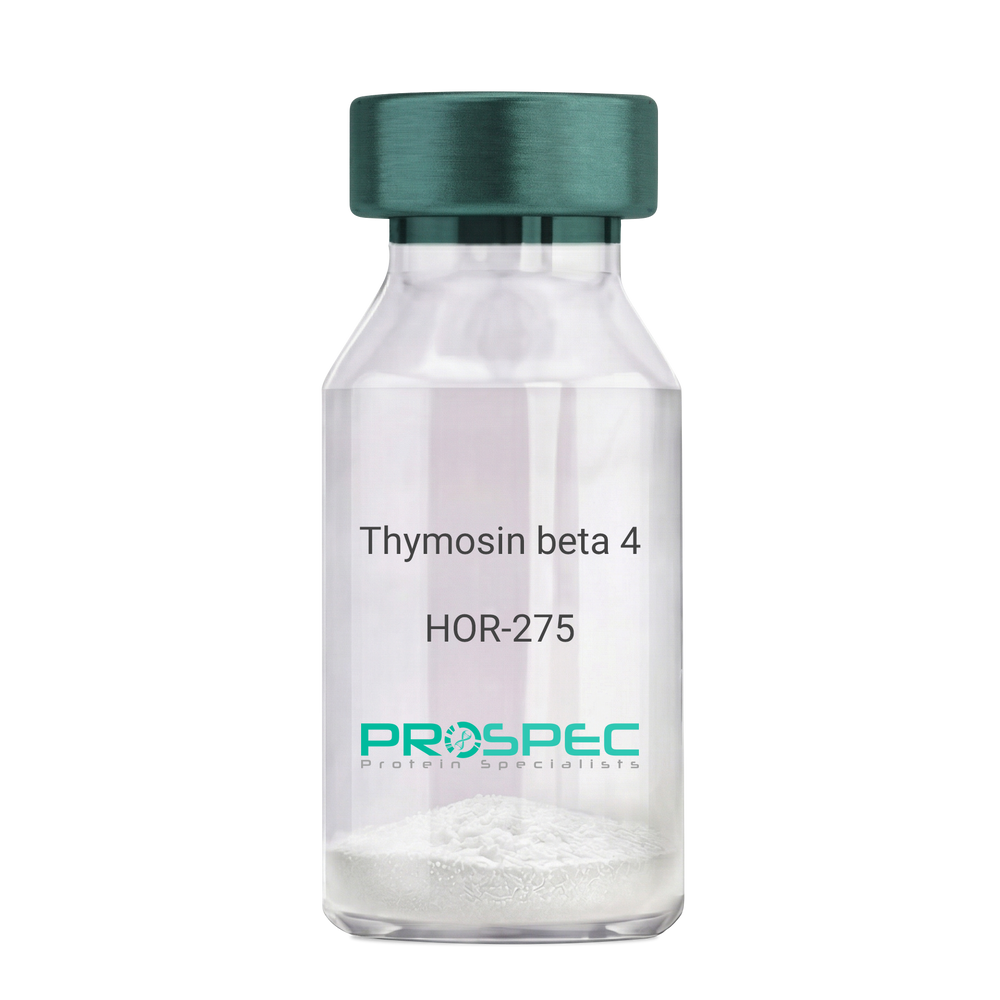
    Thymosin beta 4

    Description:

    Thymosin β4

    Thymosin beta-4. TB500, TB-500

    Product # :

    HOR-275

    Price :

    Quantity :

    Shipping Method :

    Room Temp Icon

    Shipped at Room temp

    Add To Cart

    More Info

    • description
    • formulation
    • purity
    • More Info

    Description

    Thymosin b4 is a 43 amino acid peptide which is regarded as the main intracellular G-actin sequestering peptide. It has a molecular weight of 4963.55 Da, and its molecular formula is: C212H350N56O78S1. Extracellular Thymosin b4 may contribute to physiological processes such as angiogenesis, wound healing, and regulation of inflammation.

    Formulation

    The protein (1mg/ml) was lyophilized with no additives.

    Purity

    Greater than 98.0% as determined by RP-HPLC.

    More Info

    • Introduction

      Thymosin is a hormone secreted from the thymus. Its primary function is to stimulate the production of T cells, which are an important part of the immune system. Thymosin also assists in the development of B cells to plasma cells to produce antibodies. The predominant form of thymosin, thymosin b4, is a member of a highly conserved family of actin monomer-sequestering proteins. b-thymosins are the primary regulators of unpolymerized actin, and are essential for maintaining the small cytoplasmic pool of free G-actin monomers required for rapid filament elongation and allowing for the flux of monomers between the thymosin-bound pool and F-actin.

    • Synonyms

      Thymosin beta-4. TB500, TB-500

    • Physical Appearance

      Sterile Filtered White lyophilized (freeze-dried) powder.

    • Stability

      Lyophilized Thymosin b4 although stable at room temperature for 3 weeks, should be stored desiccated below -18°C. Upon reconstitution T beta 4 should be stored at 4°C between 2-7 days and for future use below -18°C.For long term storage it is recommended to add a carrier protein (0.1% HSA or BSA).Please prevent freeze-thaw cycles.

    • Solubility

      It is recommended to reconstitute the lyophilized Thymosin beta-4 in sterile 18MΩ-cm H2O not less than 100 µg/ml, which can then be further diluted to other aqueous solutions.

    • Amino Acid Sequence

      Thymosin b4 has an a.a. sequence of Ac-Ser-Asp-Lys-Pro-Asp-Met-Ala-Glu-Ile-Glu-Lys-Phe-Asp-Lys-Ser-Lys-Leu-Lys-Lys-Thr-Glu-Thr-Gln-Glu-Lys-Asn-Pro-Leu-Pro-Ser-Lys-Glu-Thr-Ile-Glu-Gln-Glu-Lys-Gln-Ala-Gly-Glu-Ser-OH.

    ProSpec's products are furnished for LABORATORY RESEARCH USE ONLY. The product may not be used as drugs, agricultural or pesticidal products, food additives or household chemicals.

    Thymosin Beta 4
  • View Data Sheet

    Name :

    ProInsulin Human

    Description:

    ProInsulin C-Peptide Analogue Human Recombinant

    Insulin, Insulin-Dependent Diabetes Mellitus 2, Preproinsulin, Proinsulin, MODY10, IDDM1, IDDM2, IDDM, ILPR, IRDN. 

    Product # :

    CYT-1120

    Price :

    Quantity :

    Shipping Method :

    Room Temp Icon

    Shipped at Room temp

    Add To Cart

    More Info

    • description
    • source
    • formulation
    • purity
    • More Info

    Description

    ProInsulin C-Peptide Analogue Human Recombinant produced in E.Coli is a non-glycosylated polypeptide chain containing 35 amino acid and having a molecular mass of approximately 3.6kDa.ProInsulin is purified by proprietary chromatographic techniques.

    Source

    Escherichia Coli.

    Formulation

    Lyophilized from a 0.2μm filtered concentrated solution in PBS, pH 7.4.

    Purity

    Greater than 95.0% as determined by:
    (a) Analysis by RP-HPLC.
    (b) Analysis by SDS-PAGE.

    More Info

    • Introduction

      Insulin decreases blood glucose concentration. Insulin increases cell permeability to monosaccharides, amino acids and fatty acids. Insulin accelerates glycolysis, the pentose phosphate cycle, and glycogen synthesis in liver.

    • Synonyms

      Insulin, Insulin-Dependent Diabetes Mellitus 2, Preproinsulin, Proinsulin, MODY10, IDDM1, IDDM2, IDDM, ILPR, IRDN.

    • Physical Appearance

      Sterile Filtered White lyophilized (freeze-dried) powder.

    • Stability

      Lyophilized ProInsulin although stable at room temperature for 3 weeks, should be stored desiccated below -18°C. Upon reconstitution ProInsulin C-Peptide Analogue should be stored at 4°C between 2-7 days and for future use below -18°C.Please prevent freeze-thaw cycles.

    • Solubility

      It is recommended to reconstitute the lyophilized ProInsulin C-Peptide Analogue in sterile 18MΩ-cm H2O not less than 100µg/ml, which can then be further diluted to other aqueous solutions.

    • Amino Acid Sequence

      RREAEDLQVG QVELGGGPGA GSLQPLALEG SLQKR.

    ProSpec's products are furnished for LABORATORY RESEARCH USE ONLY. The product may not be used as drugs, agricultural or pesticidal products, food additives or household chemicals.

    Proinsulin C Peptide
  • 1
  • …
  • 18
  • 19
  • 20
  • 21
  • 22
  • …
  • 42
Your browser does not support the video tag.

Products

  • Cytokines
  • Growth Factors
  • Chemokines
  • CD Antigens
  • Neurotrophins
  • Hormones
  • Enzymes
  • Viral Antigens
  • Recombinant Proteins
  • Natural Proteins
  • Monoclonal Antibodies
  • Polyclonal Antibodies
  • Thermal Packaging

About

  • Company
  • Founder
  • Contribution
  • Contact Us
  • My Account

Ordering

  • Ordering Method
  • Ordering - Credit Card
  • Ordering PO
  • Shipping Fees
  • FAQ's

Legal

  • Terms & Conditions
  • Privacy
  • Site Map
  • info@prospecbio.com
  • Facebook
  • Instagram
  • Linkedin Profile

© 2026 ProSpec-Tany TechnoGene Ltd. All Rights Reserved.

  • Choosing a selection results in a full page refresh.
  • Opens in a new window.