Search results
1000 results found for “proprotein convertase subtilisin/kexin”
Name
Description
Product #
Price
Quantity
Shipping Method
- View Data Sheet
Name :
PREP HumanDescription:
Prolyl Endopeptidase Human Recombinant
Prolyl Endopeptidase, Post-Proline Cleaving Enzyme, EC 3.4.21.26, PEP, PE, DJ355L5.1 (Prolyl Endopeptidase), Prolyl Oligopeptidase, Prolyl endopeptidase.
Product # :
ENZ-828Price :
Quantity :
Shipping Method :
Shipped with Ice Packs
More Info
- description
- source
- formulation
- purity
- More Info
- Citations
Description
PREP Human Recombinant produced in E.Coli is a single, non-glycosylated polypeptide chain containing 733 amino acids (1-710 a.a) and having a molecular mass of 83.1kDa. PREP is fused to a 23 amino acid His-tag at N-terminus & purified by proprietary chromatographic techniques.
Source
Escherichia Coli.
Formulation
PREP protein solution (0.25mg/ml) containing PBS buffer (pH 7.4), 30% glycerol and 1mM DTT.
Purity
Greater than 90.0% as determined by SDS-PAGE.
Citations
More Info
-
Introduction
Prolyl Endopeptidase , also known as PREP is a cytosolic prolyl endopeptidase which cleaves peptide bonds on the C-terminal side of prolyl residues within peptides which are up to about 30 a.a long. In addition, Prolyl endopeptidases have been shown to be implicated in the maturation and degradation of peptide hormones and neuropeptides.
-
Synonyms
Prolyl Endopeptidase, Post-Proline Cleaving Enzyme, EC 3.4.21.26, PEP, PE, DJ355L5.1 (Prolyl Endopeptidase), Prolyl Oligopeptidase, Prolyl endopeptidase.
-
Physical Appearance
Sterile filtered colorless solution.
-
Stability
Store at 4°C if entire vial will be used within 2-4 weeks. Store, frozen at -20°C for longer periods of time. For long term storage it is recommended to add a carrier protein (0.1% HSA or BSA).Avoid multiple freeze-thaw cycles.
-
Amino Acid Sequence
MGSSHHHHHH SSGLVPRGSH MGSMLSLQYP DVYRDETAVQ DYHGHKICDP YAWLEDPDSE QTKAFVEAQN KITVPFLEQC PIRGLYKERM TELYDYPKYS CHFKKGKRYF YFYNTGLQNQ RVLYVQDSLE GEARVFLDPN ILSDDGTVAL RGYAFSEDGE YFAYGLSASG SDWVTIKFMK VDGAKELPDV LERVKFSCMA WTHDGKGMFY NSYPQQDGKS DGTETSTNLH QKLYYHVLGT DQSEDILCAE FPDEPKWMGG AELSDDGRYV LLSIREGCDP VNRLWYCDLQ QESSGIAGIL KWVKLIDNFE GEYDYVTNEG TVFTFKTNRQ SPNYRVINID FRDPEESKWK VLVPEHEKDV LEWIACVRSN FLVLCYLHDV KNILQLHDLT TGALLKTFPL DVGSIVGYSG QKKDTEIFYQ FTSFLSPGII YHCDLTKEEL EPRVFREVTV KGIDASDYQT VQIFYPSKDG TKIPMFIVHK KGIKLDGSHP AFLYGYGGFN ISITPNYSVS RLIFVRHMGG ILAVANIRGG GEYGETWHKG GILANKQNCF DDFQCAAEYL IKEGYTSPKR LTINGGSNGG LLVAACANQR PDLFGCVIAQ VGVMDMLKFH KYTIGHAWTT DYGCSDSKQH FEWLVKYSPL HNVKLPEADD IQYPSMLLLT ADHDDRVVPL HSLKFIATLQ YIVGRSRKQS NPLLIHVDTK AGHGAGKPTA KVIEEVSDMF AFIARCLNVD WIP.
ProSpec's products are furnished for LABORATORY RESEARCH USE ONLY. The product may not be used as drugs, agricultural or pesticidal products, food additives or household chemicals.
- View Data Sheet
Name :
TK1 HumanDescription:
Thymidine Kinase 1 Human Recombinant
Thymidine kinase 1 soluble, thymidine kinase cytosolic, TK2, EC 2.7.1.21.
Product # :
PKA-036Price :
Quantity :
Shipping Method :
Shipped with Ice Packs
More Info
- description
- source
- formulation
- purity
- More Info
- Citations
Description
TK1 Human Recombinant produced in E. coli is a single polypeptide chain containing 258 amino acids (1-234) and having a molecular mass of 28.0 kDa.TK1 is fused to a 24 amino acid His-tag at N-terminus & purified by proprietary chromatographic techniques.
Source
E.coli.
Formulation
The TK1 solution (1mg/1ml) contains 20mM Tris-HCl buffer (pH 8.0), 100mM NaCl, 1mM DTT and 20% glycerol.
Purity
Greater than 90% as determined by SDS-PAGE.
Citations
More Info
-
Introduction
Thymidine Kinase 1 (TK1) is a phosphotransferase (a kinase): 2'-deoxythymidine kinase, ATP-thymidine 5'-phosphotransferase. TK1 is present in 2 forms in mammalian cells, TK1 and TK2. Thymidine kinases hold a main function in the synthesis of DNA and thus in cell division, as they are part of the distinctive reaction chain to introduce deoxythymidine (present in the body fluids as a result of degradation of DNA from food and from dead cells) into the DNA. Thymidine kinase is necessary for the action of many antiviral drugs. Thymidine kinase is used to select hybridoma cell lines in production of monoclonal antibodies.
-
Synonyms
Thymidine kinase 1 soluble, thymidine kinase cytosolic, TK2, EC 2.7.1.21.
-
Physical Appearance
Sterile Filtered colorless solution.
-
Stability
Store at 4°C if entire vial will be used within 2-4 weeks. Store, frozen at -20°C for longer periods of time. For long term storage it is recommended to add a carrier protein (0.1% HSA or BSA).Avoid multiple freeze-thaw cycles.
-
Amino Acid Sequence
MGSSHHHHHH SSGLVPRGSH MGSHMSCINL PTVLPGSPSK TRGQIQVILG PMFSGKSTEL MRRVRRFQIA QYKCLVIKYA KDTRYSSSFC THDRNTMEAL PACLLRDVAQ EALGVAVIGI DEGQFFPDIV EFCEAMANAG KTVIVAALDG TFQRKPFGAI LNLVPLAESV VKLTAVCMEC FREAAYTKRL GTEKEVEVIG GADKYHSVCR LCYFKKASGQ PAGPDNKENC PVPGKPGEAV AARKLFAPQQ ILQCSPAN.
ProSpec's products are furnished for LABORATORY RESEARCH USE ONLY. The product may not be used as drugs, agricultural or pesticidal products, food additives or household chemicals.
- View Data Sheet
Name :
METTL21A HumanDescription:
Methyltransferase Like 21A Human Recombinant
Protein N-lysine methyltransferase METTL21A, HSPA lysine methyltransferase, HSPA-KMT, Hepatocellular carcinoma-associated antigen 557b, Methyltransferase-like protein 21A, METTL21A, FAM119A, HCA557B, Methyltransferase Like 21A.
Product # :
ENZ-718Price :
Quantity :
Shipping Method :
Shipped with Ice Packs
More Info
- description
- source
- formulation
- purity
- More Info
- Citations
Description
METTL21A Human Recombinant produced in E. coli is a single polypeptide chain containing 149 amino acids (93-218) and having a molecular mass of 17 kDa.METTL21A is fused to a 23 amino acid His-tag at N-terminus & purified by proprietary chromatographic techniques.
Source
E.coli.
Formulation
The METTL21A solution (0.25mg/ml) contains 20mM Tris-HCl buffer (pH 8.0), 0.15M NaCl and 30% glycerol.
Purity
Greater than 85% as determined by SDS-PAGE.
Citations
More Info
-
Introduction
METTL21A, which is a part of the methyltransferase superfamily, is a Protein-lysine methyltransferase that in vitro methylates HSPA1, HSPA5 and HSPA8.
-
Synonyms
Protein N-lysine methyltransferase METTL21A, HSPA lysine methyltransferase, HSPA-KMT, Hepatocellular carcinoma-associated antigen 557b, Methyltransferase-like protein 21A, METTL21A, FAM119A, HCA557B, Methyltransferase Like 21A.
-
Physical Appearance
Sterile Filtered colorless solution.
-
Stability
Store at 4°C if entire vial will be used within 2-4 weeks. Store, frozen at -20°C for longer periods of time. For long term storage it is recommended to add a carrier protein (0.1% HSA or BSA).Avoid multiple freeze-thaw cycles.
-
Amino Acid Sequence
MGSSHHHHHH SSGLVPRGSH MGSTDRKVAL EFLKSNVQAN LPPHIQTKTV VKELTWGQNL GSFSPGEFDL ILGADIIYLE ETFTDLLQTL EHLCSNHSVI LLACRIRYER DNNFLAMLER QFTVRKVHYD PEKDVHIYEA QKRNQKEDL.
ProSpec's products are furnished for LABORATORY RESEARCH USE ONLY. The product may not be used as drugs, agricultural or pesticidal products, food additives or household chemicals.
- View Data Sheet
Name :
SlyD E.ColiDescription:
FKBP-Type Peptidyl-Prolyl Cis-Trans Isomerase E.Coli Recombinant
FKBP-Type Peptidyl-Prolyl Cis-Trans Isomerase, SlyD.
Product # :
ENZ-338Price :
Quantity :
Shipping Method :
Shipped with Ice Packs
More Info
- description
- source
- formulation
- purity
- biological activity
- More Info
- Citations
Description
SlyD Recombinant produced in E.Coli is a single, non-glycosylated polypeptide chain containing 196 amino acids and having a molecular mass of 21 kDa.
Source
Escherichia Coli.
Formulation
SlyD protein solution contains 20mM Tris pH-7.5.
Purity
Greater than 95.0% as determined by:
(a) Analysis by RP-HPLC.
(b) Analysis by SDS-PAGE.Biological Activity
Specific activity is > 220 nmoles/min/mg, and is defined as the amount of enzyme that cleaves 1umole of suc-AAFP-pNA per minute at 25C in Tris-Hcl pH8.0 using chymotrypsin.Citations
More Info
-
Introduction
SlyD accessiton#: NP_755987 is a putative folding helper protein from the Escherichia coli cytosol, which has N-terminal prolyl isomerase domain of the FKBP type and a most likely unstructured C-terminal tail. SlyD is an important factor in the biosynthesis of the metal cluster in the [NiFe]-hydrogenase enzymes, and exhibits several activities including that of a peptidyl-prolyl isomerase.
-
Synonyms
FKBP-Type Peptidyl-Prolyl Cis-Trans Isomerase, SlyD.
-
Physical Appearance
Sterile Filtered colorless solution.
-
Stability
Store at 4°C if entire vial will be used within 2-4 weeks. Store, frozen at -20°C for longer periods of time. For long term storage it is recommended to add a carrier protein (0.1% HSA or BSA).Please prevent freeze-thaw cycles.
-
Amino Acid Sequence
MKVAKDLVVS LAYQVRTEDG VLVDESPVSA PLDYLHGHGS LISGLETALE GHEVGDKFDV AVGANDAYGQ YDENLVQRVP KDVFMGVDEL QVGMRFLAET DQGPVPVEIT AVEDDHVVVD GNHMLAGQNL KFNVEVVAIR EATEEELAHG HVHGAHDHHH DHDHDGCCGG HGHDHGHEHG GEGCCGGKGN GGCGCH.
ProSpec's products are furnished for LABORATORY RESEARCH USE ONLY. The product may not be used as drugs, agricultural or pesticidal products, food additives or household chemicals.
- View Data Sheet
Name :
FKBP2 HumanDescription:
FK506 Binding Protein 2 Human Recombinant
FKBP13, FKBP-2, Peptidyl-prolyl cis-trans isomerase FKBP2, PPIase FKBP2, FK506-binding protein 2, Rotamase, Immunophilin FKBP13, 13 kDa FK506-binding protein, 13 kDa FKBP, FKBP-13, FKBP2, PPIase.
Product # :
ENZ-503Price :
Quantity :
Shipping Method :
Shipped with Ice Packs
More Info
- description
- source
- formulation
- purity
- biological activity
- More Info
- Citations
Description
FKBP2 Human Recombinant produced in E.Coli is a single, non-glycosylated, polypeptide chain containing 122 amino acids (22-142 a.a.) and having a molecular mass of 13.4 kDa. The FKBP2 is purified by proprietary chromatographic techniques.
Source
Escherichia Coli.
Formulation
The FKBP2 solution contains 20mM Tris-HCl pH-8, 1mM DTT, and 10% glycerol.
Purity
Greater than 90% as determined by SDS-PAGE.
Biological Activity
Specific activity is > 270 nmoles/min/ug, and is defined as the amount of enzyme that cleaves 1umole of suc-AAFP-pNA per minute at 25C in Tris-Hcl pH8.0 using chymotrypsin.Citations
More Info
-
Introduction
FKBP2 is part of the immunophilin protein family, which takes part in immunoregulation and basic cellular processes involving protein folding and trafficking. FKBP2 is a cis-trans prolyl isomerase that binds the immunosuppressants FK506 and rapamycin. FKBP2 functions as an ER chaperone and as a component of membrane cytoskeletal scaffolds.
-
Synonyms
FKBP13, FKBP-2, Peptidyl-prolyl cis-trans isomerase FKBP2, PPIase FKBP2, FK506-binding protein 2, Rotamase, Immunophilin FKBP13, 13 kDa FK506-binding protein, 13 kDa FKBP, FKBP-13, FKBP2, PPIase.
-
Physical Appearance
Sterile Filtered clear colorless solution.
-
Stability
Store at 4°C if entire vial will be used within 2-4 weeks. Store, frozen at -20°C for longer periods of time.For long term storage it is recommended to add a carrier protein (0.1% HSA or BSA).Avoid multiple freeze-thaw cycles.
-
Amino Acid Sequence
MATGAEGKRK LQIGVKKRVD HCPIKSRKGD VLHMHYTGKL EDGTEFDSSL PQNQPFVFSL GTGQVIKGWD QGLLGMCEGE KRKLVIPSEL GYGERGAPPK IPGGATLVFE VELLKIERRT EL.
ProSpec's products are furnished for LABORATORY RESEARCH USE ONLY. The product may not be used as drugs, agricultural or pesticidal products, food additives or household chemicals.
- View Data Sheet
Name :
KLK3 ProteinDescription:
Kallikrein-3 Recombinant Human
Prostate-specific antigen, PSA, Gamma-seminoprotein, Seminin, Kallikrein-3, P-30 antigen, Semenogelase, KLK3, APS, hK3, KLK2A1.
Product # :
ENZ-1102Price :
Quantity :
Shipping Method :
Shipped at Room temp
More Info
- description
- source
- formulation
- purity
- More Info
- Citations
Description
Kallikrein-3 Human Recombinant produced in E.Coli is a single, non- glycosylated polypeptide chain containing 237 amino acids and having a molecular mass of 26.1kDa.KLK3 is purified by proprietary chromatographic techniques.
Source
Escherichia Coli.
Formulation
Lyophilized from a 0.2μm filtered concentrated solution in 20mM Tris-HCl, pH 8.0, 150mM NaCl and 3% trehalose.
Purity
Greater than 95.0% as determined by:
(a) Analysis by RP-HPLC.
(b) Analysis by SDS-PAGE.Citations
More Info
-
Introduction
Kallikrein-3 (KLK3) is a part of the kallikrein-related peptidase family. Kallikreins are a subgroup of serine proteases having various physiological functions. Numerous kallikreins take part in carcinogenesis and some may be prospective cancer and other disease biomarkers. Kallikrein-3 is 1 of the 15 kallikrein subfamily members located in a cluster on chromosome 19 and is a protease present in seminal plasma. KLK3 hydrolyzes semenogelin-1 consequently leading to the liquefaction of the seminal coagulum. KLK3 acts normally in the liquefaction of seminal coagulum, probably by hydrolysis of the high molecular mass seminal vesicle protein. Serum level of the KLK3 protein, called PSA in the clinical setting, is beneficial in the diagnosis and monitoring of prostatic carcinoma.
-
Synonyms
Prostate-specific antigen, PSA, Gamma-seminoprotein, Seminin, Kallikrein-3, P-30 antigen, Semenogelase, KLK3, APS, hK3, KLK2A1.
-
Physical Appearance
Sterile Filtered White lyophilized (freeze-dried) powder.
-
Stability
Lyophilized KLK3 although stable at room temperature for 3 weeks, should be stored desiccated below -18°C. Upon reconstitution Kallikrein-3 should be stored at 4°C between 2-7 days and for future use below -18°C.Please prevent freeze-thaw cycles.
-
Solubility
It is recommended to reconstitute the lyophilized Kallikrein-3 in sterile 18MΩ-cm H2O not less than 100µg/ml, which can then be further diluted to other aqueous solutions.
-
Amino Acid Sequence
IVGGWECEKH SQPWQVLVAS RGRAVCGGVL VHPQWVLTAA HCIRNKSVIL LGRHSLFHPE DTGQVFQVSH SFPHPLYDMS LLKNRFLRPG DDSSHDLMLL RLSEPAELTDA VKVMDLPTQE PALGTTCYAS GWGSIEPEEF LTPKKLQCVD LHVISNDVCA QVHPQKVTKF MLCAGRWTGG KSTCSGDSGG PLVCNGVLQG ITSWGSEPCA LPERPSLYTK VVHYRKWIKD TIVANP.
ProSpec's products are furnished for LABORATORY RESEARCH USE ONLY. The product may not be used as drugs, agricultural or pesticidal products, food additives or household chemicals.
- View Data Sheet
Name :
Gliadin Gamma WheatDescription:
Gliadin Gamma Wheat Recombinant
Product # :
PRO-2148Price :
Quantity :
Shipping Method :
Shipped with Ice Packs
More Info
- description
- source
- formulation
- purity
- More Info
- Citations
Description
Recombinant Wheat Gliadin Gamma protein produced in E.Coli and fused to a 6 His Tag at C-terminus, having a theoretical Mw of 37945.14 Dalton, pI 7.70.Purified by proprietary chromatographic technique.
Source
Escherichia Coli.
Formulation
Gliadin Gamma protein solution (1mg/ml) in 10mM Tris-HCl pH 7.2.
Purity
Protein is >90% pure.
Citations
More Info
-
Introduction
Wheat Gliadin and related gluten components from barley, rye and possibly oats can cause an abnormal immune response called Celiac disease which is a chronic gastrointestinal disorder. Celiac disease characteristics are flattening of the jejunal mucosa and intestinal lesions of variable severity in hereditarily inclined individuals. Even though Celiac disease is not a classic autoimmune disease it is related to anti-tissue transglutaminase antibodies and gliadin antibodies tests are most recommended in screening populations at risk for CD and other gluten-sensitive enteropathies. In the past, serologic tests for gliadin antibodies usually were not very precise and were not enough for accurate diagnosis due to missing deamidated epitopes within the authentic gliadin fraction traditionally used in diagnostic test kits. ProSpec's deamidated Gliadin isoform matches to the deamidated neo-epitopes, which in the natural antigen are formed by transglutaminase-mediated glutamine side chain deamidation.
-
Physical Appearance
Sterile Filtered clear solution.
-
Stability
Gliadin Gamma although stable at 4°C for 1 week, should be stored below -18°C. Please prevent freeze thaw cycles.
-
Amino Acid Sequence
MKTLLILTILAMAITIGTANIQVDPSGQVQWLQQQLVPQLQQPLSQQPQQTFPQPQQTFPH
QPQQQVPQPQQPQQPFLQPQQPFPQQPQQPFPQTQQPQQPFPQQPQQPFPQTQQPQQ
PFPQQPQQPFPQTQQPQQPFPQLQQPQQPFPQPQQQLPQPQQPQQSFPQQQRPFIQPSL
QQQLNCKNILLQQSKPASLVSSLWSIIWPQSDCQVMRQQCCQQLAQIPQQLQCAAIHSVVH
SIIMQQQQQQQQQQGIDIFLPLSQHEQVGQGSLVQGQGIIQPQQPAQLEAIRSLVLQTLPSM
CNVYVPPECSIMRAPFASIVAGIGGQHHHHHH.
ProSpec's products are furnished for LABORATORY RESEARCH USE ONLY. The product may not be used as drugs, agricultural or pesticidal products, food additives or household chemicals.
- View Data Sheet
Name :
FKBP4 HumanDescription:
FK506 Binding Protein 4 Human Recombinant
HBI, p52, Hsp56, FKBP52, FKBP59, PPIase, FKBP4, FK506-binding protein 4, Peptidyl-prolyl cis-trans isomerase, HSP-binding immunophilin, FKBP52 protein, 52 kDa FK506-binding protein, p59 protein.
Product # :
ENZ-412Price :
Quantity :
Shipping Method :
Shipped with Ice Packs
More Info
- description
- source
- formulation
- purity
- biological activity
- More Info
- Citations
Description
FKBP4 produced in E.Coli is a single,non-glycosylated polypeptide chain containing 479 amino acids (1-459 a.a.) and having a molecular mass of 53.9 kDa.FKBP4 is fused to a 20 amino acid His Tag at N-terminus and purified by proprietary chromatographic techniques.
Source
Escherichia Coli.
Formulation
The FKBP4 protein solution contains 20mM Tris-HCl, pH-8 and 10% glycerol.
Purity
Greater than 90.0% as determined by SDS-PAGE.
Biological Activity
Specific activity is > 300 nmoles/min/mg, and is defined as the amount of enzyme that cleaves 1umole of suc-AAFP-pNA per minute at 25C in Tris-Hcl pH 8.0 using chymotrypsin.Citations
More Info
-
Introduction
FKBP4 is part of the immunophilin protein family, which takes part in immunoregulation and necessary cellular processes concerning protein folding and trafficking. FKBP4 is a cis-trans prolyl isomerase that connects to the immunosuppressants FK506 and rapamycin. FKBP4 has high structural and functional similarity to FKBP1A, though, FKBP4 does not have immunosuppressant activity when complexed with FK506. FKBP4 is known to connect with phytanoyl-CoA alpha-hydroxylase. FKBP4 associates with HSP90 & HSP70 thus takes part in the intracellular trafficking of hetero-oligomeric forms of the steroid hormone receptors. FKBP4 highly associates with adeno-associated virus type 2 vectors (AAV) resulting in a considerable increase in AAV-mediated transgene expression in human cell lines. FKBP4 is involved in the optimal use of AAV vectors in human gene therapy.
-
Synonyms
HBI, p52, Hsp56, FKBP52, FKBP59, PPIase, FKBP4, FK506-binding protein 4, Peptidyl-prolyl cis-trans isomerase, HSP-binding immunophilin, FKBP52 protein, 52 kDa FK506-binding protein, p59 protein.
-
Physical Appearance
Sterile filtered colorless solution.
-
Stability
Store at 4°C if entire vial will be used within 2-4 weeks. Store, frozen at -20°C for longer periods of time. For long term storage it is recommended to add a carrier protein (0.1% HSA or BSA). Avoid multiple freeze-thaw cycles.
-
Amino Acid Sequence
MGSSHHHHHH SSGLVPRGSH MTAEEMKATE SGAQSAPLPM EGVDISPKQD EGVLKVIKRE GTGTEMPMIG DRVFVHYTGW LLDGTKFDSS LDRKDKFSFDLGKGEVIKAW DIAIATMKVG EVCHITCKPE YAYGSAGSPP KIPPNATLVF EVELFEFKGE DLTEEEDGGI IRRIQTRGEG YAKPNEGAIV EVALEGYYKDKLFDQRELRF EIGEGENLDL PYGLERAIQR MEKGEHSIVY LKPSYAFGSV GKEKFQIPPN AELKYELHLK SFEKAKESWE MNSEEKLEQS TIVKERGTVYFKEGKYKQAL LQYKKIVSWL EYESSFSNEE AQKAQALRLA SHLNLAMCHL KLQAFSAAIE SCNKALELDS NNEKGLFRRG EAHLAVNDFE LARADFQKVLQLYPNNKAAK TQLAVCQQRI RRQLAREKKL YANMFERLAE EENKAKAEAS SGDHPTDTEM KEEQKSNTAG SQSQVETEA.
ProSpec's products are furnished for LABORATORY RESEARCH USE ONLY. The product may not be used as drugs, agricultural or pesticidal products, food additives or household chemicals.
- View Data Sheet
Name :
KEL MouseDescription:
Kell Metallo-Endopeptidase Mouse Recombinant
kell blood group antigen, kell blood group glycoprotein, Kell blood group, Kell blood group glycoprotein homolog, KEL, Kell, CD238 antigen, CD238, ECE3, Kell blood group-metalloendopeptidase, Kell blood group-metalloendopeptidase.
Product # :
ENZ-1158Price :
Quantity :
Shipping Method :
Shipped with Ice Packs
More Info
- description
- source
- formulation
- purity
- More Info
- Citations
Description
KEL Mouse produced in Sf9 Baculovirus cells is a single, glycosylated polypeptide chain containing 674 amino acids (49-713 aa) and having a molecular mass of 76.3kDa.KEL is fused to a 9 amino acid His tag at C-terminus and purified by proprietary chromatographic techniques.
Source
Sf9, Baculovirus cells.
Formulation
The KEL solution (0.25mg/ml) contains 10% Glycerol and Phosphate-Buffered Saline (pH 7.4).
Purity
Greater than 90.0% as determined by SDS-PAGE.
Citations
More Info
-
Introduction
Kell blood group glycoprotein homolog or KEL, is an enzyme, part of the zinc endopeptidase of the neprilysin (NEP) group of proteins. KEL has a crucial part in the production of the potent bioactive ET-3, which also includes enzymes that are endothelin convertingenzymes (PEX, XCE, DINE &various NEP-like proteins). KEL uses a single disulfide bond to XK, a gated membranal transporter. The Kell antigen system that includes two proteins, is very crucial among blood group systems.
-
Synonyms
kell blood group antigen, kell blood group glycoprotein, Kell blood group, Kell blood group glycoprotein homolog, KEL, Kell, CD238 antigen, CD238, ECE3, Kell blood group-metalloendopeptidase, Kell blood group-metalloendopeptidase.
-
Physical Appearance
Sterile Filtered colorless solution.
-
Stability
Store at 4°C if entire vial will be used within 2-4 weeks. Store, frozen at -20°C for longer periods of time. For long term storage it is recommended to add a carrier protein (0.1% HSA or BSA).Avoid multiple freeze-thaw cycles.
-
Amino Acid Sequence
ADPIFRNCGP CPCETPVCME LLDHYLASGN RSVAPCTDFF SFACEKANGT SDSFQALTEE NKSRLWRLLE APGSWHLGSG EEKAFQFYNS CMDTDAIEAS GSGPLIQIIE ELGGWNITGN WTSLDFNQNL RLLMSQYGHF PFFRAYLRPH PAPPHTPIIQ IDQPEFDILL QQEQEQKVYA QILREYVTYL NRLGTLLGSN PQEAQQHASW SIVFTSRLFQ FLRPQQQQQA QDKLFHVVTI DELQEMAPAI DWLSCLQAIF TPMSLNSSQT LVVHDLDYLR NMSQLVEEGL LNHRESIQSY MILGLVDTLS PALDTKFQEA RRELIQELRK LKERPPLPAY PRWMKCVEQT GAFFEPTLAA LFVREAFGPS IQSAAMELFA EIKDAVIIRL KKLSWISEET QKEALNKLAQ LQVEMGAPKR AVKPDIATQE YNDIQLGPSF LQSFLSCVRS LRARNVQSFL QPFPYHRWQK SPWEVNAYYS ISDHMVVFPA GLLQPPFFHP GYPRAVNFGA AGSIMAHELL HIFYQLLLPG GCPACDTHVL QEALLCLERH YAAFPLPSIS SFNGSHTLLE NAADIGGVAI AFQAYSKRIV EHTGELTLPN LDLSPYQLFF RSYAQVMCRG LSSQDPQDPH SPPSLRVHGP LSNTPDFAKH FHCPRGTLLN PSARCKLWHH HHHH.
ProSpec's products are furnished for LABORATORY RESEARCH USE ONLY. The product may not be used as drugs, agricultural or pesticidal products, food additives or household chemicals.
- View Data Sheet
Name :
PCK1 HumanDescription:
Phosphoenolpyruvate Carboxykinase 1 Human Recombinant
Phosphoenolpyruvate carboxykinase 1 (soluble), PEPCK-C, PEPCK1, PEP carboxykinase, phosphoenolpyruvate carboxykinase cytosolic [GTP], EC 4.1.1.32.
Product # :
PKA-018Price :
Quantity :
Shipping Method :
Shipped with Ice Packs
More Info
- description
- source
- formulation
- purity
- More Info
- Citations
Description
PCK1 Human Recombinant produced in E.coli is a single, non-glycosylated polypeptide chain containing 646 amino acids (1-622) and having a molecular mass of 71.7kDa.PCK1 is fused to a 24 amino acid His-tag at N-terminus & purified by proprietary chromatographic techniques.
Source
E.coli.
Formulation
The PCK1 solution (0.5mg/ml) contains 20mM Tris-HCl buffer (pH 8.0), 100mM NaCl, 1mM DTT and 10% glycerol.
Purity
Greater than 90% as determined by SDS-PAGE.
Citations
More Info
-
Introduction
PCK1 is a central regulating point for the regulation of gluconeogenesis. PCK1 has a vital part in this process by stimulating hepatic glucose production. The expression of PCK1 is controlled by cAMP, glucocorticoids, diet etc. Modulation of the signals controlling PCK1 levels offers a possible therapeutic tactic to the treatment of Diabetes and subsequently obesity.
-
Synonyms
Phosphoenolpyruvate carboxykinase 1 (soluble), PEPCK-C, PEPCK1, PEP carboxykinase, phosphoenolpyruvate carboxykinase cytosolic [GTP], EC 4.1.1.32.
-
Physical Appearance
Sterile Filtered colorless solution.
-
Stability
Store at 4°C if entire vial will be used within 2-4 weeks. Store, frozen at -20°C for longer periods of time. For long term storage it is recommended to add a carrier protein (0.1% HSA or BSA).Avoid multiple freeze-thaw cycles.
-
Amino Acid Sequence
MGSSHHHHHH SSGLVPRGSH MGSHMPPQLQ NGLNLSAKVV QGSLDSLPQA VREFLENNAE LCQPDHIHIC DGSEEENGRL LGQMEEEGIL RRLKKYDNCW LALTDPRDVA RIESKTVIVT QEQRDTVPIP KTGLSQLGRW MSEEDFEKAF NARFPGCMKG RTMYVIPFSM GPLGSPLSKI GIELTDSPYV VASMRIMTRM GTPVLEALGD GEFVKCLHSV GCPLPLQKPL VNNWPCNPEL TLIAHLPDRR EIISFGSGYG GNSLLGKKCF ALRMASRLAK EEGWLAEHML VLGITNPEGE KKYLAAAFPS ACGKTNLAMM NPSLPGWKVE CVGDDIAWMK FDAQGHLRAI NPENGFFGVA PGTSVKTNPN AIKTIQKNTI FTNVAETSDG GVYWEGIDEP LASGVTITSW KNKEWSSEDG EPCAHPNSRF CTPASQCPII DAAWESPEGV PIEGIIFGGR RPAGVPLVYE ALSWQHGVFV GAAMRSEATA AAEHKGKIIM HDPFAMRPFF GYNFGKYLAH WLSMAQHPAA KLPKIFHVNW FRKDKEGKFL WPGFGENSRV LEWMFNRIDG KASTKLTPIG YIPKEDALNL KGLGHINMME LFSISKEFWE KEVEDIEKYL EDQVNADLPC EIEREILALK QRISQM.
ProSpec's products are furnished for LABORATORY RESEARCH USE ONLY. The product may not be used as drugs, agricultural or pesticidal products, food additives or household chemicals.
- View Data Sheet
Name :
AKR1C1 HumanDescription:
Aldo-Keto Reductase Family 1 Member C1 Human Recombinant
DDH1, DDH, HAKRC, 20-alpha-HSD, DD1/DD2, HBAB, C9, DD1, H-37, MBAB, MGC8954, 2-ALPHA-HSD, AKR1C1, Aldo-keto reductase family 1 member C1, 20-alpha-hydroxysteroid dehydrogenase, Trans-1,2-dihydrobenzene-1,2-diol dehydrogenase, Indanol dehydrogenase, Dihydrodiol dehydrogenase 1/2, Chlordecone reductase homolog HAKRC, High-affinity hepatic bile acid-binding protein
Product # :
ENZ-1130Price :
Quantity :
Shipping Method :
Shipped with Ice Packs
More Info
- description
- source
- formulation
- purity
- biological activity
- More Info
- Citations
Description
AKR1C1 Human Recombinant produced in E.Coli is a single, non-glycosylated polypeptide chain containing 323 amino acids (1-323) and having a molecular mass of 36.7 kDa.AKR1C1 is purified by proprietary chromatographic techniques.
Source
Escherichia Coli.
Formulation
The AKR1C1 solution (1mg/ml) contains 20% Glycerol, 0.1M NaCl and 20mM Tris-HCl buffer (pH 8.5).
Purity
Greater than 95.0% as determined by SDS-PAGE.
Biological Activity
Specific activity is > 500pmol/min/ug. It is defined by the amount of enzyme that catalyzes oxidation of 1.0pmole 1-Acenaphthenol in the presence of NADP per minute at pH 8.8 at 25˚C.
Citations
More Info
-
Introduction
Aldo-keto reductase family 1 member C1 or AKR1C1 is an enzyme, part of the aldo/keto reductase family that holds over 40 familiar proteins. AKR1C1 promotes the conversion of ketones & aldehydes to their alcohol forms by using cofactors such as NADH & NADPH. AKR1C1 promotes the progesterone reduction to its inactive molecule form 20-alpha-hydroxy-progesterone.
-
Synonyms
DDH1, DDH, HAKRC, 20-alpha-HSD, DD1/DD2, HBAB, C9, DD1, H-37, MBAB, MGC8954, 2-ALPHA-HSD, AKR1C1, Aldo-keto reductase family 1 member C1, 20-alpha-hydroxysteroid dehydrogenase, Trans-1,2-dihydrobenzene-1,2-diol dehydrogenase, Indanol dehydrogenase, Dihydrodiol dehydrogenase 1/2, Chlordecone reductase homolog HAKRC, High-affinity hepatic bile acid-binding protein
-
Physical Appearance
Sterile Filtered colorless solution.
-
Stability
Store at 4°C if entire vial will be used within 2-4 weeks. Store, frozen at -20°C for longer periods of time. For long term storage it is recommended to add a carrier protein (0.1% HSA or BSA).Avoid multiple freeze-thaw cycles.
-
Amino Acid Sequence
MDSKYQCVKL NDGHFMPVLG FGTYAPAEVP KSKALEATKL AIEAGFRHID SAHLYNNEEQ VGLAIRSKIA DGSVKREDIF YTSKLWCNSH RPELVRPALE RSLKNLQLDY VDLYLIHFPV SVKPGEEVIP KDENGKILFD TVDLCATWEA VEKCKDAGLA KSIGVSNFNR RQLEMILNKP GLKYKPVCNQ VECHPYFNQR KLLDFCKSKD IVLVAYSALG SHREEPWVDP NSPVLLEDPV
LCALAKKHKR TPALIALRYQ LQRGVVVLAK SYNEQRIRQN VQVFEFQLTS EEMKAIDGLN RNVRYLTLDI FAGPPNYPFS DEY
ProSpec's products are furnished for LABORATORY RESEARCH USE ONLY. The product may not be used as drugs, agricultural or pesticidal products, food additives or household chemicals.
- View Data Sheet
Name :
AKR1C4 Human, HisDescription:
Aldo-Keto Reductase Family 1 Member C4 Human Recombinant, His Tag
Aldo-keto reductase family 1 member C4 (chlordecone reductase 3-alpha hydroxysteroid dehydrogenase type I dihydrodiol dehydrogenase 4), 3-alpha-hydroxysteroid dehydrogenase type I, MGC22581, HAKRA, 3 alpha-hydroxysteroid dehydrogenase/dihydrodiol dehydrogenase 4, CDR, DD4, CHDR, 3-alpha-HSD1, C11.
Product # :
ENZ-145Price :
Quantity :
Shipping Method :
Shipped with Ice Packs
More Info
- description
- source
- formulation
- purity
- biological activity
- More Info
- Citations
Description
AKR1C4 Human Recombinant produced in E.coli is a single, non-glycosylated polypeptide chain containing 343 amino acids (1-323) and having a molecular mass of 39.2 kDa.The AKR1C4 is fused to a 20 amino acid His-Tag at N-terminus and purified by proprietary chromatographic techniques.
Source
Escherichia Coli.
Formulation
AKR1C4 protein 1mg/ml is supplied in 20mM Tris-HCl, pH-8, 0.1M NaCl, 1mM DTT and 20% Glycerol.
Purity
Greater than 90.0% as determined by SDS-PAGE.
Biological Activity
Specific activity is > 700 pmol/min/ug, and is defined as the amount of enzyme that catalyze the oxidation of 1.0 pmole 1-Acenaphthenol in the presence of NADP per minute at pH 8.8 at 25°C.Citations
More Info
-
Introduction
AKR1C4 is a member of the aldo/keto reductase superfamily that has over 40 known enzymes and proteins. AKR1C4 enables the conversion of aldehydes and ketones to their corresponding alcohols by using NADH and/or NADPH as cofactors. AKR1C4 takes part in the bioreduction of chlordecone, a toxic organochlorine pesticide, to chlordecone alcohol in liver.
-
Synonyms
Aldo-keto reductase family 1 member C4 (chlordecone reductase 3-alpha hydroxysteroid dehydrogenase type I dihydrodiol dehydrogenase 4), 3-alpha-hydroxysteroid dehydrogenase type I, MGC22581, HAKRA, 3 alpha-hydroxysteroid dehydrogenase/dihydrodiol dehydrogenase 4, CDR, DD4, CHDR, 3-alpha-HSD1, C11.
-
Physical Appearance
AKR1C4 is supplied as a sterile filtered clear solution.
-
Stability
Store at 4°C if entire vial will be used within 2-4 weeks. Store, frozen at -20°C for longer periods of time. For long term storage it is recommended to add a carrier protein (0.1% HSA or BSA).Avoid multiple freeze-thaw cycles.
-
Amino Acid Sequence
MGSSHHHHHH SSGLVPRGSH MDPKYQRVEL NDGHFMPVLG FGTYAPPEVP RNRAVEVTKL AIEAGFRHID SAYLYNNEEQ VGLAIRSKIA DGSVKREDIF YTSKLWCTFF QPQMVQPALE SSLKKLQLDY VDLYLLHFPM ALKPGETPLP KDENGKVIFD TVDLSATWEV MEKCKDAGLA
KSIGVSNFNC RQLEMILNKP GLKYKPVCNQ VECHPYLNQS KLLDFCKSKD IVLVAHSALG TQRHKLWVDP NSPVLLEDPV LCALAKKHKR TPALIALRYQ LQRGVVVLAK SYNEQRIREN IQVFEFQLTS EDMKVLDGLN RNYRYVVMDF LMDHPDYPFS DEY.
ProSpec's products are furnished for LABORATORY RESEARCH USE ONLY. The product may not be used as drugs, agricultural or pesticidal products, food additives or household chemicals.
- View Data Sheet
Name :
PCOLCE Human, Sf9Description:
Procollagen C-Endopeptidase Enhancer Human Recombinant, Sf9
Procollagen C-endopeptidase enhancer 1, Procollagen COOH-terminal proteinase enhancer 1, PCPE-1, Procollagen C-proteinase enhancer 1, Type 1 procollagen C-proteinase enhancer protein, Type I procollagen COOH-terminal proteinase enhancer, PCOLCE, PCPE1, Procollagen C-Endopeptidase Enhancer, Procollagen C-Proteinase, Enhancer 1, Procollagen, Type 1, COOH-Terminal Proteinase Enhancer, Type I Procollagen COOH-Terminal Proteinase Enhancer, Type 1 Procollagen C-Proteinase Enhancer Protein, Procollagen COOH-Terminal Proteinase Enhancer 1.
Product # :
ENZ-1075Price :
Quantity :
Shipping Method :
Shipped with Ice Packs
More Info
- description
- source
- formulation
- purity
- More Info
- Citations
Description
PCOLCE produced in Sf9 Insect cells is a single, glycosylated polypeptide chain containing 433 amino acids (26-449 a.a.) and having a molecular mass of 46.6kDa (Molecular size on SDS-PAGE will appear at approximately 40-57kDa). PCOLCE is expressed with an 9 amino acid His tag at C-Terminus and purified by proprietary chromatographic techniques.
Source
Sf9, Insect cells.
Formulation
PCOLCE protein solution (0.25mg/ml) contains 20mM Tris-HCl (pH 8.0), 10% glycerol and 0.1M NaCl.
Purity
Greater than 95.0% as determined by SDS-PAGE.
Citations
More Info
-
Introduction
Procollagen C-endopeptidase enhancer 1, also known as PCOLCE binds to the C-terminal propeptide of type I procollagen and enhances procollagen C-proteinase activity. In addition, C-terminal processed part of PCPE (CT-PCPE) has a metalloproteinase inhibitory activity. Among the diseases which are associated with PCOLCE: bone fracture & oculopharyngeal muscular dystrophy.
-
Synonyms
Procollagen C-endopeptidase enhancer 1, Procollagen COOH-terminal proteinase enhancer 1, PCPE-1, Procollagen C-proteinase enhancer 1, Type 1 procollagen C-proteinase enhancer protein, Type I procollagen COOH-terminal proteinase enhancer, PCOLCE, PCPE1, Procollagen C-Endopeptidase Enhancer, Procollagen C-Proteinase, Enhancer 1, Procollagen, Type 1, COOH-Terminal Proteinase Enhancer, Type I Procollagen COOH-Terminal Proteinase Enhancer, Type 1 Procollagen C-Proteinase Enhancer Protein, Procollagen COOH-Terminal Proteinase Enhancer 1.
-
Physical Appearance
Sterile filtered colorless solution.
-
Stability
Store at 4°C if entire vial will be used within 2-4 weeks. Store, frozen at -20°C for longer periods of time. For long term storage it is recommended to add a carrier protein (0.1% HSA or BSA).Avoid multiple freeze-thaw cycles.
-
Amino Acid Sequence
ADPQTPNYTR PVFLCGGDVK GESGYVASEG FPNLYPPNKE CIWTITVPEG QTVSLSFRVF DLELHPACRY DALEVFAGSG TSGQRLGRFC GTFRPAPLVA PGNQVTLRMT TDEGTGGRGF LLWYSGRATS GTEHQFCGGR LEKAQGTLTT PNWPESDYPP GISCSWHIIA PPDQVIALTF EKFDLEPDTY CRYDSVSVFN GAVSDDSRRL GKFCGDAVPG SISSEGNELL VQFVSDLSVT ADGFSASYKT LPRGTAKEGQ GPGPKRGTEP KVKLPPKSQP PEKTEESPSA PDAPTCPKQC RRTGTLQSNF CASSLVVTAT VKSMVREPGE GLAVTVSLIG AYKTGGLDLP SPPTGASLKF YVPCKQCPPM KKGVSYLLMG QVEENRGPVL PPESFVVLHR PNQDQILTNL SKRKCPSQPV RAAASQDHHH HHH.
ProSpec's products are furnished for LABORATORY RESEARCH USE ONLY. The product may not be used as drugs, agricultural or pesticidal products, food additives or household chemicals.
- View Data Sheet
Name :
TKT HumanDescription:
Transketolase Human Recombinant
Transketolase, TK, TKT1, EC 2.2.1.1.
Product # :
ENZ-588Price :
Quantity :
Shipping Method :
Shipped with Ice Packs
More Info
- description
- source
- formulation
- purity
- More Info
- Citations
Description
TKT Human Recombinant produced in E. coli is a single polypeptide chain containing 643 amino acids (1-623) and having a molecular mass of 70.0kDa.TKT is fused to a 20 amino acid His-tag at N-terminus & purified by proprietary chromatographic techniques.
Source
E.coli.
Formulation
The TKT solution (0.25mg/ml) contains 20mM Tris-HCl buffer (pH 8.0), 100mM Nacl, 1mM DTT and 10% glycerol.
Purity
Greater than 85% as determined by SDS-PAGE.
Citations
More Info
-
Introduction
TKT is a thiamine-dependent enzyme that takes part in the channeling of leftover sugar phosphates to glycolysis in the pentose phosphate pathway. Multiple alternatively spliced variants are known that encode the same protein.
-
Synonyms
Transketolase, TK, TKT1, EC 2.2.1.1.
-
Physical Appearance
Sterile Filtered colorless solution.
-
Stability
Store at 4°C if entire vial will be used within 2-4 weeks. Store, frozen at -20°C for longer periods of time. For long term storage it is recommended to add a carrier protein (0.1% HSA or BSA).Avoid multiple freeze-thaw cycles.
-
Amino Acid Sequence
MGSSHHHHHH SSGLVPRGSH MESYHKPDQQ KLQALKDTAN RLRISSIQAT TAAGSGHPTS CCSAAEIMAV LFFHTMRYKS QDPRNPHNDR FVLSKGHAAP ILYAVWAEAG FLAEAELLNL RKISSDLDGH PVPKQAFTDV ATGSLGQGLG AACGMAYTGK YFDKASYRVY CLLGDGELSE GSVWEAMAFA SIYKLDNLVA ILDINRLGQS DPAPLQHQMD IYQKRCEAFG WHAIIVDGHS VEELCKAFGQ AKHQPTAIIA KTFKGRGITG VEDKESWHGK PLPKNMAEQI IQEIYSQIQS KKKILATPPQ EDAPSVDIAN IRMPSLPSYK VGDKIATRKA YGQALAKLGH ASDRIIALDG DTKNSTFSEI FKKEHPDRFI ECYIAEQNMV SIAVGCATRN RTVPFCSTFA AFFTRAFDQI RMAAISESNI NLCGSHCGVS IGEDGPSQMA LEDLAMFRSV PTSTVFYPSD GVATEKAVEL AANTKGICFI RTSRPENAII YNNNEDFQVG QAKVVLKSKD DQVTVIGAGV TLHEALAAAE LLKKEKINIR VLDPFTIKPL DRKLILDSAR ATKGRILTVE DHYYEGGIGE AVSSAVVGEP GITVTHLAVN RVPRSGKPAE LLKMFGIDRD AIAQAVRGLI TKA.
ProSpec's products are furnished for LABORATORY RESEARCH USE ONLY. The product may not be used as drugs, agricultural or pesticidal products, food additives or household chemicals.
- View Data Sheet
Name :
ProteaseDescription:
Recombinant Protease
Product # :
ENZ-354Price :
Quantity :
Shipping Method :
Shipped with Ice Packs
More Info
- description
- source
- More Info
- Citations
Description
Protease Recombinant is a fusion protein of glutathione S-transferase (GST) and human rhinovirus (HRV) type 14 3C protease. The protease specifically recognizes a subset of sequences which include the core amino acid sequence Leu-Phe-Gln/Gly-Pro cleaving between the Gln and Gly residues. Substrate recognition and cleavage are likely to be dependent not only upon primary structural signals, but also upon the secondary and tertiary structures of the fusion protein as well.The Recombinant Protease is purified by proprietary chromatographic techniques.
Source
Escherichia Coli.
Citations
More Info
-
Physical Appearance
Sterile filtered colorless solution.
-
Stability
Store at 4°C if entire vial will be used within 2-4 weeks. Store, frozen at -20°C for longer periods of time. Avoid multiple freeze-thaw cycles.
-
Cleavage Conditions
For Cleavage of a Fusion Protein: During cleavage reactions, it is recommended that samples be removed at various time points and analyzed by SDS-PAGE to estimate the yield, purity, and extent of digestion. The amount of PreScission Protease, temperature and length of incubation required for complete digestion of a given GST fusion partner may vary depending on the fusion partner. Optimal conditions for each fusion should be determined in pilot experiments. Digestion may be improved by adding TritonTM X-100, TweenTM 20, NonidetTM, or NP40 to a concentration of 0.01%. Concentrations of these detergents up to 1% do not inhibit PreScission Protease.
-
Cleavage Buffer
50mM Tris-HCl, pH-7.0 (at 25°C), 150mM NaCl, 1mM EDTA, 1mM dithiothreitol. Chill to 5°C prior to use.
-
Unit Definition
One unit will cleave ?90% of 100 µg of a test GST-fusion protein in Cleavage Buffer (50mM Tris-HCl, 150 mM NaCl, 1 mM EDTA, 1 mM DTT, pH 7.0 at 25°C) at 5°C for 16 hours.
ProSpec's products are furnished for LABORATORY RESEARCH USE ONLY. The product may not be used as drugs, agricultural or pesticidal products, food additives or household chemicals.
- View Data Sheet
Name :
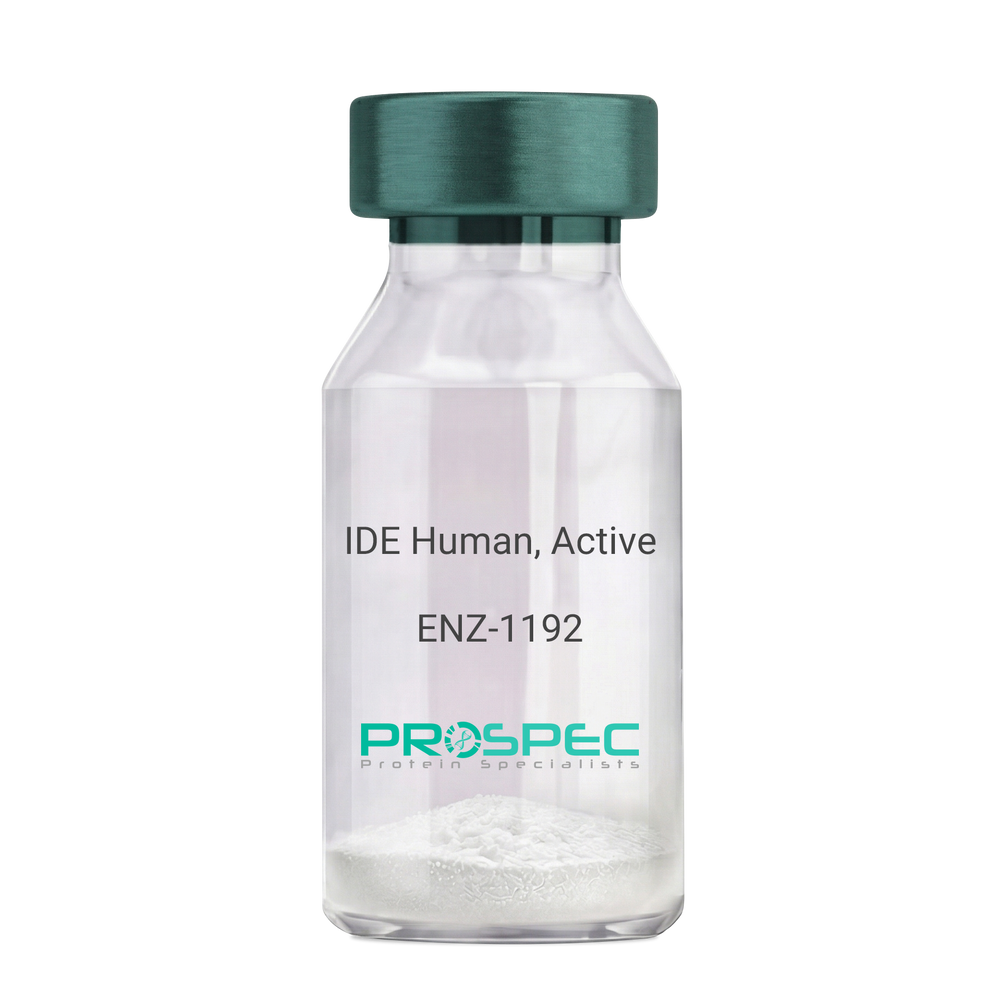
IDE Human, ActiveDescription:
Insulin-Degrading Enzyme Human Recombinant
Insulin-Degrading Enzyme, Abeta-Degrading Protease, Insulysin, EC 3.4.24.56, Insulinase, Insulin Protease, INSULYSIN, EC 3.4.24, IDE, insulin-degrading enzyme isoform 1.
Product # :
ENZ-1192Price :
Quantity :
Shipping Method :
Shipped with Ice Packs
More Info
- description
- source
- formulation
- purity
- biological activity
- More Info
- Citations
Description
IDE Human, Active Human Recombinant produced in E.Coli is a single, non-glycosylated, polypeptide chain (42-1019 a.a) containing a total of 984 amino acids, having a molecular mass of 114 kDa. IDE is fused to a 6 amino acid His-tag at C-terminus and is purified by proprietary chromatographic techniques.
Source
Escherichia Coli.
Formulation
The IDE solution (0.5mg/ml) contains 10% Glycerol, 100mM NaCl, 0.05% Brij35 and 20mM Tris-HCl buffer (pH 7.5).
Purity
Greater than 90.0% as determined by SDS-PAGE.
Biological Activity
Specific activity is greater than 3,000 pmol/min/ug in which 1 unit will convert 1.0 pmole of Mca-RPPGFSAFK(Dnp)-OH to MCA-Pro-Leu-OH per minute at pH 7.5 at 25°C.
Citations
More Info
-
Synonyms
Insulin-Degrading Enzyme, Abeta-Degrading Protease, Insulysin, EC 3.4.24.56, Insulinase, Insulin Protease, INSULYSIN, EC 3.4.24, IDE, insulin-degrading enzyme isoform 1.
-
Physical Appearance
Filtered colorless solution.
-
Stability
Store at 4°C if entire vial will be used within 2-4 weeks. Store, frozen at -20°C for longer periods of time. For long term storage it is recommended to add a carrier protein (0.1% HSA or BSA). Avoid multiple freeze-thaw cycles.
-
Amino Acid Sequence
MNNPAIKRIG NHITKSPEDK REYRGLELAN GIKVLLISDP TTDKSSAALD VHIGSLSDPP NIAGLSHFCE HMLFLGTKKY PKENEYSQFL SEHAGSSNAF TSGEHTNYYF DVSHEHLEGA LDRFAQFFLC PLFDESCKDR EVNAVDSEHE KNVMNDAWRL FQLEKATGNP KHPFSKFGTG NKYTLETRPN QEGIDVRQEL LKFHSAYYSS NLMAVCVLGR ESLDDLTNLV VKLFSEVENK NVPLPEFPEH PFQEEHLKQL YKIVPIKDIR NLYVTFPIPD LQKYYKSNPG HYLGHLIGHE GPGSLLSELK SKGWVNTLVG GQKEGARGFM FFIINVDLTE EGLLHVEDII LHMFQYIQKL RAEGPQEWVF QECKDLNAVA FRFKDKERPR GYTSKIAGIL HYYPLEEVLT AEYLLEEFRP DLIEMVLDKL RPENVRVAIV SKSFEGKTDR TEEWYGTQYK QEAIPDEVIK KWQNADLNGK FKLPTKNEFI PTNFEILPLE KEATPYPALI KDTAMSKLWF KQDDKFFLPK ACLNFEFFSP FAYVDPLHCN MAYLYLELLK DSLNEYAYAA ELAGLSYDLQ NTIYGMYLSV KGYNDKQPIL LKKIIEKMAT FEIDEKRFEI IKEAYMRSLN NFRAEQPHQH AMYYLRLLMT EVAWTKDELK EALDDVTLPR LKAFIPQLLS RLHIEALLHG NITKQAALGI MQMVEDTLIE HAHTKPLLPS
QLVRYREVQL PDRGWFVYQQ RNEVHNNCGI EIYYQTDMQS TSENMFLELF CQIISEPCFN TLRTKEQLGY IVFSGPRRAN GIQGLRFIIQ SEKPPHYLES RVEAFLITME KSIEDMTEEA FQKHIQALAI RRLDKPKKLS AECAKYWGEI ISQQYNFDRD NTEVAYLKTL TKEDIIKFYK EMLAVDAPRR HKVSVHVLAR EMDSCPVVGE FPCQNDINLS QAPALPQPEV IQNMTEFKRG LPLFPLVKPH INFMAAKLHH HHHH. -
Background
Insulin-degrading enzyme (IDE) is a crucial protease that plays a significant role in maintaining glucose homeostasis by degrading insulin and other bioactive peptides. Dysregulation of IDE has been implicated in various metabolic disorders, particularly type 2 diabetes mellitus. IDE is also associated with the clearance of amyloid-beta peptides in the brain, making it relevant to Alzheimer's disease pathology. Studying the recombinant form of IDE is fundamental to understanding its functional mechanisms and exploring potential avenues for therapeutic interventions.
The primary goal of this research is to express and purify recombinant IDE using diverse expression systems. Recombinant DNA techniques will be employed to construct expression vectors containing the IDE gene, followed by expression in bacterial, yeast, or mammalian cell-based systems. The recombinant IDE will be purified using affinity chromatography or other appropriate methods, facilitating subsequent biochemical and biophysical characterization.
The second objective is to investigate the substrate specificity and catalytic activity of the purified IDE. In vitro enzymatic assays will be conducted to analyse the ability of the recombinant IDE to degrade insulin and other potential substrates. The effects of various factors, such as pH, temperature, and potential modulators, on IDE activity will be evaluated. Additionally, the interactions between IDE and its substrates will be explored using binding assays.
The third objective is to elucidate the three-dimensional structure of the IDE recombinant using techniques like X-ray crystallography or nuclear magnetic resonance (NMR) spectroscopy. Structural insights into the active site and binding pockets of IDE will provide valuable information for understanding its substrate recognition and catalytic mechanisms. This knowledge could be instrumental in designing targeted therapeutic compounds.
By characterizing the IDE recombinant, this research aims to contribute to our understanding of its role in insulin metabolism, glucose regulation, and potential therapeutic applications. The findings from this study may have implications for the development of novel treatments for diabetes and other related disorders.
ProSpec's products are furnished for LABORATORY RESEARCH USE ONLY. The product may not be used as drugs, agricultural or pesticidal products, food additives or household chemicals.
- View Data Sheet
Name :
PRSS3 Human, HEKDescription:
Protease Serine 3 Human Recombinant, HEK
Protease, Serine, 3, Protease, Serine, 4 (Trypsin 4, Brain), Brain Trypsinogen, Mesotrypsinogen, Mesotrypsin, Trypsin III, EC 3.4.21.4 4, Trypsin IV, PRSS4, TRY3, TRY4 Protease, Serine, 3 (Mesotrypsin), Pancreatic Trypsinogen III, Serine Protease 3, Serine Protease 4, Trypsinogen IV, Trypsinogen 4, Trypsinogen 5, EC 3.4.21, MTG, T9.
Product # :
ENZ-1194Price :
Quantity :
Shipping Method :
Shipped with Ice Packs
More Info
- description
- source
- formulation
- purity
- biological activity
- More Info
- Citations
Description
PRSS3 Human Recombinant produced in HEK293 Cells is a single, glycosylated polypeptide chain containing 238 amino acids (16-247 a.a.) and having a molecular mass of 26kDa. PRSS3 is fused to a 6 amino acid His-tag at C-terminus and is purified by proprietary chromatographic techniques.
Source
HEK293 Cells.
Formulation
PRSS3 protein solution (1mg/ml) containing 10% Glycerol and Phosphate-Buffered Saline (pH 7.4).
Purity
Greater than 95.0% as determined by SDS-PAGE.
Biological Activity
Specific activity is > 10,000pmol/min/ug, and is defined as the amount of enzyme that cleaves 1pmol of McaRPKPVE-Nval-WRK(Dnp)-NH2 per minute at pH 8.0 at 37℃.
Citations
More Info
-
Synonyms
Protease, Serine, 3, Protease, Serine, 4 (Trypsin 4, Brain), Brain Trypsinogen, Mesotrypsinogen, Mesotrypsin, Trypsin III, EC 3.4.21.4 4, Trypsin IV, PRSS4, TRY3, TRY4 Protease, Serine, 3 (Mesotrypsin), Pancreatic Trypsinogen III, Serine Protease 3, Serine Protease 4, Trypsinogen IV, Trypsinogen 4, Trypsinogen 5, EC 3.4.21, MTG, T9.
-
Physical Appearance
Sterile filtered colorless solution.
-
Stability
Store at 4°C if entire vial will be used within 2-4 weeks. Store, frozen at -20°C for longer periods of time. For long term storage it is recommended to add a carrier protein (0.1% HSA or BSA). Avoid multiple freeze-thaw cycles.
-
Amino Acid Sequence
VPFDDDDKIV GGYTCEENSL PYQVSLNSGS HFCGGSLISE QWVVSAAHCY KTRIQVRLGE HNIKVLEGNE QFINAAKIIR HPKYNRDTLD NDIMLIKLSS PAVINARVST ISLPTAPPAA GTECLISGWG NTLSFGADYP DELKCLDAPV LTQAECKASY PGKITNSMFC VGFLEGGKDS CQRDSGGPVV CNGQLQGVVS WGHGCAWKNR PGVYTKVYNY VDWIKDTIAA NSHHHHHH.
-
Background
PRSS3 is a member of the serine protease family, characterized by its specific enzymatic activity mediated by the serine residue in the catalytic triad. PRSS3's structure consists of a catalytic domain, a substrate-binding site, and disulfide bridges that help maintain its stability. Understanding the molecular characteristics of PRSS3 is crucial for elucidating its functions.
Physiological Functions: PRSS3 is primarily expressed in the pancreas, where it plays a vital role in the digestion of dietary proteins. It contributes to the breakdown of proteins into smaller peptides, facilitating their absorption in the small intestine. PRSS3 is part of a complex enzymatic network that ensures proper digestion and nutrient absorption.
Pathological Implications: Research has shown that abnormal PRSS3 activity or expression can be associated with various diseases. For example, alterations in PRSS3 have been linked to pancreatic diseases, including pancreatitis and pancreatic cancer. Investigating PRSS3's role in disease pathogenesis can provide valuable insights into the development and progression of these conditions.
Biomedical Research: PRSS3 human recombinant proteins are valuable tools in biomedical research. Researchers use these recombinant proteins to study PRSS3's enzymatic properties, interactions with other molecules, and potential therapeutic applications. They can perform controlled experiments to gain a deeper understanding of PRSS3's functions.
Therapeutic Potential: PRSS3's involvement in diseases like pancreatitis and pancreatic cancer has raised interest in its therapeutic potential. Researchers explore the development of inhibitors or modulators targeting PRSS3 as potential treatments for these diseases. Additionally, PRSS3's role in protein digestion has implications for digestive disorders and enzyme replacement therapies.
Diagnostic Markers: PRSS3 levels or activity may serve as diagnostic markers for certain diseases. Changes in PRSS3 expression in pancreatic tissue or serum may be indicative of pancreatic disorders. Research in this area aims to establish PRSS3 as a diagnostic tool for early disease detection.
Future Directions: Continued research on PRSS3 human recombinant and its roles in health and disease is essential. This includes investigating its regulation, substrate specificity, and potential interactions with other proteins. Such studies may uncover novel therapeutic targets and diagnostic strategies.
ProSpec's products are furnished for LABORATORY RESEARCH USE ONLY. The product may not be used as drugs, agricultural or pesticidal products, food additives or household chemicals.
- View Data Sheet
Name :
AKR1C4 HumanDescription:
Aldo-Keto Reductase Family 1 Member C4 Human Recombinant
Aldo-keto reductase family 1 member C4 (chlordecone reductase 3-alpha hydroxysteroid dehydrogenase type I dihydrodiol dehydrogenase 4), 3-alpha-hydroxysteroid dehydrogenase type I, MGC22581, HAKRA, 3 alpha-hydroxysteroid dehydrogenase/dihydrodiol dehydrogenase 4, CDR, DD4, CHDR, 3-alpha-HSD1, C11.
Product # :
ENZ-1132Price :
Quantity :
Shipping Method :
Shipped with Ice Packs
More Info
- description
- source
- formulation
- purity
- biological activity
- More Info
- Citations
Description
AKR1C4 Human Recombinant produced in E.Coli is a single, non-glycosylated, polypeptide chain containing 323 amino acids (1-323aa ) and having a molecular mass of 37kDa.
Source
Escherichia Coli.
Formulation
AKR1C4 protein solution (1mg/ml) containing 20mM Tris-HCl buffer (pH 8.5), 0.1M NaCl, 10% glycerol and 1mM DTT.
Purity
Greater than 90.0% as determined by SDS-PAGE.
Biological Activity
Specific activity is > 700pmol/min/ug, and is defined as the amount of enzyme that catalyze the oxidation of 1.0pmole 1-Acenaphthenol in the presence of NADP per minute at pH 8.8 at 25C
Citations
More Info
-
Introduction
Aldo-keto reductase family 1 member C4 or AKR1C4 is a part of the aldo/keto reductase superfamily that has more then 40 known proteins & enzymes. AKR1C4 catalyzes the conversion of aldehydes and ketones to their corresponding alcohols with NADH and/or NADPH as cofactors. AKR1C4 takes place in the bioreduction of chlordecone, a toxic organochlorine pesticide, to chlordecone alcohol in the liver tissue.
-
Synonyms
Aldo-keto reductase family 1 member C4 (chlordecone reductase 3-alpha hydroxysteroid dehydrogenase type I dihydrodiol dehydrogenase 4), 3-alpha-hydroxysteroid dehydrogenase type I, MGC22581, HAKRA, 3 alpha-hydroxysteroid dehydrogenase/dihydrodiol dehydrogenase 4, CDR, DD4, CHDR, 3-alpha-HSD1, C11.
-
Physical Appearance
Sterile Filtered colorless solution.
-
Stability
Store at 4°C if entire vial will be used within 2-4 weeks. Store, frozen at -20°C for longer periods of time. For long term storage it is recommended to add a carrier protein (0.1% HSA or BSA).Avoid multiple freeze-thaw cycles.
-
Amino Acid Sequence
MDPKYQRVEL NDGHFMPVLG FGTYAPPEVP RNRAVEVTKL AIEAGFRHID SAYLYNNEEQ VGLAIRSKIA DGSVKREDIF YTSKLWCTFF QPQMVQPALE SSLKKLQLDY VDLYLLHFPM ALKPGETPLP KDENGKVIFD TVDLSATWEV MEKCKDAGLA KSIGVSNFNC RQLEMILNKP GLKYKPVCNQ VECHPYLNQS KLLDFCKSKD IVLVAHSALG TQRHKLWVDP NSPVLLEDPV LCALAKKHKR TPALIALRYQ LQRGVVVLAK SYNEQRIREN IQVFEFQLTS EDMKVLDGLN RNYRYVVMDF LMDHPDYPFS DEY.
ProSpec's products are furnished for LABORATORY RESEARCH USE ONLY. The product may not be used as drugs, agricultural or pesticidal products, food additives or household chemicals.
- View Data Sheet
Name :
AKR7A3 Human, HisDescription:
Aldo-Keto Reductase Family 7 Member A3 Human Recombinant, His Tag
AFAR2, Aflatoxin B1 aldehyde reductase member 3, AFB1 aldehyde reductase 2, AFB1-AR 2, AKR7A3.
Product # :
ENZ-484Price :
Quantity :
Shipping Method :
Shipped with Ice Packs
More Info
- description
- source
- formulation
- purity
- biological activity
- More Info
- Citations
Description
AKR7A3 Human Recombinant fused to a 39 amino acids His Tag at N-terminal produced in E.Coli is a single, non-glycosylated, polypeptide chain containing 370 amino acids (1-331 a.a.) and having a molecular mass of 41.6 kDa. The AKR7A3 is fused to a 39 amino acid His tag at n-terminal and purified by proprietary chromatographic techniques.
Source
Escherichia Coli.
Formulation
The AKR7A3 solution contains 20mM Tris-HCl pH-8, 0.1M NaCl and 10% glycerol.
Purity
Greater than 95.0% as determined by SDS-PAGE.
Biological Activity
Specific activity: approximately < 0.1 units/mg.
Enzymatic activity was confirmed by measuring the amount of enzyme catalyzing the oxidation of 1 micromole NADPH per minute at 25C. Specific activity was expressed as units/mg protein.Citations
More Info
-
Introduction
AKR7A3, takes part in the detoxification of aldehydes and ketones. AKR7A3 reduces the dialdehyde protein-binding form of aflatoxin B1 (AFB1) to the non-binding AFB1 dialcohol. AKR7A3 participates in protection of liver against the toxic and carcinogenic effects of AFB1, a potent hepatocarcinogen.
-
Synonyms
AFAR2, Aflatoxin B1 aldehyde reductase member 3, AFB1 aldehyde reductase 2, AFB1-AR 2, AKR7A3.
-
Physical Appearance
Sterile Filtered clear colorless solution.
-
Stability
Store at 4°C if entire vial will be used within 2-4 weeks. Store, frozen at -20°C for longer periods of time. For long term storage it is recommended to add a carrier protein (0.1% HSA or BSA).Avoid multiple freeze-thaw cycles.
-
Amino Acid Sequence
MRGSHHHHHH GMASMTGGQQ MGRDLYDDDD KDRWGSELEM SRQLSRARPA TVLGAMEMGR RMDAPTSAAV TRAFLERGHT EIDTAFVYSE GQSETILGGL GLRLGGSDCR VKIDTKAIPL FGNSLKPDSL RFQLETSLKR LQCPRVDLFY LHMPDHSTPV EETLRACHQL HQEGKFVELG LSNYAAWEVA EICTLCKSNG WILPTVYQGM YNAITRQVET ELFPCLRHFG LRFYAFNPLA GGLLTGKYKY EDKDGKQPVG RFFGNTWAEM YRNRYWKEHH FEGIALVEKA LQAAYGASAP SMTSATLRWM YHHSQLQGAH GDAVILGMSS LEQLEQNLAA AEEGPLEPAV VDAFNQAWHL VAHECPNYFR.
ProSpec's products are furnished for LABORATORY RESEARCH USE ONLY. The product may not be used as drugs, agricultural or pesticidal products, food additives or household chemicals.
- View Data Sheet
Name :
HK2 HumanDescription:
Hexokinase-2 Human Recombinant
Hexokinase-2, EC 2.7.1.1, HK2, Hexokinase type II, HK II, Muscle form hexokinase, HXK2, DKFZp686M1669.
Product # :
PKA-227Price :
Quantity :
Shipping Method :
Shipped with Ice Packs
More Info
- description
- source
- formulation
- purity
- biological activity
- More Info
- Citations
Description
HK2 Human Recombinant produced in E.Coli is a single, non-glycosylated, polypeptide chain (aa 1-917) fused to a 20 His tag at the N-terminal encoding the sequence of 937 amino acids in total and having a molecular mass of 104.1 kDa.HXK2 is purified by proprietary chromatographic techniques.
Source
Escherichia Coli.
Formulation
The protein (1mg/ml) contains 20mM Tris-HCl pH8.0 and 10% glycerol.
Purity
Greater than 85.0% as determined by SDS-PAGE.
Biological Activity
Specific activity is 3-4 units/ml obtained by measuring the increase of NADPH in absorbance at 340 nm resulting from the reduction of NADP. In the coupled mode, one unit will produce 1.0 umole of NADPH per minute as glucose is phosphorylated by ATP at pH 7.4 at 30C.Citations
More Info
-
Introduction
Hexokinases phosphorylate glucose to produce glucose-6-phosphate, thus committing glucose to the glycolytic pathway. Hexokinase 2 is the predominant form found in skeletal muscle. It localizes to the outer membrane of mitochondria. Expression of this gene is insulin-responsive, and studies in rat suggest that it is involved in the increased rate of glycolysis seen in rapidly growing cancer cells.
-
Synonyms
Hexokinase-2, EC 2.7.1.1, HK2, Hexokinase type II, HK II, Muscle form hexokinase, HXK2, DKFZp686M1669.
-
Physical Appearance
Sterile filtered colorless solution.
-
Stability
Store at 4°C if entire vial will be used within 2-4 weeks.Store, frozen at -20°C for longer periods of time. For long term storage it is recommended to add a carrier protein (0.1% HSA or BSA). Please avoid freeze-thaw cycles.
-
Amino Acid Sequence
MGSSHHHHHH SSGLVPRGSH MIASHLLAYF FTELNHDQVQ KVDQYLYHMR LSDETLLEIS KRFRKEMEKG LGATTHPTAA VKMLPTFVRS TPDGTEHGEF LALDLGGTNF RVLWVKVTDN GLQKVEMENQ IYAIPEDIMR GSGTQLFDHI AECLANFMDK LQIKDKKLPL GFTFSFPCHQTKLDESFLVS WTKGFKSSGV EGRDVVALIR KAIQRRGDFD IDIVAVVNDT VGTMMTCGYD DHNCEIGLIV GTGSNACYME EMRHIDMVEG DEGRMCINME WGAFGDDGSL NDIRTEFDQE IDMGSLNPGK QLFEKMISGM YMGELVRLIL VKMAKEELLF GGKLSPELLN TGRFETKDISDIEGEKDGIR KAREVLMRLG LDPTQEDCVA THRICQIVST RSASLCAATL AAVLQRIKENKGEERLRSTI GVDGSVYKKH PHFAKRLHKT VRRLVPGCDV RFLRSEDGSG KGAAMVTAVAYRLADQHRAR QKTLEHLQLS HDQLLEVKRR MKVEMERGLS KETHASAPVK MLPTYVCATPDGTEKGDFLA LDLGGTNFRV LLVRVRNGKW GGVEMHNKIY AIPQEVMHGT GDELFDHIVQ CIADFLEYMG MKGVSLPLGF TFSFPCQQNS LDESILLKWT KGFKASGCEG EDVVTLLKEA IHRREEFDLD VVAVVNDTVG TMMTCGFEDP HCEVGLIVGT GSNACYMEEM RNVELVEGEE GRMCVNMEWG AFGDNGCLDD FRTEFDVAVD ELSLNPGKQR FEKMISGMYL GEIVRNILID FTKRGLLFRG RISERLKTRG IFETKFLSQI ESDCLALLQV RAILQHLGLE STCDDSIIVK EVCTVVARRA AQLCGAGMAA VVDRIRENRG LDALKVTVGV DGTLYKLHPH FAKVMHETVK DLAPKCDVSF LQSEDGSGKG AALITAVACR IREAGQR.
ProSpec's products are furnished for LABORATORY RESEARCH USE ONLY. The product may not be used as drugs, agricultural or pesticidal products, food additives or household chemicals.
- View Data Sheet
Name :
HK3 HumanDescription:
Hexokinase-3 Human Recombinant
Hexokinase-3, EC 2.7.1.1, Hexokinase type III, HK III, HXK3, HK3.
Product # :
PKA-229Price :
Quantity :
Shipping Method :
Shipped with Ice Packs
More Info
- description
- source
- formulation
- purity
- More Info
- Citations
Description
HK-3 Human Recombinant produced in E.Coli is a single, non-glycosylated, polypeptide chain fused to His tag at the N-terminal encoding the sequence of 943 amino acids and having a molecular mass of 101.1 kDa.HXK3 is purified by proprietary chromatographic techniques.
Source
Escherichia Coli.
Formulation
The protein (1mg/ml) contains 20mM Tris pH 8.0 and 10% glycerol.
Purity
Greater than 95.0% as determined by SDS-PAGE.
Citations
More Info
-
Introduction
Hexokinases phosphorylate glucose to produce glucose-6-phosphate, thus committing glucose to the glycolytic pathway. HK3 encodes hexokinase 3. Similar to hexokinases 1 and 2, this allosteric enzyme is inhibited by its product glucose-6-phosphate. Hexokinase3 lacks the hydrophobic N-terminal sequence critical for targeting to mitochondria. Hexpkinase3 may have anabolic functions, providing H6P for glycogen or lipid synthesis.
-
Synonyms
Hexokinase-3, EC 2.7.1.1, Hexokinase type III, HK III, HXK3, HK3.
-
Physical Appearance
Sterile filtered colorless solution.
-
Stability
Store at 4°C if entire vial will be used within 2-4 weeks.Store, frozen at -20°C for longer periods of time. For long term storage it is recommended to add a carrier protein (0.1% HSA or BSA). Please avoid freeze-thaw cycles.
-
Amino Acid Sequence
MGSSHHHHHH SSGLVPRGSH MDSIGSSGLR QGEETLSCSE EGLPGPSDSSE LVQECLQQFKVTRAQLQQI QASLLGSMEQ ALRGQASPAP AVRMLPTYVG STPHGTEQGD FVVLELGATG ASLRVLWVTL TGIEGHRVEP RSQEFVIPQE VMLGAGQQLF DFAAHCLSEF LDAQPVNKQGLQLGFSFSFP CHQTGLDRST LISWTKGFRC SGVEGQDVVQ LLRDAIRRQG AYNIDVVAVV NDTVGTMMGC EPGVRPCEVG LVVDTGTNAC YMEEARHVAV LDEDRGRVCV SVEWGSFSDD GALGPVLTTF DHTLDHESLN PGAQRFEKMI GGLYLGELVR LVLAHLARCG VLFGGCTSPA LLSQGSILLE HVAEMEDPST GAARVHAILQ DLGLSPGASD VELVQHVCAA VCTRAAQLCA AALAAVLSCL QHSREQQTLQ VAVATGGRVC ERHPRFCSVL QGTVMLLAPE CDVSLIPSVDGGGRGVAMVT AVAARLAAHR RLLEETLAPF RLNHDQLAAV QAQMRKAMAK GLRGEASSLR MLPTFVRATP DGSERGDFLA LDLGGTNFRV LLVRVTTGVQ ITSEIYSIPE TVAQGSGQQL FDHIVDCIVD FQQKQGLSGQ SLPLGFTFSF PCRQLGLDQG ILLNWTKGFK ASDCEGQDVV SLLREAITRR QAVELNVVAI VNDTVGTMMS CGYEDPRCEI GLIVGTGTNA CYMEELRNVAGVPGDSGRMC INMEWGAFGD DGSLAMLSTR FDASVDQASI NPGKQRFEKM ISGMYLGEIV RHILLHLTSL GVLFRGQQIQ RLQTRDIFKT KFLSEIESDS LALRQVRAIL EDLGLPLTSDDALMVLEVCQ AVSQRAAQLC GAGVAAVVEK IRENRGLEEL AVSVGVDGTL YKLHPRFSSL VAATVRELAP RCVVTFLQSE DGSGKGAALV TAVACRLAQL TRV.
ProSpec's products are furnished for LABORATORY RESEARCH USE ONLY. The product may not be used as drugs, agricultural or pesticidal products, food additives or household chemicals.
- View Data Sheet
Name :
PRDX4 HumanDescription:
Peroxiredoxin-4 Human Recombinant
EC 1.11.1.15, AOE37-2, Peroxiredoxin-IV, Prx-IV, Thioredoxin peroxidase AO372, Thioredoxin-dependent peroxide reductase A0372, Antioxidant enzyme AOE372.
Product # :
ENZ-513Price :
Quantity :
Shipping Method :
Shipped with Ice Packs
More Info
- description
- source
- formulation
- purity
- biological activity
- More Info
- Citations
Description
PRDX4 Human Recombinant produced in E.Coli is a single, non-glycosylated, polypeptide chain containing 255 amino acids (38-271 a.a.) and having a molecular mass of 28.8kDa. PRDX4 protein is fused to a 20 amino acid His-Tag at N-terminus and purified by standard chromatography.
Source
Escherichia Coli.
Formulation
PRDX4 Human solution containing 20mM Tris-HCl pH-8 & 10% glycerol.
Purity
Greater than 95% as determined by SDS-PAGE.
Biological Activity
Specific activity: approximately 230-310 pmole/min/µg.
Enzymatic activity was confirmed by measuring the remaining peroxide after incubation of PRDX4 and peroxide for 20 min at room temperature. Specific activity is defined as the amount of hydroperoxide that 1ug of enzyme can reduce at 25 C for 1 minute.Citations
More Info
-
Introduction
PRDX4 is an antioxidant enzyme that is part of the peroxiredoxin family. PRDX4 is localized to the cytoplasm. PRDX4 reduces hydrogen peroxide and alkyl hydroperoxides to water and alcohol with the use of reducing equivalents derived from thiol-containing donor molecules. PRDX4 has a regulatory part in the activation of the transcription factor NF-kappaB. PRDX4 participates in redox regulation of the cell. PRDX4 regulates the activation of NF-kappa-B in the cytosol by a modulation of I-kappa-B-alpha phosphorylation.
-
Synonyms
EC 1.11.1.15, AOE37-2, Peroxiredoxin-IV, Prx-IV, Thioredoxin peroxidase AO372, Thioredoxin-dependent peroxide reductase A0372, Antioxidant enzyme AOE372.
-
Physical Appearance
Sterile filtered colorless solution.
-
Stability
Store at 4°C if entire vial will be used within 2-4 weeks. Store, frozen at -20°C for longer periods of time. For long term storage it is recommended to add a carrier protein (0.1% HSA or BSA).Avoid multiple freeze-thaw cycles.
-
Amino Acid Sequence
MGSSHHHHHH SSGLVPRGSH MWETEERPRT REEECHFYAG GQVYPGEASR VSVADHSLHL SKAKISKPAP YWEGTAVIDG EFKELKLTDY RGKYLVFFFY PLDFTFVCPT EIIAFGDRLE EFRSINTEVV ACSVDSQFTH LAWINTPRRQ GGLGPIRIPL LSDLTHQISK DYGVYLEDSG HTLRGLFIID DKGILRQITL NDLPVGRSVD ETLRLVQAFQ YTDKHGEVCP AGWKPGSETI IPDPAGKLKY FDKLN.
ProSpec's products are furnished for LABORATORY RESEARCH USE ONLY. The product may not be used as drugs, agricultural or pesticidal products, food additives or household chemicals.
- View Data Sheet
Name :
COAA E.ColiDescription:
Pantothenate Kinase E.Coli Recombinant
PanK, ts-9, rts.
Product # :
PKA-022Price :
Quantity :
Shipping Method :
Shipped with Ice Packs
More Info
- description
- source
- formulation
- purity
- More Info
- Citations
Description
COAA E.Coli Recombinant produced in E.coli is a single, non-glycosylated polypeptide chain containing 340 amino acids (1-316) and having a molecular mass of 38.9kDa.COAA is fused to a 24 amino acid His-tag at N-terminus & purified by proprietary chromatographic techniques.
Source
E.coli.
Formulation
The COAA solution (1mg/ml) contains 20mM Tris-HCl buffer (pH 8.0), 200mM NaCl, 2mM DTT and 10% glycerol.
Purity
Greater than 95% as determined by SDS-PAGE.
Citations
More Info
-
Introduction
COAA is a member of the prokaryotic pantothenate kinase family and it is the first enzyme in the Coenzyme A biosynthetic pathway. COAA phosphorylates pantothenate (vitamin B5) to form 4'-phosphopantothenate. The key factor controlling the intracellular CoA concentration is the regulation of COAA activity by feedback inhibition.
-
Synonyms
PanK, ts-9, rts.
-
Physical Appearance
Sterile Filtered colorless solution.
-
Stability
Store at 4°C if entire vial will be used within 2-4 weeks. Store, frozen at -20°C for longer periods of time. For long term storage it is recommended to add a carrier protein (0.1% HSA or BSA).Avoid multiple freeze-thaw cycles.
-
Amino Acid Sequence
MGSSHHHHHH SSGLVPRGSH MGSHMSIKEQ TLMTPYLQFD RNQWAALRDS VPMTLSEDEI ARLKGINEDL SLEEVAEIYL PLSRLLNFYI SSNLRRQAVL EQFLGTNGQR IPYIISIAGS VAVGKSTTAR VLQALLSRWP EHRRVELITT DGFLHPNQVL KERGLMKKKG FPESYDMHRL VKFVSDLKSG VPNVTAPVYS HLIYDVIPDG DKTVVQPDIL ILEGLNVLQS GMDYPHDPHH VFVSDFVDFS IYVDAPEDLL QTWYINRFLK FREGAFTDPD SYFHNYAKLT KEEAIKTAMT LWKEINWLNL KQNILPTRER ASLILTKSAN HAVEEVRLRK.
ProSpec's products are furnished for LABORATORY RESEARCH USE ONLY. The product may not be used as drugs, agricultural or pesticidal products, food additives or household chemicals.
- View Data Sheet
Name :
CPA4 HumanDescription:
Carboxypeptidase A4 Human Recombinant
Carboxypeptidase A4, Carboxypeptidase A3, CPA3, EC 3.4.17.1, EC 3.4.17.-, EC 3.4.17, Carboxypeptidase A4, Carboxypeptidase A3.
Product # :
ENZ-942Price :
Quantity :
Shipping Method :
Shipped with Ice Packs
More Info
- description
- source
- formulation
- purity
- More Info
- Citations
Description
CPA4 produced in Sf9 Baculovirus cells is a single, glycosylated polypeptide chain containing 413 amino acids (17-421a.a.) and having a molecular mass of 46.6kDa.CPA4 is expressed with an 8 amino acid His tag at C-Terminus and purified by proprietary chromatographic techniques.
Source
Sf9, Baculovirus cells.
Formulation
CPA4 protein solution (1mg/ml) contains Phosphate Buffered Saline (pH 7.4) and 10% glycerol.
Purity
Greater than 95.0% as determined by SDS-PAGE.
Citations
More Info
-
Introduction
Carboxypeptidase A4 (CPA4) belongs to the carboxypeptidase A/B subfamily, and it is located in a cluster with 3 other family members on chromosome 7. CPA4 is a secreted, zinc-dependent metallocarboxypeptidase, which removes the C-terminal amino acid from peptides having a free C-terminal carboxyl group. CPA4 is a metalloprotease which may be involved in the histone hyperacetylation pathway. CPA4 are synthesized as zymogens which are activated by proteolytic cleavage.
-
Synonyms
Carboxypeptidase A4, Carboxypeptidase A3, CPA3, EC 3.4.17.1, EC 3.4.17.-, EC 3.4.17, Carboxypeptidase A4, Carboxypeptidase A3.
-
Physical Appearance
Sterile Filtered colorless solution.
-
Stability
Store at 4°C if entire vial will be used within 2-4 weeks. Store, frozen at -20°C for longer periods of time. For long term storage it is recommended to add a carrier protein (0.1% HSA or BSA).Avoid multiple freeze-thaw cycles.
-
Amino Acid Sequence
GQEKFFGDQV LRINVRNGDE ISKLSQLVNS NNLKLNFWKS PSSFNRPVDV LVPSVSLQAF KSFLRSQGLE YAVTIEDLQA LLDNEDDEMQ HNEGQERSSN NFNYGAYHSL EAIYHEMDNI AADFPDLARR VKIGHSFENR PMYVLKFSTG KGVRRPAVWL NAGIHSREWI SQATAIWTAR KIVSDYQRDP AITSILEKMD IFLLPVANPD GYVYTQTQNR LWRKTRSRNP GSSCIGADPN RNWNASFAGK GASDNPCSEV YHGPHANSEV EVKSVVDFIQ KHGNFKGFID LHSYSQLLMY PYGYSVKKAP DAEELDKVAR LAAKALASVS GTEYQVGPTC TTVYPASGSS IDWAYDNGIK FAFTFELRDT GTYGFLLPAN QIIPTAEETW LGLKTIMEHV RDNLYLEHHH HHH.
ProSpec's products are furnished for LABORATORY RESEARCH USE ONLY. The product may not be used as drugs, agricultural or pesticidal products, food additives or household chemicals.