Search results
1000 results found for “prohibitin”
Name
Description
Product #
Price
Quantity
Shipping Method
- View Data Sheet
Name :
Leptin tA OvineDescription:
Leptin Antagonist Triple Mutant Ovine Recombinant
Product # :
CYT-356Price :
Quantity :
Shipping Method :
Shipped at Room temp
More Info
- description
- source
- formulation
- purity
- biological activity
- More Info
Description
Leptin Antagonist Triple Mutant Ovine Recombinant is a single non-glycosilated polypeptide chain containing 146 amino and additional Ala at N-terminus acids and having a molecular mass of ~ 16 kDa, Leptin was mutated, resulting in L39A/D40A/F41A mutant. Leptin Antagonist Triple Mutant Ovine Recombinant was purified by proprietary chromatographic techniques.
Source
Escherichia coli.
Formulation
The protein was lyophilized from a concentrated (0.65mg/ml) solution with 0.003mM NaHCO3.
Purity
Greater than 98.0% as determined by:
(a) Gel filtration analysis.
(b) Analysis by SDS-PAGE.Biological Activity
ProSpec’s Leptin-Antagonist Triple Mutant Ovine Recombinant is capable of inhibiting leptin-induced proliferation of BAF/3 cells stably transfected with the long form of mouse leptin receptor. It also inhibits various leptin effects in several in vitro bioassays.More Info
-
Physical Appearance
White lyophilized (freeze-dried) powder.
-
Stability
Lyophilized Leptin Antagonist Triple Mutant Ovine Recombinant although stable at room temperature for several weeks, should be stored desiccated below -18°C. Upon reconstitution at > 0.1 Lep-tA mutant mg/ml and up to 2 mM and filter sterilization Leptin mutant can be stored at 4°C or even room temperature for several weeks making it suitable for long term infusion studies using osmotic pumps. At lower concentration addition of a carrier protein (0.1% HSA or BSA) is suggested. Please prevent freeze-thaw cycles.
-
Solubility
It is recommended to reconstitute the lyophilized Leptin-Antagonist Triple Mutant Ovine Recombinant in sterile water or sterile 0.4% NaHCO3 adjusted to pH 8, not less than 100µg/ml, which can then be further diluted to other aqueous solutions.
-
Amino Acid Sequence
The sequence of the first five N-terminal amino acids was determined and was found to be Ala-Val-Pro-Ile-Arg.
-
Protein content
Protein quantitation was carried out by UV spectroscopy at 280 nm using the absorbency value of 0.21 as the extinction coefficient for a 0.1% (1mg/ml) solution at pH 8.0. This value is calculated by the PC GENE computer analysis program of protein sequences (IntelliGenetics).
ProSpec's products are furnished for LABORATORY RESEARCH USE ONLY. The product may not be used as drugs, agricultural or pesticidal products, food additives or household chemicals.
- View Data Sheet
Name :
ACVR1 HumanDescription:
Activin A Receptor Type 1 Human Recombinant
ACVR1A, ALK2, ACVR1, ACTRI, ACTR-I, ACVRLK2, FOP, SKR1, TSRI, Activin receptor type I, Activin receptor-like kinase 2, ALK-2, TSR-I, Serine/threonine-protein kinase receptor R1, TGF-B superfamily receptor type I.
Product # :
CYT-1140Price :
Quantity :
Shipping Method :
Shipped with Ice Packs
More Info
- description
- source
- formulation
- purity
- More Info
- sds-page
Description
ACVR1 produced in Sf9 Baculovirus cells is a single, glycosylated polypeptide chain containing 342 amino acids (21-123a.a.) and having a molecular mass of 38.4kDa. ACVR1 is expressed with a 239 amino acid hIgG-His-Tag at C-Terminus and purified by proprietary chromatographic techniques.
Source
Sf9, Baculovirus cells.
Formulation
ACVR1 protein solution (0.25mg/ml) contains Phosphate Buffered Saline (pH 7.4) and 10% glycerol.
Purity
Greater than 90.0% as determined by SDS-PAGE.
sds-page
More Info
-
Introduction
Activin A Receptor Type 1 (ACVR1) is a member of TGF-beta serine/threonine kinase receptor family. ACVR1 forms a receptor complex contains2 type II and 2 type I transmembrane serine/threonine kinases. Type II receptors phosphorylate and activate type I receptors which autophosphorylate,bind and activate SMAD transcriptional regulators. ACVR1 takes part in left-right pattern formation during embryogenesis and is also essential in the BMP pathway which is responsible for the development and repair of the skeletal system.ACVR1 is linked to Fibrodysplasia Ossificans Progressiva which isknown for the formation of heterotopic bone throughout the body.
-
Synonyms
ACVR1A, ALK2, ACVR1, ACTRI, ACTR-I, ACVRLK2, FOP, SKR1, TSRI, Activin receptor type I, Activin receptor-like kinase 2, ALK-2, TSR-I, Serine/threonine-protein kinase receptor R1, TGF-B superfamily receptor type I.
-
Physical Appearance
Sterile filtered colorless solution.
-
Stability
Store at 4°C if entire vial will be used within 2-4 weeks.Store, frozen at -20°C for longer periods of time. For long term storage it is recommended to add a carrier protein (0.1% HSA or BSA).Avoid multiple freeze-thaw cycles.
-
Amino Acid Sequence
MEDEKPKVNP KLYMCVCEGL SCGNEDHCEG QQCFSSLSIN DGFHVYQKGC FQVYEQGKMT
CKTPPSPGQA VECCQGDWCN RNITAQLPTK GKSFPGTQNF HLELEPKSCD KTHTCPPCPA
PELLGGPSVF LFPPKPKDTL MISRTPEVTC VVVDVSHEDP EVKFNWYVDG VEVHNAKTKP
REEQYNSTYR VVSVLTVLHQ DWLNGKEYKC KVSNKALPAP IEKTISKAKG QPREPQVYTL
PPSRDELTKN QVSLTCLVKG FYPSDIAVEW ESNGQPENNY KTTPPVLDSD GSFFLYSKLT
VDKSRWQQGN VFSCSVMHEA LHNHYTQKSL SLSPGKHHHH HH. -
Background
Functional Implications and Therapeutic Prospects of Activin A Receptor Type 1 Human Recombinant
1. Abstract
This study illuminates the functional roles and potential therapeutic applications of Activin A Receptor Type 1 Human Recombinant (ACVR1), a crucial protein in the TGF-beta superfamily signaling pathway. Through a comprehensive review of its structure, signaling mechanism, biological functions, and disease associations, this paper aims to elucidate the current understanding of ACVR1 and its potential therapeutic implications in various disease states.
2. Introduction
The Activin A Receptor Type 1 Human Recombinant, abbreviated as ACVR1, is a receptor protein vital for transmitting cellular signals in the Transforming Growth Factor-beta (TGF-beta) superfamily pathway. Known to play pivotal roles in organogenesis, bone growth, and cell differentiation, the ACVR1 and its functions present vast therapeutic potential.
3. Structure and Signaling of ACVR1
ACVR1 is a transmembrane serine/threonine kinase receptor, characterized by an extracellular ligand-binding domain and an intracellular kinase domain for signal transduction. Binding of ligands such as Activin A leads to the formation of heteromeric complexes with type II receptors, triggering phosphorylation events that activate downstream signaling pathways.
4. Biological Functions of ACVR1
Being a part of the TGF-beta superfamily signaling pathway, ACVR1 is implicated in a broad spectrum of biological processes. It is crucial for embryonic development, cellular proliferation, differentiation, apoptosis, and homeostasis. It also plays a significant role in bone morphogenesis, contributing to skeletal patterning and growth.
5. ACVR1 in Disease Pathology
The dysregulation of ACVR1 has been associated with various pathological conditions, including Fibrodysplasia Ossificans Progressiva (FOP), a rare genetic disorder characterized by progressive ossification of soft tissues. Mutations in ACVR1 lead to enhanced BMP signaling, causing aberrant bone formation. This highlights the critical role of ACVR1 in skeletal homeostasis and disease.
6. Therapeutic Potential of ACVR1
Given the central role of ACVR1 in cellular signaling and its association with disease, it presents a promising target for therapeutic intervention. Strategies to modulate ACVR1 signaling could potentially ameliorate symptoms of diseases like FOP, offering promising avenues for novel therapeutic approaches.
7. Conclusion and Future Perspectives
While our understanding of ACVR1's functional roles has expanded significantly over the years, much remains to be elucidated. Further research into the precise molecular mechanisms of ACVR1 and its pathway will pave the way for therapeutic advances, enhancing our capability to combat various diseases.
What is the molecular weight / Mw of ACVR1 Protein?
ACVR1 Protein has a total Mw of 38.4kDa.
What is the source or expression system of ACVR1 Protein?
Sf9, Baculovirus cells.
What is the Purity of ACVR1 Protein?
ACVR1 Protein is >90% pure as determined by SDS-PAGE.
What is the Biological Activity of ACVR1 Protein?
The biological functionality of ACVR1 Protein will be determined in the future.
What is the endotoxin level for ACVR1 Protein?
The endotoxin level is minimal, ACVR1 Protein was purified using conventional chromatography techniques.
What is the amino acid sequence of ACVR1 Protein?
MEDEKPKVNP KLYMCVCEGL SCGNEDHCEG QQCFSSLSIN DGFHVYQKGC FQVYEQGKMT
CKTPPSPGQA VECCQGDWCN RNITAQLPTK GKSFPGTQNF HLELEPKSCD KTHTCPPCPA
PELLGGPSVF LFPPKPKDTL MISRTPEVTC VVVDVSHEDP EVKFNWYVDG VEVHNAKTKP
REEQYNSTYR VVSVLTVLHQ DWLNGKEYKC KVSNKALPAP IEKTISKAKG QPREPQVYTL
PPSRDELTKN QVSLTCLVKG FYPSDIAVEW ESNGQPENNY KTTPPVLDSD GSFFLYSKLT
VDKSRWQQGN VFSCSVMHEA LHNHYTQKSL SLSPGKHHHH HH.
What applications can ACVR1 Protein be used in?
ACVR1 Protein can probably be used in western blot, ELISA and Lateral Flow
ProSpec's products are furnished for LABORATORY RESEARCH USE ONLY. The product may not be used as drugs, agricultural or pesticidal products, food additives or household chemicals.
- View Data Sheet
Name :
Resistin RatDescription:
Resistin Rat Recombinant
Cysteine-rich secreted protein FIZZ3, Adipose tissue-specific secretory factor, ADSF, C/EBP-epsilon-regulated myeloid-specific secreted cysteine-rich protein, Cysteine-rich secreted protein A12-alpha-like 2, RSTN, XCP1, RETN1, MGC126603, MGC126609.
Product # :
CYT-1129Price :
Quantity :
Shipping Method :
Shipped at Room temp
More Info
- description
- source
- formulation
- purity
- More Info
Description
Resistin Rat Recombinant produced in E.Coli is disulfide-linked homodimer consisting of 2x95 amino acid polypeptide chains and having a molecular mass of approximately 20.2kDa.Resistin is purified by proprietary chromatographic techniques.
Source
Escherichia Coli.
Formulation
Lyophilized from a 0.2μm filtered concentrated solution in PBS, pH7.4 and 0.02 % Tween-20.
Purity
Greater than 97.0% as determined by:
(a) Analysis by RP-HPLC.
(b) Analysis by SDS-PAGE.More Info
-
Introduction
Resistin, a product of the RSTN gene, is a peptide hormone belongs to the class of cysteine-rich secreted proteins (monomeric peptide contains 11 cysteine residues) referred to as the RELM family, and is also described as ADSF (Adipose Tissue-Specific Secretory Factor) or FIZZ3 (Found in Inflammatory Zone 3). Resistin may be an important link between obesity. Mouse resistin, specifically produced and secreted by adipocyte, acts on skeletal muscle myocytes, hepatocytes and adipocytes themselves so that it reduces their sensitivity. Steppan et al. have suggested that resistin suppressed the ability to stimulate glucose uptake. They have also suggested that resistin was present at elevated levels in blood of obese mice, and was down regulated by fasting and by antidiabetic drugs. Way et al., on the other hand, have found that resistin expression is severely suppressed in obesity.
Other studies have shown that mouse resistin increases during the differentiation of adipocytes, but it also seems to inhibit adipogenesis. In contrast, the human adipogenic differentiation is likely to be associated with a down regulation of resistin gene expression. -
Synonyms
Cysteine-rich secreted protein FIZZ3, Adipose tissue-specific secretory factor, ADSF, C/EBP-epsilon-regulated myeloid-specific secreted cysteine-rich protein, Cysteine-rich secreted protein A12-alpha-like 2, RSTN, XCP1, RETN1, MGC126603, MGC126609.
-
Physical Appearance
Sterile Filtered White lyophilized (freeze-dried) powder.
-
Stability
Lyophilized Resistin although stable at room temperature for 3 weeks, should be stored desiccated below -18°C. Upon reconstitution Resistin should be stored at 4°C between 2-7 days and for future use below -18°C. Please prevent freeze-thaw cycles.
-
Solubility
It is recommended to reconstitute the lyophilized Resistin in sterile PBS not less than 100µg/ml, which can then be further diluted to other aqueous solutions.
-
Amino Acid Sequence
MPSMSLCPMD EAISKKINQD FSSLLPAAMK NTVLHCWSVS SRGRLASCPE GTTVTSCSCG SGCGSWDVRE DTMCHCQCGS IDWTAARCCT LRVGS.
ProSpec's products are furnished for LABORATORY RESEARCH USE ONLY. The product may not be used as drugs, agricultural or pesticidal products, food additives or household chemicals.
- View Data Sheet
Name :
TIPIN HumanDescription:
TIMELESS Interacting Protein Human Recombinant
TIMELESS Interacting Protein, CSM3 Homolog.
Product # :
PRO-1710Price :
Quantity :
Shipping Method :
Shipped with Ice Packs
More Info
- description
- source
- formulation
- purity
- More Info
Description
TIPIN Human Recombinant produced in E.coli is a single, non-glycosylated polypeptide chain containing 324 amino acids (1-301) and having a molecular mass of 36.9kDa.TIPIN is fused to a 23 amino acid His-tag at N-terminus & purified by proprietary chromatographic techniques.
Source
Escherichia Coli.
Formulation
The TIPIN solution (0.5mg/ml) contains 20mM Tris-HCl buffer (pH8.0), 0.15M NaCl, 1mM DTT and 10% glycerol.
Purity
Greater than 85.0% as determined by SDS-PAGE.
More Info
-
Introduction
TIPIN is a member of the CSM3 family. TIPIN protein is essential for normal advancement of S-phase and vital for cell existence after DNA damage or replication stress. TIPIN is specifically necessary for the ATR - CHEK1 pathway in the replication checkpoint induced by ultraviolet light.
-
Synonyms
TIMELESS Interacting Protein, CSM3 Homolog.
-
Physical Appearance
Sterile Filtered clear solution.
-
Stability
Store at 4°C if entire vial will be used within 2-4 weeks. Store, frozen at -20°C for longer periods of time. For long term storage it is recommended to add a carrier protein (0.1% HSA or BSA).Avoid multiple freeze-thaw cycles.
-
Amino Acid Sequence
MGSSHHHHHH SSGLVPRGSH MGSMLEPQEN GVIDLPDYEH VEDETFPPFP PPASPERQDG EGTEPDEESG NGAPVPVPPK RTVKRNIPKL DAQRLISERG LPALRHVFDK AKFKGKGHEA EDLKMLIRHM EHWAHRLFPK LQFEDFIDRV EYLGSKKEVQ TCLKRIRLDL PILHEDFVSN NDEVAENNEH DVTSTELDPF LTNLSESEMF ASELSRSLTE EQQQRIERNK QLALERRQAK LLSNSQTLGN DMLMNTPRAH TVEEVNTDED QKEESNGLNE DILDNPCNDA IANTLNEEET LLDQSFKNVQ QQLDATSRNI TEAR
ProSpec's products are furnished for LABORATORY RESEARCH USE ONLY. The product may not be used as drugs, agricultural or pesticidal products, food additives or household chemicals.
- View Data Sheet
Name :
Leptin HorseDescription:
Leptin Horse Recombinant
OB Protein, Obesity Protein, OBS, Obesity factor.
Product # :
CYT-504Price :
Quantity :
Shipping Method :
Shipped at Room temp
More Info
- description
- source
- formulation
- purity
- biological activity
- More Info
Description
Leptin Horse Recombinant produced in E.Coli is a single, non-glycosylated, polypeptide chain containing 146 amino acids and having a molecular mass of 16 kDa.The Leptin is purified by proprietary chromatographic techniques.
Source
Escherichia Coli.
Formulation
The protein was lyophilized from a concentrated (1mg/ml) solution with 0.0045mM NaHCO3.
Purity
Greater than 95.0% as determined by:
(a) Analysis by SEC-HPLC.
(b) Analysis by SDS-PAGE.Biological Activity
Biological active as evidenced by inducing proliferation of BAF/3 cells stably transfected with the long form of human leptin receptor.More Info
-
Introduction
A 16-kDa peptide hormone secreted from white adipocytes and implicated in the regulation of food intake and energy balance. Leptin provides the key afferent signal from fat cells in the feedback system that controls body fat stores.
-
Synonyms
OB Protein, Obesity Protein, OBS, Obesity factor.
-
Physical Appearance
Sterile Filtered White lyophilized (freeze-dried) powder.
-
Stability
Lyophilized Leptin although stable at room temperature for 3 weeks, should be stored desiccated below -18°C. Upon reconstitution Leptin should be stored at 4°C between 2-7 days and for future use below -18°C.For long term storage it is recommended to add a carrier protein (0.1% HSA or BSA).Please prevent freeze-thaw cycles.
-
Solubility
It is recommended to reconstitute the lyophilized Leptin in sterile 18MΩ-cm H2O not less than 100µg/ml, which can then be further diluted to other aqueous solutions.
-
Amino Acid Sequence
The sequence of the first five N-terminal amino acids was determined and was found to be Ala-Val-Pro-Ile-Gln.
-
Protein content
Protein quantitation was carried out by two independent methods1. UV spectroscopy at 280 nm using the absorbency value of 0.1 as the extinction coefficient for a 0.1% (1mg/ml) solution. This value is calculated by the PC GENE computer analysis program of protein sequences (IntelliGenetics). 2. Analysis by RP-HPLC,using calibrated solution of Leptin Horse as a Reference Standard.
ProSpec's products are furnished for LABORATORY RESEARCH USE ONLY. The product may not be used as drugs, agricultural or pesticidal products, food additives or household chemicals.
- View Data Sheet
Name :
Leptin tA Rat, PEGDescription:
Leptin Antagonist Triple Mutant Pegylated Rat Recombinant
Product # :
CYT-567Price :
Quantity :
Shipping Method :
Shipped at Room temp
More Info
- description
- source
- formulation
- purity
- biological activity
- More Info
Description
Leptin Antagonist Triple Mutant Rat Recombinant is a single non-glycosilated polypeptide chain containing 146 amino and additional Ala at N-terminus acids and having a molecular mass of ~ 16 kDa.The Rat Leptin antagonist was mutated, resulting in L39A/D40A/F41A mutant.The Rat Leptin antagonist is bound to 20 kDa mono-PEG at N-terminus, resulting in 35.6 kDa. The Rat Leptin triple anatagonist runs as a 48 kDa.Leptin Antagonist Triple Mutant Rat Recombinant was purified by proprietary chromatographic techniques.
Source
Escherichia coli.
Formulation
The Rat Leptin triple anatagonist was lyophilized from a concentrated (0.65mg/ml) solution with 0.003mM NaHCO3.
Purity
Greater than 99.0% as determined by:
(a) Gel filtration analysis.
(b) Analysis by SDS-PAGE.Biological Activity
Leptin Antagonist Triple Mutant Rat Recombinant half-life in circulation after SC injection was over 20 hours.
Leptin Antagonist Triple Mutant Rat Recombinant is capable of inhibiting leptin-induced proliferation of BAF/3 cells stably transfected with the long form of human leptin receptor. Leptin Antagonist Triple Mutant Rat Recombinant in vitro activity is 5-6 fold lower than the non-pegylated antagonist, though in vivo it has profound weight gain effect (as compared to the non-pegylated antagonist), resulting mainly from increased food intake.More Info
-
Physical Appearance
White lyophilized (freeze-dried) powder.
-
Stability
Lyophilized Leptin Antagonist Triple Mutant Rat Recombinant although stable at room temperature for several weeks, should be stored desiccated below -18°C. Upon reconstitution at > 0.1 Leptin mutant mg/ml and up to 2 mM and filter sterilization LEP mutant can be stored at 4°C or even room temperature for several weeks making it suitable for long term infusion studies using osmotic pumps. At lower concentration addition of a carrier protein (0.1% HSA or BSA) is suggested.Please prevent freeze-thaw cycles.
-
Solubility
It is recommended to reconstitute the lyophilized Leptin Antagonist Triple Mutant Rat Recombinant in sterile water or sterile 0.4% NaHCO3 adjusted to pH 8-9, not less than 100µg/ml, which can then be further diluted with other aqueous solutions.
-
Protein content
Protein quantization was carried out by UV spectroscopy at 280 nm using the absorbency value of 0.2 as the extinction coefficient for a 0.1% (1mg/ml) solution at pH 8.0. This value is calculated by the PC GENE computer analysis program of protein sequences (IntelliGenetics).
ProSpec's products are furnished for LABORATORY RESEARCH USE ONLY. The product may not be used as drugs, agricultural or pesticidal products, food additives or household chemicals.
- View Data Sheet
Name :
OTUB1 HumanDescription:
Ubiquitin Aldehyde Binding 1 Human Recombinant
Ubiquitin thioesterase OTUB1, Otubain-1, OTU domain-containing ubiquitin aldehyde-binding protein 1, Ubiquitin-specific-processing protease OTUB1, Deubiquitinating enzyme OTUB1, OTUB1, OTB1, OTU1, HSPC263, MGC4584, FLJ20113, FLJ40710, MGC111158.
Product # :
PRO-711Price :
Quantity :
Shipping Method :
Shipped with Ice Packs
More Info
- description
- source
- formulation
- purity
- More Info
Description
OTUB1 Human Recombinant fused with a 20 amino acid His tag at N-terminus produced in E.Coli is a single, non-glycosylated, polypeptide chain containing 291 amino acids (1- 271 a.a.) and having a molecular mass of 33.4kDa.The OTUB1 is purified by proprietary chromatographic techniques.
Source
Escherichia Coli.
Formulation
The OTUB1 solution contains 20mM Tris buffer (pH 8.0) and 10% glycerol.
Purity
Greater than 95.0% as determined by SDS-PAGE.
More Info
-
Introduction
Otubain 1 (OTUB1) belongs to the ovarian tumor (OUT) superfamily of predicted cysteine proteases and inhibits cytokine gene transcription in the immune system through its interaction with a ubiquitin protease and E3 ubiquitin ligase. OTUB1 is a highly specific ubiquitin iso-peptidase, it cleaves ubiquitin from branched poly-ubiquitin chains but not from ubiquitinated substrates. OTUB1 is believed to work in specific ubiquitin-dependent pathways, possibly by providing an editing function of polyubiquitin chain growth. OTUB1 is a hydrolase that removes conjugated ubiquitin from proteins in vitro and may therefore have a significant regulatory role in the level of protein turnover by preventing degradation. Additionally, OTUB1 is a regulator of T-cell anergy, a phenomenon that occurs when T-cells are rendered impassive to antigen re-challenge and no longer respond to their cognate antigen. OTUB1 acts via its interaction with RNF128/GRAIL, which is an essential inductor of CD4 T-cell anergy.
-
Synonyms
Ubiquitin thioesterase OTUB1, Otubain-1, OTU domain-containing ubiquitin aldehyde-binding protein 1, Ubiquitin-specific-processing protease OTUB1, Deubiquitinating enzyme OTUB1, OTUB1, OTB1, OTU1, HSPC263, MGC4584, FLJ20113, FLJ40710, MGC111158.
-
Physical Appearance
Sterile Filtered colorless solution.
-
Stability
Store at 4°C if entire vial will be used within 2-4 weeks. Store, frozen at -20°C for longer periods of time. For long term storage it is recommended to add a carrier protein (0.1% HSA or BSA).Avoid multiple freeze-thaw cycles.
-
Amino Acid Sequence
MGSSHHHHHH SSGLVPRGSH MAAEEPQQQK QEPLGSDSEG VNCLAYDEAI MAQQDRIQQE IAVQNPLVSE RLELSVLYKE YAEDDNIYQQ KIKDLHKKYS YIRKTRPDGN CFYRAFGFSH LEALLDDSKE LQRFKAVSAK SKEDLVSQGF TEFTIEDFHN TFMDLIEQVE KQTSVADLLA SFNDQSTSDY LVVYLRLLTS GYLQRESKFF EHFIEGGRTV KEFCQQEVEP MCKESDHIHI IALAQALSVS IQVEYMDRGE GGTTNPHIFP EGSEPKVYLL YRPGHYDILY K.
ProSpec's products are furnished for LABORATORY RESEARCH USE ONLY. The product may not be used as drugs, agricultural or pesticidal products, food additives or household chemicals.
- View Data Sheet
Name :
MBIP HumanDescription:
MAP3K12 Binding Inhibitory Protein 1 Human Recombinant
MAP3K12 binding inhibitory protein 1, MAPK upstream kinase-binding inhibitory protein, MUK-binding inhibitory protein, MBIP.
Product # :
PRO-1803Price :
Quantity :
Shipping Method :
Shipped with Ice Packs
More Info
- description
- source
- formulation
- purity
- More Info
Description
MBIP Human Recombinant produced in E. coli is a single polypeptide chain containing 367 amino acids (1-344) and having a molecular mass of 41.7kDa. MBIP is fused to a 23 amino acid His-tag at N-terminus & purified by proprietary chromatographic techniques.
Source
Escherichia Coli.
Formulation
The MBIP solution (1mg/ml) contains 20mM Tris-HCl buffer (pH 8.0), 10% glycerol and 0.4M Urea.
Purity
Greater than 85% as determined by SDS-PAGE.
More Info
-
Introduction
MAP3K12 Binding Inhibitory Protein 1 (MBIP) is a part of the ATAC complex which consists of histones H3 and H4 with a histone acetyltransferase activity. MBIP inhibits the MAP3K12 activity in order to induce the activation of the JNK/SAPK pathway.
-
Synonyms
MAP3K12 binding inhibitory protein 1, MAPK upstream kinase-binding inhibitory protein, MUK-binding inhibitory protein, MBIP.
-
Physical Appearance
Sterile Filtered clear solution.
-
Stability
Store at 4°C if entire vial will be used within 2-4 weeks. Store frozen at -20°C for longer periods of time. For long term storage it is recommended to add a carrier protein (0.1% HSA or BSA).Avoid multiple freeze-thaw cycles.
-
Amino Acid Sequence
MGSSHHHHHH SSGLVPRGSH MGSMAAATEL NRPSSGDRNL ERRCRPNLSR EVLYEIFRSL HTLVGQLDLR DDVVKITIDW NKLQSLSAFQ PALLFSALEQ HILYLQPFLA KLQSPIKEEN TTAVEEIGRT EMGNKNEVND KFSIGDLQEE EKHKESDLRD VKKTQIHFDP EVVQIKAGKA EIDRRISAFI ERKQAEINEN NVREFCNVID CNQENSCART DAIFTPYPGF KSHVKVSRVV NTYGPQTRPE GIPGSGHKPN SMLRDCGNQA VEERLQNIEA HLRLQTGGPV PRDIYQRIKK LEDKILELEG ISPEYFQSVS FSGKRRKVQP PQQNYSLAEL DEKISALKQA LLRKSREAES MATHHLP.
ProSpec's products are furnished for LABORATORY RESEARCH USE ONLY. The product may not be used as drugs, agricultural or pesticidal products, food additives or household chemicals.
- View Data Sheet
Name :
Visfatin HumanDescription:
Visfatin Human Recombinant
PBEF, Pre-B cell colony-enhancing factor, Nicotinamide phosphoribosyltransferase NAmPRTase, Nampt, MGC117256, DKFZP666B131, 1110035O14Rik.
Product # :
CYT-318Price :
Quantity :
Shipping Method :
Shipped at Room temp
More Info
- description
- source
- formulation
- purity
- biological activity
- More Info
Description
Visfatin Human Recombinant produced in E.Coli is a single, non-glycosylated, polypeptide chain containing 466 amino acids. The total molecular mass is 52.6kDa (calculated). The Visfatin is purified by Flag-affinity chromatography.
Source
Escherichia Coli.
Formulation
Visfatin was lyophilized with no additives.
Purity
Greater than 90.0% as determined by SDS-PAGE.
Biological Activity
The activity is determined by its ability to induce IL-6, IL-1 beta and TNF alpha production from human PBMCs at 100ng/ml.More Info
-
Introduction
Excess adiposity is the most important risk in the development of type 2 diabetes mellitus (T2DM). Adipose tissue produces several proteins (adipocytokines) such as leptin, adiponectin, resistin, tumor necrosis factor-a, and IL-6, that modulate sensitivity and appear to play an important role in the pathogenesis, diabetes, dyslipidemia, inflammation, and atherosclerosis. Visfatin, also known as pre-B cell colony-enhancing factor (PBEF), is a cytokine that is highly expressed in visceral fat and was originally isolated as a secreted factor that synergizes with IL-7 and stem cell factors to promote the growth of B cell precursors. Visfatin homologs have been identified in carp, invertebrate mollusks, and bacteria, as well as in vertebrates, including humans and the mouse. It has been postulated to play a role in innate immunity.
Visfatin exerts mimetic effects that are dose-dependent and quantitatively similar to stimulating muscle and adipocyte glucose transport, and in inhibiting hepatocyte glucose production. Intravenous injection of recombinant visfatin in mice decreased plasma glucose in a dose-dependent fashion. In keeping with its mimetic effects, visfatin was as effective in reducing hyperglycemia in deficient diabetic mice. Visfatin was also found to be bound to and activate receptor, causing receptor phosphorylation and the activation of downstream signaling molecules. However, visfatin did not compete for binding to the receptor, indicating that the two proteins were recognized by different regions of the receptor. Thus, visfatin might play a role in glucose homeostasis and dysregulation in biosynthesis or signal transduction, and might contribute to the pathogenesis of diabetes. -
Synonyms
PBEF, Pre-B cell colony-enhancing factor, Nicotinamide phosphoribosyltransferase NAmPRTase, Nampt, MGC117256, DKFZP666B131, 1110035O14Rik.
-
Physical Appearance
Filtered White lyophilized (freeze-dried) powder.
-
Stability
Lyophilized Visfatin although stable at room temperature for 3 weeks, should be stored desiccated below -18°C. Upon reconstitution Visfatin should be stored at 4°C between 2-7 days and for future use below -18°C.For long term storage it is recommended to add a carrier protein (0.1% HSA or BSA).Please prevent freeze-thaw cycles.
-
Solubility
Centrifuge vial before opening. When reconstituting the product, gently pipet and wash down the sides of the vial to ensure full recovery of the protein into solution. It is recommended to reconstitute the lyophilized product with 20 mM HCl at a concentration of 0.1 mg/mL, which can be further diluted into other aqueous solutions. Wait several minutes for full reconstitution and solubility.
-
Amino Acid Sequence
MPPNTSKVYS YFECREKKTE NSKLRKVKYE ETVFYGLQYI LNKYLKGKVV TKEKIQEAKD VYKEHFQDDV FNEKGWNYIL EKYDGHLPIE IKAVPEGFVI PRGNVLFTVE NTDPECYWLT NWIETILVQS WYPITVATNS REQKKILAKY LLETSGNLDG LEYKLHDFGY RGVSSQETAG IGASAHLVNF KGTDTVAGLA LIKKYYGTKD PVPGYSVPAA EHSTITAWGK DHEKDAFEHI VTQFSSVPVS VVSDSYDIYN ACEKIWGEDL RHLIVSRSTQ APLIIRPDSG NPLDTVLKVL EILGKKFPVT ENSKGYKLLP PYLRVIQGDG VDINTLQEIV EGMKQKMWSI ENIAFGSGGG LLQKLTRDLL NCSFKCSYVV TNGLGINVFK DPVADPNKRS KKGRLSLHRT PAGNFVTLEE GKGDLEEYGQ DLLHTVFKNG KVTKSYSFDE IRKNAQLNIE LEAAHH.
-
Background
About Visfatin Human
Visfatin is a cytokine expressed in visceral fat that was originally isolated as a secreted
element that synergized with stem cell factors and IL-7. One of its main functions is to
enhance the development of B cell precursors.The cytokine is also known as the “Pre-B Cell Colony-Enhancing Factor (PBEF).” It has been
identified in vertebrates, including mice and humans, and it’s being studied due to its link
to inflammatory conditions, beta cell function, and cardiovascular disease.
What’s the Function of Visfatin Human Recombinant?Visfatin human recombinant is produced in E. Coli. It’s a single, non-glycosylated,
polypeptide chain that contains 466 amino acids, it’s purified by FLAG-affinity
chromatography, and it contains a total molecular mass of 52.6 kDa.
What Are the Main Applications of Visfatin Human Recombinant?The cytokine is being researched because of its involvement in glucose homeostasis,
dysregulation in biosynthesis and signal transduction, and the pathogenesis of diabetes.
Visfatin human recombinant is tailored exclusively for laboratory research, ensuring
experts can get further answers regarding the cytokine’s involvement in different
processes, including pathogenesis, diabetes, inflammation, dyslipidemia, and
atherosclerosis.Findings can also help during the identification of high-risk people for cardiovascular
disease and diabetes.
ProSpec's products are furnished for LABORATORY RESEARCH USE ONLY. The product may not be used as drugs, agricultural or pesticidal products, food additives or household chemicals.
- View Data Sheet
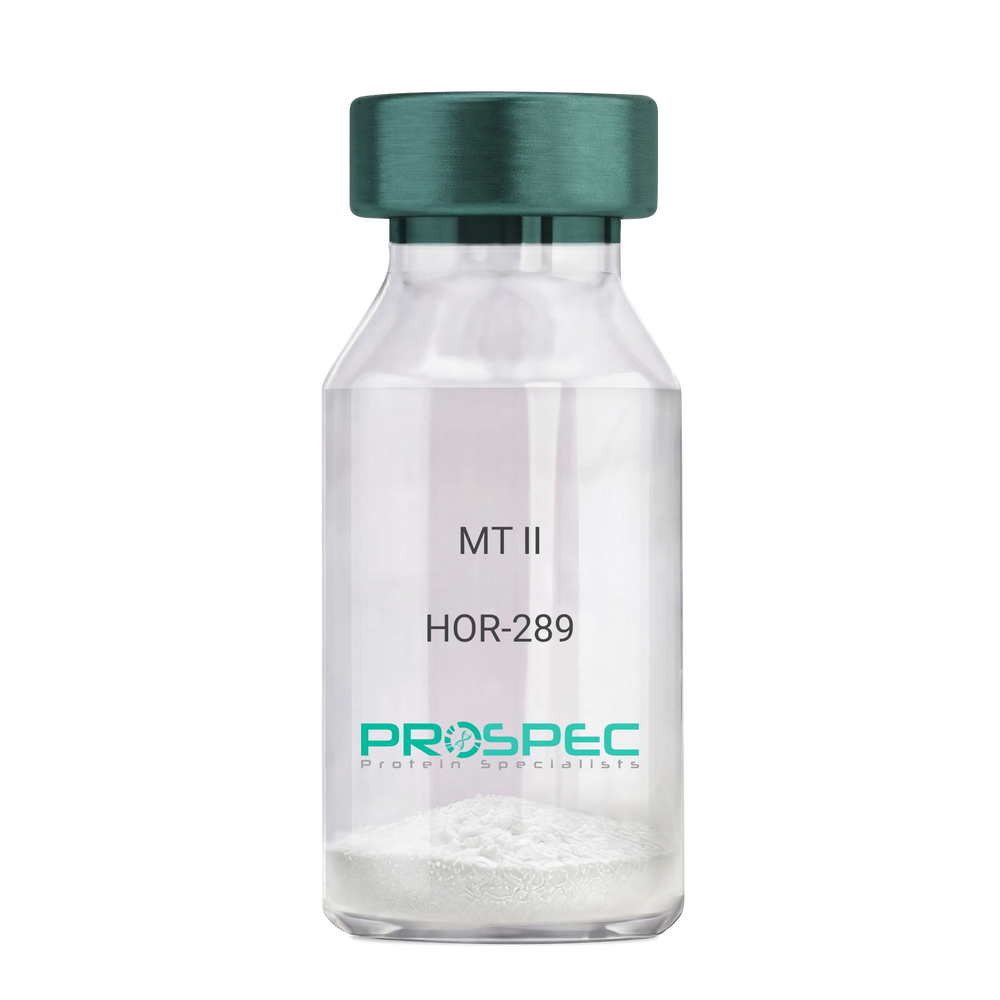
Name :
MT IIDescription:
Melanotan-II
Melanotan-II, MT-II, Melanotan.
Product # :
HOR-289Price :
Quantity :
Shipping Method :
Shipped at Room temp
More Info
- description
- formulation
- purity
- More Info
Description
The molecular formula of Melanotan-II is C50H69N15O9. It has the amino acid sequence of Ac-Nle-cyclo [Asp-His-D-Phe-Arg-Trp-Lys]-NH2 and a molecular weight of 1024.2 Dalton. The CAS Number is 121062-08-6.
Formulation
The protein (1mg/ml) was lyophilized with no additives.
Purity
Greater than 99% as determined by by RP-HPLC.
More Info
-
Introduction
Melanotan and Melanotan-II are both analogs of the peptide hormone alpha melanocyte stimulating hormone (a-MSH) that tend to induce skin tanning. Unlike Melanotan, Melanotan-II has the additional effect of increasing libido. Melanotan II has aphrodisiac properties.
-
Synonyms
Melanotan-II, MT-II, Melanotan.
-
Physical Appearance
Sterile Filtered White lyophilized (freeze-dried) powder.
-
Stability
Lyophilized Melanotan-II although stable at room temperature for 3 weeks, should be stored desiccated below -18°C. Upon reconstitution MT-II should be stored at 4°C between 2-7 days and for future use below -18°C.For long term storage it is recommended to add a carrier protein (0.1% HSA or BSA).Please prevent freeze-thaw cycles.
-
Solubility
It is recommended to reconstitute the lyophilized Melanotan-II in sterile 18MΩ-cm H2O not less than 100 µg/ml, which can then be further diluted to other aqueous solutions.
ProSpec's products are furnished for LABORATORY RESEARCH USE ONLY. The product may not be used as drugs, agricultural or pesticidal products, food additives or household chemicals.
- View Data Sheet
Name :
Leptin RabbitDescription:
Leptin Rabbit Recombinant
OB Protein, Obesity Protein, OBS, Obesity factor.
Product # :
CYT-507Price :
Quantity :
Shipping Method :
Shipped at Room temp
More Info
- description
- source
- formulation
- purity
- biological activity
- More Info
Description
Leptin Rabbit Recombinant produced in E.Coli is a single, non-glycosylated, polypeptide chain containing 146 amino acids and having a molecular mass of 16 kDa.The Leptin is purified by proprietary chromatographic techniques.
Source
Escherichia Coli.
Formulation
The protein was lyophilized from a concentrated (1mg/ml) solution with 0.02% NaHCO3.
Purity
Greater than 98.0% as determined by:
(a) Analysis by SEC-HPLC.
(b) Analysis by SDS-PAGE.Biological Activity
Biological active as evidenced by inducing proliferation of BAF/3 cells stably transfected with the long form of human leptin receptor.More Info
-
Introduction
A 16-kDa peptide hormone secreted from white adipocytes and implicated in the regulation of food intake and energy balance. Leptin provides the key afferent signal from fat cells in the feedback system that controls body fat stores.
-
Synonyms
OB Protein, Obesity Protein, OBS, Obesity factor.
-
Physical Appearance
Sterile Filtered White lyophilized (freeze-dried) powder.
-
Stability
Lyophilized Leptin although stable at room temperature for 3 weeks, should be stored desiccated below -18°C. Upon reconstitution Leptin should be stored at 4°C between 2-7 days and for future use below -18°C.For long term storage it is recommended to add a carrier protein (0.1% HSA or BSA).Please prevent freeze-thaw cycles.
-
Solubility
It is recommended to reconstitute the lyophilized Leptin in sterile 0.4% NaHCO3 adjusted to pH-8-9, not less than 100µg/ml, which can then be further diluted to other aqueous solutions.
-
Amino Acid Sequence
The sequence of the first five N-terminal amino acids was determined and was found to be Ala-Val-Pro-Ile-Arg.
-
Protein content
Protein quantitation was carried out by UV spectroscopy at 280 nm using the absorbency value of 0.505 as the extinction coefficient for a 0.1% (1mg/ml) solution at pH 8.0. This value is calculated by the PC GENE computer analysis program of protein sequences (IntelliGenetics).
ProSpec's products are furnished for LABORATORY RESEARCH USE ONLY. The product may not be used as drugs, agricultural or pesticidal products, food additives or household chemicals.
- View Data Sheet
Name :
Resistin Mutant HumanDescription:
Resistin Mutant Human Recombinant
Resistin, Cysteine-rich secreted protein FIZZ3, Adipose tissue-specific secretory factor, ADSF, C/EBP-epsilon-regulated myeloid-specific secreted cysteine-rich protein, Cysteine-rich secreted protein A12-alpha-like 2, RSTN, XCP1, RETN1, MGC126603, MGC126609.
Product # :
CYT-585Price :
Quantity :
Shipping Method :
Shipped at Room temp
More Info
- description
- source
- formulation
- purity
- More Info
Description
9.9 kDa protein containing 93 amino acid residues, produced in E.coli. Mutant-Resistin has had a Cysteine residue mutated to prevent dimerization and possibly acts as an antagonist.
Source
Escherichia Coli.
Formulation
Recombinant Human Resistin was lyophilized from a concentrated (1mg/ml) solution containing 0.1% TFA.
Purity
Greater than 95% as determined by SDS-PAGE.
More Info
-
Introduction
Resistin, a product of the RSTN gene, is a peptide hormone belonging to the class of cysteine-rich secreted proteins which is termed the RELM family, and is also described as ADSF (Adipose Tissue- Specific Secretory Factor) and FIZZ3 (Found in Inflammatory Zone). Human resistin contains 108 amino acids as a prepeptide, and its hydrophobic signal peptide is cleaved before its secretion. Resistin circulates in human blood as a dimeric protein consisting of two 92 amino acid polypeptides, which are disulfide-linked via Cys26.
Resistin may be an important link between obesity and insulin resistance. Mouse resistin, specifically produced and secreted by adipocyte, acts on skeletal muscle myocytes, hepatocytes and adipocytes themselves so that it reduces their sensitivity to insulin. Steppan et al. have suggested that resistin suppresses the ability of insulin to stimulate glucose uptake. They have also suggested that resistin is present at elevated levels in blood of obese mice, and is down regulated by fasting and antidiabetic drugs. Way et al., on the other hand, have found that resistin expression is severely suppressed in obesity and is stimulated by several antidiabetic drugs.
Other studies have shown that mouse resistin increases during the differentiation of adipocytes, but it also seems to inhibit adipogenesis. In contrast, the human adipogenic differentiation is likely to be associated with a down regulation of resistin gene expression. -
Synonyms
Resistin, Cysteine-rich secreted protein FIZZ3, Adipose tissue-specific secretory factor, ADSF, C/EBP-epsilon-regulated myeloid-specific secreted cysteine-rich protein, Cysteine-rich secreted protein A12-alpha-like 2, RSTN, XCP1, RETN1, MGC126603, MGC126609.
-
Stability
Store lyophilized protein at -20°C. Aliquot the product after reconstitution to avoid repeated freezing/thawing cycles. Reconstituted protein can be stored at 4°C for a limited period of time; it does not show any change after two weeks at 4°C.
-
Solubility
Add 0.2 ml of deionized water and let the lyophilized pellet dissolve completely.
-
Amino Acid Sequence
MSSKTLCSME EAINERIQEV AGSLIFRAIS SIGLECQSVT SRGDLATCPR GFAVTGCTCG SACGSWDVRA ETTCHCQCAG MDWTGARCCR VQP.
ProSpec's products are furnished for LABORATORY RESEARCH USE ONLY. The product may not be used as drugs, agricultural or pesticidal products, food additives or household chemicals.
- View Data Sheet
Name :
Omentin 298 a.a. HumanDescription:
Omentin 298 a.a. Human Recombinant
Intelectin-1, HL1, LFR, HL-1, INTL, ITLN, hIntL.
Product # :
CYT-061Price :
Quantity :
Shipping Method :
Shipped with Ice Packs
More Info
- description
- source
- formulation
- purity
- More Info
Description
Omentin Human Recombinant produced in E.coli is a single, non-glycosylated polypeptide chain containing 298 amino acids (17-313) and having a molecular mass of 33.2 kDa.The Omentin is purified by proprietary chromatographic techniques.
Source
Escherichia Coli.
Formulation
Omentin protein (1mg/ml) is supplied in 20mM Tris-HCL, pH-8, 0.4M Urea and 10% Glycerol.
Purity
Greater than 90.0% as determined by SDS-PAGE.
More Info
-
Introduction
Omentin is a recently recognized gene highly localized to the mental tissue (visceral adipose tissue). Omentin is present in the stromal vascular cells in the adipose tissue rather than in the adipocytes. Omentin is predominantly expressed in the visceral adipose tissue than the subcutaneous tissue, with the omentin mRNA being 150 times higher in the visceral adipose tissue. Omentin has also been detected in human blood using western blot analysis, and seems to increase insulin-stimulated glucose uptake in 3T3-L1 adipocytes in mice. Omentin seems to increase Akt phosphorylation irrespective of insulin presence. Its role in glucose metabolism and obesity remains to be described; an insulin-sensitizing action is possible.Differences in Omentin expression has been noted in adipose tissue from normals and patients with inflammatory bowel disease although its significance is unknown.
-
Synonyms
Intelectin-1, HL1, LFR, HL-1, INTL, ITLN, hIntL.
-
Physical Appearance
Sterile Filtered colorless solution.
-
Stability
Store at 4°C if entire vial will be used within 2-4 weeks. Store, frozen at -20°C for longer periods of time. For long term storage it is recommended to add a carrier protein (0.1% HSA or BSA).Avoid multiple freeze-thaw cycles.
-
Amino Acid Sequence
MWSTDEANTY FKEWTCSSSP SLPRSCKEIK DECPSAFDGL YFLRTENGVI YQTFCDMTSG GGGWTLVASV HENDMRGKCT VGDRWSSQQG SKAVYPEGDG NWANYNTFGS AEAATSDDYK NPGYYDIQAK DLGIWHVPNK SPMQHWRNSS LLRYRTDTGF LQTLGHNLFG IYQKYPVKYG EGKCWTDNGP VIPVVYDFGD AQKTASYYSP YGQREFTAGF VQFRVFNNER AANALCAGMR VTGCNTEHHC IGGGGYFPEA SPQQCGDFSG FDWSGYGTHV GYSSSREITE AAVLLFYR
ProSpec's products are furnished for LABORATORY RESEARCH USE ONLY. The product may not be used as drugs, agricultural or pesticidal products, food additives or household chemicals.
- View Data Sheet
Name :
Adiponectin Porcine, HEKDescription:
Adiponectin Porcine Recombinant, HEK derived
Acrp30, AdipoQ, GBP-28, APM-1, ACDC.
Product # :
CYT-696Price :
Quantity :
Shipping Method :
Shipped at Room temp
More Info
- description
- source
- formulation
- purity
- More Info
Description
The Acrp30 Porcine Recombinant contains a total of 238 amino acids having a molecular Mass of 26kDa. The Porcine Adiponectin is fused to a 13 amino acid long N-terminal FLAG tag.
Source
HEK293 (Human Embryonic Kidney cell line).
Formulation
Sterile filtered and lyophilized from 0.5mg/ml in 20mM Tris buffer and 50mM NaCl pH-7.5.
Purity
Greater than 90% as determined by SDS PAGE.
More Info
-
Introduction
Adiponectin is a recently discovered 244 amino acid protein, the product of the apM1 gene, which is physiologically active and specifically and highly expressed in adipose cells (Adipokine). The protein belongs to the soluble defense collagen super family; it has a collagen-like domain structurally homologous with collagen VIII and X and complement factor C1q-like globular domain. APM-1 forms homotrimers, which are the building blocks for higher order complexes found circulating in serum.
-
Synonyms
Acrp30, AdipoQ, GBP-28, APM-1, ACDC.
-
Stability
For long term, store lyophilized AdipoQ at -20°C. Aliquot the product after reconstitution to avoid repeated freezing/thawing cycles. Reconstituted protein can be stored at 4°C for a limited period of time; it does not show any change after two weeks at 4°C.The lyophilized protein remains stable for 24 months when stored at -20°C.
-
Solubility
Add deionized water and let the lyophilized pellet dissolve completely.
-
Amino Acid Sequence
HVDYKDDDDK PAGETTEKPG ALLPMPKGAC AGWMAGIPGH PGHNGTPGRD GRDGVPGEKG EKGDTGLTGP KGDTGESGVT GVEGPRGFPG IPGRKGEPGE SAYVYRSAFS VGLETRVTVP NMPIRFTKIF YNQQNHYDVT TGKFHCNIPG LYYFSFHITV LKDVKVSLYK DKAVLFTYDQ QDKNVDQASG VLLYLEKGDQ WLQAYGDEEN GVYADNVNDS FTGFLLYHNIE.
-
Background
What is the molecular weight/Mw of ADIPONECTIN Protein?
ADIPONECTIN Protein has a total Mw of 26kDa.
What is the source or expression system of ADIPONECTIN Protein?
HEK293
What is the Purity of ADIPONECTIN Protein?
ADIPONECTIN Protein is >90% pure as determined by SDS-PAGE.
What is the Biological Activity of ADIPONECTIN Protein?
The biological functionality of ADIPONECTIN Protein will be determined in the future.
What is the amino acid sequence of ADIPONECTIN Protein?
HVDYKDDDDK PAGETTEKPG ALLPMPKGAC AGWMAGIPGH PGHNGTPGRD GRDGVPGEKG EKGDTGLTGP KGDTGESGVT GVEGPRGFPG IPGRKGEPGE SAYVYRSAFS VGLETRVTVP NMPIRFTKIF YNQQNHYDVT TGKFHCNIPG LYYFSFHITV LKDVKVSLYK DKAVLFTYDQ QDKNVDQASG VLLYLEKGDQ WLQAYGDEEN GVYADNVNDS FTGFLLYHNIE.
What applications can ADIPONECTIN Protein be used in?
ADIPONECTIN Protein can probably be used in western blot, ELISA and Lateral Flow.
What is the endotoxin level for ADIPONECTIN Protein?
The endotoxin level is minimal, ADIPONECTIN Protein was purified using conventional chromatography techniques.
ProSpec's products are furnished for LABORATORY RESEARCH USE ONLY. The product may not be used as drugs, agricultural or pesticidal products, food additives or household chemicals.
- View Data Sheet
Name :
Resistin Human, AntagonistDescription:
Resistin Antagonist Human Recombinant
Cysteine-rich secreted protein FIZZ3, Adipose tissue-specific secretory factor, ADSF, C/EBP-epsilon-regulated myeloid-specific secreted cysteine-rich protein, Cysteine-rich secreted protein A12-alpha-like 2, RSTN, XCP1, RETN1, MGC126603, MGC126609.
Product # :
CYT-1255Price :
Quantity :
Shipping Method :
Shipped at Room temp
More Info
- description
- source
- formulation
- purity
- biological activity
- More Info
Description
Resistin Human antagonist is a monomeric C7A mutant that does not form covalent dimers. Resistin Human antagonist is purified by proprietary chromatographic techniques.
Source
Escherichia coli.
Formulation
Resistin was lyophilized from a concentrated (1mg/ml) solution with 0.03% NaHCO3.
Purity
Greater than 98.0% as determined by:
(a) Analysis by Gel Filtration.
(b) Analysis by SDS-PAGE.
(c) Analysis by RP-HPLC.
Biological Activity
The biological activity was evidenced by resistin antagonist activity to inhibit resistin-induced Akt phosphorylation in two cell lines. It also reduced the weight (mainly the visceral fat) and normalized GTT and ITT inHFD-fed mice.
More Info
-
Synonyms
Cysteine-rich secreted protein FIZZ3, Adipose tissue-specific secretory factor, ADSF, C/EBP-epsilon-regulated myeloid-specific secreted cysteine-rich protein, Cysteine-rich secreted protein A12-alpha-like 2, RSTN, XCP1, RETN1, MGC126603, MGC126609.
-
Physical Appearance
Sterile Filtered White lyophilized (freeze-dried) powder.
-
Stability
Lyophilized Resistin although stable at room temperature for 3 weeks, should be stored desiccated below -18°C. Upon reconstitution Resistin Mouse should be stored at 4°C between 2-7 days and for future use below -18°C. For long term storage it is recommended to add a carrier protein (0.1% HSA or BSA). Please prevent freeze-thaw cycles.
-
Solubility
It is recommended to reconstitute the lyophilized Resistin in sterile 18MΩ-cm H2O at a concentration of 100µg/ml, which can then be further diluted to other aqueous solutions.
-
Amino Acid Sequence
The sequence of the first seven N-terminal amino acids was determined and was found to be Ala-Ser-Ser-Lys-Thr-Leu-Ala.
-
Background
Resistin, also known as adipose tissue-specific secretory factor (ADSF) is a cysteine-rich peptide derived from adipose tissue. Resistin takes part in the inflammatory response, glucose metabolism, and angiogenesis. Resistin blocks insulin stimulated uptake of glucose by adipocytes and promote glucose release by hepatocytes. As such,Resistin considered to participate in diet‑induced insulin-sensitivity. Resistin causes high levels of low-density lipoprotein (LDL), increasing the risk of heart disease.
ProSpec's products are furnished for LABORATORY RESEARCH USE ONLY. The product may not be used as drugs, agricultural or pesticidal products, food additives or household chemicals.
- View Data Sheet
Name :
Adiponectin Human, Sf9Description:
Adiponectin Human Recombinant, Sf9
Adiponectin, C1Q And Collagen Domain Containing, Adipose Most Abundant Gene Transcript 1 Protein, Adipocyte Complement-Related 30 KDa Protein, 30 KDa Adipocyte Complement-Related Protein, ACRP30, APM-1, GBP28, ACDC, APM1, Adipocyte, C1q And Collagen Domain-Containing Protein, Adipocyte, C1Q And Collagen Domain Containing, Adipose Most Abundant Gene Transcript 1, Adipose Specific Collagen-Like Factor, Gelatin-Binding Protein 28, Gelatin-Binding Protein, Adiponectin Precursor, Adiponectin, ADIPQTL1, ADPN, 30 kDa adipocyte complement-related protein, dipocyte complement-related 30 kDa protein, ACRP30, Adipocyte, C1q and collagen domain-containing protein, Adipose most abundant gene transcript 1 protein, apM-1, Gelatin-binding protein.
Product # :
CYT-1002Price :
Quantity :
Shipping Method :
Shipped with Ice Packs
More Info
- description
- source
- formulation
- purity
- More Info
- sds-page
Description
Acrp30 Human Recombinant produced in Sf9 Baculovirus cells is a single, glycosylated polypeptide chain containing 146 amino acids (106-242a.a.) and having a molecular mass of 16.9kDa. (Molecular size on SDS-PAGE will appear at approximately 13.5-18kDa). Acrp30 is expressed with a 6 amino acid His tag at C-Terminus and purified by proprietary chromatographic techniques.
Source
Sf9, Baculovirus cells.
Formulation
Acrp30 protein solution (0.5mg/ml) contains Phosphate Buffered Saline (pH 7.4) and 10% glycerol.
Purity
Greater than 95.0% as determined by SDS-PAGE.
sds-page
More Info
-
Introduction
The adipose tissue exclusively expresses and secretes Adiponectin (Acrp30). Acrp30 is involved in various physiological processes such as energy homeostasis, insulin sensitivity, hormonal processes, fatty acid metabolism and obesity.
Adiponectin circulates in the plasma. Decreased levels of Adiponectin are associated with insulin resistance and hyperinsulinemia, as seen in people with obesity insulin resistance, and diabetes type 2, whose plasma levels of adiponectin are reduced.
The modular structure of Acrp30 is comprised of N-terminal collagenous domain followed by a C-terminal globular domain.
Acrp30 also acts as a significant negative regulator in hematopoiesis and immune systems; it may be involved in ending inflammatory responses through its inhibitory functions. Adiponectin inhibits endothelial NF-kappa-b signaling through a cAMP-dependent pathway, it also inhibits TNF-alpha- induced expression of endothelial adhesion molecules. -
Synonyms
Adiponectin, C1Q And Collagen Domain Containing, Adipose Most Abundant Gene Transcript 1 Protein, Adipocyte Complement-Related 30 KDa Protein, 30 KDa Adipocyte Complement-Related Protein, ACRP30, APM-1, GBP28, ACDC, APM1, Adipocyte, C1q And Collagen Domain-Containing Protein, Adipocyte, C1Q And Collagen Domain Containing, Adipose Most Abundant Gene Transcript 1, Adipose Specific Collagen-Like Factor, Gelatin-Binding Protein 28, Gelatin-Binding Protein, Adiponectin Precursor, Adiponectin, ADIPQTL1, ADPN, 30 kDa adipocyte complement-related protein, dipocyte complement-related 30 kDa protein, ACRP30, Adipocyte, C1q and collagen domain-containing protein, Adipose most abundant gene transcript 1 protein, apM-1, Gelatin-binding protein.
-
Physical Appearance
Sterile Filtered clear solution.
-
Stability
Store at 4°C if entire vial will be used within 2-4 weeks. Store, frozen at -20°C for longer periods of time. For long term storage it is recommended to add a carrier protein (0.1% HSA or BSA).Avoid multiple freeze-thaw cycles.
-
Amino Acid Sequence
ADPEGAYVYR SAFSVGLETY VTIPNMPIRF TKIFYNQQNH YDGSTGKFHC NIPGLYYFAY HITVYMKDVK VSLFKKDKAM LFTYDQYQEN NVDQASGSVL LHLEVGDQVW LQVYGEGERN GLYADNDNDS TFTGFLLYHD HHHHHH.
-
Background
What is the molecular weight/Mw of ADIPONECTIN Protein?
ADIPONECTIN Protein has a total Mw of 16.9kDa.
What is the source or expression system of ADIPONECTIN Protein?
Sf9, Baculovirus cells.
What is the Purity of ADIPONECTIN Protein?
ADIPONECTIN Protein is >95% pure as determined by SDS-PAGE.
What is the Biological Activity of ADIPONECTIN Protein?
The biological functionality of ADIPONECTIN Protein will be determined in the future.
What is the amino acid sequence of ADIPONECTIN Protein?
ADPEGAYVYR SAFSVGLETY VTIPNMPIRF TKIFYNQQNH YDGSTGKFHC NIPGLYYFAY HITVYMKDVK VSLFKKDKAM LFTYDQYQEN NVDQASGSVL LHLEVGDQVW LQVYGEGERN GLYADNDNDS TFTGFLLYHD HHHHHH.
What applications can ADIPONECTIN Protein be used in?
ADIPONECTIN Protein can probably be used in western blot, ELISA and Lateral Flow.
What is the endotoxin level for ADIPONECTIN Protein?
The endotoxin level is minimal, ADIPONECTIN Protein was purified using conventional chromatography techniques.
ProSpec's products are furnished for LABORATORY RESEARCH USE ONLY. The product may not be used as drugs, agricultural or pesticidal products, food additives or household chemicals.
- View Data Sheet
Name :
Activin-A Human Plant-ActiveDescription:
Activin-A Human Recombinant, Plant-Active
Inhba, Inhibin beta A, FSH releasing protein.
Product # :
CYT-414Price :
Quantity :
Shipping Method :
Shipped at Room temp
More Info
- description
- source
- formulation
- purity
- biological activity
- More Info
Description
Active form Activin-A Human Recombinant produced in Plant is a homodimeric, glycosylated, polypeptide chain containing 2 x 116 amino acids and having a molecular weight of 27.4kDa.The Active form Activin-A is fused to a 6-His tag at N-terminus and purified by standard chromatographic techniques.
Source
Nicotiana benthamiana.
Formulation
Active form Activin-A was lyophilized from a concentrated 1mg/ml protein solution containing 50mM Tris-HCl pH-7.4
Purity
Greater than 98% as obsereved by SDS-PAGE.
Biological Activity
The biological activity of INHBA is measured by its ability to inhibit mouse plasmacytoma cell line (MPC-11) cells proliferation ([3H]thymidine incorporation). ED50<5ng/ml.More Info
-
Introduction
Activins are homodimers or heterodimers of the different β subunit isoforms, part of the TGFβ family. Mature Activin A has two 116 amino acids residues βA subunits (βA-βA). Activin displays an extensive variety of biological activities, including mesoderm induction, neural cell differentiation, bone remodelling, haematopoiesis, and reproductive physiology. Activins takes part in the production and regulation of hormones such as FSH, LH, GnRH and ACTH. Cells that are identified to express Activin A include fibroblasts, endothelial cells, hepatocytes, vascular smooth muscle cells, macrophages, keratinocytes, osteoclasts, bone marrow monocytes, prostatic epithelium, neurons, chondrocytes, osteoblasts, Leydig cells, Sertoli cells, and ovarian granulosa cells.
-
Synonyms
Inhba, Inhibin beta A, FSH releasing protein.
-
Physical Appearance
Lyophilized freeze dried powder.
-
Stability
For long term storage it is recommended to add a carrier protein (0.1% HSA or BSA). Repeated freezing and thawing is not recommended.
-
Solubility
INHBA protein should be reconstituted in distilled water to a concentration of 50 ug /ml. Due to the protein nature, dimmers and multimers may be observed.
-
Amino Acid Sequence
HHHHHHGLECDGKVNICCKKQFFVSFKDIGWNDWIIAPSG
YHANYCEGECPSHIAGTSGSSLSFHSTVINHYRMRGHSPFA
NLKSCCVPTKLRPMSMLYYDDGQNIIKKDIQNMIVEECGCS. -
Background
What is the molecular weight / Mw of Activin A Protein?
Activin A Protein has a total Mw of 27.4 kDa.What is the source or expression system of Activin A Protein?
Nicotiana benthamiana.What is the Purity of Activin A Protein?
Activin A Protein is >98% pure as determined by SDS-PAGE.
What is the Biological Activity of Activin A Protein?
The biological activity of INHBA is measured by its ability to inhibit mouse plasmacytoma cell line (MPC-11) cells proliferation ([3H]thymidine incorporation). ED50<5ng/ml.What is the endotoxin level for Activin A Protein?
The endotoxin level is minimal, ACTIVIN A Protein was purified using conventional chromatography techniques.What is the amino acid sequence of ACTIVIN A Protein?HHHHHHGLECDGKVNICCKKQFFVSFKDIGWNDWIIAPSGYHANYCEGECPSHIAGTSGSSLSFHSTVINHYRMRGHSPFANLKSCCVPTKLRPMSMLYYDDGQNIIKKDIQNMIVEECGCS
What applications can ACTIVIN-A Protein be used in?
ACTIVIN A Protein can probably be used in western blot, ELISA and Lateral Flow.
ProSpec's products are furnished for LABORATORY RESEARCH USE ONLY. The product may not be used as drugs, agricultural or pesticidal products, food additives or household chemicals.
- View Data Sheet
Name :
AMBPDescription:
Alpha-1 Microglobulin Human Recombinant
Alpha-1-microglobulin/bikunin precursor, HCP, ITIL, ITI, EDC1, HI30, IATIL, ITILC, UTI, A1M, bikunin, complex-forming glycoprotein heterogeneous in charge, growth-inhibiting protein 19, inter-alpha-trypsin inhibitor light chain, protein AMBP, protein HC, trypstatin, uristatin, uronic-acid-rich protein.
Product # :
PRO-957Price :
Quantity :
Shipping Method :
Shipped with Ice Packs
More Info
- description
- source
- formulation
- purity
- More Info
Description
AMBP Human Recombinant produced in E.coli is a single, non-glycosylated polypeptide chain containing 205 amino acids (20-203) and having a molecular mass of 23.1 kDa.AMBP is fused to a 21 amino acid His-tag at N-terminus & purified by proprietary chromatographic techniques.
Source
E.coli.
Formulation
The AMBP solution (0.5mg/ml) contains 20mM Tris-HCl buffer (pH 8.0), 1mM DTT, 0.1M NaCl and 10% glycerol.
Purity
Greater than 90% as determined by SDS-PAGE.
More Info
-
Introduction
Alpha 1-microglobulin (A1M) is a lipocalin superfamily member (kernal lipocalins). A1M is a low molecular weight protein component of plasma. A1M is distributed in plasma and extravascular compartments of all organs. Alpha-1 Microglobulin is found in mammals, birds, amphibians and fish. The primary sites of A1M synthesis are the liver and the kidney. Around the opening of the lipocalin pocket three lysyl residues are situated; those residues carry yellow-brown modification derived from the binding and degradation of heme and kynurenin (a tryptophan metabolite). A1-Microglobulin’s reductase and dehydrogenase have broad biological substrate specificity properties due to its’ free cysteine side-chain which is located in a flexible loop. Alpha-1-microglobulin is glycosylated by three separate carbohydrate chains: two complex carbohydrates which are N-linked to asparagines at residues 17 and 96, and the other simple carbohydrate which is O-linked to threonine at position 5. The carbohydrates comprise 22% of the total molecular mass of the protein. The glycosylation varies between species.
A1M exists in two forms- a free form and complexed to other macromolecules: in humans- complexed to immunoglobulin A (IgA), in rat- complexed to alpha-1-inhibitor-3. Free A1M is exceptionally heterogeneous in charge (therefore also known as protein HC), and is found tightly linked to a chromophore. The free Alpha-1-microglobulin is a monomeric protein composed of one 188 residue polypeptide and contains three cysteines, two of which (residues 75 and 173) form a conserved intra-molecular disulphide link. The chromophoric group is covalently bound to the free cysteine residue at position 34. A1M binds retinol as a major ligand, but this is probably distinct from its covalent chromophore.
Half of all human plasma A1M (approximately 0.03mg/ml) forms a 1:1 complex with about 5% of plasma immunoglobulin A. The resulting macromolecular complexes’ molecular weight is 200000, and a plasma concentration of 0.3mg/ml. The complex can exhibit both antibody activity and affect many of the biological actions of free Alpha-1-microglobulin.
Alpha-1-microglobulin was first discovered in pathological human urine.
It was suggested that A1M might be involved in tissue defense against reactive oxygen species, oxidation by heme and kynurenin. Evidence also suggests that A1M functions in the regulation of the immune system. Other functions include inhibition of stimulation of cultured lymphocytes by protein antigens; induction of cell division of lymphocytes, a mitogenic effect that can either be enhanced or inhibited by the action of other plasma components; inhibition of neutrophil granulocyte migration in vitro; and inhibition of chemotaxis. -
Synonyms
Alpha-1-microglobulin/bikunin precursor, HCP, ITIL, ITI, EDC1, HI30, IATIL, ITILC, UTI, A1M, bikunin, complex-forming glycoprotein heterogeneous in charge, growth-inhibiting protein 19, inter-alpha-trypsin inhibitor light chain, protein AMBP, protein HC, trypstatin, uristatin,
uronic-acid-rich protein. -
Physical Appearance
Sterile Filtered colorless solution.
-
Stability
Store at 4°C if entire vial will be used within 2-4 weeks. Store, frozen at -20°C for longer periods of time. For long term storage it is recommended to add a carrier protein (0.1% HSA or BSA).Avoid multiple freeze-thaw cycles.
-
Amino Acid Sequence
MGSSHHHHHH SSGLVPRGSH MGPVPTPPDN IQVQENFNIS RIYGKWYNLA IGSTCPWLKK IMDRMTVSTL VLGEGATEAE ISMTSTRWRK GVCEETSGAY EKTDTDGKFL YHKSKWNITM ESYVVHTNYD EYAIFLTKKF SRHHGPTITA KLYGRAPQLR ETLLQDFRVV AQGVGIPEDS IFTMADRGEC VPGEQEPEPI LIPRV.
ProSpec's products are furnished for LABORATORY RESEARCH USE ONLY. The product may not be used as drugs, agricultural or pesticidal products, food additives or household chemicals.
- View Data Sheet
Name :
GMNN HumanDescription:
Geminin Human Recombinant
GMNN, Geminin, DNA Replication Inhibitor, Gem, RP3-369A17.3.
Product # :
PRO-579Price :
Quantity :
Shipping Method :
Shipped with Ice Packs
More Info
- description
- source
- formulation
- purity
- More Info
Description
Geminin Human Recombinant fused to N-terminal His-Tag produced in E.Coli is a single, non-glycosylated polypeptide chain containing 245 amino acids and having a molecular mass of 27.7 kDa.
Source
Escherichia Coli.
Formulation
The protein solution contains 20mM Tris pH 8, 100mM NaCl and 10% glycerol.
Purity
Greater than 95.0% as determined by:
(a) Analysis by RP-HPLC.
(b) Analysis by SDS-PAGE.More Info
-
Introduction
Geminin is a 25 kDa nuclear protein, which inhibits DNA replication and is degraded during the mitotic phase of the cell cycle. Geminin controls replication by binding to the licensing factor Cdt1, and is involved in neural differentiation. In addition, Geminin directly interacts with Six3 and Hox homeodomain proteins during embryogenesis and inhibits their functions. Geminin can also promote DNA replication. Geminin has 2 roles in 2 different stages of the cell cycle: Geminin is a negative regulator of DNA replication during the “S phase” of the cell cycle. Inhibition of Geminin during the “S phase” (by RNAi) results in an additional round of replication of portions of the genome. During the “M phase” of the cell cycle (mitosis) Geminin stabilizes the replication factor Cdt1 promoting DNA replication during the next cell cycle. Moreover, inhibition of Geminin during mitosis (by RNAi) causes destabilization of Cdt1 protein and impairment of DNA replication during the next cell cycle. Geminin thus guarantees that only one round of replication occurs during each cell cycle. It was discovered that Geminin is overexpressed in a number of malignancies and cancer cell lines. This maintains the concept that Geminin has also a positive role in DNA replication and cell cycle progression. Geminin accumulates through S, G2 and M phases of the cell cycle but is absent during the G1 phase. During the metaphase/anaphase transition of mitosis Geminin levels decrease.
-
Synonyms
GMNN, Geminin, DNA Replication Inhibitor, Gem, RP3-369A17.3.
-
Physical Appearance
Sterile Filtered colorless solution.
-
Stability
Store at 4°C if entire vial will be used within 2-4 weeks. Store, frozen at -20°C for longer periods of time. For long term storage it is recommended to add a carrier protein (0.1% HSA or BSA).Avoid multiple freeze-thaw cycles.
-
Amino Acid Sequence
MRGSHHHHHH GMASMTGGQQ MGRDLYDDDD KDRWGSMNPS MKQKQEEIKE NIKNSSVPRR TLKMIQPSAS GSLVGRENEL SAGLSKRKHR NDHLTSTTSS PGVIVPESSE NKNLGGVTQE SFDLMIKENP SSQYWKEVAE KRRKALYEAL KENEKLHKEI EQKDNEIARL KKENKELAEV AEHVQYMAEL IERLNGEPLD NFESLDNQEF DSEEETVEDS LVEDSEIGTC AEGTVSSSTD
AKPCI.
ProSpec's products are furnished for LABORATORY RESEARCH USE ONLY. The product may not be used as drugs, agricultural or pesticidal products, food additives or household chemicals.
- View Data Sheet
Name :
Omentin HumanDescription:
Omentin Human Recombinant
Intelectin-1, HL1, LFR, HL-1, INTL, ITLN, hIntL.
Product # :
CYT-301Price :
Quantity :
Shipping Method :
Shipped at Room temp
More Info
- description
- source
- formulation
- purity
- More Info
Description
Omentin Human Recombinant is produced in E.Coli by recombinant DNA technology is a single, polypeptide chain containing 313 amino acids and having a molecular mass of 35 kDa. Intelectin is purified by proprietary chromatographic techniques.
Source
E.Coli.
Formulation
Each mg of lyophilized powder contains 10mM NaP, pH-7.5 and 5:1 mannitol to protein.
Purity
Greater than 95.0% as determined by SDS-PAGE.
More Info
-
Introduction
Omentin is a recently recognized gene highly localized to the mental tissue (visceral adipose tissue). Omentin is present in the stromal vascular cells in the adipose tissue rather than in the adipocytes. Omentin is predominantly expressed in the visceral adipose tissue than the subcutaneous tissue, with the omentin mRNA being 150 times higher in the visceral adipose tissue. Omentin has also been detected in human blood using western blot analysis, and seems to increase INSstimulated glucose uptake in 3T3-L1 adipocytes in mice. Omentin seems to increase Akt phosphorylation irrespective of INS presence. Its role in glucose metabolism and obesity remains to be described; an INS-sensitizing action is possible.Differences in Omentin expression has been noted in adipose tissue from normals and patients with inflammatory bowel disease although its significance is unknown.
-
Synonyms
Intelectin-1, HL1, LFR, HL-1, INTL, ITLN, hIntL.
-
Physical Appearance
Sterile Filtered White lyophilized (freeze-dried) powder.
-
Stability
Lyophilized Intelectin although stable at room temperature for 3 weeks, should be stored desiccated below -18°C. Upon reconstitution Intelectin should be stored at 4°C between 2-7 days and for future use below -18°C.For long term storage it is recommended to add a carrier protein (0.1% HSA or BSA).Please prevent freeze-thaw cycles.
-
Solubility
It is recommended to reconstitute the lyophilized Omentin in sterile 18MΩ-cm H2O not less than 100µg/ml, which can then be further diluted to other aqueous solutions.
-
Amino Acid Sequence
MNQLSFLLFL IATTRGWSTD EANTYFKEWTCSSSPSLPRS CKEIKDECPS AFDGLYFLRT ENGVIYQTFC DMTSGGGGWT LVASVHENDM RGKCTVGDRW SSQQGSKADY PEGDGNWANY NTFGSAEAAT SDDYKNPGYY DIQAKDLGIW HVPNKSPMQH WRNSSLLRYR TDTGFLQTLG HNLFGIYQKY PVKYGEGKCW TDNGPVIPVV YDFGDAQKTA SYYSPYGQRE FNNERAANAL CAGMRVTGCN TEHHCIGGGG YFPEASPQQC GDFSGFDWSG YGTHVGYSSS REITEAAVLLFYR.
ProSpec's products are furnished for LABORATORY RESEARCH USE ONLY. The product may not be used as drugs, agricultural or pesticidal products, food additives or household chemicals.
- View Data Sheet
Name :
Adiponectin ProteinDescription:
Adiponectin Human Recombinant
Acrp30, AdipoQ, GBP-28, APM-1, ACDC.
Product # :
CYT-280Price :
Quantity :
Shipping Method :
Shipped with Ice Packs
More Info
- description
- source
- formulation
- purity
- More Info
- sds-page
Description
The Adiponectin Human recombinant protein is a single, non-glycosilated polypeptide chain produced in E. coli, having a molecular weight of 25.1 kDa and containing 231 amino acids (15-244).
Source
Escherichia Coli.
Formulation
Acrp30 protein solution contains Phosphate buffered saline pH 7.4 and 1mM DTT.
Purity
Acrp30 purity is greater than 90% as determined by SDS-PAGE.
sds-page
More Info
-
Introduction
The adipose tissue exclusively expresses and secretes Adiponectin (Acrp30). Acrp30 is involved in various physiological processes such as energy homeostasis, insulin sensitivity, hormonal processes, fatty acid metabolism and obesity.
Adiponectin circulates in the plasma. Decreased levels of Adiponectin are associated with insulin resistance and hyperinsulinemia, as seen in people with obesity insulin resistance, and diabetes type 2, whose plasma levels of adiponectin are reduced.
The modular structure of Acrp30 is comprised of N-terminal collagenous domain followed by a C-terminal globular domain.
Acrp30 also acts as a significant negative regulator in hematopoiesis and immune systems; it may be involved in ending inflammatory responses through its inhibitory functions. Adiponectin inhibits endothelial NF-kappa-b signaling through a cAMP-dependent pathway, it also inhibits TNF-alpha- induced expression of endothelial adhesion molecules. -
Synonyms
Acrp30, AdipoQ, GBP-28, APM-1, ACDC.
-
Physical Appearance
Sterile Filtered clear solution.
-
Stability
Store at 4°C if entire vial will be used within 2-4 weeks. Store, frozen at -20°C for longer periods of time. For long term storage it is recommended to add a carrier protein (0.1% HSA or BSA).Avoid multiple freeze-thaw cycles.
-
Amino Acid Sequence
MGHDQETTTQGPGVLLPLPKGACTGWMAGIPGHPGHNGAPGRDGRDGTPGE
KGEKGDPGLIGPKGDIGETGVPGAEGPRGFPGIQGRKGEPGEGAYVYRSAFSV
GLETYVTIPNMPIRFTKIFYNQQNHYDGSTGKFHCNIPGLYYFAYHITVYMKD
VKVSLFKKDKAMLFTYDQYQENNVDQASGSVLLHLEVGDQVWLQVYGEGE
RNGLYADNDNDSTFTGFLLYHDTN. -
Background
Adiponectin Human Recombinant: Unraveling its Potential in Therapeutic Applications
1. Abstract
This paper aims to deliver an extensive exploration into Adiponectin Human Recombinant, a vital adipokine implicated in a multitude of metabolic processes. By delving into the structure, biological roles, and signaling pathways of adiponectin, we elucidate its contribution to pathophysiological conditions. Moreover, we examine the potential therapeutic application of adiponectin in metabolic and cardiovascular diseases.
2. Introduction
Adiponectin, a protein predominantly secreted by adipose tissue, plays an integral part in regulating metabolic processes such as glucose regulation and fatty acid oxidation. Understanding the intricacies of adiponectin's actions could pave the way for innovative therapeutic interventions in diseases like obesity, diabetes, and cardiovascular disease.
3. Structure and Signaling of Adiponectin
Adiponectin is a 30kDa protein consisting of a collagen-like domain and a C-terminal globular domain. It signals through adiponectin receptors AdipoR1 and AdipoR2, which then activate several intracellular signaling pathways, including AMP-activated protein kinase (AMPK) and peroxisome proliferator-activated receptor-alpha (PPAR-α), regulating various metabolic processes.
4. Biological Functions of Adiponectin
Adiponectin has been shown to enhance insulin sensitivity, stimulate fatty acid oxidation, and exert anti-inflammatory effects. Additionally, it is involved in regulating energy homeostasis and has been linked to the regulation of food intake and body weight.
5. Adiponectin in Disease Pathology
Reduced levels of adiponectin have been associated with obesity, insulin resistance, type 2 diabetes, and cardiovascular disease. Moreover, adiponectin deficiency has been observed in metabolic syndrome, emphasizing the adipokine's crucial role in metabolic health.
6. Therapeutic Potential of Adiponectin
Given adiponectin's role in metabolic regulation, its potential as a therapeutic target is of considerable interest. Approaches to increase circulating adiponectin levels or enhance adiponectin signaling could offer potential therapeutic strategies for managing metabolic diseases and cardiovascular conditions.
7. Conclusion and Future Perspectives
While our understanding of adiponectin and its role in health and disease has greatly advanced in recent years, there is still much to uncover. Further research on the precise molecular mechanisms of adiponectin could pave the way for novel therapeutic approaches.
What is the molecular weight / Mw of ADIPONECTIN Protein?
ADIPONECTIN Protein has a total Mw of 25.1kDa.
What is the source or expression system of ADIPONECTIN Protein?
Escherichia Coli.
What is the Purity of ADIPONECTIN Protein?
ADIPONECTIN Protein is >90% pure as determined by SDS-PAGE.
What is the Biological Activity of ADIPONECTIN Protein?
The biological functionality of ADIPONECTIN Protein will be determined in the future.
What is the amino acid sequence of ADIPONECTIN Protein?
MGHDQETTTQGPGVLLPLPKGACTGWMAGIPGHPGHNGAPGRDGRDGTPGE
KGEKGDPGLIGPKGDIGETGVPGAEGPRGFPGIQGRKGEPGEGAYVYRSAFSV
GLETYVTIPNMPIRFTKIFYNQQNHYDGSTGKFHCNIPGLYYFAYHITVYMKD
VKVSLFKKDKAMLFTYDQYQENNVDQASGSVLLHLEVGDQVWLQVYGEGE
RNGLYADNDNDSTFTGFLLYHDTN..
What applications can ADIPONECTIN Protein be used in?
ADIPONECTIN Protein can probably be used in western blot, ELISA and Lateral Flow.
What is the endotoxin level for ADIPONECTIN Protein?
The endotoxin level is minimal, ADIPONECTIN Protein was purified using conventional chromatography techniques
ProSpec's products are furnished for LABORATORY RESEARCH USE ONLY. The product may not be used as drugs, agricultural or pesticidal products, food additives or household chemicals.
- View Data Sheet
Name :
Leptin PufferfishDescription:
Leptin Pufferfish Recombinant
OB Protein, Obesity Protein, OBS, Obesity factor.
Product # :
CYT-530Price :
Quantity :
Shipping Method :
Shipped at Room temp
More Info
- description
- source
- formulation
- purity
- biological activity
- More Info
Description
Leptin Pufferfish (Takifugu rubripes) Recombinant produced in E.Coli is a single, non-glycosylated, polypeptide chain having a molecular mass of 16 kDa. Bioactive Leptin Pufferfish (Takifugu rubripes) Recombinant was prepared according to the sequence published by Kurokawa et al. (2005)Peptides 26, 745-750 in two forms: monomer and covalent dimer. MS analysis revealed molecular masses of 15,291 and 30,585 Da, close to the theoretical values of 15,270 and 30,540 Da. CD spectra revealed high similarity to mammalian leptins. Other details of its preparation will be soon published by Yacobovitz et al (in press), General and Comparative Endocrinology.The Pufferfish Leptin is purified by proprietary chromatographic techniques.
Source
Escherichia Coli.
Formulation
The Pufferfish Leptin was lyophilized from a concentrated (0.85mg/ml) solution with 0.003mM NaHCO3.
Purity
Greater than 99.0% as determined by:
(a) Analysis by SEC-HPLC.
(b) Analysis by SDS-PAGE.Biological Activity
Biological active as evidenced by inducing proliferation of BAF/3 cells stably transfected with the long form of human leptin receptor. The affinity of human leptin receptors is considerably lower campared to mammalian leptins.More Info
-
Introduction
A 16-kDa peptide hormone secreted from white adipocytes and implicated in the regulation of food intake and energy balance. Leptin provides the key afferent signal from fat cells in the feedback system that controls body fat stores.
-
Synonyms
OB Protein, Obesity Protein, OBS, Obesity factor.
-
Physical Appearance
Sterile Filtered White lyophilized (freeze-dried) powder.
-
Stability
Lyophilized Pufferfish Leptin although stable at room temperature for 3 weeks, should be stored desiccated below -18°C. Upon reconstitution Leptin should be stored at 4°C between 2-7 days and for future use below -18°C.For long term storage it is recommended to add a carrier protein (0.1% HSA or BSA).Please prevent freeze-thaw cycles.
-
Solubility
It is recommended to reconstitute the lyophilized Pufferfish Leptin in sterile 0.4% NaHCO3 pH-9 not less than 100µg/ml, which can then be further diluted to other aqueous solutions.
-
Amino Acid Sequence
ALPGALDAMDVEKMKSKVTWKAQGLVARIDKHFPDRGLRFDTDKVE
GSTSVVASLESYNNLISDRFGGVSQIKTEISSLAGYLNHWREGNCQE
QQPKVWPRRNIFNHTVSLEALMRVREFLKLLQKNVDLLERC
-
Protein content
Protein quantitation was carried out by UV spectroscopy at 280 nm using the absorbency value of 1.28 as the extinction coefficient for a 0.1% (1mg/ml) solution. This value is calculated by the PC GENE computer analysis program of protein sequences (IntelliGenetics).
ProSpec's products are furnished for LABORATORY RESEARCH USE ONLY. The product may not be used as drugs, agricultural or pesticidal products, food additives or household chemicals.
- View Data Sheet
Name :
Leptin tA HumanDescription:
Leptin Antagonist Triple Mutant Human Recombinant
Product # :
CYT-352Price :
Quantity :
Shipping Method :
Shipped at Room temp
More Info
- description
- source
- formulation
- purity
- biological activity
- More Info
Description
Leptin Antagonist Triple Mutant Human Recombinant is a single non-glycosilated polypeptide chain containing 146 amino and additional Ala at N-terminus acids and having a molecular weight of 16 kDa, Leptin was mutated, resulting in L39A/D40A/F41A. Leptin Antagonist Triple Mutant Human Recombinant was purified by proprietary chromatographic techniques.
Source
Escherichia coli.
Formulation
The protein was lyophilized from a concentrated (1mg/ml) solution with 0.0045mM NaHCO3.
Purity
Greater than 98.0% as determined by:
(a) Gel filtration analysis.
(b) Analysis by SDS-PAGE.Biological Activity
ProSpec’s Leptin triple antagonist is capable of inhibiting leptin-induced proliferation of BAF/3 cells stably transfected with the long form of human leptin receptor. It also inhibits various leptin effects in several in vitro bioassays.More Info
-
Physical Appearance
White lyophilized (freeze-dried) powder.
-
Stability
Lyophilized Leptin Antagonist Triple Mutant Human Recombinant although stable at room temperature for several weeks, should be stored desiccated below -18°C. Upon reconstitution at > 0.1 mg/ml and up to 2 mg/ml and filter sterilization Leptin mutant can be stored at 4°C or even room temperature for several weeks making it suitable for long term infusion studies using osmotic pumps. At lower concentration addition of a carrier protein (0.1% HSA or BSA) is suggested. Please prevent freeze-thaw cycles.
-
Solubility
It is recommended to reconstitute the lyophilized Leptin Antagonist Triple Mutant Human Recombinant in sterile 0.4% NaHCO3, not less than 100µg/ml, which can then be further diluted to other aqueous solutions.
-
Amino Acid Sequence
The sequence of the first five N-terminal amino acids was determined and was found to be Ala-Val-Pro-Ile-Gln.
-
Protein content
Protein quantitation was carried out by UV spectroscopy at 280 nm using the absorbency value of 0.88 as the extinction coefficient for a 0.1% (1mg/ml) solution at pH 8.0. This value is calculated by the PC GENE computer analysis program of protein sequences (IntelliGenetics).
ProSpec's products are furnished for LABORATORY RESEARCH USE ONLY. The product may not be used as drugs, agricultural or pesticidal products, food additives or household chemicals.
- View Data Sheet
Name :
Resistin Rat, HisDescription:
Resistin Rat Recombinant, His Tag
Cysteine-rich secreted protein FIZZ3, Adipose tissue-specific secretory factor, ADSF, C/EBP-epsilon-regulated myeloid-specific secreted cysteine-rich protein, Cysteine-rich secreted protein A12-alpha-like 2, RSTN, XCP1, RETN1, MGC126603, MGC126609.
Product # :
CYT-458Price :
Quantity :
Shipping Method :
Shipped at Room temp
More Info
- description
- source
- formulation
- purity
- More Info
Description
Resistin Rat Recombinant is manufactured with N-terminal fusion of His tag. Resistin Rat Recombinant His-Tagged Fusion Protein is an 11.9 kDa protein containing 94 amino acid residues of the Resistin Rat and 16 additional amino acid residues – His Tag (underlined).
Source
Escherichia Coli.
Formulation
Filtered (0.4µm) and lyophilized from 0.5mg/ml in 20mM Tris pH 8.0.
Purity
Greater than 95% as determined by SDS-PAGE.
More Info
-
Introduction
Resistin, a product of the RSTN gene, is a peptide hormone belonging to the class of cysteine-rich secreted proteins (monomeric peptide contains 11 cysteine residues) referred to as the RELM family, and is also described as ADSF (Adipose Tissue-Specific Secretory Factor) or FIZZ3 (Found in Inflammatory Zone 3). Mouse resistin is expressed as a 114 amino acid prepeptide; its hydrofobic Nterminal 20 amino acid signal peptide is cleaved before its secretion. Mouse resistin circulates in blood as a homodimeric protein consisting of two 94 amino acid polypeptides, which are disulfide-linked via Cys26.
Resistin may be an important link between obesity. Mouse resistin, specifically produced and secreted by adipocyte, acts on skeletal muscle myocytes, hepatocytes and adipocytes themselves so that it reduces their sensitivity. Steppan et al. have suggested that resistin suppressed the ability to stimulate glucose uptake. They have also suggested that resistin was present at elevated levels in blood of obese mice, and was down regulated by fasting and by antidiabetic drugs. Way et al., on the other hand, have found that resistin expression is severely suppressed in obesity.
Other studies have shown that mouse resistin increases during the differentiation of adipocytes, but it also seems to inhibit adipogenesis. In contrast, the human adipogenic differentiation is likely to be associated with a down regulation of resistin gene expression. -
Synonyms
Cysteine-rich secreted protein FIZZ3, Adipose tissue-specific secretory factor, ADSF, C/EBP-epsilon-regulated myeloid-specific secreted cysteine-rich protein, Cysteine-rich secreted protein A12-alpha-like 2, RSTN, XCP1, RETN1, MGC126603, MGC126609.
-
Physical Appearance
Filtered White lyophilized (freeze-dried) powder.
-
Stability
Store lyophilized protein at -20°C. Aliquot the product after reconstitution to avoid repeated freezing/thawing cycles. Reconstituted protein can be stored at 4°C for a limited period of time; it does not show any change after two weeks at 4°C.
-
Solubility
It is recommended to add deionized water to prepare a working stock solution of approximately 0.5mg/ml and let the lyophilized pellet dissolve completely. Product is not sterile! Please filter the product by an appropriate sterile filter before using it on cell culture.
-
Amino Acid Sequence
MRGSHHHHHH GMASHMPSMS LCPMDEAISK KINQDFSSLL PAAMKNTVLH CWSVSSRGRL ASCPEGTTVT SCSCGSGCGS WDVREDTMCH CQCGSIDWTA ARCCTLRVGS.
ProSpec's products are furnished for LABORATORY RESEARCH USE ONLY. The product may not be used as drugs, agricultural or pesticidal products, food additives or household chemicals.